Digital Hall of Fame Link Purpose Audit: Profile Cards, Categories, and Navigation
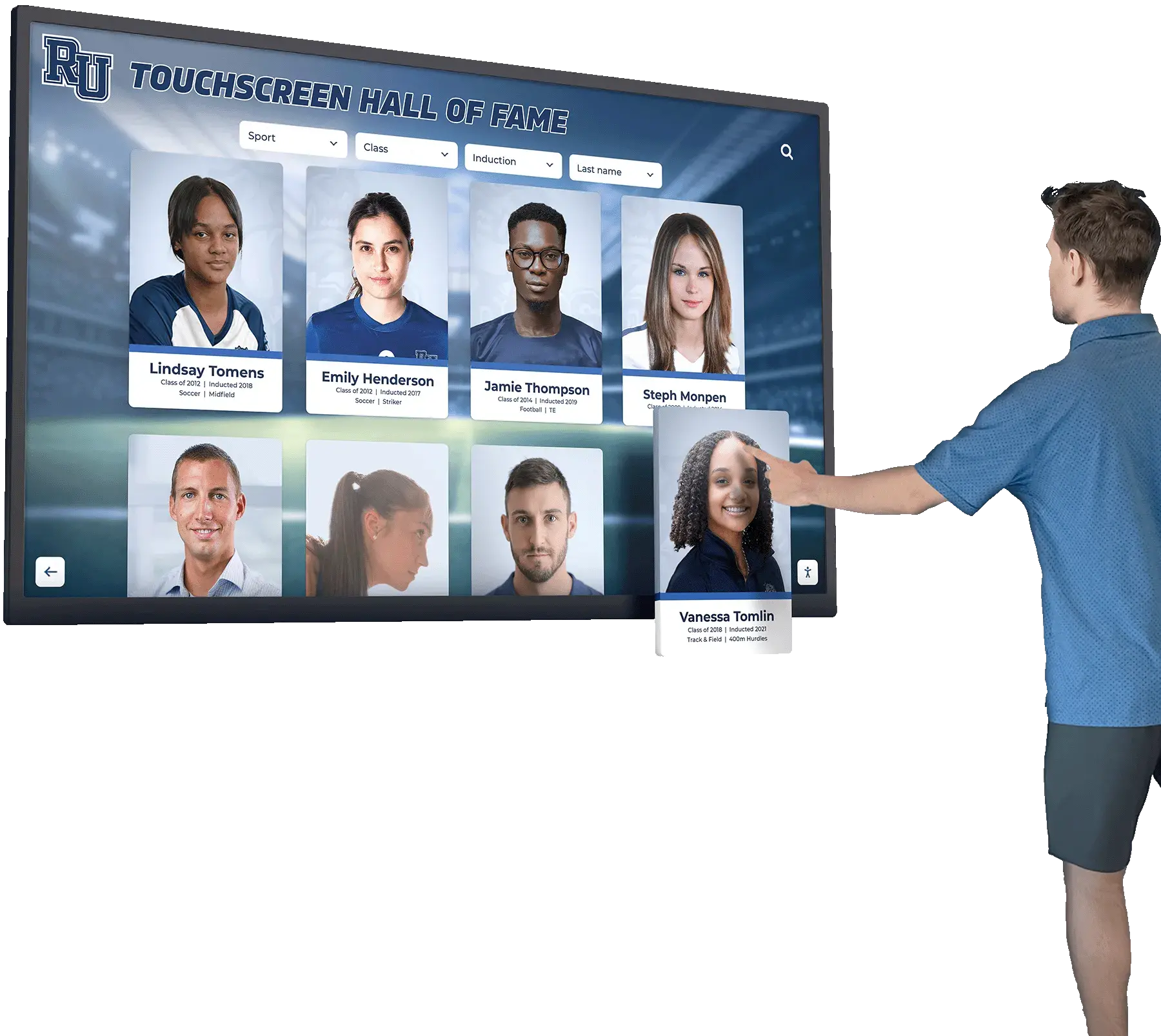

A link purpose audit examines every anchor element on a school's digital hall of fame and asks one question: can a visitor understand where this link leads without reading the surrounding paragraph? On a recognition display, dozens of profile cards often carry identical link text—"View profile," "Read more," "Learn more"—while pointing to completely different inductees. A visitor navigating by keyboard or using a screen reader encounters those repeated labels as an undifferentiated list, with no way to choose between them short of reading each card in full. This guide explains which link patterns cause the most friction, shows how to run a structured audit across profile cards, category navigation, related-story sections, and breadcrumbs, and provides remediation patterns that preserve the visual design while making every link self-explanatory. Why Link Purpose Is a Distinct Accessibility Requirement Touch target size, color contrast, and ARIA roles get most of the attention in recognition display audits, but link purpose addresses a different layer of the experience: whether the information architecture is navigable without visual scanning. WCAG Success Criterion 2.4.4 (Link Purpose – In Context, Level AA) requires that the purpose of each link can be determined from the link text alone or from the link text together with its programmatically determined context—the surrounding sentence, list item, table cell, or heading. WCAG 2.4.9 (Link Purpose – Link Only, Level AAA) raises the bar by requiring the link text itself to be descriptive with no reliance on context at all.
Read More