Digital Hall of Fame ARIA-Atomic Audit for Complete Live-Region Announcements
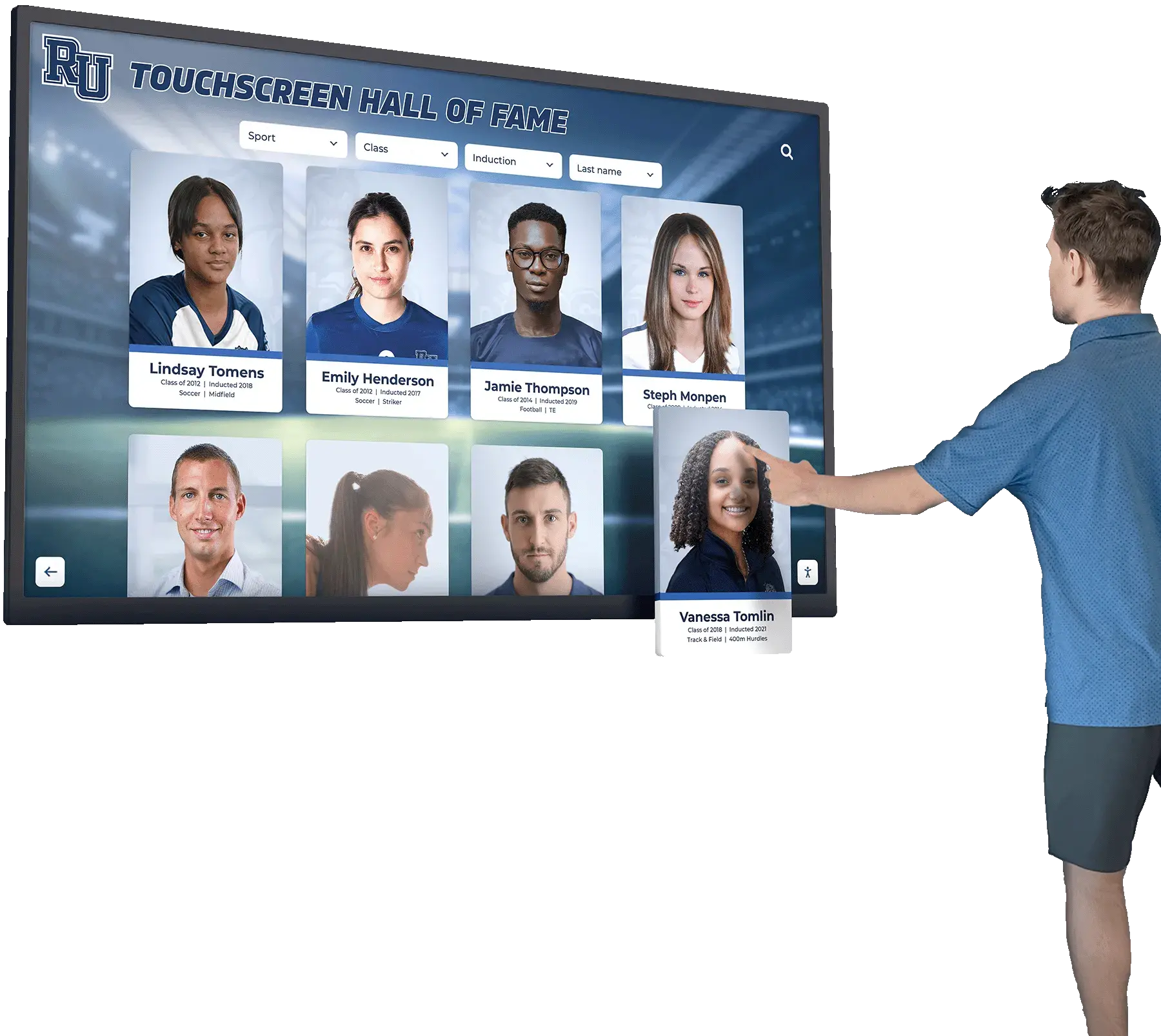
When a visitor to a school's digital hall of fame types a name into the search field or taps the Basketball filter, the result count updates—"Showing 12 inductees"—and a sighted visitor sees it instantly. A screen reader user relies on an ARIA live region to hear that update without moving focus to it. Whether the announcement is "12" or "Showing 12 inductees in Basketball" depends on a single attribute: aria-atomic. A digital hall of fame ARIA-atomic audit checks every live region on the interface—result counts, search status messages, filter confirmations, loading indicators, and error notices—to confirm that each one announces a complete, contextual phrase rather than a bare fragment. This guide walks school IT staff, athletic directors, and accessibility coordinators through every step of that audit without requiring access to the platform's source code. What ARIA Live Regions Do in a Hall-of-Fame Interface Most content on a hall of fame webpage or kiosk is static: inductee names, portrait images, career summaries, and sport categories are loaded once and do not change while a visitor browses. ARIA live regions exist for the content that does change—content that updates in response to a visitor’s action without a full page reload.
Read More
Digital Hall of Fame Search Stemming Audit for Better Inductee Discovery
When a school's hall of fame platform indexes the word "runner" as a distinct term from "running," a visitor searching the roster for cross-country inductees may find nothing—not because the athletes are absent, but because the search index treats inflected forms as separate queries. Search stemming is the mechanism that connects these variations: it reduces "runner," "running," and "runners" to a shared root so that any of the three finds the same set of profiles. A digital hall of fame search stemming audit tests whether that mechanism is calibrated correctly for the singular, plural, and inflected award and sport terms your recognition program actually uses—and identifies the gaps where visitors are returned empty results for inductees who are fully in the system. What Search Stemming Is and Why It Matters for Hall of Fame Discovery Search stemming is the process by which a search engine reduces a word to its base or root form—called a stem—before matching it against the search index. When stemming is applied, “inducted,” “inductees,” “inducting,” and “induction” all reduce to the root “induct,” which means a visitor who types any one of these forms retrieves the same set of profiles.
Read MoreDigital Hall of Fame Motion Actuation Accessibility Audit: A Step-by-Step Checklist
Athletic directors and IT coordinators planning or managing a touchscreen hall of fame spend considerable effort on content quality, visual design, and hardware durability. Motion actuation accessibility—whether every gesture, swipe, and sensor-triggered interaction on the display can also be completed by a visitor who cannot perform that motion—is a narrower but equally important audit area. A digital hall of fame motion actuation accessibility audit systematically checks each touch-and-gesture interaction in your display for an accessible alternative, so every community member who visits the lobby, gymnasium, or alumni center can explore inductee profiles and program history without assistance.
Read MoreDigital Hall of Fame Search Autocomplete: Governance and Testing Guide
Digital hall of fame search autocomplete is the live suggestion list that appears as a visitor types a name or term into the search box on your recognition platform. Governing that list—deciding which suggestions are approved, how nicknames and historic names are validated, and what testing routine confirms each entry is accurate—is one of the most underrated maintenance tasks in athletic recognition programs. Done well, autocomplete reduces the effort required to find an inductee by two to three keystrokes and surfaces names that visitors recognize but cannot spell precisely. Done poorly, it surfaces stale suggestions, creates false associations between people who share a name, or promotes draft profiles before they are ready. This guide gives school athletic directors, archivists, and IT administrators a practical framework for governing and testing the autocomplete suggestion set on a hall of fame website or touchscreen display. Why Autocomplete Governance Matters for School Recognition Programs A visitor standing in front of a touchscreen in your gym lobby—or browsing your hall of fame website from a reunion table—arrives with a specific person in mind. They may know the name from a game program, a trophy plaque, or a story told at the banquet. What they type may be a nickname, a maiden name, a partial last name, or the year of a championship. The autocomplete list is the first moment of recognition: it either confirms that your system knows who they are looking for, or it signals a gap.
Read More
Hall of Fame Profile Update Request Form: Fields, Evidence, and Review Workflow
When an inductee’s biography contains a misspelled name, a missing championship season, or a photograph that no longer represents the person as their family knew them, a hall of fame profile update request form gives schools a structured, provenance-preserving path to accept corrections. Without a defined form and review workflow, update requests arrive by email, voicemail, and hallway conversation—and then quietly disappear. A purpose-built form captures every request in one place, collects the evidence needed to evaluate it, routes it to the right reviewer, and creates a record of what changed and why.
Read More
Athletic Hall of Fame Artifact Numbering System: Label, Catalog, and Track Every Item
Every athletic hall of fame has them: a storage room, a back hallway, or an overstuffed trophy case where objects accumulate without a clear system connecting them to records, to donors, or to the inductees they represent. A championship banner sits rolled in a tube with no tag. A game ball in a display case has an engraved date but no catalog entry. Three photographs from the same season live in different folders with different names and no link to each other or to the inductee’s profile.
Read MoreAthletic Hall of Fame Accession Form: Document Every Artifact Before Display
When a family donates a championship trophy, a retired jersey, or a set of photographs from a team’s undefeated season, those objects carry history that words alone cannot capture. Before any artifact takes its place behind glass or appears on a digital display, an athletic hall of fame accession form creates the institutional record that protects the school, honors the donor’s intent, and preserves context for everyone who views the collection for decades to come. Completing this intake step correctly—covering ownership, physical condition, permissions, and digitization—prevents the documentation gaps that turn a meaningful donation into an unresolvable dispute over ownership or a display item with no traceable origin.
Read MoreHall of Fame Inductee Questionnaire: Questions Schools Should Collect Before Publishing Profiles
A hall of fame plaque or digital profile is permanent in a way that most school communications are not. When a name is spelled wrong, a graduation year is off by one, or a state championship is omitted from a twenty-year career, that error sits on display for decades and frustrates the inductee every time they or their family visits. The solution is not to fact-check after publishing—it is to collect accurate, complete information before publishing. A structured hall of fame inductee questionnaire is how schools gather everything they need from the source most likely to know it: the inductee themselves. This guide covers every section that questionnaire should include, the questions that belong in each section, and the collection and verification workflow that turns responses into display-ready profiles. Why Schools Need a Formal Intake Process Before Publishing Many programs send a congratulatory letter when an inductee is selected and then piece together profiles from yearbooks, newspaper clippings, and whatever a coach can remember. This approach produces inconsistent results—some profiles are detailed and compelling, others are thin and error-prone—and it places the burden of research on staff rather than on the person who actually lived the career being recognized.
Read More
Hall of Fame Plaque Wording for Schools: Names, Years, Achievements, and Digital Profile Prompts
Getting hall of fame plaque wording right matters more than most committees expect. The text is permanent, it is the first thing visitors read, and it creates the data record that either supports or limits a richer digital profile years down the road. Committees often agonize over how to handle names, what year range to use, how much achievement detail fits on a plaque face, and whether to write "All-State" or "all-state." This guide provides ready-to-use wording formulas for individual athletes, coaches, teams, and community contributors—along with a field checklist that turns plaque copy into the structured data digital inductee profiles need. Why Plaque Wording Decisions Have Long-Term Consequences A hall of fame plaque may hang for 30 or 40 years. The wording you standardize in your first induction cycle becomes the template every future committee inherits. Schools that rush the wording phase end up with inconsistencies across the wall: one plaque says “Class of 2018,” the next says “2014–2018,” and a third says “Graduated 2021.” Visitors cannot scan the wall coherently, and any digital migration later requires manual cleanup of records that were never normalized.
Read More
Hall of Fame Selection Committee Guide for School Athletic Programs
A hall of fame selection committee is the engine behind every credible athletic recognition program. The names that appear on a lobby wall, a touchscreen kiosk, or a digital trophy case earn their place through a process—and when that process is well-designed, transparent, and consistently applied, it protects the program's integrity for decades. When it is improvised, the result is politics, hurt feelings, and nominations that never quite make sense to the wider school community. This guide walks through every essential element of building and operating a hall of fame selection committee for a school athletic program: who should serve, how criteria should be written, how conflicts get managed, how votes get taken, and how records should be kept so that future committees can build on what came before. Why a Structured Selection Committee Matters Induction into an athletic hall of fame is one of the highest honors a school can extend to a former athlete, coach, or contributor. That honor carries weight only when people trust the selection process. Programs that operate informally—where a single athletic director makes all decisions, or where the same small group of insiders chooses inductees without documented criteria—face consistent criticism: the hall becomes perceived as a popularity contest or an insiders’ club rather than a genuine recognition of excellence.
Read More
High School Sports Banquet Ideas That Feed a Lasting Athletic Hall of Fame
A high school sports banquet is more than a dinner and a slide show. Done well, the content generated at that single evening—speeches, award citations, senior tributes, team photos, record announcements—becomes the raw material for a hall of fame that lasts decades. This guide walks athletic directors, coaches, and booster clubs through high school sports banquet ideas that produce great celebrations tonight and rich recognition archives tomorrow.
Read More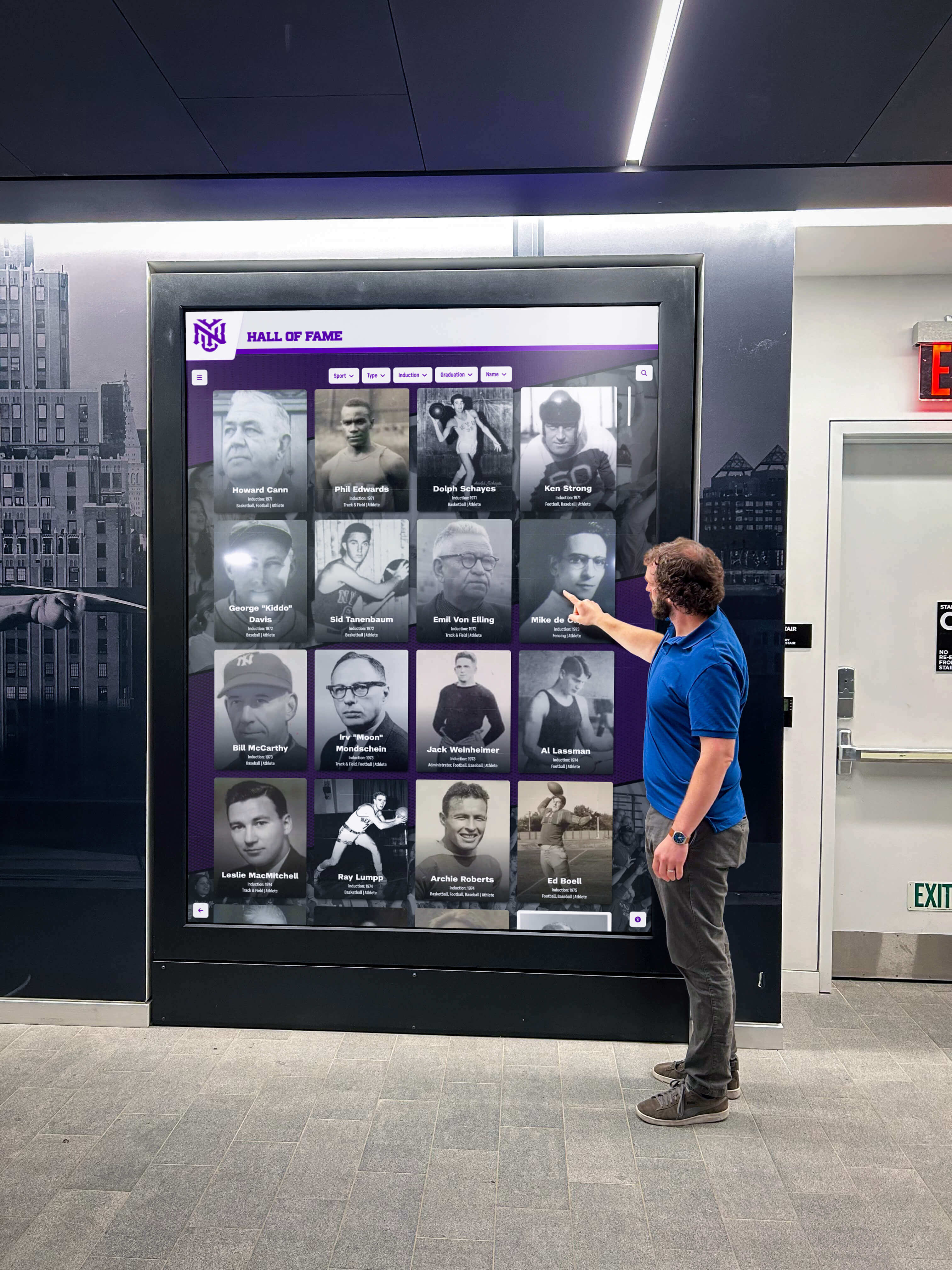
Hall of Fame Exhibit Ideas: How Schools Turn Inductee Stories Into a Walkthrough Display
The strongest hall of fame exhibit ideas share one organizing principle: each inductee’s story should guide visitors through a clear beginning, middle, and lasting impact—rather than presenting a flat list of names and statistics. Schools that plan exhibit flow around narrative arcs, curate authentic artifacts, anchor the space with a historical timeline, and extend the experience through touchscreen displays consistently produce recognition spaces that feel alive years after opening day.
Read More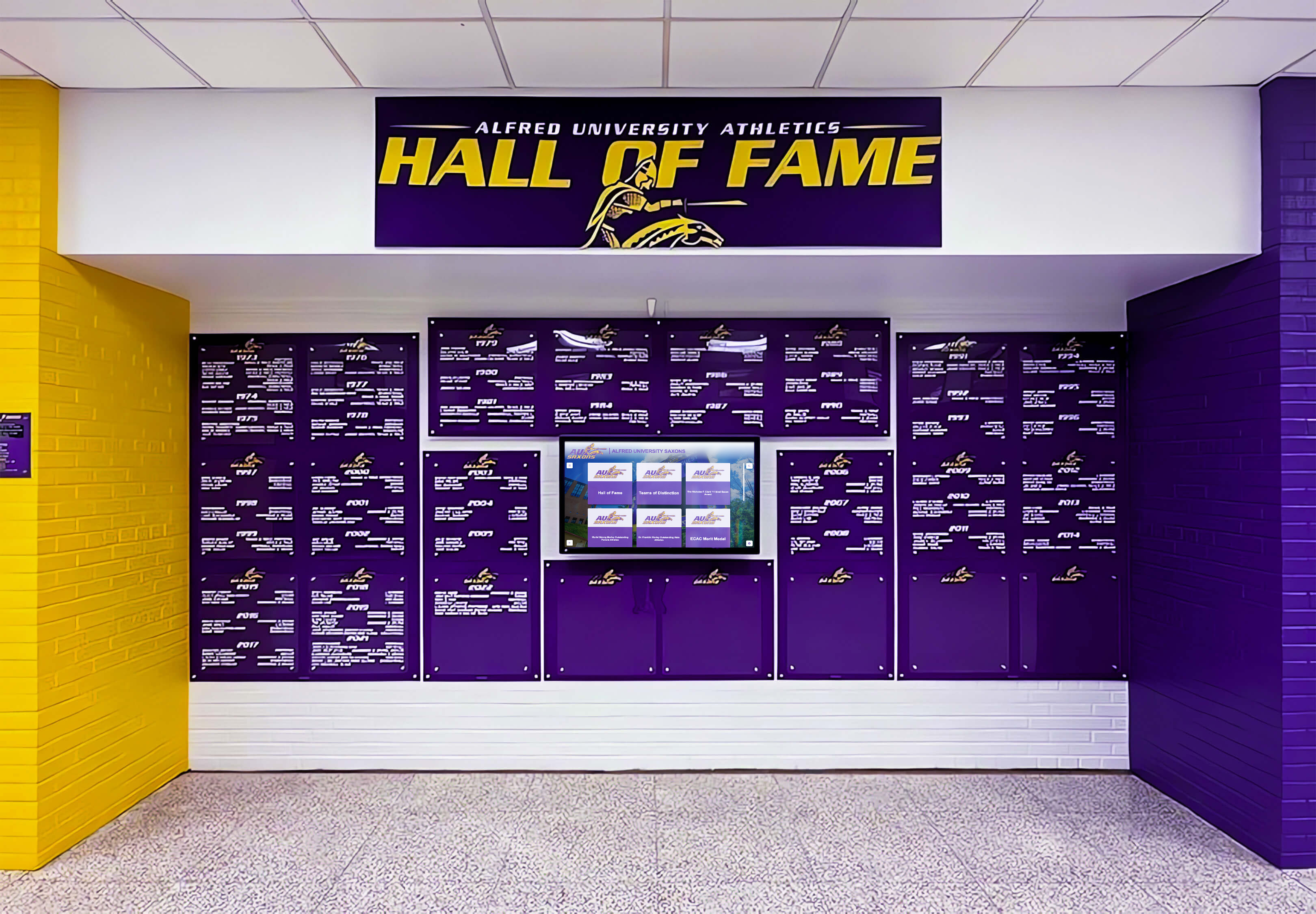
Hall of Fame Induction Ceremony Ideas: How Schools Plan a Memorable Inductee Celebration
The night an inductee walks into a school hall of fame is one of the most meaningful moments in a school’s annual calendar—but only if it’s planned with the care the honor deserves. Coaches who shaped programs, athletes who broke records, alumni who transformed their communities: these people have given something lasting to your institution. Hall of fame induction ceremony ideas that truly work go beyond a handshake and a plaque. They create an experience that honors the inductee’s legacy, moves their families, and inspires every current student watching from the stands.
Read MoreCoach Hall of Fame Display Ideas: Honoring Legendary Coaches With Permanent Recognition
Coaches build programs. They recruit raw talent, install systems, instill culture, and produce championship teams year after year—often for decades in the same hallways and locker rooms. Yet when athletic departments plan hall of fame displays, coaches are frequently an afterthought, added as a separate wing only after the athlete recognition program is already established. A dedicated coach hall of fame display corrects that imbalance, giving the people who shape athletic programs the permanent, prominent recognition their careers earned.
Read More
Athletic Hall of Fame: Complete Guide for School Administrators
School administrators face complex decisions when establishing or managing athletic hall of fame programs. These recognition systems celebrate institutional athletic heritage while motivating current student-athletes and strengthening community connection. However, poorly planned hall of fame programs create controversy through perceived favoritism, inconsistent selection standards, or unsustainable administrative burden. This comprehensive guide provides school administrators with frameworks for creating hall of fame programs that honor achievement authentically while supporting broader institutional goals through clear governance, sustainable operations, and appropriate recognition technology.
Read MoreDivision I Athletics Digital Recognition System: Complete Guide for College Athletic Programs 2025
Division I athletic programs face unique challenges in celebrating the depth of their achievements, engaging alumni, attracting elite recruits, and sustaining major fundraising initiatives. Traditional trophy cases and plaque walls can no longer adequately showcase the hundreds of student-athletes, championship teams, conference titles, and All-Americans that define D1 program excellence. Space constraints, maintenance demands, and the inability to update static displays in real-time limit their effectiveness in today’s competitive collegiate athletics landscape.
Read MoreJuCo Athletics Digital Recognition System: Complete Guide to Honoring Community College Athletes and Building Championship Traditions
Junior college athletics represents a vital pathway for student-athletes pursuing higher education, athletic development, and transfer opportunities to four-year institutions. Community college athletic programs face unique recognition challenges—balancing limited budgets with the need to celebrate achievement, managing high athlete turnover as students transfer, and preserving program traditions despite facility constraints. Modern digital recognition systems are transforming how JuCo programs honor their student-athletes, coaches, and championship teams through cost-effective, flexible solutions that overcome traditional limitations. This comprehensive guide explores everything community college athletic directors, coaches, and administrators need to know about implementing effective digital recognition systems that celebrate excellence, strengthen recruitment, and build lasting athletic traditions. Understanding the Unique Landscape of Junior College Athletics Junior college athletics operates within a distinctive ecosystem that shapes recognition needs and opportunities differently than four-year institutions.
Read More