



Key Takeaways
Discover what a digital hall of fame is, how it works, and why institutions are adopting this technology. Complete guide covering features, benefits, costs, and implementation for schools and organizations.
Understanding Digital Halls of Fame: Definition and Core Concept
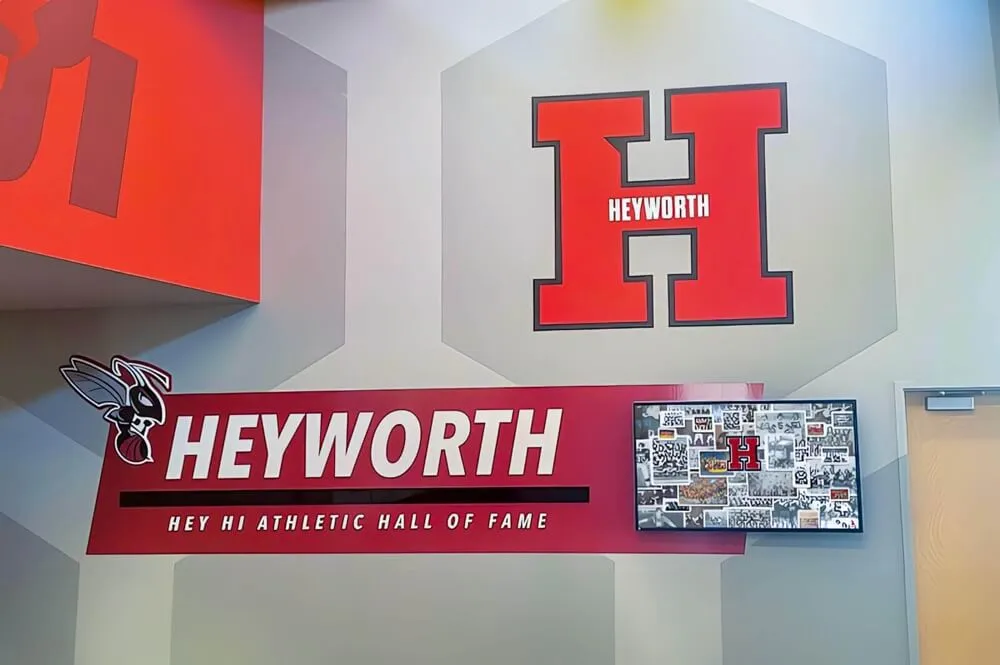
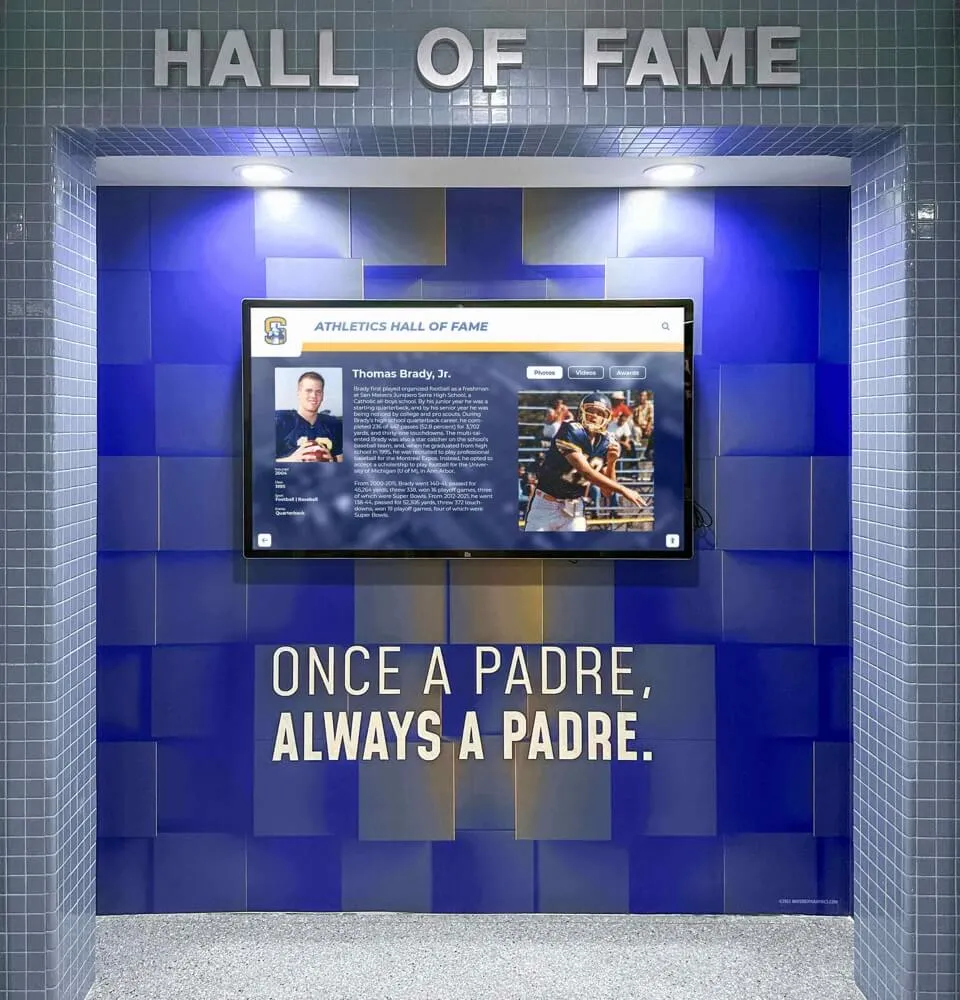
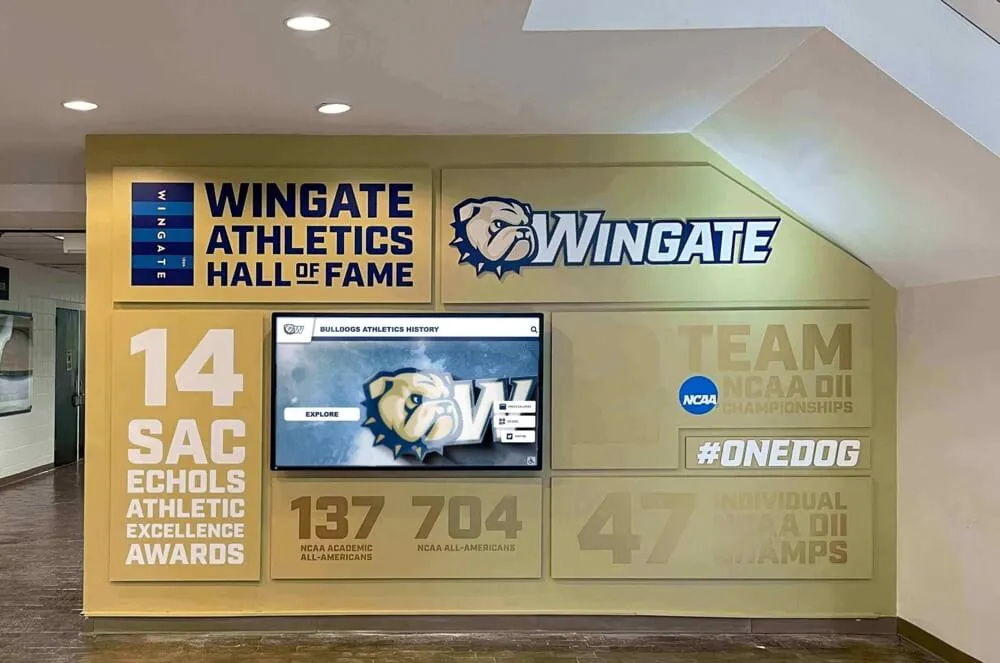
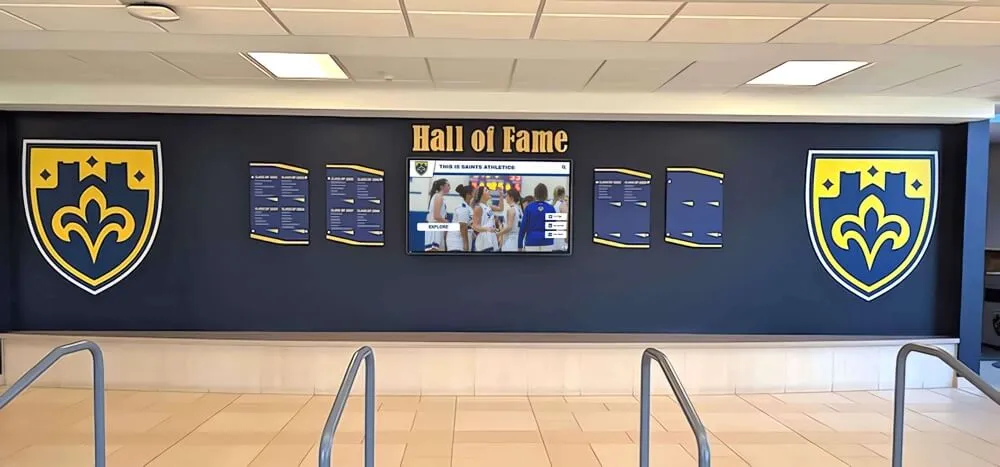
A digital hall of fame is a technology platform that digitally recognizes and celebrates individual and team achievements through interactive displays and searchable online databases. At its most basic level, a digital hall of fame replaces physical plaques, trophy cases, and printed banners with digital screens displaying recognition content.
However, comprehensive digital hall of fame systems go far beyond simply showing images on a screen. These sophisticated platforms integrate several key components:
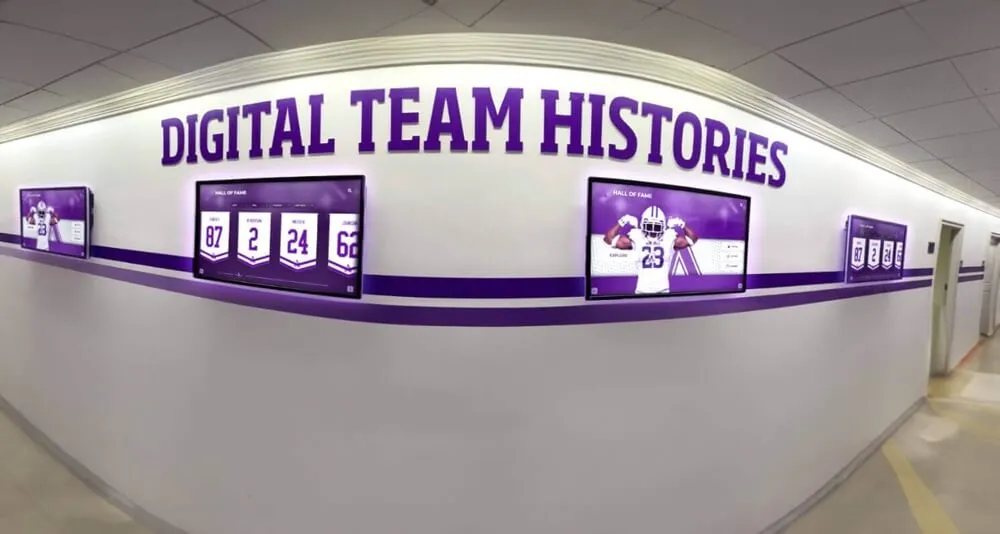
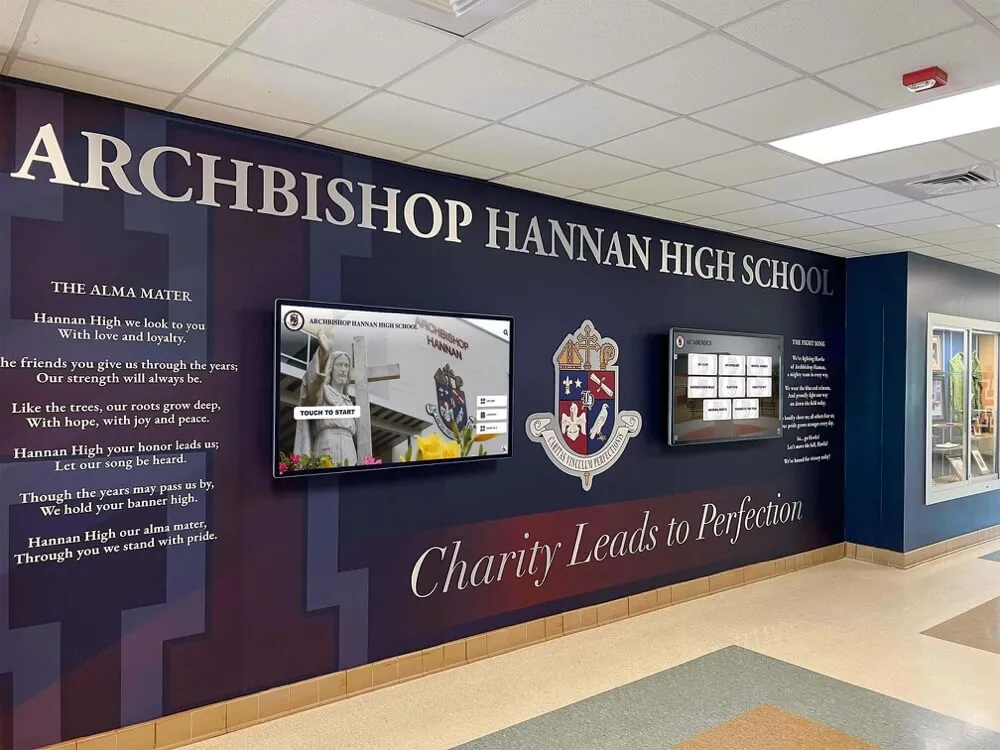
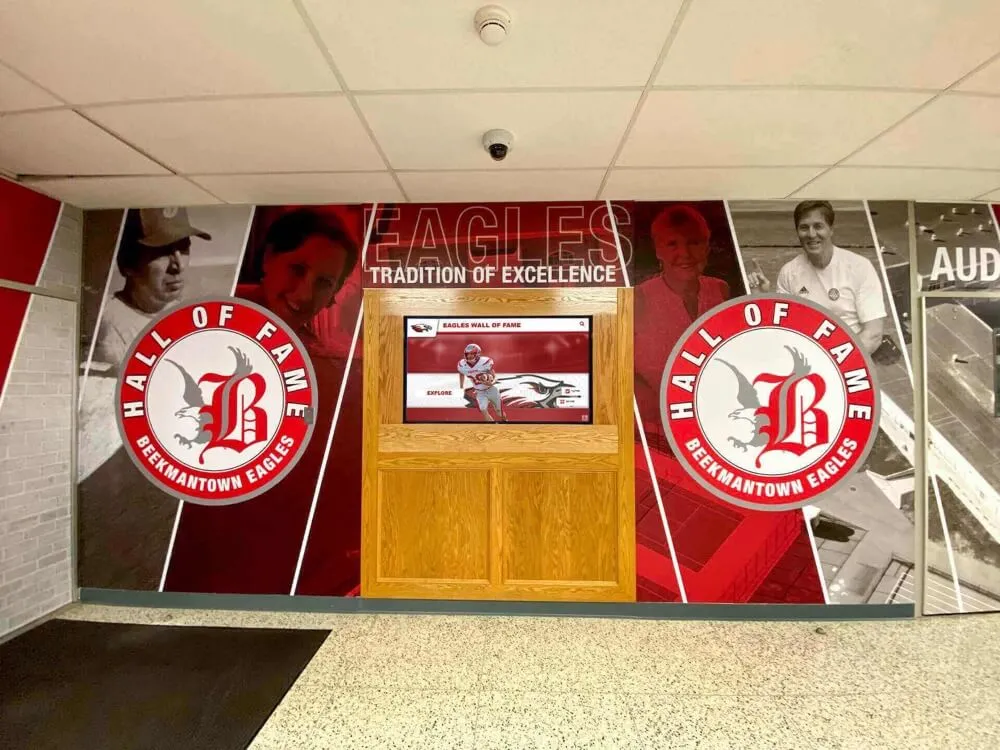
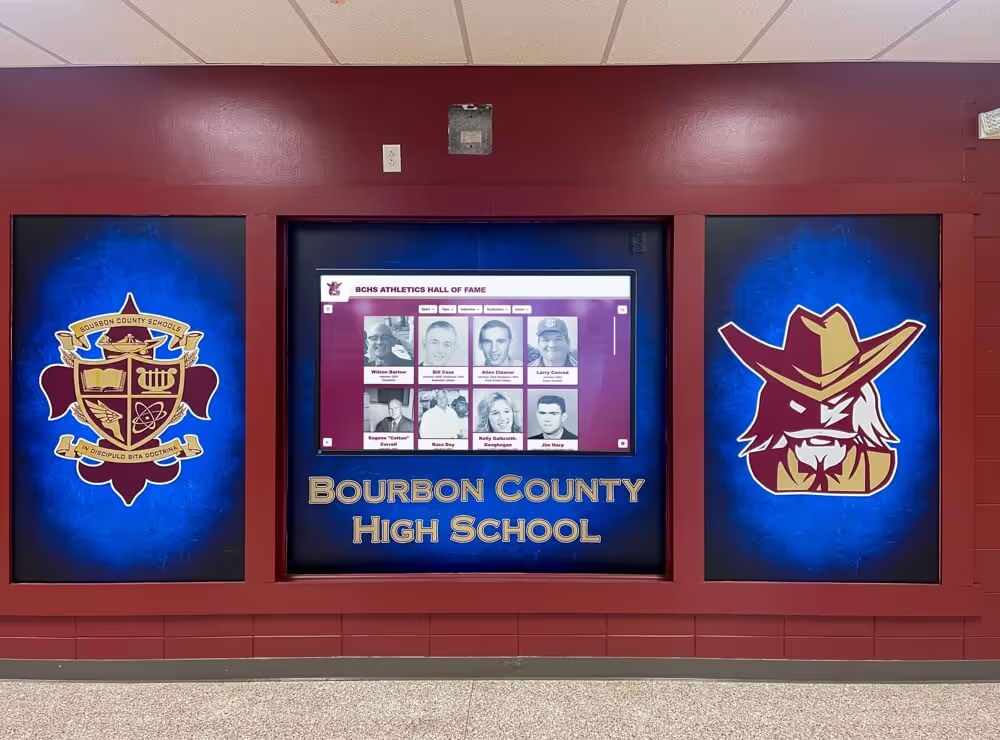
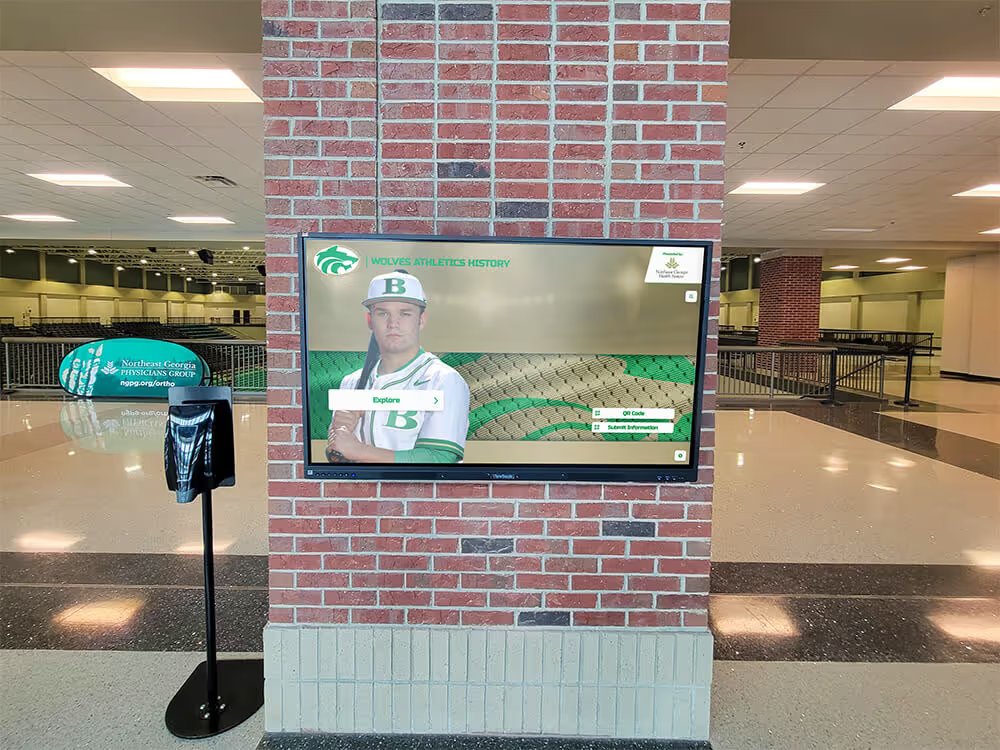
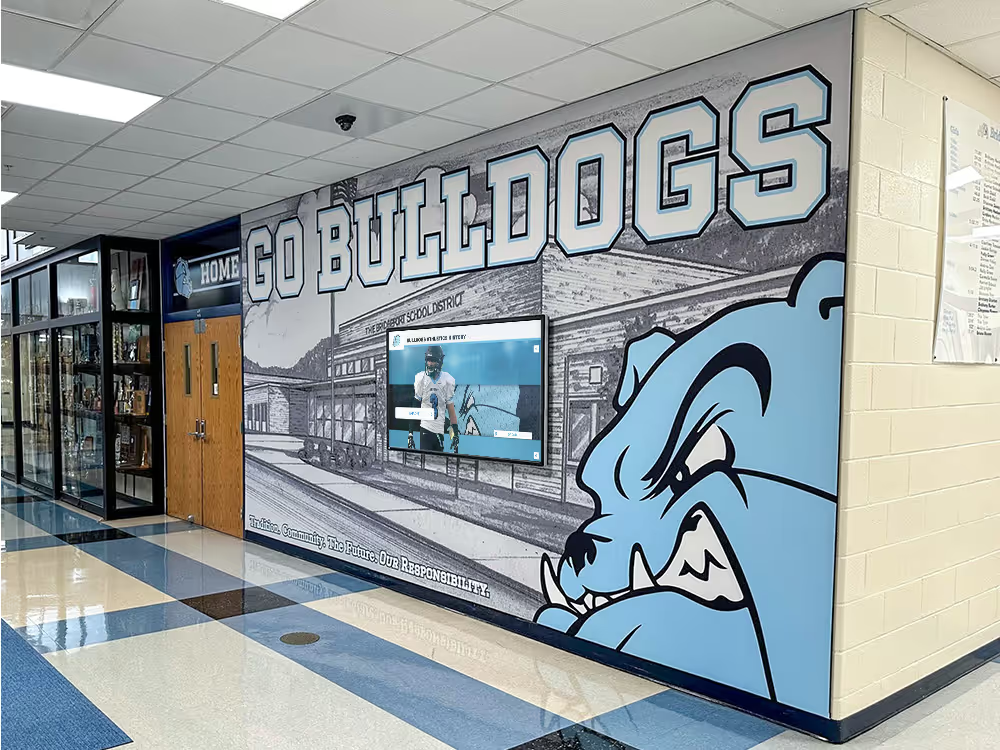
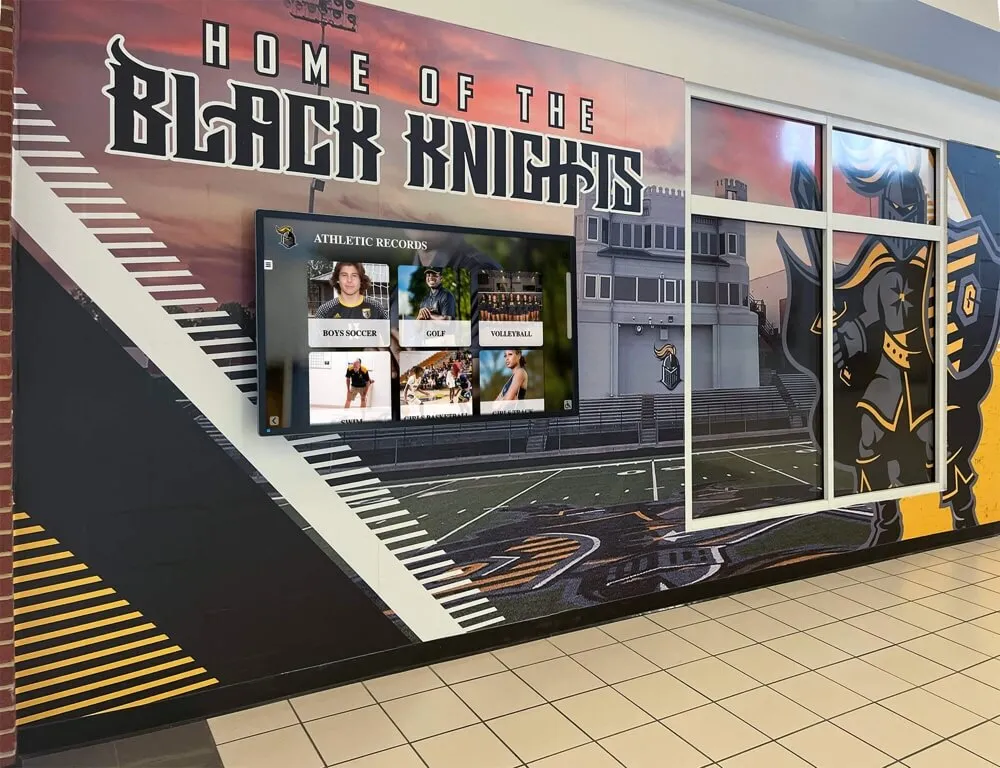
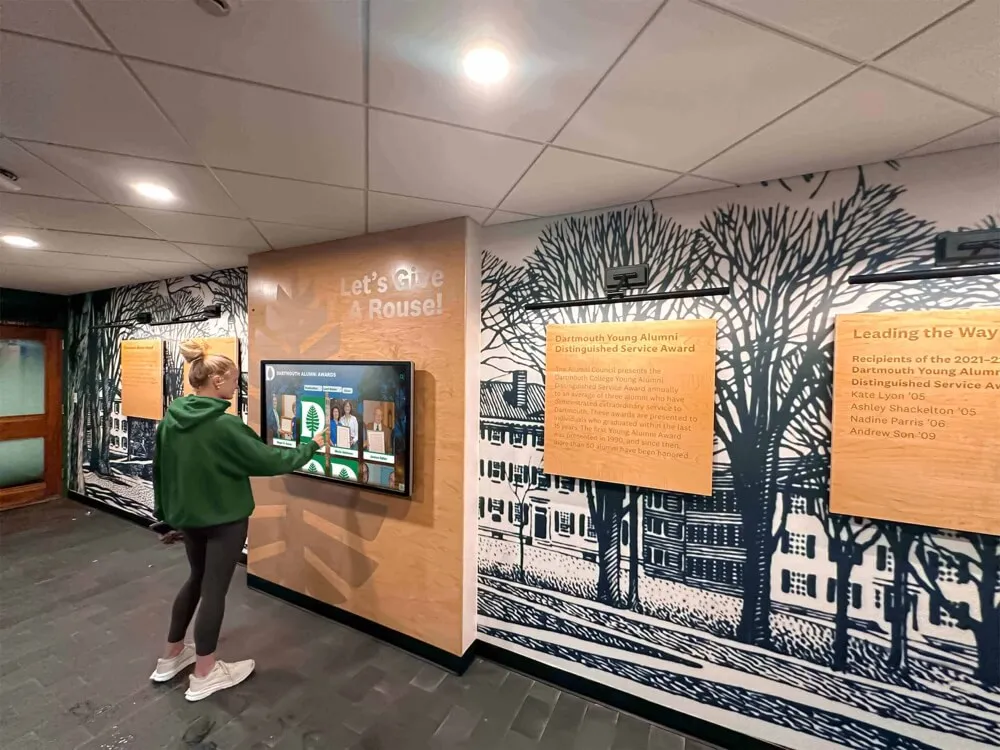
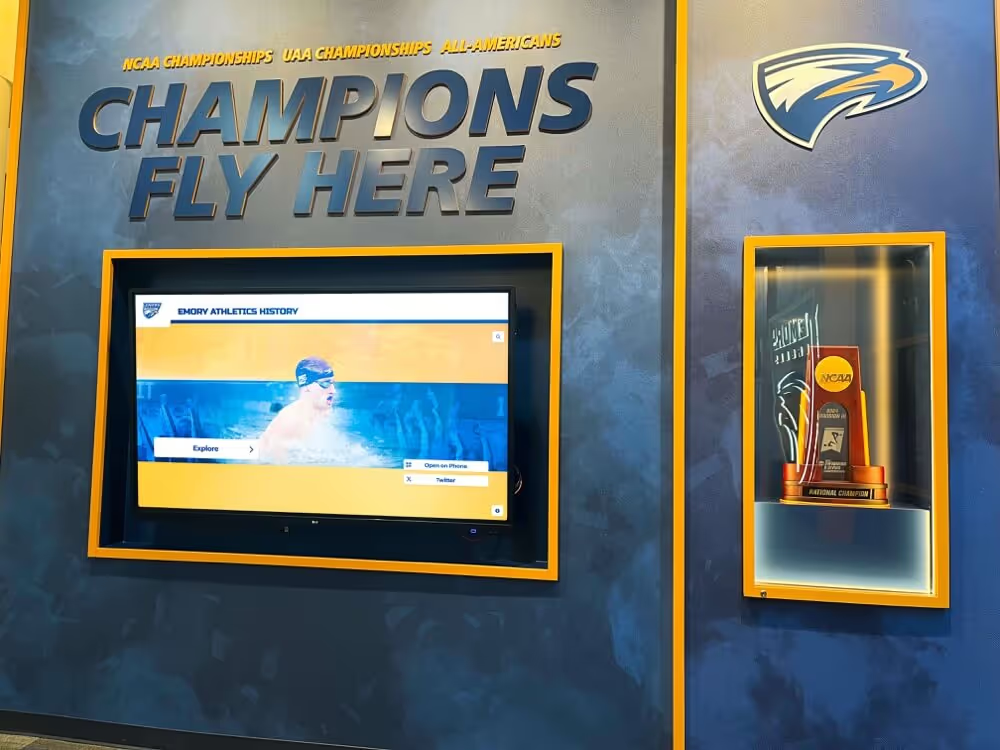
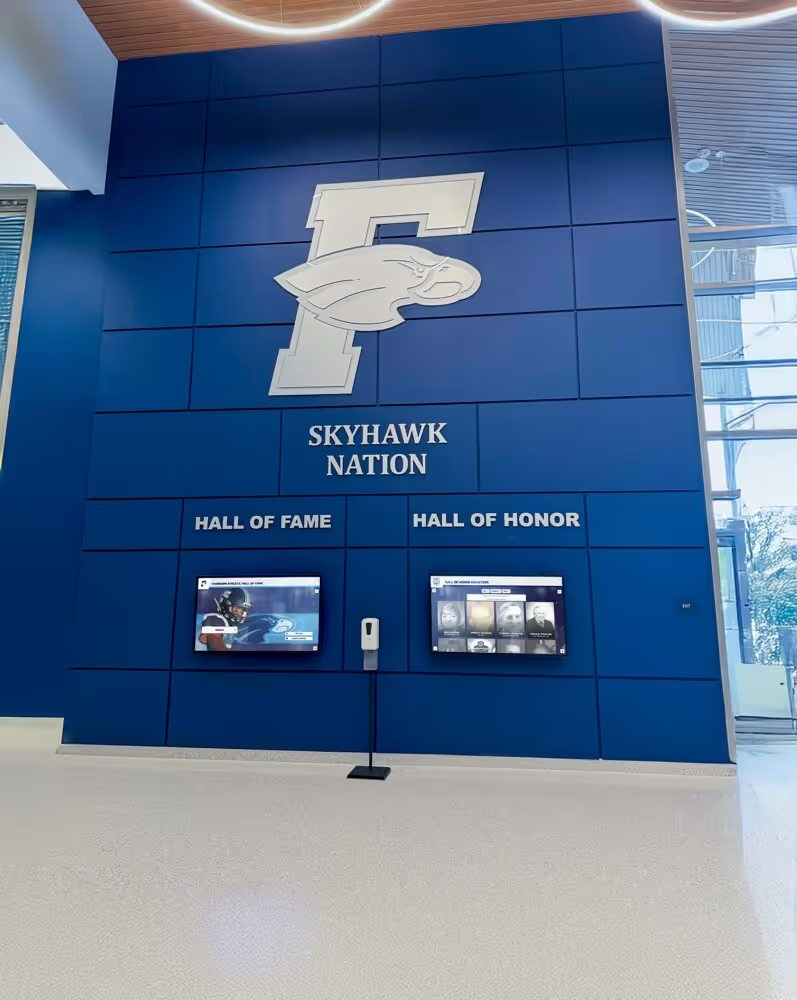
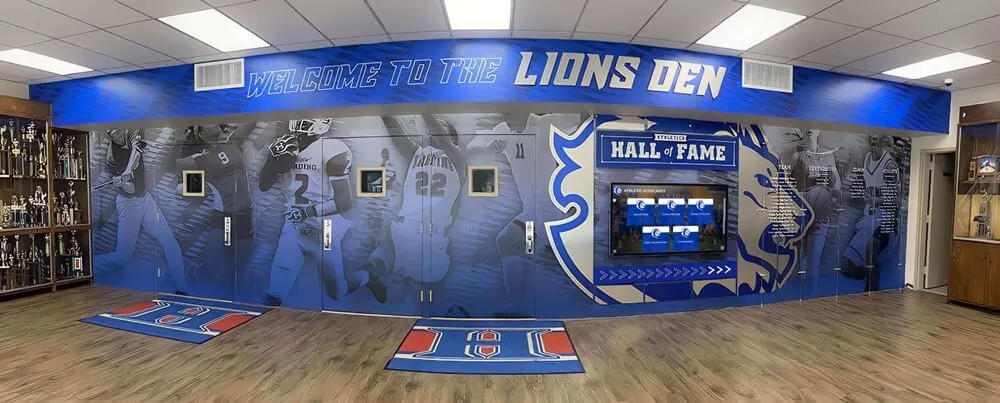
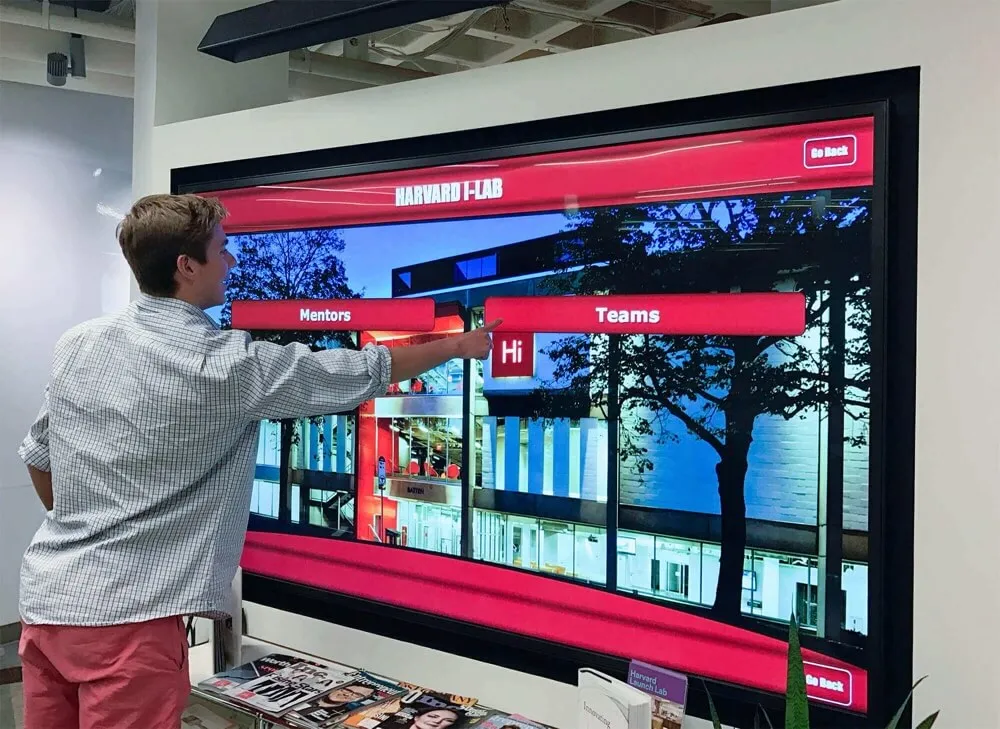
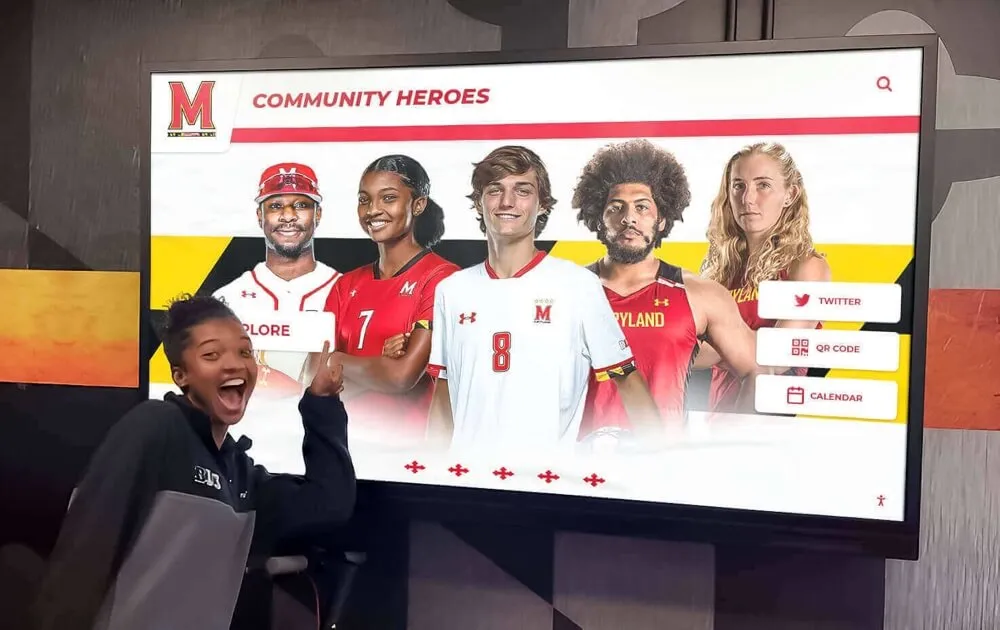
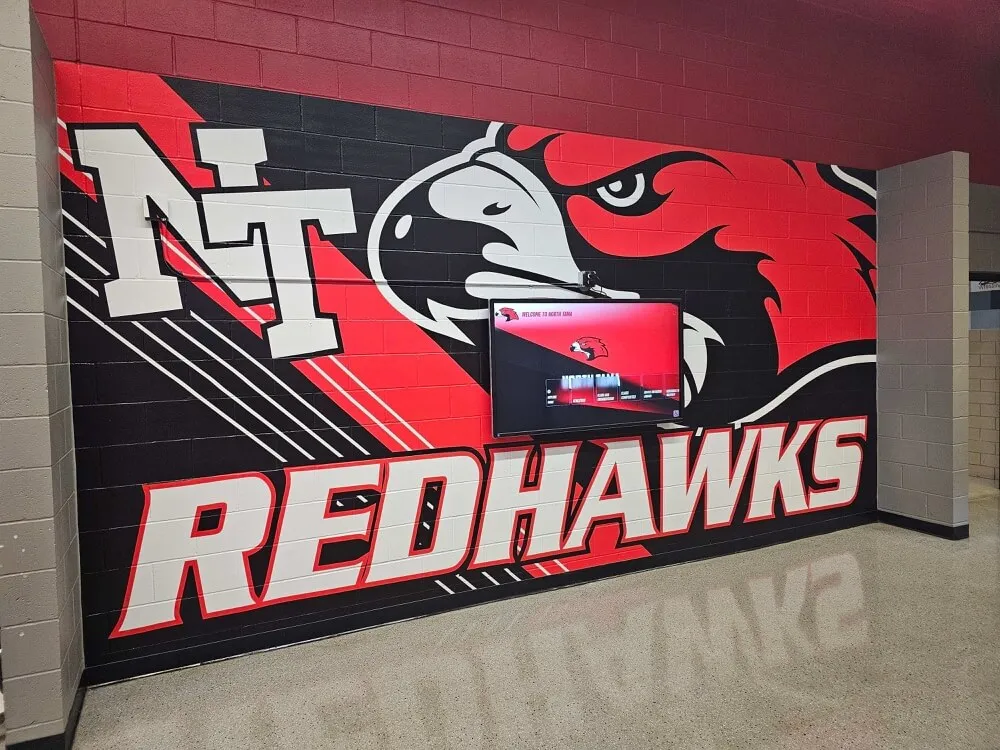
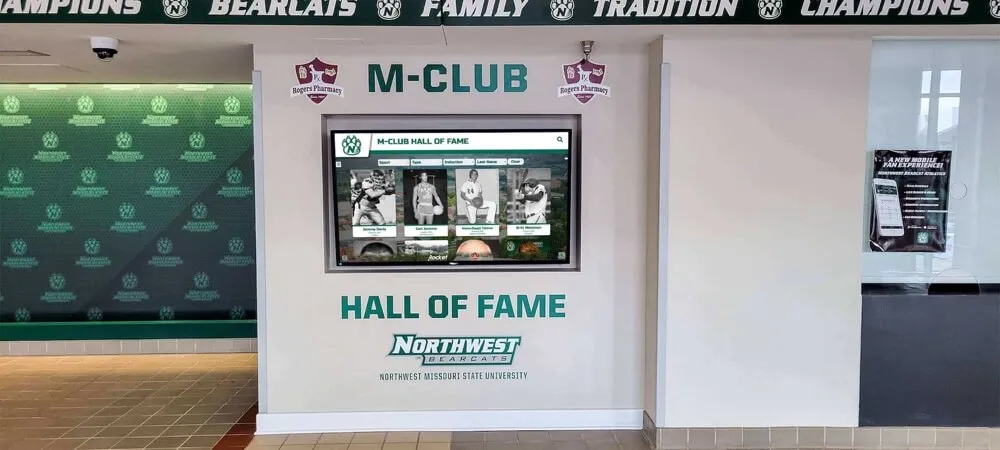
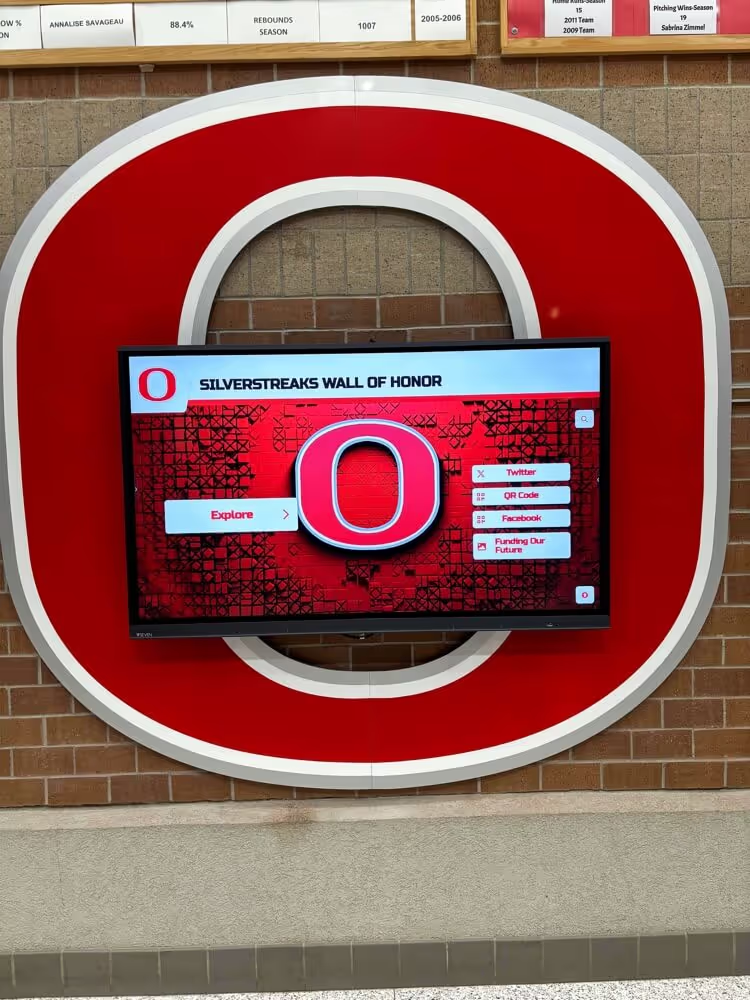
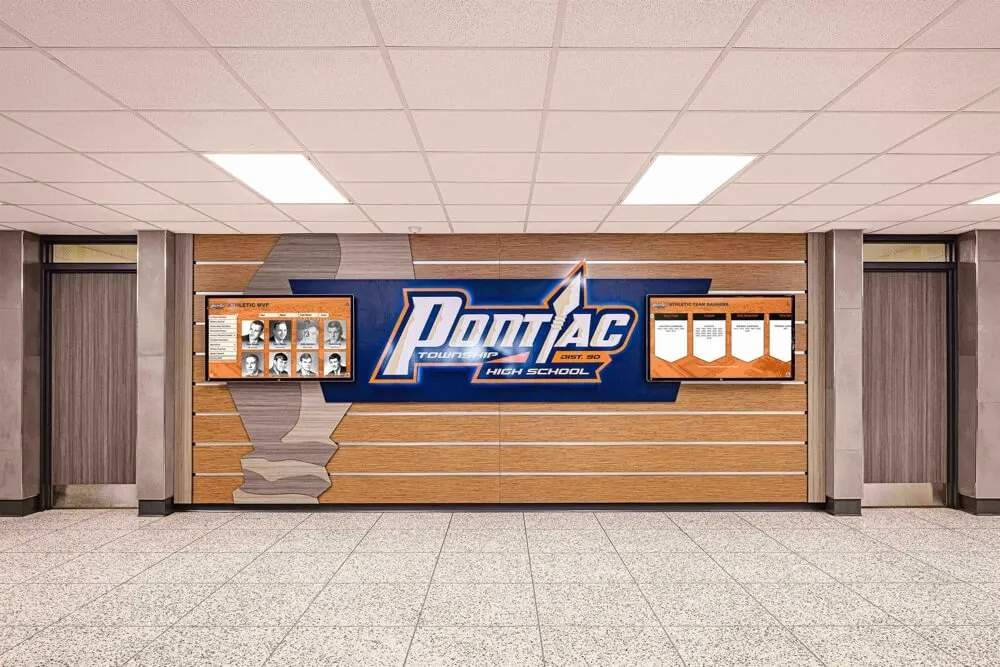
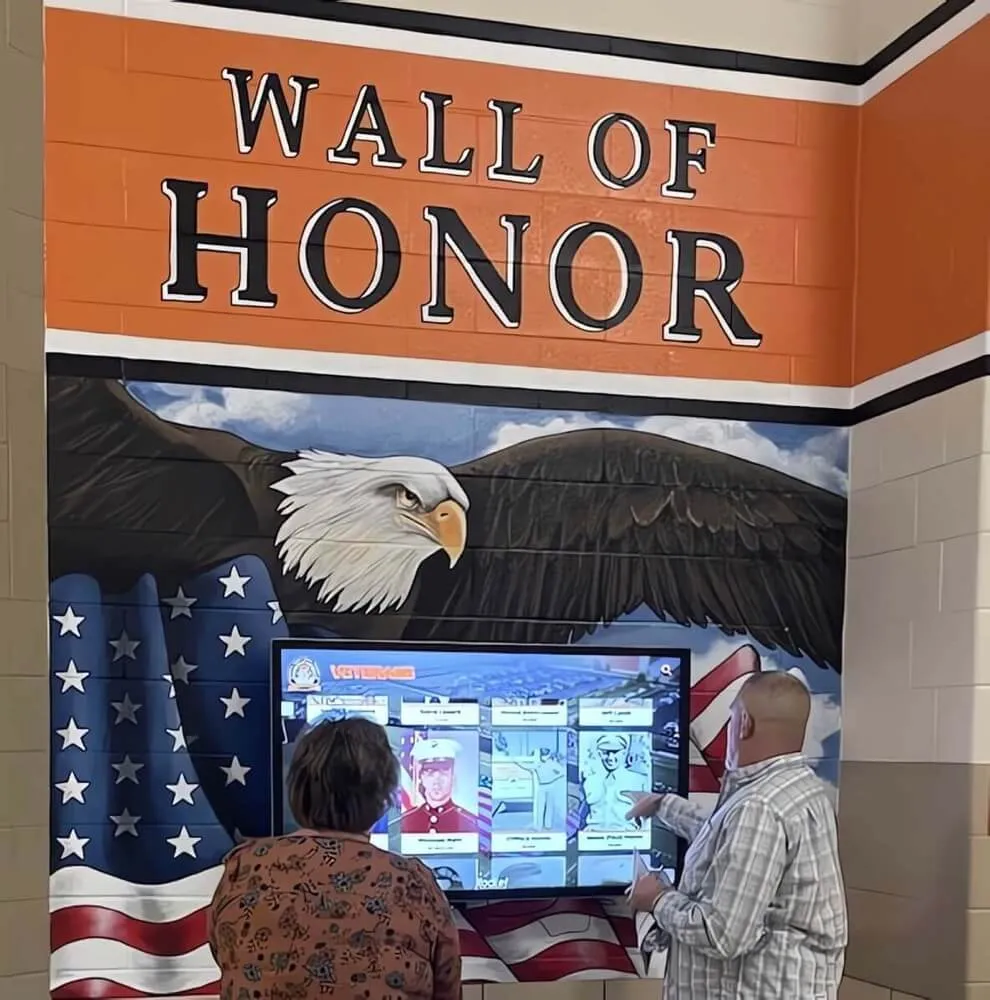
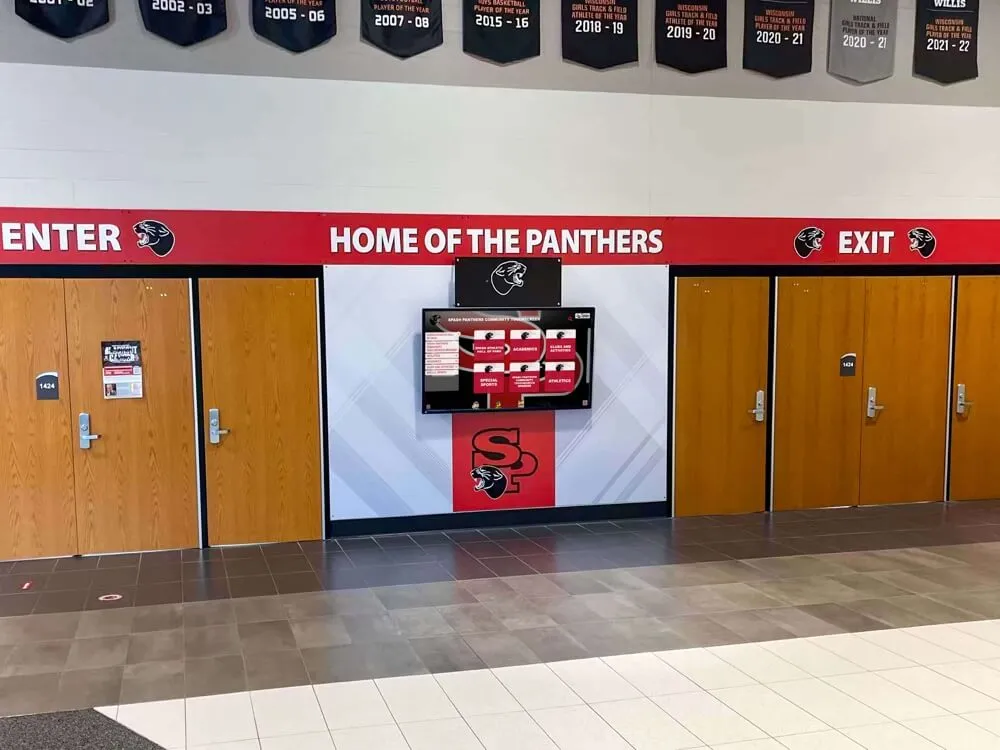
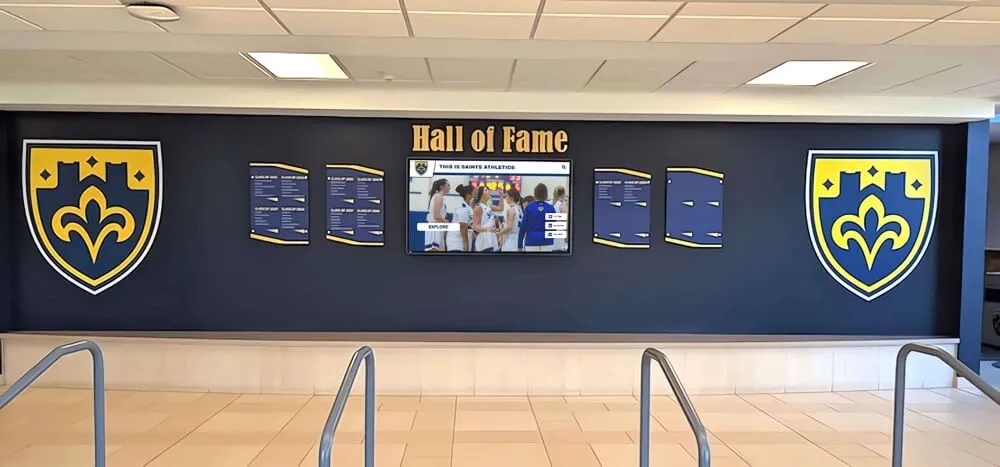
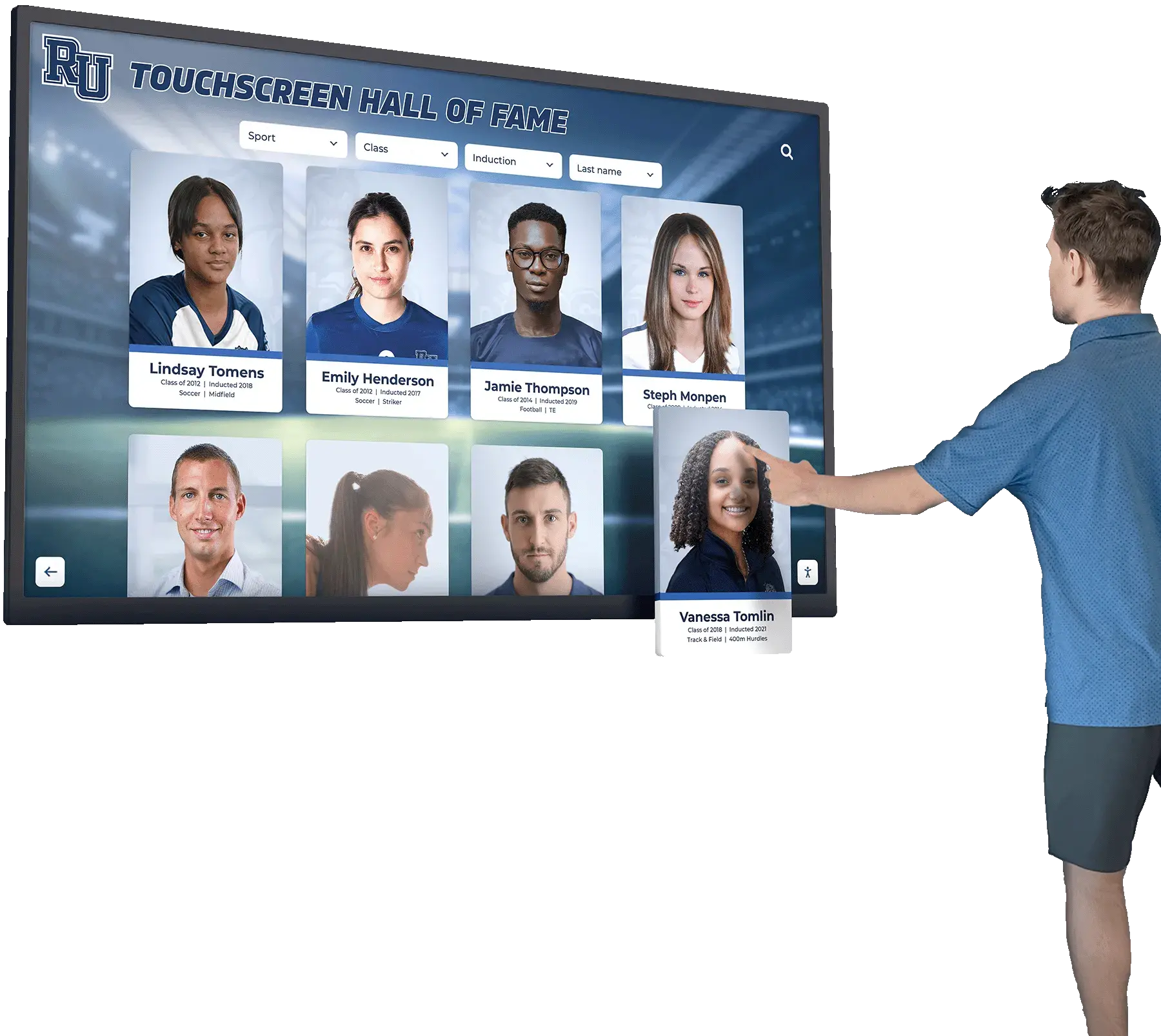
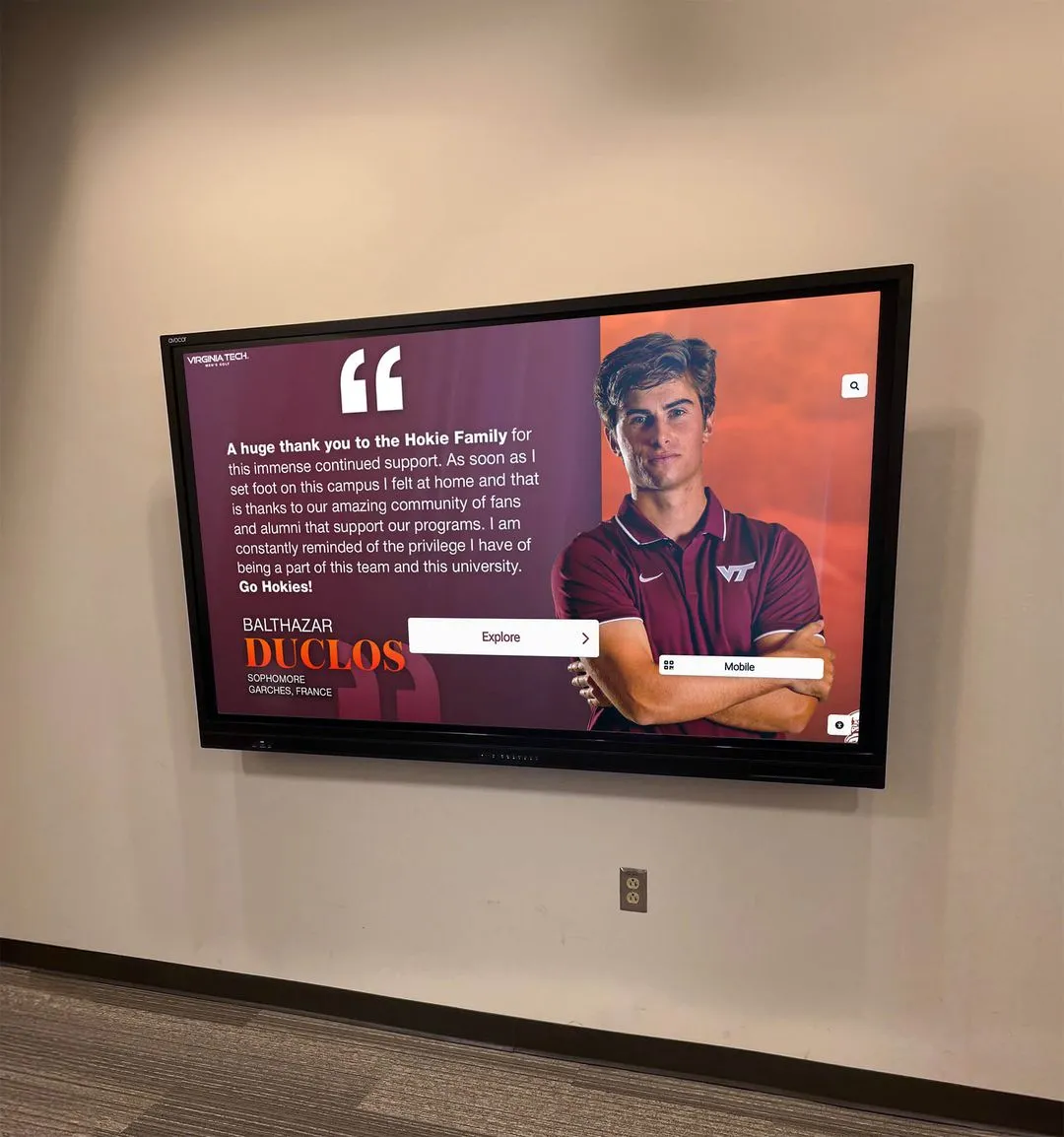
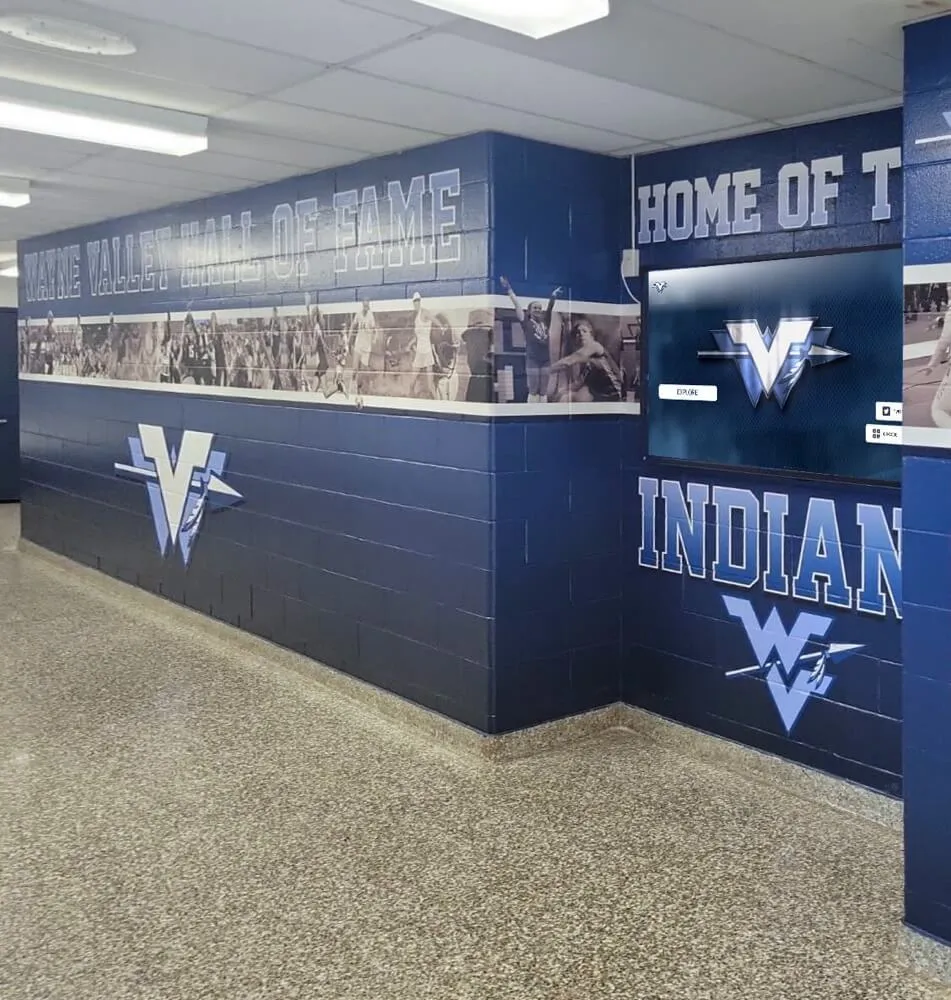
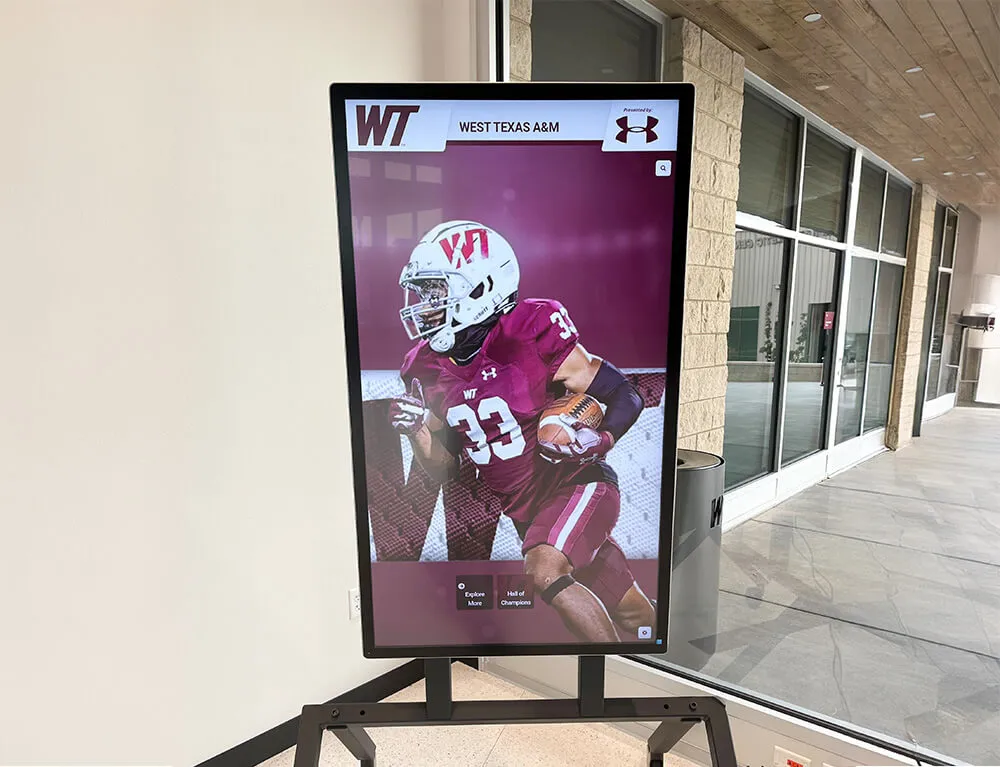
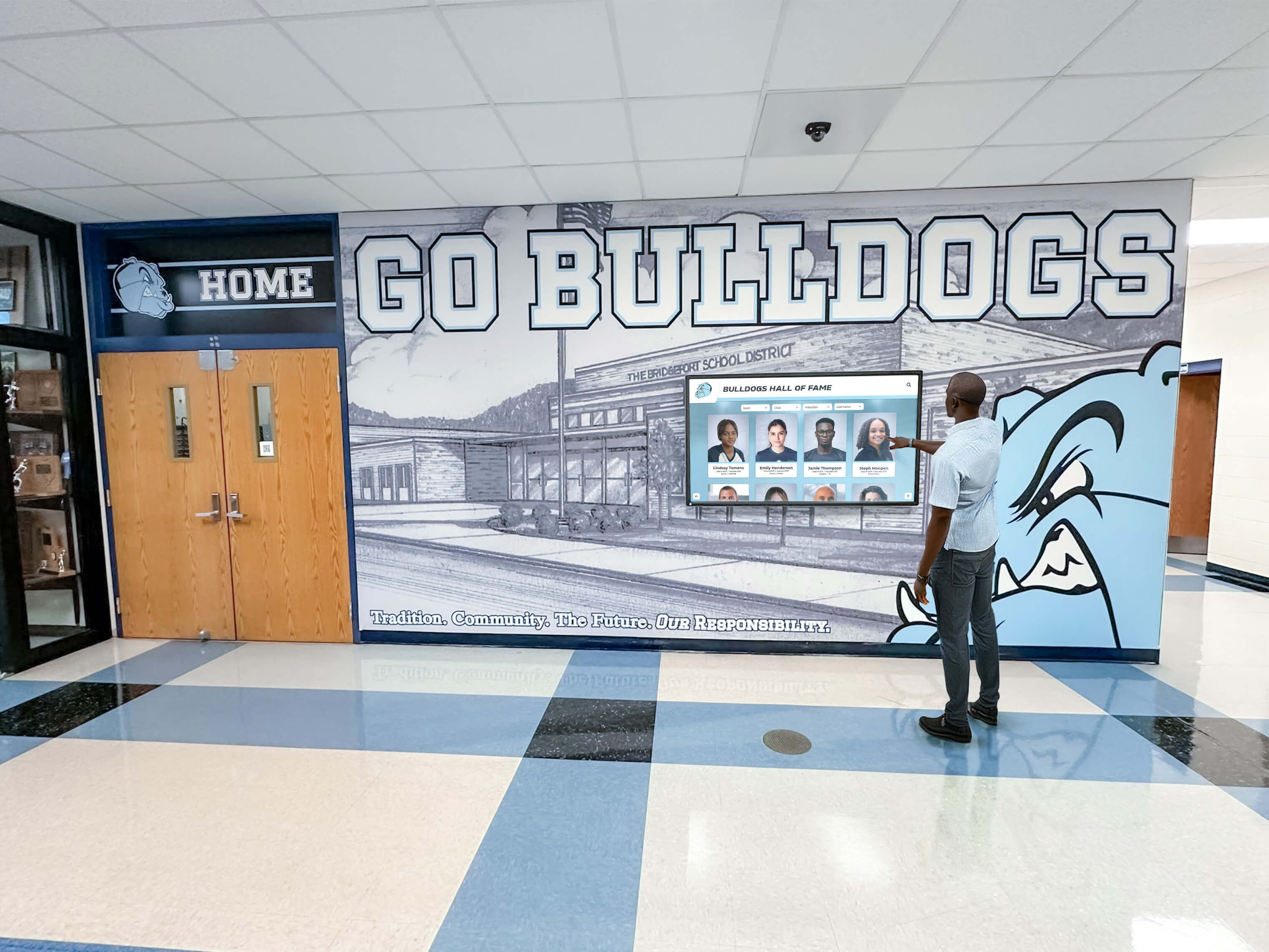
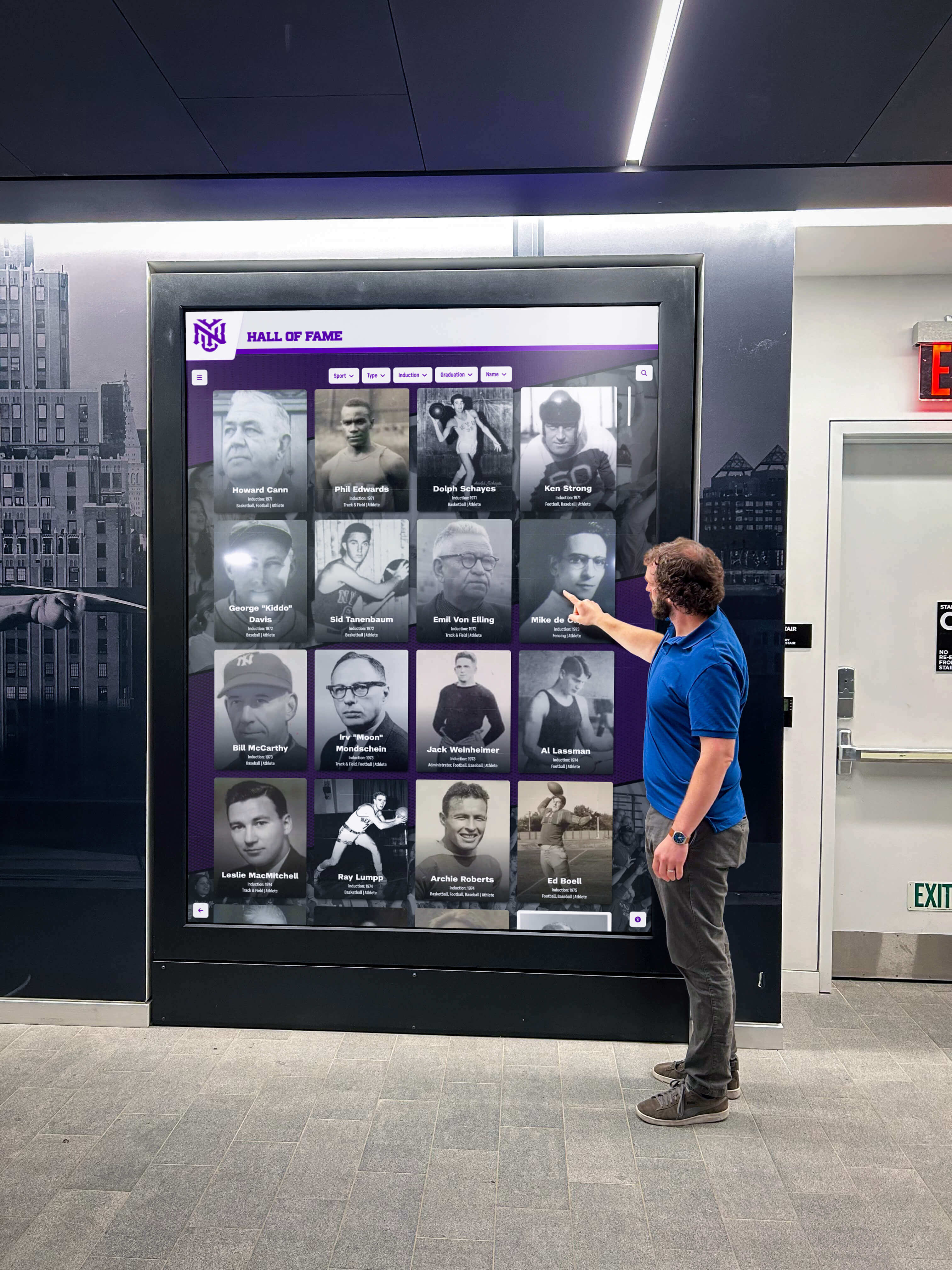
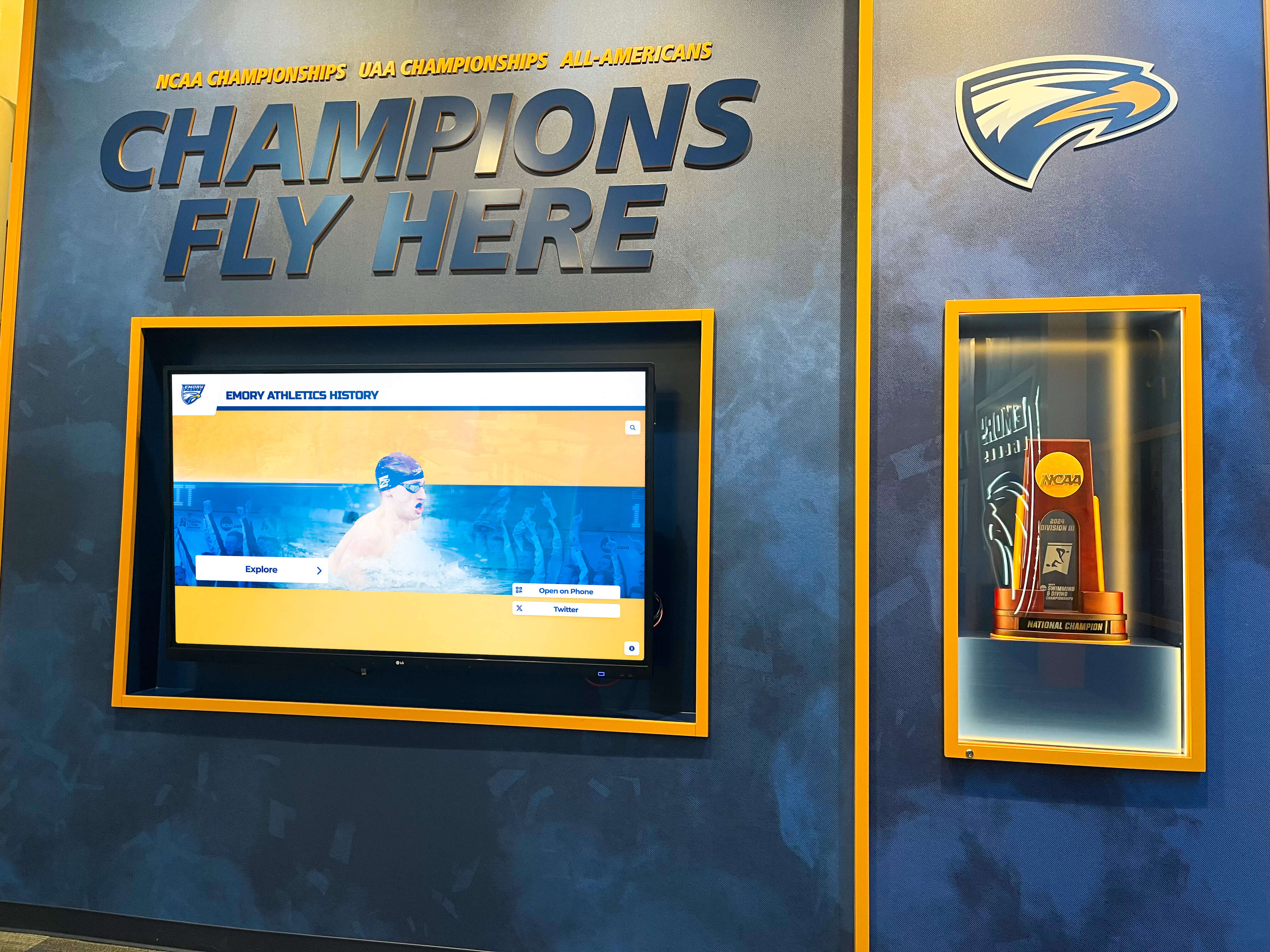
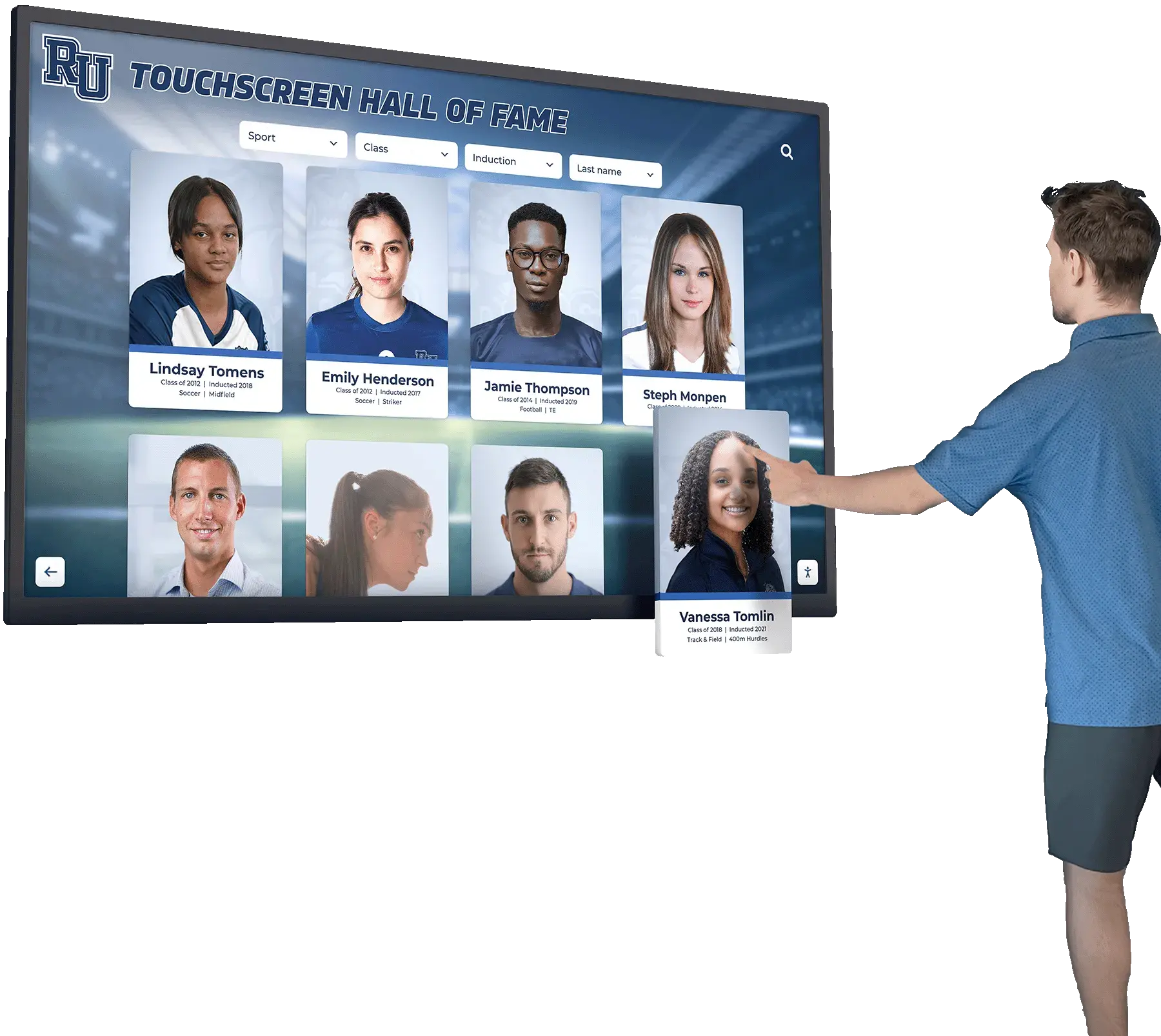
Interactive Touchscreen Displays: Physical installations featuring large touchscreen monitors where visitors can browse achievements, search for specific individuals, filter by category, and explore detailed profiles. These displays typically range from 43 inches to 98 inches depending on the installation space and viewing distance requirements.
Web-Accessible Portals: Online versions of the hall of fame accessible from any device with internet access. This extends recognition beyond physical locations, allowing alumni, families, and community members worldwide to explore achievements remotely.
Content Management Systems: Administrative interfaces enabling staff to add new inductees, update existing profiles, upload media, organize categories, and manage all content without requiring technical expertise or web development skills.
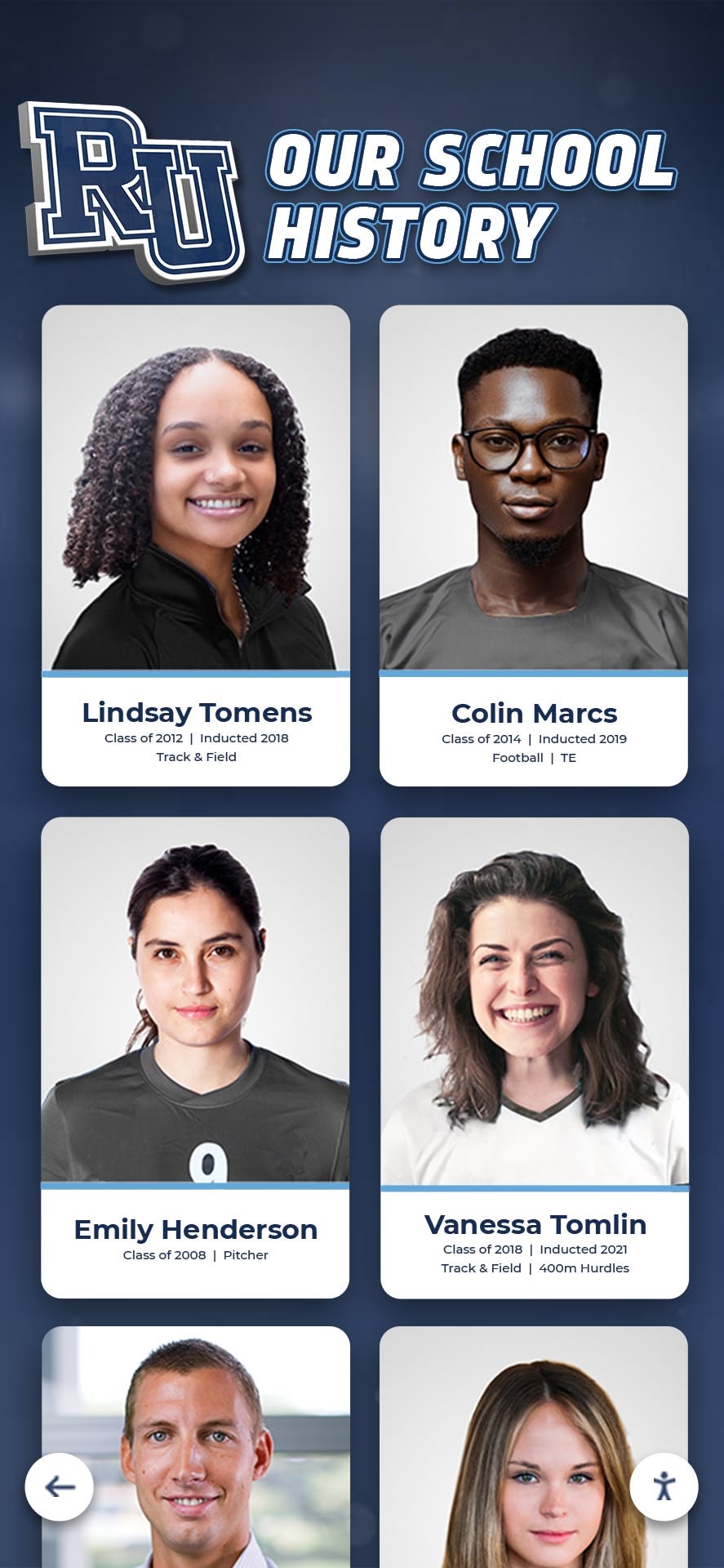
Searchable Databases: Structured systems organizing hundreds or thousands of individual profiles with sophisticated filtering capabilities allowing visitors to find athletes by sport, year, achievement type, record category, or name search.
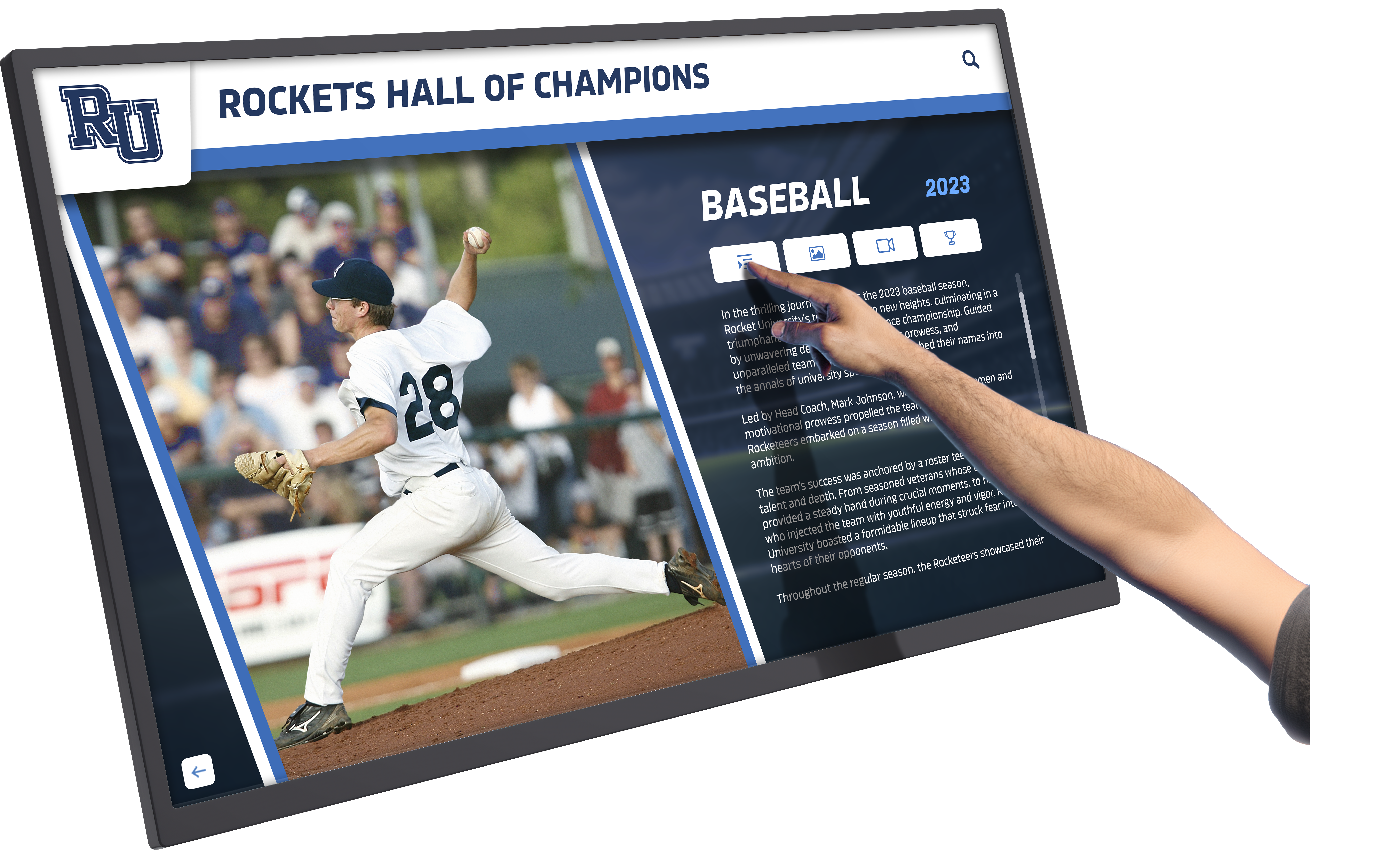
Multimedia Integration: Support for high-resolution photos, video highlights, statistical tables, biographical narratives, and interactive timelines that tell richer stories than static text-based displays can convey.
The distinguishing characteristic of true digital halls of fame versus simple digital signage lies in interactivity and database functionality. Basic digital signage rotates predetermined content on a schedule, while genuine digital halls of fame enable visitors to actively explore, search, discover, and engage with recognition content on their own terms.
How Digital Halls of Fame Work: Technology and Architecture
Understanding the technical architecture helps clarify how digital halls of fame operate and what capabilities they provide:
Physical Display Components
Physical digital hall of fame installations typically consist of commercial-grade touchscreen displays mounted on walls or integrated into custom kiosks. These displays use capacitive touch technology similar to smartphones and tablets, enabling intuitive gesture-based navigation through swiping, tapping, and pinching.
The displays connect to media player devices running specialized software. Solutions like Rocket Alumni Solutions support multiple hardware platforms including Windows PCs, Android media players, and iOS devices, providing flexibility in hardware procurement and preventing vendor lock-in.
Network connectivity powers the displays, with wired Ethernet connections preferred for reliability. The displays communicate with cloud-based content management systems, pulling updated content automatically and requiring minimal local administration.
Content Management Architecture
Modern digital hall of fame platforms operate on cloud-based architecture, separating content storage and management from display hardware. Administrators access web-based dashboards from any internet-connected device to manage content remotely.
This cloud architecture delivers several advantages: content updates appear across all displays automatically, no on-site server infrastructure is required, backups happen automatically, and software updates roll out seamlessly without manual installation procedures.
The content management interface typically provides intuitive forms for creating profiles, bulk import capabilities for migrating historical records efficiently, media libraries for organizing photos and videos, template systems for maintaining consistent presentation, and approval workflows ensuring content accuracy before publication.
Database and Search Functionality
The database layer stores all profile information, media references, category associations, and metadata enabling sophisticated search and filtering capabilities. Well-designed systems index content for rapid search response even with thousands of profiles.
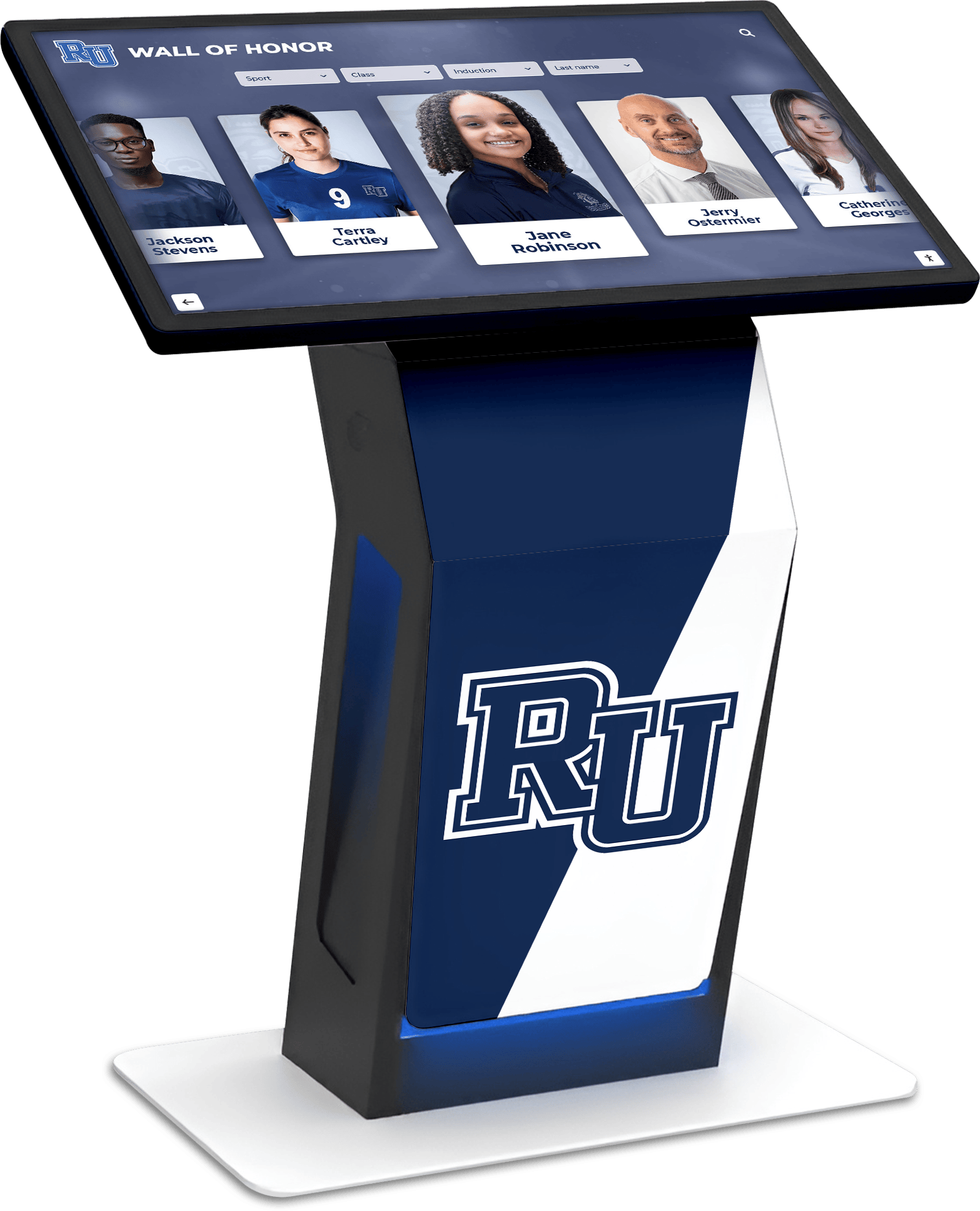
Visitors interact with intuitive search interfaces featuring text search boxes, category filters (sport, year, achievement type), alphabetical browsing, featured content highlighting, and related content suggestions connecting visitors to similar profiles.
Advanced platforms like Rocket Alumni Solutions include automated ranking features that maintain “Top 10” lists across sports as new records are added, eliminating manual maintenance requirements that plague static record boards.
Responsive Design Technology
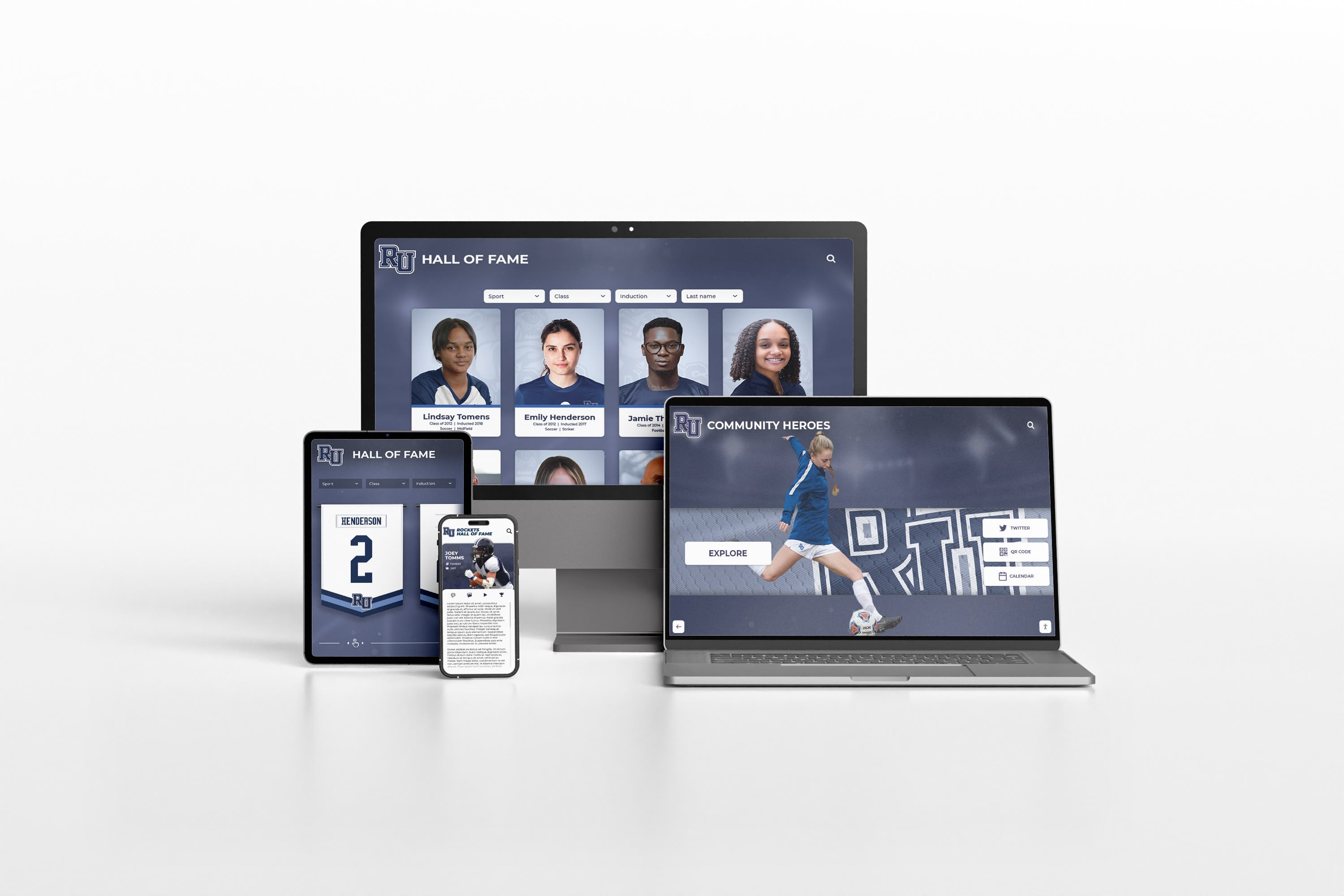
Comprehensive platforms employ responsive design principles ensuring content displays appropriately across dramatically different screen sizes and contexts. The same content management system powers large touchscreen kiosks in lobbies, desktop web browsers for research, tablets for mobile viewing, and smartphones for on-the-go access.
This responsive architecture maintains consistent branding and user experience while optimizing interface layouts for each device type. Touch targets enlarge on physical kiosks for finger navigation, while desktop versions leverage keyboard shortcuts and mouse precision.
Learn more about the technical implementation of digital halls of fame and best practices for deployment.
Key Features That Define Effective Digital Halls of Fame
Not all digital recognition systems offer equivalent capabilities. Comprehensive digital halls of fame distinguish themselves through specific features:
Unlimited Capacity
Digital systems recognize unlimited individuals without physical space constraints. Add thousands of profiles without additional hardware costs or display expansion.
Multimedia Storytelling
Incorporate high-resolution photos, video highlights, career statistics, biographical narratives, and document archives that bring recognition to life.
Instant Updates
Add new inductees and update existing profiles in minutes through cloud-based management systems without fabrication delays or installation costs.
Advanced Search
Enable visitors to find specific individuals quickly through text search, category filtering, year browsing, and achievement type selection.
Global Accessibility
Extend recognition beyond physical locations through web portals accessible worldwide, strengthening alumni connections across distances.
Analytics and Insights
Track engagement metrics revealing which content resonates, which athletes receive most views, and how visitors navigate recognition content.
Accessibility Compliance
Leading digital hall of fame platforms prioritize accessibility, ensuring individuals with disabilities can access recognition content. This includes screen reader compatibility for blind users, keyboard navigation for motor-impaired visitors, appropriate color contrast ratios, text resizing capabilities, and alternative text descriptions for images.
Institutions receiving federal funding or serving public audiences face legal requirements to provide accessible digital content meeting WCAG 2.1 AA standards. Selecting platforms with documented accessibility compliance prevents expensive retrofitting and legal exposure.
Customization and Branding
Effective systems provide extensive customization options ensuring recognition displays authentically reflect institutional identity. This includes custom color schemes matching school colors, logo integration throughout interfaces, template flexibility accommodating various recognition types, typography control maintaining brand consistency, and layout options adapting to different content structures.
Generic one-size-fits-all templates undermine professional presentation, while comprehensive platforms balance ease of use with customization depth.
Security and Data Protection
Digital halls of fame contain personal information about students, alumni, and donors requiring appropriate security measures. Professional platforms implement encryption for data transmission and storage, regular security audits and penetration testing, FERPA compliance for educational institutions, role-based access controls limiting administrative permissions, and documented backup and disaster recovery procedures.
Benefits of Digital Halls of Fame Over Traditional Recognition
Understanding specific advantages helps explain why institutions increasingly adopt digital recognition:
Space Efficiency
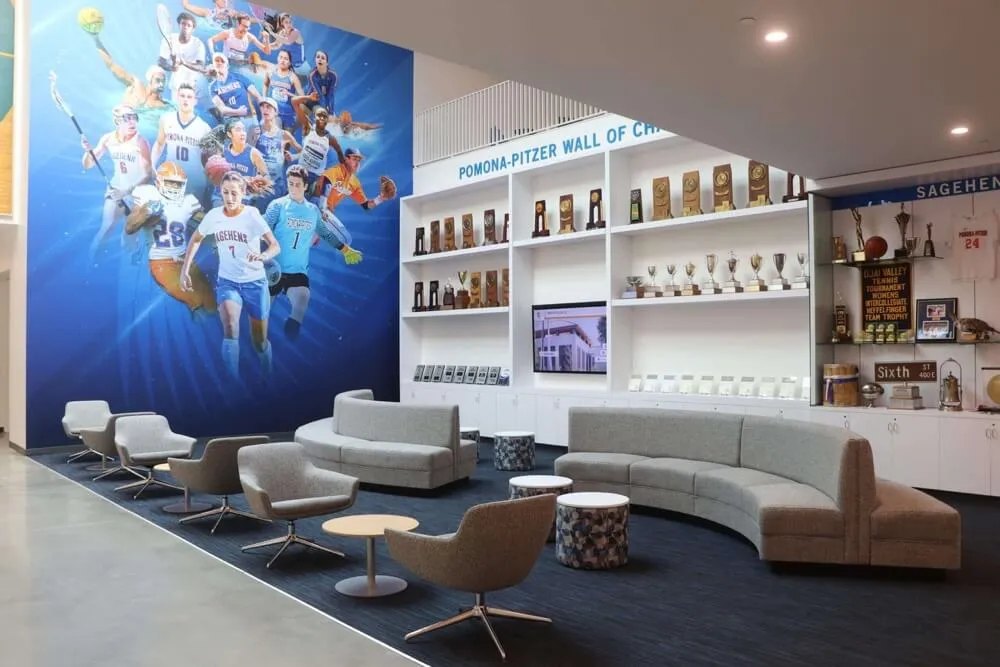
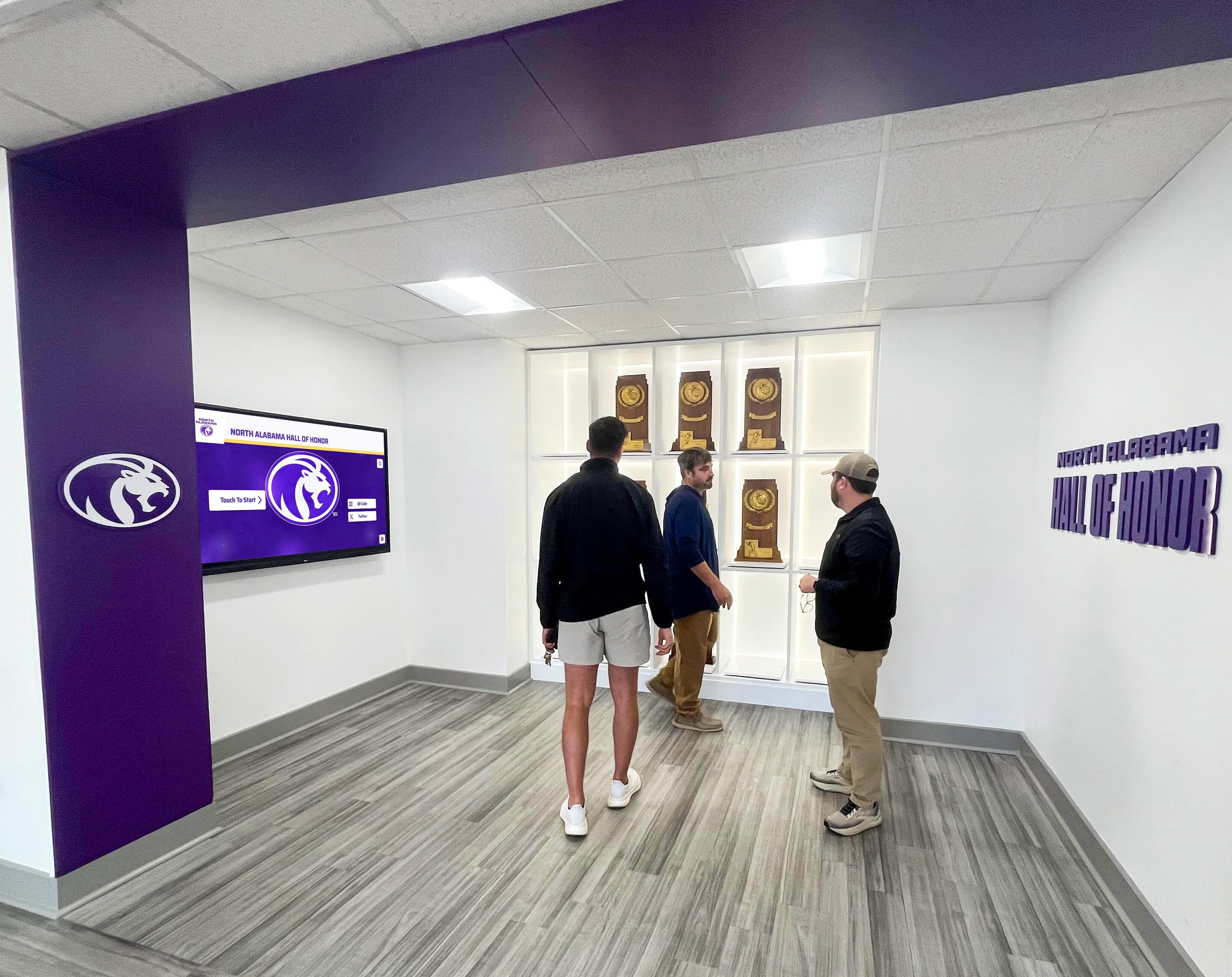
Traditional trophy cases face inherent space limitations. Each new achievement requires physical space for trophies, plaques, or framed photos. Eventually, institutions face difficult decisions about which achievements to display and which to store away, effectively limiting recognition opportunities.
Digital halls of fame eliminate these constraints. A single 55-inch touchscreen display can showcase thousands of individual profiles, team championships, and achievement categories that would require entire hallways of traditional displays. This unlimited capacity enables more inclusive recognition celebrating diverse forms of excellence across athletics, academics, arts, service, and community contributions.
Cost Efficiency Over Time
While digital systems require initial technology investment, they typically deliver superior long-term value compared to continuously expanding traditional displays.
Traditional recognition generates ongoing costs for plaque fabrication, frame manufacturing, trophy purchasing, installation labor, display case expansion, and eventually replacement as materials age. Schools implementing active recognition programs easily spend $5,000-$15,000 annually on these recurring expenses.
Digital systems require initial investment for hardware and software but minimal ongoing costs. Once implemented, adding new inductees costs nothing beyond staff time to enter information. No fabrication, no installation, no materials purchasing. Most schools discover digital halls of fame pay for themselves within 3-5 years through eliminated traditional display costs while providing dramatically enhanced recognition capabilities.
Explore detailed cost analysis comparing digital and traditional recognition approaches.
Enhanced Engagement
Static displays convey limited information—typically names, years, and minimal achievement context. Visitors walk past trophy cases gaining superficial awareness but rarely stopping for extended engagement.
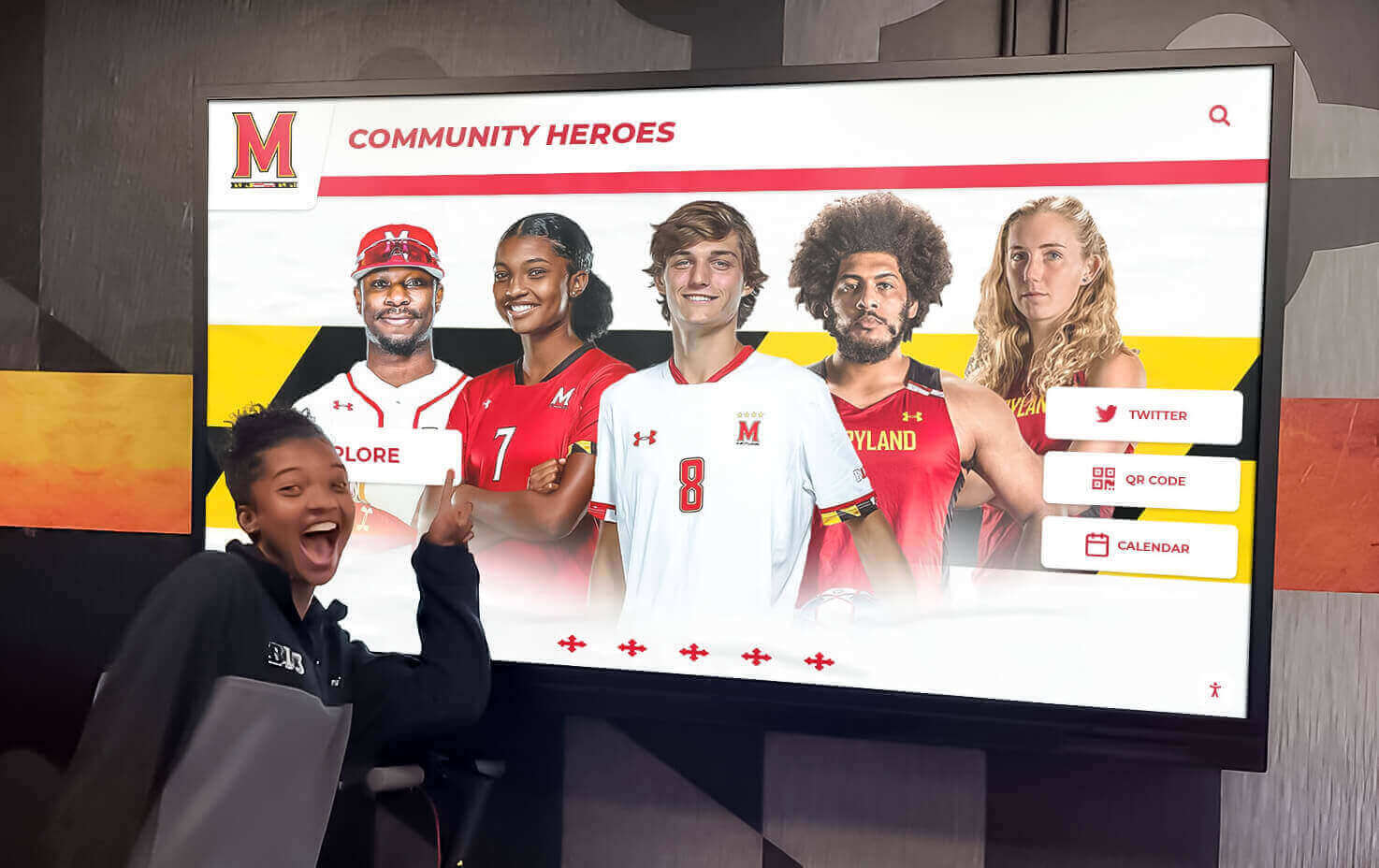
Digital halls of fame transform passive viewing into active exploration. Visitors touch screens to browse achievements, search for family members, watch video highlights, and discover connections between different individuals and teams. This interactivity creates engagement lasting minutes rather than seconds, deepening emotional connections to recognized achievements.
Schools report increased visitor dwell time, more frequent interactions with recognition content, enhanced alumni event engagement, and measurable increases in school pride metrics after implementing digital halls of fame.
Richer Storytelling
Traditional plaques reduce complex achievements to minimal text: “John Smith, Basketball, 1985, 1,000 Point Scorer.” This conveys basic facts but tells no story about the individual, their journey, their impact, or their legacy.
Digital profiles enable comprehensive storytelling through high-resolution action photos, career statistics tables, biographical narratives, video interview clips, game highlights, post-graduation updates, and document archives. These rich multimedia presentations honor individuals more meaningfully, creating lasting impressions that static text never achieves.
Families particularly appreciate this depth when viewing recognition of deceased relatives, where digital profiles preserve memories more completely than simple name engravings.
Improved Accessibility and Inclusion
Traditional displays create accessibility barriers. Trophy cases require physical presence at specific locations during open hours. Information fixed at specific heights may be difficult for wheelchair users, children, or individuals with visual impairments to view comfortably.
Digital halls of fame expand accessibility through web portals reaching global audiences, content accessible to screen readers for blind users, responsive interfaces adapting to assistive technologies, adjustable text sizing for vision-impaired visitors, and multiple navigation methods accommodating diverse abilities.
This improved accessibility aligns with institutional equity values while meeting legal compliance requirements many public institutions face.
Common Applications: Who Uses Digital Halls of Fame
Digital halls of fame serve diverse institutional recognition needs:
High Schools and K-12 Education
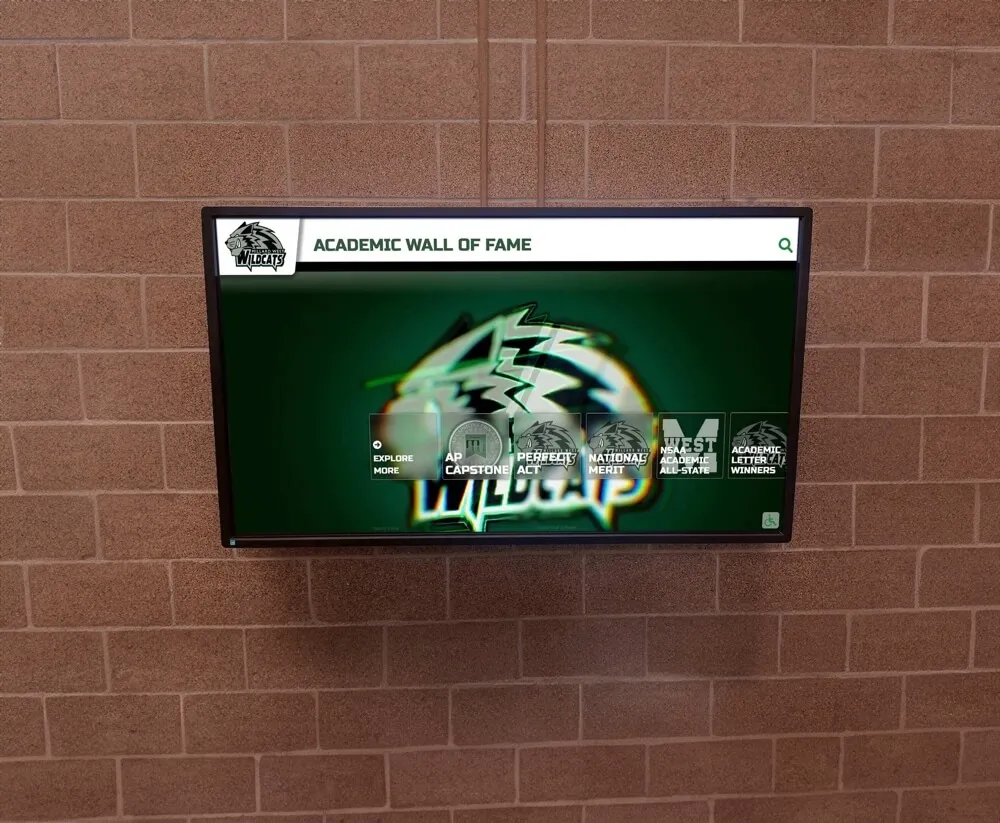
Secondary schools represent the largest adopters of digital hall of fame technology. Applications include athletic halls of fame celebrating individual records and team championships, academic honor rolls recognizing scholastic achievement, arts recognition showcasing performing and visual arts excellence, service awards honoring community contributions, alumni spotlights connecting current students with successful graduates, and historical timelines documenting school heritage.
High schools particularly value the ability to showcase athletic records across multiple sports in limited lobby space, maintain current honor roll displays without constant reprinting, and celebrate diverse achievements beyond traditional athletic recognition.
Colleges and Universities
Higher education institutions implement digital halls of fame at both institutional and department levels. Athletic programs showcase varsity sports achievements, conference championships, and All-American honors. Academic departments recognize distinguished alumni, research achievements, and departmental milestones. Advancement offices create donor recognition displays celebrating philanthropic support. Alumni associations build searchable databases connecting graduates across decades.
The scale of university recognition programs—often encompassing thousands of individuals across hundreds of recognition categories—makes digital solutions practically necessary.
Athletic Departments and Sports Organizations
Dedicated athletic facilities from high school gymnasiums to professional sports venues implement digital halls of fame celebrating sports history. These applications often emphasize statistical record boards, championship team recognition, retired number displays, and individual athlete career highlights.
Advanced platforms provide automated ranking features that maintain top-10 record boards across different statistical categories as new achievements occur, eliminating manual update requirements.
Nonprofit Organizations and Foundations
Nonprofits use digital halls of fame for donor recognition displays, volunteer appreciation programs, board member histories, and mission impact storytelling. The ability to update donor recognition instantly as campaigns progress provides particular value for capital campaigns and ongoing fundraising initiatives.
Learn about nonprofit donor recognition strategies leveraging digital technology effectively.
Professional Organizations and Associations
Membership organizations implement digital halls of fame recognizing award recipients, leadership histories, industry pioneers, and milestone achievements. The web accessibility component particularly benefits professional organizations whose members are geographically distributed.
Implementation Process: Creating a Digital Hall of Fame
Understanding typical implementation processes helps set realistic expectations:
Phase 1: Planning and Strategy (2-4 weeks)
Successful implementations begin with strategic planning defining recognition objectives, identifying what types of achievements to celebrate, establishing selection criteria for inductees, determining content organization structures, planning physical display locations if applicable, and setting realistic budget parameters.
This planning phase should involve key stakeholders including athletic directors, principals or presidents, advancement professionals, facilities managers, IT staff, and representative alumni or community members.
Phase 2: Platform Selection (2-6 weeks)
Organizations evaluate available platforms comparing features, costs, support quality, accessibility compliance, customization capabilities, and vendor stability. This evaluation should include demonstrations from multiple vendors, reference checks with current customers, accessibility documentation review, and detailed cost analysis.
The platform comparison guide provides structured evaluation frameworks for this decision.
Phase 3: Content Development (6-12 weeks)
Content development often represents the most time-intensive implementation phase. This includes gathering historical achievement records from yearbooks, programs, and archives, securing high-resolution photos of inductees and teams, writing or collecting biographical narratives, digitizing historical documents and materials, organizing statistical records, and developing category taxonomies.
Many institutions underestimate content development effort. Professional content migration services can accelerate this process but require additional investment.
Phase 4: Platform Configuration (1-2 weeks)
Once content is prepared, the technical configuration process implements branding customization, template selection and adaptation, initial content upload, category structure creation, user account setup, and navigation design.
Quality vendors provide implementation support guiding this configuration process and ensuring optimal setup before launch.
Phase 5: Hardware Installation (1-2 weeks)
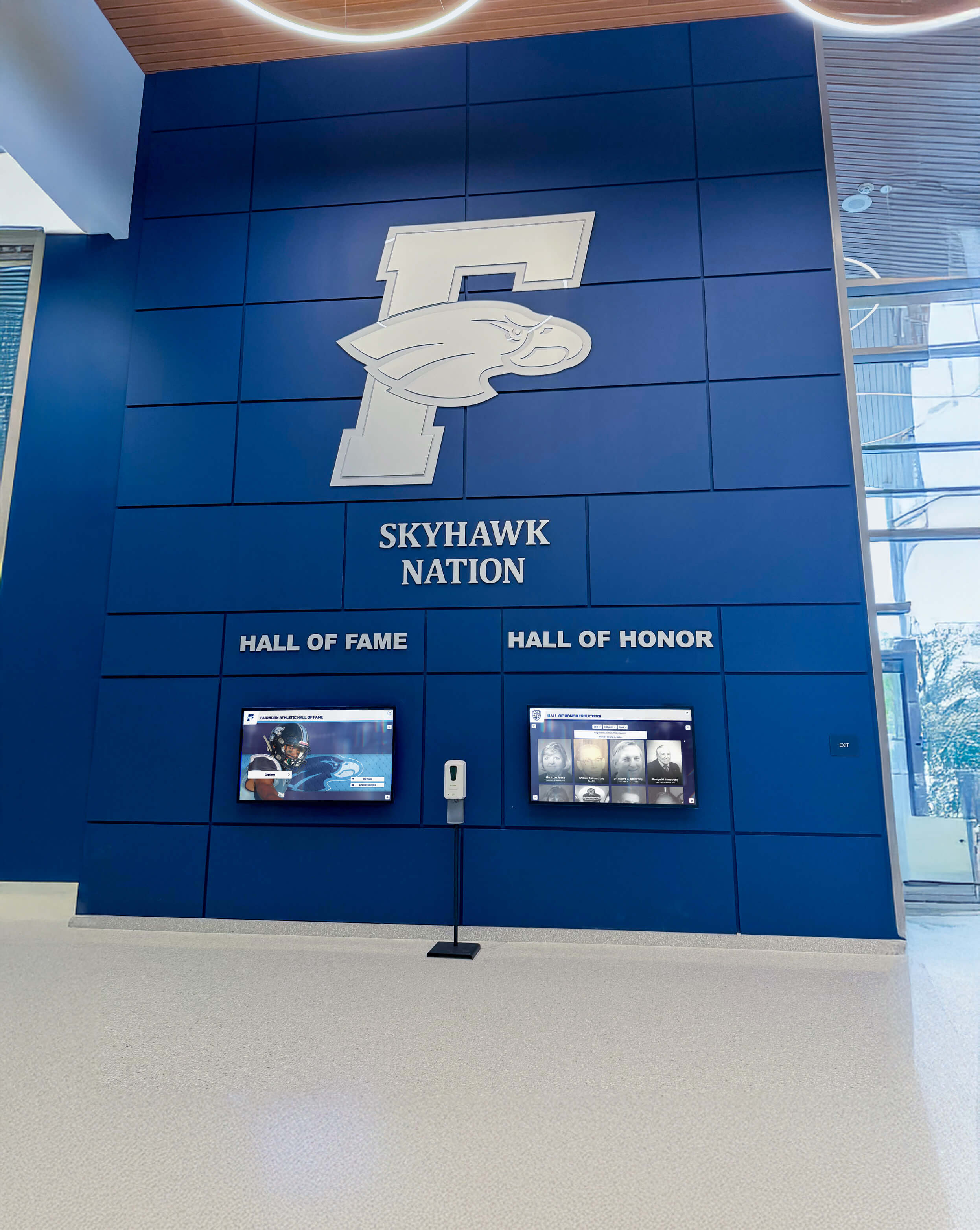
For physical display installations, this phase includes site preparation and mounting hardware installation, display delivery and positioning, network connectivity configuration, software installation and testing, calibration and optimization, and final quality assurance.
Professional installation ensures proper mounting heights for accessibility compliance, secure hardware attachment, and reliable network connectivity.
Phase 6: Training and Launch (1-2 weeks)
Successful launches require comprehensive administrator training covering content management procedures, approval workflow configuration, troubleshooting common issues, and ongoing maintenance best practices.
Launch promotion should include formal unveiling ceremonies, email and social media announcements, website feature placement, and local media outreach when appropriate.
Discover detailed implementation best practices for successful digital hall of fame deployments.
Cost Considerations: Budgeting for Digital Halls of Fame
Understanding realistic cost expectations helps organizations plan appropriate budgets:
Software and Platform Costs
Specialized digital hall of fame platforms like Rocket Alumni Solutions typically charge through subscription models or one-time licensing fees. Annual software costs generally range from $2,000 to $8,000 depending on organizational size, number of displays, feature sets, and support levels included.
This software investment covers content management system access, cloud hosting and infrastructure, software updates and security patches, technical support, and web portal hosting.
Hardware Costs for Physical Displays
Organizations implementing physical touchscreen installations require commercial-grade display hardware. Typical costs include touchscreen displays ($2,000-$8,000 depending on size and quality), media player computers ($300-$800), mounting hardware and kiosks ($500-$3,000), installation labor ($500-$2,000), and network infrastructure if not existing ($500-$2,000).
Complete single-display installations typically range from $4,000 to $15,000 depending on display size, mounting complexity, and site requirements.
Implementation Services
Professional vendors often charge for implementation services including system configuration and setup ($1,000-$3,000), content migration assistance ($2,000-$8,000 depending on volume), staff training and support ($500-$1,500), and custom design work if required ($1,000-$5,000).
These implementation costs front-load investment but significantly accelerate deployment and ensure proper setup.
Ongoing Costs
Annual ongoing costs beyond software subscriptions are typically minimal for digital halls of fame. These include basic content management staff time (usually absorbed into existing roles), occasional content creation (photos, videos), and hardware replacement eventually (displays typically last 7-10 years).
Comparing total cost of ownership over 5-10 years, digital halls of fame generally prove more cost-effective than continuously expanding traditional recognition displays while delivering dramatically enhanced capabilities.
Choosing the Right Digital Hall of Fame Platform
Not all digital hall of fame solutions offer equivalent capabilities or value. Consider these factors when evaluating platforms:
Purpose-Built vs. Adapted Solutions
Purpose-built recognition platforms like Rocket Alumni Solutions are specifically designed for hall of fame applications with features tailored to recognition needs. Adapted solutions use generic website builders, digital signage software, or content management systems not optimized for recognition purposes.
Purpose-built platforms typically deliver superior user experiences, more intuitive content management, better support for recognition-specific features, and comprehensive implementation assistance based on extensive recognition experience.
Cloud-Based vs. On-Premise Architecture
Cloud-based platforms enable remote content management from any device, automatic software updates, no local server maintenance, and typically lower infrastructure costs. On-premise solutions require local servers, manual updates, on-site management, but provide complete data control.
For most educational and nonprofit organizations, cloud-based platforms offer optimal balance of capability, convenience, and cost-effectiveness.
Hardware Flexibility
Some vendors require proprietary hardware purchased exclusively from them at premium pricing. This creates vendor lock-in making future upgrades expensive and limiting competitive hardware procurement.
Platforms supporting commercial off-the-shelf displays from multiple manufacturers provide hardware flexibility, competitive pricing options, and easier future upgrades without software replacement.
Support and Training Quality
Implementation success depends heavily on vendor support quality. Evaluate response time commitments, support channel availability (phone, email, chat), training comprehensiveness, documentation quality, and implementation assistance included.
Speaking with current customers provides valuable insights into real-world support experiences beyond vendor promises.
Accessibility Compliance Documentation
For organizations facing accessibility requirements, demand third-party accessibility audit documentation proving WCAG 2.1 AA compliance. Vendor claims of accessibility without independent verification create legal exposure if compliance proves inadequate.
Common Challenges and How to Overcome Them
Organizations implementing digital halls of fame sometimes encounter predictable challenges:
Content Development Overwhelm
Challenge: Organizations underestimate the effort required to digitize decades of achievements, gather photos, and create comprehensive profiles for hundreds of individuals.
Solution: Start with recent achievements where materials are readily available, then gradually add historical content over time. Consider professional content migration services for efficient historical digitization. Engage alumni and community members to contribute photos, stories, and historical information.
Staff Technical Concerns
Challenge: Staff members worry they lack technical skills to manage digital systems, creating resistance to implementation.
Solution: Prioritize platforms with intuitive, user-friendly interfaces requiring minimal technical expertise. Ensure comprehensive training and ongoing support. Demonstrate that most quality platforms are easier to update than maintaining traditional displays requiring physical fabrication and installation.
Budget Constraints
Challenge: Limited budgets make initial investment challenging despite long-term cost savings.
Solution: Explore phased implementation starting with web-based recognition before adding physical displays. Consider fundraising campaigns specifically for recognition technology. Document eliminated ongoing costs of traditional displays to justify reallocation of existing recognition budgets. Some vendors offer educational discounts or payment plans.
Stakeholder Buy-In
Challenge: Traditional-minded stakeholders resist changing from familiar physical displays.
Solution: Arrange demonstrations showing interactive capabilities that traditional displays cannot match. Share examples from peer institutions. Emphasize that digital systems complement rather than completely replace physical artifacts like championship trophies. Highlight unlimited capacity enabling more inclusive recognition.
Content Accuracy Concerns
Challenge: Historical records contain gaps, inconsistencies, or disputed information creating accuracy challenges.
Solution: Implement approval workflows requiring verification before publication. Clearly mark unverified information or estimated dates. Invite corrections from alumni and community members. Accept that some historical ambiguity is inevitable and document known limitations transparently.

Future Trends in Digital Hall of Fame Technology
Digital hall of fame platforms continue evolving with emerging technology:
Artificial Intelligence Integration: AI capabilities will assist with content creation through automated biography generation, intelligent photo organization and tagging, natural language search understanding, and personalized content recommendations based on visitor interests.
Enhanced Mobile Integration: Deeper smartphone integration enabling QR code scanning to unlock content on large displays, mobile apps complementing physical installations, augmented reality overlays adding digital content to physical spaces, and social sharing directly from recognition displays.
Advanced Analytics: Sophisticated engagement tracking revealing content performance, visitor journey mapping, demographic insights, and recognition impact measurement helping optimize programs.
Voice Navigation: Voice-activated search and navigation accommodating visitors with motor impairments and providing hands-free interaction option particularly valuable during health-conscious periods.
Blockchain Verification: Emerging authentication technologies providing tamper-proof verification of achievements and credentials, adding credibility to recognized accomplishments.
These advancing capabilities will make digital halls of fame increasingly powerful while maintaining the intuitive ease of use that current platforms provide.
Conclusion: The Value of Digital Halls of Fame
Digital halls of fame represent fundamental advancement in how institutions recognize achievements and celebrate excellence. By combining unlimited capacity, rich multimedia storytelling, instant updates, interactive exploration, and global accessibility, these systems honor individuals more meaningfully than traditional displays while reducing long-term costs and administrative burden.
For educational institutions, athletic programs, nonprofit organizations, and professional associations, digital halls of fame deliver measurable benefits including enhanced recognition program inclusivity, stronger alumni and community engagement, increased institutional pride, improved accessibility compliance, sustainable recognition economics, and preservation of organizational heritage.
The question facing most organizations is no longer whether to implement digital recognition but rather which platform best meets their specific needs and how to execute successful implementation. By understanding what digital halls of fame are, how they work, what they cost, and what benefits they deliver, organizations can make informed decisions about recognition technology investments that will serve their communities for decades.
Recognition programs honor the achievements that define institutional character and inspire future excellence. Digital halls of fame ensure these honors reach the widest possible audience with the depth and dignity that accomplishments deserve.
Ready to explore how a digital hall of fame can transform your institution’s recognition program? Book a demo to see how specialized platforms like Rocket Alumni Solutions deliver comprehensive recognition technology designed specifically for educational and institutional needs.
Discover additional resources about touchscreen display implementation, explore basketball hall of fame recognition strategies, or learn about athletic recognition best practices that create meaningful connections with communities.
Your institution’s greatest achievements deserve recognition technology that honors excellence with the depth, accessibility, and engagement that modern platforms provide. Digital halls of fame ensure that every achievement receives the celebration it deserves while creating lasting connections that inspire future generations.