



Key Takeaways
Comprehensive guide to wall wraps for schools covering types, benefits, costs, design strategies, and installation. Transform hallways, lobbies, and common areas with branded graphics.
Understanding Wall Wraps: What They Are and How They Work
Wall wraps utilize large-format digital printing technology to create custom graphics printed on specialized vinyl materials engineered specifically for architectural applications. Understanding the technology and materials helps schools make informed decisions about applications, expectations, and investment.
Materials and Construction
Professional wall wraps use specific vinyl formulations designed for wall adhesion without surface damage:
Base Vinyl Materials: Wall-specific vinyl differs from vehicle wrap or floor graphic materials. Polymeric calendered vinyl provides the best balance of conformability, durability, and cost for most school applications. Cast vinyl offers superior conformability for textured surfaces but costs 30-40% more. Fabric-based wall coverings provide texture and premium appearance but require different installation techniques and cost substantially more than vinyl options.
Adhesive Technologies: Removable adhesive formulations bond securely to painted surfaces while enabling clean removal without wall damage when projects require updating. Permanent adhesive creates stronger bonds but complicates future removal and may damage paint or drywall. Schools should always specify removable adhesive unless permanent installation is explicitly desired. Repositionable adhesive enables minor adjustments during installation but costs more than standard removable formulations.
Protective Coatings: Lamination layers protect printed graphics from UV fading, scratches, and cleaning chemicals. Matte lamination reduces glare and provides professional appearance matching most school environments. Gloss lamination delivers rich colors with reflective finish better suited to bold graphics. Anti-graffiti coatings enable marker and paint removal from graphics, valuable in high-risk areas. Protective laminates typically add $2-4 per square foot but extend graphic life significantly.
Surface Preparation Requirements: Wall wraps require smooth, clean, properly cured painted surfaces. Freshly painted walls need 30-45 days curing before vinyl application to prevent adhesive failure. Textured walls may require skim coating to create smooth surfaces enabling proper vinyl adhesion. Damaged, flaking, or poorly adhered paint must be repaired before installation. Surface preparation accounts for 20-30% of professional installation costs but determines whether installations last years or fail within months.
Common Applications in Educational Settings
Schools implement wall wraps across diverse locations and purposes:
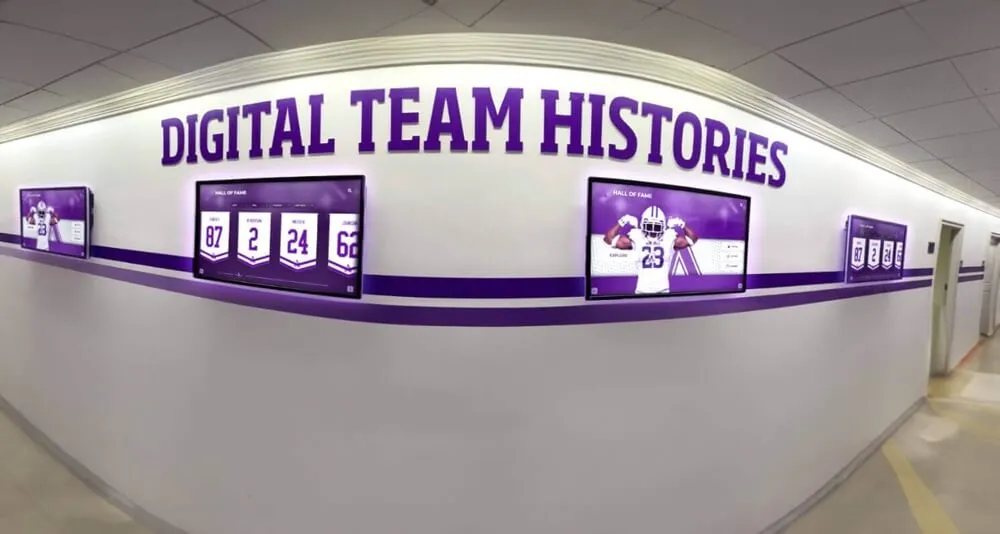
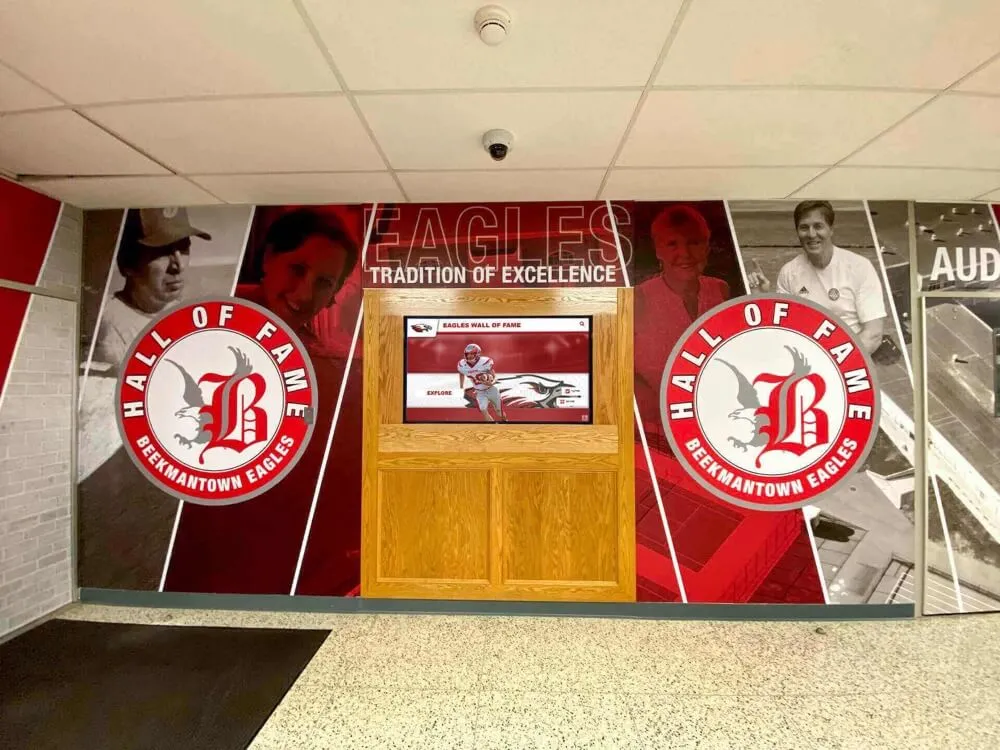
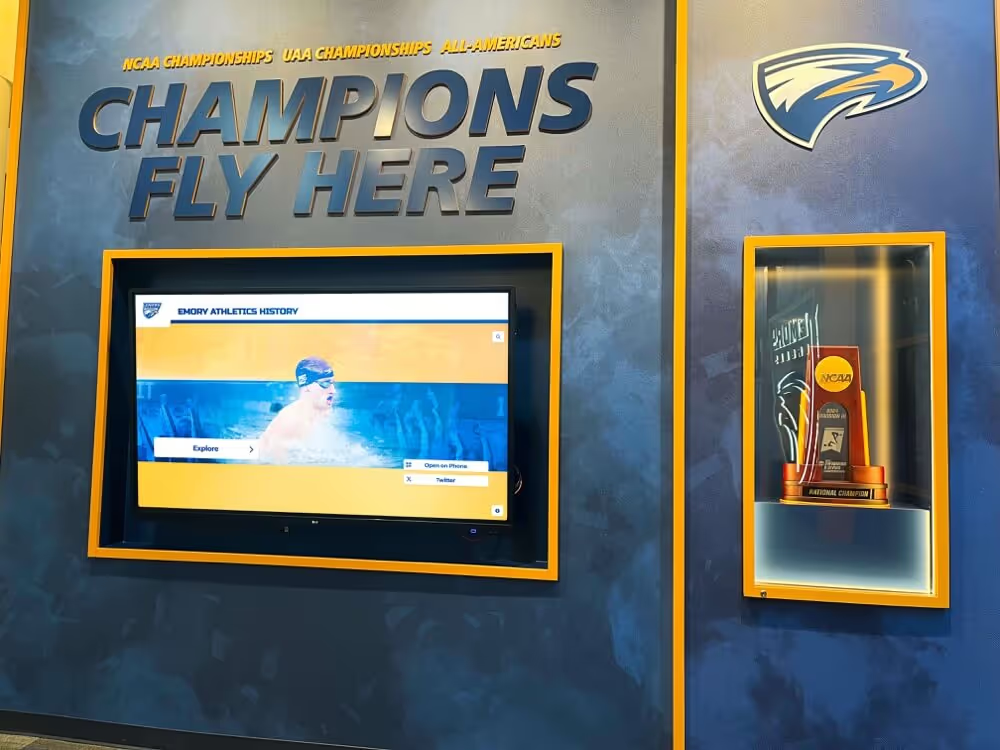
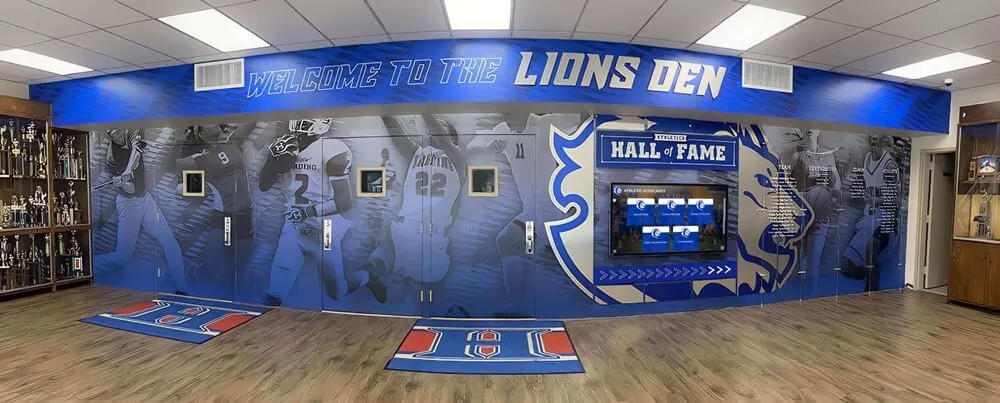
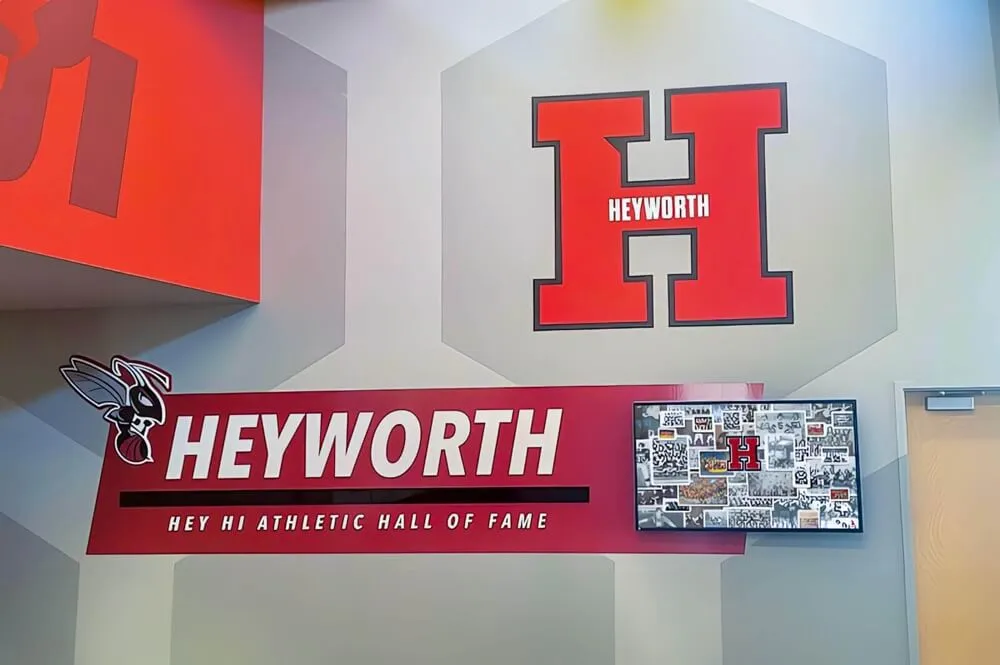
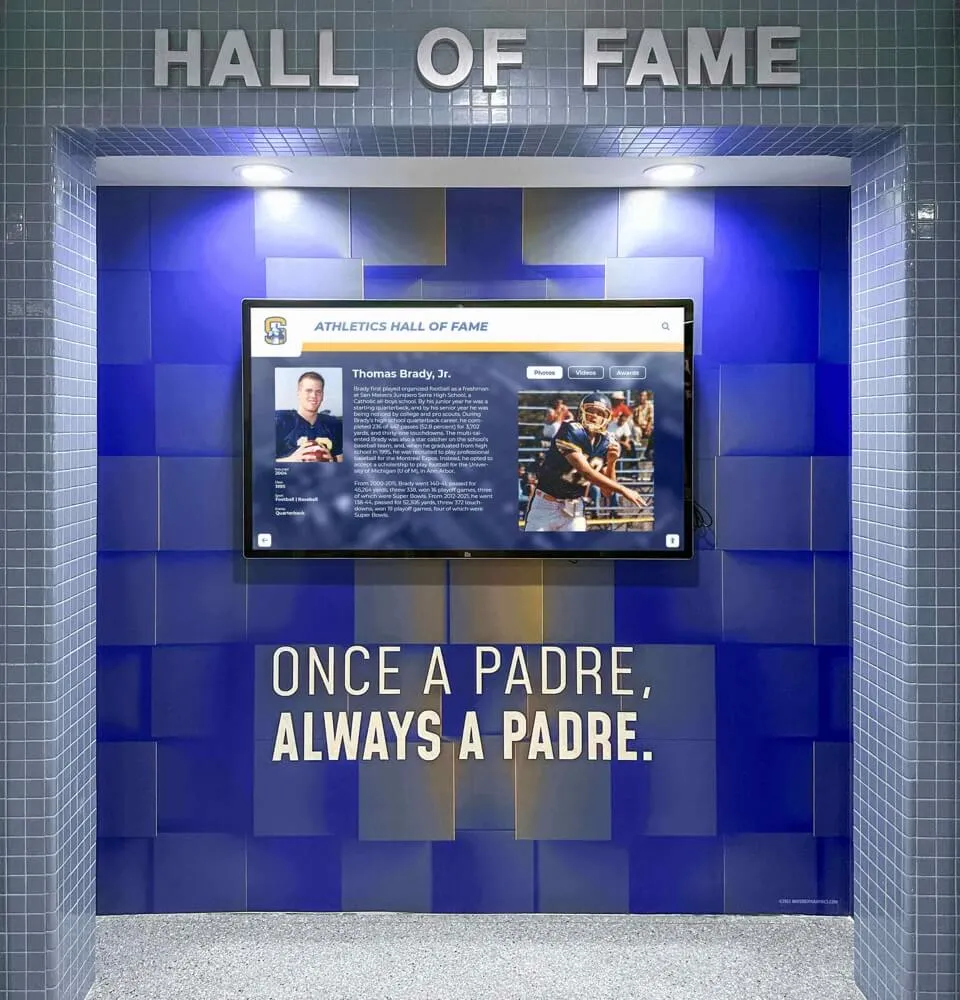
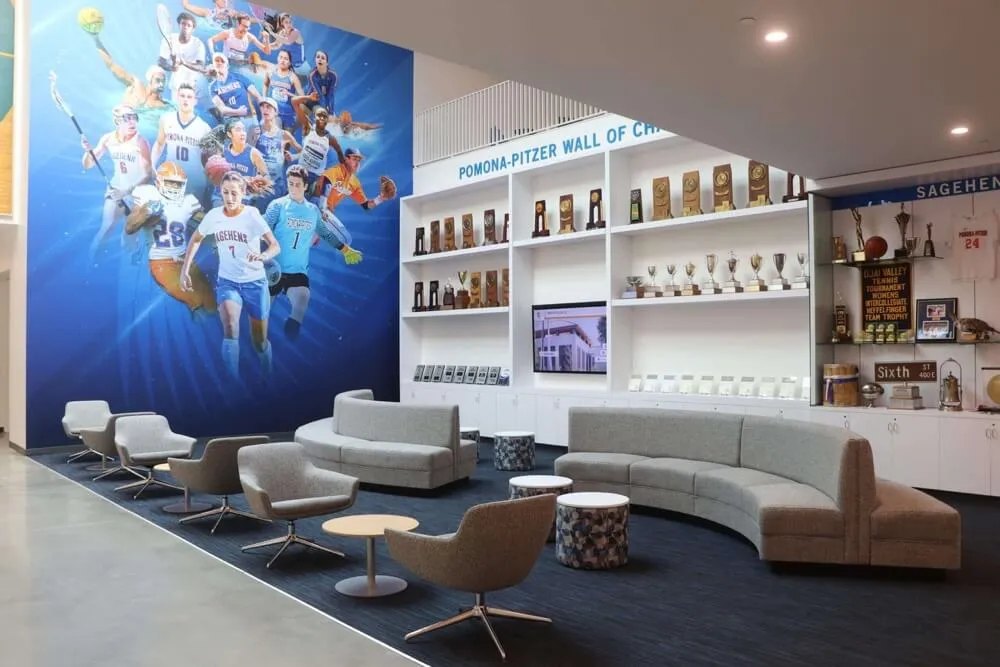
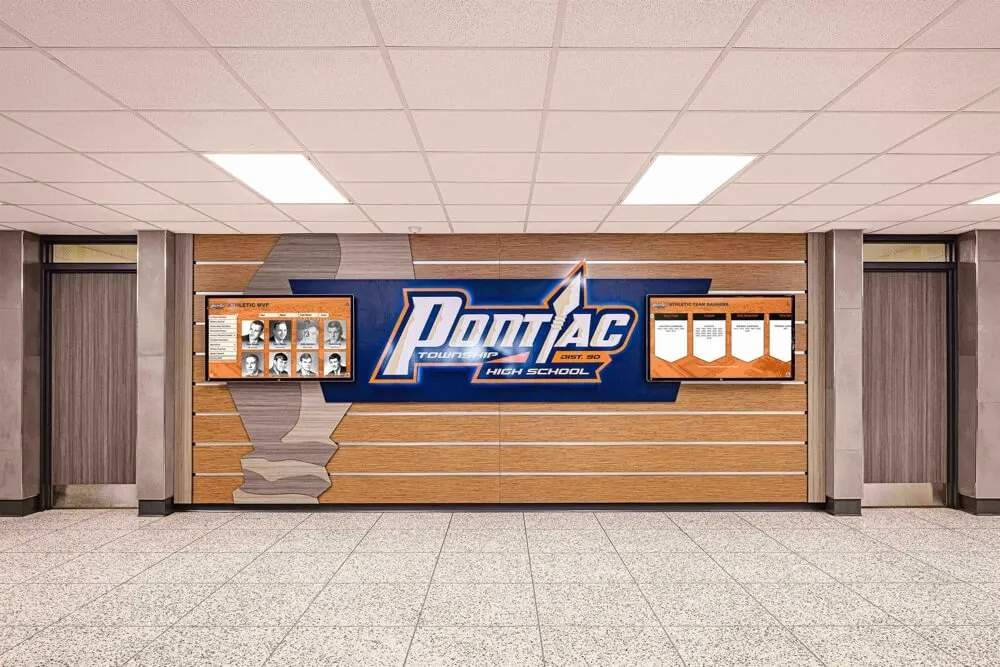
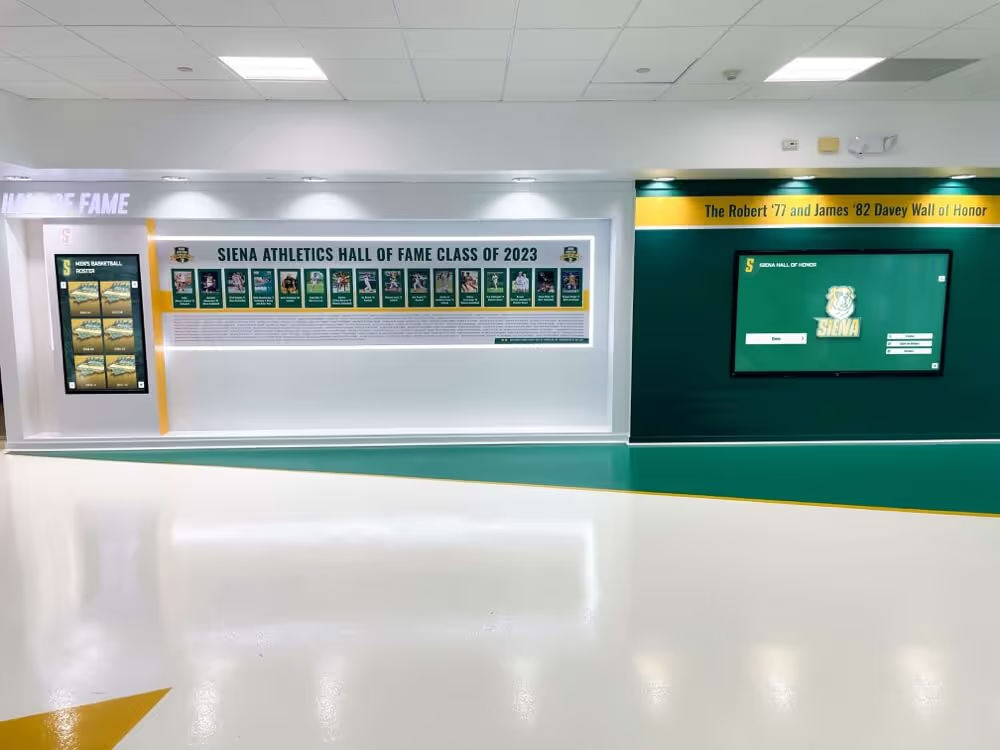
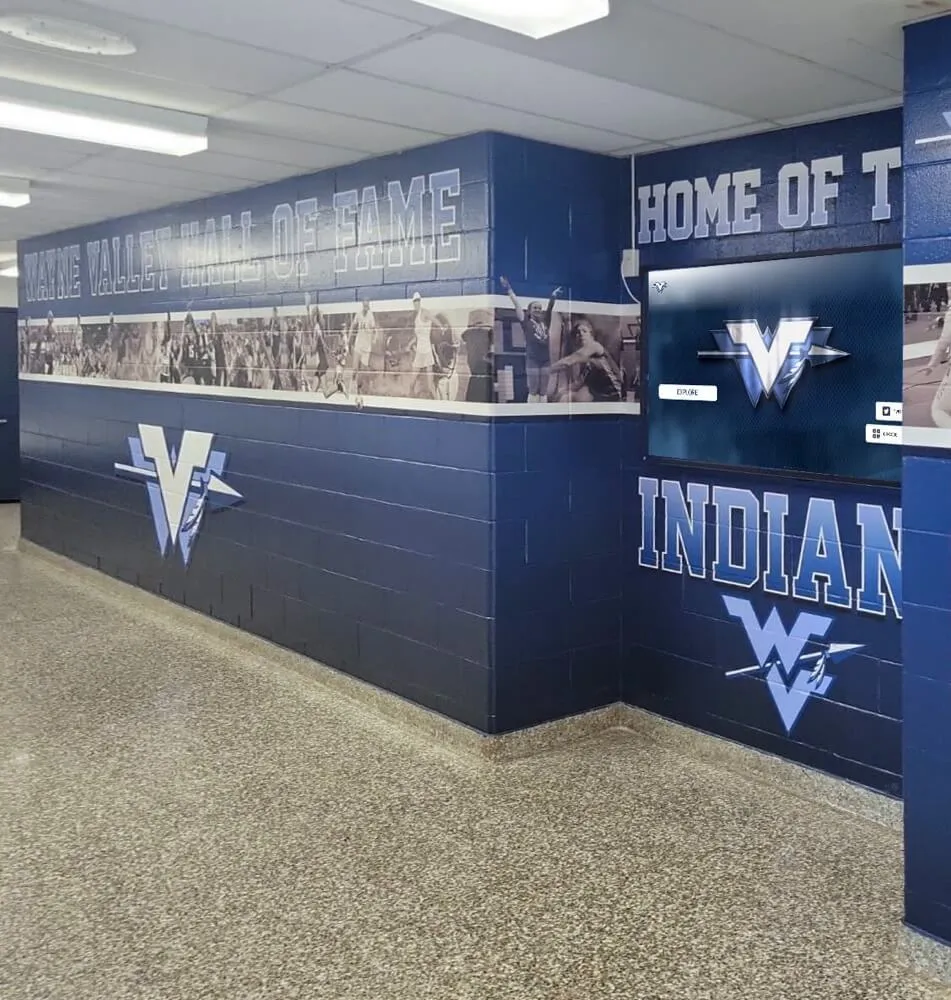
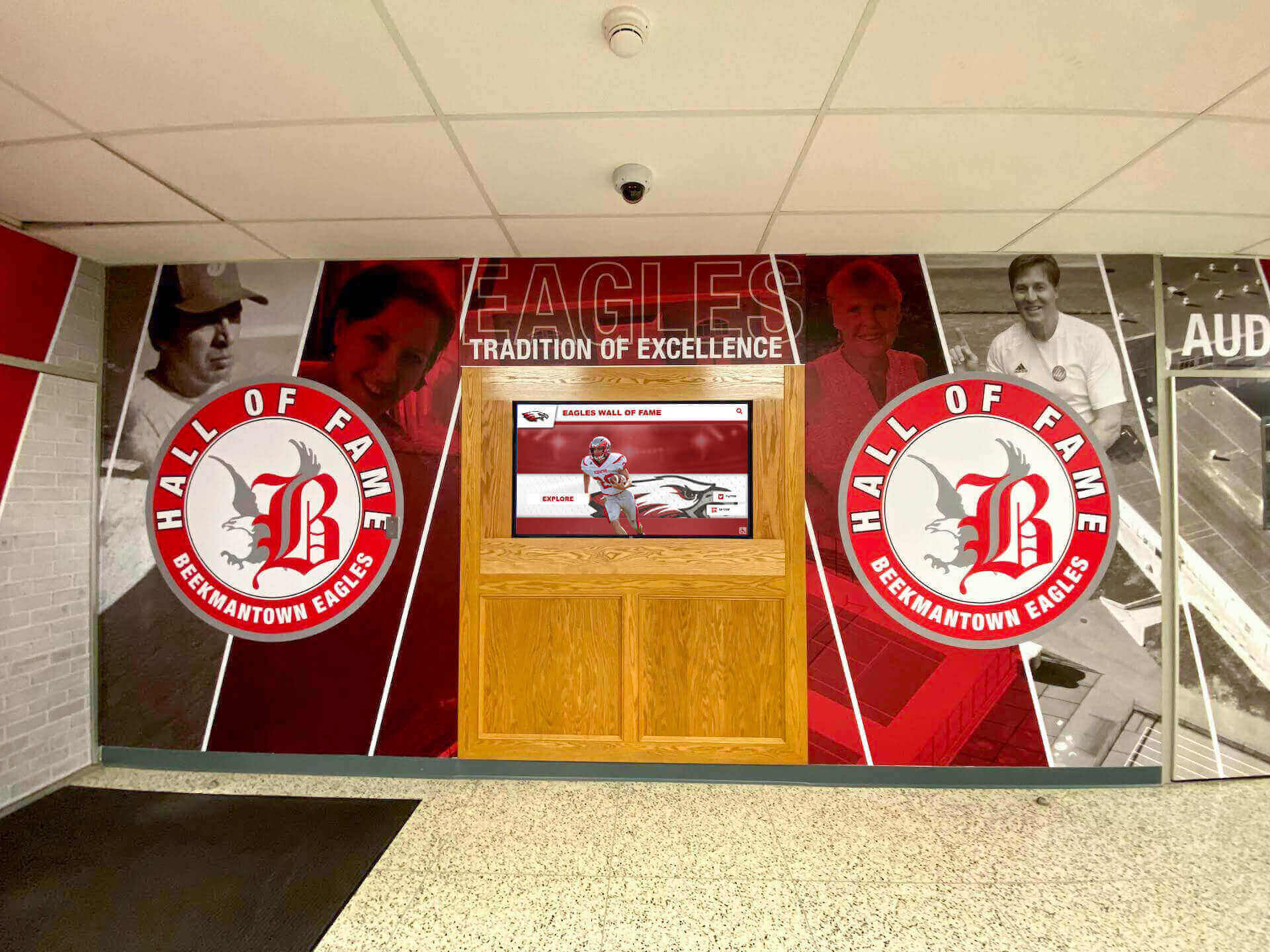
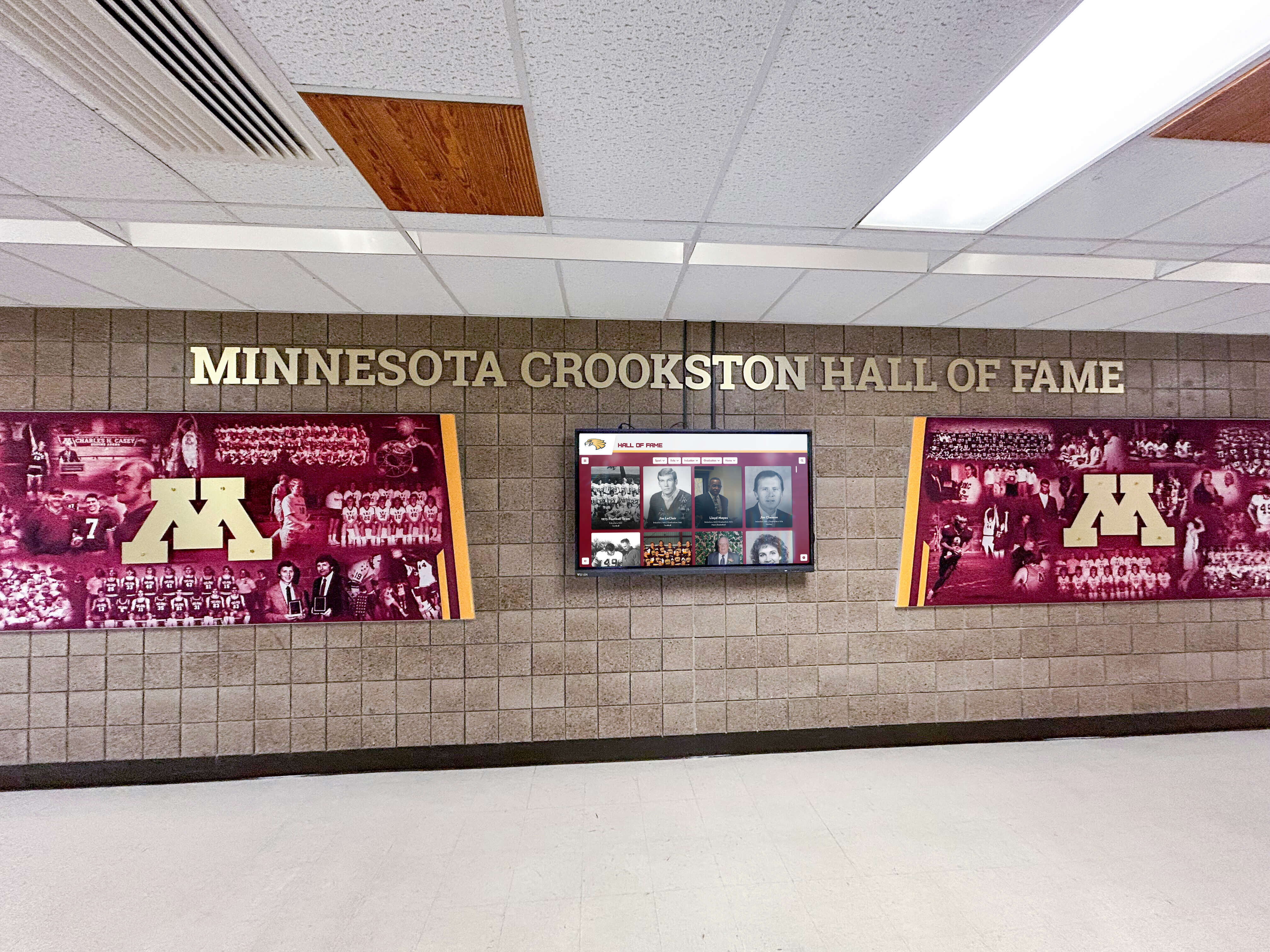
Athletic Recognition Walls: Hallways connecting to gymnasiums, locker rooms, and athletic facilities showcase team achievements, championship banners, record holders, and hall of fame inductees. Athletic wraps build program pride while creating recruitment tools demonstrating competitive excellence to prospective student-athletes and families. Many schools combine wall graphics with digital athletic hall of fame displays for comprehensive recognition systems.
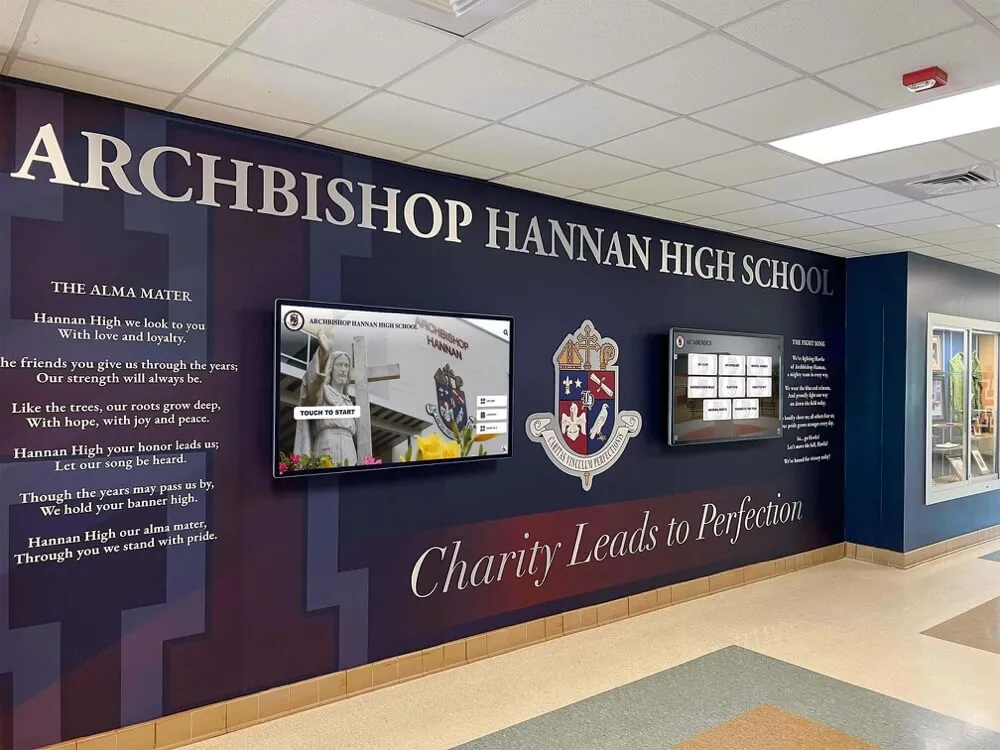
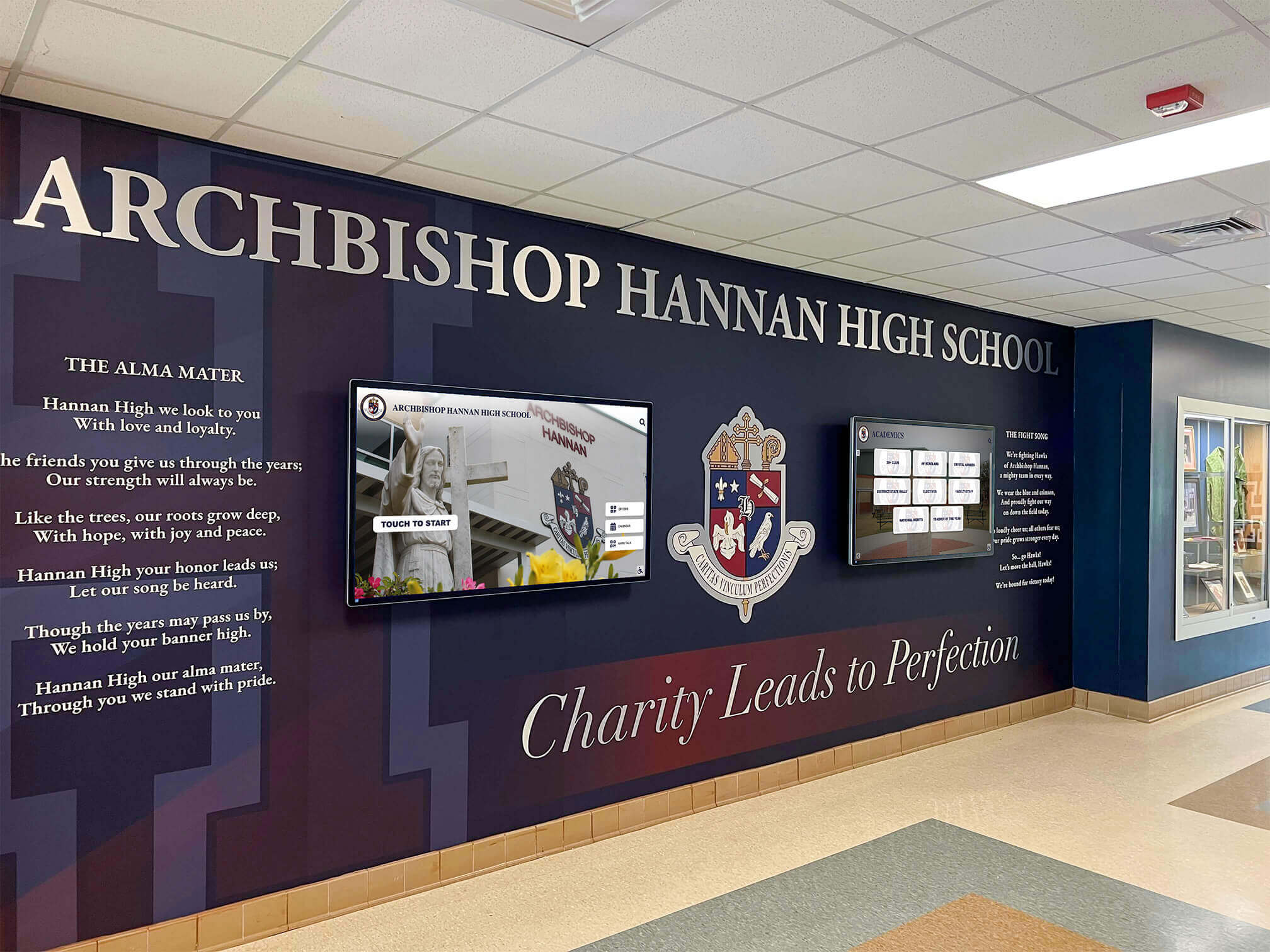
Main Entrance Identity Displays: First impressions matter. Lobby wall wraps featuring mascots, school mottos, mission statements, and founding history create immediate emotional connections with visitors. Strategic entrance graphics demonstrate pride, professionalism, and commitment to excellence from the moment families enter facilities.
Academic Achievement Showcases: Administrative corridors and academic buildings benefit from recognition graphics highlighting valedictorians, National Merit Scholars, perfect attendance students, and academic competition winners. Achievement displays motivate current students while demonstrating educational program quality to prospective families.
School History Timelines: Long hallways provide ideal canvases for chronological history displays featuring founding stories, building expansions, significant milestones, and decade-by-decade evolution. History graphics connect students to institutional legacy while giving alumni tangible connections to shared experiences.
Wayfinding and Navigation Systems: Large campuses use wall graphics as directional signage guiding visitors to offices, classrooms, cafeterias, and facilities. Branded wayfinding integrates functional navigation with visual identity reinforcement, creating cohesive environments rather than generic institutional signage.
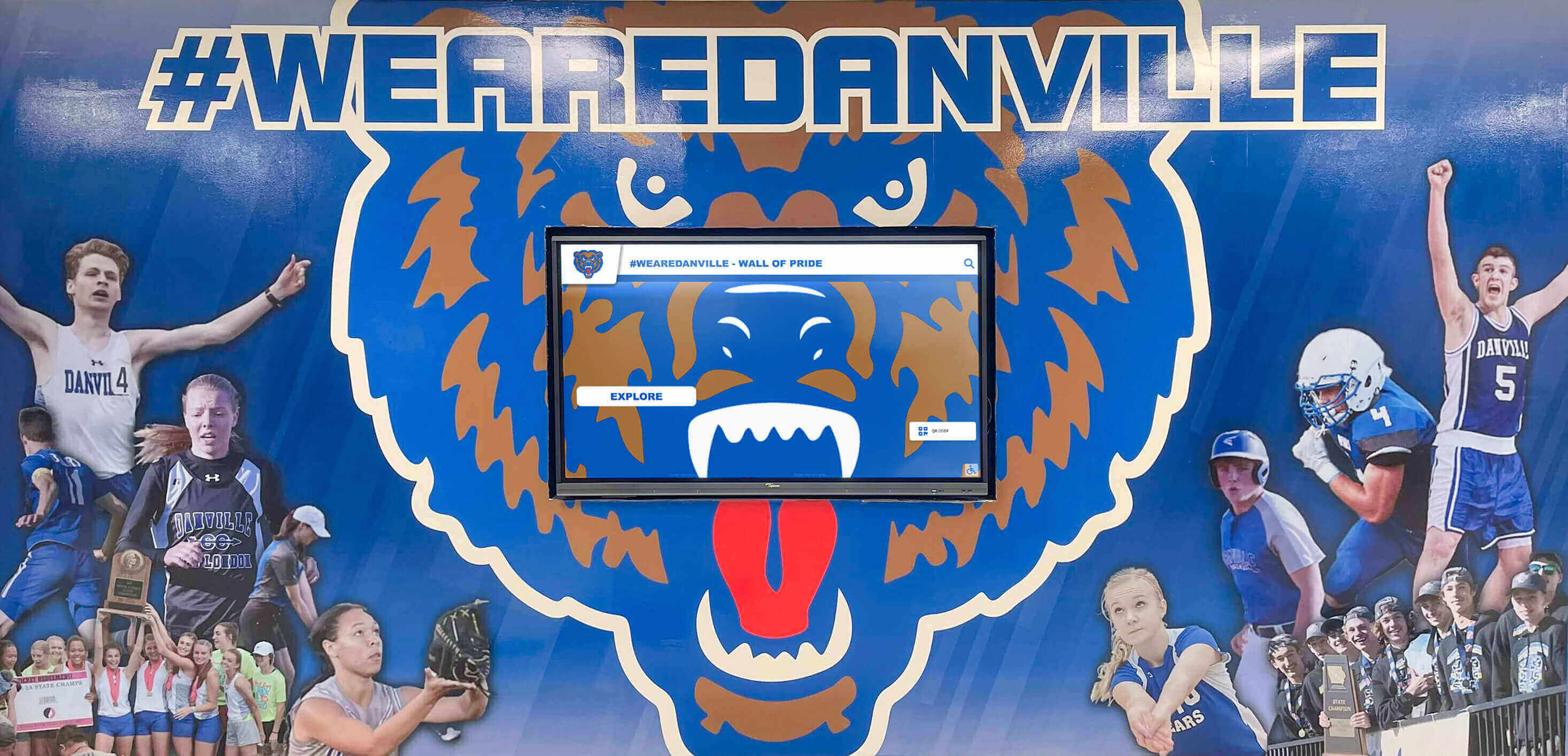
Cafeteria and Commons Areas: Student gathering spaces benefit from graphics building school spirit and community. Mascot displays, inspirational quotes, diverse student photography, and community values create welcoming environments encouraging positive culture.
Benefits of Wall Wraps in Educational Environments
Understanding specific benefits helps administrators justify investments and prioritize implementation locations.
Building School Pride and Community Identity
Visual environments significantly impact how students, staff, and visitors perceive institutions:
Creating Ownership and Belonging: Students surrounded by compelling visual representations of their school develop stronger emotional connections to institutions. Seeing mascots, colors, achievements, and community values reinforced throughout facilities creates sense of ownership—this is “our school” rather than generic educational facility. Schools with strong visual identities report higher student engagement, better behavior, and increased participation in activities.
Alumni Engagement: Wall graphics featuring historical content, notable alumni, and institutional evolution create nostalgia and connection for returning graduates. Alumni visiting facilities for events, reunions, or athletic contests encounter visual reminders of shared experiences, strengthening emotional bonds that translate to increased giving, volunteer engagement, and word-of-mouth promotion.
Recruitment and Admissions Impact: Prospective students and families touring campuses form impressions within minutes. Professional wall graphics demonstrate investment in student experience, organizational pride, and attention to detail distinguishing excellent schools from adequate ones. Many families report that visual environment quality significantly influences enrollment decisions, particularly when comparing similar academic programs across multiple institutions.
Cost-Effective Space Transformation
Wall wraps provide dramatic environmental impact for modest investments compared to traditional architectural modifications:
Avoiding Renovation Costs: Transforming walls with graphics costs $8-$25 per square foot versus $50-$150 per square foot for architectural features like specialty paint finishes, stone veneer, wood paneling, or custom millwork. Large lobbies requiring $50,000-$100,000 in architectural renovation can achieve similar visual impact with $8,000-$20,000 in professional wall graphics.
Flexibility for Changing Programs: Schools evolve. Athletic programs grow, historical milestones accumulate, and institutional priorities shift. Wall wraps accommodate change through relatively affordable replacement cycles versus permanent architectural features locked in for decades. Programs can update recognition displays every 5-7 years as new achievements merit celebration without expensive renovation projects.
Temporary and Seasonal Options: Some schools implement removable graphics for specific events, seasons, or campaigns. Homecoming graphics, academic year themes, anniversary celebrations, or awareness campaigns create flexible environments without permanent commitment. Temporary installations typically cost 15-25% more than permanent applications due to premium removable materials but allow experimentation before committing to permanent designs.
Educational and Motivational Content Integration
Wall graphics serve functional purposes beyond decoration:
Learning Environment Enhancement: Educational content integrated into wall designs converts hallways into learning spaces. Historical timelines, scientific concepts, literary quotes, mathematical formulas, or geographical displays turn transition spaces into educational opportunities. Research indicates that environmental exposure to academic content supports learning retention, particularly for visual learners.
Goal Setting and Achievement Celebration: Visible recognition of student accomplishment motivates ongoing effort. Students seeing predecessors’ achievements displayed prominently understand that excellence receives lasting acknowledgment. Record boards, honor rolls, scholarship recipients, and competition winners displayed throughout facilities create aspiration toward meaningful goals. Schools often integrate comprehensive academic recognition systems combining wall graphics with regular program updates.
Behavioral and Cultural Messaging: Strategic placement of values statements, character education content, and behavioral expectations reinforces desired culture. Research shows that environmental messaging influences behavior when authentically integrated into culture rather than appearing as superficial decoration. Graphics depicting diverse students demonstrating expected behaviors prove more effective than generic motivational posters.
Design Considerations for Successful School Wall Wraps
Effective wall graphics require thoughtful planning addressing aesthetics, functionality, and long-term sustainability.
Visual Design Principles for Educational Spaces
Professional results demand attention to design fundamentals:
Color Psychology and School Identity: Color choices significantly impact emotional response. School color schemes should dominate designs, creating instant recognition and emotional connection. However, pure saturation can overwhelm; incorporate neutral backgrounds allowing accent colors to create visual impact without causing fatigue. Consider that students occupy spaces for 6-8 hours daily—what appears exciting during 15-minute tours may feel overwhelming during extended exposure.
Typography Hierarchy and Readability: Text elements must balance impact with legibility. Primary headlines should read clearly from 20-30 feet for hallway applications. Secondary information works at 10-15 feet. Tertiary details support close inspection without cluttering distant views. Sans-serif fonts generally provide better readability for large-scale applications. Limit typeface variety to 2-3 fonts maximum preventing chaotic appearance.
Image Quality and Resolution Requirements: Large-format printing magnifies quality issues invisible in small formats. Images must originate at sufficient resolution—typically 150-300 DPI at final print size. Enlarging low-resolution photos creates pixelated, unprofessional results. School archives often contain historical photos at inadequate resolution requiring careful selection or professional restoration before use. Budget $500-$2,000 for photo research, scanning, and restoration when incorporating historical imagery.
Composition and Balance: Effective designs guide eye movement through intentional hierarchy. Establish focal points drawing initial attention before leading viewers through supporting elements. Maintain balanced negative space preventing claustrophobic appearance. Consider viewing angles and distances—designs must work from multiple perspectives as students approach and pass installations daily.
Content Strategy and Messaging
What graphics communicate matters as much as how they look:
Inclusivity and Representation: Graphics should reflect student body diversity, ensuring all community members see themselves represented. Audit imagery for gender balance, racial and ethnic diversity, activity variety, and different student types. Exclusive focus on athletics marginalizes non-athletic students. Recognition systems should celebrate academic achievement, arts excellence, community service, and leadership alongside athletic success.
Historical Accuracy and Sensitivity: Historical content demands careful research and appropriate context. Verify dates, facts, and narratives with multiple sources. Consider how historical content may impact different community members—institutional histories often contain problematic elements requiring honest acknowledgment rather than sanitized celebration. Involve diverse stakeholders in reviewing historical content before installation.
Timeless Versus Trendy Design: Wall wraps represent 5-7 year commitments. Avoid design trends likely to appear dated quickly. Contemporary design can remain fresh for years when based on strong fundamentals rather than fleeting aesthetic fashions. Classic approaches emphasizing institutional identity over trendy styling typically age more gracefully.
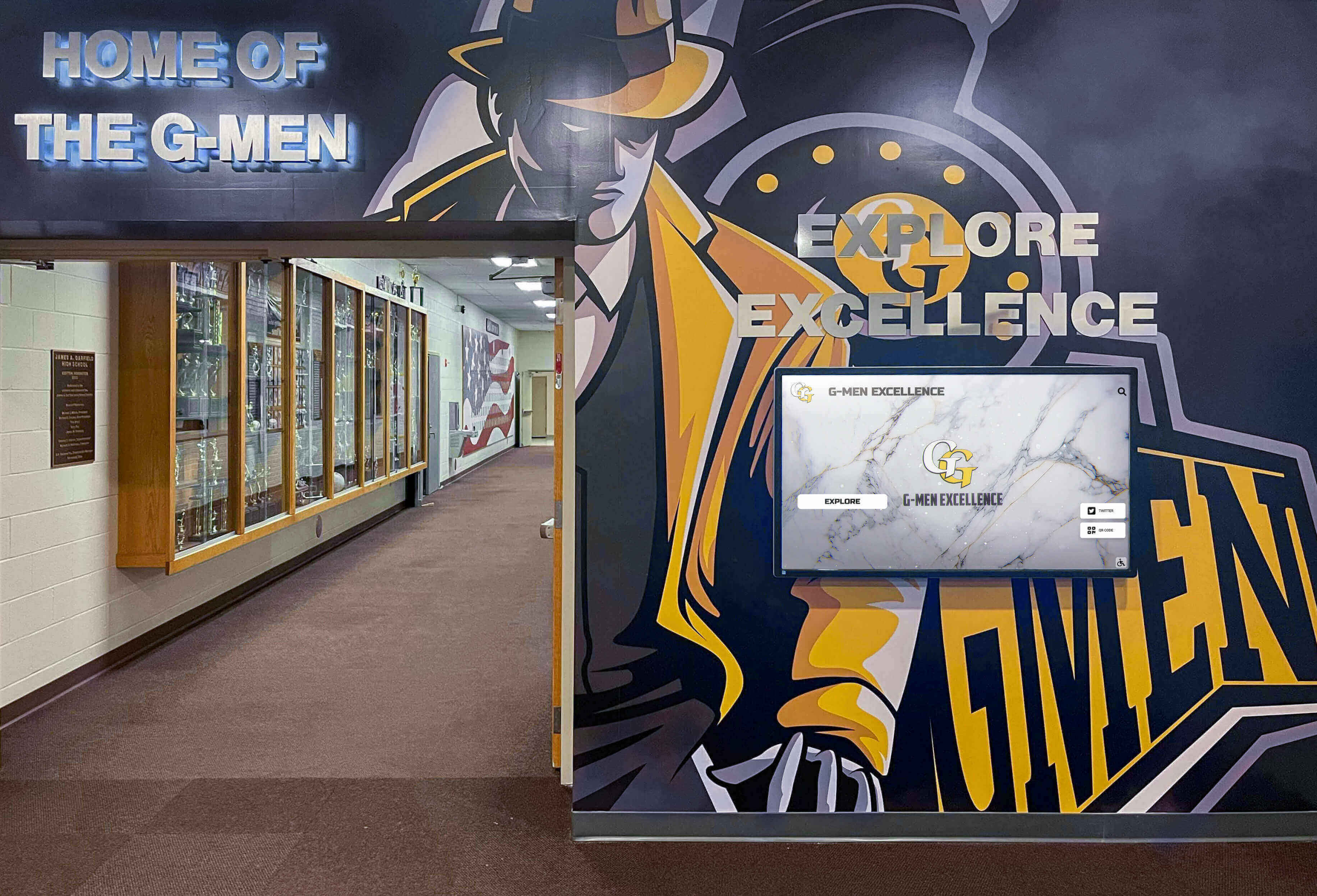
Scalability for Future Updates: Design systems enabling incremental updates cost less long-term than monolithic installations requiring complete replacement for any change. Modular panels, consistent design frameworks, and planned expansion areas enable adding new content without abandoning existing investments. Consider that championship teams, scholarship recipients, and record holders accumulate annually—systems must accommodate growth without appearing complete and closed.
Location-Specific Design Adaptation
Different school spaces require tailored approaches:
High-Traffic Hallways: Narrow hallways demand careful consideration of viewing distances and traffic flow. Designs must read clearly during brief passing exposure rather than requiring extended viewing. Avoid complex details invisible from typical viewing distances. Consider that students pass these locations multiple times daily—designs should reveal new details upon repeated viewing rather than becoming instantly exhausted and boring.
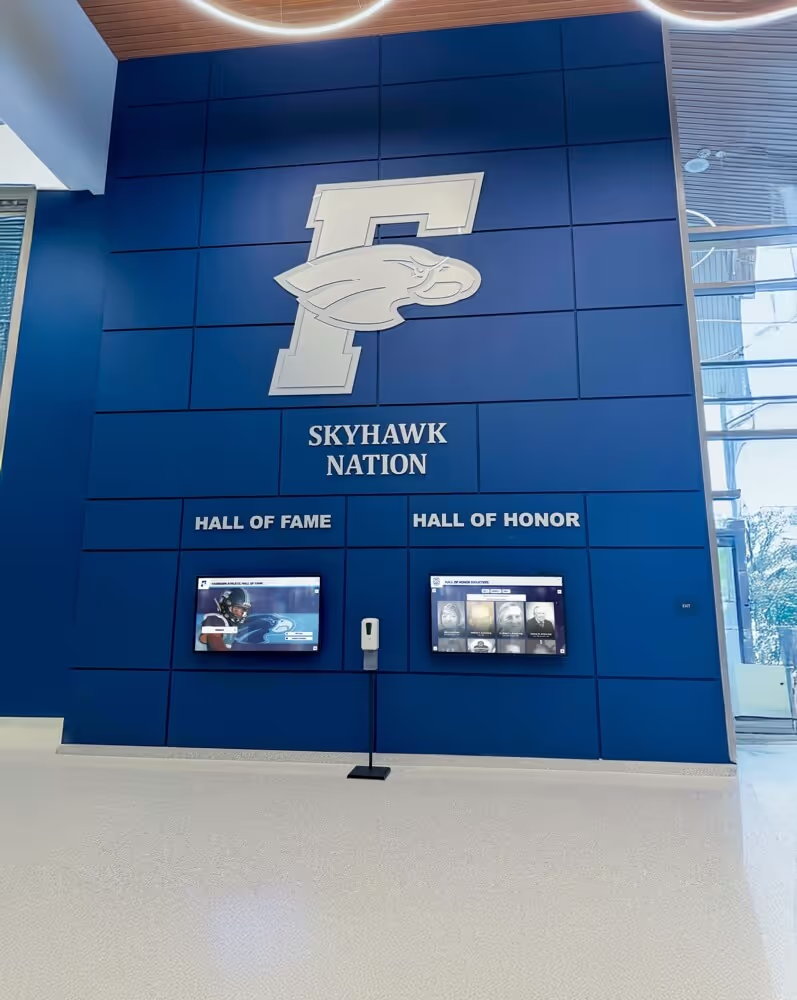
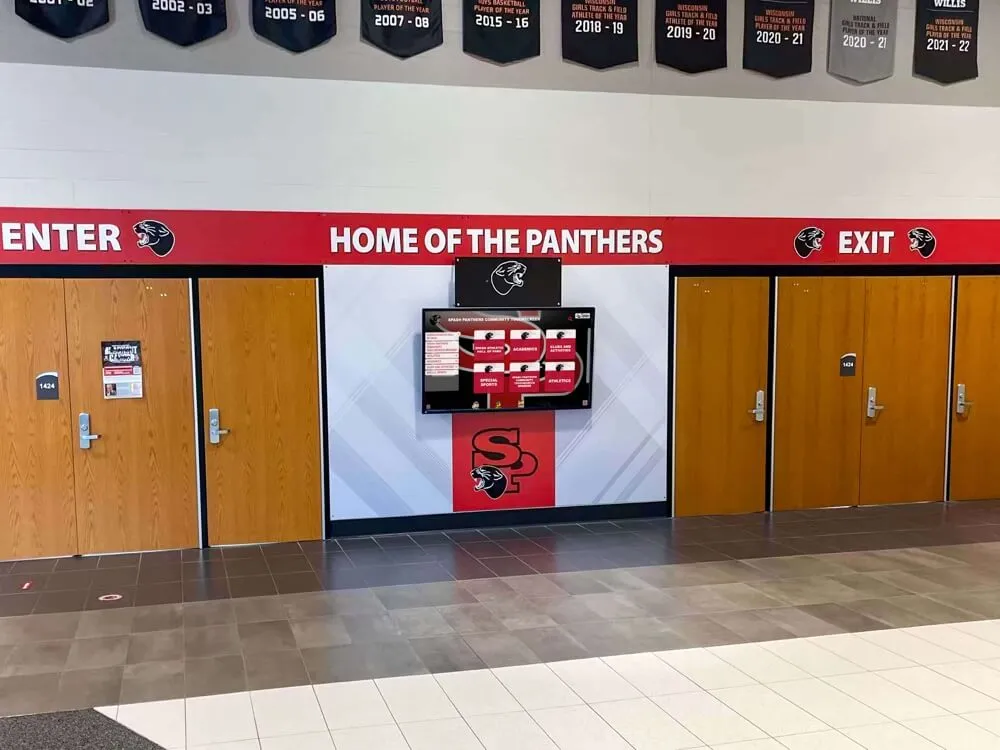
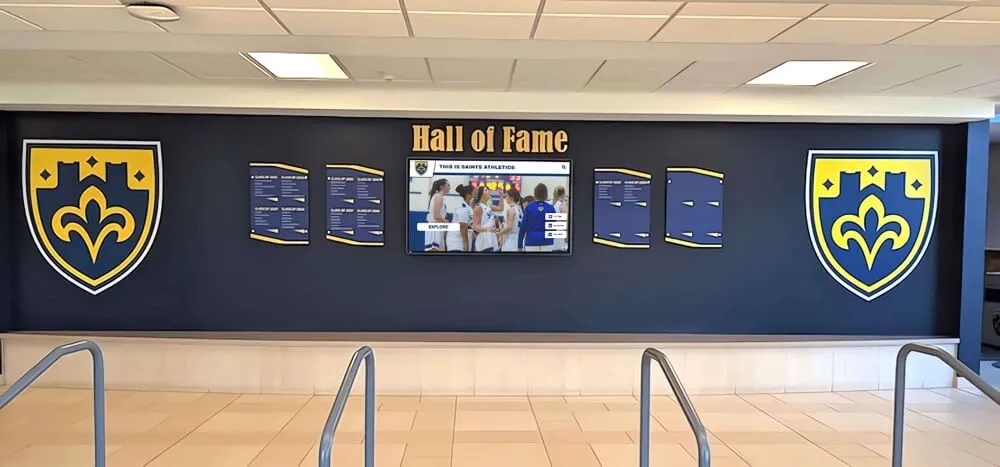
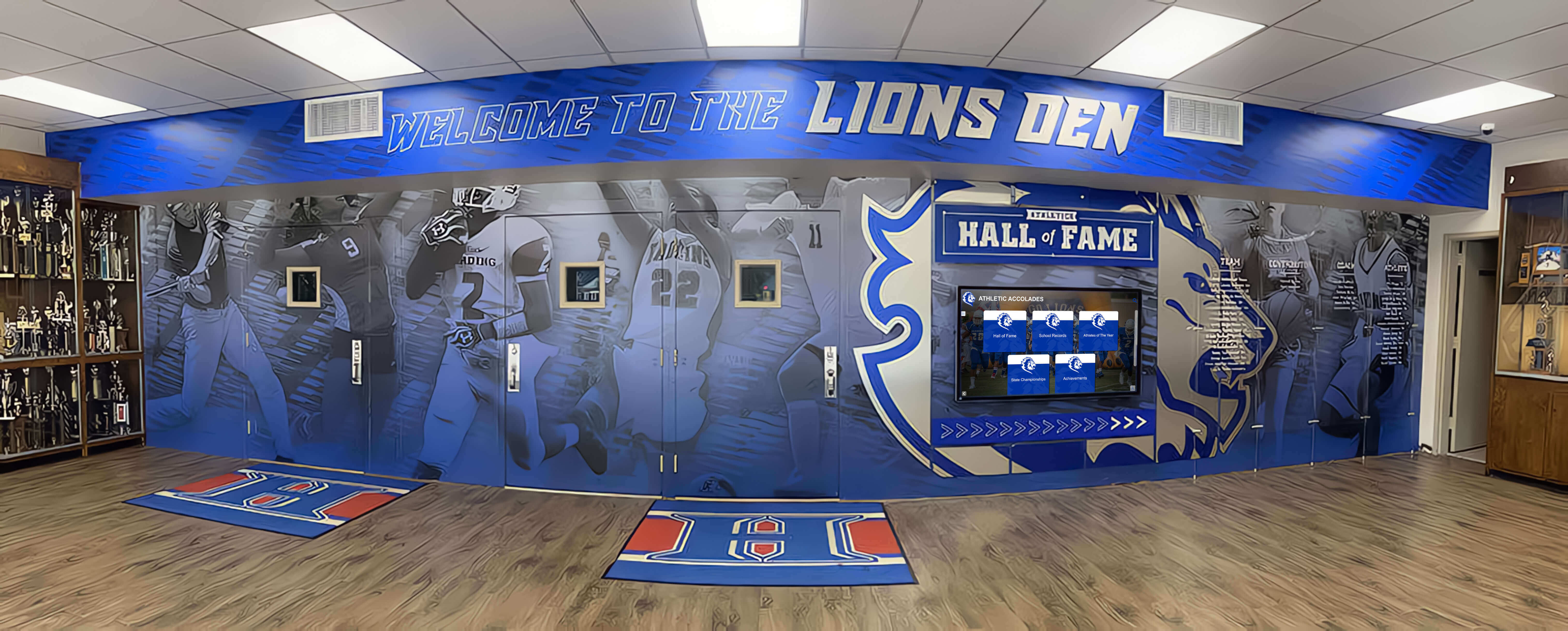
Large Lobby Installations: Expansive entryways enable dramatic statements but demand professional execution to avoid appearing amateurish. Large spaces accommodate larger graphics and more ambitious compositions. Plan for multiple viewing distances—lobby graphics must work from building exterior, immediate entrance, and across large spaces. Entrance lobbies benefit from comprehensive display strategies integrating multiple recognition approaches.
Gymnasium and Athletic Facility Walls: High ceilings and large walls in athletic facilities enable oversized graphics visible from bleachers and competition areas. However, ball impact zones require durable materials and installation techniques preventing damage and peeling. Consider maintenance access—some athletic graphics must withstand frequent ball contact without maintenance.
Stairwells and Vertical Spaces: Stairs offer unique design opportunities but present installation challenges. Viewing angles change dramatically as viewers ascend or descend. Graphics must work from multiple perspectives. Installation costs run 30-50% higher than flat walls due to access difficulty and complex layout requirements.
Cost Analysis: Understanding Wall Wrap Investment
Comprehensive budget planning requires understanding all cost components across entire project lifecycles.
Initial Investment Breakdown
Wall wrap projects encompass multiple expense categories:
Design and Creative Development: Professional design services typically charge $1,000-$5,000 depending on project complexity and revision cycles. Simple designs with existing assets and clear direction cost less than complex historical research projects requiring original illustration and extensive content development. Some printing companies include basic design services with printing purchases while others charge separately. Budget $50-$150 per design hour for experienced commercial designers familiar with large-format applications.
Materials and Printing: Vinyl materials and large-format printing cost $4-$12 per square foot depending on vinyl quality, lamination options, and quantity. Higher-quality cast vinyls, specialty finishes, and small quantities increase per-unit costs. Large projects enjoy volume discounts reducing unit costs significantly. Printing typically represents 35-45% of total installed costs.
Installation Labor: Professional installation labor costs $4-$13 per square foot depending on wall complexity, access difficulty, and regional labor rates. Simple flat walls in open areas cost less than textured surfaces, high installations requiring lifts, or tight spaces limiting working room. Installation represents 40-50% of total project costs and determines whether graphics last years or fail prematurely. Attempting installation with untrained staff to save money typically results in poor results requiring expensive reinstallation.
Wall Preparation: Surface preparation adds $1-$5 per square foot depending on existing wall conditions. New smooth painted walls require minimal prep. Textured walls need skim coating. Damaged walls demand repair. Preparation costs represent 10-20% of project budgets but ensure installation success.
Project Management and Logistics: Commercial projects require site surveys, mock-up reviews, installation scheduling, and quality control adding 10-15% to base costs. Project management ensures installations occur during appropriate timeframes, minimizes school disruption, and verifies quality before final payment.
Long-Term Cost Considerations
Ongoing expenses extend beyond initial installation:
Maintenance and Cleaning: Regular cleaning extends graphic life but must use appropriate methods. Harsh chemicals or abrasive cleaning damages vinyl surfaces. Professional cleaning services charge $0.50-$2.00 per square foot annually. Many schools train custodial staff in proper vinyl cleaning techniques using gentle cleansers and soft cloths, incorporating wall graphic maintenance into regular facility cleaning protocols without additional costs.
Repair and Damage Mitigation: High-traffic locations may experience edge peeling, scratches, or vandalism requiring repair. Small repairs cost $200-$500 depending on damage extent. Extensive damage may require panel replacement at $500-$2,000 per panel. Protective lamination and anti-graffiti coatings reduce repair frequency. Schools should budget $300-$1,000 annually for repair contingencies.
Replacement Cycles: Interior graphics typically require replacement every 5-7 years as designs become dated, content needs updating, or materials show age. Replacement costs equal initial installation since wall preparation, design updates, and installation labor repeat. Budget for replacement in capital improvement plans to avoid surprise expenses when graphics reach end of useful life.
Content Update Costs: Schools whose graphics require frequent content updates face recurring costs without changing base installations. Adding individual panels to existing installations costs $500-$1,500 per panel including design integration, production, and installation. Digital recognition tools eliminate update costs by enabling unlimited content changes through software rather than physical reinstallation.
Cost Comparison: Wall Wraps Versus Alternatives
Understanding competitive options helps determine appropriate solutions:
Traditional Painted Murals: Custom hand-painted murals by professional artists cost $25-$100 per square foot—2-5 times more than vinyl wraps. Murals offer artistic uniqueness and premium aesthetics but lack flexibility for updates and require significant maintenance. Schools valuing artistic expression and permanent installations may justify premium investment.
Dimensional Signage Elements: Individual letters, logos, or graphic elements mounted to walls cost $500-$5,000 per installation depending on size, materials, and quantity. Dimensional signage creates premium appearance with excellent durability but provides limited content capacity compared to full wall coverage. Many schools combine vinyl graphics with dimensional accent elements achieving balanced aesthetics and budgets.
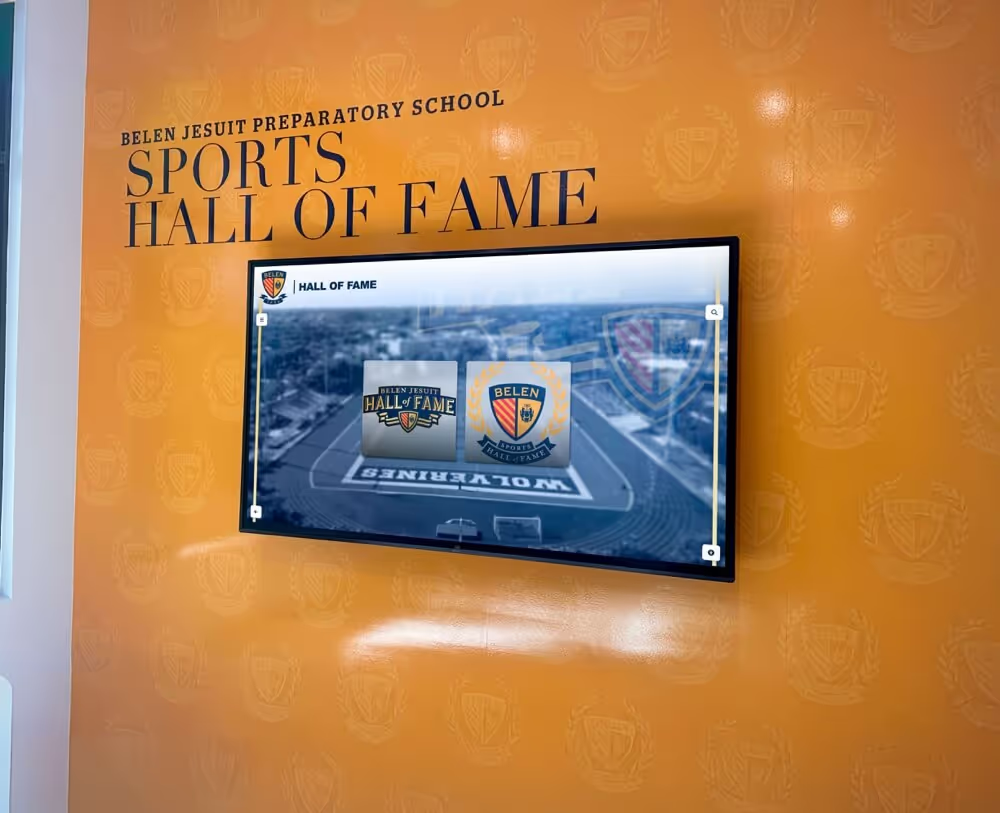
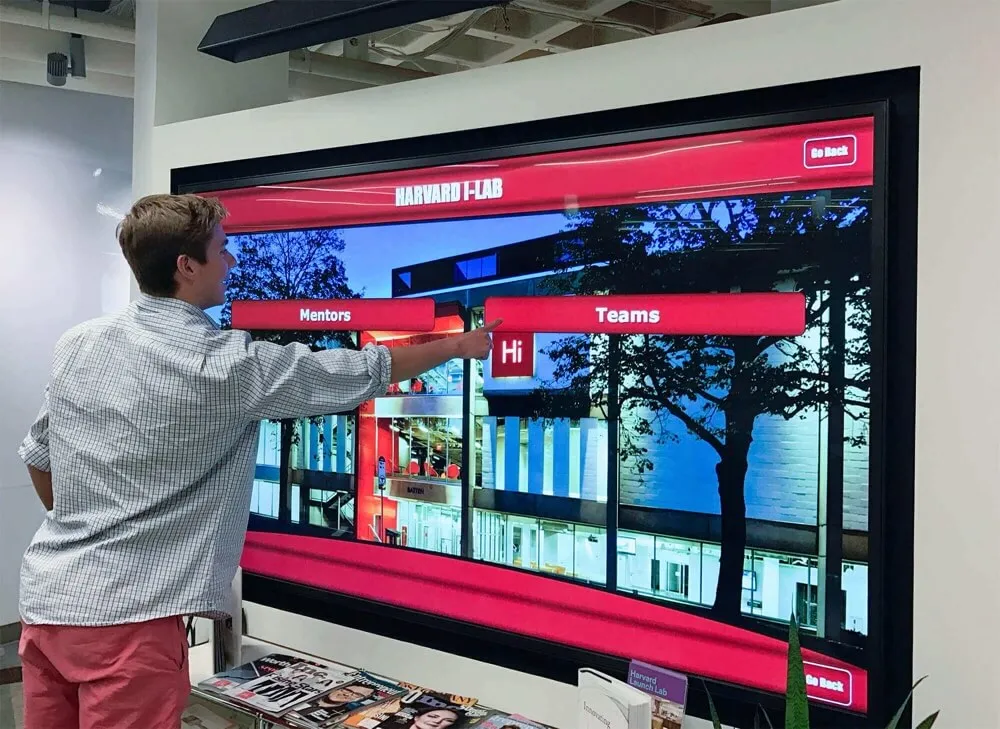
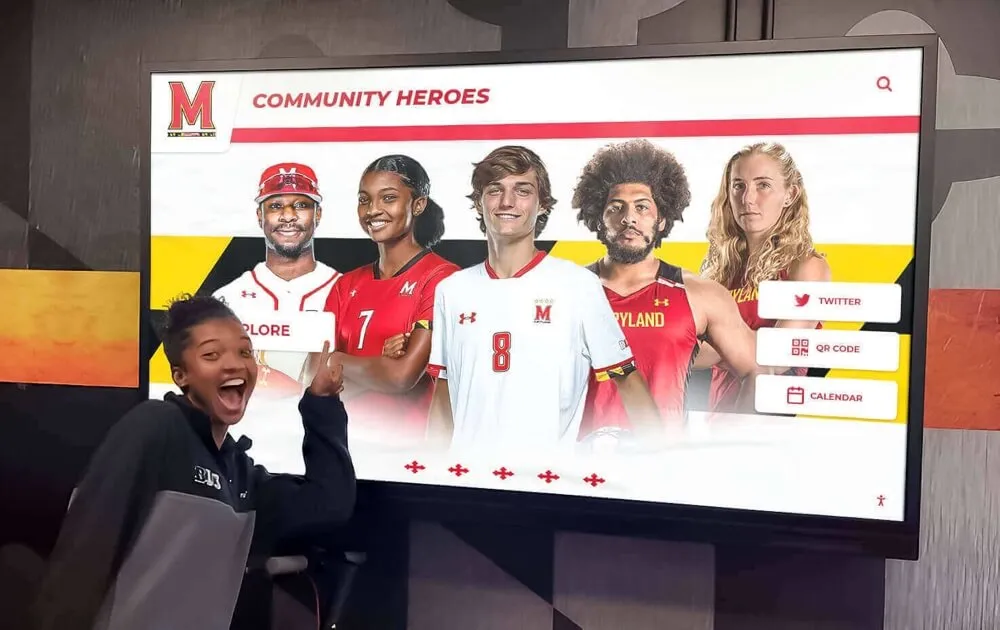
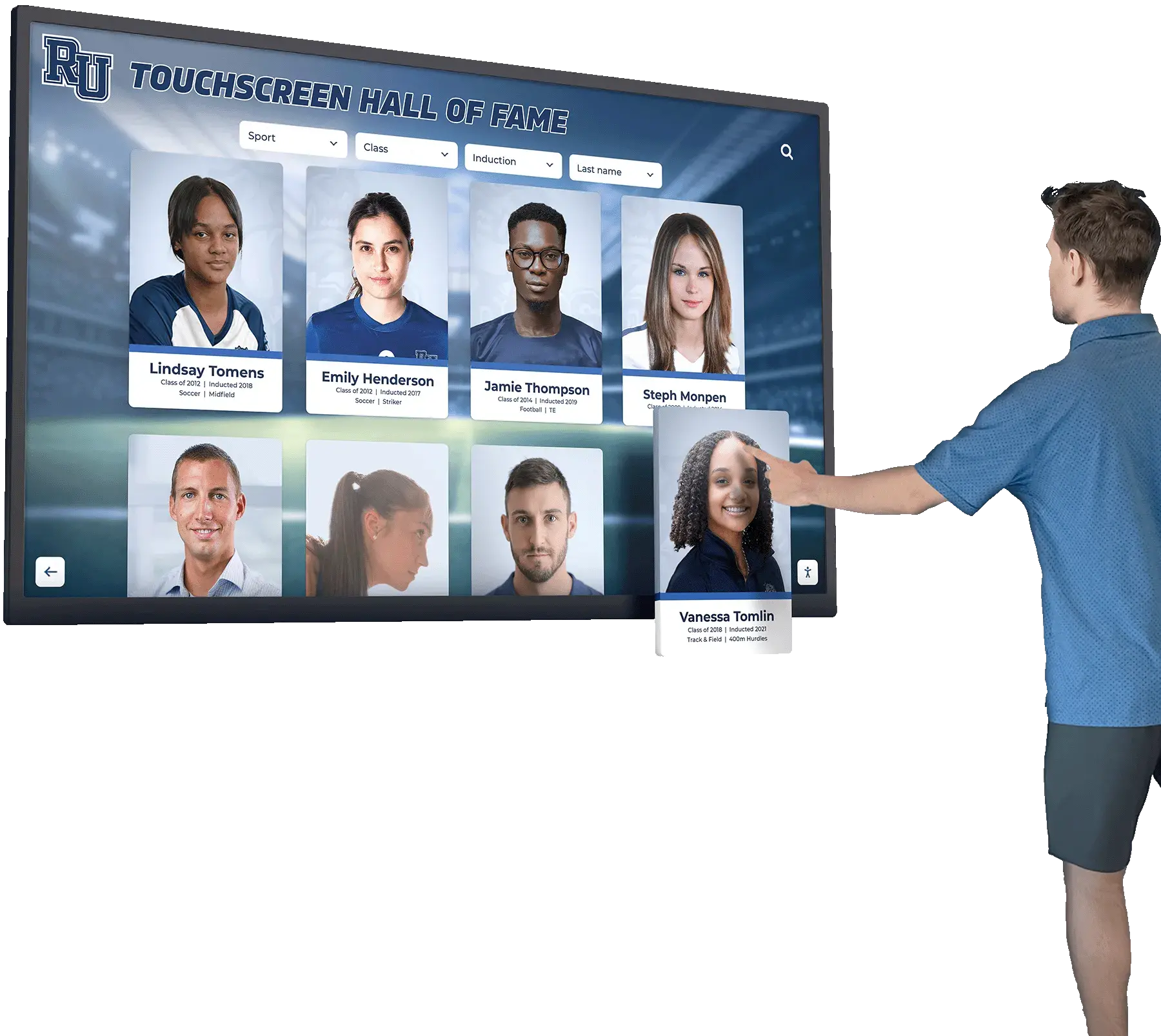
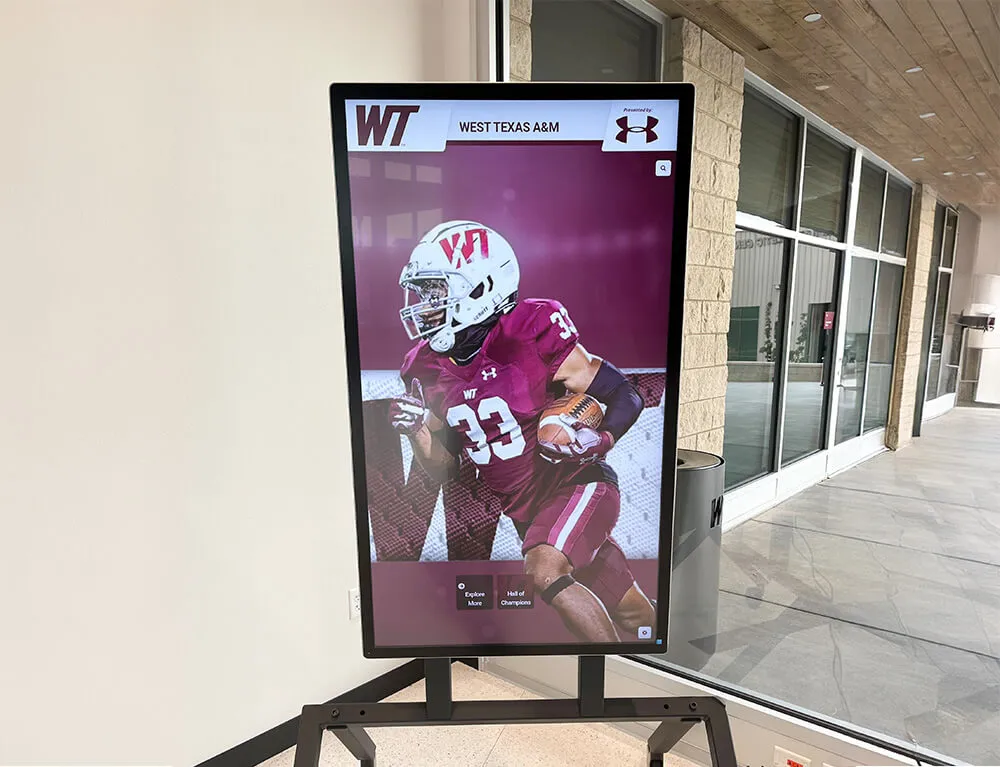
Digital Recognition Displays: Interactive touchscreen systems cost $8,000-$18,000 for single-screen installations but offer unlimited content capacity, easy updates, searchable databases, and multimedia storytelling impossible with static graphics. Digital systems excel for recognition content requiring regular updates—specialized recognition software supports comprehensive achievement databases updated continuously without physical installation costs.
Removable Vinyl Decals: Smaller individual decals and graphics cost $50-$500 per element. Decals work well for temporary applications, seasonal displays, or incremental additions but lack visual impact and cohesion of full wall installations. Schools often use decal programs for classrooms and offices while reserving full wraps for high-impact common areas.
Installation Process and Professional Considerations
Proper installation determines whether graphics last years or fail prematurely.
Professional Installation Versus DIY Approaches
Experience level dramatically affects results:
Professional Installer Advantages: Commercial graphics installers bring specialized tools, installation techniques, and experience preventing common failure modes. Professionals understand surface preparation requirements, proper adhesive activation, air elimination techniques, and seam placement strategies ensuring long-lasting installations. Warranty coverage typically requires professional installation—attempting DIY installation voids material warranties and eliminates recourse if installations fail.
DIY Installation Challenges: Untrained staff attempting installations face numerous pitfalls: inadequate surface preparation causing adhesive failure, trapped air bubbles creating unprofessional appearance, improper vinyl stretching causing distortion or future shrinkage, poor seam alignment in multi-panel installations, and damaged materials during application attempts. Large-format vinyl installation differs fundamentally from applying small decals—success requires training and specialized tools.
When DIY May Work: Very small projects (under 50 square feet), simple single-panel designs, and temporary applications may suit experienced facilities staff with proper tools and training. However, most school wall wrap projects justify professional installation ensuring quality results and protecting investments.
Installation Timeline Expectations
Understanding realistic schedules enables proper planning:
Design Development: 2-6 weeks depending on project complexity, content availability, and revision cycles. Complex projects requiring historical research, extensive stakeholder input, or original illustration require longer timelines. Simple designs using existing assets and clear direction move faster.
Production and Printing: 1-2 weeks after final design approval. Large projects may require longer production windows. Rush production costs 25-50% premiums for expedited service.
Installation Scheduling: Installation occurs during minimal-disruption windows—summers, breaks, or weekends. Simple installations cover 200-400 square feet daily. Complex projects in difficult locations install 100-200 square feet daily. A typical 500-square-foot hallway installation requires 2-3 days including wall preparation, application, and cleanup.
Total Project Duration: Budget 6-12 weeks from design kickoff through installation completion for typical projects. Large multi-location campus projects may extend to 3-6 months coordinating multiple phases across different buildings and timeframes.
Post-Installation Care and Maintenance
Proper maintenance maximizes investment life:
Initial Curing Period: Allow 24-48 hours after installation before touching or cleaning graphics. Adhesive requires time to fully bond to wall surfaces. Premature contact may cause edge lifting or adhesive transfer.
Cleaning Protocols: Use mild soap solutions and soft cloths for routine cleaning. Avoid ammonia-based cleaners, abrasive materials, or high-pressure washing damaging vinyl. Clean spills promptly before staining occurs. Establish cleaning protocols with custodial staff ensuring appropriate techniques.
Damage Inspection: Quarterly inspections identify edge lifting, scratches, or vandalism requiring repair before problems expand. Early intervention prevents small issues from becoming large expensive repairs.
Environmental Controls: Maintain consistent temperature and humidity. Extreme fluctuations cause expansion and contraction stressing vinyl installations. Protect graphics from prolonged direct sunlight in windowed areas—UV exposure causes fading even with UV-resistant inks.
Digital Display Alternatives to Traditional Wall Wraps
Modern recognition technology offers compelling advantages over static graphics for certain applications.
Interactive Touchscreen Recognition Systems
Digital displays transform recognition from static viewing to active engagement:
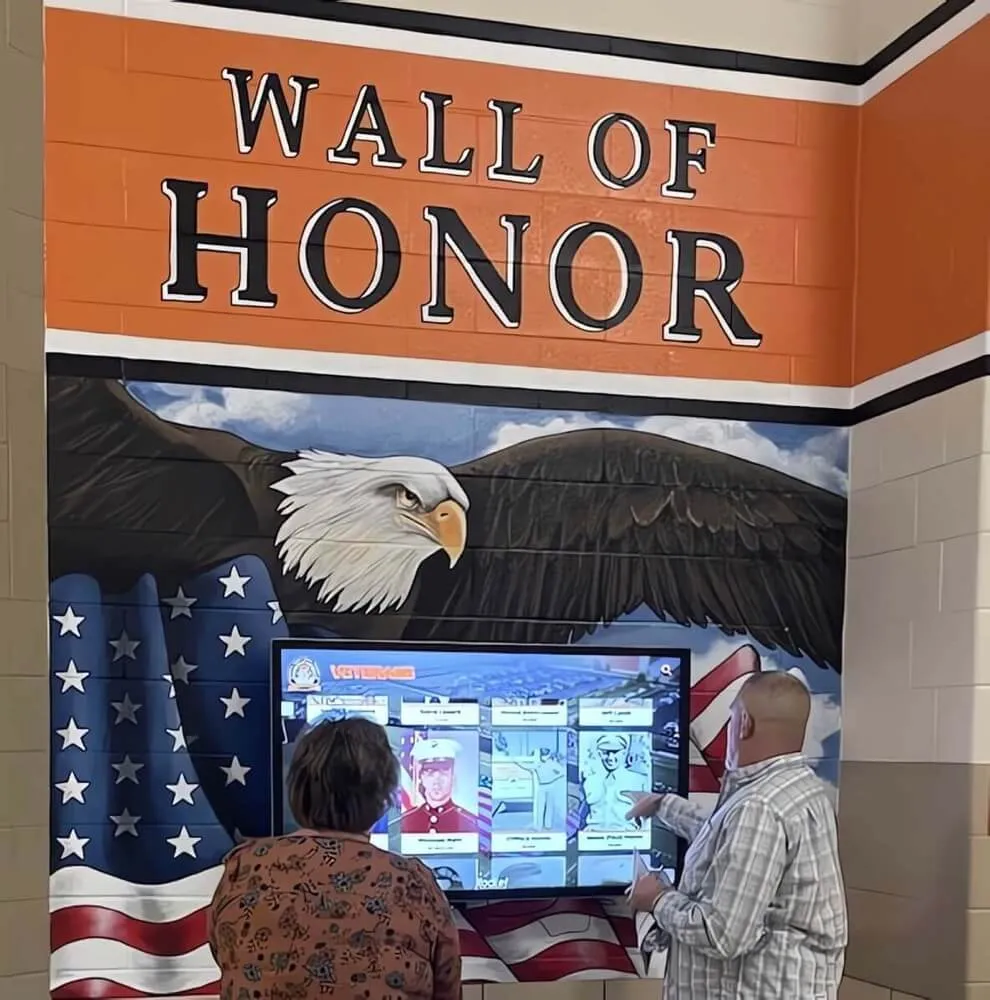
Unlimited Content Capacity: Digital systems display thousands of inductees, students, or achievements without physical space constraints limiting traditional installations. Schools can honor every deserving individual rather than limiting recognition to those fitting predetermined physical display capacity. Comprehensive databases replace selective highlighting forced by space limitations.
Easy Content Updates: Software platforms enable content updates, additions, and corrections through cloud-based dashboards without physical reinstallation. Athletic directors, administrators, or designated staff update achievement information, add new inductees, or refresh designs independently without vendor dependence or installation costs. Schools report 90% reductions in ongoing content maintenance costs compared to physical displays requiring professional services for any change.
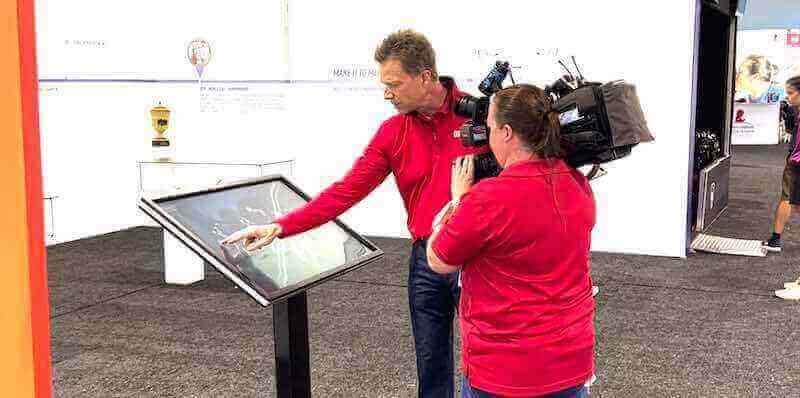
Multimedia Storytelling: Digital platforms incorporate photos, videos, statistics, biographical narratives, and interactive timelines impossible with static graphics. Video highlight reels, audio interviews, and photographic slideshows create emotional connections and storytelling depth print cannot match. Enhanced storytelling increases visitor engagement time from seconds glancing at static displays to minutes exploring interactive content.
Search and Filter Capabilities: Touchscreen interfaces enable visitors to find specific individuals by name, year, sport, award category, or other attributes. Alumni returning for reunions or events can quickly locate themselves, classmates, or family members within comprehensive databases—impossible with static wall displays organizing content chronologically or by category.
Mobile Companion Access: Modern recognition platforms include mobile applications extending access globally beyond physical installations. Alumni worldwide explore achievement databases, share personal profiles on social media, and maintain connections to institutions from anywhere. Mobile access multiplies recognition impact exponentially beyond campus-limited physical installations. Learn more about effective alumni engagement strategies using digital recognition technology.
Analytics and Engagement Measurement: Digital systems track which content generates visitor interest through interaction logs and dwell time measurement. Analytics inform content strategy, demonstrate return on investment, and identify opportunities for program improvement—impossible with static installations providing no engagement feedback.
Hybrid Approaches Combining Static and Digital Elements
Many schools implement integrated strategies using strengths of both approaches:
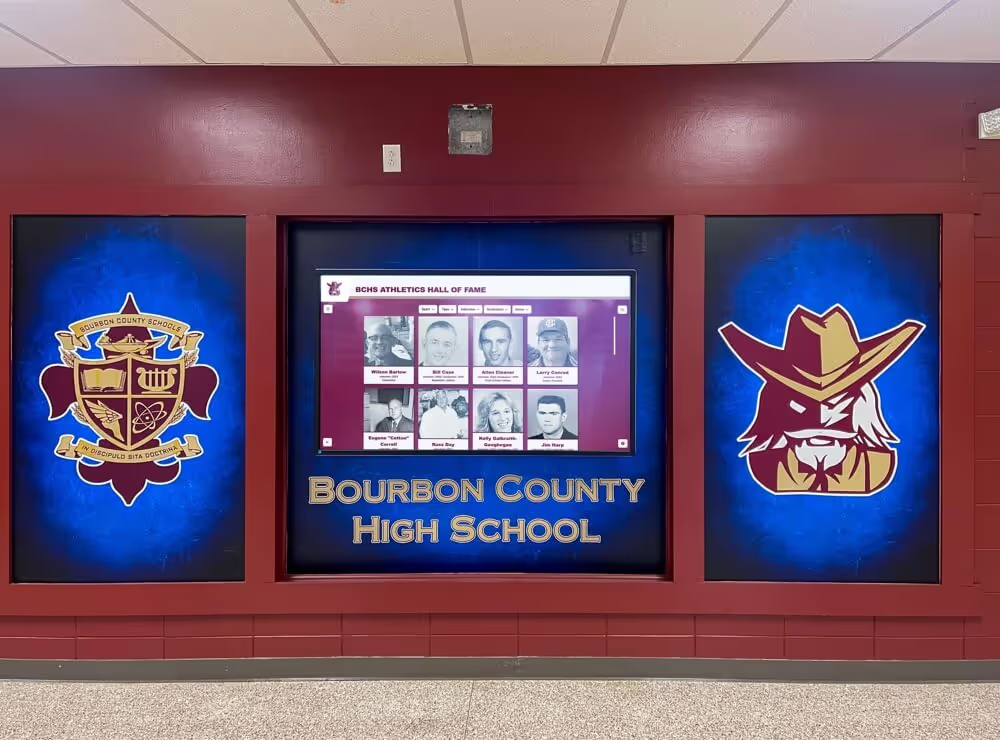
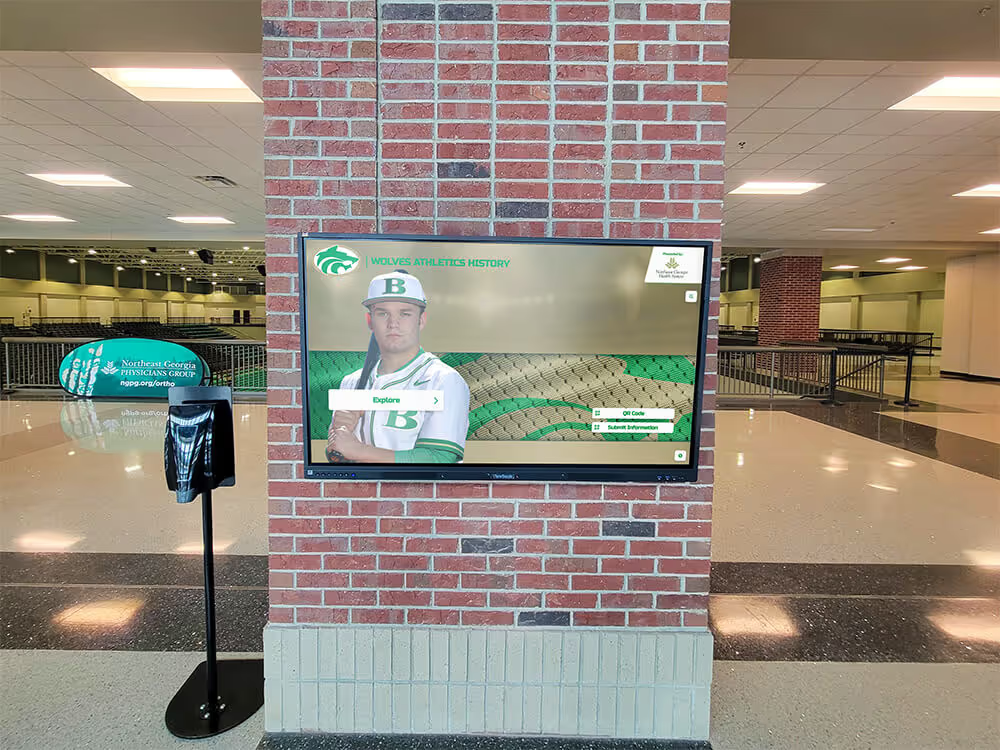
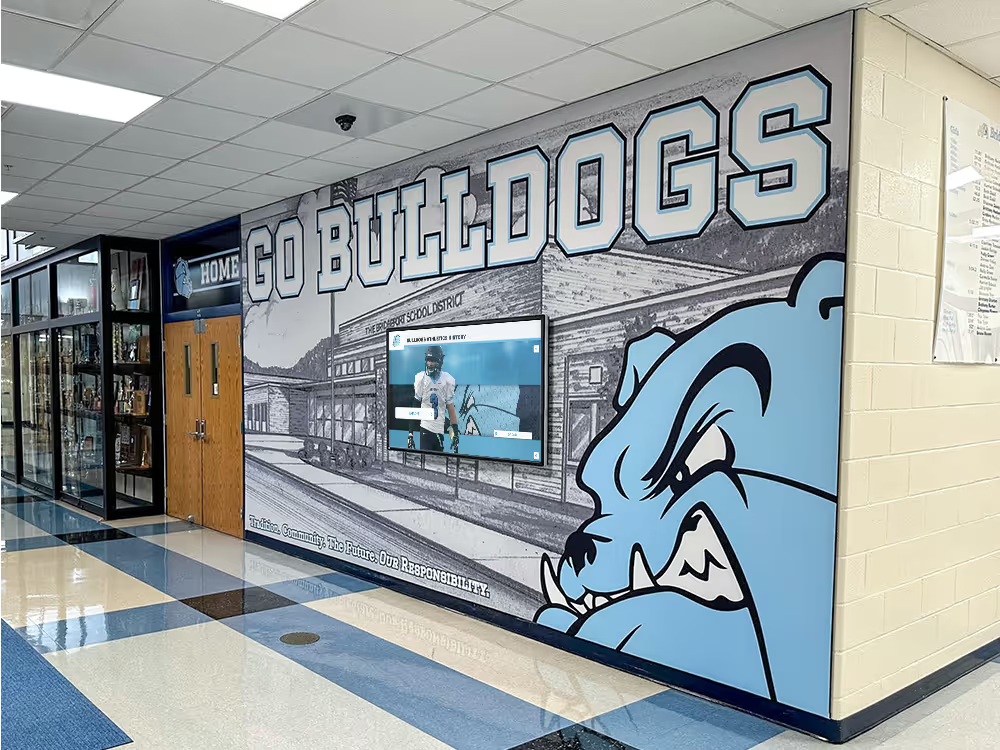
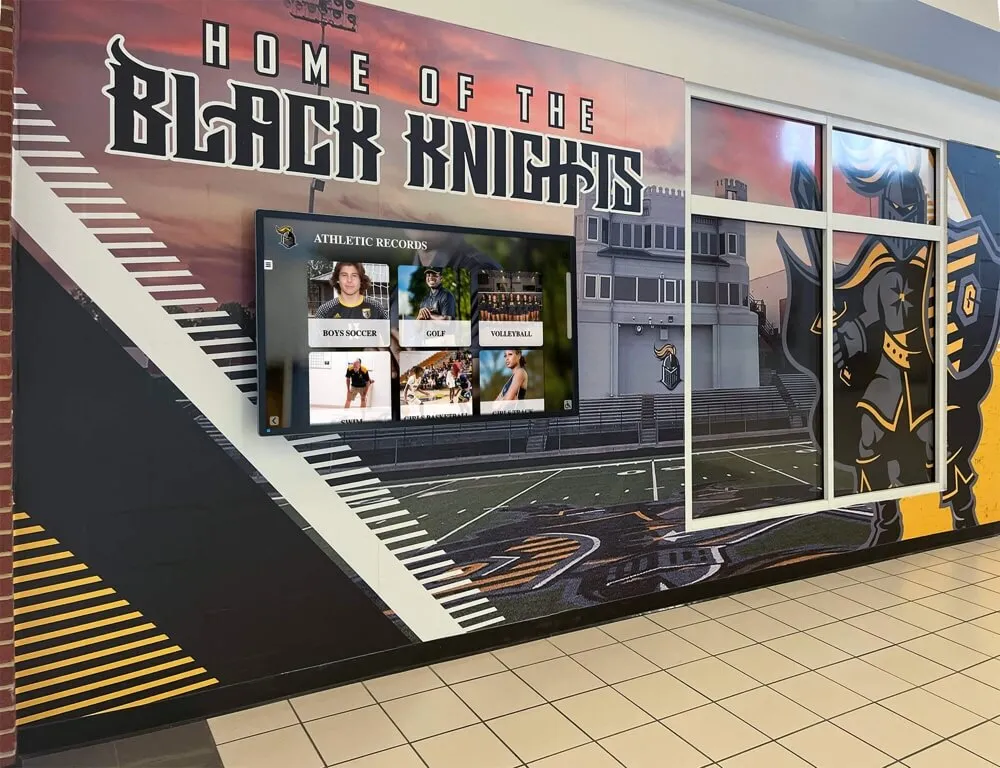
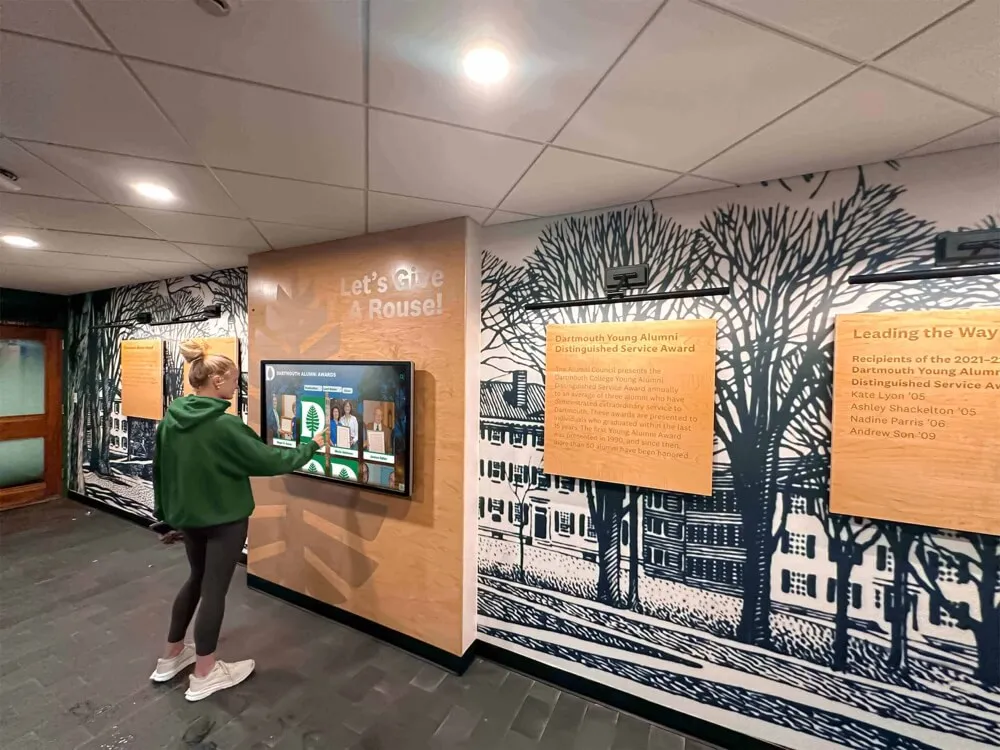
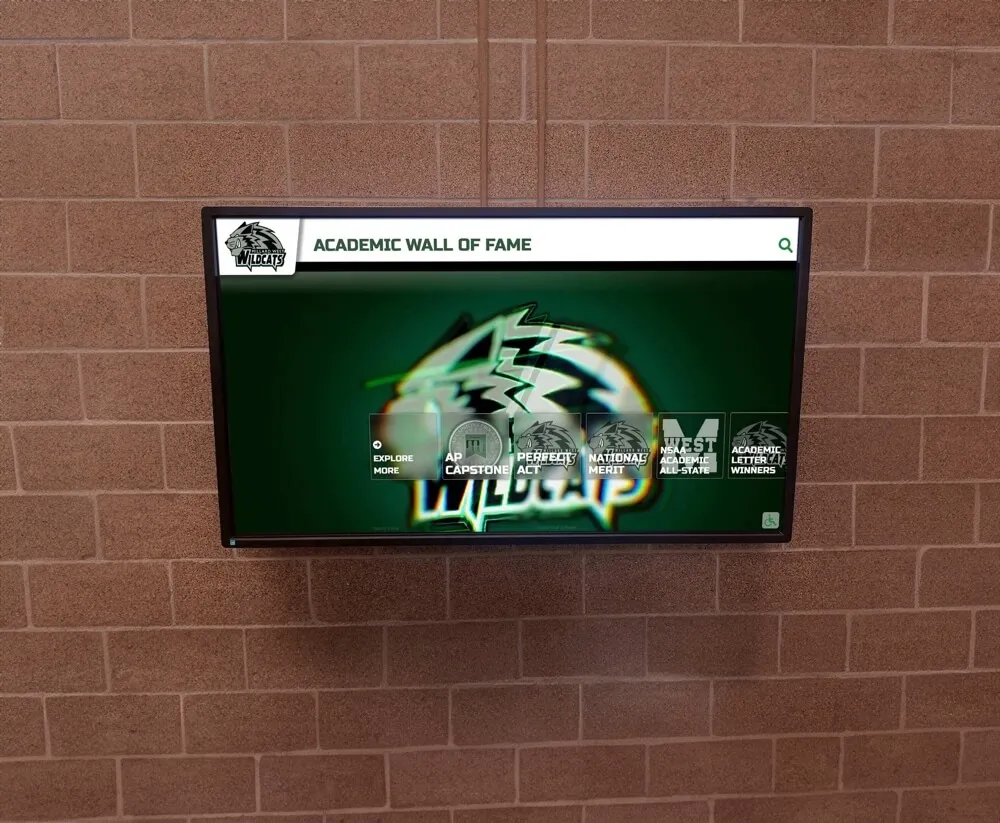
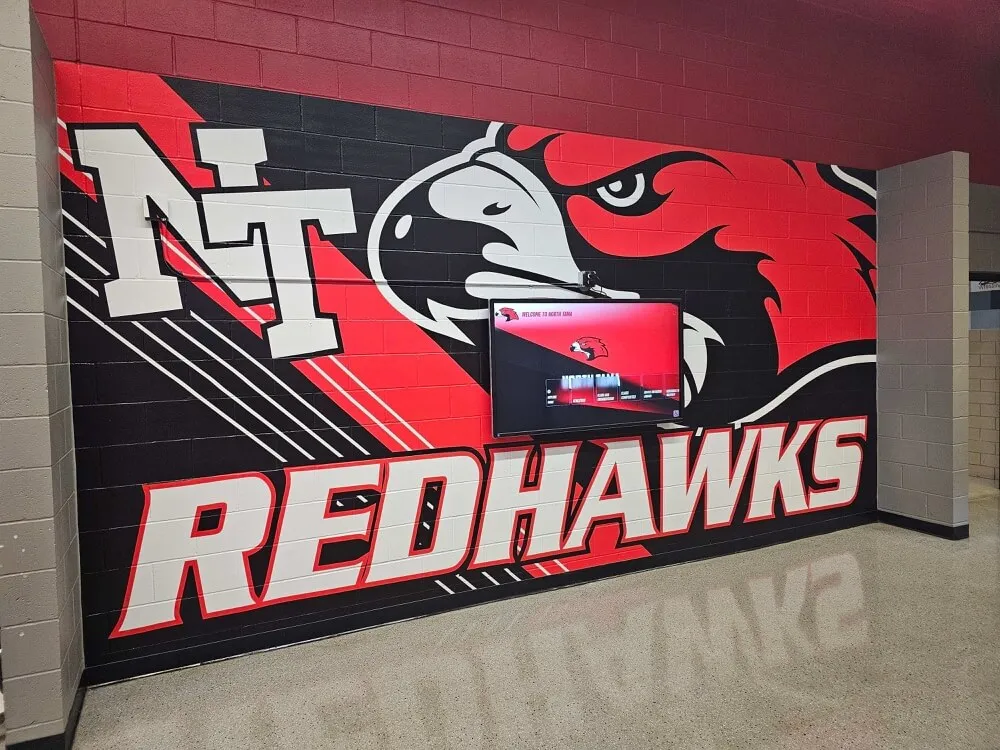
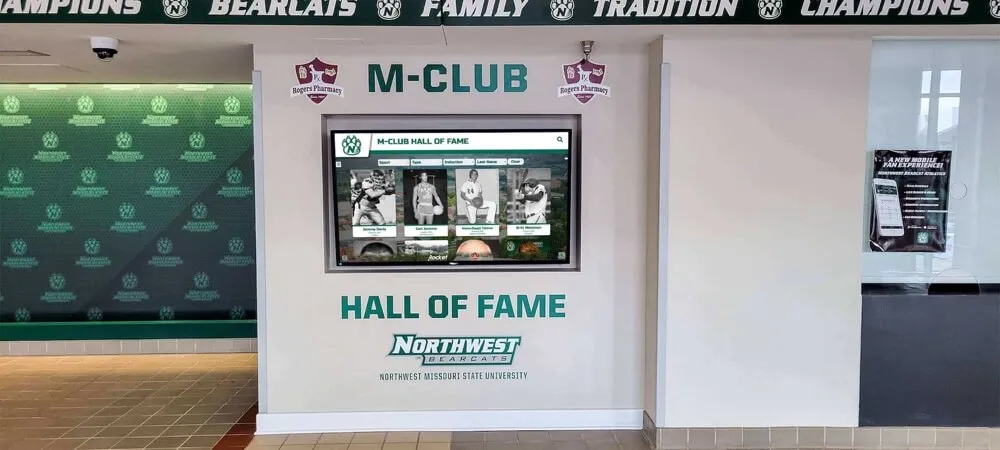
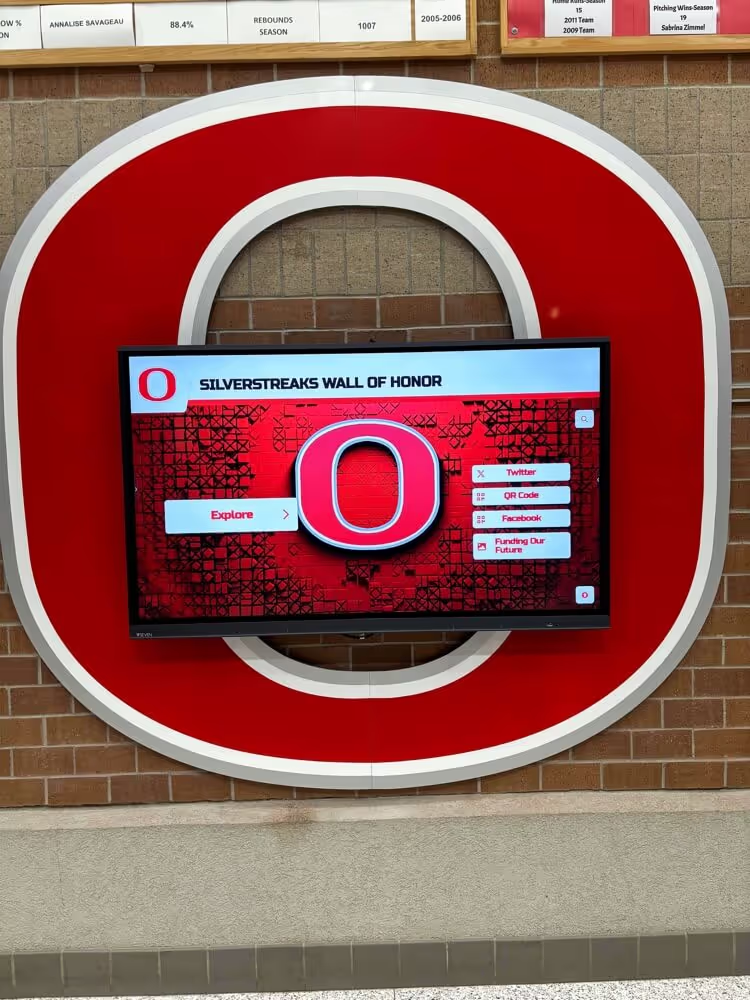
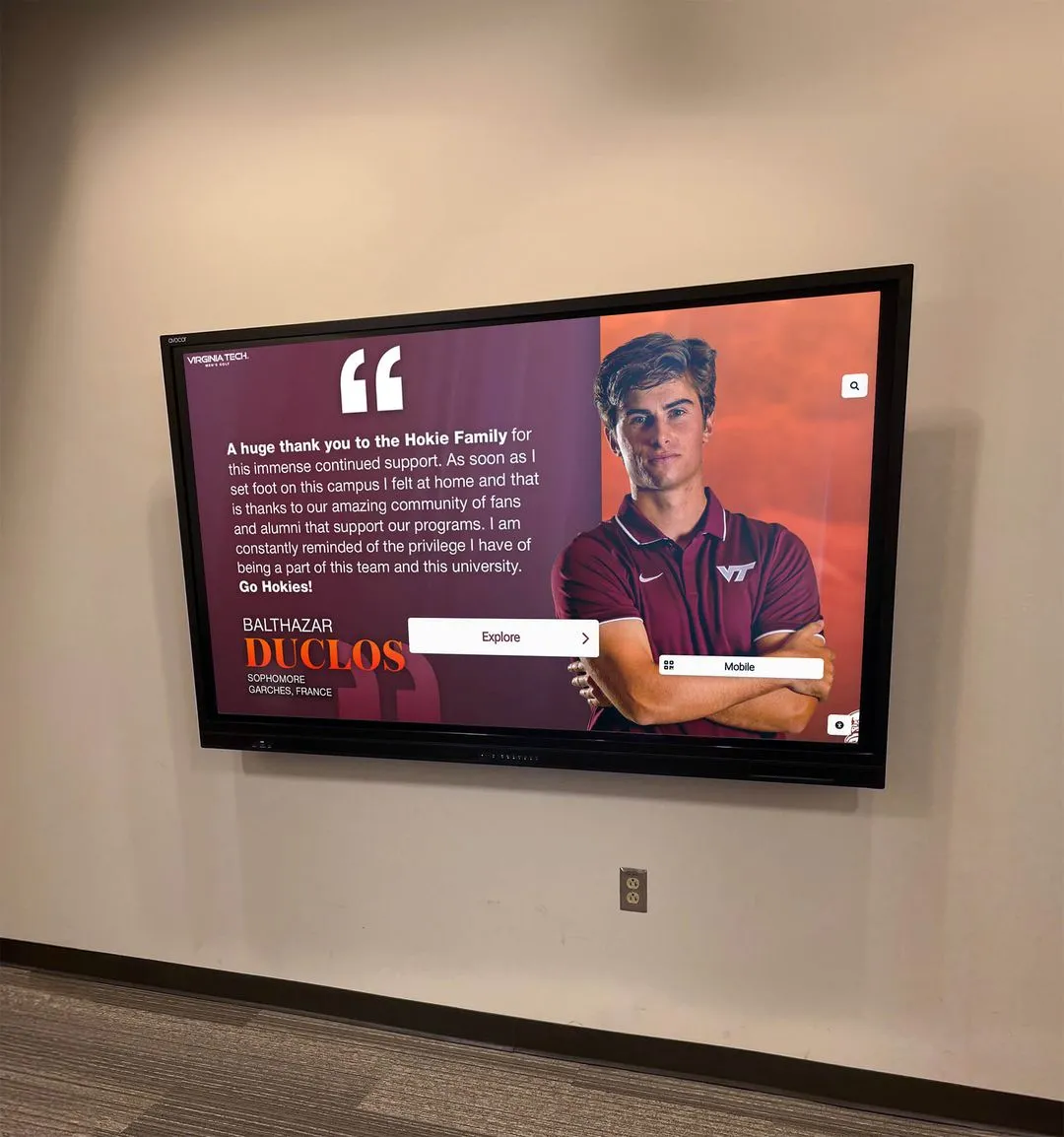
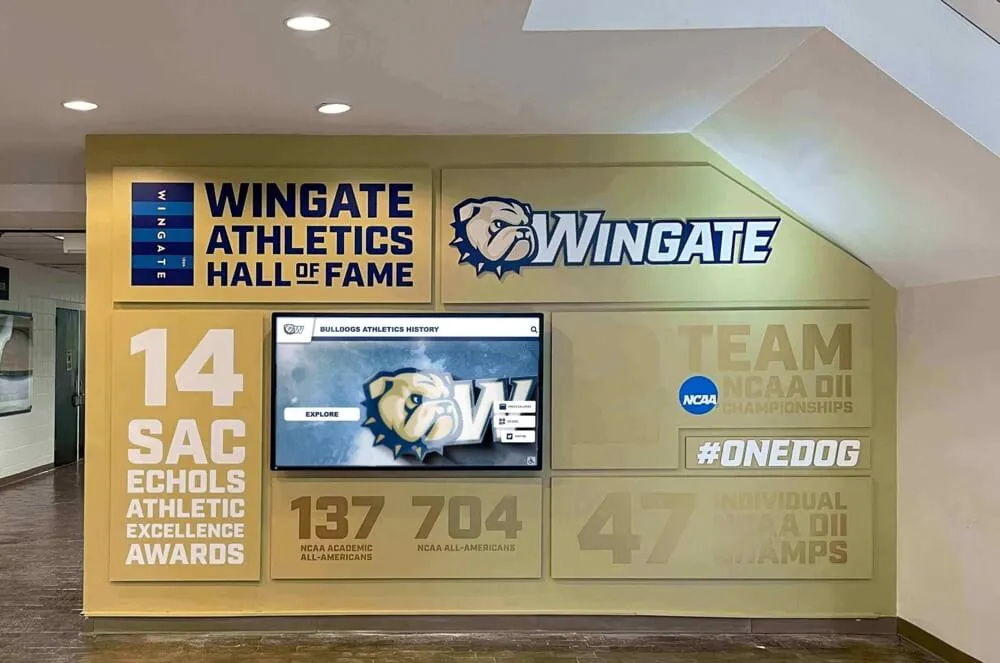
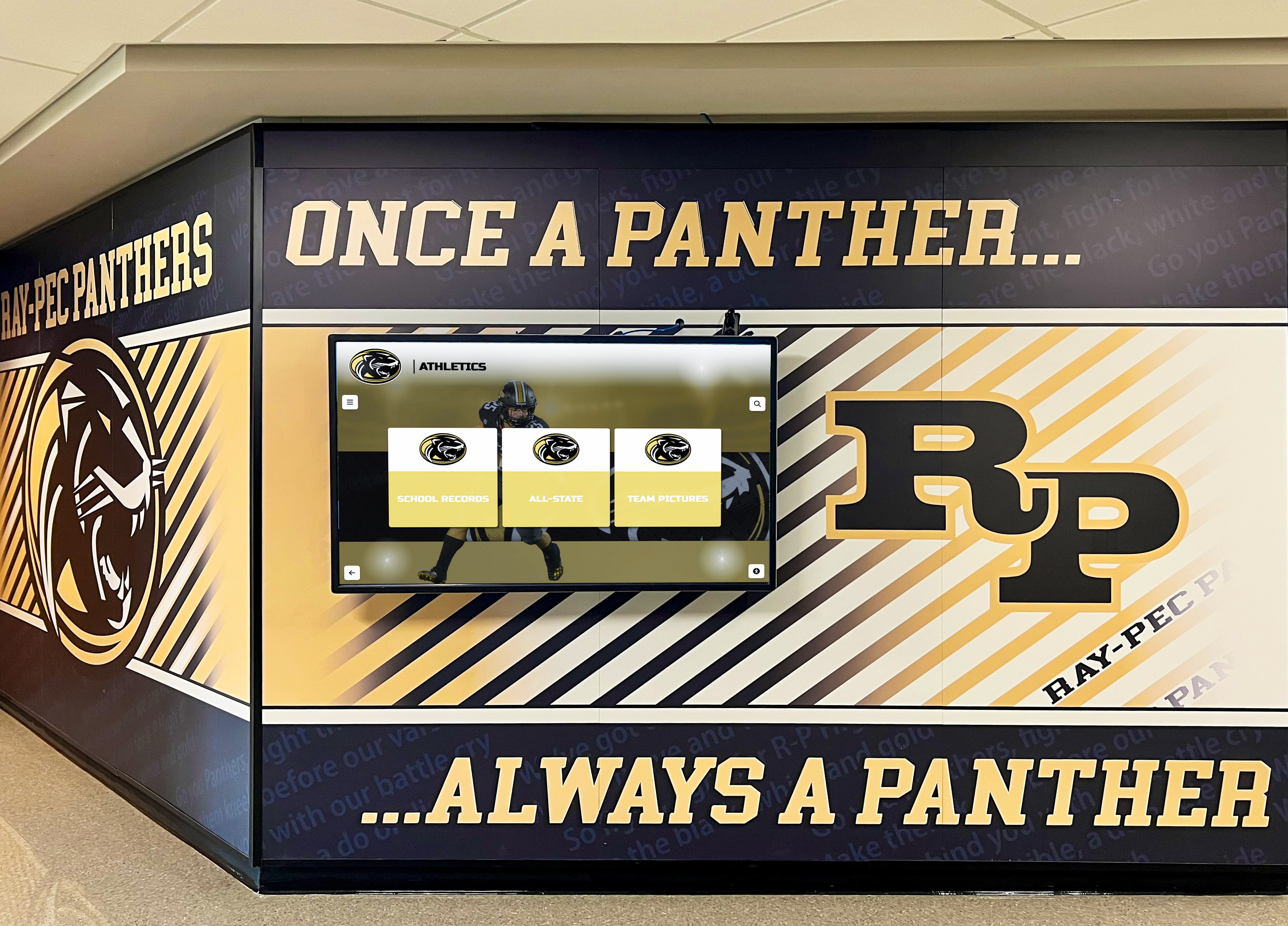
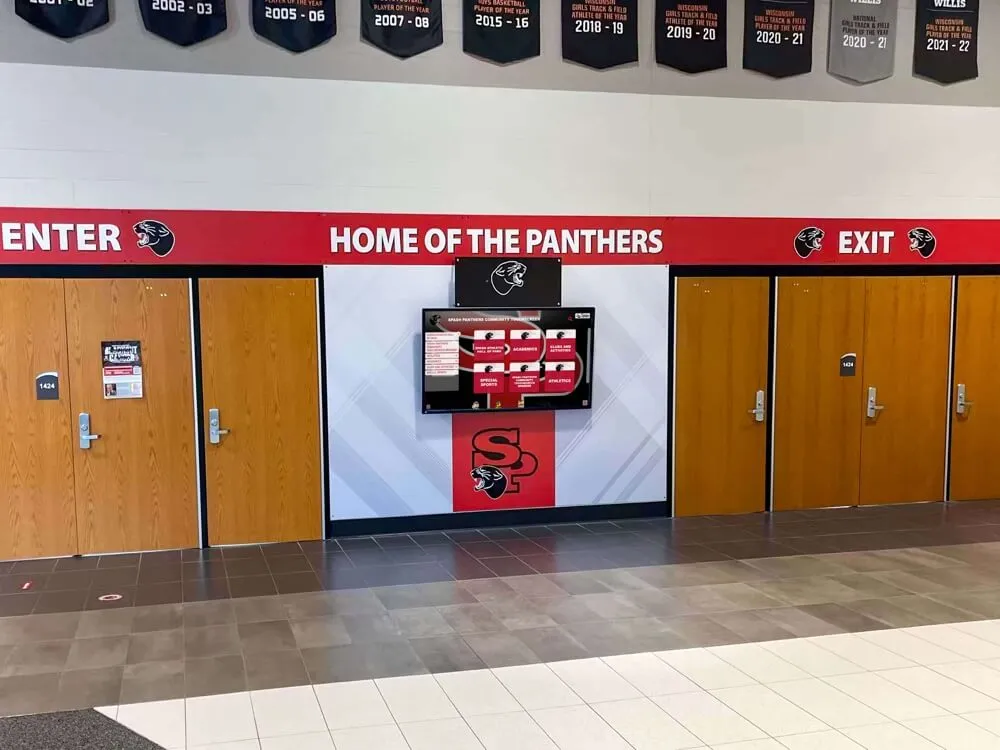
Wall Graphics as Digital Display Framing: Branded wall wraps surrounding and framing digital displays create cohesive environments combining visual impact with technological capability. Graphics establish context and emotional tone while digital screens provide detailed, searchable, updatable content. This approach maximizes budget efficiency by reserving expensive digital capacity for dynamic content while using cost-effective graphics for consistent identity elements.
Printed Recognition with Digital Detail Access: Some installations feature printed recognition overview graphics with QR codes linking to detailed digital content. Visitors scan codes launching mobile experiences with comprehensive achievement details, videos, and stories exceeding what static graphics can communicate. This hybrid delivers wall graphic impact for casual viewing while satisfying engaged visitors seeking depth.
Digital Displays Complementing Static Historical Content: Historical timeline graphics work well as static installations rarely requiring updates, while adjacent digital displays showcase current achievements, athletic schedules, or rotating recognition content demanding regular updates. This approach assigns each technology to appropriate content types based on update frequency and content depth requirements.
Rocket Alumni Solutions specializes in comprehensive recognition programs integrating physical environmental design with digital interactive systems. Purpose-built software platforms support unlimited recognition capacity, user-friendly content management, and engaging visitor experiences that static wall graphics cannot deliver. Schools implementing digital recognition report significant increases in community engagement, alumni connection, and recognition program sustainability compared to traditional approaches requiring ongoing physical installation costs for content updates.
Common Mistakes to Avoid
Learning from common wall wrap failures saves schools money and disappointment.
Design and Planning Errors
Poor planning undermines even quality installation execution:
Inadequate Research and Content Verification: Factual errors in permanent wall installations create embarrassment and expensive corrections. Verify all dates, statistics, names, and historical claims with multiple sources before finalizing designs. Establish review processes ensuring accuracy before printing and installation commits errors permanently. Many schools convene stakeholder review committees examining designs for accuracy, sensitivity, and appropriateness before production approval.
Overlooking Viewing Distance and Readability: Designs appearing clear on computer monitors become illegible when installed at actual size and viewing distances. Mock up designs at full size or calculate text sizes ensuring readability from typical viewing distances. Text smaller than 1.5 inches becomes difficult to read from 10+ feet—relevant for hallway applications where viewers pass quickly without stopping for close inspection.
Ignoring Architectural Features and Obstacles: Light switches, thermostats, fire alarms, and architectural details complicate installations and increase costs. Survey installation locations carefully during design development, documenting all obstacles requiring design accommodation. Designs ignoring existing features appear poorly planned and unprofessional when forced to work around elements discovered during installation.
Creating Closed or Completed Designs Preventing Future Additions: Championship displays, hall of fame graphics, and achievement recognition systems must accommodate future additions without appearing complete. Design frameworks supporting incremental expansion prevent expensive complete replacements as new achievements accumulate. Consider how designs accommodate 5-10 years of additions before replacement becomes necessary.
Installation and Material Failures
Technical execution determines long-term success:
Choosing Inappropriate Vinyl Types: Standard vehicle wrap vinyl or floor graphic materials fail when applied to walls. Specify removable wall vinyl formulations engineered for architectural applications. Using wrong materials causes adhesive failure, difficult removal, or wall damage invalidating any cost savings from cheaper alternatives.
Skipping Wall Preparation Steps: Attempting installation on inadequately prepared surfaces guarantees failure. Textured walls require smoothing. Freshly painted walls need curing. Dirty surfaces prevent adhesion. Professional installers allocate 20-30% of project time to proper preparation—shortcuts result in premature peeling and wasted investments.
Attempting Installation Without Proper Tools or Training: Application squeegees, measuring tools, cutting equipment, and installation techniques differ significantly from small decal applications. Untrained staff attempting large installations waste materials through mistakes and produce unprofessional results requiring expensive corrections or complete replacement. Professional installation costs represent insurance against failure and should be viewed as essential investment rather than optional expense.
Inadequate Maintenance Planning: Installations without maintenance protocols deteriorate prematurely. Establish cleaning procedures, conduct regular inspections, and budget for repairs. Graphics in high-contact areas may require edge reinforcement or protective barriers preventing damage. Many successful programs designate specific staff members responsible for graphic condition monitoring and maintenance coordination.
Getting Started: Implementation Roadmap for Schools
Successful wall wrap programs follow structured planning and implementation processes.
Phase 1: Assessment and Planning
Begin with comprehensive situation analysis:
Identify Priority Locations: Survey facilities identifying high-impact locations where visual improvements generate maximum benefit. Prioritize high-traffic areas, entrance points, and spaces suffering from visual deficiencies. Involve diverse stakeholders—administrators, teachers, students, parents, alumni—gathering perspectives on locations most benefiting from improvement.
Define Content and Messaging Priorities: Determine what graphics should communicate. Recognition? School history? Values and culture? Wayfinding? Different content types suit different locations and serve different purposes. Establish clear objectives guiding design direction and content development.
Budget Development: Create realistic budgets based on priority locations and desired scope. Obtain quotes from multiple vendors for comparison. Budget for entire project lifecycle including design, production, installation, and future replacement—not merely initial installation.
Timeline Planning: Schedule projects during appropriate timeframes minimizing disruption. Summer installation works for most schools. Large projects may phase implementation across multiple years as budgets allow. Establish realistic timelines accommodating design development, stakeholder review, production, and installation requirements.
Phase 2: Vendor Selection and Design Development
Professional partnerships determine project success:
Request for Proposals Process: Solicit proposals from experienced commercial graphics companies serving educational markets. Evaluate vendors on design capabilities, material quality, installation experience, warranty coverage, and customer references. Price represents one factor among many—cheapest bids often reflect shortcuts compromising quality.
Portfolio and Reference Review: Examine vendor portfolios emphasizing educational installations. Contact references directly asking about design processes, installation quality, timeline adherence, and problem resolution. Strong vendors eagerly provide references and demonstrate relevant experience.
Design Collaboration: Work closely with designers throughout development. Provide comprehensive content, articulate vision clearly, and establish decision-making processes. Plan for 2-4 design review cycles accommodating stakeholder input and refinement. Rushing design to accelerate timelines typically results in compromised outcomes requiring expensive corrections.
Mock-ups and Proofs: Review full-scale mock-ups or digital renderings before production approval. Small print proofs cannot adequately convey how designs work at architectural scale. Investing time in thorough review prevents expensive mistakes and ensures designs meet expectations.
Phase 3: Implementation and Launch
Execution requires coordination and oversight:
Installation Scheduling: Coordinate installation timing with facilities management, technology staff, and building occupants. Ensure adequate access, appropriate environmental conditions, and minimal disruption to school operations. Some installations occur during evenings, weekends, or breaks when buildings have limited occupancy.
Quality Control: Conduct inspections during and after installation verifying quality standards. Address any concerns or deficiencies before final payment. Reputable vendors correct issues promptly and stand behind work quality.
Celebration and Promotion: Unveiling completed installations creates community excitement and engagement. Plan dedication events involving students, staff, donors, or alumni when appropriate. Promote projects through social media, newsletters, and local media demonstrating institutional investment in student experience and facility quality.
Documentation and Maintenance Planning: Photograph completed installations, document materials used, retain design files, and establish maintenance protocols. Designate responsible staff members and create procedures ensuring proper care extending installation life.
Schools seeking comprehensive recognition solutions extending beyond static wall graphics benefit from consulting with Rocket Alumni Solutions, the leading provider of interactive digital recognition displays designed specifically for educational institutions. Purpose-built software platforms, unlimited recognition capacity, user-friendly content management, and white-glove implementation support help schools create recognition programs that static wall graphics alone cannot deliver.
Conclusion: Transforming School Environments Through Strategic Visual Design
Wall wraps represent powerful tools for building school pride, celebrating achievement, and creating environments reflecting institutional values and identity. Whether implementing comprehensive branded environments, specific recognition installations, or hybrid approaches combining static graphics with digital interactive technology, successful programs share common characteristics: clear objectives guiding design decisions, realistic budgets accounting for entire project lifecycles, professional execution ensuring quality and longevity, and ongoing maintenance protecting investments.
Schools beginning wall wrap planning should start with high-impact priority locations demonstrating value before expanding programs to additional areas. Invest in professional design and installation ensuring quality results worth celebrating rather than compromising through shortcuts undermining outcomes. Consider how solutions accommodate future content additions and updates—recognition programs require flexibility as achievements accumulate and institutional priorities evolve.
While traditional vinyl wall wraps deliver significant value for many applications, schools implementing recognition programs benefit from evaluating digital interactive displays offering unlimited capacity, easy updates, multimedia storytelling, and engagement measurement impossible with static graphics. The best recognition strategies often combine both approaches—wall graphics establishing visual context and identity while digital systems provide detailed, searchable, updatable content serving recognition needs for decades without recurring physical installation costs.
Transform your school’s environment into spaces students, staff, alumni, and visitors proudly experience. Whether pursuing traditional wall graphics, exploring digital recognition technology, or implementing comprehensive hybrid strategies, begin with clear vision, engage professional partners, and commit to quality execution worthy of your school community.
Ready to explore how digital recognition displays can complement or enhance your school’s visual environment strategy? See Rocket in action and discover why leading schools nationwide trust Rocket Alumni Solutions for recognition programs celebrating achievement comprehensively, updating effortlessly, and engaging communities meaningfully for years to come.