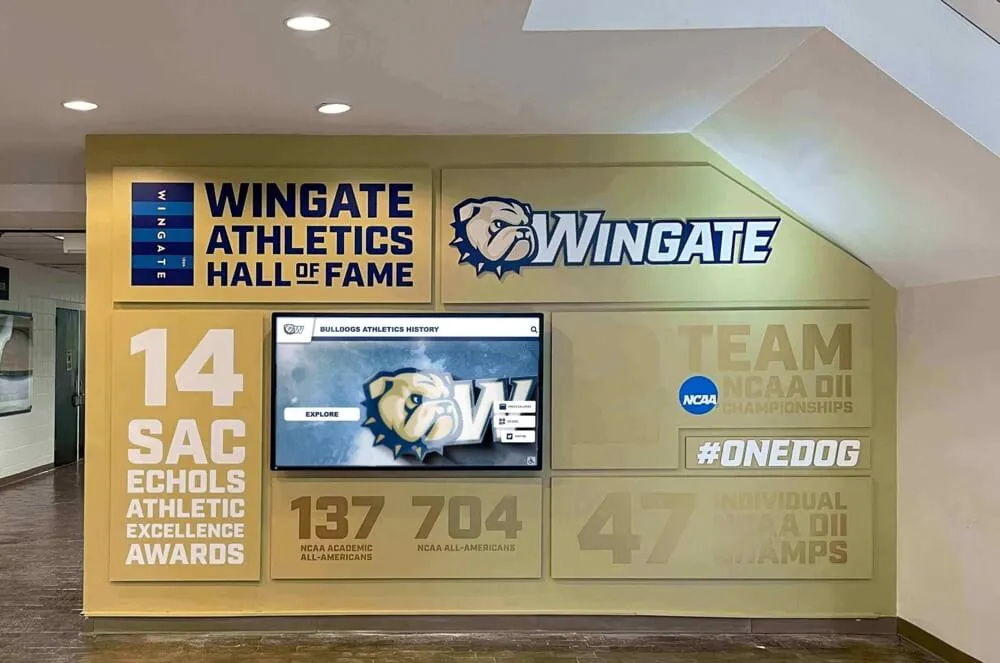




Key Takeaways
Discover 20 inspiring wall of honor ideas used by schools, veterans organizations, and community groups. From traditional plaques to interactive digital displays, find the perfect design to recognize service and sacrifice.
Understanding Walls of Honor: Purpose and Impact
Before exploring specific design approaches, it’s valuable to understand what distinguishes effective walls of honor from simple recognition displays and why these installations create such powerful emotional and community impact.
What Makes a Wall of Honor Different
Walls of honor serve a unique recognition purpose that differs from halls of fame celebrating achievement or donor walls acknowledging philanthropy. Honor walls specifically recognize service and sacrifice—individuals who answered calls to duty, put others before themselves, or demonstrated character and values worthy of emulation.
This service-focused purpose influences design decisions:
Respectful Tone: Honor walls maintain dignified, respectful aesthetics appropriate to the seriousness of military service, public safety work, or significant personal sacrifice. Design elements should convey reverence rather than celebration.
Inclusive Recognition: Unlike halls of fame with selective criteria, many honor walls recognize all who served rather than only those achieving specific distinctions. A veterans wall might honor every alumnus who served in any military branch regardless of rank or combat experience.
Educational Function: Effective honor walls educate visitors about service context—explaining military conflicts, describing duties first responders perform, or illuminating historical circumstances that required the courage being recognized.
Memorial Integration: Many honor walls incorporate memorial elements for those who died in service, requiring thoughtful design that appropriately distinguishes memorial recognition from honoring living servicemembers.
The Community Impact of Recognition
Well-designed walls of honor deliver measurable benefits that extend beyond honoring individuals:
Preserving Institutional Memory: Service records fade over time as generations pass and memories dim. Honor walls create permanent documentation ensuring future generations understand their institution’s service legacy and the contributions made by earlier community members.
Inspiring Current Students and Members: When young people see that individuals who walked the same hallways or attended the same institution went on to serve with distinction, service becomes tangible rather than abstract. High school students viewing alumni service recognition often report increased interest in ROTC programs, military academies, and public service careers.
Strengthening Alumni and Veteran Engagement: Recognition creates powerful emotional bonds. Veterans who feel honored and remembered by their alma maters or communities maintain stronger connections, participate more actively in organizations, and contribute more generously to institutional needs.
Building Community Pride: Honor walls demonstrate community values through actions rather than words. When visitors see an organization investing resources to appropriately recognize service, they understand that the institution genuinely values duty, sacrifice, and commitment to causes larger than individual interests.
Traditional Wall of Honor Design Ideas
Traditional approaches have served organizations well for generations, creating formal, permanent displays that command respect and attention. These classic designs work particularly effectively when space permits adequate recognition capacity and when ongoing costs for adding honorees fit budget parameters.
1. Engraved Bronze Plaque Walls
The most traditional and timelessly elegant approach features individual bronze or brass plaques mounted on walls in organized grids. Each plaque includes an honoree’s name, service branch, years of service, and sometimes rank or unit designation.
Best For: Formal institutional settings, permanent installations honoring limited numbers of individuals, organizations valuing traditional aesthetics.
Advantages:
- Prestigious, classic appearance conveying permanence and respect
- Individual plaques families can photograph and touch
- No technology requirements or digital maintenance
- Long-lasting with proper care
Considerations:
- Fixed space capacity eventually requiring expansion decisions
- Ongoing costs of $250-500 per plaque for new honorees
- Limited information beyond basic service details
- Expensive to correct errors once engraved
Design Tips: Organize plaques chronologically by graduation year or service era, use consistent formatting across all plaques, ensure adequate lighting for readability, and leave expansion space or plan wall extensions in advance.
2. Marble or Granite Memorial Walls
For particularly solemn recognition, especially memorials for fallen servicemembers, natural stone creates appropriate gravitas. These substantial installations often serve as outdoor memorials or prominent indoor centerpieces.
Best For: Memorial walls honoring deceased veterans, Gold Star families recognition, permanent outdoor installations, high-visibility public spaces.
Advantages:
- Exceptional durability for outdoor installations
- Impressive visual impact commanding attention and respect
- Appropriate solemnity for memorial purposes
- Permanent recognition resistant to weather and time
Considerations:
- Higher initial costs ($10,000-50,000+ depending on scale)
- Professional installation requiring structural support
- Limited or no capacity for additions without expansion
- Challenging to modify once installed
Organizations like VFW posts and veterans centers often create memorial gardens featuring granite walls with patriotic recognition themes that honor specific conflicts or service eras.
3. Shadow Box Display Walls
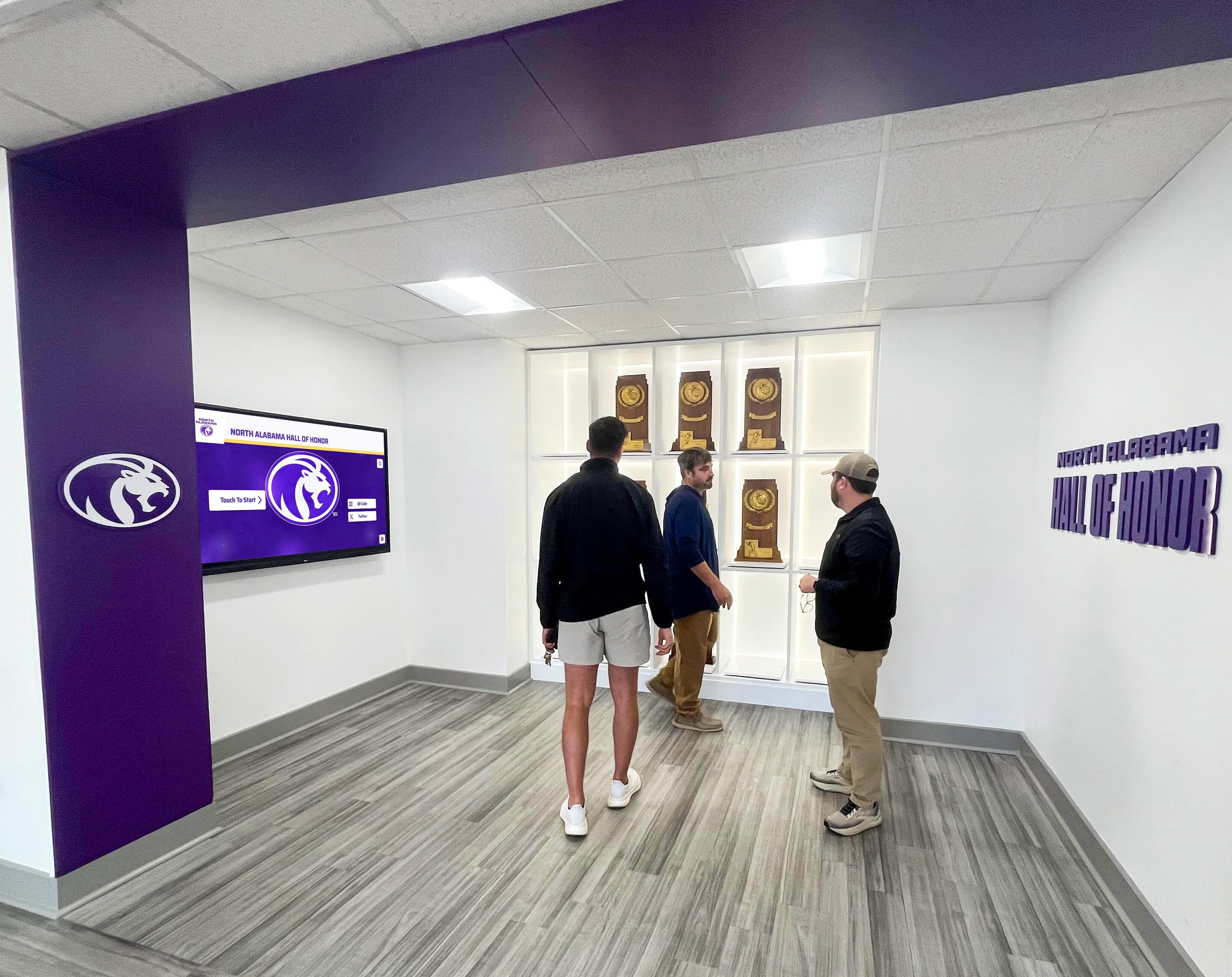
Shadow boxes create three-dimensional recognition by displaying actual artifacts—medals, ribbons, unit patches, photographs, and memorabilia—behind glass in individual frames. These displays tell richer stories than nameplates alone.
Best For: Smaller recognition programs (10-50 individuals), organizations possessing artifacts for display, memorial walls for specific conflicts or units.
Advantages:
- Unique, personal recognition showing actual service artifacts
- High visual interest engaging visitors to examine closely
- Tells individual stories beyond basic service information
- Families can donate memorabilia creating personal investment
Considerations:
- Space-intensive per honoree compared to plaques
- Artifacts require climate control and security
- More expensive per recognition ($500-1,500 per shadow box)
- Ongoing curation as artifacts deteriorate
4. Photo and Biography Walls
Combining professional portraits with biographical text creates engaging recognition that humanizes service. Individual frames feature photographs alongside narrative descriptions of service, achievements, and personal stories.
Best For: Schools honoring distinguished military alumni, veterans organizations recognizing founding members, organizations emphasizing personal stories alongside service records.
Advantages:
- Personal connection through photography
- Space for meaningful biographical narrative
- Flexible formatting accommodating varying content lengths
- Families often eagerly provide photos and information
Considerations:
- Photo quality varies widely across different eras
- Text-heavy displays risk overwhelming visitors
- Fading and deterioration of printed photos over time
- Regular updating as new honorees added
Schools implementing alumni recognition programs often integrate military service recognition within broader alumni displays, showing how graduates served after leaving campus.
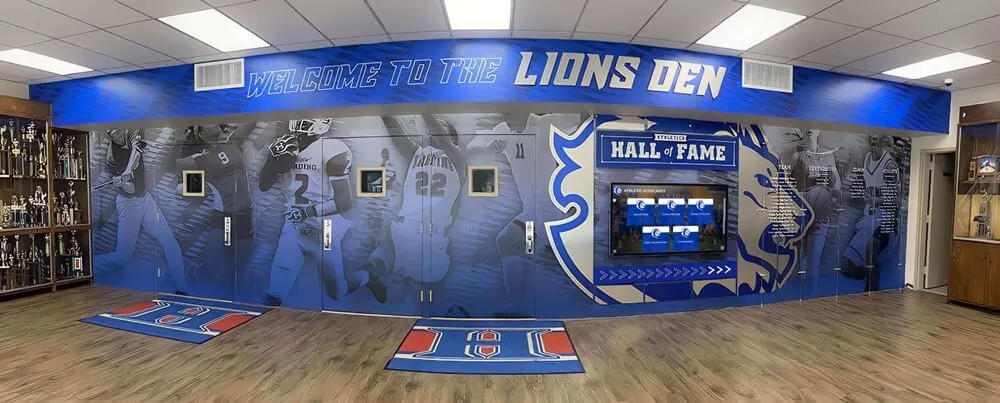
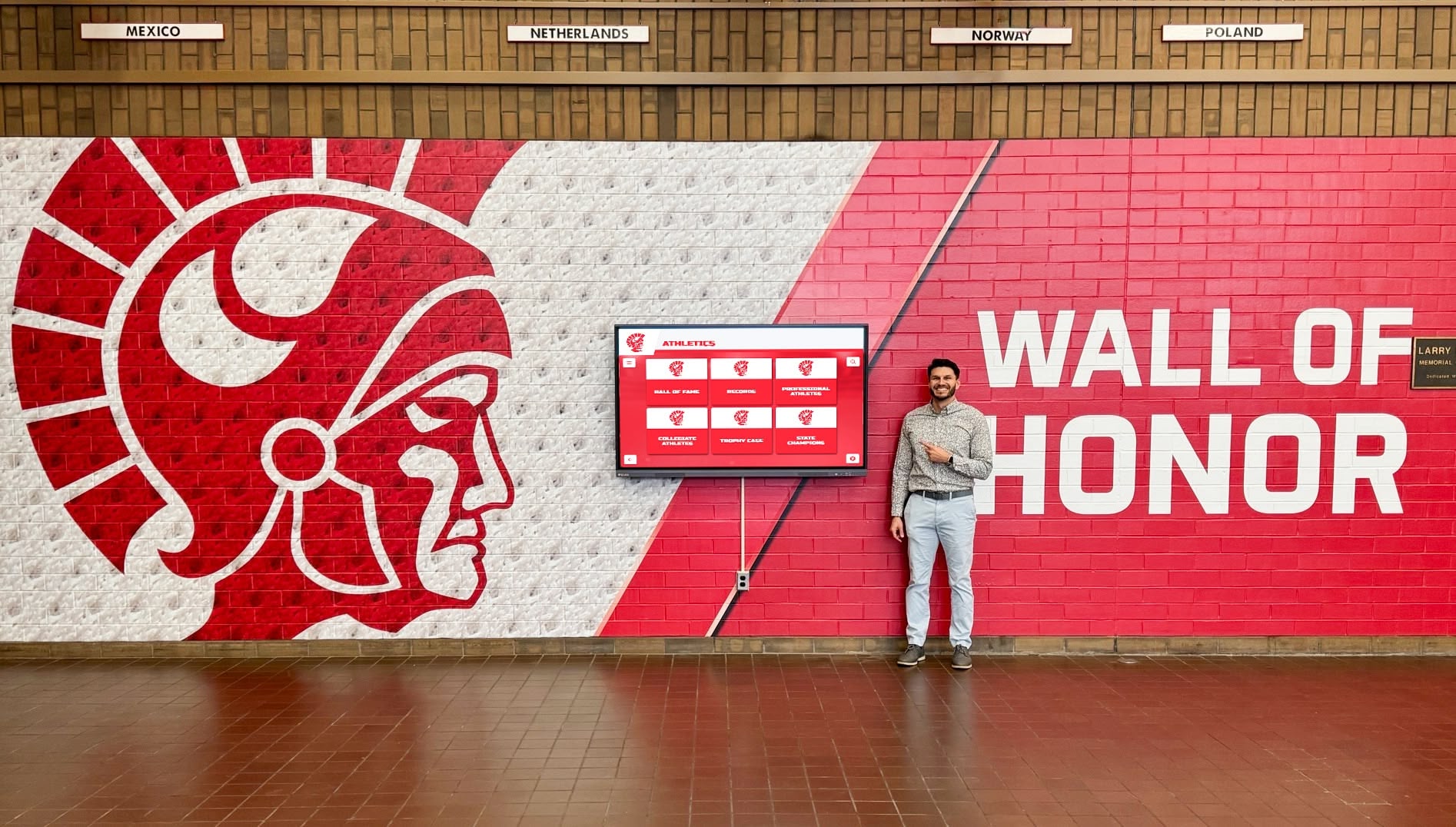
5. Custom Mural Integration
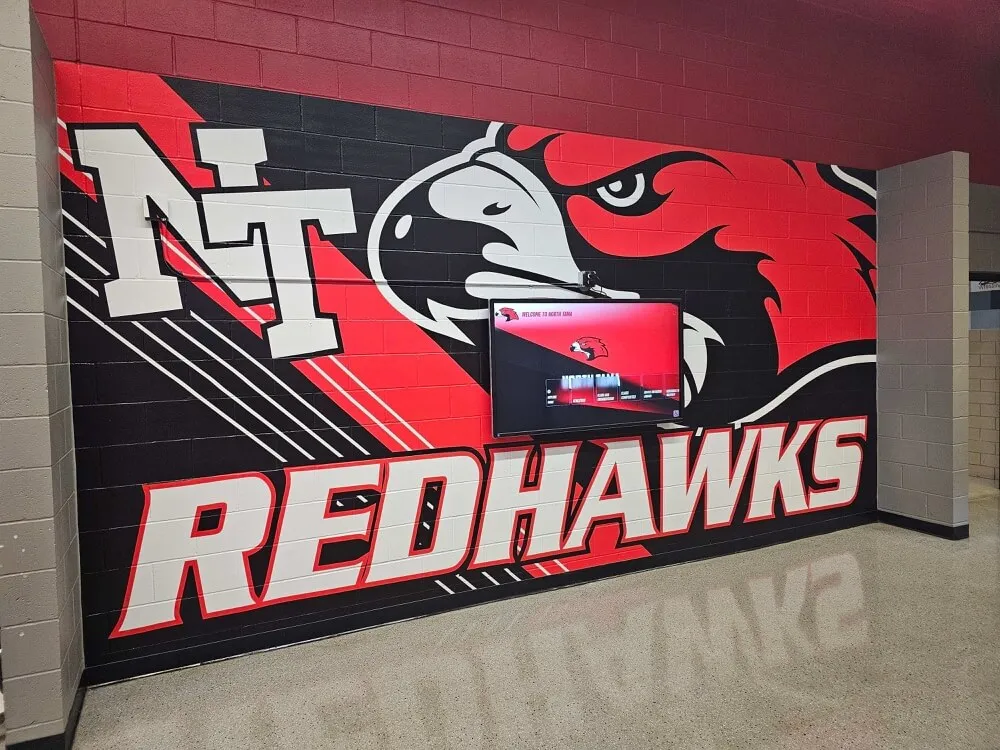
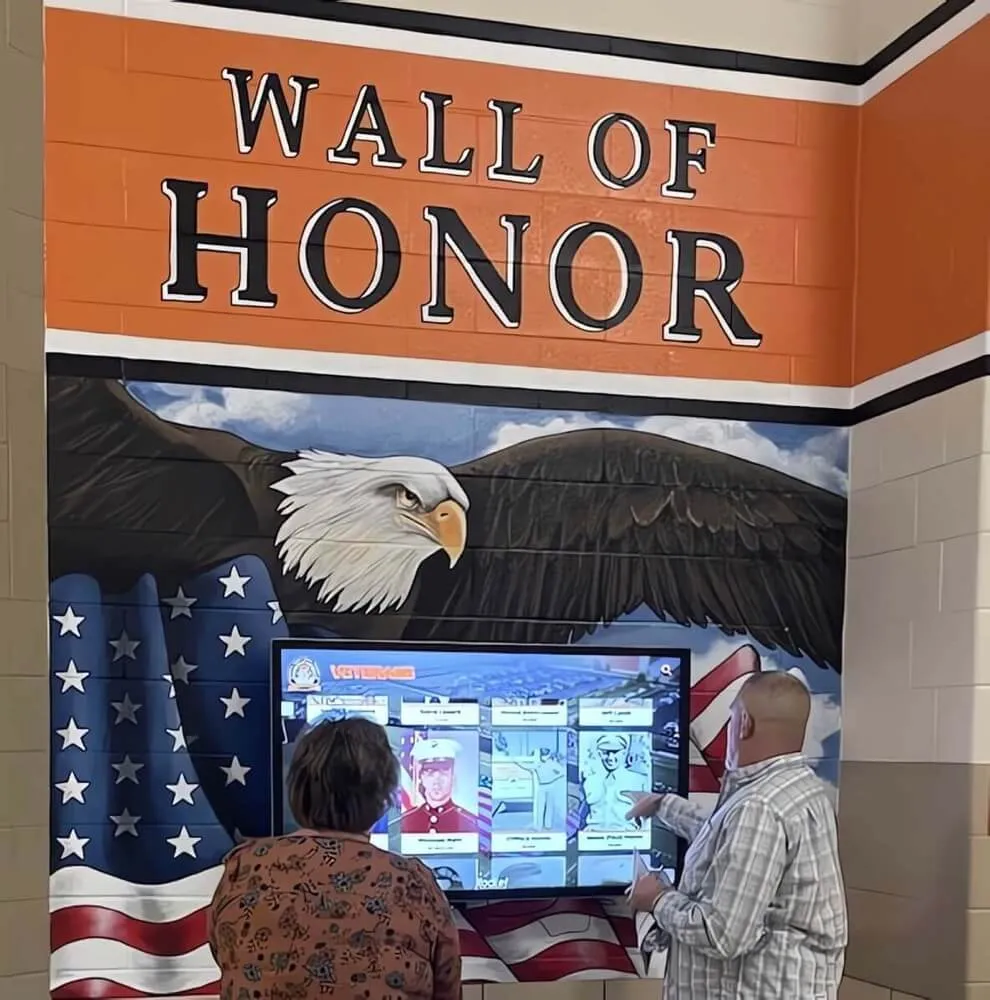
Artistic murals featuring patriotic imagery—flags, eagles, military emblems—provide dramatic backdrops for recognition elements. Names appear as part of or overlaid on these custom-painted or printed installations.
Best For: Large wall spaces, organizations seeking unique artistic identity, budgets accommodating custom artwork, high-visibility public areas.
Advantages:
- Distinctive, memorable visual impact
- Reinforces organizational or patriotic themes
- Transforms recognition into focal architectural feature
- Can accommodate large numbers of names efficiently
Considerations:
- Significant upfront investment ($5,000-30,000+)
- Requires talented artists or graphic designers
- Difficult to modify once installed
- May overshadow individual recognition with artistic emphasis

Modern Digital Wall of Honor Ideas
Digital recognition technology addresses many traditional limitations while adding powerful new capabilities perfectly suited to organizations needing unlimited capacity, regular updates, and engaging multimedia storytelling that brings service recognition to life.
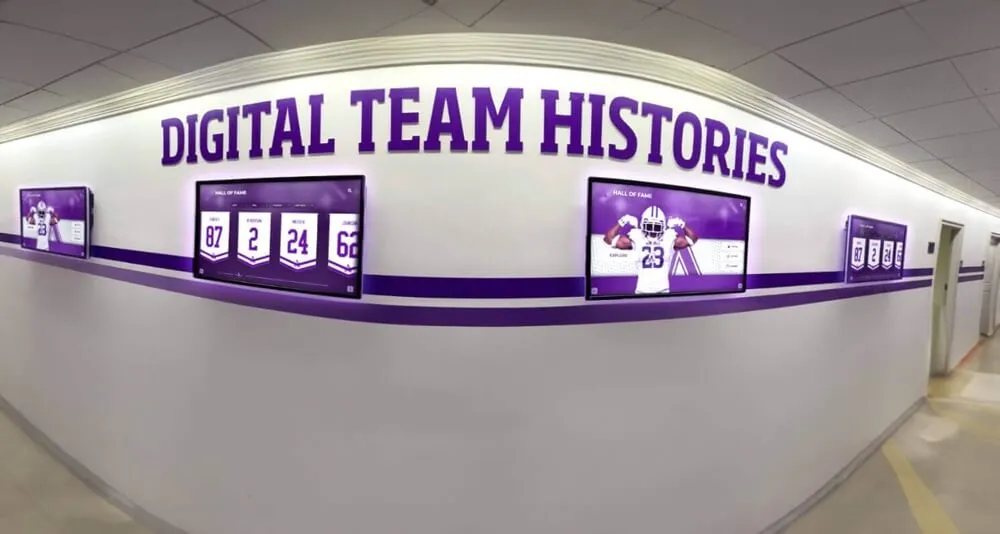
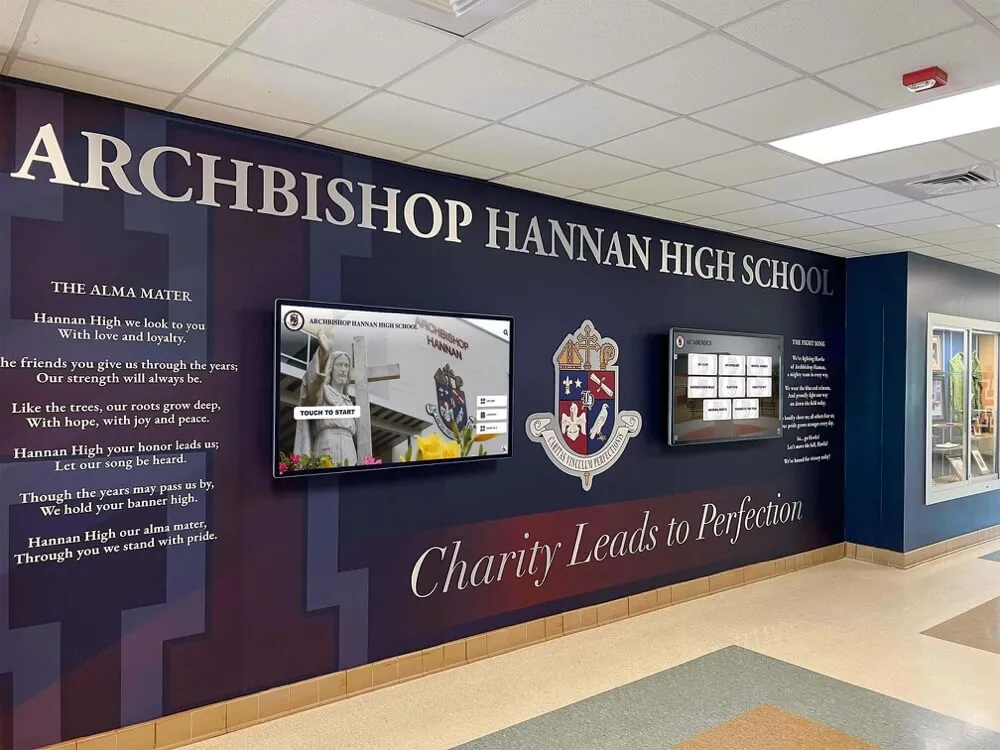
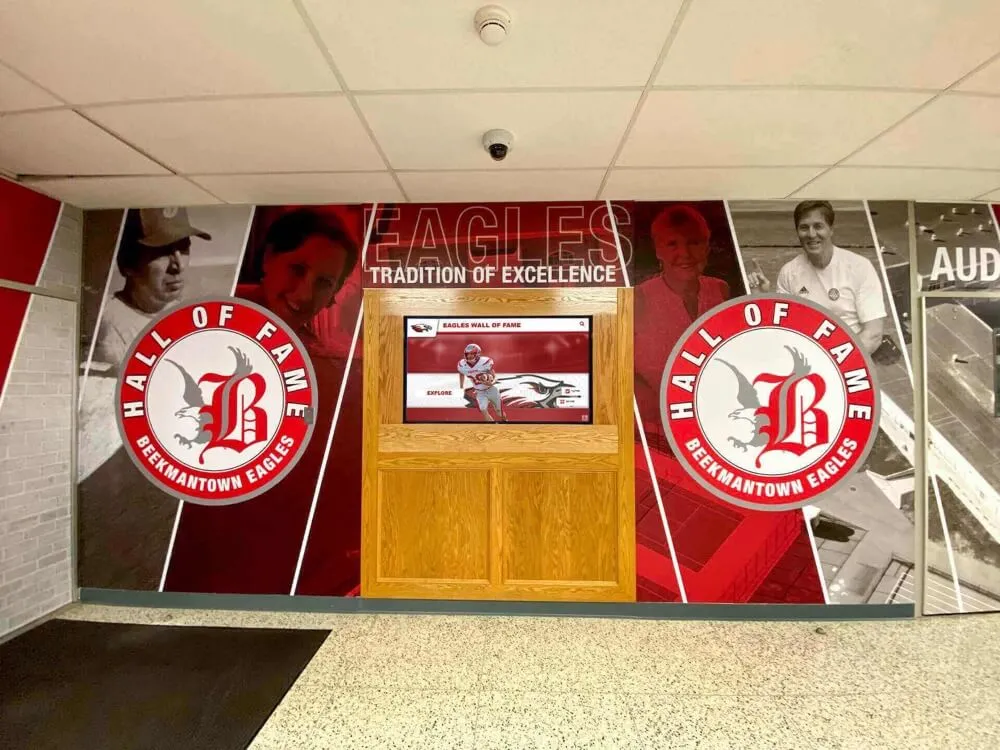
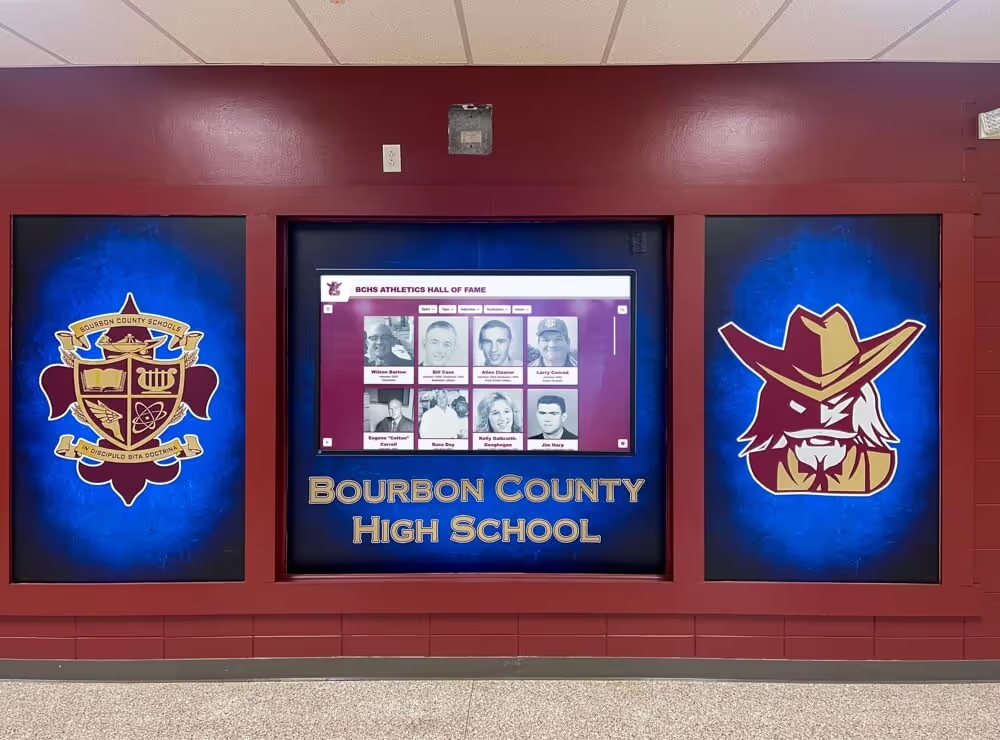
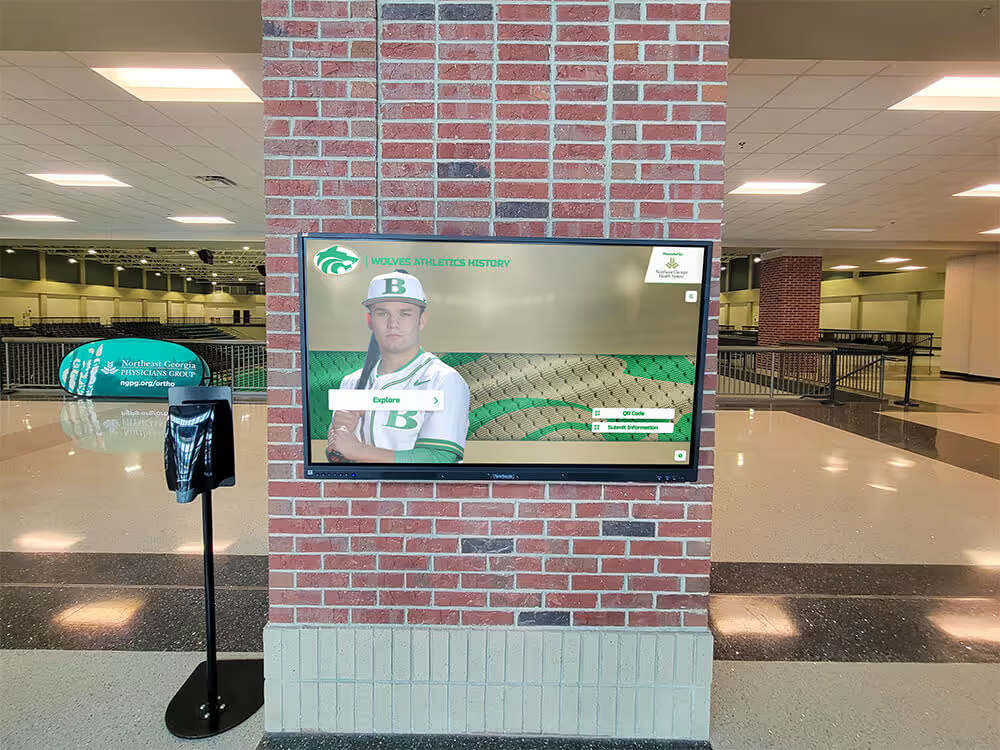
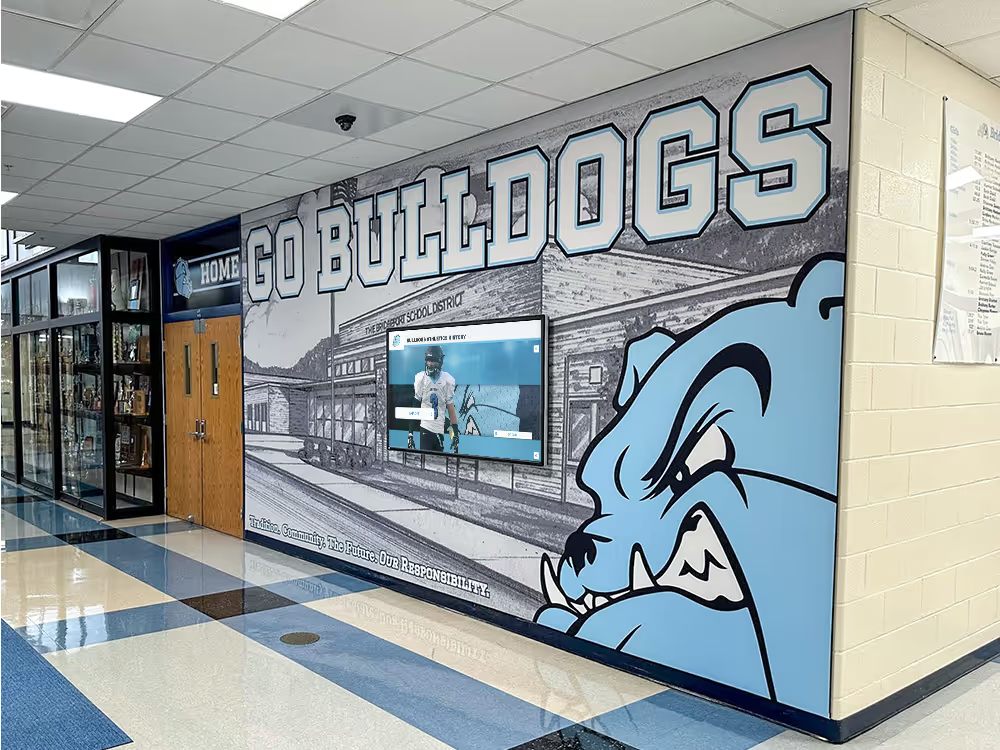
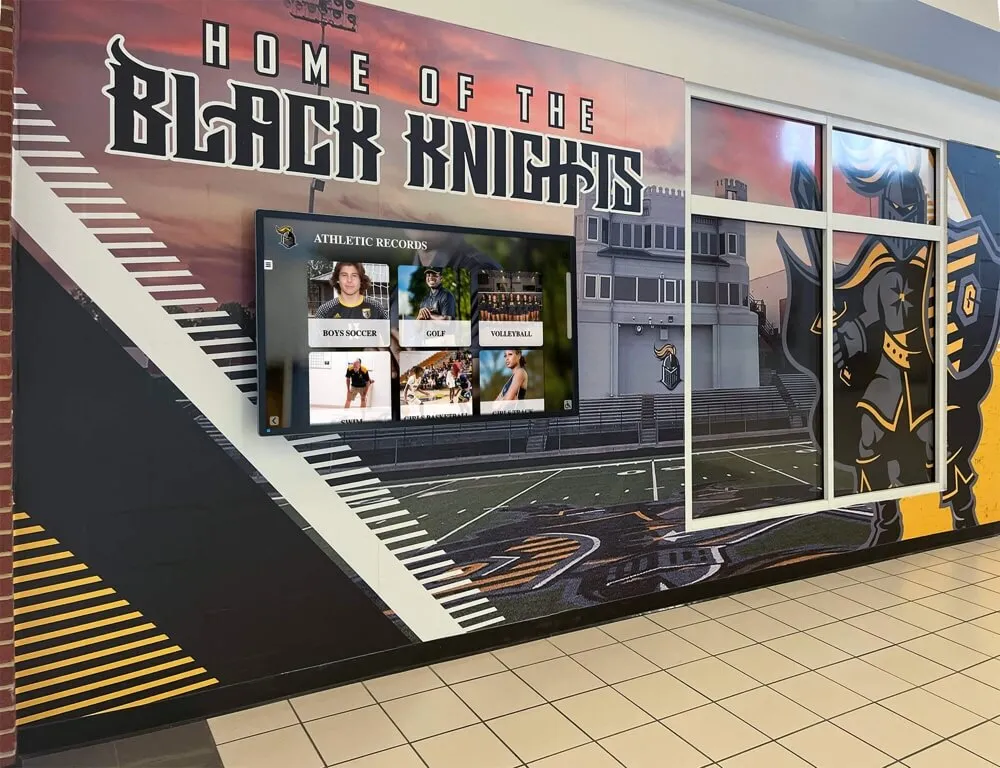
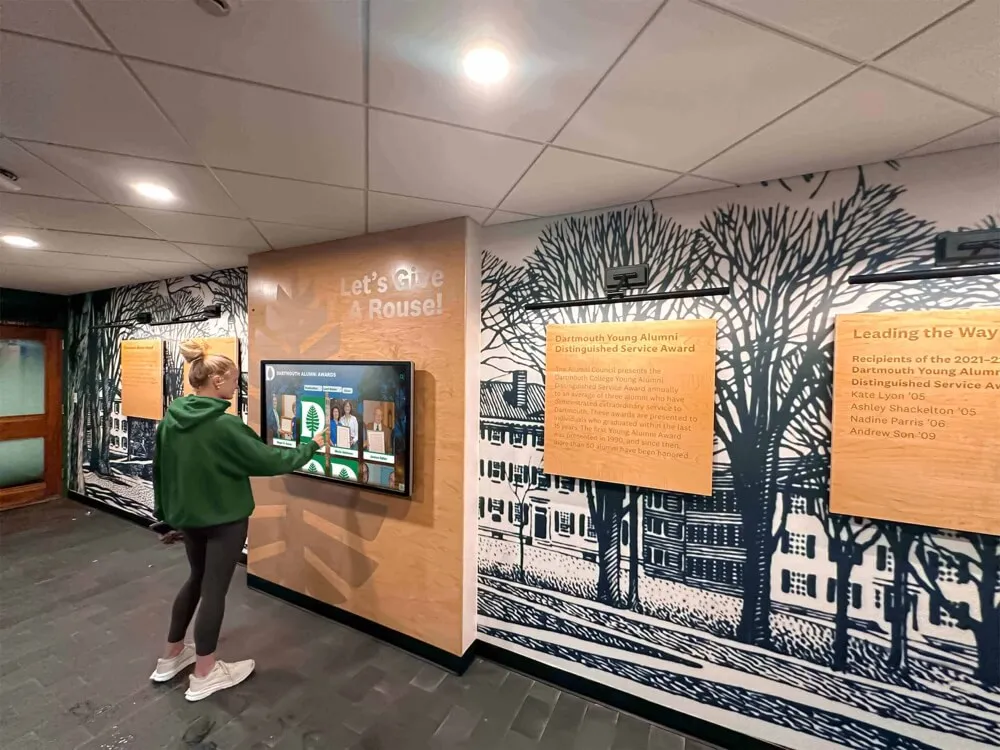
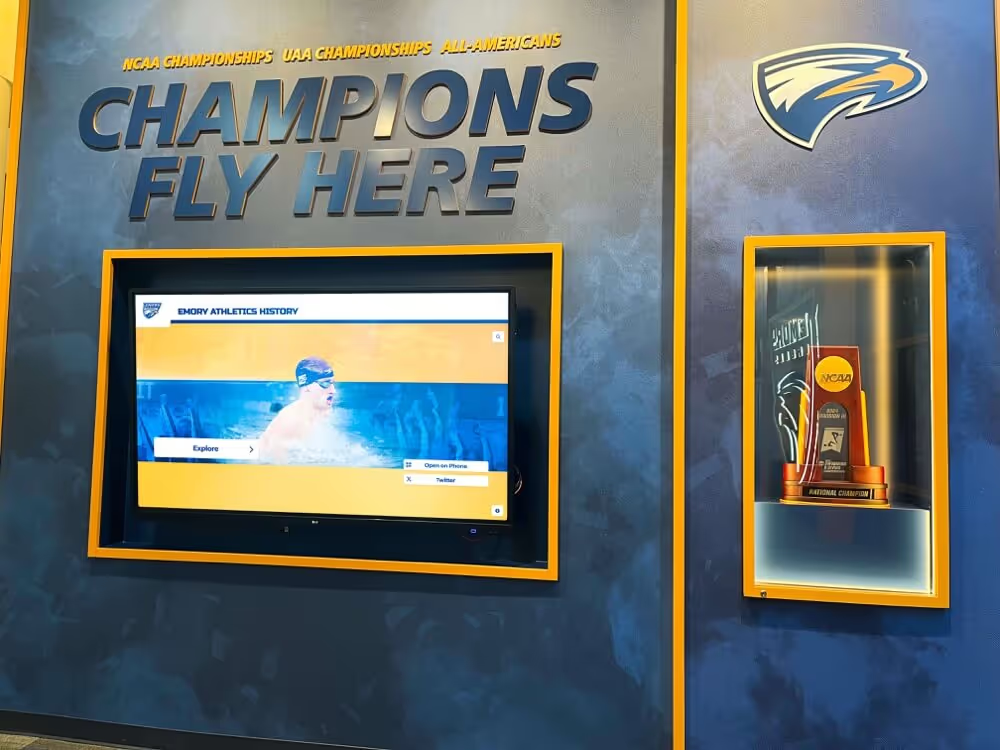
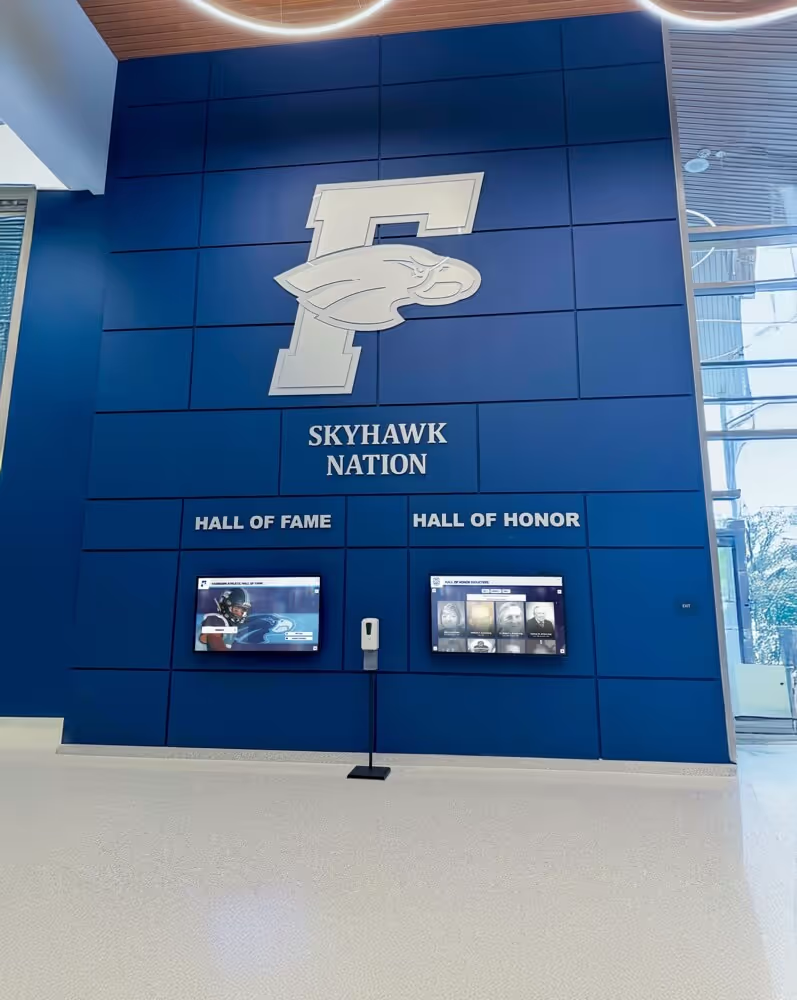
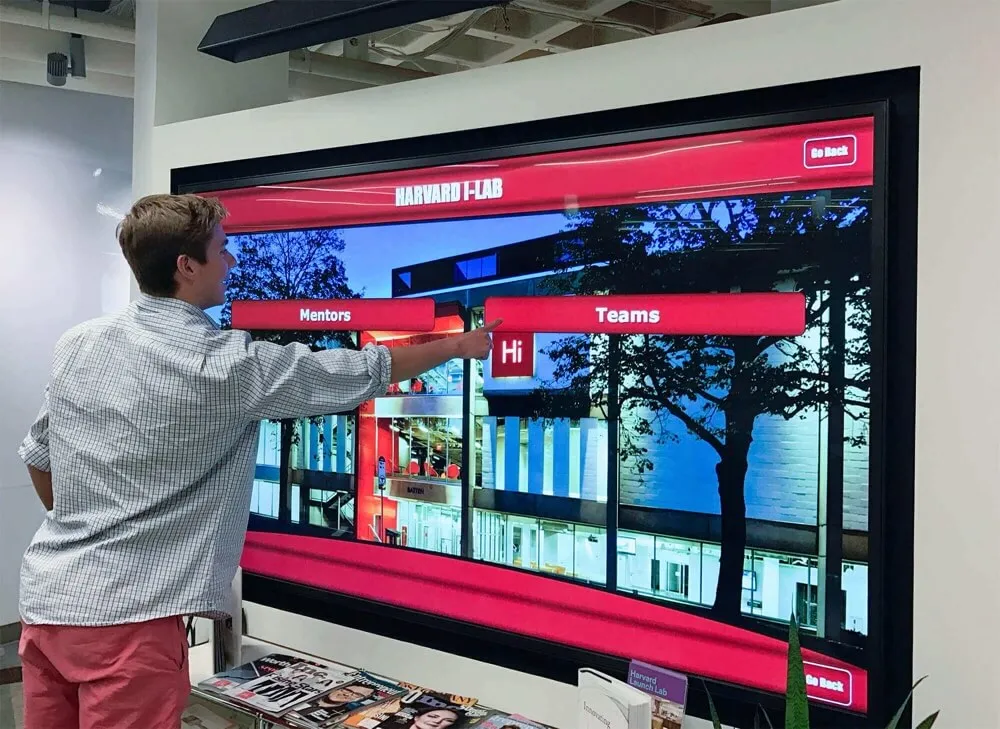
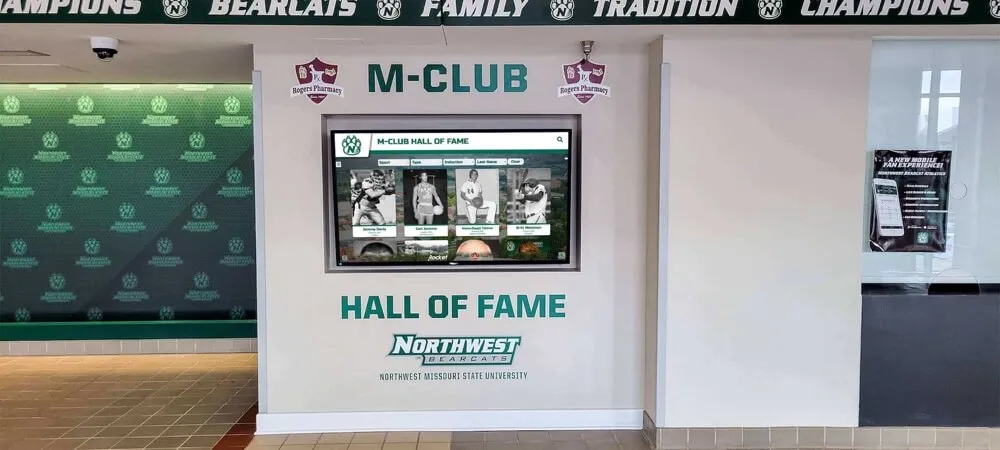
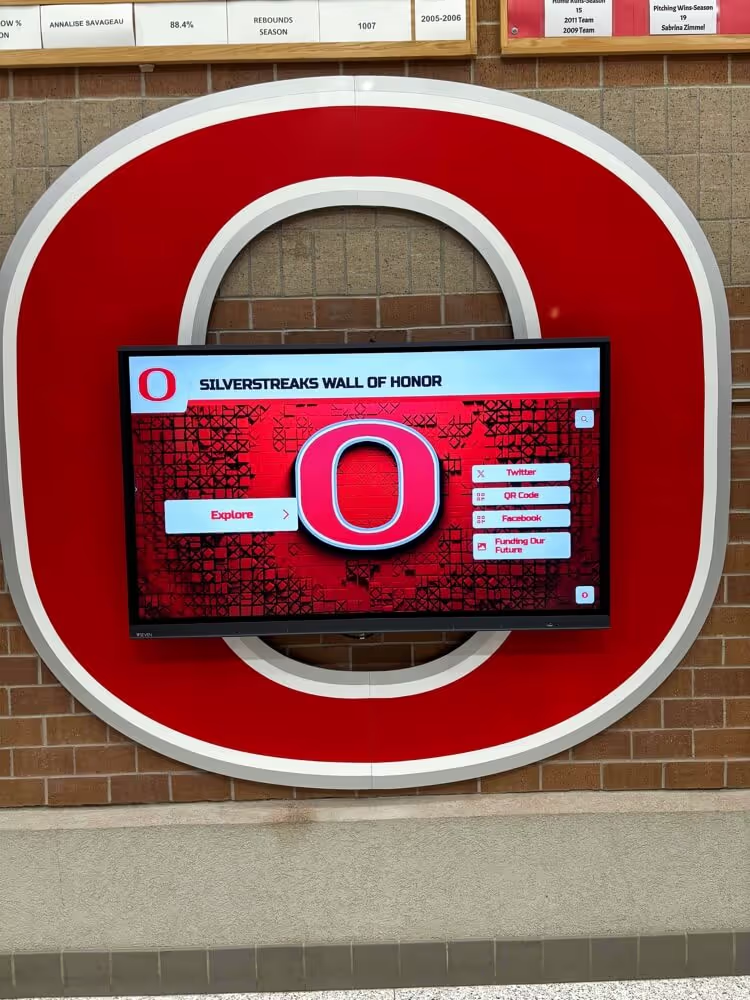
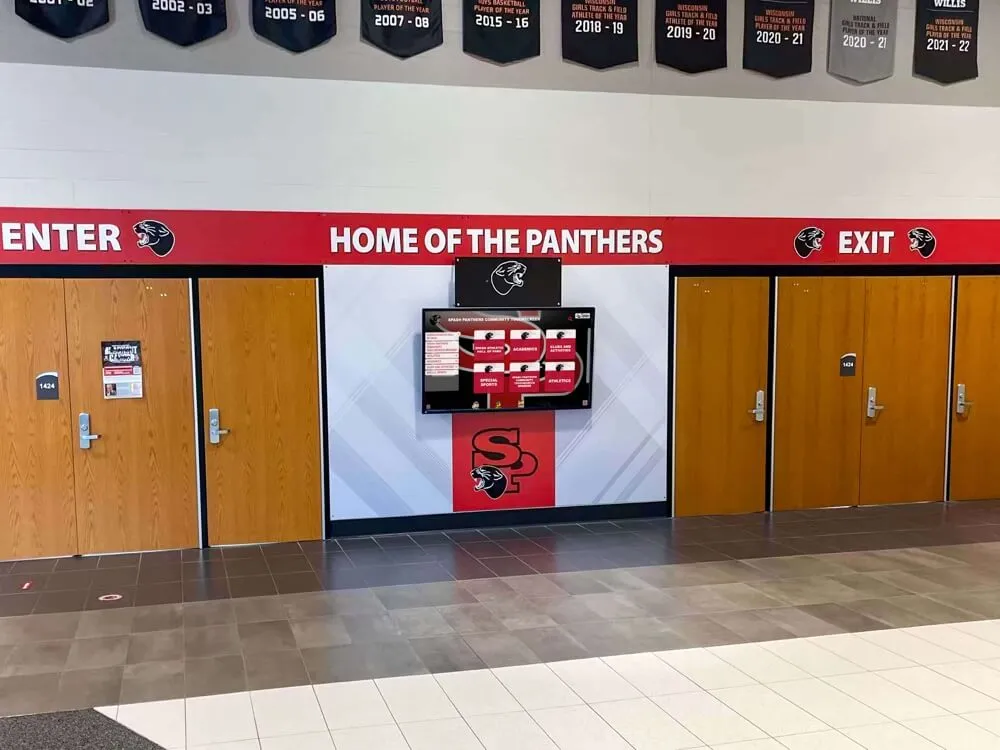
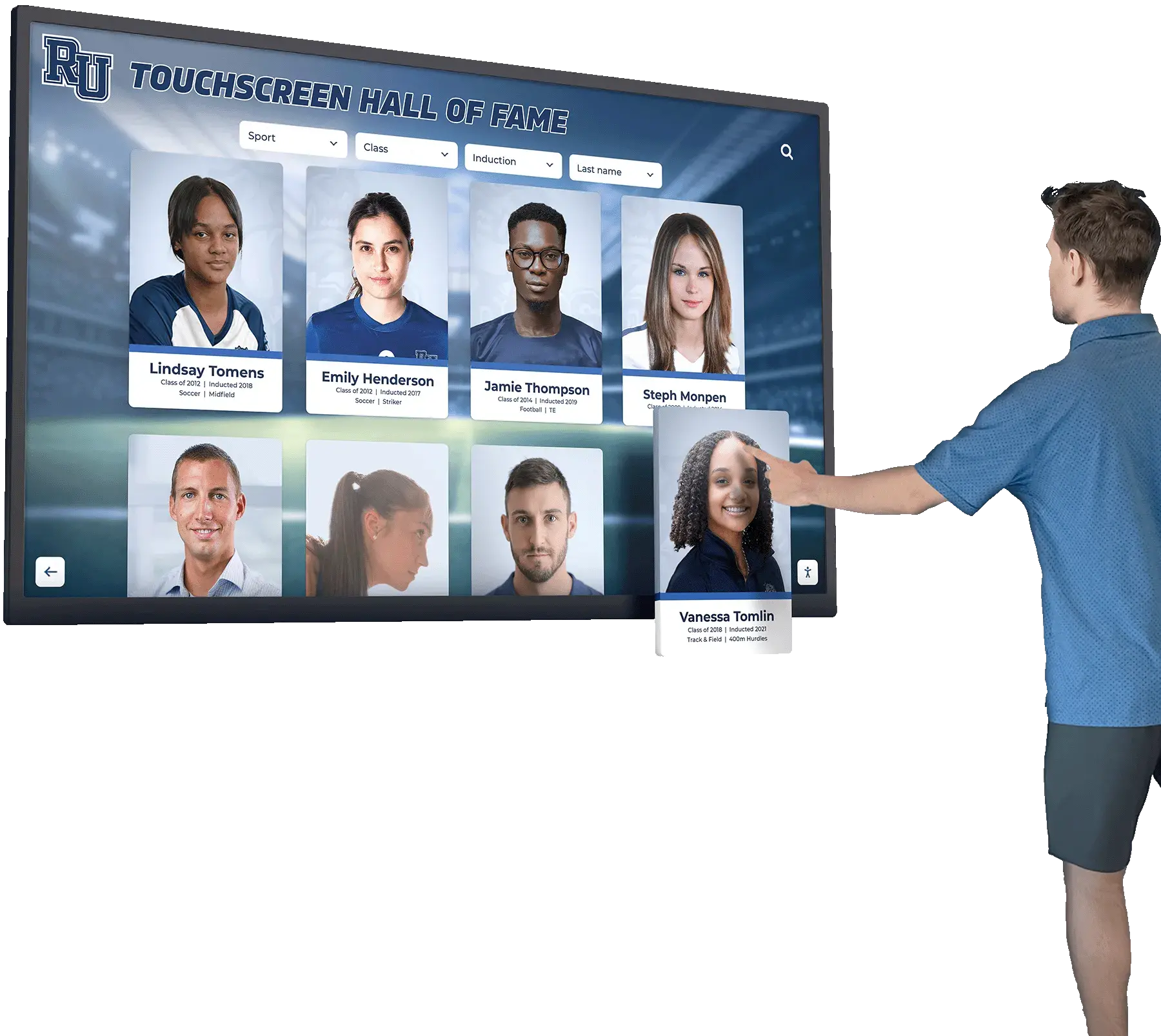
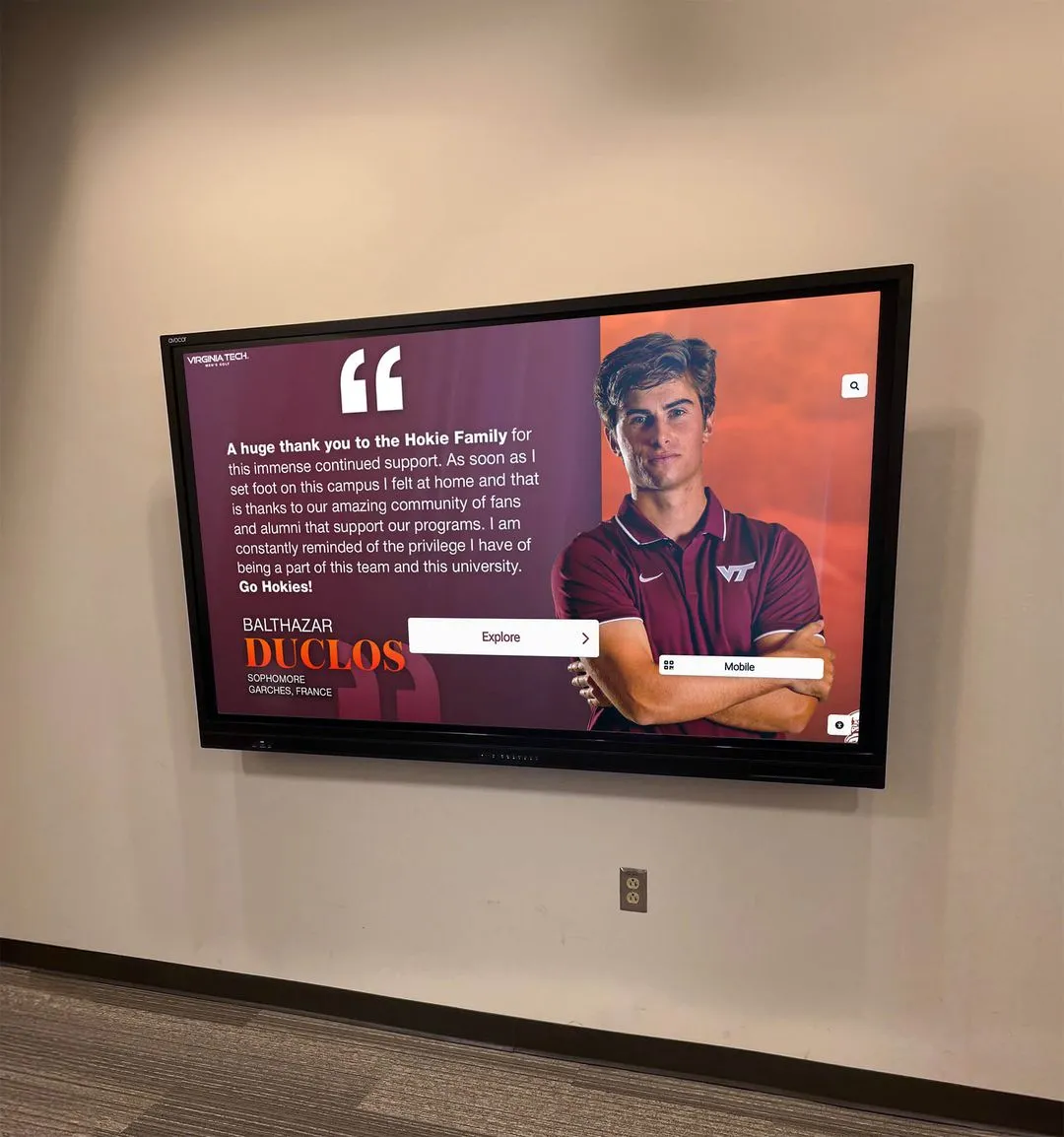
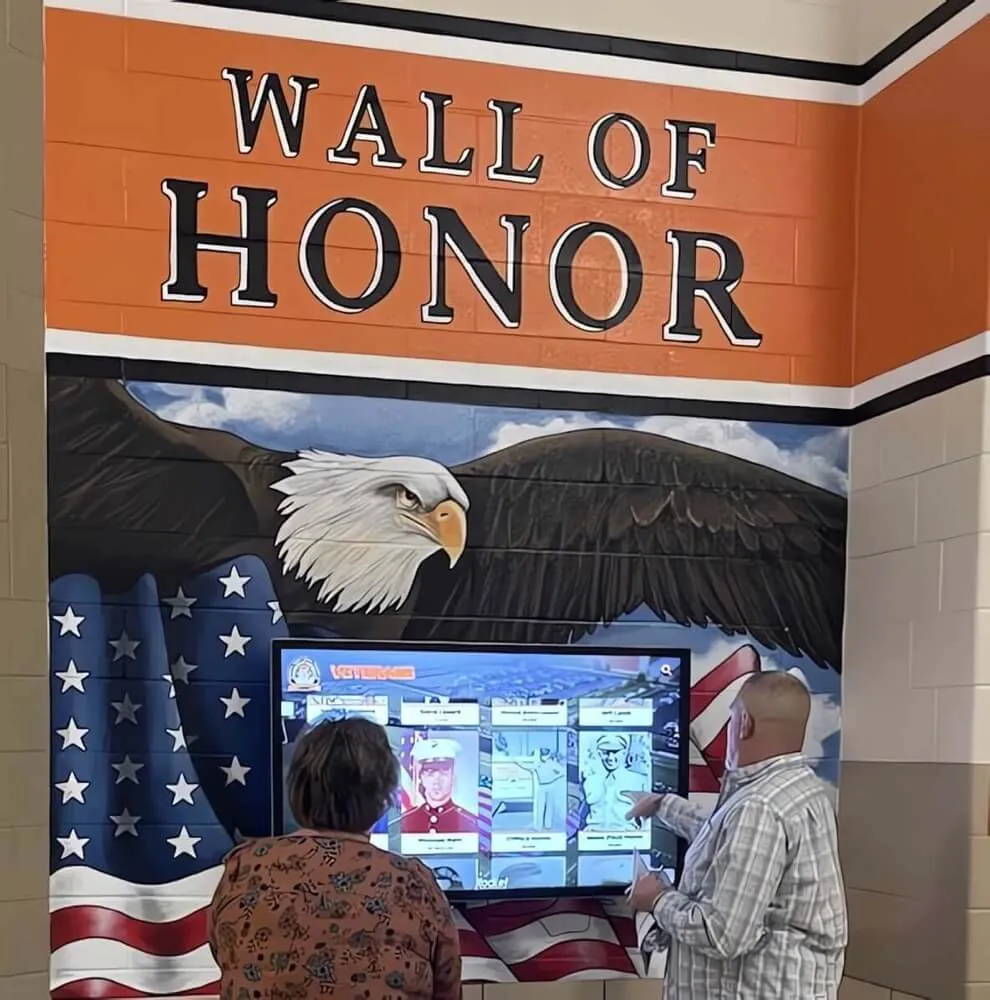
6. Interactive Touchscreen Honor Walls
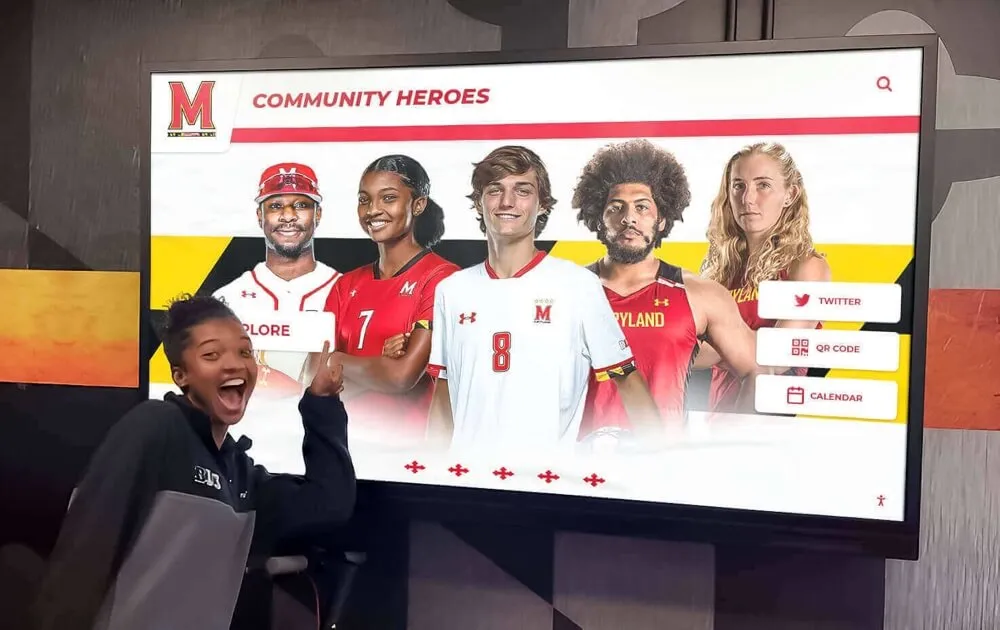
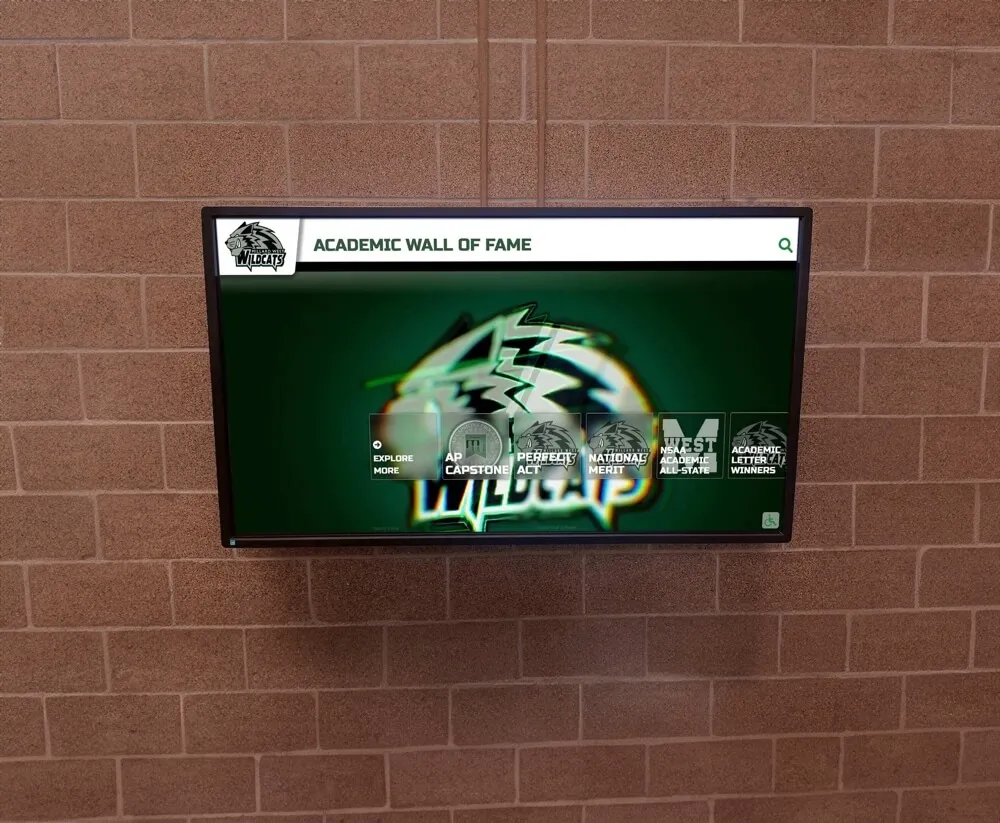
Large touchscreen displays transform honor walls from passive name lists into explorable databases where visitors actively discover service stories through intuitive touch interfaces. Users search by name, service branch, conflict era, or unit designation.
Best For: Organizations honoring large numbers of individuals, institutions needing regular updates, programs emphasizing storytelling over simple name recognition.
Advantages:
- Unlimited capacity honoring thousands without additional space
- Rich multimedia including photos, videos, service records, and personal stories
- Instant updates adding new honorees without physical modifications
- Searchable databases allowing quick access to specific individuals
- Analytics tracking which profiles visitors explore most frequently
Considerations:
- Higher initial investment ($15,000-35,000 for complete systems)
- Requires network connectivity and occasional technical support
- Regular content updates to maintain value and engagement
- Some traditional-minded stakeholders may prefer physical displays
Solutions like Rocket Alumni Solutions provide purpose-built platforms specifically designed for honor wall applications, offering intuitive content management that non-technical staff can operate confidently without IT department involvement.
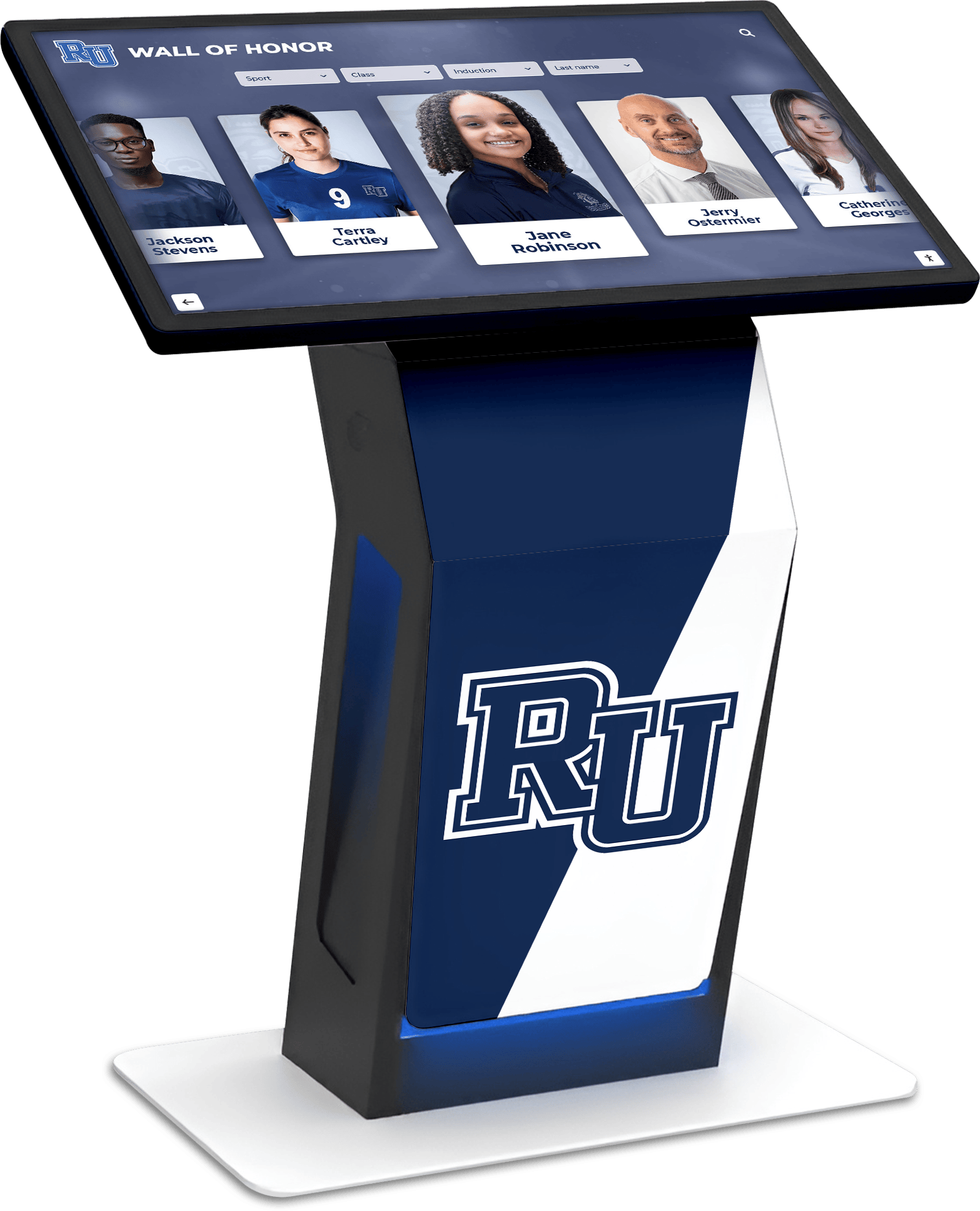
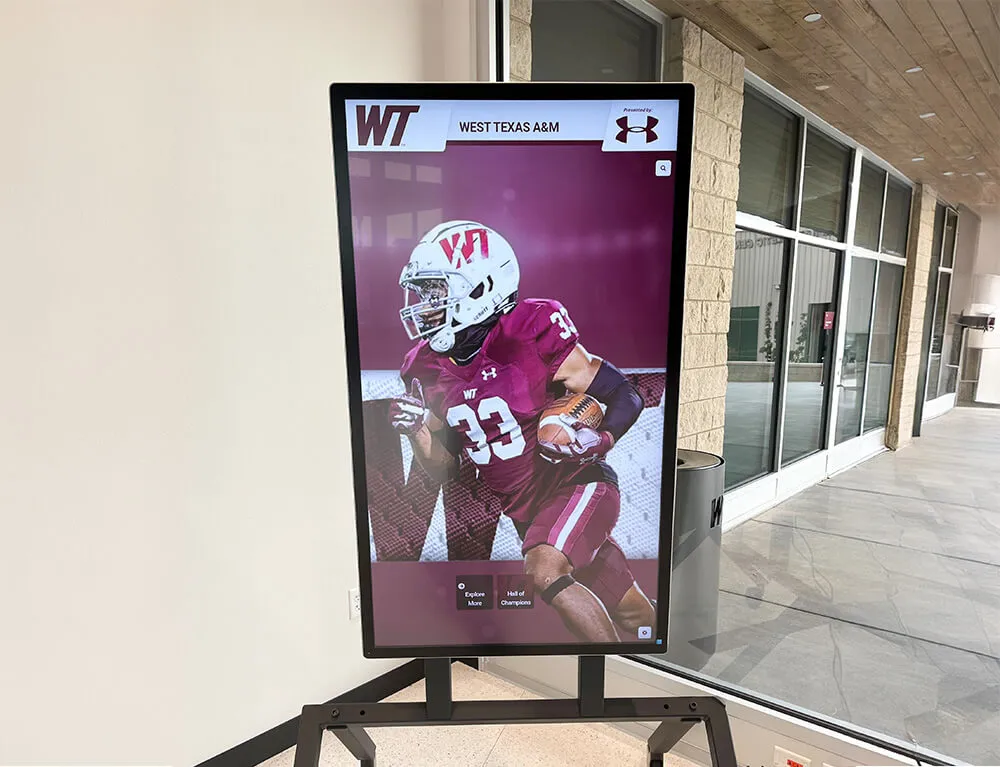
7. Digital Slideshow Display Walls
Continuously rotating digital slideshows feature honoree photographs, service details, and biographical information on wall-mounted displays. These passive systems cycle through content automatically without requiring visitor interaction.
Best For: High-traffic areas where continuous visibility matters more than interactive exploration, organizations with compelling photography, budget-conscious digital solutions.
Advantages:
- Lower cost than interactive touchscreens ($3,000-8,000)
- Simple content management through slideshow software
- Continuous visibility ensuring all honorees receive display time
- Eye-catching motion attracting attention in hallways and lobbies
Considerations:
- Passive viewing without ability to search or explore
- Limited information capacity per slide
- Visitors cannot control pacing or select specific individuals
- Less engaging than interactive alternatives
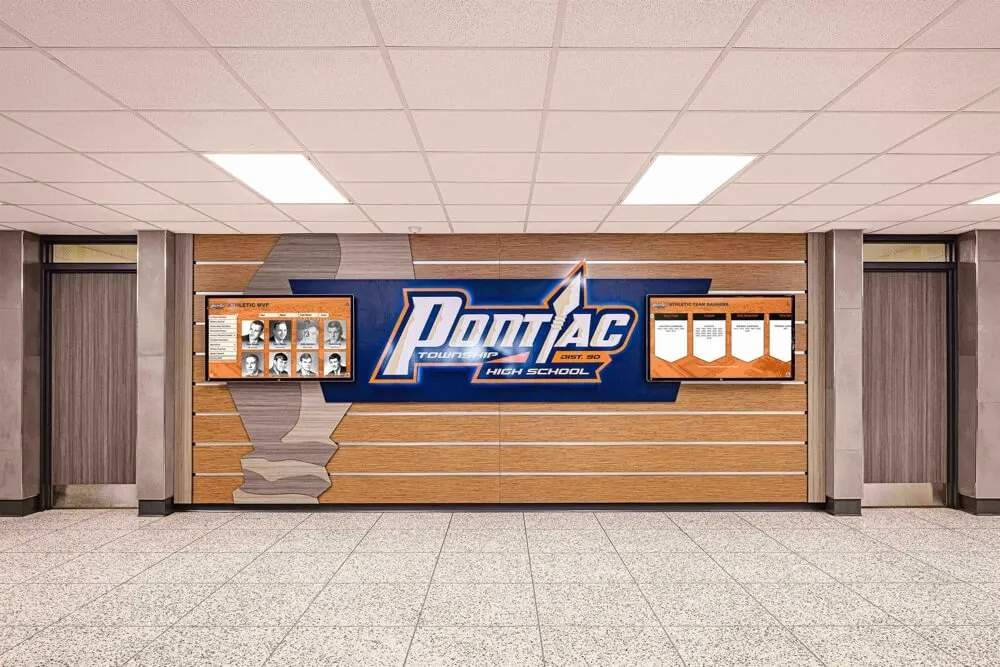
8. Hybrid Traditional-Digital Combinations
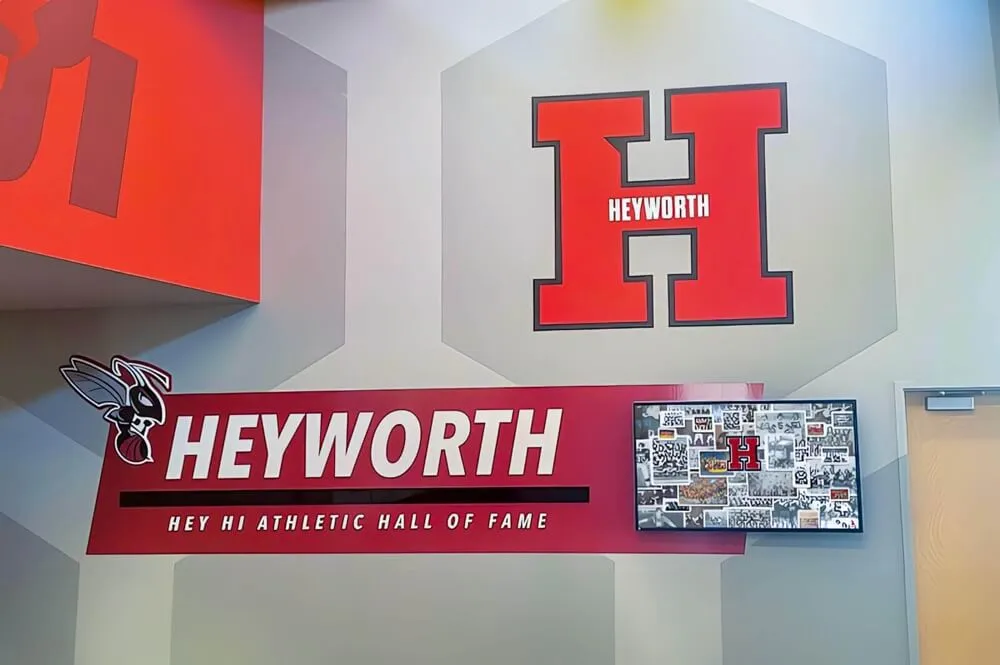
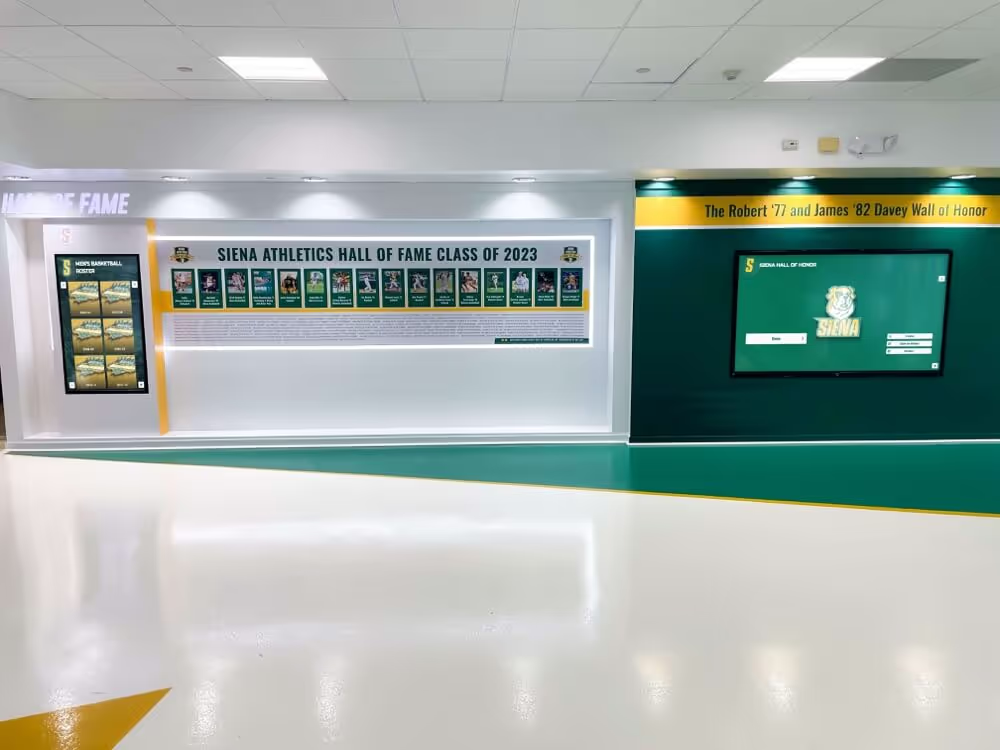
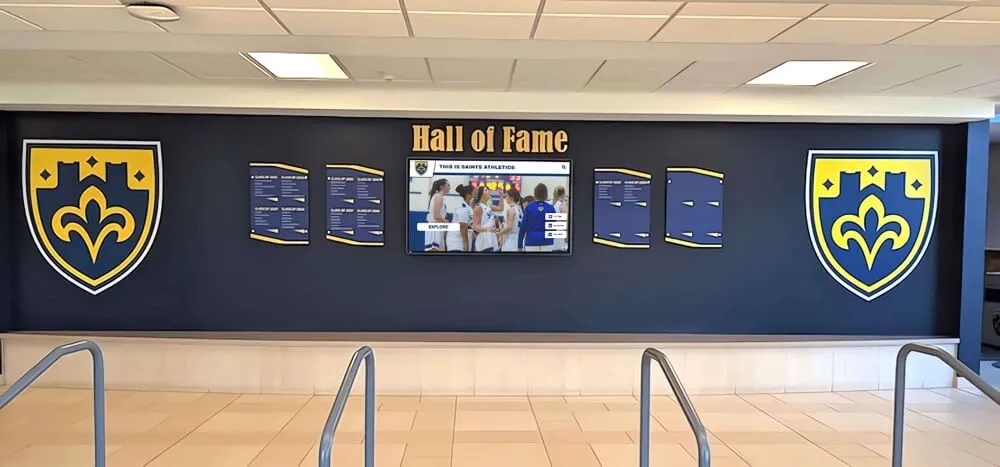
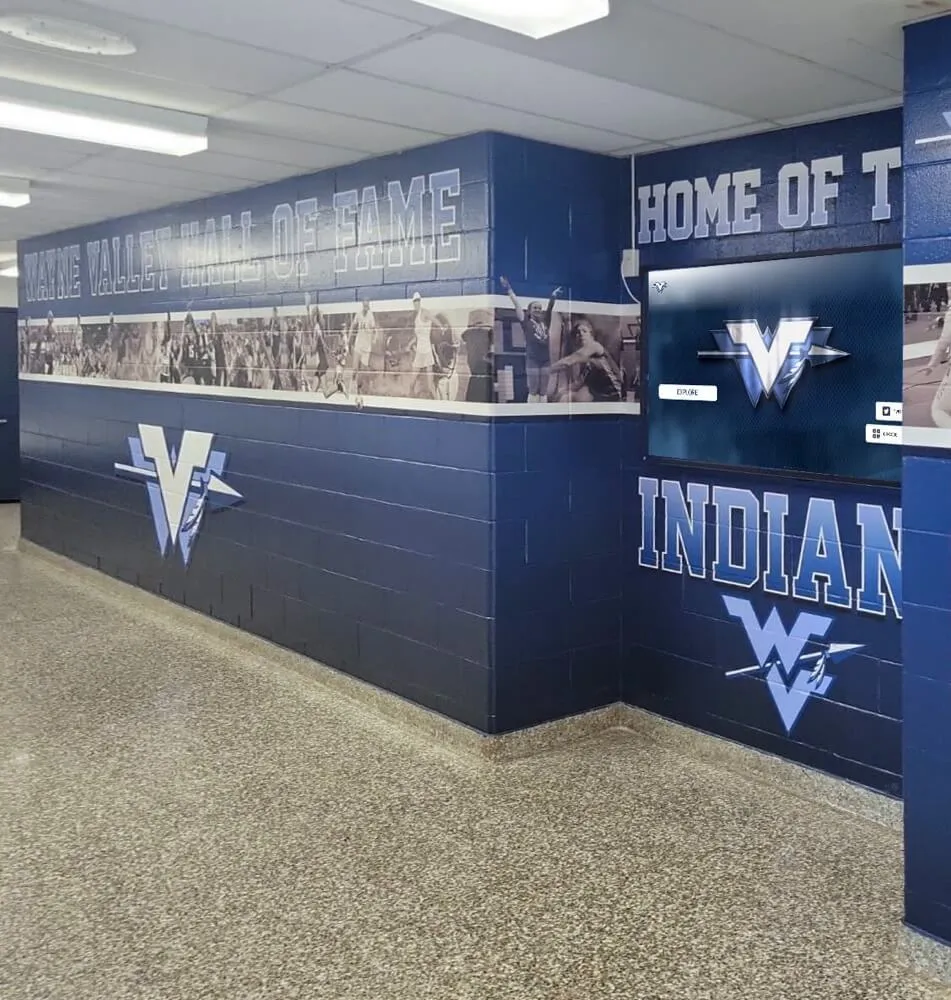
Many organizations successfully blend traditional and digital elements, combining engraved name walls listing all honorees with adjacent digital displays offering detailed profiles, photographs, and multimedia content about selected individuals or service eras.
Best For: Organizations valuing traditional aesthetics while wanting digital capabilities, institutions with existing traditional walls seeking enhancement, programs serving stakeholders with varying technology preferences.
Advantages:
- Preserves traditional gravitas and permanence
- Adds digital flexibility and storytelling capabilities
- Satisfies both traditionalist and innovation-minded stakeholders
- Physical names provide overview while digital offers depth
Considerations:
- Higher combined initial investment
- Requires design integration ensuring cohesive appearance
- Both elements need ongoing maintenance and updates
- Space requirements for both traditional and digital components
9. Video Testimony and Oral History Walls
Digital displays featuring video interviews where veterans describe their service, discuss memorable experiences, or share lessons learned create powerful emotional connections that text and photos alone cannot achieve.
Best For: Organizations with capacity to conduct and produce video interviews, programs emphasizing personal storytelling, memorials where living veterans can speak for fallen comrades.
Advantages:
- Deeply personal, emotionally impactful content
- Preserves veterans’ voices and stories for future generations
- Engages younger visitors more effectively than text
- Creates archival value extending beyond display purposes
Considerations:
- Significant production effort and expertise required
- Not all honorees have living family members to interview
- Video file management and storage requirements
- Technical quality varies without professional production
Schools implementing digital archives often discover that video testimony becomes valuable for history classes, civic education, and Veterans Day programming beyond recognition display purposes.
10. Mobile-Accessible Web Platforms
Web-based honor walls accessible through mobile devices extend recognition beyond physical locations, enabling veterans, families, and community members nationwide to view honor wall content remotely and share profiles through social networks.
Best For: Organizations with geographically dispersed membership, programs serving veterans who rarely visit physical locations, institutions emphasizing accessibility and broad reach.
Advantages:
- Global accessibility from any internet-connected device
- Social sharing capabilities amplifying recognition reach
- No physical space requirements
- Lower initial costs than physical installations
- Easy updates maintaining current information
Considerations:
- Less physical presence and community gathering function
- Requires active promotion ensuring people know platform exists
- May lack gravitas of physical memorial spaces
- Technology barriers for older veterans less comfortable with digital tools
Specialized Wall of Honor Design Approaches
Beyond general categories, specific design approaches serve particular recognition purposes or organizational needs especially effectively.
11. Conflict-Specific Memorial Sections
Organizing honor walls by conflict era—WWII, Korea, Vietnam, Gulf War, Iraq, Afghanistan—provides historical context while allowing design elements reflecting each era’s unique character and circumstances.
Best For: Veterans organizations spanning multiple generations, schools with substantial service representation across different conflicts, memorial walls emphasizing historical education.
Advantages:
- Historical context helping visitors understand different service eras
- Design flexibility allowing era-appropriate aesthetics
- Natural organization making specific individuals easier to locate
- Educational value explaining each conflict’s significance
Considerations:
- Some conflicts have many more representatives than others creating imbalance
- Modern volunteers still serving don’t fit conflict-specific categories
- Requires thoughtful transitions between sections
- May emphasize combat service over peacetime service
12. Branch-Specific Organization
Separate sections for Army, Navy, Air Force, Marines, Coast Guard, and Space Force allow branch-specific design elements, colors, and emblems while honoring inter-service pride and tradition.
Best For: Military-focused organizations, installations at military bases or near major installations, programs emphasizing service branch traditions.
Advantages:
- Branch emblems and colors create visual interest
- Respects inter-service traditions and pride
- Easy to locate individuals when branch is known
- Natural organization for military-focused audiences
Considerations:
- Individuals who served in multiple branches require decisions
- Some branches may have many more representatives than others
- Less relevant for schools or civilian organizations
- May fragment overall impact of collective service
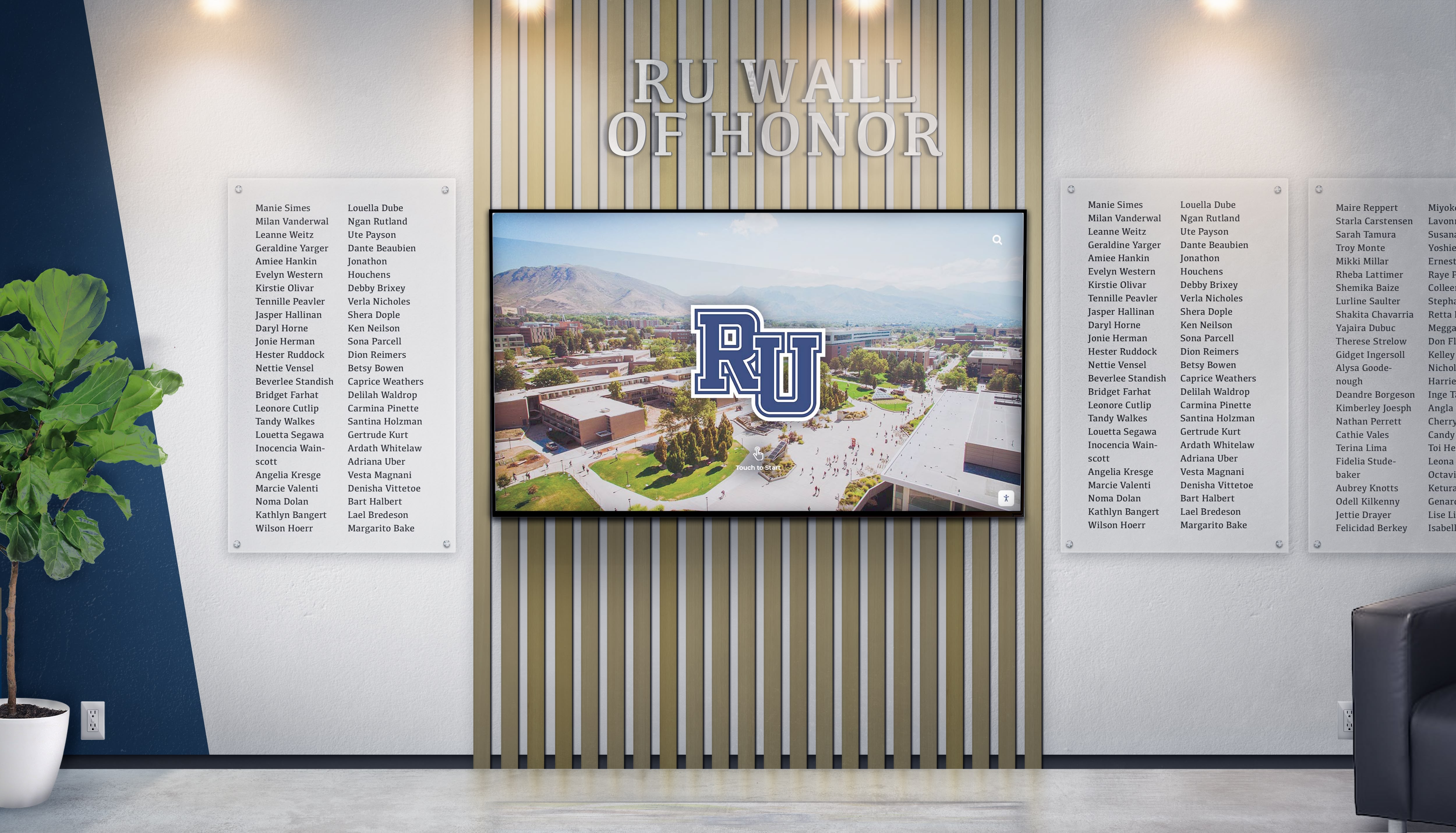
13. Rank and Achievement Hierarchies
Some honor walls organize recognition by rank achieved or decorations received, with separate sections for officers, enlisted personnel, Medal of Honor recipients, Purple Heart recipients, or other distinction categories.
Best For: Military academies, ROTC programs, organizations emphasizing military achievement levels, memorials for specific decorated units.
Advantages:
- Recognizes exceptional achievement within service
- Appropriate for military academies where rank progression matters
- Creates aspirational examples for current students
- Honors extraordinary sacrifice and valor appropriately
Considerations:
- May create perceived hierarchy among veterans
- Risks minimizing service of those in support roles
- Complicated for those with varied careers and rank changes
- Potentially divisive in community-focused honor walls
Most community organizations opt for egalitarian approaches honoring all service equally rather than rank-based hierarchies. Understanding high school sports awards categories provides useful frameworks for balancing diverse achievement recognition.
14. Living Memorial with Continuous Growth
Rather than fixed installations, living memorials explicitly anticipate continuous growth as new veterans join communities and as current students graduate and later serve. Design incorporates obvious expansion space or unlimited digital capacity.
Best For: Schools and organizations with ongoing service traditions, younger organizations still building recognition programs, communities expecting continued military participation.
Advantages:
- Clear anticipation of future honorees
- No artificial endpoint or “complete” date
- Encourages ongoing service traditions
- Easier to fund incrementally over time
Considerations:
- Initial appearance may look sparse or incomplete
- Requires planning for decades of future growth
- May lack definitive milestone achievements
- Ongoing administrative burden adding new honorees
15. First Responder and Public Safety Recognition
Honor walls recognizing police officers, firefighters, EMTs, and other first responders who serve communities require similar design considerations while acknowledging the different character of public safety service versus military service.
Best For: Municipal buildings, police and fire departments, community centers, schools with significant first responder alumni representation.
Advantages:
- Recognizes all forms of service to community
- Resonates with local audiences who interact with first responders
- Often includes fallen officer and firefighter memorials
- Bridges military and civilian public service
Considerations:
- Different organizational structures than military service
- Active duty first responders may prefer private recognition
- Requires sensitivity around controversial incidents
- Memorial elements for line-of-duty deaths
Communities implementing interactive church information displays often adapt similar technologies for first responder recognition at community facilities.
Unique Creative Approaches to Honor Wall Design
Some organizations implement particularly innovative designs that solve specific challenges or create memorable recognition experiences through creative approaches.
16. Stadium and Arena Integration
Athletic venues create natural opportunities for honor wall integration where large crowds gather for games and events. Digital displays between concourses or at entrances honor veterans while reaching broad audiences.
Best For: Schools with significant veteran populations attending athletic events, organizations using stadium facilities for fundraising, communities where athletic venues serve as primary gathering spaces.
Advantages:
- High visibility during well-attended events
- Natural gathering spaces for recognition ceremonies
- Athletic program tie-ins like honoring veterans at military appreciation games
- Large spaces accommodating substantial installations
Considerations:
- Primarily visible during events rather than daily
- Noise and distraction limiting contemplative engagement
- Competes with athletic focus of venues
- Security and access limitations when venues closed
17. Donor-Funded Name Additions
Some organizations fund ongoing honor wall operations by offering recognition opportunities to donors who sponsor individual name additions or entire sections, with donor recognition appearing alongside or separate from veteran recognition.
Best For: Organizations needing sustainable funding models, nonprofits leveraging recognition for fundraising, communities with generous veteran support populations.
Advantages:
- Creates ongoing funding for maintenance and expansion
- Engages community through meaningful giving opportunities
- Honors both veterans and those who support veterans
- Builds stakeholder investment in recognition program success
Considerations:
- Requires careful balance keeping veteran focus primary
- Donor recognition must not overshadow service recognition
- Administration of sponsorship programs
- Potential perception of “purchasing” recognition
Schools managing capital campaigns often discover that honor walls present compelling fundraising opportunities when appropriately structured.
18. Reunion and Ceremony Integration
Honor walls designed explicitly to serve as backdrops for ceremonies—induction events, Veterans Day observances, memorial services, and reunions—incorporate staging elements, seating, and audiovisual capabilities supporting programmatic use.
Best For: Organizations hosting regular ceremonies, VFW and American Legion posts, schools with annual Veterans Day programs, communities with active military memorial traditions.
Advantages:
- Maximizes recognition value through ceremonial use
- Creates destinations rather than passive displays
- Facilitates annual traditions maintaining visibility
- Accommodates families during memorial services
Considerations:
- Requires additional space for gathering areas
- Design must support both everyday viewing and event functions
- Audiovisual and staging equipment needs
- Scheduling and facility management requirements
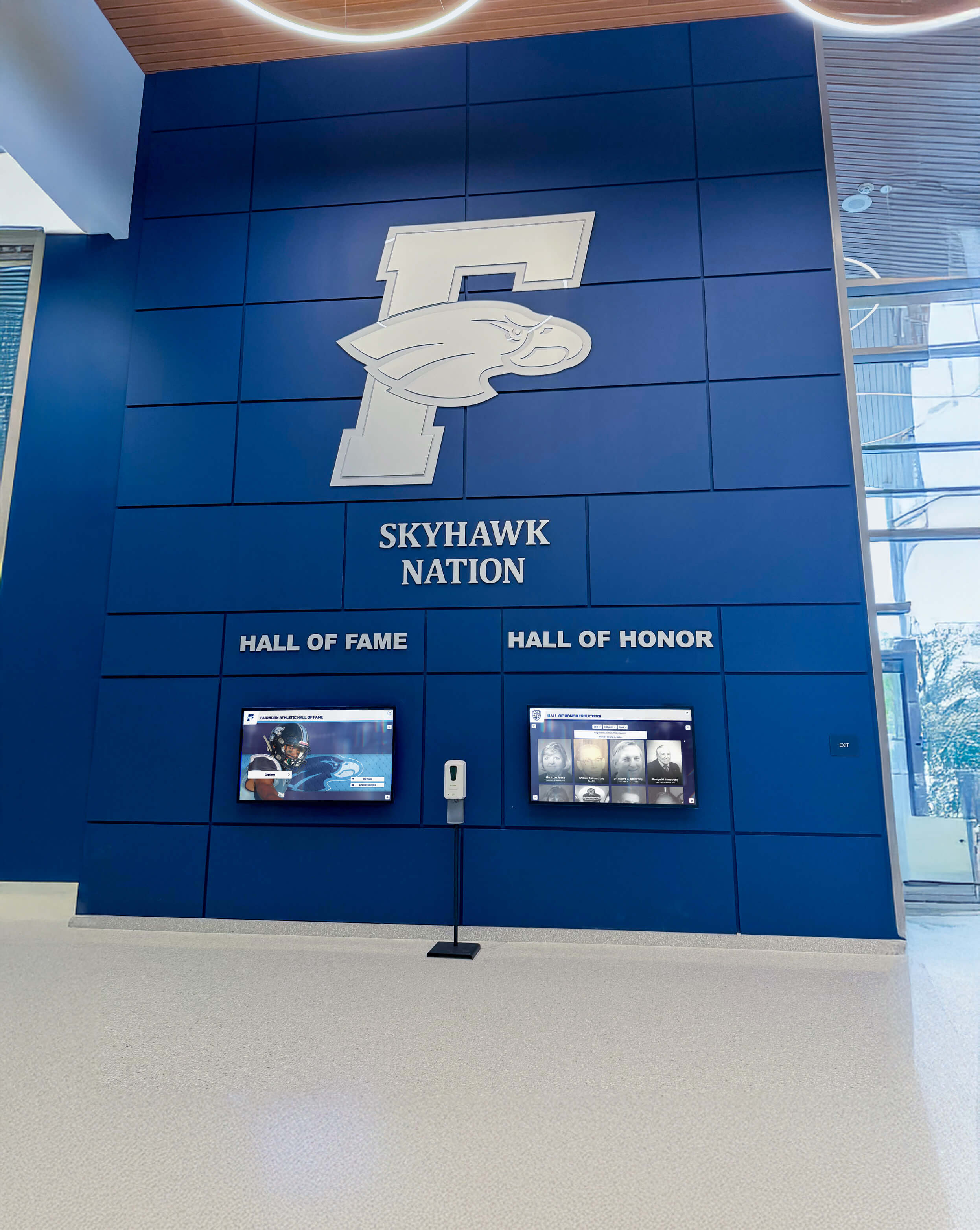
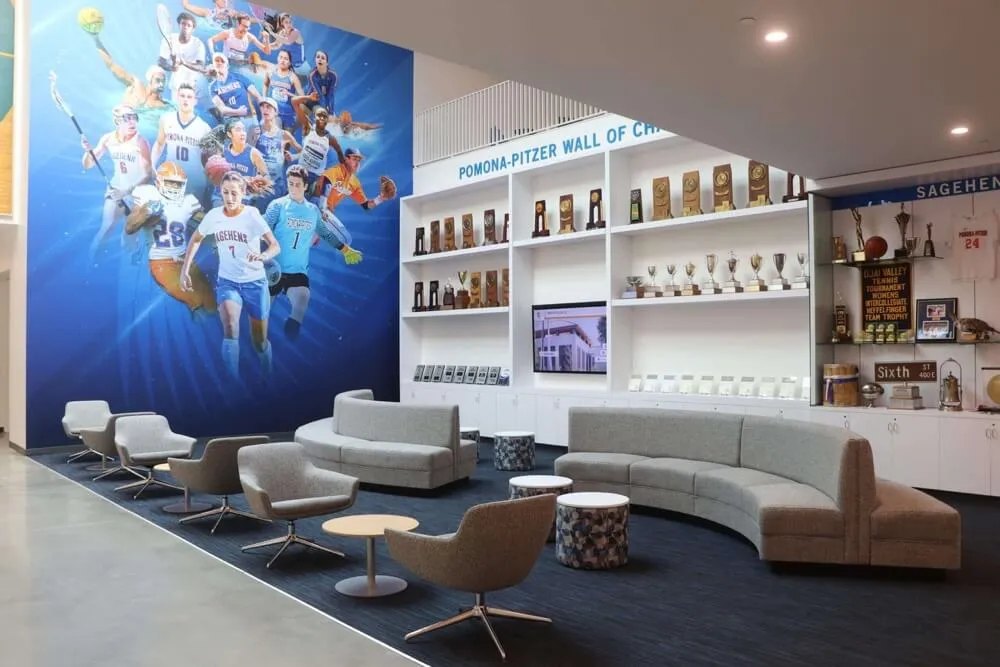
19. Archive and Museum Integration
Honor walls incorporated within larger historical archives or museum spaces benefit from curatorial expertise, climate control, expanded artifact display capabilities, and educational programming integration.
Best For: Organizations with existing archives or museums, institutions emphasizing historical education, communities with significant historical collections, programs requiring professional curation.
Advantages:
- Professional curation and conservation
- Broader context connecting service to institutional history
- Research resources for students and historians
- Visitor services and educational programming
Considerations:
- Access limitations if archives have limited hours
- Requires dedicated space and staff
- Higher ongoing operational costs
- May reduce visibility compared to high-traffic locations
Universities implementing comprehensive historical photo archives often integrate military service recognition within broader archival programs.
20. QR Code-Enhanced Traditional Walls
Traditional plaque walls enhanced with QR codes printed beside each name allow visitors to scan codes with smartphones, accessing detailed digital profiles with photos, service records, and personal stories without requiring permanent digital display hardware.
Best For: Budget-conscious organizations wanting digital content without display costs, programs with existing traditional walls seeking enhancement, institutions serving technology-comfortable populations.
Advantages:
- Adds digital capabilities to existing traditional walls inexpensively
- No display hardware, network, or power requirements
- Visitors access content on personal devices
- Easy to update digital content behind QR codes
Considerations:
- Requires visitors to have smartphones and understand QR codes
- Older visitors may lack technology comfort
- No visual draw attracting attention like display screens
- Web hosting required for linked content
This hybrid approach combines traditional aesthetics with modern capabilities, similar to strategies used in interactive trophy kiosks that enhance physical displays with digital storytelling.
Implementation Considerations for Honor Wall Projects
Moving from design concepts to actual installations requires careful attention to planning, funding, content development, and ongoing management that ensures recognition programs deliver lasting value.
Planning and Stakeholder Engagement
Form Planning Committees: Include veterans, family members of fallen servicemembers, administrators, development professionals, and design experts. Diverse perspectives ensure recognition programs appropriately honor those recognized while meeting practical institutional needs.
Define Recognition Criteria: Establish clear standards for who receives recognition. Will honor walls include all alumni who served regardless of length or character of service, or only those meeting specific criteria? How will dishonorable discharges be addressed? Clear policies prevent difficult decisions later.
Survey Stakeholder Preferences: Before committing to specific designs, survey veterans, families, and community members about preferences between traditional and digital approaches, desired content types, and aesthetic sensibilities. This engagement builds support while ensuring designs resonate with intended audiences.
Establish Success Metrics: Define how the organization will measure honor wall success—visitor engagement levels, ceremony attendance, alumni connections initiated, fundraising impact, or educational outcomes. Clear success definitions enable ongoing assessment and improvement.
Funding and Budget Development
Realistic Cost Assessment: Comprehensive budgets should include initial installation costs (materials, fabrication, or technology), professional design and project management, initial content development, installation and construction, contingency reserves (10-15% of total), and ongoing operational expenses including annual software subscriptions, content updates, maintenance and cleaning, and eventual technology refreshes or expansions.
Phased Implementation: Organizations lacking full funding can implement recognition programs in phases—launching with core content and expanding geographic or temporal coverage over subsequent years. Digital recognition systems particularly support phased approaches since adding content requires no physical expansion.
Fundraising Strategies: Honor walls present natural fundraising opportunities since recognition programs create tangible, lasting impact that donors can see and touch. Consider strategies like naming opportunities for overall installations or specific sections, sponsorship opportunities for individual name additions, memorial giving in honor of deceased veterans, veteran service organization partnerships, and alumni association special campaigns.
Content Development and Research
Historical Research: Comprehensive honor walls require systematic research through institutional records, yearbooks, alumni surveys, newspaper archives, military service records, and family contributions. This research identifies service members while gathering biographical information and photographs for profiles.
Family Outreach: Many organizations discover that families of veterans eagerly contribute photographs, service records, memorabilia, and biographical information when asked. Personal outreach creates stakeholder investment while building richer content than institutional records alone provide.
Privacy and Permissions: Ensure appropriate permissions for using personal information, photographs, and service details, particularly for living veterans. Establish clear policies addressing situations where veterans or families decline recognition.
Content Quality Standards: Establish formatting standards ensuring consistent, professional appearance across all profiles regardless of content source. Quality standards address photograph resolution and formatting, biographical text length and style, military terminology accuracy, date and rank formatting, and verification of factual accuracy.
Ongoing Maintenance and Management
Annual Addition Processes: Establish predictable cycles for identifying and adding new honorees—typically annual processes including nomination or identification periods, verification of service records, content development and approval, and public addition ceremonies creating visibility.
Technology Maintenance: Digital systems require ongoing attention including software updates and security patches, content backup procedures, display cleaning and calibration, network and connectivity monitoring, and eventual hardware refresh planning (typically 7-10 year cycles).
Ceremonial Programming: Regular ceremonies maintain honor wall visibility and relevance including Veterans Day dedication events, Memorial Day observances, annual induction ceremonies for new honorees, and reunion gatherings connecting honored veterans and families.
Measuring and Reporting Impact: Track and report metrics demonstrating program value including visitor engagement (analytics for digital systems, observation for traditional), stakeholder satisfaction surveys, media coverage and community awareness, alumni engagement and giving correlations, and student and community educational impact.
Organizations implementing white-glove support programs for recognition systems benefit from professional assistance with these ongoing management responsibilities.
Conclusion: Creating Lasting Recognition of Service
Walls of honor represent far more than names on walls or plaques in lobbies—they create sacred spaces where communities pause to remember service and sacrifice, where families find comfort knowing loved ones will be remembered, where current students discover inspiring examples of graduates who served with distinction, and where institutional values become tangible through recognition that demonstrates genuine respect for those who answered calls to duty.
The most effective honor walls share common characteristics regardless of specific design approaches chosen: clarity of purpose defining who receives recognition and why, appropriate dignity befitting the seriousness of military service and public safety work, sustainable management ensuring recognition programs remain current and relevant across decades, accessibility allowing broad audiences to engage with recognition content, and genuine integration into organizational life rather than forgotten installations gathering dust in rarely-visited hallways.
Whether organizations choose time-honored traditional plaques that convey permanence and gravitas, modern interactive digital systems that overcome space limitations while enabling rich multimedia storytelling, or hybrid approaches that bridge traditional aesthetics with contemporary capabilities, the ultimate measure of honor wall success lies not in technology or materials but in whether recognition appropriately honors service, strengthens community bonds, and inspires future generations to live lives of similar dedication and purpose.
Ready to Create Your Wall of Honor?
From traditional bronze plaques to cutting-edge interactive touchscreen systems, Rocket Alumni Solutions helps schools, veterans organizations, and community groups nationwide create honor walls that appropriately recognize service while delivering lasting value through engaging recognition experiences.
Our purpose-built platforms specifically address honor wall requirements including unlimited recognition capacity as new veterans join communities, intuitive content management requiring no technical expertise, secure cloud hosting with automatic updates and backups, comprehensive multimedia support for photos, videos, and documents, and dedicated support ensuring your recognition program succeeds. Whether you’re creating your organization’s first honor wall, modernizing existing traditional displays, or expanding recognition programs to honor more service members, our team brings educational and veterans organization expertise ensuring your recognition program honors service with the dignity and respect it deserves.
Visit Rocket Alumni Solutions to explore recognition solutions for your school or organization, or contact our team to discuss your specific vision and discover how modern recognition technology can transform how your institution honors service, sacrifice, and the values that make communities strong.