



Key Takeaways
Discover innovative wall of fame ideas for schools that celebrate student achievement, honor staff excellence, and connect with alumni. From traditional plaques to interactive digital displays, find inspiration for meaningful recognition.
A well-designed wall of fame transforms ordinary hallways and lobbies into inspiring spaces that celebrate the achievements, dedication, and legacy of your school community. More than decorative displays, these recognition walls communicate institutional values, motivate current students, strengthen alumni connections, and create visible proof that hard work, character, and contribution matter. Whether you’re an athletic director planning an athletics hall of fame, a principal envisioning comprehensive student recognition, or an alumni coordinator seeking meaningful ways to honor distinguished graduates, the right wall of fame design turns abstract achievements into tangible celebration that resonates across your entire community.
This comprehensive guide explores wall of fame ideas across multiple categories—from traditional approaches with contemporary updates to cutting-edge interactive solutions that leverage technology for deeper engagement. You’ll discover practical implementation strategies, design considerations that maximize impact, and creative concepts that can be adapted to your specific space, budget, and recognition objectives.
Understanding What Makes Effective Wall of Fame Displays
Before exploring specific design concepts, understanding the characteristics that separate memorable recognition walls from forgettable displays helps guide planning toward solutions that genuinely honor achievement while enhancing your school environment.
The Core Purpose: Recognition That Resonates
The most effective walls of fame achieve multiple objectives simultaneously. They honor individuals whose achievements merit lasting recognition, creating permanent acknowledgment of excellence that extends beyond momentary announcements or annual awards ceremonies. They inspire current students by providing visible evidence that dedication, talent, and character receive meaningful recognition, showing younger students the pathways to achievement that their predecessors traveled successfully.
Walls of fame strengthen institutional identity by celebrating individuals whose accomplishments reflect and reinforce school values, creating visible connections between past excellence and current aspirations. They foster alumni engagement by maintaining physical presence for graduates within the school community, demonstrating that contributions continue to matter long after graduation.
Recognition displays that achieve these objectives share common characteristics: they’re prominently located in high-traffic areas where the entire school community regularly encounters them, thoughtfully designed with professional aesthetics that communicate the significance of those honored, accessible with clear organization enabling visitors to find specific individuals or achievements easily, and maintained with current, accurate information reflecting ongoing respect for those recognized.
Key Design Considerations for All Wall of Fame Types
Regardless of specific approach, certain fundamental considerations determine whether your recognition wall achieves its potential or falls short of expectations.
Location and Visibility
The best wall of fame design becomes ineffective if placed where few people encounter it. Prime locations include main entrances and lobbies where visitors, students, and staff pass daily, athletic facilities for sports-focused recognition where athletes, families, and fans naturally congregate, dedicated welcome areas that intentionally create recognition-focused spaces, and hallway focal points at intersections or prominent wall spaces that naturally draw attention.
Avoid tucking recognition displays in administrative areas with limited student access, remote corridors with minimal traffic, or crowded spaces where displays compete with excessive visual clutter. Recognition loses impact when people must intentionally seek it out rather than encountering it naturally during daily routines.
Scalability and Future Growth
Recognition programs evolve. This year’s hall of fame inductees become next decade’s foundation that requires accommodation for continuous additions. Effective wall of fame designs anticipate growth through modular systems allowing expansion without complete redesign, flexible frameworks accommodating new categories or achievement types as your recognition program expands, visual consistency enabling additions that feel integrated rather than tacked on, and sufficient physical or digital capacity preventing premature obsolescence.
Traditional plaque walls frequently encounter scalability challenges when they run out of physical space, forcing awkward expansions into adjacent areas or complete relocations. Planning for growth from the outset prevents these expensive, disruptive problems.
Maintenance and Updates
Recognition displays requiring specialized expertise for every update create practical burdens that often result in outdated, neglected walls of fame that communicate institutional disorganization rather than respect for achievement. Consider realistic maintenance requirements including how easily you can add new inductees, correct errors, update achievements for living honorees, and refresh aesthetics as design preferences evolve.
Digital recognition displays excel in this dimension by enabling staff to manage content through intuitive interfaces without requiring vendor assistance, professional services, or physical modifications for each update.
Traditional Wall of Fame Ideas With Contemporary Updates
Classic recognition approaches have proven their effectiveness across decades. These time-tested concepts gain fresh relevance through modern design sensibilities, quality materials, and thoughtful integration with school aesthetics.
Plaque-Based Recognition Walls
Individual plaques mounted on feature walls remain the most common wall of fame approach because they provide elegant, permanent recognition with strong visual impact when properly designed and displayed.
Classic Plaque Walls
Traditional plaque displays work beautifully when given proper design attention. Key considerations include consistent plaque sizes and formats creating visual unity rather than haphazard collections, quality materials like bronze, brass, or architectural acrylics that convey significance, professional engraving with readable fonts and proper spacing, and thoughtful arrangement patterns—chronological, alphabetical, or achievement-based—helping visitors navigate the display.
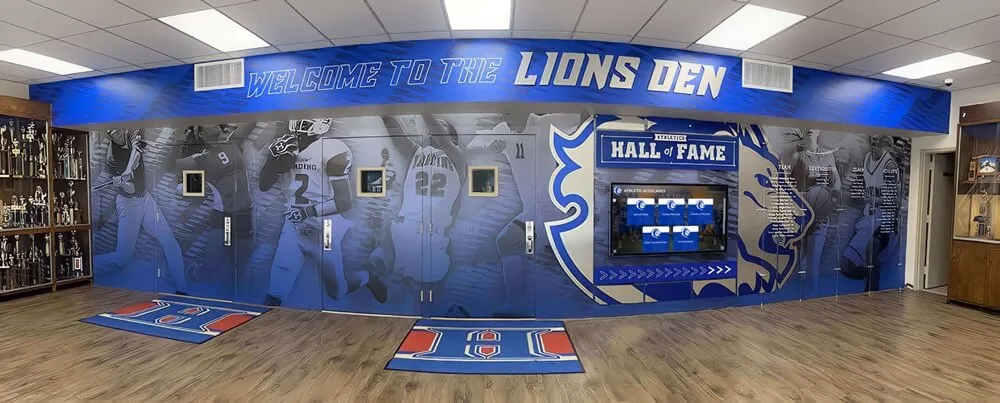
Modern interpretations elevate traditional plaque walls through sophisticated mounting systems creating dimensional depth rather than flat wall coverage, integrated lighting highlighting individual plaques and creating dramatic visual impact, architectural frames or borders defining the recognition area as intentional design feature, and complementary wall treatments including school colors, mascot imagery, or inspirational quotes that reinforce institutional identity.
Shield and Crest Displays
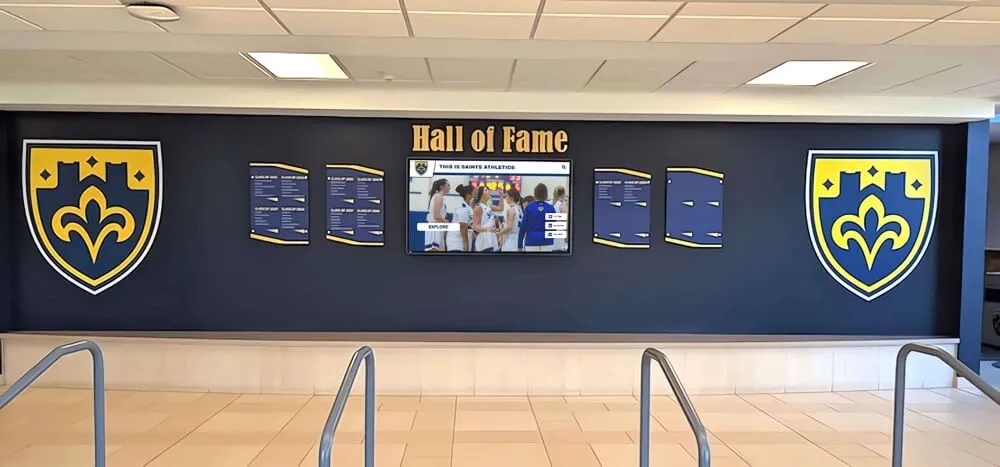
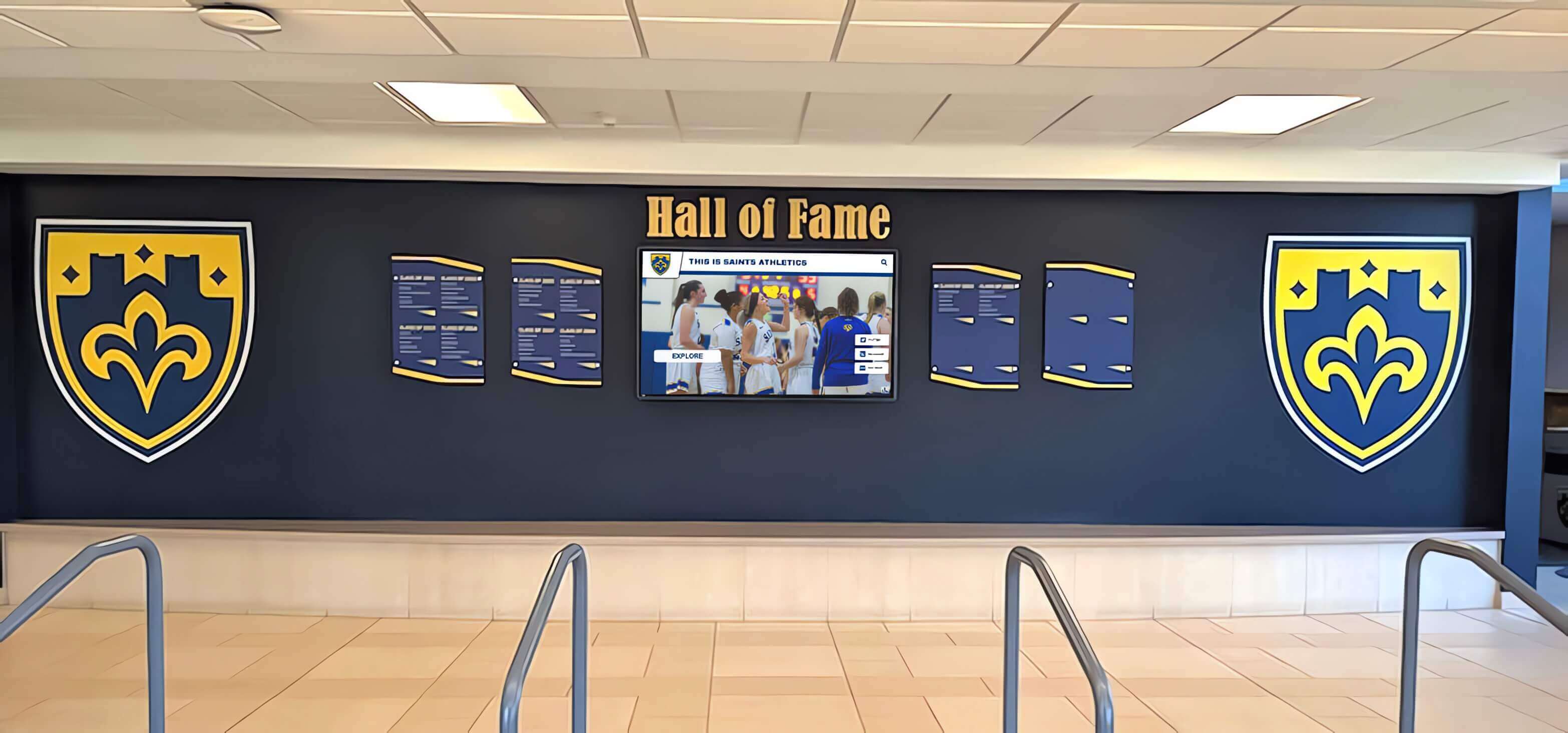
For schools with strong heraldic traditions or classical architectural aesthetics, shield-shaped plaques create distinctive visual impact. Individual shields bearing honoree names, achievements, and induction years can be arranged in formal patterns echoing historical halls of arms. This approach works particularly well for academic halls of fame honoring distinguished scholars, faculty excellence recognition, or comprehensive halls celebrating multi-dimensional achievement.
Metal shields with embossed details, painted school crests, and formal arrangements create gravitas particularly appropriate for recognizing lifetime achievement or distinguished service. The dimensional quality of shield displays creates visual interest superior to flat plaques while maintaining the permanence and formality traditional recognition requires.
Dedicated Hall of Fame Rooms and Galleries
When space and budget permit, dedicated rooms or gallery spaces for recognition create immersive environments that elevate the importance of those honored while providing opportunities for rich storytelling beyond basic name-and-achievement plaques.
Walk-Through Gallery Spaces
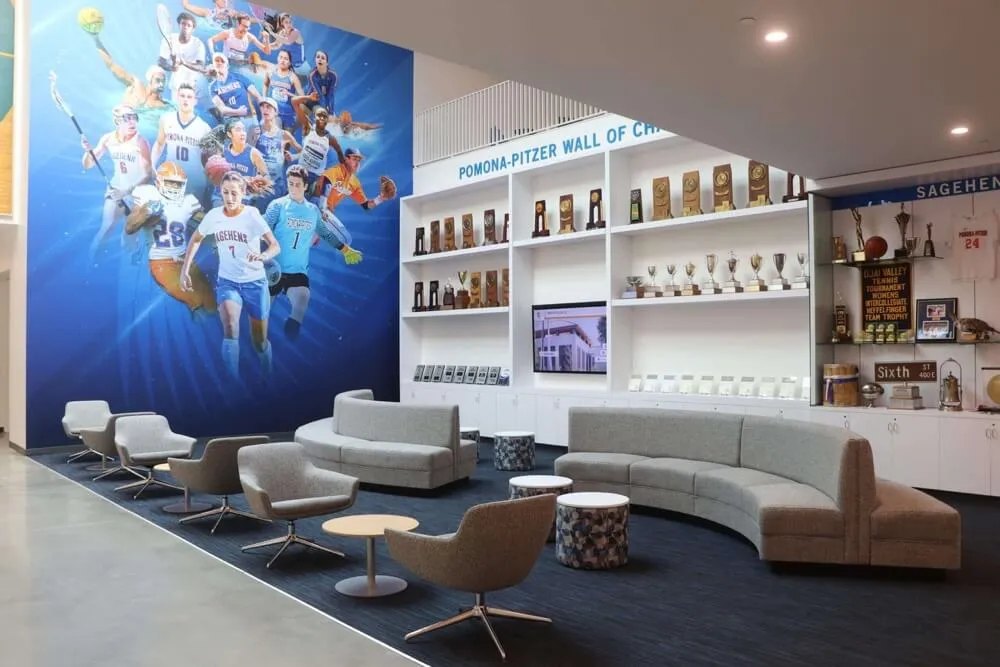
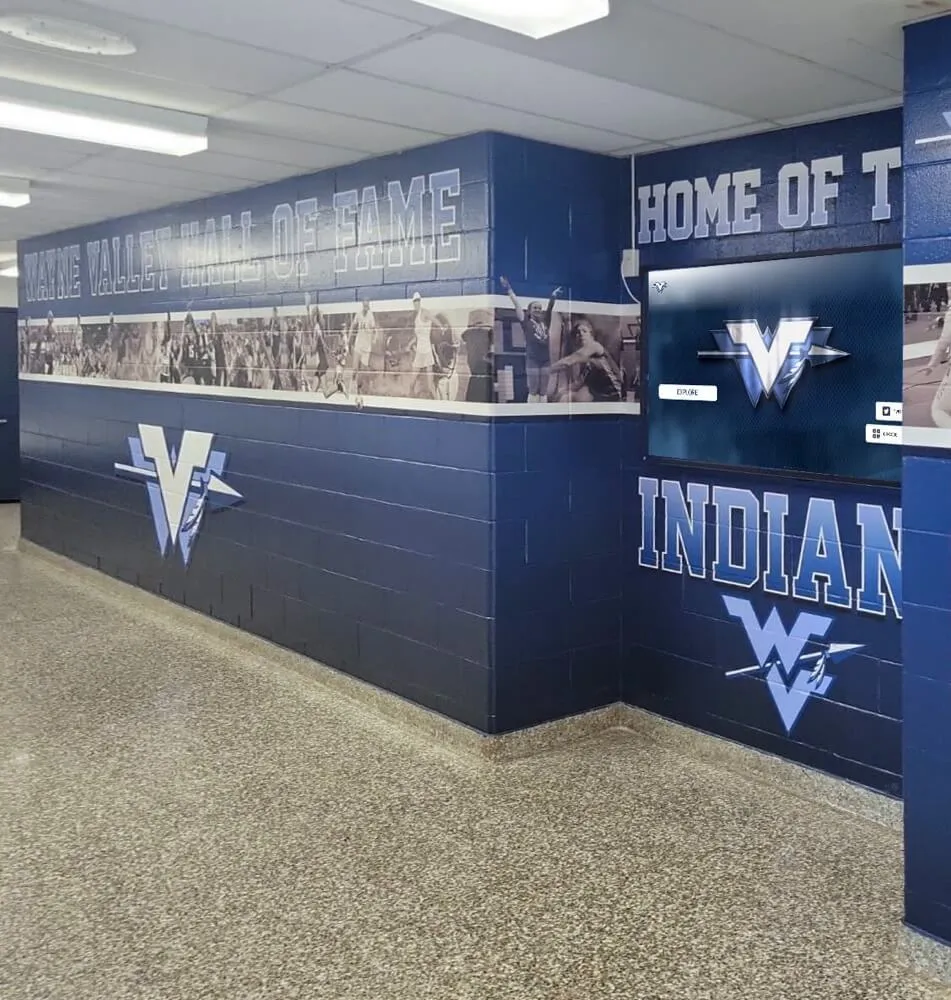
Transforming entire hallway sections or dedicated rooms into recognition galleries enables comprehensive displays incorporating plaques alongside photographs, achievement summaries, historical artifacts, timeline elements showing evolution of programs and achievements, and seating areas encouraging visitors to spend time engaging with recognition displays rather than passing quickly.
Gallery approaches work beautifully for comprehensive school historical timeline displays that integrate hall of fame recognition with institutional history, showing how individual achievements contributed to the school’s broader story.
Multi-Category Recognition Centers
Rather than separate walls for athletics, academics, arts, and service, integrated recognition centers celebrate all dimensions of school excellence in unified spaces. This approach prevents hierarchical implications of more prominent athletic recognition versus academic achievement, demonstrates institutional commitment to well-rounded excellence, and creates richer, more interesting displays by showing achievement diversity.
Organization can follow multiple approaches: chronological arrangements showing each year’s inductees across all categories together, achievement-type groupings with adjacent sections for athletics, academics, arts, and service, or individual showcase areas where each inductee receives dedicated space describing multi-dimensional contributions.
Athletics-Specific Wall of Fame Ideas
Athletic achievement provides natural recognition opportunities with clear metrics, strong visual potential through action photography and sports imagery, and built-in audience engagement through ongoing competitions and events.
Championship and Record Recognition Displays
Celebrating team championships and individual records creates ongoing competitive motivation while honoring historic excellence that established standards current athletes strive to exceed.
Team Championship Walls
Dedicated spaces recognizing championship teams can include team photographs capturing championship moments, roster lists ensuring every team member receives recognition, season summary statistics and tournament results providing context, and coach acknowledgment honoring leadership behind championship success.
Visual organization chronologically showing championship progression across years or sport-by-sport grouping all championships within each athletic program creates clear navigation while enabling visitors to appreciate both individual excellence and institutional athletic success patterns.
Record Holder Boards
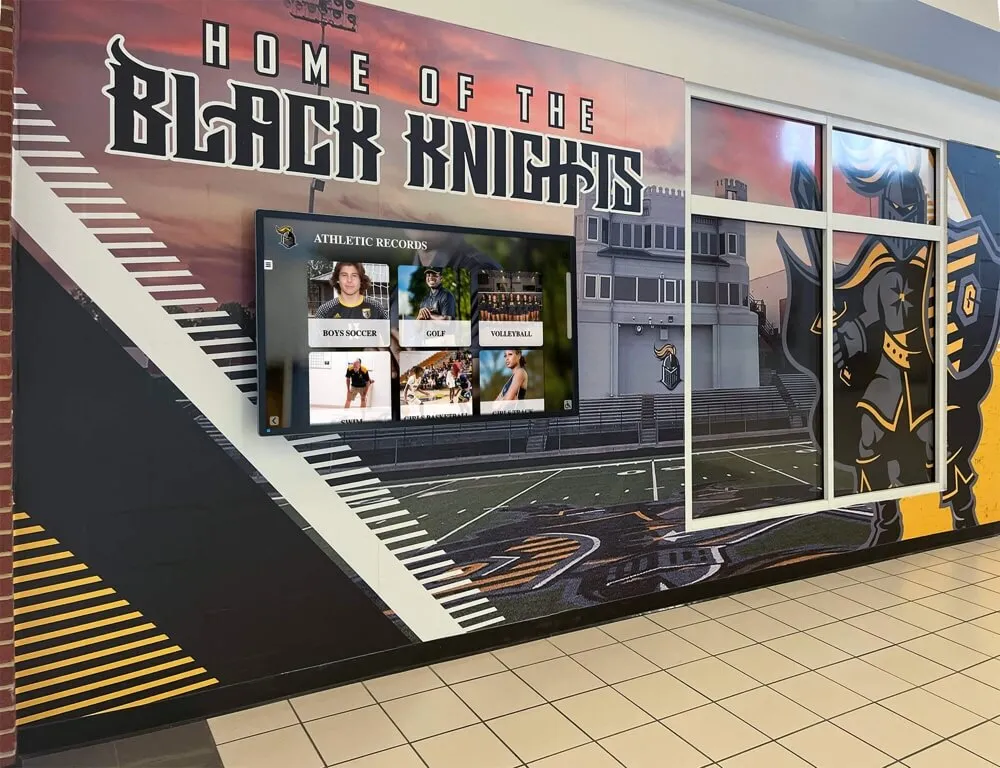
Athletic records provide objective achievement markers that naturally generate recognition opportunities. Digital record boards enable real-time updates as records fall, comprehensive displays accommodating numerous record categories across all sports, historical comparison showing record progression over time, and visual celebration through athlete photographs and achievement highlights.
Traditional static record boards require physical updates whenever records change—a maintenance burden that often results in outdated displays. Modern alternatives enable immediate updates ensuring recognition always reflects current record holders accurately.
Individual Athlete Hall of Fame Concepts
Honoring individual athletic excellence through dedicated halls of fame celebrates exceptional careers and provides aspirational models for current student-athletes.
Career Achievement Recognition
Comprehensive athlete recognition extends beyond single-season excellence to honor sustained achievement across entire high school or college careers. Recognition criteria might include career statistics and achievement summaries, major awards and honors received, championship contributions across multiple seasons, and post-graduation achievements for programs tracking distinguished alumni careers.
Display formats can incorporate individual plaques or profiles with photographs, statistical summaries highlighting career accomplishments, quotes from athletes reflecting on their experiences, and coach tributes providing perspective on individual contributions and character.

Distinguished Alumni Athlete Recognition
For schools maintaining connections with athletic alumni, recognition programs highlighting post-graduation achievements celebrate how high school or college athletic experiences contributed to broader life success. This might include professional athletes who competed at elite levels, coaches who returned to the profession at successful programs, athletic administrators, sports medicine professionals, or individuals who applied athletic discipline to success in entirely different fields.
These displays strengthen the narrative that athletic participation develops transferable character qualities—dedication, teamwork, resilience, competitive drive—that contribute to success regardless of career path.
Academic Excellence Wall of Fame Ideas
While athletic recognition receives natural emphasis through competitive events that generate excitement, academic achievement deserves equally prominent celebration acknowledging intellectual excellence, scholarly dedication, and educational achievement.
Scholar Recognition Programs
Academic halls of fame can celebrate achievement through multiple lenses depending on institutional priorities and the specific accomplishments you want to emphasize.
Academic All-Star Walls
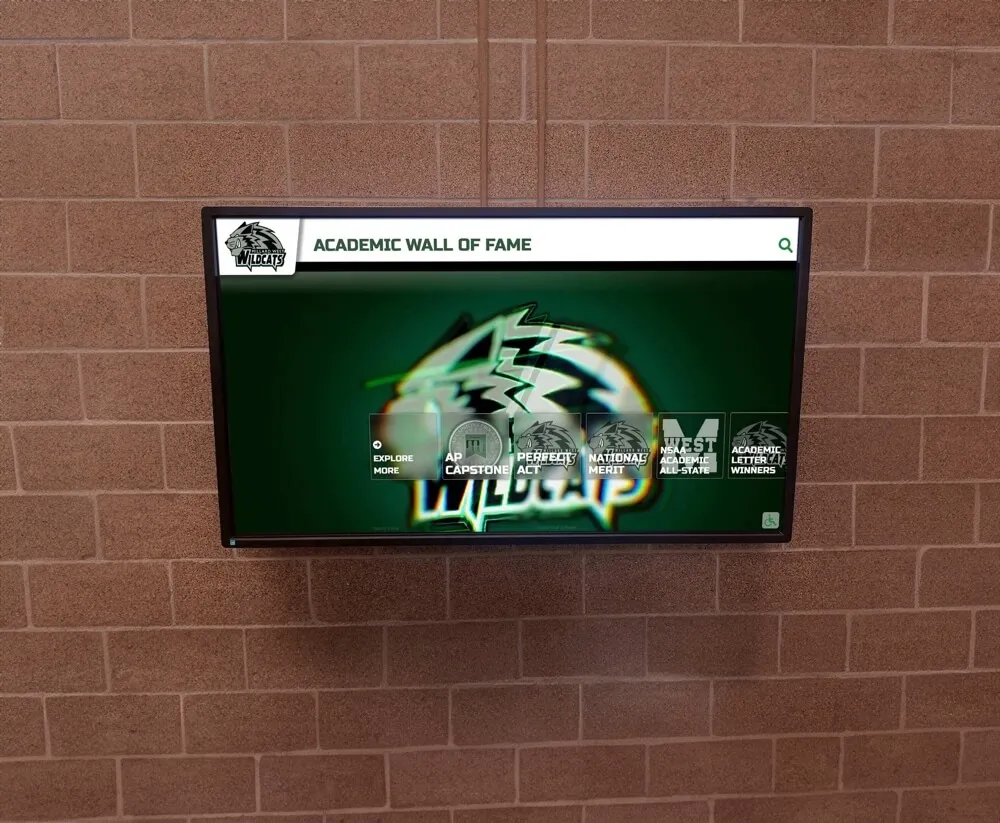
Similar to athletic all-star recognition, academic walls can honor top scholars annually based on GPA thresholds, standardized test achievements, subject-specific excellence, or comprehensive evaluation including academics, character, and service. Display formats might include annual class-year groupings showing top scholars by graduation year, subject-specific recognition highlighting excellence in STEM, humanities, arts, or other domains, or cumulative GPA leaders recognizing sustained academic excellence across entire high school careers.
Visual elements can incorporate academic regalia imagery, subject-specific iconography, and achievement symbols communicating the significance of scholarly excellence as effectively as athletic displays celebrate competitive success.
College Signing and Scholarship Recognition
Creating signing day displays specifically for academic scholarships and college acceptances gives appropriate prominence to educational achievement parallel to athletic signing celebrations. Recognition elements include scholarship recipients with scholarship amounts and granting institutions, college acceptance lists showing where students matriculated, distinguished program admissions celebrating students accepted to competitive specialized programs, and financial aid impact statistics demonstrating collective scholarship achievements.
STEM and Academic Competition Recognition
As STEM education receives increasing emphasis, recognition displays celebrating science, technology, engineering, and mathematics excellence create visibility for these crucial disciplines.
Science Fair and Competition Achievements
For schools with strong science fair traditions or robotics programs, dedicated recognition displays can honor competition success at regional, state, and national levels. STEM recognition walls celebrate intellectual achievement while encouraging younger students to pursue scientific interests and competitive opportunities.
Academic Decathlon and Quiz Bowl Honors
Team-based academic competitions deserve recognition equivalent to athletic team championships. Display concepts can include team photographs from successful competition years, individual standout performers who scored highest or earned special recognition, championship trophies and medals, and progression tracking showing program development over time.
Arts, Service, and Multi-Dimensional Recognition Ideas
Comprehensive school communities value diverse contributions beyond athletics and academics. Recognition programs honoring artistic achievement, community service, leadership, and character create more inclusive celebrations of student excellence.
Visual and Performing Arts Halls of Fame
Students who dedicate countless hours to musical excellence, theatrical performance, visual arts, or creative pursuits deserve recognition equal to athletes spending similar time developing their talents.
Music and Band Achievement Recognition
Band and music program recognition can highlight All-State musicians selected for prestigious ensembles, solo and ensemble competition medalists, distinguished alumni musicians who pursued professional careers or music education, and program achievement milestones celebrating marching band competition success or concert ensemble ratings.
Visual displays might incorporate musical notation design elements, instrument imagery, performance photography, or audio components enabling visitors to hear performances from honored musicians.
Theater and Drama Recognition
Theatrical programs create numerous recognition opportunities through lead role acknowledgment celebrating students who earned major performance roles, technical excellence recognition for stage managers, lighting designers, set builders, costume designers, and technical directors, production milestone celebrations for award-winning productions or significant artistic achievements, and alumni career tracking for students who pursued professional theater, film, television, or related creative industries.
Service and Character Recognition Walls
Celebrating students who demonstrate exceptional character, community service, and leadership qualities reinforces institutional values beyond competitive achievement metrics.
Community Service Hour Leaders
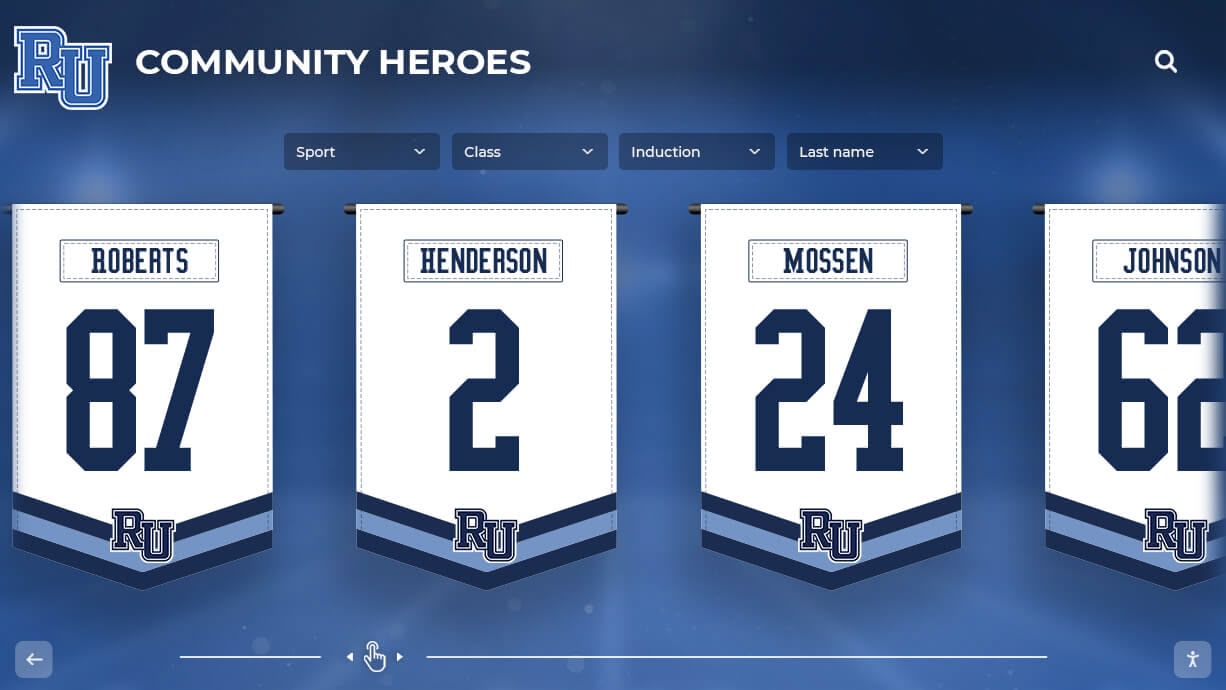
Students dedicating significant time to community service deserve visible recognition. Display concepts can include cumulative service hour leaders recognizing students with highest total service contributions, Presidential Volunteer Service Award recipients who achieved national recognition for service excellence, service organization leaders from student government, honor societies, and service clubs, and project impact stories describing specific service initiatives and their community effects.
Character and Leadership Excellence
Beyond measurable achievements, recognition programs can honor students demonstrating exceptional character qualities including integrity, resilience, kindness, inclusive leadership, and positive influence on school culture. Selection processes might involve faculty nomination, peer recognition, or comprehensive evaluation by character education committees.
Modern Interactive and Digital Wall of Fame Solutions
Technology enables recognition possibilities impossible with traditional static displays, creating engaging interactive experiences, accommodating unlimited growth, and telling richer stories through multimedia content.
Interactive Touchscreen Recognition Displays
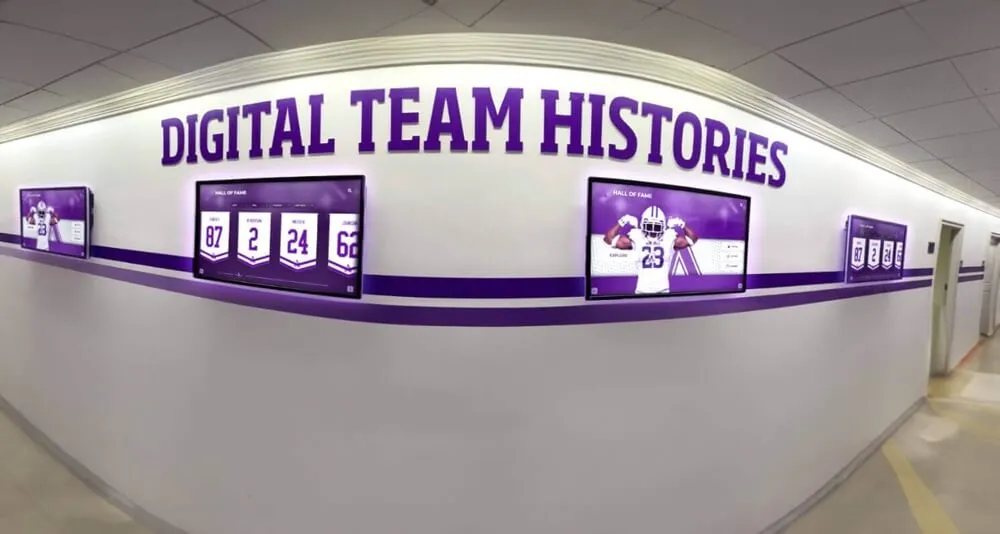
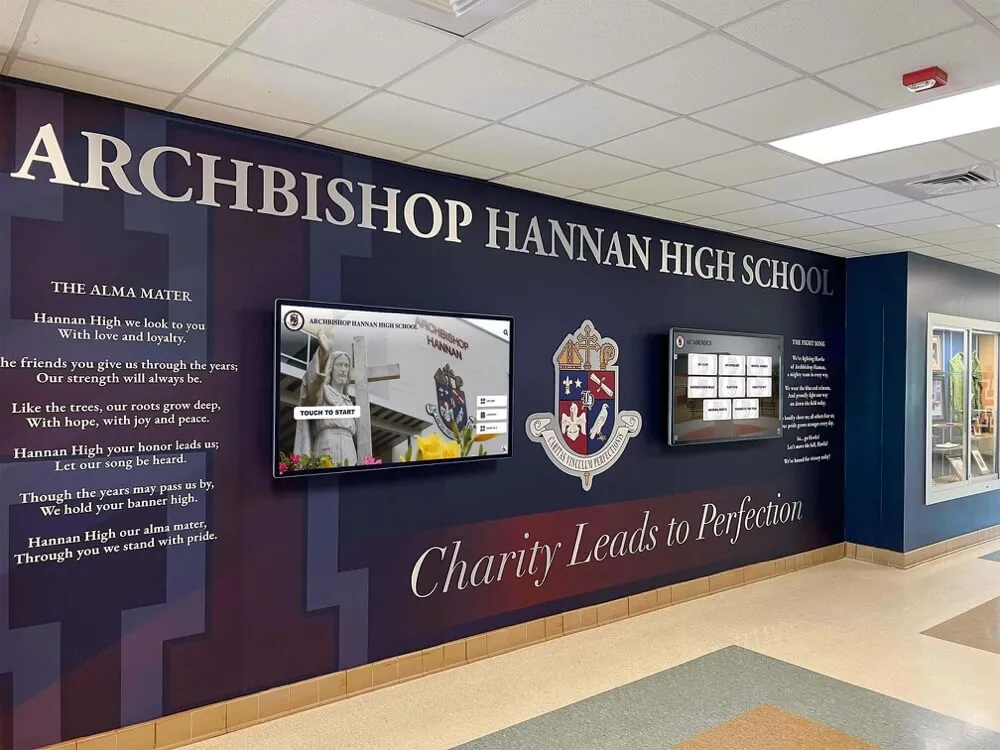
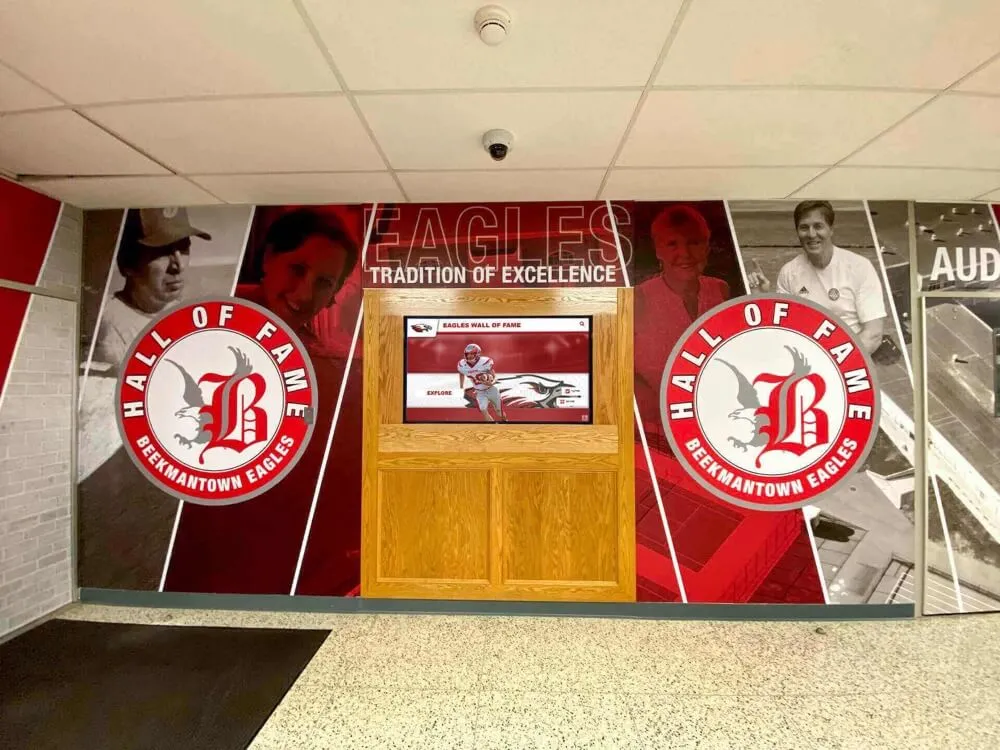
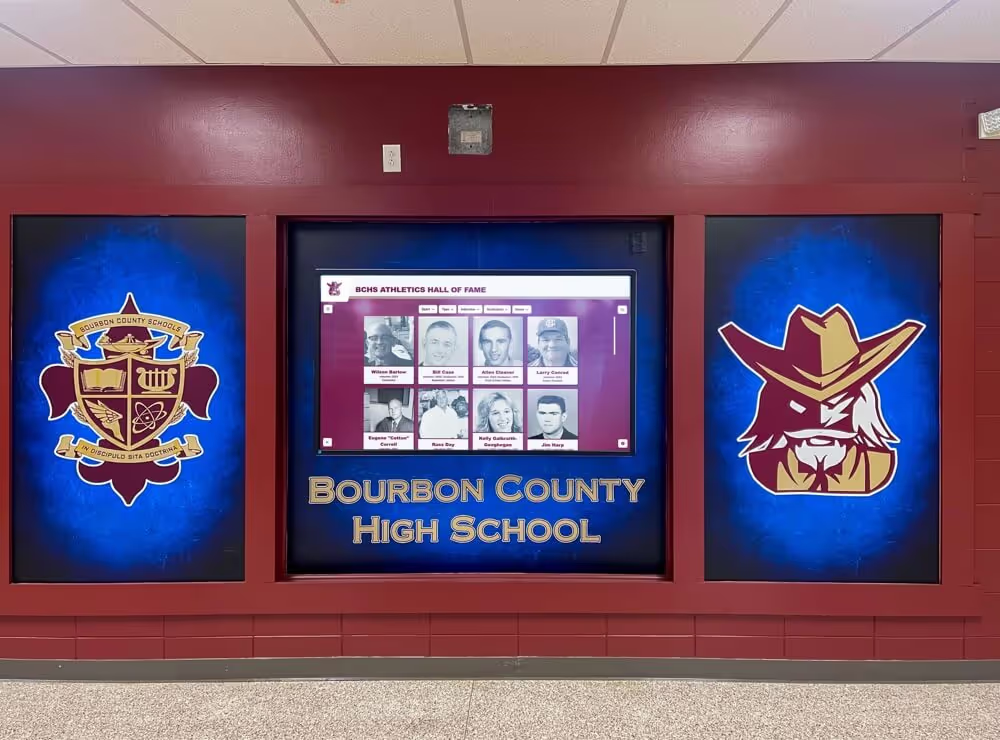
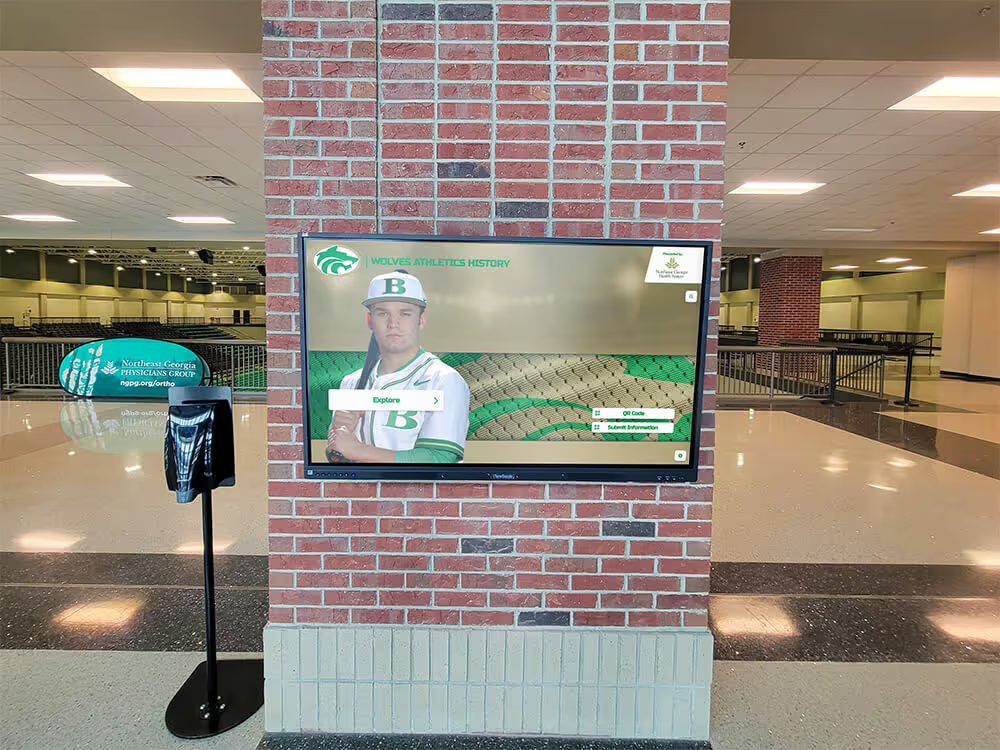
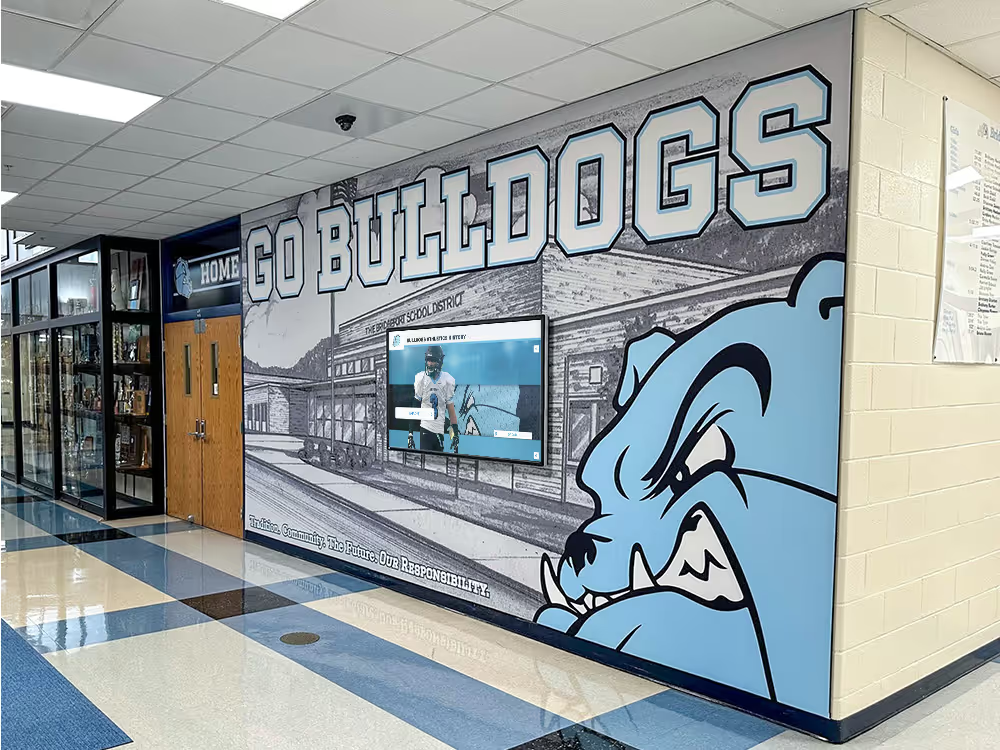
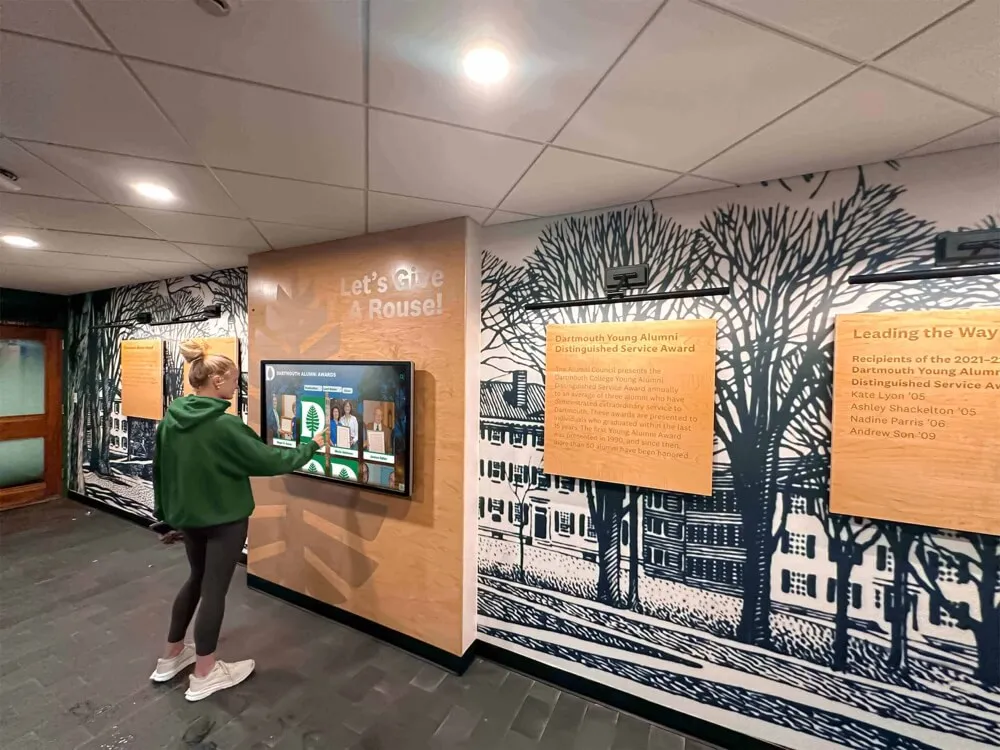
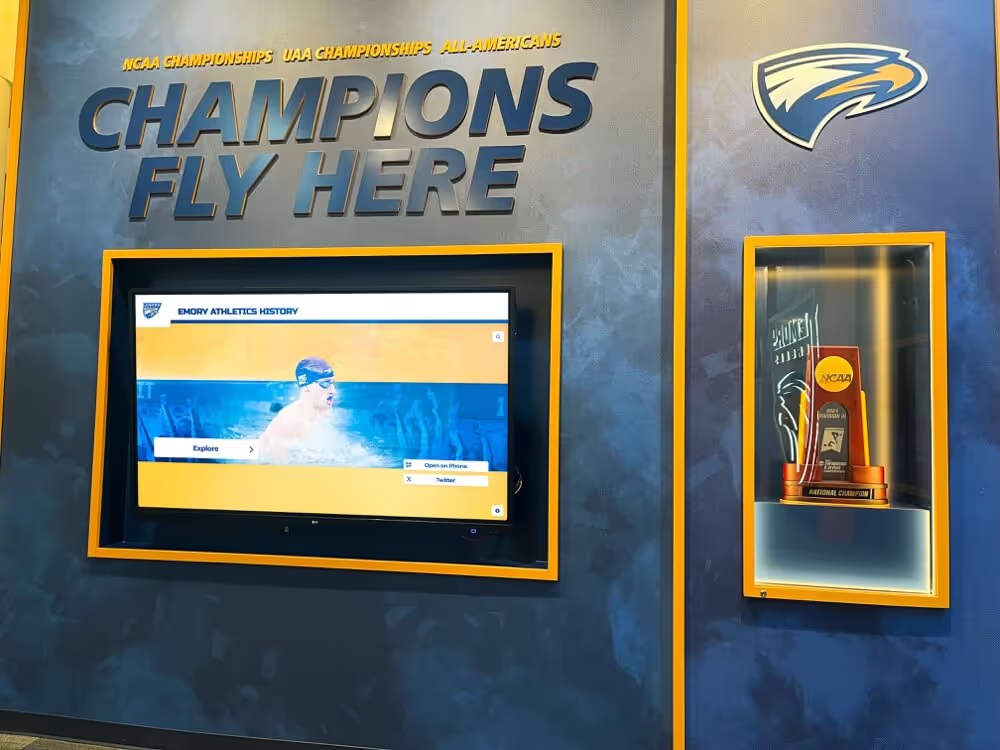
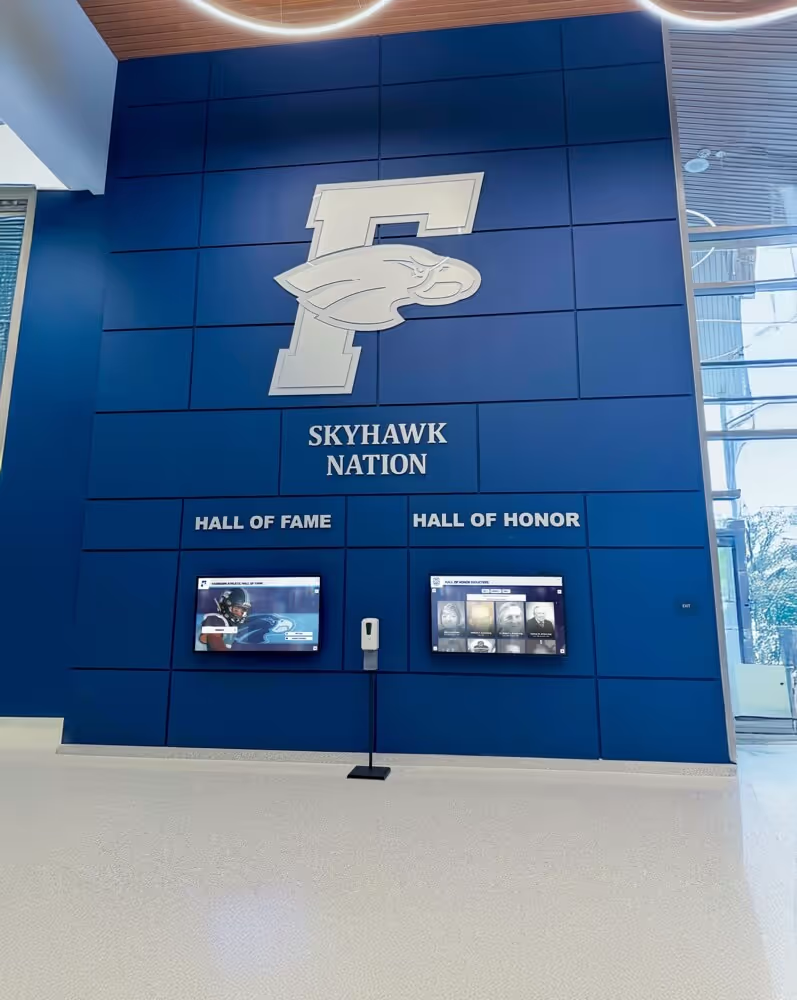
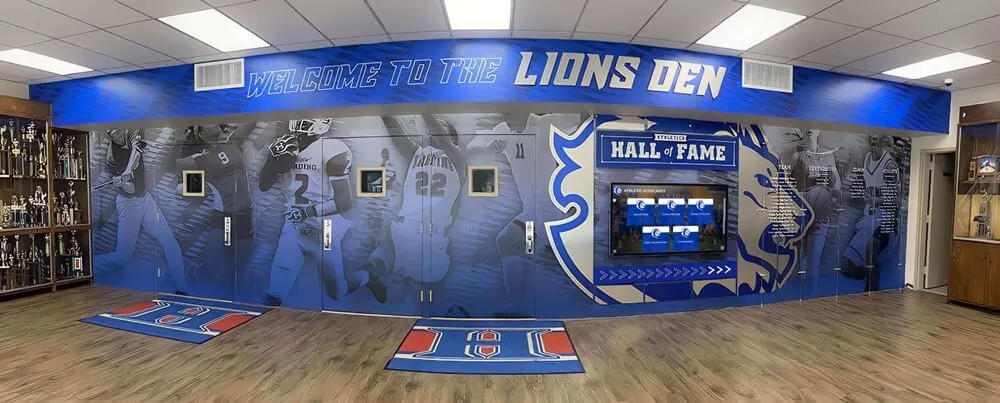
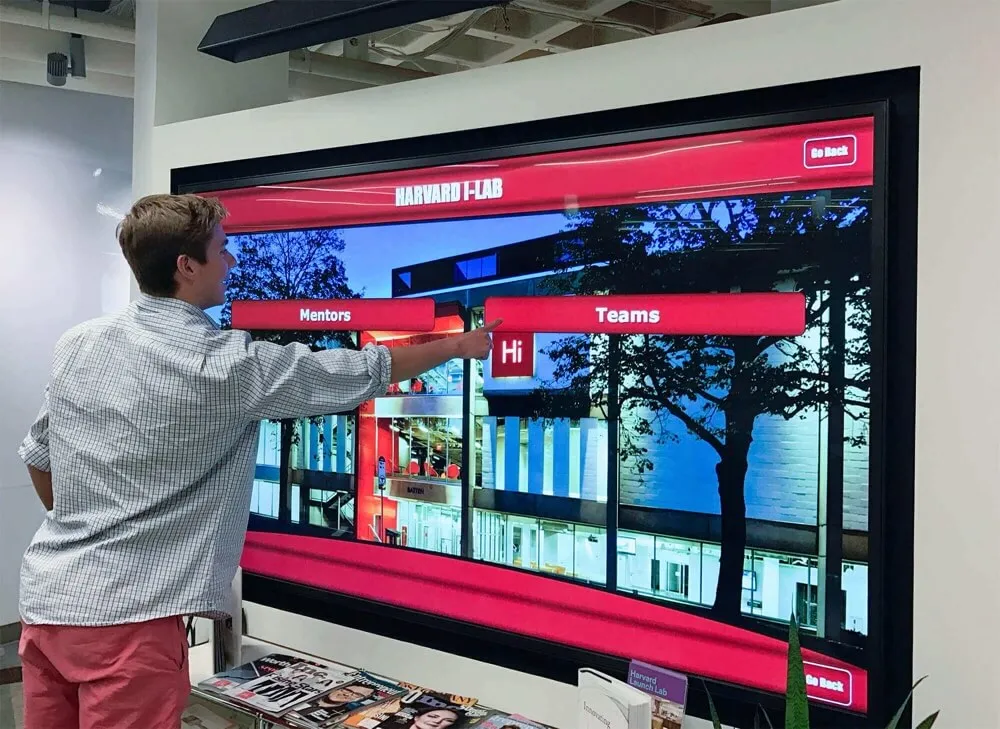
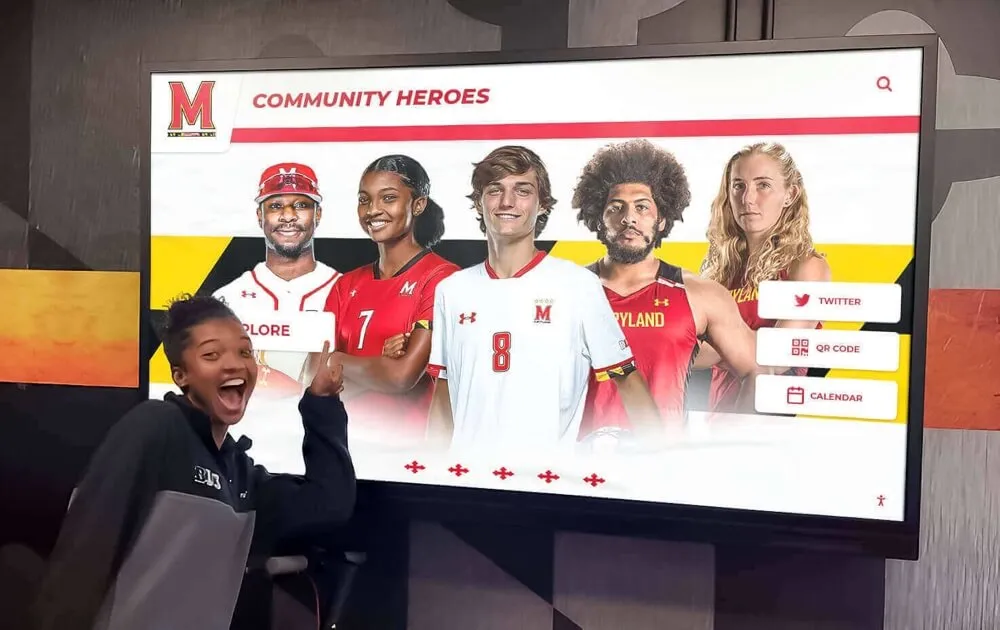
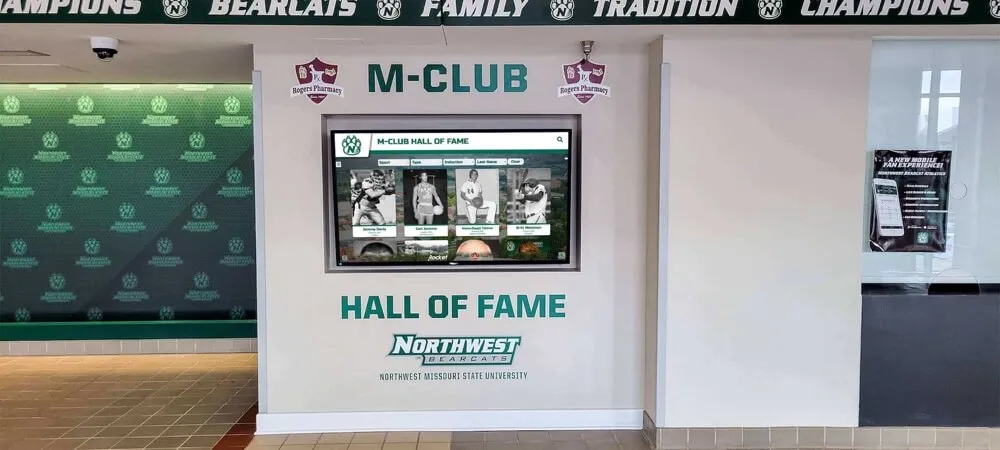
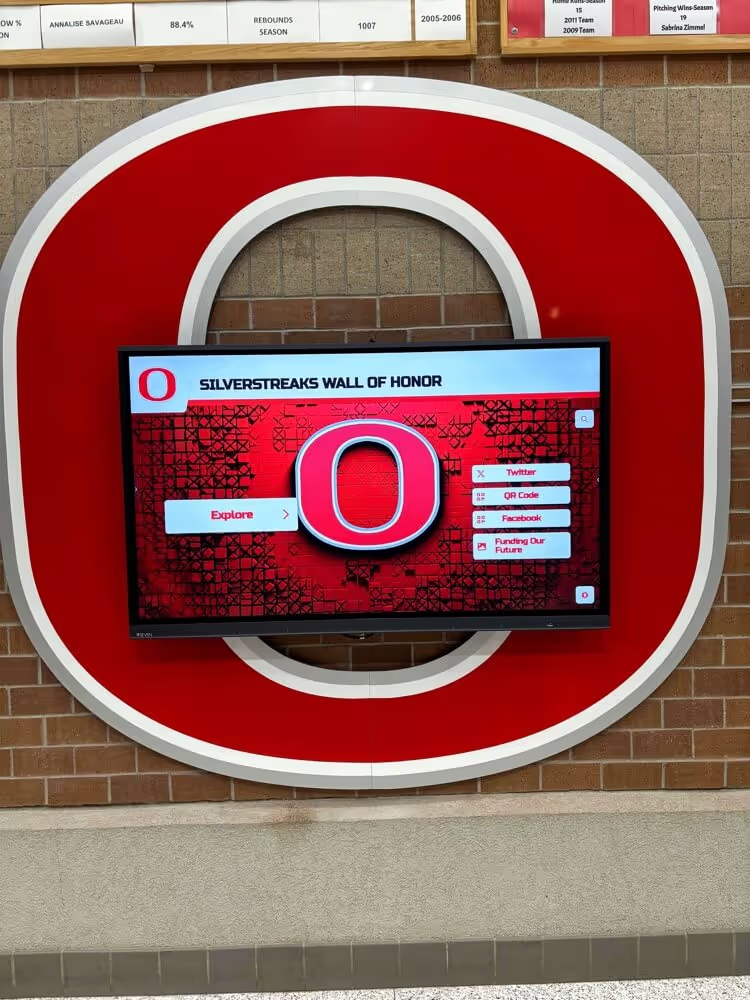
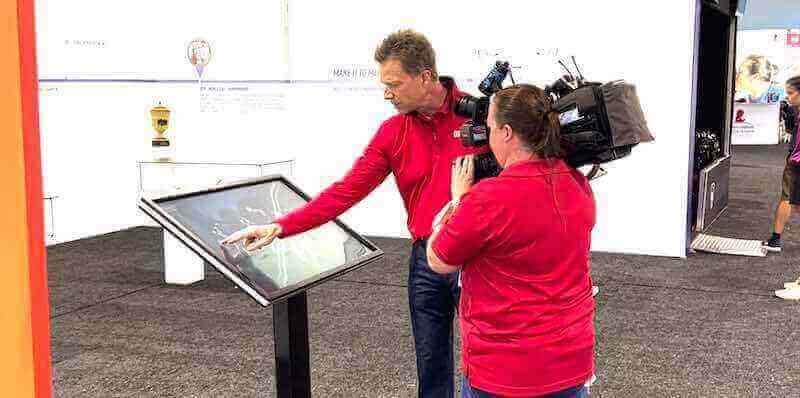
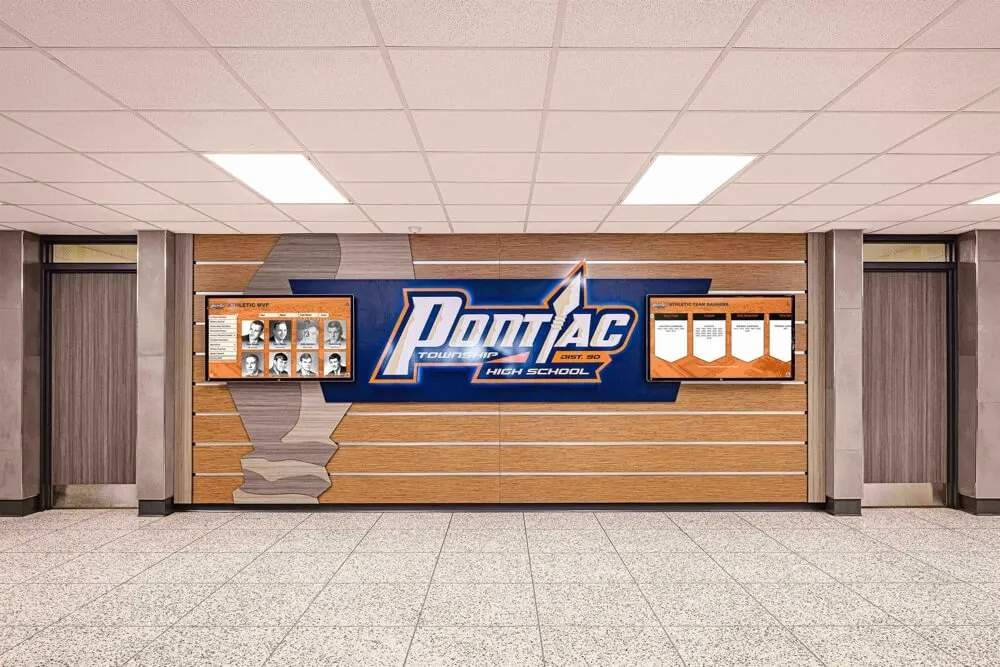
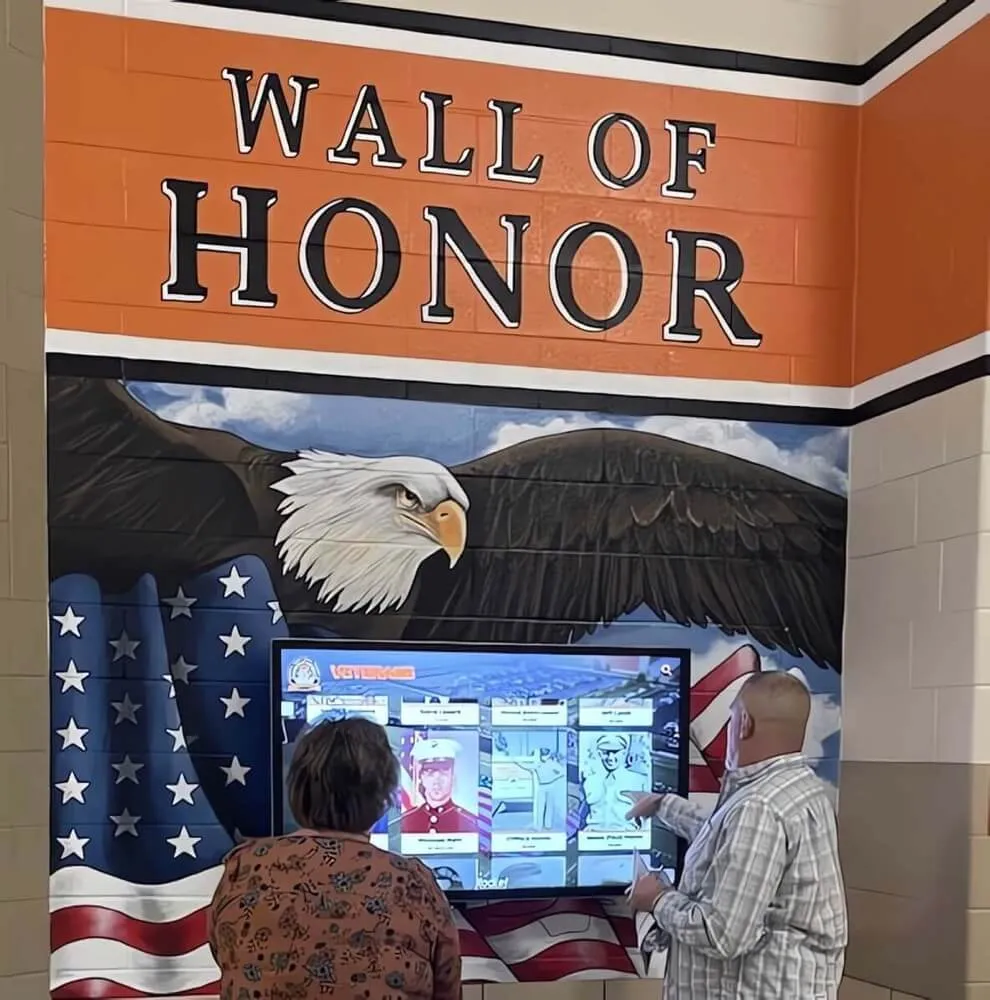
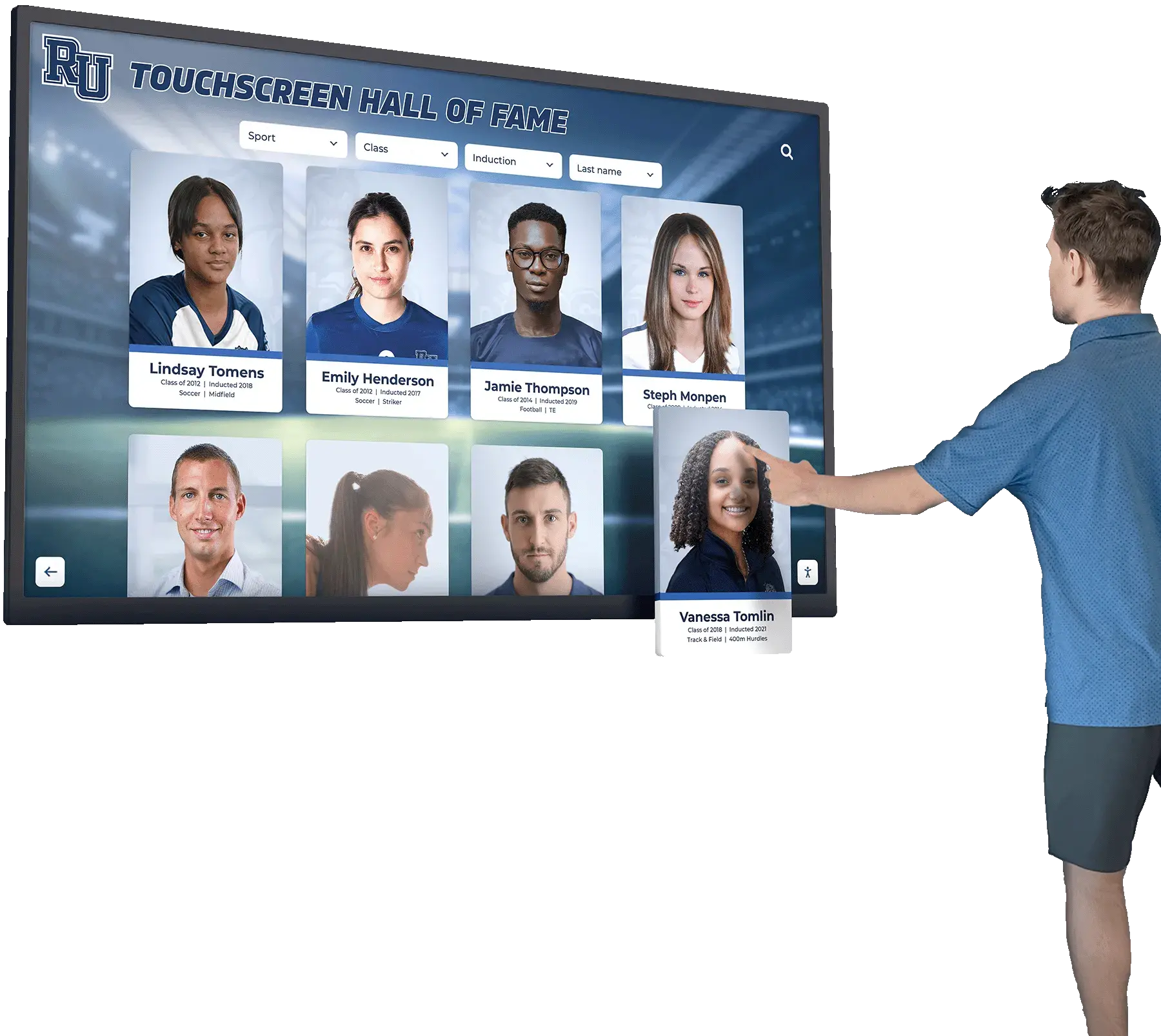
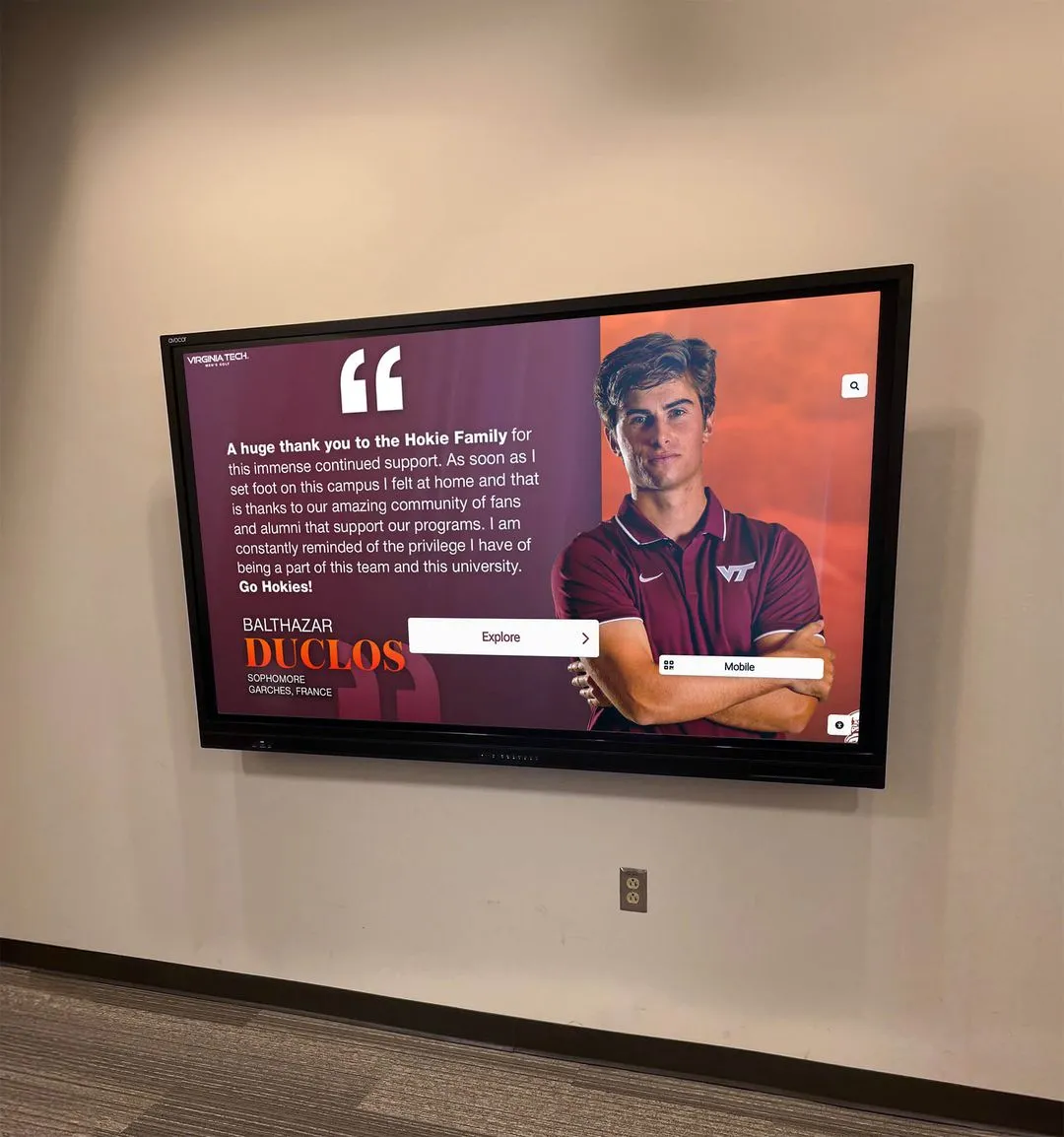
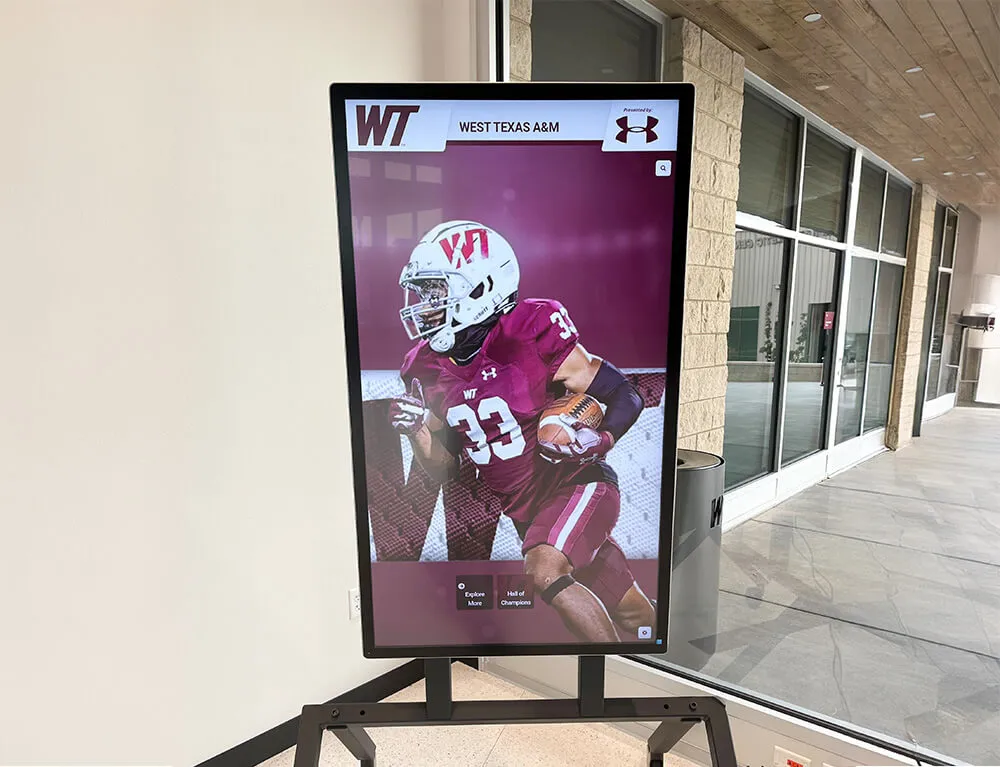
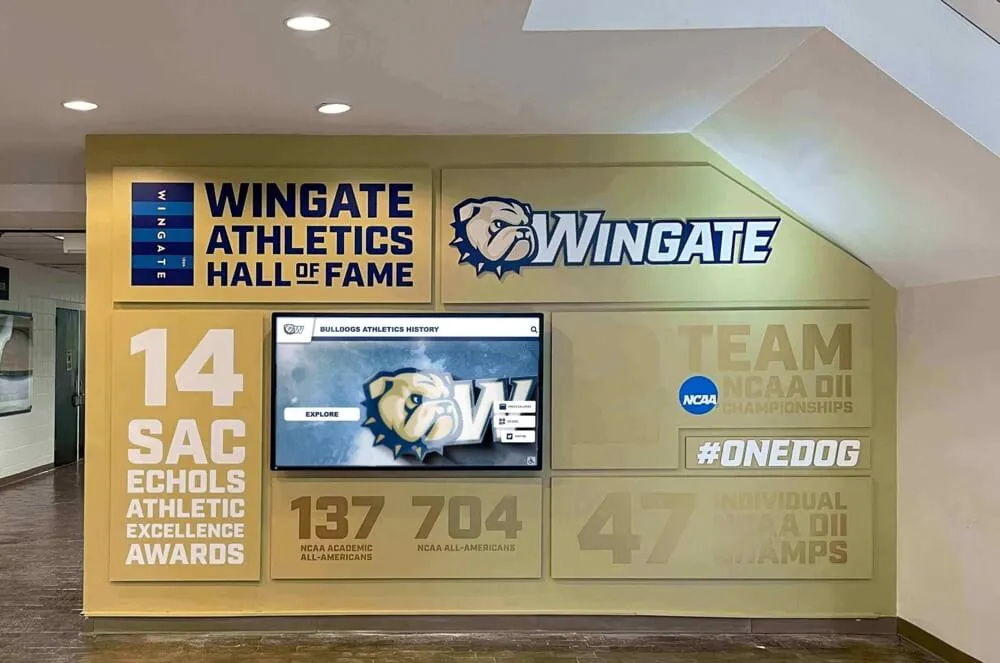

Digital touchscreens transform walls of fame from passive viewing experiences into interactive exploration opportunities where visitors actively engage with recognition content through searchable databases, multimedia profiles, and dynamic presentations.
Comprehensive Digital Halls of Fame
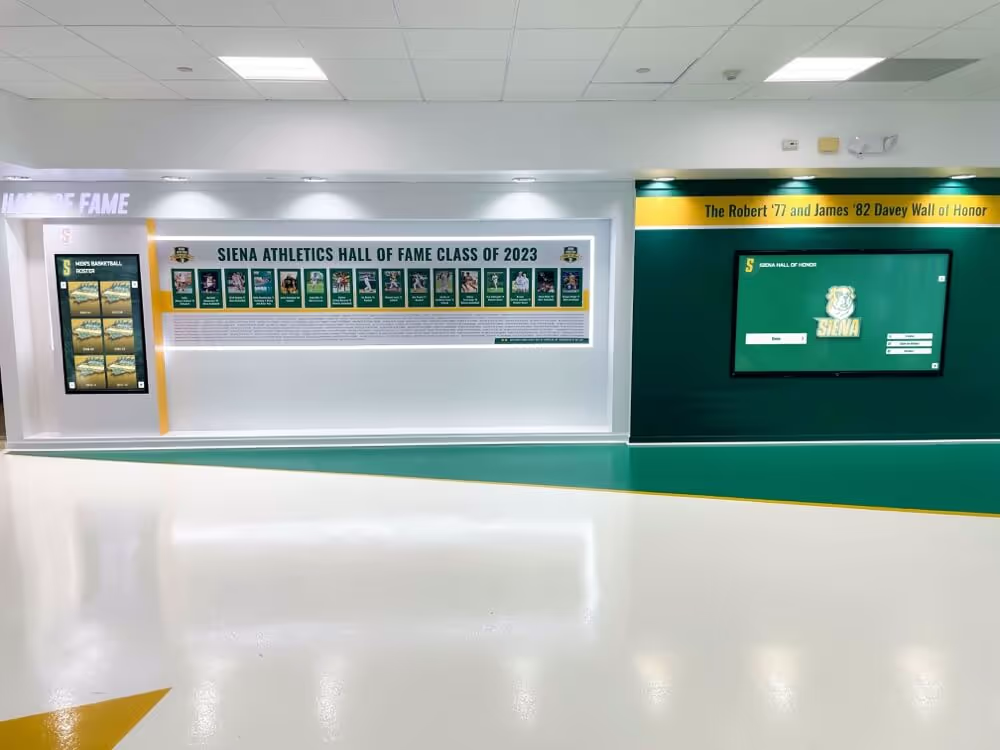
Modern digital solutions enable visitors to search by name, year, sport, achievement type, or other criteria finding specific individuals instantly, browse category-organized content exploring all basketball hall of fame inductees or academic scholars systematically, view multimedia profiles including photographs, videos, career statistics, and biographical information, and discover related content with systems suggesting similar athletes, contemporary classmates, or individuals with connected achievements.
Interactive displays solve traditional wall of fame limitations including physical space constraints that limit recognition capacity, update difficulties requiring physical modifications for additions or corrections, information limitations where traditional plaques accommodate minimal text, and accessibility challenges for visitors with visual impairments who benefit from digital content with adjustable sizing and audio descriptions.
Self-Service Content Management
The practical advantage of digital recognition displays lies in content management flexibility. Rather than requiring contractors, engravers, or specialized expertise for every update, intuitive content management systems enable designated staff to add new inductees with photographs and biographical information, update achievements for individuals who receive additional honors, correct errors immediately without physical reinstallation, and refresh designs or reorganize categories as recognition programs evolve.
This administrative efficiency ensures recognition stays current rather than becoming outdated due to update burdens that discourage regular maintenance.
Hybrid Approaches Combining Traditional and Digital Elements
Rather than choosing between traditional displays and digital solutions, hybrid approaches leverage the strengths of both formats creating comprehensive recognition experiences.
Physical Displays With Digital Enhancement
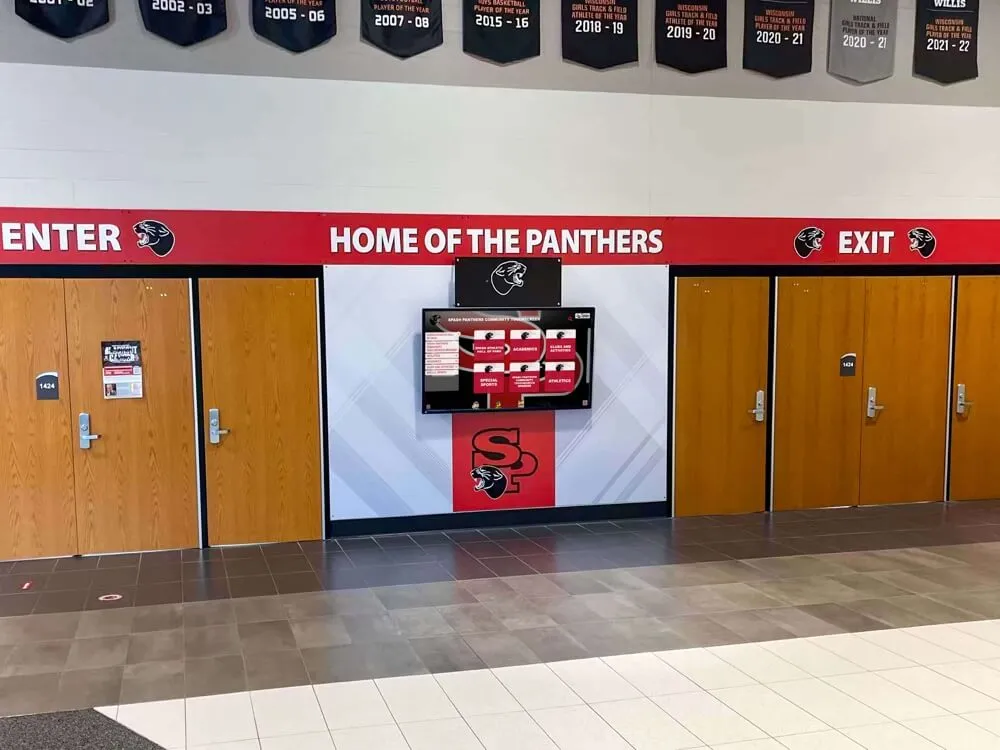
Integration concepts include QR codes on traditional plaques linking to expanded digital profiles with videos, career statistics, and additional content, complementary screens near traditional plaque walls providing searchable access to full inductee database, mobile app connections allowing visitors to scan plaques accessing enhanced content on personal devices, and periodic digital presentations cycling through inductee highlights on screens integrated into traditional recognition areas.
Rotating Digital Content on Physical Screens
For schools with multiple recognition categories but limited physical space, digital displays can rotate focus periodically, featuring different recognition categories monthly or seasonally, highlighting anniversary inductees on significant date milestones, showcasing current achievements alongside historical excellence, and providing context connecting past achievement to current program status.
Creative and Unique Wall of Fame Concepts
Beyond conventional approaches, creative recognition concepts create distinctive installations that reflect unique school identities while honoring achievement in memorable ways.
Timeline and Historical Integration Approaches
Connecting individual achievement recognition to broader institutional history creates richer context showing how exceptional individuals contributed to school development.
Decade-by-Decade Recognition Timelines
Organizing halls of fame chronologically by decade enables visitors to see achievement in historical context, understand how programs evolved over time, recognize eras of particular excellence or program building, and appreciate institutional continuity across generations.
Timeline displays can incorporate period-appropriate design aesthetics, historical photographs showing facilities and uniforms across eras, and contextual information about school, community, or world events during specific periods.
Program Evolution Displays
Rather than static achievement lists, dynamic displays can show how athletic programs, academic initiatives, or arts programs developed over time through founding and early years establishment narratives, breakthrough achievements representing program milestones, championship eras when programs achieved sustained excellence, and contemporary status showing current program standing built on historical foundations.
Location-Specific and Architectural Integration
The most impactful recognition displays integrate thoughtfully with existing architecture and school design rather than appearing as afterthoughts added to available wall space.
Entry Feature Walls
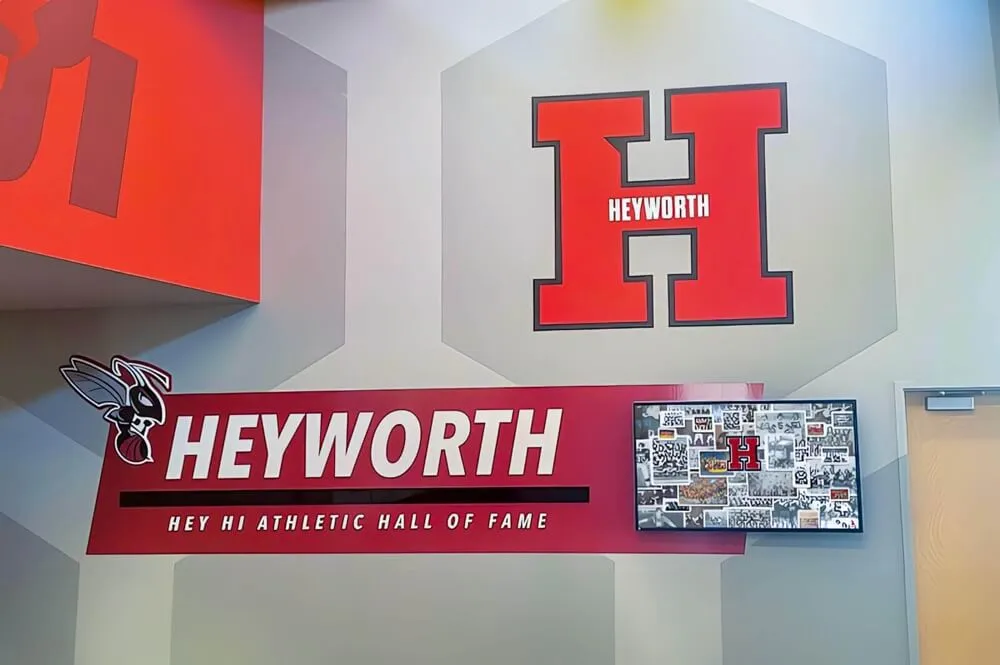
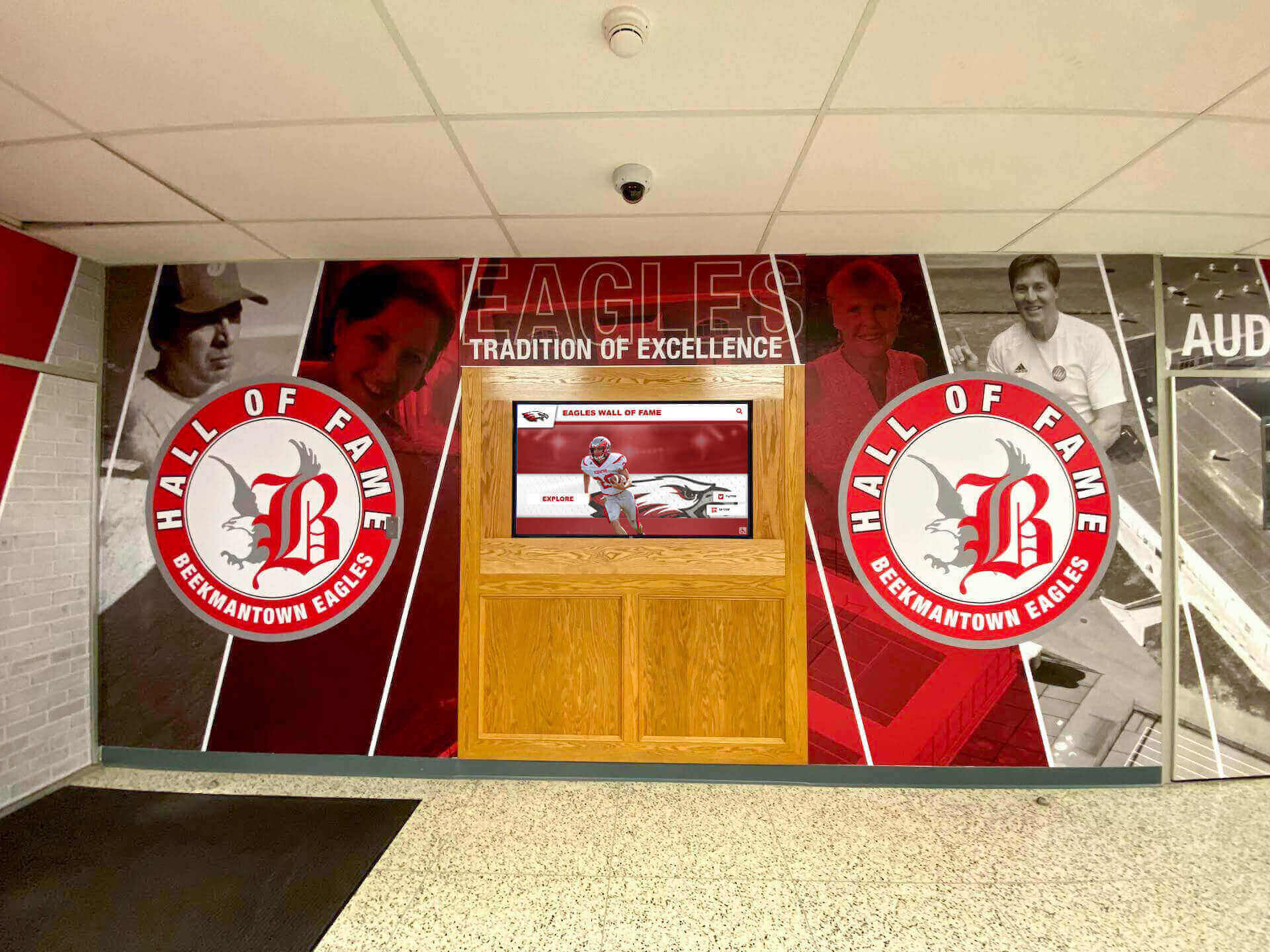
Main entrance recognition displays communicate institutional priorities immediately to all visitors. Grand-scale installations making bold architectural statements, multi-story displays in buildings with vertical circulation spaces, backlit or illuminated features creating dramatic visual impact, and integrated school branding connecting recognition to overall institutional identity create powerful first impressions.
Athletic Facility Integration
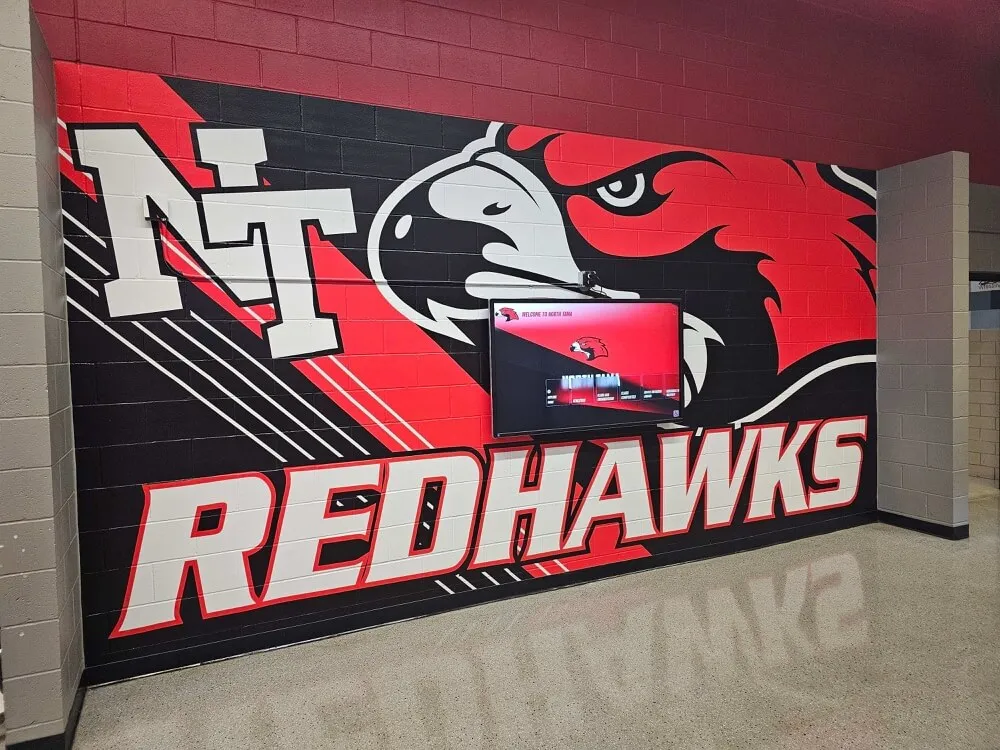
Recognition displays located within gyms, stadiums, or athletic complexes reach audiences most connected to athletic achievement. Locker room inspiration walls providing daily motivation for current athletes, concourse displays engaging families and fans during events, training facility achievement walls reinforcing excellence standards, and digital displays cycling content during events celebrating both current participants and historical excellence maximize recognition impact.
Planning and Implementation Considerations
Moving from concept to completed wall of fame requires thoughtful planning addressing selection criteria, design specifications, budget realities, and ongoing management responsibilities.
Establishing Selection Criteria and Processes
Clear, consistent criteria prevent recognition programs from appearing arbitrary or favoritistic while ensuring those honored genuinely merit the distinction.
Objective vs. Subjective Achievement Standards
Some recognition categories offer clear objective metrics—championship participation, record-setting performances, statistical thresholds—while others require subjective evaluation of character, leadership, or career significance. Effective selection processes define specific criteria published transparently, establish selection committees with diverse representation, create nomination and evaluation procedures ensuring fairness, and document decisions providing accountability and precedent for future selections.
Annual vs. Career Achievement Recognition
Consider whether your wall of fame recognizes annual achievement highlighting each year’s top performers across categories, career achievement honoring sustained excellence across entire school tenure, or distinguished alumni celebrating post-graduation accomplishments reflecting positively on institutional preparation. Each approach serves different purposes and requires different evaluation criteria and timelines.
Budget Planning and Cost Considerations
Wall of fame costs vary dramatically based on scope, materials, technology integration, and installation complexity. Realistic budget planning prevents mid-project compromises that undermine quality and impact.
Traditional Display Cost Factors
Physical recognition installations involve materials costs for plaques, mounting systems, and architectural elements, design fees for professional layout and graphic design, installation labor including wall preparation, mounting, and finishing, and lighting systems highlighting displays effectively.
Quality materials and professional design create recognition displays maintaining visual appeal and physical integrity for decades, justifying higher initial investment compared to budget approaches that appear cheap or deteriorate quickly.
Digital Solution Investment Considerations
Technology-based recognition involves hardware costs for screens, mounting systems, and supporting infrastructure, software licensing for content management platforms and display applications, content creation developing initial inductee profiles and media assets, training ensuring staff can manage systems effectively, and ongoing support for technical assistance and system maintenance.
Total cost of ownership extends beyond initial purchase to include multi-year operational costs. Solutions requiring ongoing vendor involvement for routine updates often prove more expensive long-term than systems with true self-service capability despite potentially lower initial costs.
Working With Designers, Vendors, and Contractors
Professional partnerships determine implementation quality. Selecting qualified partners and maintaining effective collaboration ensures your vision translates to successful execution.
Defining Requirements and Specifications
Clear requirement documentation enables accurate proposals and prevents misalignment between expectations and deliverables. Specification elements include physical dimensions and space constraints, content volume estimating current recognition needs and projected growth, style preferences defining aesthetic direction aligned with school branding, functionality requirements especially for interactive solutions, and accessibility standards ensuring displays serve all community members.
Evaluating Proposals and References
Request detailed proposals from multiple qualified providers including comprehensive scope descriptions, itemized cost breakdowns, implementation timelines, and warranty terms. Check references speaking with schools that implemented similar solutions, visiting installations when possible to evaluate quality firsthand, and asking specifically about vendor responsiveness, post-installation support quality, and whether completed projects met expectations.
Purpose-built solutions designed specifically for educational recognition often provide superior results compared to generic platforms adapted for school use. Customized halls of fame tailored to institutional identity, achievement types, and space characteristics create more meaningful recognition than one-size-fits-all approaches.

Best Practices for Maintaining and Growing Wall of Fame Programs
Installation represents the beginning rather than the end of effective wall of fame programs. Ongoing maintenance, regular additions, and periodic refreshes ensure recognition displays remain current, relevant, and impactful.
Establishing Update Schedules and Processes
Consistent maintenance prevents recognition displays from becoming outdated embarrassments undermining rather than enhancing institutional credibility.
Annual Induction Ceremonies
Formal annual induction events create recognition traditions while providing natural deadlines ensuring regular updates. Event planning might include selection announcement timing generating anticipation and engagement, ceremony formats from intimate gatherings to large community celebrations, physical recognition providing inductees with commemorative plaques or awards, and display updates adding new inductees immediately following ceremonies.
Ceremonies elevate recognition significance beyond simply adding names to walls, creating memorable experiences for honorees, families, and communities while reinforcing institutional commitment to celebrating excellence.
Content Accuracy Reviews
Periodic audits verify information accuracy, identify needed corrections, and ensure display condition remains professional. Review processes should check biographical information for current accuracy, verify achievement descriptions and statistics, assess physical condition for traditional displays identifying needed repairs, and evaluate organization considering whether categorization or arrangement still serves users effectively.
Leveraging Recognition for Alumni Engagement
Walls of fame create natural alumni connection points. Maximize engagement potential through strategic communication and programming.
Inductee Outreach and Involvement
Maintain relationships with hall of fame members through regular communications about recognition program updates and new inductees, invitation to special events leveraging honoree presence for fundraising or reunion activities, participation requests asking inductees to mentor current students or speak at programs, and content updates encouraging inductees to share career developments maintaining current profile information.
Engaged inductees become institutional ambassadors whose ongoing involvement extends recognition impact far beyond physical or digital displays.
Digital Access and Sharing
While physical displays reach on-campus audiences, digital extensions enable broader engagement. Online hall of fame portals accessible via school websites enable alumni to explore recognition programs remotely, shareable inductee profiles allowing honorees to share recognition via social media, mobile-responsive designs ensuring accessibility across devices, and integration with alumni databases connecting recognition to comprehensive alumni engagement systems.
Digital accessibility particularly matters for geographically dispersed alumni communities unable to visit campus regularly but maintaining strong institutional connections.
Bringing Your Wall of Fame Vision to Life
Creating recognition displays that genuinely honor achievement while inspiring current and future students requires thoughtful planning balancing aspirational vision with practical implementation realities. The most effective walls of fame reflect authentic institutional values, celebrate diverse dimensions of excellence, provide sustainable long-term solutions rather than short-lived installations, and create meaningful experiences for those honored and those inspired by their example.
Whether you choose traditional plaques showcasing timeless elegance, interactive digital displays enabling rich multimedia storytelling, or hybrid approaches combining physical presence with technological capability, your recognition program should authentically represent your school’s unique identity while providing the flexibility to grow and evolve as your community continues achieving excellence worth celebrating.
The best wall of fame ideas balance honoring individual achievement with celebrating collective institutional success, creating recognition that matters to those celebrated while inspiring those who aspire to similar excellence. With careful planning, quality execution, and ongoing commitment to maintenance and growth, your recognition displays will serve your school community meaningfully for decades to come.
Ready to create a wall of fame that truly celebrates your school’s excellence? Explore how Rocket Alumni Solutions creates customized recognition displays that honor achievement, inspire students, and strengthen your school community through interactive touchscreen technology designed specifically for educational institutions.