



Key Takeaways
Discover how interactive touchscreen displays like Rocket Alumni Solutions transform fan engagement at major championships like the U.S. Open. Learn implementation strategies for sports venues.
The Evolution of Fan Engagement at Major Championships
Understanding how premier sporting events transformed from passive spectating to interactive engagement provides essential context for appreciating the role of digital recognition technology.
From Static Displays to Interactive Experiences
Historically, major championships documented their heritage through traditional museum-style installations—glass-encased trophies, wall-mounted photographs of past champions, plaques listing tournament winners, and static informational panels. While these elements preserved important history, they created fundamentally passive experiences where fans briefly glanced at displays before moving on to other activities.
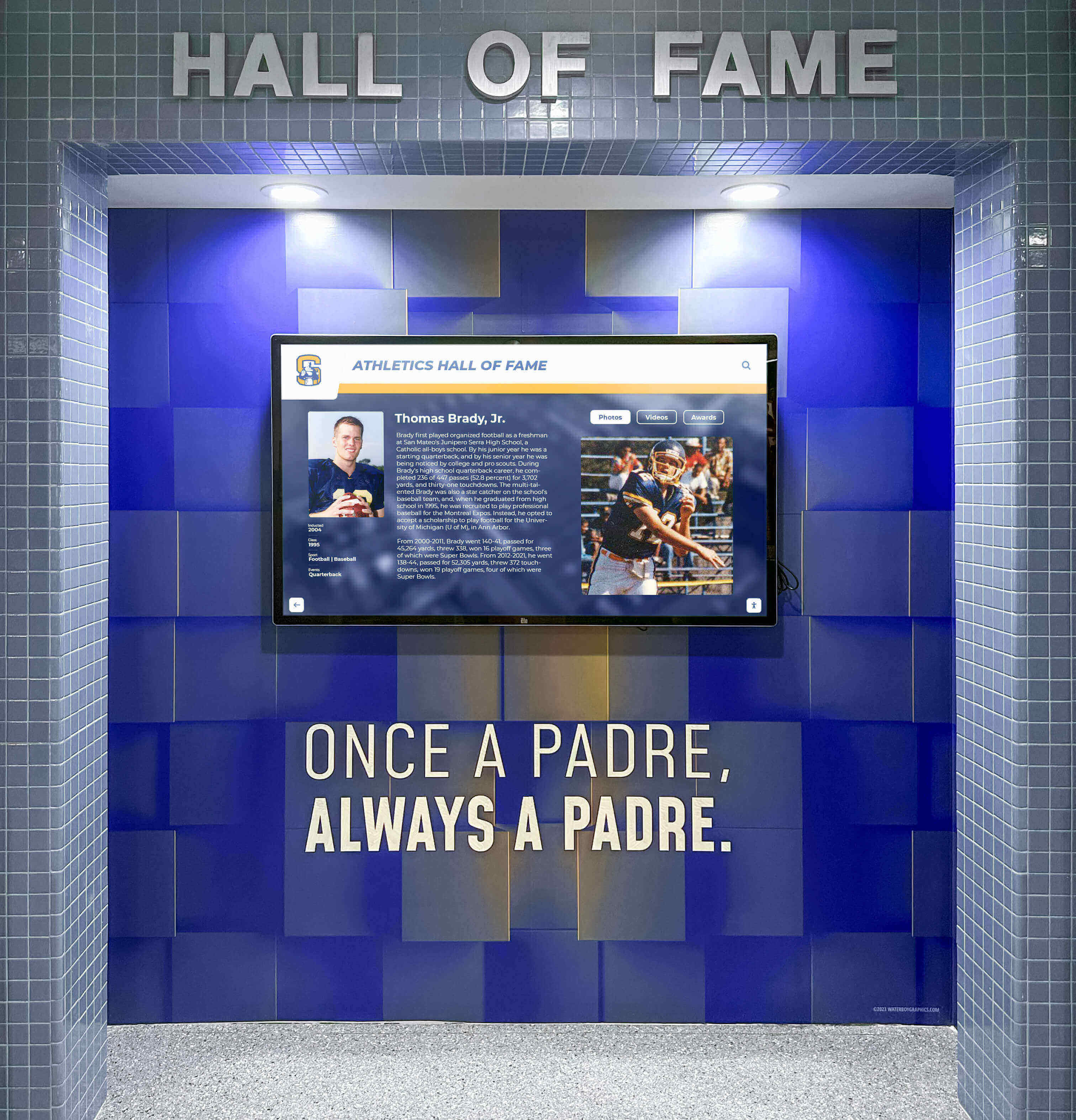
The digital revolution changed fan expectations across entertainment, education, and cultural experiences. Younger audiences particularly expect interactive, personalized, and shareable experiences rather than one-way information consumption. Major sporting events adapted by incorporating technology that turns observation into participation.
The U.S. Open championships—both tennis at Flushing Meadows and golf at rotating premier courses—pioneered innovative fan engagement strategies that other major events quickly adopted. These innovations demonstrate how technology enhances rather than replaces the core sporting experience.
The U.S. Open Tennis Digital Innovation Leadership
The U.S. Open Tennis Championships has consistently led in implementing cutting-edge fan technology. According to industry reports, the tournament introduced facial recognition entry systems in recent years, eliminating long entry lines and creating smoother venue access. The 20,000-square-foot American Express Fan Experience features interactive displays showcasing tournament history, championship trophies, and International Tennis Hall of Fame exhibits that fans can explore at their own pace.
The official mobile app includes IBM SlamTracker with enhanced 3D live match visualizations, providing real-time statistics, ball position tracking, and point-by-point analysis that deepens understanding of matches in progress. These digital tools complement rather than compete with watching live tennis, enhancing comprehension and engagement.
U.S. Open Golf’s Augmented Reality and Interactive Features
The U.S. Open Golf Championship partnered with technology leaders to launch augmented reality applications enabling fans to visualize course layouts, see shot trails, and explore 3D hole imagery on their mobile devices. On-site interactive experiences include skills challenges on golf simulators and putting experiences that engage fans between viewing competitive play.
The USGA app provides interactive venue maps with step-by-step navigation, live scoring, player tracking, and a “Showcase Mode” leader board designed to maximize interaction. These features demonstrate how major events create comprehensive digital ecosystems extending far beyond passive viewing.
The Strategic Value of Interactive Recognition Technology
Major championships invest significantly in interactive technology because these systems deliver measurable benefits across multiple organizational objectives.
Enhanced Fan Satisfaction and Engagement
Interactive displays provide activities during natural downtime at sporting events—between matches, during weather delays, or when fans arrive early. Rather than simply waiting, attendees explore tournament history, discover champion stories, and engage with content personalized to their interests. This creates more satisfying overall experiences that fans remember and share, amplifying event marketing organically through social media.
Differentiation in Competitive Entertainment Markets
Major sporting events compete for attention and attendance against countless entertainment alternatives. Interactive technology differentiates championships from competitors by creating unique experiences unavailable elsewhere. When fans can explore decades of tournament history through engaging touchscreen interfaces, view rare video footage, and discover untold champion stories, they gain value beyond watching current competition.
Honoring Legacy and Tradition
Championships with rich histories face challenges presenting that heritage in accessible, engaging ways. Interactive displays solve this by providing unlimited capacity to honor every champion, document every memorable moment, and preserve every significant milestone without physical space constraints limiting recognition.
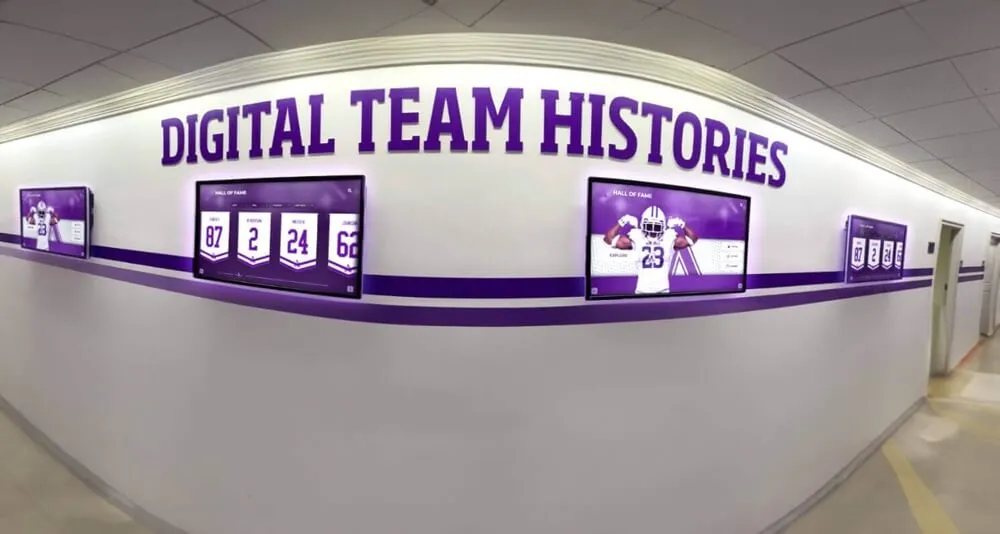
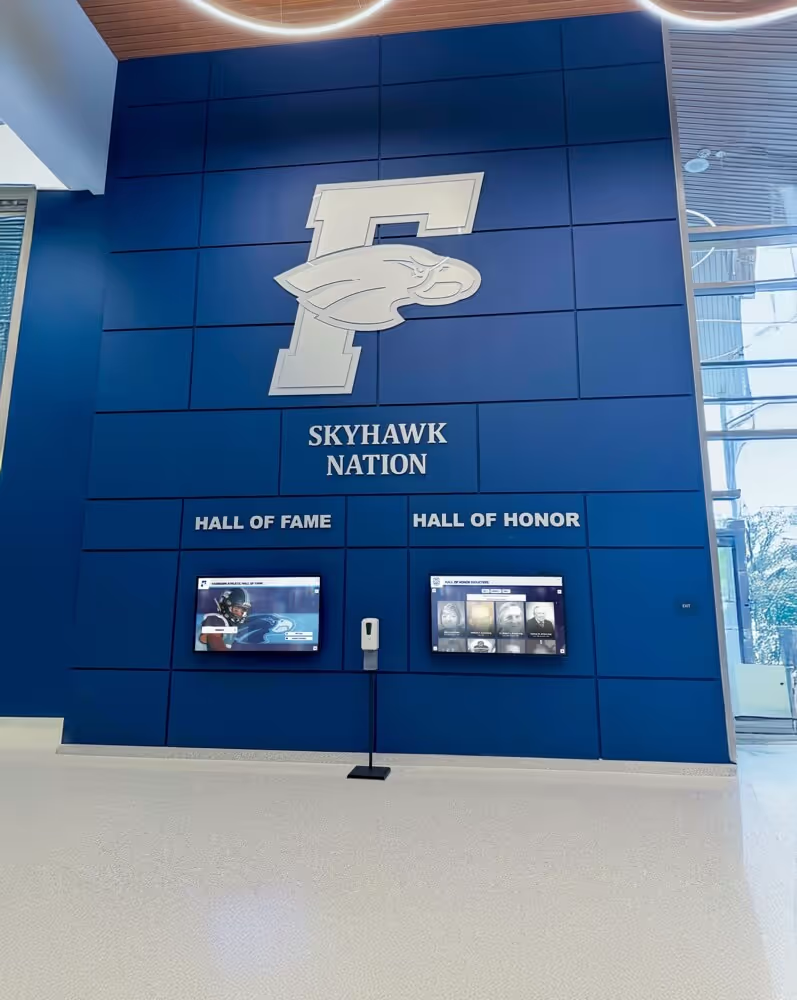
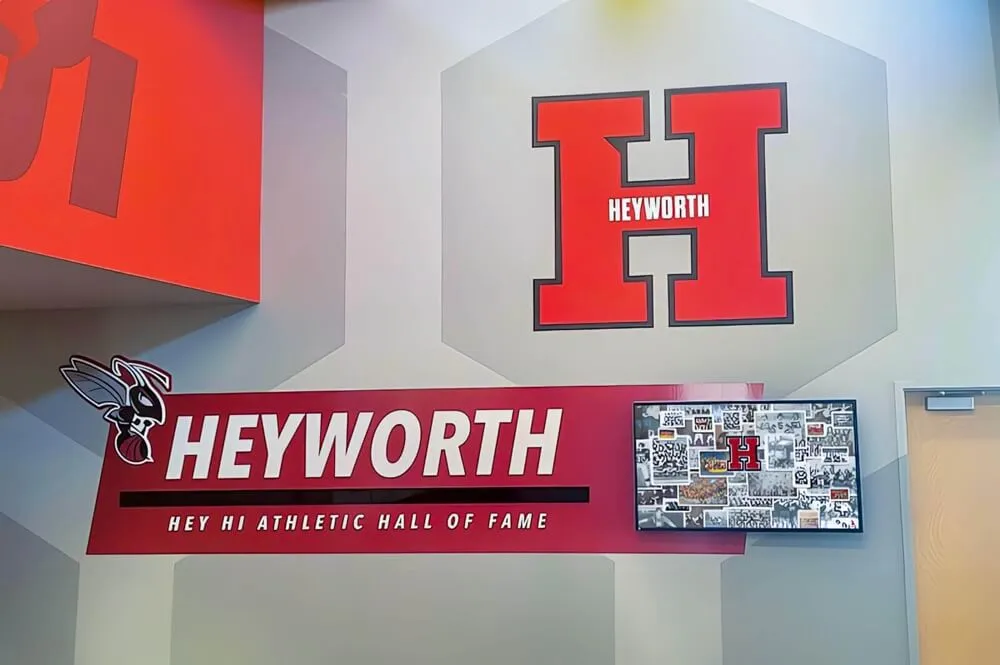
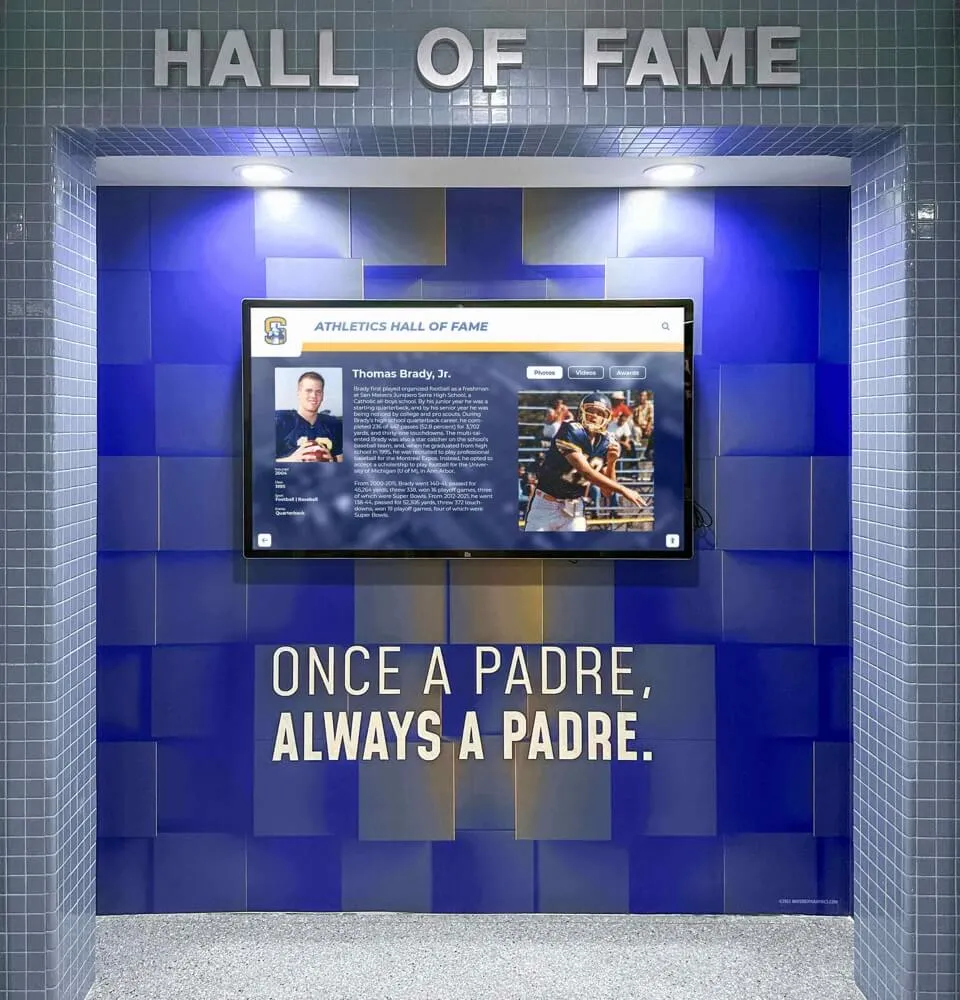
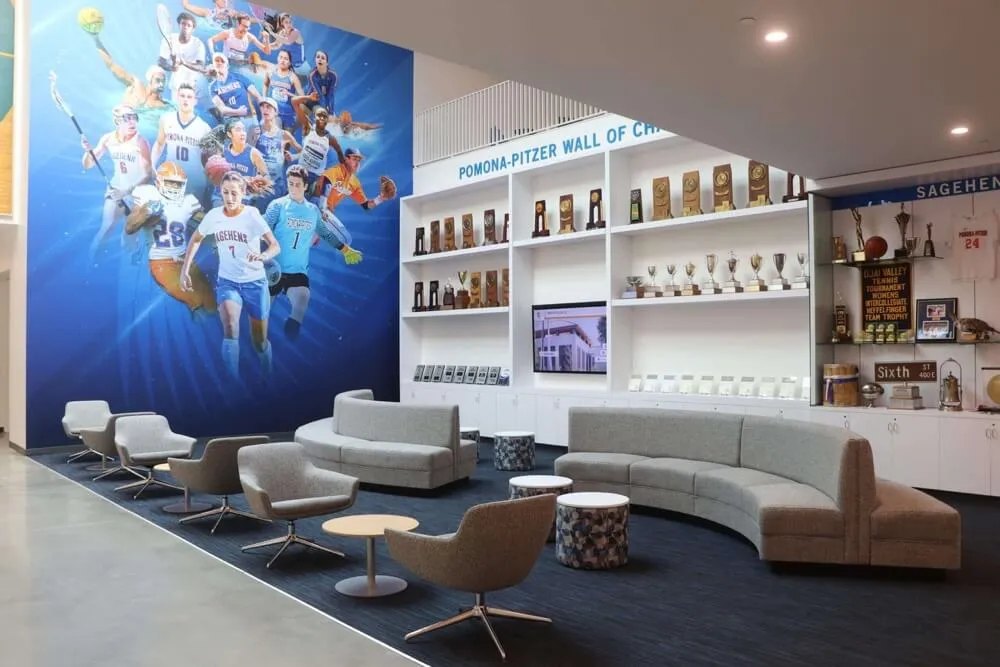
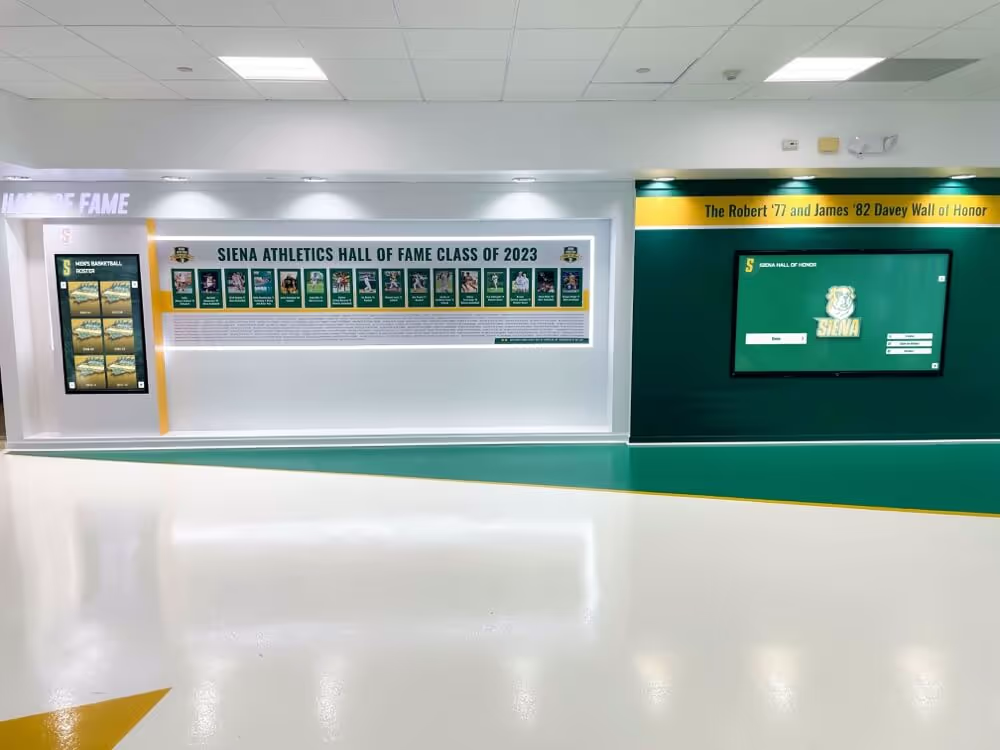
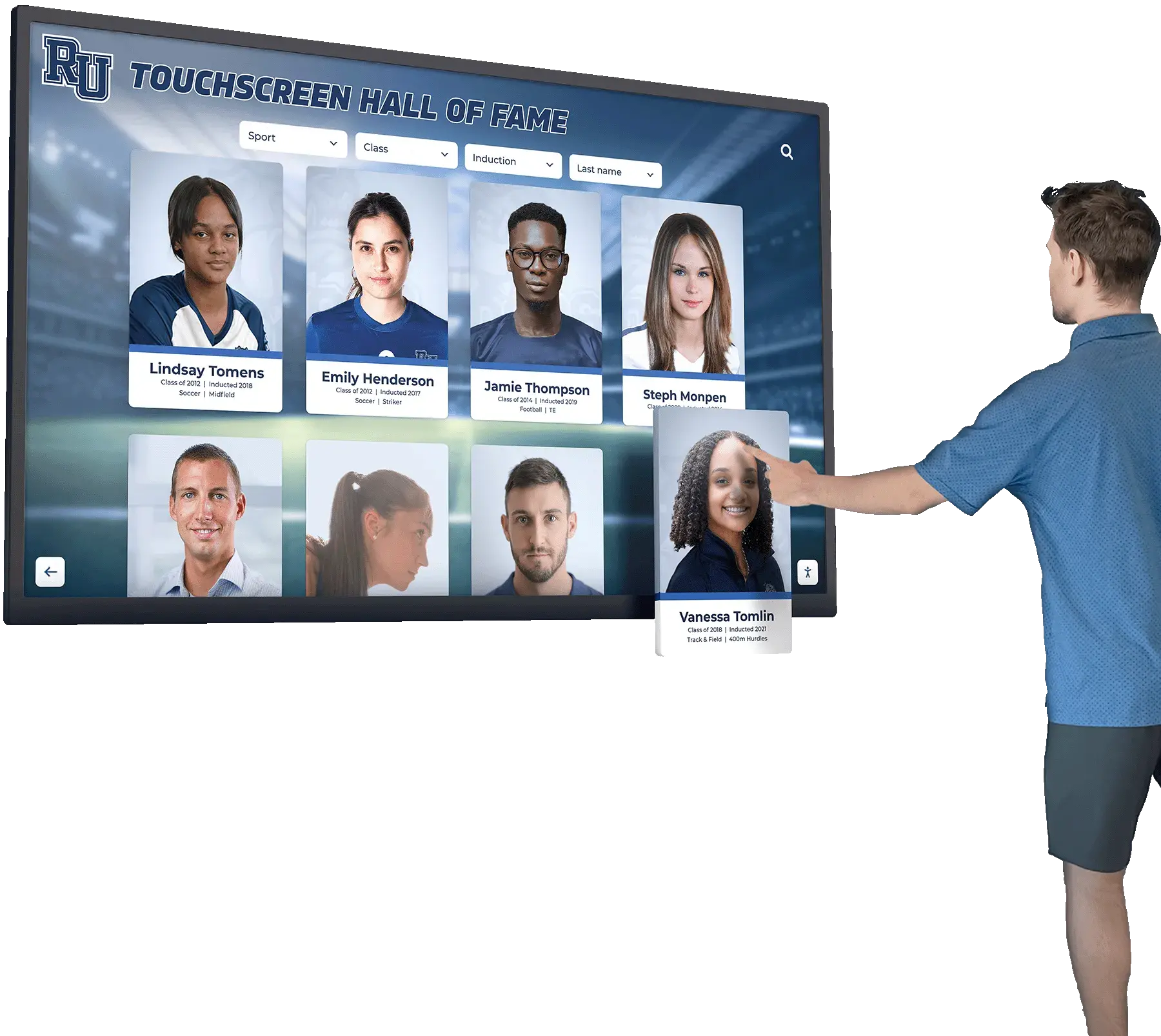
Digital halls of fame created for professional sports demonstrate how technology enables comprehensive historical preservation while maintaining engaging presentation that resonates with modern audiences.
Data and Insights About Fan Interests
Digital systems provide analytical data revealing what content fans engage with most—which champions they search for, which eras they explore, which features they use. This intelligence informs content strategy, marketing emphasis, and future development priorities based on demonstrated fan interests rather than assumptions.
How Interactive Touchscreen Displays Work at Major Sporting Events
Understanding the technology, content strategy, and user experience design behind successful interactive installations provides insights for venues considering similar implementations.
Hardware and Technology Infrastructure
Commercial-Grade Touchscreen Displays
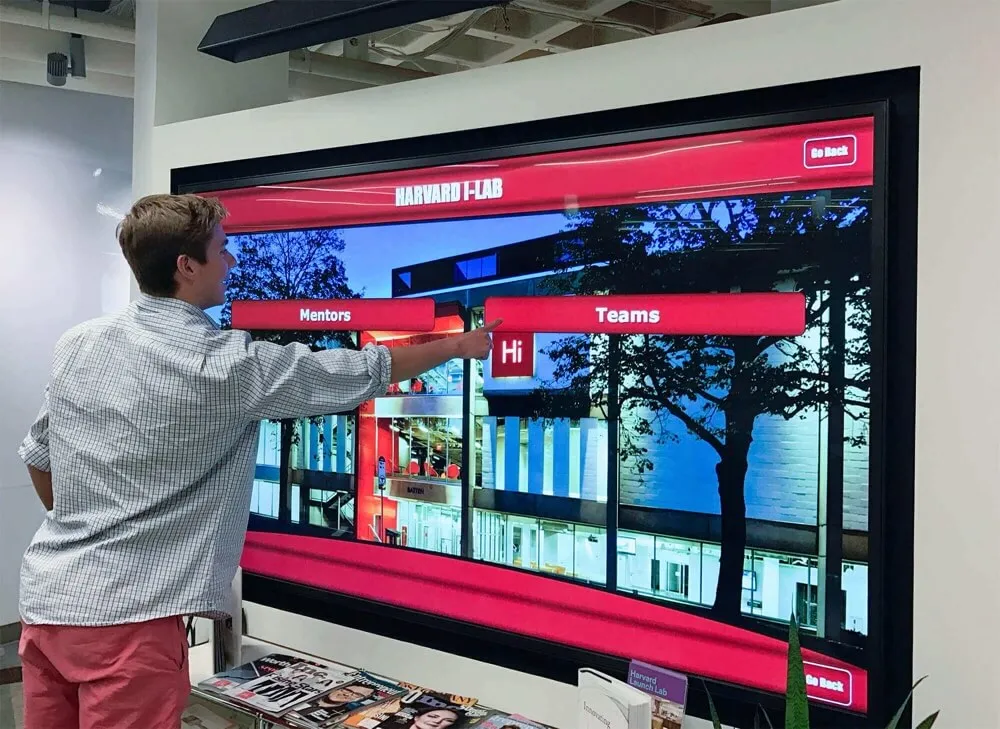
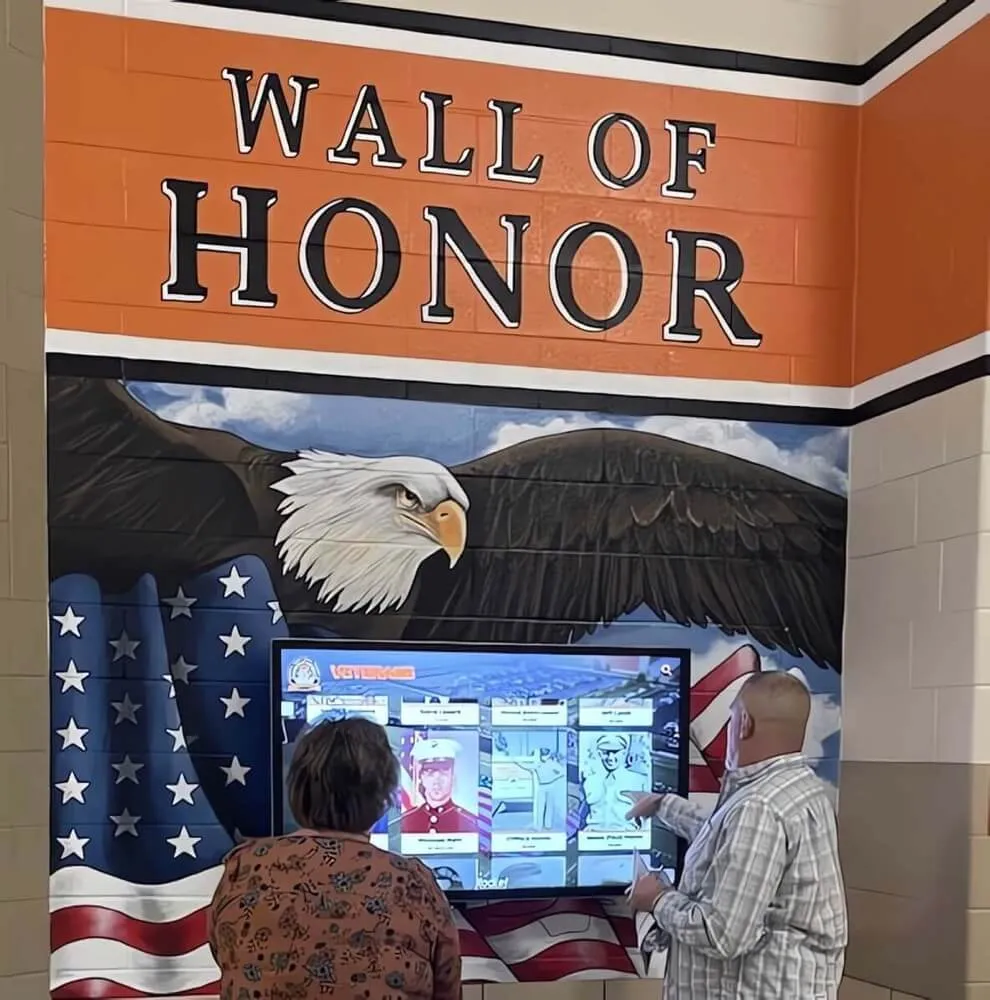
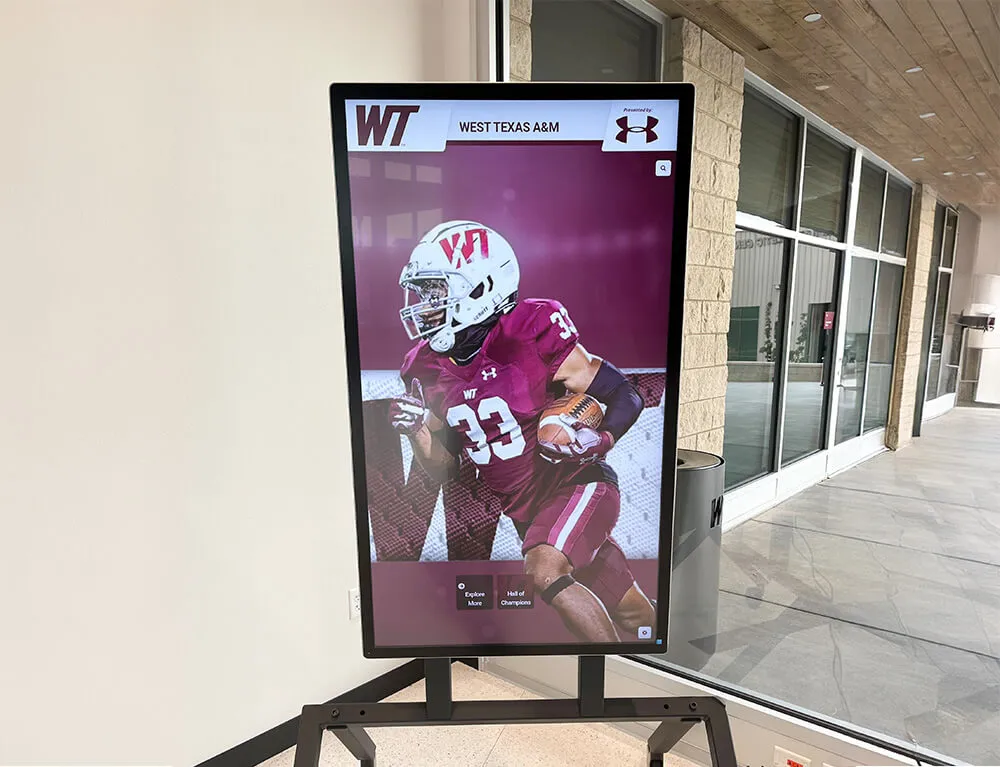
Major sporting venues require professional display hardware designed for intensive daily use in high-traffic environments. Specifications typically include large-format screens (55-85 inches) providing visibility for multiple simultaneous viewers, commercial displays rated for 16-18 hours daily operation with 50,000+ hour lifespans, multi-touch capabilities supporting intuitive gestures familiar from smartphone usage, high brightness levels (450-700 nits) ensuring visibility under various lighting conditions, and anti-glare treatments reducing reflection interference in bright environments.
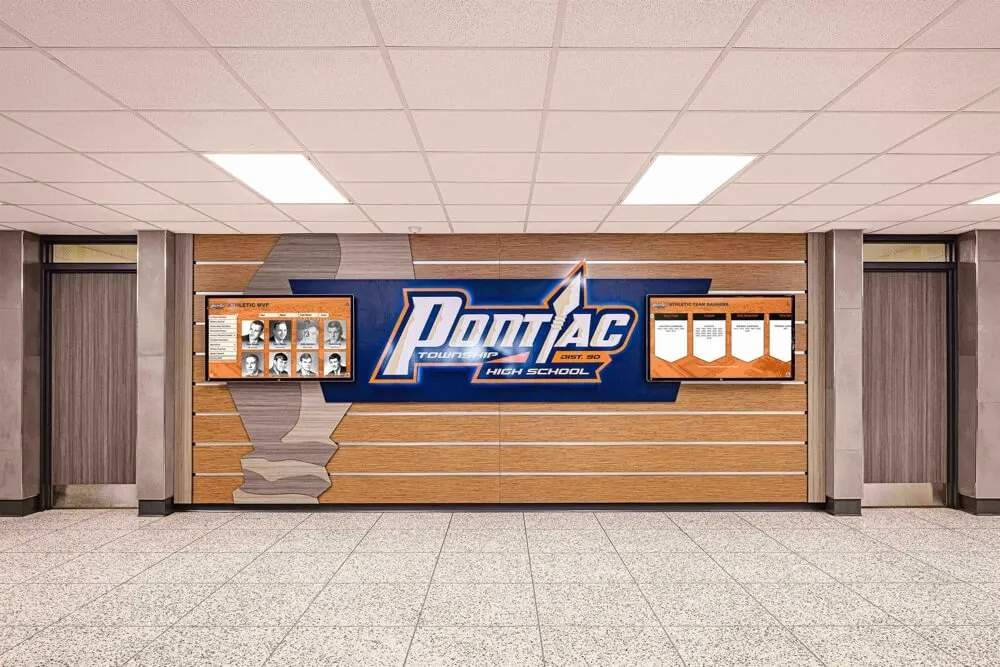
Professional mounting solutions integrate displays naturally within venue architecture through custom millwork, architectural surrounds, or freestanding kiosk enclosures that protect hardware while maintaining accessible positioning. Unlike consumer electronics, commercial installations require structured cable management, secure mounting, and theft-deterrent designs appropriate for public spaces.
Software Platforms and Content Management
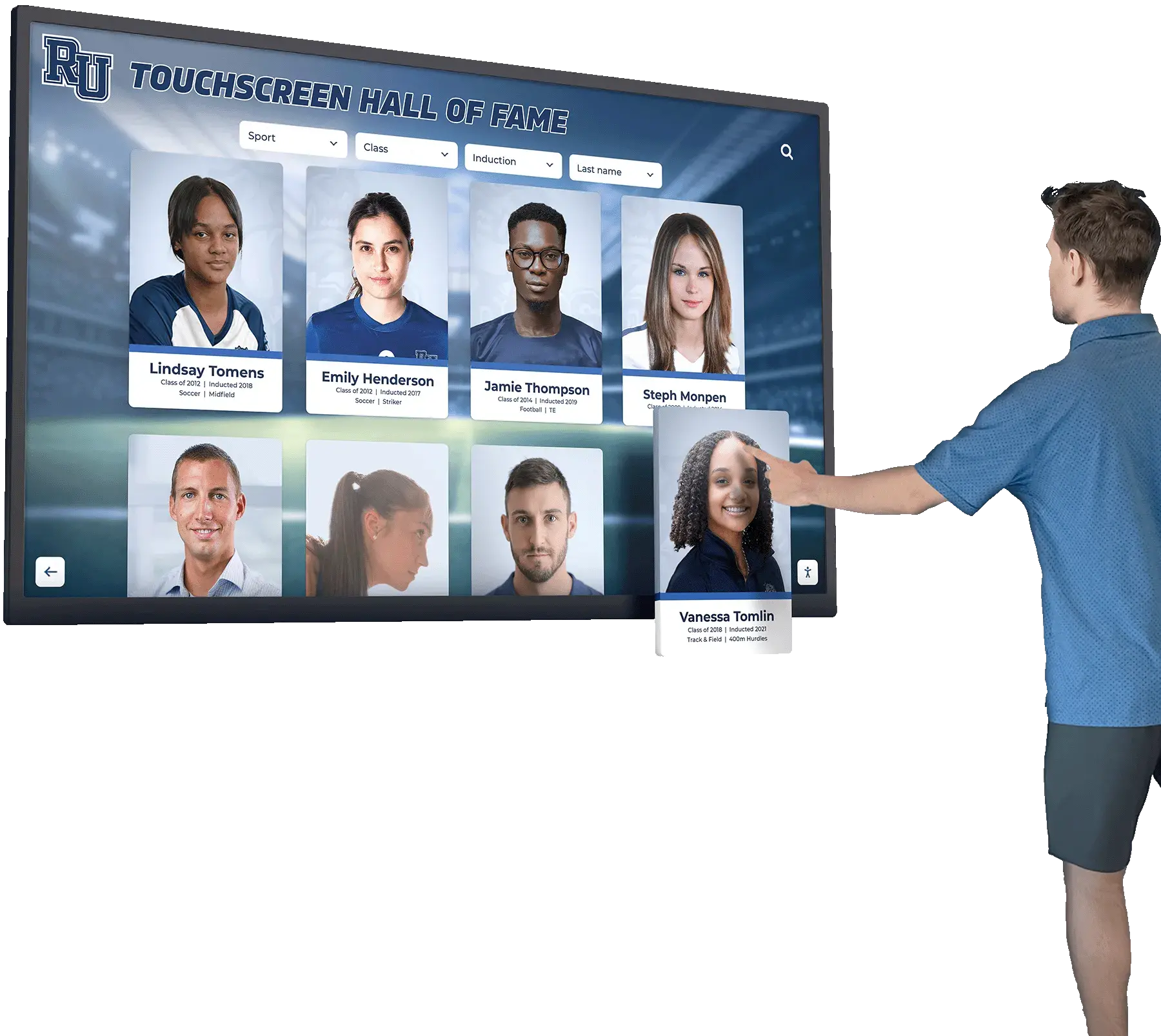
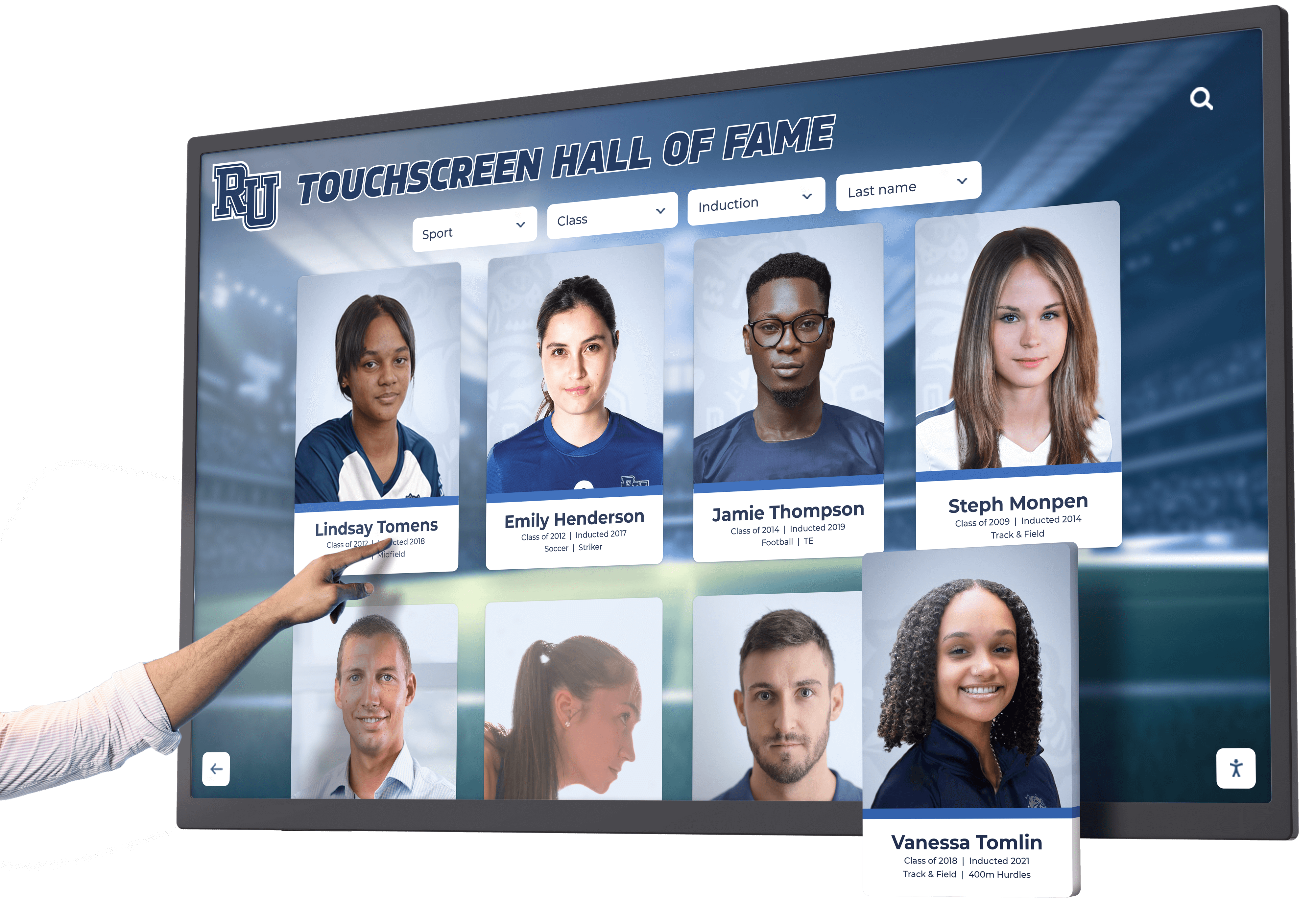
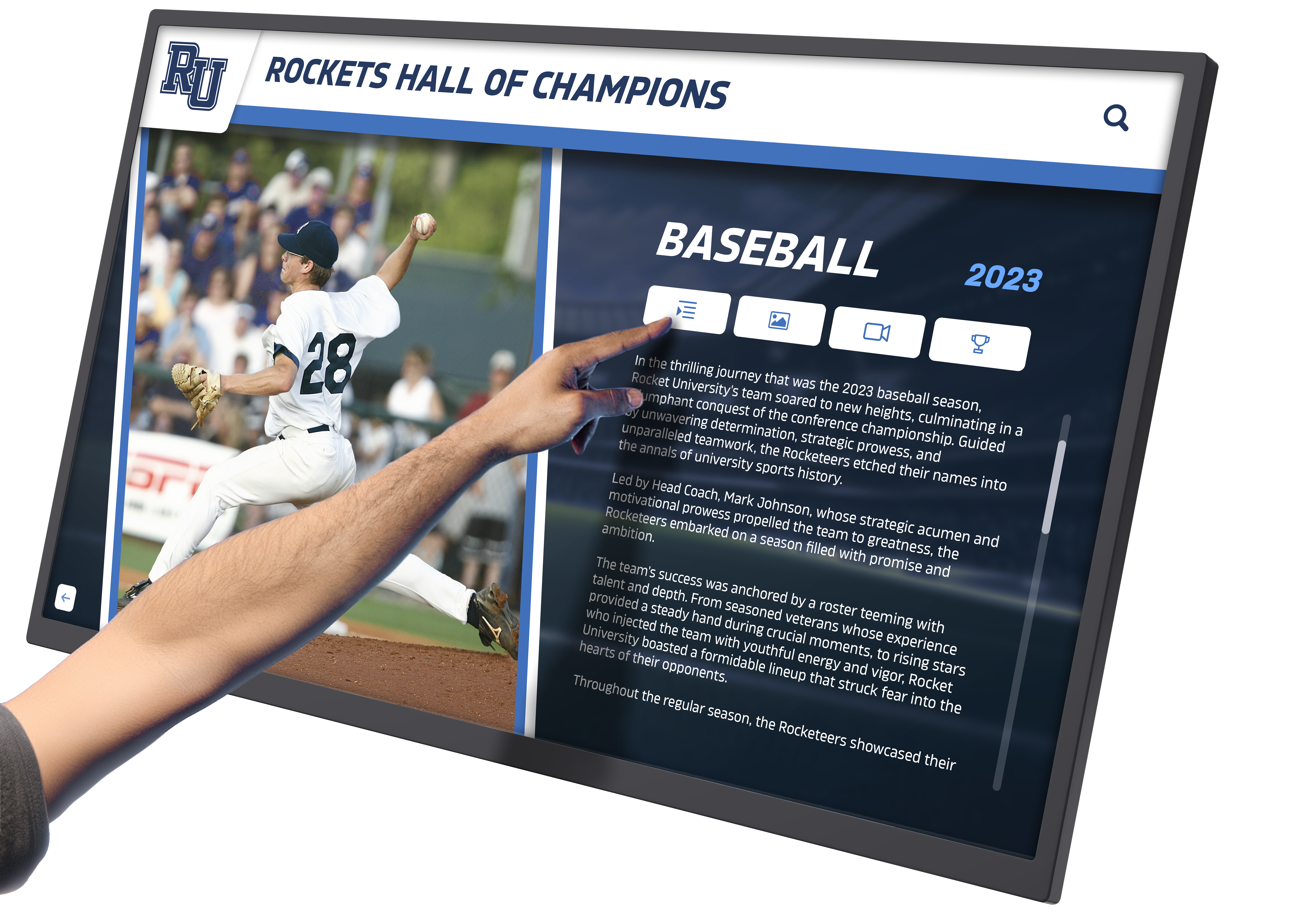
Interactive recognition displays require specialized software designed specifically for database applications and user-driven navigation rather than broadcast-only digital signage systems. Essential platform capabilities include searchable databases with advanced filtering by name, year, achievement type, or keyword, multimedia content management supporting photos, videos, and documents, intuitive user interfaces requiring no instruction for productive exploration, content management systems enabling non-technical staff to update information independently, and remote administration allowing updates from any location with internet connectivity.
Solutions like Rocket Alumni Solutions provide purpose-built platforms specifically designed for sports recognition applications, incorporating learned best practices and features that generic alternatives cannot match. These specialized systems understand the unique requirements of honoring athletes and documenting sporting achievement in ways that engage fans and build community connection.
Network Connectivity and Cloud Integration
Modern interactive installations leverage cloud connectivity enabling real-time content updates, synchronized information across multiple displays, remote troubleshooting and support, usage analytics and engagement tracking, and integration with mobile applications extending experiences beyond physical displays.
Cloud-based architecture proves particularly valuable for major championships occurring annually, allowing content teams to prepare and publish updates remotely rather than requiring on-site technical staff for every content change during the intense days surrounding competition.
Content Strategy and User Experience Design
Technology infrastructure provides capability, but compelling content and intuitive design create memorable fan experiences that achieve engagement objectives.
Champion and Athlete Profiles
Comprehensive profiles form the foundation of effective sports recognition. Well-designed profiles balance statistical achievement with humanizing stories that create emotional connections. Key elements include professional photography showing athletes in competition, career statistics and achievements presented through clear visualizations, biographical information providing context beyond athletic performance, video highlights capturing signature moments fans remember, recorded interviews or quotes revealing personality and perspective, and historical context explaining significance within tournament and sport evolution.
Profile depth should scale to athlete significance—legendary champions warrant extensive multimedia treatment while all winners receive appropriate recognition befitting their achievement. The democratic nature of digital recognition enables honoring all champions comprehensively without hierarchy dictated by physical space limitations.
Interactive Historical Timelines
Major championships spanning decades or even centuries benefit from timeline features enabling fans to explore tournament evolution chronologically or thematically. Effective timelines incorporate year-by-year documentation of champions and memorable moments, filtering capabilities allowing focus on specific eras or categories, multimedia content making history tangible through photos and videos, comparison tools enabling fans to compare achievements across eras, and connections to broader sporting and cultural context.
Digital timeline implementations demonstrate how interactive navigation transforms linear history into explorable networks of connected stories and achievements that users discover according to personal interests.
Search and Discovery Features
Intuitive search functionality proves critical for fan engagement. Users should be able to find specific champions, filter by achievement categories, explore by time periods, discover unexpected connections, and navigate naturally through related content based on initial searches.
Advanced platforms incorporate intelligent search understanding common variations of names, fuzzy matching accommodating spelling uncertainties, suggestions guiding users toward available content, and related content recommendations encouraging continued exploration beyond initial queries.
Social Media Integration and Shareability
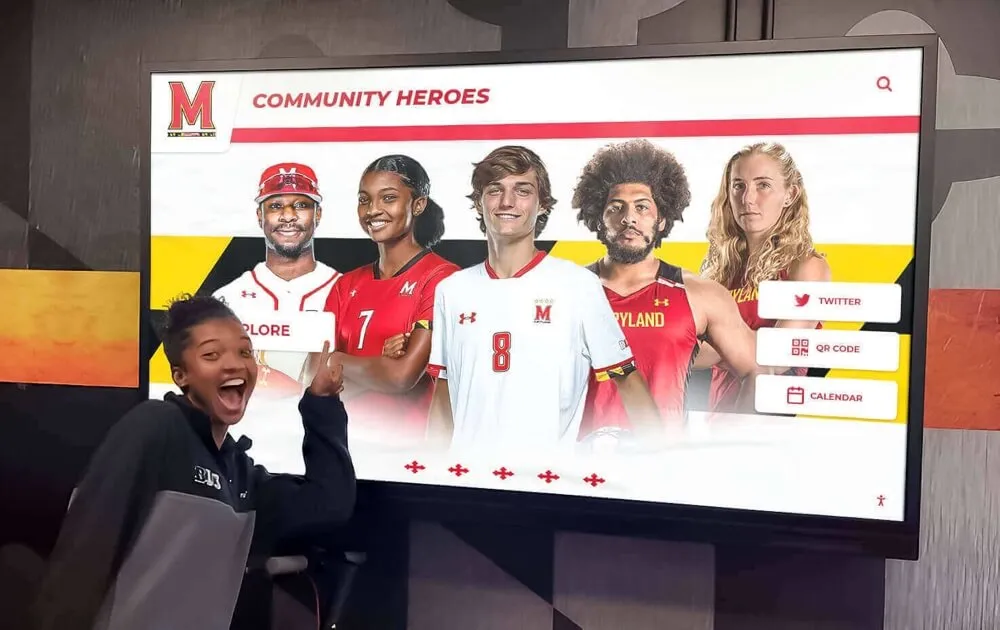
Modern fan engagement extends far beyond venue walls through social media amplification. Interactive exhibits should incorporate features designed for sharing including photo opportunities where fans pose with virtual champions or trophies, personalized content fans create and share, video recordings of fans attempting skills challenges, and social media feeds aggregating fan posts under campaign hashtags.
Research indicates that over 70% of major event attendees share experiences on social platforms, with each post potentially reaching hundreds of connections. Interactive elements specifically designed for sharing multiply marketing reach exponentially while creating user-generated content that authenticates experiences more powerfully than official communications.
Accessibility and Inclusive Design
Major sporting events serve diverse global audiences requiring design approaches ensuring all fans access content regardless of physical, cognitive, or sensory abilities.
Physical Accessibility Standards
Legal accessibility requirements form minimum standards that thoughtful design exceeds. Essential considerations include wheelchair-accessible positioning with appropriate mounting heights (15-48 inches from floor enabling seated and standing interaction), adequate clearance around displays for wheelchair maneuverability, alternative formats providing audio descriptions for visually impaired fans, captioning for all video content supporting deaf and hard-of-hearing audiences, and rest seating positioned near displays accommodating fans needing frequent breaks.
Professional installations prioritize accessibility from initial planning rather than treating it as afterthought, ensuring all fans enjoy equal access to interactive content.
Cognitive and Linguistic Accessibility
Clear communication and intuitive navigation serve fans with cognitive disabilities, learning differences, language barriers, or limited prior knowledge. Strategies include simple language avoiding unnecessary jargon, consistent visual design reducing confusion, multiple content formats (text, audio, video) supporting varied learning styles, adjustable text sizes and display contrast supporting visual needs, and multilingual support serving international audiences attending major championships.
Comprehensive buyer guides emphasize accessibility features as essential requirements rather than optional enhancements, reflecting best practices for inclusive design.
Benefits of Interactive Touchscreen Displays for Sports Venues
Beyond enhancing fan experience at major championships, interactive recognition technology delivers strategic benefits for sports organizations, athletic facilities, and event venues at every level.
Unlimited Recognition Capacity
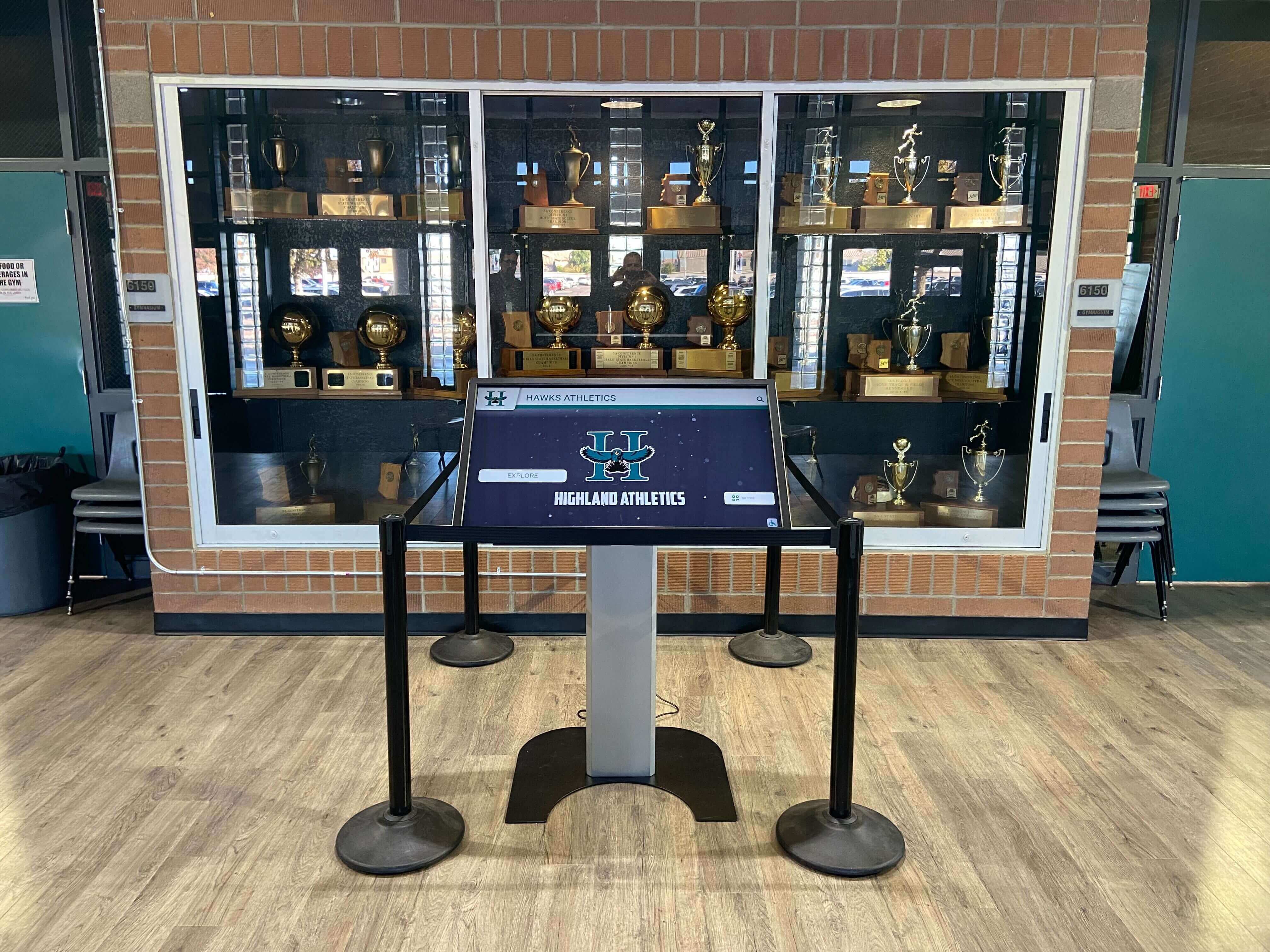
Traditional physical displays face fundamental space limitations—trophy cases fill up, wall space gets allocated, and recognition becomes zero-sum competition where honoring new achievements requires removing previous displays. This creates difficult decisions about whose accomplishments deserve visible recognition.
Digital platforms eliminate space constraints entirely. Venues can honor unlimited champions, document every significant achievement, preserve comprehensive historical records, and add new recognition continuously without displacing existing honorees. This proves particularly valuable for championships with long histories and numerous worthy subjects deserving celebration.
Trophy case capacity challenges face many institutions as achievements accumulate over decades. Digital recognition provides sustainable solutions that grow indefinitely without requiring additional physical space.
Easy Content Updates and Maintenance
Physical recognition displays require significant effort to update—creating new plaques, modifying existing installations, coordinating with fabricators, and scheduling installation during facility closures. These friction points often result in outdated information remaining visible simply because updating proves too difficult.
Digital systems enable instant content updates from anywhere with internet connectivity. As new champions emerge during current competitions, content teams add profiles, photos, and achievements immediately. Corrections happen instantly rather than waiting for replacement plaques. Seasonal content rotates effortlessly, and featured champion spotlights change regularly maintaining freshness that encourages repeat engagement.
This ease of updating proves especially valuable for annual championships where content must be current and accurate as tournaments conclude and new champions are crowned.
Enhanced Storytelling Through Multimedia
Static displays communicate through text and still images exclusively. While these formats convey basic information, they cannot match the emotional impact of multimedia storytelling incorporating video, audio, and interactive elements.
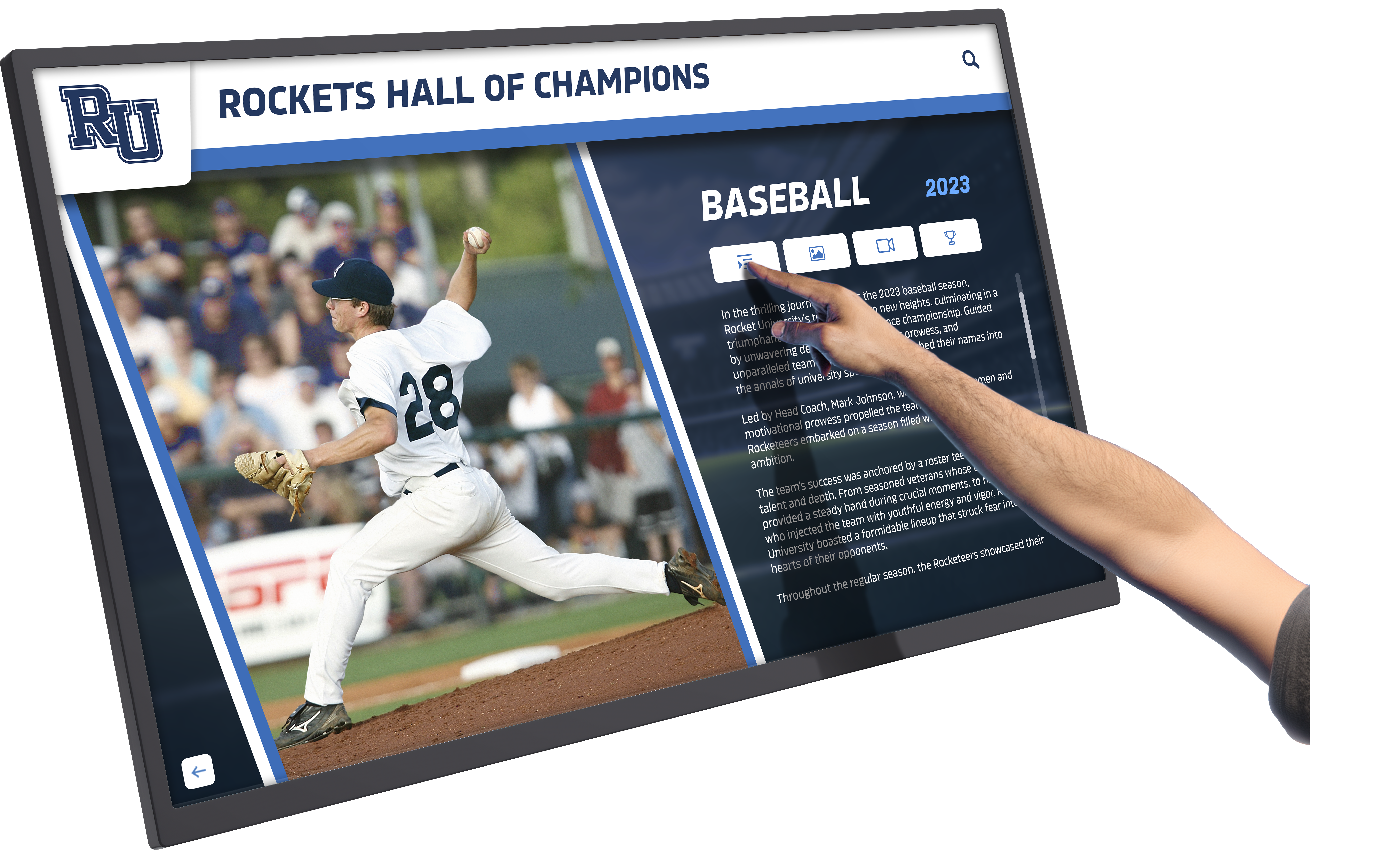
Digital platforms enable rich content presentations including video highlights of championship-winning moments, recorded interviews with legendary champions, audio commentary providing context and analysis, photo galleries showing career progression, animated statistics bringing numbers to life, and interactive comparisons enabling fans to explore relationships across eras.
This multimedia depth creates emotional connections and memorable experiences that simple plaques cannot achieve. Fans remember watching championship-winning shots while reading champion reflections on those moments, hearing voices explaining philosophies and approaches, or seeing decades of evolution in rapid visual succession.
Digital storytelling for athletic programs demonstrates how multimedia presentations transform recognition from information delivery into engaging narratives that build emotional connections.
Analytics and Engagement Insights
Traditional physical displays provide no information about fan engagement—how many people look at displays, how long they engage, what content interests them, or how usage patterns vary by time or audience. Organizations make decisions based on assumptions rather than data.
Interactive digital systems provide comprehensive analytics revealing total interaction sessions and frequency, average engagement duration indicating content quality, popular content and search queries showing fan interests, feature utilization demonstrating which capabilities provide value, and peak usage times informing staffing and programming decisions.
These insights enable data-driven improvement focusing resources on high-value content and features while identifying underperforming elements requiring enhancement or removal. Over time, analytics guide strategy toward demonstrable fan preferences rather than guesswork.
Extended Reach Through Web and Mobile Integration
Physical installations reach only fans who physically visit venues during operating hours. Digital platforms extend access globally through web-accessible versions of recognition content, mobile applications providing smartphone access, virtual tours enabling remote exploration, social media content amplifying reach, and video content showcasing highlights to distant audiences.
Many organizations discover that online engagement dramatically exceeds physical installation usage due to global accessibility and convenience. One major sporting venue reported 50,000 annual physical visitors but over 800,000 web platform sessions—16 times greater digital reach extending recognition impact far beyond stadium walls.
Digital hall of fame platforms optimized for web delivery ensure excellent online experiences rather than simply replicating physical kiosk interfaces unsuited for remote access, maximizing value from technology investments.
Implementing Interactive Displays: From Major Championships to School Programs
The interactive recognition technology powering major championships scales effectively for sports organizations, schools, and athletic programs at every level. Understanding implementation approaches for different contexts enables venues to achieve appropriate solutions aligned with objectives and resources.
Professional Sports Venues and Major Events
Professional franchises, premier competitions, and major sporting events typically implement comprehensive interactive installations serving multiple strategic objectives.
Championship Venue Implementations
Major championship venues commonly invest $100,000-$500,000+ creating extensive interactive experiences including multiple large-format touchscreen displays throughout facilities, immersive technology zones with augmented reality experiences, video theaters for highlight presentations, integration with mobile applications, professional content development documenting extensive histories, and custom software tailored to specific organizational needs.
These comprehensive implementations create destination experiences that enhance attendance value, differentiate events from competitors, and generate ancillary revenue through admission fees, merchandise sales tied to emotional engagement, and sponsorship opportunities associated with prominent technology displays.
Professional Sports Franchise Solutions
Professional teams in stadiums and arenas implement interactive recognition through lobby or concourse displays showing team history during fan circulation, club level or suite installations providing premium guest amenities, retail store integrations combining recognition with merchandise displays, and practice facility installations supporting recruiting and player engagement.
These focused installations typically range from $50,000-$250,000 creating impactful experiences within available space while reaching thousands of fans during game days and facility tours.
Collegiate Athletic Recognition Programs
Universities and colleges implement sports recognition supporting both athletic celebration and broader institutional advancement.
Comprehensive Athletic Complex Installations
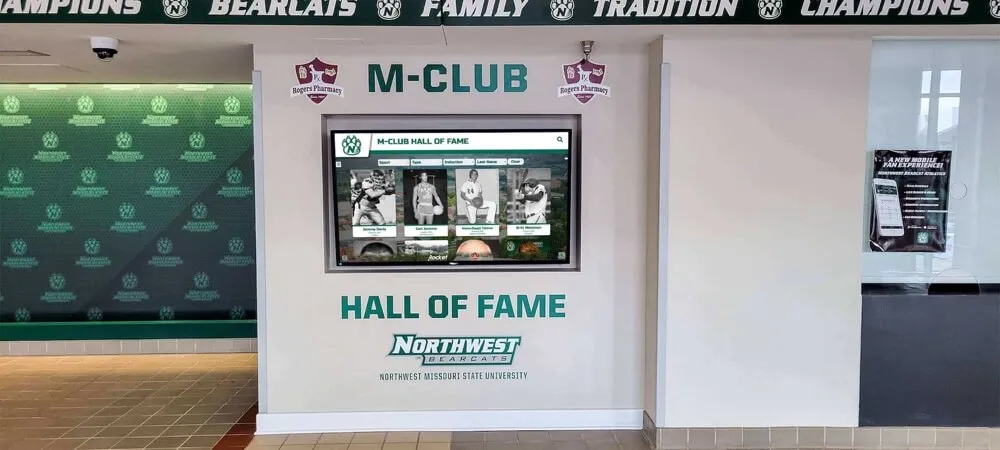
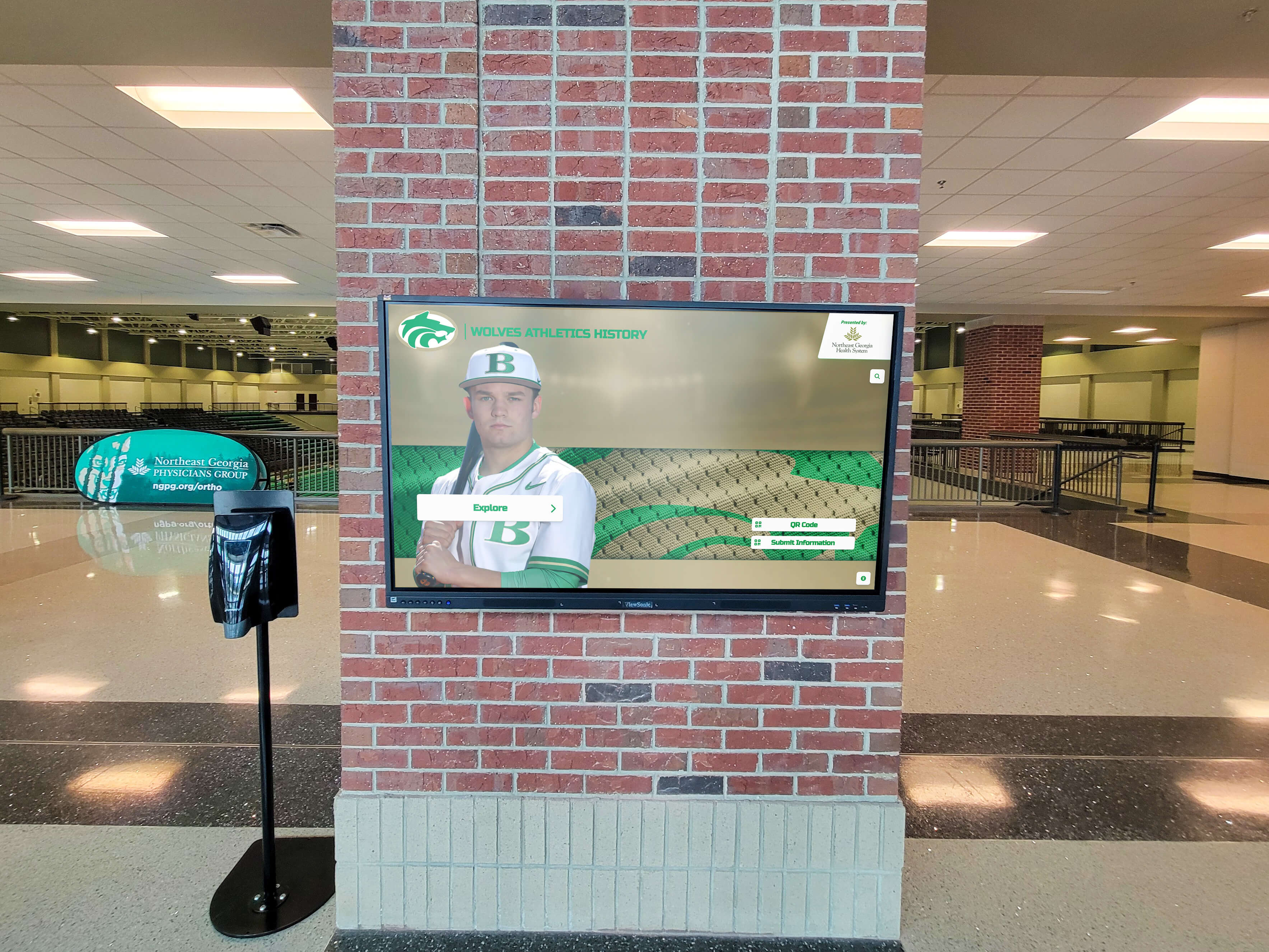
Major athletic programs building extensive facilities increasingly incorporate interactive recognition displays celebrating program history, student athlete profiles spanning decades, coaching legends and leadership recognition, championship and tournament documentation, academic achievement highlights supporting student-athlete narratives, and recruiting infrastructure showcasing program prestige.
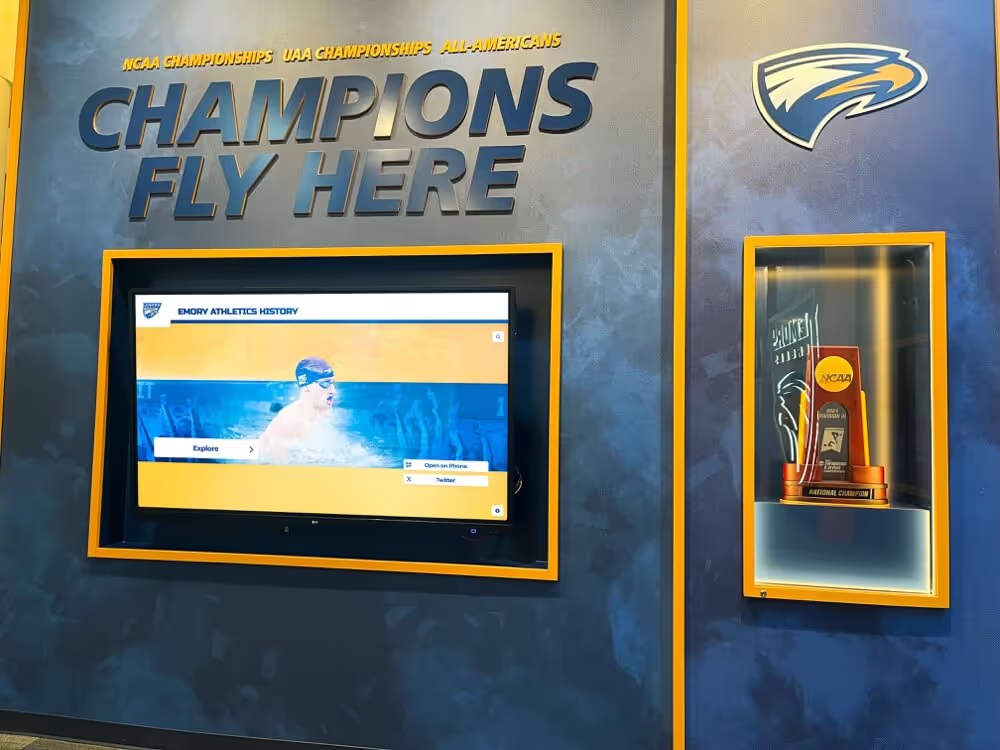
Championship trophy display strategies prove particularly important for programs competing for elite recruits where demonstrating winning traditions through compelling presentations influences commitment decisions.
Budget allocations for collegiate implementations typically range from $25,000-$150,000 depending on scope, number of displays, and content development requirements. These investments position athletics as institutional priorities while creating tangible recruiting advantages.
Integration with Alumni Engagement
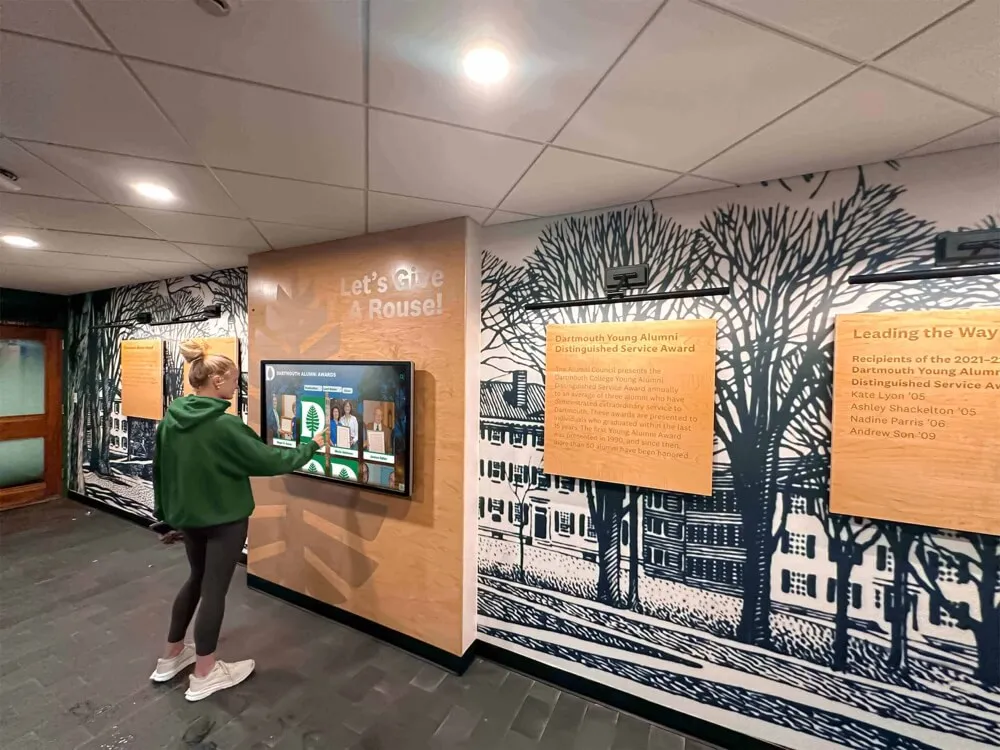
Collegiate sports recognition serves broader advancement by connecting athletic achievement to alumni relations. Strategic integration includes athlete profiles linking to alumni association engagement, giving opportunities associated with recognition programs, homecoming and reunion programming centered around displays, and career networking features connecting current students with athlete alumni in target professions.
Alumni welcome area designs effectively blend athletic and academic achievement, positioning sports recognition within comprehensive institutional storytelling that strengthens community across all programs.
High School and Secondary School Athletic Programs
High schools increasingly adopt interactive recognition technology as costs decrease and benefits become apparent for building school pride and community connection.
Athletic Lobby Installations
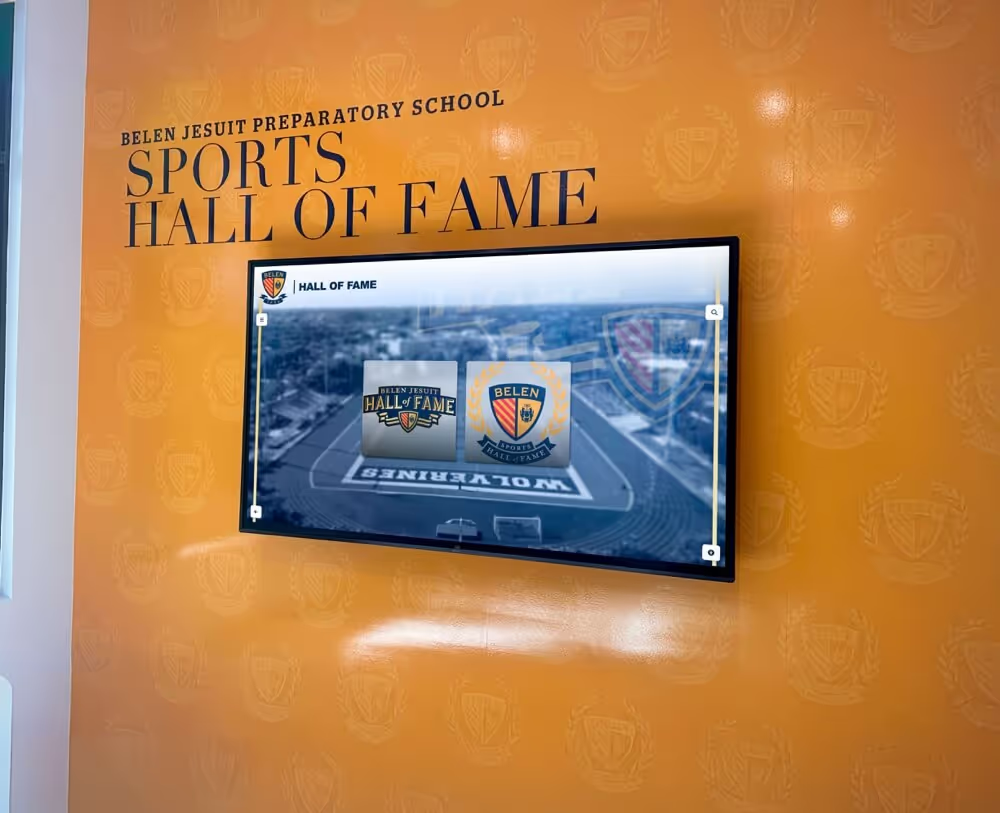
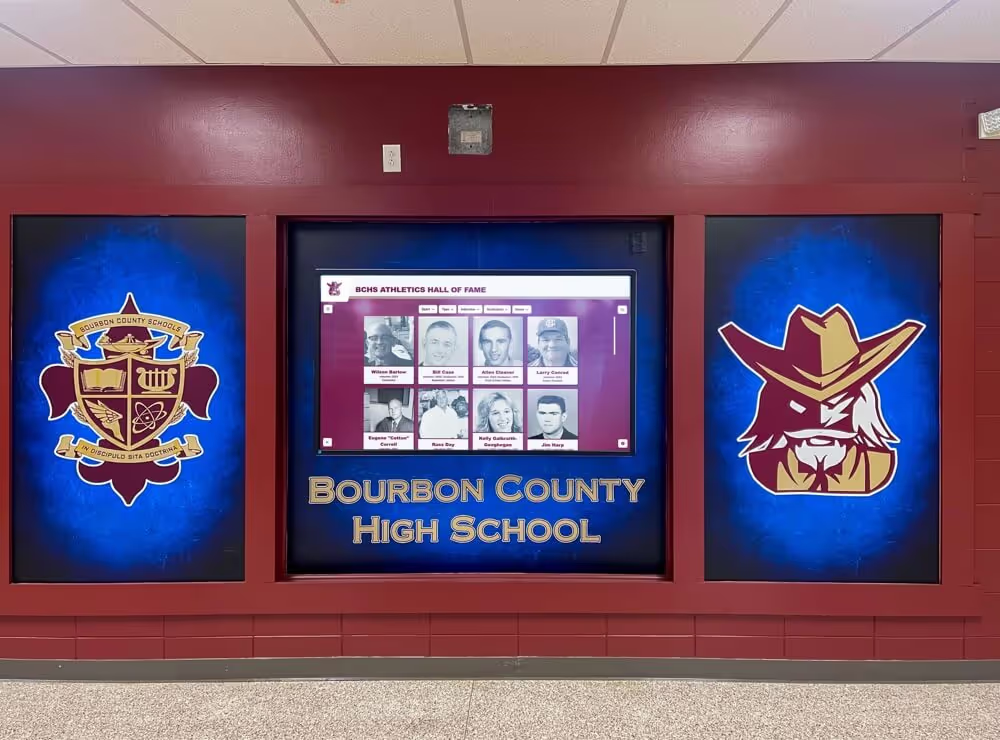
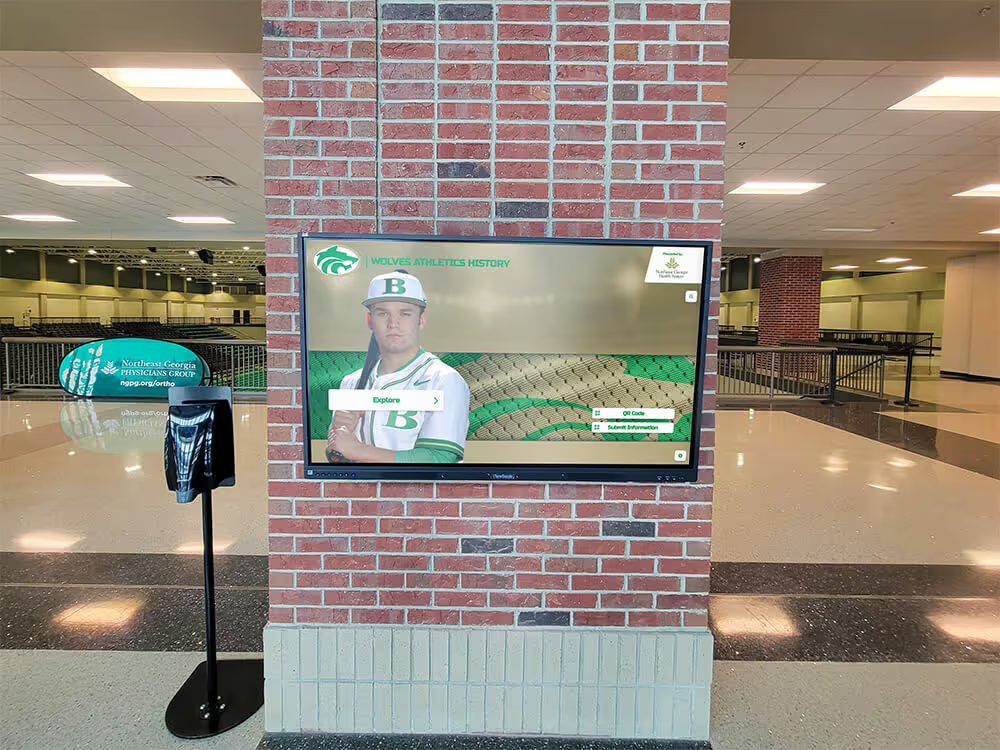
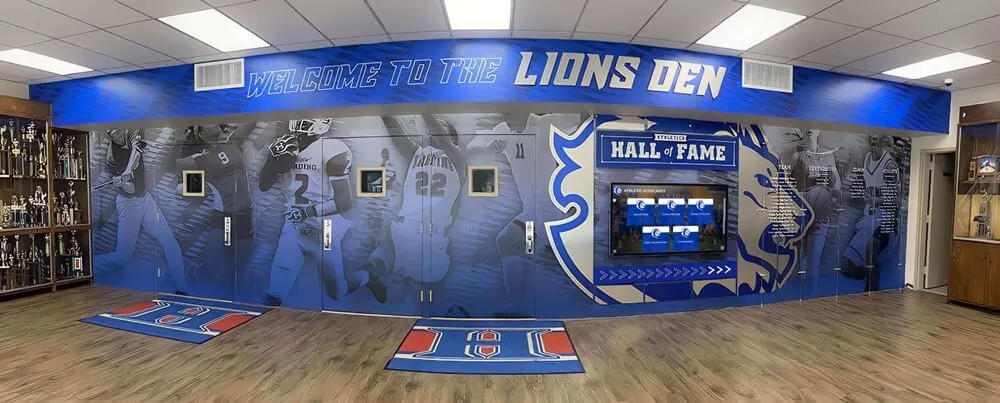
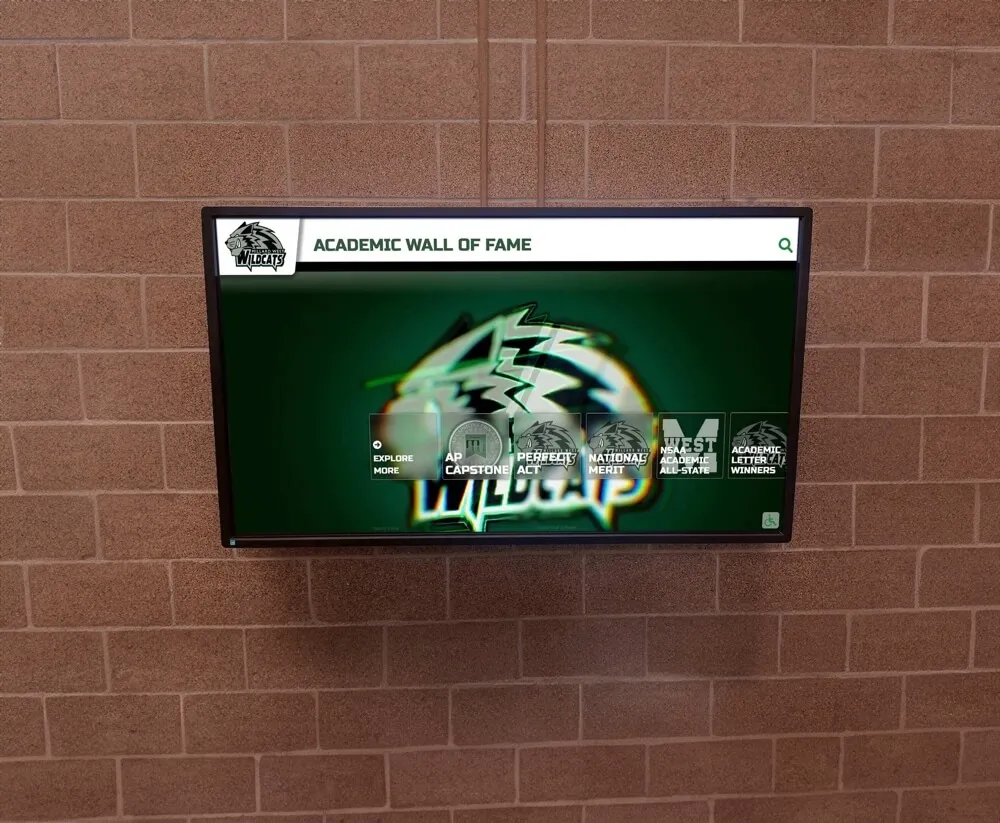
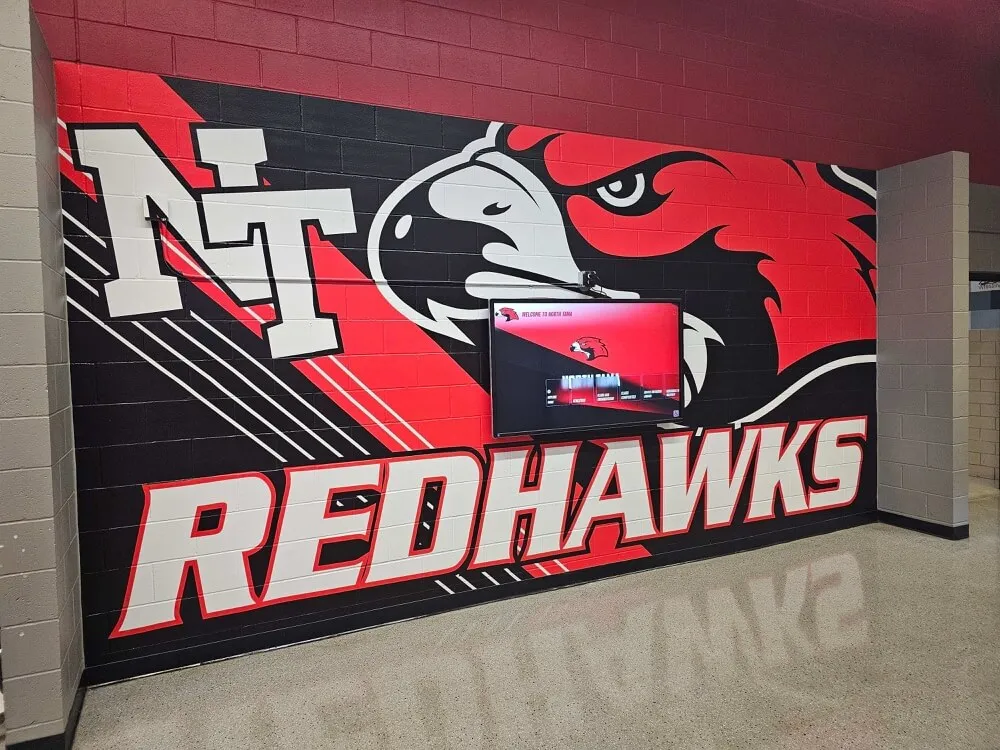
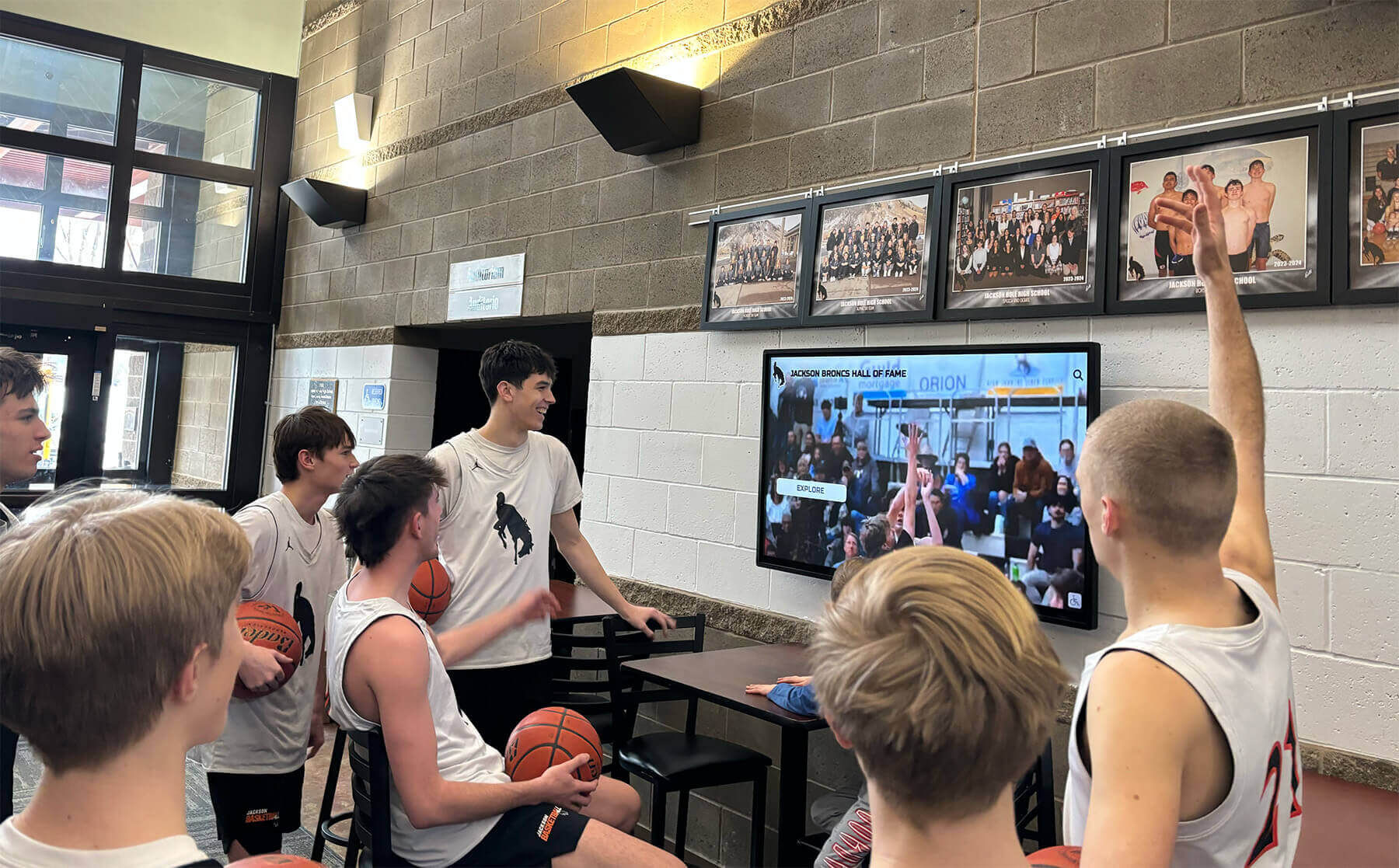
High school athletic recognition typically centers on main gymnasium or athletic facility lobbies where students, families, and community members naturally congregate. Common implementations include single 55-75 inch touchscreen displaying athletes, teams, and championships with typical investment ranging from $12,000-$25,000, student athlete of the month features rotating throughout school years, championship team recognition celebrating recent and historical success, coaching staff recognition honoring program leadership, and integration with existing trophy displays combining traditional and digital recognition.
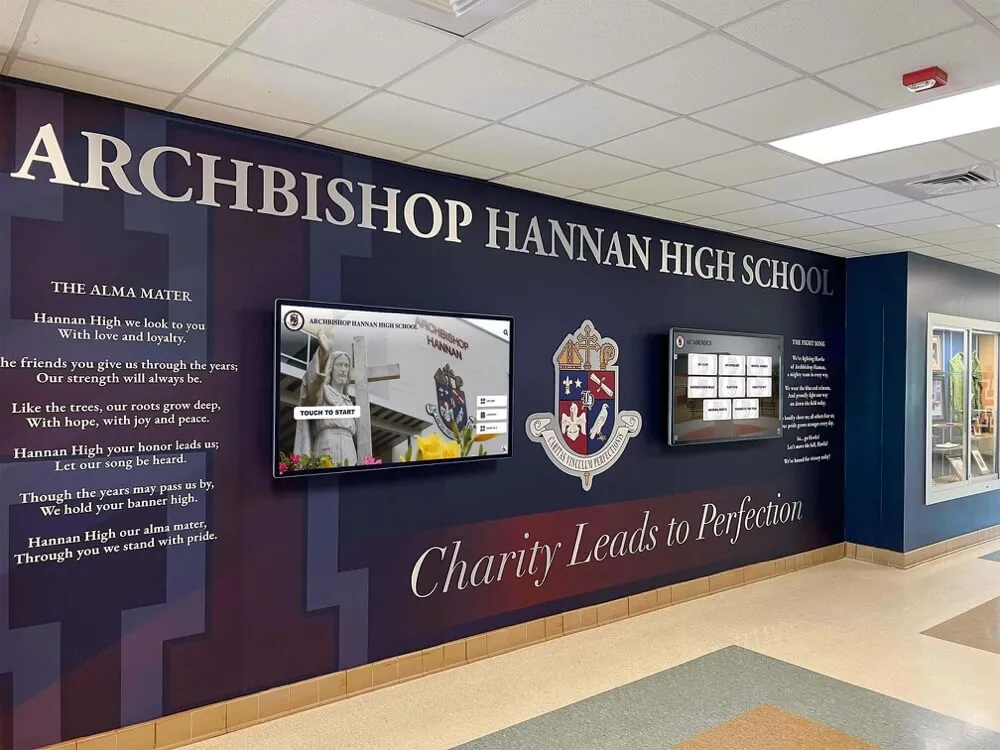
These focused installations transform how schools celebrate student athletes while creating powerful tools for building school pride across entire communities. The investment proves accessible for many athletic programs while delivering professional-quality recognition previously available only to well-funded institutions.
Multi-Sport Recognition Solutions
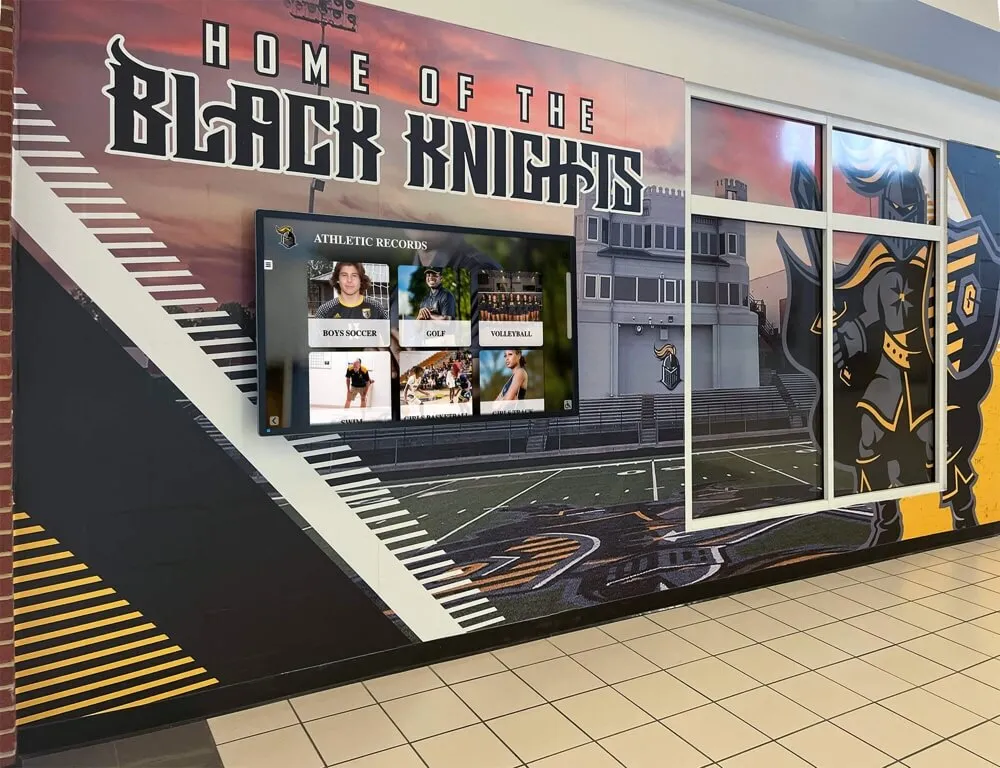
High schools honoring diverse athletic programs require flexible systems accommodating fall, winter, and spring sports equally. Digital platforms excel at comprehensive recognition impossible through physical displays that typically prioritize revenue sports. Features include equal visibility across all varsity sports, junior varsity and freshman team inclusion, individual and team achievement categories, and records tracked by sport and gender.
Comprehensive student recognition programs expand beyond athletics to honor academic excellence, arts achievements, and community service, creating inclusive celebrations benefiting entire student bodies and demonstrating that institutions value diverse pathways to success.
Budget-Friendly Implementation Strategies
High schools working within tight budgets benefit from phased approaches and creative funding. Effective strategies include starting with single display establishing proof-of-concept ($12,000-$20,000 typical range), athletic booster club fundraising engaging parent supporters, sponsorship programs where local businesses support costs in exchange for recognition, memorial donation programs allowing families to honor athletes or coaches, and alumni foundation grants leveraging institutional advancement offices.
Many schools successfully fund comprehensive recognition systems entirely through donations, avoiding impacts to operational budgets while creating meaningful stewardship for contributors who see permanent recognition results from their generosity.
Youth Sports Organizations and Community Athletics
Travel teams, club programs, recreational leagues, and community sports organizations implement recognition systems building participation and family engagement.
Facility-Based Recognition for Sports Clubs
Organizations operating dedicated training facilities, competition venues, or community sports complexes benefit from permanent digital recognition displays celebrating participant achievements, volunteer recognition honoring coaches and officials, team photo archives documenting seasons and tournaments, skill achievement tracking motivating progression, and organizational history preserving institutional memory.
Modest implementations starting around $8,000-$15,000 create professional recognition elevating programs and differentiating facilities within competitive youth sports markets where families choose organizations based partially on perceived professionalism and commitment to participant experience.
Travel Team and Elite Program Recognition
Competitive youth programs invest in recognition demonstrating commitment to player development and achievement celebration. Features commonly include college commitment tracking and celebration, tournament success and championship documentation, individual player milestones and records, team histories showing program evolution, and integration with recruiting support for players pursuing collegiate opportunities.
College commitment recognition strategies prove particularly valuable for elite programs where celebrating player advancement to collegiate competition reinforces program credibility and attracts ambitious athletes seeking development pathways.
Best Practices for Successful Interactive Recognition Displays
Organizations implementing effective interactive sports recognition share common approaches learned through experience and stakeholder feedback. Following these practices increases likelihood of successful implementations that achieve engagement objectives.
Prioritize User Experience and Intuitive Design
Technology capability matters little if users find interfaces confusing or frustrating. Successful installations prioritize user experience through clear visual hierarchies guiding attention naturally, consistent navigation patterns reducing learning curves, touch targets sized appropriately for diverse users including children and elderly fans, loading times under 2 seconds preventing abandonment, and minimal instruction requirements enabling productive use without staff assistance.
Ultra-responsive touchscreen technology proves critical for maintaining engagement, as even slight delays between touch and response create frustration terminating interactions before users discover valuable content.
User testing with representative audiences during development reveals usability issues that designers miss. Observing actual fan interactions identifies navigation confusion, unclear labels, and features that seem obvious to creators but mystify users unfamiliar with systems.
Invest in Quality Content Development
Hardware and software provide infrastructure, but compelling content creates memorable experiences achieving recognition objectives. Quality content development includes professional photography showing athletes in action and formal portraits, comprehensive achievement documentation with verified accuracy, engaging written narratives providing context beyond statistics, video content capturing memorable moments, recorded interviews adding personality and perspective, and historical research ensuring accuracy and completeness.
Content quality differentiates professional installations from amateur efforts. Blurry photos, inconsistent formatting, sparse information, and obvious errors undermine credibility and fail to honor achievements appropriately. Investing in professional content development or dedicating adequate staff time to quality creation proves essential for installations that achieve objectives.
Plan for Sustained Content Management
Interactive displays require ongoing attention maintaining freshness and accuracy. The most common implementation failure involves successful launches followed by neglect as initial enthusiasm fades and other priorities consume attention. Within months, content becomes outdated, errors remain uncorrected, and displays transform from valued assets to embarrassing reminders of unfulfilled potential.
Sustainable operations require clear content management responsibility assignments, documented processes for regular updates, scheduled reviews ensuring accuracy and relevance, adequate time allocation for content work, and backup plans ensuring continuity during staff transitions.
Organizations should commit to content management sustainability before implementing systems rather than assuming someone will “figure it out later.” Without sustained attention, even excellent initial implementations deteriorate rapidly.
Integrate Physical and Digital Recognition Thoughtfully
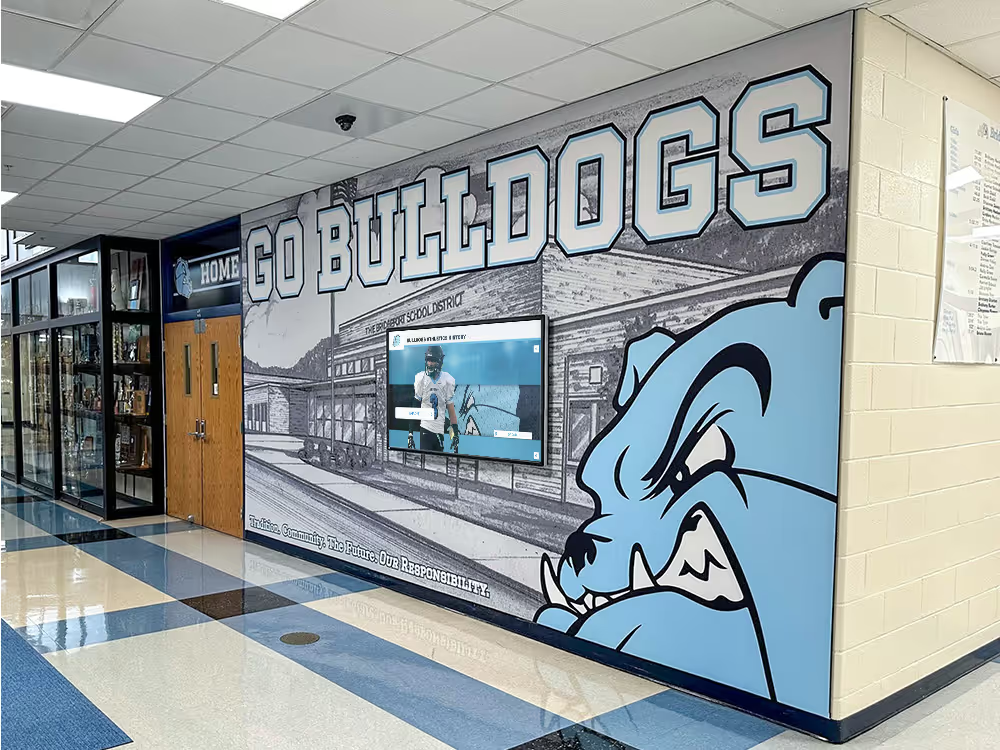
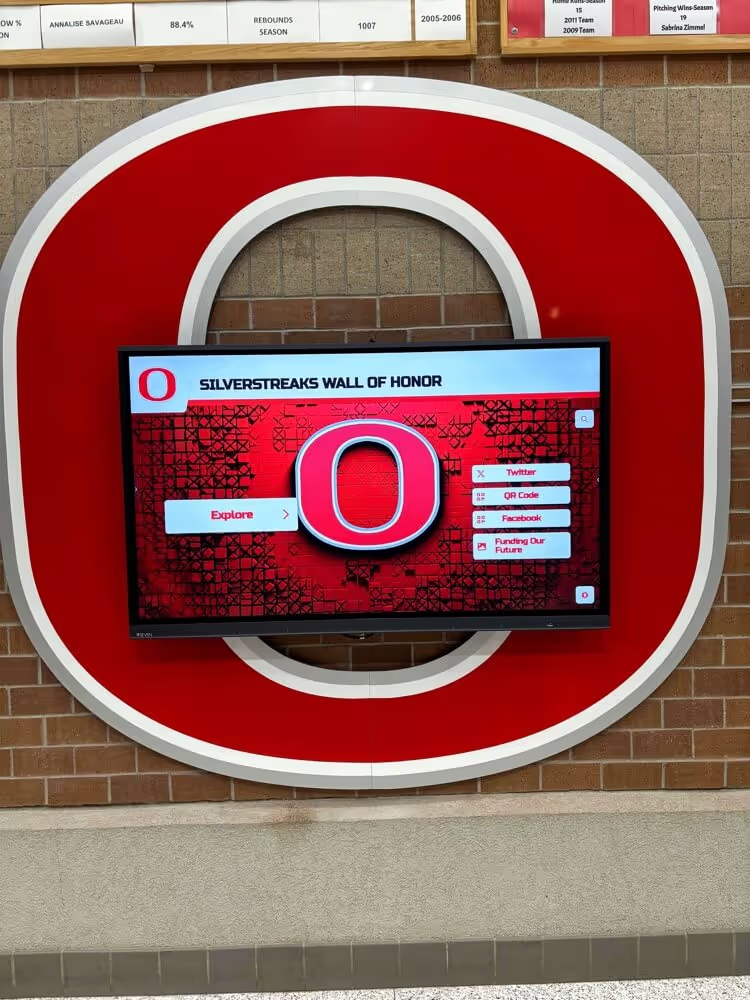
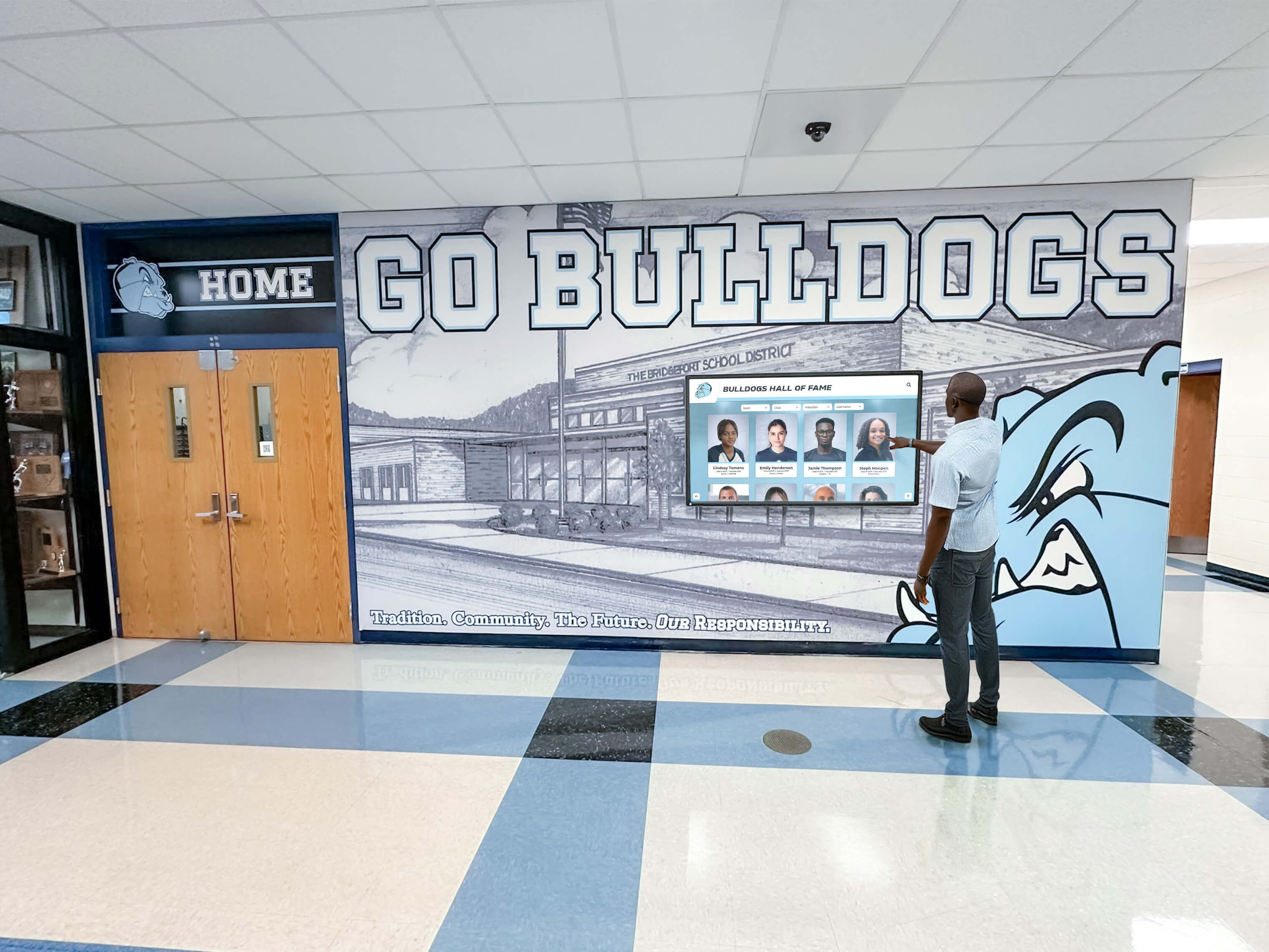
Most successful venues blend digital innovation with traditional recognition elements rather than eliminating physical displays entirely. This balanced approach honors established traditions while embracing new capabilities. Considerations include prominent physical artifacts (championship trophies, historic equipment) anchoring key displays, traditional plaques for hall of fame inductees receiving special distinction, printed materials providing context without requiring digital interaction, and physical touchpoints creating tactile connections alongside digital exploration.
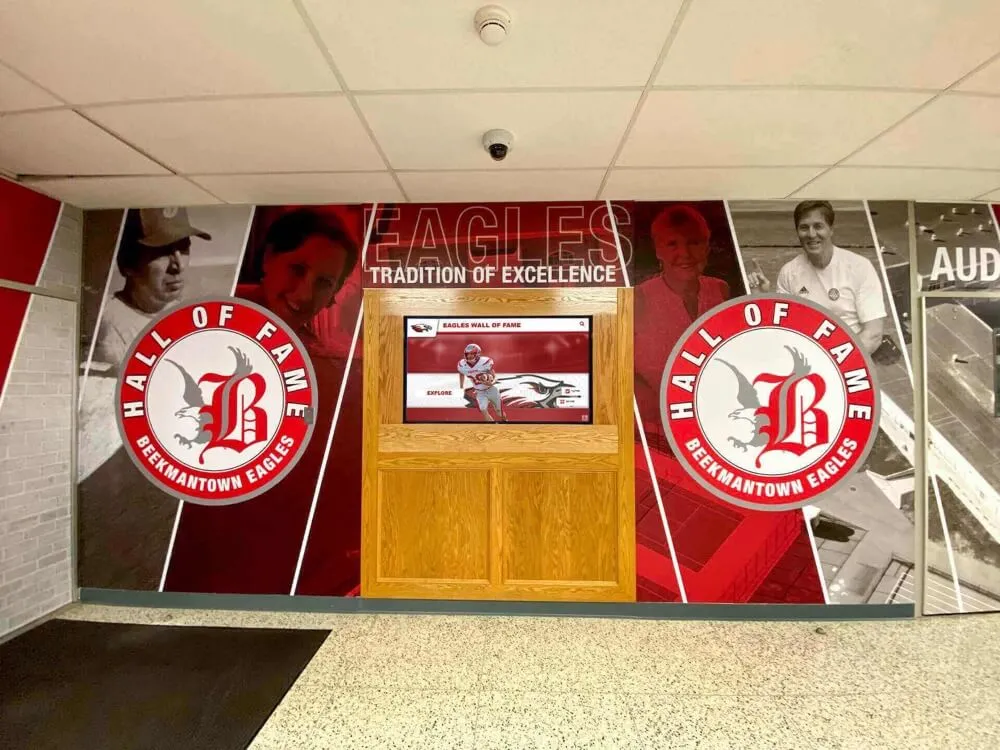
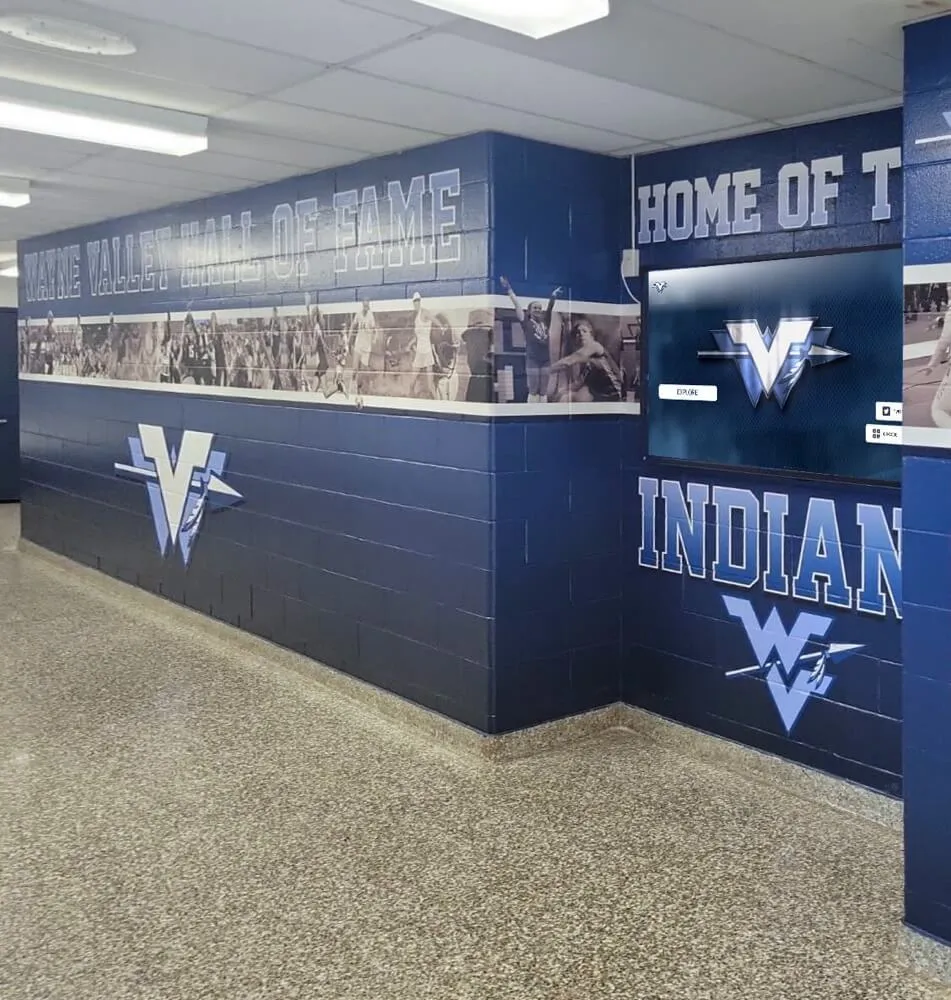
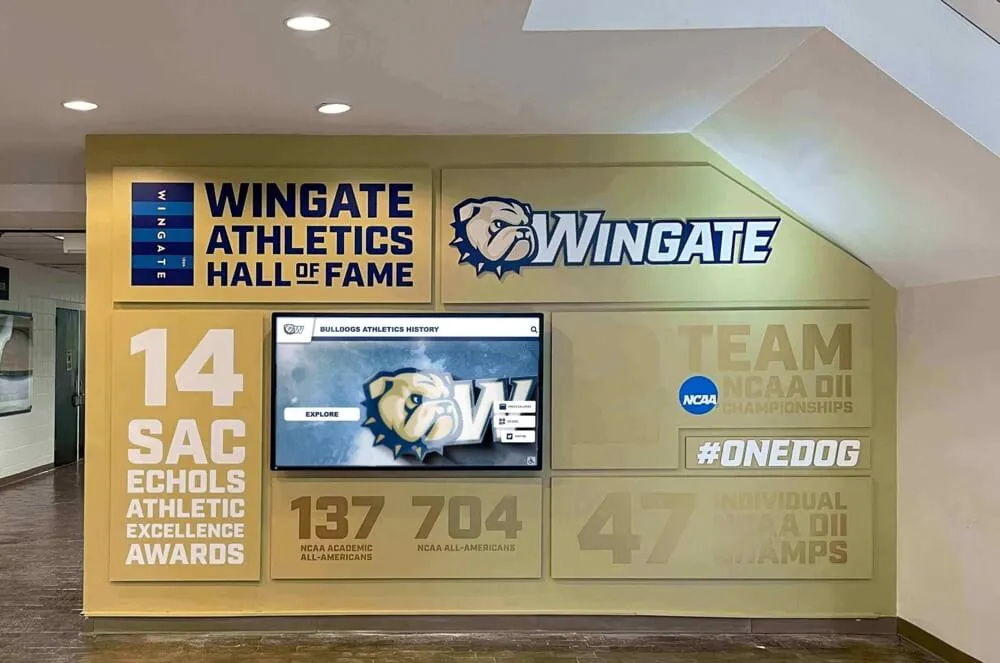
Touch wall implementations demonstrate how digital and traditional recognition complement rather than compete, creating comprehensive programs respecting heritage while leveraging technology for enhanced storytelling and unlimited capacity.
Create Programming and Events Around Displays
Static installations regardless of quality generate limited engagement compared to activated spaces with consistent programming. Effective programming includes champion meet-and-greet events, panel discussions exploring memorable moments, autograph sessions driving traffic, educational programs for youth groups, special exhibitions rotating featured content, and anniversary celebrations marking significant milestones.
Programming transforms displays from passive installations into living recognition programs that build community while driving repeated engagement from audiences discovering new reasons to visit.
Promote Actively Through Multiple Channels
Outstanding recognition displays require marketing ensuring awareness and driving traffic. Effective promotion includes social media showcasing features and content, email campaigns to season ticket holders and fans, integration with venue tours and visits, special events creating publicity, media partnerships securing coverage, and strategic positioning during high-traffic events.
Installations that passively wait for discovery underperform potential without active promotion building awareness and communicating value to target audiences.

The Future of Interactive Sports Recognition
Interactive touchscreen displays represent current state-of-the-art in sports recognition, but emerging technologies promise even more immersive and personalized fan experiences in coming years.
Artificial Intelligence and Personalization
AI-powered systems will enable highly personalized experiences adapting content to individual user interests, automatically generating highlight reels based on viewing patterns, providing intelligent recommendations for content exploration, answering natural language questions about sporting history, and creating virtual interactions with historical champions through sophisticated chatbot technology.
These advances will transform one-size-fits-all displays into dynamic experiences that recognize returning users, remember preferences, and continuously adapt to maximize individual engagement.
Virtual and Augmented Reality Integration
As VR and AR technologies mature and costs decrease, sports recognition will incorporate immersive experiences transporting fans into historic moments, enabling virtual attendance at legendary competitions, providing augmented overlays revealing additional information about physical artifacts, creating mixed reality environments blending physical and digital seamlessly, and supporting remote participation in venue experiences from anywhere globally.
These technologies will extend recognition impact beyond physical installations while creating entirely new engagement categories impossible with current approaches.
Blockchain and Digital Collectibles
Emerging blockchain technologies enable creation of verified digital collectibles linked to recognition programs, allowing fans to collect and trade digital assets commemorating championships, creating verifiable authentication for rare content and memorabilia, enabling new revenue models through digital asset sales, and building communities around collecting and trading activities.
While early blockchain applications face skepticism and technical challenges, maturation may create significant opportunities for sports recognition programs seeking innovative engagement and revenue strategies.
Social Commerce and Community Building
Future recognition platforms will increasingly incorporate social features enabling fans to create profiles and follow favorite athletes, share custom collections and discoveries with communities, participate in trivia and prediction competitions, earn badges and achievements for engagement, and connect with other fans sharing common interests.
These social dimensions transform individual exploration into community experiences that build loyalty and encourage repeated engagement through social accountability and competition.
Conclusion: Bringing Championship-Caliber Recognition to Your Venue
Major sporting championships like the U.S. Open demonstrate how interactive touchscreen displays transform fan engagement, honor achievement meaningfully, and create memorable experiences that strengthen emotional connections to sports and institutions. The technology, content strategies, and implementation approaches powering these premier events are no longer exclusive to elite venues with unlimited budgets.
Organizations at every level—from professional sports franchises to high school athletic programs, from premier golf clubs to community sports organizations—can implement interactive recognition systems that engage audiences while celebrating achievement in compelling, accessible ways. Success depends less on budget scale than on strategic planning addressing clear recognition objectives, thoughtful content development, appropriate technology selection, and sustained operational commitment supporting continuous evolution.
The approaches explored throughout this guide demonstrate that impactful interactive sports recognition proves achievable regardless of organizational size or resources. Critical requirements include genuine commitment to honoring achievement comprehensively, investment in purpose-built technology platforms designed specifically for recognition applications rather than generic digital signage, content strategy emphasizing compelling stories alongside statistics, user experience design prioritizing intuitive interaction, and sustainable operations maintaining freshness over years and decades.
Solutions like digital recognition platforms from Rocket Alumni Solutions enable sports organizations and educational institutions to honor unlimited athletes comprehensively while creating engaging experiences that strengthen connections and inspire community pride. From initial planning through sustained growth, the right technology partners and strategic approaches transform recognition from forgettable static displays into transformative experiences benefiting organizations across all mission dimensions.

Ready to Implement Interactive Recognition at Your Venue?
Whether you’re planning championship-caliber recognition for a major sporting facility, updating athletic programs with modern technology, or bringing professional-quality celebration to your school’s sports programs, interactive touchscreen displays provide powerful platforms for honoring achievement while engaging fans and building community.
Discover how modern recognition technology can transform your venue or institution. Explore solutions from Rocket Alumni Solutions to see how professional sports venues, universities, and schools nationwide create compelling recognition experiences through interactive touchscreen displays and comprehensive digital platforms.
Your athletes, champions, and fans deserve recognition worthy of their dedication and achievements. With thoughtful planning, appropriate technology, and committed operation, you can create interactive sports recognition displays that honor the past, celebrate the present, and inspire future generations of champions—just like the major championships that captivate audiences worldwide.