



Key Takeaways
Complete guide to the UIL State Track Meet in Texas. Learn about qualification, events, records, and how schools celebrate track champions through digital recognition displays.
Every May, thousands of Texas high school track athletes converge on the University of Texas at Austin for the culmination of months of training, competition, and qualification meets. The UIL State Track Meet represents the pinnacle of high school track and field achievement in Texas, where athletes compete for state championship medals, set records that stand for decades, and create memories celebrated in their school communities for generations.
For Texas high schools with strong track traditions, state meet appearances and championships become foundational elements of athletic identity. Championship performances earn recognition on school record boards, hall of fame displays, and digital recognition systems that preserve these achievements permanently. Understanding how the UIL State Track Meet operates—from qualification systems to event schedules to recognition traditions—helps coaches, athletes, families, and school administrators appreciate the significance of this premier high school track championship.
Understanding the UIL State Track Meet Structure
The University Interscholastic League (UIL) governs high school athletics across Texas, organizing competition structures that accommodate the state’s diverse school sizes and geographic regions. Track and field follows a systematic progression from local district meets through state championships, with clear advancement criteria at each level.
Classification System and Divisions
Texas UIL track and field organizes schools into six classifications based on enrollment, ensuring competitive equity:
Classification Breakdown:
- Class 1A: Smallest schools, typically under 105 students in grades 9-12
- Class 2A: Schools with approximately 105-220 students
- Class 3A: Schools with approximately 220-465 students
- Class 4A: Schools with approximately 465-1,060 students
- Class 5A: Schools with approximately 1,060-2,225 students
- Class 6A: Largest schools, over 2,225 students in grades 9-12
Within some classifications, schools are further divided into Division I and Division II based on enrollment, creating distinct competition brackets that ensure smaller schools within a classification don’t face disadvantages against larger schools in the same classification. This division system means a 3A Division I school competes separately from 3A Division II schools throughout district, area, regional, and state competition.
Geographic Organization and Competition Levels
Track athletes advance through multiple competitive levels before reaching state championships:
District Meet: The first level of competition where schools within designated geographic districts compete. District meets typically occur in late March or early April. Athletes must place in qualifying positions (usually top 4) to advance to the area meet. District competition establishes initial qualification benchmarks and identifies top performers in each region.
Area Meet: The second level where district qualifiers from adjacent districts compete against each other. Area meets narrow the field further, with top finishers (typically top 2-3) advancing to regional competition. Not all classifications use area meets—some move directly from district to regional depending on the number of schools and competitive structure.
Regional Meet: The penultimate competition level held at various locations across Texas. Regional meets bring together the best qualifiers from multiple areas within a region. This represents the most selective pre-state competition, as only the top performers (typically top 2) in each event earn the right to compete at the state meet. Regional meet performances often represent personal bests as athletes reach peak competitive form.
State Meet: The final championship held at Mike A. Myers Stadium in Austin. State meet qualification represents a significant achievement—only the top regional finishers in each classification advance, creating fields of the absolute best high school track athletes in Texas.
Meet Timeline and Schedule Structure
The UIL State Track Meet spans multiple days to accommodate all classifications, divisions, and events:
Typical Schedule Format:
The meet usually follows a structured progression across 3-4 days in early May:
- Day 1: Class 1A and 2A preliminaries and some finals
- Day 2: Class 3A and 4A preliminaries and finals
- Day 3: Class 5A preliminaries and some finals
- Day 4: Class 5A finals and all Class 6A competition
Within each day, events alternate between running and field events, with preliminary heats in shorter races determining finalists. Athletes may compete in multiple events across the same day, requiring strategic planning for rest, warm-up, and peak performance timing.
Field events (high jump, pole vault, long jump, triple jump, shot put, discus) typically run concurrently with track events, with athletes competing in preliminaries to determine finalists who compete for medals.
Complete Event Schedule and Competition Format
The UIL State Track Meet includes comprehensive event offerings across both boys and girls divisions, covering sprints, distance races, hurdles, relays, and field events.
Running Events
Sprint Events:
- 100 Meters: The premier speed event featuring the fastest athletes. Preliminary heats narrow the field to finals featuring the top 8-9 competitors based on times.
- 200 Meters: Middle sprint requiring speed endurance and curve running technique.
- 400 Meters: The longest sprint, demanding both speed and tactical pacing strategy.
Sprint events generate tremendous excitement with tight finishes often decided by hundredths of seconds. State meet sprint records represent elite performances approaching college and professional standards.
Middle Distance Events:
- 800 Meters: Two laps requiring strategic positioning, kick timing, and speed endurance balance.
- 1600 Meters: The metric mile, testing sustained pace and finishing kick capability.
Middle distance events showcase both tactical racing intelligence and physiological endurance. Athletes must balance front-running strategies versus sit-and-kick approaches depending on competitors and race dynamics.
Distance Events:
- 3200 Meters: The longest track event, nearly two miles of sustained effort testing pure endurance and mental toughness.
Distance runners at state meet level demonstrate remarkable aerobic capacity, with winning times often under 9:30 for boys and 10:30 for girls across larger classifications. Schools with strong cross country programs often excel in distance events at the state track meet, and many schools feature these distance champions on athletic hall of fame displays that celebrate multi-sport excellence.
Hurdle Events
Sprint Hurdles:
- 100 Meters Hurdles (Girls): Ten hurdles spaced specifically for female athletes, combining speed with technical barrier clearance.
- 110 Meters Hurdles (Boys): Ten higher hurdles requiring explosive speed and precise three-step rhythm between barriers.
Intermediate Hurdles:
- 300 Meters Hurdles: Eight hurdles spaced around the track, testing speed endurance combined with hurdling technique under fatigue.
Hurdle events demand specialized technique training and explosive power. Many successful hurdlers also compete in sprint events or long jump, demonstrating the athletic versatility required for hurdling success. State championship hurdlers often become the most celebrated athletes in their school programs, with their achievements prominently featured in trophy display cases and digital recognition systems.
Relay Events
Relay events represent team coordination and strategy, with four athletes combining efforts:
Sprint Relays:
- 4x100 Meter Relay: The shortest relay requiring perfect baton exchanges in designated zones. Split-second timing and exchange precision determine success as much as individual speed.
- 4x200 Meter Relay: Middle sprint relay balancing speed with longer exchange zones and curve running strategy.
Distance Relay:
- 4x400 Meter Relay: The championship relay often closing each session. Four athletes each run 400 meters in a strategic sequence that typically places the fastest runner as anchor leg to create dramatic finishes.
Relay medals hold special significance as team accomplishments. Many Texas high schools maintain relay records dating back decades, with championship relay teams earning permanent recognition on school record boards. Schools often celebrate relay championships through senior night recognition programs that honor athletes as they complete their final seasons.
Field Events
Field events run concurrently with track events, requiring athletes to balance competition timing with their running event schedules:
Vertical Jumps:
- High Jump: Athletes clear horizontal bars without dislodging them, with heights progressively increasing. Competitions can last several hours as remaining competitors attempt record heights.
- Pole Vault: Technical event requiring speed, strength, and aerial awareness to clear bars using fiberglass poles for upward propulsion.
Vertical jump competitions create sustained drama as athletes progressively eliminate themselves with three consecutive misses at a height. State meet high jump and pole vault records often stand for years or decades.
Horizontal Jumps:
- Long Jump: Athletes sprint down a runway and leap from a takeoff board, seeking maximum distance. Legal jumps require precise takeoff without crossing the board’s edge.
- Triple Jump: Complex event requiring a hop, skip, and jump sequence covering maximum distance through coordinated phases.
Horizontal jumps combine sprint speed with explosive power and technical precision. Wind conditions significantly impact jump distances, with officials measuring and recording wind speed for each attempt. Wind-legal performances under the 2.0 meters per second limit earn greater recognition than wind-aided marks.
Throwing Events:
- Shot Put: Athletes throw a metal sphere (12 pounds for boys, 8 pounds for girls) from a circle using explosive rotational or glide techniques.
- Discus: Throwers spin within a circle to launch a 1.6kg (boys) or 1kg (girls) disc for maximum distance.
Throwing events showcase pure power and technical mastery. Successful throwers often compete in both shot put and discus, with many also excelling in football during fall seasons. State championship throwers frequently earn recognition as youth sports award recipients celebrating strength, improvement, and competitive success.
Qualification Strategy and Performance Standards
Advancing from district competition to state championships requires strategic planning, consistent performance, and understanding of qualifying standards across competition levels.
Understanding Qualifying Positions
Each competition level establishes specific advancement criteria:
District Meet Advancement: Typically the top four finishers in each event advance to area or regional competition, depending on classification structure. Some smaller classifications may advance more athletes from district meets when fewer schools compete.
Area Meet Advancement: Where area meets exist, usually the top two or three finishers advance to regional competition. Area meets serve to narrow large qualifying fields in classifications with many schools.
Regional Meet Advancement: The most selective advancement threshold—typically only the top two finishers in each event qualify for state. In some cases, particularly in relays or field events, third-place performers may advance based on performances compared across regions, though this varies by year and event.
Performance Standards and Automatic Qualification
While most athletes qualify through placement, exceptional performances sometimes enable automatic qualification regardless of finish position. Understanding competitive time and distance standards helps athletes gauge their qualification probability:
Competitive Benchmarks by Classification:
Performance standards vary significantly across classifications, with larger schools (5A/6A) typically requiring faster times and longer distances than smaller classifications due to deeper talent pools:
- 100 Meters: State-qualifying times range from approximately 10.5-11.2 seconds for boys and 11.8-12.5 seconds for girls depending on classification
- 400 Meters: Competitive times range from 48-51 seconds for boys and 57-61 seconds for girls
- 1600 Meters: State-level performances typically fall between 4:15-4:40 for boys and 5:00-5:30 for girls
- Long Jump: State qualifiers typically jump 22+ feet for boys and 17+ feet for girls in larger classifications
- Shot Put: Competitive marks range from 50+ feet for boys and 38+ feet for girls in top classifications
These standards represent general guidelines—actual qualifying performances vary annually based on regional competition strength. Many schools utilize digital record boards that display historical qualifying performances, helping current athletes understand standards they need to achieve.
Strategic Event Selection
Athletes can compete in up to three individual events plus relays, requiring strategic selection:
Factors in Event Selection:
- Primary strength events: Athletes typically choose events matching their greatest competitive advantages
- Recovery time: Sprint events on the same day require less recovery than competing in 1600m and 3200m
- Qualification probability: Some athletes choose events with realistic medal chances rather than entering more competitive events where qualification remains uncertain
- Relay commitments: Relay participation affects individual event selection due to scheduling and energy conservation needs
Coaches must balance athlete desires to compete in multiple events against realistic assessment of qualifying probability and performance optimization. Many successful state meet athletes focus on 1-2 primary events where they possess genuine medal potential rather than spreading efforts across many events.
Notable Records and Historic Performances
The UIL State Track Meet has produced remarkable performances over decades of competition, with certain records standing as benchmarks of excellence in Texas high school track and field.
Long-Standing State Records
Some UIL track records have withstood challenges for years or even decades, representing historically exceptional performances:
Boys Records of Note:
Several boys records from the 1980s and 1990s still stand, particularly in sprint events where athletes achieved times approaching professional standards. Distance records have fallen more frequently as training methods and competitive depth have evolved.
Girls Records of Note:
Girls track records similarly showcase historic performances, with several sprint and field event marks standing for extended periods. The evolution of girls track participation and training has led to steady record progression across most events, though certain marks remain untouched for years.
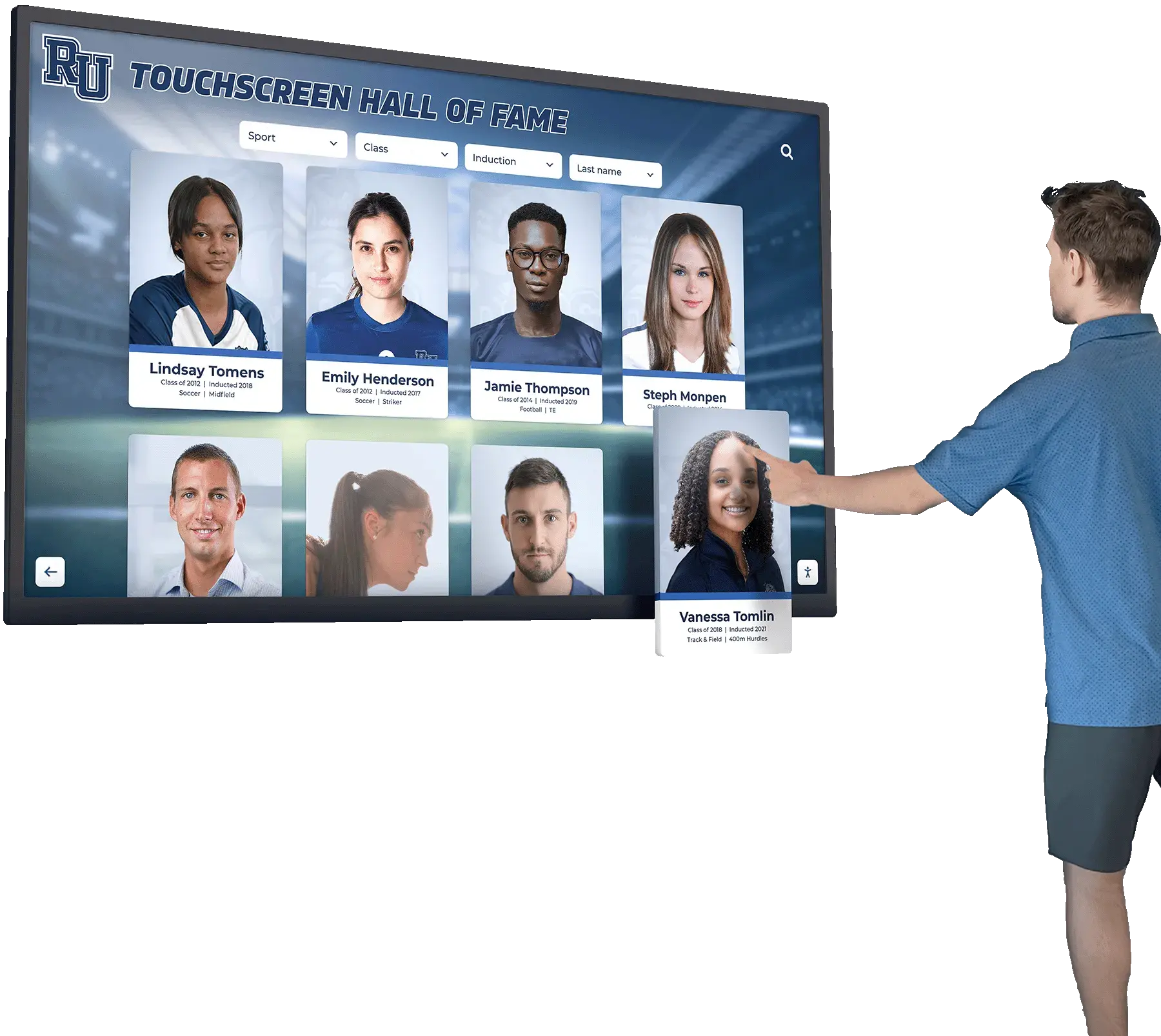
Records receive special recognition at state meets when approached or broken, with immediate announcements and ceremony acknowledgment. Many Texas high schools maintain permanent record displays celebrating athletes who set state meet records or school records that stood for extended periods. Schools often showcase these record-breaking performances through interactive kiosk displays that allow visitors to explore historic achievements.
Multiple Event Champions
Athletes who win multiple individual events at a single state meet earn special recognition as elite performers:
Double Winners: Athletes winning two individual events at state meet demonstrate exceptional versatility and competitive stamina. Common double-win combinations include:
- 100m and 200m sprints
- 400m and either 200m or 800m
- 1600m and 3200m distance events
- Long jump and triple jump
- Shot put and discus
Triple Winners: Rare athletes winning three individual events represent historic performances. These achievements require extraordinary physical capability combined with strategic event scheduling allowing adequate recovery between competitions.
Multiple event winners often achieve additional recognition as state or national track athletes of the year, earning profiles in Texas track publications and recruiting interest from collegiate programs nationwide. Many Texas high schools feature their multiple state champions prominently in athletic recognition programs celebrating comprehensive athletic excellence.
School Programs with Championship Traditions
Certain Texas high schools have established sustained excellence in track and field, consistently producing state qualifiers and champions across multiple years:
Dominant Programs by Region:
Texas high school track powerhouse programs often emerge from schools with dedicated coaching staffs, strong feeder programs, and communities that prioritize track and field development. These programs produce multiple state qualifiers annually and win team championships across various classifications.
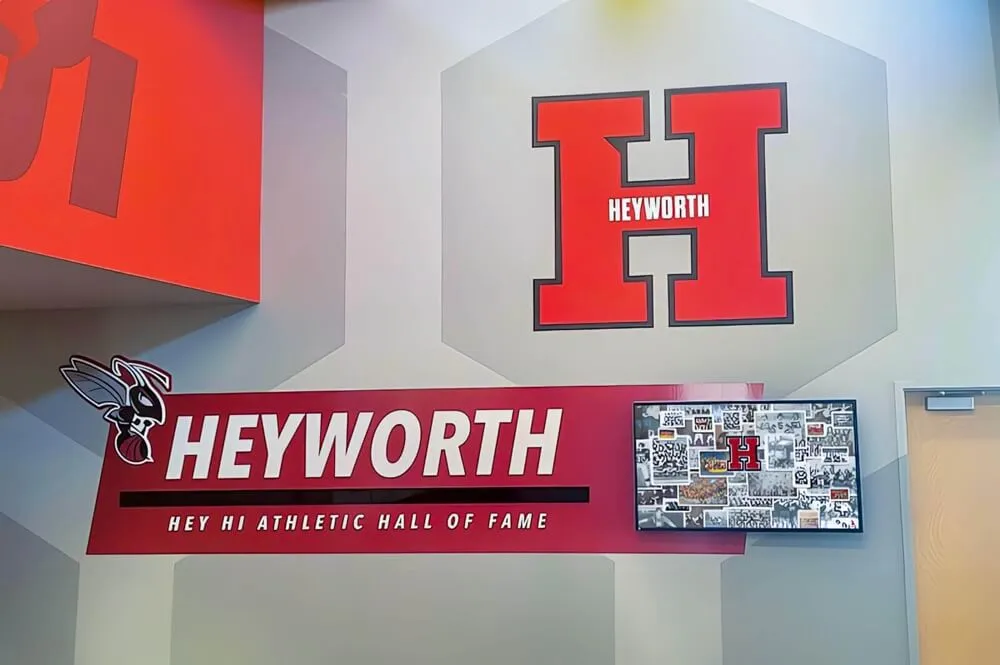
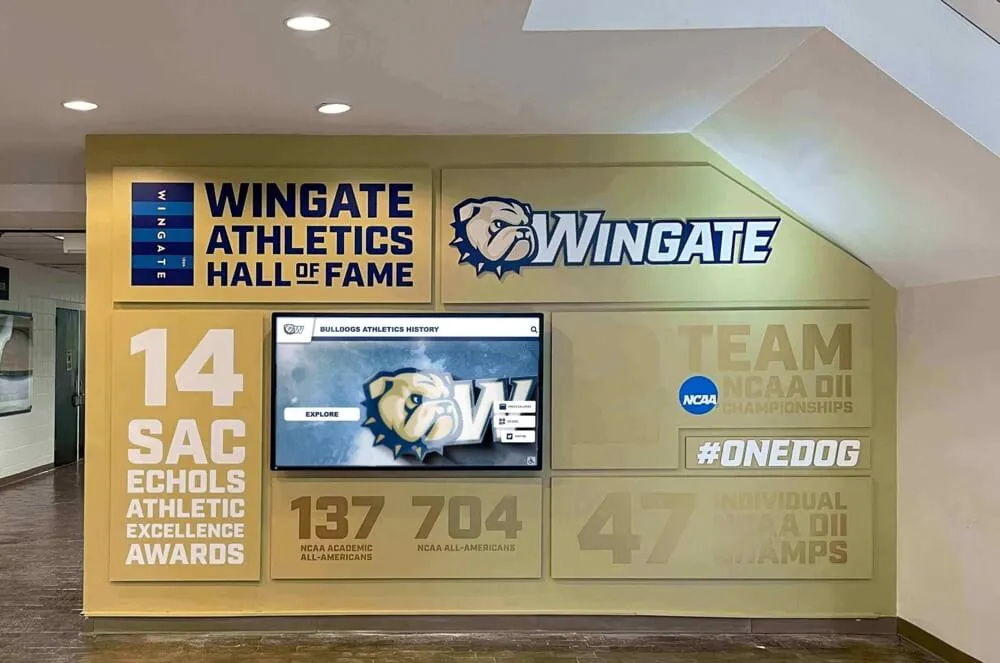
Schools with championship traditions maintain this excellence through consistent coaching, athlete development systems, and program cultures that celebrate track success. Many championship programs utilize digital hall of fame displays showcasing decades of state meet success, creating visual reminders that inspire current athletes.
Celebrating State Track Champions in School Communities
State track meet success creates lasting pride within school communities, with championship performances celebrated through various recognition formats that preserve these achievements for future generations.
Traditional Recognition Methods
Texas high schools have long traditions of celebrating state track champions:
Physical Display Systems:
- Championship Banners: Many schools hang banners in gymnasiums or field houses commemorating state championship teams and individual champions
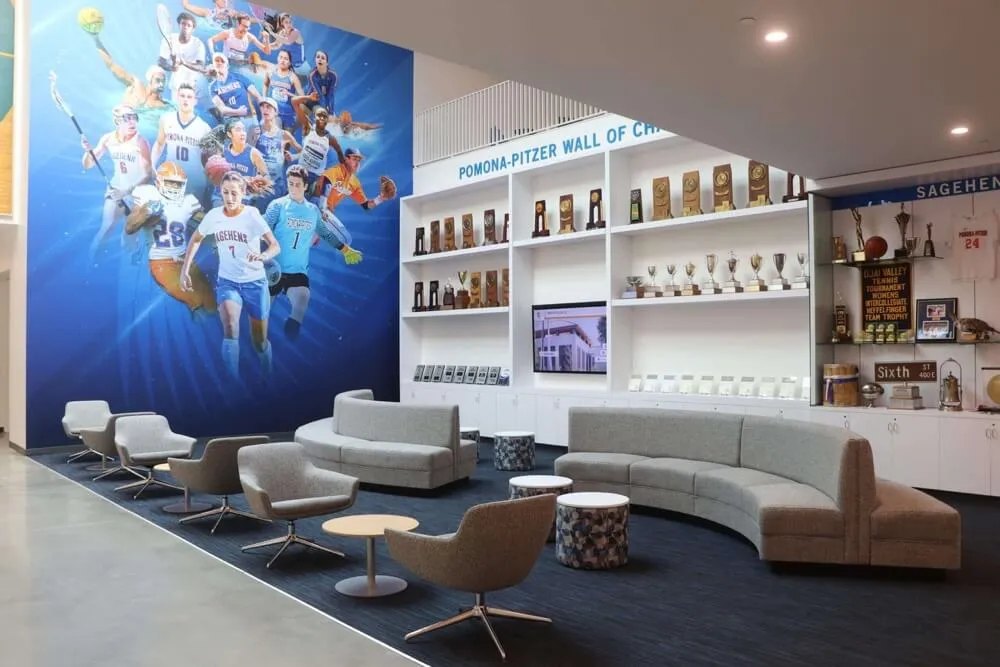
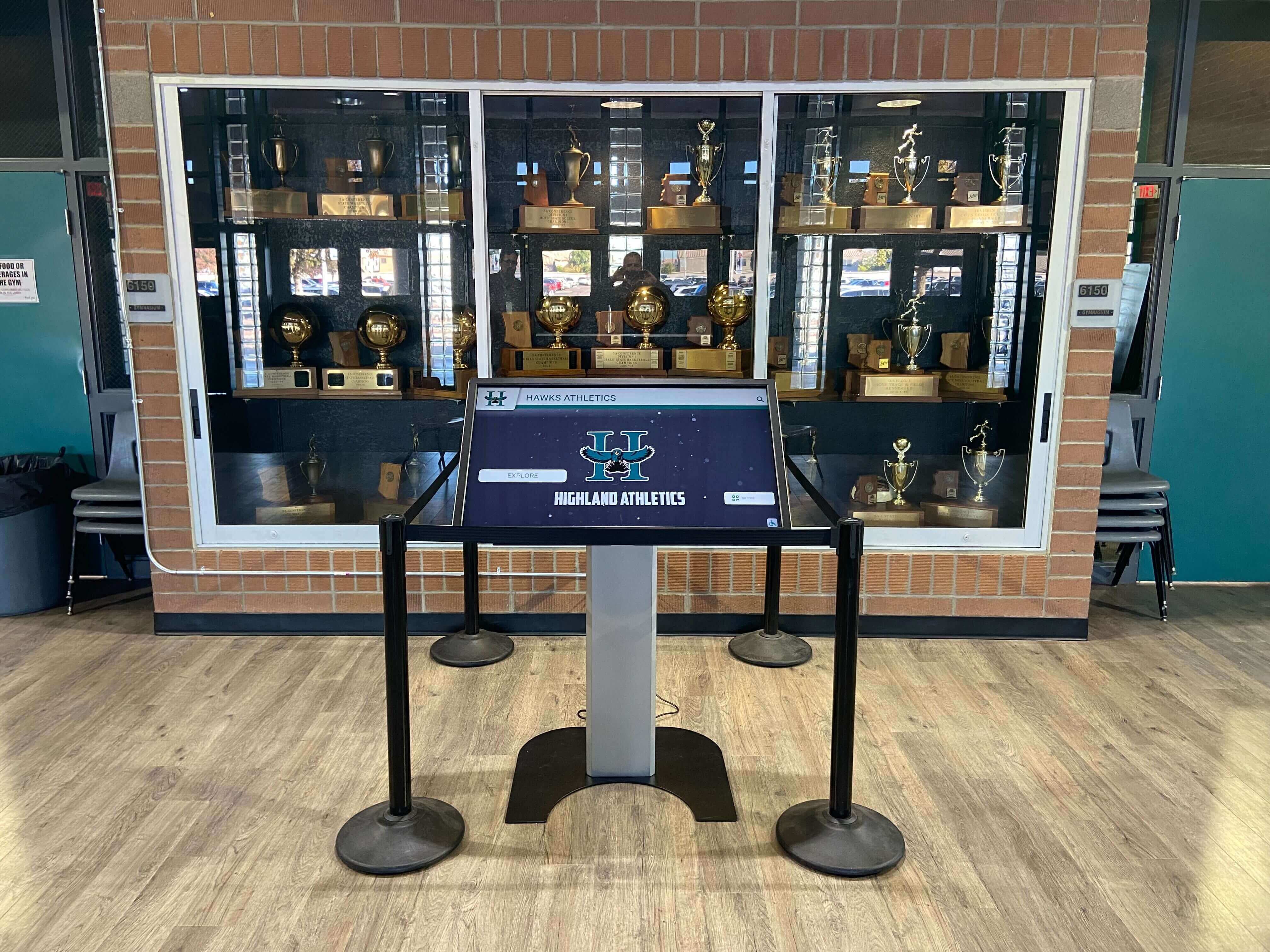
- Trophy Cases: State meet medals and trophies receive prominent display in school trophy cases, often with accompanying photos and achievement descriptions
- Record Boards: Painted or engraved boards listing school records, state qualifiers, and medal winners
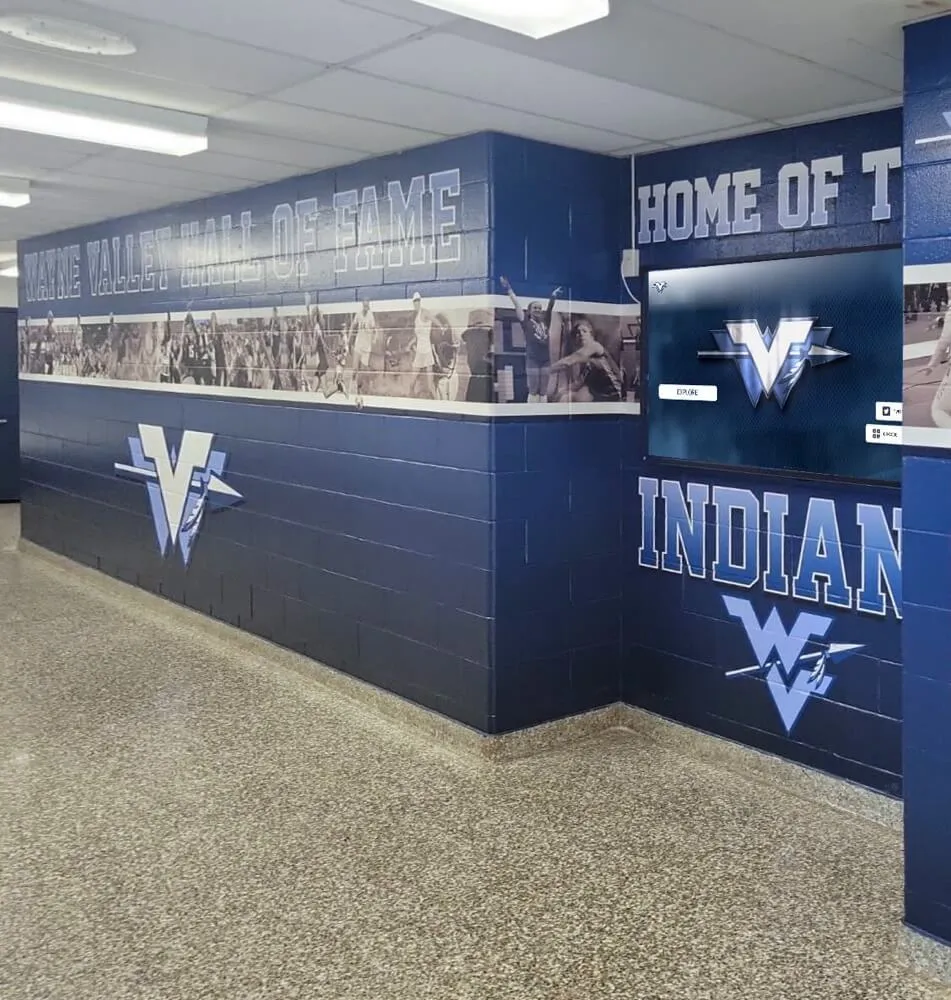
- Wall of Fame Plaques: Individual plaques honoring state champions, often grouped together in dedicated hallway or facility spaces
Traditional recognition creates tangible, permanent acknowledgment of achievement visible to current students, visitors, and alumni. However, physical displays face space limitations as schools accumulate more champions over decades.
Modern Digital Recognition Systems
Contemporary schools increasingly implement digital recognition technology that overcomes traditional display limitations while providing enhanced engagement:
Digital Display Advantages:
Digital recognition systems designed specifically for athletic programs offer several benefits for celebrating track champions:
- Unlimited capacity: Schools can recognize unlimited athletes without physical space constraints
- Rich multimedia: Include athlete photos, race videos, championship ceremonies, and detailed performance statistics
- Easy updates: Add new champions immediately after state meet rather than waiting for physical production and installation
- Searchable databases: Alumni, students, and visitors can search by athlete name, year, event, or achievement type
- Historical preservation: Automatically maintain comprehensive archives of all state qualifiers and champions across program history
- Remote accessibility: Family members and alumni can access recognition content from anywhere rather than requiring facility visits
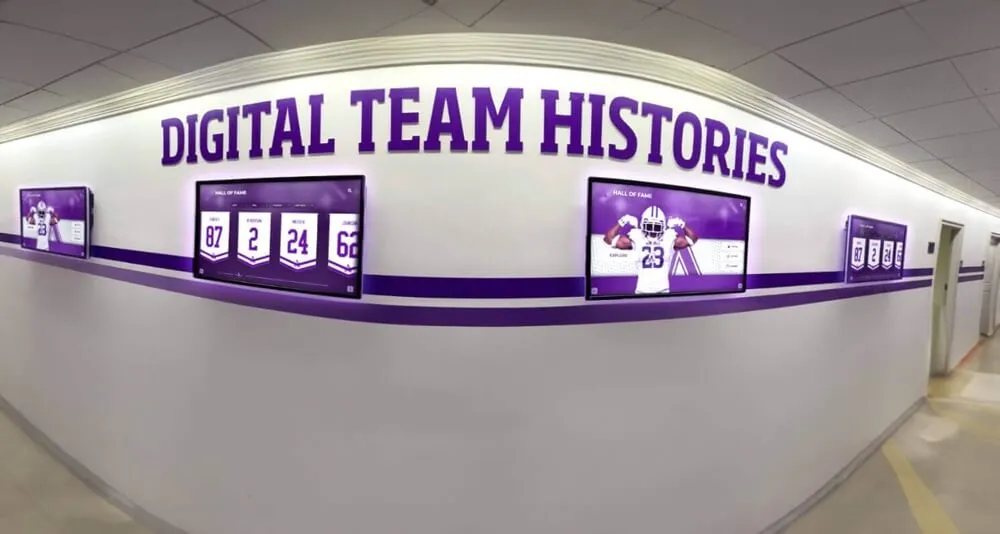
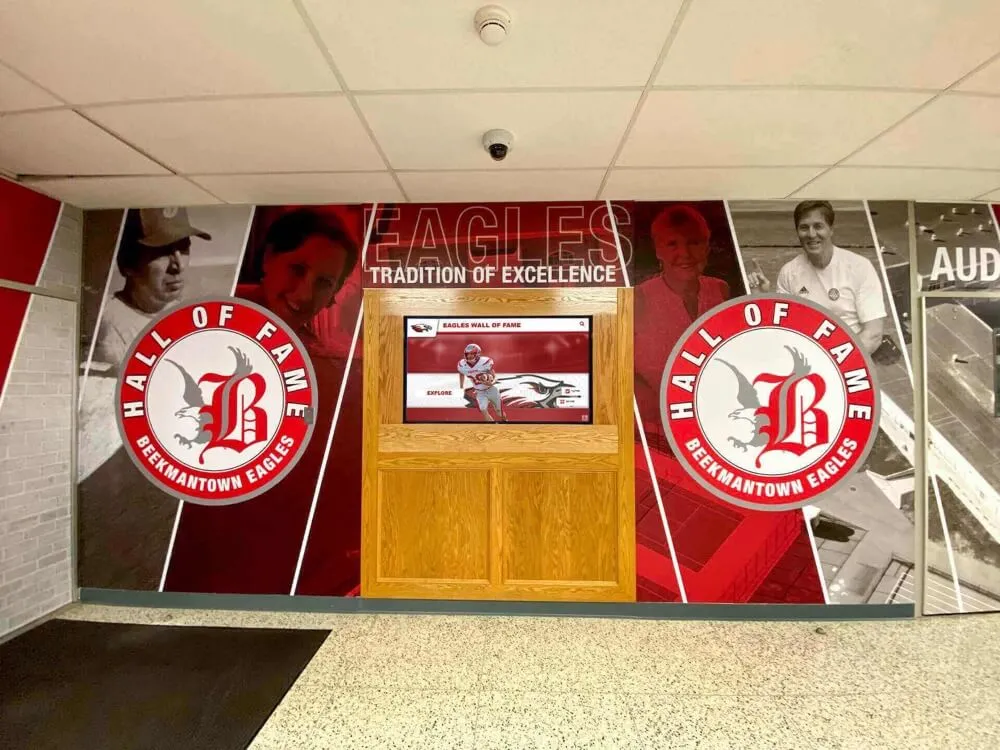
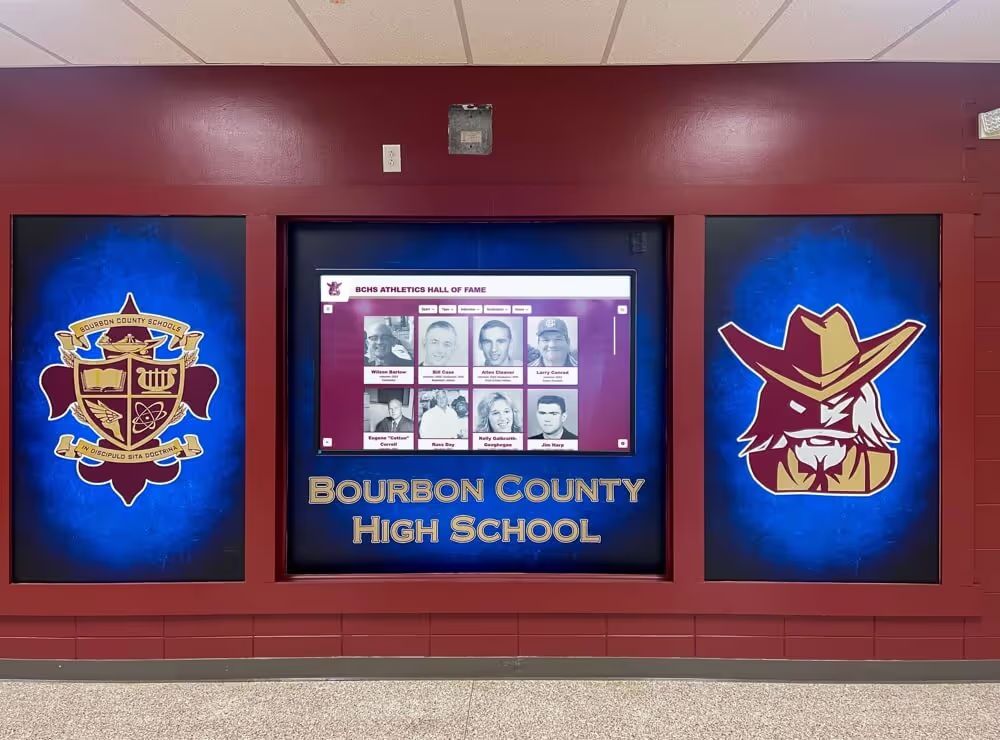
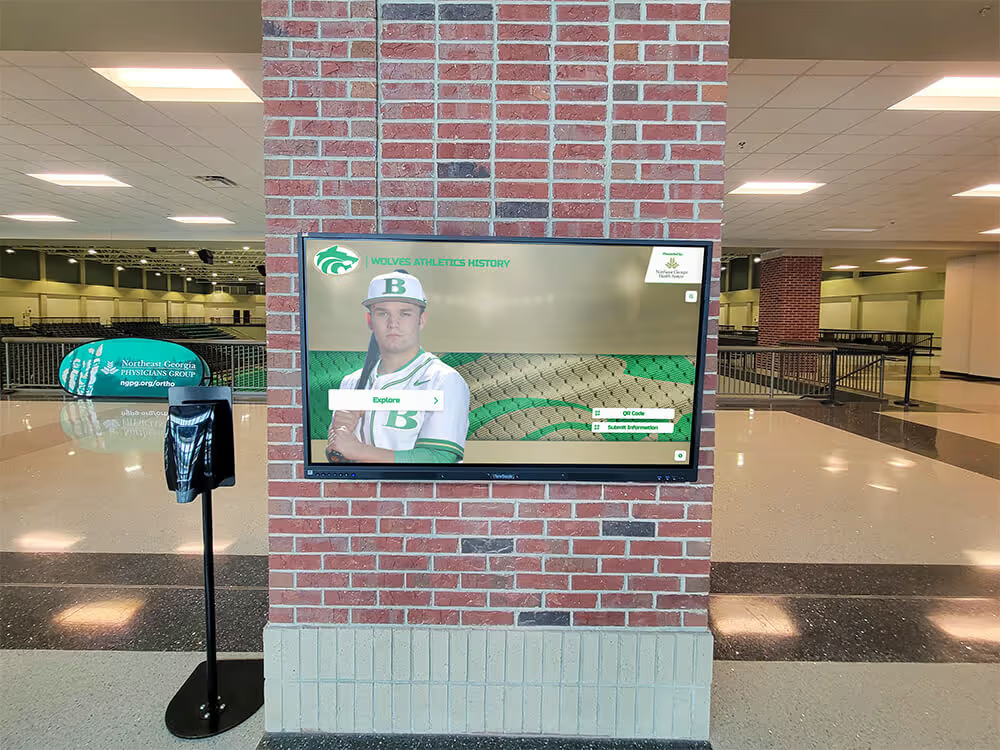
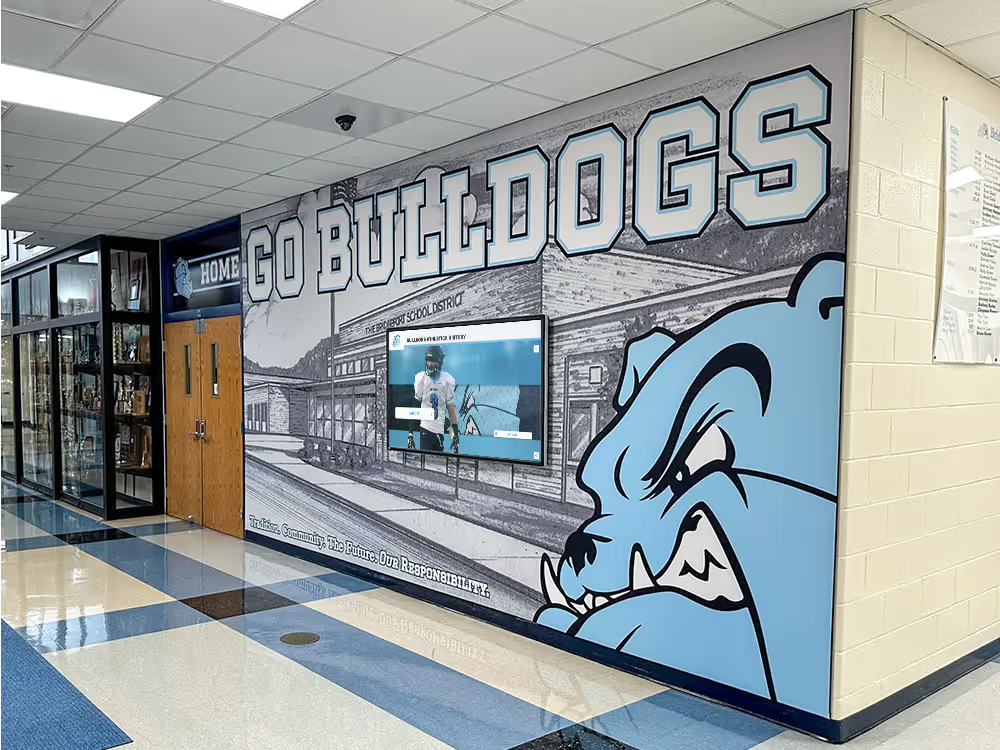
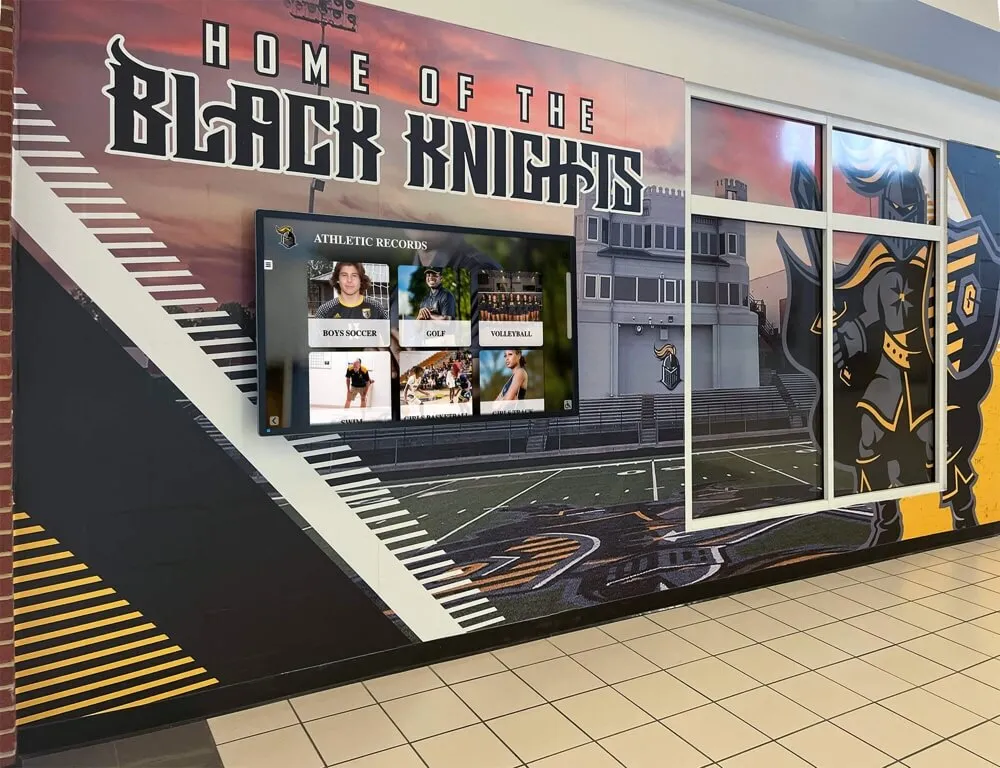
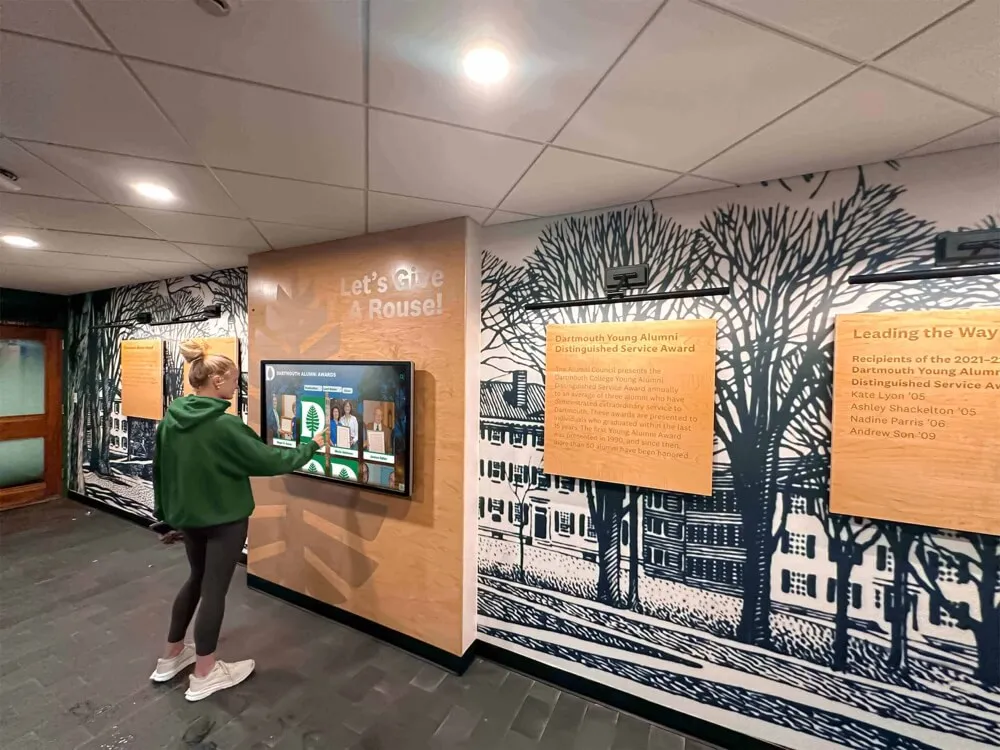
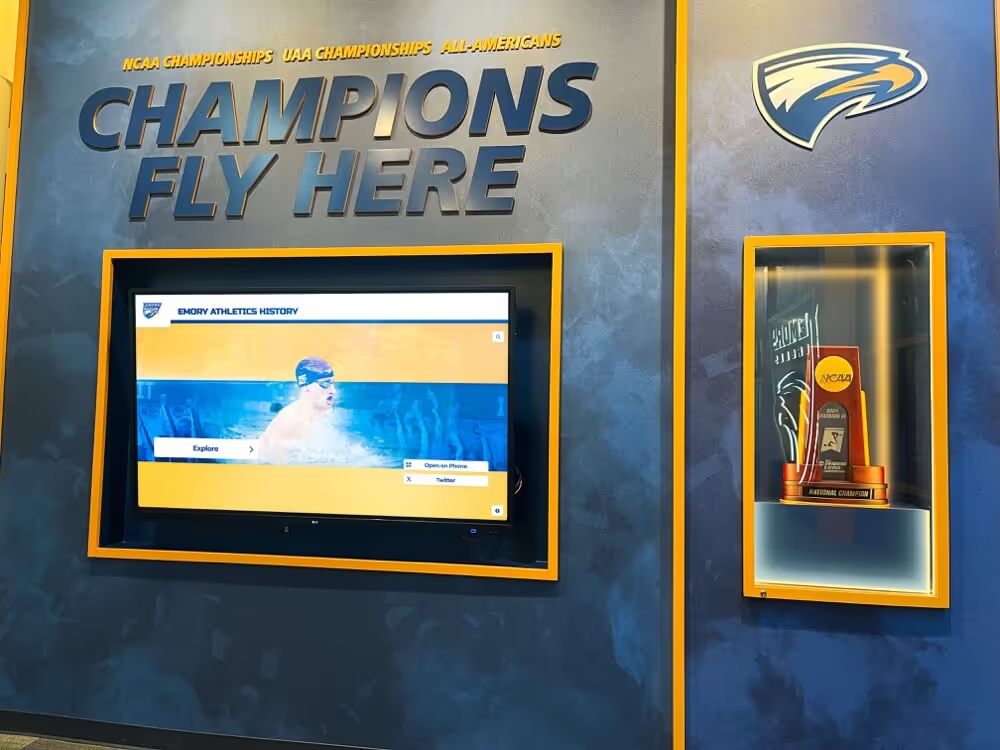
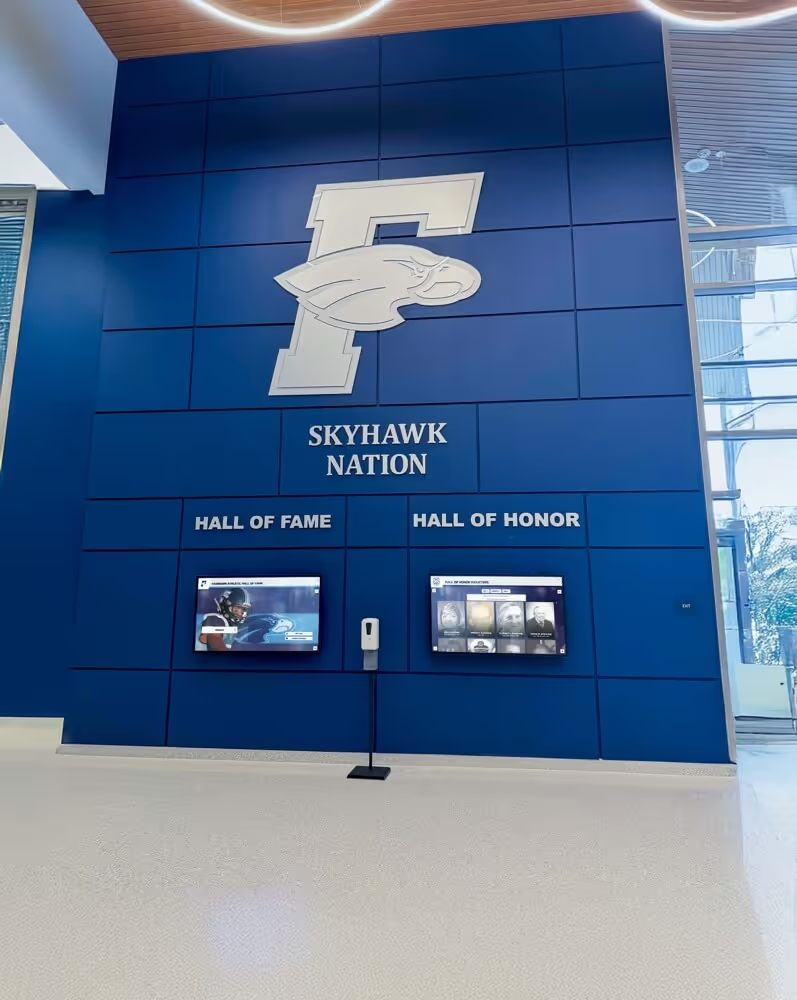
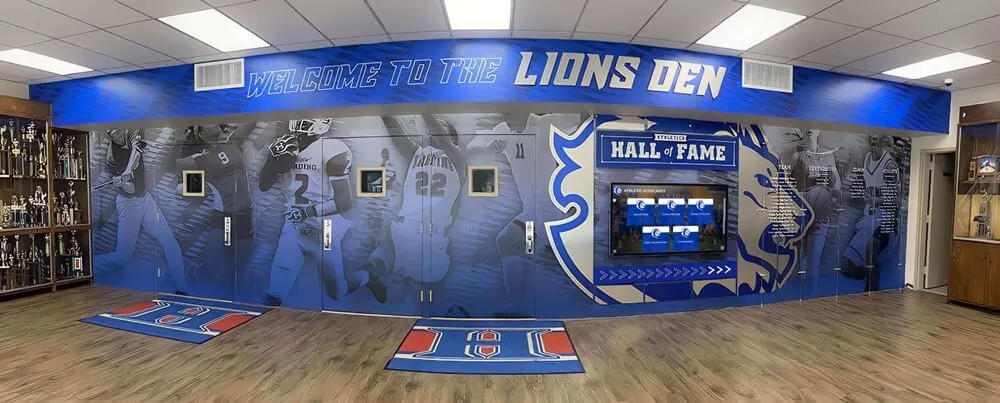
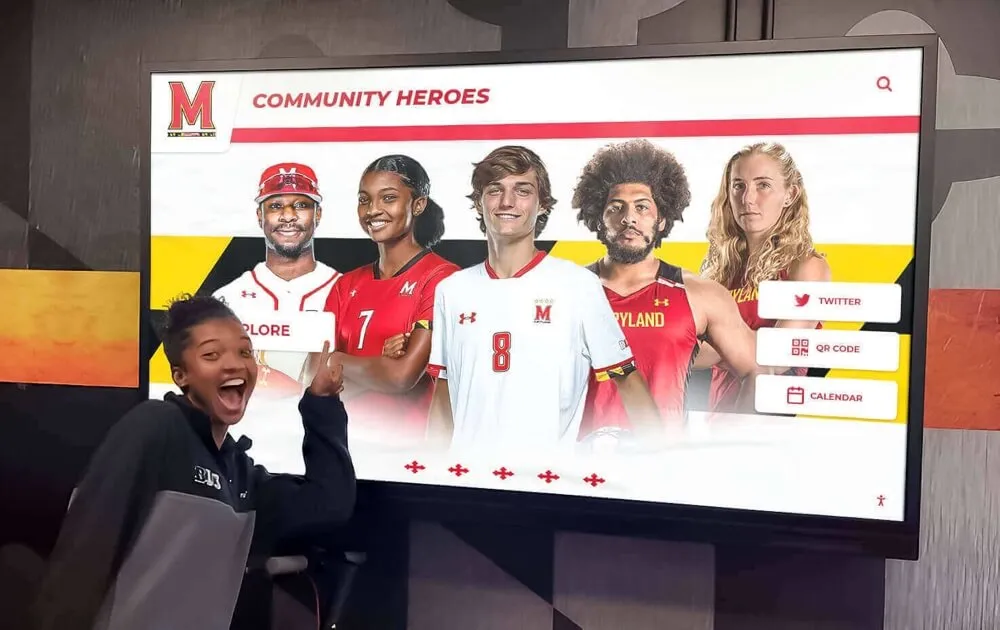
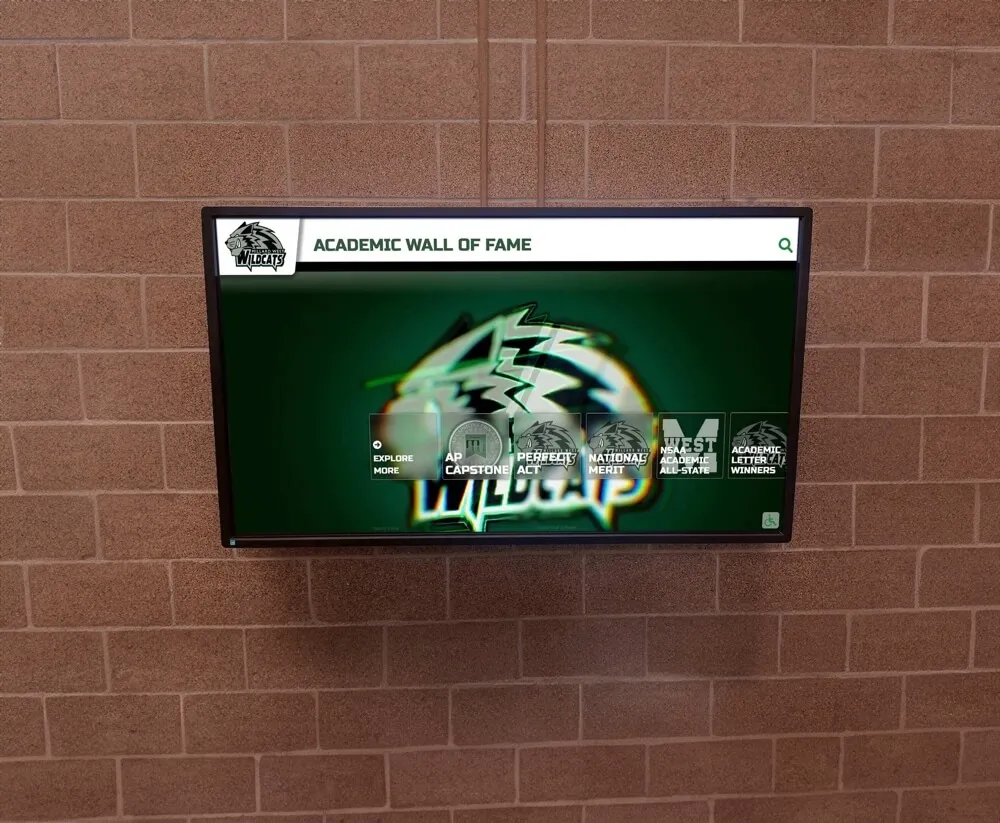
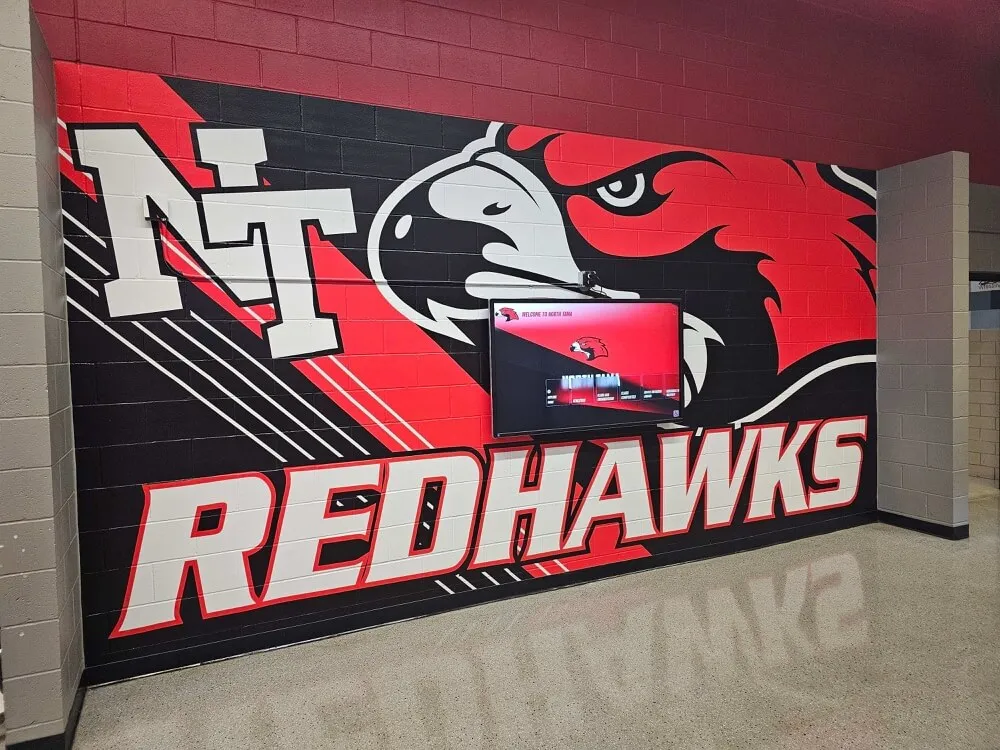
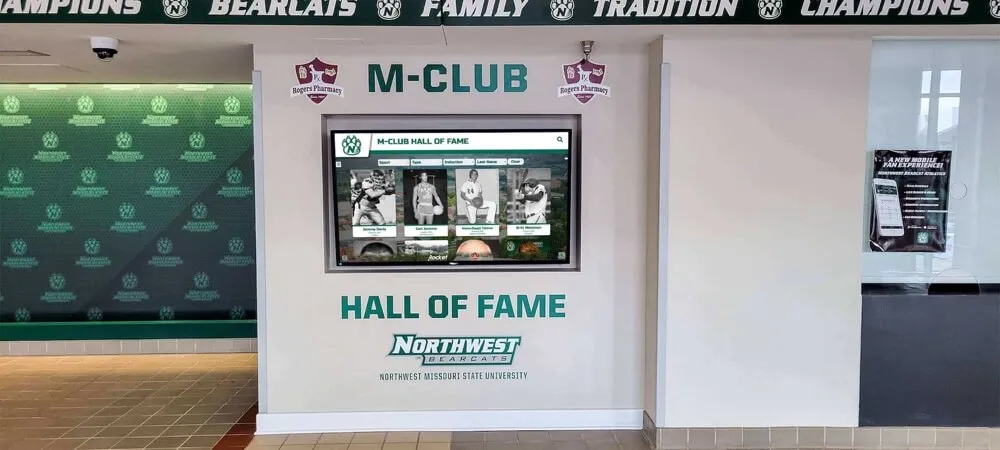
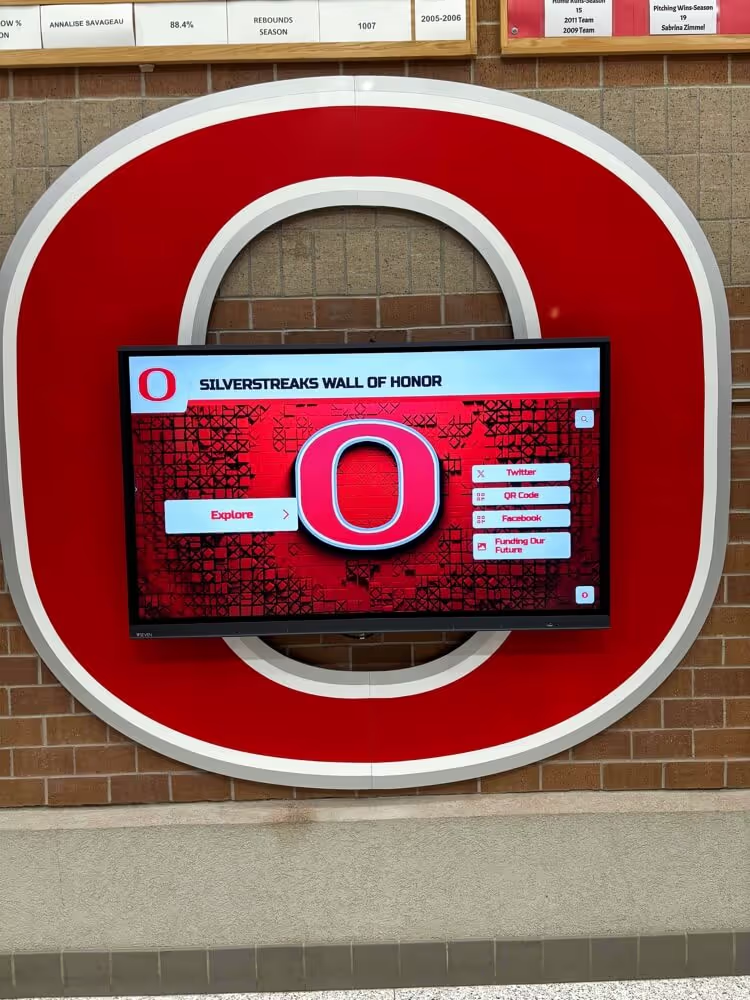
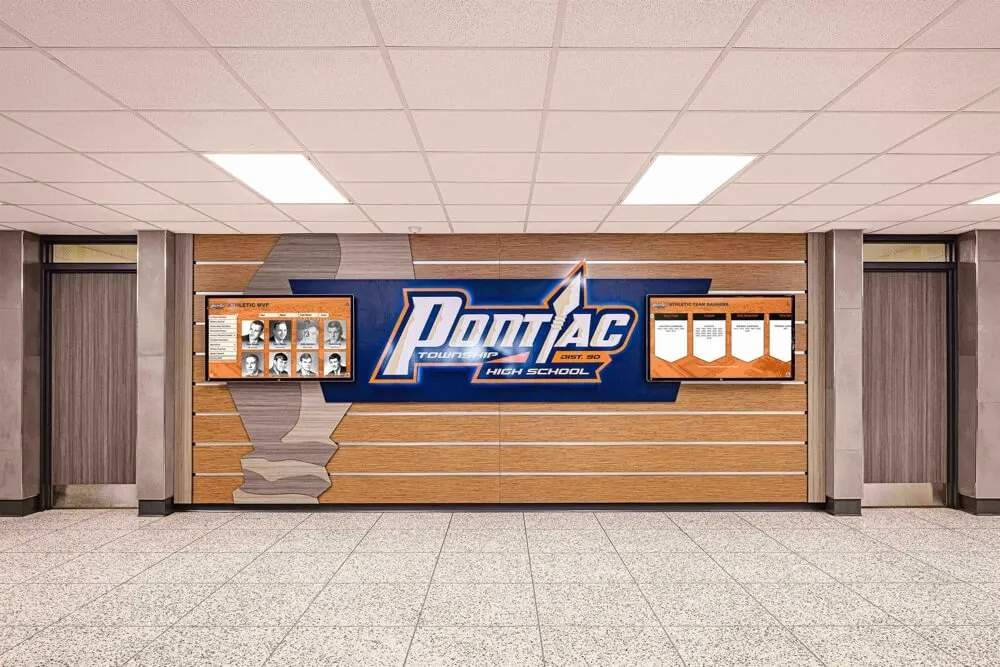
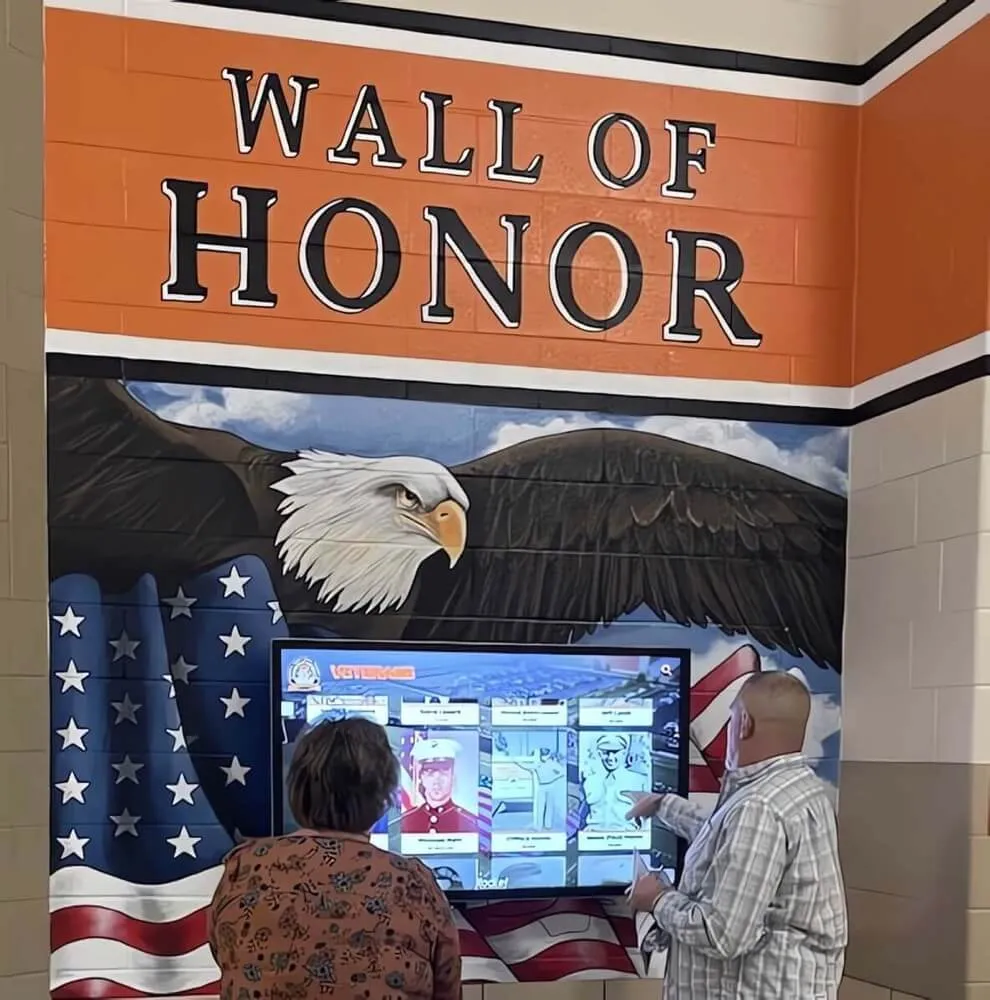
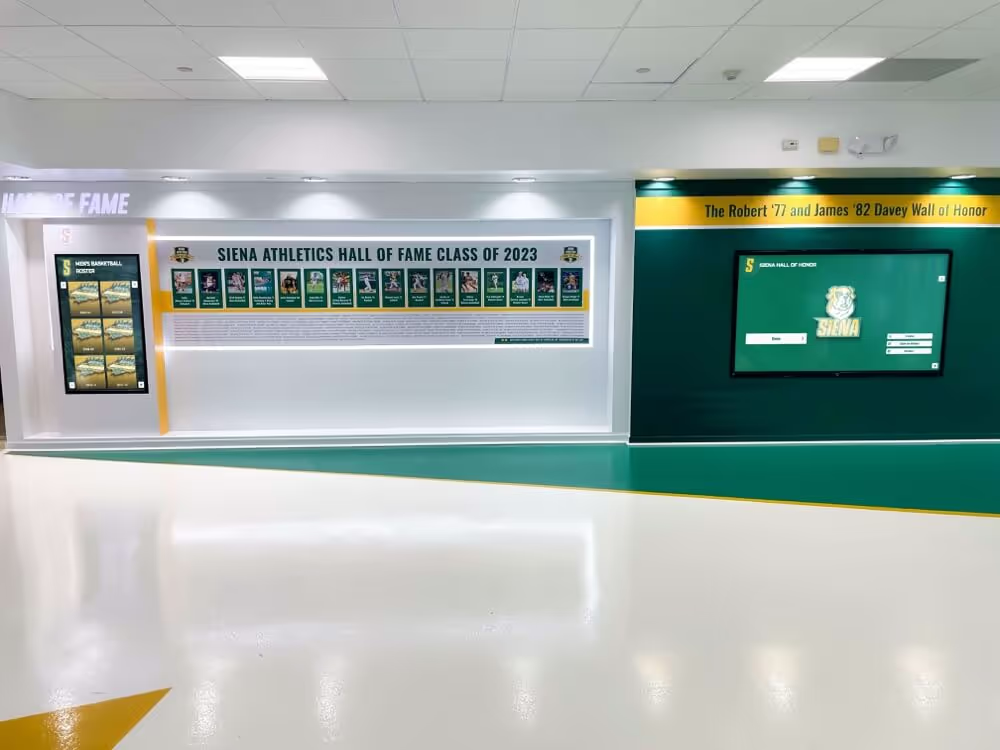
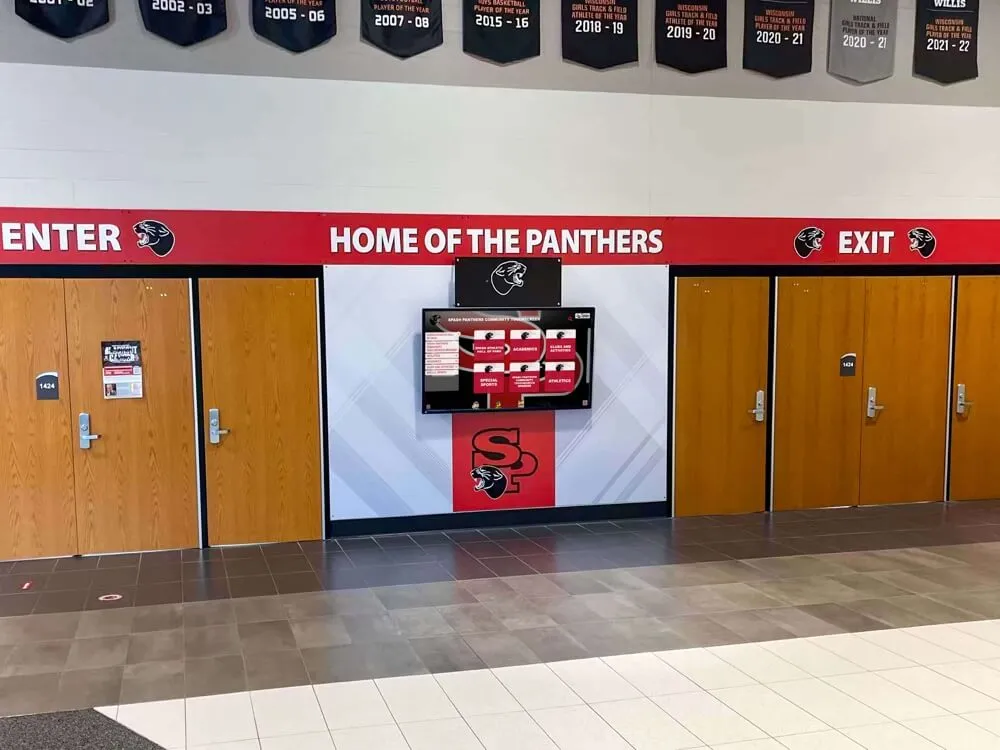
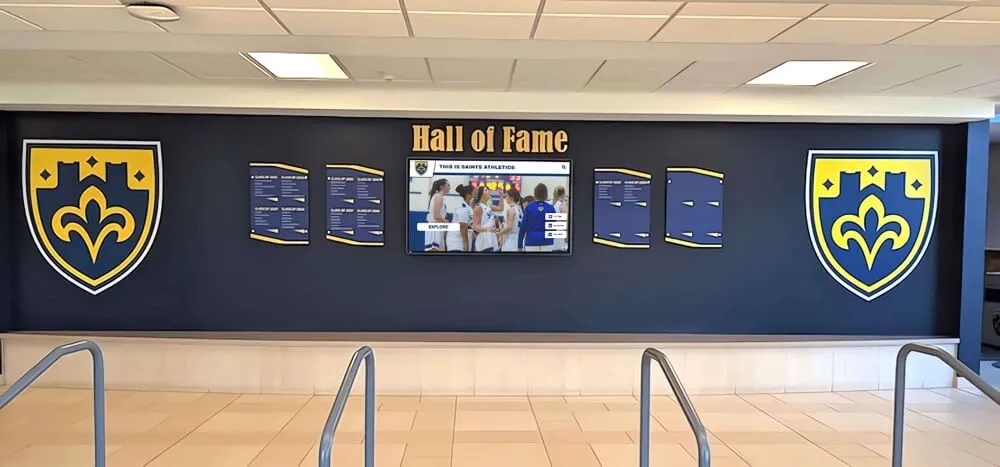
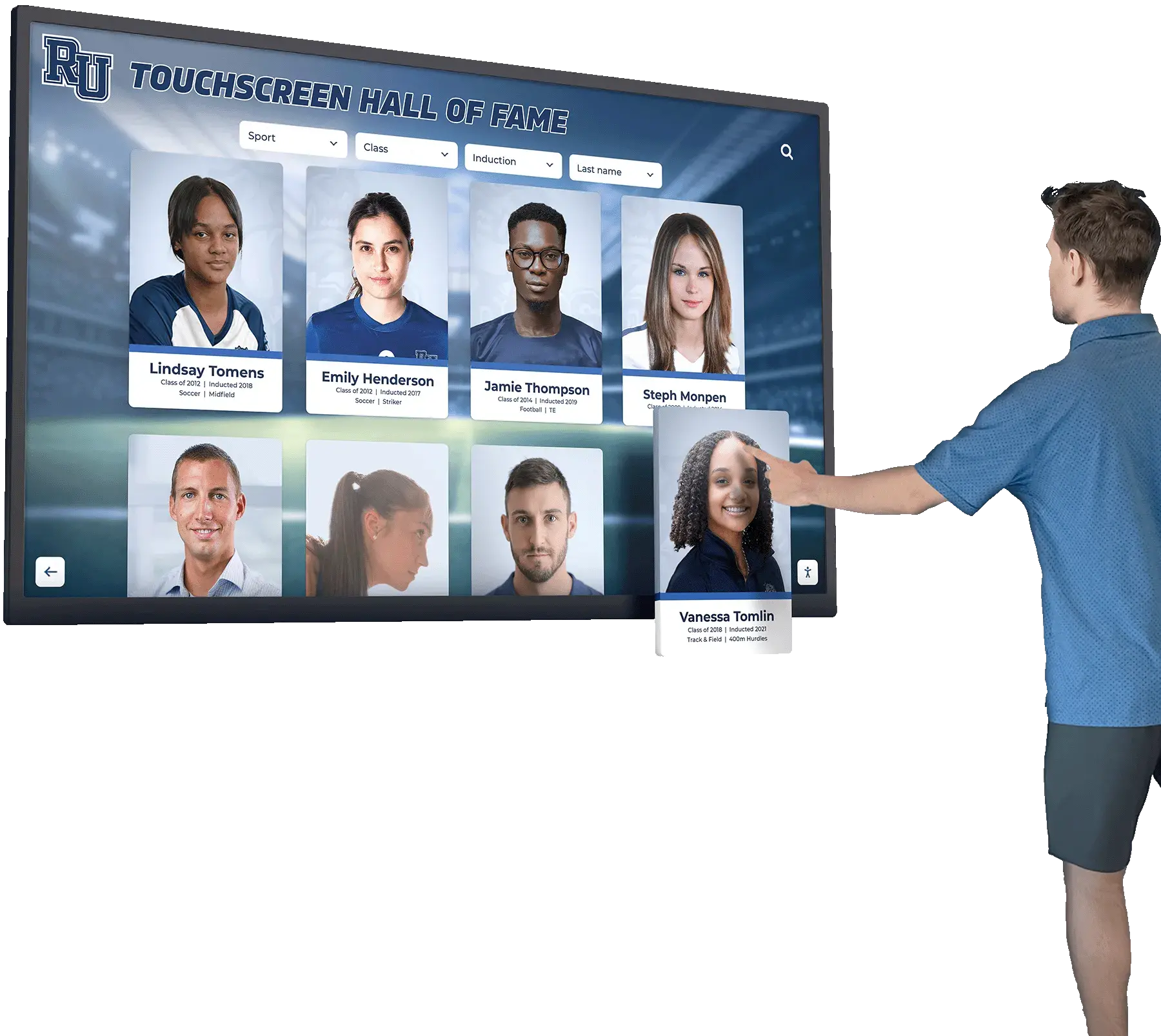
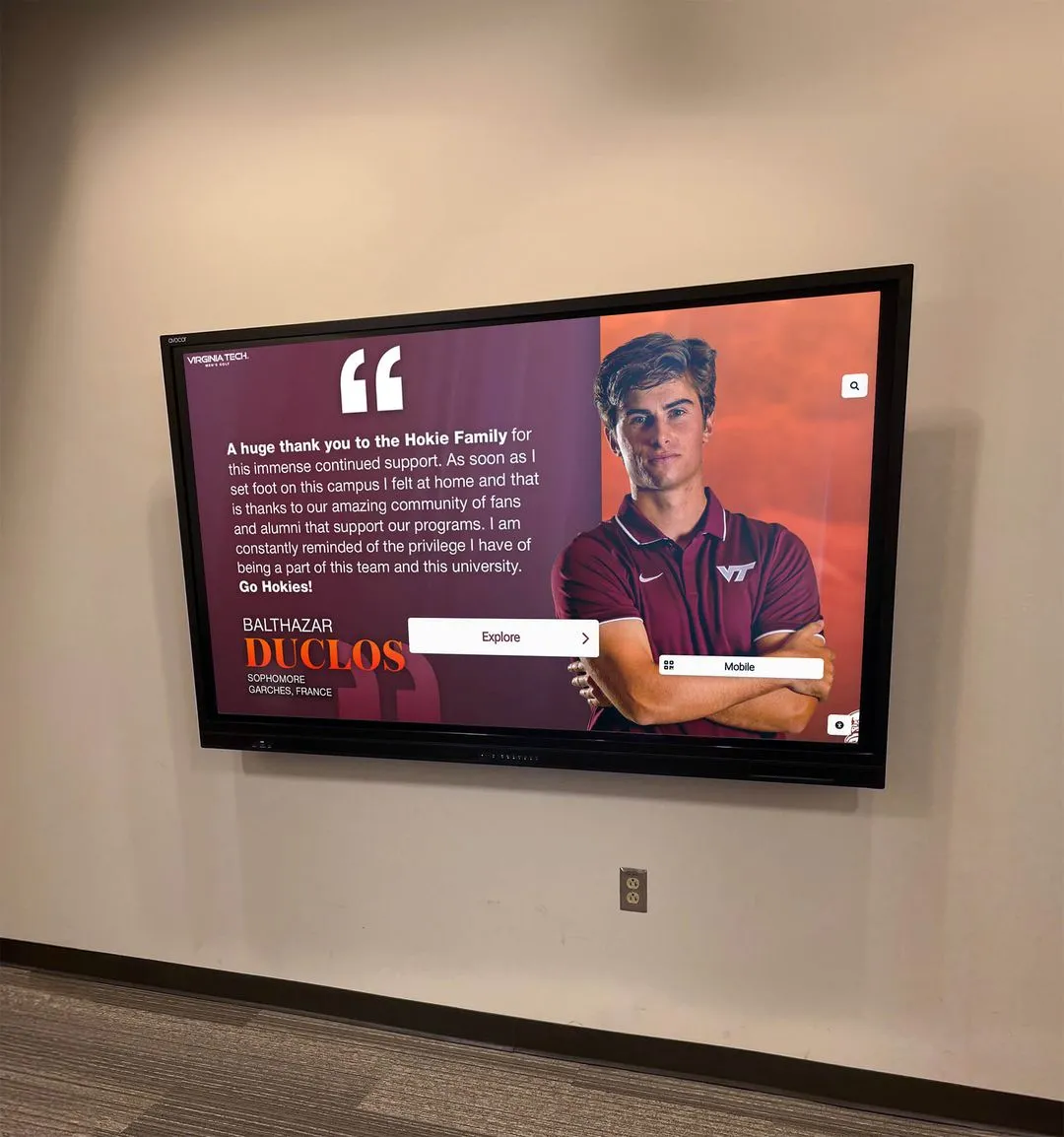
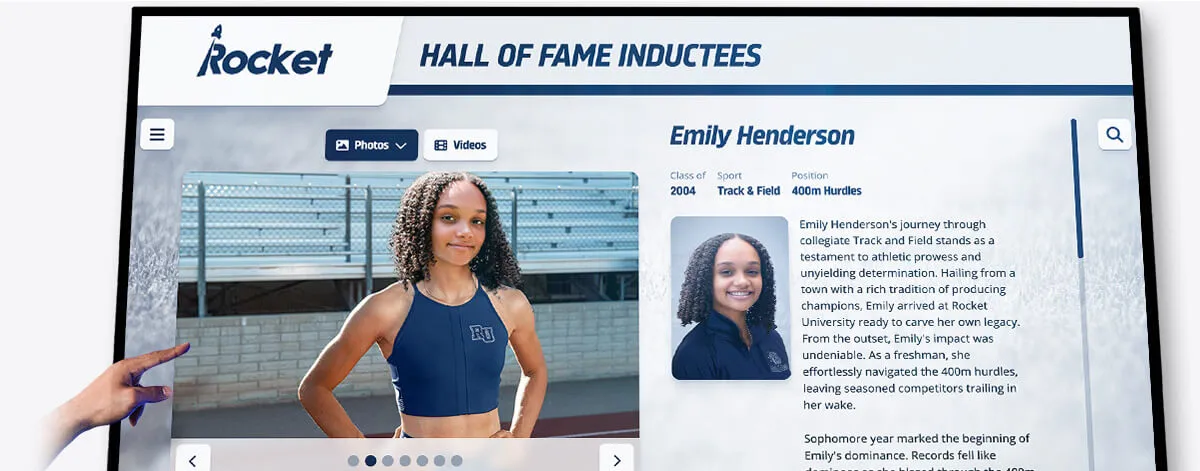

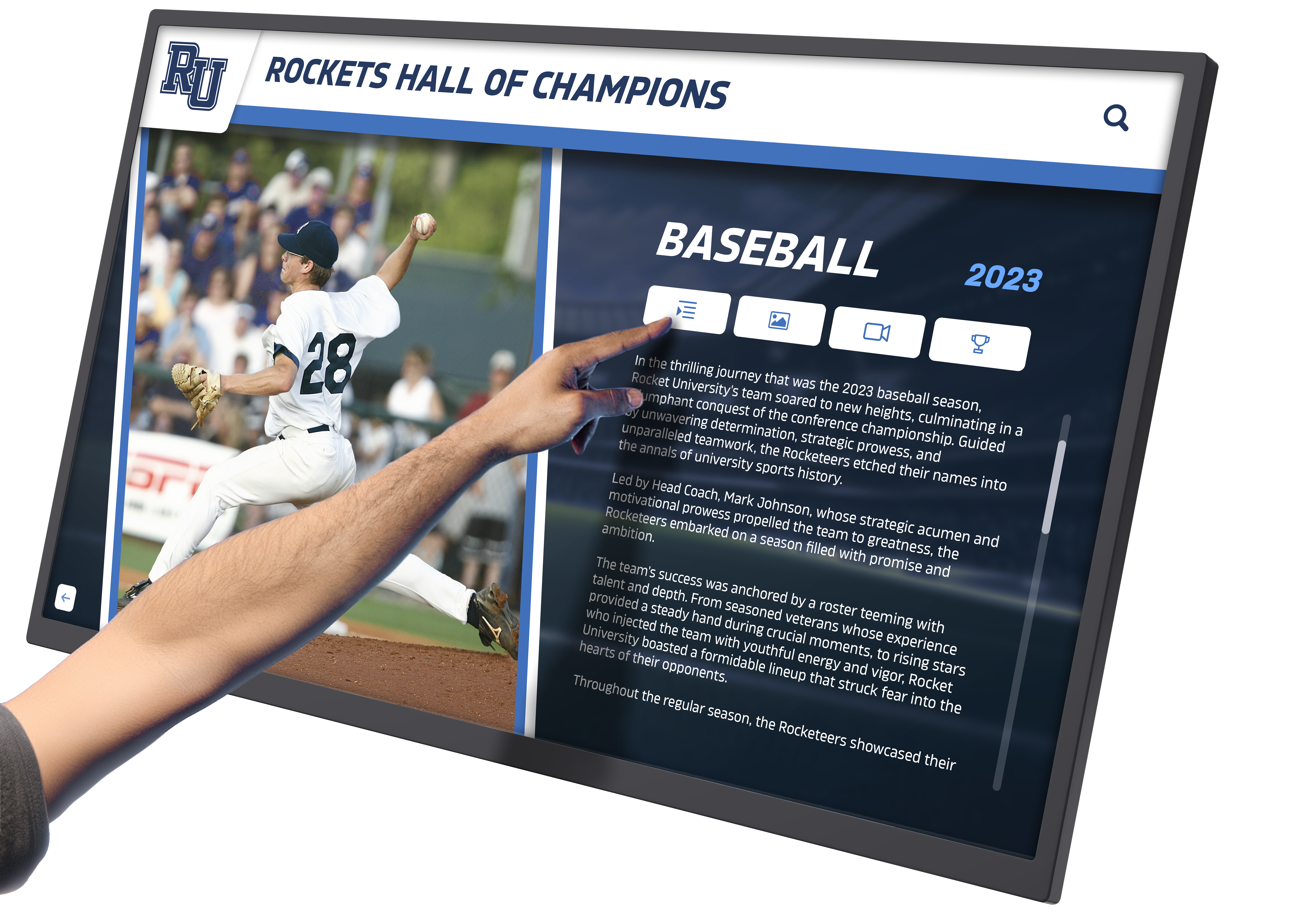
Solutions like those from Rocket Alumni Solutions enable schools to create comprehensive digital recognition systems specifically designed for track and field programs. These platforms allow athletic directors and coaches to easily upload athlete profiles, championship results, and historical records, creating engaging displays that celebrate both current and historic achievements.
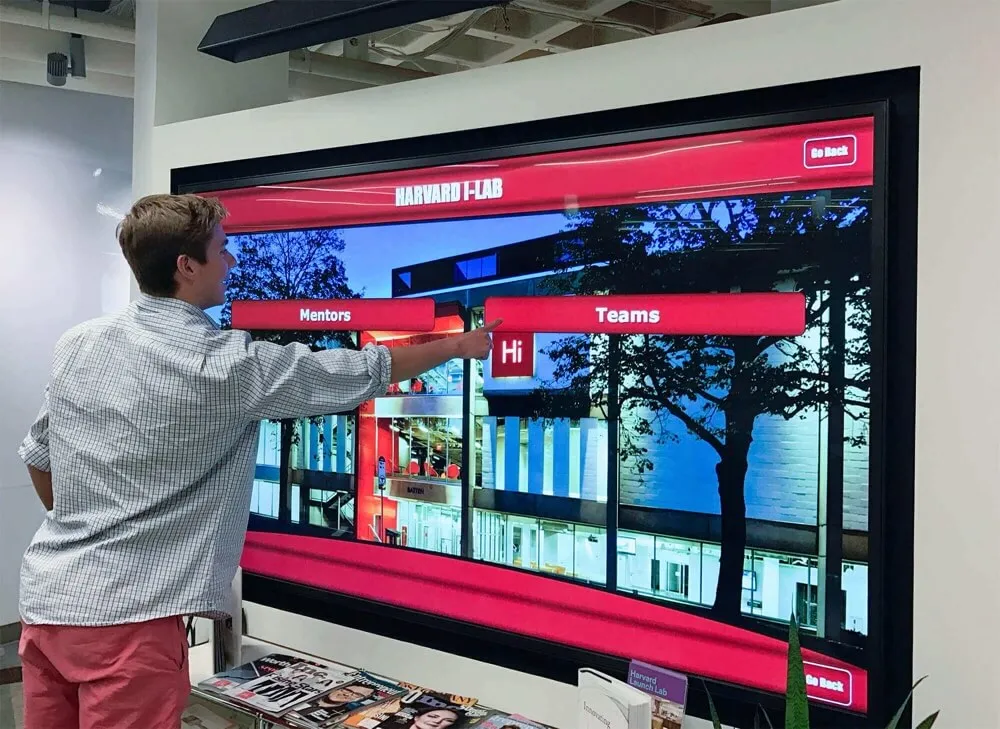
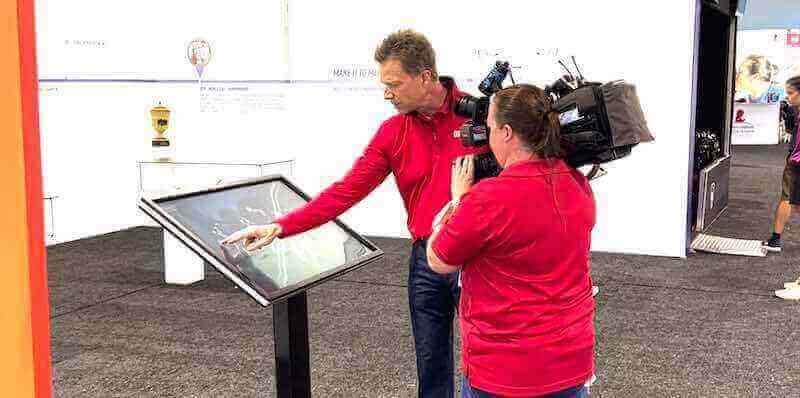
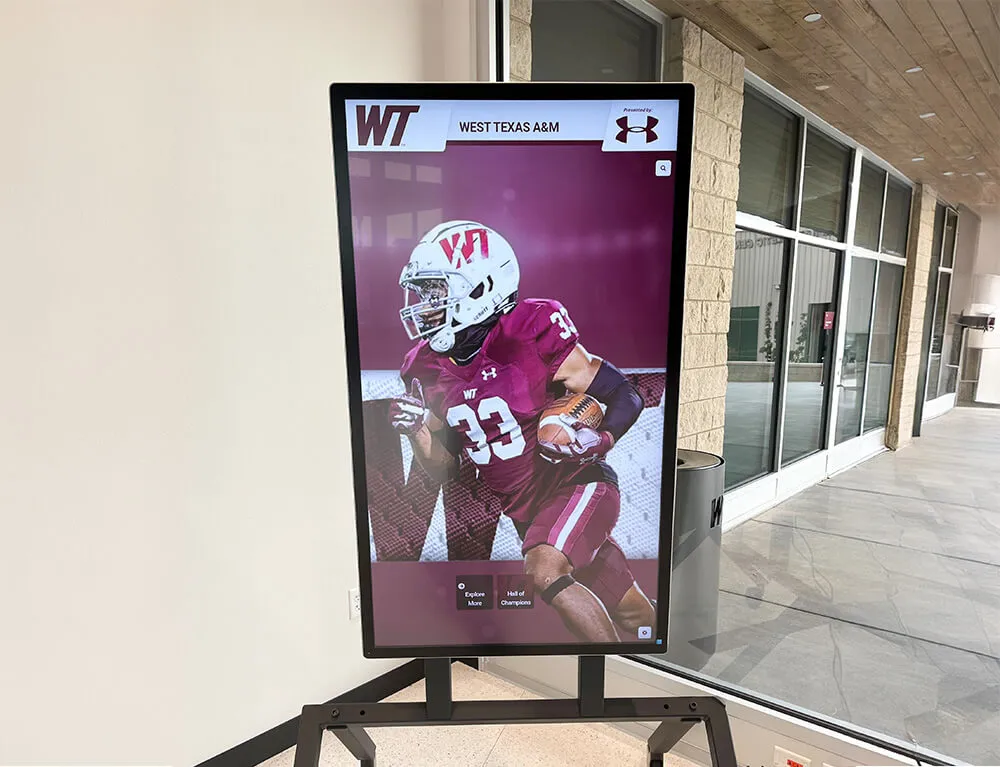
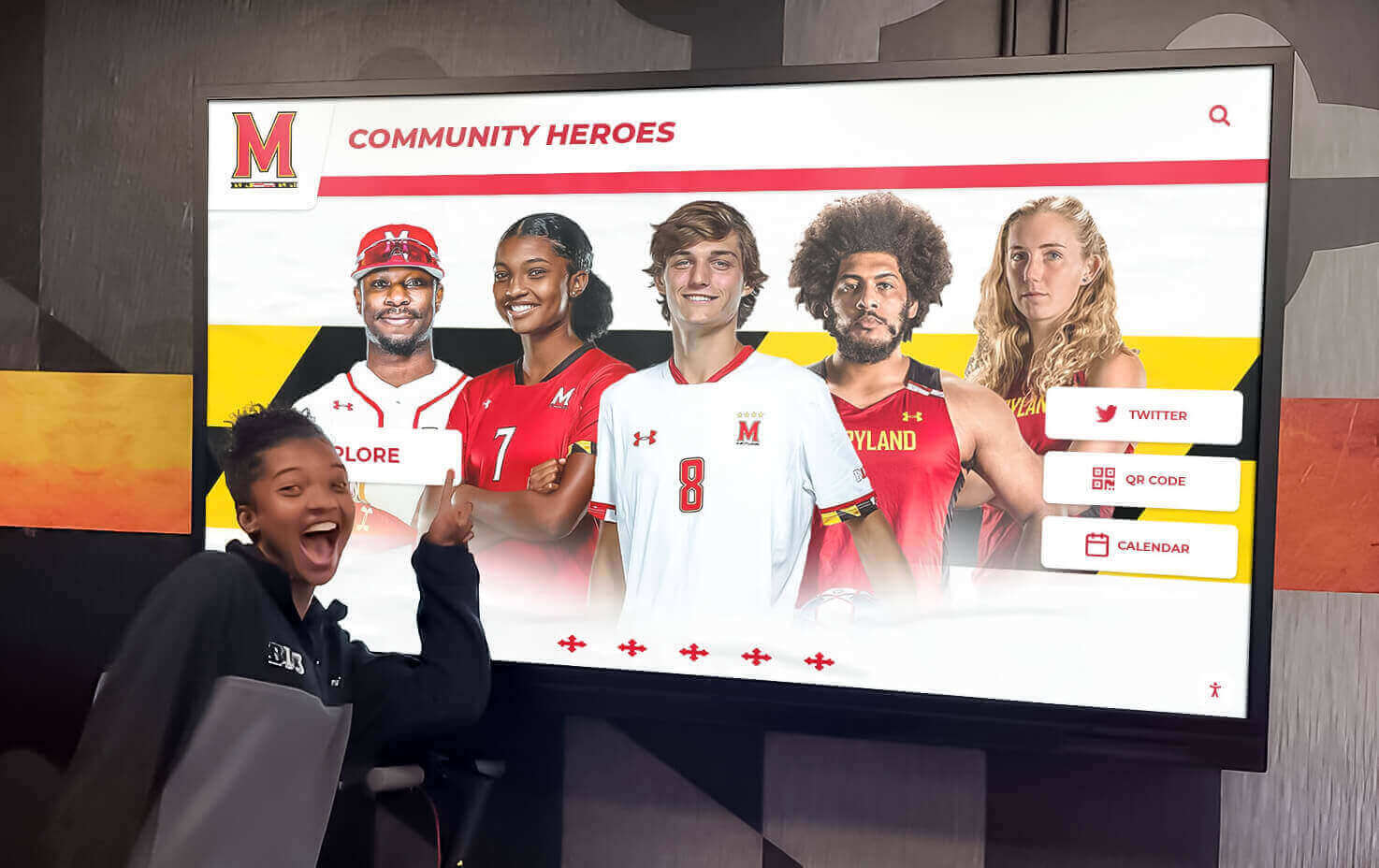
Schools implementing interactive touchscreen displays for track recognition report increased athlete motivation, enhanced family engagement, and stronger program identity as current athletes connect with program traditions and historic champions.
Social Media and Digital Sharing
Modern recognition extends beyond physical school spaces into digital platforms where achievements reach broader audiences:
Social Media Recognition Strategies:
- Live meet updates: Schools post real-time results from state meet competition, engaging families and communities unable to attend
- Championship announcements: Dedicated posts celebrating each state qualifier and medalist with photos and performance details
- Video content: Highlight videos featuring championship performances, athlete interviews, and celebration moments
- Alumni connections: Tag and engage former state track champions, creating multi-generational community across decades of program history
Strategic social media use amplifies recognition impact while creating shareable content that athletes can distribute through their own networks, extending pride and acknowledgment beyond immediate school communities.
Annual Recognition Ceremonies and Banquets
Many successful track programs hold annual awards banquets or recognition ceremonies celebrating seasonal achievements:
Banquet Elements:
- State qualifier recognition: Special acknowledgment for all athletes qualifying for state meet, regardless of final placement
- Medal presentations: Formal presentation of state meet medals in front of families, teammates, and school community
- Record breaker acknowledgment: Special recognition for athletes setting school, regional, or state records
- Senior tributes: Honoring graduating seniors, particularly multi-year state qualifiers
- Video presentations: Compilation videos featuring season highlights, state meet performances, and team memories
Formal ceremonies create memorable experiences beyond the competition itself, providing opportunities for families to celebrate together and for programs to formally acknowledge achievement. Many schools document these ceremonies through photography and video that becomes part of permanent digital archives preserving program history.
Preparing for State Meet Success
Schools and athletes seeking state meet success must approach qualification and competition strategically, with careful planning across training, competition scheduling, and mental preparation.
Training Progressions and Peaking
Successful state meet performances require careful training periodization:
Season Planning:
Track coaches typically structure seasons in phases progressing from general conditioning through specific event preparation to competition peaking:
- Early Season (January-February): Foundation building through general conditioning, technique development, and initial competition experience
- Mid Season (March): Event-specific preparation, district meet targeting, and performance refinement
- Championship Season (April-May): Focused training on primary events, reduced volume with maintained intensity, strategic rest periods between meets
Athletes who peak too early may struggle maintaining performance through state meet, while those who under-prepare may fail to qualify. Successful programs balance consistent training with adequate rest and recovery, particularly during the demanding qualification sequence from district through regional meets.
Mental Preparation and State Meet Environment
The state meet environment differs significantly from earlier season competitions, requiring mental preparation:
State Meet Challenges:
- Venue scale: Mike A. Myers Stadium represents a significantly larger and more professional venue than most regional facilities
- Competition quality: Every athlete in state meet finals represents regional excellence, eliminating “easy” wins
- Spectator pressure: Large crowds including family, schoolmates, and scouts create additional pressure
- Multi-day formats: Athletes must maintain focus and readiness across preliminary rounds and finals potentially separated by hours or days
Coaches who prepare athletes for these environmental factors through visualization, venue visits when possible, and discussion of mental approach help athletes compete at their best when it matters most. Many programs utilize sports banquet presentations where former state champions share experiences and advice with current athletes pursuing similar goals.
Logistics and Travel Planning
Successful state meet experiences require careful logistical planning:
Key Planning Elements:
- Transportation: Coordinating travel for athletes, coaches, and potentially family members to Austin
- Lodging: Hotel arrangements for multi-day competitions, ideally located conveniently to UT campus
- Equipment: Ensuring all necessary competition equipment (poles for vaulters, implements for throwers) travels safely
- Nutrition: Planning appropriate pre-competition meals and snacks maintaining athlete routines
- Schedule coordination: Managing multiple athletes potentially competing in various events across different times
- Family communication: Providing families with detailed schedules, parking information, and venue guidelines
Detailed planning reduces stress and allows athletes to focus mental and physical energy on competition rather than logistical concerns.

The Future of UIL Track and Texas High School Athletics
Texas high school track continues evolving with changing athlete demographics, training methods, facility improvements, and recognition technology:
Technology Integration in Track and Field
Modern timing systems, video review capabilities, and performance tracking technology increasingly influence competition:
Performance Technology:
- Advanced timing systems providing precise splits and reaction time measurement
- Video replay for close finishes and field event measurements
- Performance tracking applications allowing athletes to monitor training progressions and competitive results
- Social media providing real-time results sharing and engagement
Technology extends beyond competition into recognition, with digital platforms enabling comprehensive celebration of athletic achievement across program history. Schools embracing digital recognition technology position themselves to engage current athletes while preserving historic achievements for future generations.
Facility Development and Investment
Texas schools continue investing in track and field facilities, recognizing the sport’s importance:
Many schools have upgraded from asphalt or cinder tracks to modern polyurethane surfaces providing consistent, fast conditions that enable better performances. Improved facilities attract talented athletes, support stronger training programs, and create environments where school records progressively fall as athletes train and compete on superior surfaces. Schools often commemorate facility improvements through donor recognition displays honoring community members who funded athletic facility enhancements.
Year-Round Training and Specialization Trends
Contemporary high school track athletes increasingly train year-round rather than treating track as a spring-only activity:
Training Evolution:
- Summer track clubs and competition opportunities
- Off-season strength and conditioning programs
- Sport-specific coaching and technique clinics
- Increased specialization in specific event groups
While year-round training enables performance improvements, coaches must balance training intensity against injury risk and athlete burnout. The most successful programs create periodized annual training plans that include strategic rest periods while maintaining consistent development.
Conclusion: Celebrating Excellence Through UIL State Track
The UIL State Track Meet represents the pinnacle of Texas high school track and field achievement, where months of training, progressive qualification, and dedicated preparation culminate in championship competition at a world-class venue. For the athletes who qualify, the experience creates lifetime memories—the thrill of competing at Mike A. Myers Stadium, the camaraderie of representing their schools at state level, and the pride of earning medals that recognize their athletic excellence.
For Texas high schools, state track success becomes woven into institutional identity and tradition. Schools celebrate state champions through physical displays, digital recognition systems, annual ceremonies, and community acknowledgment that honors athletic achievement for generations. State meet qualifiers and medalists inspire current athletes while connecting alumni to programs through shared competitive experiences spanning decades.
As technology continues evolving how schools celebrate achievement, digital recognition platforms offer increasingly powerful ways to honor state track champions comprehensively. These systems preserve historic achievements while making them accessible to current students, families, and alumni seeking to explore program traditions. Modern recognition technology ensures that the remarkable performances at UIL State Track Meets receive the lasting celebration they deserve.
Whether your school celebrates occasional state qualifiers or fields multiple champions annually, thoughtful recognition demonstrates that athletic achievement matters, traditions endure, and excellence receives acknowledgment worthy of the dedication required to compete at championship levels. The UIL State Track Meet will continue showcasing Texas high school track talent for decades to come, creating new champions whose achievements deserve comprehensive, engaging recognition connecting them to the proud traditions of Texas high school athletics.
Ready to create comprehensive recognition systems celebrating your school’s track and field champions? Explore modern digital solutions designed specifically for honoring athletic achievement through engaging, accessible platforms that make every state qualifier and champion visible to your entire school community.