



Key Takeaways
Compare turnkey digital hall of fame display pricing from leading providers. Complete cost breakdown including hardware, content setup, training, and ongoing support for schools seeking all-inclusive solutions.
Schools researching digital hall of fame displays consistently encounter similar challenges: pricing information proves difficult to obtain without sales conversations, vendors offer dramatically different packages making comparison nearly impossible, and determining what’s actually included versus charged separately requires extensive clarification. Organizations want straightforward answers to a fundamental question: “What will a complete, ready-to-use digital recognition system actually cost, including everything we need to launch successfully?”
This uncertainty complicates budget planning and vendor evaluation. Athletic directors need clear numbers for funding requests. Administrators require transparent cost comparisons for approval processes. Advancement officers must justify investments against alternative recognition approaches. Without comprehensive pricing frameworks, decision-makers struggle to assess whether proposals represent fair value or inflated costs, whether “affordable” options hide expensive ongoing charges, and whether premium packages deliver proportional benefits.
Turnkey solutions promise to simplify this complexity by bundling everything needed—hardware, software, installation, content setup, training, and ongoing support—into defined packages with transparent pricing. However, significant variation exists in what different providers consider “turnkey” and how completely their packages address implementation requirements. Some vendors include comprehensive content migration while others provide only empty systems requiring extensive internal work. Training ranges from brief orientation sessions to extensive ongoing support enabling confident independent operation.
This comparison evaluates leading providers offering turnkey digital hall of fame solutions for schools, analyzing complete cost structures, examining included services versus additional charges, and assessing value delivery across initial investment and ongoing ownership periods. By understanding true turnkey pricing and what differentiates comprehensive packages from minimal offerings, schools can make informed decisions matching budgets with actual implementation needs.
Understanding True Turnkey Pricing: What Should Actually Be Included
Before comparing specific providers, schools must understand what constitutes genuinely complete turnkey solutions versus packages requiring substantial additional investment or internal resources for successful implementation.
Essential Hardware Components
Complete turnkey packages should include all physical equipment required for functional installations:
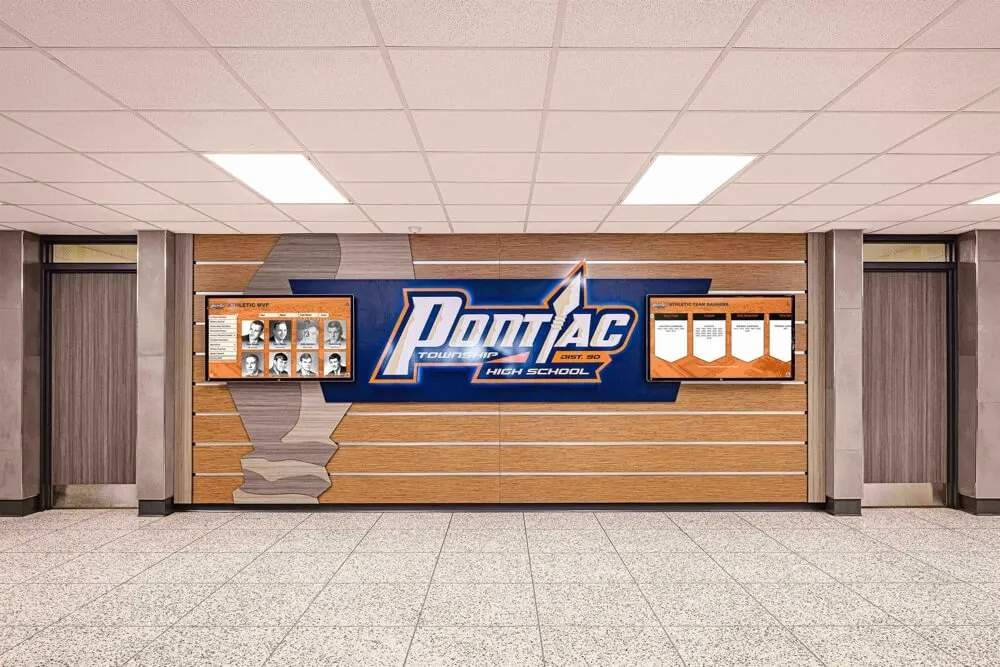
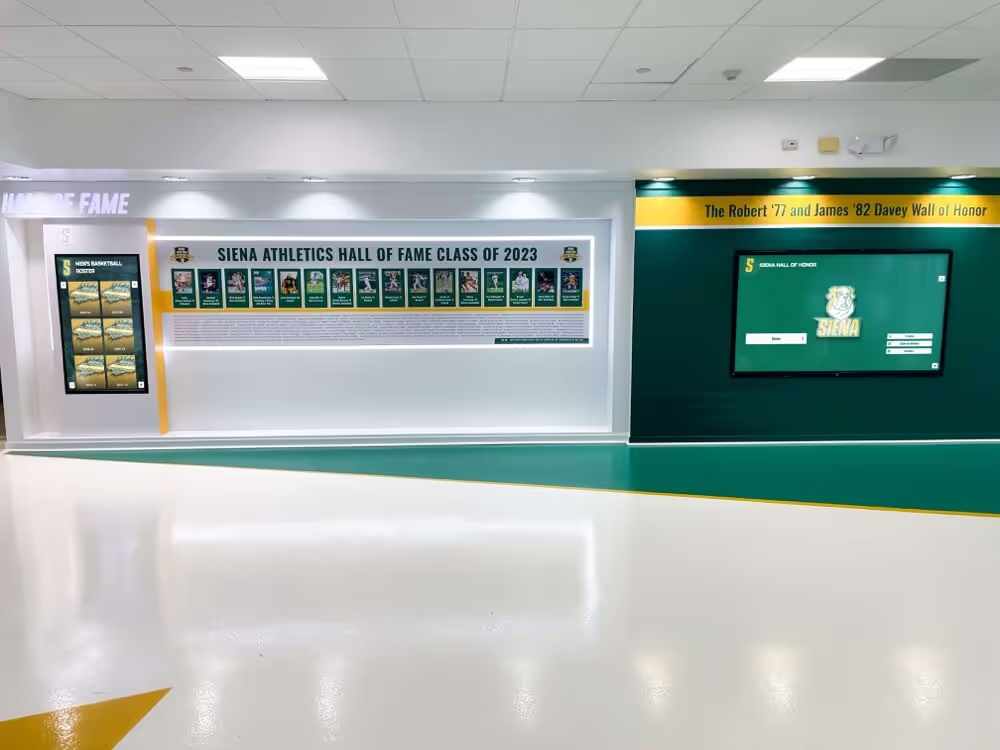
Commercial-Grade Display Screens rated for extended daily operation in public spaces, not residential televisions repurposed for institutional use. Appropriate sizing (43-75 inches) depends on viewing distance and space constraints. Commercial displays feature higher brightness for varied lighting conditions, durable construction withstanding public interaction, extended warranties suitable for mission-critical installations, and reliable components supporting 16-24 hour daily operation.
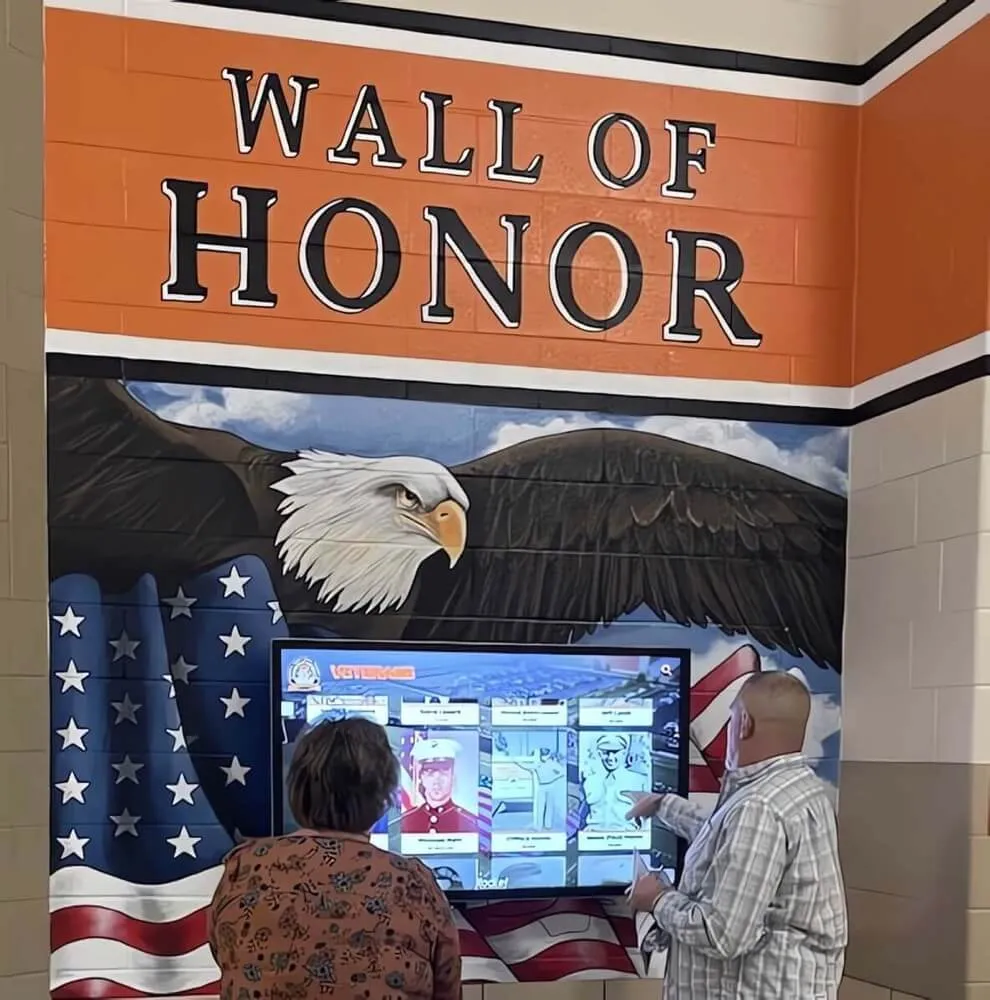
Professional Touchscreen Technology optimized for public use must accommodate diverse users including children, elderly visitors, and individuals unfamiliar with touchscreen interfaces. Quality touchscreen overlays provide responsive interaction without excessive pressure requirements, maintain calibration accuracy over years of use, resist scratching and damage from jewelry or fingernails, and support multi-touch gestures for intuitive navigation.
Integrated Computing Hardware powers software platforms and manages content delivery. Purpose-built media players or integrated system-on-chip solutions should provide sufficient processing power for smooth touchscreen responsiveness, adequate storage for extensive photo and video libraries, reliable network connectivity through ethernet or WiFi, remote management capabilities enabling troubleshooting without physical access, and update capabilities supporting software improvements throughout ownership periods.
Mounting Solutions and Installation Materials must properly secure expensive equipment while maintaining professional aesthetics. Wall-mounting requires appropriate brackets rated for display weight plus safety margins, secure installation into structural elements rather than drywall alone, and cable management systems concealing power and network connections. Freestanding kiosks need stable bases preventing tip-over risks, attractive enclosures matching facility aesthetics, and accessible service panels enabling future maintenance.
Peripherals and Accessories complete installations: keyboards or other input devices for accessibility compliance, webcams if video conferencing or virtual tours are planned, audio systems if multimedia content includes sound, surge protection preventing electrical damage, and cleaning supplies maintaining touchscreen appearance.
Organizations evaluating hardware specifications should reference commercial display selection guides explaining quality differences between consumer and professional equipment.
Comprehensive Software Platform Features
Software represents the functional heart determining whether systems deliver engaging experiences or become underutilized equipment:
Content Management System enabling non-technical staff to confidently update recognition content without vendor dependency or IT support. Quality CMS platforms provide intuitive interfaces requiring minimal training, cloud-based access enabling remote content management from any location, template systems maintaining design consistency across hundreds of profiles, media library management organizing photos and videos efficiently, user permission controls allowing multiple staff access with appropriate restrictions, and preview capabilities ensuring accuracy before publication.
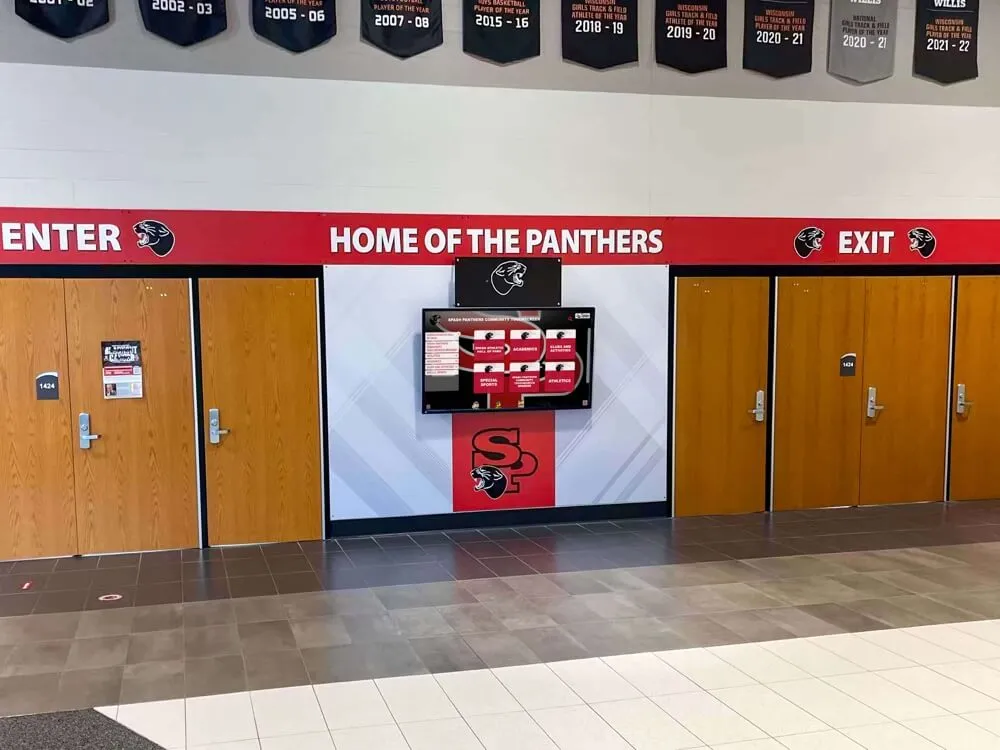
Interactive User Experience designed specifically for recognition exploration rather than adapted from generic digital signage. Purpose-built platforms support searchable databases enabling visitors to find specific athletes or honorees quickly, filtering systems organizing content by sport, year, achievement type, or custom categories, rich multimedia integration displaying photos, videos, statistics, and biographical narratives, smooth navigation designed for public spaces where users expect instant responsiveness, and session management automatically returning displays to home screens after interaction completes.
Display Management and Scheduling tools control what content appears when: featured content rotation highlighting seasonal achievements or upcoming events, attract mode cycling highlights when displays aren’t actively touched, time-based scheduling showing different content during specific hours or dates, multi-display coordination if multiple screens operate within facilities, and remote monitoring enabling administrators to verify proper operation without physical inspection.
Analytics and Reporting capabilities demonstrate program value and inform content strategy: usage statistics showing daily interactions and peak engagement periods, popular content identification revealing which profiles receive most attention, search term analysis understanding what visitors seek, session duration metrics indicating engagement depth, and demographic insights when appropriate revealing audience composition.
Web Accessibility and Online Extension enabling recognition to reach beyond physical display locations: responsive web interfaces working across desktop computers, tablets, and smartphones; social sharing integration allowing honorees to share recognition with extended networks; QR code generation bridging physical displays to mobile experiences; and search engine optimization ensuring online content discovers easily through web searches.
Schools can evaluate software capabilities through digital recognition platform comparisons examining feature differences between generic signage and purpose-built solutions.
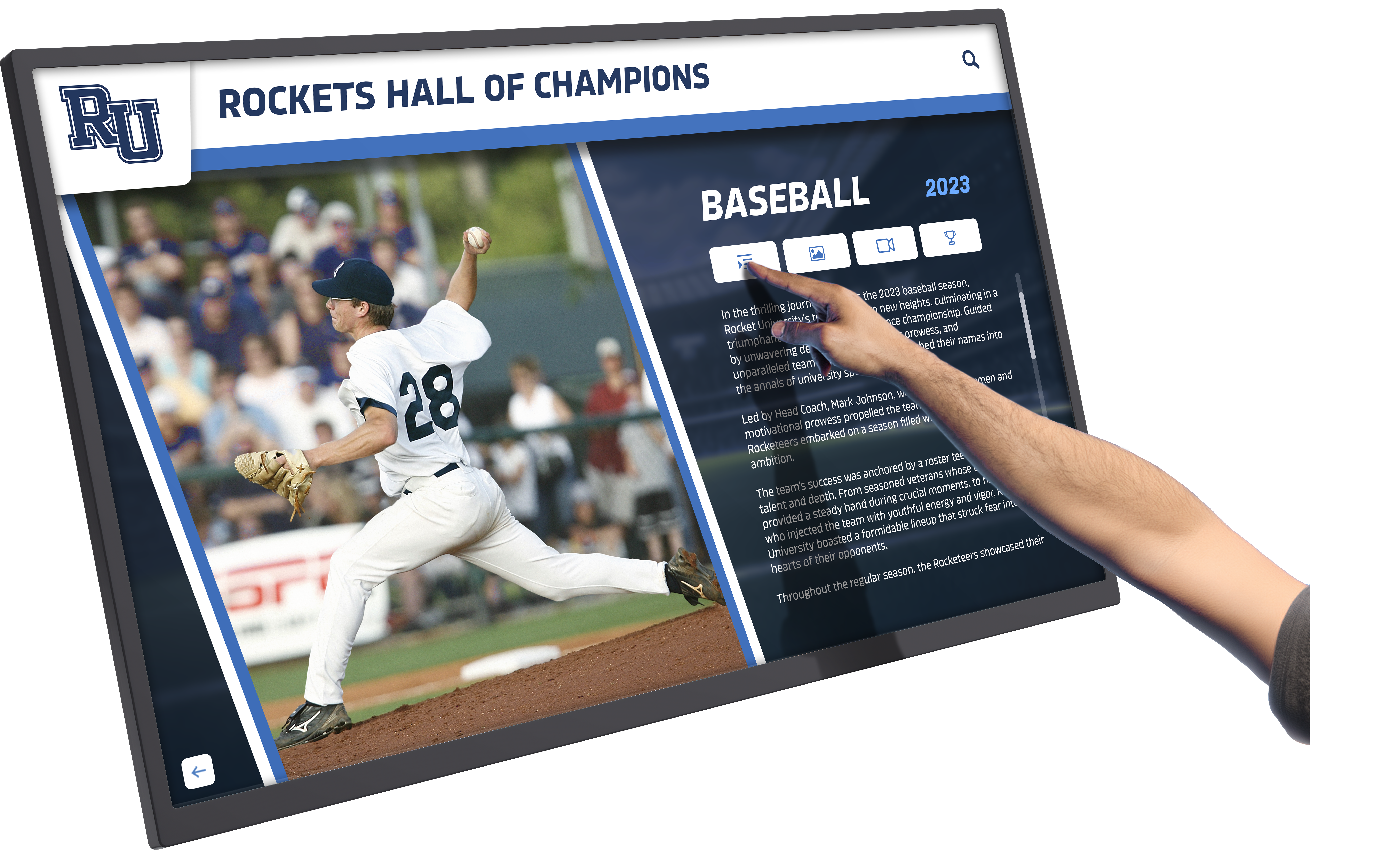
Professional Installation and Integration Services
Quality turnkey packages include expert installation ensuring reliable operation from day one:
Site Assessment and Planning conducted before equipment ordering identifies potential challenges: facility electrical capacity and outlet locations, network infrastructure availability and bandwidth adequacy, structural mounting surface evaluation and reinforcement requirements, lighting conditions affecting display visibility, traffic flow patterns informing optimal placement, and accessibility considerations ensuring compliance with ADA requirements.
Professional Physical Installation by experienced technicians prevents amateur mistakes creating ongoing problems: secure mounting following manufacturer specifications and building codes, proper electrical connections with appropriate circuit capacity and surge protection, network integration with testing confirming adequate connectivity, cable management creating clean professional appearance without exposed wiring, and calibration ensuring optimal display settings for viewing conditions.
Software Configuration and Customization aligns platforms with institutional requirements: branding integration matching school colors, logos, and visual identity; navigation structure organized for specific content categories and recognition types; user interface customization accommodating particular workflows; and integration with existing systems when connections to student information databases, donor management platforms, or athletic record systems provide value.
Testing and Quality Assurance before formal handoff confirms proper operation: hardware functionality verification across all components, touchscreen calibration and responsiveness testing, network connectivity and content synchronization validation, display brightness and color accuracy adjustment for specific installation locations, and user experience testing ensuring navigation works intuitively for target audiences.
Content Migration and Initial Setup
Historical content digitization often represents the most time-consuming implementation aspect, making comprehensive content services particularly valuable:
Historical Research and Data Collection gathers recognition information from diverse sources: physical trophy and plaque engravings documenting names, years, and achievements; yearbook archives providing photos and biographical information; record books tracking athletic statistics and performance data; school publications featuring achievement announcements; and alumni outreach collecting personal information and career updates from honorees themselves.
Digital Content Creation transforms raw data into properly formatted profiles: standardized biographical entries following consistent templates and style guides, photo digitization and editing ensuring quality and consistency, statistical data compilation organizing performance records accessibly, achievement categorization establishing logical organizational structures, and quality review confirming accuracy before content publication.
Organizational Structure Development establishes frameworks supporting long-term program growth: recognition category definition (athletics, academics, arts, community service), achievement type classification within each category, naming conventions ensuring consistent terminology across content, metadata tagging enabling sophisticated search and filtering, and relationship mapping connecting related profiles when appropriate.
Initial Content Population loads sufficient recognition before launch creating meaningful experiences from day one: minimum 50-100 profiles providing substance demonstrating system capabilities, featured content selection highlighting marquee achievements, homepage rotation configuration creating engaging attract mode displays, and search functionality testing ensuring visitors can successfully find content.
Organizations can explore content development approaches through recognition program implementation guides addressing historical digitization challenges.
Staff Training and Knowledge Transfer
Comprehensive training ensures organizations can manage systems confidently after vendor implementation support concludes:
Administrator Training covering daily content management operations: logging into management platforms securely, navigating content organization structures efficiently, creating new profiles following established templates, uploading and managing photo libraries properly, editing existing profiles when updates are necessary, configuring featured content and display rotation, publishing content after appropriate review, and accessing support resources when questions arise.
Advanced User Training for staff managing strategic aspects: organizational structure modification as programs evolve, permission management controlling user access appropriately, analytics interpretation informing content strategy decisions, design customization maintaining visual consistency, integration management when connecting with other systems, and backup procedures protecting valuable content investment.
Troubleshooting and Maintenance Training enabling self-service problem resolution: identifying and resolving common issues independently, performing routine maintenance tasks extending equipment life, understanding when vendor support becomes necessary, following escalation procedures for urgent problems, and documenting issues facilitating efficient support conversations.
Documentation and Resources supporting ongoing independent operation: written procedures documenting standard workflows, video tutorials demonstrating key tasks visually, quick reference guides providing at-a-glance instruction, FAQ resources addressing common questions, and contact information accessing support when needed.
Ongoing Support and Maintenance
Post-implementation support differentiates comprehensive turnkey solutions from minimal installations:
Technical Support Access providing assistance when issues arise: defined response time commitments specifying maximum wait for support acknowledgment, multiple support channels offering phone, email, and chat options, support availability during typical operating hours when issues most commonly occur, remote troubleshooting capabilities resolving many problems without site visits, and escalation procedures ensuring critical issues receive immediate attention.
Software Updates and Improvements maintaining platform currency: security patches addressing discovered vulnerabilities promptly, bug fixes resolving identified issues, feature enhancements adding new capabilities over time, performance optimizations improving responsiveness and efficiency, and compatibility updates ensuring operation with evolving hardware and operating systems.
Cloud Hosting and Infrastructure when applicable for web-based platforms: reliable server infrastructure with uptime commitments, adequate bandwidth supporting content delivery, regular backups protecting against data loss, security measures preventing unauthorized access, and scalability accommodating usage growth without performance degradation.
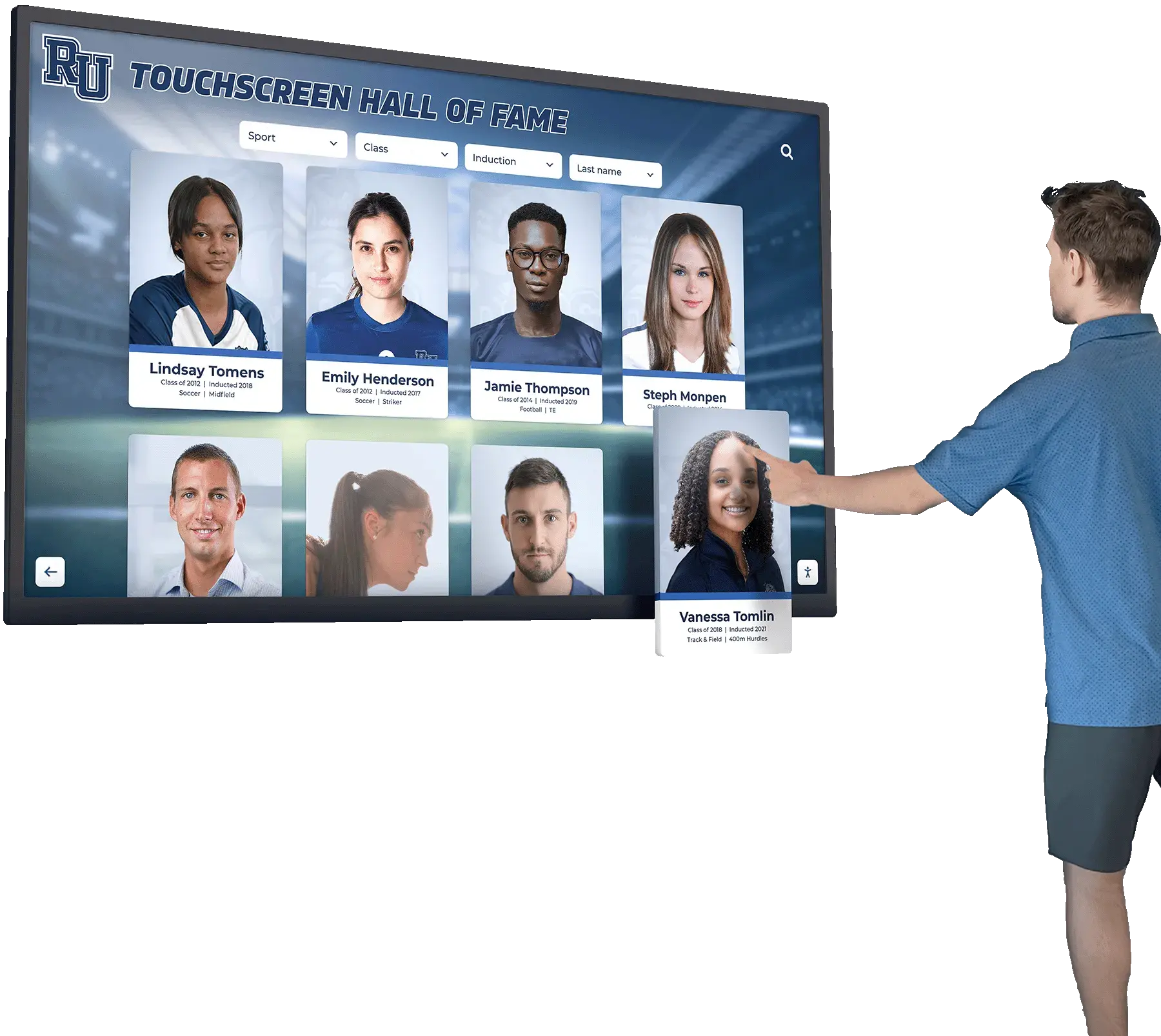
Leading Turnkey Digital Hall of Fame Providers: Complete Package Comparison
1. Rocket Alumni Solutions — Most Comprehensive Turnkey Implementation
Best For: Schools seeking truly complete solutions with extensive content migration support, comprehensive training, and dedicated ongoing partnership
Rocket Alumni Solutions delivers the most complete turnkey experience available for educational recognition, addressing every implementation aspect through single-provider coordination rather than requiring schools to manage multiple vendors or perform significant internal work.
Complete Package Inclusions:
Rocket’s standard turnkey implementation includes: commercial-grade touchscreen displays sized appropriately for specific installations (43-75 inches based on space); professional mounting solutions with all necessary hardware; integrated computing systems with sufficient performance for smooth operation; unlimited software access for both physical displays and online web recognition; cloud-based content management requiring no local server infrastructure; professional installation by experienced technicians; comprehensive facility assessment before equipment ordering; historical content migration including up to 200 initial profiles (additional volume available); photo digitization and editing services; organizational structure development establishing logical categories; staff training through live instruction and ongoing support; complete documentation and video tutorials; first-year full support with defined response commitments; and annual platform hosting, maintenance, and updates.
Pricing Structure:
Initial implementation: $18,000-$28,000 depending on display size, facility requirements, and content migration scope. Annual ongoing subscription: $1,800-$3,000 including unlimited software access, cloud hosting, technical support, updates, and platform improvements.
Why This Represents Best Value:
Unlike competitors charging separately for hardware, software, installation, content services, and training, Rocket provides genuinely complete packages where single quotes include everything needed for successful launches. Schools receive dedicated implementation managers coordinating all aspects rather than navigating multiple vendor relationships. Content migration services go beyond basic data import, including historical research, photo digitization, and quality content creation producing professional recognition from day one.
The unlimited profile capacity across all recognition categories (athletics, academics, arts, donors, alumni) eliminates per-inductee charges that make competing solutions expensive as programs grow. Both physical touchscreen displays and online web accessibility come standard rather than requiring separate purchases. Ongoing support includes proactive platform improvements and feature additions rather than just bug fixes, ensuring systems improve throughout ownership periods.
Schools implementing Rocket solutions receive purpose-built recognition platforms designed specifically for educational environments rather than generic digital signage adapted for recognition purposes. This specialized focus delivers capabilities competitors cannot efficiently match: sophisticated search and filtering enabling easy content discovery, auto-ranking systems organizing achievements by performance, QR code integration extending recognition to mobile devices, and analytics tracking revealing engagement patterns informing program strategy.
Organizations can explore Rocket’s complete approach at Rocket Alumni Solutions.
2. Halloffamewall.com — Hardware and Software with Basic Setup
Best For: Organizations with internal resources to manage content development seeking quality hardware and software platforms
Halloffamewall.com provides professional recognition display systems combining commercial hardware with capable software platforms, though implementations require more school involvement in content development and ongoing management compared to full-service approaches.
Package Inclusions:
Standard packages include: commercial touchscreen displays (43-65 inches), mounting brackets and basic installation guidance, software platform access with template designs, cloud-based content management system, basic training through video tutorials and documentation, initial setup assistance configuring system settings, and standard technical support during business hours.
Pricing Structure:
Initial packages: $12,000-$22,000 depending on hardware size and software features. Annual subscriptions: $1,200-$2,400 for ongoing platform access and support.
Content Development Approach:
Organizations handle most historical content migration internally using provided templates and data import tools. Optional professional content services available at additional cost ($3,000-$8,000 depending on volume) for schools lacking internal resources for extensive digitization work.
Implementation Timeline:
6-10 weeks from order to installation, with content population extending based on internal resource availability and historical collection scope.
3. Touchwall.us — Flexible Packages with Scalable Services
Best For: Districts managing multiple installations seeking coordinated implementations across facilities
Touchwall.us offers modular approaches allowing organizations to select specific service levels matching budgets and internal capabilities, with particular strength in multi-location deployments.
Package Options:
Base packages ($14,000-$24,000) include hardware, software, and installation with limited initial content setup (25-50 profiles). Enhanced packages ($20,000-$32,000) add comprehensive content migration, extended training, and first-year premium support. Multi-installation discounts available when implementing across multiple schools or facilities simultaneously.
Pricing Structure:
Initial implementation varies by selected package level. Annual subscriptions: $1,500-$2,800 depending on feature requirements and support levels.
Multi-Location Advantages:
Centralized management tools enable districts to coordinate content across multiple schools while maintaining site-specific customization. Volume pricing provides savings for districts implementing recognition systems at multiple facilities. Standardized training across locations reduces per-school resource requirements.
Content Services:
Tiered content migration services allow schools to purchase appropriate support levels: basic import assistance for organizations with prepared data, intermediate services including photo editing and profile creation, or comprehensive historical research and complete digitization for extensive archives.
Schools can learn more about implementation options at Touchwall.us.
4. Chasemckee.com — Custom Solutions for Unique Requirements
Best For: Organizations with specific architectural integration requirements or highly customized recognition program needs
Chasemckee.com specializes in custom installations integrating recognition technology with facility design, architectural elements, and unique institutional requirements, though customization typically increases both cost and implementation timelines.
Package Approach:
Custom quotes based on specific requirements rather than standardized packages. Projects typically include: architectural planning integrating displays with facility design, custom enclosures or millwork housing equipment, specialized hardware for unique installations, tailored software configuration, professional content development, and dedicated project management throughout implementation.
Pricing Structure:
Custom implementations: $25,000-$50,000+ depending on architectural complexity and customization scope. Annual support: $2,000-$4,000 for ongoing maintenance and platform access.
Ideal Applications:
New construction projects where recognition systems integrate with architectural design from inception, renovation projects updating traditional trophy cases or recognition areas, high-profile installations where custom aesthetics justify premium investment, or unique requirements that standardized solutions cannot accommodate.
Implementation Timeline:
12-20 weeks typical for custom projects requiring architectural coordination, fabrication of custom elements, and specialized installation procedures.
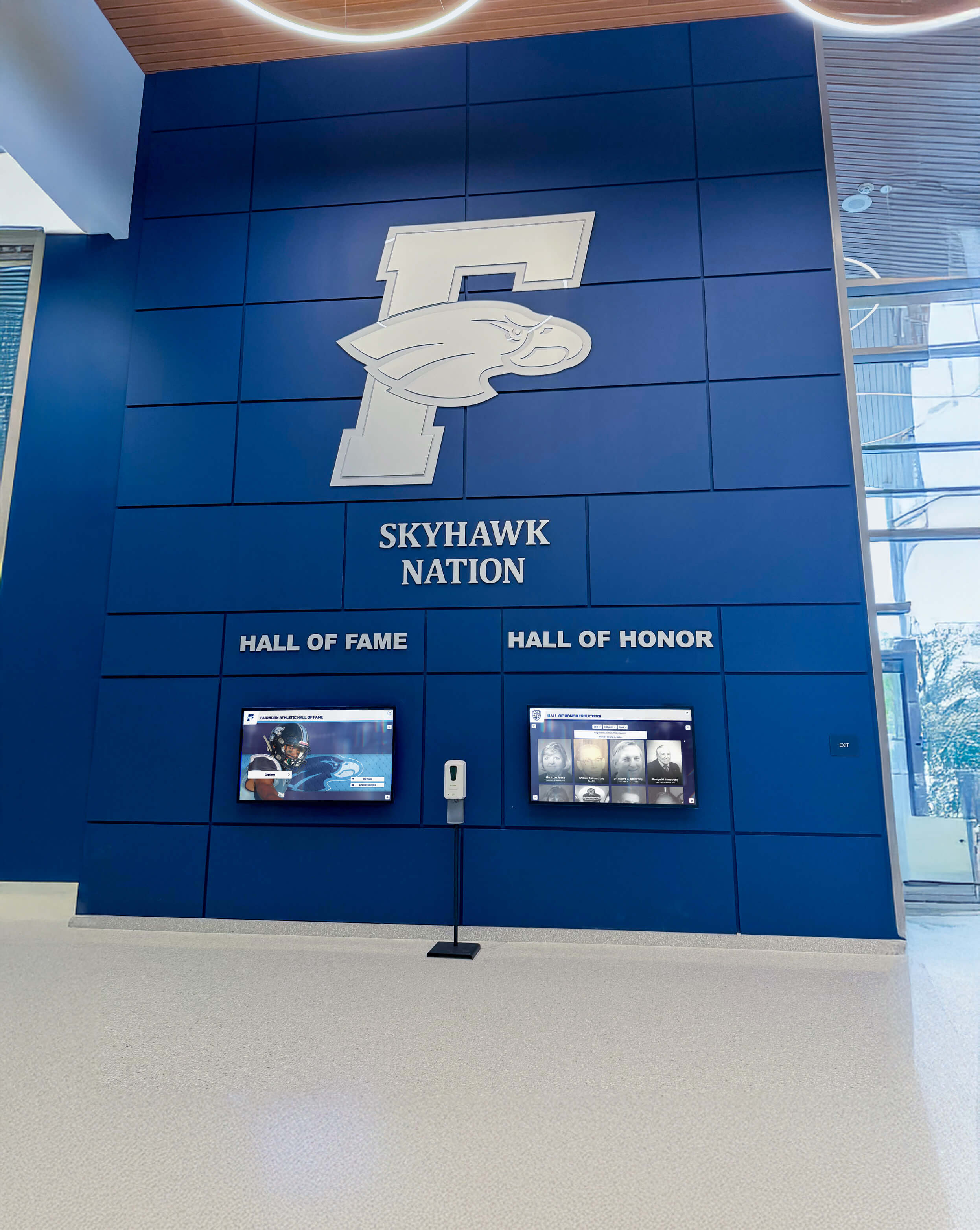
Turnkey Pricing Comparison Matrix
| Provider | Initial Investment | Annual Cost | Content Setup | Training Included | Total 5-Year Cost |
|---|---|---|---|---|---|
| Rocket Alumni Solutions | $18,000-$28,000 | $1,800-$3,000 | Up to 200 profiles included | Comprehensive live + ongoing | $27,000-$43,000 |
| Halloffamewall.com | $12,000-$22,000 | $1,200-$2,400 | Templates provided, DIY execution | Video tutorials + documentation | $18,000-$32,000 |
| Touchwall.us | $14,000-$32,000 | $1,500-$2,800 | 25-50 profiles (enhanced: 100+) | Standard to premium options | $22,000-$46,000 |
| Chasemckee.com | $25,000-$50,000+ | $2,000-$4,000 | Professional services included | Project-specific training | $35,000-$70,000+ |
Important Notes:
- Initial investment includes all hardware, software, installation, and specified content setup
- Annual costs cover ongoing software access, cloud hosting, support, and updates
- Content setup scope varies significantly—confirm actual profile numbers and services included
- Training quality ranges from self-service resources to dedicated ongoing support
- Total 5-year ownership costs reveal true value beyond initial pricing
Weighted Evaluation Criteria for Turnkey Providers
When comparing providers, weight evaluation factors according to organizational priorities:
1. Content Migration Support (Weight: 30%)
Why This Matters Most: Historical content digitization typically requires 40-100+ hours of internal effort when handled without professional support. For busy athletic directors and administrators, this workload often prevents implementation completion or results in minimal content undermining investment value.
Evaluation Questions:
- How many initial profiles does the package include?
- What research support does the provider offer for historical content?
- Are photo digitization and editing services included?
- Does content setup include quality review before launch?
- What happens if historical records exceed included profile counts?
Scoring:
- Comprehensive (100-200+ profiles professionally created): 10 points
- Moderate (50-100 profiles or significant support): 7 points
- Basic (templates and tools, mostly DIY): 4 points
- Minimal (empty system, all internal work): 1 point
2. Hardware and Installation Quality (Weight: 25%)
Why This Matters: Equipment quality determines reliability and longevity. Commercial-grade components justify higher initial costs through extended service life and fewer maintenance issues versus consumer equipment requiring frequent replacement.
Evaluation Questions:
- Are displays rated for commercial/institutional use?
- What warranty coverage protects hardware investment?
- Does installation include professional mounting and integration?
- Are computing components sufficient for smooth long-term operation?
- How does mounting solution accommodate facility aesthetics?
Scoring:
- Commercial equipment, professional installation, extended warranty: 10 points
- Quality equipment, guided installation, standard warranty: 7 points
- Consumer-grade equipment or DIY installation: 4 points
- Budget equipment with minimal support: 1 point
3. Software Platform Capabilities (Weight: 20%)
Why This Matters: Software determines daily user experience for both administrators managing content and visitors engaging with recognition. Purpose-built platforms outperform generic digital signage for recognition applications.
Evaluation Questions:
- Is software designed specifically for recognition or adapted from other purposes?
- Does content management require technical skills or is it truly intuitive?
- Can unlimited profiles be added or are there capacity constraints?
- Does the platform support both physical displays and online web access?
- Are analytics provided tracking engagement and informing strategy?
Scoring:
- Purpose-built recognition platform, unlimited capacity, comprehensive features: 10 points
- Capable platform with strong features and reasonable limits: 7 points
- Basic platform with limited features or significant constraints: 4 points
- Generic signage software poorly suited for recognition: 1 point
4. Training and Support Quality (Weight: 15%)
Why This Matters: Without confident staff operation, systems become underutilized or require continued vendor dependency for routine tasks. Comprehensive training ensures sustained independent management.
Evaluation Questions:
- Is training live instruction or only self-service resources?
- How many hours of training are included?
- What ongoing support access exists after implementation?
- Are response time commitments defined for support requests?
- Do staff report feeling confident operating systems independently?
Scoring:
- Live comprehensive training, dedicated ongoing support, fast response: 10 points
- Good training resources, available support, reasonable response: 7 points
- Basic training, limited support, undefined response times: 4 points
- Minimal training, difficult support access: 1 point
5. Total Cost of Ownership (Weight: 10%)
Why This Matters: While important, total cost should not override capability and support quality. The lowest-priced option creating ongoing problems or limiting recognition capacity rarely delivers best value.
Evaluation Questions:
- What does total 5-year ownership cost including all fees?
- Are there usage limits or per-addition charges?
- How do costs scale if requirements expand?
- What happens at contract renewal—significant increases?
- Does pricing include everything or hide costs in optional add-ons?
Scoring:
- Fair pricing, transparent costs, reasonable ongoing fees: 10 points
- Moderate pricing, clear structure, some limits: 7 points
- High pricing or unclear fee structures: 4 points
- Hidden costs or expensive ongoing charges: 1 point
Organizations should apply weights reflecting specific priorities. Schools with extensive historical archives but limited internal resources should emphasize content migration support. Budget-conscious districts might increase total cost weight. Organizations valuing long-term support should prioritize training and service quality.
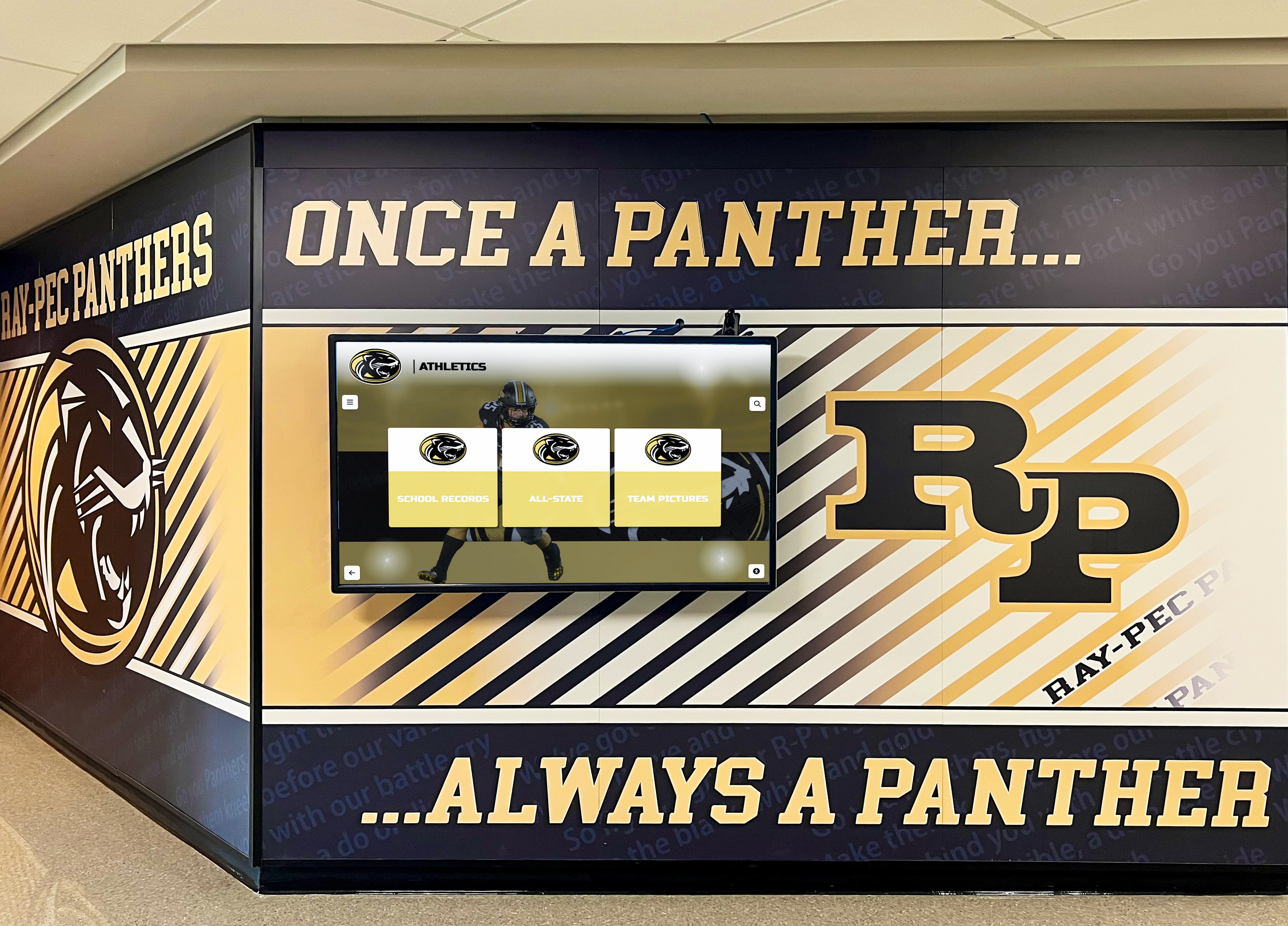
Why Rocket Alumni Solutions Delivers Best Turnkey Value
After evaluating providers against critical criteria, Rocket Alumni Solutions emerges as the optimal choice for schools seeking genuinely complete turnkey implementation. Here’s why:
Single-Provider Accountability
While competitors often subcontract various services—hardware from one supplier, installation through another, content services from third parties—Rocket provides direct accountability for every implementation aspect. This integrated approach eliminates coordination headaches, prevents finger-pointing when issues arise, and ensures seamless execution from contract through launch and ongoing operation.
Truly Comprehensive Content Migration
Most providers claiming turnkey delivery actually provide empty systems with minimal content setup assistance, expecting schools to perform extensive digitization internally. Rocket includes professional content migration creating 100-200+ profiles as standard package components, with capacity for extensive additional volume when historical archives warrant. This comprehensive approach means schools actually launch with meaningful content rather than impressive technology showcasing minimal recognition.
Purpose-Built Recognition Platform
Generic digital signage platforms adapted for recognition cannot match capabilities purpose-built specifically for educational achievement display. Rocket’s specialized focus delivers features critical for compelling recognition experiences that generic platforms lack: sophisticated search enabling quick content discovery, auto-ranking systems organizing achievements by performance, QR code integration bridging physical displays to mobile devices, unlimited capacity accommodating indefinite program growth, and dual-mode operation powering both physical touchscreens and online web platforms through unified management.
Unlimited Capacity Eliminating Growth Penalties
Competing solutions often charge per inductee, per profile, or impose capacity limits requiring expensive upgrades as recognition programs grow. Rocket provides unlimited profiles across all categories—athletics, academics, arts, donors, alumni—without additional fees regardless of program size. This unlimited model aligns provider interests with customer success rather than creating disincentives against comprehensive recognition.
Comprehensive Training and Ongoing Support
Brief orientation sessions provided by many vendors leave staff uncertain about independent operation and reliant on vendor assistance for routine tasks. Rocket delivers extensive live training ensuring confident system management, provides detailed documentation and video tutorials supporting ongoing reference, and maintains responsive ongoing support throughout ownership periods rather than just during initial implementation.
Dual Recognition Strategy
Most competitors focus exclusively on physical touchscreen displays. Rocket’s hybrid approach powers both physical installations and online web-accessible recognition through unified platforms, extending reach beyond facility locations while maintaining consistent content through single management systems. Alumni worldwide can explore recognition online, current students can share achievements across social networks, and recruiting efforts benefit from professional online presence—all included standard rather than charged as premium add-ons.
Organizations can explore Rocket’s comprehensive turnkey approach through detailed implementation case studies demonstrating typical project scopes and delivered value.
Deal-Breaker Checklist: Red Flags to Avoid When Evaluating Turnkey Packages
Not all providers claiming turnkey delivery actually include comprehensive services. Watch for warning signs indicating packages requiring substantial additional investment or internal resources:
Content Setup Red Flags
❌ “Turnkey” Package Includes Only Empty System — Providers claiming turnkey delivery while including zero content setup force schools to perform all historical digitization internally. Unless organizations have dedicated staff and budget for extensive content development, these packages create expensive underutilized installations.
❌ Extremely Limited Initial Profile Counts — Packages including only 10-25 profiles provide insufficient content for meaningful launch experiences. Visitors exploring systems showcasing minimal recognition perceive incomplete implementations regardless of hardware quality.
❌ No Photo Services Included — Content migration limited to data import without photo digitization forces schools to handle image preparation—often the most time-consuming content aspect. Quality providers include photo editing ensuring consistent professional appearance.
❌ Additional Profile Charges After Launch — Per-inductee fees or capacity limits requiring expensive upgrades penalize program growth. Seek providers offering unlimited capacity eliminating ongoing per-addition costs.
Training and Support Red Flags
❌ Only Self-Service Training Materials — Video tutorials and documentation alone rarely enable confident independent operation. Quality packages include live training with opportunities for questions and hands-on practice.
❌ Limited Post-Implementation Support Period — Providers offering only 30-60 days of included support leave schools without assistance once they encounter real operational challenges. Seek ongoing support throughout ownership.
❌ Undefined Support Response Times — Without documented service level agreements specifying response time commitments, vendors face no accountability for support quality. Request written SLA commitments.
❌ Business-Hours-Only Support — Recognition displays operate during evening events when assistance may be needed. Consider support availability aligning with actual usage patterns.
Hardware and Installation Red Flags
❌ Consumer-Grade Equipment in “Commercial” Packages — Residential televisions and consumer hardware lack reliability for demanding institutional use. Verify commercial ratings and warranty terms.
❌ DIY Installation with Limited Guidance — Professional installation ensures proper mounting, electrical connection, and network integration. Self-installation risks safety issues, aesthetic problems, and voided warranties.
❌ Inadequate Warranty Coverage — One-year warranties on equipment expected to operate 7-10 years expose schools to expensive repair costs. Seek extended coverage or affordable warranty extensions.
❌ Proprietary Hardware Locking — Providers requiring specific branded hardware prevent cost-effective component replacement and create vendor lock-in. Prefer solutions supporting standard commercial equipment.
Software and Licensing Red Flags
❌ Per-Display or Per-Location Licensing — Charges multiplying for each physical display penalize multi-location implementations. Seek unlimited display licensing within reasonable institutional use.
❌ Capacity Limits Requiring Paid Upgrades — Profile count limits or storage constraints requiring expensive tier upgrades contradict unlimited capacity promises. Clarify actual restrictions before commitment.
❌ Essential Features Charged as Add-Ons — Online web access, analytics, mobile responsiveness, or other standard capabilities charged separately inflate total costs. Ensure quote includes all needed functionality.
❌ Unclear Renewal Pricing — Initial promotional rates converting to dramatically higher renewal costs create budget surprises. Request multi-year pricing commitments or renewal rate caps.
Implementation and Project Management Red Flags
❌ No Dedicated Implementation Manager — Schools coordinating with multiple vendor departments encounter communication problems and coordination failures. Single point of contact accountability matters.
❌ Vague Timeline Commitments — Providers unable to specify implementation duration or milestone schedules suggest poor project management or resource constraints causing delays.
❌ Lack of Similar Installation References — Vendors without K-12 school experience lack understanding of educational requirements, budget constraints, and stakeholder expectations. Request references from comparable organizations.
❌ Pressure Tactics and Limited-Time Offers — Artificial urgency preventing thorough evaluation suggests provider concerns about comparison shopping revealing superior alternatives.
Budget Planning: Making the Investment Case for Turnkey Solutions
Securing funding for digital recognition requires demonstrating value justifying investment. Build compelling cases addressing stakeholder priorities:
Presenting to Administration and School Boards
Administrators evaluate proposals through operational efficiency, budget responsibility, and alignment with institutional objectives:
Return on Investment Calculations: Compare digital system total 5-year costs against traditional recognition approaches: physical plaque fabrication averaging $200-500 per honoree for 100 additions over 5 years totals $20,000-$50,000 versus digital systems accommodating unlimited recognition for comparable or lower investment.
Operational Efficiency Gains: Quantify staff time saved through self-service content management versus vendor-dependent traditional updates requiring weeks of lead time and coordination for each recognition addition.
Multi-Purpose Value Delivery: Demonstrate how single systems serve athletics, academics, arts, donors, and alumni recognition eliminating separate displays for each purpose—consolidating budgets while improving space utilization.
Technology Infrastructure Investment: Position recognition displays as forward-looking technology investments serving institutions for 7-10+ years rather than short-term expenditures, with educational value extending beyond specific recognition purposes.
Engaging Boosters and Funding Partners
Athletic boosters, foundations, and fundraising organizations view recognition as donor stewardship and engagement tools:
Donor Recognition Integration: Highlight dual-purpose capabilities celebrating athletic achievements while acknowledging booster contributions, corporate sponsors, and memorial donations—functionality traditional trophy cases cannot provide.
Naming Opportunities and Legacy Recognition: Premium turnkey implementations create high-value naming opportunities—“Smith Family Hall of Fame Display” or “Class of 1985 Recognition Center”—generating major gifts funding complete installations.
Alumni Engagement Platform: Position systems as alumni connection tools extending recognition reach through online accessibility, social sharing, and mobile experiences strengthening institutional relationships and supporting advancement objectives.
Recruitment Marketing Value: Demonstrate recognition serving prospective athlete recruitment by showcasing program tradition, celebrating achievement culture, and providing professional presentations impressing visiting families.
Schools can explore effective funding strategies through recognition program development guides addressing various stakeholder motivations.
Phased Implementation Approaches for Budget Constraints
Organizations unable to fund complete implementations immediately can consider phased approaches:
Year 1: Single display installation in highest-traffic location (athletic facility lobby, main entrance) with focused content scope (current hall of fame inductees, recent championship teams). Budget: $18,000-$25,000.
Year 2: Content expansion adding historical achievements, statistical records, and comprehensive team histories. Investment: internal staff time plus potential content services ($2,000-$5,000).
Year 3: Additional display installation in secondary location (academic building, alumni center) leveraging existing content investment. Investment: $12,000-$18,000 (hardware and installation only, content already exists).
Year 4: Integration expansion adding donor recognition, sponsor acknowledgment, and online web platform launch. Investment: $3,000-$6,000 for platform enhancements.
This graduated approach spreads costs across budget cycles while delivering incremental value at each phase. However, organizations should still seek providers supporting future expansion rather than platforms requiring complete replacement when needs grow.
Implementation Timeline: What to Expect During Turnkey Deployment
Understanding realistic implementation timelines helps schools plan launches aligning with events, facility openings, or fundraising campaigns:
Typical 12-Week Standard Implementation
Weeks 1-2: Project Kickoff and Planning
- Contract execution and payment processing
- Kickoff meeting establishing roles, responsibilities, and timeline
- Facility assessment confirming installation requirements
- Content planning identifying recognition scope and historical sources
- Equipment ordering based on confirmed specifications
Weeks 3-4: Content Gathering and Preparation
- Historical research compiling achievement records and statistics
- Photo collection from archives, yearbooks, and direct submissions
- Data organization in standardized formats for system import
- Quality review ensuring accuracy before profile creation
- Template customization matching institutional branding
Weeks 5-6: Hardware Delivery and Installation
- Equipment delivery to site
- Professional mounting installation with proper anchoring and cable management
- Electrical connection ensuring adequate power with surge protection
- Network integration and connectivity testing
- Hardware configuration and calibration
Weeks 7-9: Content Migration and System Population
- Profile creation following established templates
- Photo editing and formatting ensuring visual consistency
- Content upload and organizational structure implementation
- Search and navigation testing
- Featured content selection and rotation configuration
Weeks 10-11: Training and Testing
- Staff training covering content management operations
- Advanced feature training for administrators
- User experience testing with diverse stakeholders
- Content refinement based on feedback
- Final quality assurance before launch
Week 12: Launch and Handoff
- Soft launch with limited audience for final testing
- Grand opening ceremony celebrating new recognition system
- Formal handoff with complete documentation
- Ongoing support activation
Expedited 6-8 Week Implementation
Organizations with urgent timelines can request accelerated deployments:
- Compressed planning with rapid decision-making
- Existing content preparation by school prior to kickoff
- Parallel workstreams conducting installation during content development
- Reduced initial content scope launching with 50-75 profiles versus 150-200
- Concentrated training schedule
Expedited approaches increase coordination demands and may compromise content comprehensiveness, though systems still launch functionally with capacity for ongoing expansion.
Extended 16-20 Week Implementation for Complex Projects
Certain situations warrant longer timelines:
- New facility construction coordinating recognition installation with building completion
- Extensive historical archives requiring research across decades of records
- Custom architectural integration requiring specialized fabrication
- District-wide multi-location deployment coordinating across multiple schools
- Comprehensive content scope creating 300-500+ initial profiles
Extended implementations accommodate these complexities while maintaining quality rather than rushing incomplete launches.
Conclusion: Selecting the Right Turnkey Digital Hall of Fame Solution
Turnkey digital hall of fame implementations promise simplified procurement by bundling everything schools need into comprehensive packages with transparent pricing. However, significant variation exists in what different providers consider complete solutions, making careful evaluation essential for identifying true turnkey delivery versus packages requiring substantial additional investment or internal resources.
Organizations must look beyond initial price quotes to understand what’s actually included versus charged separately or expected as school responsibility. Content migration services particularly vary—some providers include comprehensive historical digitization while others deliver empty systems requiring extensive internal work. Training ranges from brief orientation to ongoing dedicated support enabling confident independent operation. Hardware quality spans consumer equipment to commercial-grade installations determining reliability and longevity. Software platforms differ dramatically between purpose-built recognition systems and generic signage adapted for achievement display.
When evaluating providers against these criteria, Rocket Alumni Solutions consistently delivers most complete turnkey value through genuinely comprehensive packages addressing every implementation aspect. Single-provider accountability eliminates coordination complexity. Professional content migration creates meaningful launch libraries rather than leaving digitization as school responsibility. Purpose-built software delivers recognition-specific capabilities generic platforms lack. Unlimited capacity eliminates per-addition costs penalizing program growth. Comprehensive training and ongoing support ensure confident long-term operation rather than continued vendor dependency for routine tasks.
Schools should request detailed proposals from multiple providers, comparing not just initial quotes but total 5-year ownership costs including all fees and services. Speak with current customers about actual implementation experiences beyond polished marketing materials. Verify content setup scope by requesting specific profile counts and service descriptions. Understand exactly what training is provided and what ongoing support commitments exist. Clarify hardware specifications confirming commercial quality rather than repurposed consumer equipment.
The investment your school makes in digital recognition will shape how your institution celebrates achievement, preserves history, and engages community for the next decade. Select providers offering genuinely complete turnkey solutions eliminating implementation complexity while delivering professional results from day one.
Ready to explore comprehensive turnkey digital hall of fame solutions? Discover how Rocket Alumni Solutions delivers complete recognition platforms including hardware, software, content migration, training, and ongoing support through single-provider coordination. Learn about digital recognition implementation strategies, explore pricing models and budget planning approaches, or review comprehensive buyer’s guides helping schools make informed provider decisions.
Your athletes, students, and alumni deserve recognition that honors their achievements with professionalism, accessibility, and longevity. Select turnkey solutions delivering complete packages enabling successful launches without implementation headaches, ongoing support ensuring sustained operation, and platforms designed specifically for educational recognition rather than adapted from incompatible purposes.
Disclaimer: This comparison is based on publicly available information as of February 2026. All product names and trademarks belong to their respective owners. Comparative statements reflect Rocket Alumni Solutions’ interpretation of available data and may change over time. This content was produced by or on behalf of Rocket Alumni Solutions. All trademarks are property of their respective owners. Rocket Alumni Solutions is not affiliated with or endorsed by any vendors mentioned in this analysis. Pricing information represents typical ranges based on publicly available data and may vary based on specific requirements, configurations, and promotional offerings. Organizations should request detailed quotes directly from providers for accurate pricing applicable to their specific situations.