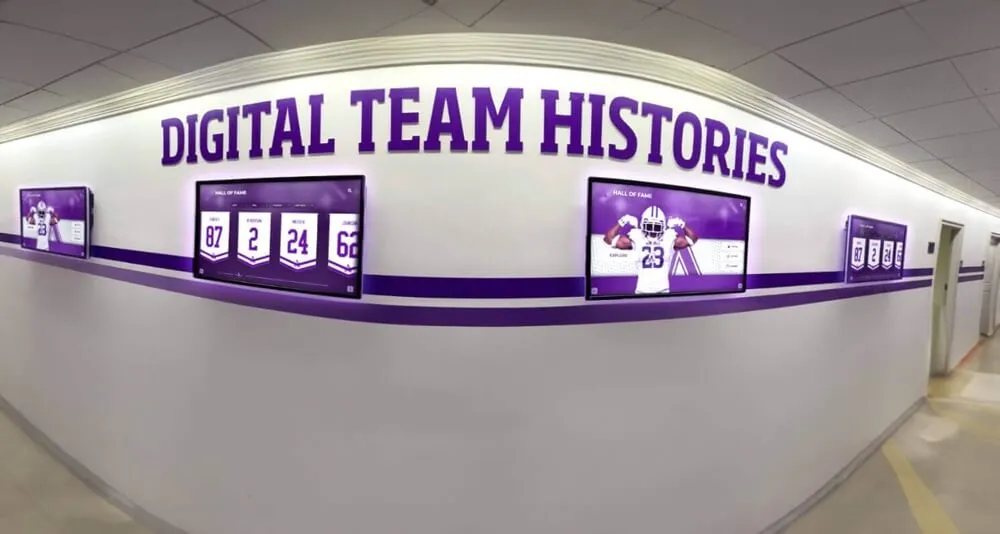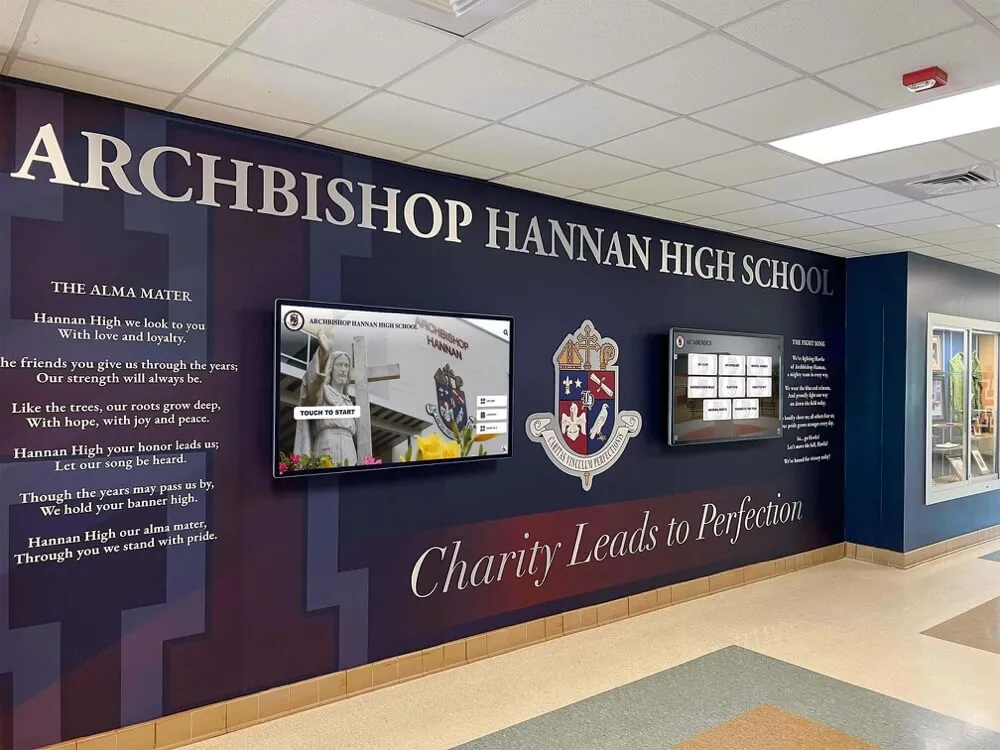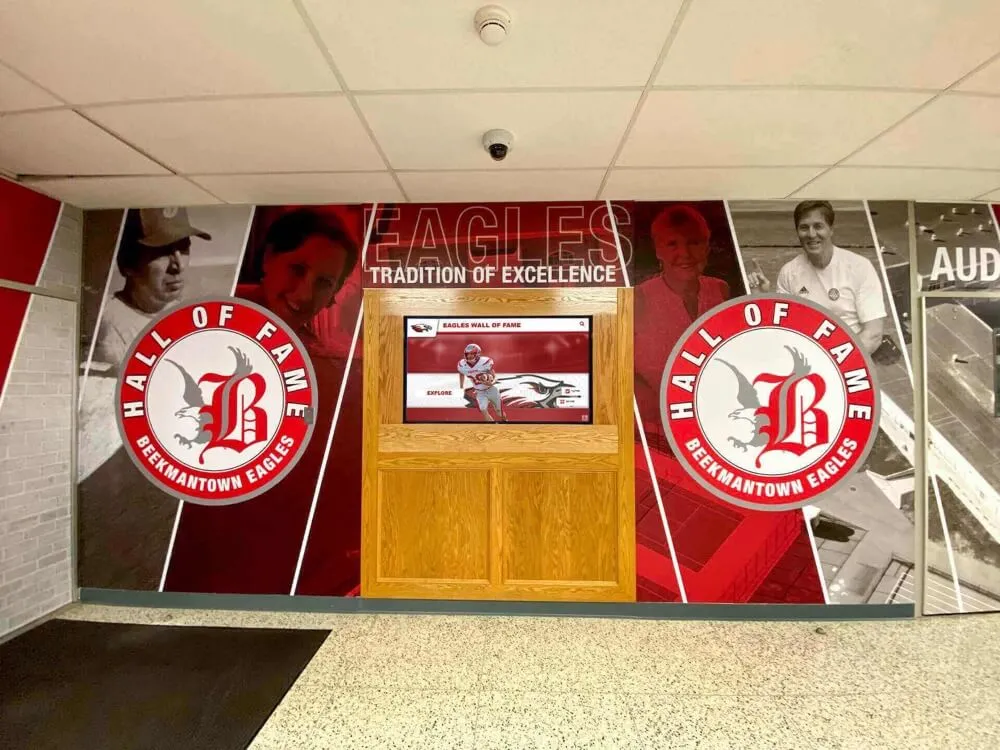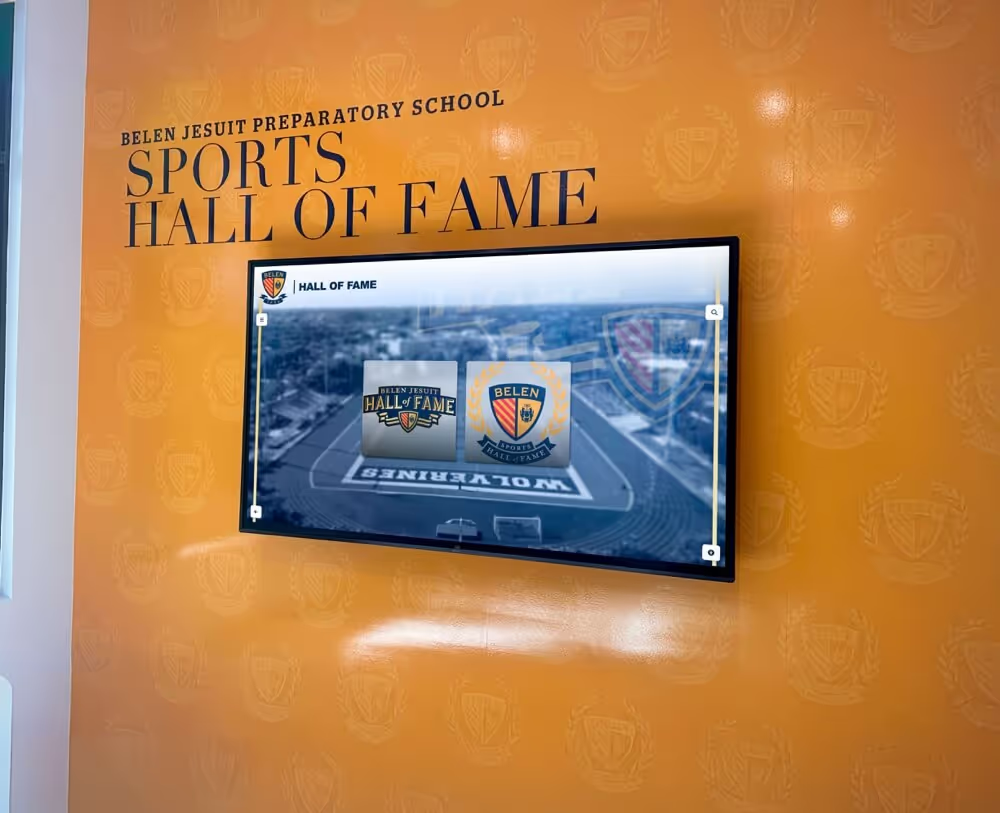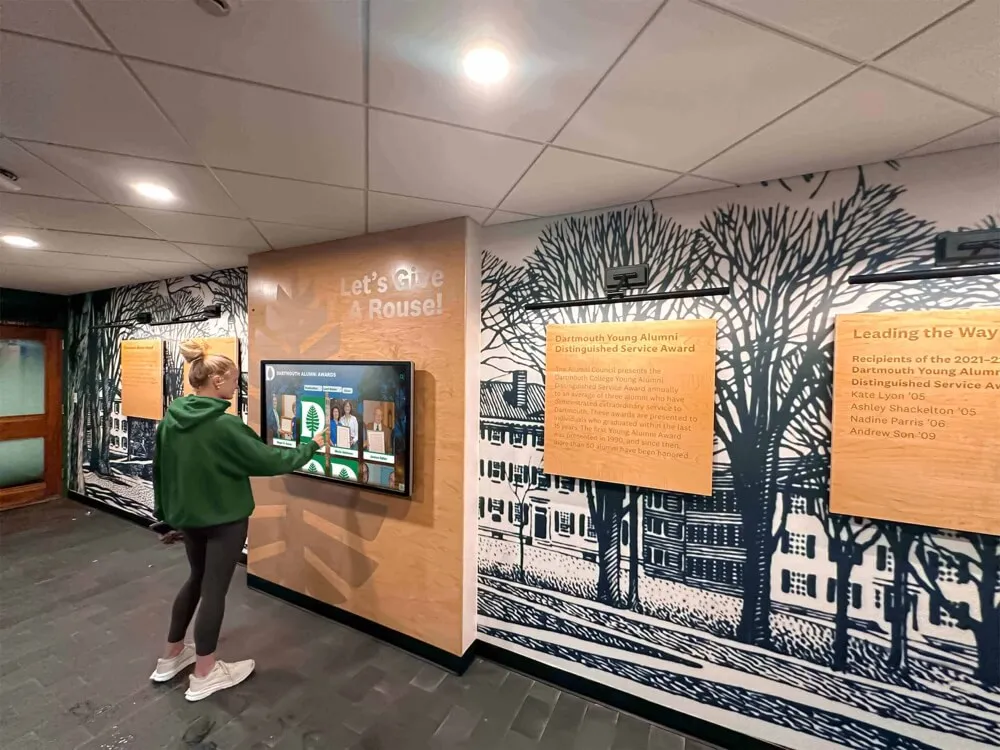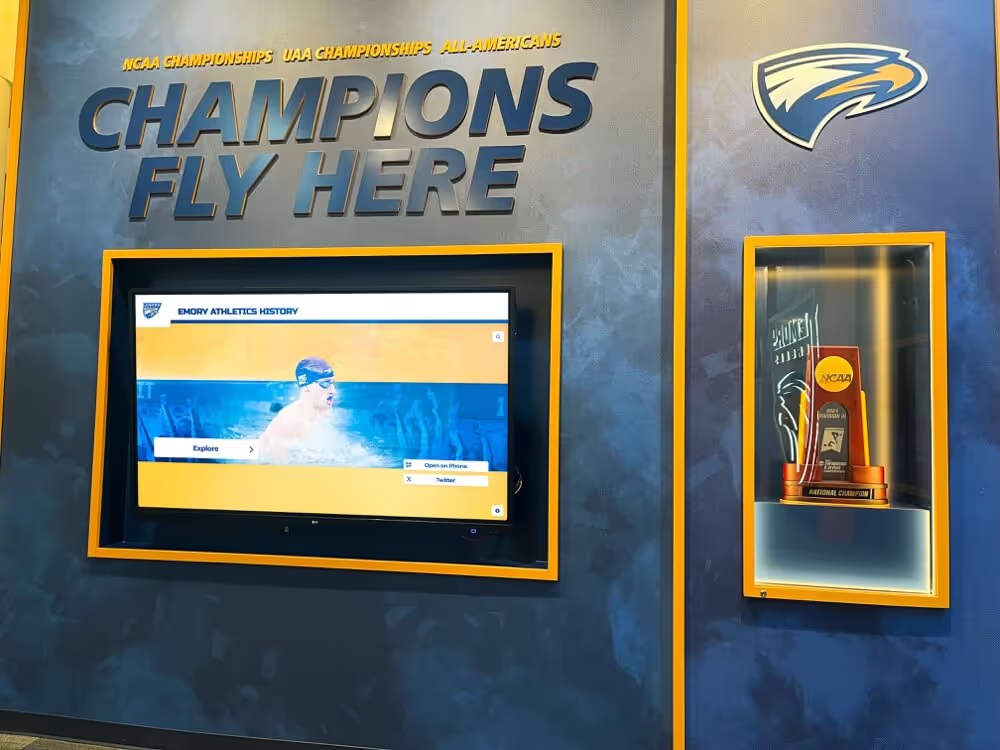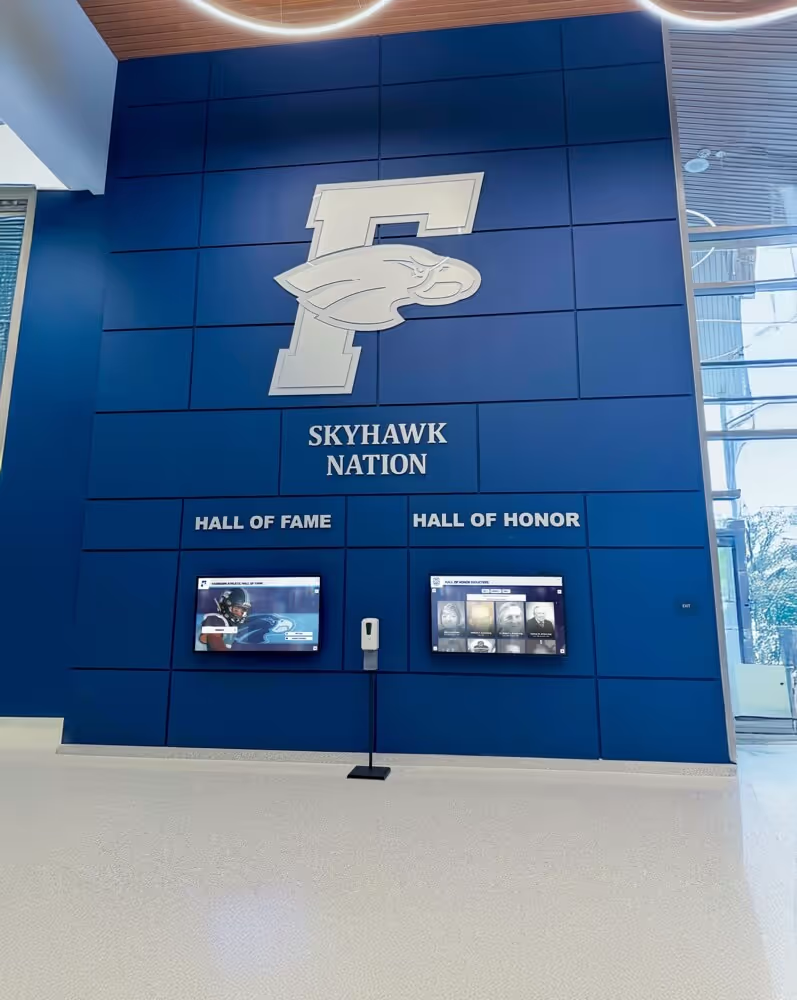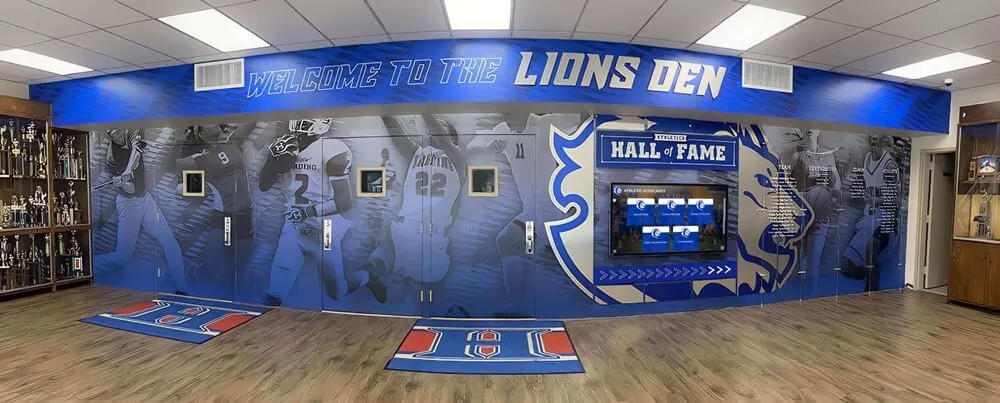




Key Takeaways
Transform your gym lobby with interactive touchscreen displays for digital trophy recognition. Complete guide to selecting, implementing, and maximizing engagement.
Why High Schools Are Transitioning to Digital Trophy Displays
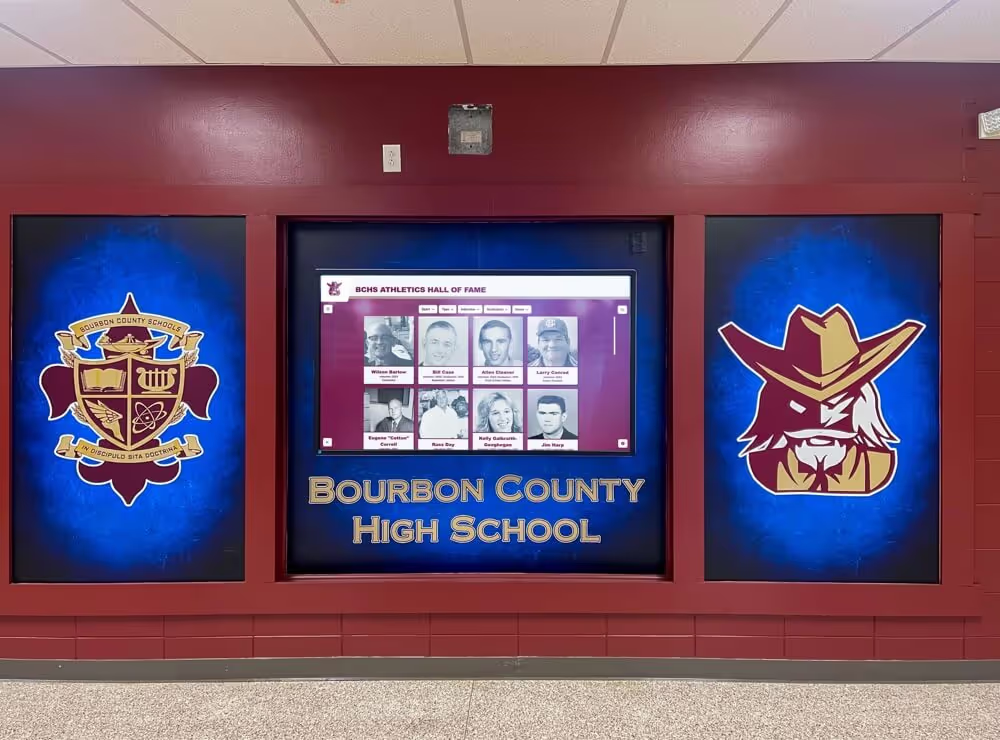
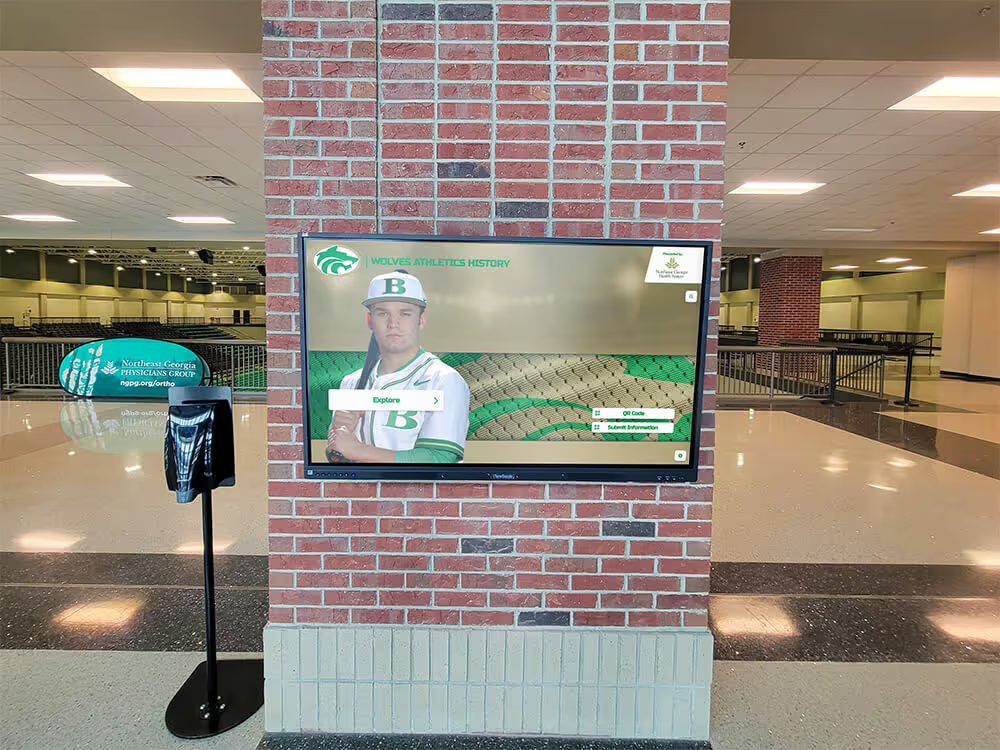
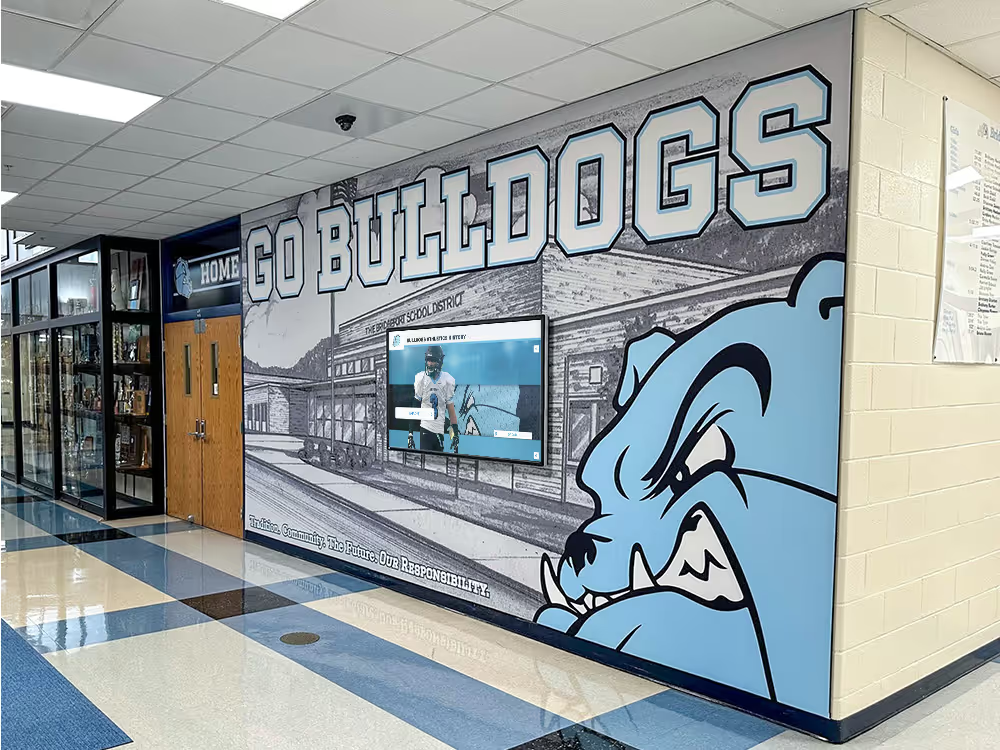
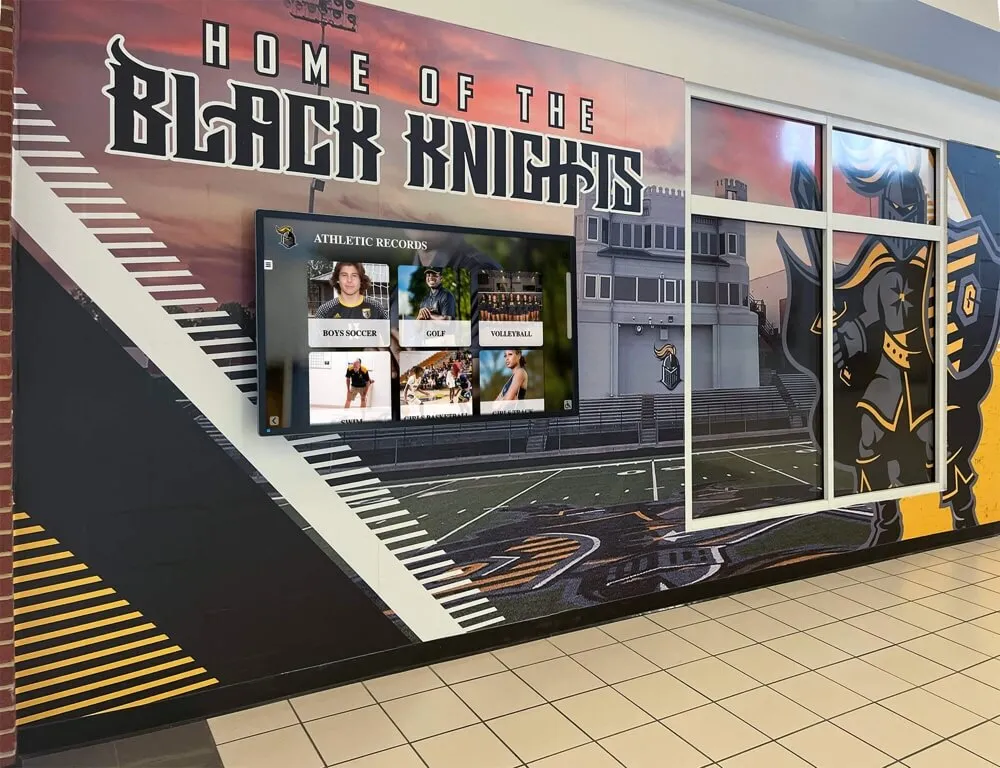
Traditional trophy cases face fundamental limitations that touchscreen technology addresses through purpose-built recognition platforms.
The Physical Space Constraint Crisis
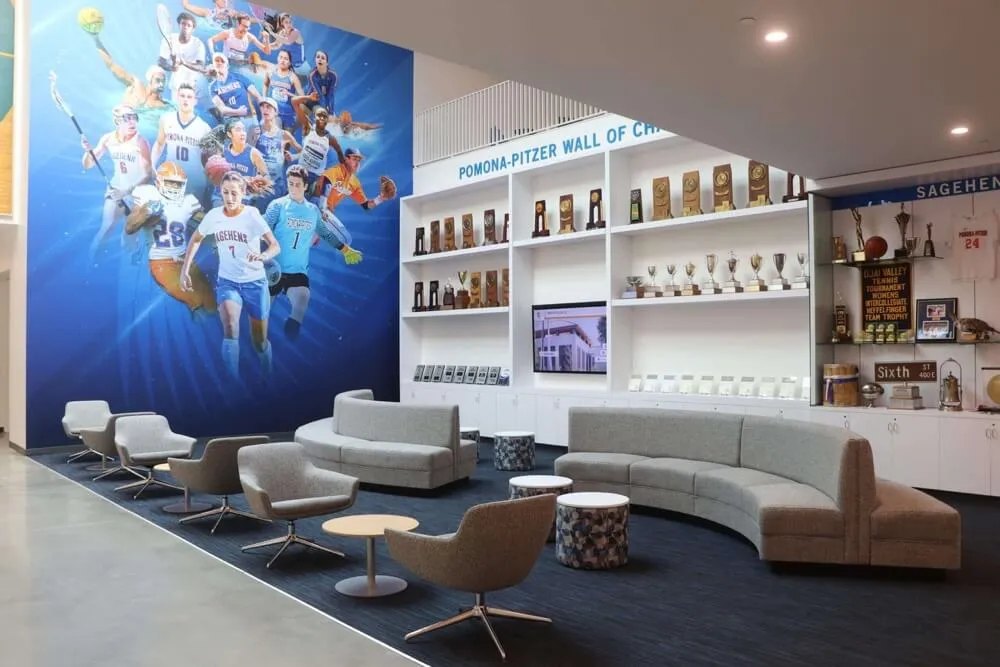
Athletic programs accumulate achievements continuously. Championship trophies, individual awards, retired jerseys, record plaques, and commemorative items multiply year after year. Physical trophy cases have finite capacity, forcing difficult decisions about which achievements receive display space and which get relegated to storage.
Schools with rich athletic traditions face particularly acute challenges. A program celebrating its 75th anniversary might have hundreds of championship trophies spanning multiple sports and decades. Traditional display approaches require either massive wall space consuming entire lobbies or selective curation that necessarily excludes deserving achievements.
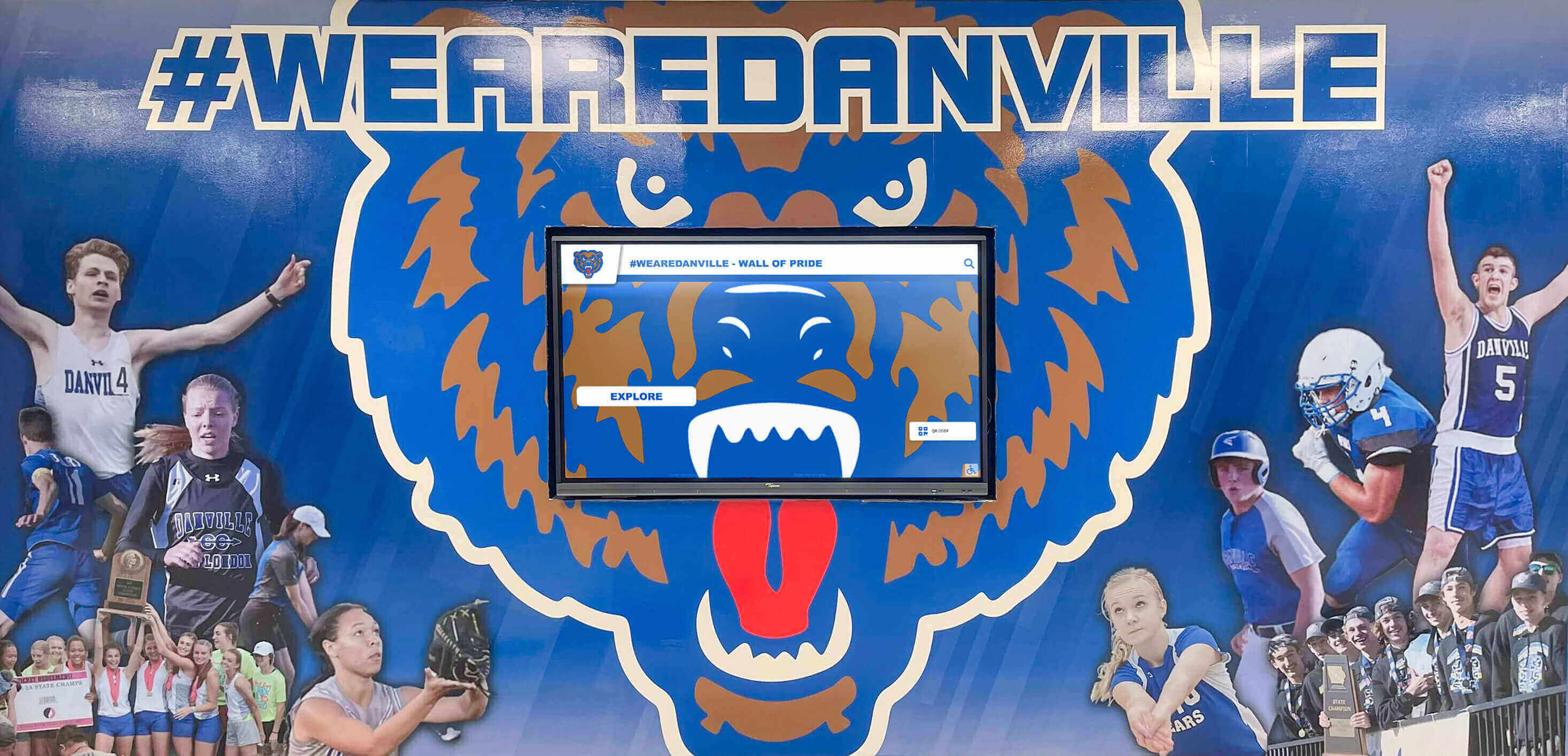
According to analysis of trophy case capacity planning, most high schools exhaust available display space within 10-15 years of facility construction, requiring expensive retrofitting or acceptance that recent achievements won’t receive proper recognition.
Update Complexity and Maintenance Burden
Traditional trophy displays require physical handling of valuable items whenever updates occur. After championship seasons or when athletes break records, schools must:
- Purchase new trophies or plaques through vendors
- Wait weeks for custom engraving and delivery
- Schedule facilities staff for installation
- Rearrange existing displays to accommodate new items
- Maintain physical cases including cleaning glass and dusting items
- Replace deteriorating elements damaged by time or handling
This process creates significant lag between achievement and recognition, diminishing the motivational impact that timely acknowledgment provides. Athletes who break records on Friday night might wait months before seeing their accomplishments permanently recognized.
Limited Information and Storytelling Capacity
Traditional trophy cases display physical objects with minimal context. A championship trophy might include the year and sport, but visitors gain little understanding of the season narrative, key players, memorable games, or program significance. Individual achievement plaques typically list only name, record, and year—missing the stories that make achievements memorable and inspiring.
This information scarcity particularly affects alumni returning to campus. They might locate team photos from their athletic career but find little detail about teammates, season records, or the broader program context during their era.
Poor Engagement and Accessibility
Static trophy displays require visitors to physically approach cases and passively view contents. No search functionality helps alumni find their specific achievements among hundreds of items. No filtering allows prospective students interested in particular sports to explore relevant program history. No multimedia brings championships to life through video highlights or athlete testimonials.
Traditional displays also present accessibility challenges for visitors with visual impairments or mobility limitations that prevent close examination of cases.
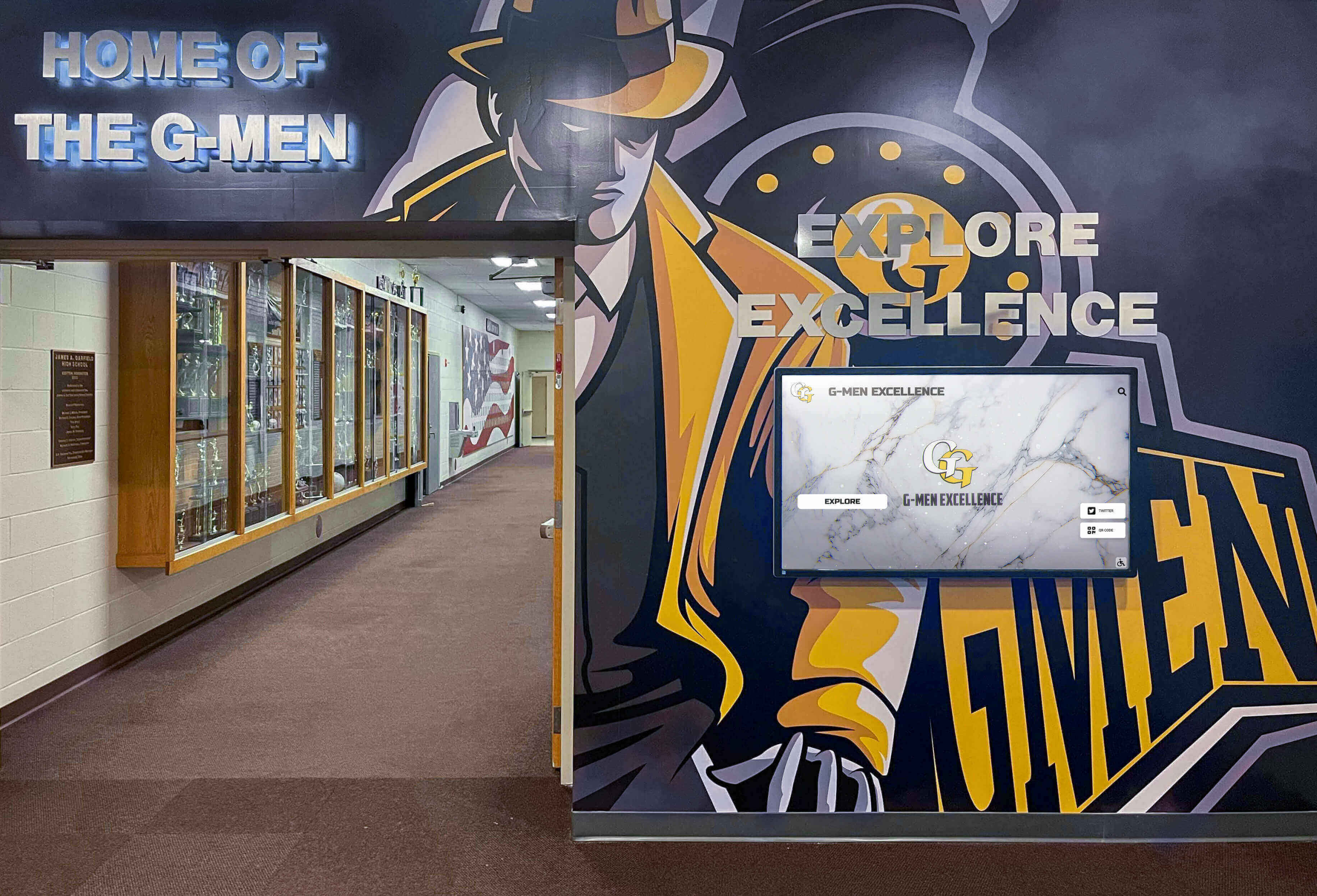
The Cost Accumulation Over Time
While initial trophy case installation might cost less than digital systems, ongoing expenses accumulate substantially across program lifecycles. Consider a high school with strong athletic programs across ten sports:
Traditional System 10-Year Costs:
- Initial trophy cases: $15,000-30,000
- Annual trophies/plaques: $2,000-5,000 × 10 = $20,000-50,000
- Display updates and modifications: $1,000-2,000 × 10 = $10,000-20,000
- Maintenance and cleaning: $500-1,000 × 10 = $5,000-10,000
- Total: $50,000-110,000 with persistent space limitations
Digital System 10-Year Costs:
- Initial hardware and installation: $12,000-20,000
- Software platform subscription: $1,500-2,500 × 10 = $15,000-25,000
- Content management and updates: $500-1,500 × 10 = $5,000-15,000
- Total: $32,000-60,000 with unlimited capacity
Digital systems demonstrate clear cost advantages within 5-7 years while providing dramatically superior recognition capabilities, particularly for schools with strong multi-sport traditions.
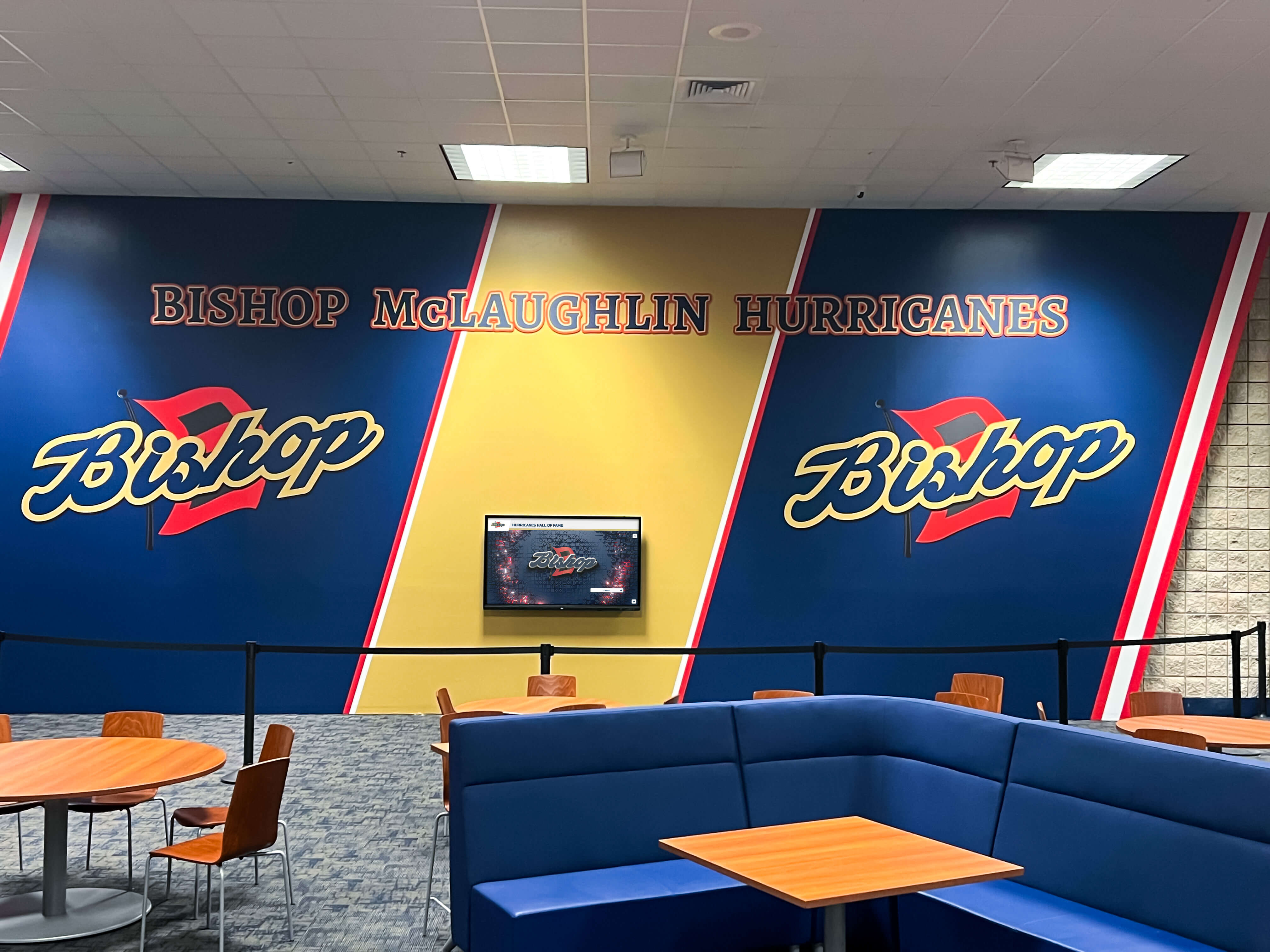
Understanding Touchscreen Display Technology for Athletic Recognition
Not all touchscreen systems suit athletic recognition applications. Understanding technology options helps schools make informed decisions aligned with gym lobby requirements.
Display Hardware Specifications
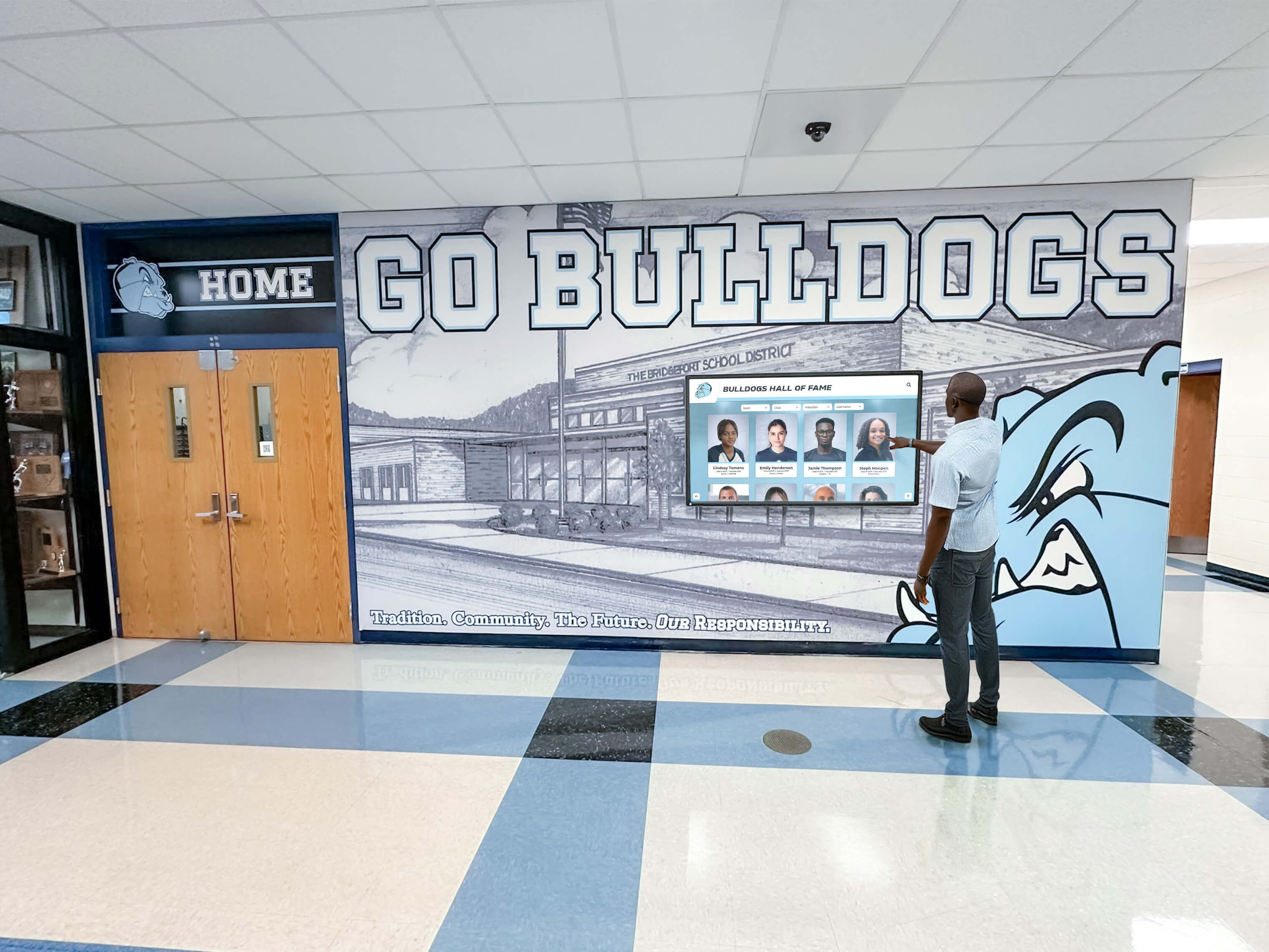
Screen Size and Resolution: Gym lobby applications typically require 55-75 inch displays providing visibility for groups viewing simultaneously. Larger formats (75-86 inches) suit spacious lobbies with long viewing distances, while 55-65 inch displays work well in compact spaces.
4K resolution (3840x2160) has become standard for athletic recognition displays, ensuring sharp text and detailed photos visible from various distances. Higher resolution proves particularly important for displaying statistics, record tables, and multiple athlete profiles simultaneously.
Commercial-Grade Construction: Gym lobbies experience high traffic and occasional contact with sports equipment. Commercial-grade displays offer hardened tempered glass surfaces rated for 50,000+ operating hours, panels designed for continuous operation rather than residential intermittent use, and durable chassis construction withstanding vibration and minor impacts.
Consumer televisions appear superficially similar but lack the durability necessary for institutional applications. They typically fail within 2-3 years under continuous operation, while commercial displays reliably function for 7-10 years or more.
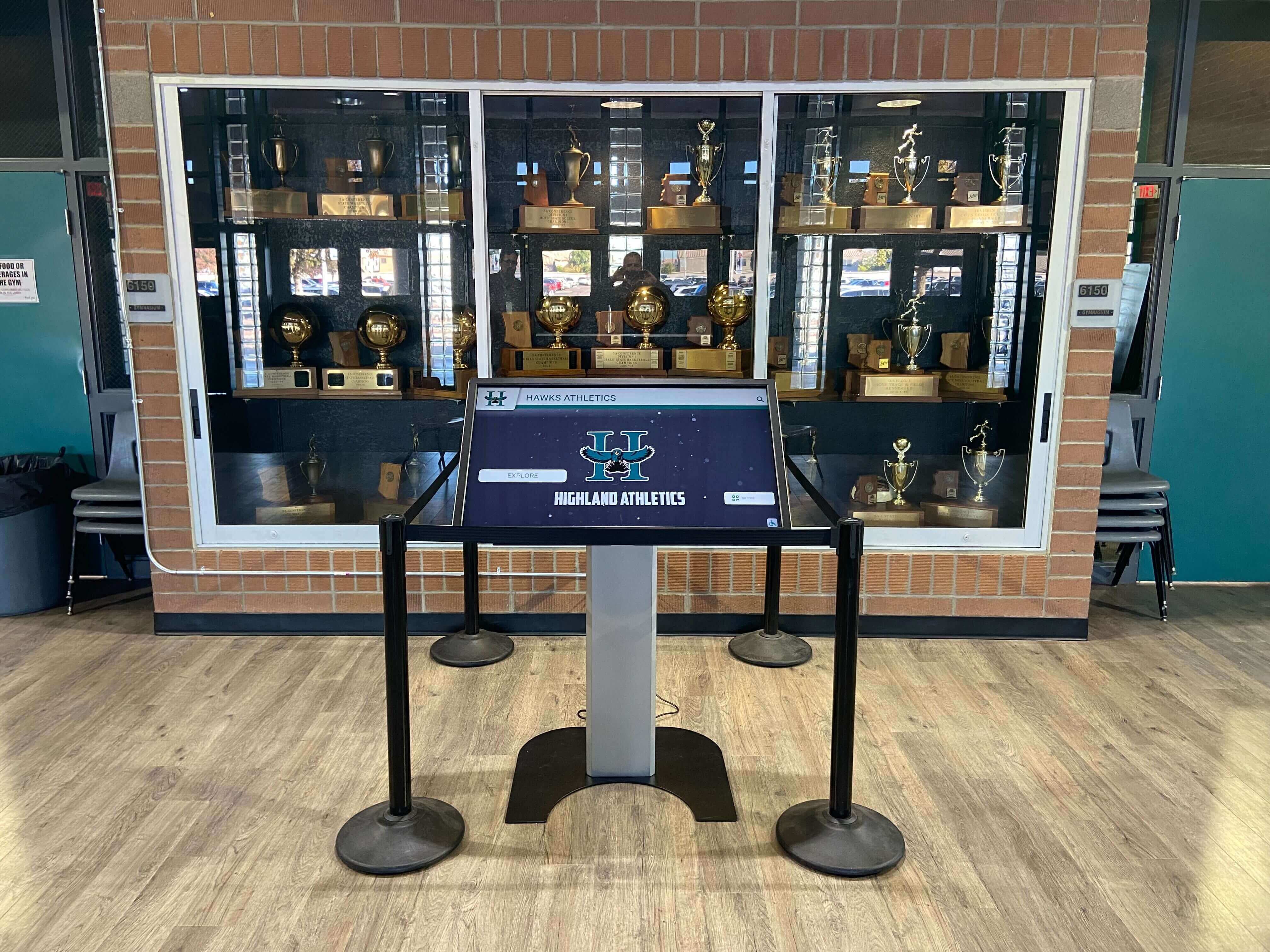
Orientation Flexibility: Recognition content often displays better in portrait orientation, allowing vertical presentation of individual athlete profiles, championship team rosters, and record lists. Quality commercial displays support both landscape and portrait mounting, though software platforms must specifically accommodate portrait layouts rather than simply rotating landscape content.
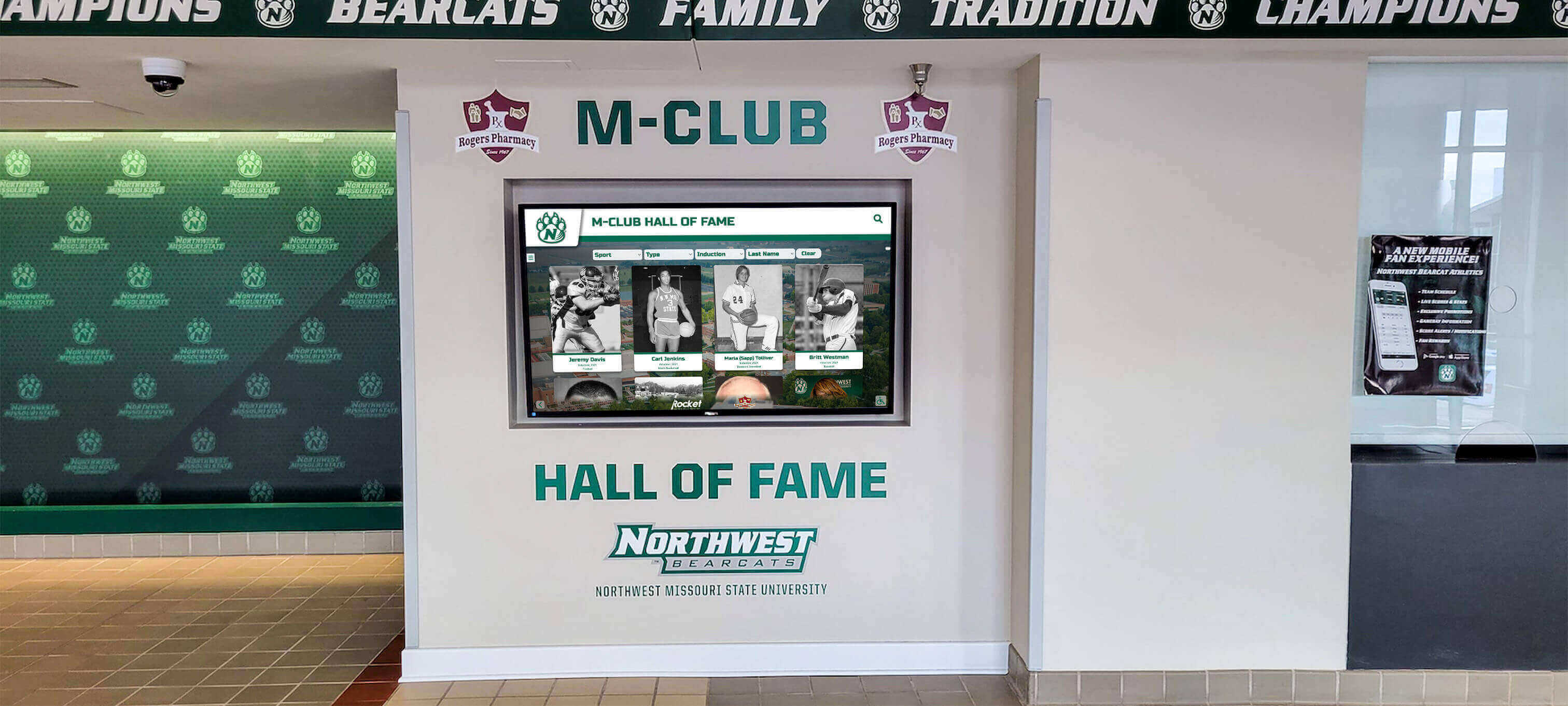
Touch Technology Options
Infrared Touch: Most large-format recognition displays use infrared touch technology detecting interruption of light beams across the screen surface. Infrared touch works with fingers, gloves, or any object, supports 20+ simultaneous touch points enabling group interaction, and offers proven reliability in high-traffic institutional environments.
The slight bezel around infrared screens (typically 5-10mm) rarely affects recognition applications since precision isn’t required for browsing athlete profiles or exploring championship records.
Capacitive Touch: Some premium displays feature capacitive touch using the same technology as smartphones and tablets. Capacitive systems provide glass-to-glass construction with minimal bezels, typically faster response than infrared alternatives, and satisfying tactile feel familiar to users accustomed to mobile devices.
However, capacitive technology costs significantly more for large formats and may not justify the premium for recognition applications where infrared performs adequately.
For most gym lobby installations, infrared touch provides the optimal balance of performance, reliability, and cost-effectiveness. Schools should prioritize software capabilities and content management over subtle touch technology differences that minimally impact user experience in recognition contexts.
Environmental Considerations for Gym Lobbies
Gym lobby environments present specific challenges requiring appropriate equipment selection and installation practices.
Lighting Management: Gym lobbies often feature large windows creating bright ambient light and potential glare. Displays should offer minimum brightness of 400-500 nits for adequate visibility in well-lit spaces. Anti-glare screen treatments reduce reflections from windows and overhead lighting, improving viewing experience.
Evaluate lighting conditions at various times of day before finalizing display specifications. A system appearing adequate during morning installation might suffer from afternoon sunlight creating unacceptable glare.
Temperature and Humidity: Climate control typically doesn’t challenge gym lobby installations, but displays should tolerate temperature ranges of 32-104°F and humidity up to 80% for reliable year-round operation. Ensure adequate ventilation around displays, particularly for recessed installations or locations near heating/cooling systems.
Physical Protection: While commercial displays offer hardened glass, gym environments occasionally involve errant basketballs, equipment carts, or energetic students. Consider protective bezels or strategic positioning minimizing exposure to accidental impact while maintaining accessibility for intended interaction.
Comparing Digital Recognition Solutions for Athletic Programs
Multiple platforms serve educational recognition applications, but purpose-built solutions designed specifically for school athletics offer distinct advantages over generic digital signage.
Purpose-Built vs. Generic Digital Signage
Generic Digital Signage Platforms: Standard digital signage systems designed for retail or corporate applications can display athletic content but lack features that educational recognition requires:
- Basic slideshow or video loop capabilities without search or filtering
- No database structure for organizing athlete profiles, records, or achievements
- Limited or no touchscreen interaction beyond simple navigation
- Content management requiring technical expertise rather than intuitive interfaces
- No mobile companion applications extending access beyond physical displays
- Minimal analytics revealing how visitors engage with recognition content
Generic signage serves announcements, schedules, and promotional messages adequately but fails to deliver the interactive, searchable, comprehensive recognition that athletic programs require.
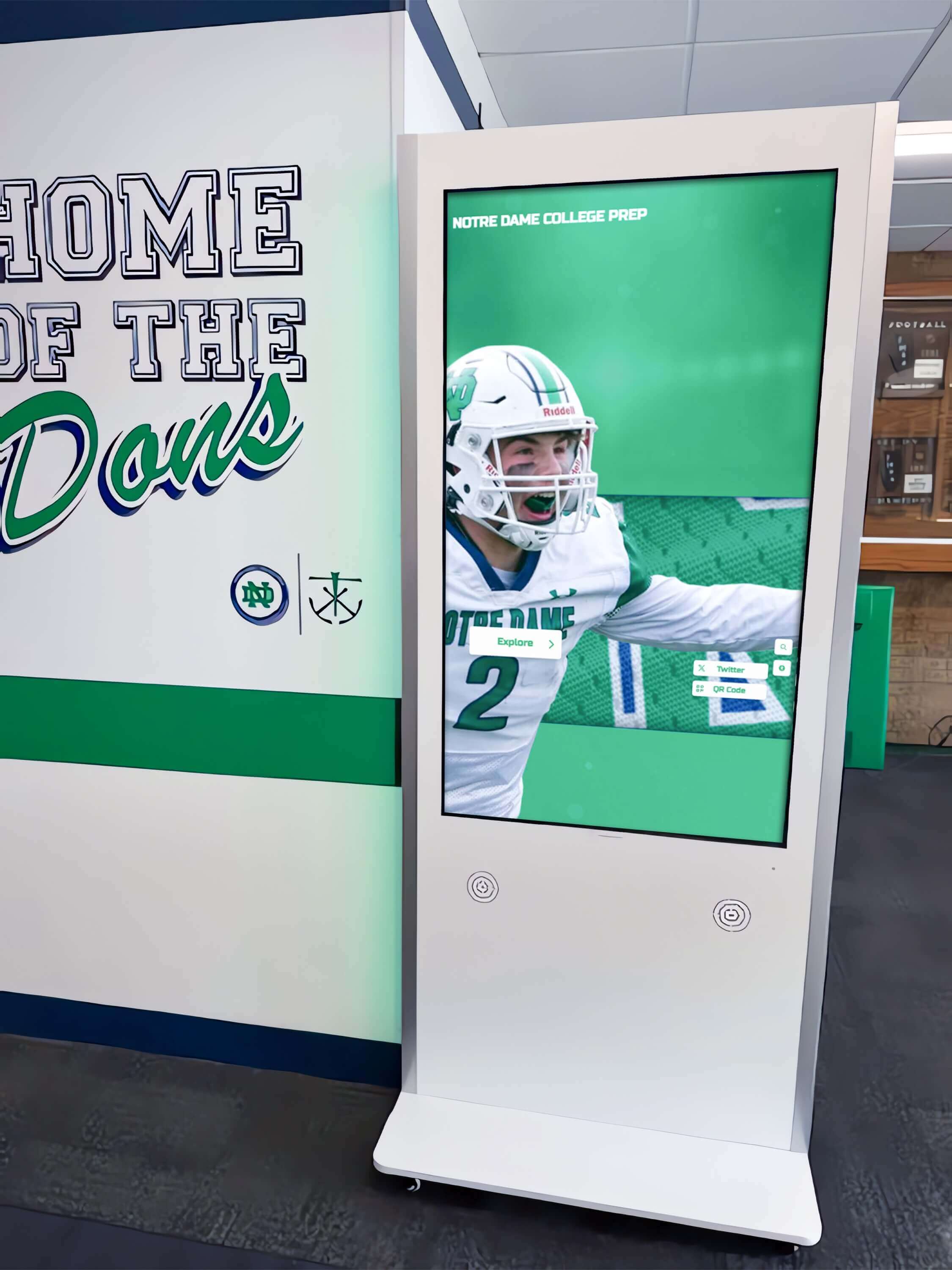
Purpose-Built Recognition Platforms: Solutions designed specifically for educational recognition provide capabilities addressing athletic program needs:
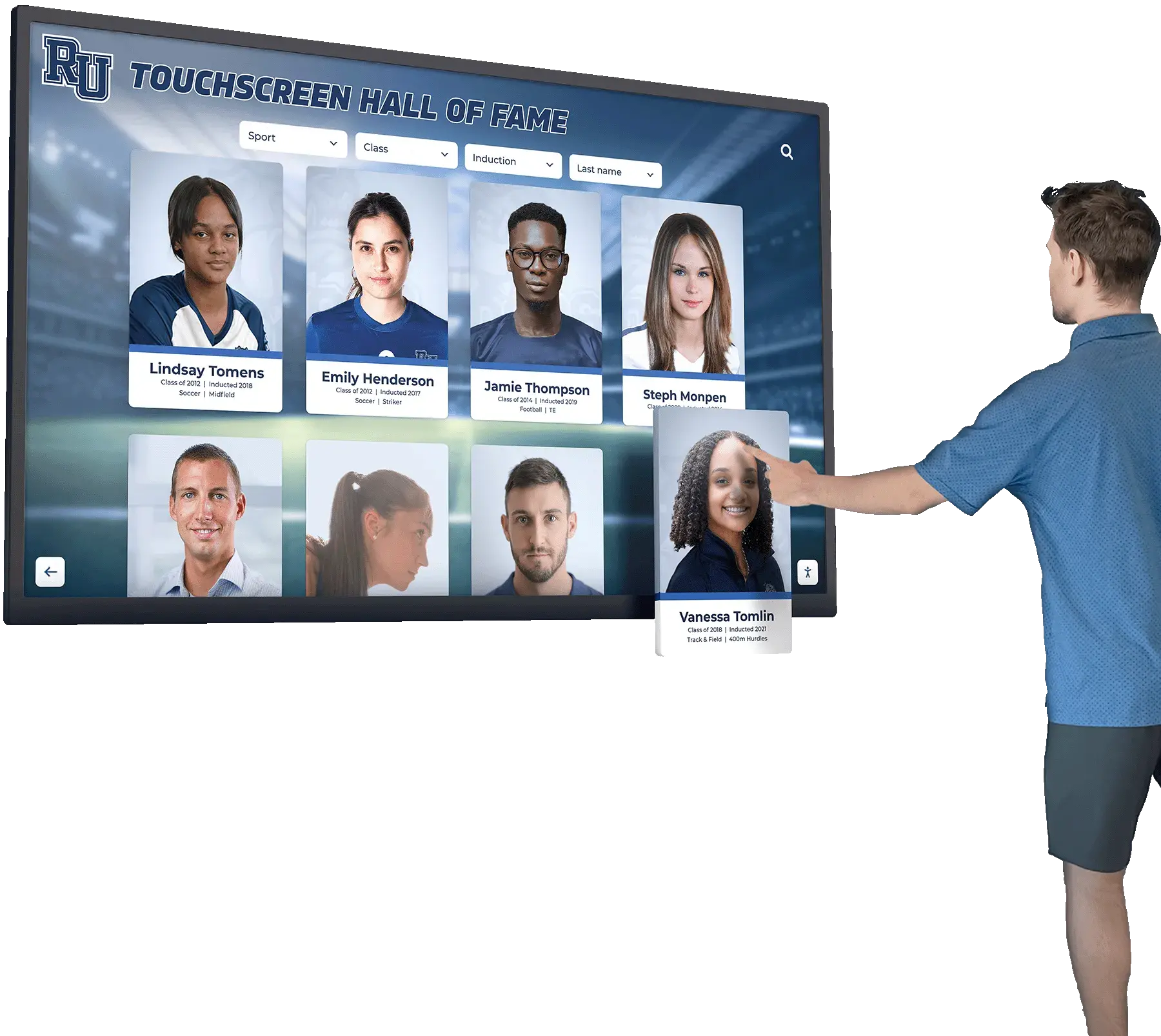
- Searchable databases organizing thousands of athlete profiles, team records, and achievements
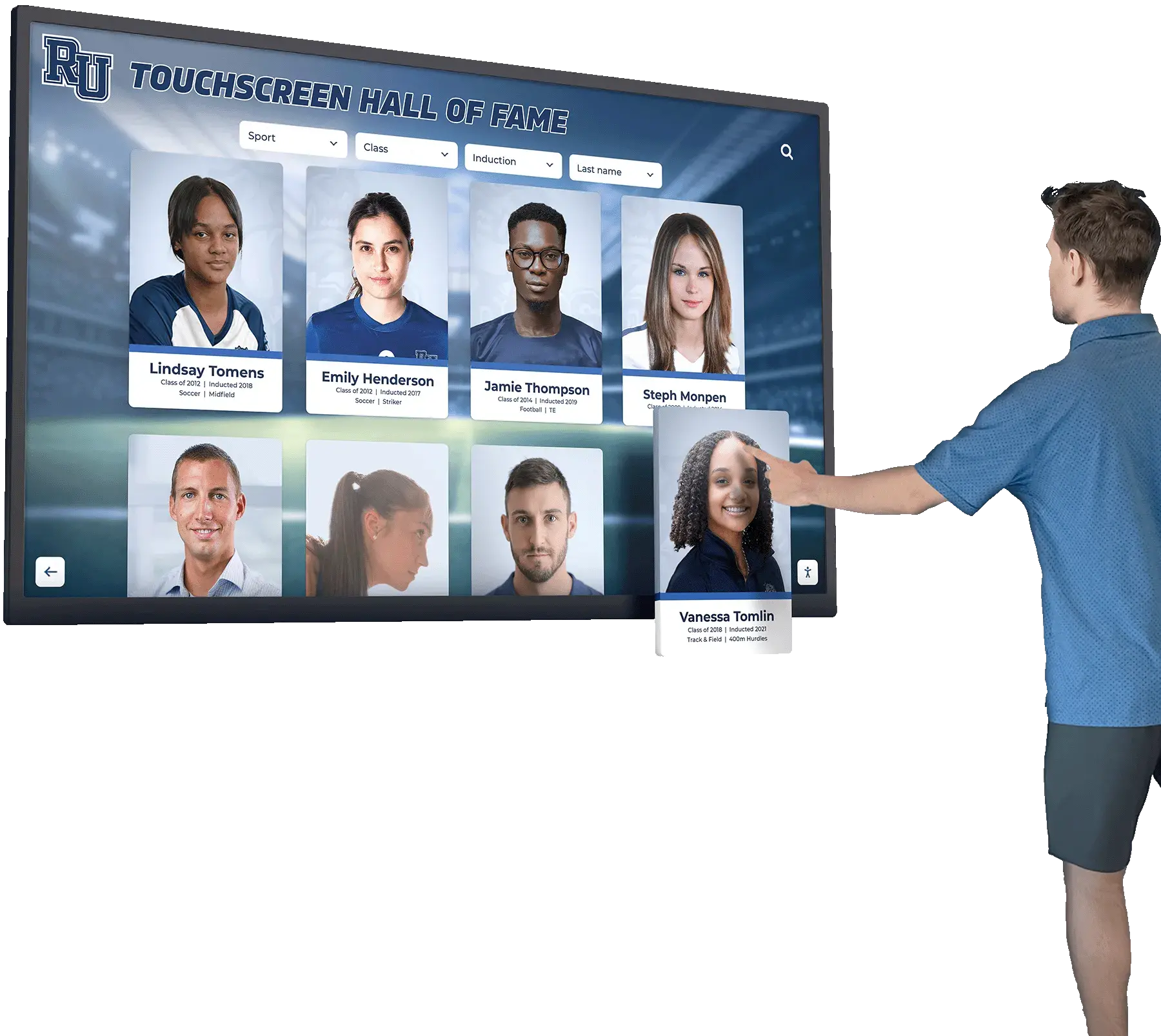
- Interactive exploration enabling visitors to filter by sport, year, achievement type, or athlete name
- Intuitive content management requiring no technical expertise from athletic staff
- Mobile applications allowing alumni remote access to their achievements
- Analytics tracking which athletes, teams, and content generate most engagement
- Regular feature updates and enhancements addressing educational customer needs
Platforms like Rocket Alumni Solutions exemplify purpose-built approaches. Rather than adapting generic signage for recognition, these solutions start with educational recognition requirements and deliver comprehensive features that schools actually need.
Critical Evaluation Criteria for Athletic Recognition Systems
When comparing touchscreen recognition platforms, schools should systematically evaluate solutions across key dimensions determining long-term success and value.
Content Management Accessibility: Athletic directors and administrative staff—not technology specialists—typically manage recognition content. Systems requiring programming knowledge, complex software, or vendor assistance for routine updates create bottlenecks undermining timely recognition.
Evaluate whether non-technical staff can independently add new athletes, update records, upload photos, create championship team pages, and modify content without technical support. Test interfaces during evaluation using actual staff who will manage systems long-term.
Recognition Capacity and Organization: Assess how systems handle growth as athletic programs accumulate achievements across decades. Quality platforms accommodate thousands of athlete profiles organized across multiple sports, maintain comprehensive team history spanning decades, preserve coaching milestone records, and document facility naming and major program events.
Poor organization creates frustration as content volumes grow. Systems lacking robust categorization, tagging, and search capabilities become unwieldy repositories where specific content proves difficult to locate.
Multimedia Support: Modern recognition extends beyond names and dates to include high-resolution photos from athletic careers, video highlights of championship moments, scanned newspaper clippings from historic achievements, season statistics and career progression charts, and written narratives providing context and storytelling.
Verify that platforms truly support rich multimedia rather than simply displaying static images with minimal text.
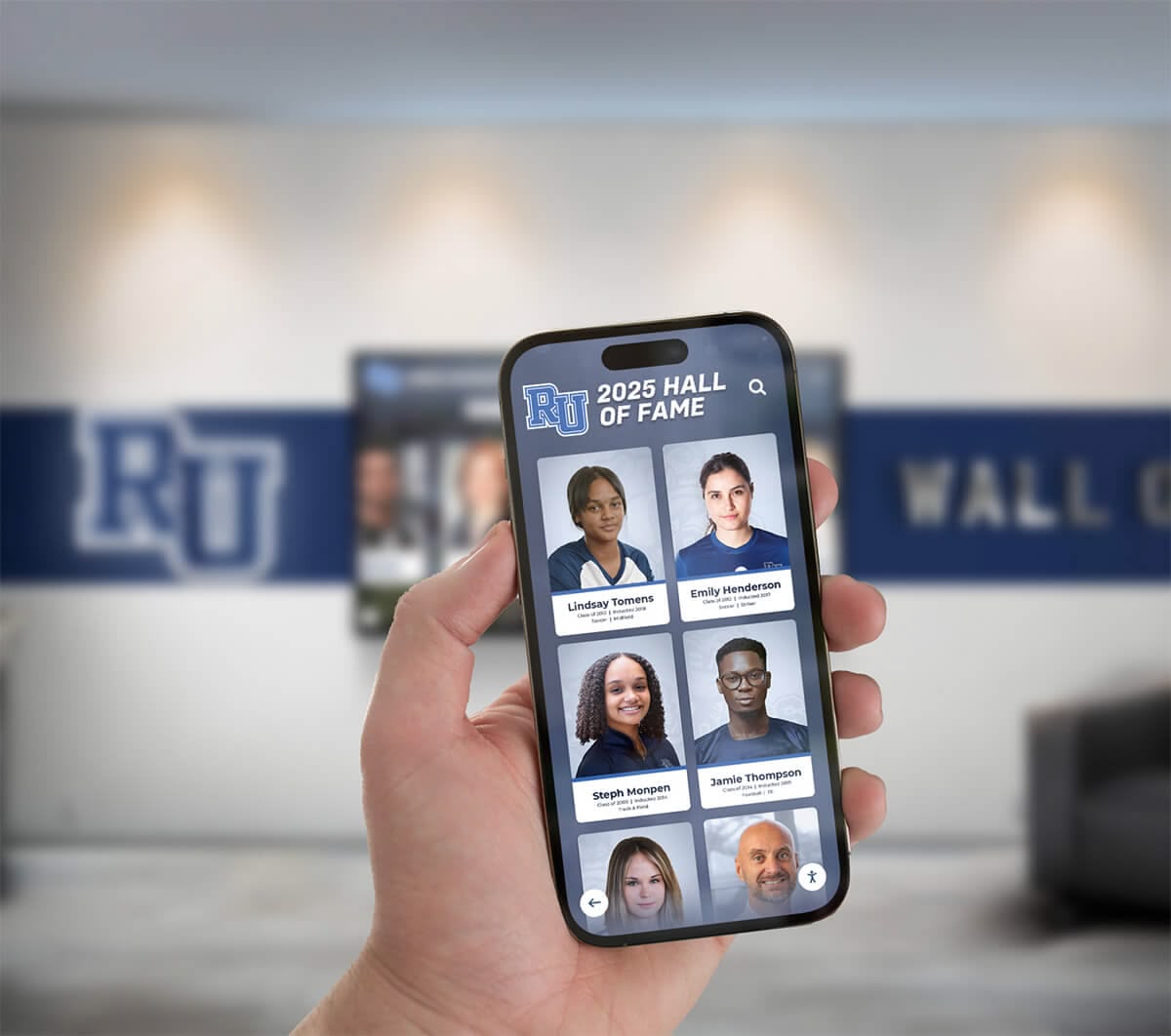
Mobile and Web Extension: Recognition impact multiplies when accessible beyond physical displays. Quality systems provide web-based viewing enabling alumni global access, mobile applications for smartphone and tablet exploration, social media integration allowing easy sharing, and QR code linking from physical spaces to specific athlete profiles.
This extended access strengthens alumni engagement while allowing prospective students and families to explore program traditions before campus visits.
Analytics and Engagement Measurement: Understanding how visitors interact with recognition content informs ongoing content strategy and demonstrates value to stakeholders. Useful analytics track which athlete profiles receive most views, which sports and eras generate greatest interest, which features visitors use most frequently, peak usage times and traffic patterns, and comparative engagement across different content types.
Generic signage platforms typically lack these analytics, providing no insight into recognition effectiveness or return on investment.
Support and Service Quality: Technology inevitably encounters issues. Vendor responsiveness and support quality often matter more than marginal specification differences. Evaluate typical response times for technical issues, availability of phone and email support during school hours, quality of training and onboarding assistance, track record of software updates and feature additions, and references from similar athletic programs using the system long-term.
Schools implementing comprehensive digital recognition for athletic achievements report that ongoing vendor support proves as important as initial system capabilities in determining satisfaction.
Comparison Matrix: Key Features for Athletic Recognition
| Evaluation Criterion | Generic Digital Signage | Purpose-Built Recognition Platform |
|---|---|---|
| Athlete Database Management | Basic or absent | Comprehensive profiles with career stats |
| Searchable Content | Limited or none | Full-text search across all content |
| Content Management Complexity | Technical expertise required | Intuitive for non-technical staff |
| Mobile/Web Access | Display-only | Companion apps and web viewing |
| Multimedia Integration | Basic images/video | Rich profiles with photos, video, documents |
| Analytics and Insights | Minimal or none | Detailed engagement tracking |
| Recognition-Specific Features | Must be custom-developed | Purpose-built (records, championships, etc.) |
| Update Frequency | Manual, technical process | Self-service, immediate updates |
| Athletic Program Focus | General-purpose adaptation | Designed for school athletics |
| Long-Term Cost | Higher (ongoing customization) | Lower (included features) |
This comparison demonstrates why athletic programs benefit from platforms specifically designed for educational recognition rather than adapting generic signage solutions that lack essential capabilities.
Implementation Strategy: From Planning to Launch
Successful touchscreen recognition installations require systematic planning addressing technical, logistical, and content dimensions.
Pre-Implementation Assessment
Objectives and Success Criteria: Begin by clearly defining what the touchscreen display should accomplish. Common objectives include honoring all deserving athletes rather than just elite performers, providing prospective students evidence of program excellence, engaging alumni during return campus visits, reducing ongoing trophy and plaque expenses, and creating modern, professional presentation quality.
Document specific success criteria enabling later evaluation. These might include number of athlete profiles displayed, visitor engagement metrics, cost savings compared to traditional approaches, or alumni feedback during reunion events.
Physical Space Evaluation: Gym lobbies vary dramatically in size, layout, lighting, and traffic patterns. Conduct thorough site assessment considering viewing distances and optimal screen size, natural light sources creating potential glare, power outlet locations and electrical capacity, network connectivity and bandwidth availability, ADA compliance and wheelchair-accessible positioning, and security concerns including vandalism prevention.
Take photos and measurements enabling vendor consultation about appropriate hardware specifications and mounting approaches.
Budget Development: Comprehensive budgets account for all implementation costs and ongoing expenses:
Initial Investment:
- Commercial-grade touchscreen display: $4,000-8,000
- Commercial mounting hardware: $500-1,000
- Professional installation labor: $1,000-2,000
- Network infrastructure upgrades: $500-2,000
- Software platform setup: $2,000-4,000
- Initial content development: $2,000-5,000
Annual Ongoing Costs:
- Software subscription and hosting: $1,500-2,500
- Content updates and additions: $500-1,500
- Electricity and maintenance: $200-400
- Technical support: Often included in subscription
Total first-year investment typically ranges $12,000-25,000 depending on display size, content scope, and site-specific installation requirements.
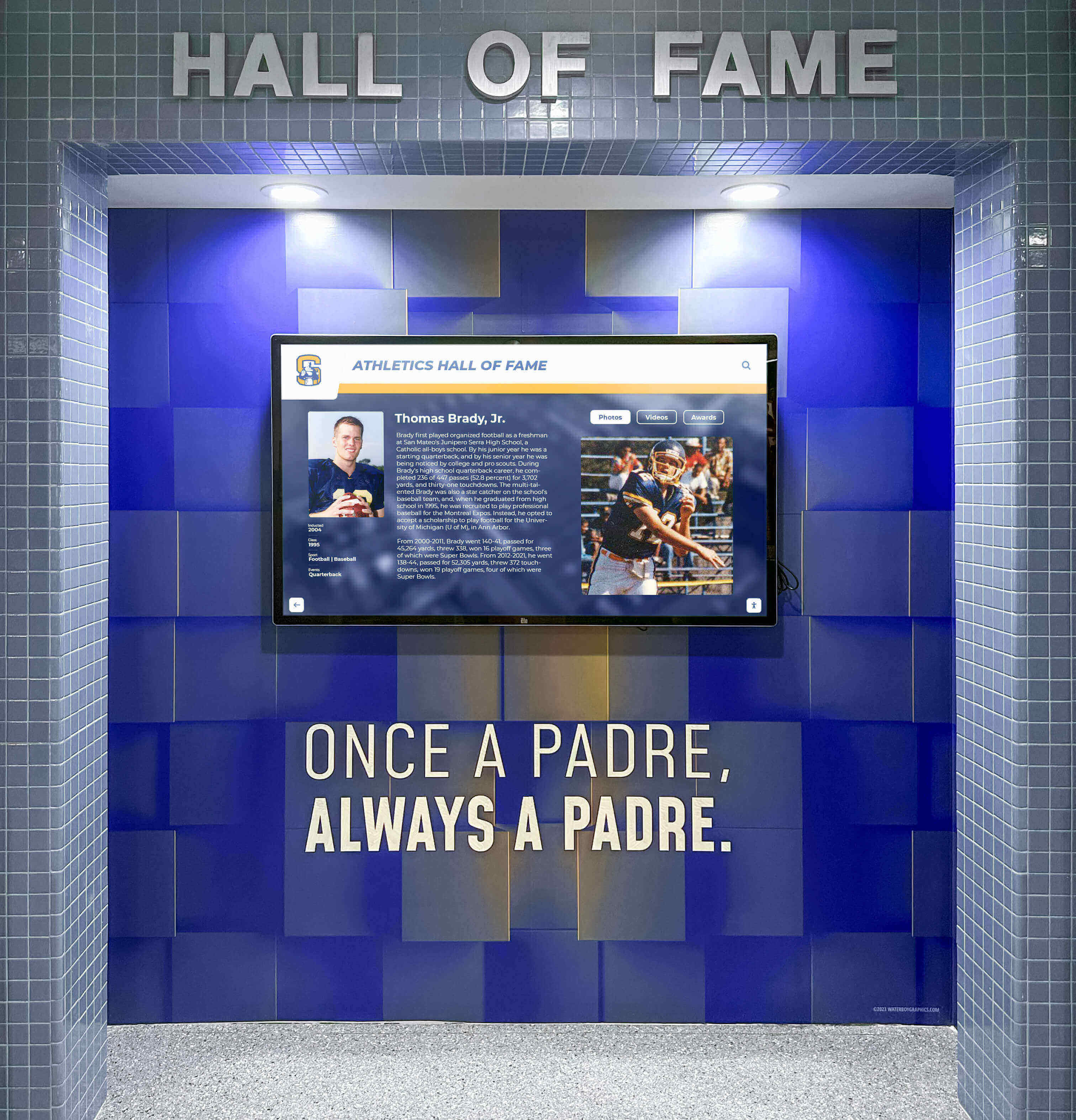
Content Development Process
Recognition displays require initial content documenting athletic program history and achievements. Systematic approaches produce quality results efficiently.
Content Inventory and Prioritization: Document all achievements worthy of recognition across current and historical timeframes. Organize by priority:
Tier 1 (Essential): Recent championship teams (past 5 years), current record holders, recent Hall of Fame inductees, and retired jersey recipients.
Tier 2 (Important): Historical championship teams, career statistical leaders, conference/all-state selections, and coaching milestone achievements.
Tier 3 (Valuable): Team captains and leaders, significant individual performances, facility naming history, and program evolution narratives.
This tiered approach enables phased content development launching displays with essential content while gradually expanding historical coverage as time permits.
Photo Collection and Digitization: Quality visual content distinguishes professional recognition from amateur efforts. Source photos from current team rosters and senior photos, historical yearbooks spanning multiple decades, athletic department archives and filing cabinets, newspaper sports sections and media archives, and alumni personal collections shared for digitization.
Establish clear standards for image quality. Digital photos should be minimum 1920×1080 resolution (1080p) for individual profiles and 3840×2160 (4K) for featured hero images. When digitizing historical photos, scan at 600 DPI minimum for quality reproduction on large displays.
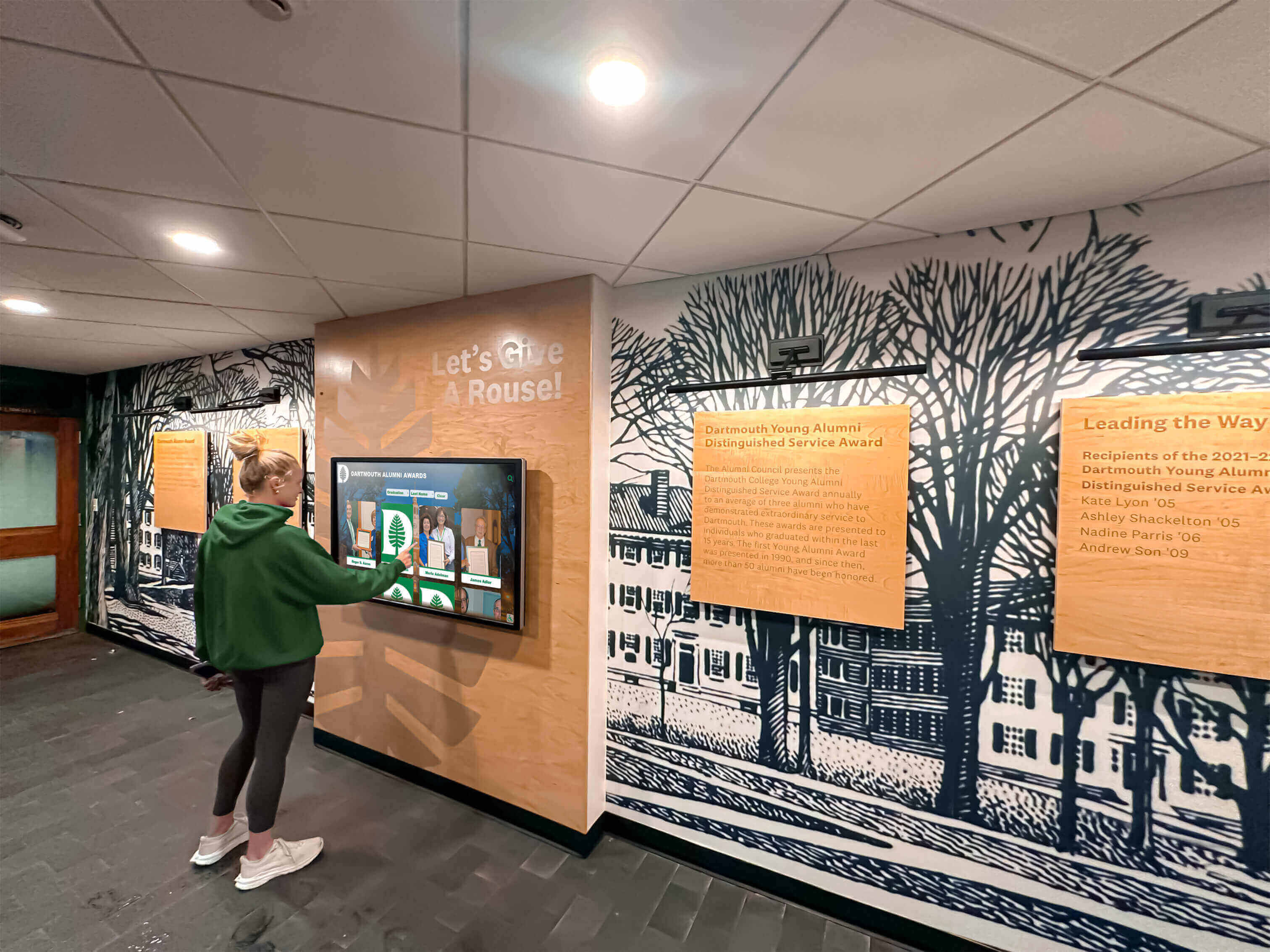
Biographical Information Gathering: Comprehensive athlete profiles include more than basic statistics. Collect athlete name and graduation year, sports participated in and positions played, career and season statistical achievements, individual honors and all-conference selections, post-high school athletic career information, current occupation and location (for historical athletes), memorable games or performances, and brief narrative describing their athletic contributions.
For recent athletes, this information comes from athletic department records. Historical athletes require research through yearbooks, newspaper archives, and alumni outreach. Many programs find that creating simple online forms allows alumni to submit their own information, dramatically accelerating content development.
Championship Team Documentation: Team achievements require different content approaches than individual profiles. Document season records and tournament results, team roster with player positions, coaching staff and athletic director, memorable games and season highlights, newspaper coverage and contemporary reports, and team photos including official portraits and action shots.
Programs implementing comprehensive strategies for recognizing championship teams ensure collective achievements receive appropriate prominence alongside individual excellence.
Record Keeping and Statistical Documentation: Athletic records provide compelling content drawing visitor interest. Systematically document records across career scoring/points, single-season achievements, single-game performances, consecutive games streaks, and career defensive statistics (rebounds, steals, blocks).
Verify records through official scorebooks, media guides, and newspaper archives before publication. Establish clear criteria for record eligibility (minimum games played, varsity-only vs. all competitions, etc.) preventing disputes.
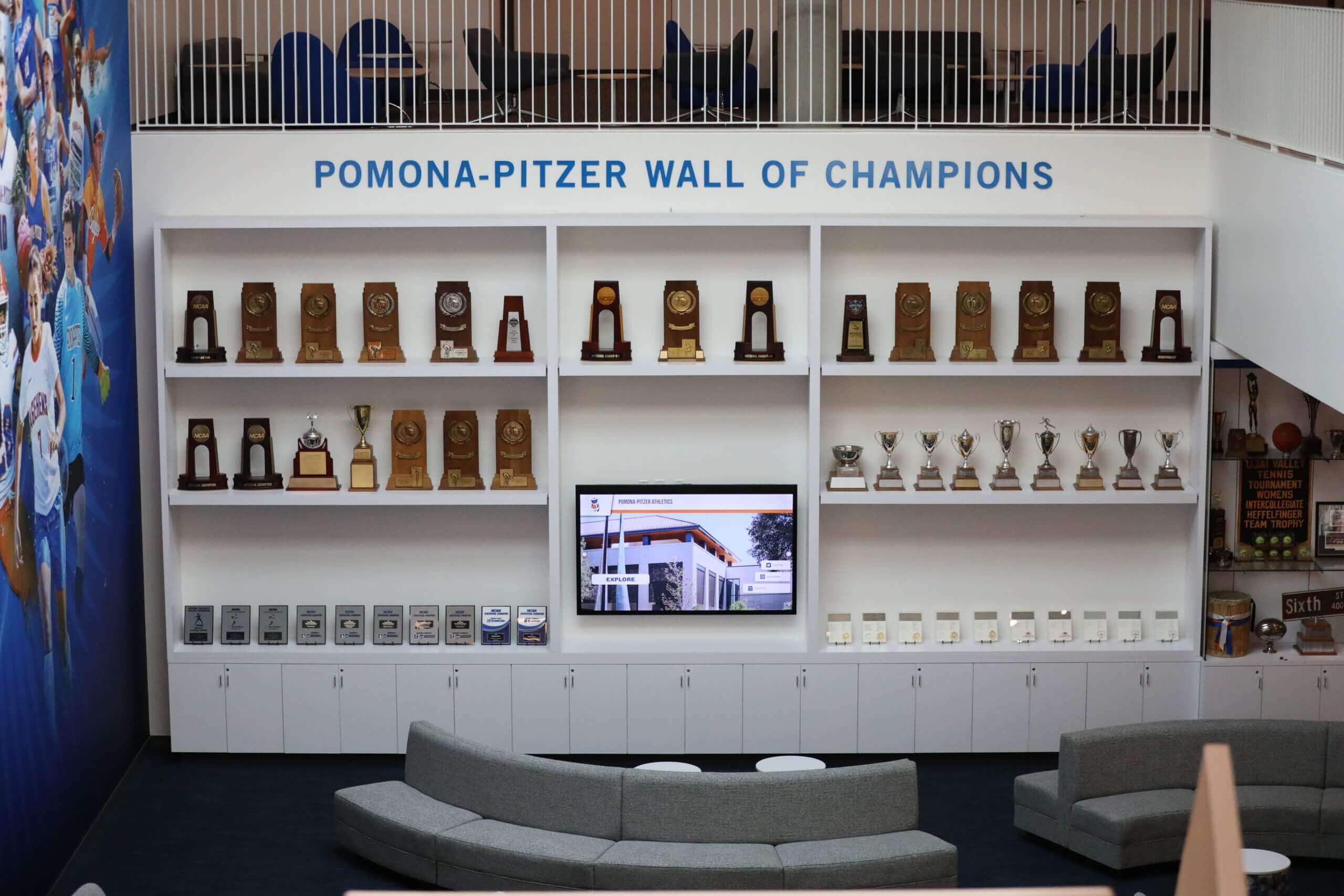
Installation and Technical Integration
Professional installation ensures reliable operation and appropriate presentation quality.
Electrical and Mounting: Commercial displays require dedicated electrical circuits providing adequate power capacity. Most 55-75 inch displays consume 200-400 watts during operation. Electrical work must meet local codes with appropriate outlet placement and circuit protection.
Mounting hardware must support display weight (typically 60-120 pounds) with appropriate wall anchoring. Commercial mounts rated for display size and weight provide tilt adjustment for optimal viewing angles and quick-release mechanisms enabling maintenance access.
Recessed installations create sleek, integrated appearances but require proper ventilation preventing heat buildup. Surface-mounted displays offer simpler installation and better cooling but may appear less integrated with surrounding architecture.
Network Connectivity: Recognition platforms require reliable network connectivity for content updates and user analytics. Wired Ethernet connections provide most reliable performance, though quality WiFi may suffice for locations where cabling proves impractical.
Ensure adequate bandwidth supporting multimedia content delivery. Systems streaming video highlights or displaying high-resolution photos require minimum 25 Mbps download speeds for smooth performance.
Coordinate with IT departments regarding network security policies, firewall configurations, and any content filtering that might affect display functionality.
Software Configuration and Training: Quality vendors provide comprehensive onboarding including software platform configuration, content management system training, initial content upload assistance, and troubleshooting procedures for common issues.
Designate specific staff responsible for ongoing content management and provide them thorough training during implementation. Clear ownership prevents recognition displays from becoming outdated installations nobody actively maintains.
Launch and Promotion
Maximize implementation impact through strategic launch timing and promotion.
Launch Event Timing: Coordinate display activation with high-visibility events generating natural traffic and attention. Ideal timing includes home game halftimes with formal unveiling ceremonies, alumni weekend gatherings bringing graduates to campus, athletic hall of fame induction ceremonies, or athletic booster club meetings demonstrating investment value.
Launch events create excitement while providing opportunities for demonstrations teaching visitors how to explore recognition content effectively.
Communication and Promotion: Promote new recognition displays through local media announcements and feature stories, school newsletters and email communications, social media posts with photos and demonstration videos, athletic department website features, and invitation to specific stakeholder groups (alumni, boosters, school board).
This promotion ensures community awareness while building pride around program investment in honoring athletic tradition appropriately.
Maximizing Engagement and Return on Investment
Installing touchscreen displays represents only the beginning. Ongoing content management and strategic promotion determine long-term value and impact.
Content Management Best Practices
Establish Update Schedules: Develop systematic rhythms for content updates maintaining currency and relevance. Recommended schedules include weekly updates during peak seasons adding recent game highlights and achievements, monthly additions of athlete profiles and historical content, quarterly feature rotations highlighting specific sports, eras, or themes, and annual comprehensive reviews ensuring accuracy and completeness.
Consistent updates demonstrate active management while keeping displays fresh and engaging for frequent visitors.
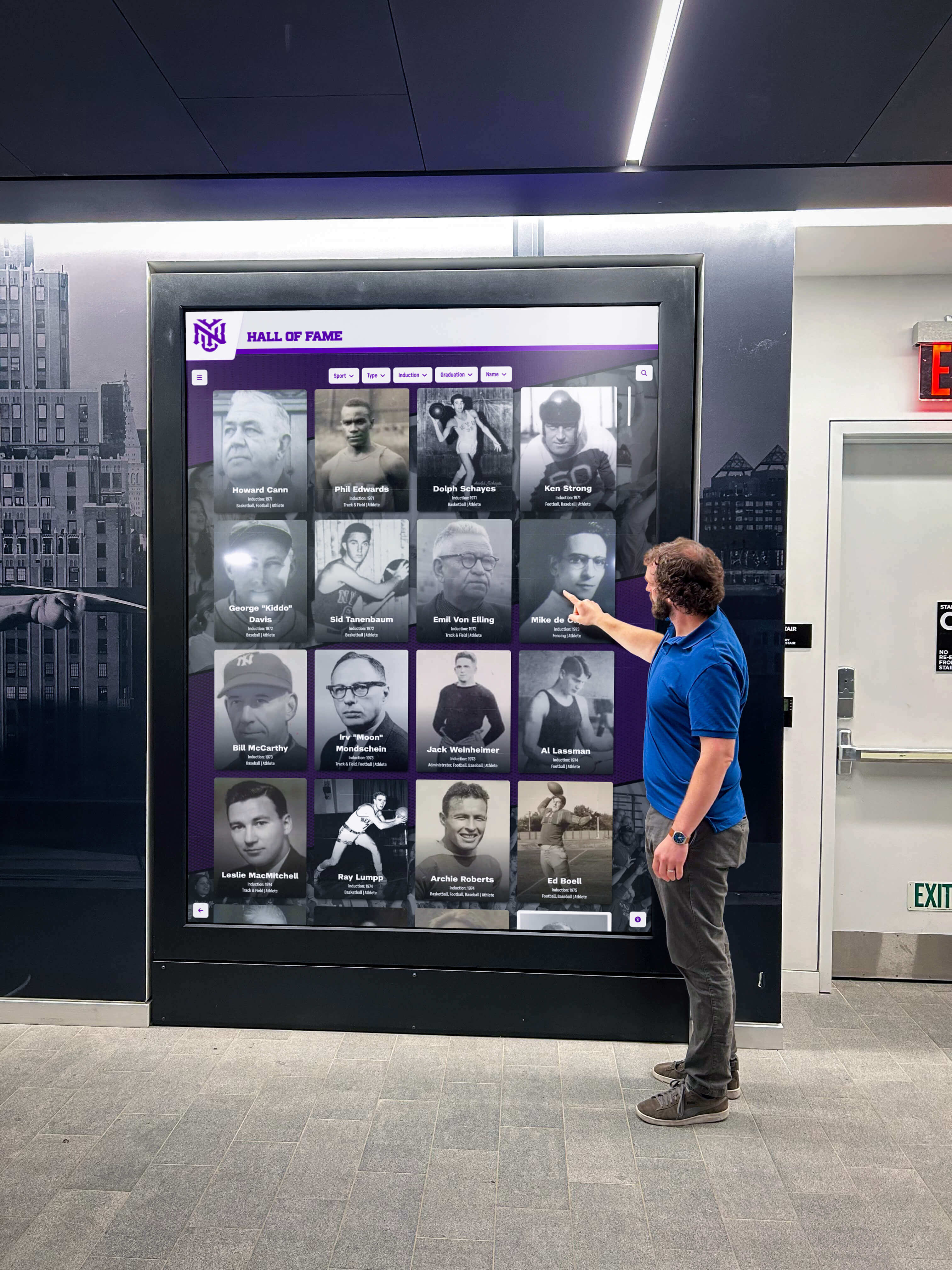
Quality Standards and Consistency: Establish clear guidelines maintaining professional presentation standards across all content including consistent photo cropping and resolution requirements, standard biographical information fields for all athlete profiles, uniform naming conventions and terminology, proof-reading protocols preventing errors, and approval workflows ensuring appropriate content review before publication.
Inconsistent quality undermines professional impression that recognition displays should convey.
Alumni Engagement and Contribution: Use alumni networks for ongoing content enhancement. Create simple processes enabling alumni to submit photos from their athletic careers, correct errors or add information to existing profiles, contribute memories and anecdotes about memorable seasons, nominate teammates or coaches deserving recognition, and share updates about post-high school accomplishments.
Alumni feel greater connection to programs actively seeking their input and contributions rather than treating recognition as one-way institutional communication.
Analytics and Continuous Improvement
Tracking Engagement Metrics: Quality recognition platforms provide analytics revealing how visitors interact with content. Monitor metrics including total interactions and session durations, most-viewed athlete profiles and teams, popular search terms revealing interest areas, feature usage patterns showing preferred navigation methods, and comparative engagement across different sports and eras.
These insights inform content strategy while demonstrating value to administrators and boosters evaluating investment returns.
Content Gap Identification: Analytics reveal which content attracts engagement and which receives minimal attention. Low engagement with particular sports or eras might indicate poor content quality, insufficient depth requiring additional profiles or media, or genuinely lower community interest suggesting different content priorities.
Systematically address gaps ensuring comprehensive recognition across all programs rather than concentration on traditionally prominent sports.
User Feedback Collection: Implement mechanisms gathering qualitative feedback complementing quantitative analytics. Consider periodic visitor surveys with brief digital questionnaires, suggestion features enabling specific improvement requests, feedback sessions during alumni events, and monitoring of social media mentions and comments.
This feedback identifies desired features, reveals content errors requiring correction, and demonstrates community appreciation for recognition investments.
Building Program Culture Through Recognition
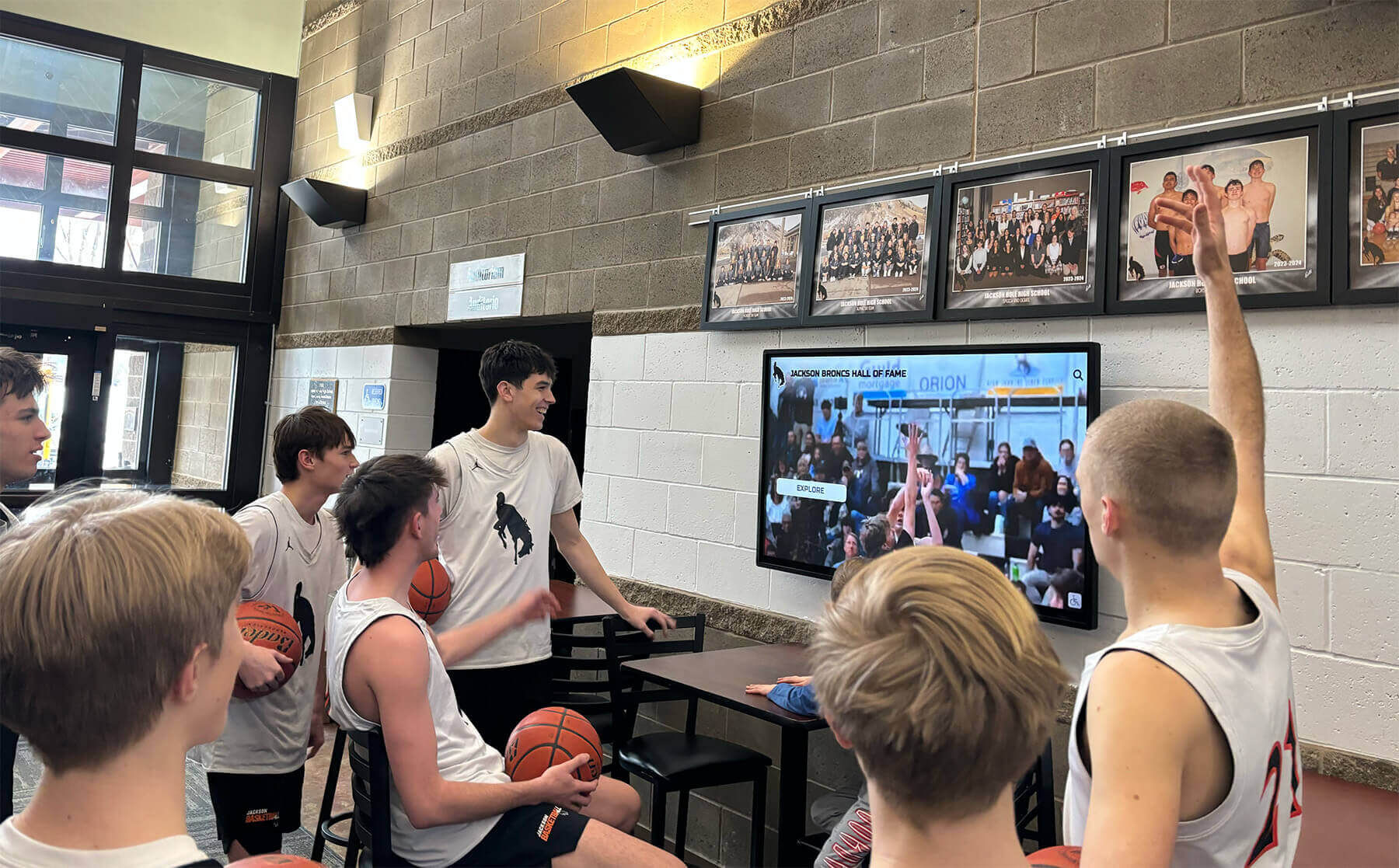
Motivating Current Athletes: Strategic recognition programs inspire current athletes through visible achievement standards and attainable goals. Prominently feature recent graduates whom current athletes knew personally, display specific statistical milestones creating concrete targets, present championship teams demonstrating what collective excellence requires, and highlight multi-sport athletes modeling well-rounded participation.
Schools implementing comprehensive student achievement recognition report observable increases in athlete goal-setting and competitive focus.
Strengthening Alumni Connections: Digital recognition keeps alumni engaged with athletic programs long after graduation. Enable social media sharing of individual profiles allowing alumni to promote their achievements, send automated notifications when new content about alumni is added, create reunion-year features highlighting graduating class achievements, and showcase “where are they now” updates on distinguished alumni.
These connections support fundraising efforts while building sustainable community around athletic programs.
Recruiting Prospective Student-Athletes: Comprehensive recognition demonstrates program tradition and excellence to prospective athletes and families. During campus tours, highlight recognition displays showing program depth and history, feature college signing ceremonies and scholarship recipients, display all-conference and all-state recognition rates, and present diverse achievement categories beyond just championship teams.
Prospective families evaluate programs partly through visible evidence of past success and proper appreciation for athlete contributions.
Addressing Common Concerns and Challenges
Schools considering touchscreen recognition often encounter predictable questions and concerns requiring thoughtful responses.
“Our Trophy Cases Still Have Space”
Many schools postpone digital recognition while physical capacity remains available. However, waiting until crisis occurs complicates implementation. Transitioning before emergency pressure allows thoughtful planning, systematic content development avoiding rushed efforts, gradual budget allocation across multiple fiscal years, and learning curve management without urgent deadlines.
Schools that wait until trophy cases overflow often resort to expensive retrofitting, hasty vendor selection without proper evaluation, or inadequate content development undermining display quality.
“We Don’t Have Staff to Manage Technology”
Modern recognition platforms specifically address this concern through intuitive interfaces requiring no technical expertise. Quality systems enable non-technical staff to add new athletes and achievements within minutes, upload and crop photos without specialized software, update records and statistics through simple forms, and create championship team pages from templates.
Initial content development requires dedicated effort, but ongoing maintenance demands minimal time once comprehensive baseline content exists. Most schools report that content management requires 2-4 hours monthly during active seasons and less during off-seasons.
“Digital Displays Will Break or Become Obsolete”
Commercial-grade displays designed for institutional applications offer 7-10 year operational lifespans under continuous use—longer than many traditional trophy cases maintain acceptable appearance before requiring refinishing.
Technology obsolescence concerns affect generic digital signage more than purpose-built recognition platforms. Quality vendors continuously update software adding features and maintaining current standards without requiring hardware replacement. Cloud-based platforms enable simple updates without campus visits or technical intervention.
Software subscriptions ensure ongoing vendor interest in platform improvement rather than one-time sales creating abandoned systems.
“It Won’t Feel the Same as Traditional Trophies”
Schools naturally hesitate to abandon familiar recognition approaches. However, digital displays complement rather than necessarily replace traditional trophies. Many schools maintain small curated physical displays for current-season championships while comprehensive digital systems preserve complete program history.
This hybrid approach provides tangible connection to tradition while overcoming physical limitations. Recent championship trophies occupy prominent physical space, but athletes from any era access complete recognition through searchable digital platforms rather than being forgotten when trophy cases fill.
Critically, ask whether current approaches actually preserve tradition adequately. When outstanding athletes receive no recognition because display space filled, when historical achievements sit in storage rather than inspiring current students, and when alumni cannot find evidence of their contributions during campus visits, schools are failing to honor tradition appropriately. Digital systems often provide better tradition preservation than space-constrained physical displays.
“The Cost Seems High Compared to Trophy Cases”
Initial investment in comprehensive digital recognition exceeds basic trophy case costs. However, total ownership analysis reveals digital advantages within 5-7 years:
Traditional approaches incur perpetual per-recognition costs (trophies, plaques, engraving, installation labor) that accumulate substantially across decades. Digital systems require higher initial investment but dramatically lower ongoing costs since adding new content costs only staff time.
Additionally, digital systems provide capabilities traditional approaches cannot match at any cost: unlimited capacity, instant updates, searchable exploration, multimedia storytelling, mobile accessibility, and engagement analytics.
Schools should evaluate recognition as long-term investment rather than isolated expense. A $15,000-20,000 digital recognition system serving athletic programs for 10+ years while honoring thousands of athletes represents excellent value compared to perpetual physical recognition expenses delivering limited capacity and engagement.
For schools exploring digital recognition solutions for athletic programs, comprehensive cost analysis demonstrates clear long-term advantages despite higher initial investment.
Advanced Features and Future Capabilities
Recognition technology continues evolving, with emerging capabilities promising even greater value for athletic programs.
Video Integration and Multimedia Enhancement
Current systems support video content, but future platforms will expand multimedia integration through automated highlight generation from game footage, athlete video testimonials recorded during senior year, coaching staff commentary on memorable seasons and athletes, championship game broadcasts archived for viewing, and interactive timelines combining photos, videos, and narratives.
These multimedia features transform recognition from static information into engaging storytelling that brings athletic tradition to life for visitors who never witnessed historic achievements firsthand.
Mobile App Enhancement and Notifications
Mobile companion applications will expand beyond passive viewing to include push notifications when content featuring alumni is added, gamification features encouraging exploration of program history, social features enabling alumni to comment on and share memories, achievement verification systems allowing athletes to claim and manage their profiles, and virtual reunion spaces connecting alumni around shared athletic experiences.
These social features transform recognition platforms from institutional archives into living communities maintaining alumni engagement across decades.
Integration with Athletic Management Systems
Future platforms will seamlessly integrate with athletic management systems eliminating duplicate data entry. When coaches enter game statistics into athletic management software, record-breaking performances will automatically update recognition displays. Championship achievements documented in league management systems will trigger recognition updates without manual intervention.
This integration reduces administrative burden while ensuring comprehensive, timely recognition of all deserving achievements.
Artificial Intelligence and Automated Content
AI capabilities will improve recognition platforms through automated photo organization and tagging, intelligent search understanding natural language queries, content gap identification suggesting underrepresented areas, automated profile generation from structured data sources, and historical content recommendations helping visitors explore related achievements.
These features make comprehensive recognition more achievable for schools with limited staff resources while improving user experiences through intelligent navigation and discovery.
Conclusion: Transforming Athletic Recognition in the Digital Age
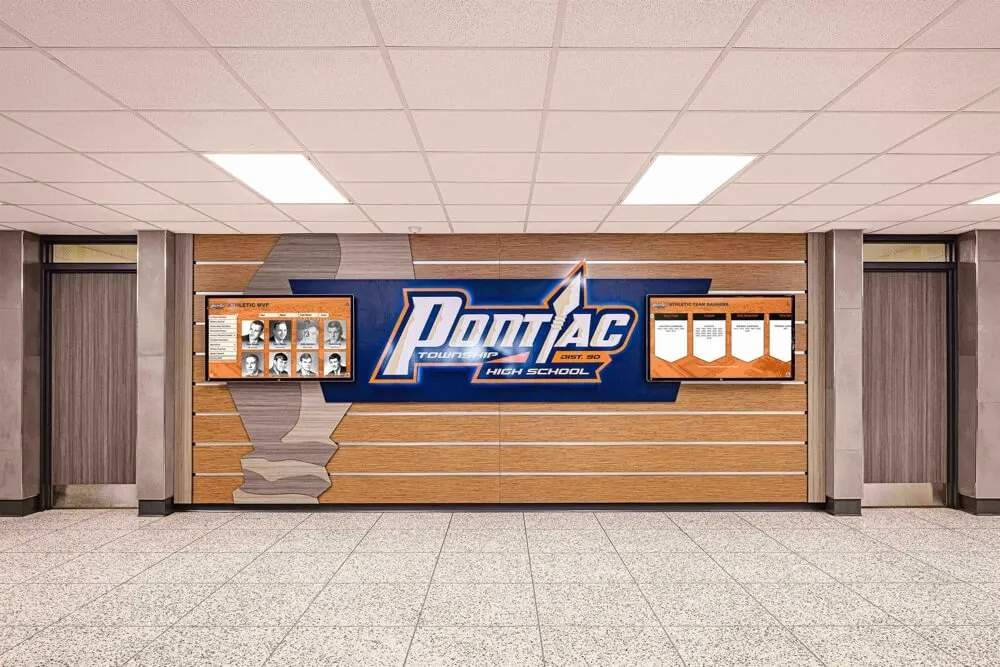
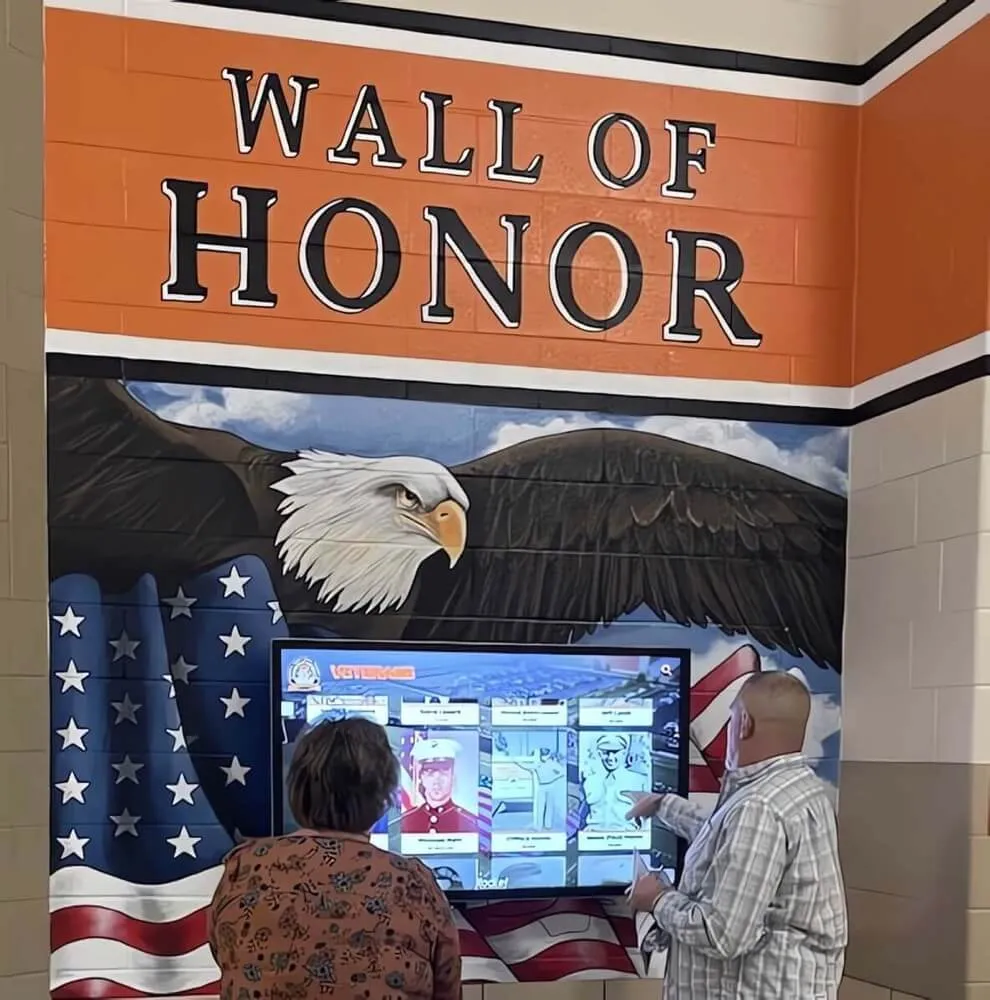
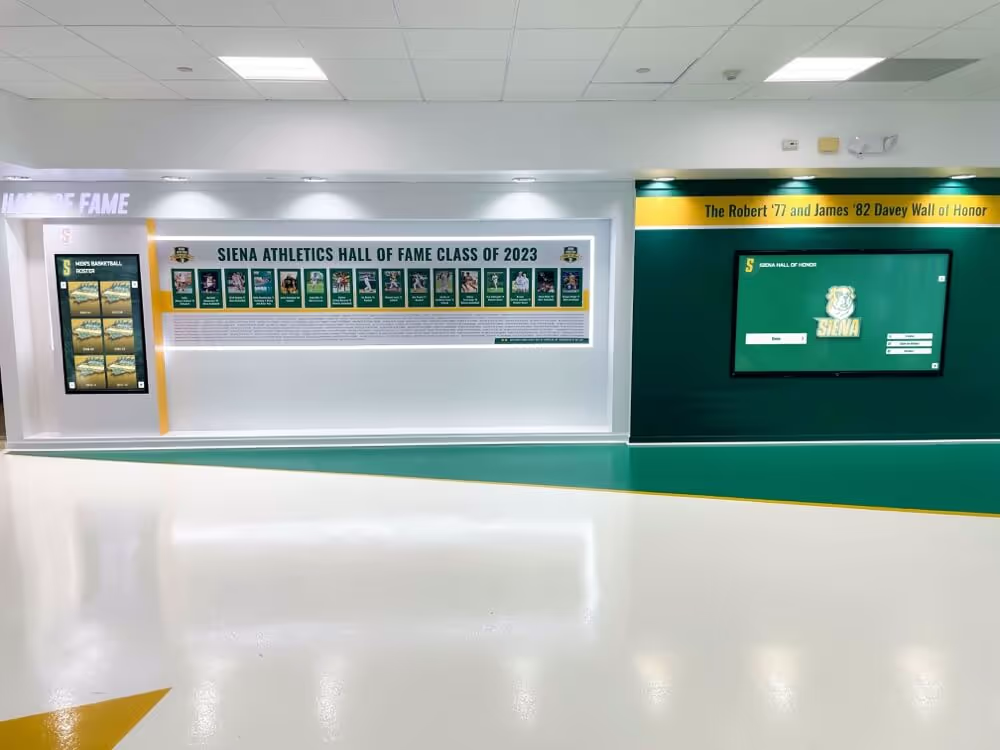
High school gym lobbies serve as gateways to athletic tradition and program identity. The shift from traditional trophy cases to interactive touchscreen displays represents more than simple technology adoption—it reflects commitment to honoring all deserving athletes comprehensively, preserving institutional history systematically, engaging current and future students inspirationally, and connecting alumni meaningfully with programs that shaped their character.
Traditional trophy cases served schools adequately for generations, but fundamental limitations—finite capacity, static presentation, update complexity, and poor accessibility—increasingly undermine their effectiveness for comprehensive recognition. Digital touchscreen displays purpose-built for athletic recognition address these limitations while creating engagement opportunities impossible with physical trophies.
The most successful implementations share common characteristics: they start with clear objectives and success criteria, they invest appropriately in both technology and content development, they designate responsible staff and provide necessary training, they launch strategically with promotion and celebration, and they maintain content actively rather than treating displays as static installations.
Whether your athletic program has exhausted trophy case capacity or simply recognizes that digital recognition delivers superior value, comprehensive touchscreen systems provide the unlimited capacity, professional presentation quality, and engaging experiences that modern athletic programs require.
Ready to Transform Your Gym Lobby Recognition?
Rocket Alumni Solutions specializes in purpose-built recognition platforms designed specifically for high school athletics. Our comprehensive systems combine unlimited recognition capacity with intuitive content management that athletic staff—not technology specialists—can manage effectively.
Stop limiting recognition to what fits in physical trophy cases. Stop excluding deserving athletes because display space filled decades ago. Stop maintaining deteriorating physical displays requiring expensive ongoing investment. Modern touchscreen recognition provides comprehensive solutions honoring athletic excellence while inspiring current and future athletes.
The decision to implement digital recognition represents investment in program culture, alumni engagement, and institutional tradition. When every deserving athlete receives appropriate recognition, when championship traditions inspire current students, when alumni maintain lifelong connections to programs that shaped them, schools build sustainable athletic cultures where excellence becomes expected rather than exceptional.
Explore how Rocket Alumni Solutions transforms gym lobby recognition from space-constrained trophy cases into unlimited, interactive celebration of athletic achievement spanning generations. Your program’s tradition deserves recognition technology that matches its significance—professional, comprehensive, and inspiring.