



Key Takeaways
Comprehensive guide to sports equipment storage for schools. Discover practical organization systems, space-saving solutions, safety protocols, and design strategies that maximize athletic facility efficiency and equipment lifespan.
Athletic directors and facilities managers face an ongoing challenge that directly impacts program efficiency, equipment longevity, and budget management: organizing and storing the massive inventory of sports equipment required for comprehensive athletic programs. From football helmets and shoulder pads to tennis rackets and track hurdles, schools accumulate thousands of individual items that must remain accessible, properly maintained, and secure throughout multi-sport seasons. Poor storage systems create cascading problems—wasted time searching for equipment, premature equipment deterioration from improper storage conditions, increased replacement costs from loss and damage, and safety hazards from cluttered, disorganized spaces.
Well-designed sports equipment storage systems solve these challenges through strategic organization, space-efficient solutions, and thoughtful design that supports athletic program operations while protecting significant equipment investments. This comprehensive guide provides athletic administrators and facilities personnel with practical storage ideas, organizational frameworks, and design strategies that transform chaotic equipment rooms into efficient, functional spaces supporting athletic excellence across all program levels.
Assessing Your Sports Equipment Storage Needs
Effective storage design begins with thoroughly understanding your specific program requirements, equipment inventory, and facility constraints before purchasing storage systems or reorganizing existing spaces.
Conducting a Comprehensive Equipment Inventory
Most schools lack accurate understanding of their complete athletic equipment holdings—the essential first step in designing appropriate storage solutions:
Sport-by-Sport Equipment Cataloging: Create detailed inventories for each sport documenting quantity, condition, and storage requirements for all equipment categories. Football programs might inventory helmets (quantity, sizes, condition), shoulder pads (by position and size), practice jerseys and pants, game uniforms, training equipment, and coaching gear. Volleyball programs catalog balls, nets, standards, training aids, knee pads, and uniforms. This granular approach reveals actual storage volume needs rather than estimates that often underestimate requirements.
Document physical dimensions of bulky or oversized equipment that won’t fit standard shelving—pole vault standards, wrestling mats, gymnastics equipment, or large training sleds require specialized storage solutions. Understanding these unique items during planning prevents discovering storage inadequacies after installation.
Seasonal Rotation Requirements: Multi-sport programs must accommodate seasonal equipment rotation as fall sports conclude and winter sports begin. Effective inventory processes categorize equipment by active season, off-season storage needs, and year-round access requirements. This seasonal mapping informs whether storage designs require dedicated sport-specific zones or flexible systems supporting equipment rotation throughout the year.
Frequency-Based Access Analysis: Separate daily-use items requiring constant accessibility from seasonal equipment accessed monthly and archived materials retrieved rarely. Balls, daily practice gear, and frequently worn uniforms need prime storage locations with easy access, while championship game uniforms worn twice annually can occupy less convenient spaces. This access-frequency mapping ensures storage layouts support efficient workflow rather than forcing staff to navigate obstacle courses reaching commonly needed items.
Understanding Space Constraints and Opportunities
Available space significantly influences storage system selection and organizational approaches:
Existing Space Evaluation: Most schools work with existing buildings and rooms, requiring creative adaptation rather than ideal construction. Measure current storage areas documenting dimensions, ceiling heights, door widths, and any obstacles (support columns, HVAC equipment, electrical panels) limiting usable space. Ceiling height particularly matters since vertical storage dramatically increases capacity—8-foot ceilings limit options compared to 12-16 foot spaces enabling overhead storage solutions.
Identify underutilized areas throughout athletic facilities that could support supplemental storage. Hallway alcoves, space under bleachers, unused locker room areas, or corridor ends might accommodate wall-mounted storage, shelving units, or storage cages without requiring dedicated room allocation. Schools implementing comprehensive facility upgrades often discover storage opportunities during renovation planning that weren’t apparent during daily operations.
Growth and Future Needs Planning: Storage systems represent long-term investments that should accommodate reasonable program growth. Schools adding sports, increasing participation, or expanding team sizes need storage capacity exceeding current minimums. Plan for 20-30% excess capacity preventing immediate space constraints when enrollment grows or programs expand. This buffer also provides flexibility for special events, hosting tournaments, or temporary equipment storage during facility renovations.
Essential Storage Solutions for Different Equipment Types
Different athletic equipment categories require specialized storage approaches optimizing space usage, maintaining equipment condition, and supporting efficient access.
Ball and Small Equipment Storage
Balls, training aids, and small accessories represent high-volume items requiring organized systems preventing the “pile in the corner” approach common in undersized equipment rooms:
Wall-Mounted Ball Storage Systems: Commercial ball racks mount to walls creating visible, accessible storage for basketballs, volleyballs, soccer balls, and other spherical equipment. Wire rack systems hold 12-20 balls vertically on wall-mounted frames consuming minimal floor space while maintaining ball shape and allowing air circulation preventing moisture-related deterioration. Ball storage walls work particularly well near equipment checkout areas enabling quick distribution to teams.
Individual ball hooks or J-hooks spaced along walls provide flexible storage accommodating various ball sizes and allowing expansion as inventory grows. Color-coded hooks organizing balls by sport or team create intuitive systems athletes can maintain without extensive staff oversight.
Mobile Ball Carts: Rolling ball carts enable efficient equipment transport between storage rooms and practice facilities. Lockable models secure equipment while providing mobility during practices, then roll back to storage rooms afterward. Multi-tier carts maximize capacity while maintaining compact footprints suitable for crowded storage areas.

Small Equipment Organization: Training accessories—agility cones, scrimmage vests, stopwatches, whistles, first aid supplies—require drawer systems, labeled bins, or compartmentalized storage preventing the “junk drawer” effect where items disappear into disorganized piles. Clear plastic bins stacked on industrial shelving create visible inventory enabling quick identification and access. Label every container with text and visual indicators (color coding, sport logos) supporting intuitive organization.
Protective Equipment and Uniform Storage
Helmets, pads, and uniforms represent expensive investments requiring storage solutions that maintain equipment condition, support proper fitting, and prevent loss:
Helmet Storage Solutions: Football helmets require substantial storage space and systems maintaining helmet integrity while supporting cleaning and maintenance. Commercial helmet trees hold 12-20 helmets vertically on rotating stands or wall-mounted frames. Individual helmet cubbies with player numbers create assigned storage ensuring accountability and allowing athletes to identify their specific equipment quickly.
Helmet storage should provide ventilation preventing moisture accumulation and bacterial growth. Avoid closed cabinets or plastic bins trapping humidity—open wire racks or perforated shelving promotes air circulation. Position helmet storage away from direct sunlight or heat sources that degrade protective foam and plastics over time.
Shoulder Pad and Protective Gear Organization: Large protective equipment challenges storage due to irregular shapes and ventilation requirements. Wall-mounted racks with J-hooks accommodate shoulder pads, allowing air circulation while keeping equipment off floors. Player-specific storage with numbered hooks or cubicles creates accountability and simplifies equipment distribution.
Hockey equipment, lacrosse gear, and other sport-specific protective equipment benefit from open wire shelving or ventilated lockers allowing moisture evaporation. Equipment worn against skin requires particular attention to drying and sanitation—storage systems promoting air flow reduce bacterial growth and equipment odor while extending protective equipment lifespan.
Uniform Management Systems: Uniforms require organization supporting distribution, collection, cleaning, and inventory management. Rod systems similar to retail clothing displays allow uniform sets to hang together organized by player number, sport, or team. Hanging storage reduces wrinkles, allows visual inventory checks, and simplifies distribution compared to folded uniforms stacked in bins.
Practice uniforms receiving daily use benefit from numbered lockers or cubbies where athletes maintain personal responsibility for specific items. This distributed storage reduces equipment room congestion while creating accountability. Game uniforms worn occasionally remain in controlled storage with checkout systems documenting distribution and return.
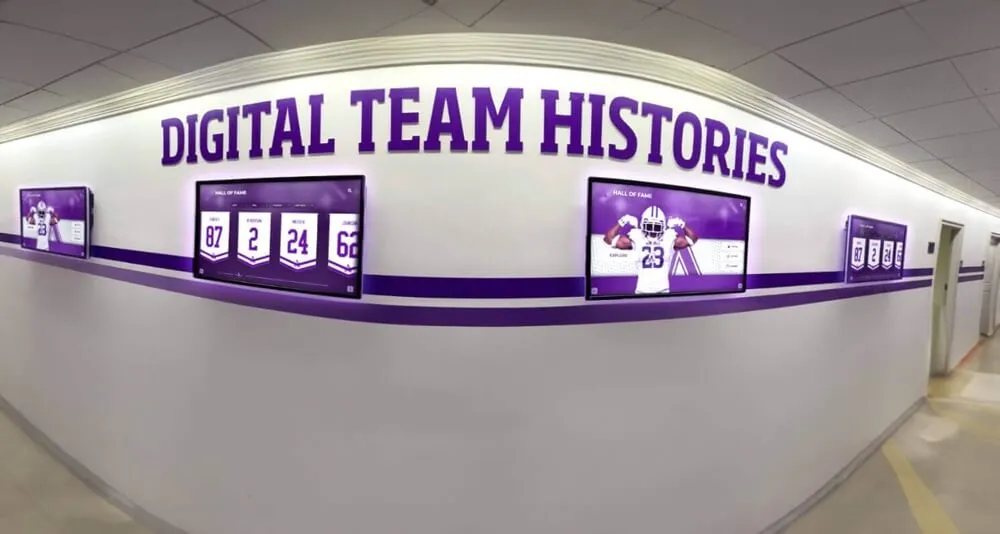
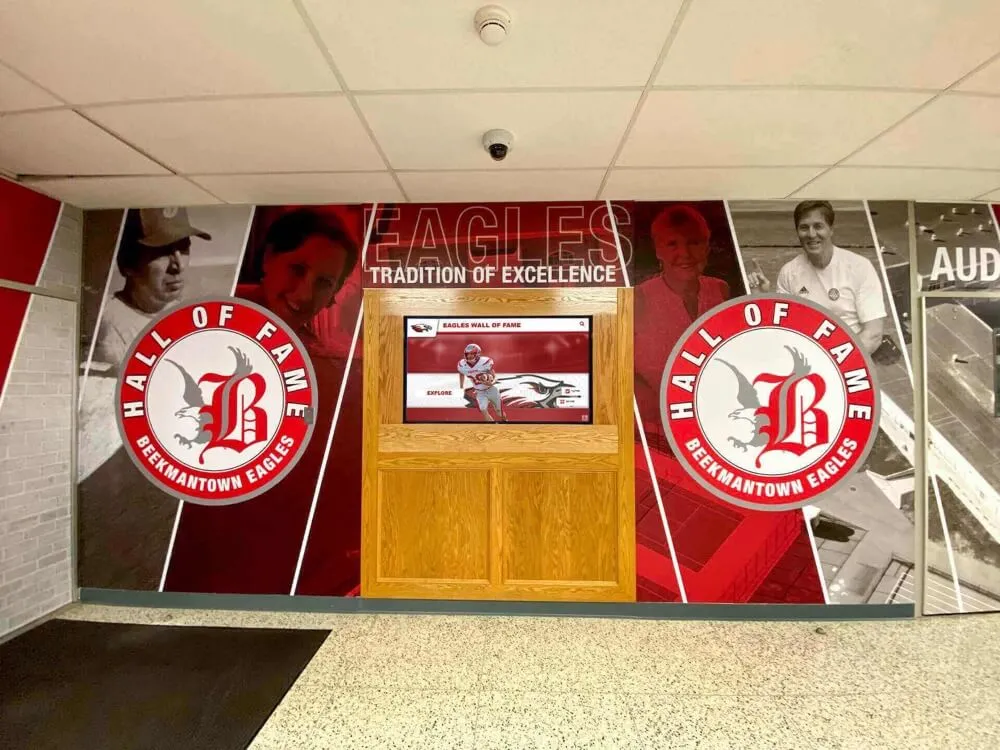
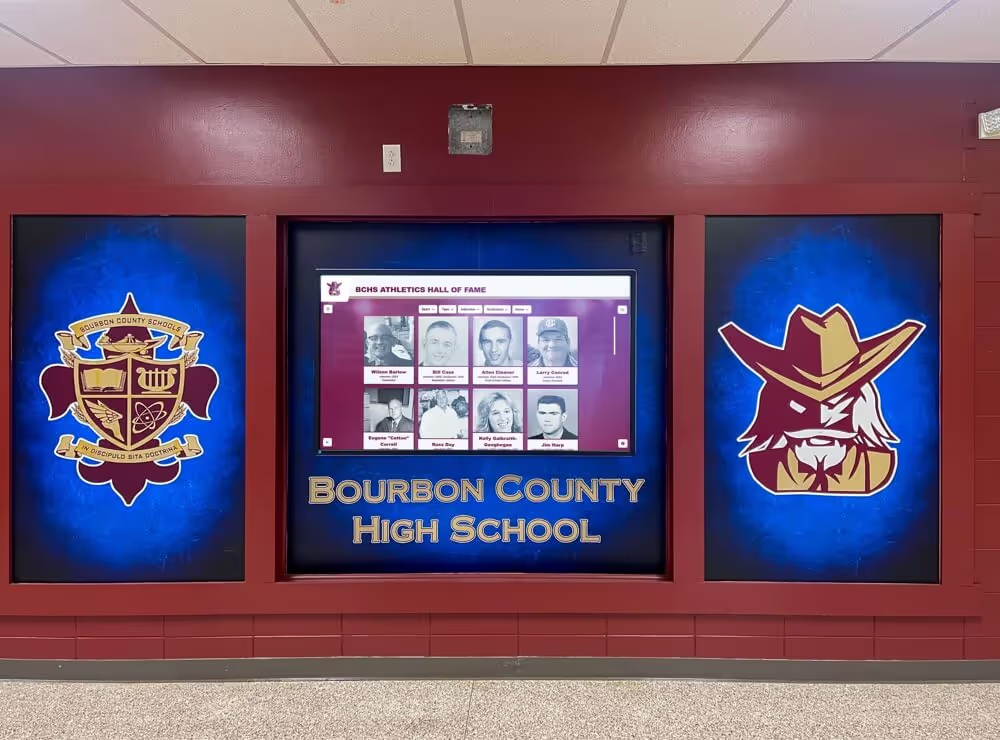
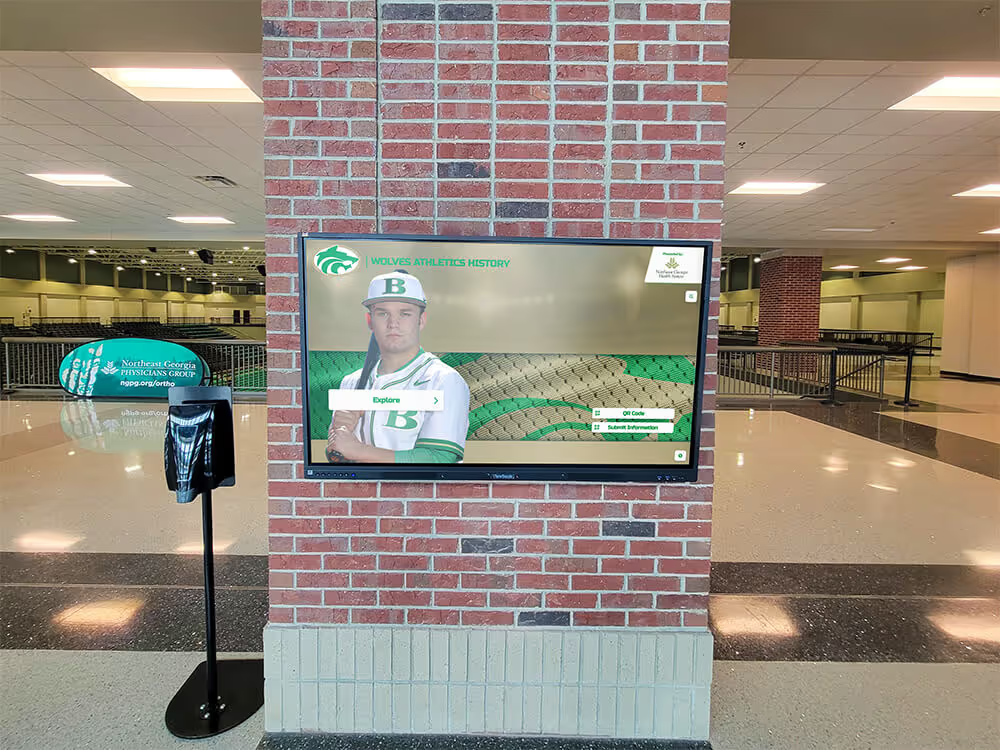
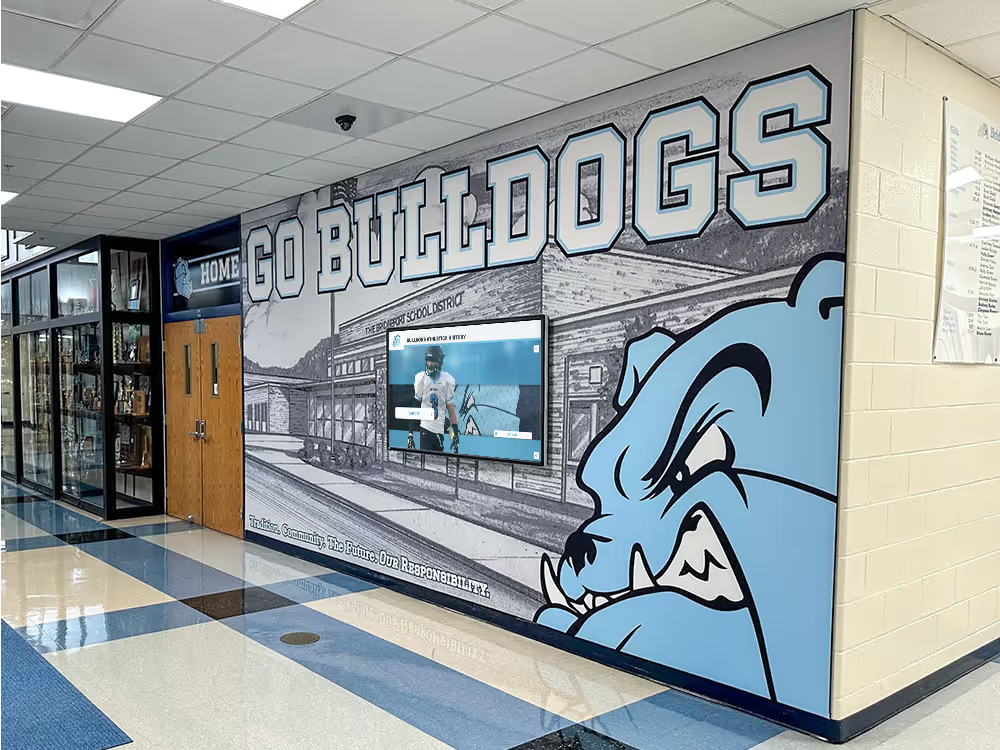
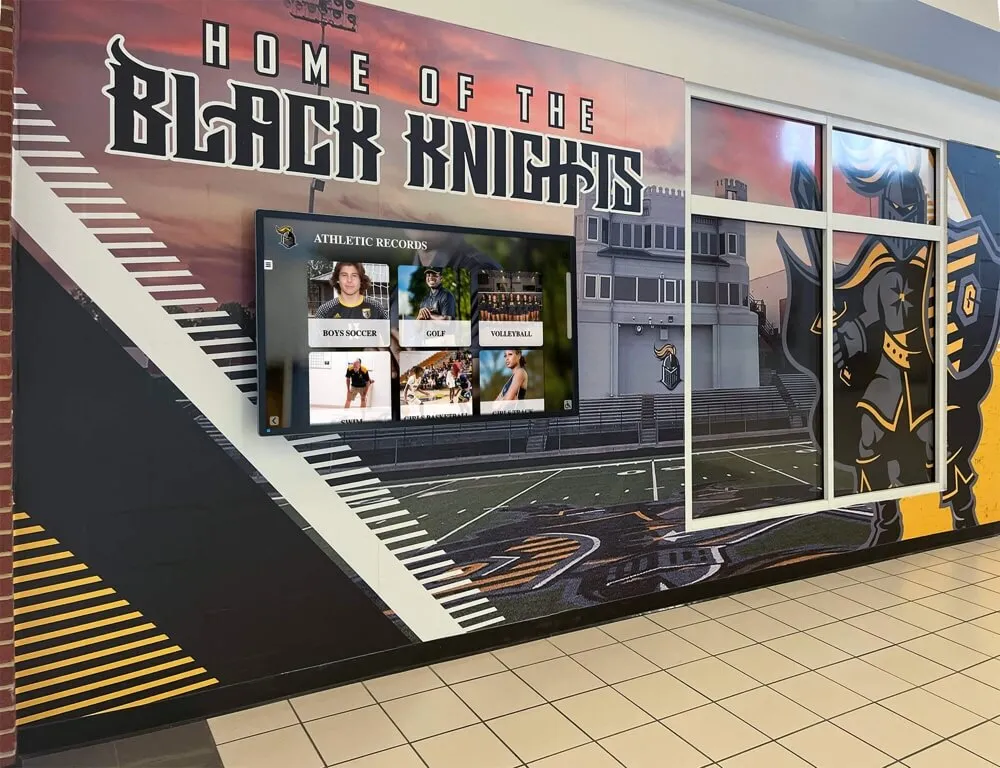
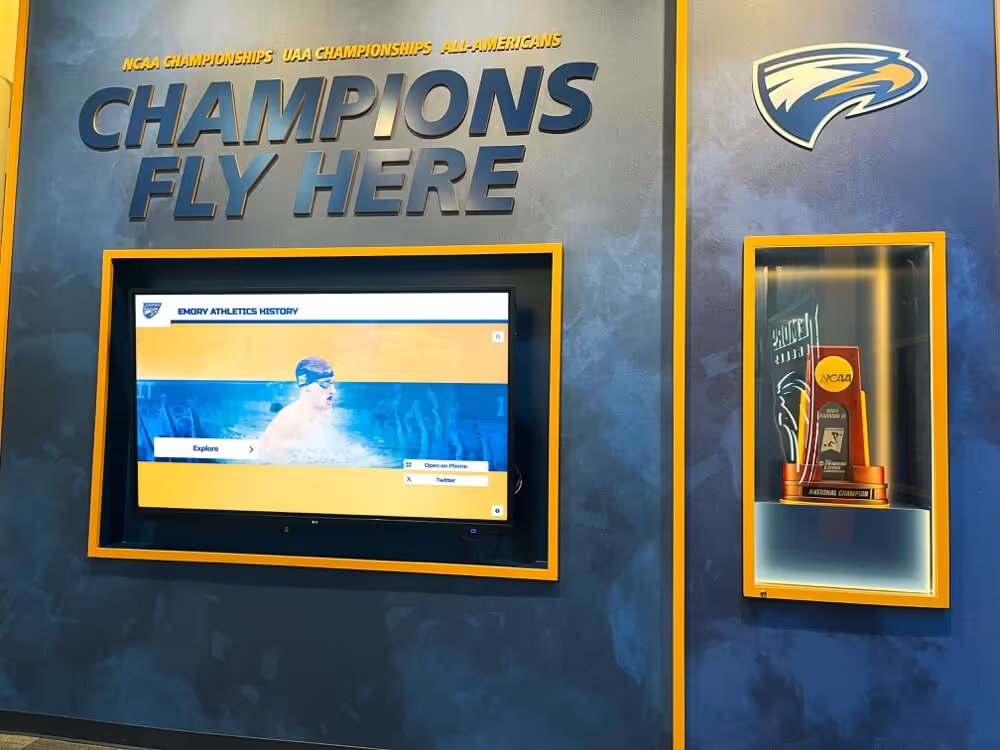
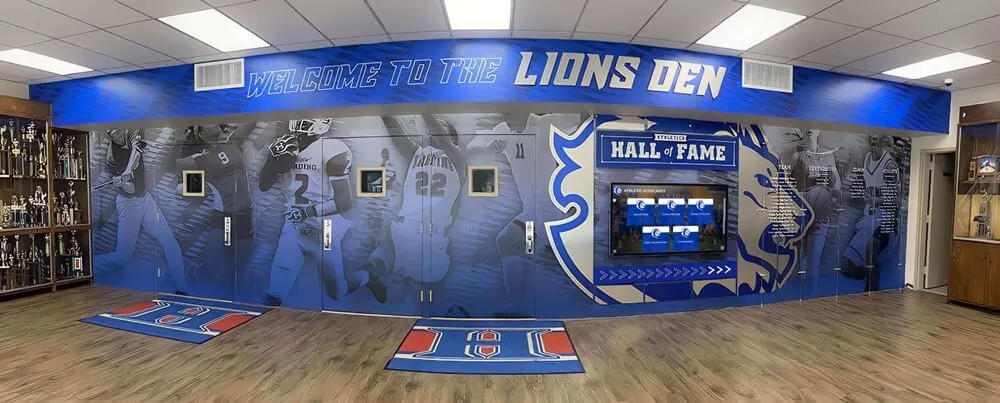
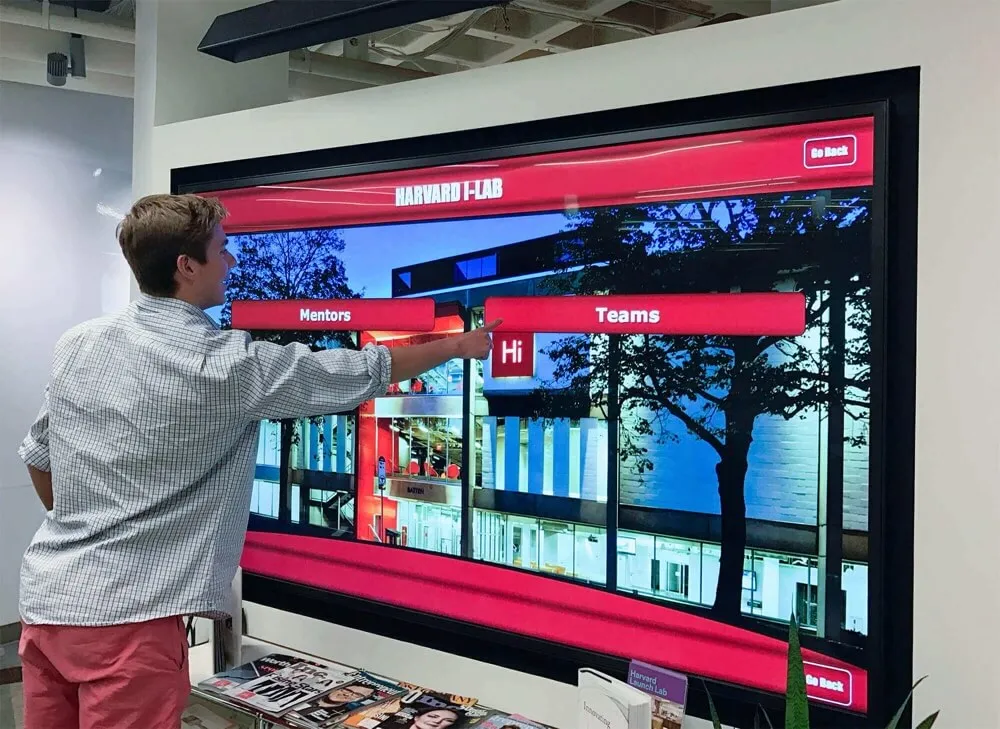
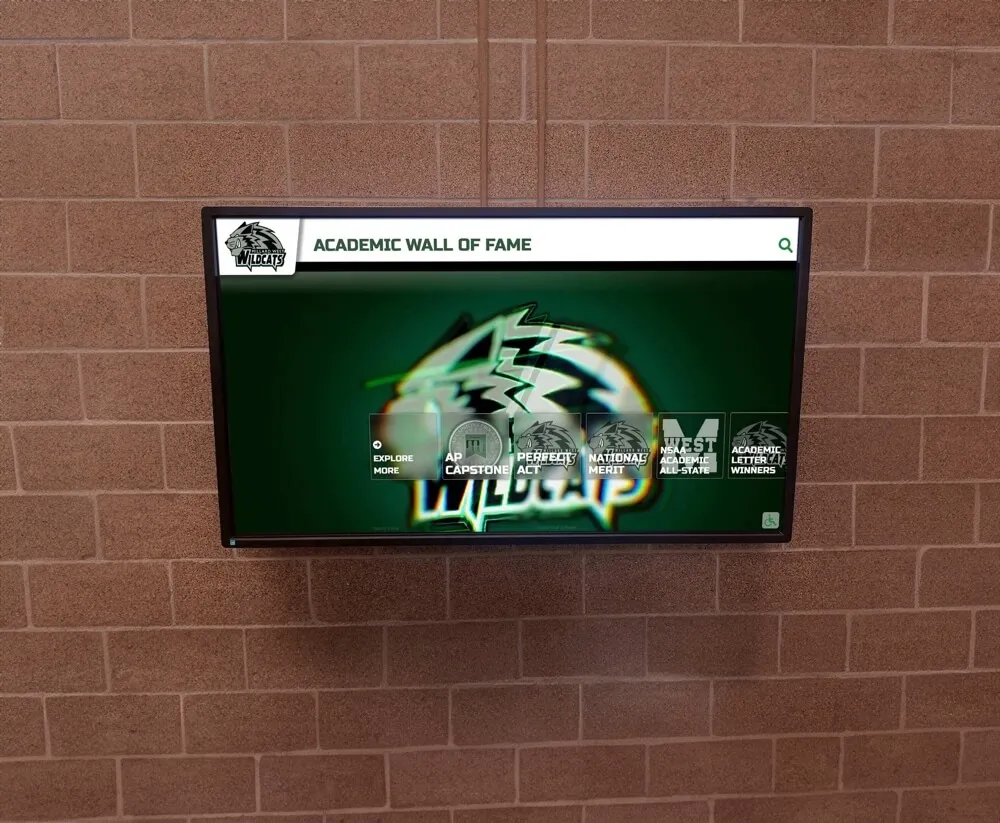
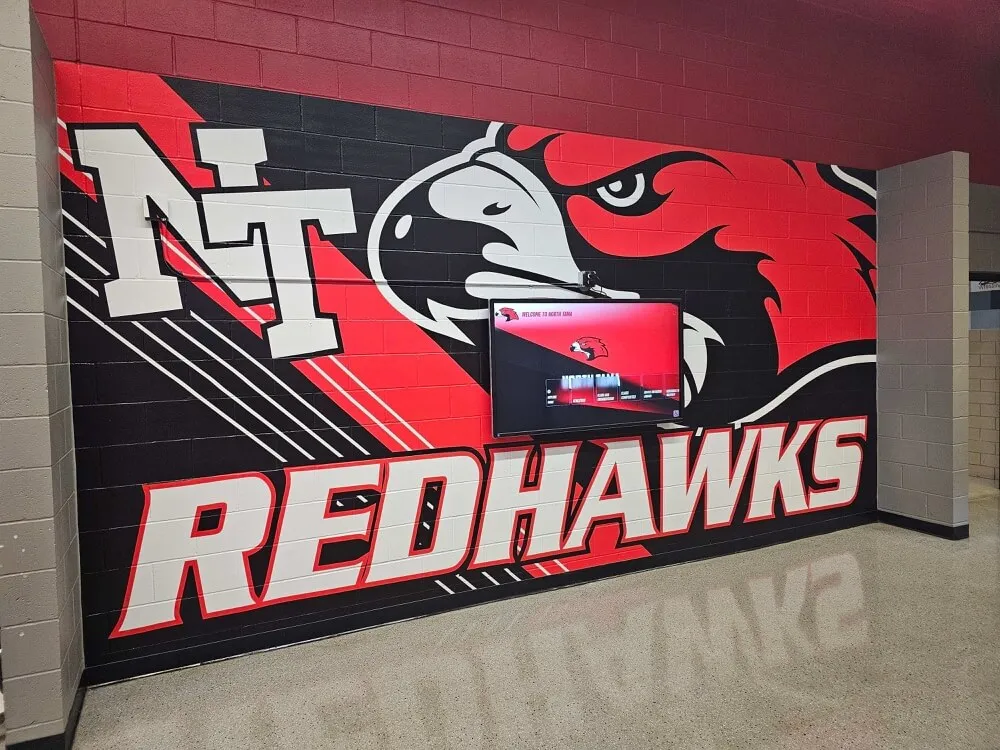
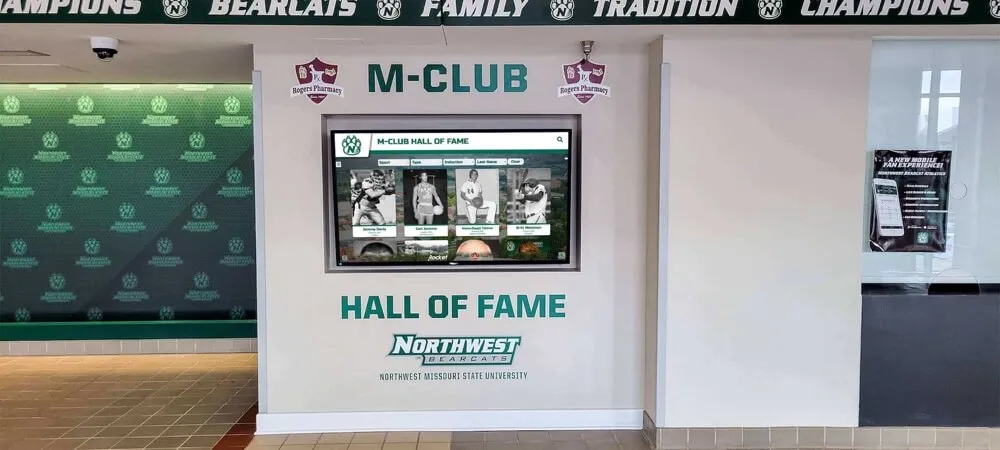
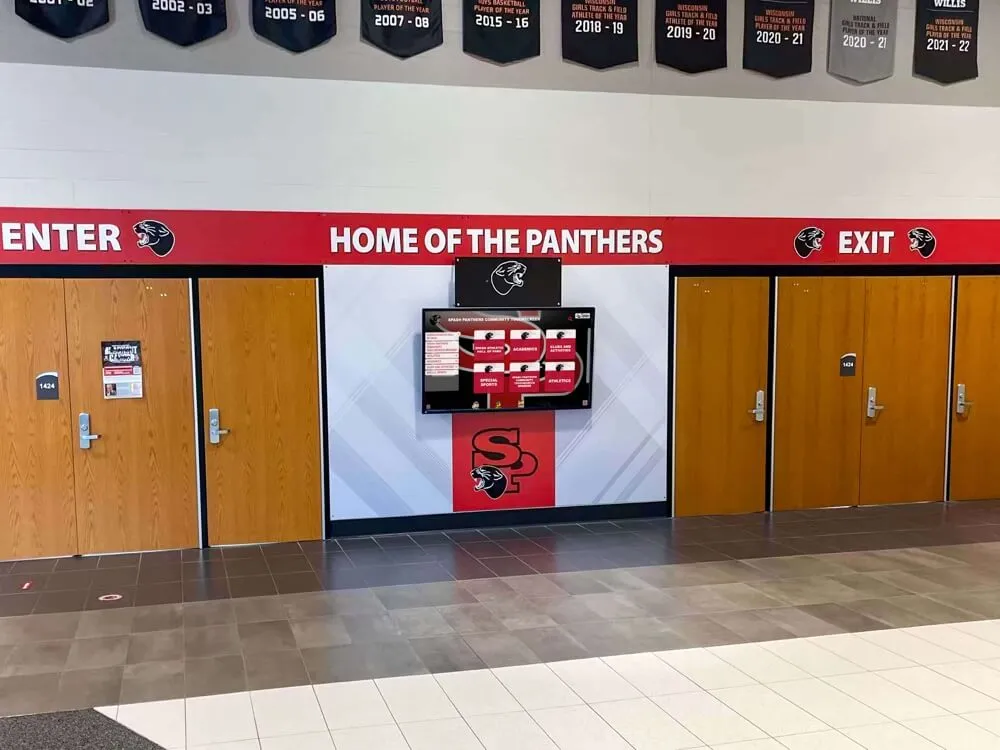
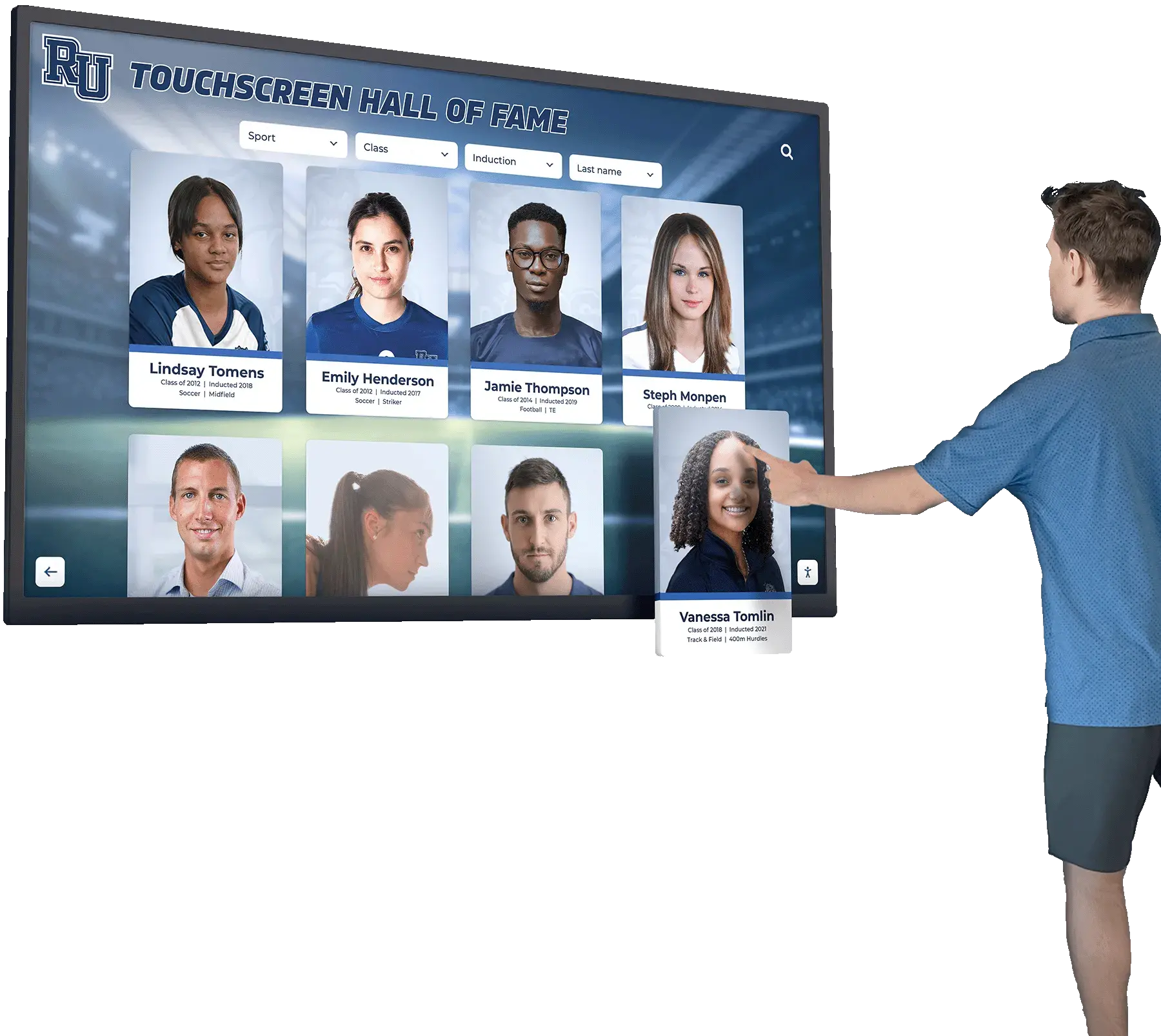
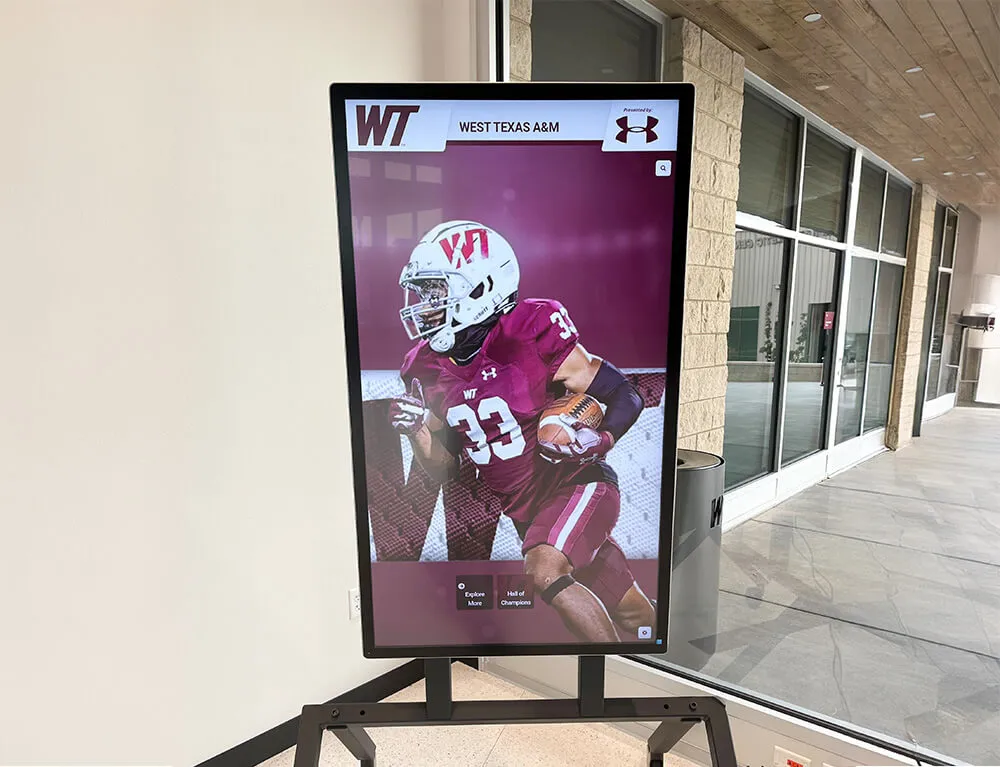
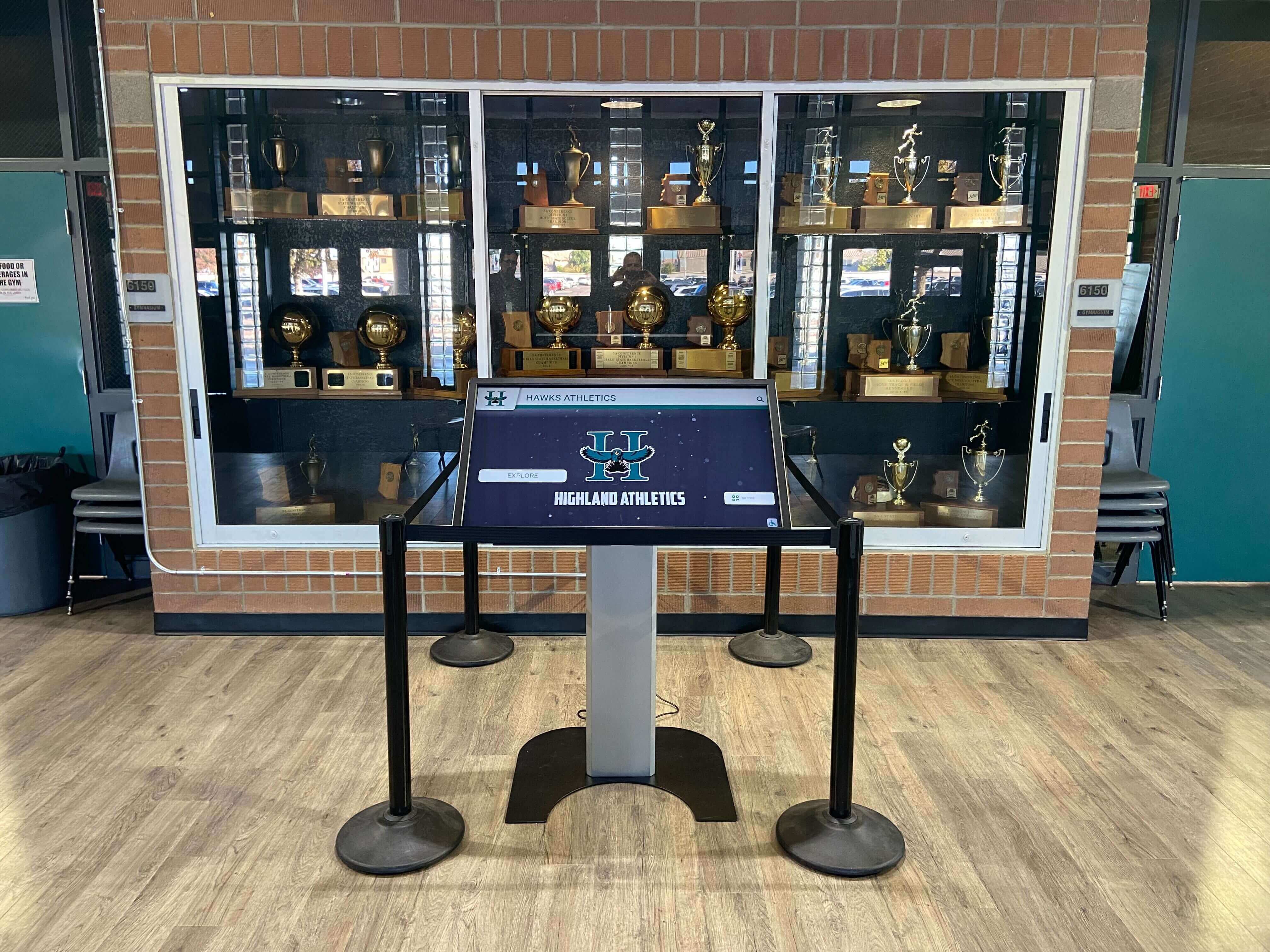
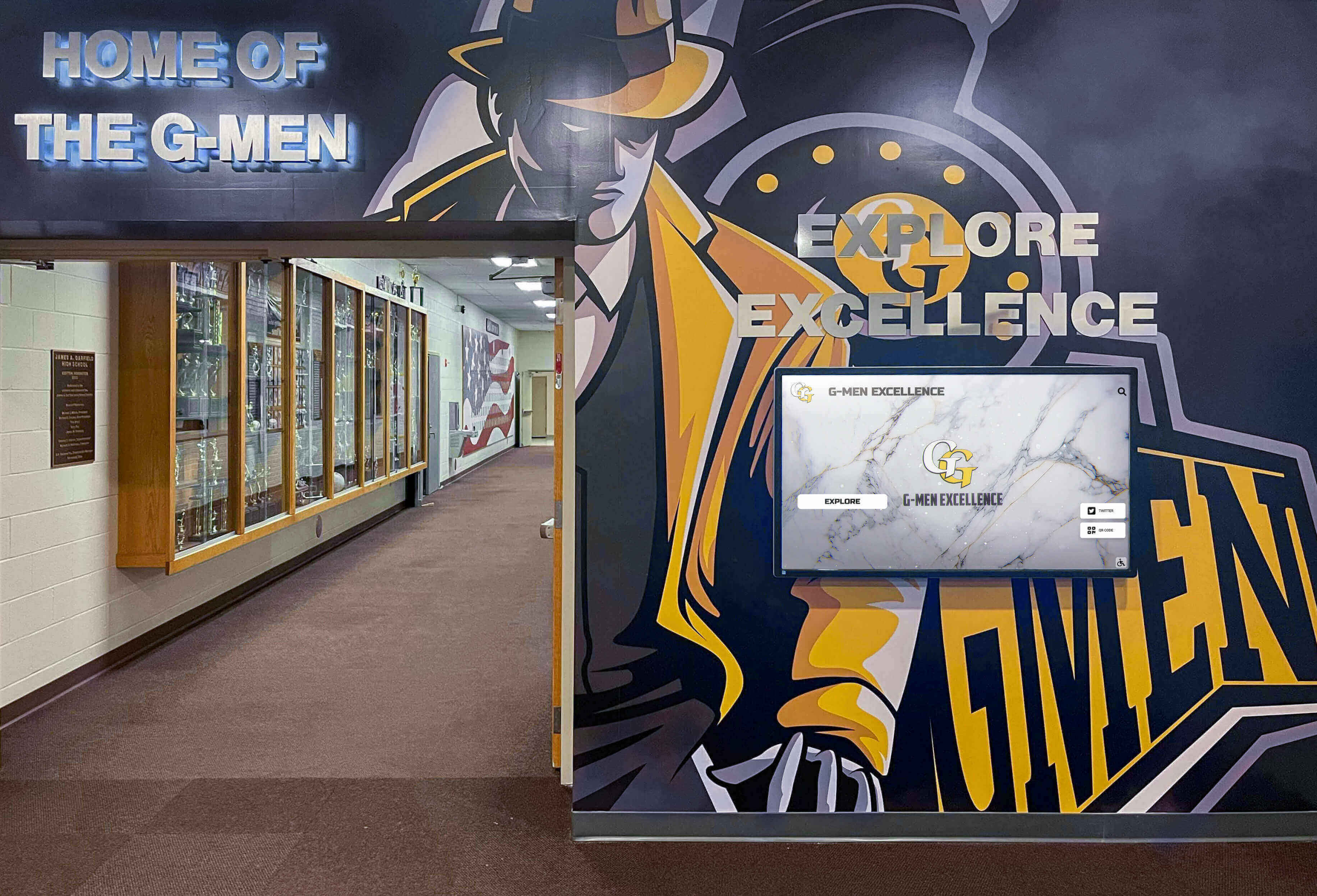
Many successful athletic programs integrate digital recognition displays in athletic facilities near equipment rooms, creating inspiring environments that celebrate program achievements while athletes access gear. These displays reinforce program culture and tradition alongside functional storage systems.
Large Equipment and Specialized Gear Storage
Wrestling mats, pole vault standards, gymnastics apparatus, and other large equipment items require specialized storage approaches:
Vertical Storage for Mats and Pads: Wrestling mats, gym mats, and large protective pads occupy enormous floor space when stored horizontally but require minimal room when stored vertically on edge. Commercial mat storage carts hold mats vertically on wheeled frames enabling efficient storage and transport. Wall-mounted mat storage systems with retaining hooks secure mats vertically against walls, freeing floor space for other uses.
Overhead and Ceiling Storage: Schools with adequate ceiling height can implement overhead storage for lightweight, infrequently accessed items. Ceiling-mounted racks, motorized lift systems, or overhead storage platforms accommodate agility ladders, training hurdles, cones, and seasonal equipment. This approach maximizes cubic space rather than just floor area—a 1,000-square-foot room with 12-foot ceilings and overhead storage effectively provides 1,300-1,500 square feet of storage capacity.
Safety considerations matter for overhead storage—only lightweight items appropriate for elevated storage, secure mounting to structural elements rather than ceiling tiles, and clear labeling ensuring staff can identify overhead contents without requiring constant retrieval to verify contents.

Specialized Equipment Racks: Sport-specific equipment often requires custom storage solutions. Ski and snowboard racks with individual slots, baseball bat racks organizing bats vertically by size, tennis racket racks accommodating string tension requirements, and track equipment storage for hurdles and relay batons all represent specialized storage addressing unique equipment characteristics.
While custom solutions cost more than generic shelving, they protect expensive specialized equipment while maximizing space efficiency. Damaged equipment from improper storage often costs more than investing in appropriate storage systems initially.
Organizational Systems and Best Practices
Storage hardware represents only part of effective equipment management—organizational systems and protocols determine whether storage solutions remain functional long-term or deteriorate into chaos:
Sport-Specific Zones and Color Coding
Visual organization systems enable intuitive equipment location and return:
Dedicated Sport Zones: Large programs benefit from designated storage areas for each sport or related sport groups. Football equipment occupies one zone, basketball and volleyball share another area, track and field equipment clusters together, and individual sports like tennis and golf maintain separate sections. This zoning approach prevents equipment mixing, simplifies inventory management, and allows sport-specific storage customization.
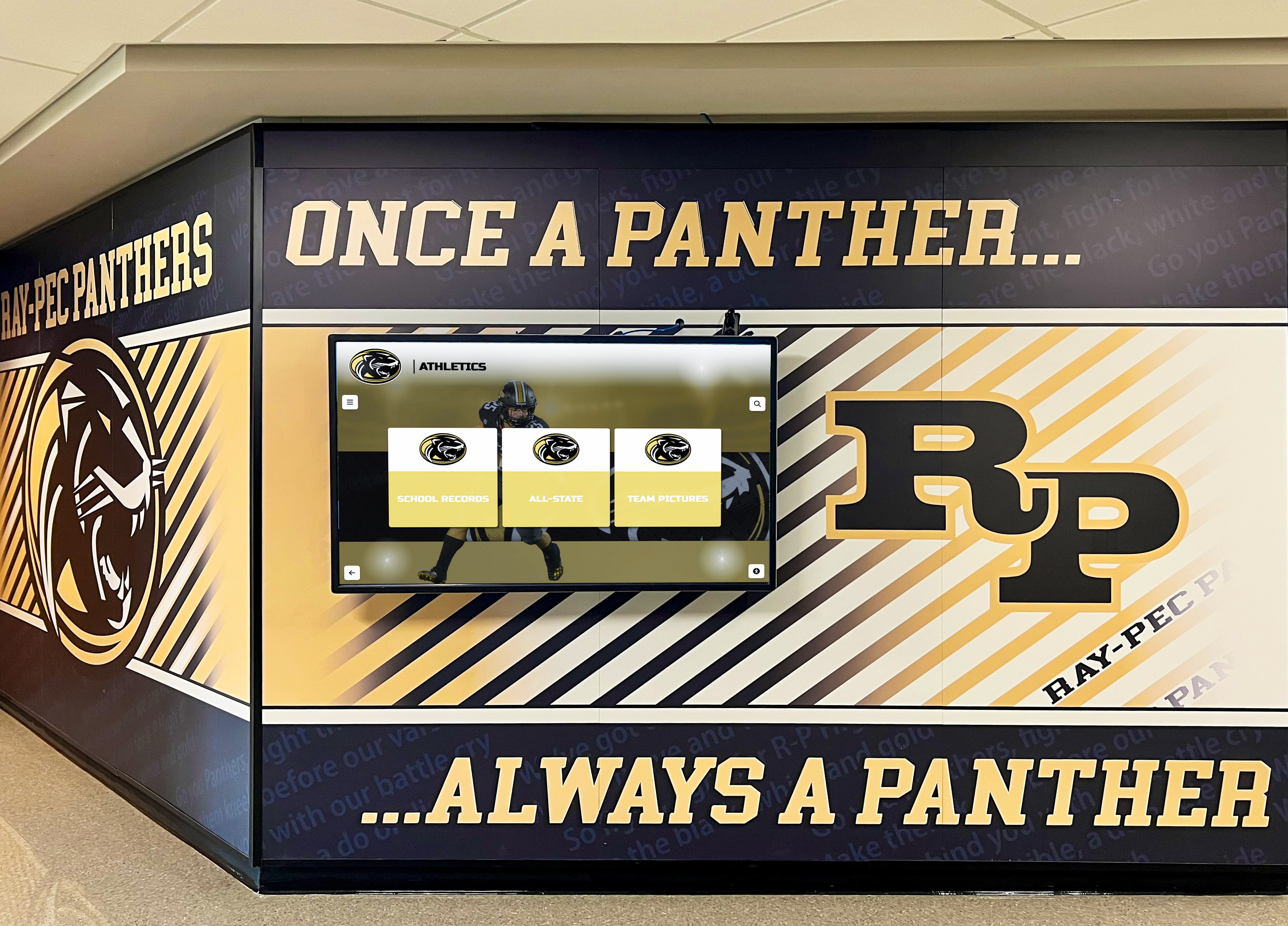
Clear signage identifying each sport zone—using sport names, team colors, and visual logos—creates self-evident organization that athletes, coaches, and substitute staff understand immediately. Schools that implement digital showcase platforms often extend their visual branding into equipment storage areas, maintaining consistent athletic department identity throughout all facilities.
Color-Coded Organization: Color systems provide intuitive visual cues supporting proper equipment storage and retrieval. Assign each sport a specific color, then mark storage bins, shelf edges, floor zones, and equipment with corresponding colors. Athletes returning equipment naturally navigate to their sport’s color zone without reading detailed labels.
Seasonal color coding offers an alternative approach—fall sports use orange storage systems, winter sports blue, and spring sports green. This chronological organization simplifies seasonal equipment rotation and helps identify off-season items requiring different storage locations or climate control.
Equipment Checkout and Return Systems
Accountability systems prevent equipment loss while documenting usage patterns informing future purchases:
Digital Inventory Management: Modern athletic programs increasingly adopt digital checkout systems using barcode scanning, RFID tags, or simple spreadsheet databases tracking equipment distribution. Athletes scan student IDs when checking out equipment, creating records documenting who has specific items and when they’re due for return. Digital systems enable automated reminder emails or texts to athletes with unreturned equipment, dramatically reducing loss rates.
Cloud-based inventory platforms allow multiple staff members to access equipment records, update checkout information, and generate reports identifying missing items, usage patterns, or equipment requiring replacement. These systems pay for themselves quickly through reduced loss and improved accountability.
Physical Checkout Stations: Establish designated equipment checkout areas near storage room entrances with clear signage, checkout procedures posted, and staff or student equipment managers supervising distribution and return. This controlled access point prevents unauthorized equipment removal while creating organized processes athletes follow consistently.
Equipment return zones should make proper storage intuitive—clearly labeled return areas for each equipment type, visual guides showing proper storage locations, and convenient positioning minimizing effort required to return items correctly. When proper return requires less effort than improper storage, athletes naturally maintain organization.
Labeling and Signage Strategies
Comprehensive labeling transforms storage from confusing warehouses into organized systems:
Clear Equipment Labels: Label individual equipment items, storage containers, and shelving locations. Industrial label makers producing durable, waterproof labels withstand athletic environment conditions better than handwritten labels or standard office labels. Include sport name, equipment type, size information, and any other relevant details.
Number or otherwise identify individual items enabling precise inventory tracking—Football Helmet #23, Practice Jersey #45, or Ball Cart A. This granular identification supports checkout systems, inventory audits, and equipment maintenance tracking.
Shelf and Zone Signage: Large format signs identifying storage zones, equipment categories, and organizational systems guide staff and athletes toward correct storage locations. Overhead hanging signs visible from equipment room entrances orient people immediately upon entry. Shelf edge labels indicating specific items stored in each location enable quick retrieval without searching multiple shelves.
Visual signage using photos, diagrams, or illustrations complements text labels for athletes with reading difficulties or English language learners. A photograph of basketballs next to text reading “Basketballs” creates redundant cues supporting comprehension.
Space-Saving Storage Design Strategies
Schools with limited storage space require creative approaches maximizing every available square foot:
Vertical Storage Maximization
Looking upward reveals significant untapped storage capacity in most equipment rooms:
Floor-to-Ceiling Shelving: Standard shelving units reaching only 6-7 feet leave substantial ceiling space unused. Commercial-grade shelving extending to 10-12 feet maximizes vertical capacity, though items on highest shelves should be lightweight or infrequently accessed. Rolling library ladders or platform step stools enable safe upper shelf access.
Wall-Mounted Systems: Walls represent underutilized storage surfaces in many equipment rooms. Slatwall panels, pegboard systems, or commercial grid wall systems mount to walls providing flexible mounting points for hooks, brackets, and shelves. These systems adapt easily as equipment needs change—moving hooks or brackets requires minutes compared to reconfiguring static shelving.
Wall-mounted solutions work particularly well for medium-weight items like balls, training aids, small protective equipment, and coaching gear that don’t require heavy-duty floor shelving but benefit from visible, accessible storage.
Mobile and Modular Storage Solutions
Flexibility enables storage systems adapting to changing program needs:
Rolling Shelving Units: Industrial mobile shelving units on heavy-duty casters enable storage reconfiguration without permanent installation. As sport seasons change, equipment priorities shift, or program needs evolve, mobile units move to accommodate new arrangements. This flexibility particularly benefits multi-sport programs with significant seasonal equipment rotation.
Locking casters ensure mobile units remain stable during daily use while allowing repositioning when needed. Some schools use mobile storage creating temporary equipment distribution zones during peak periods, then return units to compact storage configurations during off-peak times.
Modular Shelving Systems: Modular commercial shelving with adjustable shelf heights, expandable widths, and interchangeable components adapts to evolving storage needs without complete replacement. As programs add sports, increase inventory, or change equipment types, modular systems reconfigure through shelf repositioning, additional unit purchases that integrate with existing shelving, or accessory additions customizing storage for new requirements.
This adaptability proves particularly valuable for growing programs uncertain about future storage needs—initial modest investments expand systematically as requirements increase rather than requiring complete system replacement.
Multi-Purpose and Convertible Spaces
Creative space utilization identifies storage opportunities beyond dedicated equipment rooms:
Under-Bleacher Storage: Stadium and gymnasium bleachers often conceal substantial unused space underneath. Schools successfully convert these areas into equipment storage through roll-up doors providing access, internal shelving or caging organizing equipment, and lighting enabling safe access. Secure storage under bleachers works well for seasonal equipment—football gear stored under stadium bleachers during off-season, or basketball equipment under gym bleachers during spring.
Hallway and Corridor Integration: Athletic facility hallways sometimes accommodate wall-mounted storage, shallow storage cabinets, or recessed storage alcoves without impeding traffic flow. This distributed storage approach positions equipment near use locations reducing transport time and effort. Secure cabinet doors or locking cages prevent unauthorized access while maximizing corridor utility.
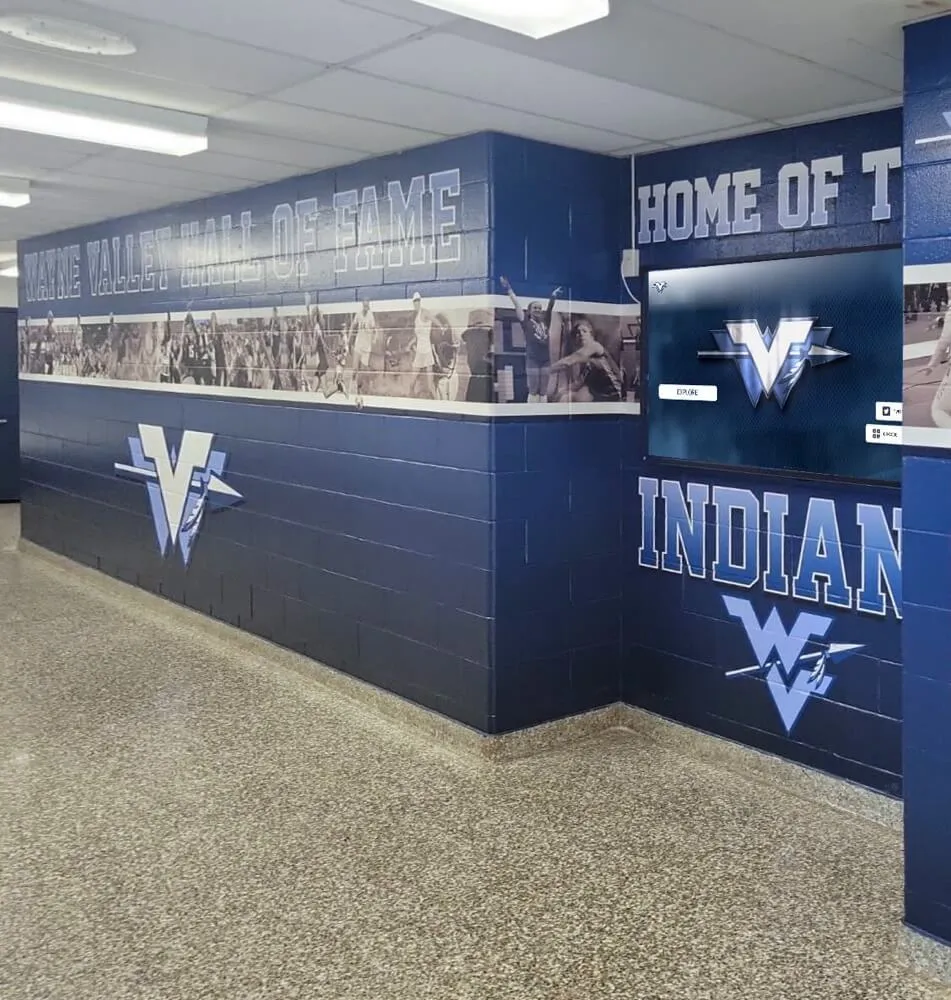
Progressive schools integrate storage areas with recognition displays celebrating athletic achievement, creating functional spaces that also reinforce program culture and tradition.
Climate Control and Equipment Preservation
Proper storage conditions extend equipment lifespan, maintain safety standards, and protect athletic department investments:
Temperature and Humidity Management
Environmental conditions significantly impact equipment deterioration rates:
Climate-Controlled Storage Areas: Electronics, leather equipment, and certain synthetic materials deteriorate rapidly in extreme temperatures or high humidity. Climate-controlled storage rooms maintaining 60-75°F and 40-60% relative humidity protect sensitive equipment. This controlled environment prevents issues like cracked leather, warped composite materials, corroded metal components, or electronic failures from moisture exposure.
Full climate control represents significant investment, but schools can implement targeted approaches protecting highest-value items—climate-controlled cabinets for electronics and expensive equipment within otherwise standard storage rooms, or designated climate zones for particularly sensitive inventory.
Ventilation for Wet and Worn Equipment: Equipment returning from outdoor practices arrives wet, muddy, and requiring ventilation before storage. Dedicated drying areas with air circulation, drainage, and spacing allowing air flow prevent moisture-related equipment deterioration and bacterial growth. Open wire shelving, hanging systems, or perforated storage containers promote air circulation around wet equipment.
Some programs install commercial fans or dehumidifiers in equipment rooms managing moisture levels during humid seasons or after extended rainy periods when equipment remains consistently damp.
Protective Storage for Seasonal Equipment
Off-season equipment requires appropriate protection ensuring readiness when seasons begin:
Clean Before Storage: Equipment entering off-season storage should be cleaned, inspected, and repaired first. Storing dirty equipment accelerates deterioration, embeds stains, encourages bacterial growth, and makes equipment unpleasant when retrieved months later. Build cleaning protocols into seasonal transitions—end-of-season processes include equipment cleaning, damage assessment, necessary repairs, and then proper storage.
Protective Coverings and Containers: Dust accumulation, pest infiltration, and environmental exposure damage equipment during extended storage periods. Protective equipment covers, sealed plastic bins, or enclosed cabinets shield seasonal equipment from storage environment conditions. Clear or labeled containers enable content identification without opening every container when retrieving stored items.
Avoid sealing damp equipment in airtight containers—trapped moisture creates ideal conditions for mold and mildew. Equipment must dry completely before sealed storage.
Safety and Security Considerations
Equipment storage impacts both physical safety and equipment security:
Preventing Injuries and Accidents
Storage layout and equipment positioning influence injury risks:
Proper Weight Distribution: Heavy items stored on lower shelves reduce injury risk during retrieval and prevent catastrophic shelf collapse from poor weight distribution. Reserve upper shelves for lightweight items that won’t cause injury if accidentally dropped. This ergonomic approach also makes equipment retrieval easier and safer for staff of various heights and physical capabilities.
Secure Mounting and Anchoring: Tall shelving units, lockers, and storage systems require secure anchoring to walls preventing tip-over accidents. Storage rooms experience significant activity—athletes rushing between practices, coaches moving equipment, maintenance staff navigating tight spaces—creating conditions where unsecured storage units could tip. Building codes often mandate shelving anchoring in educational facilities, but verification ensures compliance.
Clear Traffic Pathways: Storage room aisles should provide minimum 36-inch clearance allowing safe movement, equipment cart passage, and emergency egress. Overcrowded storage rooms tempt gradual aisle encroachment as inventory grows and temporary storage becomes permanent. Regular assessment ensures pathways remain clear and safe.
Schools planning comprehensive athletic facility upgrades should integrate equipment storage into facility planning, ensuring adequate space allocation prevents future safety compromises from overcrowding.

Equipment Security and Loss Prevention
Athletic equipment represents substantial investment requiring protection from theft and loss:
Controlled Access Systems: Limiting equipment room access to authorized personnel prevents theft and unauthorized equipment use. Key card access systems, traditional locks with limited key distribution, or keypad entry controls restrict access while creating audit trails documenting who enters storage areas and when.
Security cameras positioned at equipment room entrances and within storage areas deter theft while providing evidence if equipment goes missing. Visible camera presence alone significantly reduces unauthorized access and improper equipment use.
Inventory Auditing Procedures: Regular inventory counts comparing physical equipment against checkout records identify missing items quickly, enabling recovery before temporary borrowing becomes permanent loss. Monthly audits during active seasons and comprehensive end-of-season inventories maintain accountability and identify patterns indicating systematic problems requiring protocol adjustments.
Digital inventory systems simplify auditing through barcode scanning or RFID reading—staff scan items during counts, software compares scanned inventory against database records, and discrepancy reports highlight missing items for investigation.
Equipment Marking and Identification: Permanently marking equipment with school names, logos, or identification numbers discourages theft and aids recovery. Engraving, heat stamps, embroidery, or industrial labeling creates permanent identification difficult to remove. Marked equipment loses resale value and becomes easily identifiable, reducing theft incentives.
Budget-Conscious Storage Solutions
Effective storage doesn’t require unlimited budgets—strategic approaches maximize limited resources:
Phased Implementation Strategies
Schools can develop comprehensive storage systems gradually:
Priority-Based Phasing: Begin with highest-priority storage needs—securing expensive equipment, organizing most-used items, or addressing significant safety hazards. Initial phases might include basic shelving for daily-use equipment, secure caging for high-value items, and improved organization for equipment experiencing high loss rates. Subsequent phases add enhancements like specialized racks, climate control, or advanced inventory management systems.
This incremental approach enables programs to begin improving organization immediately while spreading costs across multiple budget cycles and allowing assessment of initial solutions before committing to comprehensive buildouts.
DIY and Semi-Custom Solutions: Schools with maintenance staff or community volunteers can implement cost-effective semi-custom storage through DIY construction using commercial-grade materials—lumber, plywood, and hardware from home improvement stores configured into custom shelving, equipment racks, or storage systems designed specifically for program needs. This approach requires more labor but reduces material costs 50-70% compared to commercial systems.
Combination approaches work well—purchasing commercial shelving for heavy items requiring certified load ratings while building custom wood storage for lighter equipment not requiring industrial ratings.
Cost-Effective Storage Options
Multiple budget-friendly approaches provide functional storage:
Used and Surplus Equipment: Schools, colleges, and businesses upgrading facilities often sell used shelving, storage systems, and organizational equipment at substantial discounts. Industrial wire shelving, metal lockers, and commercial storage racks withstand decades of use, making well-maintained used equipment excellent values. Auction sites, surplus dealers, and school district surplus sales provide sources for cost-effective storage components.
Retail and Commercial Repurposing: Retail store fixtures from closing businesses—gondola shelving, grid wall systems, clothing racks, and display cases—adapt effectively for athletic equipment storage at fraction of specialty athletic equipment storage costs. These commercial systems offer durability and professional appearance supporting organized athletic facilities without premium pricing.
Standardized Container Systems: Standardized plastic storage bins in uniform sizes enable efficient stacking, easy labeling, and systematic organization at modest cost. Bulk purchasing from warehouse retailers or online suppliers reduces per-unit costs. Clear bins provide visibility into contents, while opaque bins work well for items benefiting from light protection.
Standardization matters more than premium features—uniform bin dimensions maximize shelf space efficiency and create organized visual appearance even with basic products.
Maintenance and Long-Term Sustainability
Storage systems require ongoing attention maintaining organization and functionality:
Establishing Maintenance Protocols
Sustained organization requires systematic maintenance:
Daily Maintenance Habits: Build equipment return and basic cleaning into daily athletic department operations. End-of-practice protocols requiring athletes to return equipment to proper locations, coaches conducting quick storage area assessments, and equipment managers performing daily organization maintain baseline order preventing gradual deterioration into chaos.
Equipment management student positions or team manager roles can oversee daily storage maintenance, equipment distribution and return, and basic organization under athletic director or equipment manager supervision.
Seasonal Deep Cleaning: Schedule comprehensive equipment room organization during seasonal transitions when storage contents rotate. End-of-fall/beginning-of-winter transitions provide opportunities to move football equipment into off-season storage, retrieve basketball and winter sport equipment, assess storage system functionality, and address any organizational breakdowns that developed during active seasons.
These seasonal reviews identify damaged storage components requiring repair or replacement, organizational protocols needing adjustment, and equipment inventory changes affecting storage requirements.
Training and Protocol Documentation
Staff turnover requires documented procedures ensuring consistency:
Standard Operating Procedures: Document equipment storage procedures, checkout protocols, inventory management processes, and organizational systems in written guides with photographs illustrating proper storage locations and methods. New staff, substitute coaches, or volunteer equipment managers benefit from clear documentation enabling proper equipment handling without extensive training periods.
Digital procedure manuals stored in shared drives or posted in storage rooms provide convenient reference preventing the “that’s how we’ve always done it” knowledge loss when experienced staff leave positions.
Training Programs: Systematic training for coaches, equipment managers, student workers, and athletes ensures everyone understands equipment storage expectations and procedures. Annual pre-season training refreshes protocols and introduces system improvements implemented during off-seasons.
Schools implementing comprehensive recognition programs often extend cultural emphasis on excellence into equipment management—celebrating teams and athletes demonstrating exceptional equipment care and organizational responsibility alongside competitive achievements.
Technology Integration for Modern Equipment Management
Advanced technology enhances equipment storage efficiency and accountability:
Digital Inventory and Tracking Systems
Modern software platforms streamline equipment management:
Barcode and RFID Systems: Individual equipment items tagged with barcode labels or RFID chips enable instant inventory counting, automated checkout/return documentation, and precise location tracking. Coaches scan equipment during distribution, athletes scan during checkout and return, and periodic inventory counts involve scanning items rather than manual counting and documentation.
RFID systems offer hands-free scanning—athletes pass through RFID readers during checkout automatically logging equipment distribution without stopping for scanning. These advanced systems cost more than barcode approaches but provide superior efficiency for high-volume operations.
Cloud-Based Management Platforms: Athletic equipment management software platforms provide centralized databases accessible from multiple devices and locations. Coaches access current equipment inventory from offices or practice fields, athletic directors monitor equipment budgets and usage patterns, and maintenance staff document cleaning and repair activities all through unified platforms.
These systems generate reports identifying high-loss equipment categories justifying protocol changes, usage patterns informing purchasing decisions, and maintenance records supporting warranty claims or equipment lifecycle planning.
Communication and Notification Systems
Automated communication reduces administrative burden while improving accountability:
Automated Checkout Reminders: Digital checkout systems send automated email or text reminders to athletes with unreturned equipment. Graduated reminder systems send initial friendly reminders after equipment becomes overdue, followed by escalating notifications for continued non-compliance. Many schools reduce equipment loss by 60-80% through simple automated reminder implementation.
Inventory Alerts and Reorder Notifications: Inventory management systems monitor equipment quantities, alerting staff when levels fall below minimum thresholds indicating reorder requirements. This automated monitoring prevents discovering critical equipment shortages days before season begins when purchasing becomes rushed and expensive.
Specialized Storage Considerations by Sport
Different sports present unique equipment storage challenges requiring specialized approaches:
Football Equipment Storage
Football programs accumulate more equipment than most sports combined, requiring substantial dedicated storage:
Helmet and shoulder pad storage for 50-100 players demands significant space and proper ventilation systems. Individual player cubicles, numbered helmet trees, and shoulder pad racks create organized storage supporting proper equipment fitting and accountability. Equipment room layouts should separate dirty/wet equipment areas from clean game uniform storage preventing contamination.
Football programs benefit from equipment checkout systems documenting which athletes have specific helmet and shoulder pad assignments since proper fitting matters for safety and performance. Size ranges, reconditioning schedules, and replacement cycles all require tracking systems supporting equipment manager operations.
Multi-Sport and Seasonal Equipment Management
Programs supporting numerous sports throughout the year require flexible storage accommodating seasonal rotation:
Modular mobile storage systems enable seasonal reconfiguration—football equipment moves to long-term storage areas while basketball equipment occupies prime accessible locations during winter, then spring rotation brings track, baseball, and lacrosse equipment forward while winter sports equipment moves into off-season storage. This rotation maintains equipment accessibility while maximizing limited storage space.
Standardized storage containers and labeling systems simplify seasonal rotation—clearly labeled bins identifying sport, season, and contents enable efficient moving without requiring equipment managers to remember specific contents of every storage container. Schools expanding digital recognition across athletic facilities often coordinate seasonal rotation with recognition content updates, maintaining alignment between displayed achievements and active sports seasons.
High-Value and Sensitive Equipment
Electronics, timing systems, video equipment, and expensive specialized gear require secure climate-controlled storage:
Lockable climate-controlled cabinets protect cameras, tablets, timing systems, and electronic training equipment from theft, environmental damage, and unauthorized use. These secure storage zones within larger equipment rooms provide appropriate protection without requiring entirely separate storage facilities.
Equipment checkout logs documenting authorized users, usage purposes, and return expectations create accountability for high-value items. Many schools require administrative approval for electronic equipment checkout, ensuring responsible use and proper return protocols.
Creating Efficient Equipment Room Layouts
Physical layout dramatically impacts storage system functionality and user experience:
Workflow Optimization
Equipment room design should support natural workflow patterns:
Checkout/Return Zones: Designate clear areas near storage room entrances for equipment distribution and return. These zones should include checkout desk or counter space, checkout system computers or tablets, and convenient access to most-used equipment. Athletes shouldn’t navigate entire storage rooms reaching checkout areas—efficient layouts bring athletes to central service points with equipment managers retrieving items from storage areas.
Return zones accept equipment from athletes, then equipment managers properly store items in designated locations. This separation prevents athletes from accessing entire storage inventory while maintaining organized return processes.
Equipment Preparation Areas: Dedicated spaces for equipment cleaning, minor repairs, and preparation separate maintenance activities from storage areas. These zones might include work benches, cleaning supply access, basic tool storage, and equipment allowing inflation, adjustments, or minor fixes before equipment returns to active inventory.
Seasonal Storage Separation: Active season equipment occupies prime accessible storage while off-season items move to less convenient locations—high shelves, back corners, or overflow storage areas. This seasonal differentiation maintains easy access to currently needed equipment without requiring constant navigation around unused items.
Engaging Athletes in Equipment Care Culture
Successful equipment storage systems require user buy-in and cultural emphasis on equipment responsibility:
Building Accountability and Ownership
Cultural approaches transform equipment care from administrative burden into shared responsibility:
Equipment Care Education: Teach athletes why proper equipment storage and care matters—extending equipment lifespan reduces program costs allowing budget allocation toward program improvements, proper storage maintains equipment safety and performance, and organized systems show respect for teammates who share equipment. Athletes understanding rationale behind expectations comply more consistently than those simply following arbitrary rules.
Team-Based Responsibility Systems: Assign equipment care responsibilities by team or sport, creating peer accountability encouraging proper equipment handling. Teams demonstrating exceptional equipment care might earn recognition, reduced equipment fees, or other benefits rewarding positive behavior. Schools implementing comprehensive athletic recognition programs can celebrate equipment care excellence alongside competitive achievements, reinforcing that all aspects of program involvement matter.
Consequences for Misuse: Clear policies addressing equipment loss, damage from misuse, or storage protocol violations create accountability. Financial responsibility for lost equipment, playing time consequences for repeated violations, or team-wide impacts from individual failures encourage appropriate equipment handling and storage compliance.
Conclusion: Transforming Equipment Storage Into Competitive Advantage
Well-designed sports equipment storage systems provide athletic departments with operational efficiency that directly impacts program success. Organized storage enables coaches and athletes to focus on training and competition rather than searching for equipment, protecting expensive athletic investments through proper storage conditions extends equipment lifespan and maximizes budget effectiveness, and creating accountability systems reduces loss and waste that drain athletic department resources.
Schools approaching equipment storage strategically—conducting thorough needs assessments, implementing appropriate storage solutions, establishing organizational protocols, and building cultural emphasis on equipment responsibility—transform potential chaos into competitive advantages supporting athletic excellence.
Whether working with limited budgets requiring creative solutions or implementing comprehensive storage systems in new facilities, the fundamental principles remain consistent: understand your specific needs, match storage solutions to equipment requirements, maintain organization through systematic protocols, and engage entire athletic communities in equipment care responsibility.
Modern athletic programs increasingly recognize that excellence requires attention to every detail—equipment storage matters as much as practice planning, facilities maintenance, or competitive strategy in building comprehensive programs supporting student athlete success. Athletic directors and facilities managers who prioritize equipment storage create foundations enabling their programs to operate efficiently, effectively, and excellently throughout all sports seasons.
Schools implementing organized equipment storage often discover unexpected benefits beyond operational efficiency—cleaner facilities create more professional environments impressing recruits and community members, reduced equipment replacement costs free budget resources for program enhancements, and systematic approaches to equipment management establish organizational cultures extending into all program aspects.
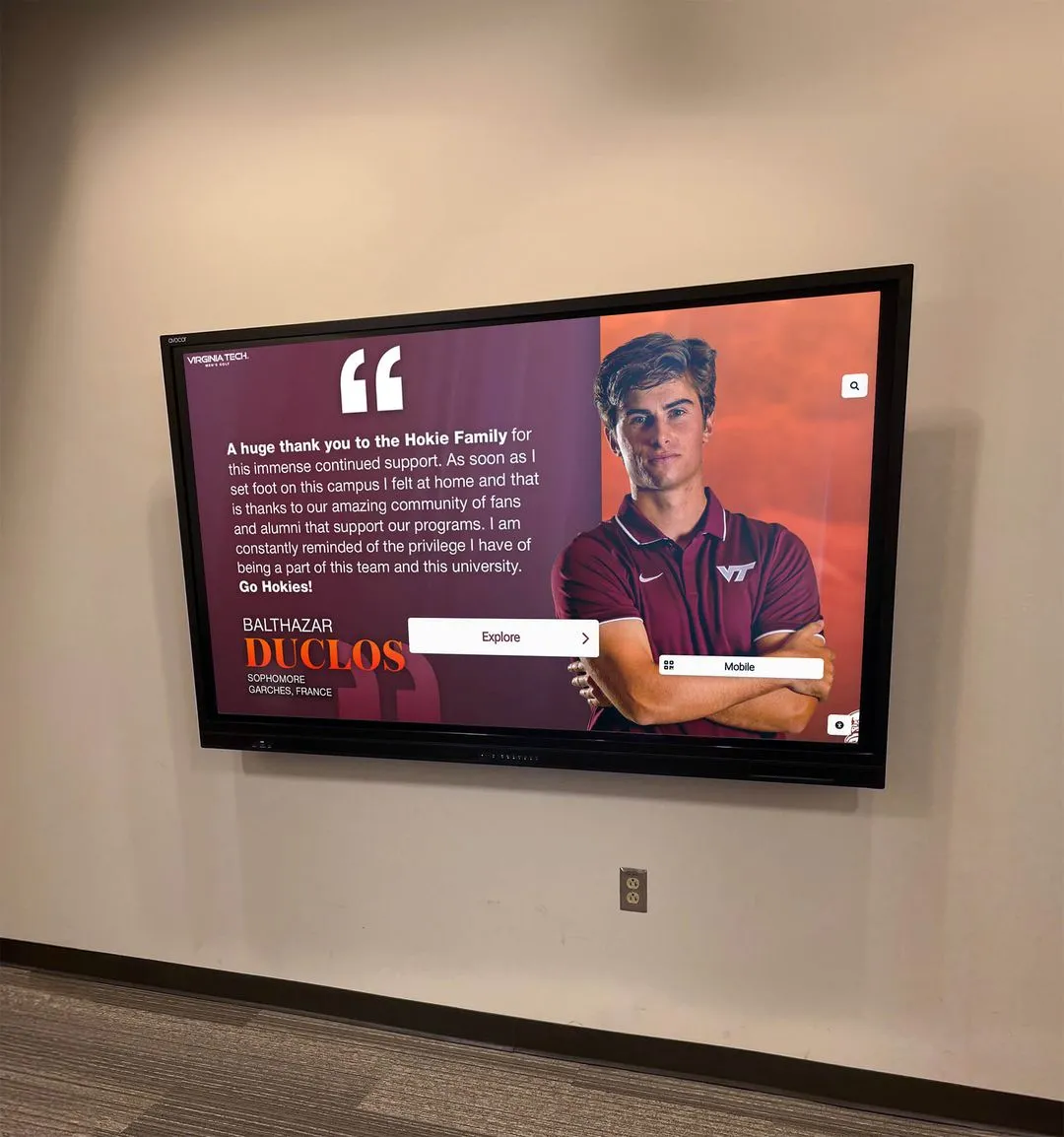
Ready to transform your athletic facilities with comprehensive recognition and organization solutions? Rocket Alumni Solutions specializes in digital recognition displays that celebrate athletic achievement while supporting professional facility environments. Our touchscreen systems showcase team accomplishments, individual athlete recognition, and program history through engaging interactive experiences that inspire current athletes while honoring past excellence. Discover how modern recognition technology complements organized athletic facilities and creates comprehensive athletic environments where every detail supports your program’s pursuit of excellence.