



Key Takeaways
Ready-to-use sports banquet speech examples for coaches, team captains, and award presenters. Templates, structure tips, and Q&A snippets for end-of-season ceremonies.
Every sports banquet needs words that match the weight of the season—speeches that move families, validate athletes, and give coaches a moment to say what the locker room already knows. The problem is that most coaches, captains, and award presenters stare at a blank page the week before the banquet and settle for something forgettable. This guide provides ready-to-use sports banquet speech examples, structural templates, and short Q&A answers designed to help anyone at the podium tonight—and to leave remarks worth preserving long after the dinner ends.

Why Sports Banquet Speeches Matter Beyond the Night Itself
A sports banquet speech does more than fill a program slot. The best remarks capture a season’s meaning in language that families replay for years: a parent describing their child listening to a coach’s tribute, a senior reading the program again in college, a first-year athlete hearing the bar set by the class ahead of them.
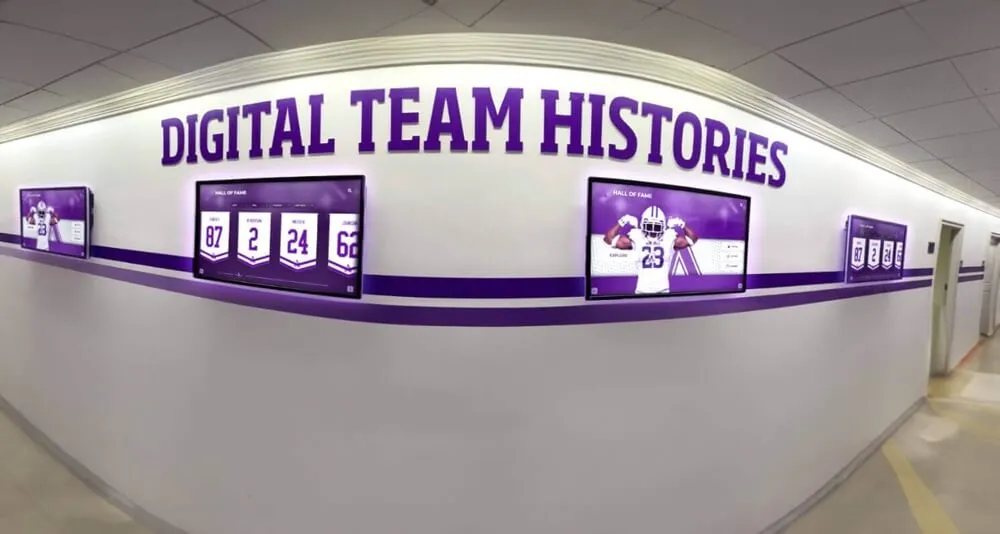
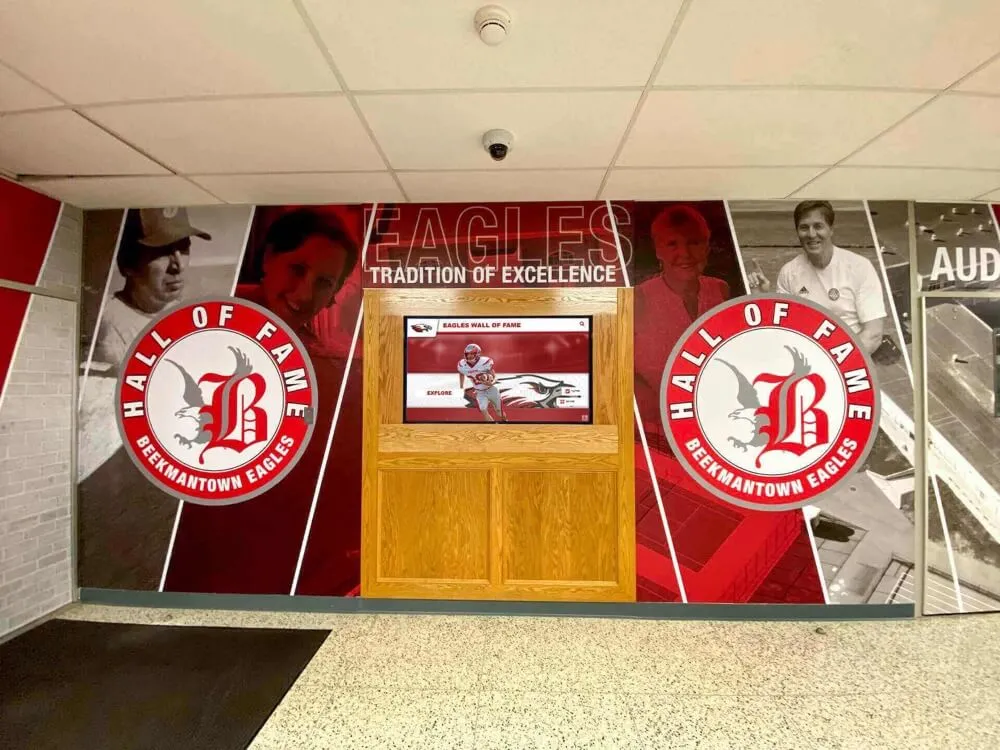
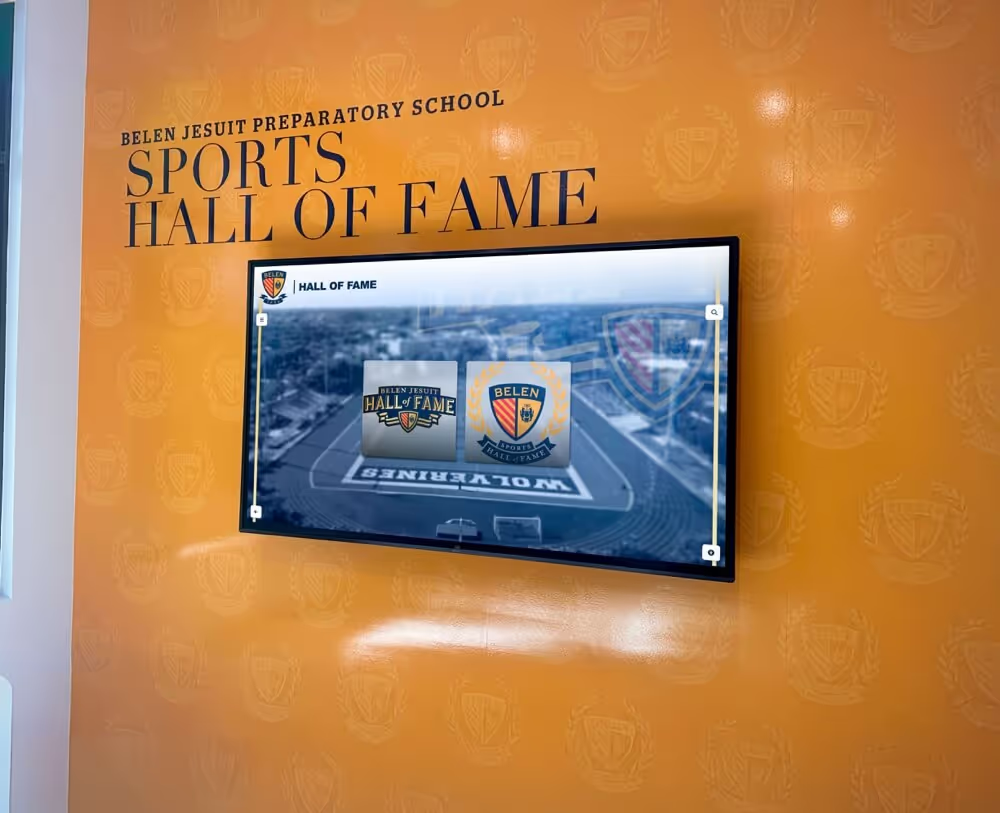
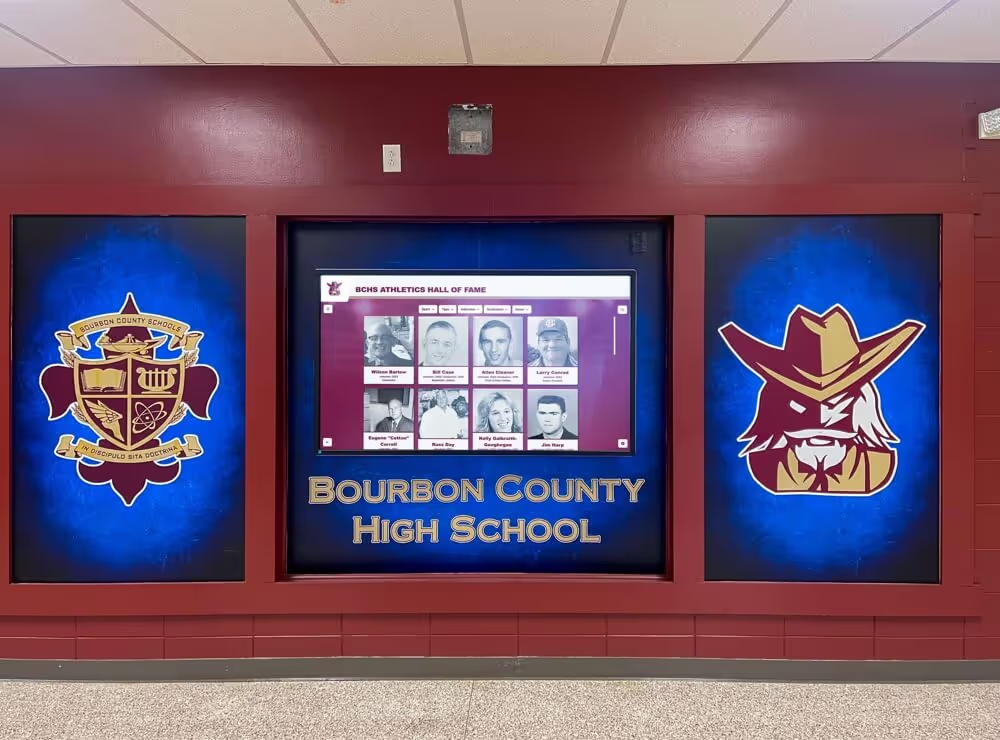
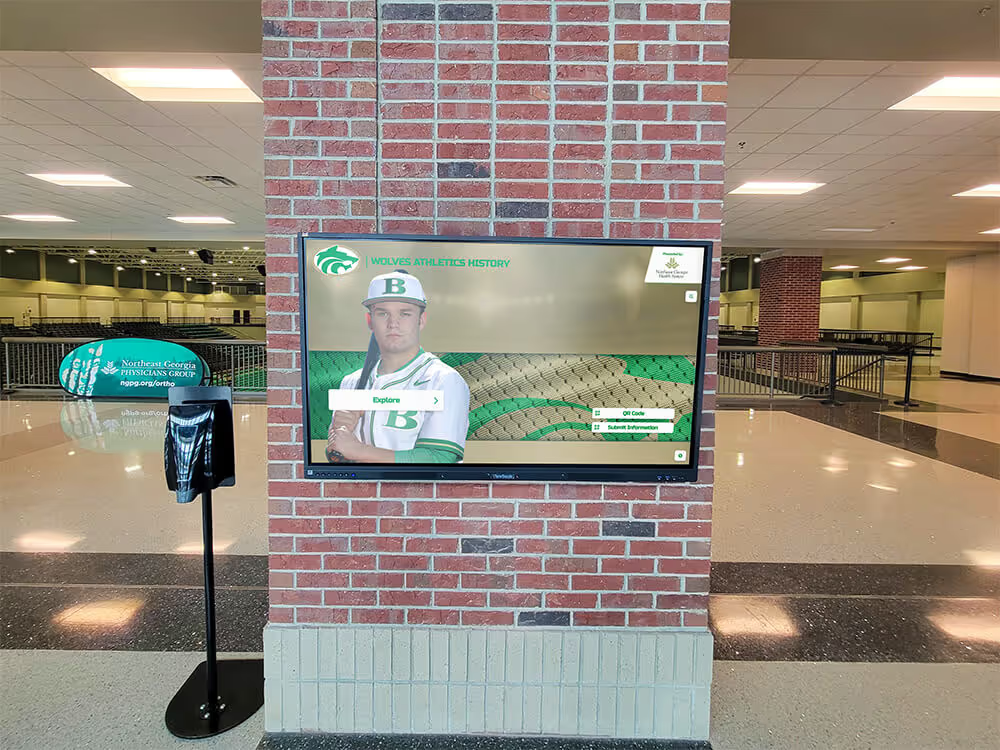
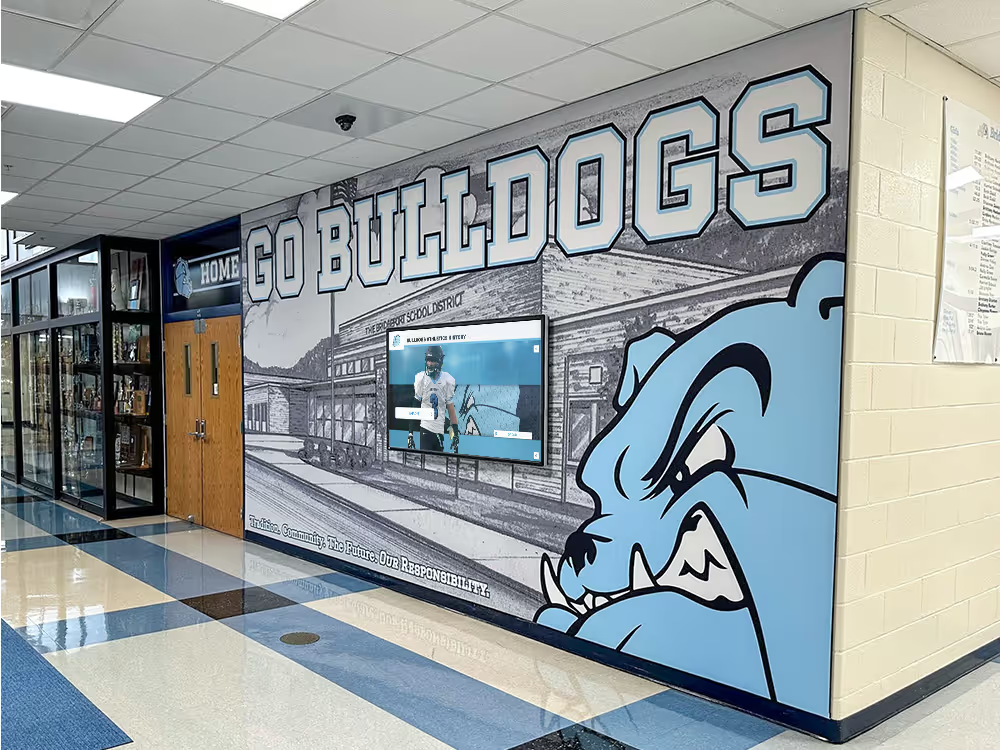
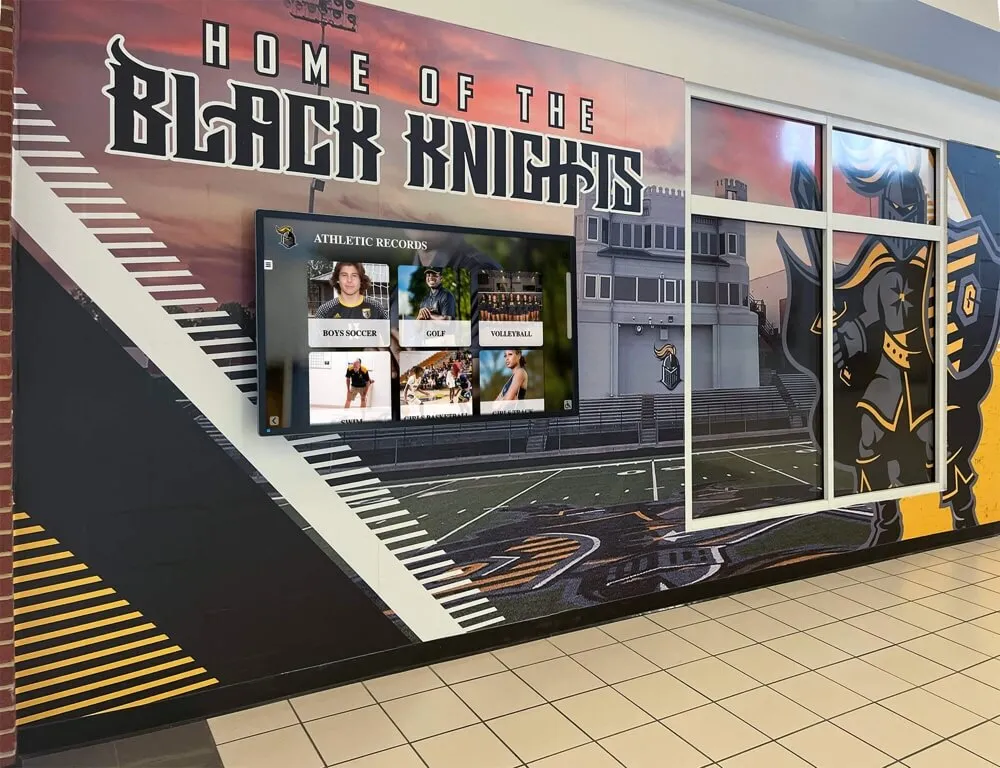
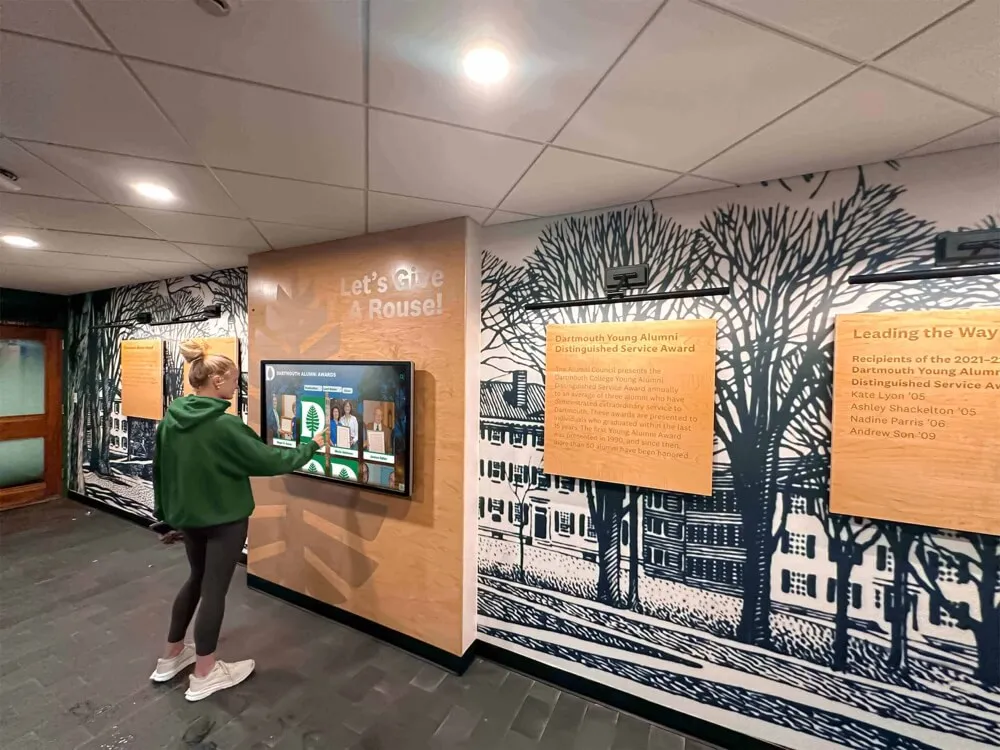
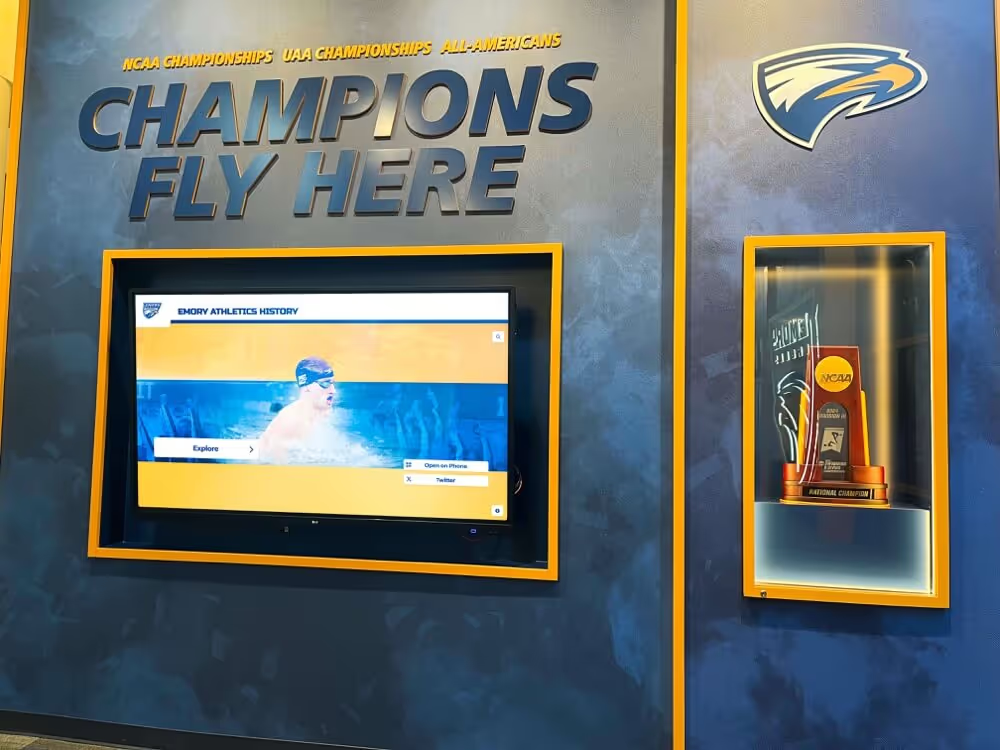
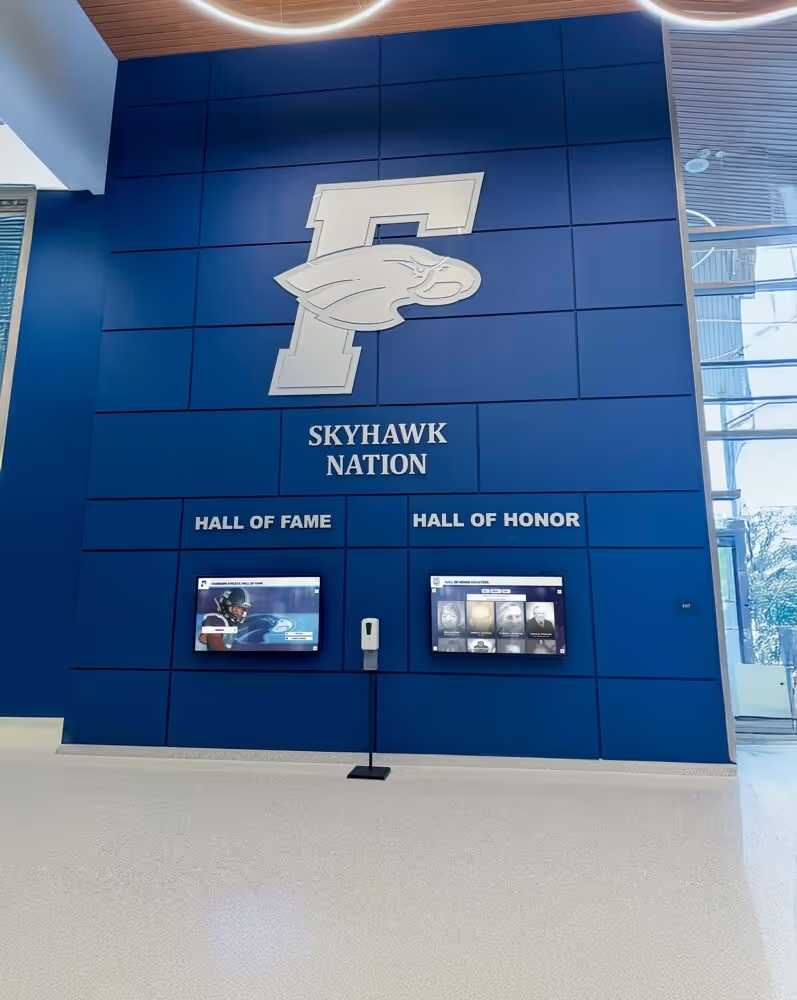
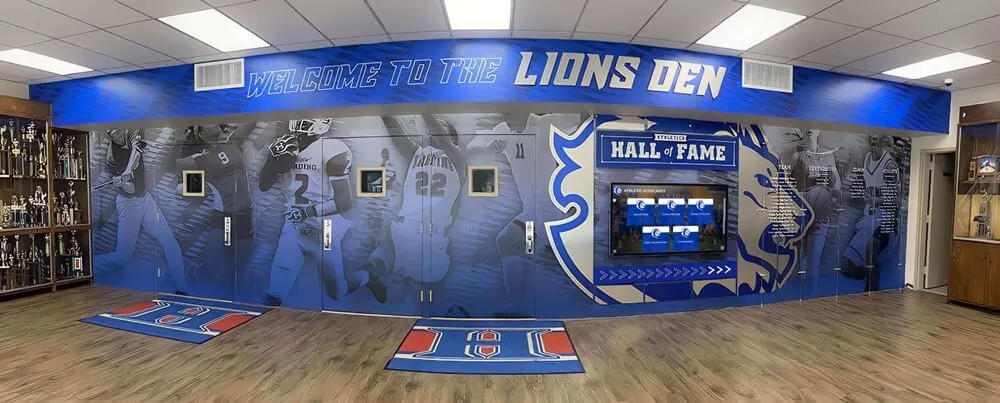
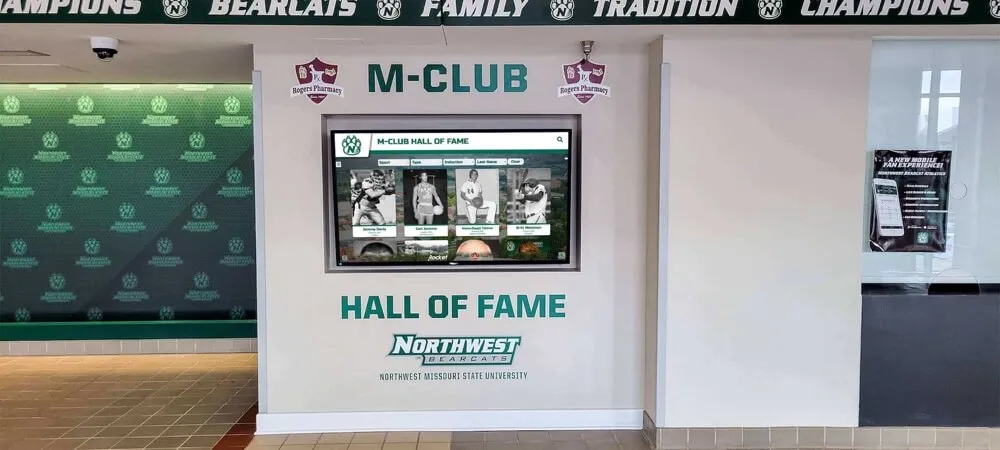
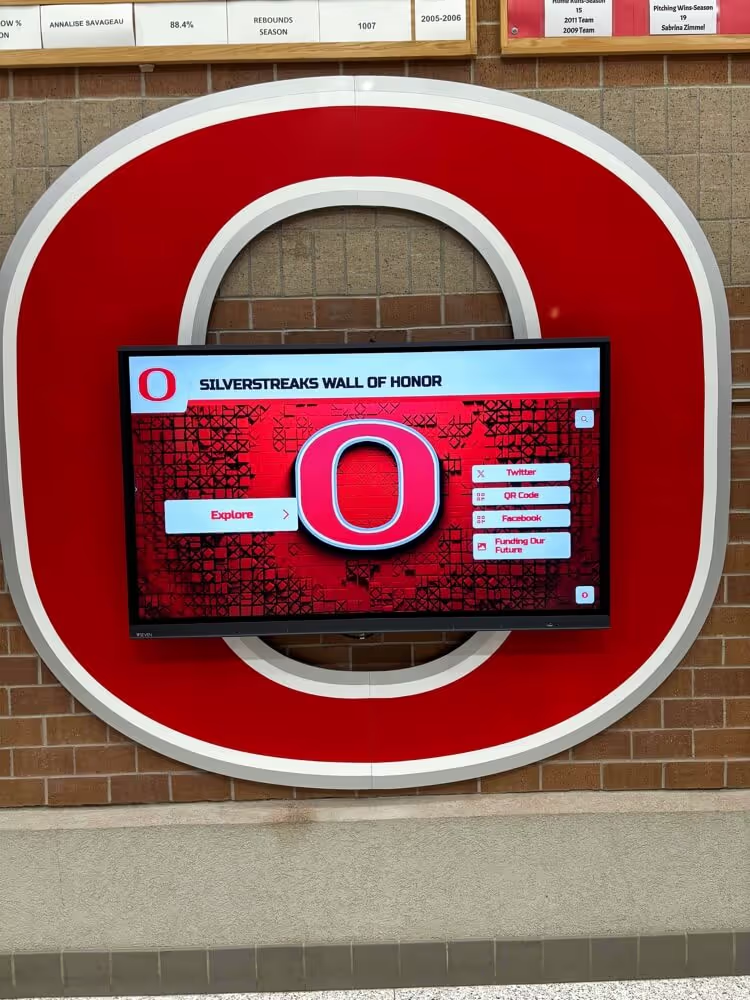
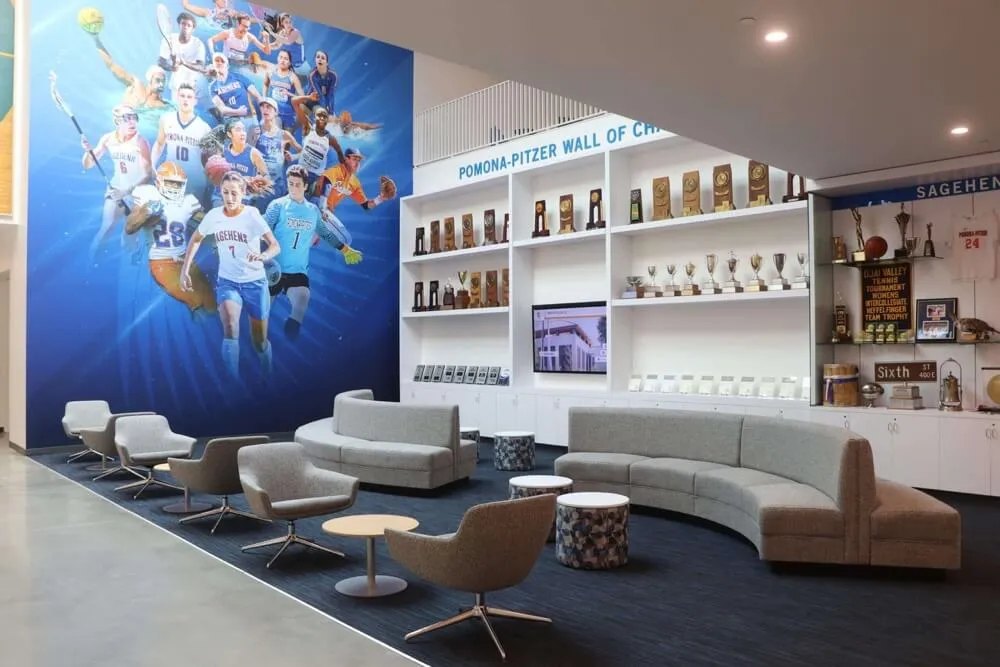
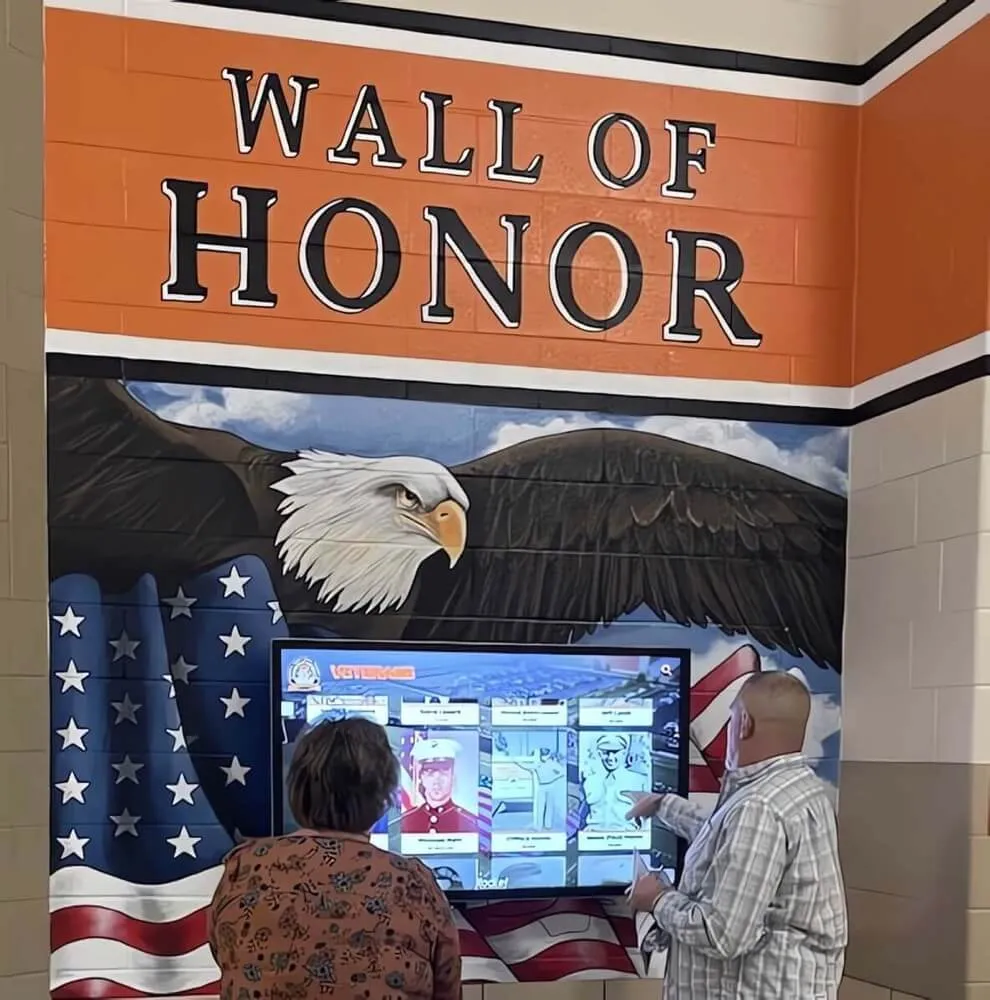
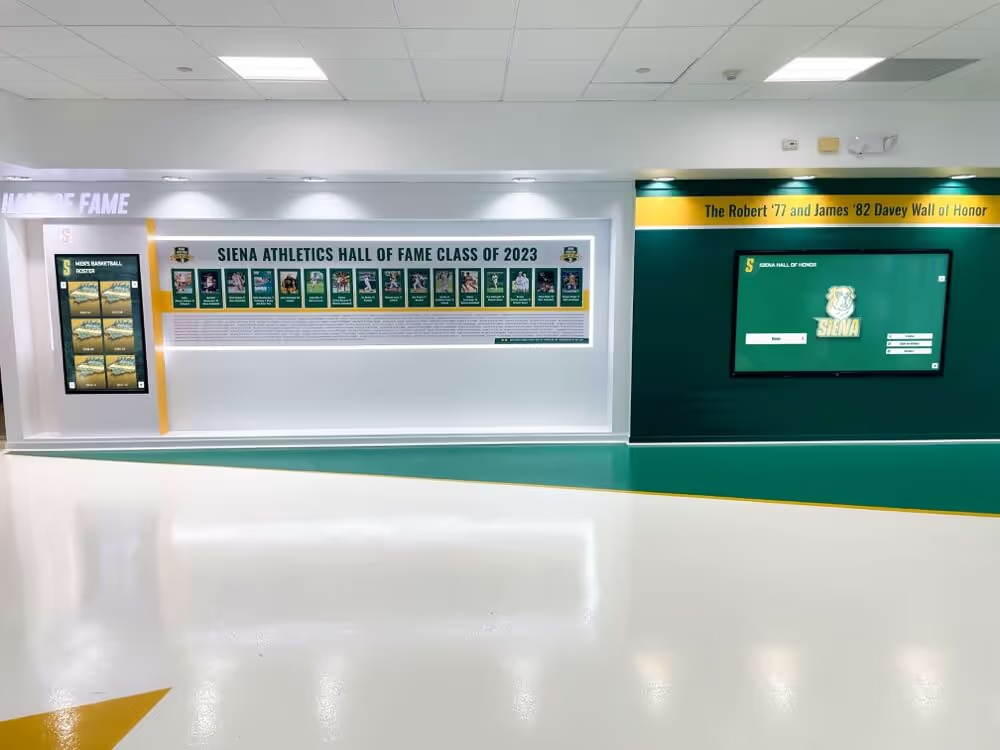
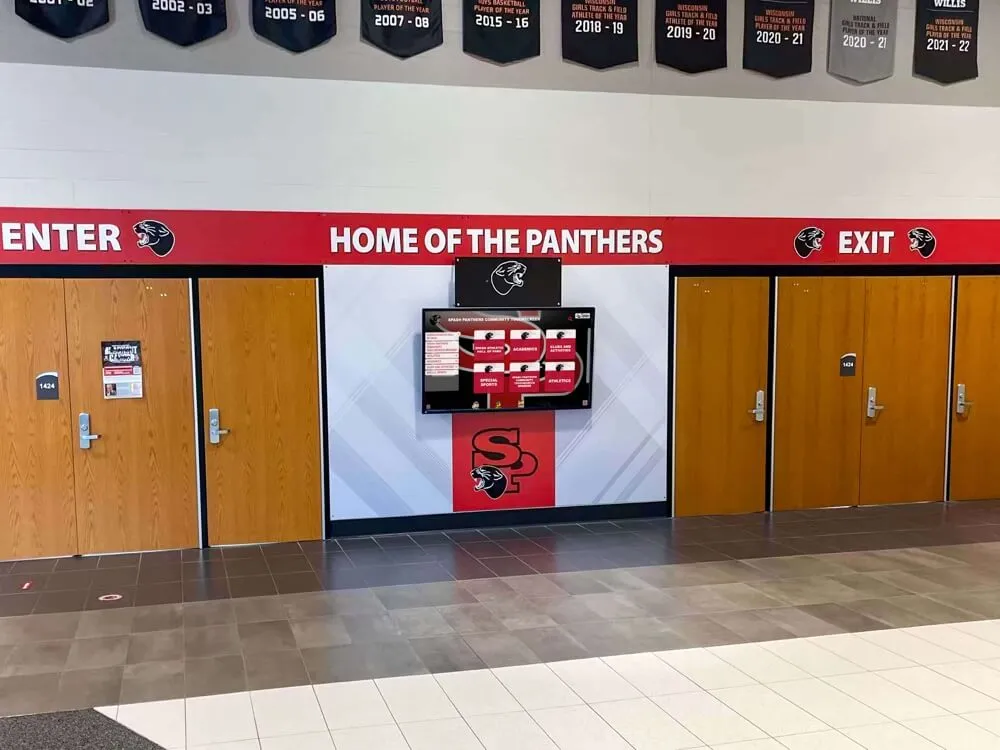
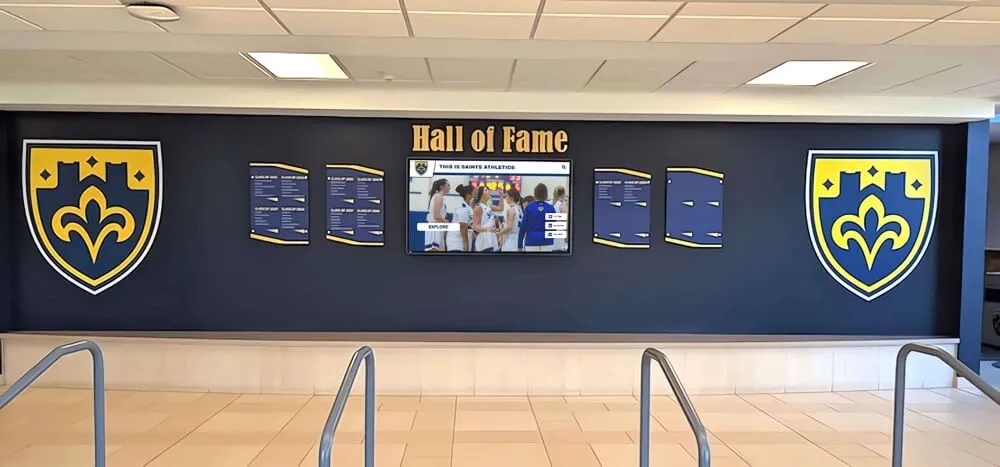
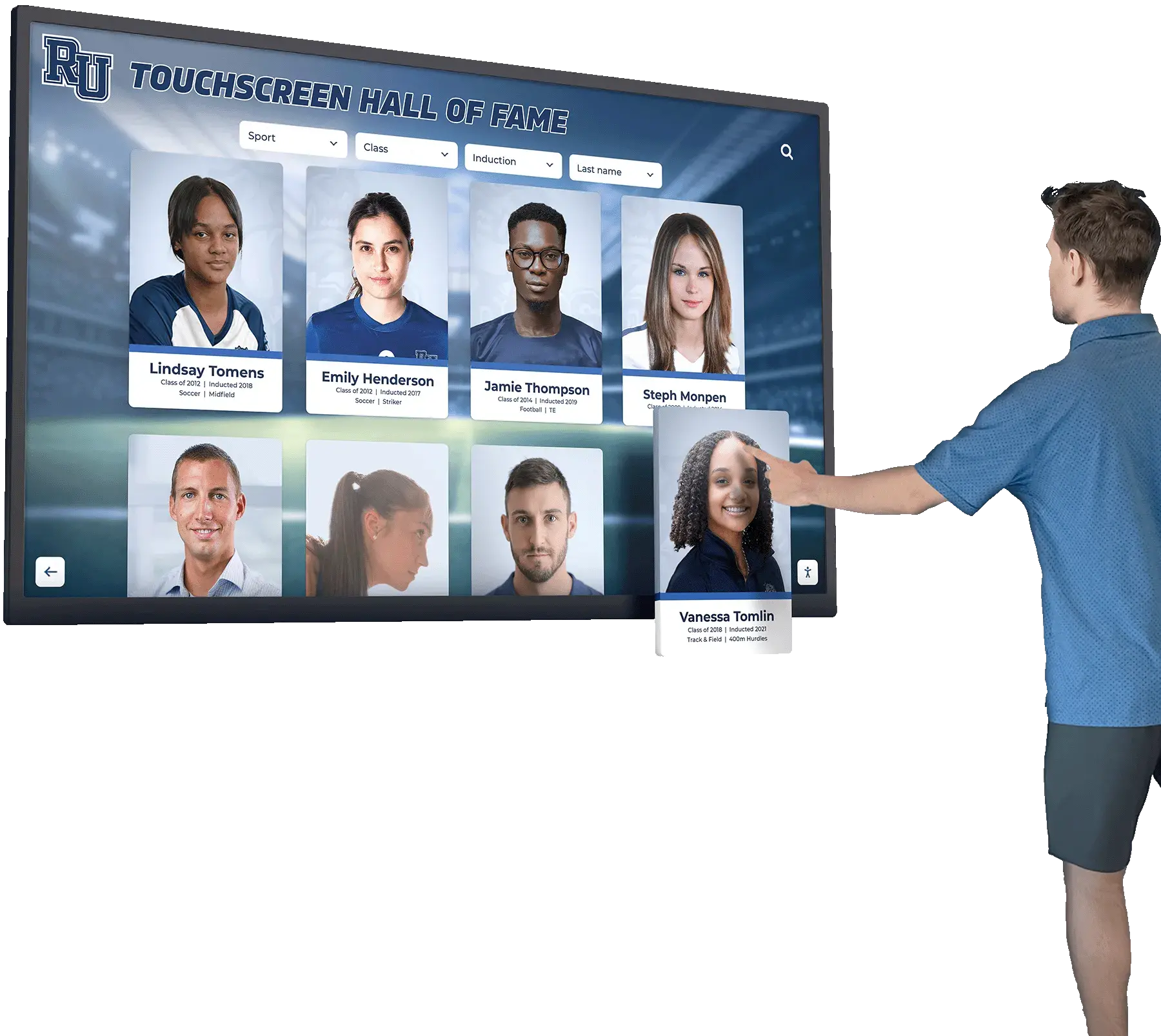
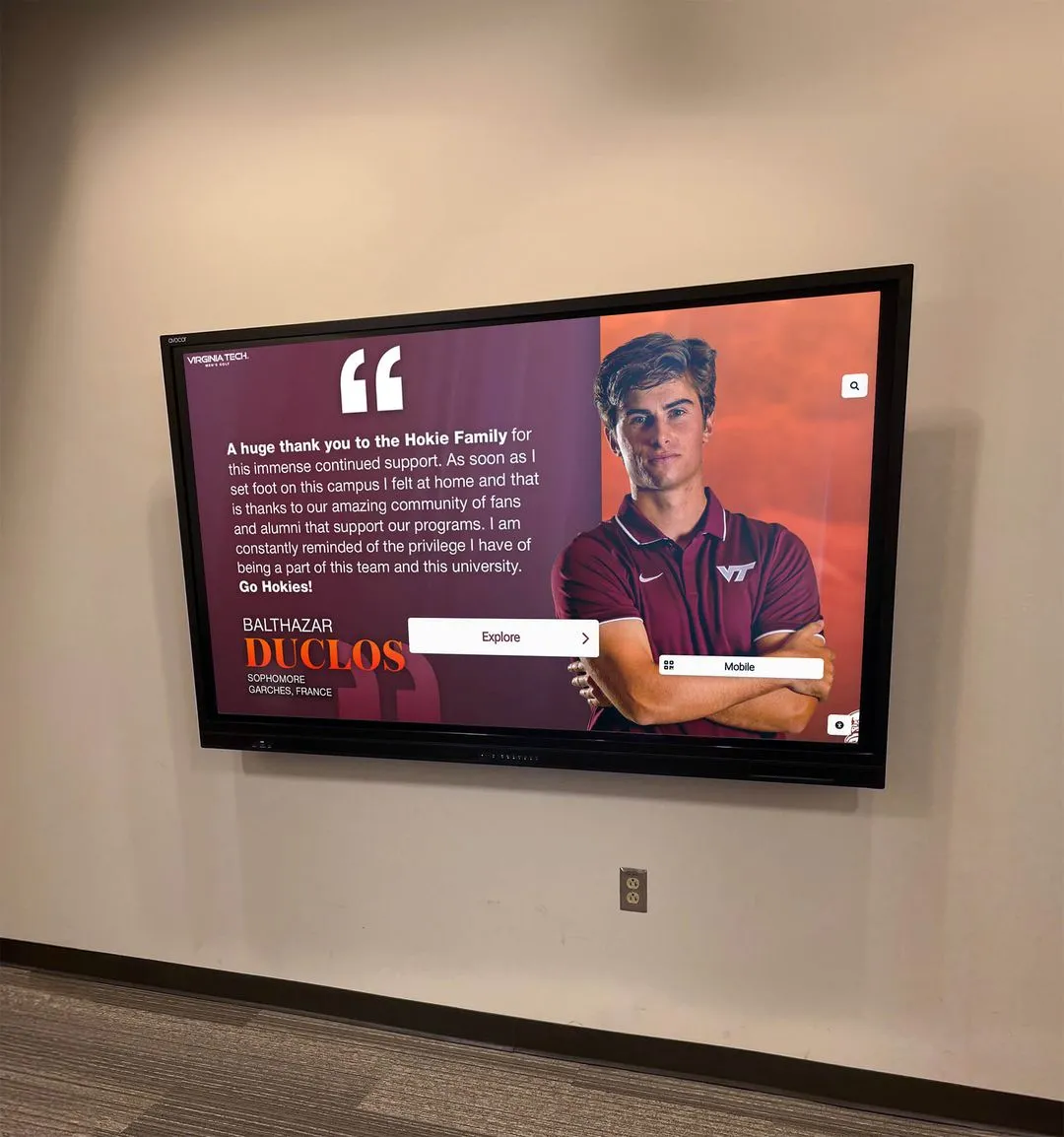
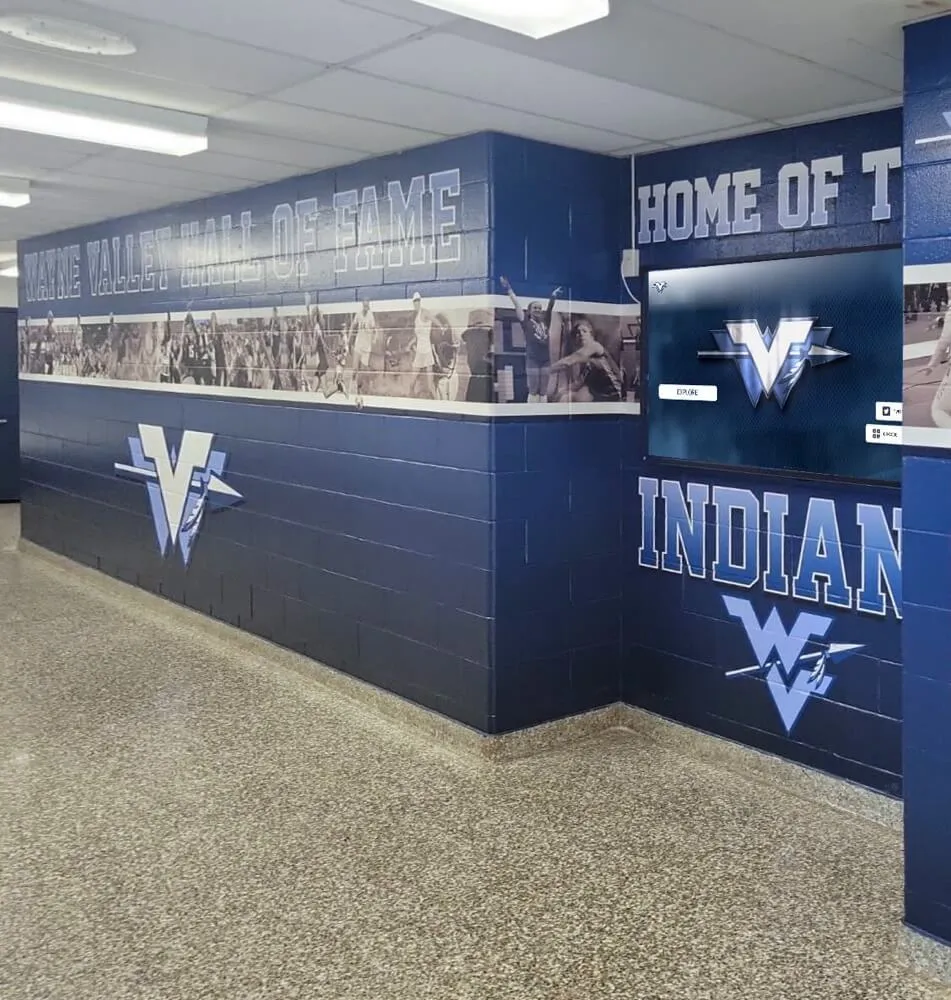
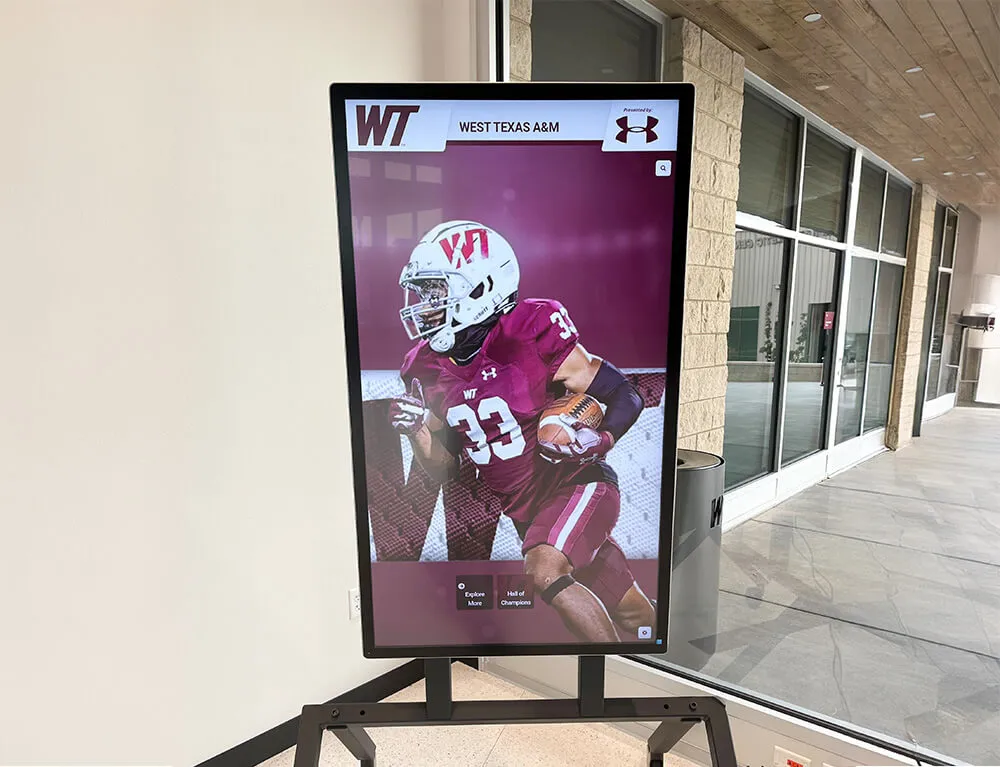
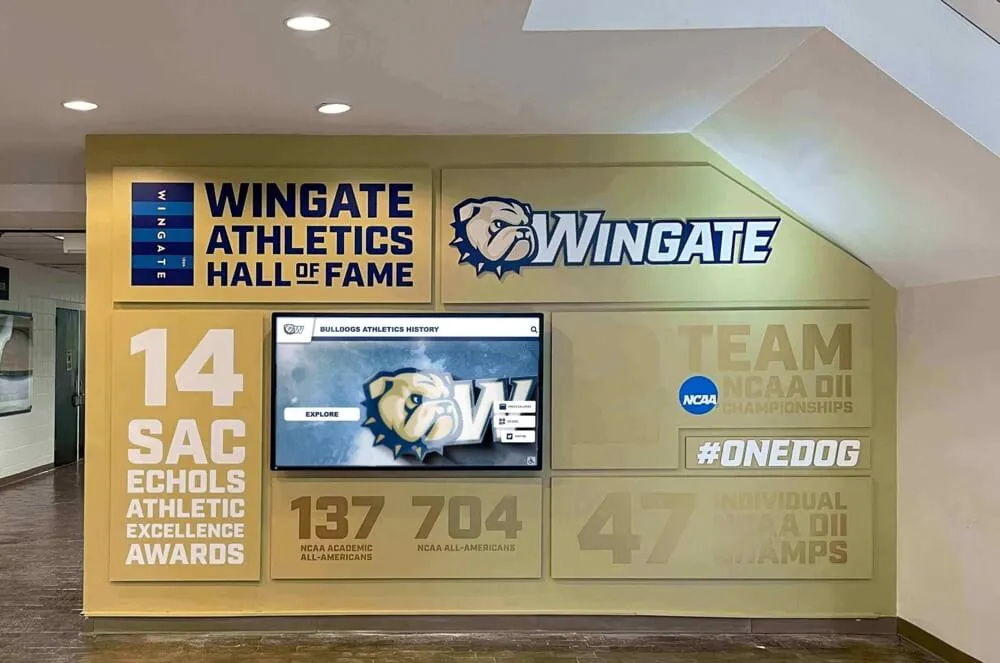
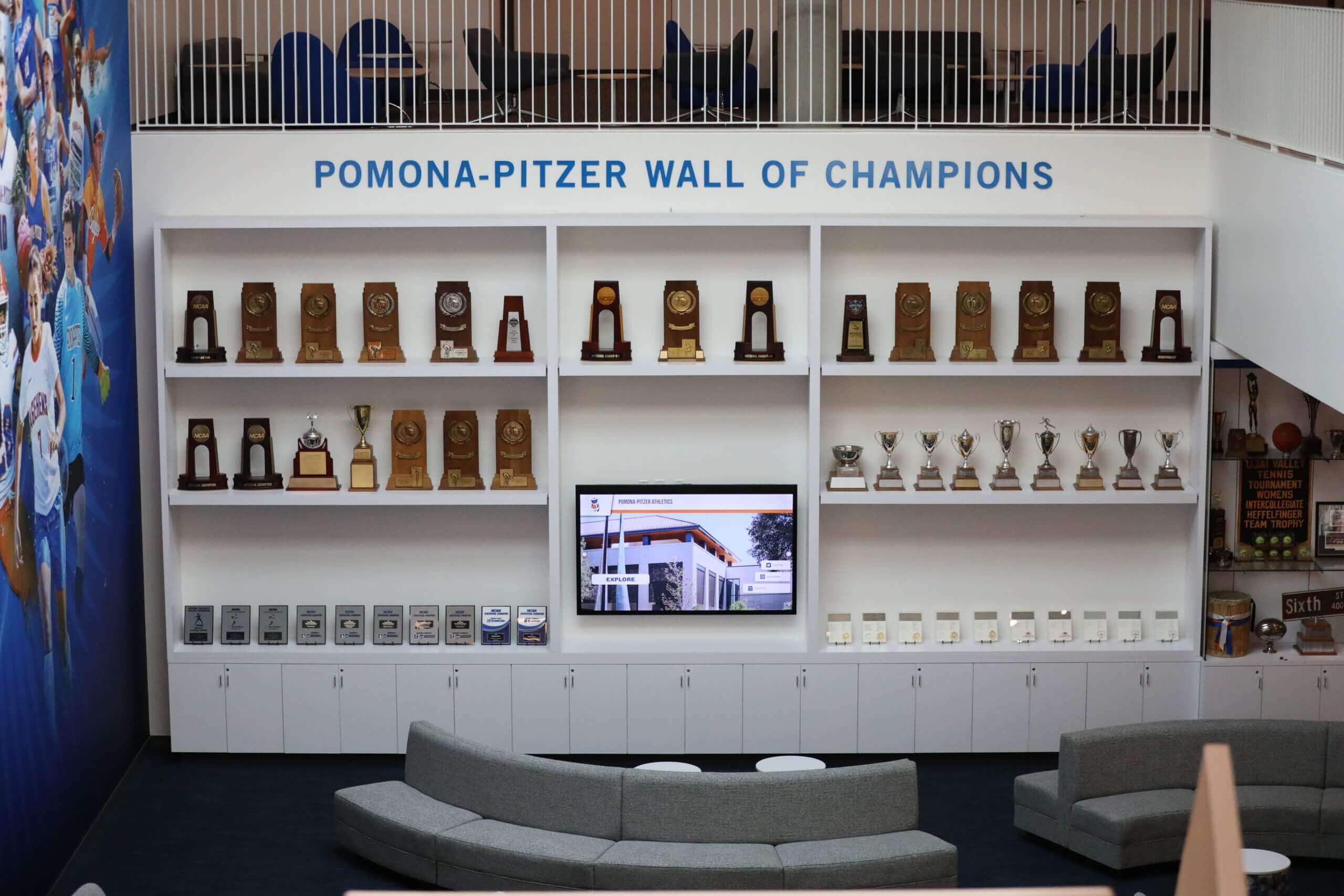
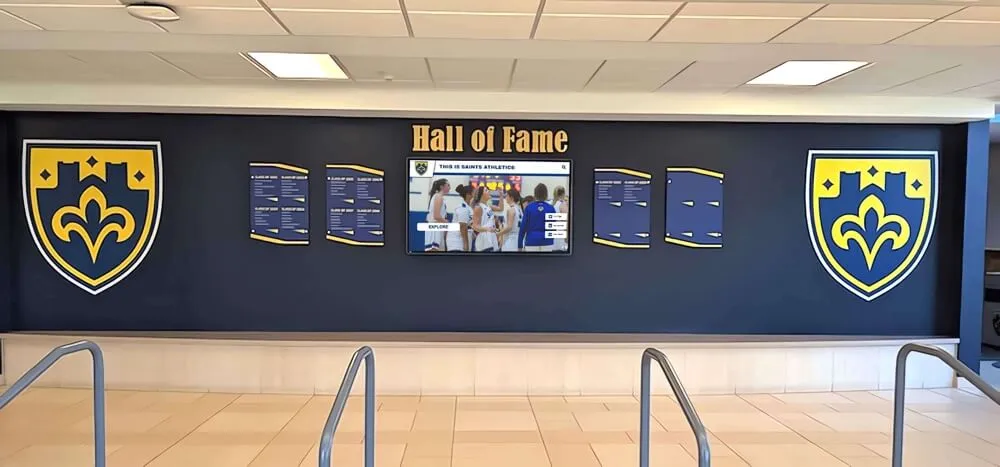
Speeches also generate recognition content that outlasts the evening. Award citations, senior tributes, and coach remarks are exactly the kind of first-person testimony that powers digital hall of fame displays and athletic record boards at schools looking to preserve more than trophy hardware. When a program records or transcribes banquet speeches and stores them alongside induction profiles, the history deepens every year.
The examples below are organized by speaker role. Each section includes a structural framework, a full-length sample, and shorter fragments you can adapt for specific awards or situations.
Coach End-of-Season Speech Examples
The coach’s banquet address is the anchor of the evening. Athletes and parents expect it to be specific, honest, and longer than anything else on the program. A coach who names every athlete—even briefly—and connects individual effort to collective achievement delivers the remarks families remember.
Framework for a Coach’s Banquet Speech
- Opening scene (one specific moment from the season, 2–3 sentences)
- Season summary (record, accomplishments, and honest context for the year)
- Individual recognition round (name every athlete; use one detail per person)
- Senior tribute (separate block for graduating athletes)
- Legacy statement (what this group leaves behind for the program)
- Thank-yous (parents, booster club, administration—brief and genuine)
Sample Coach Speech — Full Length
This season started in a field house in October with thirty-one kids who had no idea what they were capable of. I knew. I’d seen the film. I’d watched the summer workouts. And I had one job: convince them to believe what I already knew.
We finished the season 14–8. We won our division title for the first time in seven years. We sent three athletes to the state meet. And we did it without a single starter who wasn’t a first-year varsity player at the beginning of October.
Let me tell you about this group, one by one.
[Name each athlete with one true, specific detail—a play they made, a habit they showed up with, a moment in practice that you will not forget.]
To our seniors: you didn’t just play for this program, you changed it. The underclassmen sitting at these tables tonight will be chasing what you built for the next four years. That’s a legacy. Not the trophy on the table—this room, these relationships, this standard.
To the parents and families: every 5 a.m. you drove in the dark, every bag of oranges you cut, every text you didn’t send me after a tough loss—I noticed all of it. Thank you.
This team earned tonight. I’m proud to be your coach.
Short Coach Speech Fragment — Rebuilding Year
This was not the season we drew up in August. We lost games we should have won, and we faced adversity that would have broken a different group. What I can tell you is this: I have never coached a team that competed harder on the wrong side of a scoreboard. That matters. It’s what carries over into next year, and the year after that.
Short Coach Speech Fragment — Championship Season
There are teams that peak in practice and teams that peak when it counts. This group peaked when the lights were brightest. That’s not something I taught you. That came from in here, and it is the best thing I’ve seen in this gym in ten years.
Team Captain Speech Examples
Captain speeches carry weight that coach remarks cannot replicate. A captain speaking to teammates has peer credibility—the locker room perspective, the practice-day moments, the inside references only this group shares. The best captain speeches are personal without being private, honest without being harsh, and brief enough to stay powerful.
Framework for a Captain’s Banquet Speech
- One locker room memory (something only this team would understand)
- What this season taught you (honest, not clichéd)
- Shout-outs (two or three teammates by name with specific details)
- Thank-you to coaches (one specific thing a coach did that changed you)
- Closing charge (something the team will carry forward)
Sample Captain Speech — Senior Captain to Teammates
I want to start by saying something that doesn’t always get said: we weren’t supposed to be here. After the first four games, half the bracket had already counted us out. I know because I read the comments online. I probably shouldn’t have.
What I know is that we stopped reading them somewhere around week six, and we started just playing. No scoreboard watching. No predicting. Just work. And that’s when everything changed.
[Teammate name], you dove for that ball in the third quarter of the regional final when we were up by one. Nobody asked you to. You just did it because that’s who you are. I want to be like that when I grow up.
[Teammate name], you came off the bench every game and played like you were starting. You never sulked. You made practice better. The coaches know it and we all know it.
Coach [name], you told me in October that I was capable of things I couldn’t see yet. I didn’t believe you. I believe you now.
To the underclassmen: this program is yours. We are handing you something real. Don’t waste it.
Short Captain Speech Fragment — Underclassman Captain
I’m the youngest captain this program has had, and I want to be honest with you—I wasn’t sure I was ready. What I figured out this year is that being a captain isn’t about being the best player. It’s about being the last one to give up. I saw that from every person in this room this season, and I’m grateful to have competed alongside you.
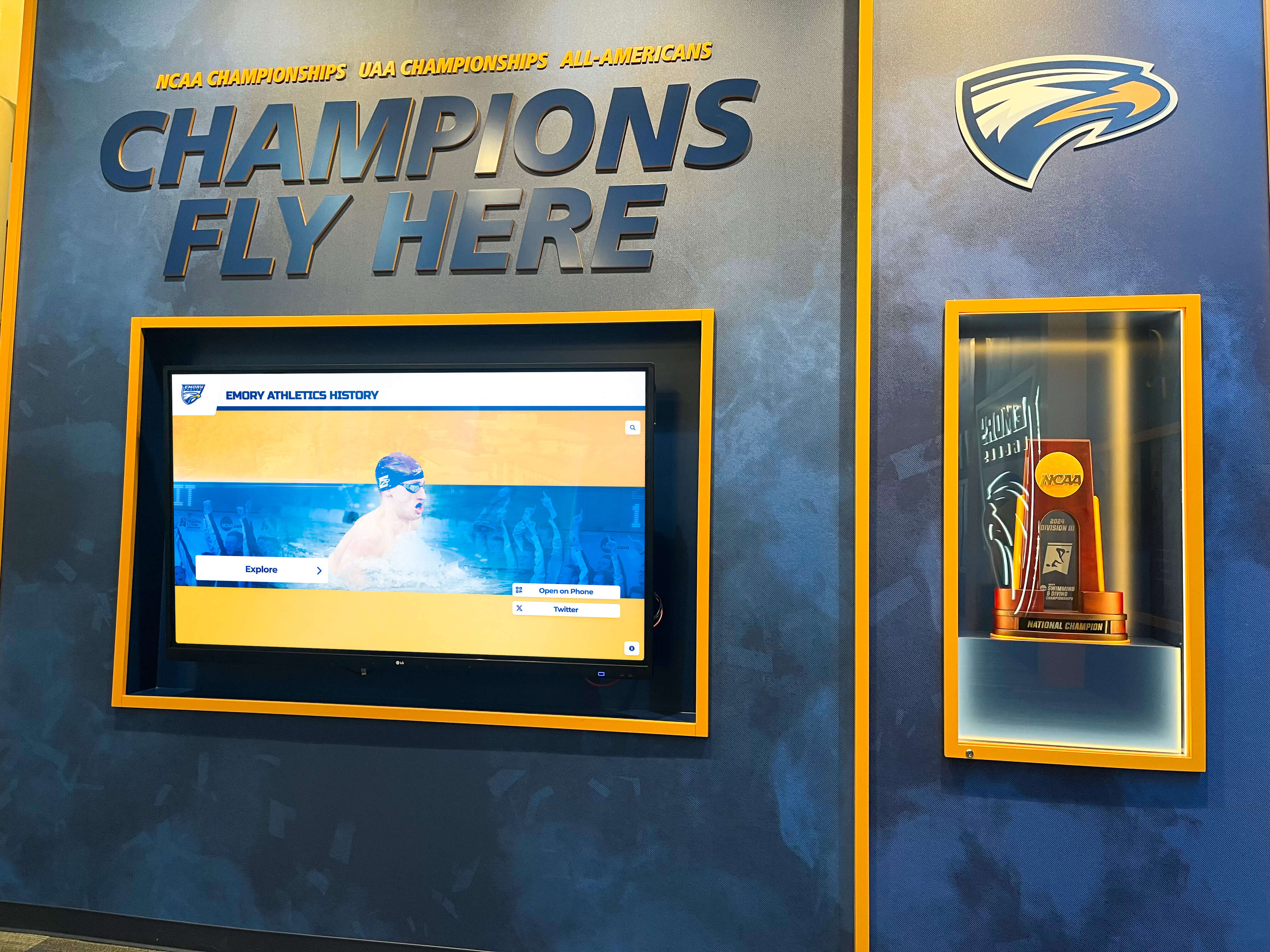
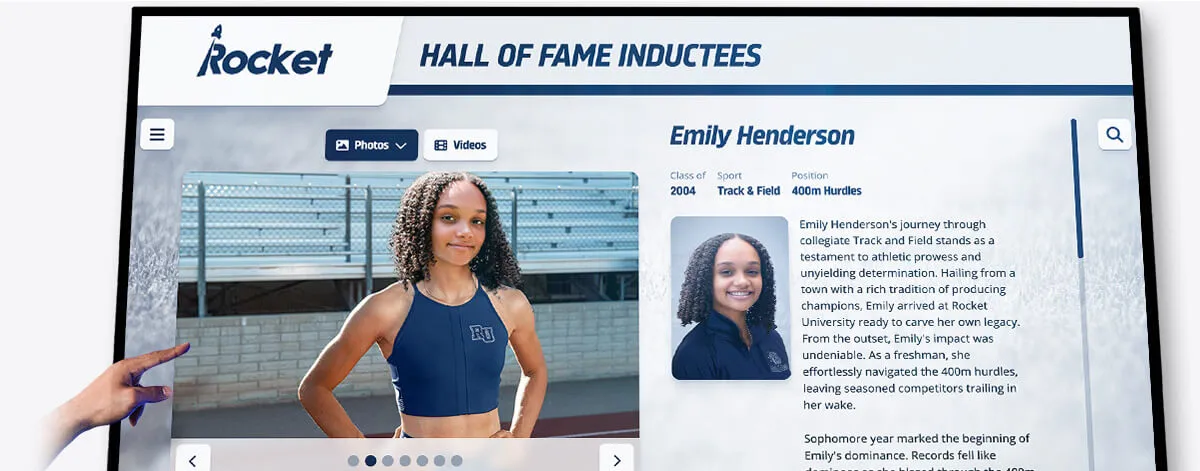
Recognizing captain contributions permanently is one of the goals schools pursue when building programs to honor top young performers year over year. A speech transcript attached to a digital inductee profile ensures the words a captain spoke at the banquet remain accessible decades later.
Award Presenter Speech Examples
Award presentations are the punctuation marks of a sports banquet program. Done well, they create suspense, honor the recipient with precision, and keep the ceremony moving. Done poorly, they ramble or give away the name too early and deflate the moment.
Framework for Presenting a Sports Award
- Award name and criteria (one sentence explaining what this award recognizes)
- Season context (why this award was especially meaningful this year)
- Recipient’s specific achievement (the facts that separate this person from the field)
- Character detail (one moment or habit that captures who they are)
- Name reveal and invitation to the podium
Sample Award Presenter Speech — Most Valuable Player
The Most Valuable Player award recognizes the athlete whose contributions to our program this season were irreplaceable—on the scoreboard and off it.
This year’s winner led our team in points, assists, and charges taken. They were the first to practice and the last to leave the building. In the moments when this team needed someone to step into the hardest role, this person stepped without being asked.
What I will remember most is not a statistic. It’s the twenty minutes after our toughest loss when I walked into the gym and found them already working on what went wrong. That’s a competitor. That’s a leader.
Please welcome to the podium this year’s Most Valuable Player: [Name].
Sample Award Presenter Speech — Coaches Award
The Coaches Award is not given to the most talented player. It’s given to the player who makes every practice harder to skip, every drill worth running, and every coach’s job easier. It goes to the athlete who understands that culture is built in the moments no one is watching.
This year’s recipient never had a bad practice day. They communicated when things were hard. They pulled teammates up. And they gave this coaching staff something we don’t always get—total trust in both directions.
This award is for [Name].
Sample Award Presenter Speech — Rookie of the Year
We give the Rookie of the Year award to the first-year athlete whose arrival changed the trajectory of the program. Not just someone with talent—someone who came in ready to compete with upperclassmen and immediately raised the standard in the room.
Our winner this year stepped into a varsity role in week three after an injury created an unexpected opening. They responded with the kind of calm that takes most athletes four years to develop. Their teammates stopped thinking of them as a freshman about halfway through November.
This year’s Rookie of the Year is [Name].
Short Presenter Fragment — Senior Leadership Award
The Senior Leadership Award goes to the athlete who gave the most of themselves to this program over four years—not in statistics, but in the texture of every day. This person made being a part of this team feel like a privilege. [Name], this one’s yours.
Sample Sports Banquet Speeches for Specific Award Categories
The following shorter examples target common award categories. Each can be expanded using the frameworks above or used as written for faster ceremonies.
Scholar-Athlete Award
The Scholar-Athlete Award recognizes that competing at the varsity level while maintaining academic excellence requires a discipline most adults couldn’t sustain. This season’s recipient carried a [GPA] while logging [hours/practices/competitions]. They managed time the way they managed pressure on the field: without complaint, without shortcuts.
They will be attending [institution] in the fall and carrying what they built here into the next chapter. Please welcome [Name].
Schools tracking scholar-athlete histories over time find that pairing banquet citations with academic recognition systems and honor displays gives these achievements lasting visibility well beyond graduation night.
Comeback/Perseverance Award
This award doesn’t come with a statistical qualifier. It comes with a story. This year’s recipient suffered [injury/setback] before the season and faced a decision most of us don’t face at seventeen: walk away or fight back. They chose to fight back. They were back on the floor by [date], and they finished the season as one of our most important contributors. That’s not athletic achievement. That’s character.
[Name], come get this.
Unsung Hero Award
The Unsung Hero is the athlete every coach knows intimately and every opponent underestimates. They don’t lead the team in any counting statistic. They lead the team in everything that doesn’t show up in the box score: deflections, screens, positioning, communication, energy.
Every championship team has one of these players, and every honest coach will tell you the championship doesn’t happen without them. This year’s Unsung Hero is [Name].
Team Championship Citation
This year’s [sport] team won the [conference/regional/state] championship—the [first/second/third] in program history. They did it with a roster of [number] athletes, a schedule that included [context], and a coaching staff that believed before the season started what this room now knows.
We will formally induct this team into our athletic records as [Year] Champions. Would the [sport] team please stand and be recognized.
Senior Tribute Speech Examples
Senior tributes are among the most emotionally resonant moments of any sports banquet. The best ones walk a careful line: specific enough to be personal, universal enough that every family in the room feels the weight of what this class contributed.
Framework for a Senior Tribute
- One shared experience that defined this senior class
- Individual recognition for each senior (one true detail per person)
- What this class leaves behind for the program
- A send-off that honors both who they were here and who they will become
Sample Senior Tribute — Coach Delivered
The class of [year] came in as freshmen during [relevant context]. They leave as [achievement].
[Senior name] taught this program what it looks like to compete through pain without complaint.
[Senior name] never missed a practice in four years. Not one.
[Senior name] is the reason three younger athletes on this team ever believed they could play at this level.
I could go on for each of you, and I will—but not here. In your file, in your record, in the story I will tell the next generation of athletes about the year your class came through this program.
Thank you for four years. Go be great.
Capturing these senior tributes in a searchable digital archive is something schools are increasingly prioritizing. Programs that nominate and celebrate young champions systematically find that the banquet is the best single source of the kind of narrative content digital recognition walls display year-round.
Parent and Booster Club Speaker Examples
Some banquets include brief remarks from a booster president, parent association chair, or community sponsor. These speeches need to be short—90 seconds maximum—and focused on gratitude rather than retrospection.
Sample Booster Club Remarks
On behalf of the [School Name] Athletics Booster Club, thank you for letting us be part of this season. We exist to support what happens in this room—and what happens in the gym, on the field, and on the bus ride home after a tough loss. Watching this program compete this year reminded every one of us why we volunteer. We are proud of you. All of you.
Sample Parent Representative Remarks
I speak for every parent in this room when I say: we did not know what we were signing up for. We thought we were driving our kids to practice. It turned out we were watching them become the kind of people we always hoped they would be. Thank you to the coaches for doing something no parenting book ever could.
Tips for Delivering Any Sports Banquet Speech
Before the Event
- Write the speech out in full, then rehearse until you can deliver it from a single index card of notes.
- Time yourself. A speech that feels like three minutes in your kitchen runs four and a half in a room.
- Confirm the pronunciation of every athlete’s name with someone who knows the roster before you stand up.
- Coordinate with the emcee about where your remarks fall in the program so you know whether the room is fresh or fatigued.
At the Podium
- Start with a scene, not an introduction.
- Slow down. Nervous speakers accelerate; confident speakers let pauses breathe.
- Look up from your notes at least once per paragraph—find a face in the back of the room.
- When you call a name, wait for the room to respond before you continue.
After the Speech
If the banquet includes video recording, request a copy. Speeches delivered at season-end ceremonies are a primary source for building inductee narratives, yearbook senior pages, and athletic hall of fame profiles. A three-minute coach tribute today becomes a primary source document when that athlete is inducted twenty years from now.
Schools that transcribe and archive banquet remarks alongside photos, statistics, and award citations are creating the kind of layered institutional record that school archival displays are built to surface—so that a visitor in 2045 can read what a coach said about an athlete in their championship season.
Building a Speech Archive That Serves the Program for Decades
The speeches delivered tonight are worth preserving with the same care as the trophies on the table. Here is a practical process for turning one evening’s words into permanent program history:
- Record the ceremony on a dedicated device, not a phone someone will need mid-event. Label the file with sport, date, and season year.
- Collect written citations from every coach before the event. These become inductee profile bios without additional writing.
- Create a shared folder accessible to future athletic directors. Include a template so future coaches know what format the program expects.
- Link award citations to athlete profiles in your recognition database so that searching a name surfaces both statistics and the human story behind the numbers.
- Review the archive annually at the start of each banquet planning cycle. Coaches who inherit a program with ten years of written citations produce better speeches because they understand what came before them.
Programs that preserve athletic records and memorabilia digitally find that the banquet is consistently the richest annual source of narrative content—and the one most often left unrecorded.
Frequently Asked Questions About Sports Banquet Speeches
How long should a sports banquet speech be? Most sports banquet speeches run 3–5 minutes (400–600 spoken words). Coach remarks tend to land on the longer end; award presenter introductions should stay at 90 seconds or less. When multiple speakers share the program, coordinate in advance so the total ceremony stays under 90 minutes.
What should a coach say at a sports banquet? Cover three things: specific achievements from the season (records broken, adversity overcome), individual shout-outs that recognize each athlete by name, and a forward-looking statement about what this group accomplished for the program’s legacy.
How do you start a sports banquet speech? Open with a single specific moment from the season rather than “Good evening, everyone.” Audiences lean in when a speaker drops into a concrete scene. Follow with one sentence explaining why this team or athlete earned tonight’s recognition, then transition into the full speech.
What do you say when presenting a sports award? State the award name and its criteria first. Pivot to the specific reason this recipient earned it. Name the achievement, add one character detail, then invite applause before calling them to the podium. The whole presentation should run 60–90 seconds.
Can a team captain give a speech at a sports banquet? Yes. Captain speeches often become the most memorable part of the evening. Captains have peer credibility that coaches lack, and their remarks about what the season meant to the locker room carry emotional weight. Keep it under three minutes to maintain ceremony momentum.
What is a good opening line for a sports banquet speech? Drop immediately into a specific moment: “Forty-eight hours after our toughest loss of the season, I walked into the gym and found twelve athletes running drills.” Specificity creates attention. Generic openings (“It is an honor to be here tonight”) are forgettable.
From Banquet Night to Permanent Recognition
The words spoken at a sports banquet are among the most honest descriptions of what an athlete actually accomplished—told by people who watched it happen in real time. That makes them valuable far beyond the evening.
Schools that pair strong banquet ceremonies with permanent digital recognition systems find that the two reinforce each other: the banquet generates the content, and the display gives it a permanent home. YMCA and community programs honoring athletic achievement face the same archival challenge as school athletic departments—the stories exist, but they need a place to live beyond a folder on a shared drive.
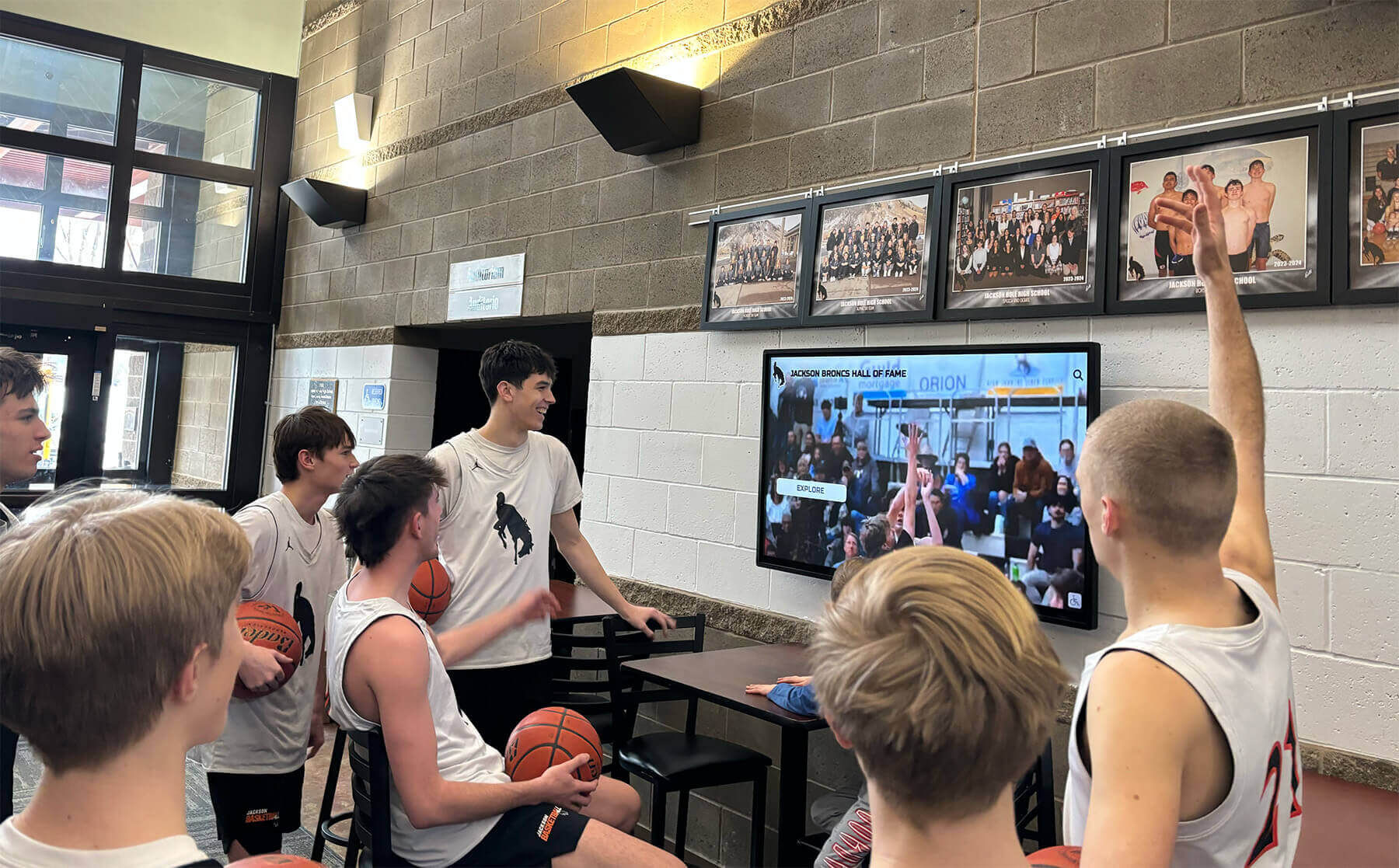
If your program is ready to give those stories a permanent, searchable, visually compelling home—one that showcases athlete profiles, records, award citations, and team history on an interactive display in your lobby—Rocket Alumni Solutions builds exactly that for schools and athletic programs across the country.
See how a digital hall of fame can preserve what you celebrate at tonight’s banquet →