



Key Takeaways
Discover the best signing day table ideas for high schools—from backdrop setups and prop checklists to digital displays that preserve athlete commitments for years after the ceremony.
The signing day table is the visual centerpiece of one of the most photographed moments in high school athletics. A student-athlete sits down, pen in hand, cap on the table, parents standing behind—and in a matter of seconds that image travels across social feeds, local newspapers, and athletic department websites. Getting that moment right requires deliberate setup. But the table itself is only half the job. The harder challenge is what happens after the photographer leaves: how schools preserve that commitment in a way that outlasts the Instagram post and becomes part of the institution’s permanent athletic record.
This guide covers signing day table ideas from initial setup through long-term recognition—giving athletic directors, coaches, and advancement staff a complete planning framework for both the ceremony and the archive that follows.
Why the Signing Day Table Matters
The table in a signing day ceremony carries more symbolic weight than its physical dimensions suggest. It is the surface where years of athletic development become official. For families, it marks a transition. For younger athletes watching from the bleachers, it is aspirational—a preview of where sustained effort can lead.
Athletic directors who treat the signing day table as an afterthought—a folding table grabbed from the equipment room, a tablecloth in the wrong color, no visible school branding—miss an opportunity to communicate program quality to prospective families and local media. Those who plan the table as a designed element of a larger ceremony produce images and video that function as long-running recruitment and community engagement content.
The decisions are modest: table size, backdrop style, what goes on the surface, how the room is lit. But the cumulative effect of those decisions determines whether the photos look like a professional athletic program or an afterthought.
Signing Day Table Setup: The Complete Checklist
Use this checklist as a planning tool in the weeks before signing day. Check each item off at least two hours before guests arrive.
Table and Surface
- Table size confirmed: 6-foot for single athlete; 8-foot for multiple athletes signing simultaneously
- Table cover in school colors: Fitted elastic tablecloth is preferable to draped; prevents shifting during the ceremony
- School logo display: Printed table runner or vinyl decal centered on the front panel
- Signing surface clear: Only essential items on top—paperwork, pens, name display, college item
- Water available: A small bottle or glass for the athlete, off-camera or tucked to the side
- Pen selection: At least three school-branded or school-colored pens; test each before the ceremony
Paperwork and Official Documents
- National Letter of Intent (NLI) or commitment letter: Confirm the correct form is printed and ready; verify date fields
- Backup copy: Have a second printed copy in case of a signing error
- Parent/guardian signature areas identified: Mark with a sticky arrow so there is no hesitation during the ceremony
- Folder or portfolio: Present documents in a school-branded folder rather than loose sheets
Name and College Display
- Athlete’s name sign: Printed or foam-board display in large, readable font—visible in wide-shot photography
- College destination label: Displayed alongside name; include college logo if licensing allows
- Sport designation: Football, basketball, soccer—makes images self-explanatory without a caption
- Graduation year: Useful for archiving and future social posts
College Items and Props
- College cap or hat: Placed on the table before signing; placed on head after; confirms destination visually
- College jersey or t-shirt: Alternative or complement to cap; especially useful when multiple athletes sign for different schools
- School letter jacket: Some athletes wear their high school letter jacket for the signing and change to college apparel after—both moments photograph well
- Flowers or small decoration: School-colored flowers or a small floral arrangement adds warmth; avoid arrangements tall enough to obstruct faces in photos
Backdrop and Display Ideas for Signing Day
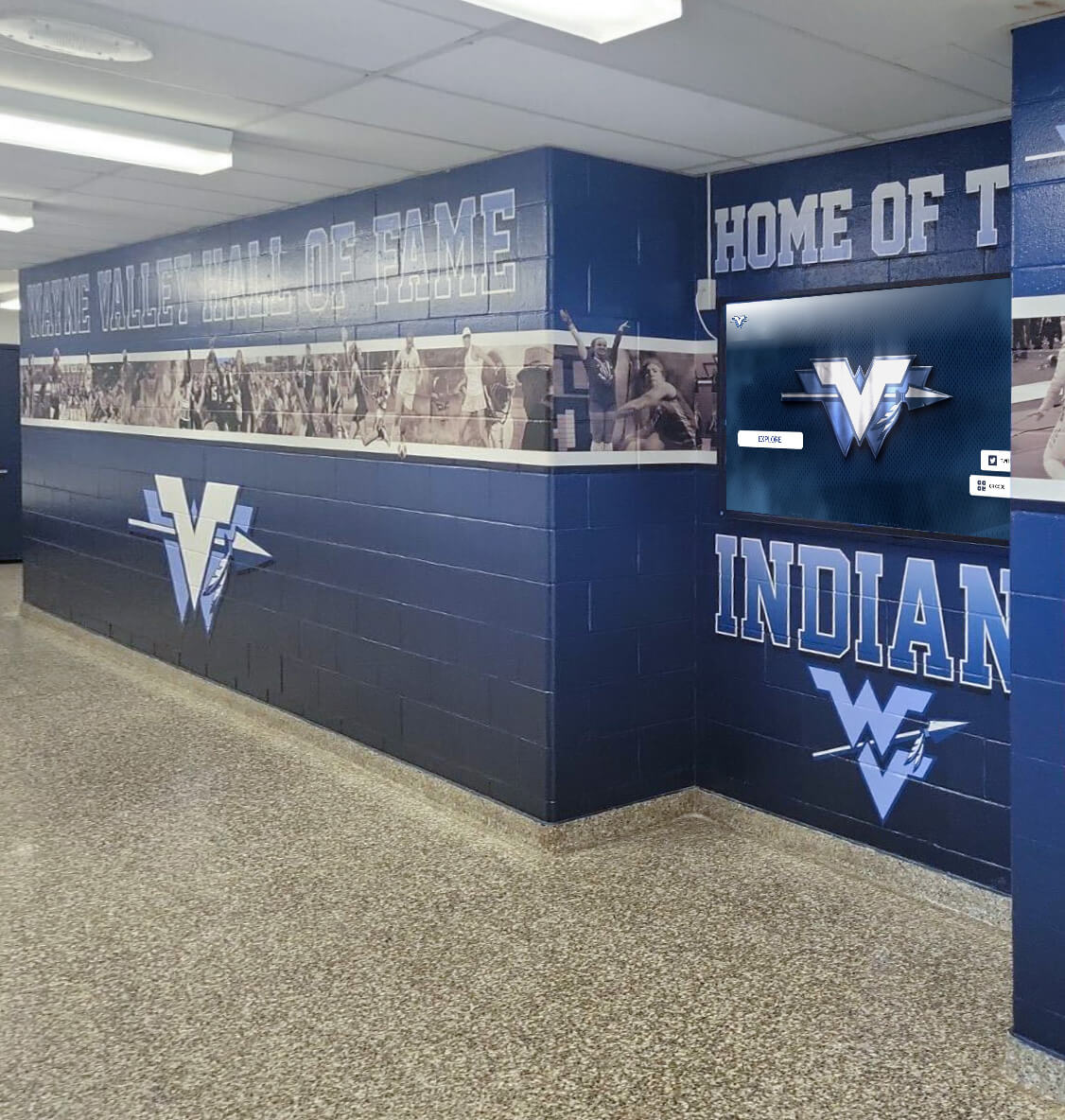
The backdrop is what transforms a signing day photo from a snapshot to a shareable athletic program image. It frames every photo and video taken during the ceremony.
Step-and-Repeat Banner
The step-and-repeat banner—a repeated pattern of school logos on a fabric or vinyl backdrop—is the industry standard for a reason. It reads clearly in photos at any distance, requires no special lighting, and can be reused for multiple signing events throughout the year. Standard dimensions are 8×8 feet for a single athlete setup; 10×8 feet accommodates the athlete plus two parents.
Design considerations:
- Use school logo and mascot in the pattern; include school colors throughout
- Add “Class of [Year] College Signings” text at the top or bottom to date the image
- Some schools include a small Rocket Alumni Solutions or sponsor logo in the corner if they have a partnership
- Order at least ten days in advance to allow time for reprints if there is a printing error
Dual-Banner Flanking Setup
Two tall retractable banners—one on each side of the table—create a clean framing effect without the cost of a full step-and-repeat. Each banner can feature the school mascot, athletic department branding, and the current signing class information. This format works especially well in smaller rooms or corridors where a full step-and-repeat would dominate the space.
Wall-Mounted Display Board
For schools with limited storage space (step-and-repeat frames require a carry bag and assembly), a foam-core or mounted display board behind the table serves the same function. The board can include:
- School name and logo at the top
- “College Signing Day [Year]” header
- A running list of the day’s signers and their college destinations
- Athletic department social media handles for photo tagging
Digital Screen as Backdrop Element
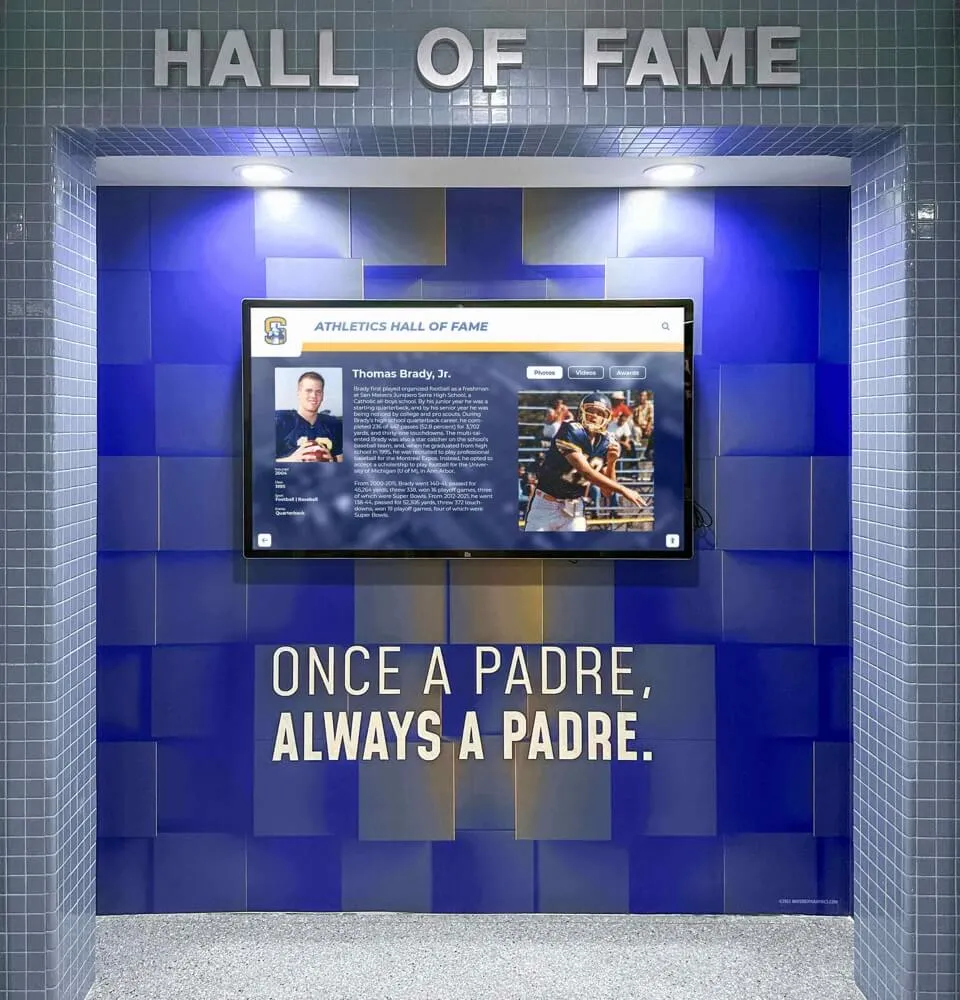
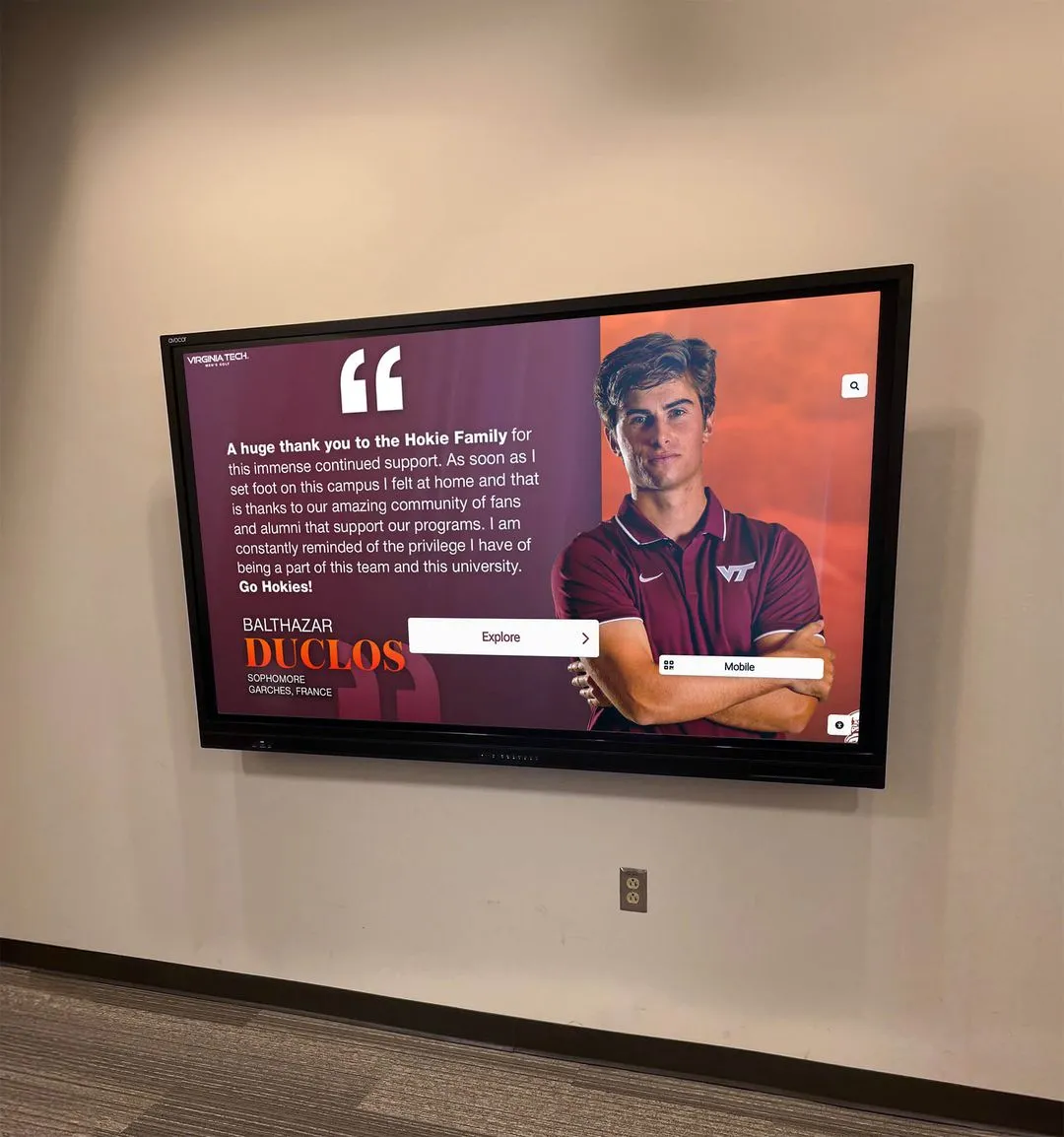
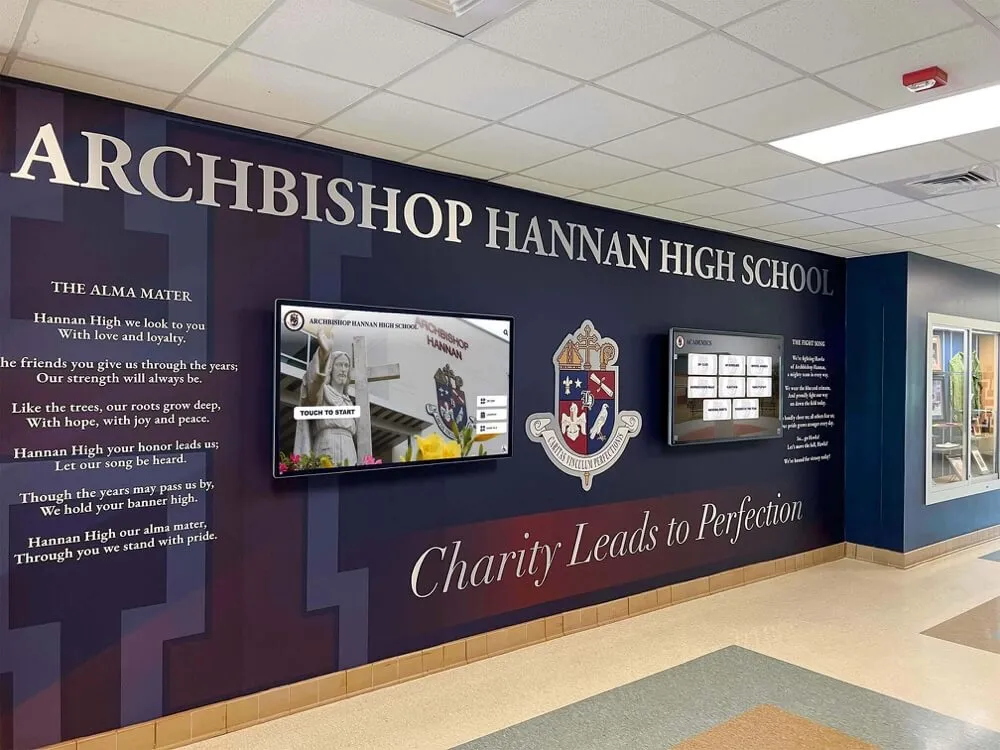
Schools with lobby screens or mounted displays in gymnasiums can configure a digital display to run a signing day graphic loop—school branding, athlete name, college destination, sport—directly behind or beside the signing table. This approach turns the screen into an active element of the ceremony rather than a passive fixture in the room.
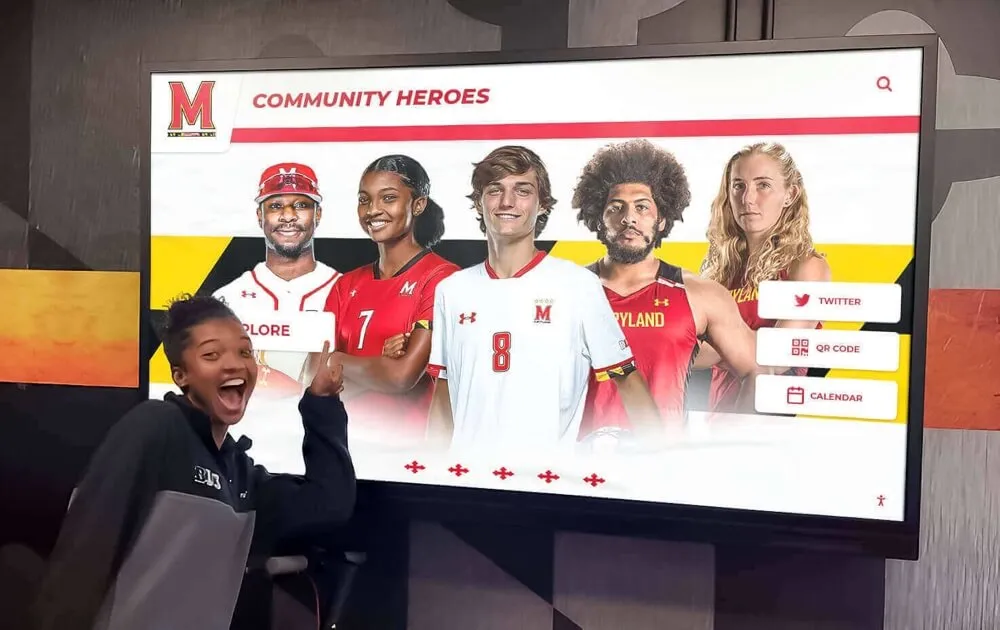
Programs using interactive recognition displays can often push a signing day graphic to connected screens across campus with a few clicks, ensuring consistency across every display in the building.
High School Signing Day Table Ideas by Setting
The right setup depends on where the ceremony takes place. Different venues call for different configurations.
Gymnasium Setup
The gymnasium is the most common signing day venue because it accommodates crowds and provides good sight lines for the back rows. Key considerations:
- Table position: Place the table at center court or center of the gym floor, not against a wall—standing athletes and family members behind the table need clearance, and center placement photographs more cleanly
- Floor protection: Use a mat or carpet runner under and around the table to protect the floor finish and add visual polish
- Lighting: Gymnasium overhead lighting is often harsh and uneven; request that the school’s drama department loan portable LED panels, or rent two soft-box lights positioned on either side of the table
- Sound: Provide a podium microphone for the athletic director’s remarks; a cordless lavalier microphone works well for moving presentations
- Seating orientation: Arrange student seating in the bleachers facing the table; reserve front rows for family members of signers
Library or Media Center Setup
Libraries offer a quieter, more intimate setting suited to smaller signing classes or individual ceremonies. The built-in backdrop of bookshelves or school display cases can work visually if kept tidy.
- Scale down to a 6-foot table and a single retractable banner
- Use a circular arrangement of chairs for family; no bleachers needed
- Natural window light often supplements well in library settings; test at the same time of day as the ceremony
Athletic Hallway Setup
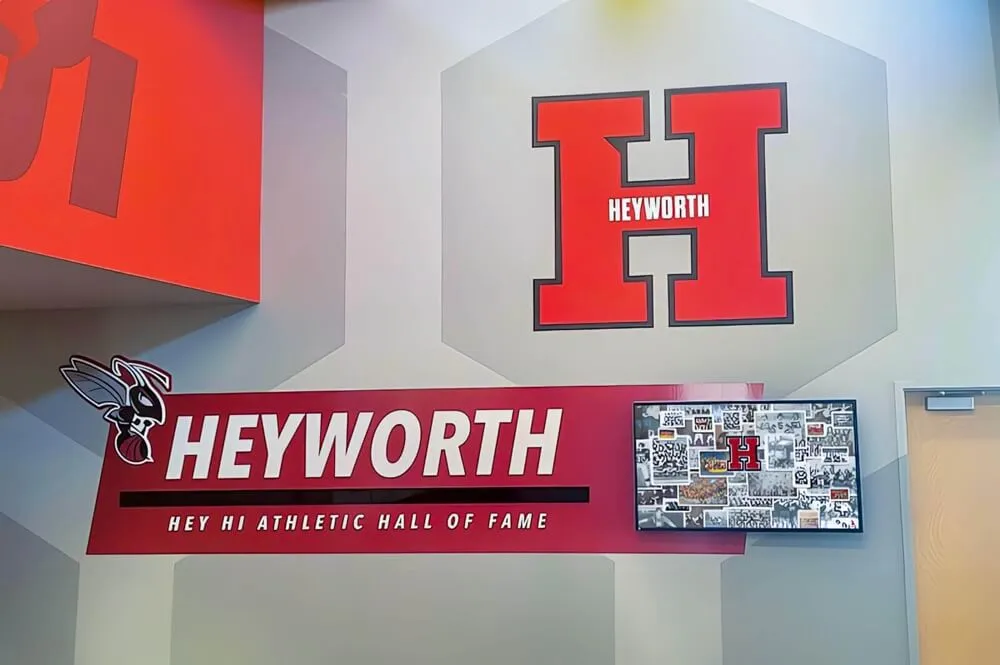
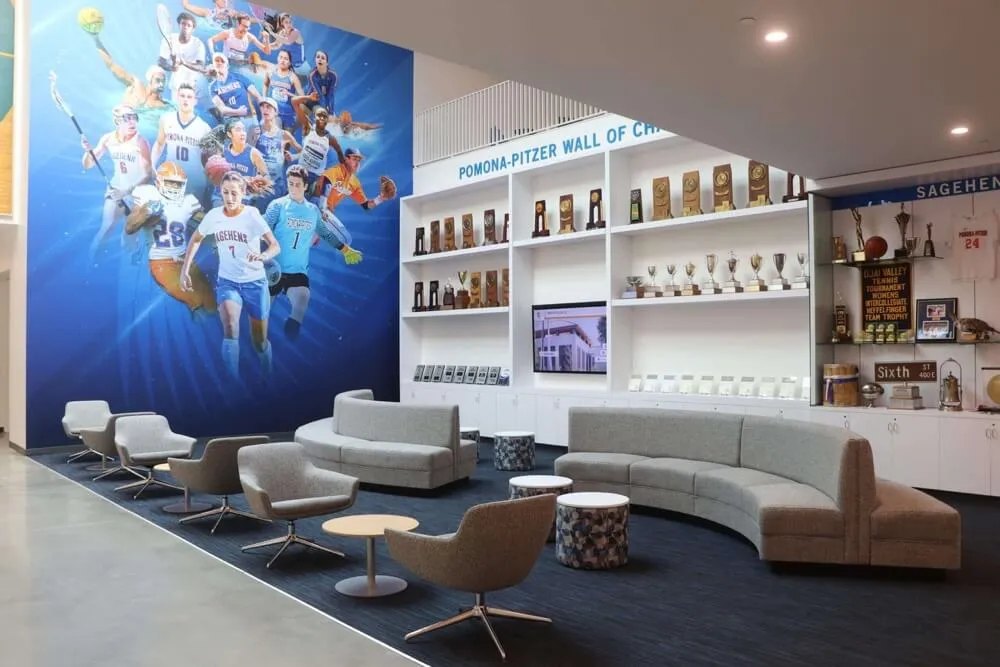
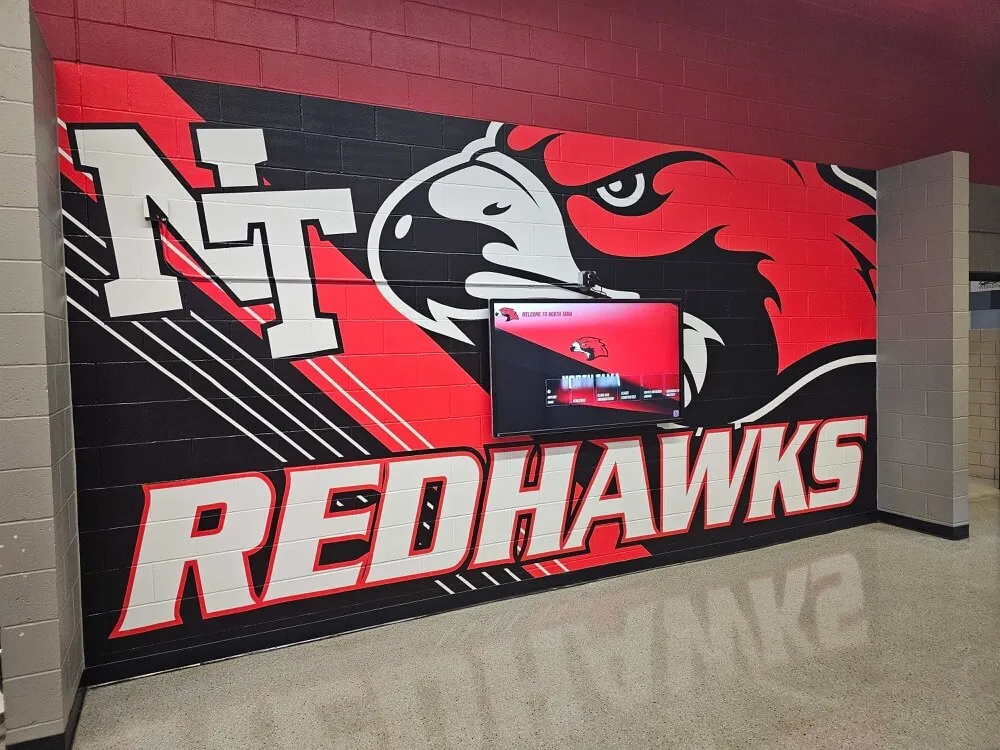
Some schools stage signing day ceremonies in athletic hallways adjacent to trophy cases, hall of fame displays, or mural walls. This setting is rich with institutional history and provides a built-in backdrop that reinforces program tradition.
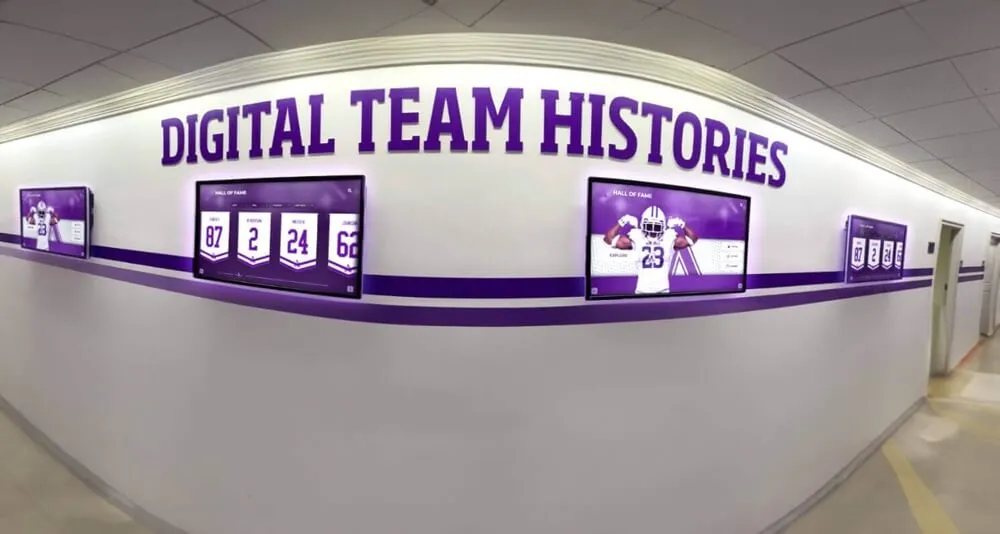
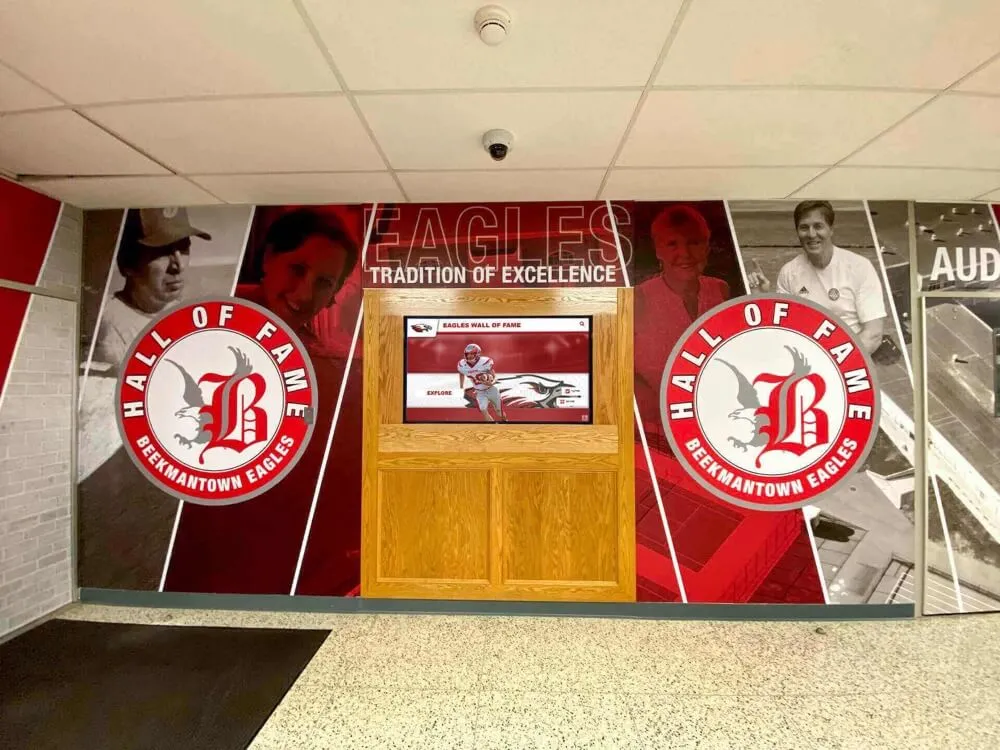
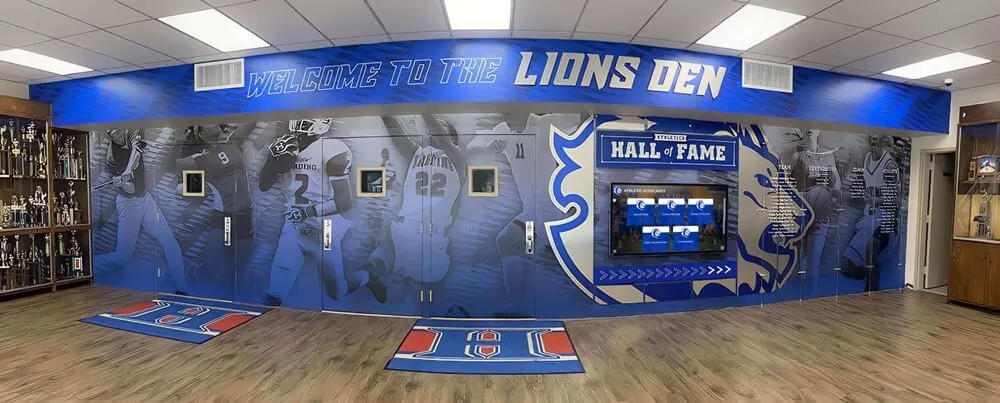
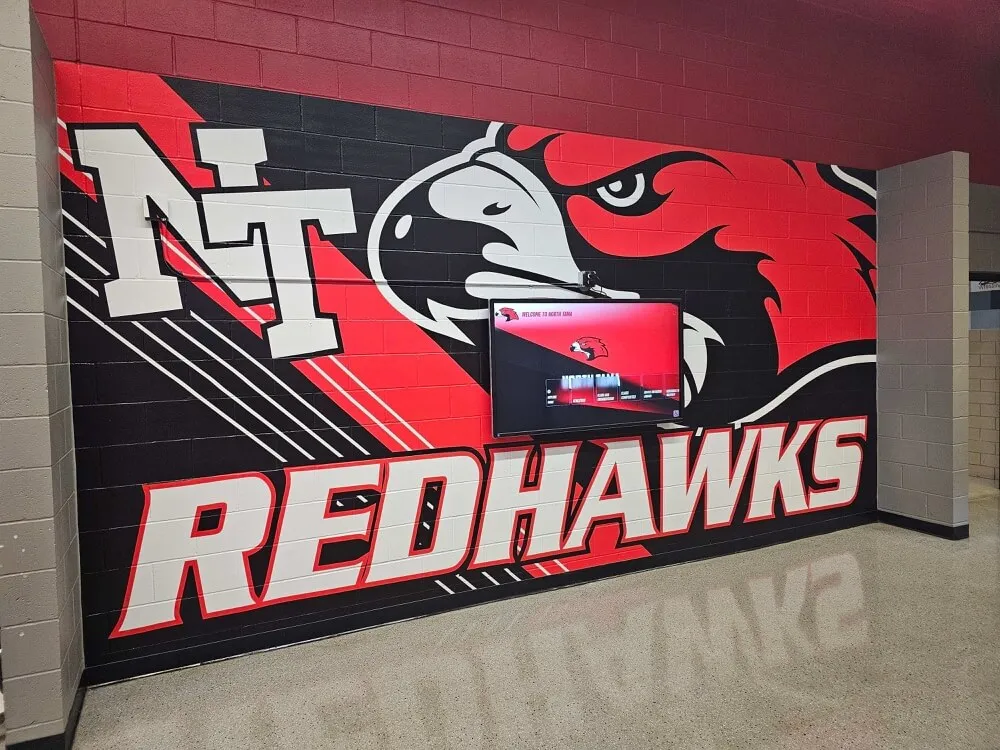
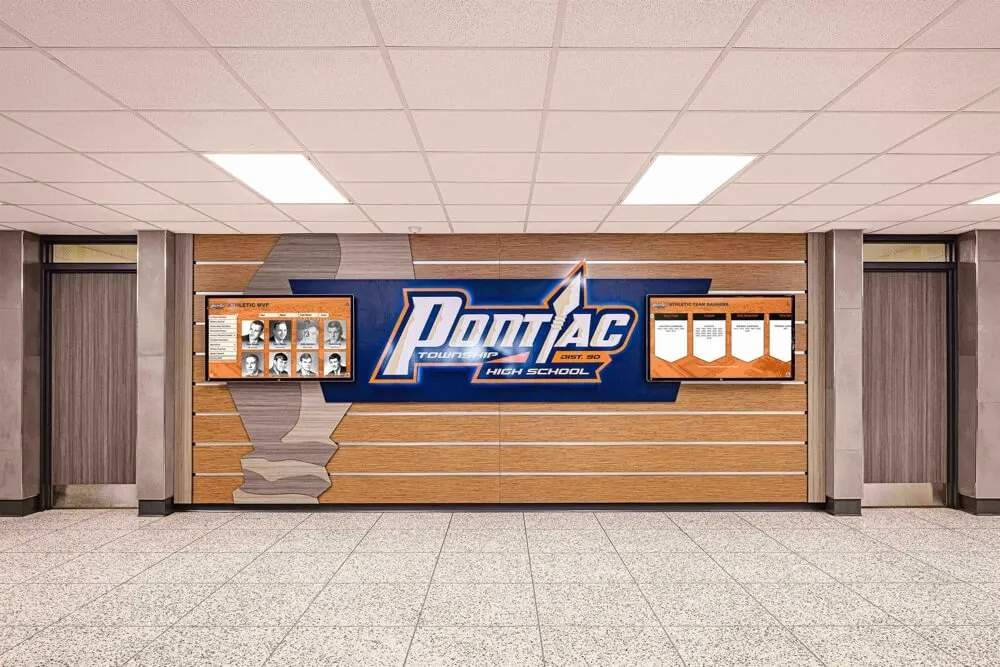
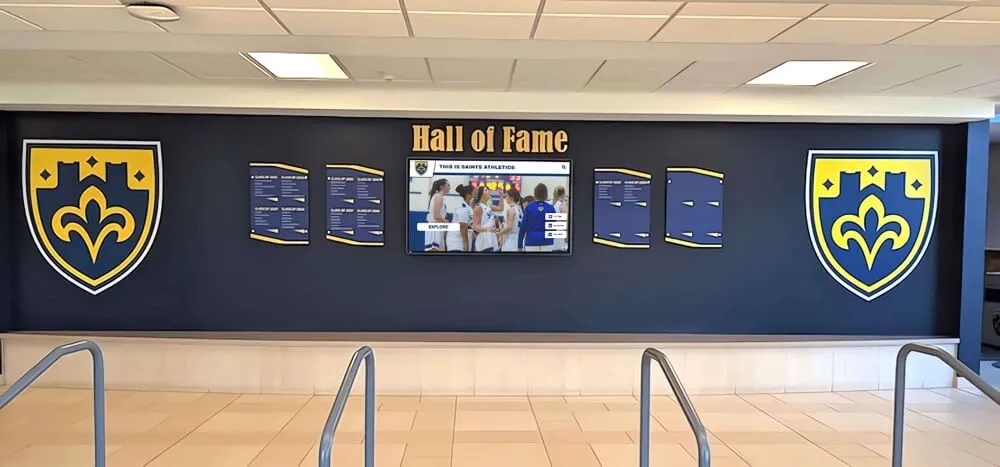
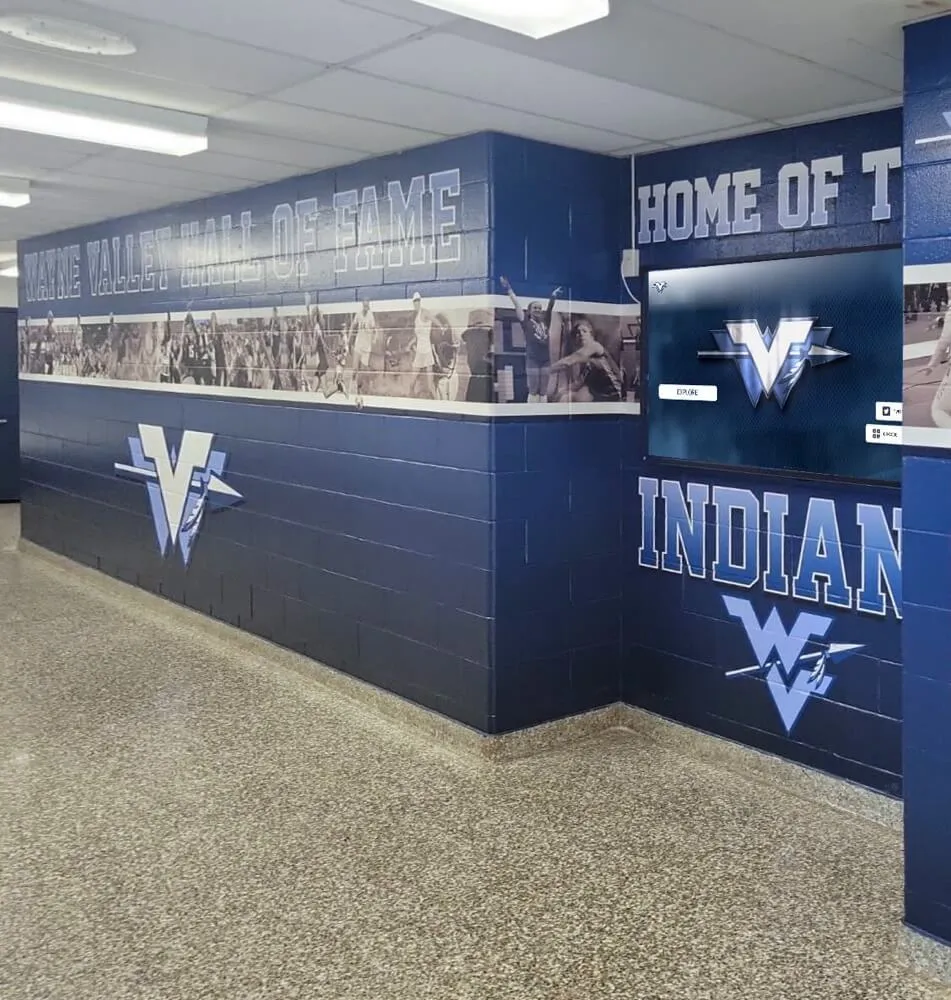
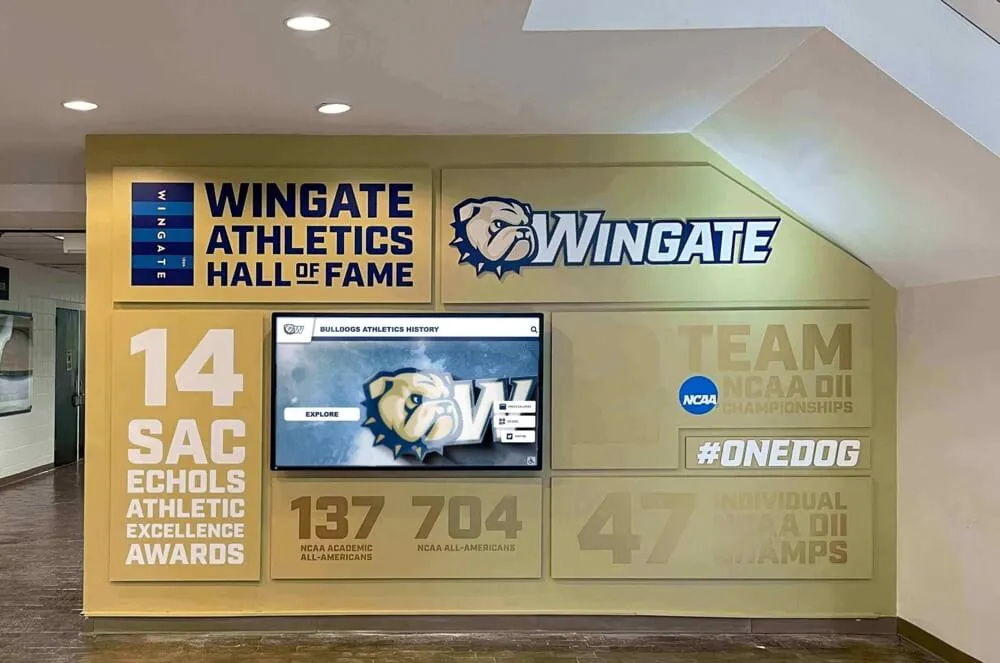
From an archiving standpoint, athletic hallways are ideal locations: the signing day photos can eventually be incorporated into the hallway’s permanent recognition layer—whether that means adding a framed photo to a trophy case or updating a digital recognition display installed in the corridor.
Multi-Athlete Signing Day Table Ideas
When several athletes sign on the same day—especially during February football signing day—the table configuration expands to accommodate multiple signers simultaneously.
Side-by-Side Table Configuration
Extend the table to 8 or 10 feet and seat athletes side by side, each with their own name placard, college item, and set of documents. This configuration works when all athletes sign the same day at the same time.
- Spacing: Allow at least 30 inches per athlete at the table to prevent crowding in photos
- Name signs: Each athlete’s name sign should be visible from at least 15 feet away
- College hats: Lined up in front of each athlete’s position before they sit; the array of different college logos creates a strong visual
- Synchronized signing: Coordinate so all athletes uncap pens and sign at roughly the same moment—this produces a single strong photo rather than multiple partial images
Rolling Ceremony Format
If athletes are signing for different sports or on different timelines, a rolling ceremony brings each athlete to the table individually while an emcee maintains narrative flow for the crowd. This format takes longer but gives each student-athlete a dedicated moment.
- Prepare a brief script for each athlete: sport, college destination, one sentence about the athlete’s accomplishment
- Configure the display screen to switch to that athlete’s graphic when they approach the table
- Have a photographer capture each individual signing plus a group photo at the end
For youth sports awards programs that have built consistent recognition habits throughout the year, signing day is a natural extension of an existing culture—not a one-off event that requires inventing new traditions from scratch.
Photographing and Documenting the Ceremony
No signing day setup succeeds if the photos and video don’t capture it well. Designate a documentation lead—a staff member, a school photographer, or a contracted photographer—and brief them on the specific shots you need.
Essential Photo List
Before the ceremony:
- Wide shot of the full table setup with backdrop—use this for setup inspiration next year
- Detail shots: college cap on the table, paperwork in the folder, name sign
During signing:
- Mid-shot of athlete at the table with family behind
- Close-up of pen touching paper at the moment of signing
- Reaction shot immediately after: athlete looking up, family reacting
- Athlete placing or holding the college cap
After signing:
- Athlete with coaches
- Full group: athlete, family, coaches, and teammates
- Athlete with the college item held toward camera (natural social media crop)
Video Considerations
A short signing day video—60 to 90 seconds—performs well on social media platforms and can be repurposed for digital lobby displays throughout the year. Include:
- B-roll of the room filling with students and family
- The approach to the table
- The moment of signing
- Crowd reaction
- A brief statement from the athlete (optional; one or two sentences is enough)
Document the raw files—photos and video—in a shared school drive folder organized by year and athlete name. This archive becomes the source material for the long-term recognition layer described in the next section. Schools building comprehensive archives benefit from reviewing hall of fame recognition tools that can store and display this content year after year.
Preserving Signing Day Recognition After the Ceremony
The most common failure in high school signing day planning is not the ceremony itself—it is the gap between the ceremony and the permanent record. Photos live on social media for a week, then disappear from feeds. A framed photo goes up in the athletic office where only coaches see it. The student-athlete’s commitment becomes invisible to the next generation of athletes who never attended that specific signing event.
Schools that close this gap do so by treating signing day documentation as the beginning of a long-term recognition process, not the end of a one-day event.
Update the Digital Recognition Platform Immediately
Within 24 hours of signing day, update the school’s digital recognition system with each athlete’s profile:
- Athlete photo: Use the best photo from the ceremony; a consistent image style (athlete at table, or athlete holding college cap) works well across multiple years
- Sport and position
- College destination and division level
- Signing date
- Brief bio or achievement summary: Two to three sentences on athletic career highlights
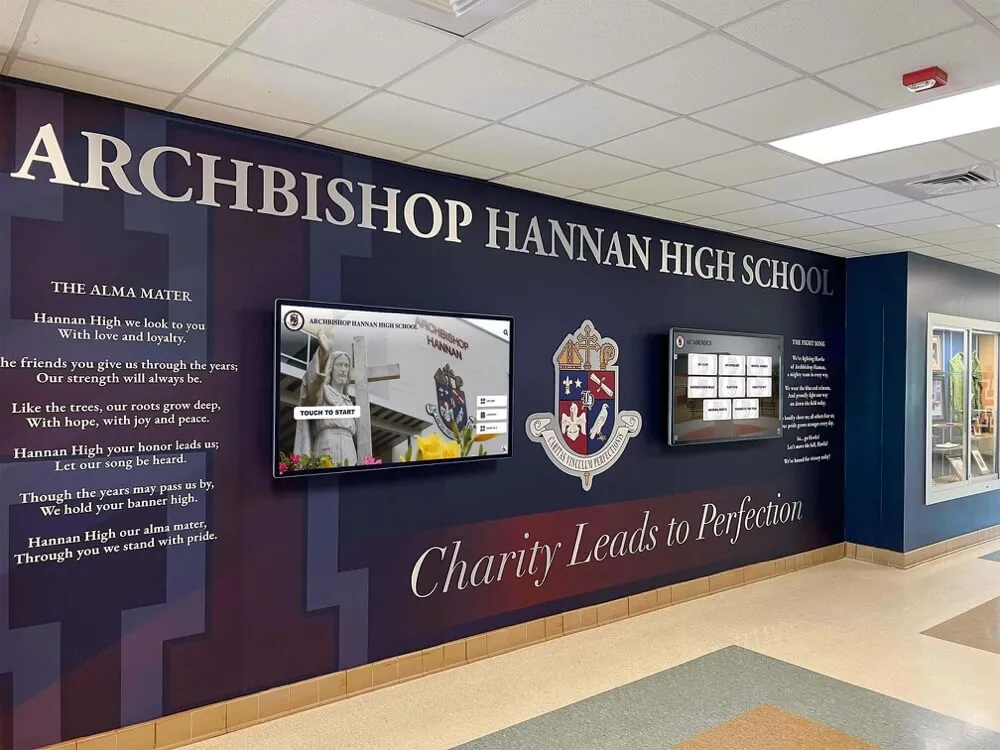
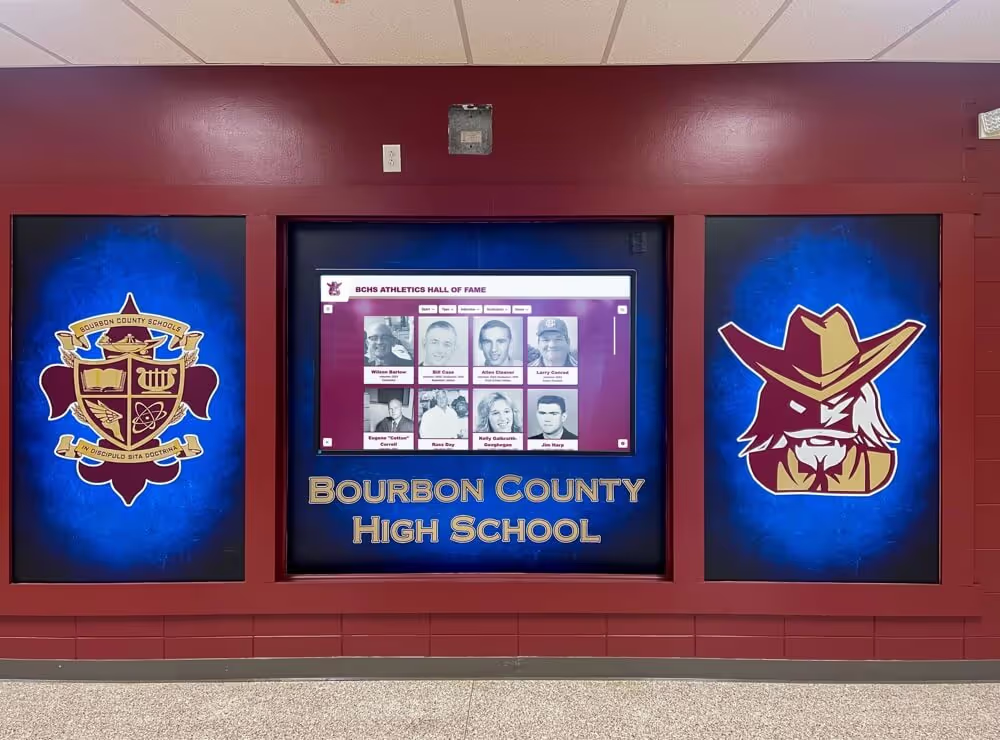
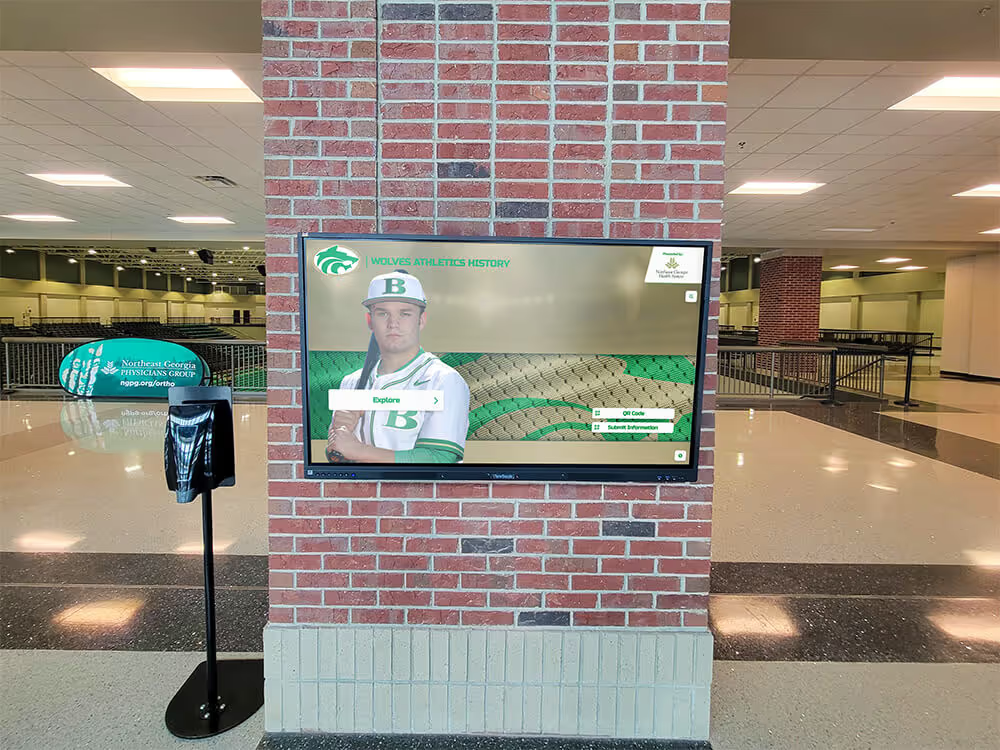
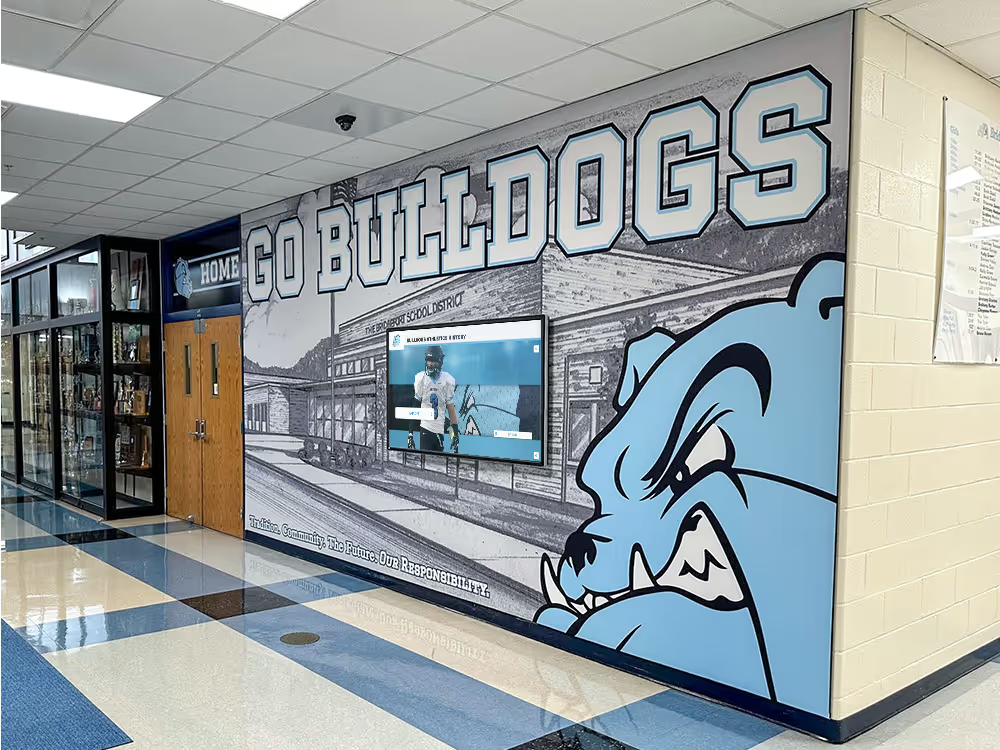
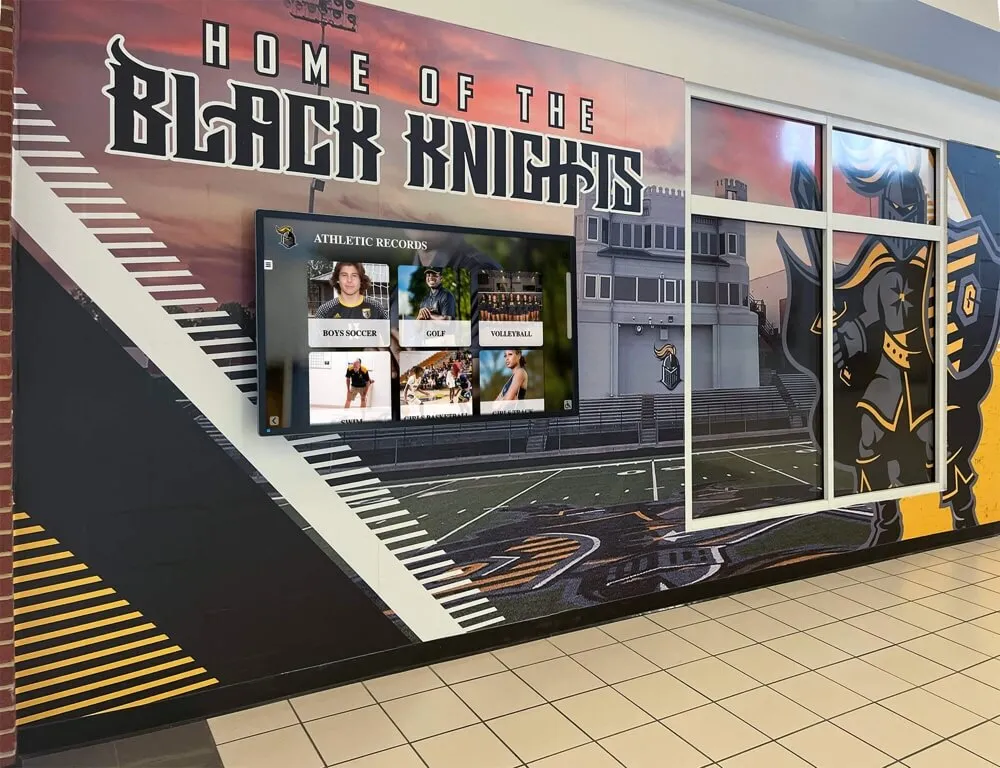
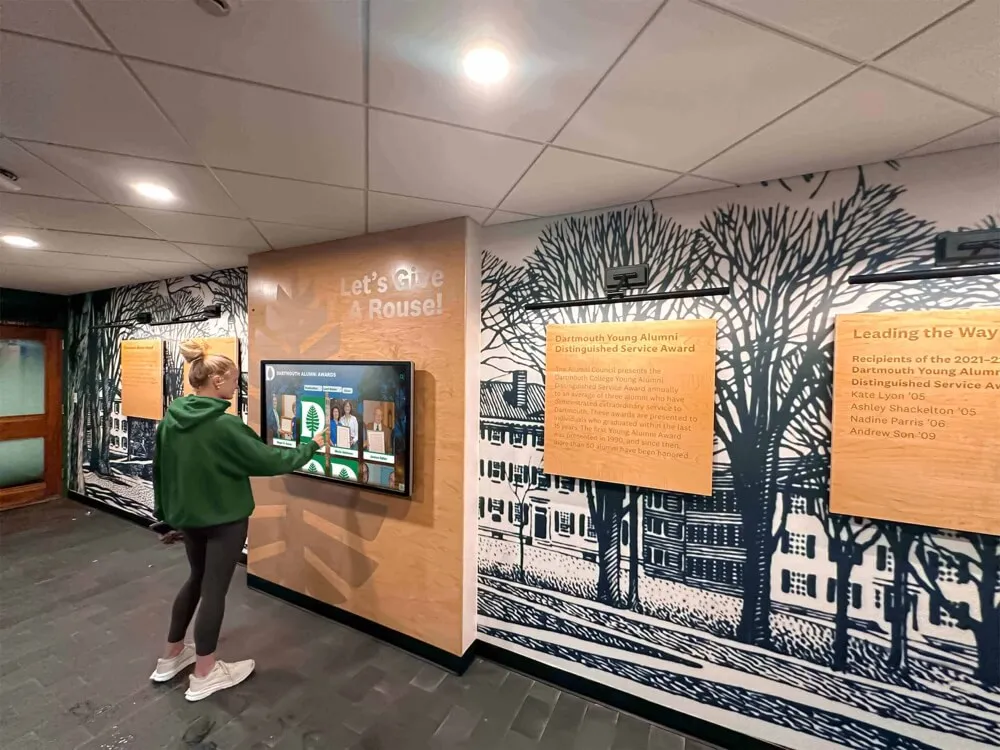
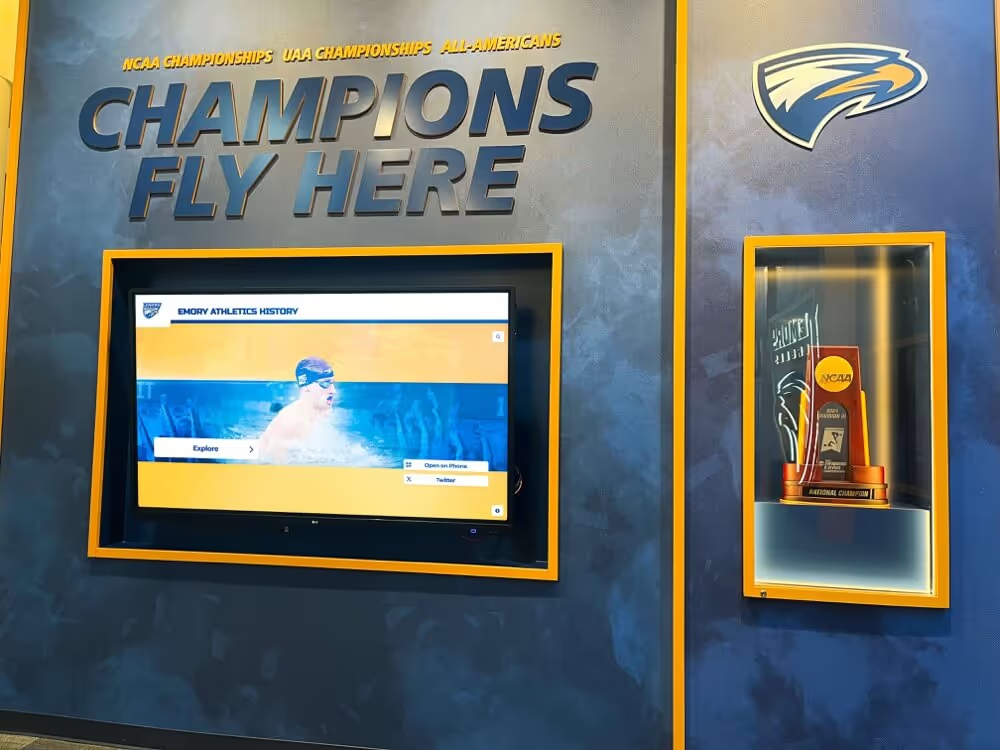
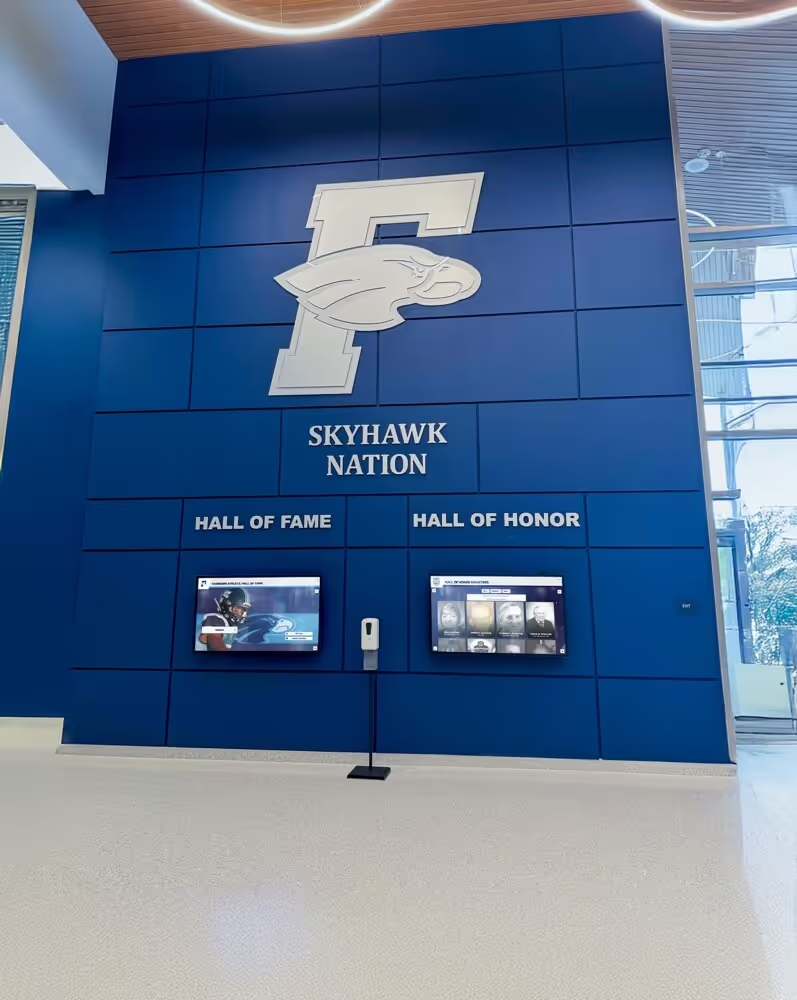
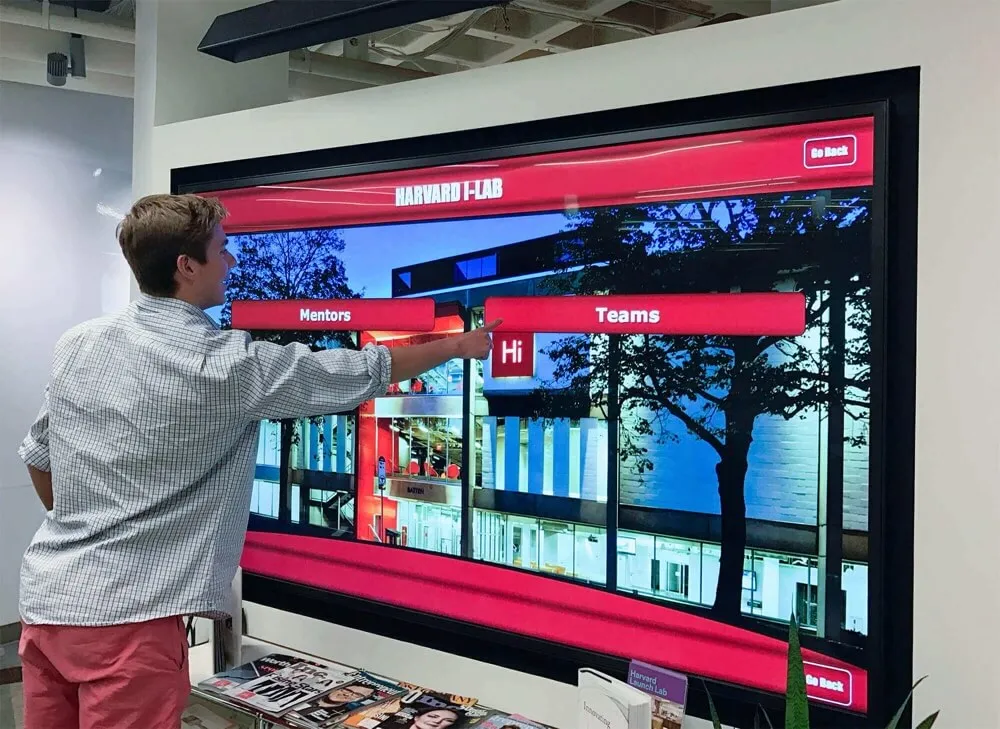
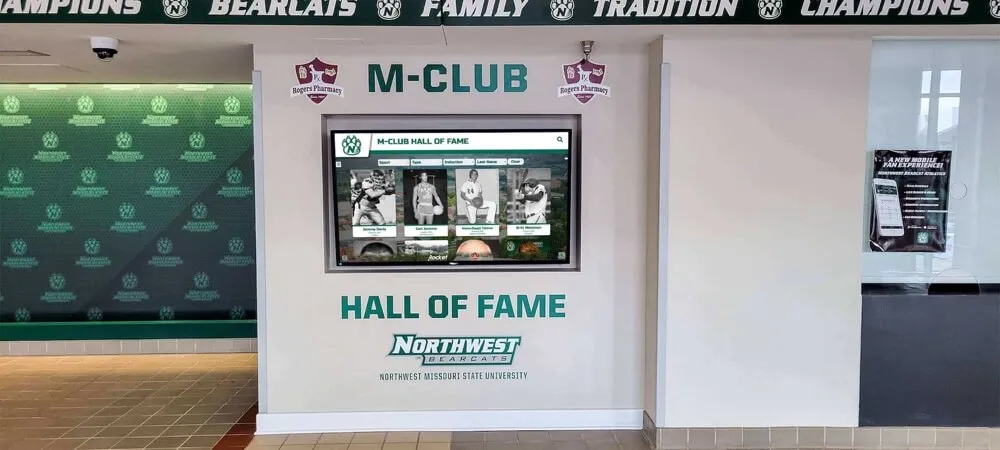
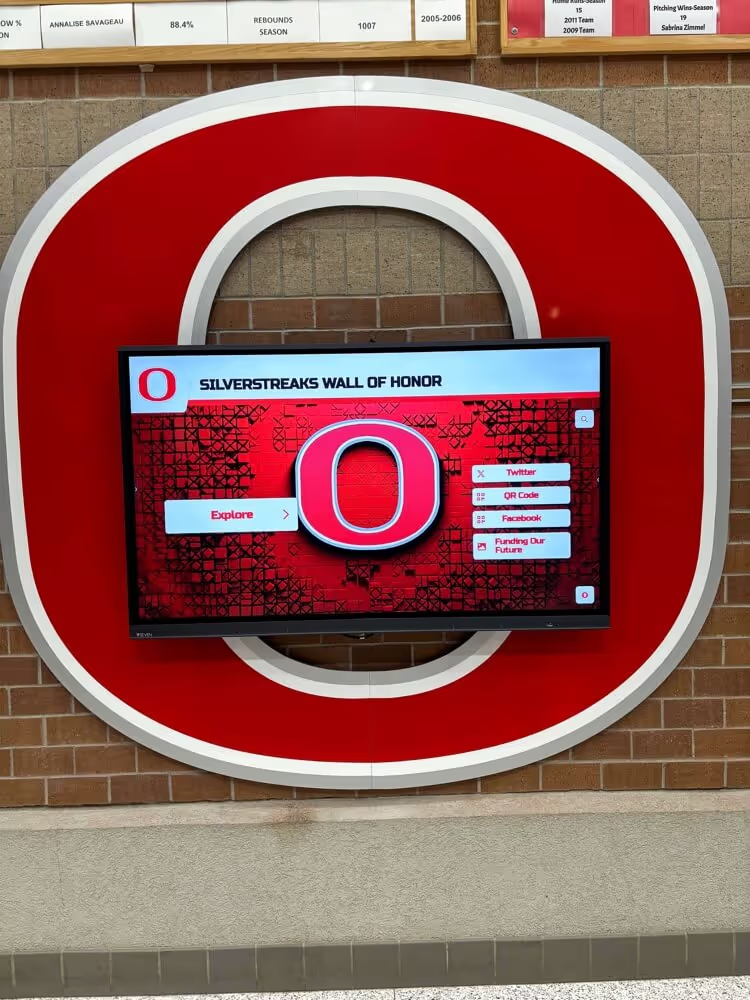
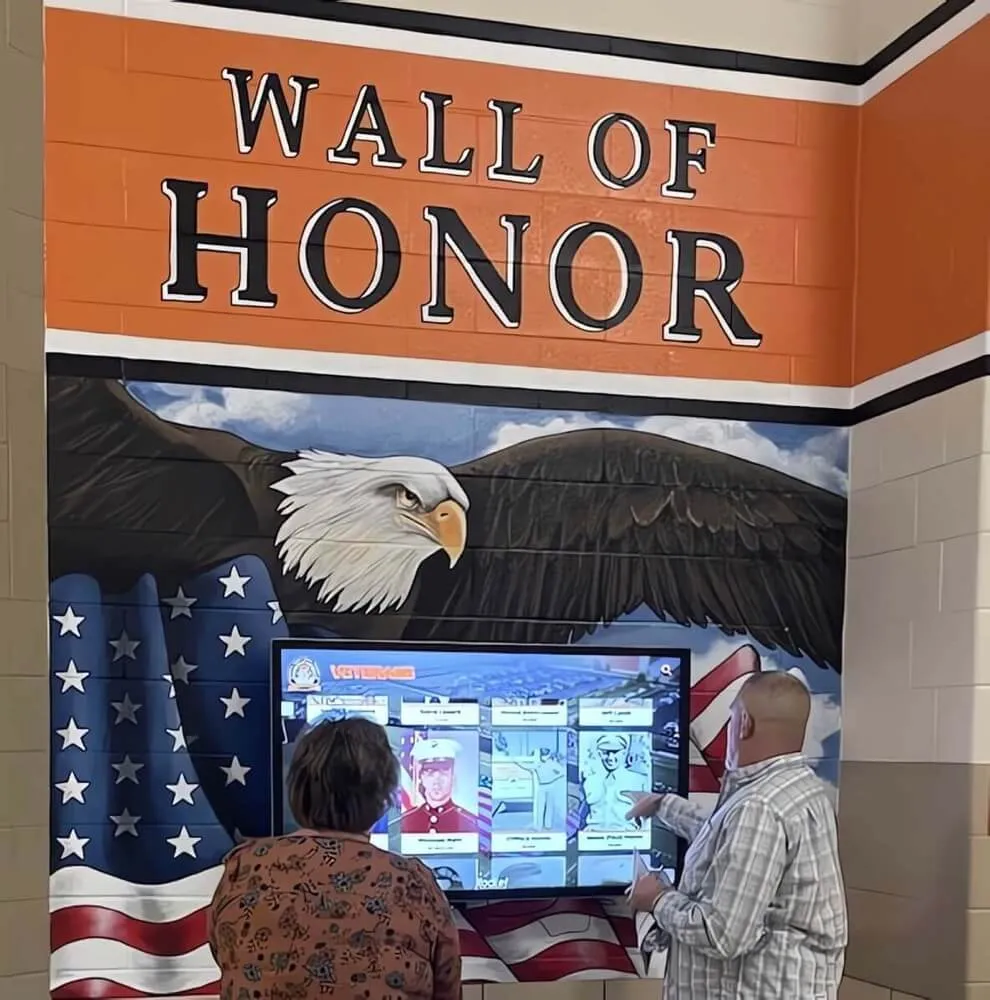
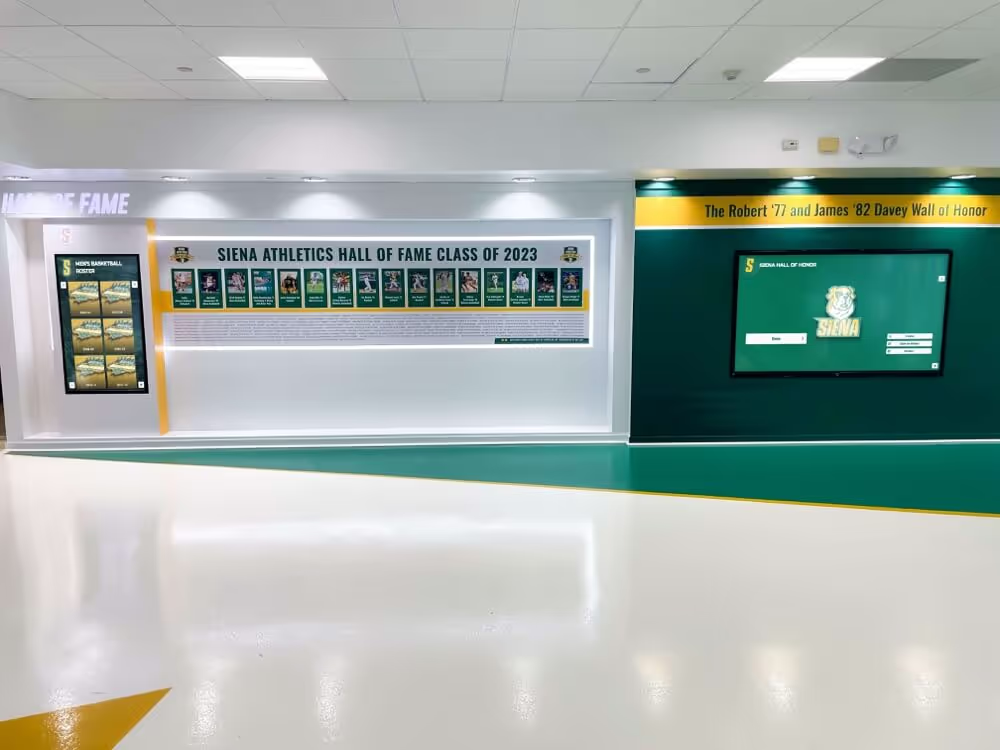
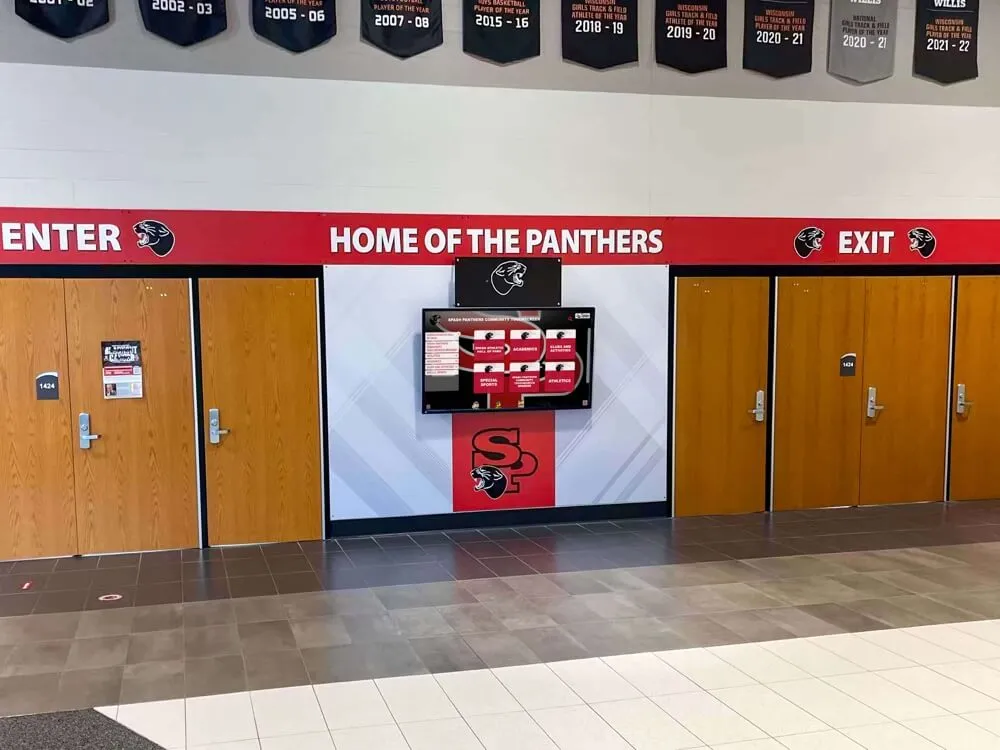
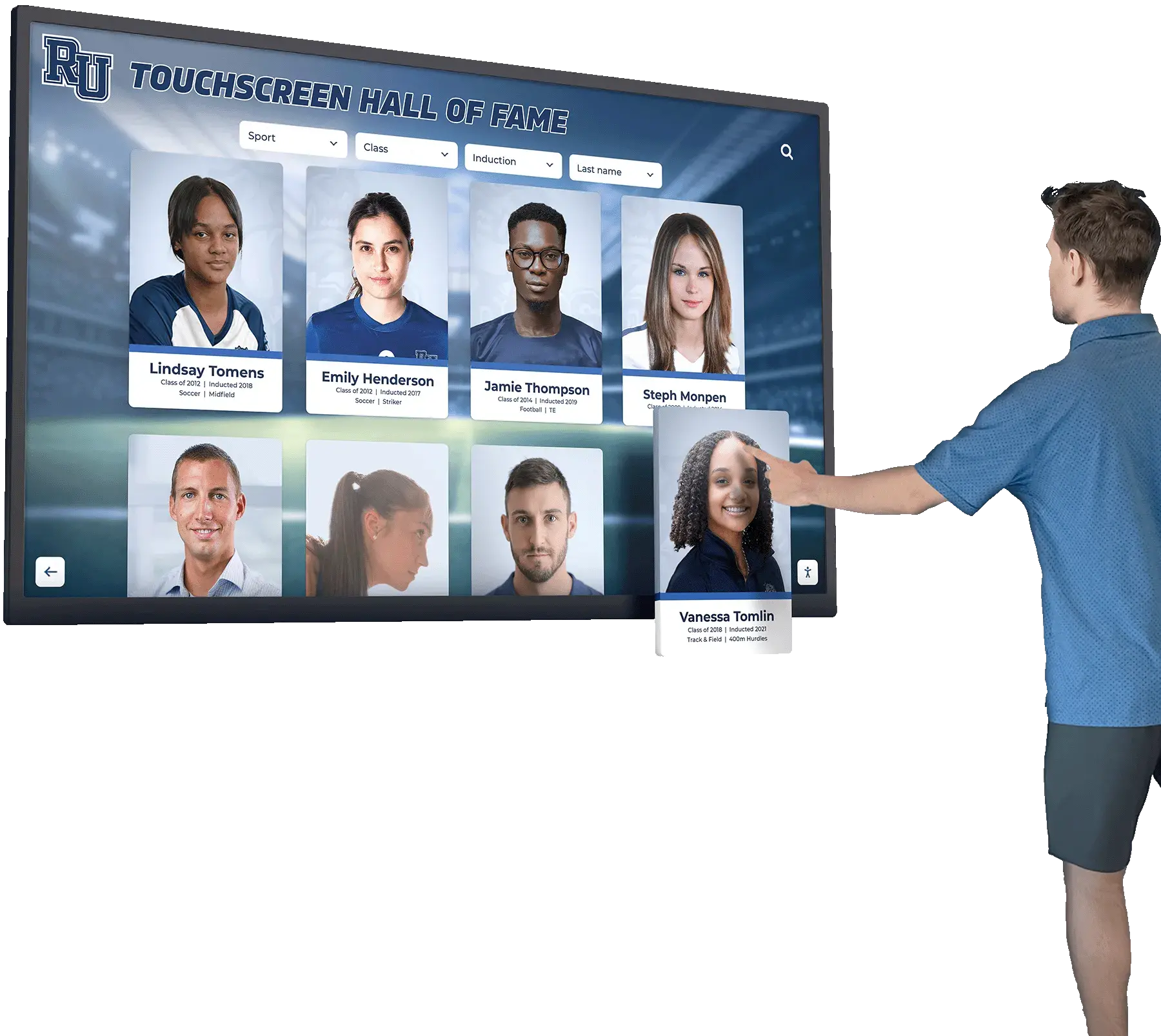
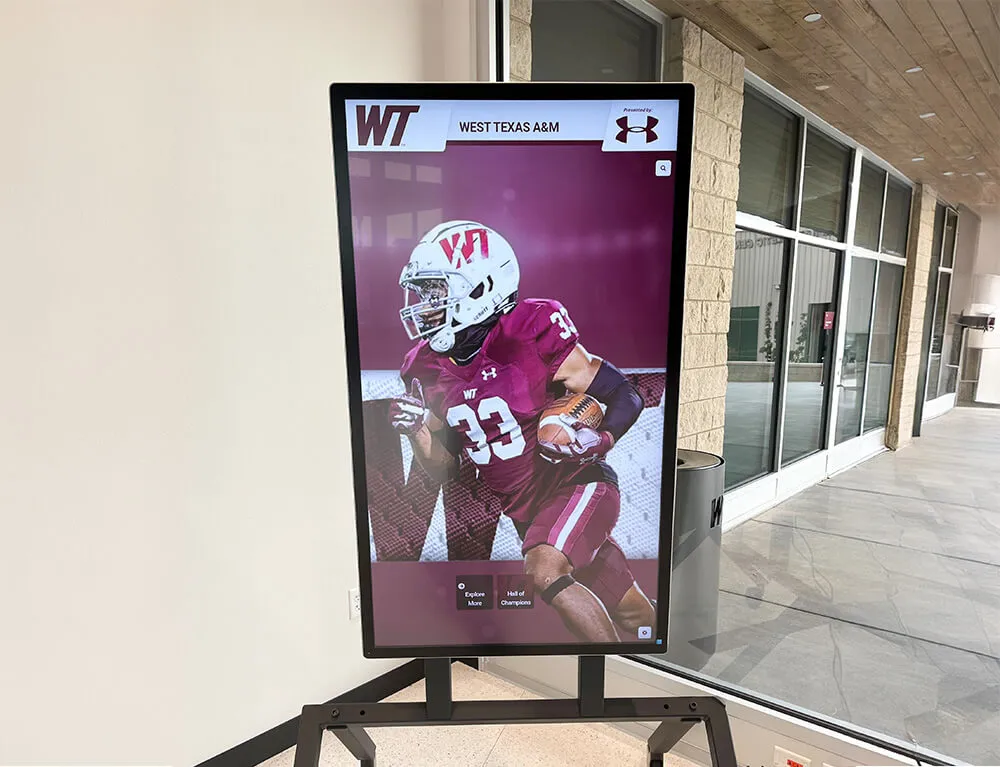
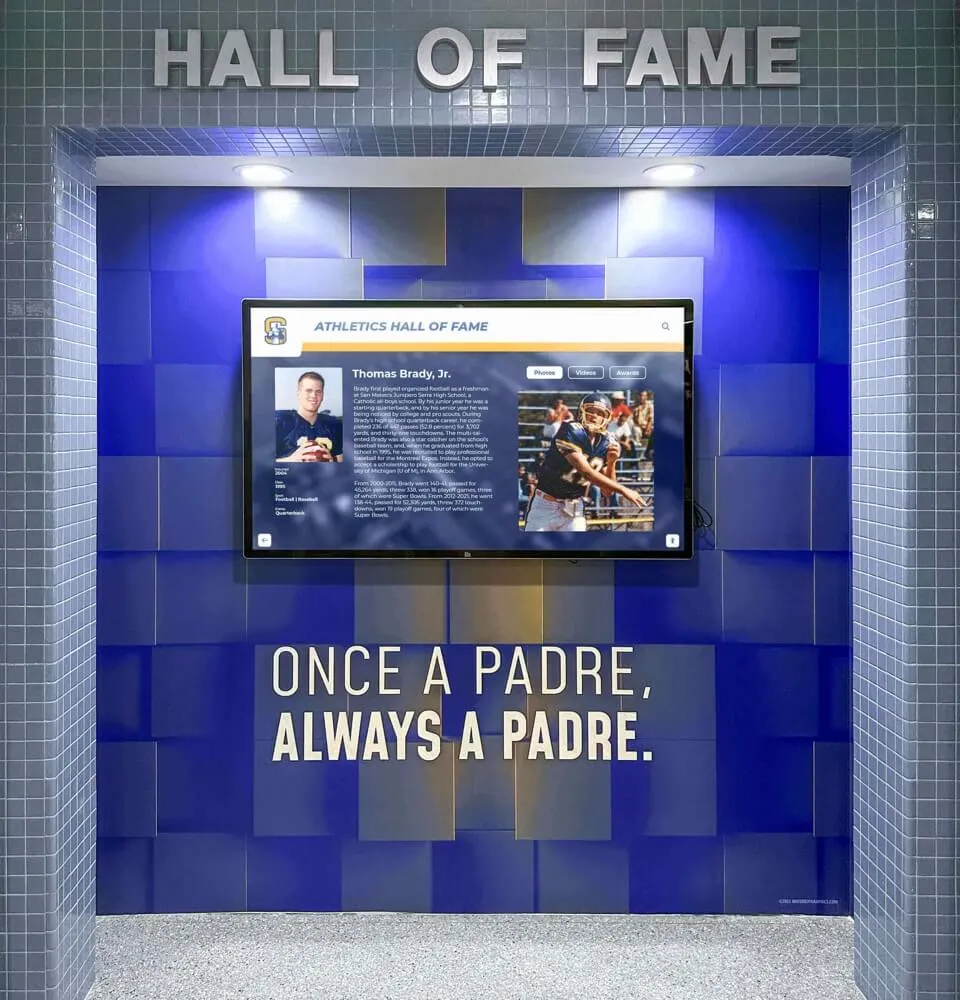
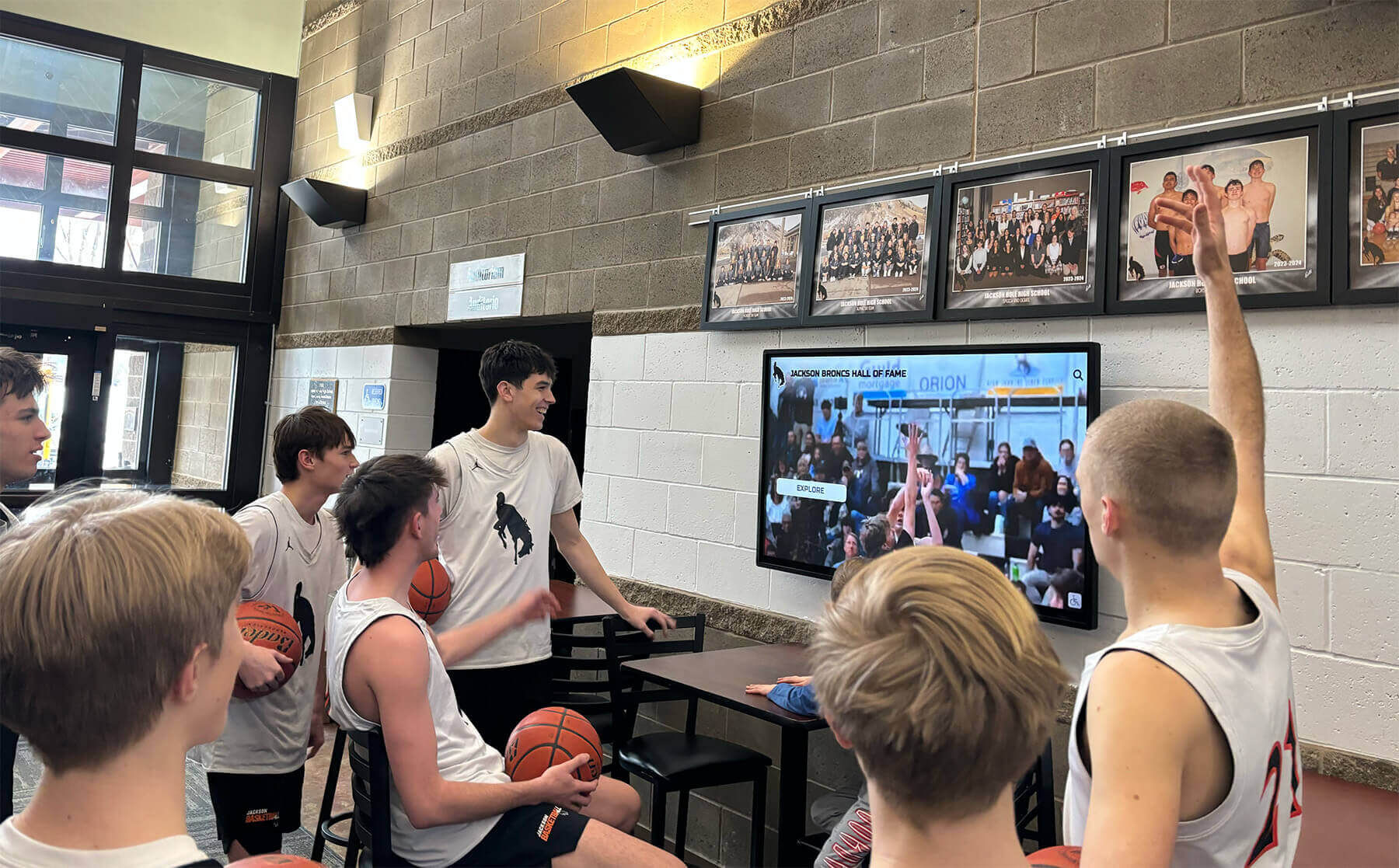
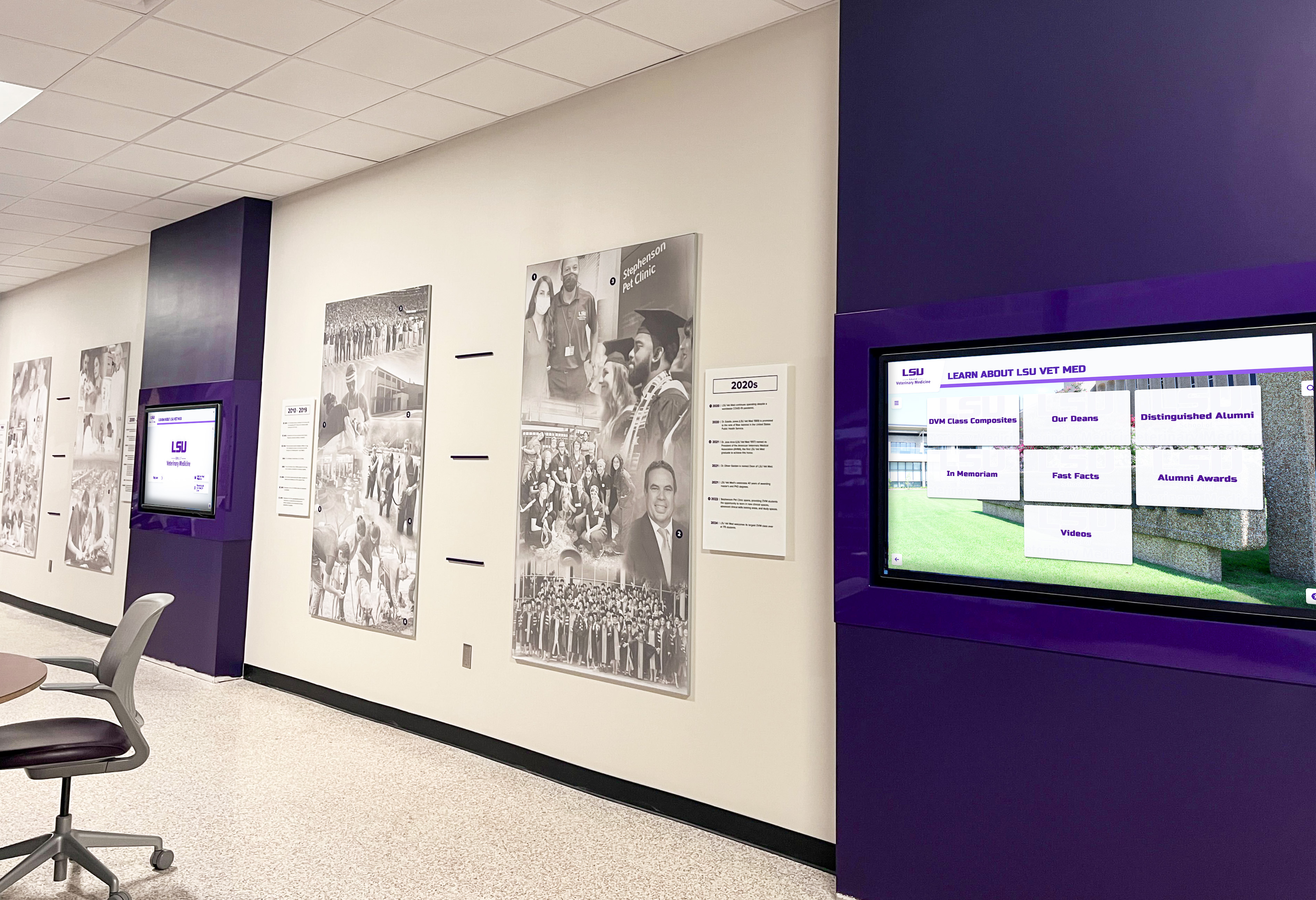
Digital platforms like Rocket Alumni Solutions allow schools to display this content on lobby touchscreens and hallway monitors year-round. A student visiting campus in October—eight months after February’s signing day ceremony—can still browse that year’s college commits, explore their profiles, and see the institutional pattern of where the program places athletes over time. That accessibility has recruiting and community value that a deleted social post cannot replicate.
Build a Signing Class Wall or Digital Archive
Schools with multiple years of signing data have the raw material for a signing class archive: a structured display that shows, year by year, every athlete who committed to a college program. This archive:
- Demonstrates sustained program quality to prospective families and recruits
- Gives current athletes context about where their predecessors went
- Creates engagement for alumni who can search for their own year or teammates
- Provides advancement and fundraising teams with a talking point about athletic program outcomes
Physical signing class walls can take the form of framed class photos organized by year, or mounted plaques in the athletic hallway. Digital archives scale more easily—adding a new year requires updating content in the recognition platform, not renovating the hallway.
For schools thinking about how to connect signing day archives to broader alumni recognition—reunions, giving campaigns, institutional storytelling—alumni event ideas for schools offers frameworks for connecting current students to alumni through shared athletic history.
Post-Ceremony Physical Recognition
Beyond digital archives, consider these physical recognition elements that extend signing day recognition into the school year:
Athletic hallway name board: Add each signing athlete to a wall-mounted board in the athletic corridor. Simple laser-cut or engraved name plates with college destination, sport, and year create a running record visible daily to students and families.
Trophy case integration: Place a framed signing day photo in the trophy case adjacent to the school’s championship trophies. This positions college commits within the program’s larger achievement context.
Program record board: If the school uses a digital or physical record board for athletic statistics, add a “College Commits” category that tracks the total number of athletes who have signed with four-year programs. This cumulative figure carries more weight than individual years viewed in isolation.
Connecting Signing Day to the School’s Broader Recognition Ecosystem
Signing day is a concentrated moment of athletic recognition, but it belongs to a larger recognition ecosystem that includes academic honors, hall of fame inductions, championship banners, and donor recognition. Schools that treat these as separate programs miss opportunities to reinforce the same message: this institution produces people who achieve meaningful things.
Connecting to Academic Recognition
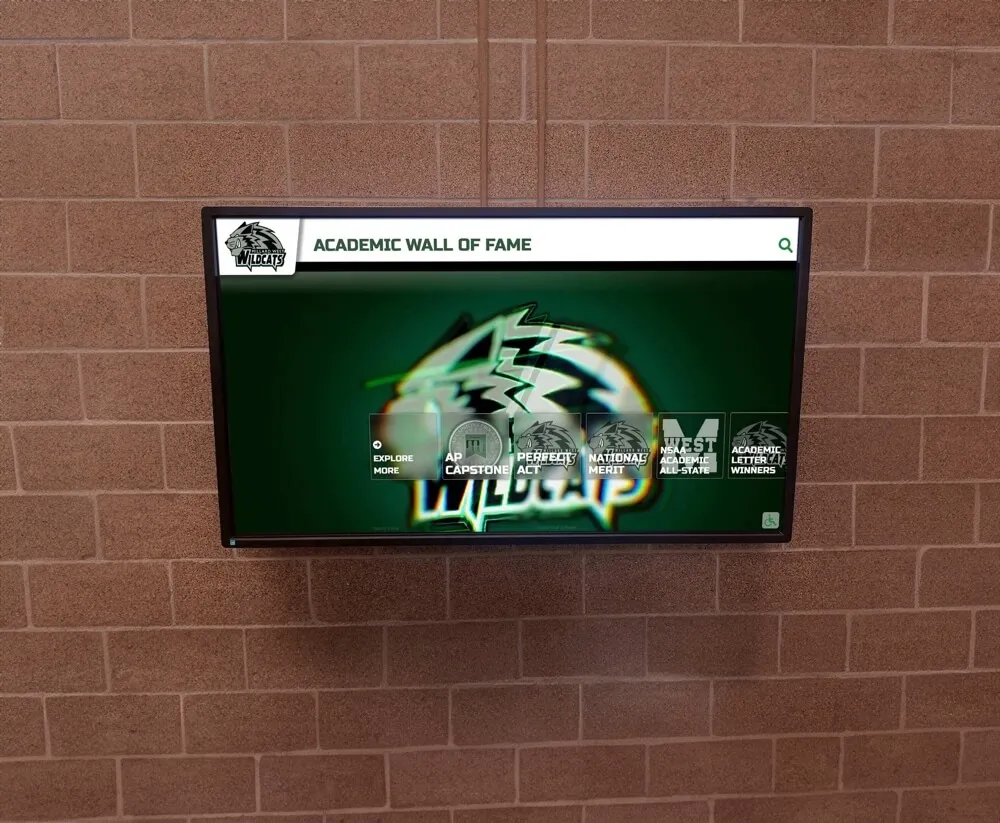
Many college-bound athletes are also academic achievers. Signing day ceremonies that acknowledge GPA, AP enrollment, or academic honors alongside athletic commitments signal that the school develops whole students. This resonates particularly with the college coaches and academic programs that recruited the athletes in the first place.
For schools building comprehensive recognition programs that span academics and athletics, signing day is a natural integration point where both dimensions of student achievement appear together.
Connecting to Alumni Engagement
Athletes who signed college commitments five, ten, or twenty years ago are often among a school’s most engaged alumni. Signing day content—the annual ceremony, the digital archive of commits by year—gives alumni a reason to stay connected to athletic department news and events.
Reunion planners who incorporate athletic history into event programming consistently report higher engagement. High school reunion planning tips that feature athletic achievement timelines and commitment archives give returning alumni immediate connective tissue to their years at the school.
Connecting to Donor Recognition
Donors who funded facilities, scholarships, or program equipment often have direct or indirect connections to the athletes they helped develop. A signing day archive that includes donor recognition elements—acknowledging the field, weight room, or scholarship that supported training—creates a natural link between donor investment and athlete outcome.
Donor recognition wall tools that integrate with athletic recognition platforms allow schools to tell a connected story: this donor gave, this facility was built, these athletes developed, these commitments happened.
Signing Day Table Checklist: Quick Reference
Use this condensed checklist the week of the ceremony:
One week out:
- Table size and tablecloth ordered or pulled from storage
- Backdrop confirmed (step-and-repeat, retractable banners, or display board)
- Photographer/videographer briefed with shot list
- Digital display content updated with athlete name and college graphic
Day before:
- All props (college caps, jerseys, flowers) collected and organized by athlete
- Documents printed, reviewed, and placed in branded folders
- Room arrangement confirmed; lighting tested
- Seating plan set for family and student spectators
Day of (2 hours before):
- Table positioned and dressed
- Backdrop assembled and level
- Name signs in place for each athlete
- Lighting and digital displays turned on and tested
- Props staged but not placed on table yet (to avoid clutter before ceremony)
- Run-through with athletic director or ceremony emcee
- Photography test shot taken to confirm exposure and framing
After the ceremony:
- Photos and video backed up to shared drive, organized by athlete name
- Digital recognition platform updated with athlete profiles
- Social posts scheduled with correct college handles tagged
- Physical recognition elements (name boards, framed photos) ordered or updated
Final Thoughts: The Table Is the Beginning, Not the End
The signing day table creates the moment. The archive makes it last. Schools that invest equal effort in both—staging a ceremony that photographs well and building a recognition system that keeps those commitments visible for years—get the full return on the athletic department’s work.
Young athletes who watch signing day ceremonies become the athletes who sit at those tables. When they can look up the athletes who came before them—see their photos, read their stats, learn where they went—the program’s legacy becomes concrete and motivating rather than abstract. That continuity is what transforms a signing day event into a signing day tradition.
Rocket Alumni Solutions helps schools build and maintain that long-term recognition layer—connecting signing day photos, athlete profiles, and college commitment histories into a searchable, updatable archive displayed on lobby touchscreens and hallway monitors year-round. If your school is ready to move beyond temporary bulletin boards to a permanent recognition system, explore what a touchscreen archive could look like for your program.
Related Resources
- Sports achievement recognition frameworks for student athletes
- Youth sports awards ideas for building a year-round recognition culture