



Key Takeaways
Discover 20 touchscreen award ideas for senior living communities. From parking committees to in memoriam tributes, learn how digital displays honor residents and strengthen community bonds.
Senior living communities face a unique challenge: creating active, engaged environments where residents feel valued, connected, and celebrated. Recognition plays a vital role in building this culture, yet traditional bulletin boards and paper announcements fall short of creating the dynamic, accessible experiences today’s active adults and seniors expect.
Touchscreen recognition systems address this gap by providing interactive platforms that honor resident achievements, showcase community leadership, remember departed friends, and organize essential community information—all in dignified, easy-to-navigate formats accessible to residents with varying mobility and vision capabilities.
This guide examines how senior living facilities use touchscreen awards and recognition displays, explores 20 specific implementation ideas addressing what communities care about most, and provides decision frameworks for selecting solutions that strengthen resident engagement while reducing administrative burden on staff.
Why Senior Living Communities Invest in Digital Recognition
Before exploring specific recognition categories, understanding what drives senior living administrators to implement touchscreen solutions clarifies why these systems deliver value beyond simple announcements.
Building Community Identity and Belonging
Residents transitioning to senior living leave behind homes, neighborhoods, and established social networks. Recognition systems help build new identity and belonging by:
Celebrating Individual Contributions: Acknowledging residents who volunteer on committees, organize activities, or mentor newcomers validates their continued value to community. This recognition counteracts feelings of diminished purpose some experience after retirement.
Creating Shared History: As communities evolve, digital displays preserve stories, achievements, and memories that become collective history binding residents together across arriving cohorts.
Making Participation Normal: When recognition shows residents actively engaged in governance committees, social organizations, and volunteer roles, it demonstrates that participation represents community expectations rather than exceptional behavior—encouraging broader involvement.
Supporting Cognitive Health Through Engagement
Research consistently demonstrates that social engagement, purposeful activity, and cognitive stimulation support healthy aging. Recognition systems contribute by:
Providing Conversation Starters: Interactive displays give residents topics for discussion with neighbors, visiting family, and staff. Exploring “neighbor of the week” profiles or reviewing committee accomplishments creates natural social connection opportunities.
Encouraging Cognitive Activity: Touchscreen navigation, reading profiles, viewing photos, and exploring community history provide gentle cognitive exercise through intuitive interfaces designed for varying technical comfort levels.
Maintaining Connection to Current Events: Digital displays keep residents informed about community happenings, upcoming activities, and ongoing initiatives—maintaining orientation and involvement that combat isolation and disengagement.
Reducing Administrative Burden on Staff
While recognition serves resident-focused purposes, practical administrative benefits matter equally to facility leadership:
Eliminating Bulletin Board Management: Physical bulletin boards require constant updating, printing, posting, and maintenance. Content becomes outdated, papers fall down, and important information gets buried behind less relevant announcements.
Centralizing Information Distribution: Single content management systems enable staff to update directories, committee rosters, event calendars, and recognition content from office computers rather than physically posting in multiple locations.
Creating Scalable Recognition Programs: As communities grow or recognition categories expand, digital systems accommodate additional content without requiring additional physical space or installation expenses.
Meeting Family Communication Expectations
Family members—often adult children making placement decisions or overseeing care—increasingly expect modern communication approaches:
Demonstrating Facility Investment: Current technology signals that communities invest in resident experience and remain responsive to contemporary expectations rather than maintaining outdated approaches.
Enabling Remote Visibility: When recognition systems include web components, family members can view resident recognition, committee participation, and community life remotely—providing reassurance about engagement and quality of life.
Supporting Placement Decisions: Prospective residents and families evaluating communities view recognition displays during tours, observing how facilities honor residents and the vibrancy of community life—factors influencing placement decisions.
Core Recognition Categories for Senior Living Communities
Senior living facilities share predictable organizational structures creating common recognition needs across independent living, assisted living, and memory care settings.
Internal Governance and Committee Recognition
Most senior living communities operate resident councils or governance structures providing residents voice in community decisions. Recognition supports these organizations by:
Validating Resident Leadership: Committee service represents meaningful contribution to community welfare. Recognition honors this service while encouraging others to participate in governance.
Creating Accountability and Transparency: Displaying current committee members, their roles, and meeting schedules helps residents understand governance structure and access appropriate representatives.
Documenting History: Recording past committee members preserves institutional memory as leadership rotates—acknowledging cumulative contributions while helping new members understand precedents.
Common Committees Requiring Recognition:
- Resident Council (executive committee, officers)
- Activities Committee (event planning, entertainment selection)
- Dining Committee (menu feedback, special meal planning)
- Parking Committee (space allocation, policy recommendations)
- Wellness Committee (fitness programs, health education)
- Library Committee (collection management, book clubs)
- Garden Committee (landscaping input, community garden management)
- Newcomer Welcome Committee (orientation, buddy programs)
Neighbor Recognition Programs
Peer recognition programs celebrate residents exemplifying community values, encouraging positive behaviors while building social cohesion:
Neighbor of the Week/Month: Regular recognition for residents who demonstrate kindness, helpfulness, or community spirit. Profiles include photos, brief biographies, and specific examples of recognized behaviors—providing human interest content that residents enjoy exploring.
Good Neighbor Awards: Formal recognition for residents who consistently support others, organize activities, or contribute to community welfare. Unlike weekly features, these represent significant acknowledgment of sustained positive impact.
New Resident Spotlights: Welcome features for recent arrivals, introducing them to the broader community, sharing their backgrounds and interests, and encouraging social connection during vulnerable transition periods.
Memorial and Legacy Recognition
Respectful acknowledgment of residents who pass remains critically important in senior living settings where loss represents regular experience:
In Memoriam Tributes: Dedicated sections honoring recently deceased residents with photos, brief biographies, years of residence, and meaningful contributions to community. These tributes serve multiple functions:
- Providing communal grieving space where residents and staff process loss together
- Celebrating lives lived rather than simply noting deaths
- Creating lasting digital memorial more permanent than temporary bulletin board notices
- Allowing family members to view tributes remotely, extending acknowledgment beyond facility
Memorial Gardens Virtual Registry: For communities with physical memorial gardens or remembrance spaces, digital registries explain dedications, list honored residents, and provide searchable access to memorial information.
Legacy Profiles: More comprehensive biographies of long-term residents or particularly influential community members, preserving their stories, accomplishments, and impact for future residents who never knew them.
Resident Directory and Information Systems
While not traditionally considered “awards,” comprehensive directory functionality represents essential value for senior living touchscreen systems:
Visual Resident Directory: Photo-based directories help residents learn neighbors’ names—particularly valuable for those experiencing memory changes. Search by name, unit number, or corridor enables residents to locate specific individuals while general browsing supports social connection.
Staff Directory: Photos and roles of staff members help residents identify appropriate contacts for various needs, remember names, and understand organizational structure—reducing confusion and improving communication.
Amenity and Resource Directories: Information about facility amenities (dining rooms, chapels, libraries, fitness centers), their locations, hours, and services. For campuses with multiple buildings, wayfinding support proves particularly valuable.
Committee and Organization Directories: Current rosters for all committees, clubs, and resident organizations with meeting times, locations, and contact information. This centralization increases participation by reducing barriers to involvement.
20 Specific Touchscreen Recognition Ideas for Senior Living
Beyond broad categories, specific implementation ideas help senior living administrators envision practical recognition applications addressing their communities’ particular needs and culture.
1. Parking Committee Hall of Fame
Most communities face parking challenges requiring resident committees to manage space allocation, visitor parking policies, and dispute resolution. Recognition ideas include:
- Current committee members with photos and tenure
- Policy accomplishments and problem-solving examples
- Historical timeline showing parking evolution as community grew
- “Ask the Parking Committee” section with contact information and meeting schedules
Parking committees often handle contentious issues; recognition validates their service while creating transparency around decisions.
2. Internal Government Officer Showcase
Resident council officers and governance leaders deserve prominent recognition:
- Current officers with photos, positions, terms, and brief biographies
- Meeting schedules and attendance information
- Recent accomplishments and initiatives
- Historical record of past officers with years served
- How to run for office or get involved in governance
This transparency strengthens resident ownership of community operations while honoring leadership service.
3. Neighbor of the Week Recognition
Weekly neighbor features create ongoing recognition opportunities:
- High-quality resident photos (professional community photographer recommended)
- Brief interviews: background, interests, what they enjoy about community
- Specific examples of helpful behaviors or contributions
- Family information (if resident comfortable sharing)
- Archive of past recipients, searchable by name or week
Rotating weekly recognition ensures broad participation while providing fresh content residents check regularly. Consider pairing with employee recognition programs that acknowledge staff contributions.
4. In Memoriam Tribute Section
Dignified memorial recognition requires thoughtful design:
- Dedicated section visually distinguished from celebratory content
- Recent tributes featured prominently with automatic archiving to searchable database
- Photos from various life stages when available
- Brief biographies focusing on accomplishments and character
- Years of community residence and contributions during tenure
- Option for family-submitted content or favorite quotations
- Subtle design elements (softer colors, respectful typography) appropriate to memorial purpose
Memorial sections provide lasting tribute more accessible and permanent than temporary bulletin board notices while supporting healthy grieving processes.
5. Activities Committee Spotlight
Activities committees shape daily life quality; recognition strengthens their work:
- Current committee member profiles with participation history
- Upcoming events and programs they’ve planned
- Success stories from past activities (attendance numbers, resident feedback)
- How residents can submit activity suggestions
- Meeting schedules for residents interested in joining
Featuring activities leadership encourages residents to appreciate planning work while potentially recruiting new committee members.
6. Volunteer Recognition Wall
Many residents volunteer within the community or maintain external volunteer commitments:
- Profiles of residents volunteering in community (libraries, reception, activities assistance)
- Cumulative volunteer hours tracked by individual or community total
- External volunteer work residents perform (literacy tutoring, hospital volunteering, etc.)
- Volunteer opportunity postings for residents seeking engagement
- Annual volunteer appreciation celebration photos and summaries
Volunteer recognition reinforces that residents remain active contributors rather than passive service recipients.
7. Resident Achievement Gallery
Celebrating non-community-specific accomplishments:
- Published authors with book covers and availability information
- Artists with photos of their work and exhibit information
- Musicians and performers with performance photos/videos
- Academic achievements (degrees earned, continuing education)
- Professional career achievements and notable accomplishments
- Hobbies and special skills (woodworking, quilting, photography)
Achievement galleries help residents learn unexpected talents of neighbors, creating conversation starters and mutual appreciation.
8. Long-Term Residence Milestones
Acknowledging tenure demonstrates that community values sustained membership:
- Residents reaching 1, 5, 10, 15+ year milestones
- Brief reflections on how community has changed during their residence
- Favorite memories or experiences
- Photos from move-in day compared to current photos
- Total number of residents by tenure length (showing community stability)
Tenure recognition appeals particularly to residents who take pride in being “old-timers” and helps newer residents appreciate community history. Similar milestone recognition concepts appear in academic recognition programs.
9. Birthday and Anniversary Celebrations
Monthly recognition of personal milestones:
- Upcoming birthdays by day with resident photos
- Anniversary of residence (move-in date anniversaries)
- Wedding anniversaries for couples
- Option for privacy (some residents prefer not publicizing ages)
- Archive of past months enabling residents to see everyone’s recognition
Birthday boards create friendly atmosphere while helping residents remember to acknowledge neighbors’ special days.
10. Dining Committee Recognition
Food remains central to quality of life; dining committees deserve specific recognition:
- Current committee members and meeting schedules
- Recent menu additions or changes influenced by committee
- Special meal events planned by committee
- Process for submitting dining feedback or requests
- Dietary accommodation information and committee’s role ensuring inclusivity
Dining committee visibility reinforces that resident input shapes food service rather than top-down institutional decisions.
11. Wellness Committee and Health Achievements
Wellness initiatives and resident health accomplishments:
- Wellness committee members and planned programs
- Residents participating in fitness challenges with progress tracking
- Wellness milestones (consecutive days attending fitness classes, health goal achievements)
- Upcoming wellness events and educational programs
- Wellness resources and committee contact for questions
Health recognition creates positive peer pressure encouraging wellness participation while celebrating commitment to healthy aging.
12. Library and Literary Committee
For communities with resident libraries:
- Library committee members and volunteer librarians
- New acquisition features with brief reviews
- Resident book club information, current selections, meeting times
- Resident authors with expanded profiles and book availability
- Reading challenge tracking (residents completing X books annually)
- Popular borrowing statistics creating friendly competition
Libraries serve as community hubs; recognition strengthens their role while encouraging literacy engagement.
13. Garden Committee and Outdoor Spaces
Garden committees managing community grounds and plantings:
- Committee members with specific responsibilities (perennials, annuals, vegetables)
- Seasonal garden photos showing committee’s work
- Garden volunteer opportunities and workday schedules
- Residents with notable gardening expertise willing to answer questions
- Community garden plot holders (if applicable)
- Upcoming plantings and seasonal transitions
Garden recognition connects residents to outdoor spaces while acknowledging often-overlooked committee work maintaining grounds.
14. Arts and Culture Showcase
Celebrating creative residents:
- Current resident art exhibitions with artist statements
- Performing arts residents (singers, musicians, actors) with performance schedules
- Craft guilds and clubs with meeting information
- Upcoming arts events and cultural programs
- Arts committee members organizing cultural activities
- Virtual gallery of resident artwork for those unable to visit physical exhibits
Arts recognition validates creative expression while creating cultural vibrancy attracting prospective residents valuing intellectual stimulation.
15. Chaplaincy and Spiritual Life Committee
For communities with spiritual programming:
- Chaplaincy committee members and denominational representation
- Service schedules for various faith traditions
- Special holiday observances and inclusive programming
- Residents with clergy backgrounds willing to provide pastoral care
- Meditation, prayer, and study group schedules
- Community service projects organized through chaplaincy
Spiritual life recognition honors religious diversity while connecting residents to appropriate resources. Similar community recognition appears in church digital displays.
16. New Resident Welcome Board
Dedicated section for recent arrivals:
- Photos and welcome profiles for residents arriving within past 3 months
- Background: previous careers, hometowns, family information
- Interests and hobbies enabling connection with like-minded residents
- What attracted them to this community
- Contact information (unit numbers) for residents comfortable with visitors
- Welcome committee members available to answer newcomer questions
Welcome boards reduce new resident isolation by facilitating introductions and social integration during critical initial months.
17. Resident Organization Directory
Comprehensive listing of all resident-led groups:
- Book clubs with genres, current reading, meeting times
- Game groups (bridge, poker, mahjong, etc.) with skill levels and schedules
- Exercise classes with instructors and difficulty levels
- Special interest groups (photography, genealogy, investment clubs)
- Social committees organizing parties and celebrations
- Group leaders with contact information and how to join
Directory functionality reduces barriers to participation while demonstrating community activity to prospective residents touring facilities.
18. Staff Appreciation and Recognition
While focused on resident recognition, staff acknowledgment matters:
- Staff anniversaries and tenure milestones
- Employee of the month/quarter programs
- Staff spotlight features helping residents learn about team members
- Birthdays and personal milestones
- Staff achievements (certifications earned, educational advancement)
Staff recognition creates inclusive community culture while helping residents develop personal connections with caregivers and service providers. Staff recognition best practices mirror corporate employee recognition approaches.
19. Historical Timeline and Founder Recognition
Documenting community history:
- Facility founding story and original vision
- Founders, benefactors, and key early leaders
- Timeline of major expansions, renovations, milestones
- Historical photos showing facility evolution
- Notable residents from community history
- Anniversary celebrations and major events
History sections create community pride and continuity while educating newer residents about institutional legacy.
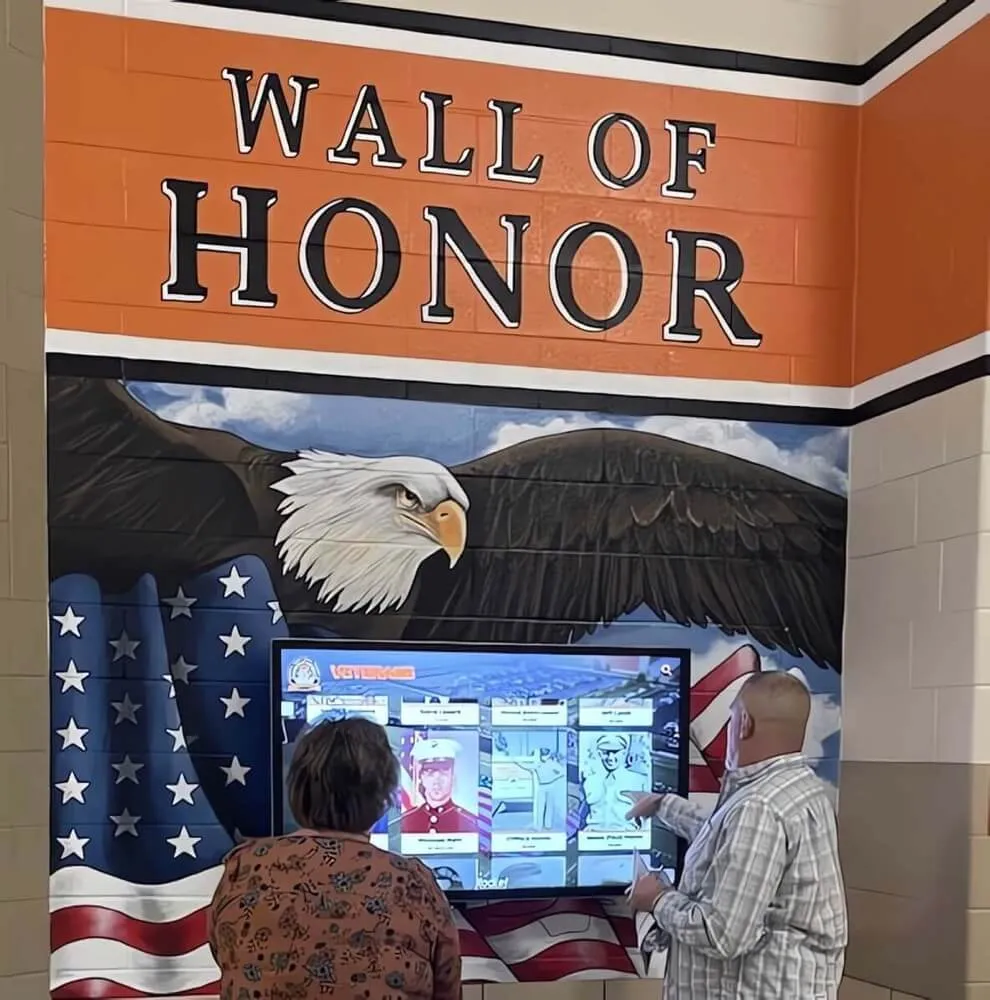
20. Military Service Honor Wall
Many senior living residents served in military; dedicated recognition honors this service:
- Veterans organized by service branch and era
- Photos in uniform when available alongside current photos
- Service details: branch, years, duty stations, rank
- Combat service and decoration acknowledgment
- POW/MIA recognition where applicable
- Veterans Day and Memorial Day observance events
Military recognition proves particularly meaningful to veteran residents while educating younger staff and visiting families about residents’ service sacrifice. Veterans recognition principles extend to schools honoring military service.
What Senior Living Communities Care About Most
Understanding priorities driving senior living decisions helps administrators evaluate whether touchscreen recognition investments align with organizational goals.
Resident Satisfaction and Retention
Satisfied residents stay longer, require less intensive management intervention for social/emotional issues, and provide positive word-of-mouth attracting new residents. Recognition contributes to satisfaction by:
Creating Dignity and Respect: Recognition demonstrates that facility values residents as individuals with meaningful contributions rather than viewing them as passive recipients of services. This dignity remains paramount in senior living where residents face societal ageism.
Building Social Connection: Isolation represents a primary risk factor for depression, cognitive decline, and health deterioration in older adults. Recognition systems facilitate connection by providing conversation topics, identifying shared interests, and making it easier for residents to learn about neighbors.
Encouraging Meaningful Activity: Recognition of committee service, volunteer work, and participation motivates continued engagement—creating positive feedback loops where recognition inspires activity, which generates more recognition, further encouraging participation.
Regulatory Compliance and Quality Standards
Senior living facilities operate under various regulatory frameworks emphasizing resident rights, dignity, and quality of life:
Resident Voice and Choice: Regulations require meaningful resident participation in governance. Recognition of committees, councils, and leadership demonstrates compliance with these requirements while making participation more attractive to residents.
Person-Centered Care Documentation: Quality standards increasingly emphasize knowing residents as individuals beyond medical needs. Achievement galleries, biographical profiles, and interest-based recognition support person-centered approaches.
Activity and Engagement Metrics: Many quality rating systems evaluate activity availability and resident participation. Recognition systems document engagement while encouraging higher participation rates that strengthen quality scores.
Family Satisfaction and Referral Generation
Adult children making placement decisions for parents or managing ongoing care represent crucial stakeholders:
Transparency and Communication: Families want assurance their loved ones live in engaged, caring communities. Recognition displays visible during visits provide tangible evidence of vibrant community life and individual acknowledgment.
Cognitive Health Confidence: Families worry about cognitive decline. Seeing parents recognized for committee service, volunteer work, or achievements reassures them that Mom or Dad remains actively engaged and cognitively stimulated.
Decision Validation: Families often struggle with guilt about placement decisions. Evidence that facilities honor residents, celebrate individuality, and create meaningful community helps families feel they made correct choices prioritizing quality of life.
Operational Efficiency and Staff Productivity
Administrative realities shape purchasing decisions as much as resident-focused benefits:
Reducing Redundant Communication Tasks: Staff time spent printing, posting, updating, and maintaining bulletin boards represents significant labor expense. Digital systems centralize updates, eliminating duplicative physical posting across multiple locations.
Decreasing Resident Questions: Comprehensive directories, committee rosters, and event information reduce repetitive questions staff field about “when does bridge club meet?” or “who’s on the activities committee?"—freeing time for direct care and service.
Improving Event Participation: Better communication about activities, committees, and programs typically increases participation—creating more active community life with minimal additional staff effort or programming expense.
Supporting Marketing and Tours: Recognition displays serve double duty as marketing tools during prospective resident tours, demonstrating community culture and resident engagement without requiring additional tour materials or staff presentation time.
Competitive Differentiation in Crowded Markets
Senior living markets in many regions face intense competition, making differentiation essential:
Modern Amenity Signaling: Current technology signals that facilities invest in resident experience and maintain contemporary standards—important to adult children (often 50s-60s themselves) expecting technological competence.
Community Culture Demonstration: Generic amenity lists (fitness center, dining room, library) appear identical across competitors. Recognition displays provide specific evidence of actual community culture, resident engagement, and facility values that differentiate communities meaningfully.
Lifestyle Marketing Evidence: Marketing promises about “active communities” and “engaged lifestyles” gain credibility when tours show dozens of resident profiles demonstrating actual committee participation, volunteer engagement, and social activity.
Selecting Touchscreen Recognition Solutions for Senior Living
Communities evaluating digital recognition systems should apply senior-living-specific criteria addressing unique requirements of aging populations and senior care contexts.
Accessibility Requirements for Aging Users
Senior living touchscreen systems must accommodate users experiencing various age-related changes:
Vision Considerations:
- Large, high-contrast text readable by residents with vision impairment
- Anti-glare screens minimizing reflection in brightly-lit lobbies
- Adjustable text size options
- Clear typography without decorative fonts difficult to read
- Adequate color contrast meeting WCAG standards
Motor Function Accommodations:
- Touchscreen sensitivity calibrated for users with reduced finger strength or tremors
- Large touch targets requiring less precision than typical mobile interfaces
- Minimal multi-step gestures (avoid pinch-to-zoom, complex swipes)
- Response time appropriate for slower interactions
- Wheelchair-accessible mounting heights and approach angles
Cognitive Design:
- Intuitive navigation requiring minimal instruction
- Consistent interface patterns throughout system
- Clear “home” or “start over” options preventing users from getting lost in interface
- Simple search functionality with forgiving spelling recognition
- Visual organization prioritizing photos and names over text-heavy interfaces
Communities should evaluate systems specifically with older adult users rather than assuming generic touchscreen competence. Solutions like Rocket Alumni Solutions offer purpose-built platforms designed with accessibility in mind from inception.
Content Management for Non-Technical Staff
Senior living administrators, activities directors, and resident life coordinators—not IT professionals—manage recognition content:
User-Friendly Administrative Interfaces:
- Web-based content management accessible from any staff computer
- Minimal training requirements (under 1 hour to competency)
- Template-based profile creation reducing design decisions
- Bulk upload capabilities for initial resident directories
- Preview functionality before publishing content
- Scheduled publishing enabling advance preparation
Workflow Efficiency:
- Quick resident profile creation (under 5 minutes per profile)
- Photo upload and cropping tools integrated into system
- Copy/paste text import from existing documents
- Duplicate profile templates for similar content
- Archive functionality for memorial content without deletion
Maintenance Simplicity:
- Remote content updates without vendor assistance
- No specialized software installation requirements
- Automatic backup and version control
- Multi-user access with permission levels
- Audit trails showing who made changes when
Hardware Durability and Reliability
Senior living lobbies experience continuous operation across years:
Commercial-Grade Components:
- Displays rated for 16+ hour daily operation
- Professional-grade touchscreen technology withstanding thousands of daily interactions
- Fanless designs minimizing mechanical failure points
- Sealed components protecting against dust and cleaning chemicals
- Manufacturer warranties appropriate to commercial application (minimum 3 years)
Environmental Resilience:
- Temperature tolerance for facilities with variable climate control
- Brightness adequate for well-lit lobby areas
- Minimal glare in high-window environments
- Mounting hardware supporting display weight indefinitely
- Cable management preventing tripping hazards or accessibility issues
Maintenance Reality:
- Simple cleaning protocols compatible with facility sanitization requirements
- Minimal ongoing calibration or adjustment needs
- Remote diagnostics enabling troubleshooting without vendor site visits
- Replacement parts availability for discontinued models
- Lifespan expectation 5-7 years minimum before hardware replacement
Privacy and Dignity Considerations
Senior living recognition requires sensitive handling of personal information:
Opt-In Participation Models:
- Residents choose whether to appear in recognition programs
- Varying privacy levels (name only, name and photo, full profile)
- Easy opt-out processes for residents uncomfortable with recognition
- Family authorization for residents with cognitive impairment
- Clear communication about what information will be displayed publicly
Appropriate Content Standards:
- Guidelines preventing undignified or embarrassing content
- Medical information privacy protections
- Age-appropriate imagery and language
- Cultural sensitivity review processes
- Memorial content standards balancing celebration with gravity
Security and Access Control:
- Administrative interfaces requiring authentication
- Permission levels preventing unauthorized content modification
- Audit logging for compliance documentation
- No resident-accessible editing preventing vandalism or inappropriate changes
- Web companion sites with appropriate access controls if implemented
Budget Realities and ROI Justification
Senior living facilities carefully manage expenses while demonstrating value to ownership or boards:
Initial Investment Components:
- Hardware costs ($2,500-$8,000 per display depending on size)
- Software licensing (annual or perpetual models ranging $1,500-$6,000 annually)
- Installation expenses (electrical, mounting, network connectivity: $1,000-$3,000)
- Initial content development (staff time for photo collection, profile creation)
- Training expenses (typically minimal with user-friendly systems)
Ongoing Costs:
- Annual software licensing or support fees
- Occasional hardware maintenance or replacement
- Electricity costs (minimal—comparable to television)
- Staff time for content updates (typically 2-4 hours weekly)
Return on Investment:
- Resident satisfaction improvements measurable through surveys
- Reduced staff time previously spent on bulletin board management
- Marketing impact visible through tour conversion metrics
- Potential retention improvements (delayed move-outs, lower turnover)
- Competitive positioning value versus comparable communities
Administrators should calculate payback periods by quantifying eliminated costs (bulletin board supplies, printing, staff time) and estimating incremental revenue from improved occupancy rates or faster fill of vacant units.
Implementation Best Practices for Senior Living Recognition
Successful deployments follow predictable patterns maximizing resident engagement while minimizing implementation challenges.
Location Selection and Physical Installation
High-Traffic Placement: Position displays where residents naturally gather:
- Main lobby areas near reception or entrance
- Outside dining rooms where residents wait before meals
- Activity centers or program rooms
- Mailbox areas with daily foot traffic
- Elevator lobbies in multi-floor facilities
Accessibility Considerations: Mount displays at appropriate heights (center of screen 48-52 inches from floor) with clear approach space enabling wheelchair users to navigate comfortably. Avoid placements near glare sources (windows, bright overhead lights).
Multiple Display Strategy: Larger communities benefit from several displays in different locations showing identical or location-appropriate content rather than single centralized systems requiring residents to travel specifically to view recognition.
Content Development and Launch Preparation
Phased Implementation Approach:
Phase 1 (Launch): Begin with essential content enabling immediate value:
- Current resident directory with photos and unit numbers
- Active committee rosters
- This week’s birthdays
- Upcoming events calendar
- Basic facility information
Phase 2 (Month 2-3): Expand recognition categories:
- Neighbor of the week program launch
- Committee spotlights
- Resident achievement gallery
- New resident welcomes
Phase 3 (Month 4-6): Add historical and comprehensive content:
- Memorial section for residents who passed during past year
- Military service recognition
- Long-term residence milestones
- Historical timeline
Phased approach prevents launch delays while demonstrating immediate value and building momentum for comprehensive implementation.
Photography Standards: Consistent, high-quality resident photos significantly impact recognition effectiveness:
- Hire professional photographer for initial directory sessions
- Establish regular photo days (monthly or quarterly) for new residents and updates
- Create simple photo standards (neutral backgrounds, good lighting, friendly expressions)
- Obtain photo permissions and retain digital files for future use
- Update photos every 2-3 years maintaining current appearance
Resident Engagement and Promotion
Launch Celebration: Introduce systems through special events:
- Ribbon-cutting ceremony with resident council leadership
- Reception near display with refreshments encouraging interaction
- Staff demonstrations helping less-technical residents learn navigation
- Newsletter articles explaining features and how residents can participate
- Family notifications encouraging them to view during next visit
Ongoing Promotion:
- Weekly newsletter reminders about featured content (“See this week’s Neighbor recognition!”)
- Activity program demonstrations teaching touchscreen navigation
- Ambassador program training tech-comfortable residents to help neighbors
- Regular content refreshes maintaining novelty and encouraging repeat viewing
Feedback Collection: Create mechanisms gathering resident input:
- Comment cards near displays
- Resident council discussions about desired recognition categories
- Periodic surveys about content preferences
- Activity coordinator check-ins with frequent users and non-users
Staff Training and Workflow Integration
Administrator Training: Ensure staff managing content understand:
- How to create and edit resident profiles
- Photo upload and cropping procedures
- Scheduling content for automatic publishing
- Archive procedures for memorial content
- Troubleshooting common technical issues
- Whom to contact for support needs
All-Staff Awareness: Brief all staff about system purpose and features:
- How recognition supports resident engagement and satisfaction
- Encouraging residents to view displays
- What content appears and how to submit information
- How recognition integrates with existing programs
Workflow Integration: Build recognition into existing processes:
- New resident intake includes photo session and profile creation
- Committee meetings include recognition updates as agenda items
- Activity planning incorporates display promotion
- Event photography includes intention to use images in displays
Measuring Success and Optimization
Quantitative Metrics:
- Display interaction frequency (many systems provide analytics)
- Participation rates in recognized committees/programs
- Resident directory usage patterns
- Content viewing preferences (which profiles attract most attention)
- Resident satisfaction survey scores related to recognition and communication
Qualitative Assessment:
- Anecdotal staff observations about resident discussions near displays
- Family feedback during tours and visits
- Resident council input on content preferences
- Marketing team observations about tour prospect reactions
Continuous Improvement:
- Quarterly content audits ensuring accuracy and currency
- Regular addition of new recognition categories based on feedback
- Refinement of content templates improving visual appeal
- Expansion to additional displays based on usage patterns
- Integration of recognition into broader engagement strategies
Communities implementing comprehensive digital recognition platforms consistently report improved resident engagement, easier communication workflows, and competitive advantages in marketing when systems receive appropriate ongoing attention and content management.
Conclusion: Recognition Technology Serving Community Connection
Senior living touchscreen recognition systems succeed when they serve core community values: dignity, connection, celebration of individual worth, and acknowledgment of contribution. The 20 recognition ideas explored in this guide—from parking committees to in memoriam tributes, from neighbor spotlights to military service honor walls—all support these fundamental human needs.
Technology enables implementation at scale and maintenance over time, but the underlying purpose remains unchanged from traditional bulletin boards: helping residents know each other, appreciate each other’s contributions, remember departed friends, and feel valued as individuals. Digital systems simply accomplish these goals more comprehensively, more sustainably, and more accessibly than previous approaches.
Communities evaluating touchscreen recognition should begin by identifying which recognition categories matter most to their residents and culture. A community with strong resident governance might prioritize committee recognition, while a facility with significant veteran population might emphasize military service honors. The flexibility of digital platforms enables customization reflecting each community’s unique character.
Implementation success depends less on technical sophistication than on thoughtful content development, ongoing maintenance commitment, and genuine understanding of recognition’s role in resident quality of life. The most successful installations combine current technology with timeless human needs for acknowledgment, belonging, and meaning.
For senior living administrators ready to explore how modern recognition technology can strengthen community culture while reducing communication burden, purpose-built solutions designed specifically for senior living applications provide tested approaches addressing the unique needs of aging populations. These systems honor residents’ dignity while creating active, connected communities where individuals feel valued regardless of age or ability.
Ready to discover how touchscreen recognition can strengthen your senior living community? Explore senior living recognition solutions designed specifically for retirement communities, assisted living facilities, and senior care environments committed to celebrating residents while building lasting community connections.