



Key Takeaways
Creative senior class plaque ideas for schools—from traditional engraved designs to digital recognition walls. Discover materials, layouts, placement tips, and how to make each graduating class's legacy permanent.
Every senior class that passes through a school’s doors leaves something behind—four years of friendships, achievements, and shared memories that deserve more than a page in a yearbook that gets tucked away in a closet. A well-designed senior class plaque gives graduating classes a permanent presence on school walls, anchoring their legacy to the building itself so future students, staff, and visitors always know they were here. Whether your school is planning its first senior class tribute installation or rethinking a hallway filled with outdated frames, the design choices you make now will shape how that graduating class is remembered for decades.
This guide covers the full range of senior class plaque ideas—from traditional engraved formats to modern composite designs to digital recognition systems that can evolve alongside the school—along with practical guidance on what to include, which materials hold up, where to display plaques for maximum impact, and how to think about long-term recognition strategy.
What Makes a Senior Class Plaque Worth Keeping
Before getting into specific design ideas, it helps to understand what separates a senior class plaque that people stop to look at from one that blends invisibly into the background.
Permanence signals respect. Physical materials communicate how seriously an institution takes its recognition commitments. A laser-engraved aluminum or bronze plaque installed on a painted wall communicates something different than a laminated printout in a plastic frame. Senior classes notice—and so do their families.
Specificity creates connection. Generic plaques that list only a class year and school name hold little meaning for anyone outside that graduating cohort. Plaques that include student names, class mottos, notable achievements, or signature photographs become touchstones that draw alumni back to school hallways years after graduation.
Placement shapes visibility. A thoughtfully designed plaque installed in low-traffic storage hallway achieves little. The same plaque in a main lobby entrance, near athletic trophy cases, or along a dedicated recognition corridor becomes part of the daily experience for current students and a destination for alumni who return to visit.
Recognition plaque design principles that apply broadly to institutional awards translate directly to senior class installations—the most effective tributes combine durable materials, purposeful content, and visible placement into a unified statement about the school’s values.
Senior Class Plaque Design Ideas
Schools approach senior class plaque design from several directions depending on available space, budget, and the type of legacy content they want to preserve. The following formats each serve different goals.
Traditional Engraved Class Plaques
The most familiar format: a rectangular or shield-shaped plate, typically cast in aluminum or bronze, engraved with the class year, school name, and a selected list of names or a class motto. These install cleanly against wood paneling or painted walls and require minimal maintenance once mounted.
Traditional engraved plaques work best when:
- Space is limited and multiple graduating class plaques need to coexist in a compact area
- The school wants a cohesive visual identity across a long run of senior class tributes (matching plaques from the Class of 1985 through the Class of 2025 create a powerful cumulative effect)
- Budget considerations favor a repeatable per-class cost that stays predictable year over year
Engraving limitations are real: once cast, content cannot be updated. Schools that want to include every senior’s name need to finalize rosters before production, which typically requires an order lead time of several weeks after graduation lists are confirmed.
Senior Composite Photo Plaques
Composite-style plaques incorporate individual senior portraits—often arranged in a grid—alongside class information. The format descends from traditional senior composite photographs but moves from paper prints to durable substrates that survive decades of hallway display without fading or curling.
Modern composite plaques use:
- Sublimation printing on aluminum: Photo-quality resolution with excellent color stability, UV-resistant finishes that resist fading even in bright hallway lighting
- Ceramic tile composites: Individual portrait tiles mounted within a framed display structure, allowing individual panels to be updated or replaced without disturbing the surrounding installation
- Acrylic face-mounted prints: High-gloss finish that creates a premium appearance suited for main lobby or atrium placements where visual impact matters most
The practical challenge with composite plaques is portrait uniformity—images shot under different conditions by different photographers often look inconsistent when grouped. Schools that standardize senior portrait specifications (consistent background, similar framing, uniform lighting) produce noticeably better composite results than those that pull from yearbook photos shot under varied conditions.
Class Mosaic and Collective Art Plaques
Some schools commission graduating classes to contribute to a mosaic or collaborative art installation that serves as the class plaque. Individual tiles, painted panels, handprints, or signature elements from each senior are assembled into a unified piece that becomes permanently installed in the school.
These installations create deep class ownership—seniors who contributed something physical to the plaque maintain a literal piece of themselves on the school wall. The format works particularly well for art programs, schools with strong community-building cultures, or graduation years that want to mark themselves with something distinctive rather than replicating previous years’ format.
The installation challenge is ensuring the assembled piece meets professional display standards. Mosaic and collaborative art plaques that look polished and intentional create lasting pride; installations that appear rushed or poorly assembled can embarrass the class they were meant to honor.
Achievement-Focused Class Display Panels
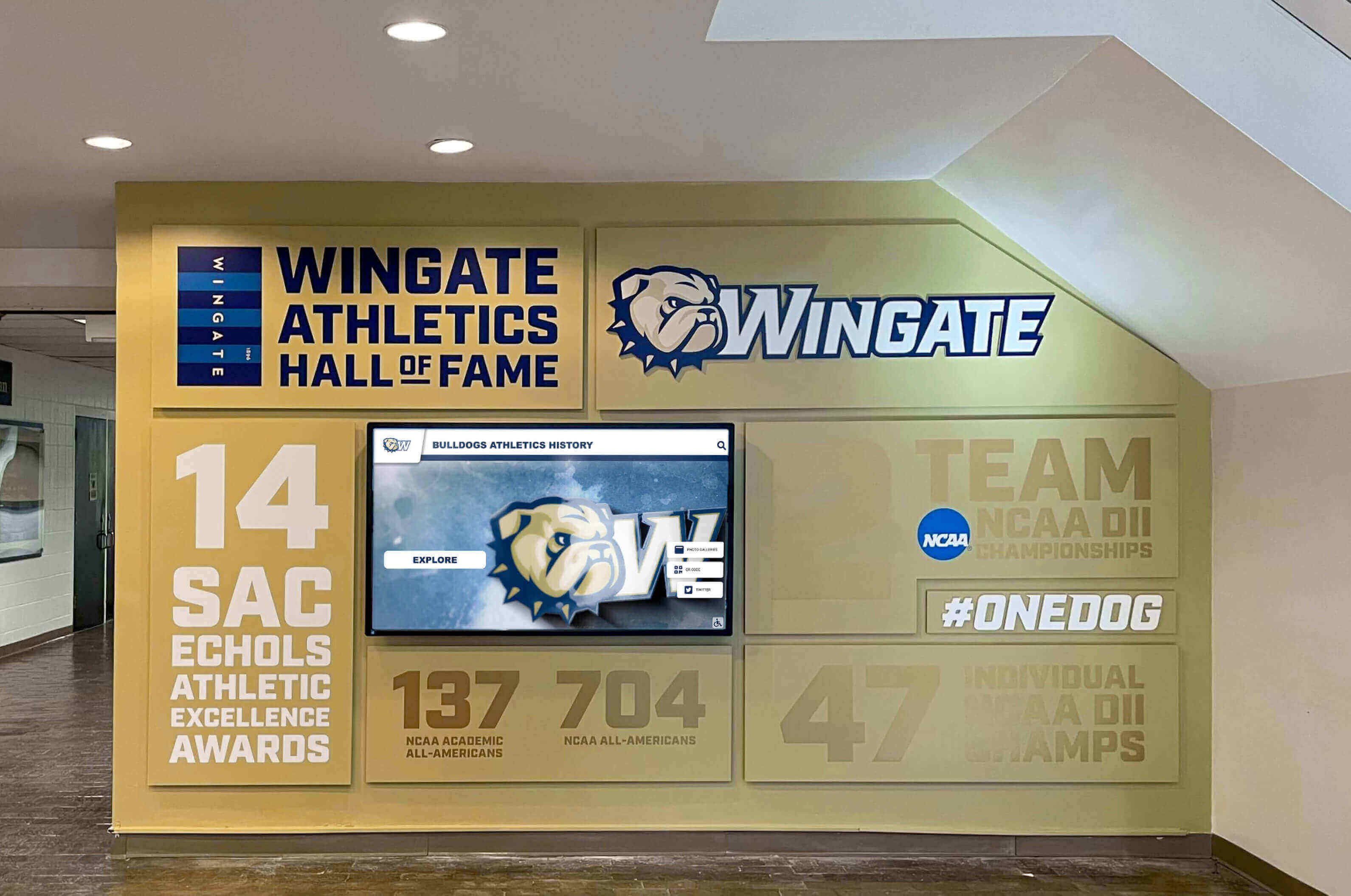
Rather than commemorating an entire graduating class equally, some schools create senior class displays organized around notable achievements within each graduating cohort. These panels highlight athletic records set by class members, academic distinctions earned, college acceptances achieved, or community impact created during the class’s four years.
Achievement-focused displays serve dual purposes: honoring the graduating class while creating aspirational content for current students who see what their predecessors accomplished. A display panel noting that the Class of 2019 produced three state athletic champions, two National Merit Scholars, and raised $40,000 for the school library renovation communicates both legacy and standard simultaneously.
These panels work particularly well when placed near athletic trophy cases, academic recognition walls, or community engagement displays rather than in standalone senior class sections. The context strengthens the meaning of the achievements listed.
Senior Legacy Boards
A legacy board format goes beyond individual recognition to capture what a graduating class contributed collectively to the school community. Class mottos, charity projects, facility improvements funded by class fundraising, traditions established or revived during the class’s tenure, and notable collective experiences can all appear on legacy boards that distinguish each class’s contribution to school culture.
Class of 2026 digital showcase designs illustrate how schools are thinking beyond individual name lists toward collective legacy documentation that tells a richer story about what each graduating class meant to the school community.
What to Include on a Senior Class Plaque
The content decisions shape how meaningful and lasting a senior class plaque becomes. Schools typically include some combination of the following elements, with final selections depending on available space and school priorities.
Core identifying information: Class year, school name, school mascot or crest. These elements should appear prominently regardless of other content choices—they’re what allows any visitor to orient quickly to what the plaque represents.
Student names: Full-class name listings create the most personal connection for individual alumni but require space planning for classes with 300+ graduates. Schools with limited wall space sometimes include only class officers, honor graduates, or student leaders while directing general name recognition to other formats.
Class motto or quote: Mottos chosen by the class itself carry authenticity that externally assigned quotes cannot match. When schools establish processes for seniors to select their class motto during the school year, those mottos appear on plaques with genuine ownership behind them.
Class officers and leadership: Student body president, vice president, class representatives, and other elected leadership positions are commonly listed. Schools with structured senior class officer programs often feature these students prominently as representatives of the class’s collective voice.
Academic distinctions: Valedictorian and salutatorian names, honor graduate counts, scholarship totals, and college acceptance highlights connect the recognition to academic mission rather than limiting it to social or athletic achievement.
Athletic accomplishments: Championship titles, state qualifiers, and athletic records set by class members contextualize what the graduating cohort achieved in competition. Graduation recognition that spans academic and athletic achievement creates more complete class portraits than formats focused on a single dimension of student success.
Materials, Finishes, and Longevity
Senior class plaques are long-term investments. A plaque installed today should still look presentable forty years from now when members of that graduating class return for their reunion. Material selection matters accordingly.
Bronze: The traditional standard for permanent plaques, bronze develops a natural patina that most schools find attractive rather than problematic. Cast bronze plaques maintain legibility indefinitely in interior installations and handle the humidity variations common in school buildings without warping or fading.
Aluminum with powder coat finish: Lower cost than bronze with excellent durability for interior applications. Modern powder coating produces stable, fade-resistant finishes across a wide color range. Laser engraving on aluminum produces clean, precise results that hold up well over time.
Stainless steel: Offers a contemporary aesthetic that suits schools seeking modern design languages rather than traditional institutional appearances. Requires laser or chemical etching rather than mechanical engraving and is less forgiving of fingerprints and surface marks in high-traffic installations.
Acrylic and substrate printing: Photo-quality composites and printed plaques using sublimation or UV-cured inks can be stunning when new but require UV-protective coatings and careful placement to avoid sun exposure that degrades image quality over time. Best suited for display cases or interior hallways without direct sunlight exposure.
Wood with engraved panels: Cherry, oak, and walnut plaques with engraved metal name plates create warm, traditional displays well-suited to library settings, administrative wings, and main lobby installations. Wood requires climate-controlled environments to prevent warping and checking over decades.
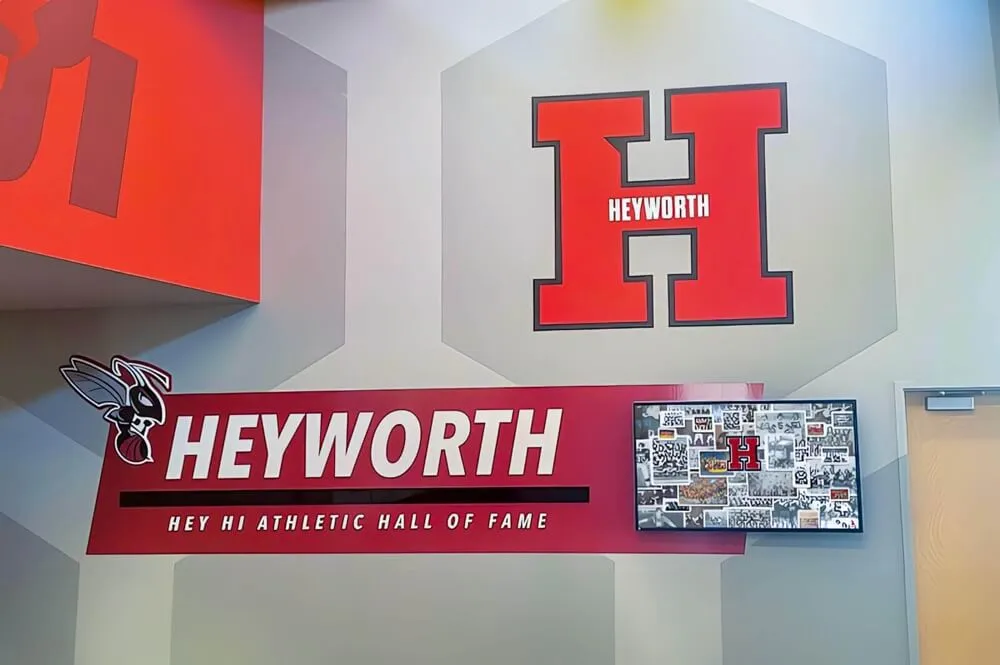
High school wall of fame design considerations that apply to broader athletic recognition programs overlap directly with senior class plaque planning—the same questions about material durability, cohesive aesthetics across multiple years of installations, and placement for maximum visibility apply whether you’re designing an athletic hall of fame or a senior class tribute corridor.
Placement and Display Strategy
Where a senior class plaque lives determines who sees it, how often, and in what context. Schools that treat placement as an afterthought often find that thoughtfully designed plaques fail to achieve the visibility and engagement their makers intended.
Main lobby and entrance areas: High-visibility locations that ensure every visitor, new student, and current family member encounters the recognition. Senior class plaques in entrance corridors communicate school values through what visitors see first. The tradeoff is limited space in most lobby environments—schools with dozens of graduating years to represent typically need a planning strategy that accommodates growth.
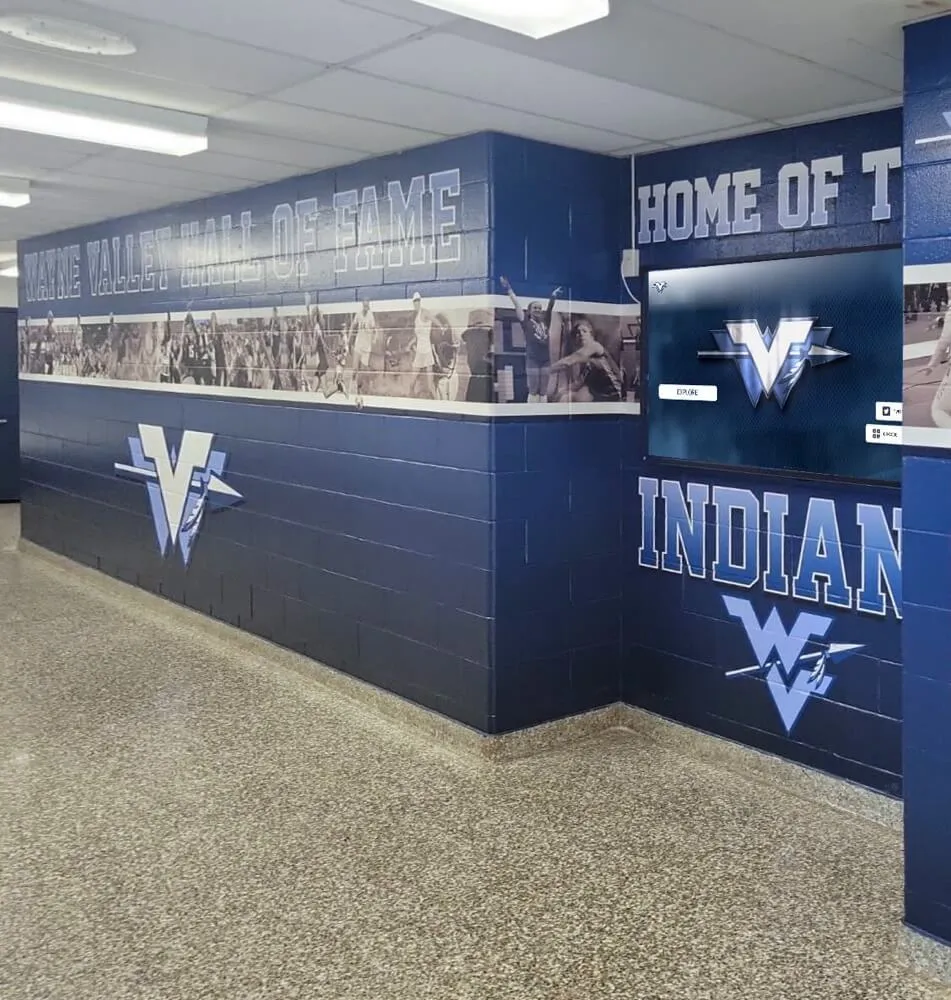
Dedicated senior class hallways: Some schools dedicate entire corridor sections to graduating class recognition, creating extended gallery experiences where each year’s plaque appears in sequence. These installations work particularly well when the school has a long recognition tradition—a hallway showing Class of 1975 through Class of 2025 in continuous sequence creates an immersive experience that current students find both meaningful and aspirational.
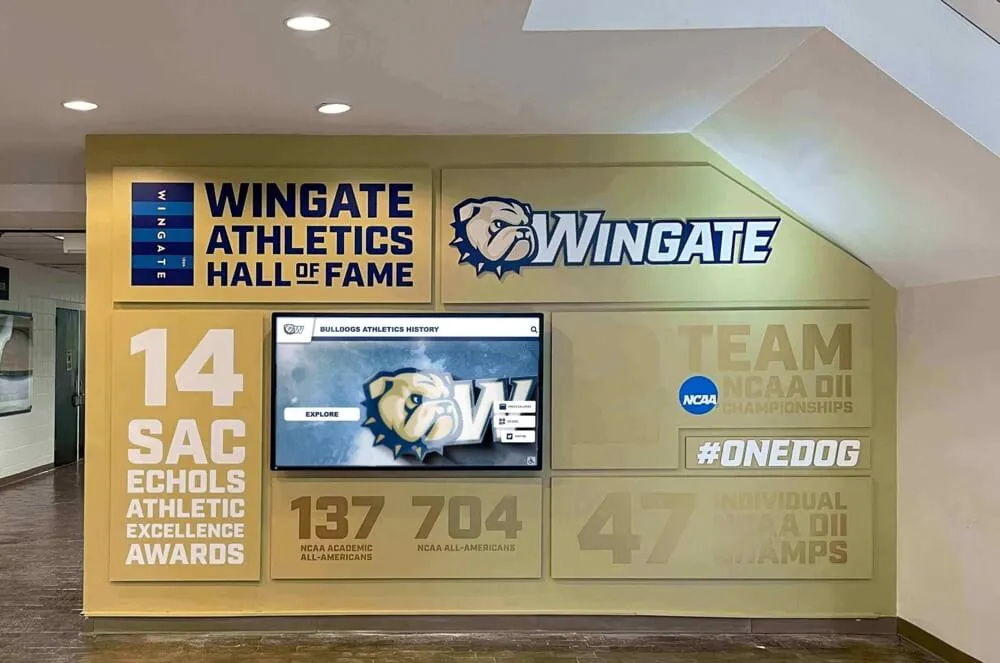
Near athletic and academic recognition: Placing senior class plaques near trophy cases, record boards, and existing athletic or academic recognition creates natural connections between graduating class identity and program achievement. Visitors who stop to look at state championship banners encounter senior class recognition in the same visual moment.
Gymnasium and auditorium lobbies: Spaces where students and families gather for significant events—games, performances, graduation ceremonies—benefit from recognition displays that make those gatherings feel more meaningful. Senior class plaques in performance or athletic venues create contextual connections between the recognition and the activities that defined each class’s experience.
School hallway recognition and display planning provides frameworks for thinking through where different recognition formats belong within a school’s physical environment and how to coordinate multiple recognition initiatives so they reinforce rather than compete with each other.
Combining Physical Plaques with Digital Recognition
Physical senior class plaques and digital recognition systems serve overlapping but distinct purposes, and the most effective school recognition programs use both in coordination rather than treating them as alternatives.
What physical plaques do best: Permanence without power requirements, no maintenance beyond occasional dusting, tangible presence that visitors can touch and photograph, architectural integration that becomes part of the building’s visual identity over decades. A bronze class plaque mounted in a school lobby will still be there—and still be readable—long after any digital system has been replaced, updated, or retired.
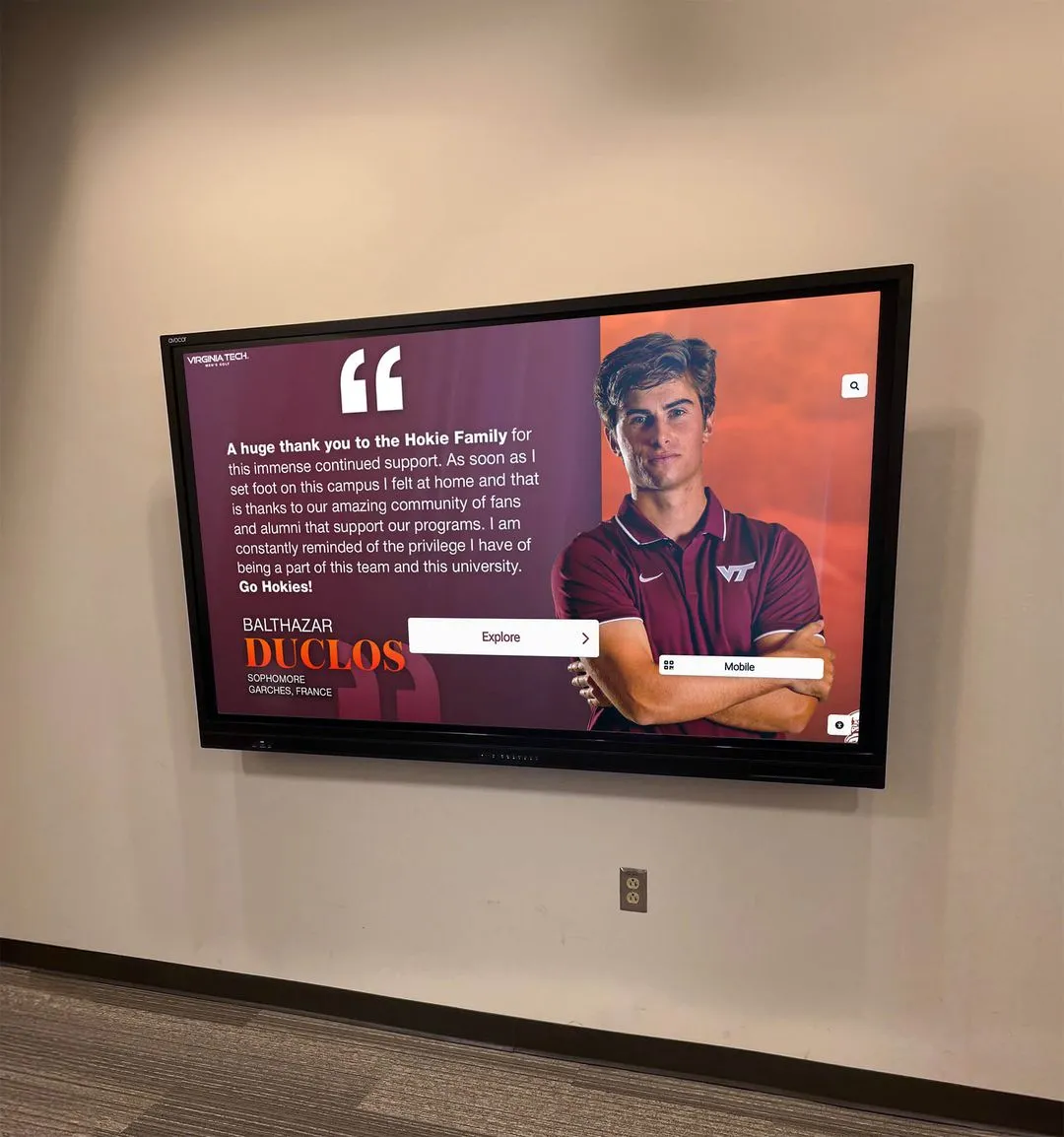
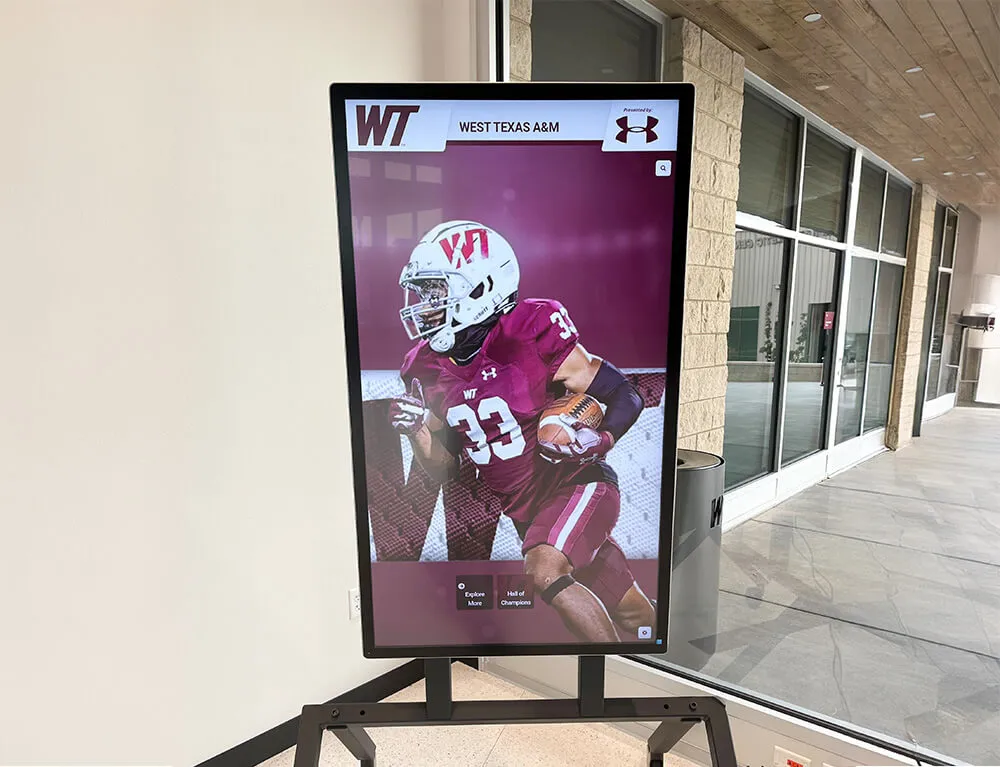
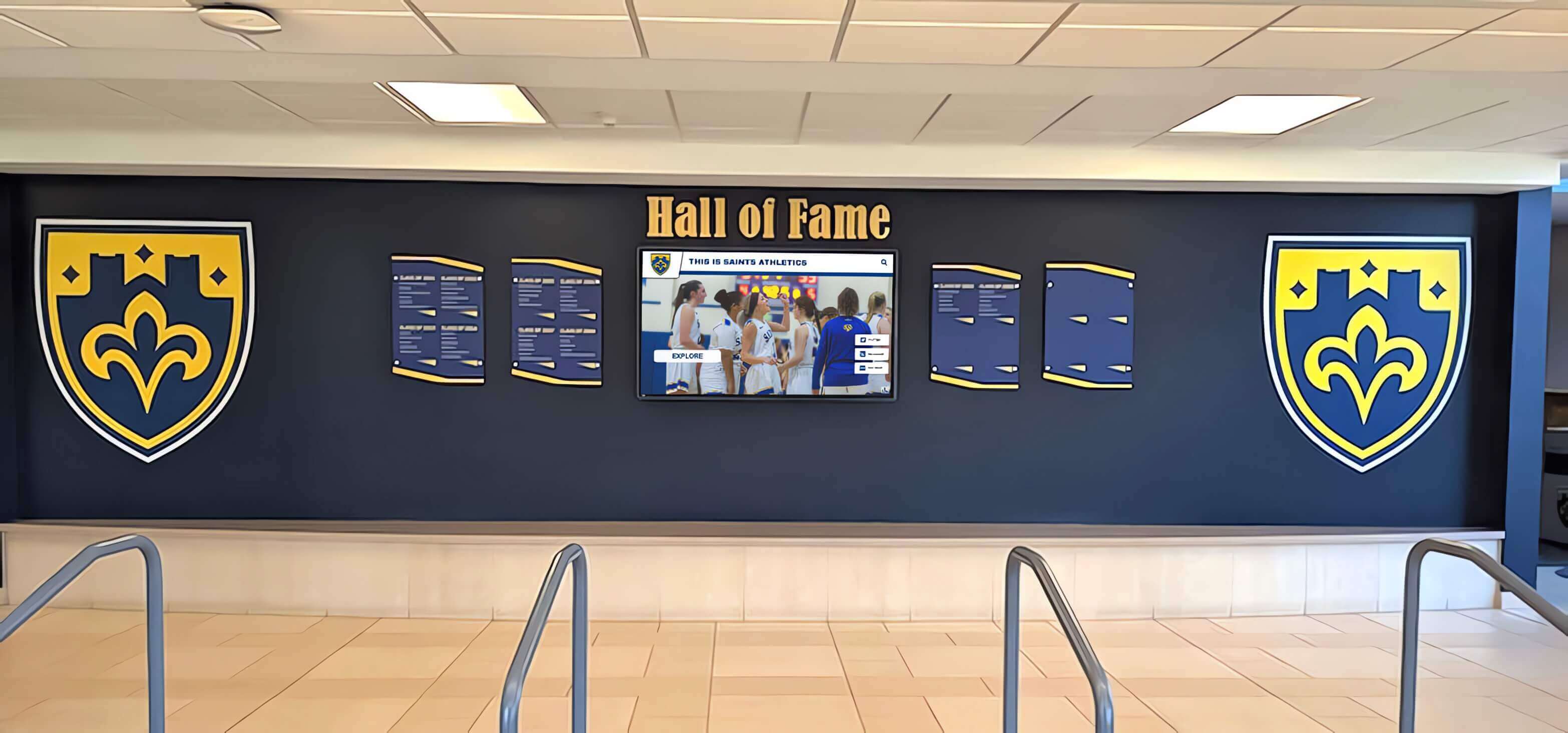
What digital systems enable: Content depth that physical formats cannot accommodate, including full-resolution portrait galleries, video highlights, links to external content, and searchable databases that let alumni find their own entries across decades of class history. Digital systems can house the complete story of a graduating class—not just names and a motto but athletic statistics, academic achievements, notable alumni career updates, and rich multimedia tributes—in an accessible format that physical plaques cannot match.
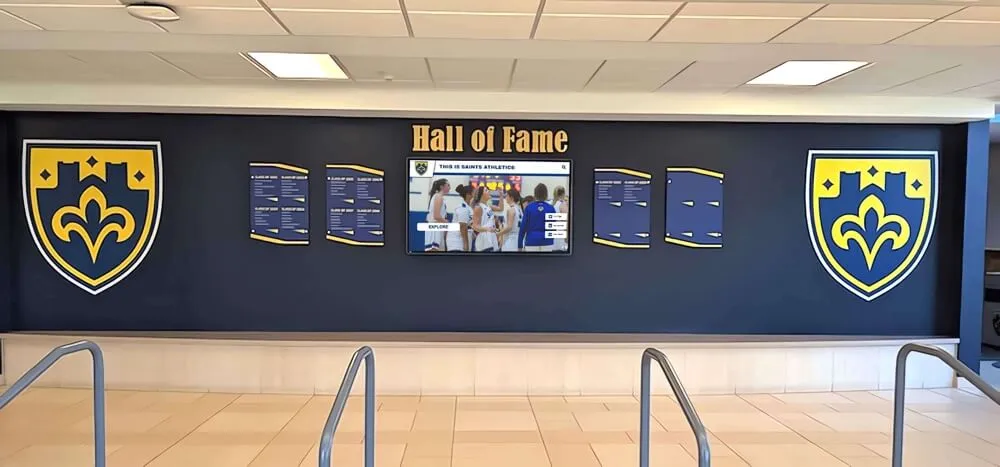
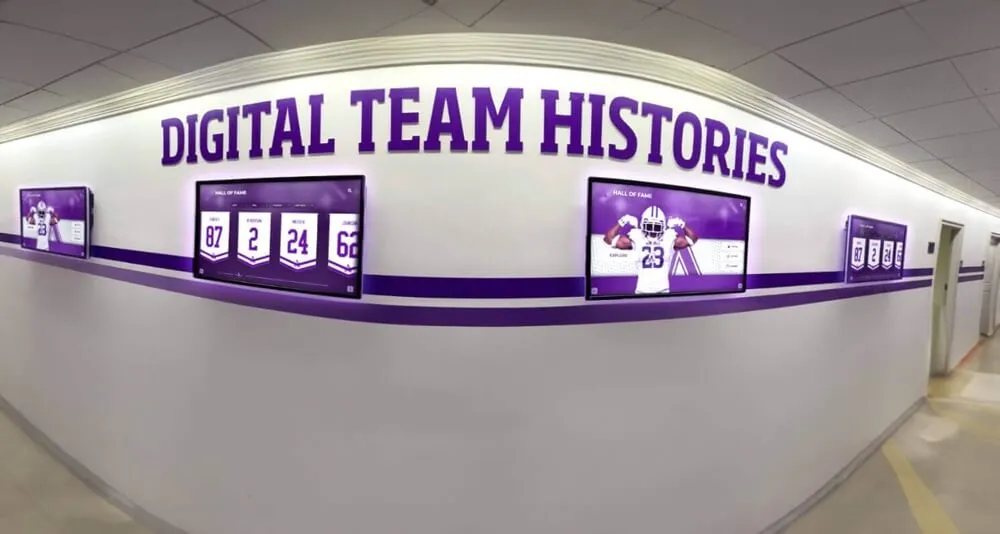
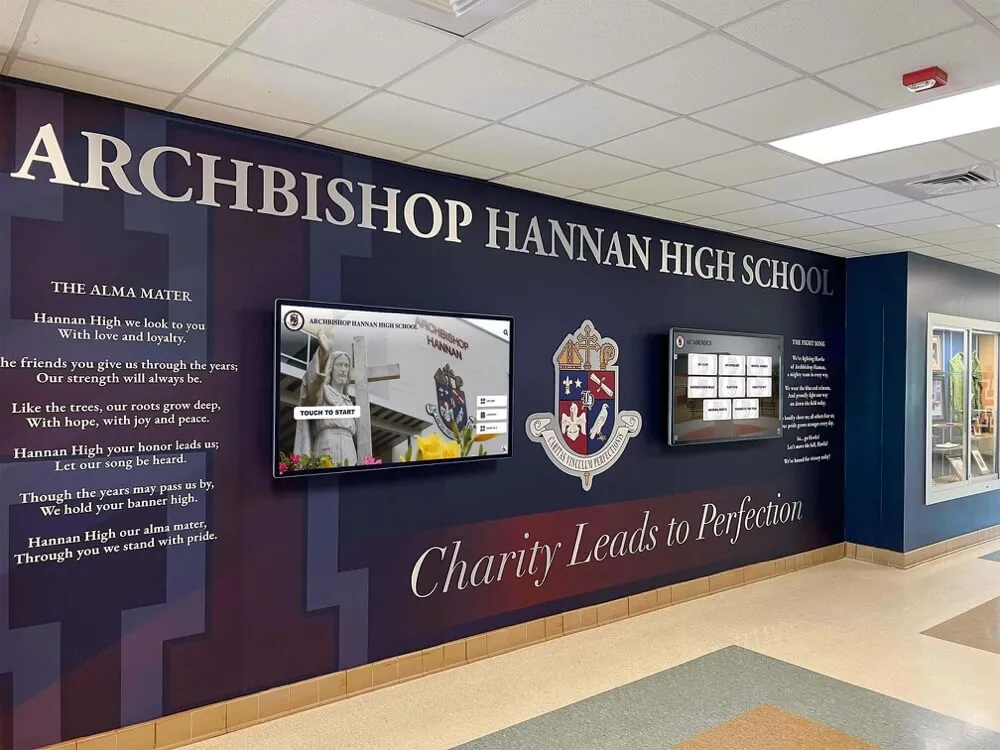
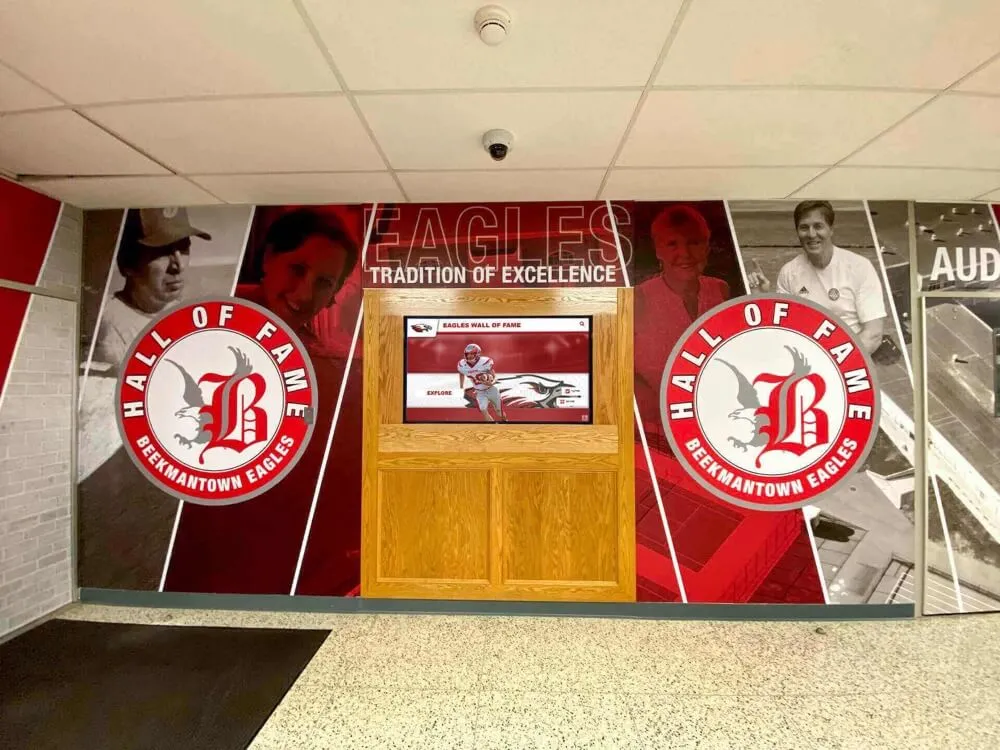
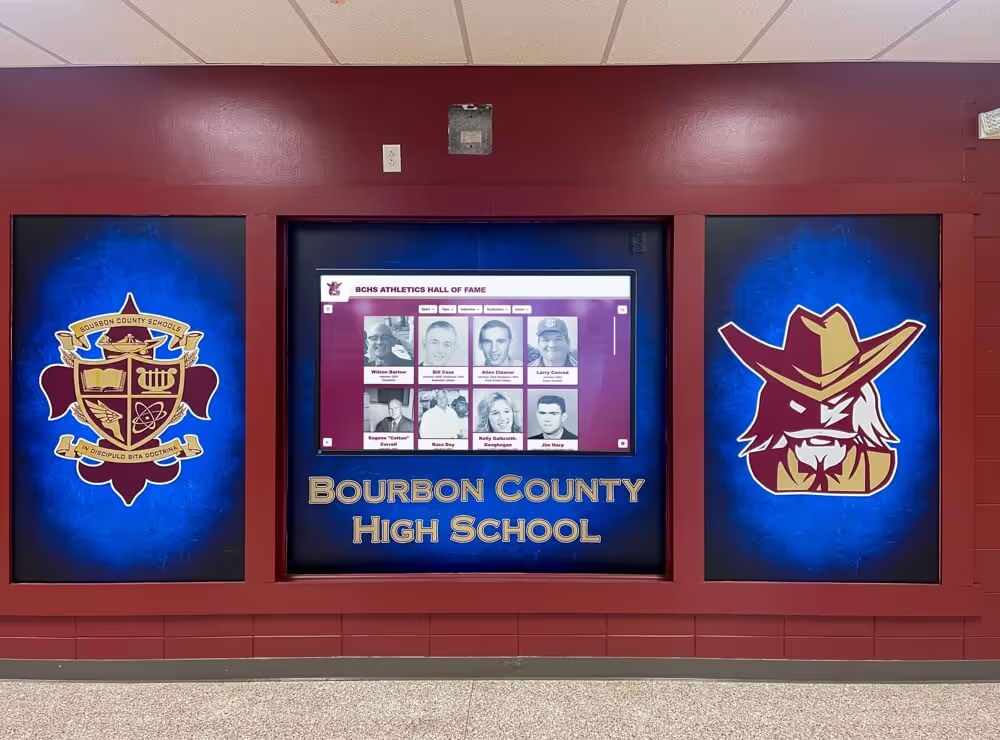
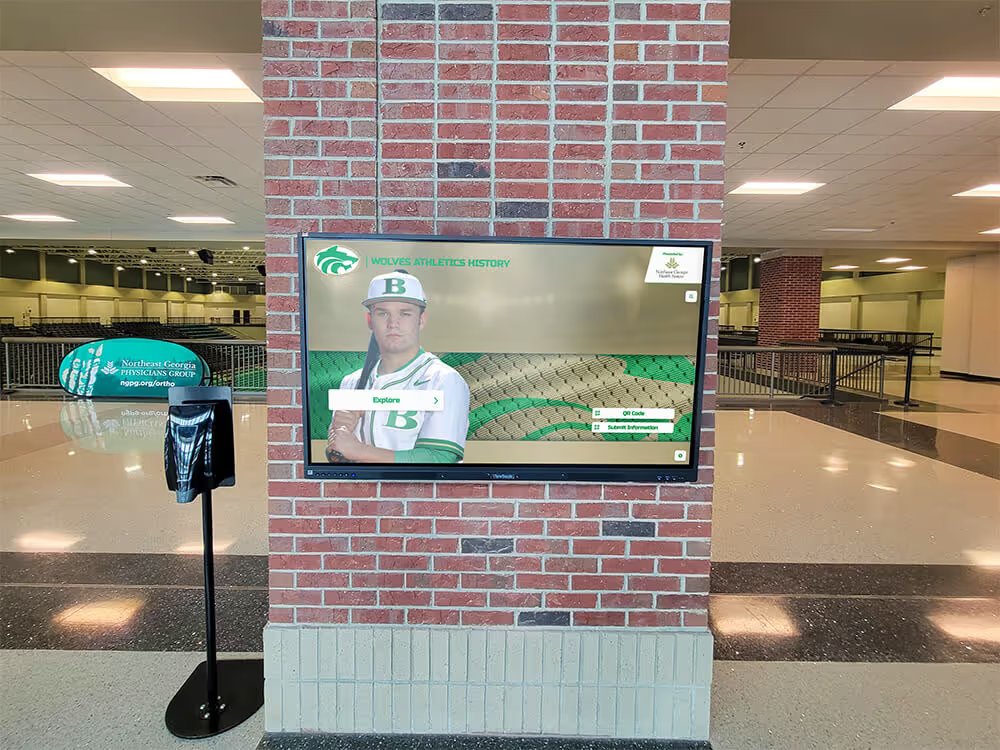
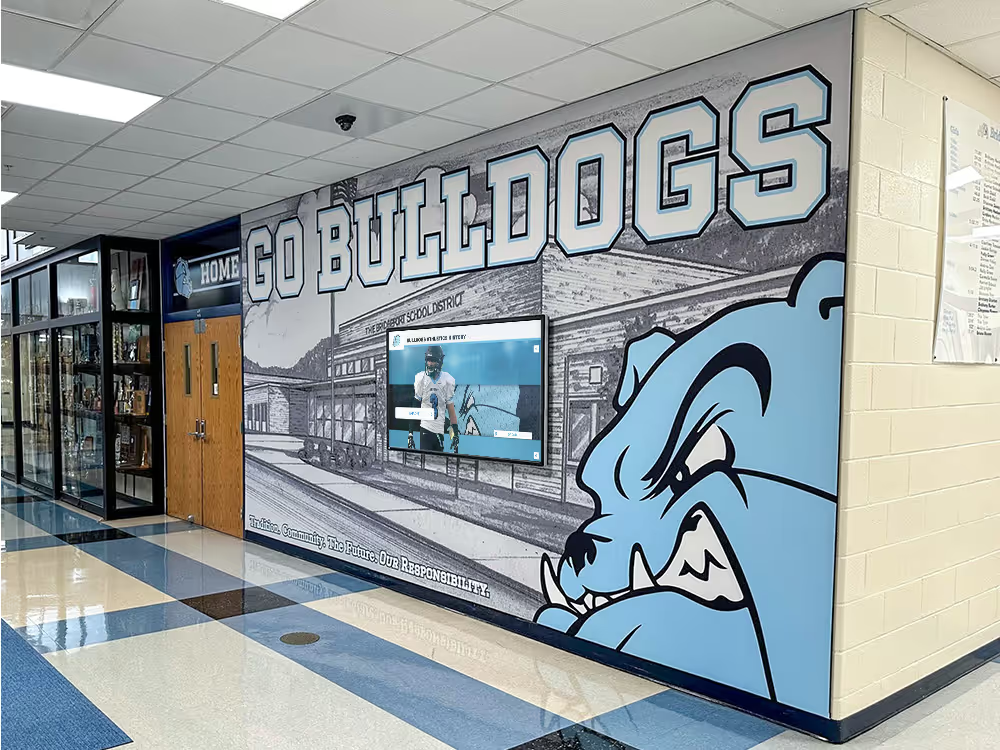
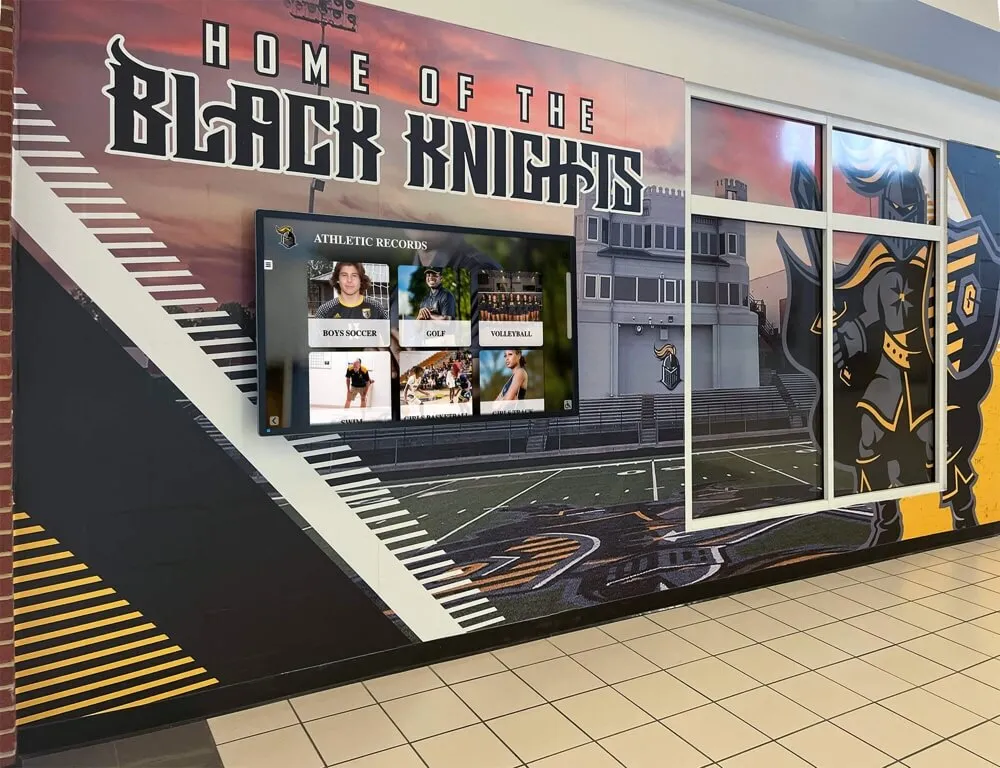
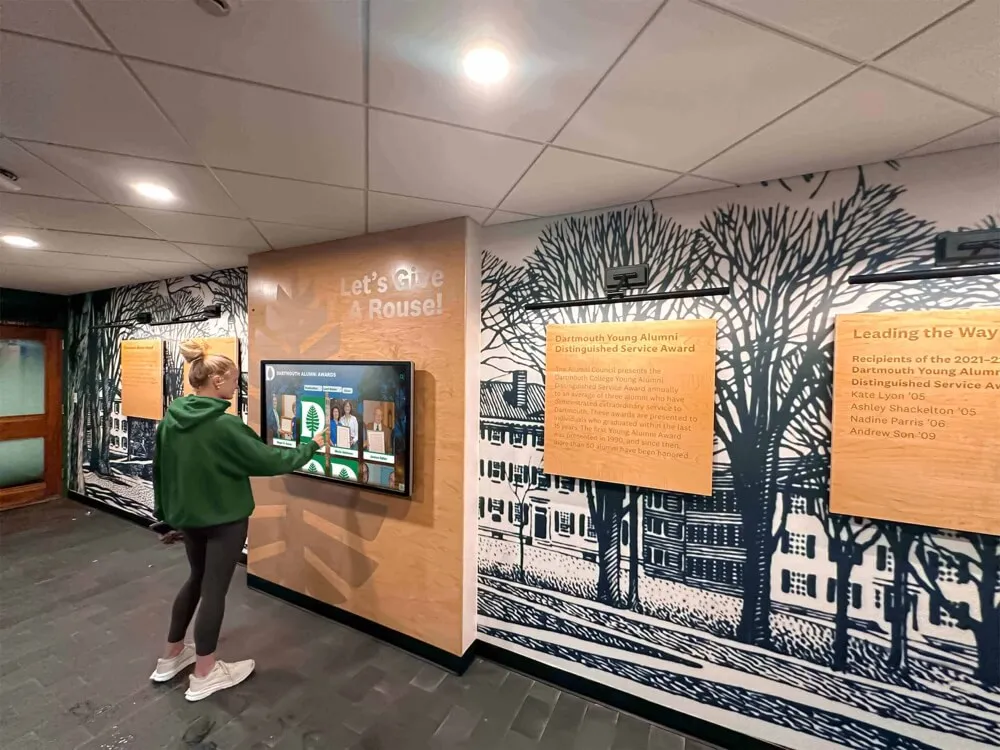
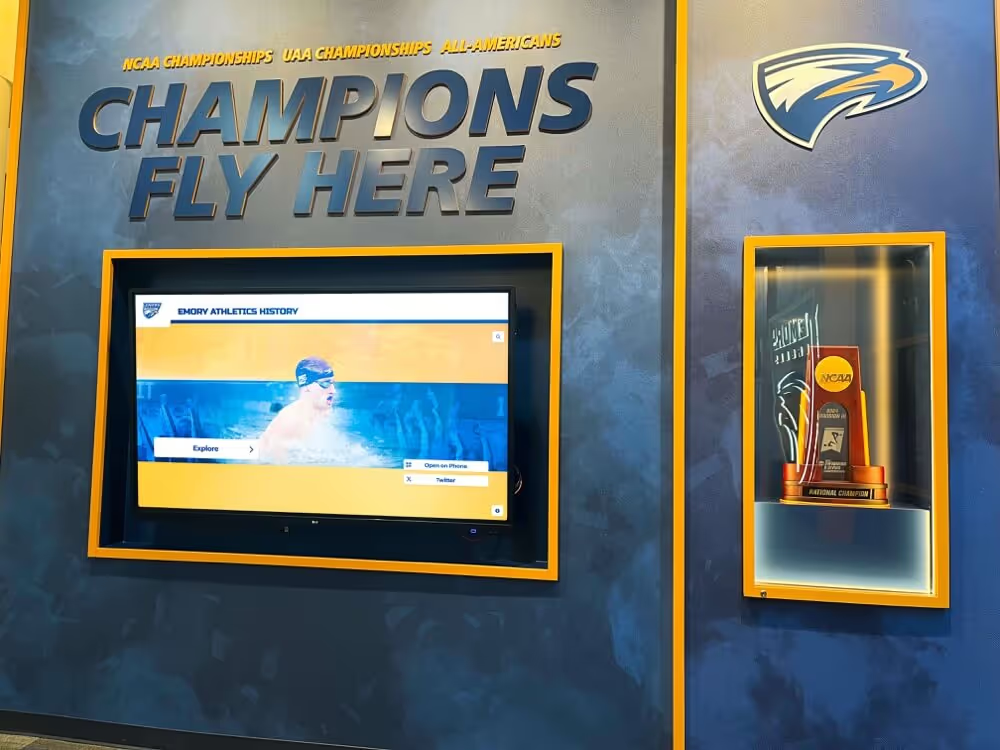
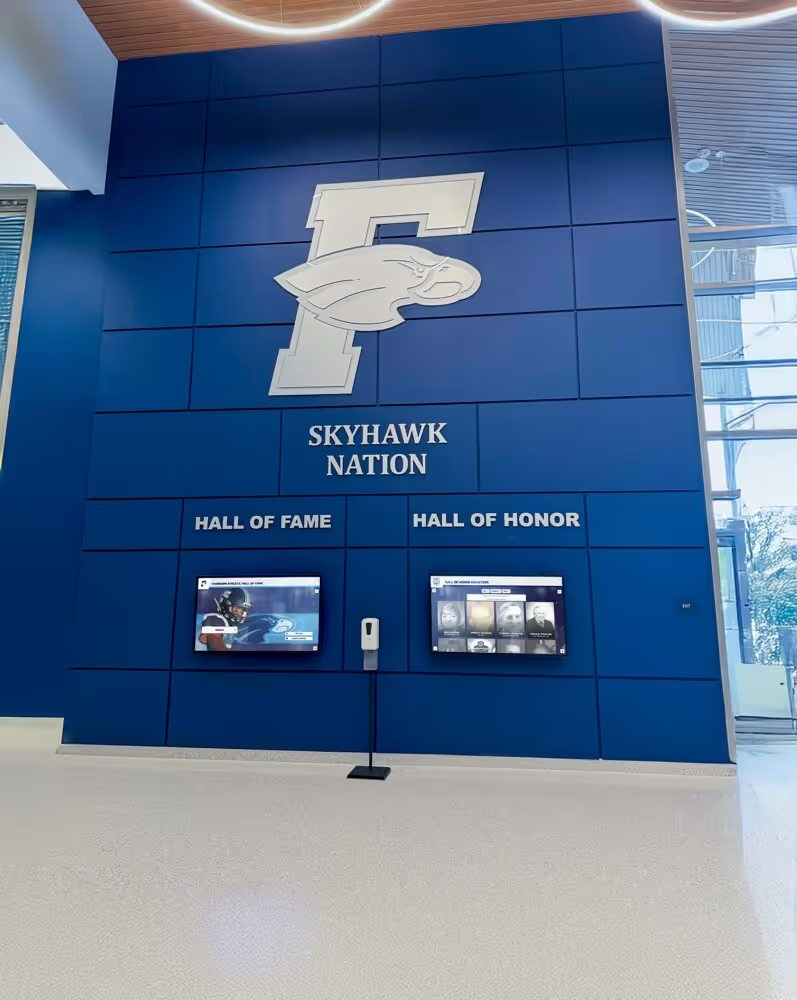
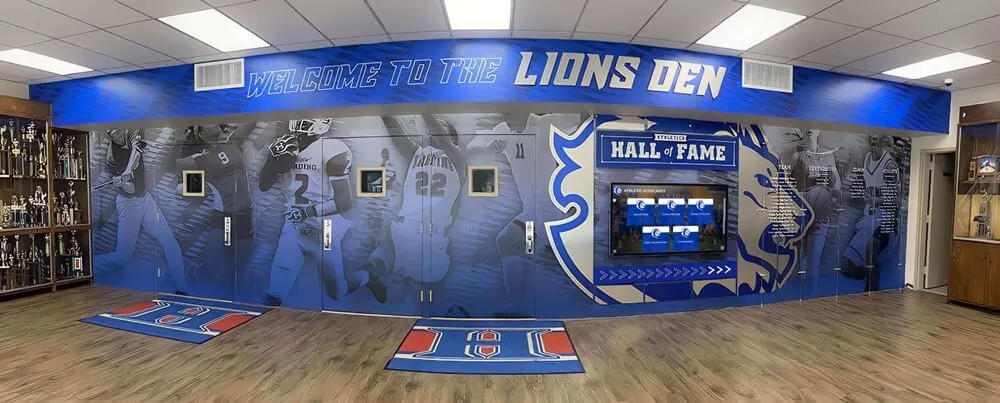
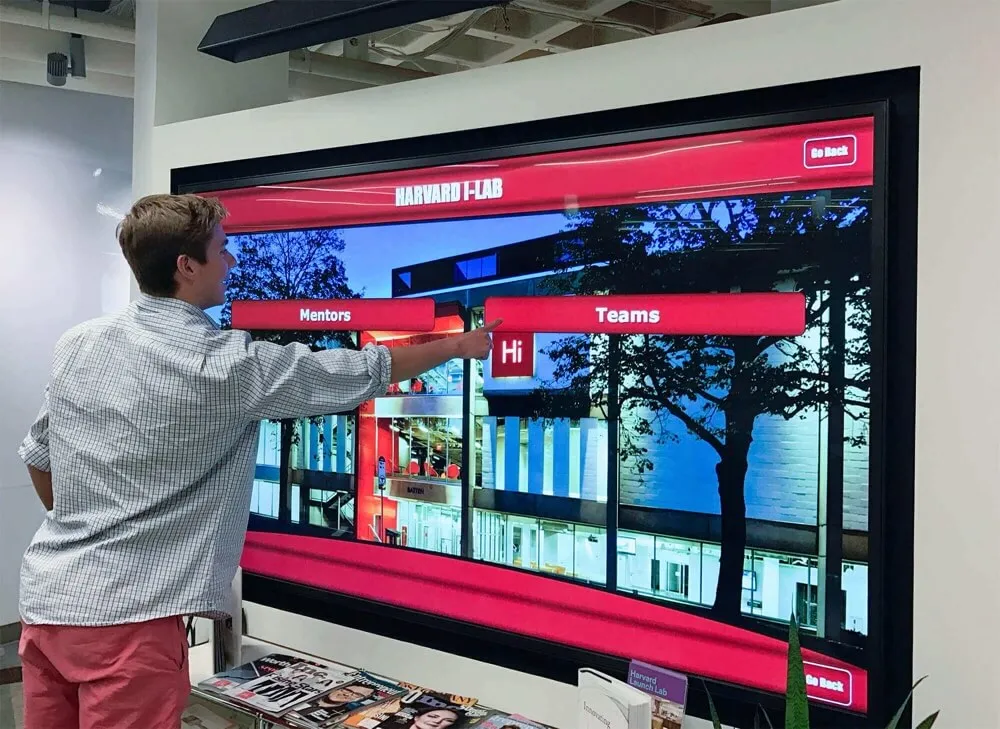
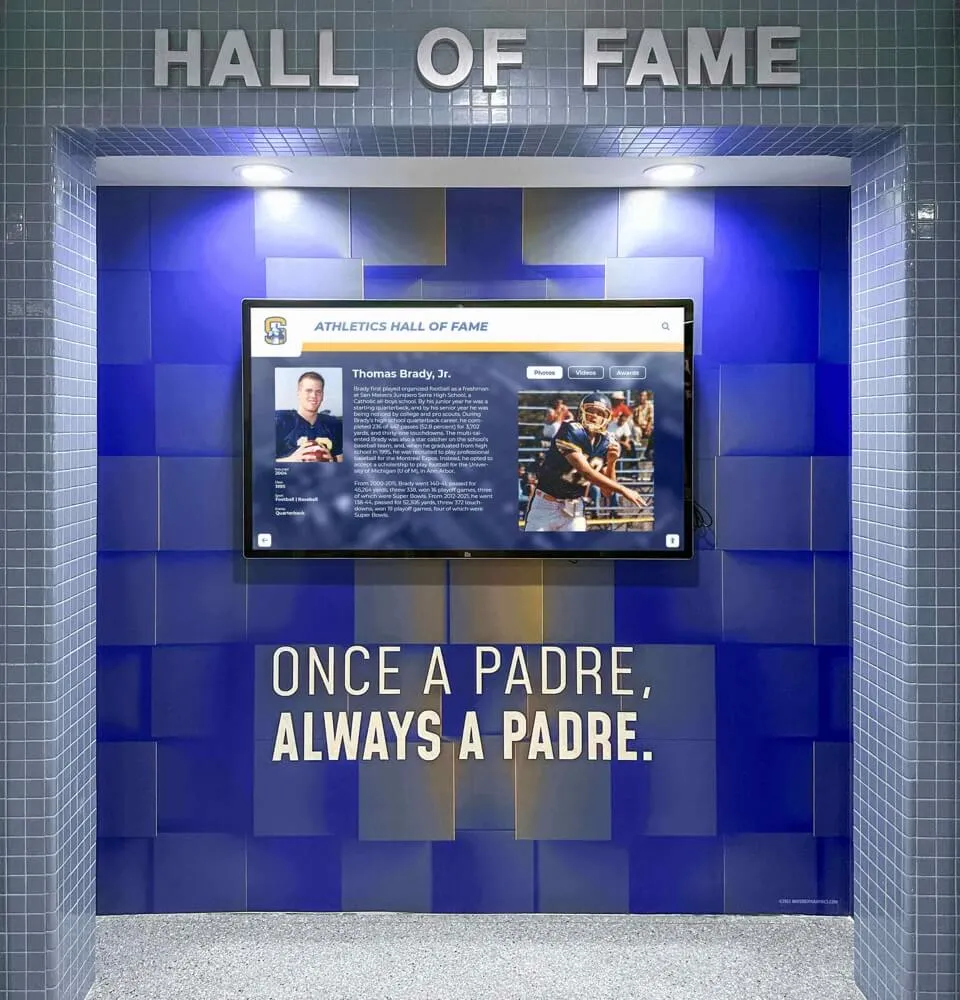
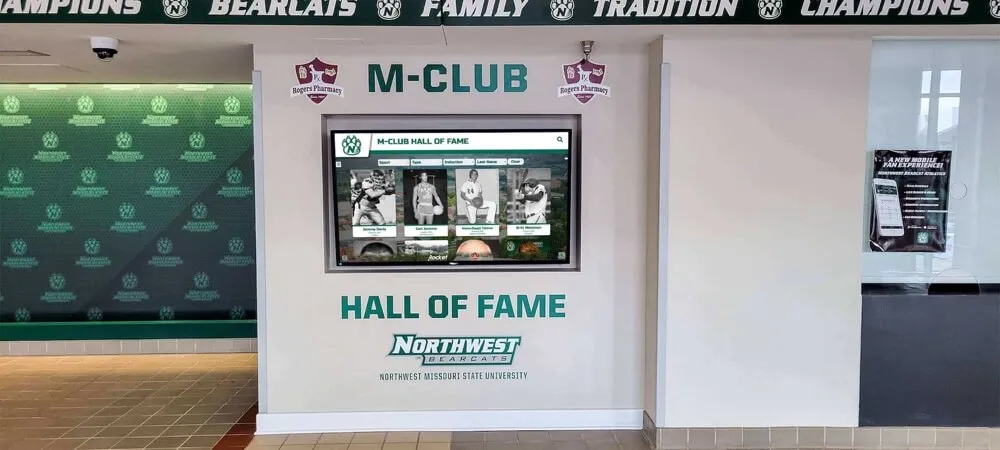
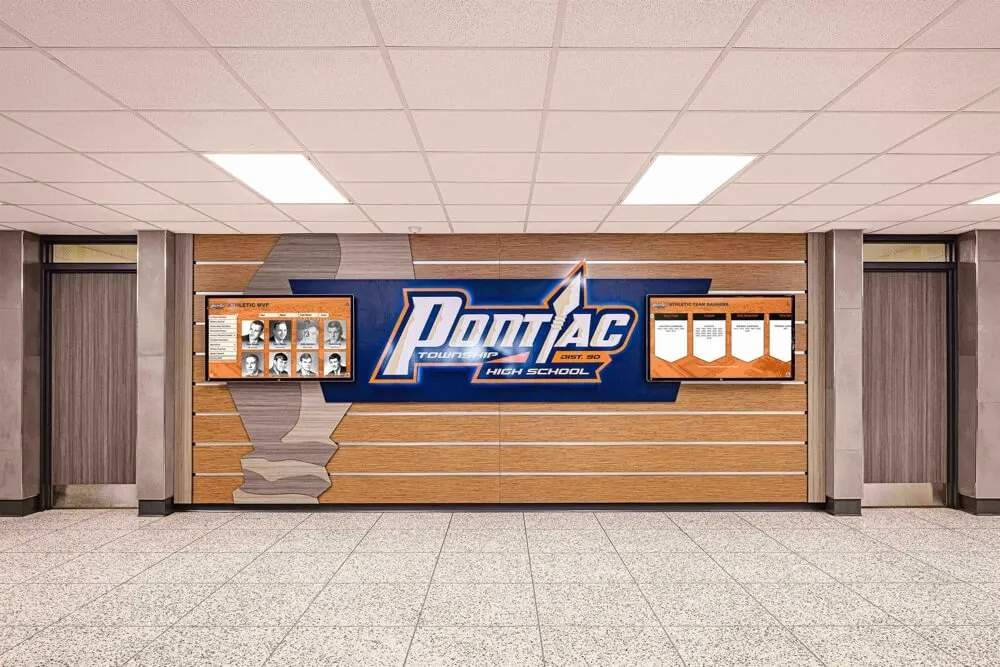
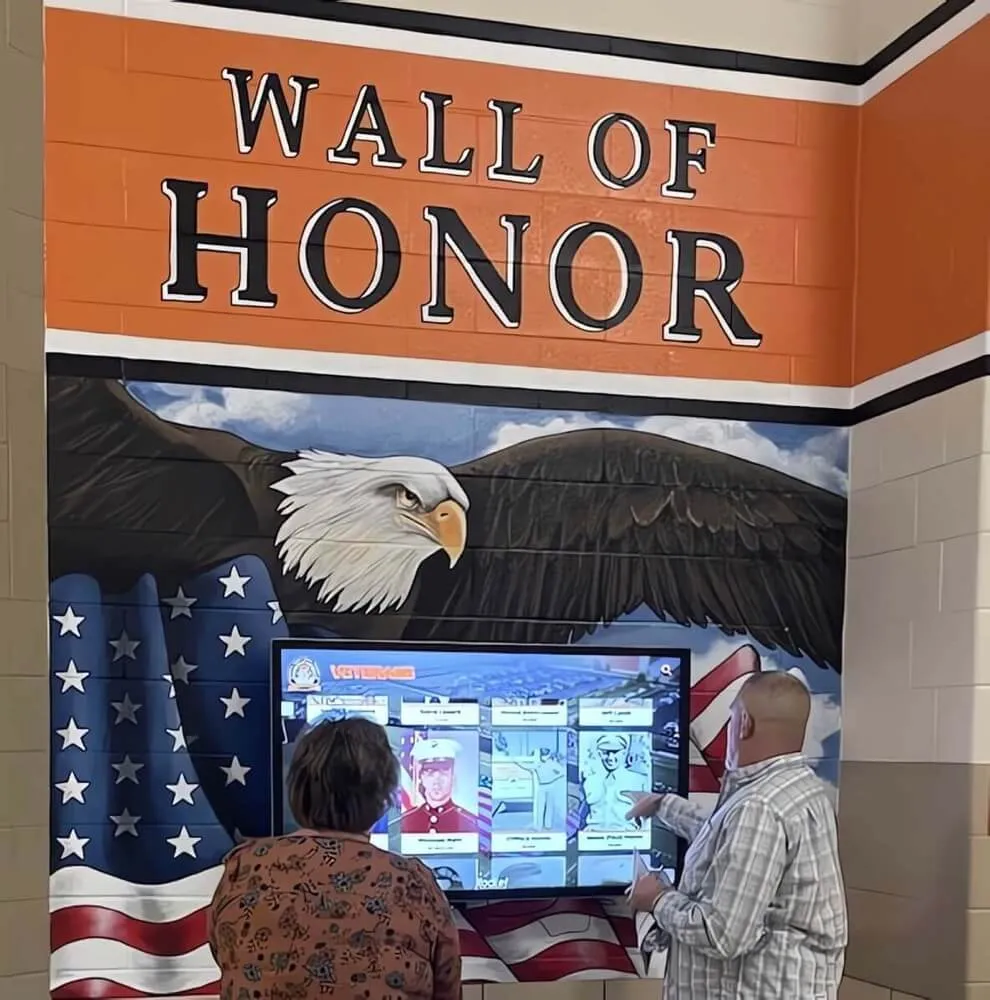
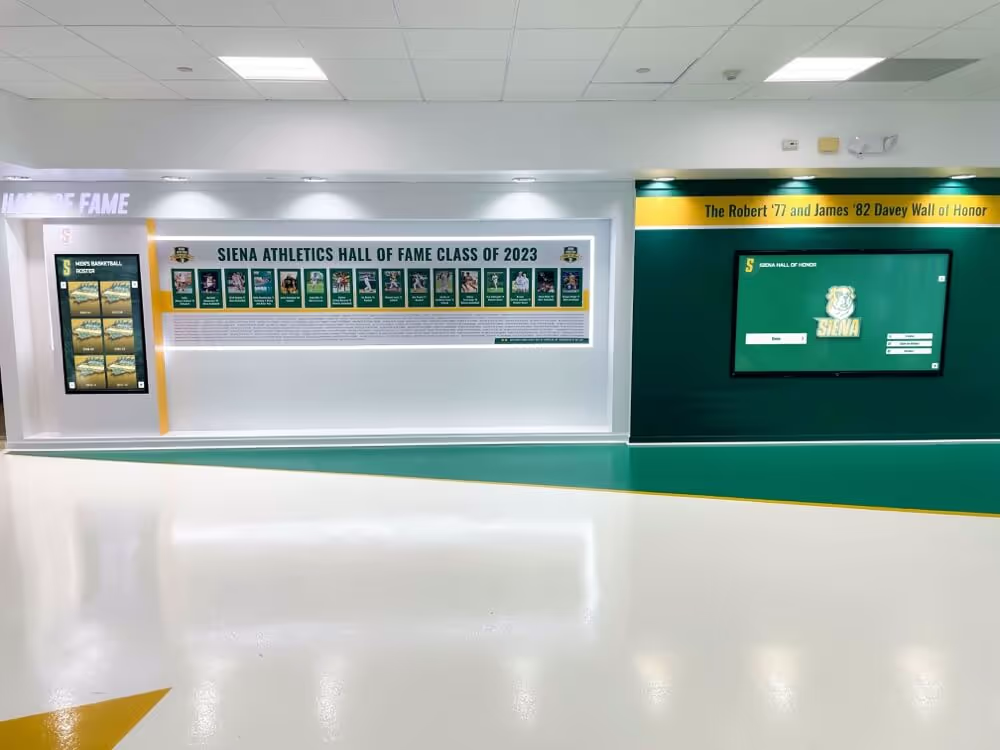
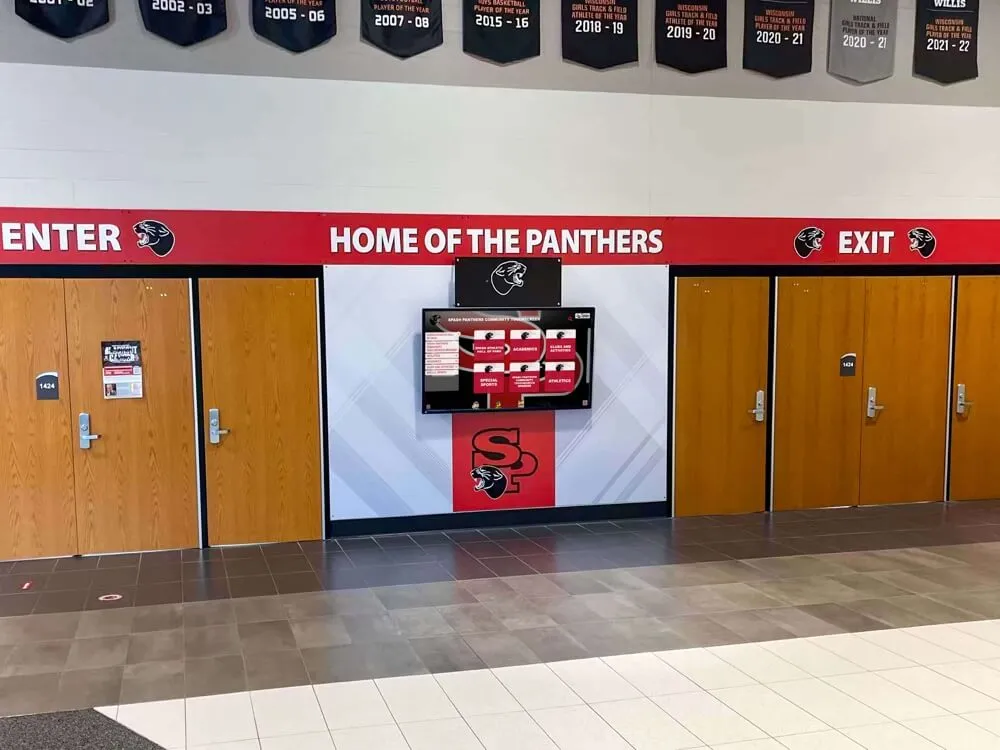
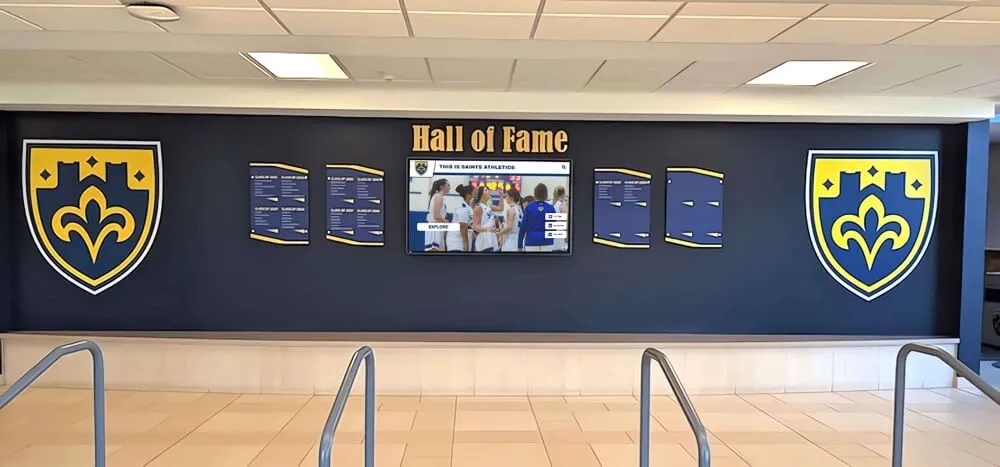
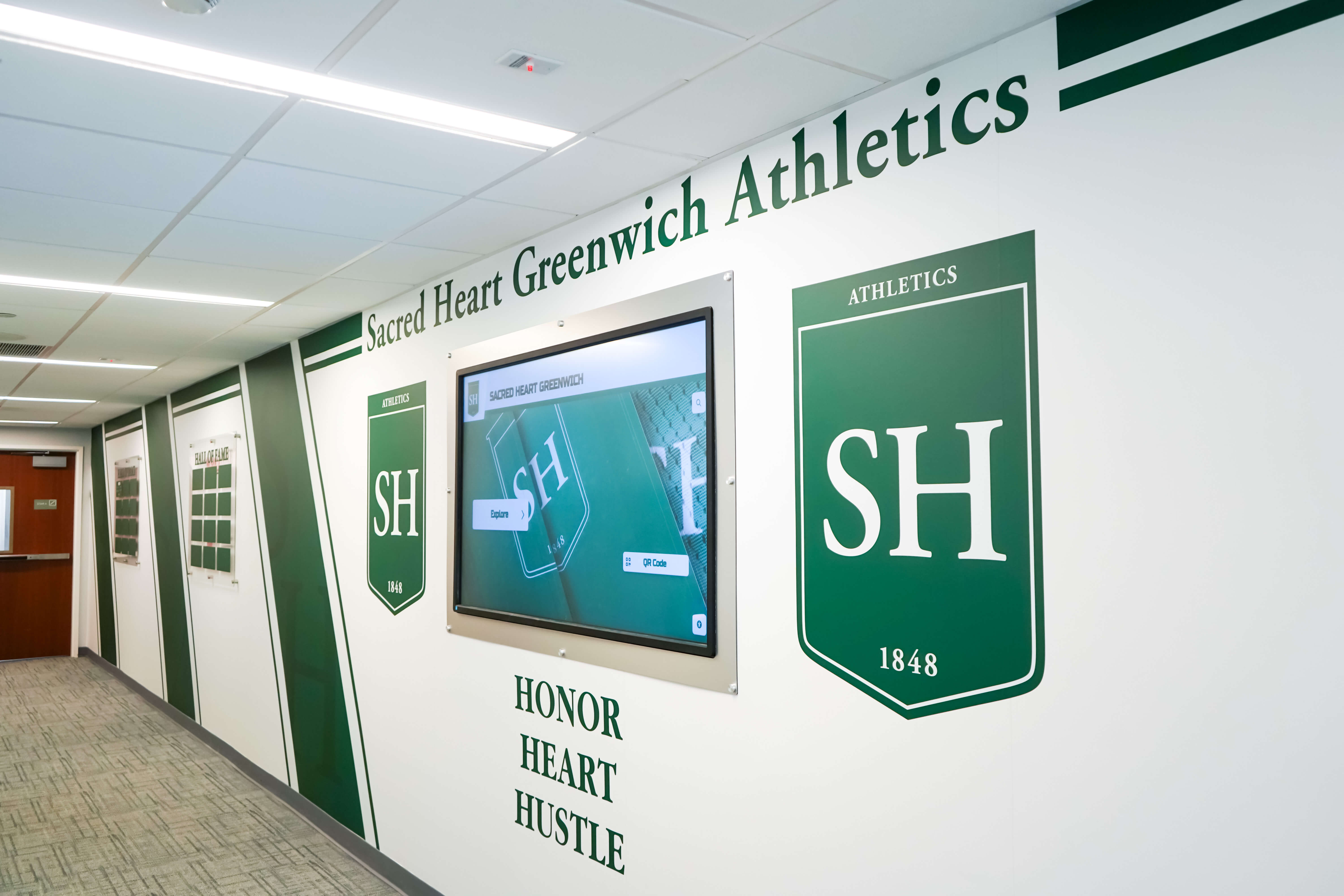
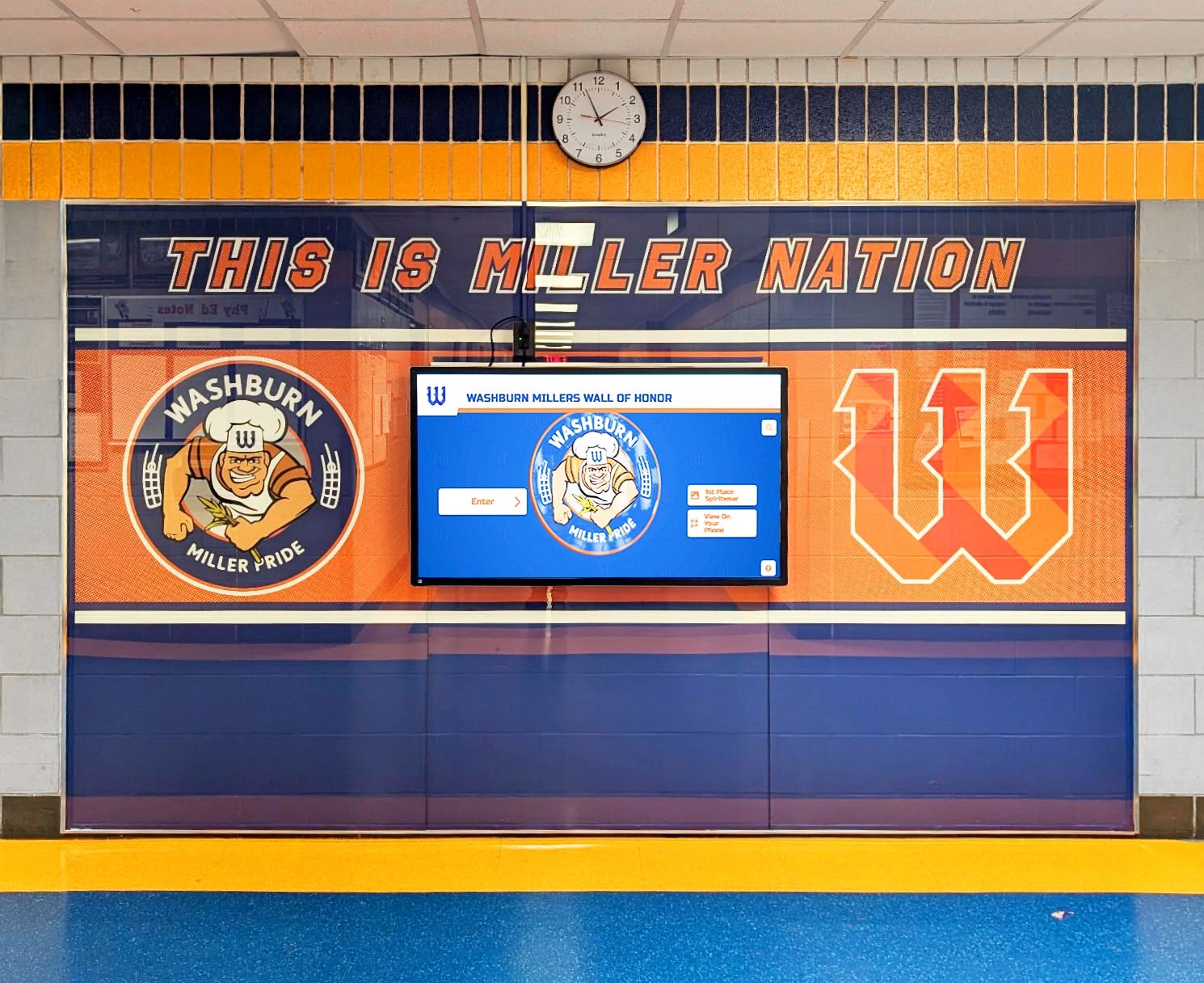
Schools that use physical senior class plaques as permanent anchors while housing expanded digital profiles in interactive touchscreen systems achieve the best of both approaches. The physical plaque marks the wall permanently; the digital display tells the full story for those who want to explore deeper. Alumni who encounter the physical plaque while visiting for reunion events can engage with the digital system to revisit complete class histories in a way the plaque alone could never support.
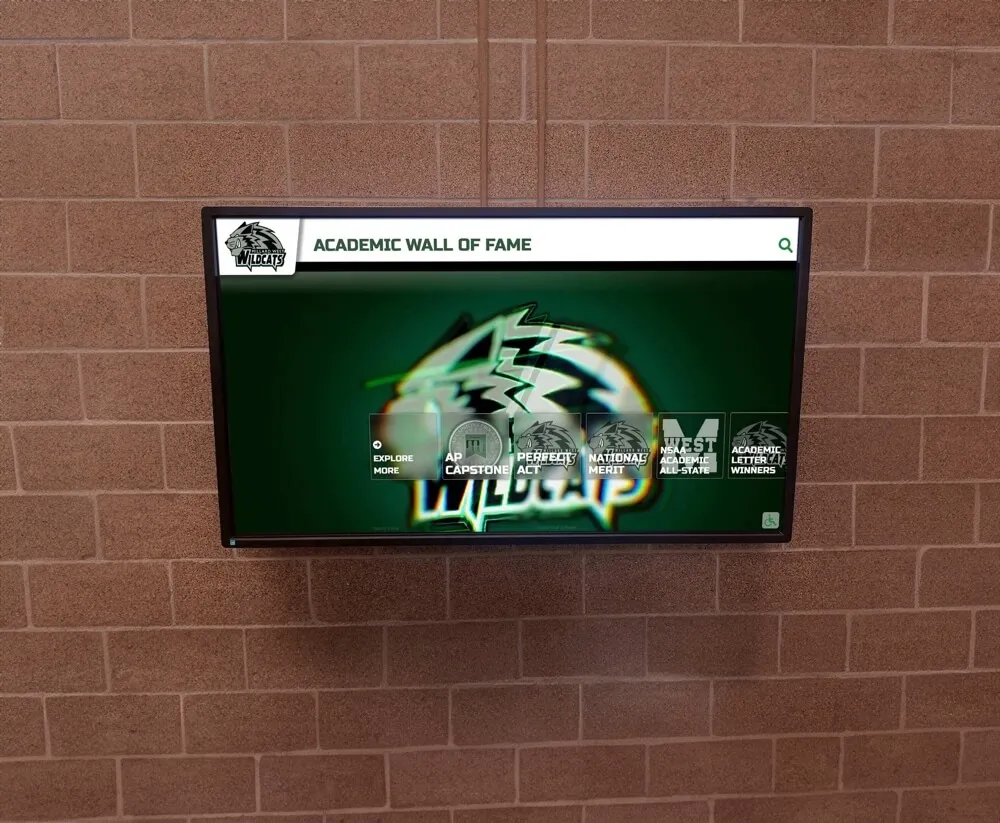
What a digital hall of fame actually includes explains how these systems work in school environments and what kinds of content they can accommodate alongside or beyond what physical plaques provide.
School banner and display design ideas for gyms and hallways shows how schools are integrating multiple recognition formats into cohesive visual environments where each format serves a distinct purpose.
Building a Multi-Year Senior Class Recognition Program
The most impactful senior class plaque programs aren’t designed one year at a time—they’re planned as long-term installations where individual class plaques accumulate into a comprehensive school legacy display that becomes more meaningful with each passing year.
Effective multi-year programs share several characteristics:
Consistent visual identity across years. When each graduating class’s plaque follows the same general format—matching materials, similar dimensions, consistent typographic standards—the accumulated display reads as an intentional institutional program rather than a collection of disconnected individual projects. This consistency requires establishing design standards before the first plaque is installed and maintaining those standards as successive administrations come and go.
Planned wall capacity. Schools adding plaques annually need to plan physical space for growth. A school that installs Class of 2024 without thinking through where Classes of 2034, 2044, and 2054 will go often faces awkward mid-program decisions about extending hallways, converting display formats, or abandoning consistency. Physical planning for fifty years of future installations costs nothing at the outset and prevents significant disruption later.
Content archiving for future reference. Senior class plaque content that exists only on the physical plaque becomes inaccessible if the plaque is ever damaged, removed during renovation, or relocated. Schools that maintain digital archives of plaque content—photographs of each plaque, typed records of all names and achievements included—protect that historical record against physical damage or loss.
Alumni engagement as a quality signal. Schools with strong senior class plaque programs often discover that alumni return specifically to find their class’s plaque during reunion visits, school events, and casual community visits. This behavior—stopping in front of a plaque, showing family members, photographing it—signals that the recognition achieved its purpose of creating lasting connection. Schools that observe this behavior have evidence their plaque program is working; schools that don’t might examine whether their plaques are prominent enough, rich enough in content, or placed where alumni naturally encounter them.
Academic wall of excellence renovation guidance addresses how schools handle the transition when existing recognition installations need updating—relevant for schools whose senior class plaque programs have accumulated over decades and now need coherent renovation plans to bring aging displays into alignment with current standards.
Getting the Process Right Each Year
Executing an annual senior class plaque program consistently requires establishing reliable processes that survive staff turnover, budget cycles, and the year-to-year chaos of school administration.
Start content collection early. The information that belongs on a class plaque—final names lists, academic distinctions, athletic achievements, class motto selections—becomes available at different points across the school year. Schools that begin organizing this content systematically from the start of senior year rather than scrambling in the final weeks before graduation produce more accurate, complete plaques.
Establish vendor relationships before you need them. Award suppliers, trophy companies, and custom display fabricators often have multi-week lead times for institutional plaque orders. Schools that develop established supplier relationships and understand typical production timelines avoid rushed orders that increase cost and reduce quality.
Create an approval workflow. Plaque content—particularly student name lists—should pass through a defined review process before going to production. Names misspelled on permanent institutional displays create ongoing embarrassment and, in some cases, legitimate grievances from affected students and families. A simple review process with a designated approver protects against avoidable errors.
Document the installation. Photograph each plaque upon installation, record its location, and archive all content in a school records system. This documentation is the foundation for any future renovation, digital expansion, or historical research project that draws on senior class recognition history.
Rocket Alumni Solutions designs interactive recognition systems specifically built for schools that want to create lasting digital tributes alongside or instead of physical-only plaque programs. Whether your school is planning a new senior class recognition initiative from scratch or looking to modernize a physical plaque tradition with digital depth, purpose-built platforms can accommodate full class histories, rich multimedia content, and the kind of interactive exploration that transforms hallway recognition into genuine community engagement. See what Rocket Alumni Solutions makes possible for schools building permanent tribute programs for their graduating classes.
A senior class plaque does something no yearbook, digital post, or graduation program can replicate: it makes a graduating class permanently visible on the walls of the school they attended. Every student who walks those halls in the years and decades ahead encounters proof that a particular group of people was there, achieved something, and left a mark worth preserving. Getting the design, materials, content, and placement right ensures that proof remains meaningful—not just during reunion season but every ordinary school day when a current student stops to read a name, a motto, or a record and understands that excellence here has a history. Ready to build or expand your school’s senior class recognition program with a platform that grows with every graduating class? Rocket Alumni Solutions creates interactive recognition displays that bring every graduating class’s legacy to life for the students, families, and community members who walk your halls today.