



Key Takeaways
Discover creative school signage ideas that enhance wayfinding, celebrate achievements, and build school pride. Explore traditional and digital display solutions for creating welcoming, informative campus environments.
First impressions shape how students, families, and community members experience schools before a single word is spoken. School signage creates these impressions—guiding visitors confidently through unfamiliar hallways, celebrating student achievements that build pride, communicating important information that keeps everyone informed, and reinforcing school identity through consistent visual branding. Yet many schools approach signage reactively, adding disconnected signs whenever confusion arises rather than implementing comprehensive systems that serve multiple strategic purposes simultaneously.
Effective school signage balances functional wayfinding with recognition, branding, and communication—transforming walls and hallways from blank institutional spaces into engaging environments that tell your school’s story while serving practical navigation needs. This comprehensive guide explores traditional and modern signage solutions across every campus area, helping administrators, facilities managers, and communication directors create welcoming, informative displays that strengthen school culture while solving everyday operational challenges.
The Strategic Importance of School Signage
School signage represents far more than directional arrows and room numbers. A thoughtfully designed signage system delivers multiple strategic benefits that justify viewing signage as infrastructure investment rather than decorative expense.
Enhanced Visitor Experience and Safety
Clear wayfinding signage reduces visitor anxiety and confusion, particularly for families attending their first open house or prospective students touring campus. When visitors can navigate confidently without constantly seeking directions, they form positive impressions of institutional organization and professionalism. Emergency signage showing evacuation routes and assembly points literally saves lives during crises while demonstrating institutional commitment to safety.
Operational Efficiency Through Self-Service Information
Strategic signage placement reduces repetitive questions consuming staff time. Office personnel spend hours weekly directing visitors to bathrooms, gymnasiums, and counselor offices—time better spent on substantive work. Comprehensive directional signage essentially provides self-service navigation, allowing visitors to find destinations independently while freeing staff for higher-value interactions.
School Pride and Culture Building
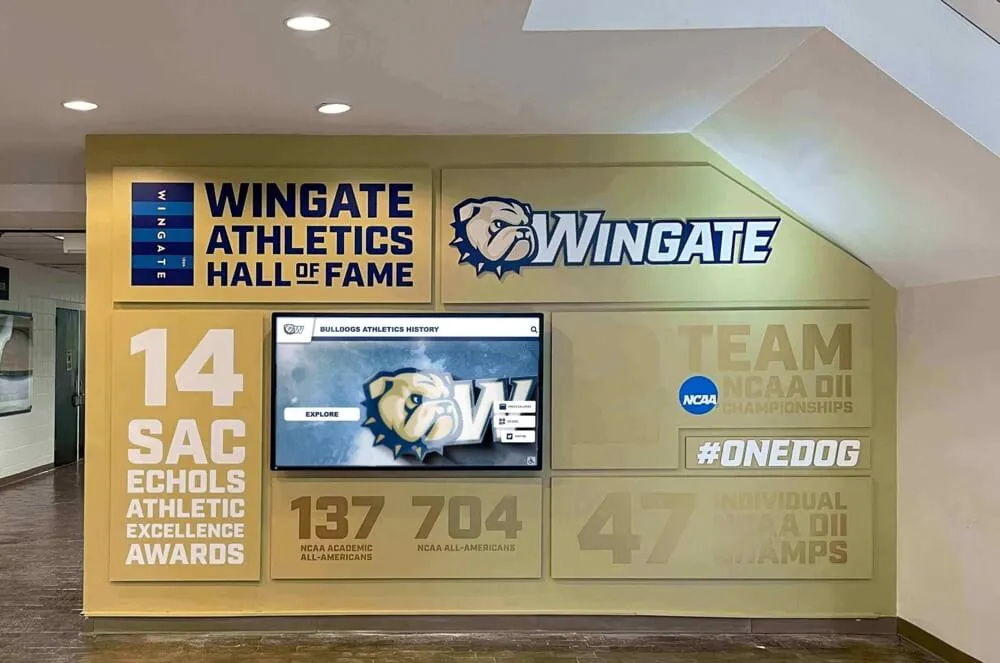
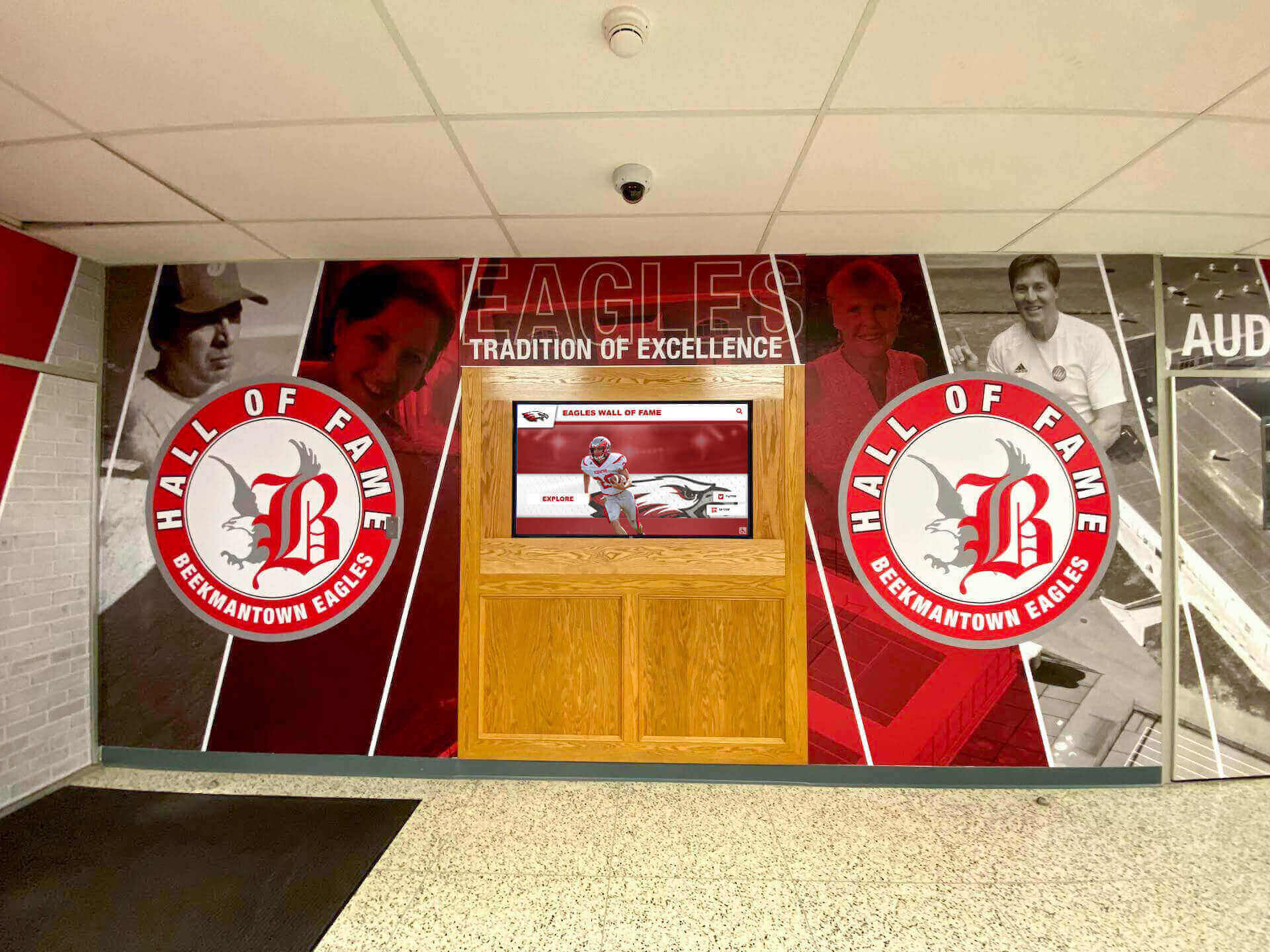
Recognition signage celebrating championships, academic achievement, and distinguished alumni transforms institutional spaces into pride-building environments. Students walking past hall of fame displays absorbing decades of excellence develop stronger connections to school traditions and higher expectations for their own contributions. Schools implementing comprehensive recognition displays report measurable increases in student engagement and alumni involvement.
Brand Consistency and Professional Image
Cohesive signage systems applying consistent colors, fonts, and design elements across all campus areas communicate institutional unity and professionalism. When every sign reflects thoughtful design rather than ad hoc solutions, schools project organizational competence that influences how families, community members, and potential donors perceive institutional quality.
Essential School Signage Categories
Comprehensive school signage systems address multiple functional needs through coordinated sign categories working together.
1. Wayfinding and Directional Signage
Navigation signage helps visitors and new students find destinations efficiently while reducing staff time answering location questions.
Exterior Directional Signs
Campus perimeter and parking area signage provides first-layer orientation:
- Main entrance identification with school name and address
- Parking area designations (visitor parking, staff parking, bus lanes)
- Building identification for multi-building campuses
- Athletic facility and stadium entrance directions
- Directional signs at campus entry points guiding traffic flow
- Event parking signs for temporary game-day or performance parking
Clear exterior signage prevents traffic confusion during busy drop-off and pick-up times while ensuring emergency vehicles can locate correct entrances quickly.
Interior Directional Systems
Once inside buildings, layered wayfinding guides visitors through complex layouts:
- Main lobby directories showing office and classroom locations
- Hallway signs indicating room number ranges with directional arrows
- Stairwell and elevator signage showing floor numbers and destinations
- Department area identification (Administration, Guidance, Athletics)
- “You Are Here” maps showing current location relative to building layout
- Consistent room numbering systems logical to first-time visitors
The most effective interior wayfinding uses hierarchical information—lobby directories provide comprehensive overviews while hallway signs offer specific turn-by-turn guidance as visitors progress toward destinations.
Specialized Location Signage
Specific high-traffic or frequently-sought locations need clear identification:
- Main office and attendance office signs visible from multiple hallway approaches
- Restroom signs including accessible facility locations
- Library and media center identification
- Cafeteria and dining area signs
- Gymnasium and athletic facility entrances
- Nurse’s office and health services
- Counseling and student services offices
- Security office and visitor check-in locations
Mounting these signs perpendicular to walls (projecting into hallways) makes them visible from greater distances than flat wall-mounted signs that require visitors to walk past before noticing.
2. Safety and Regulatory Signage
Safety signage addresses legal requirements while protecting students and staff.
Emergency and Evacuation Information
Crisis preparedness signage provides critical information during emergencies:
- Evacuation route maps showing exits and assembly points
- Fire alarm pull station identification
- Fire extinguisher location markers
- AED (Automated External Defibrillator) location signs
- Emergency contact information
- Shelter-in-place procedure guides
- Severe weather safe area identification
Regular emergency drills familiarize students with these signs, reinforcing their locations so information is accessible when needed most.
ADA Compliance Signage
Accessibility signage ensures compliance while serving students and visitors with disabilities:
- Braille and tactile room number signs mounted at proper heights
- Accessible entrance identification
- Accessible restroom designation with proper symbols
- Elevator location signs
- Accessible parking space designation
- Service animal welcome signs
- Assistive listening system availability notices
Schools must meet ADA signage requirements regarding mounting heights (48-60 inches to sign centerline), tactile character specifications, color contrast ratios, and Braille formatting. Non-compliant signage exposes districts to legal liability while failing students with disabilities.
Rules and Policy Communication
Behavioral expectation signage reinforces policies visually:
- Visitor check-in requirements at main entrances
- Cell phone usage policies in classrooms and common areas
- Hall pass requirements during class periods
- Dress code reminders in appropriate locations
- No smoking/vaping campus designations
- Restricted area access notices
- Student parking permit requirements
Policy signage works most effectively when presented positively—“Visitors: Please check in at main office to receive visitor badge” communicates more welcomingly than “NO UNAUTHORIZED VISITORS.”
3. Recognition and Achievement Displays
Recognition signage celebrates accomplishments while building school pride and motivating continued excellence.
Athletic Achievement Recognition
Sports recognition displays honor team and individual accomplishments:
- Championship banners displaying state, conference, and district titles
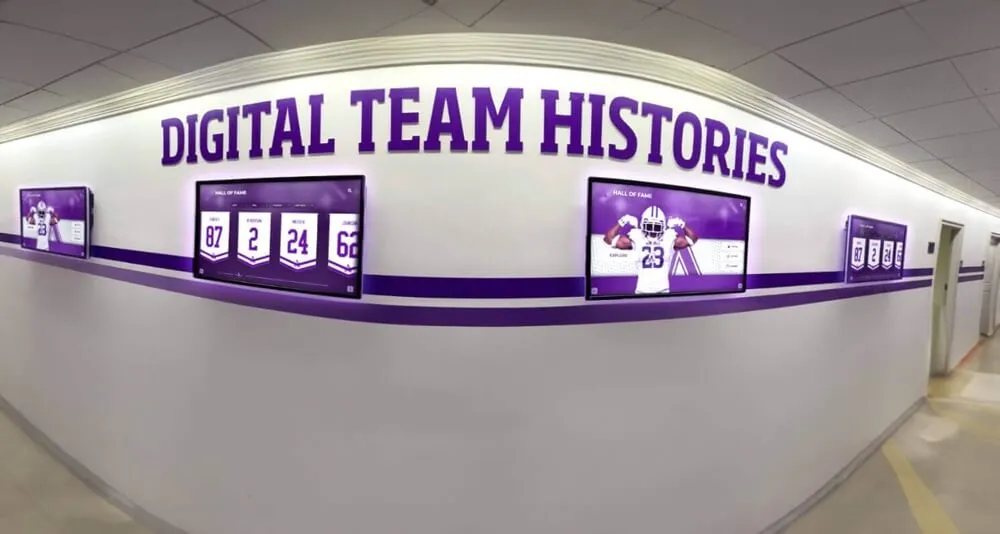
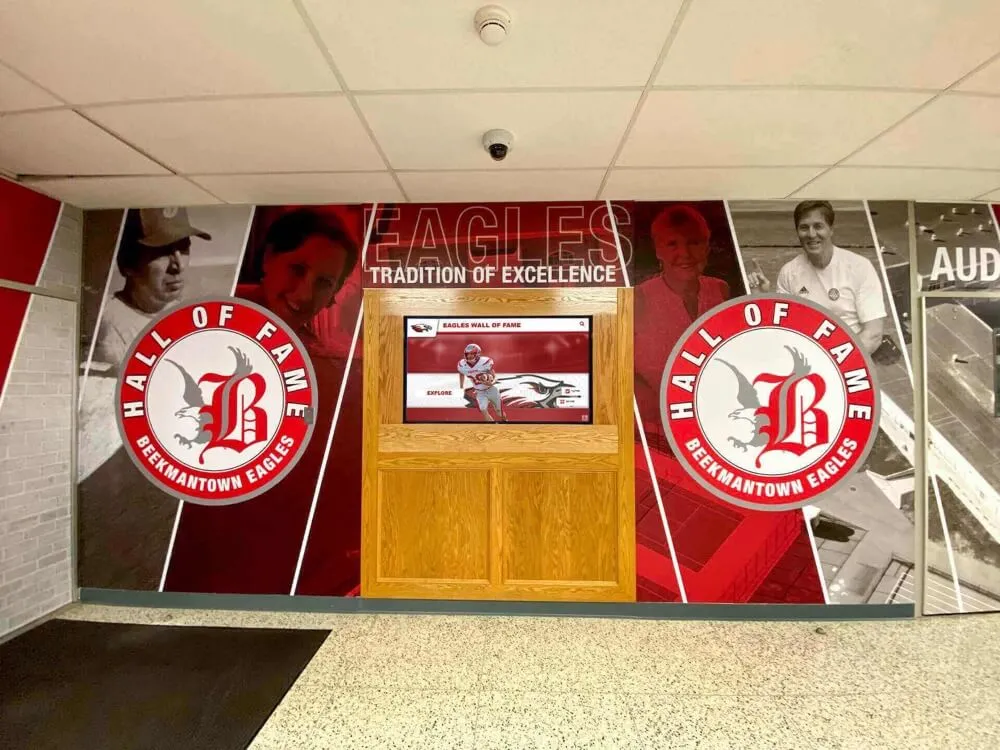
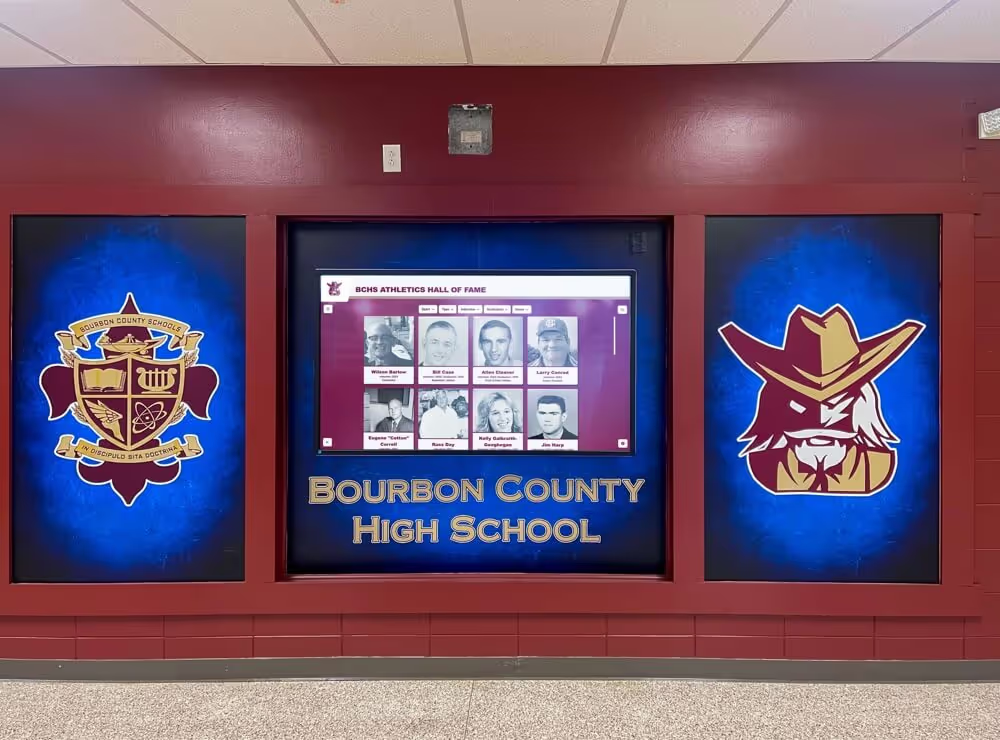
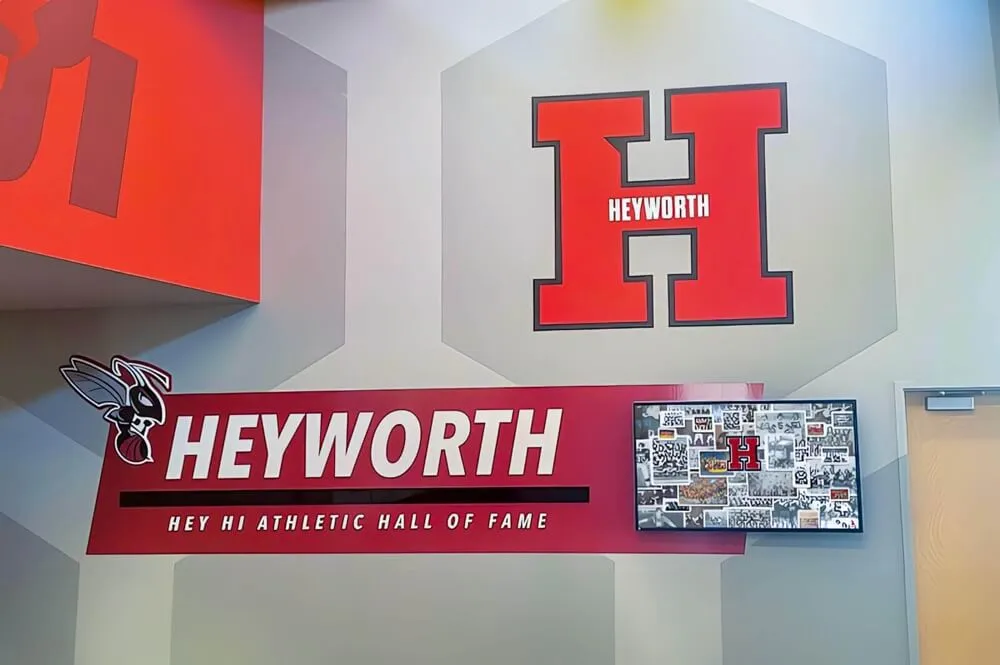
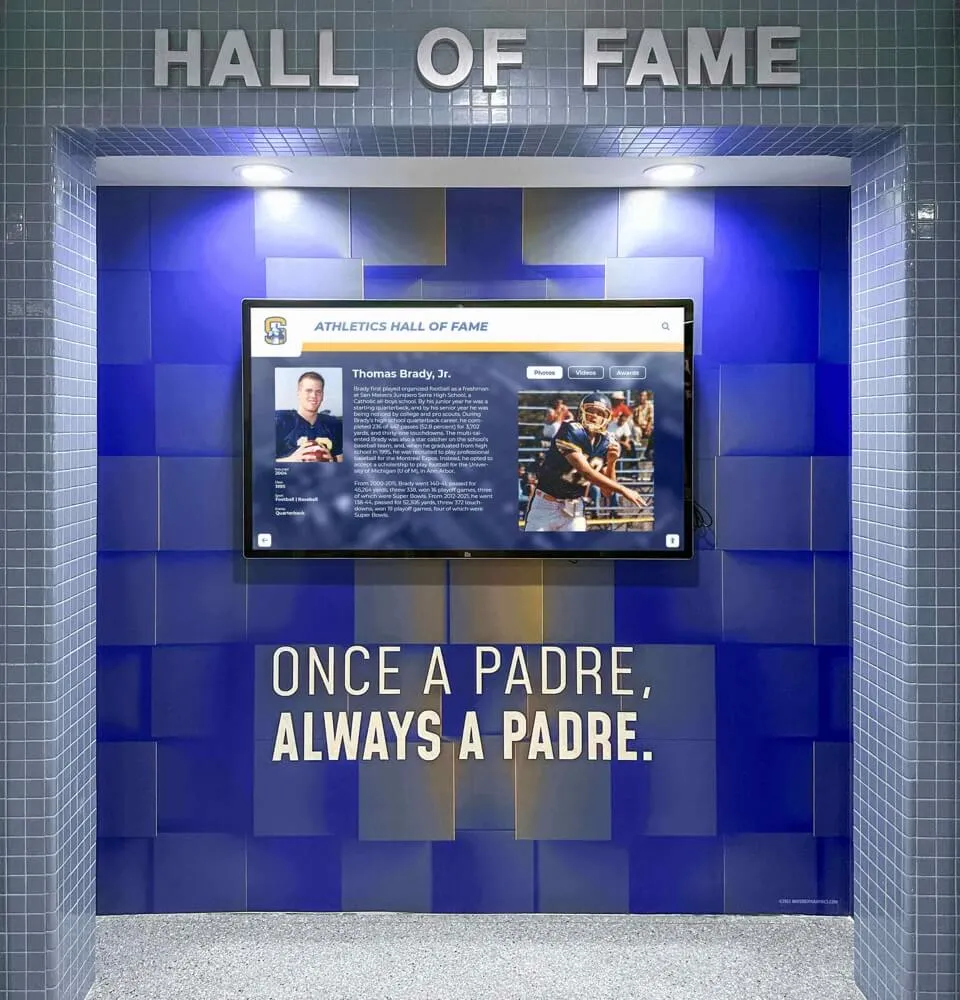
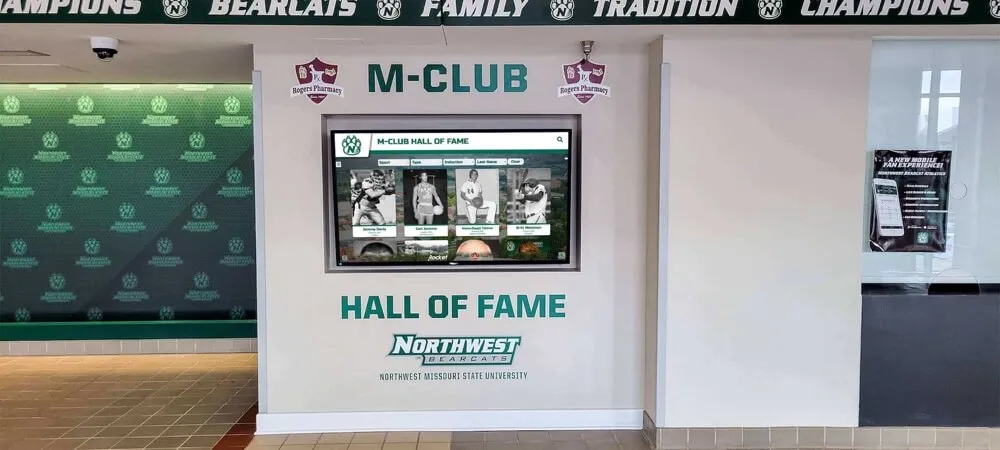
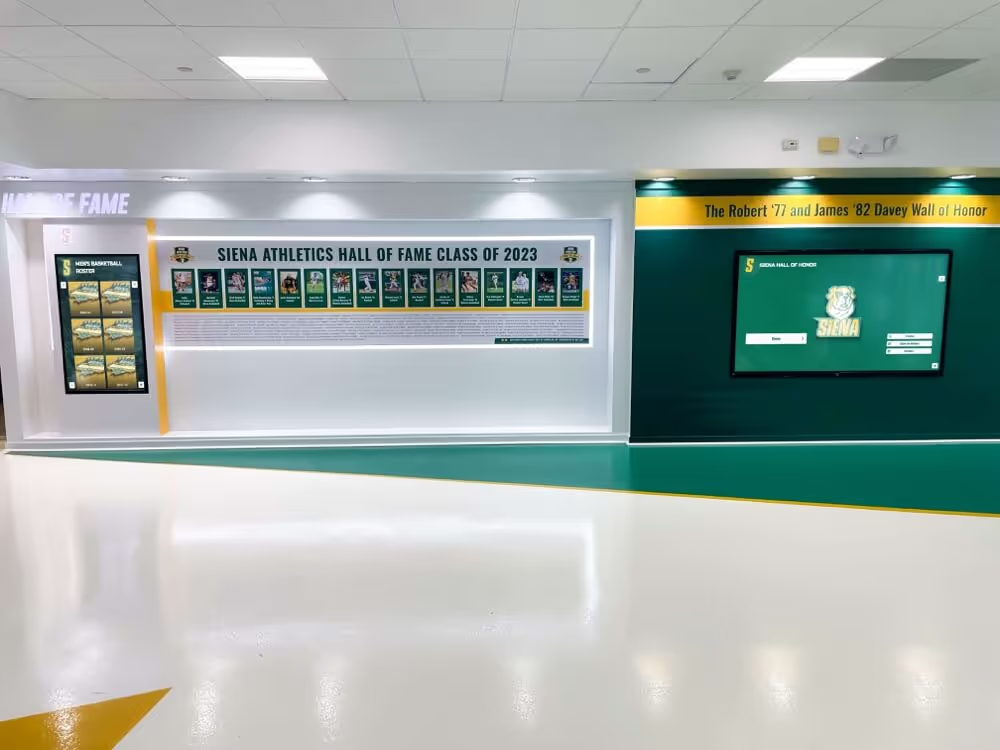
- Hall of fame displays profiling inducted athletes
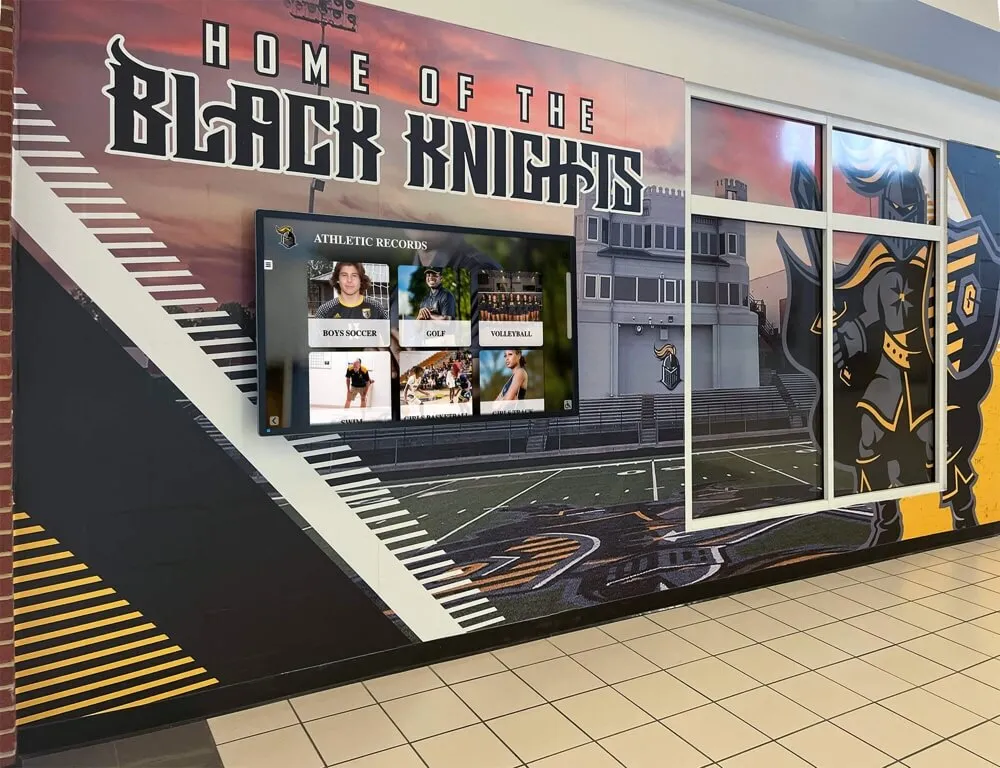
- Record holder boards showing all-time top performances
- Team photo displays from championship seasons
- Retired jersey recognition for exceptional athletic careers
- All-state athlete recognition
- College commitment boards celebrating athletic scholarship recipients
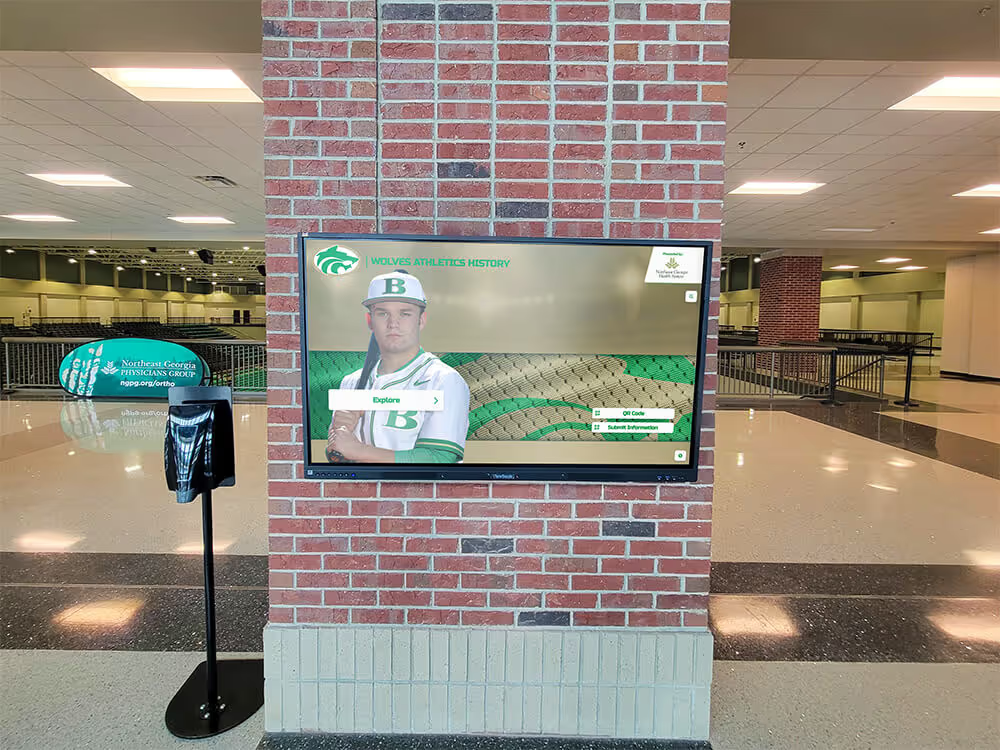
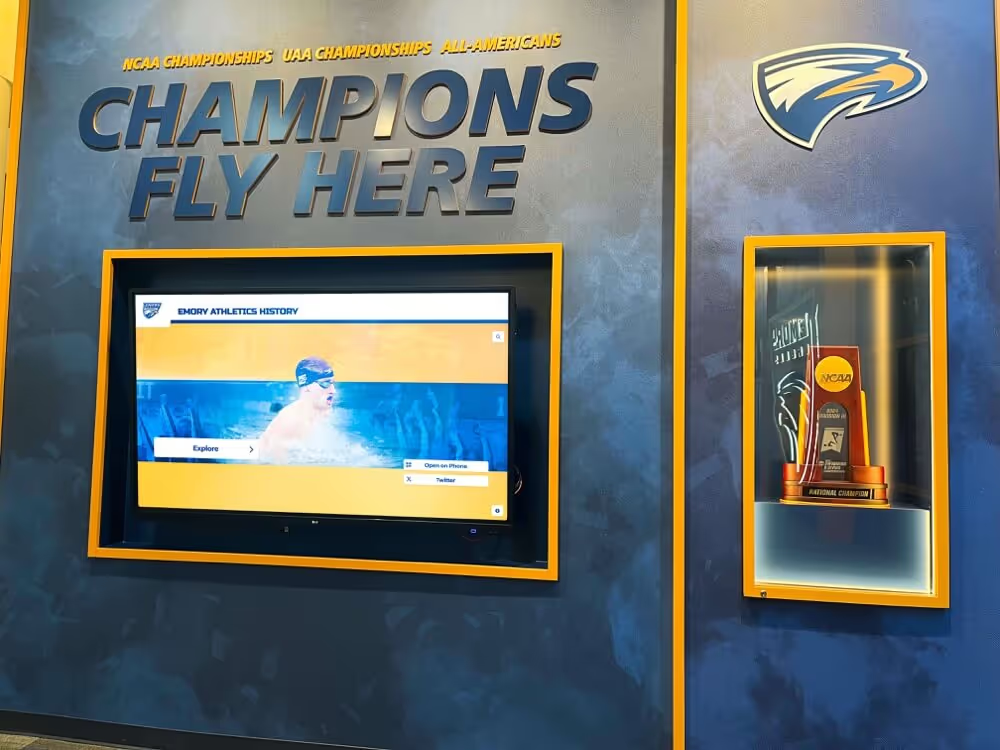
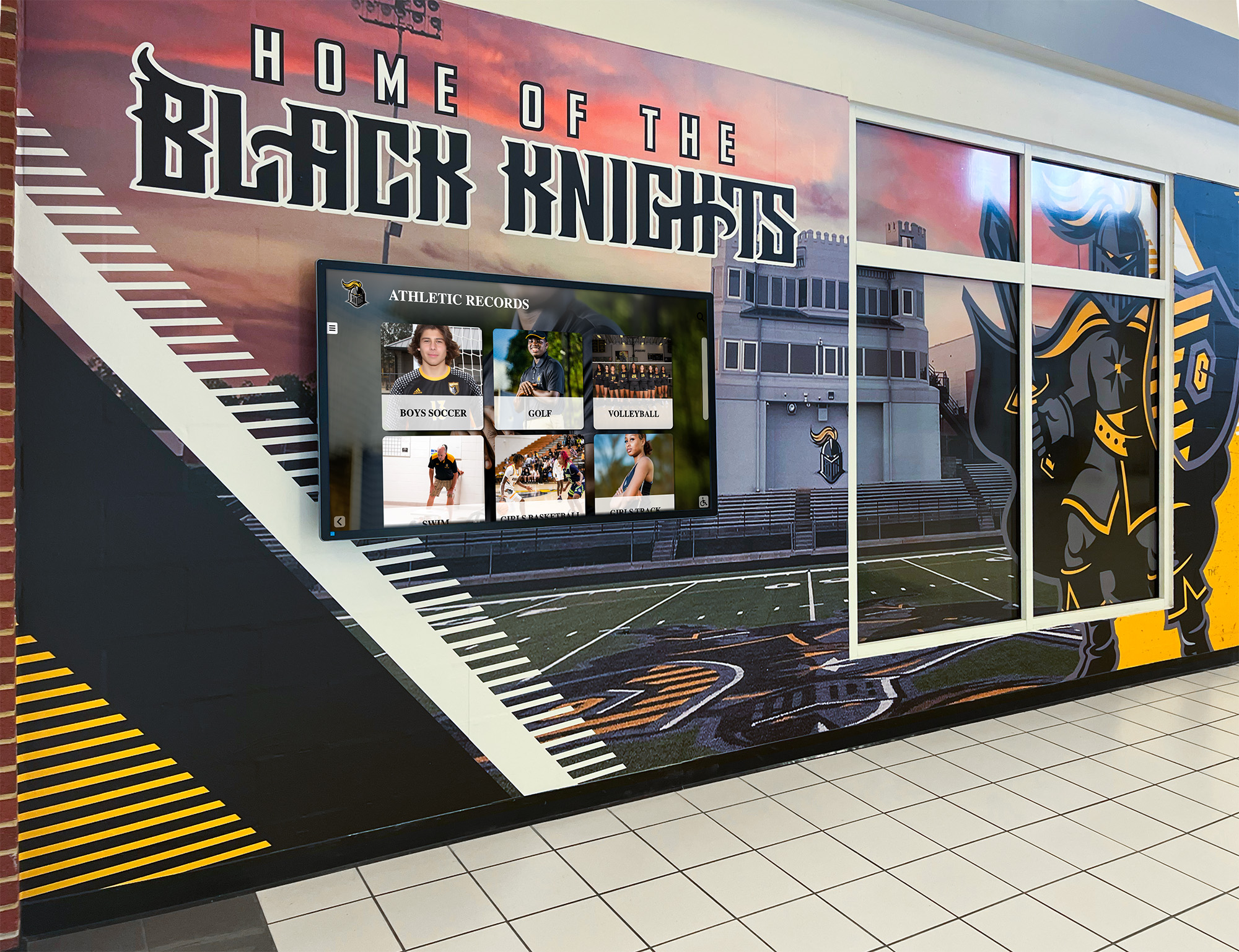
Traditional trophy cases provide physical storage for awards but often become cluttered displays difficult to navigate. Many schools now complement or replace static cases with digital athletic recognition displays offering unlimited capacity for celebrating athletes without space constraints.
Academic Excellence Recognition
Academic achievement displays celebrate intellectual accomplishments:
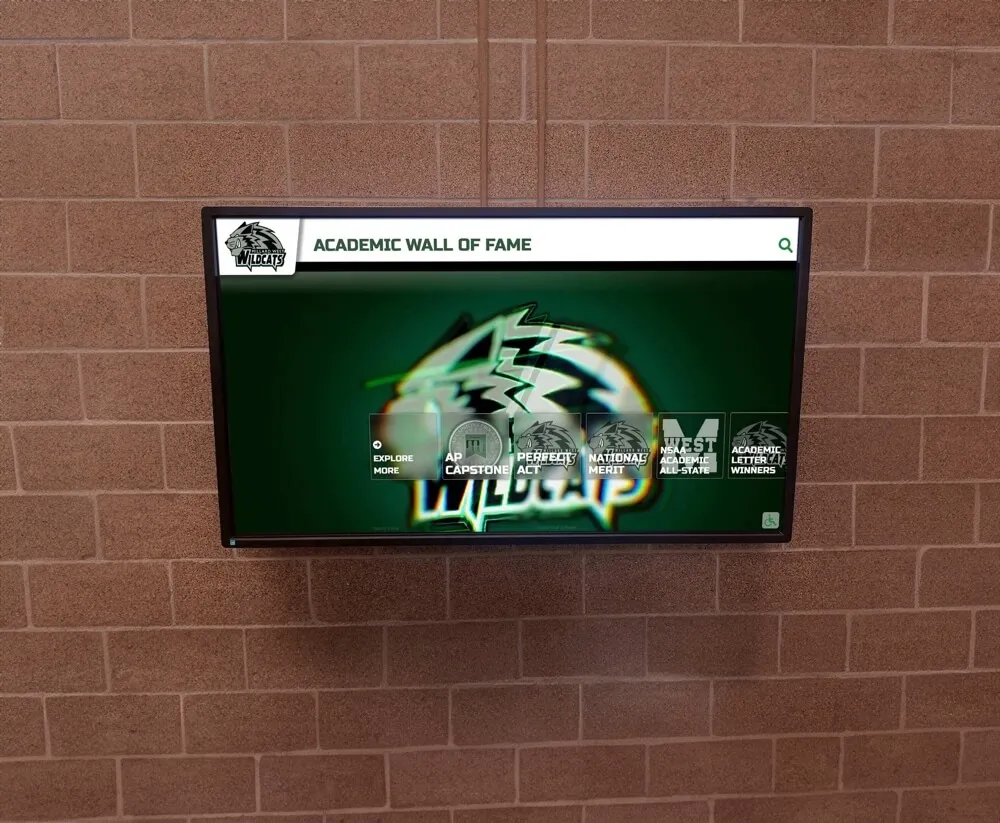
- Honor roll displays listing academic achievement by semester
- Valedictorian and salutatorian recognition
- National Merit Scholar acknowledgment
- Perfect attendance recognition
- Academic competition success (debate, quiz bowl, science olympiad)
- Advanced Placement Scholar awards
- College acceptance displays showing where seniors enroll
- Scholarship recipient recognition
Schools implementing comprehensive academic recognition discover that public celebration motivates continued excellence while shifting school culture toward valuing intellectual achievement as enthusiastically as athletic success.
Arts and Extracurricular Recognition
Beyond academics and athletics, recognition displays honor diverse talents:
- Theatre production cast photo displays
- Music program concert and competition recognition
- Visual arts student work galleries
- Robotics and STEM competition achievements
- Student government leadership recognition
- Community service hour leaders
- Club and organization showcase displays
Providing visible recognition for diverse achievement categories communicates that schools value all student contributions, not just sports and grades—strengthening engagement among students whose talents lie in less traditionally celebrated areas.
Distinguished Alumni Highlights
Alumni recognition connects current students to institutional legacy:
- Distinguished alumni profiles showing successful career paths
- Notable graduate accomplishments in various fields
- Alumni military service recognition
- Historical perspective on graduates across decades
- “Where Are They Now” updates on recent graduates
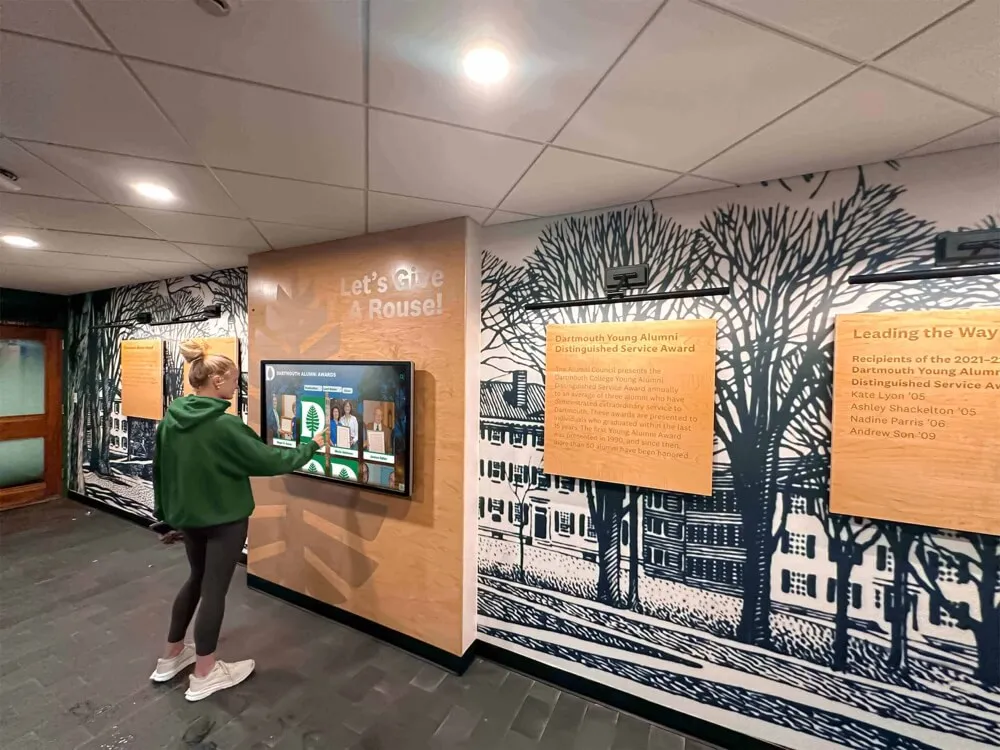
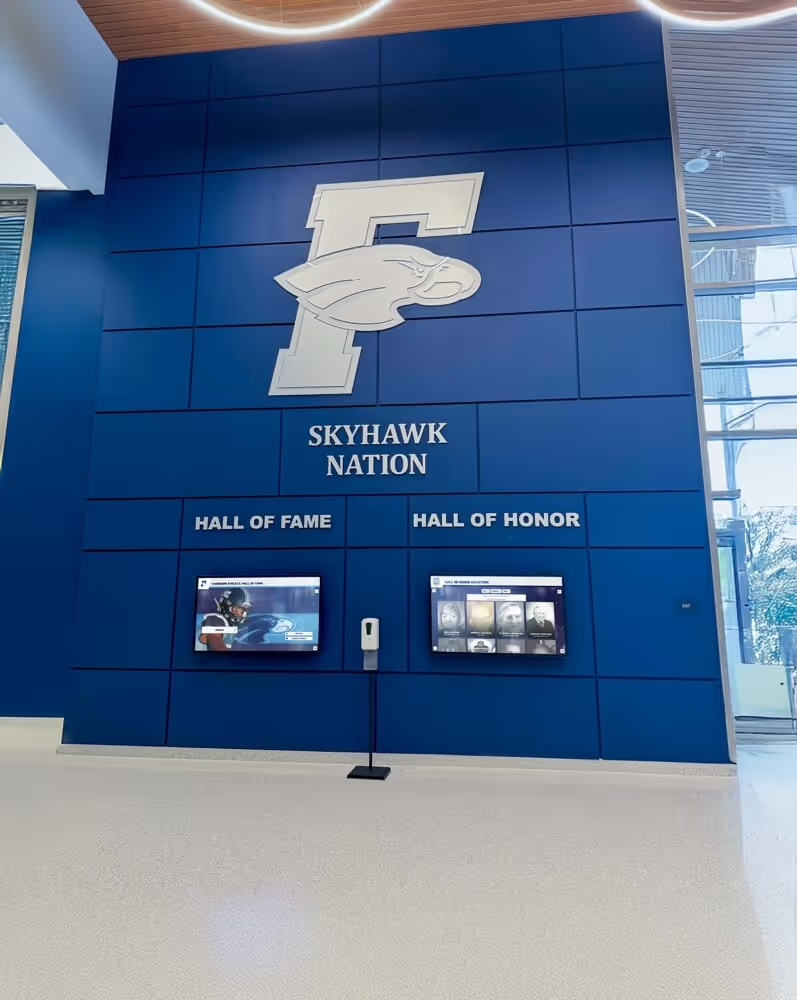
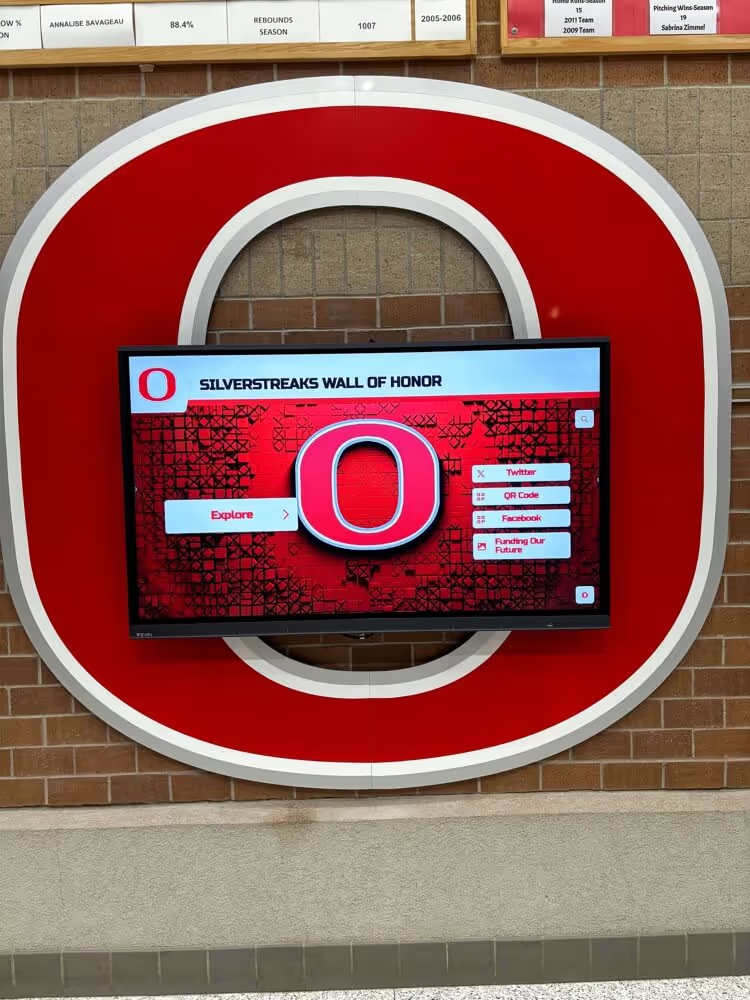
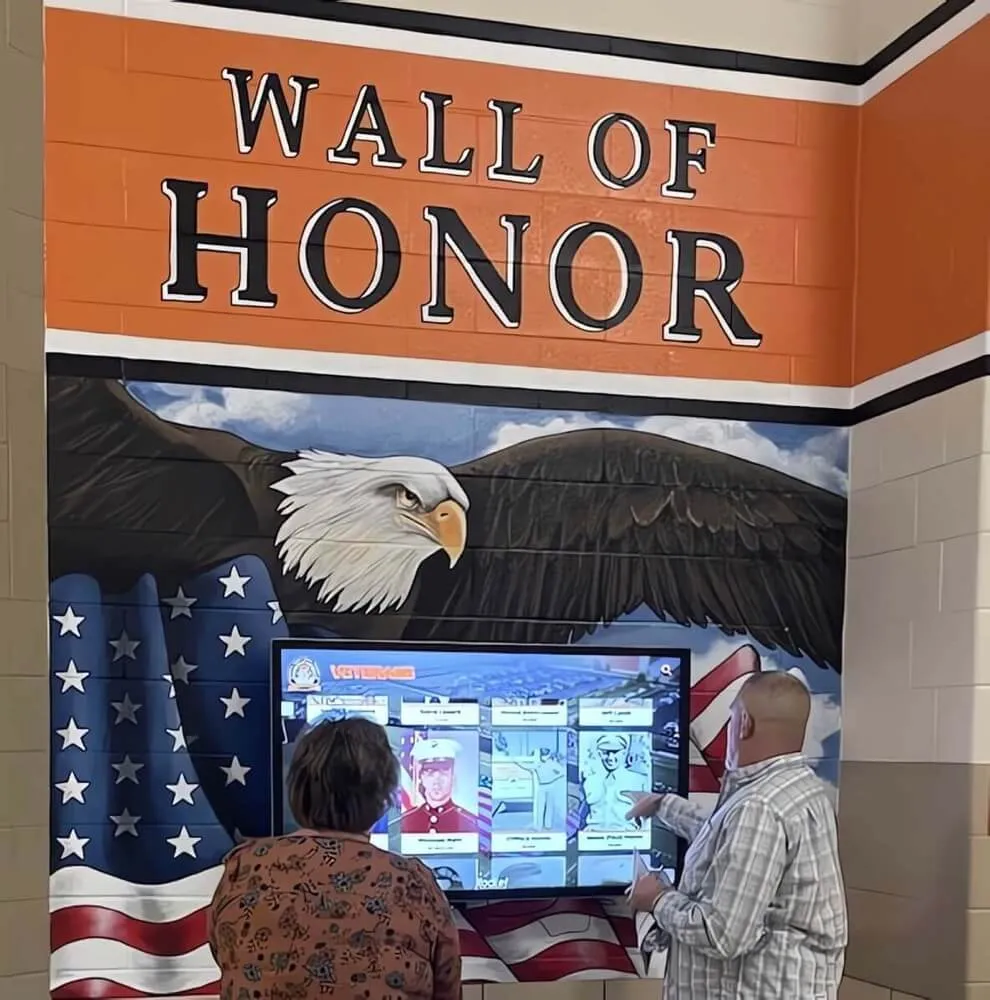
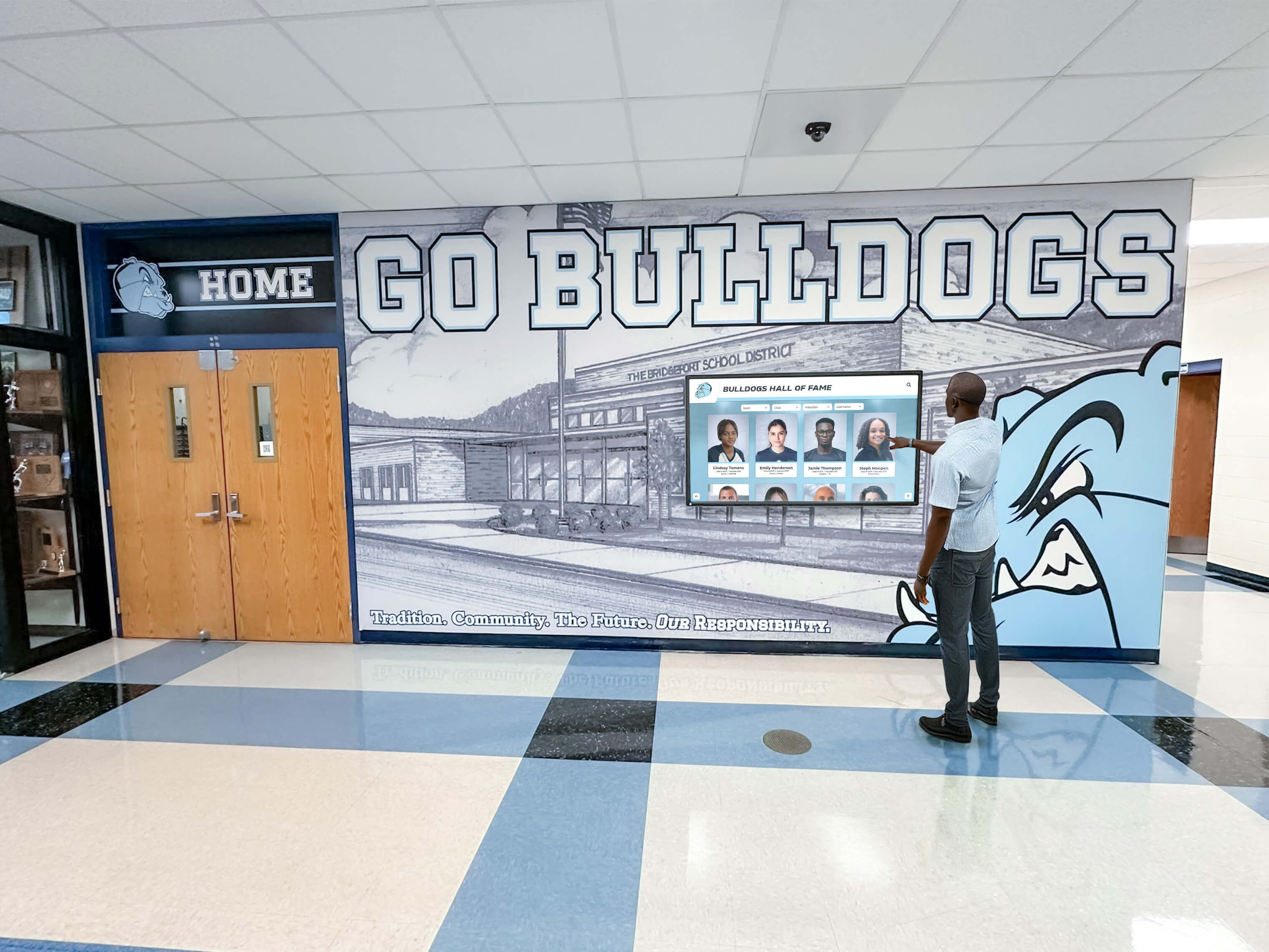
Alumni displays demonstrate that current students belong to communities extending beyond current enrollment—they join traditions of excellence spanning generations. Many schools create interactive alumni recognition systems enabling searchable databases where families explore graduates by decade, achievement category, or career field.
4. Informational and Communication Signage
Informational signage keeps school communities updated on schedules, events, and important announcements.
Daily Operations Information
Routine information signage supports smooth daily operations:
- Bell schedule displays showing class period times
- Lunch menu boards with daily meal options
- Daily announcements and reminders
- Library hours and services available
- Athletic practice schedules by sport and season
- Activity bus departure times and destinations
- School office hours and contact information
- Upcoming school closure dates
While some information remains static all year (bell schedules), other content changes daily (lunch menus) or weekly (upcoming events), requiring either frequent manual updates or digital display solutions enabling instant content changes.
Event and Calendar Information
Event promotion signage builds awareness and attendance:
- Upcoming athletic event schedules with dates and opponents
- Theatre production and concert promotion
- Parent-teacher conference schedules
- School board meeting dates and locations
- Fundraising event promotion
- Registration and enrollment period reminders
- Testing schedule information (SAT, ACT, state assessments)
- College visit opportunities and application deadlines
Strategic event signage placement in high-traffic areas like cafeterias, main lobbies, and hallway intersections maximizes visibility to target audiences.
Community Engagement Information
Signage connecting schools to broader communities:
- Community partnership recognition
- Local business sponsor acknowledgment
- Parent organization information (PTA, booster clubs)
- Volunteer opportunity promotion
- Community education program offerings
- Facility rental information for public use
- Alumni association contact information
Community engagement signage reinforces that schools serve as community hubs extending beyond student education to broader civic purposes.
5. Branding and Identity Signage
Brand signage creates cohesive visual environments reinforcing school identity.
Mascot and School Identity Elements
Visual branding creates immediate school identification:
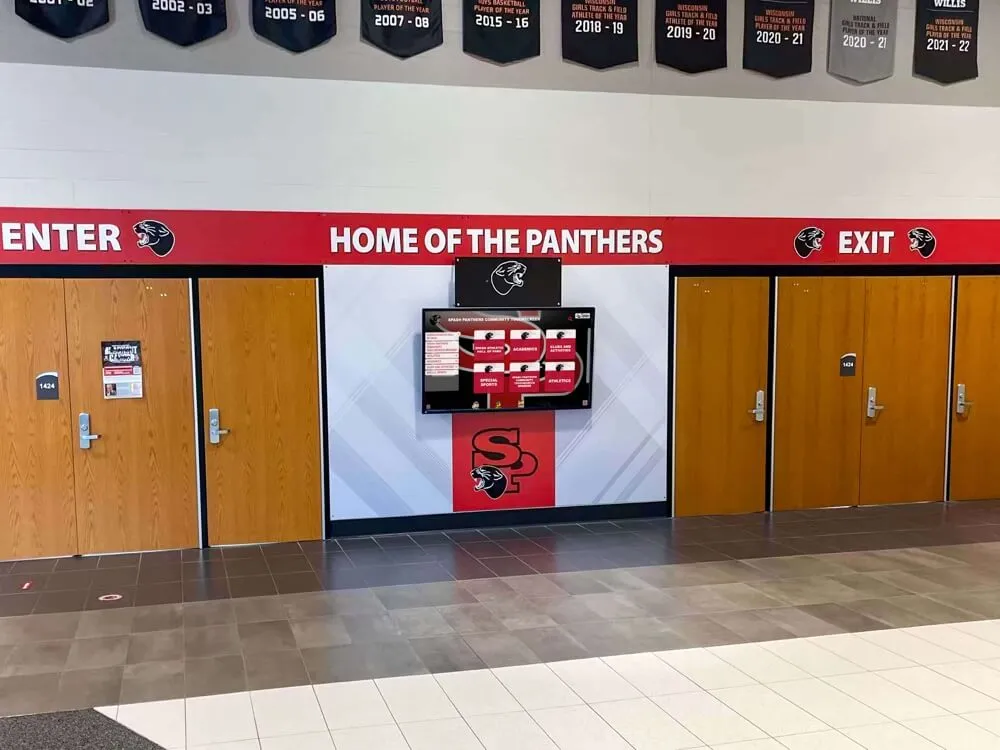
- Mascot graphics and logos in main entrances and common areas
- School name identification with consistent typography
- School colors applied throughout signage systems
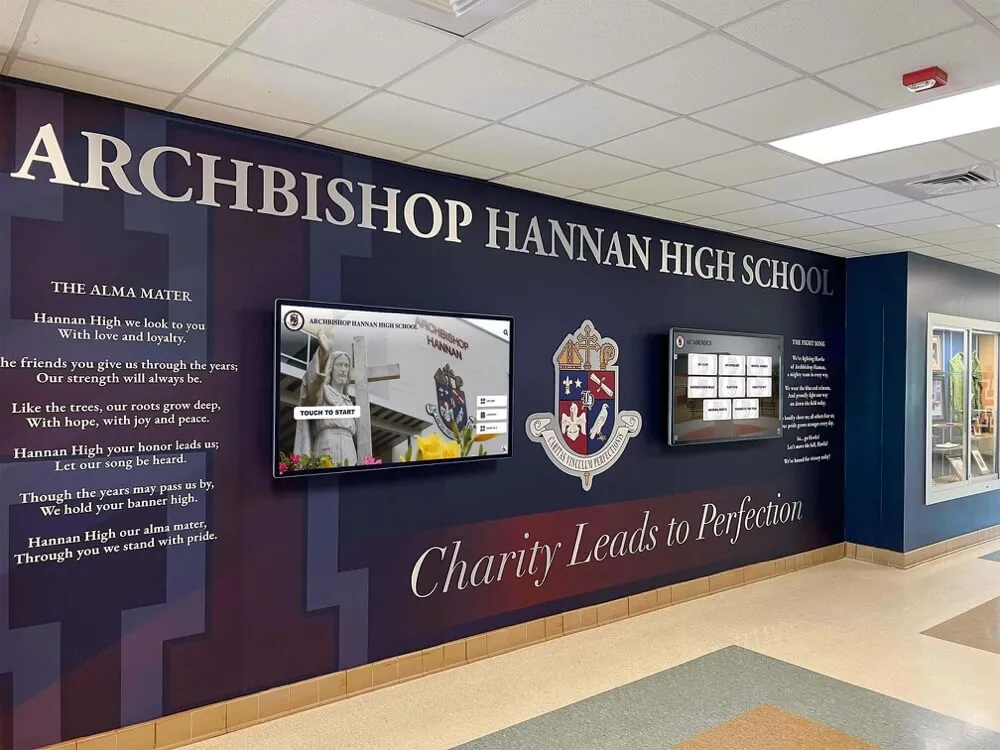
- Motto or mission statement displays
- Founding year and historical context
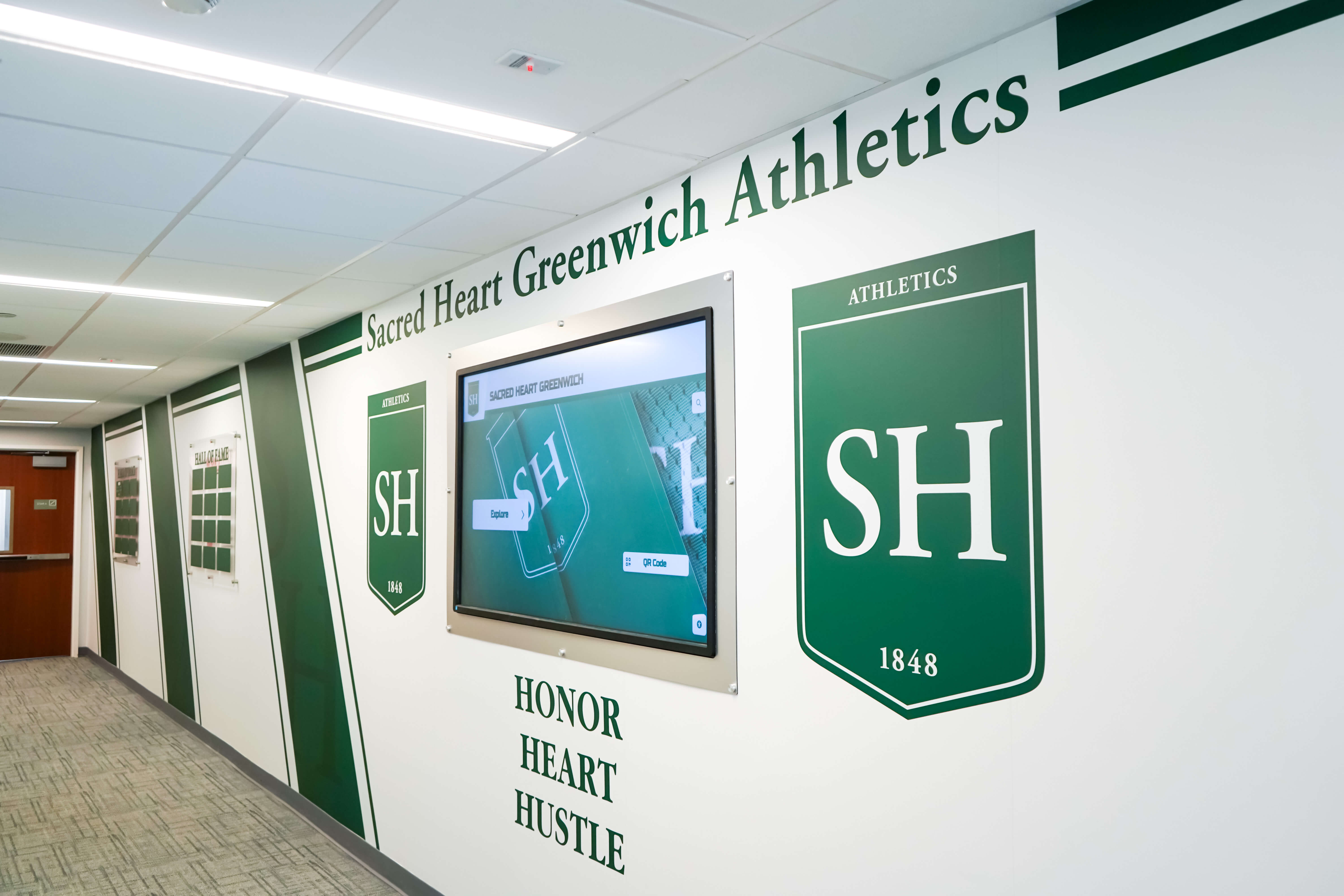
- School seal or crest displays
- Team identity elements in athletic facilities
Consistent branding across all signage categories creates unified visual systems where every sign contributes to overall institutional identity rather than appearing as disconnected information.
Inspirational Messaging
Motivational signage reinforces values and expectations:
- Core value statements (respect, responsibility, excellence)
- Character education messages
- Growth mindset reminders
- Anti-bullying messages
- Diversity and inclusion statements
- College and career readiness inspiration
- Student creed or pledge displays
The most effective inspirational signage connects abstract values to concrete behaviors—rather than simply stating “Respect,” effective signs show what respect looks like through specific examples students can emulate.
Traditional vs. Digital School Signage Solutions
Schools typically implement signage using traditional static signs, modern digital displays, or hybrid approaches combining both technologies strategically.
Traditional Static Signage
Static signs include physical materials like painted walls, vinyl graphics, printed signs, banners, and trophy cases.
Advantages of Traditional Signage
- No ongoing power requirements or electricity costs
- No technology maintenance or troubleshooting needed
- Visibility in all lighting conditions without glare concerns
- Permanent installation withstanding decades without replacement
- Familiar implementation requiring no staff technology training
- Lower initial investment for basic directional signs
Limitations of Traditional Signage
- Content updates require physical labor—removing, reprinting, reinstalling
- Space constraints limit how much information fits in available wall areas
- Recognition displays can only celebrate limited numbers of students simultaneously
- No multimedia capability for engaging videos or interactive content
- Difficult to maintain current information requiring frequent changes
- Material waste from replacing outdated printed content
Traditional signage works well for permanent information (room numbers, building identification, emergency evacuation maps) where content rarely changes. It proves less practical for dynamic content like event schedules, daily announcements, or achievement recognition requiring frequent updates.
Digital Signage Systems
Digital displays use screens—from simple slideshow monitors to sophisticated interactive touchscreens—for presenting dynamic content.
Advantages of Digital Signage
- Instant content updates through web-based management platforms
- Unlimited recognition capacity celebrating thousands of students
- Rotating content showing multiple messages in single locations
- Rich multimedia including videos, photos, animations, and interactive elements
- Scheduling capabilities displaying different content at various times
- Cost savings eliminating ongoing printing and installation labor
- Analytics measuring viewer engagement and content effectiveness
Digital Recognition Display Capabilities
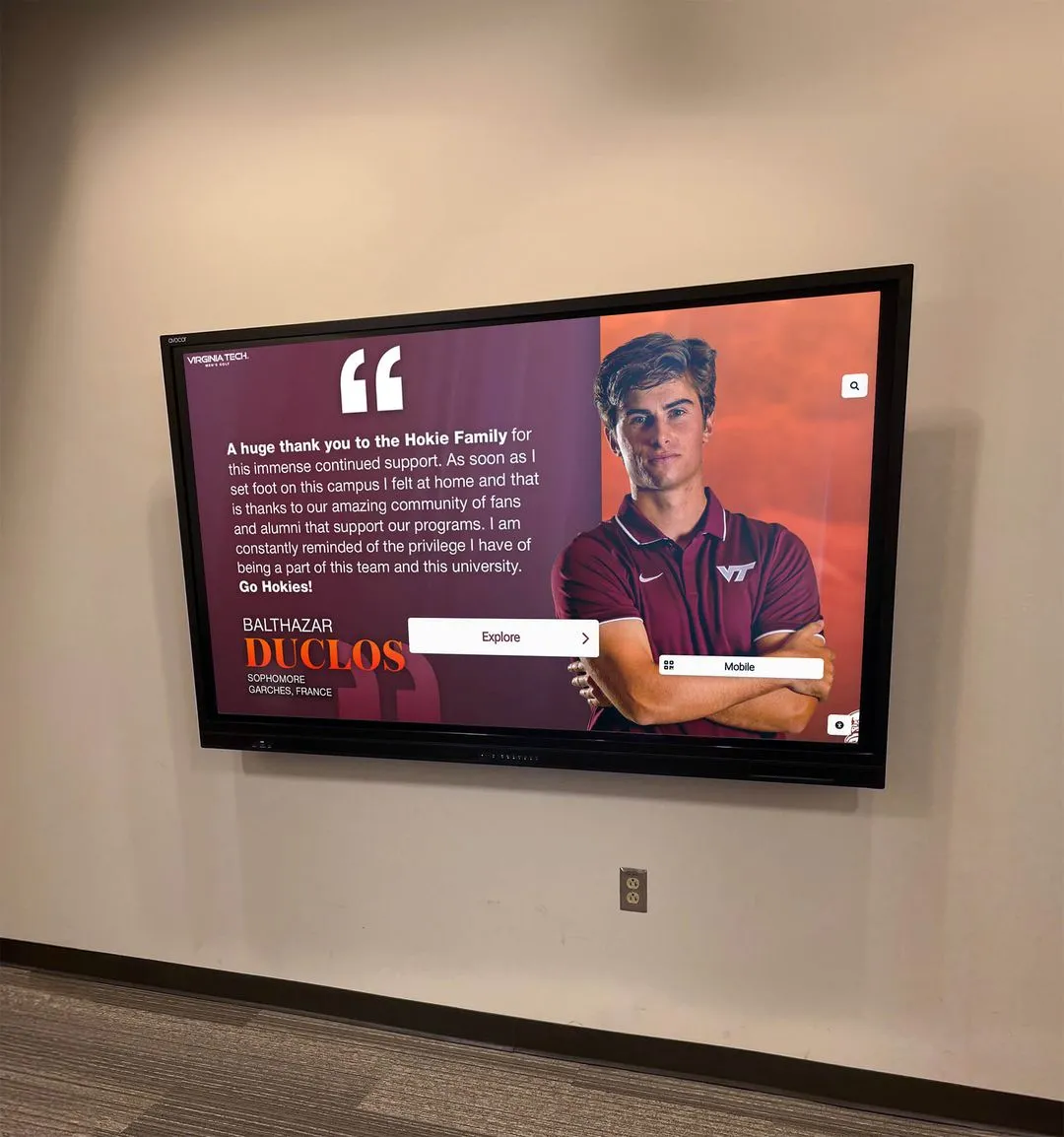
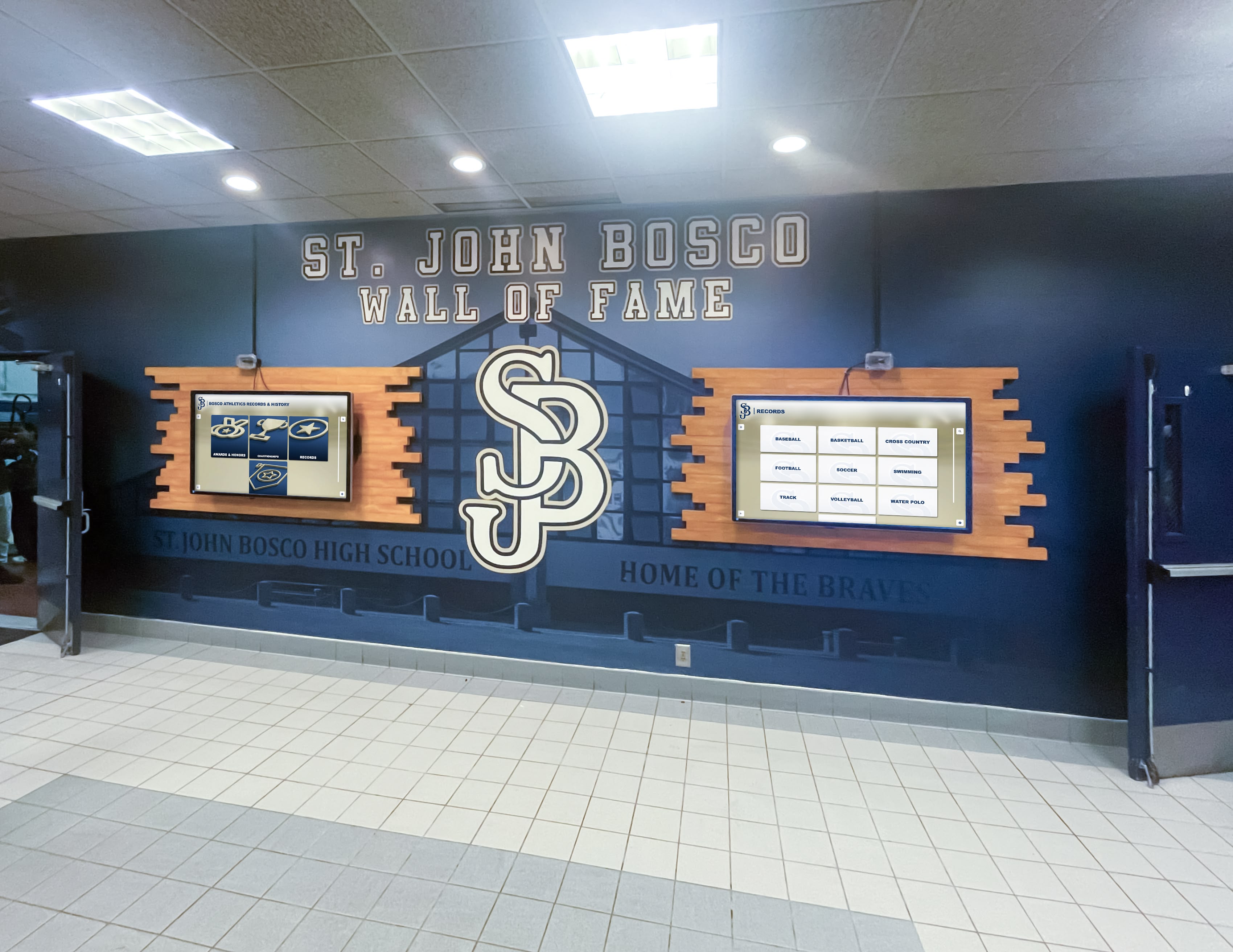
Modern digital signage designed specifically for schools, like systems from Rocket Alumni Solutions, goes far beyond simple slideshow displays. These specialized platforms provide:
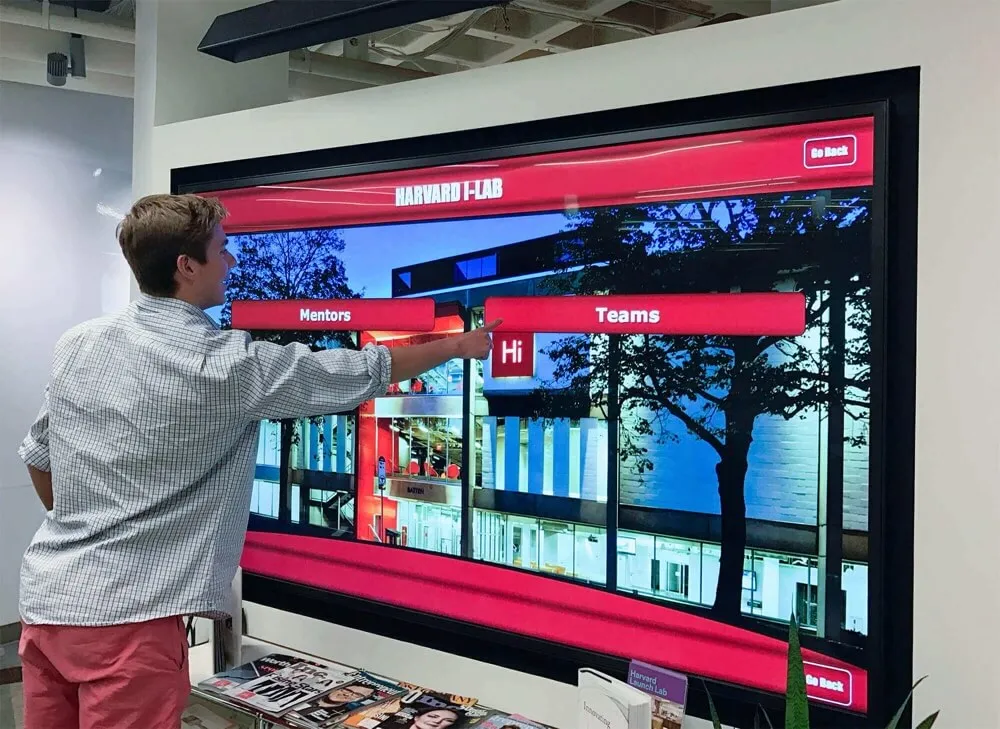
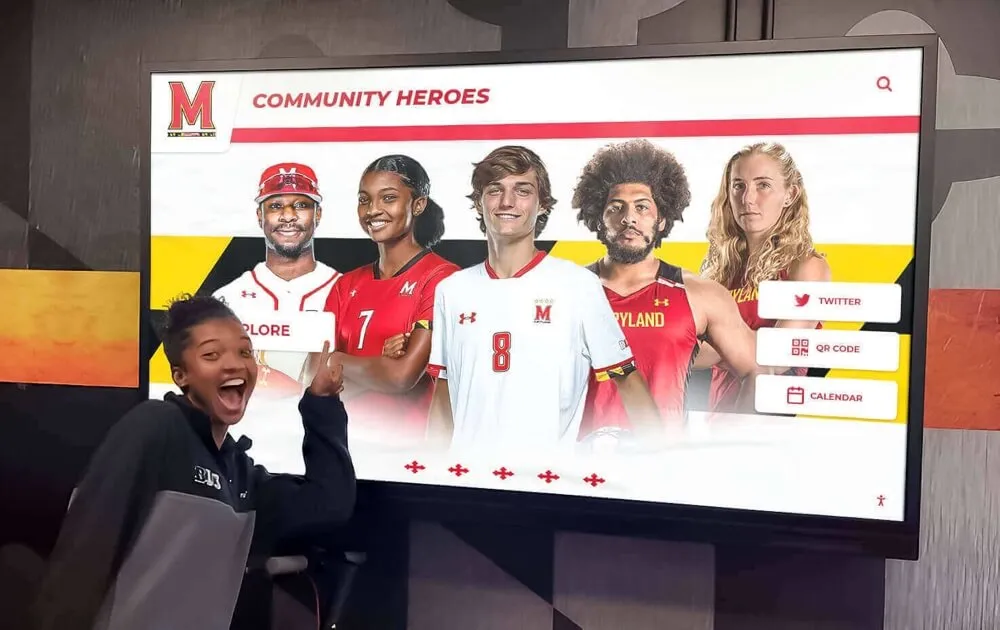
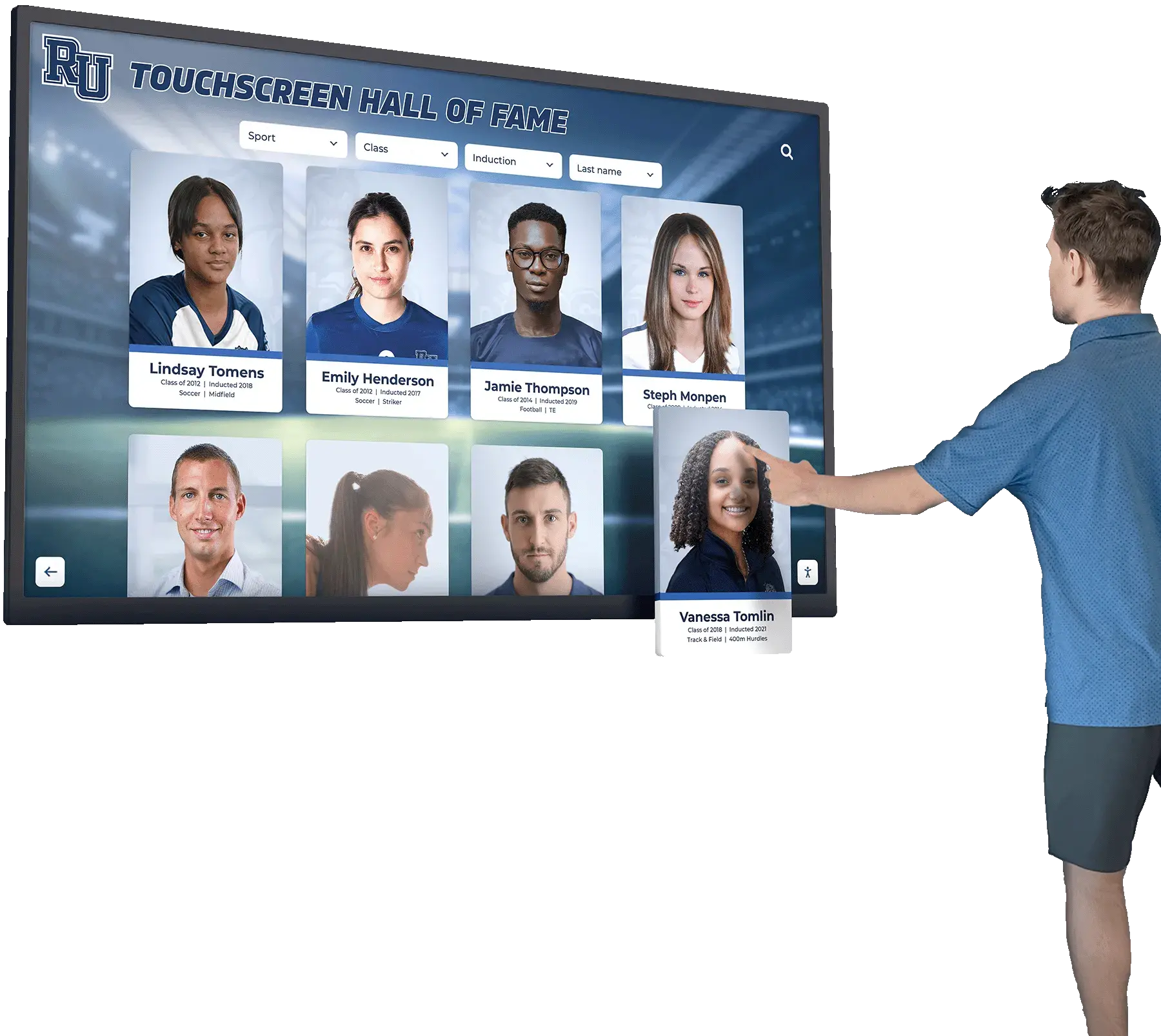
- Interactive touchscreens enabling visitors to search student achievements by name, year, or category
- Photo galleries showcasing student life across academics, athletics, and arts
- Video integration playing highlight reels from performances and competitions
- Automated content feeds pulling data from student information systems
- Mobile-responsive web interfaces extending recognition beyond physical displays
- Unlimited storage accommodating decades of historical records
Schools implementing digital recognition systems report that the unlimited capacity proves particularly valuable—rather than rotating students on limited bulletin board space, digital displays celebrate every achiever equally. A school with 200 honor roll students per semester can feature all 200 with searchable profiles instead of selecting just a few for traditional display space limitations.
Digital Signage Implementation Considerations
Organizations transitioning to digital signage should consider:
- Electrical requirements and installation costs for powering displays
- Network connectivity for content management and updates
- Staff training on content management platforms
- Hardware warranties and technical support arrangements
- Brightness and glare management in high-ambient-light locations
- Mounting security preventing theft or vandalism
- Content creation responsibilities and update workflows
Many schools implement phased approaches—starting with one or two digital displays in main lobbies or gym entrances, evaluating effectiveness, then expanding to additional locations based on initial results.
Hybrid Signage Approaches
The most effective school signage systems often combine traditional and digital solutions strategically:
- Traditional signs for permanent wayfinding (room numbers, building identification)
- Digital displays for dynamic content (daily announcements, event schedules)
- Static recognition for historical achievements (championship banners)
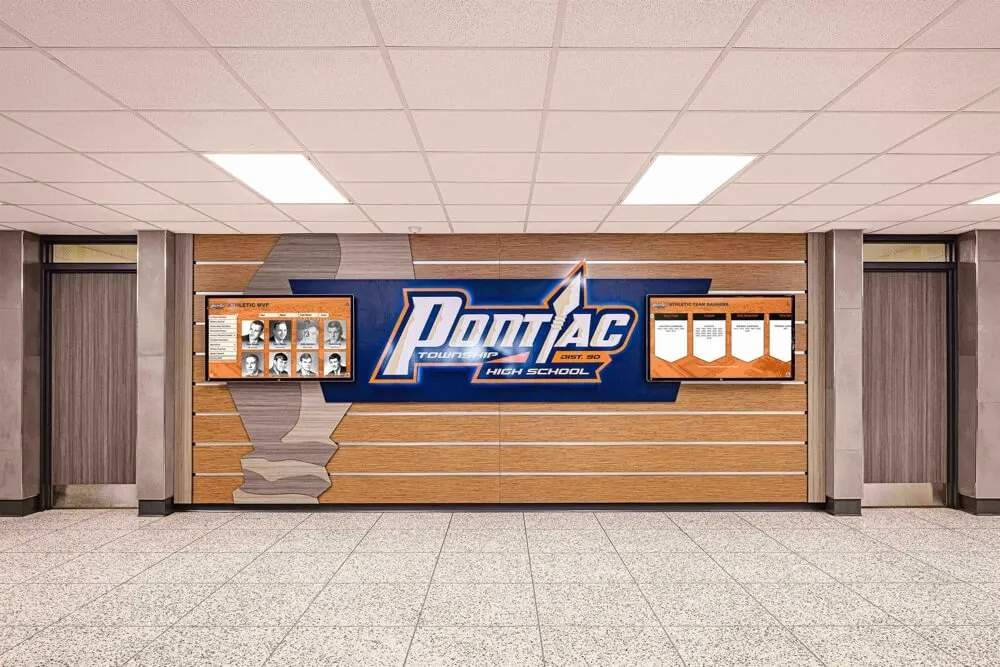
- Interactive digital displays for searchable databases (hall of fame profiles, alumni directories)
- Traditional safety signage meeting regulatory requirements
- Digital displays rotating through various content categories throughout the day
This hybrid approach optimizes each technology for appropriate applications—using permanent physical signs where content never changes while leveraging digital flexibility for information requiring frequent updates.
School Signage Ideas by Location
Strategic signage placement considers traffic patterns, sight lines, and location-specific information needs.
Main Entrance and Lobby Signage
School entryways create first impressions for visitors while serving as information hubs.
Essential Lobby Elements
- Building directory showing office and classroom locations
- Visitor check-in procedures with clear directional guidance
- Welcome messaging establishing positive tone
- Main office identification with operational hours
- Emergency evacuation map for current location
- School calendar highlighting upcoming events
- Achievement displays celebrating recent student success
Lobby signage should orient visitors immediately—upon entering, visitors should know exactly where to check in, how to find destinations, and what pathways lead to various building areas.
Creating Impressive Entry Statements
Beyond functional wayfinding, entry areas benefit from prominent displays establishing school pride:
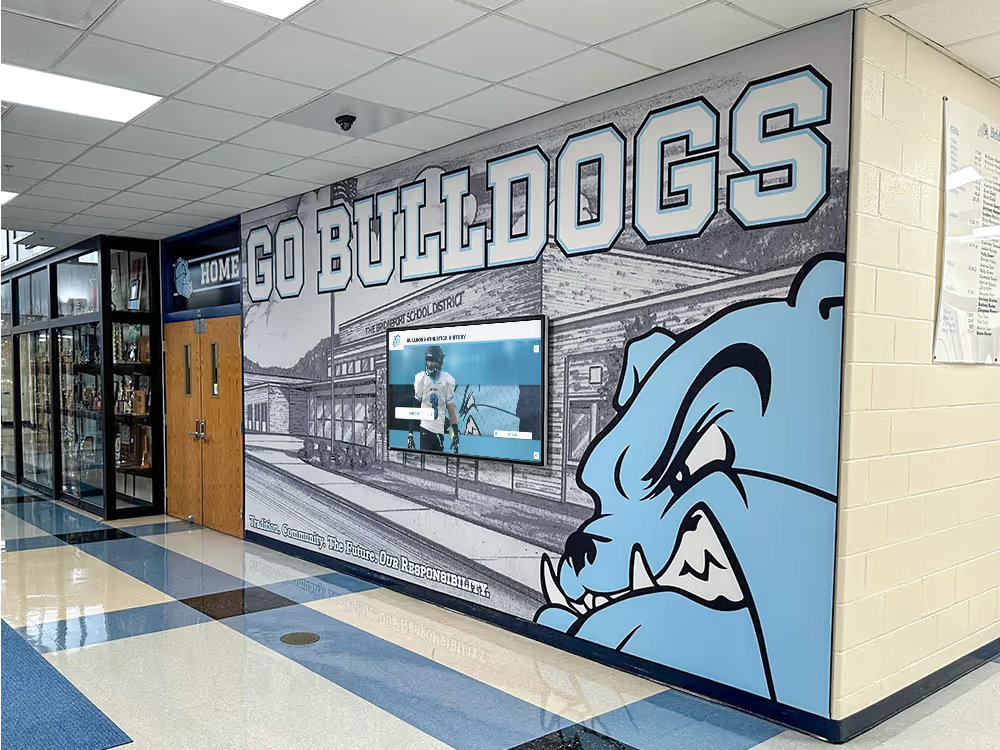
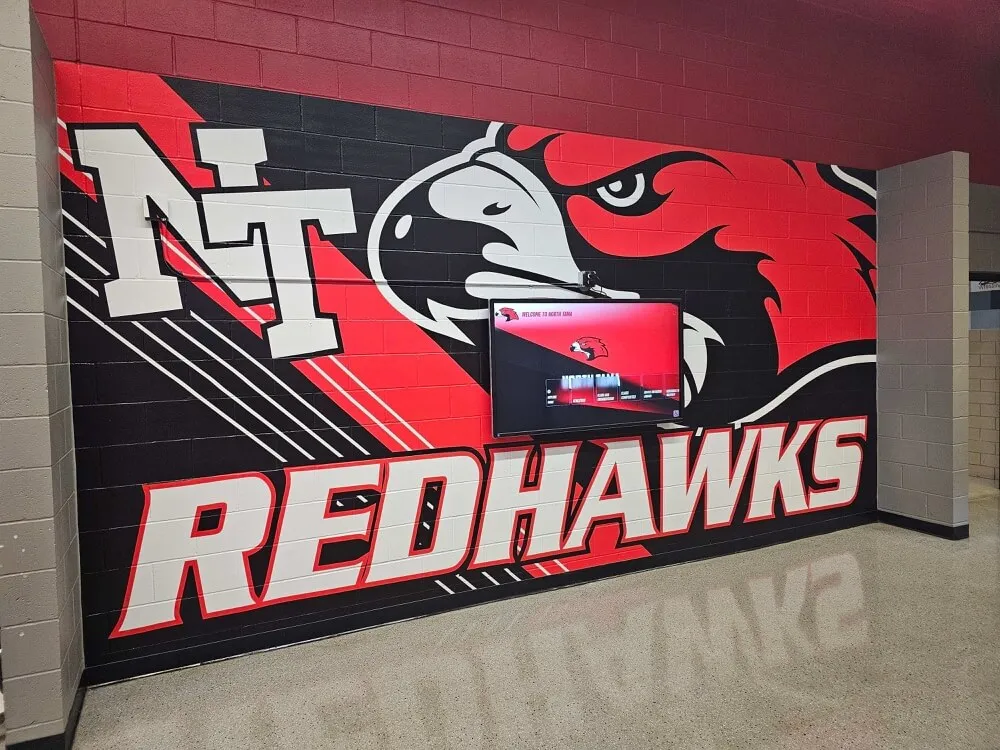
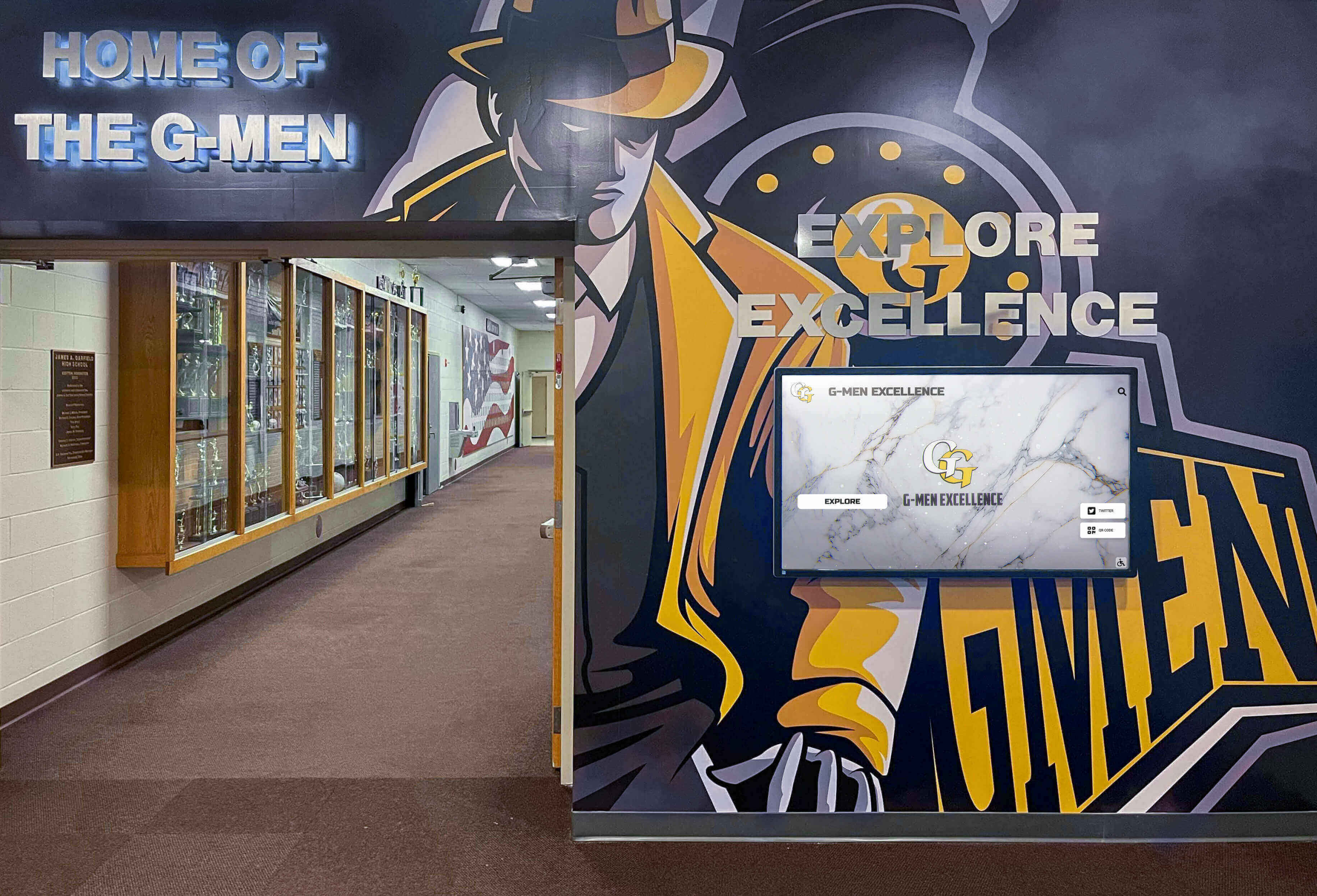
- Large-scale mascot graphics or murals
- Digital displays featuring student achievement slideshows
- Historical timeline showing institutional evolution
- Mission statement and core values
- Principal welcome message with photo
- Community partnership recognition
First impressions formed in entry areas influence how visitors perceive entire institutions—impressive, well-maintained lobbies communicate organizational excellence while neglected, outdated entries suggest institutional decline.
Hallway and Common Area Signage
High-traffic corridors provide prime visibility for various signage purposes.
Hallway Signage Strategies
- Room number ranges at hallway intersections directing traffic
- Department identification where specific programs cluster
- Student artwork creating rotating gallery displays
- Motivational quotes and character education messages
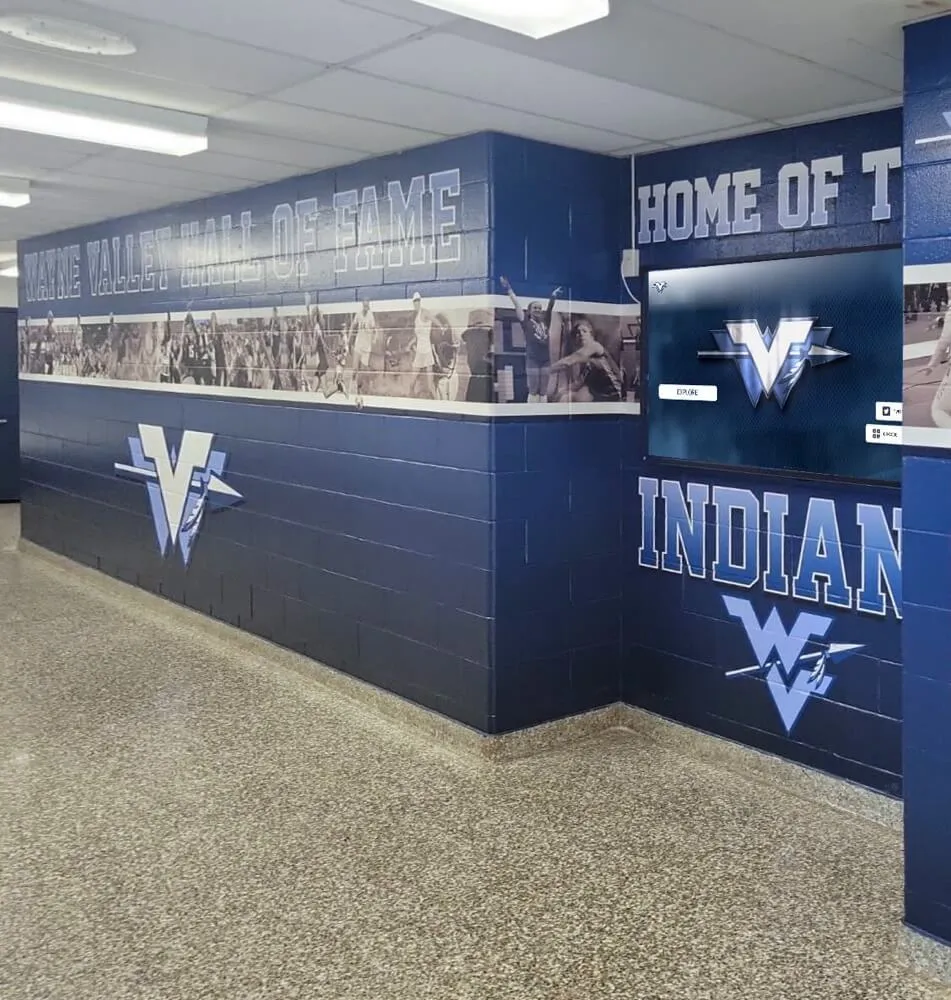
- Recognition displays celebrating diverse achievements
- Historical photos connecting current students to legacy
Hallway signage should avoid creating visual clutter—too many competing signs overwhelm viewers who stop processing information. Effective hallway signage applies consistent design language across all sign types, creating unified visual systems rather than chaotic collections.
Common Area Opportunities
Cafeterias, student lounges, and gathering spaces accommodate information students seek during informal time:
- Lunch menu boards with nutritional information
- Activity and club recruitment information
- Event promotion building attendance
- Student government communication
- School store hours and offerings
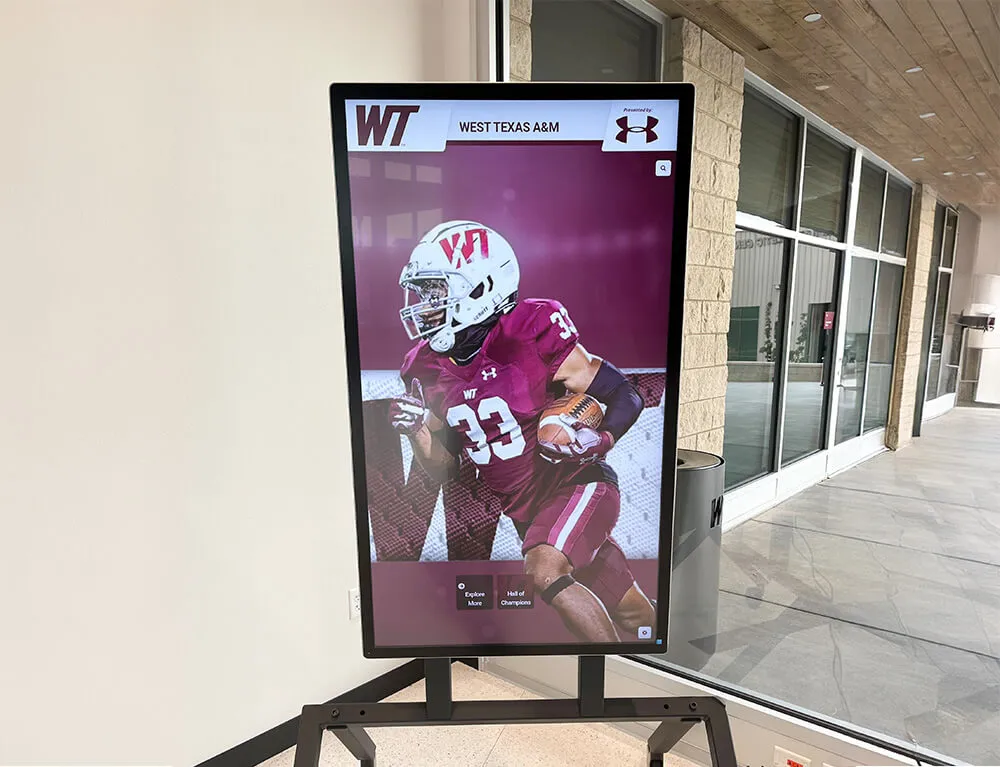
- Digital displays featuring student celebrations and announcements
Students spend significant unstructured time in common areas, making these locations valuable for information that doesn’t fit into instructional time but builds school culture and engagement.
Athletic Facility Signage
Gymnasiums, locker rooms, and fields benefit from specialized sports-focused signage.
Gymnasium and Arena Signage
- Championship banners suspended from ceilings
- Retired jersey displays
- Record holder boards for various sports
- Team schedules showing home game dates
- Sportsmanship and behavior expectation reminders
- Facility usage rules and equipment policies
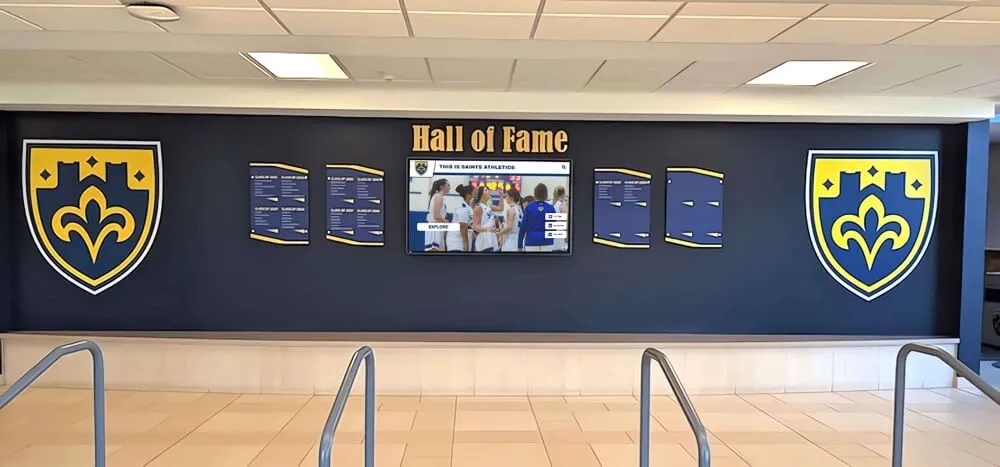
- Athletic hall of fame recognition
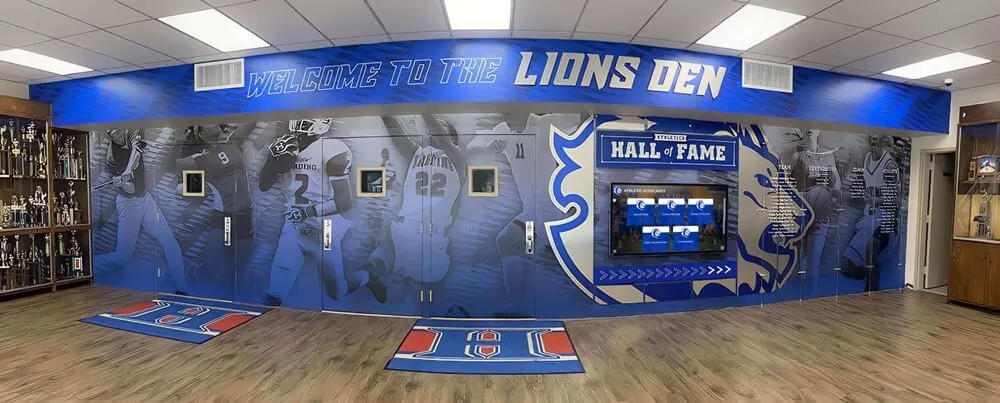
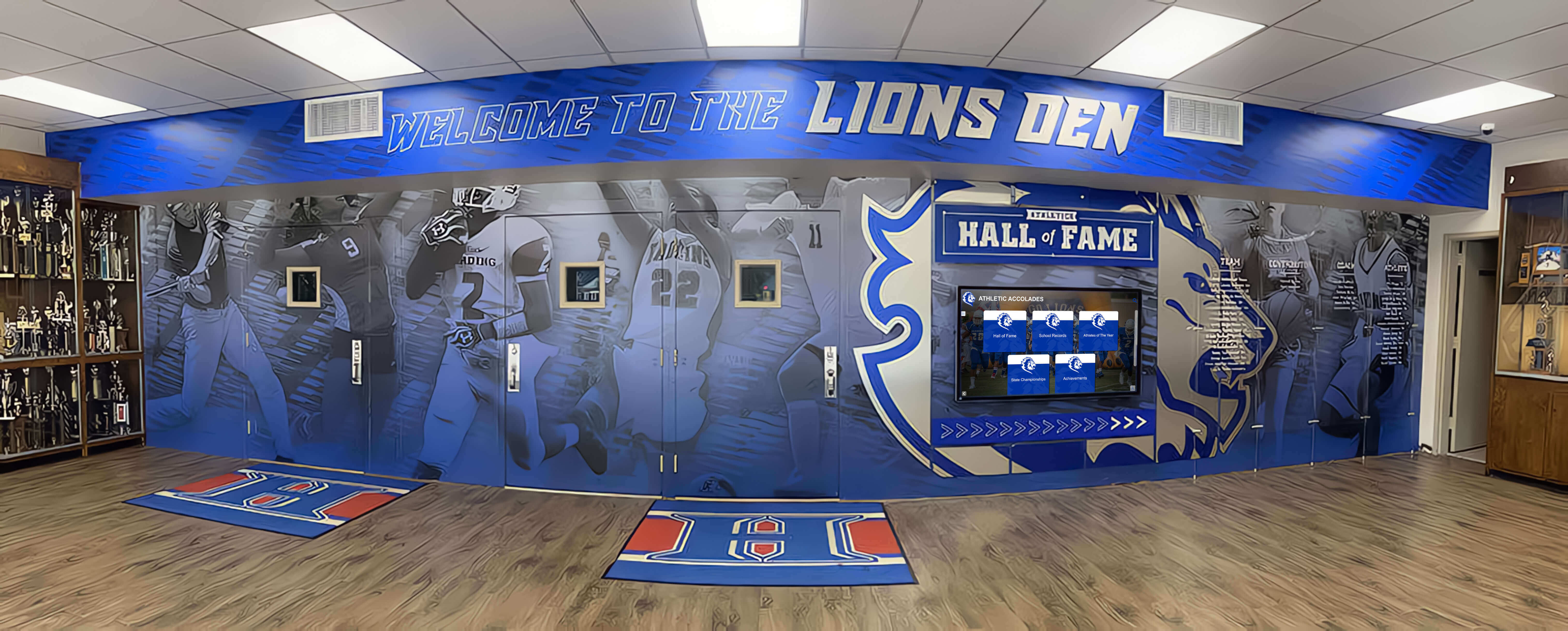
Many schools create impressive athletic recognition installations in gym lobbies where athletes, families, and visiting teams experience school pride through comprehensive achievement displays.
Outdoor Athletic Facility Signage
- Stadium name identification
- Scoreboard sponsor recognition
- Facility dedication plaques
- Field use schedules
- Spectator conduct policies
- Directions to restrooms and concessions
- Emergency contact information
Outdoor signage requires weather-resistant materials withstanding sun exposure, precipitation, and temperature extremes that would damage indoor signage materials.
Office and Administrative Area Signage
Administrative spaces need clear identification reducing visitor confusion.
Office Signage Best Practices
- Department function identification (not just names)
- Office hours clearly posted
- Service descriptions explaining what each office handles
- Staff directories with photos when possible
- “Next available appointment” information for counselors
- Privacy signage for confidential conversations
- Phone extension listings
Effective office signage should answer the question every visitor asks: “Is this where I need to be to solve my problem?” Function-based identification (“Attendance and Excused Absence Office”) communicates more clearly than title-based labels (“Dean of Students Office”) that assume visitors understand administrative hierarchies.
Classroom and Academic Area Signage
Instructional spaces benefit from educational support signage.
Classroom-Specific Signage
- Room numbers visible from hallway approaches
- Teacher name and subject identification
- Class schedule showing which courses meet when
- Academic resource reference materials
- Student work display areas
- Classroom rules and expectations
- Subject-specific educational content (periodic tables, math formulas, literary devices)
Teachers control most classroom signage, creating opportunities for personalized learning environments while contributing to building-wide visual consistency through standardized external identification.
Academic Support Areas
- Library service hours and available resources
- Computer lab usage policies and sign-up procedures
- Tutoring center schedules and subject availability
- College and career center information
- Testing center rules and procedures
Clear signage in academic support areas maximizes student access to available resources—students use services they know exist and understand how to access.
Budget-Friendly School Signage Solutions
Comprehensive signage systems don’t require enormous budgets when schools implement strategic approaches.
DIY and In-House Production
Many schools create professional-looking signs using basic equipment:
- Vinyl letter cutting systems for room numbers and directional signs
- Large-format printers for posters and banners
- Digital projectors and painted stencils for wall murals
- Laminated printed signs for temporary information
- Student graphic design classes creating signage as real projects
In-house production saves money while enabling quick updates without waiting for external vendors. Schools with technical education programs often incorporate signage projects into curriculum, creating authentic learning experiences while addressing institutional needs.
Phased Implementation Strategies
Rather than attempting comprehensive signage overhauls, phased approaches spread costs:
- Year 1: Address critical wayfinding confusion points
- Year 2: Implement safety and ADA compliance signage
- Year 3: Add recognition displays in main lobbies
- Year 4: Expand digital signage to additional locations
- Year 5: Complete branding consistency across all areas
Phased implementation also allows schools to evaluate approaches before committing to building-wide rollouts—testing signage solutions in limited areas reveals what works before expensive full-scale installation.
Partnership and Sponsorship Opportunities
External partnerships can offset signage costs:
- Local print shops donating or discounting sign production
- Parent volunteers with relevant skills contributing labor
- Booster club fundraising specifically for recognition displays
- Community business sponsors underwriting digital displays in exchange for acknowledgment
- Alumni donations funding hall of fame or historical displays
When pursuing sponsorships, schools should maintain policies ensuring sponsors don’t influence educational content and that recognition remains appropriate for educational environments.
Prioritizing High-Impact Locations
Limited budgets require strategic prioritization:
- Main entrance and lobby signage impacts every visitor
- Safety and ADA signage addresses legal requirements
- High-confusion wayfinding points where visitors regularly get lost
- Recognition displays in areas where students, families, and community gather
Starting with highest-impact locations delivers maximum benefit from limited investment while building momentum for future phases addressing lower-priority areas.
Maintaining and Updating School Signage
The best signage systems deteriorate without maintenance plans.
Regular Signage Audits
Systematic reviews identify maintenance needs:
- Walk buildings from visitor perspectives noting confusion points
- Document damaged, faded, or outdated signs requiring replacement
- Verify ADA compliance for all regulatory signage
- Check that directional signs accurately reflect current room assignments
- Assess whether recognition displays remain current
- Evaluate cleanliness and lighting affecting visibility
Annual audits conducted each summer allow addressing issues before students return while fresh eyes from new staff members often spot problems long-time employees no longer notice.
Content Update Workflows
Dynamic information requires update processes:
- Assign specific staff members responsibility for various sign categories
- Establish schedules for rotating recognition content
- Create approval workflows ensuring accuracy before posting
- Maintain content libraries of reusable graphics and templates
- Document procedures so signage maintenance survives staff turnover
Digital signage dramatically simplifies content updates compared to physical signs—web-based content management enables updates in minutes versus hours of printing, cutting, laminating, and installing traditional signs.
Replacement and Refresh Cycles
Even well-maintained signs eventually require replacement:
- Physical signs: 5-10 year replacement cycles depending on materials and exposure
- Digital display hardware: 7-10 year replacement reflecting technology lifecycles
- Recognition content: Continuous updates adding current achievements while maintaining historical archives
- Branding refresh: Every 10-15 years as design trends evolve, though core elements remain consistent
Budgeting for ongoing replacement prevents sudden large expenses when multiple signs simultaneously reach end-of-life.
Measuring School Signage Effectiveness
The most effective signage systems generate measurable improvements in key metrics.
Quantitative Impact Measures
Data-driven assessment reveals signage ROI:
- Reduced front office interruptions for directional questions
- Decreased visitor complaints about confusing wayfinding
- Increased event attendance after improved promotion signage
- Faster emergency evacuations following clear route signage
- Higher alumni engagement after recognition display implementation
- Analytics from digital signage showing content views and interactions
Qualitative Impact Indicators
Some benefits resist precise measurement but clearly demonstrate value:
- Visitor feedback about welcoming environments and easy navigation
- Student pride in seeing their achievements recognized publicly
- Staff satisfaction with professional, organized institutional presentation
- Community perception of schools as well-managed organizations
- Recruiting advantages when prospective families experience impressive facilities
Schools implementing comprehensive signage systems, particularly interactive digital recognition displays, consistently report cultural shifts toward stronger school pride and community connection—outcomes more valuable than simple cost savings though harder to quantify.
Conclusion: Signage as School Culture Infrastructure
School signage represents far more than directional arrows and room numbers—it constitutes cultural infrastructure shaping how students, staff, families, and communities experience educational institutions daily. Comprehensive signage systems welcome visitors confidently through clear wayfinding, celebrate student achievements building pride and motivation, communicate important information keeping everyone informed, and reinforce school identity through consistent visual branding.
The most effective approaches balance traditional static signs for permanent information with modern digital displays for dynamic content requiring frequent updates. While traditional signs serve essential functions at lower initial costs, digital recognition systems eliminate ongoing material expenses while providing unlimited capacity for celebrating student achievement—often achieving cost parity within 3-5 years despite higher upfront investment.
Schools planning signage systems should prioritize high-impact locations like main entrances and lobbies, address critical safety and ADA compliance requirements, implement phased approaches spreading costs across multiple budget cycles, and establish maintenance workflows preventing deterioration. Whether working with modest budgets or comprehensive facility improvement funds, every school can implement strategic signage improvements delivering meaningful impact on visitor experience, operational efficiency, and school culture.
Solutions like Rocket Alumni Solutions provide specialized digital recognition platforms designed specifically for schools rather than generic digital signage requiring extensive customization. These purpose-built systems enable non-technical staff to maintain impressive displays confidently, accommodate unlimited student recognition without space constraints, eliminate recurring printing costs, and create engaging interactive presentations that contemporary students expect from their educational environments.
From elementary schools seeking welcoming entry displays to high schools building comprehensive hall of fame systems, thoughtful signage transforms institutional spaces into environments where every visitor feels oriented, every achievement receives recognition, and every wall communicates that schools value excellence, celebrate community, and welcome all who enter.
Ready to explore how modern digital recognition displays can transform your school’s signage system while eliminating the physical limitations and ongoing costs of traditional signs? Discover how Rocket Alumni Solutions creates comprehensive recognition and communication platforms designed specifically for educational institutions—combining intuitive content management, unlimited student recognition capacity, and engaging interactive displays that build school pride for generations.