



Key Takeaways
Comprehensive guide to school entrance design featuring lobby ideas, digital displays, recognition walls, and strategies for creating welcoming first impressions that engage visitors, students, and community.
First impressions matter profoundly in education. The moment prospective families, community members, or visitors step through your school entrance, they begin forming judgments about institutional quality, values, and culture. A thoughtfully designed entrance communicates pride, celebrates achievement, guides visitors confidently, and creates immediate emotional connection. Yet many schools struggle with outdated lobbies featuring cluttered bulletin boards, aging trophy cases, inadequate seating, and unclear wayfinding—missing critical opportunities to shape perceptions positively and engage their communities effectively.
Modern school entrance design goes far beyond aesthetics. Today’s lobbies serve multiple strategic functions: secure visitor management in an era of heightened safety awareness, digital engagement through interactive technology, comprehensive recognition celebrating decades of achievement, and brand communication reinforcing institutional identity. The best entrance designs seamlessly integrate these practical requirements with welcoming atmospheres that make everyone—from nervous kindergarten parents to visiting dignitaries—feel genuinely valued from their first moments in your building.
This comprehensive guide explores proven school entrance design strategies, recognition display options, technology integration, and practical implementation approaches that transform ordinary lobbies into compelling spaces worthy of your institution and the communities you serve.
Understanding the Strategic Role of School Entrances
School entrances function as more than transitional spaces between exterior and interior. They serve critical operational, cultural, and strategic purposes that justify thoughtful design investment.
First Impressions and Institutional Perception
Research on environmental psychology consistently demonstrates that physical environments shape perceptions within seconds. Visitors form initial judgments about school quality, organization, and values based almost entirely on entrance appearance and atmosphere before any human interaction occurs.
What Entrances Communicate:
- Organizational Competence: Clean, well-maintained entrances suggest capable administration and functional systems throughout the institution
- Resource Investment: Quality materials and thoughtful design indicate appropriate prioritization of learning environments
- Community Pride: Recognition displays and school branding demonstrate healthy institutional identity
- Safety Consciousness: Visible security measures reassure families that student protection receives appropriate attention
- Student-Centered Culture: Displays featuring student work and achievements signal that young people remain central to institutional mission
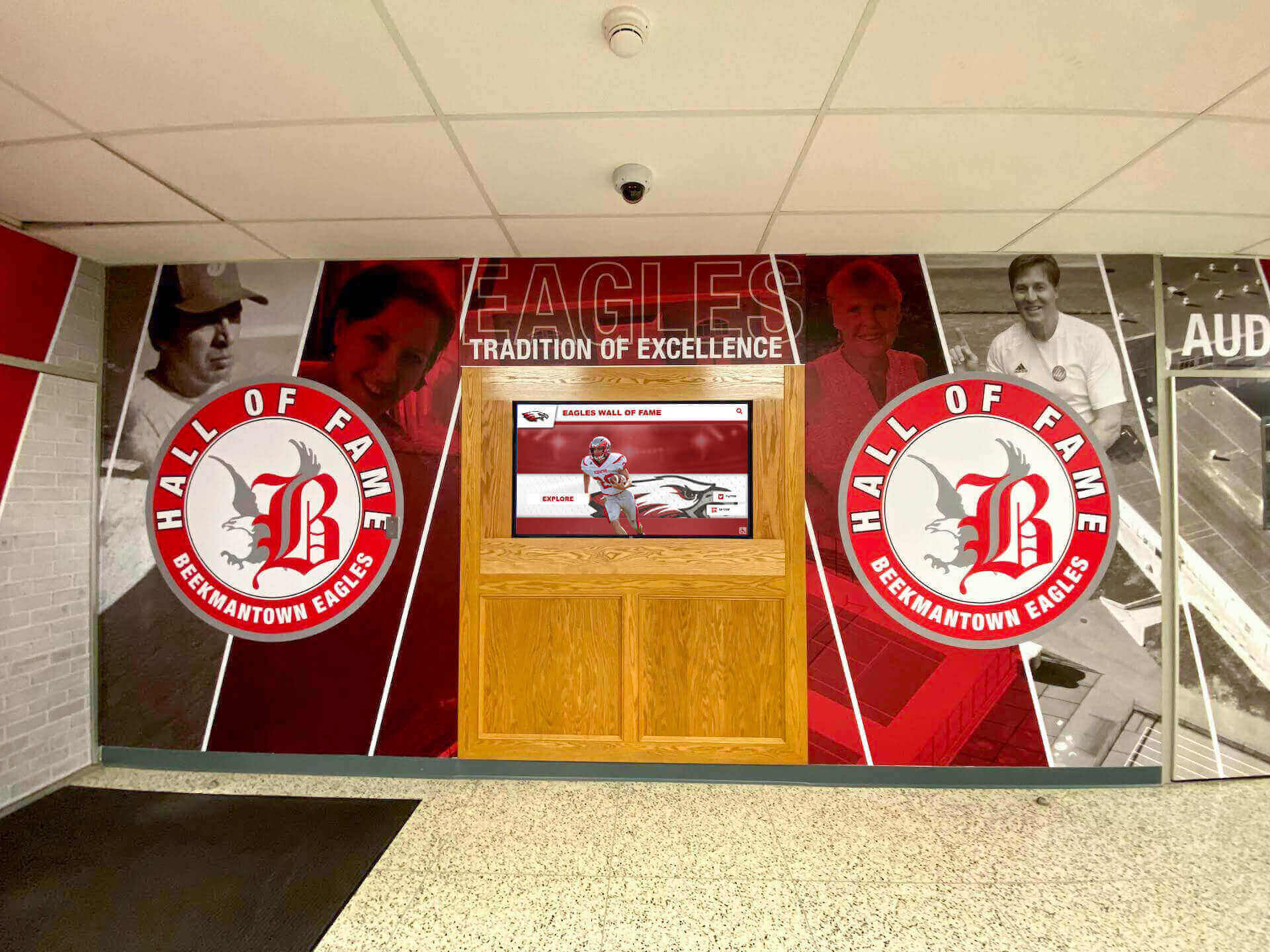
Schools competing for enrollment in choice environments, seeking bond passage from taxpayers, or building fundraising relationships with alumni cannot afford to underestimate how entrance design influences these critical stakeholders’ perceptions and decisions.
Functional Requirements of Modern School Entrances
Beyond impression management, entrances must accommodate practical operational needs:
Visitor Management and Security
Contemporary school entrances serve as controlled access points requiring:
- Clear sight lines enabling staff to observe all entry activity
- Secure vestibule systems creating layers between exterior and interior spaces
- Check-in stations with appropriate technology for visitor screening and badge printing
- Emergency lockdown capability integrating with broader security systems
- Camera systems documenting entry and exit activity
- Intercom or video communication with administrative offices
Many schools balance security necessity with welcoming atmosphere by designing reception areas that feel professional rather than institutional, using materials and finishes that communicate care rather than threat.
Wayfinding and Orientation
Visitors unfamiliar with school layouts need clear directional guidance:
- Prominent directional signage to key destinations (office, gymnasium, cafeteria, auditorium)
- Building maps showing current location and primary routes
- Digital directories enabling search by staff name, room number, or department
- Visual cues like color coding or architectural elements reinforcing navigation
- Accessible routes clearly marked for visitors with mobility needs
Effective wayfinding reduces administrative burden (fewer “Where is the office?” interruptions), decreases visitor anxiety, and ensures that people reach intended destinations efficiently.
Reception and Waiting Functionality
Many entrance visitors require reception services or waiting time before meetings:
- Reception desks or counters at appropriate heights enabling comfortable interaction
- Adequate seating accommodating typical peak wait times
- Climate control maintaining comfort year-round
- Restroom access appropriate for public areas
- Beverage stations or water fountains for longer visits
- Work surfaces or charging stations for visitors with extended waits
Schools hosting frequent parent conferences, prospective family tours, vendor meetings, or community events particularly benefit from entrance waiting areas designed for comfort during multi-hour visit periods.

Recognition and Culture Communication
School entrances serve as primary venues for communicating institutional culture, celebrating achievement, and reinforcing community identity:
Historical Legacy Displays
Recognition elements connecting current students and families to institutional history:
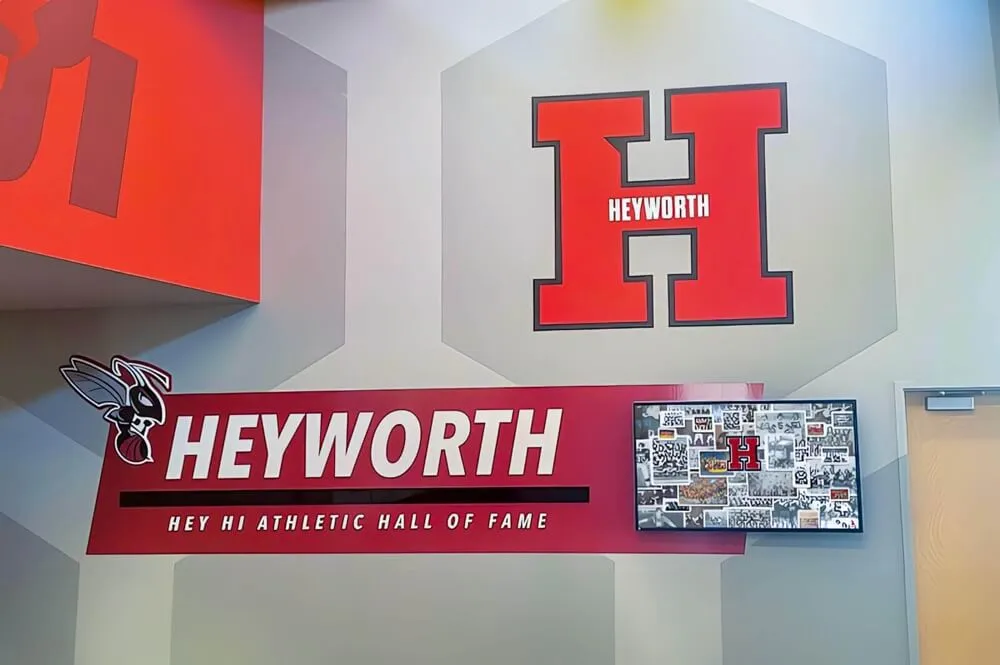
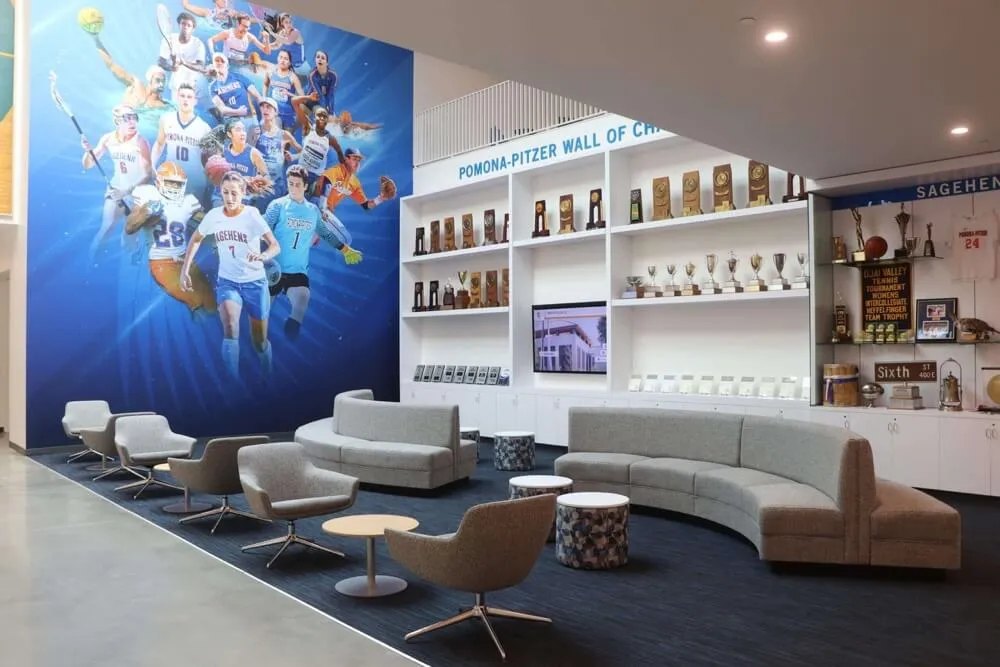
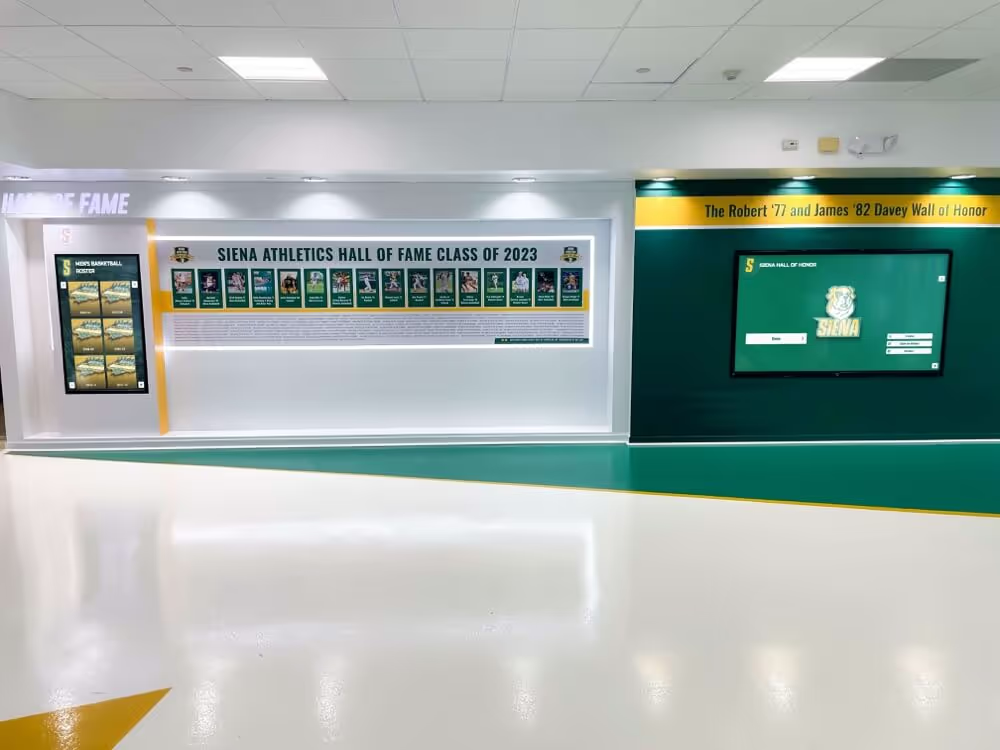
- Athletic halls of fame showcasing decades of competitive achievement
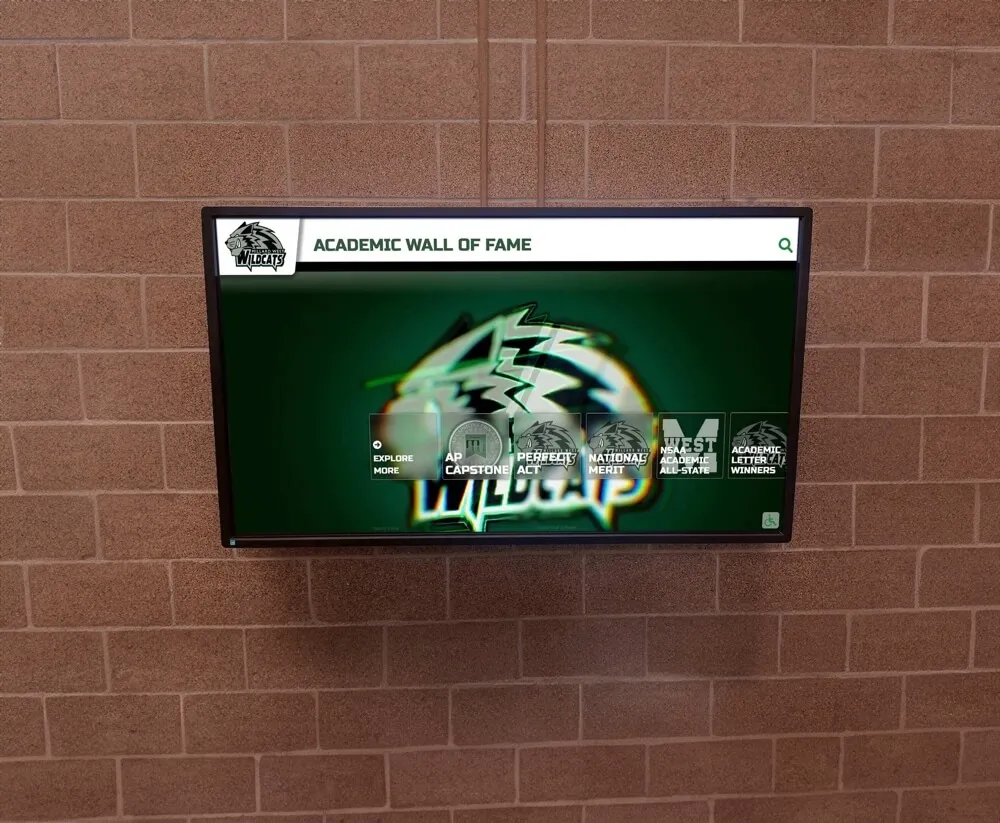
- Academic honor rolls recognizing scholarly excellence across generations
- Distinguished alumni profiles demonstrating long-term institutional impact
- Historical photographs documenting school evolution and milestone moments
- Traditional trophy cases preserving championship artifacts and significant memorabilia
Current Achievement Celebration
Contemporary recognition keeping displays fresh and relevant:
- Recent honor roll announcements spotlighting current academic achievement
- Athletic season highlights and championship recognition
- Student artwork and project displays demonstrating learning outcomes
- Staff recognition honoring educator excellence and years of service
- Community partnership acknowledgment celebrating local business and organization support
Future Aspiration Messaging
Forward-looking content that inspires and motivates:
- Mission and vision statements articulating institutional purpose
- Strategic plan highlights demonstrating progress toward goals
- College acceptance lists showing post-graduation success
- Capital campaign progress tracking community investment
- Innovation and program development announcements signaling continuous improvement
The most effective entrance designs balance these temporal dimensions—honoring heritage, celebrating present, and inspiring future—creating comprehensive narratives that position schools as living institutions with proud histories and bright futures.
Essential Design Elements for Welcoming School Entrances
Successful entrance designs thoughtfully integrate multiple elements creating cohesive, functional spaces that serve diverse needs while maintaining welcoming character.
Layout and Space Planning
Thoughtful spatial organization prevents congestion while accommodating peak traffic periods and diverse user needs.
Traffic Flow Management
Design circulation patterns preventing bottlenecks:
- Separate entry and exit doors when volume justifies (reducing conflicts between arriving and departing traffic)
- Clear paths between entry and primary destinations (office, hallways, gathering areas)
- Adequate clearance around reception/security checkpoints preventing queue backup
- Furniture arrangements that don’t obstruct primary circulation routes
- Emergency egress paths maintained per code requirements
Functional Zones
Create perceived areas for different activities without physical barriers:
- Check-in/security zone near primary entry with clear sight lines
- Waiting area with comfortable seating slightly removed from circulation
- Recognition display zone where visitors naturally pause and explore
- Administrative reception area for scheduled appointments
- Informal gathering space for early arrivals or brief conversations
Flooring material changes, ceiling height variations, or lighting differences can delineate zones effectively without walls that reduce openness and restrict flexibility.
Accessibility Compliance
Ensure universal access throughout entrance areas:
- Automatic door openers at primary entries
- Reception counter heights accommodating both standing and seated visitors
- Clear floor space enabling wheelchair navigation without tight turns
- Tactile and visual wayfinding aids for visitors with sensory impairments
- Assistive listening systems at reception areas when appropriate
- Accessible seating with appropriate clearances and armrest configurations
Materials and Finishes Creating Durability and Atmosphere
School entrances endure extraordinary wear from hundreds or thousands of daily users. Material selection must balance aesthetic quality with practical durability.
Flooring Considerations
Entry flooring faces particularly demanding conditions:
Vestibule/Entry Zone:
- Recessed walk-off mat systems (minimum 10-15 feet) capturing moisture and debris before interior space
- Sealed concrete with slip-resistant finish offering extreme durability
- Large-format tile with minimal grout lines reducing maintenance requirements
- Rubber flooring providing cushioning and excellent weather resistance
Interior Lobby Space:
- Porcelain or ceramic tile offering beauty with excellent durability (high PEI rating)
- Luxury vinyl plank (LVP) providing wood appearance with superior maintenance characteristics
- Polished concrete with decorative scoring or staining creating sophisticated aesthetic
- Carpet tile in lower-traffic waiting areas offering acoustic benefits and comfort
Avoid materials like hardwood (scratches from grit), standard vinyl (appearance degrades quickly), or small mosaic tile (labor-intensive cleaning) in high-traffic entrance areas.
Wall Treatments
Surfaces requiring both durability and visual appeal:
- Impact-resistant paint in high-traffic circulation areas (semi-gloss or satin sheens for cleanability)
- Fabric-wrapped acoustic panels reducing reverberation while adding warmth
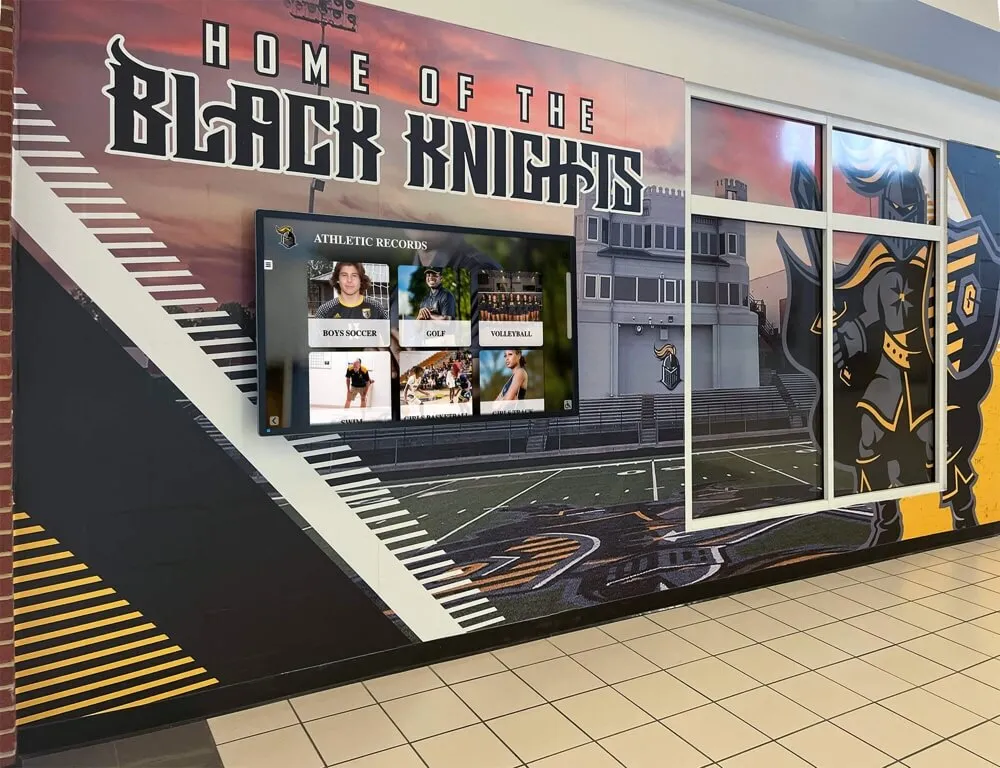
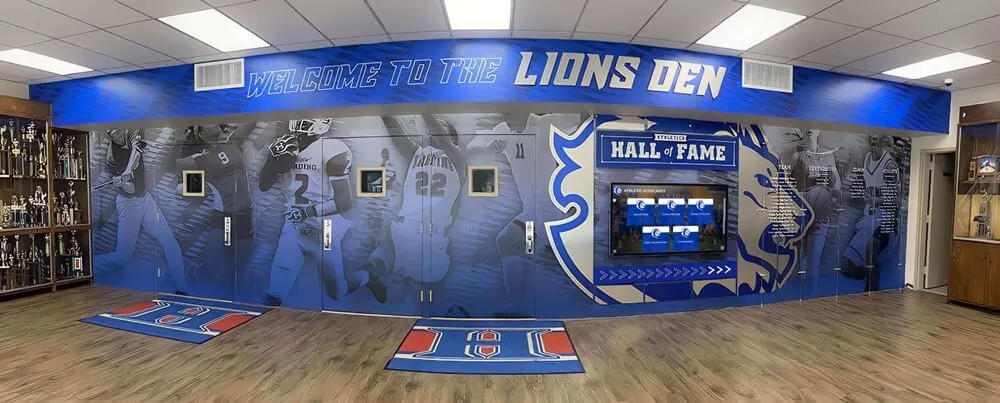
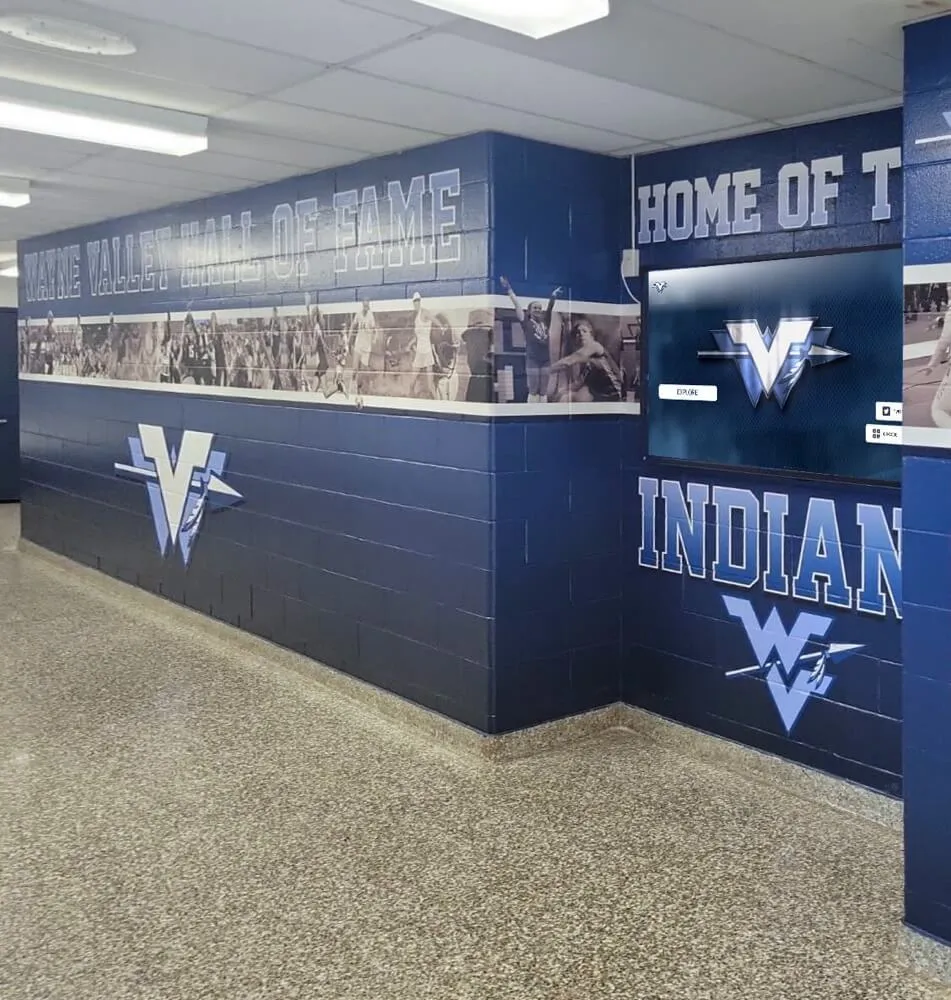
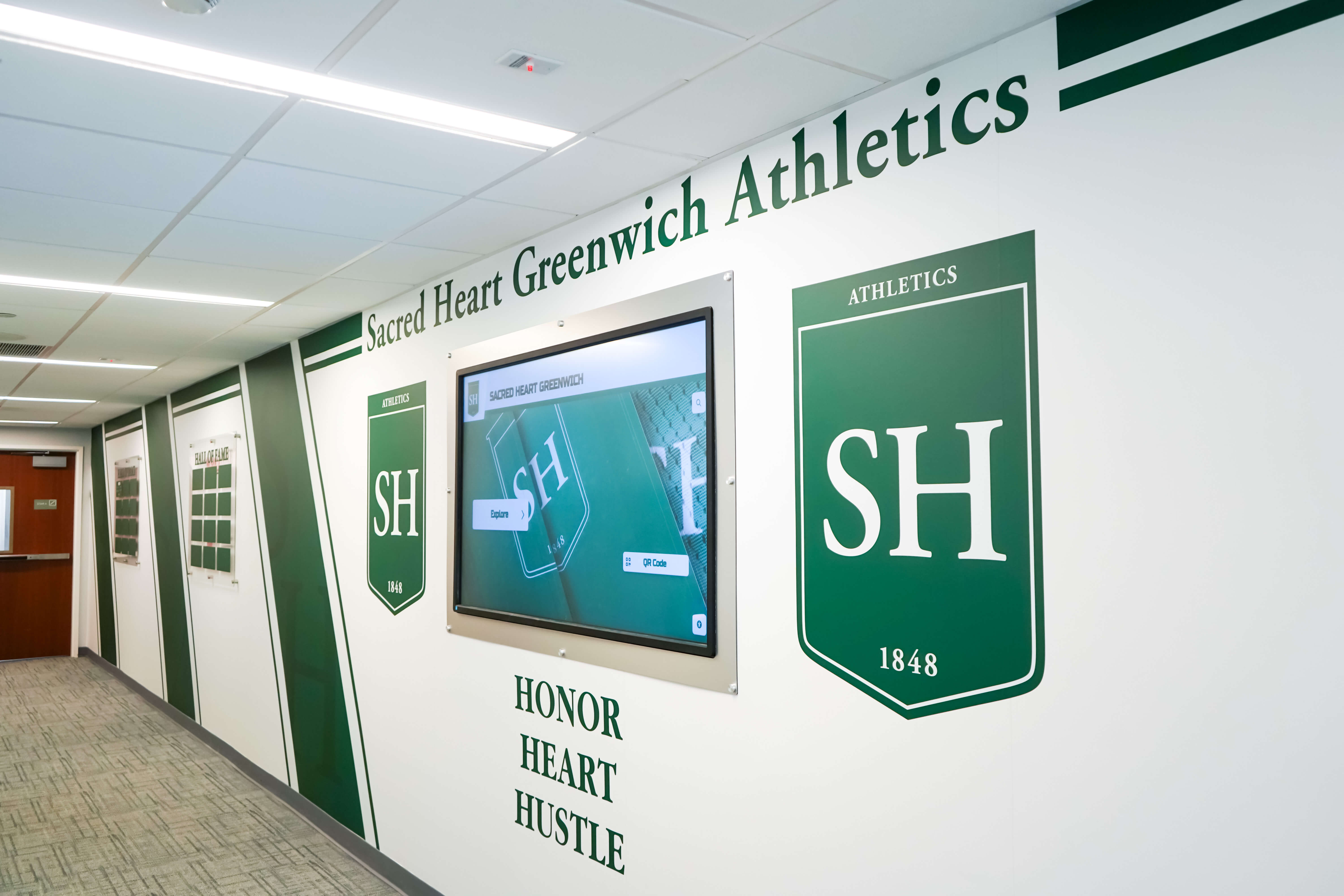
- Wall wraps featuring school branding and imagery creating dramatic visual impact
- Durable wainscoting or wall protection systems at chair-rail height preventing furniture damage
- Permanent or rotating display systems for student artwork and achievement certificates
Ceiling and Lighting Design
Overhead elements significantly influencing space perception:
- Adequate ceiling height (minimum 9-10 feet) preventing claustrophobic feeling in gathering areas
- Acoustic ceiling tile in higher areas controlling sound reverberation
- Recessed LED lighting providing energy-efficient, maintenance-friendly illumination
- Decorative pendant or architectural lighting adding visual interest and appropriate scale
- Natural light access through windows or skylights dramatically improving space quality
Lighting deserves particular attention—under-lit entrances feel unwelcoming and unsafe, while properly illuminated spaces feel open, secure, and professionally maintained.
Furniture Selection Balancing Comfort and Durability
Entrance furniture must withstand heavy use while providing genuine comfort for waiting visitors.
Seating Considerations
Specify furniture meeting demanding entrance environments:
- Commercial-grade construction designed for institutional settings (avoid residential furniture)
- Cleanable upholstery fabrics or surfaces (vinyl, performance fabrics, or solid materials)
- Weighted or floor-mounted installation preventing furniture rearrangement
- Appropriate scale for space without overwhelming smaller entrances
- Mixture of seating types (individual chairs, small sofas, bench seating) accommodating different preferences
- Colors and patterns hiding minor wear and staining
Reception and Work Surfaces
Functional furniture supporting staff and visitor needs:
- Reception desks at standard counter height (42 inches) with accessible lower sections (34 inches)
- Durable work surfaces resisting scratches, stains, and impact damage
- Integrated cable management for technology without visible cord clutter
- Locking storage for secure document and equipment protection
- Ergonomic design supporting staff health during extended shifts
Display and Storage Elements
Purpose-built furniture enhancing functionality:
- Literature racks or display stands for school information, brochures, and community resources
- Coat racks or hooks for visitor belongings during longer appointments
- Umbrella stands containing weather-related moisture
- Built-in or freestanding planters adding natural elements
- Modular display systems accommodating changing content
Recognition Display Approaches for School Entrances
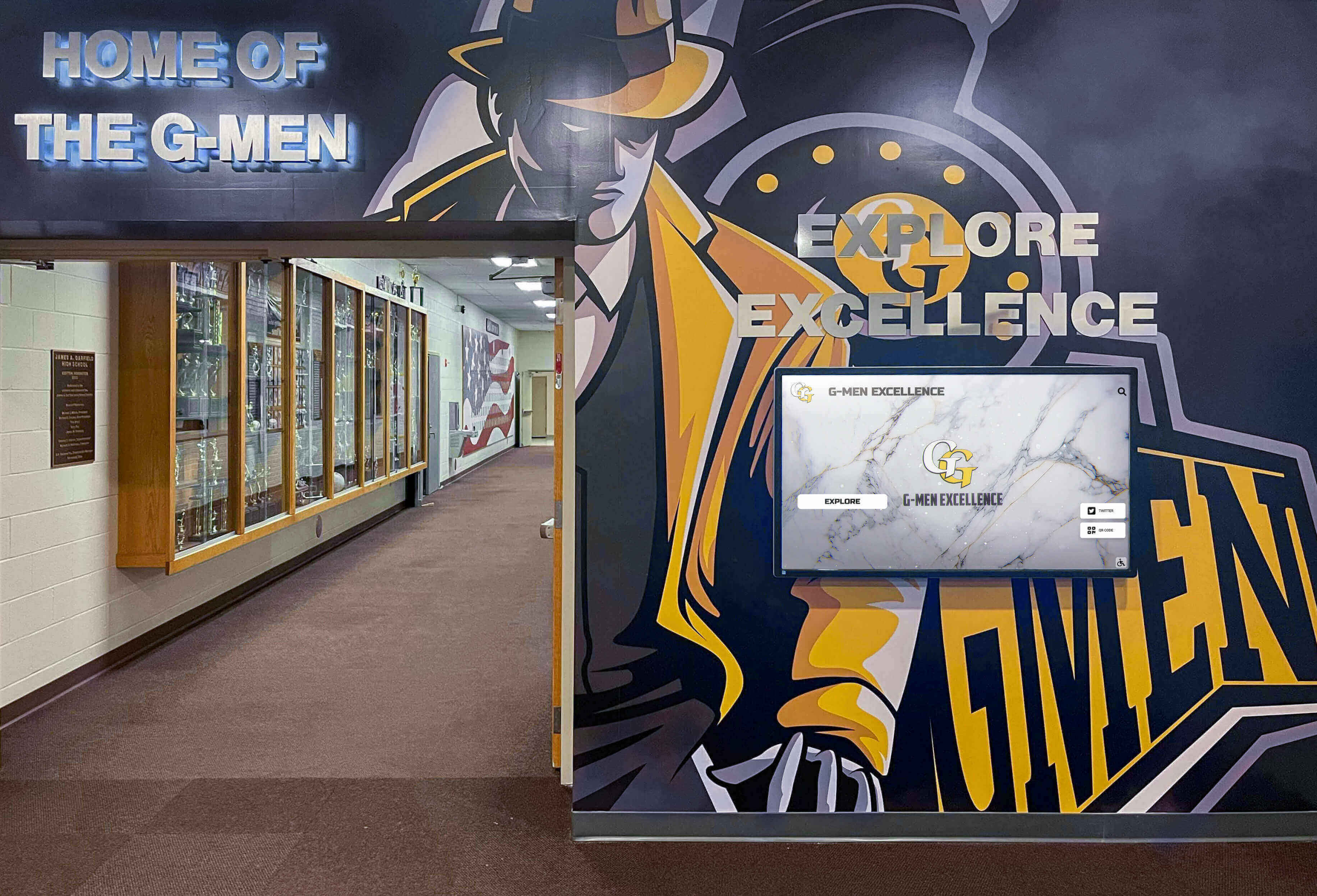
Recognition displays serve dual purposes in entrance design—celebrating achievement while creating engaging focal points that communicate school culture and values.
Traditional Recognition Elements
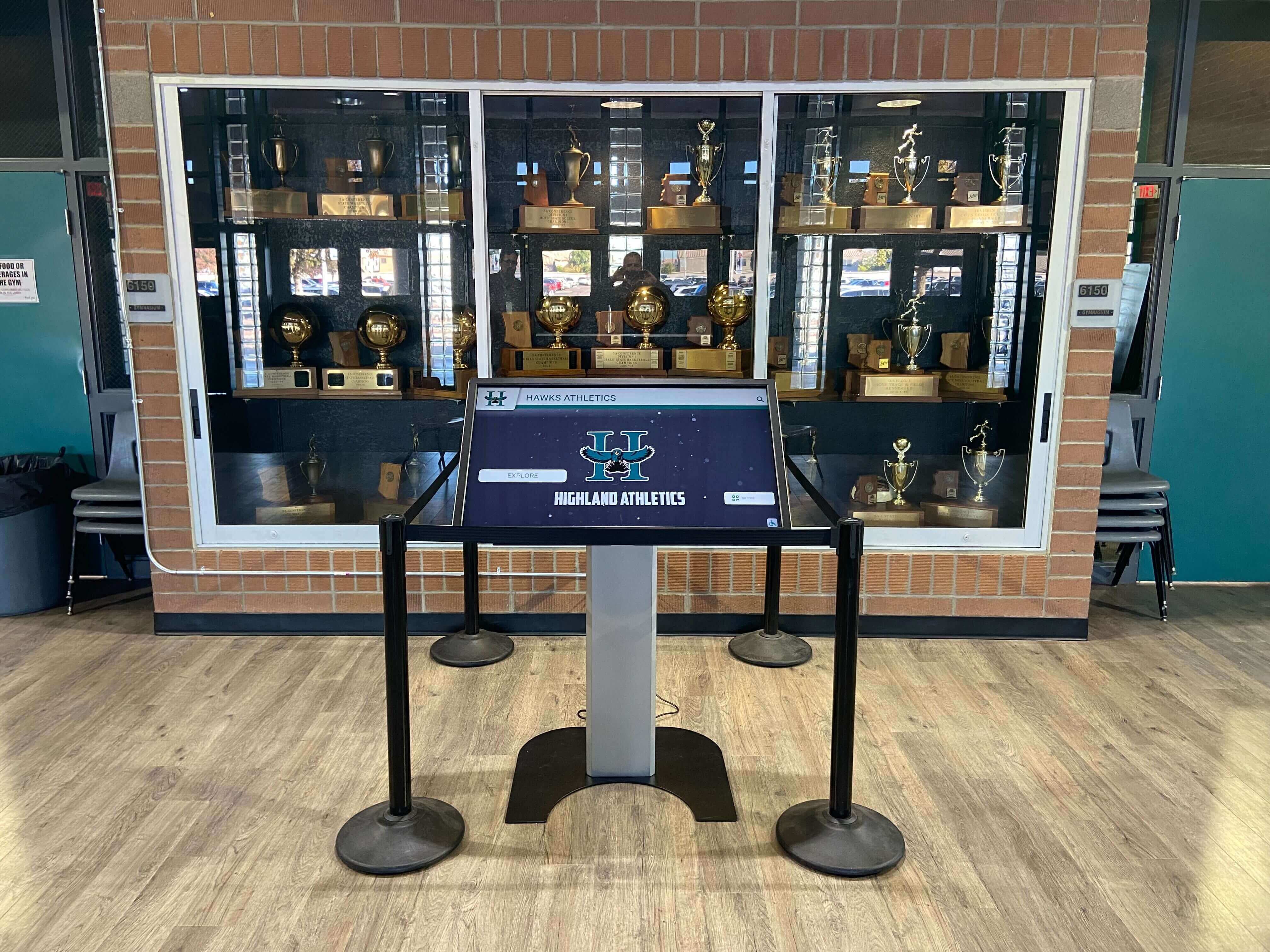
Time-tested approaches maintain relevance when properly designed and maintained.
Trophy Cases and Physical Awards
Display championship trophies, plaques, and physical recognition artifacts:
Design Considerations:
- Built-in or wall-mounted cases with proper lighting (LED strips or puck lights preventing heat damage)
- Tempered glass and secure locks protecting valuable items
- Adequate depth accommodating large trophies while maintaining visual accessibility
- Adjustable shelving adapting to different artifact sizes
- Backing materials (fabric, painted surfaces, graphics) providing visual cohesion
- Regular rotation keeping displays fresh and preventing cluttered appearance
Maintenance Requirements:
- Scheduled dusting and cleaning maintaining professional appearance
- Content curation removing outdated or less significant items as recognition accumulates
- Organization by theme, sport, or time period creating coherent narratives rather than random collections
Well-maintained trophy display cases create powerful impressions, while cluttered or deteriorating cases detract from entrance quality and suggest institutional neglect.
Traditional Plaques and Honor Boards
Name lists and individual plaques recognizing specific achievements:
- Academic honor roll boards listing distinguished students
- Faculty/staff recognition plaques honoring years of service or special contributions
- Donor recognition acknowledging significant financial support
- Historical milestone plaques documenting important institutional moments
- Championship team rosters celebrating competitive success
Limitations:
- Fixed capacity constraining recognition as populations grow
- Update difficulty requiring physical reinstallation for additions
- Inconsistent design when plaques added over decades create visual confusion
- Maintenance challenges as older plaques tarnish, discolor, or deteriorate
- Space consumption as expanding recognition crowds entrance areas
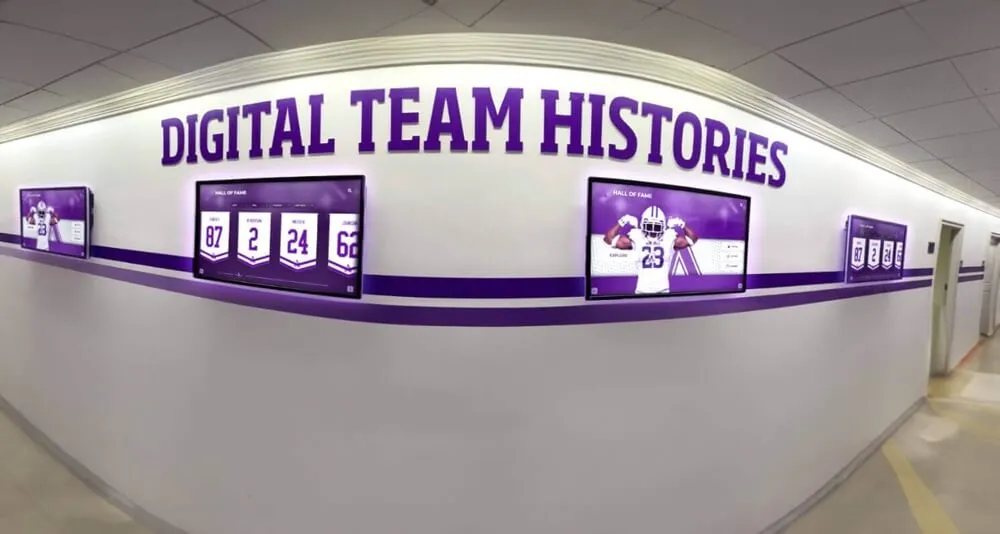
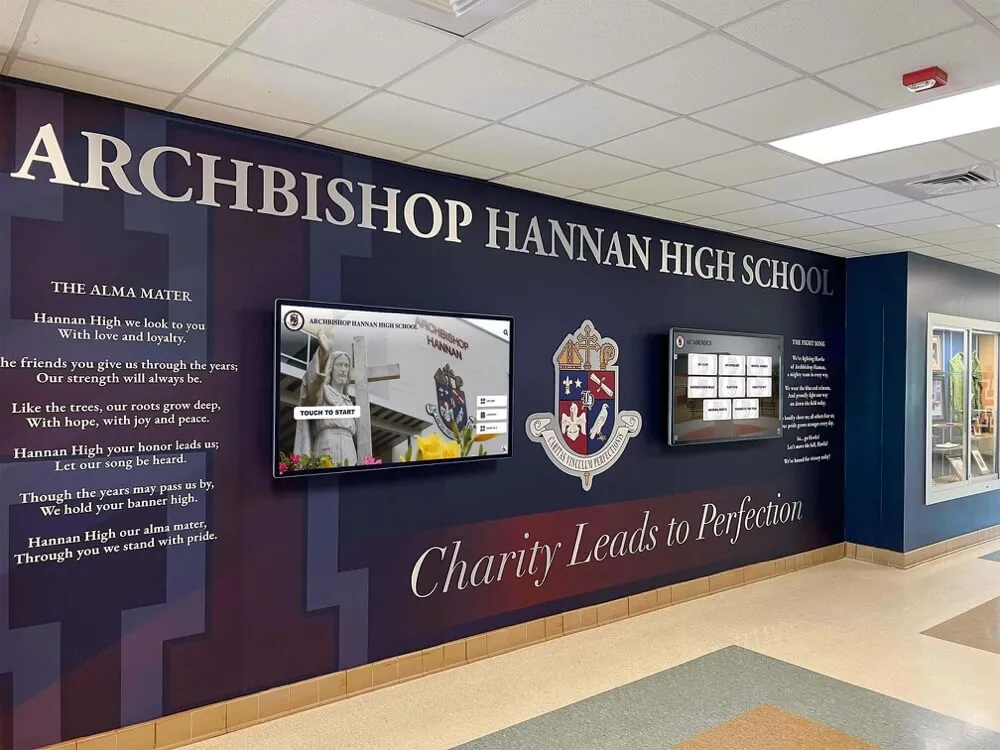
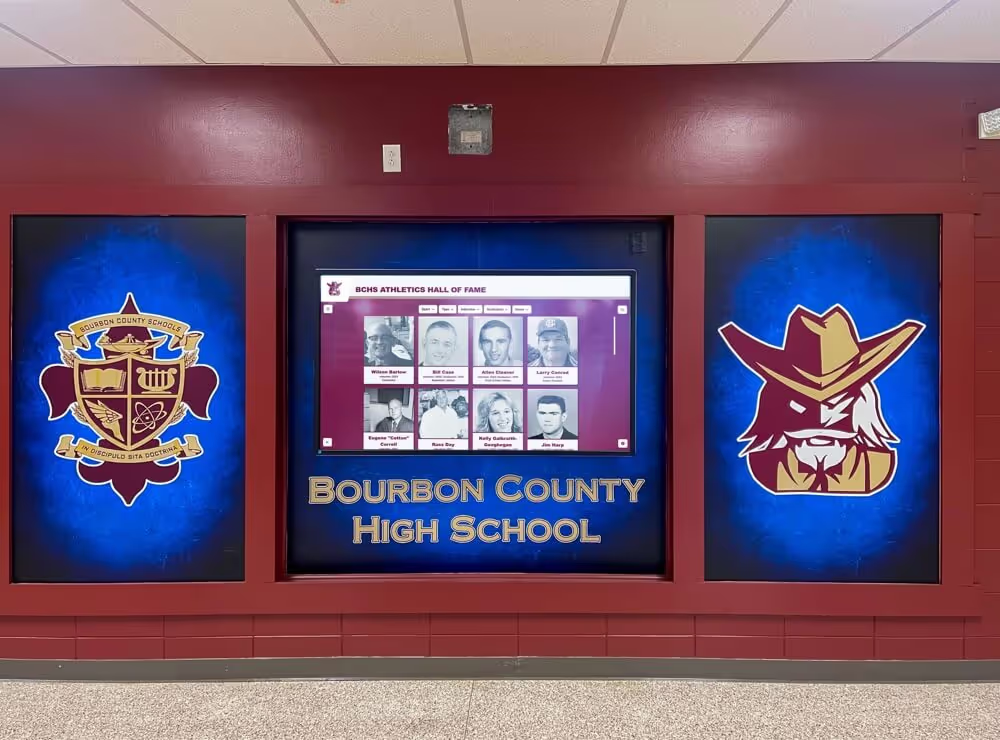
Modern Digital Recognition Systems
Interactive digital displays address traditional recognition limitations while creating engaging experiences that extend recognition capabilities dramatically.
Comprehensive Recognition Capacity
Digital systems eliminate space constraints that limit traditional approaches:
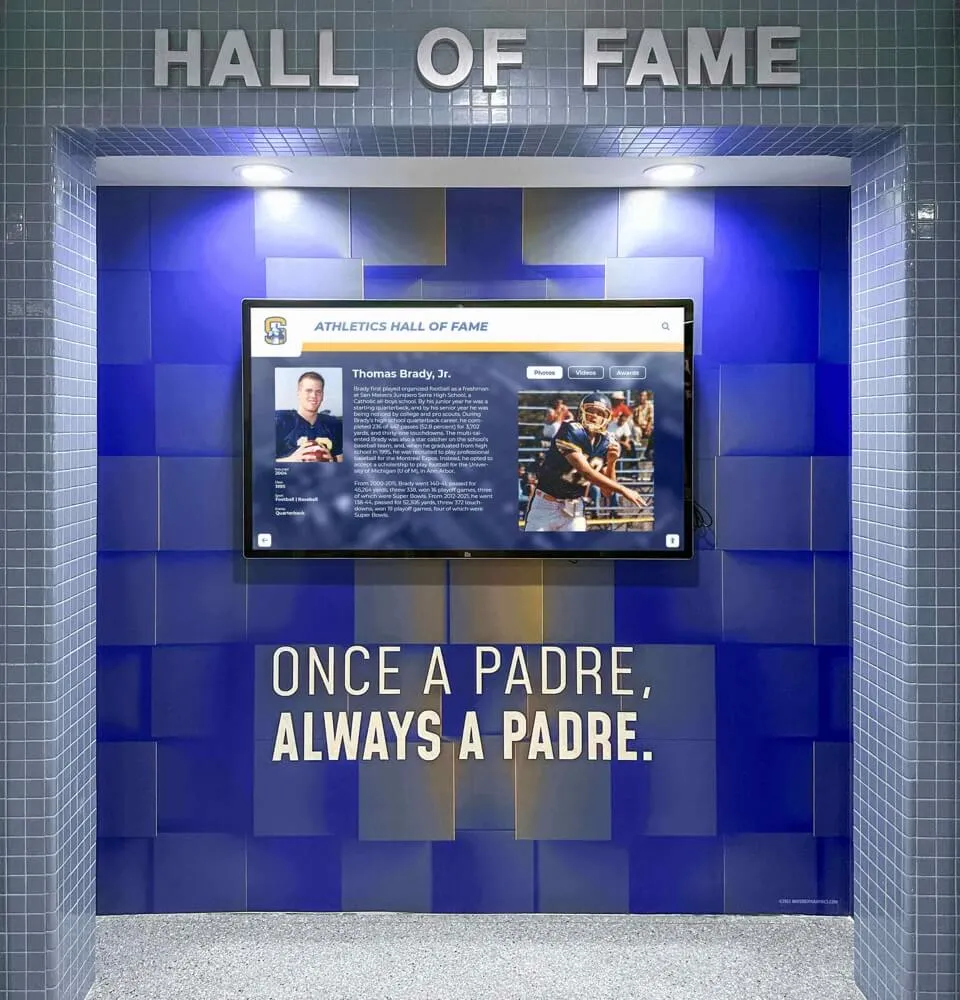
- Unlimited inductee capacity growing indefinitely without physical space requirements
- Comprehensive databases showcasing entire organizational histories rather than selective highlights
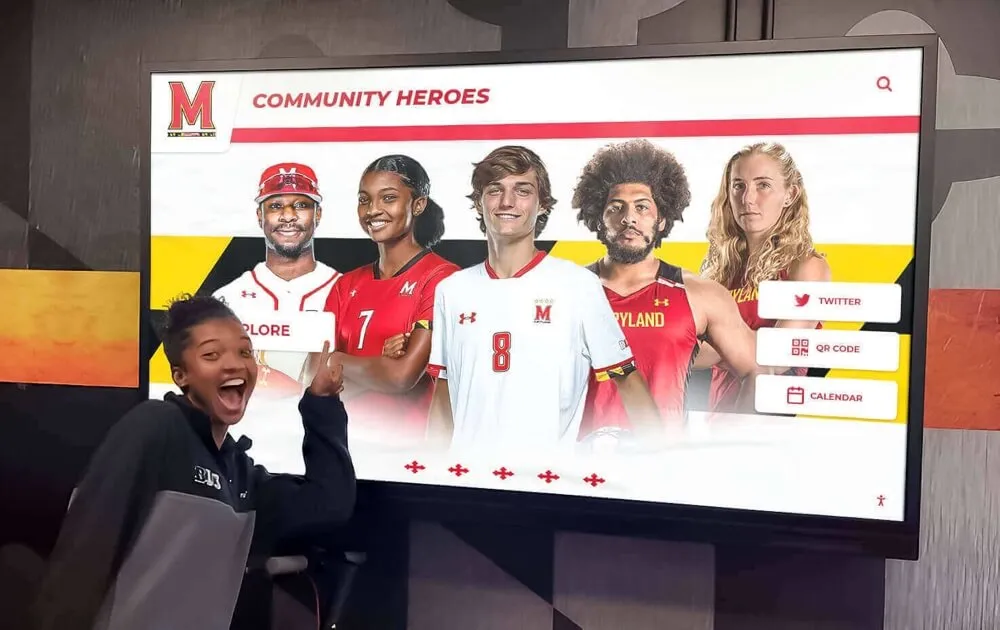
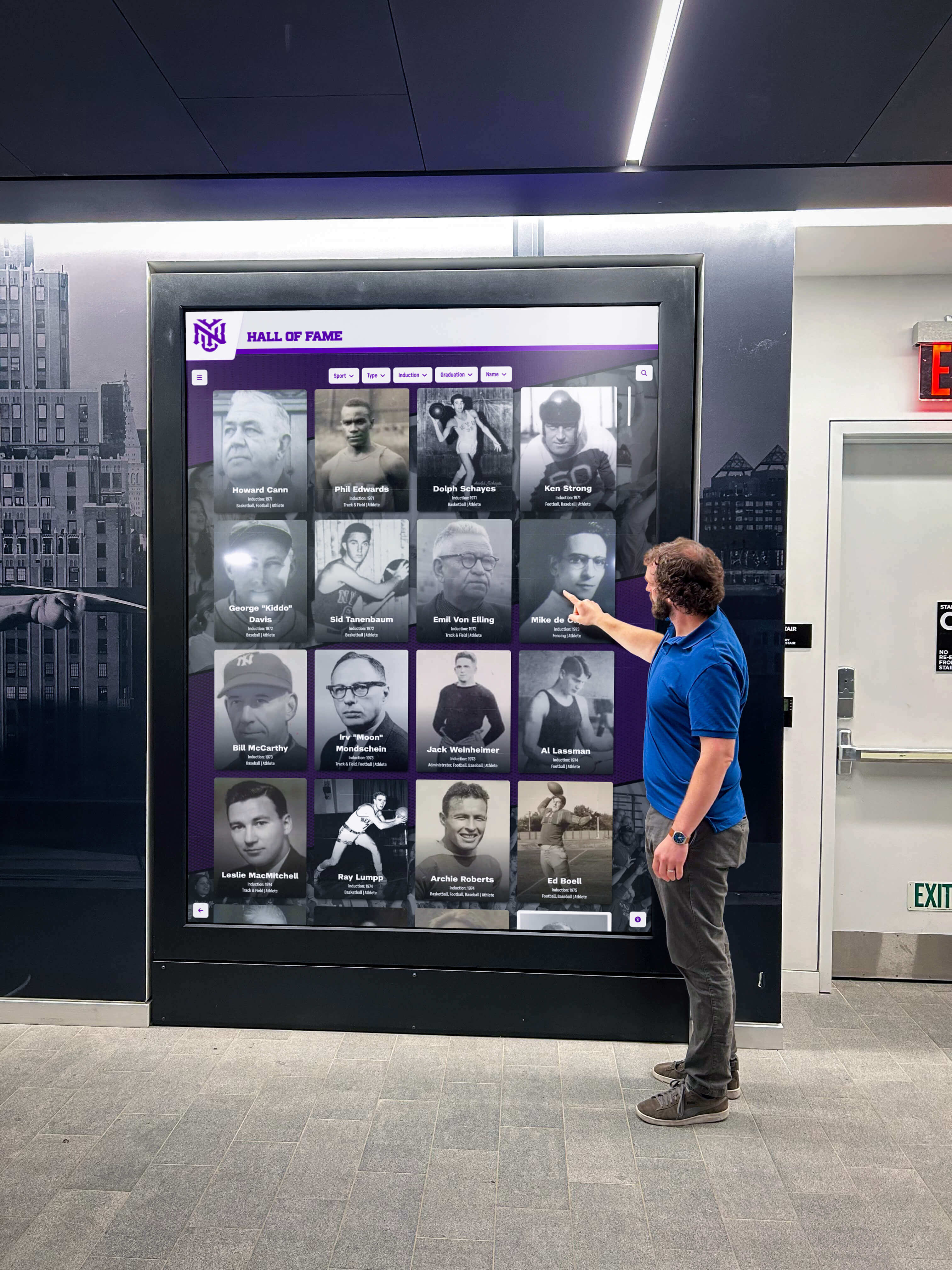
- Multiple recognition categories (academics, athletics, arts, service, distinguished alumni) within single interface
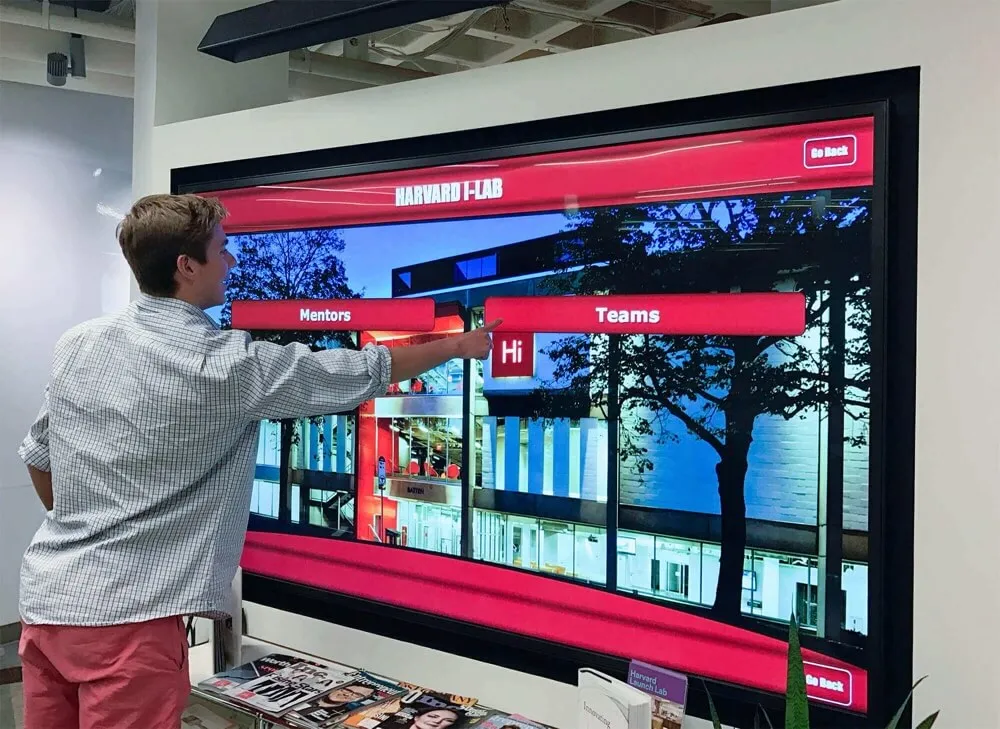
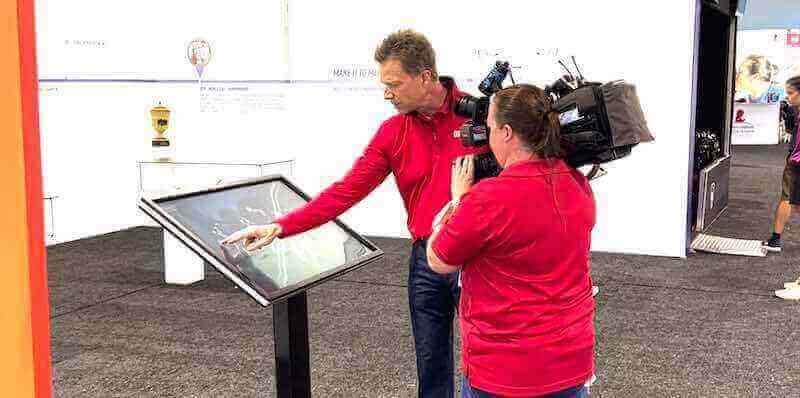
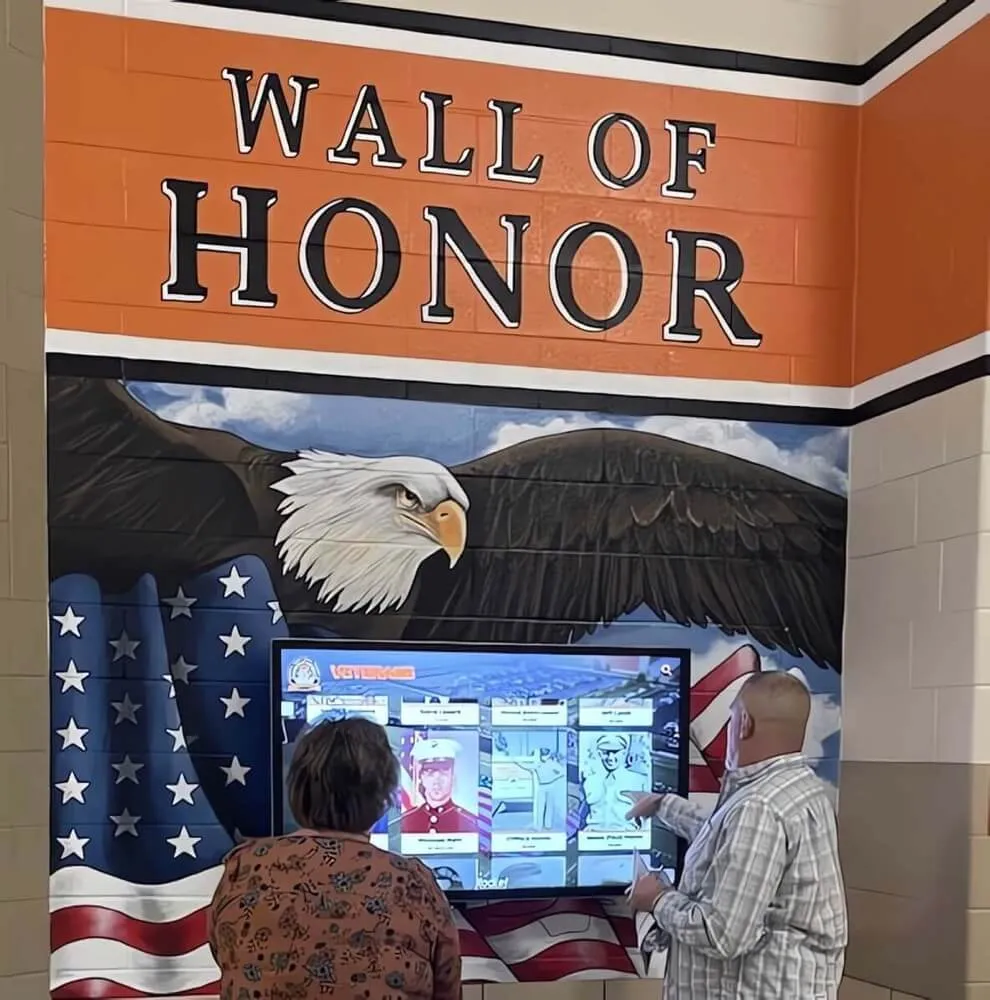
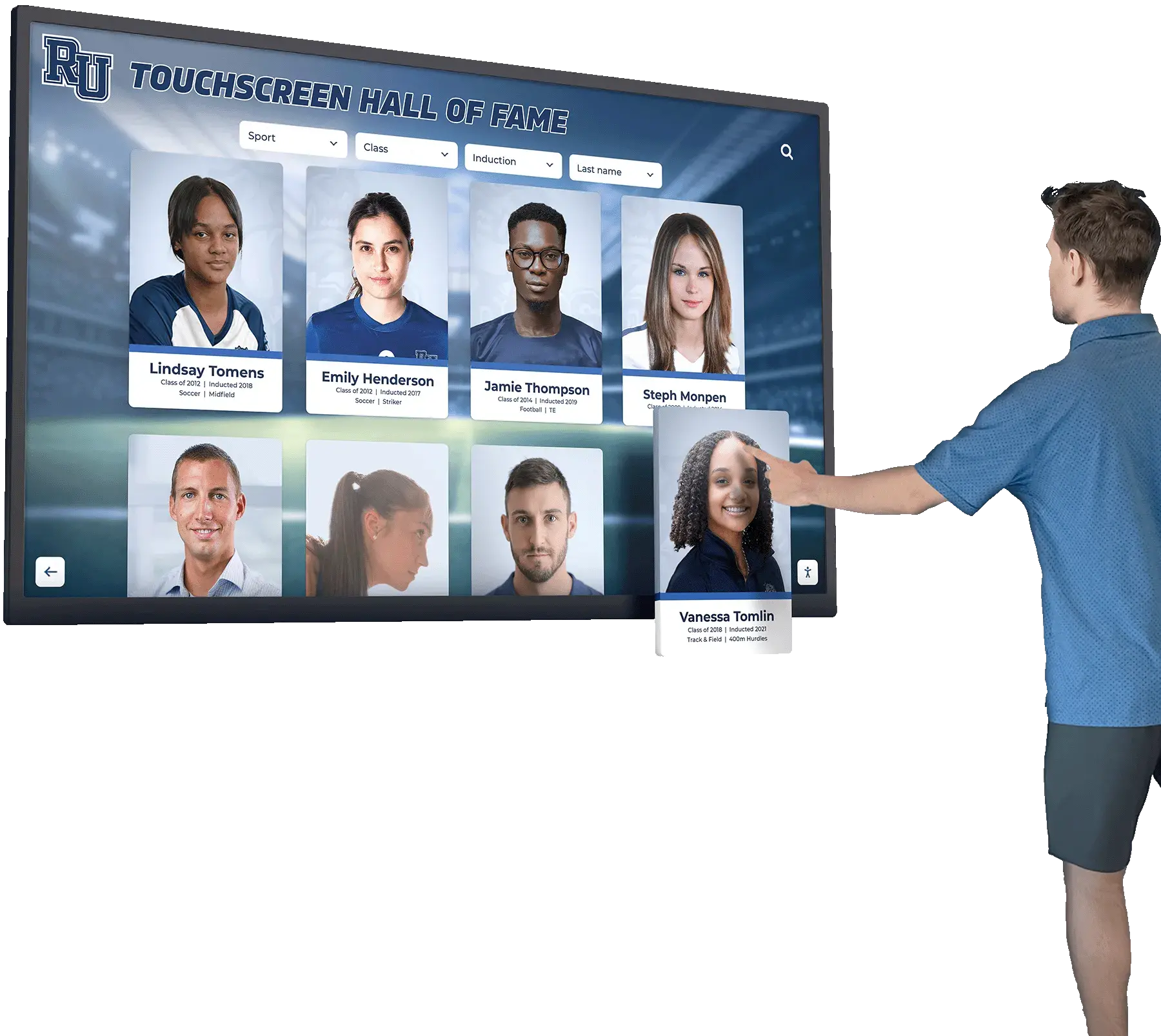
- Interactive kiosk solutions enabling detailed exploration visitors control
- Easy content additions requiring simple database updates rather than physical installations
Enhanced Storytelling Capability
Digital platforms enable rich multimedia content impossible with traditional recognition:
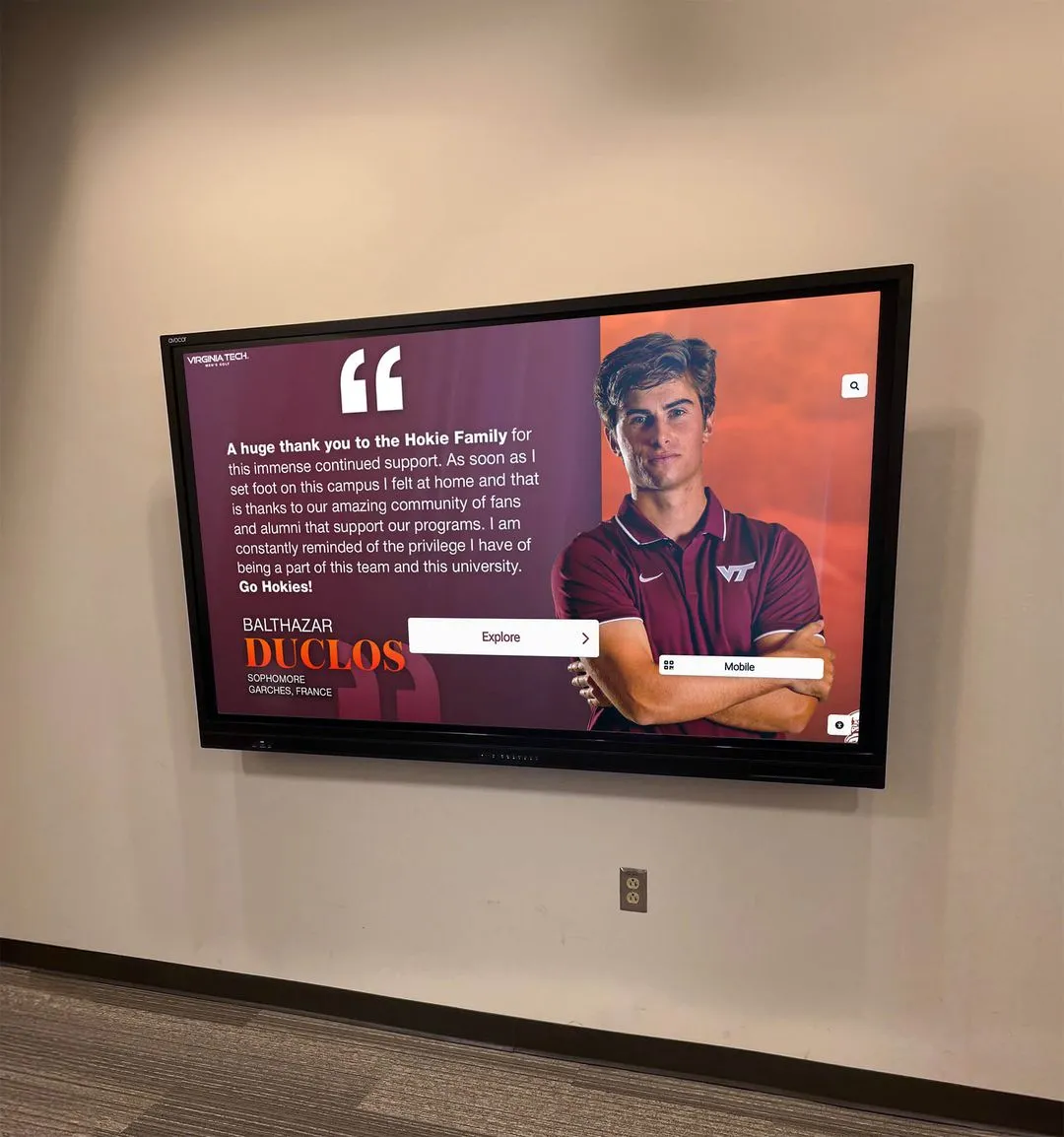
- Individual profiles including photos, biographical information, achievement details, and personal stories
- Video content featuring honoree interviews, game highlights, performance clips, or acceptance speeches
- Historical context connecting individual achievements to broader institutional narratives
- Social media integration allowing visitors to share inspiring stories with personal networks
- Searchable databases enabling quick discovery of specific individuals, time periods, or achievement types
Dynamic Content Management
Digital systems remain perpetually current:
- Real-time updates adding recent achievements immediately
- Seasonal content rotation highlighting timely accomplishments (winter sports during basketball season, graduating seniors in spring)
- Special focus campaigns spotlighting specific recognition categories or historical periods
- Event-triggered content displaying relevant recognition during reunions, homecoming, or special celebrations
- Remote management enabling content updates without physical display access
Engagement Analytics
Digital platforms provide insight into visitor interests:
- Interaction tracking revealing most-viewed profiles and categories
- Session duration indicating engagement depth
- Search term analysis showing what visitors seek
- Time-of-day usage patterns informing content strategy
- Demographic data (when captured) enabling targeted content development
Solutions like Rocket Alumni Solutions provide purpose-built digital recognition platforms specifically designed for educational institutions, with features refined through hundreds of school implementations nationwide.
Hybrid Recognition Approaches
The most effective entrance recognition often combines traditional and digital elements, leveraging strengths of both approaches.
Strategic Integration Examples:
Selective Physical Recognition for Historical Significance
- Traditional plaques honoring founding figures, building namesakes, or transformational leaders
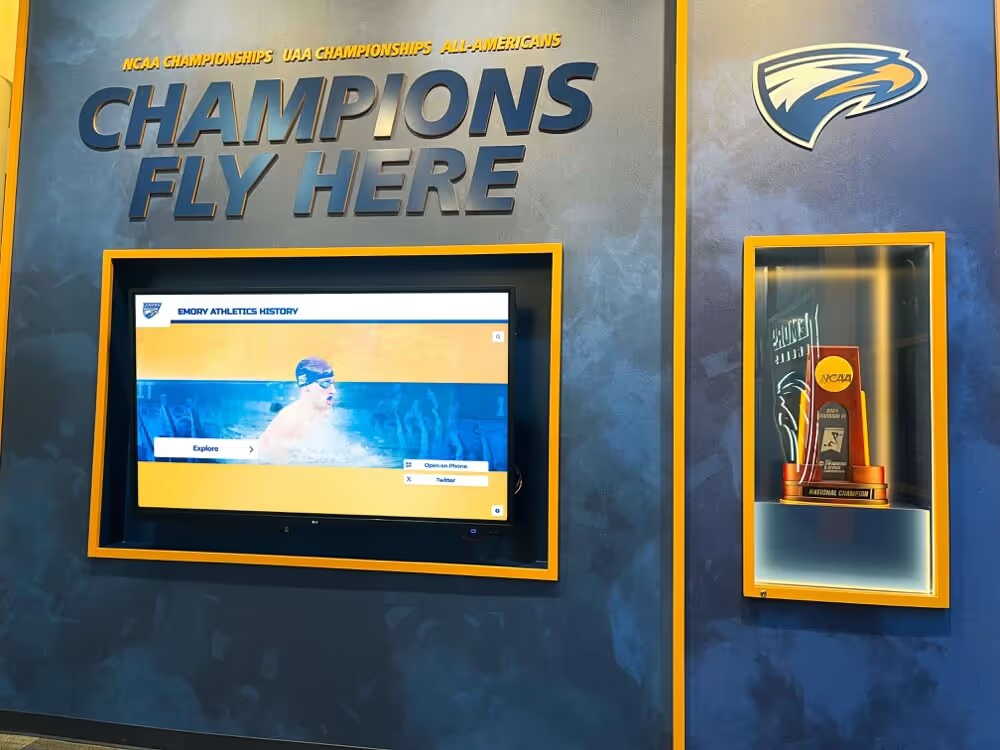
- Championship trophies from milestone achievements displayed alongside digital halls of fame providing comprehensive team histories
- Retired jerseys or significant artifacts creating tangible connections complemented by digital context and stories
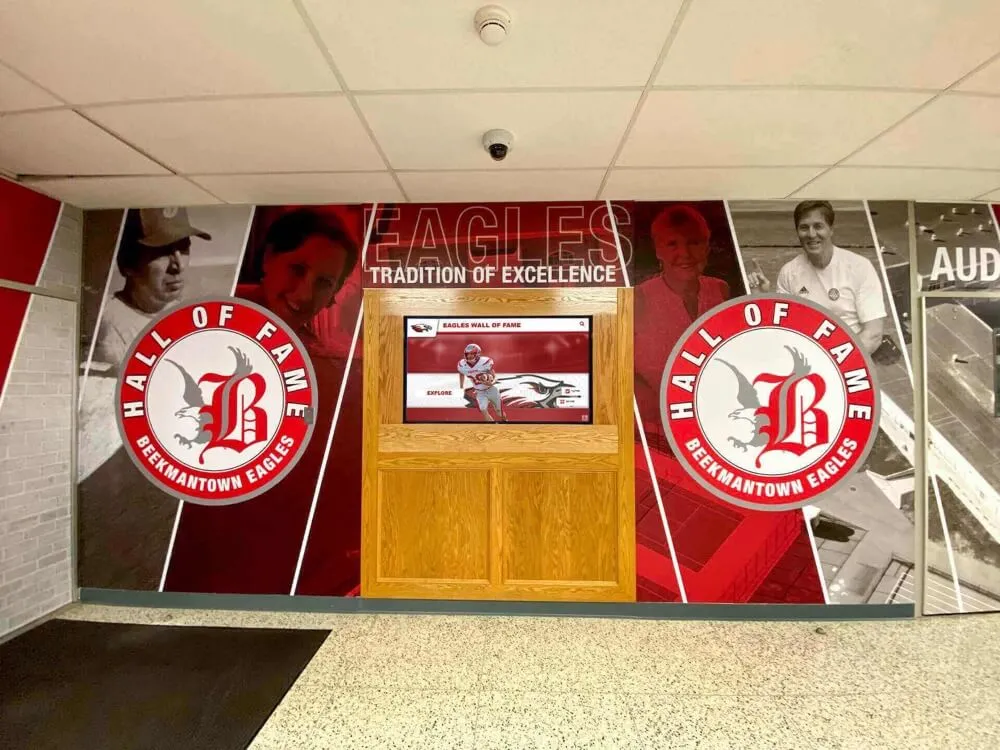
Digital Recognition as Primary System with Physical Accents
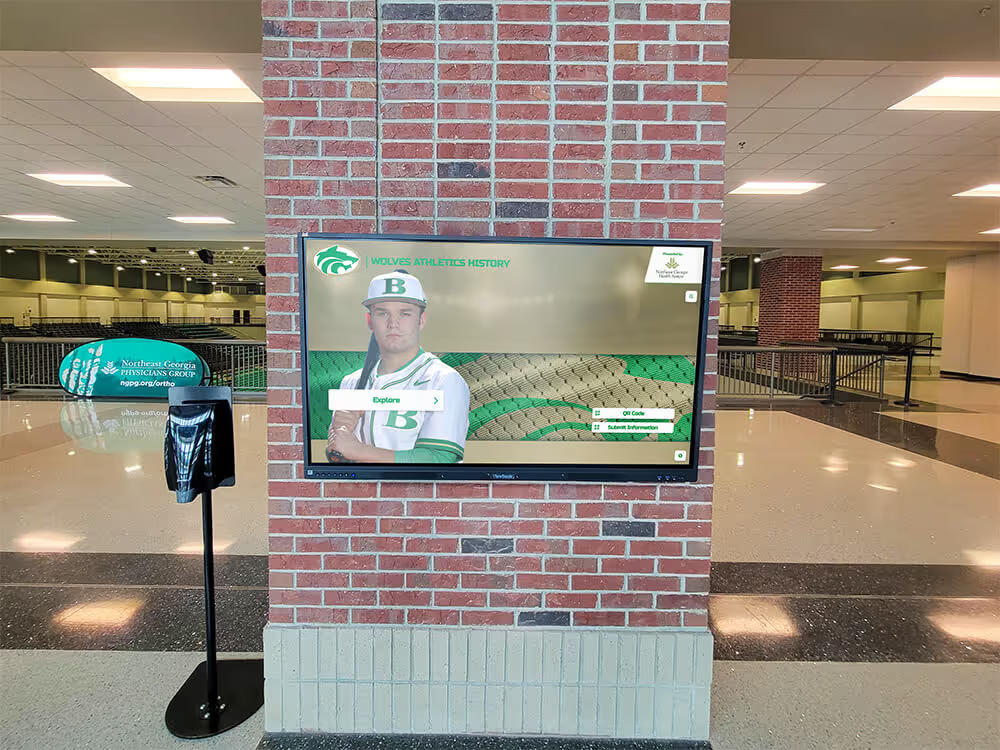
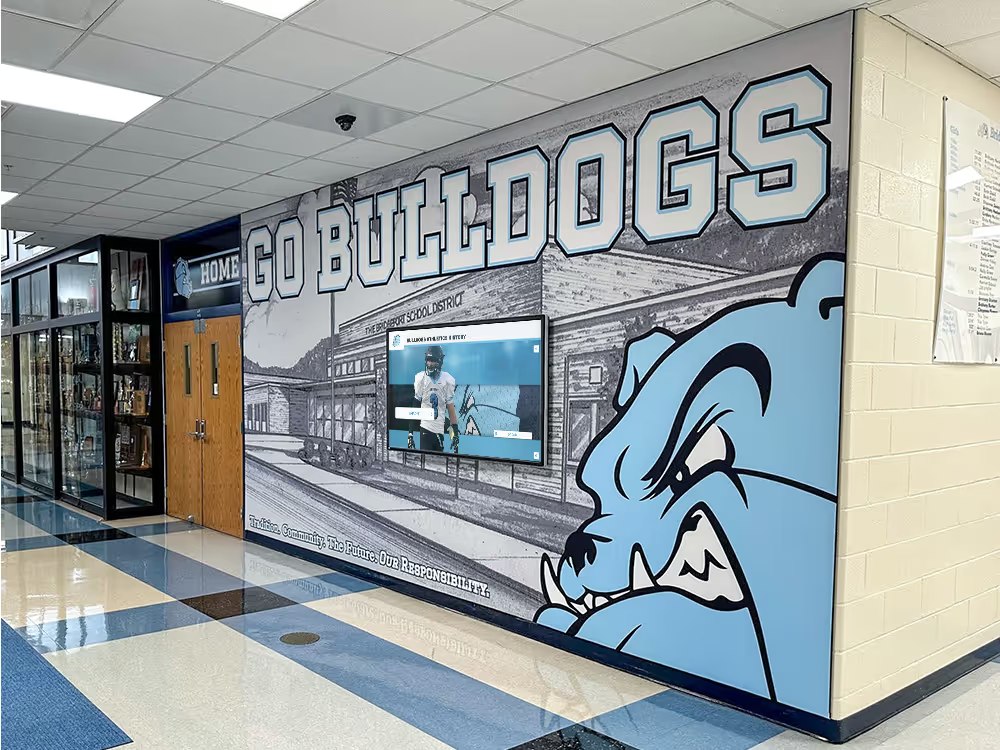
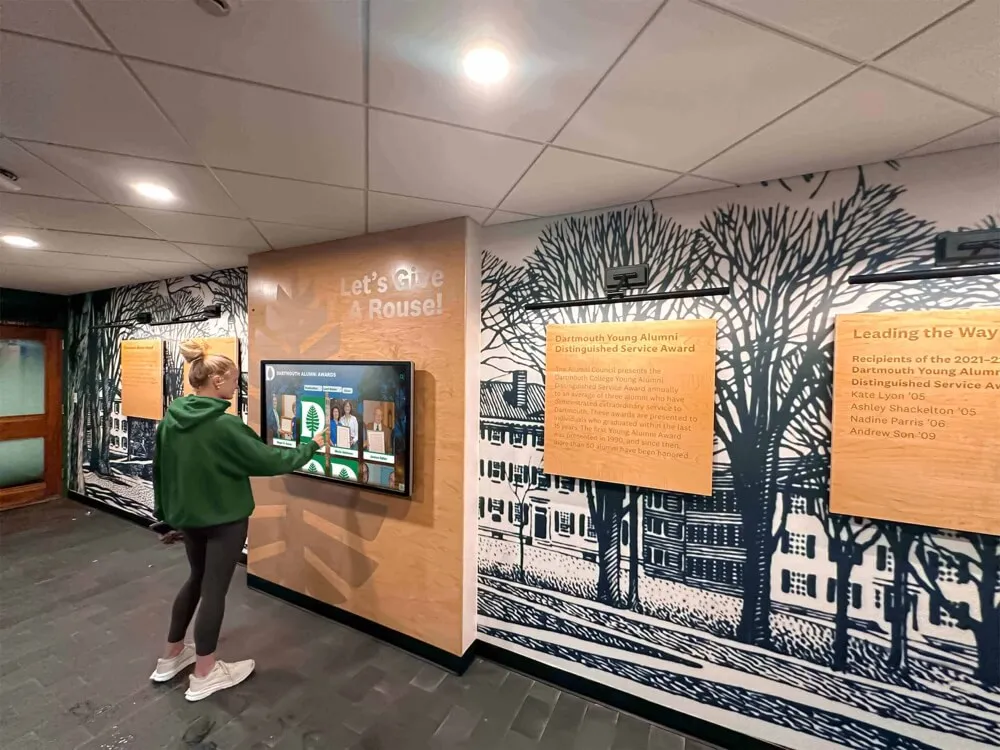
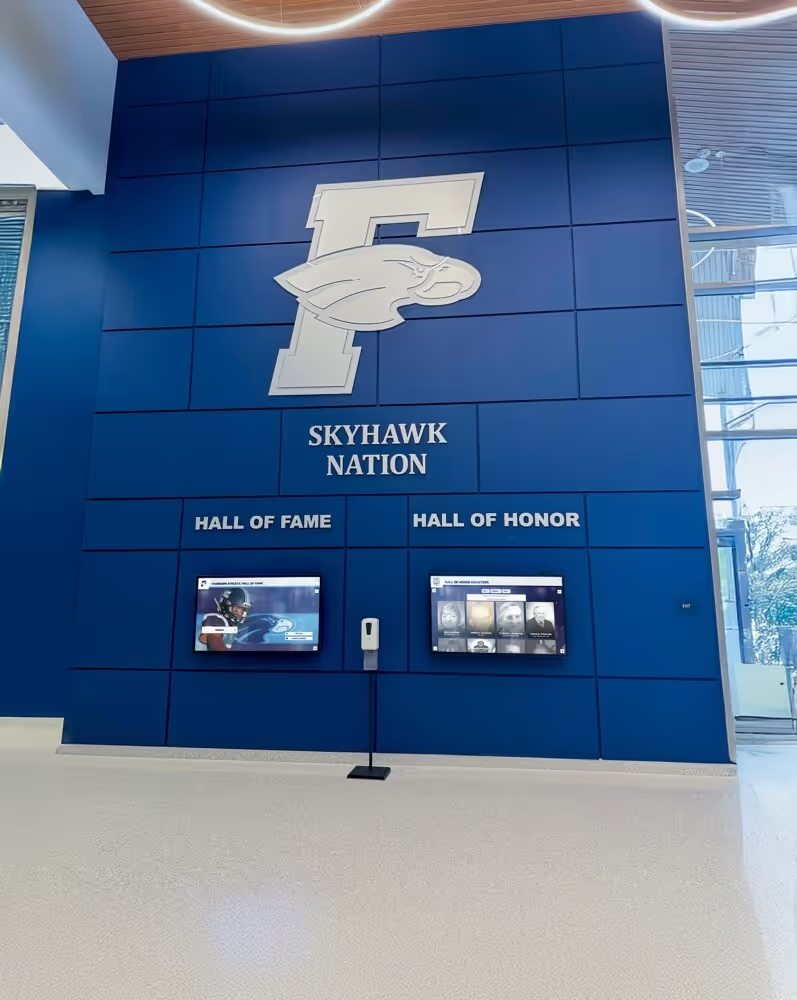
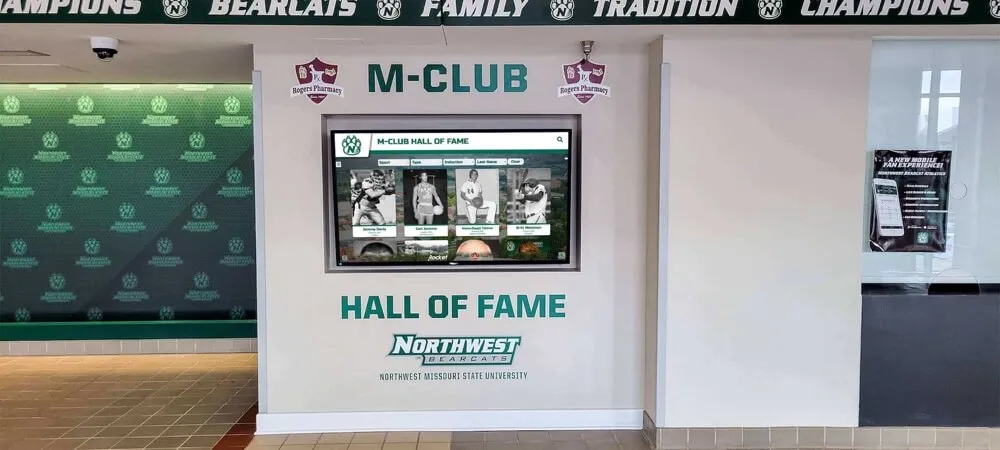
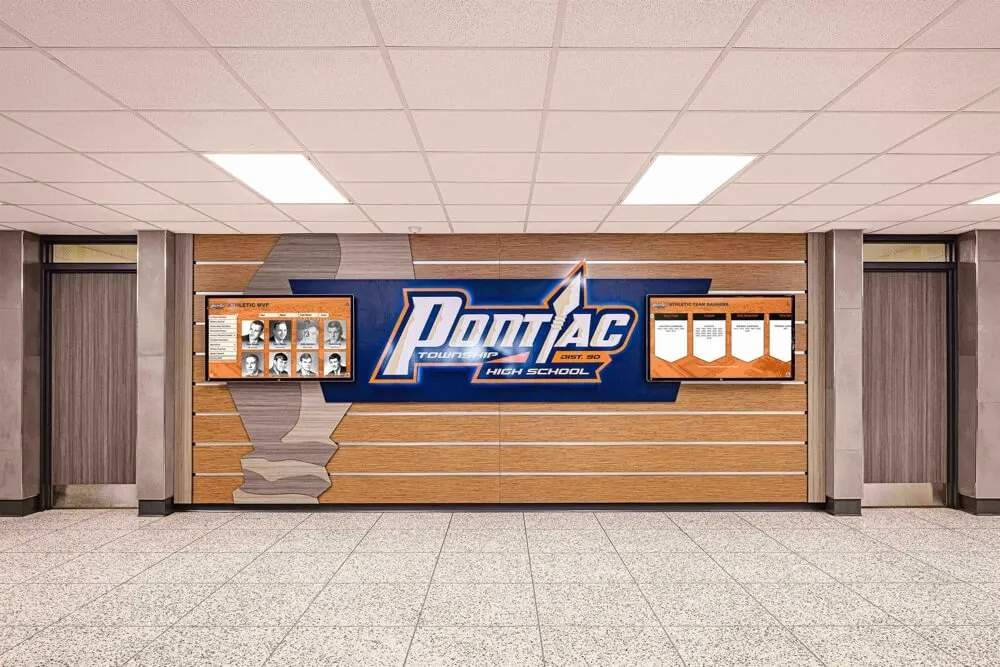
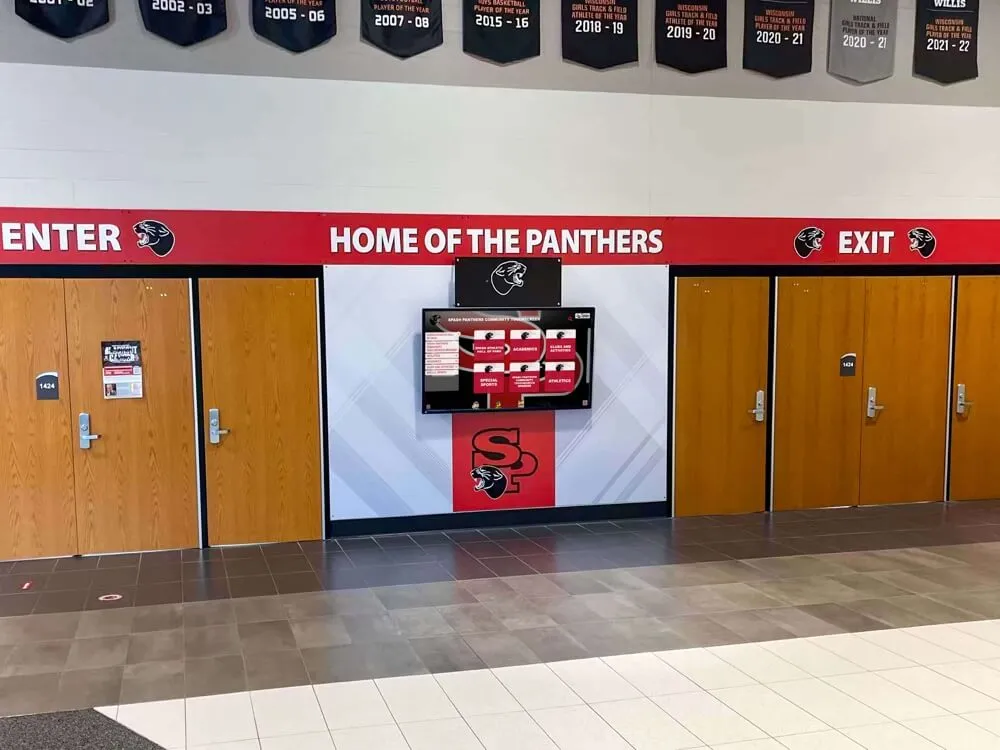
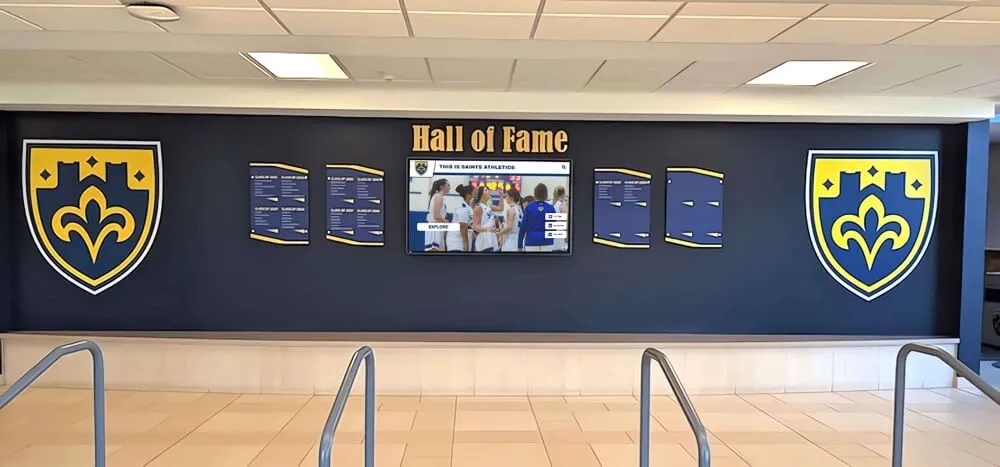
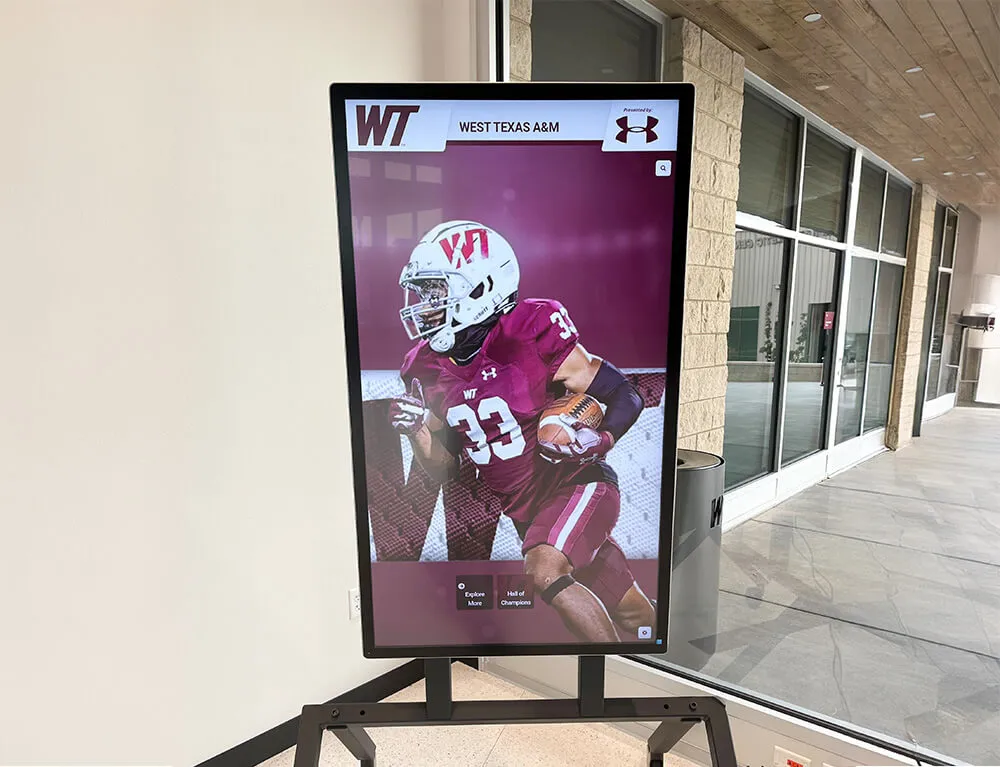
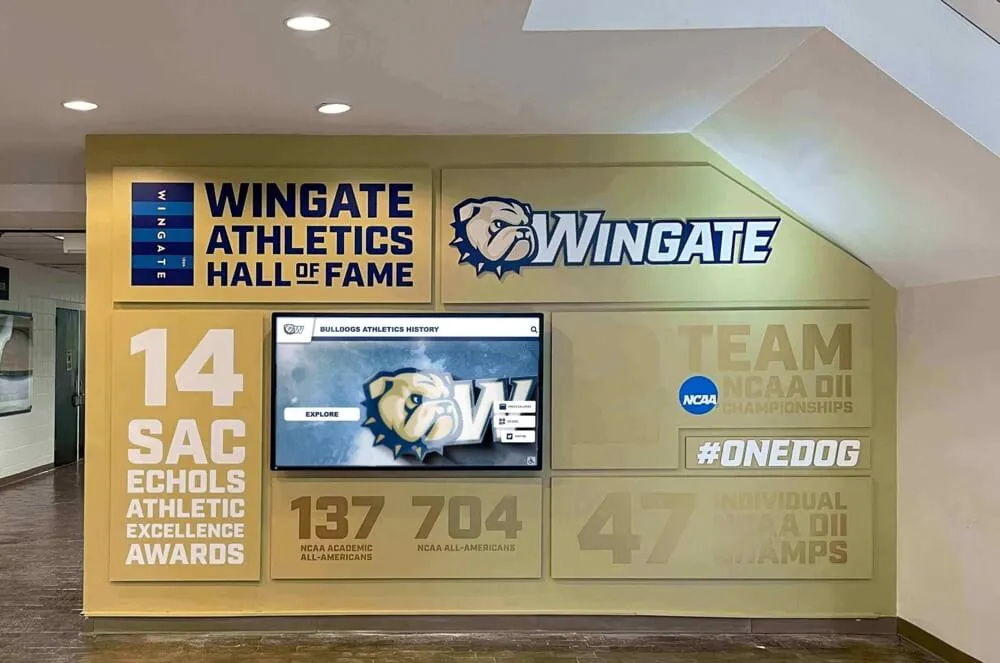
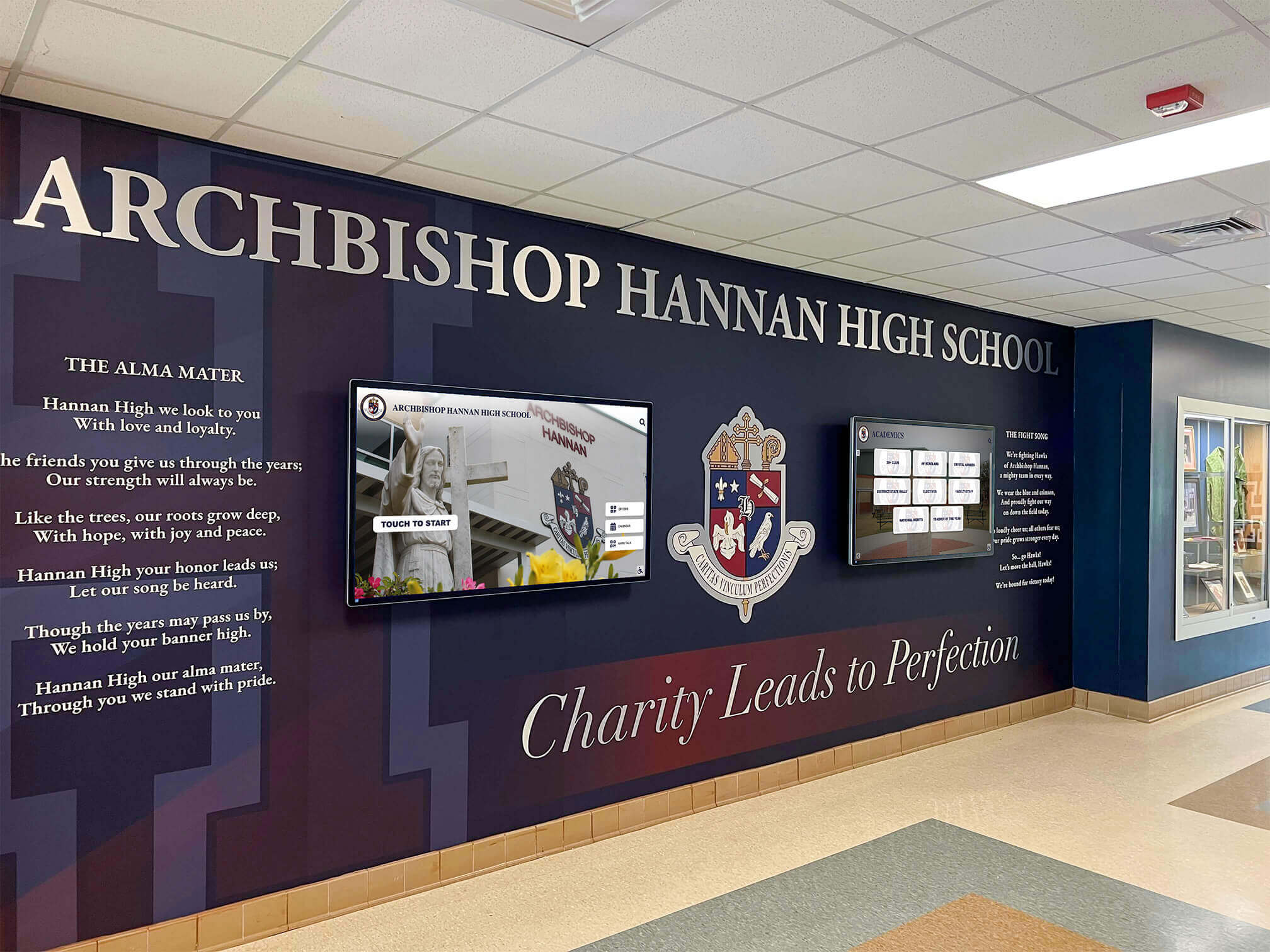
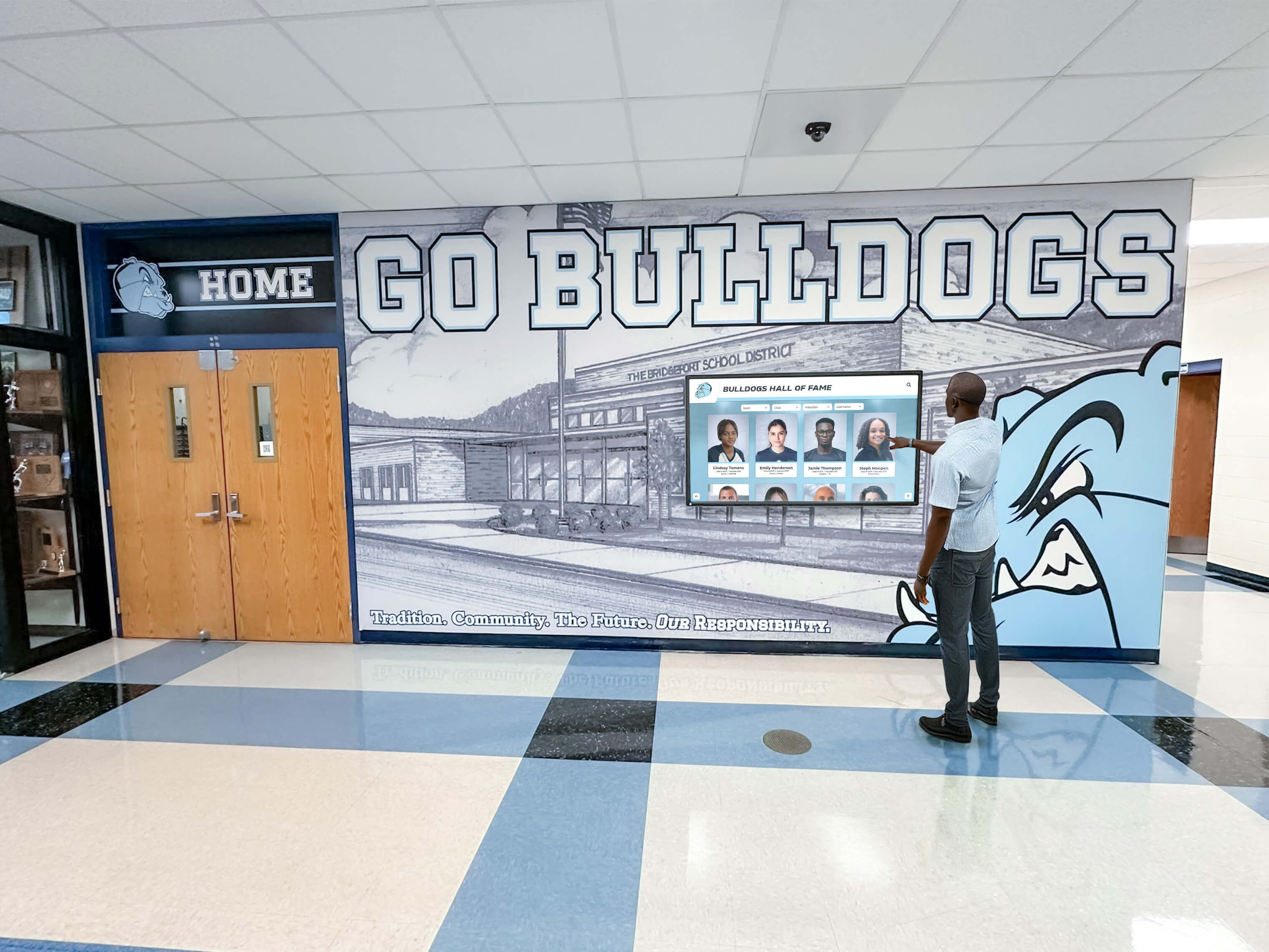
- Large interactive touchscreen as entrance focal point showcasing comprehensive recognition databases
- Surrounding wall graphics or wraps featuring selected honoree photos or achievement highlights
- Small physical plaques directing attention to digital displays (“Explore our complete Hall of Fame”)
- QR codes on physical elements linking to digital profiles for smartphone exploration
Donor Recognition Hybrid Models
- Major donor names on permanent donor recognition walls honoring significant gifts
- Digital donor displays providing comprehensive contributor recognition at all giving levels
- Campaign progress tracking through digital displays while maintaining permanent recognition for completed initiatives
This hybrid approach honors tradition and preserves meaningful physical artifacts while embracing digital innovation that provides superior capacity, storytelling capability, and engagement potential.
Technology Integration in School Entrance Design
Modern school entrances increasingly incorporate technology serving operational, communication, and engagement functions beyond recognition displays.
Digital Signage and Communication Systems
Dynamic content displays serving multiple institutional purposes:
Welcome Messaging and Event Announcements
- Scrolling marquees welcoming visitors by name during scheduled appointments or events
- Daily announcements highlighting school happenings, achievements, and upcoming activities
- Event calendars showing athletic competitions, performances, parent meetings, and community programs
- Emergency messaging capability for urgent communications or lockdown scenarios
Wayfinding and Navigation
- Interactive building directories with search functionality by staff name, room number, or department
- Dynamic maps showing routes to destinations with turn-by-turn visual guidance
- Parking and visitor information for guests unfamiliar with campus
- Real-time schedule displays showing daily bell schedules, lunch periods, or event timing
Community Engagement Content
- Social media feeds displaying school Twitter, Instagram, or Facebook posts
- Student work showcases rotating examples of academic projects, artwork, or writing
- News and media features highlighting school coverage in local or national outlets
- Alumni spotlights profiling graduate success and community impact
- Fundraising campaign progress tracking capital initiatives or annual fund drives
Security Technology Integration
Visible security elements reassuring families while maintaining welcoming atmosphere:
Visitor Management Systems
- Kiosk-based check-in requiring government ID scanning and automated background screening
- Badge printers generating visitor credentials with photos, names, and approved destinations
- Database integration confirming pre-approved volunteers or contractors automatically
- Visitor tracking ensuring all guests sign out upon departure
- Integration with student information systems preventing unauthorized adult access to students with custody restrictions
Camera and Monitoring Systems
- High-definition cameras documenting entry and exit activity
- Remote monitoring enabling office staff to observe entrance from administrative locations
- Integration with door access control systems creating comprehensive security infrastructure
- Storage solutions maintaining footage per policy requirements or legal standards
Design these systems thoughtfully—avoid “fortress” aesthetics that intimidate rather than reassure. Professional finishes, appropriate signage, and staff training help security features feel like competent protection rather than institutional paranoia.
Connectivity Infrastructure
Adequate technology infrastructure supporting diverse needs:
- Public Wi-Fi access for visitors during waiting periods or extended appointments
- Adequate electrical outlets enabling device charging without extension cords creating trip hazards
- Strong cellular signal or distributed antenna systems ensuring reliable mobile connectivity
- Network access points supporting multiple simultaneous device connections
- Future-proofing through conduit and infrastructure accommodating technology evolution
Branding and Identity Communication Through Entrance Design
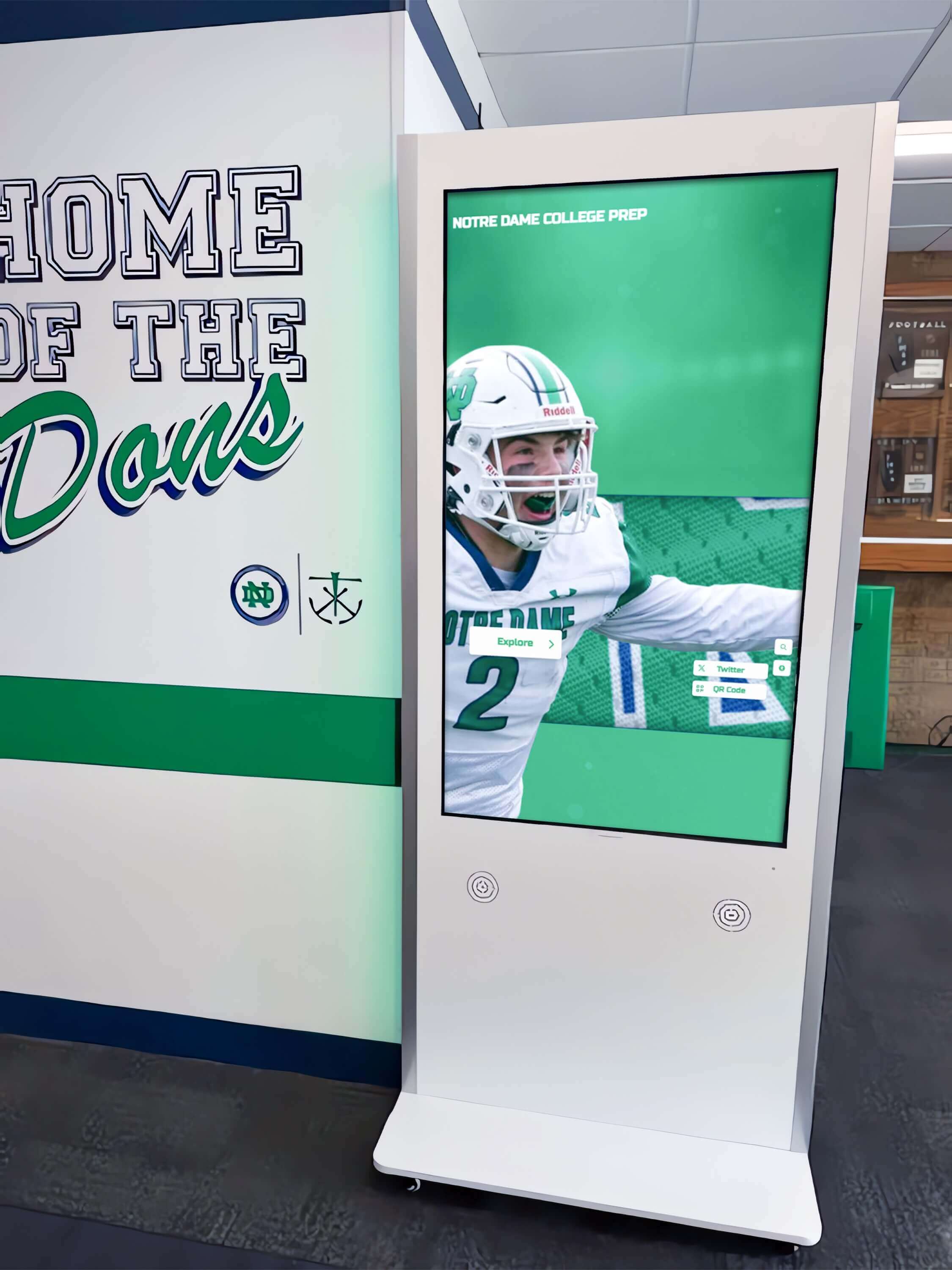
School entrances serve as primary venues for communicating institutional identity, values, and culture through visual branding elements.
Color and Visual Identity Systems
Consistent color application reinforces recognition and school spirit:
Primary Color Application
- Paint colors reflecting official school palette on feature walls or accent areas
- Furniture selections incorporating school colors in upholstery, cushions, or accents
- Flooring patterns or tile arrangements echoing color schemes
- Ceiling elements or soffits painted in school colors creating overhead interest
- Digital display background colors or interface designs matching institutional branding
Mascot and Logo Integration
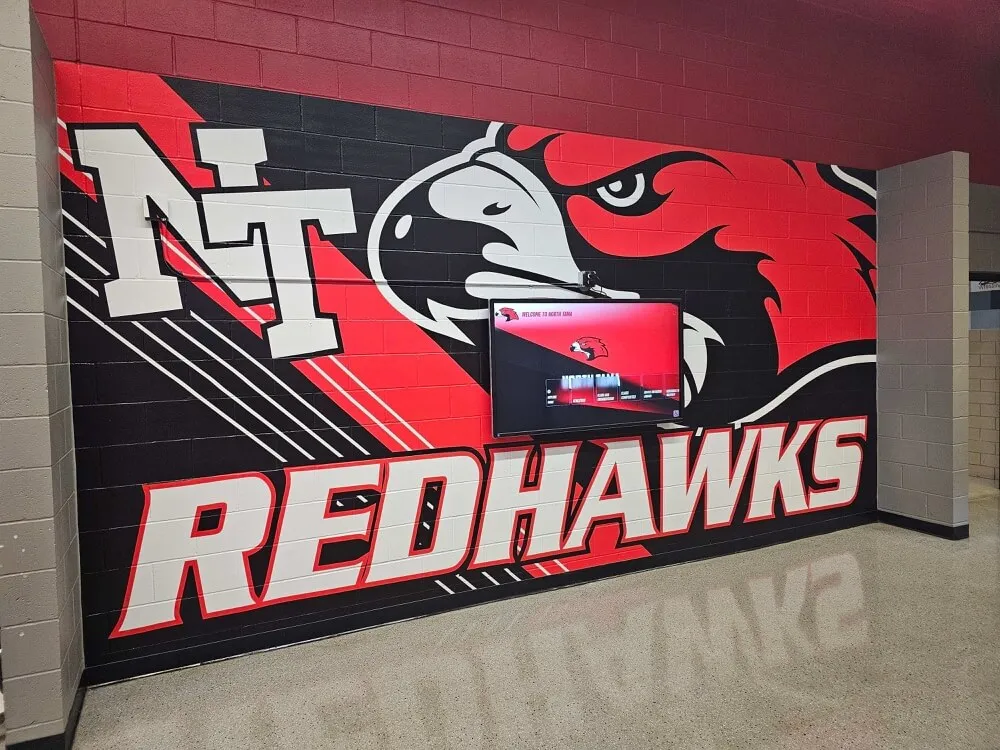
- Large-scale mascot graphics creating dramatic focal points
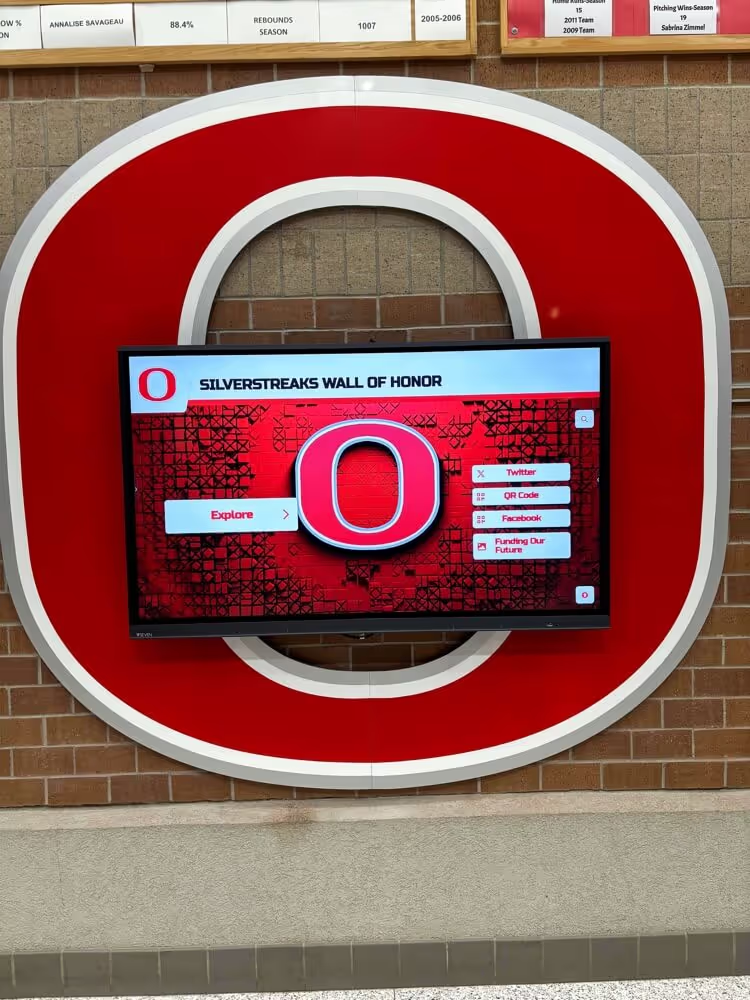
- Logo application on reception desks, directory boards, or architectural elements
- Dimensional letters or fabricated logos adding three-dimensional branding impact
- Floor graphics inlaid or applied featuring logos or mascot imagery
- Illuminated logo signs creating striking visual anchors
Schools balancing welcoming atmosphere with strong identity often incorporate branding boldly but thoughtfully—avoiding overwhelming commercial feeling while ensuring immediate institutional recognition.
Architectural Elements Reflecting School Character
Physical design features communicating institutional values and culture:
Traditional/Historical Schools
- Architectural details echoing original building elements (crown molding, wainscoting, transom windows)
- Historical photographs or artifacts documenting school heritage
- Traditional materials like wood, brass, or stone suggesting permanence and legacy
- Formal furniture styles reflecting classical educational values
- Color palettes drawing from historical precedent
Contemporary/Progressive Schools
- Clean lines and modern materials suggesting innovation and forward thinking
- Transparent elements like glass partitions creating openness
- Flexible, modular furniture supporting diverse learning approaches
- Technology integration demonstrating digital fluency
- Sustainable materials and visible efficiency measures reflecting environmental values
Community-Centered Schools
- Local artist collaborations creating unique entrance artwork
- Community donor recognition prominently displayed
- Regional materials or design motifs connecting to geographic identity
- Bilingual signage reflecting linguistic diversity
- Cultural symbols or design elements celebrating student body demographics
The most authentic entrance designs reflect genuine institutional character rather than imposing generic aesthetics disconnected from school identity and community context.
Planning and Implementing School Entrance Renovations
Transforming existing entrances or designing new spaces requires systematic planning addressing stakeholder input, budget realities, and operational constraints.
Assessment and Planning Process
Current State Evaluation
Begin with honest assessment of existing entrance conditions:
- Traffic flow observation during peak periods (morning arrival, dismissal, parent conference nights)
- Stakeholder feedback collection through surveys, focus groups, or comment opportunities
- Security assessment identifying vulnerabilities or compliance gaps
- Accessibility audit ensuring ADA compliance and universal design principles
- Maintenance review documenting deferred repairs or deteriorating elements
- Technology infrastructure evaluation revealing capacity and capability
Needs Prioritization
Distinguish between essential improvements and desirable enhancements:
Critical Needs:
- Security vulnerabilities requiring immediate attention
- Accessibility barriers preventing universal access
- Safety hazards creating liability exposure or injury risk
- Severe deterioration undermining building integrity
- Operational bottlenecks causing daily frustration
Important Improvements:
- Recognition displays celebrating achievement and building community
- Branding elements strengthening institutional identity
- Comfort amenities improving visitor experience
- Technology integration enhancing communication and engagement
- Aesthetic upgrades improving appearance and perception
Aspirational Enhancements:
- Premium materials or finishes exceeding functional requirements
- Extensive technology features beyond core needs
- Architectural elements adding visual interest without functional necessity
- Luxury amenities creating exceptional experiences
This prioritization informs phasing strategies when budgets constrain comprehensive renovations.
Budgeting and Funding Approaches
Typical Investment Ranges
School entrance renovations span wide cost spectrums depending on scope:
Cosmetic Refresh ($10,000-$30,000)
- Fresh paint in updated colors
- New signage and wayfinding elements
- Furniture replacement or reupholstering
- Lighting updates to LED fixtures
- Minor repairs and maintenance addressing deferred issues
Moderate Renovation ($30,000-$80,000)
- New flooring installation
- Reception desk replacement or renovation
- Single large digital recognition display
- Security system upgrades
- Acoustic improvements and ceiling work
- Comprehensive furniture replacement
Substantial Transformation ($80,000-$250,000+)
- Architectural changes (walls, ceiling heights, entry reconfiguration)
- Complete interior redesign with professional design services
- Multiple digital displays and comprehensive technology integration
- Custom millwork and built-in elements
- High-end finishes and materials throughout
- Advanced security systems with visitor management technology
Funding Sources
Creative approaches beyond general operating budgets:
Capital Campaigns and Major Gifts
- Naming opportunities for entrance areas, recognition displays, or specific elements
- Alumni campaigns funding recognition technology showcasing graduates
- Parent association fundraising for entrance improvement projects
- Community partnership sponsorships supporting public-facing improvements
- Donor recognition displays funded by contributors they’ll honor
Operational Budget Allocation
- Multi-year capital improvement planning spreading costs across fiscal years
- Maintenance budget reallocation addressing deferred entrance repairs
- Energy efficiency projects generating savings funding other improvements
- Technology refresh cycles including entrance displays in planned equipment updates
Grant Funding
- School safety and security grants supporting visitor management and access control
- Educational technology grants when digital displays provide instructional applications
- Community development funds for schools serving neighborhood anchoring functions
- Arts education grants when entrance displays feature student creative work
Phased Implementation Strategies
Spread entrance improvements across multiple years when comprehensive renovation exceeds available resources:
Phase 1: Foundation (Year 1)
- Address critical safety, security, and accessibility issues
- Install single focal digital recognition display as centerpiece
- Update paint, lighting, and basic finishes
- Implement minimum viable furniture improvements
Phase 2: Enhancement (Year 2)
- Expand recognition displays or add complementary technology
- Improve reception area functionality
- Add comfort amenities (seating upgrades, water fountains, coat storage)
- Incorporate branding elements strengthening identity
Phase 3: Completion (Year 3)
- Architectural enhancements creating visual interest
- Premium material upgrades in high-impact areas
- Comprehensive technology integration
- Landscaping and exterior entry improvements
- Final furniture additions and accessorizing
This approach proves value at each phase, building stakeholder support and donor interest through visible progress while avoiding overwhelming initial investment requirements.
Maintaining and Evolving School Entrance Spaces
Entrance designs require ongoing attention maintaining quality and relevance over time.
Maintenance and Operations
Daily Maintenance Requirements
- Floor cleaning addressing tracked moisture and debris (critical during weather events)
- Trash and recycling removal maintaining clean appearance
- Furniture straightening returning arrangements to desired configurations
- Digital display monitoring ensuring proper operation
- Reception area tidying before school start
Periodic Maintenance
- Deep cleaning of upholstery, carpets, and hard-to-reach areas
- Touch-up painting addressing scuffs and marks
- Light fixture cleaning and lamp replacement
- Landscape maintenance at exterior entries
- Technology system updates and preventive maintenance
Seasonal Considerations
- Weather-specific preparation (ice melt placement, mat systems for winter; shade solutions for summer)
- Holiday or special event decorating within design standards
- Recognition content updates celebrating seasonal achievements
- Temperature control adjustments for changing conditions
Content Strategy for Digital Recognition
Keep digital displays engaging and relevant:
Regular Update Cycles
- Monthly content additions featuring recent achievements
- Seasonal rotations highlighting timely accomplishments (fall sports in autumn, spring recognition programs as weather warms)
- Event-triggered content for homecoming, graduation, reunion weekends
- Historical features maintaining connections to institutional legacy
- Staff spotlights celebrating educator excellence
Engagement Monitoring
- Analytics review revealing popular content and interaction patterns
- User feedback collection through comment features or surveys
- Observational assessment noting visitor behavior around displays
- Continuous improvement based on engagement data
Content Diversity
- Balance between historical recognition and current achievement
- Representation across all student populations and activities
- Multiple achievement categories (academics, athletics, arts, service, leadership)
- Alumni success stories demonstrating long-term institutional impact
- Community recognition honoring partnerships and support
Conclusion: Creating Entrance Spaces Worthy of Your School Community
School entrances represent far more than architectural transitions between exterior and interior spaces. They serve as first impression creators, security checkpoints, wayfinding hubs, community gathering points, and recognition showcases—all simultaneously. Entrance design quality directly influences how prospective families, community members, visitors, and even current students and staff perceive institutional competence, values, and culture.
The most effective school entrance designs balance multiple requirements: security necessity with welcoming atmosphere, functional operations with aesthetic quality, budget constraints with aspirational vision, traditional recognition with digital innovation. These spaces communicate clearly that schools honor their histories, celebrate current achievements, and invest appropriately in environments supporting their educational missions.
Begin where you are with resources available. Even modest improvements—fresh paint, updated signage, a single impactful digital recognition display, comfortable seating—dramatically transform entrance quality and visitor experience. Prioritize high-impact changes addressing the most significant current deficiencies, then gradually expand as additional resources become available and early improvements prove their value to stakeholders.
Solutions like digital recognition platforms from Rocket Alumni Solutions enable schools to showcase comprehensive achievement histories through engaging interactive experiences that visitors genuinely enjoy exploring. Unlike traditional plaques limited by physical space and static content, modern recognition systems grow indefinitely with your institution while providing rich multimedia storytelling impossible through conventional approaches.
Your school community deserves entrance spaces reflecting the quality education happening throughout your building. With strategic planning, creative funding, and thoughtful implementation, entrance transformation becomes achievable for institutions across all budget contexts. Start planning today to create first impressions worthy of your school’s mission and the students, families, and communities you serve.
Ready to transform your school entrance with engaging digital recognition that celebrates achievement while creating welcoming first impressions? Explore how Rocket Alumni Solutions can help your institution design recognition displays that honor your legacy, engage your community, and create entrance experiences that make every visitor feel the pride you have in your school.