Key Takeaways
Discover innovative school entrance design ideas that create welcoming first impressions. Learn proven strategies for incorporating digital recognition displays, wayfinding systems, and community-building elements that transform school entrances into inspiring spaces.
Why School Entrance Design Matters
Before exploring specific design strategies, understanding why entrance spaces deserve intentional planning helps prioritize investments and justify resource allocation.
First Impressions Shape Perceptions
Research consistently demonstrates that first impressions form within seconds and significantly influence ongoing perceptions. Your school entrance creates immediate impressions about:
Institutional Priorities: The elements you choose to feature in entrance spaces communicate what your school values most—academic achievement, athletic excellence, arts programs, community service, or inclusive belonging.
Organizational Professionalism: Well-maintained, thoughtfully designed entrances signal professional management and attention to detail, building confidence among prospective families evaluating your institution against alternatives.
Community Pride: Entrance displays celebrating student, alumni, and faculty achievements demonstrate active institutional pride while inspiring current students to contribute their own accomplishments to continuing traditions.
Safety and Security: Visible security features balanced with warm aesthetics reassure families that their students will be protected while avoiding the institutional coldness of facilities that feel more like security checkpoints than welcoming educational environments.
Functional Requirements of Effective Entrances
Beyond aesthetics, school entrances must fulfill multiple practical functions simultaneously:
Traffic Flow Management: Effective entrances accommodate peak traffic volumes—morning arrival periods, dismissal times, event entrances—without creating bottlenecks or safety concerns. Clear circulation paths separating entering and exiting traffic prevent congestion during high-volume periods.
Visitor Management: Secure entry protocols requiring visitors to check in before accessing facilities create safety while maintaining welcoming atmospheres. Modern visitor management systems integrate security with hospitality through streamlined digital check-in processes replacing manual logbooks.
Wayfinding Orientation: First-time visitors should quickly understand building orientation and locate key destinations. Effective wayfinding systems prevent confusion and frustration while reducing demands on staff constantly providing directions.
Weather Protection: Entrance vestibules protecting interior spaces from weather elements—rain, snow, wind, extreme temperatures—improve comfort while reducing maintenance costs associated with tracked-in moisture and debris.
Accessibility Compliance: ADA-compliant entrance design ensures equal access for visitors with physical disabilities through appropriate door widths, ramp configurations, automatic door openers, and accessible signage.
Core Elements of Effective School Entrance Design
Successful entrance spaces thoughtfully integrate multiple design components that together create welcoming, functional, and inspiring environments.
Entrance Vestibule and Lobby Design
The physical layout and architectural features of entrance spaces establish foundations for all other design decisions.
Vestibule Configuration:
Double-door vestibule systems create airlock zones that dramatically reduce heating and cooling costs while protecting interior spaces from weather. Adequate vestibule depth—minimum 6-7 feet between exterior and interior door sets—allows doors to close fully before second set opens, maximizing energy efficiency.
Lobby Space Planning:
Sufficient Space Allocation: Lobby areas should accommodate expected peak traffic without crowding. Planning guidelines suggest minimum 15-20 square feet per anticipated simultaneous occupant during high-traffic periods.
Defined Functional Zones: Successful lobbies clearly separate distinct functional areas—visitor check-in zones, parent waiting areas, student gathering spaces, and circulation pathways. Physical or visual demarcation between zones prevents confusion about appropriate uses.
Sightlines and Supervision: Design that provides clear sightlines from administrative offices to all lobby areas facilitates monitoring and quick response to visitor needs or safety concerns without creating oppressive surveillance atmospheres.
Furniture and Amenities: Comfortable seating for visitors waiting for appointments or student pickup demonstrates hospitality. Strategic furniture placement encourages appropriate gathering while keeping circulation paths clear.
Visual Identity and Branding Integration
School entrances provide prime opportunities to showcase institutional identity through consistent, professional branding elements.
Prominent School Branding:
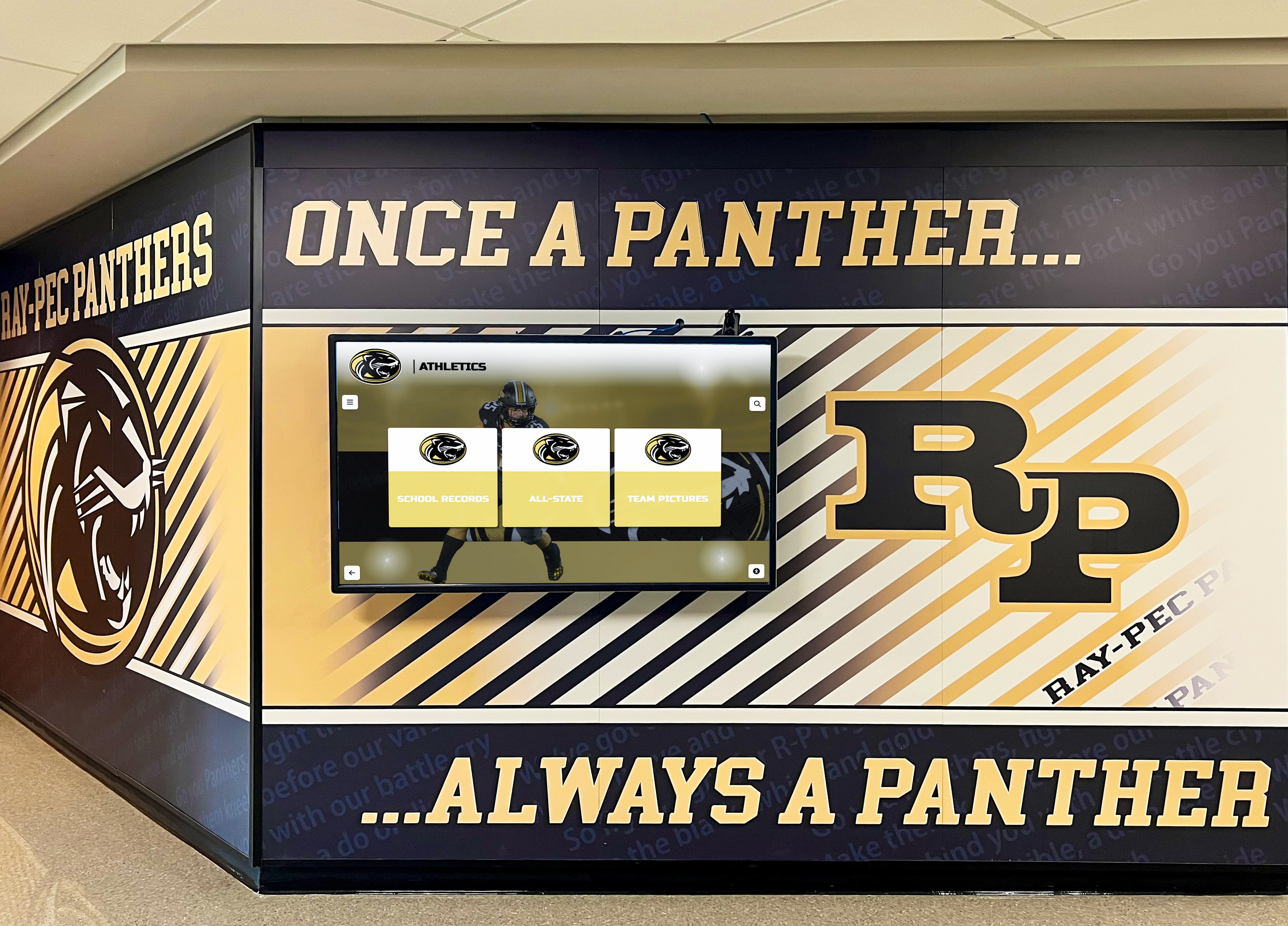
Entrance spaces should immediately communicate school identity through strategically placed logos, mascots, and color schemes. Effective branding approaches include:
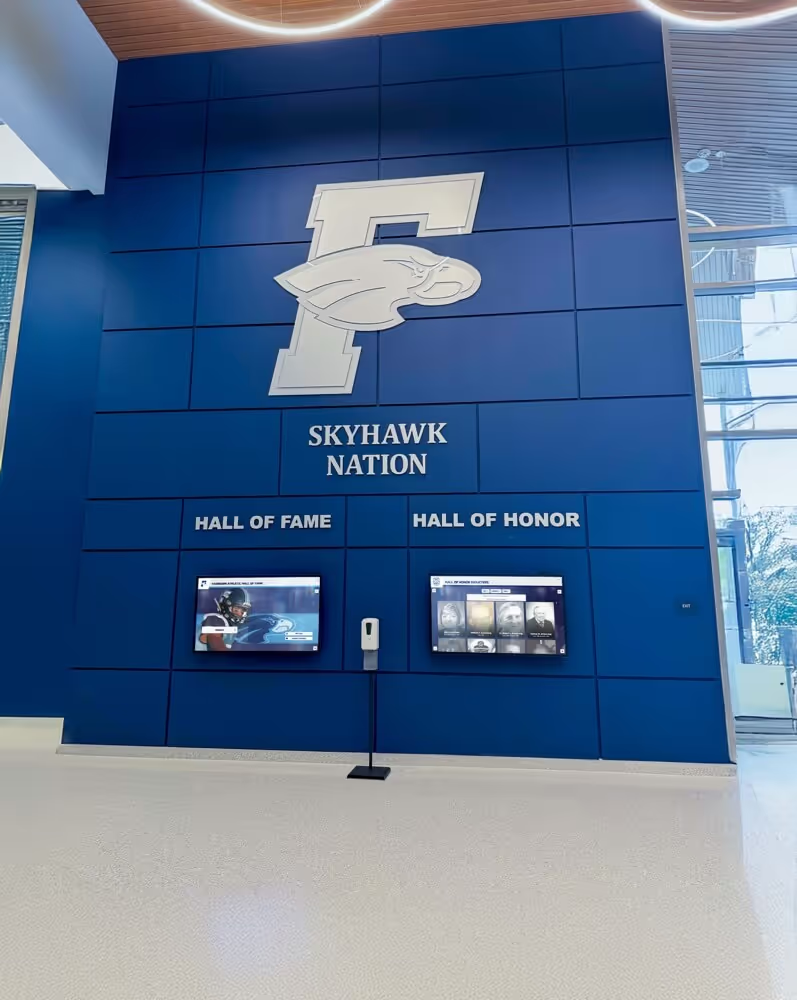
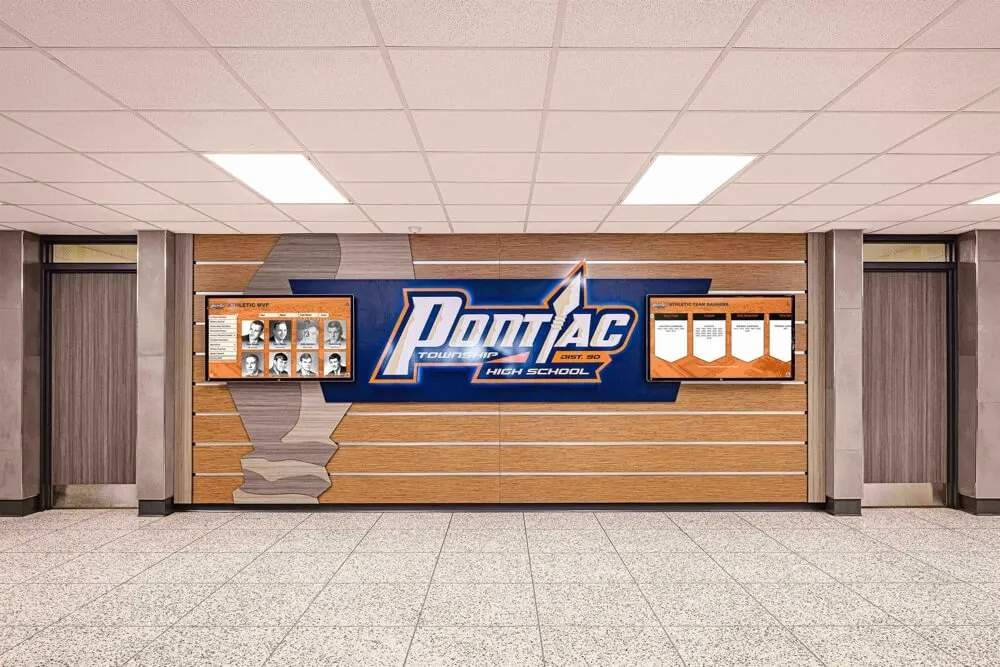
- Dimensional letters mounted to feature walls stating school name and mascot
- Floor medallions incorporating school seals or logos in durable materials
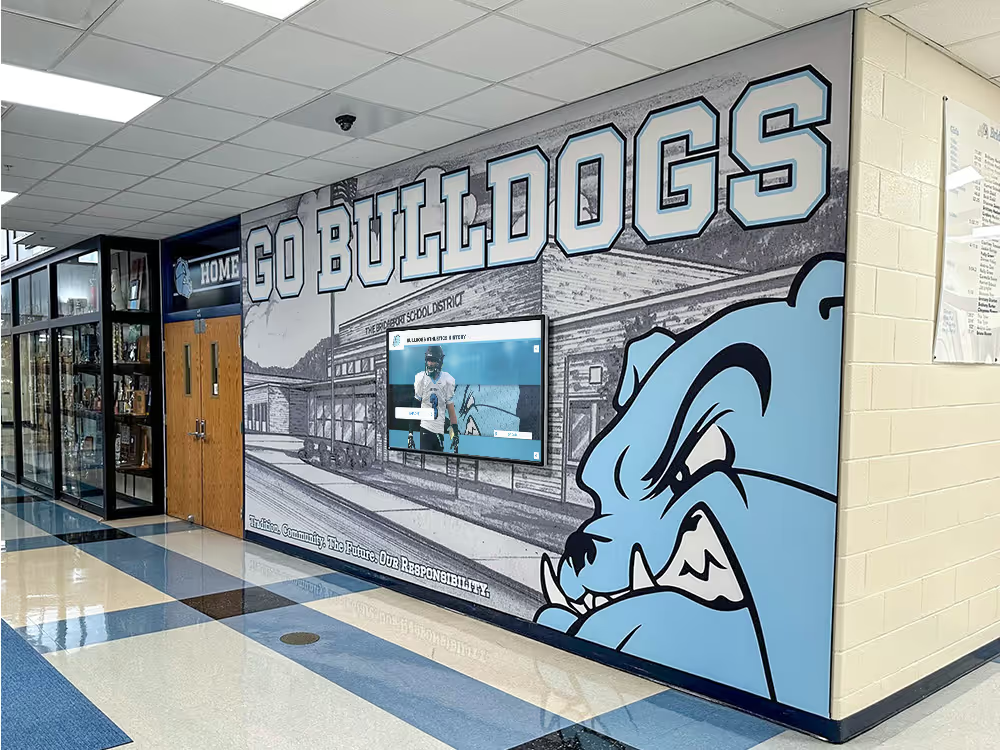
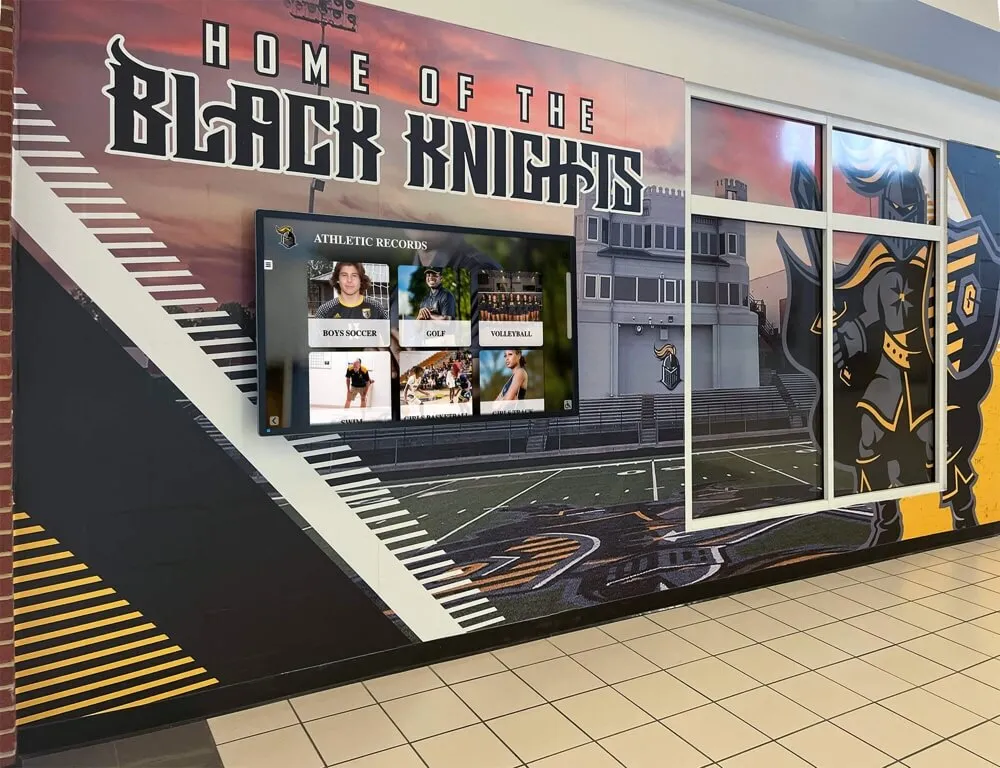
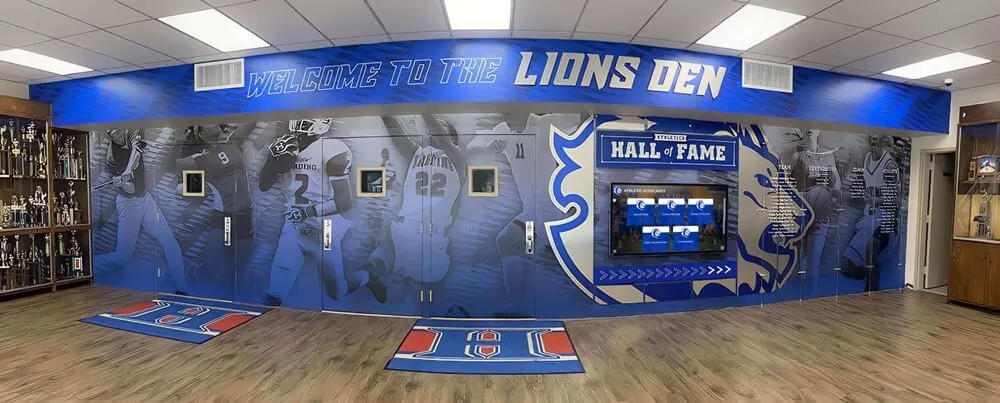
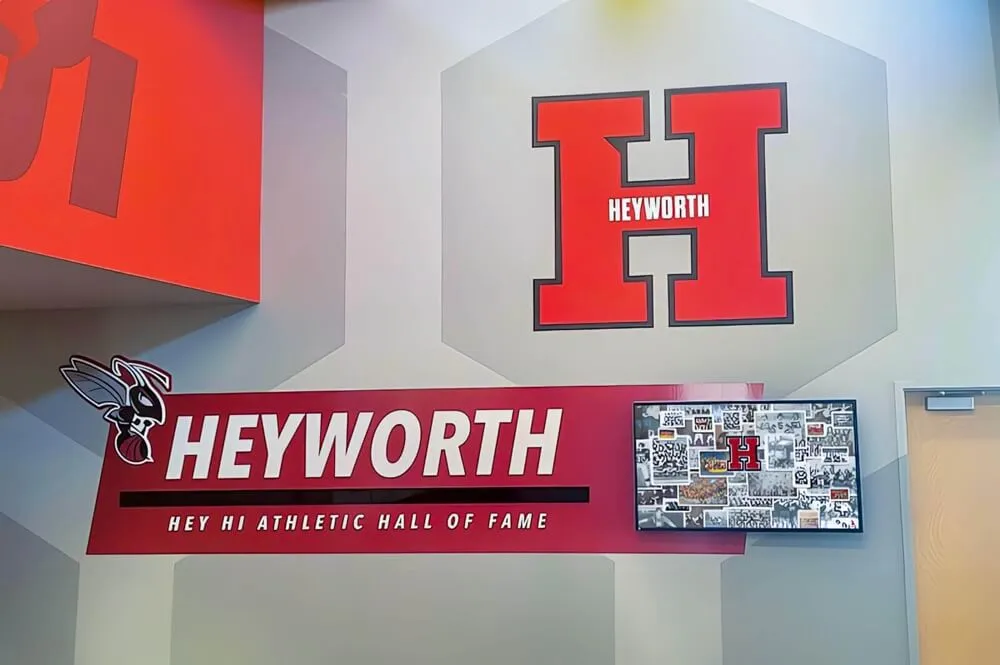
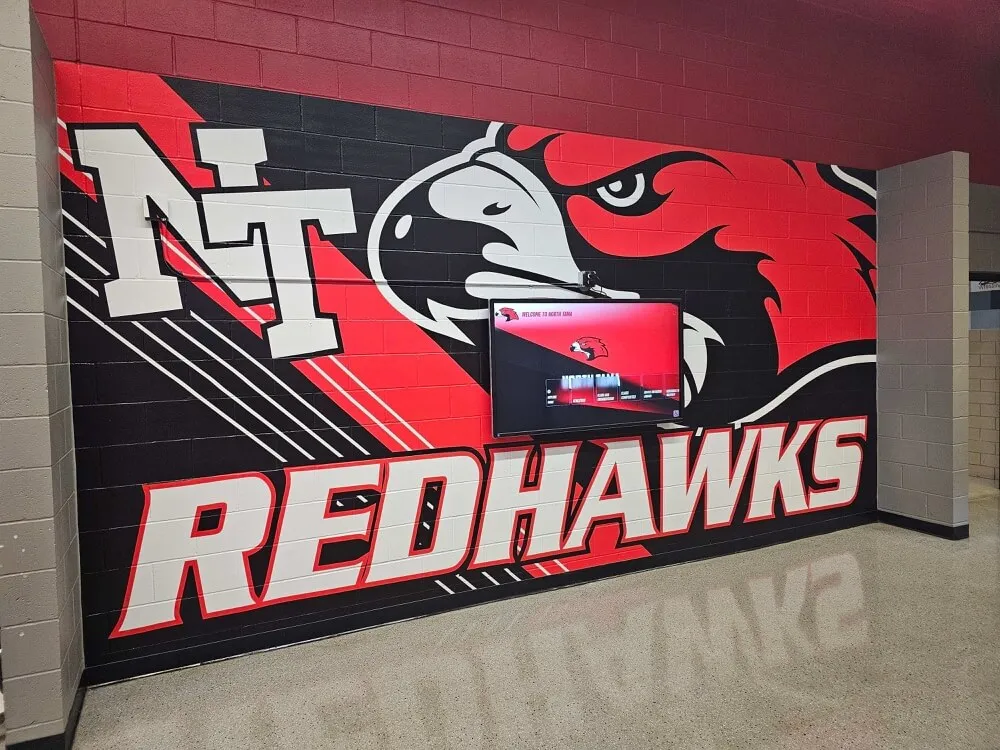
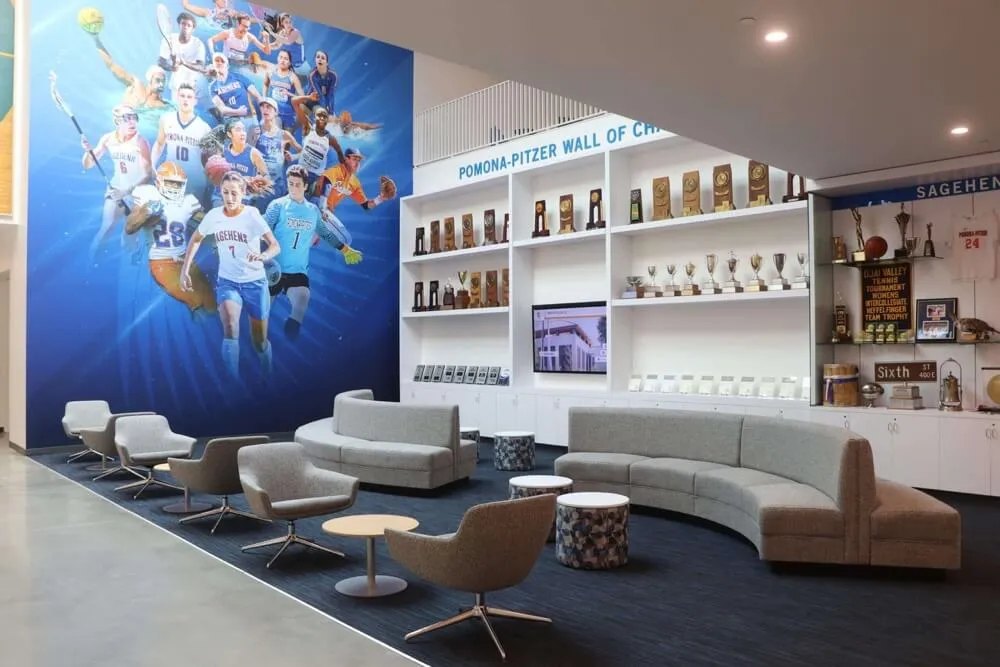
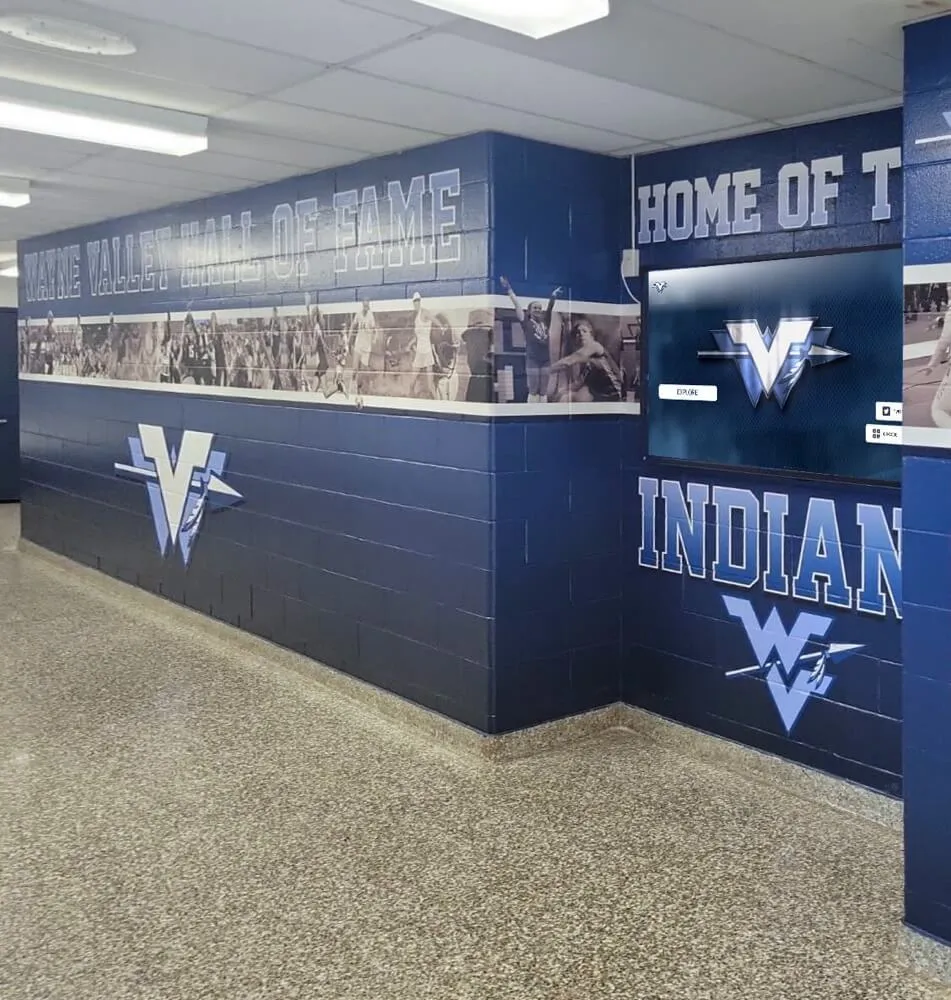
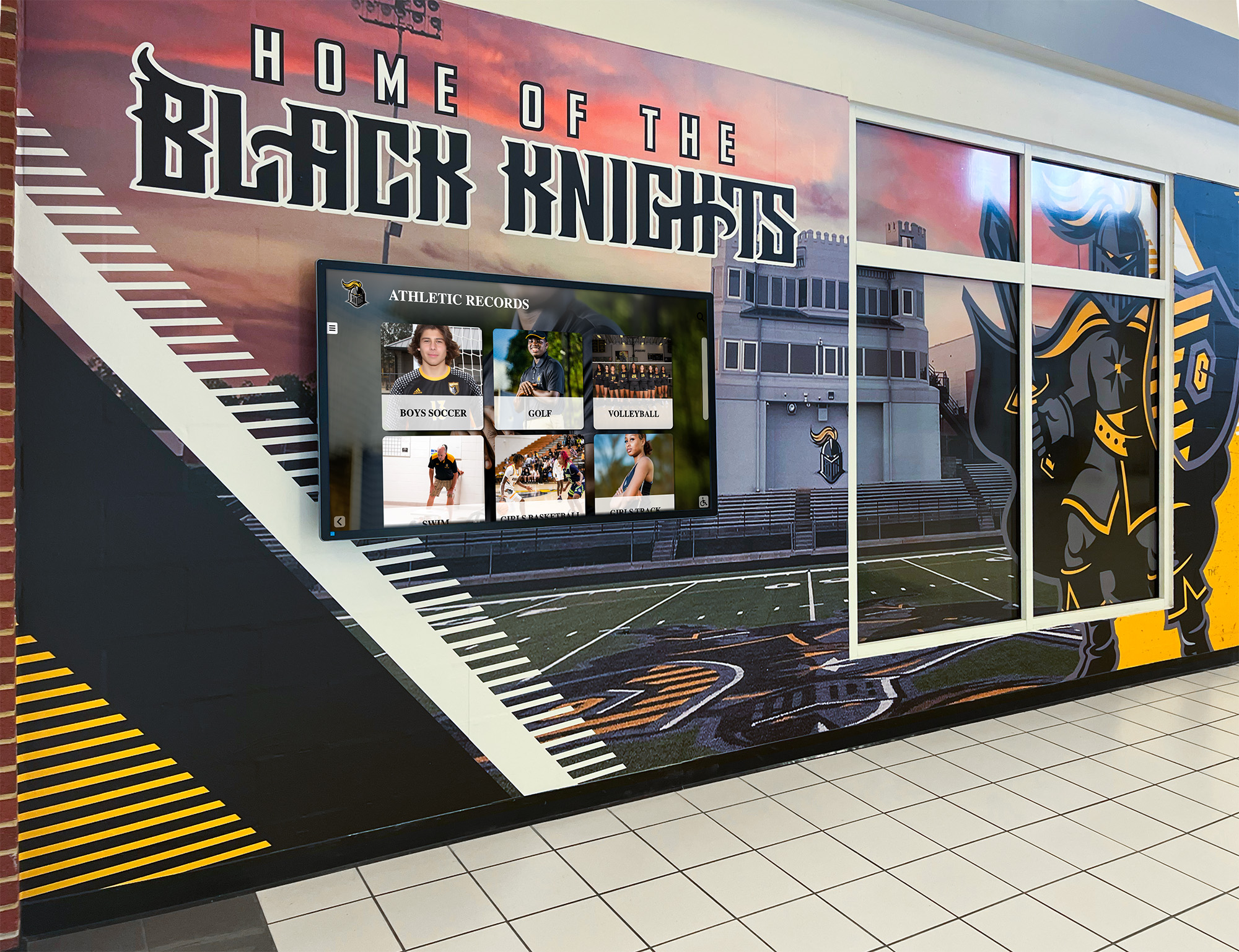
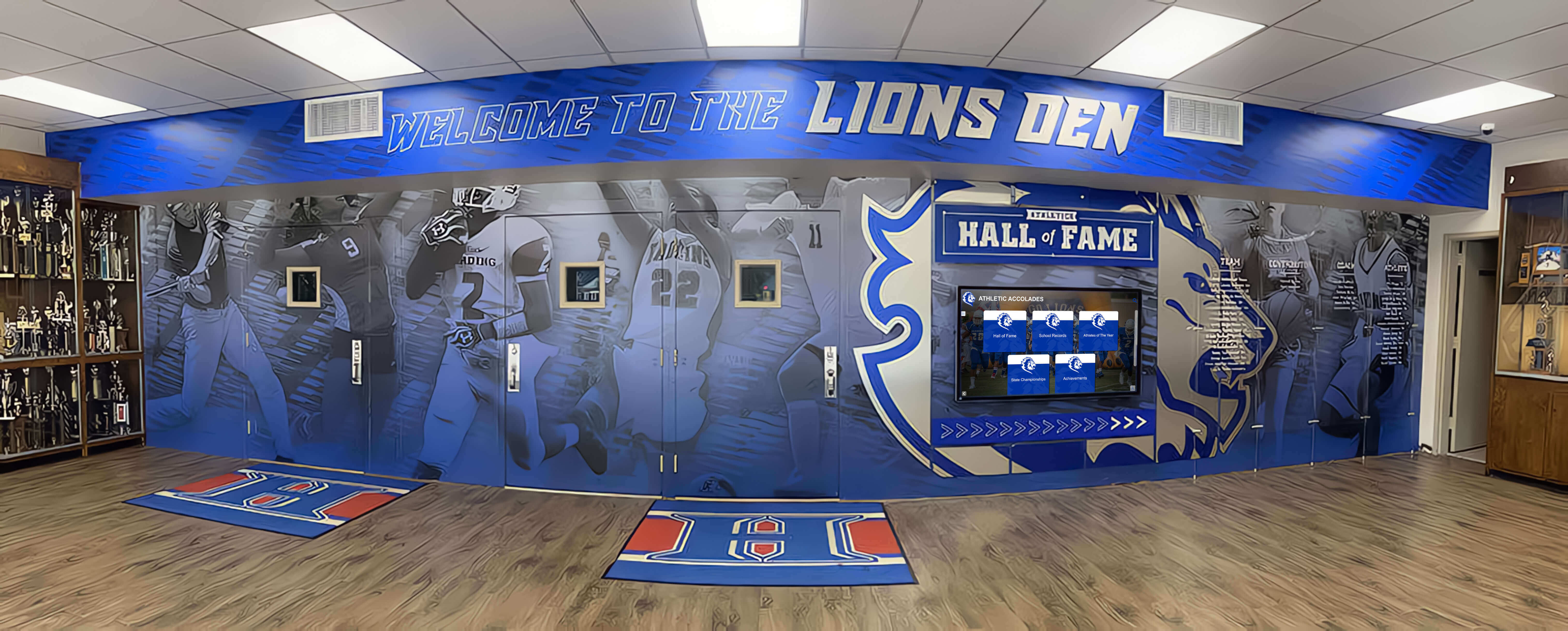
- Wall murals depicting mascots, athletic achievements, or institutional history
- Branded color schemes applied to architectural features, seating, and accent walls
- Professional signage systems using consistent typography and design standards
Mission and Values Display:
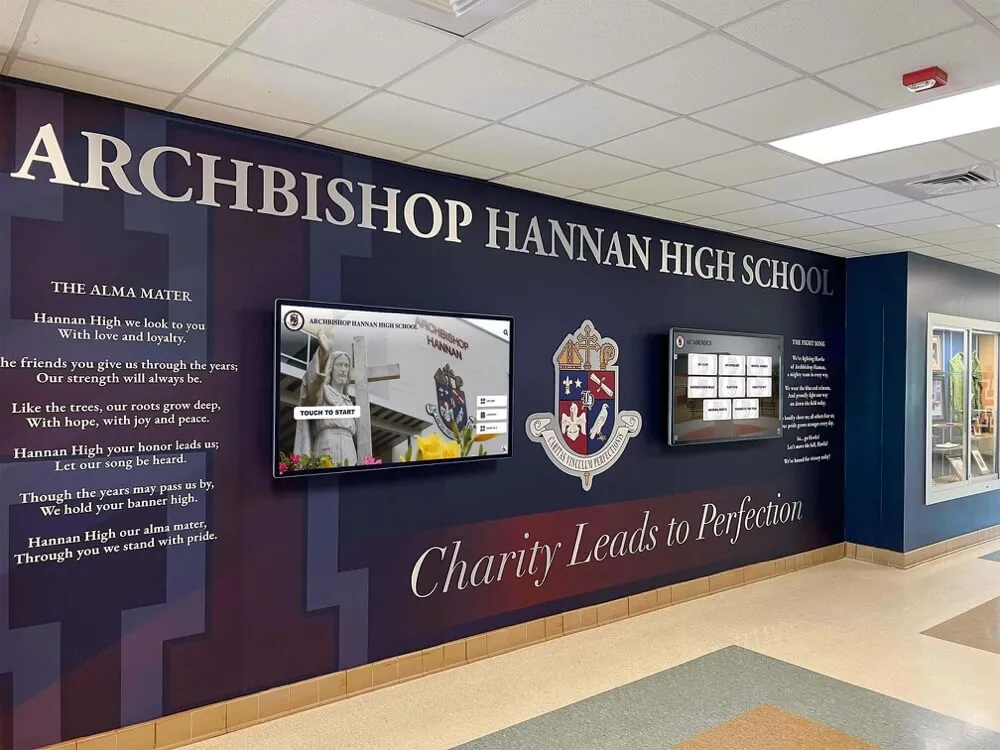
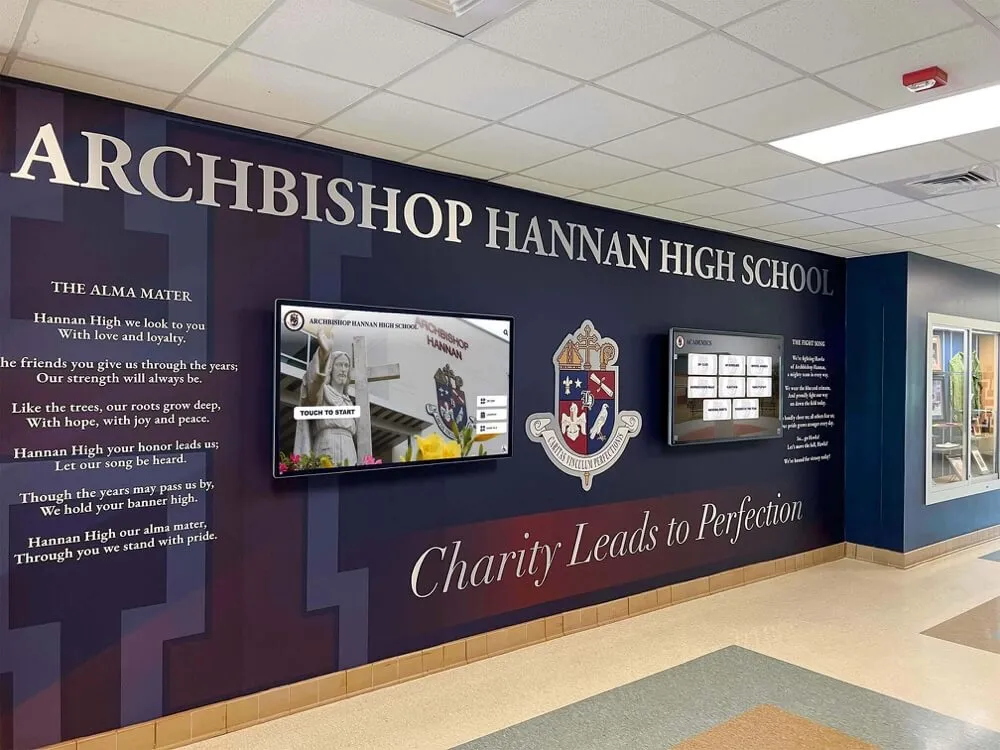
Many schools feature mission statements, core values, or mottos in entrance spaces, continually reinforcing institutional priorities for students, staff, and visitors. Effective displays present these messages as design features rather than afterthought posters, integrating typography and mounting that align with overall aesthetic approaches.
Recognition and Achievement Displays
Celebrating community accomplishments in entrance spaces builds pride while inspiring excellence.
Traditional Recognition Approaches:
Physical recognition elements that many schools incorporate include:
- Trophy cases displaying championship trophies, competition awards, and historical artifacts
- Donor recognition plaques acknowledging capital campaign contributors
- Photograph displays featuring distinguished alumni, accomplished faculty, or student achievements
- Historical timeline installations showing institutional evolution
- State championship banners and conference title recognition
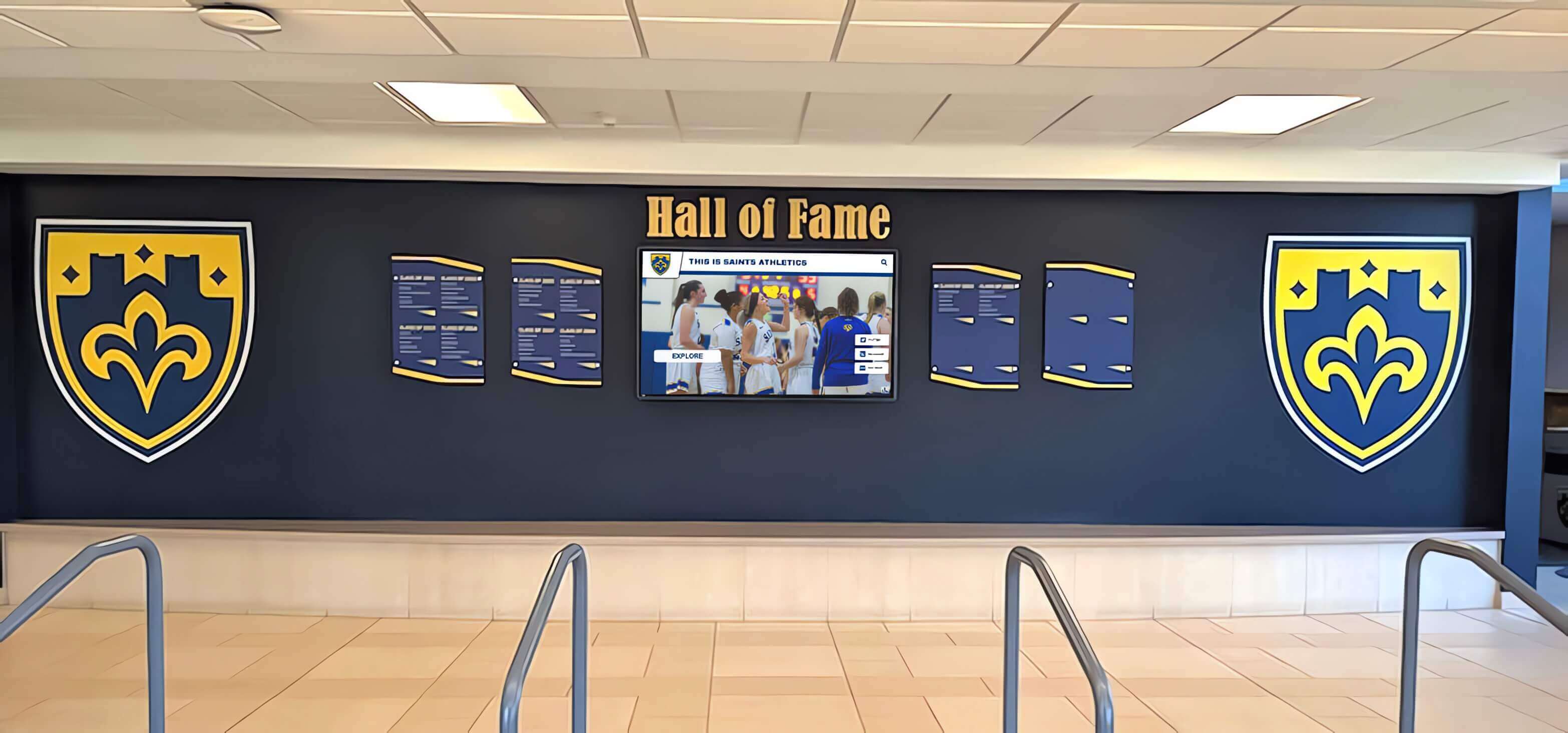
Modern Digital Recognition Solutions:
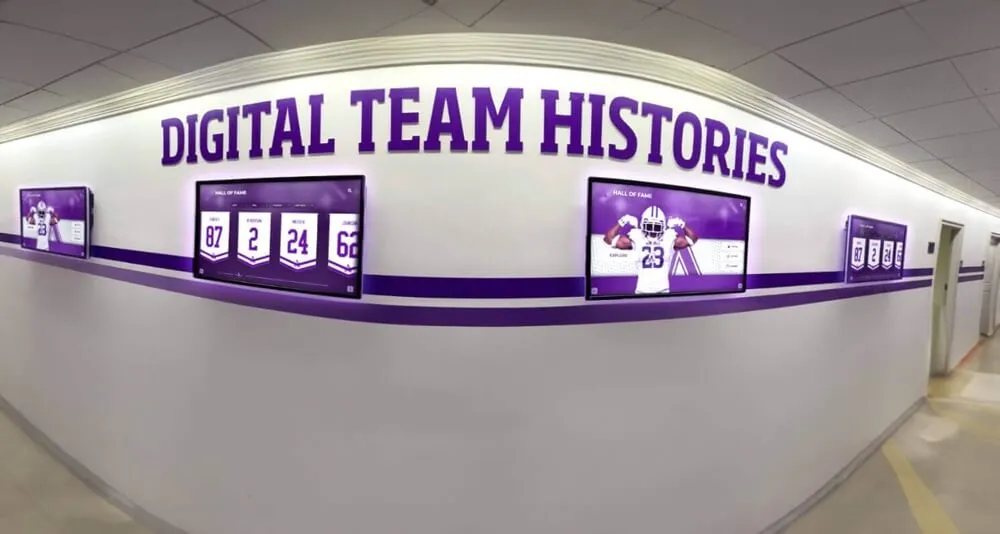
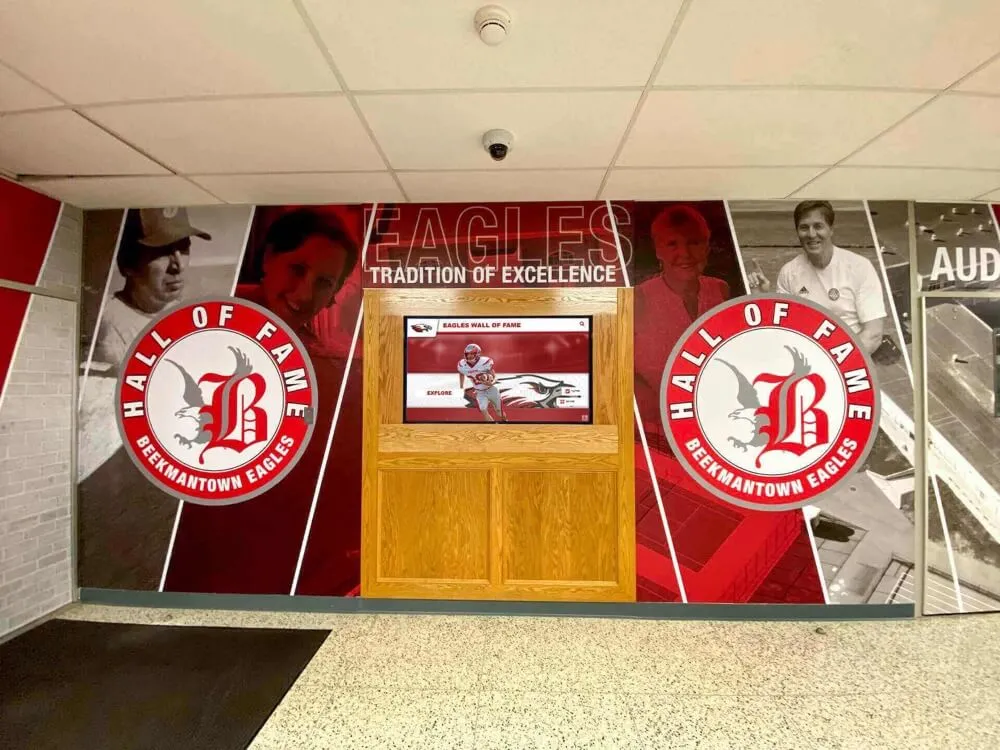
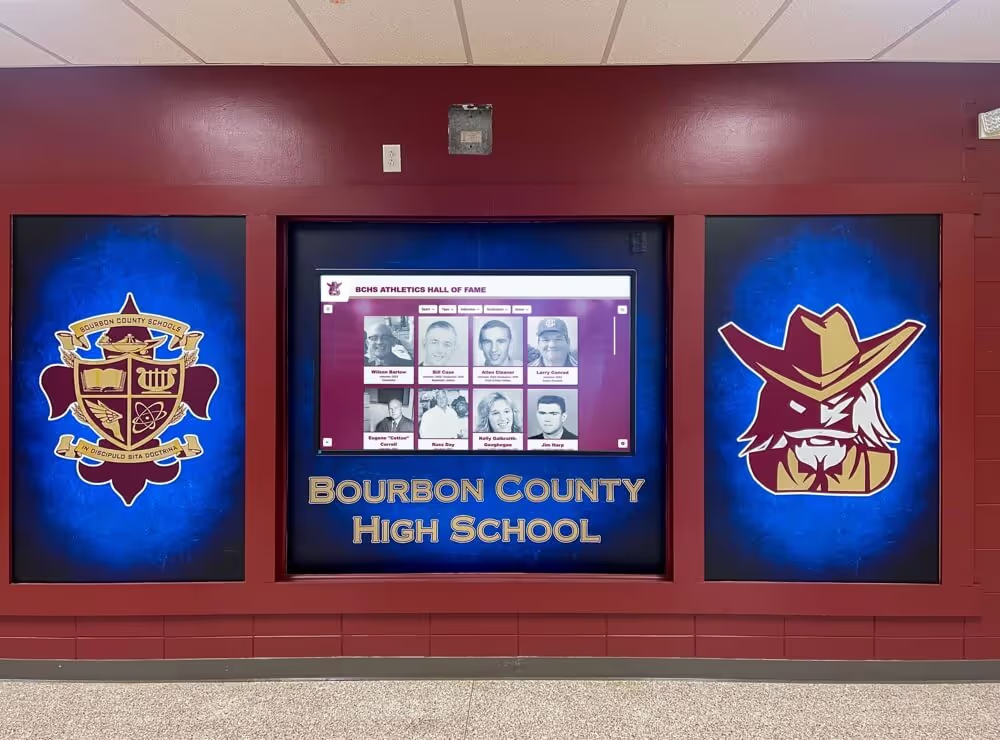
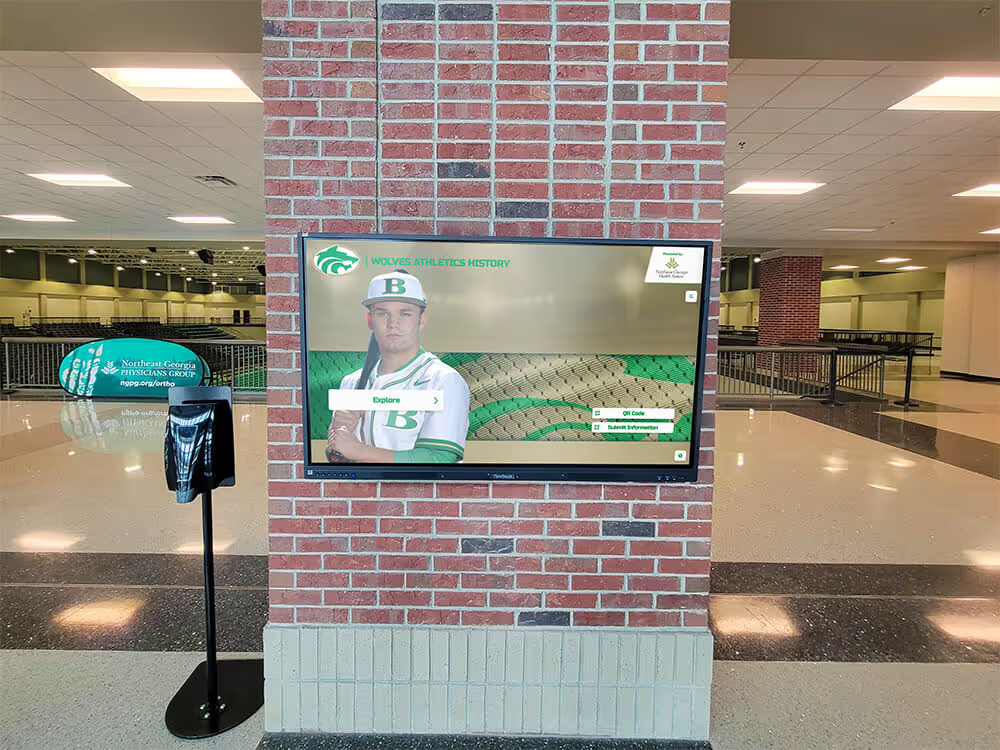
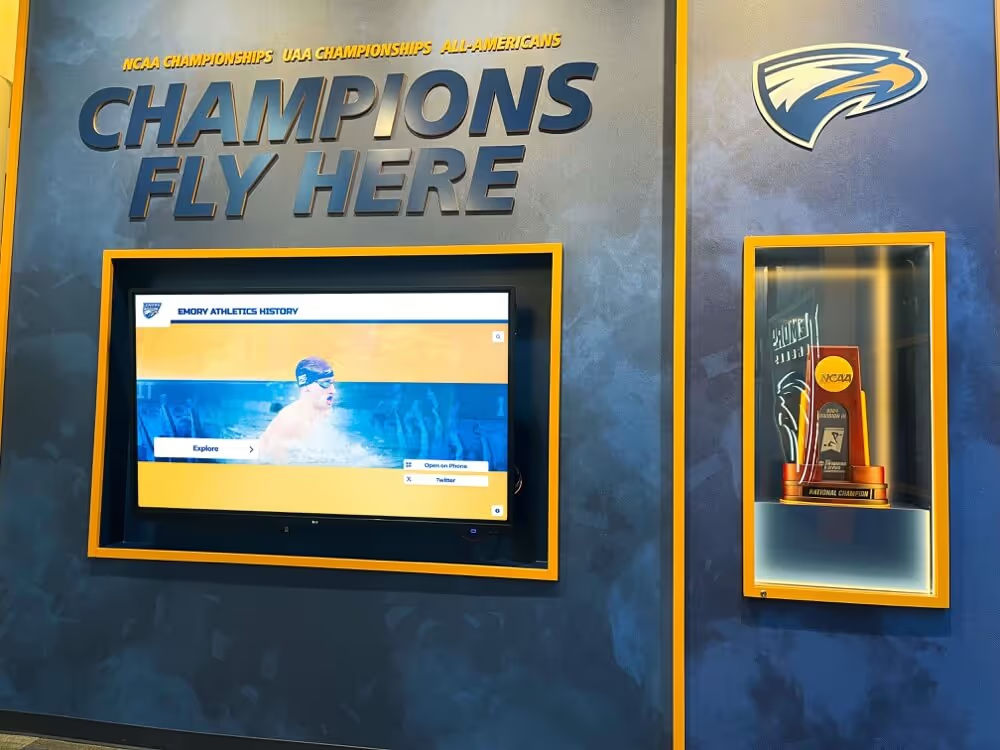
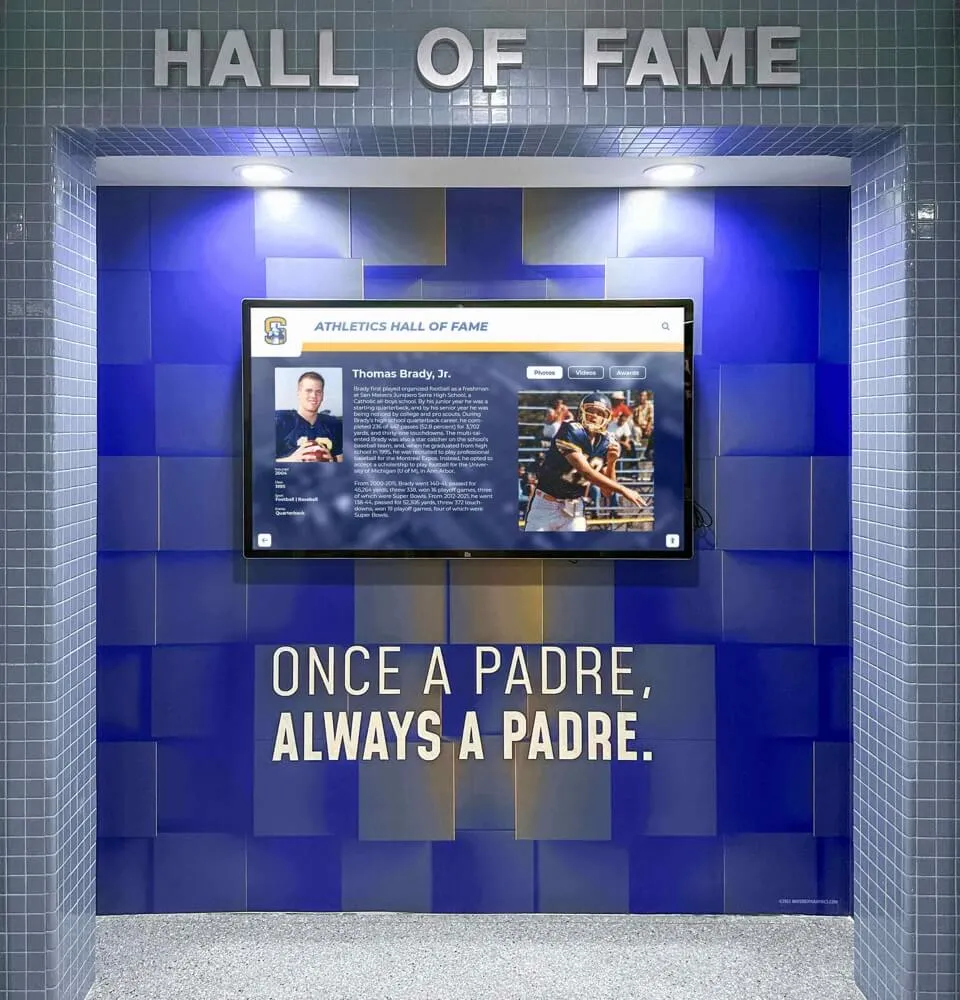
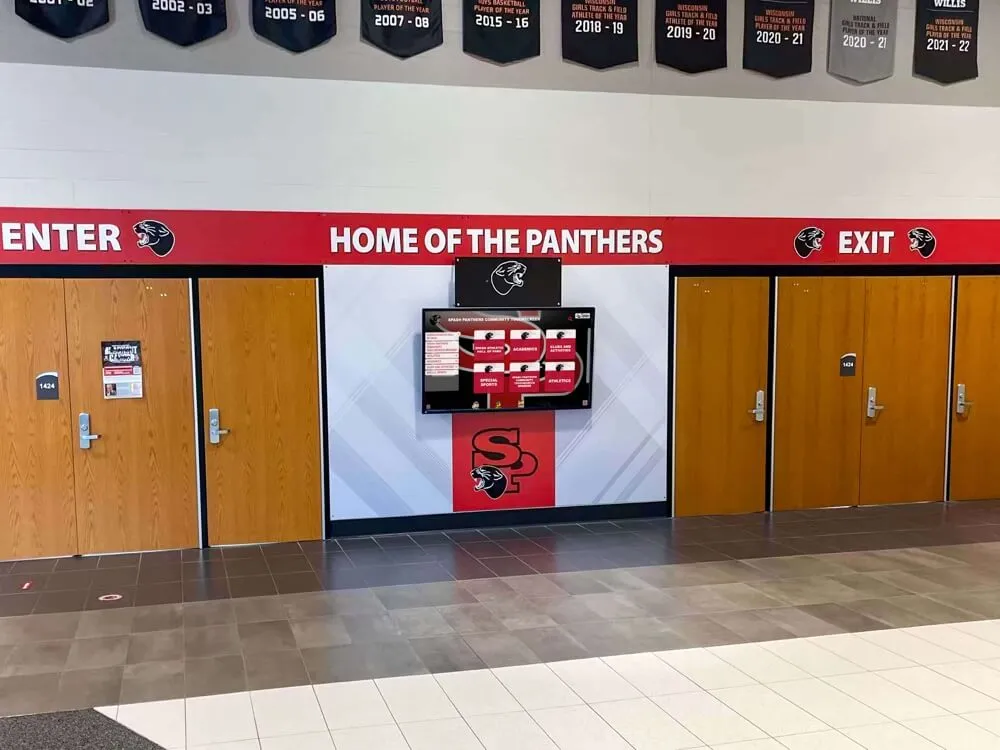
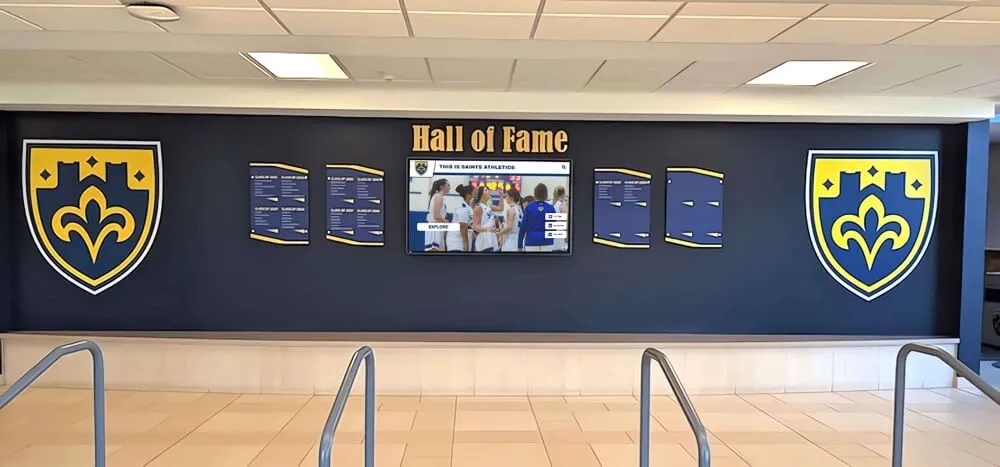
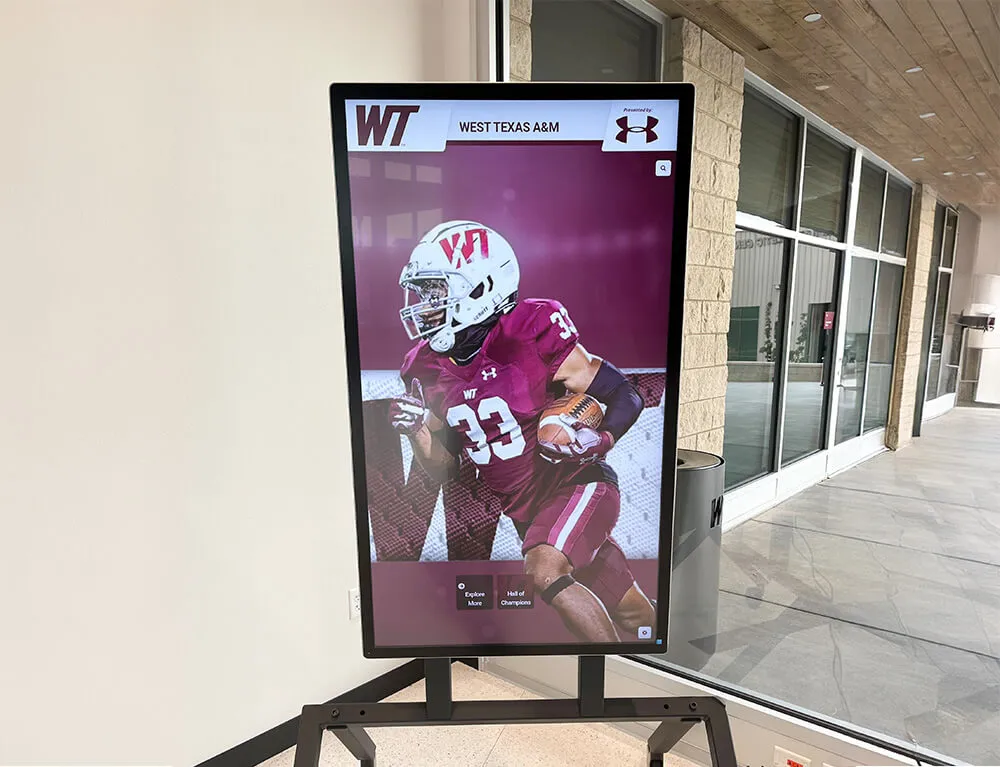
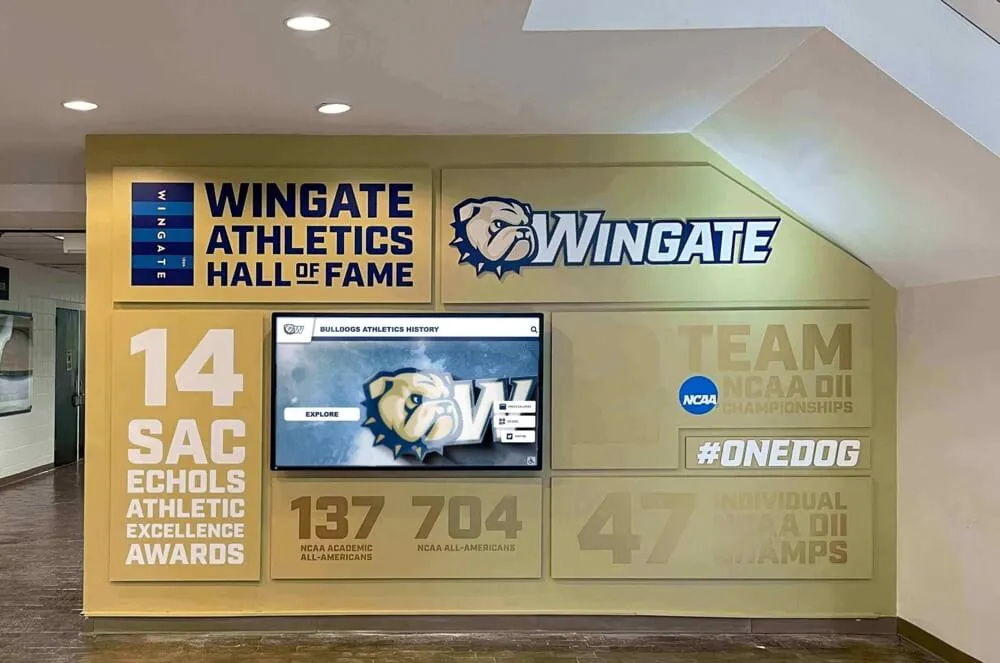
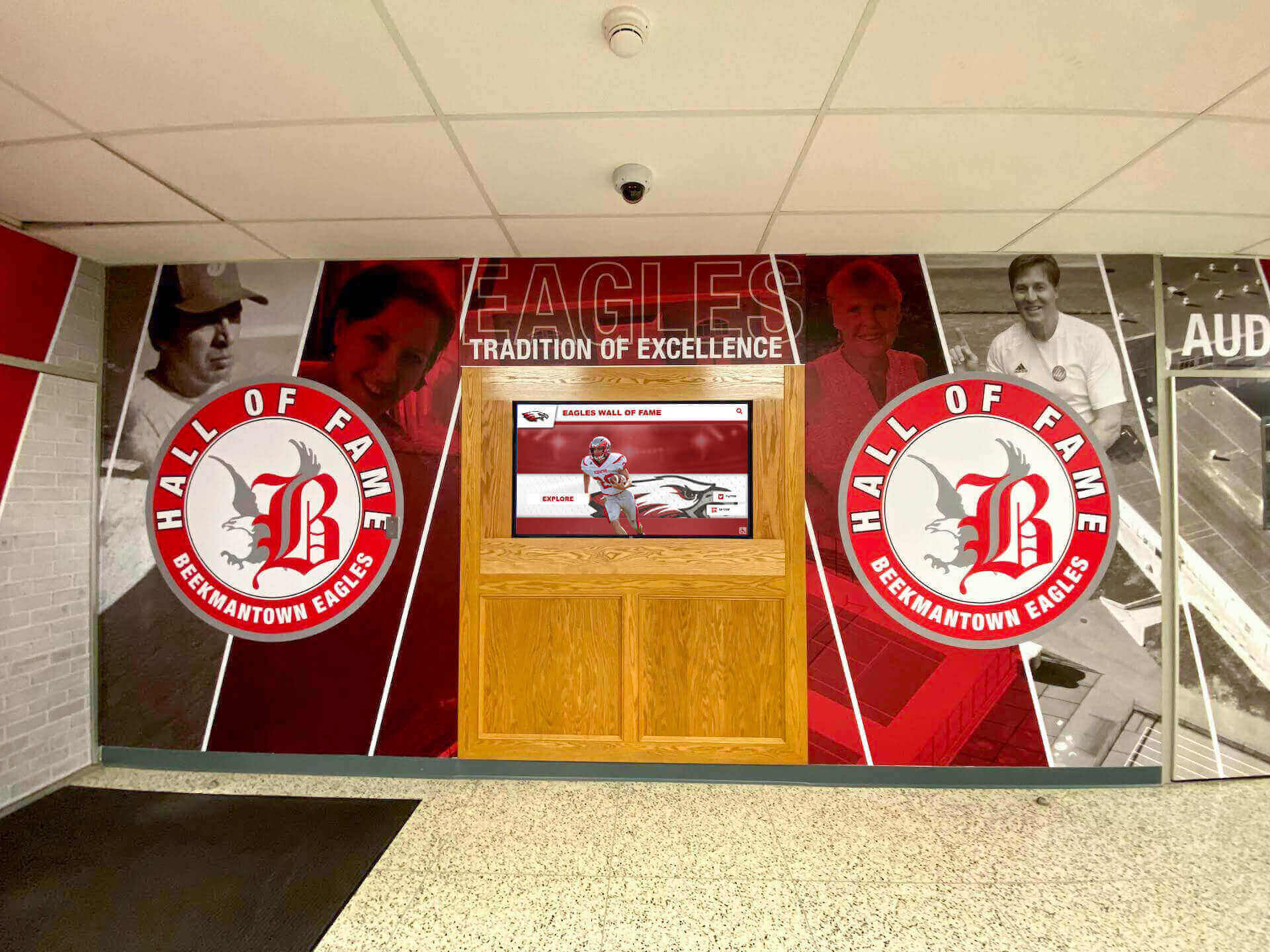
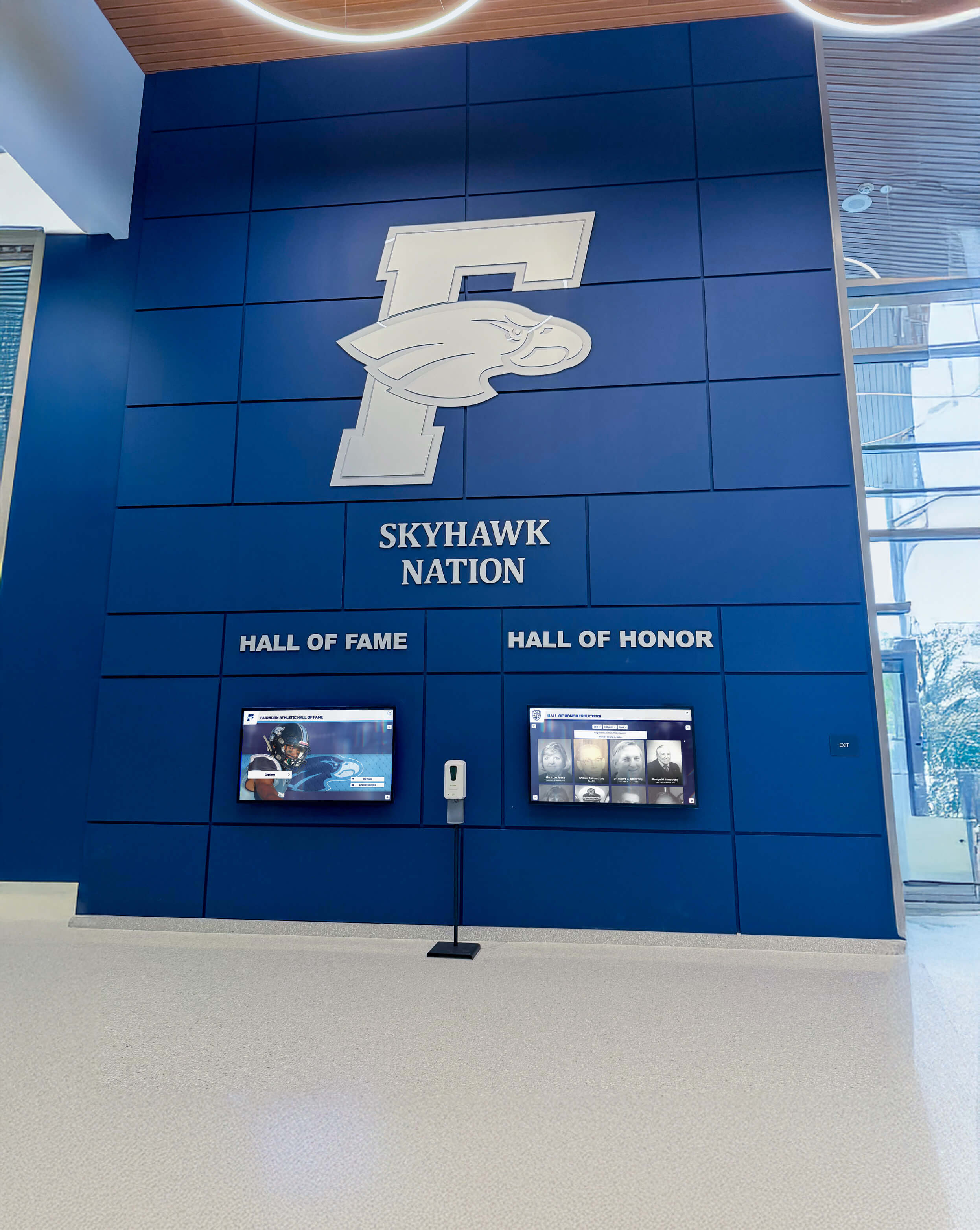
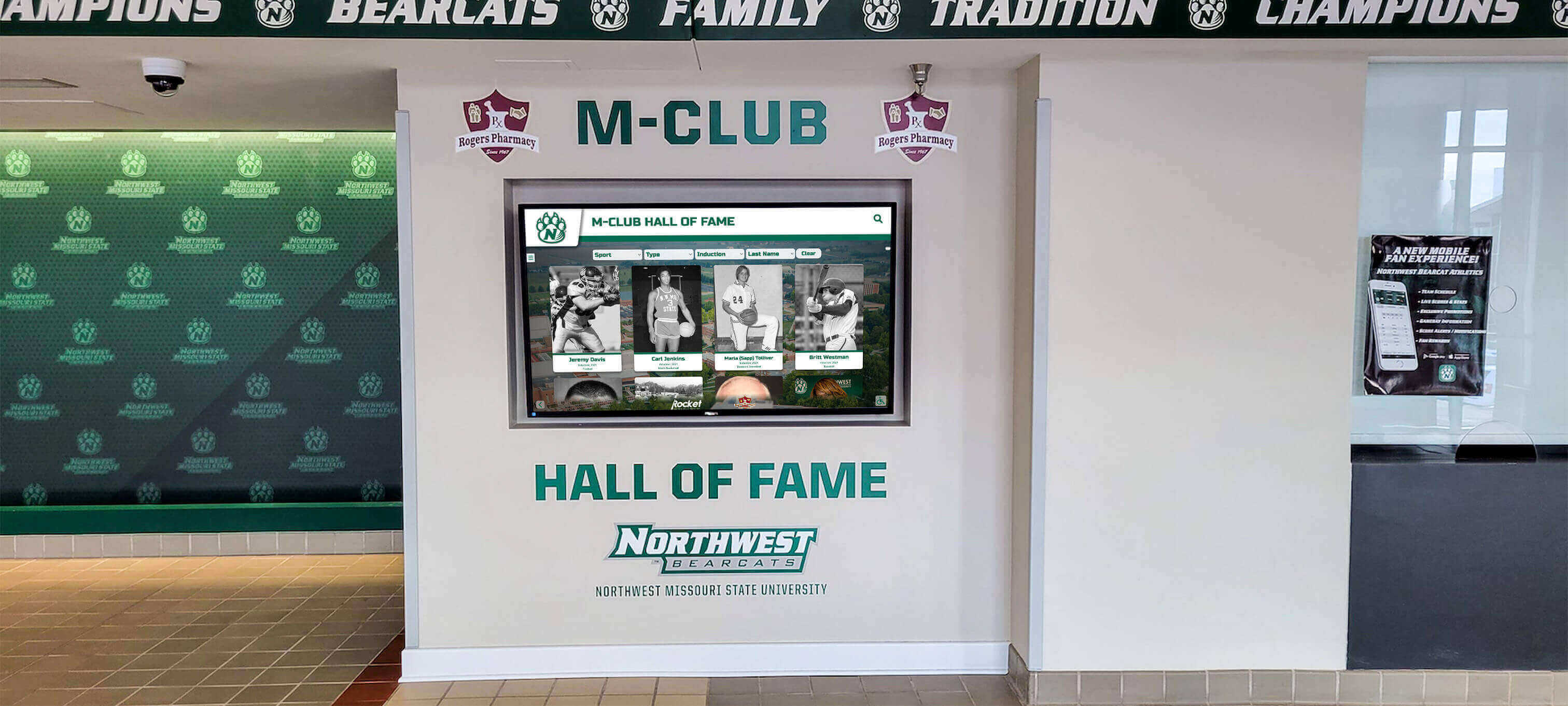
Digital displays offer significant advantages over traditional static recognition elements, providing unlimited capacity for content, regular updates maintaining engagement, multimedia storytelling capabilities, and interactive exploration features.
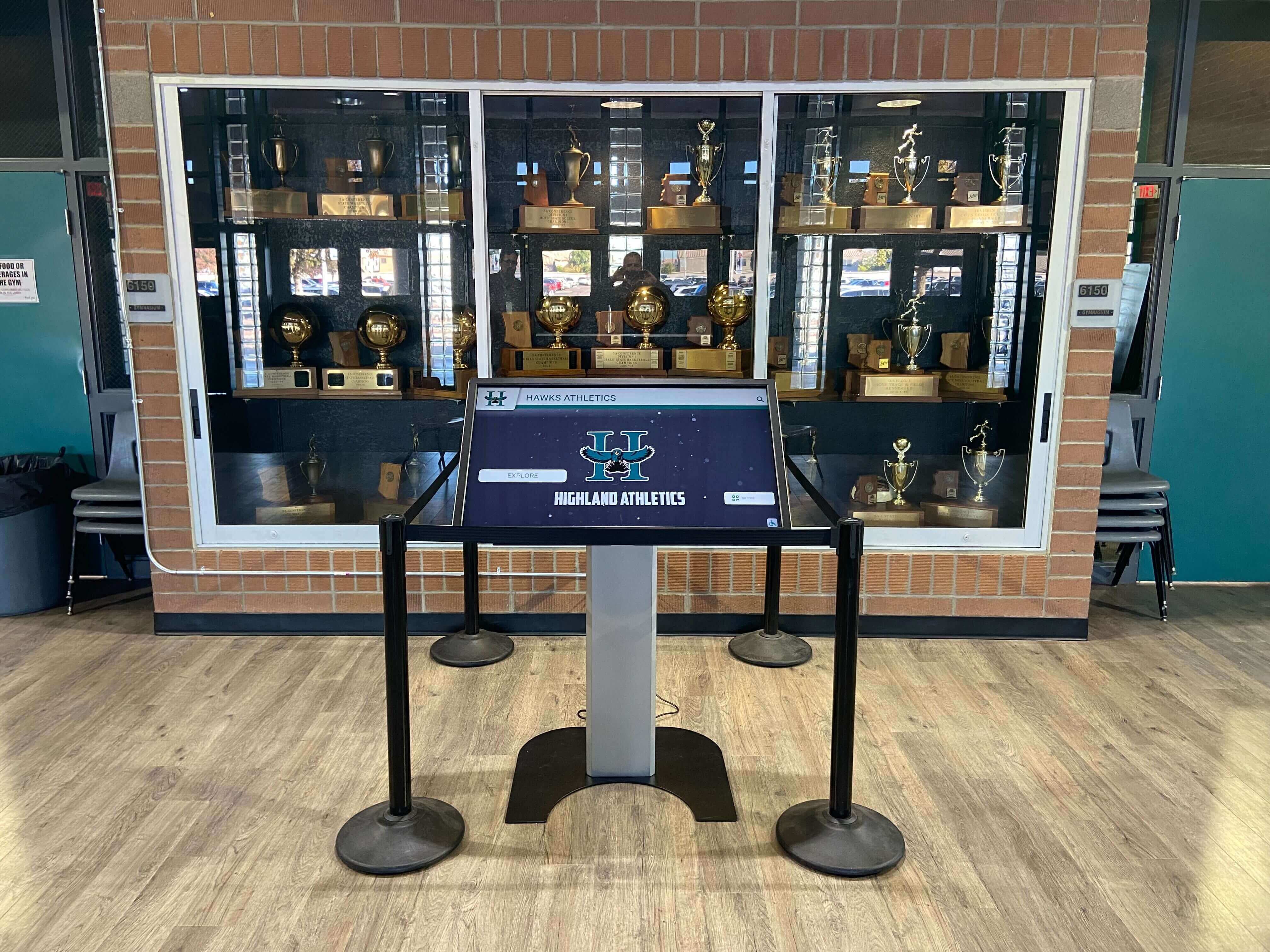
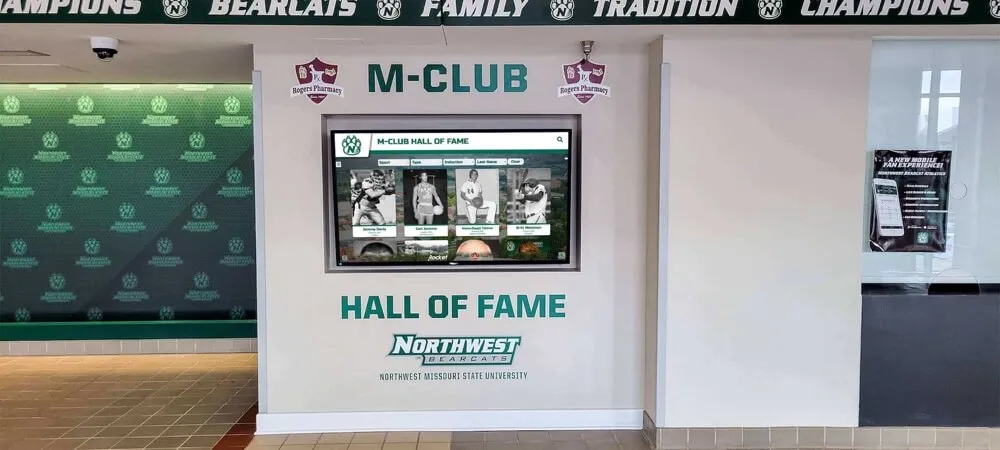
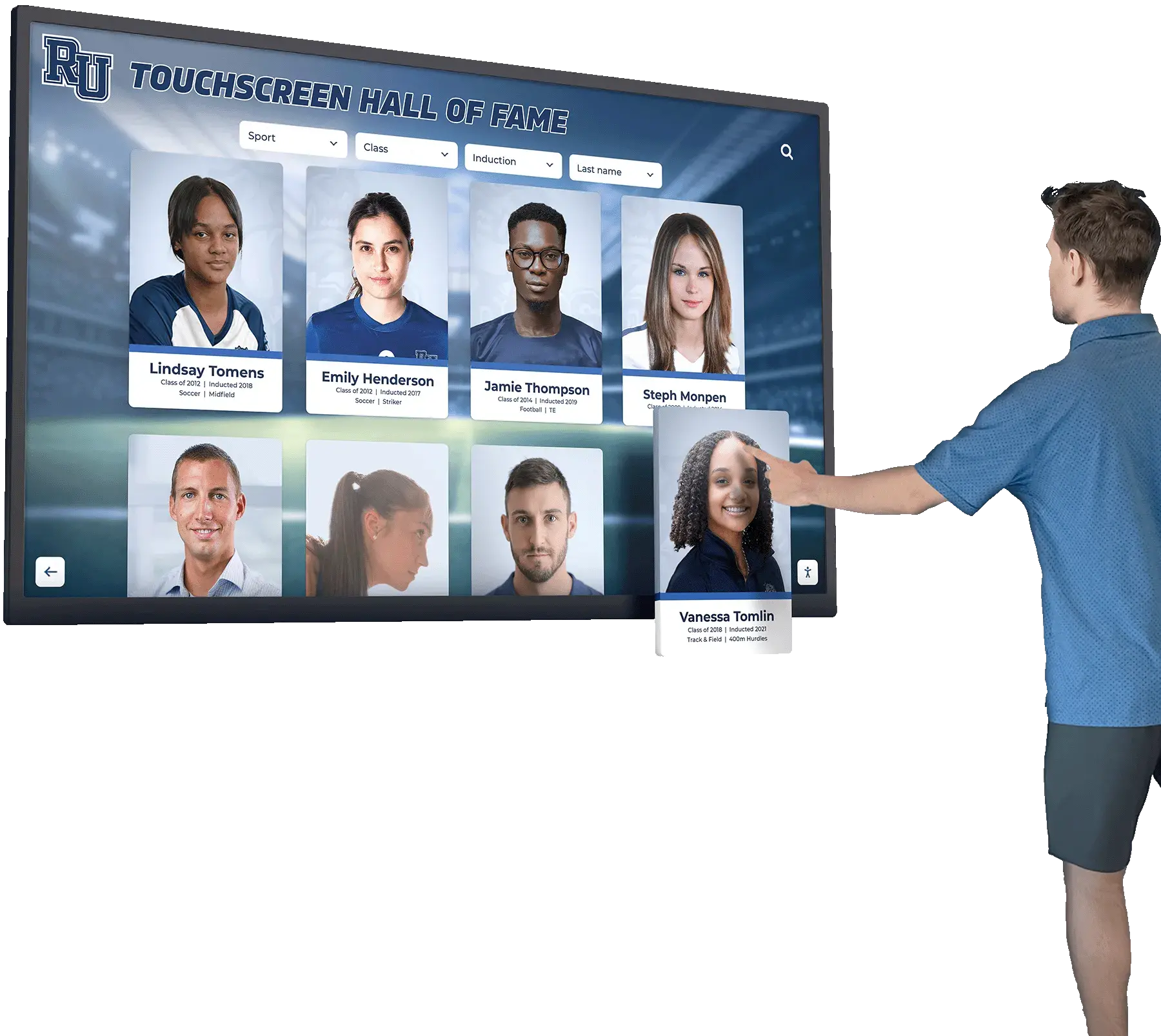
Solutions like Rocket Alumni Solutions offer interactive kiosks designed specifically for educational institutions that showcase:
- Unlimited alumni profiles with photographs, biographical information, and accomplishments
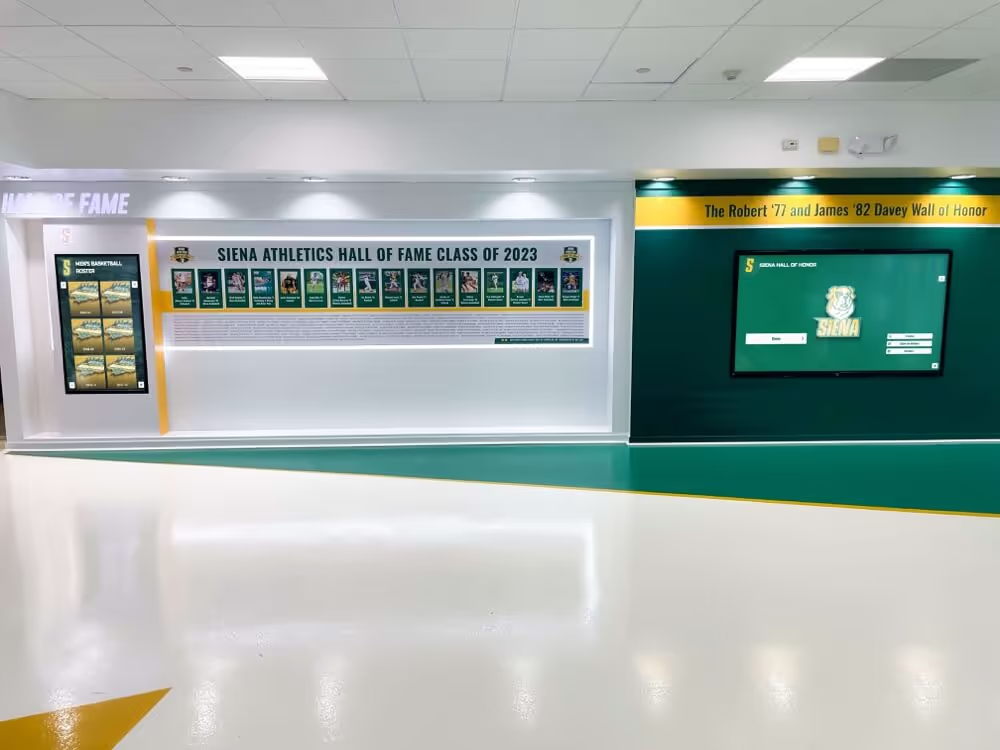
- Athletic achievements including digital trophy cases showcasing championships across all sports
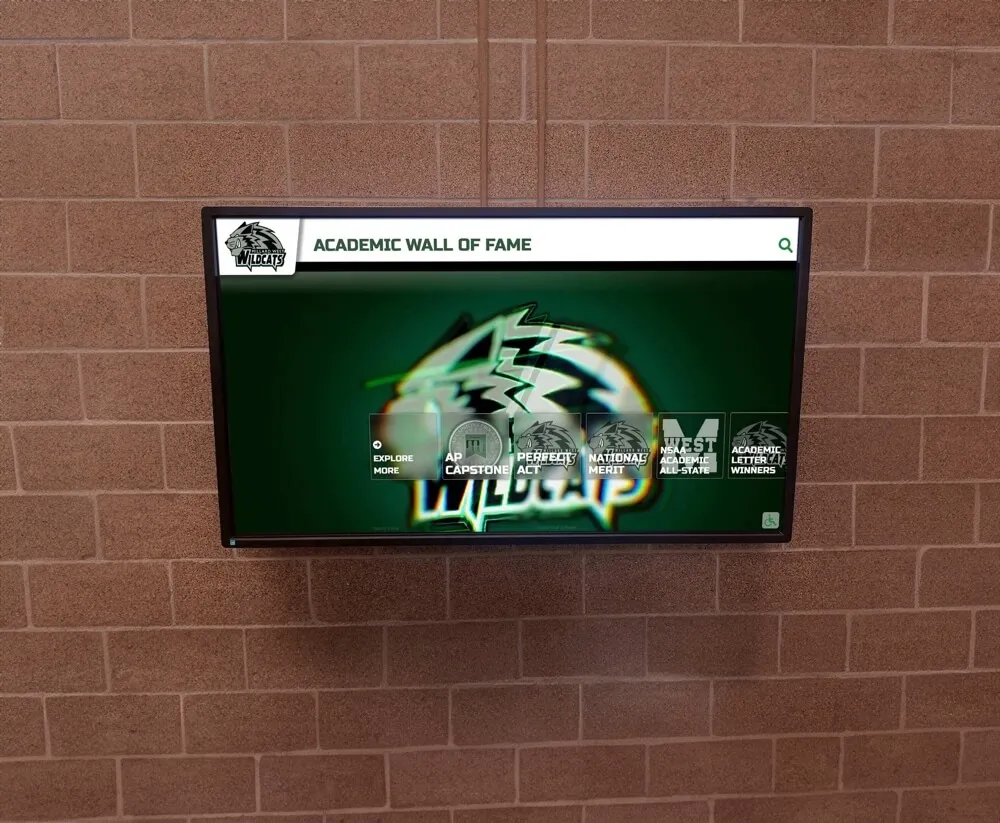
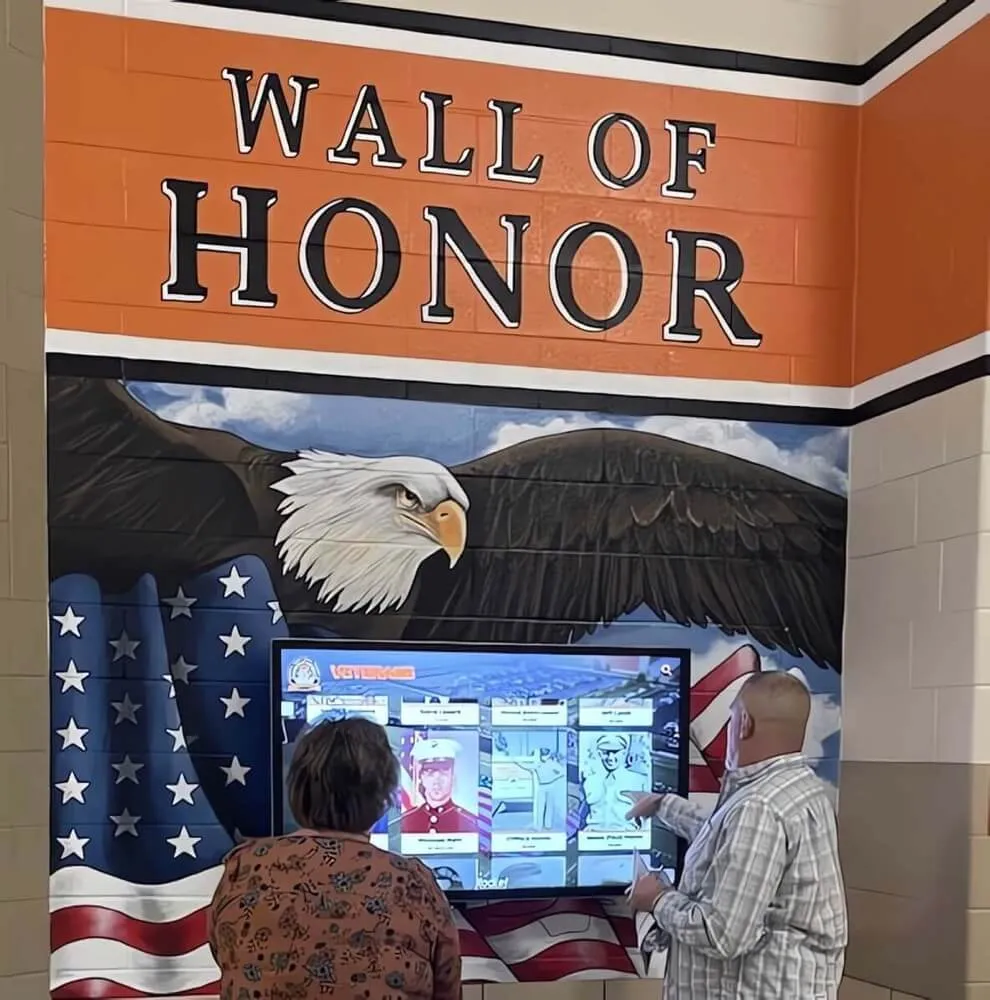
- Academic excellence recognition for honor students, scholarship recipients, and academic competition winners
- Faculty and staff spotlights celebrating educator contributions
- Historical archives with digitized yearbooks, photographs, and institutional milestones
These systems update easily as new achievements occur, ensuring recognition displays remain current rather than becoming dated installations requiring expensive physical modifications for updates.
Wayfinding and Directional Signage
Helping visitors quickly orient themselves and locate destinations reduces confusion while minimizing staff time spent providing directions.
Comprehensive Wayfinding Systems:
Effective wayfinding incorporates multiple complementary elements:
Building Directories: Main entrance directories showing building floor plans with room locations, department assignments, and key facilities help visitors independently locate destinations. Digital directory systems allow real-time updates when room assignments change.
Directional Signage: Clear directional signs at decision points—corridor intersections, stairwell entrances, elevator lobbies—guide visitors to specific destinations using consistent nomenclature and design language.
Room Identification: Standardized room number and name plaques applied consistently throughout facilities enable visitors to confirm they’ve reached correct destinations.
Color Coding Systems: Some schools employ color-coded wayfinding where different building wings or academic departments use distinct colors in signage, floor markings, or architectural elements, creating intuitive navigation systems requiring minimal written instructions.
Modern digital signage solutions for schools can incorporate interactive wayfinding directories where visitors search for specific rooms or staff members, receiving customized directions based on current locations.
Security Integration in Entrance Design
Modern school design must balance security requirements with creating welcoming, non-institutional atmospheres.
Visitor Management Systems
Effective visitor management protocols verify and document visitor identities while maintaining hospitality.
Modern Visitor Management Technology:
Contemporary systems have evolved significantly beyond traditional paper logbooks:
- Digital Check-In Kiosks: Touchscreen systems where visitors enter information, present identification for scanning, and receive printed visitor badges
- ID Verification: Automated ID scanning with database checks against sex offender registries and custody alert lists
- Badge Printing: Instant visitor badge production including photographs, names, timestamps, and destinations
- Notification Systems: Automatic alerts to staff members when their visitors check in
- Departure Tracking: Check-out processes documenting when visitors leave facilities
Physical Space Requirements:
Visitor management systems require thoughtful space planning:
- Dedicated check-in counters or kiosks positioned immediately inside secured entry points
- Adequate space for multiple simultaneous check-ins during high-volume periods
- Visual separation between public waiting zones and secured interior spaces
- Staff workspace for manual override situations or providing assistance
- Secure storage for temporary visitor badge supplies
Controlled Access Entry Points
Security protocols typically require limiting entry to designated, monitored entrance points while securing other exterior doors.
Access Control Approaches:
Single Point Entry: Many schools funnel all daytime visitors through one main entrance where staff can monitor and manage access, while securing other doors with emergency exit-only hardware.
Limited Multiple Entry Points: Larger facilities might maintain multiple monitored entrances for different populations—main entrance for visitors, separate entrances for students and staff using access cards or key fobs.
Electronic Access Control: Card readers, key fobs, or mobile credentials for students and staff provide tracked access documentation while preventing unauthorized entry.
Video Surveillance Integration: Camera systems monitoring all entrance points deter security concerns while providing documentation if incidents occur.
Emergency Access Considerations: Security measures must accommodate emergency situations where rapid facility evacuation requires immediate exit from all doors without requiring staff intervention.
Balancing Security with Welcoming Atmosphere
The challenge in entrance security design involves implementing necessary protective measures without creating oppressive, institutional environments that feel more like high-security facilities than welcoming educational spaces. Effective solutions integrate security elements into attractive overall designs—embedding card readers in aesthetically pleasing mounting systems, incorporating cameras into architectural features, and training staff to implement protocols with warmth and professionalism that maintains hospitality while ensuring safety.
Lighting Design for School Entrances
Appropriate lighting dramatically impacts entrance functionality, aesthetics, and safety.
Natural Light Integration
Maximizing natural light creates welcoming, healthy environments while reducing energy costs.
Architectural Natural Light Strategies:
- Clerestory Windows: High windows above primary entrance spaces bring natural light deep into lobbies without compromising wall space needed for recognition displays or compromising security through street-level glazing
- Skylights: Overhead glazing floods entrance lobbies with natural light, particularly effective for interior lobbies positioned away from exterior walls
- Glazed Entry Doors: Glass or glass-and-frame entrance doors allow natural light penetration while providing visibility to monitor approaching visitors
- Glazed Sidelights: Fixed glass panels flanking entrance doors increase natural light without the complexity of additional operable doors
- Interior Glazing: Glass walls or windows between entrance lobbies and adjacent corridors extend natural light benefits throughout facilities
Considerations for Natural Light:
While natural light offers numerous benefits, design must address potential challenges:
- Solar Heat Gain: Extensive glazing in southern and western exposures can create excessive heat gain and uncomfortable glare. Low-E glazing, external shading devices, or motorized interior shades mitigate these concerns.
- Glare Management: Direct sunlight can create glare on digital displays or create harsh visual environments. Strategic glass placement, treatments, or supplemental artificial lighting address these issues.
- Privacy Concerns: Ground-level glazing may compromise security or privacy. Frosted glass, strategic landscaping, or elevated glazing placement balance light benefits with privacy needs.
Artificial Lighting Design
Supplemental artificial lighting ensures consistent illumination regardless of daylight conditions while supporting specific functional and aesthetic objectives.
Layered Lighting Approach:
Effective entrance lighting combines multiple lighting types:
Ambient Lighting: General overhead lighting providing baseline illumination throughout entrance spaces. LED panels, recessed downlights, or decorative fixtures deliver energy-efficient ambient illumination.
Accent Lighting: Focused lighting highlighting specific features—recognition displays, artwork, architectural elements, or branding features. Track lighting, adjustable spotlights, or integrated display lighting draws attention to priority features.
Task Lighting: Supplemental lighting for specific functional areas—visitor check-in counters, directories, or seating areas where visitors might read documents.
Decorative Lighting: Architectural lighting elements like chandeliers, pendant lights, or custom fixtures that contribute to overall aesthetic character while providing functional illumination.
Emergency and Safety Lighting: Code-required exit signs, emergency lighting systems, and path-of-egress lighting ensuring safe evacuation during power failures.
Material Selection and Durability Considerations
School entrance spaces experience heavy traffic requiring materials that withstand constant use while maintaining attractive appearance.
Flooring Materials
Entrance flooring must balance aesthetics, durability, maintenance requirements, and budget constraints.
High-Performance Flooring Options:
Porcelain or Ceramic Tile: Extremely durable, water-resistant, available in numerous colors and patterns. Installation costs are higher than some alternatives, but lifecycle costs remain low due to durability and easy maintenance. Large-format tiles minimize grout lines that require cleaning.
Polished Concrete: Increasingly popular in contemporary educational design. Properly sealed polished concrete offers exceptional durability, low maintenance, and modern aesthetics at moderate cost. Custom scoring patterns or embedded school logos create distinctive visual interest.
Luxury Vinyl Tile (LVT): Modern LVT products offer wood or stone appearance at lower cost than authentic materials while providing superior durability and moisture resistance. Quality LVT withstands heavy traffic while offering comfortable, quieter surfaces than hard materials.
Terrazzo: Traditional terrazzo or modern epoxy terrazzo systems create stunning, permanent floors that last decades. Higher installation costs offset by extreme longevity and minimal maintenance. Custom colors and patterns can incorporate school branding or create dramatic visual statements.
Entrance Matting Systems: Recessed mat wells at all entrances dramatically reduce moisture and dirt tracked into buildings. Quality mat systems capture contaminants before they reach interior finishes, dramatically reducing cleaning requirements while extending flooring lifecycle.
Wall Treatments and Finishes
Wall surfaces in entrance spaces receive significant wear from contact, must support mounted elements, and contribute substantially to overall aesthetic character.
Durable Wall Finish Options:
Painted Masonry or Drywall: Most economical approach. Specify high-durability paints in satin or semi-gloss sheens that allow cleaning. Darker colors may show scuffs more readily than mid-tone options. Accent walls in school colors create visual interest without overwhelming spaces.
Masonry or Stone Veneer: Extremely durable, requiring virtually no maintenance while creating substantial, permanent appearance. Natural stone, manufactured stone, or brick veneer provide texture and visual interest. Higher material and installation costs.
Wood Paneling or Wainscoting: Adds warmth and sophistication to entrance spaces. Real wood requires more maintenance than alternatives but offers authentic character. Wood-look alternatives provide similar aesthetics with improved durability and lower maintenance.
Architectural Block: Decorative concrete masonry units (CMU) in various textures and colors create durable, substantial wall surfaces requiring minimal maintenance. Popular in contemporary institutional design.
Digital Wallcoverings and Murals: Custom-printed wall wraps for schools transform large wall expanses into branded environments showcasing school history, values, or achievements. Professional installation of high-quality materials creates impressive visual impact at moderate cost with expected lifespans of 5-7 years before replacement.
Technology Integration in Modern School Entrances
Contemporary entrance design increasingly incorporates technology supporting security, communication, and engagement objectives.
Digital Display Systems
Electronic displays serve multiple functions in entrance environments.
Information and Communication Displays:
Non-interactive displays broadcast information to entrance visitors:
- Daily announcements and upcoming events
- Emergency notifications and weather alerts
- Welcome messages for special visitors or event attendees
- Social media feeds showcasing school activities
- Video highlights from athletic events, performances, or activities
Interactive Recognition Displays:
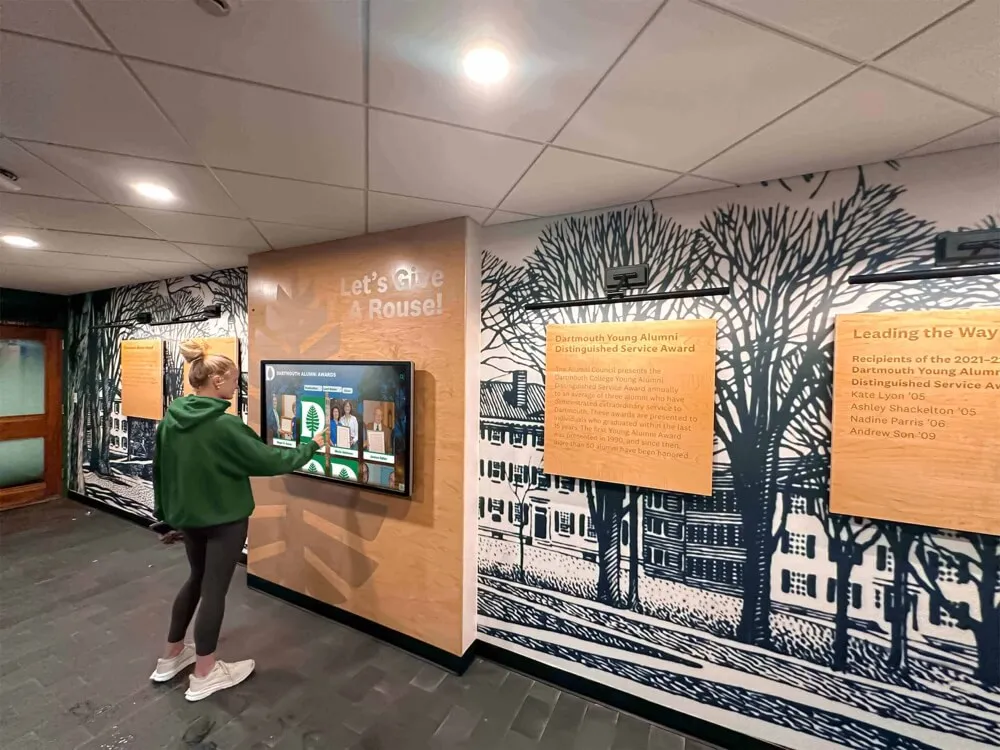
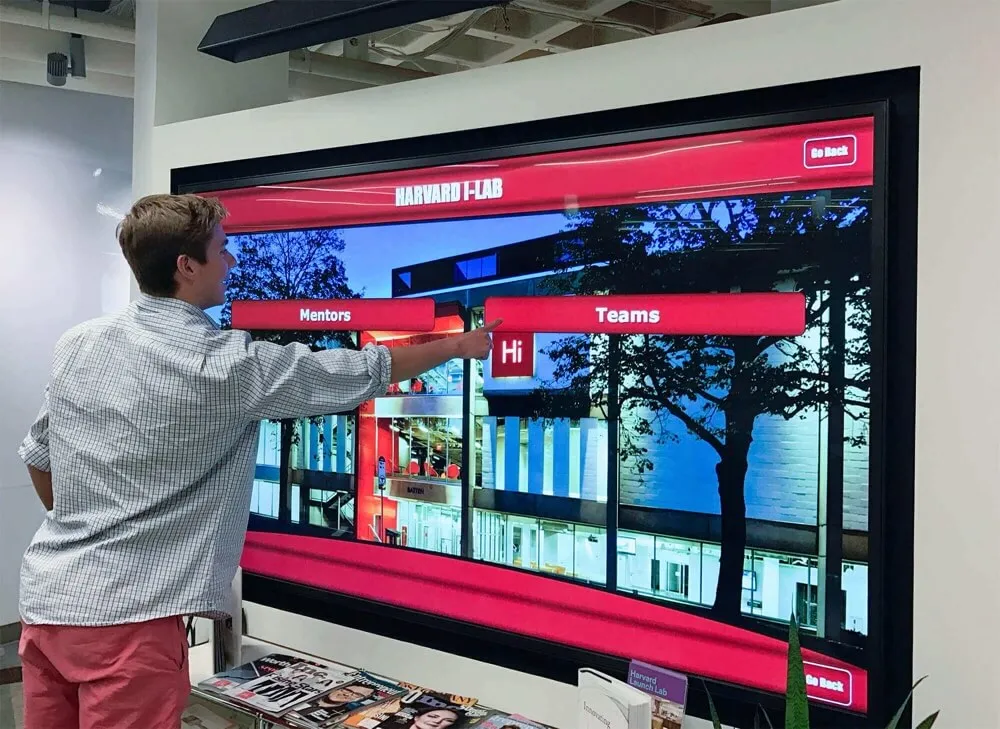
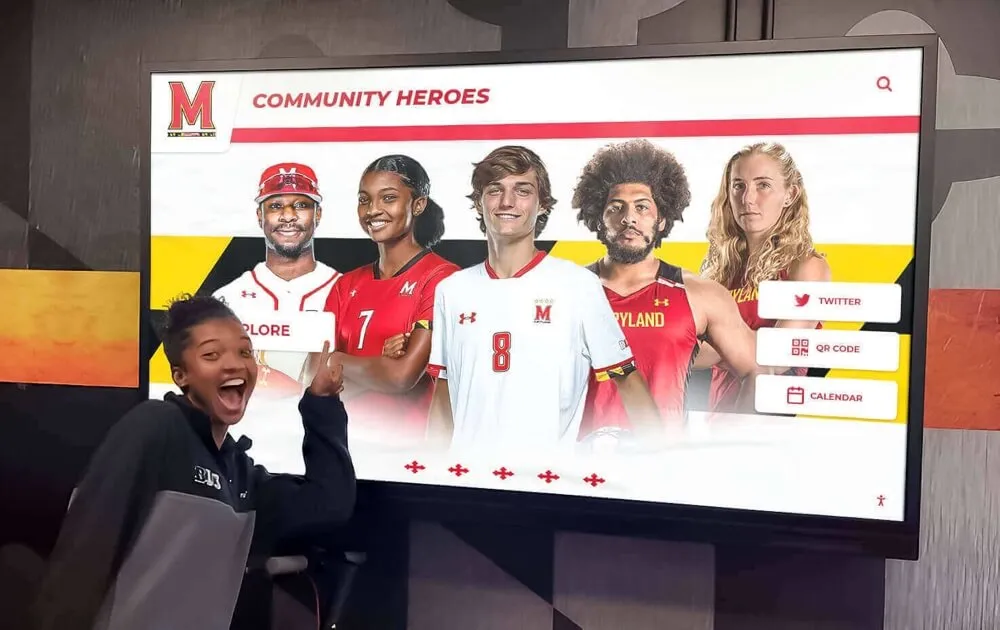
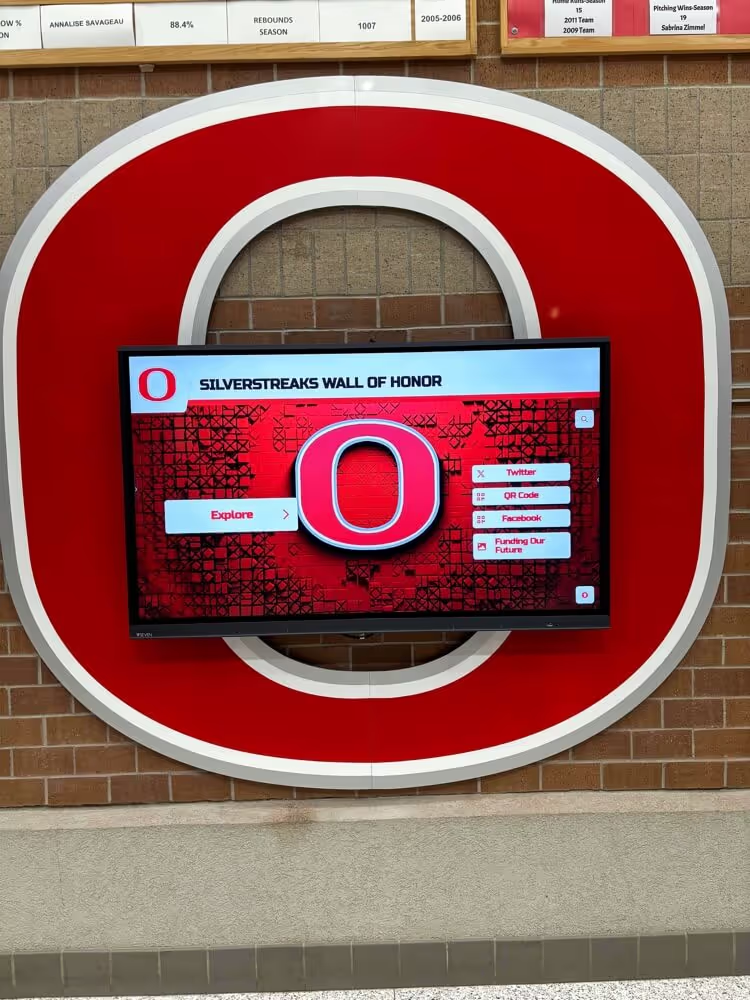
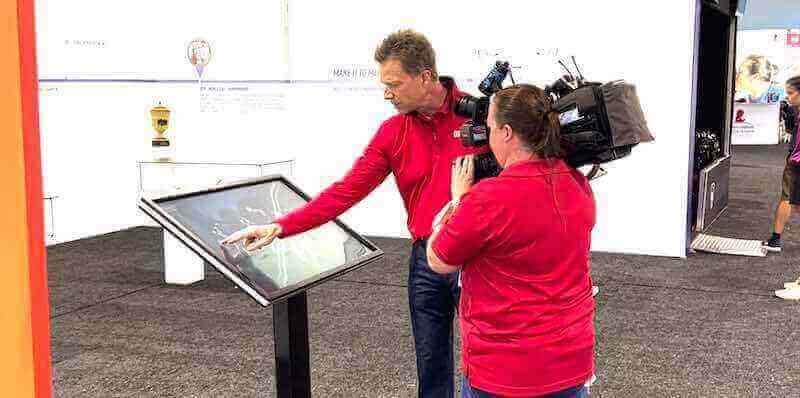
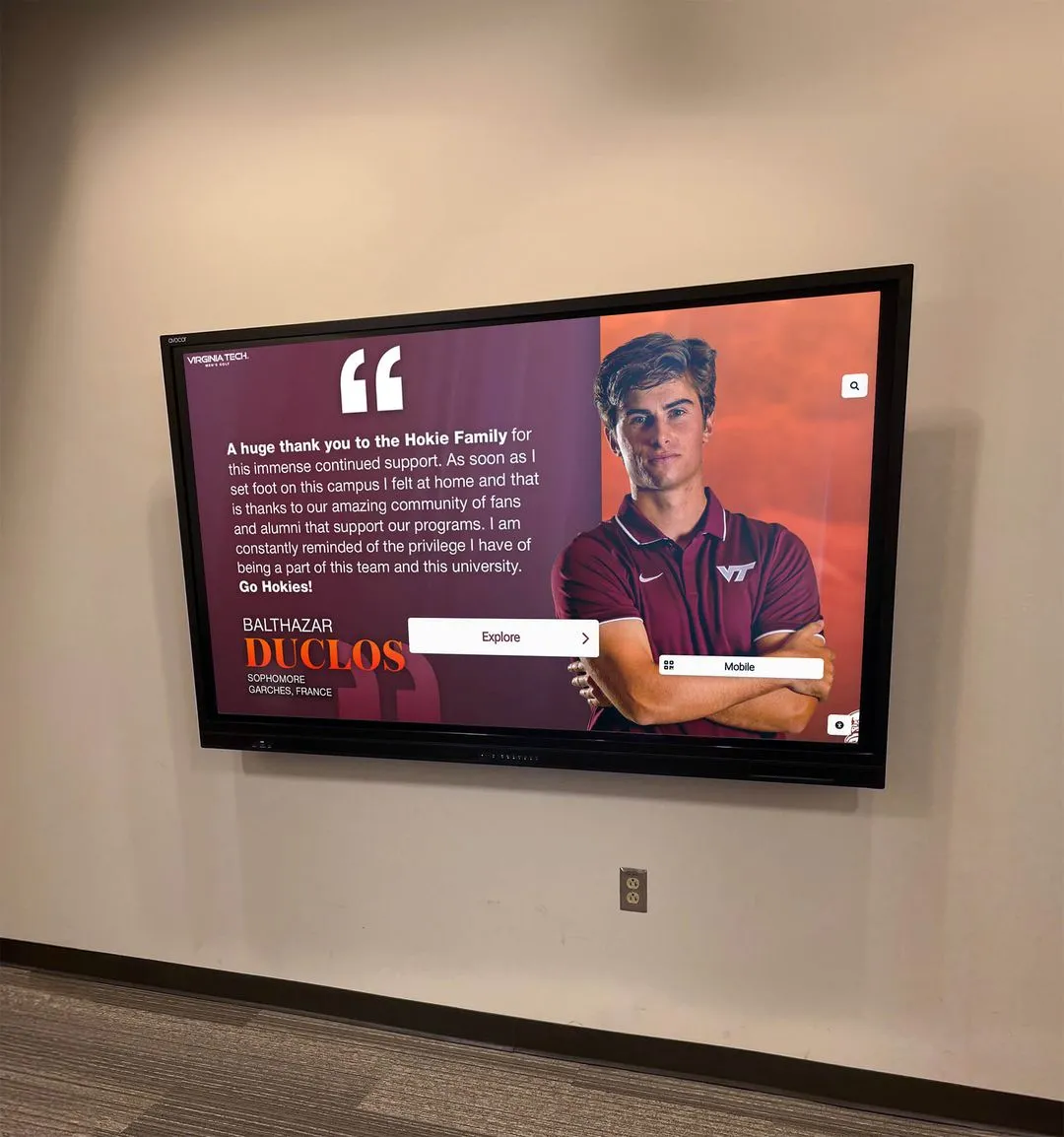
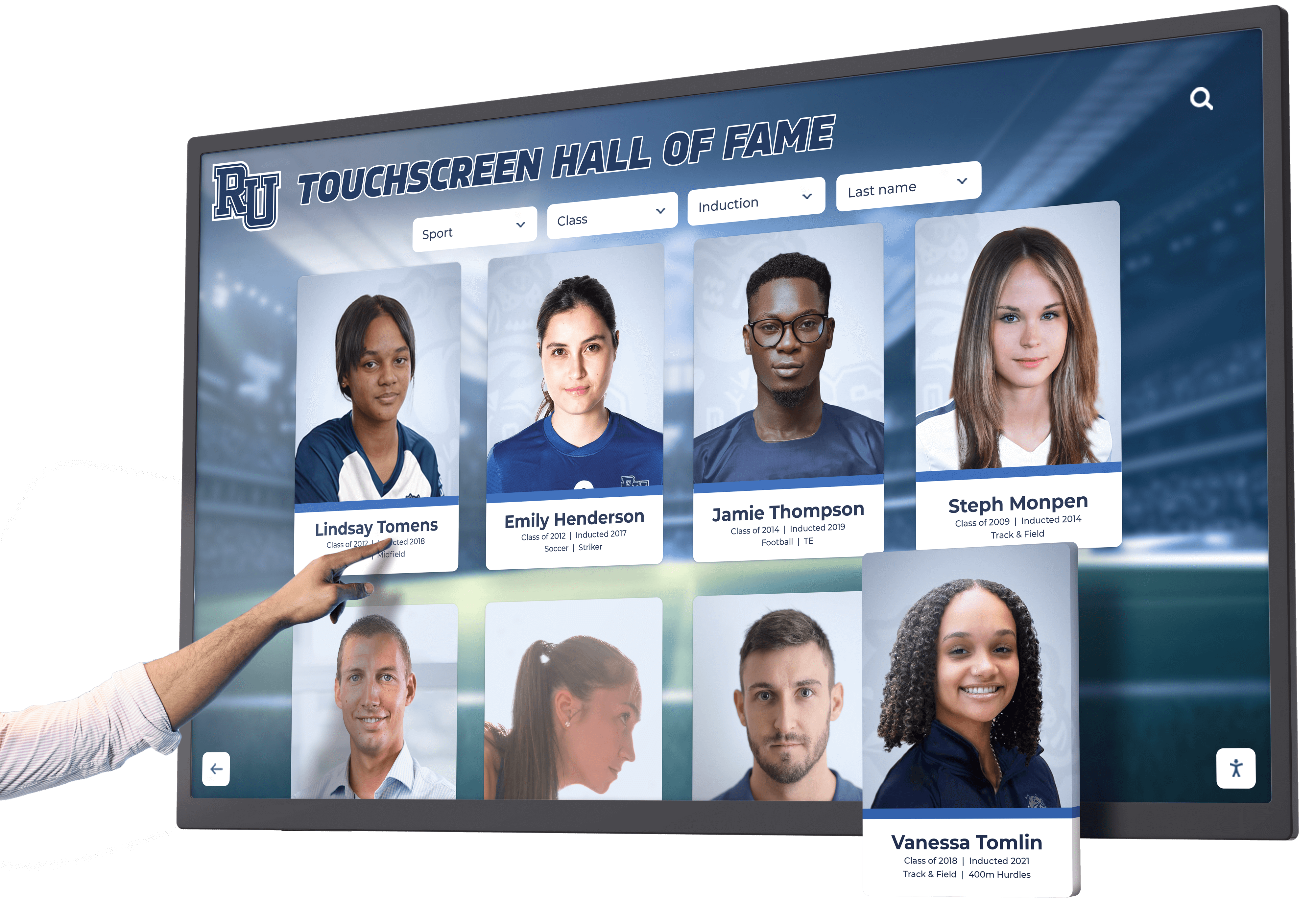
Touchscreen systems allow visitors to explore school history, achievements, and community stories. Benefits include:
- Unlimited content capacity unconstrained by physical space
- Easy updates maintaining fresh, current information
- Multimedia integration including photos, videos, and rich biographical content
- Searchable databases allowing visitors to find specific individuals or information
- Social sharing capabilities extending recognition beyond physical displays
- Analytics showing which content generates most interest
Solutions like digital class composite displays showcase each graduating class while allowing visitors to search for classmates, explore historical yearbooks, and discover school history through intuitive interactive experiences.
Digital Wayfinding Systems:
Interactive directories help visitors locate specific rooms, offices, or facilities:
- Building maps with “you are here” location indicators
- Searchable databases for finding specific people or departments
- Route guidance showing paths to desired destinations
- Integration with calendar systems showing current room usage
- QR codes allowing visitors to access directions on personal devices
Connectivity and Infrastructure
Modern technology expectations require robust infrastructure supporting various systems.
Network Infrastructure Requirements:
- Hardwired Ethernet connections for critical systems (security cameras, access control, primary displays)
- Robust wireless networks supporting visitor devices and mobile credentials
- Adequate electrical capacity and outlets for technology systems
- Conduit pathways allowing future technology additions without extensive construction
Audio Systems:
Public address systems for announcements, emergency notifications, and event support require:
- Ceiling-mounted speakers with appropriate coverage
- Integration with safety systems for emergency notifications
- Volume zoning allowing different announcement levels in various spaces
- Input sources for live announcements, pre-recorded messages, or streamed audio
Design Considerations for Different School Types
Entrance design priorities vary based on institutional characteristics and community demographics.
Elementary School Entrance Design
Elementary facilities serve young children and frequently-visiting parents requiring specific design considerations.
Child-Scale Elements:
While serving adult visitors, elementary entrances should include child-appropriate elements:
- Display content positioned at heights accessible to younger students
- Furniture and seating scaled for elementary students
- Visual interest and colors appealing to younger demographics
- Safety features appropriate for younger children—rounded edges, finger-safe doors, fall-protection flooring
Parent Pickup/Drop-off Integration:
Elementary schools typically experience significant parent traffic during arrival and dismissal:
- Covered canopies protecting loading zones
- Clear parent circulation paths separate from bus and visitor entrances
- Adequate parent waiting areas during inclement weather
- Visual connection between pickup areas and main offices for supervision
Middle School Entrance Design
Middle school facilities balance security with increasing student independence.
Student Social Spaces:
Middle school students benefit from casual gathering spaces in entrance areas:
- Flexible seating arrangements encouraging appropriate socialization
- Visual supervision from administrative spaces
- Recognition displays celebrating diverse middle school achievements
- Durable finishes withstanding active middle school population
Identity and Pride Building:
Middle school years represent critical periods for developing institutional connection:
- Prominent display of school mascot, colors, and branding
- Achievement recognition spanning academics, athletics, arts, and service
- Historical displays connecting current students to institutional legacy
- Student artwork or projects featured in entrance spaces
High School Entrance Design
High school entrances often serve as community gathering spaces hosting diverse activities beyond daily school operations.
Multi-Purpose Functionality:
High school entrances frequently accommodate:
- Evening event entrances for athletic competitions, performances, and community events
- Alumni visits during reunions or casual return trips
- Prospective student and family tours
- Community partner meetings and events
- Student gathering during before-school and after-school periods
Comprehensive Recognition Systems:
High schools typically maintain extensive recognition programs requiring adequate display capacity:
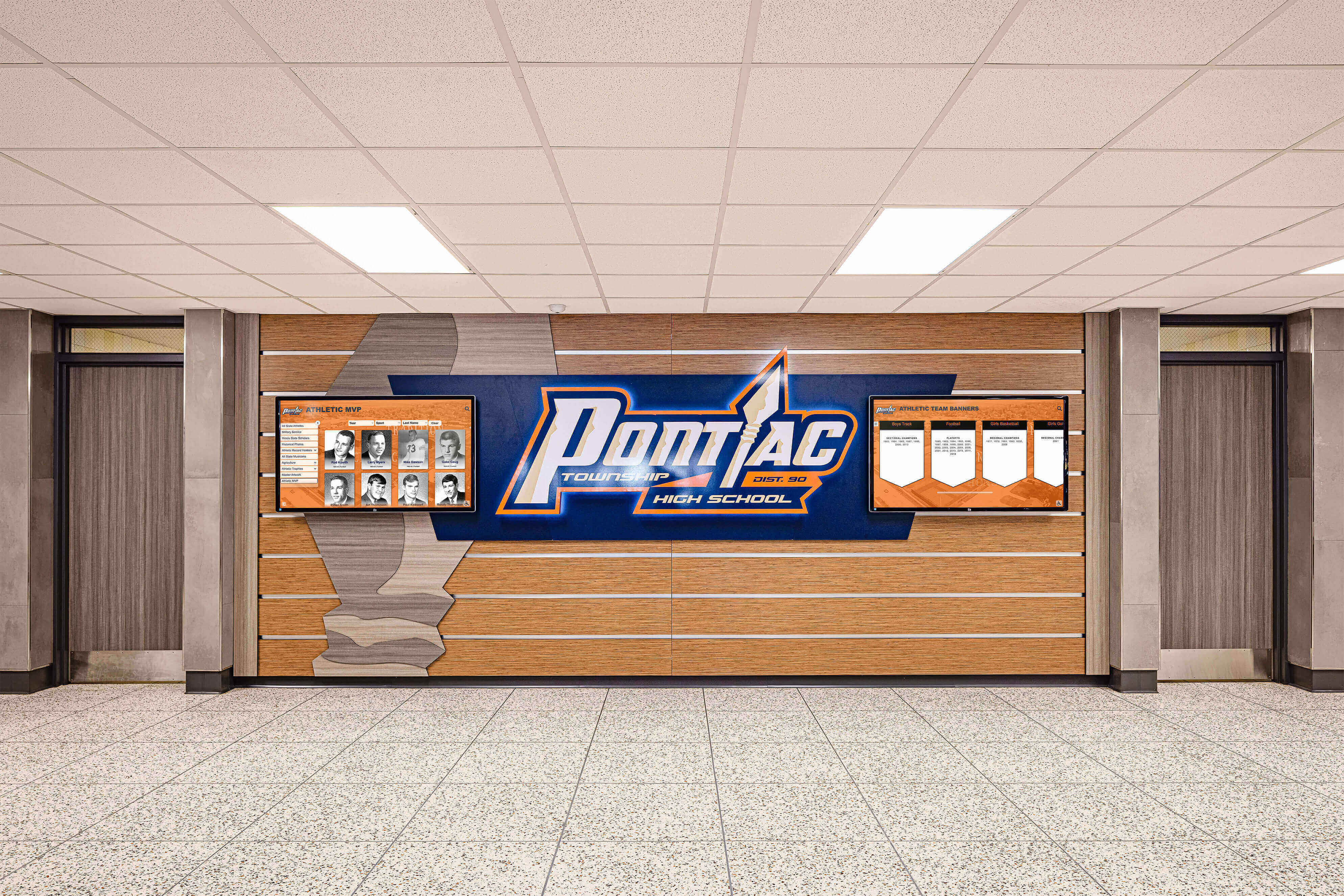
- Athletic hall of fame recognizing championship teams and individual athletes
- Academic excellence recognition for scholars and academic competition winners
- Distinguished alumni profiles showcasing successful graduates
- Donor recognition walls acknowledging capital campaign supporters
- Historical timeline displays showing institutional evolution
Budget-Conscious Entrance Improvements
Not all schools undertake comprehensive entrance redesign projects. Strategic incremental improvements deliver significant impact at modest investment.
High-Impact, Lower-Cost Improvements
Fresh Paint and Updated Color Schemes:
Professional repainting using school colors as accent walls creates dramatic visual transformation at modest cost. Current color trends favor sophisticated neutrals with bold accent colors rather than overwhelming spaces with bright colors.
Improved Lighting:
Upgrading to LED lighting reduces energy costs while improving light quality. Strategic addition of accent lighting highlighting existing recognition elements or architectural features enhances perception without structural changes.
Enhanced Signage and Wayfinding:
Professional signage systems using consistent design language dramatically improve entrance functionality. Even basic improvements replacing hodgepodge signs with coordinated systems enhance perceived professionalism.
Furniture Updates:
Replacing tired seating with contemporary furniture in school colors immediately refreshes entrance character. Durable commercial-grade furniture withstands heavy institutional use.
Strategic Recognition Additions:
Adding focused recognition elements celebrates achievements without comprehensive renovation:
- Digital displays replacing static bulletin boards
- Trophy case reorganization and improved lighting
- Donor recognition plaques acknowledging supporters
- Historical photograph displays showing institutional evolution
Phased Improvement Strategies
Many schools pursue entrance improvements through multi-year phased approaches rather than comprehensive single projects. Initial phases might address critical functional issues—security systems, accessibility compliance, or structural concerns. Subsequent phases add aesthetic improvements—recognition displays, updated finishes, improved lighting. This approach spreads costs over multiple budget cycles while allowing schools to refine plans based on initial phase experiences.
Design Process and Professional Collaboration
Successful entrance design requires collaborative processes engaging multiple stakeholders and professional consultants.
Stakeholder Engagement
Gathering input from diverse perspectives improves design outcomes while building ownership and support.
Key Stakeholder Groups:
- Administrators: Provide perspective on functional requirements, security needs, and institutional priorities
- Faculty and Staff: Offer insights about daily operational realities and maintenance considerations
- Students: Contribute valuable perspective on how entrance spaces influence school culture and pride
- Parents and Community Members: Represent visitor perspectives and community expectations
- Alumni: Provide historical context and perspectives on traditional elements worth preserving
- Facilities Staff: Critical input on maintenance requirements, operational challenges, and practical considerations
Engagement Methods:
- Focus groups discussing priorities, challenges, and aspirations
- Surveys gathering broader input when representative focus groups aren’t feasible
- Design charrettes where stakeholders collaborate with design professionals
- Review sessions at key project milestones allowing feedback on emerging concepts
- Post-occupancy evaluations assessing how completed projects meet stated objectives
Professional Design Services
While some entrance improvements proceed without professional design services, complex projects benefit from consultant expertise.
Architectural Services:
Licensed architects provide comprehensive services for major entrance projects:
- Space planning and functional programming
- Code compliance review ensuring accessibility, egress, and safety requirements
- Construction document preparation for contractor bidding
- Construction administration ensuring built work matches approved designs
Interior Design Services:
Interior designers specialize in finishes, furniture, lighting, and aesthetic considerations:
- Color palette development aligned with institutional branding
- Material and finish selection balancing aesthetics, durability, and budget
- Furniture specification and space planning
- Lighting design supporting functional and aesthetic objectives
Technology Consultants:
Specialized consultants ensure technology systems integrate effectively:
- Security system design and integration
- Audio-visual systems supporting communication and recognition objectives
- Network infrastructure supporting current and anticipated technology needs
- Digital signage systems and content management platforms
Donor Recognition Specialists:
Consultants specializing in recognition systems offer expertise in:
- Recognition program development and naming policies
- Donor wall design integrating traditional and digital recognition
- Content strategies maintaining engagement over time
- Integration with fundraising systems and databases
Measuring Success: Entrance Design Impact Assessment
Evaluating entrance effectiveness helps justify investments while informing future improvement priorities.
Quantitative Success Indicators
Trackable metrics demonstrate entrance impact:
Visitor Satisfaction: Surveys measuring visitor experiences, ease of navigation, and overall impressions provide quantitative assessment of entrance effectiveness.
Security Incident Trends: Tracking unauthorized access attempts, visitor management compliance, and security concerns before and after entrance improvements demonstrates security effectiveness.
Energy Performance: Monitoring heating and cooling costs after entrance improvements quantifies energy efficiency gains from enhanced vestibules or improved glazing.
Recognition Display Engagement: Analytics from interactive digital displays reveal which content generates interest, how long visitors engage, and usage patterns over time.
Tour Conversion Rates: For schools using entrance spaces during prospective student tours, tracking enrollment conversion rates may reveal correlations between facility impressions and enrollment decisions.
Qualitative Feedback
Beyond quantitative measures, subjective feedback reveals impact on perceptions and experiences:
- Visitor comments and testimonials
- Student and staff observations about entrance functionality and atmosphere
- Alumni reactions to recognition elements and historical displays
- Prospective family feedback during tour debriefs
- Community member perspectives on school openness and welcoming nature
Maintenance and Sustainability Planning
Entrance spaces require ongoing maintenance preserving initial design intent while adapting to changing needs.
Maintenance Requirements
Different entrance elements require varying maintenance commitments:
Daily Maintenance:
- Entrance mat cleaning and debris removal
- Floor sweeping and spot cleaning
- Emptying trash receptacles
- Checking visitor check-in systems functionality
Weekly Maintenance:
- Floor mopping with appropriate cleaning products
- Glass cleaning on doors, windows, and display cases
- Furniture cleaning and arrangement
- Plant watering if incorporating living greenery
Monthly Maintenance:
- Deep cleaning of high-traffic areas
- Lighting maintenance—bulb replacement, fixture cleaning
- Recognition display updates with recent achievements
- Security system checks and camera cleaning
Annual Maintenance:
- Paint touch-up addressing scuffs and marks
- Deep cleaning of all surfaces including high areas
- Technology system updates and maintenance
- Comprehensive cleaning of light fixtures and HVAC grilles
Content Updates and Refreshes
Recognition displays require regular content updates maintaining relevance:
Ongoing Content Additions:
- Recent graduate profiles for alumni displays
- Current year athletic and academic achievements
- New donor recognition as fundraising continues
- Updated student, faculty, or staff accomplishments
Periodic Content Refreshes: Even evergreen content benefits from periodic rotation:
- Seasonal themes highlighting different achievement types
- Featured content spotlighting particular eras or programs
- Historical anniversary content commemorating significant milestones
- Thematic rotations aligning with school calendars
Modern platforms like Rocket Alumni Solutions provide intuitive content management systems allowing staff without technical expertise to update recognition displays regularly, ensuring content remains fresh without requiring specialized web developers or technology consultants.
Emerging Trends in School Entrance Design
Current trends in educational facility design influence entrance planning:
Biophilic Design Integration
Incorporating natural elements into entrance design supports student wellbeing:
- Living plant walls or planted areas bringing nature indoors
- Natural materials—wood, stone—creating warm, organic character
- Nature-inspired patterns and colors in finishes and furnishings
- Views to exterior landscaping through strategically placed glazing
Flexible and Adaptive Spaces
Entrance spaces increasingly accommodate diverse functions:
- Modular furniture allowing reconfiguration for different events
- Multi-purpose spaces serving as gathering areas, event entrances, or community meeting spaces
- Adaptable display systems accommodating changing content priorities
- Technology infrastructure supporting varied applications over time
Sustainable Design Practices
Environmental responsibility influences material selection and operational approaches:
- Daylighting strategies reducing artificial lighting energy consumption
- High-performance glazing balancing natural light with thermal efficiency
- LED lighting throughout entrance spaces
- Durable materials reducing replacement frequency
- Local and recycled materials reducing environmental impact
- Low-VOC finishes supporting healthy indoor air quality
Enhanced Technology Integration
Technology capabilities continue expanding entrance possibilities:
- Mobile credential systems replacing physical access cards
- Touchless systems reducing contact with high-touch surfaces
- Advanced digital recognition systems with enhanced interactivity
- Integration between physical displays and web/mobile platforms
- Data analytics revealing how community members interact with entrance spaces
Case Study Inspiration: Successful Entrance Transformations
Learning from successful projects provides practical insights:
Small District Elementary School Entrance Renovation
Challenge: Aging entrance lacking security, inefficient layout, and minimal recognition elements. Limited budget requiring prioritized improvements.
Solution Approach:
- Reconfigured entry sequence creating secure vestibule with visitor check-in immediately inside
- Fresh paint in school colors creating vibrant, welcoming atmosphere
- Added digital recognition display showcasing student achievements and school history
- Improved lighting enhancing safety and aesthetics
- Durable flooring replacement addressing worn surfaces
Results: Dramatically improved security compliance, enhanced community pride through visible achievement recognition, positive visitor feedback on welcoming atmosphere, minimal disruption through summer construction.
Budget: $85,000 comprehensive renovation achieving multiple objectives through strategic prioritization.
Large High School Main Entrance Redesign
Challenge: Undersized entrance lobby inadequate for current enrollment, outdated recognition displays, poor wayfinding, security concerns.
Solution Approach:
- Structural expansion adding 800 square feet to entrance lobby
- Comprehensive interior redesign including new finishes, lighting, and furniture
- Multiple digital recognition screens showcasing athletics, academics, and alumni
- Integrated wayfinding system with digital directories
- Enhanced security including visitor management system and controlled access
- Donor recognition opportunities supporting project fundraising
Results: Entrance capacity matching enrollment, improved visitor experiences, comprehensive achievement recognition, successful capital campaign partially funding project, measurable increase in prospective family positive impressions during tours.
Budget: $425,000 capital project including structural expansion, systems upgrades, and comprehensive interior work.
Implementation Planning and Timeline Considerations
Successful entrance projects require careful planning addressing timing, disruption, and phasing.
Project Timing Strategies
Summer Construction Windows: Most schools prefer major entrance work during summer breaks minimizing operational disruption. Challenges include compressed timelines, contractor availability during peak construction seasons, and reduced flexibility if complications arise.
Year-Round Approaches with Phasing: Some projects proceed during school years through careful phasing:
- After-hours and weekend construction for major disruptive work
- Swing space strategies allowing entrance functions to continue in temporary locations
- Careful coordination ensuring security and safety never compromised
- Communication plans keeping community informed about temporary conditions
Multi-Year Phased Projects: Large-scale entrance transformations might spread across multiple years:
- Phase 1: Critical infrastructure—security systems, accessibility improvements, structural work
- Phase 2: Interior improvements—finishes, lighting, basic furnishings
- Phase 3: Enhanced elements—recognition displays, technology upgrades, donor walls
This approach spreads costs while allowing schools to refine later phases based on earlier experiences.
Managing Disruption During Construction
Even well-planned projects create temporary disruption requiring mitigation:
Temporary Entrance Arrangements:
- Identifying and preparing alternative entrances during main entrance construction
- Clear signage directing visitors to temporary entrances
- Staff positioning to assist confused visitors
- Communication through multiple channels informing community about temporary arrangements
Safety Protocols:
- Physical barriers separating construction zones from occupied areas
- Dust control measures protecting building occupants
- Noise management during school hours
- After-hours scheduling for particularly disruptive activities
Communication Strategies:
- Regular updates to staff, students, families, and community
- Clear timelines with milestone notifications
- Channels for questions and concerns
- Celebration of progress through photos and updates
Conclusion: Creating Entrance Spaces That Inspire
Thoughtfully designed school entrances accomplish remarkable objectives simultaneously—welcoming diverse stakeholders, communicating institutional values, facilitating secure and efficient operations, celebrating community achievements, and inspiring excellence. Whether pursuing comprehensive entrance redesign or implementing strategic incremental improvements, successful projects share common characteristics: clear objectives aligned with institutional priorities, genuine stakeholder engagement, appropriate professional expertise, quality materials and craftsmanship, and commitment to ongoing maintenance preserving design intent.
Your school’s entrance creates first impressions that influence how prospective families evaluate your institution, how visitors perceive your professionalism and priorities, how students feel about their school community, and how alumni connect with their educational home long after graduation. These critical spaces deserve the intentional design attention that transforms mere transitional areas into powerful community assets.
The most effective entrance spaces evolve beyond purely functional requirements to become celebration centers where achievement receives recognition, where institutional history connects past and present, where community pride becomes tangible, and where every visitor—whether attending their first tour or returning decades after graduation—feels genuinely welcomed and valued.
Ready to Transform Your School Entrance?
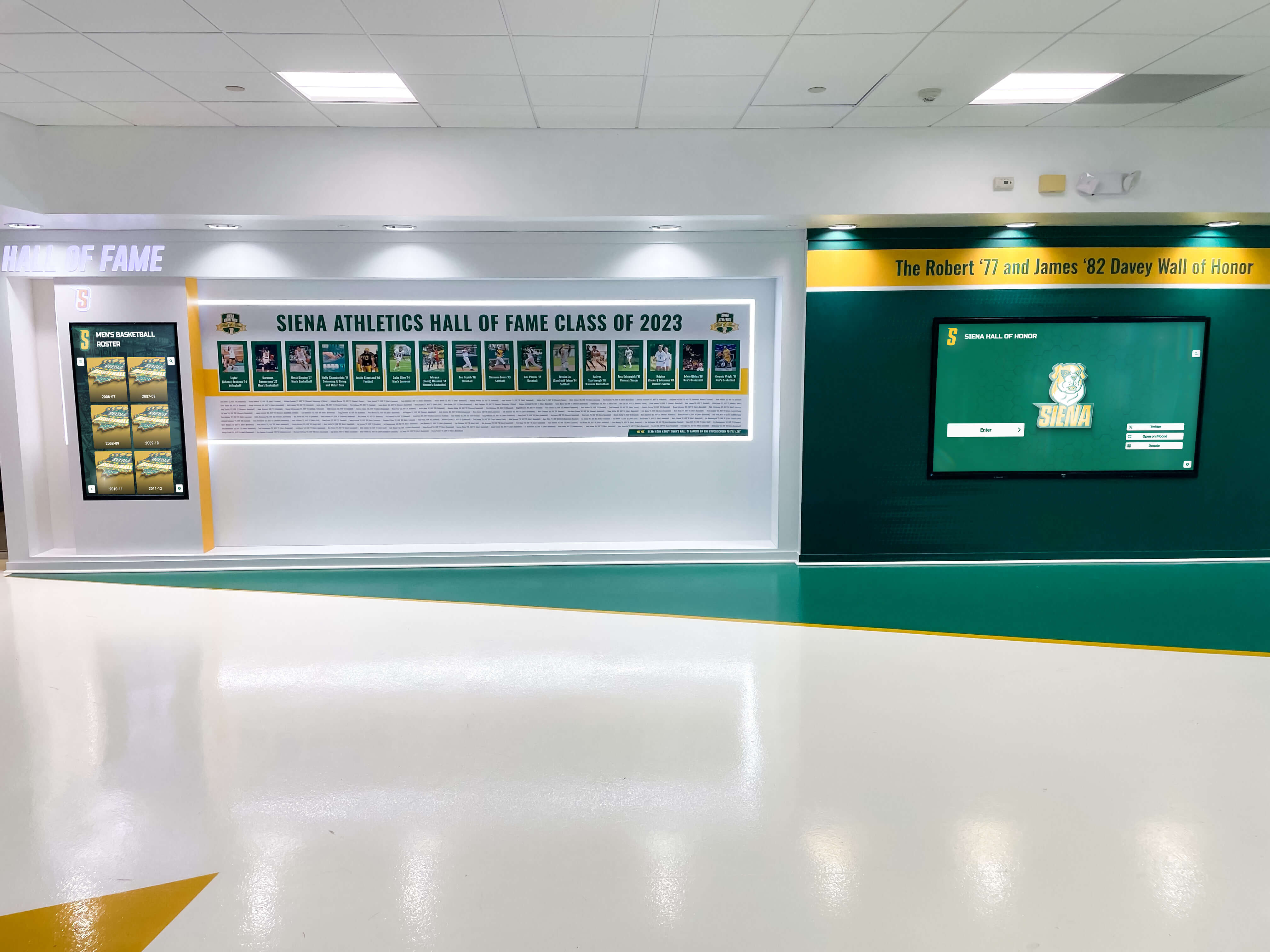
Discover how comprehensive recognition solutions can elevate your entrance spaces while celebrating community achievements. Modern athletic halls of fame, digital walls of achievement, and interactive recognition displays transform entrance spaces into engaging environments that build pride while honoring excellence.
From planning new construction to upgrading existing entrances, Rocket Alumni Solutions offers comprehensive digital recognition systems specifically designed for educational institutions. Our solutions provide unlimited recognition capacity, intuitive content management requiring no technical expertise, and proven platforms trusted by schools nationwide to showcase achievements and strengthen community connections.
Contact us today to discuss how modern recognition technology can support your entrance design objectives while creating lasting positive impact throughout your school community. Together, we’ll create entrance spaces that truly welcome, inspire, and celebrate.