



Key Takeaways
Complete guide to school display cases covering types, materials, costs, and modern digital alternatives. Compare traditional trophy cases vs interactive displays for athletic and academic recognition.
Understanding School Display Cases: Purpose and Function
School display cases serve multiple critical functions within educational environments beyond simple decoration. These recognition systems communicate institutional values, inspire current students through visible examples of excellence, and create lasting connections with alumni and community members.
The Role of Recognition Displays in School Culture
Effective recognition displays contribute to positive school culture in measurable ways:
Student Motivation: Visible achievement recognition demonstrates that excellence receives acknowledgment and celebration. When students see classmates honored for athletic accomplishments, academic achievements, or artistic excellence, success becomes tangible and attainable rather than abstract.
Community Pride: Display cases showcasing championships, state qualifications, and distinguished graduates build institutional pride among students, staff, families, and community members. These displays demonstrate program quality and create positive impressions for prospective students and their families.
Historical Preservation: Schools accumulate decades or even centuries of achievement worth preserving. Display cases document institutional legacy, ensuring current and future community members understand the foundation upon which today’s programs build.
Transparency and Fairness: Public recognition through display cases creates accountability around achievement standards. Clear criteria for what receives recognition helps ensure fairness across different sports, activities, and achievement categories.
Traditional School Display Case Types
Schools evaluating recognition solutions should understand the full range of traditional display case options, each with distinct advantages and limitations.
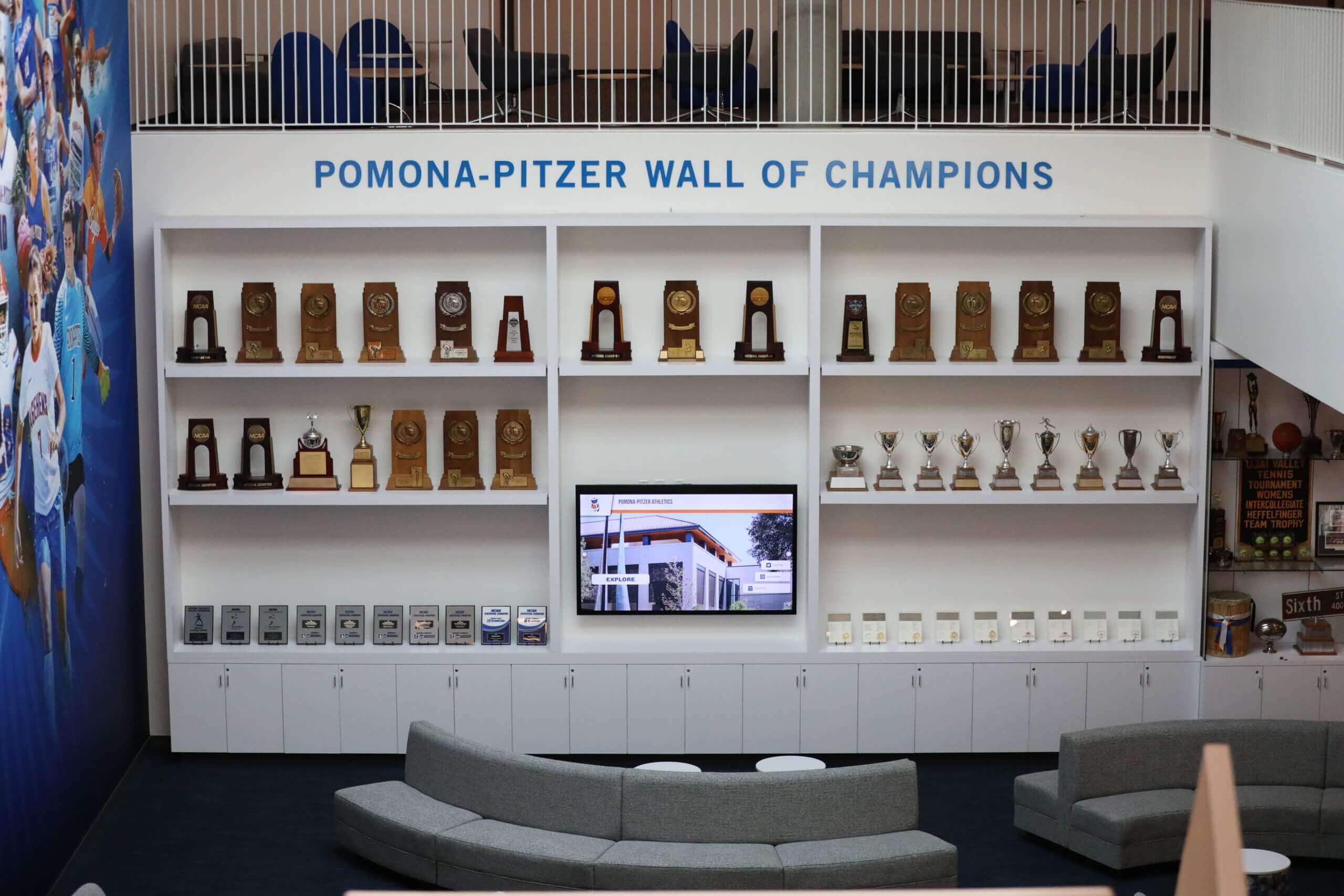
Wall-Mounted Trophy Cases
Wall-mounted cases represent the most common school display solution, featuring glass-fronted cabinets affixed to hallway or lobby walls.
Typical Specifications:
- Dimensions: 48" to 96" wide, 36" to 72" tall, 12" to 24" deep
- Materials: Aluminum or wood frames with tempered glass fronts
- Interior: Adjustable shelving, lighting, fabric or painted backing
- Security: Lockable doors with hinges or sliding mechanisms
Advantages:
- Space-efficient compared to freestanding options
- Professional appearance suitable for main hallways
- Protected environment for valuable items
- Customizable to match school colors and branding
Limitations:
- Fixed capacity constraints as collections grow
- Limited visibility depth for items placed toward back
- Wall structural requirements for proper mounting
- Difficult and expensive to expand once installed
Cost Range: $800 - $4,500 per case depending on size, materials, and customization
Many schools exploring trophy display case ideas discover that proper planning before installation prevents costly mistakes.
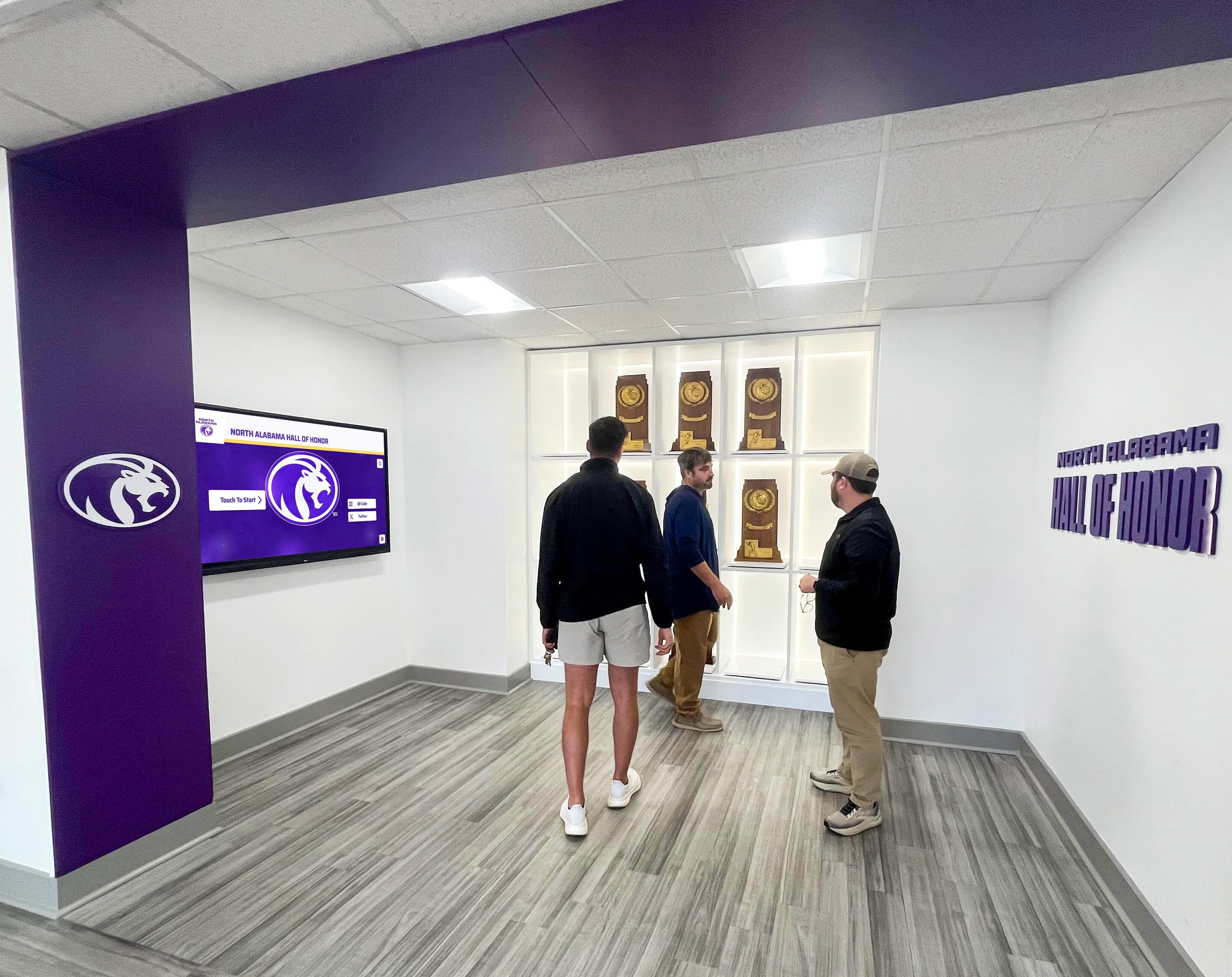
Freestanding Display Cabinets
Freestanding cases offer flexibility for lobby centers, room dividers, or locations where wall mounting proves impractical.
Common Configurations:
- Tower cases: Vertical orientation maximizing vertical space (6-7 feet tall)
- Island cases: Double-sided visibility for central lobby placement
- Corner cases: Angled designs utilizing otherwise wasted corner spaces
- Pedestal cases: Shorter units (36-48" tall) highlighting specific items
Advantages:
- No wall mounting requirements or structural modifications
- Repositionable if space needs change
- Double-sided cases maximize visibility
- Can serve as architectural elements dividing spaces
Limitations:
- Require significant floor space
- Create potential traffic flow obstacles
- Higher costs compared to wall-mounted equivalents
- Security concerns in less-supervised areas
Cost Range: $1,200 - $8,000 depending on size, visibility features, and materials
Specialty Display Solutions
Beyond standard cases, schools utilize specialized display formats for specific recognition needs:
Shadowbox Displays:
- Individual framed cases for jerseys, medals, or specific awards
- Wall-mounted like picture frames
- Cost: $150-$600 per shadowbox
- Ideal for highlighting singular significant achievements
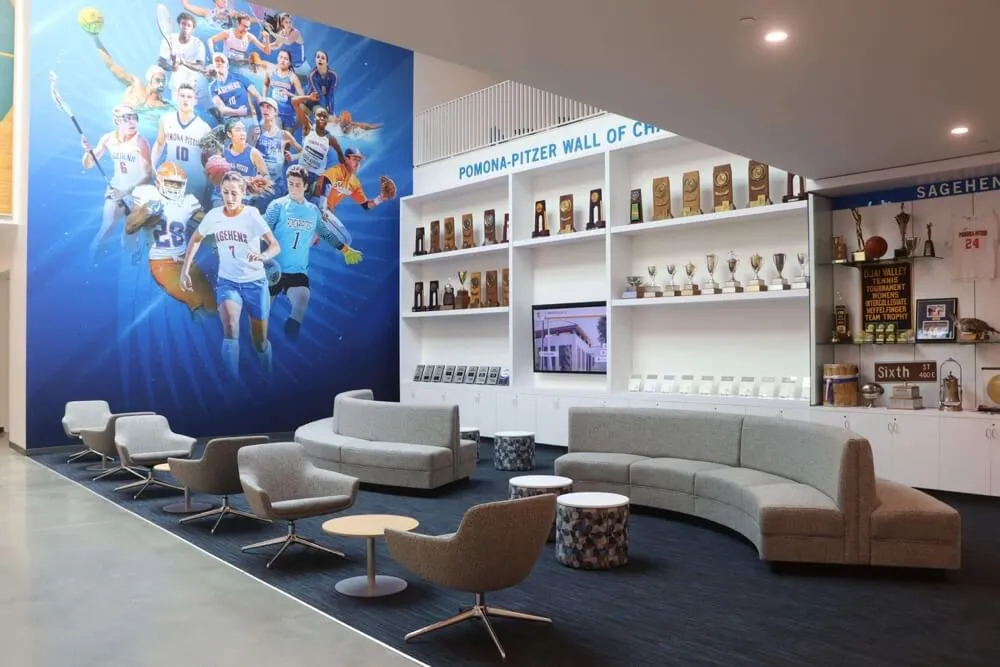
Plaque Walls:
- Engraved nameplates mounted directly on walls
- Common for academic honor rolls, hall of fame inductees
- Cost: $75-$300 per plaque
- Space limitations as walls fill over years
Photo Display Boards:
- Composite frames featuring multiple photos in grid format
- Team photos, graduating classes, achievement highlights
- Cost: $400-$2,000 per board
- Challenging to expand once initial frame fills
Understanding how to effectively showcase achievements through touchscreen kiosks at events provides insight into modern alternatives addressing traditional display limitations.
Materials and Construction Quality
Display case materials significantly impact appearance, durability, maintenance requirements, and total cost of ownership.
Frame Materials Comparison
| Material | Advantages | Disadvantages | Best For | Cost Range |
|---|---|---|---|---|
| Aluminum | Lightweight, rust-resistant, modern aesthetic, powder-coating options | Can dent, less traditional appearance | Contemporary schools, high-traffic areas | $$ |
| Wood (Oak, Cherry, Walnut) | Traditional appearance, prestigious feel, customizable stains | Heavier, requires maintenance, higher cost | Historic buildings, traditional aesthetics | $$$ |
| Steel | Extremely durable, security, industrial strength | Heavy, can rust without proper coating | High-security needs, outdoor installations | $$-$$$ |
| Laminate/Veneer | Budget-friendly, variety of finishes, lighter weight | Less durable, can chip or peel, perceived lower quality | Budget-conscious schools, temporary installations | $ |
Glass and Glazing Options
Glass selection impacts visibility, safety, security, and maintenance:
Tempered Safety Glass:
- Standard requirement for school environments
- Shatters into small granules rather than dangerous shards
- Suitable for most display applications
- Cost: Standard pricing for most cases
Laminated Glass:
- Multiple glass layers with plastic interlayer
- Holds together when broken for enhanced security
- Reduces UV light protecting displayed items
- Cost: 20-40% premium over standard glass
Acrylic/Plexiglass:
- Lighter weight, shatter-resistant
- Scratches more easily than glass
- Can yellow over time with UV exposure
- Cost: Comparable or slightly less than tempered glass
Anti-Reflective Coatings:
- Reduces glare improving visibility
- Particularly valuable in well-lit hallways
- Cost: 15-25% premium
Interior Features and Finishes
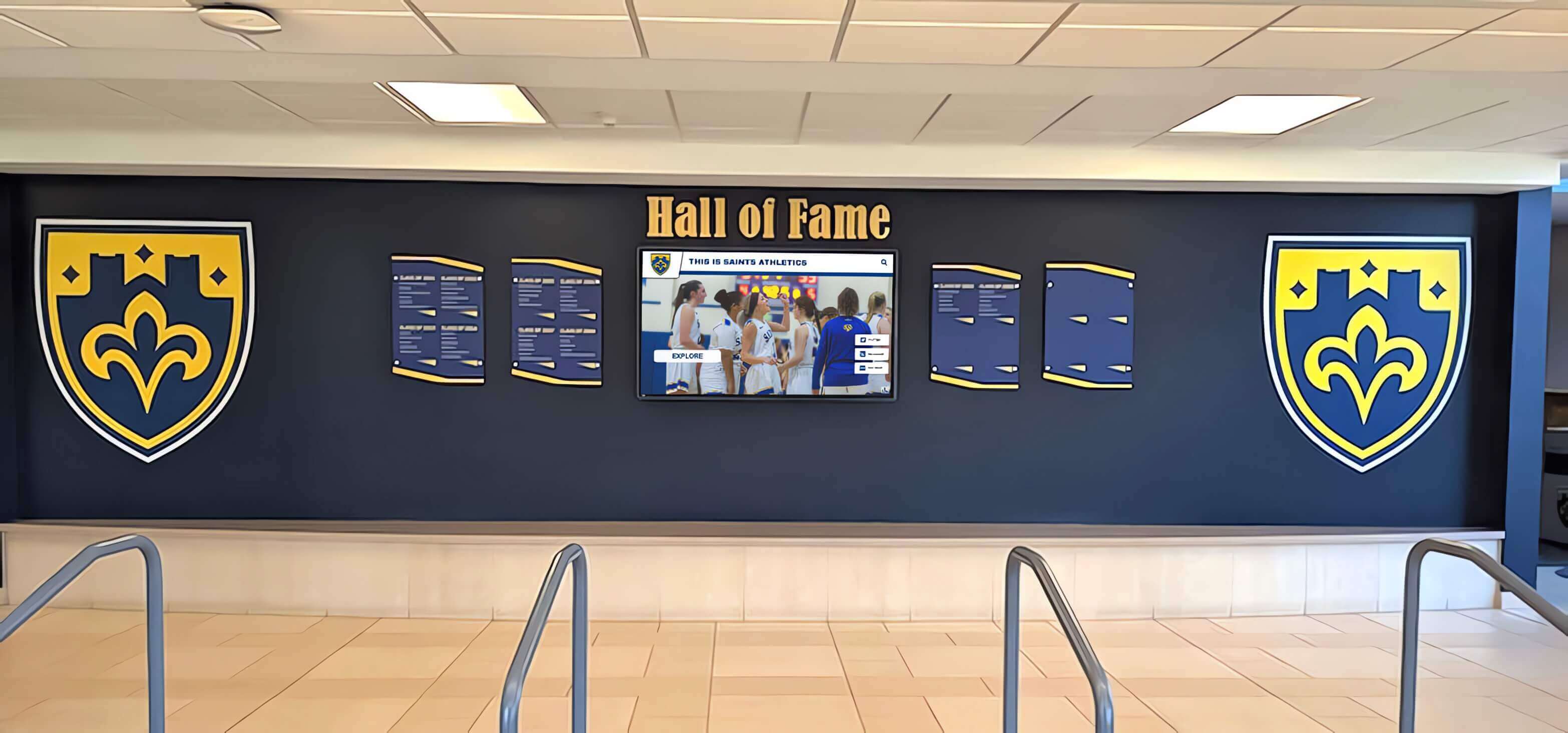
Interior case details affect both aesthetics and functionality:
Backing Materials:
- Fabric panels (felt, velvet): Traditional, sound-dampening, pin-able surface
- Painted wood/metal: Clean modern look, easy maintenance
- School colors/patterns: Custom graphics reinforcing branding
Shelving Systems:
- Adjustable glass shelves: Flexible configuration, modern appearance
- Fixed wood shelves: Traditional, sturdy for heavy items
- Acrylic shelves: Lightweight, unobtrusive, contemporary
- Shelf spacing: 12-18" typical, adjustable systems accommodate varying trophy sizes
Lighting Integration:
- LED strip lighting: Energy-efficient, low heat, long lifespan
- Puck lights: Focused illumination on specific items
- Track lighting: Adjustable spotlighting
- Natural light considerations: Cases near windows may not need internal lighting
Common Challenges with Traditional Display Cases
Despite their long history and widespread use, conventional school display cases present recurring challenges that many institutions eventually confront.
Space Capacity Limitations
The most universal problem: physical space constraints.
Successful programs generate more achievements than initially anticipated. Championship trophies, state qualification plaques, academic awards, and hall of fame recognition accumulate faster than expected. Most schools discover their display cases fill within 5-10 years of installation.
Common Responses:
- Removing older achievements to make room for recent ones (creating hurt feelings among past honorees)
- Rotating displays seasonally (reducing year-round visibility)
- Purchasing additional cases (expensive, requires more wall space)
- Condensing displays to fit more items (reducing impact and visibility)
- Creating overflow storage (defeating recognition purpose)
None of these solutions prove satisfactory long-term. Schools find themselves repeatedly facing the same capacity problems regardless of how many traditional cases they install.
Maintenance and Upkeep Requirements
Display cases require ongoing attention to maintain professional appearance:
Regular Cleaning:
- Glass surfaces show fingerprints, smudges, dust
- Interior shelves accumulate dust
- Trophies and awards require periodic polishing
- Weekly cleaning ideal, monthly minimum
Repairs and Replacements:
- Locks and hinges wear out over years
- Glass breaks occasionally (vandalism, accidents)
- Lighting bulbs/LEDs eventually fail
- Frame damage from door impacts
Maintenance Costs:
- Staff time for regular cleaning (or contracted janitorial services)
- Replacement parts and repairs: $200-$800 annually
- Professional refurbishment every 10-15 years: $800-$3,000 per case
Security and Protection Issues
Valuable trophies, awards, and memorabilia face security risks:
- Theft: Championship trophies, medals, and signed memorabilia have value
- Vandalism: Glass breakage, spray paint, or intentional damage
- Environmental damage: Humidity, temperature fluctuations, UV light exposure
- Fire safety: Cases can become fire hazards if improperly maintained
Security features increase costs:
- High-quality locks: $100-$300 per case
- Alarm integration: $300-$1,200 per case
- Security cameras covering display areas: $400-$2,000 per camera
- Insurance for valuable items: Varies based on total value
Updating and Modification Challenges
Adding new recognition or correcting information proves surprisingly difficult:
- Physical access: Unlocking cases, removing items, rearranging
- Fabrication timeline: New plaques or nameplates require 2-4 weeks
- Professional installation: Mounting new plaques to walls or bases
- Consistency maintenance: Matching fonts, styles, materials over years
- Error correction: Mistakes engraved permanently require expensive replacements
For schools exploring modern alternatives, understanding athletic banquet planning demonstrates how recognition extends beyond static displays.
Budget Considerations and Total Cost of Ownership
True display case costs extend well beyond initial purchase prices.
Initial Investment Breakdown
Standard Wall-Mounted Trophy Case (72" x 48" x 18"):
- Basic aluminum frame, single door: $1,200-$2,000
- Mid-range wood frame, double door, lighting: $2,500-$4,500
- Premium hardwood, custom size, advanced lighting: $5,000-$8,000
Installation Costs:
- Professional installation: $200-$600 per case
- Electrical work for lighting: $150-$400 per case
- Wall reinforcement if needed: $300-$1,000
Initial Setup:
- Interior decorating (fabric, paint): $100-$400
- Shelving configuration: $150-$500
- Initial trophy/award arrangement: Staff time
Total Initial Investment for Typical Setup (3 cases):
- Budget approach: $5,000-$8,000
- Mid-range quality: $10,000-$18,000
- Premium installation: $20,000-$35,000
Ongoing Operational Costs
Annual Maintenance:
- Cleaning supplies and staff time: $200-$500
- Lock/hinge repairs and replacements: $100-$300
- Glass replacement (occasional): $150-$600
- Lighting replacement: $50-$200
- Professional detailing: $200-$600
Content Updates:
- New plaques/nameplates: $75-$300 each (typically 5-15 per year)
- Engraving services: $50-$150 per item
- Professional mounting: $30-$100 per item
- Trophy purchases: $20-$500 per award
10-Year Total Cost Example (3 standard cases):
- Initial investment: $12,000
- Annual maintenance (average $400/year): $4,000
- Annual updates (average $1,200/year): $12,000
- Major refurbishment (year 8): $3,000
- Total 10-year cost: $31,000
- Per-year average: $3,100
Understanding these economics helps schools make informed comparisons when evaluating alternatives like digital hall of fame displays.
Modern Digital Alternatives to Traditional Display Cases
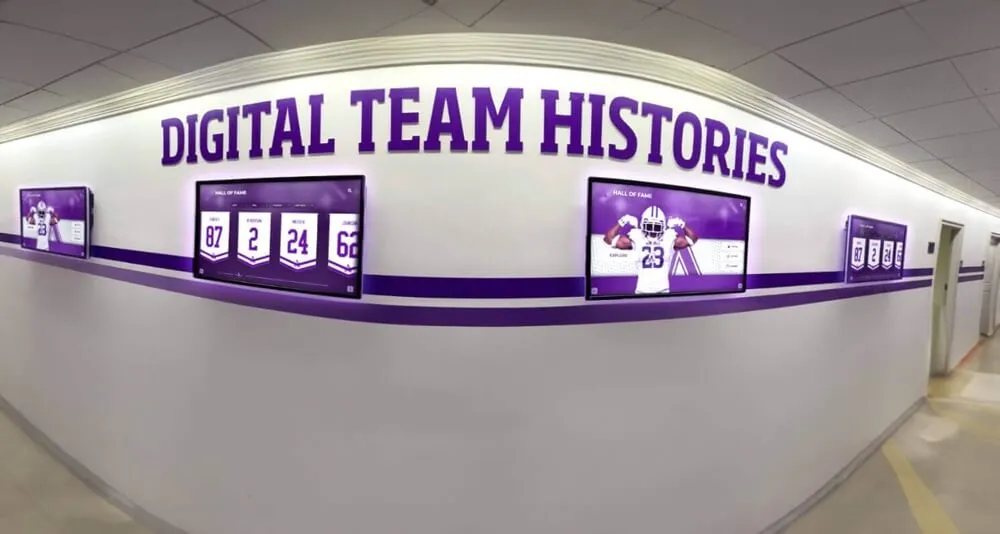
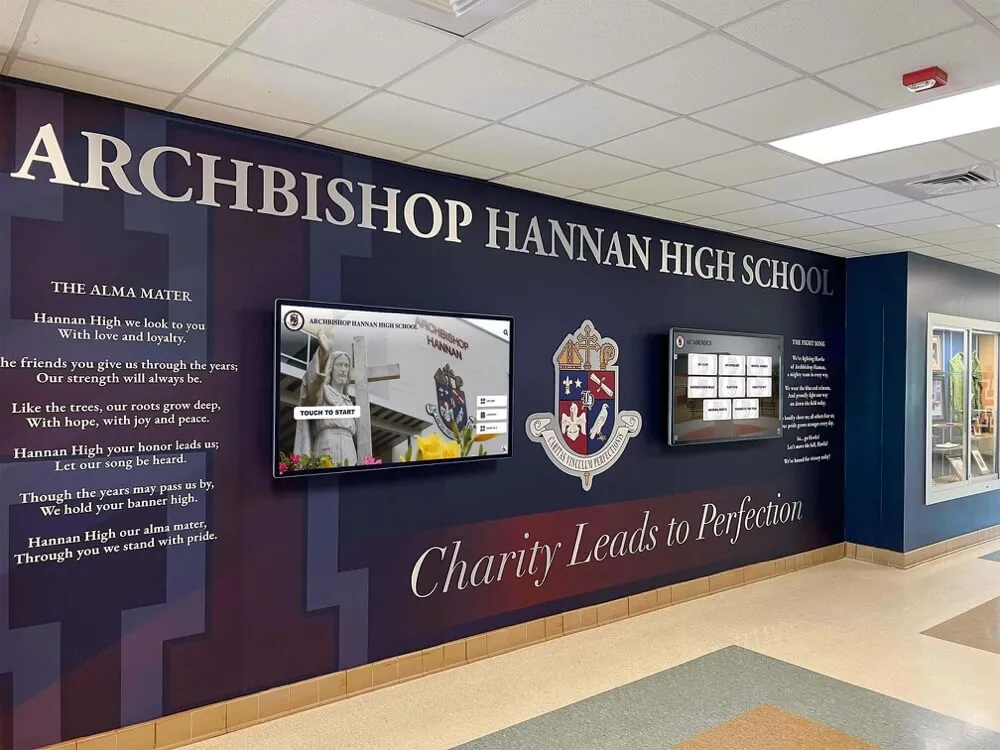
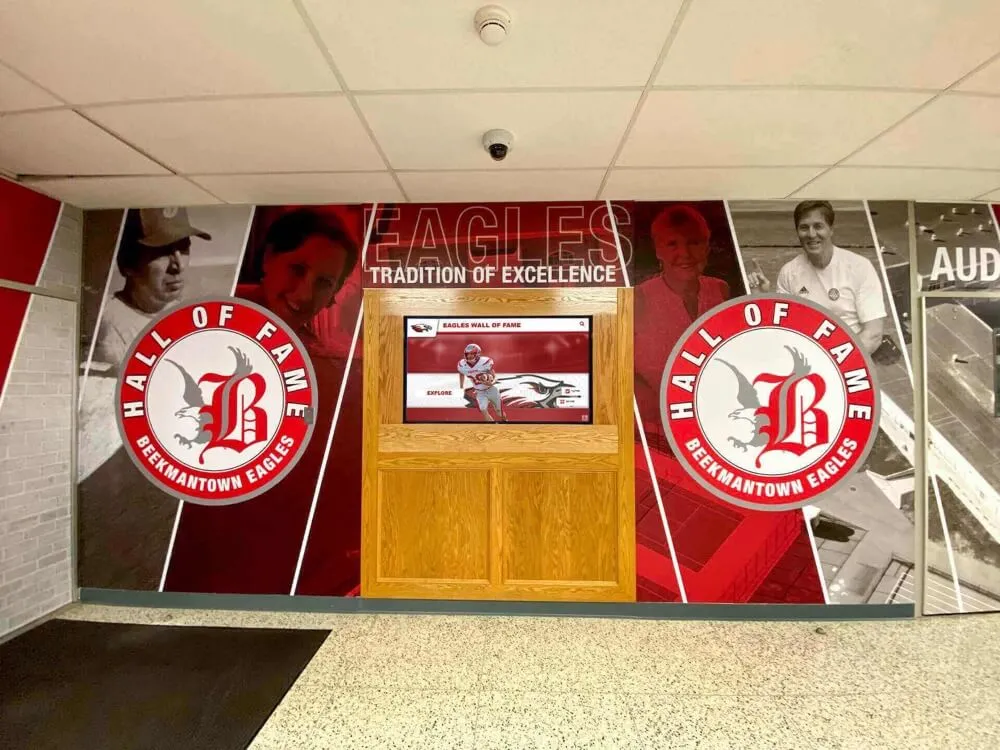
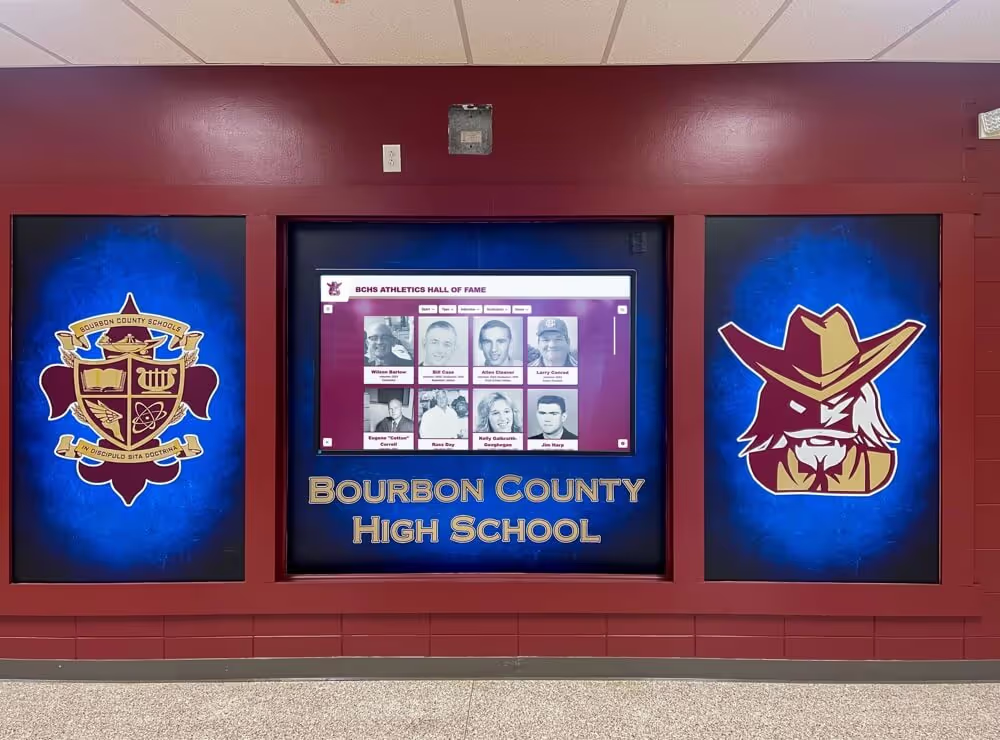
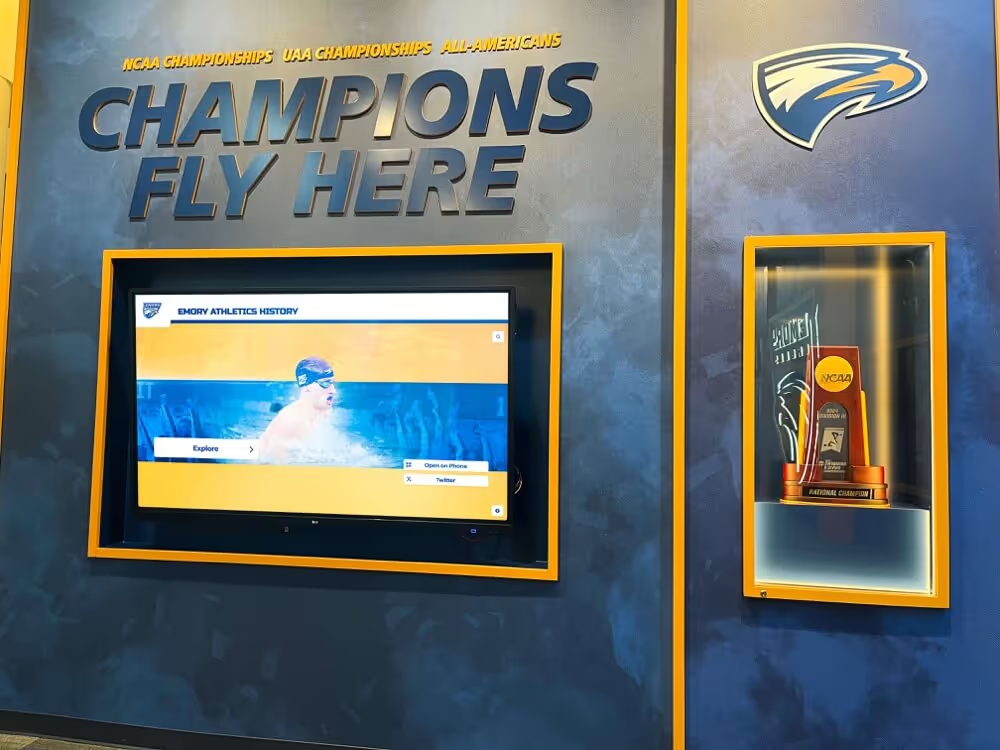
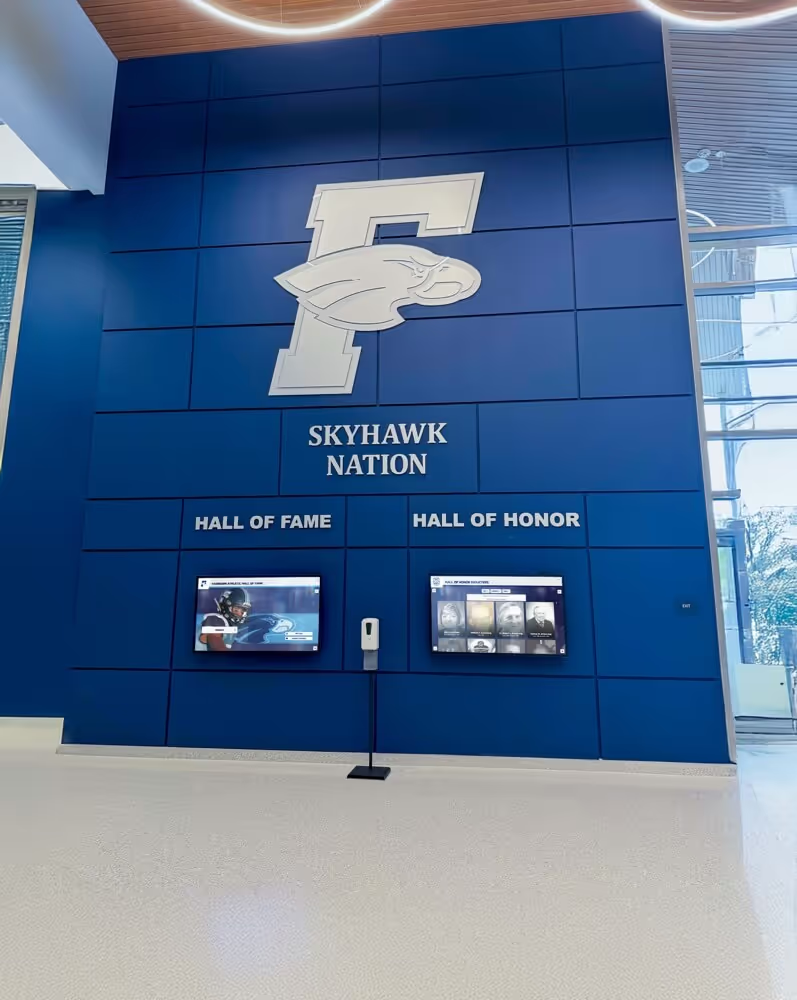
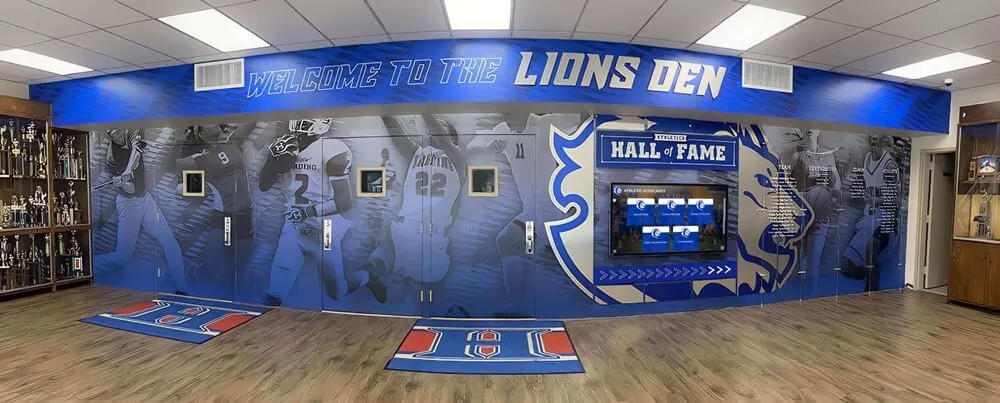
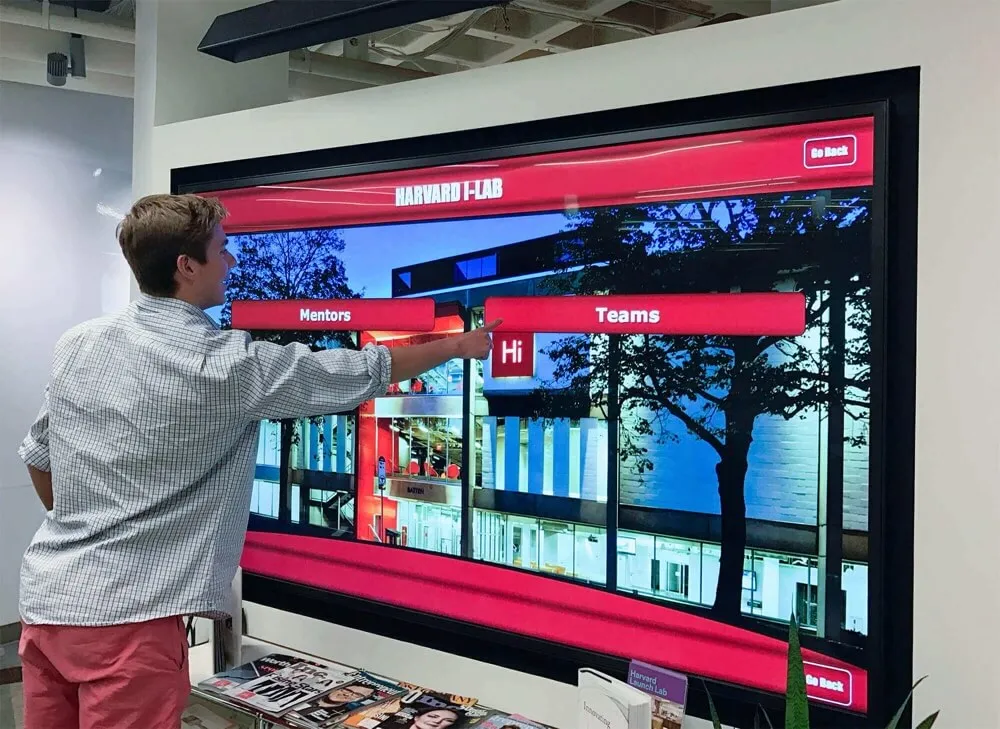
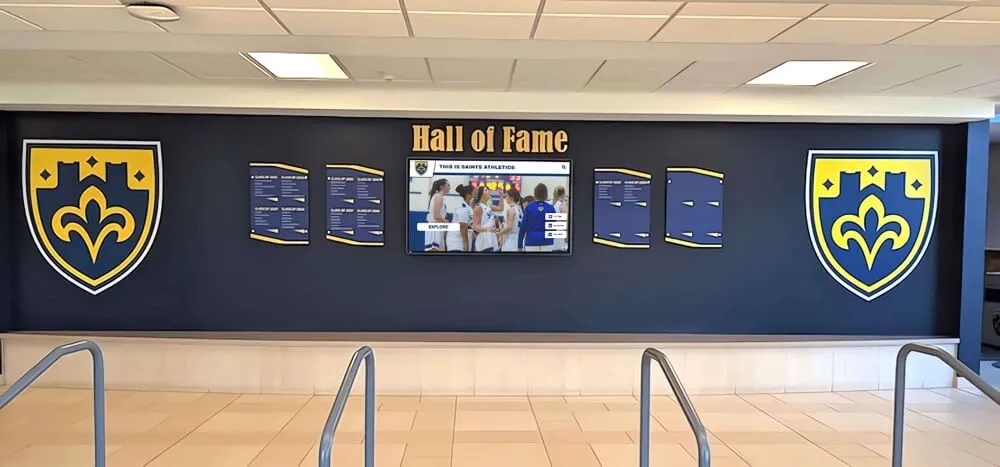
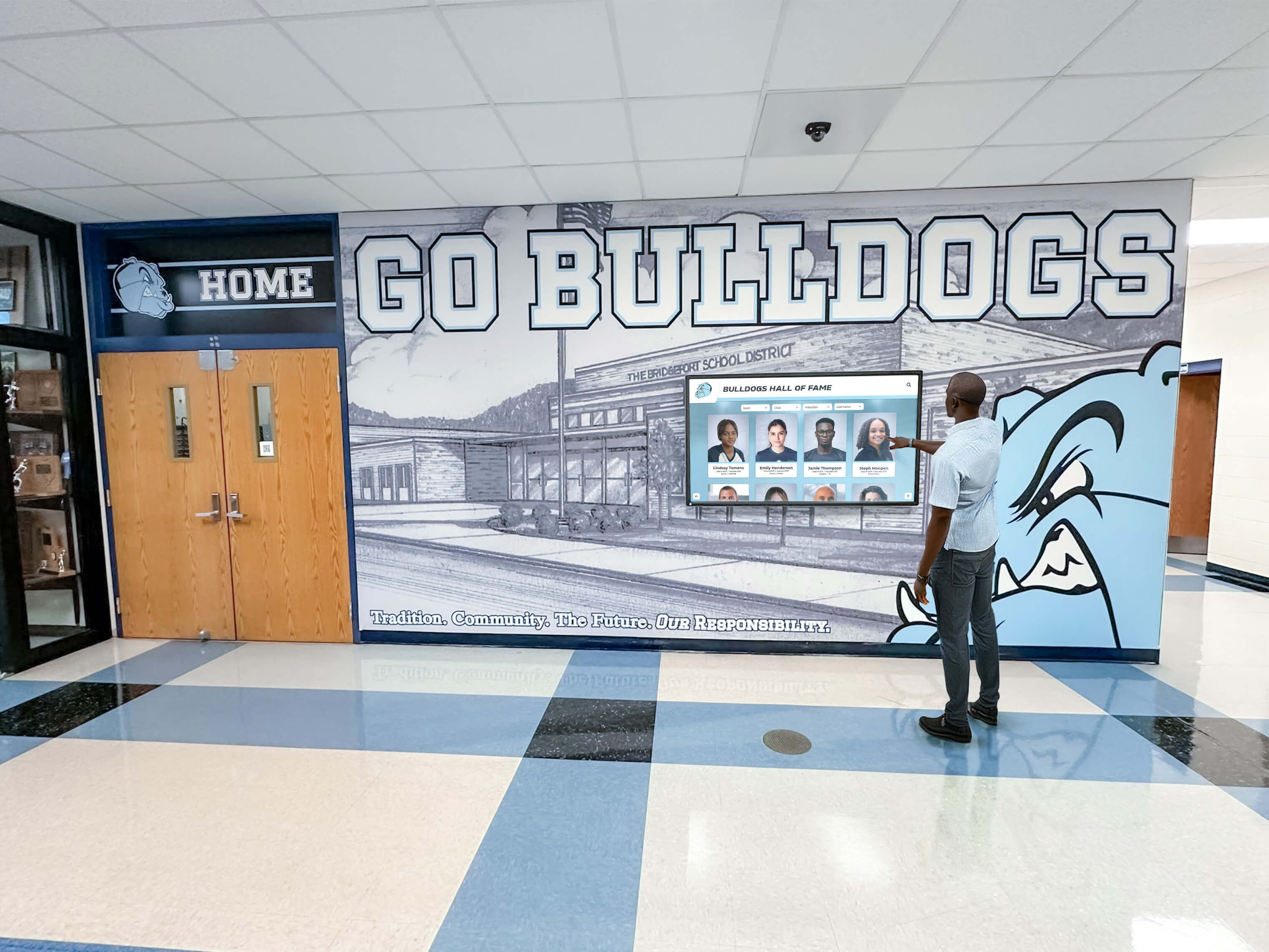
Digital technology has fundamentally transformed what’s possible in school recognition displays, addressing virtually every limitation of traditional trophy cases while introducing powerful new capabilities.
Interactive Touchscreen Recognition Systems
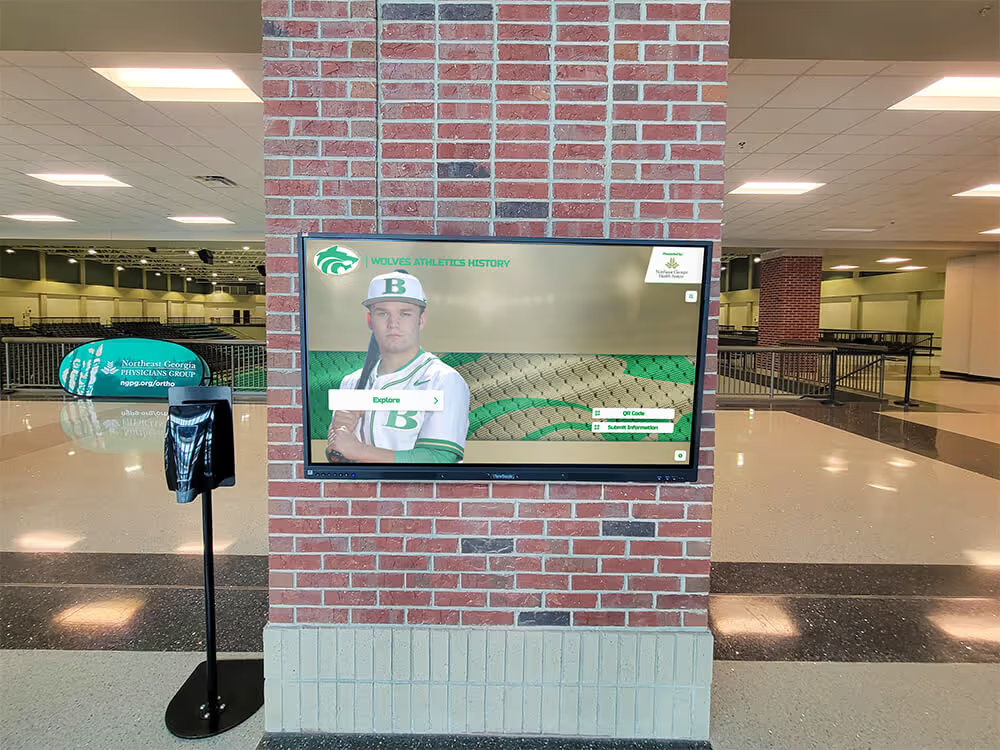
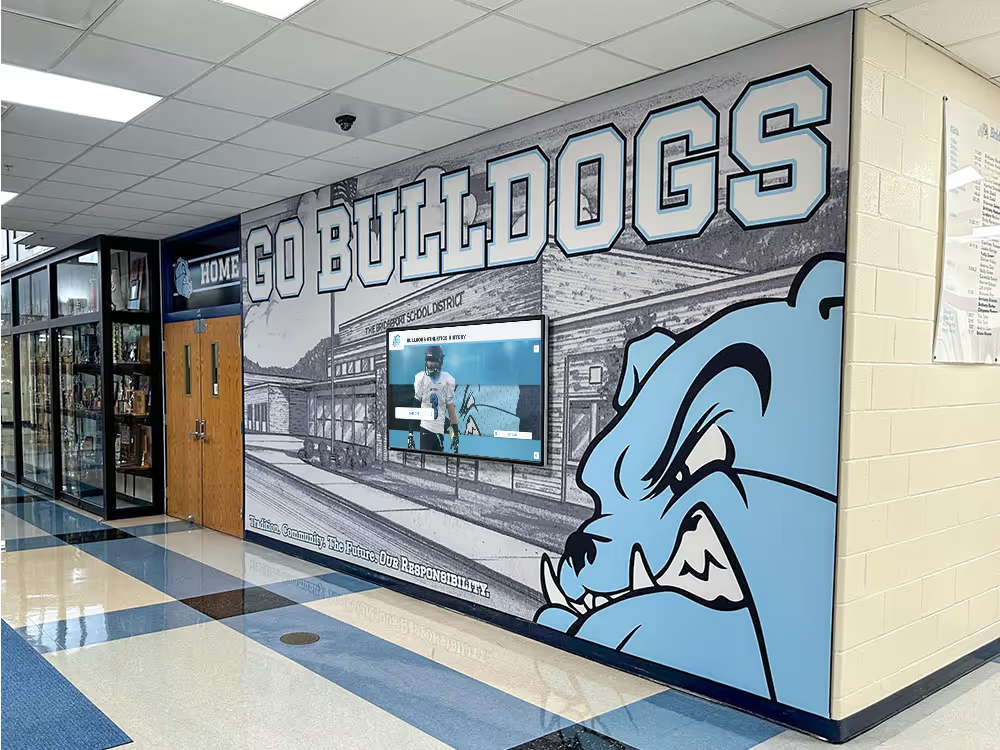
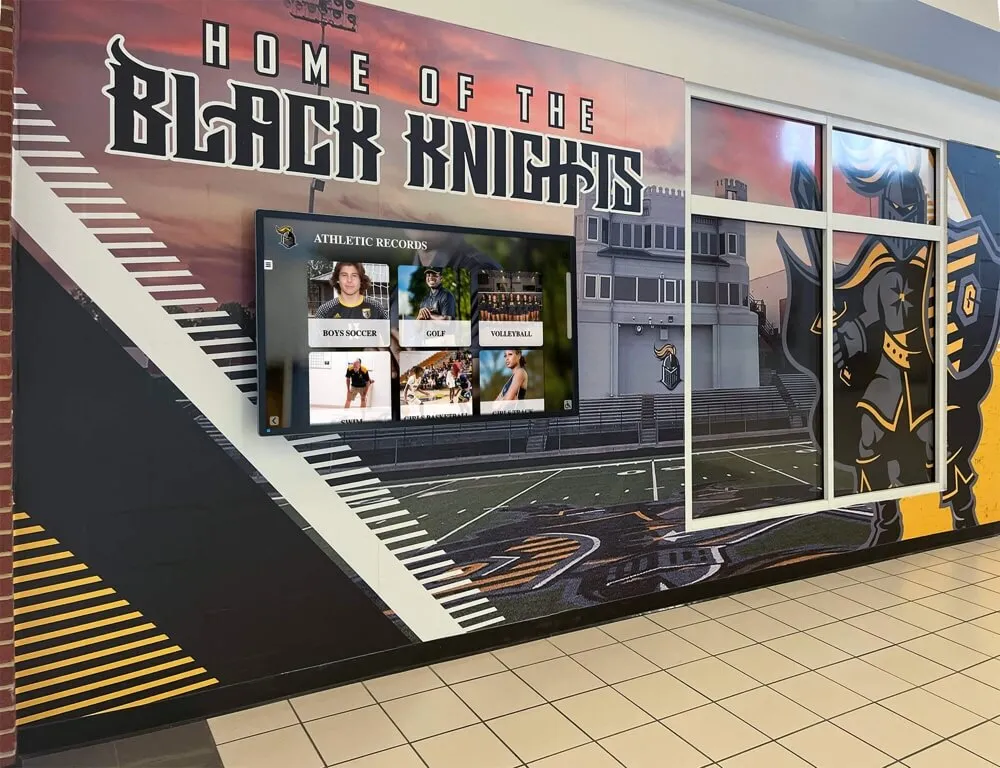
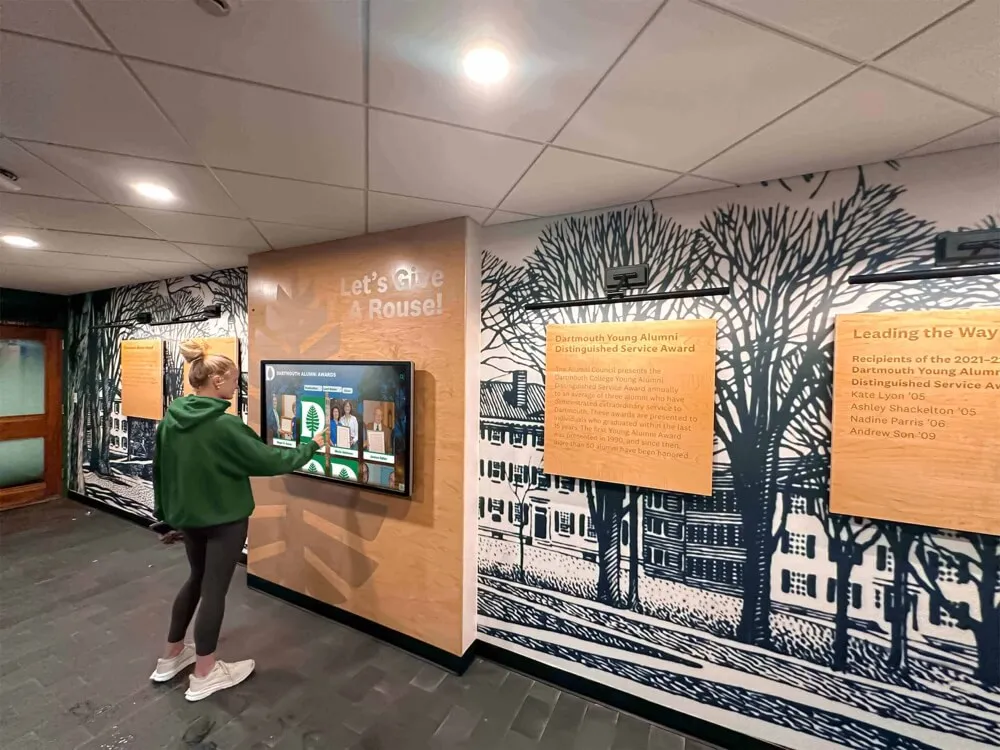
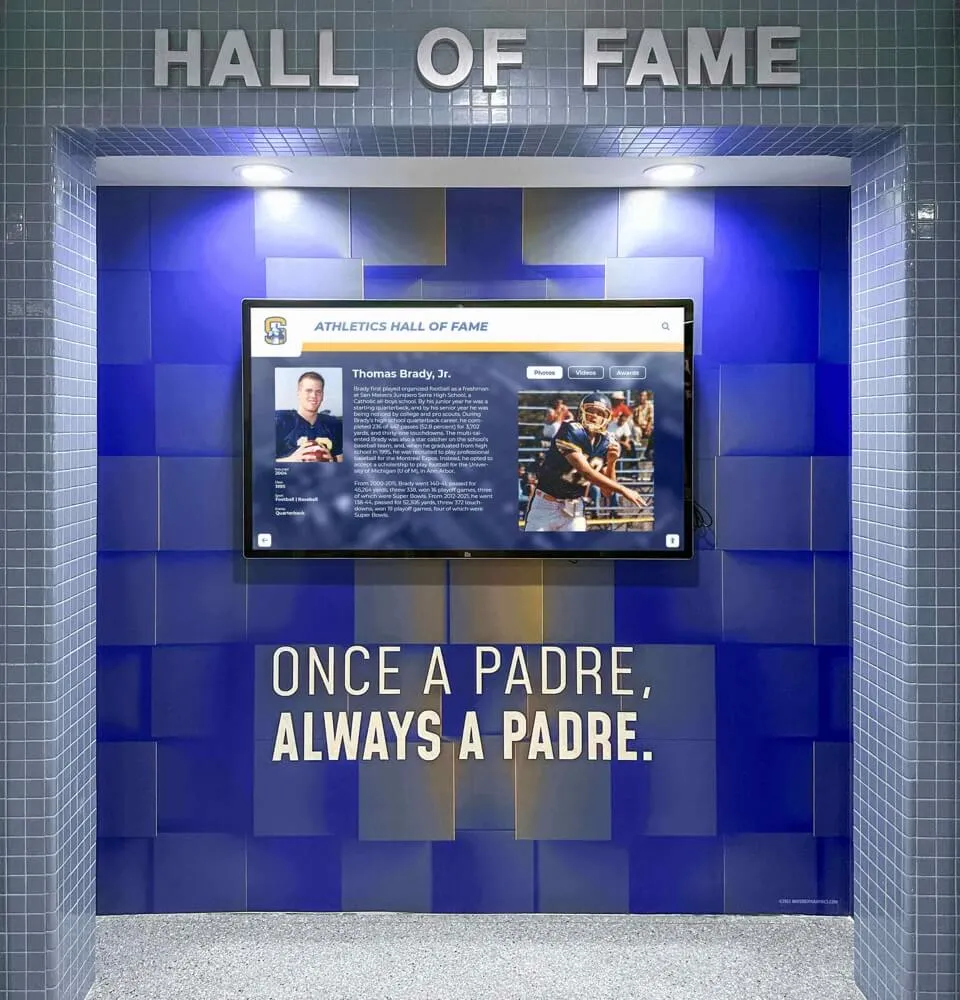
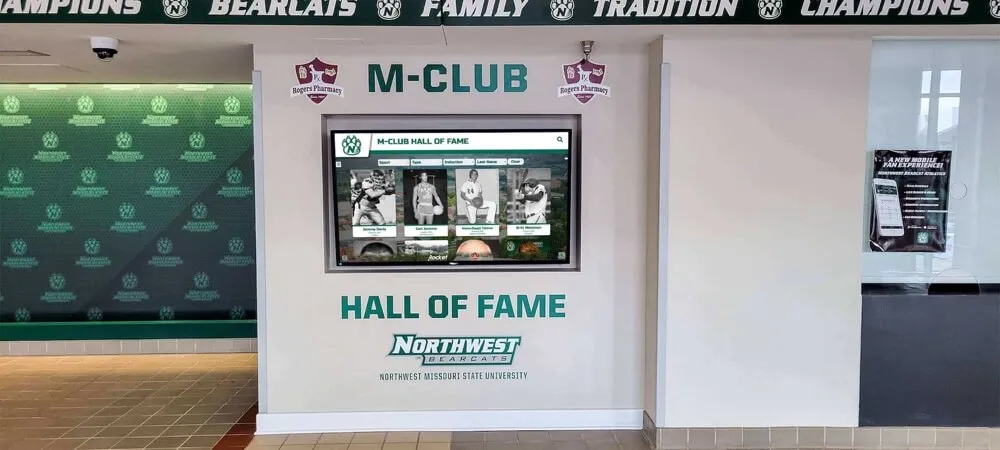
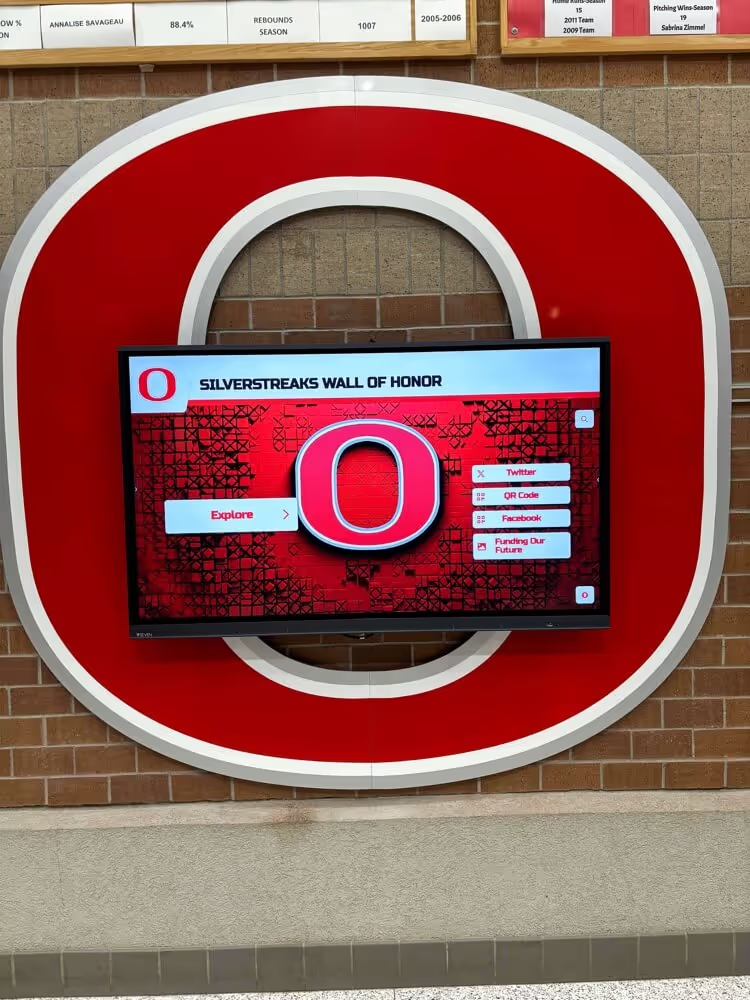
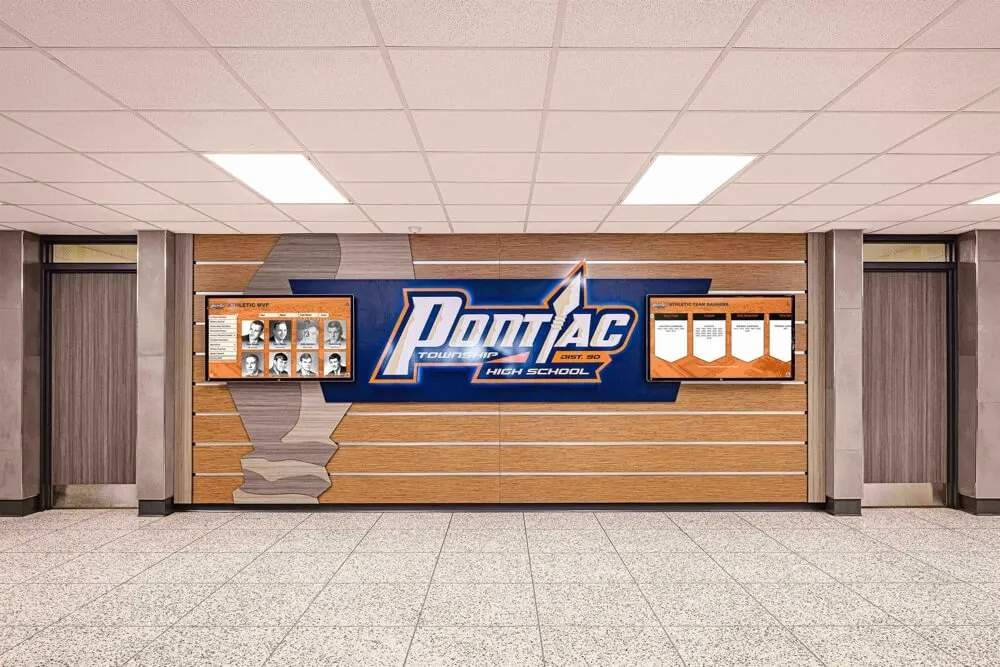
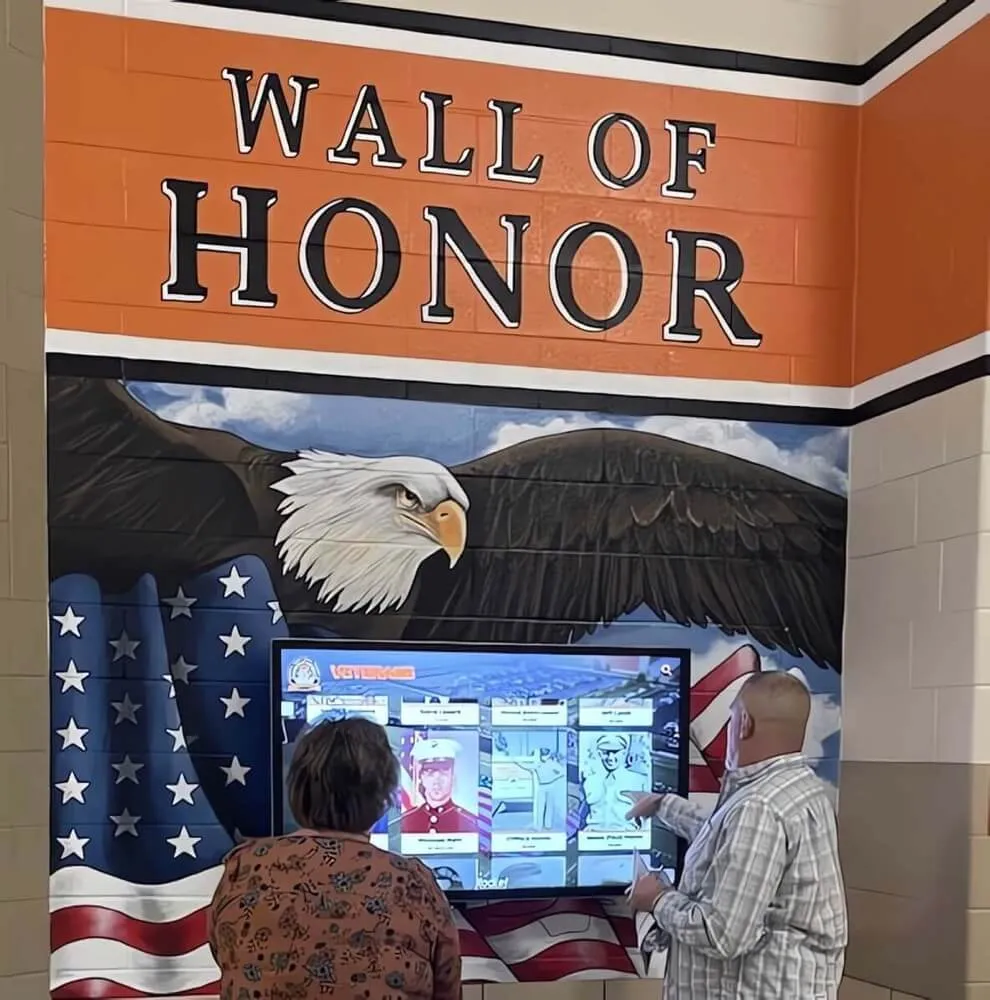
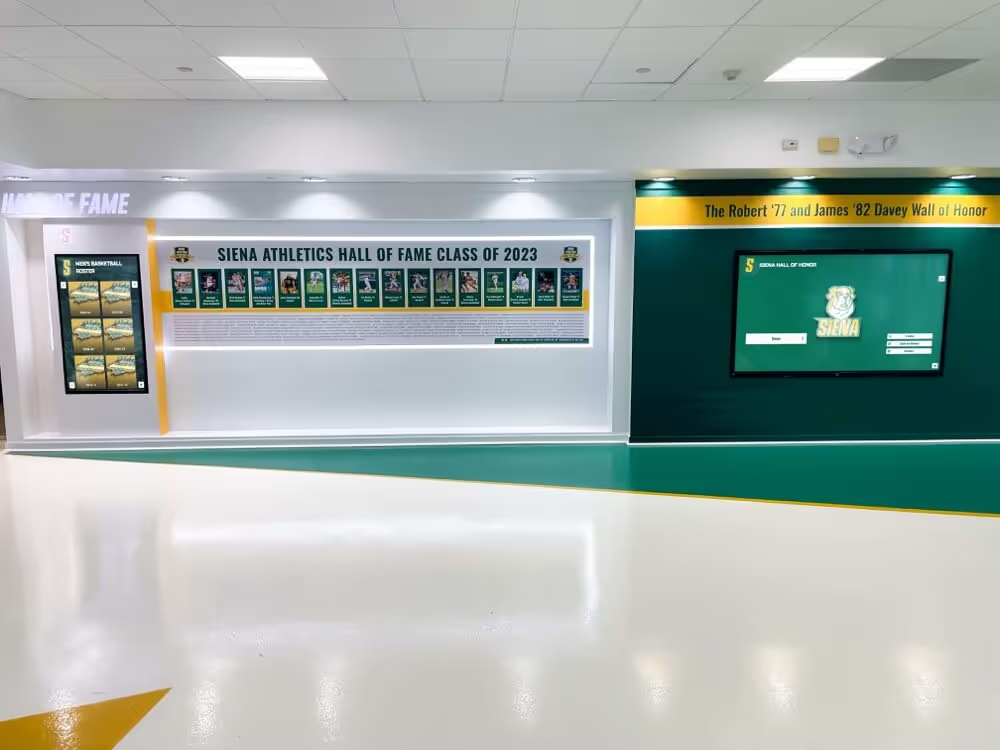
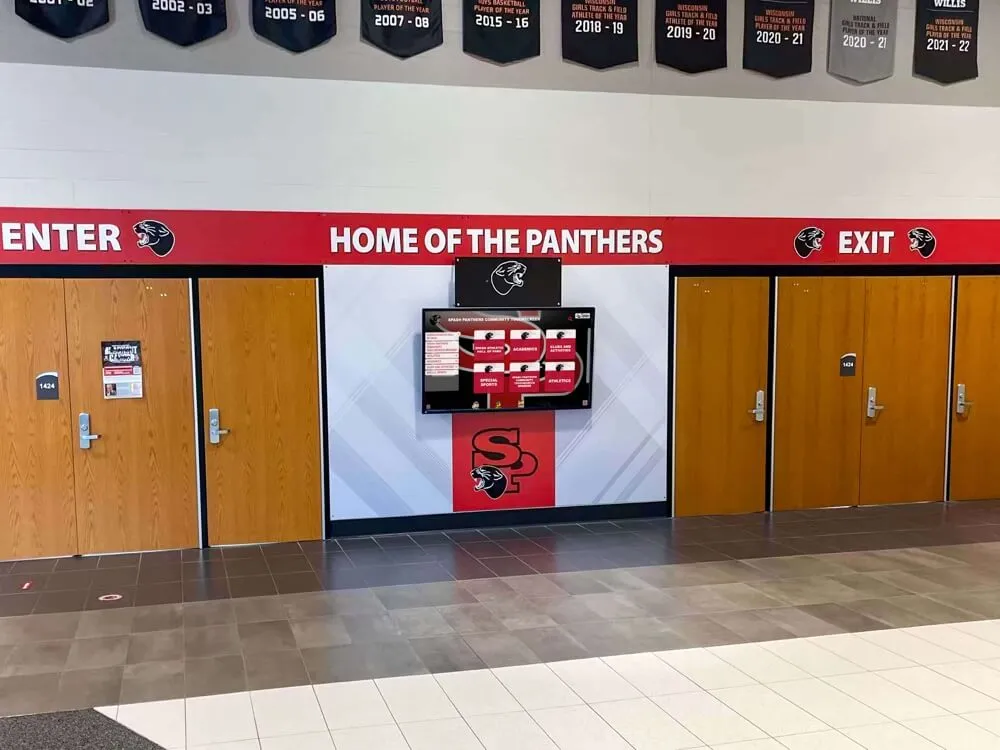
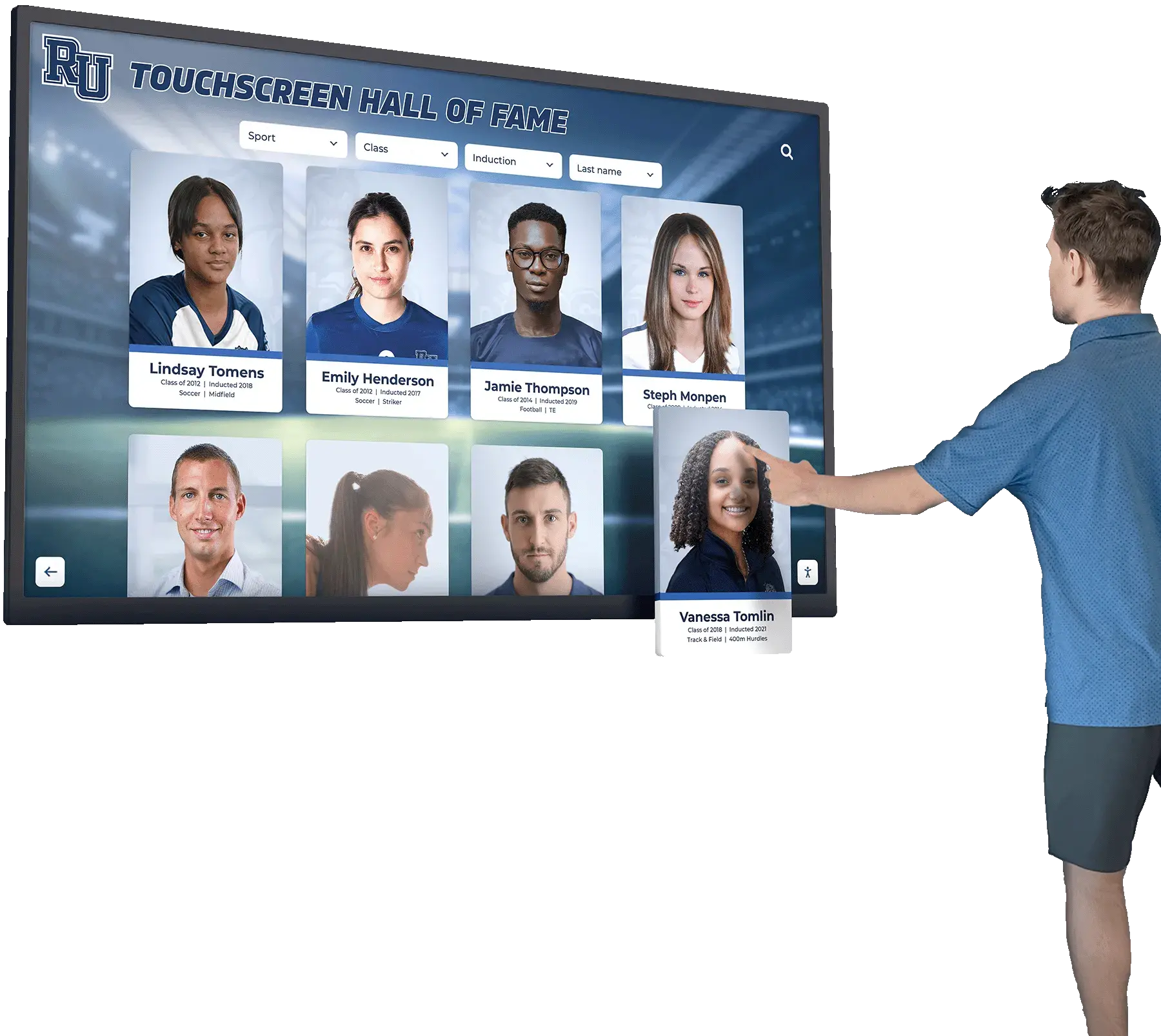
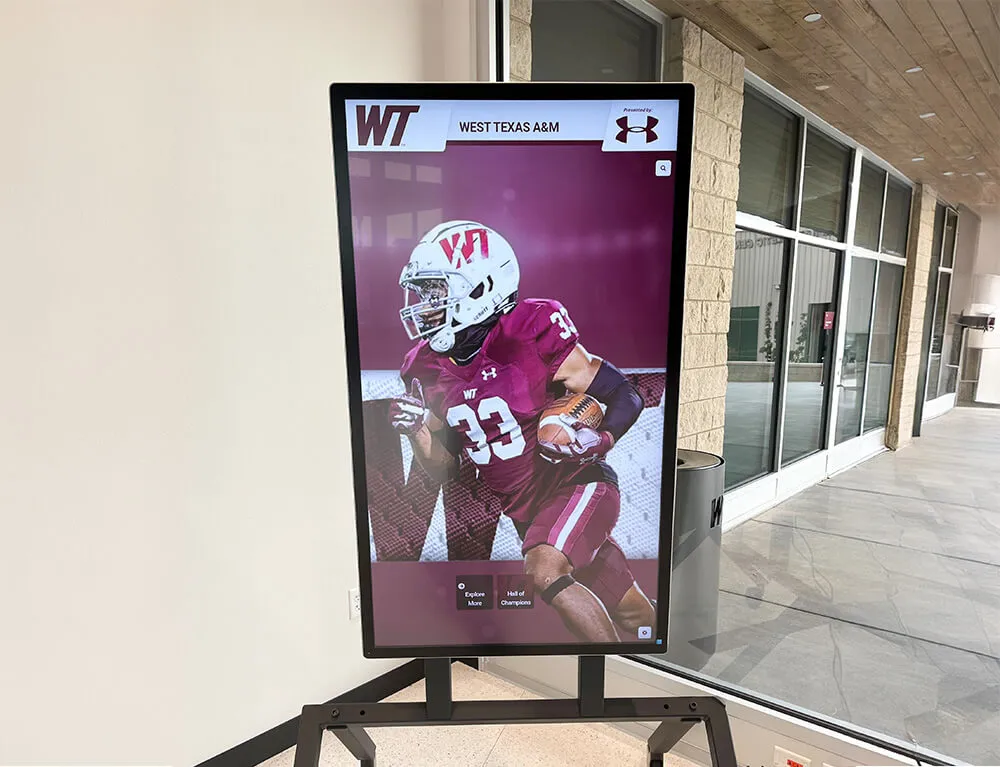
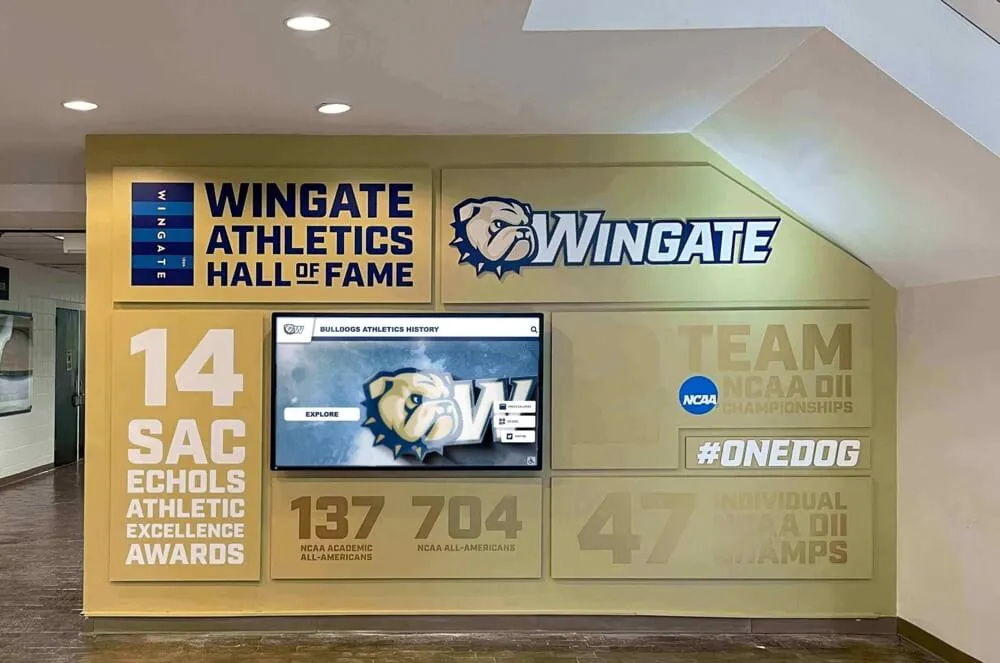
Purpose-built digital recognition platforms represent the most comprehensive alternative to traditional display cases, specifically designed for schools, athletic programs, and educational institutions.
Core Capabilities:
Unlimited Recognition Capacity:
- Add hundreds or thousands of honorees without physical space constraints
- Accommodate every achievement category without difficult choices
- Recognize teams, individuals, records, historical milestones comprehensively
- Never remove past achievements to make room for new ones
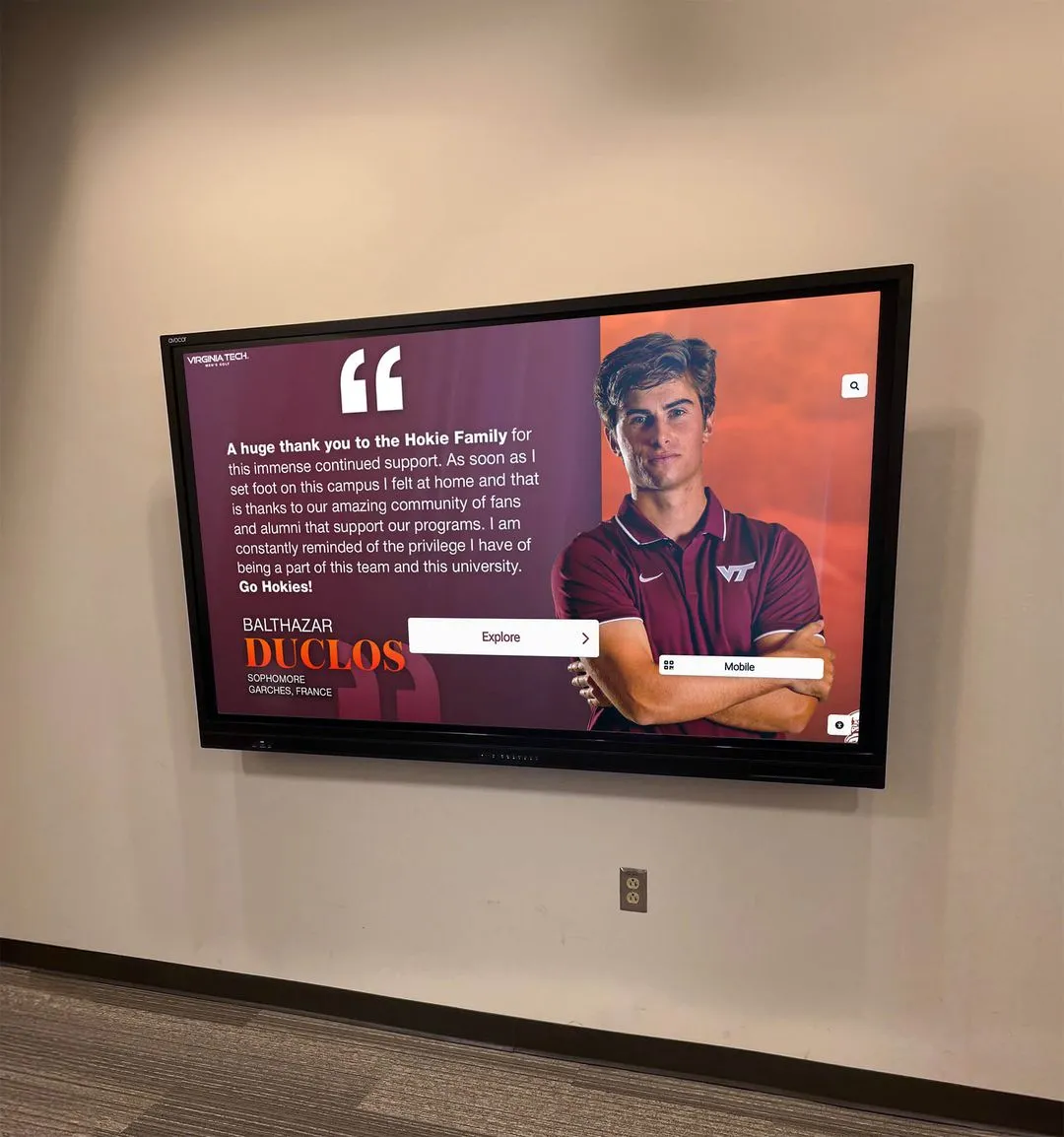
Rich Multimedia Profiles:
- High-resolution photos from achievement moments and throughout careers
- Video highlights of championships, performances, records
- Detailed biographical information and achievement context
- Statistics, records, and quantifiable accomplishments
- Personal stories, quotes, and reflections
Powerful Search and Navigation:
- Find specific individuals instantly by name
- Browse by achievement category, year, sport, or activity
- Filter and sort across multiple dimensions
- Discover connections between honorees and programs
Easy Content Management:
- Cloud-based systems enabling updates from any computer
- Add new recognition in minutes without physical modifications
- Bulk upload historical achievements efficiently
- Update information or correct errors instantly
- No engraving, fabrication, or installation delays
🔄 Always Current
Update content immediately following achievements rather than waiting weeks for plaque fabrication and installation
🌐 Extended Reach
Web access allows alumni worldwide to view recognition, strengthening connections beyond campus visitors
📊 Analytics Insights
Track which content resonates, informing recognition program improvements and engagement strategies
♿ Accessibility Compliance
Native WCAG accessibility ensures compliance with ADA requirements through keyboard navigation and screen reader support
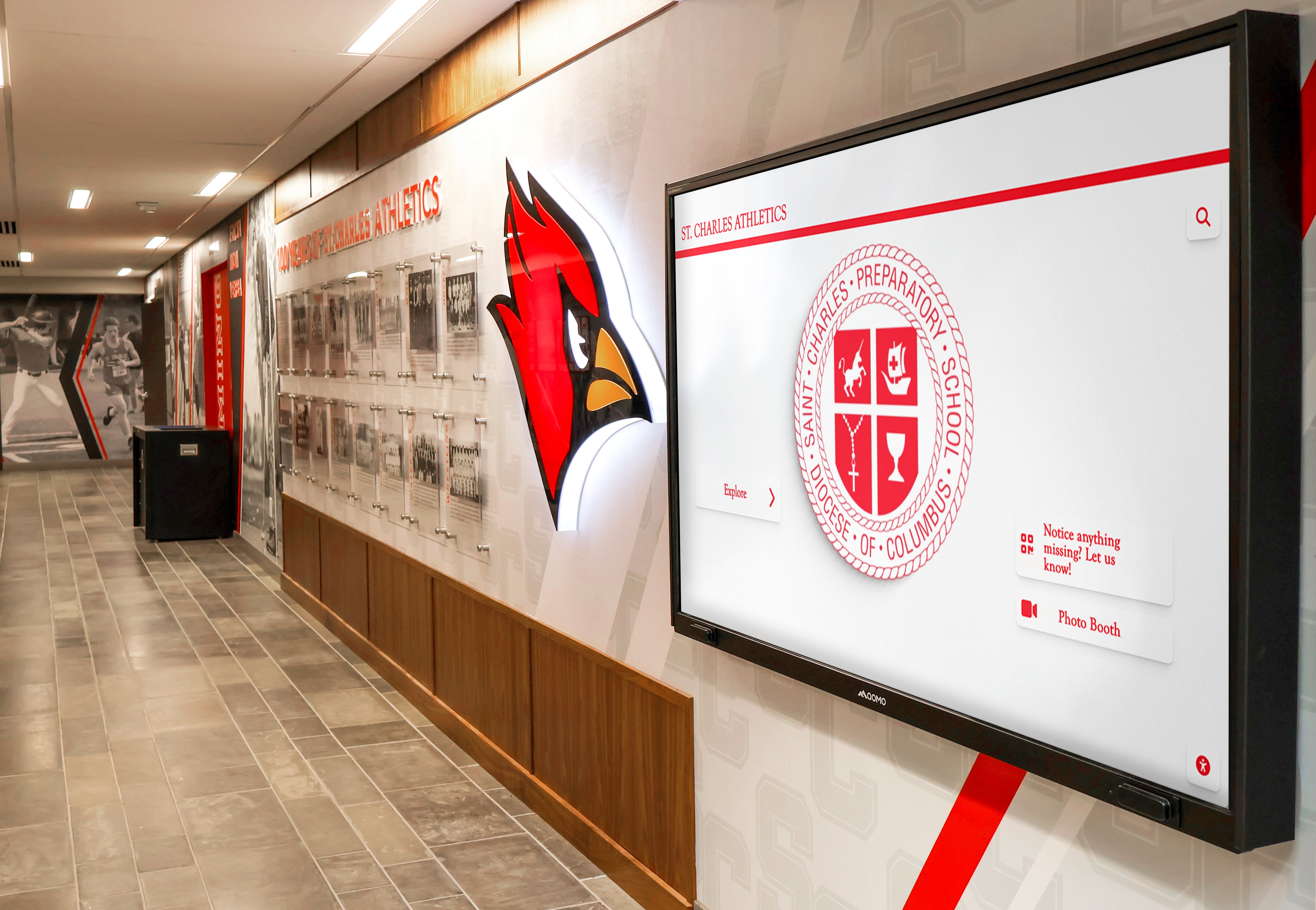
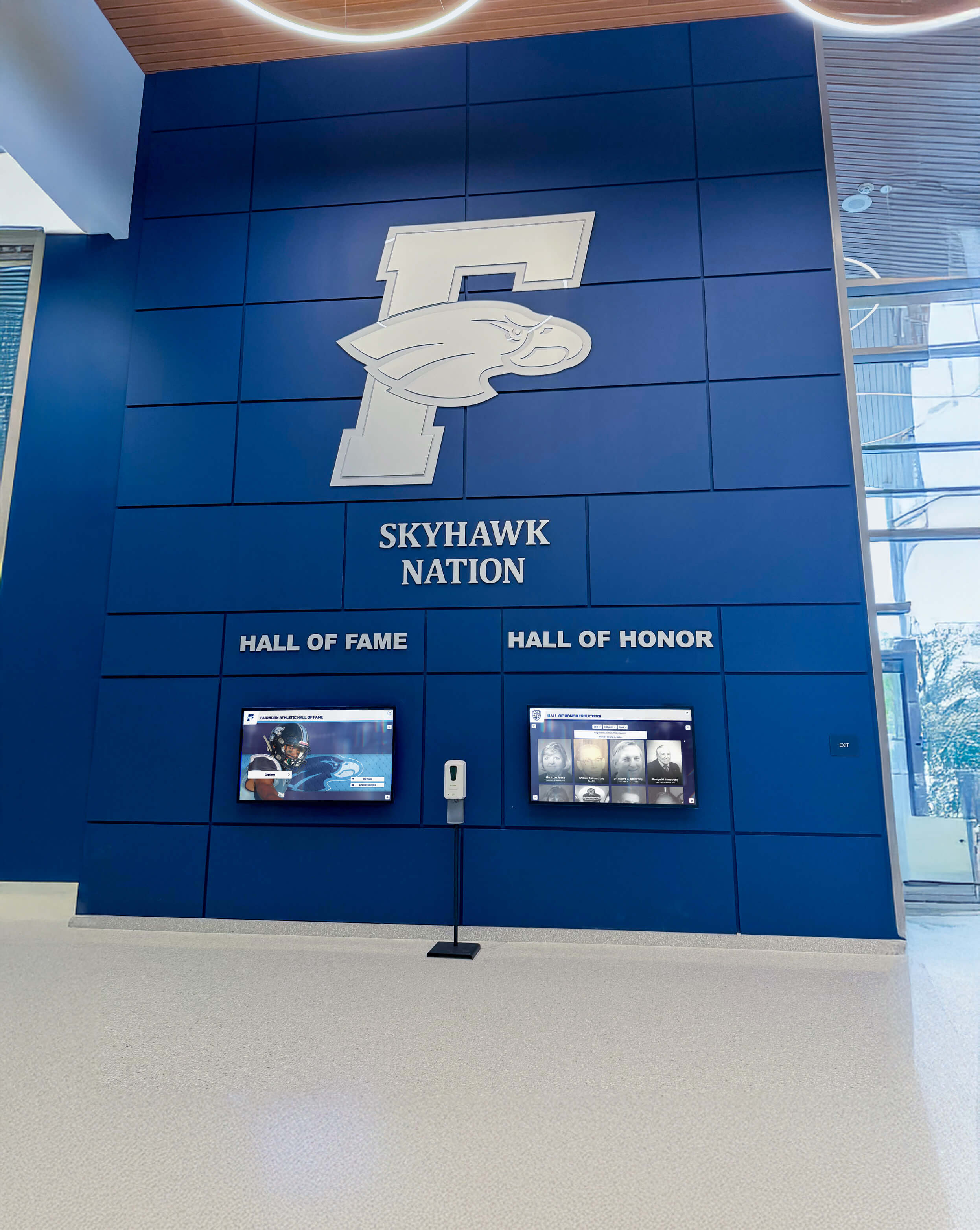
Solutions like Rocket Alumni Solutions provide purpose-built platforms designed specifically for educational recognition rather than repurposed digital signage or generic website tools. These specialized systems offer auto-ranking record boards, searchable inductee databases, QR code integration, and both physical touchscreen displays plus responsive web access through unified platforms.
Comparing Traditional Cases to Digital Recognition
| Factor | Traditional Display Cases | Digital Recognition Systems |
|---|---|---|
| Capacity | Fixed by physical dimensions, fills in 5-10 years | Unlimited, scales indefinitely |
| Content Depth | Physical item + small plaque with basic info | Photos, videos, detailed bios, statistics, stories |
| Update Speed | 2-4 weeks for fabrication and installation | Minutes through cloud CMS |
| Update Costs | $75-$300+ per addition for plaques/engraving | Staff time only, no fabrication costs |
| Maintenance | Weekly cleaning, periodic repairs, refurbishment | Minimal - screen cleaning, software auto-updates |
| Error Correction | Expensive plaque replacement | Instant content editing |
| Accessibility | Physical location only, static visibility | Physical display + web access worldwide |
| Search/Discovery | Visual scanning only | Instant name search, filtering, sorting |
| Initial Investment | $1,000-$8,000 per case | $6,000-$15,000 (hardware + software) |
| 10-Year Cost | $10,000-$35,000 for 3-case system | $15,000-$25,000 (including annual subscriptions) |
| Space Required | Wall/floor space per case, multiple needed | Single display accommodates unlimited content |
Implementation Considerations for Digital Systems
Schools evaluating digital recognition should understand key implementation factors:
Hardware Requirements:
- Commercial-grade touchscreen displays (43" to 75" typical)
- Wall mounting or freestanding kiosk options
- Standard power outlet and network connectivity (WiFi or Ethernet)
- Professional installation similar to mounting large TV
Software Platform Selection:
- Purpose-built recognition platforms vs. repurposed digital signage
- Cloud-based content management systems
- Native accessibility compliance (not overlay widgets)
- Dual-access through physical displays and web platforms
Content Strategy:
- Defining recognition categories and selection criteria
- Digitizing historical achievements from existing displays
- Establishing content quality standards (photos, videos, text)
- Assigning content management responsibilities
For schools looking to understand modern solutions, exploring touchscreen digital halls of fame provides comprehensive background on capabilities and implementation.
Hybrid Approaches: Combining Traditional and Digital
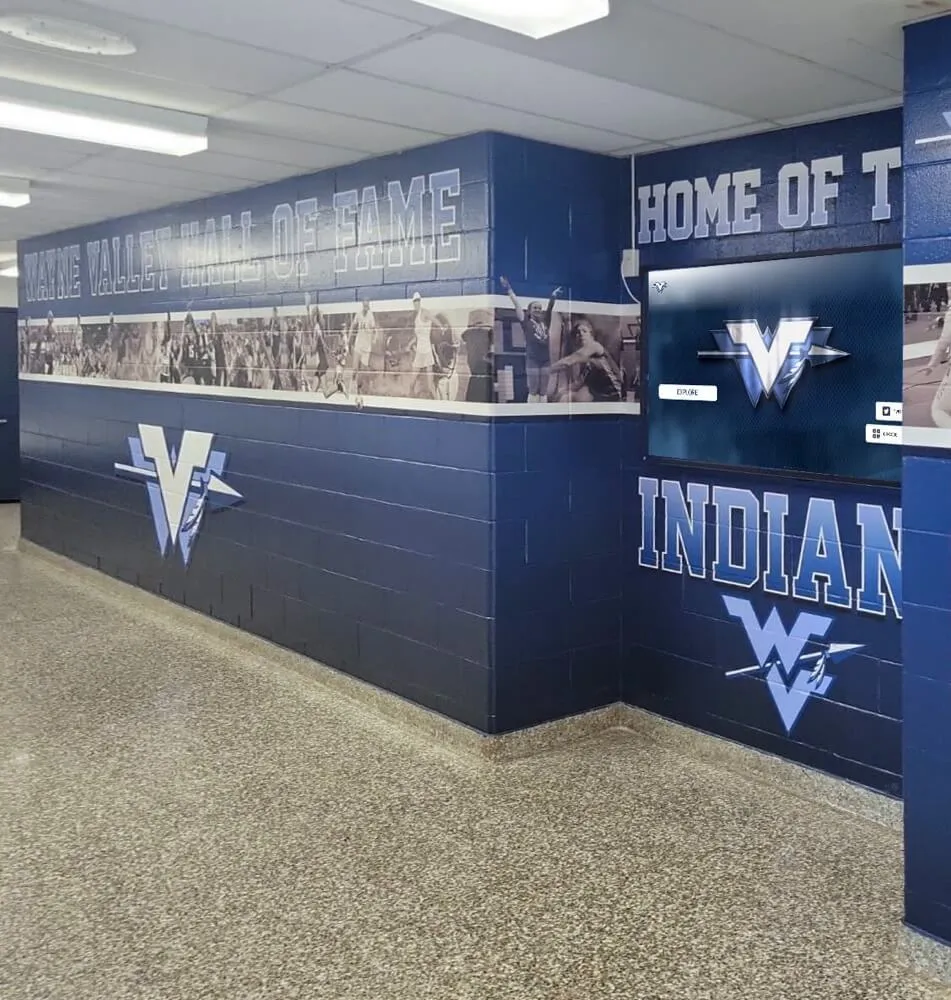
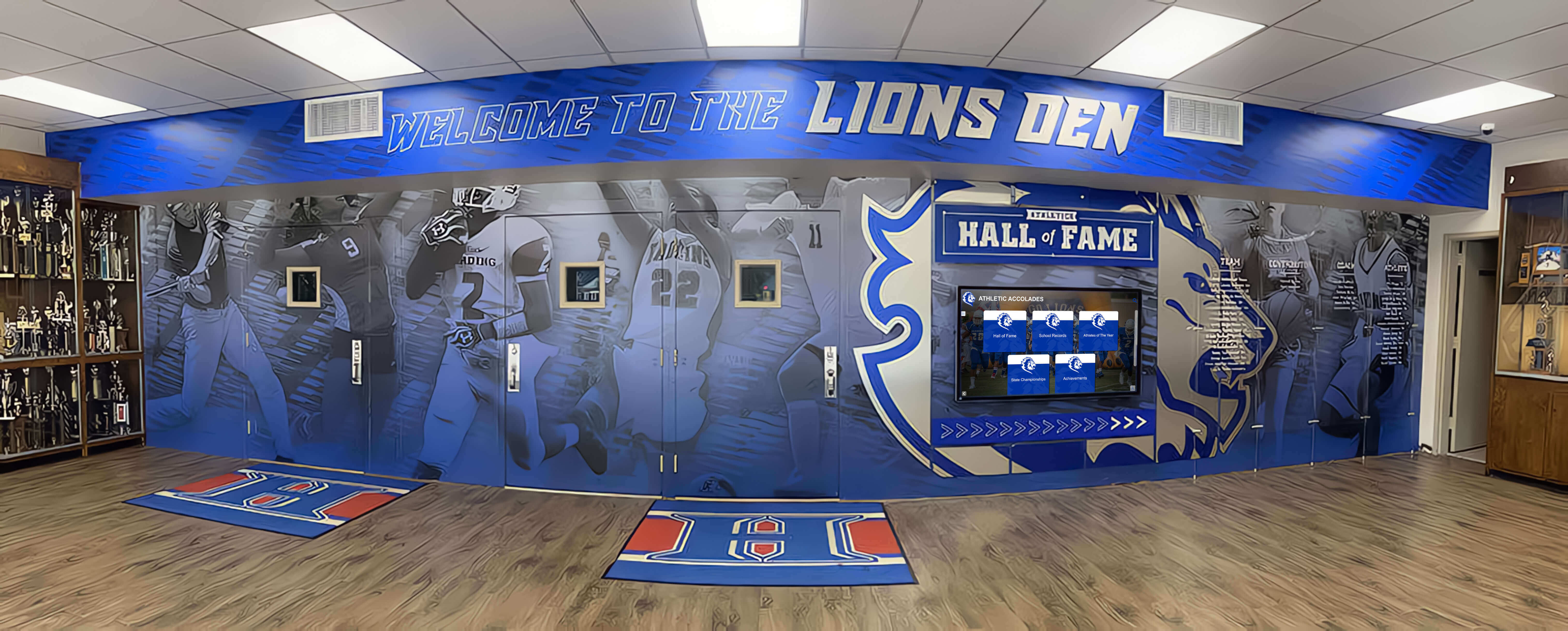
Some schools successfully blend physical trophy displays with digital recognition, creating complementary systems that honor tradition while embracing modern capabilities.
Strategic Hybrid Implementations
Physical Trophies + Digital Context:
- Maintain traditional trophy cases for major championships
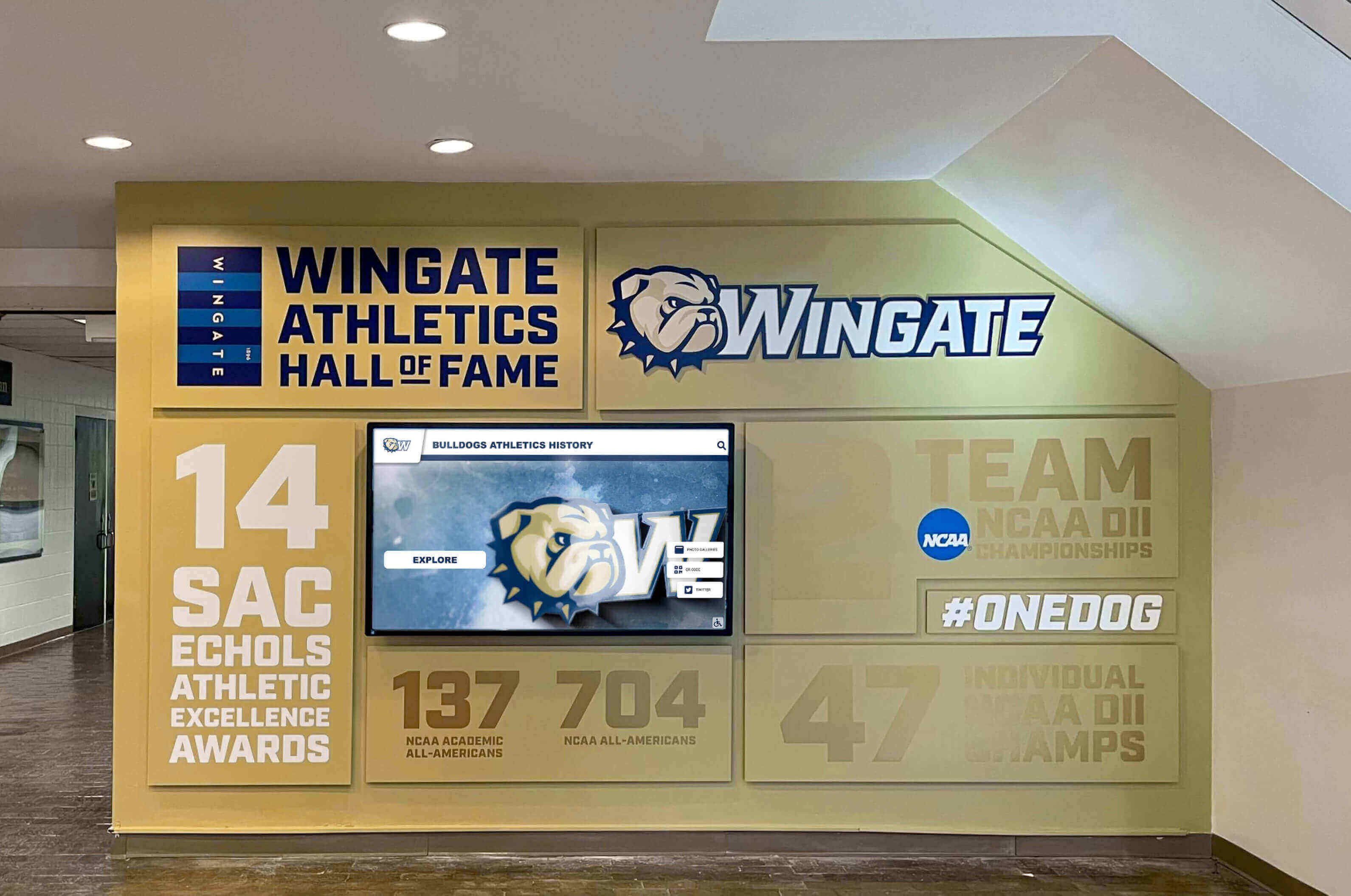
- Add touchscreen displays providing detailed stories behind trophies
- QR codes on physical plaques linking to extended digital profiles
- Preserves tangible achievement symbols while adding depth
Featured Items + Comprehensive Digital:
- Display most prestigious or recent achievements physically
- Digital system houses complete historical recognition
- Rotating physical displays highlight current seasons
- Digital archive ensures nothing gets lost or removed
Location-Based Distribution:
- Traditional cases in specific areas (athletic hallway, main lobby)
- Digital displays in high-traffic common areas
- Different formats serve different purposes and audiences
- Allows gradual transition without abrupt change
Understanding how to effectively recognize diverse achievements through team recognition ideas helps schools develop comprehensive programs.
Decision Framework: Choosing the Right Solution
Schools should evaluate display solutions against specific institutional needs, priorities, and constraints rather than adopting default approaches.
Choose Traditional Display Cases When:
- Limited initial budget requires lower upfront investment
- Small, finite recognition program with predictable capacity needs
- Strong stakeholder preference for traditional aesthetics and tangible displays
- Limited technical support creates concerns about digital system management
- Specific physical items (trophies, jerseys, equipment) central to recognition
Choose Digital Recognition Systems When:
- Growing recognition program exceeds or will exceed traditional case capacity
- Comprehensive multimedia storytelling important for engagement
- Regular content updates needed without ongoing fabrication costs
- Web accessibility valuable for alumni engagement and extended reach
- Long-term cost efficiency outweighs initial investment differences
- Space constraints limit traditional case installations
- Accessibility compliance requires ADA-compliant solutions
Choose Hybrid Approaches When:
- Transitioning from traditional to digital over time
- Stakeholder concerns require maintaining valued traditional elements
- Multiple recognition tiers benefit from different presentation formats
- Sufficient budget and space allow complementary systems
- Preserving tradition while embracing innovation both important
Best Practices for Successful Display Implementation
Regardless of format selection, successful recognition displays follow systematic implementation approaches:
Planning Phase Essentials
Stakeholder Engagement:
- Survey students, staff, alumni, boosters about priorities
- Identify champions supporting recognition enhancement
- Address concerns and resistance early
- Build coalition supporting investment
Space Assessment:
- Evaluate high-traffic locations for maximum visibility
- Consider viewing angles and accessibility
- Assess power, network, lighting conditions
- Plan for ADA-compliant positioning
Budget Development:
- Research total cost of ownership, not just initial prices
- Identify funding sources (capital budgets, boosters, grants)
- Plan for phased implementation if needed
- Build ongoing operational costs into budgets
Selection Criteria Establishment:
- Define clear, transparent standards for recognition
- Create nomination and selection processes
- Ensure fairness across different achievement types
- Document criteria for consistency over years
Schools planning recognition programs benefit from understanding approaches for senior night celebrations that complement permanent displays.
Launch and Ongoing Management
Content Development:
- Gather historical achievements from archives
- Establish photo and biographical quality standards
- Create initial content before public launch
- Plan ongoing content development workflows
Formal Unveiling:
- Celebrate launch with ceremony honoring inductees
- Generate publicity through media coverage
- Promote location and access methods
- Create momentum for ongoing engagement
Regular Maintenance:
- Assign clear responsibility for updates and care
- Establish cleaning and inspection schedules
- Plan timely recognition of new achievements
- Monitor engagement and gather feedback
Continuous Improvement:
- Analyze what content resonates with viewers
- Expand categories based on program growth
- Upgrade displays when technology improves
- Adapt based on stakeholder input
Conclusion: Selecting School Display Cases for Long-Term Success
School display cases represent significant investments deserving thoughtful evaluation rather than default decisions based solely on tradition or familiarity. The “right” solution depends on specific institutional circumstances, recognition program scope, budget realities, and long-term vision.
Traditional trophy cases serve many schools effectively, particularly smaller institutions with finite recognition needs, limited budgets, and strong preferences for tangible achievement displays. These conventional solutions provide timeless aesthetics and proven functionality when capacity limitations and ongoing costs align with institutional resources.
Digital recognition systems address fundamental limitations that eventually constrain most traditional displays—capacity restrictions, maintenance demands, update delays, and accessibility barriers. Purpose-built platforms designed specifically for educational recognition deliver capabilities that repurposed digital signage or generic tools cannot match: searchable databases, auto-ranking record boards, multimedia profiles, and unified physical-plus-web access.
The most successful implementations share common characteristics regardless of format: strategic placement in high-visibility locations, clear selection criteria ensuring fairness, quality content telling meaningful stories, assigned management responsibility, and genuine integration into school culture and ceremonies.
As you evaluate options for your institution’s recognition needs, consider not just initial costs but total ownership expenses over 10+ years, not just current capacity but future program growth, and not just what’s familiar but what will best serve your community’s evolving needs.
Recognition displays honor achievements that define your school’s character while inspiring future excellence. Choose solutions that celebrate these accomplishments with the quality, accessibility, and professionalism they deserve.
Ready to Explore Modern Recognition Solutions?
Discover how digital recognition displays can transform your school’s achievement celebration. Solutions like Rocket Alumni Solutions provide purpose-built platforms specifically designed for educational institutions, offering unlimited capacity, comprehensive multimedia storytelling, easy content management, and both physical touchscreen plus web access—all while addressing the capacity constraints and ongoing costs that traditional display cases present.
Whether you’re planning your first recognition display or upgrading an aging trophy case system, understanding the full spectrum of available solutions ensures you make informed decisions that serve your school community for decades to come. Learn more about National Honor Society recognition, academic excellence boards, and digital photo galleries to see how comprehensive digital solutions enhance school recognition programs.