



Key Takeaways
Discover how to establish meaningful scholar athlete award programs that recognize students excelling in academics and athletics. Complete guide to selection criteria, recognition methods, and celebration strategies.
Understanding the Scholar Athlete Award
Scholar athlete awards distinguish themselves from purely athletic or academic honors by requiring demonstrated excellence in both domains simultaneously. While individual schools and athletic conferences establish specific criteria, the fundamental principle remains consistent: honorees must meet high standards in competition and coursework concurrently.
What Defines a Scholar Athlete?
The scholar athlete concept recognizes students who balance two demanding commitments successfully. These students wake up early for training sessions before school, attend full academic schedules, practice after school for hours, complete homework assignments, compete in games and meets, and still maintain grade point averages that reflect genuine academic achievement rather than minimal eligibility compliance.
True scholar athletes demonstrate several key characteristics:
- Time management excellence: Successfully balancing 20+ hours of weekly athletic commitments with rigorous coursework
- Academic consistency: Maintaining strong grades throughout competitive seasons, not just off-season periods
- Mental resilience: Managing the stress of simultaneous demands from coaches, teachers, teammates, and personal expectations
- Priority discipline: Making difficult choices about social activities, entertainment, and free time to meet dual commitments
- Growth mindset: Approaching both athletics and academics with dedication to continuous improvement
The scholar athlete designation honors students whose daily schedules would overwhelm many adults, requiring sacrifices that demonstrate maturity and commitment beyond what either domain alone would demand.

Historical Context of Scholar Athlete Recognition
Scholar athlete recognition has evolved significantly since athletic programs became fixtures in American education. Early 20th century athletic programs often existed separate from academic missions, sometimes viewed as distractions from educational purposes rather than complementary experiences.
The formal scholar athlete award concept gained prominence in the mid-20th century as educators recognized that athletic participation could reinforce rather than undermine academic success. Research demonstrated correlations between athletic participation and improved academic outcomes when appropriate support systems existed.
National organizations formalized recognition standards, establishing criteria that gained widespread adoption. Today, scholar athlete awards exist at every competitive level from middle school through professional leagues, with academic recognition programs celebrating students who prove excellence in multiple domains simultaneously.

Standard Scholar Athlete Award Criteria
While specific requirements vary by institution and athletic conference, most scholar athlete programs establish criteria addressing both academic achievement and athletic participation. Understanding these standard benchmarks helps schools design recognition programs appropriate for their competitive contexts.
Academic Requirements
The academic component typically emphasizes sustained performance across multiple marking periods rather than single semester achievements. Most programs establish minimum GPA thresholds that require genuine commitment to coursework rather than simply meeting athletic eligibility minimums.
Common Academic Standards:
- GPA Requirements: Most programs require 3.5 or higher on 4.0 scales, though some set minimums at 3.0 or 3.25 depending on institutional rigor
- Semester Consistency: Requirements often specify sustained performance across multiple semesters rather than single marking periods
- Course Rigor Considerations: Some programs adjust recognition for students taking honors, AP, or IB courses that carry additional difficulty
- Core Subject Focus: Certain programs emphasize performance in core academic areas (English, math, science, social studies) rather than overall GPA that might include less rigorous electives
- Class Rank Criteria: Select programs consider class standing in addition to absolute GPA, recognizing top percentage performers
Academic criteria serve dual purposes—establishing meaningful standards that honor genuine achievement while remaining attainable for students genuinely committed to balancing athletic and academic responsibilities successfully.
Athletic Participation Standards
The athletic component typically requires significant participation demonstrating commitment to team success rather than merely joining rosters without meaningful involvement.
Participation Requirements:
- Completing full competitive seasons in good standing
- Meeting minimum playing time, competition appearances, or practice attendance thresholds
- Contributing to team efforts through competition, practice, leadership, or support roles
- Demonstrating sportsmanship and appropriate conduct throughout seasons
- Representing schools positively in athletic contexts
Eligibility Considerations:
- Students typically must be varsity letter-winners or equivalent for their sport
- Some programs include junior varsity participants meeting academic standards
- Multi-sport athletes may receive enhanced recognition for balancing multiple team commitments
- Managers, statisticians, and support staff may qualify in programs recognizing all team contributors
Athletic requirements ensure that honorees demonstrate genuine commitment to competitive programs rather than token participation. Criteria balance recognizing significant contribution with acknowledging that playing time varies based on talent, team depth, experience level, and coaching decisions outside individual control.
Additional Character and Conduct Standards
Beyond pure academic and athletic metrics, many programs incorporate character requirements reflecting institutional values and ensuring that recognition honors well-rounded individuals rather than purely metrics-driven achievement.
Character standards might include:
Sportsmanship: Demonstrated respect for opponents, officials, teammates, and coaches through conduct during competition and practice. Students receiving ejections, suspensions, or repeated unsportsmanlike conduct warnings typically become ineligible regardless of academic or athletic performance.
Leadership: Many programs consider leadership contributions through team captaincies, mentorship of younger players, positive influence on team culture, or representation of athletic programs to broader school communities.
Community Involvement: Some criteria recognize students who extend their commitment beyond athletics and academics to serve communities through volunteering, service learning, or civic engagement demonstrating values beyond personal achievement.
Institutional Citizenship: Requirements often include disciplinary records, attendance patterns, and conduct demonstrating that honorees represent institutional values appropriately both inside and outside athletic contexts.
Benefits of Scholar Athlete Recognition Programs
Establishing meaningful scholar athlete recognition delivers benefits extending well beyond individual honorees, influencing broader athletic program culture, academic expectations for student-athletes, and institutional values around balanced excellence.
Motivating Academic Excellence Among Athletes
Public recognition creates powerful incentive structures that influence behavior across athletic programs, not just among students already achieving at high levels. When scholar athletes receive visible celebration comparable to recognition for athletic achievements alone, academic performance becomes valued program component rather than separate obligation.
Athletic program cultures strongly influence individual student priorities. When teammates, coaches, and communities celebrate academic achievement alongside athletic success, student-athletes face peer encouragement rather than pressure to minimize academic effort in favor of exclusive athletic focus.
The end-of-semester honor roll recognition creates public acknowledgment that reinforces academic achievement as valued parallel to athletic success, establishing cultural expectations that excellence requires both dimensions.
Validating the Dual Commitment
Students managing simultaneous athletic and academic demands often feel that one achievement diminishes recognition of the other—athletic success overshadows academic effort or academic focus receives criticism for allegedly compromising athletic commitment. Scholar athlete awards validate that excellence in both areas simultaneously represents achievement worthy of distinct recognition.
This validation carries particular importance for students facing external pressure to prioritize one domain exclusively. Parents sometimes push athletes toward single-minded sports focus hoping for college scholarships or professional opportunities, while educators occasionally view athletic commitments as distractions from academic priorities. Scholar athlete recognition affirms institutional belief that balanced development serves students better than single-dimension focus.
Supporting College Admissions and Scholarships
College admissions offices specifically seek students demonstrating ability to balance multiple demanding commitments successfully. Scholar athlete recognition provides documented evidence of sustained dual achievement that strengthens applications significantly.
Athletic recruiting often emphasizes physical performance metrics—times, statistics, game film—while academic records exist separately. Scholar athlete designation integrates these dimensions, creating unified achievement profile that appeals to college coaches recruiting student-athletes who’ll succeed academically while competing athletically.
Academic scholarships frequently consider extracurricular involvement and leadership, with athletic participation demonstrating commitment, time management, and teamwork. Athletic scholarships require academic eligibility maintenance. Scholar athletes present compelling cases for both scholarship categories, sometimes securing combined academic and athletic funding packages.
Enhancing School and Program Reputation
Schools developing reputations for producing scholar athletes attract different student populations than programs emphasizing either athletics or academics exclusively. Families seeking balanced educational experiences that develop multiple dimensions of student potential actively seek schools demonstrating commitment to dual excellence.
Athletic programs known for scholar athlete development recruit more effectively among families valuing academic achievement alongside competitive success. These recruitment advantages often translate to stronger program cultures as academically motivated athletes reinforce team environments where academic excellence represents expectation rather than exception.
College coaches recruiting from high school programs establish reputations regarding academic preparation of athletes. Programs consistently producing scholar athletes develop trust with college coaches that graduates arrive prepared for college academic rigor alongside athletic demands.
Recognition Methods for Scholar Athletes
How schools honor scholar athletes significantly impacts program effectiveness, influencing visibility, prestige, and cultural message sent to students, families, and communities about what institutions value.
Traditional Physical Recognition Approaches
Classic recognition methods have served schools for generations, creating tangible acknowledgment that students and families treasure long after graduation.
Awards Ceremonies and Banquets: Annual athletic awards ceremonies provide natural venues for scholar athlete recognition. Presenting scholar athlete awards during these events—ideally with comparable prominence to all-conference selections or MVP honors—signals institutional priority on balanced achievement. Recognition program best practices emphasize ceremony moments that create emotional impact and memorable celebration.
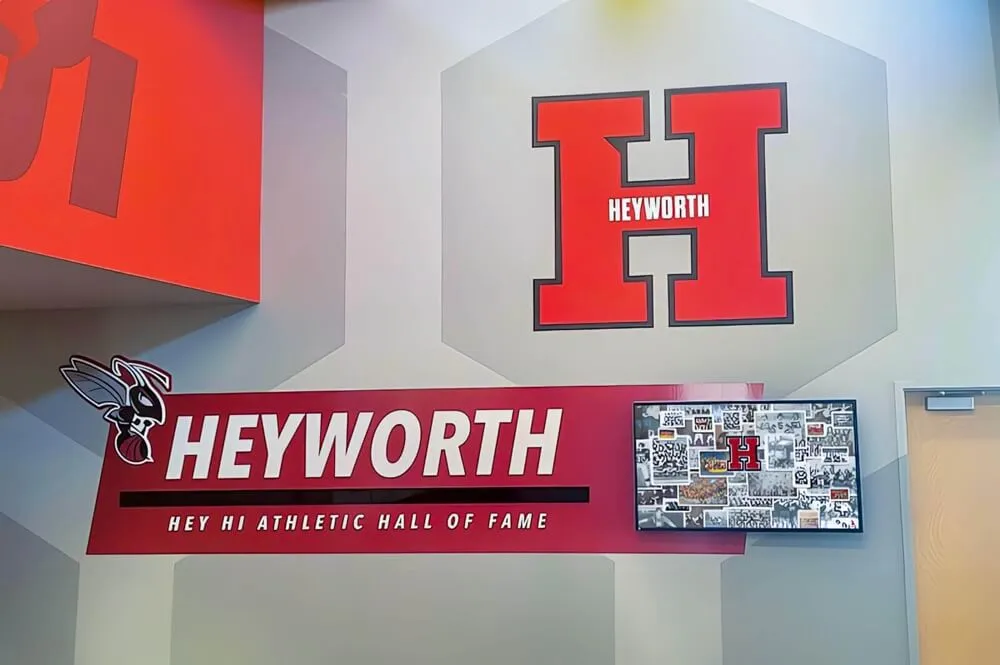
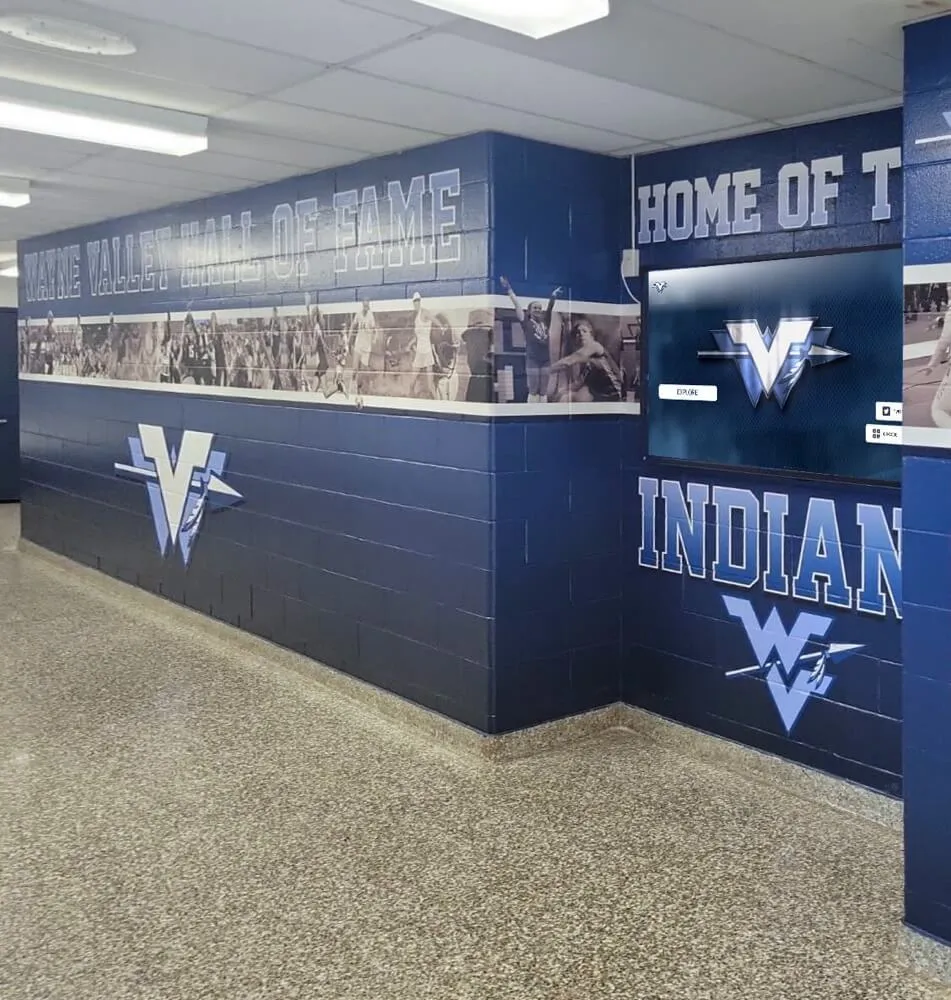
Plaques and Wall Recognition: Permanent displays listing scholar athletes by year create visible historical records celebrating achievement across time. Traditional brass or wooden plaques mounted in athletic facilities, school lobbies, or academic buildings demonstrate institutional commitment to honoring balanced excellence generation after generation.
Certificate Programs: Scholar athlete certificates provide personal keepsakes students can frame, include in college applications, or preserve as achievement documentation. Professionally designed certificates with official school seals, administrator signatures, and achievement details create meaningful tangible recognition.
Letter Jacket Patches and Pins: Special patches or pins designating scholar athlete status allow students to display achievement visibly through everyday wear, creating peer recognition that extends beyond formal ceremony moments.

Modern Digital Recognition Solutions
Digital technology has transformed recognition possibilities, enabling schools to overcome traditional limitations while adding powerful new dimensions to how achievement gets celebrated.
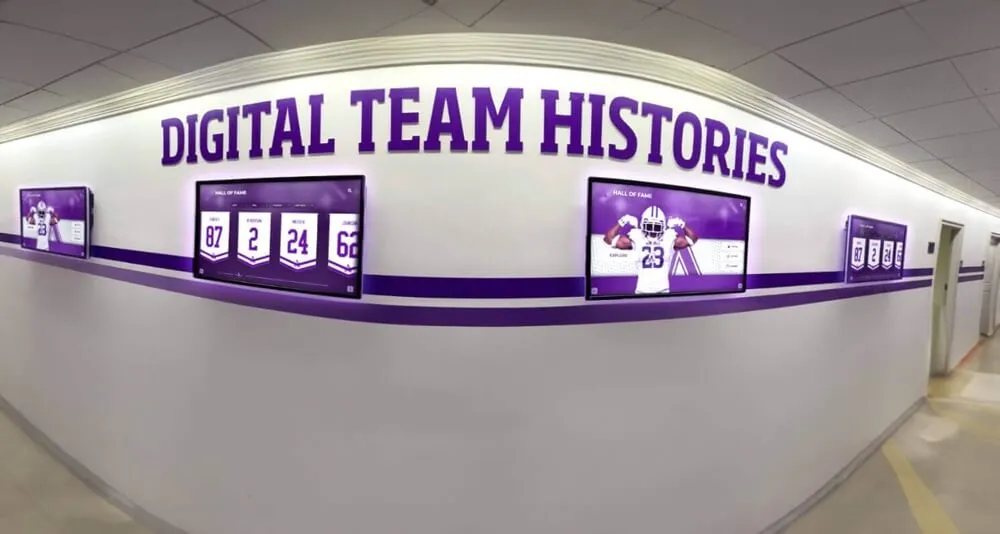
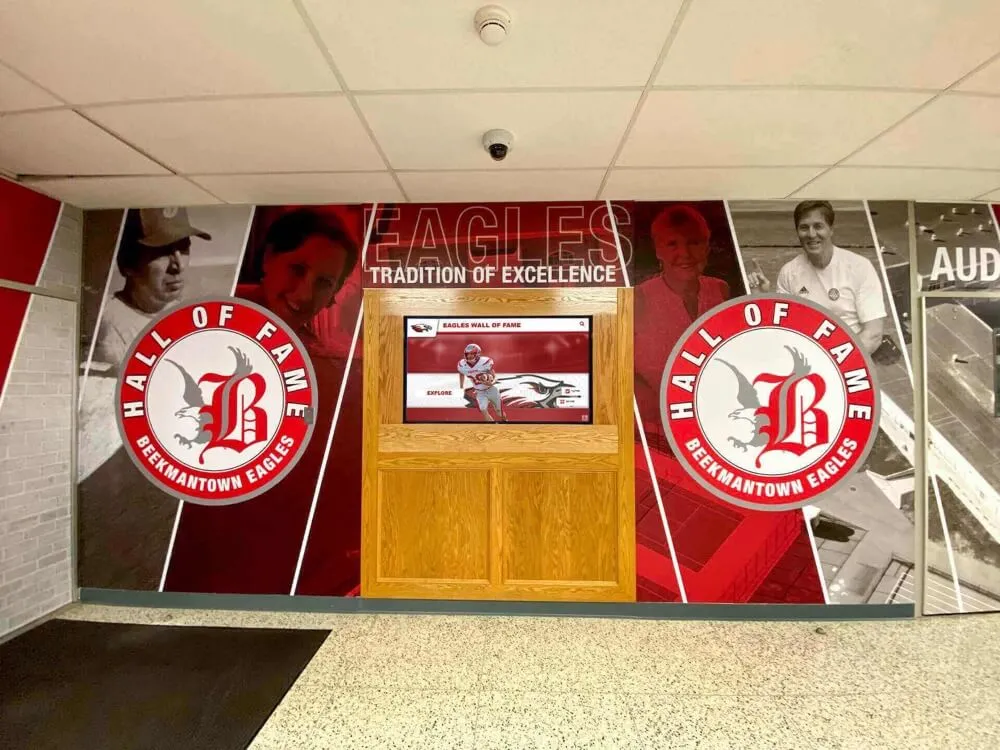
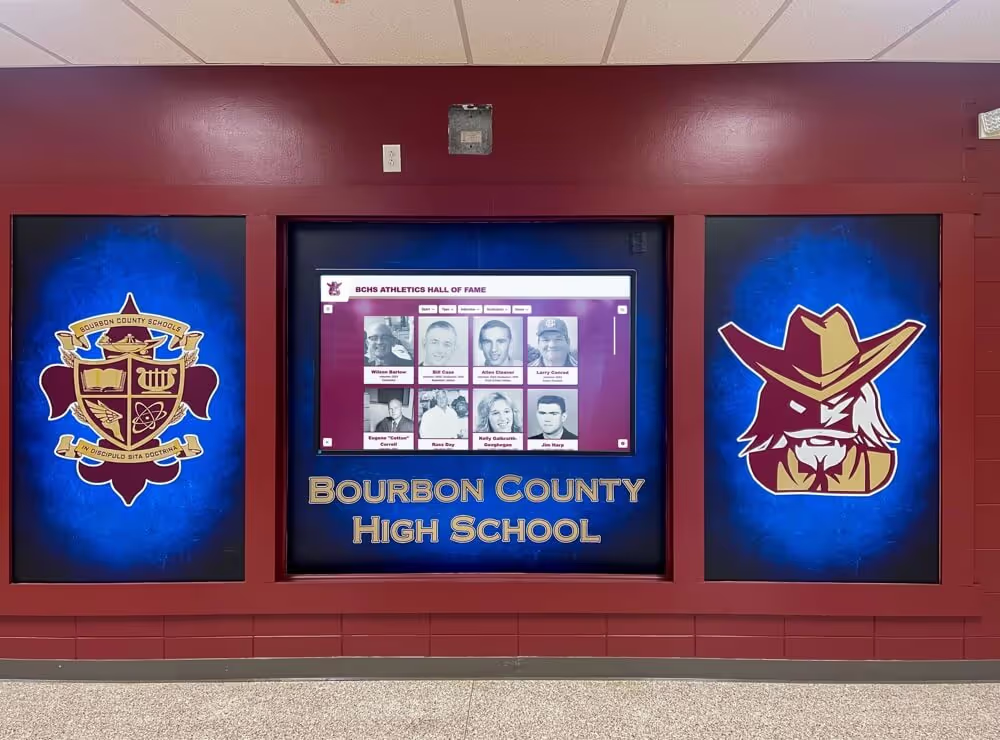
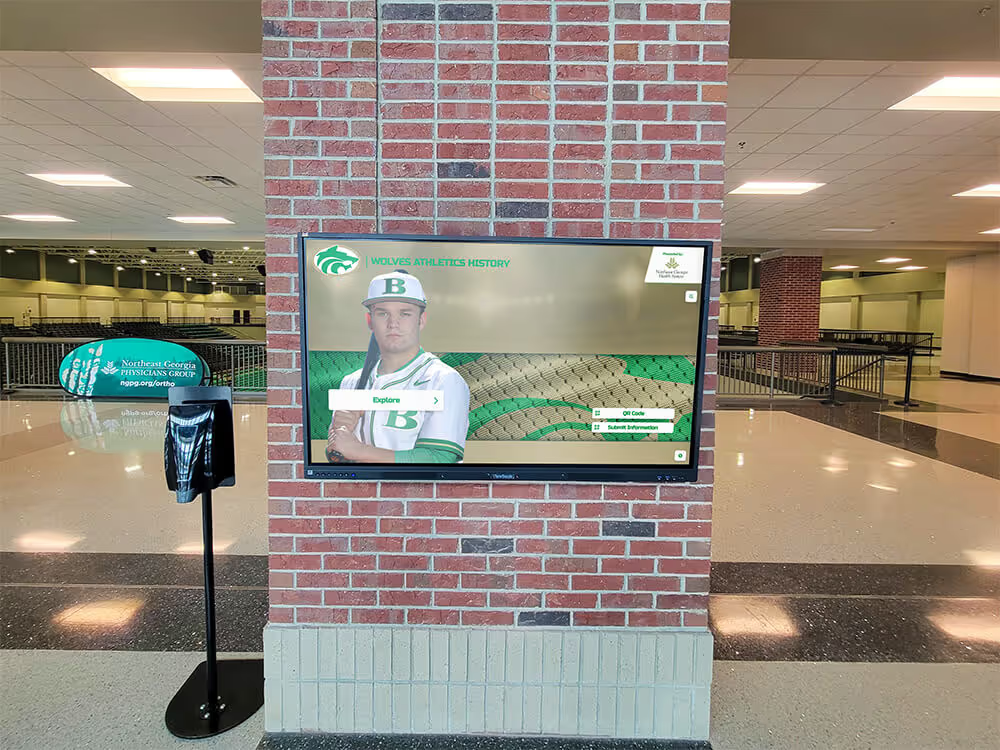
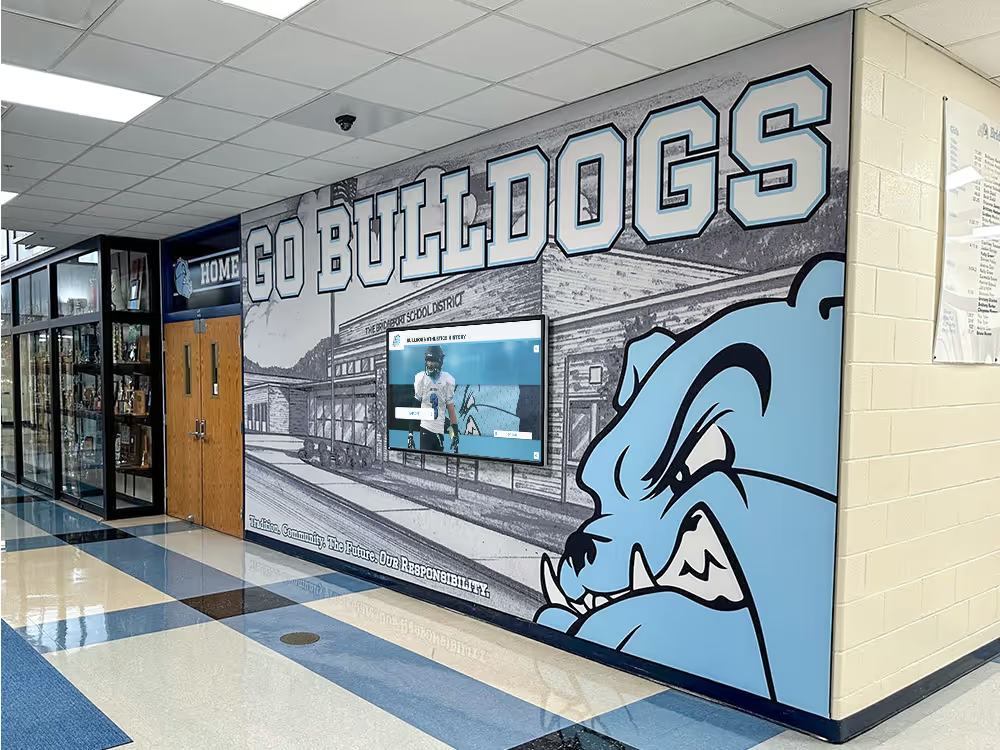
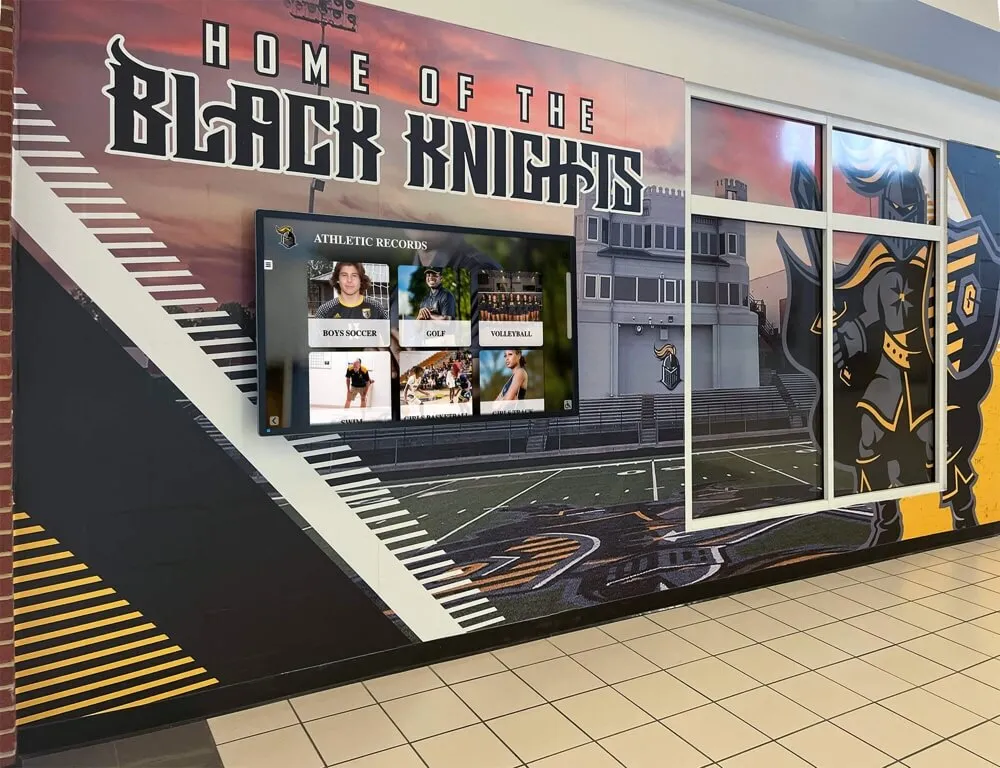
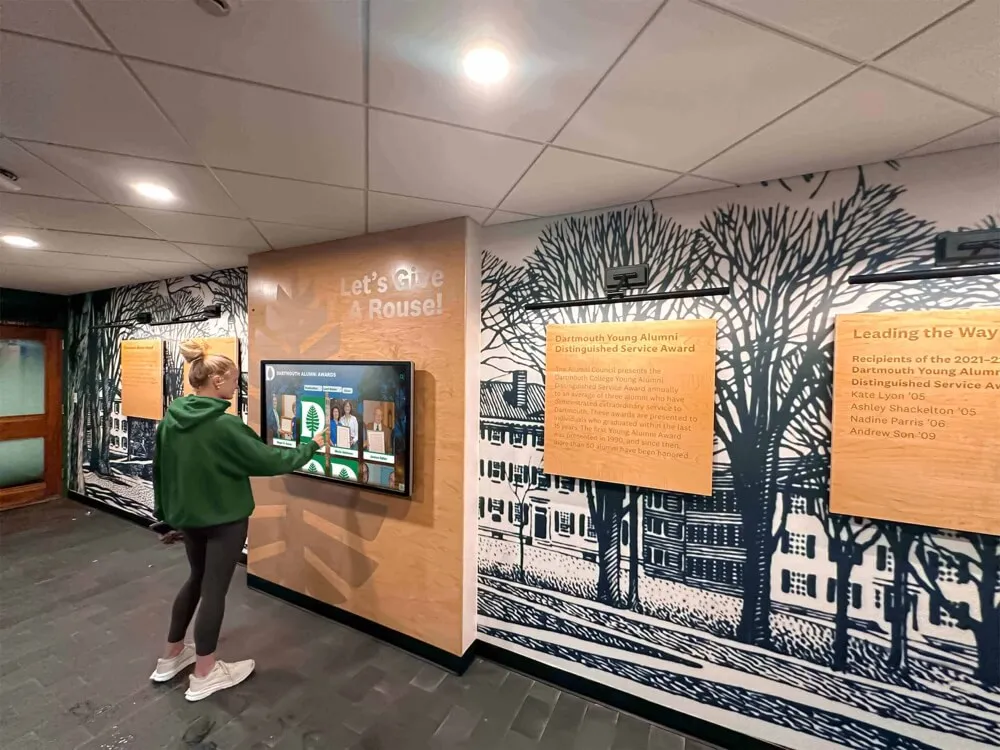
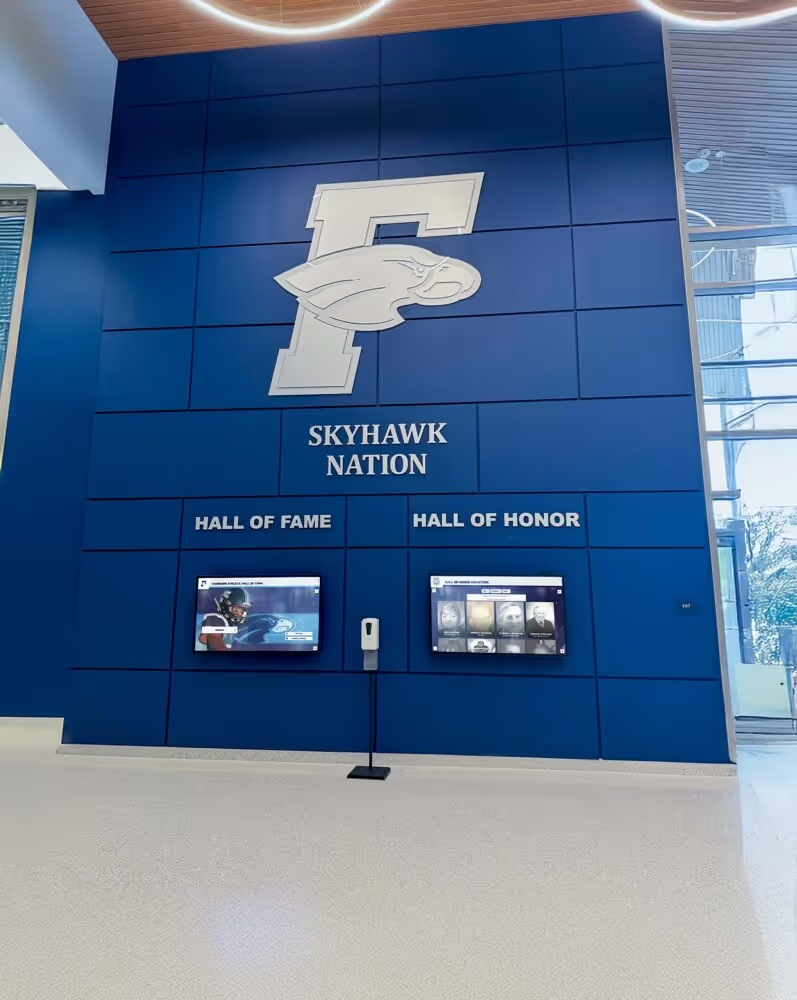
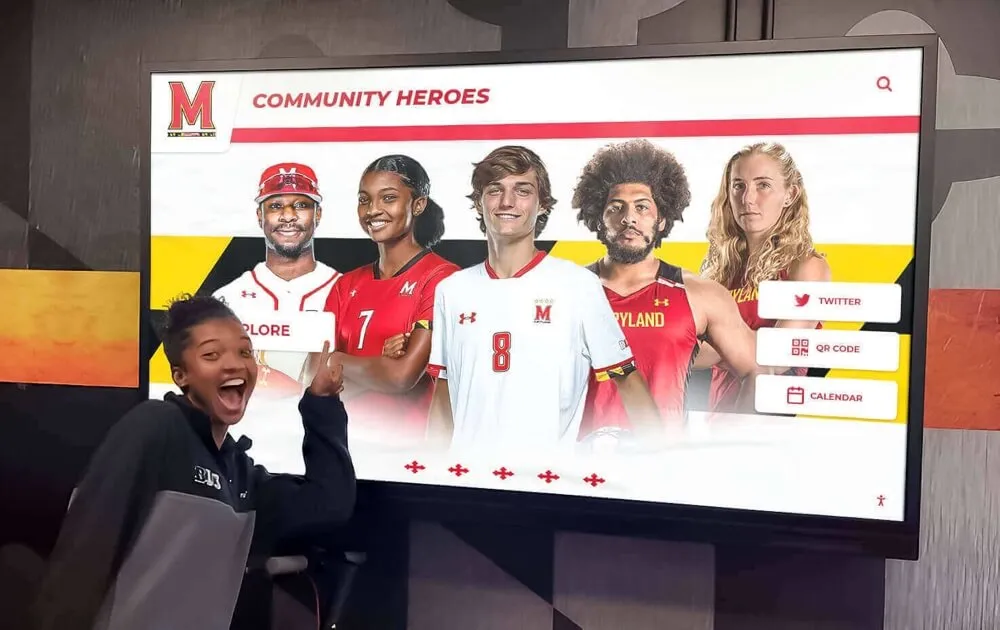
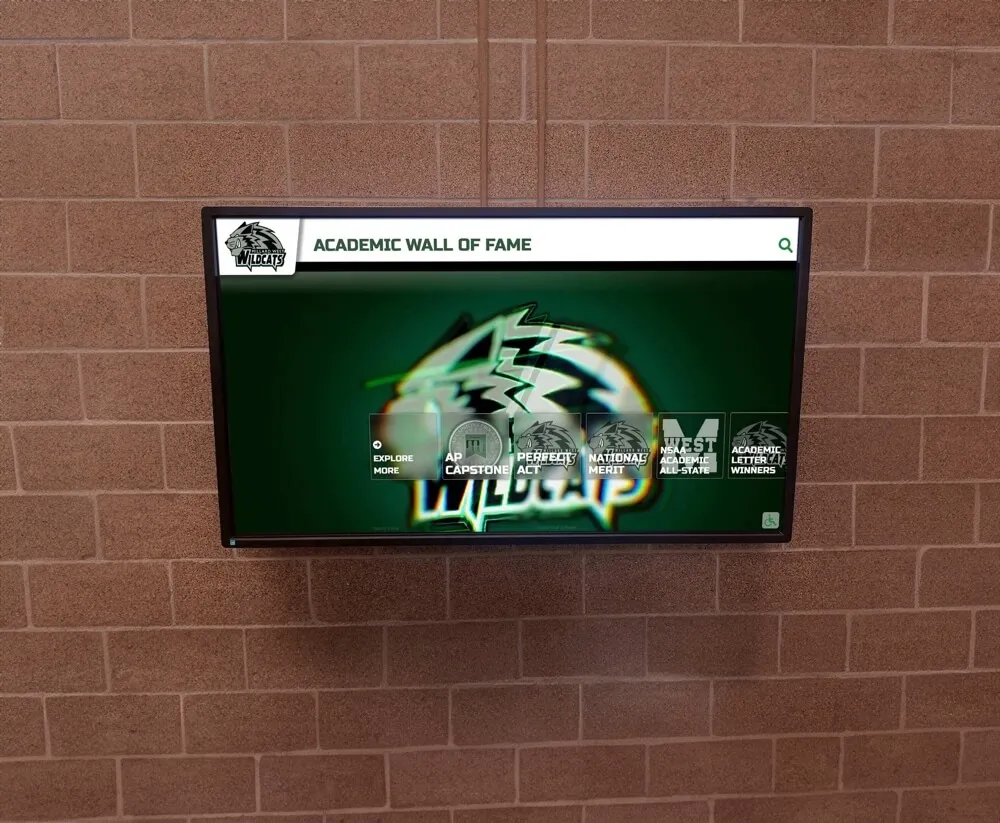
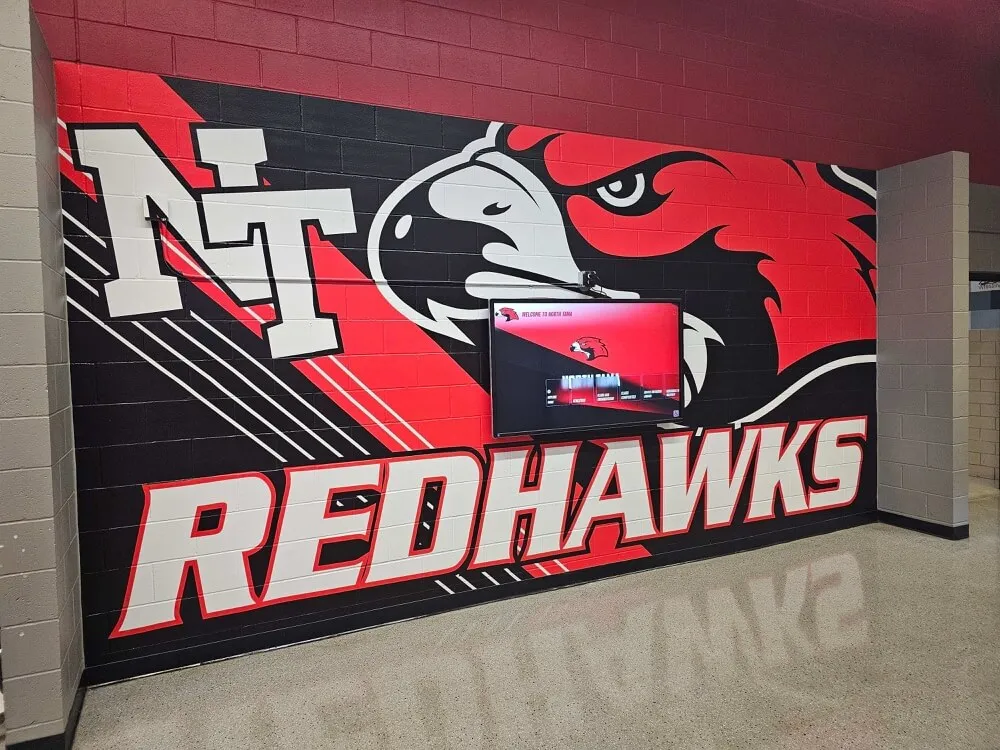
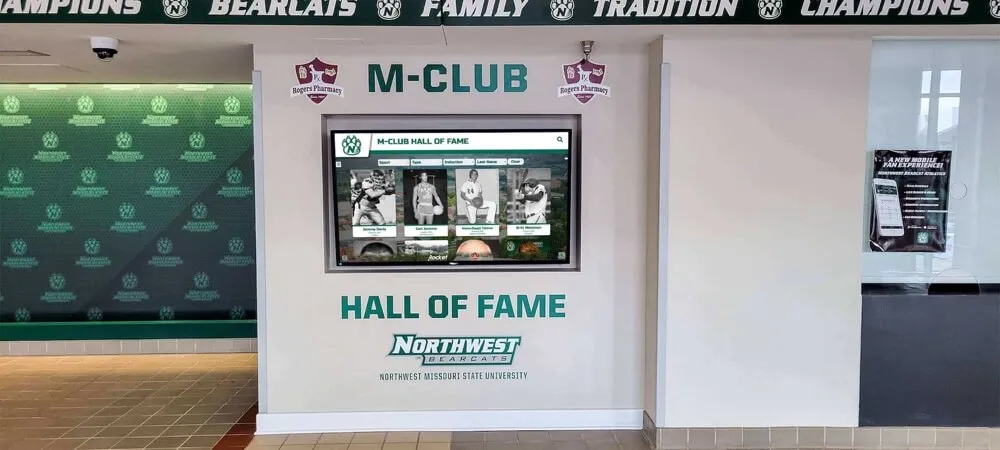
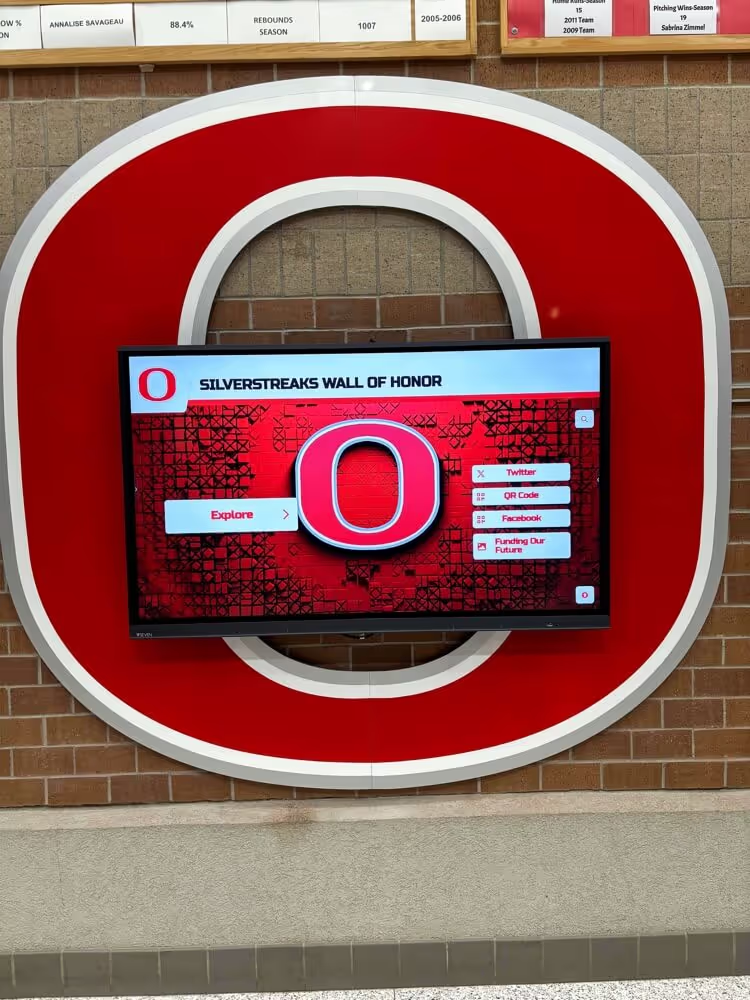
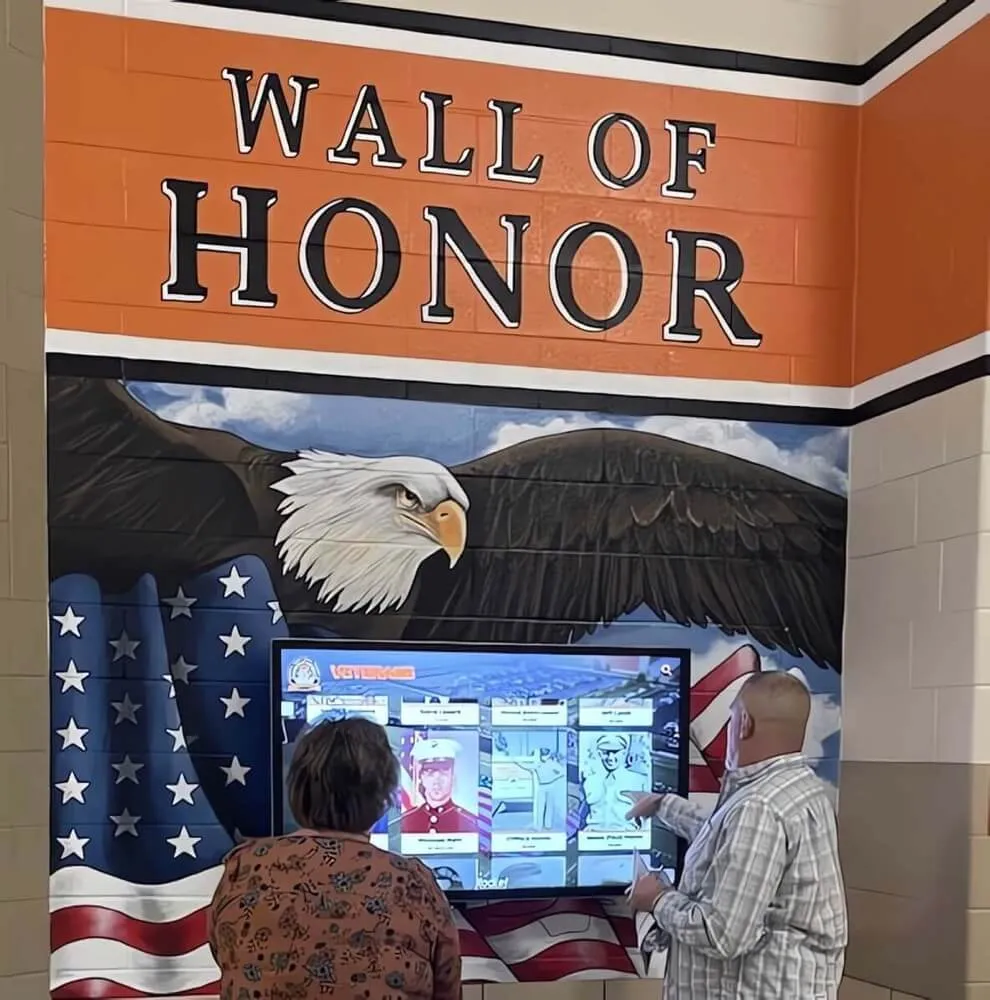
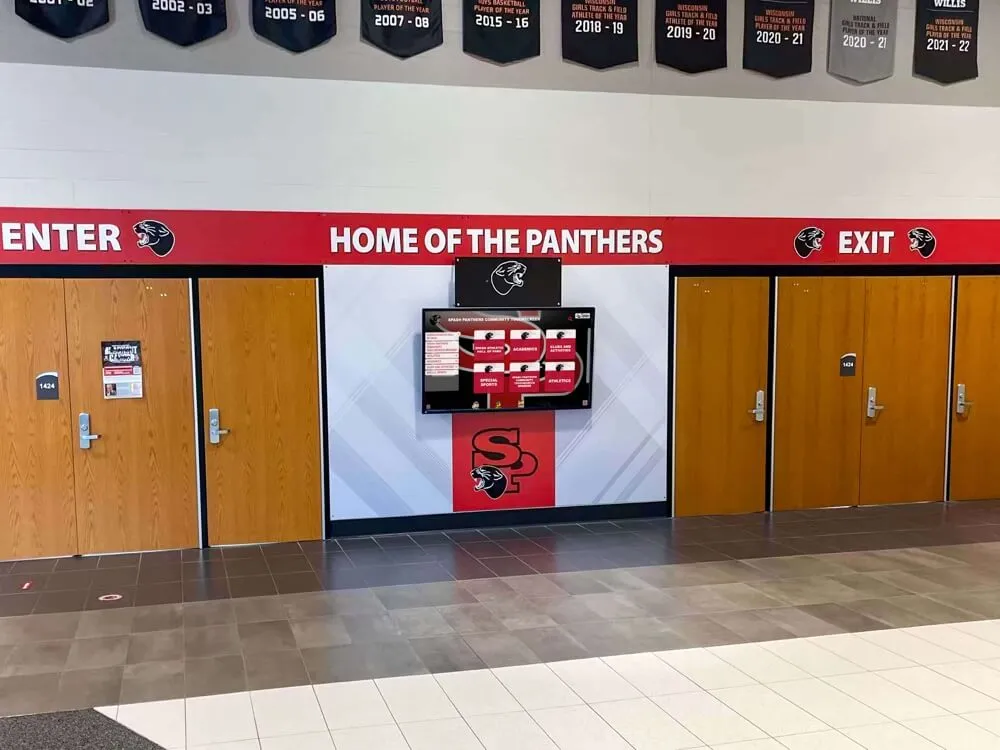
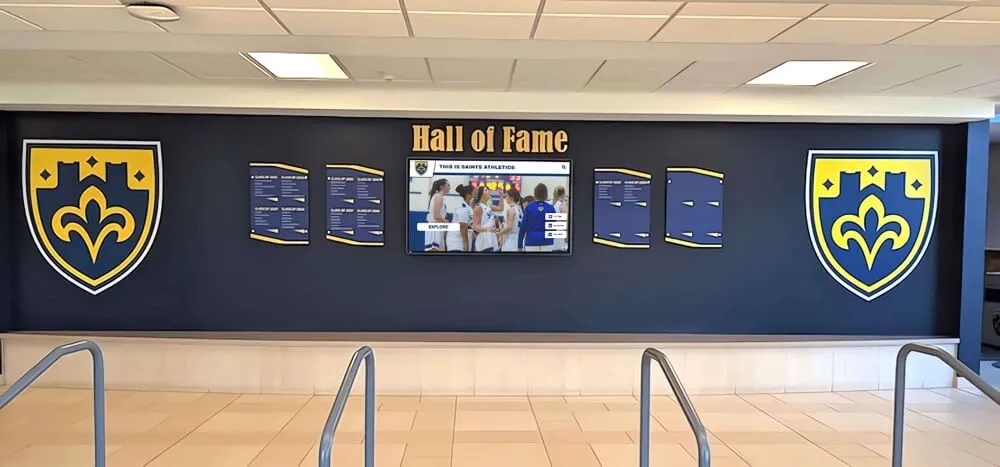
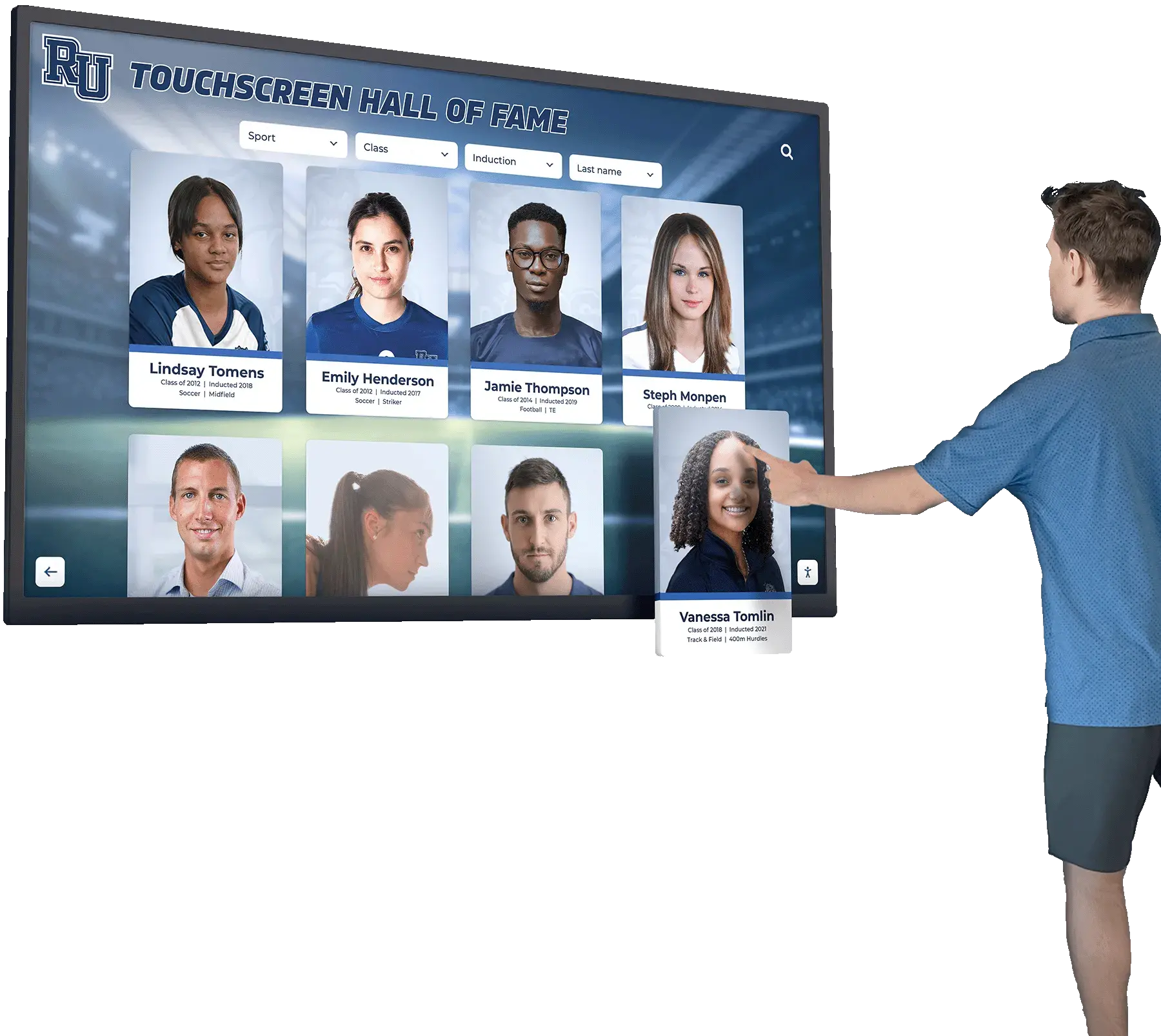
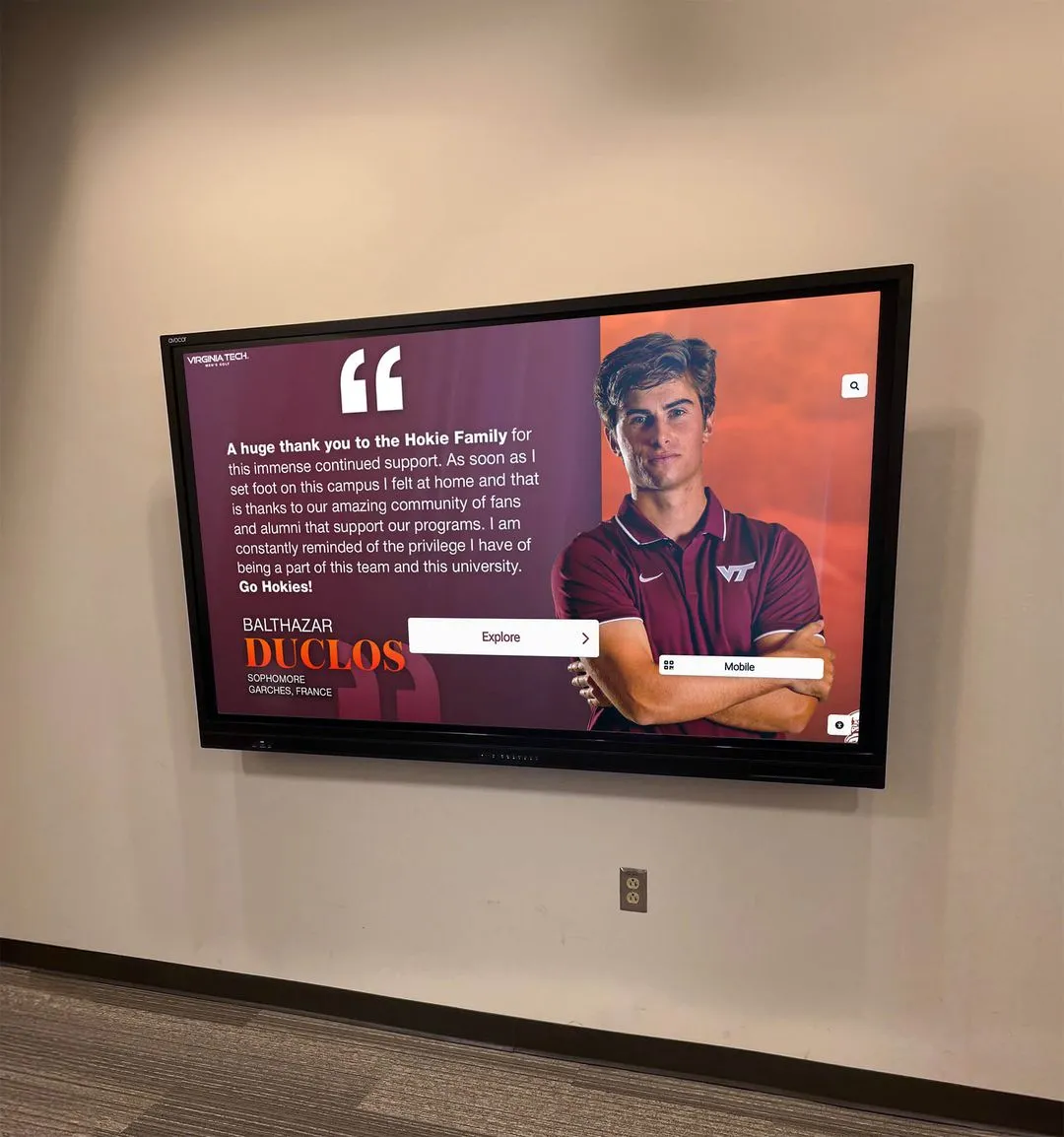
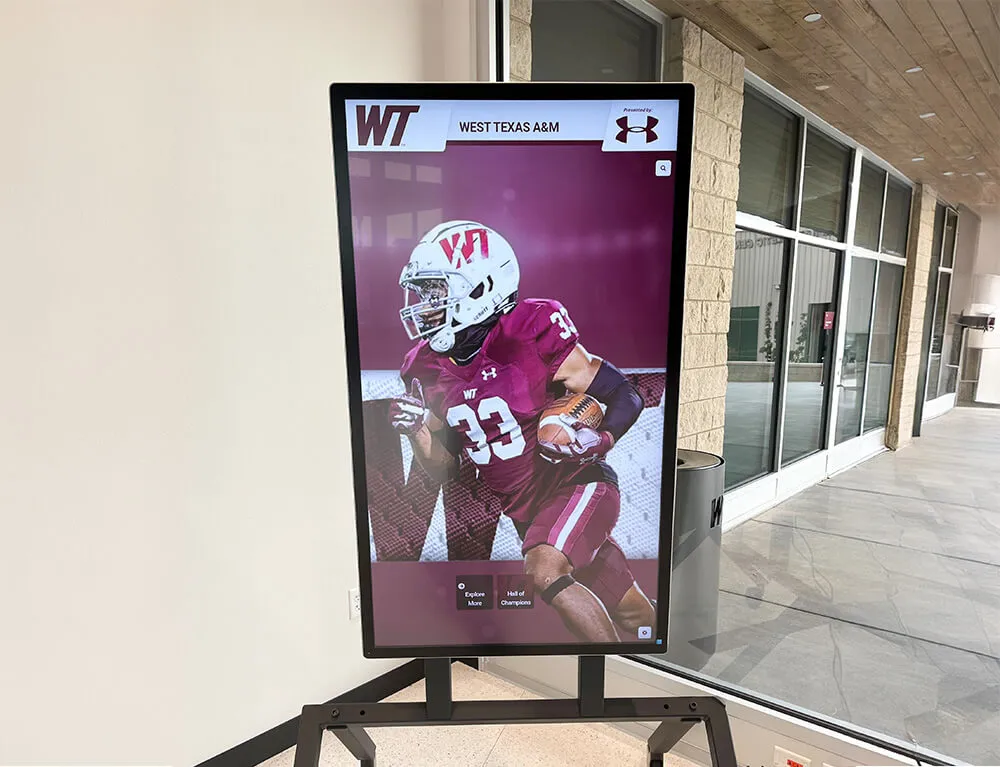
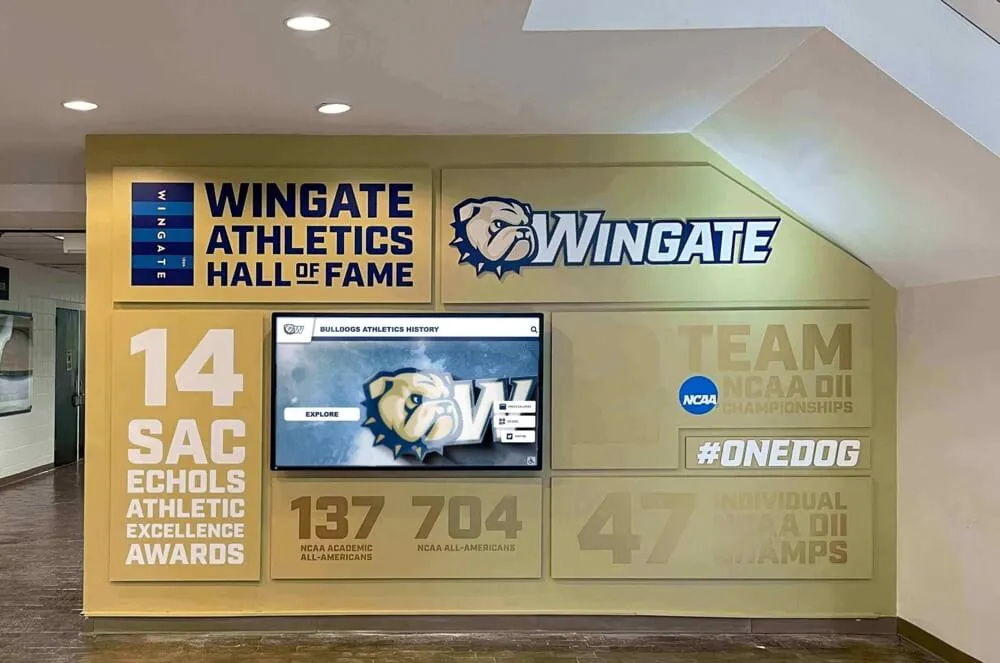

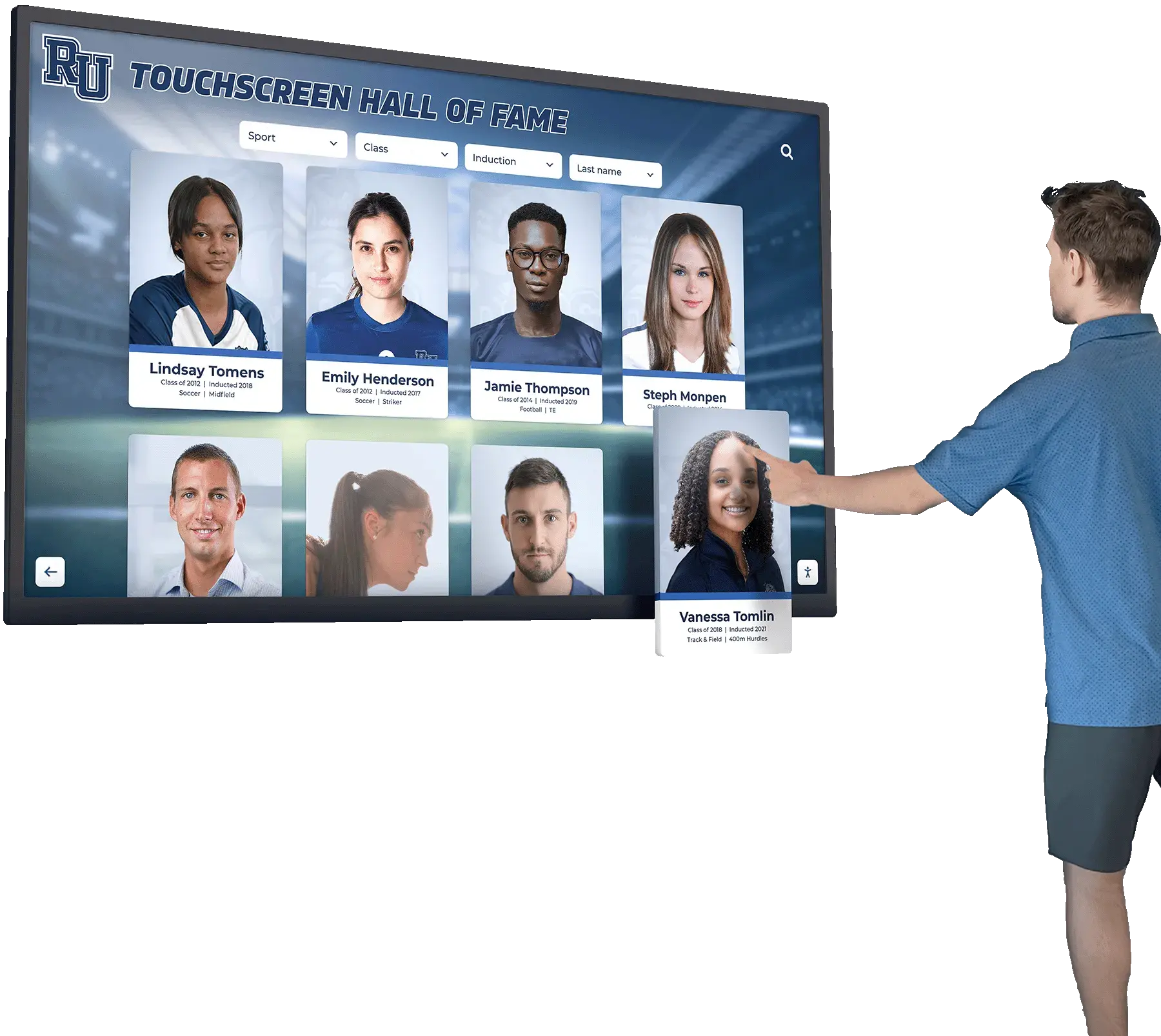
Interactive Digital Displays: Digital hall of fame touchscreens allow visitors to explore scholar athlete achievements through intuitive interfaces. Unlike static plaques limited to names and years, digital systems present comprehensive profiles including photographs, academic achievements, athletic statistics, post-graduation outcomes, and personal statements from honorees.
Touch-screen systems eliminate space constraints that eventually limit traditional displays, allowing unlimited scholar athlete recognition without difficult decisions about who to remove when wall space fills. Schools can recognize every qualifying student across decades of programs without physical expansion requirements.
Dynamic Content Updates: Digital platforms enable ongoing content enhancement as scholar athletes progress through education and careers. Initial profiles might highlight high school achievements, with updates added showing college athletic and academic success, graduate degrees, professional accomplishments, or community leadership—creating living recognition that grows alongside alumni.
Searchable Databases: Digital systems allow visitors to search by graduation year, sport, academic major, college attended, or achievement category, making it easy to find specific individuals or discover scholar athletes in fields of personal interest. This discoverability increases engagement compared to static displays visitors might glance at briefly without deeper exploration.
Social Media Integration: Modern recognition systems facilitate sharing on social platforms, enabling scholar athletes and their families to amplify achievement visibility beyond physical campus locations. This sharing extends recognition reach and creates additional touchpoints for alumni engagement with institutions.
Combining Traditional and Digital Elements
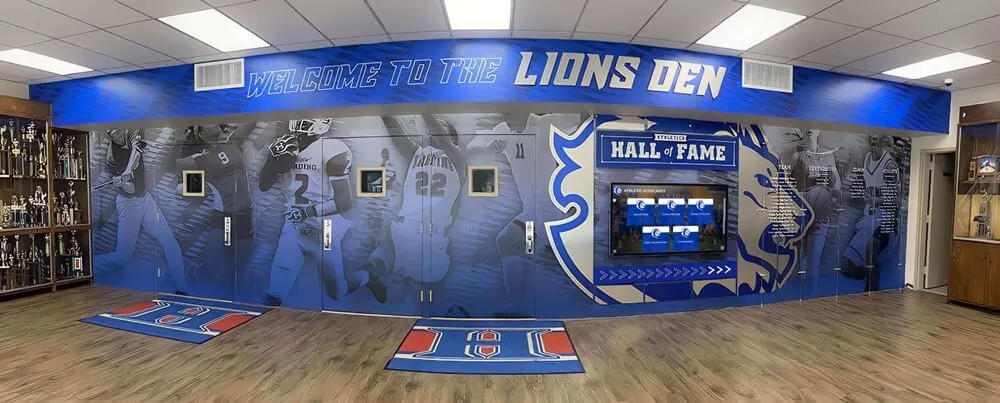
Many schools discover that hybrid approaches deliver advantages of both methodologies. A digital record board might present current year scholar athletes dynamically while traditional plaques create permanent historical records for milestone achievers.
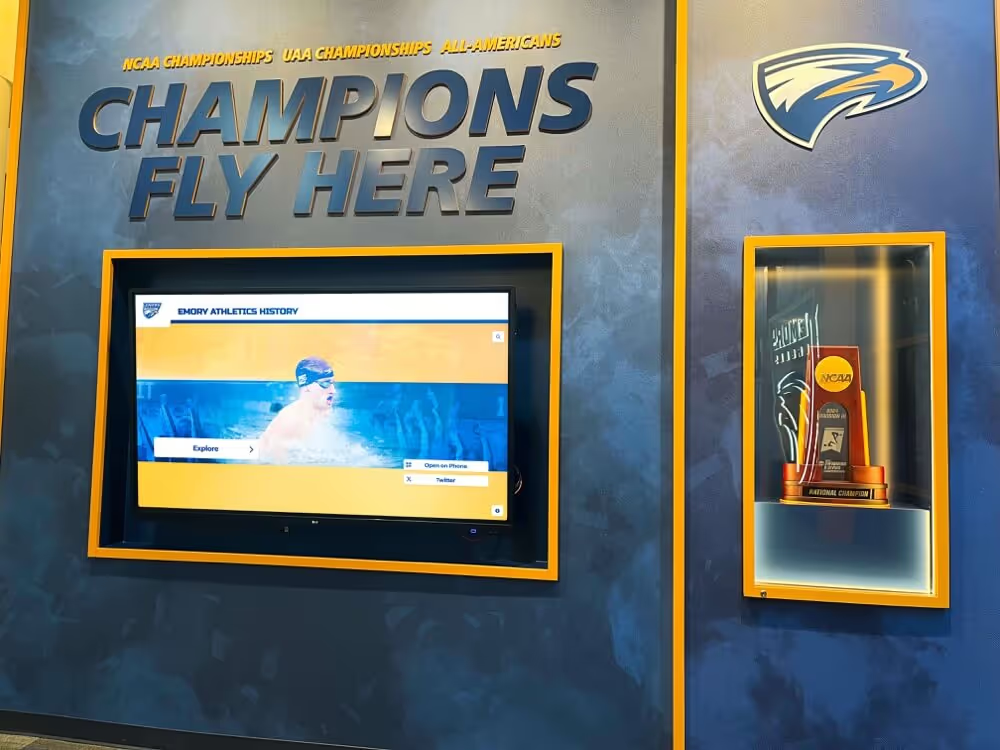
Physical trophy cases can display scholar athlete awards, team photographs, and artifacts while digital screens within or adjacent to cases provide detailed achievement information, competition highlights, or rotating featured profiles bringing static displays to life with dynamic content.
This combination satisfies multiple constituencies—traditionalists who value tangible physical recognition and technology advocates who appreciate digital flexibility and enhanced information capacity. Schools designing new recognition systems should consider constituent preferences alongside functional requirements when choosing implementation approaches.
Implementing a Scholar Athlete Award Program
Establishing meaningful recognition requires thoughtful planning beyond simply deciding on GPA cutoffs and ordering plaques. Successful programs reflect careful attention to criteria development, nomination processes, selection procedures, and celebration strategies.
Developing Appropriate Criteria for Your Institution
Scholar athlete criteria should reflect your institution’s specific context, including academic rigor, competitive athletic level, and student population characteristics. Criteria appropriate for highly selective college preparatory schools differ from those suitable for comprehensive public high schools serving diverse student populations.
Consider Your Academic Context: Schools where many students achieve 3.8+ GPAs might set scholar athlete thresholds at 3.75 or 4.0 to maintain achievement significance. Schools with broader academic distributions might establish 3.3 or 3.5 minimums ensuring recognition remains attainable for genuinely committed student-athletes while maintaining meaningful standards.
Assess Athletic Participation Levels: Large schools with deep competitive rosters might limit recognition to varsity letter-winners with significant playing time. Smaller schools might include all varsity participants plus junior varsity athletes meeting academic standards to ensure appropriate recognition breadth.
Align with Conference Standards: Many athletic conferences establish scholar athlete criteria for member schools. Aligning institutional programs with conference standards ensures your scholar athletes qualify for broader conference recognition, adding prestige beyond local programs.
Build Consensus: Involve athletic directors, coaches, academic administrators, and counseling staff in criteria development. Broad stakeholder input ensures criteria reflect realistic understanding of balancing athletic and academic demands while maintaining appropriate rigor that preserves recognition prestige.
Creating Nomination and Selection Processes
Clear, transparent procedures ensure fairness while minimizing administrative burden on coaches, teachers, and athletics staff managing program logistics.
Automated Data Collection: Many schools leverage student information systems to identify qualifying students automatically through GPA reports filtered against athletic participation rosters. Automated identification reduces manual review burden while ensuring no eligible students get overlooked due to oversights.
Coach Verification: Athletic directors typically circulate preliminary qualifying lists to coaches for verification regarding participation standards, conduct considerations, and any eligibility concerns before finalizing recognition lists.
Academic Verification: Counselors or registrars validate GPA calculations, transcript accuracy, and academic standing ensuring recognition decisions reflect accurate information.
Appeals Process: Establish procedures for addressing special circumstances—students falling marginally short of criteria due to challenging personal circumstances, grading disputes, or participation questions requiring individual review.
Timing Recognition Throughout the Year
Strategic timing influences program impact and visibility. Schools employ various scheduling approaches depending on institutional calendars and recognition traditions.
Seasonal Recognition: Some schools present scholar athlete awards at the conclusion of each sport season during team banquets or ceremonies. This approach provides timely recognition when achievement feels current and relevant while distributing celebration across the academic year rather than concentrating in single events.
Annual Year-End Celebrations: Many institutions prefer comprehensive annual scholar athlete recognition ceremonies honoring all qualifying students across all sports simultaneously. This approach creates significant events that communities and families plan around, concentrating attention and prestige while potentially including ceremonies within 100 youth sports award ideas frameworks.
Combined with Academic Honors: Schools sometimes integrate scholar athlete recognition with broader academic achievement celebrations—honor roll ceremonies, academic awards nights, or graduation honors. This positioning emphasizes academic dimensions of achievement while ensuring strong academic community attendance at recognition events.
Social Media Campaigns: Digital announcements spread across academic years maintain ongoing visibility for scholar athlete achievement. Weekly or monthly social media features highlighting individual scholar athletes create sustained recognition reinforcing program visibility and cultural importance.
Scholar Athlete Awards at Different Educational Levels
Recognition programs require different approaches and criteria depending on student developmental stages, competitive contexts, and educational environments. Effective programs reflect these distinctions rather than applying uniform standards across diverse contexts.
Middle School Scholar Athlete Programs
Middle school represents an ideal time to introduce scholar athlete concepts, establishing expectations that academic and athletic excellence complement each other during crucial formative years.
Criteria at this level should emphasize effort and progress alongside absolute performance standards. Middle school students demonstrate substantial variability in academic development, physical maturity, and time management skill development. Recognition programs should honor students making genuine effort toward balanced achievement rather than exclusively celebrating students with natural advantages.
Appropriate middle school criteria might include:
- GPA thresholds at 3.0-3.5 range recognizing solid academic effort
- Participation requirements emphasizing commitment and improvement rather than playing time or performance outcomes
- Conduct standards teaching sportsmanship and appropriate behavior
- Growth recognition for students showing marked academic or athletic improvement
Middle school programs create foundation for high school scholar athlete achievement, establishing cultural expectations early while making recognition accessible to students still developing capabilities they’ll refine in subsequent years.
High School Scholar Athlete Recognition
High school represents the traditional apex of scholar athlete recognition, where programs carry greatest prestige and influence on college admissions and scholarship outcomes.
High school criteria typically require demonstrated excellence rather than merely solid effort. GPA minimums commonly fall between 3.5-3.8, athletic requirements emphasize varsity participation and significant contribution, and character standards reflect maturity expectations appropriate for students approaching adulthood.
Many high schools participate in statewide or conference-wide scholar athlete programs administered by athletic associations. Schools should ensure institutional criteria align with these broader programs enabling students to receive recognition at multiple levels—school, conference, state, and potentially national programs for exceptional achievers.
The alumni spotlight features can profile former scholar athletes, creating visible examples demonstrating how balanced high school achievement translated to college and career success, inspiring current students to pursue similar excellence.
Collegiate Scholar Athlete Programs
College and university scholar athlete recognition occurs through institutional programs, conference honors, and national organizations like the NCAA which maintains extensive academic recognition initiatives.
College criteria often establish higher thresholds reflecting increased academic rigor and more intense athletic demands. Many programs require GPAs of 3.3 or higher, with some establishing 3.5+ minimums for highest honor tiers.
Collegiate programs increasingly recognize multi-year sustained achievement through cumulative GPA requirements rather than single semester or year performance. This approach honors students maintaining excellence across entire college careers despite increasing academic difficulty and athletic demands in upper-division years.
Professional leagues including the NFL, NBA, WNBA, MLB, and MLS maintain scholar athlete recognition programs for players who completed college degrees, demonstrating that academic commitment continues mattering even at professional athletic levels.
Showcasing Scholar Athletes to Inspire Future Students
Effective recognition extends beyond honoring current achievers to creating inspiration that influences future student behavior and aspirations. How schools showcase scholar athletes significantly impacts motivational influence on younger students.
Creating Compelling Scholar Athlete Profiles
Comprehensive profiles that tell complete stories create more powerful inspiration than name-and-year lists. Effective profiles might include:
Academic and Athletic Statistics: GPA, class rank, test scores alongside sport statistics, honors, and achievements create complete achievement pictures showing excellence in both domains quantitatively.
Personal Narratives: First-person statements from scholar athletes describing their experiences, challenges overcome, time management strategies, and advice for students pursuing dual excellence add relatable human dimensions to statistical achievements.
Post-Graduation Outcomes: Updating profiles with college choices, scholarship information, collegiate athletic and academic performance, and eventual career paths demonstrate long-term value of balanced high school achievement.
Photographs and Multimedia: Professional photographs of scholar athletes in both academic and athletic contexts, action photography from competitions, and even video profiles create engaging content that captures attention more effectively than text alone.
Digital platforms excel at presenting this comprehensive content, overcoming space limitations that prevent traditional plaques from displaying detailed information. Interactive touchscreen displays enable rich multimedia profiles that static recognition cannot match.
Strategic Placement for Maximum Visibility
Recognition displays deserve prominent placement in high-traffic areas where students, families, and visitors encounter them regularly rather than relegation to distant corners or rarely-visited locations.
Ideal placement locations include:
- Main school entrances and lobbies: Welcome visitors and set institutional tone emphasizing balanced achievement
- Athletic facility entrances: Create immediate context showing academic achievement valued equally with athletic success
- Cafeterias and commons areas: Ensure student body encounters recognition daily during routine activities
- Guidance and college counseling offices: Provide context for college planning conversations and demonstrate possibilities to students exploring options
Schools with multiple athletic facilities might create distributed recognition, featuring relevant sport scholar athletes in specific venues (basketball scholar athletes in gymnasiums, swimming scholar athletes at pools) while maintaining comprehensive displays in main locations.
Connecting Scholar Athletes with Current Students
Living examples create more powerful influence than historical recognition. Schools should facilitate connections between scholar athletes and current students through structured mentorship and engagement programs.
Mentorship Programs: Pair current scholar athletes with younger students aspiring to similar achievement, creating guidance relationships where older students share strategies, experiences, and encouragement.
Speaking Engagements: Feature scholar athletes at team meetings, academic assemblies, or school-wide events where they can share their journeys and inspire peers through relatable examples.
Alumni Panels: Invite graduated scholar athletes to return for panel discussions about college experiences, career paths, and how high school balanced achievement prepared them for subsequent success.
Digital Connections: Use social media and video platforms to maintain connections between current students and graduated scholar athletes, enabling ongoing engagement regardless of geographic distance.
These active engagement strategies transform static recognition into dynamic programs that create ongoing inspiration and guidance rather than merely documenting past achievement.

Measuring Scholar Athlete Program Impact
Like any institutional initiative, recognition programs benefit from periodic assessment examining whether they achieve intended outcomes and deliver appropriate return on investment.
Tracking Academic Performance Among Athletes
Effective programs should demonstrate positive influence on athletic program academic performance broadly, not just among students already excelling academically.
Compare academic metrics before and after program implementation:
- Average team GPAs across athletic programs
- Percentage of athletes achieving honor roll status
- Academic eligibility issues and ineligibility instances
- College admission rates and scholarship awards among athletes
- Standardized test score trends for student-athletes
Positive trends suggest recognition programs influence broader athletic program cultures, creating peer expectations and support systems that encourage academic achievement beyond individual scholarship award recipients.
Student and Family Feedback
Qualitative feedback from scholar athletes and families provides important insight into program meaning and impact that quantitative metrics might miss.
Survey scholar athletes regarding:
- Whether recognition motivated increased academic effort
- How award recognition influenced college admissions outcomes
- What program elements felt most meaningful
- Suggestions for program improvements
Family feedback helps assess whether recognition creates sufficient prestige and celebration appropriate for achievements requiring substantial sacrifice and commitment from entire families supporting student-athletes.
Alumni Engagement Outcomes
Long-term program success appears in sustained alumni connections with institutions, measured through participation in alumni programs, attendance at school events, contributions to annual giving, volunteering for mentorship or career support, and advocacy within professional and social networks.
Scholar athletes who felt appropriately recognized during their school years maintain stronger lifelong connections than peers who perceived that their balanced achievements went unacknowledged or undervalued by institutions.
Conclusion: Celebrating Excellence in All Its Forms
Scholar athlete awards recognize a special category of student achievement that deserves distinct acknowledgment—the sustained excellence required to compete at high levels athletically while maintaining academic performance demonstrating genuine intellectual engagement and learning. These students make daily sacrifices, demonstrate remarkable time management, develop mental toughness balancing simultaneous demands, and embody institutional ideals that education develops multiple dimensions of human potential.
Schools that implement meaningful scholar athlete recognition programs inspire balanced excellence, create cultural expectations that athletic and academic success complement rather than compete with each other, and celebrate students who prove that dedication to multiple pursuits produces better-rounded individuals than single-dimensional focus.
Whether through traditional plaques, modern digital recognition systems, or hybrid approaches combining both, honoring scholar athletes sends powerful messages to students, families, and communities about institutional values and priorities. These recognition programs demonstrate that schools measure success through balanced achievement, support students pursuing excellence in multiple areas simultaneously, and believe that developing both mind and body creates educational experiences with lasting impact.
Ready to create a recognition program that celebrates your scholar athletes meaningfully? Explore how Rocket Alumni Solutions’ digital recognition platforms enable schools to showcase balanced achievement through interactive touchscreen displays that tell complete stories, eliminate space constraints, and create engaging experiences that inspire current students while honoring exceptional graduates.