



Key Takeaways
Discover Rocket Recognition, the comprehensive cloud-based platform that unifies athletic, academic, alumni, and donor recognition in one powerful system for schools and organizations.
Schools, universities, and organizations face a common challenge: celebrating achievements across multiple categories while managing administrative complexity, controlling costs, and maintaining engaging, up-to-date recognition displays. Traditional approaches fragment recognition across separate systems for athletics, academics, donors, and alumni, creating operational inefficiency, inconsistent branding, and mounting long-term expenses from continuous plaque production. These challenges intensify as institutions grow, recognition categories expand, and stakeholders expect modern, interactive experiences rather than static wall displays.
Rocket Recognition addresses these challenges through a comprehensive, cloud-based digital recognition platform that unifies all recognition types into a single centralized system. By combining interactive touchscreen displays, web-accessible portals, and intuitive content management, the platform enables institutions to celebrate achievements more effectively while dramatically reducing administrative burden, lowering long-term costs, and delivering superior engagement through multimedia storytelling and searchable databases.
This comprehensive guide explores how Rocket Recognition transforms institutional recognition programs, the specific challenges it solves, implementation considerations, and the measurable benefits organizations achieve through unified digital recognition platforms.
Understanding the Recognition Challenge Facing Institutions
Modern schools and organizations struggle with recognition complexity that traditional approaches cannot adequately address.
The Fragmentation Problem: Multiple Systems, Multiple Challenges
Most institutions manage recognition through disconnected approaches that create operational inefficiency:
Separate Physical Displays for Each Category:
Traditional recognition fragments across distinct locations and formats:
- Athletic trophy cases in gymnasium lobbies displaying team championships
- Academic honor roll plaques in main hallways listing distinguished scholars
- Donor recognition walls in administrative buildings acknowledging contributions
- Alumni achievement displays in specific department areas or meeting rooms
- Arts and performing arts recognition in auditorium or music wing hallways
- Community service and leadership awards in student activity centers
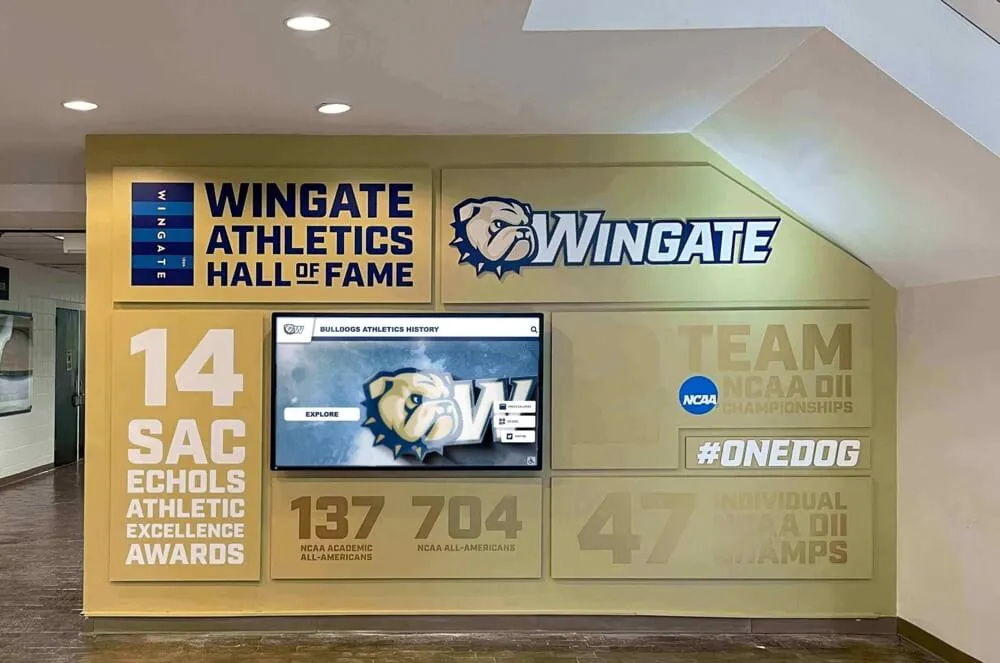
This fragmentation prevents visitors from discovering the full breadth of individual achievements. An alumnus who excelled athletically, earned academic honors, and later became a significant donor might appear in three separate locations with no connection between recognitions, diminishing the comprehensive story of their relationship with the institution.
Administrative Burden Across Multiple Vendors:
Managing disconnected recognition systems creates substantial administrative overhead:
- Separate vendor relationships for plaque production, trophy cases, and display systems
- Different ordering processes, timelines, and quality standards for each category
- Multiple annual budget line items requiring individual justification and approval
- Inconsistent update schedules creating recognition delays across categories
- Varied staff responsibilities without centralized coordination or oversight
- Difficulty ensuring brand consistency across recognition formats and locations
- Complex procurement processes when multiple departments control recognition spending
Organizations with multiple recognition types commonly report that staff spend 80-120 hours annually just coordinating recognition logistics across vendors and categories, time that could support higher-value advancement and engagement activities. Solutions like digital recognition displays address these coordination challenges through centralized management.
Mounting Long-Term Costs:
Traditional recognition generates continuous expenses that accumulate over time:
- Per-inductee plaque costs ranging from $200-500 depending on quality and size
- Annual engraving fees adding $50-150 per recognition
- Installation labor charges of $100-300 per plaque for professional mounting
- Trophy case expansion or reorganization costing $3,000-8,000 every 5-7 years
- Display lighting and maintenance expenses for aging physical systems
- Storage costs for displaced older recognition when space limitations force removal
A typical comprehensive school program recognizing 15-25 individuals annually across all categories spends $8,000-15,000 yearly on traditional recognition, totaling $160,000-300,000 over 20 years before accounting for inflation or capacity expansion costs.
The Capacity Constraint: Physical Space Limitations
Physical recognition approaches eventually exhaust available space, forcing difficult decisions:
The Recognition Ceiling:
Traditional displays impose hard limits on recognition capacity:
- Finite wall space restricting total inductee numbers
- Trophy case dimensions limiting display possibilities
- Hallway real estate competition from other institutional priorities
- Building architecture constraining installation locations and expansion options
- Fire codes and accessibility requirements reducing usable wall space
- Aesthetic considerations preventing unlimited plaque proliferation
Many institutions reach capacity within 10-15 years of establishing recognition programs, forcing them to choose between expensive facility modifications, displacing older recognition to create space, or artificially limiting annual recognition numbers below appropriate levels.
Difficult Displacement Decisions:
When space exhausts, institutions face uncomfortable choices:
- Removing older inductees from prominent display to accommodate recent honorees
- Creating secondary “archive” recognition in less visible locations
- Establishing rotating displays that feature only subsets of honorees
- Limiting annual induction classes below numbers warranted by achievement
- Excluding worthy categories entirely due to display space constraints
- Disadvantaging certain sports or departments with less prominent locations
These decisions create controversy and disappoint alumni who feel their recognition has been diminished, potentially damaging institutional relationships and future engagement. Many administrators explore comprehensive digital recognition solutions specifically to overcome capacity limitations.
Traditional Recognition Challenges
- Physical space limitations: Finite capacity requiring difficult choices
- Fragmented systems: Disconnected displays across campus locations
- High ongoing costs: Continuous plaque and installation expenses
- Limited information: Space constraints preventing comprehensive storytelling
- Update complexity: Physical access required for any content changes
- Static presentation: No multimedia, search, or interactive exploration
- Accessibility barriers: Height placement and text size limiting access
- Vendor complexity: Multiple relationships across recognition categories

The Engagement Gap: Static Displays in a Digital Age
Traditional physical recognition fails to engage modern audiences accustomed to interactive digital experiences:
Limited Storytelling Capability:
Plaques and trophies constrain recognition depth:
- Text space limitations preventing biographical narrative or achievement context
- No capacity for photos beyond small headshots if included at all
- Impossible integration of video highlights or multimedia content
- Statistical achievements reduced to basic numbers without context
- No connection to related recognitions or institutional history
- Inability to share recognition digitally with broader audiences
- Static presentation offering no progressive disclosure or deeper exploration
Visitors encounter names and dates but miss the rich stories behind achievements that create emotional connection and inspire current students.
Poor Discoverability:
Physical displays prevent effective recognition exploration:
- No search functionality requiring visitors to scan every plaque sequentially
- Difficult finding specific individuals without knowing exact location
- Inability to filter by criteria like sport, year, achievement type, or category
- Chronological organization making thematic or categorical exploration impossible
- No cross-referencing between related achievements across display areas
- Visitors miss recognition unless physically present at specific campus locations
- Alumni cannot easily show family members their recognition from distant locations
These limitations particularly disadvantage institutions trying to strengthen alumni engagement and demonstrate recognition value to prospective donors or student-athletes. Modern approaches to interactive alumni recognition address these engagement challenges effectively.
What Is Rocket Recognition? The Unified Digital Recognition Platform
Rocket Recognition provides a comprehensive cloud-based solution that consolidates all recognition types into a single, centrally managed system.
Core Platform Architecture and Capabilities
Rocket Recognition combines multiple integrated components serving different recognition needs:
Cloud-Based Content Management System:
The platform’s administrative foundation enables efficient recognition management:
- Web-based dashboard accessible from any browser without software installation
- Intuitive drag-and-drop interfaces requiring no technical expertise
- Template-based content creation ensuring consistent professional presentation
- Bulk import capabilities enabling efficient migration of historical records
- Approval workflows supporting multi-person content review processes
- Media asset management organizing photos, videos, and documents centrally
- Version control and content scheduling for planned future updates
- Role-based permissions controlling access across administrative teams
Administrators can add new inductees, update existing profiles, upload media, and publish changes in minutes rather than the weeks required for traditional plaque production and installation cycles. The cloud architecture means updates appear instantly across all displays and web portals without requiring physical hardware access or technical support.
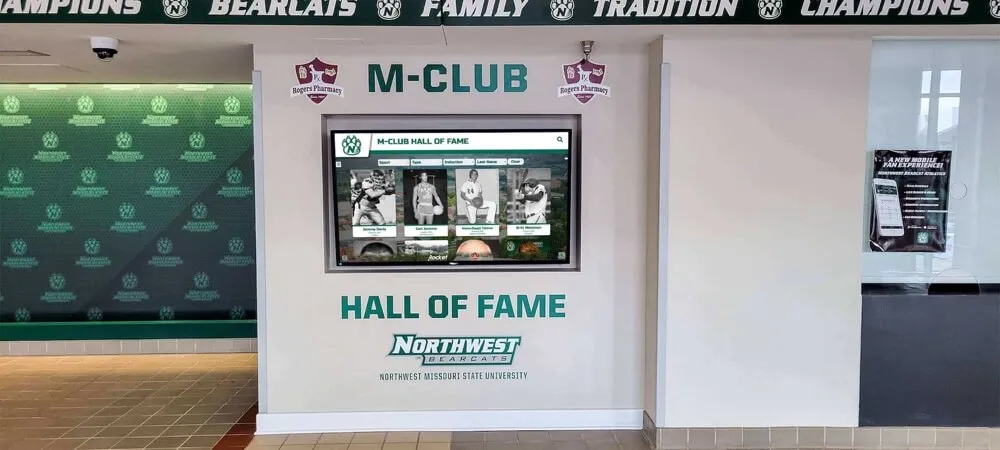
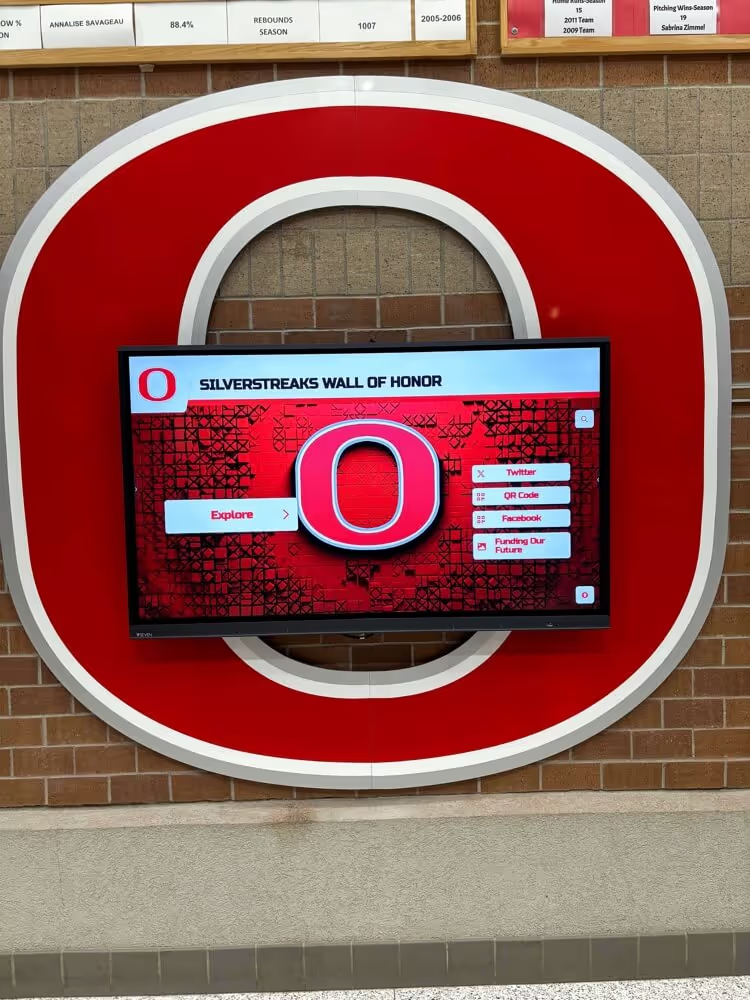
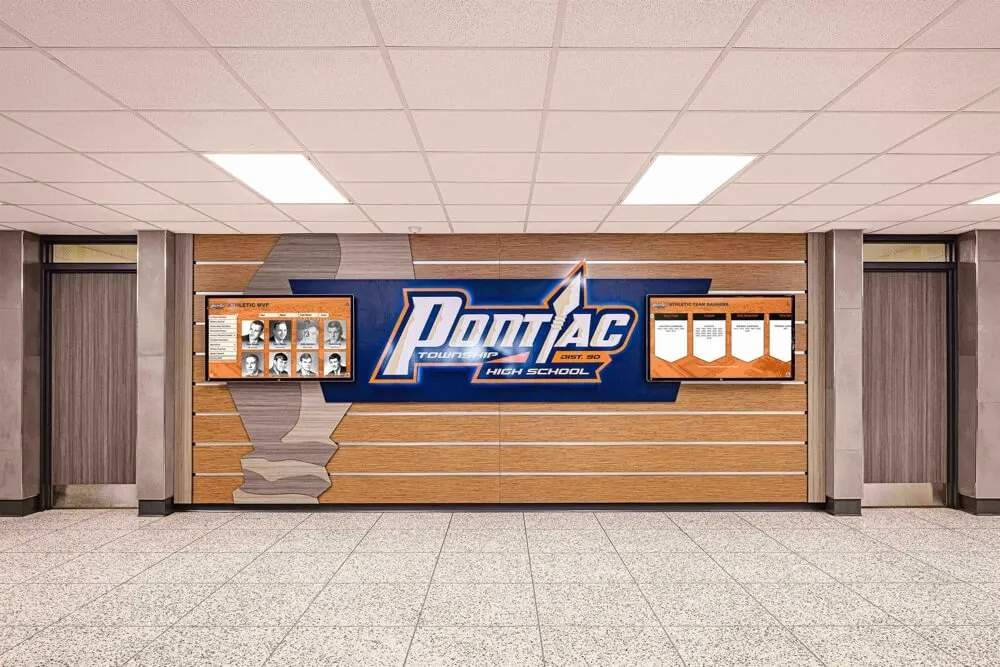
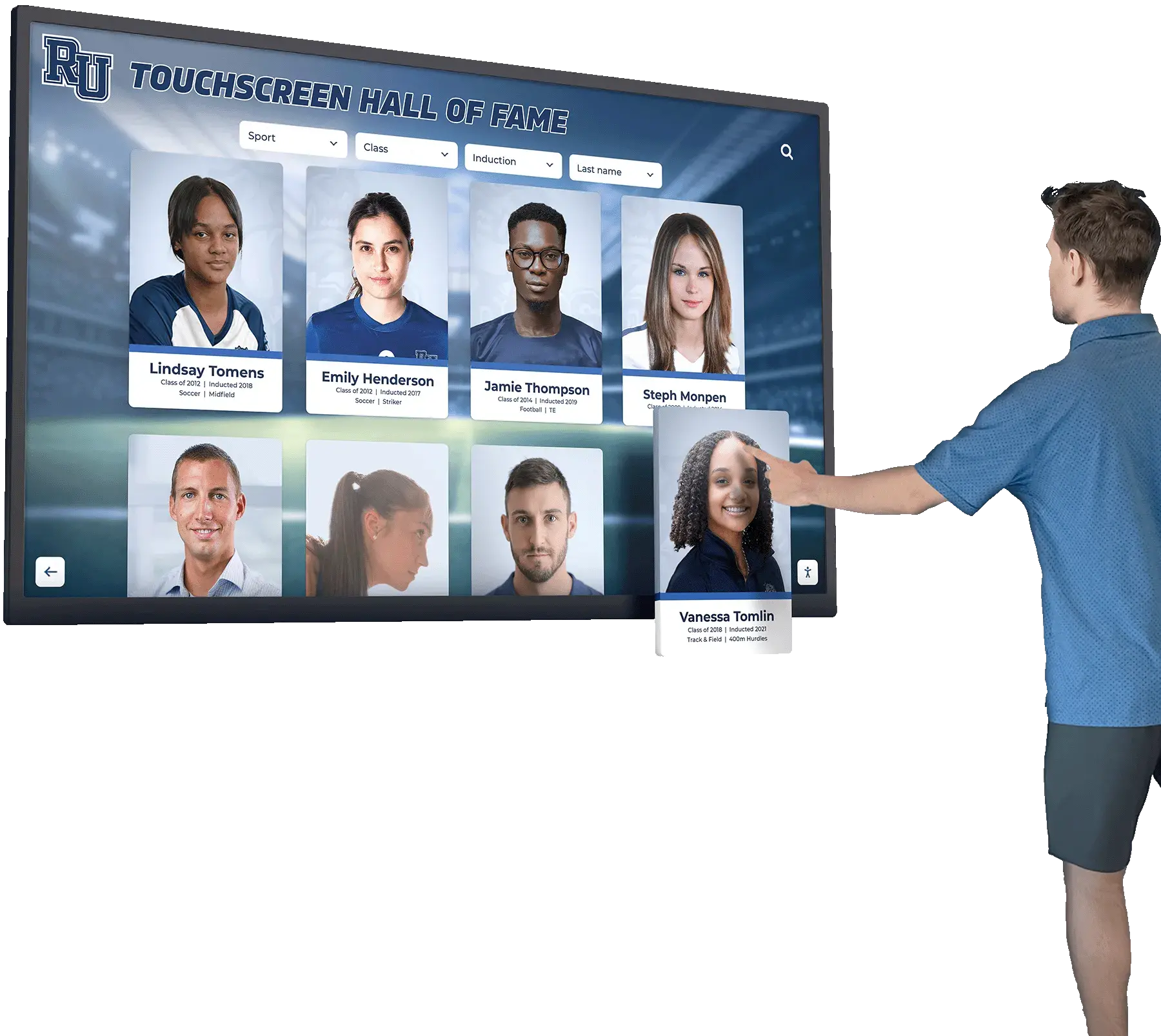
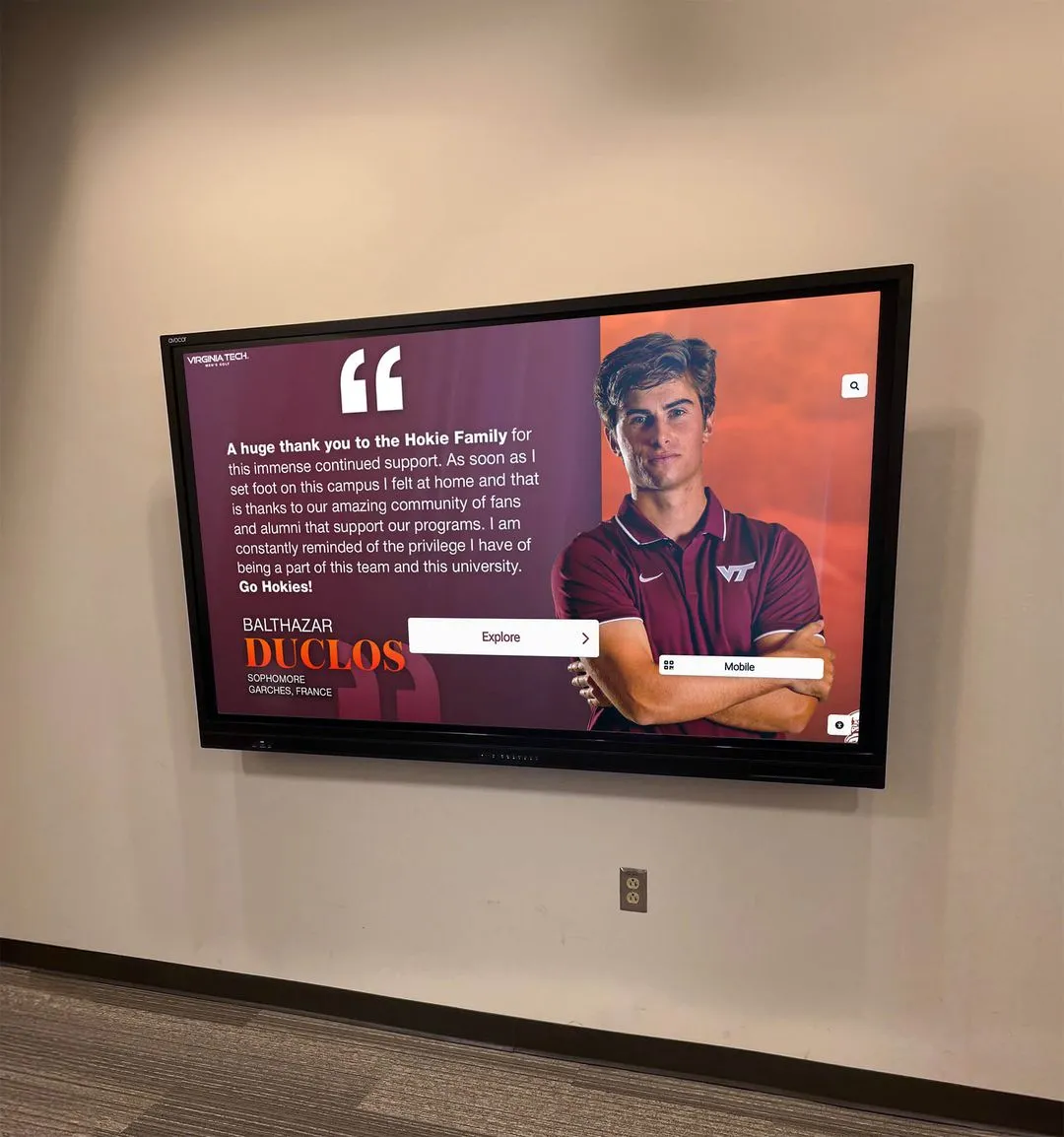
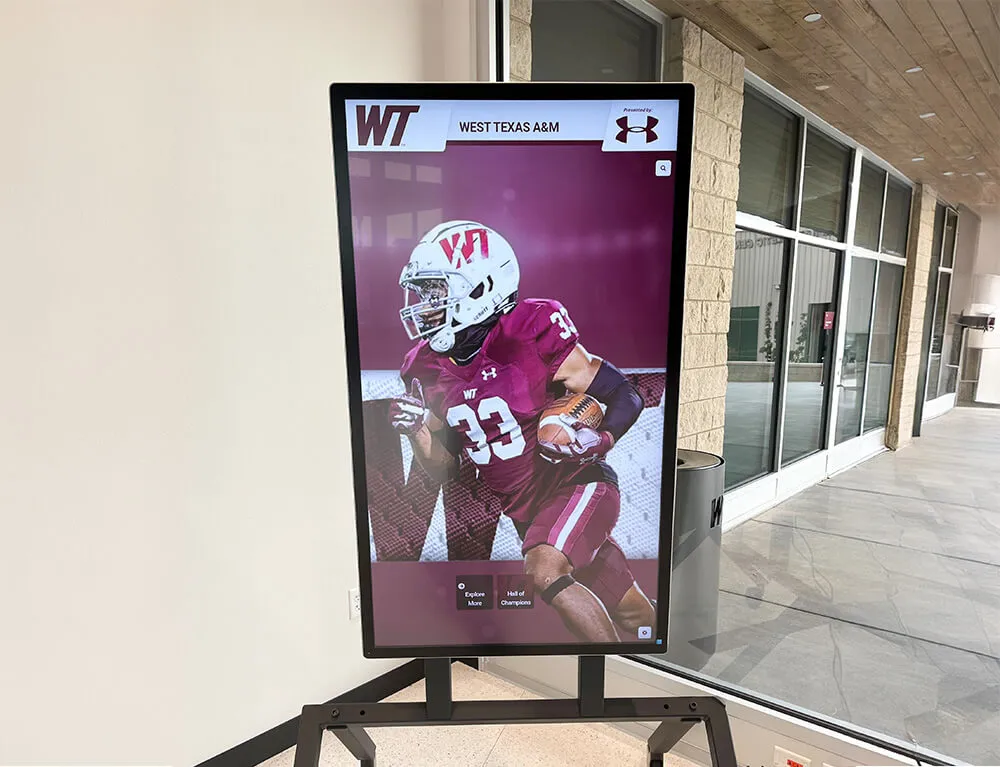
Interactive Touchscreen Display System:
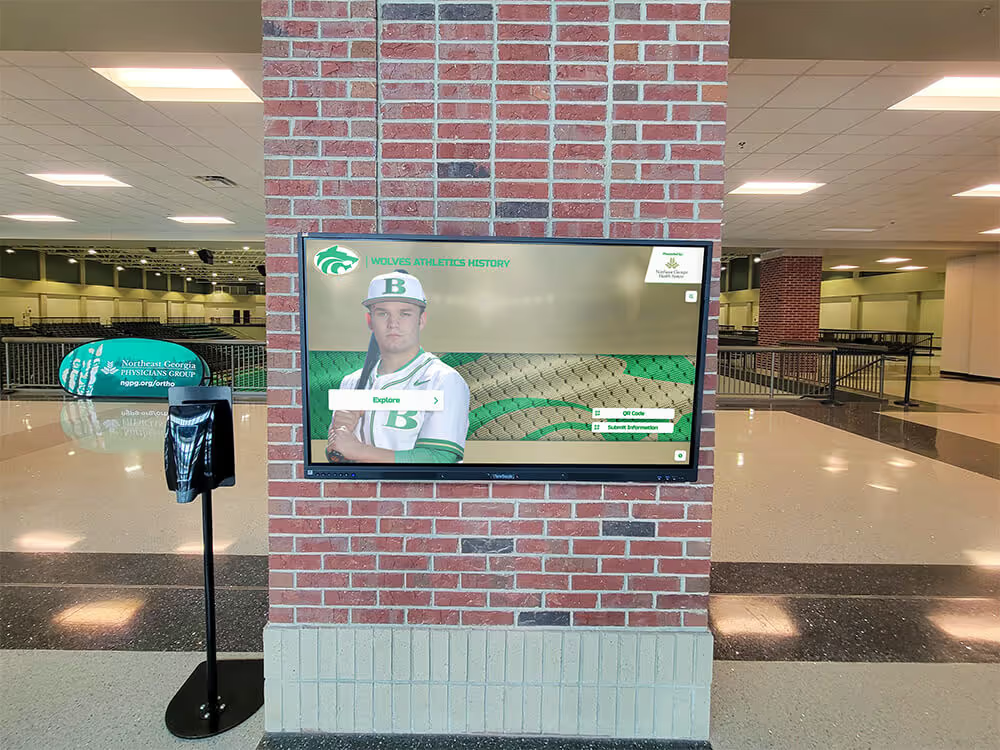
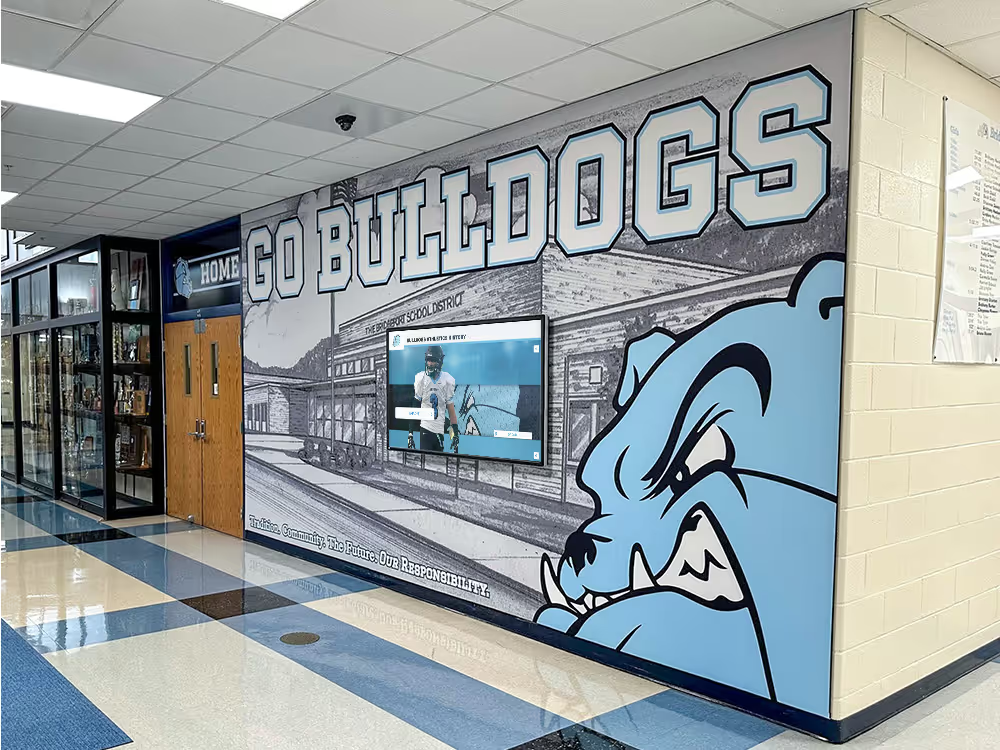
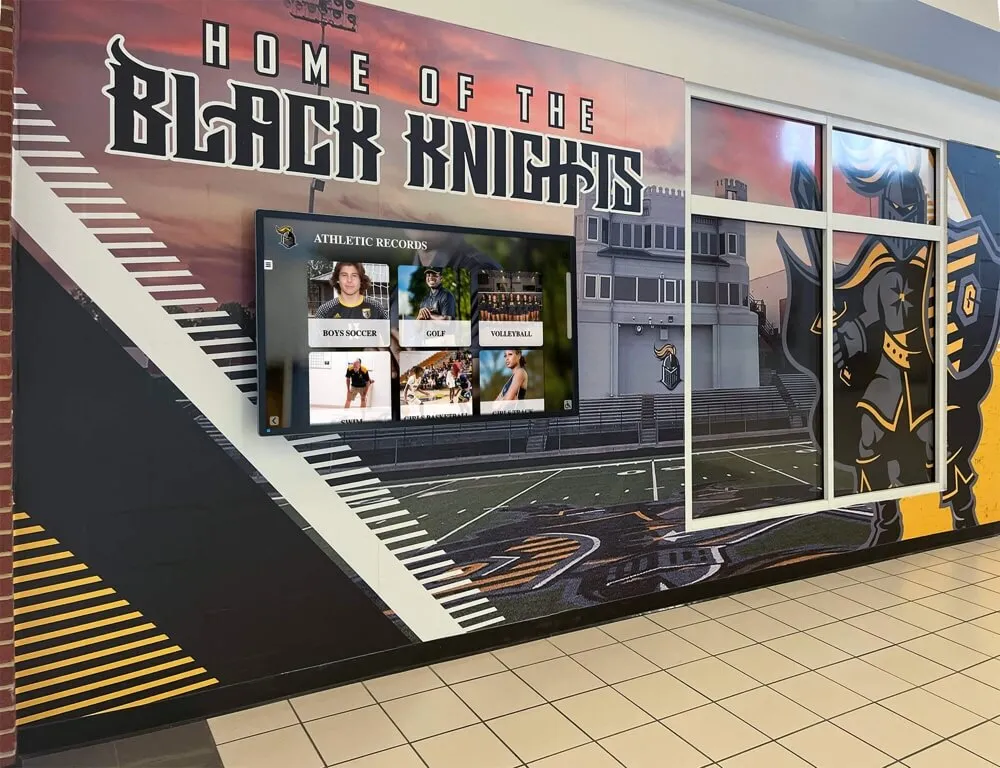
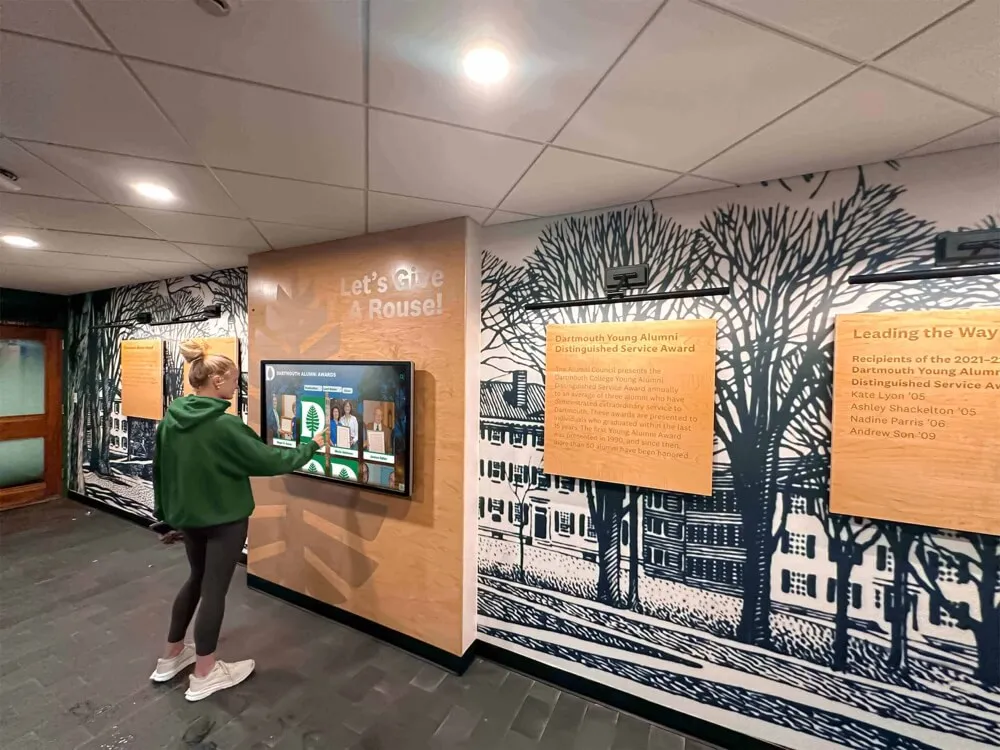
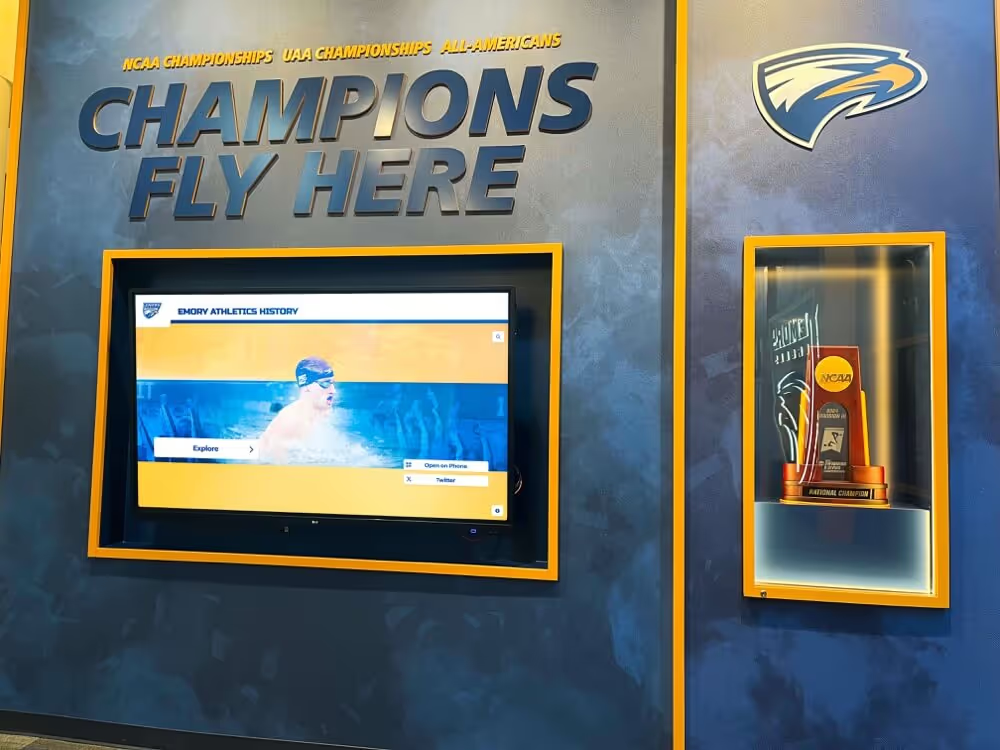
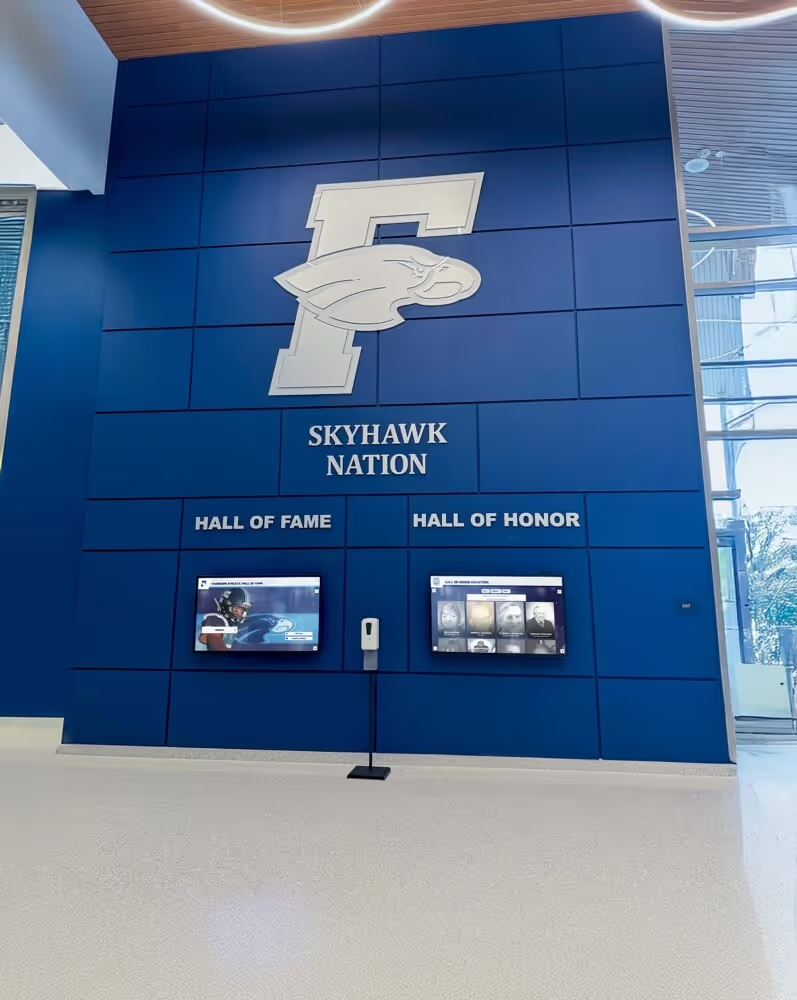
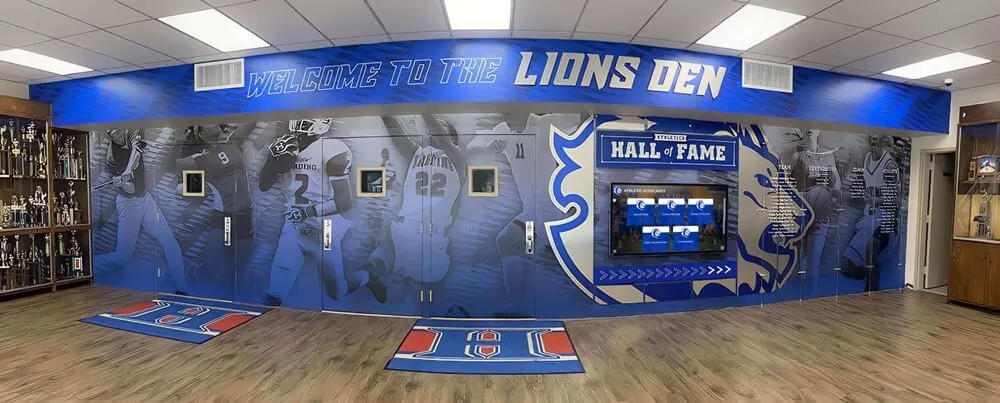
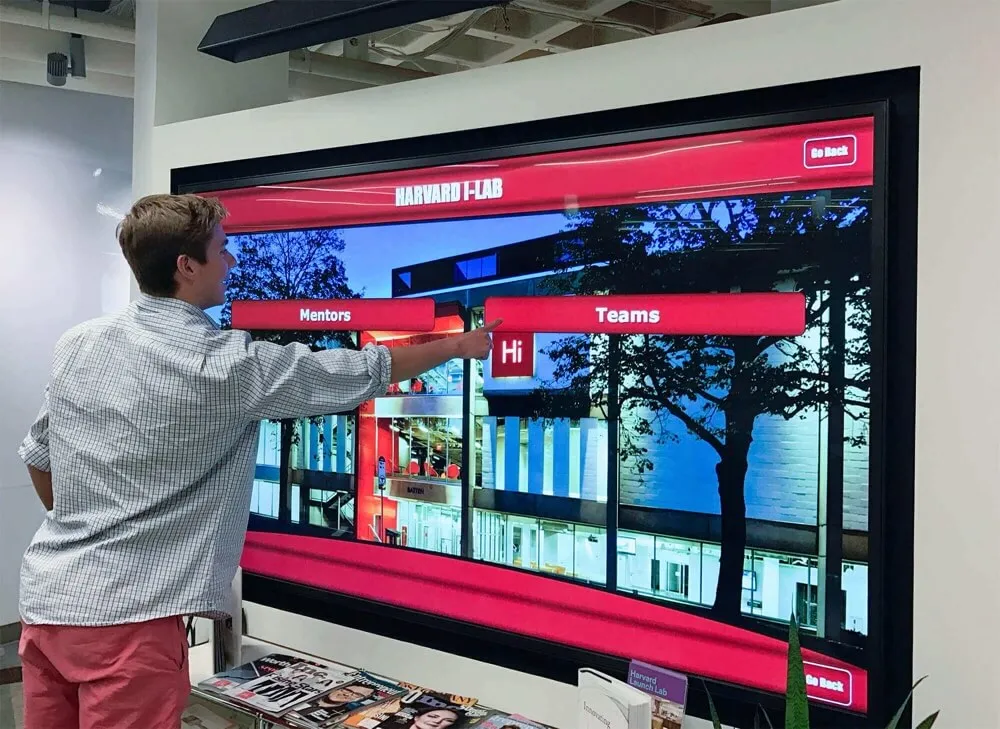
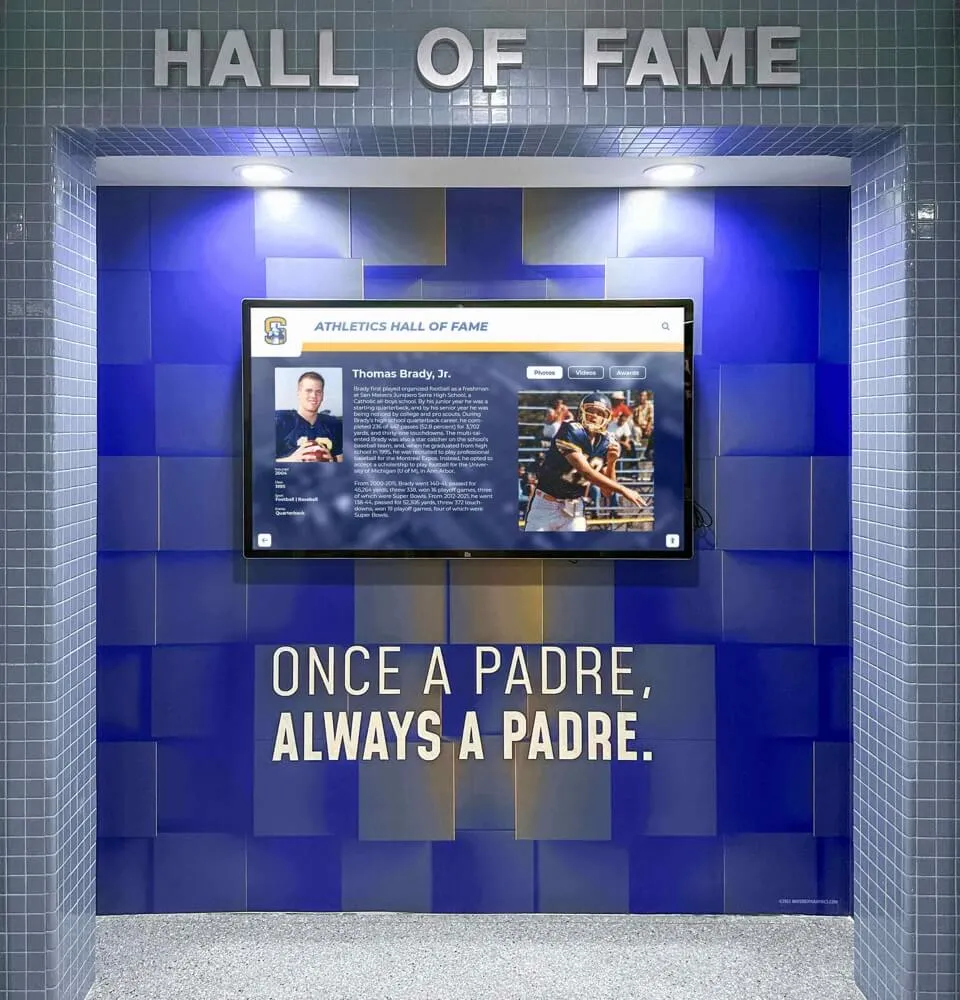
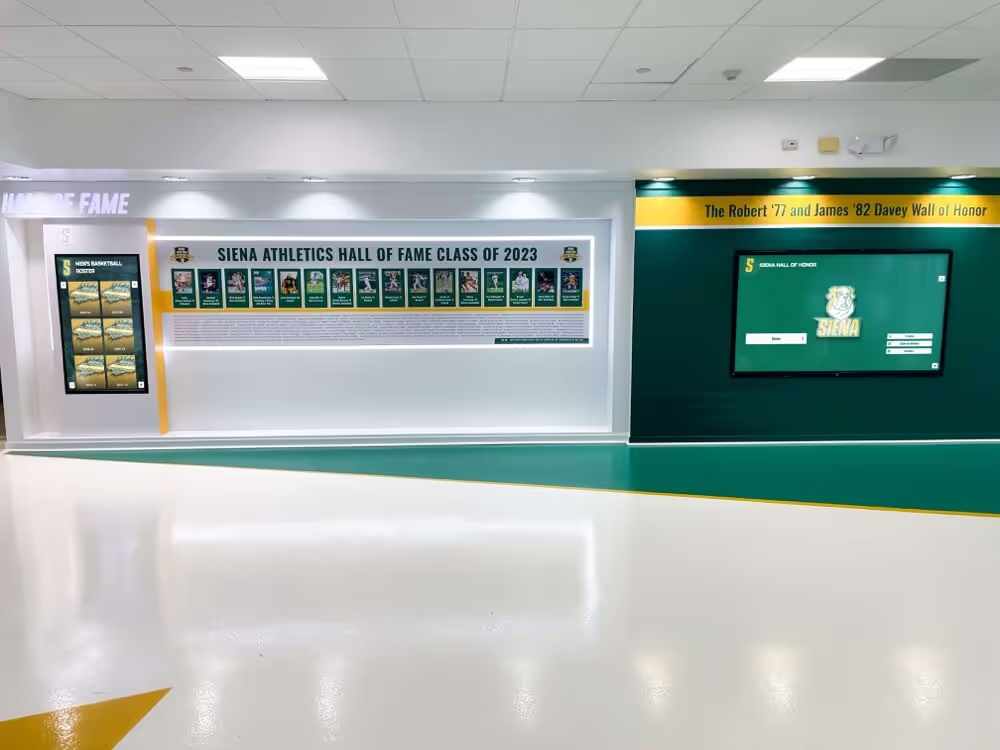
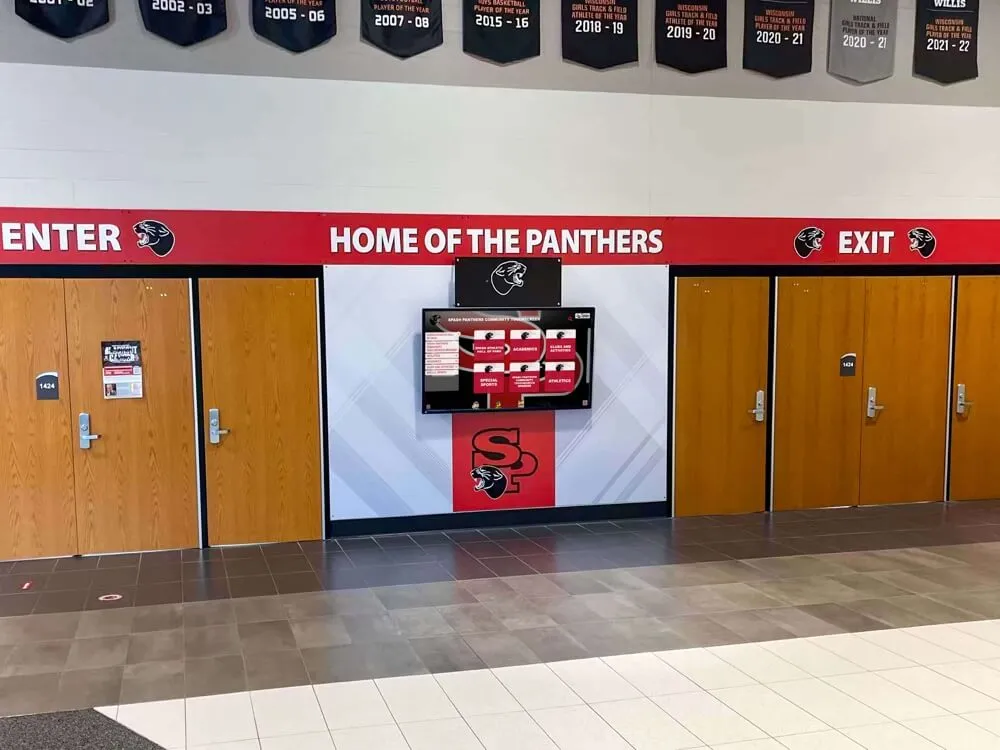
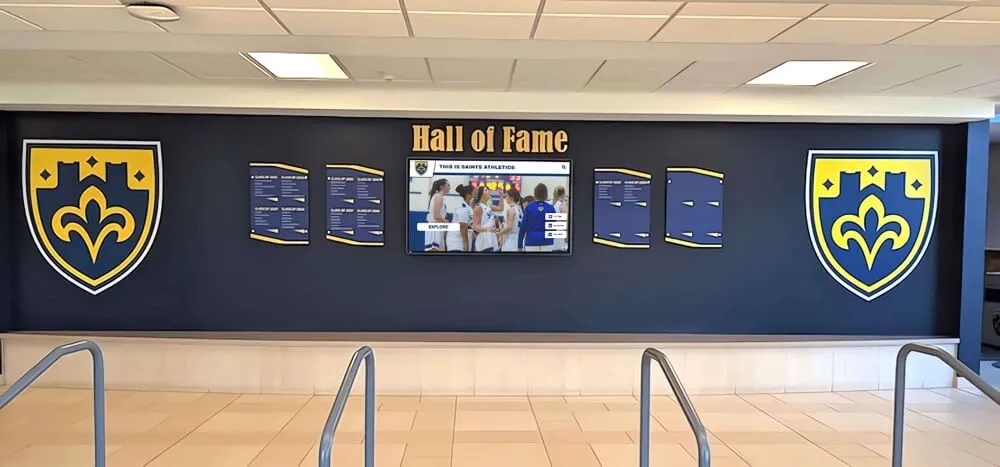
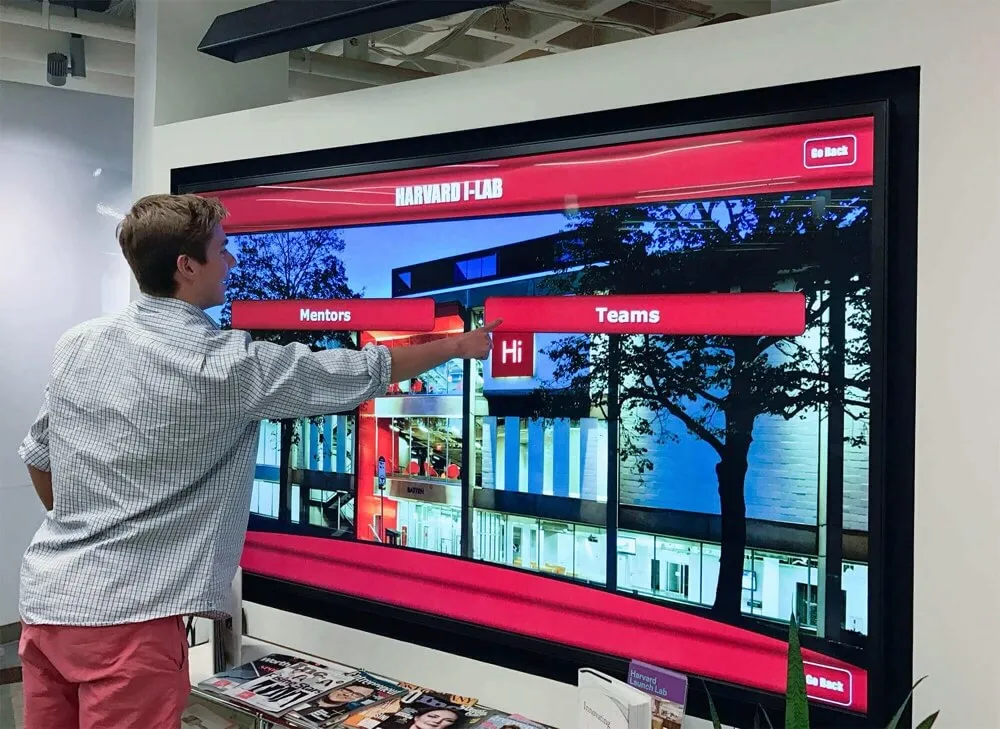
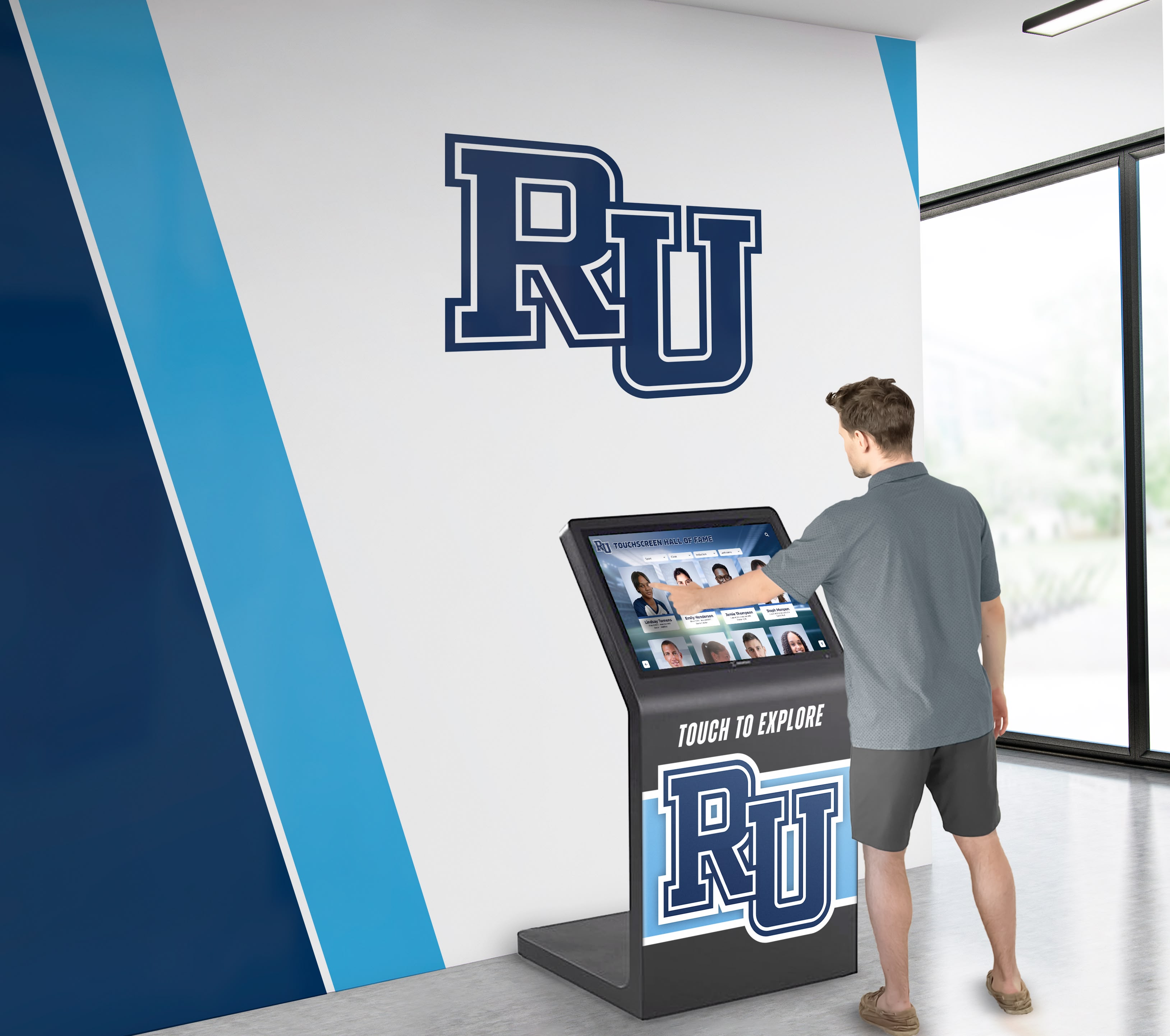
Physical touchscreen installations provide engaging on-campus recognition experiences:
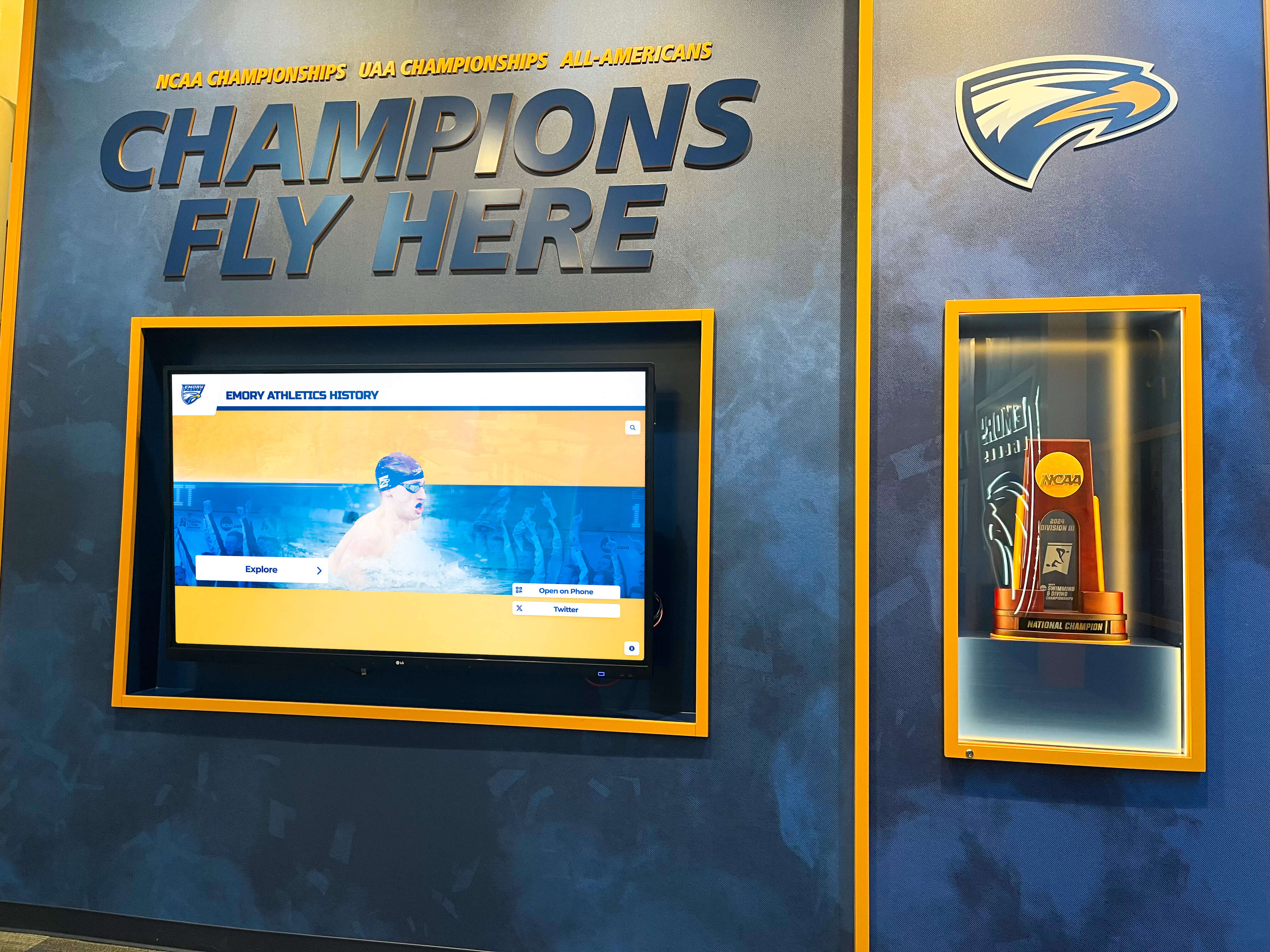
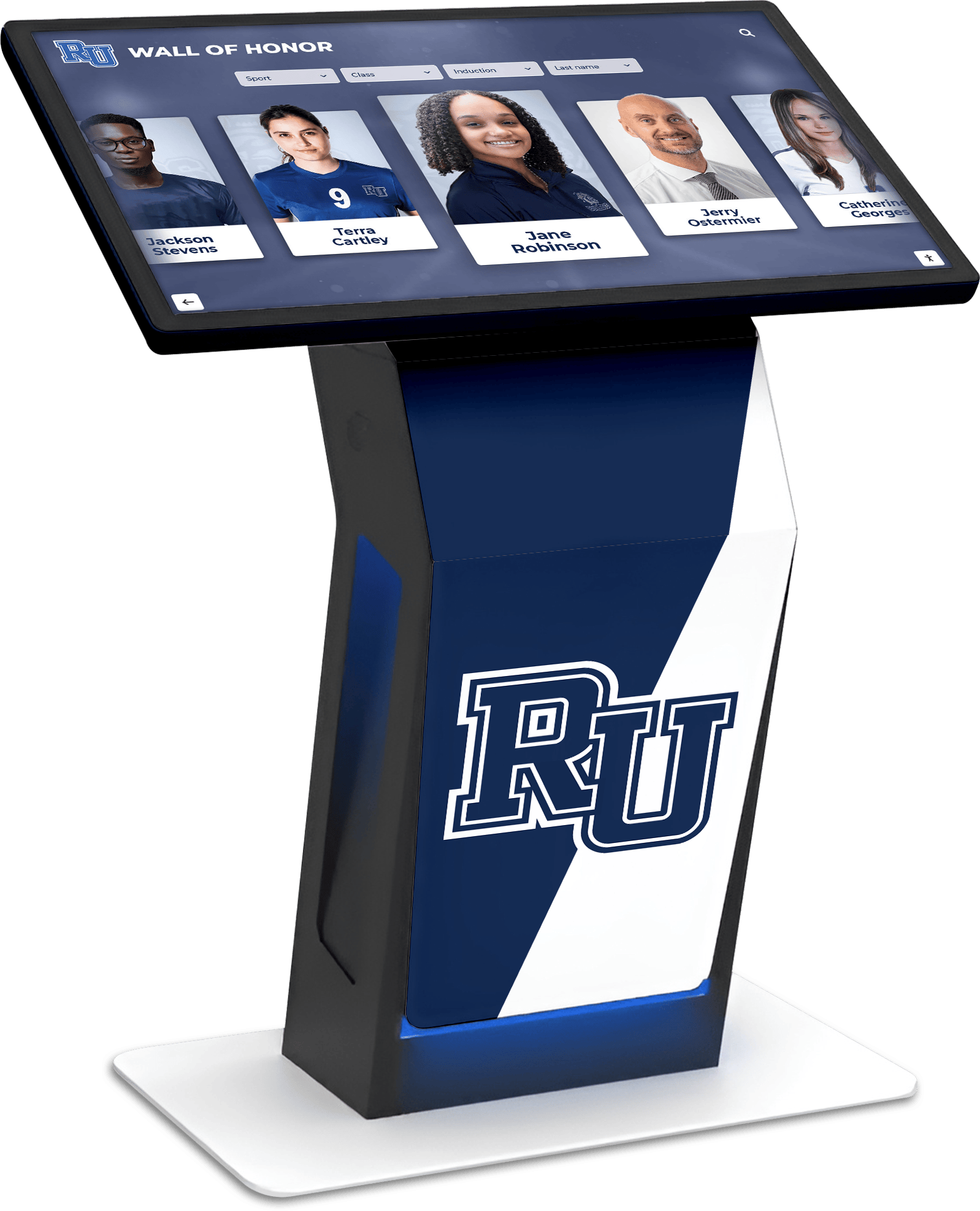
- Commercial-grade displays ranging from 43" to 98" screens accommodating different spaces
- Responsive touch interfaces optimized for intuitive navigation and exploration
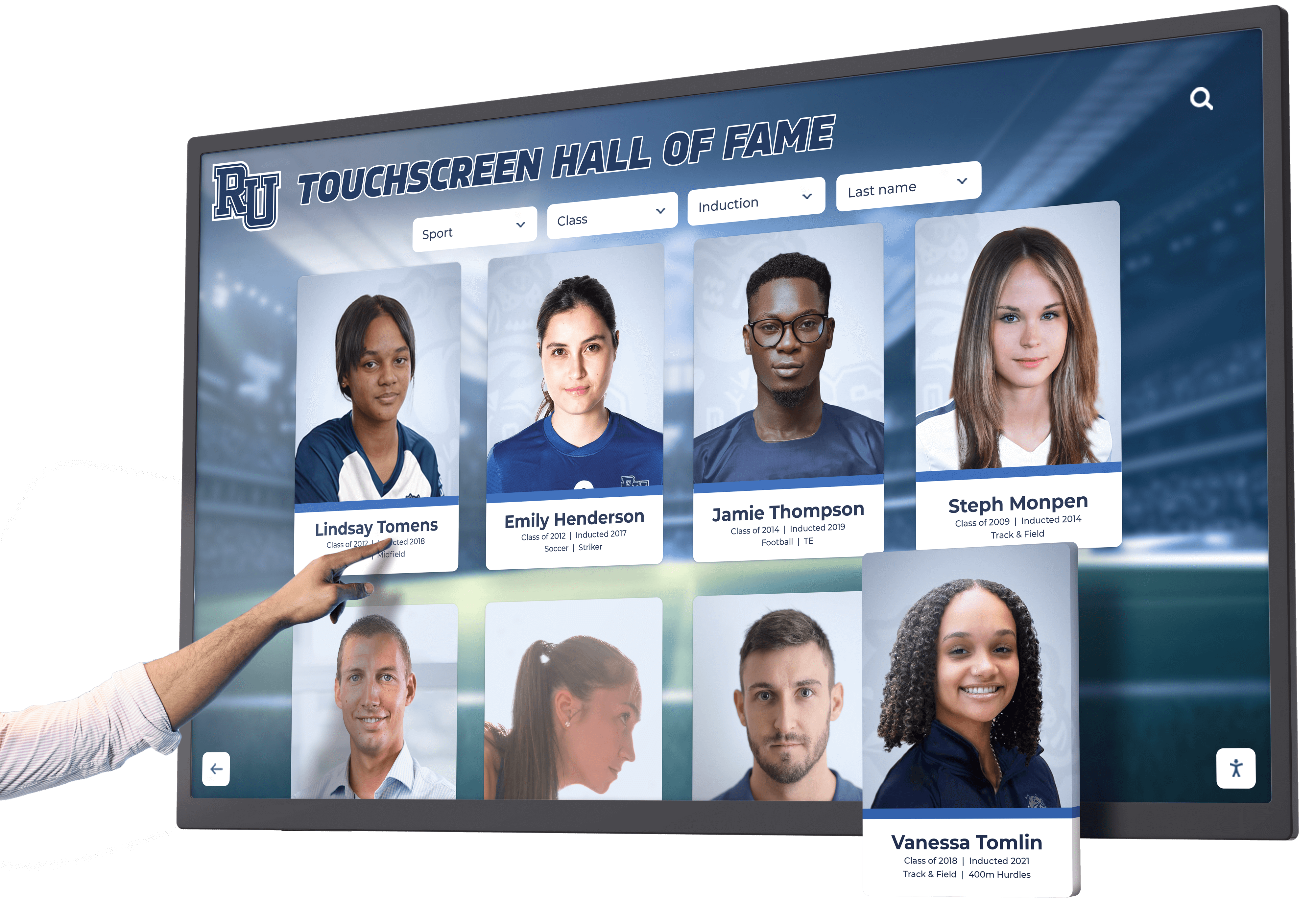

- Advanced search and filtering enabling visitors to find specific inductees instantly
- Category-based organization grouping related achievements logically
- Rich multimedia presentation featuring high-resolution photos, video highlights, and statistics
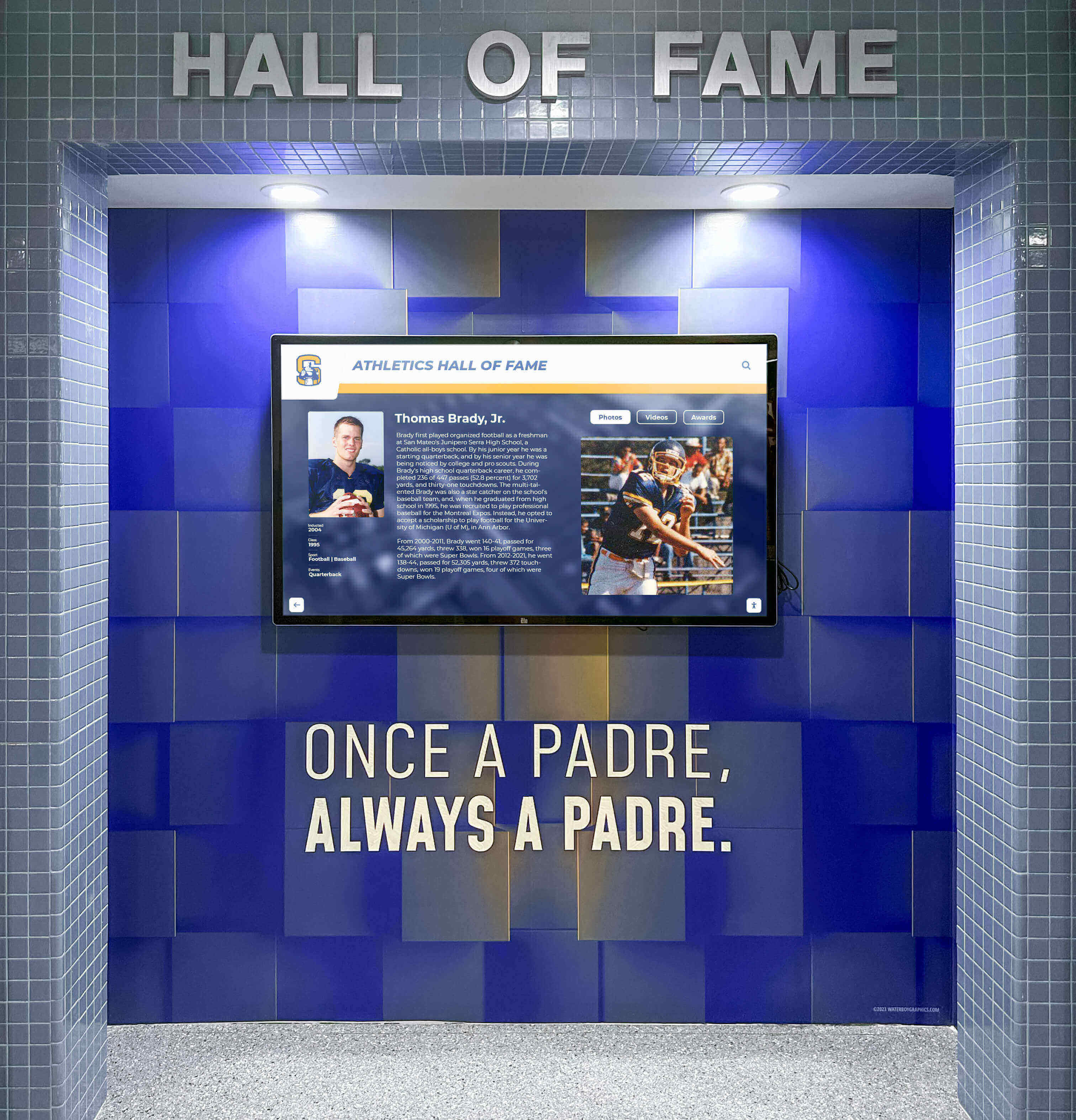
- Detailed biographical profiles providing comprehensive achievement narratives
- Related content connections linking individuals across multiple recognition categories
- Automatic content synchronization ensuring displays always show current information
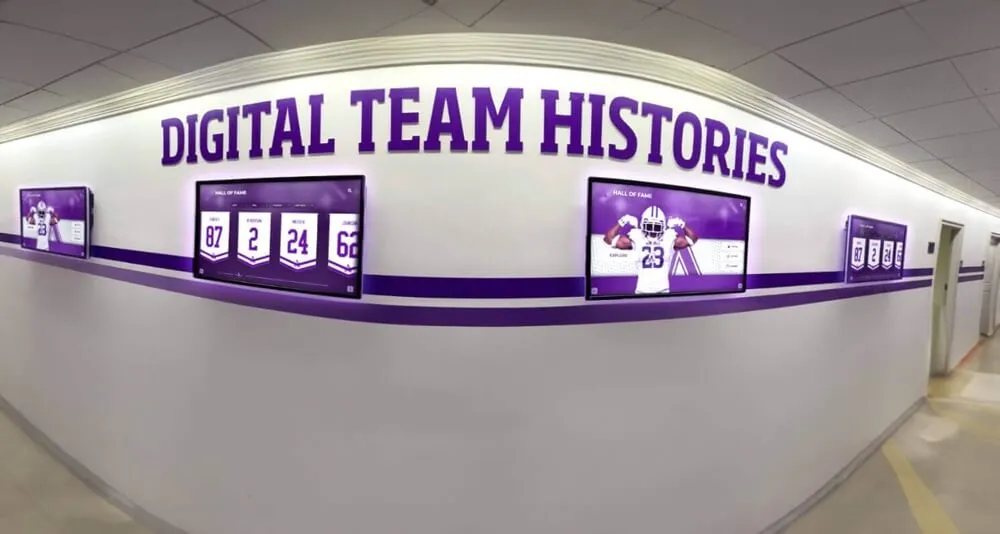
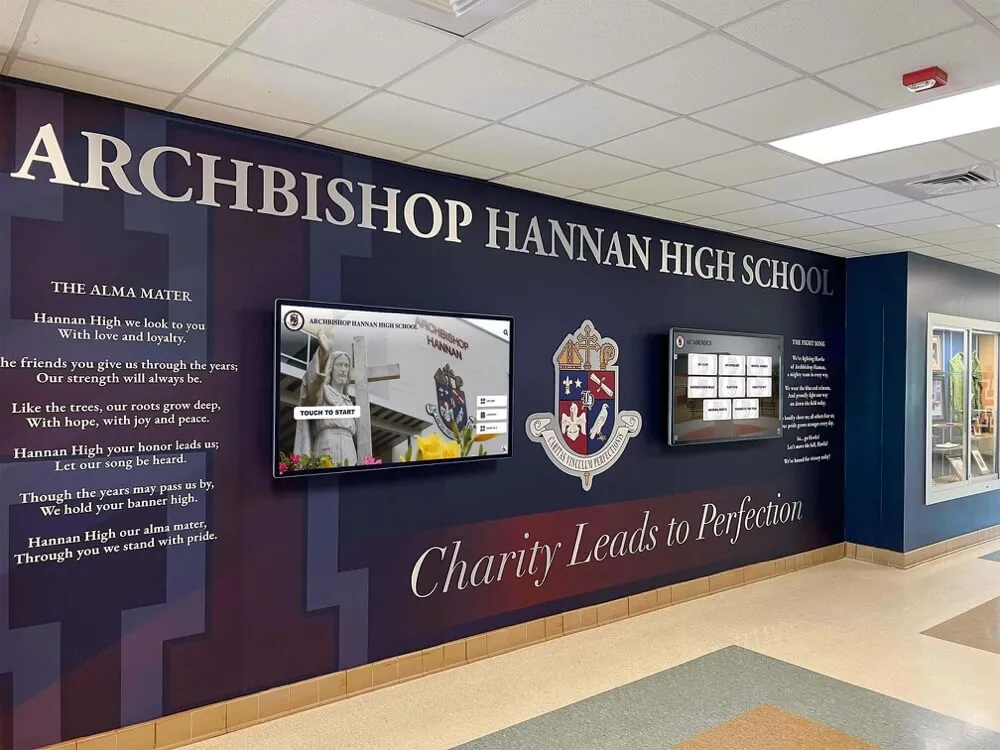
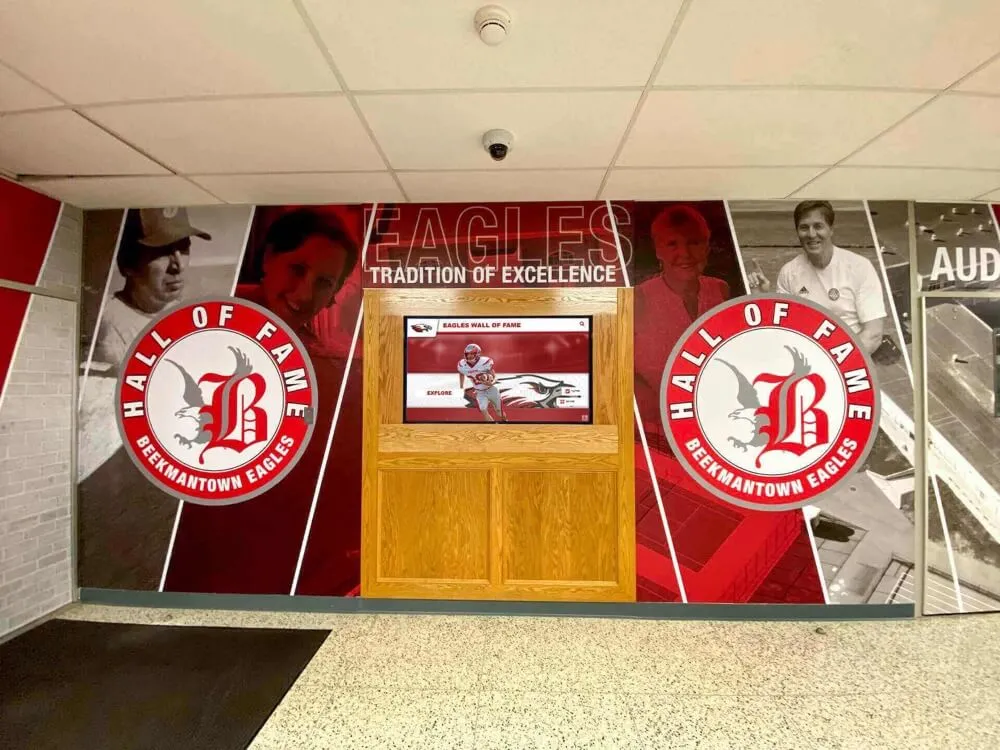
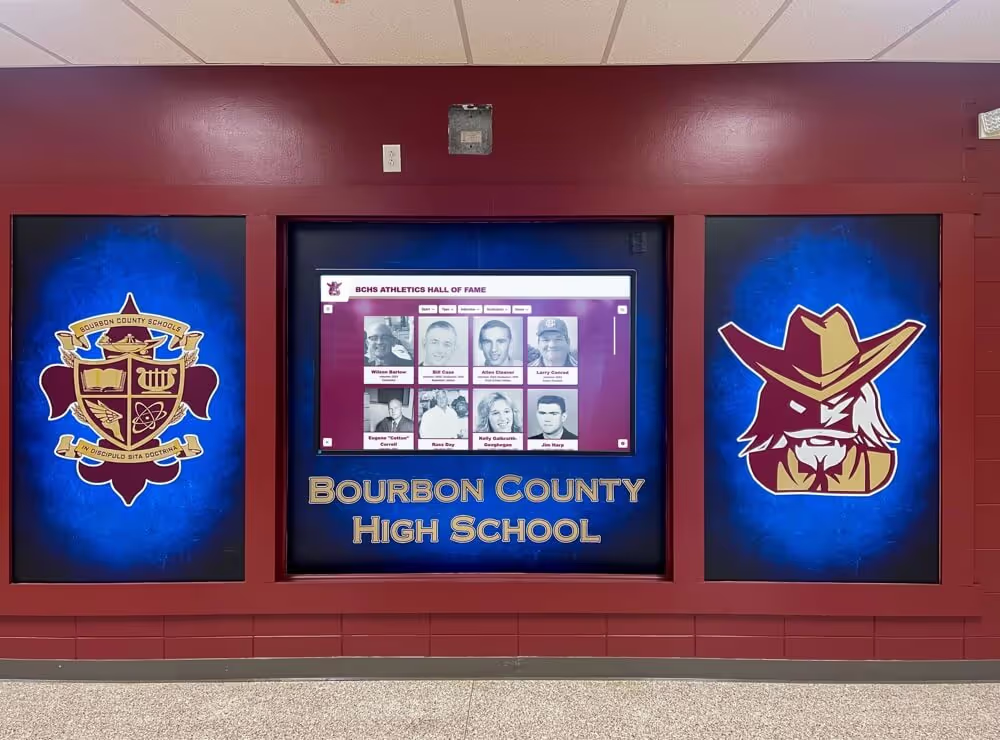
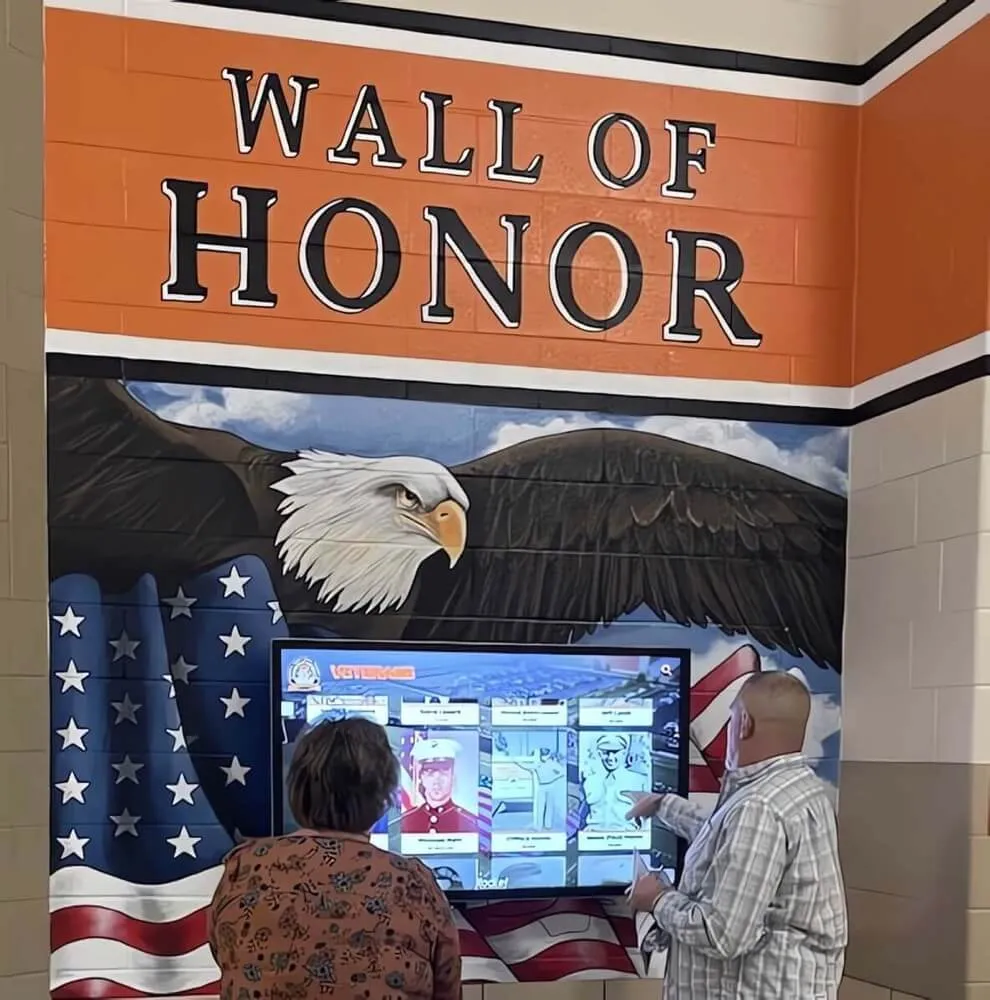
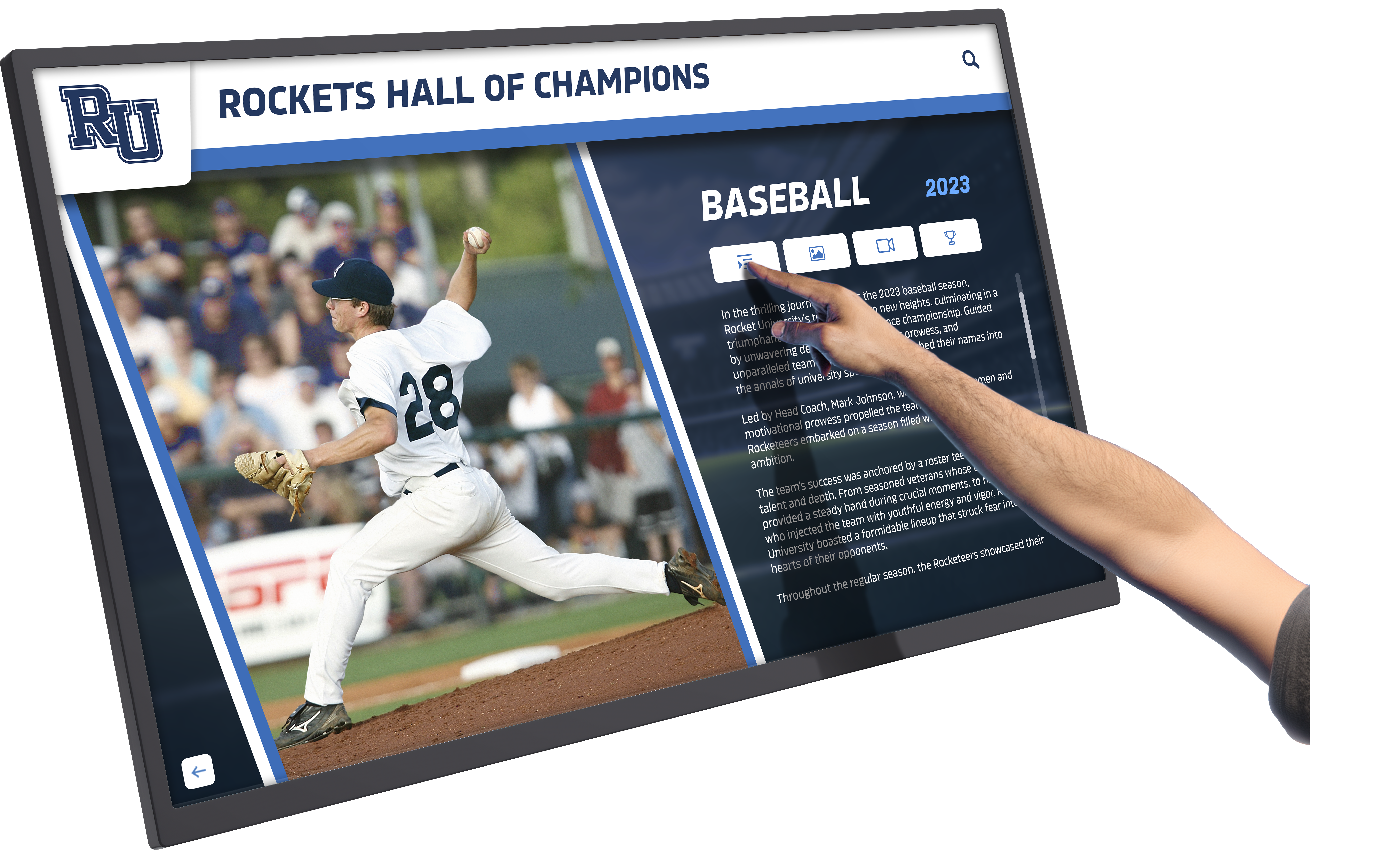
Touchscreen installations transform recognition from passive viewing into active exploration, with visitors spending 2.5-6 minutes on average interacting with content compared to the 15-30 seconds typical for traditional plaque viewing. Schools implementing these systems often see increased engagement and school pride across their communities.
Web-Accessible Digital Portals:
Online access extends recognition reach beyond physical campus locations:
- Mobile-responsive design ensuring optimal viewing across all device types
- Same content and functionality available online as on physical touchscreens
- Alumni access from anywhere globally enabling ongoing institutional connection
- Social media sharing capabilities facilitating recognition promotion
- Embeddable content for institutional websites and communications
- Search engine optimization making recognition discoverable through web searches
- Analytics tracking online engagement and popular content
- QR code integration connecting physical spaces to online recognition
Web accessibility particularly benefits alumni relations and advancement teams by enabling recognition promotion in fundraising communications, reunion planning, and ongoing engagement campaigns. Organizations can explore effective digital donor wall strategies that leverage online accessibility for advancement goals.
Multi-Category Recognition Management
The platform’s power comes from managing diverse recognition types through a single unified system:
Athletic Recognition:
Comprehensive sports achievement tracking and display:
- Individual athlete halls of fame with career statistics and achievements
- Team championship recognition with roster information and season highlights
- Sports record boards tracking all-time performance across every athletic discipline
- All-State, All-Conference, and All-Region honors organized by sport and year
- Coach recognition including career milestones, championships, and program building
- Season highlights and team histories providing context for current programs
- Letterwinners displays acknowledging participation across all sports
- Retired numbers and jersey recognition celebrating exceptional careers
Athletic directors report that consolidated recognition improves recruiting by showcasing program tradition comprehensively, while coaches appreciate the ability to highlight current team achievements alongside historical context. Learn more about effective athletic hall of fame programs that leverage these capabilities.
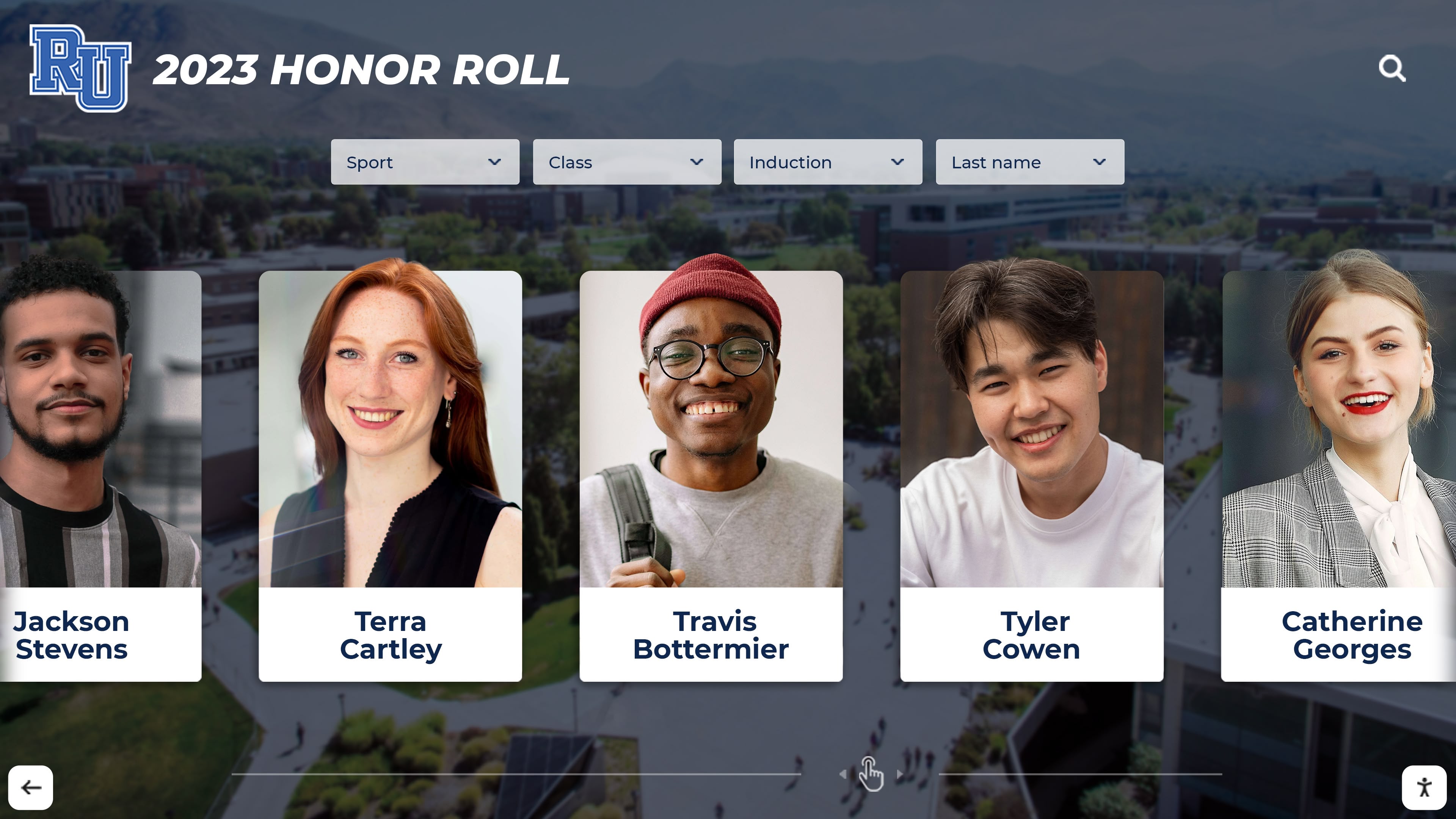
Academic Excellence Recognition:
Scholarly achievement celebration across all disciplines:
- Honor roll displays updated quarterly or by semester without production costs
- Academic All-American recognition for student-athletes balancing athletics and academics
- National Merit Scholars, AP Scholars, and standardized test achievement
- Perfect attendance and citizenship award recognition
- Departmental honors across subject areas from STEM to humanities
- Valedictorian and salutatorian historical records with college destinations
- Academic competition achievements including debate, quiz bowl, and Science Olympiad
- Research accomplishments and published student work
Academic recognition often receives less prominent display than athletics in traditional systems, but unified platforms enable equal visibility for scholarly achievement, supporting institutional commitment to academic excellence. Explore comprehensive approaches to academic recognition programs that balance athletics and academics effectively.
Alumni Achievement Showcases:
Post-graduation success stories demonstrating institutional impact:
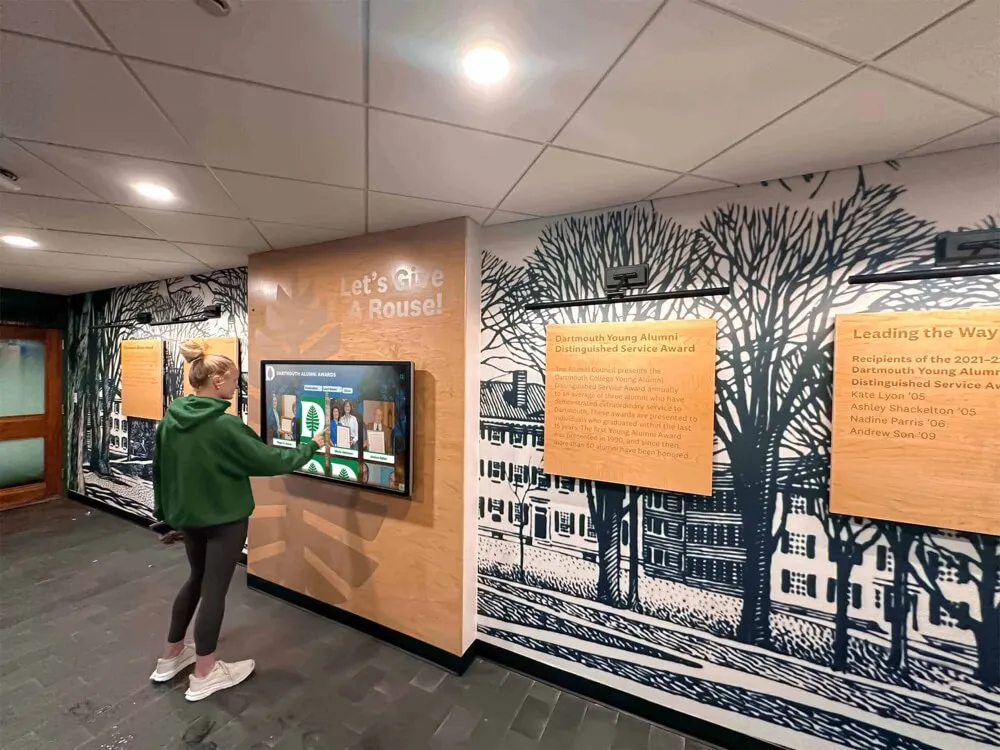
- Distinguished alumni awards recognizing exceptional career achievements
- Career pathway showcases organized by industry or field
- “Where Are They Now” features connecting current students with alumni experiences
- Alumni entrepreneur and business leader recognition
- Public service and civic leadership acknowledgment
- Military service and veteran recognition
- Alumni spotlight features rotating monthly or quarterly
- Multi-generational family legacy recognition connecting related graduates
Alumni showcases serve dual purposes: strengthening alumni connection to institutions while demonstrating to current students and families the long-term value of educational experiences and preparation for future success. Successful programs often implement alumni spotlight displays that rotate featured graduates monthly.
Donor Recognition and Stewardship:
Comprehensive giving acknowledgment supporting advancement goals:
- Donor walls with customizable giving level categories and naming
- Real-time donation updates reflecting current campaign progress
- Named space and endowment recognition linking gifts to institutional impact
- Legacy and planned giving societies acknowledging estate commitments
- Corporate and foundation sponsor recognition with logo integration
- Multi-year giving club recognition celebrating sustained support
- Memorial and tribute gift acknowledgment honoring loved ones
- Anonymous donor recognition respecting privacy preferences while acknowledging impact
Digital donor recognition provides flexibility that physical displays cannot match, enabling real-time updates during campaigns, easy giving level modifications as donors increase support, and comprehensive stewardship demonstrating gift impact through photos and narratives. Advancement teams benefit from donor recognition best practices that strengthen relationships.
Arts and Performing Arts Recognition:
Creative achievement celebration across artistic disciplines:
- All-State music recognition for instrumental and vocal achievements
- Theater and drama production highlights with cast information and photos
- Visual arts competition winners and exhibition features
- Dance program achievements and performance highlights
- Literary arts recognition for published writers and competition winners
- Film and media production showcases for student creative work
- Arts scholarship recipients and college program destinations
- Department-specific awards across all creative disciplines
Arts recognition often competes unsuccessfully for space in traditional systems dominated by athletics, but unified platforms ensure equitable visibility for diverse achievement types, supporting comprehensive institutional mission.
Service, Leadership, and Community Recognition:
Character and contribution acknowledgment beyond competitive achievement:
- Community service hour leaders and sustained volunteer recognition
- Student government and leadership position holders with accomplishments
- National Honor Society, Key Club, and service organization members
- Character and citizenship award recipients demonstrating institutional values
- Peer mentorship and tutoring program leaders supporting fellow students
- School improvement initiative leaders and change makers
- Perfect attendance and persistence awards
- Memorial recognition for deceased students and community members
Recognition for character, service, and leadership reinforces institutional values while acknowledging that excellence extends beyond competitive arenas into character development and community contribution. Schools can learn from student recognition best practices that demonstrate lasting impact on student success.
Rocket Recognition Category Coverage
- Athletic achievements: Individual, team, records, honors
- Academic excellence: Scholars, honor rolls, competitions
- Alumni success: Career achievements, distinguished graduates
- Donor recognition: Giving levels, campaigns, named spaces
- Arts accomplishments: Music, theater, visual arts, creative work
- Service and leadership: Community impact, character awards
- Historical archives: Institutional milestones, traditions
- Current achievements: Real-time student and team recognition
Key Benefits: Why Institutions Choose Rocket Recognition
Organizations implementing unified digital recognition platforms achieve measurable operational, financial, and engagement improvements.
Operational Efficiency Through Centralized Management
Consolidating recognition through a single platform dramatically reduces administrative burden:
Single Vendor Relationship:
Unified platforms eliminate vendor management complexity:
- One procurement process replacing multiple vendor contracts and relationships
- Consistent quality standards across all recognition categories
- Simplified budgeting with predictable subscription-based pricing models
- Single point of contact for support, training, and technical assistance
- Unified invoice and payment processing reducing accounting overhead
- Consistent project timelines rather than varied vendor schedules
- Reduced staff time coordinating across multiple external partners
Schools report 60-75% reduction in administrative time spent on recognition logistics after consolidating to unified platforms, freeing advancement, athletic, and administrative staff for higher-value activities supporting institutional mission.
Streamlined Content Updates:
Cloud-based management enables efficient recognition maintenance:
- Real-time content updates appearing instantly across all displays without hardware visits
- Template-based workflows ensuring consistent presentation quality
- Bulk update capabilities enabling efficient corrections or enhancements
- Scheduled content releases planning recognition announcements strategically
- Remote access from any location rather than requiring physical campus presence
- Mobile content management enabling updates from smartphones and tablets
- Automated backup and version control preventing content loss
- Multi-administrator support distributing workload across team members
Organizations transitioning from traditional recognition report that adding new inductees takes 10-15 minutes through digital platforms compared to 6-8 weeks for traditional plaque ordering, production, and installation cycles.
Consistent Brand Experience:
Unified platforms ensure professional presentation across recognition types:
- Consistent design language and visual identity across all categories
- Standardized information architecture making navigation intuitive
- Coordinated color schemes, typography, and branding elements
- Professional templates ensuring quality without custom design for each inductee
- Automated layout optimization preventing formatting inconsistencies
- Brand guidelines enforcement across all recognition content
- Institutional logo and identity integration throughout
- Responsive design maintaining quality across screen sizes and devices
Brand consistency enhances institutional professionalism while reducing the visual fragmentation common when different departments manage recognition independently through varied vendors with different design standards.
Substantial Long-Term Cost Savings
While digital platforms require initial investment, long-term total cost of ownership typically proves significantly lower than traditional approaches:
Elimination of Ongoing Per-Inductee Costs:
Digital capacity removes the largest traditional recognition expense:
- No per-inductee plaque production costs ($200-500 per person annually)
- No engraving fees for names, dates, and achievement descriptions
- No installation labor charges for mounting and positioning
- No trophy case expansion costs as recognition grows
- No plaque replacement costs when errors discovered after installation
- No physical storage costs for displaced recognition
- Unlimited digital capacity accommodating institutional growth indefinitely
An institution recognizing 20 individuals annually saves $4,000-10,000 yearly on plaque costs alone, totaling $80,000-200,000 over 20 years—substantially more than typical digital platform lifetime costs including hardware replacement.
Reduced Administrative Labor Costs:
Efficiency gains create quantifiable savings:
- 60-75% reduction in recognition coordination time freeing staff capacity
- Elimination of vendor comparison and selection processes for each project
- Reduced budget justification and approval processes through predictable costs
- Simplified maintenance requiring no physical access for content updates
- Decreased error correction costs through easy digital modifications
- Less time spent managing recognition complaints about visibility or placement
- Consolidated reporting and assessment across recognition categories
When administrative time savings convert to salary cost equivalents, many institutions find operational efficiency gains equal or exceed hardware and software investment within 3-5 years.
Predictable Budgeting:
Subscription-based pricing enables accurate financial planning:
- Fixed annual software and hosting costs preventing budget surprises
- Predictable hardware refresh cycles (typically 7-10 years)
- No variable costs based on recognition volume or categories
- Multi-year pricing options providing long-term budget certainty
- Elimination of emergency funding requests for recognition capacity expansion
- Simplified budget justification through clear total cost comparisons
- Straightforward ROI calculations demonstrating value
Many advancement offices find that demonstrating recognition cost savings helps justify digital platform investment to budget committees, particularly when showing 20-year total cost comparisons favoring digital approaches substantially. Review comprehensive cost analyses in guides to digital recognition pricing that help with planning.
Enhanced Visitor Engagement and Interaction
Digital recognition creates qualitatively superior experiences that benefit stakeholders across institutional communities:
Active Exploration vs. Passive Viewing:
Interactive platforms transform recognition engagement:
- Average session times of 2.5-6 minutes compared to 15-30 seconds for plaques
- Search functionality enabling immediate discovery of specific inductees
- Category filtering supporting targeted exploration by interest area
- Progressive disclosure revealing depth only for content visitors choose
- Related content connections encouraging continued exploration across categories
- Multimedia storytelling combining photos, videos, statistics, and narratives
- Touch interaction creating memorable experiences differentiating institutions
- Repeat visitation as content updates provide new discovery opportunities
Schools report that visitors interact with substantially more recognition content through digital platforms, discovering achievements beyond their initial interest and developing broader appreciation for institutional excellence across categories.
Global Accessibility:
Web portals extend recognition reach exponentially:
- Alumni access from anywhere worldwide maintaining institutional connection
- Family members sharing recognition with extended networks digitally
- Prospective students and families exploring institutional excellence before visiting
- Donors viewing recognition impact of their contributions remotely
- Media access for stories and features about institutional achievements
- Social media amplification extending recognition visibility broadly
- Search engine discoverability connecting new audiences to recognition
- 24/7 availability unconstrained by campus hours or visitor access
Web accessibility particularly benefits advancement and alumni relations, enabling recognition promotion in communications, event planning, and ongoing engagement strategies that strengthen relationships and support fundraising goals.
Comprehensive Storytelling:
Digital formats enable depth impossible with physical displays:
- Extended biographical narratives providing achievement context and personal stories
- Photo galleries showcasing career progression and memorable moments
- Video highlights bringing athletic, artistic, and academic achievements to life
- Statistical deep dives satisfying enthusiasts seeking comprehensive records
- Historical context connecting individual achievements to institutional tradition
- Career trajectory information demonstrating long-term institutional impact
- Family connection recognition showing multi-generational institutional relationships
- Curated content collections highlighting themes, eras, or special recognition
Rich storytelling creates emotional resonance that inspires current students, strengthens alumni connection, and demonstrates institutional quality to prospective families and donors. Explore effective approaches to digital storytelling through recognition that build community.
Strategic Advancement and Engagement Benefits
Recognition platforms deliver measurable impact on institutional priorities beyond operational efficiency:
Alumni Engagement Enhancement:
Effective recognition strengthens alumni relationships supporting advancement goals:
- 15-30% increase in alumni database contact information accuracy through recognition updates
- Higher alumni event attendance when recognition ceremonies become regular traditions
- Increased alumni volunteer participation in mentorship and career networking programs
- Stronger institutional pride and connection demonstrated in surveys and feedback
- Enhanced alumni giving rates when donor recognition demonstrates appreciation effectively
- Better recruitment outcomes when alumni actively promote institutional quality
- Multi-generational engagement when family members explore shared recognition
- Improved communication response rates when recognition features in alumni outreach
Development officers consistently report that alumni who see themselves recognized appropriately demonstrate stronger engagement across all metrics, from event participation to financial support, making recognition investment directly relevant to fundraising success.
Donor Cultivation and Stewardship:
Recognition capabilities support fundraising campaign success:
- Real-time donor recognition during campaigns demonstrating immediate appreciation
- Flexible giving level adjustments accommodating donor advancement without physical changes
- Comprehensive stewardship showing gift impact through photos, videos, and narratives
- Named space and endowment recognition linking donations to visible institutional improvements
- Anonymous donor options respecting privacy while acknowledging support
- Legacy society recognition encouraging estate commitments and planned giving
- Campaign progress visualization motivating continued support toward goals
- Donor wall prominence equivalent to traditional physical displays in high-traffic locations
Capital campaigns particularly benefit from digital recognition flexibility, enabling real-time donor additions, giving level updates, and progress tracking that maintain campaign momentum and demonstrate appreciation immediately rather than after months-long physical production cycles.
Measurable Engagement Improvements
- Session duration: 2.5-6 minutes vs. 15-30 seconds for plaques
- Content exploration: 5-8 profiles viewed vs. 1-2 for traditional displays
- Alumni contact updates: 15-30% increase in accurate information
- Donor participation: 20-40% increase in giving rates
- Website traffic: 25-45% increase to recognition pages
- Social media sharing: Recognition content generates 10-15% of alumni engagement
- Recruitment impact: Recognition cited by 35-50% of prospective athletes
- Event attendance: Recognition ceremonies attract 2-3x traditional turnout
Recruitment and Admissions Impact:
Recognition demonstrates institutional quality to prospective students and families:
- Athletic program tradition showcased comprehensively attracting prospective student-athletes
- Academic excellence visibility supporting admissions marketing and competitive positioning
- Arts program accomplishment demonstration appealing to creative prospective students
- Alumni success stories validating educational quality and career preparation
- Institutional pride and community spirit evident through comprehensive recognition
- Virtual campus tour integration enabling remote family exploration before visiting
- Prospective family engagement through touchscreen interaction during campus visits
- Competitive differentiation when peer institutions rely on outdated traditional recognition
Admissions and athletic recruiting staff consistently report that prospective families engage with digital recognition during campus visits, often discovering unexpected institutional strengths that influence enrollment decisions positively.
Implementation Considerations: Getting Started with Rocket Recognition
Successful platform deployment requires thoughtful planning addressing technical, content, and organizational factors.
Technical Requirements and Installation
Digital recognition systems involve straightforward technical requirements within capabilities of most institutional IT departments:
Hardware Components:
Physical touchscreen installations require several elements:
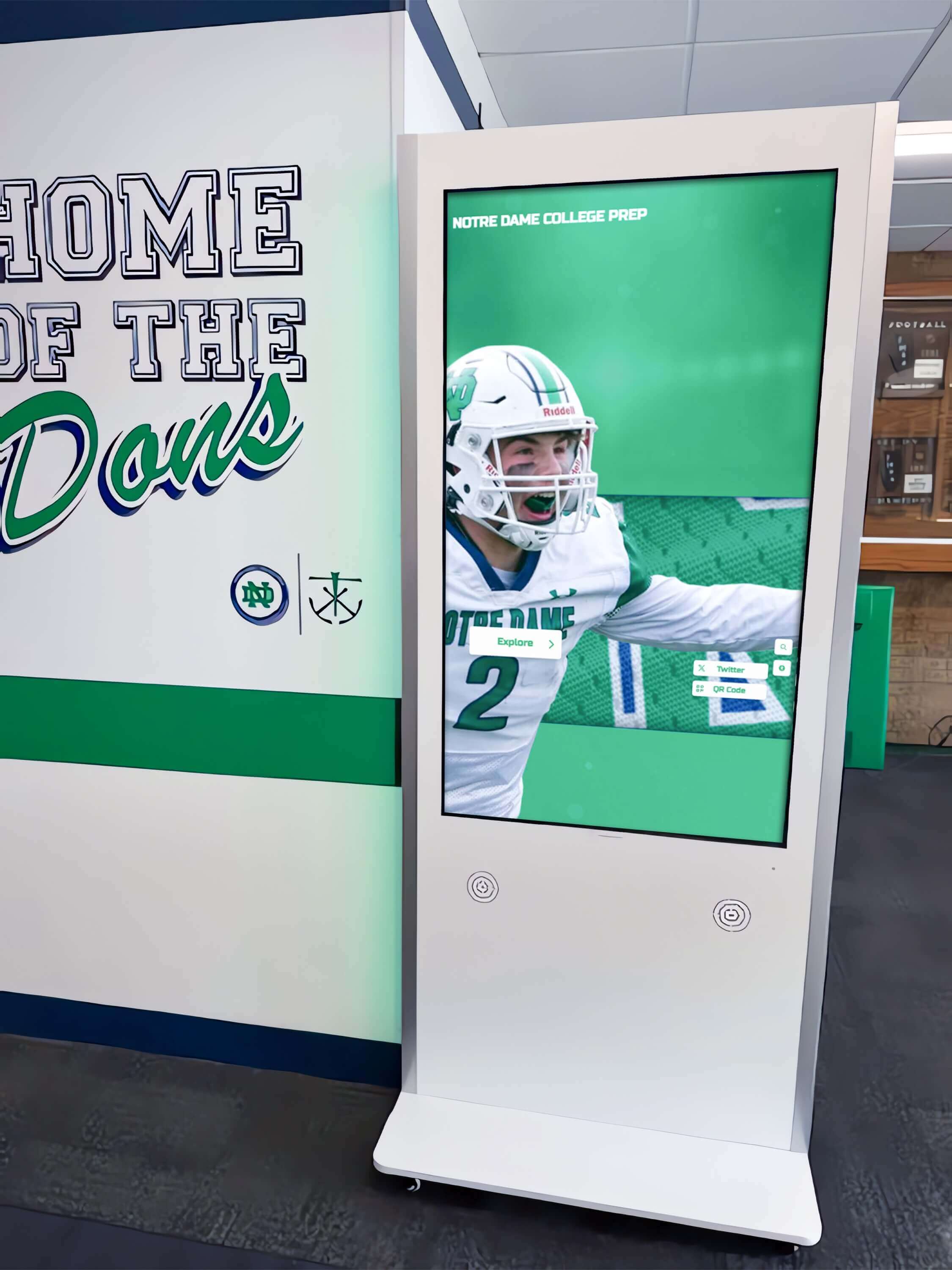
- Commercial-grade touchscreen displays sized appropriately for viewing distance and space
- Media player devices (Windows PC, Android, or dedicated digital signage players)
- Network connectivity through wired Ethernet (preferred) or reliable WiFi
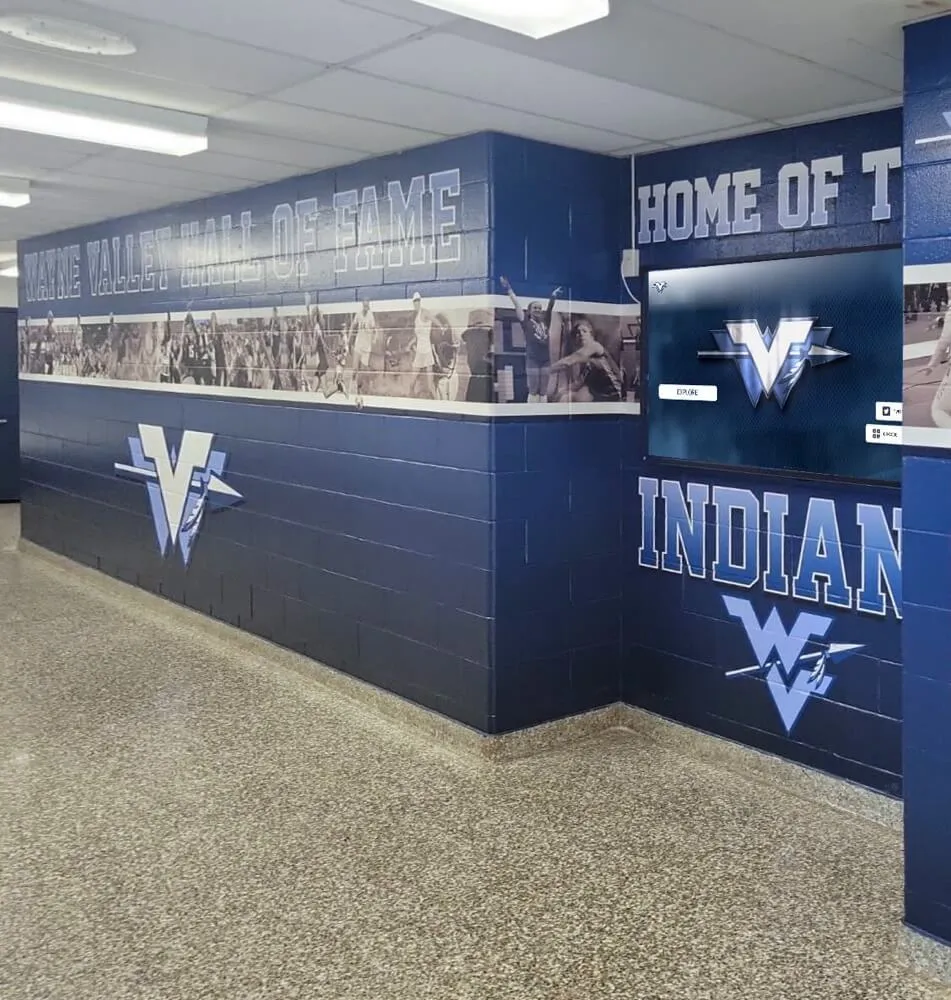
- Professional mounting solutions including wall mounts, kiosks, or custom millwork
- Surge protection and power management for display longevity
- Optional components including RFID readers, QR code scanners, or sensors
- Audio systems if video content includes sound requiring speakers
Display sizes typically range from 43" for individual offices or small spaces to 65-75" for main hallways and lobbies, with 85-98" screens appropriate for large athletic facilities or auditoriums where viewing distances exceed 15 feet.
Network and Connectivity:
Reliable connectivity ensures optimal performance:
- Minimum 10 Mbps internet connection for content synchronization and updates
- Wired Ethernet strongly preferred over WiFi for stability and security
- Firewall configuration allowing content management system communication
- Optional cellular backup connectivity for critical always-on applications
- Network security accommodating cloud-based platform requirements
- IT department coordination for authentication and access control
- Remote management capabilities enabling support without physical access
- Content caching for offline operation during temporary connectivity interruptions
Most institutions find that standard campus network infrastructure easily accommodates digital recognition requirements without specialized IT investment beyond standard display installation.
Location and Placement Strategy:
Strategic display positioning maximizes impact and engagement:
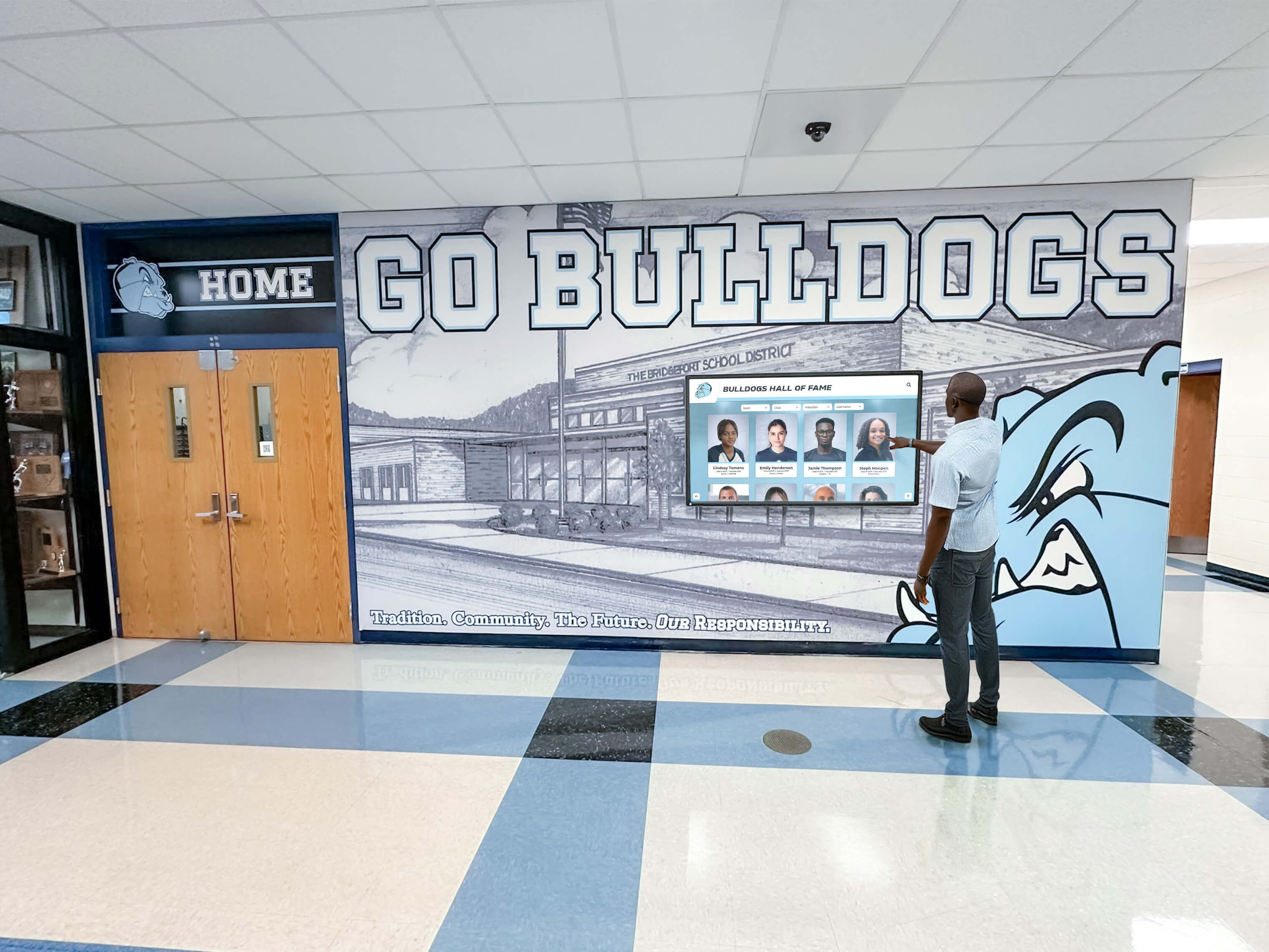
- High-traffic areas including main entrances, lobby spaces, and major hallways
- Athletic facility locations near gymnasiums, field houses, and locker rooms
- Advancement office areas where prospective donors and visitors gather
- Alumni centers or designated alumni spaces in student unions
- Admissions office waiting areas for prospective student and family engagement
- Library or student center locations with extended public hours
- Multiple displays across large campuses ensuring broad accessibility
- ADA-compliant height and approach space for accessibility requirements
Many institutions implement phased deployment, starting with a primary display in the highest-traffic location before expanding to additional campus areas based on engagement metrics and budget availability.
Content Development and Migration
Successful implementations require comprehensive content planning and historical record integration:
Initial Content Planning:
Define recognition scope and organization before launch:
- Recognition categories determining platform structure and navigation
- Historical depth decisions balancing comprehensive archives with implementation effort
- Information requirements for each inductee or achievement type
- Content standards ensuring consistency across categories and time periods
- Photo and video specifications for quality and technical compatibility
- Approval workflows and content review processes before publication
- Multi-department coordination for complete recognition across institutional areas
- Timeline expectations balancing thoroughness with reasonable launch schedules
Most institutions prioritize recent recognition (past 5-10 years) for initial launch with comprehensive detail, while including historical recognition with more basic information that can be enhanced over time as resources allow.
Historical Record Migration:
Converting existing recognition to digital formats involves systematic approaches:
- Physical record inventory across all campus locations and recognition types
- Yearbook research for photos, biographical information, and achievement context
- Newspaper archive searches for achievement details and historical context
- Alumni database queries for current contact information and post-graduation updates
- Physical artifact digitization including plaques, photos, and memorabilia
- Statistical record compilation from athletic, academic, and arts program archives
- Oral history interviews with longtime staff, coaches, and community members
- Bulk import template completion organizing information for efficient data entry
Content migration represents the most time-intensive implementation component, but thorough historical integration creates the comprehensive recognition archives that deliver maximum engagement value. Schools can explore approaches to digitizing historical records efficiently.
Content Quality Standards:
Consistent standards ensure professional presentation:
- Photo resolution requirements (minimum 1920x1080 for portraits)
- Video specifications including format, resolution, and length guidelines
- Biographical length recommendations balancing detail with readability
- Statistical data formats ensuring consistency across categories and years
- Achievement description guidelines providing appropriate detail and context
- Grammar and style conventions matching institutional communications standards
- Verification processes preventing errors in names, dates, and achievements
- Source documentation for historical information and statistical records
Investment in quality content creates recognition experiences that honor inductees appropriately while reflecting institutional professionalism and attention to detail.
Organizational Change Management
Technology implementation succeeds when organizational factors receive appropriate attention:
Stakeholder Communication:
Engage affected parties throughout implementation:
- Athletic department involvement in sports recognition content and organization
- Advancement office input on donor recognition and stewardship integration
- Alumni relations coordination for engagement strategy and communication planning
- Facilities and IT coordination for hardware installation and technical requirements
- Communications and marketing input on branding and institutional identity
- Academic department engagement for scholar and achievement recognition
- Arts program participation for creative achievement acknowledgment
- Student involvement through nominations or content contribution opportunities
Early stakeholder engagement prevents misalignment while building organizational investment in platform success across departments with recognition responsibilities.
Administrative Responsibility:
Clear ownership ensures ongoing platform vitality:
- Overall platform administrator coordinating across recognition categories
- Category-specific content managers for athletics, academics, donors, and alumni
- Technical administrator managing hardware, connectivity, and platform configuration
- Budget owner ensuring subscription renewals and hardware maintenance funding
- Communication coordinator promoting recognition through institutional channels
- Analytics reviewer assessing engagement and identifying improvement opportunities
- Training coordinator onboarding new staff and ensuring capability continuity
- Policy developer establishing recognition standards and governance frameworks
Written responsibility documentation prevents recognition neglect during staff transitions while ensuring platform investment continues delivering value long-term.
Training and Capability Building:
Staff preparation enables confident platform management:
- Administrator training on content management system functionality
- Content creation workshops developing skills for effective recognition storytelling
- Technical training for basic troubleshooting and hardware maintenance
- Analytics training enabling data-driven platform optimization
- Ongoing professional development as platform capabilities expand
- Documentation development creating reference materials for common tasks
- Support resource familiarization ensuring help availability when needed
- Succession planning preventing capability loss during staff turnover
Comprehensive training investments early in implementation prevent later frustration and ensure staff confidence managing recognition independently rather than depending continuously on vendor support.
Rocket Recognition vs. Alternative Approaches
Understanding comparative advantages helps organizations make informed recognition investment decisions.
Digital Recognition Platforms vs. Traditional Physical Displays
Direct comparison reveals substantial differences in capability and cost:
Capacity and Scalability:
Physical displays impose hard limits that digital platforms eliminate:
- Traditional plaque walls accommodate 50-150 inductees before space exhaustion
- Digital platforms support unlimited recognition across all categories indefinitely
- Physical displays require expensive facility modifications or recognition displacement
- Digital solutions scale through additional screen investments without content limitations
- Traditional approaches force artificial recognition limits below appropriate levels
- Digital capacity enables comprehensive historical archives without constraints
- Physical installations create secondary archive spaces with poor visibility
- Digital platforms maintain equal recognition prominence for all inductees regardless of era
Capacity advantages alone justify digital transitions for established programs approaching physical space limitations or institutions planning comprehensive historical recognition.
Update Flexibility and Content Quality:
Content management differs fundamentally between approaches:
- Physical plaques require 6-8 weeks for production and installation
- Digital updates appear instantly across all displays and web portals
- Traditional displays accommodate minimal text and no multimedia
- Digital platforms enable rich photos, videos, statistics, and biographical narratives
- Physical recognition errors require complete plaque replacement and reinstallation
- Digital corrections occur immediately through administrative interfaces
- Traditional approaches prevent recognition updates as information improves
- Digital platforms enable ongoing content enhancement without additional costs
Update flexibility particularly benefits donor recognition during active campaigns requiring real-time giving level adjustments and advancement offices maintaining accurate alumni information.
Long-Term Cost Analysis:
Total ownership costs typically favor digital approaches substantially over 15-20 year periods:
- Traditional systems cost $8,000-15,000 annually for ongoing recognition additions
- Digital platforms require $5,000-15,000 initial investment plus $1,000-3,000 annual software fees
- Physical display 20-year costs: $160,000-300,000 for 100-150 inductees
- Digital platform 20-year costs: $45,000-75,000 including hardware refresh
- Traditional approaches create continuous budget pressure without capacity benefits
- Digital systems provide cost predictability and operational efficiency gains
- Physical installation labor costs accumulate with every recognition addition
- Digital platforms eliminate per-inductee costs enabling unlimited recognition
Financial analysis consistently demonstrates digital advantage for institutions planning sustained recognition programs, particularly when accounting for capacity limitations requiring expensive facility modifications with traditional approaches.
Rocket Recognition vs. Generic Digital Signage Systems
Purpose-built recognition platforms offer substantial advantages over adapted generic digital signage:
Recognition-Specific Functionality:
Purpose-built platforms include features generic signage lacks:
- Database-driven architecture supporting thousands of searchable inductee profiles
- Advanced filtering and search capabilities enabling immediate discovery
- Recognition-specific templates optimized for achievement presentation
- Category organization supporting diverse recognition types simultaneously
- Biographical profile structures standardizing information presentation
- Statistical tracking and record management for athletic programs
- Automated relationship connections linking related achievements
- Recognition ceremony integration connecting displays with events
Generic digital signage provides slideshow capabilities inadequate for comprehensive recognition requiring search, depth, and database functionality rather than passive sequential content display.
Content Management Simplicity:
Recognition platforms streamline administration compared to generic systems:
- Template-based inductee creation vs. custom slide design for each person
- Bulk import supporting efficient historical record migration
- Approval workflows ensuring content quality before publication
- Version control and scheduled releases planning recognition announcements
- User-friendly interfaces requiring no design or technical expertise
- Recognition-specific reporting showing engagement by category, person, and time
- Automated content organization preventing manual categorization
- Multi-administrator support distributing responsibility appropriately
Organizations using generic signage for recognition commonly report frustration with design complexity, update difficulty, and lack of recognition-specific features, often eventually transitioning to purpose-built platforms.
Rocket Recognition vs. Custom Development
Purpose-built platforms deliver recognition capability at fractions of custom development costs:
Development Cost and Timeline:
Commercial platforms eliminate substantial custom development investment:
- Custom development costs: $150,000-500,000 for comprehensive functionality
- Purpose-built platform costs: $5,000-15,000 initial plus subscription fees
- Custom development timelines: 12-24 months from requirements to deployment
- Commercial platform implementation: 4-12 weeks from decision to launch
- Custom ongoing maintenance: $15,000-50,000 annually for updates and support
- Platform subscription fees: $1,000-3,000 annually including updates and support
- Custom development risk: Failed projects or incomplete functionality common
- Commercial platform reliability: Proven across hundreds of successful implementations
Cost and timeline advantages make commercial platforms clearly superior choices for most institutions unless extraordinarily unique requirements justify custom investment.
Feature Completeness and Reliability:
Commercial platforms benefit from multi-client feature development:
- Purpose-built platforms incorporate best practices from hundreds of implementations
- Custom solutions limited to single institution’s expertise and budget
- Commercial platforms include features institutions hadn’t considered but benefit from
- Custom development delivers only explicitly specified functionality
- Platform providers continuously enhance capabilities benefiting all clients
- Custom solutions require ongoing development investment for any improvements
- Commercial platforms tested across diverse environments ensuring reliability
- Custom solutions commonly encounter unforeseen technical challenges
Organizations pursuing custom development frequently underestimate complexity and discover after substantial investment that commercial platforms would have delivered superior results more reliably and affordably.
Getting Started: Implementation Roadmap
Successful platform deployment follows systematic planning and execution processes.
Phase 1: Planning and Requirements (Weeks 1-4)
Foundation-building ensures implementations align with institutional needs and capabilities:
Stakeholder Engagement:
Involve affected parties early establishing shared vision:
- Athletic department meetings defining sports recognition priorities and content
- Advancement office discussions aligning donor recognition with stewardship goals
- Alumni relations input on engagement strategy and communication opportunities
- IT and facilities coordination establishing technical requirements and installation logistics
- Academic and arts department consultation ensuring comprehensive recognition scope
- Budget committee presentations securing funding commitment for implementation
- Executive leadership approval confirming strategic alignment and priorities
- Student government or athlete representative input on content interests
Stakeholder engagement builds organizational investment while surfacing requirements, concerns, and opportunities that improve implementation planning.
Requirements Definition:
Document specific institutional needs guiding platform configuration:
- Recognition categories requiring inclusion and prioritization
- Display locations with specifications for screen sizes and mounting approaches
- Content scope defining historical depth and information standards
- User experience priorities balancing comprehensive content with intuitive navigation
- Technical requirements addressing network, security, and infrastructure considerations
- Budget parameters establishing investment limits and funding sources
- Timeline expectations balancing urgency with resource availability and content readiness
- Success metrics defining post-launch assessment criteria
Clear requirements prevent scope creep while ensuring vendor proposals address actual institutional needs rather than generic capabilities.
Vendor Selection:
Evaluate providers ensuring capability alignment and relationship fit:
- Platform demonstration comparing functionality against requirements
- Reference checks with similar institutions confirming satisfaction and results
- Technical architecture review ensuring security and reliability standards
- Content migration support assessment confirming assistance with historical records
- Training and support evaluation understanding ongoing relationship quality
- Pricing analysis comparing total cost of ownership across subscription periods
- Implementation methodology review confirming realistic timelines and approach
- Contract negotiation establishing clear deliverables, timelines, and responsibilities
Thorough vendor evaluation prevents post-decision regret while ensuring partnership quality supporting long-term platform success.
Phase 2: Content Development (Weeks 5-12)
Content preparation determines recognition quality and launch completeness:
Content Inventory and Assessment:
Systematically identify existing recognition requiring platform inclusion:
- Physical display audit across all campus locations noting current recognition
- Digital record review including existing databases, websites, and spreadsheets
- Archival research identifying historical recognition from yearbooks and publications
- Athletic record compilation organizing statistics across sports and years
- Academic achievement data collection from department records and honors
- Donor database export preparing giving history and recognition information
- Alumni career achievement research identifying distinguished graduate success stories
- Gap identification noting missing categories or incomplete historical coverage
Comprehensive inventory ensures launch content reflects complete recognition rather than easily accessible subsets, preventing alumnus disappointment discovering omission.
Content Creation and Organization:
Develop quality content meeting platform standards and honoring inductees appropriately:
- Biography writing providing achievement context and personal narratives
- Photo collection and editing ensuring quality and consistency
- Video editing creating highlight compilations from raw footage
- Statistical data organization standardizing presentation across categories
- Achievement verification confirming accuracy preventing embarrassing errors
- Source documentation supporting information validity and enabling future reference
- Content categorization organizing recognition logically for navigation
- Quality review ensuring consistency and professionalism across all content
Content development represents the most time-intensive implementation phase but determines recognition quality and visitor experience substantially, warranting appropriate investment rather than rushed incomplete launches.
Bulk Import and Platform Configuration:
Efficiently load content into platform systems:
- Template completion organizing content for bulk import processes
- Data formatting ensuring compatibility with platform requirements
- Import execution loading recognition into databases
- Categorization verification confirming appropriate organization
- Link validation ensuring connections between related content function properly
- Media upload and optimization preparing photos and videos for display
- Platform testing confirming functionality across devices and user scenarios
- Content backup ensuring protection against data loss
Bulk import capabilities enable efficient historical content loading, but validation steps prevent errors that diminish quality and require time-consuming corrections post-launch.
Phase 3: Installation and Training (Weeks 13-16)
Hardware deployment and staff preparation enable launch readiness:
Hardware Installation:
Professional display deployment ensures quality and reliability:
- Display mounting following manufacturer specifications and safety standards
- Cable management routing power and network connectivity professionally
- Network configuration connecting displays to content management systems
- Media player installation and software deployment
- Touchscreen calibration ensuring accurate touch response
- Testing and quality assurance confirming functionality before handoff
- Documentation creation recording hardware specifications and support information
- Final inspection with institutional stakeholders confirming satisfaction
Professional installation prevents technical issues while ensuring displays reflect institutional quality standards rather than appearing as afterthought technology implementations.
Administrator Training:
Staff preparation enables confident platform management:
- Content management system training covering all administrative functionality
- Hands-on practice sessions creating, editing, and publishing content
- Template customization instruction enabling institutional branding maintenance
- Troubleshooting training addressing common issues and resolution approaches
- Analytics review teaching engagement assessment and reporting
- Backup and security training ensuring data protection understanding
- Support resource orientation confirming help availability when needed
- Documentation provision creating ongoing reference materials
Comprehensive training prevents staff frustration while ensuring institutional capability managing recognition independently rather than requiring continuous vendor support for routine tasks.
Implementation Timeline Overview
- Weeks 1-4: Planning: Requirements, stakeholder engagement, vendor selection
- Weeks 5-12: Content Development: Historical research, content creation, bulk import
- Weeks 13-16: Installation & Training: Hardware deployment, staff preparation
- Week 16: Launch: Public unveiling and ceremony
- Weeks 17-20: Optimization: Analytics review, content enhancement, promotion
- Ongoing: Management: Regular updates, ceremony integration, continuous improvement
Timelines vary based on content scope, historical depth, and institutional resources, with simpler implementations completing in 8-10 weeks and comprehensive historical migrations requiring 16-20 weeks.
Phase 4: Launch and Promotion (Week 16+)
Public unveiling celebrates implementation while driving engagement:
Launch Event Planning:
Formal recognition creates momentum and awareness:
- Ceremony planning coordinating with recognition events or institutional milestones
- Stakeholder invitations including administrators, coaches, faculty, and community
- Alumni notification promoting remote access and encouraging campus visits
- Media relations generating coverage about recognition modernization
- Student education introducing current students to recognition resources
- Display unveiling ceremony with remarks from leadership and inductees
- Reception following ceremony encouraging exploration and interaction
- Photography and videography documenting launch for future promotion
Launch events position recognition as significant institutional investment warranting celebration while building awareness driving early engagement establishing usage patterns.
Communications and Promotion:
Ongoing visibility maintains engagement beyond launch:
- Website integration featuring recognition prominently on athletic and alumni pages
- Social media campaigns highlighting featured inductees and platform capabilities
- Alumni newsletter features explaining access and encouraging exploration
- Advancement communications incorporating donor recognition in stewardship
- Recruitment materials showcasing recognition demonstrating program tradition
- Local media features telling inductee stories and promoting community connection
- Campus signage directing visitors to recognition displays
- QR code integration connecting physical spaces to online recognition access
Sustained promotion ensures recognition investment delivers ongoing engagement rather than initial enthusiasm followed by neglect as attention shifts to other priorities.
Conclusion: Transforming Recognition Through Unified Digital Platforms
Schools, universities, and organizations managing recognition across multiple categories face operational complexity, mounting costs, and engagement limitations when relying on traditional fragmented approaches. Physical plaque systems exhaust space capacity, require continuous per-inductee expenses, prevent comprehensive storytelling, and offer static presentations failing to engage modern audiences accustomed to interactive digital experiences.
Rocket Recognition addresses these challenges through comprehensive, cloud-based platforms that unify athletic, academic, alumni, donor, arts, and community recognition into single centrally managed systems. By combining interactive touchscreen displays, web-accessible portals, and intuitive content management, unified platforms enable institutions to celebrate achievements more effectively while dramatically reducing administrative burden, lowering long-term costs through elimination of ongoing plaque expenses, and delivering superior engagement through multimedia storytelling, searchable databases, and global accessibility.
Organizations implementing unified digital recognition platforms achieve measurable improvements including 60-75% reduction in recognition coordination time, $80,000-200,000 savings over 20 years compared to traditional approaches, 2.5-6 minute average engagement sessions compared to 15-30 seconds for physical plaques, 15-30% increase in alumni contact information accuracy, and 20-40% improvement in donor participation rates. These quantifiable benefits demonstrate clear return on investment while supporting strategic institutional priorities including advancement goals, alumni engagement, recruitment enhancement, and community pride strengthening.
Successful implementation requires systematic planning addressing stakeholder engagement, requirements definition, content development, hardware installation, administrator training, launch coordination, and ongoing promotion. While content migration represents time-intensive effort, comprehensive historical recognition creates the archive depth that delivers maximum engagement value, honoring institutional heritage while inspiring current and future generations through compelling storytelling about achievement, character, and contribution across diverse categories.
Ready to transform your institution’s recognition program through unified digital platforms that honor achievement comprehensively while reducing operational complexity and long-term costs? Explore Rocket Recognition to discover how comprehensive cloud-based recognition solutions help schools and organizations celebrate excellence more effectively while supporting strategic engagement, advancement, and community-building goals through modern, interactive, and sustainable recognition approaches.