



Key Takeaways
Compare traditional sports banners versus digital recognition displays for high schools. Weighted decision framework analyzing cost, maintenance, flexibility, and ADA compliance to choose the best athletic recognition solution.
Why the Banner vs Digital Decision Matters for Athletic Programs
Athletic recognition serves critical institutional functions beyond simple decoration. Recognition displays inspire current athletes, engage alumni, attract prospective students, and demonstrate program commitment to excellence. However, the recognition approach schools choose determines whether these benefits remain sustainable or become increasingly problematic as programs grow.
Traditional printed sports banners have dominated gymnasium recognition for decades because they represented the only practical option for creating visual impact at scale. Recent facility renovations at schools nationwide reveal a common challenge: gymnasiums running out of wall space while recognition needs continue expanding. According to typical athletic department budgets, schools spend $2,000-$8,000 annually on new banner printing, installation, and storage while older banners fade, become outdated, or get relegated to storage when space fills.
This decision carries long-term consequences affecting:
- Budget sustainability as annual banner costs accumulate without ceiling
- Recognition inclusivity determining which achievements receive limited wall space
- Update flexibility when records break or information changes
- Accessibility compliance under ADA requirements for equal access
- Program scalability as teams, sports, and recognition categories expand
- Facility aesthetics maintaining professional appearance as banners age
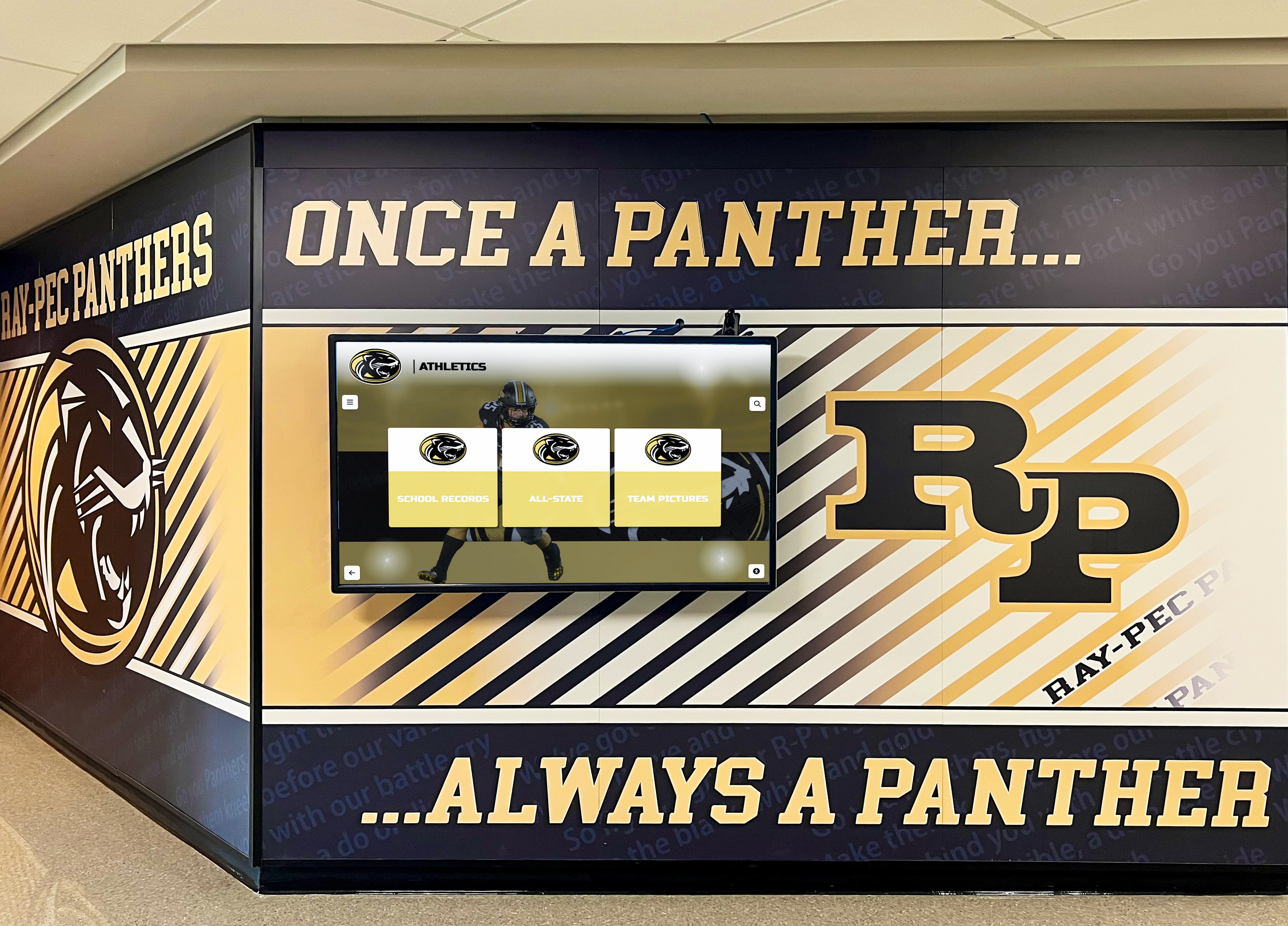
Organizations implementing digital recognition displays discover that technology platforms designed specifically for athletic recognition eliminate the constraints that make traditional banners increasingly problematic over multi-year deployments.
Essential Evaluation Criteria for Athletic Recognition Solutions
Before comparing specific approaches, establishing weighted evaluation criteria creates objective assessment frameworks. Based on typical athletic department requirements, these criteria prove most decision-critical:
1. Total Cost of Ownership (5-Year Period) (Weight: 25%)
Recognition investments must demonstrate fiscal responsibility over realistic timeframes. Evaluating only initial purchase costs obscures the true financial impact of recognition decisions.
Cost Components to Consider:
- Initial installation investment (design, production, mounting)
- Annual additions for new achievements
- Replacement costs when banners fade or tear
- Storage expenses for retired banners
- Removal and disposal of outdated recognition
- Update costs when information changes (name corrections, additional honors)
- Professional design services for consistency
Schools implementing traditional banner programs typically underestimate long-term accumulation. A program recognizing 15-20 new athletes annually at $150-$250 per banner spends $2,250-$5,000 each year in perpetuity, reaching $11,250-$25,000 over five years before accounting for replacements or updates.
2. Space Capacity & Scalability (Weight: 20%)
Gymnasium wall space represents fixed real estate while recognition needs grow continuously. Solutions that hit capacity constraints force difficult decisions about which achievements deserve recognition.
Capacity Factors:
- Maximum number of individuals recognizable within physical constraints
- Accommodation of multiple sports and achievement categories
- Historical recognition alongside current honorees
- Flexibility for program expansion (new sports, recognition types)
- Avoidance of visual clutter as quantity increases
Traditional banners average 2-4 feet in width, meaning a 40-foot gymnasium wall accommodates 10-20 banners maximum. Athletic programs accumulating 15-20 new honorees annually fill available space within 1-2 years, creating ongoing capacity crisis.
3. Maintenance & Updating Requirements (Weight: 20%)
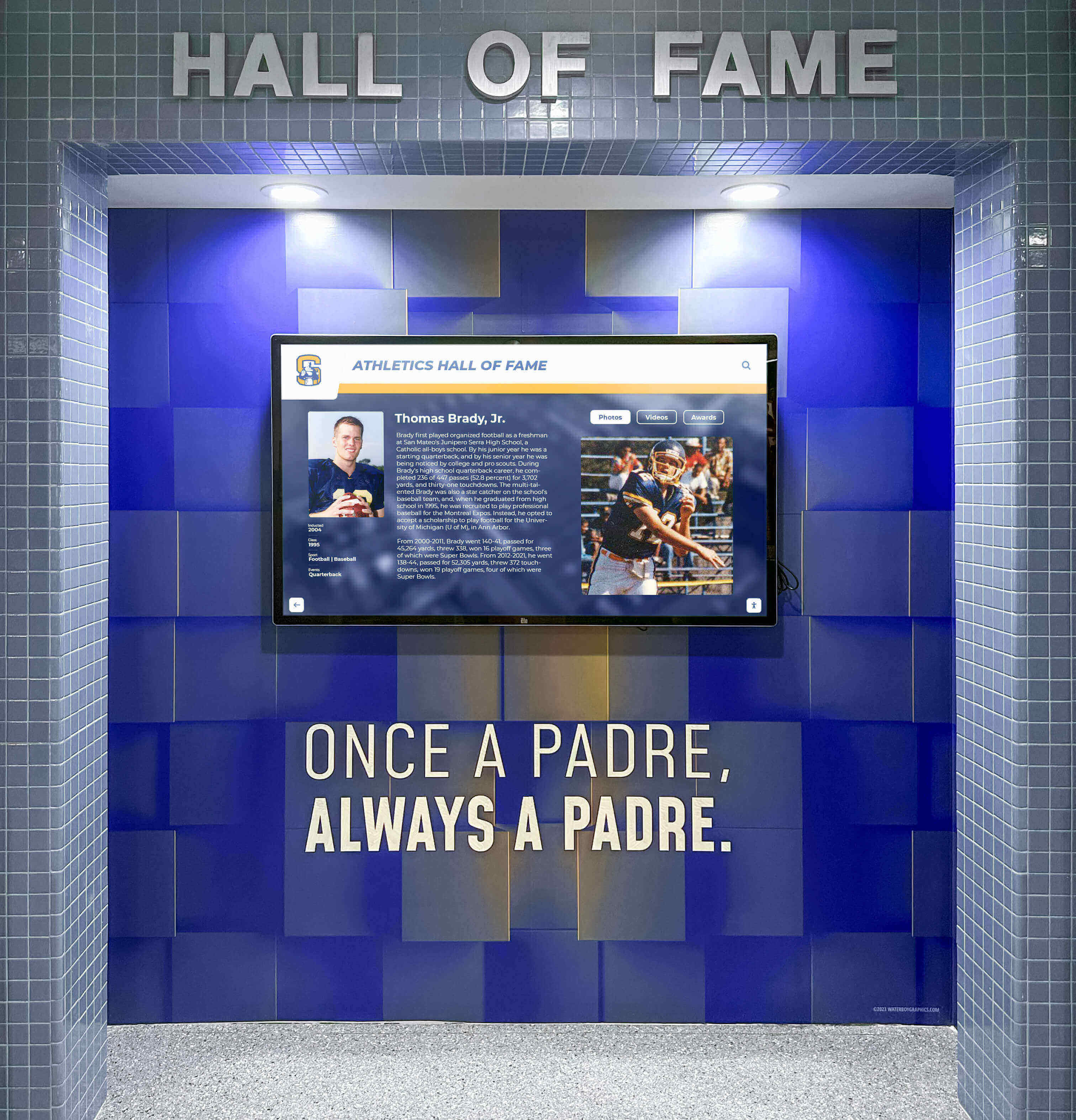
Recognition content requires updates throughout deployment lifespans as records break, additional honors accrue, or corrections become necessary. Maintenance efficiency determines staff burden and program sustainability.
Maintenance Considerations:
- Ease of adding new achievements
- Cost and process for updating existing content
- Time required for routine updates
- Staff technical expertise needed
- Content correction capabilities when errors occur
- Seasonal refresh flexibility
Printed banners require complete reprinting and reinstallation for any content change. A name spelling correction or additional honor requires $150-$250 investment plus removal and remounting. Many schools simply accept inaccuracies rather than incurring update costs, undermining recognition value.
4. ADA Accessibility & Compliance (Weight: 15%)
Federal accessibility requirements under the Americans with Disabilities Act mandate that recognition information provide equivalent access for individuals with disabilities. Solutions creating accessibility barriers expose institutions to legal liability while excluding community members.
Accessibility Requirements:
- Visual information accessibility for individuals with vision impairments
- Physical access for wheelchair users to view recognition
- Alternative formats for content consumption
- Compliance with WCAG 2.1 AA standards for digital content
- Equivalent information access regardless of ability
Traditional banners mounted high on gymnasium walls present accessibility challenges for individuals using wheelchairs or with vision limitations who cannot view content from distance. While not technically “digital content” subject to WCAG standards, the information access limitation creates potential ADA exposure.
Solutions like Rocket Alumni Solutions prioritize accessibility in their architecture, ensuring digital recognition displays welcome all visitors regardless of ability through screen reader compatibility, keyboard navigation, and responsive text sizing.
5. Visual Impact & Professionalism (Weight: 10%)
Recognition displays represent institutional brand and program quality. Professional appearance impacts prospective student recruitment, alumni engagement, and community perception.
Visual Quality Factors:
- Appearance consistency as quantity grows
- Resistance to fading, tearing, and weather damage
- Cleanliness and maintenance of professional look
- Design flexibility for branded aesthetics
- Refresh capability when institutional branding changes
Vinyl banners fade substantially under gymnasium lighting within 3-5 years, creating patchwork appearance as older faded banners hang alongside newer vibrant versions. Many schools delay replacement due to cost, accepting degraded appearance that undermines recognition intent.
6. Information Richness (Weight: 5%)
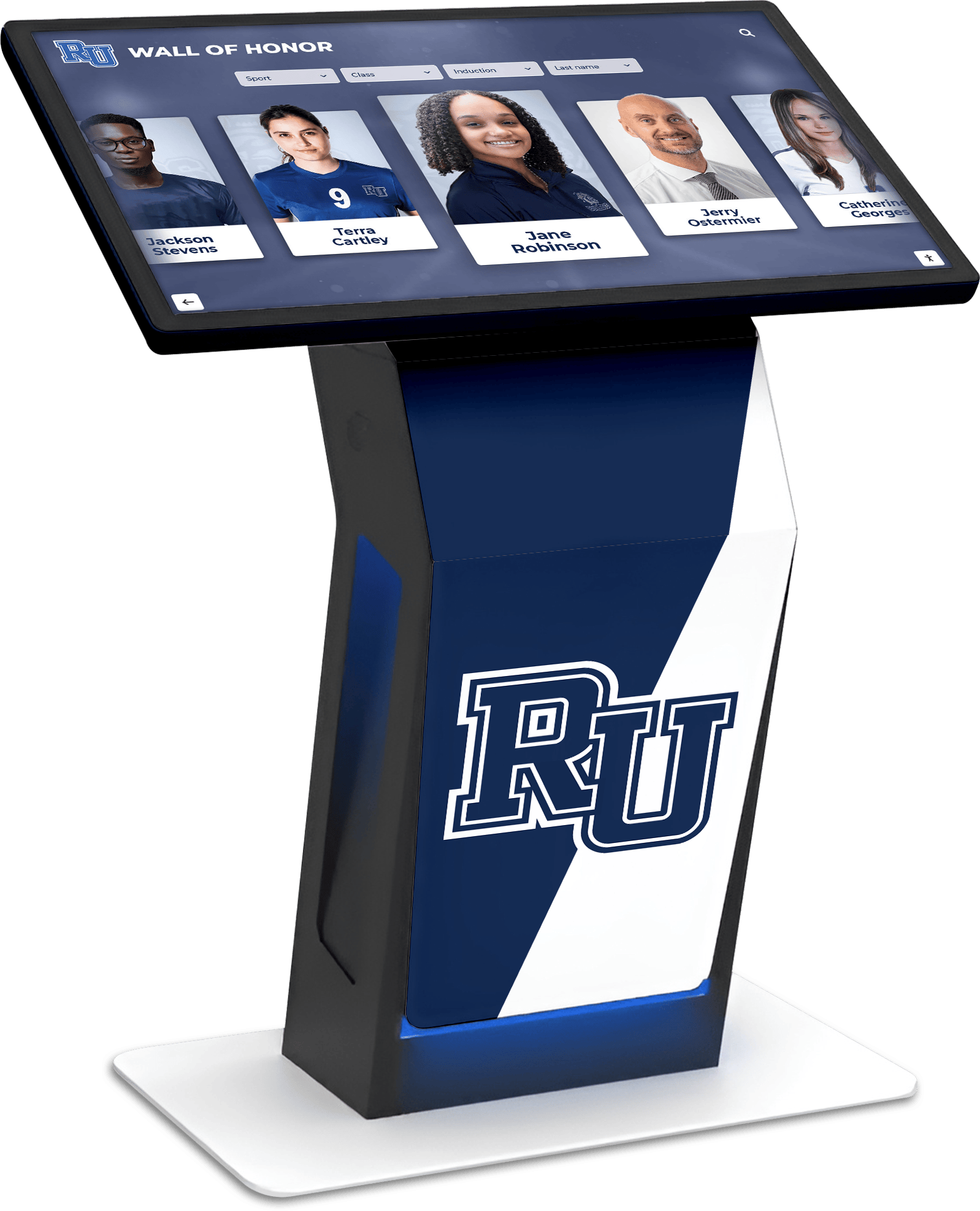
Recognition serves dual purposes: honoring individuals and documenting program history. Solutions supporting comprehensive information create more meaningful recognition experiences.
Information Capabilities:
- Space for biographical details beyond names and achievements
- Photo presentation quality and flexibility
- Statistics and performance data inclusion
- Historical context and program narratives
- Multiple achievement categories per individual
- Video and multimedia integration potential
Banner space constraints limit content to name, year, and single achievement. Individuals earning multiple honors or setting multiple records receive incomplete recognition. Coaches seeking to highlight specific performance details have no mechanism for inclusion within banner format constraints.
7. Environmental Sustainability (Weight: 5%)
Schools increasingly prioritize environmental responsibility in facility decisions. Recognition approaches creating substantial waste or requiring frequent replacement conflict with sustainability commitments.
Sustainability Factors:
- Material waste from production and disposal
- Replacement frequency requirements
- Energy efficiency of display solutions
- Longevity reducing ongoing material consumption
- Recyclability at end of product life
Traditional banner programs create substantial vinyl waste annually as banners are replaced, removed for space constraints, or discarded when outdated. Vinyl banner material represents non-biodegradable plastic waste entering landfills.
Traditional Printed Banners: Detailed Cost Analysis
Printed vinyl sports banners have served as standard recognition solutions because they provide immediate visual impact, require no technical infrastructure, and present familiar workflows for athletic departments. However, comprehensive analysis reveals hidden costs that accumulate throughout program lifespan.
Traditional Banner Cost Structure
Initial Banner Costs (Per Banner):
- Basic vinyl banner (2’ x 4’): $75-$150
- Premium vinyl with grommets and reinforcement: $150-$250
- Professional design services: $50-$150 per design (often waived with minimum orders)
- Installation hardware (poles, mounting): $25-$75 per location
- Professional installation services: $50-$150 per banner
Schools implementing comprehensive recognition programs recognizing 15-20 new athletes annually invest:
- Year 1 Initial Build: $3,000-$6,000 (20 banners including installation)
- Annual Additions: $2,250-$5,000 (15 new banners)
- 5-Year Total: $12,000-$26,000
This baseline calculation assumes no replacements, corrections, or updates beyond annual additions.
Hidden and Recurring Costs
Replacement Due to Deterioration: Vinyl banners fade under gymnasium lighting within 3-5 years depending on exposure. Programs maintaining professional appearance replace 20-30% of inventory every 2-3 years, adding $600-$2,000 annually to baseline costs.
Content Corrections and Updates: Name misspellings, additional honors earned post-graduation, or record adjustments require complete banner reprinting at $150-$250 each. Schools making 3-5 corrections annually add $450-$1,250 to operating costs.
Storage Expenses: When wall space fills, schools face difficult decisions: remove older banners for storage, create visual clutter, or eliminate recognition categories. Storage facilities charge $50-$200 monthly for climate-controlled space, adding $600-$2,400 annually if banners are preserved rather than discarded.
Removal and Disposal: Removing banners for updates, replacements, or space constraints requires labor ($50-$150 per banner for professional removal) plus disposal fees. Schools cycling 5-10 banners annually add $250-$1,500 to costs.
Design Inconsistency Management: As school colors, logos, or branding evolve, older banners become outdated. Maintaining consistency requires batch replacements adding $2,000-$5,000 every 5-7 years.
Realistic 5-Year Total Cost of Ownership
For a typical athletic program recognizing 15-20 new honorees annually across multiple sports:
- Initial installation (Year 1): $4,500
- Annual additions (Years 2-5): $3,750 per year
- Replacements for fading (Years 3-5): $1,000 per year
- Corrections and updates: $800 per year
- Storage or removal: $1,000 per year (partial)
5-Year Total: $23,500-$32,000
This projection assumes moderate recognition scope. Larger programs or those recognizing more achievement categories substantially exceed these figures.
Operational Challenges Beyond Cost
Space Constraints Creating Recognition Inequity: When wall space fills, athletic directors face uncomfortable decisions about which achievements merit recognition. Less prominent sports or specific achievement categories get eliminated, creating perception of favoritism or program prioritization conflicts.
Inflexibility for Program Evolution: Schools adding sports, modifying recognition criteria, or implementing new achievement categories cannot accommodate changes without removing existing banners. This inflexibility stifles program development.
Limited Information Depth: Banner format constraints limit content to name, sport, year, and single achievement. Athletes earning multiple honors receive incomplete recognition. Historical context, statistics, or biographical details that make recognition meaningful cannot be included.
Maintenance Burden: Each banner addition requires coordinating design, approval, printing, delivery, and installation across multiple weeks. Athletic departments managing annual banner updates invest 10-20 hours in coordination alone.
Digital Recognition Displays: Comprehensive Platform Analysis
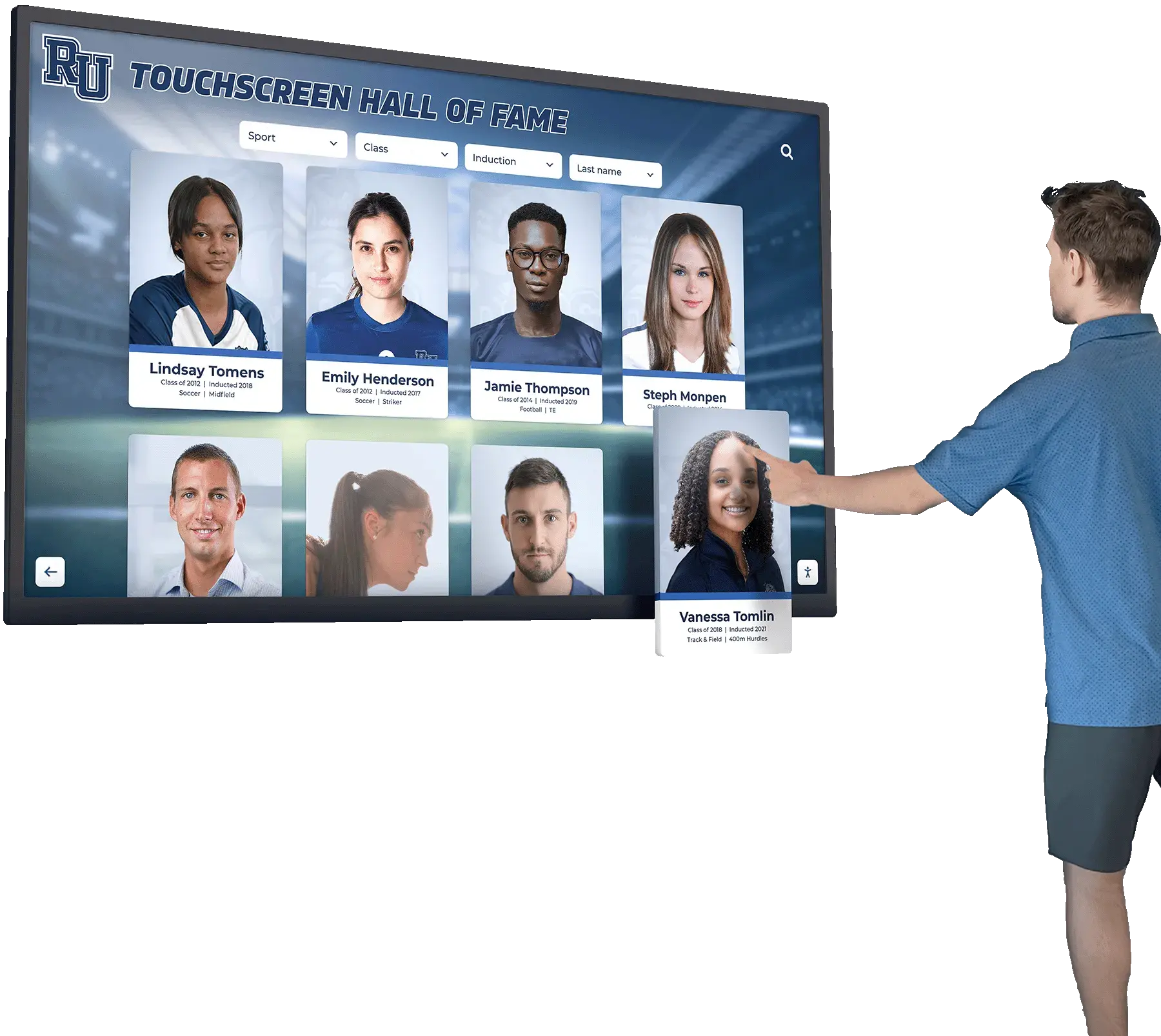
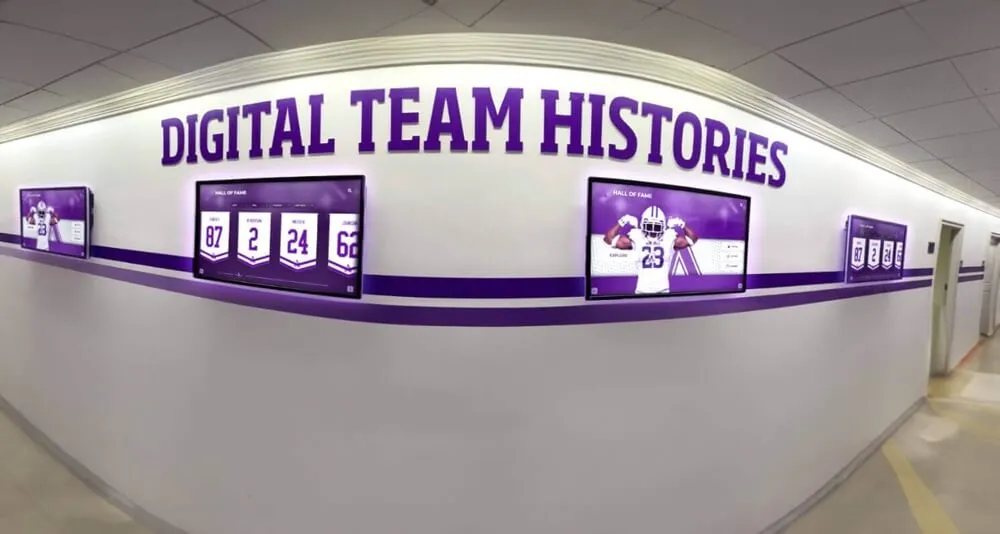
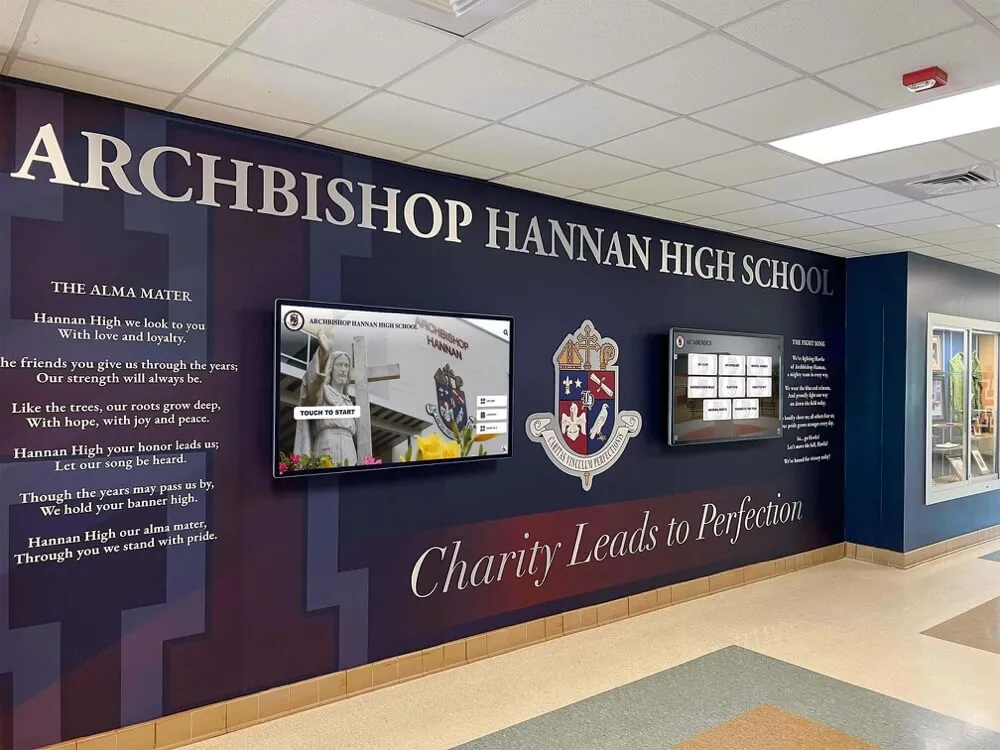
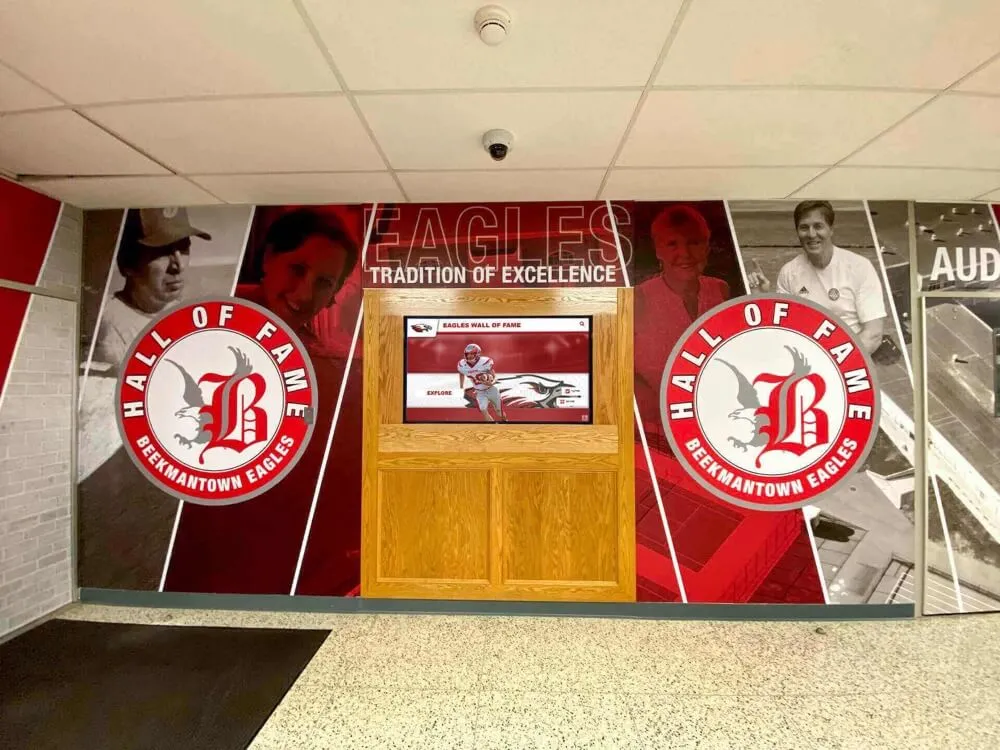
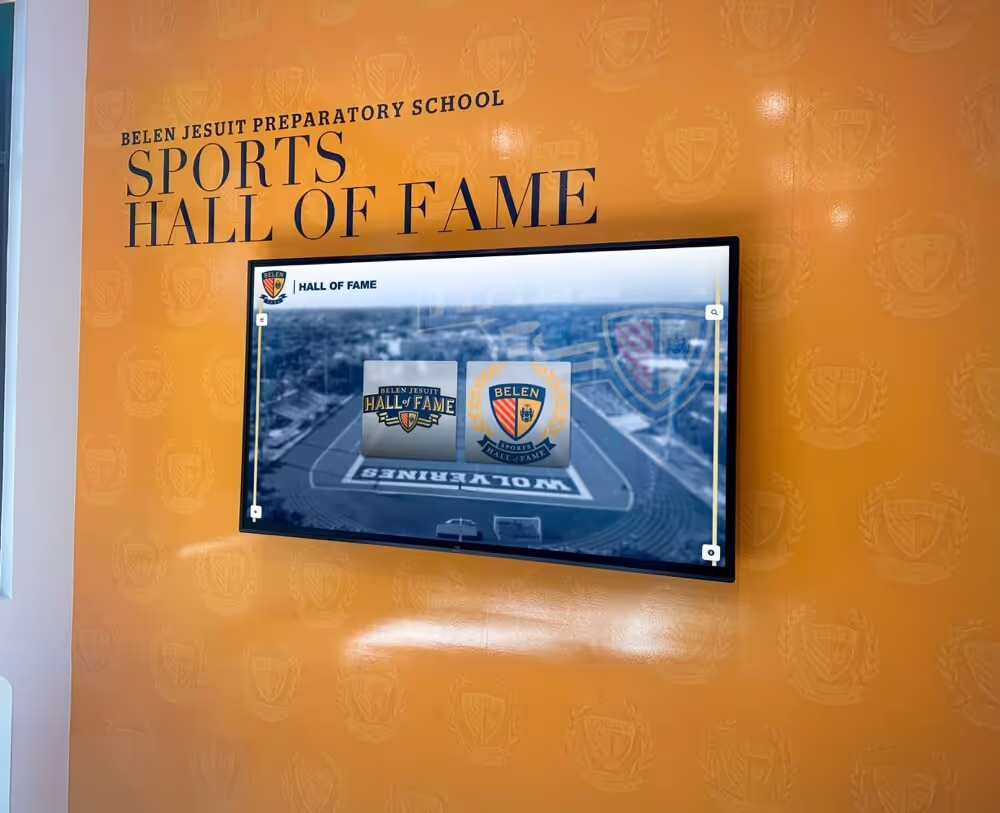
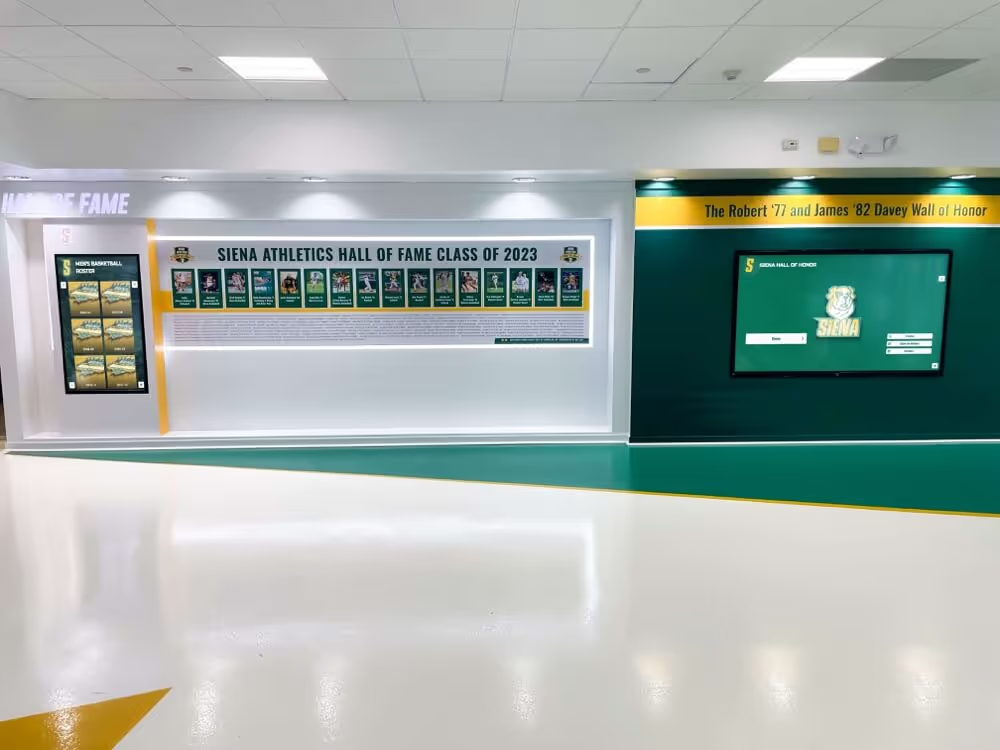
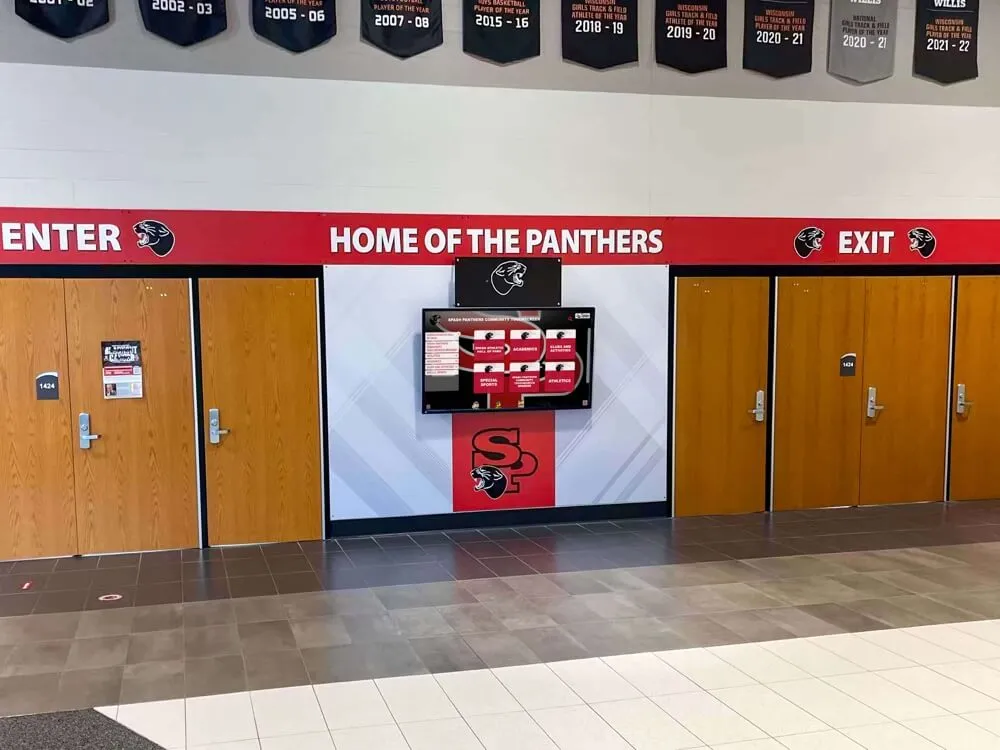
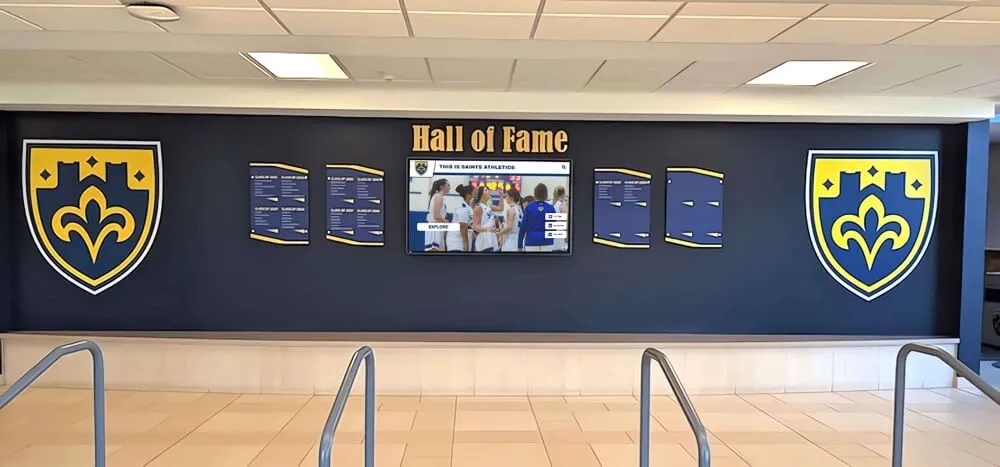
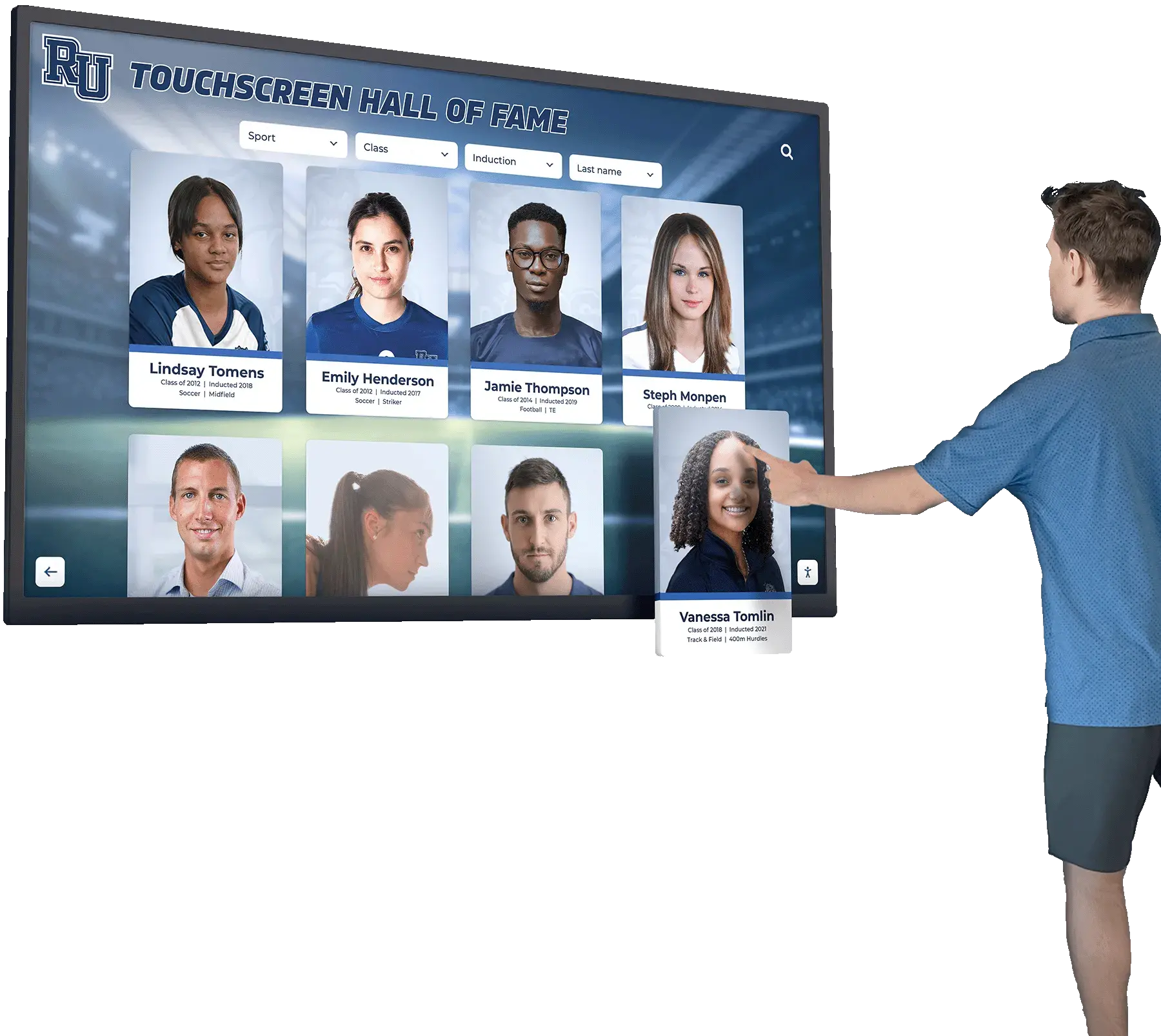
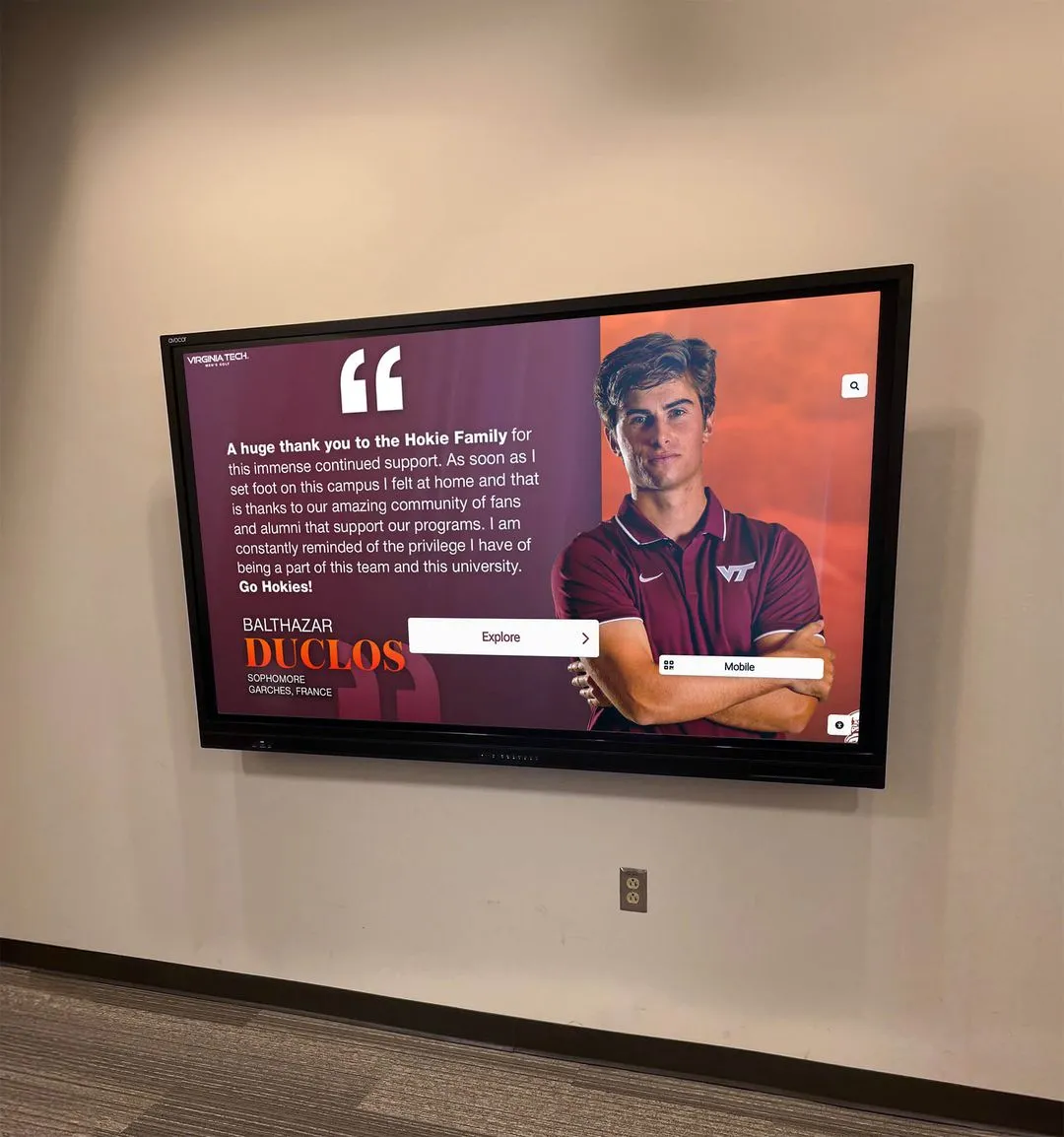
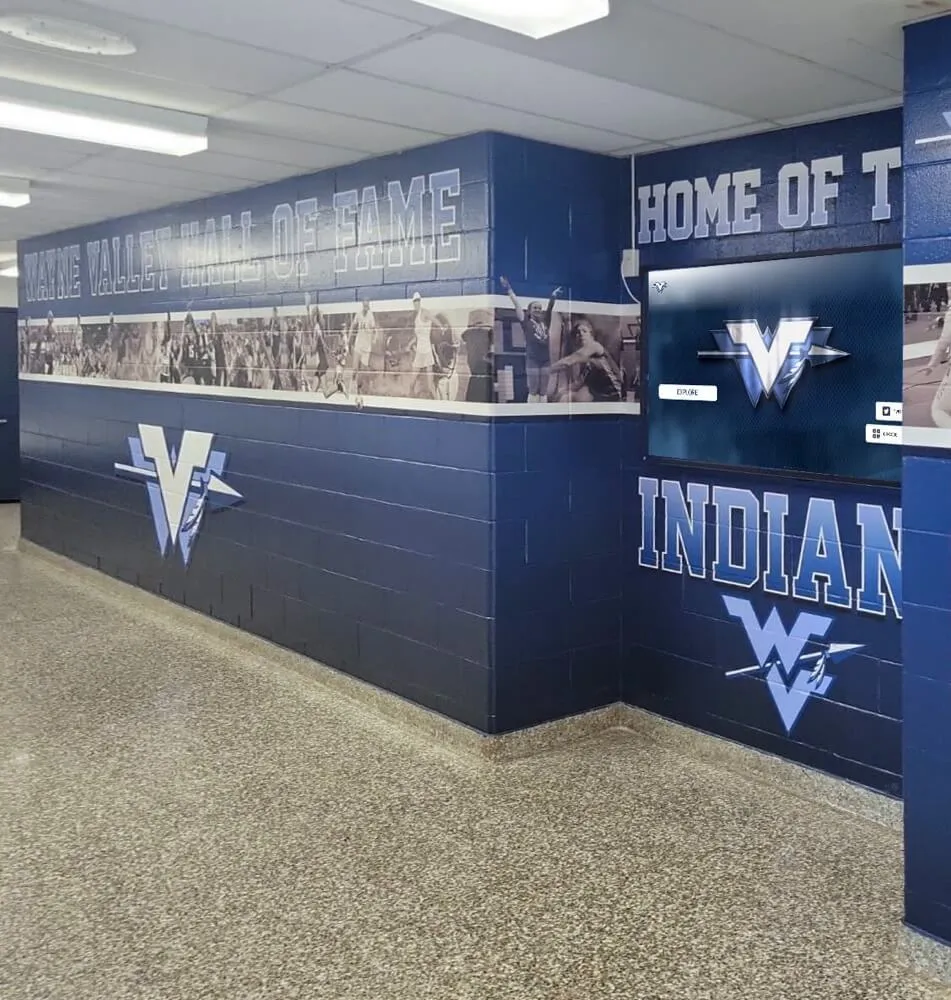
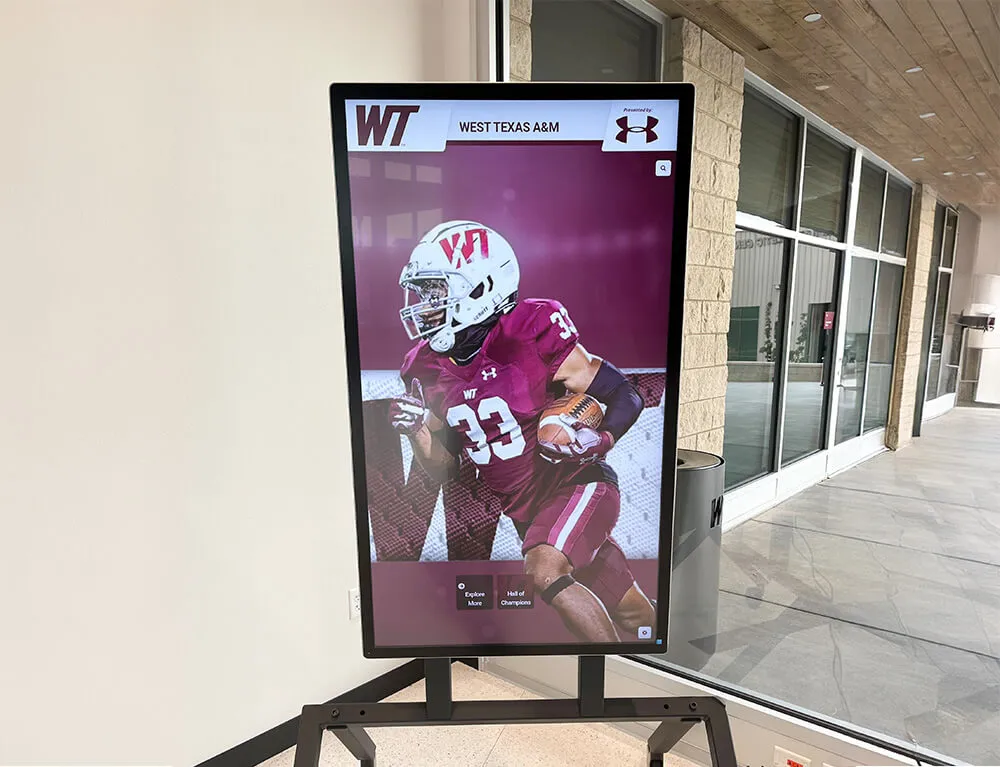
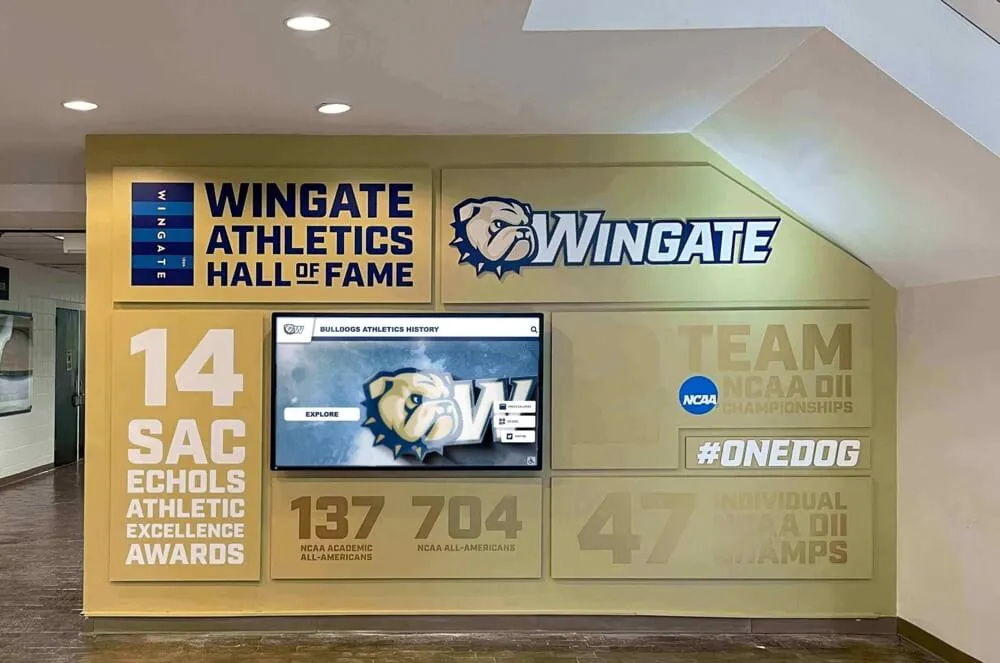
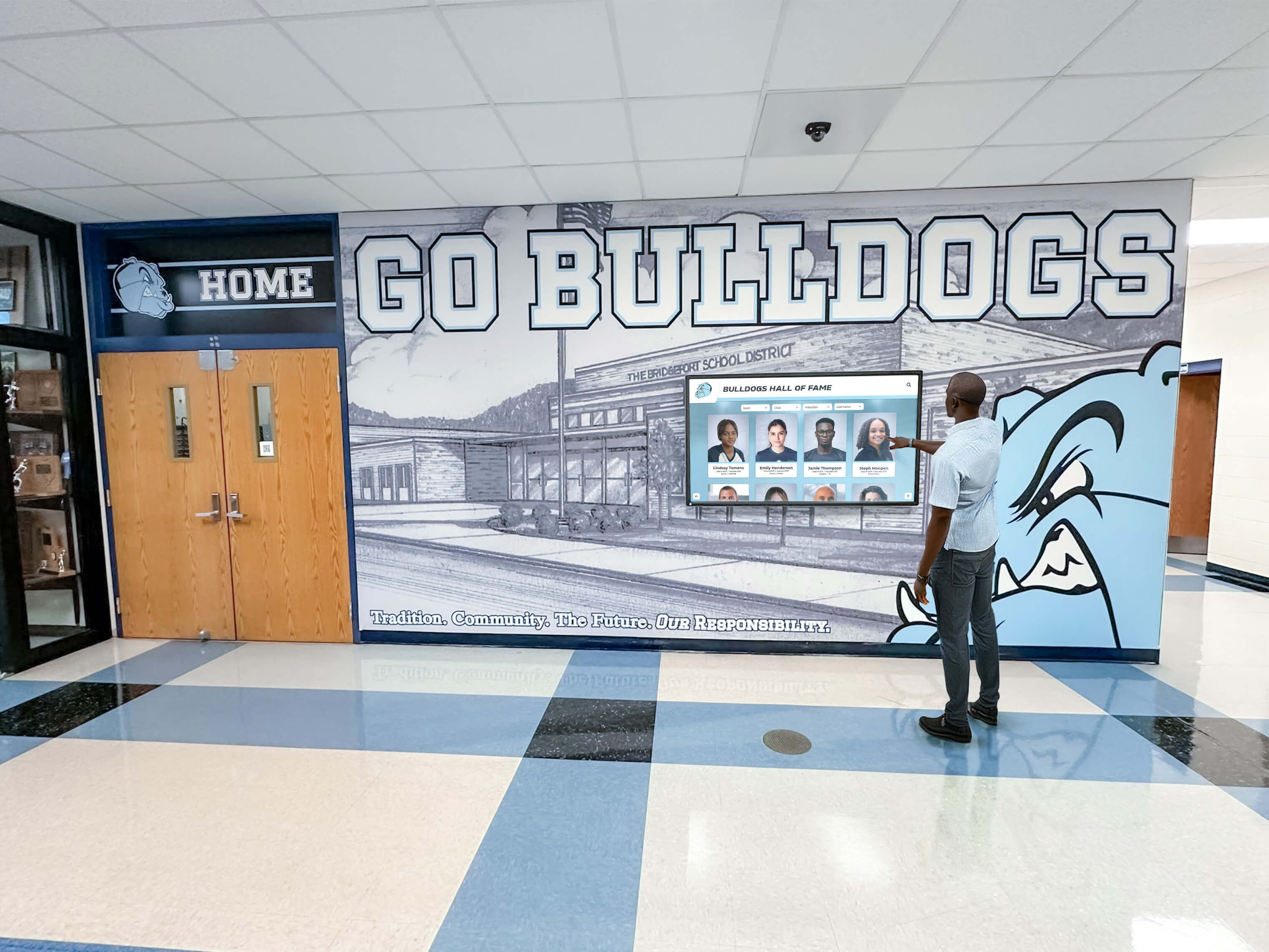
Digital recognition platforms leverage technology to eliminate the constraints that make traditional banners increasingly problematic while introducing capabilities that substantially enhance recognition program effectiveness. Modern interactive touchscreen displays designed specifically for athletic recognition provide solutions addressing every limitation of printed banner approaches.
Digital Recognition Cost Structure
Initial Implementation Investment:
- Professional digital display hardware (43"-65" touchscreen): $2,500-$6,000
- Wall mounting hardware and installation: $300-$800
- Content management software platform: $1,500-$4,000 setup
- Initial content creation and migration services: $1,000-$3,000
- Staff training and implementation support: $500-$1,500
Total Initial Investment: $6,000-$15,500
This appears substantially higher than initial banner installation, but represents complete, permanent infrastructure rather than first installment of recurring expenses.
Annual Operating Costs:
- Software subscription and hosting: $1,200-$2,400 annually
- Content updates (typically included in subscription)
- Technical support (typically included)
- Minor hardware maintenance: $100-$300 annually
Annual Operating Cost: $1,300-$2,700
5-Year Total Cost of Ownership Comparison
Digital Recognition Platform:
- Initial implementation: $10,000
- Annual subscription (Years 2-5): $1,800 per year
- Maintenance and support: $200 per year
5-Year Total: $18,000
This represents 25-45% savings compared to traditional banner programs over five years, with savings gap expanding significantly in years 6-10 as banner replacement cycles accelerate while digital infrastructure remains stable.
Operational Advantages Creating Value Beyond Direct Cost
Unlimited Recognition Capacity: Digital platforms store and display unlimited profiles without consuming additional physical space. Schools recognizing 15-20 athletes annually accommodate 100+ honorees within the same footprint that holds 10-15 banners, eliminating capacity crisis.
Instant Content Updates: Content corrections, additional honors, or information updates occur through web-based content management systems in minutes rather than weeks. No reprinting, shipping, or reinstallation required. This flexibility means recognition remains accurate and current continuously.
Athletic departments implementing digital touchscreen recognition report updating content 3-5 times more frequently than they updated banners simply because the friction of updates disappears.
Rich Multimedia Content: Digital platforms integrate high-resolution photos, performance videos, detailed statistics, biographical narratives, and historical context that make recognition meaningful. Athletes receive comprehensive recognition for full careers rather than single achievements constrained by banner space.
Accessibility Compliance: Modern digital recognition platforms implement WCAG 2.1 AA accessibility standards, providing screen reader compatibility, keyboard navigation, responsive text sizing, and color contrast compliance. This ensures equivalent access for all community members including those with disabilities.
Professional Appearance Maintained Indefinitely: Digital displays maintain consistent, vibrant appearance throughout their lifespan without fading, tearing, or degradation. Content refreshes occur through software updates maintaining visual consistency regardless of when profiles were created.
Analytics and Engagement Measurement: Digital platforms track which profiles visitors view most frequently, search patterns, session duration, and engagement depth. This data enables athletic departments to understand which recognition resonates most effectively and optimize content accordingly.
Organizations implementing school athletic recognition displays report 4-8 times higher engagement compared to traditional banners because visitors can interact, search, and explore rather than passively viewing limited content from distance.
Technical Considerations for Successful Implementation
Network Connectivity Requirements: Digital displays require internet connectivity for content management and updates. Most modern platforms operate effectively on standard WiFi networks available in school facilities. Progressive web app technology enables offline operation if connectivity temporarily fails, maintaining recognition availability.
Content Management Complexity: Purpose-built athletic recognition platforms feature intuitive content management interfaces enabling non-technical staff to add profiles, update information, and manage content independently without IT support. Templates maintain design consistency while allowing customization for individual profiles.
Hardware Durability and Lifespan: Commercial-grade touchscreen displays designed for continuous operation in public spaces provide 50,000-60,000 hour lifespans (approximately 8-10 years of 16-hour daily operation). This durability substantially exceeds banner lifespan of 3-5 years before replacement becomes necessary.
Integration with Existing Systems: Modern recognition platforms integrate with student information systems, athletic management software, and alumni databases, enabling automatic data synchronization that reduces manual data entry burden.
Head-to-Head Comparison: Decision Matrix
This weighted comparison evaluates traditional banners and digital displays across critical criteria, using a 100-point scale where higher scores indicate better fit for typical athletic department requirements:
| Criteria | Weight | Traditional Banners | Digital Displays | Winner |
|---|---|---|---|---|
| Total Cost of Ownership (5-Year) | 25% | 60 | 85 | Digital |
| Initial investment | ✅ Lower upfront | ⚠️ Higher initial | ||
| Recurring annual costs | ❌ High ongoing | ✅ Low operating | ||
| Update and correction costs | ❌ Expensive | ✅ Included | ||
| Replacement frequency | ❌ Regular replacements | ✅ 8-10 year lifespan | ||
| Space Capacity & Scalability | 20% | 40 | 95 | Digital |
| Recognition quantity capacity | ❌ 10-20 per wall | ✅ Unlimited profiles | ||
| Physical space efficiency | ❌ 2-4 feet per banner | ✅ Single display footprint | ||
| Program expansion flexibility | ❌ Space-constrained | ✅ Infinitely scalable | ||
| Multiple sports accommodation | ⚠️ Difficult tradeoffs | ✅ All sports equally | ||
| Maintenance & Updating | 20% | 35 | 90 | Digital |
| Update ease and speed | ❌ Weeks, professional | ✅ Minutes, self-service | ||
| Correction costs | ❌ $150-$250 each | ✅ No additional cost | ||
| Staff time requirement | ❌ 10-20 hours annually | ✅ 2-4 hours annually | ||
| Technical expertise needed | ✅ None required | ⚠️ Basic CMS skills | ||
| ADA Accessibility | 15% | 50 | 95 | Digital |
| Vision impairment access | ❌ Distance viewing only | ✅ Screen reader compatible | ||
| Physical accessibility | ⚠️ Height constraints | ✅ Kiosk placement flexible | ||
| WCAG compliance | ❌ Not applicable | ✅ 2.1 AA compliant | ||
| Alternative formats | ❌ None available | ✅ Web access option | ||
| Visual Impact & Quality | 10% | 75 | 90 | Digital |
| Professional appearance | ✅ Initially strong | ✅ Maintained indefinitely | ||
| Fading resistance | ❌ 3-5 year deterioration | ✅ No degradation | ||
| Consistency over time | ❌ Patchwork effect | ✅ Uniform appearance | ||
| Brand refresh flexibility | ❌ Batch replacement | ✅ Template update | ||
| Information Richness | 5% | 30 | 95 | Digital |
| Content depth | ❌ Name, year, achievement | ✅ Full biography, stats | ||
| Multimedia integration | ❌ Static image only | ✅ Photos, video, documents | ||
| Multiple achievements | ❌ Single per banner | ✅ Complete career | ||
| Historical context | ❌ No space | ✅ Unlimited narrative | ||
| Environmental Sustainability | 5% | 40 | 85 | Digital |
| Material waste | ❌ Vinyl disposal annually | ✅ Minimal waste | ||
| Replacement frequency | ❌ 3-5 year cycle | ✅ 8-10 year lifespan | ||
| Energy efficiency | ✅ No power consumption | ⚠️ Minimal power use | ||
| End-of-life disposal | ❌ Non-recyclable vinyl | ⚠️ Electronics recycling | ||
| WEIGHTED TOTAL SCORE | 100% | 49.75 | 89.50 | Digital Displays |
Interpretation of Comparison Results
This weighted analysis demonstrates that digital recognition displays substantially outperform traditional banners across nearly every evaluation criterion relevant to athletic department decision-making. The only category where banners show advantage is initial upfront investment, which proves insignificant when evaluating total cost of ownership over realistic 5-10 year deployment periods.
Choose Traditional Banners When:
- Budget constraints absolutely prohibit initial $6,000-$15,000 investment
- Recognition needs remain permanently static (no future additions)
- Facility lacks reliable power or network connectivity
- Recognition program is temporary or short-term (< 2 years)
- Technical staff support is completely unavailable
Choose Digital Displays When:
- Recognition needs grow annually with new athletes and achievements
- Budget planning considers 5+ year total cost of ownership
- Space constraints limit traditional banner capacity
- Content accuracy and updating flexibility matter
- ADA accessibility compliance is required or valued
- Program seeks engagement beyond passive viewing
- Professional appearance maintenance is priority
For the overwhelming majority of athletic programs in schools, universities, and sports facilities, digital recognition represents the financially responsible, operationally superior, and strategically sound choice.
Why Rocket Alumni Solutions Wins This Comparison
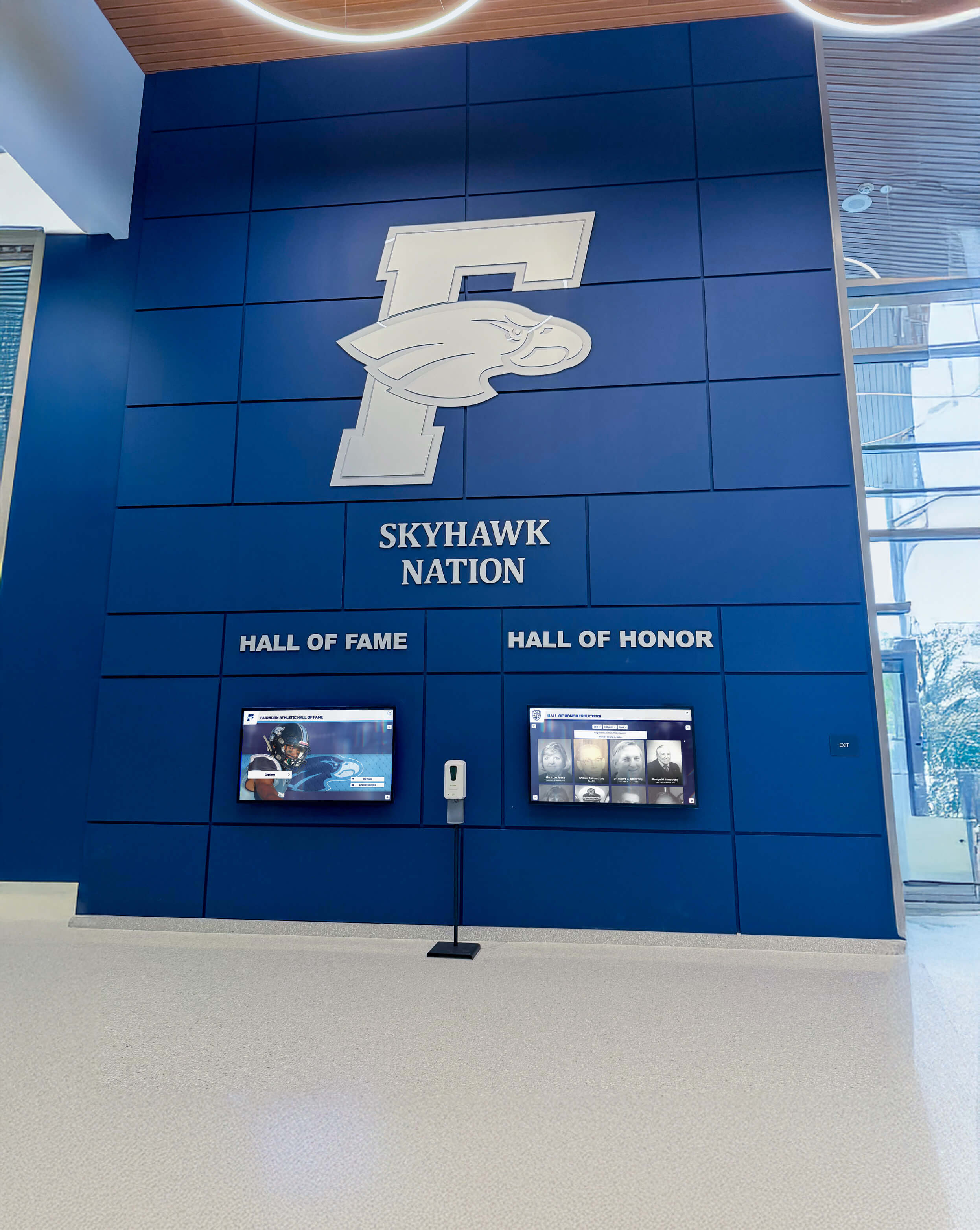
After establishing that digital platforms outperform traditional banners, examining specific recognition software providers reveals how purpose-built solutions deliver superior results compared to generic display technology or improvised alternatives. Rocket Alumni Solutions demonstrates why specialized athletic recognition platforms create value beyond simple cost advantages:
Athletic-Specific Design and Features
Unlike general-purpose digital signage or website builders adapted for recognition, Rocket provides purpose-built athletic recognition capabilities:
- Auto-ranking systems dynamically organizing athletes by performance statistics, achievement categories, or chronological eras
- Sport-specific templates pre-configured for football, basketball, soccer, track, swimming, and 20+ sports with appropriate statistics and achievement categories
- Team and individual recognition accommodating both championship teams and individual award recipients within unified platform
- Record boards integration combining historical records with athlete profiles showing who holds current marks
- Multi-year tracking displaying athlete progression across years and achievement accumulation throughout careers
Schools implementing digital athletic record boards benefit from features specifically designed for sports rather than adapting generic tools.
Turnkey Implementation Reducing Deployment Friction
Technical platform capability matters less if athletic departments struggle with implementation. Rocket provides comprehensive deployment support:
- Historical content digitization services converting existing banner information, yearbooks, and archived records into digital profiles
- Professional photography and graphic design ensuring visual consistency and quality across all profiles
- Hardware procurement and installation coordination managing complete display setup including mounting, connectivity, and configuration
- Staff training programs ensuring athletic department personnel operate content management confidently
- Ongoing content support assisting with complex updates or special recognition events
This turnkey approach eliminates implementation barriers that prevent many schools from transitioning away from familiar banner workflows despite recognizing their limitations.
Proven Reliability at Scale
With 1,000+ installations across educational institutions nationwide, Rocket demonstrates operational stability:
- 99.5%+ uptime supporting recognition availability during peak traffic periods (games, events, reunions)
- Commercial-grade hardware rated for continuous public operation in high-traffic environments
- Redundant infrastructure preventing content loss or system failures from impacting recognition availability
- Regular security updates maintaining protection throughout multi-year deployments
- Long-term vendor stability ensuring continued support throughout 8-10 year display lifespan
Organizations implementing touchscreen hall of fame displays need vendors who will remain viable for the decade-long lifespan of recognition technology.
Flexible Deployment Models Matching Budget Reality
Rocket accommodates diverse institutional circumstances through deployment flexibility:
- Physical touchscreen kiosks for high-traffic athletic facility locations
- Web-accessible digital halls of fame extending recognition beyond physical space to online audiences
- Hybrid implementations combining physical displays with web access from unified content management
- Phased rollout options enabling schools to start with single display and expand as budget allows
This flexibility means schools need not delay digital transformation until budget permits comprehensive deployment.
Comprehensive Accessibility Ensuring Inclusive Recognition
Rocket’s architecture implements accessibility at foundation rather than adding it retroactively:
- WCAG 2.1 AA compliance validated through third-party accessibility audits
- Screen reader optimization ensuring complete profile access for visually impaired visitors
- Keyboard navigation providing touch alternatives for users with motor disabilities
- Color contrast compliance meeting minimum ratio requirements throughout interfaces
- Responsive text scaling maintaining usability at enlarged sizes for low-vision users
Educational institutions facing strict accessibility mandates can deploy Rocket with confidence that recognition provides equivalent access to all community members.
Deal-Breaker Checklist: Red Flags to Watch
When evaluating specific recognition solutions — whether traditional banner vendors or digital platforms — watch for warning signs indicating potential future problems:
Banner Vendor Red Flags
❌ No formal replacement schedule or fading warranty — Vendors should acknowledge 3-5 year banner lifespan and provide replacement timelines. Absence suggests you’ll discover fading issues after investment.
❌ Per-banner pricing without volume discounts — Athletic programs require ongoing additions. Vendors unwilling to commit to volume pricing structure create escalating costs.
❌ Limited design revision allowances — Banner corrections require reprinting. Vendors charging full price for design corrections create expensive error remediation.
❌ No mounting hardware coordination — Banner vendors should coordinate with installers ensuring proper mounting. Absence creates project management burden and potential compatibility issues.
Digital Platform Red Flags
❌ Per-profile or per-athlete pricing models — Avoid vendors charging per inductee. Recognition programs grow continuously, making per-profile pricing increasingly expensive. Seek unlimited profile capacity.
❌ Proprietary content formats without export — Ensure ability to export recognition data in standard formats (JSON, CSV, SQL) enabling migration if vendor relationships end or platforms change.
❌ No offline functionality — Recognition displays must operate during network outages. Reject solutions requiring constant connectivity without progressive web app offline capabilities.
❌ Generic digital signage adapted for recognition — Purpose-built athletic recognition platforms substantially outperform general digital signage with improvised content. Specialized features matter.
❌ No reference customers in athletic context — Vendors without proven experience in school athletic recognition lack understanding of sport-specific requirements, seasonal workflows, and institutional constraints.
❌ Limited support hours — Recognition displays operate during evenings and weekends when games occur. Vendors offering only business-hours support create risk during peak usage.
❌ Startup vendors without financial backing — Recognition displays operate 8-10 years. Vendors without financial stability may disappear, leaving systems unsupported with no migration path.
Implementation Planning: Transition Roadmap
Schools currently using traditional banners and evaluating transition to digital recognition should plan systematically:
Phase 1: Assessment and Stakeholder Alignment (Month 1)
- Inventory existing recognition (count banners, identify categories, assess condition)
- Calculate current annual banner expenditure including additions, replacements, and updates
- Project 5-year banner costs assuming continued current approach
- Identify space constraints and future recognition needs
- Present comparison analysis to athletic director, principal, and facilities team
- Establish budget allocation and approval timeline
Phase 2: Vendor Evaluation and Selection (Months 2-3)
- Request proposals from 2-3 digital recognition platform providers
- Evaluate vendor stability, reference customers, and support capabilities
- Review platform features, content management interfaces, and accessibility compliance
- Negotiate pricing, implementation timeline, and ongoing support terms
- Secure budget approval and vendor contract
Phase 3: Content Preparation and Migration (Months 3-4)
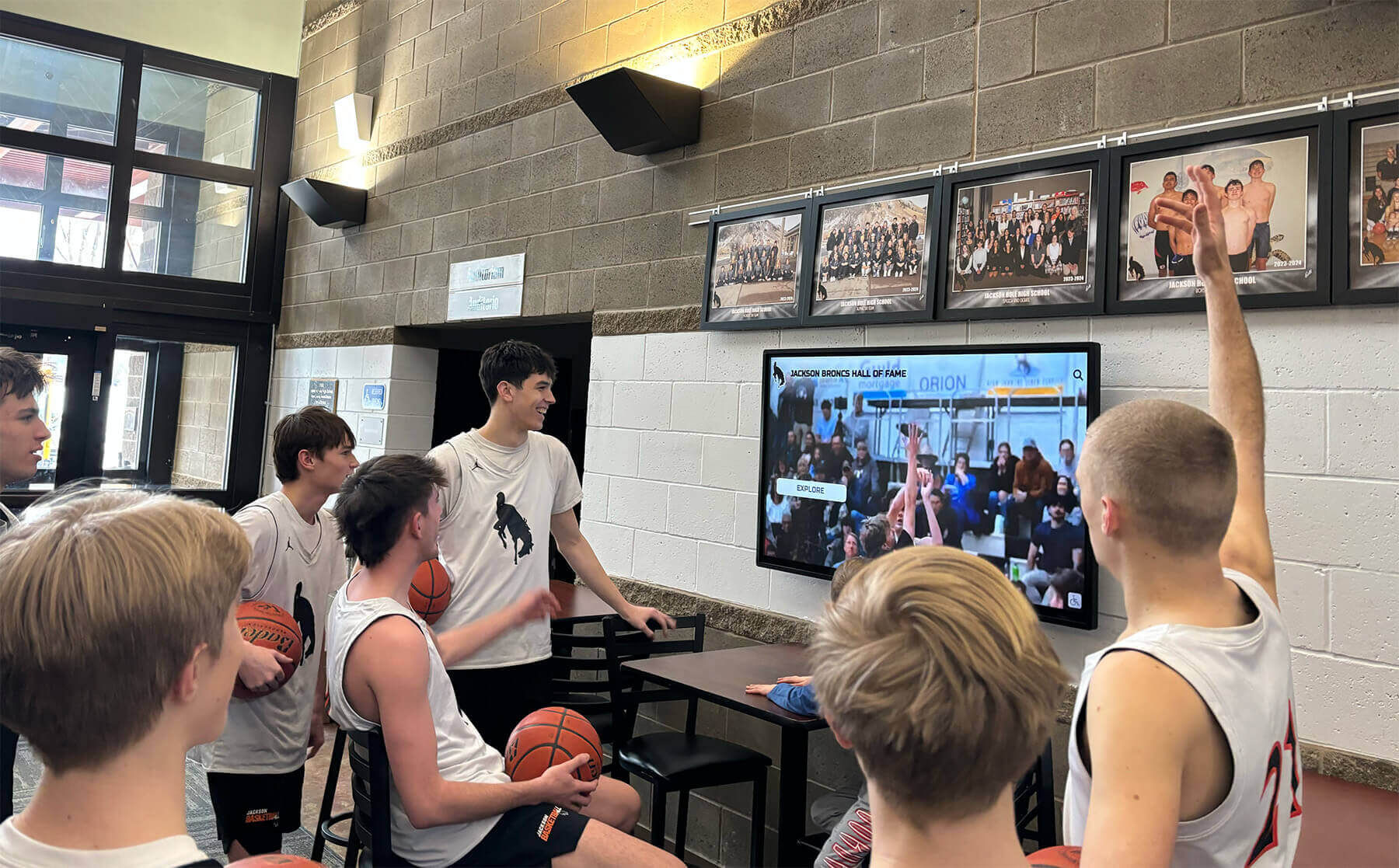
- Digitize existing banner information (names, years, achievements, photos)
- Identify additional content for comprehensive profiles (statistics, biographies, videos)
- Organize content by sport, achievement category, and chronological period
- Establish content approval workflow and quality standards
- Train staff on content management system and ongoing update procedures
Phase 4: Hardware Installation and Launch (Month 5)
- Coordinate display installation timing with facility access and event schedules
- Conduct final content review ensuring accuracy and completeness
- Implement public launch during appropriate event (homecoming, major game, alumni weekend)
- Communicate new recognition approach to athletes, alumni, and community
- Gather initial feedback and address any issues identified
Phase 5: Banner Transition Decision (Months 6-12)
- Determine whether existing banners remain displayed alongside digital recognition initially
- Plan phased banner removal as community adapts to digital platform
- Preserve select historic banners for archival or special display
- Repurpose banner hardware for alternative facility needs
- Document lessons learned for peer institutions considering similar transitions
Schools implementing interactive athletic displays report 6-8 month timelines from initial evaluation through full deployment including content migration.
Conclusion: Making Your Decision
The traditional banner versus digital display decision fundamentally shapes athletic recognition program sustainability and effectiveness. While printed banners offer lower initial investment, comprehensive 5-year cost analysis reveals digital platforms provide 25-45% savings while simultaneously eliminating space constraints, enabling instant updates, ensuring accessibility compliance, and delivering substantially richer recognition experiences.
For the overwhelming majority of schools, universities, and athletic facilities, purpose-built digital recognition platforms like Rocket Alumni Solutions represent optimal choices financially, operationally, and strategically. These solutions combine unlimited recognition capacity with cost-predictable subscription models, delivering banner-like visual impact without banner limitations.
Organizations with truly exceptional budget constraints preventing any upfront investment may continue traditional banners short-term. However, the accumulating annual costs and accelerating space constraints ensure that banner approaches become increasingly problematic over time. Planning for eventual digital transition proves prudent even when immediate implementation remains impossible.
The athletic recognition investment you make today will impact your program for 5-10 years. Prioritize solutions that accommodate growth, maintain professional appearance indefinitely, ensure accessibility for all community members, and demonstrate fiscal responsibility through total cost of ownership analysis. Your athletes’ achievements deserve recognition technology that honors them comprehensively, sustainably, and inclusively throughout their connection to your institution.
Ready to evaluate professional athletic recognition platforms? Learn more about Rocket Alumni Solutions’ digital recognition displays designed specifically for school athletic programs. Explore interactive athletic building installations, discover comprehensive hall of fame strategies, or review athletic facility planning considerations that maximize recognition program impact while maintaining budget sustainability.
Your program’s achievements deserve recognition technology that celebrates them professionally, accessibly, and sustainably for generations to come. Choose platforms specifically designed for athletic recognition rather than accepting the limitations of traditional approaches or adapting generic tools to purposes they were never meant to serve.
Disclaimer: This comparison is based on publicly available information as of December 2025. All product names and trademarks belong to their respective owners. Comparative statements reflect Rocket Alumni Solutions’ interpretation of available data and may change over time. Pricing estimates are based on typical market rates and vendor quotes; actual costs vary by vendor, region, and specific requirements. This content was produced by or on behalf of Rocket Alumni Solutions. All trademarks are property of their respective owners. Rocket Alumni Solutions is not affiliated with or endorsed by any banner printing companies or competing recognition technology vendors mentioned in this analysis.