



Key Takeaways
Complete guide to recognition wall plaques for schools and organizations. Expert design principles, layout strategies, wording examples, and modern alternatives for honoring achievements.
Understanding Recognition Wall Plaques: Purpose and Impact
Recognition wall plaques represent one of the most traditional and enduring forms of honoring achievement in educational and organizational settings. These permanent displays serve multiple strategic purposes beyond simple decoration, creating tangible value for institutions that implement them thoughtfully.
Why Organizations Choose Wall Plaques for Recognition
Physical recognition creates emotional connections that virtual acknowledgments often cannot match. When individuals see their names permanently displayed in high-traffic areas, the honor carries weight and significance that temporary recognition lacks. This permanence communicates institutional commitment to remembering and celebrating achievement over time.
For schools specifically, recognition walls inspire current students by showcasing what’s possible after graduation. Athletic achievement displays demonstrate program excellence while motivating current competitors. Academic recognition programs celebrate scholarly excellence, creating culture where academic achievement receives equivalent status to athletic success.
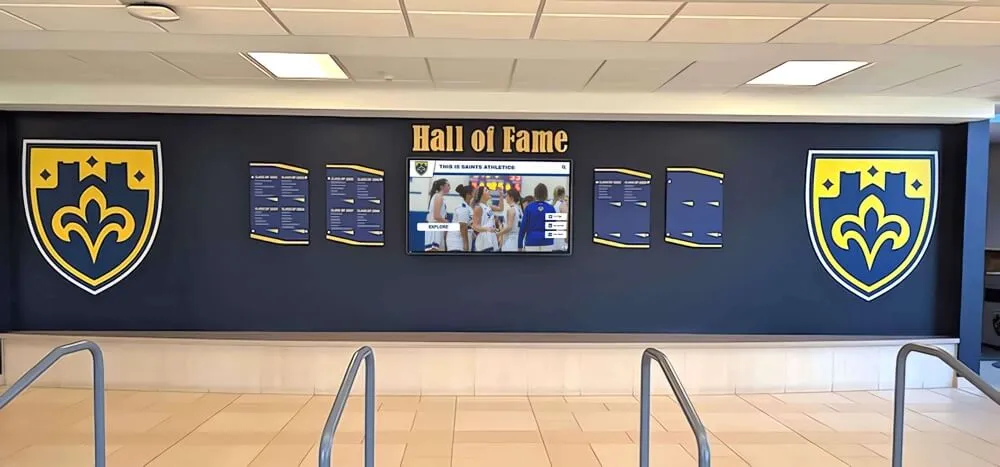
Organizations and nonprofits use recognition plaques to acknowledge donor generosity, volunteer service, and leadership contributions. These displays strengthen relationships with supporters while encouraging future engagement from others who aspire to similar recognition.
The Lasting Value of Physical Recognition Displays
Unlike digital communications that disappear into crowded inboxes or social media feeds that scroll past within seconds, physical plaques command attention and create daily impression opportunities. Visitors, students, staff, and community members encounter recognition displays repeatedly, reinforcing the honor through consistent visibility.
Well-designed recognition walls also preserve institutional history. Decades after achievements occurred, plaque displays document organizational evolution and celebrate legacy in ways that digital archives, though valuable, cannot replicate in shared physical spaces.
Key Design Principles for Recognition Wall Plaques
Creating effective recognition displays requires careful attention to design elements that ensure readability, visual coherence, and professional presentation. Whether working with professional designers or developing displays in-house, these foundational principles guide successful implementation.
Material Selection and Durability Considerations
Recognition plaques must withstand years or decades of display without significant deterioration. Material choices dramatically impact both initial investment and long-term appearance.
Common Plaque Materials:
Bronze: Traditional choice offering timeless elegance and extreme durability. Bronze plaques develop attractive patina over time, creating distinguished appearance that actually improves with age. Higher initial cost ($200-$800 per plaque depending on size) but exceptional longevity justifies investment for permanent recognition.
Brass: Similar aesthetic to bronze with slightly lower cost ($150-$500 per plaque). Brass maintains bright finish when polished regularly but requires more maintenance than bronze to prevent tarnishing. Popular for indoor displays where regular upkeep is manageable.
Aluminum: Lightweight, corrosion-resistant option suited to both indoor and outdoor applications ($75-$300 per plaque). Modern manufacturing techniques allow detailed engraving and various finish options. Budget-friendly choice for institutions recognizing large numbers of individuals.
Acrylic: Contemporary material offering design flexibility and lower cost ($50-$200 per plaque). Available in various colors, thicknesses, and finishes. Suitable for indoor display but less durable than metal options for high-traffic areas or outdoor exposure.
Wood: Traditional choice creating warm, elegant displays ($100-$400 per plaque). Requires indoor placement protected from moisture. Works particularly well in settings where architectural style favors traditional materials.
Typography and Readability Standards
Text must remain clearly readable from typical viewing distances, which varies based on display location. Hallway displays require larger text than conference room walls where viewers stand closer.
Typography Best Practices:
- Minimum text height: 3/8 inch for primary names when viewed from 6-8 feet
- Font selection: Serif fonts (Times New Roman, Garamond) convey traditional formality while sans-serif fonts (Helvetica, Arial) offer clean modern appearance
- Contrast: High contrast between text and background ensures readability; dark text on light backgrounds or reverse approach both work when contrast remains strong
- Line spacing: Adequate spacing prevents visual crowding; 1.5x text height minimum
- Information hierarchy: Larger text for names, smaller text for dates and achievements
Avoid decorative fonts that sacrifice readability for style. Recognition displays serve functional purposes—individuals must be able to read honored names easily from standing distance.
Color Schemes That Enhance Rather Than Distract
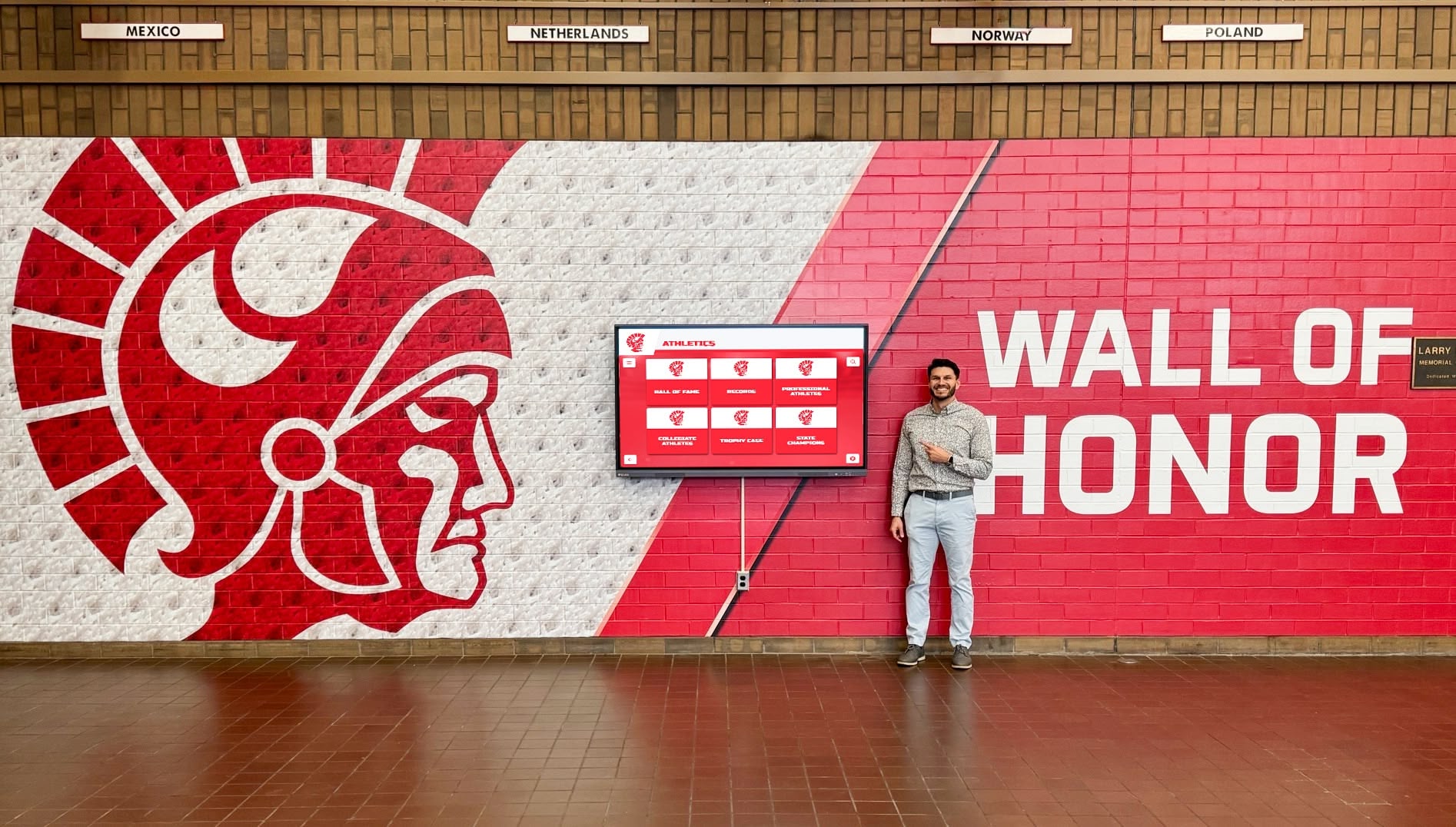
Color choices should complement institutional branding while ensuring text legibility. Most effective recognition displays use limited color palettes that create visual coherence without overwhelming.
Effective Color Strategies:
- School/organizational colors: Incorporating brand colors creates visual connection to institutional identity
- Neutral backgrounds: Black, navy, burgundy, or dark green backgrounds provide elegant foundations that make text stand out
- Metallic accents: Gold, silver, or bronze text/borders add prestige without requiring full-color printing
- Consistent palette: Using identical colors across all plaques creates unified appearance even when displays expand over time
Test color combinations under actual lighting conditions before finalizing large orders. Colors appearing elegant in design software may create readability challenges in dimly lit hallways or under fluorescent lighting.
Layout Strategies for Recognition Wall Displays
How you arrange plaques significantly impacts visual appeal and long-term functionality. Strategic layout planning prevents common problems that institutions encounter as displays grow.
Grid vs. Organic Arrangements
Grid Layouts: Aligned plaques in straight rows and columns create formal, organized appearance. Grid arrangements work well for chronological displays (graduating classes, annual award recipients) where consistent sizing makes sense. This approach simplifies additions—new plaques continue established pattern.
Organic Arrangements: Artistic groupings where plaques vary in size and position create visual interest. Effective for displays where different achievement levels warrant different recognition scale. Requires more design expertise and makes future expansion more challenging.
For most institutional applications, modified grid approaches—consistent alignment with some size variation—balance visual interest with practical expandability.
Planning for Future Growth and Additions
Recognition programs continue indefinitely while wall space remains finite. Failure to plan for expansion creates problematic situations where institutions run out of space or must relocate entire displays.
Expansion Planning Strategies:
- Calculate growth rate: Estimate annual additions based on recognition criteria (typical graduating class size, average annual donors, championship frequency)
- Reserve space: Design initial layout using only 40-60% of available wall space, keeping remainder for future plaques
- Modular sections: Create distinct sections by decade, achievement type, or giving level that can grow independently
- Vertical expansion: When wall width is limited, design tall displays that grow upward rather than sideways
Schools implementing donor recognition walls particularly need expansion planning since fundraising programs ideally continue expanding supporter base over decades.
Height and Accessibility Considerations
Placement height affects both visual impact and accessibility for all community members. ADA guidelines recommend mounting important information where individuals using wheelchairs can view content easily—typically 48 inches maximum height from floor to center of viewing area.
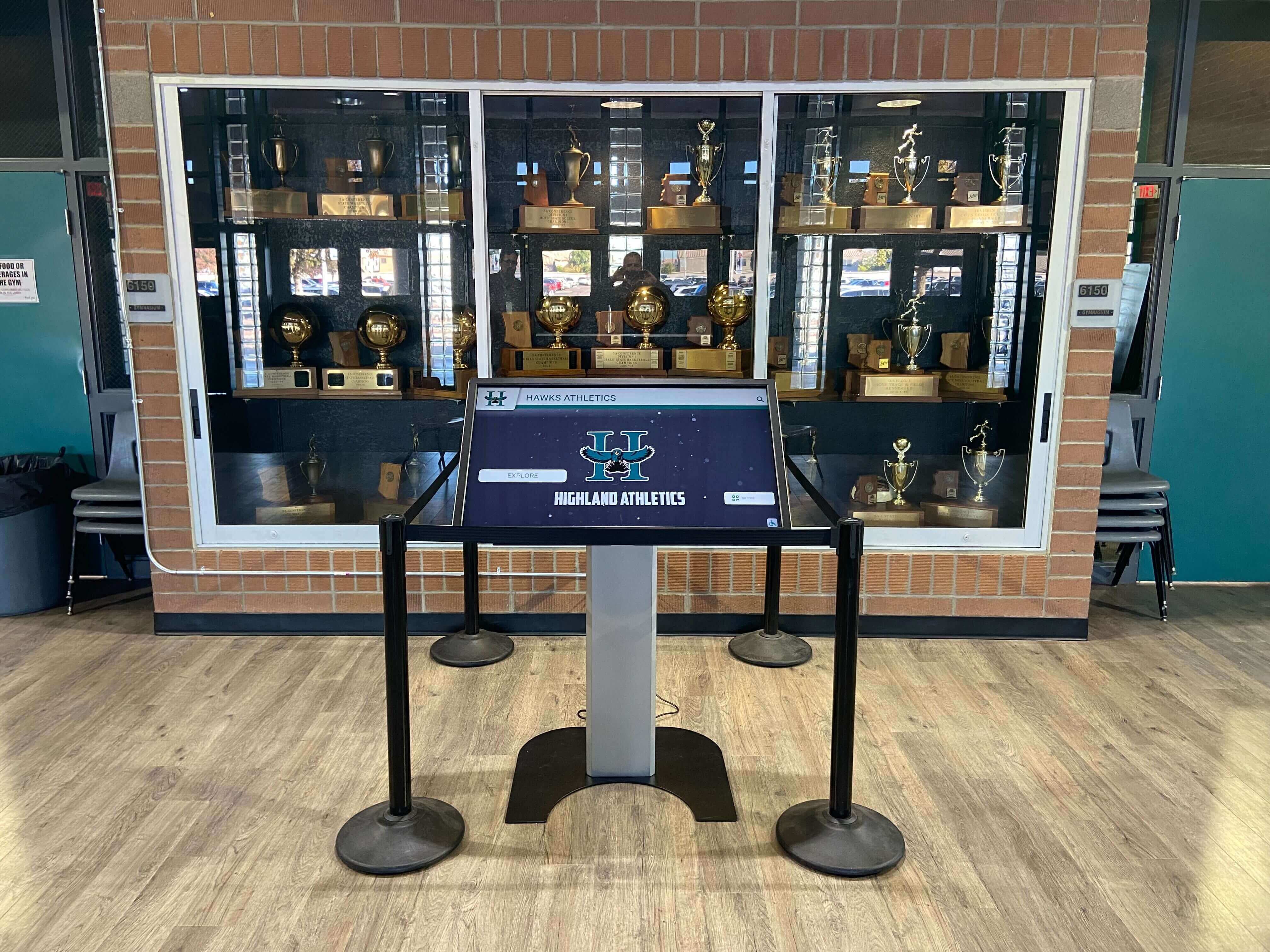
However, traditional wall plaques often cover large vertical spans, creating tension between aesthetic preferences and accessibility requirements. Consider these approaches:
- Tiered viewing: Place most recent or most significant honorees at accessible viewing heights
- Printed directories: Provide complementary print materials listing all honorees for individuals who cannot view upper plaques
- Digital complements: Add accessible digital displays showing full recognition information
Organizations serious about inclusive recognition increasingly adopt digital recognition displays that meet WCAG 2.1 AA accessibility standards, ensuring all community members can engage with recognition content regardless of physical ability.
Compelling Wording Ideas for Recognition Plaques
What you say matters as much as how displays look. Effective plaque text captures achievement appropriately while maintaining consistency across multiple honorees.
Athletic Achievement Recognition
Championship Team Plaques:
- “2025 State Champions | Varsity Volleyball | Conference Record 15-0”
- “District Champions | Boys Basketball | March 12, 2026”
- “Regional Champions | Girls Soccer | Undefeated Season”
Individual Athletic Excellence:
- “Sarah Chen | Cross Country | State Champion 2024, 2025, 2026”
- “Michael Torres | Wrestling | 4-Year Varsity Letterman | Regional Champion”
- “Emma Rodriguez | Track & Field | School Record Holder, 400m Dash | 56.2 seconds”
Athletic plaques work best when including specific accomplishments rather than generic titles. Listing actual records, championship details, or statistical achievements creates more meaningful recognition.
Academic and Scholarly Recognition
Honor Roll and Academic Excellence:
- “Presidential Honor Roll | Class of 2026 | Cumulative GPA 4.0+”
- “National Merit Scholars | Academic Year 2025-2026”
- “Valedictorian | James Anderson | GPA 4.52 | Class of 2025”
Academic Competition Achievement:
- “Science Olympiad National Champions | Division C | May 2025”
- “Math Team Regional Champions | Consecutive Titles 2023-2026”
- “Debate Team State Qualifiers | Lincoln-Douglas Division”
Schools creating comprehensive academic recognition programs should maintain parallel structure across different achievement categories, ensuring scholars receive equivalent honor to athletes.
Donor and Philanthropic Recognition
Giving Level Categories:
- “Founder’s Circle | Gifts of $100,000+”
- “Legacy Society | Planned Giving Benefactors”
- “Heritage Club | Lifetime Donors | $25,000-$49,999”
Capital Campaign Recognition:
- “Building Our Future Campaign | Leadership Donors | 2024-2026”
- “Scholarship Endowment Founders | Gifts Creating Permanent Student Support”
- “Facilities Enhancement Partners | Gymnasium Renovation Supporters”
Nonprofit organizations planning donor displays should establish giving levels that create aspiration while honoring contributions at multiple scales.
Alumni and Distinguished Service Recognition
Hall of Fame Inductees:
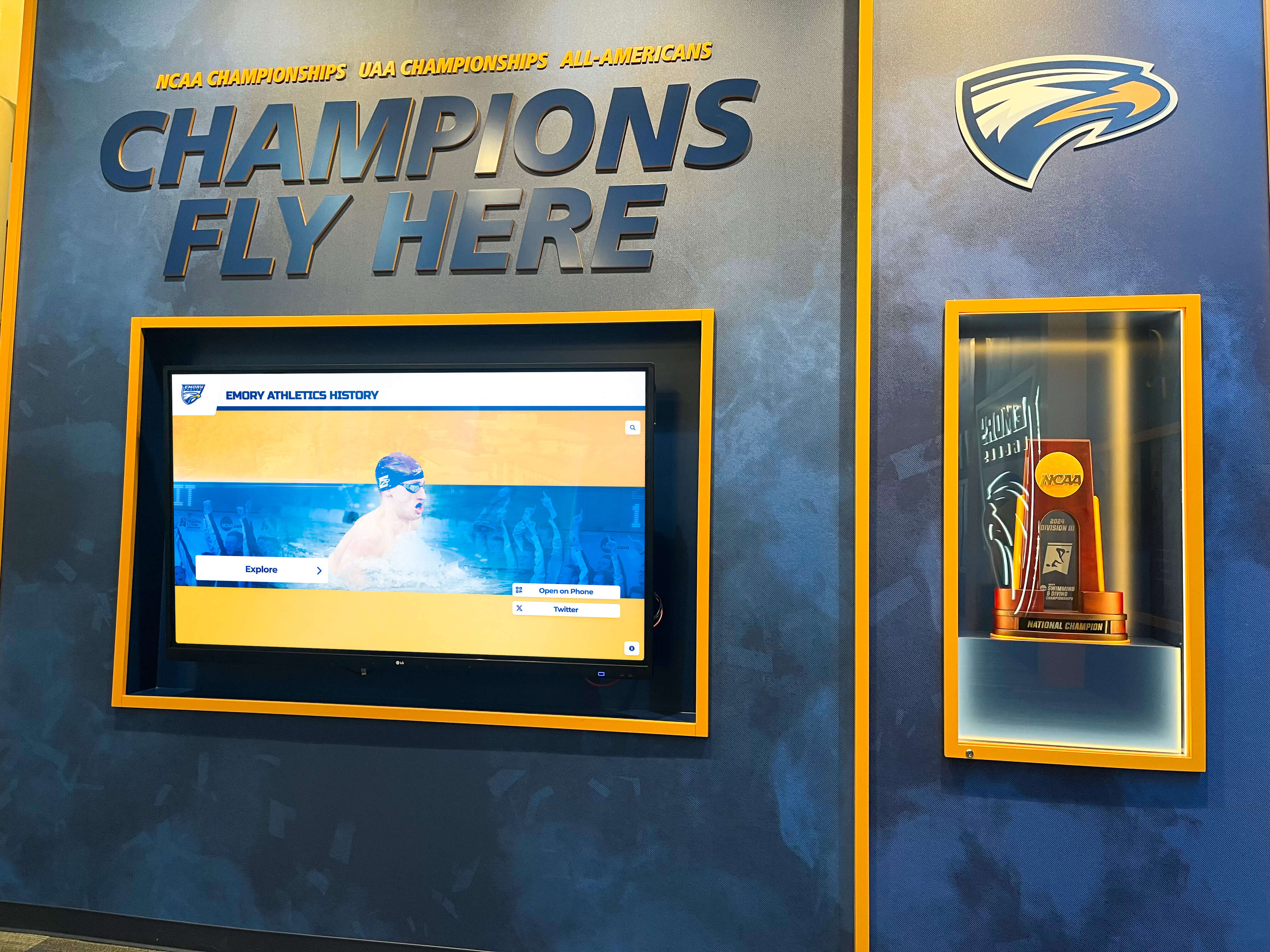
- “Alumni Hall of Fame | Class of 2025 Inductees”
- “Distinguished Graduate | Professional Excellence | Healthcare Leadership”
- “Outstanding Young Alumnus | Community Impact Award | 2026”
Service and Volunteer Recognition:
- “Community Service Award | 500+ Hours of Volunteer Service”
- “Board of Directors | Distinguished Service | 2020-2026”
- “Parent Volunteer of the Year | Exceptional Dedication to Student Success”
The best wording balances brevity with specificity. Generic phrases like “Outstanding Achievement” lack the detail that makes recognition meaningful, while overly lengthy descriptions become difficult to read on small plaques.
Installation and Mounting Considerations
Even beautifully designed plaques fail when improperly installed. Professional mounting ensures displays remain secure, level, and visually aligned.
Wall Surface Preparation
Different wall materials require different mounting approaches. Brick, concrete, drywall, and wood paneling each present unique challenges and opportunities.
Brick and Masonry: Requires drilling into mortar joints rather than brick faces to prevent cracking. Use masonry anchors rated for plaque weight plus safety margin. Consider professional installation for valuable bronze or brass plaques.
Drywall: Must mount plaques into wall studs or use heavy-duty drywall anchors. For multiple plaques, install mounting board first (plywood or MDF painted to match wall), then attach plaques to board. This approach simplifies alignment and prevents individual mounting points from failing over time.
Painted Surfaces: Prepare surfaces by cleaning thoroughly and touching up any paint damage before installation. Dark plaque backgrounds show fingerprints and scuffs prominently, so handle carefully during mounting.
Professional vs. DIY Installation
Budget constraints often tempt institutions toward DIY installation, but professional mounting delivers value through:
- Precise alignment: Professional installers ensure plaques hang perfectly level and evenly spaced
- Proper anchoring: Experienced installers select appropriate hardware preventing plaques from loosening over time
- Surface protection: Professionals avoid paint damage, cracked tiles, or marred walls
- Efficiency: Complete in hours what DIY attempts might spread across days or weeks
For high-visibility displays in main lobbies or heavily trafficked areas, professional installation justifies the investment. DIY approaches may work acceptably for secondary locations where perfect alignment matters less.
Lighting to Enhance Visual Impact
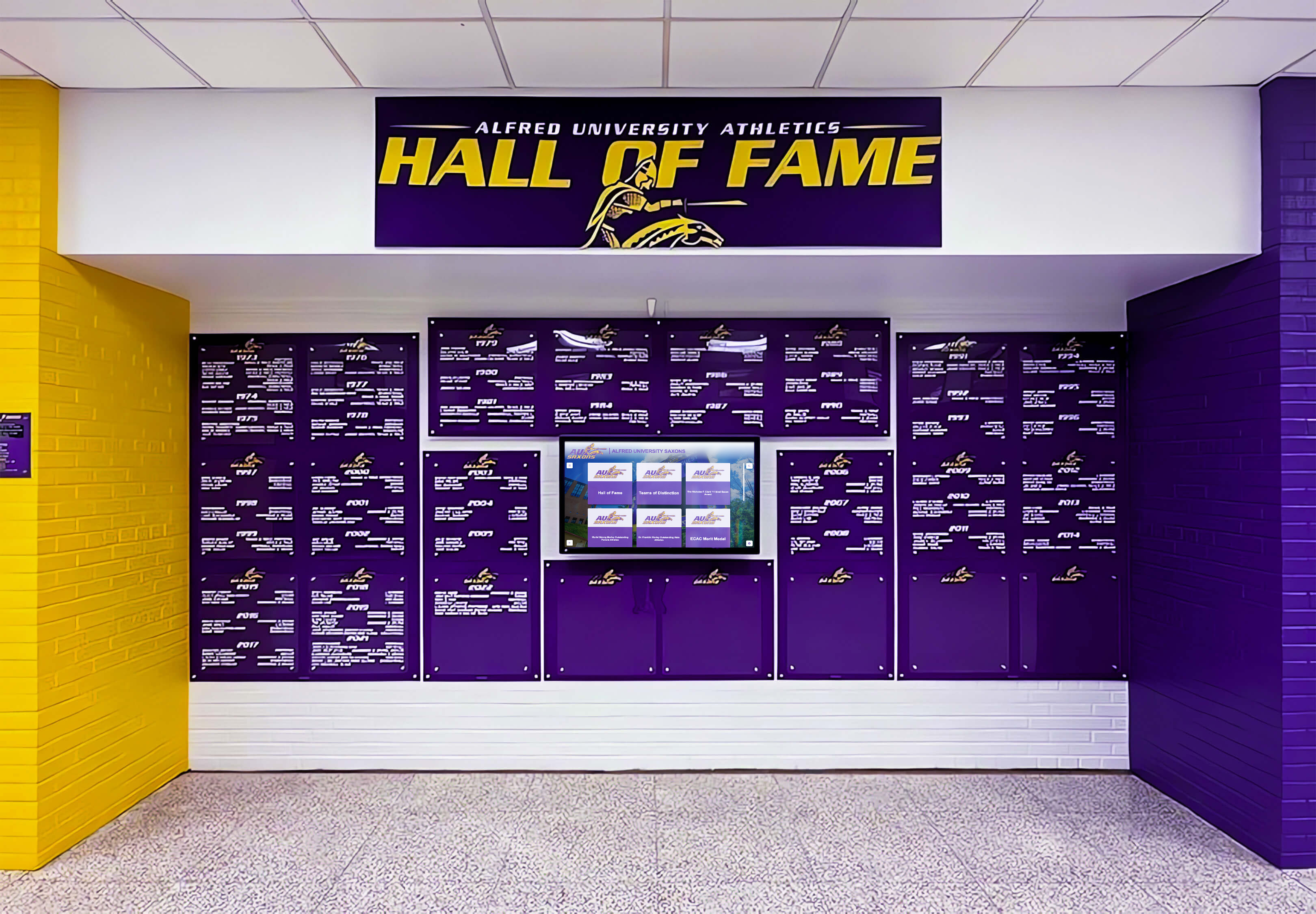
Proper lighting transforms recognition displays from functional to impressive. Wall-mounted picture lights, track lighting, or recessed ceiling fixtures directed at displays create dramatic effect while ensuring readability.
Lighting Considerations:
- Avoid glare: Angle lights to illuminate plaques without creating reflections that obscure text
- Consistent coverage: Ensure all plaques receive equivalent lighting; dark corners diminish impact
- Maintenance access: Select fixtures with accessible bulbs/LEDs for routine replacement
- Energy efficiency: LED solutions provide excellent light quality with minimal operating cost
Maintenance and Long-term Care
Recognition displays require ongoing maintenance to preserve professional appearance as years pass.
Cleaning and Preservation
Different materials need different care approaches:
Metal Plaques: Dust regularly with soft cloth. Bronze develops protective patina naturally—avoid harsh cleaners. Brass requires occasional polishing to maintain bright finish. Aluminum needs only soap and water for periodic cleaning.
Acrylic: Clean with microfiber cloth and plastic-safe cleaner. Avoid paper towels or abrasive cloths that scratch surfaces. Static electricity attracts dust, so clean acrylic plaques more frequently.
Wood: Dust regularly and apply furniture polish quarterly. Inspect for moisture damage if displays are near exterior walls or in climate-controlled spaces with humidity fluctuations.
Updating and Correcting Information
Even carefully proofread plaques sometimes contain errors discovered after installation. Traditional plaques require complete replacement to correct mistakes—costly both financially ($150-$500+ per plaque) and practically (removal, reinstallation, disposal of incorrect plaque).
This immutability creates problems when:
- Names are misspelled
- Dates are incorrect
- Additional honors accrue after initial installation
- Achievement details need clarification
Organizations tired of these limitations increasingly explore digital recognition alternatives that allow instant content updates without physical replacement.
Modern Alternatives to Traditional Plaques
While traditional recognition wall plaques continue serving institutions well, emerging technologies offer compelling advantages addressing common pain points in plaque-based recognition.
Digital Recognition Displays: Solving Traditional Limitations
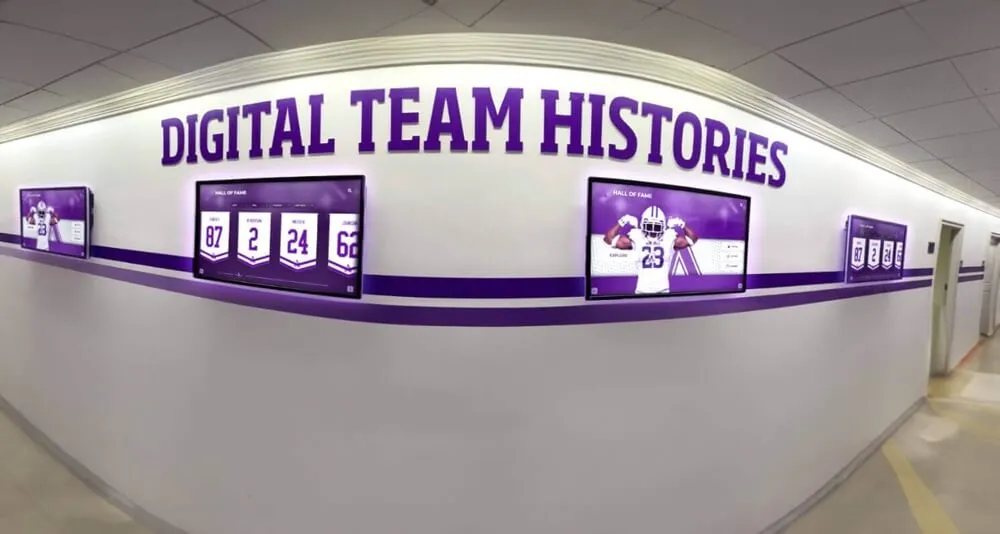
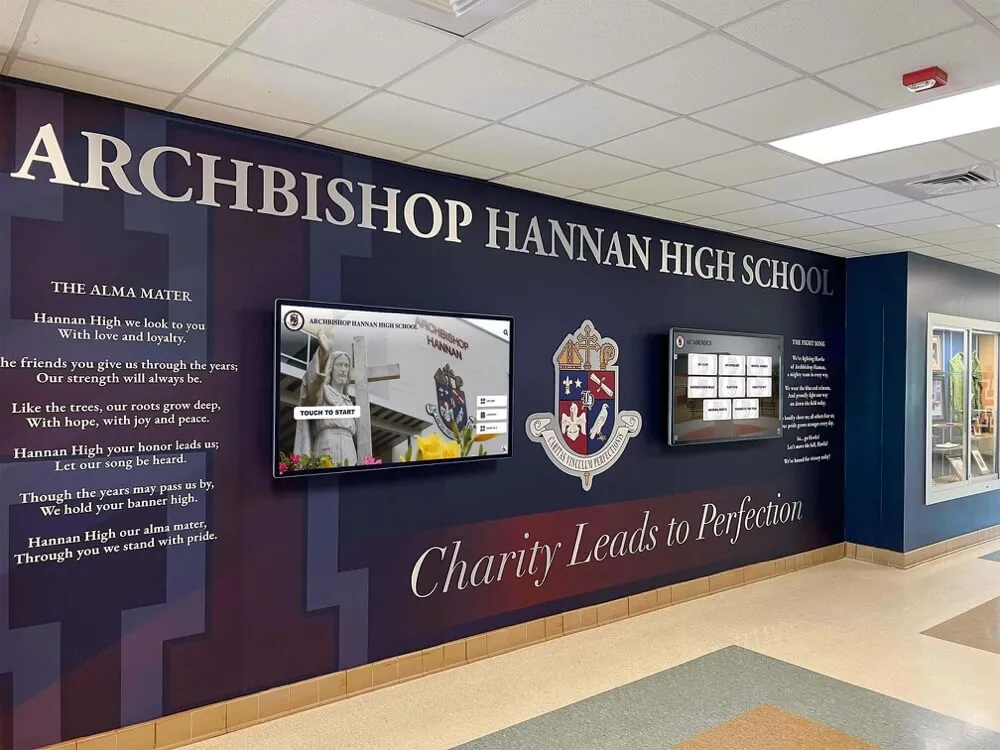
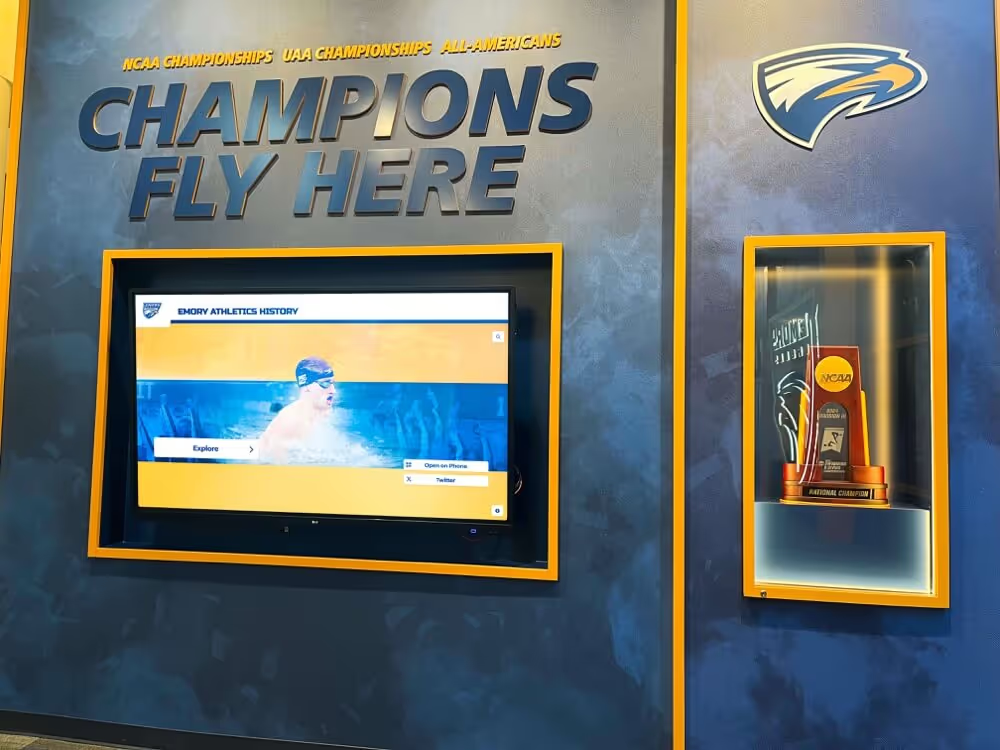
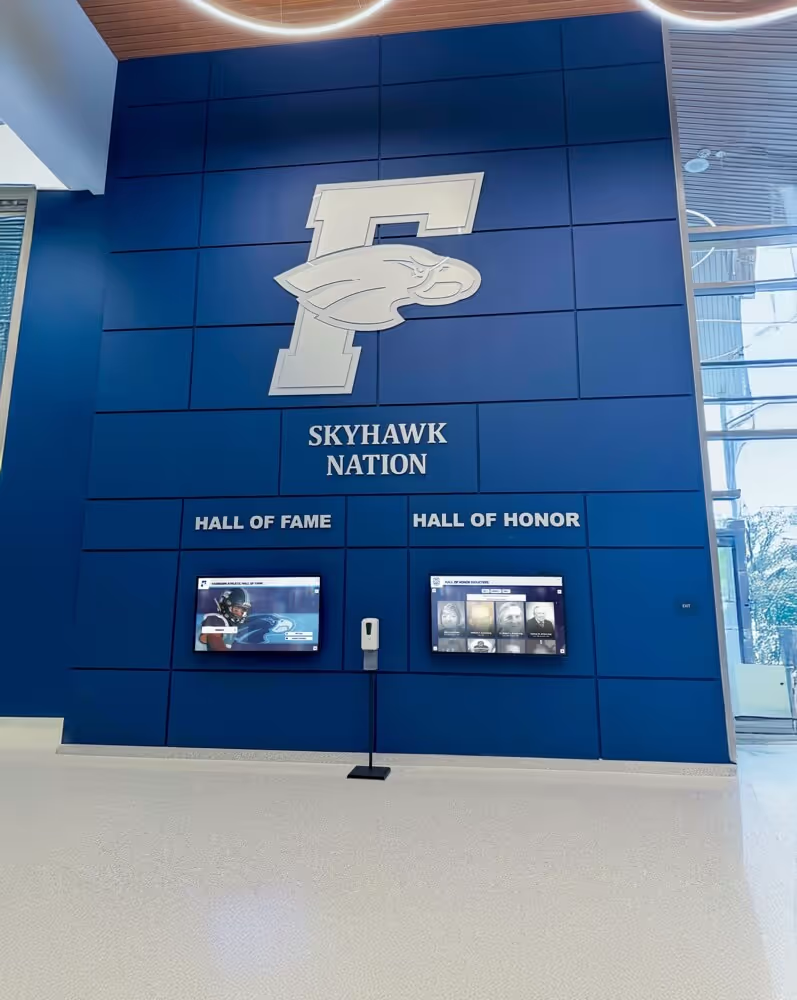
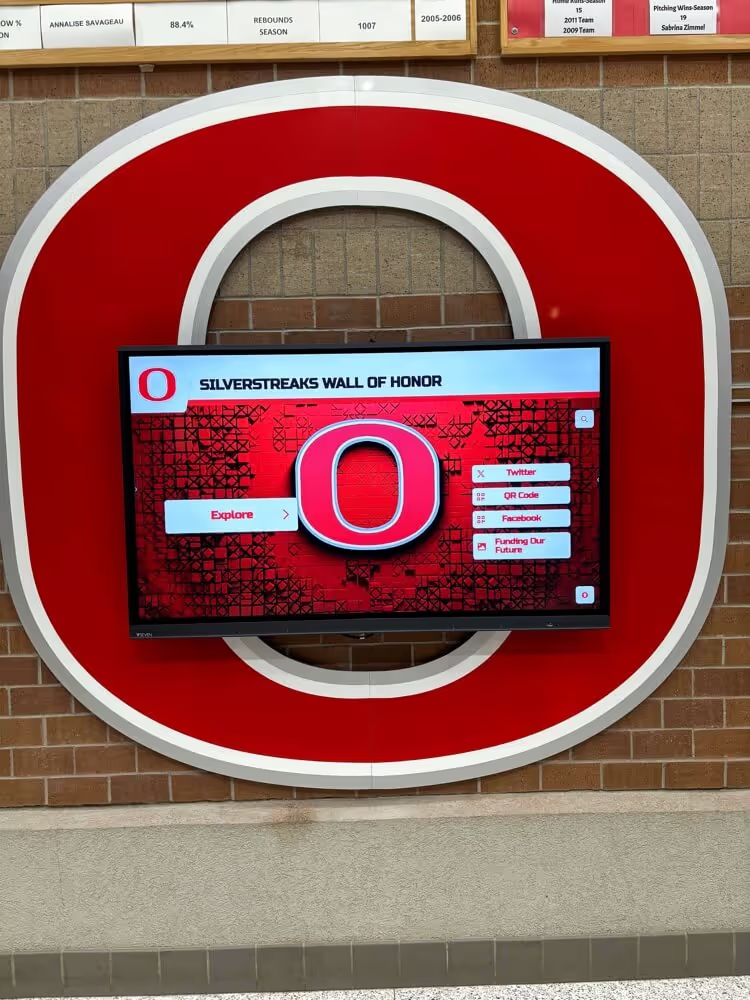
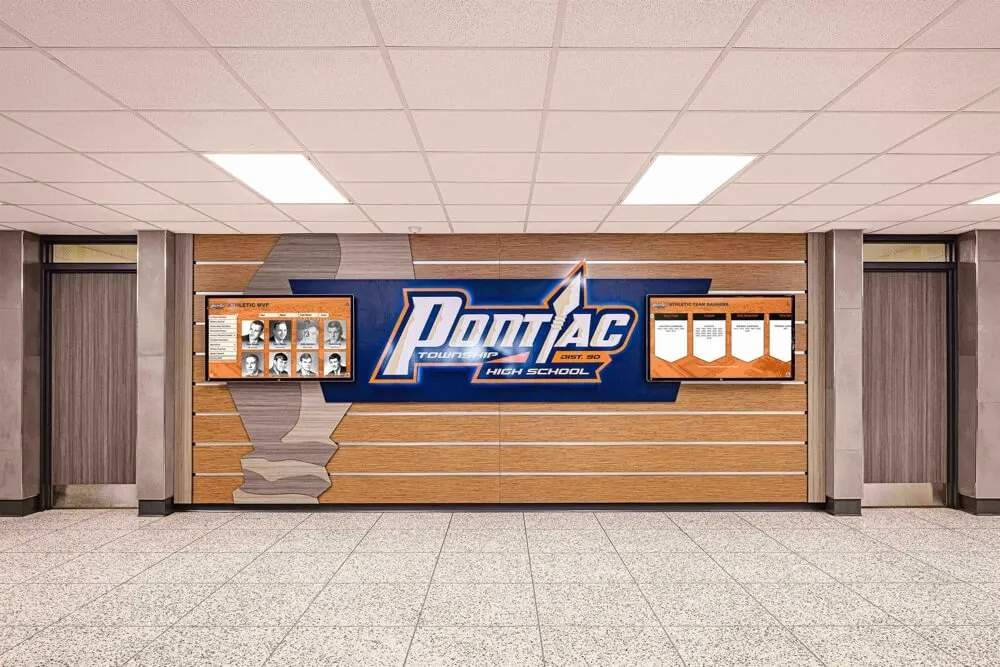
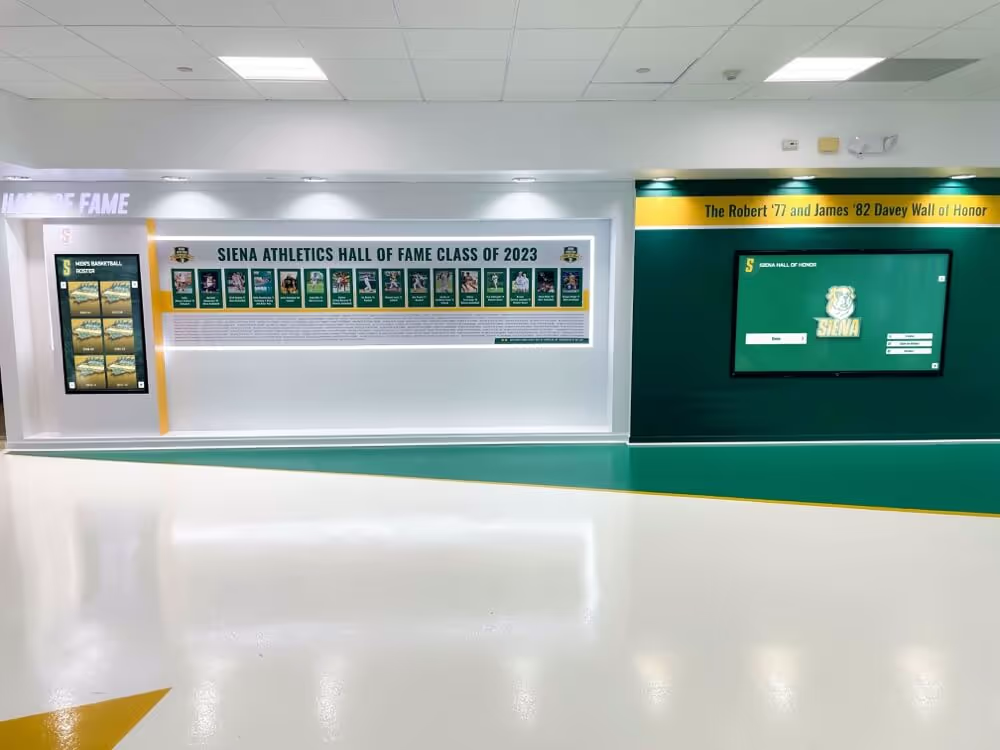
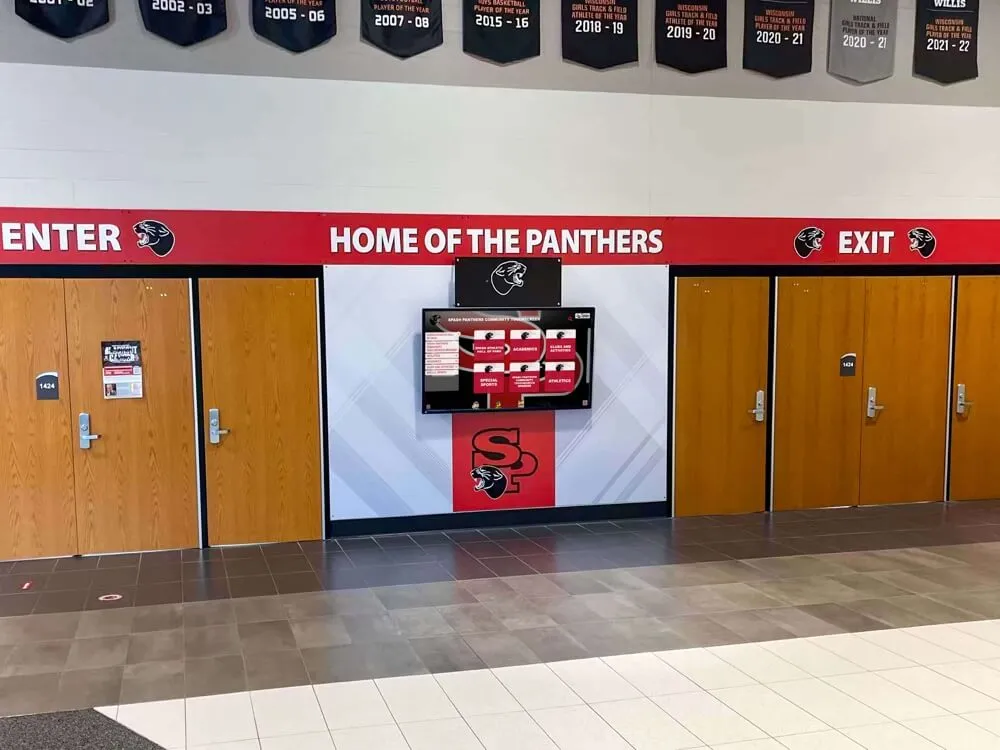
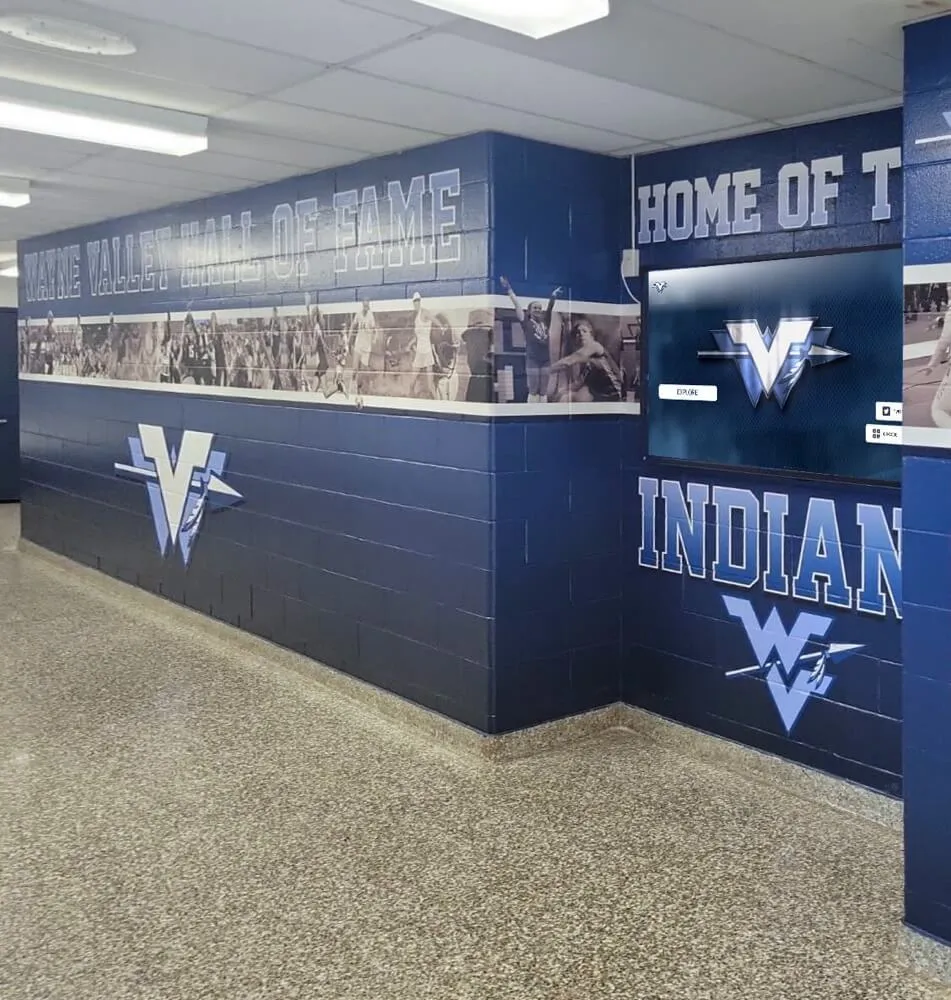
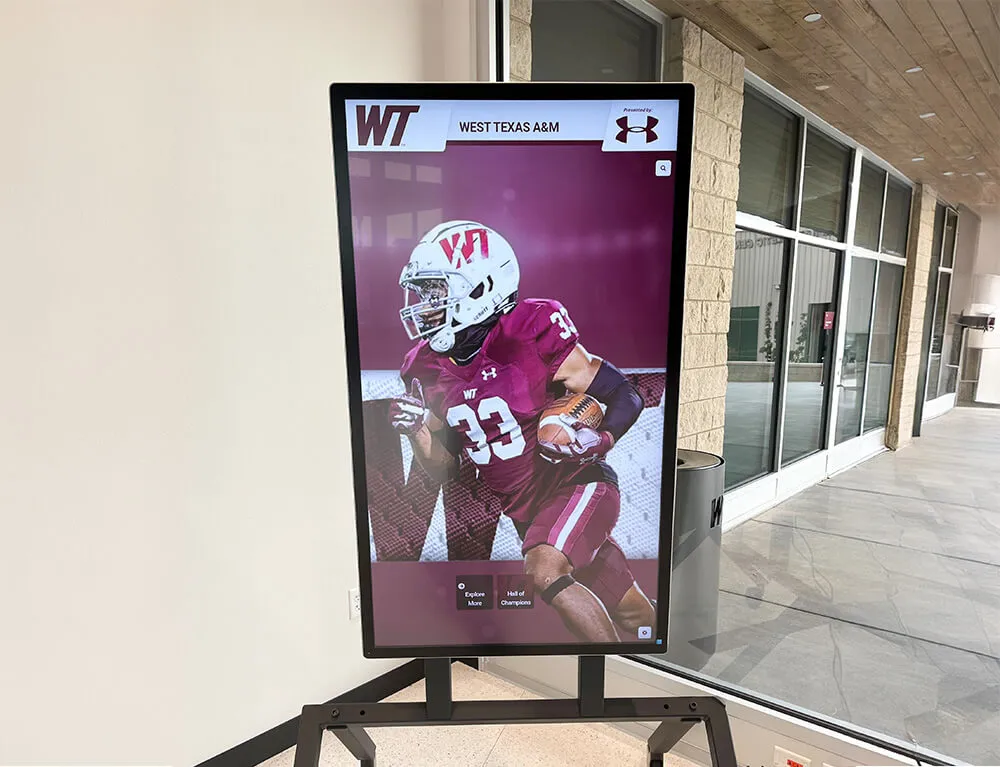
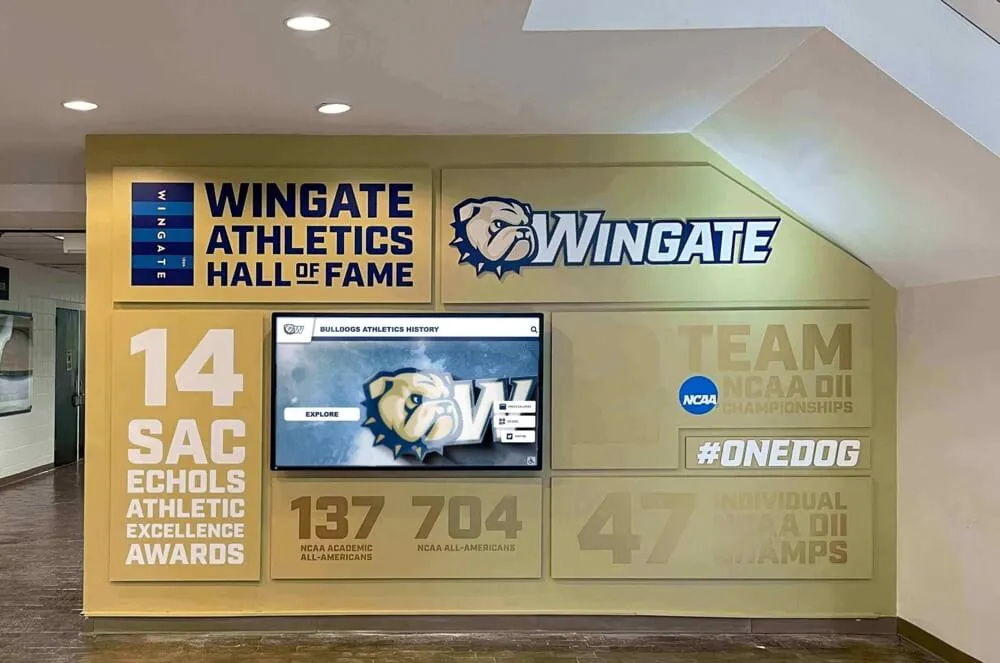
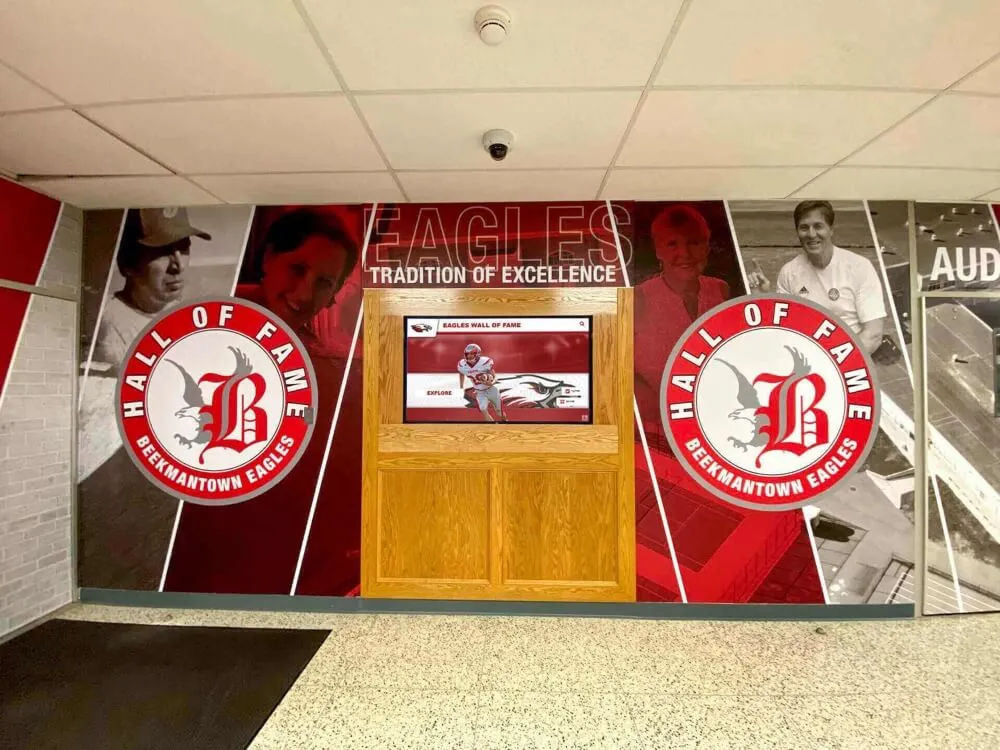
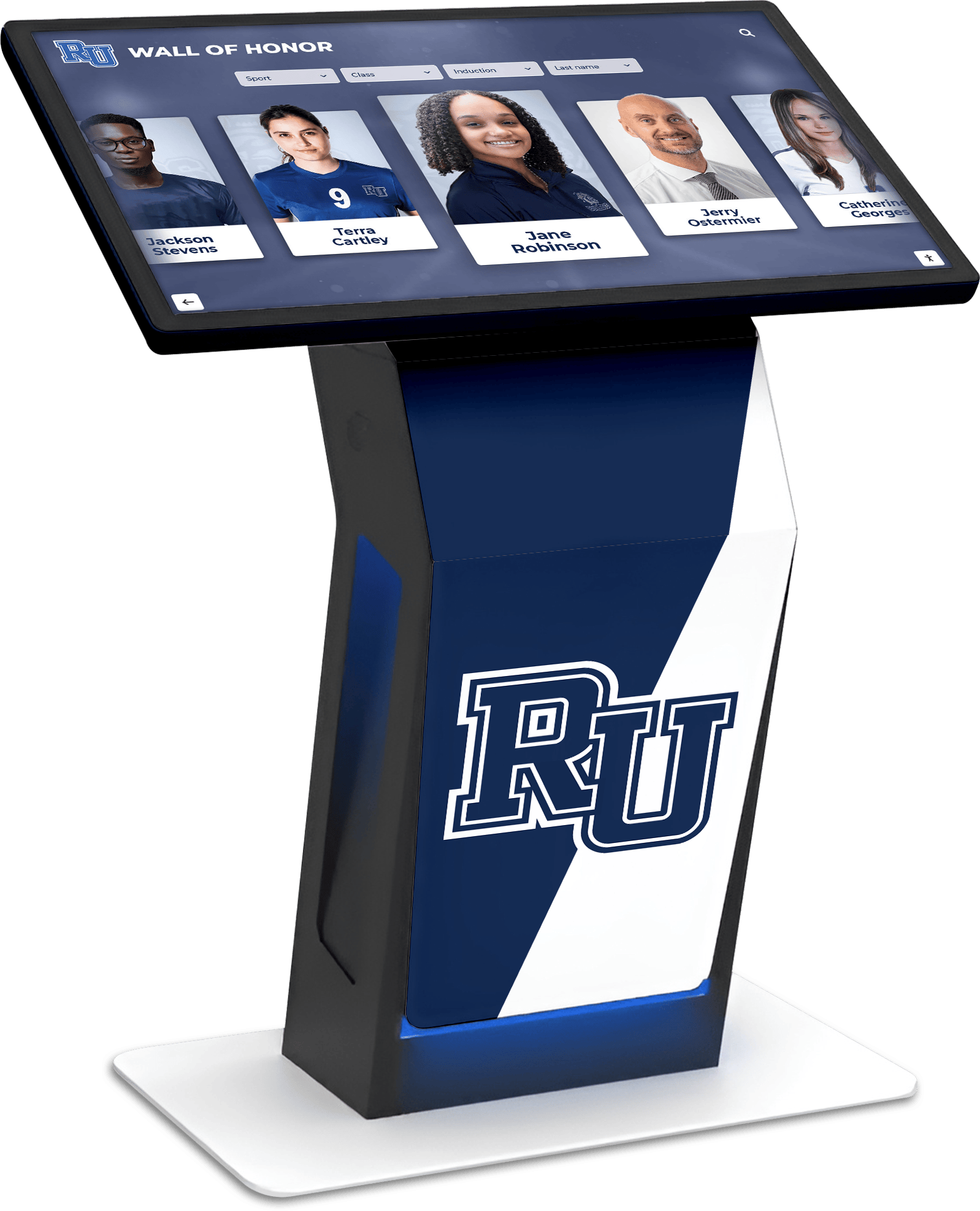
Digital recognition platforms preserve the visual impact and permanence of physical displays while eliminating key limitations around space, accessibility, and updating.
Modern digital recognition systems like those from Rocket Alumni Solutions feature:
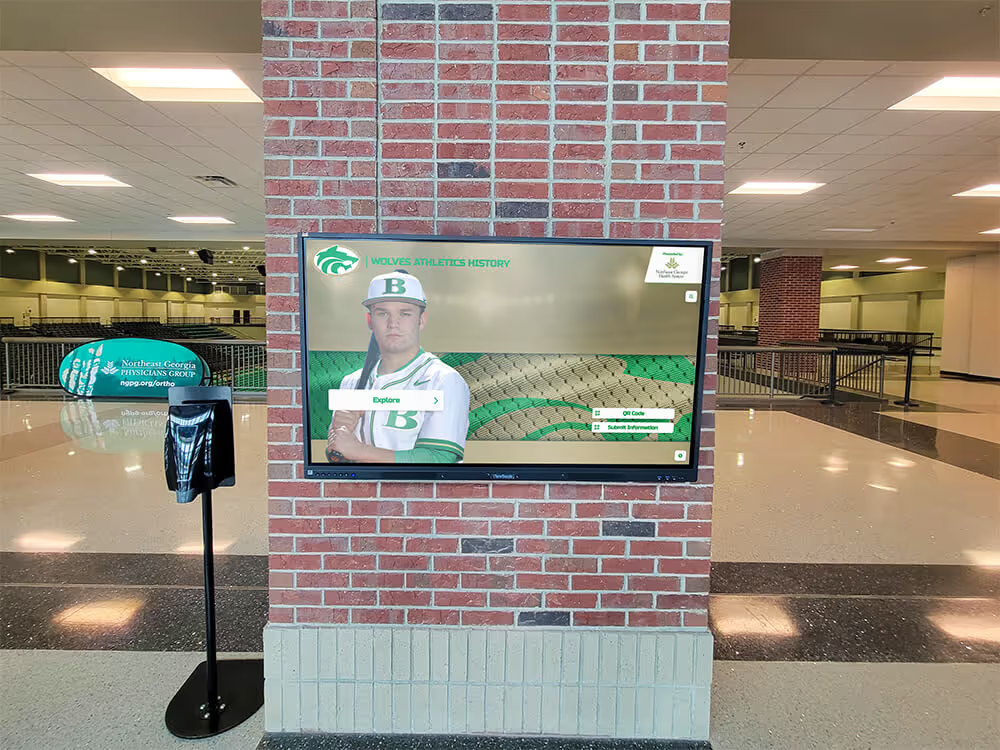
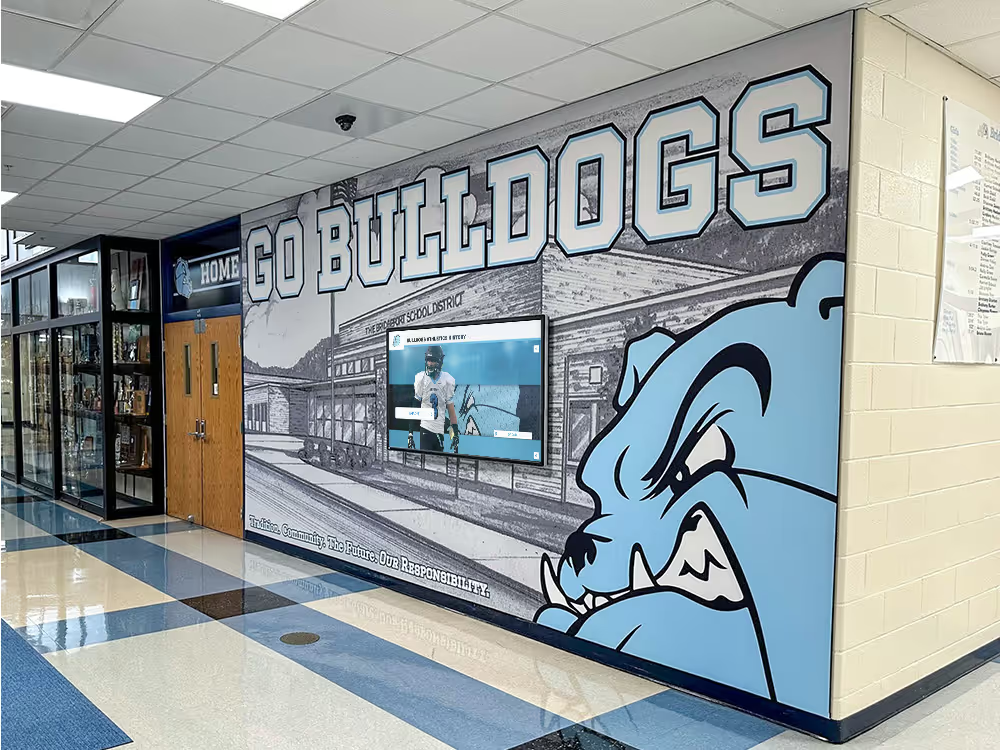
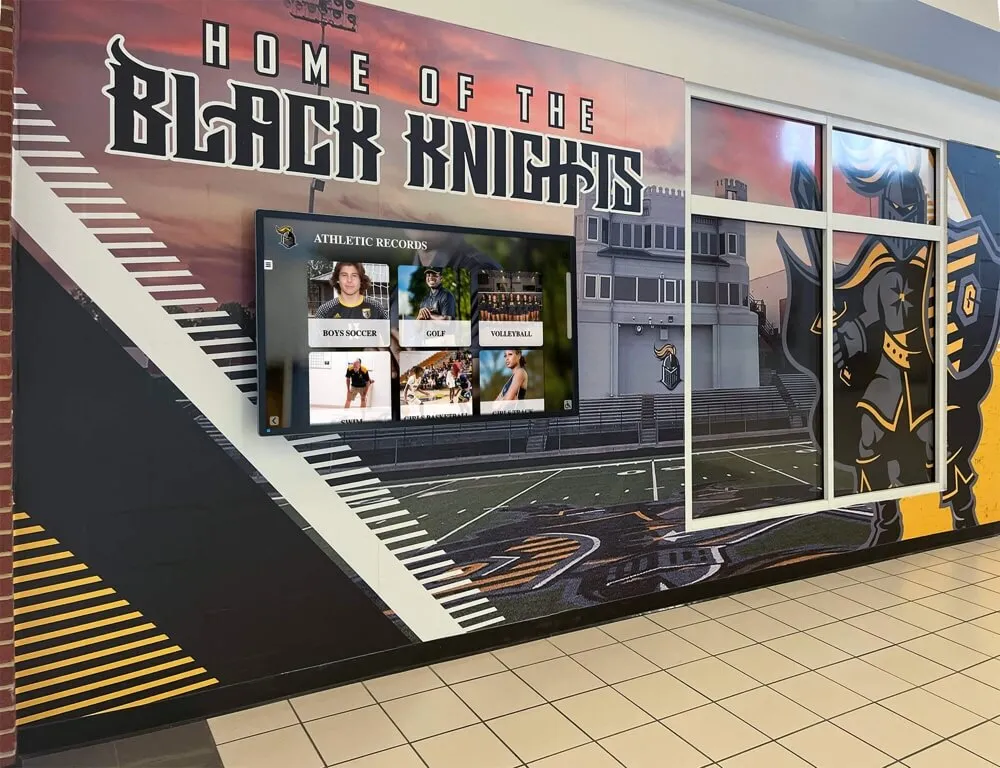
Unlimited Capacity: Recognize thousands of individuals without physical space constraints. Schools running out of wall space discover that single digital displays showcase entire athletic histories, complete donor lists, or multi-decade alumni halls of fame that would require hundreds of square feet using traditional plaques.
Instant Updates: Correct errors immediately or add new achievements without reprinting. When records break or additional honors accrue, update digital displays in minutes rather than ordering replacement plaques.
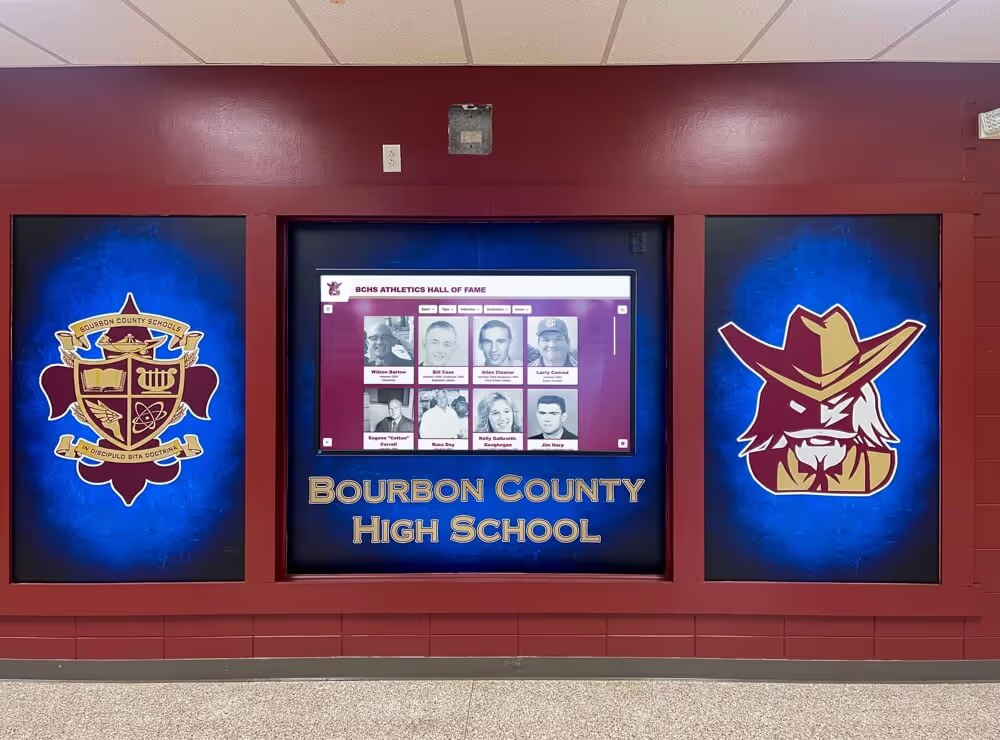
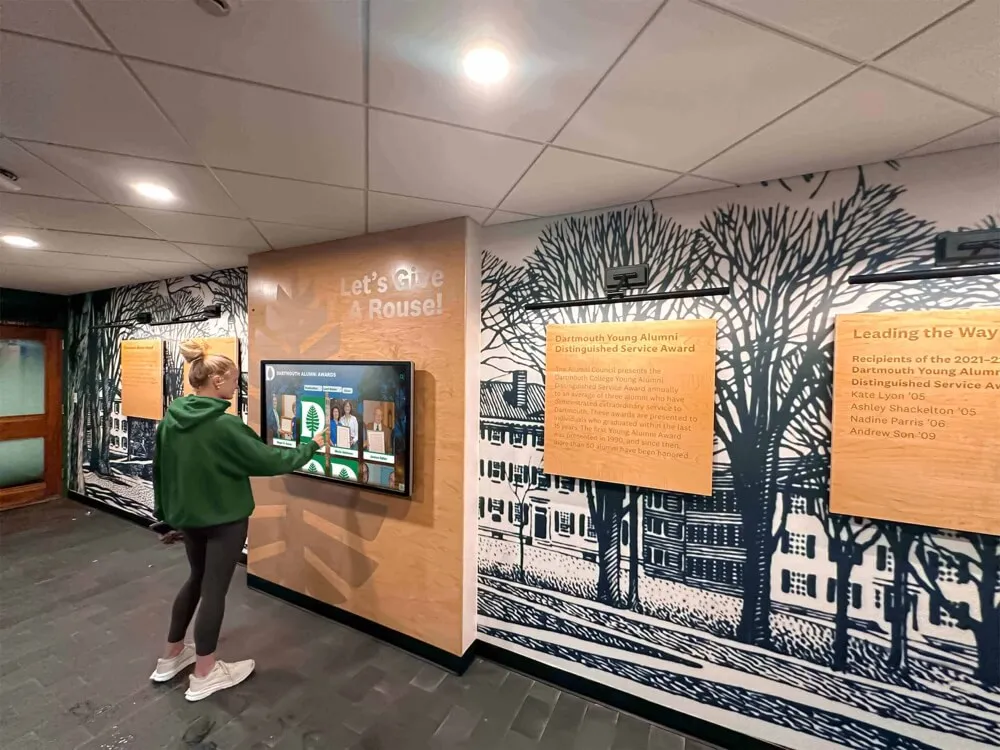
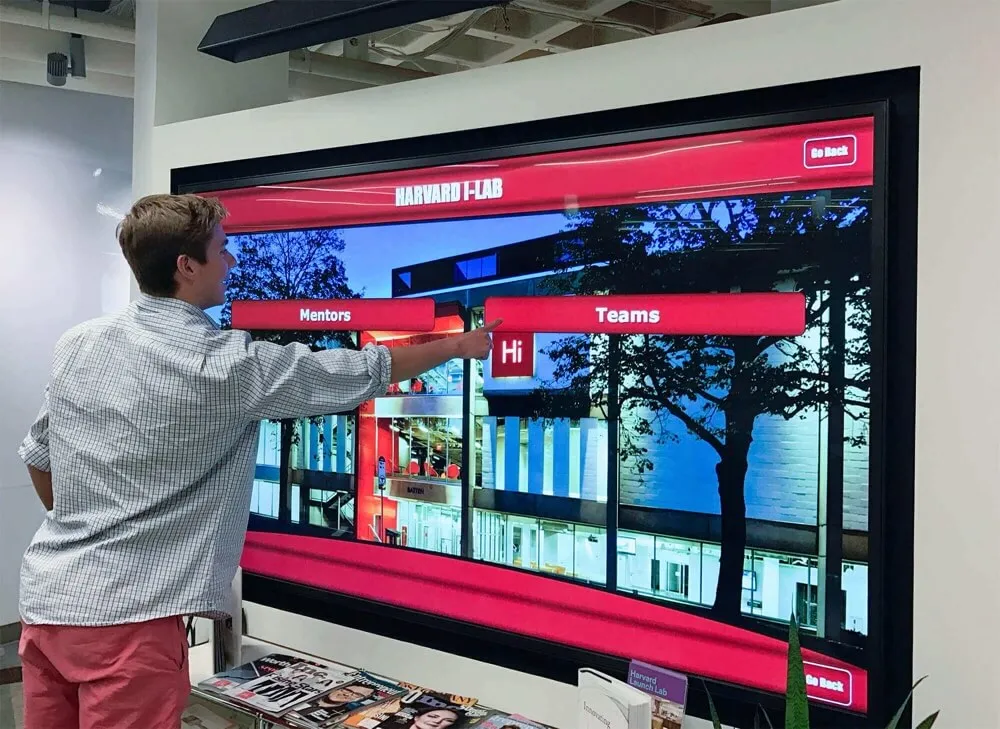
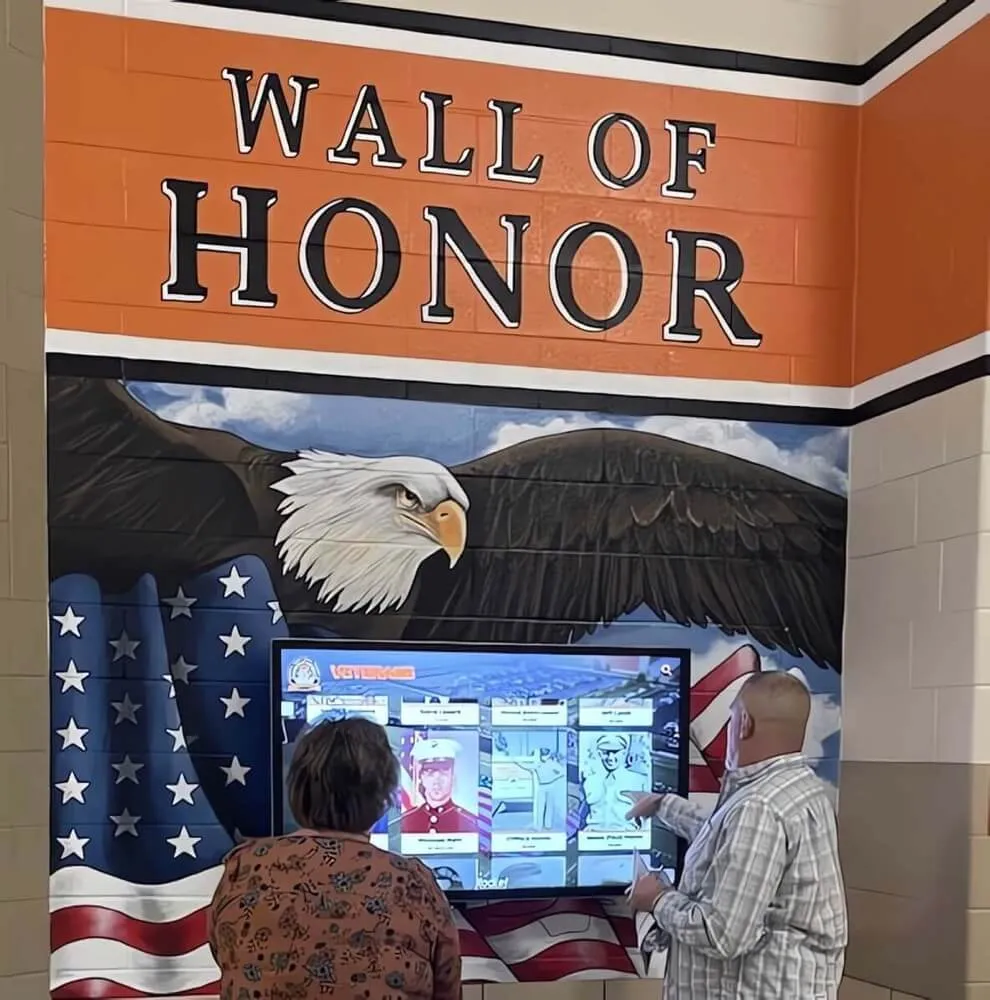
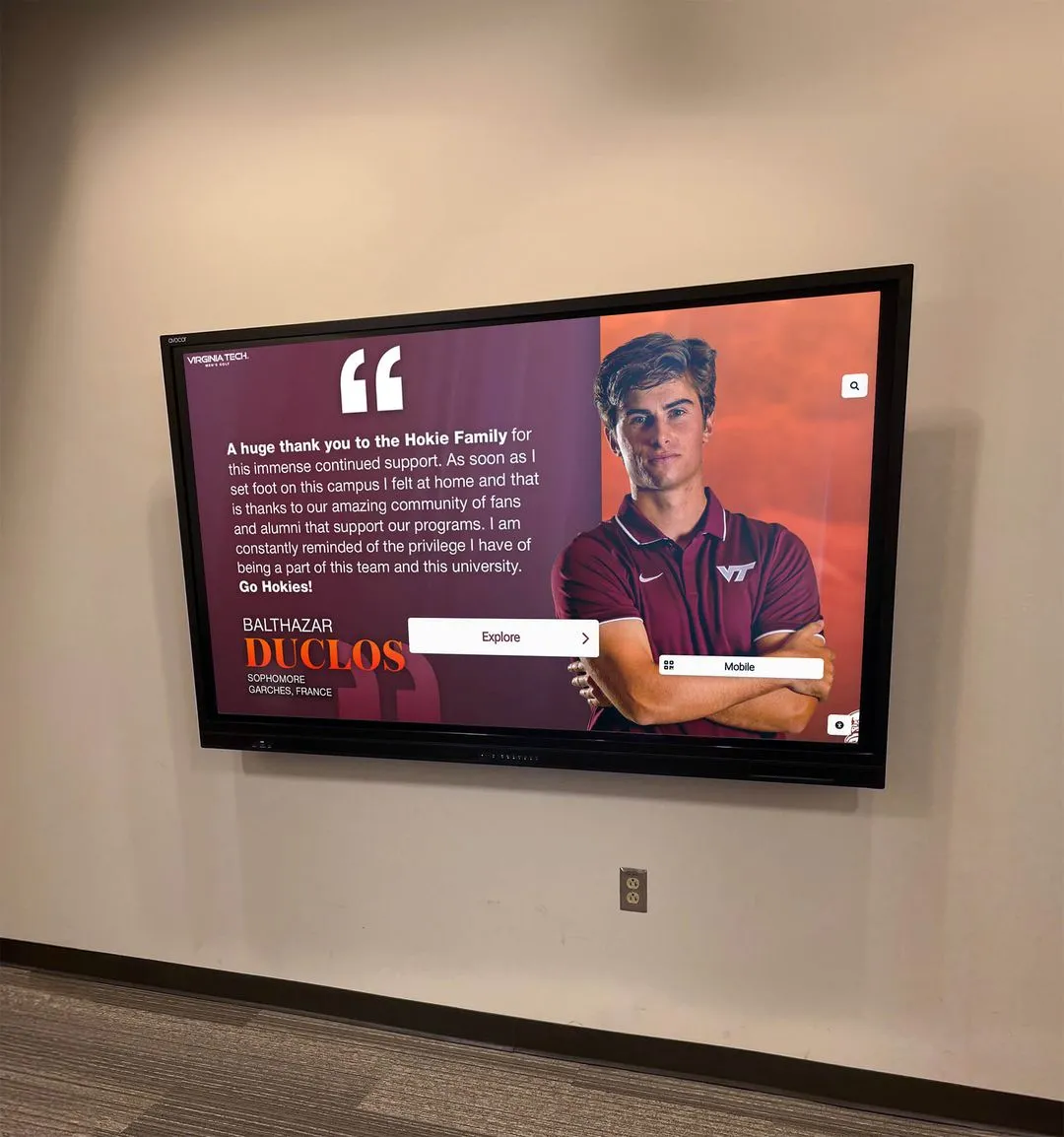
Rich Multimedia: Include photos, videos, career bios, and detailed achievement narratives impossible on traditional plaques. Visitors engage deeply with recognition content rather than reading brief text.
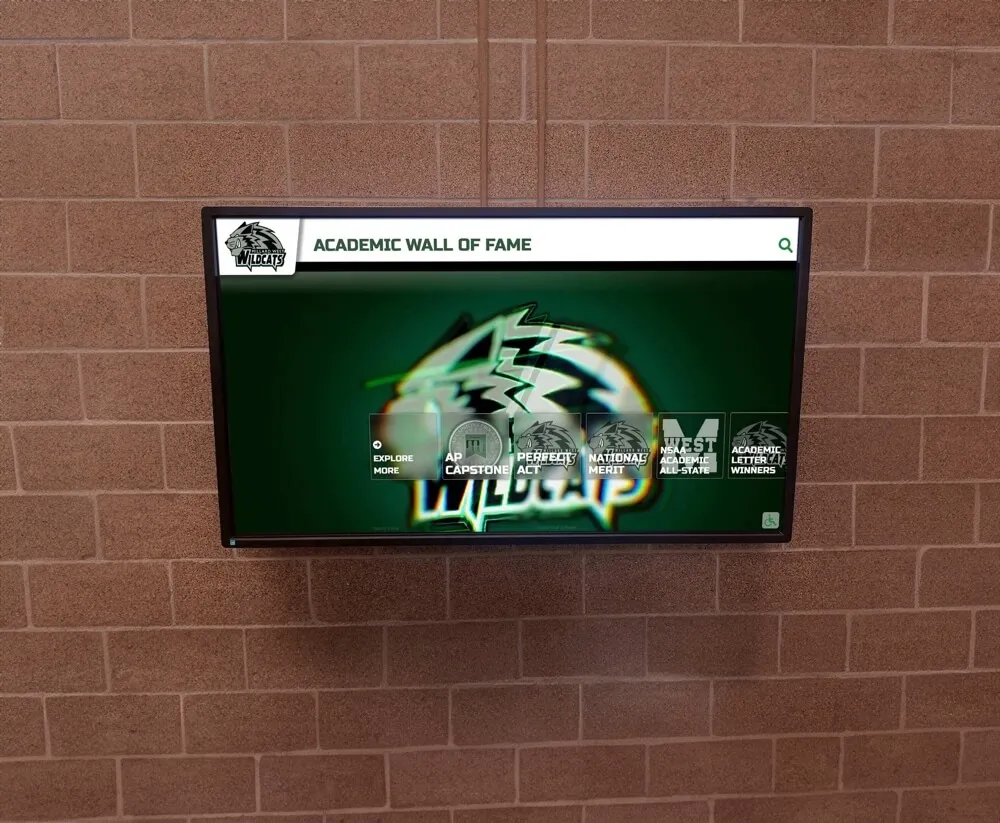
Complete Accessibility: Digital displays meet WCAG 2.1 AA standards with screen reader compatibility, keyboard navigation, and responsive text sizing. Unlike plaques mounted above accessible viewing heights, digital recognition ensures equivalent access for all visitors.
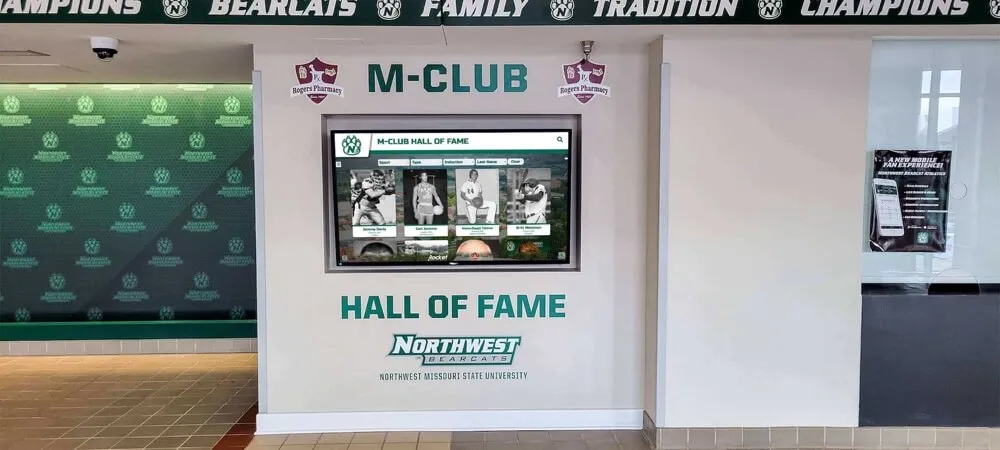
Searchable Content: Visitors find specific individuals instantly rather than scanning hundreds of plaques. Search functionality particularly benefits large recognition programs where locating individuals becomes difficult.
Hybrid Approaches Combining Traditional and Digital
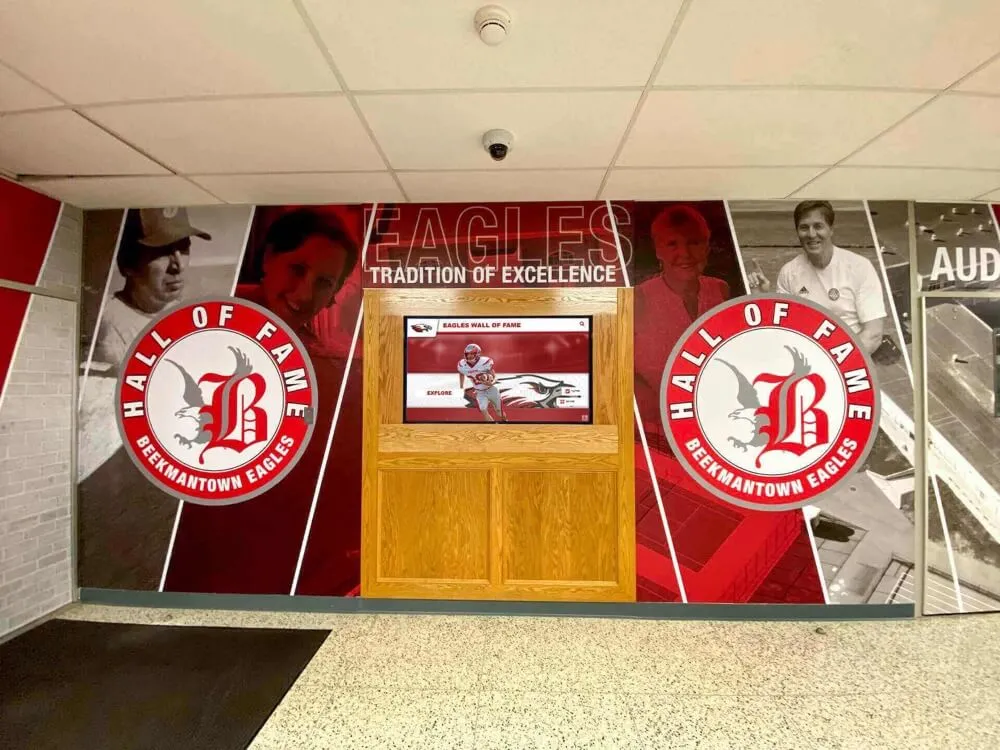
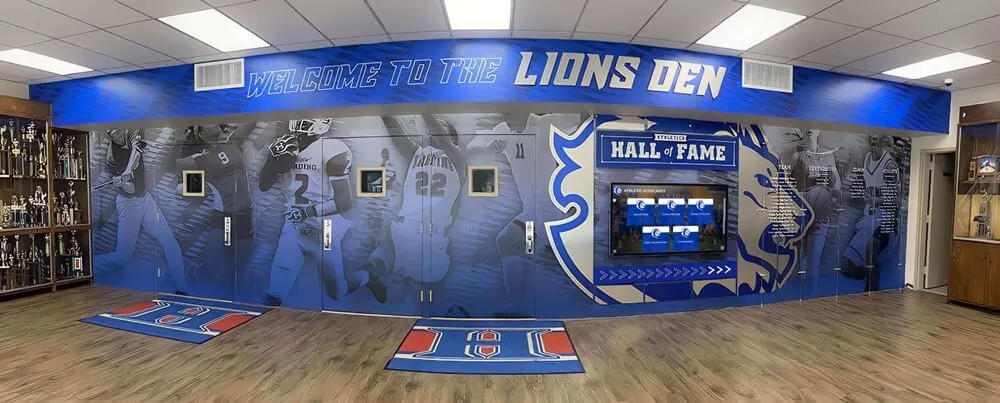
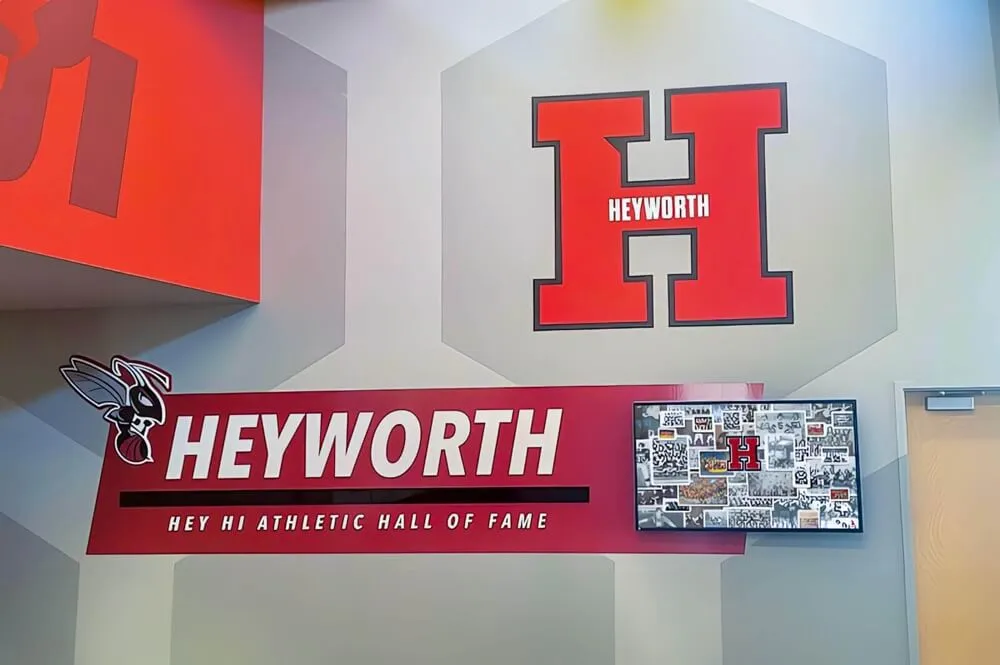
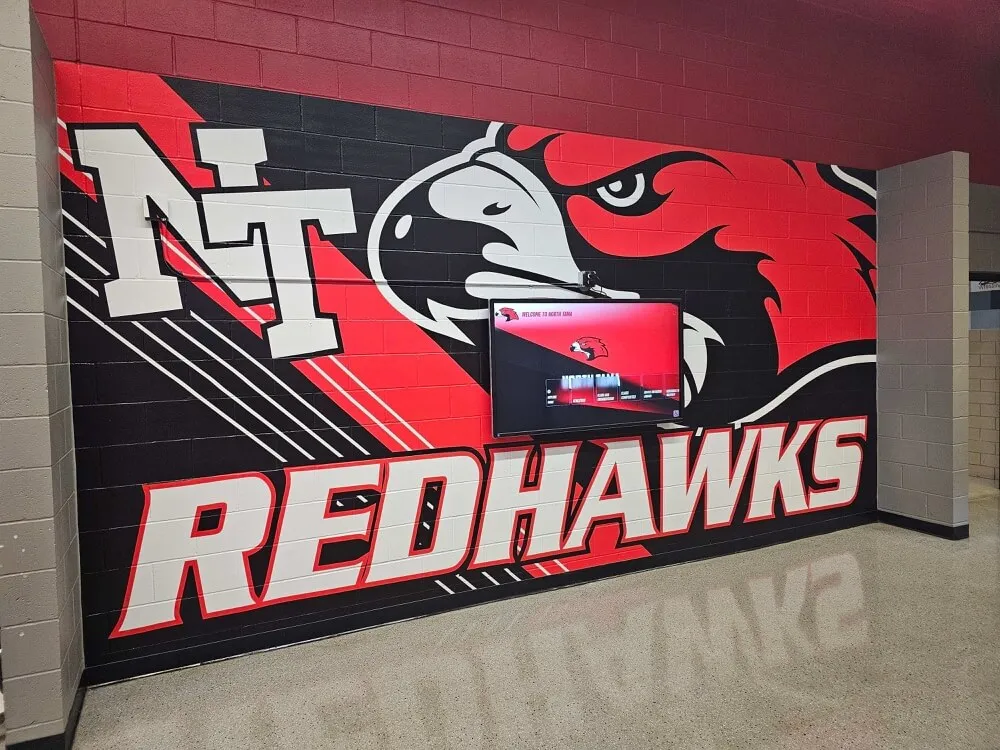
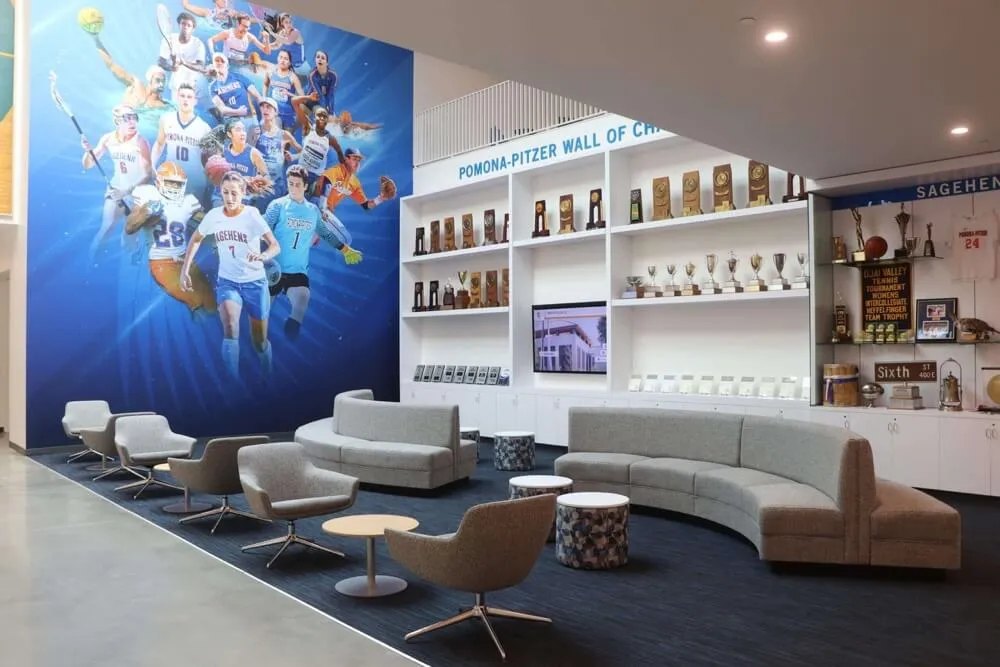
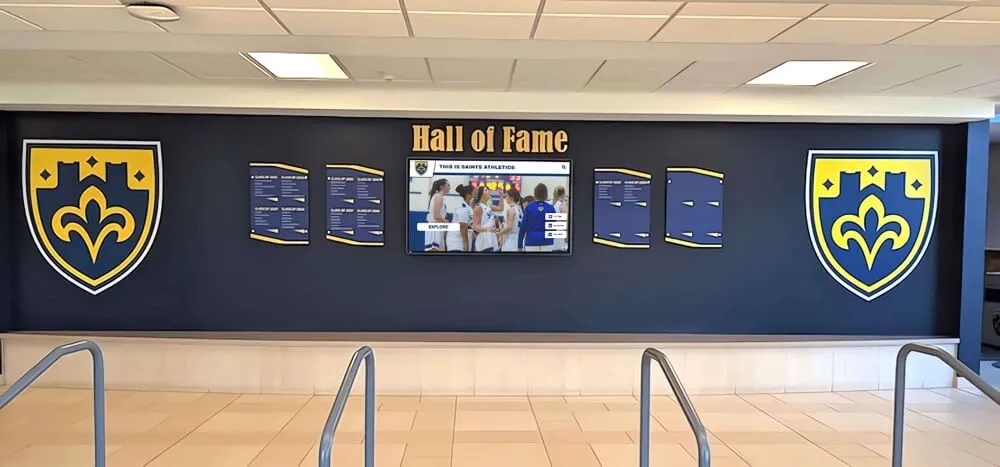
Many institutions implement hybrid recognition combining traditional plaques for prestige categories (hall of fame inductees, major donors, championship teams) with digital displays showcasing broader recognition at scale.
For example, schools might install bronze plaques for hall of fame inductees in main lobby while using digital displays for comprehensive athletic records, honor roll students, and alumni achievements. This approach balances tradition with practicality.
Organizations implementing commemorative plaque displays alongside digital systems report that physical plaques create gravitas for top recognition tiers while digital platforms handle volume recognition cost-effectively.
Cost Analysis: Budgeting for Recognition Wall Plaques
Understanding total costs helps institutions make informed decisions aligning recognition goals with available resources.
Initial Investment Breakdown
Design and Planning: Professional design services for cohesive recognition displays typically cost $500-$2,500 depending on complexity. DIY design using templates may reduce costs but risks inconsistent appearance.
Plaque Production: Per-plaque costs vary dramatically based on material, size, and production method:
- Economy acrylic: $50-$100
- Mid-range aluminum: $75-$200
- Premium brass: $150-$400
- High-end bronze: $200-$800
Installation: Professional mounting runs $50-$150 per plaque depending on wall surface, accessibility, and alignment precision required. Bulk installations often negotiate lower per-unit rates.
Lighting: Basic picture lights cost $40-$100 each while professional track lighting systems run $500-$3,000 depending on coverage area and fixture quality.
Ongoing Cost Considerations
Recognition programs incur annual costs as new honorees receive plaques:
- Annual additions: Schools recognizing 20 individuals annually at $150/plaque spend $3,000 each year indefinitely
- Replacements: Damaged or incorrect plaques need replacement ($150-$500 each)
- Expansion: Running out of space may require relocating entire displays to larger walls
Over 10-year periods, traditional plaque programs easily exceed $30,000-$50,000 when accounting for initial installation plus annual additions and occasional replacements.
Return on Investment
Despite costs, effective recognition delivers measurable value:
- Donor engagement: Research shows recognized donors give 2-3x more over lifetime than unrecognized counterparts
- Alumni connection: Recognition strengthens institutional bonds driving participation, referrals, and support
- Student motivation: Visible achievement displays inspire current students toward excellence
- Community pride: Professional recognition demonstrates institutional commitment to honoring achievement
Implementation Timeline and Planning
Successful recognition wall installations require several months from concept to completion when done properly.
6-Month Implementation Roadmap
Months 1-2: Planning and Design
- Establish recognition criteria and selection processes
- Form committee to guide project
- Measure space and develop initial layout concepts
- Select materials and design aesthetic
- Create budget and secure funding
Months 3-4: Production
- Finalize honoree list for initial installation
- Submit plaque orders (allow 4-8 weeks production for quality materials)
- Prepare wall surfaces as needed
- Arrange professional installation scheduling
Months 5-6: Installation and Launch
- Install mounting hardware and plaques
- Add lighting and final touches
- Photograph displays for marketing
- Host dedication ceremony or unveiling event
- Develop maintenance schedule and assign responsibilities
Organizations on accelerated timelines might compress this to 3-4 months, though quality craftsmanship requires adequate production and installation time.
Making Your Decision: Choosing the Right Recognition Approach
Selecting between traditional plaques, digital displays, or hybrid solutions depends on institutional priorities, budget constraints, and long-term vision.
Choose Traditional Plaques When:
- Budget supports ongoing plaque purchases indefinitely
- Recognition volume stays modest (under 10-15 additions annually)
- Traditional aesthetics align with institutional architecture
- Available wall space exceeds long-term capacity needs
- Updates and corrections will be rare
Consider Digital Displays When:
- Recognition volume is high or growing
- Wall space is limited or fully utilized
- Budget requires cost containment over time
- Accessibility compliance is priority
- Rich multimedia content would enhance recognition
- Frequent updates or additions are anticipated
Hybrid Approaches Work When:
- Top-tier recognition deserves premium physical display
- Broader recognition needs cost-effective scalable solution
- Combining tradition with innovation appeals to stakeholders
Organizations evaluating options benefit from consulting recognition specialists who can assess specific needs against available solutions. Rocket Alumni Solutions provides free consultations helping schools and organizations determine optimal recognition strategies aligned with goals, budgets, and spaces.
Conclusion: Creating Recognition That Endures
Recognition wall plaques represent time-tested approaches to honoring achievement that continue serving schools, universities, nonprofits, and organizations effectively when implemented thoughtfully. Attention to design principles, strategic layout planning, compelling wording, professional installation, and ongoing maintenance ensures displays deliver impact for decades.
Whether pursuing traditional plaque installations, exploring modern digital alternatives, or implementing hybrid solutions, the goal remains constant: creating recognition programs that inspire current community members, preserve institutional legacy, and celebrate achievement in ways that honor individuals meaningfully while strengthening organizational culture.
The most successful recognition programs view displays not as one-time projects but as evolving initiatives requiring continuous attention, expansion planning, and commitment to celebrating excellence consistently over time. When organizations invest in recognition thoughtfully, the returns—in engagement, pride, giving, and community strength—far exceed the financial costs.