



Key Takeaways
Discover the best pep rally games for high school that build school spirit, energize students, and connect athletic culture to your hall of fame legacy. Complete planning guide.
Every school has moments that define its culture — and few events pack more of those moments into a single gym period than a well-run pep rally. The energy is immediate, the competition is visible, and the school’s history shows up on every banner, jersey number, and face in the stands. When pep rally games are designed with intention, they do more than fill time before kickoff. They build the kind of athletic and academic culture that students talk about at reunions, that alumni want to support, and that schools eventually memorialize on their walls of fame.
This guide covers the most effective pep rally games for high school, how to structure competitions for maximum energy, and how schools are connecting pep rally culture to their digital halls of fame in ways that extend school spirit well beyond game day.
Why Pep Rally Games Matter More Than You Think
A pep rally with no games is a speech. A pep rally with the right games is a memory.
The difference comes down to participation. When students are watching, energy can sustain itself for about fifteen minutes before the crowd starts to drift. When students are competing — even if it’s just their class captain against another grade’s captain in a silly relay — the entire section stays locked in because the outcome matters.
Beyond energy management, pep rally games serve a cultural function. Class-versus-class competitions build grade-level identity. Games that incorporate school history or highlight current athletes connect the student body to something larger than the current roster. Recognition moments woven into game formats give students a chance to celebrate peers in a setting that the entire school witnesses.
For schools that take hall of fame culture seriously, pep rallies are where that culture lives in real time. The athletes whose photos appear in a school’s athletic hall of fame display were first cheered on in gyms exactly like yours. The traditions worth preserving get their start at events like these.

The Best Pep Rally Games for High School
1. Class Relay Races
Relay races remain one of the most reliably effective pep rally games because they require minimal setup, work for any gym layout, and produce clear, visible winners that the whole crowd can follow.
Classic relay formats that work well:
- Balloon-between-the-knees relay: Representatives from each grade level waddle a set distance with a balloon pinched between their knees. First class to have all four runners complete the course wins the round.
- Hula hoop chain relay: Class representatives form a human chain holding hands and pass a hula hoop down the line without releasing grips — speed and coordination required.
- Water cup relay: Teams race while balancing a cup of water on their heads or passing it overhead down a line. The messier the better.
- Shoe scramble: Class reps remove one shoe and throw it into a pile. On go, they race to find their shoe and return to the line.
The key to making relay races feel high-stakes is scoring them as part of an ongoing class competition that students have been tracking all week. When the relay is worth points in a larger spirit week standings system, the crowd investment goes from polite to genuine.
2. School History and Hall of Fame Trivia
Trivia is the single best pep rally game for connecting the current student body to the school’s athletic and academic legacy. Done well, it produces genuine excitement while educating students about the records, championships, and individuals who built the institution they’re part of.
Trivia category ideas:
- Athletic records: “Who holds the school record in the 400 meters?” or “How many state championships has the football program won?”
- Hall of fame inductees: Questions about past inductees, their sports, graduating years, or records they set during their high school careers
- Year-of events: “In what year did this school win its first regional basketball title?”
- Teacher and staff recognition: Adding questions about long-serving staff or coaches builds broader community recognition
- Current roster spotlight: Questions about current athletes’ stats or achievements tie the historical to the present moment
Run the trivia tournament-style with class captains competing in sudden-death rounds. Display questions and answer options on a large screen if available — the visual element makes it feel like a live broadcast.
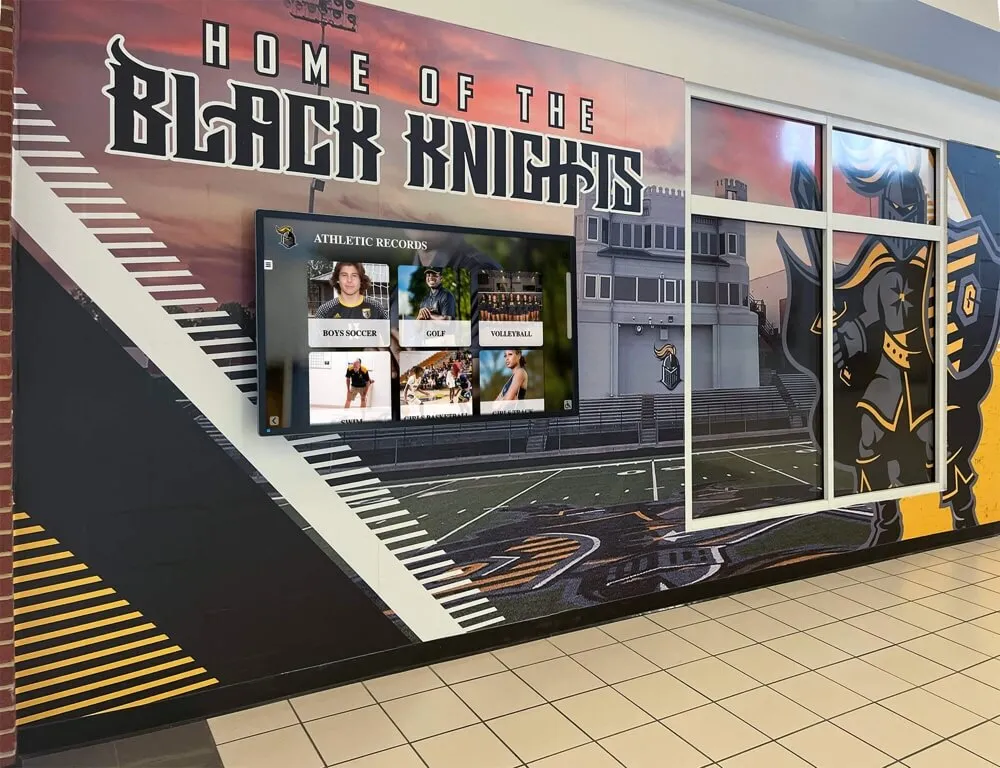
Schools that maintain digital school record boards have a natural content library for trivia questions that feel specific and meaningful rather than generic.
3. Tug-of-War (Class vs. Class)
Tug-of-war is one of the oldest athletic competitions in existence, and it works at pep rallies for a simple reason: it’s immediately legible to every person in the gym. Everyone understands what’s happening, the visual tension is high, and the outcome is undeniable.
Format recommendations:
- Run the competition as a bracket (freshmen vs. sophomores, juniors vs. seniors, then winners face off)
- Allow each class to select six to eight representatives — mix athletes and non-athletes to encourage broader participation
- Announce participants by name as they take position
- Give each class 30 seconds to cheer for their representatives before the pull begins
Tug-of-war generates the loudest crowd moments of almost any pep rally game, particularly if the pull is close and extends for more than a few seconds. Consider using a center marker (a ribbon on the rope) so the crowd can watch momentum shift in real time.
4. Dance-Off or Lip Sync Battle
Social media has made the lip sync battle a high school institution, and adapting it to pep rally format is straightforward and reliably crowd-pleasing.
Execution options:
- Class-selected performances: Each grade selects three to four students who prepare a 60-second lip sync or choreographed routine. Class pride drives preparation quality.
- Teacher vs. student challenge: Nothing generates louder crowd reaction than a staff member or coach committing to a full performance. When administrators participate, it humanizes the institution and becomes a story students tell for years.
- Mashup format: Each class performs a 30-second routine to their assigned song, and a panel of judges (other staff or student council members) scores on crowd reaction, creativity, and execution.
The lip sync battle format works particularly well immediately before or after halftime-type recognition moments, as it keeps energy high while transitioning between segments.
5. Athletes vs. Students Challenges
Head-to-head games between student-athletes and the general student body create natural moments of recognition for the teams being honored while also producing genuine competitive tension that a gym full of students will invest in.
Challenge formats that work:
- Free throw shooting: A non-athlete challenger gets 10 shots; the team’s best free throw shooter gets 10 shots. Crowd votes on whether they think the challenger can beat the athlete.
- Penalty kick contest: For soccer pep rallies, a student challenger attempts to score on the team’s goalkeeper. Three attempts, crowd counts down each shot.
- One-on-one trivia: A student challenges a senior athlete to trivia about the sport — sometimes non-athletes win, which the crowd loves.
- Obstacle course racing: A custom gym obstacle course where a student challenges an athlete from the featured sport. Non-traditional physical games (crawling under tables, spinning around a bat, etc.) level the playing field intentionally.
These formats serve a double function: they recognize athletes in a way that feels earned and competitive rather than ceremonial, and they give the broader student body a role in the athletic story rather than purely spectator status.
6. Spirit Chant Competition
The spirit chant competition is a pep rally game where each class creates and performs an original cheer in a set amount of time (typically 60 to 90 seconds), judged by crowd volume response.
Structure for maximum impact:
- Announce the competition two to three days in advance so classes can prepare
- Give classes a short prep period at the beginning of the pep rally (5 minutes to huddle)
- Perform in order from freshmen to seniors
- Use a “crowd-o-meter” (a staff member holding up a decibel meter or simply the MC’s read of crowd reaction) to determine the winner
- Award points toward the spirit week standings
The spirit chant competition naturally escalates energy through the event — each class tries to top the previous one — and it ends with seniors, who typically produce the highest-energy performance, which carries momentum directly into the event’s closing recognition moments.
7. Staff and Faculty Challenges
Including staff in pep rally games does something that student-only competitions cannot: it breaks down the institutional hierarchy in a way that increases student investment in the school as a community rather than just a place they attend.
High-impact staff challenge formats:
- Principal vs. class captain relay: A short, slightly unfair relay where the principal is given a clearly disadvantageous starting position (or oversized equipment) that gives students a built-in advantage
- Staff lip sync: A pre-prepared performance by a group of teachers that the student body has been anticipating
- Coach prediction challenge: Coaches make predictions about game outcomes or team stats, and students bet spirit points on whether they’re right (results revealed at the next event)
- Faculty trivia gauntlet: Students challenge staff members to trivia about current student culture — staff usually lose, which the crowd finds hilarious
Schools that feature teacher recognition and appreciation moments as part of their broader school culture often find that including staff in pep rally games accelerates the warmth between students and faculty throughout the year — not just during spirit season.
8. The Blindfolded Challenge
Blindfolded challenges are visually compelling, reliably funny, and universally understood regardless of athletic ability — making them strong options for pep rallies where inclusivity matters.
Effective blindfolded formats:
- Blindfolded free throw: A student attempts free throws while blindfolded, guided only by crowd noise (louder for “warmer,” quieter for “colder”)
- Blindfolded taste test: Representatives from each class taste-test unmarked school cafeteria foods and guess what they are
- Blindfolded partner find: Pairs of students are blindfolded and must find each other by calling each other’s names in a crowd of other pairs doing the same
- Blindfolded obstacle course: A straightforward obstacle course navigated purely on crowd instruction
The crowd direction element of blindfolded games creates active participation from every section of the gym — even students who aren’t competitors become part of the game.
Structuring Your Pep Rally for Maximum Impact
Games need a container to reach their full potential. A pep rally with great individual games but no connecting structure often produces isolated moments of excitement rather than a sustained, escalating energy arc. Here is a format that maximizes the game experiences described above.
Opening (Minutes 0–5): High-Energy Entry
Start with the school band or a recorded hype track, the entrance of athletic teams in order (JV first, then varsity), and a fast-paced MC introduction. The goal of this segment is simple: bring the room to attention and establish that this is a competitive, celebratory event.
Recognition Segment (Minutes 5–12): Anchor the Culture
Introduce the teams being honored, recognize players or programs reaching notable milestones, and — critically — connect current achievements to school history. If your school has a recent hall of fame inductee, feature a brief display. If a team broke a school record this season, show the record board on screen. This segment grounds the energy in something real and specific to your school rather than generic school spirit.
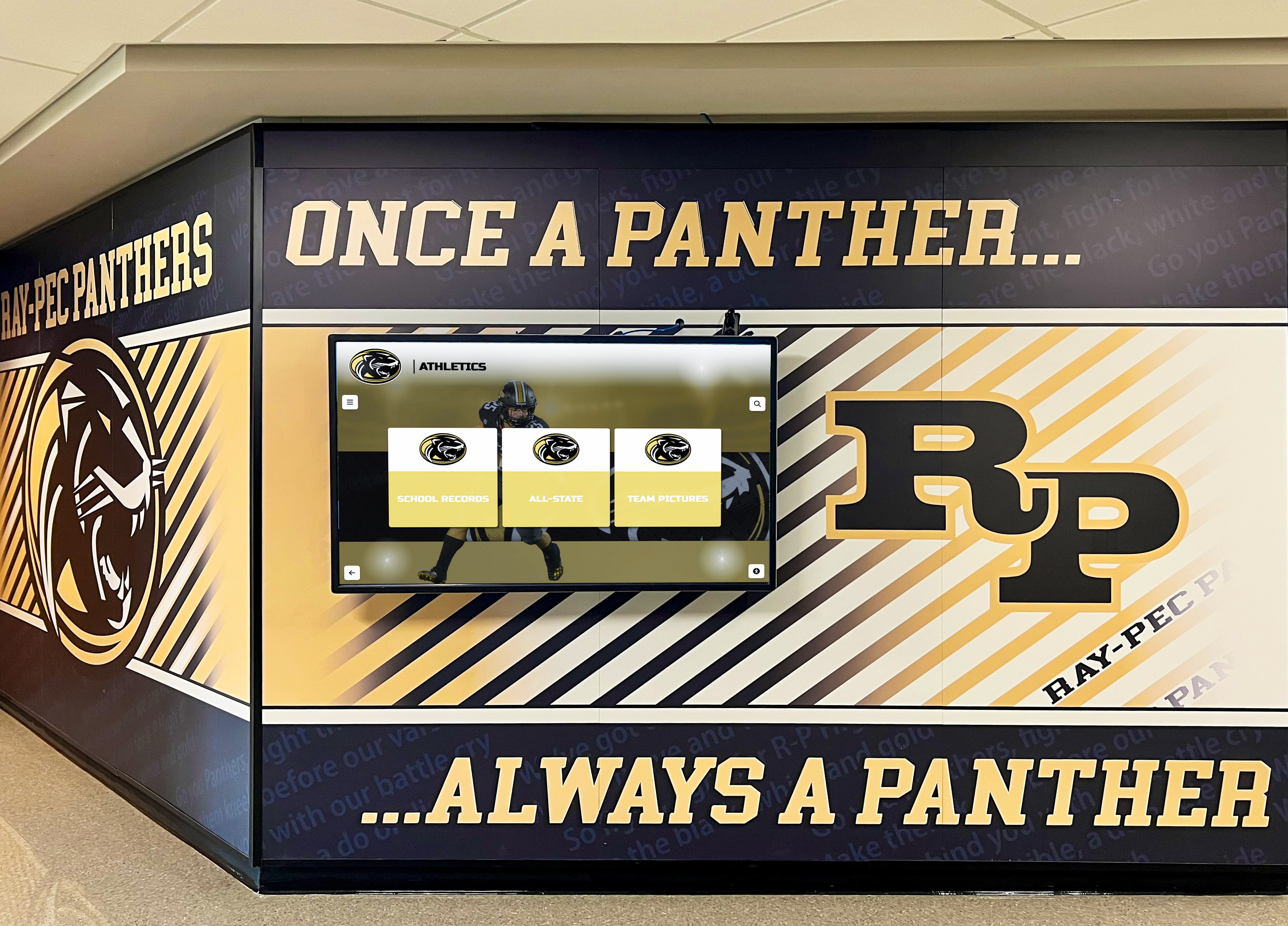
Schools that display school history and athletic milestones on digital screens during this segment transform a routine announcement into a cinematic recognition moment that students actually remember.
Game Block 1 (Minutes 12–22): Physical Competition
Run your two highest-energy physical games here — relay race and tug-of-war are ideal for this slot. Physical competition first establishes the stakes and gets students invested in the class competition framework that the rest of the pep rally builds on.
Mid-Rally Entertainment (Minutes 22–30): Cheer and Performance
Cheerleading performance, marching band showcase, or student-organized dance routine. This segment gives the gym a moment to breathe after physical competition while maintaining energy through performance.
Game Block 2 (Minutes 30–40): Knowledge and Creativity
Trivia and lip sync battle fit naturally here. These games shift the competition format from physical to mental and performative, which reaches different student segments and sustains broad participation.
Closing Recognition (Minutes 40–50): Send Them Out Loud
End with the spirit chant competition (classes have been primed all event) and the announcement of class competition standings. If you’re announcing any hall of fame nominations, special recognition, or team achievements, this is the moment — it leaves students exiting the gym with a specific story to tell. Close with the team’s entrance to their walk-up music and an MC sendoff to the game.
How Digital Displays Transform the Pep Rally Experience
The single highest-leverage technology investment a school can make for pep rally culture is a quality display system — not necessarily because screens are flashier than posters, but because real-time digital displays allow coordinators to tell a richer, faster-moving story than any static material can.
Live Scoring and Rankings
When class competition standings update on a screen in real time, the trivia round stops being a trivia round and starts being a sports broadcast moment. Students track their class’s position, react to score changes, and recruit each other to care about outcomes in a way that a whiteboard tally never produces.
Athlete and Program Spotlights
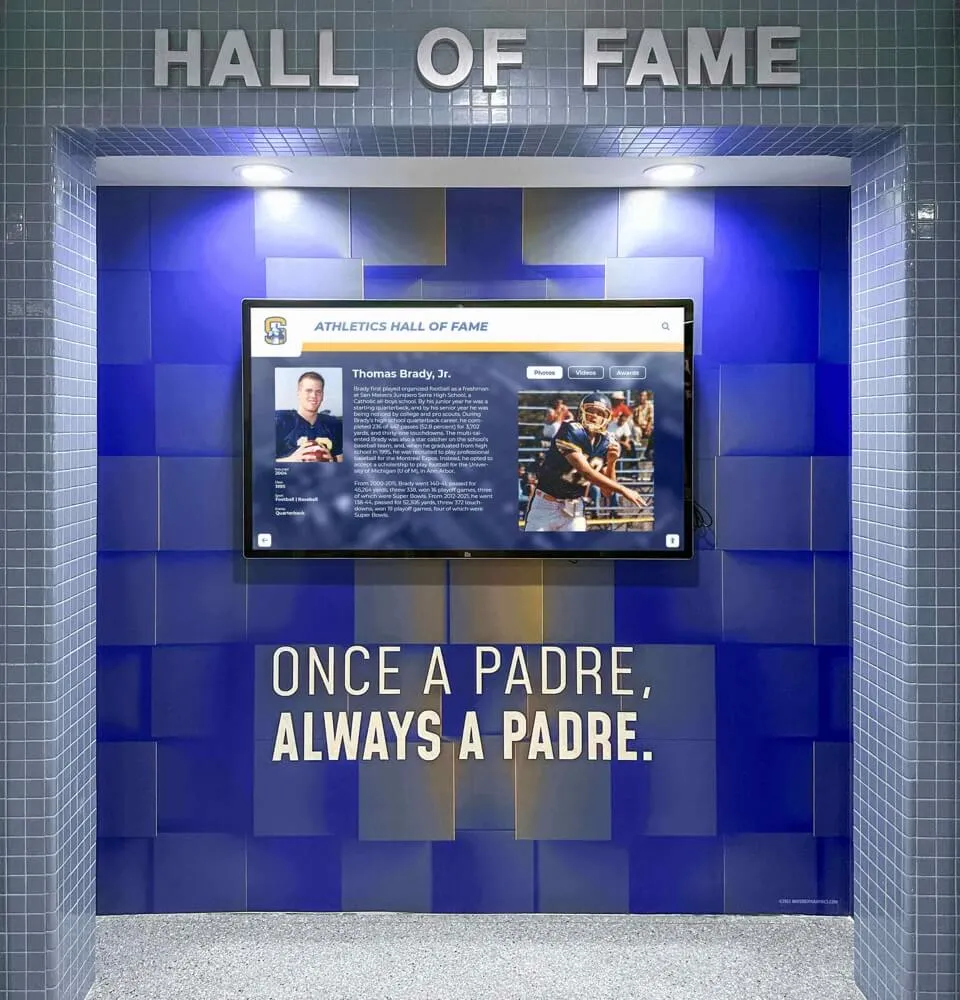
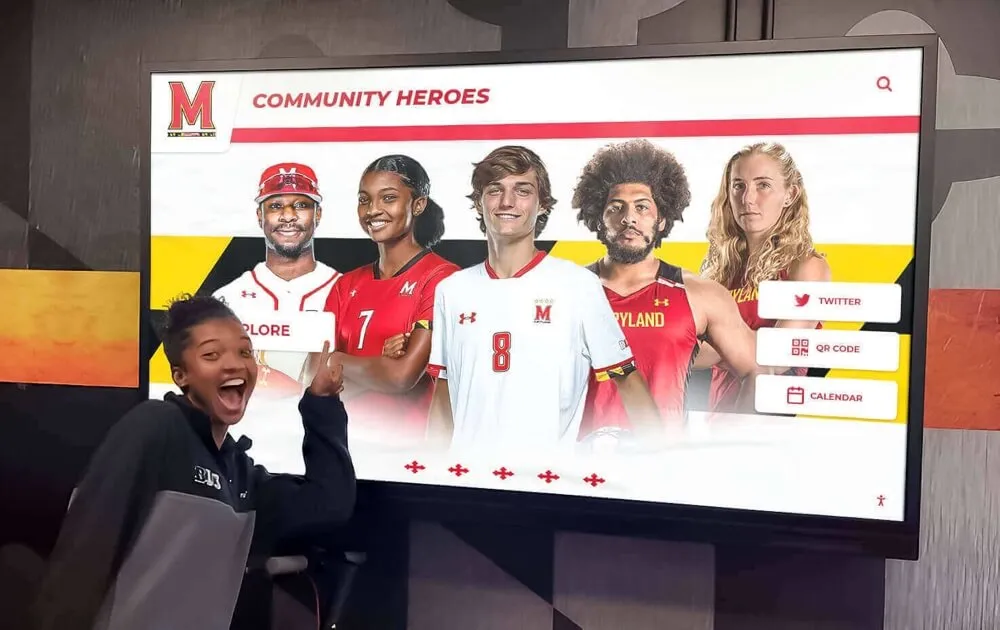
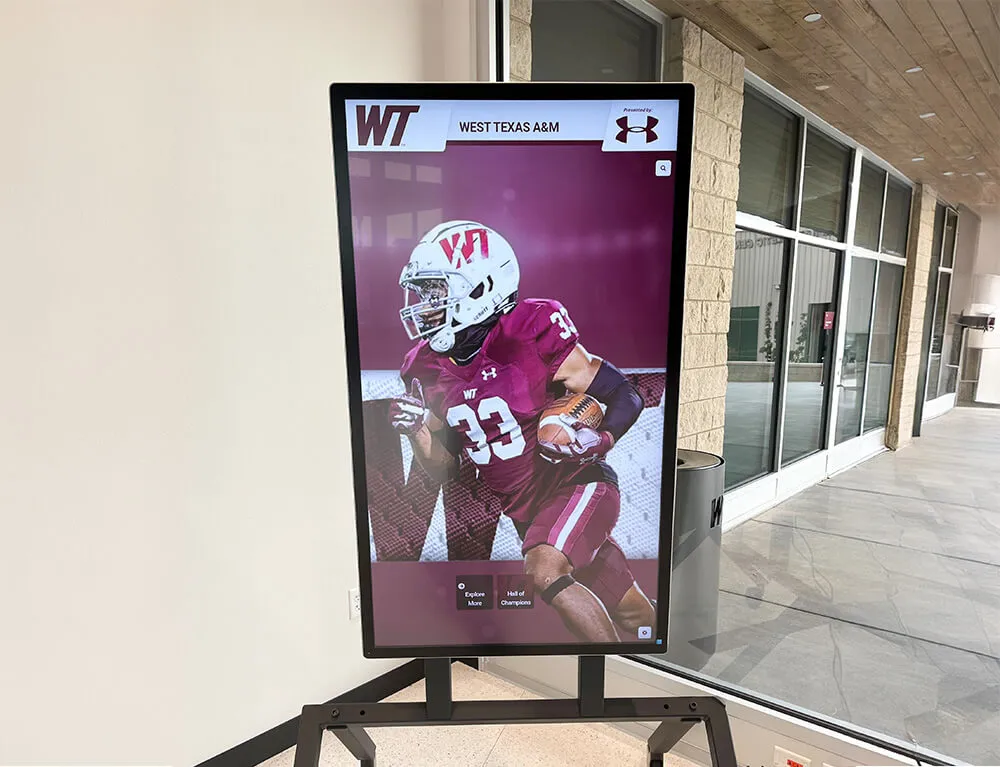
During the recognition segment, displaying a current athlete’s photo, position, stats, and career highlights on a large screen gives the athlete the recognition moment they’ve earned while giving the student body a frame of reference for why that person matters to the program. It is a dramatically more powerful recognition experience than an announcement read from a notecard.
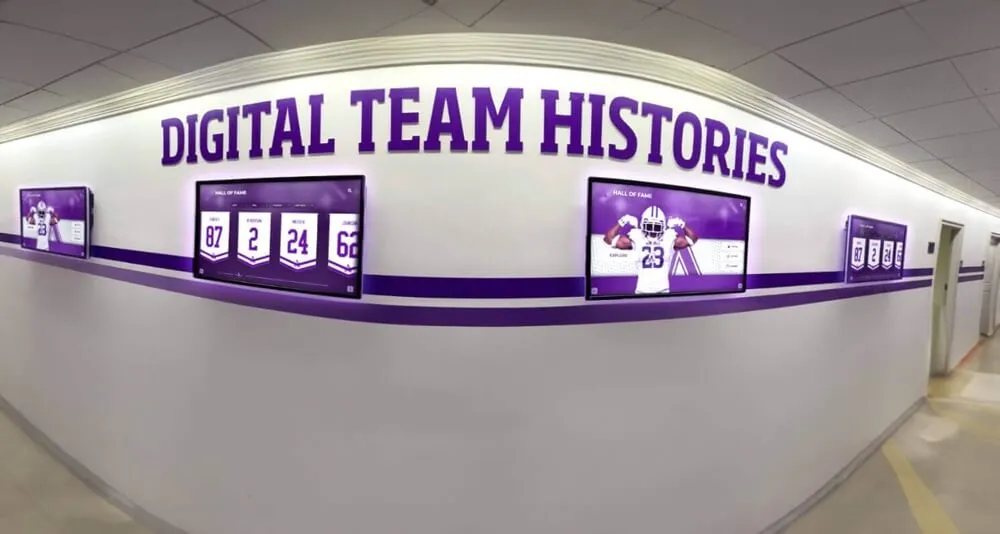
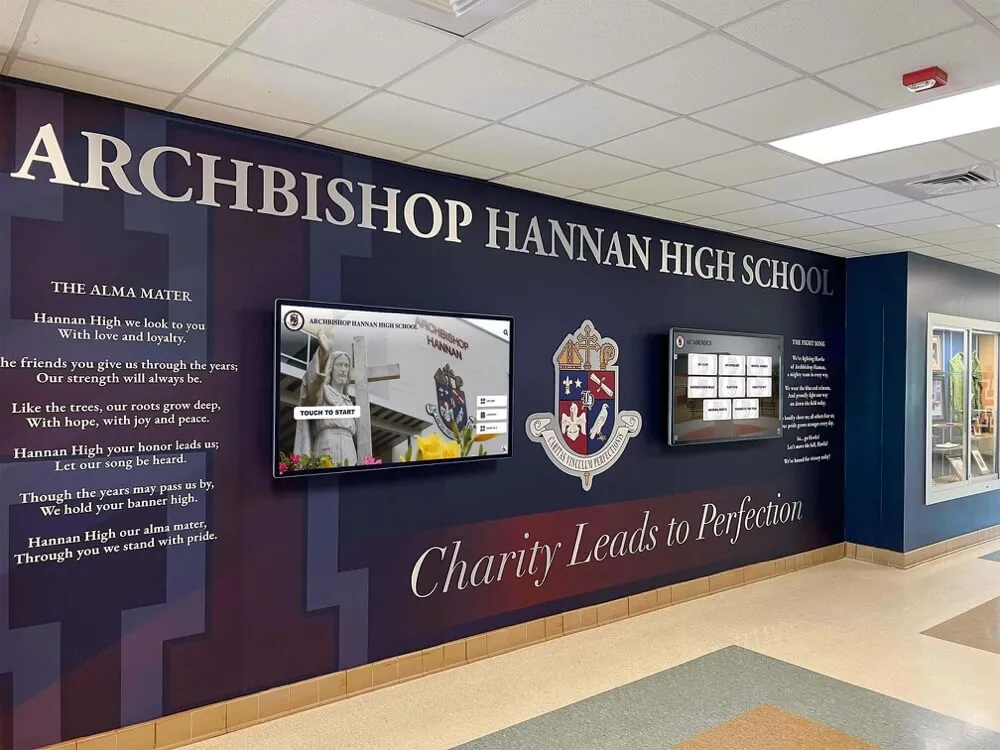
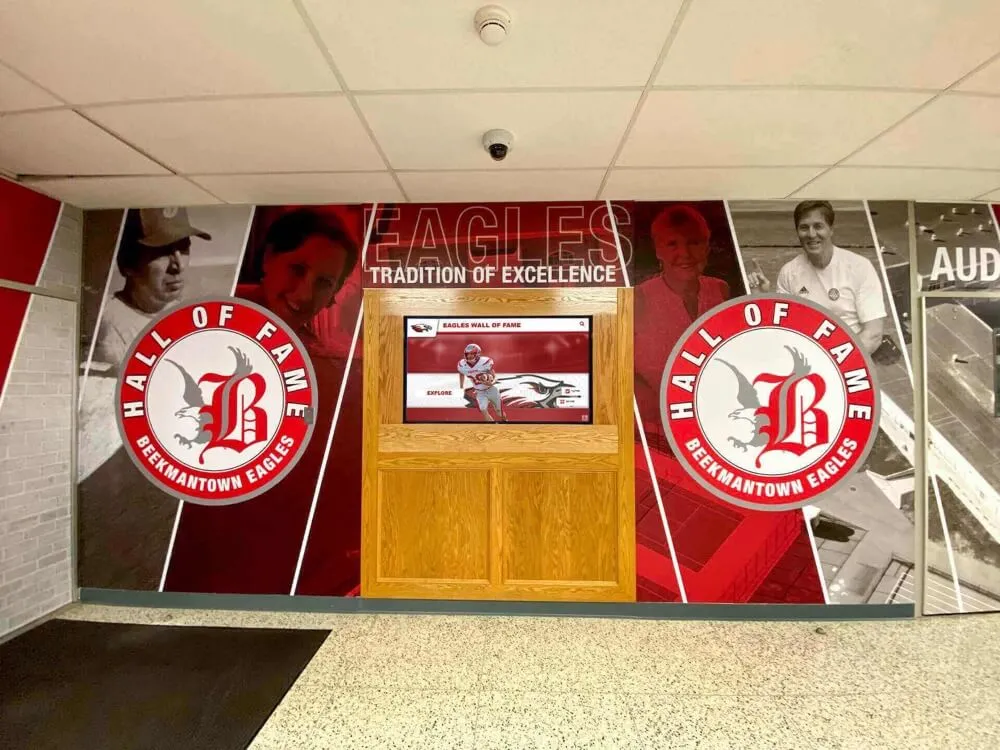
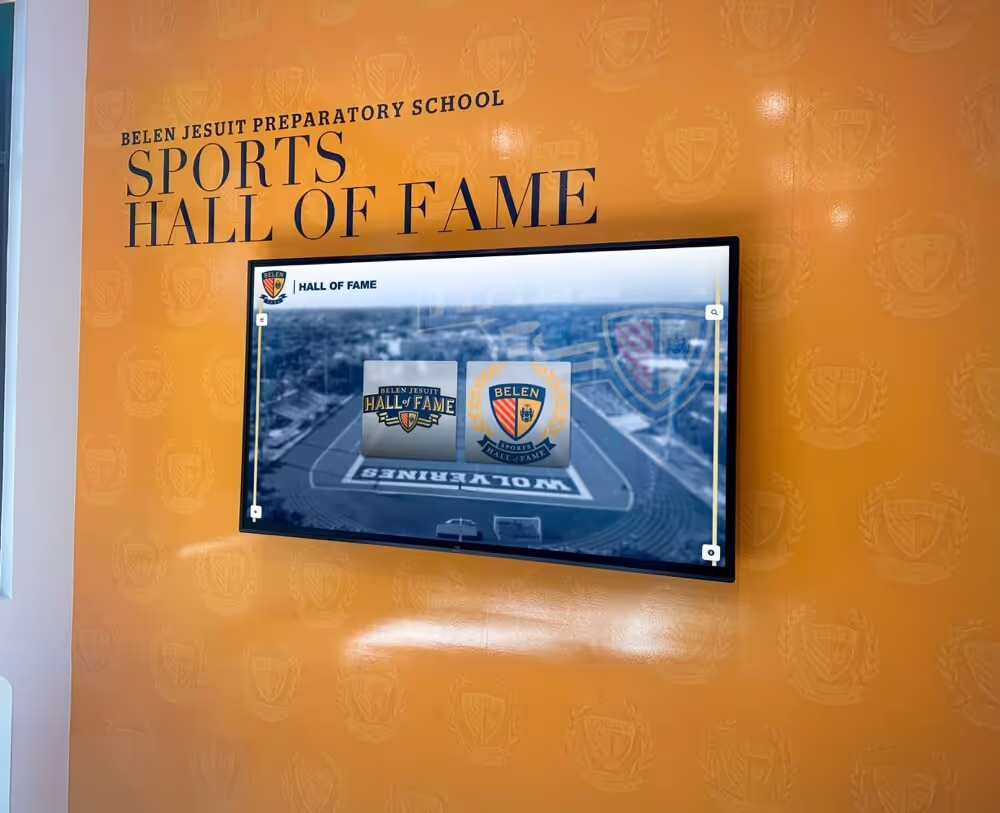
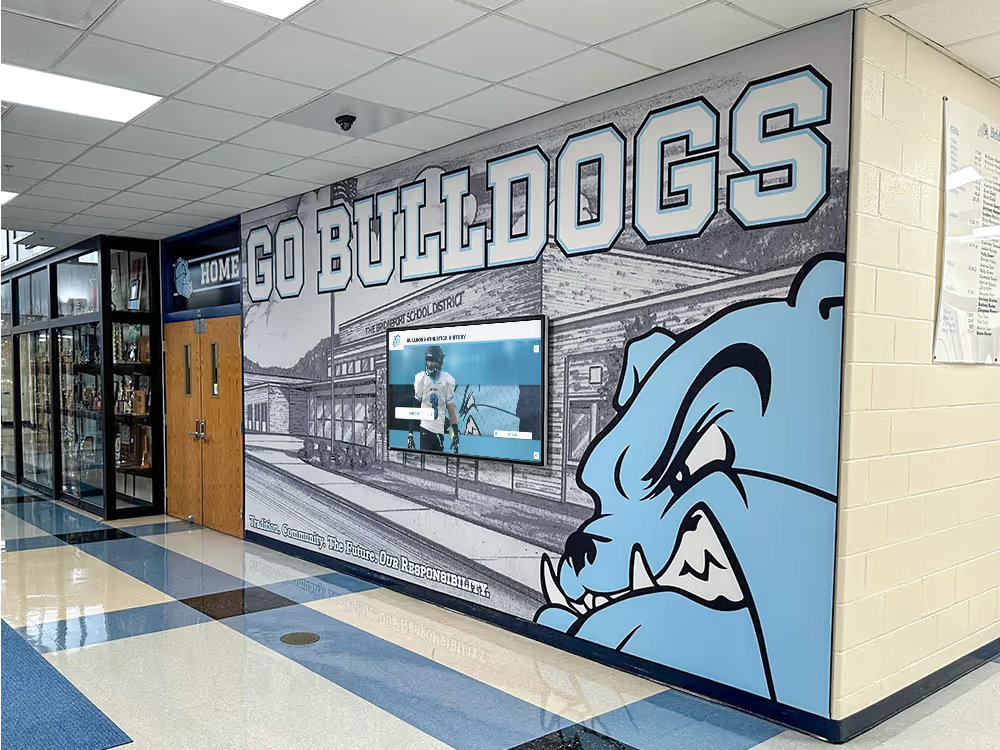
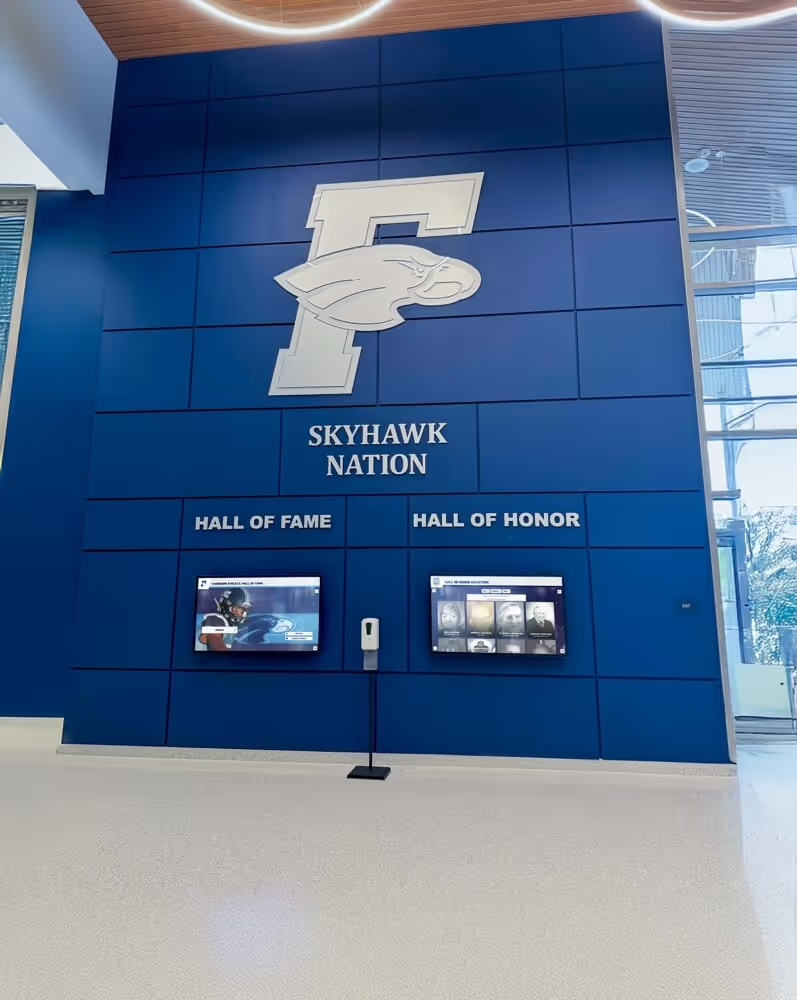
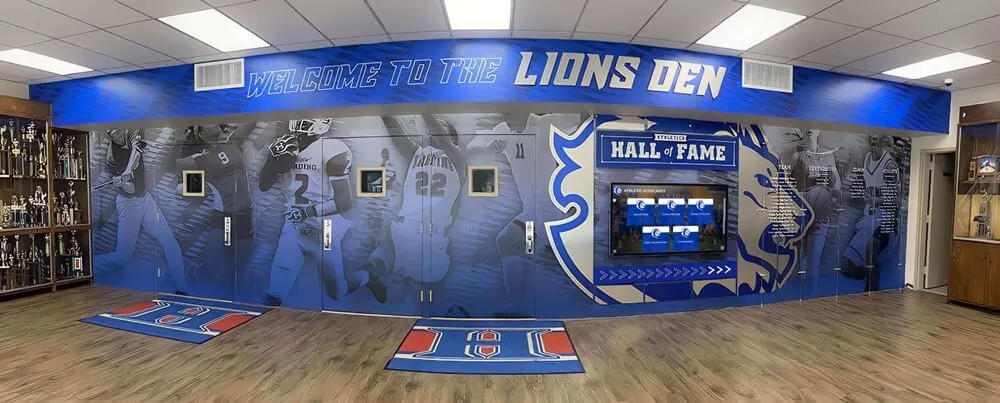
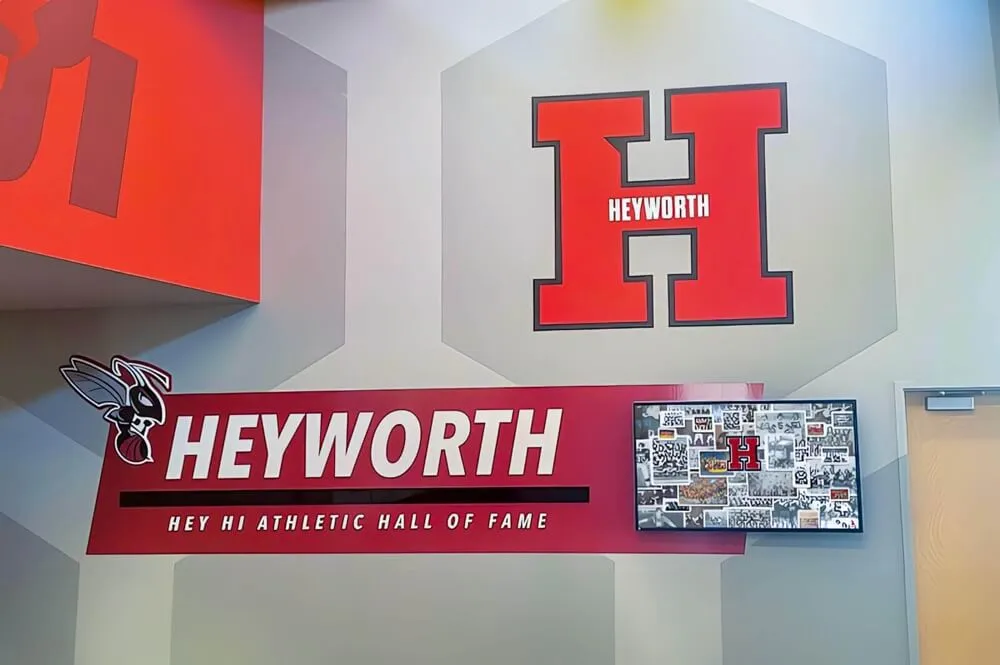
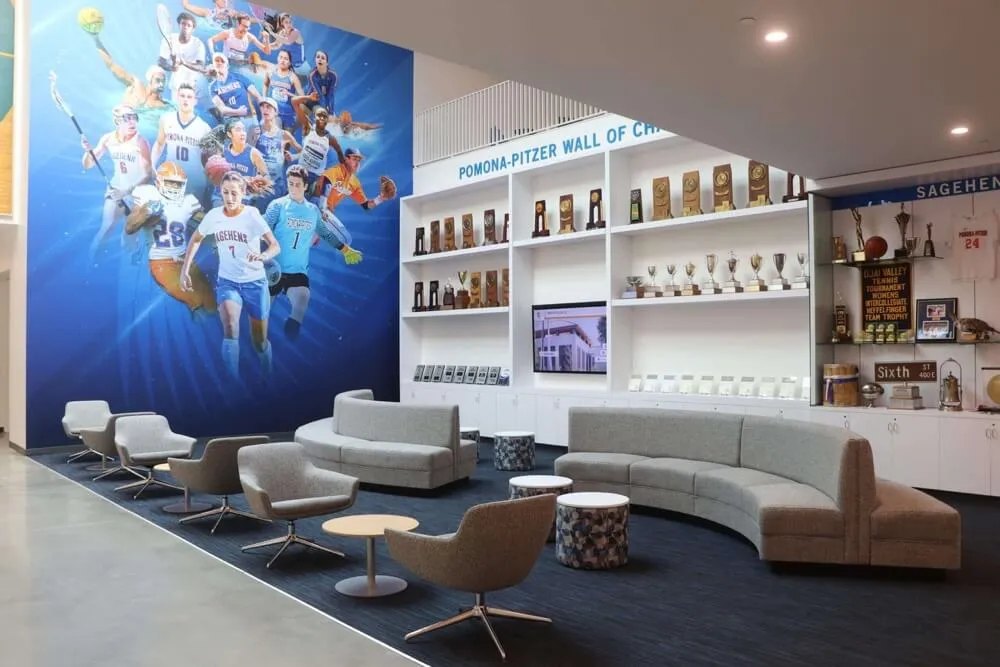
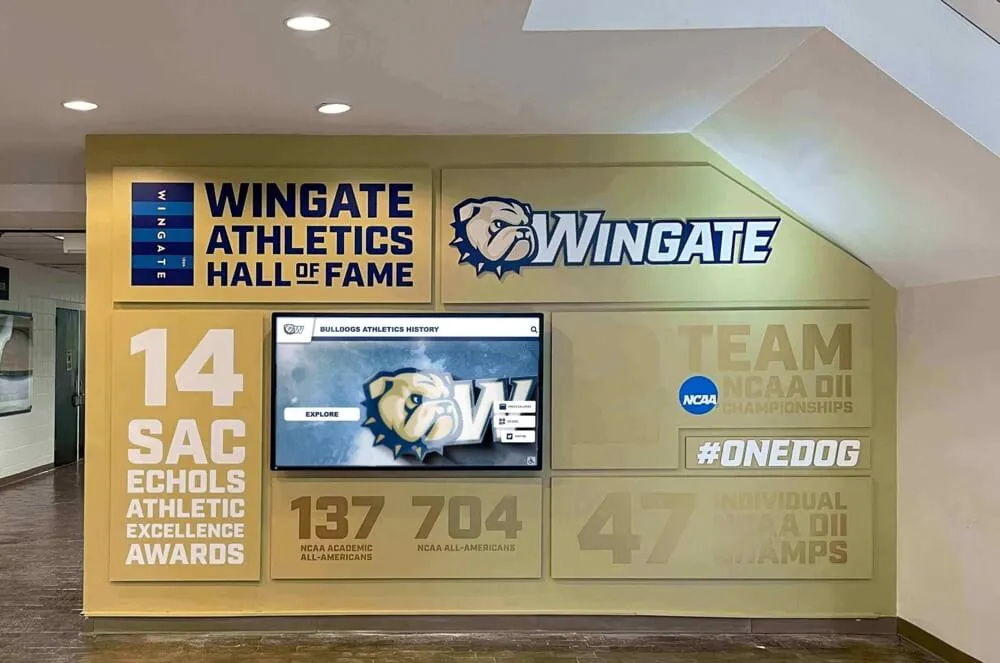
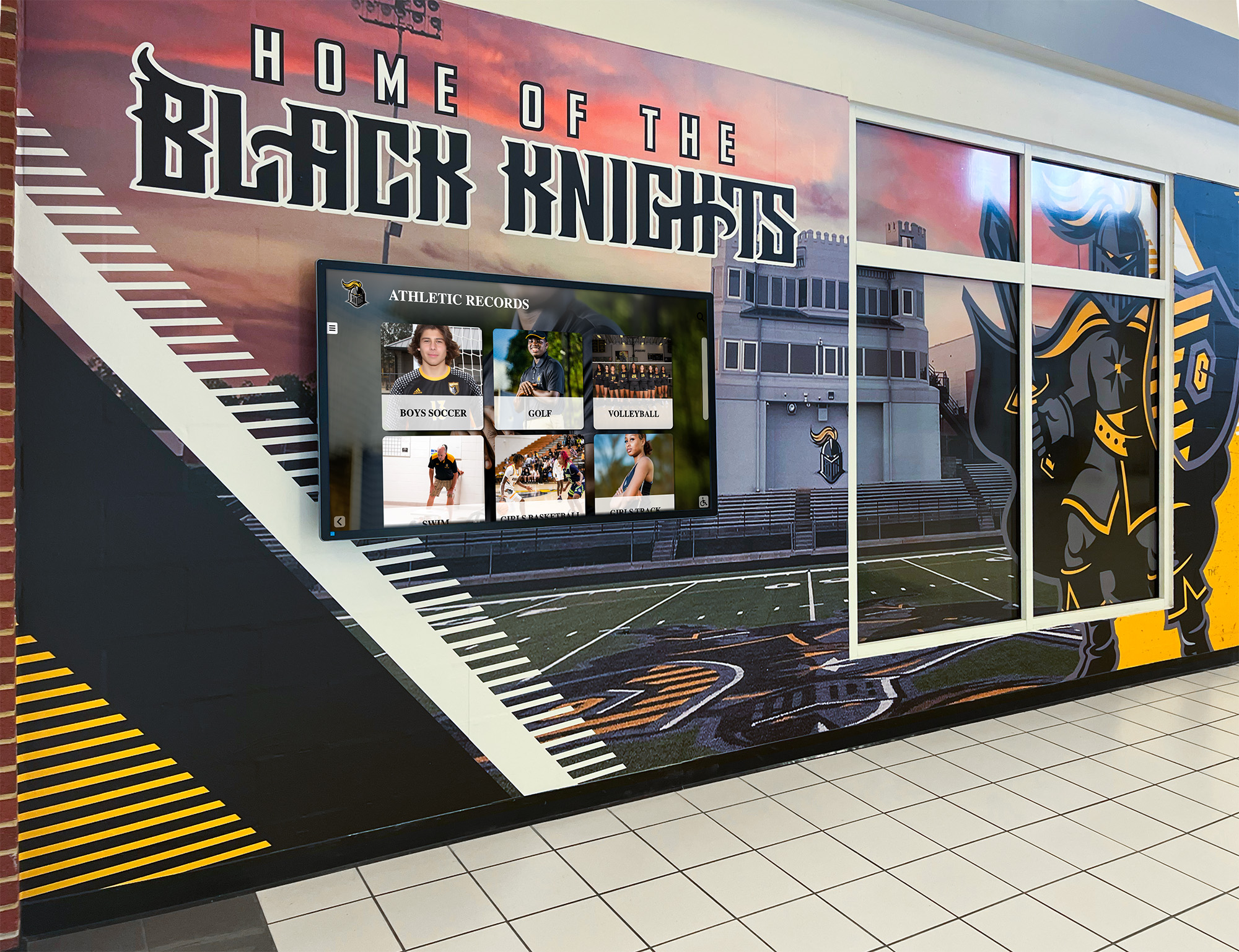
For schools that have digitized their athletic history, this display can reach back into the program’s past — showing connections between current athletes and the players who built the records they’re now chasing. The spirit and tradition wall format gives schools a visual vocabulary for how these historical connections can be presented in a way that current students find compelling rather than nostalgic.
Photo Galleries and Real-Time Captures
Schools with a photographer covering the pep rally can feed photos directly to a display during the event. When a student sees themselves or their classmate appear on the screen during the event, the crowd reaction is predictably explosive — and those photos become the documentation that builds the school’s visual institutional memory.
That institutional memory is precisely what ends up on hall of fame displays, in digital yearbooks, and in the school’s alumni and recognition systems. Events like pep rallies that are documented with care generate content that deepens hall of fame culture over time.
Connecting Pep Rally Culture to Your Hall of Fame
A pep rally without connection to school history is entertainment. A pep rally that weaves the school’s legacy into its games and recognition moments is culture-building.
The distinction matters because culture is what sustains athletic programs, motivates donors, and creates the kind of pride that makes alumni want to come back. Schools that treat hall of fame recognition as a living part of student life — not just a display in a hallway — see the difference in how current students understand their role in something larger.
Use Pep Rallies to Preview Hall of Fame Inductees
If your school inducts hall of famers on an annual basis, use the fall or winter pep rally as a preview moment — announce that the induction ceremony is upcoming and display inductee names on screen. It creates anticipation and gives current students a connection to the recognition process before the formal event.
Feature Records That Current Teams Are Chasing
One of the most effective narrative devices in sport is the record-chase story. If a current team is within reach of a school record, display that record — name, date, statistic — on your pep rally screen alongside the current team’s mark. It gives students a concrete target and honors the historical athlete simultaneously.
Schools that maintain digital record boards make this content readily available for event use rather than having to hunt through archives each time.
Recognize Non-Athletic Achievement at Pep Rallies
The hall of fame culture at its best recognizes the full range of student achievement — not just sport. Including a brief segment recognizing academic achievers, performing arts programs, or community service leaders at a pep rally sends a signal that excellence in any domain earns the same visibility as athletic success.
This inclusive recognition philosophy is what makes honor roll and academic recognition displays meaningful rather than ceremonial — students know that recognition at school is real because they’ve seen it happen in the most visible venue the school has.
Capture the Pep Rally for Long-Term Archives
Schools that approach pep rallies as archival events as well as live events build richer institutional histories over time. Photos of spirit week competition, video of record-breaking athletes, documentation of traditions like the spirit chant competition — these materials become the content that populates hall of fame displays, digital yearbooks, and alumni reunion programming years later.
Archiving historical school media and recognition content is a significant undertaking for schools with decades of archives, but schools that start capturing pep rally content now are building the archive that future administrators will rely on for recognition programming.
Planning Checklist for a High School Pep Rally
Use this checklist to ensure your next pep rally is structured for maximum energy and lasting cultural impact.
Two to three weeks before:
- Confirm date, time, and gym/venue logistics
- Select games and assign class captains for each competition
- Coordinate with band director, cheer coach, and athletic department
- Plan recognition segment content (athletes, records, hall of fame tie-ins)
- Set up any display system or screen content in advance
One week before:
- Announce games and scoring to students so classes can prepare
- Brief MC or event host on script and timing
- Schedule photographer or video capture
- Test any screen or display technology
Day of the event:
- Run a 15-minute rehearsal walk-through with MC and class captains
- Load athlete photos, record displays, and trivia content onto screens
- Assign volunteers to manage game logistics
- Set up scoring system so results can be posted during the event
After the event:
- Upload and catalog photos and video
- Post class competition results on school displays and social media
- Store documentation in school’s archive system for future hall of fame use
Beyond the Gym: Extending Pep Rally Culture Year-Round
The energy created at a great pep rally is a resource, not just an experience. Schools that capture it, display it, and connect it to year-round recognition systems turn one event into sustained cultural momentum.
How schools extend pep rally culture:
- Display season highlights on hallway screens: Feature athlete spotlights, spirit week leaderboards, and game-day countdown displays in high-traffic hallways between pep rallies to keep the culture present
- Build pep rally traditions into the school calendar: Formal traditions — like a specific chant that has been performed every year for a decade — give students a sense of continuity and belonging from day one
- Connect pep rally recognition to end-of-season awards: Athletes recognized at pep rallies should see their achievements reflected in end-of-season awards and recognition programs that extend beyond the event itself
- Feature alumni at homecoming pep rallies: Inviting hall of fame inductees or notable alumni back for homecoming pep rallies creates a living connection between generations of students and demonstrates concretely what the school’s culture produces
Schools that have invested in booster club infrastructure find that pep rally culture and booster support reinforce each other — engaged students become engaged alumni who become donors, and donor recognition programs become the hall of fame displays that inspire the next generation of students at the next pep rally.
Building the Digital Hall of Fame That Makes Pep Rallies Better
Schools that want to consistently run high-energy, culturally rich pep rallies need more than a game plan — they need a recognition infrastructure that makes historical content accessible, student achievements visible, and institutional identity tangible.
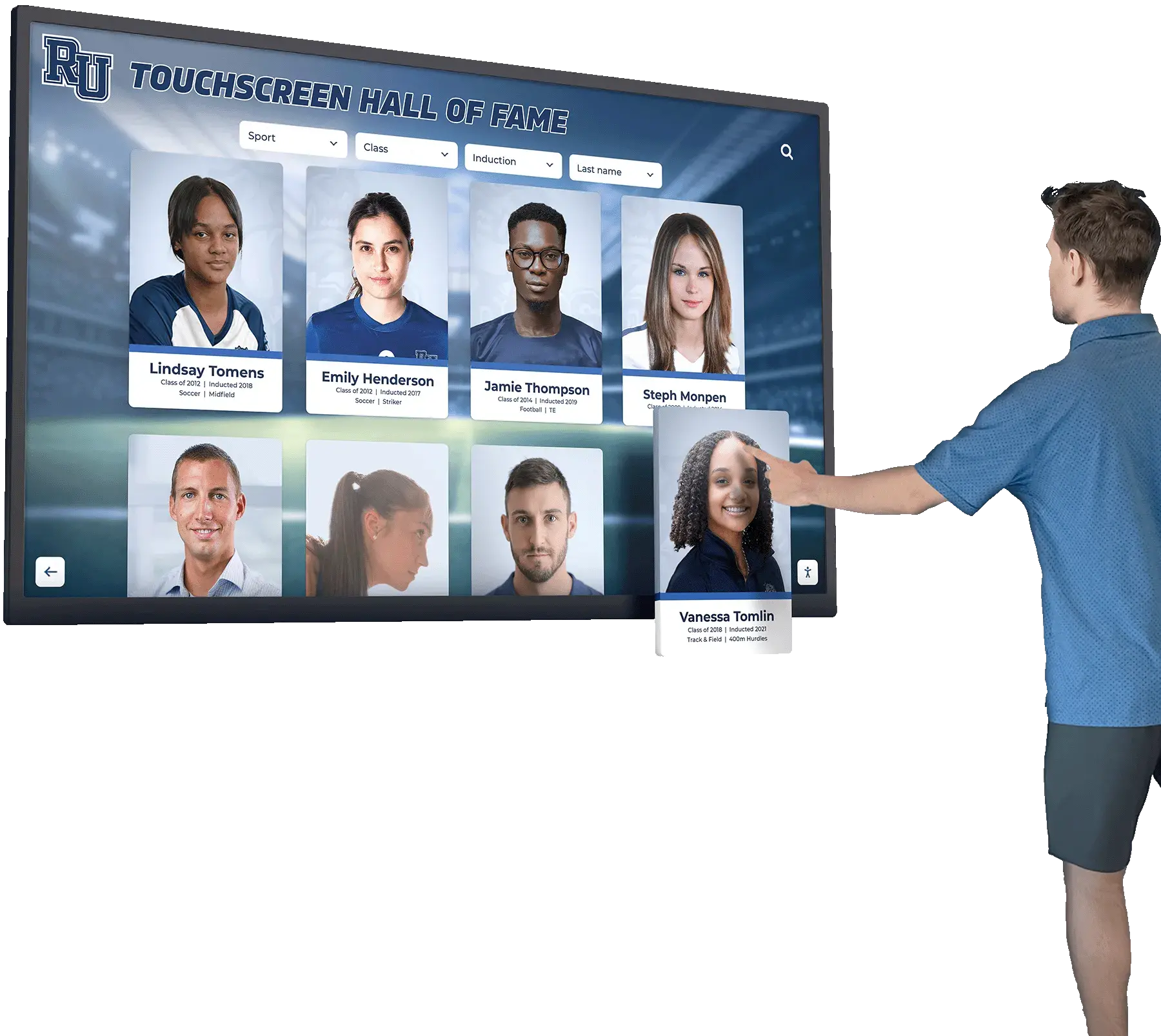
That is exactly what a digital hall of fame system provides. When athlete profiles, school records, championship histories, and recognition moments live in a searchable, displayable system rather than in filing cabinets and outdated wall frames, coordinators can pull the right content at the right moment — including during a pep rally.
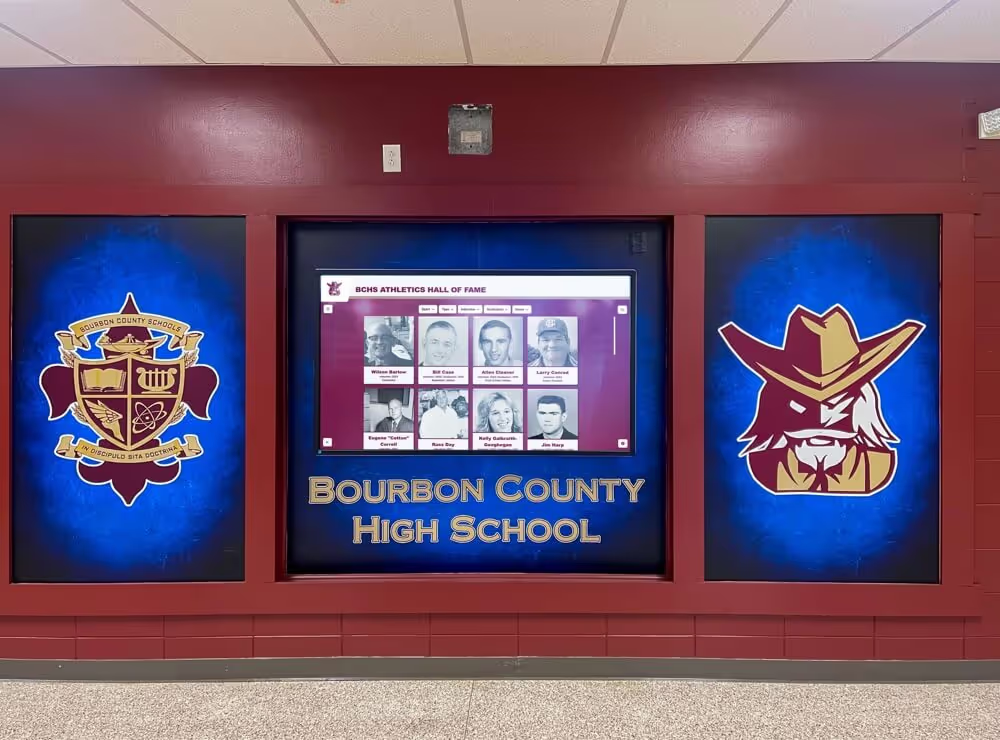
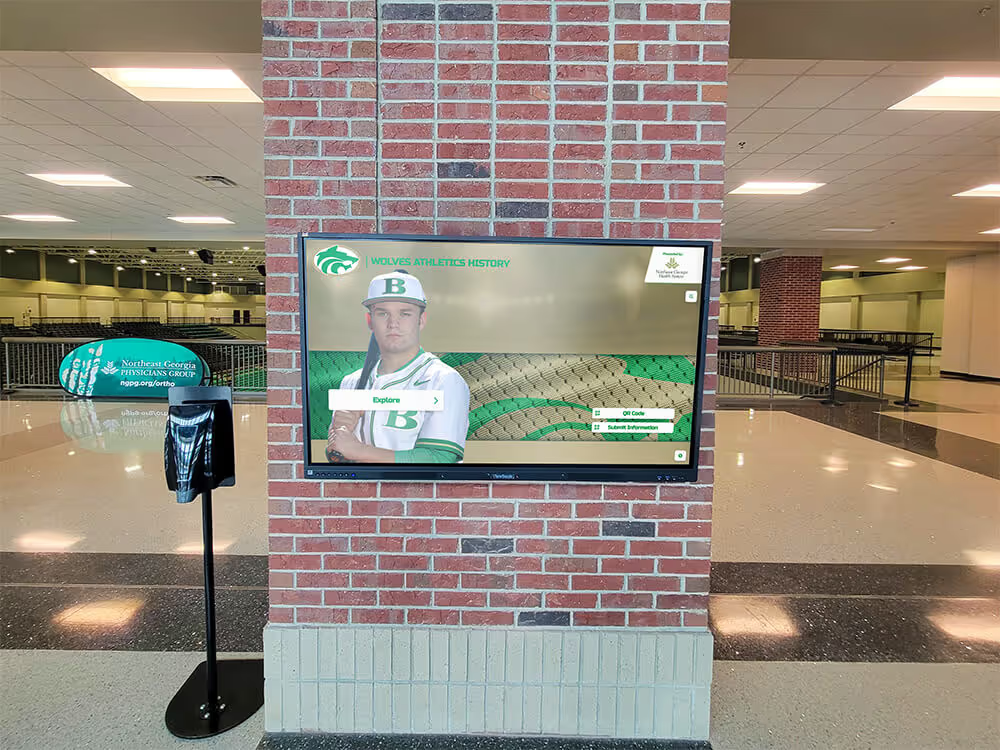
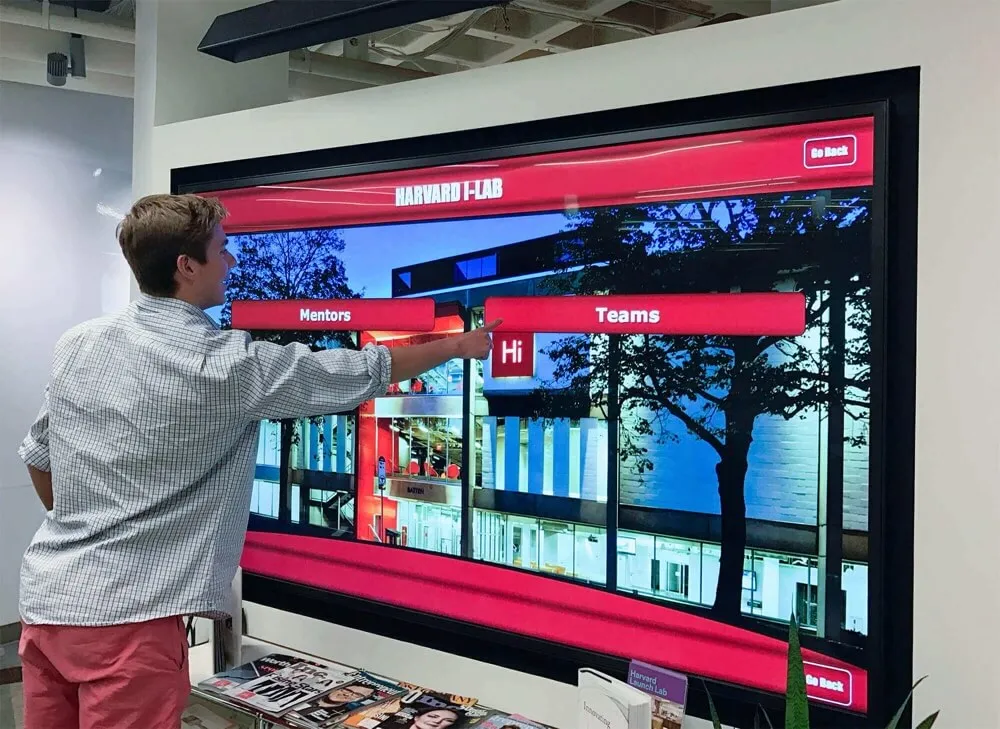
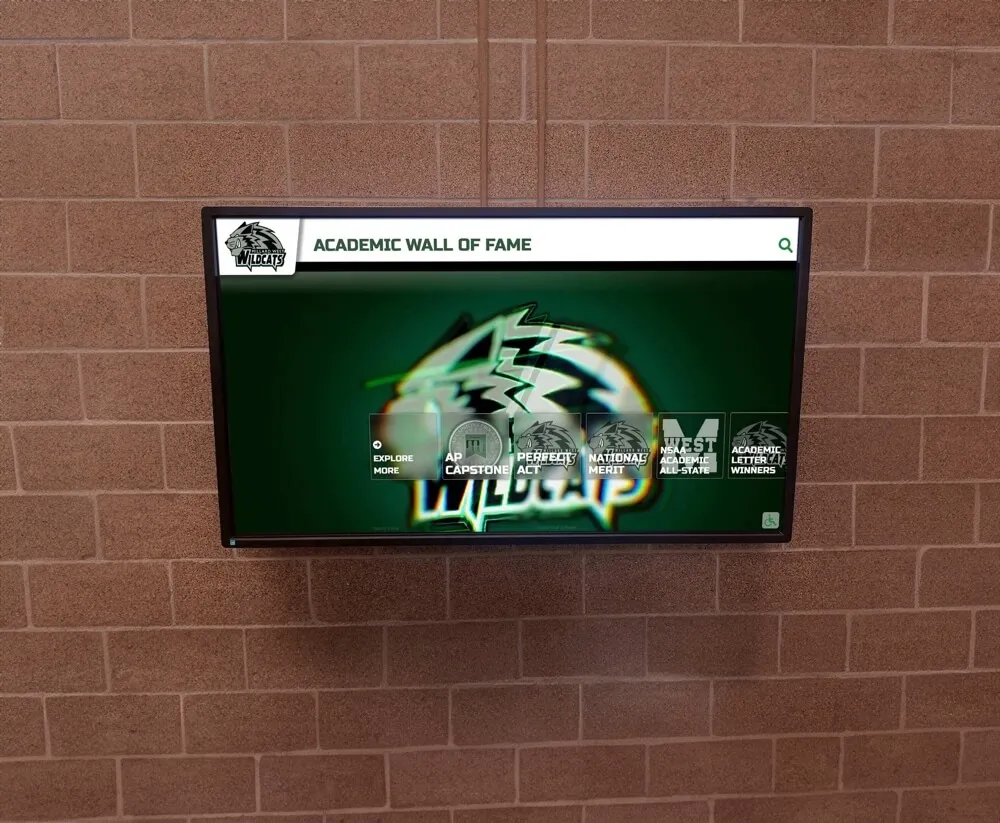
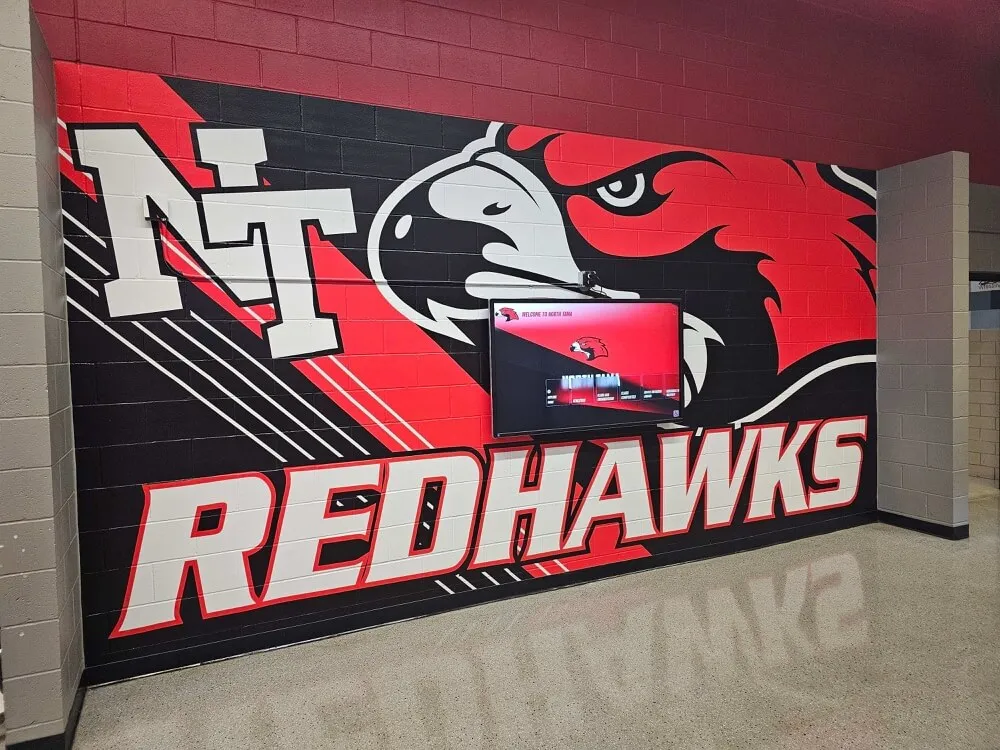
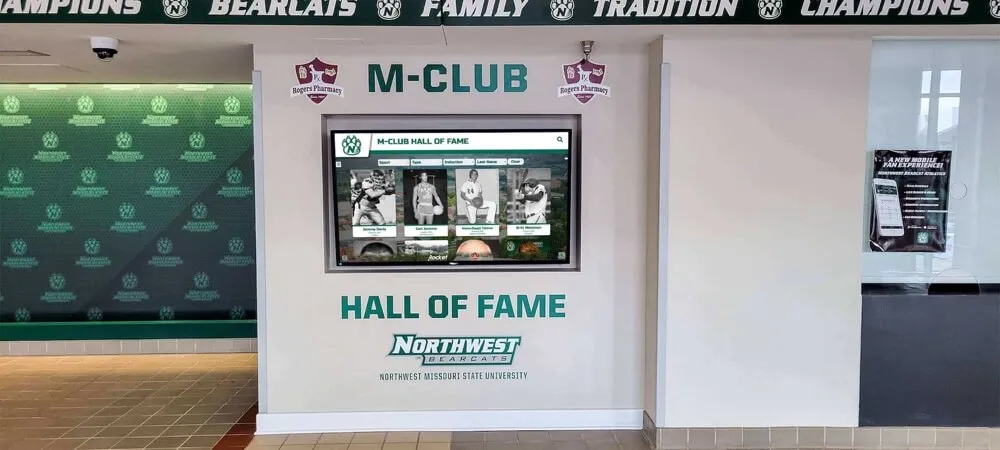
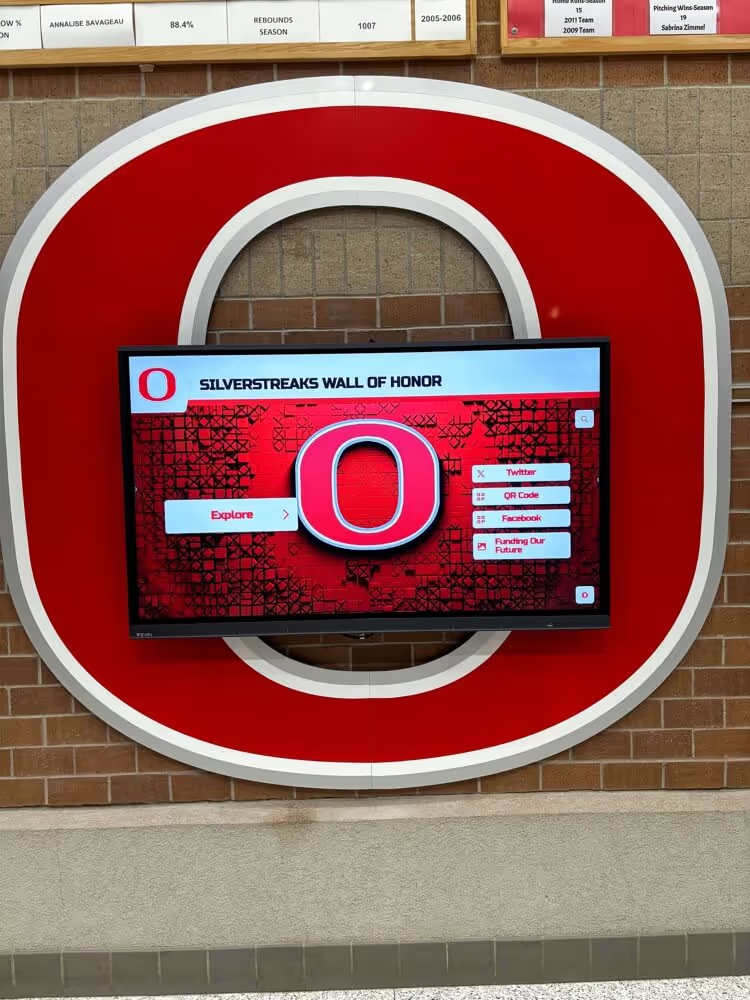
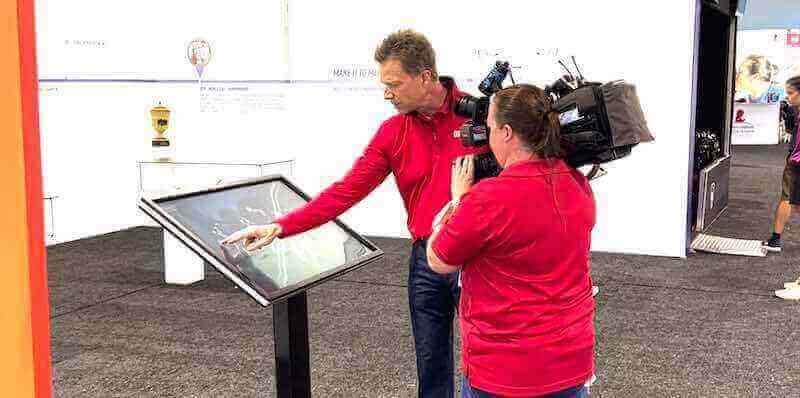
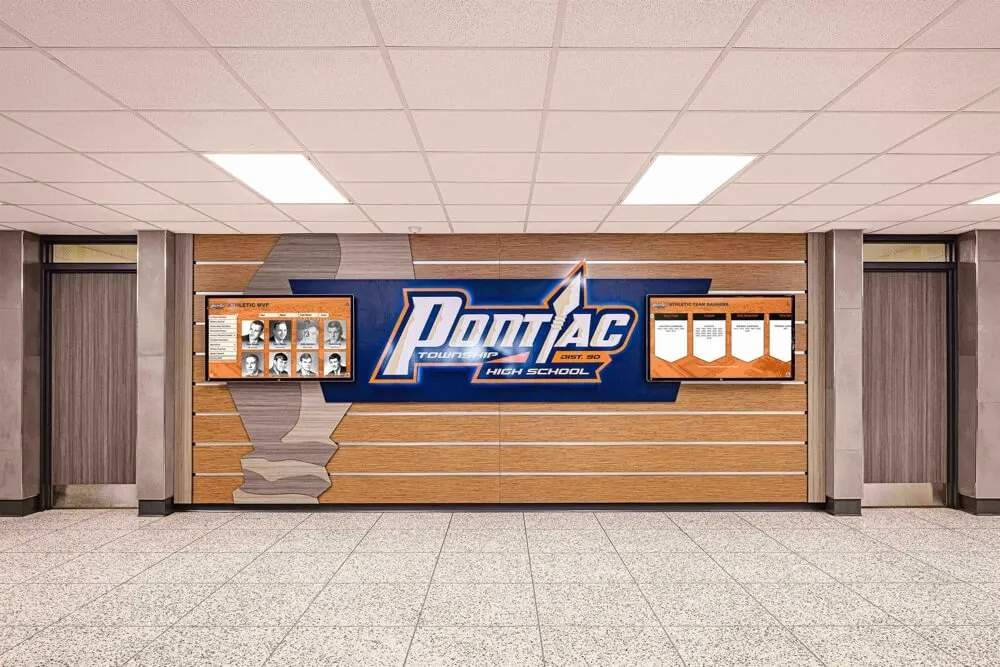
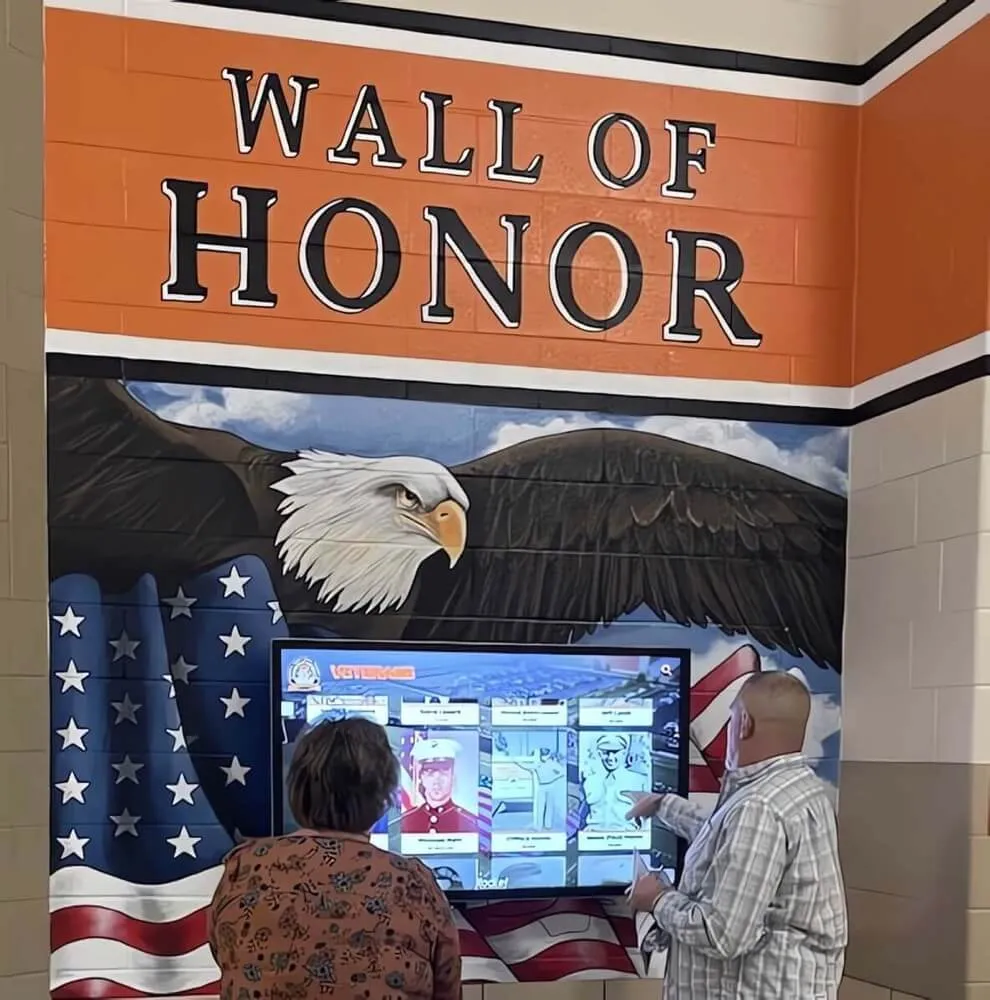
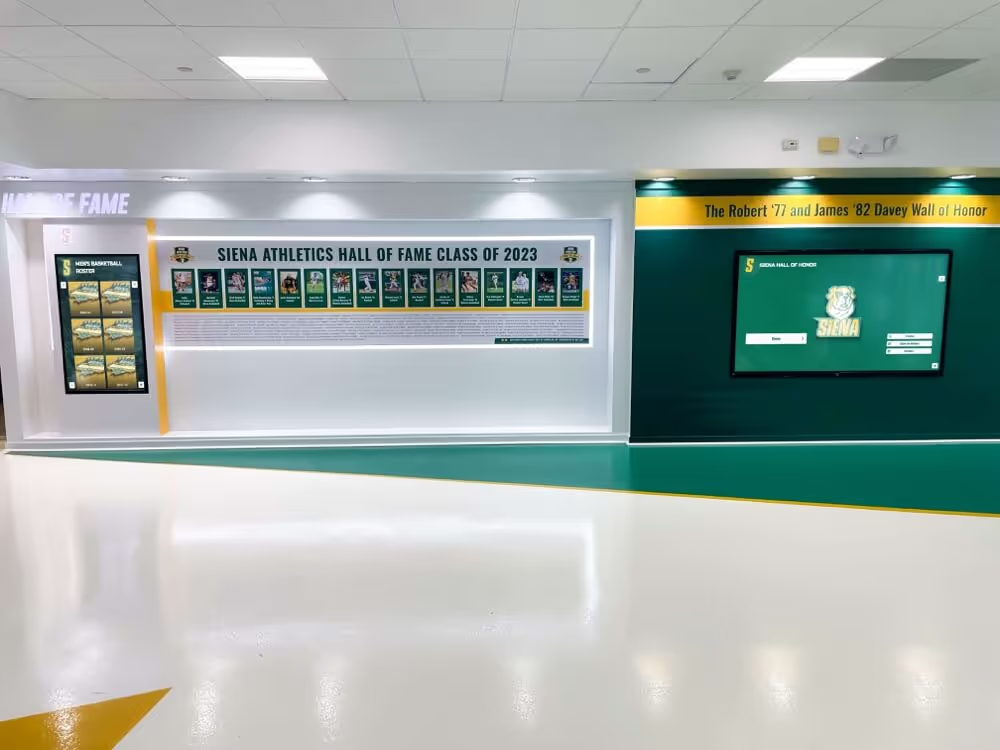
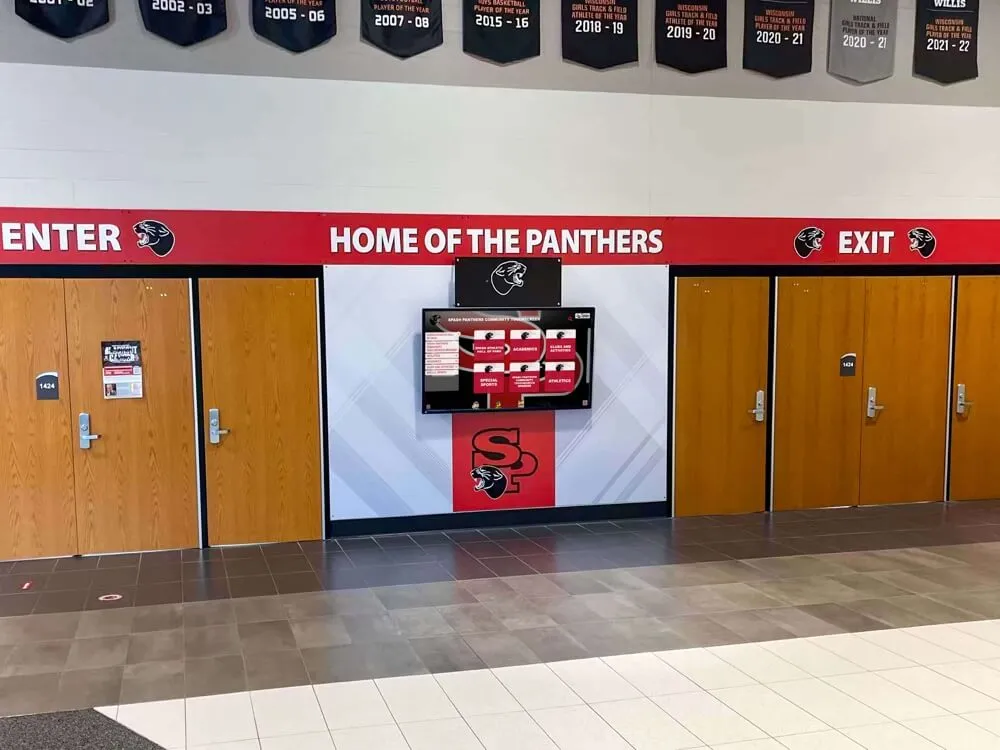
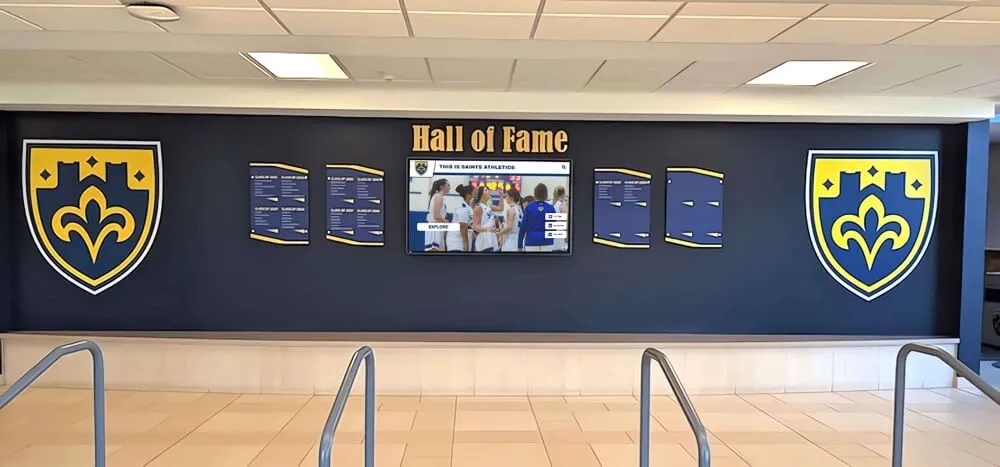
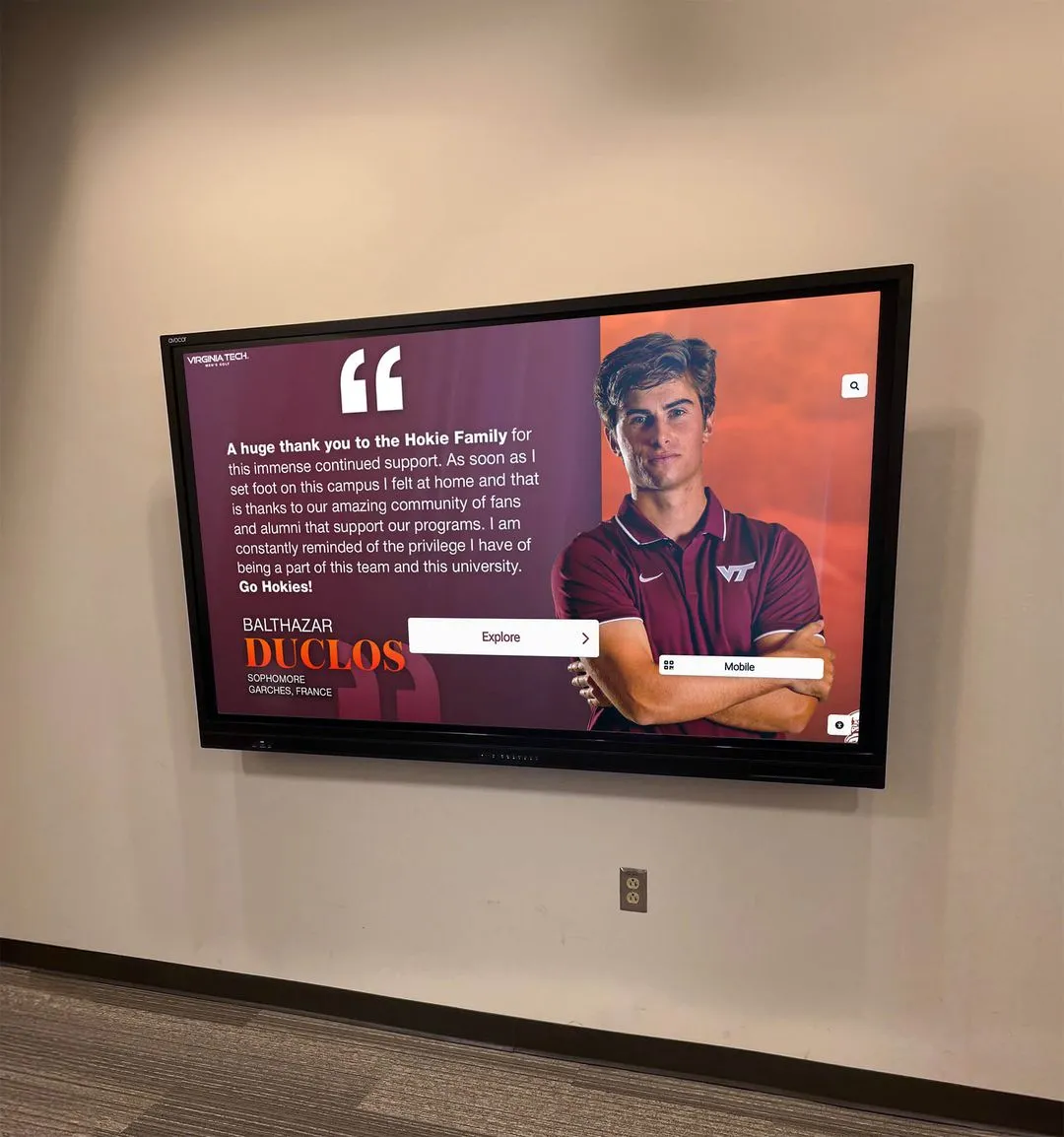
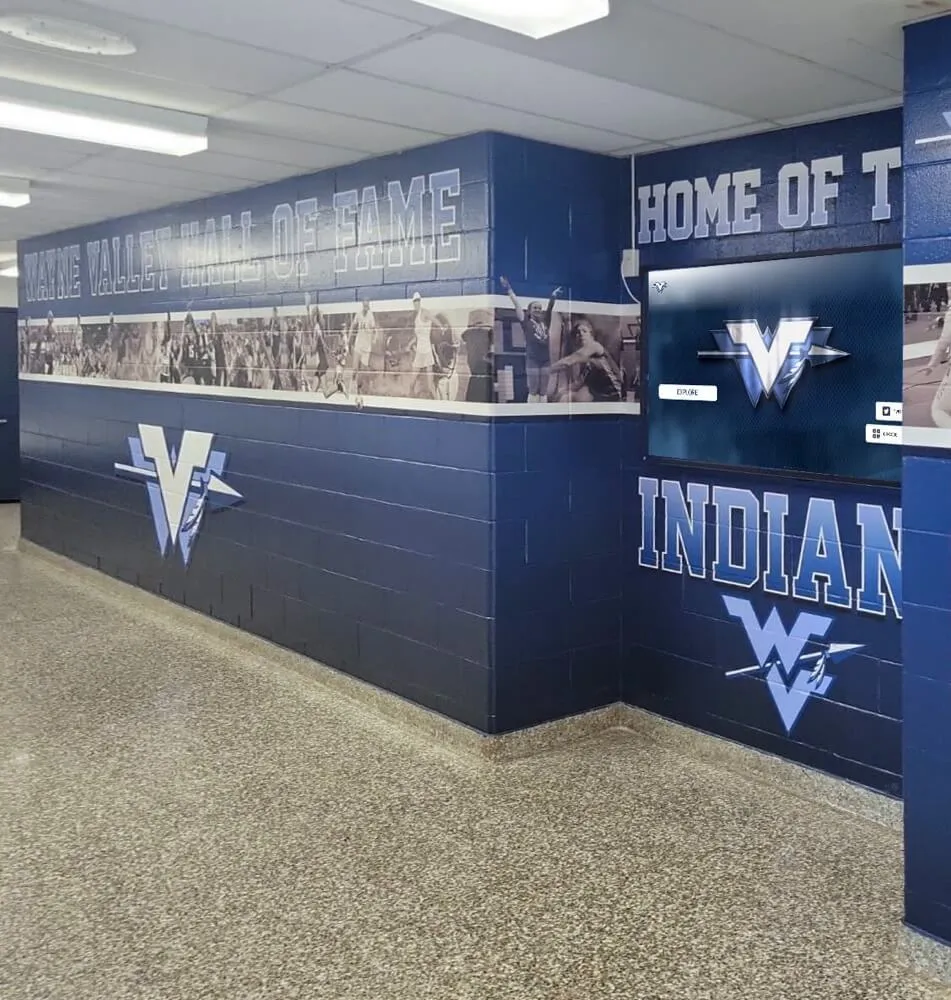
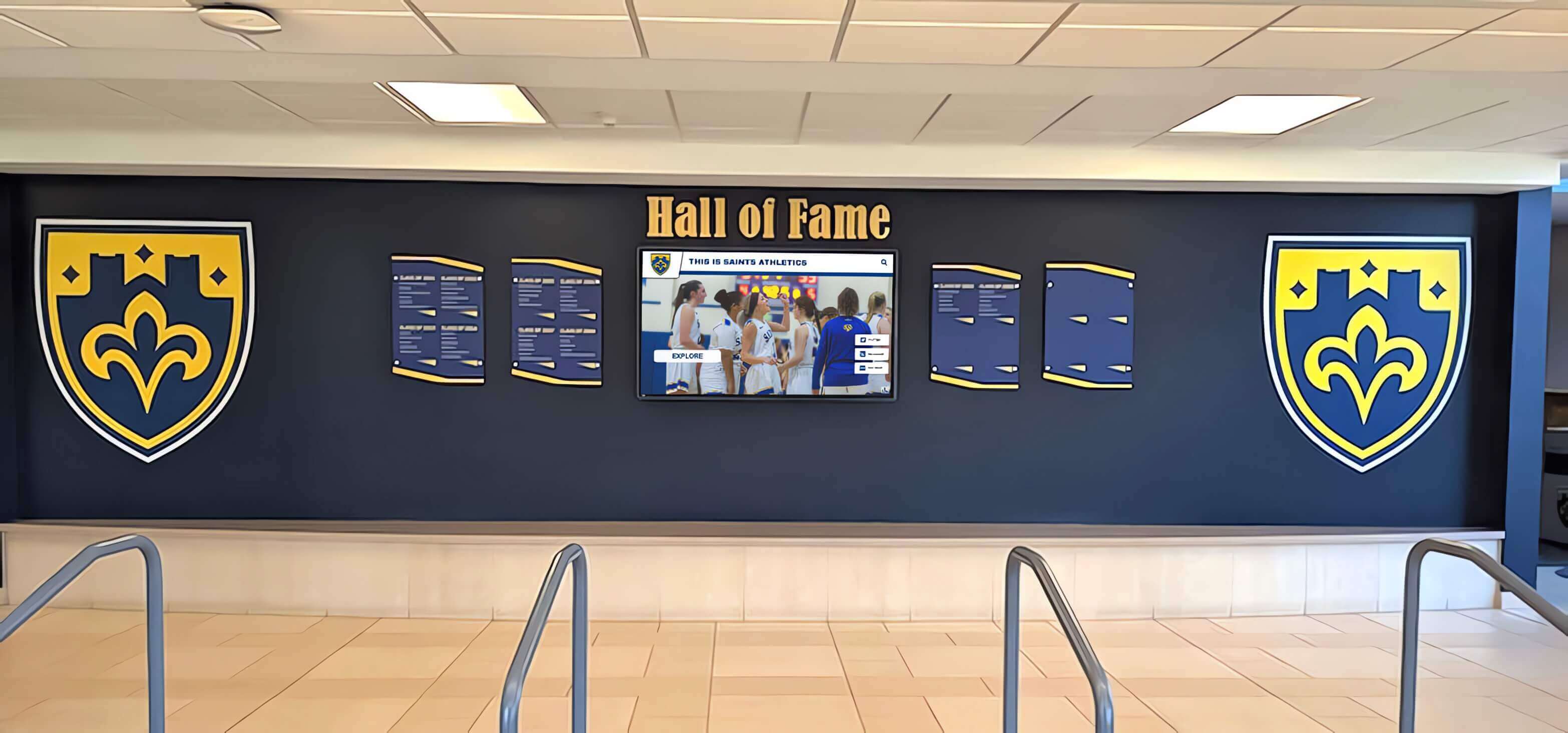
Rocket Alumni Solutions builds the interactive touchscreen displays and digital recognition systems that bring this infrastructure to life in school hallways, gymnasiums, and lobby spaces. Their platforms allow schools to manage athlete profiles, display school records in real time, feature hall of fame inductees, and create the kind of visual recognition environment that makes pep rally recognition moments feel like the culmination of something rather than an isolated announcement.
Schools that connect pep rally culture to a living digital hall of fame system see the difference in how students talk about their school, how alumni engage when they return, and how the institution’s history becomes a source of pride rather than just a past.
Conclusion
The best pep rally games for high school do three things simultaneously: they energize the student body in the moment, they give all students a role in the competition, and they connect the immediate experience to something larger than the current school year. Relay races, trivia tied to hall of fame history, tug-of-war, lip sync battles, and athletes-versus-students challenges all serve this function when executed with intentional structure and good MC energy.
The schools that consistently run memorable pep rallies are the schools that treat spirit culture as a system rather than a series of one-off events. They document what happens, display what matters, recognize what is earned, and connect each generation of students to the history of the school they are part of. That system — and the digital hall of fame infrastructure that powers it — is what turns a gym full of students into a community with a shared identity worth celebrating.
Ready to build the recognition infrastructure that makes your pep rallies — and your broader school culture — genuinely unforgettable? Explore how Rocket Alumni Solutions can help your school create the digital hall of fame displays that bring athletic history, student achievement, and school spirit to life every day.