



Key Takeaways
Discover how to create comprehensive National Honor Society recognition programs using modern digital displays. Learn selection criteria, implementation strategies, and best practices for celebrating NHS members and inspiring future scholars.
Understanding National Honor Society and Its Four Pillars
Before implementing recognition programs, schools must understand what NHS membership represents and why comprehensive celebration matters for students, educators, and communities.
The History and Mission of National Honor Society
The National Association of Secondary School Principals established the National Honor Society in 1921 to create a formal organization recognizing students who demonstrate excellence beyond the classroom. Unlike purely academic honors focusing exclusively on grades and test scores, NHS was founded on the principle that distinguished students embody multiple qualities essential for life success.
The organization began with a handful of chapters and has grown exponentially. Today, more than one million students participate in NHS, NJHS (National Junior Honor Society), and international chapters. This extensive reach makes NHS recognition one of the most widely recognized and respected student honors in American education.
NHS Mission and Purpose
The National Honor Society exists to recognize students who demonstrate excellence in four foundational areas, often called the Four Pillars of NHS. The organization aims to create enthusiasm for scholarship, stimulate a desire to render service, promote leadership, and develop character in students across secondary schools.
Beyond recognition purposes, NHS chapters function as active service organizations. Members collectively complete thousands of service hours annually, lead school initiatives, tutor peers, and engage in community improvement projects. Recognition programs should celebrate not just selection into NHS but also ongoing contributions members make throughout their tenure.

The Four Pillars: Scholarship, Service, Leadership, and Character
NHS selection criteria encompass four distinct but interconnected areas of student excellence. Understanding each pillar helps schools create recognition programs honoring the full scope of NHS achievement.
Scholarship: Academic Excellence as Foundation
Scholarship represents the foundational pillar upon which NHS membership builds. Students must first meet rigorous academic standards before consideration for other criteria. National standards require cumulative GPA of 3.0 on a 4.0 scale (equivalent to 85% or higher), though individual chapters may establish more stringent requirements.
This academic threshold ensures NHS members demonstrate consistent scholarly achievement across subject areas rather than excellence in isolated courses. However, scholarship requirements intentionally remain achievable for students demonstrating overall academic commitment rather than restricting membership exclusively to valedictorian-level performance.
Schools should recognize that while GPA provides the entry point for NHS consideration, scholarship extends beyond numerical averages to encompass intellectual curiosity, love of learning, academic integrity, and commitment to educational excellence. Recognition content highlighting NHS scholarship should emphasize these broader dimensions of academic achievement.
Service: Contribution to School and Community
Service distinguishes NHS from purely academic honor societies by requiring demonstrated commitment to helping others without expectation of compensation or recognition. NHS members must show voluntary contributions benefiting school communities, local neighborhoods, or broader society.
Service takes countless forms including tutoring younger students or struggling classmates, volunteering with community organizations, participating in school service projects, supporting charitable initiatives, organizing drives for local needs, contributing time to religious or civic organizations, and assisting teachers or administrators with school operations.
Quality matters more than quantity in service evaluation. Faculty councils assess whether students engage in meaningful service demonstrating genuine commitment rather than simply accumulating hours to meet requirements. Effective student recognition programs celebrate specific service accomplishments providing concrete examples of member contributions.
Leadership: Positive Influence and Initiative
NHS leadership criteria recognize students who positively influence peers, take initiative in school and community settings, and demonstrate responsibility beyond minimum requirements. Leadership manifests through both formal positions and informal influence.
Students demonstrate leadership through elected student government positions, team captains in athletics or activities, club officers or founders, project coordinators for service initiatives, peer mentors or tutors, and informal influence encouraging positive behaviors among classmates. The leadership pillar also values followership—the capacity to contribute effectively to group efforts even when not in charge.
Faculty councils evaluate whether students exercise positive, constructive influence and whether peers, teachers, and community members respect their character. Leadership recognition should highlight specific examples demonstrating how NHS members lead through action rather than title alone.
Character: The Intangible Foundation
Character represents perhaps the most important yet hardest to quantify NHS criterion. This pillar encompasses integrity, respect, responsibility, trustworthiness, and ethical behavior demonstrated consistently across multiple contexts over extended periods.
Students showing strong character maintain academic honesty, treat peers and adults with respect regardless of differences, accept responsibility for actions and decisions, demonstrate reliability in commitments and obligations, make ethical choices when faced with difficult situations, and show compassion and empathy toward others.
Character evaluation relies heavily on recommendations from teachers, administrators, and community members who observe student behavior across diverse situations. Schools should ensure recognition programs acknowledge that NHS selection reflects not just achievement but fundamental personal qualities distinguishing truly exceptional young people.

NHS Selection Process and Chapter Requirements
Understanding the formal selection process helps schools create recognition programs appropriately honoring the rigorous standards NHS members meet.
National Standards and Local Chapter Variations
While the National Association of Secondary School Principals establishes baseline standards, individual chapters maintain significant autonomy in specific selection criteria and procedures.
National Baseline Requirements
All NHS chapters must adhere to minimum national standards including cumulative GPA of 3.0 or equivalent (85% minimum), enrollment in school for at least one semester prior to selection, demonstration of service, leadership, and character meeting chapter-defined standards, and completion of formal application or information form documenting qualifications.
Chapter Discretion and Higher Standards
Individual schools frequently establish more stringent requirements than national minimums. Many chapters require GPA of 3.5 or higher, reflecting school-specific expectations and ensuring membership carries particular prestige within local contexts.
Chapters also define specific service hour requirements (commonly 10-20 hours minimum for initial selection), leadership experience expectations, and character evaluation processes. These variations mean NHS membership difficulty and selectivity vary across schools, though all chapters maintain high standards worthy of comprehensive recognition.
Faculty Council Selection Process
NHS chapters must establish Faculty Councils—typically consisting of five members appointed by principals—responsible for reviewing candidate qualifications and making selection decisions. This formal review process distinguishes NHS from automatic honor roll programs based solely on GPA thresholds.
Multi-Stage Selection Procedure
Selection typically follows systematic steps beginning with academic screening where students meeting GPA requirements receive notification of eligibility and invitation to complete candidacy forms. Next comes information gathering as candidates submit forms documenting service activities, leadership positions, and character demonstrations, often including recommendation letters from teachers or community members.
Following this, Faculty Council review occurs as councils evaluate complete applications assessing whether candidates meet all four pillar requirements. Schools conducting student and parent interviews for borderline candidates or to clarify information add another evaluation layer. Finally, formal selection and induction takes place as councils notify accepted students and schedule induction ceremonies welcoming new members.
This comprehensive process ensures selection reflects genuine achievement across multiple dimensions rather than automatic inclusion based on grades alone. Recognition programs should communicate that NHS membership represents validation by trusted educators who carefully reviewed qualifications before extending invitations.

Maintaining Membership Standards
NHS membership requires ongoing excellence rather than one-time achievement. Students must maintain academic standards, continue service participation, uphold character expectations, and remain in good disciplinary standing. Members failing to meet continued standards may face dismissal from NHS following due process procedures.
Recognition programs should celebrate not just initial selection but sustained excellence throughout members’ tenure. Highlighting graduating seniors who maintained NHS membership throughout high school emphasizes that true distinction requires consistency rather than brief achievement.
Creating Comprehensive NHS Recognition Content
Recognition value depends on content quality. The best NHS programs tell complete, engaging stories rather than presenting minimal information.
Essential Profile Elements for NHS Members
Comprehensive member profiles should include specific information creating complete pictures of excellence across all four pillars.
Core Membership Information
Document fundamental details establishing recognition credibility including student name and graduation year, grade level when inducted into NHS, cumulative GPA at time of selection, year of NHS induction, leadership positions held within NHS chapter, and notation of any special NHS honors received.
Four Pillar Achievement Documentation
Effective profiles provide concrete examples illustrating how members demonstrate each NHS pillar. For scholarship, include academic achievements beyond GPA such as AP courses completed, subject-specific awards received, academic competition participation, and college admissions or scholarship offers.
Service documentation should specify organizations served and types of contribution, total service hours completed, signature service projects or initiatives, leadership within service organizations, and long-term service commitments demonstrating sustained dedication. Leadership examples include specific positions held in school or community, initiatives started or significant projects led, peer influence examples, and recognition received for leadership contributions.
Character manifestations appear through teacher testimonials about integrity and respect, examples of ethical leadership or difficult choices, peer relationships and community standing, and demonstration of NHS ideals in daily behavior.
Personal Narratives and Reflections
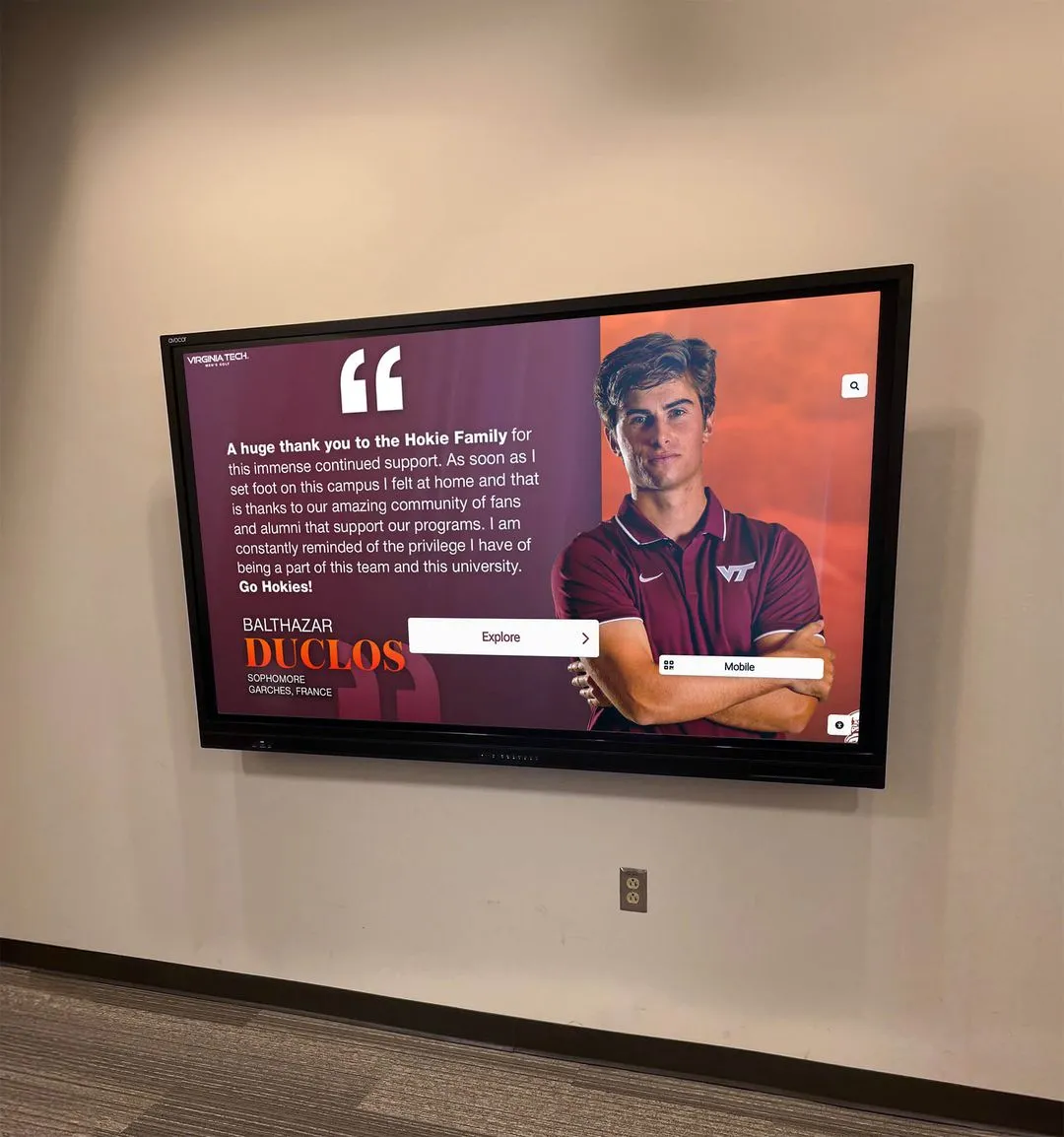
First-person content creates authentic connections including reflections on what NHS membership means personally, descriptions of most meaningful service experiences, insights about leadership lessons learned, advice for underclassmen considering NHS membership, expressions of gratitude toward teachers and mentors, and connections between NHS participation and future aspirations.
These narratives humanize exceptional achievement, making NHS members relatable rather than impossibly accomplished individuals beyond normal students’ reach. When younger students read about NHS members facing similar challenges and succeeding through consistent effort, recognition becomes powerfully motivational.
Teacher and Advisor Testimonials
Professional perspectives from educators who nominated students or serve as NHS advisors add depth through brief quotes commenting on specific pillar demonstrations, observations about sustained excellence over time, insights into character qualities and ethical behavior, reflections on positive influence on school culture, and perspectives on college readiness and future potential.
Educator testimonials validate that NHS selection reflects comprehensive evaluation by trusted professionals who observe students across diverse contexts rather than self-reported accomplishments alone.
Highlighting Chapter Activities and Collective Impact
Beyond individual member profiles, recognition programs should celebrate collective NHS chapter accomplishments demonstrating organizational impact.
Annual Service Impact Documentation
Create content documenting chapter-wide service including total service hours completed annually by all members, signature service projects undertaken by chapter, community partnerships and organizations served, funds raised for charitable causes, students tutored or mentored by NHS members, and school initiatives led or supported by chapter.
This collective impact documentation demonstrates that NHS functions as active service organization rather than simply honorary recognition. When prospective members see concrete evidence of chapter contributions, they better understand expectations and opportunities accompanying membership.
Leadership Development Programming
Recognize chapter-provided leadership development including NHS-sponsored workshops or training sessions, guest speakers addressing leadership topics, leadership positions within chapter structure, conference attendance or leadership retreats, and mentorship programs connecting NHS members with underclassmen.
Showcasing leadership programming demonstrates that NHS provides ongoing development rather than one-time recognition, adding value for participating students while illustrating chapter commitment to pillar development.
Chapter Traditions and Special Recognition
Celebrate chapter-specific traditions including annual induction ceremonies and their significance, special recognition for outstanding senior members, scholarship awards chapter provides, unique service traditions specific to your school, and connections between current members and notable alumni who were NHS members.
These traditions build continuity across member generations while creating distinctive identity differentiating your chapter from thousands of others nationwide. Schools implementing comprehensive academic excellence recognition programs find that celebrating institutional traditions strengthens program significance.
Modern Digital Recognition Solutions for NHS
While traditional certificates and displays serve recognition purposes, modern digital technology offers capabilities dramatically enhancing effectiveness and practicality of NHS recognition programs.
Advantages of Digital NHS Recognition Systems
Digital platforms provide numerous advantages over traditional approaches, particularly for schools seeking maximum engagement, inclusivity, and sustainability.
Unlimited Recognition Capacity
Digital systems eliminate physical space constraints entirely. Schools can honor every NHS member in chapter history—from current participants back through decades of excellence—without competing for limited wall space. Each student receives comprehensive profile space impossible with traditional plaques, and adding new inductees requires no additional hardware investment.
Digital platforms scale effortlessly from dozens to hundreds of NHS honorees while maintaining excellent performance regardless of content volume, ensuring recognition programs remain sustainable as chapters grow.
Rich Multimedia Storytelling
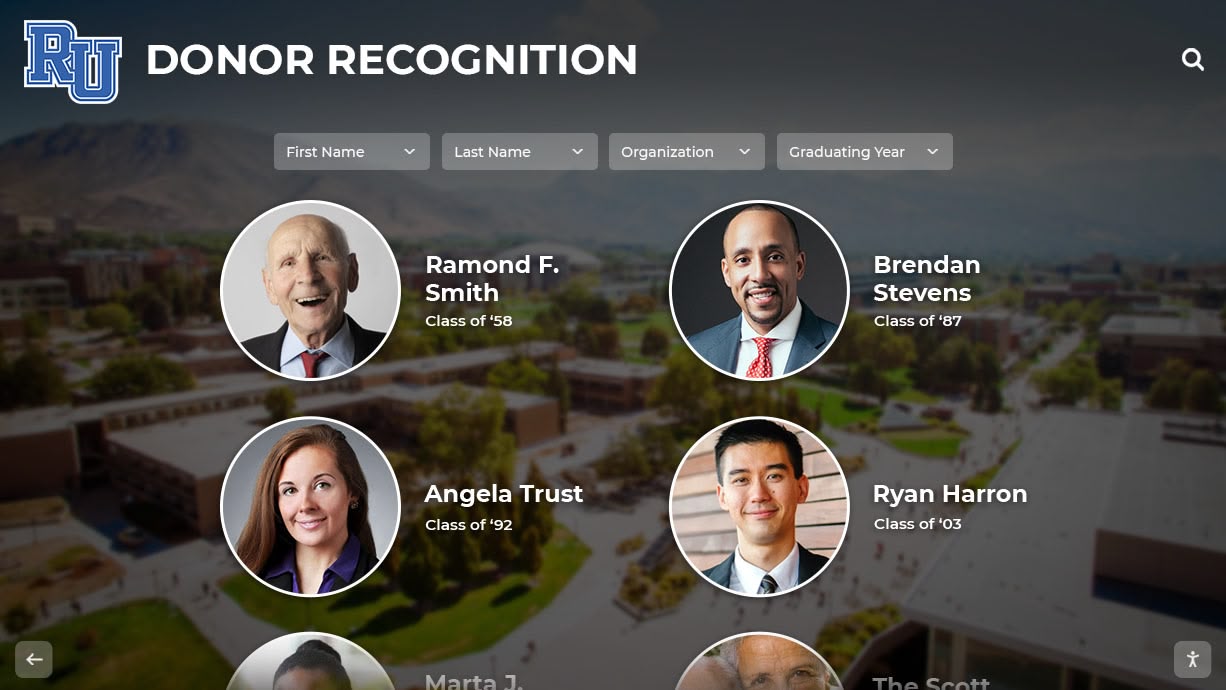
Digital platforms transform basic name listings into compelling narratives. NHS member profiles can include professional photography from induction ceremonies and service events, video interviews discussing meaningful service experiences, complete documentation of four pillar achievements, quotes reflecting on NHS experience and personal growth, advisor testimonials about character and leadership, information about college destinations and career aspirations, and alumni updates documenting continued leadership and service.
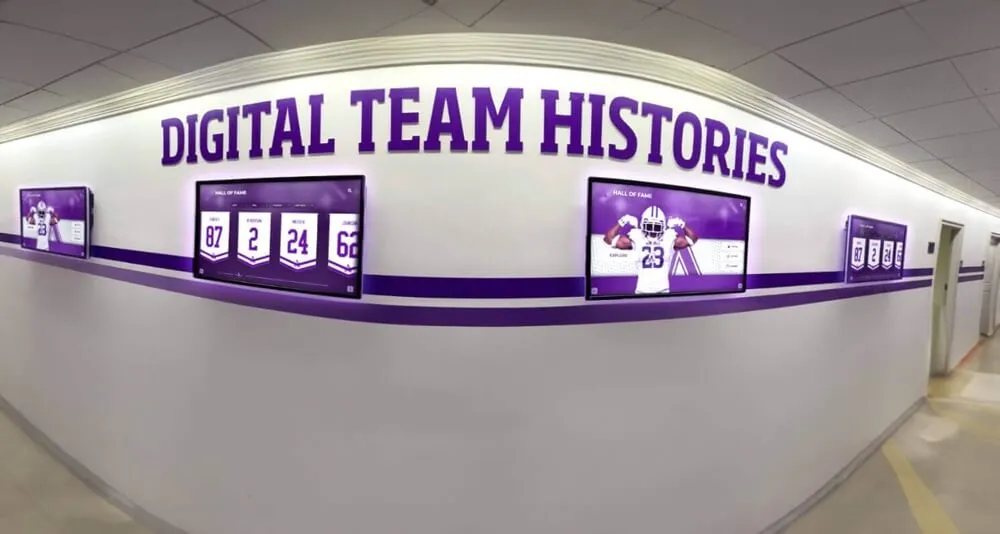
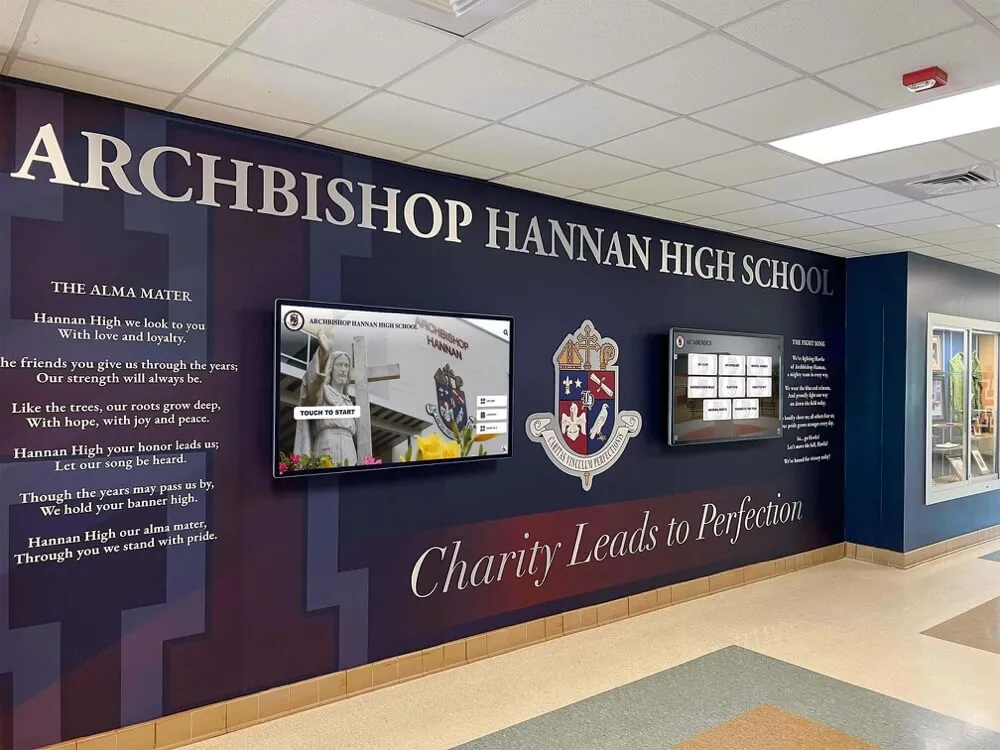
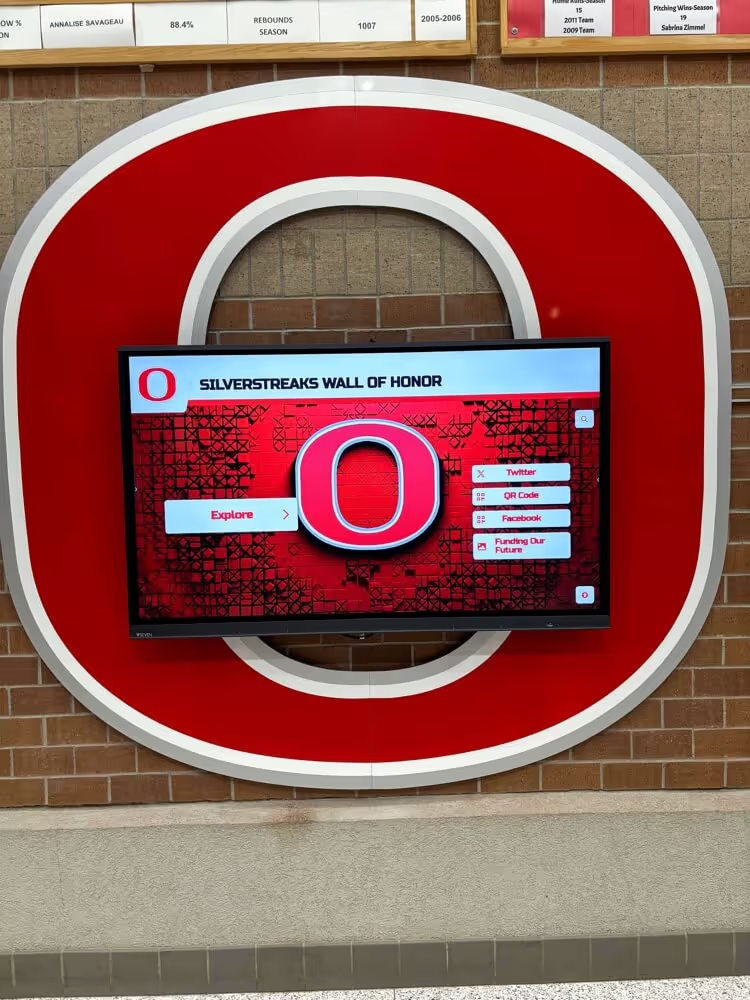
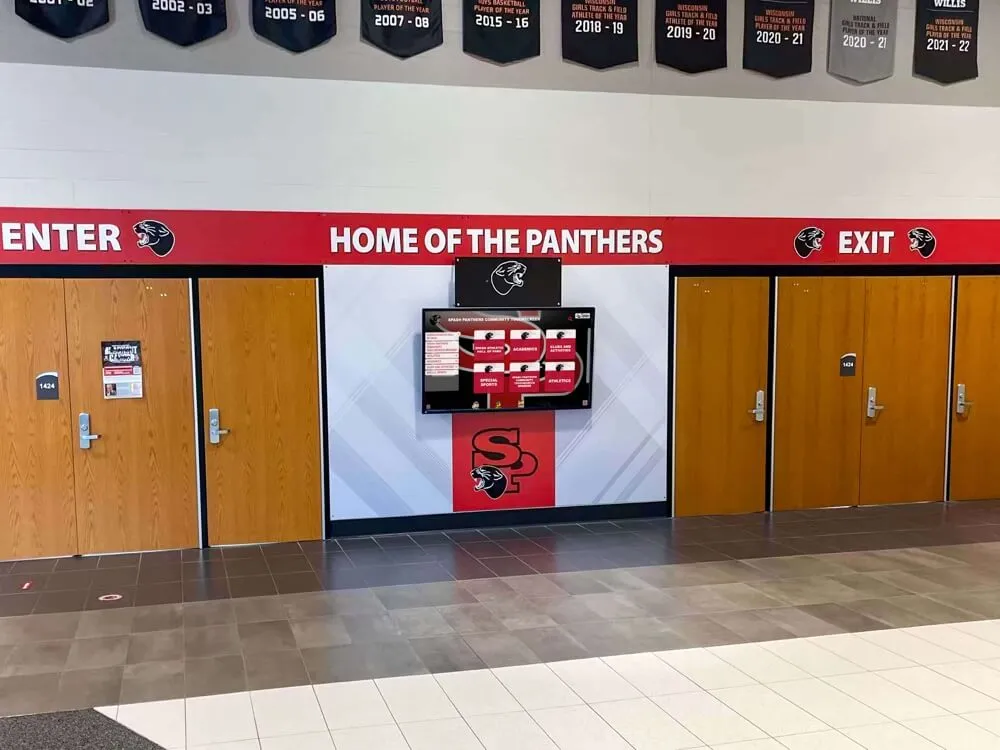
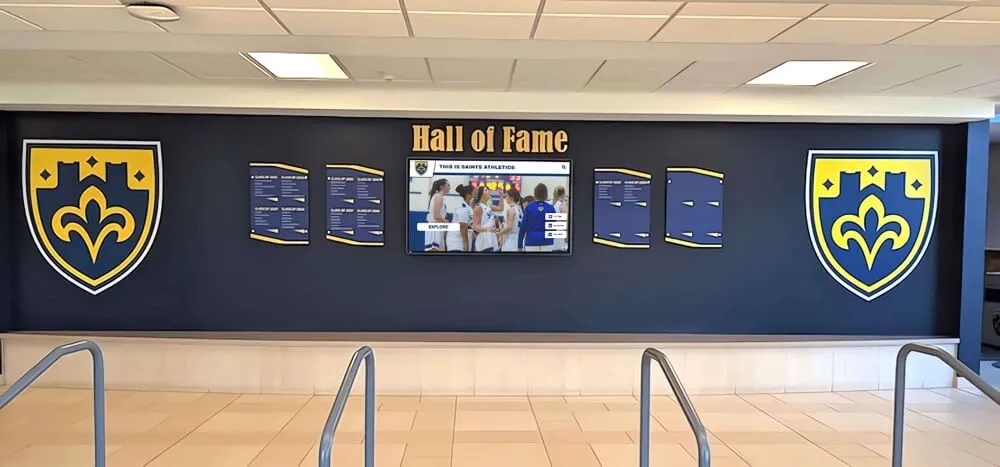
This storytelling depth creates emotional connections inspiring younger students while honoring achievements appropriately. Solutions like digital recognition walls enable schools to celebrate comprehensive excellence impossible to capture with static displays.
Interactive Exploration and Discovery
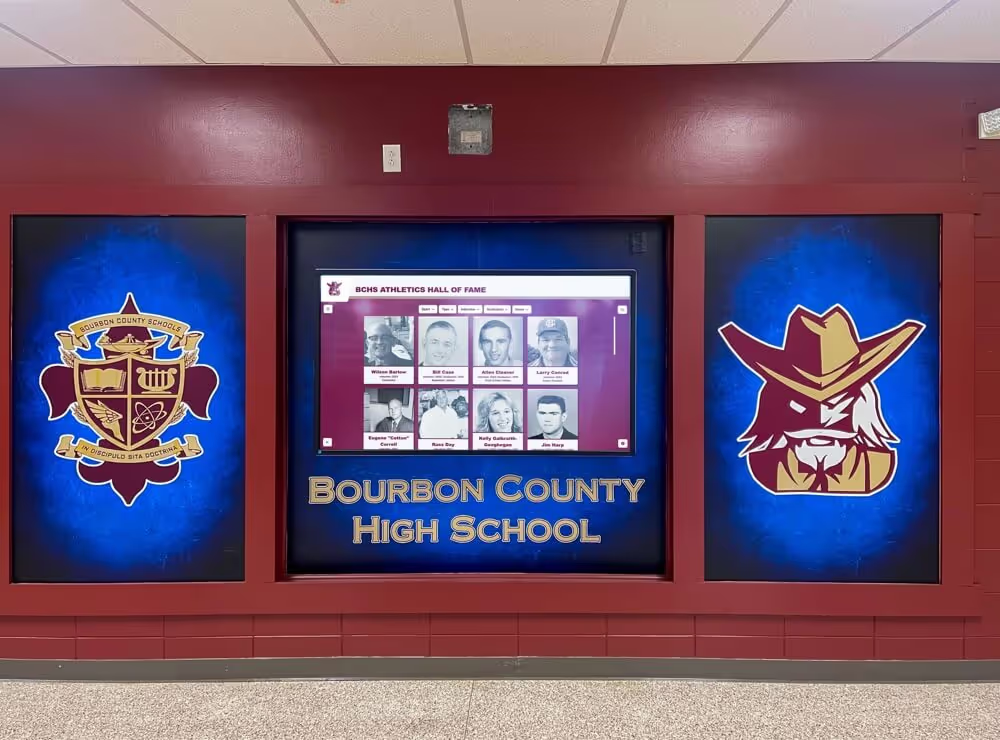
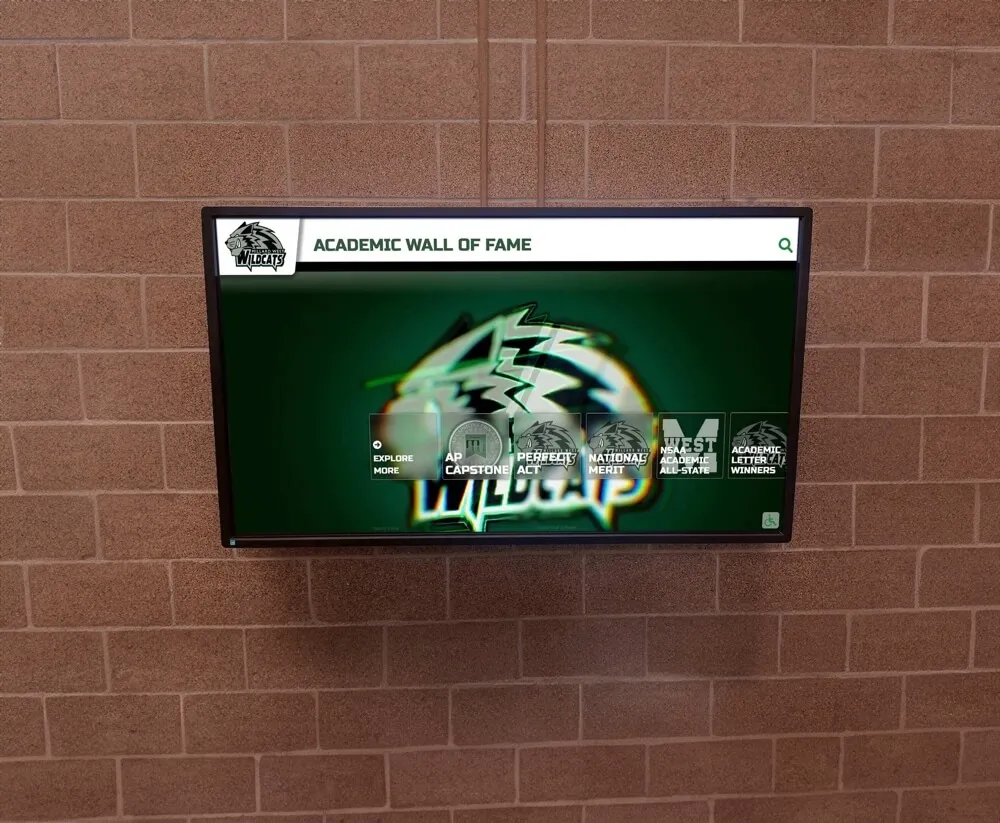
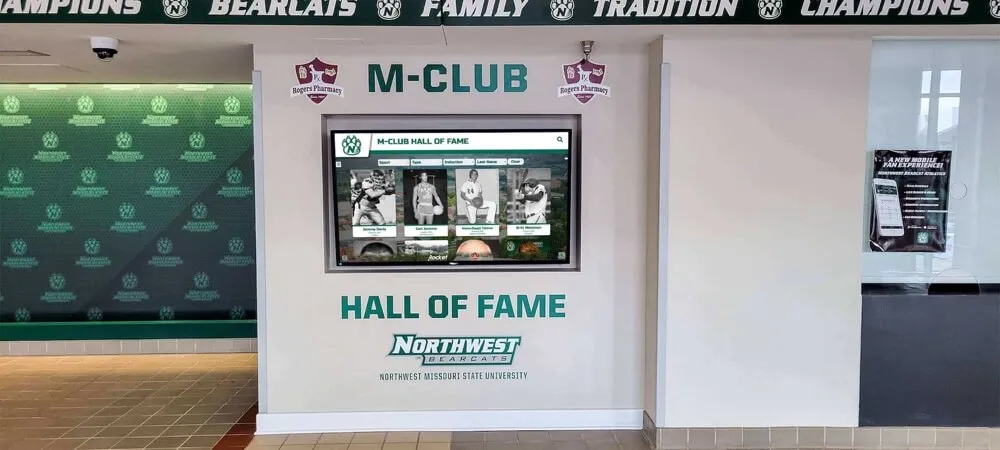
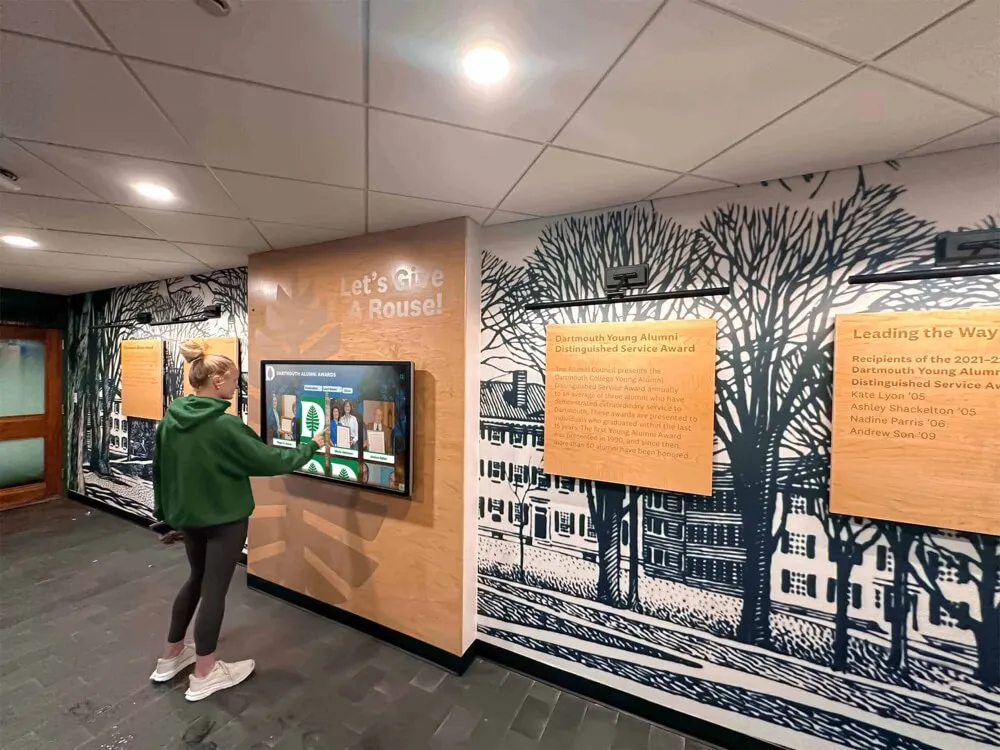
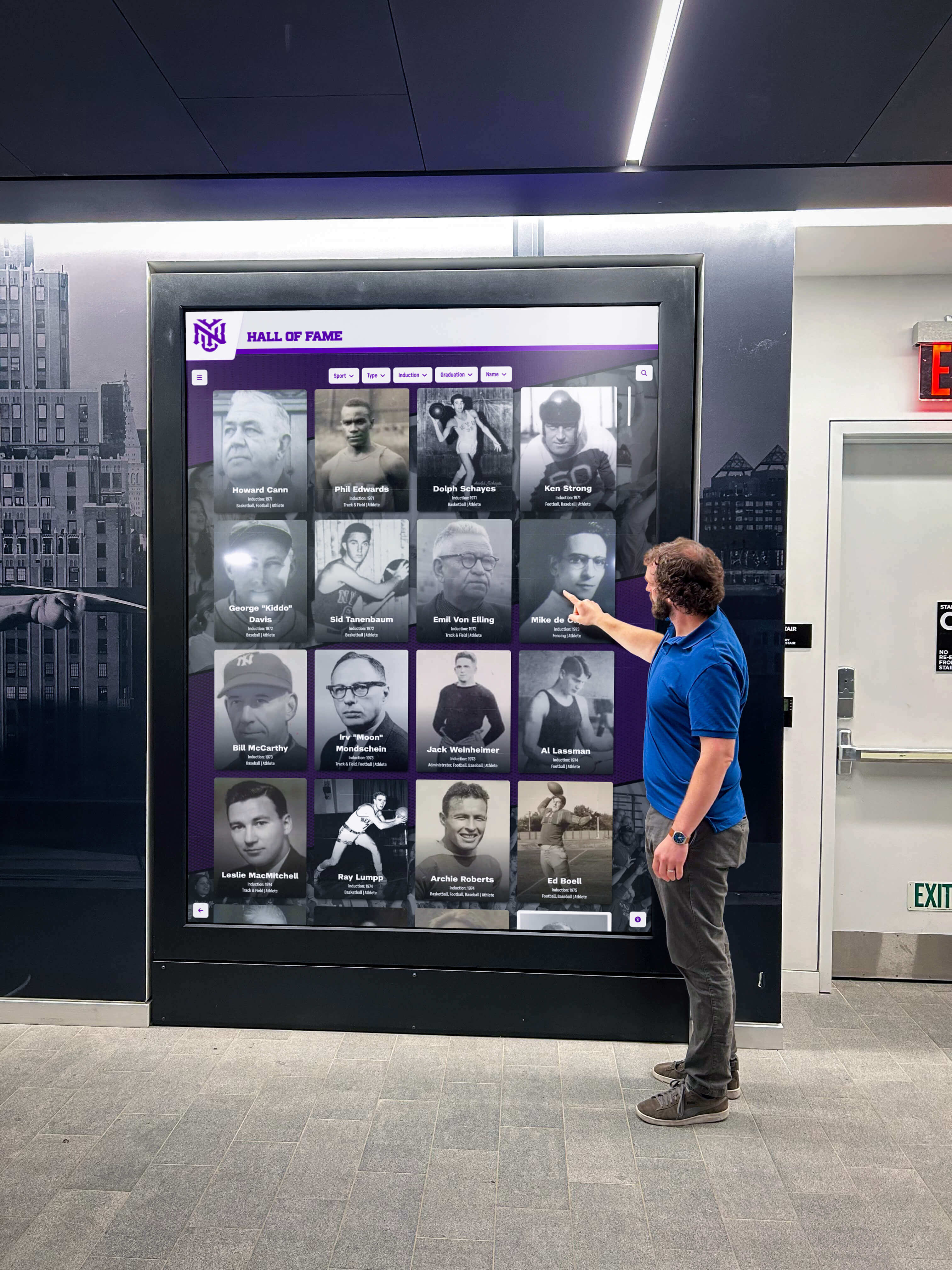
Touchscreen interfaces enable active exploration rather than passive viewing. Students, families, and visitors can search for specific members by name, browse by graduation year to explore chapter history, filter by specific service interests or leadership roles, view complete four pillar documentation for each member, and discover connections between NHS participation and college outcomes.
This interactivity increases engagement time dramatically. Students typically spend several minutes exploring well-designed digital recognition compared to brief glances at static displays, creating deeper connections with content and stronger impacts on motivation.
Real-Time Updates and Content Management
When students receive NHS induction—typically during spring ceremonies—advisors can add comprehensive profiles to digital displays immediately. Cloud-based content management systems allow updates from any internet-connected device using simple web interfaces requiring no technical expertise.
Schools can update service hour totals, add new leadership positions, document ongoing achievements, and keep content current throughout members’ tenure rather than creating static recognition reflecting only induction-moment accomplishments. This ongoing attention demonstrates sustained commitment to recognition rather than one-time acknowledgment.
Extended Reach Through Web Access
Digital recognition platforms extend beyond physical displays through responsive websites accessible from any device, mobile companion apps providing portable access, social media integration enabling easy sharing, and QR codes on physical spaces linking to expanded digital content.
This accessibility multiplies engagement exponentially beyond in-person visitors, allowing NHS members worldwide to view recognition and share with families, prospective students to explore chapter excellence before campus visits, and colleges to verify NHS participation referenced in applications. For geographically dispersed communities, expanded reach proves particularly valuable in maximizing recognition impact.
Platform Requirements for Educational Recognition
Quality digital recognition systems designed for educational environments should provide several essential capabilities.
User-Friendly Content Management
NHS advisors—typically teachers managing recognition alongside full instructional responsibilities—need intuitive content management requiring no technical expertise. Effective platforms offer simple web-based interfaces for adding and updating members, template-driven profile creation ensuring consistency, drag-and-drop media uploading, preview functionality before publishing, and role-based permissions allowing appropriate access.
Comprehensive Search and Filtering
Rich content becomes more valuable when easily discoverable. Recognition systems should provide text search by student name, filtering by graduation year or induction year, browsing by service area or leadership role, connection to broader school achievement databases, and saved searches for frequently accessed content.
Mobile-Responsive Design
Recognition content must function flawlessly across desktop computers, tablets, smartphones, and interactive touchscreen displays. Responsive design automatically adjusts layouts for optimal viewing regardless of device type, ensuring accessibility for all audiences.
Analytics and Engagement Tracking
Understanding how audiences interact with recognition informs continuous improvement. Platforms should track most viewed profiles, search patterns and popular filters, time spent exploring content, popular access times and locations, and content generating most engagement.
These insights help NHS advisors understand what resonates with audiences, identify gaps requiring attention, and demonstrate recognition program value to administrators allocating resources.
Platforms specifically designed for school recognition like those offered by Rocket Alumni Solutions provide particular advantages through purpose-built features addressing educational needs, extensive implementation experience across diverse institutions, ongoing support understanding school constraints, and regular platform updates incorporating new capabilities based on user feedback.
Implementing Effective NHS Recognition Programs
Successful NHS recognition requires systematic approaches ensuring programs serve multiple stakeholder needs while remaining sustainable with realistic resources.
Annual Induction and Recognition Cycles
NHS chapters follow predictable annual cycles schools should leverage for recognition planning.
Fall Selection Timeline
Many chapters conduct selection in fall, inviting eligible students to apply and completing Faculty Council review in time for December or January induction ceremonies. This timing allows recognition of new members during first semester while providing time for thorough application review.
Spring Selection Timeline
Alternatively, some chapters wait until spring to conduct selection, gathering more complete academic records and service documentation before making decisions. Spring induction ceremonies often coincide with year-end academic awards programs, creating comprehensive celebrations of student excellence. This approach aligns well with end-of-year academic recognition programs many schools already conduct.
Recognition Implementation Phases
Regardless of selection timing, recognition implementation follows systematic phases including immediate congratulation communications to students and families upon selection, rapid profile development gathering comprehensive information and media, timely display updates adding new inductees to recognition platforms, formal induction ceremonies celebrating new members with broader community, ongoing documentation of member activities and achievements throughout tenure, and senior recognition highlighting graduating members who completed full NHS participation.
Integration with College Application Support
NHS membership carries weight in college admissions, scholarship applications, and competitive program selection. Recognition programs should connect with broader college counseling initiatives.
Recognition as Application Strength
Help NHS members understand how to present membership effectively including proper placement on applications and résumés, specific achievement documentation rather than mere membership listing, connection to broader narrative about character and service, utilization in scholarship applications emphasizing merit and service, and preparation for interviews discussing NHS experiences meaningfully.
Guidance counselors should proactively discuss NHS membership’s application value, ensuring students capitalize fully on recognition they earned through sustained excellence.
Documented Achievement for Verification
Colleges increasingly verify student-reported achievements. Comprehensive digital recognition creates authoritative documentation counselors can reference when completing school reports or responding to verification requests. This documentation benefits both students and counseling offices by providing easily accessible, detailed information about NHS participation.
Strategic Physical Display Placement
For schools implementing physical touchscreen displays as part of NHS recognition, location dramatically affects visibility and engagement.
High-Impact Placement Locations
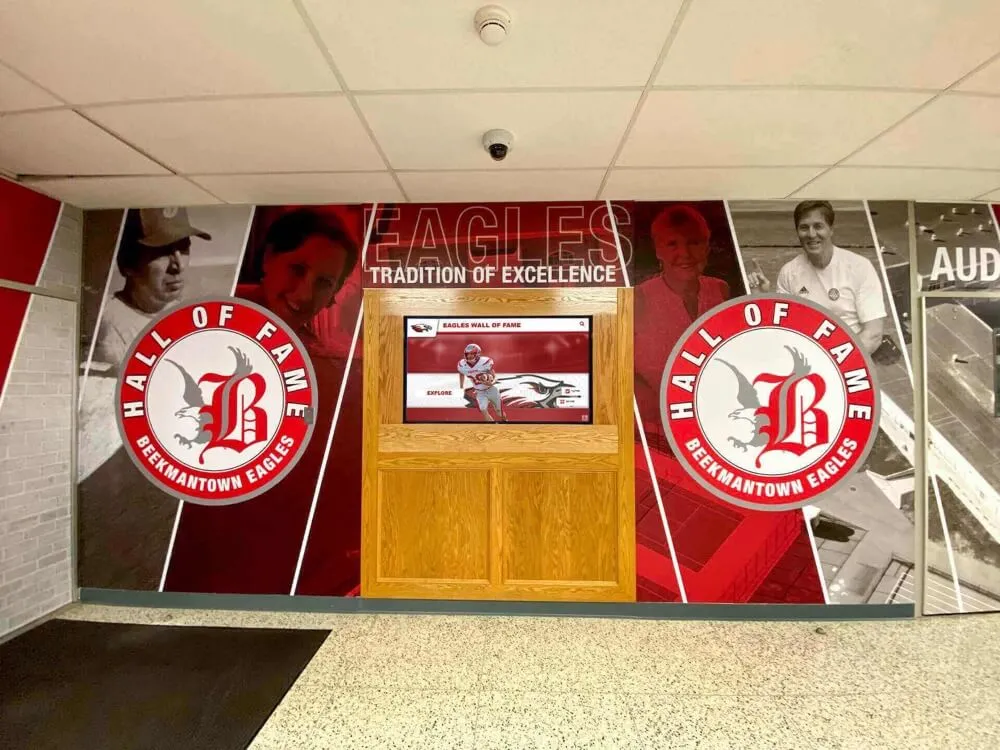
Consider positioning displays in main building entrances where all students pass regularly, guidance or college counseling offices where college-bound students spend time, media centers or libraries supporting academic pursuits, student centers or cafeterias with high student traffic, and hallways connecting to academic buildings emphasizing connection between excellence and scholarship.
Environmental and Technical Considerations
Effective placement requires attention to lighting conditions avoiding screen glare, reliable electrical power for continuous operation, stable network connectivity supporting content updates, appropriate mounting security protecting equipment investment, and ADA-compliant positioning enabling comfortable interaction for all users.
Understanding best practices for academic recognition displays helps institutions make informed placement decisions maximizing recognition effectiveness.
Building NHS Recognition into School Culture
The most effective NHS recognition programs extend beyond celebrating selected members to building cultures valuing scholarship, service, leadership, and character for all students.
Creating Aspirational Pathways for Underclassmen
Visible NHS recognition creates targets younger students can pursue throughout middle school and high school careers.
Transparency About Requirements
Make NHS selection criteria widely known through school handbooks and websites clearly explaining requirements, information sessions for freshmen and sophomores outlining pathways to eligibility, faculty advisor availability for questions about qualification, display of rubrics and evaluation criteria used by Faculty Councils, and success stories from current members describing their journeys to NHS membership.
Transparency demystifies selection processes, helping all students understand specific actions making NHS membership achievable rather than perceiving it as mysterious honor bestowed on lucky few.
Pre-NHS Programming Supporting Development
Consider programming helping younger students develop NHS-valued qualities including service opportunities specifically designed for underclassmen, leadership skill development workshops open to all students, character education programming integrated into advisory periods, mentorship programs pairing NHS members with younger students, and recognition of progress toward NHS standards even before formal selection.
These initiatives position NHS as destination point in multi-year development journey rather than sudden honor students either receive or miss without preparation opportunities.
Celebrating Ongoing Member Contributions
NHS recognition should extend beyond initial induction to celebrate continued member excellence throughout tenure.
Regular Member Spotlights
Feature individual NHS members periodically through school announcements highlighting specific service projects, social media spotlights showcasing member leadership, newsletter features profiling member accomplishments, display rotations ensuring all members receive featured visibility, and special recognition for exceptional service contributions or leadership demonstrations.
Regular spotlights keep NHS visible throughout school years rather than confining recognition to single induction moment followed by obscurity until graduation.
Chapter Achievement Celebrations
Recognize collective NHS chapter accomplishments including annual service impact reports documenting total contributions, celebration events marking significant chapter milestones, recognition when chapters receive state or national NHS honors, documentation of innovative service projects or initiatives, and traditions creating distinctive chapter identity across member generations.
Celebrating collective achievements emphasizes that NHS functions as active organization making tangible differences rather than merely honorary title on college applications. Schools implementing comprehensive student leadership recognition programs find that documenting ongoing contributions maintains engagement and motivation.
Connecting NHS Alumni Across Generations
NHS recognition programs provide natural opportunities for building alumni connections demonstrating that excellence and service extend beyond high school years.
Alumni Updates and Success Stories
Track and celebrate NHS alumni accomplishments including college academic honors and leadership positions, career achievements and community leadership, continued service and volunteer engagement, notable distinctions or recognitions received, and reflections on how NHS participation influenced life paths.
These alumni connections demonstrate long-term value of NHS participation while providing inspiration and role models for current students. When sophomores see how NHS members from previous generations leveraged their experiences into meaningful college and career success, they gain concrete understanding of why pursuing NHS membership matters beyond résumé credentials.
Alumni Mentorship Opportunities
Facilitate connections between current NHS members and alumni including career mentorship programs pairing members with professionals in fields of interest, college application guidance from recent graduates navigating admissions successfully, networking opportunities at alumni events, scholarship programs funded by NHS alumni, and speaking engagements where alumni share experiences and insights.
These structured connections benefit both current students gaining valuable guidance and alumni maintaining meaningful relationships with schools. Many schools find that alumni recognition and engagement programs create sustained relationships generating increased support and involvement over time.
Measuring Recognition Program Impact
Data-informed management ensures NHS recognition programs continuously improve based on actual outcomes rather than assumptions.
Quantitative Success Metrics
Monitor objective measures demonstrating program reach and impact including number of students inducted annually and cumulative chapter size, percentage of eligible students completing applications, selection rates among applicants, engagement analytics for digital displays showing usage patterns, website visits and profile views for web-accessible recognition, and social media reach and sharing of recognition content.
Trend Analysis Over Time
Track changes across years identifying whether NHS interest and application rates increase following recognition program implementation, engagement with recognition content trends upward or requires attention, recognition program influences measurable outcomes like service hour totals or leadership participation, and patterns emerge suggesting program refinements needed.
Qualitative Impact Assessment
Complement quantitative metrics with insights about program effects including student surveys about NHS recognition awareness and motivational impact, teacher feedback about program influence on school culture and student aspirations, family satisfaction with recognition experience and communication, NHS member reflections on meaning of recognition received, and anecdotal examples of students inspired by recognition to pursue excellence and service.
Stakeholder Feedback Collection
Systematically gather input through annual surveys of NHS members about recognition experience, focus groups with underclassmen exploring awareness and aspirations, interviews with faculty advisors about program functionality and effectiveness, feedback from families attending induction ceremonies or engaging with recognition, and periodic community surveys about recognition visibility and impact.
This comprehensive assessment ensures programs remain responsive to stakeholder needs while demonstrating accountability for resources invested in recognition initiatives.
Ensuring Program Sustainability and Excellence
NHS recognition programs require ongoing resources and attention to remain effective across years and leadership changes.
Clear Responsibility Assignment
Designate specific positions responsible for recognition program management including NHS faculty advisor overseeing all chapter activities and recognition, communications coordinator managing recognition content and updates, technical administrator maintaining digital platforms and displays, photography volunteer documenting events and capturing member images, and parent volunteers supporting logistics and event coordination.
Written documentation of roles, processes, and standards ensures institutional knowledge persists across staff transitions, preventing recognition programs from becoming dependent on single individuals whose departure threatens sustainability.
Budget Allocation and Resource Planning
Incorporate recognition costs into annual budgets rather than treating as one-time expense including digital platform subscription or licensing fees if using external solutions, hardware maintenance and eventual replacement planning for physical displays, content development resources like photography and videography, induction ceremony costs including materials and refreshments, and staff time allocated to recognition management and content creation.
Understanding that comprehensive recognition requires sustained investment helps administrators plan appropriately while demonstrating commitment to honoring student excellence through high-quality programs.
Continuous Program Improvement
Establish regular review cycles ensuring recognition evolves with institutional needs and technological capabilities including annual assessment of recognition criteria and processes, periodic evaluation of platform effectiveness and user experience, regular content audits ensuring information remains current and accurate, benchmarking against NHS best practices from other schools, and strategic planning for recognition enhancements and new capabilities.
This continuous improvement mindset ensures NHS recognition remains fresh, relevant, and effective rather than becoming stagnant programs running on autopilot without attention to changing needs or opportunities.
Conclusion: Honoring Excellence Across Four Pillars
National Honor Society recognition represents more than acknowledging good grades. It celebrates comprehensive excellence across scholarship, service, leadership, and character—qualities essential for life success and meaningful citizenship. When schools implement thoughtful recognition programs honoring NHS achievement appropriately, they create visible validation of what educational communities value, inspire younger students by showing excellence pathways, preserve institutional traditions connecting generations, strengthen college preparation and placement, and build school cultures where success extends beyond academics to encompass character development and community contribution.
Effective NHS recognition programs share common characteristics including comprehensive documentation of all four pillar achievements, compelling storytelling bringing member accomplishments to life, accessible discovery enabling audiences to engage efficiently, sustainable processes ensuring recognition continues across years, strategic integration with college counseling and student development initiatives, and continuous improvement based on stakeholder feedback.
Modern digital recognition solutions like those from Rocket Alumni Solutions provide schools with capabilities for creating engaging, accessible, and expandable NHS programs. Unlimited capacity accommodates all distinguished members without space constraints, rich multimedia tells compelling stories honoring achievements appropriately, instant updates eliminate physical modification costs and delays, remote accessibility extends engagement beyond campus visitors, and continuous expandability ensures recognition remains relevant across decades.
Beyond immediate recognition purposes, effective NHS programs create lasting benefits including inspiring excellence across multiple dimensions of student development, strengthening institutional culture emphasizing character and service alongside academics, supporting college admissions through documented achievement, preserving traditions connecting current students with distinguished alumni, and generating pride among students, families, and communities recognizing that schools develop young people of exceptional character prepared for meaningful lives.
Every NHS member deserves recognition honoring their comprehensive achievement appropriately. Every underclassman deserves inspiration from those who preceded them and succeeded through dedication to excellence. Every school deserves tools preserving its legacy while engaging contemporary audiences effectively. Modern NHS recognition programs—whether traditional, digital, or hybrid—make these aspirations achievable for schools committed to celebrating distinction across scholarship, service, leadership, and character.
Ready to create an NHS recognition program that honors your distinguished students while building culture of comprehensive excellence? Explore how digital recognition platforms designed specifically for schools make world-class recognition accessible and manageable for institutions of all sizes, ensuring your NHS members receive celebration matching the significance of their remarkable four-pillar achievements.