



Key Takeaways
Discover how schools celebrate National History Day student researchers, recognize champion projects, and build lasting recognition culture with digital displays.
Every spring, thousands of middle and high school students walk into school hallways carrying rolled-up exhibit boards, USB drives loaded with documentary footage, and rehearsed lines from historical performances. These are National History Day competitors — student researchers who have spent months digging through primary sources, wrestling with historical arguments, and learning to think like historians. For many of them, the experience is transformative. For schools, the challenge becomes: how do you celebrate these students in ways that match the seriousness of their work, and how do you ensure that champion projects receive recognition that lasts beyond a single afternoon ceremony?
This guide explores how schools across the country support National History Day participants, structure recognition for winners, and use modern digital tools to give student researchers the lasting spotlight their scholarship deserves.
What Is National History Day?
National History Day (NHD) is a year-long academic program for students in grades 6 through 12 that challenges participants to research historical topics through the lens of an annual theme. Since its founding in 1974 by historian Dr. David Van Tassel at Case Western Reserve University, NHD has grown into one of the most prestigious academic competitions in the United States, reaching hundreds of thousands of students each year through a network of affiliate programs in all fifty states, Washington D.C., and several international locations.
The heart of NHD is its emphasis on historical thinking over memorization. Students do not simply summarize historical events — they develop arguments about historical significance, analyze primary and secondary sources, and present original research conclusions. This approach makes NHD participants among the most rigorously trained student researchers in secondary education.
The Annual Theme
Each academic year, NHD selects a unifying theme that students apply to their chosen historical topics. Themes like “Frontiers in History,” “Rights and Responsibilities,” or “Communication in History” are broad enough to encompass topics from any era or region, allowing students to pursue genuine historical interests while connecting their work to a central interpretive framework. The theme structure teaches students how to build historical arguments, not just describe events.
Competition Categories
Students compete in five project categories, each requiring different research and presentation skills:
- Documentary: A student-produced film or video presentation, typically 10 minutes or fewer, using primary source footage, photographs, narration, and interviews
- Exhibit: A physical display board (or digital exhibit for online competitions) combining visuals and text to present the historical argument
- Paper: A traditional research paper, typically 2,500 to 10,000 words for historical argument and documentation
- Performance: A dramatic presentation of up to 10 minutes performed live by students
- Website: A digital site built using NHD’s web tools, incorporating multimedia elements to present the historical thesis
Each category has individual and group divisions, creating multiple competitive pathways. Students who feel more comfortable with traditional research writing choose the paper category. Those with film production skills gravitate toward documentary. The variety ensures that different student strengths have a recognized outlet — which is exactly the kind of inclusive recognition philosophy that builds strong academic cultures.

How the NHD Competition Structure Works
Understanding the competition ladder helps schools plan recognition at each stage. NHD operates through a series of escalating competitions from school to national level.
Classroom and School-Level Competitions
Many schools begin with classroom or school-level competitions, where all participating students present their work to teachers and peers. This initial competition stage creates immediate recognition opportunities — the first time students present their months of research to a real audience.
School-level recognition often sets the tone for how students experience NHD. When schools treat school competitions with genuine ceremony — dedicated presentation days, faculty judges, certificates for all participants, and special recognition for advancing competitors — students understand that their work is valued regardless of whether they ultimately advance to regional or state competitions.
Regional and District Competitions
Students who advance from the school level compete at regional or district competitions typically held in late winter or early spring. Regional events are often hosted at universities, libraries, or cultural institutions, giving students their first taste of competing in a formal academic setting beyond their school.
Regional advancement is itself worthy of school-wide celebration. A student who qualifies for the regional National History Day competition has demonstrated a level of scholarly achievement that deserves specific acknowledgment, just as an athlete qualifying for a regional championship receives recognition for reaching that milestone.
State Competitions
State NHD competitions select the top projects in each category and division to advance to the national competition. Reaching the state level represents exceptional achievement — most students who begin the process never make it to state competition. Schools with state competitors should treat this as a meaningful athletic achievement-equivalent: public announcements, assemblies, and recognition in school communications that puts the student’s accomplishment front and center.
National Competition
The National History Day competition takes place each June at the University of Maryland, College Park. Students who reach nationals have completed one of the most demanding academic journeys available to secondary students in the United States. National competitors have produced original historical scholarship that has been evaluated and ranked at multiple competitive levels.
For schools with national competitors or winners, this achievement demands permanent recognition — not just a congratulatory announcement that fades within a week, but lasting documentation that celebrates the student’s accomplishment as a defining moment in school history.
How Schools Support NHD Student Researchers
Recognition begins with support. Schools that produce strong NHD competitors consistently invest in the infrastructure that allows student researchers to do their best work.
Teacher Advisors and Classroom Integration
The most important factor in a school’s NHD success is the presence of committed teacher advisors. NHD advisors — typically social studies, history, or English teachers — guide students through topic selection, source evaluation, thesis development, and project construction over an extended period. Many advisors begin NHD preparation in September, meaning students are engaged in serious research for six to eight months before the competition.
Schools that recognize NHD advisors alongside NHD students signal that the program is an institutional priority, not just an individual teacher’s passion project. When advisors receive public acknowledgment — at recognition events, in faculty appreciation moments, or through school award recognition programs — it encourages other teachers to invest in academic competition coaching.
Library and Research Resource Access
Serious NHD research requires access to primary sources, which often means working beyond school library holdings. Effective school support includes facilitating connections to:
- University library collections and interlibrary loan programs
- State archives and historical societies
- Local museums and heritage organizations
- Online databases offering newspaper archives, government documents, and oral history collections
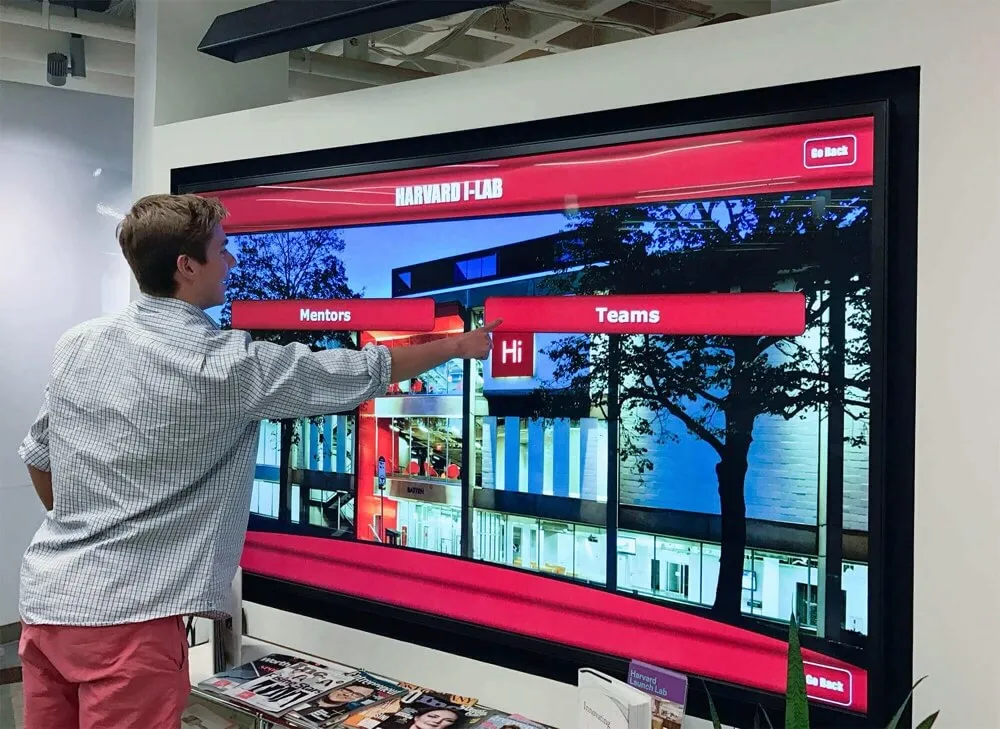
Schools that partner with public libraries to provide students extended research access, or that arrange visits to archival collections, give NHD students a meaningful advantage while also teaching practical research skills applicable throughout their academic careers. Library touchscreen interactive displays can help schools and libraries jointly showcase student research achievements in shared spaces where both communities gather.
Peer Community and Cohort Building
Schools that build NHD cohorts — groups of students who work through the process together, share research challenges, and attend competitions as a team — create peer communities that sustain motivation through the long research process. When students know their peers are engaged in similar work, individual effort feels less isolating and the experience becomes part of a shared school identity.
Celebrating NHD Participants: Recognition That Matches the Effort
The most common mistake schools make with academic competition recognition is treating it as an afterthought — a brief mention in the morning announcements, a certificate handed over between classes. NHD students have invested the equivalent of a significant extracurricular commitment to their research. Meaningful recognition reflects that investment.
All-Participant Recognition at School Level
Every student who completes an NHD project and presents at the school level deserves acknowledgment. This isn’t about inflating recognition — it’s about accurately reflecting the scope of what students have done. Completing a documentary film, a 7,000-word research paper, or a rehearsed historical performance requires sustained effort that most students will never again replicate in a single project.
Effective all-participant recognition includes:
- Certificate presentations with specific project titles acknowledged by name
- Display of project materials (where appropriate) in school common areas
- Mention in school newsletters, email communications, and social media
- Assembly recognition that introduces NHD to the broader school community
Recognition Ceremonies for Advancing Competitors
Students who advance from school to regional, regional to state, or state to national competition deserve progressively more significant recognition. Consider structuring NHD recognition similar to how schools handle athletic advancement — a varsity athlete who qualifies for the state tournament receives recognition at school. An NHD student who qualifies for the state competition deserves equivalent celebration.
Planning these moments with the same care applied to academic competition ceremonies signals to the entire student body that academic achievement carries real institutional weight. Ceremony elements worth including:
- Public presentation of advancing students with their project topics read aloud
- Faculty and administrator comments about what the research achievement means
- Display of project work alongside the recognition
- Photographs documenting the moment for school archives and communications
Award Ceremony Planning and Structure
For schools with state or national competitors, a dedicated award ceremony — not folded into a general assembly — creates the appropriate context for serious recognition. Planning a scholarship and award ceremony requires attending to details that make the event feel commensurate with the achievement: a formal program, invited family members, remarks from administrators and faculty, and presentation of recognition that students will actually keep and remember.
Award ceremony elements for NHD recognition:
Before the ceremony:
- Send formal invitations to families
- Prepare recognition materials (plaques, framed certificates, or digital recognition documentation)
- Arrange display of the student’s project or representative materials
- Prepare individual recognition comments describing each student’s research topic
During the ceremony:
- Open with remarks connecting NHD to the school’s academic values
- Present each student with individual recognition that names their project topic
- Allow students brief opportunity to describe their research and what they learned
- Photograph the recognition moment with the principal, faculty advisor, and family members
After the ceremony:
- Share photos and recognition through school communications
- Update permanent recognition displays to include the students’ accomplishments
- Submit achievement information to local news outlets and alumni networks
Showcasing Champion Projects: Permanent Display Strategies
Short-term recognition fades. The student who won the state NHD competition in 2019 should still be findable in school recognition systems in 2026. Building permanent display strategies for champion projects distinguishes schools that treat academic achievement as part of their institutional identity from those that treat it as an annual ritual.
Physical Project Displays
Schools can display physical NHD projects — particularly exhibit boards and documentary DVDs — in showcases near the school library, social studies classrooms, or main entrance. Physical displays have limitations (they occupy space, become dated, and can only show one project at a time) but create tangible, visible evidence of student scholarship that passersby encounter daily.
Best practices for physical NHD project displays:
- Display championship projects in prominent, high-traffic locations rather than hallway corners
- Include clear identification labels with student name, project title, competition level reached, and year
- Rotate displays periodically to feature projects across multiple years, avoiding the impression that recognition only applies to the most recent cycle
- Photograph physical exhibits before display so digital copies exist for permanent archives
Digital Archives and Historical Documentation
Long-term preservation of NHD projects requires digital strategies. Websites and documentaries are inherently digital; exhibit boards and performances can be captured photographically or on video. Schools that create organized digital preservation and yearbook archives can include NHD champion project documentation as a distinct archive category, making it accessible to current students, alumni, and community members for years.
Archive elements worth capturing for each NHD champion:
- Student photograph and biographical information
- Project title and competition category
- Competition levels reached (regional, state, national)
- Brief description of the historical argument and why it earned recognition
- Digital copy of the project where feasible
Connecting NHD Recognition to Broader Academic Competitions
NHD doesn’t exist in isolation. Schools with strong academic competition cultures recognize NHD alongside other programs like student STEM project competitions, academic decathlon, science fair, debate, and arts competitions. Integrated recognition systems that display achievement across multiple academic disciplines create a fuller picture of school excellence while encouraging students in any competitive academic program to see themselves as part of a broader tradition of achievement.
Digital Recognition Displays for NHD Champions
Modern recognition technology transforms what schools can do for NHD students. Physical plaques and trophy cases work for athletic championships. Academic competitions — with their detailed research topics, multi-year competition histories, and unique scholarly contributions — benefit from recognition formats that can tell the full story.
Why Digital Recognition Works for Academic Achievement
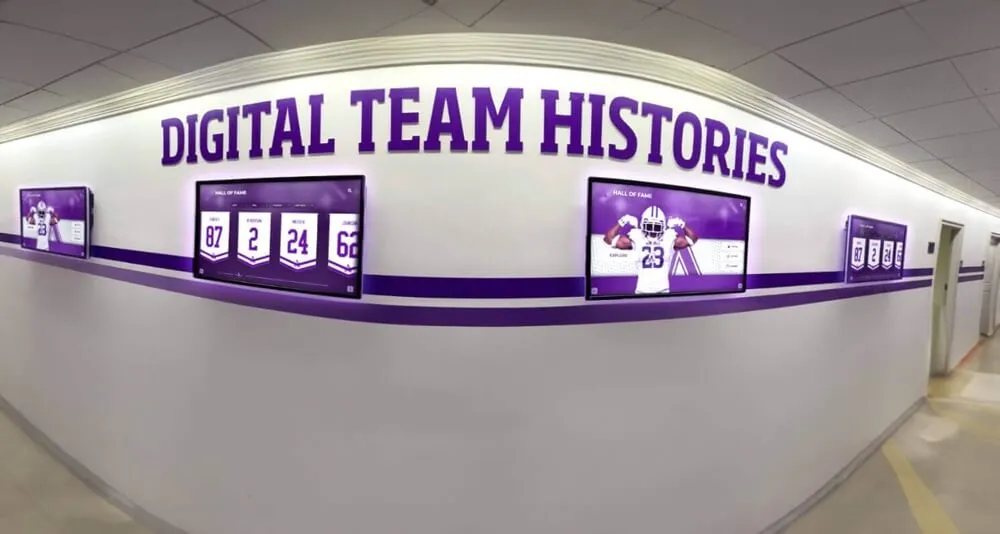
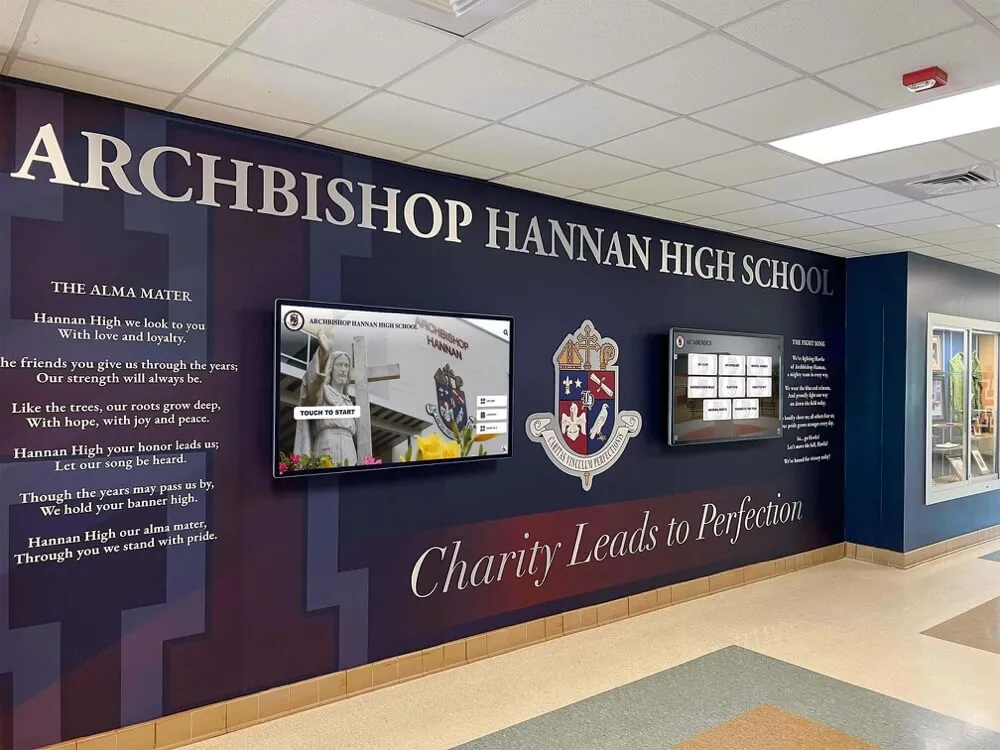
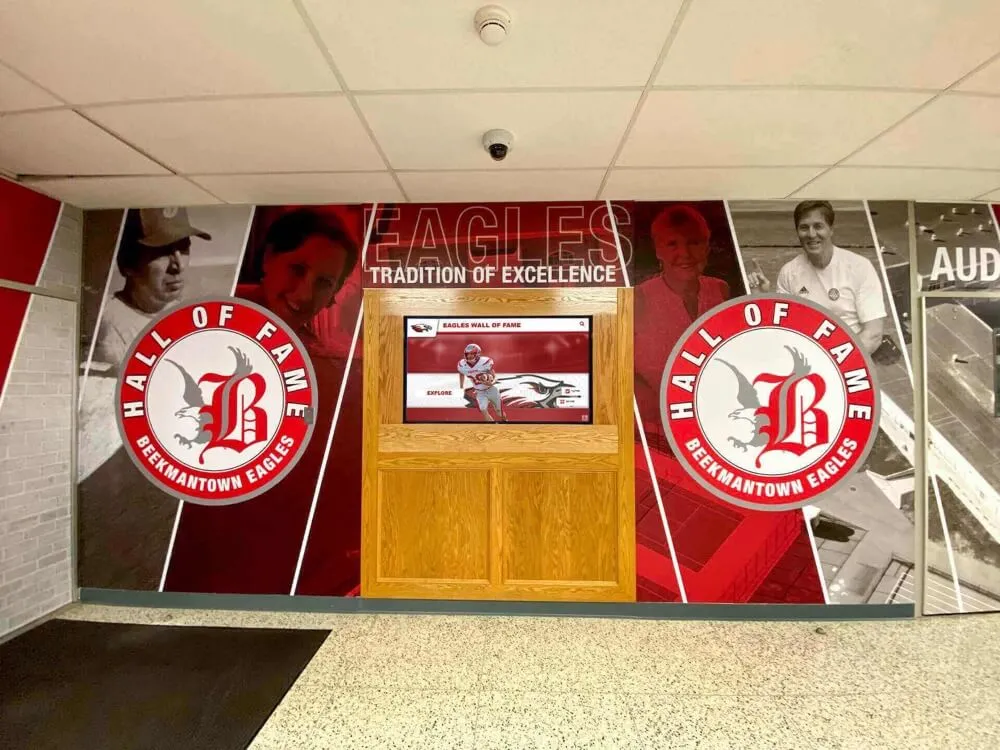
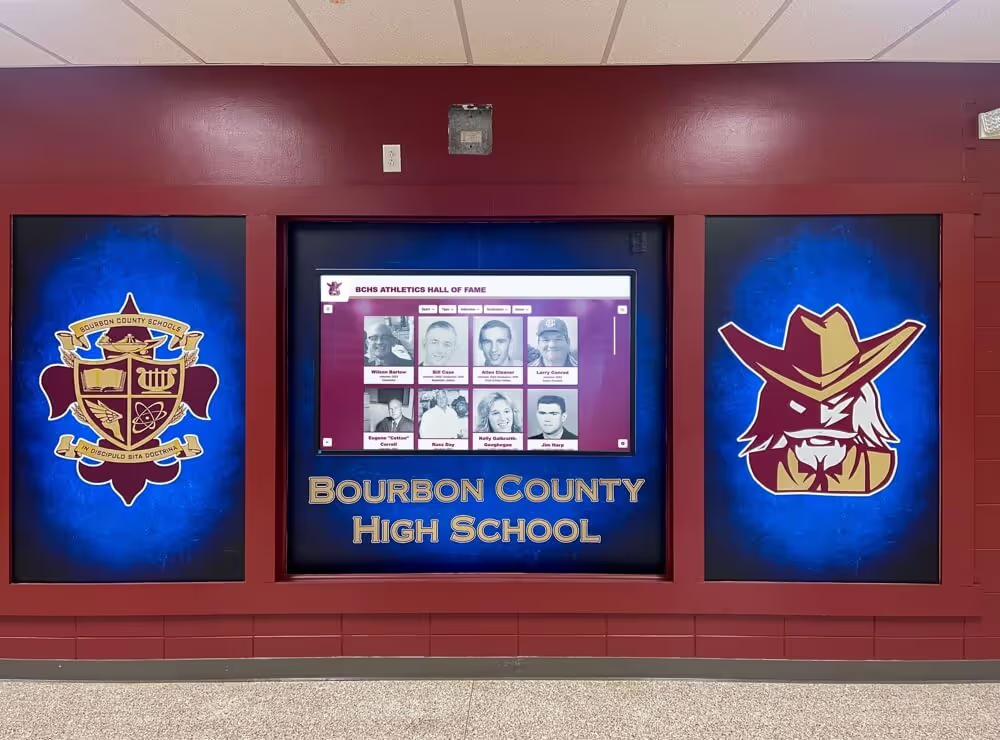
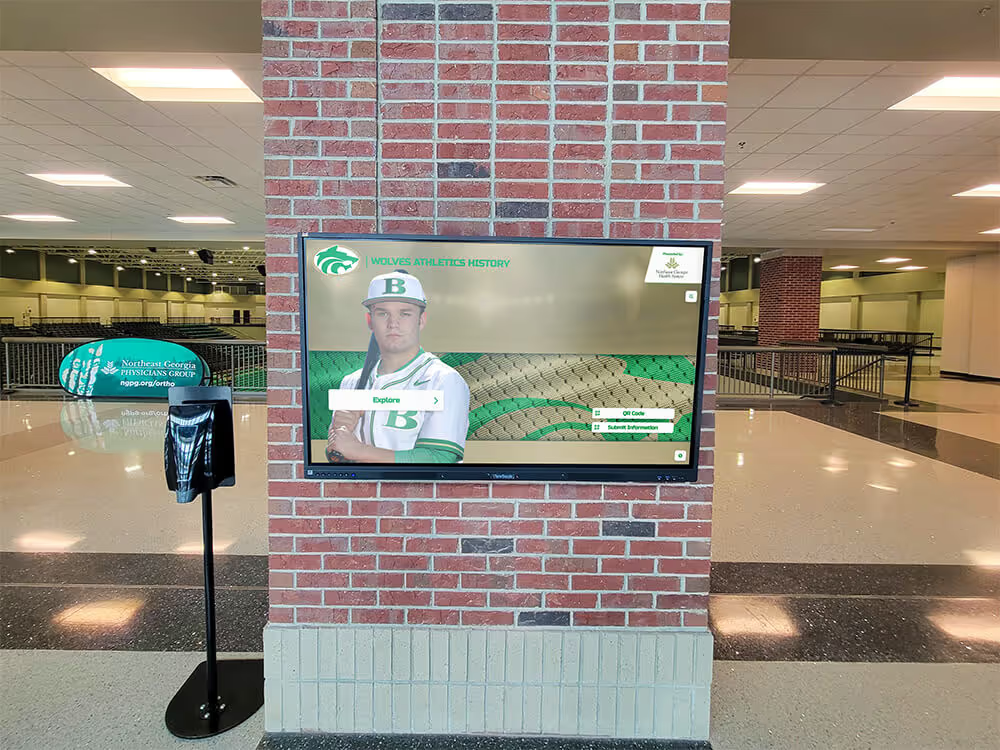
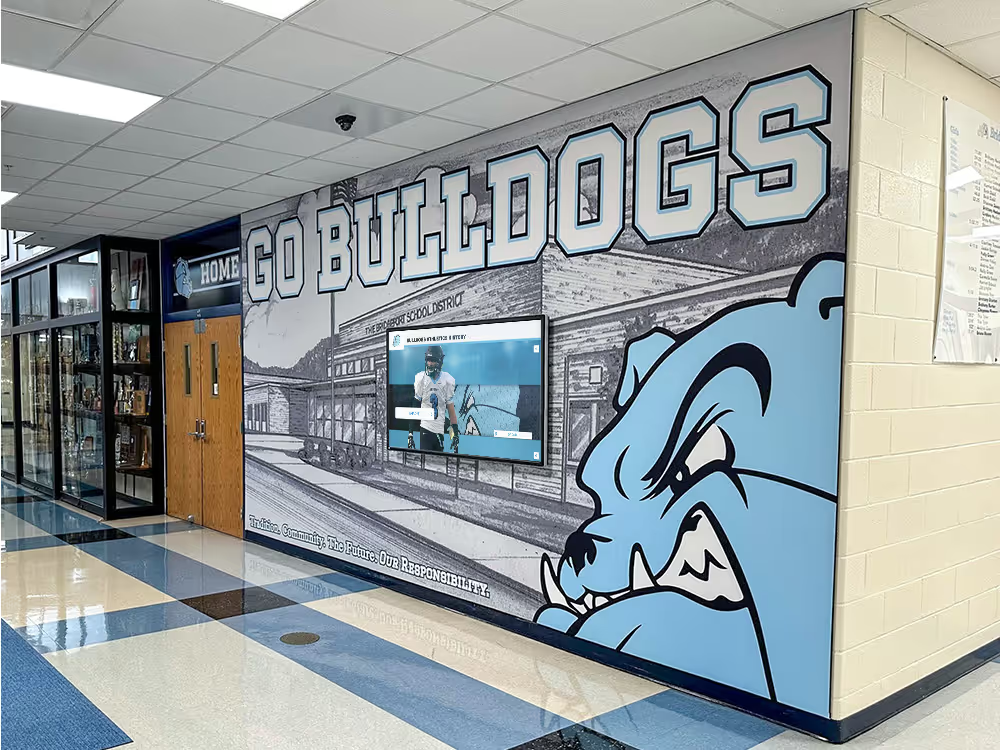
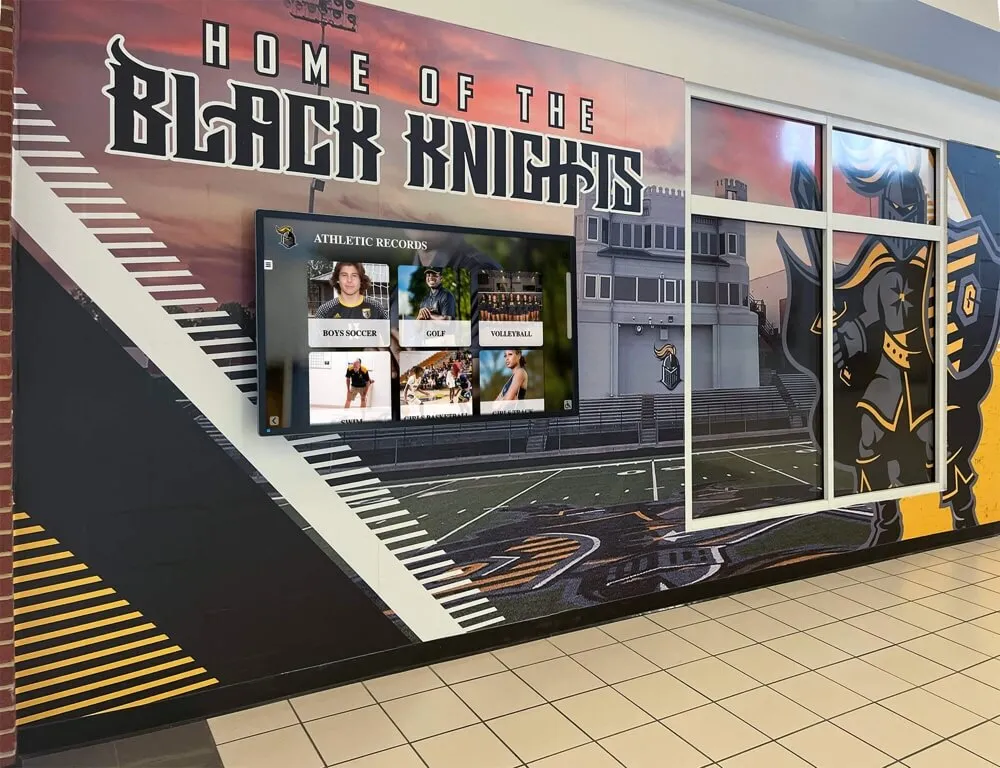
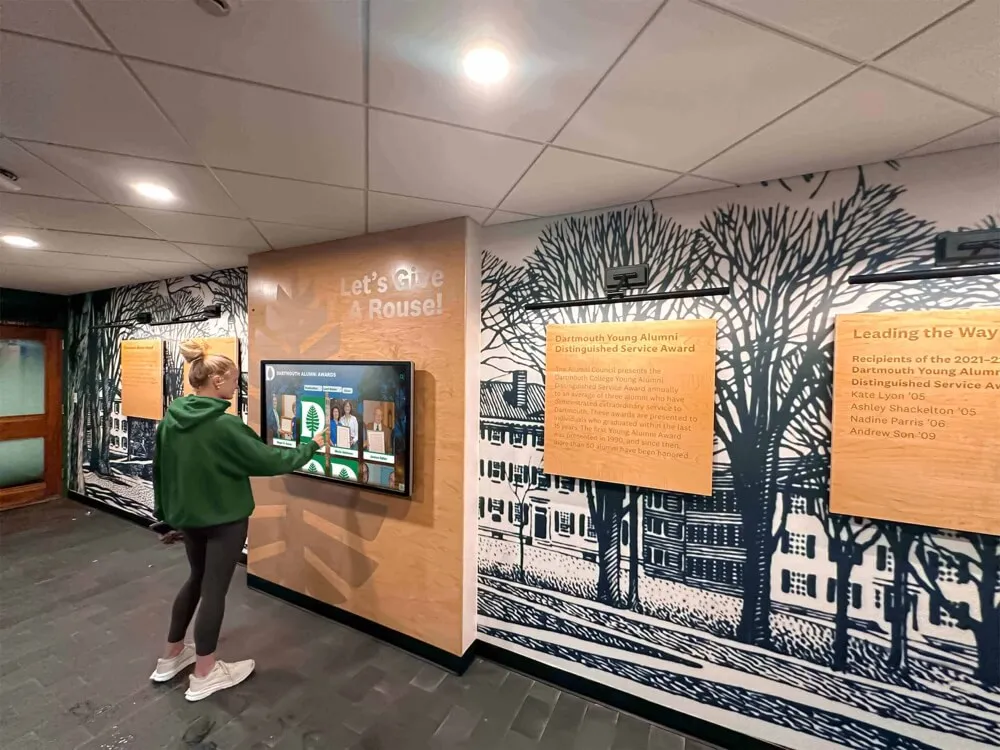
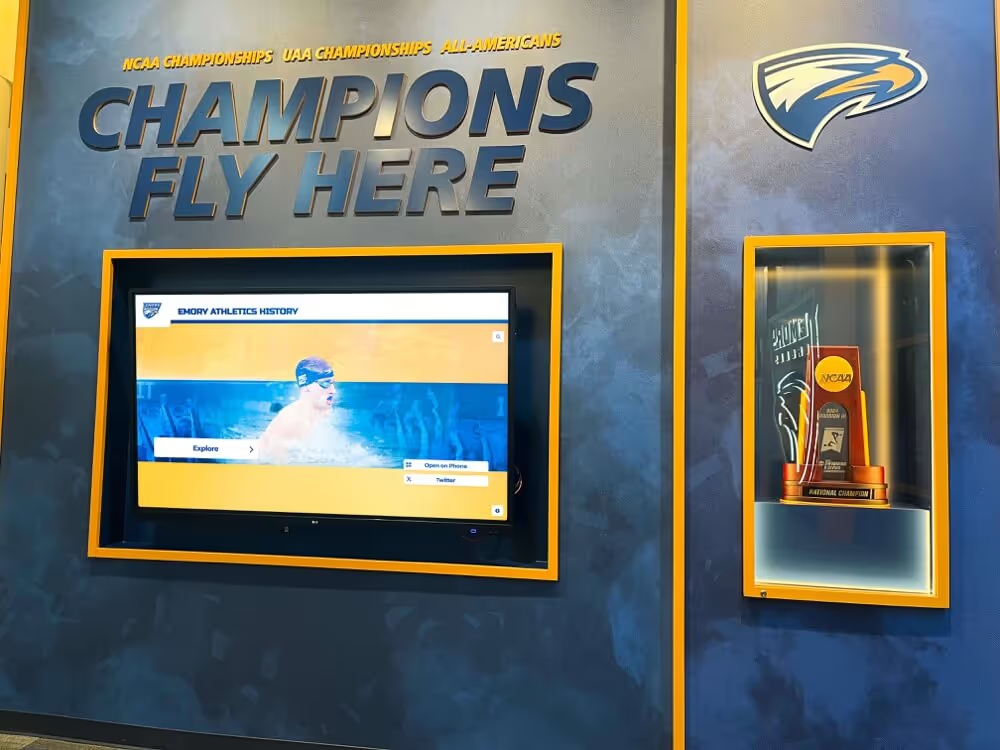
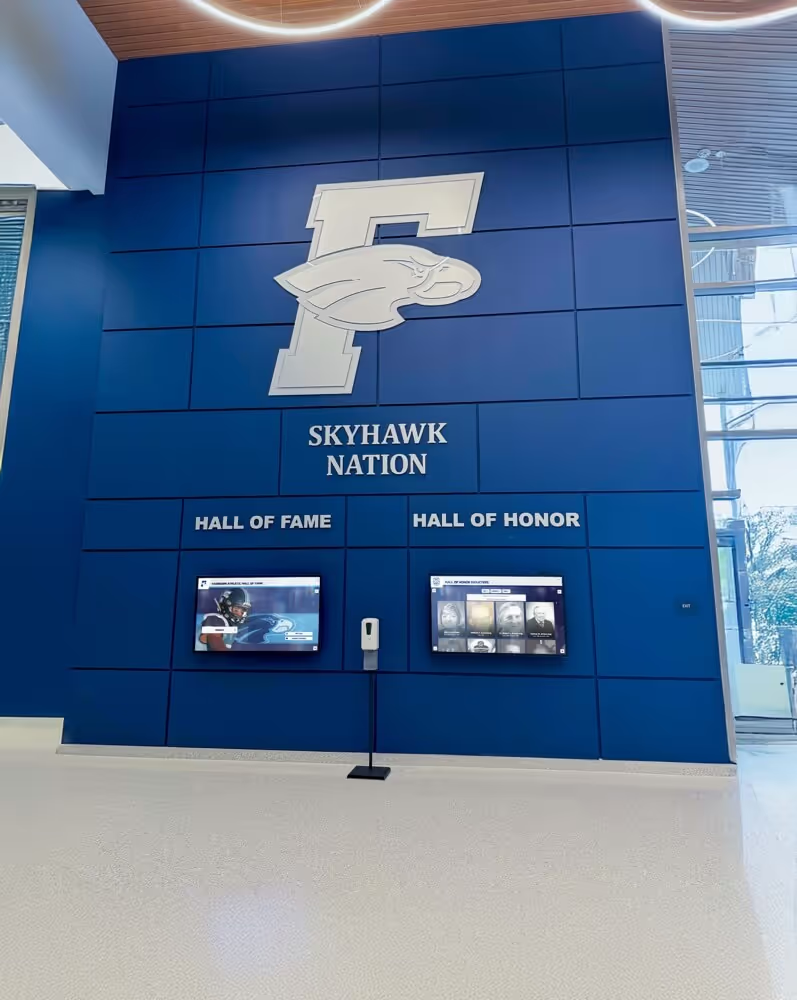
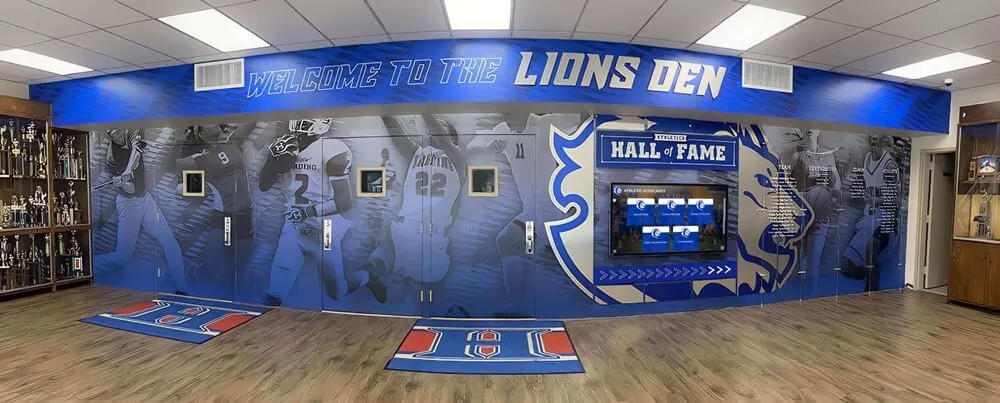
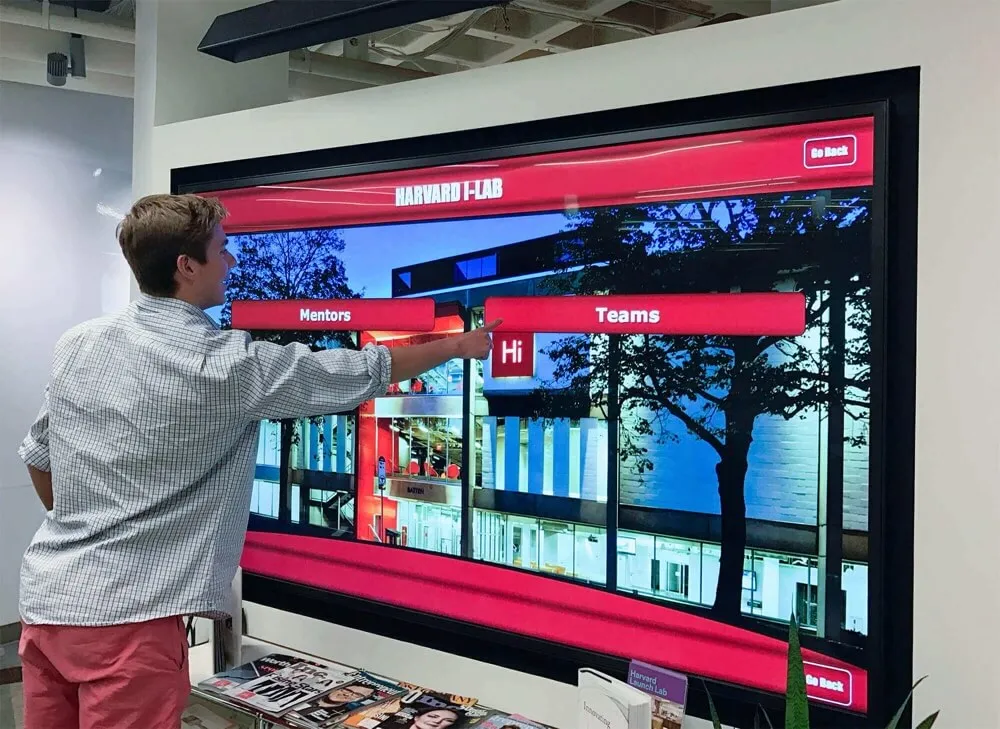
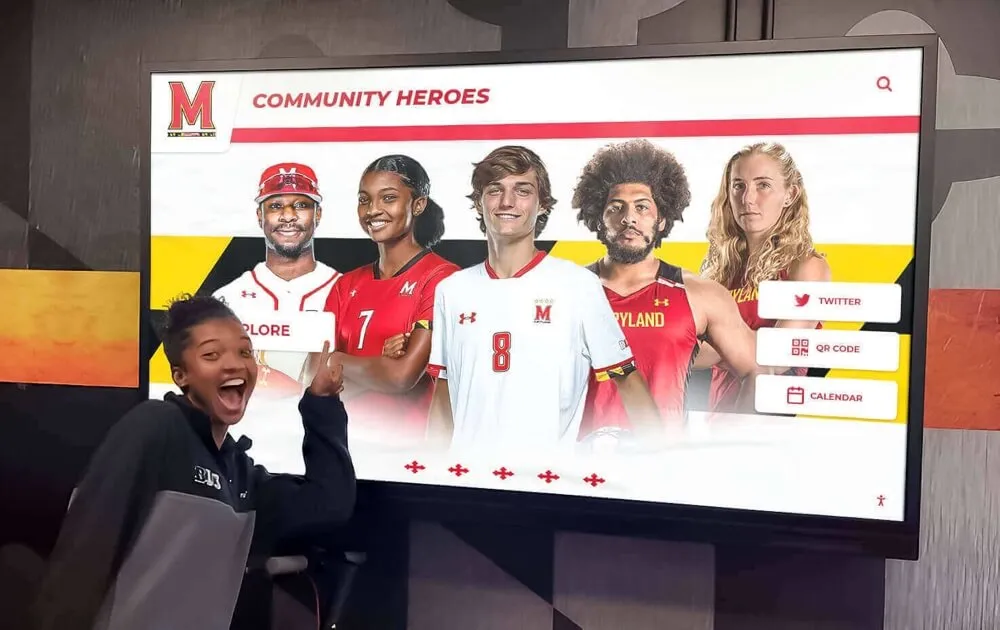
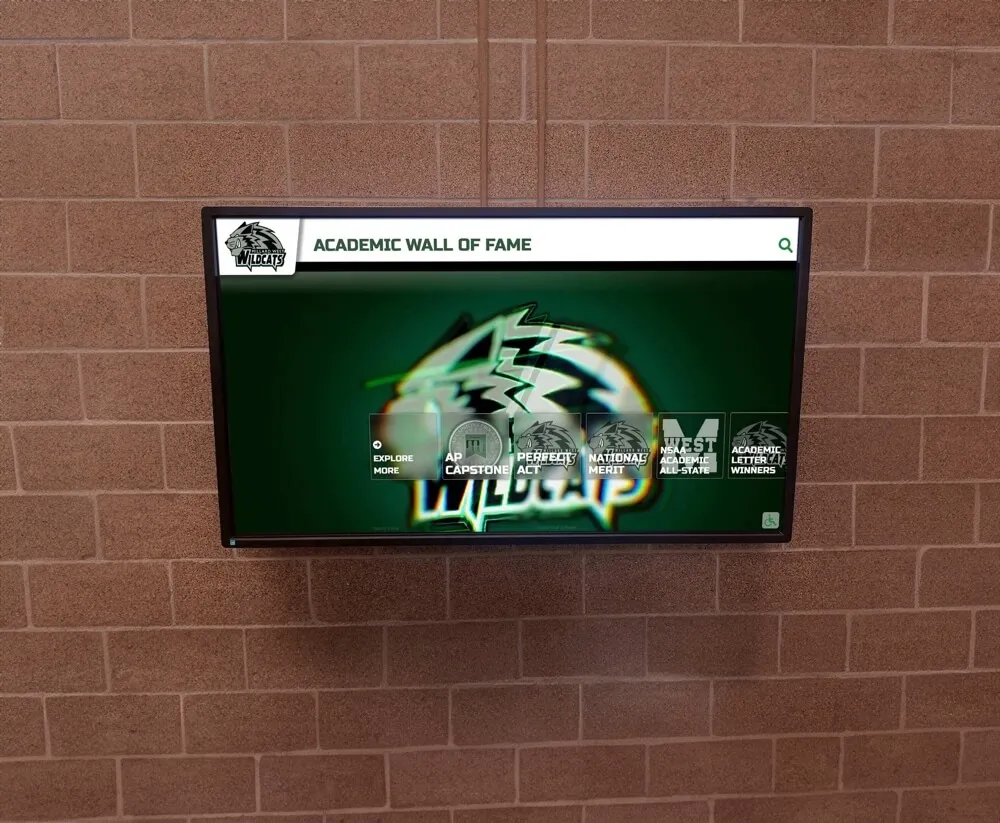
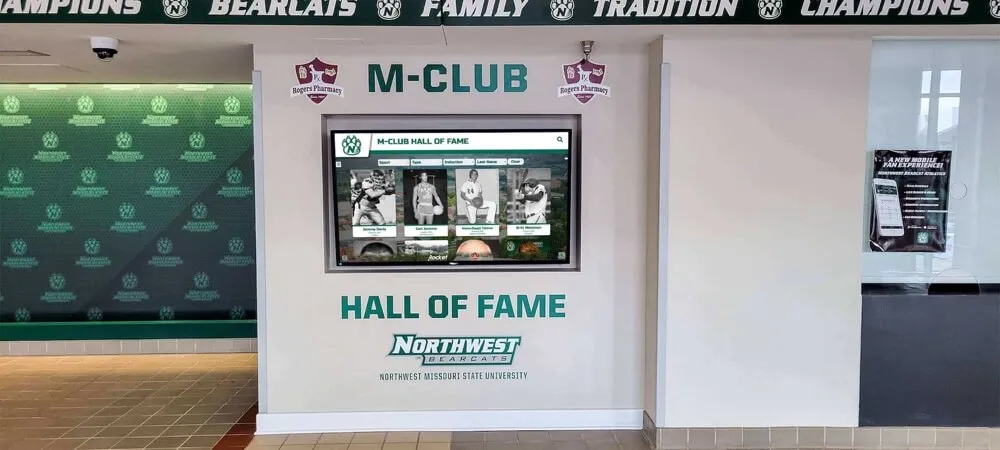
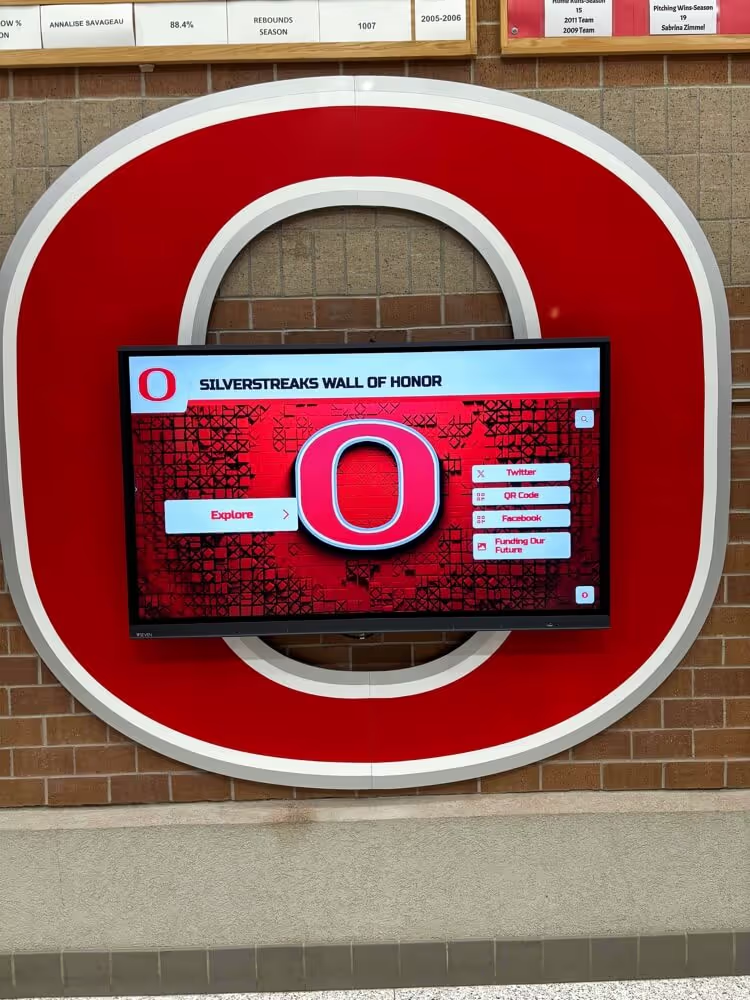
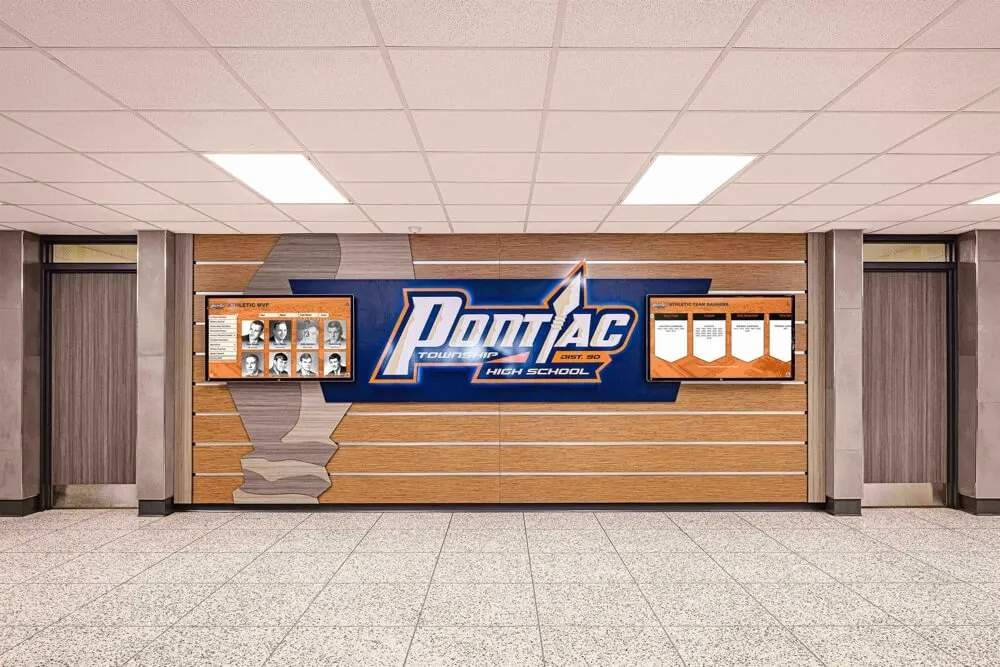
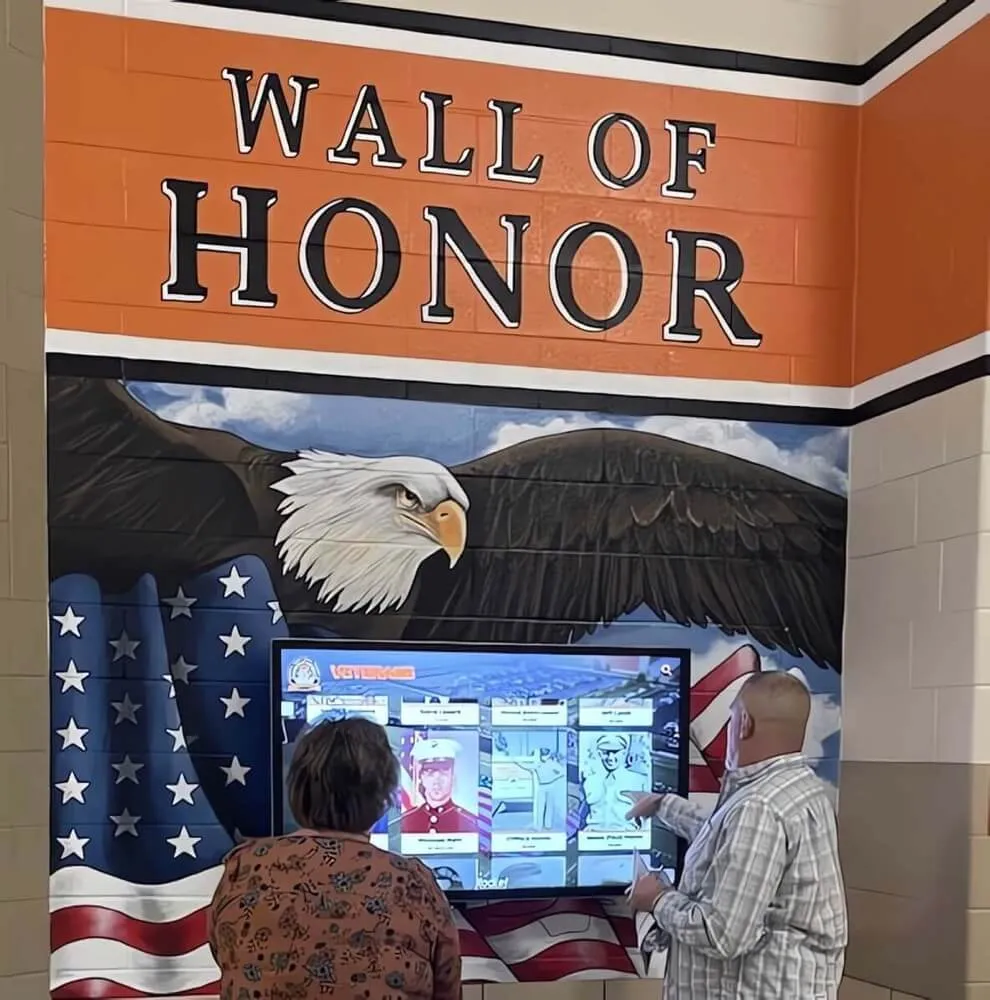
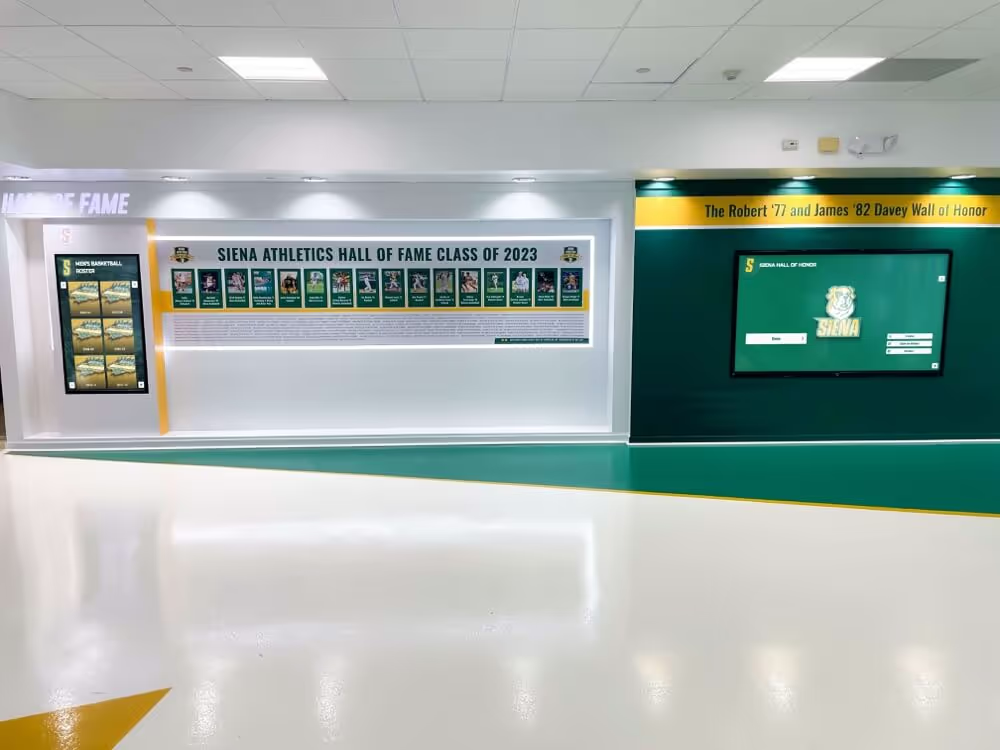
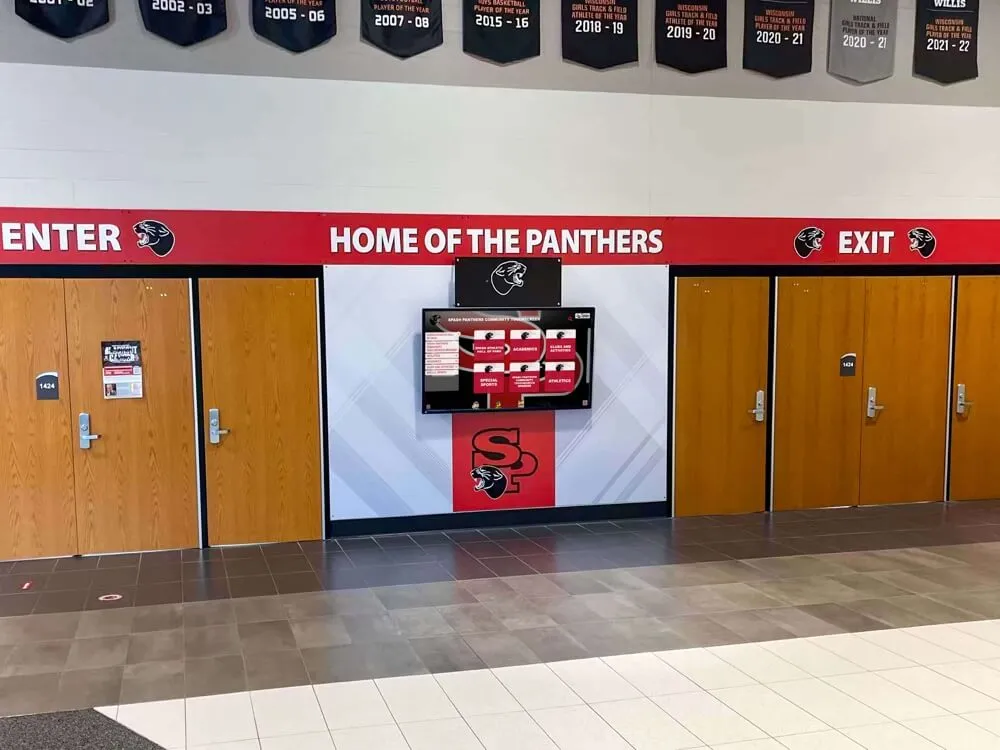
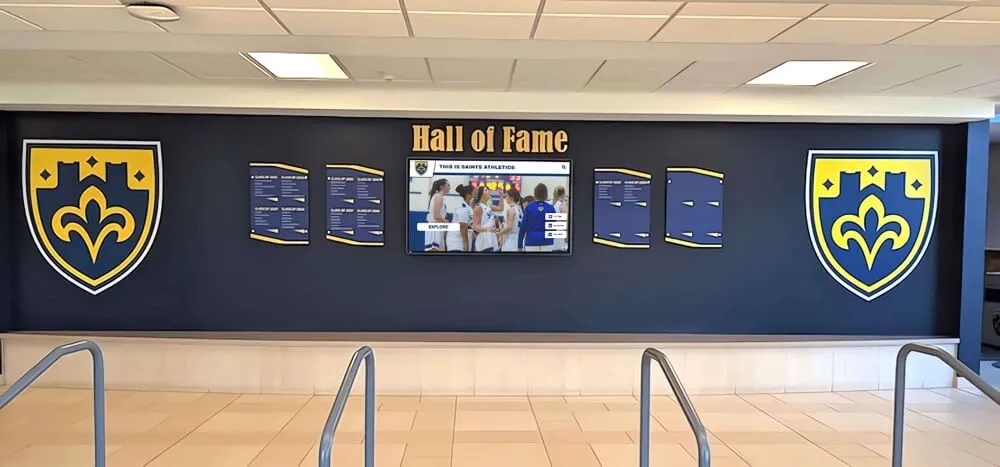
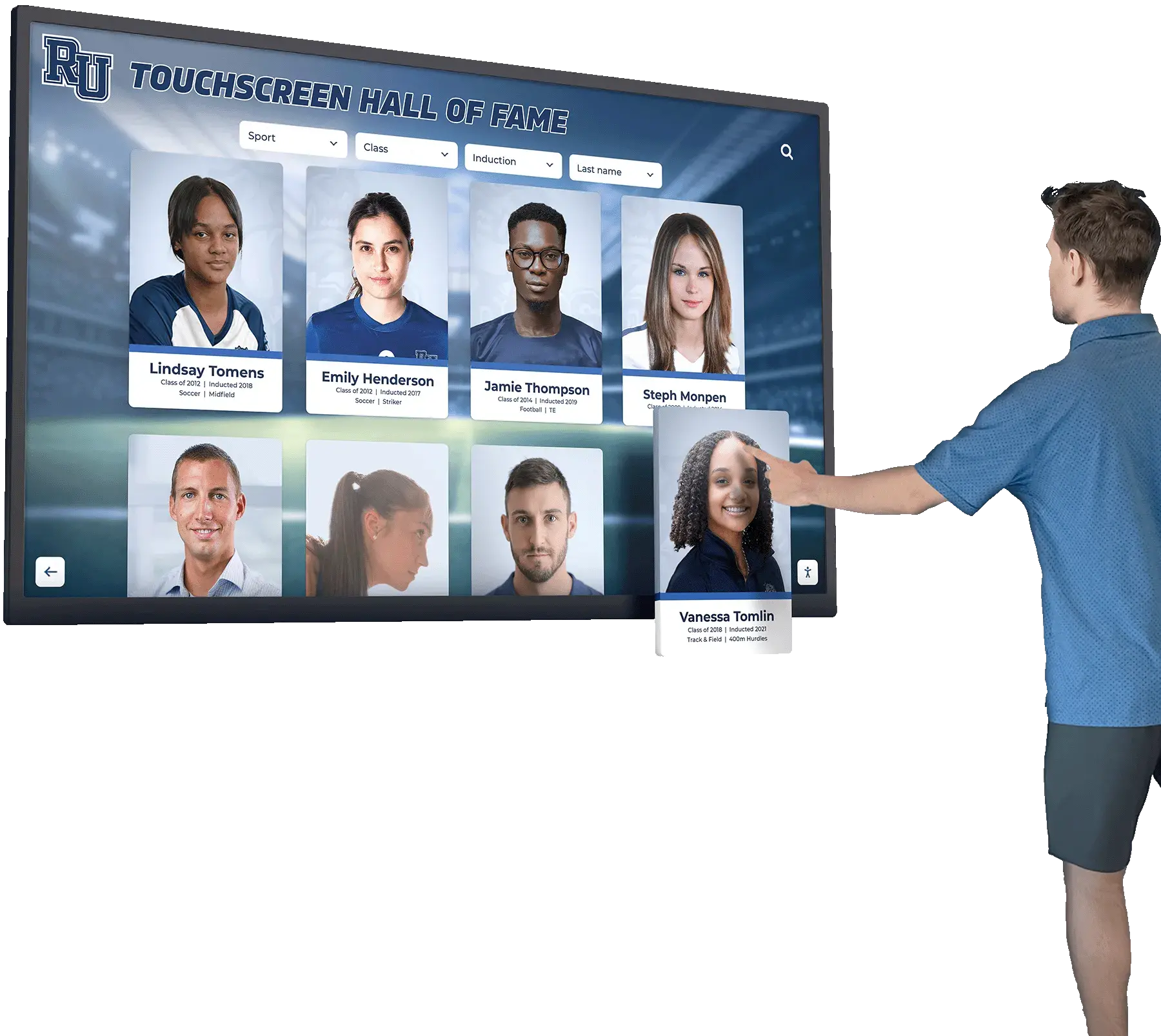
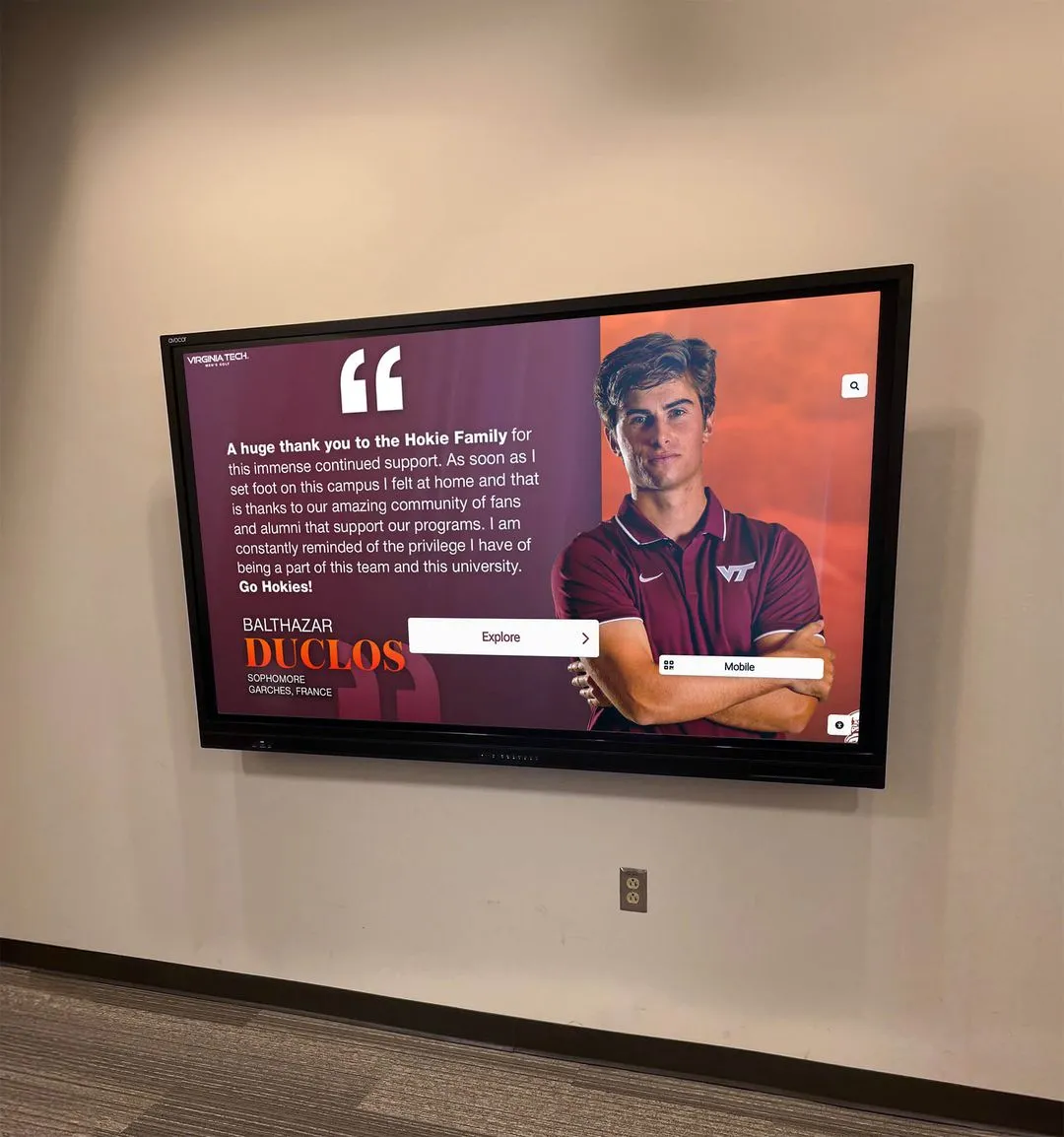
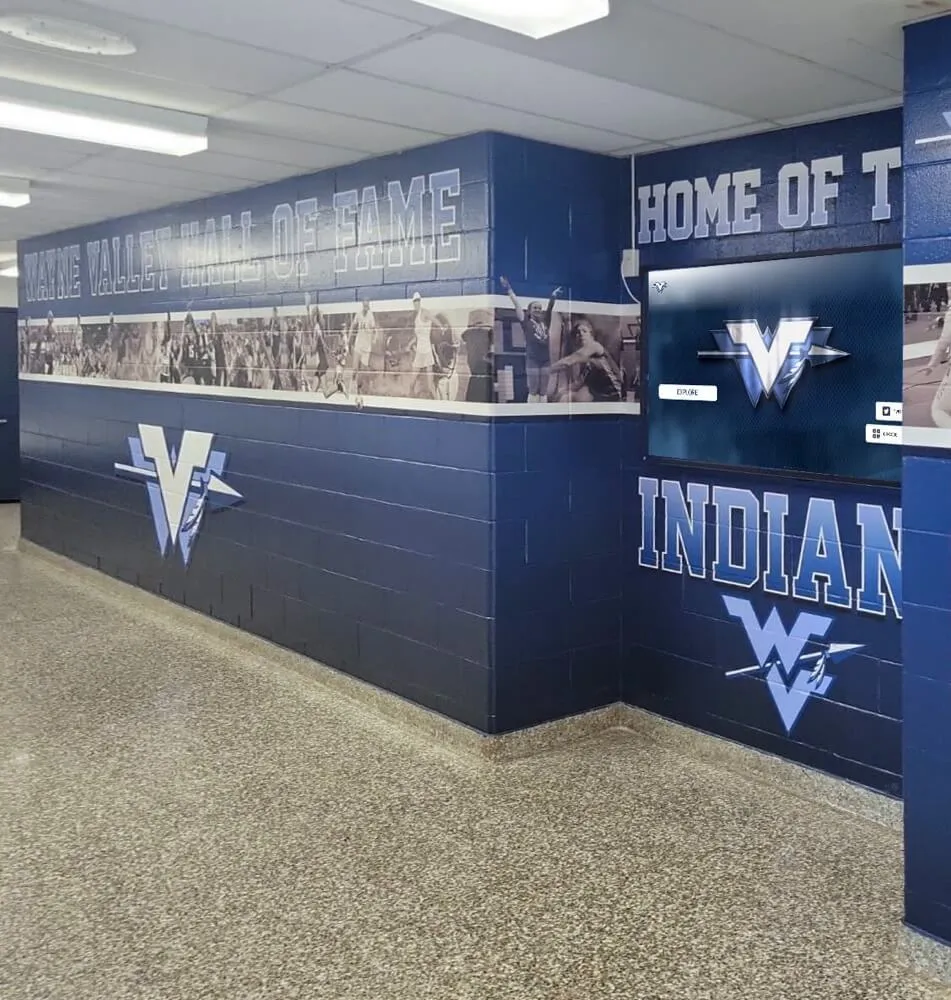
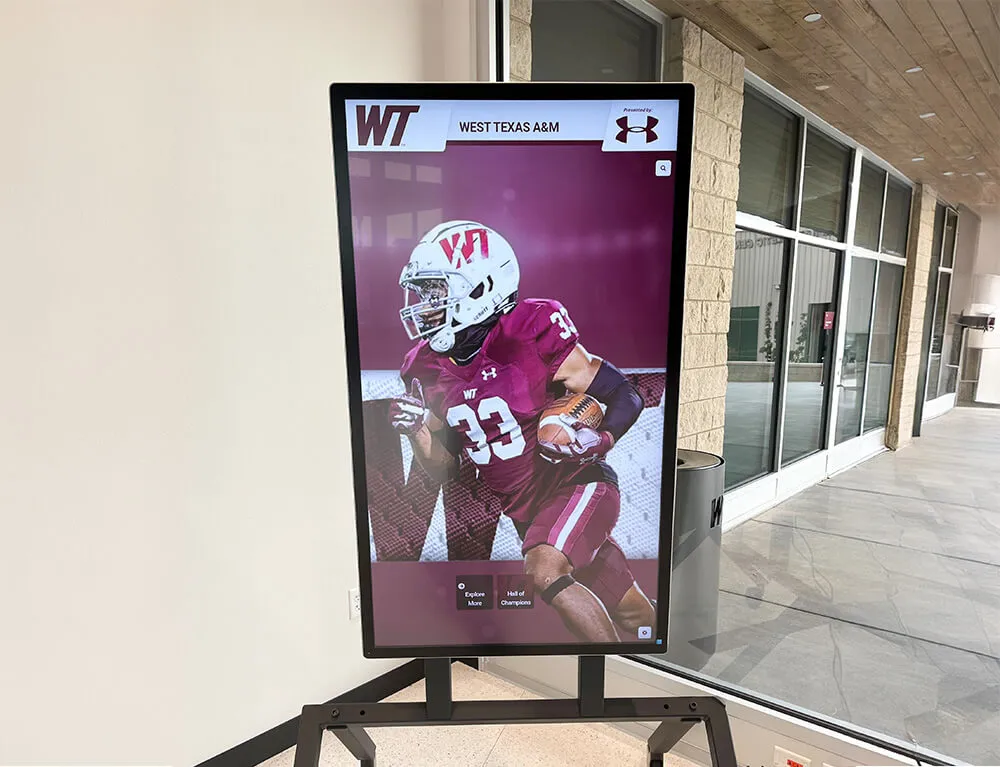
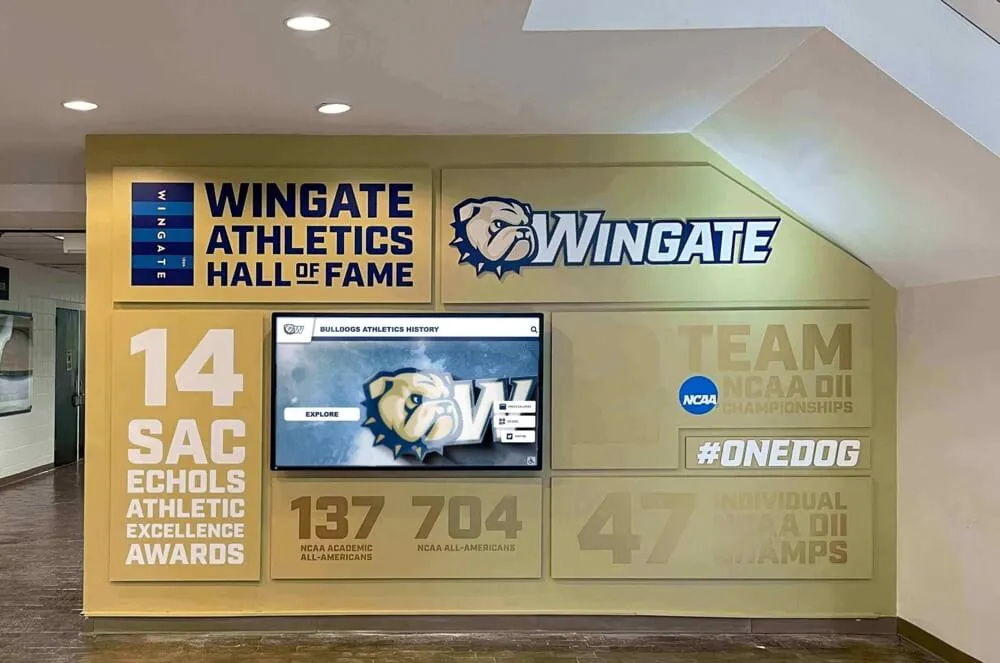
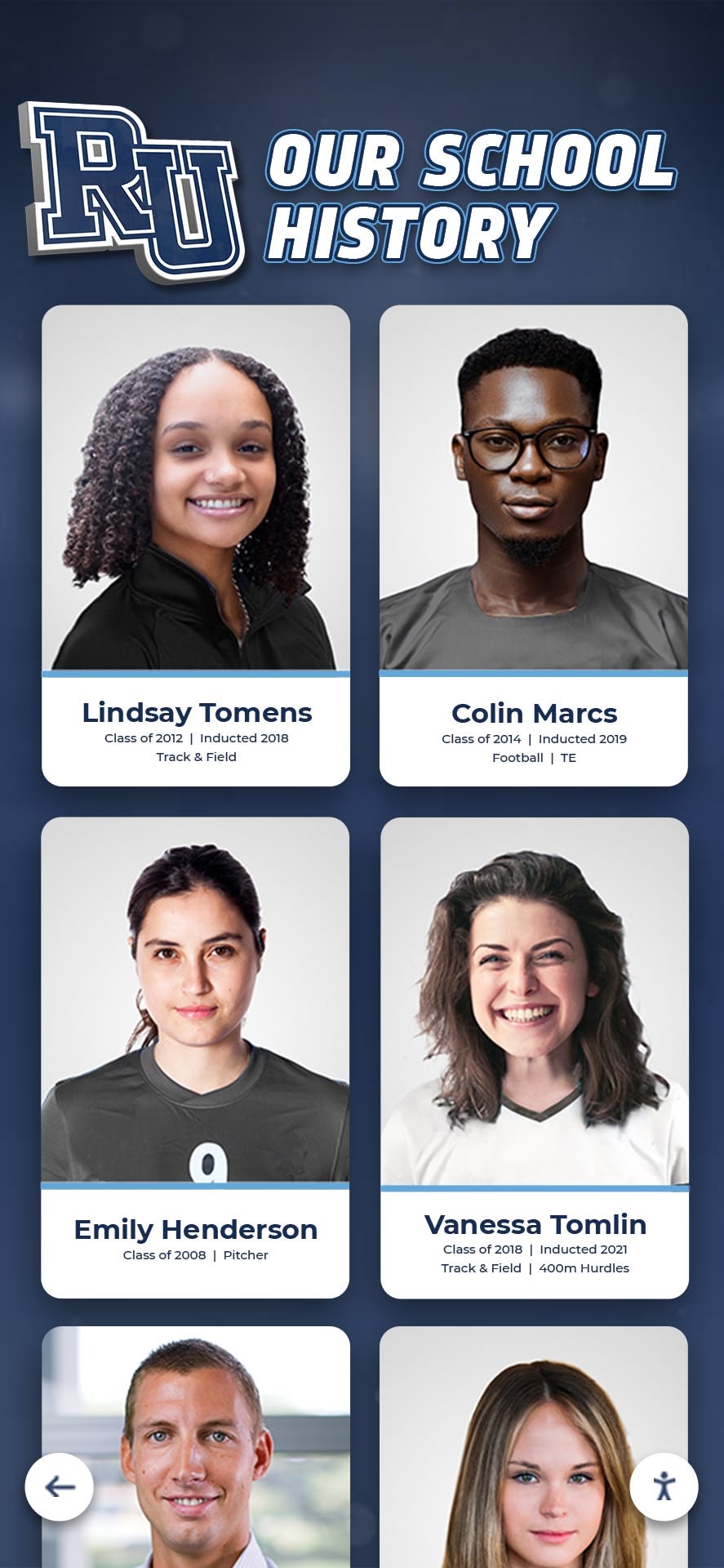
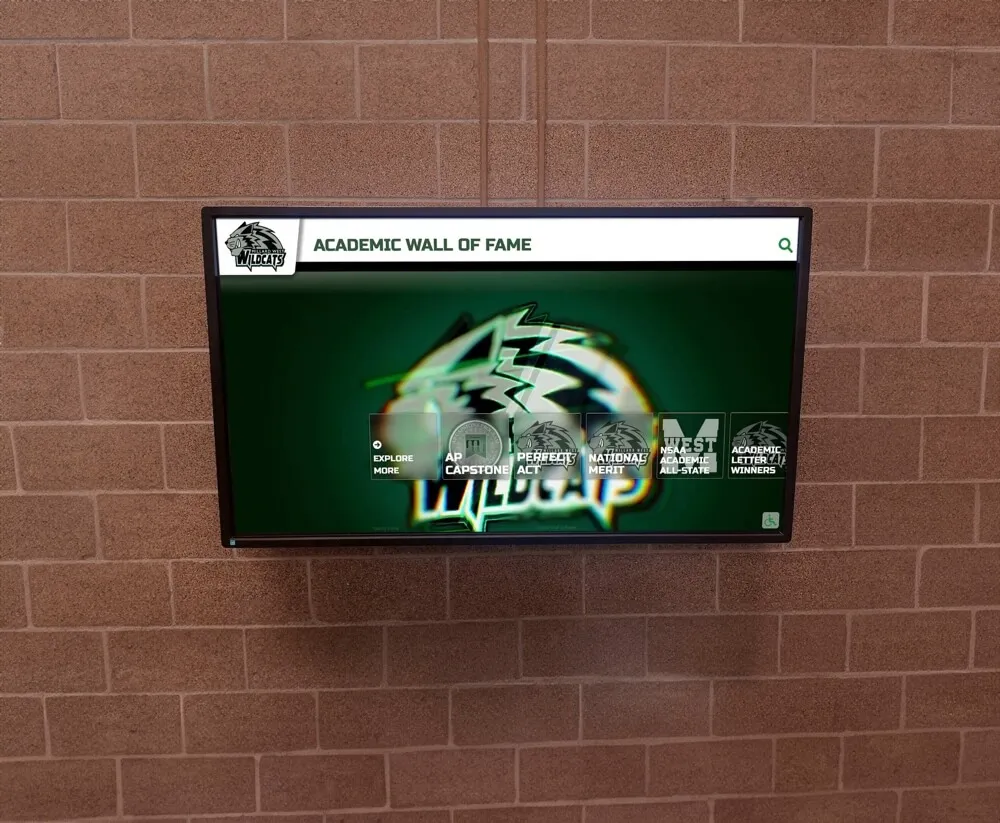
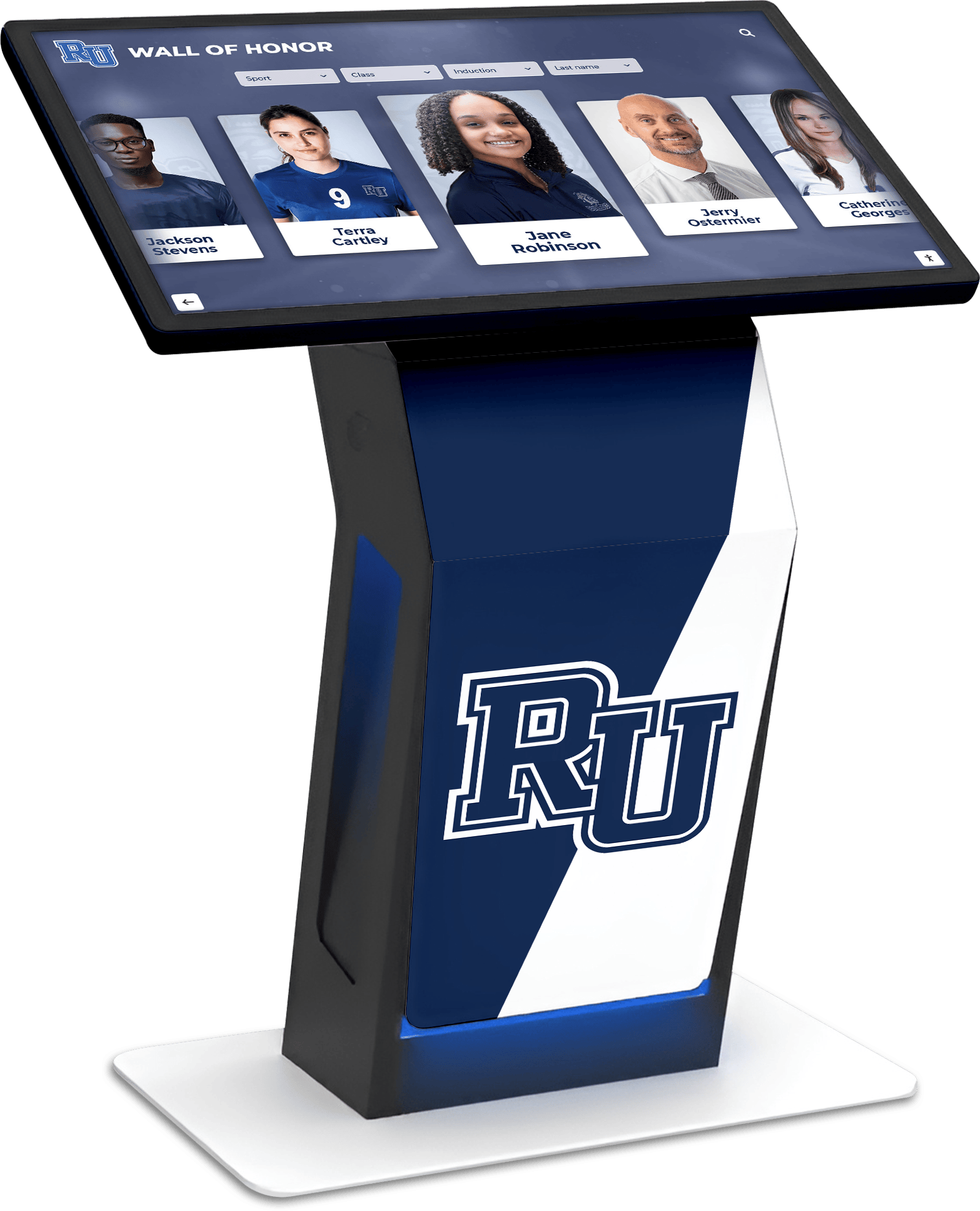
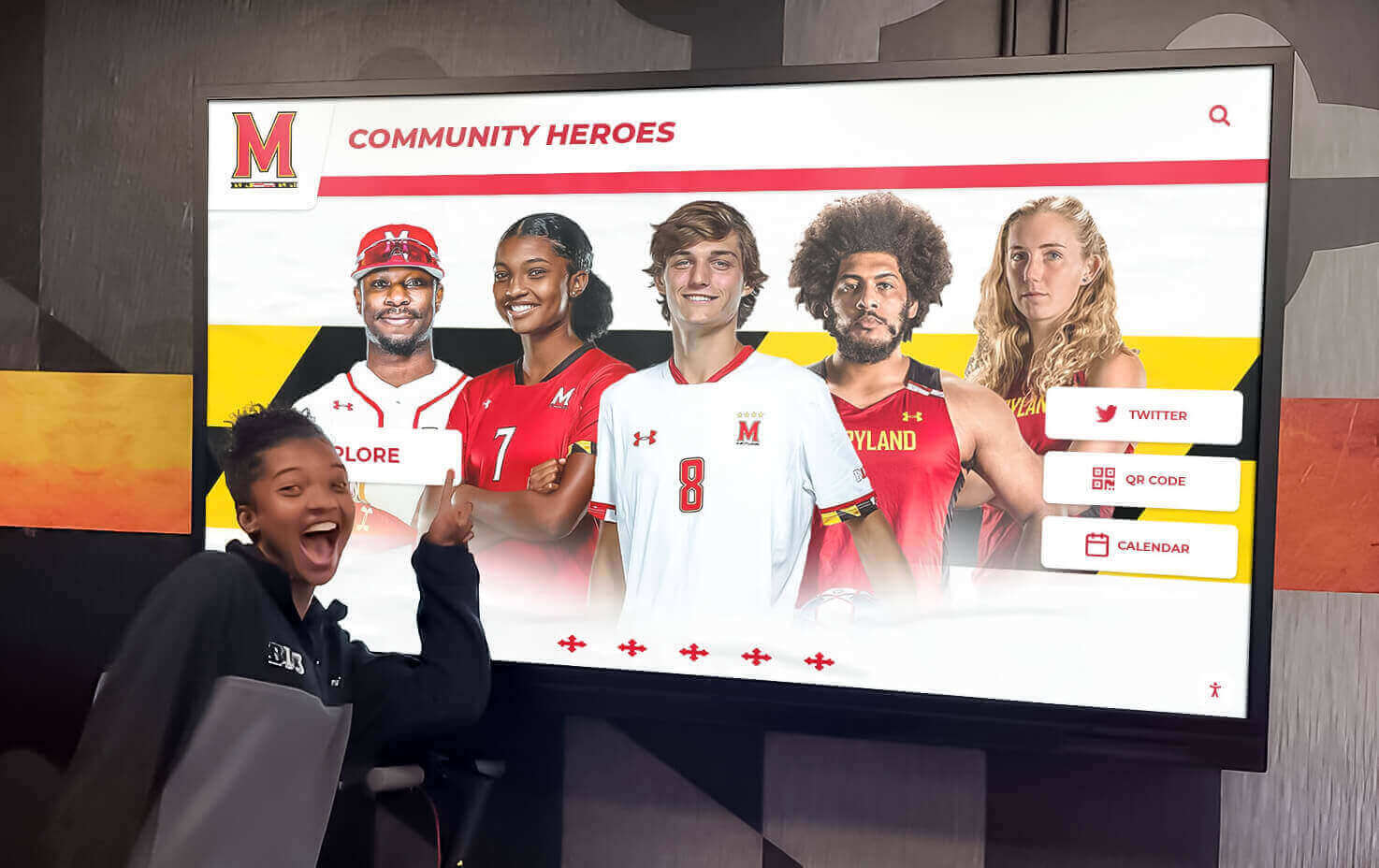
A touchscreen recognition display can present each NHD champion’s name, photo, project title, competition history, and a summary of their historical argument in a single engaging profile. Visitors can search by year, topic, or student name to find specific achievements. The same display that recognizes the state NHD champion can also showcase honor roll students, academic decathlon competitors, and other academic achievers — creating a unified visual statement about what the school values.
Consider how this differs from a plaque on the wall. The plaque has a name and a year. The digital display has the full story — what the student researched, why it mattered, how far they advanced, and what recognition they received. That depth of recognition honors students more fully while teaching the school community about the range of academic excellence happening in their building.
STEM recognition walls and academic achievement displays illustrate how schools are applying this model to science and technology achievement. The same approach translates directly to NHD and humanities competition recognition.
Interactive Touchscreen Recognition Systems
Rocket Alumni Solutions builds interactive touchscreen recognition platforms specifically designed for educational institutions. Schools using these systems can create dedicated NHD sections that display champion projects alongside other academic honors, allowing visitors to browse achievement records that span years or decades.
Key capabilities that benefit NHD recognition:
Unlimited profile depth: Each NHD champion can have a full profile including project title, category, competition levels reached, year, and research description — no space constraints forcing brief captions
Multi-year historical records: The display builds over time into a comprehensive NHD record, so the student who wins in a future year can see the tradition they’re joining
Cross-program integration: NHD recognition displays alongside academic honor roll boards, athletic achievements, performing arts recognition, and other institutional honors
Remote content management: Faculty advisors or administrators can update the display from any device immediately after competition results — no waiting for physical signage updates
Searchability: Alumni visiting campus years later can search for their own NHD recognition, creating a powerful connection between past achievement and current school identity
Building a School Culture That Celebrates Student Researchers
The deeper goal behind NHD recognition isn’t just honoring individual students — it’s building a school culture where student research is respected, visible, and genuinely valued alongside athletic and performing arts achievement. That culture develops through consistent, public, and permanent recognition practices.
Connecting NHD to Broader Academic Identity
Schools with strong NHD programs often find that the program’s visibility raises the profile of academic achievement generally. When students see their peers celebrated publicly for scholarship — not just in a brief announcement but in a dedicated ceremony, on a digital display in the main hallway, and in school communications — it shifts the cultural understanding of what earns recognition.
This is particularly important for students who may not see themselves as athletes or performers but who have genuine intellectual passions. NHD tells them: your curiosity about history, your willingness to spend weeks in an archive, your ability to construct an argument — these things matter here, and we will celebrate them publicly.
Connecting NHD recognition to national academic recognition program frameworks helps schools understand NHD as part of a broader ecosystem of academic achievement programs worth supporting and celebrating.
Year-Round NHD Visibility
Recognition shouldn’t compress into a single spring ceremony. Building year-round NHD visibility means:
Fall: Announce the new NHD theme, display previous champions’ photos and project titles to introduce the program to new students, recruit participants through classroom visits
Winter: Celebrate students who have completed their initial research phase; host an informal sharing session where students discuss their topics with peers
Spring: Conduct school-level competitions with appropriate ceremony; build toward regional recognition events; celebrate each advancement milestone publicly
Summer/Following Fall: Add new champions to permanent recognition displays; update digital systems with current year results; feature advancing students in alumni communications
This year-round presence transforms NHD from an annual competition into an ongoing part of school identity — a tradition that students, faculty, and alumni associate with what it means to attend this school.
Setting Academic Competition Expectations Through Visible Recognition
The way a school recognizes NHD students communicates expectations to every student watching. When championship research receives the same visibility as championship athletics — displayed permanently, celebrated ceremonially, honored across multiple communications channels — students understand that academic excellence is genuinely valued, not just claimed in mission statements.
Schools that want to build this culture should audit their current recognition practices: Is NHD mentioned in the same communications as athletic championships? Do NHD champions appear on recognition displays with the same prominence as athletic letter winners? Is the faculty advisor for NHD celebrated alongside athletic coaches? These questions reveal whether academic recognition culture matches stated school values or whether gap exists between what schools say they value and what they actually make visible.
Academic award criteria and recognition standards provide useful frameworks for thinking about how schools can apply rigorous, transparent recognition criteria to academic competitions alongside the criteria that already exist for athletic and performing arts recognition.
Conclusion: Giving Student Researchers the Recognition They’ve Earned
National History Day asks students to do something genuinely difficult: develop an original historical argument, support it with primary source research, and present it through a demanding creative format to external judges. Students who rise through the competition levels — and even those who simply complete the process — have demonstrated scholarly capability that deserves serious, sustained recognition.
Schools that celebrate these students well share a common approach: they treat academic achievement recognition with the same care, ceremony, and permanence they apply to athletic championships. They build systems — digital displays, formal ceremonies, archive practices — that honor students’ work over time rather than just in the moment. They connect NHD recognition to a broader school identity as a place where curiosity, research, and intellectual effort are publicly celebrated.
If your school competes in National History Day and you’re looking for tools to permanently recognize student researchers, showcase champion projects, and build a recognition culture that matches your students’ achievements, explore what Rocket Alumni Solutions offers for schools — from interactive touchscreen recognition walls to comprehensive digital achievement displays that give your students the lasting recognition they’ve earned.