



Key Takeaways
Everything schools need to know about marching band uniforms — cost ranges, top companies, customization options, care tips, and how to fund and preserve your program's uniform legacy.
A well-designed marching band uniform does more than look sharp on the field — it tells a story. It carries school colors that generations of students have worn before, bears the mascot that defines a community’s identity, and transforms 50 or 150 individual students into a unified visual statement that spectators recognize from the bleachers and the stands. For directors, booster boards, and school administrators, the marching band uniform is one of the most significant investments a music program makes — and one of the most enduring ones.
This guide covers everything schools need to know about marching band uniforms: what they cost, which companies provide them, what customization options exist, how to budget and fund new uniforms, how to care for them over their lifespan, and how to preserve the legacy of programs that have been dressing students in school colors for decades.
What Makes a Complete Marching Band Uniform?
Before evaluating cost and customization, directors and program administrators need a clear picture of what a complete marching band uniform actually includes. Most programs outfit students with several distinct components that work together as a system.
Jacket or Tunic The centerpiece of the uniform. Usually constructed from a polyester wool-blend fabric in school colors, the jacket features embroidery, piping, and trim that carry the school’s visual identity. Jackets come in a range of cuts — military, modern, swallowtail, or custom silhouettes — and are almost always tailored by size to individual students.
Bibber Pants Bib-front trousers worn underneath the jacket. Most programs use a standard bibber cut, though some select bell-bottom or tapered styles for specific visual effects. Pants are typically constructed in a matching or complementary color to the jacket with matching piping or stripe details.
Shako Hat or Alternative Headwear The shako — the tall cylindrical hat that defines the traditional marching band silhouette — is the most recognizable uniform element. Some programs opt for modern alternatives including plumed helmets, campaign hats, or contemporary headwear that matches a less traditional design concept.
Plumes Feathered or synthetic plume attachments that fit into shako mounts. Plumes add visual drama and help spectators track individual performers’ positions in complex field formations. Standard plumes run 10–18 inches and are available in virtually any color combination.
Gauntlets Extended cuff attachments worn over the wrists and forearms, adding visual definition to hand and arm movements. Gauntlets typically feature embroidered trim or school insignia.
Marching Shoes and Gloves Most programs standardize on white or black marching shoes with matching gloves. While often purchased separately, they complete the outfit students wear on the field.
Color Guard Additions Programs with a color guard unit typically include additional items: flags, practice flags, rifle or saber props, and separate guard uniforms that complement but visually distinguish the guard from the wind and percussion performers.

How Much Do Marching Band Uniforms Cost?
Cost is almost always the first question administrators ask, and it is rarely a simple answer. Marching band uniform pricing varies significantly based on the level of customization, the manufacturer, the quantity ordered, and the specific components included.
Per-Uniform Cost Ranges
A complete marching band uniform set — jacket, bibber pants, and shako — typically ranges from $300 to $600 per student at standard commercial pricing. Highly customized uniforms with premium fabrics, intricate embroidery, or complex construction can push per-uniform costs higher. Budget-tier or simplified designs may come in at the lower end of this range, though programs often find that lower initial cost trades against faster wear and earlier replacement needs.
| Uniform Component | Approximate Cost Range |
|---|---|
| Jacket | $150 – $350 |
| Bibber Pants | $75 – $150 |
| Shako Hat | $75 – $125 |
| Plumes | $15 – $40 each |
| Gauntlets | $20 – $50 per pair |
| Marching Shoes | $30 – $75 |
| Gloves | $5 – $15 per pair |
Total Program Costs
For a program with 80 students, a complete uniform purchase typically runs $25,000 to $50,000 before accessories, alterations, and shipping. Larger programs with 150 or more students should budget $50,000 to $100,000 or more for a complete outfitting. These figures represent capital investments that most programs amortize over the uniform’s lifespan of 10–15 years.
Factors That Drive Cost Up or Down
Quantity: Most manufacturers offer volume pricing. Programs purchasing 100 or more uniforms typically pay meaningfully less per unit than programs ordering 30–40.
Customization complexity: More intricate embroidery, custom fabric dyeing, multicolor designs, and unique silhouettes all add design and manufacturing costs. A uniform with extensive custom embroidery and a complex color-block design will cost significantly more than a single-color design with standard trim.
Fabric and construction quality: Performance fabrics designed for heat management, moisture wicking, and durability command a premium but extend useful uniform life and improve student comfort during late-season performances in warm weather.
Accessories included: Full packages that bundle jackets, pants, shakos, plumes, gauntlets, and carrying bags cost more upfront but often provide better per-piece value than purchasing components separately.
Rush production: Standard production timelines run 16–24 weeks from order confirmation. Rush orders for programs that need uniforms faster than the standard window typically carry additional fees.
Major Marching Band Uniform Companies
The marching band uniform industry is served by a small number of established manufacturers who specialize in custom band apparel. These companies understand the unique demands of band programs — durability through hundreds of performances, consistent sizing across large groups, color accuracy under field lighting, and design reproducibility when reordering components years after the original production run.
DeMoulin Bros. & Co.
Founded in 1892 in Greenville, Illinois, DeMoulin is one of the oldest and most recognized names in marching band uniforms. The company offers a wide range of styles from traditional military cuts to contemporary designs, and it serves programs of all sizes from middle school to college bands. DeMoulin provides in-house design consultation, sizing services, and ongoing garment repair and alteration programs.
Stanbury Uniforms
Based in Enid, Oklahoma, Stanbury is known for its customization depth and its work with programs across the performance spectrum. Company representatives typically work directly with directors through multi-season design processes, and the company maintains an archive of client designs to simplify reordering of replacement pieces.
Fred J. Miller Inc.
Fred J. Miller specializes in quality construction and has built a strong reputation among programs in the competitive marching band circuit. The company is particularly known for color accuracy across large batches and its ability to maintain design consistency when programs order replacement garments years after the original production run.
Fruhauf Uniforms
Based in Wichita, Kansas, Fruhauf has served school and collegiate programs for decades. The company offers full uniform systems including guard uniforms, and it provides storage systems and maintenance services that help programs protect their investment over time.
Evaluating Suppliers
When comparing manufacturers, directors should request samples of actual production fabrics, ask for references from comparable-sized programs in similar climates, and review sizing systems carefully — inconsistent sizing across a large group is one of the most common sources of frustration in new uniform orders. Directors should also clarify whether the company maintains design files for future reorders, and what the turnaround time is for replacement pieces needed mid-season.
Customization Options for School Marching Band Uniforms
Customization is where a marching band uniform transforms from a generic garment into a piece of institutional identity. Most major manufacturers offer extensive design freedom, and programs that invest time in the design phase typically end up with uniforms that serve them better over the long term.
School Colors and Color Placement
Color is the most fundamental customization decision. Most programs work from a two- or three-color palette matching their school’s official colors, though some high-competition programs use more complex palettes for visual impact at a distance. Directors should consider how colors read under different lighting conditions — night performances, daytime parades, and indoor gym performances all render colors differently.
Mascot and School Identity Elements
Incorporating a school mascot requires artwork development — either from existing digital files or through the manufacturer’s design team. Mascots can appear as embroidered patches on the jacket breast, as woven jacquard elements in the fabric itself, or as full-print elements on the shako. Programs looking to build cohesive visual identities across all their apparel can find useful context in resources covering school mascot design approaches that maintain consistency across different uses and media.
Embroidery and Trim Details
Trim is where the visual personality of a uniform comes through: piping that defines seams, braiding across the chest, epaulette construction, and collar design all contribute to the overall impression. Programs with traditional identities often favor classic military trim details, while programs with more contemporary design directions choose cleaner lines and minimalist trim approaches.
Performance Fabric Options
Modern performance fabrics offer meaningful improvements over traditional uniform materials: moisture management that keeps students more comfortable during outdoor performances, heat-reflective properties for summer competitions, and stretch construction that allows full range of motion for complex drill movements. Directors should ask manufacturers specifically about fabric performance in the climate conditions their programs typically face — a program in Florida has different needs than a program in Minnesota.
Modular Designs for Multiple Looks
Some programs invest in modular uniform systems — core jacket and pants with interchangeable accessories like capes, color overlays, or different shako configurations — allowing a single uniform investment to produce multiple distinct visual presentations for different performance contexts. This approach can improve cost efficiency for programs that perform in diverse settings throughout the year.
Budgeting and Funding New Uniforms
New uniform purchases represent major capital expenditures that most programs plan years in advance. Developing a realistic budget and funding strategy is essential for directors who want to avoid deferring replacements past the point where uniforms look dated or show visible wear.
Planning a Uniform Replacement Timeline
Most programs should begin planning for uniform replacement 2–3 years before the actual purchase date. The planning window allows time to:
- Complete a full condition assessment of existing uniforms
- Define design and customization priorities for the new uniform
- Request proposals from multiple manufacturers
- Develop a comprehensive budget including uniforms, accessories, storage, and alterations
- Build fundraising campaigns aligned to the purchasing timeline
Starting early also allows programs to pilot new design directions with sample garments before committing the full order, and to time purchases to take advantage of manufacturer promotions or end-of-production-year pricing.
Fundraising Strategies
Booster clubs are the primary fundraising engine for most band programs, and dedicated uniform campaigns can generate significant community support when run effectively. Strategies that work particularly well for uniform-specific campaigns include:
- Uniform sponsorship programs: Community businesses or families “sponsor” individual uniforms for a named donation amount, with sponsor names acknowledged in program materials or on a recognition display
- Performance ticket campaigns: Tiered ticket pricing for major fall shows with a uniform fund designation
- Grant writing: Music education foundations, state arts councils, and national programs support equipment and uniform purchases for qualifying schools
- Corporate partnerships: Local businesses that sponsor band activity receive recognition in programs, on the school website, and in community communications throughout the season
For program administrators looking to expand their fundraising approach, a detailed guide to booster club fundraising strategies covers tactics that have worked across performing arts and athletic programs.
Rental and Lease Options
Some manufacturers and third-party suppliers offer rental programs that allow schools to access quality uniforms without the full upfront purchase. Rental programs typically work better for programs with fluctuating enrollment, schools between uniform generations, or programs evaluating a design direction before committing to a full purchase. Long-term cost analysis usually favors purchase over rental for programs with stable enrollment, but rental arrangements can serve as bridge solutions during multi-year capital campaigns.
Caring for Marching Band Uniforms
Proper care is what separates a program that gets 15 years out of a uniform investment from one that replaces uniforms after 8 years. Most manufacturers provide specific care instructions with their uniforms, and directors who build consistent care protocols into program culture protect their investment substantially.
Cleaning Protocols
Most marching band jackets and bibbers are dry-clean only, and programs should establish a systematic dry-cleaning schedule — typically after each major outdoor performance season and before summer storage. Some modern performance-fabric uniforms are machine washable on gentle cycles; directors should verify care instructions before attempting any home laundering.
After every performance, jackets should be hung on padded hangers — never folded over chairs or stuffed in bags — and allowed to air out before returning to garment bags. Shakos should be stored in individual cases. Plumes should be stored separately to prevent crushing.
Storage Systems
End-of-season storage significantly affects how well uniforms hold up over time. Programs that invest in dedicated uniform storage systems — full-length garment bags, hanging racks, individual shako cases, and labeled storage bins for accessories — see better long-term condition outcomes than programs that pack uniforms in general storage boxes.
Temperature and humidity control matter as well. Uniforms stored in high-heat or high-humidity environments (like many school attic or basement storage spaces) degrade significantly faster than those stored in climate-controlled spaces. Ideal uniform storage maintains the 60–75°F range with relative humidity below 60%.
Alterations and Repairs
Annual alterations to fit changing student sizes are a normal maintenance cost for any band program. Most manufacturers offer alteration services, and many programs develop relationships with local tailors who understand band uniform construction. Building a realistic annual alteration budget — typically $1,000–$3,000 for a mid-sized program — prevents the deferred-maintenance cycle that leads to uniforms looking worn and ill-fitting before they actually need full replacement.
Uniforms, Legacy, and School Identity
Marching band uniforms are among the most recognizable elements of a school’s visual identity — the look that generations of alumni associate with Friday nights, parades, and competition seasons. Over time, retired uniform designs become historical artifacts that connect current students to the program’s past. Schools that recognize this identity value find meaningful ways to preserve and display that history alongside the performances, achievements, and individuals who built it.
Uniforms as Institutional Memory
Some programs keep display examples of retired uniform generations — mounted on mannequins in a hallway display or glass case — to give current students a tangible connection to the program’s evolution over decades. These displays work particularly well in band rooms, school lobbies, and performing arts center entrances where performing arts history is a natural part of the environment.
Schools that have navigated changes like building expansions or program restructuring understand firsthand how institutional memory can be fragile without intentional preservation. Resources covering how school histories are preserved through consolidations and program changes highlight why proactive archiving — including uniform histories, performance records, and director legacies — matters far more before a transition happens than after.
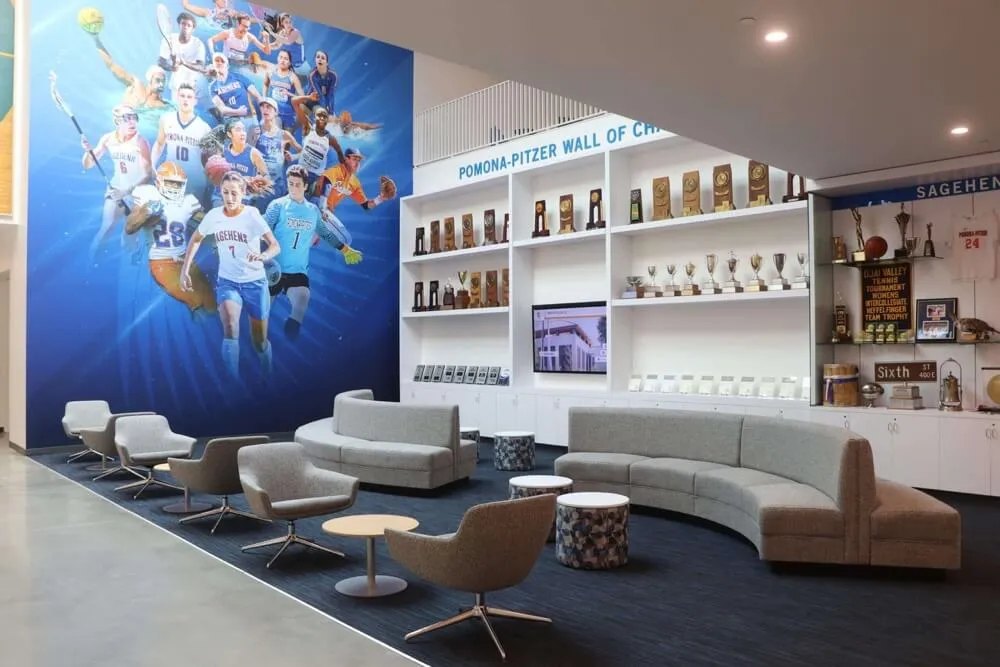
For administrators thinking about how to design spaces that honor diverse forms of student achievement alongside uniform and performance history, resources covering school lobby design ideas show how schools balance visual impact with recognition depth in high-traffic entrance areas.
Connecting Band History to School-Wide Recognition
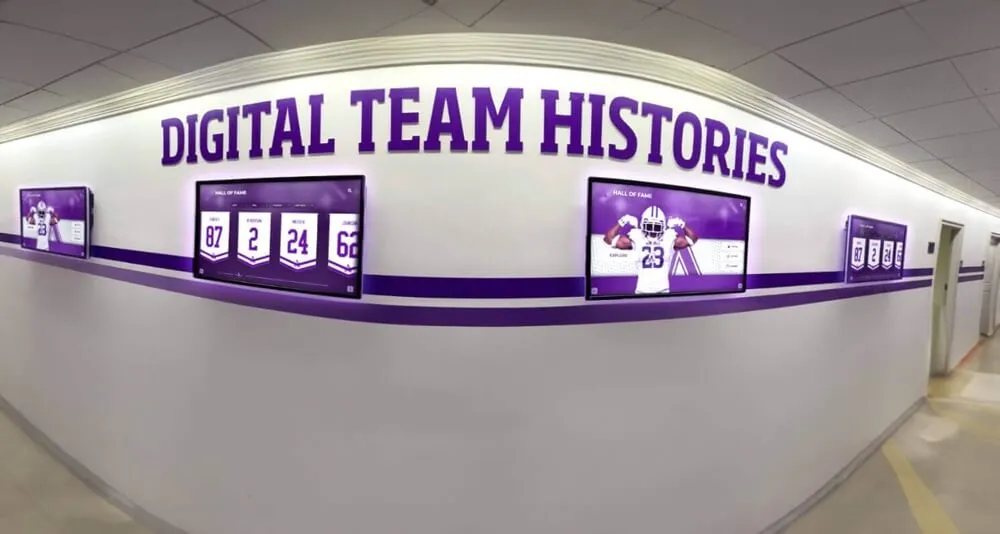
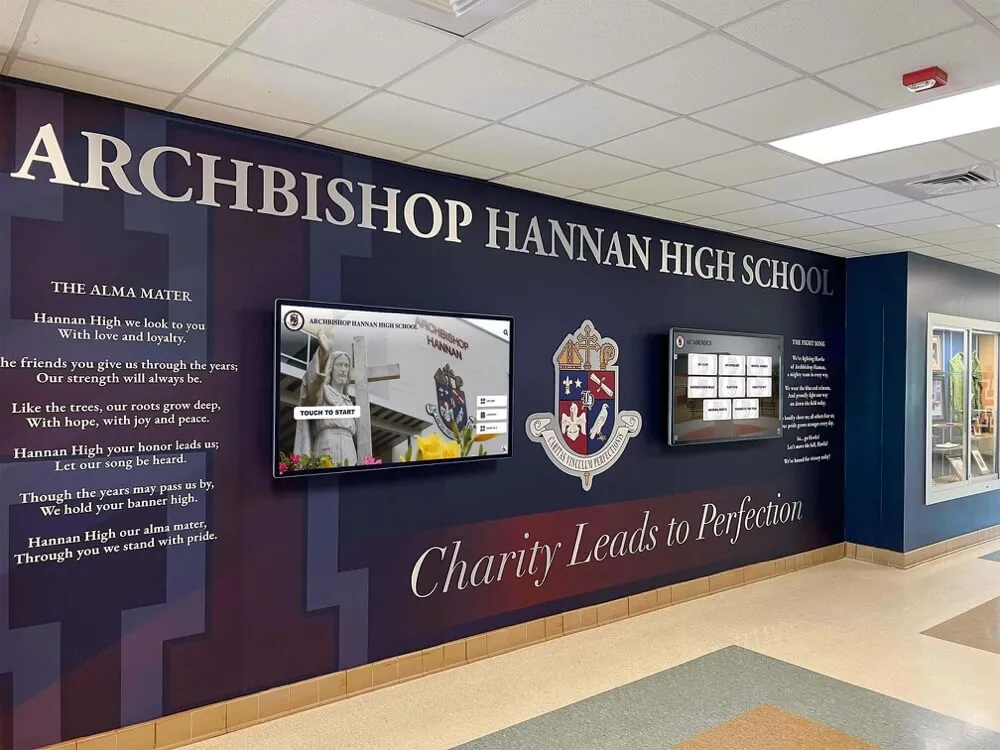
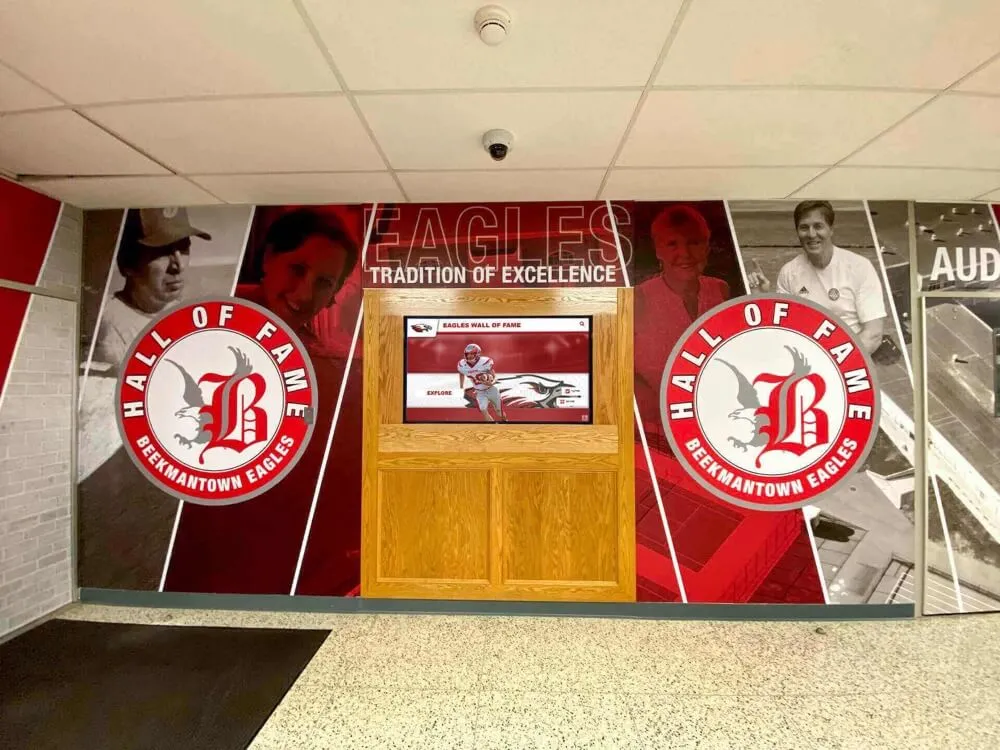
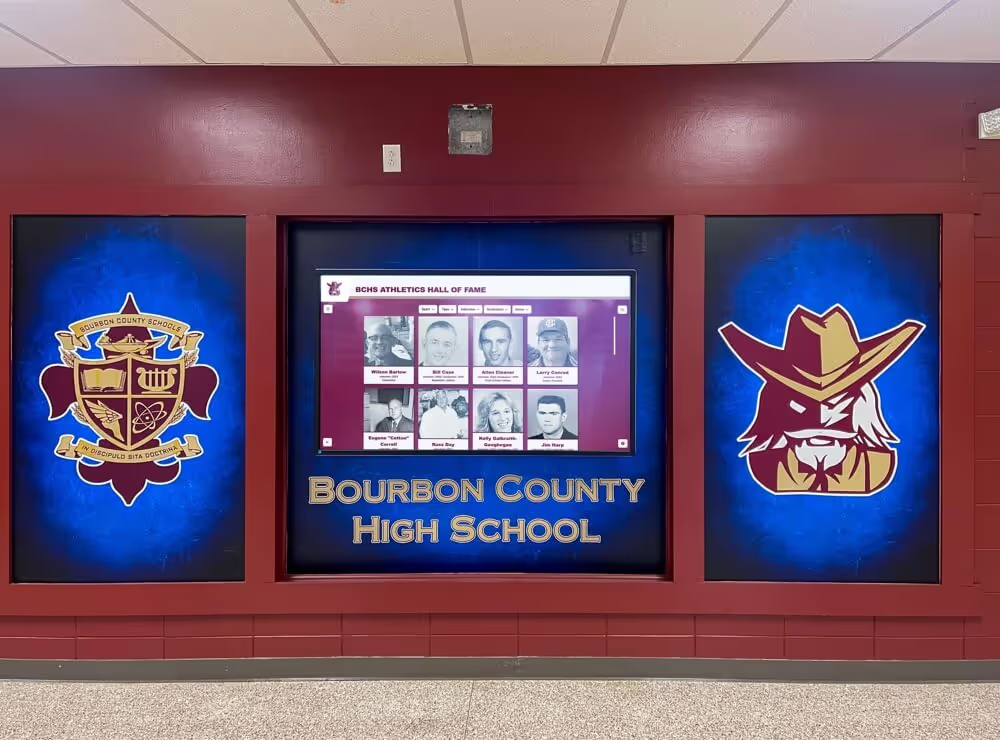
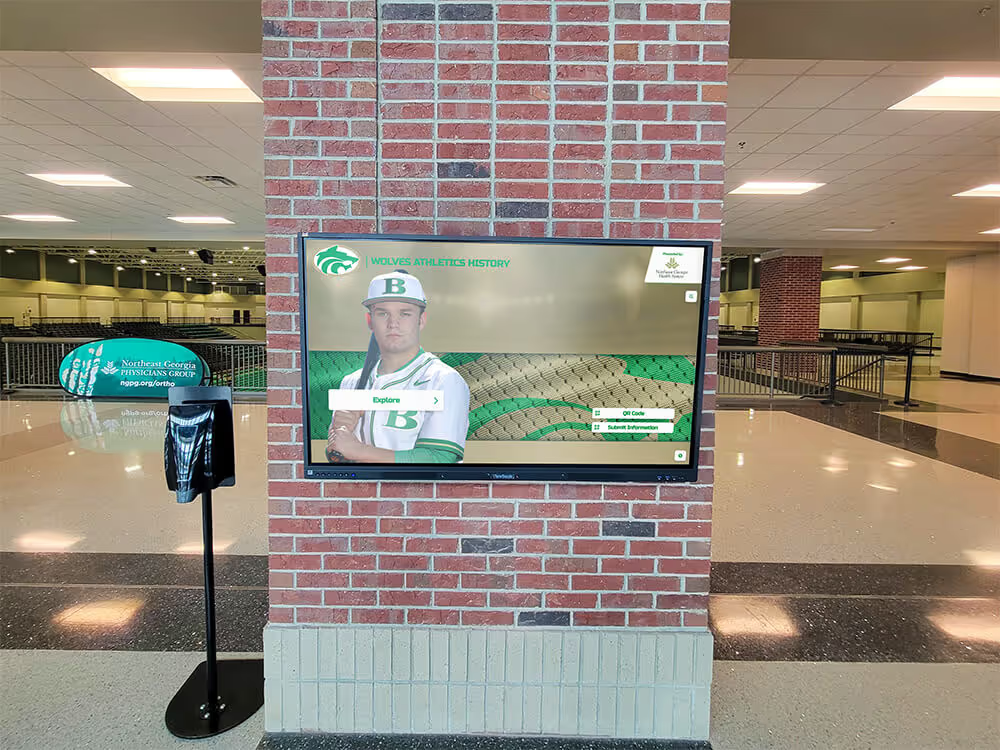
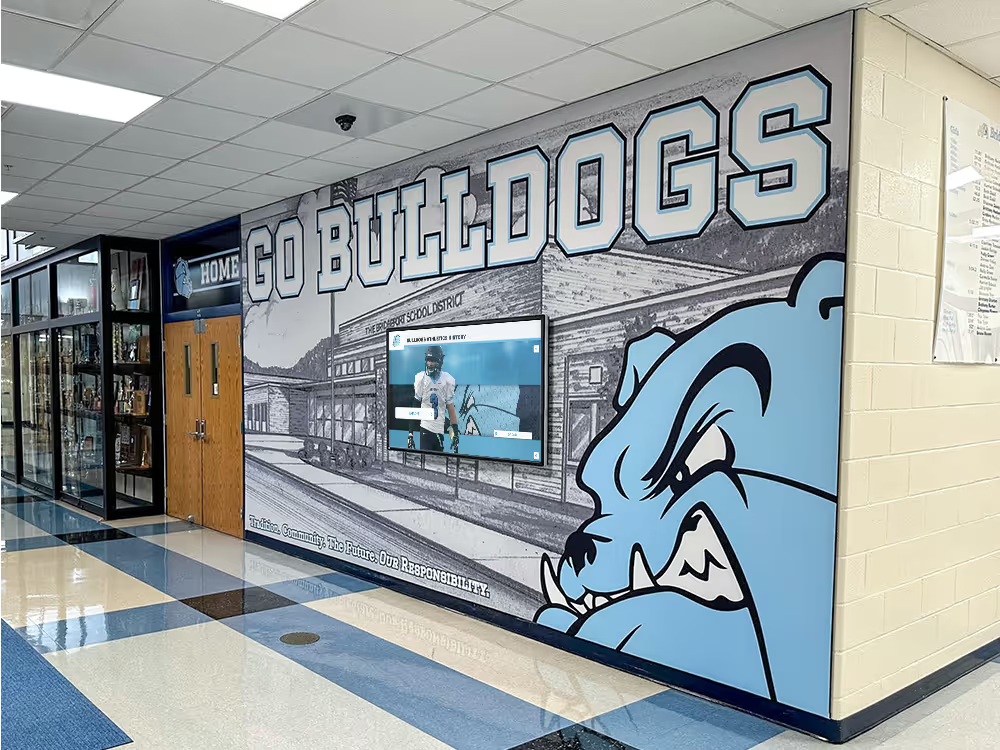
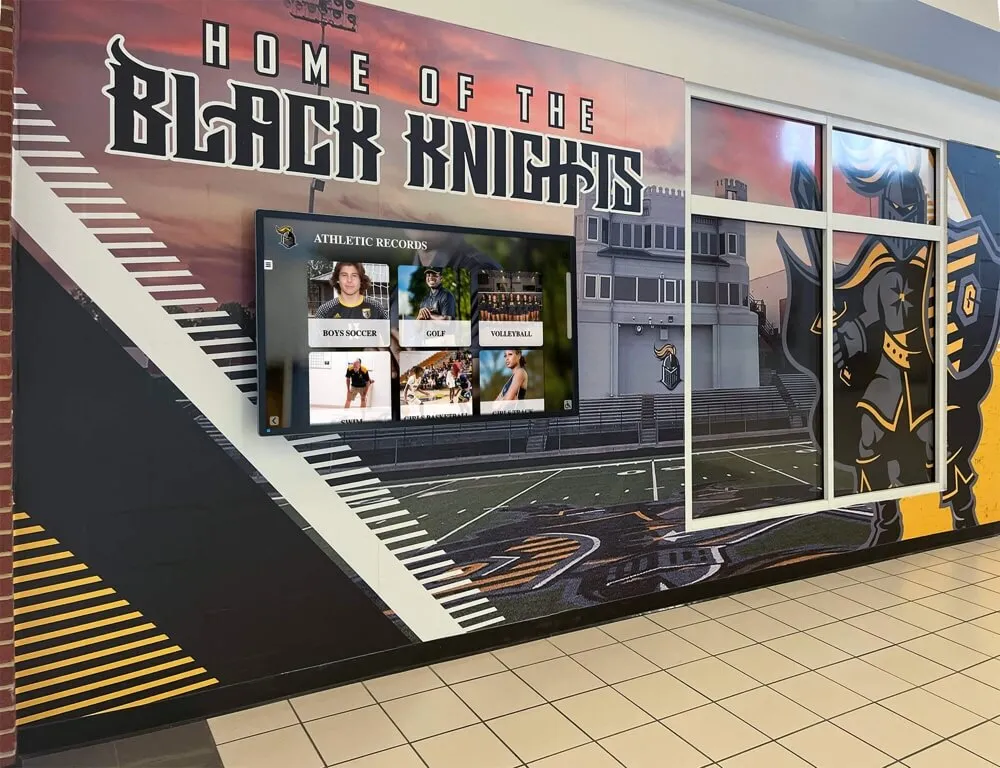
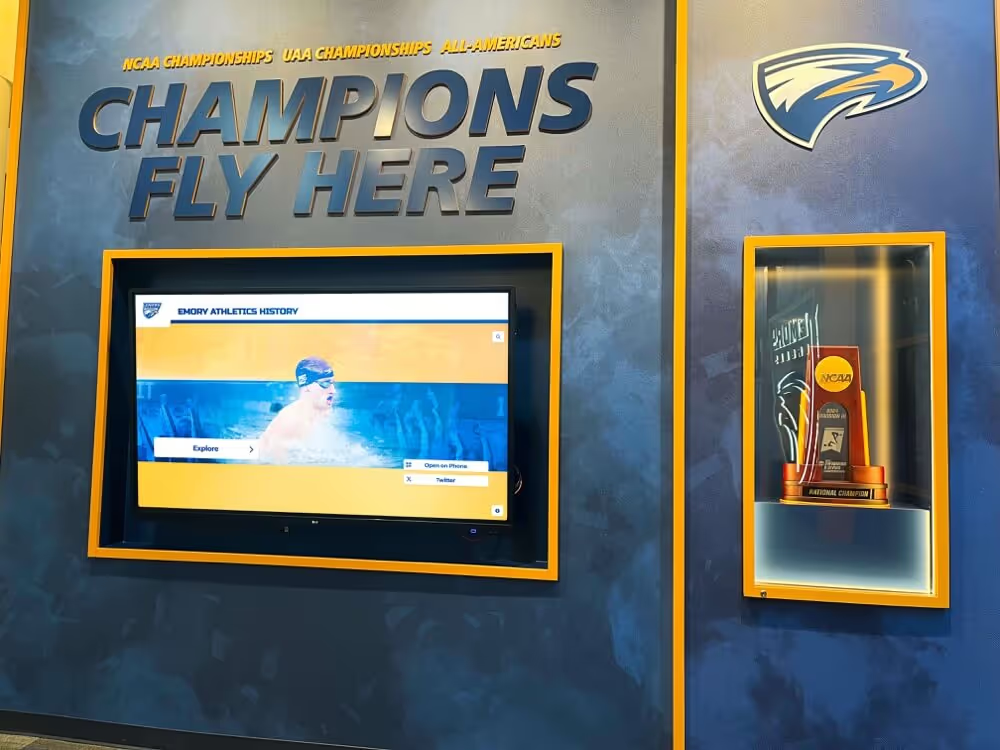
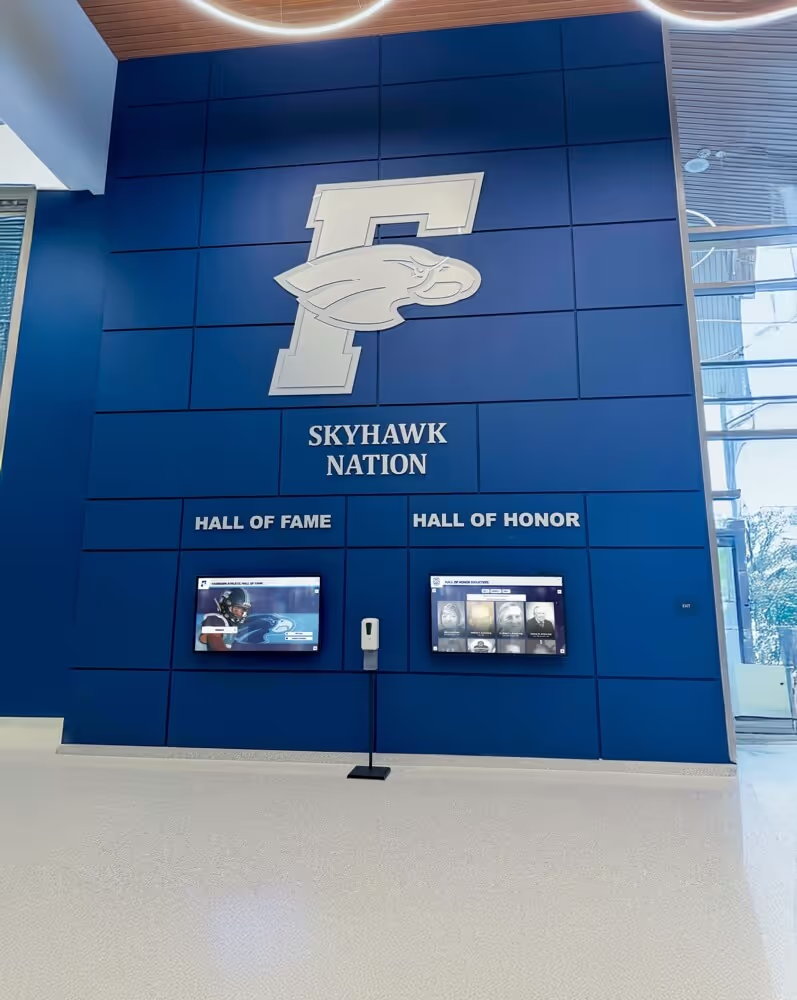
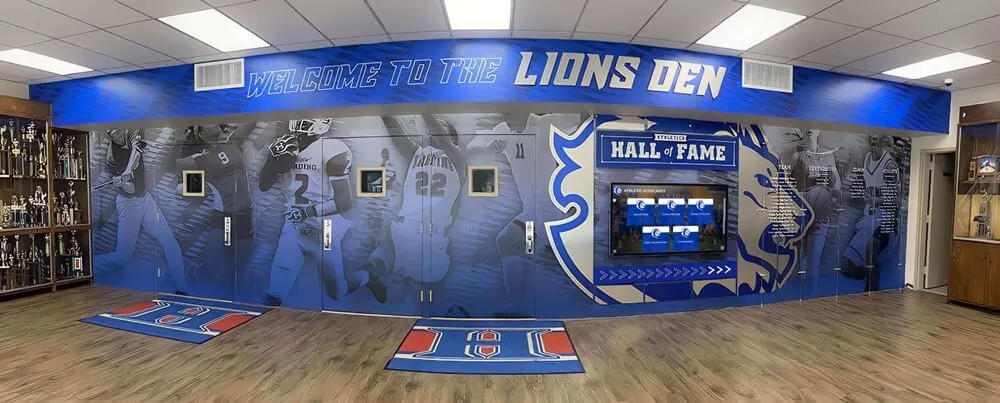
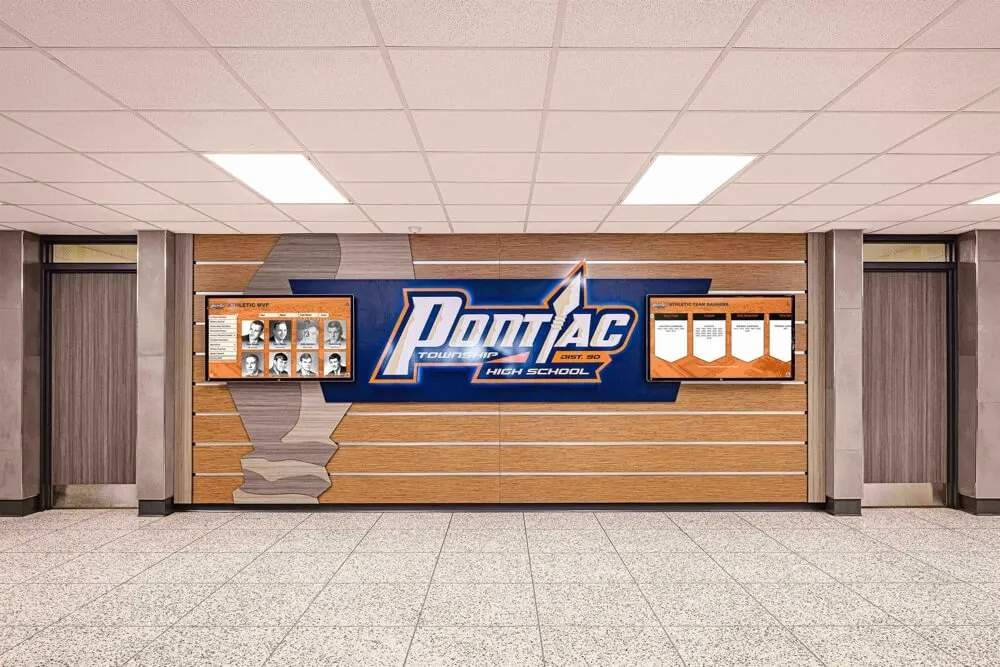
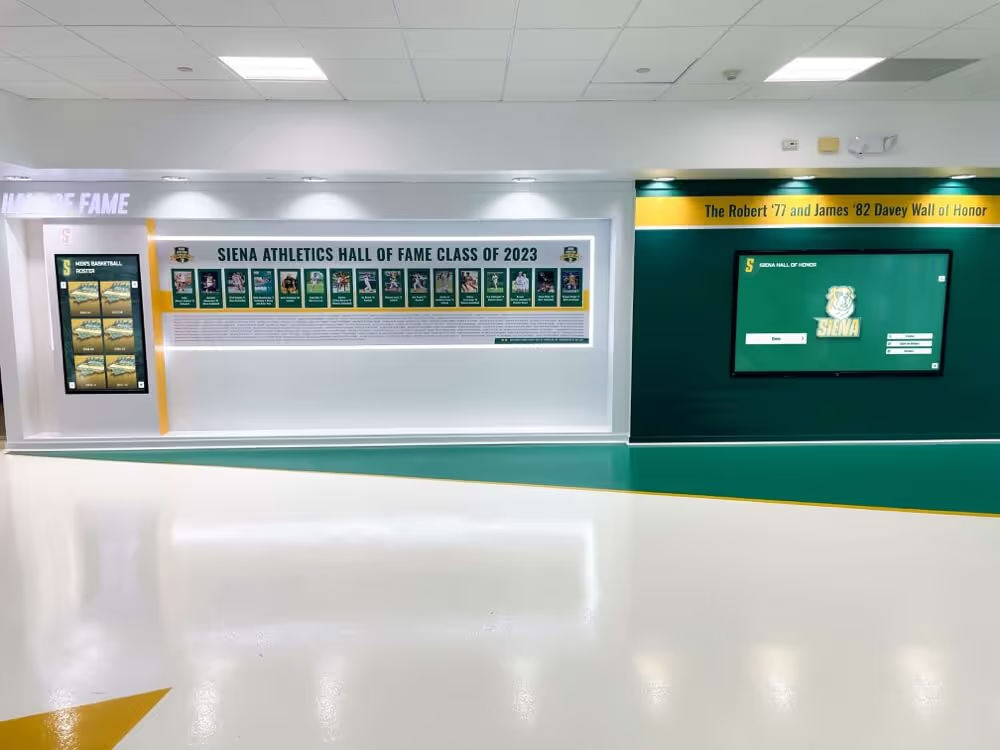
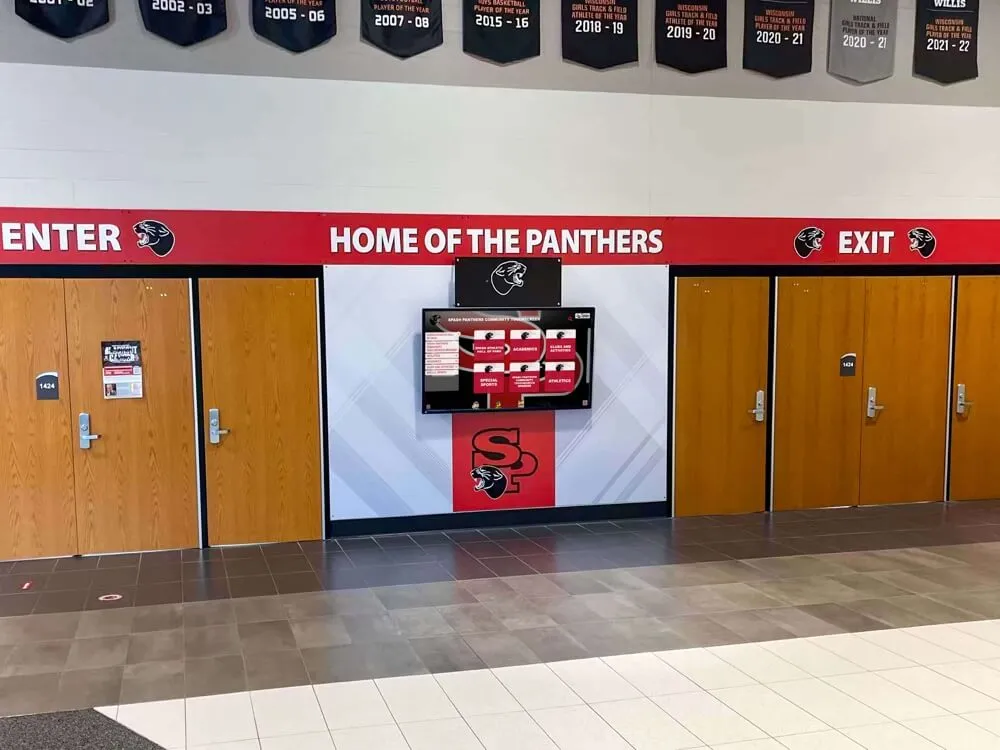
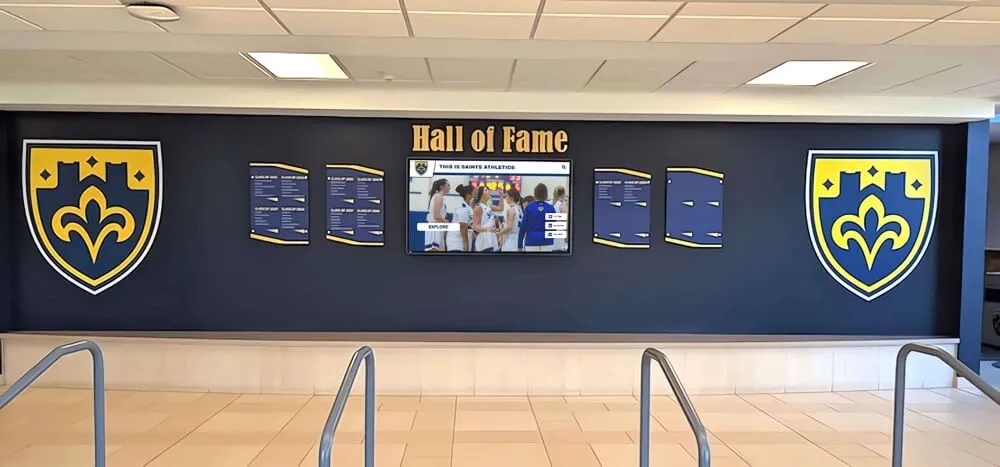
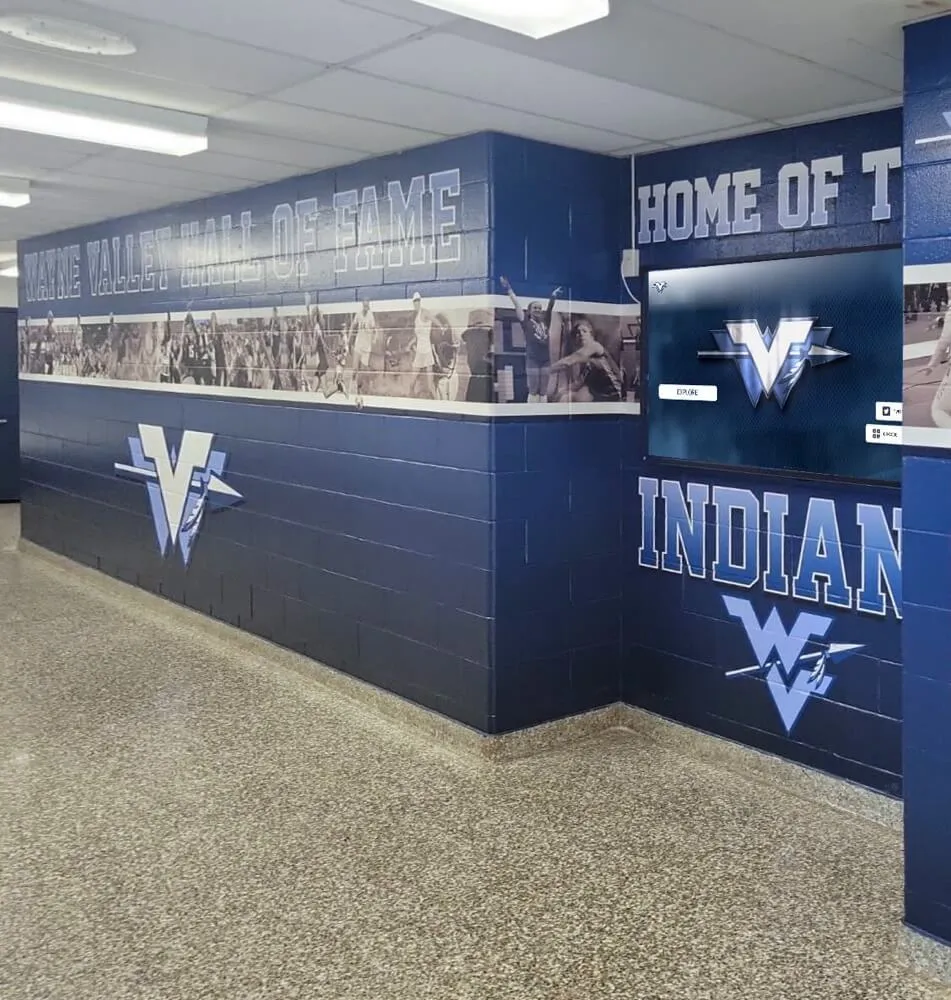
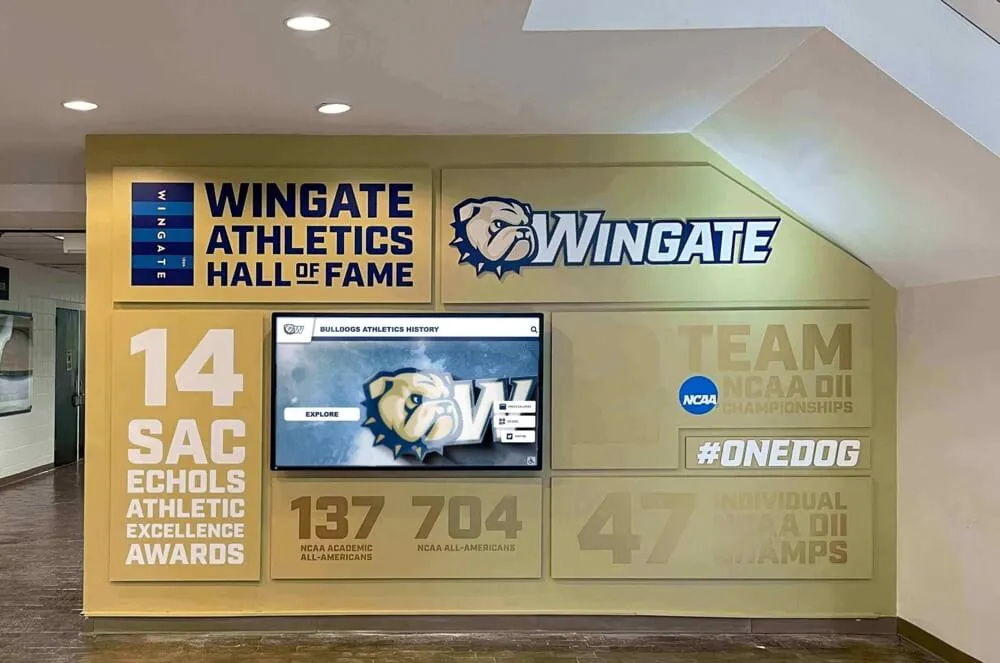
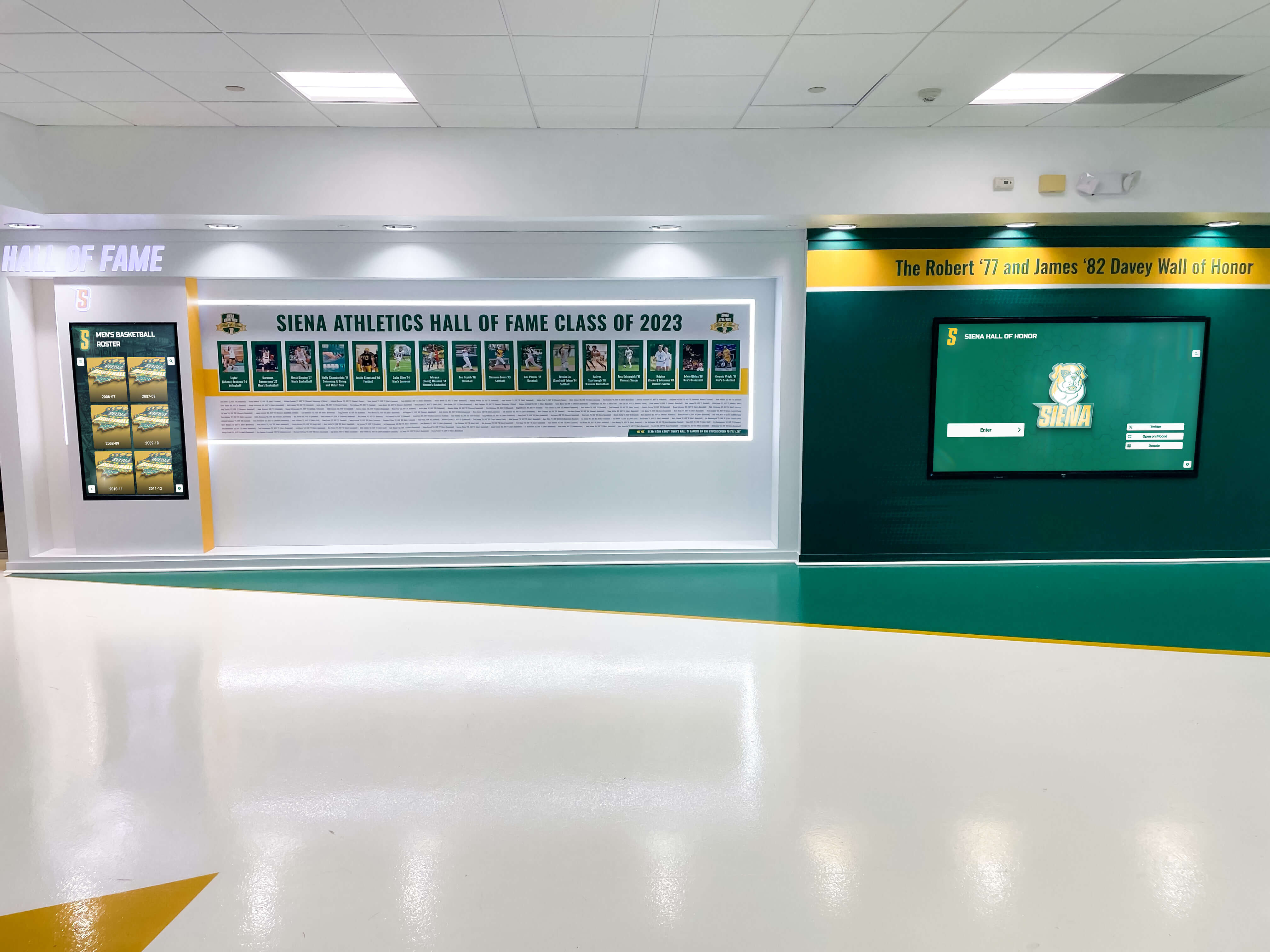
Many schools that have invested in digital halls of fame or recognition walls for athletics have found that including performing arts programs — band, choir, orchestra, theater — significantly increases the community value of those installations. Alumni who participated in band but not sports are more likely to engage with a recognition system that reflects their own school experience.
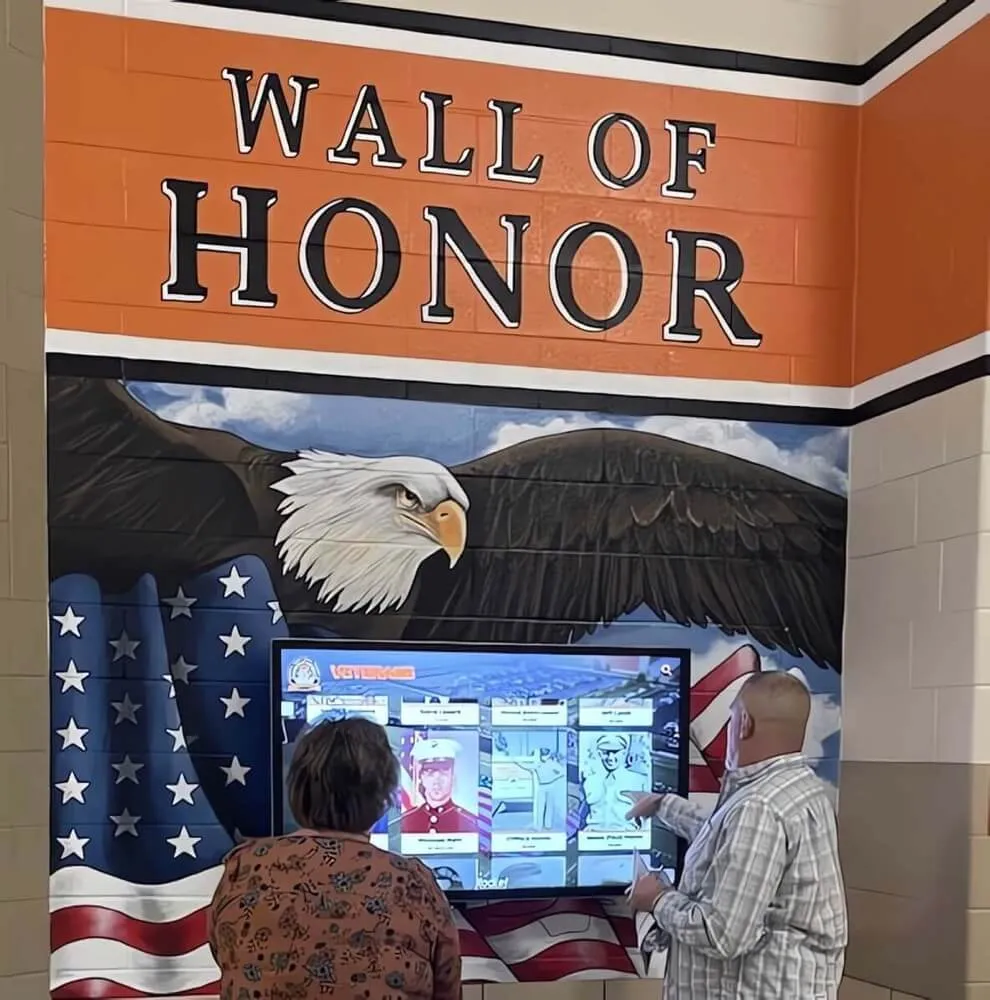
Schools that build scholastic walls of honor that genuinely reflect the full breadth of student achievement — athletic, academic, and performing arts — create recognition environments that resonate with a broader spectrum of their community. When band programs earn the same permanent, prominent recognition treatment as sports teams, the cultural message is clear: performing arts excellence is a point of institutional pride.
Digital Recognition for Performing Arts Programs
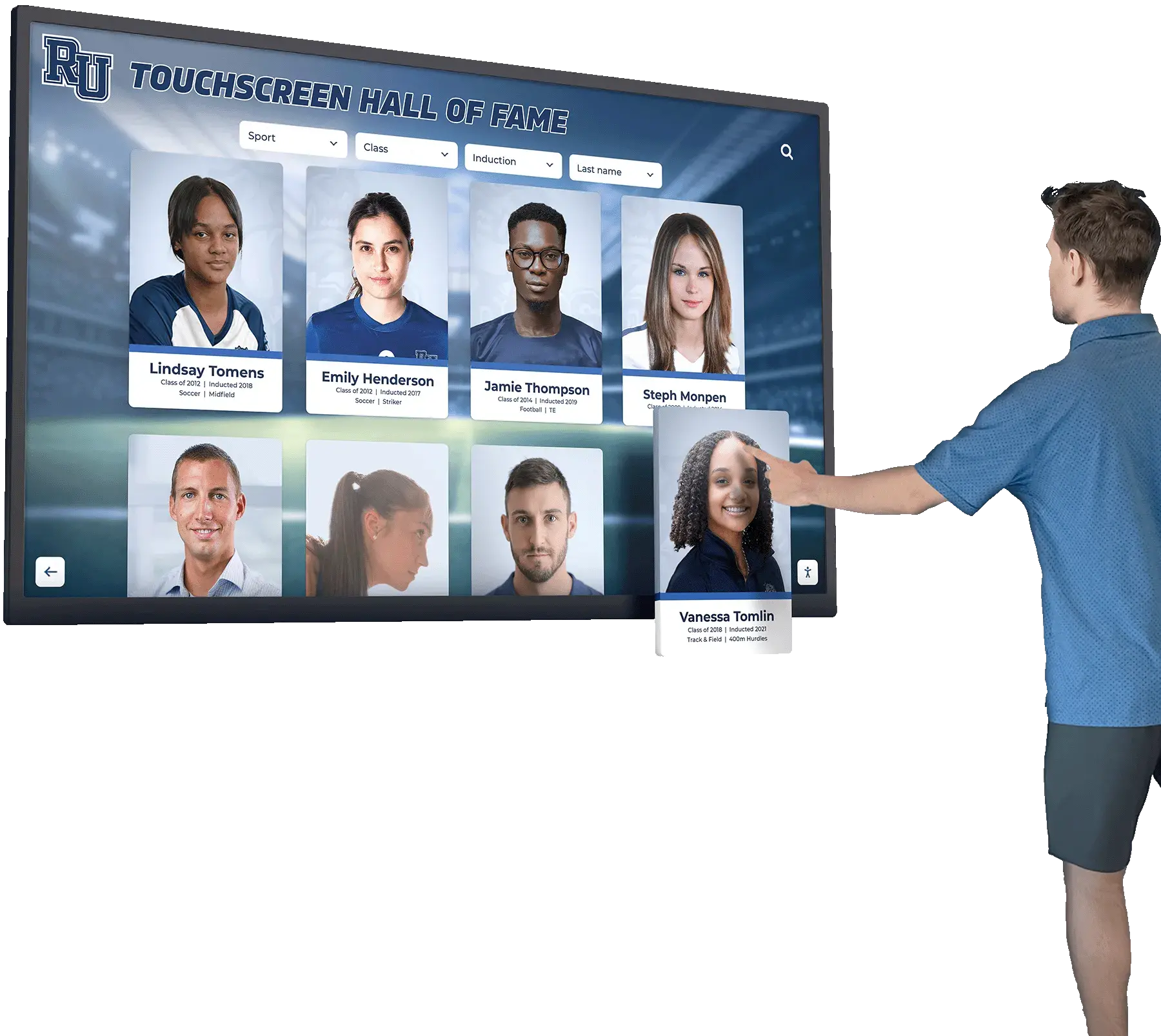
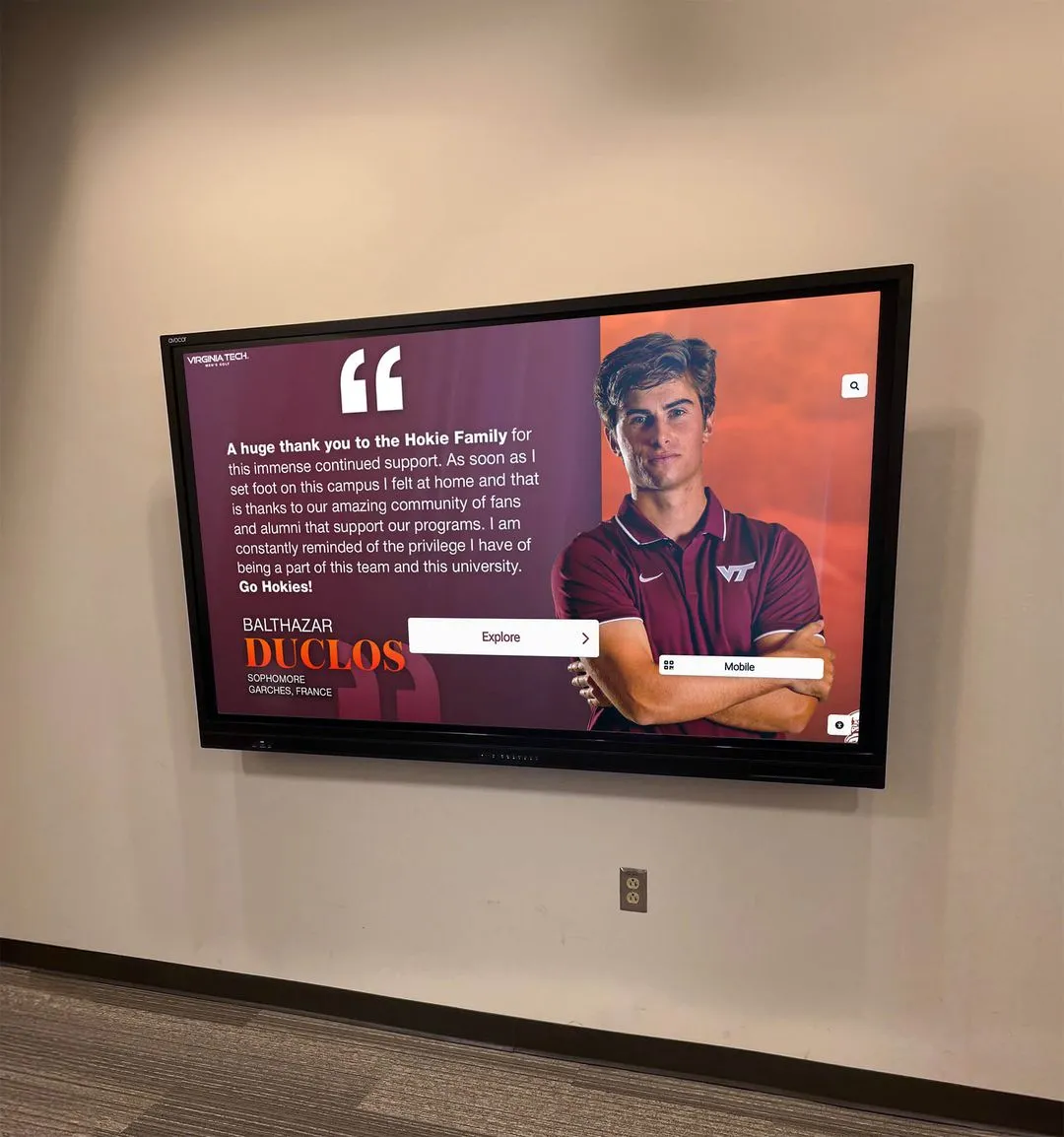
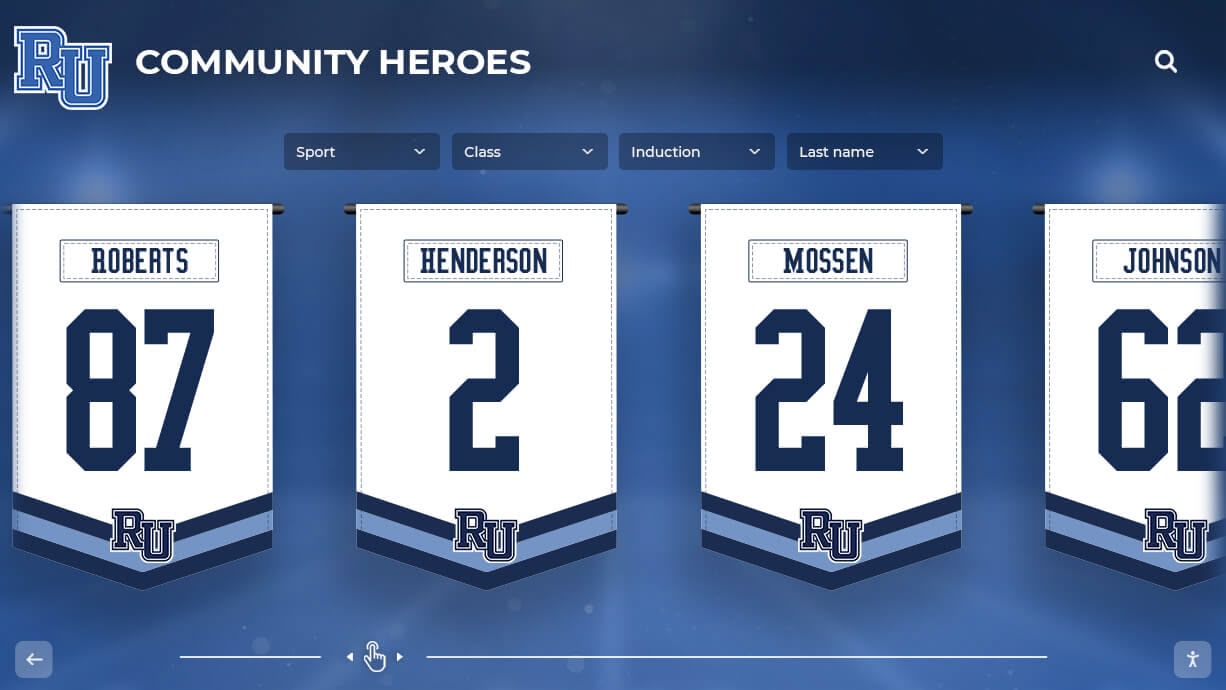
Physical displays of retired uniforms and championship banners represent just one layer of recognition for a program’s history. Schools that build dedicated digital recognition systems can tell a richer story — featuring individual band members’ achievement records, competition histories, director legacies, and media archives that no physical display case can contain.
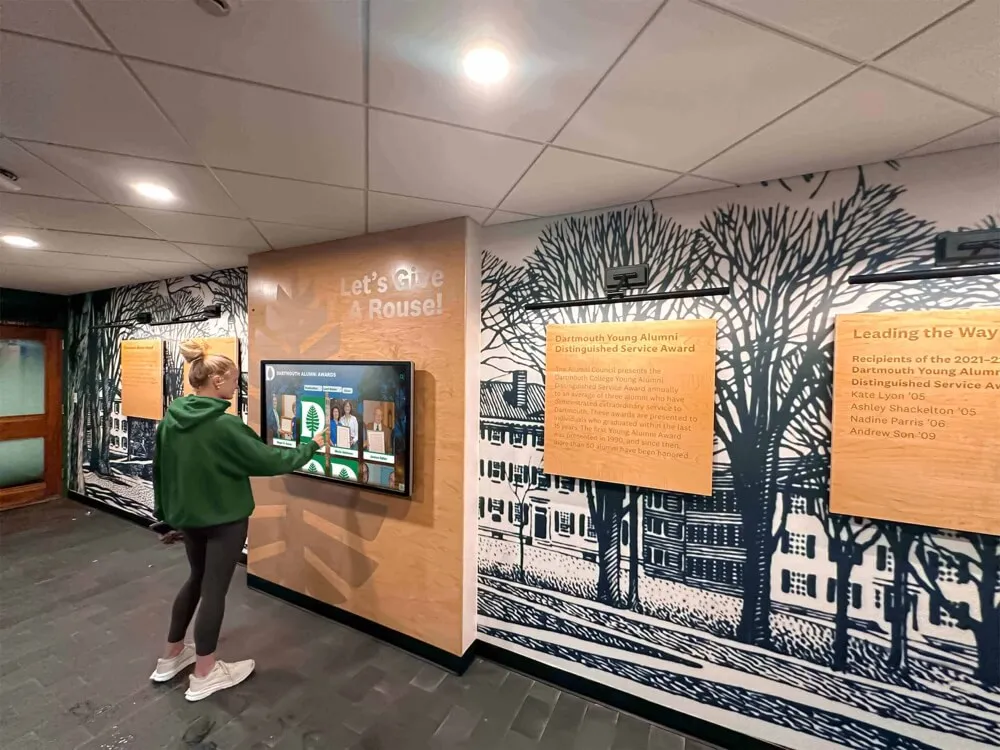
A musical wall of honor is a specific recognition format that schools use to highlight performing arts excellence alongside — and as the visual equal of — athletic achievement. When band programs have produced alumni who went on to careers in music, performance, or music education, an interactive recognition display can bridge those alumni achievements back to the school community, showing current students the real-world outcomes that emerge from the discipline and craft their program develops.
Schools that take a storytelling approach to recognition — sharing the narrative of who the band is, what they have achieved, and where their alumni have gone — make day-in-the-life school storytelling an ongoing part of how the community understands the program. This kind of storytelling is where uniform history, performance archives, and individual recognition come together into something more than a list of names.
Preserving historical photos, including early uniform designs and past performances, is a related challenge that many programs face as they build out their recognition programs. Resources on how to digitize old school yearbooks offer practical approaches to recovering and archiving historical imagery that often includes decades of band performance documentation.
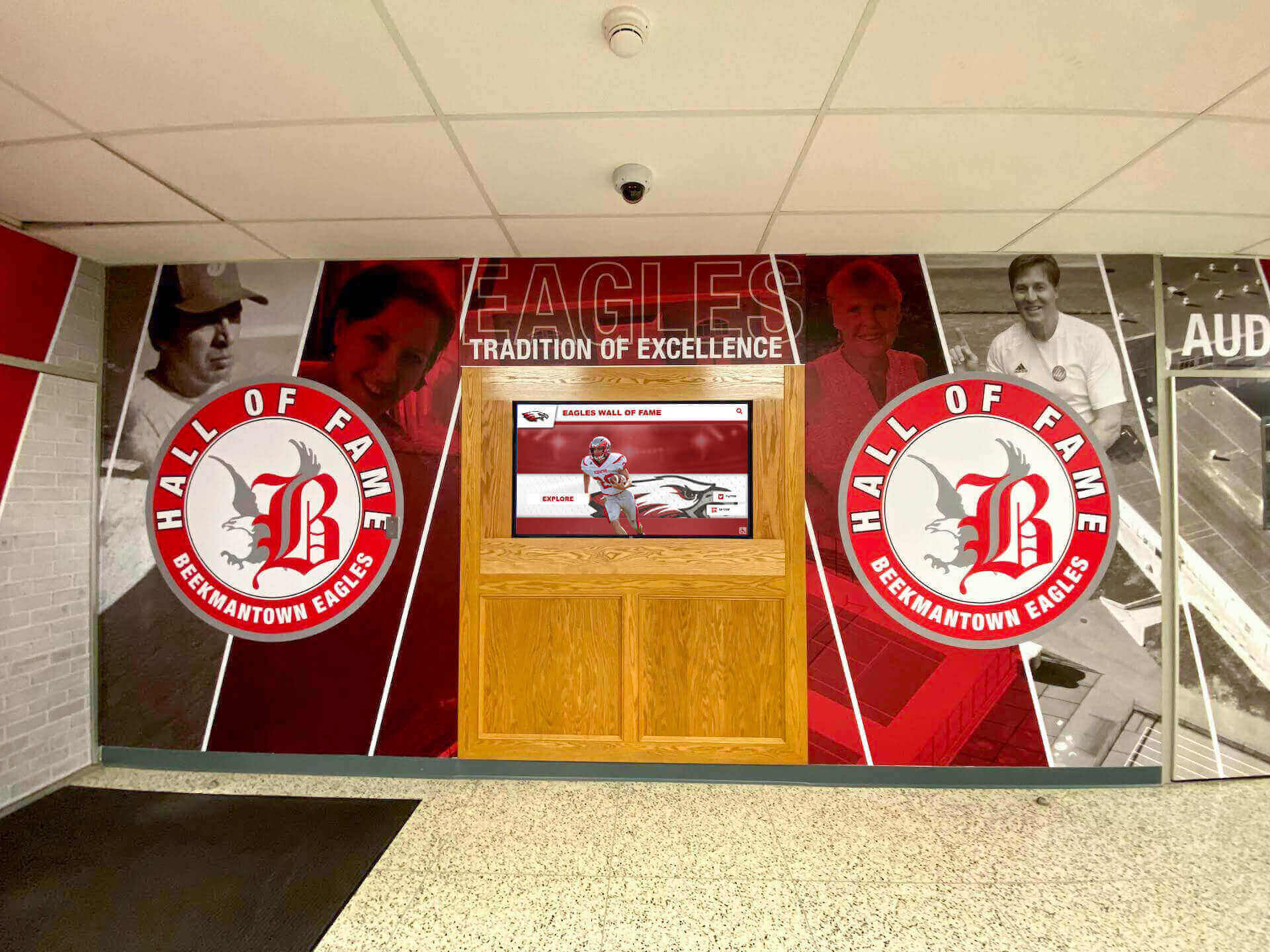
Programs that document their history through both physical artifacts — retired uniforms, championship trophies, performance photos — and digital archives give current students something genuinely powerful: proof that their program has a history worth continuing and standards worth upholding.
Conclusion
A marching band uniform is one of the most visible, durable, and meaningful investments a school music program makes. Done well, the uniform selection process produces garments that serve students for 10–15 years, represent the school’s identity with pride on every field, and eventually join the program’s physical history as retired artifacts that connect generations of students to a shared tradition.
Planning the right marching band uniform purchase requires clear cost expectations ($300–$600 or more per student for a complete set), an understanding of the leading manufacturers’ strengths, intentional customization decisions that prioritize long-term identity over short-term trends, and a realistic funding strategy built around the program’s timeline and community resources. Caring for uniforms properly across their lifespan protects the investment and ensures that every student who wears them represents the program with the same pride as those who wore the uniform on opening day.
When programs treat their history — including the uniforms, the performances, and the students who built the program’s identity — as something worth preserving and displaying, they create a recognition culture that motivates current students and honors the generations who came before them. Rocket Alumni Solutions helps schools build the digital recognition infrastructure to do exactly that — creating interactive displays that showcase performing arts history, honor exceptional students, and give band programs the lasting recognition they have earned.