



Key Takeaways
Complete guide to high school letterman jackets covering how to establish awarding criteria, design custom jackets, run meaningful ceremonies, and build modern recognition programs that honor every athlete who earns one.
The moment a student-athlete earns the right to wear a letterman jacket is one of the most meaningful milestones in high school athletics. That iconic wool-and-leather garment, bearing the school’s chenille letter and a growing collection of achievement patches, has represented athletic excellence in American schools for well over a century. Yet behind every jacket is a system that schools must deliberately design, consistently administer, and actively celebrate—a system that determines who earns recognition, what that recognition looks like, and how it endures beyond a single athletic season.
This guide walks athletic directors, coaches, and school administrators through every dimension of the letterman jacket high school experience: establishing fair and sport-specific awarding criteria, working with vendors to design jackets that reflect school identity, running ceremonies that make the moment meaningful, and building broader recognition programs that extend letter winner visibility far beyond the physical garment itself.
Why Letterman Jackets Still Matter in High Schools Today
In an era of digital highlights, social media recognition, and streaming athletic coverage, the letterman jacket remains one of the most powerful recognition artifacts a high school can bestow. Its staying power comes from something technology cannot easily replicate: a wearable, visible, daily declaration of earned achievement.
When a student walks into school wearing their letterman jacket, they carry their athletic story with them. Younger students see what achievement looks like. Parents recognize the effort it represents. Teachers understand the commitment behind it. And fellow letter winners share an unspoken acknowledgment of a common standard met.

The jacket also serves as a connecting thread across generations. Alumni who return to their former schools decades later often walk the hallways wearing those same jackets—because the achievement never expires. That generational continuity is rare in high school recognition, and it’s worth protecting through consistent, thoughtful administration of the awarding process.
For schools looking to strengthen their broader athletic recognition programs, recognizing famous alumni and letter winners through both physical traditions and modern displays creates the kind of institutional pride that sustains program culture across decades.
Establishing Awarding Criteria: The Athletic Director’s Framework
The most important decision a school makes about letterman jackets is not design—it is standards. Fair, transparent, and consistently enforced criteria determine whether the jacket carries meaningful weight or becomes diluted recognition that athletes don’t value.
Core Principles for Letterman Jacket Criteria
Clarity: Every athlete should understand exactly what they need to accomplish to earn a letter before the season begins. Vague criteria like “significant contribution” invite inconsistency and perceived favoritism. Specific thresholds—number of varsity games played, statistical benchmarks, coach evaluations using defined rubrics—create accountability.
Consistency: Criteria should apply equally across all athletes within a sport. Exceptions, when made, should follow a documented process rather than ad hoc coach judgment. If a season-ending injury prevents an athlete from meeting a participation threshold they were on track to meet, many schools apply a “hardship rule” that evaluates the athlete’s contribution up to the point of injury.
Proportionality: Standards should reflect the competitive demands of each sport. A starting quarterback in football faces different evaluation measures than a bench reserve who plays in half the season’s games. Many schools set participation-based floors (e.g., play in at least 50% of varsity competitions) while also recognizing athletes who start consistently, contribute in championships, or are selected by coaches for exceptional performance despite limited playing time.
Academic Integration: Most high schools require athletes to maintain academic eligibility as a condition of letter eligibility. Some schools elevate this to a formal requirement: athletes must finish the season in good academic standing, not merely avoid disqualification. This reinforces that letterman recognition represents the full student-athlete, not just athletic performance.
Sport-Specific Awarding Approaches
Different sports demand different criteria frameworks. Here are common approaches schools use across major athletic programs:
Football: Participate in a defined minimum number of varsity game quarters (many schools use 50% of possible playing time), complete the season without leaving in poor standing, and demonstrate commitment through full practice participation. Special teams players, backup specialists, and scout team contributors may qualify through coach nomination when the participation threshold is difficult to meet in specific roles.
Basketball: Play in a minimum number of varsity games (commonly 50-60% of the schedule). Starting status is not required, but consistent availability and practice engagement are. Some programs add a specific scoring or minutes-played threshold for athletes who see limited game action.
Baseball and Softball: Appear in a set number of varsity innings or games, or receive coach designation for exceptional contribution. Pitchers may meet a separate innings-pitched standard. Academic eligibility must be maintained throughout the season.
Track and Field: Earn a defined number of points in varsity meets, or qualify for and compete in post-season competition. Multi-event athletes may meet aggregate thresholds across their disciplines. For track and field recognition to feel meaningful, standards should reflect the depth and competition level within each event specialty.
Soccer: Play a minimum number of varsity halves or full games (typically 50% of available time). Goalkeepers may qualify through saves or games started at the varsity level. End-of-season academic review confirms continued eligibility.
Cross Country and Swimming: Meet a points threshold at varsity meets, qualify for regional or state competition, or receive coach nomination for athletes who contribute consistently despite not placing at the top of fields. Time-improvement standards sometimes supplement placement-based criteria for developmental athletes.
Volleyball and Wrestling: Similar participation-based thresholds apply, with special consideration for athletes in positions where varsity time is structurally limited (libero backups in volleyball, weight class specialists in wrestling).
Formalizing Criteria in a Written Policy
Athletic directors should document letterman criteria in a formal athletic policy accessible to athletes, parents, and coaches before each season. This document should specify:
- The minimum participation threshold for each sport
- Academic eligibility requirements and their evaluation timeline
- The process for hardship exceptions and who makes those determinations
- How multi-sport athletes accumulate letters and additional patches
- The timeline for notifying athletes of letter status at season’s end
- The process for ordering letters and jackets through approved vendors
Publishing this policy on the school’s athletics website and distributing it at the season-opening meeting eliminates ambiguity and protects athletic directors when close-call decisions arise.
Designing the Letterman Jacket: Working With Vendors and Establishing School Standards
Once criteria are established, the physical jacket design becomes the next critical decision. A well-designed letterman jacket communicates school identity immediately, holds up through years of daily wear, and provides enough structure to display a growing collection of patches coherently.
Key Design Elements
Body and Sleeve Materials: Traditional letterman jackets use melton wool for the body and genuine or synthetic leather for the sleeves. Wool bodies in school primary colors—navy, maroon, forest green, royal blue—provide the classic look students and alumni recognize. Leather sleeve colors contrast or complement the body, typically in white, black, tan, or a matching school color. Some modern vendors offer performance fabric alternatives for athletes in warmer climates, though these sacrifice some of the traditional aesthetic.
The Chenille Letter: The school letter—typically 5 to 7 inches tall—anchors the jacket’s left chest. Schools should establish a standard letter design rather than allowing athletes to choose their own styles, ensuring visual consistency across all letter winners. The chenille material (thick, fuzzy yarn stitching) should be produced in school primary colors with a secondary color border or outline. Some schools add chenille mascot images alongside the letter.
School Color Combinations: The most recognizable letterman jackets commit fully to school colors rather than approximating them. Athletic directors should verify that vendor color offerings match official school Pantone or color standard specifications to prevent mismatches across production runs and years.
Standard Patch Positions: Establish documented placement rules for all patches so jackets maintain visual coherence across different athletes and graduating classes. Common conventions:
- Left chest: School letter (primary position)
- Right chest: Athlete’s name or graduation year
- Right sleeve: Sport-specific patches, championship bars, all-region or all-state acknowledgments
- Left sleeve: Additional sport patches for multi-sport athletes
- Back: Reserved for significant achievements like state championships or optional custom personalization
Lining Options: Interior linings in school colors with mascot or school name details add a finishing touch. Some schools commission custom linings for varsity jackets that include the school seal, motto, or a specific design celebrating program history.
Selecting Approved Vendors
Schools should establish a short list of approved vendors rather than allowing athletes to order from any source. Approved vendor lists ensure:
- Consistent material quality across all jackets
- Accurate school color matching
- Compliant patch and letter designs
- Reasonable pricing accessible to families
- Reliable production timelines aligned with award ceremonies
Many schools negotiate group rates with vendors, particularly for first-time letter winners, making the jacket purchase more accessible to families across income levels. Some programs apply booster club funds or athletic department budgets to subsidize first-jacket costs.
Making the Award Ceremony Meaningful
The moment a student-athlete receives their letter is the emotional core of the letterman jacket tradition. A well-designed ceremony transforms a jacket into a milestone—something athletes remember and families attend to witness.
Ceremony Formats That Work
Season-End Banquets: Holding a formal banquet at season’s end creates a dedicated occasion for letter presentation. A venue beyond the school gym, a sit-down meal, and family invitations signal that this recognition deserves genuine celebration rather than a brief hallway moment. Coaches can share specific remarks about each letter winner, personalizing the recognition beyond simply calling names.
Halftime or Pre-Game Ceremonies: Presenting letters during a home game brings the school community into the recognition moment. Parents in the stands, teammates on the sideline, and student sections present amplify the ceremony in ways a closed banquet cannot. This format works particularly well for fall sports with strong community attendance.
Assembly Presentations: Whole-school assemblies dedicate community attention specifically to letter winner recognition. Younger students witness older athletes receiving recognition, creating visible aspirational goals for those still working toward their own letters.
Multi-Sport Award Nights: Some schools host a single annual ceremony recognizing letter winners across all sports. This unified approach creates community across athletic programs and elevates individual recognition through shared celebration.
Elements That Elevate Recognition Moments
Beyond the format itself, specific ceremony elements make letter presentations more memorable:
Personal remarks: Coaches delivering one to two sentences about each athlete—a specific moment, a demonstrated quality, a defining characteristic—transform generic recognition into personal acknowledgment. This requires preparation but creates ceremony memories that athletes carry for decades.
Family involvement: Inviting parents, grandparents, or siblings to personally present the letter or jacket creates shared family memories tied to athletic achievement. Some ceremonies specifically designate parents as the presenters rather than coaches.
Program documentation: A printed or digital program listing all letter winners by sport creates a tangible record families keep. Including athlete photos and brief achievement summaries elevates the document from logistics sheet to keepsake.
Multi-year recognition: Acknowledging athletes earning letters for second, third, or fourth years—often through additional chevrons or bars on their jackets—publicly celebrates sustained commitment across high school careers.
For schools looking to build spirit week traditions around these recognition moments, connecting athletic award ceremonies to broader school identity events reinforces the cultural significance of letter winning. Comprehensive spirit week planning often incorporates athlete recognition as a centerpiece activity rather than a standalone event.
Beyond the Jacket: Building a Complete Recognition Program for Letter Winners
The letterman jacket is powerful precisely because it’s worn daily in community view. But recognition shouldn’t live only in the garment. Schools that build layered recognition programs create documentation that outlasts the jacket and reaches audiences the jacket alone cannot.
Physical Recognition Infrastructure
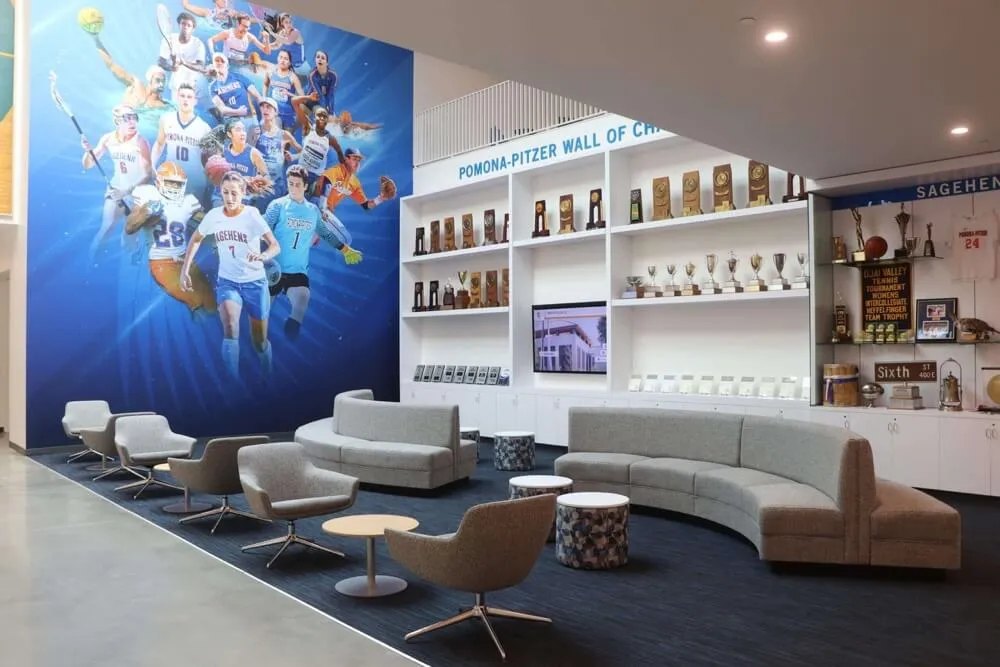
Trophy Cases and Display Cases: A dedicated letterman or letter winner display case in the main athletic hallway provides permanent visual recognition that every student passes regularly. Memorabilia display cases for schools can include historical jacket examples, championship hardware, photos of letter winner ceremonies across decades, and name plaques documenting who earned recognition each year.
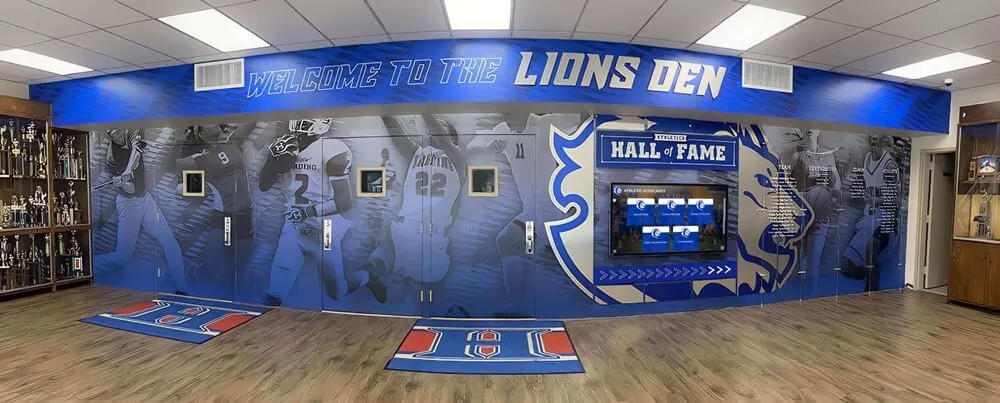
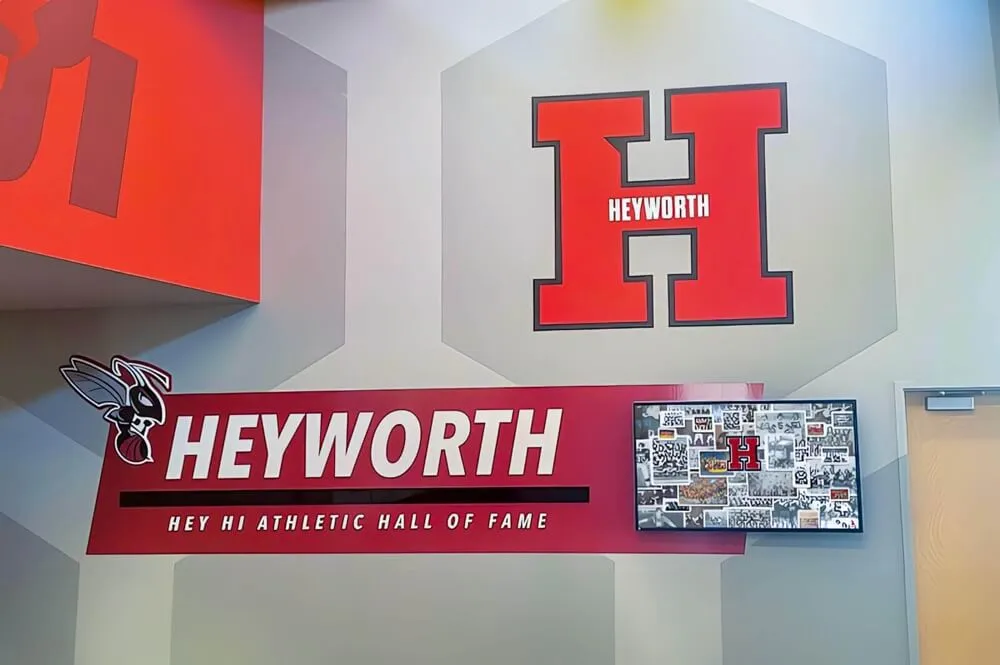
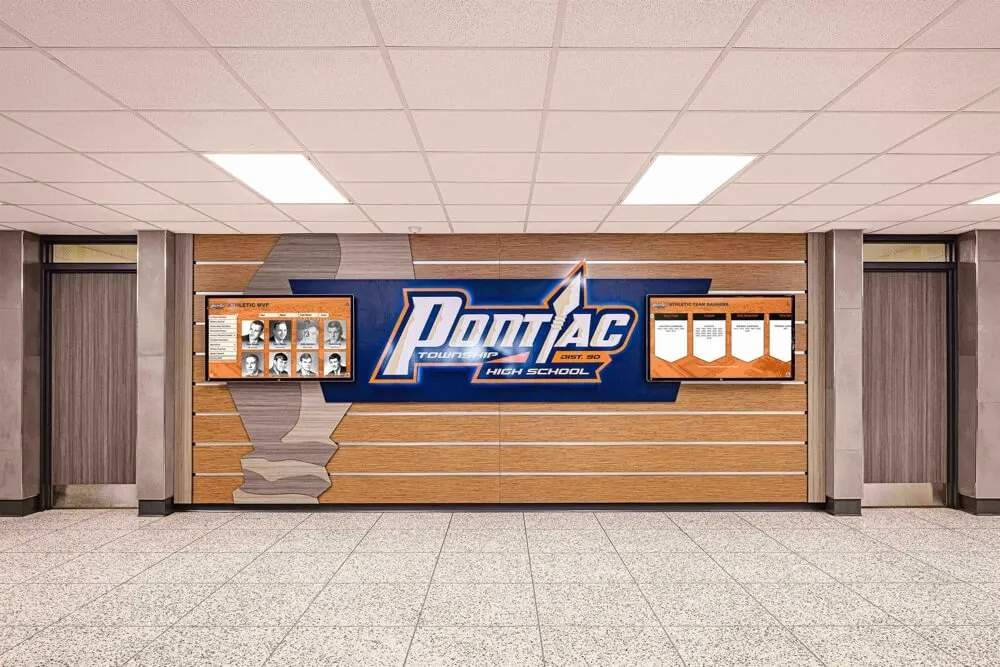
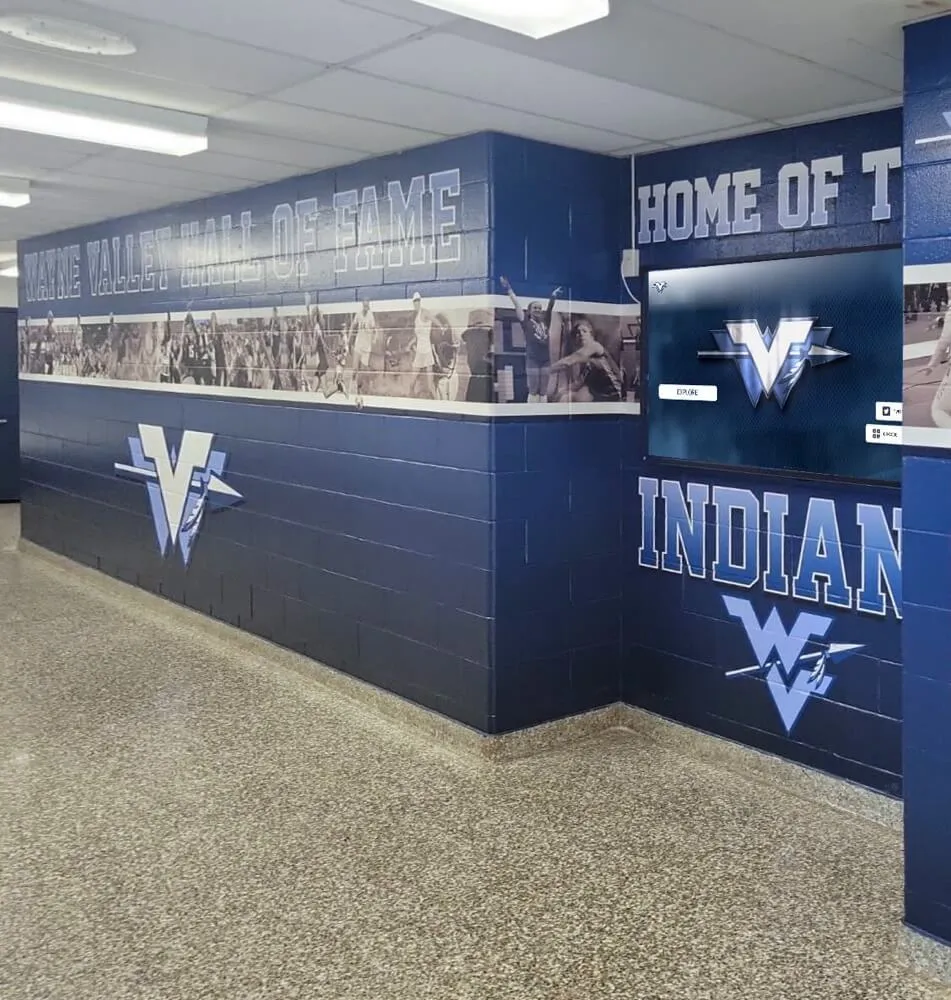
Hallway Recognition Walls: Dedicated wall sections listing letter winners by year and sport—displayed prominently in athletic corridors or near gymnasium entrances—create the kind of visible historical record that connects current athletes to program legacy. Name-based displays are low-maintenance but powerful, particularly when maintained across decades.
Championship Banners: For teams whose letter winners also contributed to championships, custom championship banners in the gymnasium or fieldhouse display collective achievement alongside individual jacket recognition, creating community between letter winners who shared championship seasons.
All-Region and All-State Boards: Letter winners who advance to all-region or all-state recognition deserve additional visibility beyond the standard display. Dedicated all-region recognition boards document the school’s most accomplished performers across seasons, providing aspirational targets for current athletes while honoring those who reached the highest recognition levels.
Digital Recognition as a Permanent Complement
Physical displays carry an inherent limitation: they exist in one place, serve people who visit that place, and face practical constraints on how much information they can hold. Digital recognition solves these problems while preserving everything that makes letterman recognition meaningful.
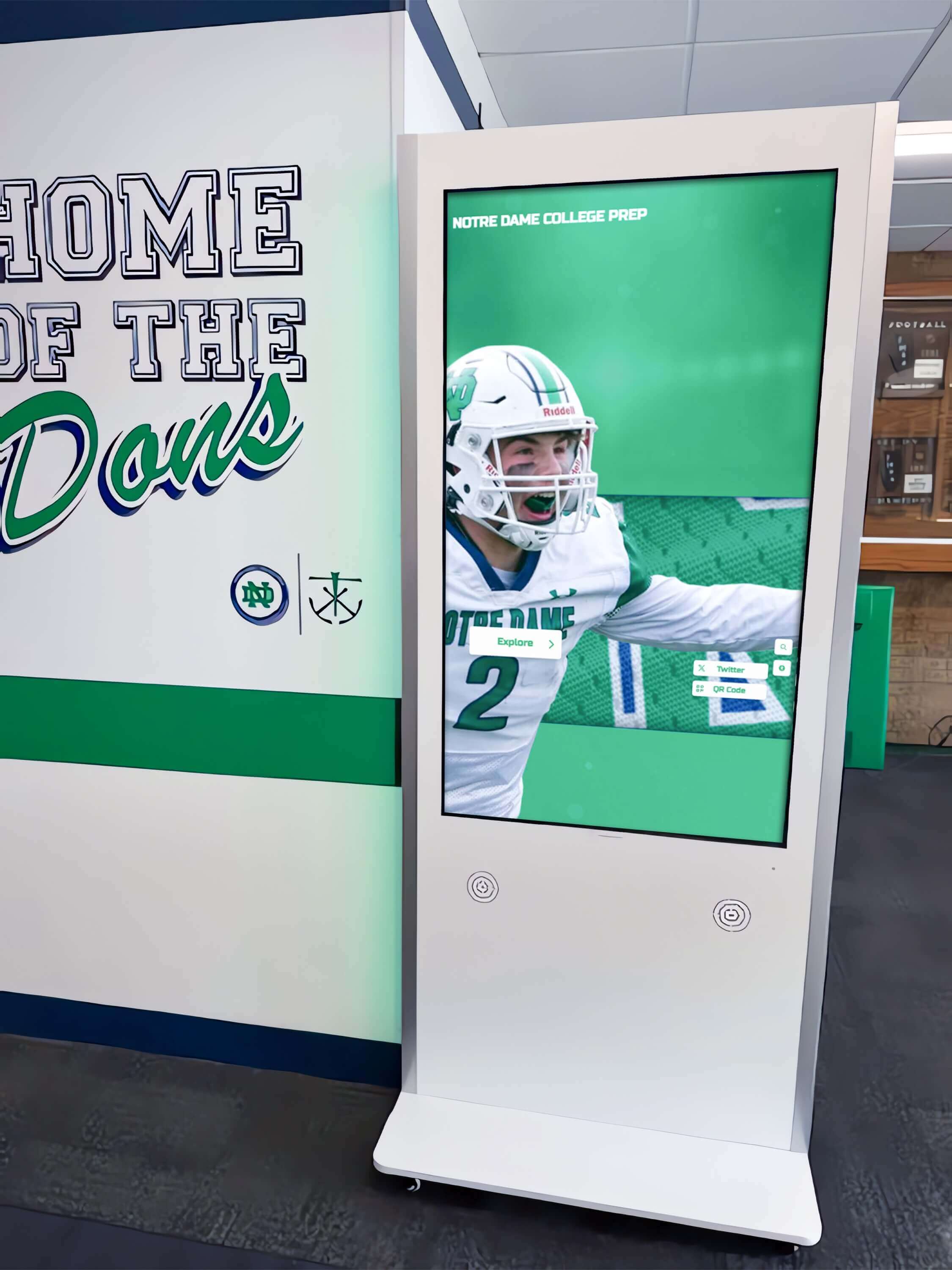
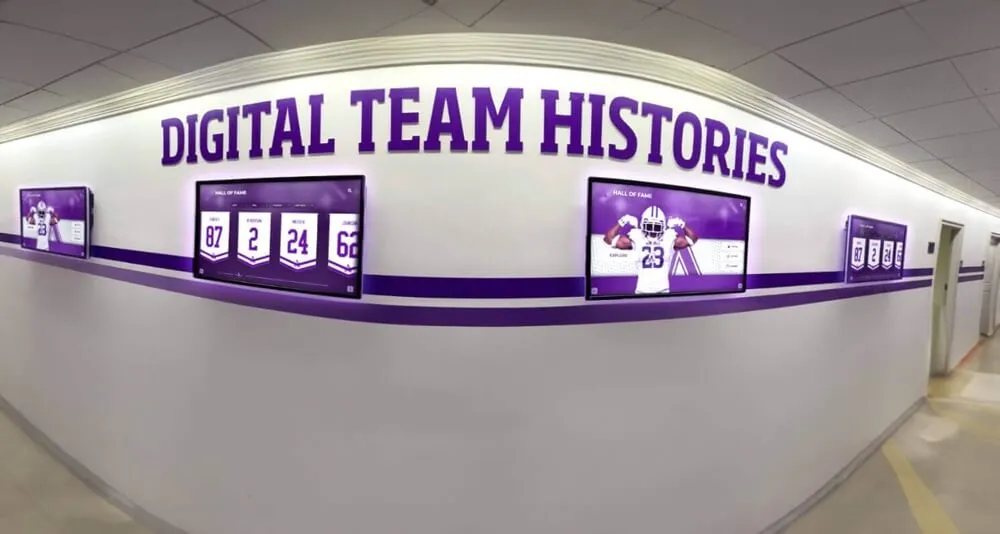
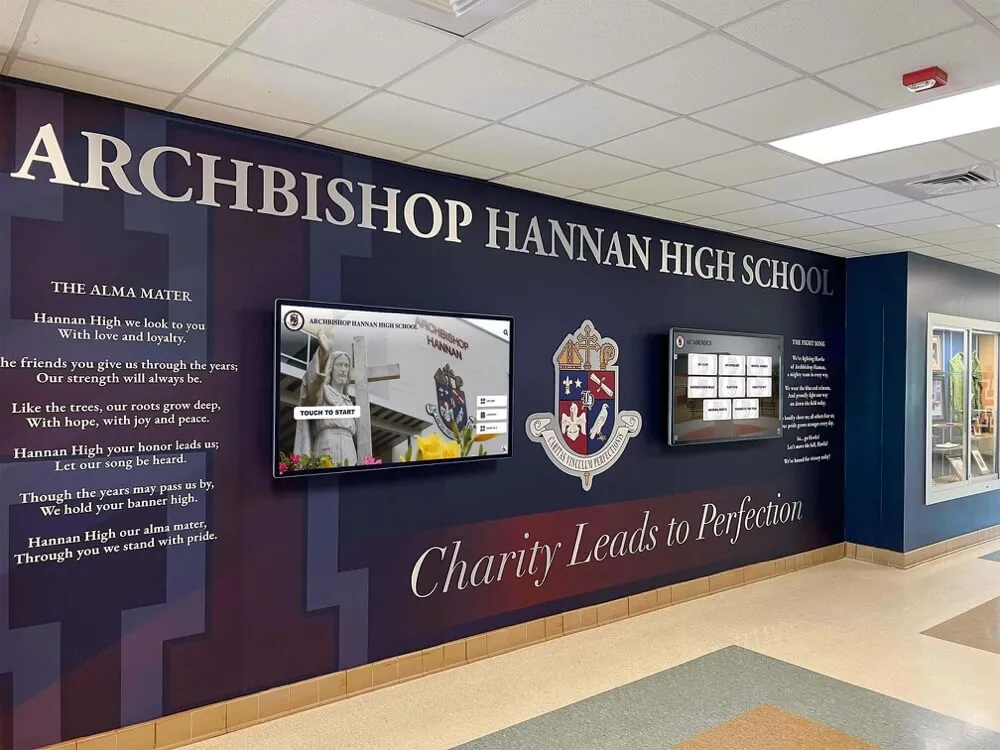
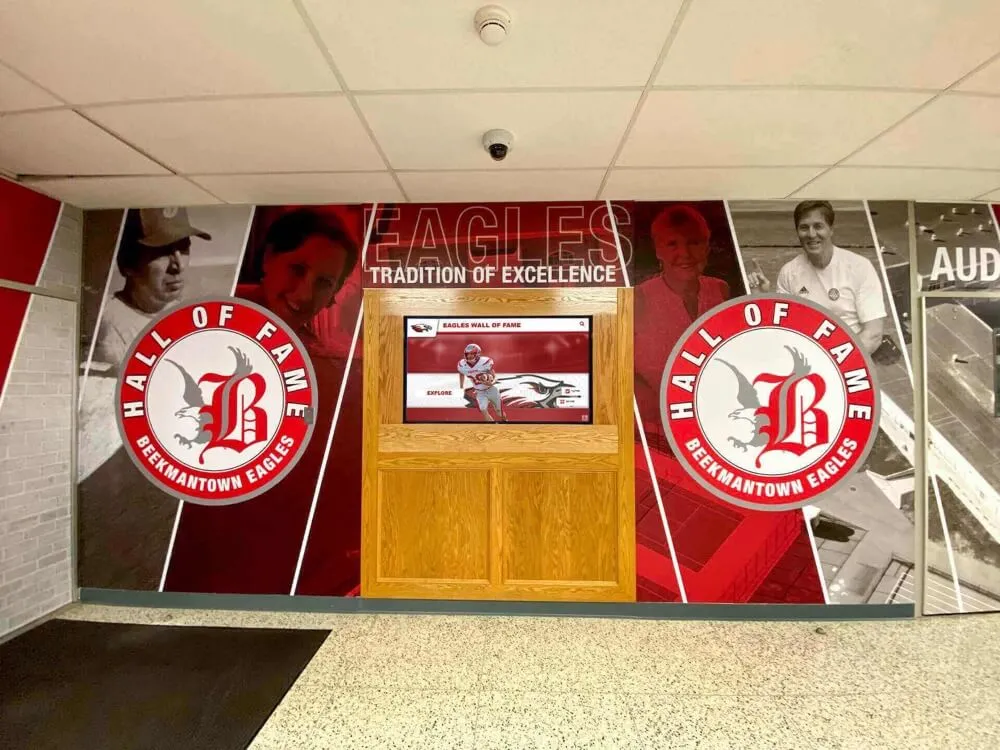
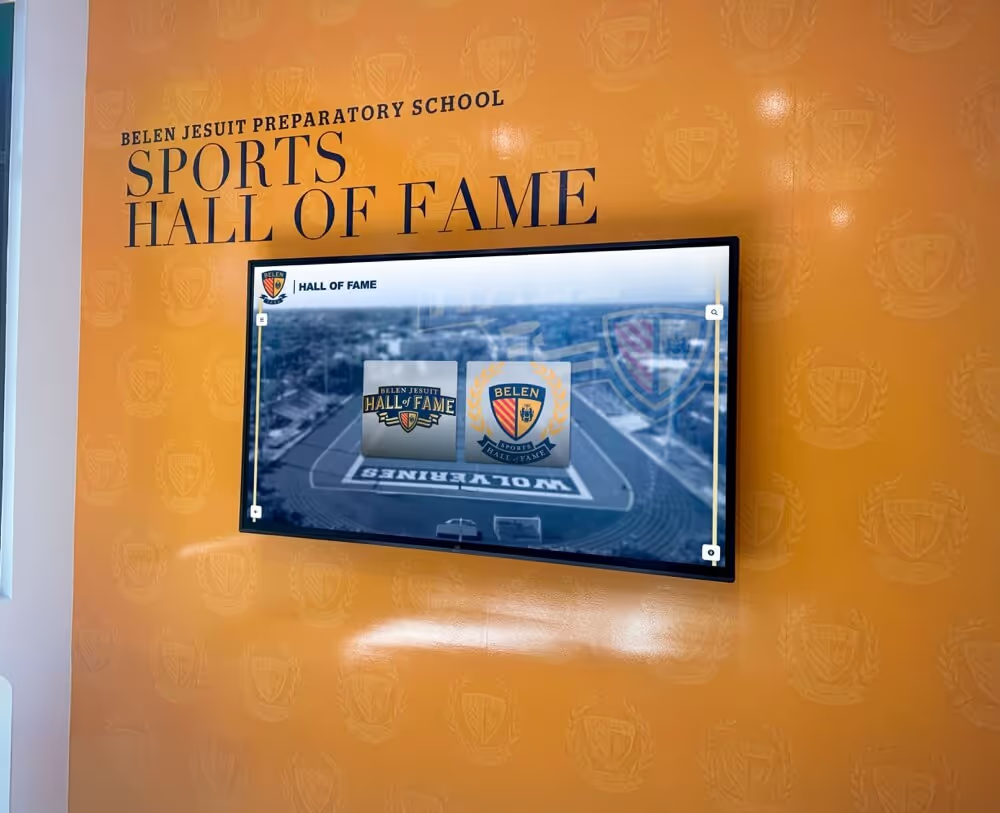
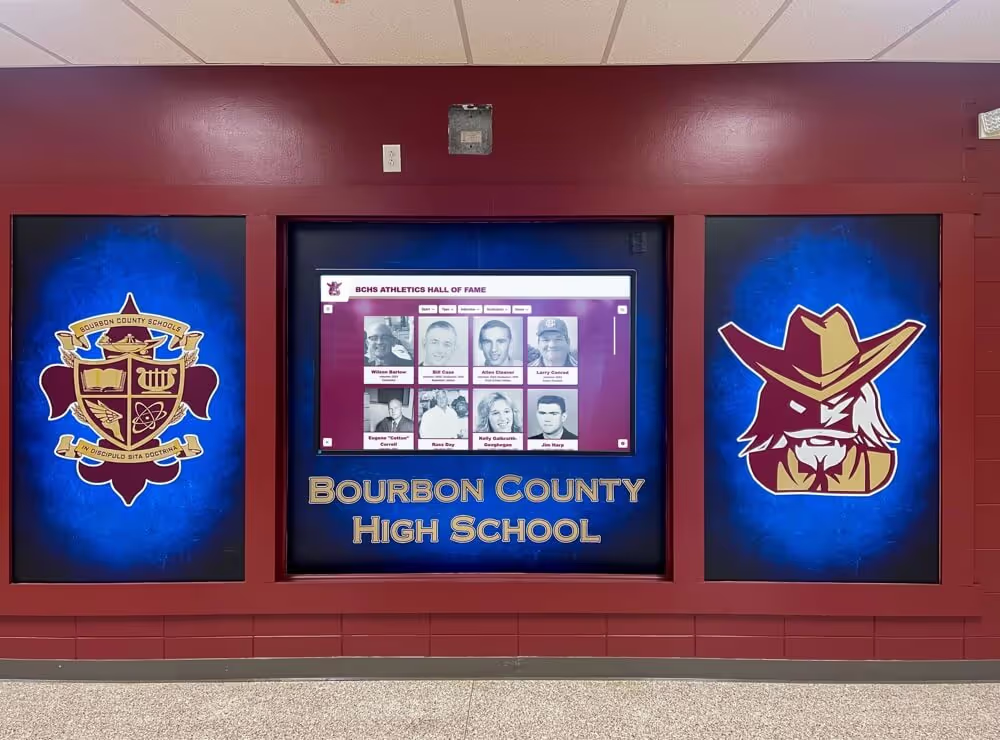
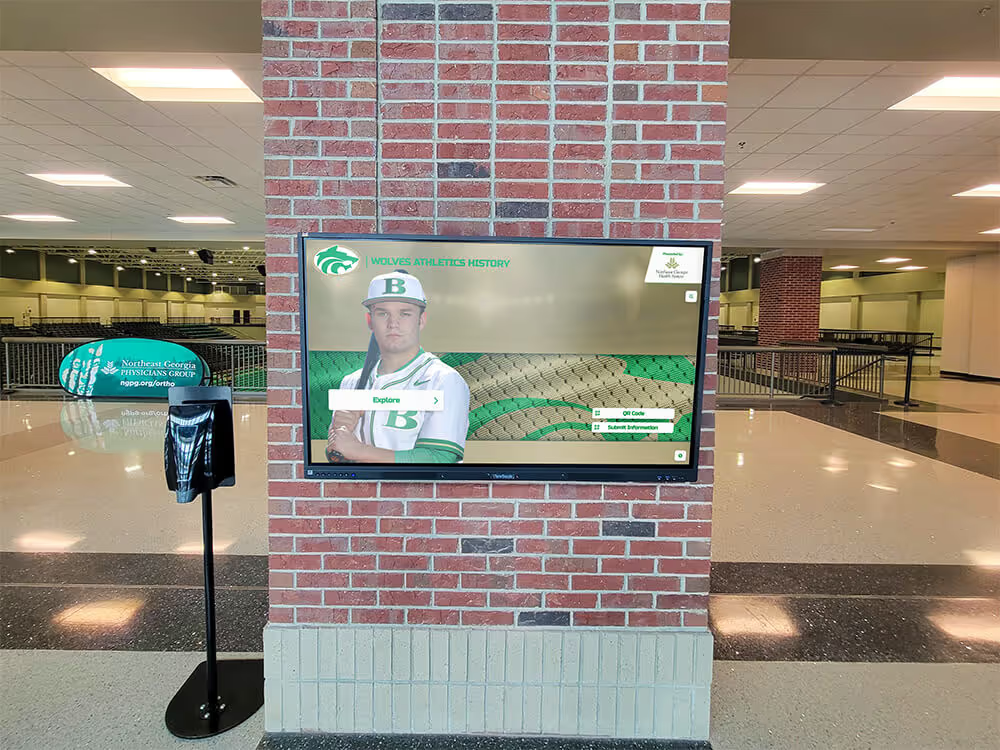
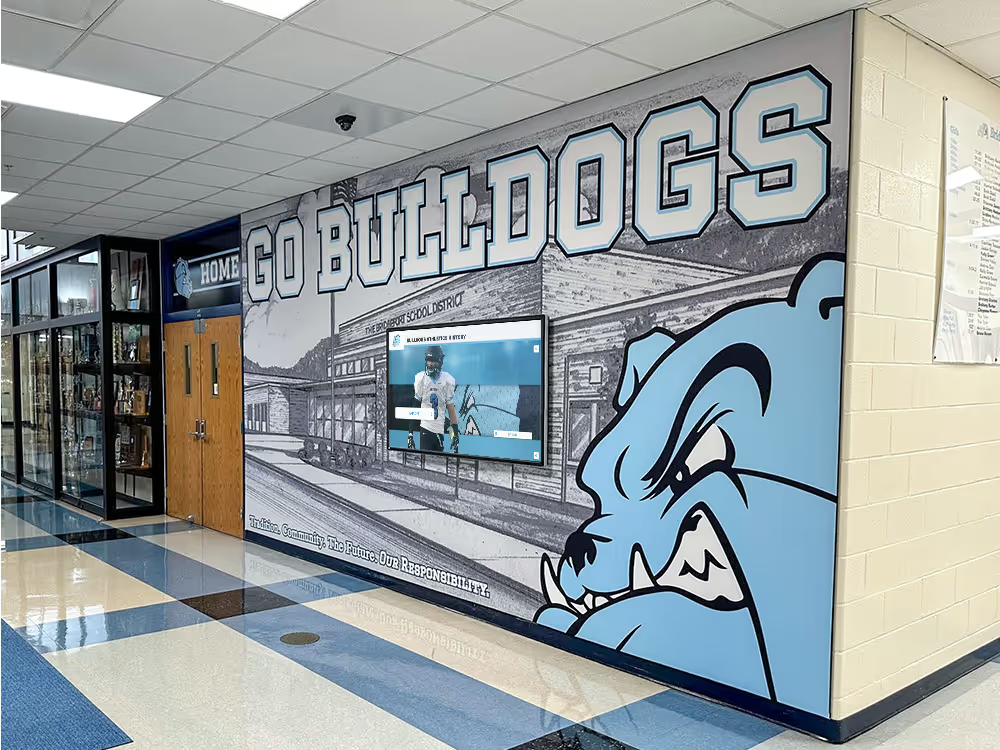
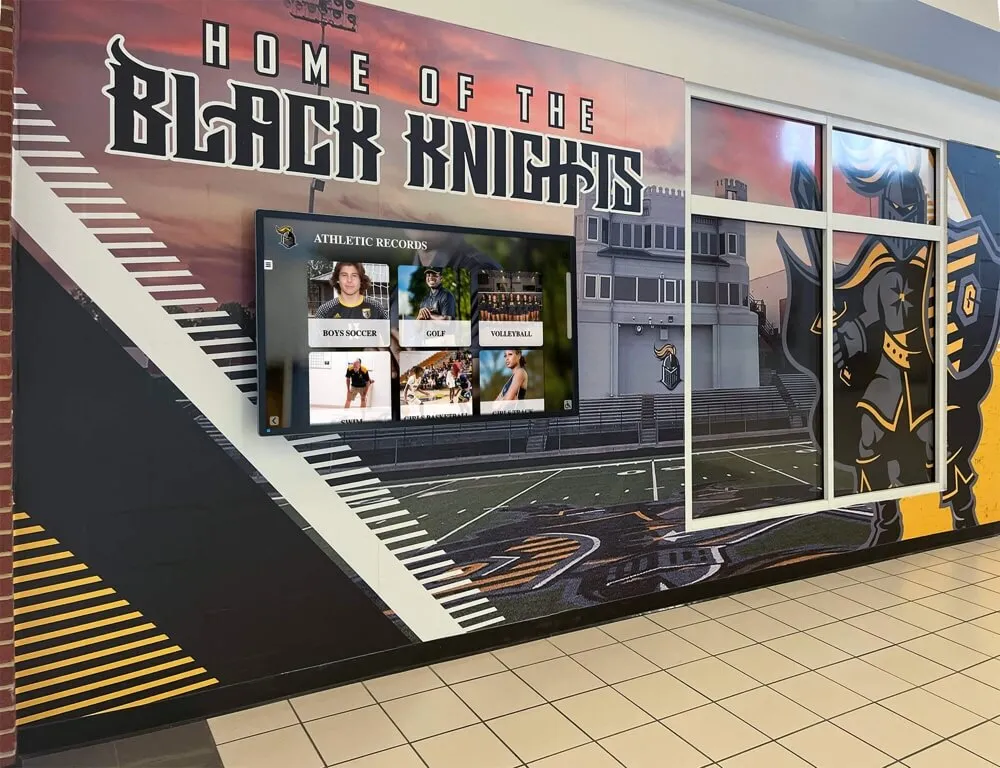
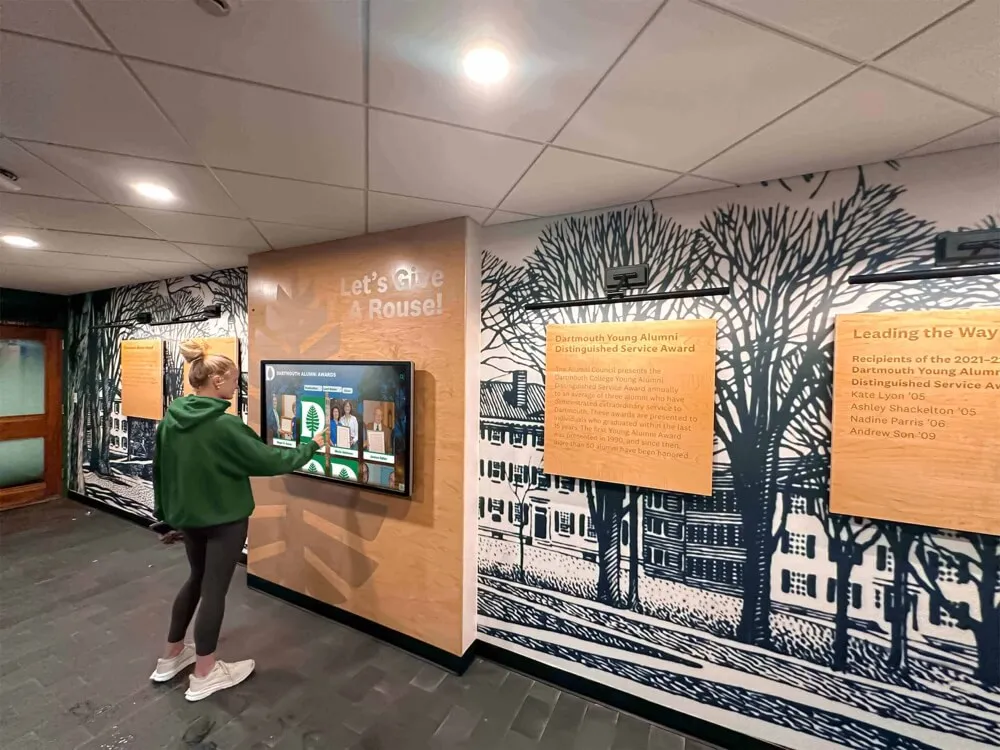
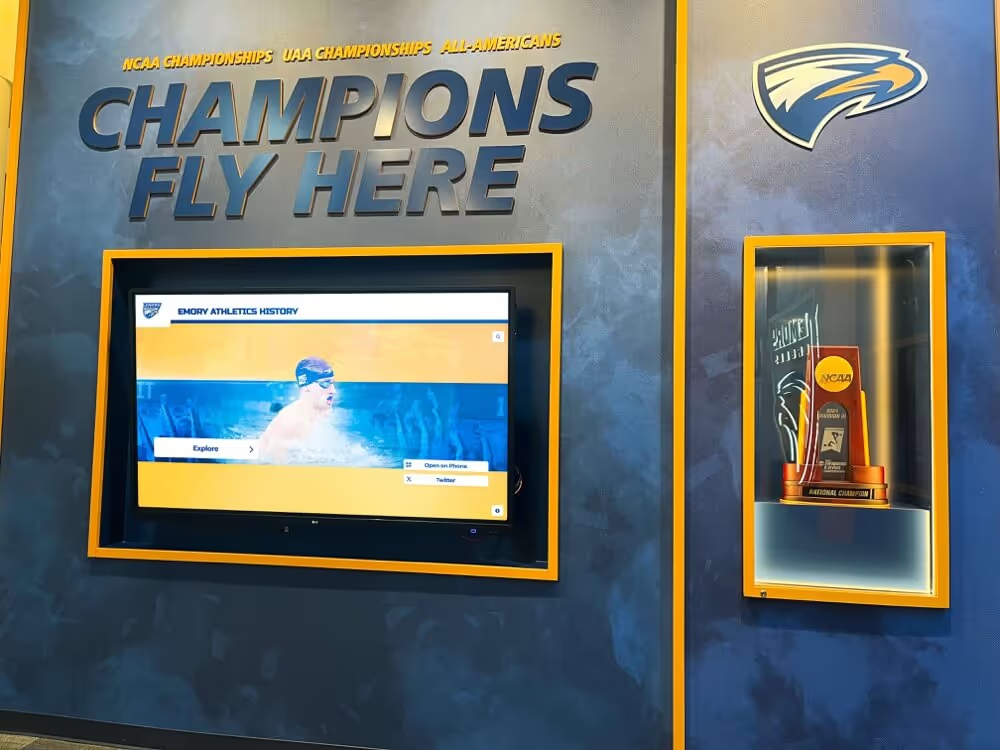
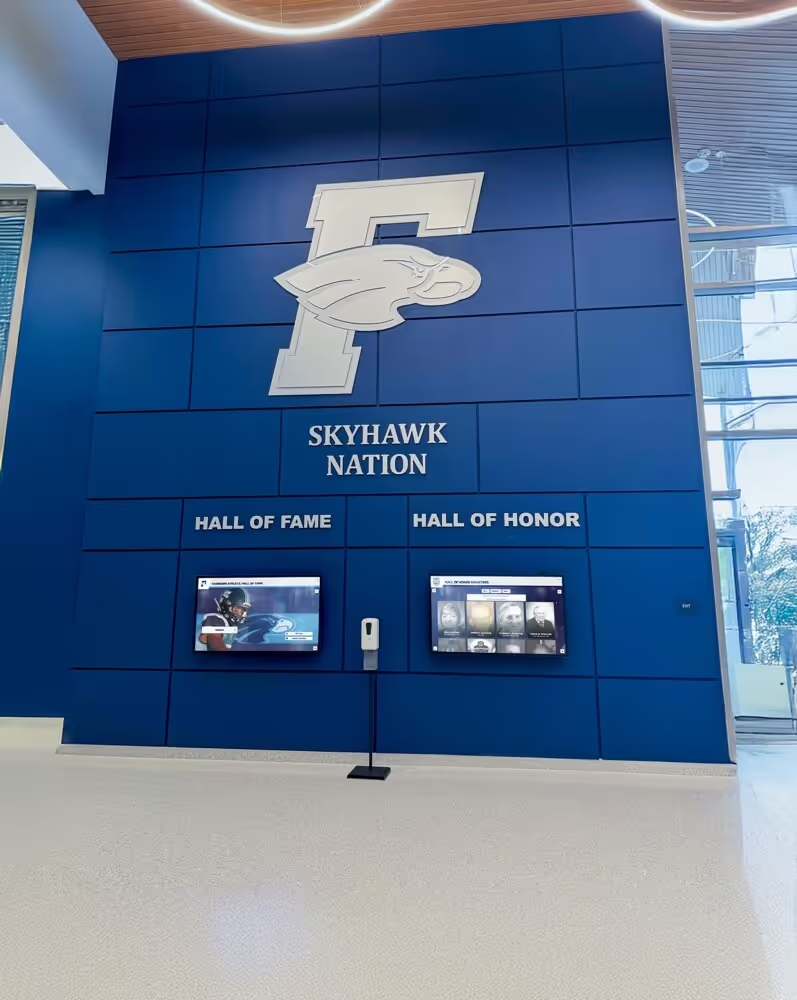
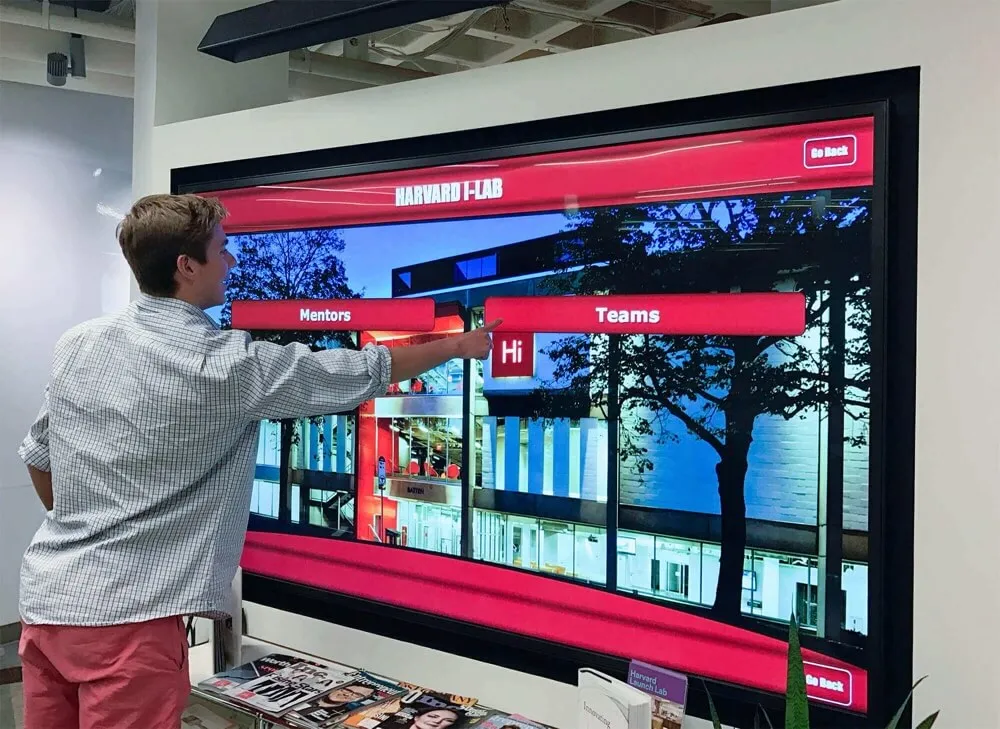
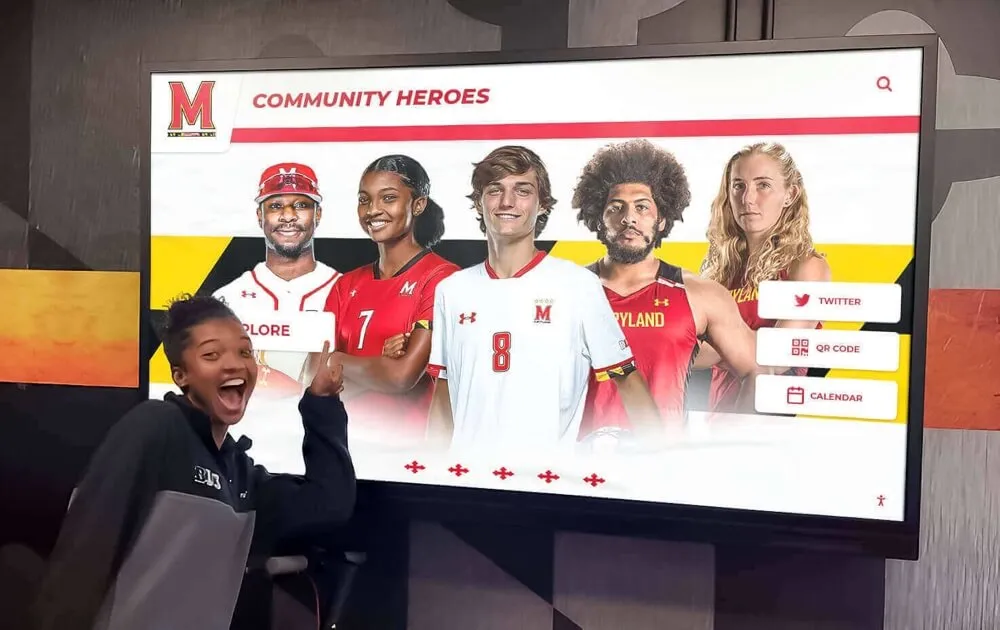
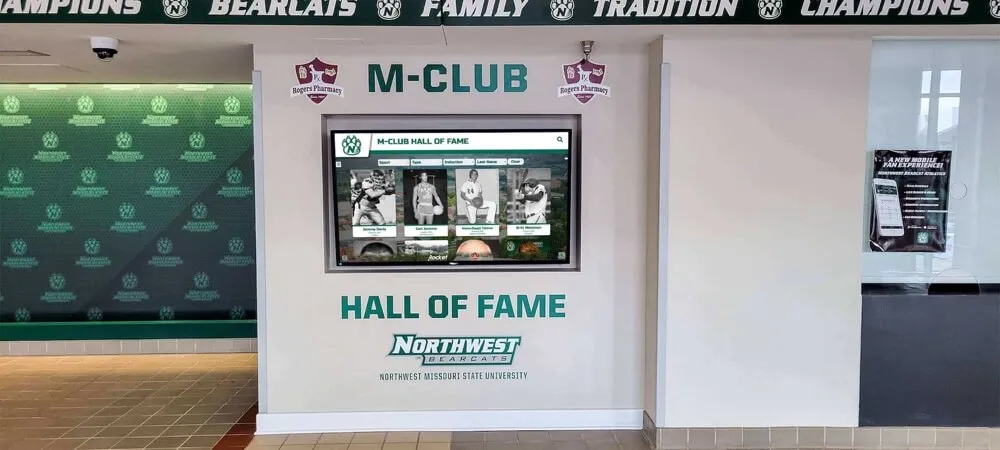
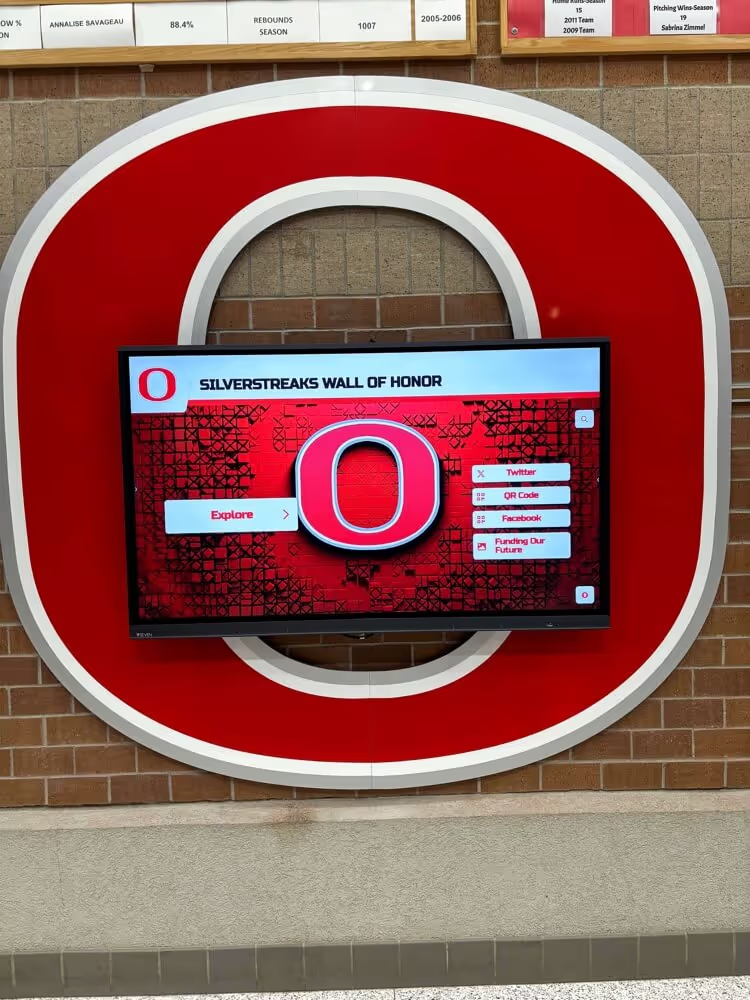
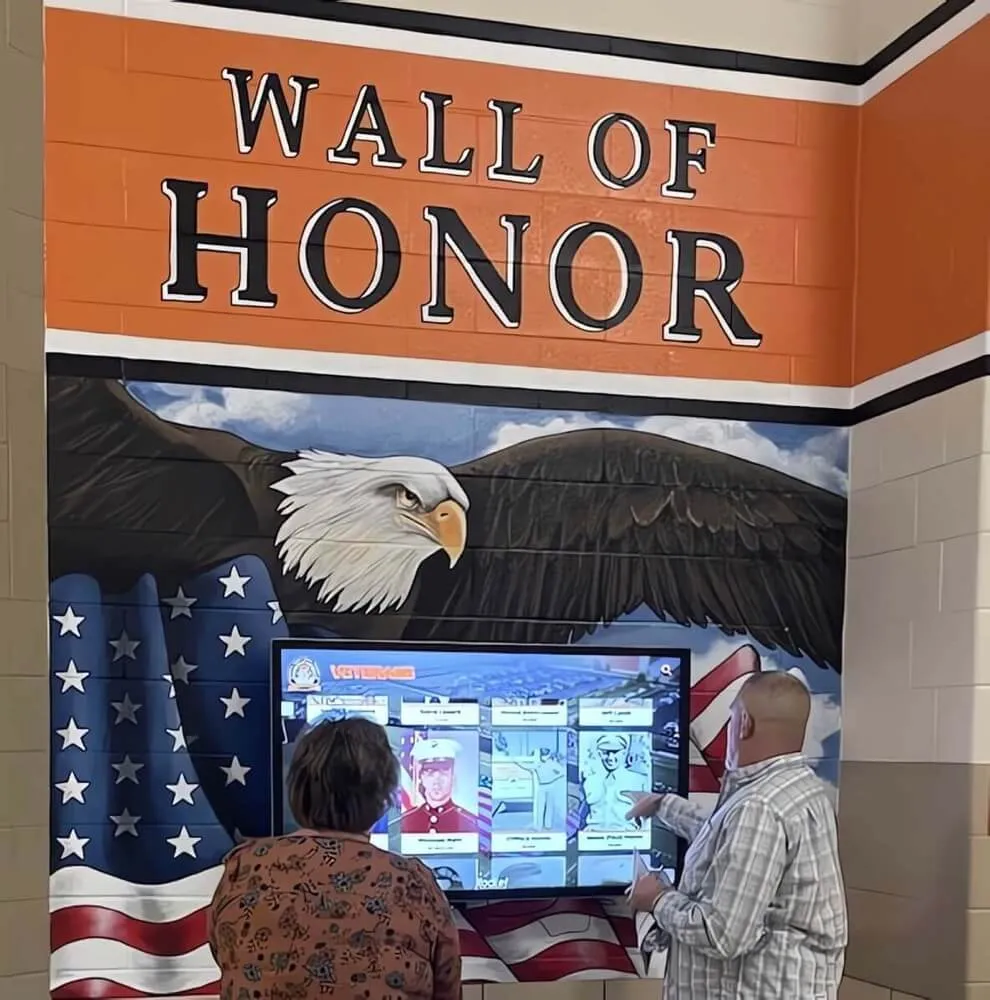
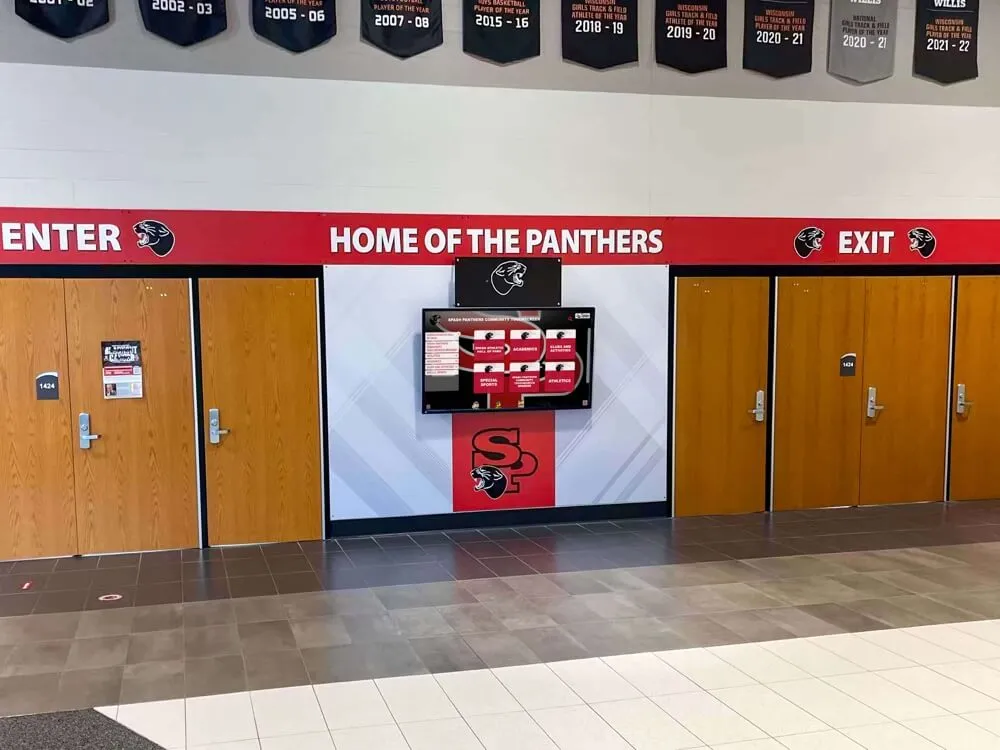
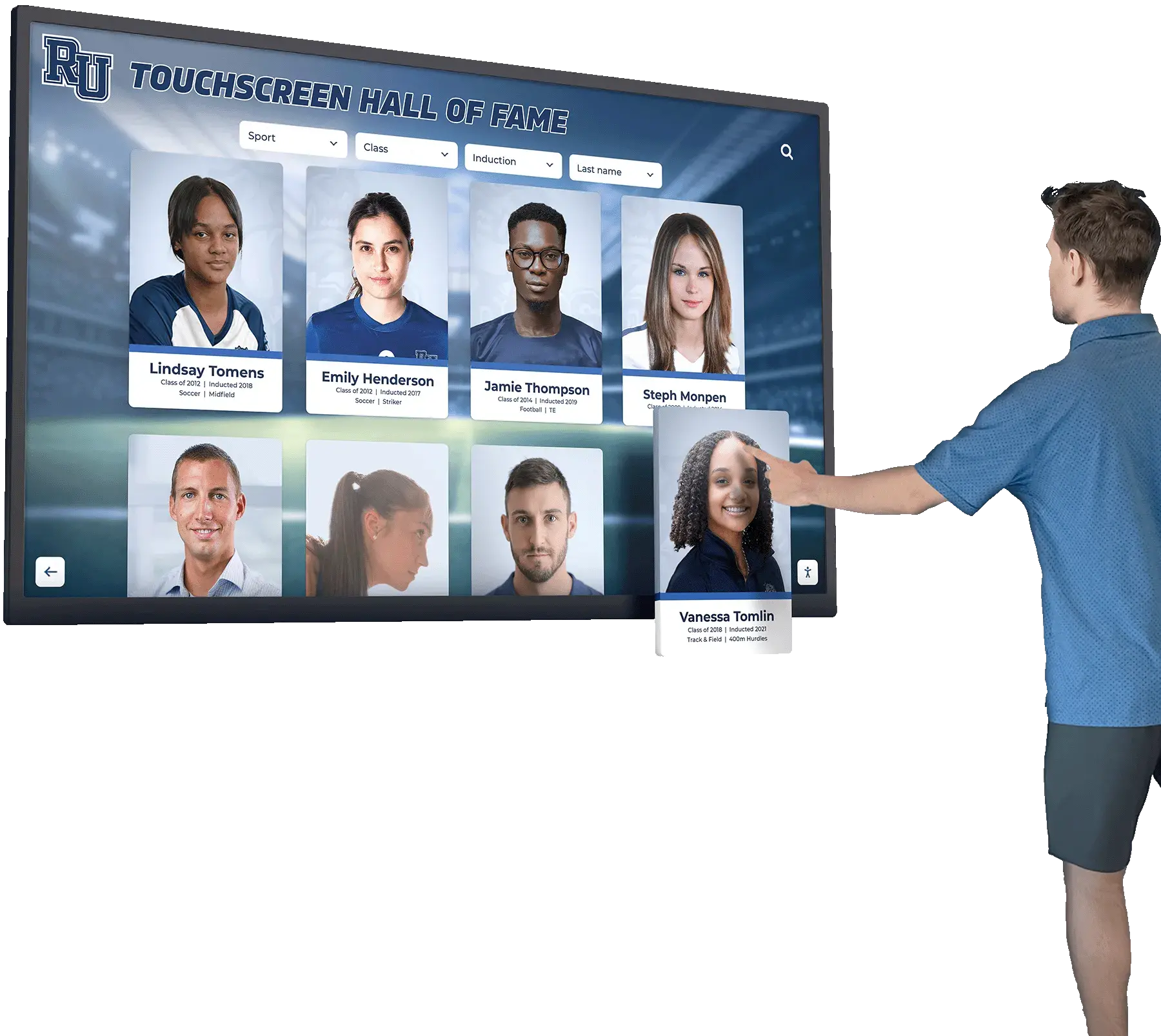
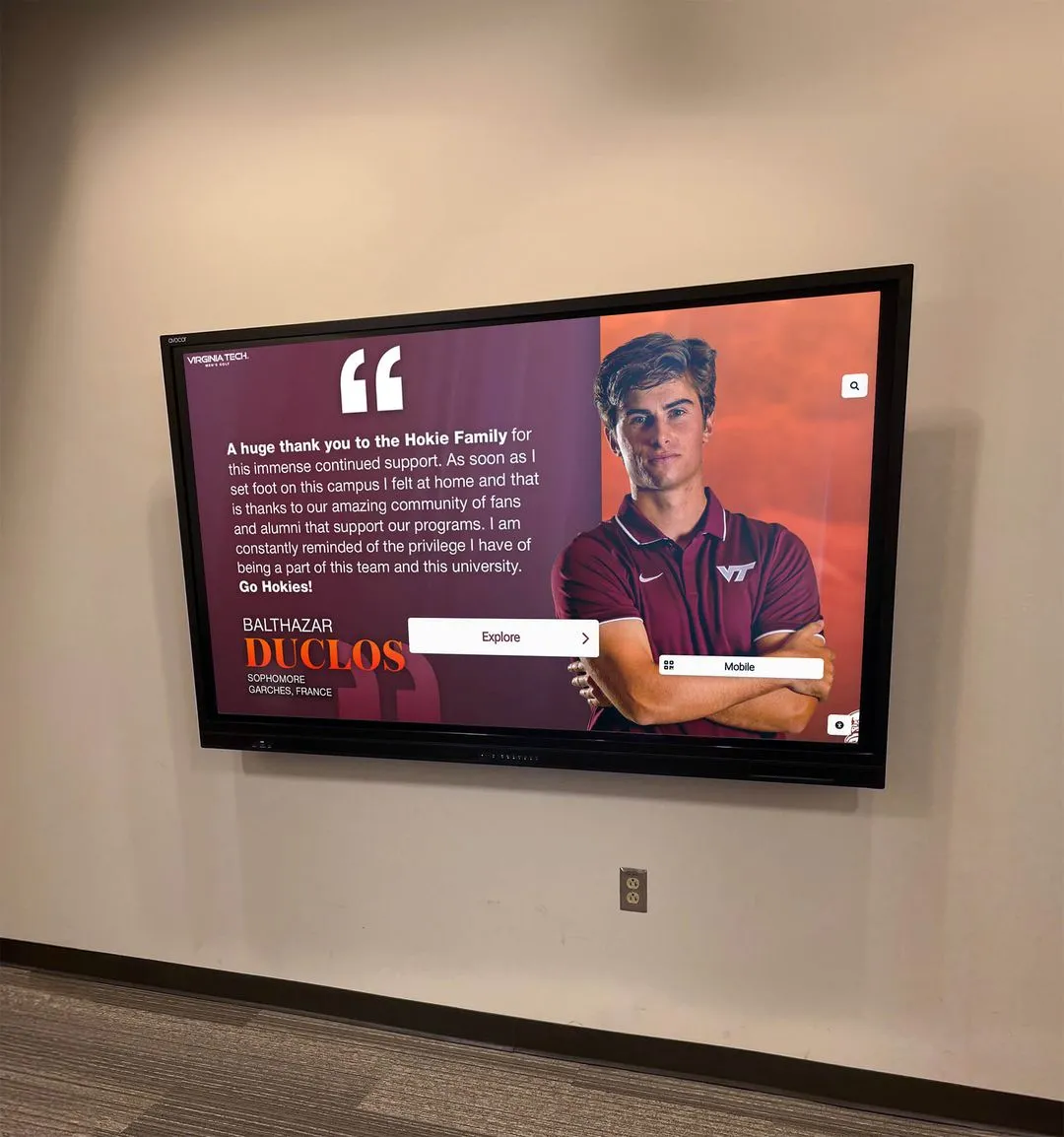
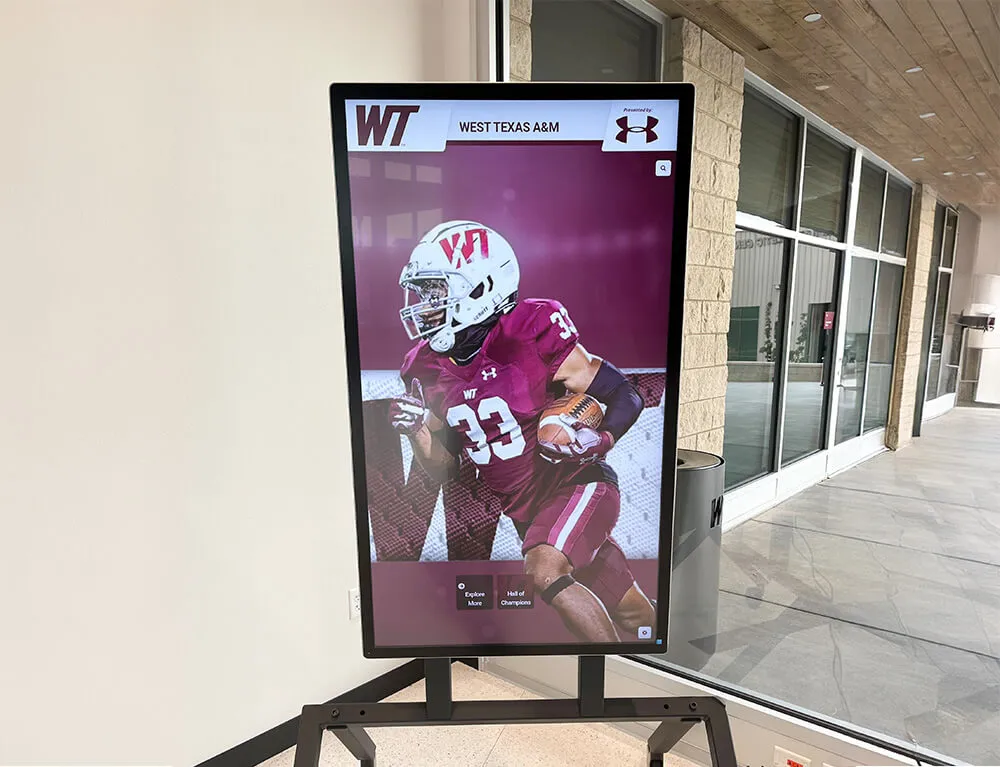
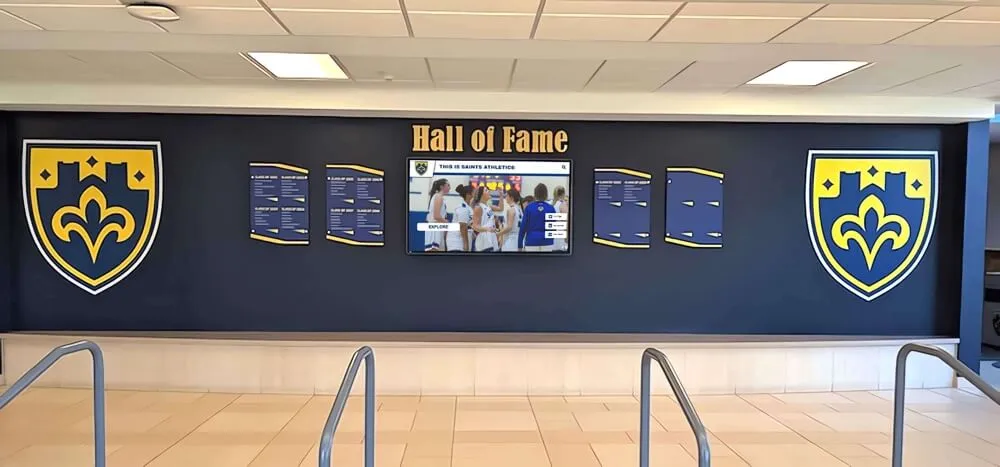
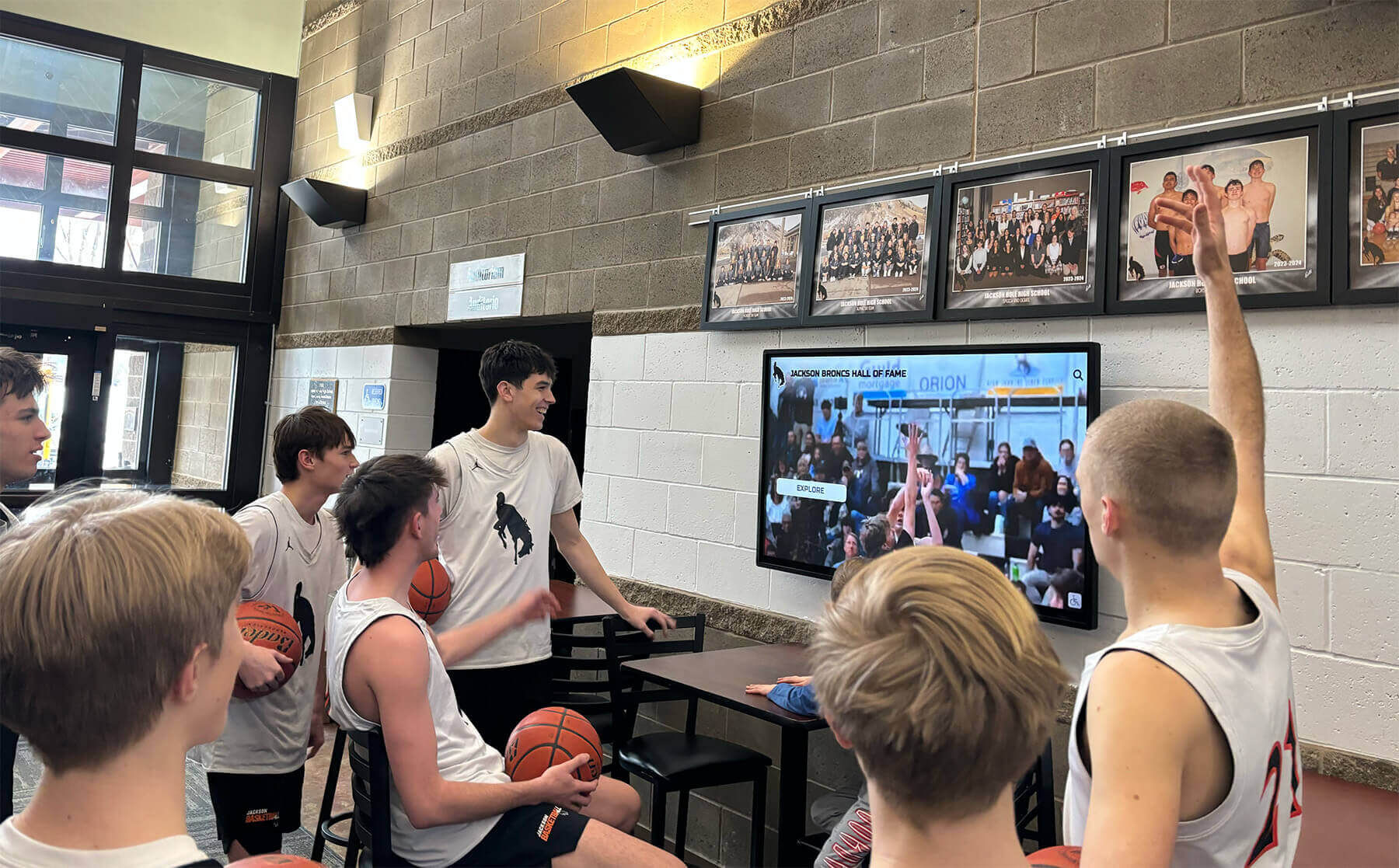
Interactive Touchscreen Displays: A touchscreen kiosk in the athletic hallway allows anyone to search letter winners by year, sport, or name—instantly surfacing a specific athlete’s profile, photos, statistics, and achievement history. This transforms passive name-on-a-wall recognition into an engaging experience that current students, families, and visiting alumni actually interact with. Understanding what a digital hall of fame offers compared to traditional recognition helps administrators make the case for investing in interactive technology.
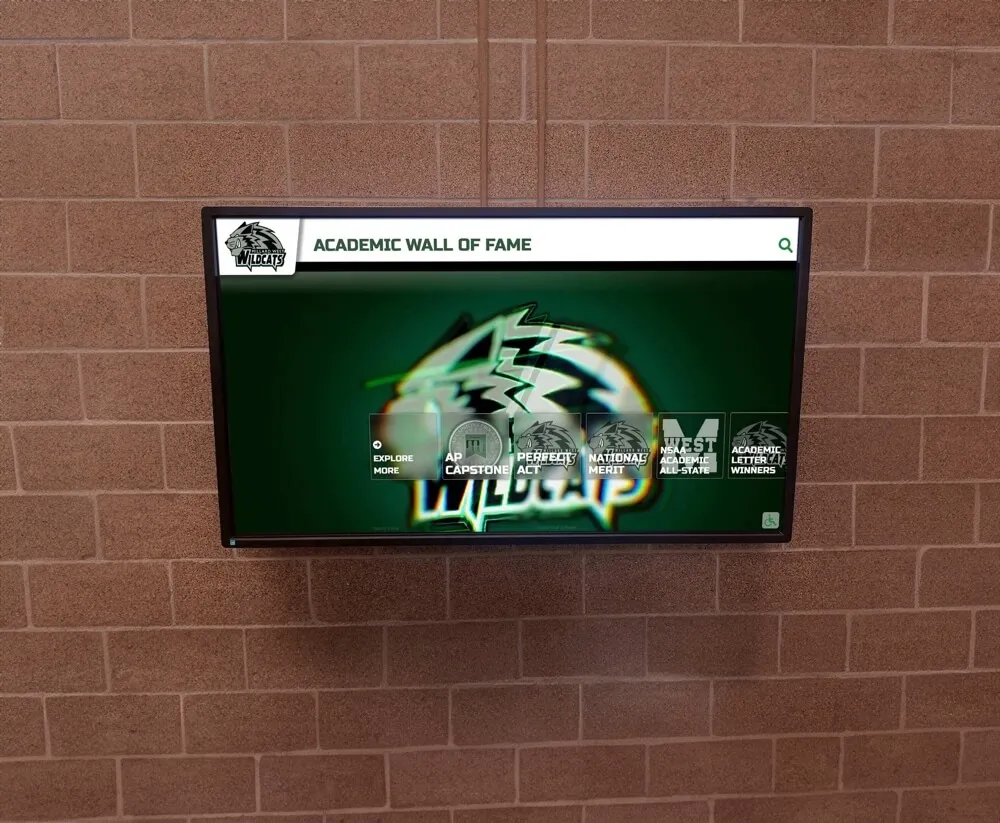
Searchable Letter Winner Archives: Cloud-based platforms create searchable databases that administrators update each season as new letter winners are announced. Once populated, these archives become self-maintaining institutional histories—a permanent record of everyone who ever earned a letterman jacket at the school, accessible from anywhere, forever.
Multimedia Athlete Profiles: Unlike a jacket patch or a name on a wall, digital profiles can include action photographs, video highlights, sport statistics, academic achievements, coach remarks, and career summaries. This depth of documentation means a letter winner’s high school athletic story is preserved completely rather than reduced to a patch and a handshake.
Remote Accessibility: Parents in another state, alumni decades removed from graduation, and prospective student-athletes researching the program can all access digital recognition from anywhere with an internet connection. This reach extends the community impact of letterman recognition far beyond what any physical display can accomplish.
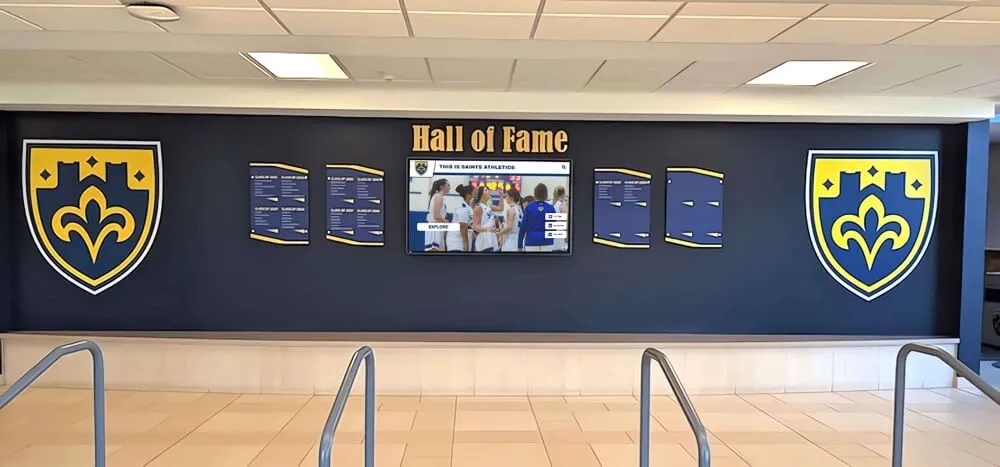
Schools investing in comprehensive digital hall of fame systems find that pairing interactive displays with physical letterman traditions creates recognition infrastructure that serves current athletes, returning alumni, and future program generations simultaneously.
The Letterman Jacket as a Bridge to Lasting School Pride
The letterman jacket’s cultural durability comes from its combination of tangibility and meaning. It is something an athlete can hold, wear, and display—but it represents something far more significant than the garment itself. It represents a standard met, a commitment honored, and a community acknowledgment of earned excellence.

Schools that invest in both the physical tradition and the digital infrastructure surrounding it create recognition systems that compound in value over time. Each year’s letter winners add to an archive that grows richer with every season—a living institutional memory that connects freshman athletes just beginning their journeys to alumni who walked the same hallways decades ago.
Rocket Alumni Solutions provides schools with interactive touchscreen platforms specifically designed to document and celebrate letter winners, varsity athletes, and all-region honorees alongside every other form of athletic achievement. From searchable letter winner databases to multimedia athlete profiles and alumni-accessible recognition archives, Rocket’s systems transform the letterman jacket tradition from a single ceremony moment into a permanent institutional legacy.
Conclusion
A letterman jacket in high school is far more than a piece of outerwear. It is a standard articulated, a season committed to, a community recognized. The schools that administer this tradition most effectively treat it as a complete system—clear criteria established before seasons begin, thoughtful design that projects institutional identity, ceremonies that make the moment genuinely memorable, and broader recognition programs that extend letter winner visibility across time and space.
Whether your school is building its letterman program from scratch, refining decades-old traditions to better serve current athletes, or looking to complement physical recognition with modern digital infrastructure, the principles remain constant: be clear about what earns recognition, be consistent in how you award it, be intentional about how you celebrate it, and build systems that make it last.
The athletes who earn their letterman jackets deserve recognition that lasts as long as the tradition itself.