



Key Takeaways
Complete guide to Latin honors meaning including cum laude, magna cum laude, and summa cum laude. Learn GPA requirements, how honors appear on diplomas, what they mean for graduate school and careers, and how colleges determine academic distinctions.
What Latin Honors Actually Mean
Understanding the fundamental meaning behind these Latin phrases provides essential context before exploring how institutions award them and what they signify to outside evaluators.
The Three Levels of Latin Honors
American colleges and universities typically award three levels of Latin academic honors, each representing progressively higher achievement thresholds.
Cum Laude: “With Honor”
Cum laude translates literally to “with honor” or “with praise” in Latin. This designation represents the foundational level of Latin honors, awarded to students who achieve academic performance significantly above average but below the top tier. At most institutions, cum laude typically goes to students finishing in approximately the top 20-30% of their graduating class.
The specific GPA threshold varies by institution, but most schools require somewhere between 3.5 and 3.7 cumulative GPA for cum laude designation. This level recognizes sustained academic effort and above-average performance across a complete undergraduate career, distinguishing graduates from peers while acknowledging that higher distinction levels remain above them.
Magna Cum Laude: “With Great Honor”
Magna cum laude translates to “with great honor,” representing the middle tier of Latin academic distinctions. Students earning magna cum laude typically finish in approximately the top 10-15% of their graduating class, demonstrating exceptional academic performance sustained across four years of undergraduate study.
Common GPA requirements for magna cum laude range from 3.7 to 3.9, depending on institutional standards and grading cultures. This distinction carries particular significance because it represents achievement clearly above typical “good student” performance while remaining achievable for dedicated students who prioritize academics without necessarily achieving absolute perfection.
Magna cum laude often provides the optimal balance between meaningful distinction and realistic attainability, making it a common goal for ambitious students planning graduate school or competitive career paths.

Summa Cum Laude: “With Highest Honor”
Summa cum laude translates to “with highest honor,” representing the pinnacle of undergraduate academic achievement. Students graduating summa cum laude typically finish in the top 5% or less of their class, having demonstrated exceptional intellectual capability, sustained effort, and near-perfect academic performance throughout their undergraduate career.
GPA requirements for summa cum laude typically range from 3.9 to 4.0, with many institutions reserving this designation exclusively for students achieving perfect or near-perfect GPAs. Some selective schools impose additional requirements beyond GPA, such as completing an honors thesis, passing comprehensive examinations, or earning departmental distinction in their major field.
The rarity of summa cum laude ensures that graduates earning this distinction stand out significantly in graduate school applications and early-career job searches, as the designation clearly signals exceptional academic capability.
How Institutions Determine Latin Honors
Colleges and universities use varying methodologies to determine which students earn Latin honors, creating significant differences in standards across institutions.
Fixed GPA Thresholds
Many institutions establish fixed GPA cutoffs for each honor level, publishing these thresholds in catalogs and academic policies. Under this system, any student achieving the published GPA automatically earns the corresponding honor regardless of how many classmates also achieve it.
Fixed threshold systems provide transparency and allow students to track progress toward honor goals throughout their academic careers. However, these systems can create situations where honor percentages fluctuate significantly between graduating classes depending on overall class performance, potentially leading to grade inflation concerns when large percentages earn honors.
Percentage-Based Rankings
Other institutions use percentage-based systems, awarding Latin honors to fixed percentages of each graduating class regardless of absolute GPA levels. For example, a school might award summa cum laude to the top 5%, magna to the next 10%, and cum laude to the next 15%, ensuring consistent honor distributions across graduating classes.
Percentage systems maintain honor exclusivity and prevent grade inflation from diluting honor significance. However, they create uncertainty for students who cannot know their exact standing until final class rankings are calculated, and they can seem arbitrary when small GPA differences determine honor distinctions.
Hybrid and Departmental Approaches
Some institutions combine approaches, using GPA minimums as qualification thresholds while limiting total honors to specific percentages, or allowing individual departments to set additional requirements for honors in particular majors.
Certain schools differentiate between general university honors based solely on GPA and departmental honors requiring additional accomplishments like thesis completion, research projects, or comprehensive examinations within specific majors. Students at these institutions may graduate with Latin honors from the university while also receiving separate departmental distinction.

What Qualifies and What Doesn’t Count
Understanding exactly which coursework and grades factor into Latin honors calculations helps students make informed academic decisions.
GPA Calculations and Qualifying Coursework
Latin honors determinations typically rely on cumulative GPA across all undergraduate coursework, but institutions vary in what they include or exclude from calculations.
Institutional vs. Overall GPA
Most colleges award Latin honors based exclusively on coursework completed at their institution, excluding transfer credits from community colleges or other universities even when those credits count toward degree completion. This institutional GPA policy ensures consistency in grading standards and prevents students from strategically taking difficult courses elsewhere to protect their GPAs.
However, some schools include all coursework applied toward the degree regardless of origin, particularly for students who transferred early in their academic careers. Students with significant transfer credit should clarify their institution’s policy early to understand how transfer grades impact honor eligibility.
Pass/Fail and Credit/No-Credit Courses
Courses taken pass/fail or credit/no-credit typically don’t factor into GPA calculations, which creates both strategic opportunities and potential limitations for students pursuing Latin honors.
Students might strategically use pass/fail options for difficult general education requirements to protect GPA, allowing them to explore challenging subjects without grade risk. However, excessive pass/fail coursework can limit academic rigor demonstration and may raise questions from graduate schools or competitive employers about whether students avoided challenging graded work.
Some institutions limit how many pass/fail credits count toward degree requirements or prohibit pass/fail enrollment in major-required courses, restricting strategic GPA protection opportunities.
Grade Forgiveness and Repeated Courses
Many institutions offer grade forgiveness policies allowing students to retake failed or low-graded courses with the new grade replacing the original in GPA calculations. These policies significantly impact Latin honors eligibility, potentially allowing students to overcome early academic struggles.
However, grade forgiveness policies vary widely. Some schools average repeated course grades rather than replacing them entirely. Others limit forgiveness to a specific number of courses or credits. Some show both grades on transcripts even when only the higher grade counts toward GPA, creating transparency about academic history that graduate schools and employers can review.
Students hoping to use grade forgiveness strategically should understand their institution’s specific policies and recognize that transcript notations about repeated courses remain visible even after GPA calculations exclude original grades.

How Latin Honors Appear on Credentials
Once earned, Latin honors appear in multiple places throughout academic records and formal credentials, each serving different verification purposes.
Diplomas and Official Transcripts
The most permanent record of Latin honors appears on official university diplomas and academic transcripts.
Diploma Notation
Latin honors appear printed directly on physical diplomas, typically in a prominent location near the degree title or institution name. The exact phrasing varies by institution, with most using the Latin designation alone (“magna cum laude”) while others include English translations or additional clarifying language.
Physical diplomas serve as ceremonial documents representing achievement, and the inclusion of honors designations provides lasting recognition of academic distinction. Schools often use special diploma designs, seals, or paper quality for honors graduates, creating visual distinctions that complement the written honor designation.
For institutions hosting digital recognition displays, including diploma replicas or scanned diplomas showing honor designations adds authentic documentation to broader achievement narratives celebrating both current students and distinguished alumni.
Transcript Recording
Latin honors also appear on official academic transcripts, the authoritative documents graduate schools and employers request for verification purposes. Transcripts typically note honors on the final degree-conferring term, listing the honor level alongside the degree type and conferral date.
Transcript notations provide verifiable documentation that cannot be misrepresented on resumes or applications, as institutions control transcript issuance and maintain permanent records. This official recording ensures that honor claims remain verifiable throughout graduates’ careers, long after physical diplomas might be lost or damaged.
Graduation Ceremonies and Programs
Latin honors typically receive recognition during commencement ceremonies through various methods acknowledging graduates’ academic achievements.
Honor Cords and Regalia
Many institutions designate specific honor cords, stoles, or regalia colors for Latin honors recipients, creating visible distinctions during commencement ceremonies. Gold cords commonly indicate honors generally, with some schools using different colors for each honor level—for example, gold for cum laude, white and gold for magna cum laude, and royal blue for summa cum laude.
These visual honors allow audience members, fellow graduates, and ceremony participants to identify high-achieving students during the ceremony. The tradition connects to broader academic regalia customs that use visible symbols to denote achievement, similar to how graduation sashes and stoles communicate various academic and organizational affiliations.
Commencement Program Listings
Printed commencement programs typically list graduating students’ names with honor designations noted, providing another form of public recognition. These programs serve as keepsakes for graduates and families while documenting class achievement levels for posterity.
Some institutions list honors graduates in separate sections or use typographical distinctions like asterisks, bold text, or italic font to highlight honors recipients within alphabetical lists. The specific format varies by institution, but most commencement programs include some method for identifying which graduates earned Latin honors.
Schools increasingly digitize commencement programs and graduation records, creating opportunities to incorporate these achievements into interactive digital displays that celebrate academic excellence alongside other accomplishments.

Do Latin Honors Actually Matter?
After understanding what Latin honors mean and how they’re awarded, the practical question becomes whether these distinctions provide tangible benefits in graduate school applications and career advancement.
Impact on Graduate School Admissions
For students planning to pursue graduate education, Latin honors can influence admissions decisions, particularly in competitive programs with limited seats.
Professional and Graduate Programs
Law schools, medical schools, MBA programs, and other competitive professional graduate programs consider Latin honors as one factor among many in holistic admissions reviews. Graduating summa or magna cum laude signals strong undergraduate performance that predicts graduate school success, potentially offsetting slightly lower standardized test scores or strengthening already competitive applications.
However, admissions committees consider Latin honors in context. A student graduating magna cum laude from a moderately competitive institution may receive similar consideration to a student graduating without honors from an elite university with severe grade deflation. Admissions reviewers understand institutional grading variations and evaluate honors within the context of school reputation, major difficulty, and overall application strength.
Additionally, some graduate programs care less about overall Latin honors than about performance in prerequisite coursework, research experience, recommendations, and field-specific achievements. A student graduating cum laude overall but with a perfect GPA in major-required courses might receive stronger consideration than a summa graduate whose high GPA came primarily from easier elective courses.
Academic Research Programs
PhD programs and research-focused graduate degrees typically weight Latin honors somewhat differently than professional programs. Faculty reviewers often care more about research experience, publication records, specific coursework performance, and recommendation letter strength than overall GPA honors.
However, summa cum laude can signal the exceptional intellectual capability and sustained work ethic required for doctoral study, particularly when combined with honors thesis completion, undergraduate research participation, or departmental distinction. For students without extensive research experience, strong Latin honors may provide evidence of academic capability that compensates for limited lab or field work.
The relative importance of Latin honors in graduate admissions generally decreases for students applying several years after undergraduate completion, as professional accomplishments and work experience become more relevant evaluation factors than undergraduate GPA distinctions.
Significance for Employment and Career Advancement
The career impact of Latin honors varies significantly by field, employer type, and career stage.
Early Career and Competitive Industries
For recent graduates entering competitive fields like consulting, investment banking, law, or research, Latin honors can provide meaningful advantages in resume screening and interview selection. Employers in these fields often receive hundreds of applications for limited positions and use GPA and honors as initial filters identifying candidates likely to succeed in intellectually demanding roles.
Graduating magna or summa cum laude helps resumes pass initial screening algorithms and catches recruiter attention during brief manual reviews, potentially creating interview opportunities that might not arise without honor designations. During interviews, Latin honors can serve as conversation starters demonstrating achievement capacity and work ethic, particularly when candidates can articulate what they learned or overcame to achieve honors.
However, honors matter most when candidates lack extensive work experience. For new graduates, academic achievements represent the primary evidence of capability, making Latin honors particularly valuable. As professionals build track records of work accomplishments, projects, and promotions, undergraduate honors become less central to employer evaluations.
Fields and Employers That Care Less
Many industries and employers care little about Latin honors, instead prioritizing skills, experience, portfolios, or demonstrated competencies over academic distinctions. Technology companies often focus more on coding abilities, project portfolios, and technical interviews than on GPA or honors. Creative fields emphasize portfolios and demonstrated work quality over academic credentials. Many small businesses and startups care primarily about relevant skills and cultural fit rather than academic pedigree.
Additionally, hiring for roles requiring extensive experience typically minimizes Latin honors significance, as 10-year career histories provide more relevant evaluation data than undergraduate performance. Professionals mid-career and beyond can typically remove graduation honors from resumes entirely without disadvantage, as their work accomplishments speak louder than academic distinctions from years past.
Long-Term Career Impact
While Latin honors rarely determine long-term career success, they can create subtle cumulative advantages through network access, initial opportunity quality, and confidence building. Graduating with high honors may help secure a more prestigious first job, which leads to better second opportunities, creating trajectory advantages that compound over time even though the honors themselves become less relevant.
Some honor societies tied to academic performance (like Phi Beta Kappa, which often requires Latin honors eligibility) create lasting professional networks and membership benefits extending throughout careers, providing indirect long-term value beyond the immediate honor designation.

Strategic Considerations for Students Pursuing Latin Honors
For students who decide Latin honors matter for their specific goals, several strategic approaches can maximize achievement likelihood without compromising educational quality.
Academic Planning and Course Selection
Intentional course selection throughout undergraduate careers significantly impacts final GPA and honor eligibility.
Balancing Rigor and GPA Protection
Students face persistent tension between taking challenging courses that maximize learning and selecting easier options that protect GPA. The optimal balance depends on individual goals, academic strengths, and specific institutional policies.
Students confident in particular subjects should generally challenge themselves with advanced coursework in those areas, as the depth of learning and professor relationships often outweigh small GPA risks. However, students might strategically select less demanding courses for general education requirements outside their strengths, particularly when those requirements don’t relate to major or career goals.
This strategic approach differs from wholesale grade-grubbing focused solely on easy A’s regardless of learning value. The goal should be protecting opportunities to explore genuinely challenging and interesting coursework without GPA penalties that eliminate honor eligibility, not avoiding all academic difficulty.
Understanding Major and School-Specific Standards
Some majors feature significantly harsher grading than others, creating situations where students in difficult majors like engineering or physical sciences face steeper paths to Latin honors than peers in fields with more generous grading cultures. Students should research their specific major’s typical GPAs and honor attainment rates when setting realistic goals.
Similarly, students should understand their institution’s grading culture and honor standards. Schools with severe grade deflation might award summa cum laude to students with 3.8 GPAs, while institutions with generous grading might require perfect 4.0s. Knowing these institutional standards helps students set appropriate targets and evaluate whether their performance realistically tracks toward honor goals.
Recovery Strategies After Setbacks
Many students experience academic setbacks—failed courses, difficult semesters, health challenges, or adjustment struggles—that seemingly eliminate honor possibilities but may remain recoverable with intentional effort.
Grade Forgiveness and Academic Fresh Starts
Students who struggle early in college should investigate whether their institution offers grade forgiveness, academic bankruptcy, or fresh start programs allowing removal of poor grades from GPA calculations. These programs typically impose limitations—only allowing forgiveness for specific numbers of courses, requiring retakes, or restricting eligibility to students early in their academic careers.
Used strategically, grade forgiveness can transform honor prospects for students who struggled initially but developed stronger academic habits after adjustment periods. However, students should recognize that forgiving low grades doesn’t erase them from transcripts, and graduate programs can review complete academic histories including forgiven coursework when evaluating applications.
Maintaining Perspective and Broader Goals
Students who fall short of Latin honors despite strong effort should maintain perspective about the relative importance of these distinctions compared to learning, skill development, relationships, and experiences gained during undergraduate years.
A student graduating with a 3.4 GPA just below cum laude thresholds but with extensive research experience, strong professor relationships, leadership positions, and genuine learning across diverse subjects often ends up better positioned for meaningful careers than a peer who achieved 3.7 through strategic course selection aimed solely at GPA protection while minimizing academic risk and learning challenge.
Latin honors provide real benefits in specific contexts, but they don’t determine career success or life outcomes. Students should pursue honors when doing so aligns with genuine learning goals and doesn’t require compromising more important educational experiences.
How Schools Can Recognize Latin Honors Recipients
Academic institutions should consider how they recognize and celebrate Latin honors achievement beyond diploma notations, creating cultures that value academic excellence alongside other accomplishments.
Comprehensive Academic Recognition Programs
Schools that effectively celebrate academic achievement create visible recognition systems acknowledging multiple excellence forms including Latin honors, departmental distinction, and sustained achievement like Dean’s List performance.
Balancing Academic and Athletic Recognition
Many schools invest heavily in athletic recognition through halls of fame, trophy displays, and prominent recognition walls while providing minimal visible celebration of academic achievement. This imbalance sends implicit messages about institutional values that undermine academic culture.
Thoughtful institutions create comparable recognition for academic excellence, showcasing Latin honors graduates, academic all-conference performers similar to All-American athletes, and distinguished scholars through permanent displays that parallel athletic recognition. This balanced approach honors diverse excellence forms and reinforces that schools value intellectual achievement as highly as athletic success.
Digital Displays for Academic Excellence
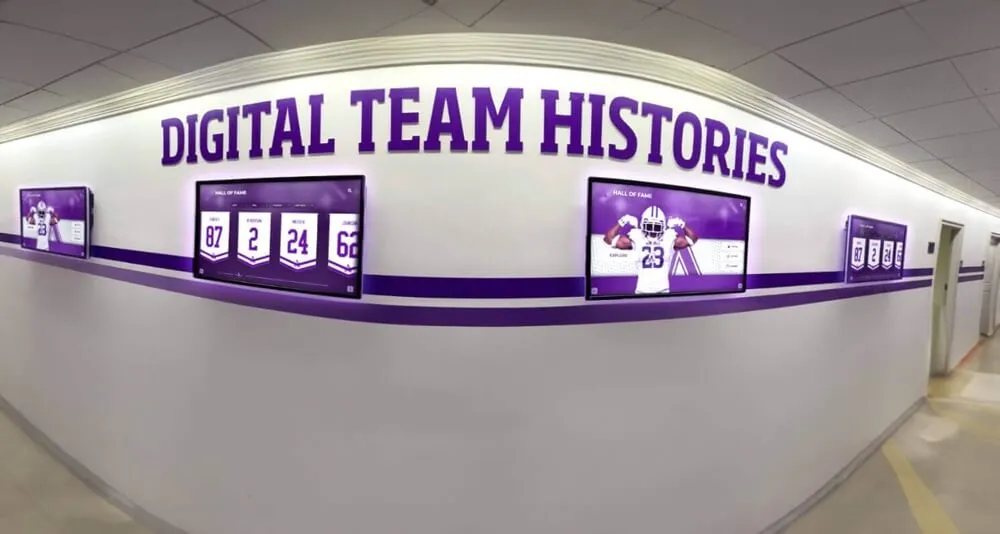
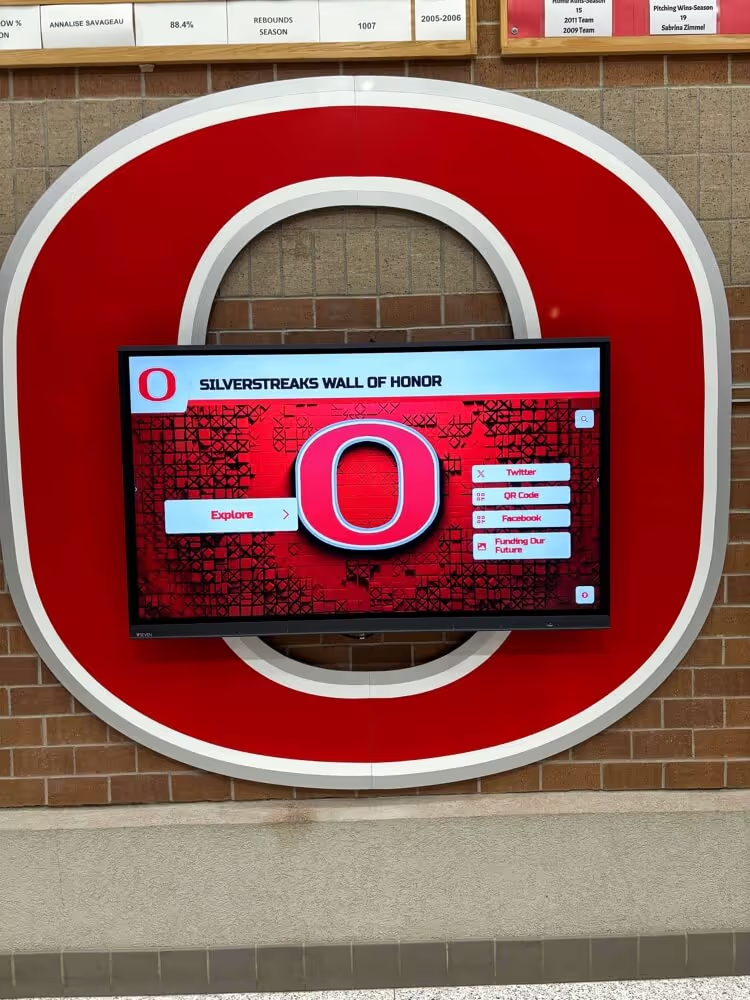
Modern digital recognition systems enable schools to showcase extensive academic achievement histories without physical space limitations that restrict traditional plaques and static displays. Interactive touchscreen displays can feature searchable databases of honors graduates, highlight recent summa cum laude recipients with detailed profiles, and track institutional honor statistics across decades.
These digital approaches allow for regular content updates as new students earn honors, multimedia integration showing student research or accomplishment highlights, and comprehensive coverage celebrating achievements at all levels rather than only absolute top performers. Schools implementing these systems often combine academic recognition with athletic halls of fame, creating unified celebration spaces that honor excellence across all student achievement dimensions.
Annual Academic Recognition Events
Beyond physical displays, schools can create annual events specifically celebrating academic achievement similar to athletic banquets and awards ceremonies honoring athletic performance.
Honors Convocations and Induction Ceremonies
Many institutions host honors convocations where Latin honors recipients, honor society inductees, and academic award winners receive public recognition before peers, faculty, and families. These ceremonies parallel athletic hall of fame inductions, creating meaningful moments where academic excellence receives celebration matching that afforded athletic achievement.
Honors convocations might feature keynote speakers who achieved academic distinction and leveraged it toward meaningful careers, presentations of special awards to summa cum laude graduates or departmental honor recipients, and opportunities for faculty to recognize outstanding students in their programs. These events strengthen academic culture by demonstrating institutional commitment to celebrating intellectual achievement as prominently as other success forms.
Maintaining Long-Term Recognition Records
As graduates move beyond commencement into alumni communities, schools should maintain accessible records of academic honors that allow later documentation and recognition. Digital alumni databases can preserve Latin honors information alongside graduation years, majors, and career paths, creating resources for reunion planning, distinguished alumni features, and historical documentation.
Institutions that implement comprehensive digital recognition strategies create opportunities to feature accomplished alumni who earned Latin honors decades earlier, connecting current students with inspiring role models while honoring past achievement. This long-term documentation approach ensures that academic excellence receives lasting celebration extending well beyond graduation day.
Latin Honors Variations and Alternatives
While cum laude, magna cum laude, and summa cum laude represent the most common Latin honors system, institutions use various alternative and supplementary recognition frameworks.
International and Alternative Honors Systems
Not all institutions use Latin honors, with some preferring English-language equivalents or percentage-based class rankings.
British and Commonwealth Systems
Universities in the United Kingdom and Commonwealth countries typically use degree classifications rather than Latin honors: First Class Honours (typically 70%+ marks), Second Class Honours divided into Upper Second (2:1, typically 60-69%) and Lower Second (2:2, typically 50-59%), and Third Class Honours (40-49%).
These classifications serve similar functions to American Latin honors, signaling academic performance levels to graduate schools and employers. However, the numerical thresholds, cultural significance, and relative distributions differ significantly from U.S. systems, making direct comparisons difficult.
American students studying at international institutions should understand local honors systems and be prepared to translate foreign degree classifications into equivalent U.S. terms for graduate school applications or employer communications.
Institutions Without Latin Honors
Some American colleges and universities have eliminated Latin honors, viewing them as arbitrary distinctions that promote grade grubbing over genuine learning or as mechanisms that disproportionately benefit privileged students with fewer work and family obligations allowing greater academic focus.
Schools abandoning Latin honors often implement alternative recognition approaches such as detailed transcript narratives describing coursework and accomplishments, portfolio-based assessment demonstrating capabilities beyond grades, or honors programs requiring thesis completion and comprehensive examinations rather than GPA thresholds.
Students attending institutions without traditional Latin honors should understand what alternative recognition their schools offer and how to communicate their academic achievements to graduate programs and employers unfamiliar with non-standard systems.
Supplementary Honors and Distinctions
Many institutions layer additional honor designations alongside or instead of traditional Latin honors.
Departmental and Major-Specific Honors
Departmental honors programs typically require completing advanced research, thesis projects, or comprehensive examinations beyond maintaining high GPAs in major coursework. These programs create additional recognition opportunities for students passionate about particular fields even when overall GPAs fall short of university-wide Latin honors thresholds.
Students graduating with departmental honors but without Latin honors demonstrate deep engagement with their major disciplines, often impressing graduate programs and employers in relevant fields more than general honors would. Conversely, some students earn Latin honors through strong performance across diverse coursework while not pursuing departmental distinction, demonstrating different but equally valuable academic profiles.
University Honors Programs
Many schools operate honors colleges or programs featuring smaller classes, distinguished faculty, special advising, and cohort-based experiences beyond GPA-based distinctions. Graduating from university honors programs often requires completing specific coursework sequences, research projects, and enrichment activities in addition to or instead of maintaining honor-level GPAs.
These program-based honors create communities of engaged learners and provide structured intellectual development opportunities beyond what Latin honors alone represent. Students participating in honors programs often develop close faculty relationships, complete meaningful research projects, and build peer networks that provide career-long benefits extending beyond resume credentials.
Common Misconceptions About Latin Honors
Several persistent misconceptions create confusion about what Latin honors represent and how much they actually matter.
“Latin Honors Guarantee Graduate School Admission or Job Offers”
Perhaps the most harmful misconception suggests that earning magna or summa cum laude guarantees graduate school acceptance or job offers, creating unrealistic expectations and potential disappointment.
The Reality of Holistic Evaluation
While Latin honors provide advantages in graduate school applications and competitive job searches, they represent just one factor among many that admissions committees and hiring managers consider. Strong honors combined with weak recommendations, limited experience, poor interviews, or inadequate test scores often result in rejections despite impressive GPAs.
Conversely, students graduating without honors but with exceptional research experience, compelling personal narratives, distinctive skills, or relevant work accomplishments often receive opportunities that higher-GPA peers miss. Holistic evaluation means every application element matters, and no single factor—including Latin honors—guarantees outcomes.
Students should view Latin honors as helpful credentials that strengthen applications rather than as sufficient qualifications standing alone.
“All Latin Honors Are Equally Difficult Across Institutions”
Another misconception treats cum laude or magna cum laude as standardized achievements equivalent across all colleges and universities.
Understanding Institutional Variation
In reality, earning summa cum laude at a school with generous grading and minimal academic rigor may represent less impressive accomplishment than graduating without honors from an elite institution known for deflated grades and intense academic competition. Graduate schools and sophisticated employers understand these institutional variations and evaluate honors in context.
Students should recognize that their honor achievements carry meaning relative to their specific institutional contexts rather than representing absolute performance standards. Similarly, students comparing themselves to peers at other institutions should avoid assuming that identical honor designations reflect identical achievement levels.
“Latin Honors Matter Equally Throughout Your Career”
A final misconception suggests that Latin honors carry consistent weight from graduation through entire careers.
The Declining Relevance Over Time
Latin honors matter most immediately after graduation when academic credentials represent primary evidence of capability. As professionals develop work histories, build accomplishment records, earn promotions, and demonstrate competencies through career performance, undergraduate honors become progressively less relevant to employer evaluations.
Most professionals can remove Latin honors from resumes entirely within 5-10 years of graduation without disadvantage, as more recent and relevant accomplishments take precedence. The exception occurs when professionals pursue academia, where undergraduate honors may remain relevant throughout careers as indicators of early intellectual promise.
Students should pursue honors for near-term benefits they provide while recognizing that long-term success depends primarily on continuous learning, skill development, and professional performance rather than undergraduate GPA distinctions.
Conclusion: Latin Honors in Proper Perspective
Latin honors—cum laude, magna cum laude, and summa cum laude—provide meaningful recognition of exceptional undergraduate academic achievement. These distinctions appear prominently on diplomas and transcripts, signal accomplishment to graduate schools and employers, and create advantages in competitive application processes, particularly early in graduates’ careers. Understanding what each honor level means, how institutions determine recipients, and where honors appear in official records helps students make informed decisions about pursuing these distinctions.
However, Latin honors represent just one dimension of comprehensive undergraduate experiences. Students should pursue academic excellence and honor-level GPAs when doing so aligns with genuine learning goals and career objectives, but not at the expense of meaningful experiences, skill development, relationships, and intellectual exploration that often provide greater long-term value than marginal GPA improvements. The most successful graduates typically balance strong academic performance with diverse experiences, deep engagement in particular interests, and development of capabilities extending beyond what GPAs measure.
For educational institutions, celebrating Latin honors achievement through visible recognition systems demonstrates commitment to academic excellence while honoring students’ sustained intellectual effort. Balancing academic recognition with celebration of athletic, creative, and service accomplishments creates cultures valuing diverse excellence forms and recognizing that students contribute to school communities through multiple channels beyond any single achievement dimension.
Latin honors matter in appropriate contexts—graduate school applications, competitive early-career opportunities, and personal satisfaction in academic achievement. They don’t guarantee success or determine life trajectories. Understanding both their genuine value and their limitations allows students to pursue honors strategically while maintaining perspective about what truly matters in educational experiences and beyond.
Ready to create a comprehensive academic recognition system that celebrates Latin honors recipients alongside other outstanding achievements? Rocket Alumni Solutions provides interactive digital displays that showcase academic excellence, honor graduates, distinguished scholars, and achievement histories in engaging, easily updated formats. Our touchscreen solutions enable schools to recognize Latin honors recipients, departmental distinction winners, and honor society members while celebrating athletic accomplishments and extracurricular leadership—creating balanced recognition cultures that honor excellence across all dimensions. Contact us to learn how modern recognition technology can strengthen your academic culture while preserving achievement records for generations.