



Key Takeaways
Master essential lacrosse defense drills that develop elite footwork, advanced stickwork, and seamless communication. Proven training routines coaches use to build championship-caliber defensive units.
Why Specialized Defense Drills Build Championship Units
Effective defensive development requires systematic skill work that addresses the technical, physical, and communication demands unique to lacrosse defense. Random scrimmaging doesn’t build the refined capabilities that define elite defensive units.
The Integrated Nature of Elite Lacrosse Defense
Championship lacrosse defense operates as a coordinated system rather than individual efforts. A defender facing a skilled dodger from the top of the box must simultaneously:
- Execute proper footwork to maintain defensive position and force attackers away from prime scoring areas
- Deploy controlled stickwork to pressure the ball carrier without fouling
- Communicate constantly with adjacent defenders to maintain defensive integrity
- Process offensive tendencies and anticipate the next move based on situational awareness
- Support teammates through slides, recoveries, and coordinated team defense
This complexity explains why defenders require position-specific training programs that isolate, develop, and integrate these distinct skill components progressively. Championship programs implement structured defensive drills systematically, creating measurable improvements that translate directly to game situations and playoff success.
Connecting Practice Excellence to Program Recognition
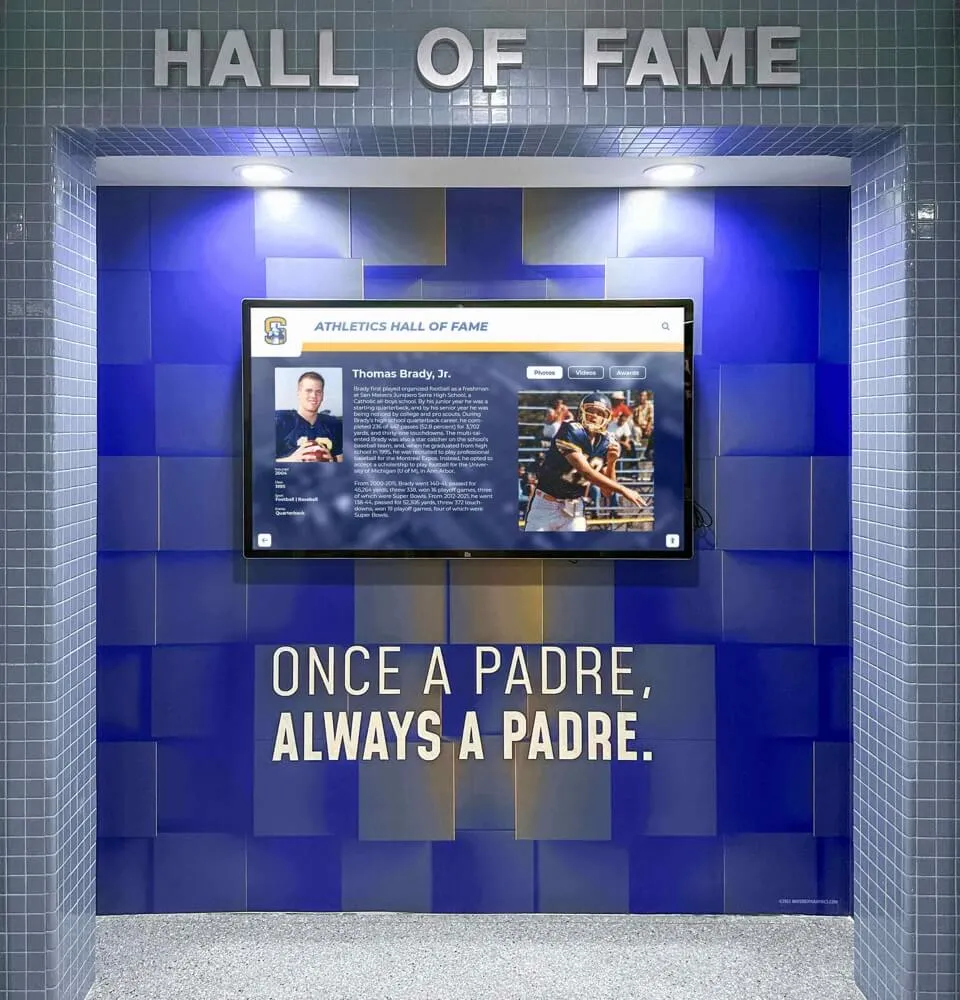
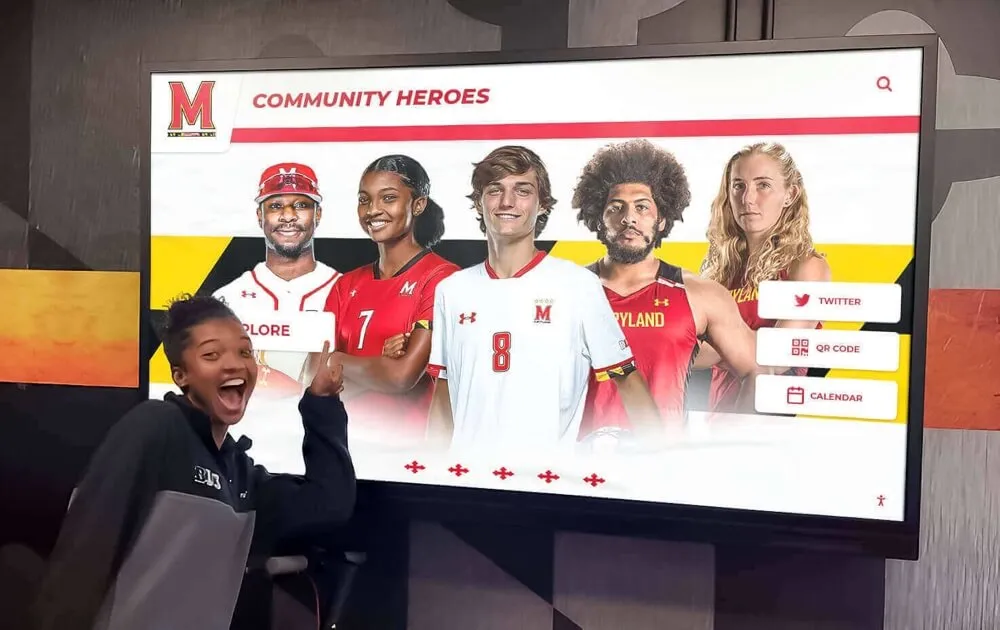
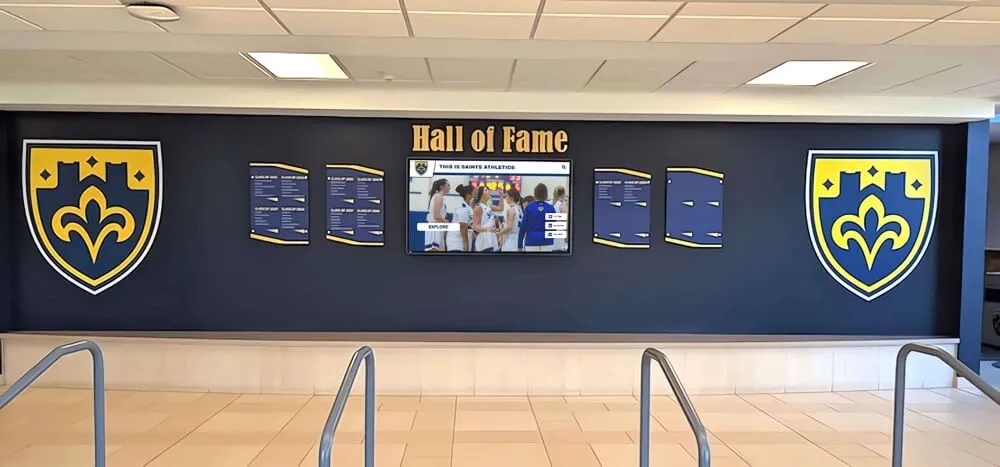
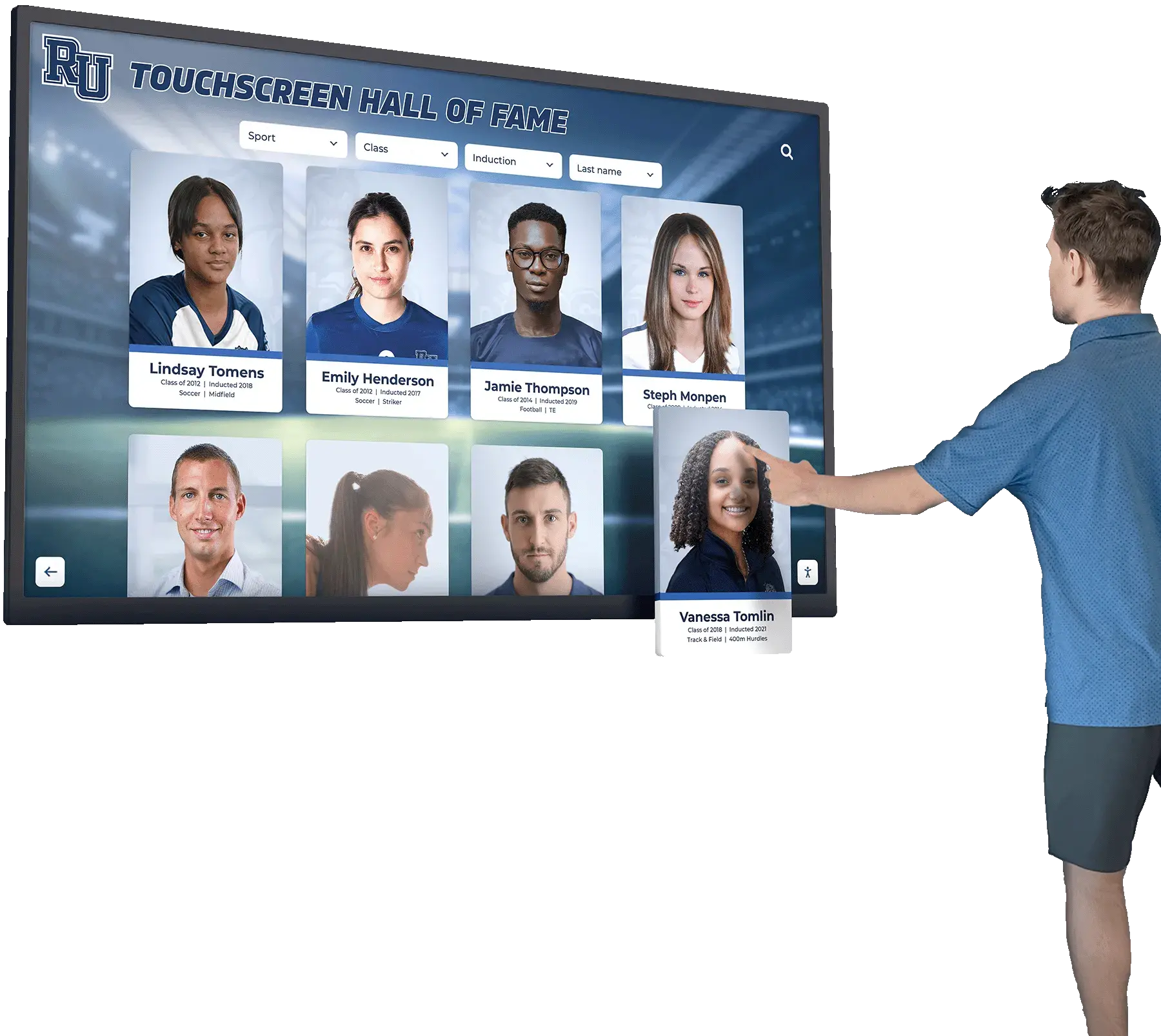
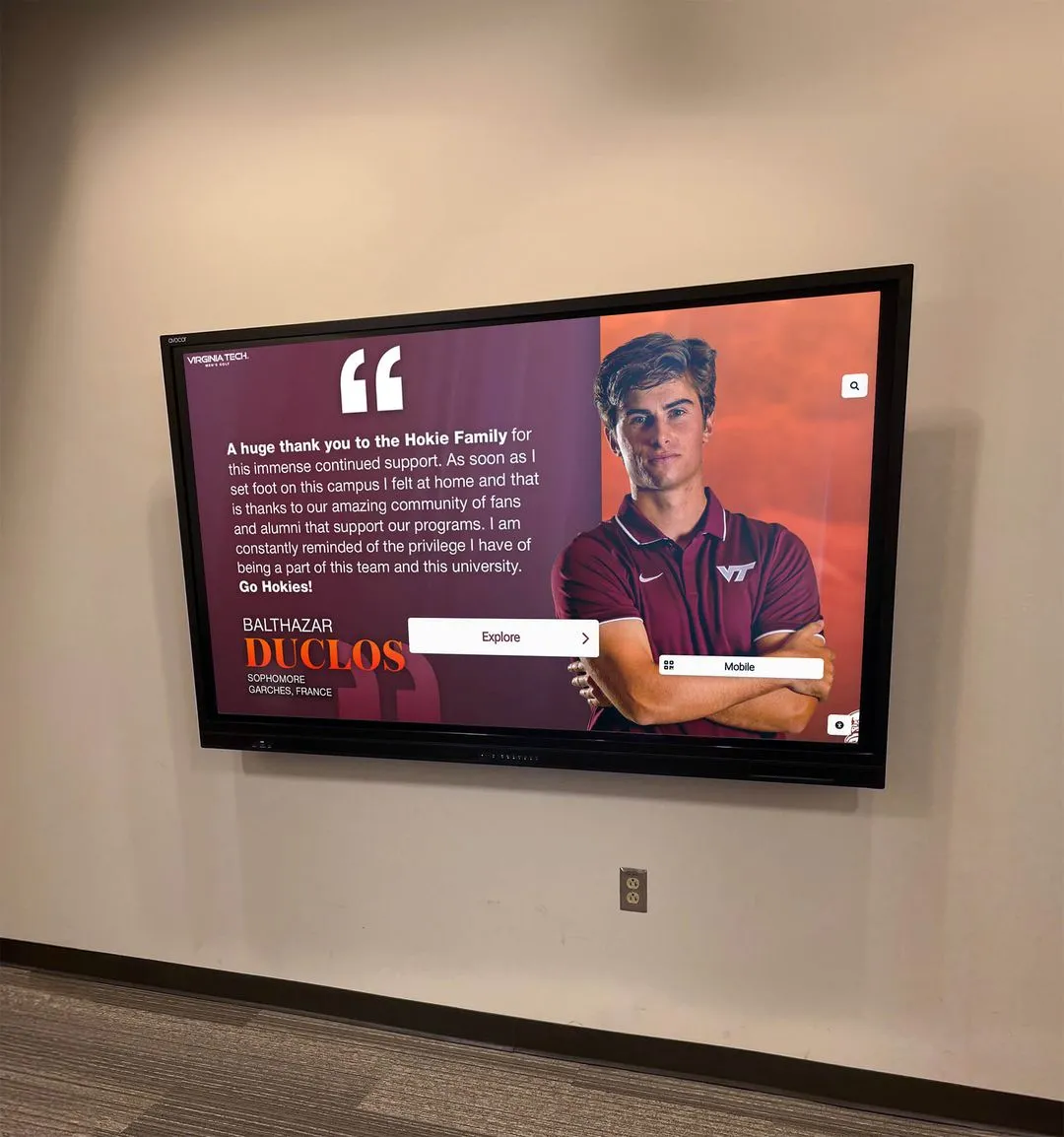
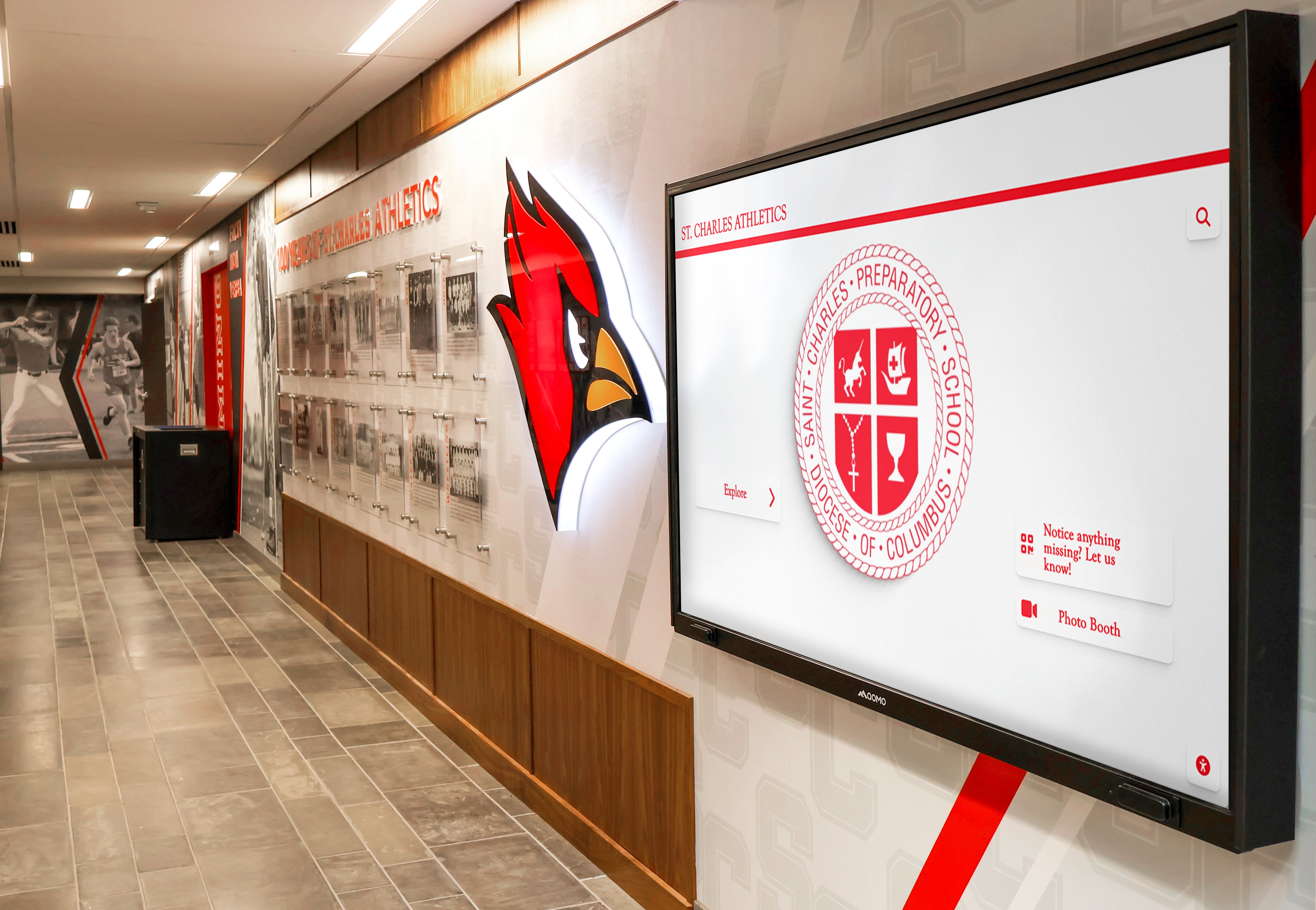
The defensive specialists whose statistics appear on athletic record boards achieved those numbers through preparation that started with fundamental defensive drills executed with championship-level intensity. Modern digital displays make this connection explicit, showcasing not just final statistics but the defensive skills and team-first mentality that produced them.
When current players see alumni recognized for caused turnovers, ground balls, or defensive stops in critical playoff moments, they understand those achievements began with the same drills they’re practicing today. Programs that celebrate defensive excellence alongside offensive production create balanced recognition that honors the complete game and builds comprehensive athletic recognition systems.
Lacrosse Defense Drills: Complete Skill Development Table
The following drills form a comprehensive defensive development system addressing every dimension of elite lacrosse defense. This scannable reference organizes drills by primary skill target for easy practice planning.
| Drill Name | Primary Skill | Secondary Skill | Equipment Needed | Intensity Level |
|---|---|---|---|---|
| Mirror Footwork | Lateral Movement | Body Position | Stick, partner | Medium |
| Angle Denial Progression | Footwork | Positioning | Cones, stick | High |
| Recovery Shuffle Series | Footwork | Transition Defense | Full field, cones | High |
| Poke Check Fundamentals | Stickwork | Timing | Stick, ball, partner | Low |
| Lift and Wrap Progression | Stickwork | Contact Timing | Full gear, partners | Medium |
| Slap Check Accuracy | Stickwork | Ball Disruption | Stick, targets | Medium |
| Ground Ball Battle Drill | Stickwork | Physicality | Balls, full contact | High |
| Slide Communication | Team Defense | Verbal Communication | Full unit, cones | Medium |
| Hot/Help/Ball Rotation | Communication | Defensive Rotation | Full defense, offense | High |
| 6v6 Controlled Scrimmage | Integration | All Skills | Full field, officials | High |
Footwork Drills: Building Defensive Mobility and Positioning
Proper footwork represents the foundation of elite lacrosse defense. Defenders with superior footwork control positioning, dictate offensive movement, and maintain defensive integrity even against skilled dodgers.
1. Mirror Footwork: Foundation of One-on-One Defense
Before adding complexity, defenders must develop the fundamental lateral movement patterns that make all individual defense possible. This drill isolates footwork mechanics without adding stickwork or contact variables.
Implementation: Defenders pair up facing each other 3-5 yards apart. Offensive player moves laterally across 10-15 yards of space using various speeds and direction changes. Defender mirrors movements while maintaining:
- Proper defensive stance: Low center of gravity, knees bent, weight on balls of feet
- Active feet: Quick choppy steps rather than long strides that compromise balance
- Squared shoulders: Maintaining body position facing the offensive player throughout movement
- Stick position: Active top hand, stick head up and in passing lanes
Progression Variables:
- Increase offensive speed gradually
- Add direction changes and hesitation moves
- Introduce backward and forward movement mixed with lateral slides
- Work timed sets (30-60 seconds) to build conditioning alongside technique
Advanced defenders return to mirror work throughout the season for mechanical maintenance, ensuring footwork fundamentals remain sharp under game fatigue.
2. Angle Denial Progression: Controlling Offensive Options
Elite defenders don’t just react—they control where offensive players can go. This drill develops the footwork patterns that force attackers into low-percentage areas while protecting prime scoring locations.
Setup and Execution: Place cones to create a shooting alley from the top center position (12-15 yards from goal). Defender works on forcing dodgers to one side systematically:
Phase 1: Force Right Fundamentals Offensive player starts from top center. Defender positions to take away left side, forcing dodge to defender’s right. Focus on:
- Proper angle positioning (slightly overplaying to force direction)
- Quick recovery steps when dodger commits
- Maintaining inside position closer to goal
- Stick positioning to mirror forced direction
Phase 2: Force Left Execution Repeat entire progression forcing opposite direction, developing balanced defensive capabilities.
Phase 3: Situational Work Add specific scenarios: Force to midfielder help side, force away from dominant shooting hand, force into double-team areas. Championship defenders whose achievements earn recognition in athletic awards programs consistently execute defensive game plans by controlling offensive options through superior positioning.
3. Recovery Shuffle Series: Transition Defense Excellence
The fastest-growing skill gap in modern lacrosse involves transition defense—the ability to recover defensively after offensive possession changes. This drill develops the conditioning and footwork needed for elite transition stops.
Drill Structure: Defenders start at midfield line. On whistle, sprint to defensive end, plant foot at restraining line, and execute controlled shuffle back to midfield. Emphasize:
- Quick sprint-to-shuffle transition (no wasted steps or momentum)
- Head on a swivel (checking field positioning while moving)
- Proper body angle (opening hips to see both ball and assignment)
- Communication calls (identifying threats and assignments)
Advanced Variations:
- Add offensive players creating live transition scenarios
- Include ground ball pickups during recovery runs
- Introduce multiple recovery sprints simulating extended possessions
- Work recovery to specific field positions based on team defensive system
Programs that feature defensive specialists on digital recognition displays often highlight transition defense statistics—a category that correlates directly with championship success in modern lacrosse.
Stickwork Drills: Disrupting Offense and Creating Turnovers
While footwork controls positioning, stickwork creates turnovers and disrupts offensive rhythm. Elite defenders deploy stickwork strategically, applying maximum pressure while minimizing foul risk.
4. Poke Check Fundamentals: Safe Pressure Application
The poke check represents the safest defensive check in lacrosse when executed properly. This drill develops the timing and technique needed for effective poke checks without fouling.
Proper Poke Check Mechanics:
- Set up position: Establish legal defensive position with proper footwork first
- Hands separated: Lower hand drops down shaft creating extension
- Quick thrust: Short, controlled jab at bottom hand of ball carrier
- Immediate recovery: Return to defensive stance instantly after check
- No wind-up: Eliminate telegraphing movements that allow offensive players to protect stick
Drill Execution: Offensive player cradles in place while defender practices poke check technique. Progress through phases:
Phase 1: Stationary Timing Focus on check mechanics and timing without movement variables.
Phase 2: Movement Integration Offensive player walks through dodging movements. Defender maintains footwork while deploying poke checks at optimal moments.
Phase 3: Live Speed Application Full-speed one-on-one situations where defender reads and reacts, deploying poke checks when ball carrier exposes stick.
5. Lift and Wrap Progression: Advanced Checking Technique
Lift checks and wrap checks provide additional tools for creating turnovers when poke checks aren’t available. This drill develops the body positioning and timing needed for these advanced checks.
Lift Check Development: Defender approaches from behind or alongside ball carrier. Proper technique requires:
- Legal body position (no cross-checking or holding)
- Hands together on stick creating single lifting motion
- Upward thrust targeting bottom hand of opponent’s stick
- Controlled follow-through preventing excessive contact
Wrap Check Execution: Used when defender trails offensive player. Key elements:
- Running alongside with controlled speed
- One-handed reach around body of ball carrier
- Quick controlled check targeting opponent’s gloves or stick
- Immediate return to two-hand stick position
Progressive Training: Start with cooperative partners emphasizing proper positioning and legal checking mechanics. Progress to increased resistance, adding movement patterns and game-realistic scenarios. Championship defenders understand that effective stickwork requires perfect timing—too early telegraphs the check, too late allows offensive players to protect their stick.
6. Slap Check Accuracy: Ball Disruption Under Pressure
Slap checks provide quick ball disruption when defenders find themselves slightly out of position. This drill develops the accuracy and timing needed for effective slap checking.
Drill Setup: Create target zones on offensive player’s stick (top hand area, shooting strings, bottom hand area). Defender practices quick controlled slap checks targeting specific areas while maintaining legal body position.
Focus Points:
- Compact motion (no wild swings creating foul risk)
- Targeting accuracy (hitting stick not body)
- Recovery speed (returning to defensive stance immediately)
- Situational awareness (understanding when slap checks are appropriate)
The athletes recognized on hall of fame displays for defensive excellence typically demonstrate complete checking repertoires, deploying the right check for each defensive situation rather than relying on one technique exclusively.
7. Ground Ball Battle Drill: Winning 50/50 Opportunities
Ground ball performance separates championship defenses from average units. This competitive drill develops the physicality, technique, and determination needed to win possession battles consistently.
Execution: Coach rolls ball into open space between two competing players. Athletes battle for possession emphasizing:
- Low body position (getting under opponent’s center of gravity)
- Quick footwork (creating optimal approach angle)
- Two-hand scoop technique (securing possession cleanly)
- Body positioning (sealing opponent away from ball)
- Immediate transition (converting to offensive possession or clearing)
Advanced Variations:
- Multiple players competing (3-on-3 ground ball battles)
- Specific field positions (simulating cleared balls near sideline, balls in front of crease)
- Timed competitions (tracking ground ball win percentages per defender)
- Transition scenarios (ground ball pickup leading directly into clearing opportunity)
Championship programs track ground ball statistics and feature top performers in their recognition systems, understanding that possession control often determines game outcomes.
Communication Drills: Building Coordinated Team Defense
Individual defensive skills matter, but championship lacrosse defense requires seamless communication and coordinated team concepts. These drills develop the verbal and non-verbal communication patterns that create elite team defense.
8. Slide Communication: Coordinated Help Defense
Proper slide packages require instant communication and coordinated movement. This drill develops the communication patterns that make help defense automatic.
Drill Structure: Set up offensive players in standard attacking positions. Defense works through slide rotations with exaggerated communication:
Communication Requirements:
- Ball carrier defender: “I’m hot!” (indicating on-ball pressure)
- Adjacent slide defender: “I’ve got help!” (identifying primary slide responsibility)
- Crease defender: “Ball down!” or “Second slide!” (coordinating backside rotation)
- Off-ball defenders: Calling out their assignments during rotation
Progressive Phases:
Phase 1: Walk-Through Speed Offense remains stationary while defense walks through slide patterns with loud, clear communication. Focus entirely on proper calls and rotation timing.
Phase 2: Controlled Movement Offense moves at half speed. Defense maintains communication while executing physical slides and recoveries.
Phase 3: Live Tempo Full-speed offensive movement with defense communicating and executing slides under game-realistic pressure.
Elite defensive units featured on championship recognition displays consistently demonstrate communication excellence—every defender knows their responsibility instantly based on clear, consistent calls.
9. Hot/Help/Ball Rotation: Defensive Communication System
This drill teaches a complete defensive communication system that provides clear roles for every defender based on offensive ball location.
Communication System Breakdown:
“Hot” = On-ball defender applying immediate pressure
- Responsibilities: Force direction, deny inside position, pressure ball carrier
- Communication: Calls “Hot!” to indicate on-ball assignment
“Help” = Adjacent defender ready to slide on drive
- Responsibilities: Maintain position on assignment while preparing to slide
- Communication: Calls “Help!” to indicate slide readiness
“Ball” = Remaining defenders positioned off-ball
- Responsibilities: Mark assignments, provide second slide support, protect crease
- Communication: Calls “Ball!” to maintain defensive awareness
Drill Execution: Offense passes ball around perimeter. Defense adjusts positions and makes appropriate calls with each pass. Focus on:
- Instant role recognition when ball moves
- Clear loud calls every defender can hear
- Proper spacing maintaining defensive integrity
- Seamless rotation maintaining pressure and help positions
Championship programs understand that defensive excellence requires system mastery, not just individual skills—the concept reflected in how they celebrate team defense achievements through modern recognition platforms.
10. 6v6 Controlled Scrimmage: Integration and Competition
After isolating individual skills, defenders must integrate everything into competitive team defense. This controlled scrimmage format emphasizes defensive execution while limiting offensive variables.
Scrimmage Structure: Full 6v6 situations with specific defensive emphases and coaching points:
Defensive Goals:
- Execute slide package correctly on every dodge
- Maintain communication throughout possession
- Win ground ball battles (tracking success rates)
- Clear successfully after defensive stops
- Limit second-chance opportunities
Offensive Limitations:
- No shots outside 12 yards (forcing dodges that test slides)
- Specified number of passes before shooting (ensuring extended possessions)
- Position restrictions creating predictable offensive looks for defensive work
Coaching Points: Stop play immediately for corrections rather than allowing extended scrimmaging with poor execution. Championship habits form through perfect practice—stopping and correcting defensive breakdowns builds better execution than running continuous flawed possessions.
Periodizing Defensive Development Throughout the Season
Effective defensive training adapts to season phases, emphasizing different skills at appropriate times while maintaining comprehensive development.
Pre-Season Foundation Building
Focus Areas:
- Individual footwork fundamentals
- Basic checking technique and timing
- Defensive communication vocabulary
- Conditioning base supporting defensive movement demands
Training Approach: High repetition, lower intensity work emphasizing perfect technique. Build fundamental habits that serve as foundation for advanced concepts.
Early Season Integration
Focus Areas:
- Team defensive system installation
- Slide package timing and coordination
- Ground ball competitions and possession battles
- Transition defense execution
Training Approach: Controlled situations progressing to live tempo. Emphasize communication and coordinated execution over individual highlight plays.
Mid-Season Refinement
Focus Areas:
- Opponent-specific defensive adjustments
- Situation-specific defensive responses
- Advanced checking techniques and disguises
- Pressure situation execution
Training Approach: Game-speed situations with specific emphases. Film study integration showing defensive execution in game situations. Mental preparation alongside physical training.
Championship Season Excellence
Focus Areas:
- Maintaining execution under playoff pressure
- Confidence through demonstrated competence
- Team defensive cohesion and trust
- Championship mentality and competitive mindset
Training Approach: Quality over quantity. Shorter, intense practices maintaining edge without creating fatigue. Mental preparation and visualization alongside physical maintenance.
Measuring and Celebrating Defensive Excellence
Championship programs track defense-specific metrics that quantify team and individual defensive value:
Team Defensive Metrics:
- Goals against average
- Caused turnovers per game
- Ground ball win percentage
- Clearing success rate
- Man-down conversion defense
Individual Defensive Metrics:
- Caused turnovers
- Ground balls
- One-on-one stops percentage
- Slide execution consistency
- Minutes played without defensive breakdown
Programs that celebrate defensive achievement through comprehensive recognition systems create culture that values complete team excellence. Modern digital displays allow schools to showcase defensive statistics alongside offensive achievements, honoring the specialized skills that championship defenders provide.
Building Programs That Honor Defensive Excellence
The most successful lacrosse programs recognize that championships require elite defense. While offensive highlights generate social media attention, defensive excellence determines playoff success and championship outcomes.
Modern recognition systems allow programs to celebrate defensive achievement appropriately. Interactive displays can showcase:
- Career caused turnovers and ground ball records
- Defensive stops in championship games
- Team defensive statistics during championship seasons
- Leadership impact and communication excellence
- Physical commitment and competitive mindset
When programs honor defensive players through comprehensive recognition, they communicate clear values: Defense wins championships. Team concepts matter as much as individual skills. Complete players earn recognition equal to offensive stars.
This balanced recognition philosophy inspires complete player development. Athletes understand that elite defensive performance earns the same honor as offensive records, motivating the disciplined work required for defensive mastery. Programs that celebrate complete athletic achievement build championship culture emphasizing every position and role.
Schools and universities looking to celebrate their defensive specialists and championship units can explore modern recognition solutions that showcase complete lacrosse achievement. Rocket Alumni Solutions provides interactive touchscreen displays that allow programs to highlight defensive excellence, team statistics, and the complete skill sets that championship defenders bring to their teams—creating engaging recognition that inspires current players while honoring the elite defenders who earned their place in program history through thousands of purposeful repetitions mastering the footwork, stickwork, and communication skills that define lacrosse defensive excellence.