



Key Takeaways
Explore the rich history and legendary traditions of Iowa high school state wrestling. Learn about tournament structure, iconic champions, wrestling culture, and how schools celebrate wrestling achievements through modern recognition displays.
In Iowa, wrestling transcends sport—it represents cultural identity, community pride, and a tradition of excellence unmatched anywhere in the nation. Every February, Wells Fargo Arena in Des Moines transforms into the epicenter of high school wrestling as thousands of athletes compete in the Iowa state wrestling tournament, while over 100,000 spectators create an atmosphere rivaling major collegiate and professional sporting events. From tiny rural communities to suburban powerhouses, Iowa’s wrestling programs demonstrate consistent excellence that has established the state as America’s wrestling capital, producing Olympic champions, NCAA titlists, and generations of student-athletes shaped by the discipline, work ethic, and mental toughness inherent in wrestling culture.
The Iowa High School Athletic Association (IHSAA) state wrestling tournament showcases not just athletic competition but the culmination of year-round dedication, family sacrifice, and community investment in a sport that defines Iowa identity. Understanding the tournament structure, legendary programs, cultural traditions, and recognition approaches provides insights into why Iowa remains the gold standard for high school wrestling while offering schools frameworks for celebrating wrestling achievements that inspire current athletes and honor past champions.
Understanding the Iowa State Wrestling Tournament Structure
The IHSAA state wrestling tournament represents the most competitive high school wrestling event in America, featuring a comprehensive classification system and tournament format that ensures fair competition while creating dramatic championship moments.
Classification System and Competitive Balance
Iowa organizes wrestling programs into three classes based on school enrollment, allowing institutions of all sizes to compete for state championships:
Class 3A (Largest Schools):
Schools with enrollments exceeding approximately 700-800 students compete in 3A, representing Iowa’s largest cities and suburban communities. Programs like Southeast Polk, Waverly-Shell Rock, Iowa City West, Pleasant Valley, and Bettendorf feature extensive rosters, year-round training programs, and resources supporting elite competition. Class 3A wrestling showcases the depth of Iowa’s wrestling talent, with brackets in popular weight classes featuring 32+ competitors ranked nationally.
Class 2A (Mid-Size Schools):
Serving schools with roughly 300-700 students, 2A represents Iowa’s mid-sized communities where wrestling often dominates winter sports attention. Programs such as Sergeant Bluff-Luton, West Delaware, Clarion-Goldfield-Dows, and Creston have built championship cultures balancing small-town tradition with competitive excellence. Class 2A features the most competitive balance, with numerous programs capable of winning team titles annually.
Class 1A (Smallest Schools):
Schools enrolling fewer than approximately 300 students compete in 1A, but enrollment size doesn’t limit championship success in Iowa wrestling. Legendary programs like Don Bosco, Lisbon, Denver, Alburnett, and Nashua-Plainfield have established small-school dynasties rivaling any large program nationally. Class 1A demonstrates that wrestling excellence stems from culture, coaching, and commitment rather than enrollment numbers.
This classification structure undergoes periodic realignment as enrollment shifts, ensuring competitive balance remains fair across the state. The Iowa system creates compelling storylines as traditional powers face emerging programs, while small-town dynasties compete with resources and intensity matching their larger counterparts.
Weight Class Structure and Tournament Format
Iowa wrestling features 14 weight classes accommodating athletes from 106 pounds through heavyweight (285 pounds):
Weight Classes:
- 106, 113, 120, 126, 132, 138, 145, 152, 160, 170, 182, 195, 220, 285 pounds
This structure allows wrestlers of all body types to compete in appropriate divisions while requiring strategic team lineup decisions from coaches managing limited roster sizes across 14 weight classes.
Tournament Bracket and Progression:
The state tournament uses a traditional bracket system with specific rounds:
Thursday Sessions: Initial rounds and first-round matches for all weight classes across all three classes, with approximately 16 matches occurring simultaneously on multiple mats
Friday Sessions: Quarterfinal and consolation rounds narrowing fields toward medal positions, with intensity escalating as championship dreams become reality or end
Saturday Sessions: Semifinal rounds in the morning, followed by afternoon consolation finals (3rd-6th place matches), and evening championship finals determining state champions
The three-day format creates sustained excitement while allowing wrestlers who lose in championship brackets to compete in consolation brackets for place finishes. Placing in the top six at the Iowa state tournament represents significant achievement, with medalists earning all-state recognition.
Team Scoring System:
Individual match results contribute to team standings through a point system:
- Advancement points for round victories
- Bonus points for pins, technical falls, and major decisions
- Placement points for final standings (1st through 6th place)
Team championships require balanced lineups with multiple state qualifiers contributing points across weight classes rather than relying on a few elite wrestlers. This format encourages program depth while creating dramatic team race scenarios as final sessions determine champions. Schools celebrating these team achievements often implement recognition similar to championship bracket displays that document tournament journeys.
The Sacred Pilgrimage to Wells Fargo Arena
For Iowa wrestlers and their communities, qualifying for the state tournament at Wells Fargo Arena represents the pinnacle of achievement, creating memories and experiences that resonate throughout lifetimes.
Tournament History and Venue Evolution
Iowa’s state wrestling tournament has evolved dramatically since its inception, reflecting the sport’s growth while maintaining traditions that connect generations.
Historical Venues:
The tournament has called several venues home throughout its history:
- Early tournaments rotated between Iowa City and other locations
- Veterans Memorial Auditorium in Des Moines hosted the event for decades, creating intimate atmospheres and legendary moments
- The tournament moved to larger venues as crowds grew exponentially
- Wells Fargo Arena has hosted since 2006, providing professional-level facilities and capacity for massive crowds
The venue evolution demonstrates wrestling’s importance in Iowa culture, as no other high school state tournament draws crowds necessitating 15,000+ seat arenas.
Tournament Attendance and Atmosphere:
Iowa’s state wrestling tournament draws the largest high school sporting event crowds in America:
- Annual attendance exceeds 100,000 spectators across three days
- Thursday and Friday sessions feature multiple simultaneous matches on eight mats
- Saturday championship finals sell out months in advance with 15,000+ spectators
- Communities travel hours, with many schools chartering buses and entire towns making pilgrimages
- The atmosphere rivals NCAA Division I championships and professional wrestling events
This unprecedented support reflects wrestling’s cultural significance in Iowa, where state tournament qualification represents community-wide celebration rather than individual athletic achievement. The electric atmosphere and massive crowds create intimidating competition environments that prepare Iowa wrestlers for success at collegiate and international levels.
The Experience of Competing at State
For wrestlers who qualify, the state tournament experience creates unforgettable memories:
Pre-Tournament Preparation:
The week leading to state tournament features:
- Final weight management and practice adjustments
- Scouting potential opponents through video and statistical analysis
- Mental preparation and visualization techniques
- Community send-off celebrations as schools honor qualifiers
- Media attention and local coverage intensifying pressure and excitement
- Family travel arrangements as extended families gather to support wrestlers
Tournament Week Intensity:
Once in Des Moines, wrestlers experience:
- Weigh-ins and bracket draws determining championship paths
- Warm-up facilities adjacent to competition floor
- Walking through Wells Fargo Arena tunnels onto competition mats
- Coaching in corners from mentors who prepared them for years
- Family and community support in stands creating home-mat advantages
- The pressure of single-elimination competition where seasons end with losses
- Post-match emotions ranging from championship celebration to heartbreaking defeat
These intense experiences shape wrestlers’ character, teaching life lessons about preparation, mental toughness, handling pressure, responding to adversity, and pursuing excellence that transcend sport. Many wrestlers cite their state tournament experiences as defining moments in personal development, regardless of placement results.
Iowa’s Legendary Wrestling Programs and Champions
Certain programs have established championship traditions spanning decades, creating models for wrestling excellence while producing generations of state champions and collegiate competitors.
Iconic Small-School Programs
Iowa’s small-school wrestling demonstrates that championship culture transcends resources and enrollment:
Don Bosco (Gilbertville):
Perhaps Iowa’s most successful small-school program, Don Bosco has won numerous team titles while producing dozens of individual state champions and NCAA qualifiers. The program exemplifies how small Catholic schools can build wrestling dynasties through coaching excellence, community support, and unwavering commitment to wrestling culture. Don Bosco’s success has made the program a national model for small-school wrestling excellence.
Lisbon Lions:
Lisbon has established itself as a Class 1A powerhouse, with multiple team championships and a tradition of developing technically sound wrestlers who succeed at the next level. The program demonstrates how consistent coaching, youth program development, and community investment create sustained excellence across generations.
Denver Cyclones:
Denver’s wrestling program has produced remarkable success relative to school size, with numerous team titles and individual champions. The program shows how small rural communities can compete with anyone when wrestling becomes central to community identity and receives year-round focus.
Other Small-School Powers:
Programs like Alburnett, Nashua-Plainfield, West Hancock, Don Bosco-Dunkerton, and Wilton have built championship traditions proving that Class 1A features wrestling as competitive and technically sophisticated as any classification nationally.
These small-school programs maintain extensive athletic hall of fame systems celebrating wrestling heritage while inspiring current wrestlers to pursue their own championship dreams.
Large-School Championship Programs
Iowa’s largest schools feature programs with resources, roster depth, and competitive intensity matching any state:
Southeast Polk Rams:
The Des Moines suburban program has emerged as a Class 3A dynasty, winning multiple consecutive team titles while dominating state tournament team races. Southeast Polk demonstrates how large schools can build dominant programs through comprehensive youth development, elite coaching, and creating cultures where wrestling excellence becomes institutional expectation rather than exceptional achievement.
Waverly-Shell Rock Go-Hawks:
A consistent championship contender for decades, Waverly-Shell Rock combines small-city values with big-program resources. The program has produced numerous team titles, individual champions, and NCAA Division I wrestlers while maintaining the community-focused tradition that defines Iowa wrestling.
Iowa City West Trojans:
Representing Iowa’s college-town culture, Iowa City West has built a championship tradition producing state champions and collegiate wrestlers consistently. The program benefits from University of Iowa’s wrestling presence while developing its own distinctive identity and competitive culture.
Other Large-School Powers:
Programs like Bettendorf, Pleasant Valley, Fort Dodge, Cedar Rapids Kennedy, Ankeny Centennial, and Johnston consistently compete for team titles while producing individual champions and future collegiate standouts.
These programs showcase the depth of Iowa wrestling, where even qualifying for state tournaments in popular weight classes requires defeating numerous nationally-ranked competitors. The competitive intensity in Iowa’s large-school programs prepares wrestlers for immediate success at NCAA Division I programs nationwide.
Legendary Individual Champions and Records
Iowa’s state tournament history features remarkable individual accomplishments and legendary champions:
Four-Time State Champions:
Winning one state title represents extraordinary achievement, but Iowa has produced numerous four-time state champions who never lost a high school match at state tournaments. These wrestlers include names like Jeff McGinness, Jay Borschel, Brent Metcalf, and others who went on to become NCAA champions and international competitors. Four-time champions represent wrestling’s highest individual achievement, requiring consistency, dominance, and sustained excellence across four years of high school competition.
Career Pin Records:
Some Iowa wrestlers have achieved extraordinary career pin totals, with several surpassing 150-200 career pins. These records demonstrate not just winning but dominating opponents through technical excellence and aggressive wrestling styles.
Multiple-Time Placers:
Beyond champions, wrestlers who place at state tournaments multiple times demonstrate consistency and excellence. Placing at state two, three, or four times represents significant achievement in Iowa’s brutally competitive environment, where numerous talented wrestlers never qualify for state despite excellent careers.
These individual achievements often receive permanent recognition through trophy display systems that celebrate wrestling program history while inspiring current athletes.
The Cultural Traditions That Define Iowa Wrestling
Beyond tournament structure and competitive achievement, specific cultural traditions distinguish Iowa wrestling and explain why the sport enjoys unmatched prominence in the state.
Year-Round Wrestling Culture
Unlike many states where wrestling represents a winter activity, Iowa wrestling operates year-round:
Youth Program Development:
Iowa’s wrestling excellence begins in elementary school:
- Youth programs in communities statewide introduce wrestling to children as young as 4-5 years old
- Little League wrestling programs teach fundamental techniques and competitive mindset
- Club teams provide intensive training beyond school season
- Summer camps operated by high school and college programs maintain skill development
- Tournament circuits allow young wrestlers to compete against diverse opponents year-round
This comprehensive youth development creates pipelines feeding high school programs with technically proficient wrestlers who have competed for years before entering high school. Schools investing in youth program coordination understand these initiatives as essential program-building rather than optional activities. Resources on wrestling camp traditions provide insights into how summer programs sustain development.
Off-Season Training and Freestyle Competition:
Successful programs emphasize off-season development:
- Freestyle and Greco-Roman wrestling during spring and summer
- Strength and conditioning programs specific to wrestling demands
- Technique camps and clinics featuring college and international coaches
- Open mat sessions allowing wrestlers to train with competitors from other programs
- National tournament participation exposing wrestlers to diverse styles and competition levels
Community Investment and Support:
Iowa communities demonstrate extraordinary wrestling support:
- Booster clubs funding program needs beyond school budgets
- Community members attending dual meets creating home-mat advantages
- Local businesses sponsoring teams and individual wrestlers
- Wrestling-focused fundraisers generating resources for training equipment and travel
- Media coverage treating high school wrestling with importance matching professional sports
This comprehensive support system creates environments where wrestling excellence becomes community expectation and identity rather than exceptional achievement by isolated individuals.
The University of Iowa’s Influence
The University of Iowa wrestling program’s success and prominence significantly influences high school wrestling culture:
Carver-Hawkeye Arena Culture:
Iowa’s home wrestling venue attracts 15,000+ spectators for dual meets, demonstrating wrestling’s popularity and creating aspirational goals for high school wrestlers. Many Iowa high school wrestlers grow up attending Iowa meets, dreaming of competing in Carver-Hawkeye Arena themselves.
Pipeline to Elite Competition:
Iowa consistently recruits and develops the nation’s top high school wrestlers:
- Numerous Iowa high school state champions have competed for the Hawkeyes
- Iowa’s NCAA championships inspire high school wrestlers throughout the state
- University of Iowa coaches and wrestlers conduct clinics throughout Iowa
- The presence of elite collegiate wrestling creates year-round competitive training partners
- Iowa’s success at NCAA tournaments validates Iowa high school wrestling excellence
Dan Gable Legacy:
Legendary coach Dan Gable’s influence extends far beyond his coaching tenure:
- Gable’s coaching philosophy and work ethic standards permeate Iowa wrestling culture
- His 15 NCAA team championships at Iowa established wrestling’s prominence
- Gable’s Olympic gold medal and international success inspired generations
- His continued involvement in Iowa wrestling through camps and clinics maintains his influence
- The Dan Gable mentality—outworking opponents and never settling for good enough—defines Iowa wrestling culture
This connection between high school and elite collegiate wrestling creates seamless development pathways while establishing standards of excellence that drive Iowa’s sustained dominance.
Wrestling Family Traditions
Iowa wrestling creates multi-generational family traditions:
Legacy Wrestlers:
Many programs feature families with multiple generations of state qualifiers:
- Sons following fathers into wrestling programs and duplicating or exceeding achievements
- Siblings competing together and creating family legacies within programs
- Second and third-generation wrestlers continuing family traditions
- Family records for career wins, state qualifications, or championships
- Coaching legacies as former wrestlers return to coach in programs that shaped them
Family Sacrifice and Support:
Wrestling families demonstrate extraordinary commitment:
- Parents spending countless hours traveling to tournaments year-round
- Financial investment in club programs, camps, and training resources
- Meal planning and weight management support for cutting weight
- Attendance at every match regardless of distance or schedule challenges
- Emotional support through inevitable losses and setbacks inherent in wrestling
This family investment creates bonds and shared experiences that last lifetimes, with many wrestlers citing their families’ support and sacrifice as motivation for pursuing excellence and enduring the sport’s demanding nature.
Celebrating and Preserving Wrestling Achievements
Schools preserve wrestling accomplishments through various recognition methods that honor individual and team success while inspiring future wrestlers:
Traditional Recognition Approaches
Time-honored methods for celebrating wrestling excellence include:
State Qualifier and Place-Winner Recognition:
Most programs prominently display wrestlers who qualified for or placed at state tournaments:
- Individual plaques for each state qualifier listing name, year, weight class, and finish
- Separate sections distinguishing state champions from place-winners and qualifiers
- Photos of wrestlers in competition or receiving awards
- Chronological organization allowing visitors to trace program development over decades
Team Championship Displays:
Programs that win team titles create lasting recognition:
- Championship banners hanging in gymnasiums or wrestling rooms
- Team photos featuring entire rosters, coaches, and support staff
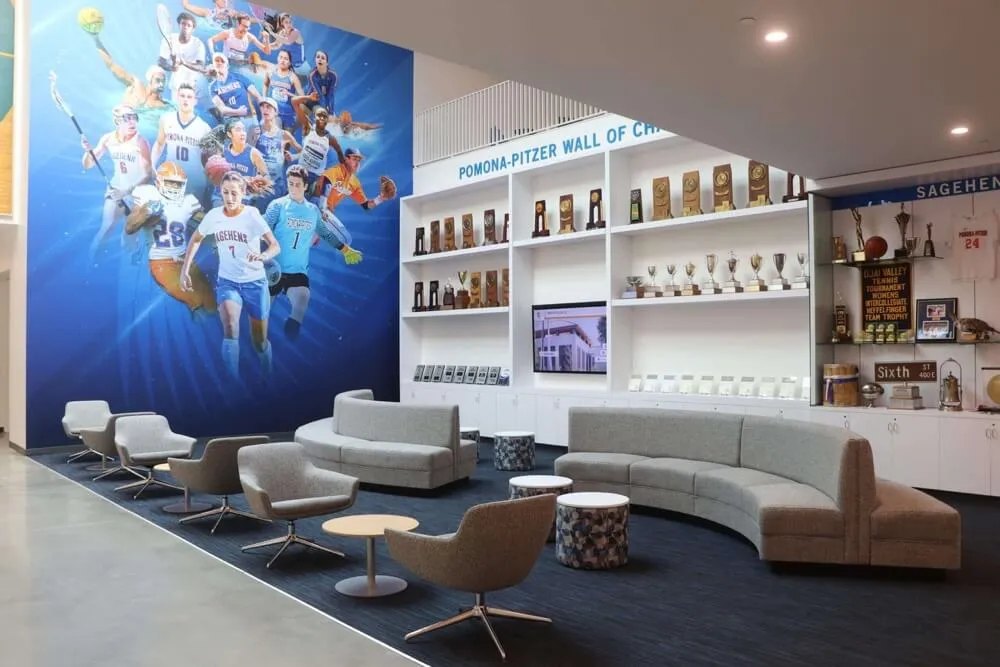
- Trophy cases displaying championship hardware
- Narrative plaques explaining championship seasons and key victories
- Statistical summaries showing point totals and individual contributor achievements
Wrestling Room Culture Displays:
Many programs create motivational environments in practice facilities:
- Posters featuring program legends and their achievements
- Records boards listing program career and single-season records
- Motivational quotes from legendary wrestlers and coaches
- College placement lists showing wrestlers who continued competitively
- Win-loss records and streaks demonstrating program excellence
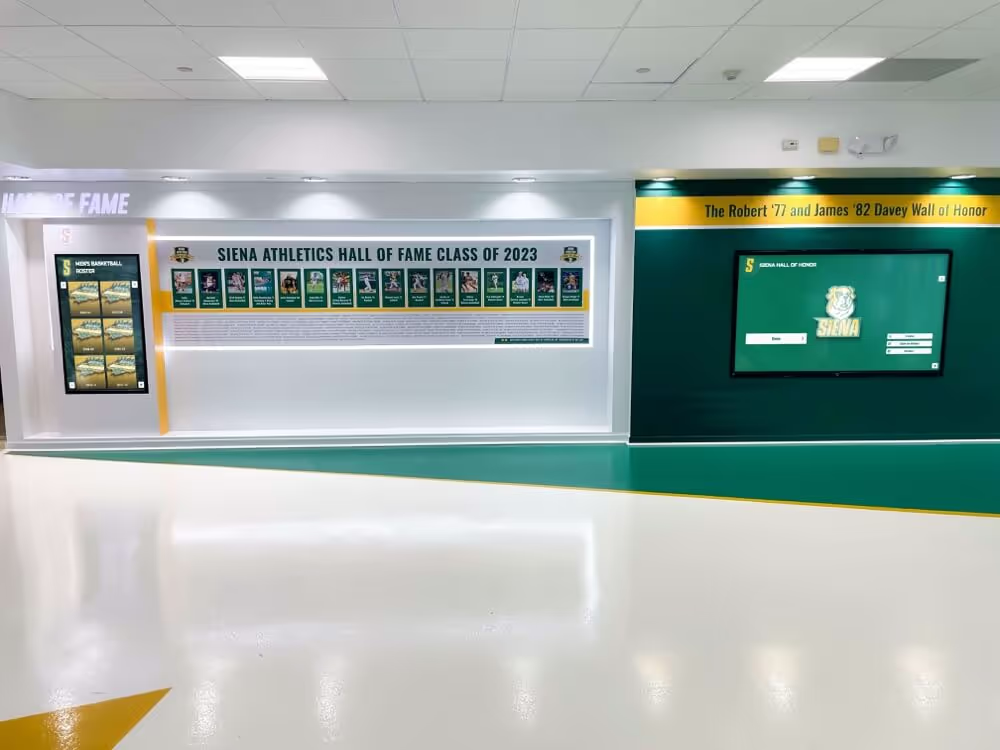
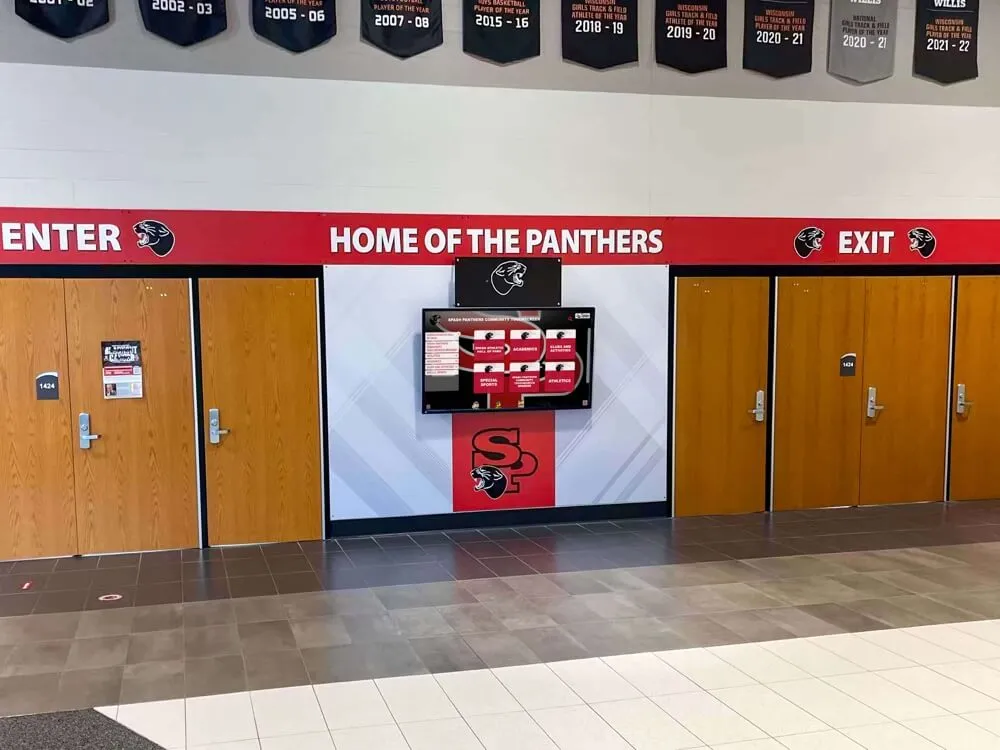
While these traditional approaches provide tangible recognition, they face limitations including physical space constraints, difficulty incorporating multimedia content, static information that doesn’t capture wrestling’s dynamic nature, and limited accessibility for alumni unable to visit physical facilities.
Modern Digital Recognition Systems
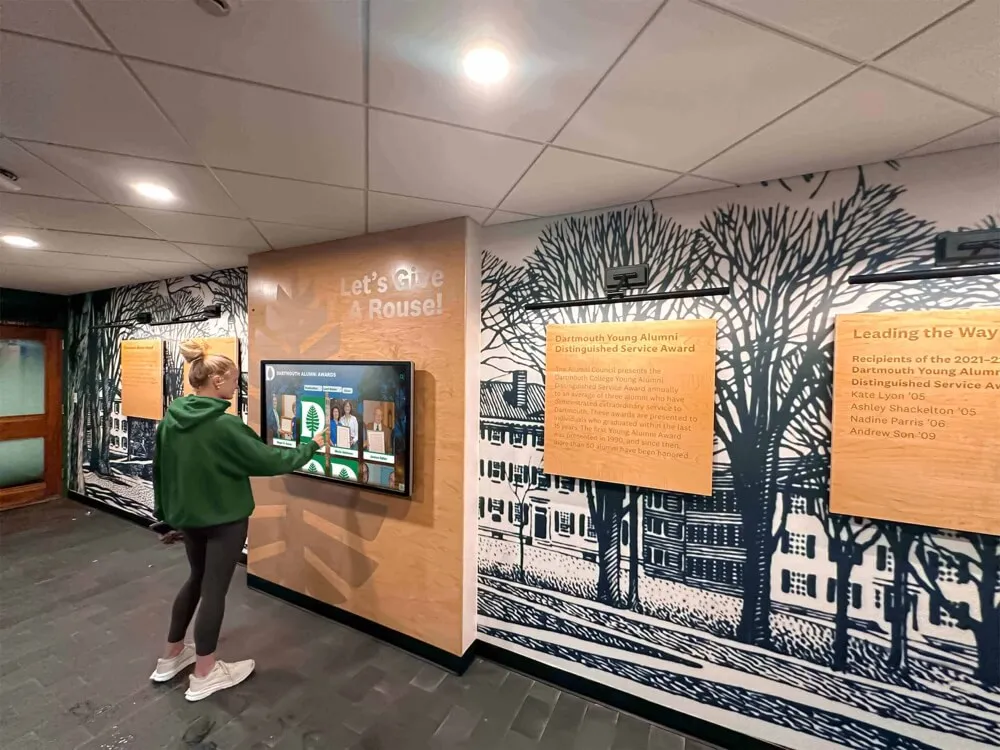
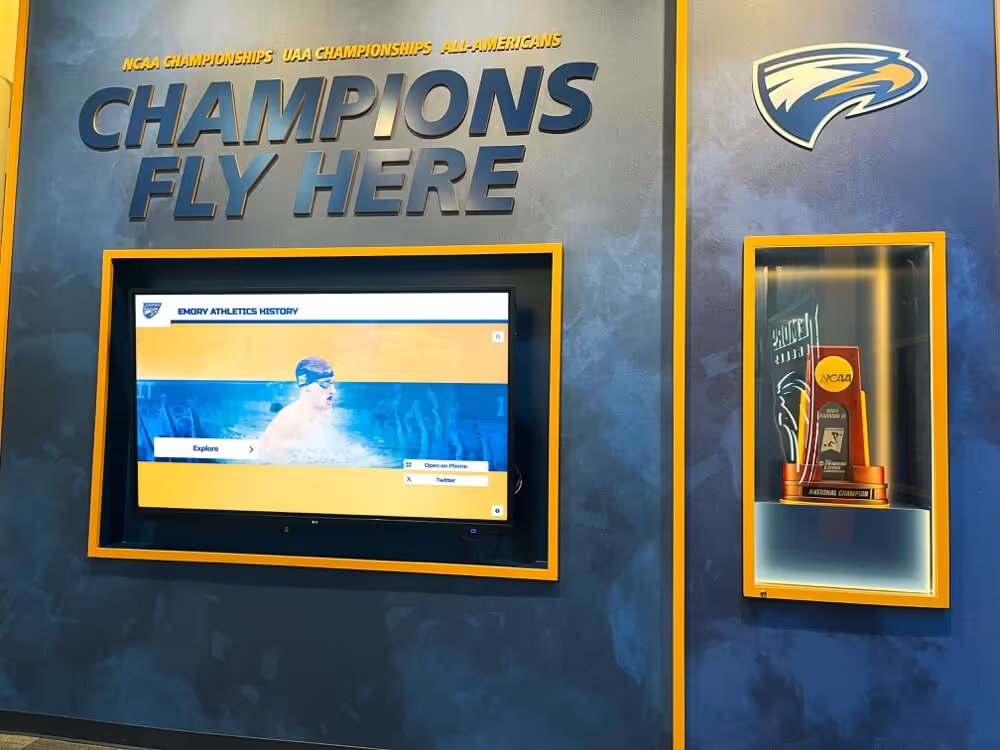
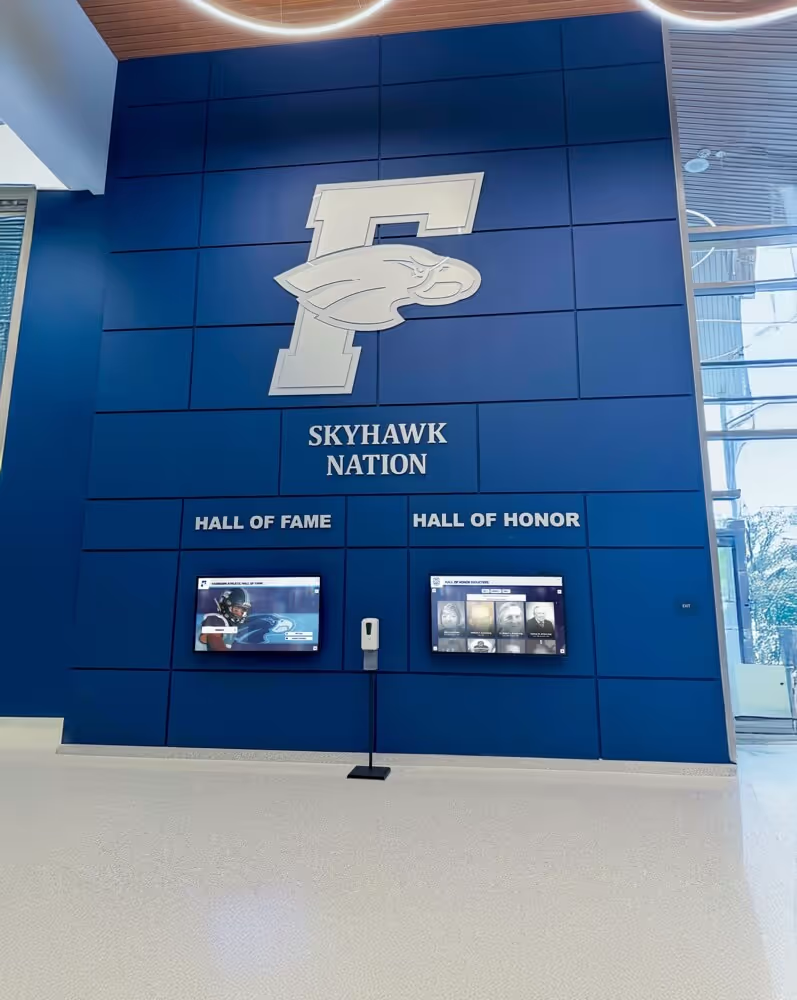
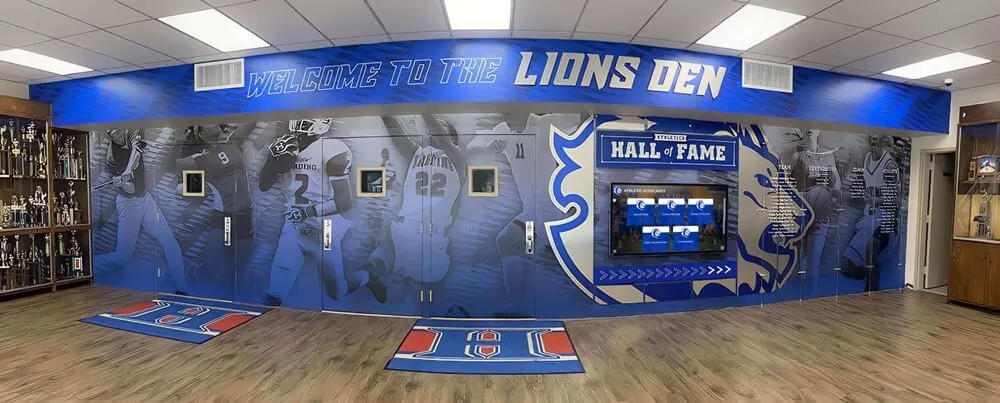
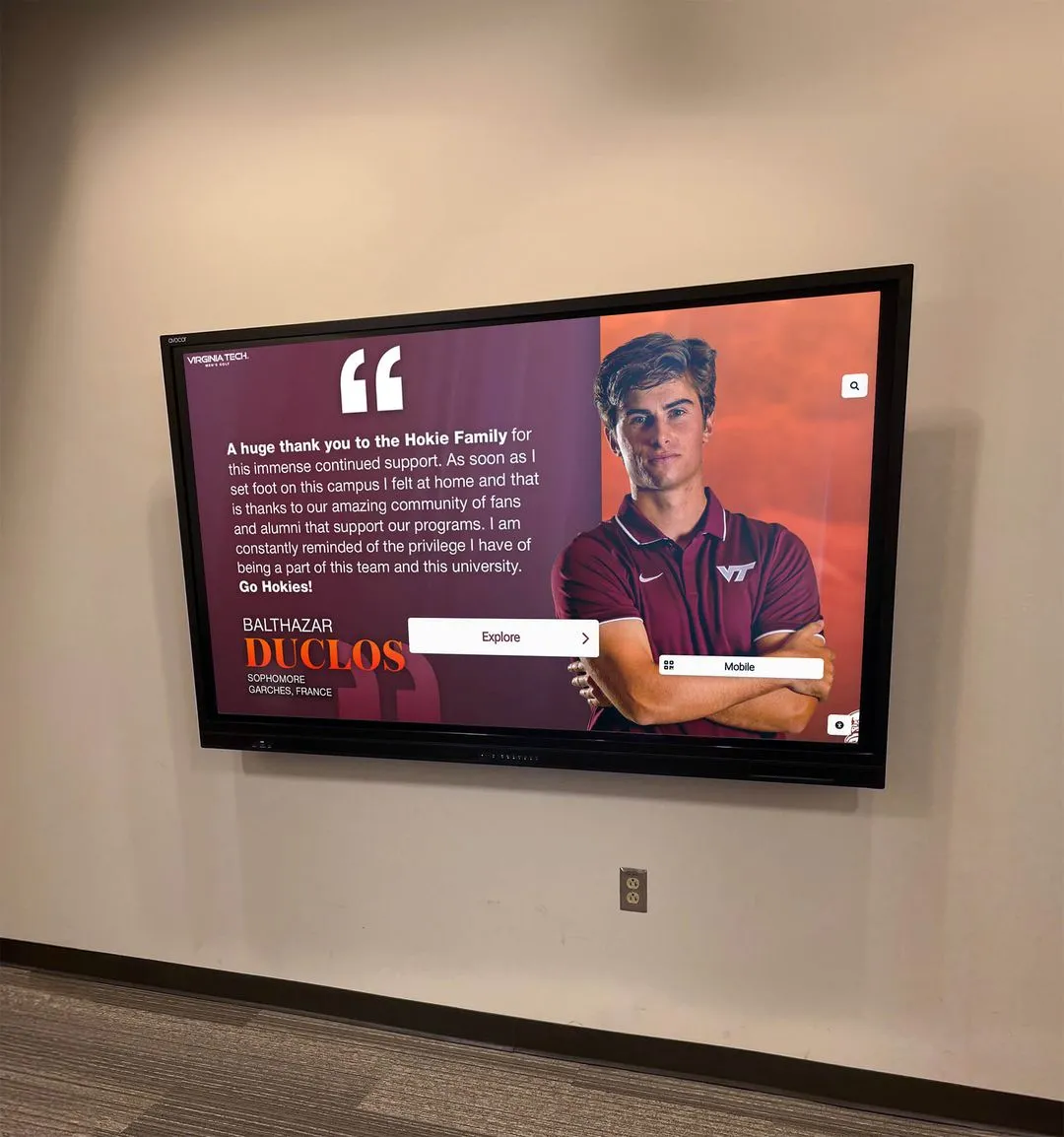
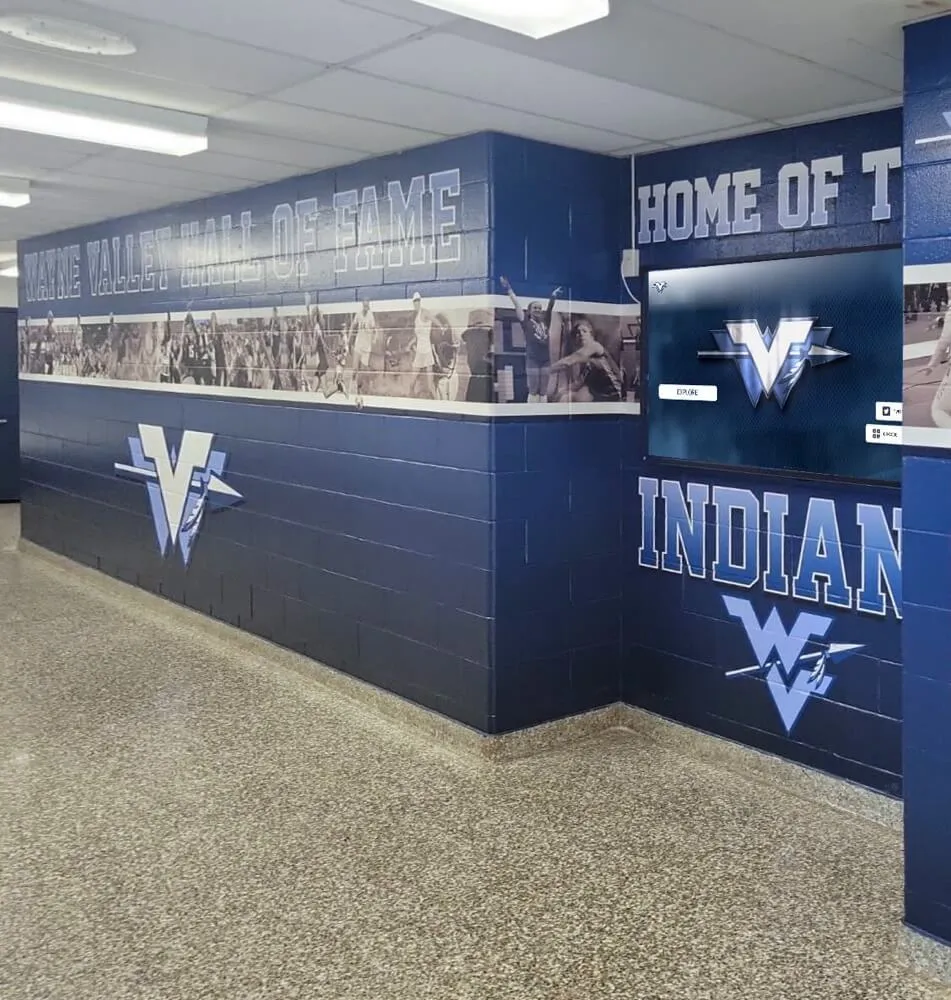
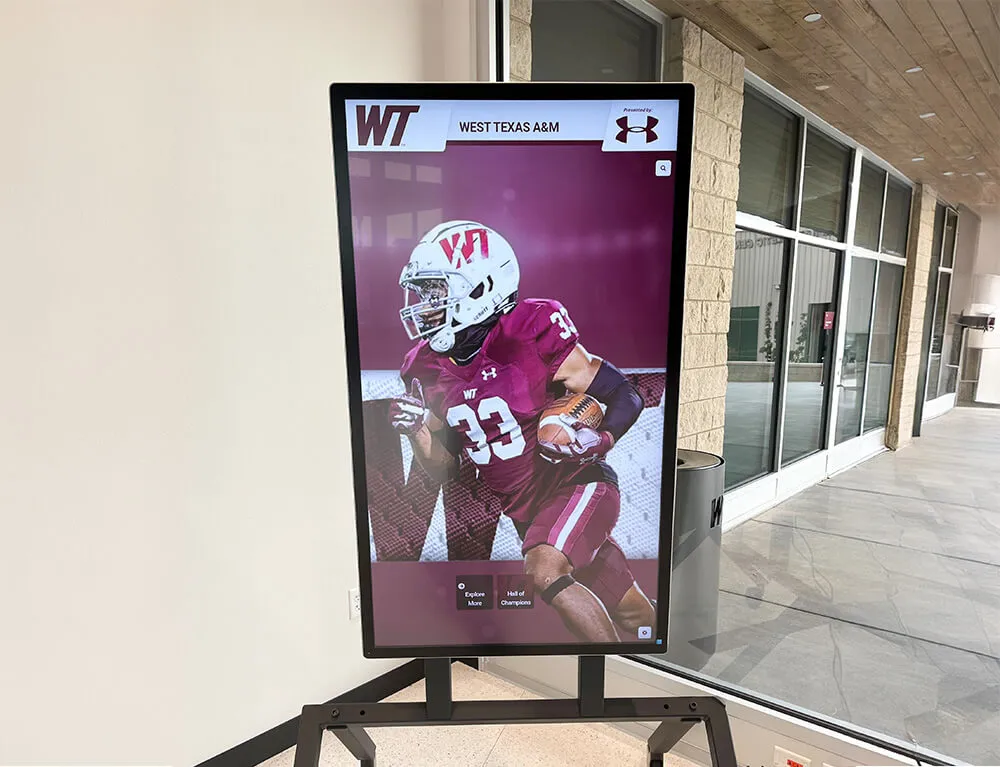
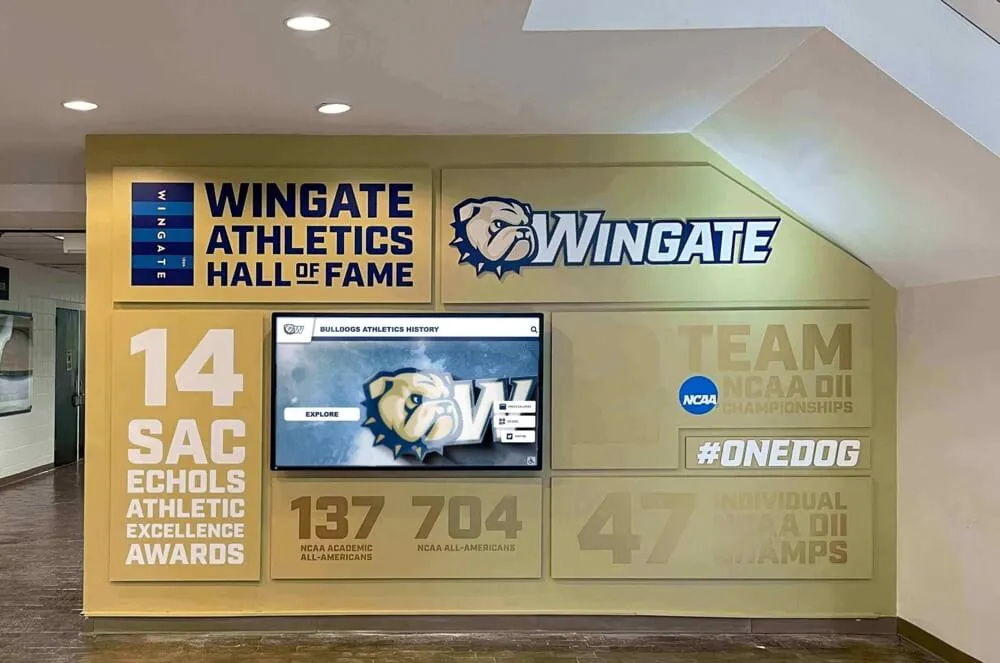
Contemporary schools increasingly implement digital recognition platforms that overcome traditional limitations while enhancing engagement:
Comprehensive Digital Displays:
Modern recognition systems provide capabilities traditional displays cannot match:
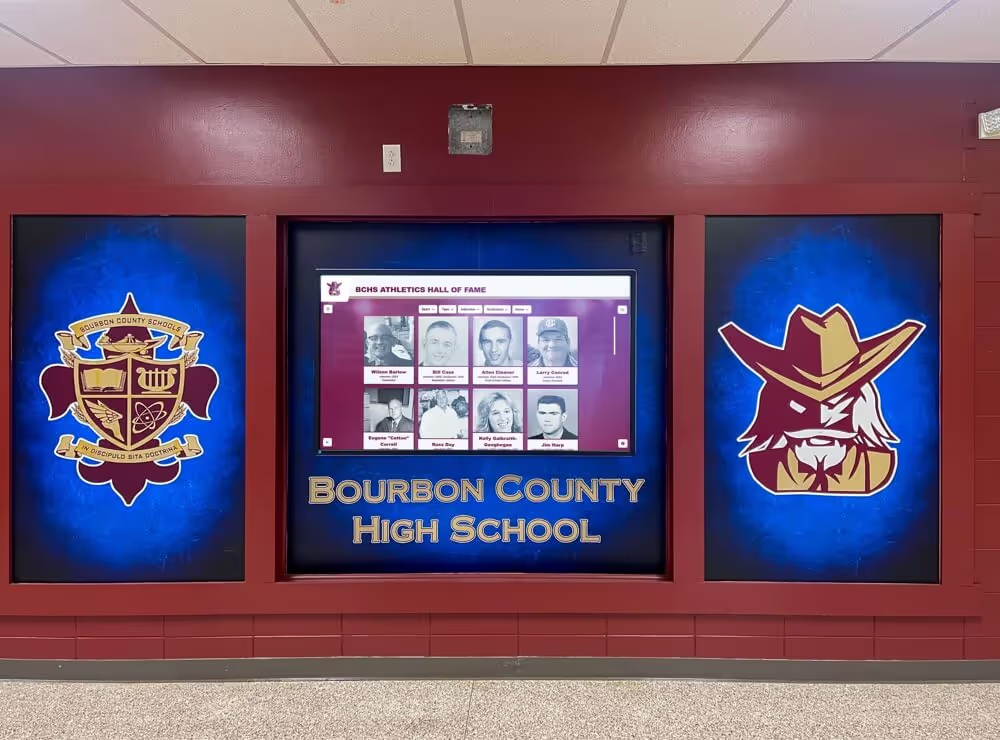
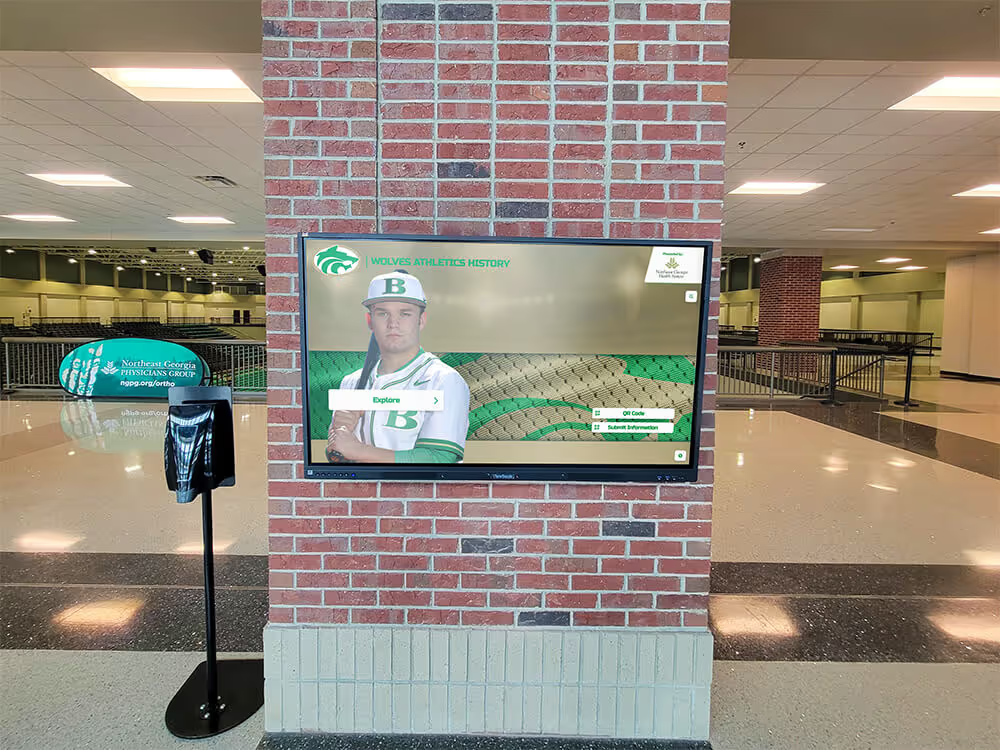
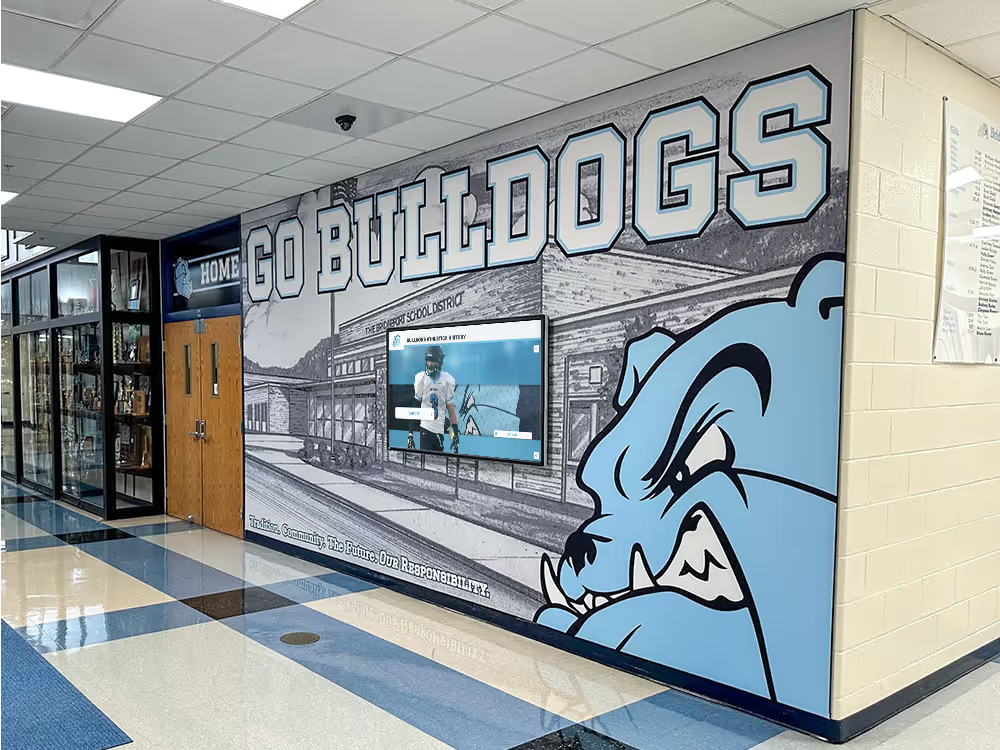
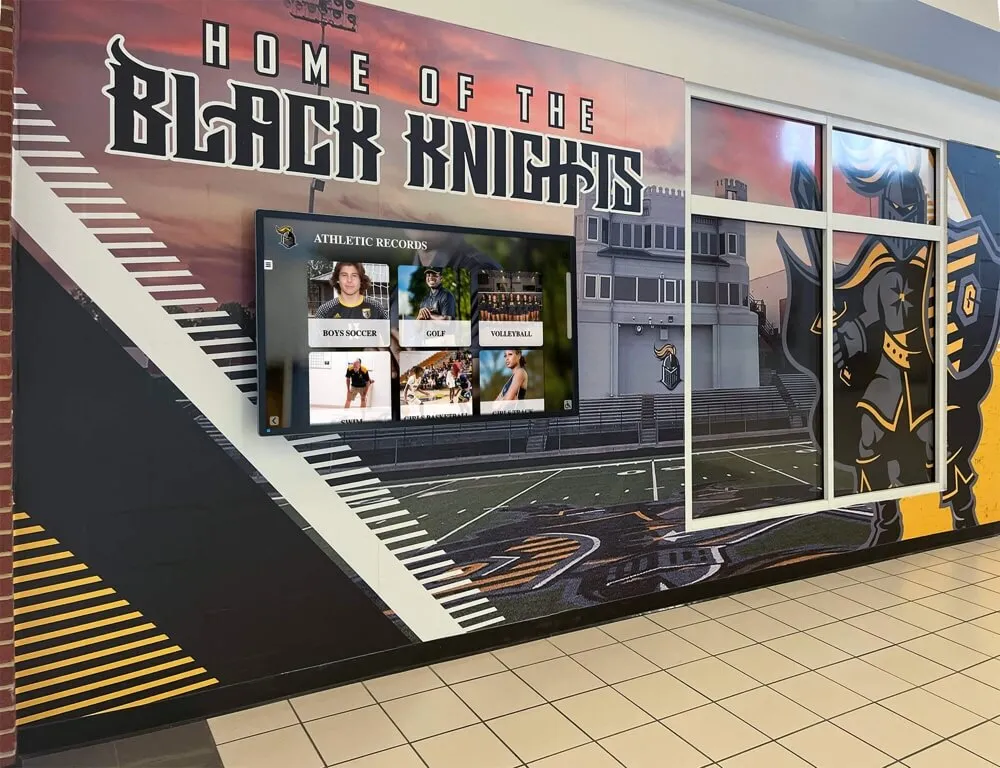
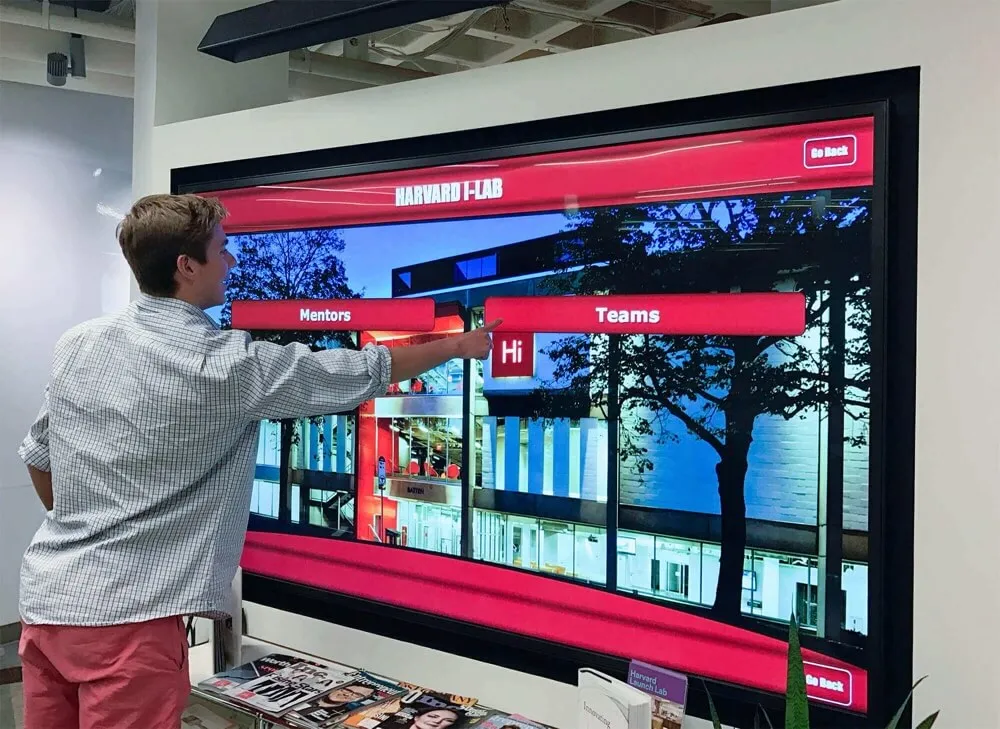
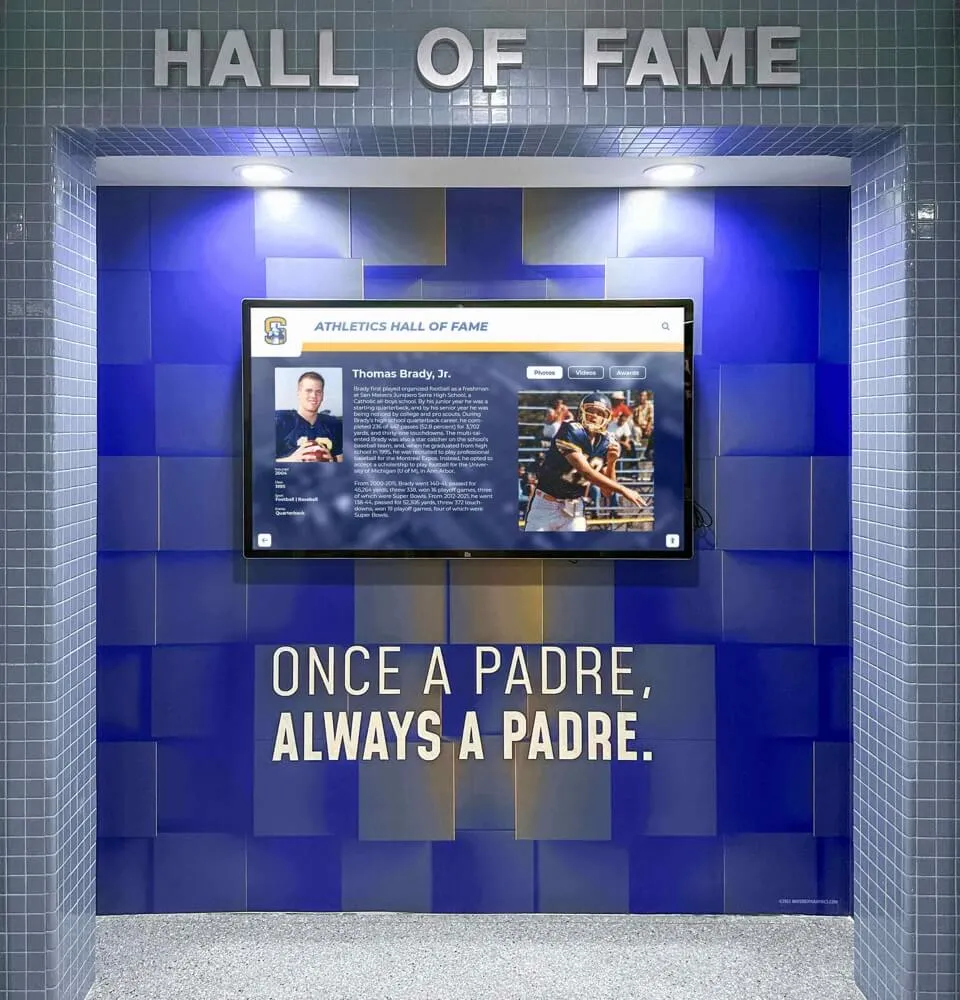
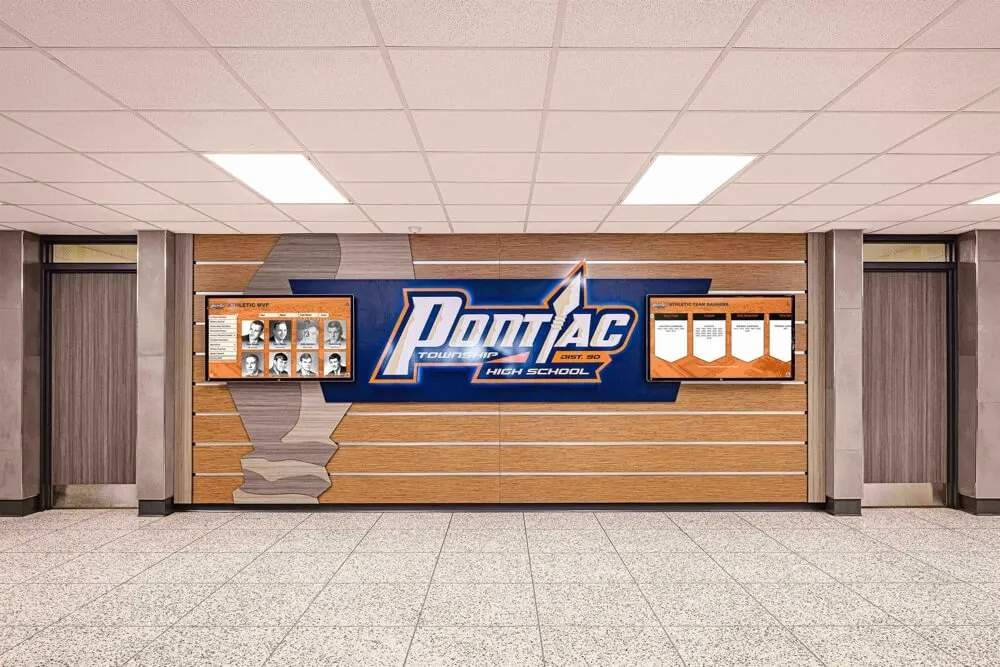
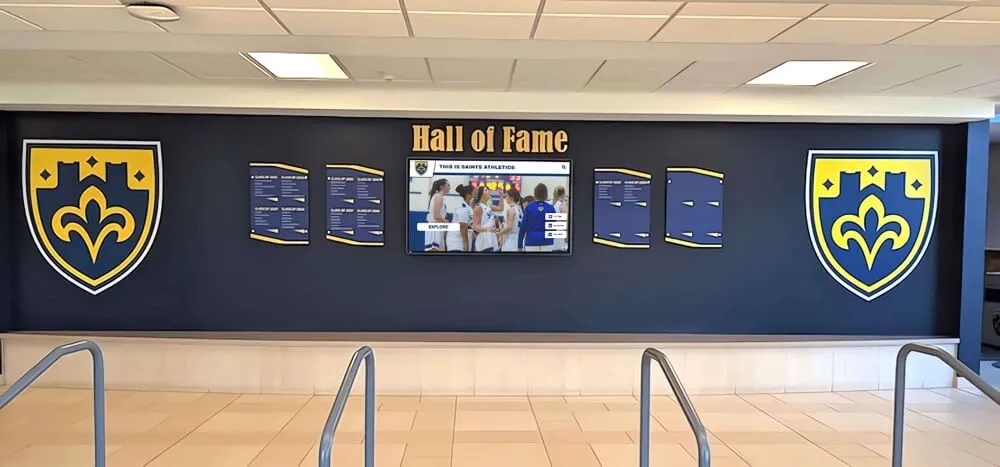
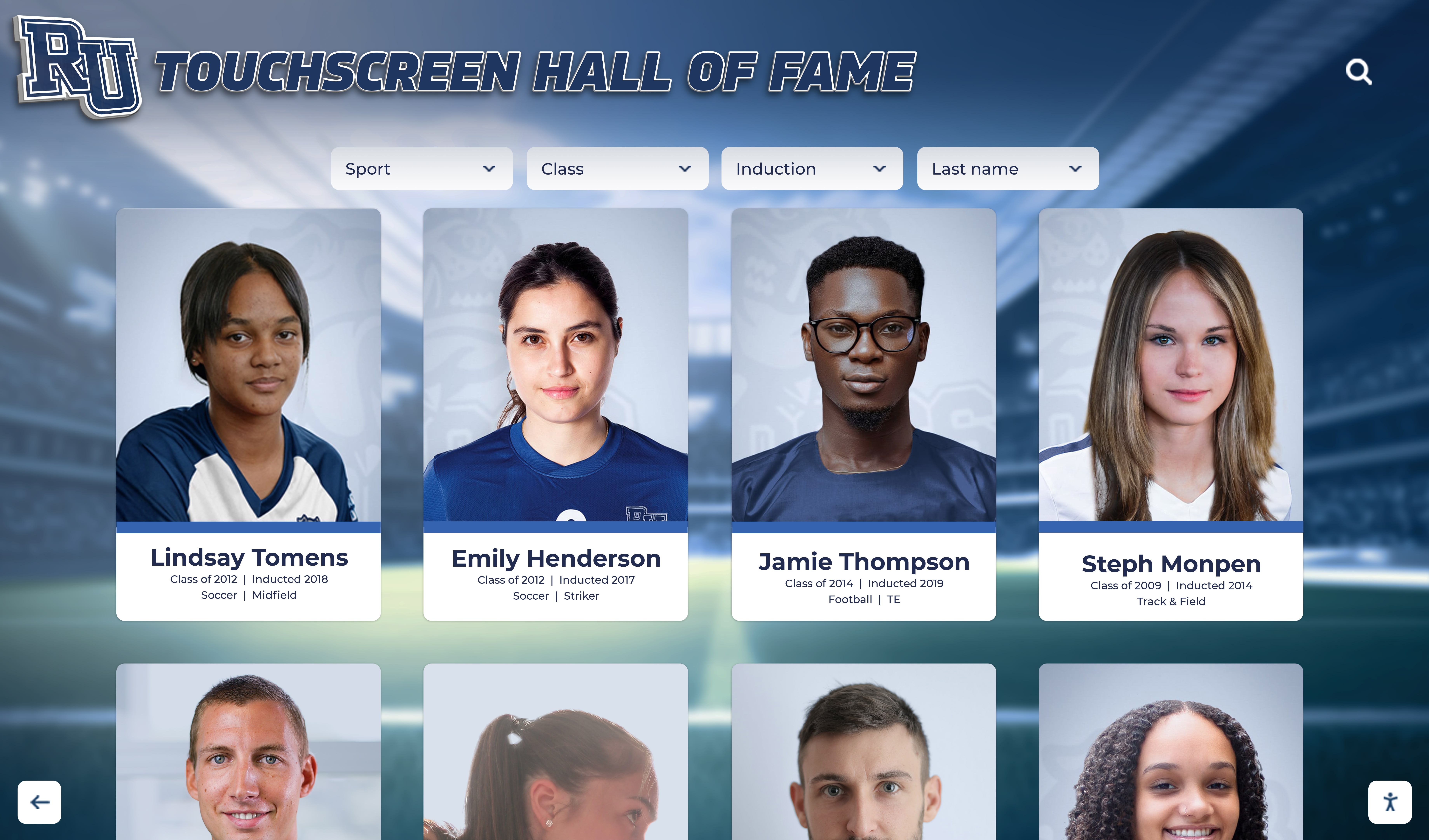
- Unlimited Capacity: Digital platforms accommodate unlimited wrestlers, seasons, and achievements without physical space constraints, ensuring every state qualifier receives appropriate recognition regardless of program history length
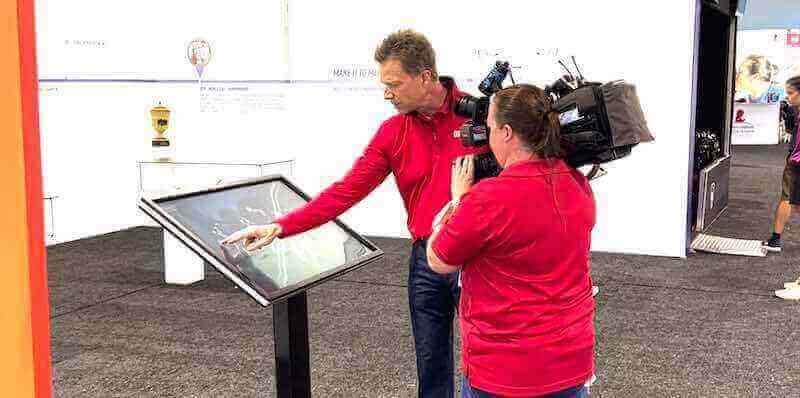
- Rich Multimedia Storytelling: Videos of championship matches, interviews with wrestlers discussing their journeys, photo galleries from tournaments, and written profiles create comprehensive documentation that static plaques cannot provide
- Match Statistics and Analytics: Detailed career statistics, bracket progressions, head-to-head records against opponents, and tournament performance data provide depth beyond simple placement recognition
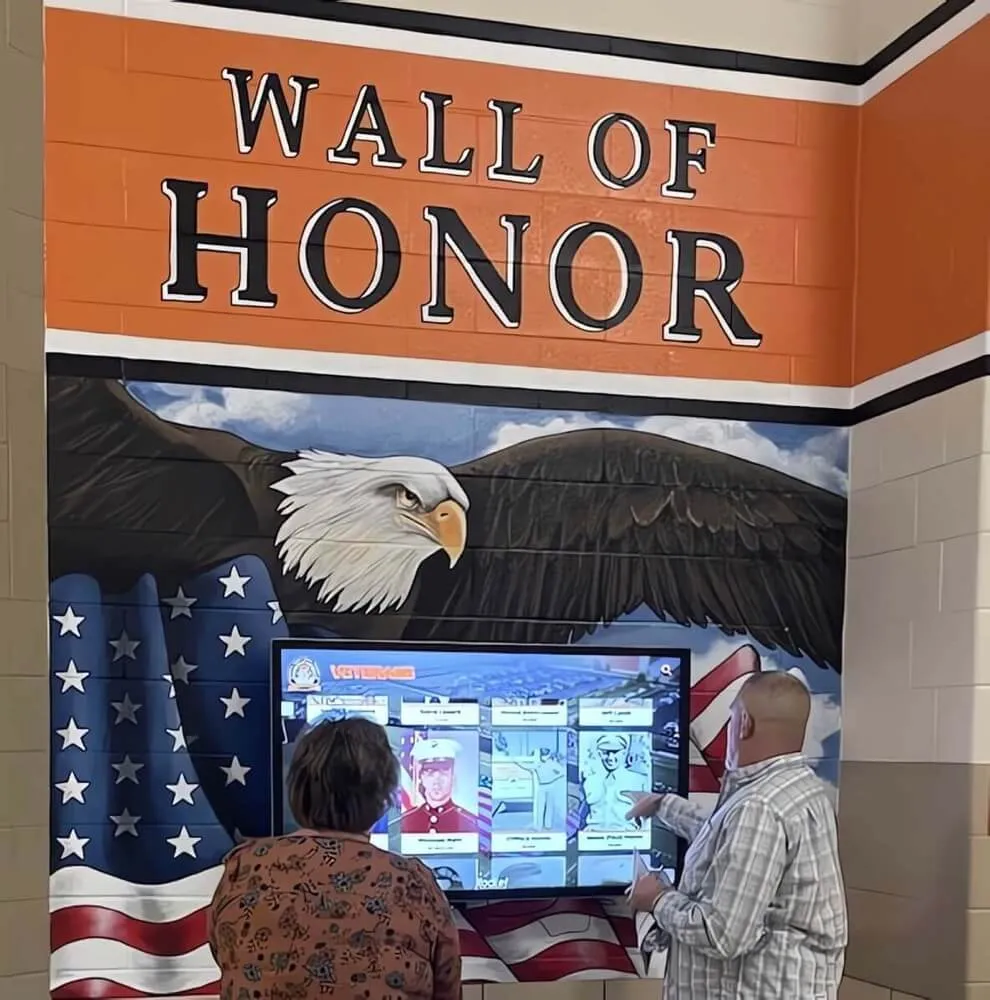
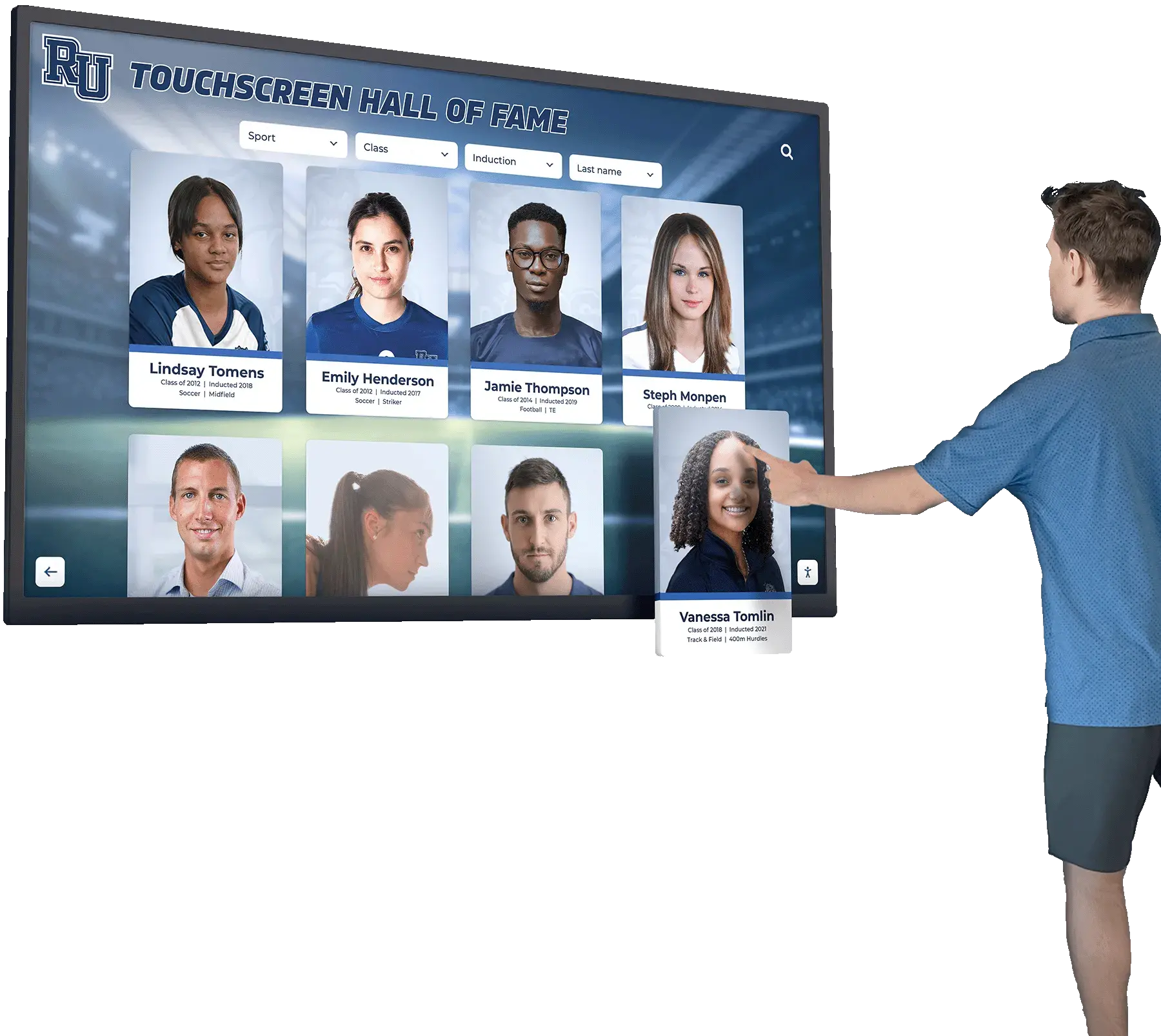
- Searchable Databases: Visitors can instantly find specific wrestlers, years, weight classes, or achievement types rather than scanning dozens of plaques searching for particular information
- Easy Content Updates: Cloud-based management platforms enable immediate additions after state tournaments without waiting for plaque fabrication, ensuring current season recognition happens quickly while achievement remains fresh
Preserving Complete Wrestling Narratives:
Digital systems excel at telling comprehensive stories:
- Season-long journeys showing progression from preseason rankings through district qualifications to state tournament performance
- Individual match documentation with opponent information, scores, and winning techniques
- Wrestler development narratives explaining improvement and breakthrough seasons
- Coaching strategy discussions detailing preparation and competitive approaches
- Family support stories humanizing sacrifices behind competitive success
- Post-graduation updates tracking collegiate and life success of former wrestlers
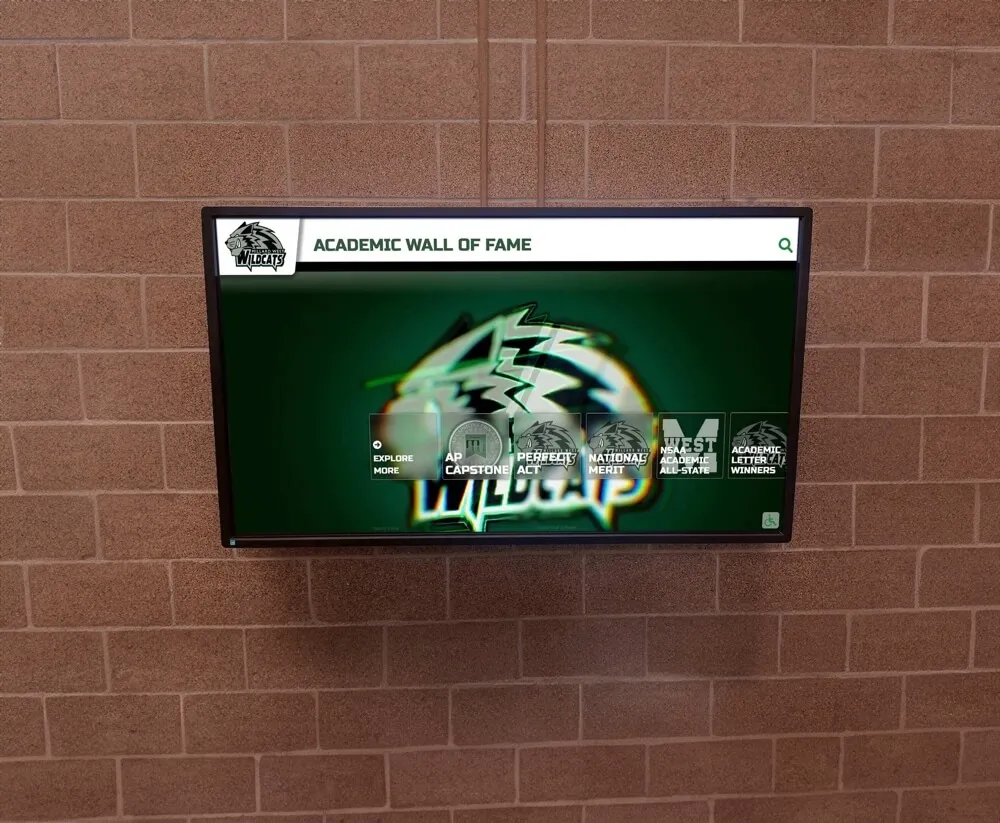
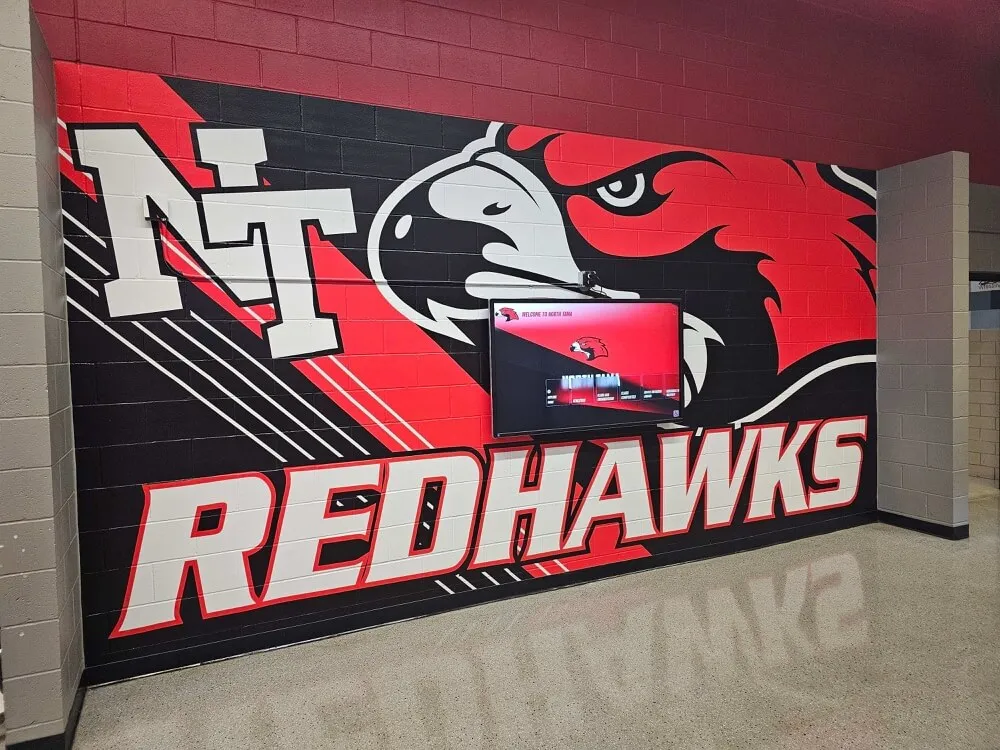
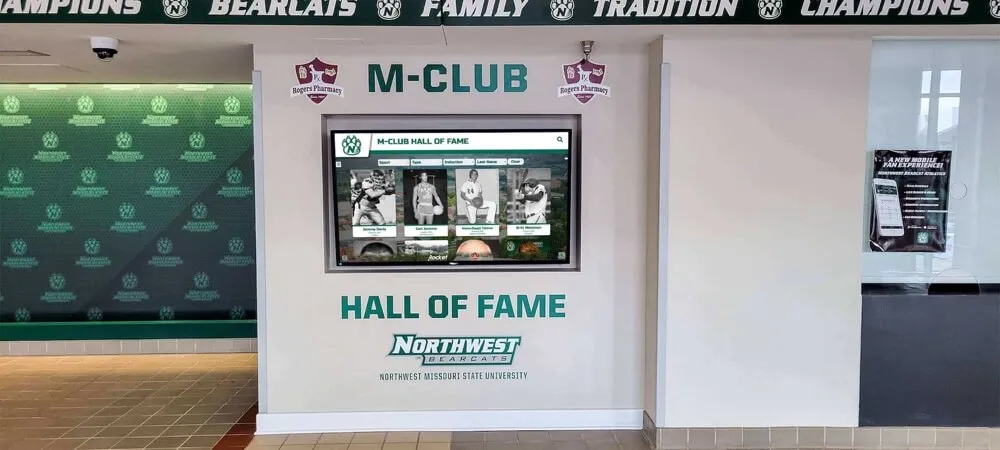
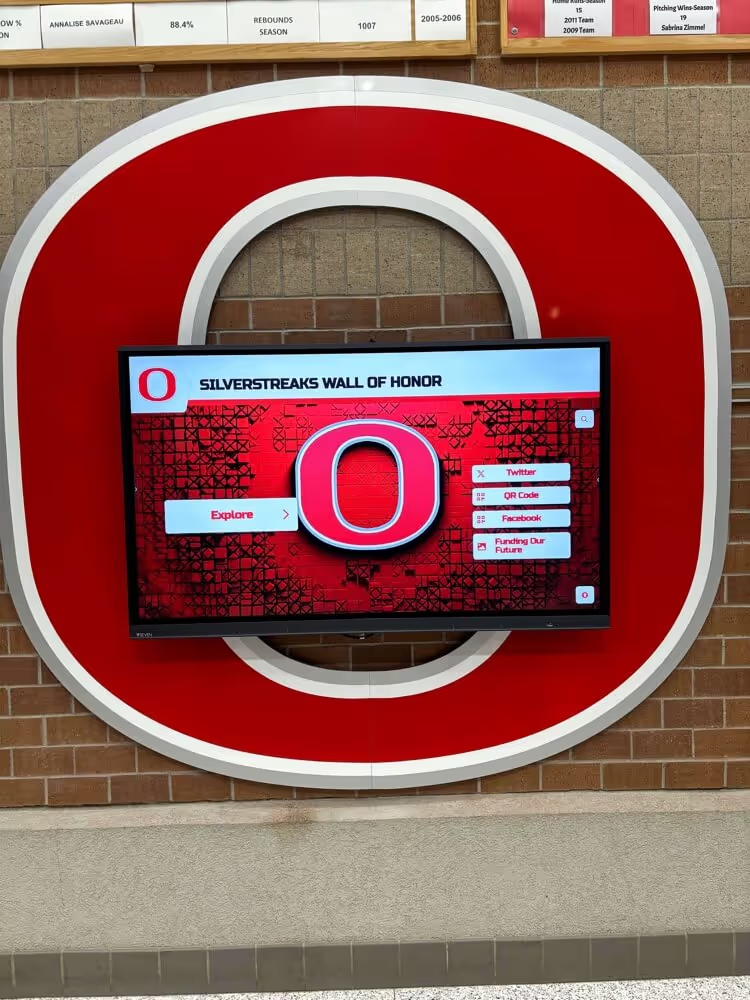
This comprehensive approach transforms recognition from simple historical records into engaging storytelling that connects past excellence with current programs. Solutions like those from Rocket Alumni Solutions provide purpose-built platforms designed specifically for athletic recognition rather than generic digital signage requiring extensive customization.
Integrating Wrestling with Comprehensive Athletic Recognition:
The most effective recognition programs celebrate wrestling within broader athletic excellence:
- Showcasing wrestlers’ academic achievements and classroom success alongside athletic accomplishments
- Featuring college placement and scholarship success demonstrating program quality
- Recognizing character awards and community service alongside competitive achievement
- Profiling career success of wrestling alumni beyond their competitive days
- Connecting wrestling values—discipline, work ethic, mental toughness—to institutional character education priorities
This integrated approach demonstrates that wrestling success represents one dimension of comprehensive student development rather than isolated athletic achievement. Schools seeking recognition solutions can explore resources on celebrating athletic achievements through banquet recognition and permanent displays that honor wrestling alongside other program accomplishments.
Regional Rivalries and Tournament Drama
Iowa’s wrestling culture creates intense rivalries and memorable tournament moments that define program identities and create lasting memories:
Legendary Dual Meet Rivalries
Regular season dual meets between traditional rivals create electric atmospheres:
Conference Championship Implications:
Conference dual meets determine league titles and bragging rights:
- Rivalry matches drawing 1,000+ spectators in school gymnasiums
- Individual matchups featuring ranked wrestlers meeting in dual meet formats
- Team race scenarios where dual meet outcomes determine conference champions
- Community attendance and support creating home-mat advantages
- Media coverage and social media attention intensifying rivalry weeks
Geographic Rivalries:
Iowa’s geographic proximity creates natural rivalries:
- Small towns separated by miles but competing fiercely in wrestling
- County rivalries where communities’ identities intertwine with wrestling success
- Border battles between schools from different regions of the state
- Long-standing rivalries spanning decades with cumulative records closely balanced
These rivalries ensure that wrestling seasons feature multiple high-stakes contests beyond the state tournament, creating ongoing competitive drama and engagement throughout the winter.
State Tournament Upsets and Cinderella Stories
Iowa’s state tournament regularly produces memorable upsets and unexpected champions:
Underdog Champions:
Lower-seeded wrestlers occasionally defeat favorites through preparation, peak performance timing, and competitive courage:
- Unseeded wrestlers winning state titles by navigating brackets filled with ranked opponents
- Wrestlers overcoming early-season losses to peak at tournaments
- Overtime victories in championship finals creating dramatic conclusions
- Small-school wrestlers defeating large-school competitors in cross-classification matchups
Team Race Drama:
Team championships often remain undecided until final matches:
- Multiple programs entering final sessions with realistic championship chances
- Individual championship finals carrying team race implications
- Consolation finals determining team placement through placement points
- Come-from-behind team championship victories based on final-session performances
These dramatic moments become permanent program lore, with communities celebrating unlikely tournament runs for decades while inspiring future wrestlers facing long odds in their own championship pursuits.
Historic State Tournament Performances
Certain performances achieve legendary status:
Dominant Championship Runs:
Some wrestlers navigate state tournament brackets without surrendering points or facing competitive challenges, demonstrating technical superiority and mental dominance that defines excellence.
Comeback Victories:
Wrestlers overcoming significant deficits in championship matches or surviving near-pins demonstrate mental toughness and competitive will that transcends technical skill.
Overtime Classics:
Championship matches extending through multiple overtime periods create unforgettable drama, with victories or defeats in these contests becoming defining moments in wrestlers’ high school careers.
Schools preserving these memorable moments through digital recognition ensure current wrestlers understand program history and the standards established by those who came before them. Resources on playoff and tournament recognition approaches offer frameworks applicable to wrestling achievements.
Impact on School Culture and Community Identity
Wrestling success creates lasting impacts extending far beyond athletic achievement, shaping school culture and community identity in profound ways:
Building School Pride and Institutional Identity
Successful wrestling programs strengthen overall school culture:
Student Body Engagement:
Wrestling creates school-wide pride even among non-wrestlers:
- Dual meet attendance from student sections supporting teams
- School-wide awareness of state tournament qualifications and results
- Cross-grade connections as younger students admire varsity wrestlers
- Academic integration as teachers acknowledge athletic achievements
- Student recognition in hallways and assemblies celebrating success
Institutional Reputation:
Championship wrestling programs enhance overall school recognition:
- Positive media coverage extending beyond sports sections
- Community pride in school excellence across multiple domains
- Enrollment interest from families attracted to successful athletic programs
- College placement success as wrestling discipline transfers to academic achievement
- District pride when multiple schools achieve wrestling success
Developing Life Skills and Character
Wrestling’s unique demands create character development opportunities:
Mental Toughness and Resilience:
Wrestling teaches handling adversity:
- Losing inevitably happens in wrestling, teaching recovery and learning from defeats
- Weight management requires discipline and delayed gratification
- Individual accountability prevents blaming teammates or external factors
- Pressure situations in one-on-one competition develop mental fortitude
- Long seasons and year-round training build perseverance through challenges
Work Ethic and Dedication:
Wrestling’s training demands establish work patterns transferring to all life areas:
- Understanding that success requires consistent effort over years
- Accepting that natural talent alone doesn’t ensure success
- Developing time management balancing wrestling, academics, and personal life
- Learning that improvement requires discomfort and pushing beyond comfort zones
- Recognizing that preparation determines competitive outcomes
Leadership and Mentorship:
Wrestling programs create leadership development:
- Senior wrestlers mentoring younger teammates through example and instruction
- Captains managing team dynamics and motivating teammates
- Former wrestlers returning to assist with practices and share experiences
- Alumni maintaining program involvement across decades
- Professional networking among former wrestlers throughout careers
These character development benefits explain why wrestling alumni consistently cite their wrestling experience as formative in personal and professional success, regardless of competitive achievement levels. Schools can explore comprehensive approaches to documenting program history that celebrate both athletic and character development.
Creating Lifelong Bonds and Alumni Connection
Wrestling creates relationships that last lifetimes:
Team Cohesion:
Wrestling’s demanding nature forges extraordinary bonds:
- Shared suffering during conditioning and weight cutting creating unbreakable connections
- Team support during individual competitions creating investment in teammates’ success
- Reunion traditions as wrestling teams gather decades after graduation
- Professional networking among former teammates throughout careers
- Family connections as wrestlers’ children attend same schools and join programs
Alumni Engagement:
Wrestling success strengthens institutional connections:
- Alumni attendance at current team competitions supporting programs
- Financial contributions to wrestling programs from engaged alumni
- Volunteer coaching and mentoring by former wrestlers
- Social media communities connecting wrestling alumni across distances
- Legacy recruiting as successful alumni send their children to programs
Schools leveraging these connections through recognition programs maintain stronger alumni relationships while providing current wrestlers with living connections to program history and standards.
Challenges and Evolution of Iowa Wrestling
As the landscape evolves, Iowa high school wrestling faces various challenges requiring adaptation while maintaining traditions that make the sport special:
Weight Management and Health Concerns
Wrestling’s weight class structure creates health and safety considerations:
Modern Weight Management Protocols:
Iowa has implemented progressive policies:
- Minimum weight certifications preventing dangerous weight cutting
- Hydration testing requirements ensuring safe weight management
- Descent plans limiting weekly weight loss amounts
- Scratch weight allowances providing flexibility during tournaments
- Medical oversight and disqualification for unhealthy practices
These policies protect wrestler health while maintaining competitive integrity, though weight management remains wrestling’s most controversial and challenging aspect.
Gender Equity and Girls Wrestling Growth
Girls wrestling has emerged as one of high school sports’ fastest-growing activities:
Girls Wrestling Development:
Iowa has embraced girls wrestling expansion:
- Sanctioned girls state tournament providing championship opportunities
- Increasing participation as girls discover wrestling’s competitive opportunities
- Separate girls weight classes accommodating different physiological characteristics
- Female coaching involvement providing mentorship and role models
- College scholarship opportunities as women’s wrestling expands at NCAA level
This growth requires resource allocation, facility scheduling, and cultural adaptation as programs integrate girls wrestling while maintaining boys programs. Schools must consider athletics equity frameworks ensuring fair recognition and support for emerging programs.
Maintaining Participation Amid Multi-Sport Pressures
Modern athletes face increasing pressure to specialize:
Wrestling’s Year-Round Demands:
Wrestling’s competitive requirements create challenges:
- Off-season training expectations conflicting with other sport participation
- Club wrestling commitments during spring and summer
- Weight management considerations affecting other sport performance
- Specialization pressure from coaches encouraging single-sport focus
Programs must balance competitive excellence with allowing multi-sport participation that enriches student-athlete development and prevents burnout. The most successful programs encourage multi-sport participation while developing comprehensive wrestling-specific training during appropriate seasons.
Looking Forward: The Future of Iowa Wrestling
Iowa wrestling will continue evolving while maintaining traditions that make the state’s wrestling culture unique:
Technology Integration
Modern technology enhances wrestling experiences and recognition:
Live Streaming and Digital Access:
Expanded digital access allows:
- Live streaming of dual meets and tournaments for distant family and alumni
- On-demand replay availability preserving memorable matches
- Statistical tracking providing detailed analytics on wrestler performance
- Social media engagement connecting communities during competitions
- Virtual access for alumni maintaining connections regardless of location
Recognition and Historical Preservation:
Digital platforms ensure wrestling achievements receive lasting recognition:
- Comprehensive multimedia documentation of championship seasons
- Searchable archives allowing future generations to explore program history
- Interactive displays engaging current students with past excellence
- Analytics demonstrating recognition program value and visitor engagement
- Cloud-based platforms ensuring preservation regardless of physical facility changes
Schools implementing digital recognition systems for wrestling achievements position themselves to preserve program traditions for decades while engaging contemporary audiences through technology they use daily.
Maintaining Excellence While Embracing Change
Iowa wrestling’s strength lies in balancing innovation with tradition:
Preserving Core Values:
Regardless of changes, Iowa wrestling will continue emphasizing:
- Individual accountability and mental toughness developed through competition
- Work ethic and dedication required for sustained excellence
- Community pride and identity connected to wrestling success
- Student-athlete development preparing young people for life success
- Coaching mentorship extending beyond technical instruction
Adapting to Contemporary Realities:
While maintaining traditions, Iowa wrestling must address:
- Health and safety protocols protecting wrestler wellbeing
- Gender equity ensuring equal opportunities for female wrestlers
- Multi-sport participation allowing comprehensive athletic development
- Resource allocation supporting program needs across enrollment sizes
- Technology integration enhancing rather than replacing fundamental wrestling values
Programs successfully navigating these challenges will be those that honor wrestling tradition while thoughtfully embracing necessary evolution that ensures the sport remains relevant and accessible for future generations.
Conclusion: Celebrating Iowa’s Wrestling Legacy
Iowa high school state wrestling represents far more than athletic competition. It embodies cultural identity, creates lifelong character development, preserves multi-generational traditions, and provides experiences shaping young people in ways extending far beyond sport. From youth programs through state tournament championship finals, Iowa’s wrestling culture showcases unmatched commitment to excellence while maintaining values that benefit participants throughout their lives regardless of competitive achievement.
The traditions surrounding Iowa wrestling—year-round dedication to improvement, community investment in program success, family sacrifice supporting wrestlers’ dreams, legendary coaching building championship cultures, and state tournament experiences creating unforgettable memories—distinguish Iowa as America’s undisputed wrestling capital. These traditions persist because they connect generations, provide shared experiences transcending typical entertainment, and create meaning extending beyond match outcomes and championship plaques.
Schools honoring wrestling achievements through comprehensive recognition programs preserve these traditions while inspiring future wrestlers to pursue their own championship dreams. Whether implementing traditional plaques and banners or adopting modern digital recognition systems, the key is ensuring that wrestling success receives lasting commemoration worthy of the sacrifice, dedication, and family support that made it possible.
As Iowa wrestling continues evolving, the state tournament and surrounding culture will adapt while maintaining core values that make it special. The programs successfully preserving tradition while embracing necessary change will be those that recognize wrestling’s role in comprehensive character development, community building, and cultural preservation—understanding that championships represent not just athletic triumph but collective achievement reflecting community values and institutional commitment to excellence.
For Iowa communities, wrestling creates shared experiences binding people together across generations, socioeconomic circumstances, and social divisions. In an increasingly fragmented society, the communal experience of supporting wrestlers through challenging seasons and tournament runs provides rare opportunities for unified purpose and collective celebration. This community-building function ensures that Iowa wrestling will remain culturally significant regardless of how the sport itself evolves.
Ready to celebrate your school’s wrestling achievements with recognition displays that honor tradition while embracing modern capabilities? Explore how Rocket Alumni Solutions creates comprehensive digital recognition platforms specifically designed for wrestling programs, preserving championship legacies through engaging, professional displays that inspire current wrestlers while honoring the champions who came before them.