



Key Takeaways
Complete guide to designing cross country courses for schools and clubs. Learn essential layout principles, safety requirements, distance standards, terrain selection, and how to create courses that develop athletes while meeting competition specifications.
Cross country running builds endurance, mental toughness, and competitive grit while creating team camaraderie that extends far beyond track and field. Yet the quality of your cross country program depends heavily on course design—the layout, terrain, safety features, and training opportunities built into the routes where athletes develop throughout seasons. Well-designed cross country courses challenge runners appropriately, accommodate safe competition hosting, provide varied training stimuli, and create home field advantages where familiarity with terrain and conditions benefits your athletes against visiting competitors.
Athletic directors, coaches, and facilities managers often inherit existing cross country courses with significant limitations or face the challenge of designing new courses from scratch when developing athletic facilities. This comprehensive guide provides practical frameworks for cross country course design addressing distance standards, terrain selection, layout principles, safety requirements, marking systems, and maintenance considerations. Whether you’re creating a championship-caliber competition course, developing versatile training routes, or optimizing limited space for effective cross country programming, understanding design fundamentals enables you to build courses that serve your program effectively for decades.
Understanding Cross Country Course Standards and Requirements
Before designing course layouts, understanding regulatory standards, competition requirements, and best practice guidelines ensures your course supports program needs while meeting official specifications.
Official Distance Standards by Competition Level
Cross country courses must meet specific distance requirements depending on competitive level and athlete age:
High School Championship Standards:
The National Federation of State High School Associations (NFHS) recognizes 5 kilometers (3.1 miles) as the standard high school cross country distance for championship-level competition. However, individual state athletic associations maintain authority over distance requirements within their jurisdictions, leading to some variation:
- Most states use 5K as the standard varsity distance for both boys and girls
- Some states specify 4K or 2-mile distances for certain divisions or classifications
- A few states maintain different distances for boys (5K) and girls (4K or 5K)
- Championship meets and state finals almost universally use 5K distances
- Records and rankings typically require 5K distances for official recognition
Schools designing courses should verify their specific state association requirements, as courses not meeting official standards may not qualify for hosting sanctioned competitions or setting recognized records.

Middle School and Junior High Distances:
Younger athletes typically race shorter distances appropriate for their developmental stage:
- Middle school courses usually range from 2-3 kilometers (1.2-1.86 miles)
- Some programs use 1.5-mile or 2-mile distances
- Variations based on grade level (6th grade different from 8th grade)
- Progressive distance increases as athletes mature through middle school
Middle school course design should prioritize safety and appropriate challenge over creating championship-caliber competition courses, as developmental needs differ significantly from high school programming.
Collegiate and Club Standards:
College and post-collegiate competition uses different distance standards:
- NCAA and NAIA championship distances are 6K for women, 8K for men (or 10K for some men’s championships)
- Club and community races vary widely from 5K to 10K depending on event goals
- Masters and age-group competitions often use 5K or 8K distances
Schools hosting community races or club events may design courses with flexibility to accommodate multiple distance options through varied start/finish locations or loop configurations.
Course Certification and Measurement Requirements
Accurate distance measurement ensures fair competition and official record recognition:
Measurement Standards:
Professional course measurement follows specific protocols:
- Measurement along the shortest possible legal route (SPR) a runner could take while staying within course boundaries
- Use of calibrated measuring wheels or GPS devices with verified accuracy
- Multiple measurements to confirm consistency and accuracy
- Documentation of measurement methods and results
- Certification by qualified officials for championship-level courses
Many state associations require certified measurements for courses hosting championship events, though training courses may use less formal measurement approaches if not used for official competitions.
Certification Processes:
Championship courses typically undergo formal certification:
- Measurement by certified course measurers using standardized equipment
- Verification measurements by multiple officials
- Documentation submitted to state athletic association
- Annual re-verification for courses hosting state championships
- Adjustment for any course modifications affecting distance
Schools planning to host significant invitationals or championship events should budget for professional course measurement and certification, while training courses can use careful GPS measurement or measuring wheel techniques adequate for development purposes.
Competition Course Classification Systems
Understanding different course difficulty classifications helps set appropriate design goals:
NFHS Course Rating System:
Some regions classify courses by difficulty level helping coaches compare performances across different courses:
- Level 1 (Easy): Flat or gently rolling terrain with few significant hills, wide paths, and minimal technical challenges
- Level 2 (Moderate): Some hills and terrain variation with occasional technical sections
- Level 3 (Challenging): Significant elevation changes, technical terrain, and demanding layouts
- Level 4 (Difficult): Extreme hills, highly technical sections, or particularly demanding conditions
Course classification helps contextualize performances—a 17-minute 5K on a difficult course may represent stronger performance than 16:30 on an easy course.

Design Implications:
Training courses benefit from including varied difficulty levels:
- Easy sections for warm-up, cool-down, and recovery running
- Moderate sections for tempo work and sustained efforts
- Challenging segments for hill training and race-specific preparation
- Technical areas developing agility and varied running mechanics
Championship competition courses typically target Level 2-3 difficulty—challenging enough to separate competitive fields while avoiding extreme difficulty that creates unsafe conditions or excessive variability in performance.
Essential Course Layout Design Principles
Effective cross country courses balance multiple competing priorities through thoughtful layout planning addressing runner experience, spectator engagement, official supervision, and operational logistics.
Start and Finish Area Design
Race starts and finishes require careful planning as they concentrate hundreds of athletes, spectators, and officials in limited spaces:
Start Line Configuration:
Wide start areas prevent dangerous crowding during the critical opening seconds:
- Minimum start width of 8-10 meters for small races (50-100 runners)
- Championship starts often extend 20-30 meters wide for fields of 150+ runners
- Curved or angled starts that naturally funnel into narrower course sections
- Clearly marked starting boxes or position assignments for seeded runners
- Adequate space behind start line for athletes to warm up and stage
The first 200-400 meters should maintain wide paths before narrowing to normal course width, allowing the field to establish running order without forcing dangerous jostling on narrow trails.
Finish Line and Chute Design:
Finish areas must accommodate finishing runners while managing spectator crowds:
- Wide finish approaches allowing final sprint positioning
- Clearly visible finish line from approaching direction
- Adequate runout space (30-50 meters minimum) after finish line for decelerating runners
- Finish chute funneling runners into single-file order for place recording
- Separation between finishing runners and spectator areas preventing interference
- Accessible routes for medical personnel if needed
- Timing equipment positioning for accurate recording
Many programs position start and finish areas in the same general location but offset to prevent conflicts between starting races and finishing runners from earlier heats.
Spectator and Family Viewing:
Thoughtful design enables spectator engagement enhancing event atmosphere:
- Start/finish area positioning allowing spectators to see both race beginning and conclusion
- Mid-course spectator zones where courses loop back near start areas
- Elevated viewing areas providing sight lines to multiple course sections
- Adequate space preventing spectator encroachment onto course
- Parking and accessibility considerations for large events
The best courses allow spectators to watch starts, see athletes at multiple mid-race points, and witness finishes without relocating—creating exciting viewing experiences that build program culture and community support.
Similar to how schools design donor recognition spaces with visibility and engagement in mind, cross country courses should consider how design decisions impact spectator experience and program culture.
Loop Configuration vs. Point-to-Point Layouts
Course routing strategy significantly impacts functionality, supervision, and runner experience:
Single-Loop Designs:
Courses configured as one continuous loop offer several advantages:
- Runners complete the full distance in one circuit
- Simple navigation with clear progression around the loop
- Natural spectator viewing at start/finish area seeing runners multiple times
- Simplified supervision with officials monitoring from central locations
- Easy distance adjustment by modifying loop size
Single-loop courses work well for schools with adequate contiguous property allowing complete 5K loops without excessive repetition or tight turns.
Multi-Loop Designs:
Courses using multiple smaller loops provide flexibility for space-constrained programs:
- 2.5K loops repeated twice for 5K races
- 1.67K loops repeated three times
- Ability to adjust total distance for different race needs (1-loop for middle school, 2-loops for varsity)
- Increased spectator viewing frequency as runners pass start/finish multiple times per race
- More complex mentally for runners counting laps
Multi-loop designs maximize limited space while creating operational flexibility, though some athletes dislike repetitive loops preferring the psychological benefit of continuous forward progress.
Out-and-Back Configurations:
Some courses use out-and-back sections where runners cover the same terrain in both directions:
- Efficient use of linear spaces like trails, levees, or property boundaries
- Runners see competitors throughout race on opposite direction of out-and-back
- Simplified course marking (one path serves both directions)
- Potential congestion where outbound and returning runners share paths
Pure out-and-back courses (start, run to turnaround point, return to finish) feel monotonous for daily training, but partial out-and-back sections within larger loop designs add variety while maximizing available terrain.
Elevation Change and Hill Placement Strategy
Strategic hill placement develops athlete strength while creating competitive interest:
Total Elevation Gain Guidelines:
Championship-quality courses typically include meaningful but not excessive climbing:
- Moderate courses: 30-75 meters (100-250 feet) total elevation gain
- Challenging courses: 75-150 meters (250-500 feet) total elevation gain
- Extreme courses: 150+ meters (500+ feet) total elevation gain
Courses with minimal elevation change fail to develop hill-running fitness and race tactics, while excessively hilly courses become survival tests rather than competitive races. Most high school championship courses target 50-100 meters total gain distributed across multiple hills rather than concentrated in one extreme climb.

Hill Positioning Psychology:
Where hills appear on courses impacts race dynamics and athlete development:
Early Course Hills (First Kilometer):
- Test athletes who start too aggressively
- Establish separation in competitive fields early
- Require conservative early pacing to preserve energy
- Can discourage younger or less experienced runners if too severe
Mid-Race Hills (Kilometers 2-3):
- Separate competitors based on strength and race fitness
- Create tactical opportunities for surging
- Develop mental toughness through challenging sustained efforts
- Represent realistic championship course features
Late-Race Hills (Final Kilometer):
- Dramatic competitive impact as athletes face hills while fatigued
- Develop finishing strength and mental resilience
- Create exciting spectator moments
- Can feel demoralizing if excessively difficult
Balanced course design includes hills at varied locations developing complete runner capabilities while creating competitive interest throughout races.
Downhill Considerations:
What goes up must come down, but downhill placement matters:
- Gentle descents early in races reward cautious starts
- Technical downhills late in races challenge fatigued athletes
- Steep descents create injury risk requiring careful surface and angle management
- Strategic downhill placement before finish areas enables fast closing times
Technical Terrain and Surface Variation
Surface diversity and technical features develop versatile, complete runners:
Surface Type Recommendations:
Varied surfaces prepare athletes for championship conditions:
Grass Sections (40-60% of course):
Natural grass provides ideal cross country running surfaces:
- Forgiving impact absorption reducing injury risk
- Traditional cross country feel
- Good traction in dry conditions
- Variable difficulty when wet (becomes slower, potentially slippery)
- Requires consistent mowing and maintenance
Well-maintained grass sections should form the foundation of quality cross country courses.
Dirt/Trail Sections (20-40% of course):
Natural dirt trails add texture and technical elements:
- Firmer surface than grass enabling faster paces
- Natural terrain variations including roots, small rocks, and subtle irregularities
- Develops foot placement awareness and ankle stability
- May require erosion management and drainage maintenance
- Approximates many championship course conditions
Limited Pavement Sections (0-20% of course):
Minimal pavement serves specific purposes:
- Durable surfaces for high-traffic areas near start/finish
- All-weather surfaces usable in wet conditions
- Connecting paths between natural terrain sections
- Should be minimized as excessive pavement defeats cross country’s natural terrain purpose
The best training courses approximate championship meet surfaces—if your state’s championship course is primarily grass with some trail sections, design your training course similarly to prepare athletes effectively.
Technical Features:
Beyond surface type, varied terrain develops runner skills:
- Gradual turns teaching pace management through curves
- Sharp turns developing deceleration and acceleration
- Narrow sections requiring single-file running and passing strategy
- Variable width paths testing positioning and tactics
- Uneven terrain developing proprioception and ankle strength
- Small obstacles (unavoidable landscape features, not artificial barriers) requiring brief stride adjustments
Technical features should challenge athletes appropriately without creating injury risks or extreme difficulty that becomes unsafe when runners are fatigued.
Safety Requirements and Risk Management
Cross country courses traverse natural terrain creating safety considerations requiring systematic management:
Course Width and Clearance Standards
Adequate space prevents dangerous crowding and collision hazards:
Minimum Width Requirements:
Safe courses provide sufficient running room:
- Championship courses: 3-4 meters minimum width for most sections
- Training courses: 2-3 meters acceptable for single-team use
- Passing zones: 4-5 meters enabling safe overtaking
- Start area funnels: Gradual narrowing preventing abrupt crowding
Extremely narrow sections (less than 2 meters) create bottlenecks during races where faster runners cannot pass slower competitors, leading to frustration and potential contact. If unavoidable narrow sections exist, position them late in courses after fields have spread out naturally.
Vertical Clearance:
Overhead obstacles present serious safety hazards:
- Minimum 2.5-3 meters clearance under any tree branches or structures
- Annual trimming of vegetation preventing gradual encroachment
- Removal of dead branches that could fall during races
- Clearance of spider webs and hanging vines before meets
Low-hanging branches invisible during course walks become dangerous when runners focus on competition rather than overhead hazards. Regular course inspection should specifically address overhead clearance, particularly after storms or high winds.
Side Clearance from Hazards:
Buffer zones separate running paths from dangerous features:
- Minimum 1-2 meters from trees, posts, or fixed obstacles when possible
- Greater clearance (3+ meters) from severe hazards like drop-offs or water features
- Clear sight lines around blind corners enabling runners to anticipate upcoming terrain
- Removal of protruding roots, rocks, or stumps within running path
Programs implementing comprehensive athletic facility safety standards should apply the same systematic risk assessment approaches to cross country courses that guide gymnasium and weight room safety protocols.
Emergency Access and Communication Systems
Medical emergencies require rapid response capability throughout courses:
Emergency Vehicle Access Points:
Strategic access enables quick medical response:
- Vehicle access points at minimum every 800-1,000 meters around course
- Clear routes from course to access points (marked paths or obvious directions)
- Access points wide enough for ambulances or utility vehicles (minimum 3 meters)
- Documentation of access locations in course maps and emergency plans
- Verification that emergency vehicles can navigate access routes in all weather conditions
Courses lacking any emergency access create unacceptable risks when athletes collapse or sustain serious injuries requiring immediate medical transport.

Communication Systems:
Course-wide communication enables coordination during emergencies:
- Two-way radios for coaches stationed at course checkpoints
- Cell phone coverage verification throughout entire course
- Designated emergency contact protocols (who calls 911, who coordinates response)
- Course maps with marked emergency access points shared with local emergency services
- Pre-positioned AEDs at start/finish areas with designated trained personnel
Many programs conduct annual emergency response drills specific to their cross country course, ensuring coaches and officials understand protocols before emergency situations arise requiring immediate action.
Course Checkpoint Supervision:
Strategic supervision placement enhances safety:
- Coaches or volunteers stationed where course leaves sight of start/finish areas
- Supervision at any road crossings requiring traffic control
- Monitors at technical or potentially dangerous course sections
- Communication equipment for all checkpoint supervisors
- Clear responsibilities including attendance counting and incident reporting
Courses designed with natural sight lines from central locations reduce supervision demands while maintaining safety, while courses disappearing into dense woods or over hills require more distributed supervision resources.
Weather and Environmental Hazard Management
Natural conditions create variable safety challenges:
Extreme Weather Protocols:
Establish clear policies for weather-related course closure:
- Lightning policies requiring course evacuation when storms approach
- Extreme heat protocols including race cancellation thresholds
- Cold weather guidelines addressing hypothermia risks
- Heavy rain or snow policies based on course safety conditions
- Wind speed limits if courses include exposed areas
Weather-related decisions should prioritize safety over competition, though clear advance policies prevent difficult game-day judgment calls during emotionally charged championship situations.
Seasonal and Ongoing Hazards:
Different times of year present varied challenges:
- Fall: leaf coverage obscuring trail features, creating slippery surfaces
- Spring: mud, standing water, allergies from pollen
- Summer: heat, insects, overgrown vegetation
- Winter: ice, frozen ground, reduced daylight for afternoon practices
Regular seasonal course inspection and maintenance addresses these evolving challenges before they create safety problems or training disruptions.
Course Marking and Navigation Systems
Clear marking prevents runners from getting lost while ensuring fair competition where all athletes cover identical distances:
Temporary vs. Permanent Marking Approaches
Different marking systems serve different course purposes:
Temporary Competition Marking:
Courses hosting infrequent competitions use removable marking:
Advantages:
- Removed after events preventing accumulation of weathered markers
- Adjusted easily if course routing changes
- Highly visible fresh marking for competitions
- Various color options distinguishing multiple simultaneous races
Methods:
- Surveyor’s flags on wire stakes
- Traffic cones
- Course tape strung between stakes
- Chalk or biodegradable spray paint
- Temporary signage mounted on stakes
Timeline:
- Mark courses 24-48 hours before competitions
- Walk entire course after marking verifying completeness
- Immediate post-race removal restoring normal property appearance
Permanent Training Course Marking:
Daily-use training courses benefit from durable marking:
Advantages:
- Always available for training runs
- No setup required before each practice
- Withstands weather and multiple seasons
- Creates familiarity through consistent visual cues
Methods:
- Painted lines or arrows on pavement sections
- Permanent posts with directional signage
- Embedded mile/kilometer markers (metal plates or engraved stones)
- Colored blazes painted on trees (similar to hiking trail marking)
- Permanent flags on heavy bases
Maintenance:
- Annual inspection and refresh before season
- Replacement of damaged or missing markers
- Clearing vegetation that obscures permanent marking
- Updating distance markers if course modifications occur
Many programs use hybrid approaches—permanent marking for regular training routes with temporary enhancement for competition hosting creating championship-caliber visibility and clarity.
Marking Density and Placement Strategy
Effective marking balances adequate guidance with visual clutter:
Continuous Boundary Marking:
Course edges require clear delineation:
- Markers every 25-50 meters along entire course on both sides where applicable
- Closer spacing (every 10-15 meters) approaching turns or potentially confusing sections
- High-visibility colors (bright orange, pink, or yellow) standing out against natural backgrounds
- Increased height (flags on 3-4 foot stakes) ensuring visibility from distance
Gaps in boundary marking longer than 75 meters create confusion about proper routing, particularly for visiting athletes unfamiliar with terrain.
Directional Indicators:
Every potential wrong turn requires clear guidance:
- Arrows or directional signs at every turn or intersection
- Multiple indicators visible from different approach angles
- Large, clear symbols readable at distance while running
- Confirmation markers 20-30 meters after turns verifying correct direction
- “Wrong way” markers at potential wrong turns adding safety
The most common course navigation error occurs at trail intersections where runners instinctively take wrong turns continuing on familiar paths rather than following less obvious correct routes. Excessive directional marking prevents these errors better than assuming runners will see single small indicators.
Distance Markers:
Clear progress indicators help athletes with pacing:
- Markers at each kilometer or mile
- Intermediate markers at 500-meter intervals for championship courses
- Large visible numbers or text
- Positioning allowing runners to see markers approaching (not hidden by turns)
- Consistency in marker design throughout course
Distance markers serve competitive purposes (pacing information) and training purposes (workout segment definition) making them valuable even on training-only courses.
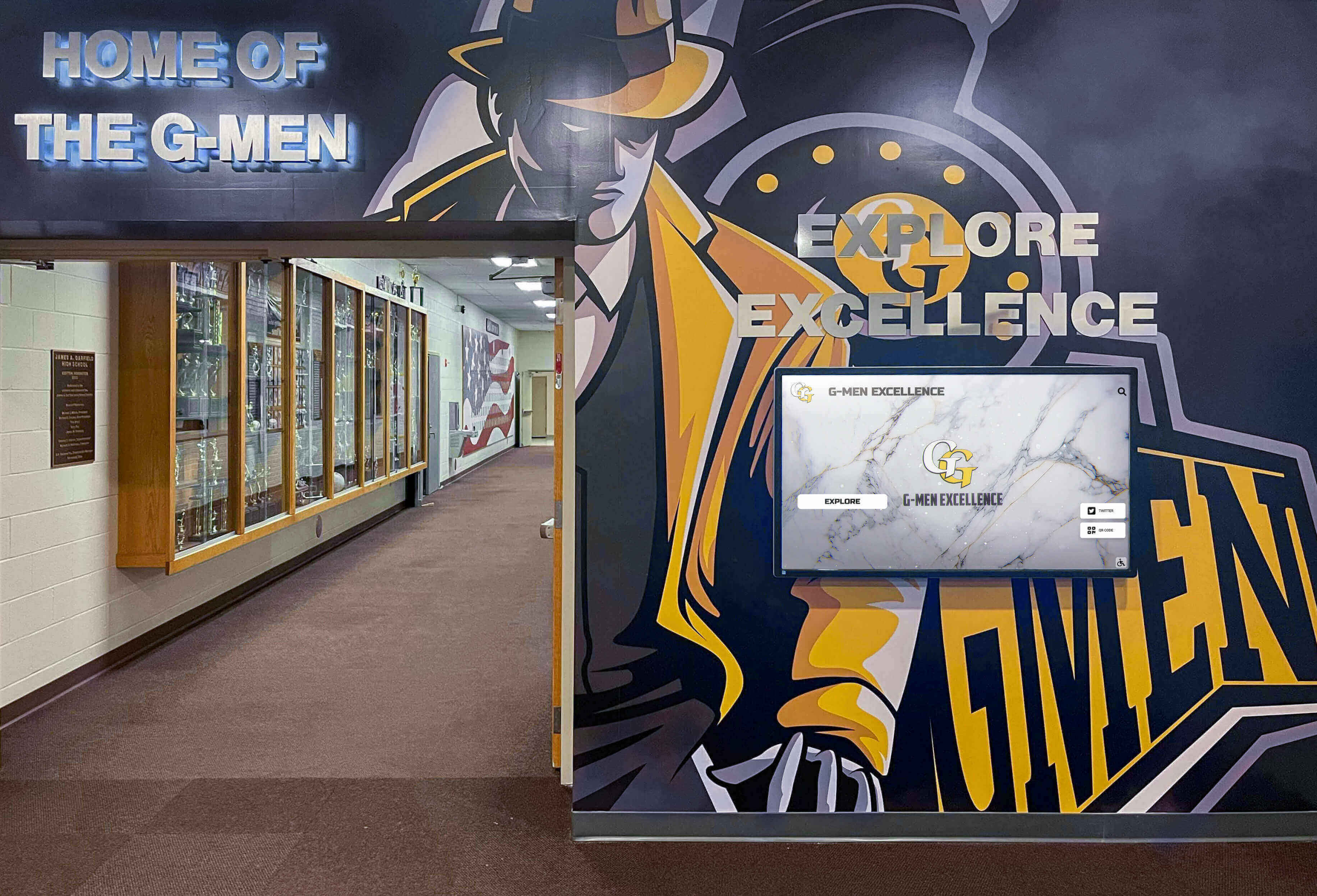
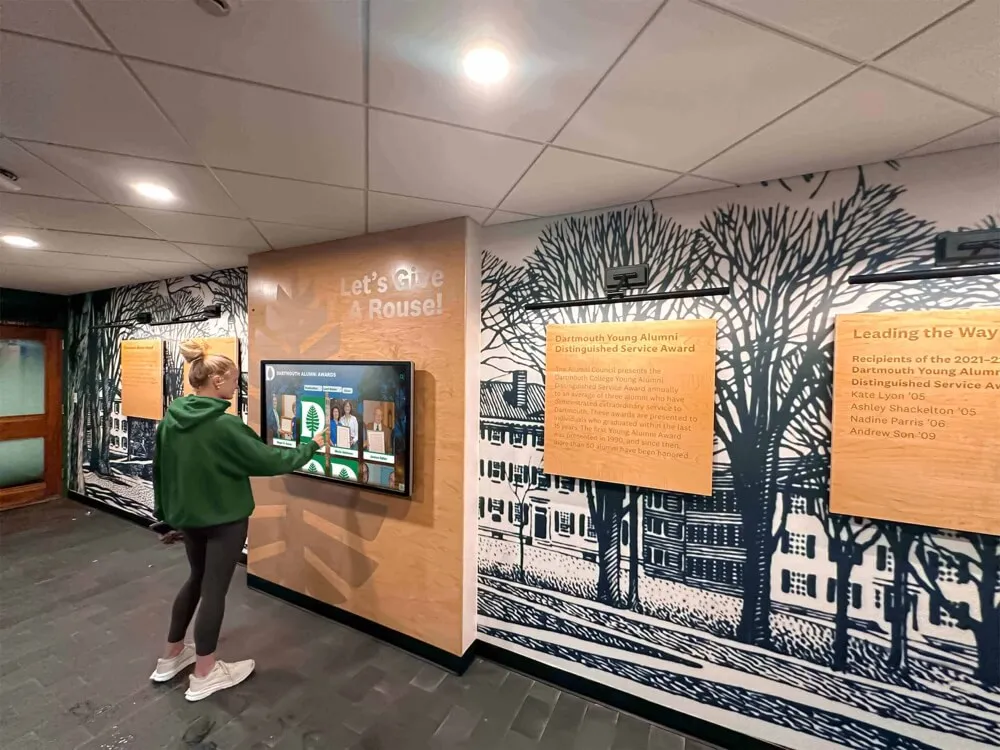
Many successful programs develop comprehensive course maps showing complete routes, elevation profiles, distance markers, and emergency access points. These maps distribute to athletes and post at course start areas providing reference during training. Programs also recognize course records and top performances through digital recognition displays in school athletic facilities, celebrating athletes who excel on the home course.
Course Maps and Athlete Resources
Beyond physical marking, documentation supports safe course use:
Printed Course Maps:
Comprehensive maps serve multiple purposes:
- Overview showing entire route in context of school property
- Detailed sectional views highlighting technical features
- Elevation profile showing hill locations and grade
- Distance markers and checkpoints
- Emergency access locations and contact information
- Course records and notable performances
Quality maps distributed to athletes prevent confusion while helping newcomers learn course layouts before first competitive uses.
Digital Course Resources:
Modern technology enhances course documentation:
- GPS files (.gpx format) athletes can load into running watches
- Interactive online maps with photos of key course features
- Video flyovers or course preview footage
- Mobile apps showing real-time position on course map
- QR codes posted at course start linking to digital resources
Training Guides:
Course-specific workout resources maximize training value:
- Suggested interval workouts utilizing course features
- Hill repeat sections with marked start/end points
- Tempo run segments on favorable terrain
- Easy run loops for recovery days
- Progressive long run routes of varied distances
Courses designed intentionally for training versatility become more valuable when athletes understand how to utilize different sections for specific workout purposes.
Designing for Multiple Uses and Training Variety
The most valuable cross country courses support diverse training needs beyond competition simulation:
Creating Interval and Workout Segments
Strategic design enables specific training sessions:
Marked Interval Segments:
Designated sections support structured workouts:
- 400-meter repeats on relatively flat, fast sections
- 800-meter segments on varied terrain
- 1,000-meter and mile repeat courses
- Hill repeat sections with marked start and summit
- Tempo run segments of 2-3 kilometers on appropriate terrain
Clear marking with start/end indicators allows athletes to execute prescribed workouts without constant coach supervision, enabling simultaneous different workout execution by varied athlete groups.
Recovery and Easy Run Loops:
Not all training occurs at hard effort:
- Short loops (1-2K) near start areas for warm-up and cool-down
- Flat, smooth sections appropriate for easy running
- Scenic or particularly pleasant terrain segments rewarding easy effort days
- Variable distance options (add loops for longer easy runs)
Technical Skill Development Areas:
Specific sections developing particular skills:
- Tight turn sections practicing cornering mechanics
- Short steep hills for explosive hill sprint repeats
- Grass sections for barefoot strides developing foot strength
- Uneven terrain for ankle stability and proprioception work
Courses designed exclusively for 5K race simulation miss opportunities to support the diverse training creating complete, developed runners.
Multi-Distance Route Options
Flexible courses accommodate varied training needs:
Built-In Distance Variations:
Strategic design enables multiple standard distances:
- 5K primary course for championship-distance training
- 3K shortened option for tempo runs or middle school use
- 8K extended option for base building or advanced training
- 10K routes for special training cycles or community races
Distance variation can come from different start/finish points, optional loops, or out-and-back extensions from standard courses.
Progressive Distance Development:
Novice runner development benefits from graduated challenges:
- Beginners: 1-2K on easiest terrain
- Developing runners: 3K on moderate terrain
- Competitive athletes: Full 5K including all course challenges
- Advanced athletes: Extended distances or multiple loops
This progressive approach builds confidence and fitness systematically rather than overwhelming beginners with full championship-distance courses creating discouragement.
Community and Recreational Use Considerations
School courses may serve broader purposes:
Public Access Policies:
Some schools allow community use of cross country courses:
Potential benefits:
- Community goodwill and school visibility
- Shared maintenance resources or partnerships
- Recruitment pipeline from community runners
- Facility use justification to administrators
Potential challenges:
- Liability and insurance concerns
- Course damage from overuse
- Interference with team training
- Maintenance burden from public use
Schools allowing public access should establish clear policies, adequate signage, and defined use hours preventing conflicts with team training while managing liability appropriately.
Multi-Use Trail Integration:
Some courses integrate with broader trail systems:
- Connection to municipal trail networks
- Shared use with walking/hiking communities
- Mountain bike compatible design where appropriate
- Accessibility features for varied community members
Multi-use design requires wider paths, gentler grades, and different marking approaches than pure competition courses, but creates community amenities justifying investment while serving team needs.
Course Maintenance and Seasonal Management
Well-designed courses still require ongoing maintenance sustaining safety and usability:
Regular Maintenance Requirements
Systematic upkeep prevents deterioration:
Mowing and Vegetation Management:
Grass courses require consistent maintenance:
- Weekly mowing during growing season
- Path width maintenance preventing narrowing from encroaching grass
- Trimming of branches and vegetation around course perimeter
- Removal of invasive plants or problematic vegetation
- Seasonal clearing of leaves in fall
Unmowed or overgrown courses become unusable for training and unsafe for competition hosting.
Surface and Drainage Maintenance:
Natural terrain courses require ongoing care:
- Filling of erosion ruts or holes
- Drainage improvements in persistently muddy sections
- Root removal or coverage preventing trip hazards
- Rock and debris clearing after storms
- Trail hardening in high-traffic areas showing wear
Many programs conduct major course maintenance during off-season (summer for fall cross country) addressing accumulated wear before next competitive season.
Marking and Signage Upkeep:
Permanent course features require refreshing:
- Repainting of faded lines or directional markers
- Replacement of damaged signs or mile markers
- Clearing of vegetation obscuring permanent marking
- Repair or replacement of broken stakes or posts
Annual pre-season course inspection should create maintenance checklists addressing all identified issues before first team practices.
Seasonal Preparation and Adaptation
Different times of year require specific attention:
Pre-Season Preparation (Summer):
Comprehensive preparation before fall season:
- Complete course inspection walking entire route
- Major maintenance addressing off-season deterioration
- Safety hazard removal (fallen branches, storm damage, erosion)
- Marking refresh or complete remarking
- Mowing establishing proper path width
- Testing of emergency access routes
Many successful programs schedule volunteer work days where team members, parents, and boosters contribute to course preparation building program investment while distributing maintenance work.
In-Season Maintenance (Fall):
Ongoing attention during competition season:
- Weekly mowing maintaining consistent surfaces
- Immediate hazard response (fallen trees, storm damage)
- Leaf clearing in autumn preventing surface obscuring
- Drainage management during rainy periods
- Temporary marking for scheduled competitions
- Post-meet course cleanup and restoration
Off-Season Care (Winter/Spring):
Limited maintenance during dormant periods:
- Periodic inspection for major hazards
- Storm damage assessment and response
- Planning for off-season improvements
- Drainage assessment during wet seasons
Improvement and Evolution Planning
Courses should evolve as programs develop:
Incremental Enhancement:
Most courses improve gradually over years:
- Year 1: Basic functional course meeting minimum standards
- Year 2: Enhanced marking and signage systems
- Year 3: Drainage improvements and surface work
- Year 4: Emergency access route development
- Year 5: Spectator amenities and viewing areas
This phased approach spreads costs while allowing program feedback to guide improvement priorities.
Program Growth Adaptation:
Successful programs outgrow initial course designs:
- Additional training loop options as roster size increases
- Enhanced competition hosting capacity (parking, spectator areas)
- Improved facilities (bathrooms, covered areas, storage)
- Championship-quality features if program becomes competitive host
Just as programs recognize athlete development and program growth through achievement recognition systems, course development represents ongoing program investment.
Budget Considerations and Cost Management
Understanding cost structures enables realistic planning and resource allocation:
Initial Course Development Costs
New course creation involves varied expense categories:
Land Preparation and Clearing:
Basic course establishment costs:
- Survey and measurement: $500-1,500 for GPS measurement and mapping
- Clearing and mowing: $1,000-5,000 depending on existing terrain condition
- Path establishment: $2,000-8,000 for initial trail creation in rough terrain
- Drainage work: $1,000-10,000 for necessary drainage improvements
- Grading and surface prep: $3,000-15,000 for significant terrain modifications
Schools with suitable existing terrain (maintained athletic fields, groomed grounds, or established trails) can minimize preparation costs, while raw natural land requires more extensive work.
Marking and Signage:
Course identification expenses:
- Temporary marking supplies: $300-800 for flags, tape, stakes, cones
- Permanent marking: $1,500-4,000 for durable posts, signs, pavement marking
- Mile/kilometer markers: $200-600 for permanent distance indicators
- Directional signage: $500-2,000 for comprehensive turn indicators
- Start/finish infrastructure: $500-3,000 for line marking, chute materials, timing setup
Safety and Access Features:
Required safety investments:
- Emergency access route development: $1,000-5,000
- Course perimeter fencing (if required): $5,000-20,000
- Parking area improvements: $2,000-10,000
- Communication equipment: $500-2,000 for radios or emergency systems
Total Typical Investment:
Complete course development ranges dramatically:
- Minimal budget course: $5,000-10,000 (using existing terrain, basic marking)
- Standard quality course: $15,000-35,000 (moderate site work, good facilities)
- Championship-caliber course: $50,000-100,000+ (extensive site development, premium features)
Many schools phase development, starting with basic functional courses while planning incremental improvements as resources allow.
Ongoing Operational Costs
Annual maintenance and operation expenses:
Regular Maintenance:
Yearly upkeep requirements:
- Mowing and grounds care: $1,500-5,000 annually
- Marking and sign replacement: $300-1,000 annually
- Minor repairs and improvements: $500-2,000 annually
- Equipment and supplies: $200-800 annually
Competition Hosting Costs:
Meet-specific expenses when hosting:
- Temporary marking and setup: $200-500 per meet
- Rental equipment (timing, tents, portable bathrooms): $500-2,000 per large meet
- Event staffing and officials: $300-1,500 per meet
- Meet supplies and awards: $200-1,000 per meet
- Post-meet cleanup and restoration: $100-300 per meet
Schools hosting multiple invitationals annually should budget $3,000-8,000 for competition-related expenses beyond regular maintenance.
Liability Insurance:
Course operation may affect insurance:
- General liability coverage for course use
- Additional coverage for public access if applicable
- Event insurance for hosted competitions
Verify course use coverage with existing school insurance or budget for additional policies if needed.
Funding Sources and Strategies
Creative funding approaches minimize budget impact:
Booster Club and Athletic Department Support:
Traditional funding sources:
- Athletic booster club course development projects
- Athletic department facility improvement budgets
- Dedicated fundraising campaigns for specific course features
- Memorial or naming opportunities for course sections or features
Grant and Partnership Opportunities:
External funding sources:
- Running-focused foundations supporting course development
- Corporate sponsorships from running equipment or local businesses
- Community recreation grants supporting public trail development
- Environmental or outdoor education grants if course includes educational elements
- State athletic association facility improvement grants
Revenue Generation:
Some courses generate operational funding:
- Meet hosting fees from visiting schools
- Community race hosting (5K races open to public with entry fees)
- Course naming rights or sponsorships
- Camp or clinic hosting on school courses
Schools hosting well-designed invitational meets can generate $1,000-5,000+ annually offsetting maintenance costs through meet fees and concessions.
In-Kind Contributions:
Non-monetary support reducing costs:
- Parent and community volunteer labor for course maintenance
- Equipment or material donations from local businesses
- Shared municipal maintenance (if course uses public property)
- Booster club volunteer meet staffing reducing operational costs
Programs that recognize volunteer contributions through recognition displays acknowledging community support often find increased volunteer engagement and sustained program assistance.
Recognizing Cross Country Achievement and Building Program Culture
Well-designed courses create home field advantages and training environments producing excellent performances worthy of recognition:
Documenting Course Records and Notable Performances
Course-specific records celebrate individual and team excellence:
Record Categories Worth Tracking:
Comprehensive course record systems include:
- Overall course records (men’s and women’s fastest times)
- Class year records (freshman, sophomore, junior, senior best times)
- Team records (fastest team average, lowest spread, best place total)
- Consecutive wins on home course
- Undefeated home season achievements
- Meet records for regularly hosted invitationals
- Season progression records (greatest time improvement on home course)
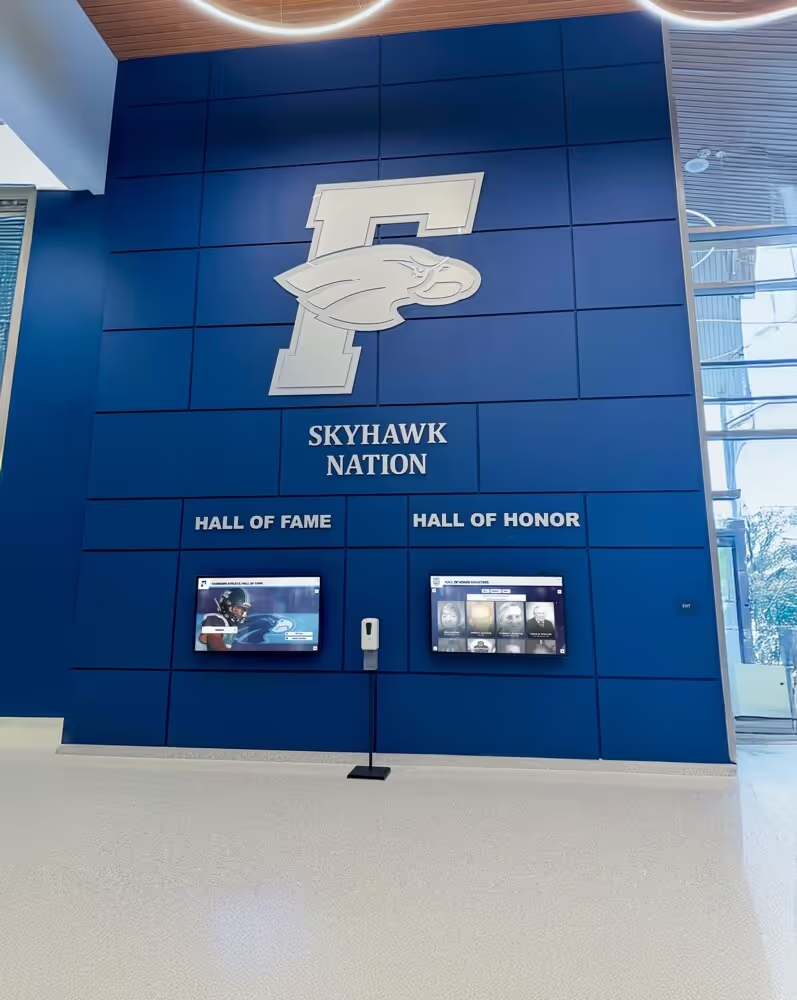
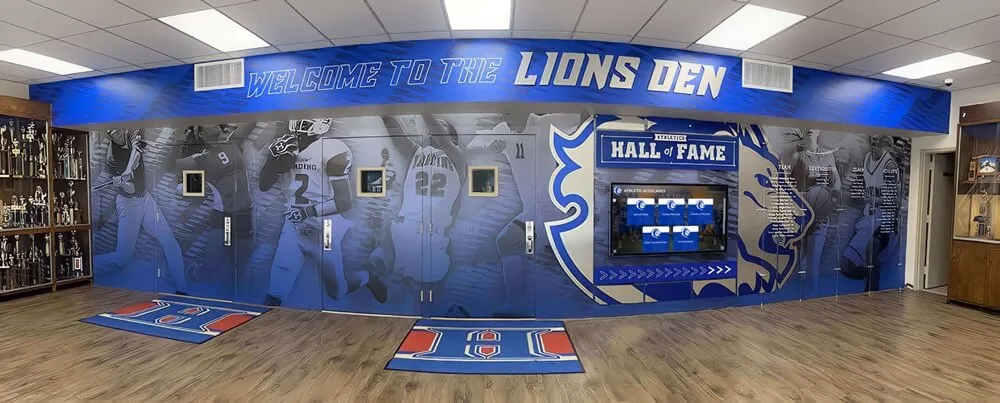
Course records provide specific, measurable goals for current athletes while celebrating program history. Schools can showcase these achievements through digital recognition displays in athletic facilities connecting course performances to broader program recognition.
Record Verification Standards:
Maintaining credibility requires clear standards:
- Official course measurement certification for record recognition
- Verification that conditions met competition standards (proper distance, legal course, sanctioned meet)
- Documentation including date, meet, weather conditions, and witnesses
- Updating procedures when records fall
- Historical record preservation even when surpassed
Creating Home Course Pride and Competitive Advantage
Familiarity with course features provides measurable competitive benefits:
Home Course Mastery:
Strategic training develops course-specific advantages:
- Detailed knowledge of optimal racing lines through technical sections
- Practiced surge points at specific course locations
- Understanding of which hills to attack versus conserve energy
- Familiarity with footing and terrain reducing hesitation
- Confidence from countless training miles on course creating comfort
Visiting teams racing unfamiliar courses often run conservatively through uncertain sections, losing seconds that accumulate to meaningful competitive gaps.
Course Identity and Tradition:
Named course features create program culture:
- “Heartbreak Hill” for the most challenging climb
- “The Gauntlet” for narrow wooded sections
- “Victory Straight” for the final approach to finish
- Named routes honoring alumni or program figures
This tradition-building mirrors how programs create team culture through recognition events and shared program identity.
Visual Course Identity:
Distinctive features create recognition:
- Signature terrain or landmark features
- Unique design elements setting course apart
- Photogenic locations for team photos and course promotion
- Integration with school branding and colors in permanent marking
Memorable courses become recruiting advantages as prospective athletes visualize themselves competing on distinctive home courses representing program quality and investment.
Integrating Course Excellence Into Broader Athletic Recognition
Cross country achievements deserve visibility alongside other sports:
Comprehensive Athletic Recognition:
Modern schools integrate cross country into unified recognition:
- Digital displays showcasing course records alongside other athletic achievements
- Searchable databases including cross country performances with other sports
- Multi-sport athlete recognition for students competing in cross country and other teams
- Cross country inclusion in athletic halls of fame and recognition systems
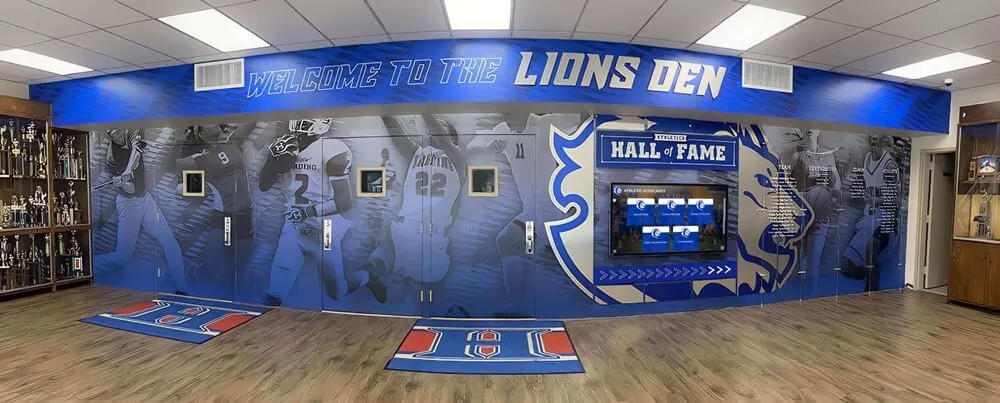
Many athletic programs now use comprehensive digital recognition platforms that highlight diverse achievements across all athletic programs, ensuring cross country receives equal visibility with higher-profile sports.
Academic-Athletic Excellence Recognition:
Cross country athletes often excel academically:
- Scholar-athlete recognition for students balancing demanding training with academic achievement
- Team GPA achievements and academic honors
- College scholarship recognition for cross country athletes
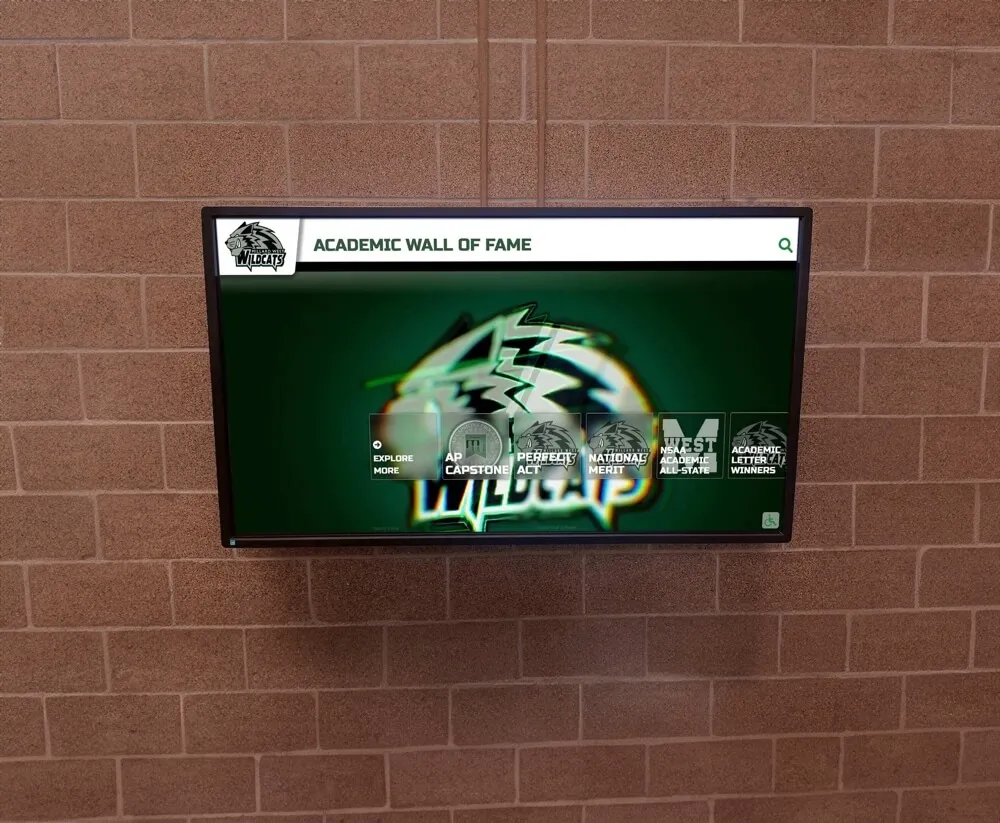
- Integration of academic and athletic recognition showing complete student profiles
Programs implementing comprehensive achievement tracking systems can highlight how cross country develops discipline, time management, and work ethic transferring to academic success.
Conclusion: Designing Cross Country Courses That Build Championship Programs
Cross country course design represents strategic investment in athletic program quality, athlete development, and competitive advantage. Well-designed courses challenge runners appropriately while maintaining safety, accommodate diverse training needs beyond race simulation, provide operational flexibility for varied program uses, and create distinctive home environments where familiarity translates to competitive advantage.
Whether developing new courses from raw land or optimizing existing routes, thoughtful design addressing distance standards, terrain selection, safety requirements, marking systems, and maintenance sustainability creates facilities serving programs effectively for decades. The best courses balance competing priorities—challenging but safe, varied but navigable, competitive but suitable for training, accessible but distinctive.
Schools approaching cross country course design should begin with clear goals defining primary course purposes, involve coaches in design decisions ensuring athletic functionality, prioritize safety and emergency access throughout planning, plan for long-term maintenance sustainability, and design with flexibility accommodating program evolution and growth.
Strategic course investment demonstrates institutional commitment to cross country programs, creates recruitment advantages attracting competitive athletes, develops home field advantages through course familiarity, and establishes program identity around distinctive, quality training and competition environments.
Modern cross country programs increasingly integrate course excellence with comprehensive athlete recognition, ensuring performances achieved through quality course training receive appropriate visibility. Just as thoughtfully designed courses develop complete, competitive athletes, thoughtful recognition systems celebrate the complete athlete experience—training commitment, competitive achievement, academic excellence, and personal growth.
Build Championship Cross Country Culture Through Comprehensive Recognition
Ready to celebrate your cross country program’s achievements while building culture that attracts talented athletes and motivates current runners? Rocket Alumni Solutions provides digital recognition platforms enabling schools to showcase course records, honor individual excellence, celebrate team achievements, and preserve program history across all athletic facilities. Our systems create professional, engaging displays that inspire current athletes while demonstrating the program quality and tradition that attract competitive recruits. Your cross country program deserves recognition matching the quality of the course where champions train and compete.