



Key Takeaways
Learn how to create an alumni wall that truly inspires current students. Complete guide covering design strategies, content development, technology options, and proven approaches for maximizing student engagement and motivation.
Walk through any school hallway and you’ll likely encounter alumni walls displaying names, photos, or plaques honoring distinguished graduates. Yet many of these displays sit largely ignored—students glance past them without a second thought, missing the powerful stories and role models right in front of them. The difference between an alumni wall that inspires and one that goes unnoticed comes down to intentional design choices that prioritize student engagement, authentic storytelling, and accessibility. This comprehensive guide explores proven strategies for creating alumni walls that genuinely motivate current students, connecting them with role models who walked the same halls and demonstrating that extraordinary achievement begins in ordinary classrooms just like theirs.
Understanding What Makes Alumni Walls Inspirational
Before discussing specific design elements, it’s essential to understand the psychological and developmental factors that enable alumni recognition to inspire student behavior and aspirations.
The Power of Relatable Role Models
Students develop stronger aspirations when they encounter role models they perceive as similar to themselves. When a student sees an alumnus from their same school, neighborhood, or background achieving remarkable success, that achievement feels more accessible than celebrity accomplishments featured in media.
Proximity and Familiarity Create Psychological Connection
Alumni who attended the same school walked identical hallways, sat in similar classrooms, and faced comparable challenges. This shared experience creates powerful identification that external role models cannot match. When students learn about an alumna who struggled in the same difficult math class before becoming an engineer, or an alumnus who participated in the same debate program before becoming an attorney, success transforms from abstract concept to tangible possibility.
Research on social learning theory demonstrates that people learn behaviors and possibilities through observing others, particularly those they identify with. Alumni walls leverage this mechanism by providing constant exposure to achievable excellence—not theoretical possibilities but proven outcomes from people who started exactly where current students now stand.
Diverse Achievement Representation Matters
Traditional alumni walls often emphasize narrow achievement categories—athletic championships or professional prominence—inadvertently suggesting that excellence takes limited forms. Students whose strengths lie in different areas may conclude that recognition isn’t available for people like them.
Comprehensive Recognition Validates Multiple Paths
Inspirational alumni walls showcase achievement diversity including academic excellence across different fields, artistic and creative accomplishments, entrepreneurship and business innovation, community service and civic leadership, military service and public safety, teaching and educational leadership, scientific research and technical innovation, and humanitarian work addressing social challenges.
When students with varied interests and talents see alumni succeeding in fields matching their passions, they develop confidence that their school produces successful people across all domains—not just athletes or business executives. This comprehensive representation communicates that the institution values and celebrates excellence in whatever forms students pursue.
Academic recognition programs provide frameworks for celebrating intellectual achievement alongside other accomplishment types, ensuring students pursuing scholarly paths see themselves reflected in recognition systems.
Storytelling Creates Emotional Connection
Names and dates provide basic information but fail to create emotional engagement that drives inspiration. Students need to understand the journey—the challenges alumni overcame, the choices they made, the setbacks they navigated, and the persistence that led to achievement.
Narrative Details Make Success Tangible
Compelling alumni profiles reveal humanizing details: the alumna who nearly dropped out before discovering her passion in a particular class, the alumnus who failed initially before developing resilience that defined his career, the graduate who balanced family responsibilities while pursuing education, or the distinguished professional who credits a specific teacher’s encouragement as transformative.
These narrative elements accomplish several objectives. They demonstrate that successful people faced similar doubts and challenges, making achievement seem attainable rather than reserved for naturally exceptional individuals. They reveal that persistence matters more than innate talent, reinforcing growth mindset principles. They show that specific choices and behaviors lead to outcomes, providing actionable lessons students can apply. And they create memorable stories rather than forgettable facts, improving retention and impact.
Strategic Design Principles for Inspirational Alumni Walls
Effective design requires intentional choices aligned with student engagement rather than administrative convenience or aesthetic preferences disconnected from educational goals.
Location: Meeting Students Where They Are
Physical placement fundamentally determines whether students regularly encounter alumni recognition or remain largely unaware of its existence.
High-Traffic Areas Maximize Exposure
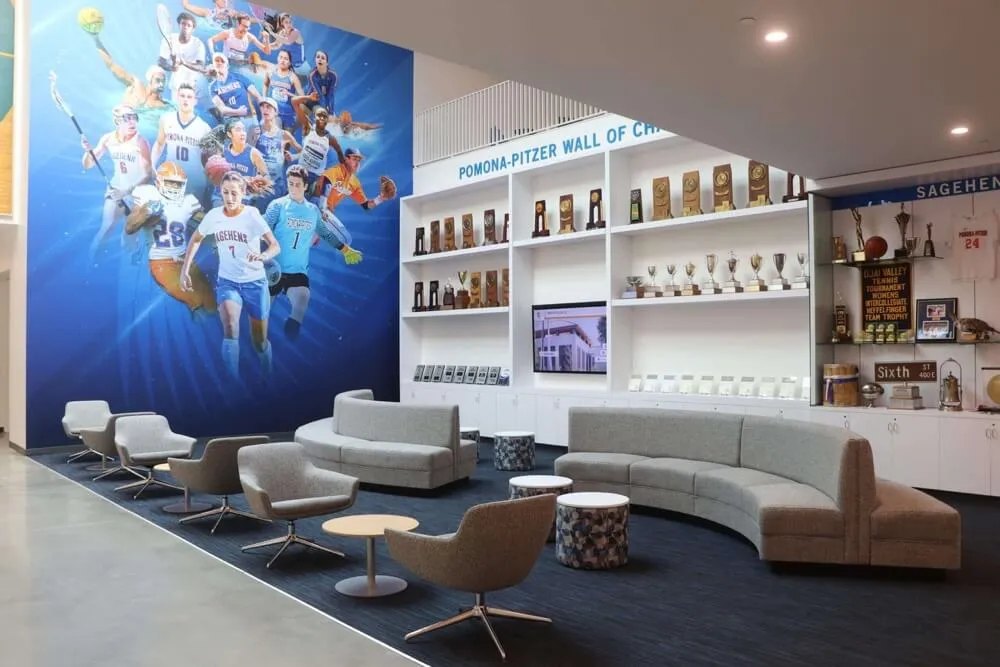
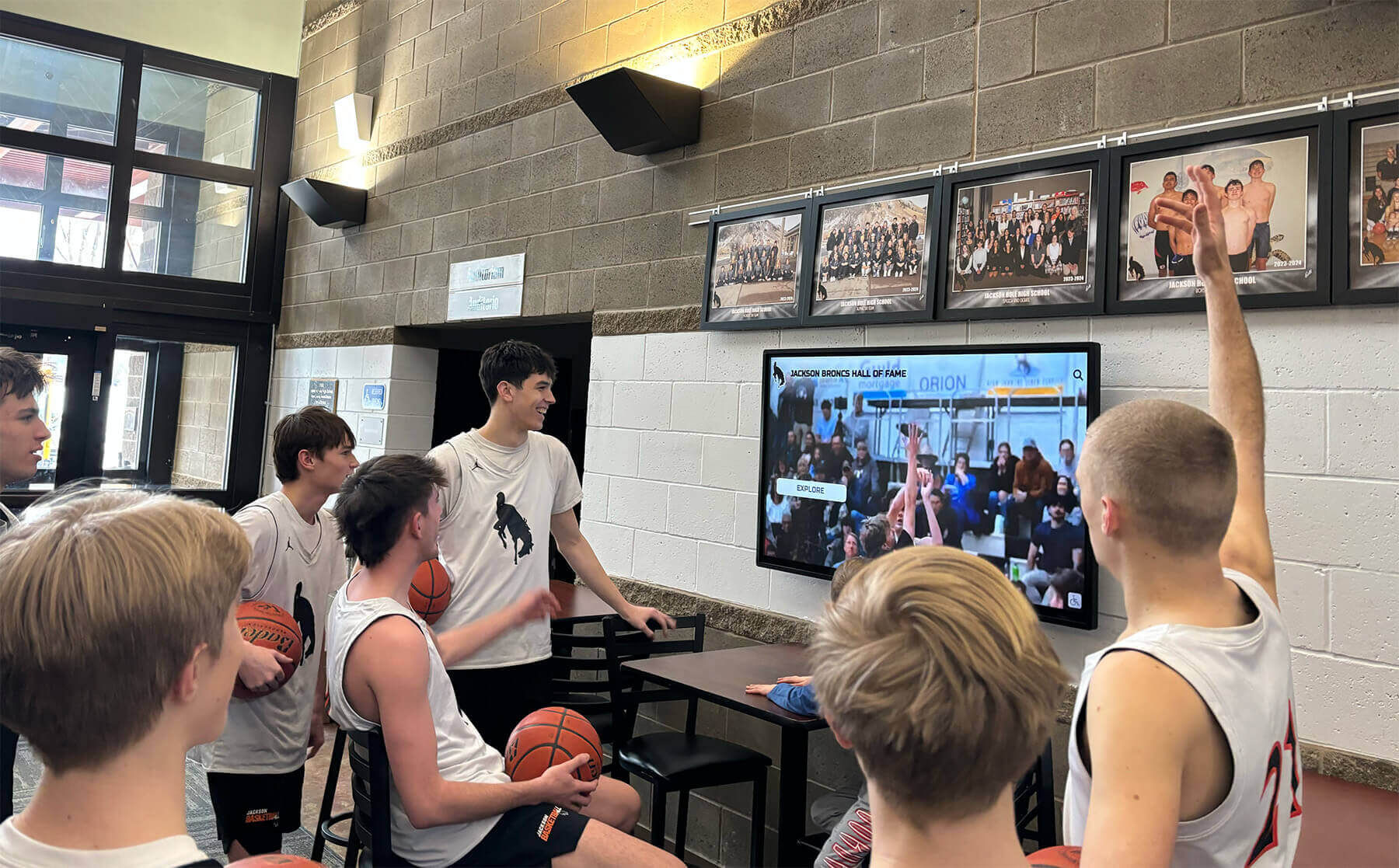
Priority locations include main entrance lobbies where students pass daily, cafeteria areas where students gather with extended dwell time, hallway corridors connecting classrooms or facilities, library spaces supporting extended exploration, and common areas where students congregate during breaks or before/after school.
Avoid tucked-away locations requiring students to deliberately seek recognition—most won’t. Instead, position displays where students naturally travel, creating multiple exposure opportunities throughout typical school days. Repeated exposure increases familiarity and the likelihood that students will eventually engage more deeply with content rather than simply passing by.
Strategic Positioning at Eye Level and Natural Sightlines
Mount displays at heights appropriate for student ages—lower for elementary, higher for high school—ensuring comfortable viewing without neck strain. Position displays perpendicular to traffic flow rather than parallel to walls, making them harder to ignore while passing. Create clear sightlines from frequently occupied positions like cafeteria seating or hallway gathering spots.
Consider implementing multiple display locations rather than concentrating all recognition in single areas. Distributed recognition increases total exposure while enabling different displays to emphasize different achievement types relevant to specific locations—academic recognition near classrooms, athletic recognition near gymnasiums, arts recognition near performance spaces.
Content Accessibility: Meeting Different Learning Styles
Students engage with information differently. Effective alumni walls accommodate diverse learning preferences rather than assuming all students respond to identical presentation formats.
Multi-Modal Content Presentation
📝 Written Profiles
Detailed biographical narratives for students who prefer reading, including career timelines, achievement descriptions, and personal reflections on educational experiences
🎬 Video Content
Interviews where alumni share their stories in their own voices, creating personal connection through facial expressions, tone, and authentic communication
📸 Photo Galleries
Visual documentation showing alumni during school years and throughout career progression, making transformation visible and tangible
🎙️ Audio Recordings
Podcast-style interviews or audio messages allowing students to listen while multitasking or for visually impaired accessibility
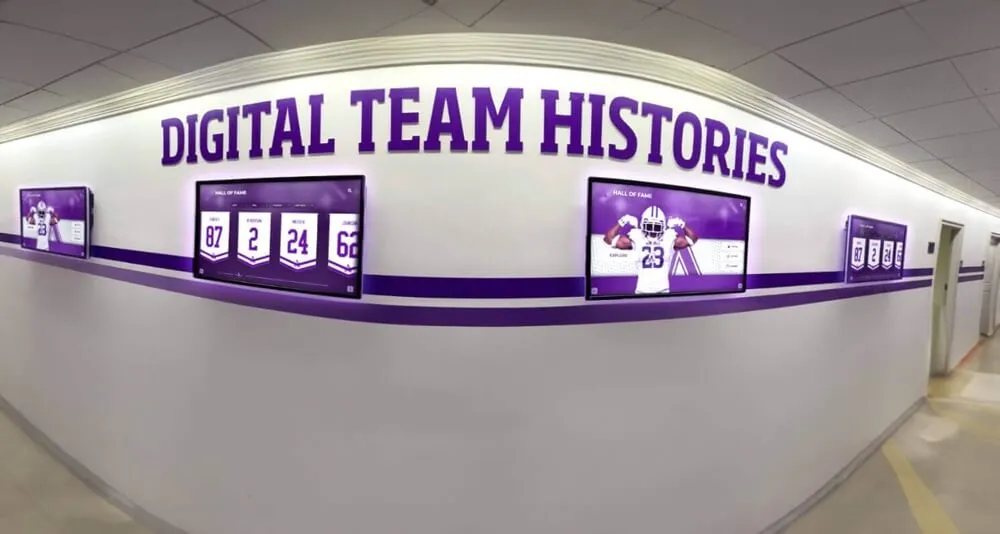
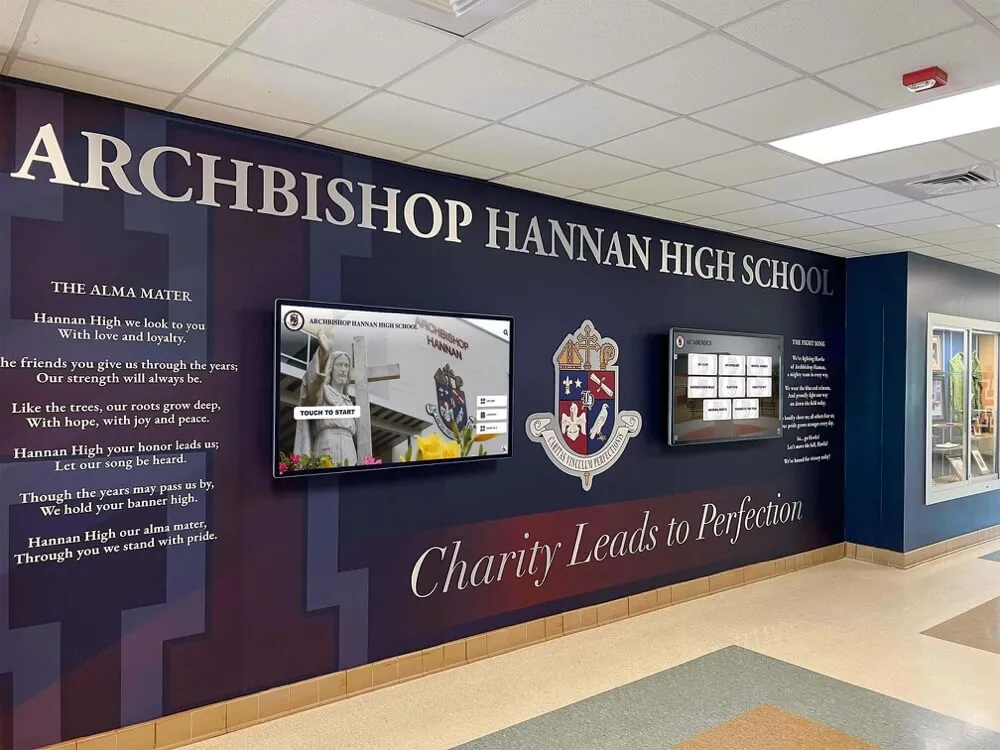
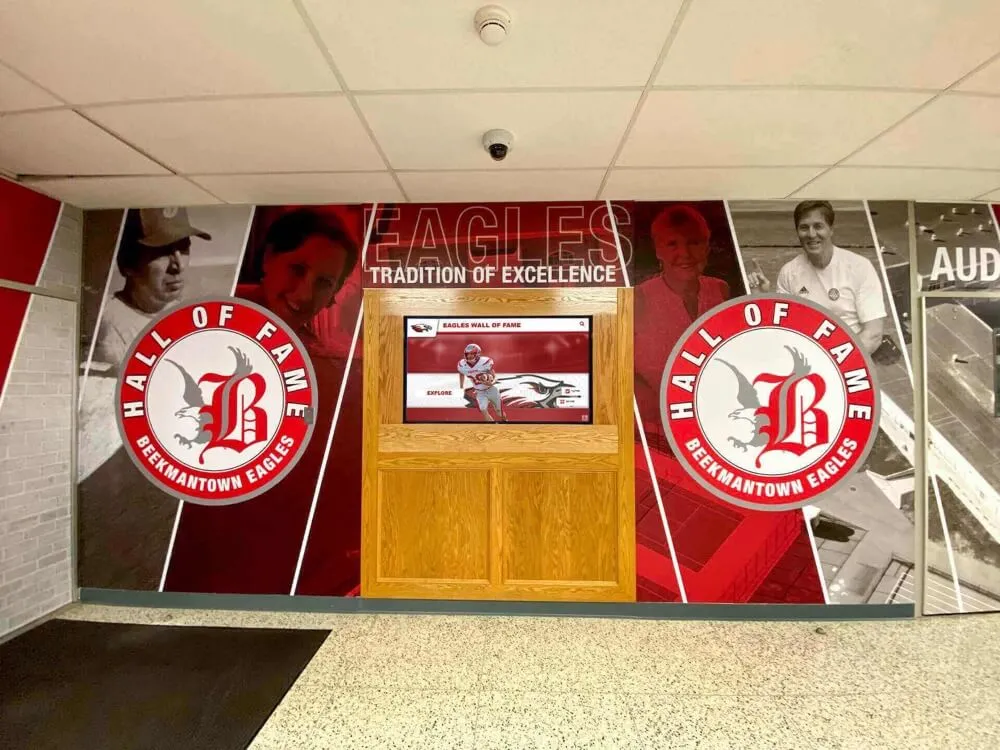
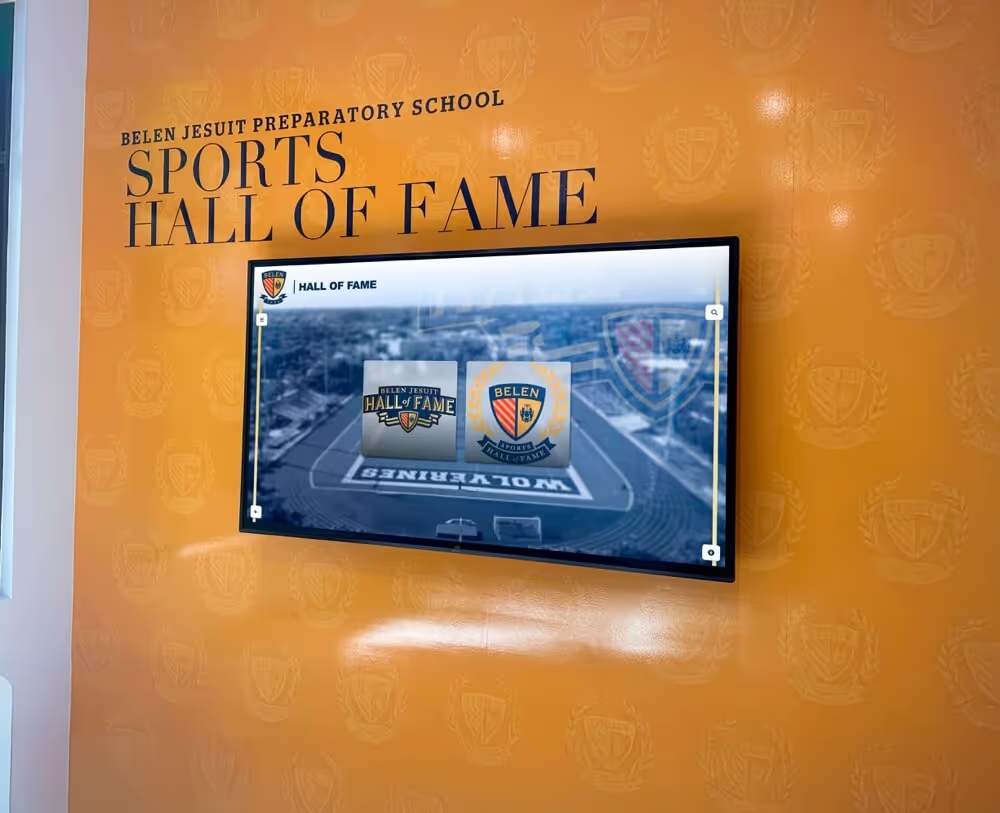
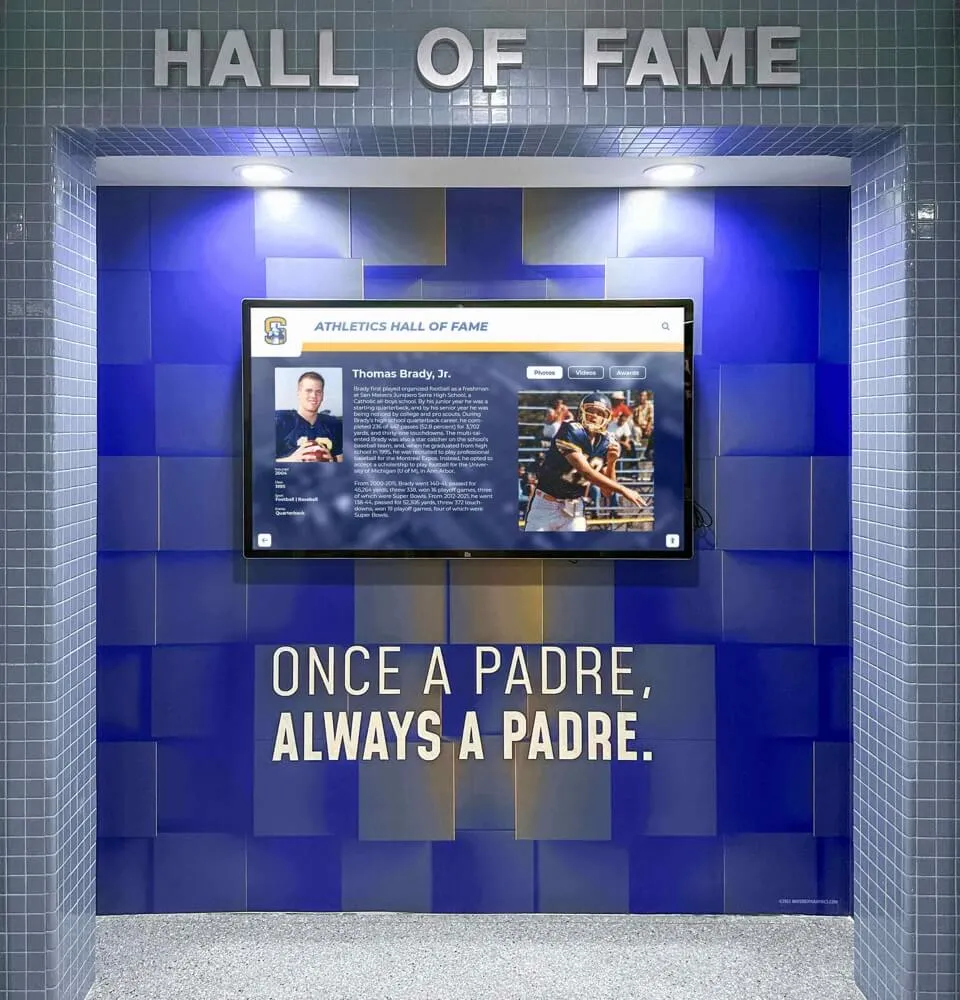
Solutions like interactive digital hall of fame platforms enable multimedia presentation impossible with traditional static displays, accommodating diverse learning preferences while maintaining cohesive presentation.
Layered Information Depth
Provide content at multiple depth levels: quick-view summaries for casual passing attention (name, photo, one-line achievement), intermediate profiles for brief stops (paragraph overview, key accomplishments, 2-3 minute video), and comprehensive deep-dive content for engaged exploration (complete biographical narrative, extended interviews, career timeline, multiple media elements).
This layered approach respects that students engage at different levels depending on available time, current interest, and specific alumni relevance. Quick summaries allow broad exposure to many alumni, while deep content enables meaningful connection with particularly resonant role models.
Search and Discovery Features
Traditional static walls force linear browsing—students encounter whoever happens to be displayed without ability to find alumni matching their specific interests or backgrounds.
Intuitive Search Capabilities
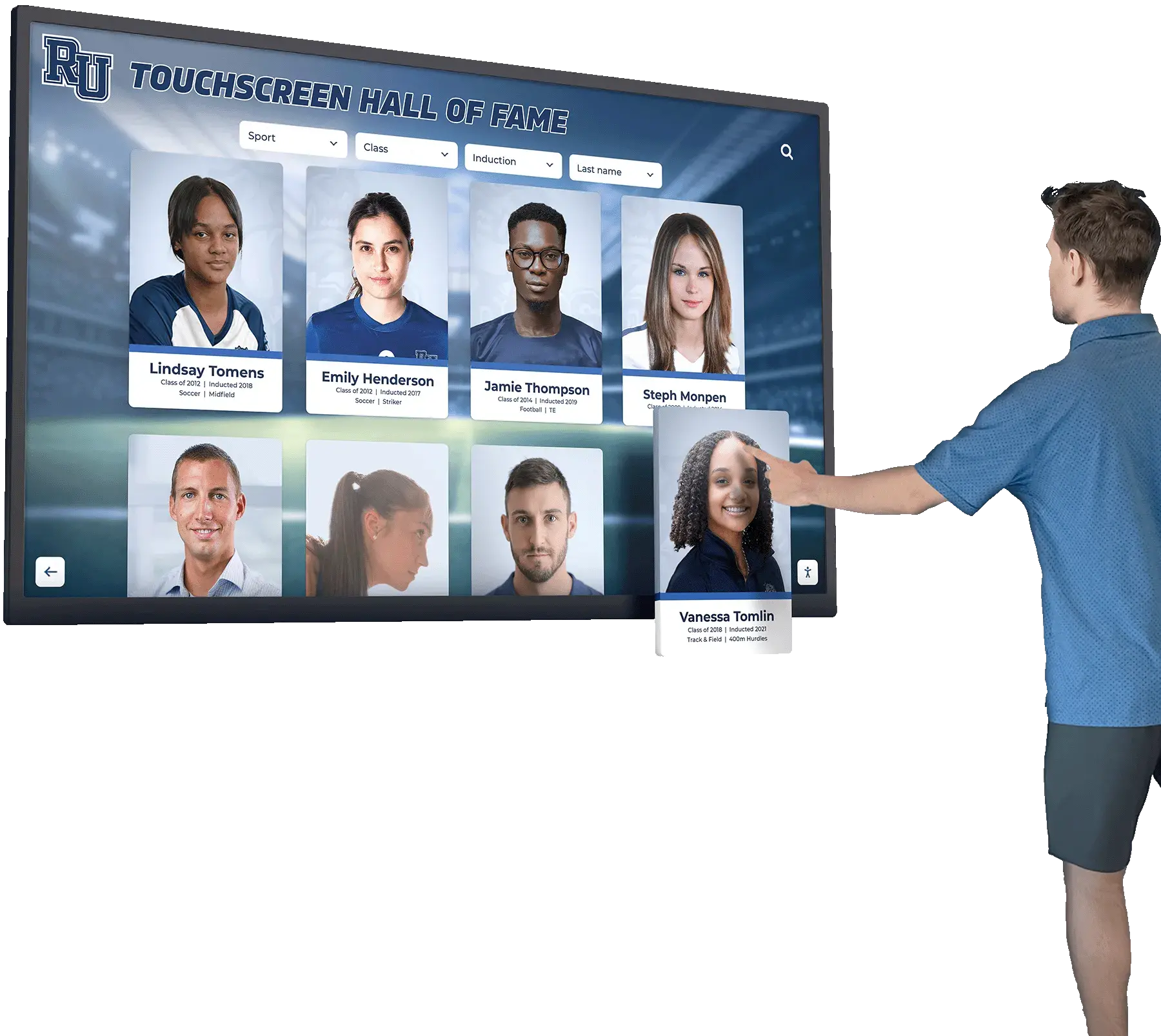
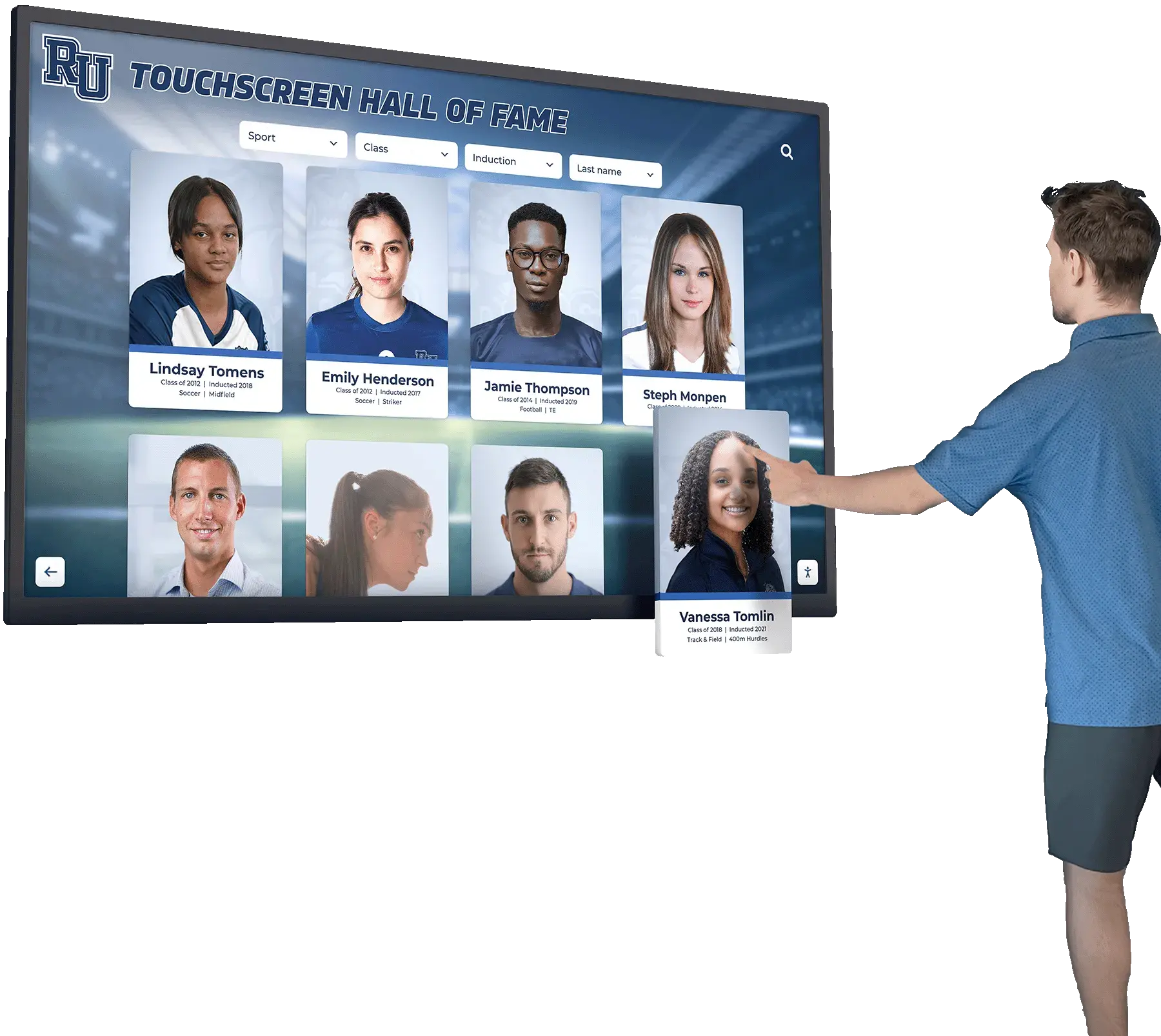
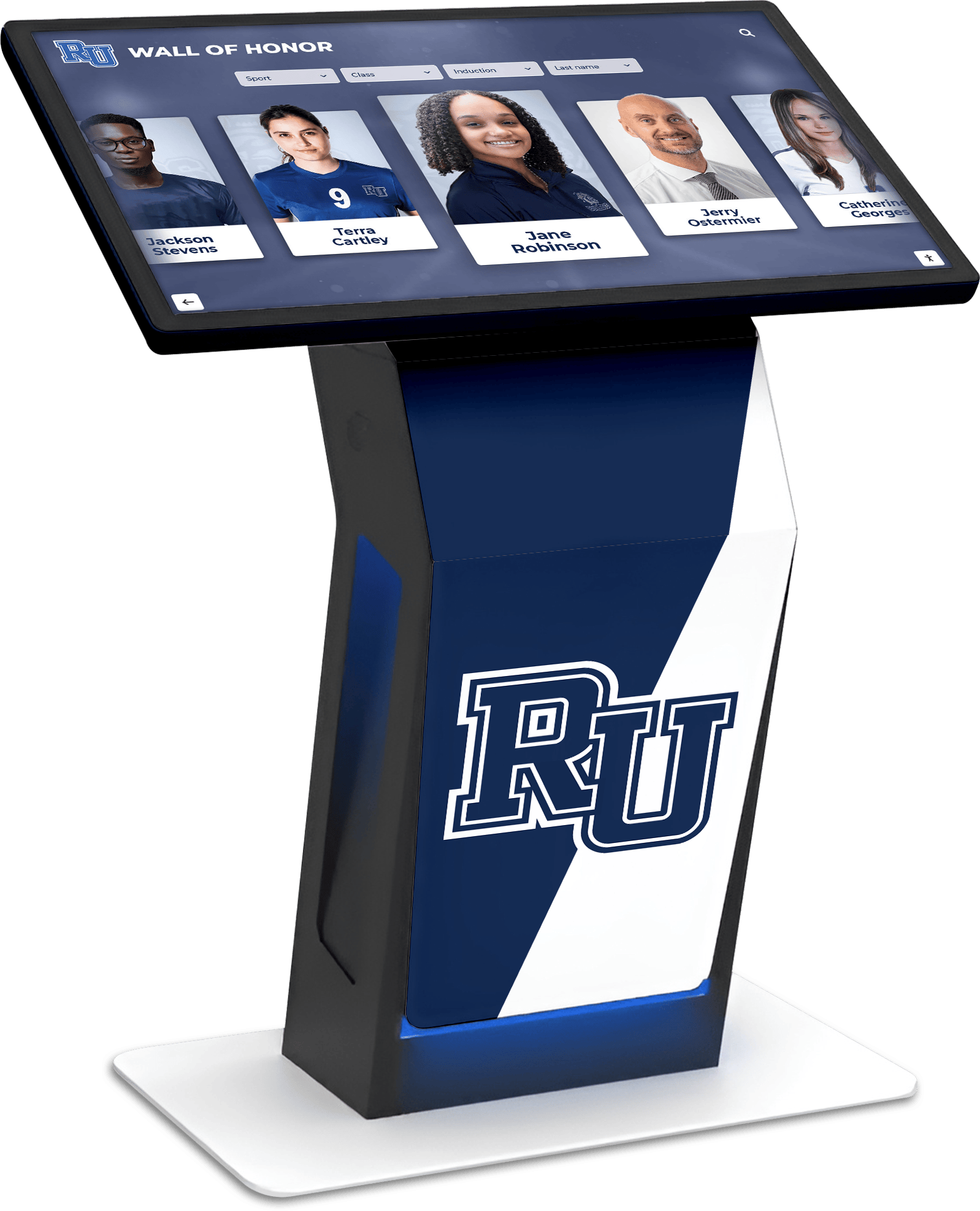
Digital alumni walls should enable multiple search and filtering approaches including name search for students seeking specific individuals, graduation year filtering for students curious about recent or historical graduates, achievement category selection for students interested in particular fields, keyword search finding alumni by college attended, career field, or accomplishment type, and geographic filtering showing alumni from specific hometowns or currently working in particular locations.
Advanced platforms enable combined filtering—for example, showing all business entrepreneurs who graduated in the 2000s and attended specific universities, or all STEM professionals from underrepresented backgrounds working in technology fields. This granularity helps students discover alumni with particularly relevant experiences for their personal circumstances or aspirations.
Serendipitous Discovery
While targeted search proves valuable, serendipitous discovery where students encounter unexpected alumni can spark new interests or reveal career possibilities they hadn’t previously considered. Effective discovery features include featured alumni rotation highlighting different individuals regularly, “related alumni” suggestions connecting individuals with similar paths, random profile options for exploratory browsing, and timeline visualizations enabling chronological exploration across decades.
Comprehensive digital hall of fame systems balance both directed search for specific information and serendipitous exploration that broadens perspectives and introduces unexpected possibilities.
Content Strategies That Drive Student Engagement
Technical platforms provide infrastructure, but compelling content creates actual inspiration. Strategic content development focuses specifically on what resonates with student audiences.
Emphasizing the Educational Journey
Students want to understand how alumni got from “where I am now” to “where they ended up.” This journey narrative—not just final achievements—provides the roadmap students can potentially follow.
Academic Experience and Pivotal Moments
Effective alumni profiles explore favorite classes or subjects that sparked lasting interests, influential teachers or mentors who provided crucial guidance, specific projects or experiences that proved transformational, academic struggles or failures that taught resilience, extracurricular involvement and leadership development, and critical decisions about educational or career paths.
These details help students identify parallel experiences in their own education. When a student struggling in chemistry reads about an alumnus physician who also found chemistry challenging initially, that struggle transforms from personal failure to normal part of a successful journey. When a student uncertain about college hears how an alumna navigated that decision, the path becomes clearer.
Career Development Progression
Students need to understand that successful careers rarely follow linear trajectories. Alumni profiles should acknowledge early career positions and entry points (often modest), career changes and pivots when initial paths didn’t fit, setbacks including job losses, business failures, or professional challenges, skill development and continuing education throughout careers, and networking and opportunity creation rather than passive luck.
This authentic portrayal combats unrealistic expectations that success arrives immediately after graduation. Students develop more resilient career expectations when they understand that distinguished alumni also navigated uncertainty, made mistakes, and adjusted course multiple times before achieving recognition-worthy accomplishments.
Advice and Wisdom Sections
Generic motivational platitudes rarely inspire students who’ve heard countless variations. Specific, practical advice from alumni who faced similar circumstances carries far more weight.
Soliciting Actionable Guidance
When gathering alumni content, request specific advice addressing questions like: What skills or habits developed during school years proved most valuable professionally? What would you do differently if you could return to high school/college? What advice would you give students interested in your field? How did you overcome specific challenges or setbacks? What opportunities should students pursue or create? What common misconceptions about your field should students understand?
These targeted prompts generate concrete guidance students can actually apply rather than vague encouragement to “work hard” or “follow your dreams.” A software engineer explaining specific programming languages or projects to pursue provides more value than generic advice to study computer science. An entrepreneur describing how she identified her business opportunity offers more actionable lessons than simply encouraging entrepreneurship.
Connecting Alumni to Current Students
Some alumni are willing to serve as mentors, provide informational interviews, or answer student questions. Alumni profiles can facilitate these connections through contact preferences indicating mentorship availability, professional networking profiles students can access, scheduled virtual Q&A sessions or speaking engagements, and alumni-student mentorship program enrollment.
These connection opportunities extend alumni wall value beyond passive inspiration to active relationship-building. Students gain networking contacts and career guidance while alumni strengthen institutional engagement—a mutually beneficial dynamic.
Alumni mentorship programs can be directly integrated with recognition systems, creating seamless transitions from inspiration to actual guidance relationships.
Representation and Inclusion
Students need to see people like themselves among recognized alumni. Lack of representation sends implicit messages about who “belongs” in success categories.
Demographic Diversity
Intentionally seek and recognize alumni representing diverse backgrounds across multiple dimensions including racial and ethnic diversity reflecting community composition, gender representation across all achievement categories, socioeconomic backgrounds from various circumstances, first-generation college students who navigated higher education without family precedent, students with disabilities who achieved despite barriers, and international students who contributed across various fields.
This representation isn’t about quotas but ensuring recognition systems accurately reflect the full range of successful alumni rather than inadvertently excluding certain groups. When underrepresented students see alumni who share their backgrounds, it directly combats limiting beliefs about who can achieve excellence.
Achievement Diversity
Beyond demographic representation, showcase achievement diversity including traditional professional success in established careers, entrepreneurship and business creation, artistic and creative accomplishment, community organizing and activism, nonprofit and social service leadership, teaching and educational impact, military and public service, and skilled trades and vocational excellence.
This breadth demonstrates that success takes many forms—students pursuing any legitimate path can find alumni role models validating their choices and demonstrating possibility.
Technology Options for Modern Alumni Walls
While traditional plaques served previous generations adequately, modern technology enables significantly more engaging and scalable recognition approaches specifically designed to inspire digital-native students.
Traditional vs. Digital: Honest Assessment
Traditional Physical Displays: Advantages and Limitations
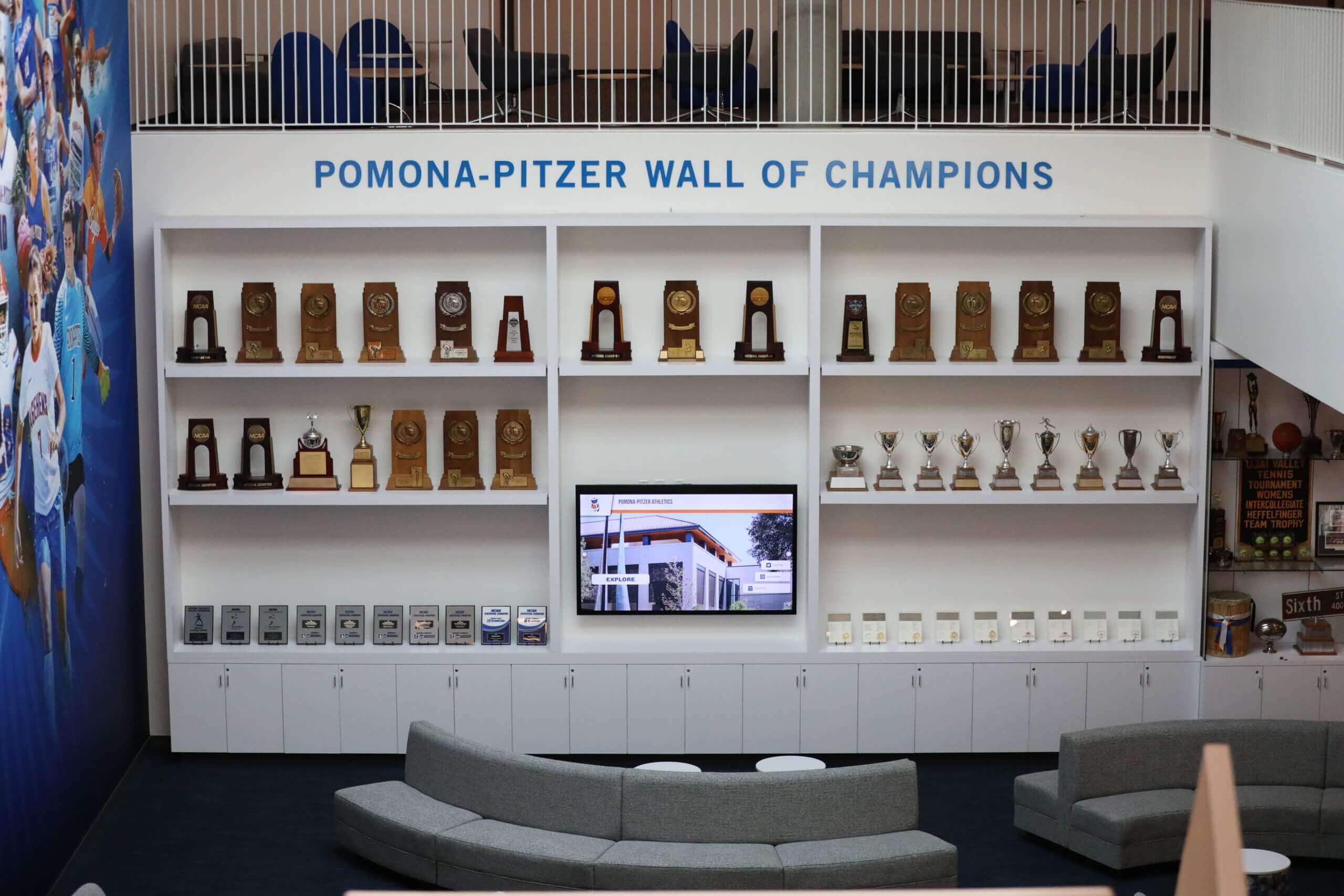
Engraved plaques and photo boards offer tangible permanence, require no technical maintenance, convey traditional prestige, and involve lower upfront costs for small numbers of inductees.
However, they face significant constraints including fixed capacity requiring difficult selection decisions, minimal content beyond names and basic dates, expensive per-inductee costs for ongoing additions ($200-$500 each), time-consuming updates requiring physical fabrication, difficult error corrections once installed, and inability to include multimedia or interactive elements.
Most problematically for student inspiration, traditional formats provide no mechanism for the storytelling, diverse content presentation, and search capabilities that drive engagement with modern audiences accustomed to interactive digital information.
Digital Recognition: Capabilities and Considerations
Modern digital platforms address virtually every traditional format limitation while introducing powerful engagement capabilities. Solutions like Rocket Alumni Solutions provide unlimited recognition capacity accommodating comprehensive alumni populations, rich multimedia profiles with photos, videos, and detailed narratives, instant updates adding new inductees or modifying content remotely, powerful search and filtering enabling personalized discovery, web integration extending access beyond physical locations, and analytics showing how students actually engage with content.
Digital systems require higher initial investment for hardware and software, ongoing subscription or support costs, reliable network connectivity, and basic technical support capabilities. However, per-inductee costs drop dramatically at scale, and long-term total cost of ownership typically favors digital approaches while delivering dramatically superior student engagement.
Comparing recognition technology options helps institutions make informed decisions aligned with specific needs, resources, and student engagement priorities.
Implementing Interactive Touchscreen Displays
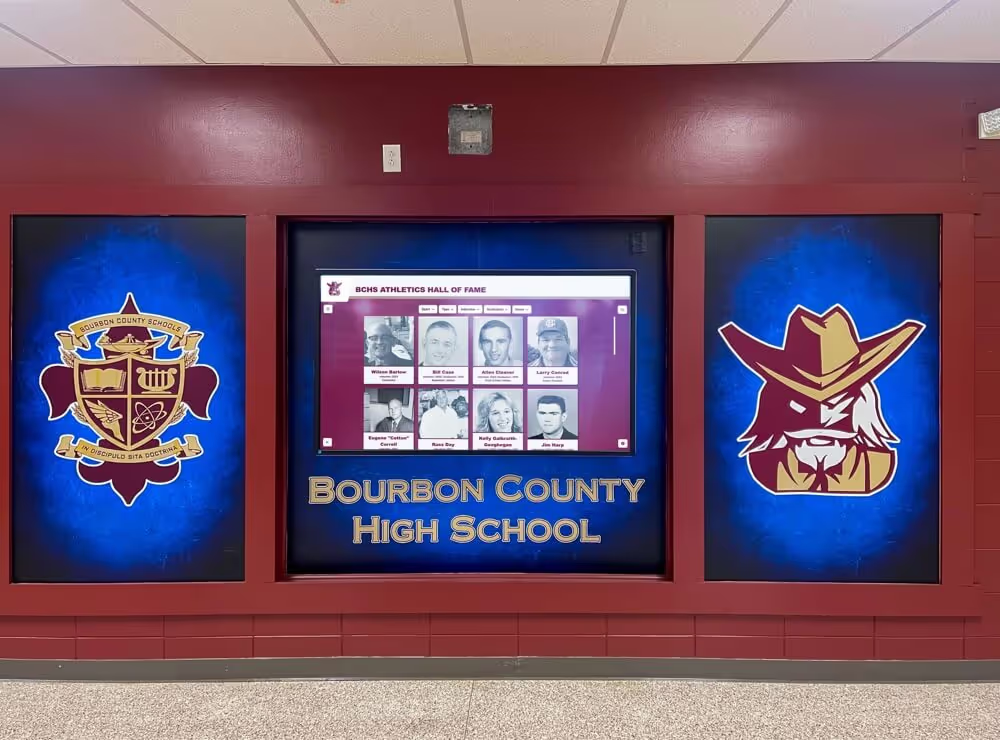
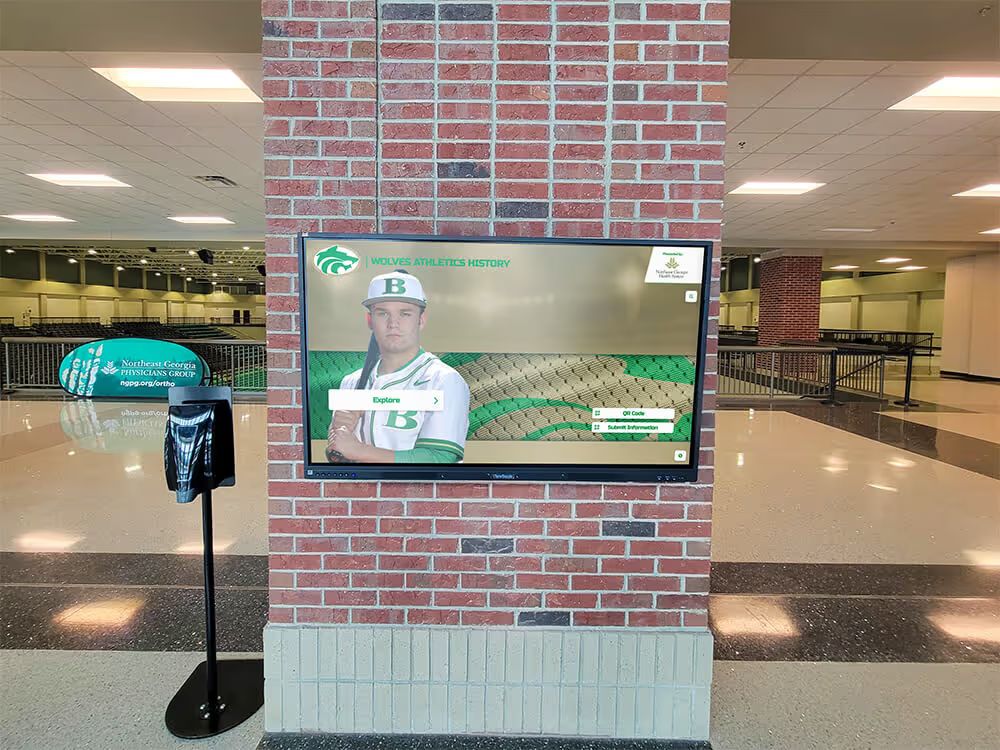
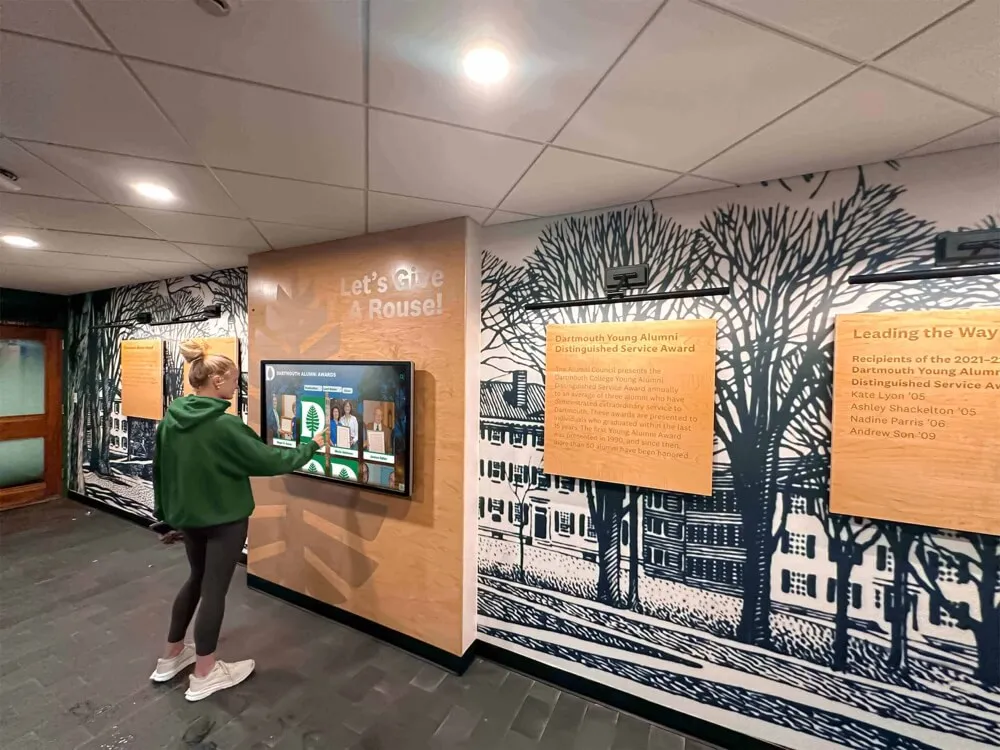
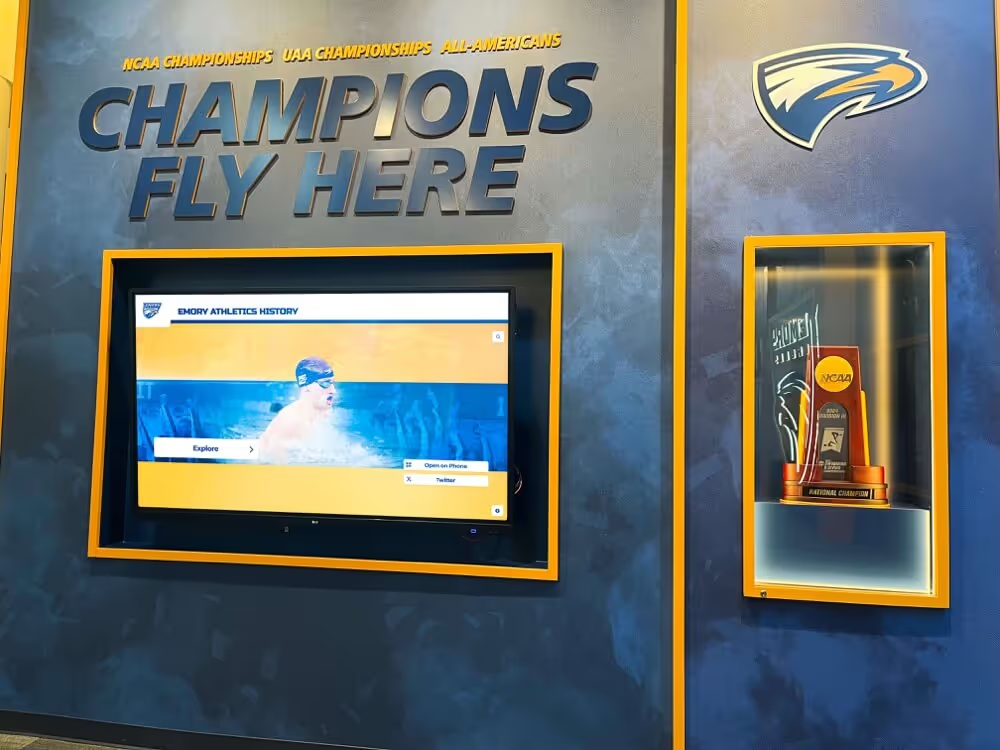
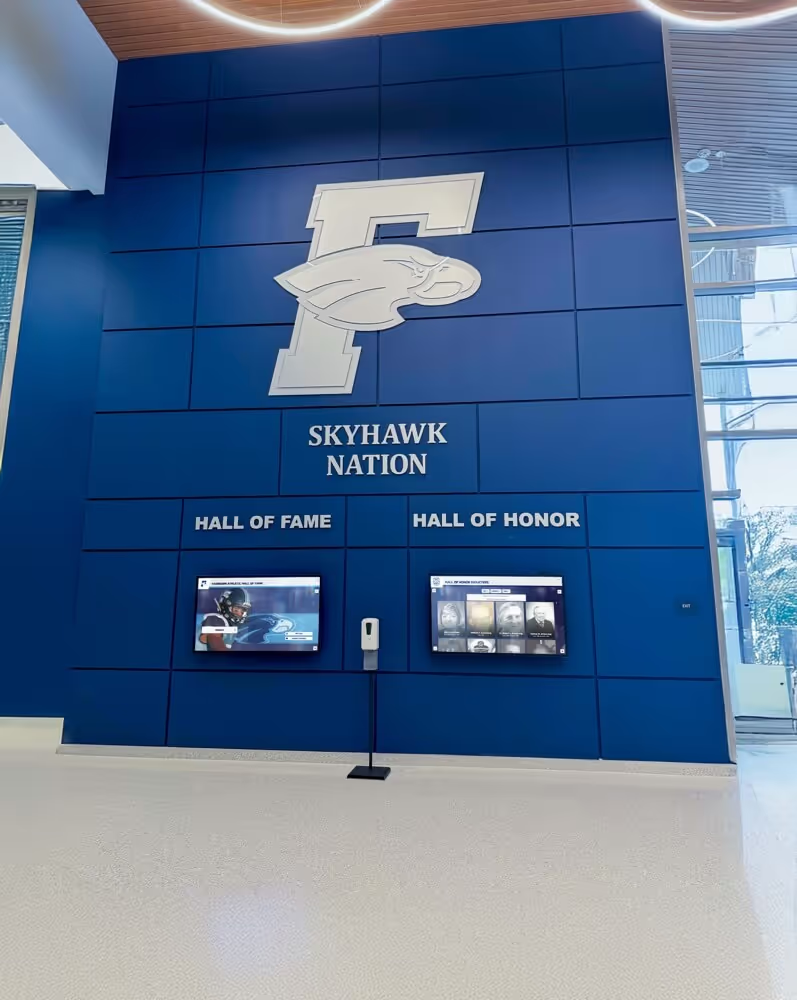
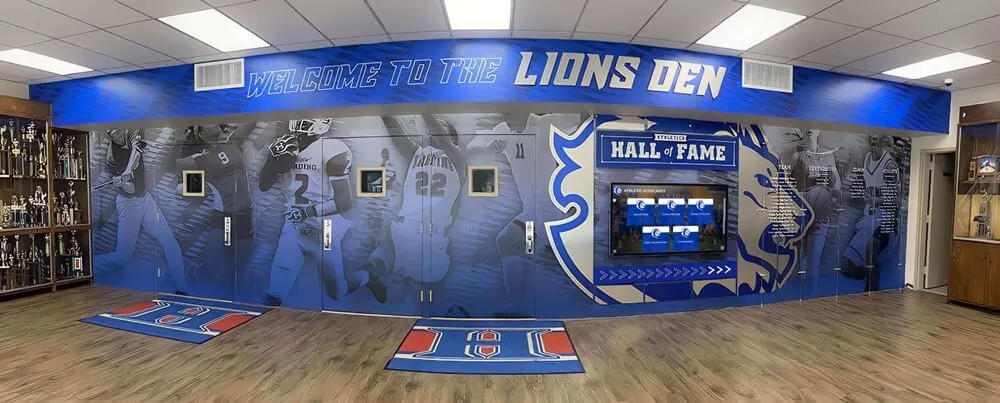
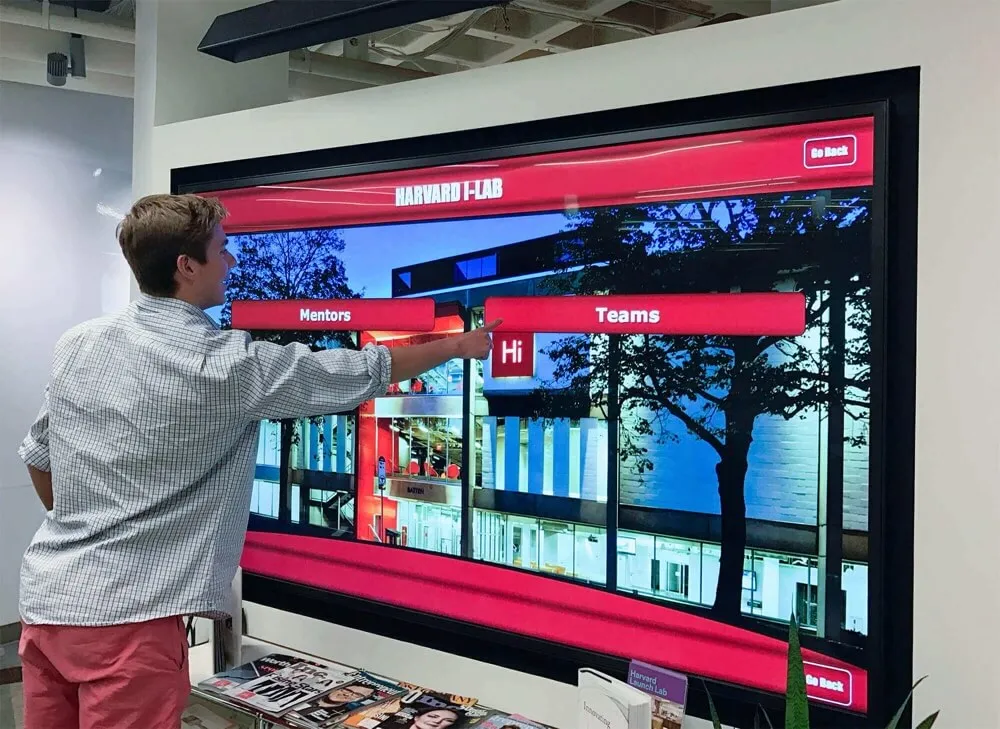
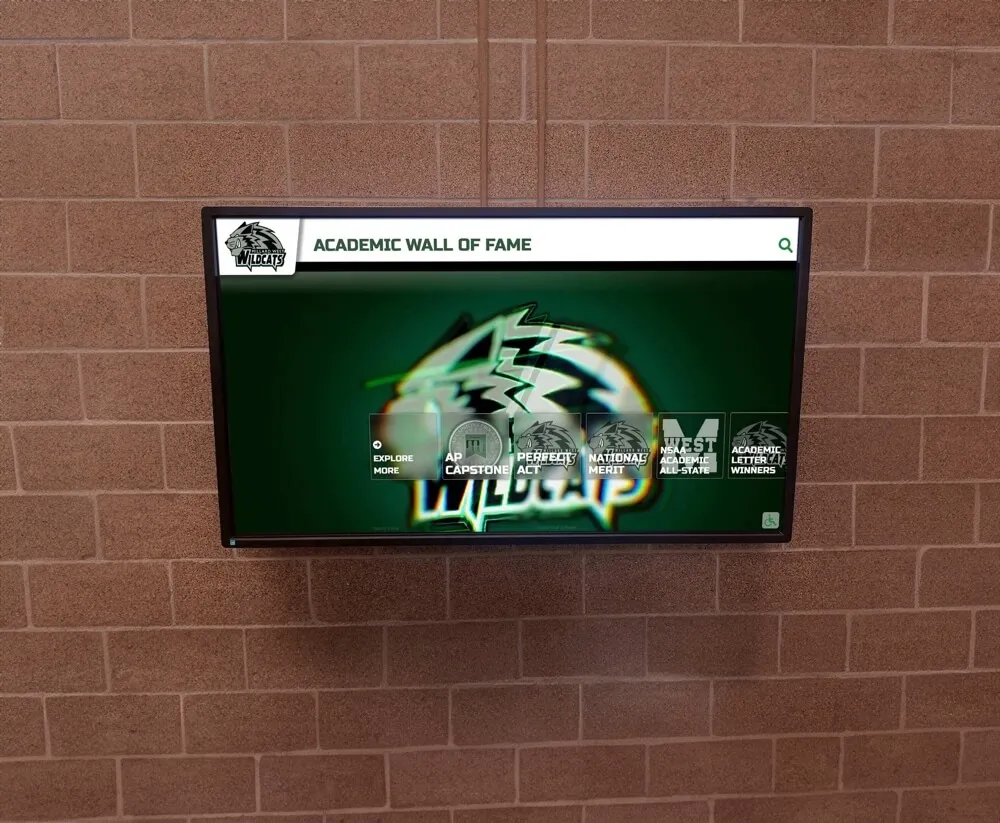
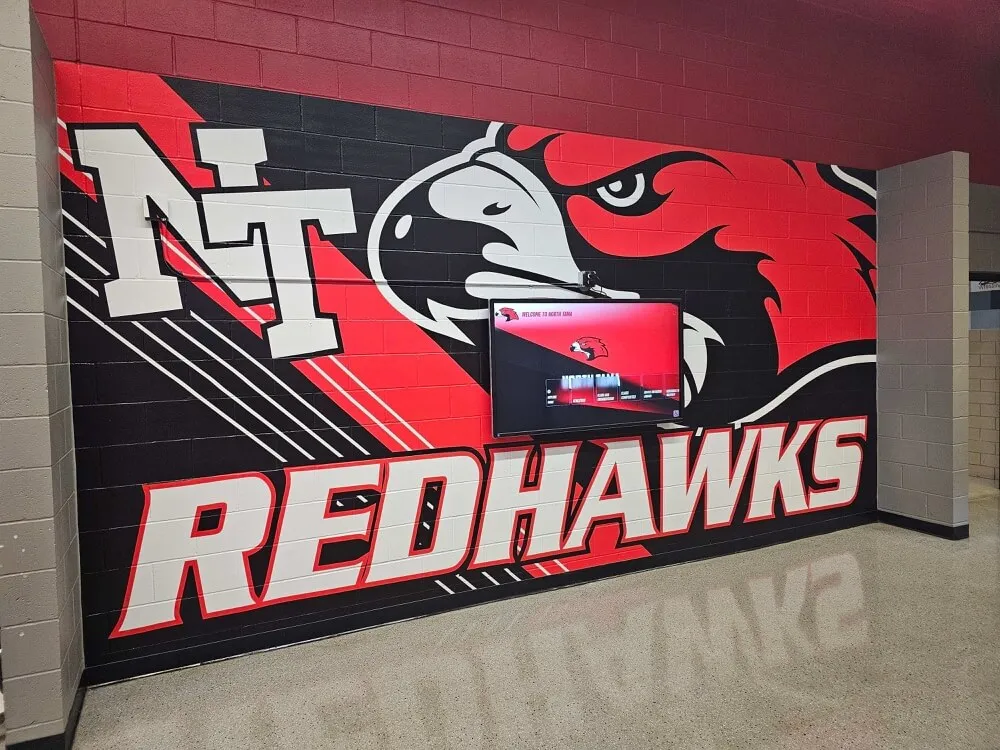
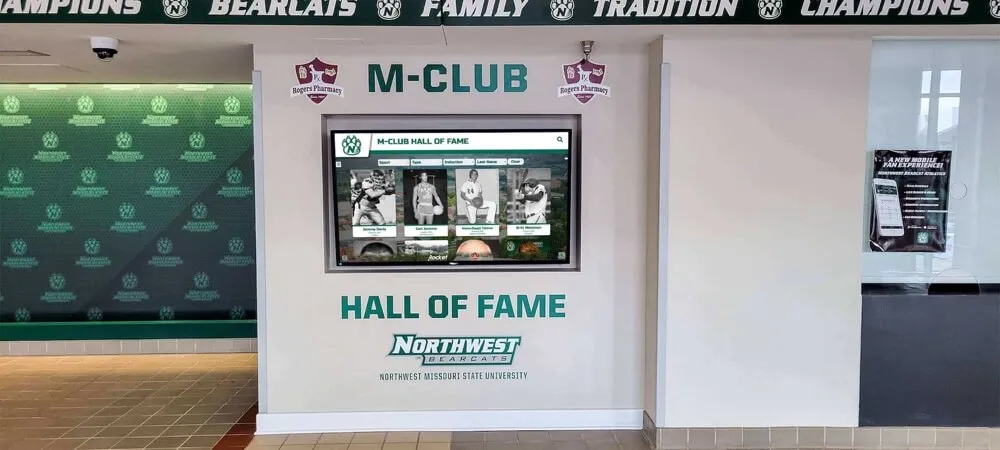
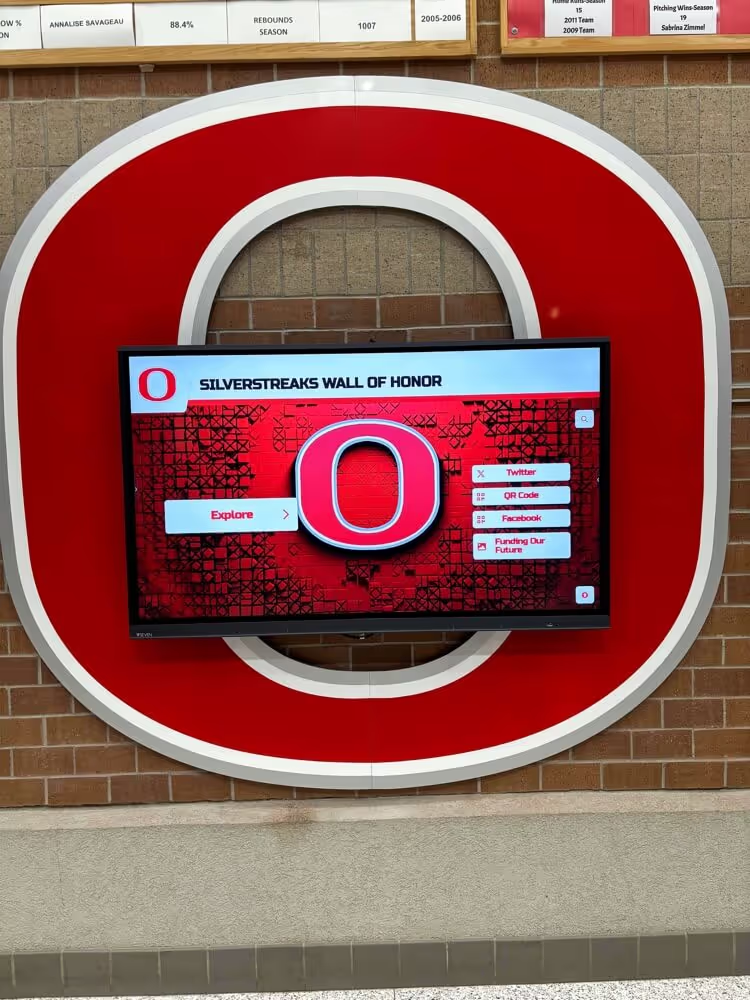
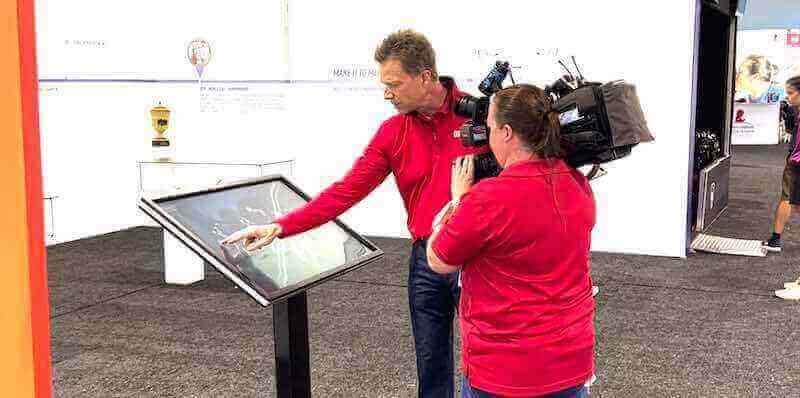
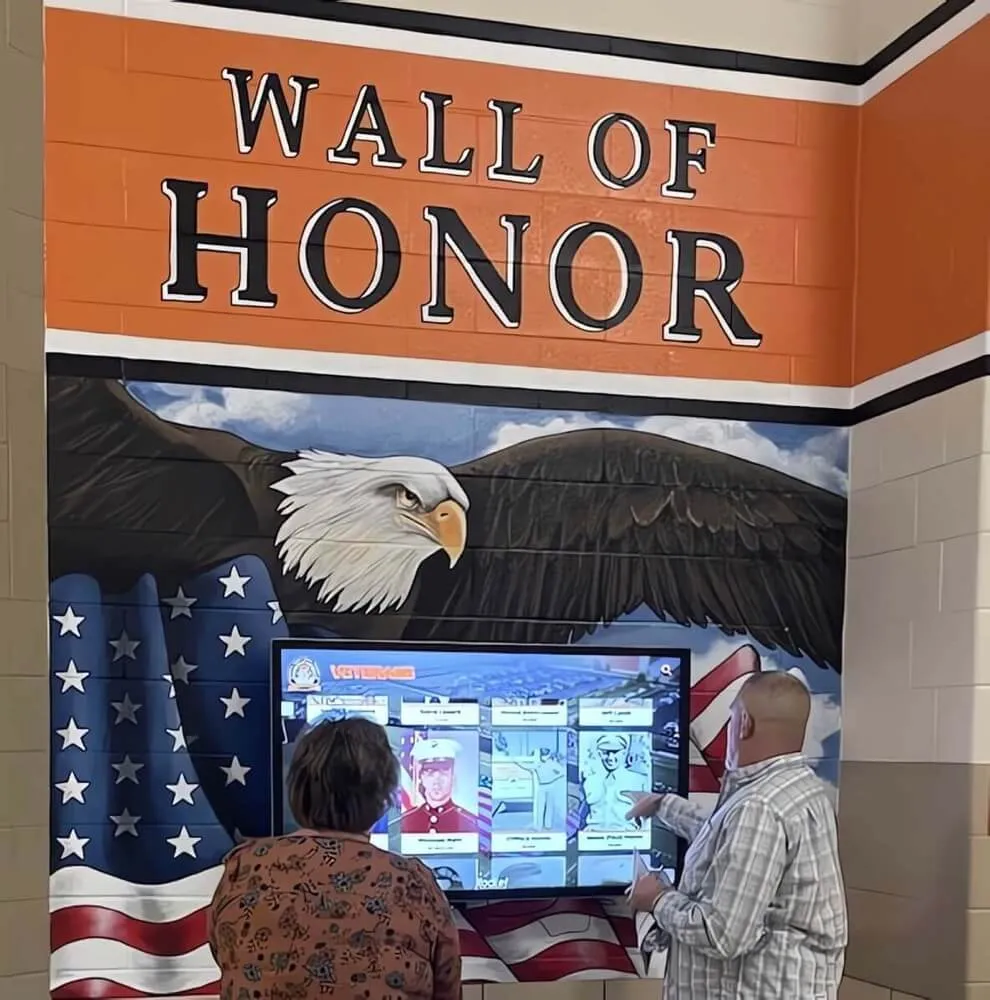
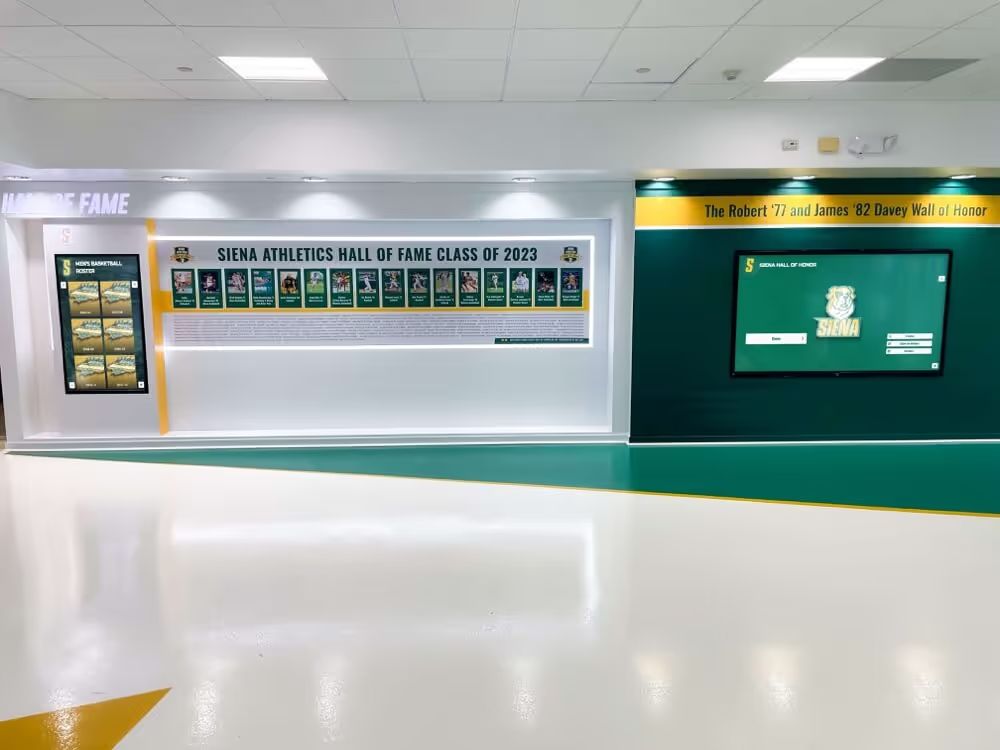
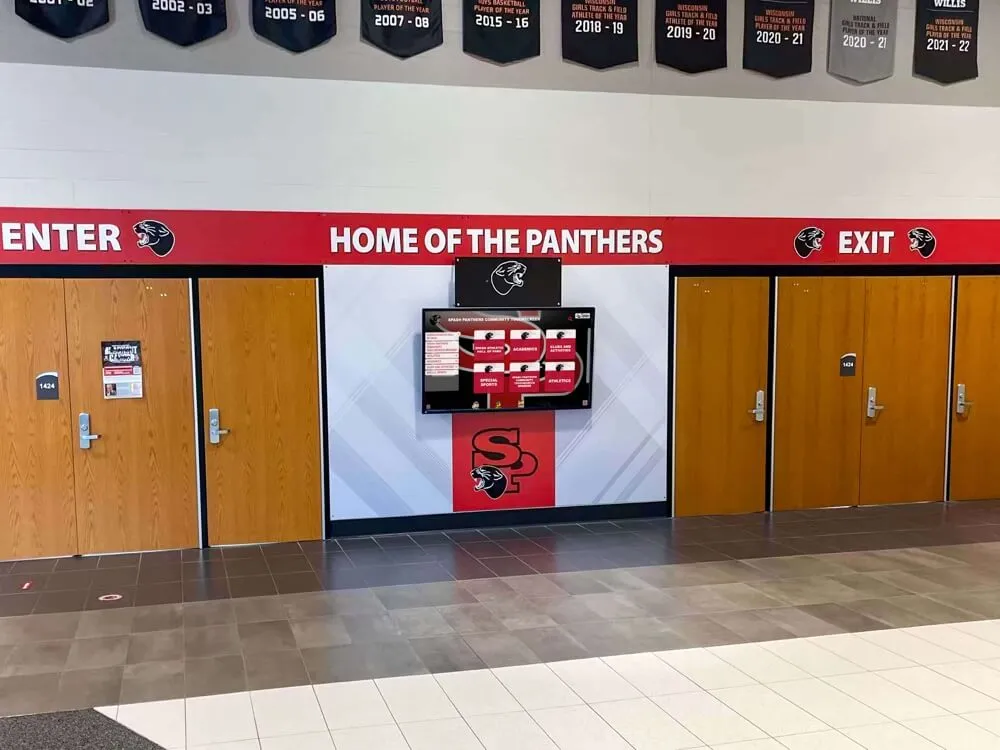
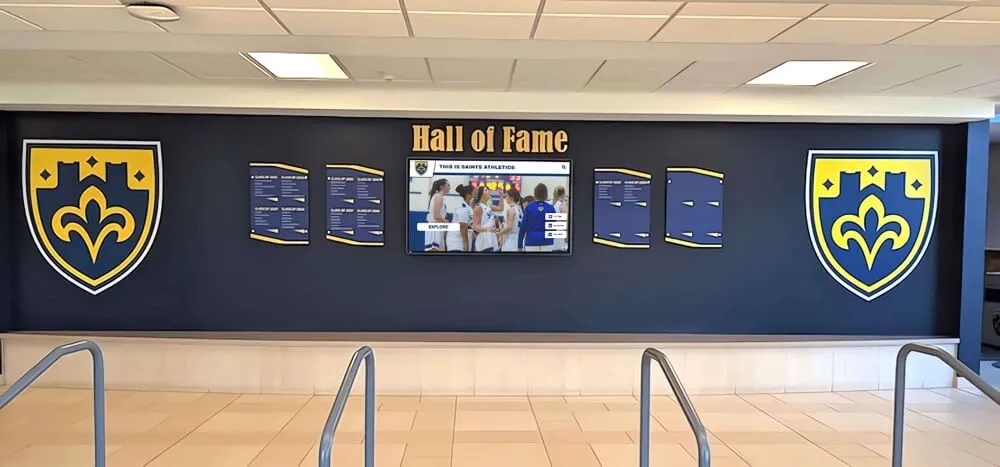
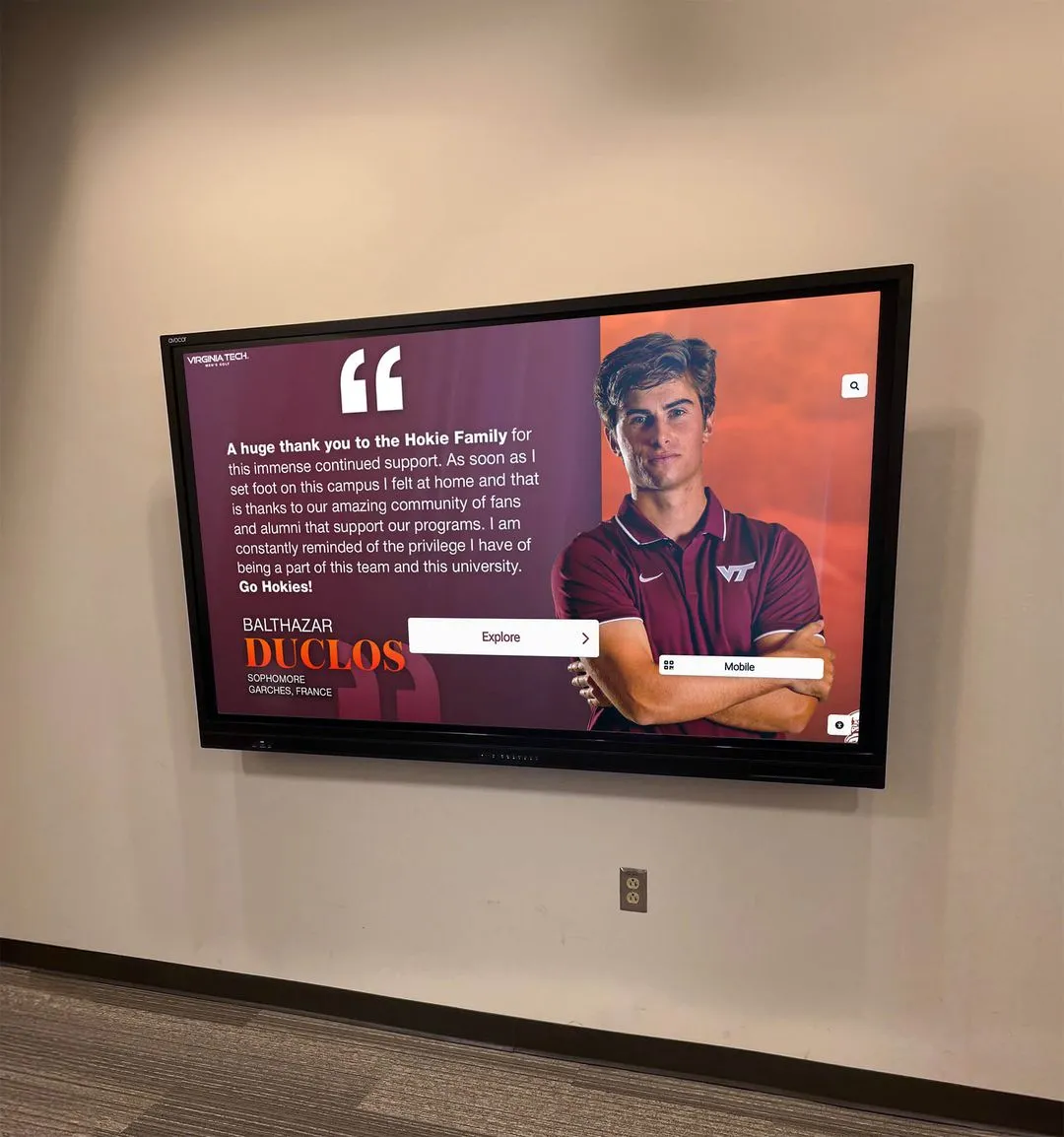
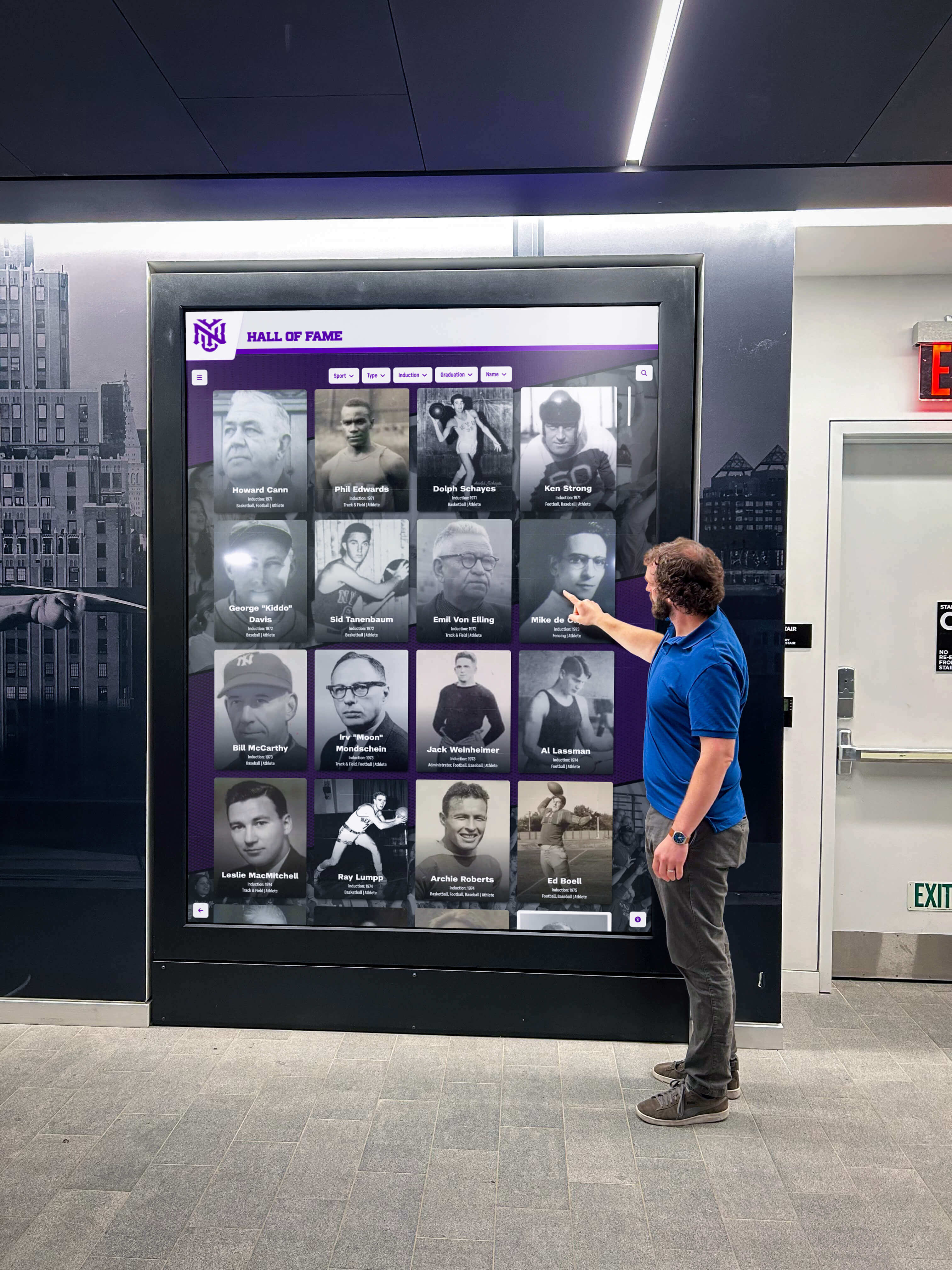
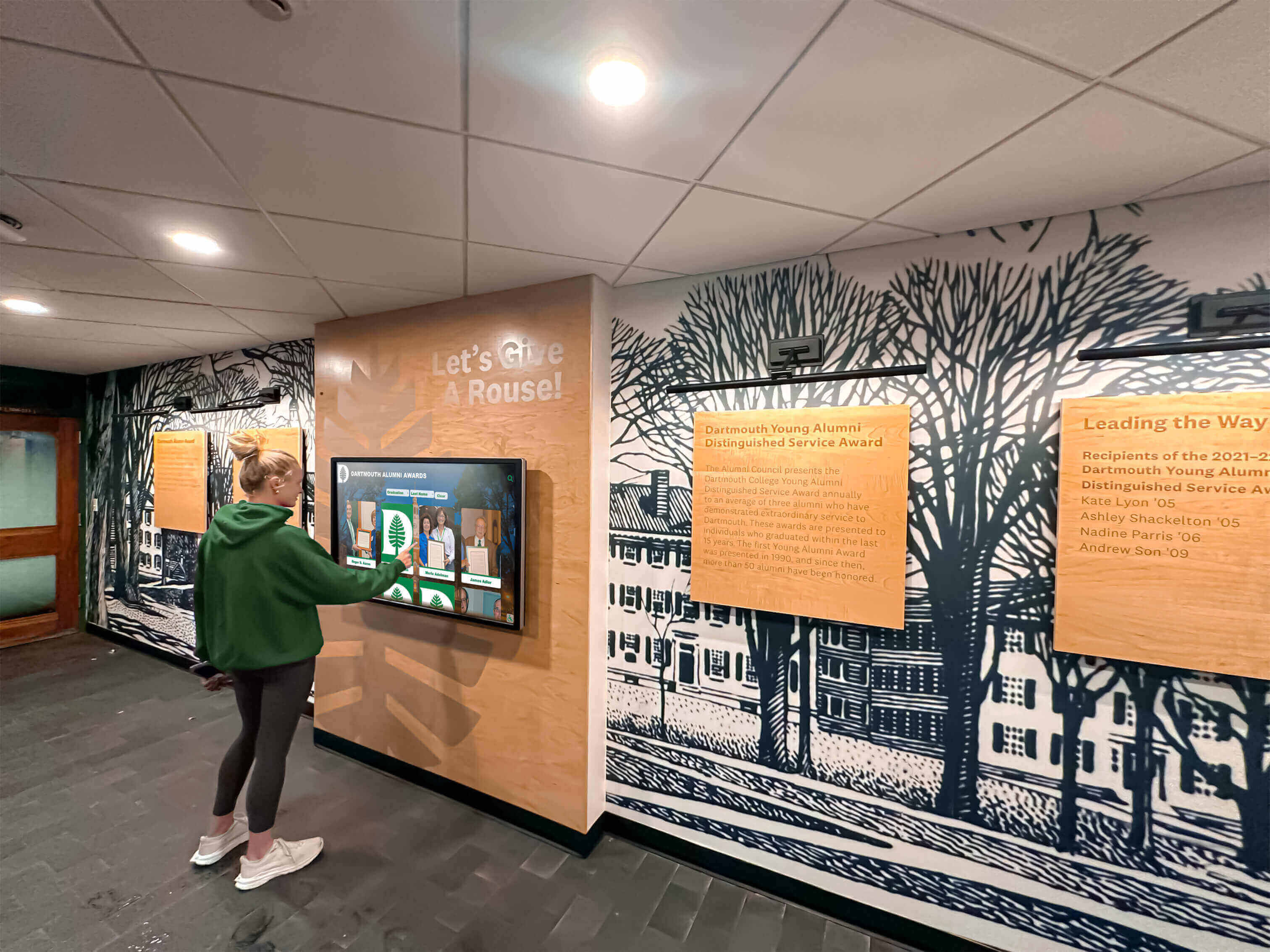
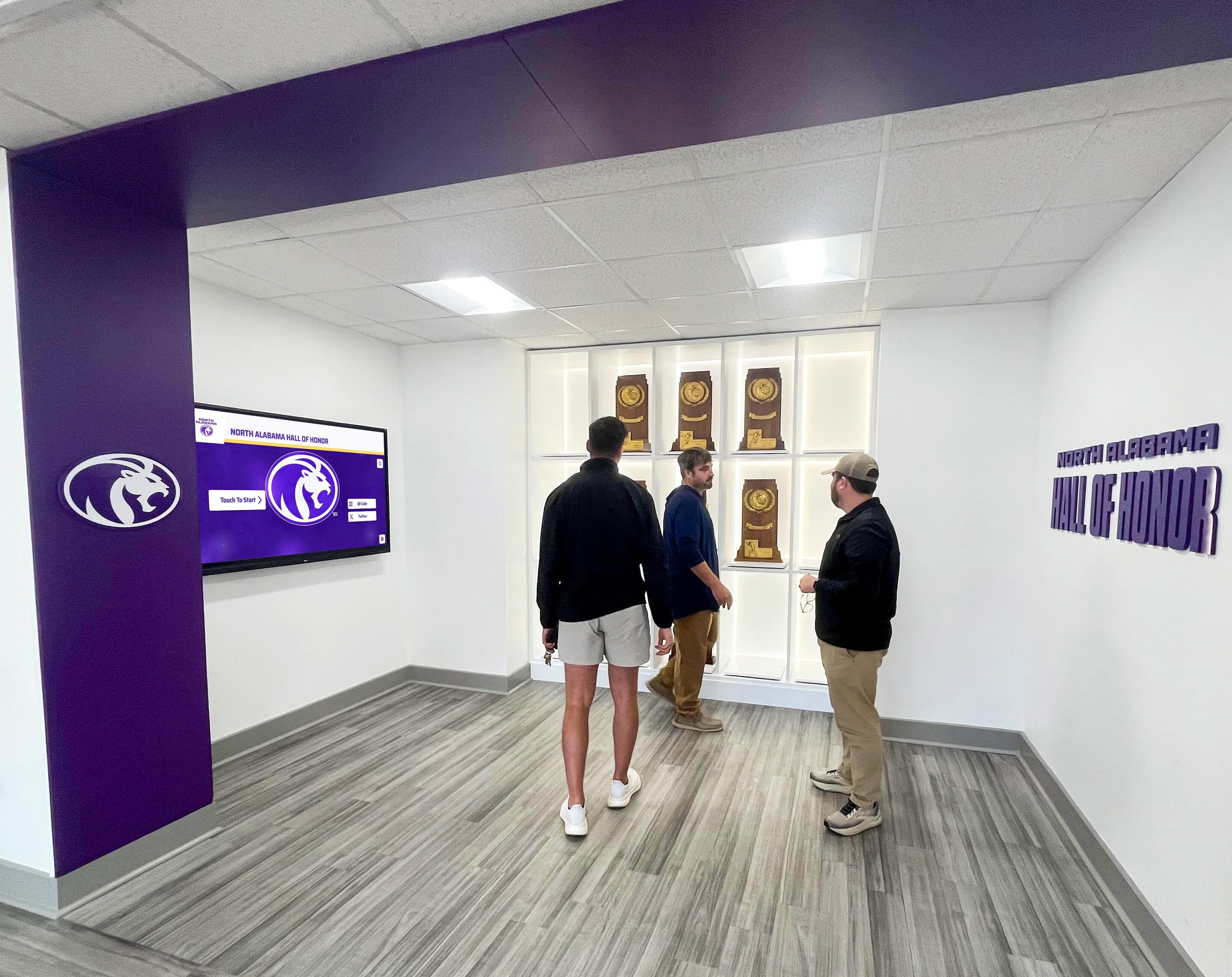
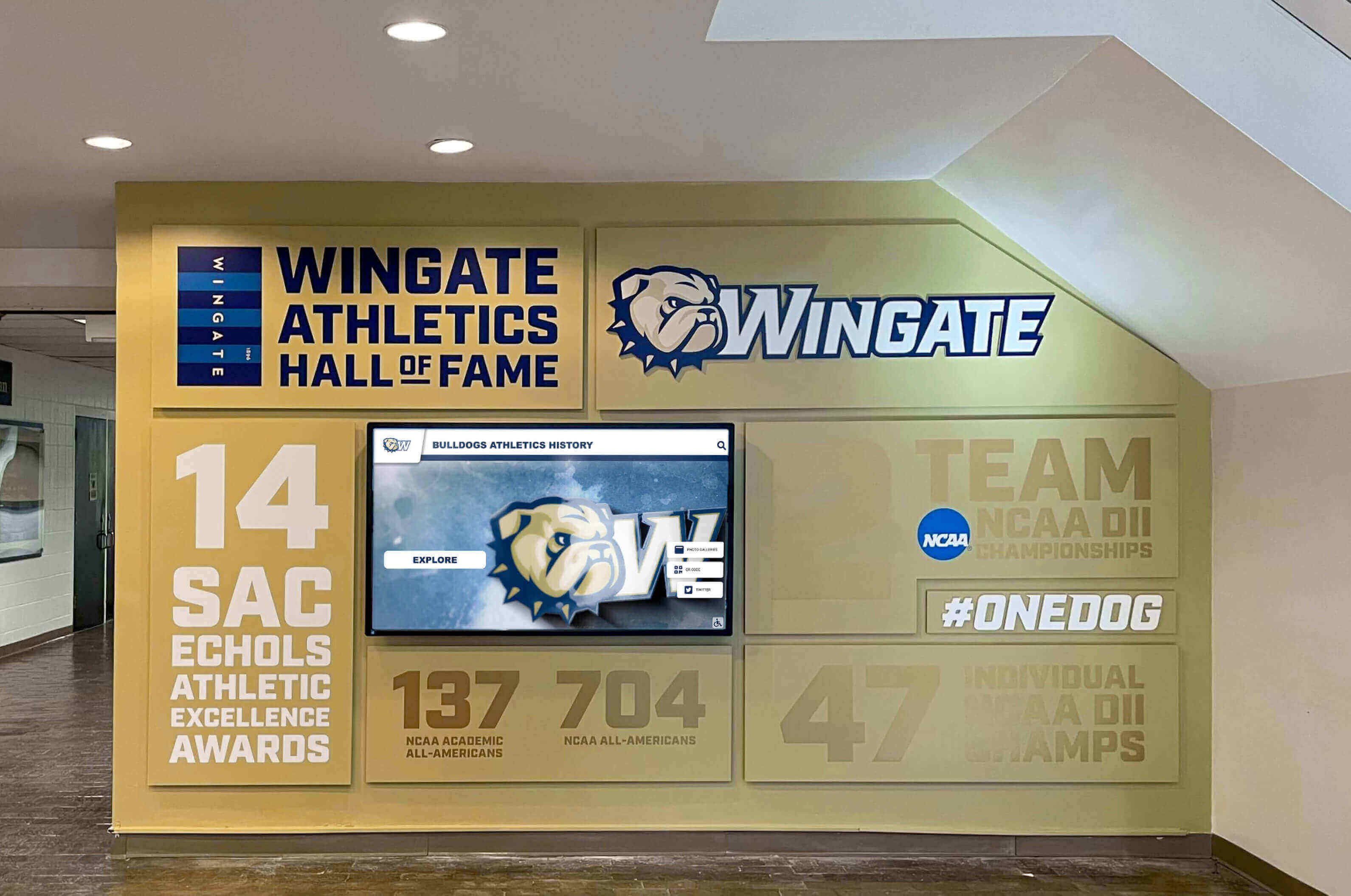
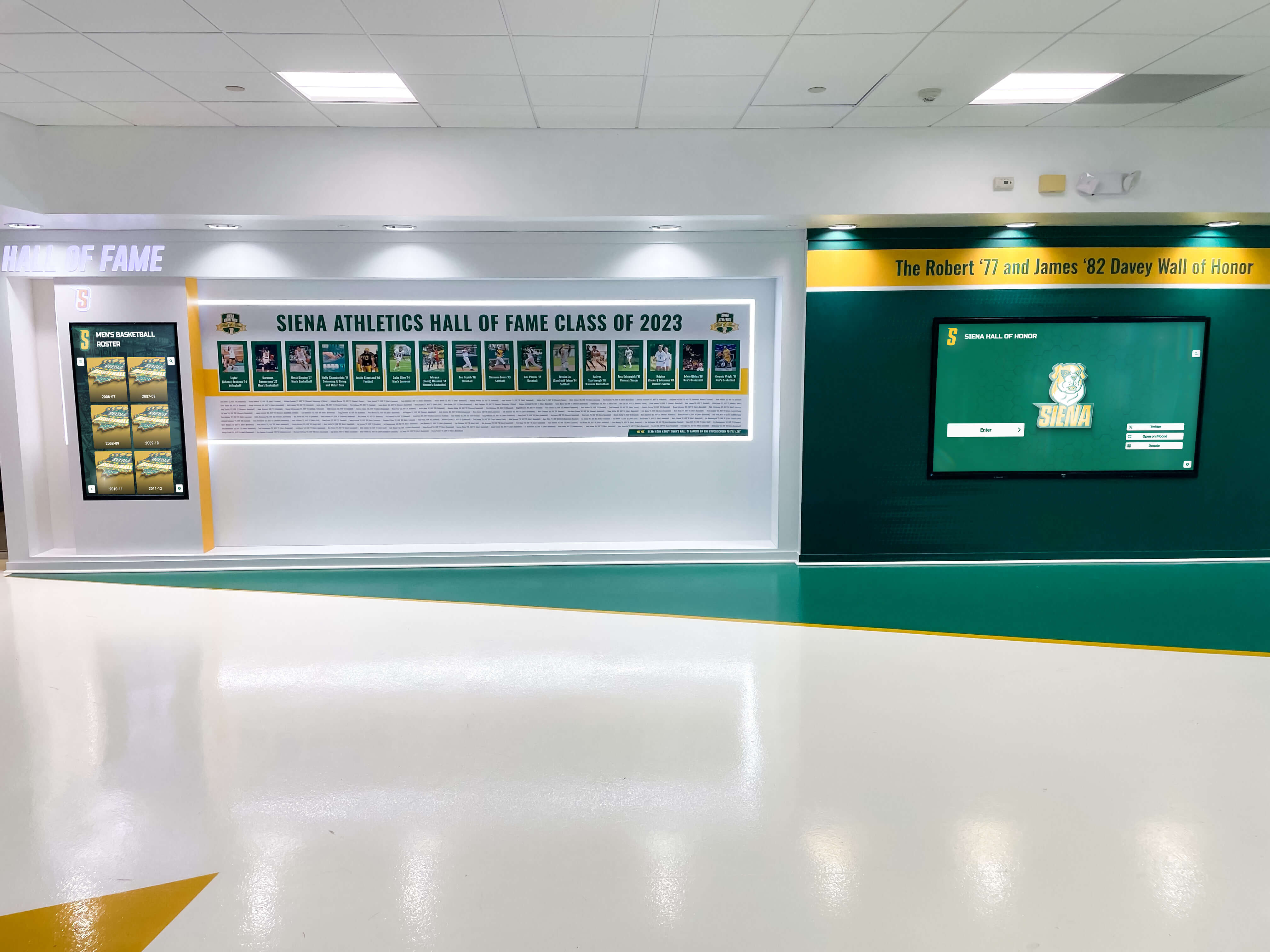
Interactive touchscreens represent the gold standard for student-focused alumni recognition, combining intuitive interfaces familiar from smartphones with large-format displays supporting group viewing and exploration.
Hardware Considerations
Commercial-grade touchscreen displays (55-75 inches typical) provide sufficient screen area for detailed content while remaining manageable for installation and maintenance. Key specifications include commercial displays rated for extended daily operation, multi-touch capabilities supporting intuitive gestures, appropriate brightness (450+ nits) for typical school lighting, anti-glare treatments reducing reflection interference, and portrait or landscape orientation matching space requirements.
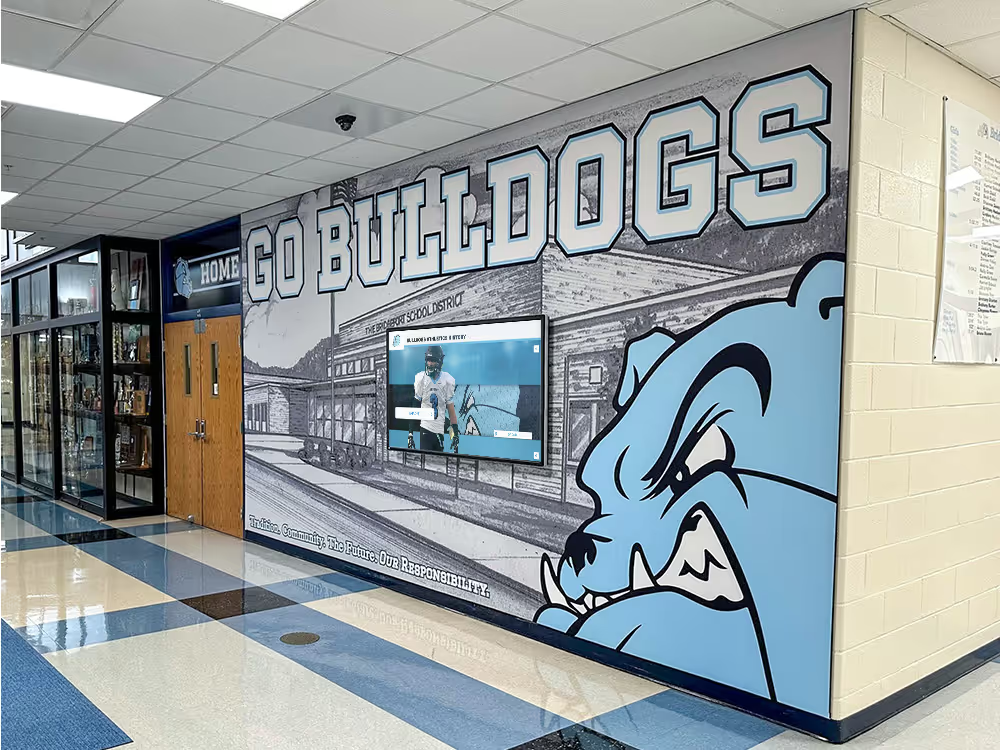
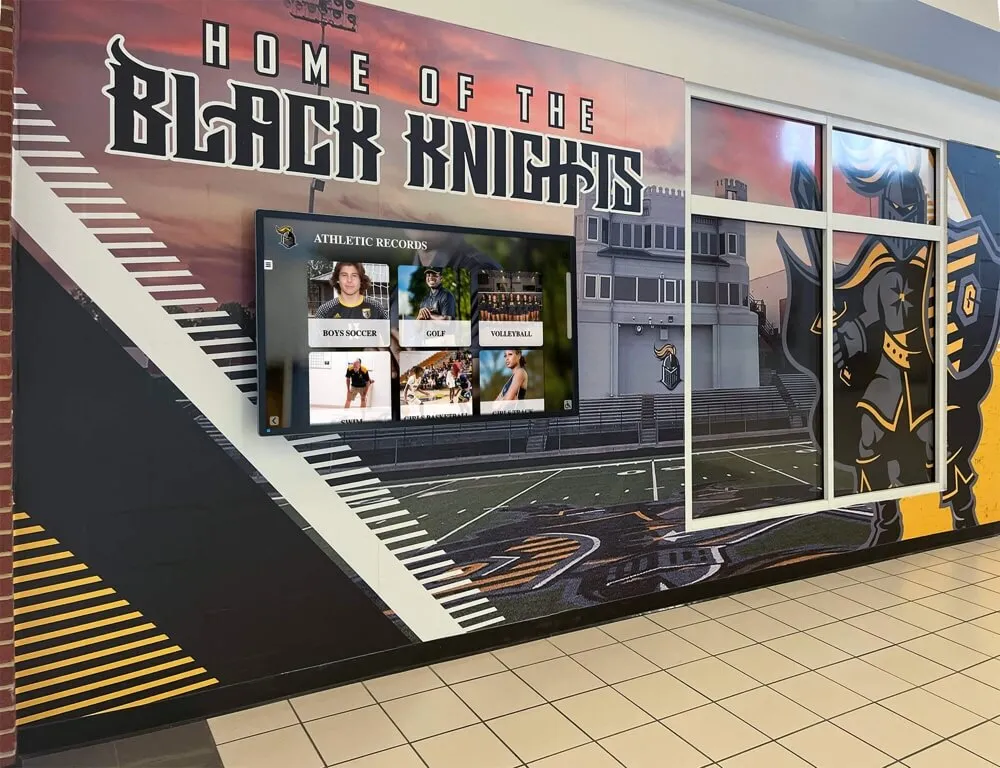
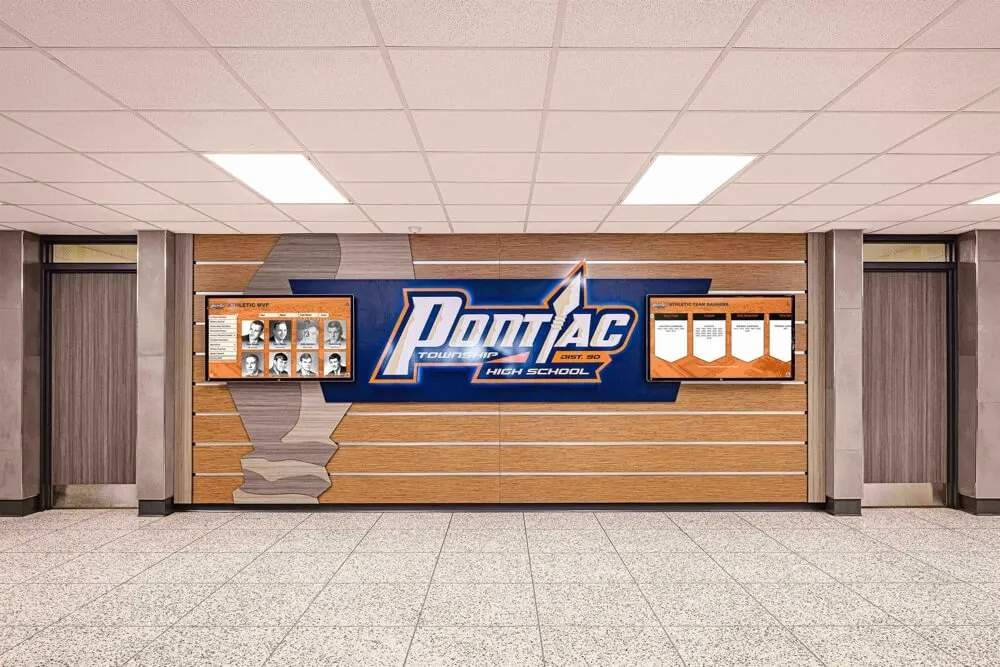
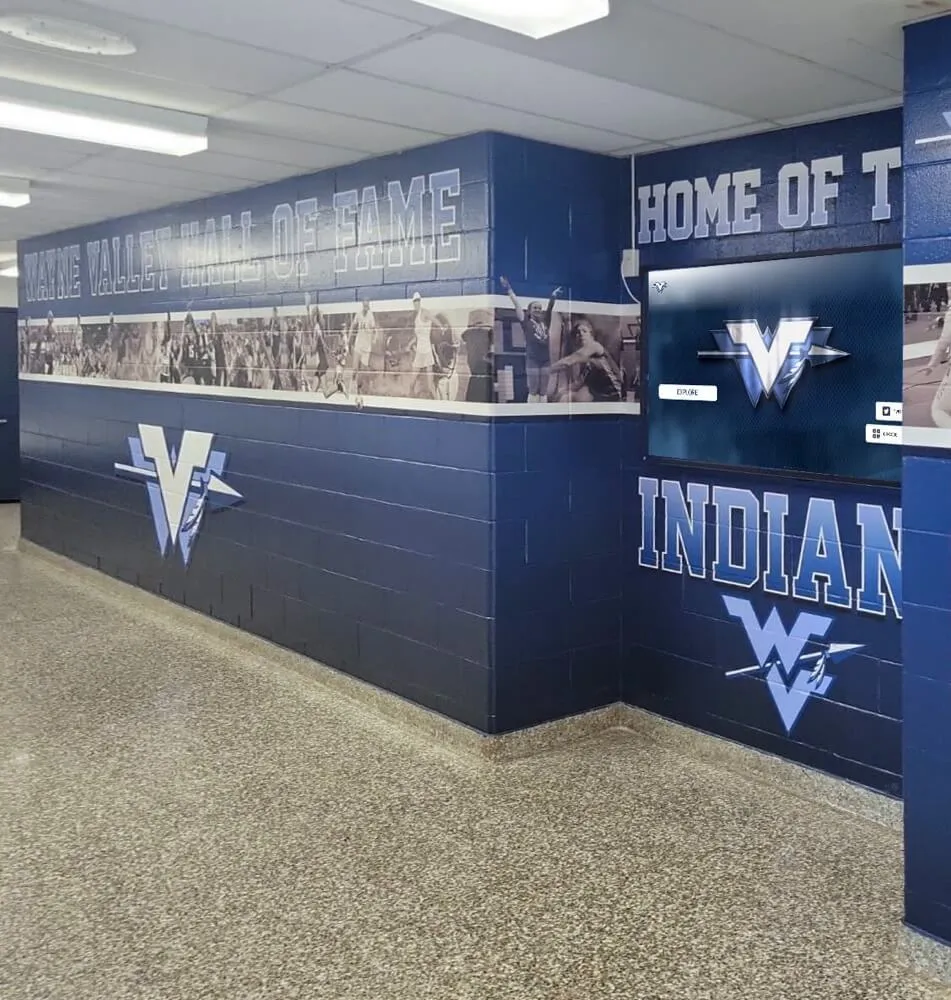
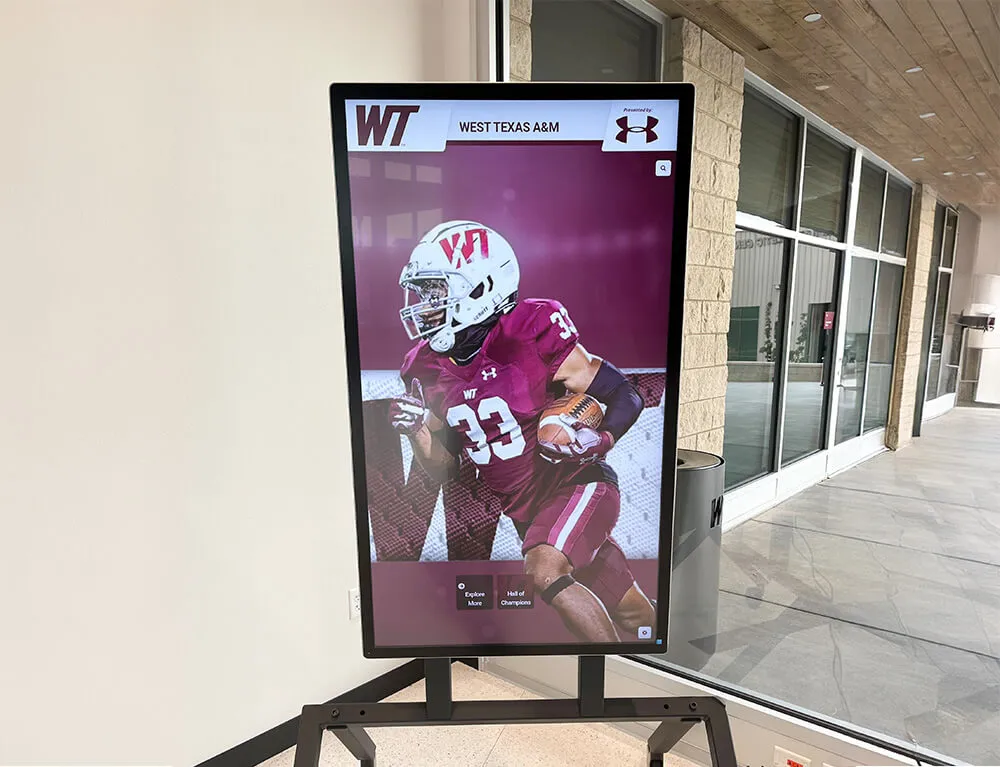
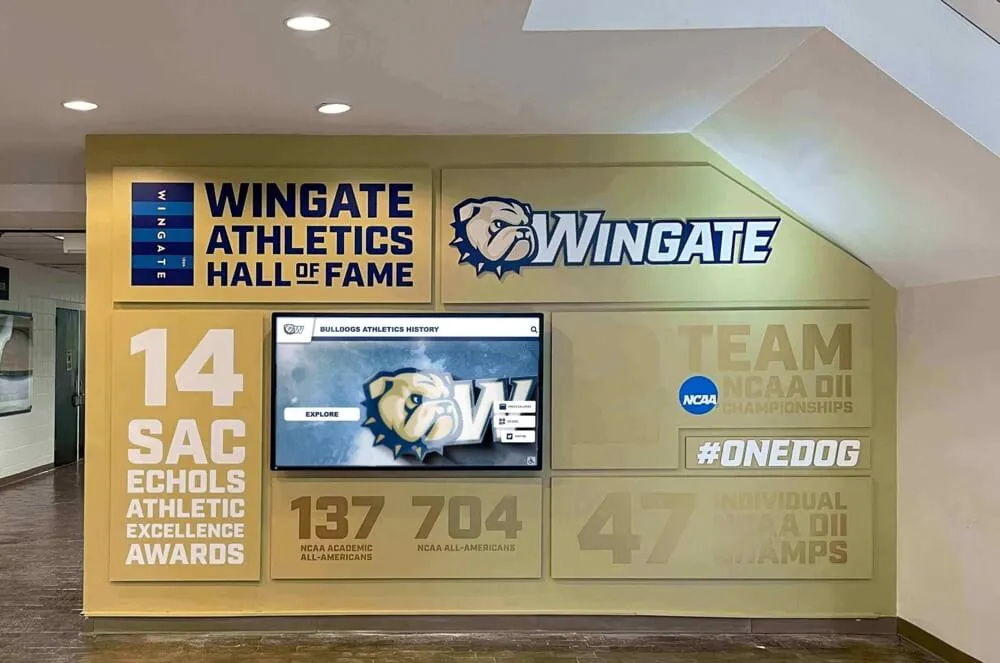
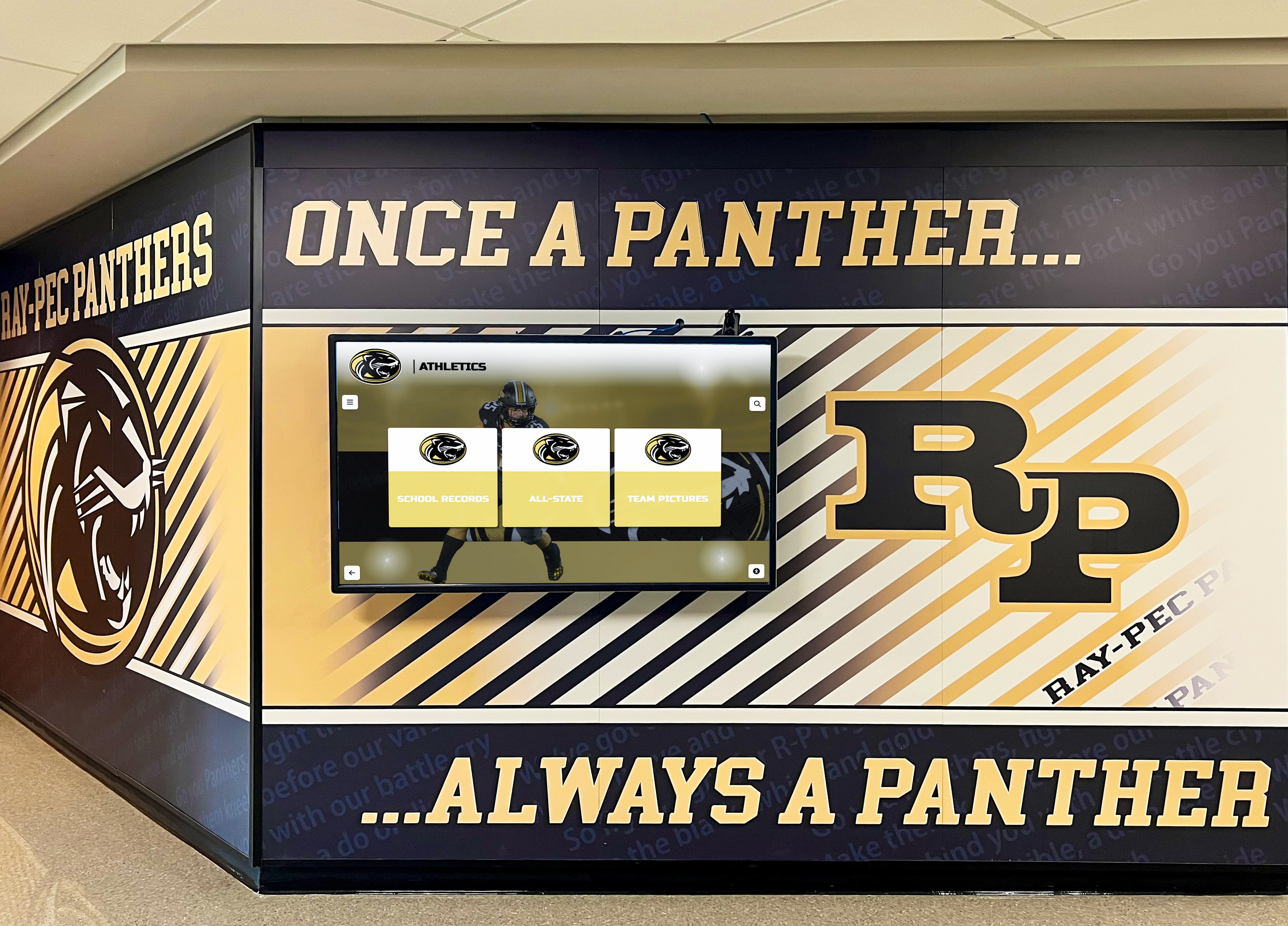
Mounting approaches include wall mounting with security enclosures protecting equipment, freestanding kiosks with integrated touchscreens, and hybrid solutions combining touchscreens with traditional recognition elements.
Software Platform Requirements
Effective platforms specifically designed for recognition rather than generic digital signage provide intuitive content management enabling non-technical staff to add or edit profiles, comprehensive search and filtering options, responsive design adapting to different screen sizes, media libraries organizing photos and videos, web integration publishing content to online platforms simultaneously, and analytics dashboards revealing engagement patterns.
Rocket Alumni Solutions specializes in these recognition-specific platforms, understanding educational institution needs and student engagement psychology rather than treating alumni walls as simple information displays. This specialization results in interfaces optimized for exploration and inspiration rather than passive viewing.
Web and Mobile Integration
Physical displays reach students present in specific locations during operating hours. Web and mobile platforms extend recognition to students at home, alumni worldwide, and prospective families researching schools.
Comprehensive Digital Ecosystem
Modern approaches integrate multiple touchpoints including physical touchscreen displays for in-building engagement, responsive websites accessible from any device, dedicated mobile applications for on-the-go access, social media integration for content sharing, and email/newsletter features highlighting alumni regularly.
This multi-platform approach meets students where they already spend time rather than requiring visits to specific physical locations. A student exploring career possibilities late at night from their bedroom can access the same alumni stories available on school displays—dramatically expanding engagement opportunities.
Social Sharing Capabilities
Enable one-touch sharing to social media platforms, allowing students to share inspiring alumni stories with friends and family. Include QR codes on physical displays that instantly connect smartphones to extended online content, enabling students to continue exploring after leaving physical locations.
These sharing mechanisms amplify impact as students become voluntary ambassadors introducing alumni stories to broader audiences beyond school walls.
Comprehensive digital hall of fame buying guides help schools evaluate platform options considering both immediate needs and long-term growth.
Implementation Process: From Planning to Launch
Successful alumni wall projects follow systematic approaches ensuring quality results that genuinely inspire students rather than checking administrative boxes.
Phase 1: Needs Assessment and Goal Setting
Define Specific Inspirational Objectives
Generic goals like “honor alumni” provide insufficient direction. Instead, establish specific objectives such as increasing percentage of students pursuing post-secondary education, improving career awareness across diverse fields, strengthening student connection to institutional history and values, enhancing school pride and culture, or increasing alumni engagement through visible recognition.
These measurable objectives enable effectiveness assessment while ensuring design decisions align with actual student impact rather than aesthetic preferences.
Assess Current State and Gaps
Evaluate existing recognition systems identifying what works well and what fails to engage students. Survey students, teachers, and recent alumni about what they find inspiring or ineffective. Analyze representation gaps in current recognition—which achievement types, demographics, or time periods receive insufficient attention?
This assessment reveals starting points and priority improvements ensuring new systems address actual problems rather than replicating existing limitations.
Phase 2: Selection Criteria Development
Creating Fair, Transparent Standards
Effective selection criteria balance multiple considerations including extraordinary professional achievement demonstrating excellence, significant community impact through service or leadership, character exemplifying institutional values, time since graduation allowing careers to develop, and nomination quality and comprehensiveness.
Document criteria clearly and communicate them transparently. Ambiguous or secretive selection processes generate controversy while clear standards build credibility.
Establishing Nomination Processes
Create accessible nomination systems including online submission forms, nomination templates guiding comprehensive submissions, multiple submission channels (students, alumni, staff, community), preliminary screening for eligibility, and committee review with diverse representation.
Proactive outreach often proves necessary to ensure diverse nominee pools. Alumni from underrepresented groups or non-traditional careers may not be nominated without intentional recruitment.
Academic recognition program guides provide frameworks applicable to comprehensive alumni recognition beyond single achievement categories.
Phase 3: Content Development
Gathering Comprehensive Information
Rich content requires systematic information gathering including detailed questionnaires sent to inductees, follow-up interviews exploring specific experiences, photograph collection spanning school years through current career, video recording for interviews or messages, and research supplementing alumni-provided information.
Allow sufficient time for this phase—rushing produces shallow profiles that fail to inspire. Budget 4-8 hours per profile for truly comprehensive content including research, interviews, writing, editing, and media production.
Professional Content Creation
Invest in quality including professional writing or editing ensuring readability, video production with adequate lighting and sound, photo editing and formatting for consistency, and content review for accuracy and appropriateness.
Student journalism programs, media classes, or volunteer alumni in communications fields can sometimes assist, reducing costs while creating educational opportunities.
Continuous Content Enhancement
Initial launch profiles can be enhanced over time. Start with foundational content—biographical summary, key achievements, 2-3 photos—then add video interviews, extended narratives, or multimedia elements in subsequent phases. This phased content development spreads workload while ensuring timely recognition.
Phase 4: Installation and Launch
Professional Installation
For digital systems, professional installation ensures reliable operation including secure mounting and equipment protection, proper network connectivity and configuration, software installation and testing, training for administrators and staff, and documentation for ongoing management.
Soft Launch for Testing
Conduct limited soft launches before major announcements, enabling staff, student representatives, and alumni to test systems providing feedback. Observation studies watching actual student interaction reveal interface problems or content gaps before high-traffic periods when negative impressions prove harder to overcome.
Promotion and Integration
Create awareness through announcements at assemblies or events, social media campaigns highlighting featured alumni, curriculum integration incorporating alumni stories into lessons, tours highlighting recognition during admissions visits, and events like induction ceremonies celebrating new honorees.
Without promotion, even outstanding alumni walls may go largely unnoticed. Active integration into school life maximizes student exposure and engagement.
Measuring Impact and Continuous Improvement
Alumni walls represent ongoing programs requiring regular assessment and refinement rather than one-time projects.
Quantitative Engagement Metrics
For Digital Systems:
Analytics reveal actual usage including number of unique visitors/sessions, average time spent exploring, search queries showing interest areas, most-viewed alumni profiles, and repeat visitor rates indicating sustained interest.
This data identifies which content resonates, which alumni stories attract most attention, and how students actually navigate recognition systems—insights enabling evidence-based improvements.
For Physical Displays:
While traditional static displays lack built-in analytics, schools can gather data through observation studies noting how many students stop or interact, student surveys about awareness and impact, QR code tracking if displays include digital links, and event attendance if alumni visits occur.
Qualitative Impact Assessment
Student Feedback
Regular surveys and focus groups explore whether students find recognition inspiring, which alumni stories resonate most strongly, whether students learned about careers they weren’t previously aware of, and whether recognition affected educational or career aspirations.
Informal teacher feedback often provides valuable perspective on whether students reference alumni in discussions or how recognition affects school culture.
Alumni Perspective
Recognized alumni can provide feedback about the recognition experience, whether recognition strengthened institutional connection, and whether alumni encountered students who referenced seeing their profiles.
Iterative Improvements
Use assessment data to guide refinements including content additions addressing gaps, interface adjustments improving navigation, new features responding to user behavior, promotion strategies increasing awareness, and program expansions building on successful elements.
Effective programs evolve continuously based on evidence rather than remaining static after initial implementation.
Interactive campus storytelling approaches demonstrate how recognition systems integrate with broader institutional narratives and recruitment strategies.
Budget Considerations and Funding Strategies
Cost concerns often dominate alumni wall discussions. Understanding realistic budgets and creative funding approaches enables quality implementation without overwhelming institutional finances.
Traditional Display Budgets
Initial Installation:
- Engraved plaques: $150-$400 per inductee depending on materials
- Photo board systems: $2,000-$8,000 for complete installation
- Trophy cases: $5,000-$20,000 depending on size and customization
- Design and installation: $1,000-$5,000
Ongoing Costs:
- New inductee additions: $150-$400 per person
- Repairs and refurbishment: $200-$1,000 annually
- Cleaning and maintenance: staff time
Digital Platform Investments
Initial Implementation:
- Touchscreen display hardware: $4,000-$10,000
- Software platform setup: $2,000-$6,000
- Professional installation: $1,000-$3,000
- Initial content development: $5,000-$15,000 (10-30 profiles)
- Training and support: $500-$2,000
Annual Operating Costs:
- Software licensing/subscription: $2,000-$5,000
- Technical support: Often included in subscription
- Content updates: Staff time plus occasional professional media production
- Electricity and connectivity: Minimal
Long-Term Value Analysis
While digital systems require higher initial investment, per-inductee costs at scale heavily favor digital approaches. Traditional systems cost $200-$400 for each new inductee indefinitely. Digital systems accommodate unlimited additions for nominal staff time once initial platform exists.
A school recognizing 10 new alumni annually over 10 years invests $20,000-$40,000 in ongoing physical plaque costs versus largely fixed digital platform costs. This crossover typically occurs within 3-5 years, after which digital systems provide substantial savings while offering dramatically superior engagement capabilities.
Alternative Funding Sources
Capital Campaigns and Major Gifts
Position alumni recognition as signature elements of facility renovation or capital campaigns. Major donors often appreciate visible, lasting recognition programs as naming opportunities or legacy projects.
Alumni Association Funding
Alumni associations frequently prioritize recognition programs that honor members and strengthen alumni engagement—alignment making them natural funding sources.
Class Gift Programs
Graduation classes contribute funds for specific purposes. Alumni recognition represents meaningful legacy options for reunion giving or class anniversary campaigns.
Sponsor Programs
Local businesses or community organizations sometimes sponsor recognition systems, particularly when institutions serve community functions beyond enrolled students.
Phased Implementation
Begin with foundational system covering priority inductees, then expand content and capabilities as additional funding becomes available. This approach delivers immediate value while spreading costs across multiple budget cycles.
Common Mistakes to Avoid
Learning from others’ missteps prevents wasted resources and disappointing outcomes.
Design Pitfalls
Prioritizing Aesthetics Over Functionality
Beautiful displays that students don’t use waste resources regardless of visual appeal. Prioritize engagement and accessibility first, then incorporate aesthetic considerations within functional constraints.
Insufficient Content Depth
Name-and-date-only recognition rarely inspires. If budget or capacity limits comprehensive profiles for all alumni, feature fewer individuals with rich storytelling rather than many alumni with minimal content.
Poor Visibility and Location
Even outstanding recognition displays fail when positioned where students rarely go. Location determines success more than most other factors combined.
Content Errors
Generic, Boring Profiles
Résumé-style career summaries listing jobs and dates fail to create inspiration. Focus on journey narratives, challenges overcome, and specific advice over dry fact recitation.
Lack of Diversity
Recognition systems dominated by narrow achievement types or demographics send implicit messages about who “counts” as successful. Intentionally ensure comprehensive representation.
Neglecting Updates
Static recognition that never changes becomes invisible as students habituate to unchanging displays. Regular additions, featured alumni rotation, and content enhancements maintain freshness and relevance.
Implementation Failures
Insufficient Promotion
Building outstanding alumni walls without promoting them ensures most students remain unaware recognition even exists. Active integration into school life proves essential.
Complexity Preventing Maintenance
Systems requiring specialized expertise for basic updates often languish as staff avoid difficult content management. Prioritize intuitive platforms non-technical staff can confidently manage.
No Measurement or Assessment
Without measuring whether recognition achieves inspirational objectives, institutions cannot identify necessary improvements or demonstrate program value to stakeholders.
Conclusion: Transforming Recognition into Inspiration
The difference between alumni walls that inspire students and those that go ignored comes down to intentional design prioritizing student engagement over administrative convenience. When schools focus on authentic storytelling, diverse representation, intuitive accessibility, and multimedia content that accommodates different learning preferences, alumni recognition transforms from decorative displays into powerful motivational tools connecting current students with role models who prove that excellence is achievable, valuable, and takes many forms.
Modern technology enables recognition approaches impossible with traditional plaques—unlimited capacity, rich multimedia profiles, powerful search capabilities, and web integration extending access beyond physical locations. Solutions like Rocket Alumni Solutions specifically address educational institutions’ needs for inspiring students while honoring distinguished graduates comprehensively. These platforms balance sophisticated capabilities with intuitive interfaces manageable by non-technical staff, ensuring sustainable operations that maintain relevance across years and decades.
Implementation success requires systematic approaches including clear objectives focused on student inspiration, fair selection processes ensuring diverse representation, comprehensive content development revealing journey narratives, strategic location and promotion maximizing student exposure, and continuous assessment driving evidence-based improvements over time.
Whether institutions choose traditional approaches, cutting-edge digital systems, or hybrid solutions combining both, the fundamental principles remain constant: tell complete stories that humanize achievement, showcase diverse excellence validating all legitimate paths, make recognition accessible where students naturally spend time, and integrate alumni narratives into educational culture rather than treating recognition as separate administrative function.
Every student deserves role models who demonstrate possibility. Every alumnus deserves recognition honoring their achievements and institutional connection. Every school deserves comprehensive tools celebrating legacy while inspiring future excellence. Thoughtfully designed alumni walls deliver all three objectives—strengthening community while launching students toward aspirations inspired by those who came before.
Ready to Create an Alumni Wall That Truly Inspires?
Discover how interactive digital recognition solutions can transform your alumni wall from static display into dynamic inspiration system that engages students daily. Connect your current students with role models who walked the same halls, overcame similar challenges, and achieved remarkable success—proving that extraordinary accomplishment begins in ordinary classrooms just like theirs.