



Key Takeaways
Complete guide to hockey rink dimensions across all levels. Learn standard ice rink sizes for youth, high school, college, and professional hockey, plus how rink size impacts facility planning and digital display installations.
Hockey rink dimensions vary significantly across different competitive levels, from small cross-ice surfaces for beginning youth players to the expansive Olympic-sized ice used in international competition. Understanding these dimensional differences matters tremendously for facility planners, school administrators, recreation departments, and hockey program directors making decisions about new construction, renovations, or multipurpose facility design. The size of a hockey rink fundamentally shapes playing style, influences construction and operational costs, determines spectator capacity and viewing angles, and affects how programs utilize facilities throughout busy scheduling demands. Whether you’re planning a new ice facility, evaluating renovation options for an aging rink, or simply curious about the specific measurements that define hockey at various levels, this comprehensive guide provides the precise dimensions, practical considerations, and strategic insights needed to understand how rink size impacts every aspect of hockey facility planning and program development.
Standard NHL Hockey Rink Dimensions
The National Hockey League established dimensional standards that have become the North American benchmark for professional, college, and high school hockey facilities.
Official NHL Ice Surface Specifications
NHL hockey rinks measure exactly 200 feet long by 85 feet wide, creating a playing surface of 17,000 square feet. These dimensions have remained remarkably consistent throughout NHL history, providing the foundation for North American hockey’s distinctive fast-paced, physical playing style.
Key NHL Rink Measurements:
- Length: 200 feet from goal line to goal line
- Width: 85 feet from board to board
- Corner radius: 28 feet (rounded corners rather than square)
- Total ice surface: 17,000 square feet
- Goal line distance from end boards: 11 feet
- Blue lines distance from center: 25 feet (creating three zones)
- Faceoff circle diameter: 30 feet
- Center ice faceoff circle diameter: 30 feet
Boards, Glass, and Safety Specifications
Beyond the ice surface dimensions, NHL standards specify protective barriers creating safe playing environments:
Board Specifications:
- Height: 40-48 inches (typically 42 inches in most facilities)
- Material: High-density polyethylene or similar impact-resistant materials
- Dasher boards: Flexible system absorbing player impact
- Kick plate: 8-10 inches at ice level, designed to redirect pucks
Glass and Netting:
- Protective glass: Minimum 5 feet above boards behind goals
- Side glass: Minimum 4 feet above boards along playing surface
- Tempered or acrylic safety glass rated for puck impact
- Netting: Extended protection in areas where pucks leave playing surface
- Seamless corners: Glass connections designed to prevent gaps
These safety features have evolved significantly over decades as leagues prioritize spectator protection while maintaining visibility. Modern facilities invest in crystal-clear acrylic systems providing unobstructed viewing while meeting rigorous safety standards.
Olympic and International Hockey Rink Dimensions
International hockey employs larger ice surfaces that fundamentally change game dynamics and strategic approaches.
IIHF Standard Ice Surface Specifications
International Ice Hockey Federation (IIHF) regulations specify rinks measuring 200 feet long by 98-100 feet wide (60-61 meters by 29-30 meters), creating approximately 20,000 square feet of playing surface—about 3,000 square feet more than NHL rinks.
International Rink Measurements:
- Length: 200 feet (60-61 meters)
- Width: 98.4-100 feet (30-31 meters)
- Corner radius: 27.9-28.9 feet (8.5 meters)
- Total ice surface: Approximately 20,000 square feet
- Goal line distance from end boards: 13 feet (4 meters)
- Blue lines distance from center: Similar to NHL at 25 feet
The additional 13-15 feet of width creates noticeably different playing conditions emphasizing skating, puck movement, and positional play over the physical board play characteristic of North American hockey.
Impact on Playing Style and Strategy
The dimensional difference between NHL and Olympic rinks creates distinct strategic environments:
Olympic Ice Advantages:
- More space for skill players: Additional width rewards superior skating and puck handling
- Reduced physical contact: More ice surface means fewer collisions along boards
- Emphasis on speed: Open ice favors faster skaters
- Strategic positioning: Defensive systems must cover more territory
- Transition game: More space for breakouts and zone entries
NHL Ice Characteristics:
- Physical intensity: Less space creates more board battles
- Quicker pace: Smaller surface generates faster end-to-end action
- Shot blocking emphasis: Less space makes defensive positioning more effective
- Forechecking advantages: Offensive pressure more effective on smaller surface
- Goal scoring patterns: Different shooting angles and opportunities

International players transitioning to NHL competition face adjustment periods adapting to reduced space, while North American players competing internationally must adapt to more open-ice situations requiring different positional awareness.
Schools and facilities planning hockey programs as part of comprehensive athletic offerings often integrate recognition displays celebrating achievements across multiple sports, similar to approaches used for indoor athletic facility design that accommodates diverse programming needs.
High School Hockey Rink Dimensions
High school hockey facilities generally follow NHL dimensions, though some variation exists based on facility age and geographic factors.
NFHS Standards and Common Variations
The National Federation of State High School Associations (NFHS), which governs most U.S. high school hockey, recommends the standard 200 feet by 85 feet NHL dimensions for high school competition.
High School Rink Standards:
- Recommended size: 200 x 85 feet (matching NHL)
- Minimum acceptable: 185 x 85 feet (some older facilities)
- Board height: 40-42 inches (consistent with professional standards)
- Safety glass: Same specifications as NHL facilities
- Markings and zones: Identical to NHL (blue lines, faceoff circles, goal creases)
Most high school programs compete on regulation NHL-sized rinks, particularly facilities built in recent decades. This standardization benefits player development by providing consistent playing conditions from youth hockey through high school and into college.
State-by-State Variations
Hockey powerhouse states have developed facility standards reflecting their deep hockey traditions:
Minnesota: The nation’s leading high school hockey state features hundreds of regulation-sized rinks. Most Minnesota high school programs compete on 200 x 85 surfaces, with many facilities offering seating for 1,500-3,000+ spectators reflecting the sport’s cultural significance.
Massachusetts: Strong high school hockey tradition with most programs using regulation dimensions. Some older facilities in Boston suburbs may feature slight dimensional variations based on building constraints.
Michigan: Extensive high school hockey infrastructure with standard NHL dimensions predominating. Community ice arenas often serve multiple high school programs sharing regulation facilities.
Wisconsin: Growing high school hockey programs typically compete on regulation surfaces, with newer facilities built to NHL specifications.
Northern States (North Dakota, Vermont, New Hampshire): Strong hockey cultures with regulation facilities supporting both high school and youth programs.
Schools developing comprehensive athletic recognition programs often showcase hockey achievements alongside other sports using similar approaches to football recognition, creating unified athletic tradition displays throughout facilities.
Multipurpose Facility Considerations
Many high school rinks serve multiple purposes beyond varsity hockey, influencing design decisions:
Shared Use Factors:
- Youth hockey programs: Same ice surface accommodates community youth leagues
- Figure skating: Ice surface supports figure skating clubs and lessons
- Public skating: Community recreation programs generate revenue
- Broomball and other ice sports: Facility versatility increases utilization
- College hockey: Regulation dimensions enable hosting college games
- Tournaments: Standard size allows hosting regional and state competitions
This multipurpose approach maximizes facility investment while serving broader community needs beyond high school athletics. Recognition displays in shared facilities can celebrate achievements across all user groups, from high school championship teams to youth program milestones.
Youth Hockey Rink Dimensions and Age-Appropriate Ice Surfaces
Youth hockey has evolved toward age-appropriate playing surfaces that better support skill development for younger players.
USA Hockey Age-Specific Recommendations
USA Hockey’s American Development Model recommends modified ice surfaces for youngest players, recognizing that full-size rinks overwhelm beginners:
Cross-Ice Hockey (Ages 4-6, 8U):
- Surface size: Uses the width of a regulation rink (85 feet) as the length
- Typical dimensions: 85 feet x 42 feet (half the rink width)
- Benefits: Increases puck touches, creates more skating, reduces standing around
- Setup: Temporary boards or cones divide full rink into 2-3 cross-ice zones
Half-Ice Hockey (Ages 7-8, 10U):
- Surface size: Half of regulation rink
- Typical dimensions: 100 feet x 85 feet or similar
- Benefits: More age-appropriate space than full ice, maintains engagement
- Setup: Temporary dividers create two playing surfaces on one sheet of ice
Full-Ice Transition (Ages 9-10, 12U and older):
- Surface size: Full regulation dimensions
- Dimensions: 200 feet x 85 feet
- Timing: Players transition to full ice as skating and game understanding develop
- Benefits: Prepares players for high school and higher-level hockey

Facility Design for Youth Hockey Programs
Ice facilities serving youth hockey benefit from flexible designs accommodating multiple age groups simultaneously:
Design Features Supporting Youth Programming:
🏒 Divisible Ice Surfaces
Temporary board systems allowing one rink to host 2-3 youth games simultaneously during peak hours, maximizing ice time availability and program revenue.
👨👩👧👦 Spectator Accessibility
Viewing areas designed for parents watching multiple children in different zones, with clear sight lines to all ice surfaces when divided.
⚙️ Quick Conversion Systems
Easily installed and removed dividers enabling rapid conversion between youth programming and full-ice use for older players or adult leagues.
📊 Recognition Integration
Digital displays showcasing achievements across all age divisions, celebrating youth player development and program milestones alongside high school and adult accomplishments.
Youth programs celebrating player development milestones can implement recognition approaches similar to those used for senior athlete recognition, honoring dedication and achievement at appropriate developmental stages.
Small-Area Games Benefits
Research demonstrates that age-appropriate ice surfaces significantly improve youth player development:
Developmental Advantages:
- Increased puck touches: Players handle the puck 3-5 times more frequently on smaller surfaces
- More skating: Reduced standing and waiting, continuous engagement
- Enhanced decision-making: More game situations requiring quick thinking
- Improved confidence: Frequent success builds player self-efficacy
- Better skill acquisition: Repetition in game contexts accelerates learning
These developmental benefits have driven widespread adoption of modified ice surfaces for youngest divisions, fundamentally changing youth hockey instruction from previous generations when 6-year-olds played on full-size rinks.
College Hockey Rink Dimensions
Collegiate hockey facilities present interesting dimensional diversity based on conference, facility age, and institutional resources.
NCAA Regulations and Common Standards
The NCAA does not mandate specific rink dimensions, allowing institutions flexibility in facility design. This creates variation across Division I, II, and III programs:
Common College Rink Sizes:
- Standard NHL dimensions: 200 x 85 feet (most common, used by majority of programs)
- Olympic dimensions: 200 x 100 feet (several prominent programs)
- Variations: Some older facilities feature unique dimensions between these standards
Division I Programs Using Olympic Ice:
- Lake Superior State University
- Clarkson University
- Dartmouth College
- Rensselaer Polytechnic Institute (RPI)
- St. Lawrence University
- Union College
- Several others, particularly in ECAC Hockey conference
Programs competing on Olympic ice believe the larger surface develops more skilled, positional players while creating recruiting advantages among international players familiar with larger ice surfaces.
Strategic Implications of Rink Size Variation
Teams traveling between venues with different ice dimensions face adjustment challenges:
Home Ice Advantages: Programs practicing exclusively on specific dimensions develop playing styles optimized for those measurements. Teams from Olympic-ice schools visiting NHL-sized rinks must adapt to reduced space, while opponents traveling to Olympic venues face unfamiliar open-ice situations.
Recruiting Considerations: Some programs specifically recruit players whose skills match their ice dimensions—Olympic rinks favor superior skaters and playmakers, while NHL-sized surfaces may benefit physical, forechecking-style players.
Professional Preparation: Programs using NHL dimensions argue they better prepare players for professional hockey careers, since most North American professional leagues use 200 x 85 surfaces. However, Olympic-ice advocates counter that superior skill development transcends dimensional adjustments.
Planning Hockey Rink Construction: Dimensional and Design Considerations
Schools, communities, and organizations planning new ice facilities or renovations must navigate complex decisions about rink dimensions and facility design.
Selecting Appropriate Dimensions for Your Program
Multiple factors should inform rink dimension decisions:
Hockey Facility Planning Decision Framework
Primary User Groups
High school programs preparing players for NCAA competition benefit from NHL dimensions. Community facilities serving diverse users gain flexibility from standard sizes accommodating various programming.
Budget and Space
Olympic-sized rinks require approximately 3,000 additional square feet of ice surface plus proportionally larger building envelopes, increasing construction and operational costs substantially—typically $500,000-$1 million+ more than NHL dimensions.
Multipurpose Flexibility
Standard NHL dimensions maximize facility rental opportunities since most leagues, tournaments, and events expect regulation sizes. Unique dimensions may limit third-party usage and revenue potential.
Regional Norms
Consider what nearby facilities offer. A region with many NHL-sized rinks might benefit from Olympic ice creating differentiation, while areas with limited hockey infrastructure should prioritize standard dimensions ensuring compatibility.
Player Development Philosophy
Organizations emphasizing skill development and European-style play may prefer Olympic dimensions, while programs valuing preparation for North American professional hockey benefit from NHL sizes.
Tournament Hosting
Facilities aspiring to host state championships, regional tournaments, or showcase events should verify governing body requirements. Many high school and youth tournaments specify regulation NHL dimensions for fairness and consistency.
Schools planning comprehensive athletic facilities often integrate hockey rink construction with broader facility development, considering approaches similar to indoor athletic facility design frameworks that balance multiple sports and community needs.
Building Envelope and Support Space Requirements
Hockey rink dimensions directly impact total building size and support space needs:
Total Building Footprint: A regulation 200 x 85 NHL rink requires approximately 80,000-120,000 square feet of total building space including:
- Ice surface and player benches: ~18,000 sq ft
- Spectator seating area: 15,000-40,000 sq ft (depending on capacity)
- Locker rooms (4-6 rooms): 4,000-8,000 sq ft
- Zamboni storage and ice maintenance: 2,000-3,000 sq ft
- Lobby, concessions, restrooms: 5,000-10,000 sq ft
- Mechanical/refrigeration equipment: 3,000-5,000 sq ft
- Administrative offices: 1,000-3,000 sq ft
- Storage and support spaces: 2,000-4,000 sq ft
Olympic-sized rinks require proportionally larger buildings accommodating the additional ice surface, expanded spectator areas for optimal viewing angles, and increased mechanical capacity.
Ceiling Height and Structural Requirements
Proper ceiling height ensures safe play and accommodates necessary building systems:
Minimum Ceiling Heights:
- Over playing surface: 24-26 feet minimum (higher for premium facilities)
- Over spectator areas: Varies based on seating configuration
- Mechanical spaces: Sufficient clearance for dehumidification and HVAC equipment
Higher ceilings (28-32+ feet) improve air circulation, reduce puck impacts with ceiling structures, and create more impressive venue atmosphere, though they increase construction costs.
Climate Control and Dehumidification Systems
Ice facilities require sophisticated climate control managing the unique challenges of maintaining frozen surfaces in enclosed buildings:
Critical Environmental Systems:
- Ice plant refrigeration: Primary system maintaining ice temperature (typically 16-22°F ice surface)
- Dehumidification: Essential for controlling moisture from ice evaporation and spectator respiration
- Arena temperature control: Maintaining 50-60°F air temperature balancing spectator comfort with ice quality
- Air distribution: Proper airflow preventing fog formation and maintaining uniform conditions
- Heat recovery: Modern systems capture waste heat from refrigeration for building heating or domestic water
Inadequate dehumidification causes fog obscuring play, ice quality issues, and structural damage from condensation. This represents one of the most critical—and expensive—systems in ice facility design.
Recognition and Display Integration in Hockey Facilities
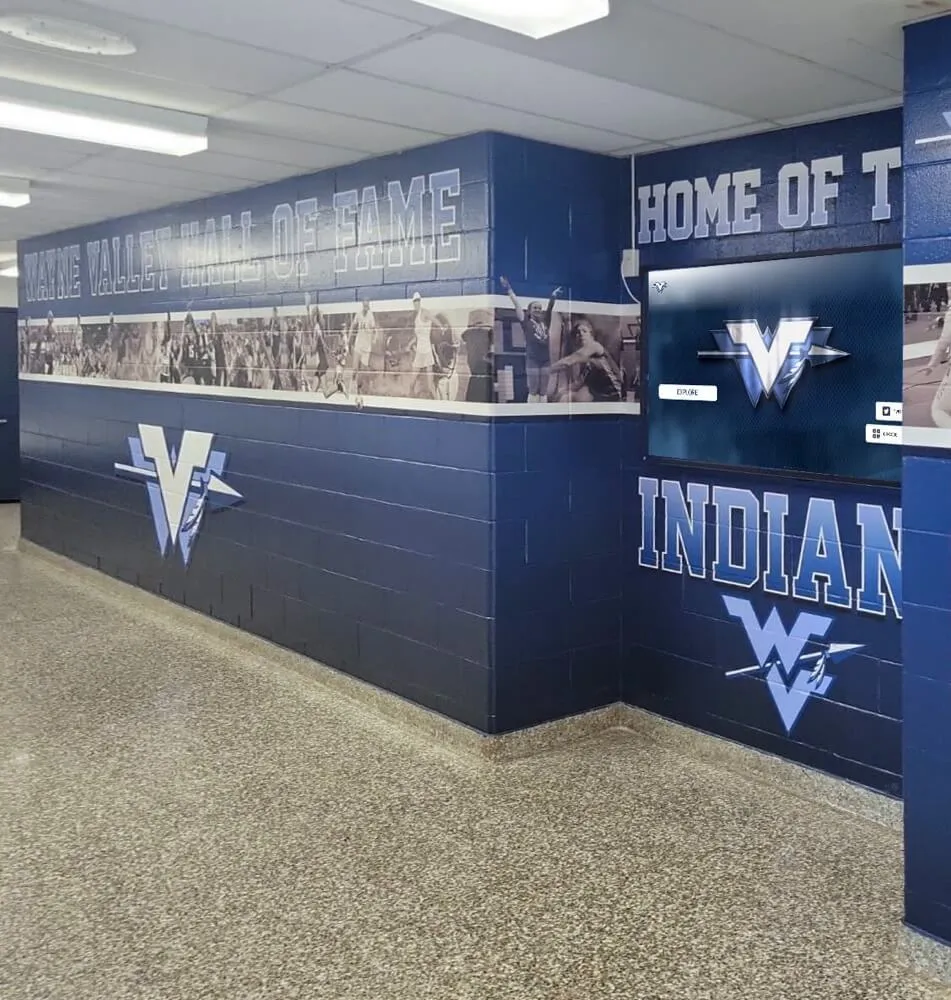
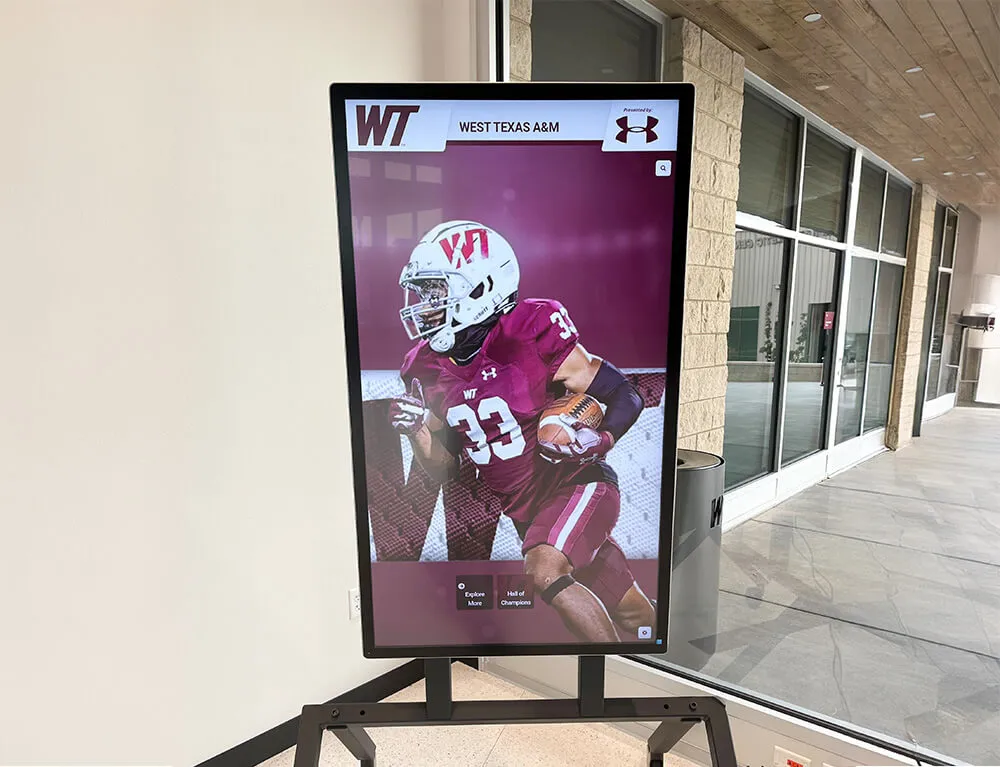
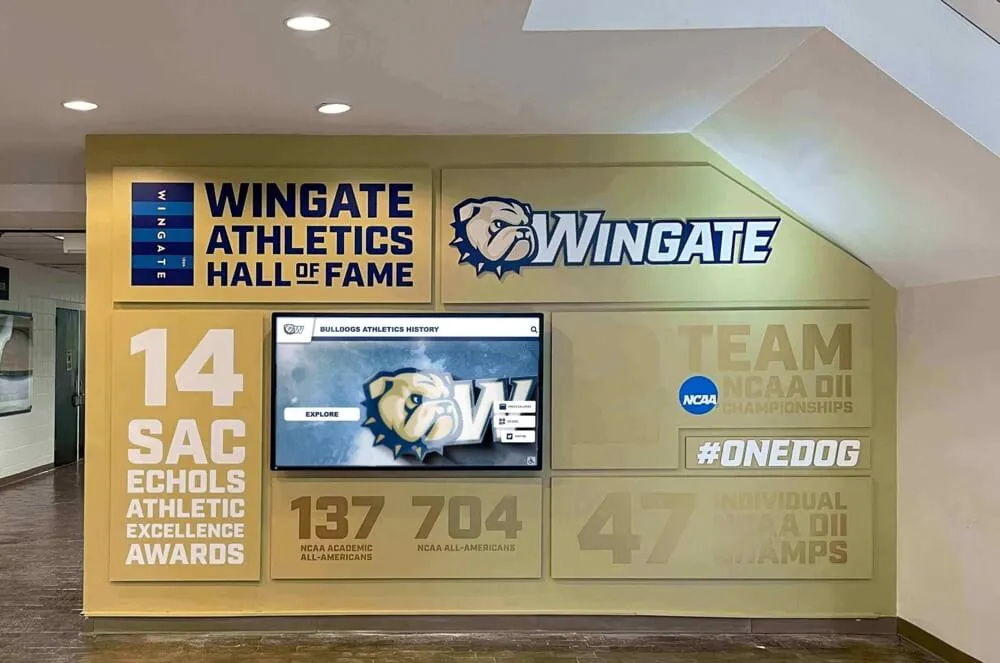
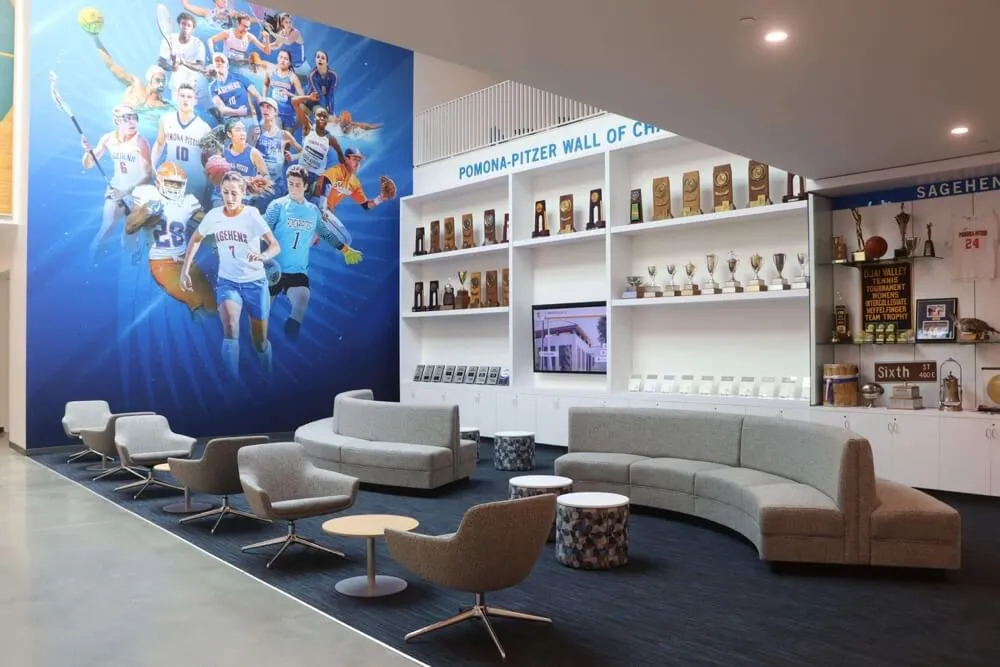
Modern hockey facilities increasingly incorporate recognition displays celebrating program history, honoring achievements, and creating engaging environments for players and spectators.
Strategic Display Placement in Hockey Venues
Hockey rinks offer multiple locations for recognition displays serving different purposes:
Main Concourse/Lobby Areas: High-traffic zones where spectators enter facilities provide ideal locations for comprehensive recognition displays showcasing championship teams, individual achievement records, hall of fame inductees, and program history. These displays engage audiences before games, during intermissions, and at community events.
Team Locker Room Areas: Recognition displays in or near locker rooms inspire current players by highlighting program traditions, record-holders, championship teams, and notable alumni who wore the same jerseys. This proximity to daily team activities reinforces culture and expectations.
Dasher Board and Glass Areas: Some facilities incorporate recognition elements into dasher board graphics or end-glass installations, though these must not interfere with playing surface visibility or safety requirements. Static or digital displays between player benches can showcase game-specific information or rotating achievement highlights.
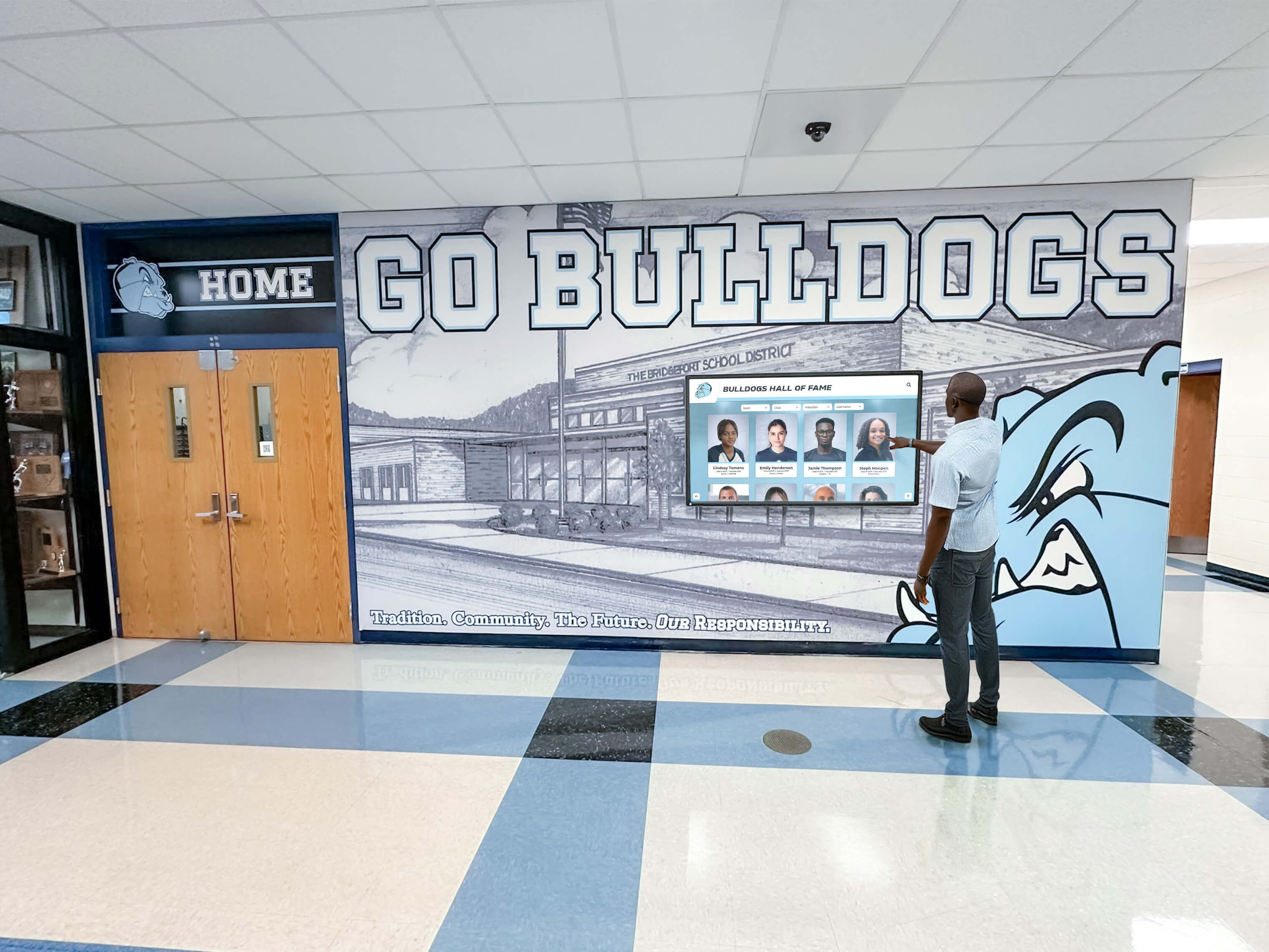
Digital vs. Traditional Recognition in Ice Facilities
Hockey facilities face similar recognition format decisions as other athletic venues:
Traditional Recognition:
- Wall-mounted plaques honoring hall of fame inductees
- Championship banners suspended from rafters
- Trophy cases displaying physical awards
- Printed record boards listing statistical leaders
- Retired jersey displays
Digital Recognition Advantages:
- Unlimited capacity: Recognize unlimited players and teams without space constraints
- Rich multimedia: Incorporate video highlights, player interviews, historical footage
- Easy updates: Add current season achievements without physical modifications
- Interactive features: Enable visitors to search players, filter by season, explore statistics
- Weather resistance: Indoor ice facilities provide climate-controlled environments ideal for digital displays
Modern approaches often blend traditional elements (championship banners maintaining visual impact) with digital systems providing comprehensive, updatable content celebrating complete program history.
Organizations implementing digital recognition platforms find they overcome traditional limitations while creating more engaging experiences that honor athletic traditions in contemporary formats.
Content Strategies for Hockey Recognition Programs
Effective hockey recognition showcases diverse achievement categories:
Team Recognition:
- Championship teams with complete rosters and season summaries
- Conference and tournament achievements
- Team records (goals scored, goals against, winning streaks)
- Coaching milestones and achievements
Individual Recognition:
- Career scoring leaders (goals, assists, points)
- Single-season record holders
- All-conference and all-state selections
- Award winners (MVP, sportsmanship, leadership)
- Post-high school achievements (college hockey, professional careers)
Program Milestones:
- Facility history and development
- Notable games and memorable moments
- Alumni connections and “where are they now” updates
- Community impact and program significance
Comprehensive recognition systems celebrate hockey achievements alongside other athletic accomplishments, creating unified athletic identity displays throughout facilities. Schools implementing broad recognition approaches can integrate hockey content into comprehensive celebration of school community excellence.
Cost Considerations: Building and Operating Ice Facilities
Understanding complete financial implications of hockey rink dimensions informs realistic facility planning.
Construction Cost Factors
Ice facility construction represents significant investment with costs varying based on multiple factors:
Basic Facility Costs (Single NHL-sized rink):
- Ice refrigeration system: $500,000-$1,500,000
- Building structure and envelope: $1,000,000-$3,000,000
- Boards, glass, and player benches: $150,000-$300,000
- Spectator seating: $300,000-$2,000,000 (depending on capacity and quality)
- Locker rooms and support spaces: $400,000-$1,000,000
- Mechanical systems (HVAC, dehumidification): $400,000-$800,000
- Site work, parking, utilities: $200,000-$1,000,000
- Architectural, engineering, permits: $300,000-$600,000
Total typical range: $3,000,000-$8,000,000 for functional single-rink facilities Premium facilities: $8,000,000-$15,000,000+ with enhanced amenities, larger capacity, superior finishes
Olympic-Sized Rink Premium: Facilities using Olympic dimensions (200 x 98-100 feet) typically cost $500,000-$1,500,000 more than equivalent NHL-sized facilities due to larger ice surface, increased refrigeration capacity, larger building envelope, and additional structural requirements.
Operational Cost Implications
Beyond construction, rink dimensions affect ongoing operational expenses:
Annual Operating Costs (varies significantly by location, climate, usage):
- Electricity (primarily refrigeration): $80,000-$250,000
- Natural gas/heating: $20,000-$60,000
- Water and sewer: $8,000-$20,000
- Staffing (management, maintenance, operations): $150,000-$400,000
- Insurance and property costs: $30,000-$80,000
- Maintenance and repairs: $40,000-$100,000
- Ice resurfacing (Zamboni operation and maintenance): $15,000-$30,000
Total typical operating costs: $350,000-$900,000+ annually
Larger Olympic-sized rinks increase operational costs by approximately 10-20% due to additional ice surface requiring more refrigeration energy, larger spaces requiring more heating/cooling, and increased maintenance scope.
Successful ice facilities offset these costs through diverse revenue streams including youth hockey program rentals, adult league usage, figure skating programs, public skating sessions, tournament hosting, and special events. Comprehensive business planning must demonstrate sustainable operations before committing to construction.
Adapting Existing Facilities: Renovation and Modernization
Many hockey programs operate in aging facilities requiring updates to remain competitive and functional.
Common Renovation Projects
Schools and communities often pursue targeted renovations improving specific aspects without complete rebuilds:
Ice System Upgrades: Modern refrigeration systems offer improved energy efficiency reducing operational costs by 20-40% compared to systems from 1970s-1990s. Upgraded systems also provide better ice quality, more reliable operation, and improved environmental performance.
Spectator and Accessibility Improvements: Adding or improving accessible seating, upgrading restrooms, enhancing concession areas, and improving accessibility throughout facilities addresses evolving ADA requirements and spectator expectations.
Locker Room Modernization: Updated team rooms with improved ventilation, modern lockers, training areas, and coaches’ spaces enhance player experience and support program recruiting.
Technology Integration: Modern facilities incorporate sound systems, video boards, LED lighting, and recognition displays creating more engaging spectator experiences while supporting program operations.
Schools modernizing athletic facilities can implement comprehensive recognition technology showcasing updated program achievements in contemporary formats that engage modern audiences.
When Dimensional Changes Make Sense
Most facilities maintain original dimensions through renovations due to structural constraints and cost considerations, but some situations justify dimensional modifications:
Expanding to Olympic Size: Communities with strong international hockey programs, sufficient building space, and strategic reasons for differentiation occasionally expand NHL rinks to Olympic dimensions during major renovations. This requires significant structural modifications but can create competitive advantages or unique regional offerings.
Converting to Standard Dimensions: Occasionally, facilities with non-standard historical dimensions undergo renovations standardizing to regulation NHL sizes, improving compatibility with modern competition requirements and enhancing facility rental potential.
Creating Divisible Surfaces: Some renovations add divider systems enabling youth programming on partial ice surfaces, maximizing facility utilization during peak demand periods without changing base dimensions.
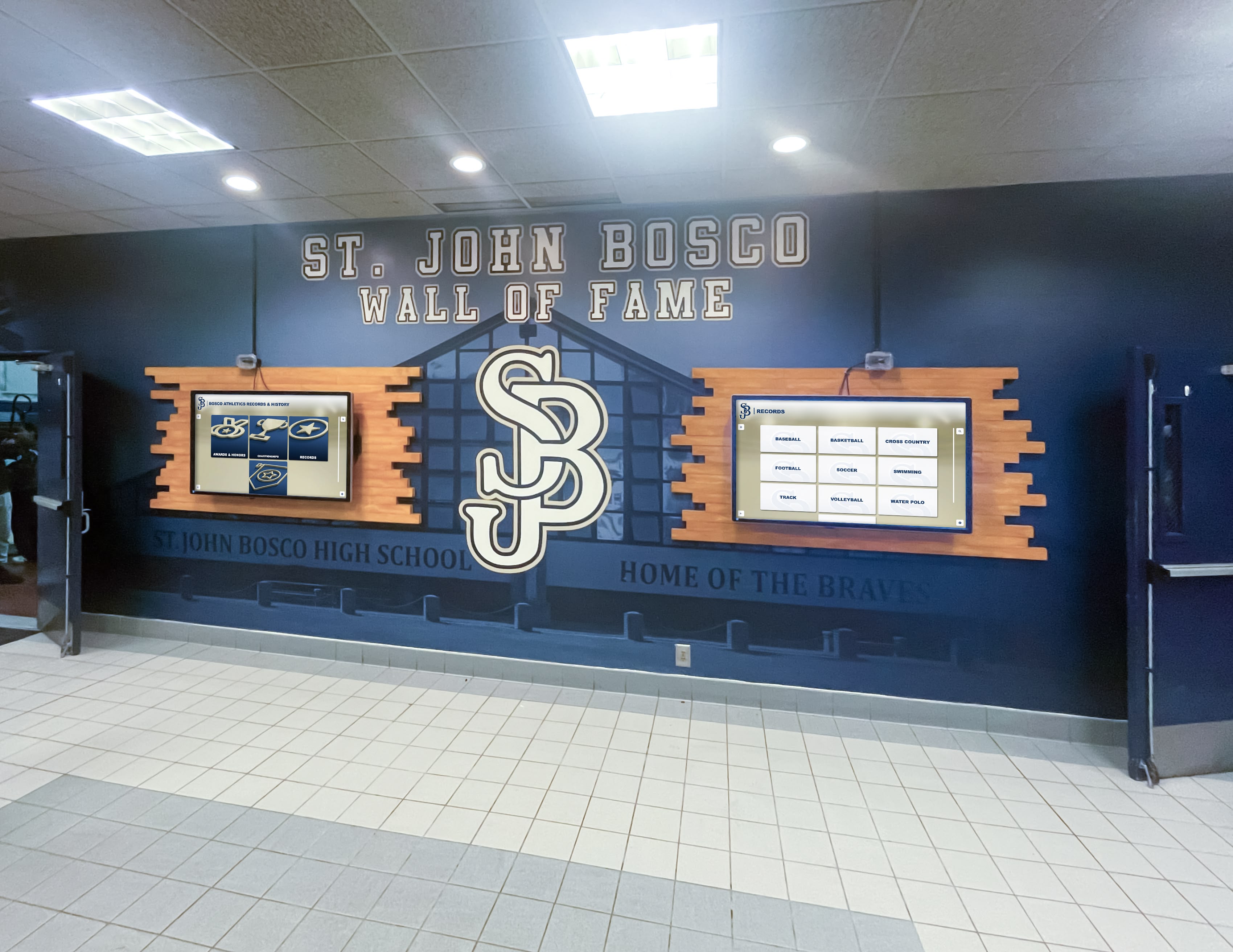
International Hockey Rink Dimensions: Global Variations
While NHL and IIHF dimensions dominate, some international variations exist:
European Professional Leagues
Most European professional leagues use IIHF Olympic dimensions (200 x 98-100 feet), though some historical variations persist:
Common European Rink Sizes:
- Sweden (SHL): Primarily 200 x 98 feet
- Finland (Liiga): 200 x 98-100 feet standard
- Russia (KHL): Mix of sizes, many Olympic-sized
- Czech Republic: Generally IIHF standard
- Switzerland: IIHF dimensions predominate
European hockey’s emphasis on skating, puck possession, and positional play reflects decades of development on larger ice surfaces, creating stylistic differences from North American hockey traditions.
Asian Hockey Development
Growing Asian hockey markets typically install IIHF-sized rinks aligning with international standards:
Asian Hockey Facilities:
- China: Massive facility investment for Winter Olympics and hockey development, primarily IIHF sizes
- Japan: Established hockey culture with IIHF-standard facilities
- South Korea: Olympic host investment created IIHF facilities supporting growing programs
As hockey globalizes, IIHF dimensions increasingly serve as international standard outside North America, though NHL dimensions remain dominant in United States and Canada where majority of world’s hockey facilities exist.
Special Considerations: Outdoor Rinks and Non-Traditional Venues
Hockey extends beyond traditional indoor facilities to outdoor rinks and creative installations:
Outdoor Hockey Rink Dimensions
Outdoor rinks range from backyard installations to sophisticated community facilities:
Backyard Rinks:
- Typical sizes: 20 x 40 feet to 40 x 80 feet
- Smaller surfaces for recreational skating and skill development
- Simple board systems or no boards for basic skating
Community Outdoor Rinks:
- Sizes: 85 x 185 feet to full regulation 85 x 200 feet
- Support organized league play and community programs
- Climate-dependent seasonal operation
- Refrigerated systems or natural ice depending on climate
NHL Outdoor Games: Leagues host outdoor games in football stadiums and unique venues, temporarily installing regulation 200 x 85 NHL surfaces in non-traditional locations. These special events generate massive fan interest while presenting engineering challenges managing ice quality in variable outdoor conditions.
Indoor Multi-Sport Facilities with Temporary Ice
Some communities install removable ice systems in multi-sport facilities, creating hockey surfaces during winter months then removing them for other sports:
Seasonal Conversion Facilities:
- Portable refrigeration systems installed over concrete
- Temporary boards and glass
- Conversion from basketball, indoor soccer, or other sports
- Cost-effective approach for communities with seasonal hockey demand
- Typical dimensions match NHL standards for competition compatibility
These creative approaches expand hockey access in communities where dedicated ice facilities aren’t financially viable, supporting program growth in non-traditional markets.
Technology and Innovation: The Future of Ice Facility Design
Emerging technologies and design approaches continue evolving hockey facility planning:
Energy Efficiency and Sustainability
Modern ice facilities incorporate sustainable design reducing environmental impact and operational costs:
Sustainable Systems:
- Heat recovery using refrigeration waste heat for building heating or snow melting
- LED lighting reducing electrical consumption by 50-70% compared to traditional systems
- Solar panel installation offsetting facility electrical demand
- Advanced building envelopes with superior insulation reducing heating/cooling loads
- Variable-speed refrigeration compressors matching ice-making to actual demand
These technologies reduce operational costs while supporting institutional sustainability commitments increasingly important to schools and communities.
Enhanced Spectator Experience Technology
Modern facilities integrate technology creating more engaging spectator environments:
- Large-format video boards displaying replays, statistics, and entertainment content
- Mobile apps providing game information, concessions ordering, and interactive features
- Advanced sound systems enhancing game atmosphere
- Premium seating with integrated technology and enhanced amenities
- Live streaming capabilities broadcasting games to remote audiences
Recognition technology fits naturally within this technology ecosystem, celebrating program traditions on the same digital platforms delivering game-day entertainment.
Organizations implementing comprehensive technology strategies often partner with providers offering integrated recognition solutions that coordinate with broader facility technology investments.
Virtual and Augmented Reality Applications
Emerging technologies create new possibilities for hockey facility experiences:
- AR wayfinding helping visitors navigate complex facilities
- Virtual facility tours supporting fundraising and community engagement
- Historical recreation showing facility evolution over decades
- Interactive statistics and records accessed through mobile devices
- Virtual recognition halls enabling unlimited digital content
These innovations complement physical facilities, extending programs’ reach and engagement beyond visitors physically present in venues.
Conclusion: Matching Rink Dimensions to Program Needs and Community Goals
Hockey rink dimensions fundamentally shape facility planning decisions with profound implications for construction costs, operational expenses, playing style development, program versatility, and long-term sustainability. From youth programs using cross-ice surfaces maximizing developmental benefits to NHL facilities maintaining 200 x 85 standards perfected over generations to international programs embracing Olympic-sized ice supporting different tactical approaches, understanding these dimensional variations enables informed decision-making aligned with specific program goals and community needs.
Schools, recreation departments, and communities planning new ice facilities or renovating existing rinks must carefully evaluate primary user groups they will serve, budget realities encompassing both construction and long-term operations, facility versatility supporting diverse programming beyond single-purpose hockey, regional competitive standards ensuring compatibility with leagues and tournaments, and strategic differentiation creating unique offerings within their markets. These considerations, balanced against dimensional standards at various competitive levels, inform decisions that will impact programs for decades.
Modern ice facilities increasingly integrate technology enhancing both athletic performance and spectator experience. Recognition displays celebrating program history, honoring individual and team achievements, and connecting past traditions with current competitors have become standard features in premium hockey venues. Digital platforms overcome the space limitations of traditional trophy cases and static plaques, enabling comprehensive celebration of hockey excellence across all program levels from youth development through high school achievement to notable alumni accomplishments.
Whether planning regulation NHL surfaces preparing players for the highest levels of North American competition, considering Olympic dimensions supporting international playing styles and unique facility differentiation, or implementing flexible youth-focused designs with divisible surfaces maximizing participation opportunities, matching rink dimensions to clearly defined program objectives creates facilities serving communities effectively while supporting sustainable long-term operations.
The most successful hockey facilities balance competitive requirements with community needs, operational sustainability with ambitious programming, and traditional hockey culture with innovative approaches creating engaging environments that celebrate achievement while inspiring future excellence. Understanding how rink dimensions impact these multifaceted facility challenges represents the essential foundation for planning decisions that will serve hockey programs and communities throughout decades of use.
Transform Your Hockey Facility with Comprehensive Recognition
Ready to enhance your hockey facility with recognition technology that celebrates program tradition while engaging modern audiences? Rocket Alumni Solutions provides specialized digital recognition platforms designed specifically for athletic facilities, enabling hockey programs to showcase championship teams, honor individual achievements, preserve program history, and create inspiring environments that connect past excellence with current competitors. Our systems integrate seamlessly into hockey facilities of any size, from youth community rinks to high school competition venues, delivering professional recognition solutions that strengthen program culture while celebrating the athletes and teams that define your hockey tradition.