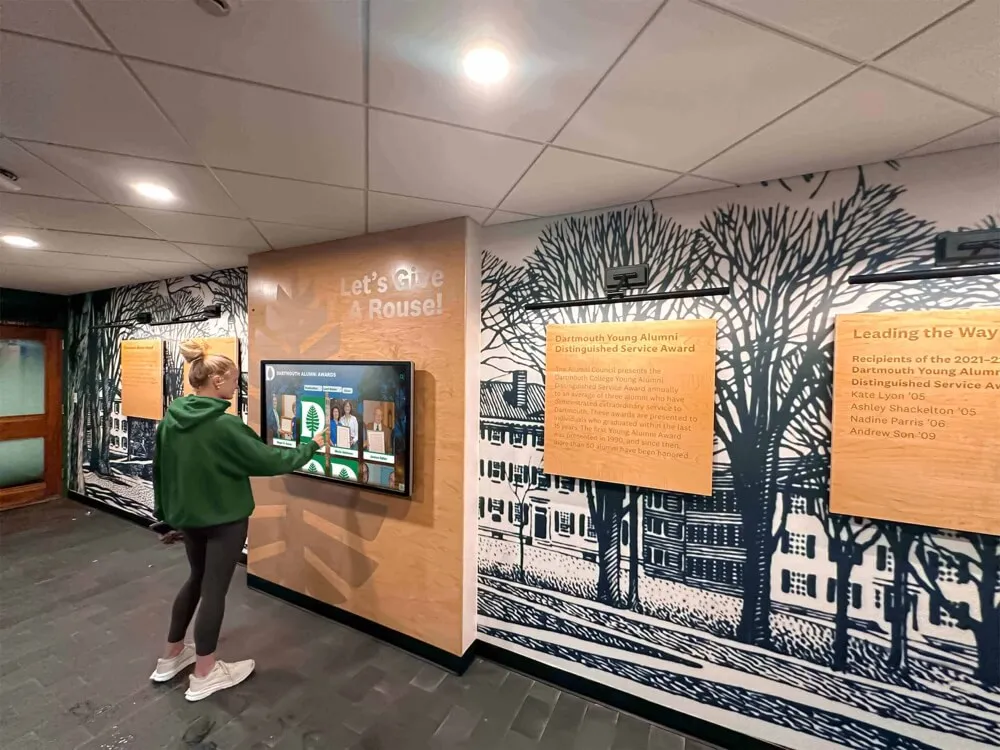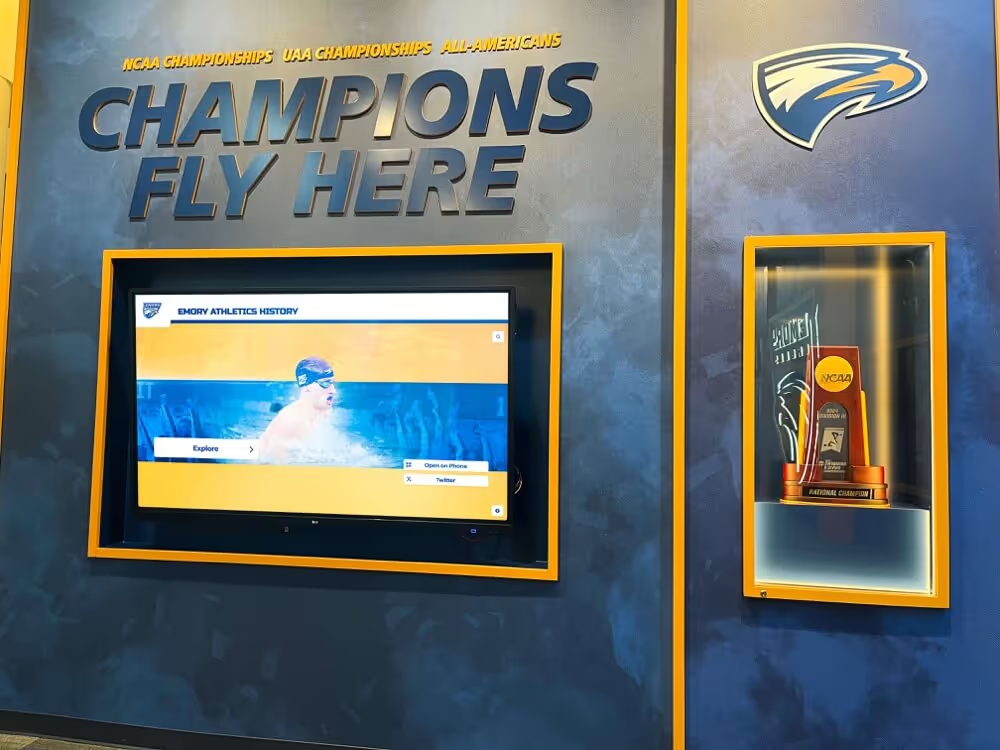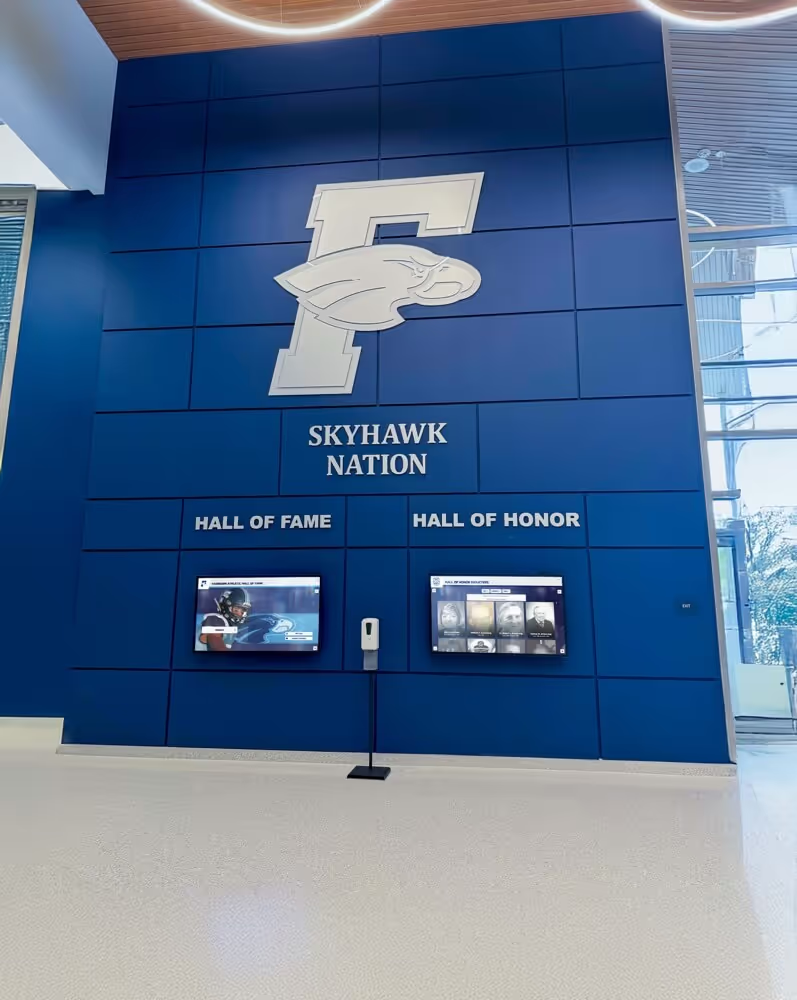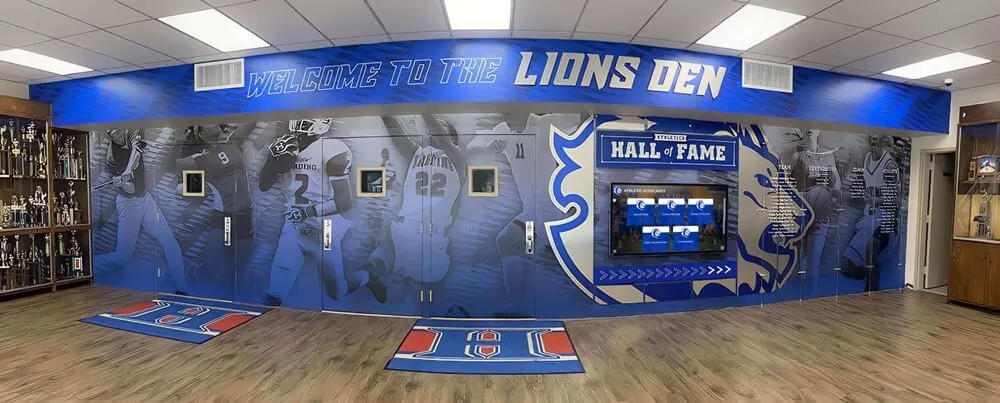




Key Takeaways
Complete guide to high school swimming records including essential categories, record-keeping systems, and modern digital displays that showcase athletic achievements comprehensively.
High school swimming programs generate remarkable athletic achievements deserving comprehensive recognition that inspires current swimmers while preserving program history. From individual event records documenting split-second improvements to relay team excellence requiring perfect coordination, swimming creates rich opportunities for celebrating diverse contributions. Yet many programs struggle with outdated record boards that lack space for new achievements, manual tracking systems prone to errors, and limited recognition formats that fail to capture the full scope of athletic excellence swimmers demonstrate throughout seasons and careers.
Swimming’s unique characteristics—precise timing, multiple events and distances, individual and team components, pool-specific conditions, and evolving competitive standards—create record-keeping complexity requiring thoughtful systems. Programs committed to comprehensive recognition must balance detailed technical documentation with accessible presentation formats that engage swimmers, families, and broader school communities. This guide explores essential swimming record categories, effective tracking methodologies, modern display technologies, and proven strategies for leveraging recognition to build program culture and motivate swimmers across all competitive levels.

Understanding the Importance of Swimming Records
Swimming programs benefit uniquely from comprehensive record-keeping that captures both individual excellence and collective achievement across multiple event categories.
Why Swimming Records Matter for Program Development
Concrete Goal Setting Through Measurable Targets:
When a sophomore swimmer sees the school’s 100-yard freestyle record stands at 47.84 seconds, that time transforms from an abstract concept into a tangible target. They can calculate what incremental improvements over two seasons would mean for their pursuit. Unlike sports with subjective evaluation components, swimming’s precise timing creates unambiguous benchmarks enabling focused training strategies.
Swimming records provide motivation across all ability levels—not just elite athletes chasing school records but developing swimmers targeting personal bests, state qualifying times, or team scoring positions. This multilevel motivation structure makes comprehensive record systems particularly valuable for swimming programs seeking to engage entire rosters rather than exclusively celebrating top performers.
Building Competitive Program Identity:
Swimming programs with documented records spanning decades develop strong identities around their history. Current swimmers understand they’re not simply competing in a season—they’re contributing to a legacy extending back generations and forward into the future. This connection to tradition creates program cultures where excellence becomes expected rather than exceptional.
Schools implementing digital recognition for athletic achievements report that comprehensive historical documentation strengthens program culture by connecting current athletes to past excellence while setting clear standards for future achievement.
Recruiting and Program Growth:
Prospective swimmers and their families evaluate programs through visible evidence of past success. Comprehensive records demonstrating consistent development of competitive swimmers, state meet qualifications, and championship results signal effective coaching, quality facilities, and supportive team cultures. Digital recognition displays provide instantly accessible evidence of program quality influencing recruiting decisions without requiring extensive verbal recruitment pitches.
Strong recruiting translates into deeper rosters enabling competitive relay teams, better training environments where swimmers push each other, and sustainable program excellence that doesn’t depend on occasional exceptional athletes but rather consistent development systems.
Historical Preservation and Alumni Engagement:
Swimming achievements represent important institutional history worth preserving alongside academic accomplishments. Comprehensive records document how programs evolved, training methodologies advanced, competitive standards increased, and individual excellence emerged within team contexts.
Alumni swimmers often maintain lifelong connections to programs when their achievements receive lasting recognition. Alumni engagement strategies emphasizing ongoing recognition create valuable networks supporting current programs through mentorship, donations, and volunteer coaching assistance.
Essential Swimming Record Categories
Comprehensive swimming record systems track achievements across multiple dimensions, ensuring diverse contributions receive appropriate recognition.
Individual Event Records by Stroke and Distance
Swimming’s event structure creates numerous categories where excellence deserves documentation:
Freestyle Events:
- 50-yard freestyle (sprint speed)
- 100-yard freestyle (short distance with strategy)
- 200-yard freestyle (middle distance balancing speed and endurance)
- 500-yard freestyle (distance event requiring pacing)
- 1000-yard/1650-yard freestyle (championship distance events)
Each distance presents unique challenges requiring different training approaches, physical attributes, and competitive strategies. Recognizing records across all freestyle distances ensures sprinters and distance swimmers receive equal acknowledgment despite competing in different events.
Backstroke Events:
- 100-yard backstroke (technical precision)
- 200-yard backstroke (endurance and technique)
Backstroke requires specialized skills including underwater streamlining, wall approaches, and breathing patterns distinct from freestyle. Programs should highlight backstroke excellence separately rather than combining with other strokes.
Breaststroke Events:
- 100-yard breaststroke (power and timing)
- 200-yard breaststroke (sustained technique)
Breaststroke represents swimming’s most technically demanding stroke where subtle mechanical efficiency differences create significant performance variations. Breaststroke specialists often receive insufficient recognition in programs dominated by freestyle events despite their technical excellence.
Butterfly Events:
- 100-yard butterfly (explosive power)
- 200-yard butterfly (strength endurance)
Butterfly demands exceptional upper body strength and core stability, creating opportunities to recognize athletes whose power and conditioning might not translate to top freestyle times despite their significant athletic capabilities.
Individual Medley Events:
- 200-yard individual medley (versatility)
- 400-yard individual medley (endurance and multi-stroke proficiency)
Individual medley events showcase well-rounded swimmers excelling across all four strokes, rewarding versatility rather than single-stroke specialization. IM records often represent a program’s most complete athletes deserving special recognition.
Relay Team Records and Collective Achievement
Relay events emphasize teamwork and strategic combinations rather than individual excellence alone:
Relay Event Categories:
- 200-yard freestyle relay (four 50-yard legs)
- 400-yard freestyle relay (four 100-yard legs)
- 200-yard medley relay (backstroke, breaststroke, butterfly, freestyle)
- 400-yard medley relay (four 100-yard legs by stroke)
Relay records should document not just final times but also individual split times for each swimmer, recognizing individual contributions to team success. Some swimmers achieve their fastest times when swimming relay legs, demonstrating how team contexts elevate individual performance through competitive energy and strategic positioning.
Schools implementing comprehensive team recognition systems report that celebrating relay achievements alongside individual records creates more inclusive cultures where swimmers across all ability levels contribute to recognized excellence.
Strategic Relay Combinations:
Documenting which swimmers combined to set relay records preserves important program history. Relay success often results from coaches identifying complementary swimmers whose combined efforts exceed what individual talent alone might predict. These strategic combinations represent coaching excellence deserving recognition alongside pure athletic performance.
Championship Performance and Competitive Achievement
Beyond time-based records, championship results document competitive success:
State Meet Achievements:
- State championship titles by event and year
- State meet podium finishes (top 3, top 6, top 8 depending on state format)
- State meet qualifiers demonstrating competitive success
- Consecutive years qualifying for state championships
- Multiple event state qualifiers in single seasons
State meet performance represents peak achievement for most high school swimmers. Comprehensive recognition ensures qualifiers receive acknowledgment regardless of final placement, celebrating the significant accomplishment of competing at state level rather than exclusively honoring champions.
Conference and Regional Championships:
- Conference championship meet results
- Conference record times achieved during season meets
- Regional qualifying meet performances
- Sectional or district championship results
Many swimmers peak at conference or regional levels without reaching state podiums. These achievements deserve recognition demonstrating excellence within appropriate competitive contexts rather than using state championships as sole measure of swimming success.
Season and Career Achievement Milestones:
- Most Valuable Swimmer awards (by season)
- Team scoring leaders across entire seasons
- Four-year varsity letter winners
- Career improvement milestones (swimmers dropping significant time)
- Academic all-conference and all-state selections
- Leadership recognition and team captain positions
Season-long consistency and team contributions often deserve equal recognition to single-race excellence. Swimmers maintaining high performance across entire seasons, contributing to team scoring repeatedly, and demonstrating leadership create program foundations enabling occasional record-breaking performances by teammates.
Pool-Specific Records and Facility History
Swimming’s dependence on facility characteristics creates unique record-keeping considerations:
Home Pool Records:
- Fastest times achieved in school’s home pool
- Historical context for how facility characteristics affect times
- Pool records by visiting swimmers during hosted meets
Home pool records create special recognition for swimmers who excelled in their home facility while acknowledging that pool characteristics—lane configurations, starting blocks, depth, water temperature, air quality—significantly affect performance. Swimmers setting home pool records create lasting connections to physical spaces where they developed.
Era-Specific Context:
Swimming times have improved dramatically across decades due to technical innovations—improved starting blocks, better lane lines reducing turbulence, electronic timing precision, advanced training methodologies, and competitive swimsuit technology. Record systems should provide era context preventing unfair comparisons between contemporary swimmers using modern equipment and historical swimmers whose achievements were equally impressive within their competitive contexts.
Digital recognition systems enable rich contextual information explaining how competitive standards evolved, helping viewers appreciate historical records appropriately rather than dismissing past achievements that might appear slower than current times.
Record-Keeping Systems and Verification Procedures
Accurate swimming records require systematic collection, verification, and maintenance procedures ensuring credibility.
Primary Data Sources for Swimming Records
Official Meet Results and Timing Systems:
Swimming benefits from electronic timing providing precise measurement to hundredths of seconds. Official meet results from certified timing systems serve as primary record sources, offering reliability unmatched in sports with subjective scoring or manual timing.
Primary data sources include:
- State athletic association official meet results
- Conference championship meet results from automated timing
- Hosted invitational meet results from school’s facility
- MaxPreps and other statistical aggregation platforms
- Meet management software outputs (HyTek, SwimTopia)
Programs should maintain digital archives of all official results rather than relying solely on printed heat sheets that deteriorate over time or disappear when coaches retire.
Verification Standards and Protocols:
Establishing clear verification requirements maintains record credibility:
- Times must come from official meets with electronic timing systems
- Relay splits require verification from official timing rather than coaches’ manual stopwatches
- Pool records require documentation of which facility hosted the performance
- State qualifying times must align with current state association standards
- Historical records require multiple corroborating sources when original documentation is incomplete
Programs should designate specific staff—typically head coaches or athletic directors—responsible for verifying record accuracy before publication. This accountability ensures mistakes don’t persist for years before discovery.
Addressing Timing System Evolution:
Historical records may come from hand-timed meets where precision was limited to tenths of seconds rather than hundredths. Some programs maintain separate historical records for hand-timed versus electronically-timed eras, acknowledging the measurement precision difference.
Alternatively, programs can convert hand times to electronic equivalents using standard formulas (typically adding 0.24 seconds to hand times) to enable comparisons across eras, though these conversions introduce estimation uncertainties.
Historical Records Research and Documentation
Many swimming programs lack complete historical records, particularly for achievements from decades past when documentation was less systematic.
Research Sources for Historical Swimming Data:
Reconstructing program history requires detective work across multiple sources:
- Archived yearbooks containing season results and team photos
- Newspaper microfilm or digital archives from local media outlets covering meets
- State athletic association historical records and archives
- Retired coach recollections and personal record books
- Alumni association contacts who swam in past eras
- Previous team media guides, championship programs, or athletic department publications
- Historical pool record boards photographed before replacement
- County or regional historical society resources
Digitization Process:
Converting historical records to accessible digital formats:
- Photograph or scan relevant yearbook pages containing season records
- Extract swimmer names, times, events, and years
- Input data into structured databases or content management systems
- Organize and digitize historical photos for display inclusion
- Document sources for future verification reference
- Create metadata tags enabling efficient searching and filtering
- Establish naming conventions ensuring consistency across decades
Programs implementing comprehensive historical preservation systems report that alumni enthusiastically contribute information, photos, and stories once they see programs genuinely committed to honoring past achievements.
Maintaining Current Season Records
Real-time record tracking during competitive seasons enables timely recognition:
Season-Long Tracking Systems:
Effective programs monitor performance continuously rather than waiting until season end:
- Import meet results weekly from timing systems
- Identify potential record performances immediately after meets
- Track season-best times showing swimmer progression
- Monitor state qualifying time achievements throughout season
- Document personal record improvements for all swimmers
- Maintain team scoring statistics showing consistent contributors
Regular tracking enables timely recognition when achievements occur rather than delayed acknowledgment months later when excitement has faded. Digital platforms with cloud-based access allow coaches to update records from any location, including away meets where records might fall.
Communication Protocols:
When records fall or significant achievements occur, systematic communication ensures appropriate recognition:
- Immediate notification to school administration and athletic directors
- Social media posts celebrating achievements while excitement remains high
- Updates to digital displays within 24-48 hours
- Recognition during team practices and next home meet
- Family notification enabling them to celebrate with swimmers
- Submission to local media outlets for broader community awareness
Schools implementing real-time athletic recognition systems create cultures where achievements receive immediate acknowledgment rather than waiting for annual recognition ceremonies long after competitive seasons conclude.

Traditional vs. Modern Record Display Systems
Understanding different display approaches helps programs select appropriate recognition investments.
Traditional Physical Record Boards: Benefits and Limitations
Physical record boards have served swimming programs for decades using various formats:
Common Physical Display Approaches:
Traditional swimming record boards typically include:
- Painted wall displays listing events and record holders
- Engraved plaques for individual records
- Vinyl letter boards with removable components
- Trophy cases displaying medals and achievement plaques
- Banner systems hanging from facility ceilings
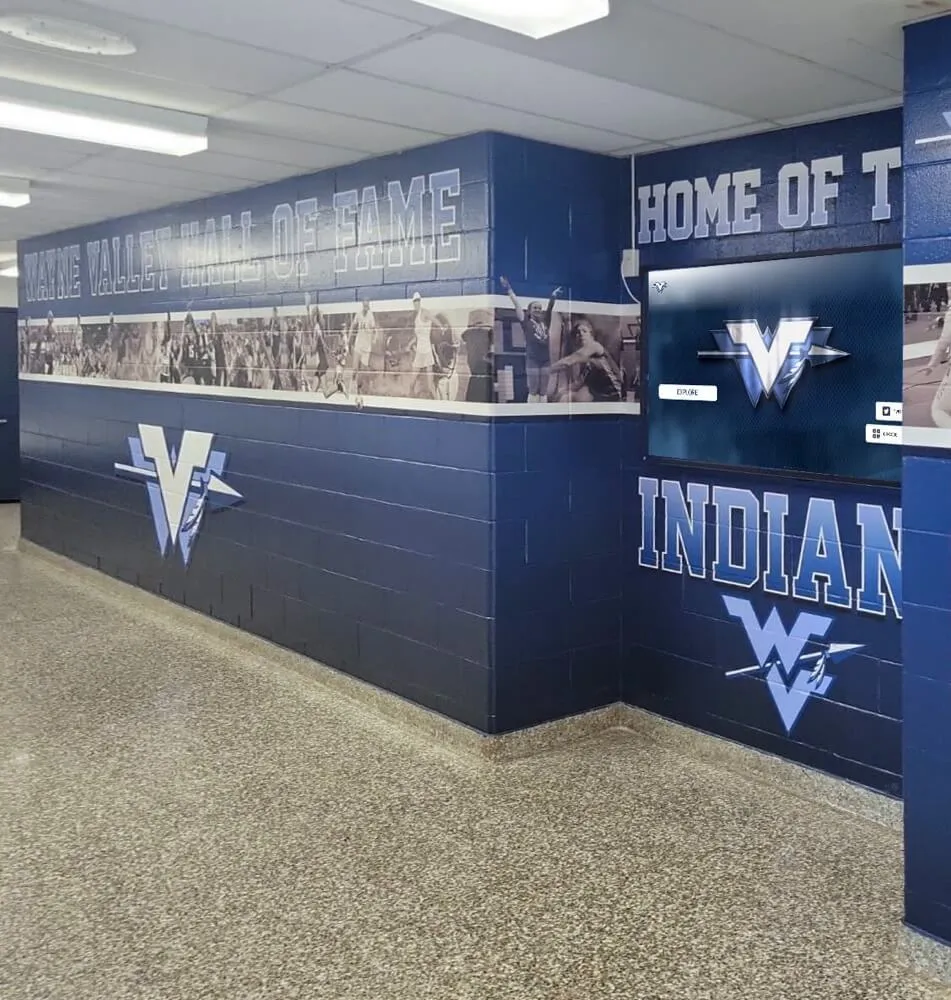
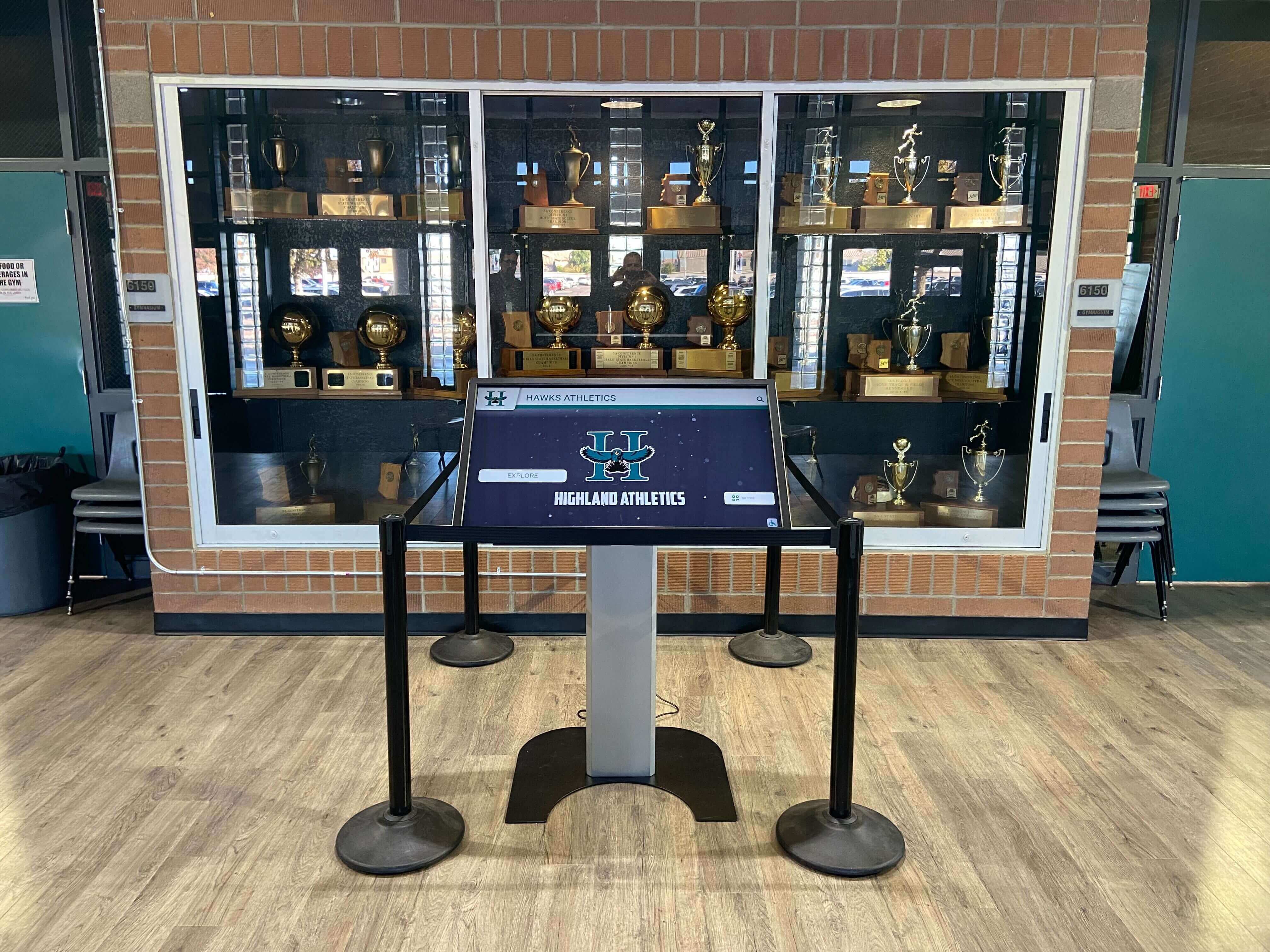
Physical displays offer tangible, permanent recognition with traditional aesthetic appeal. Swimmers see their names on facility walls, creating powerful visual connections to spaces where they trained and competed.
Space Constraints Challenge:
Swimming’s multiple event structure creates significant capacity challenges for physical boards. Even modest programs tracking boys and girls records across 11 individual events plus 4 relay events need space for 30+ records. Adding historical context, state qualifiers, or conference champions quickly overwhelms available wall space.
Many programs face impossible choices: stop adding new achievements, remove historical records to make space, create cluttered displays where no individual achievement stands out, or invest in facility expansions specifically to accommodate additional recognition space.
Update Challenges and Costs:
Every record change requires ordering new materials, scheduling installation, and paying for professional services or dedicating staff time to manual updates. For swimming programs where multiple records might fall during championship season, update costs accumulate quickly.
Typical costs include:
- Custom engraved plaques: $200-400 per record
- Vinyl letter updates: $2-5 per character
- Professional installation: $150-300 per session
- Annual maintenance: $800-2,500 for competitive programs
Records falling during championship season might not appear on displays until the following school year, meaning recognition happens months after achievements when emotional connection has faded.
Physical Deterioration:
Swimming facilities’ humid environments accelerate physical board deterioration. Chlorine exposure fades painted displays, vinyl letters peel from moisture, engraved plaques develop corrosion, and trophy cases accumulate condensation causing damage to displayed items.
This accelerated deterioration requires more frequent replacement than recognition displays in climate-controlled school lobbies, increasing long-term total costs beyond initial installation expenses.
Modern Digital Recognition Systems for Swimming
Digital displays overcome traditional limitations while adding capabilities particularly valuable for swimming programs:
Unlimited Capacity Advantage:
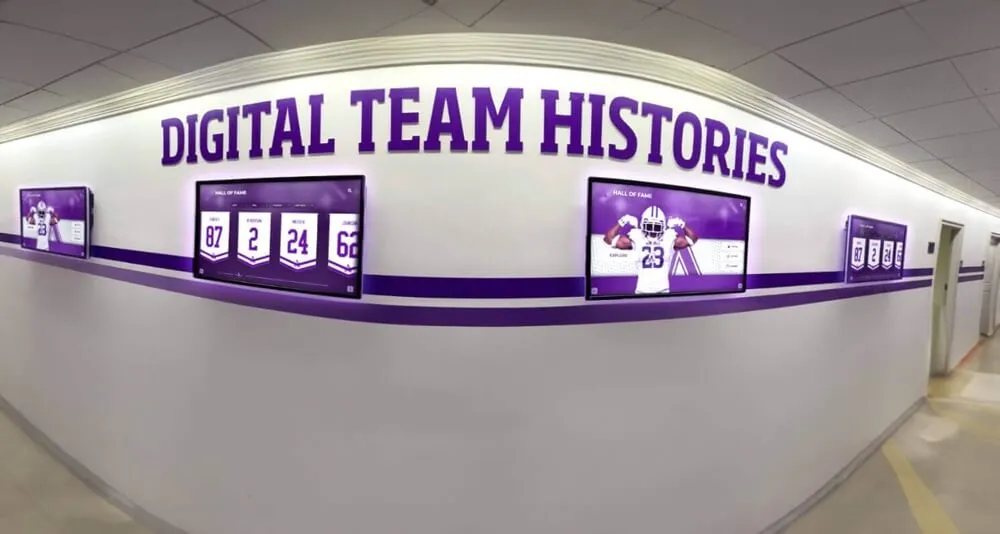
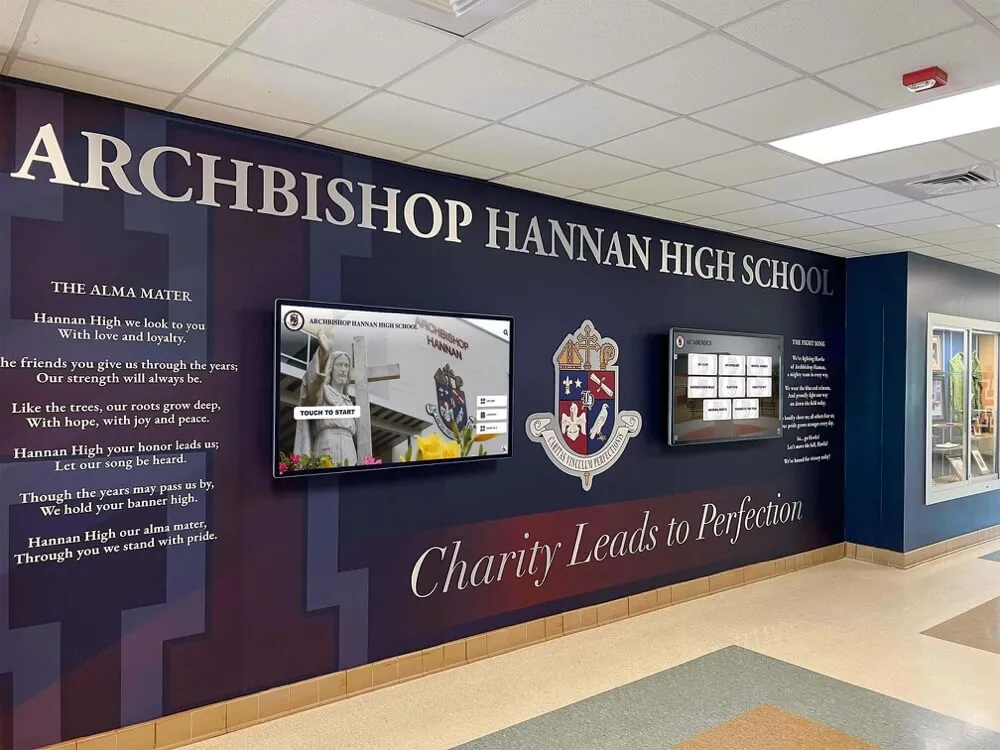
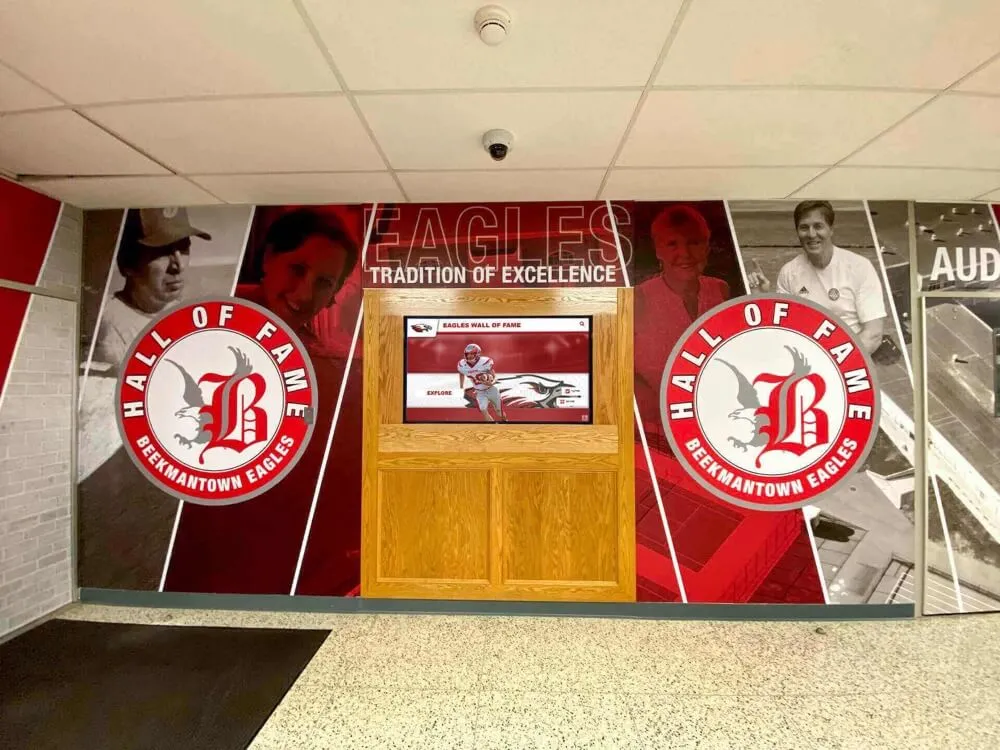
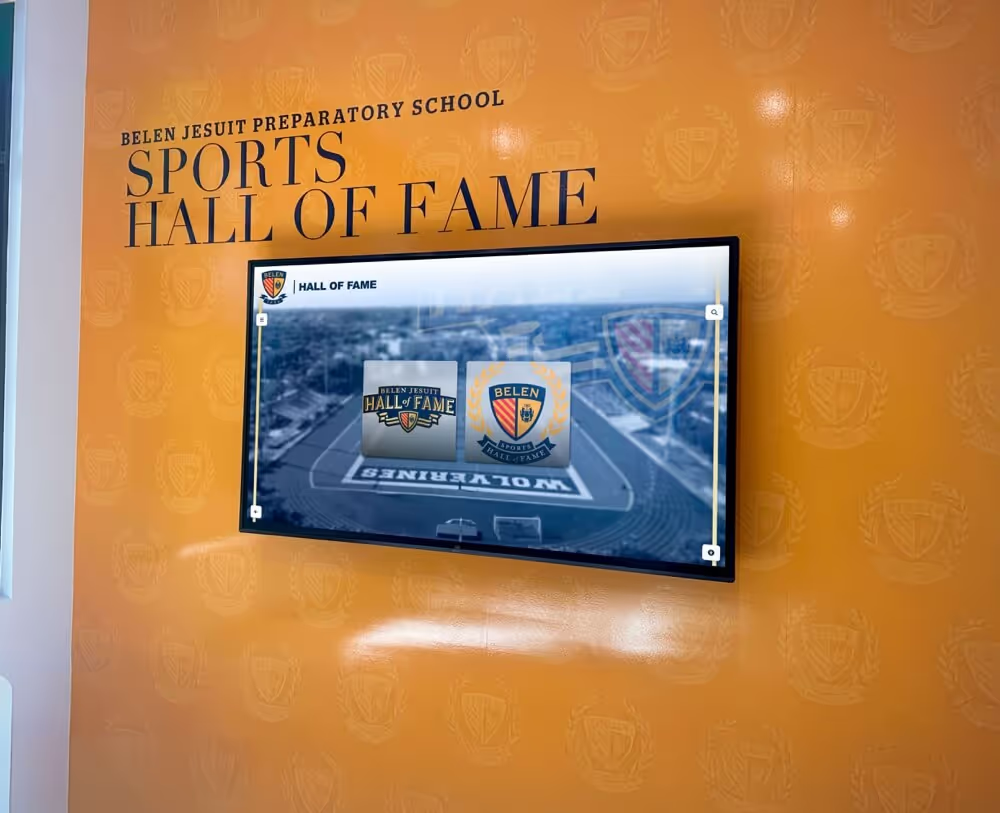
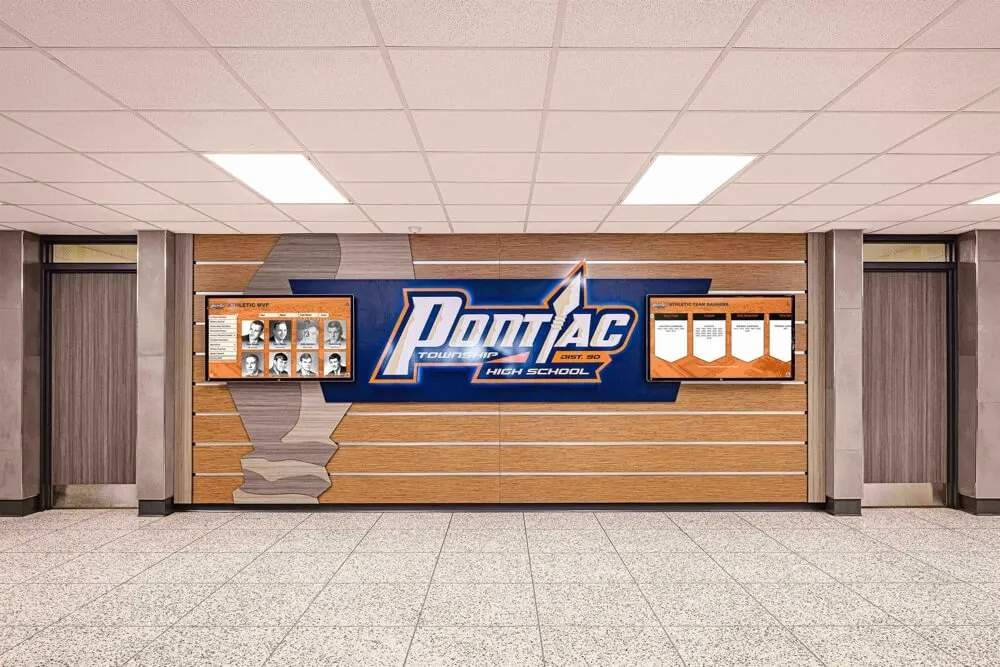
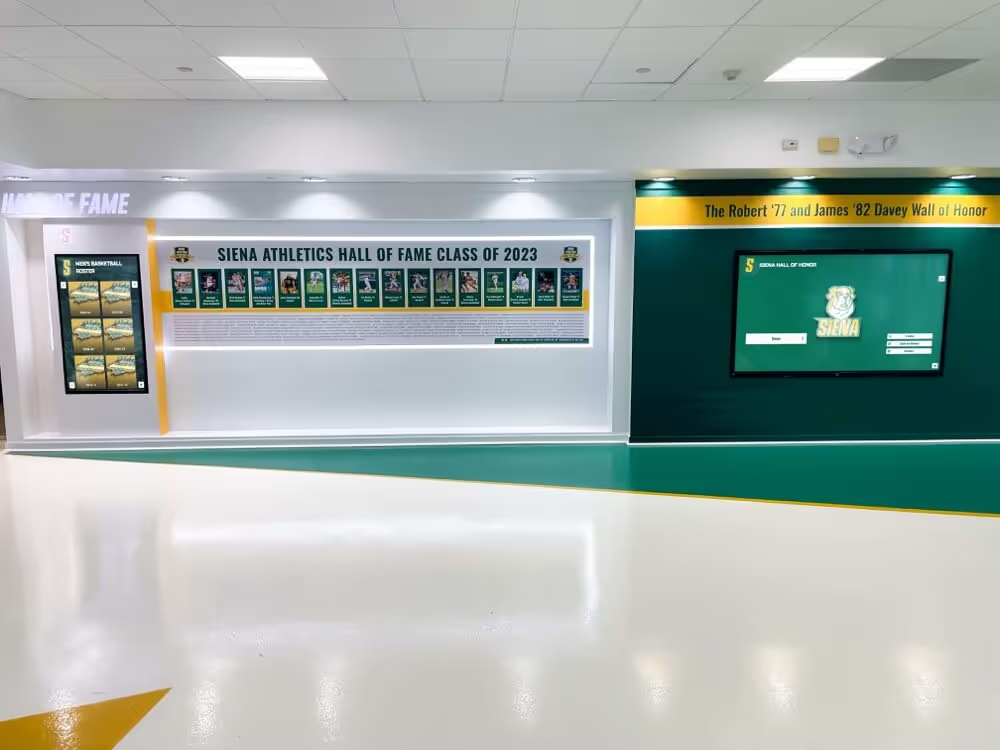
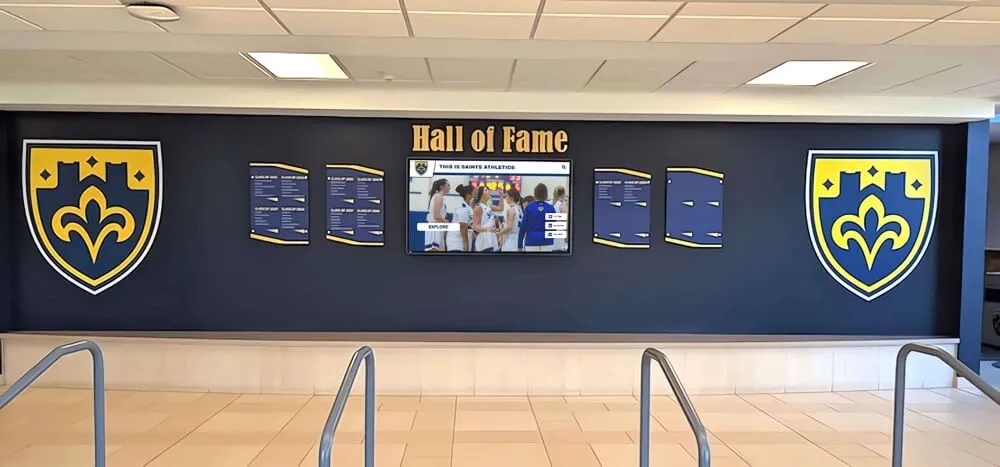
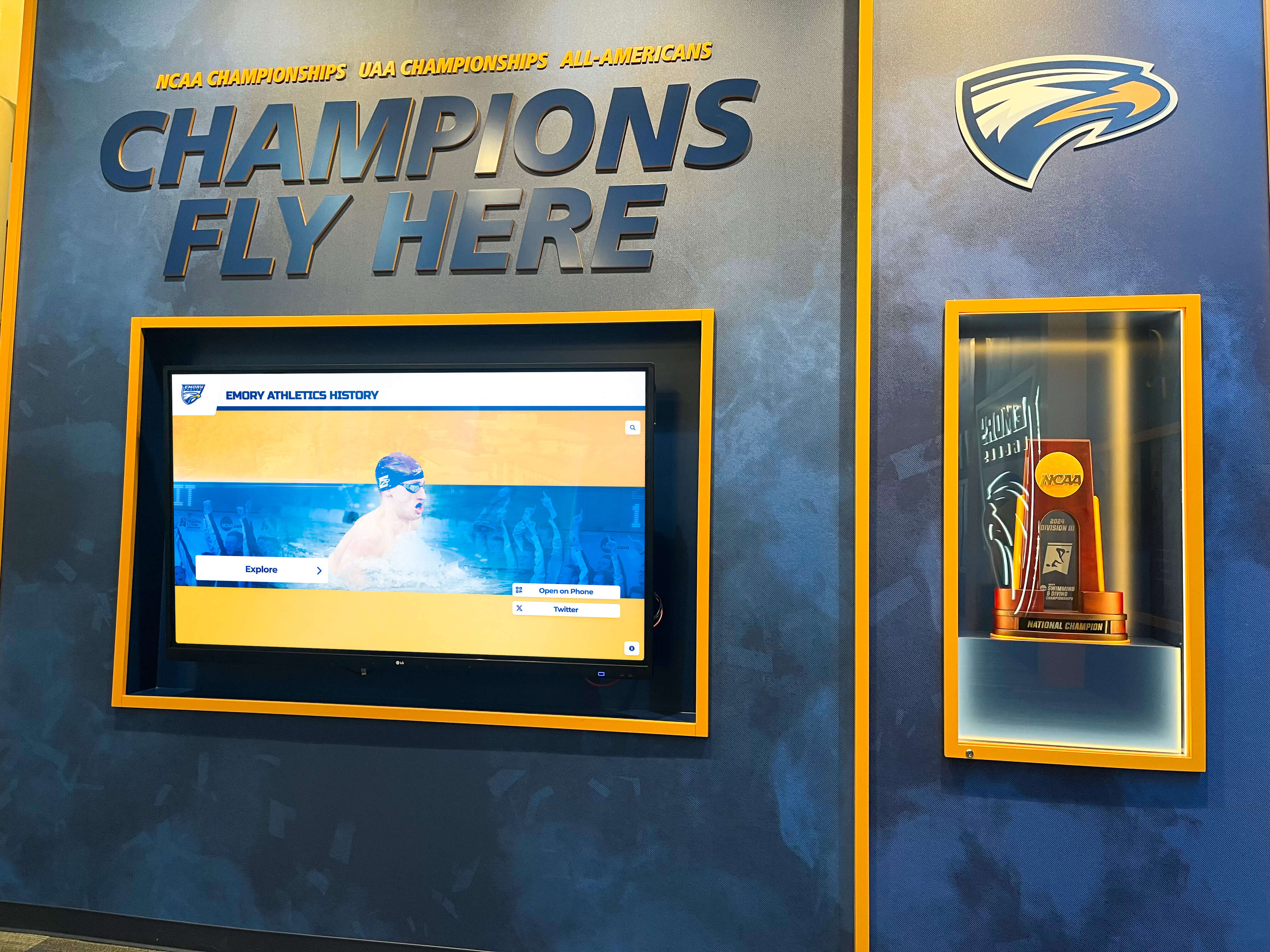
Digital systems accommodate unlimited records without physical space constraints. Programs can recognize every achievement worthy of acknowledgment—individual event records, relay records, state qualifiers, conference champions, academic honors, and historical achievements all coexist without competition for limited space.
This unlimited capacity proves particularly valuable for swimming where achievement categories naturally multiply. Programs no longer make difficult choices about which accomplishments deserve recognition or force swimmers to compete for limited recognition slots.
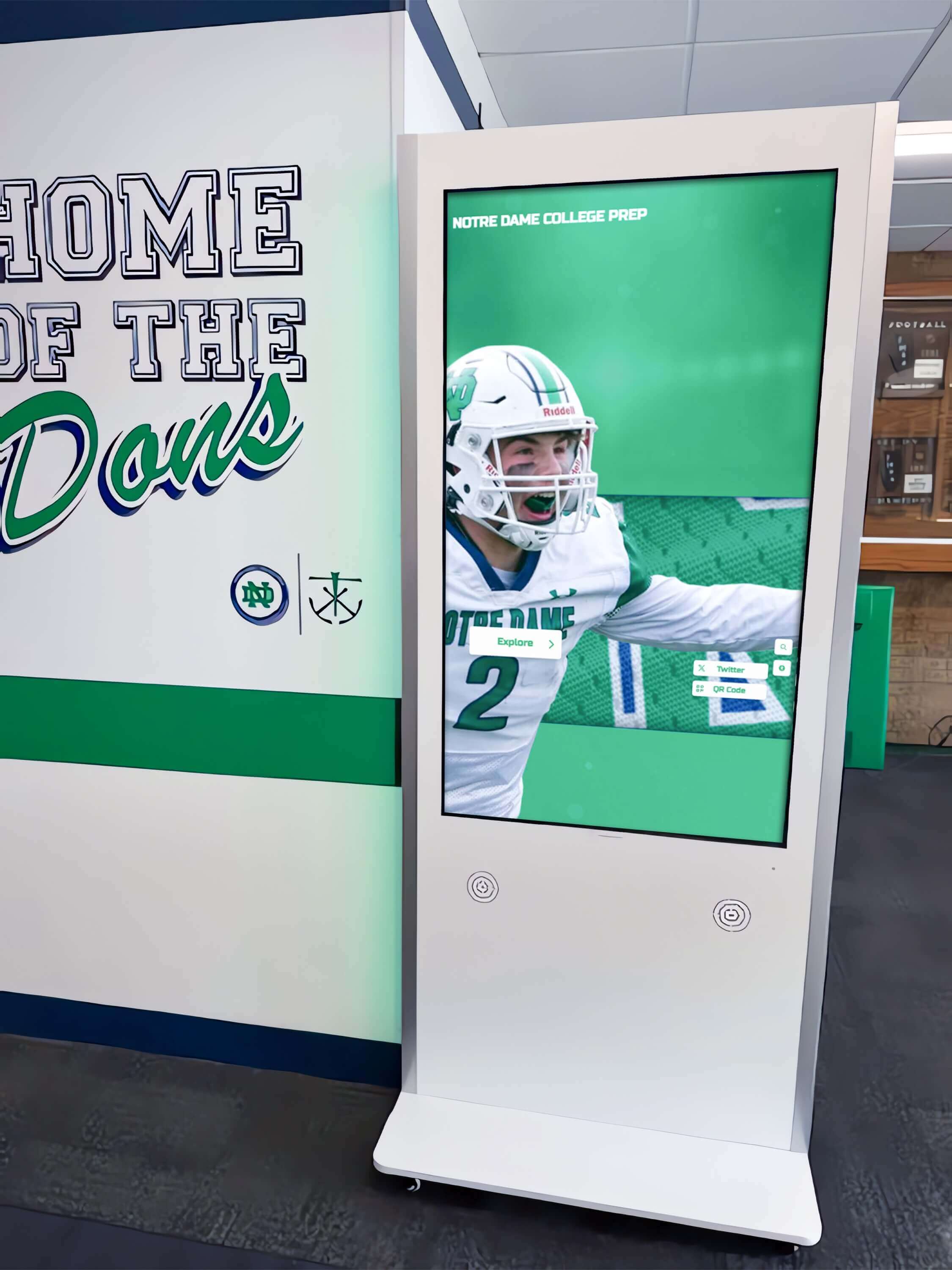
Instant Updates During Championship Season:
When a swimmer breaks a record during Friday evening’s conference championship, the display can be updated by Saturday morning using cloud-based content management systems accessible from any internet-connected device. This immediacy means recognition happens while excitement remains high rather than months later when traditional updates finally appear.
Real-time updates create powerful motivational moments as swimmers see their achievements immediately recognized, reinforcing the significance of their accomplishments through prompt acknowledgment.
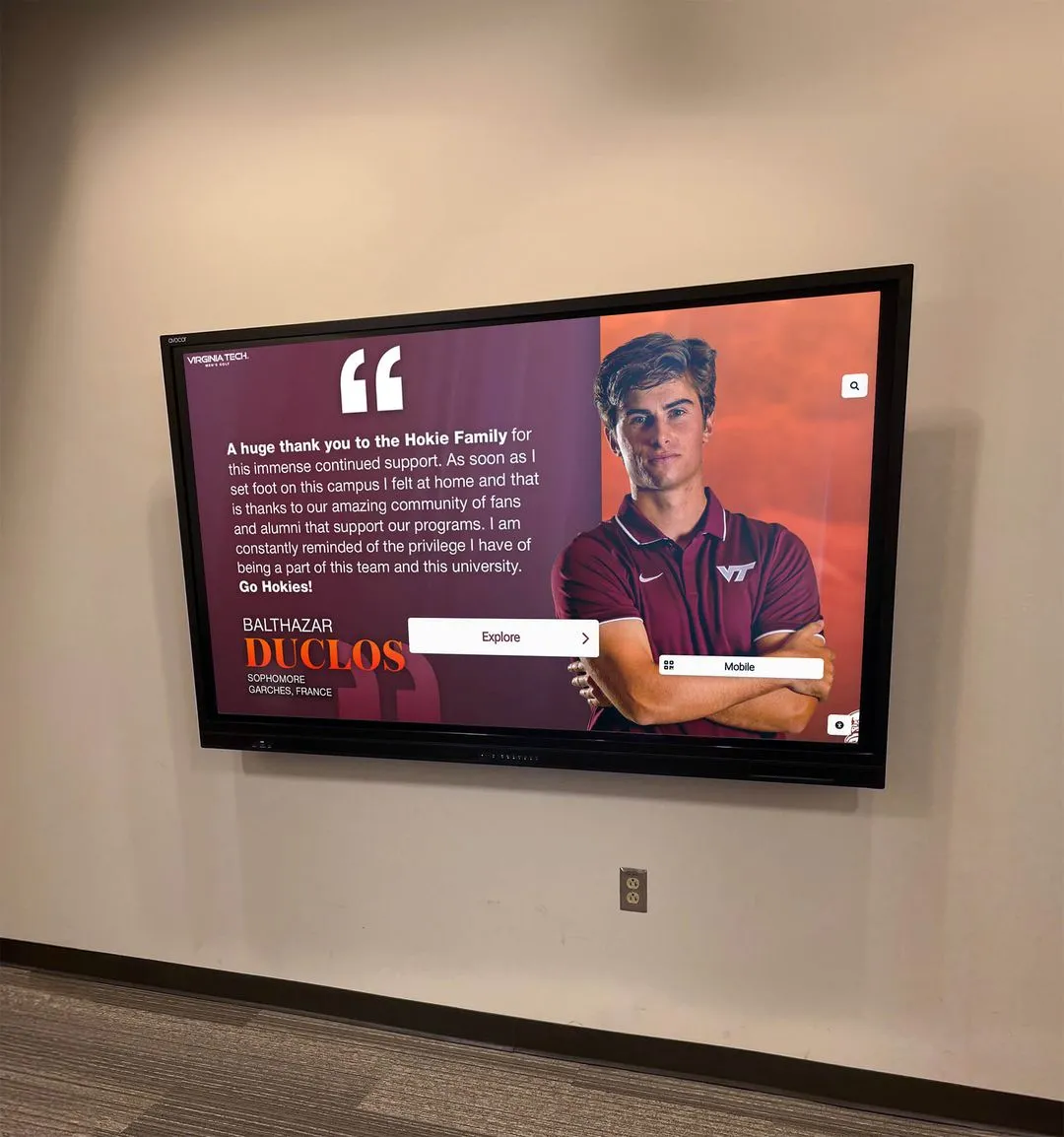
Rich Multimedia Content:
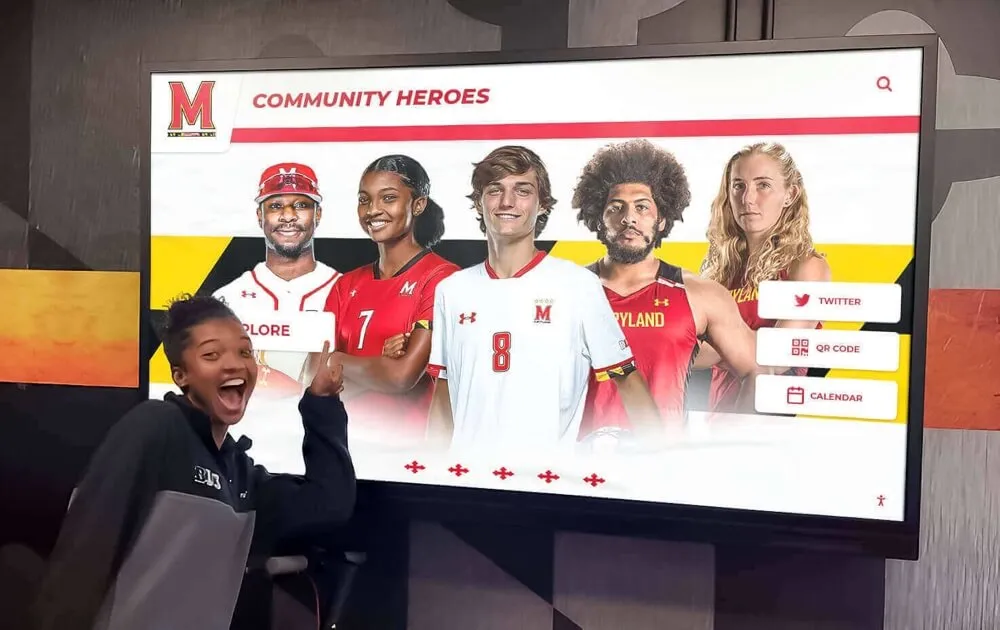
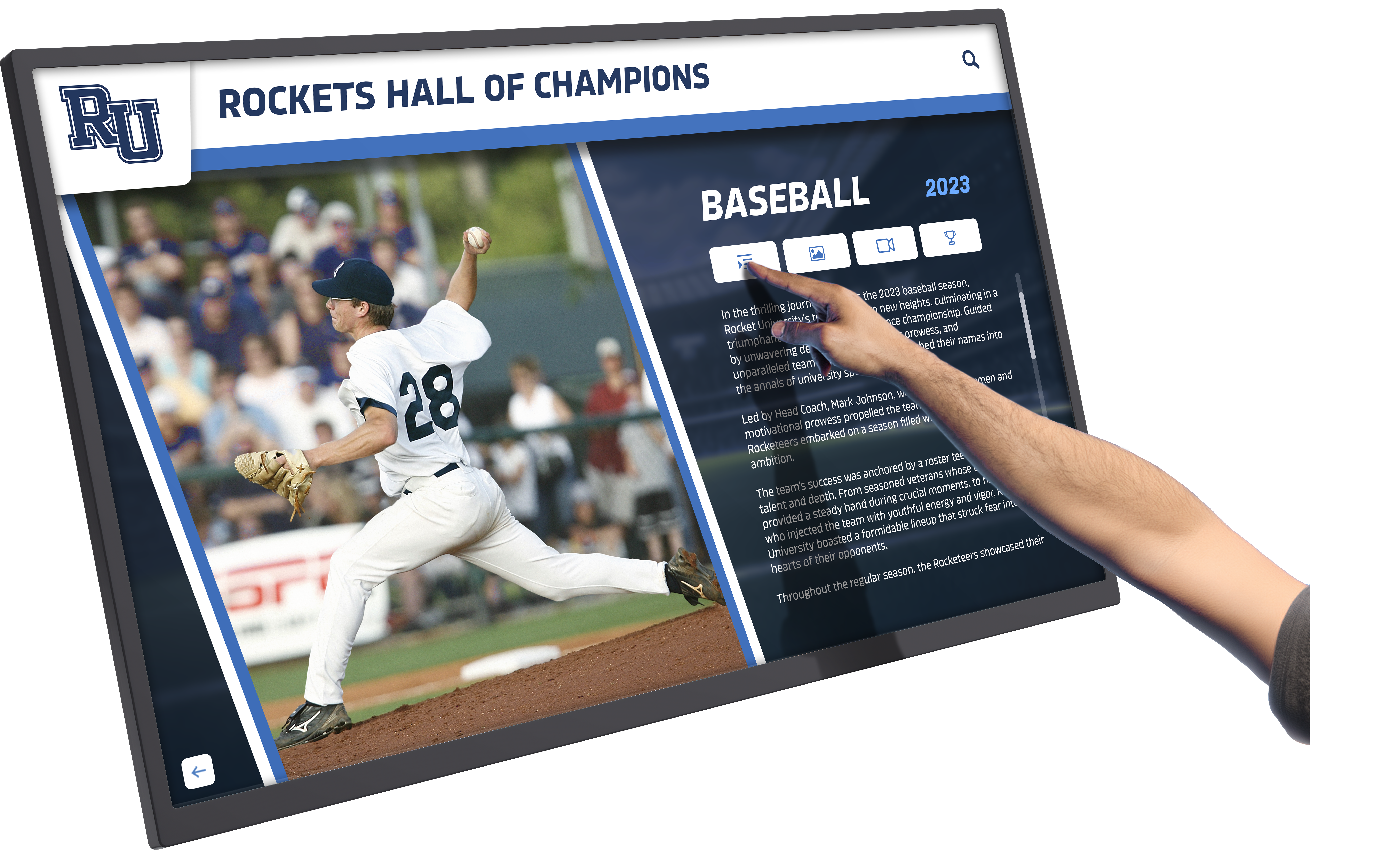
Digital platforms enable comprehensive swimmer and team profiles including:
- Professional photographs and race action shots
- Career progression showing time improvements across seasons
- Video highlights of record-breaking swims and championship races
- Written profiles sharing training journeys and personal stories
- Post-graduation achievements at collegiate or professional levels
- Multiple photos showing swimmer development over time
- Coaches’ testimonials highlighting character and work ethic
This multimedia richness tells complete stories beyond simple name-and-time listings, creating emotional connections that inspire current swimmers while honoring past achievements comprehensively.
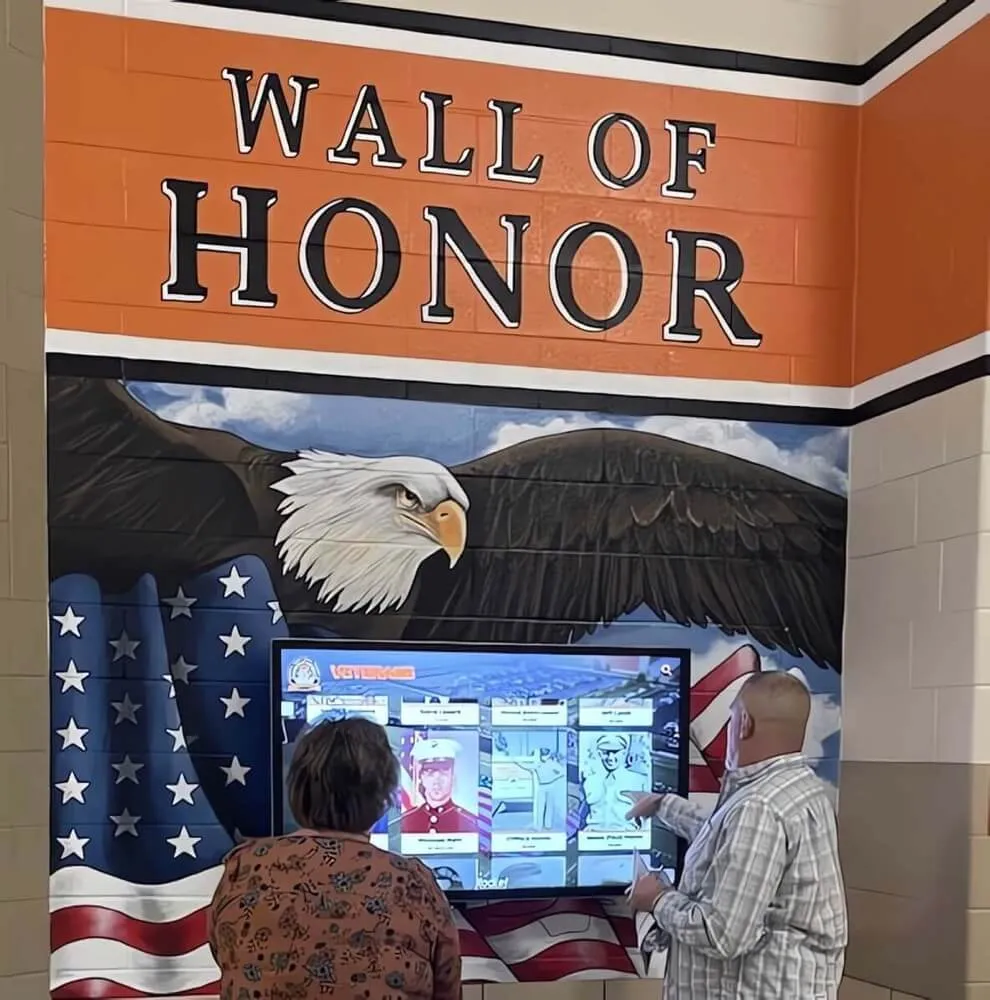
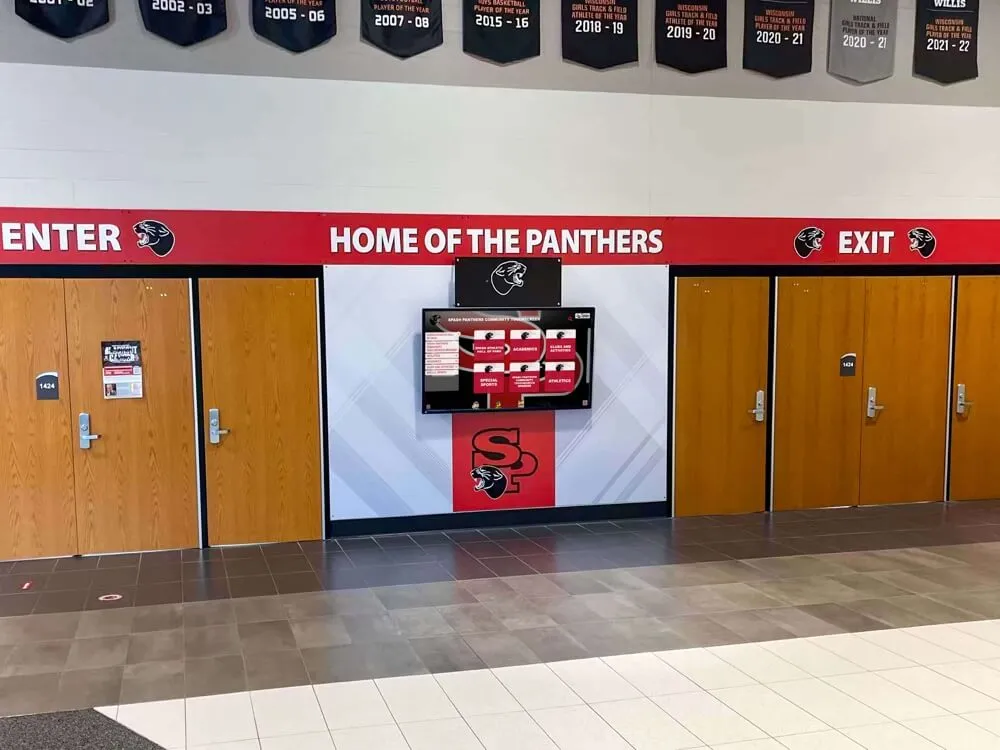
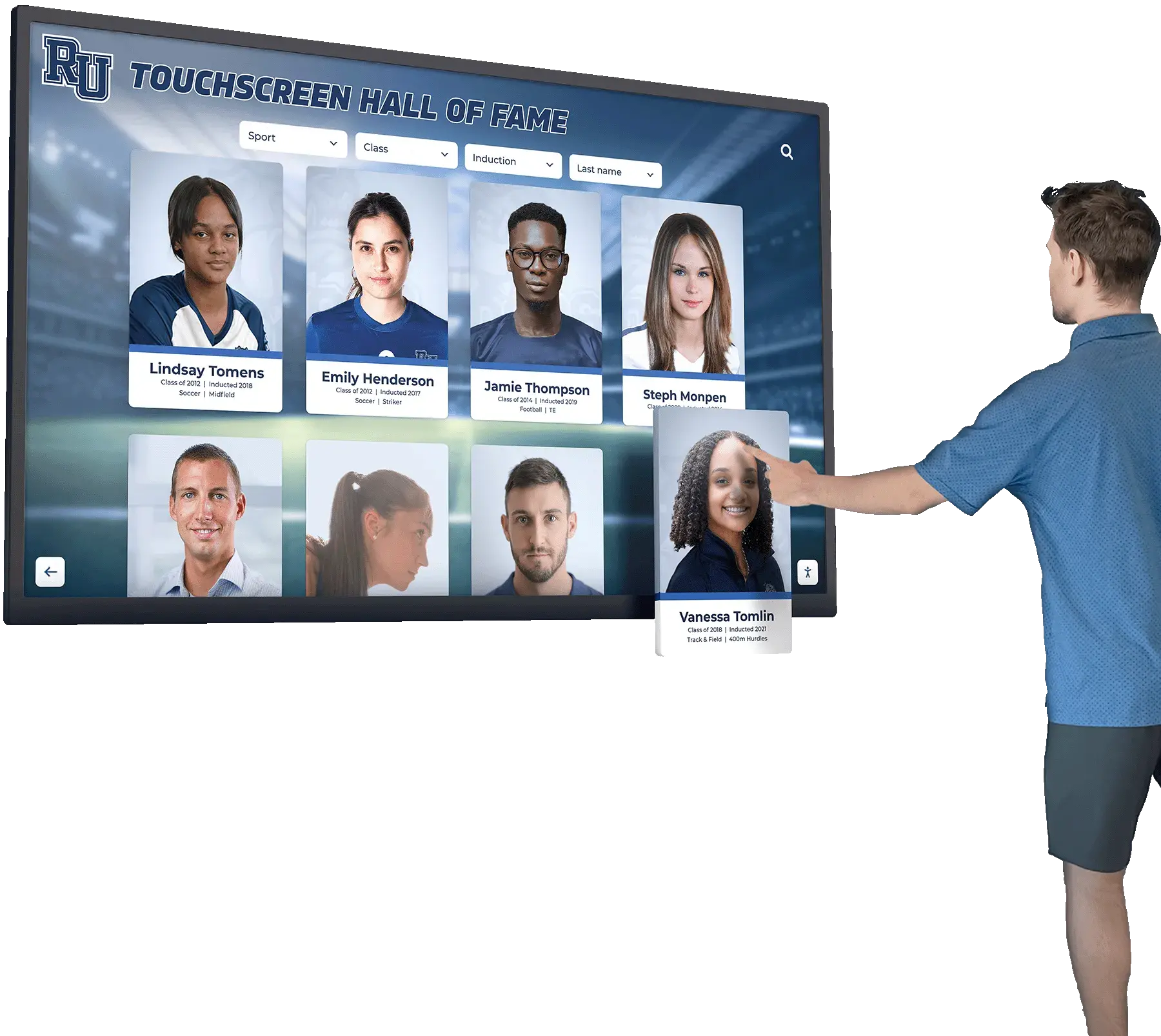
Interactive Exploration:
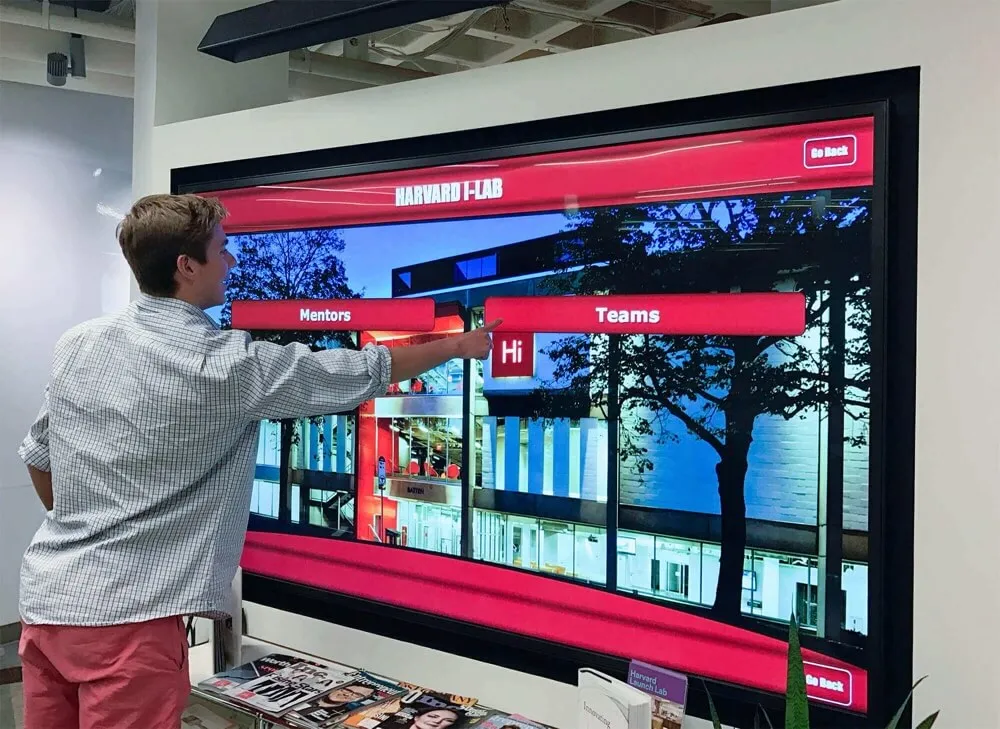
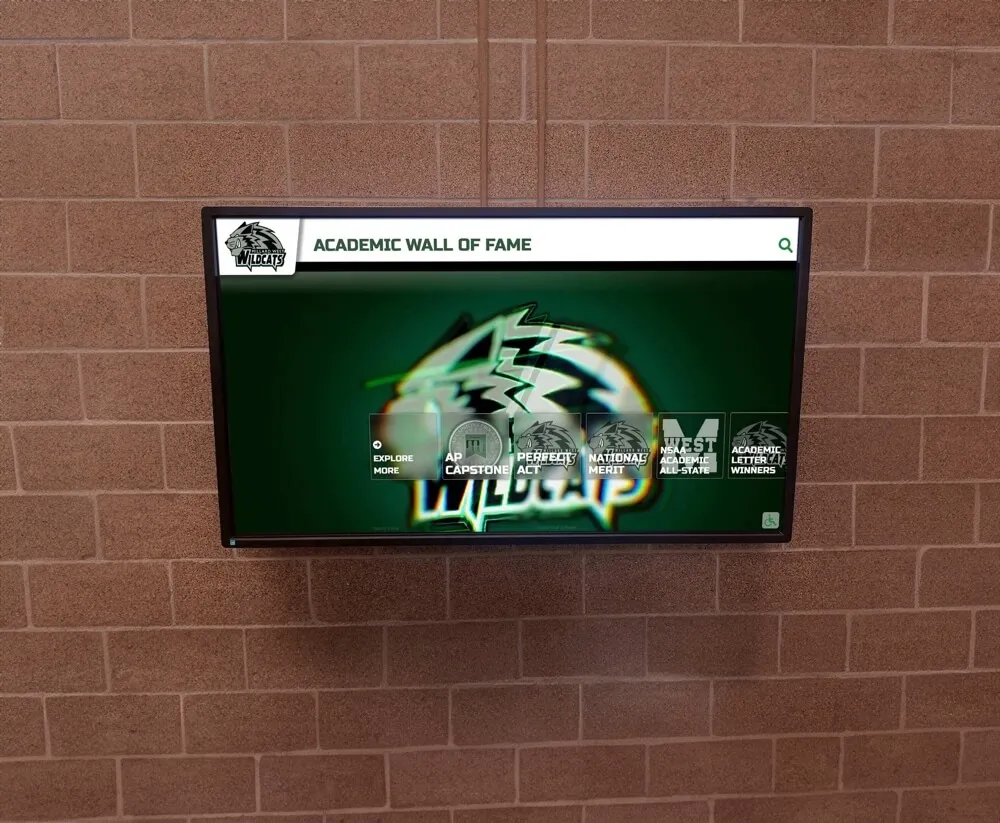
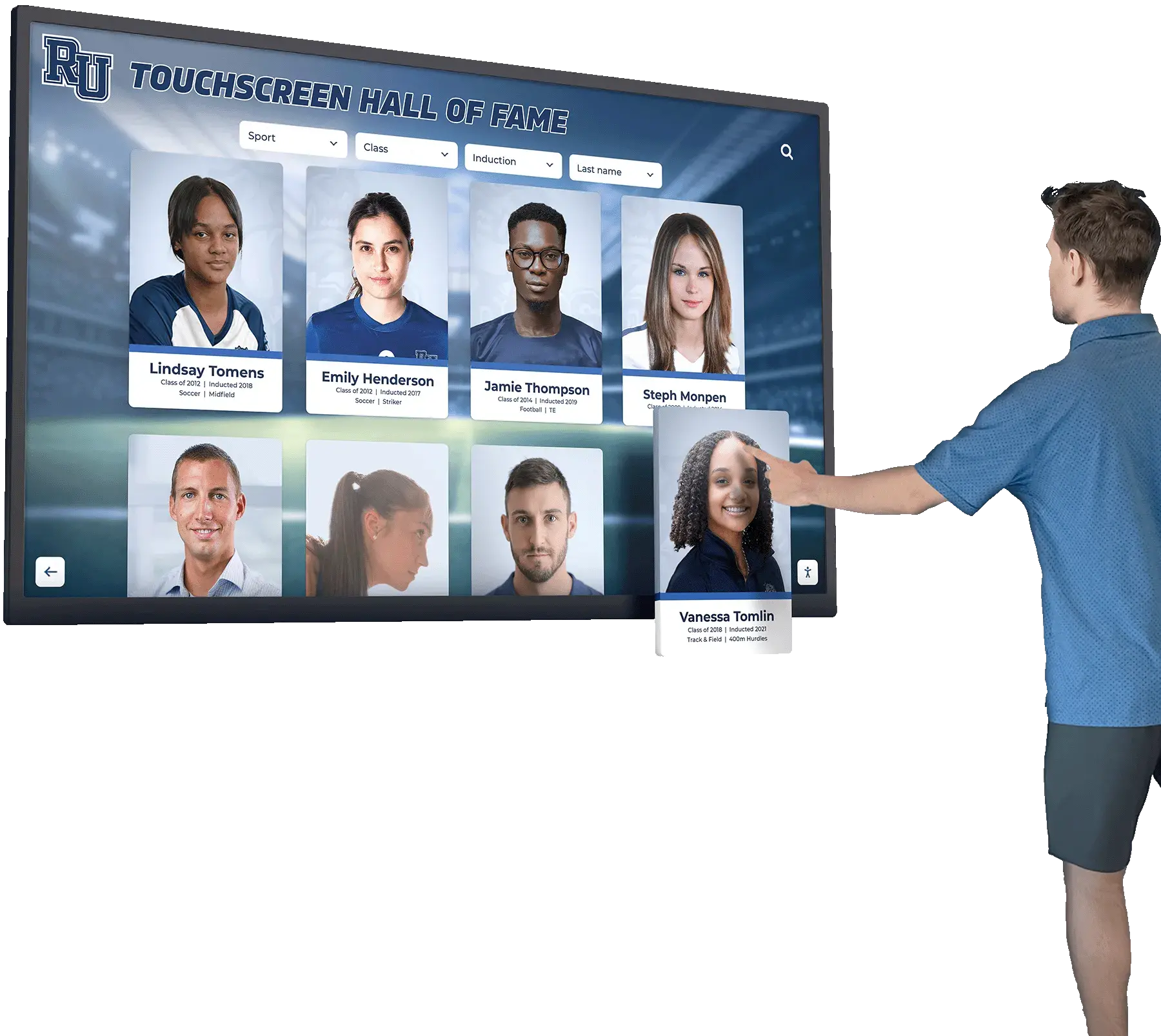
Touchscreen interfaces invite engagement through:
- Search functions finding specific swimmers or events
- Filtering by stroke, distance, gender, or year
- Photo galleries browsing through program history
- Video playback of championship races
- Statistical comparisons across different eras
- Personal record progression tracking
Interactive exploration transforms passive displays into engaging experiences where swimmers, families, and visitors actively explore program history rather than glancing at static boards.
Mobile and Remote Accessibility:
Web-based viewing extends recognition beyond physical displays, allowing swimmers to share achievements with extended family through social media while alumni can access program information from anywhere in the world. This extended reach amplifies recognition impact far beyond natatorium visitors.
Remote accessibility proves particularly valuable for swimming where extended families often cannot attend away meets but want to celebrate achievements. Shareable digital profiles enable swimmers to quickly distribute their accomplishments through their personal networks.
Lower Long-Term Costs:
While digital systems require higher initial investment ($8,000-18,000 typically for swimming facility installations), they eliminate ongoing per-update costs that accumulate with traditional systems. Most programs achieve cost neutrality within 4-6 years while gaining dramatically superior capabilities.
Over 15 years, total costs often favor digital systems even before considering the additional benefits of unlimited capacity, instant updates, and rich multimedia content.
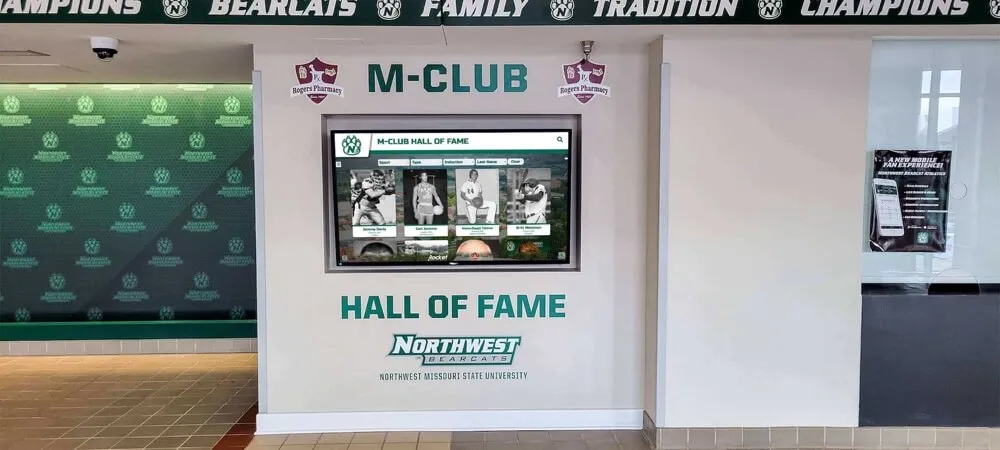
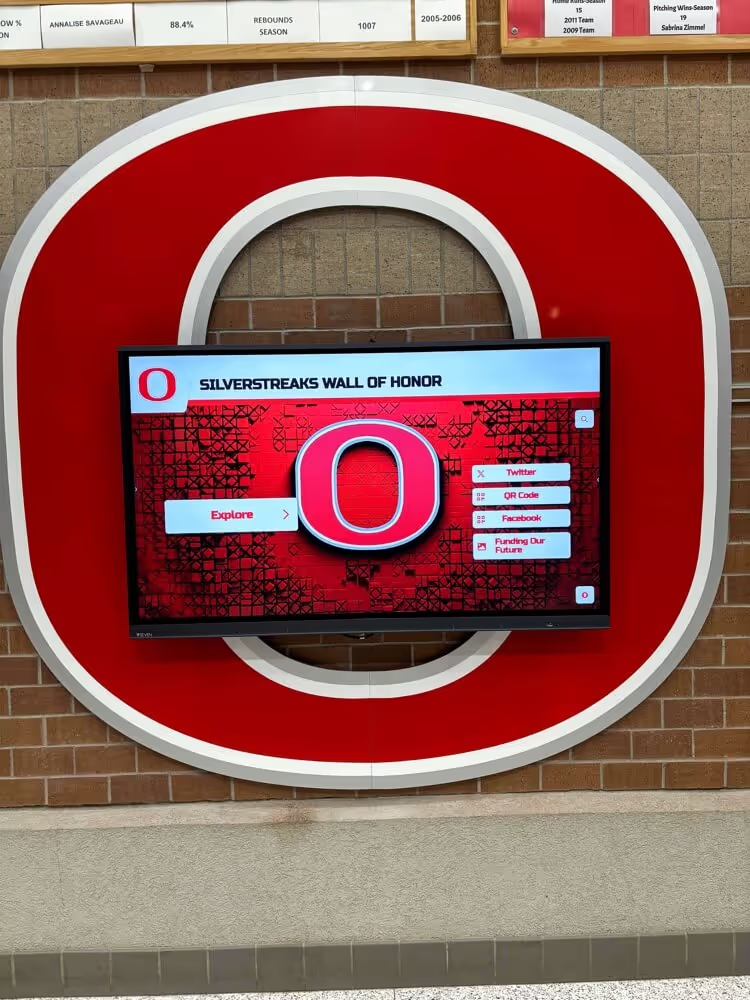
Solutions like Rocket Alumni Solutions digital record displays provide purpose-built platforms designed specifically for school athletic recognition rather than generic digital signage systems requiring extensive customization.
Creating Recognition Ceremonies for Swimming Achievements
Beyond static displays, programs should create memorable moments when swimmers achieve significant milestones.
Season-End Recognition Programs
Comprehensive season-end celebrations honor diverse achievements:
Awards Banquet Structure:
Most swimming programs host season-end banquets including:
- Welcome remarks from head coach or athletic director
- Season highlights video showing memorable races
- Individual award presentations with achievement descriptions
- Record-breaker recognition with context about previous records
- State qualifier acknowledgment celebrating competitive success
- Academic achievement recognition for scholar-athletes
- Leadership awards and team captain recognition
- Senior recognition honoring departing swimmers
- Coaches’ remarks about program culture and future goals
Banquets create formal settings where achievements receive appropriate ceremony rather than quick announcements during practice or meets. Families attend specifically to celebrate their swimmers, creating memorable experiences strengthening program community.
Physical Recognition Items:
Tangible awards swimmers treasure permanently:
- Engraved plaques for record holders
- Medals or trophies for most valuable swimmers
- Certificates recognizing state qualifiers
- Academic all-conference certificates
- Team photo prints for all participants
- Custom apparel recognizing specific achievements
- Commemorative items acknowledging senior contributions
Physical items create lasting memories while providing visible reminders of achievement that swimmers display in homes for years following high school graduation.
Real-Time Recognition During Season
Immediate acknowledgment amplifies motivational impact:
Meet-Time Recognition:
When records fall or significant achievements occur during meets:
- Public address announcement as achievement occurs
- Scoreboard graphic displaying the new record
- Brief acknowledgment after race conclusion
- Team celebration with coaches and teammates
- Social media posts during or immediately after meets
- Photo opportunities capturing the moment
This immediate validation creates powerful emotional experiences swimmers remember for life, reinforcing achievement significance through prompt recognition while competitive energy remains high.
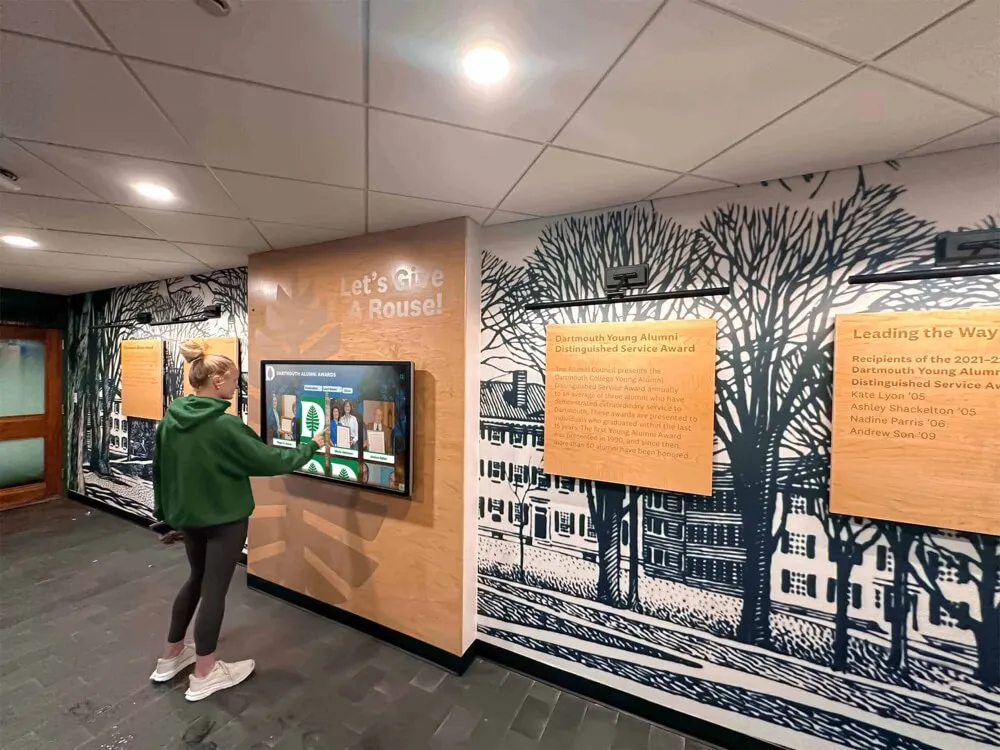
Digital Display Integration:
Coordinate recognition with display updates:
- Feature the achiever prominently on touchscreen displays within 48 hours
- Display career statistics and achievement context
- Capture recognition photos for immediate addition to swimmer’s digital profile
- Create shareable social media graphics
- Update record boards to include the achievement immediately
- Provide QR codes linking to swimmer’s digital profile for easy family sharing
Programs implementing comprehensive digital recognition systems report that integrated approaches combining immediate verbal recognition with prompt digital updates create the most meaningful experiences.
Budget Considerations and Funding Strategies
Understanding costs and identifying funding sources enables programs to implement comprehensive record recognition systems.
Digital Recognition System Investment
Hardware Investment Ranges:
Swimming facility installations typically involve:
- Entry-level system (43-50" touchscreen display): $5,000-8,000 installed
- Standard system (55-65" display): $8,000-12,000 installed
- Premium system (70-86" display): $15,000-22,000 installed
- Multi-display configuration: Costs scale with number of screens
Pool facility environments require ruggedized hardware specifications including enhanced humidity resistance, temperature tolerance, and protective enclosures preventing chlorine exposure damage. These environmental protections increase costs compared to standard school lobby installations but prove essential for longevity in natatorium settings.
Software and Services:
- Cloud-based content management platform: $1,500-3,000 initial setup
- Annual subscription: $800-1,500 including updates and support
- Content development assistance: $1,000-4,000 depending on historical scope
- Training and ongoing technical support: Often included in subscription
- Professional photography services: $500-1,500 for comprehensive session
Long-Term Cost Comparison Analysis:
Traditional system 15-year total cost:
- Initial board fabrication and installation: $5,000-10,000
- Annual updates (records, state qualifiers, conference champions): $800-2,500 × 15 years = $12,000-37,500
- Replacement sections when capacity reached: $2,000-5,000
- Total: $19,000-52,500 with limited capacity and delayed updates
Digital system 15-year total cost:
- Initial hardware and software investment: $10,000-14,000
- Annual software subscription and support: $800-1,500 × 15 years = $12,000-22,500
- Hardware refresh at year 10: $8,000-12,000
- Total: $30,000-48,500 with unlimited capacity, instant updates, and rich multimedia
Digital systems achieve comparable or lower long-term costs while providing dramatically superior recognition capabilities, lower maintenance burden, and enhanced engagement features.
Funding Sources for Swimming Recognition
Booster Club Support:
Swimming booster clubs frequently fund facility improvements and recognition systems supporting athlete motivation. Present digital displays as investments enhancing program culture, recruitment advantages, and competitive positioning.
Boosters appreciate that digital systems recognize more swimmers comprehensively rather than favoring only top record holders, creating inclusive cultures where all participants receive acknowledgment.
Alumni Donations and Giving Campaigns:
Former swimmers often enthusiastically support recognition projects, especially when their own achievements will be honored. Create opportunities for:
- Naming rights for displays sponsored by graduating classes
- Dedicated content sections honoring specific championship teams
- Recognition levels for various donation amounts
- Memorial gifts honoring deceased coaches or swimmers
Grant Opportunities:
Swimming programs can pursue:
- State athletic association grants for facility improvements
- Educational technology grants supporting interactive learning tools
- Community foundation grants for youth development programs
- Corporate foundation grants for educational institutions
Budget Reallocation:
- Discontinue purchase of traditional plaques with ongoing costs
- Redirect trophy and physical award budget toward comprehensive digital recognition
- Reduce spending on replaceable physical displays requiring constant maintenance
- Consolidate multiple sport-specific recognition budgets into unified system
Many schools find that digital recognition systems serve multiple sports programs through single installations, enabling cost-sharing arrangements where swimming shares facility with other natatorium sports like diving or water polo.
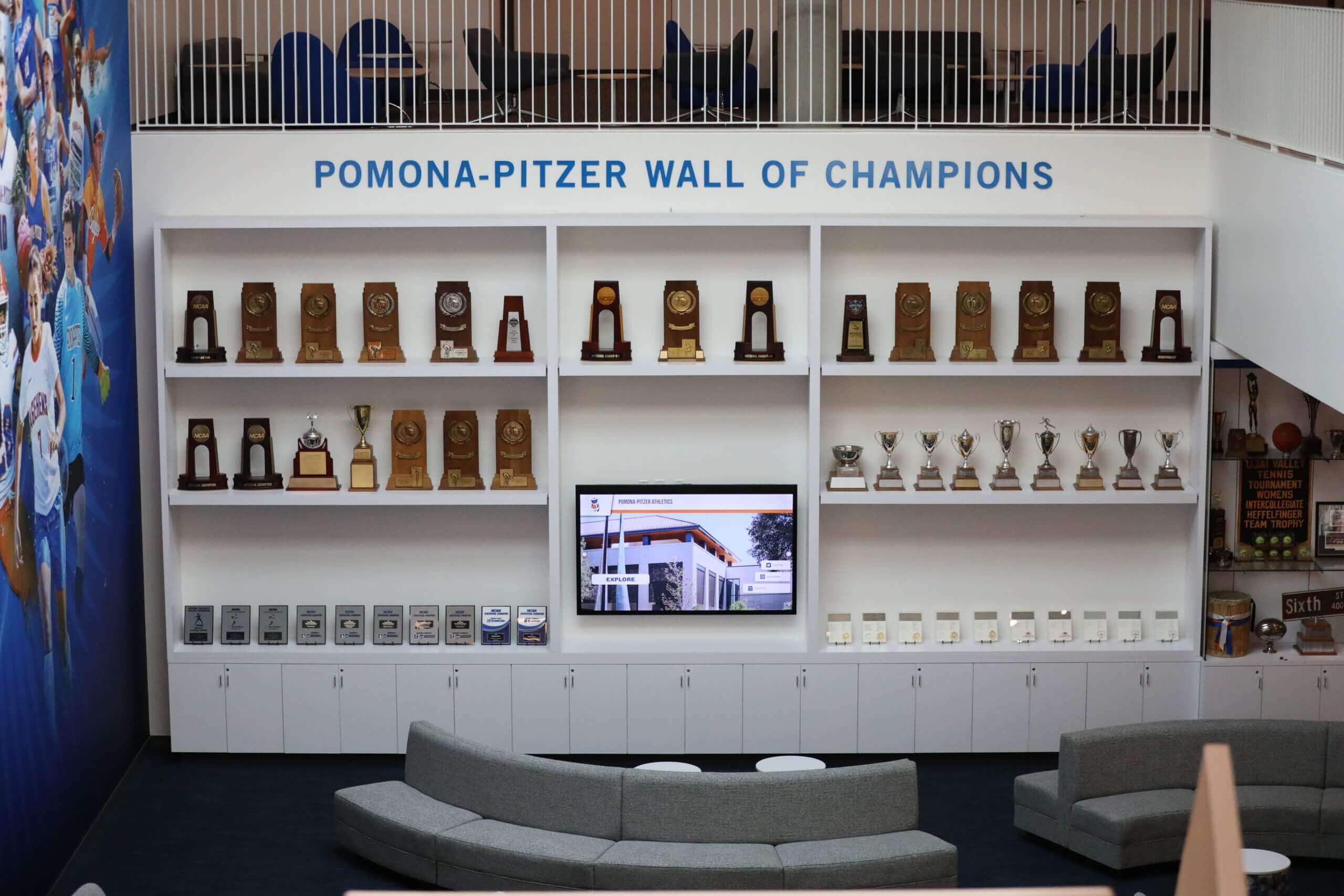
Beyond Records: Comprehensive Swimming Recognition
While records represent significant achievements, comprehensive recognition programs celebrate diverse accomplishments ensuring all contributors receive appropriate acknowledgment.
Multi-Level Recognition Systems
Varsity Excellence:
Traditional record categories for top-level performers remain important foundation, but comprehensive systems extend beyond varsity-only focus.
Junior Varsity and Developmental Recognition:
Many programs limit recognition to varsity achievements, missing opportunities to motivate developing swimmers:
- JV season-best times by event
- Most improved swimmers at sub-varsity levels
- JV meet scoring leaders
- Swimmers making successful transitions from JV to varsity
- Developmental milestones showing significant time improvements
Recognizing success at all competitive levels demonstrates commitment to swimmer development while providing motivation for athletes not yet ready for varsity-level impact.
Academic-Athletic Excellence:
The most effective programs integrate athletic recognition with academic acknowledgment:
- Academic all-conference and all-state selections
- Scholar-athlete awards maintaining specific GPA thresholds
- Team cumulative GPA achievements by season
- National Honor Society members who also swim
- Academic improvement recognition for swimmers raising grades
Schools implementing comprehensive student achievement recognition create inclusive cultures where excellence across all dimensions receives appropriate visibility.
Leadership and Character Recognition:
- Team captains and leadership roles by season
- Sportsmanship award winners
- Community service participation
- Teammate-voted inspirational swimmer awards
- Resilience awards for athletes overcoming injuries
- Program ambassadors excelling in representing team values
Four-Year Commitment Recognition:
Swimming demands exceptional time commitment with early-morning practices, afternoon training sessions, and weekend meets spanning entire seasons. Recognizing four-year participants acknowledges dedication even when they don’t achieve record times or state championships:
- Four-year varsity letter winners
- Perfect attendance recognition
- Career participation milestones
- Senior class contributions to program culture
Alumni Career Tracking and Extended Recognition
Extend recognition beyond high school demonstrating long-term program impact:
College Career Updates:
- Alumni currently swimming at college levels
- College statistical achievements and conference honors
- Academic achievements including degree completion
- College championship participation
Professional and Life Achievements:
- Alumni swimming professionally
- International competition participation
- Post-swimming career accomplishments
- Community leadership and notable contributions
This extended tracking demonstrates program impact extending decades beyond high school while maintaining valuable alumni connections for mentorship, donations, and program support.
Conclusion: Building Swimming Excellence Through Comprehensive Recognition
High school swimming records serve as powerful tools for program building, athlete motivation, historical preservation, and community engagement. From individual event excellence to relay team coordination, from championship performances to developmental improvements, comprehensive record-keeping creates tangible connections between past achievements, present excellence, and future aspirations.
Traditional physical record boards served swimming programs adequately for generations, but modern digital recognition systems dramatically enhance what’s possible. Unlimited capacity enables honoring every achievement worth acknowledging rather than making difficult choices about which accomplishments to display. Instant updates ensure timely celebration when excitement remains high. Rich multimedia content tells complete stories beyond simple times. Interactive interfaces invite exploration impossible with static displays.
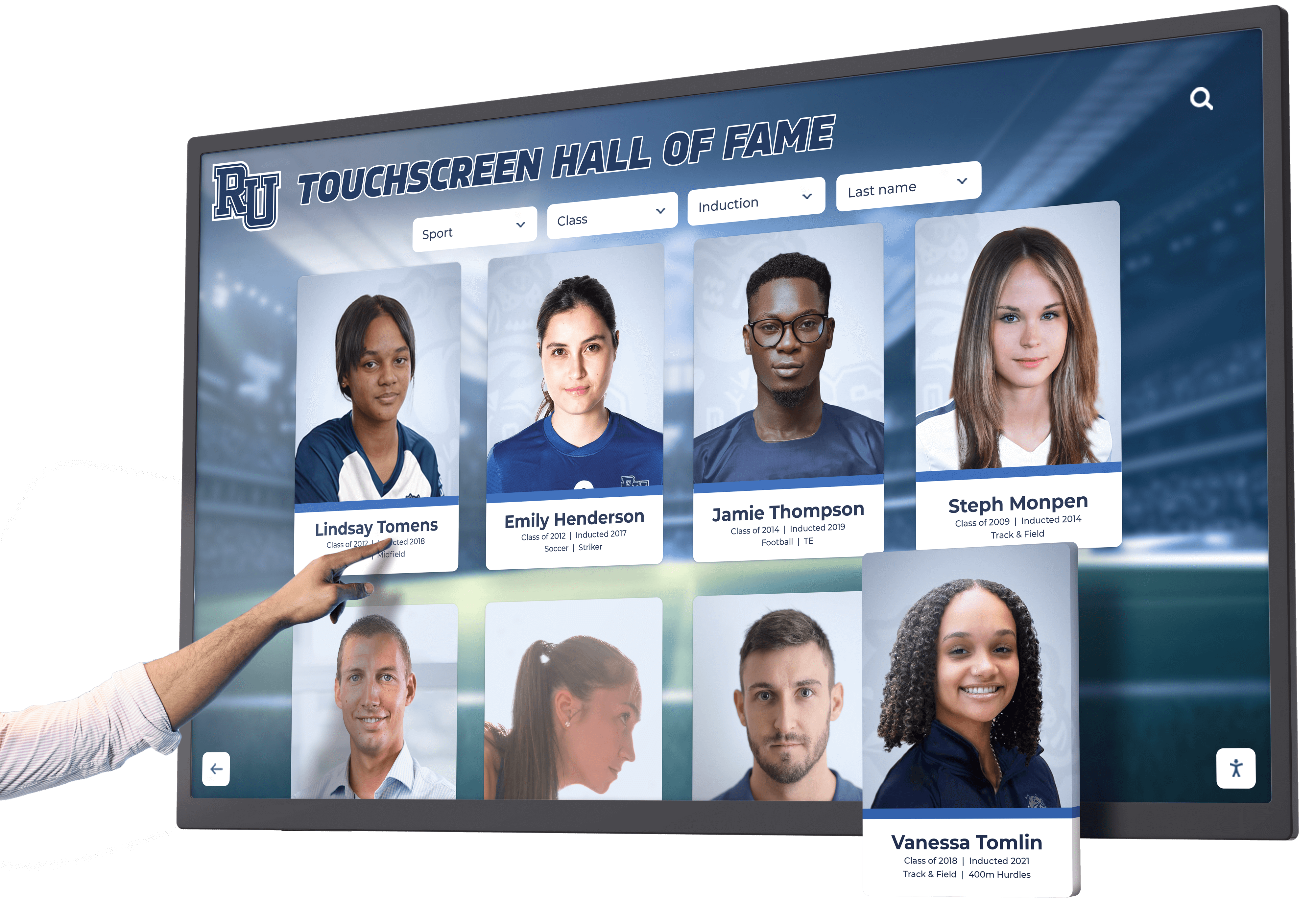
The most successful swimming recognition programs share common characteristics: they track diverse achievement categories beyond just record times, maintain accurate verified records using official timing systems, present information professionally through appropriate technology, create memorable recognition ceremonies connecting emotion to achievement, and leverage recognition strategically to build program culture and motivate current swimmers.
Whether your school operates a small developing program or comprehensive swimming department with deep competitive traditions, whether budget allows immediate comprehensive implementation or requires phased multi-year approaches, effective swimming record recognition delivers measurable value through enhanced athlete motivation, preserved institutional history, strengthened program identity, improved recruitment, and deeper community connections.
Transform Your Swimming Records Recognition
Modern solutions like those from Rocket Alumni Solutions enable schools to honor swimming excellence through intuitive digital recognition platforms designed specifically for athletic programs. These systems combine unlimited recognition capacity with simple content management, creating professional displays that inspire current swimmers while preserving program history for future generations.
Stop limiting recognition to what fits on finite wall space. Stop waiting weeks or months for manual updates to traditional displays after championship season concludes. Stop maintaining deteriorating physical boards in humid pool environments requiring constant replacement. Modern digital swimming recognition displays provide comprehensive solutions honoring achievement while motivating current and future swimmers through visible proof that excellence receives lasting acknowledgment.
Visit Rocket Alumni Solutions to explore how digital recognition transforms swimming achievement celebration from static displays into engaging experiences that inspire excellence across generations of swimmers. Your program’s achievements deserve recognition matching their significance—permanent, professional, powerful, and accessible to swimmers, families, and communities who make competitive swimming programs thrive.