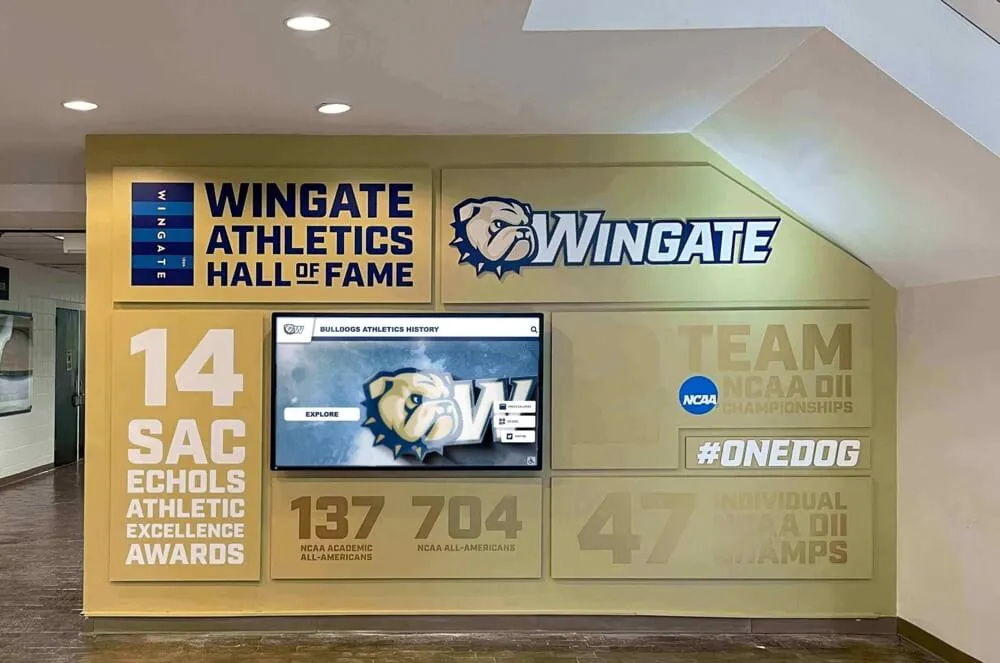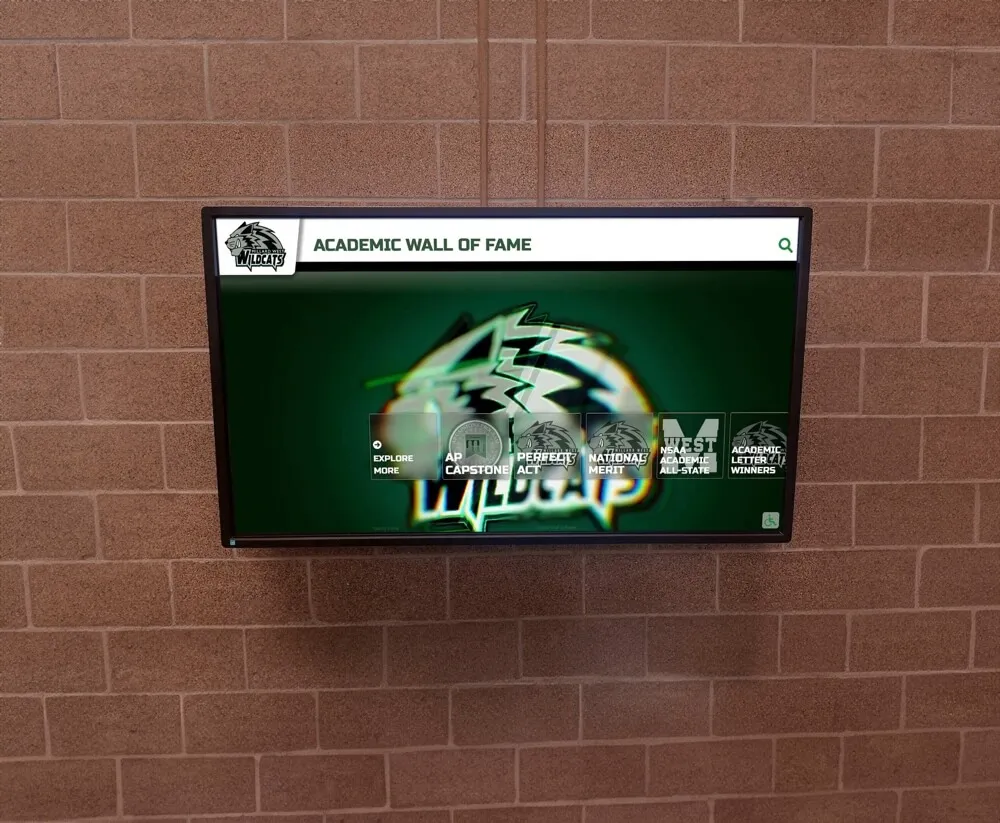




Key Takeaways
Compare the best digital showcase solutions for recognizing perfect attendance. Evaluation criteria, vendor scoring, and decision frameworks to help schools choose the right recognition platform.
Perfect attendance represents one of the most achievable yet underappreciated forms of student recognition in high schools. While schools invest heavily in athletic trophies and academic honor roll displays, consistent attendance—a fundamental predictor of student success—often receives minimal visibility through printed certificates or brief announcements. This comparison guide evaluates digital showcase solutions designed specifically for perfect attendance recognition, providing evaluation committees with scoring criteria, vendor comparisons, and decision frameworks to select platforms that maximize student motivation while meeting institutional requirements for accessibility, content management, and long-term sustainability.
Perfect attendance programs serve multiple critical functions within high school environments. Research consistently demonstrates that attendance correlates directly with academic achievement, graduation rates, and post-secondary success. Students with perfect attendance develop discipline, time management skills, and commitment that extend far beyond classroom walls. Yet traditional recognition approaches—paper certificates filed away, names on bulletin boards for a few weeks, or brief mentions during quarterly assemblies—fail to create the sustained visibility and celebration that might influence attendance behaviors across broader student populations.
Digital showcase walls transform perfect attendance recognition from ephemeral acknowledgment into permanent, engaging celebration that honors committed students while motivating peers to improve their own attendance patterns. However, selecting appropriate technology requires careful evaluation of competing solutions across multiple dimensions including accessibility compliance, content management capabilities, hardware flexibility, data security, and ongoing support quality.
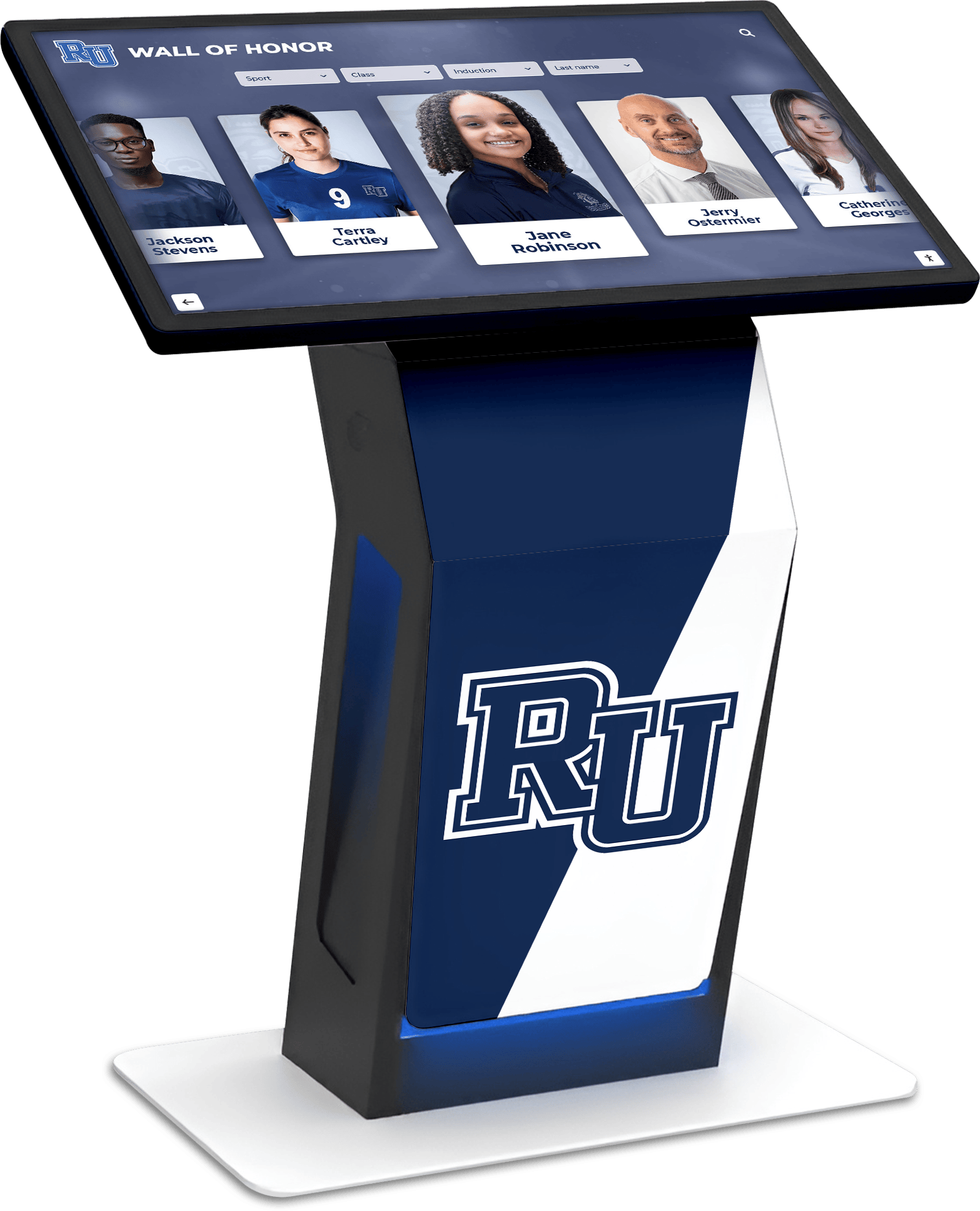
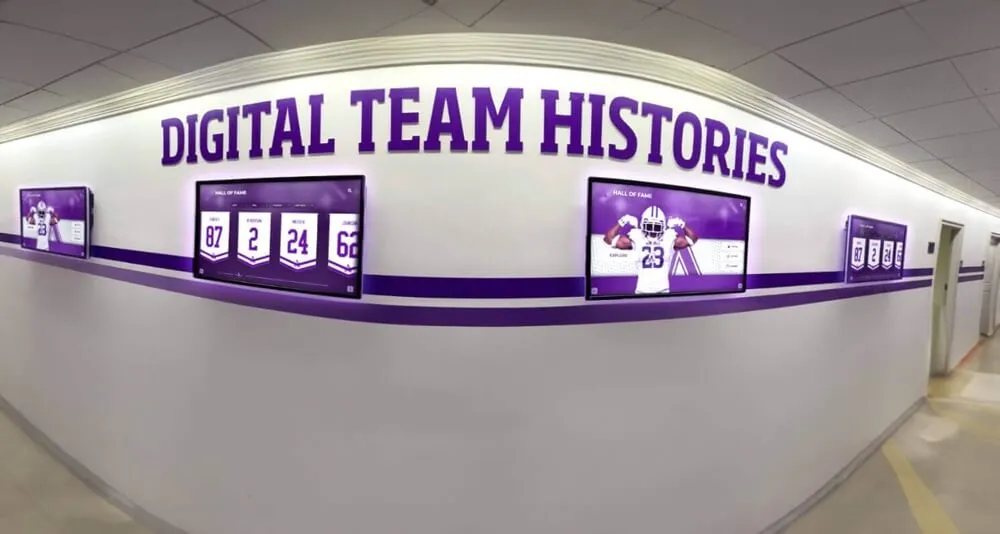
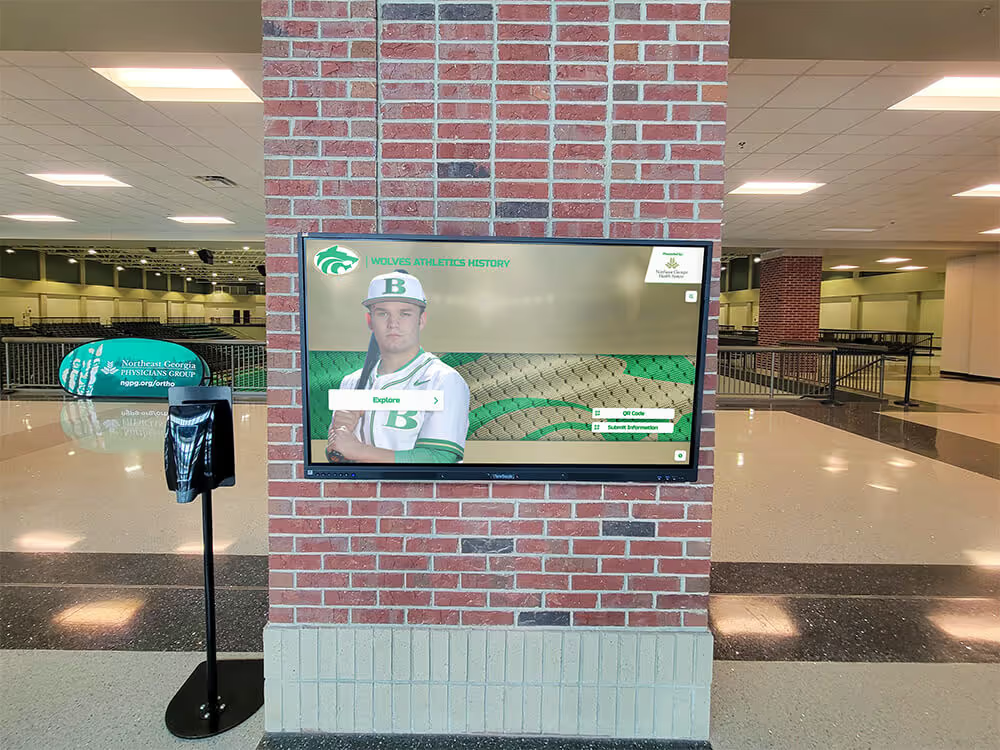
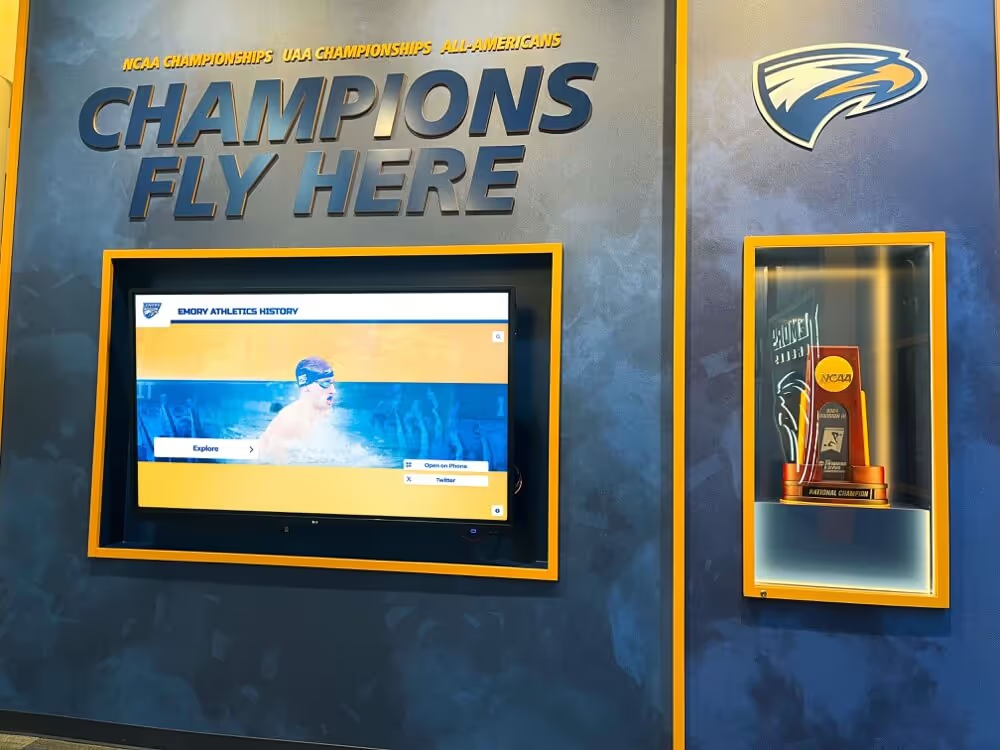
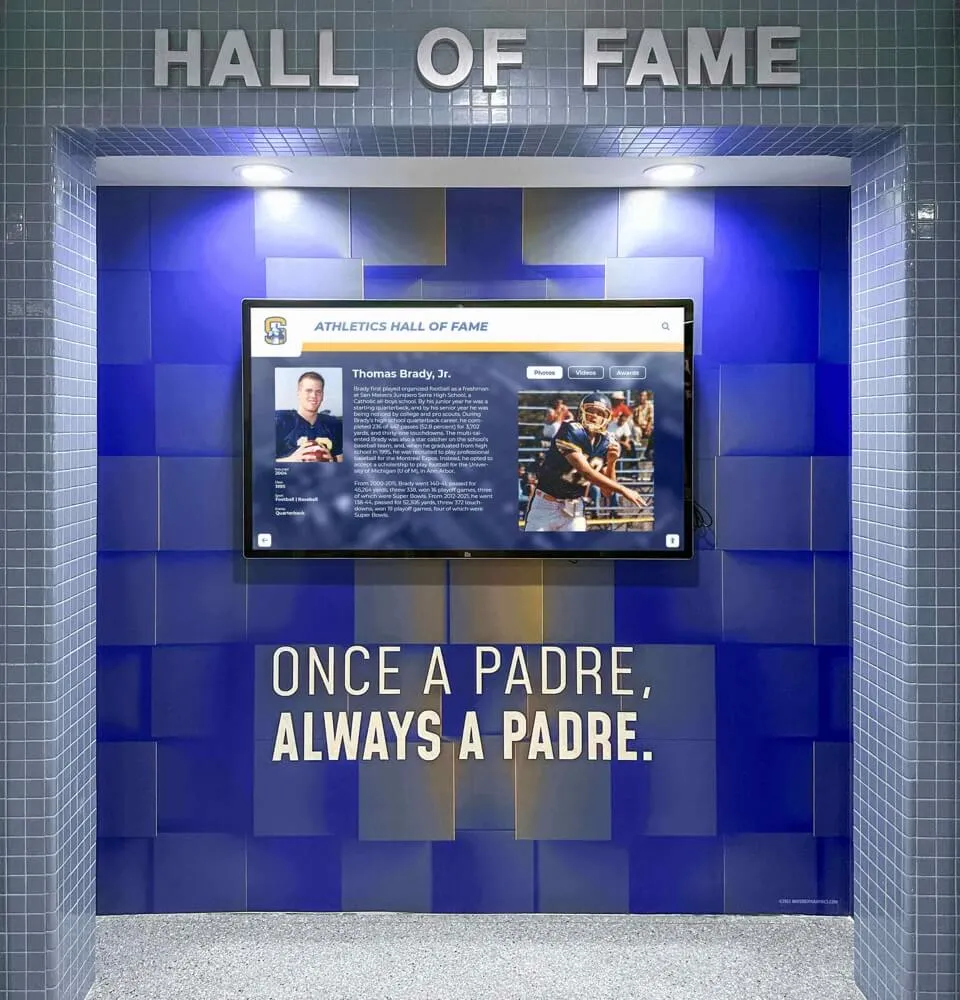
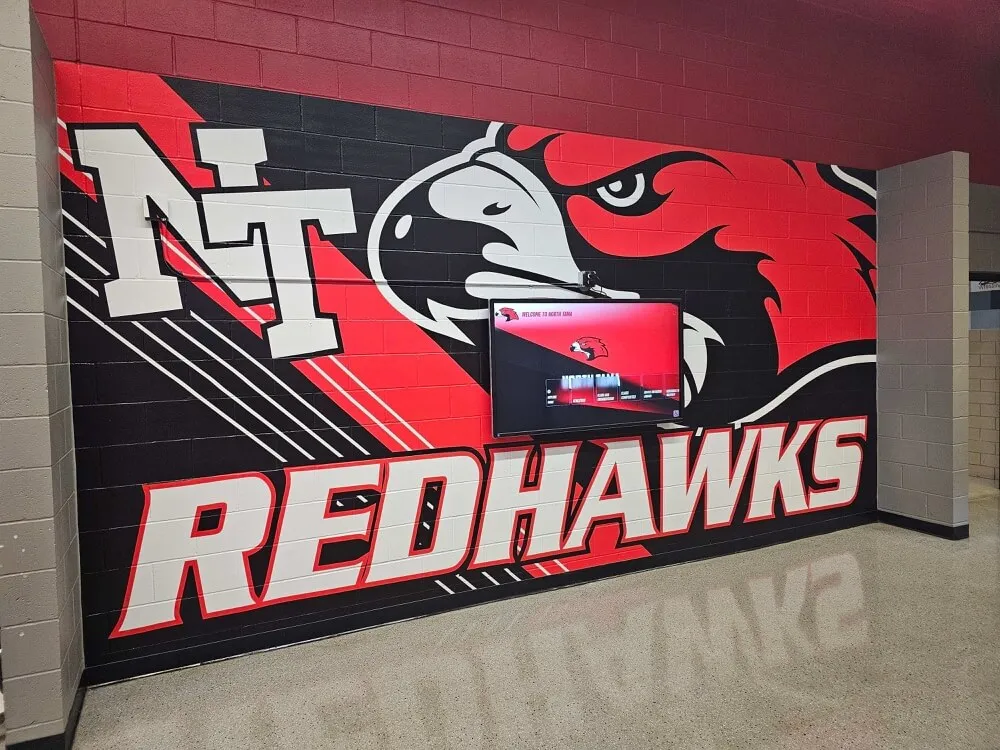
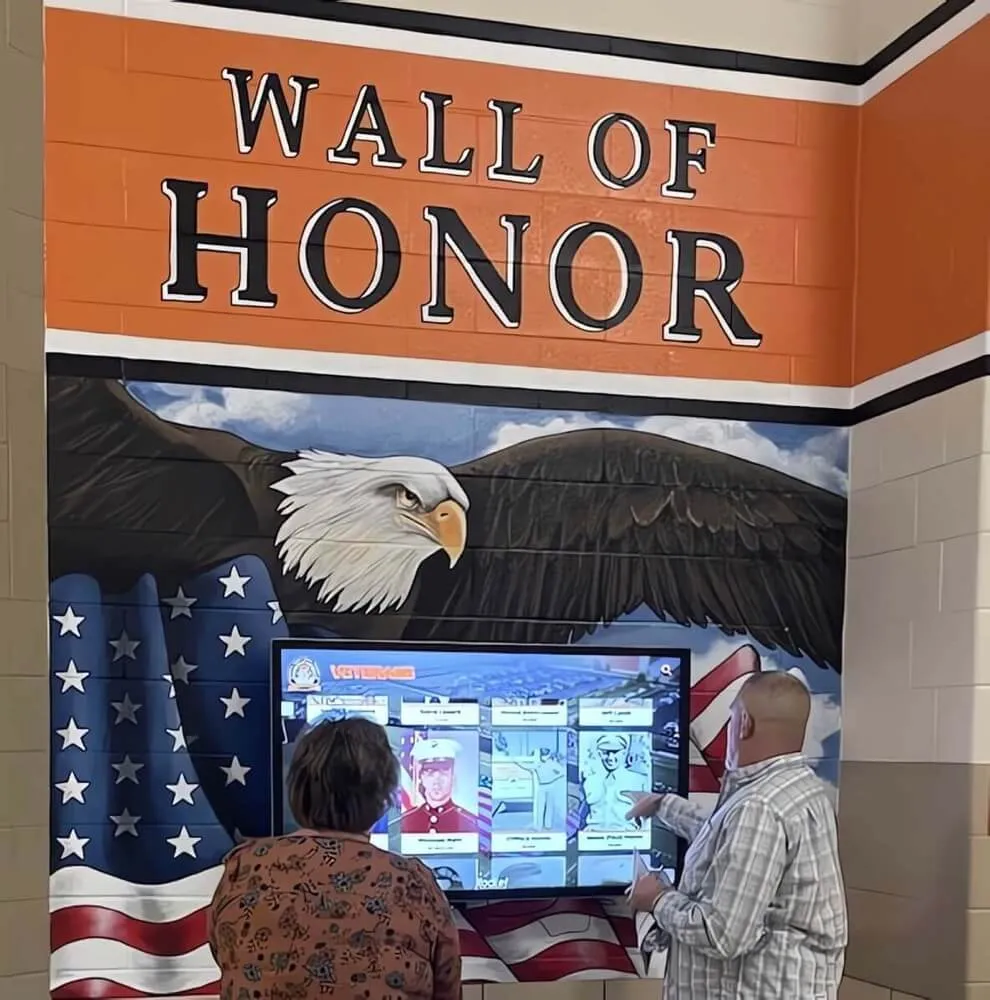
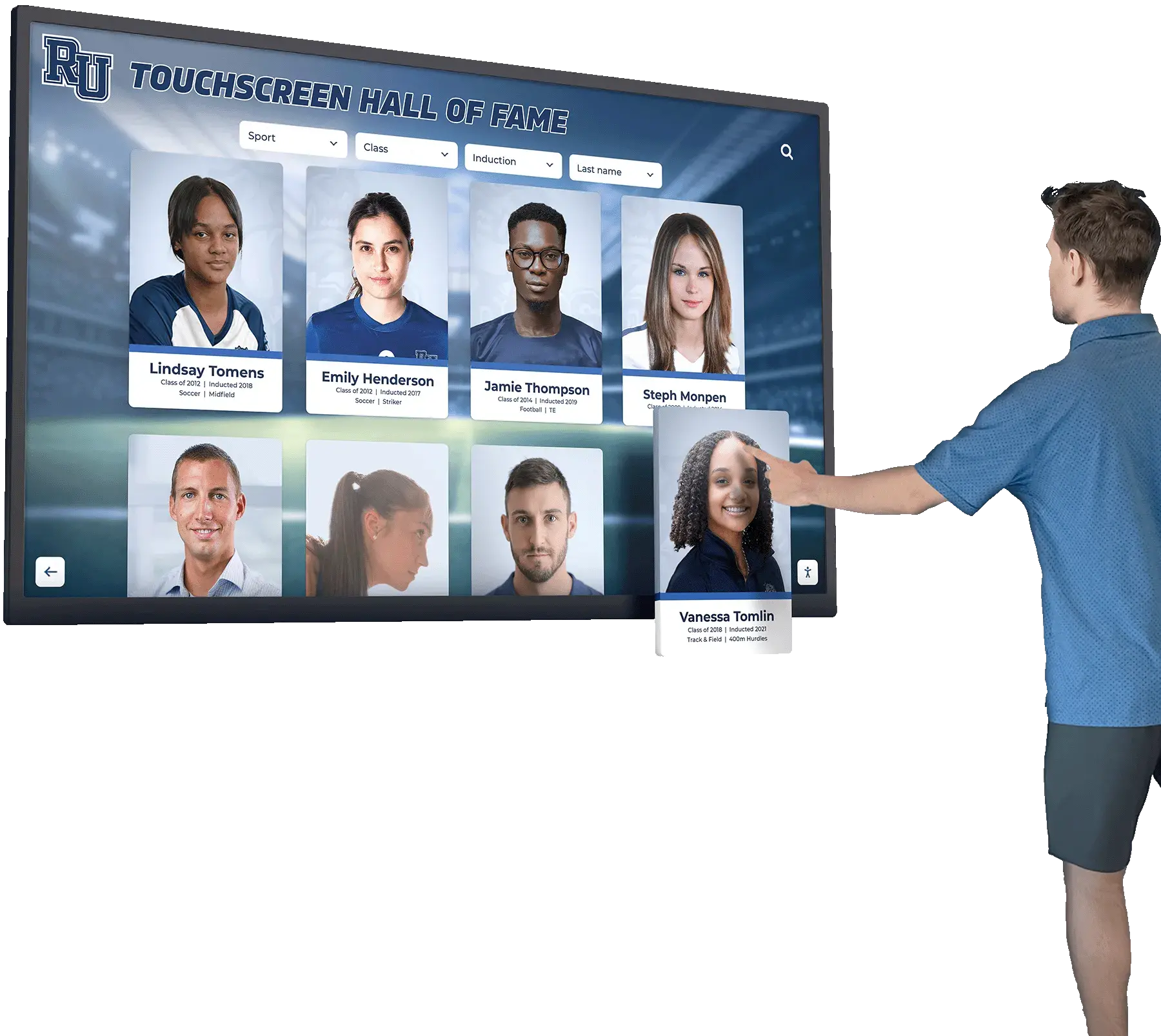
Modern digital recognition kiosks provide dedicated spaces for celebrating student achievements like perfect attendance.
Why Perfect Attendance Recognition Matters
Before comparing technology solutions, schools must understand why perfect attendance deserves prominent recognition comparable to academic honors and athletic achievements.
Attendance as Academic Success Predictor
Multiple research studies establish consistent attendance as one of the strongest predictors of academic achievement and graduation outcomes. According to national education research, students with consistent attendance demonstrate significantly higher standardized test scores, better course grades, improved graduation rates, and stronger post-secondary enrollment compared to peers with chronic absenteeism patterns.
Perfect attendance students model behaviors that contribute to academic success: punctuality, responsibility, time management, commitment to education, resilience through minor illness or inconvenience, and respect for institutional expectations. Recognizing these students validates the importance of consistent attendance while making these positive behaviors visible and aspirational for other students.
Current Challenges in Perfect Attendance Recognition
Despite its importance, perfect attendance recognition faces systematic underinvestment and visibility challenges:
Limited Recognition Scope Many schools recognize only end-of-year perfect attendance, missing opportunities to celebrate quarterly or semester achievements that might motivate continued consistency. Students who miss one day early in the academic year have no attendance recognition goal remaining, potentially contributing to continued absenteeism.
Insufficient Visibility Traditional recognition through certificates or brief announcements creates temporary acknowledgment rather than sustained celebration. Unlike athletic trophies displayed prominently in cases or academic honor rolls posted in hallways, perfect attendance recognition quickly disappears from community awareness.
Physical Space Constraints Schools using traditional plaques face capacity limitations as programs grow. A high school with 1,500 students might see 200+ students earning perfect attendance recognition annually. After just a few years, physical recognition walls exhaust available space, forcing difficult choices about which years to display or whether to rotate recognition, effectively removing honored students from visibility.
For schools addressing these traditional recognition limitations, digital perfect attendance display solutions provide comprehensive alternatives to physical plaques.
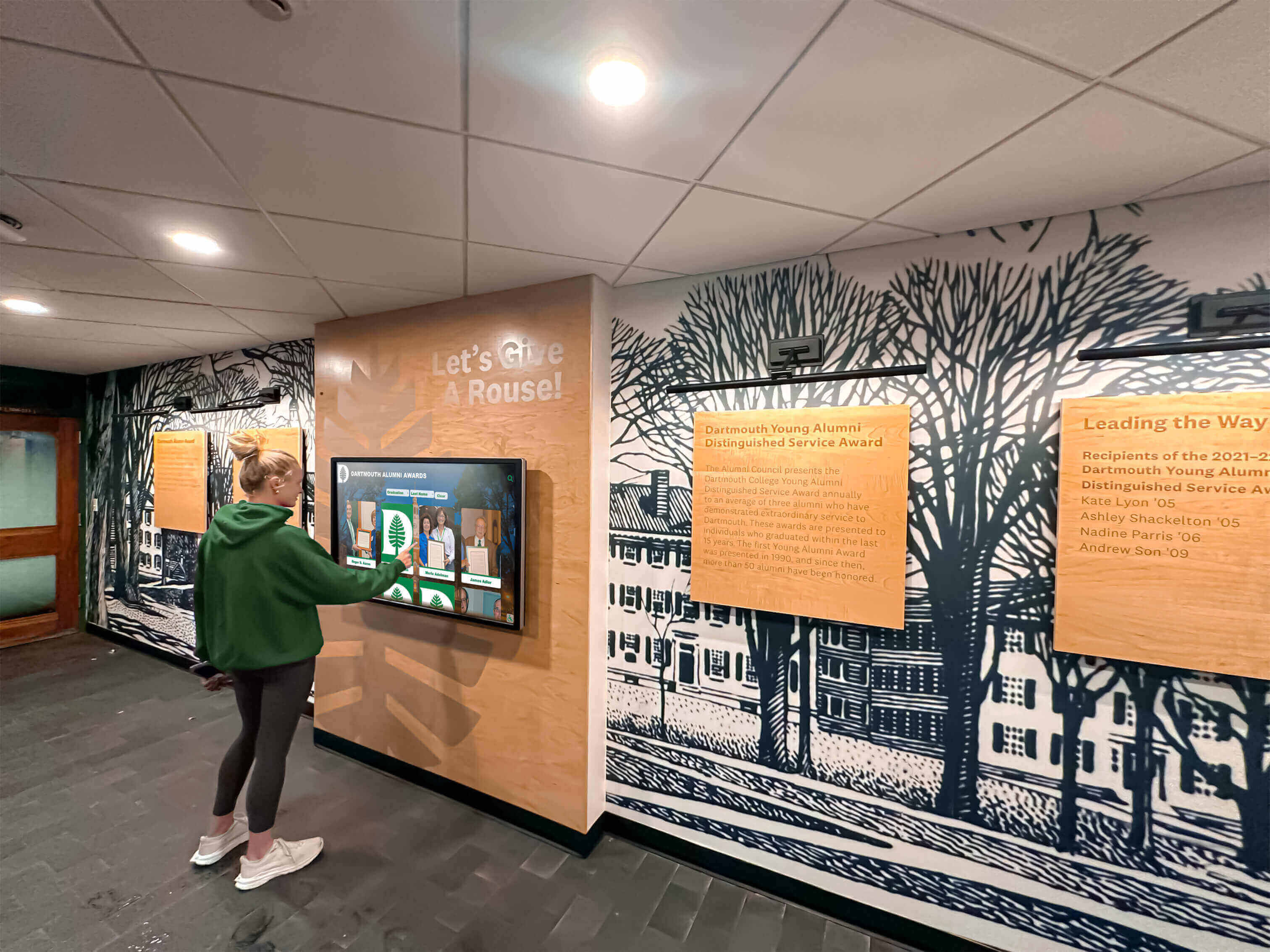
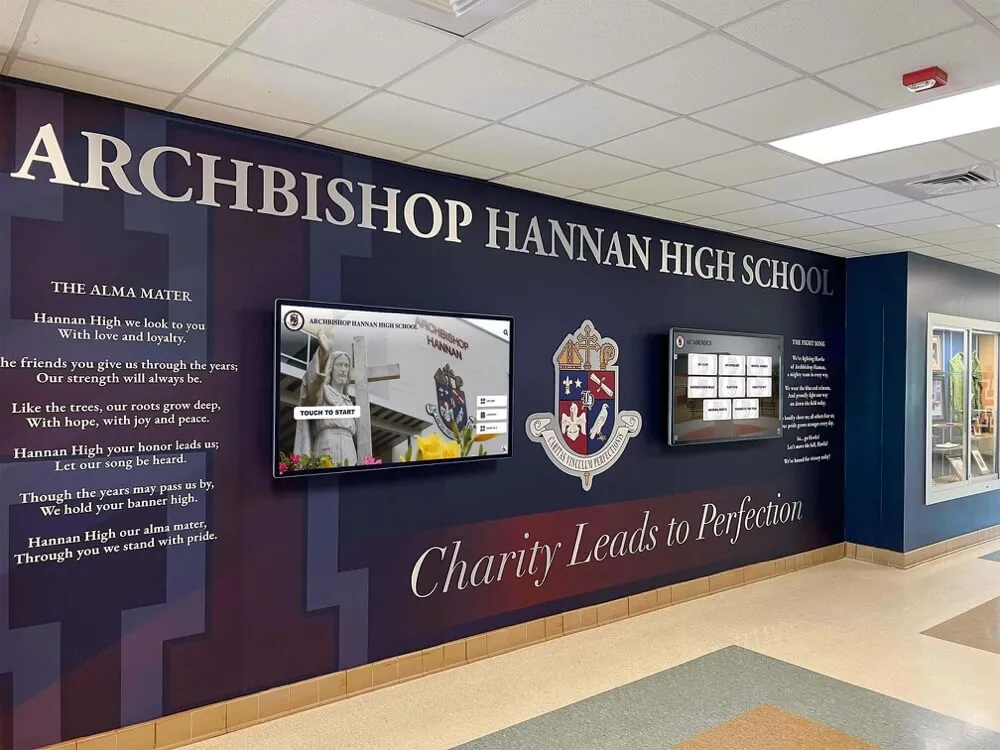
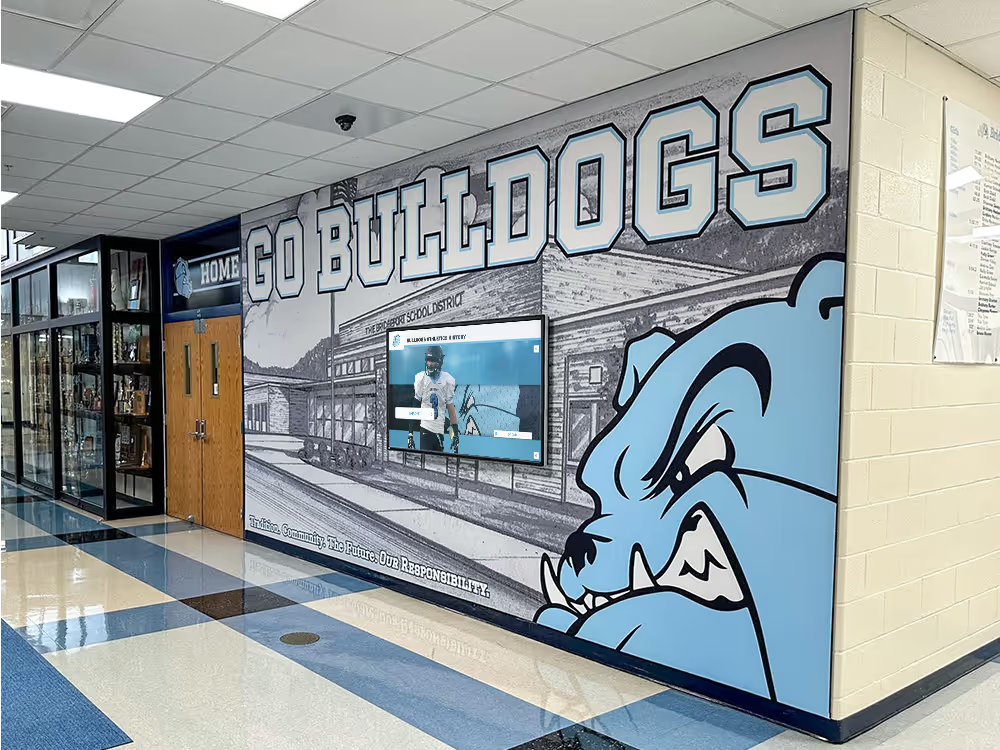
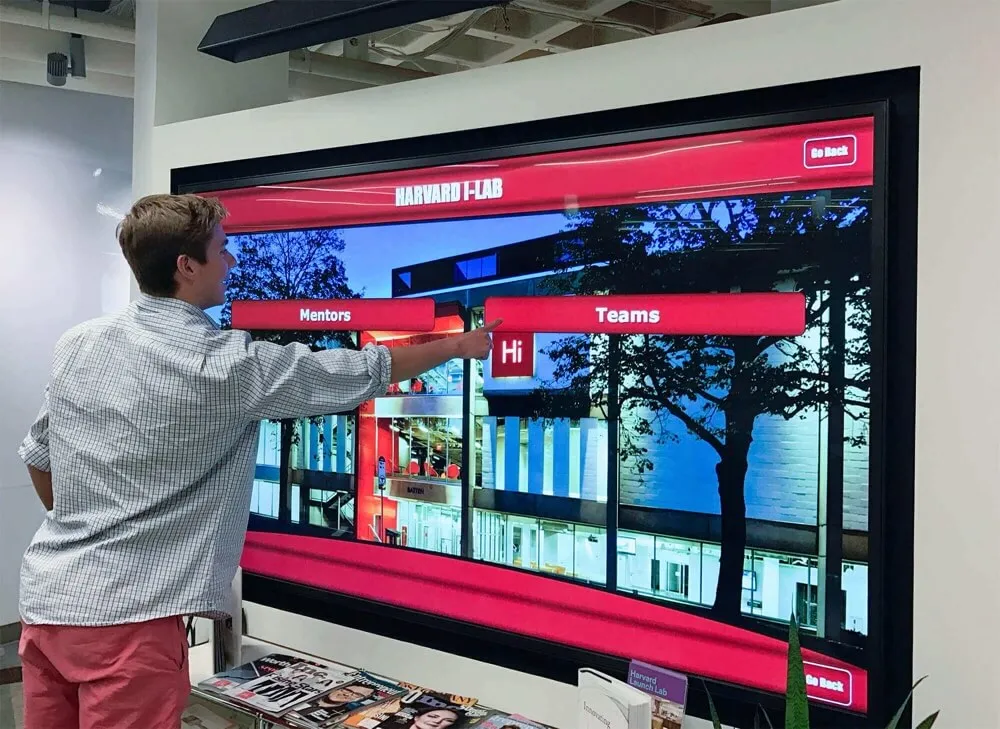
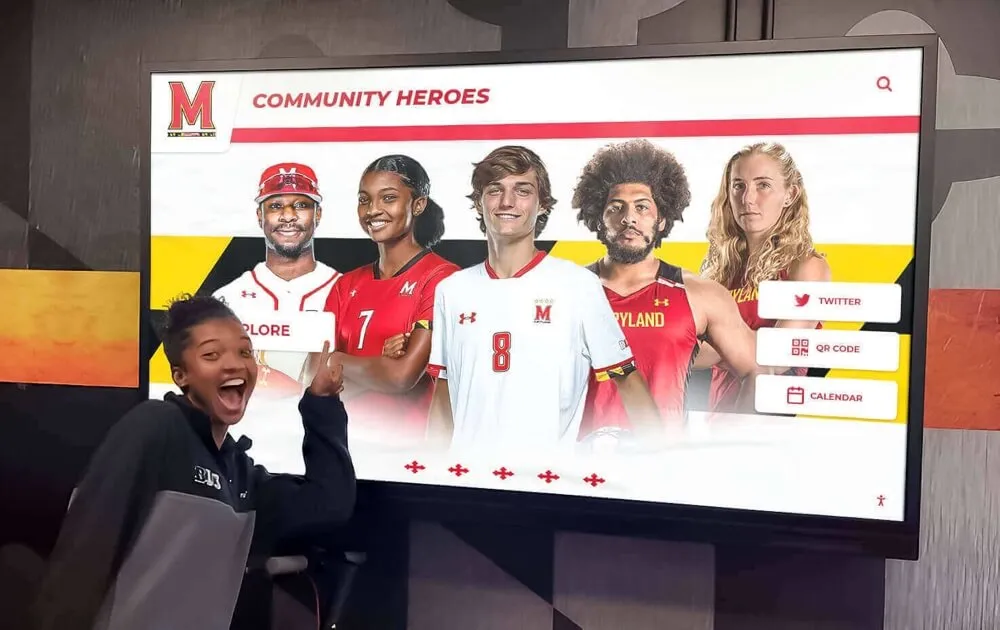
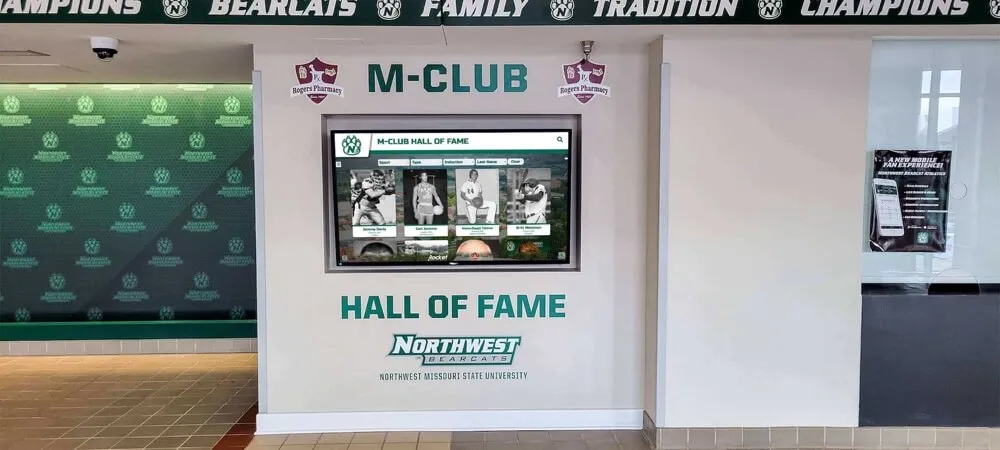
Interactive displays engage students in exploring achievements and discovering their peers’ accomplishments.
Critical Evaluation Criteria for Digital Showcase Solutions
Evaluation committees should assess perfect attendance recognition platforms across five weighted criteria that determine long-term program success, implementation sustainability, and actual usage by students and families.
1. ADA Compliance and Accessibility (Weight: 25%)
Federal accessibility requirements under ADA and Section 508 mandate that digital recognition systems remain accessible to users with disabilities. Schools face legal liability when public-facing technology excludes users, making verified compliance non-negotiable for any recognition platform selection.
Mandatory Accessibility Requirements:
- WCAG 2.1 Level AA compliance with third-party verification
- Screen reader compatibility for visually impaired users
- Keyboard navigation enabling full functionality without touch interaction
- Color contrast ratios meeting 4.5:1 minimum standards
- Adjustable text sizing without breaking layout or functionality
- Alternative text for all images and visual content
- Captions for video content featuring student voices or stories
Deal-Breaker: Any vendor unable to provide current WCAG 2.1 AA audit documentation from recognized accessibility testing organizations should be eliminated immediately. Generic claims of “accessibility” without verification create institutional risk and potential legal exposure.
Schools should request accessibility audit reports dated within the past 12 months, verification of assistive technology testing, and documentation of remediation processes for identified issues. Vendors that resist providing concrete accessibility evidence likely lack genuine compliance.
Learn more about ADA accessibility requirements for digital recognition displays to ensure your evaluation addresses all compliance factors.
2. Content Operations and Management (Weight: 25%)
Recognition programs succeed or fail based on content management ease. If adding new perfect attendance students, updating photos, or modifying information requires technical expertise or vendor support, recognition becomes outdated, staff grow frustrated, and programs lose effectiveness.
Essential Content Management Capabilities:
- Web-based CMS accessible from any device without software installation
- Intuitive interfaces usable by non-technical school staff
- Bulk upload capabilities for adding multiple students simultaneously
- Template systems ensuring consistent presentation without design work
- Scheduled publishing enabling advance preparation of quarterly updates
- Photo editing and cropping tools integrated within the platform
- Draft and preview modes for reviewing changes before publishing
- Version control and rollback for recovering from mistakes
- Multi-user access with appropriate permission levels by role
Evaluation Test: Request vendors to demonstrate the complete workflow for adding 50 new perfect attendance students including photos and achievement details. Time how long this process takes and assess whether your staff could perform it confidently. Platforms requiring more than 30 minutes for bulk additions or involving complex steps create operational friction that undermines program sustainability.
Consider comprehensive school history software solutions that integrate perfect attendance recognition with broader institutional history platforms.
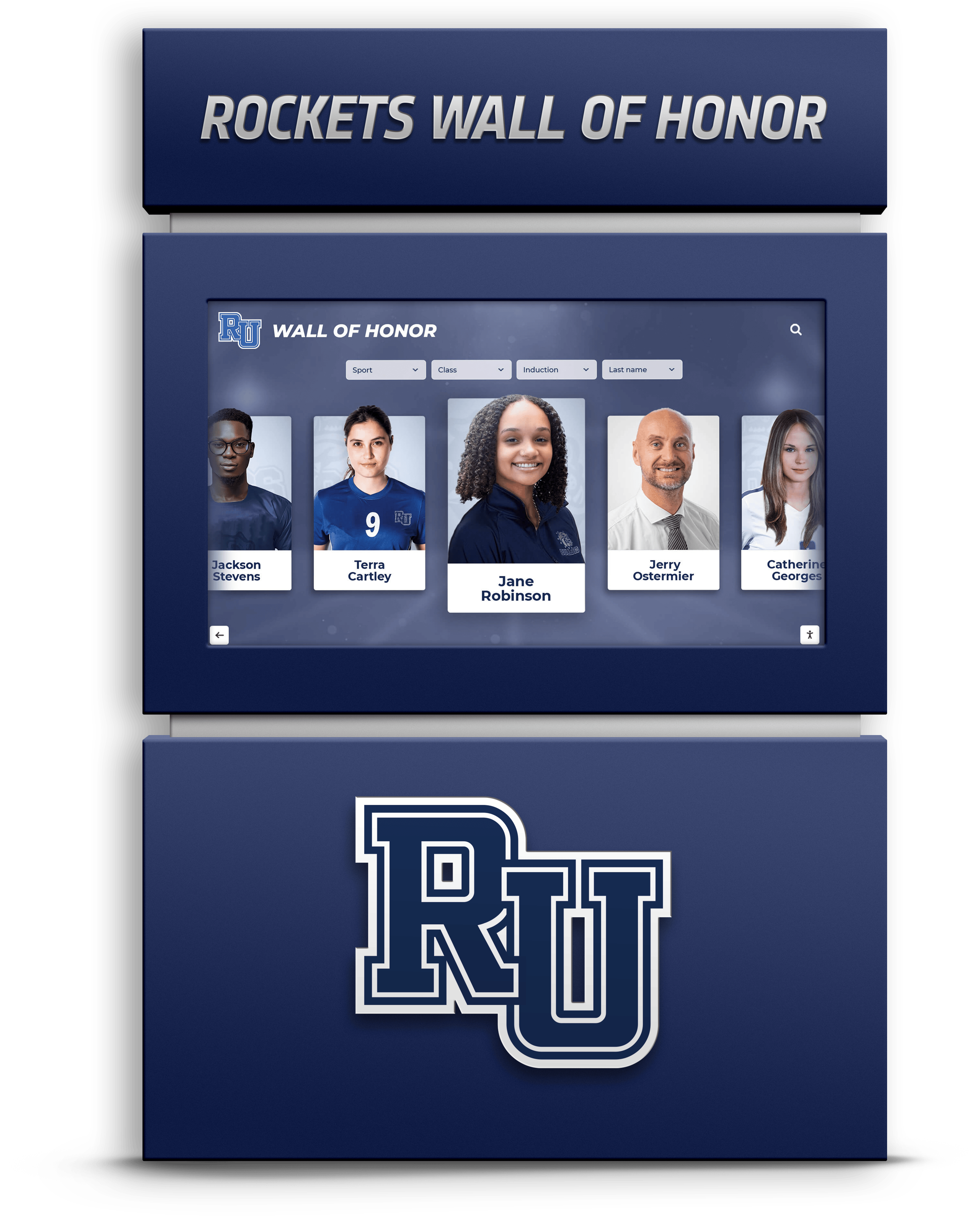
Purpose-built recognition platforms provide templates optimized for student achievement content and profiles.
3. Hardware Flexibility and Display Options (Weight: 20%)
Display hardware represents significant capital investment with 5-7 year expected lifespans. Some vendors lock schools into proprietary hardware at inflated prices, creating dependency and limiting options. Other solutions work with standard commercial displays available from multiple manufacturers, enabling competitive pricing and replacement flexibility.
Hardware Evaluation Factors:
- Compatibility with standard commercial displays from major manufacturers
- Support for various display sizes accommodating different installation spaces
- Portrait and landscape orientation flexibility based on location
- Touchscreen and non-interactive display options for different use cases
- Integration with existing school displays or digital signage infrastructure
- Clear hardware specifications enabling independent sourcing
- Installation services and guidance for mounting and configuration
Total Cost Consideration: Evaluate both software platform costs and hardware requirements. A platform with lower subscription fees but requiring expensive proprietary displays may cost significantly more over 5 years than higher-priced software working with standard commercial displays purchased competitively.
Calculate total five-year costs including initial hardware purchase, software subscription fees, hardware replacement or expansion, maintenance and support, and content development assistance. This comprehensive cost analysis reveals true price differences obscured by comparing only subscription fees.
For detailed analysis of hardware options, review best touchscreen display options for schools covering commercial display selection, sizing, and installation considerations.
4. Data Security and Privacy Protection (Weight: 20%)
Perfect attendance recognition involves student names, photos, grade levels, and potentially additional personal information. Schools have legal and ethical obligations to protect student data through appropriate security measures, creating requirements for any platform storing or displaying this information.
Data Security Requirements:
- Encryption for data in transit and at rest
- Role-based access control limiting editing permissions appropriately
- Secure authentication preventing unauthorized access
- Regular security audits and penetration testing
- FERPA compliance with documented policies and procedures
- Data backup and disaster recovery capabilities
- Clear data ownership and portability provisions
- Transparent privacy policies explaining data usage and protection
Red Flags: Vendors that cannot articulate specific security measures, rely on vague assurances about “secure systems,” or refuse to provide security audit documentation likely lack appropriate protections. Schools should request current security audit reports, penetration test summaries, and FERPA compliance documentation.
Additionally, evaluate what happens to school data if the vendor relationship ends. Can schools export complete data including photos and content? Does the vendor claim any ownership or usage rights to school content? Clear data ownership and portability provisions protect institutional investments in content development.
Understanding digital archives for schools helps contextualize perfect attendance recognition within broader data management strategies.
5. Support and Long-Term Viability (Weight: 10%)
Recognition platforms represent multi-year commitments. The best platform becomes worthless if the vendor discontinues the product, gets acquired and sunsets solutions, or provides inadequate support leaving schools unable to maintain recognition displays.
Support Evaluation Criteria:
- Response time commitments with documented SLAs
- Support channel options including phone, email, live chat
- Training programs for new staff as personnel changes occur
- Implementation assistance ensuring successful initial deployment
- Regular platform updates adding features and addressing issues
- Active user community and knowledge base resources
- Company financial stability and customer base size
- Product roadmap indicating continued development commitment
Due Diligence: Request customer references from schools using the platform for 3+ years. Ask specifically about support quality, how the platform has evolved, any significant problems encountered, and whether they would select the same solution knowing what they now understand. Long-term user experiences reveal vendor reliability better than sales presentations.
For ongoing content management strategies, explore content strategies for digital recognition programs that ensure displays remain current and engaging long-term.
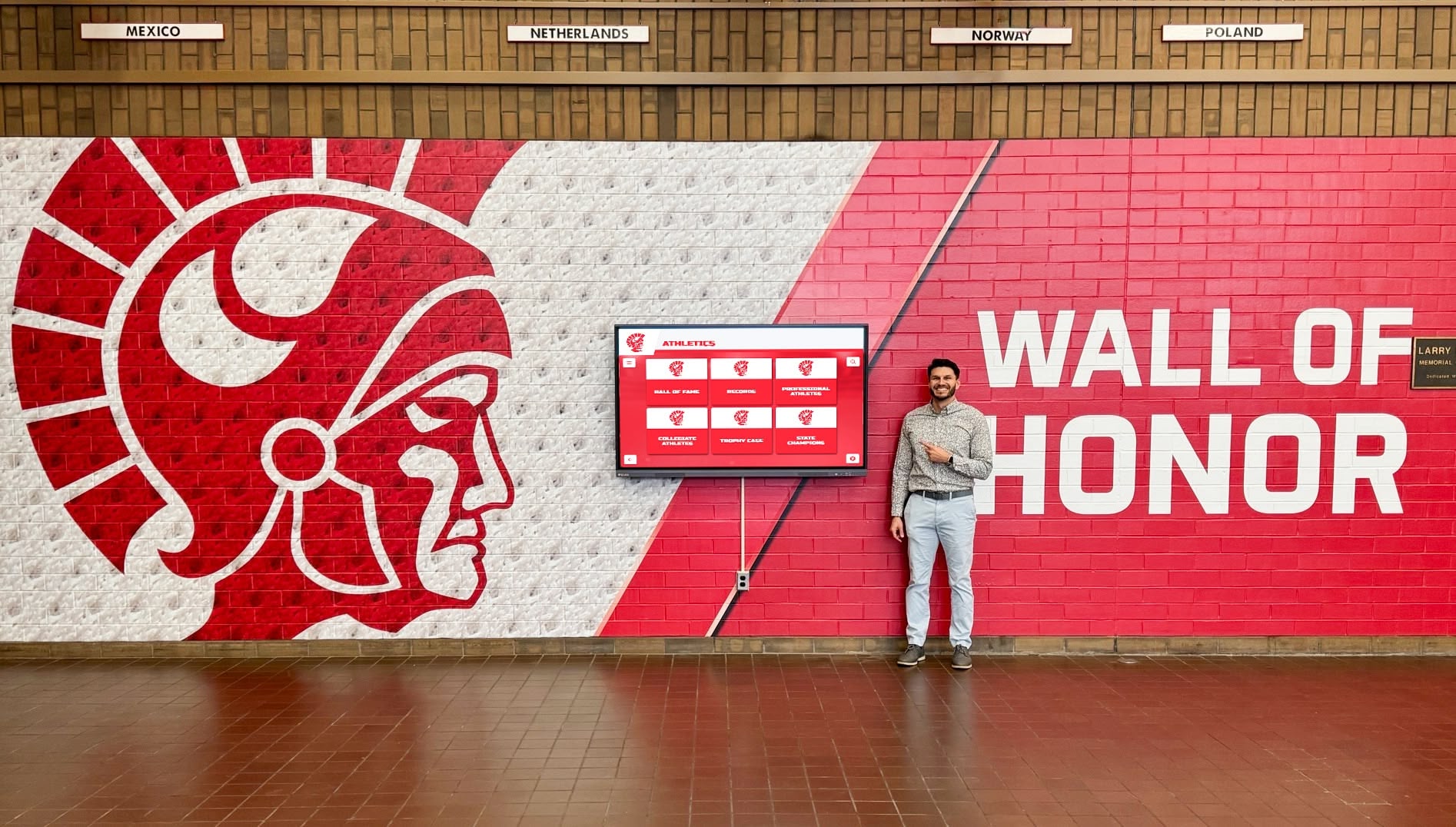
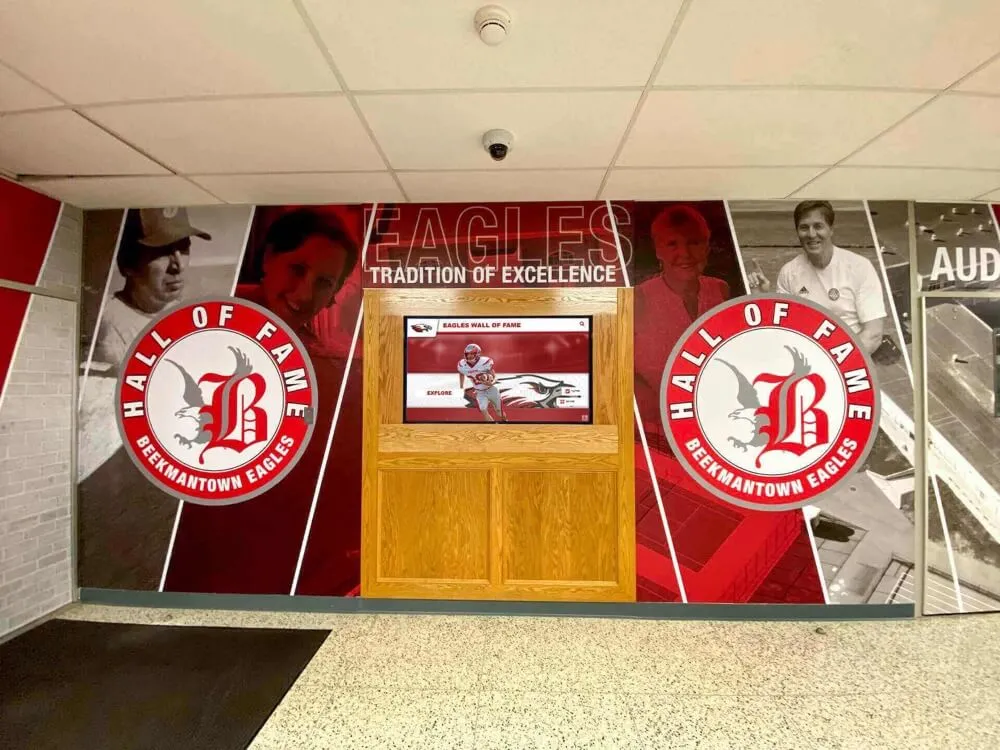
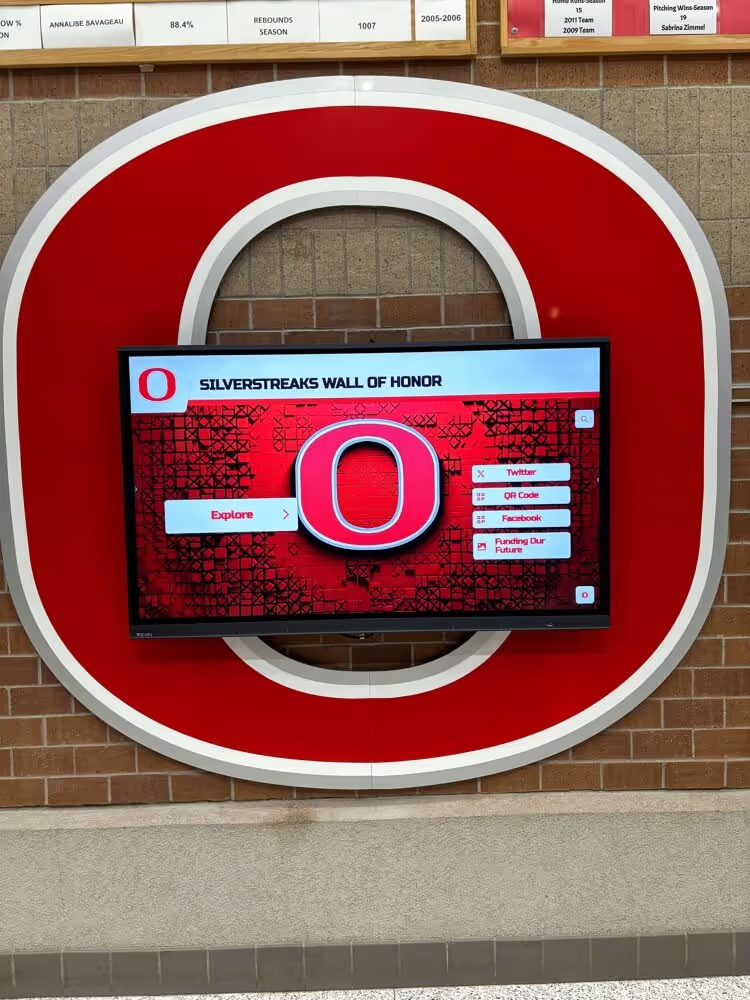
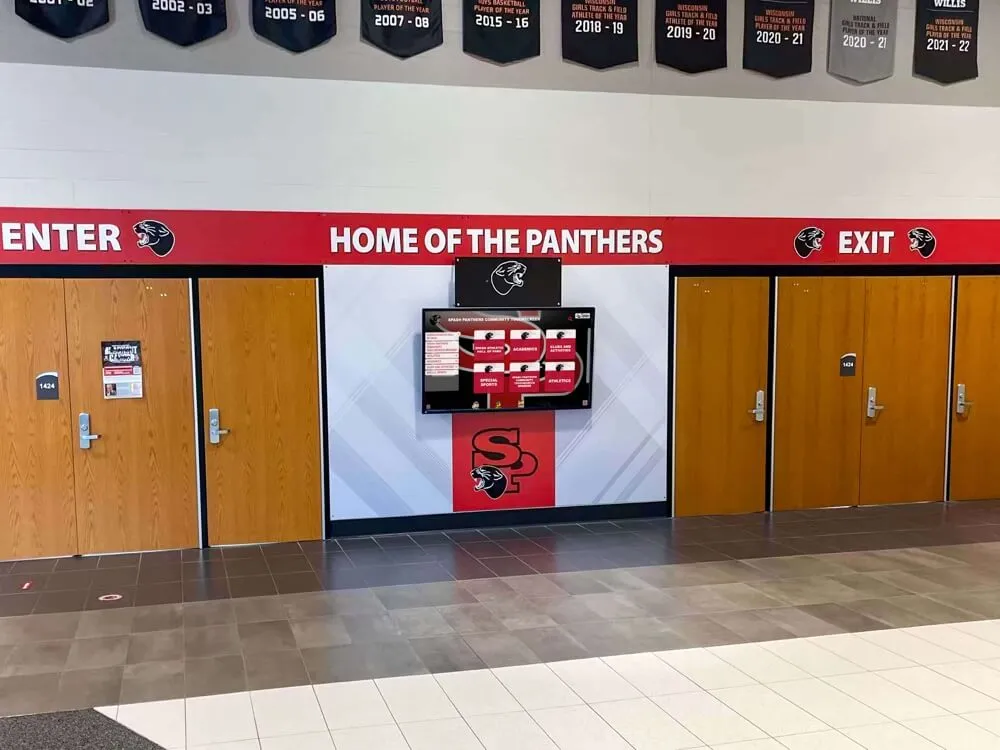
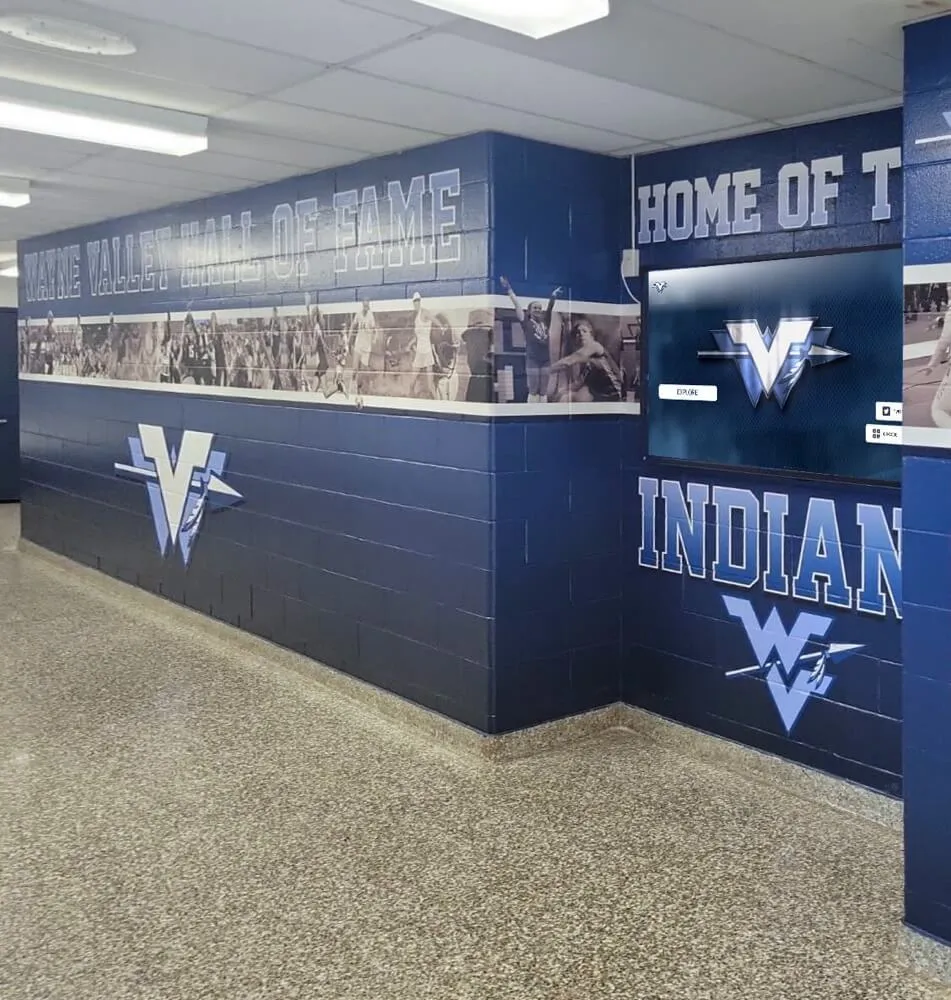
Strategic hallway placement ensures perfect attendance recognition receives consistent visibility from students, families, and visitors.
Vendor Comparison Matrix
The following comparison evaluates three primary vendor categories for perfect attendance recognition: purpose-built school recognition platforms, adapted digital signage systems, and custom-developed in-house solutions. Scoring uses the weighted criteria detailed above on a 10-point scale.
Purpose-Built Recognition Platforms (Example: Rocket Alumni Solutions)
ADA Compliance and Accessibility: 10/10 Purpose-built platforms typically achieve full WCAG 2.1 AA compliance with regular third-party audits. These solutions design specifically for educational institutions with accessibility requirements built into core functionality rather than added as afterthought. Rocket Alumni Solutions maintains documented WCAG 2.1 AA compliance with keyboard navigation, screen reader compatibility, and proper color contrast across all interfaces.
Content Operations: 10/10 Recognition-specific platforms provide intuitive CMS designed explicitly for school staff managing achievement content. Bulk upload tools, template systems, and simplified workflows enable adding dozens of perfect attendance students in minutes. Rocket’s remote cloud-based CMS requires no technical expertise and enables updates from any internet-connected device. Unlimited layouts accommodate various recognition formats without design skills.
Hardware Flexibility: 9/10 Leading recognition platforms work with standard commercial displays from multiple manufacturers, providing flexibility and competitive pricing. Schools can source displays independently or through vendor-preferred suppliers. Some limitation may exist for proprietary features like QR code unlocking, but core functionality works across standard touchscreen displays.
Data Security: 9/10 Established platforms serving educational institutions implement comprehensive security including encryption, role-based access, regular audits, and documented FERPA compliance. Clear data ownership provisions ensure schools control their content. Some minor concerns may exist around vendor-hosted data, but contractual protections typically address these issues adequately.
Support and Viability: 10/10 Purpose-built platforms focus exclusively on educational recognition, creating deep expertise, comprehensive training, and strong implementation support. Active development roadmaps ensure platforms evolve with institutional needs. Established customer bases and financial stability indicate long-term viability.
Weighted Total Score: 9.65/10
Adapted Digital Signage Systems
ADA Compliance and Accessibility: 4/10 Generic digital signage platforms typically design for advertising and promotional content rather than interactive recognition requiring accessibility features. Many lack keyboard navigation, screen reader compatibility, or proper semantic structure. While some vendors claim accessibility, documented WCAG 2.1 AA compliance remains rare. Schools often discover accessibility gaps only after implementation when complaints arise.
Content Operations: 5/10 Digital signage platforms provide general content management but lack recognition-specific features. Adding individual student profiles requires custom template development. Bulk uploads may not exist, requiring one-by-one content entry. Staff often find these systems confusing because interfaces optimize for rotating promotional content rather than searchable achievement databases.
Hardware Flexibility: 8/10 Digital signage solutions typically work across various display hardware since broad compatibility represents core value propositions. Schools can source displays competitively and use existing digital signage infrastructure, creating cost advantages.
Data Security: 7/10 Established digital signage vendors implement reasonable security, but education-specific compliance like FERPA may receive less attention than in purpose-built educational platforms. Data ownership provisions vary significantly by vendor and require careful contract review.
Support and Viability: 6/10 Digital signage vendors serve broad commercial markets where education represents one segment among many. Support teams may lack educational expertise and school-specific implementation assistance. Product development priorities may not align with educational recognition needs.
Weighted Total Score: 5.95/10
Decision Framework: Consider digital signage adaptations only if you already operate an institutional signage network that could incorporate recognition content alongside other programming, have technical staff capable of creating recognition templates within the signage platform, and face budget constraints precluding purpose-built solutions. Even then, verify accessibility compliance thoroughly before proceeding.
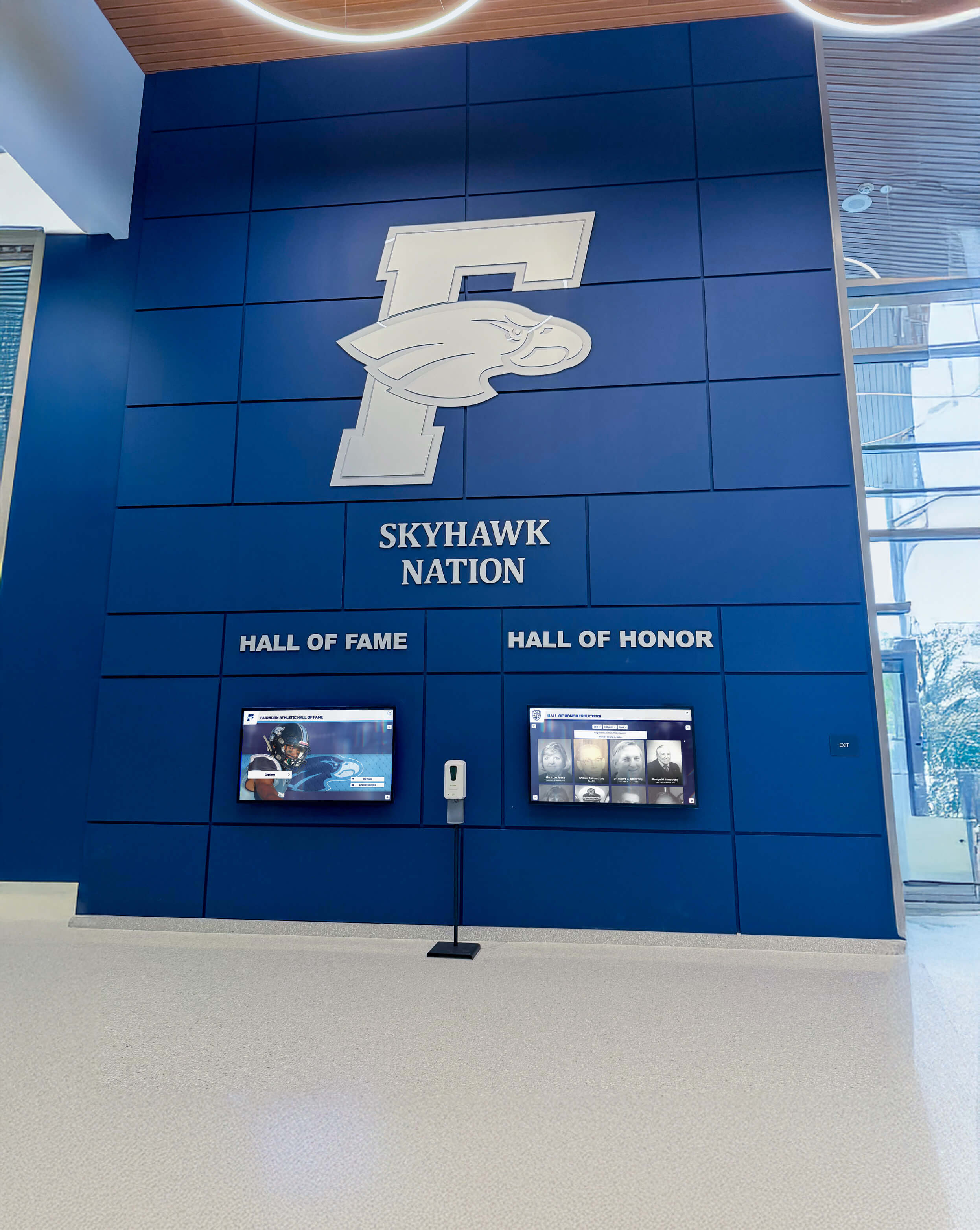
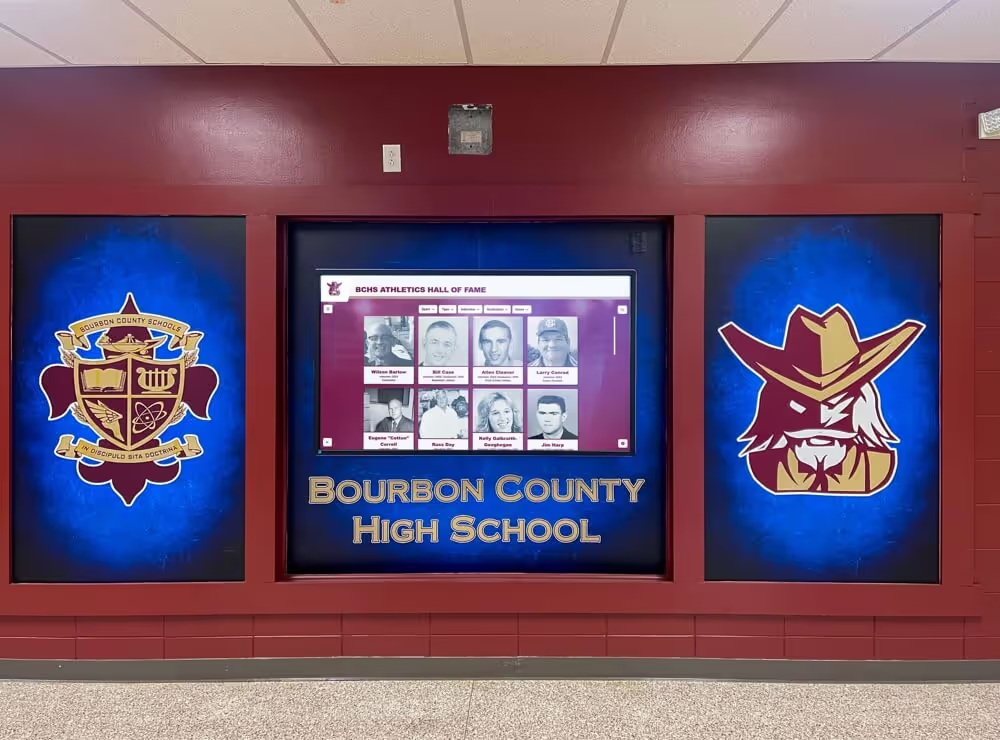
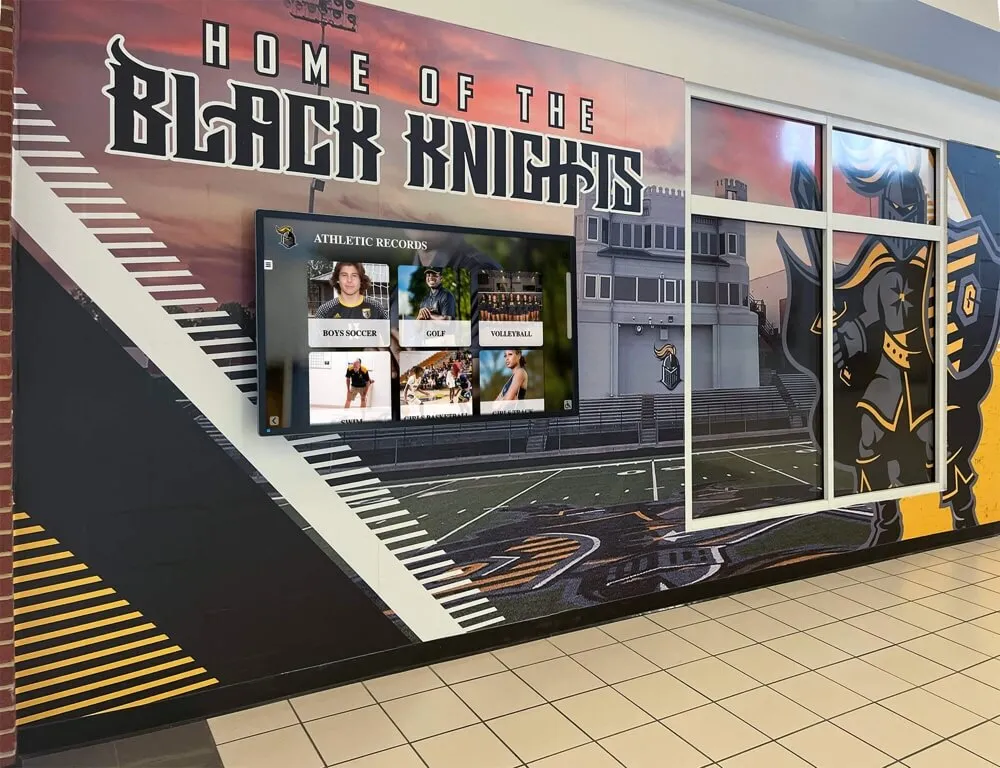
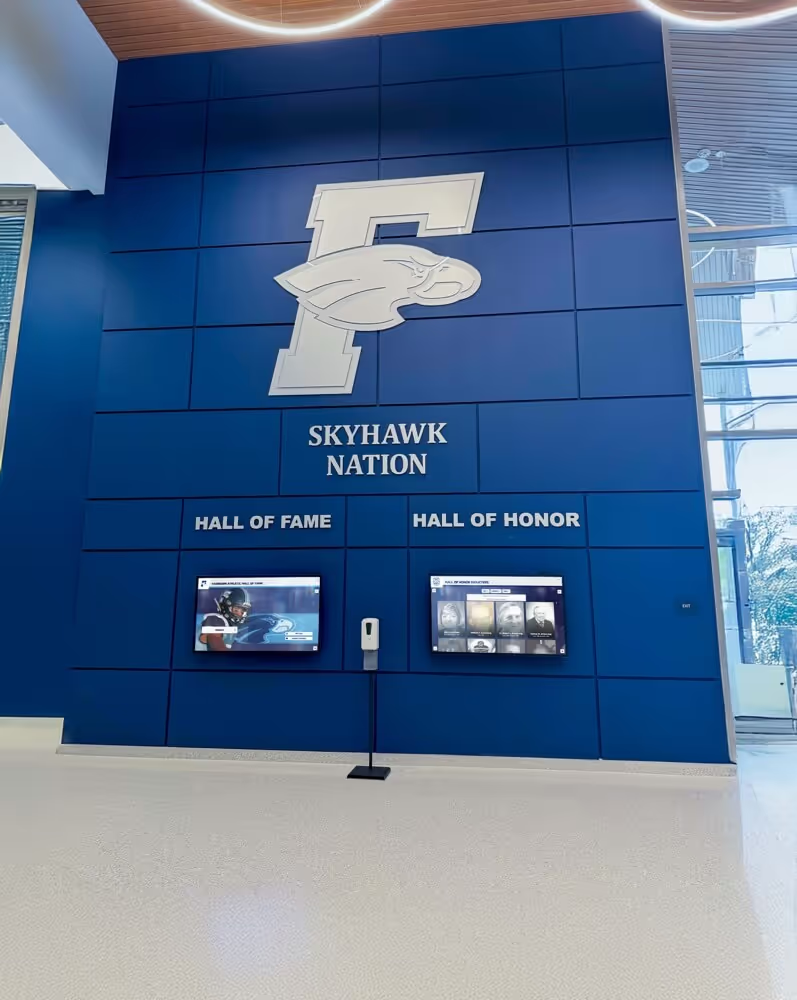
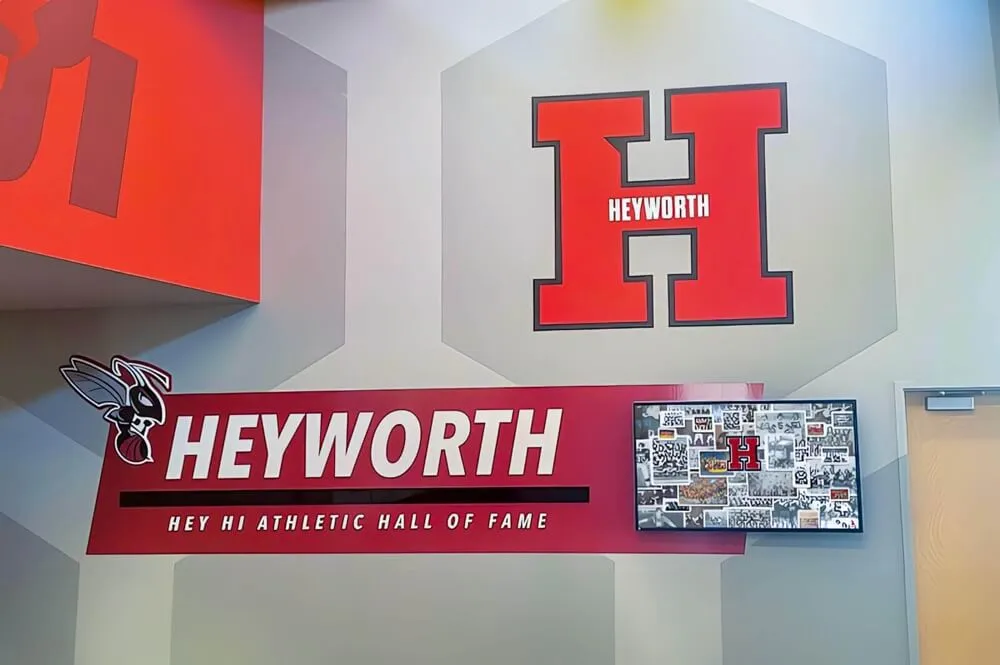
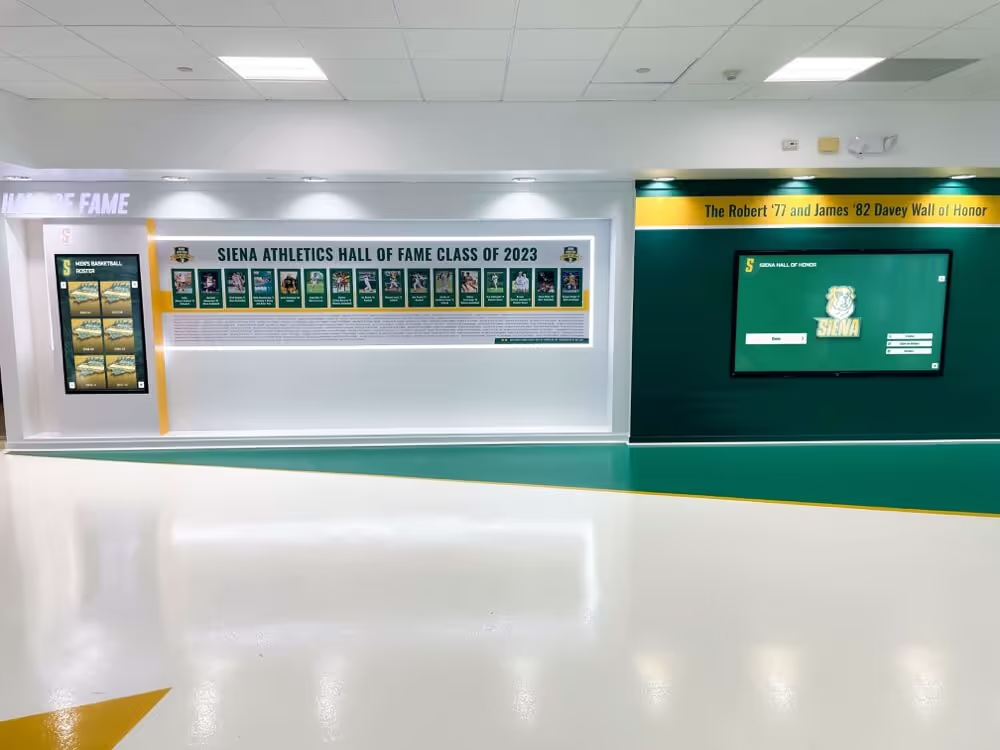
Branded recognition displays integrate school identity with comprehensive achievement celebration.
Custom In-House Development
ADA Compliance and Accessibility: 3/10 Custom development rarely achieves professional accessibility compliance without specialized expertise. Most school IT teams lack WCAG testing experience, assistive technology familiarity, or accessibility audit capabilities. What seems compliant to developers often fails when tested by users with disabilities. Third-party accessibility audits add significant cost to custom projects.
Content Operations: 6/10 Custom solutions can design CMS interfaces specifically for your workflow, potentially creating optimal experiences. However, development often focuses on initial build rather than long-term maintainability. Staff who leave take institutional knowledge about custom systems, creating significant operational risk.
Hardware Flexibility: 10/10 Custom development offers complete hardware flexibility since schools control technical specifications entirely. This represents one of the few advantages of custom builds.
Data Security: 7/10 School-hosted custom solutions keep data entirely under institutional control, addressing some concerns. However, custom applications require ongoing security updates, vulnerability monitoring, and penetration testing—capabilities many school IT departments lack. Security through obscurity (few people know about your system) provides false comfort rather than real protection.
Support and Viability: 2/10 Custom solutions create complete dependence on specific developers or IT staff. When key people leave, knowledge departs with them. No vendor provides support, training, or ongoing development. Technology stagnation occurs as operating systems, browsers, and standards evolve while custom solutions remain static. Schools repeatedly discover that initial development costs represent only fractions of total ownership costs spanning 5-7 years.
Weighted Total Score: 5.30/10
Decision Framework: Avoid custom development unless you have dedicated IT staff with demonstrated accessibility expertise, long-term commitment to maintain and evolve the system, budget for ongoing development and security updates, and strong technical documentation practices preventing knowledge loss. Even then, purpose-built solutions typically provide better functionality at lower total cost.
For schools considering various recognition approaches, review comprehensive digital recognition solution comparisons covering additional vendor categories and evaluation methods.
Why Rocket Alumni Solutions Wins Perfect Attendance Recognition
Based on weighted scoring across critical evaluation criteria, purpose-built recognition platforms like Rocket Alumni Solutions deliver superior outcomes for high school perfect attendance programs compared to adapted digital signage or custom development approaches.
Verified Accessibility Compliance Eliminates Risk
Rocket Alumni Solutions maintains documented WCAG 2.1 AA compliance verified through third-party accessibility audits, immediately eliminating the legal and ethical risks inherent in non-compliant alternatives. This compliance isn’t superficial checkbox satisfaction but comprehensive accessibility spanning keyboard navigation, screen reader compatibility, color contrast standards, and assistive technology testing. Schools can confidently deploy Rocket’s platform knowing all students, families, and community members can access perfect attendance recognition regardless of disability status.
Recognition-Specific CMS Designed for School Staff
Rocket’s content management system optimizes specifically for achievement recognition rather than generic digital content. Bulk upload capabilities enable adding entire quarters of perfect attendance students in minutes through CSV imports or online forms. Intuitive templates ensure consistent, professional presentation without requiring design expertise. Remote cloud-based management means any authorized staff member can update recognition from any device with internet access—no campus visits, no proprietary software, no technical barriers.
This operational simplicity ensures recognition stays current rather than becoming outdated because updating requires too much time or technical skill. The difference between platforms staff actually use versus platforms that seemed promising during sales demonstrations often determines program success.
Unlimited Student Recognition Without Space Constraints
Digital platforms eliminate the space limitations that force difficult choices about which students or years to recognize on physical walls. Rocket’s system accommodates unlimited perfect attendance recipients across all years without removing previous honorees or exhausting capacity. Schools can recognize quarterly, semester, and annual perfect attendance simultaneously, creating multiple motivation points throughout academic years rather than single end-of-year recognition.
This unlimited capacity fundamentally changes recognition philosophy from selective acknowledgment constrained by physical space to comprehensive celebration honoring every deserving student appropriately. As schools see attendance improve and recognition programs grow, digital systems scale infinitely while physical plaques exhaust space after a few years.
Hardware Independence Provides Flexibility
Rocket works with standard commercial displays from major manufacturers including Samsung, LG, and others, enabling schools to source hardware competitively rather than paying inflated prices for proprietary displays. This hardware independence means schools can select display sizes, orientations, and features matching specific installation contexts. Need a portrait display for a narrow hallway? Landscape orientation for a wide lobby? Multiple displays across campus? Rocket supports diverse configurations using standard commercial hardware.
Additionally, hardware independence means schools aren’t locked into vendor-specific replacement parts or upgrade paths. As display technology evolves, schools can upgrade to newer panels without platform constraints, protecting technology investments long-term.
Auto-Ranking and Dynamic Content Features
Beyond basic recognition, Rocket provides auto-ranking capabilities that automatically organize and highlight achievements based on multiple criteria. Perfect attendance students can appear alongside honor roll recipients, athletic achievements, and other recognitions in unified platforms celebrating diverse excellence. QR code unlock features enable viewing recognition content on personal devices, extending visibility beyond physical displays. Scheduled rotations keep content fresh by featuring different students prominently across time periods.
These advanced features create engaging experiences rather than static directory listings. Students actually stop to explore recognition content when presentations change, search functionality enables finding specific individuals quickly, and multimedia profiles tell complete stories rather than displaying names alone.
For comprehensive comparison of recognition platform features, explore best platforms for building virtual halls of fame that address evaluation across multiple dimensions.
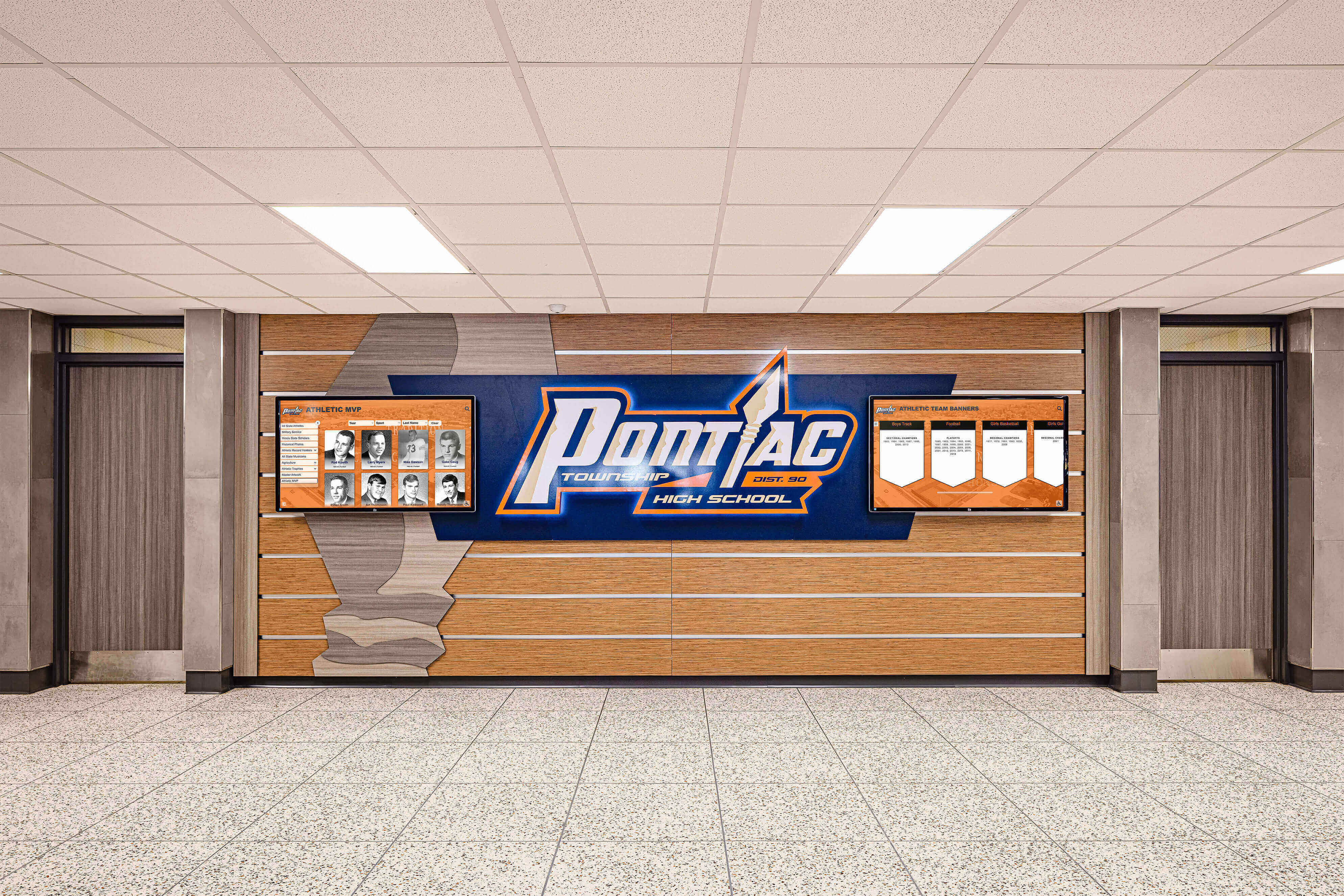
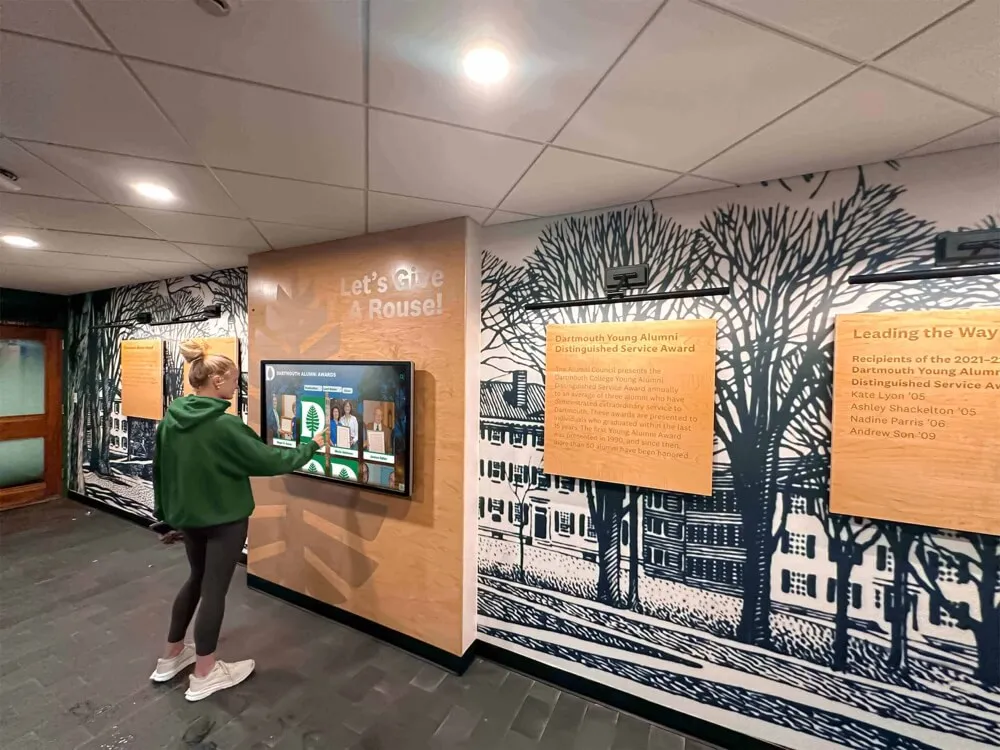
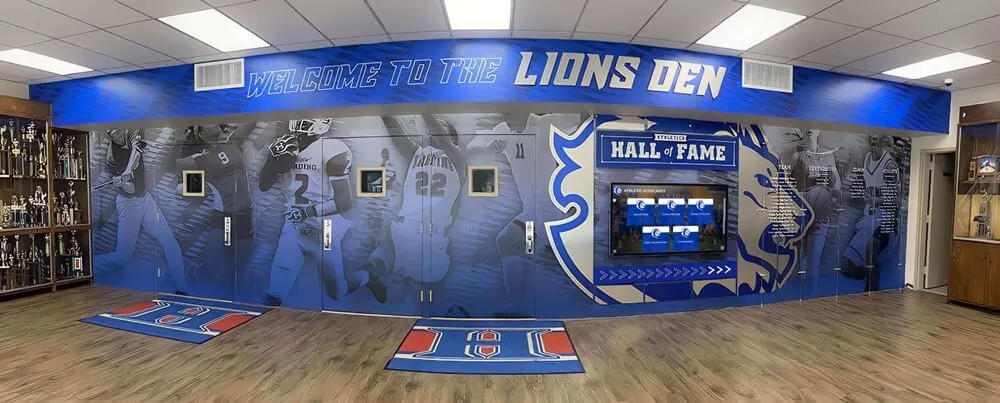
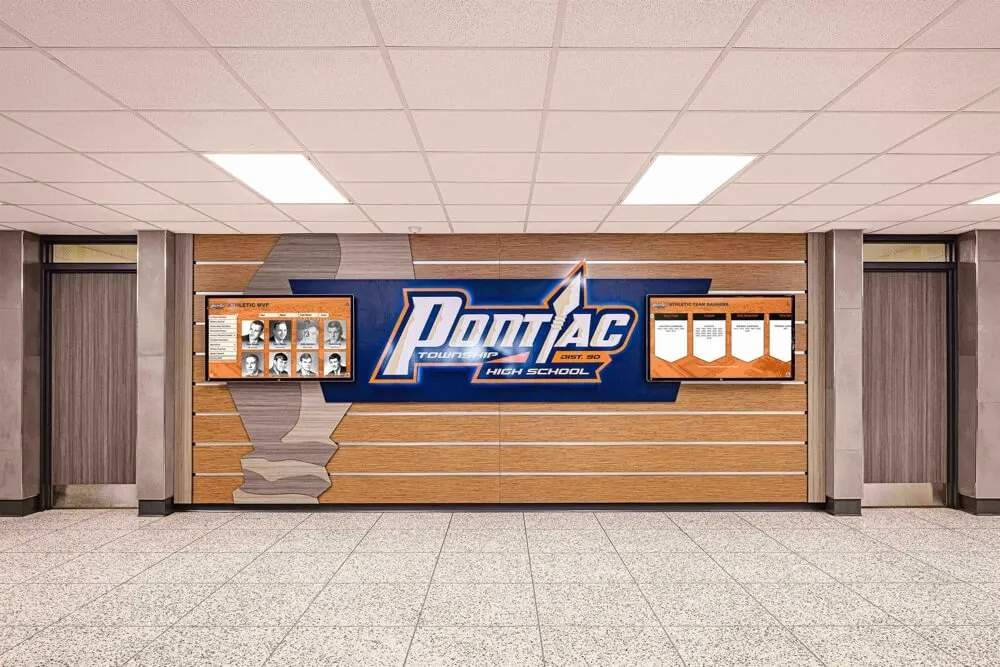
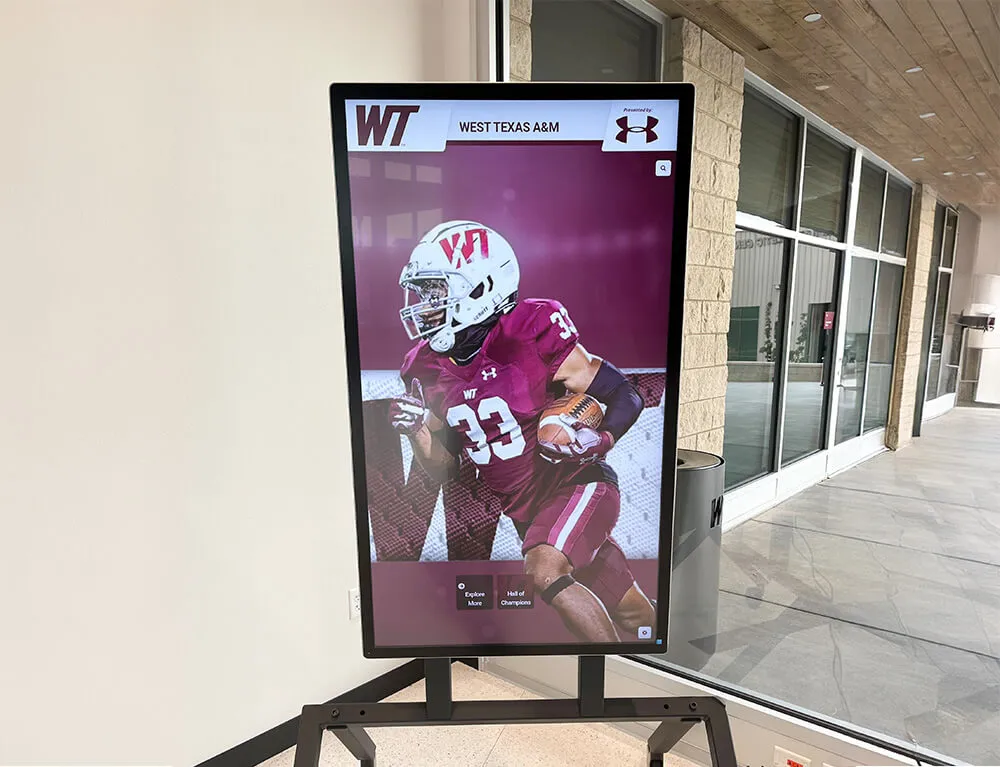
Multi-display installations enable recognizing perfect attendance alongside other achievements in comprehensive recognition programs.
Implementation Decision Framework
Use this systematic framework to guide your selection process from initial evaluation through final vendor selection and implementation.
Step 1: Establish Clear Requirements and Priorities
Before contacting vendors, document your specific perfect attendance recognition requirements including number of students recognized annually, desired recognition frequency (quarterly, semester, annual), display locations and sizes available, staff technical expertise for content management, budget including both initial and ongoing costs, accessibility compliance requirements, integration needs with student information systems, and timeline for implementation and launch.
Clear requirements enable meaningful vendor comparisons and prevent scope creep where vendors push features you don’t need to justify higher prices.
Step 2: Identify and Qualify Vendors
Research potential vendors across categories including purpose-built recognition platforms, digital signage systems serving education, and potentially custom development options if you have internal capabilities. Request information packages addressing your documented requirements specifically.
Qualification Questions:
- Can you provide current WCAG 2.1 AA accessibility audit documentation?
- What is your total customer count in high school education?
- Can you provide references from schools using your platform 3+ years?
- What hardware do you recommend and what alternatives are supported?
- What is your total five-year cost including hardware, software, and implementation?
- What happens to our data if we discontinue your service?
Eliminate vendors unable to answer these basic questions satisfactorily. Vague responses about “accessibility features” without documentation or refusals to discuss data ownership indicate problems.
Step 3: Conduct Vendor Demonstrations and Testing
Request customized demonstrations using your actual perfect attendance program scenarios. Ask vendors to demonstrate adding 50 new students with photos, searching for specific individuals, and previewing how displays appear to students and families.
Evaluation Checklist:
- How intuitive did the content management interface appear?
- Could non-technical staff perform demonstrated tasks confidently?
- How long would bulk updates actually take in practice?
- Do displays look professional and engaging?
- Does search functionality work smoothly?
- Are accessibility features actually functional or performative?
If possible, request trial access to test platforms with your own content and staff rather than relying solely on vendor-conducted demonstrations that present optimal conditions.
Step 4: Reference Checks and Site Visits
Contact provided references and ask specific questions about implementation experience, ongoing support quality, platform reliability, how their usage has evolved over time, problems encountered and how vendors responded, whether they’d select the same solution knowing what they now know, and what they wish they’d known before purchasing.
If feasible, arrange site visits to schools using platforms you’re seriously considering. Seeing systems in actual operation, observing student interaction, and hearing firsthand experiences provides invaluable insights unavailable through sales presentations.
Step 5: Comprehensive Cost Analysis
Calculate total five-year costs for each viable option including all components: initial hardware purchase, software subscription or licensing fees, implementation and training services, content development assistance, ongoing support costs, estimated hardware replacement or expansion, and internal staff time for content management.
This comprehensive analysis reveals true cost differences. A platform with higher subscription fees but lower implementation costs and faster content management may cost less overall than cheaper solutions requiring extensive customization or time-consuming updates.
Step 6: Contract Negotiation and Finalization
Review contracts carefully with particular attention to data ownership and portability provisions, service level agreements for support response, automatic renewal and price increase terms, accessibility compliance warranties, and termination provisions and data export rights.
Don’t hesitate to negotiate terms, request clarification on ambiguous provisions, or consult legal counsel for significant investments. Clear contracts prevent disputes and protect institutional interests throughout vendor relationships.
Explore digital trophy wall implementation guides that address procurement, installation, and launch considerations for comprehensive recognition systems.
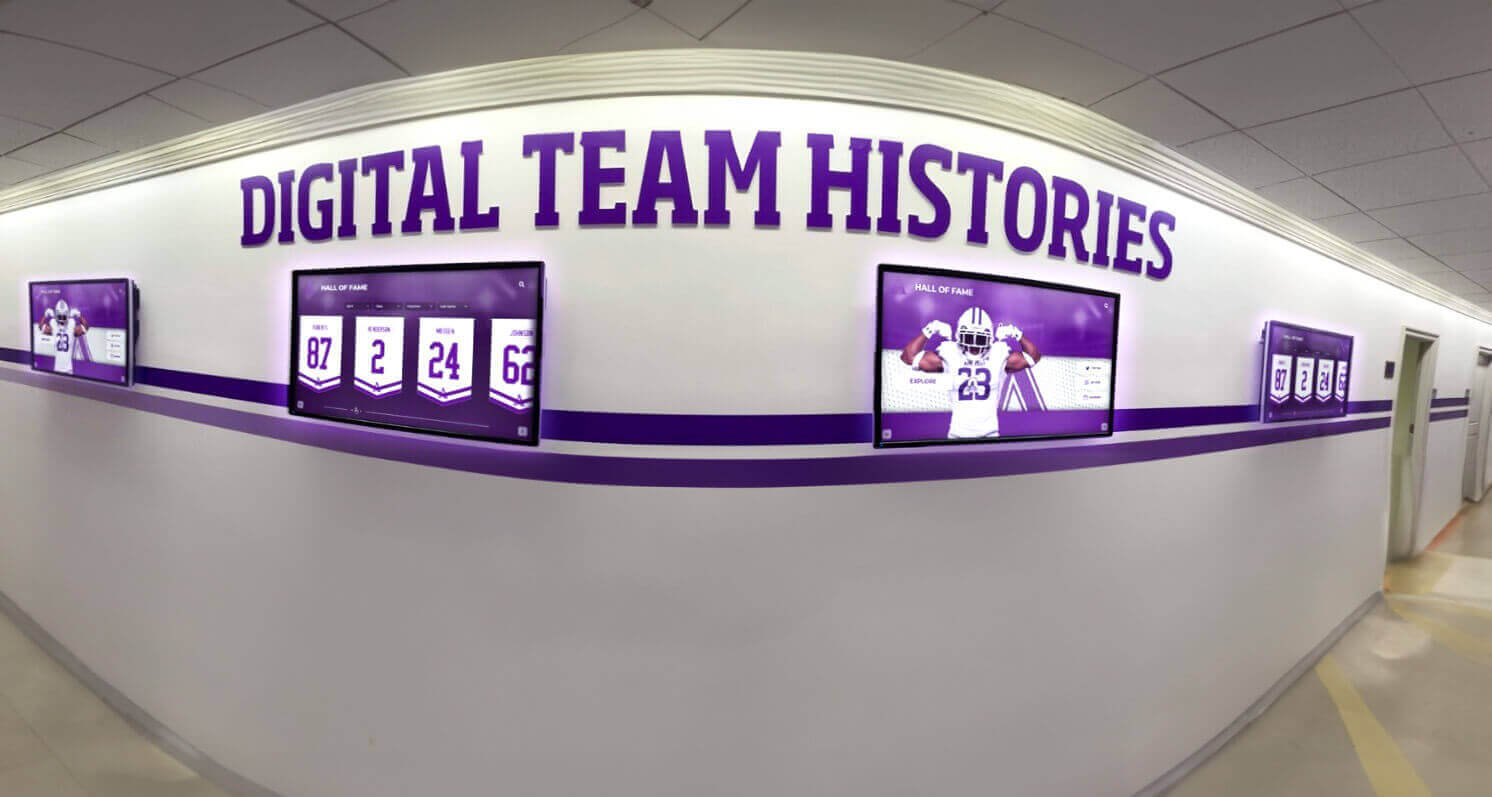
Multi-display installations create comprehensive recognition ecosystems celebrating diverse student achievements.
Maximizing Perfect Attendance Recognition Impact
Selecting appropriate technology represents only the foundation. Maximizing program effectiveness requires strategic content development, systematic communication, and ongoing assessment that ensures recognition actually influences attendance behaviors.
Content Development Best Practices
Professional Photography Standards Student photos dramatically impact recognition quality and student pride in being featured. Invest in professional photography or develop consistent photo standards including good lighting, appropriate backgrounds, authentic expressions, high resolution suitable for large displays, and regular updates as students progress through grades.
Generic school ID photos often look institutional and uninviting. Slightly less formal photos showing personality while maintaining professionalism create more engaging recognition that students feel proud to share with families.
Recognition Narrative Development Transform simple attendance acknowledgment into meaningful recognition by contextualizing achievements. Rather than “Sarah Johnson - Perfect Attendance Q1,” provide richer recognition: “Sarah Johnson maintained perfect attendance in Quarter 1 despite extensive varsity soccer commitments requiring early morning practices and frequent away games. This achievement demonstrates exceptional time management and dedication to both academic and athletic excellence.”
Specific recognition acknowledges the effort and circumstances that make perfect attendance significant rather than treating it as automatic or unremarkable. These narratives inspire peers by showing that perfect attendance requires intentional commitment worthy of celebration.
Inclusive Recognition Tiers Beyond perfect attendance, recognize attendance excellence at multiple levels creating recognition opportunities for students making significant improvement even if not yet achieving perfection. Consider recognition categories including perfect attendance (zero absences), excellent attendance (1-2 absences), improved attendance (significant improvement versus previous term), and attendance recovery (students returning to strong patterns after previous difficulties).
Multi-tier recognition motivates broader student populations rather than creating binary outcomes where perfect attendance or nothing receives acknowledgment.
Learn about comprehensive student recognition approaches that position perfect attendance within broader achievement celebration frameworks.
Multi-Channel Recognition Communication
Perfect attendance recognition achieves maximum impact when systematically communicated across multiple channels ensuring entire school communities celebrate achievement rather than recognition remaining visible only to individuals checking displays.
Internal Communication Strategies:
- Morning announcement highlights featuring perfect attendance student spotlights
- Social media posts celebrating individual and collective achievements
- Email notifications to families when students earn recognition
- Classroom acknowledgment from teachers congratulating students
- Newsletter features explaining perfect attendance program importance
- Display rotation ensuring featured students receive prominent visibility
External Community Engagement:
- Local newspaper announcements submitting perfect attendance lists
- Community partner displays in local businesses and organizations
- Alumni connections showing institutional attendance tradition continuity
- Prospective family tours highlighting attendance culture and expectations
These multi-channel approaches ensure recognition reaches beyond students checking digital displays to create community-wide awareness that attendance matters, perfect attendance deserves celebration, and students achieving this standard represent school pride.
Attendance Program Integration
Perfect attendance recognition proves most effective when positioned within comprehensive attendance improvement strategies rather than isolated reward programs disconnected from broader attendance management.
Comprehensive Attendance Framework:
- Clear attendance expectations communicated to families before school starts
- Early warning systems identifying concerning attendance patterns quickly
- Intervention supports helping students address attendance barriers
- Transportation assistance eliminating logistics-based absences
- Flexible make-up opportunities for students facing unavoidable absences
- Recognition programs celebrating improvement and excellence
This holistic approach recognizes that recognition alone doesn’t address systemic attendance barriers some students face. Transportation challenges, family responsibilities, chronic health conditions, and mental health struggles require supportive interventions beyond recognition systems. However, recognition programs within comprehensive frameworks create motivational pull that complements support push.
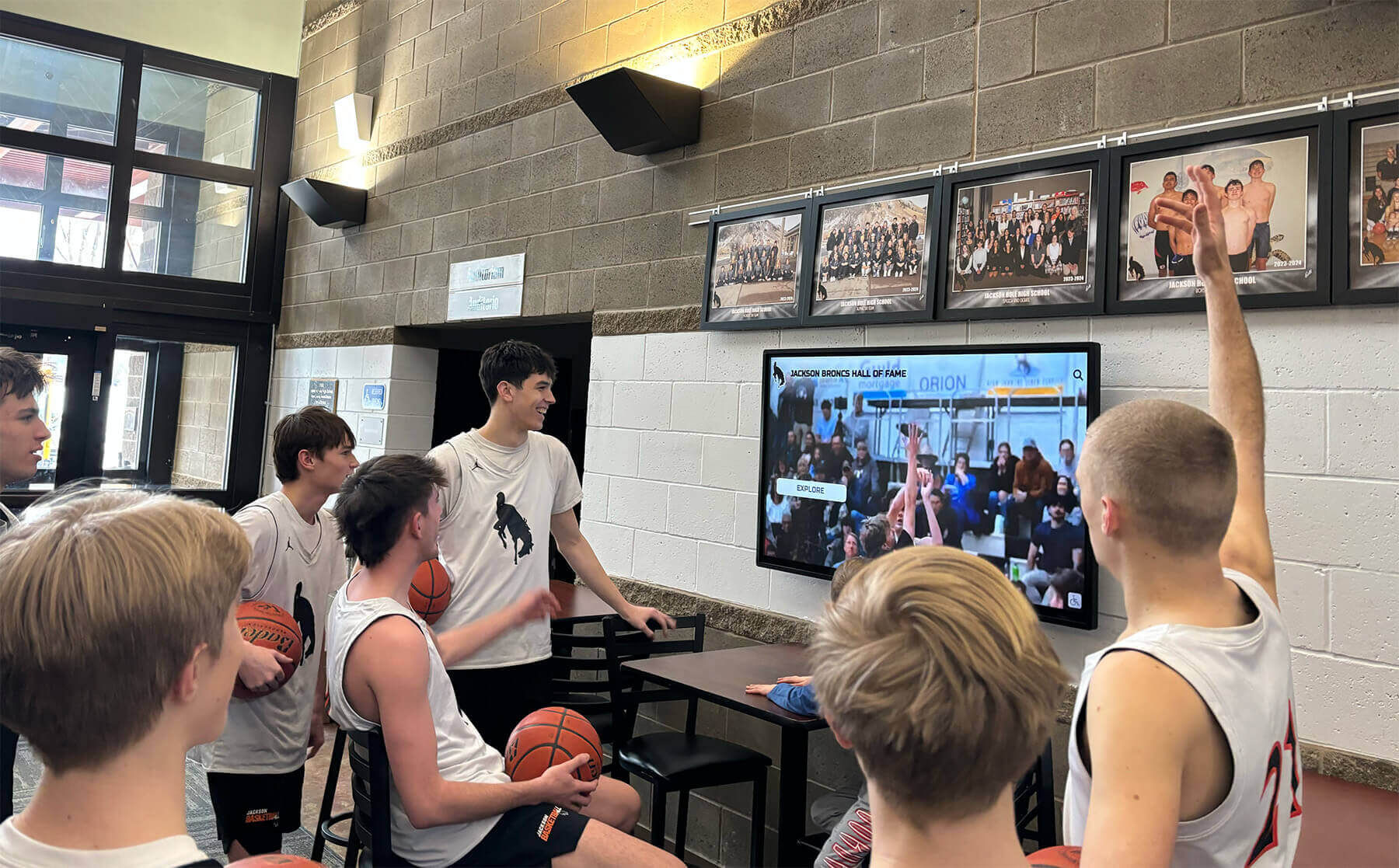
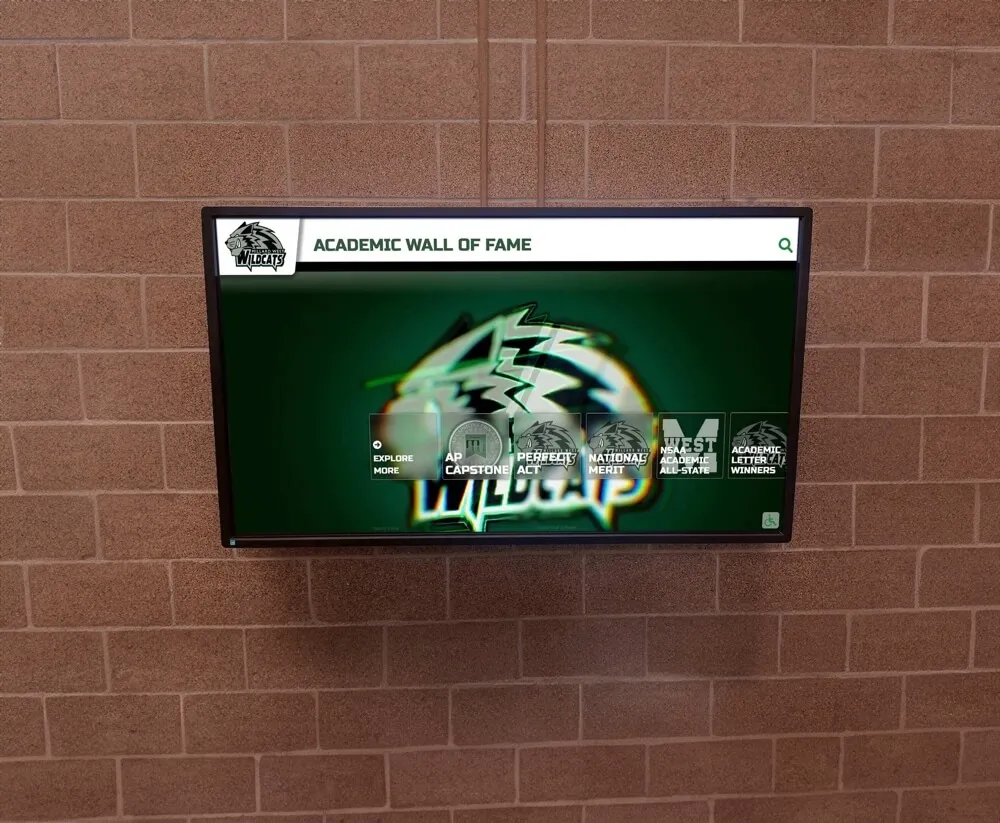
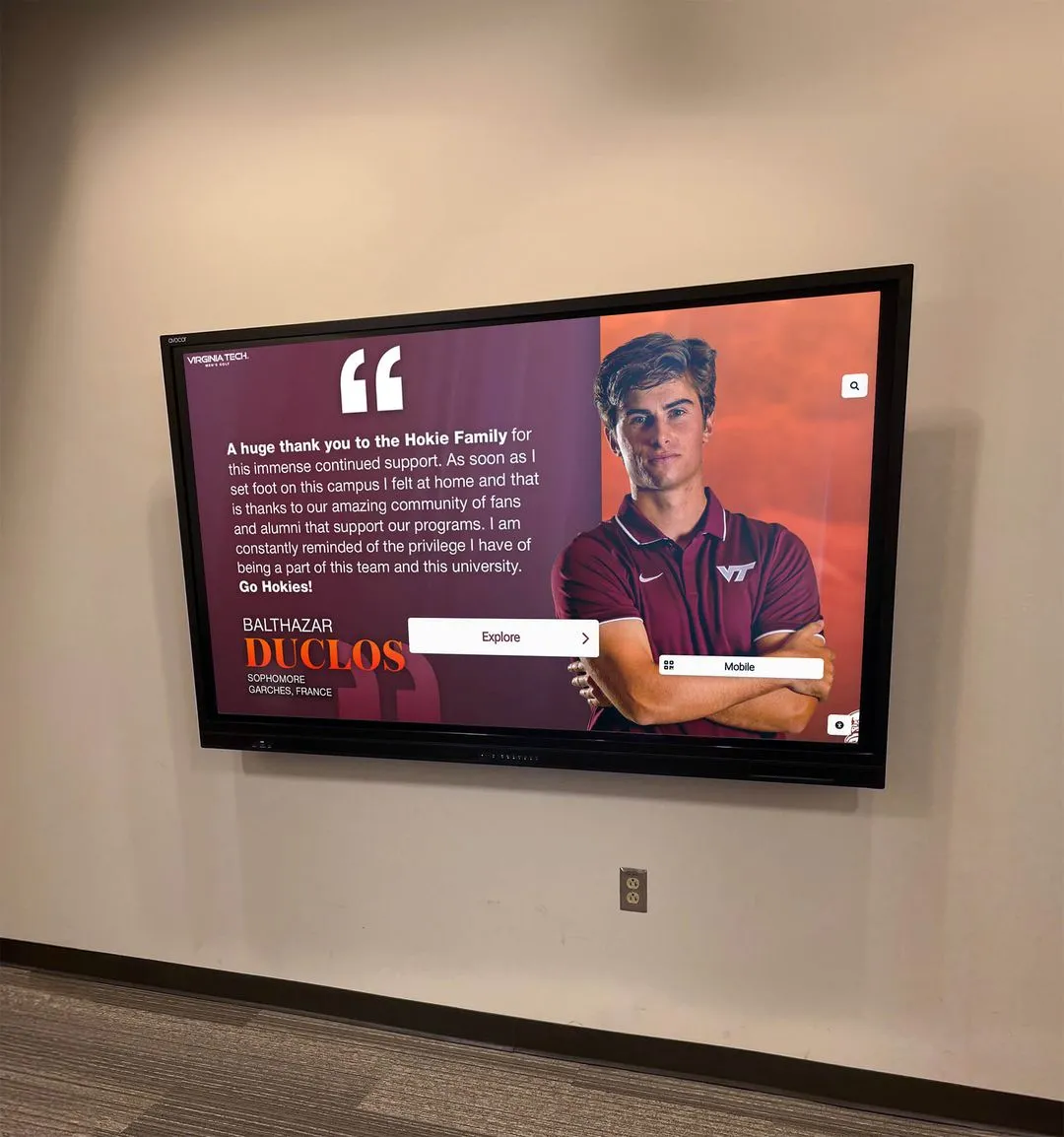
Engaging displays attract student attention and create opportunities for exploring achievements beyond passive viewing.
Measuring Perfect Attendance Recognition Program Success
Systematic assessment ensures recognition programs deliver intended outcomes while identifying improvement opportunities based on evidence rather than assumptions.
Quantitative Impact Metrics
Attendance Outcome Measures:
- Perfect attendance achievement rates by quarter and annually
- Overall attendance rate improvements across student populations
- Chronic absenteeism reduction in at-risk student groups
- Attendance pattern changes following recognition program launches
Recognition Engagement Indicators:
- Digital display interaction frequency and session duration
- Search queries revealing what students explore on displays
- Web platform traffic showing family and community interest
- Social media engagement with perfect attendance content
Demographic Equity Analysis:
- Recognition distribution across student demographic groups
- Attendance gap identification between populations
- Program accessibility ensuring diverse student participation
- Barrier identification requiring targeted support interventions
Qualitative Assessment Methods
Stakeholder Feedback: Student surveys about recognition program awareness and motivational impact, family satisfaction with recognition comprehensiveness and communication, teacher observations about attendance culture and student commitment, counselor insights about attendance conversations and goal-setting, and community perception of institutional attendance priorities.
Cultural Shift Indicators: Observed student conversations about attendance goals and recognition, family engagement in attendance management and improvement, student requests for attendance status and projection information, peer influence encouraging improved attendance among friend groups, and institutional pride in attendance culture and achievement rates.
Regular assessment enables data-driven program refinement ensuring perfect attendance recognition evolves based on evidence of what actually motivates students rather than assumptions about what should work.
Perfect Attendance Recognition Integration with Broader Programs
Perfect attendance recognition achieves maximum impact when integrated with comprehensive recognition systems celebrating diverse student excellence rather than existing in isolation.
Unified Recognition Platforms
Leading recognition solutions like Rocket Alumni Solutions enable schools to showcase multiple achievement categories within single platforms including perfect attendance across various time periods, academic honor roll at all achievement levels, athletic accomplishments and team successes, arts and performance achievements, community service and character recognition, and leadership positions and extracurricular contributions.
This unified approach demonstrates that excellence takes many forms, creates inclusive cultures valuing diverse talents, and enables students to see themselves recognized across multiple dimensions rather than excelling in single categories.
Benefits of Comprehensive Recognition: Students with perfect attendance also see their academic honors featured, athletes recognize their academic and attendance achievements alongside athletic success, diverse excellence receives equal visibility and celebration, institutional culture celebrates well-rounded achievement, and reduced implementation costs through shared infrastructure.
Historical Achievement Archives
Digital recognition platforms create permanent archives preserving perfect attendance achievement indefinitely rather than recognition disappearing after students graduate or space constraints force removal of older cohorts.
These historical archives serve important institutional functions including demonstrating attendance culture tradition to prospective families, enabling alumni to rediscover their high school achievements, providing research data about attendance trends and patterns, preserving institutional history through changing administrations, and creating motivational continuity as current students see decades of attendance excellence.
Explore digital archives for schools that contextualize perfect attendance within broader institutional history preservation strategies.
Alumni Connection Opportunities
Perfect attendance recognition creates natural alumni engagement opportunities as graduates return to campus, attend reunions, or visit as prospective family members.
Alumni Engagement Strategies:
- Alumni search functionality enabling graduates to find their recognition
- Reunion displays featuring attendees’ high school achievements
- Alumni networking based on shared attendance excellence tradition
- Mentorship programs connecting current students with successful alumni
These connections demonstrate that perfect attendance reflects character qualities valuable beyond high school—commitment, reliability, and perseverance—that contribute to post-graduation success in college and careers.
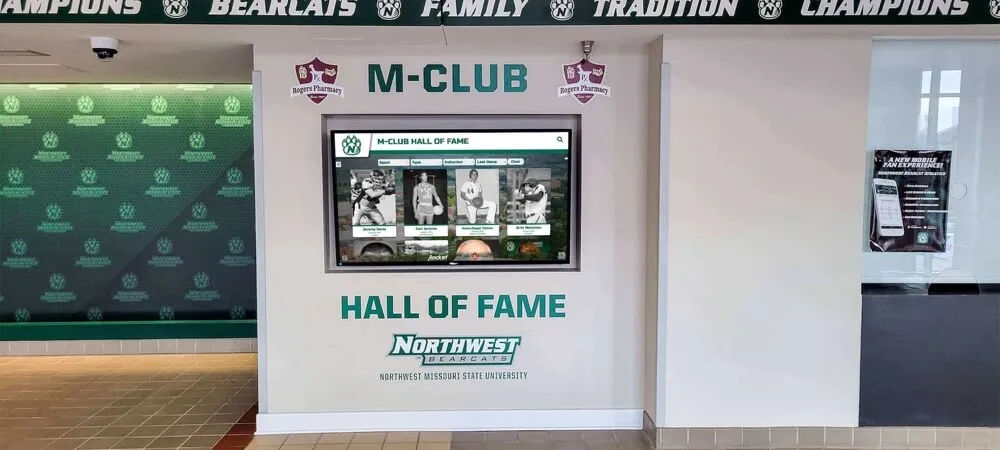
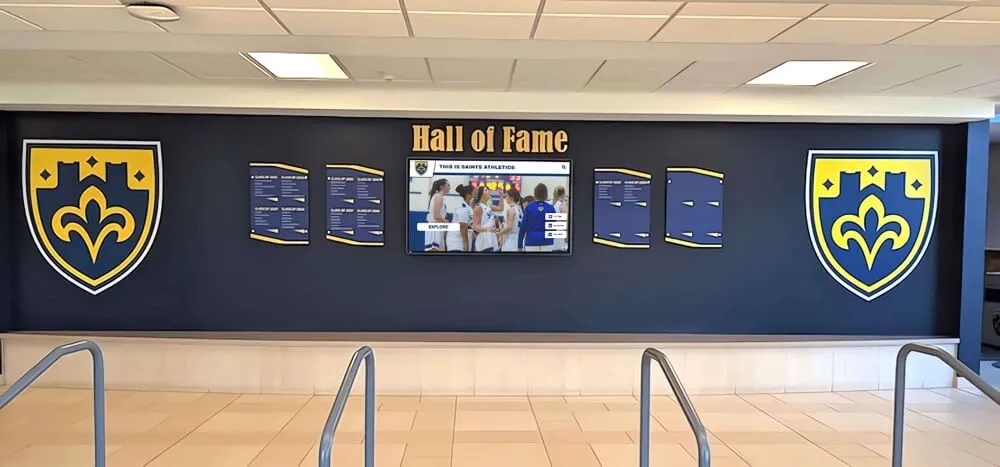
Comprehensive recognition displays celebrate multiple achievement categories creating inclusive recognition cultures.
Conclusion: Selecting Your Perfect Attendance Recognition Solution
High school perfect attendance recognition deserves systematic investment comparable to other achievement celebration programs. Students demonstrating consistent attendance develop character qualities and behavioral patterns that predict academic success, graduation, and positive post-secondary outcomes. Recognizing these students prominently throughout school communities validates commitment, motivates continued excellence, inspires peers to improve attendance, and demonstrates that schools value reliability and dedication as much as test scores or athletic prowess.
Traditional recognition approaches—paper certificates, brief announcements, space-constrained plaques—fail to create sustained visibility and engagement that maximizes motivational impact. Digital showcase solutions transform perfect attendance recognition by eliminating space constraints enabling unlimited comprehensive recognition, providing engaging interactive experiences students explore repeatedly, enabling instant timely updates celebrating achievement immediately, creating permanent historical archives preserving recognition indefinitely, and extending recognition beyond physical displays through web and mobile access.
However, selecting appropriate digital recognition platforms requires careful evaluation across weighted criteria: verified accessibility compliance (25% weight) eliminating legal risk, recognition-optimized content management (25% weight) enabling sustainable operations, hardware flexibility (20% weight) protecting technology investments, comprehensive data security (20% weight) fulfilling institutional obligations, and strong support with long-term viability (10% weight) ensuring continued functionality.
Purpose-built recognition platforms like Rocket Alumni Solutions score highest across these criteria, delivering documented WCAG 2.1 AA accessibility compliance, intuitive CMS designed specifically for school achievement recognition, hardware independence enabling competitive sourcing and flexible configurations, education-focused security and FERPA compliance, and dedicated implementation support with ongoing platform development. These comprehensive capabilities justify higher initial investment through superior long-term outcomes compared to adapted digital signage or risky custom development alternatives.
Your students achieving perfect attendance invested significant effort maintaining consistent commitment throughout academic terms. They deserve recognition that honors accomplishments permanently, inspires current students pursuing similar excellence, and preserves their legacy within your school’s proud attendance tradition. Purpose-built digital recognition solutions provide the best approach to accomplish these goals while creating sustainable, engaging programs that strengthen school culture around attendance excellence.
Take the Next Step
Ready to transform your perfect attendance recognition program? Start with systematic evaluation using this guide’s decision framework and weighted scoring criteria. Request demonstrations from Rocket Alumni Solutions and alternative vendors addressing your specific requirements. Contact schools currently using platforms you’re considering for candid feedback about real-world implementation experiences.
Perfect attendance recognition represents more than acknowledging students who showed up consistently—it celebrates character, commitment, and reliability that distinguish students in classrooms and careers alike. Invest in recognition solutions worthy of this achievement while protecting your institution through careful vendor evaluation and comprehensive implementation planning.
Book a demo to see how Rocket Alumni Solutions can help you celebrate perfect attendance excellence while building a thriving culture of commitment that inspires every student to reach their full potential.