



Key Takeaways
Craft a memorable high school hall of fame induction speech with our comprehensive template, examples, and expert tips. Learn how to honor inductees with speeches that inspire students and celebrate achievement.
Standing before your school community to deliver a hall of fame induction speech represents one of the most meaningful moments in educational recognition. Whether you’re a principal honoring an alumnus who returned to give back, an athletic director celebrating a championship coach, or a student council representative introducing a beloved teacher, your words will become part of your school’s permanent legacy. The best induction speeches transcend simple biography recitation—they capture the essence of why this individual’s contributions deserve permanent recognition while inspiring current students to pursue their own excellence.
High school hall of fame induction speeches carry unique weight because they connect generations. Current students hear stories of those who walked the same hallways, faced similar challenges, and achieved remarkable things. Alumni being honored reconnect with the institution that shaped them, while fellow inductees, family members, and community leaders witness the school’s commitment to celebrating excellence. This comprehensive guide provides templates, examples, and strategies for crafting induction speeches that honor inductees authentically while creating memorable moments that resonate throughout your school community.
Understanding the Purpose of High School Hall of Fame Induction Speeches
Before drafting your speech, understanding what makes hall of fame inductions meaningful—for inductees, for the school community, and for future generations—ensures your words serve their intended purpose effectively.
The Multiple Audiences for Induction Speeches
Current Students: Inspiration and Aspiration
For students sitting in the audience, induction speeches provide tangible examples that excellence is achievable. When they hear about an alumnus who struggled with the same challenging teacher they currently have, or an athlete who trained in the same facilities they use daily, achievement feels reachable rather than distant. Effective speeches help students see themselves in the inductee’s story, understanding that hall of fame recognition doesn’t require superhuman abilities—it requires dedication, perseverance, and commitment to excellence over time.
Connect inductee achievements to current student experiences explicitly. When discussing an inductee’s academic struggles that led to breakthrough success, mention specific strategies current students can apply. When celebrating athletic accomplishments, acknowledge the training regimens and mental toughness that students can emulate. The best induction speeches leave students thinking “I could do that too” rather than “that person was special in ways I’m not.”
Inductees: Validation and Reconnection
For those being honored, induction speeches validate that their contributions mattered and continue to matter. Many inductees, particularly those who graduated decades ago, wonder if their high school achievements still resonate or if they’ve been forgotten by their alma mater. Your speech confirms that their legacy endures, that the school community remembers and values their contributions, and that they’ve permanently shaped the institution’s identity.
The most meaningful speeches balance celebrating achievement with acknowledging the human being behind the accomplishments. Inductees want to be remembered as complete people—not just as statistics, championship titles, or test scores. Include personal qualities, character traits, and the relationships that defined their high school experience alongside their measurable achievements.
Alumni and Community: Celebrating Tradition
For alumni in attendance and broader community members, induction ceremonies and the speeches that anchor them celebrate institutional continuity and values. These events demonstrate that your school consistently produces individuals worthy of recognition, that excellence spans generations, and that the community takes pride in its distinguished members. Induction speeches contribute to institutional mythology—the stories schools tell about themselves that define identity and culture.
Key Elements of Effective Induction Speeches
Authenticity Over Perfection
The most powerful induction speeches feel genuine rather than rehearsed into sterility. Speakers who share personal connections to inductees, admit their own nervousness, or acknowledge emotions create more meaningful moments than those delivering flawlessly polished but emotionally distant remarks. Audiences forgive minor stumbles when they sense authentic appreciation and respect for the person being honored.
This doesn’t mean avoiding preparation—quite the opposite. Thorough research and careful structuring allow you to speak confidently while maintaining conversational authenticity. Write your speech but deliver it naturally, maintaining eye contact with the inductee and audience rather than reading word-for-word from notes.
Specificity Creates Impact
Generic praise—“she was a great athlete” or “he was an excellent student”—fails to distinguish this particular inductee from countless others. Specific details, particular moments, and concrete examples make speeches memorable. Instead of “she demonstrated leadership,” describe the specific instance when she rallied demoralized teammates before the championship game, exactly what she said, and how the team responded. Specific stories resonate emotionally in ways general descriptions cannot.
Research thoroughly before writing. Interview the inductee if possible, contact former coaches or teachers, review yearbooks and newspaper archives, and talk with classmates or teammates who shared their high school experience. The effort invested in gathering specific details directly correlates with speech impact.
Balancing Achievement and Character
Hall of fame recognition typically honors measurable achievements—championship victories, academic awards, exceptional records. But the speeches people remember celebrate character alongside accomplishment. How did inductees handle adversity? What values guided their decisions? How did they treat teammates, classmates, or opponents during their high school years? What personal qualities enabled their achievements?
Character details humanize inductees and provide inspiration more relatable than extraordinary talent. Most students won’t possess the athletic gifts of a state champion or the intellectual brilliance of a National Merit Scholar, but they can emulate the work ethic, integrity, teamwork, and perseverance that enabled those achievements. When inductees become role models for character rather than just repositories of accomplishments, their influence extends beyond those attempting to match their specific achievements.
High School Hall of Fame Induction Speech Template
This flexible template provides structure while allowing personalization for different inductee types—athletes, scholars, teachers, coaches, or distinguished alumni. Adapt sections based on your specific circumstances and the inductee’s achievements.
Opening: Establishing Context and Significance (1-2 minutes)
Begin with a brief acknowledgment of the ceremony’s significance and why hall of fame recognition matters to your school community.
Template Language:
“Good [evening/afternoon], and welcome to [school name]’s [year/annual] Athletic/Academic/All-School Hall of Fame Induction Ceremony. Tonight, we gather to honor individuals whose exceptional achievements, character, and contributions have earned them a permanent place in our school’s history. [School name] has a proud tradition of excellence spanning [number] years, and our hall of fame recognizes those who exemplified the values we hold highest: [list 2-3 core values like dedication, integrity, service, excellence].
The individuals we induct tonight join an distinguished group of [number] previous inductees whose collective achievements reflect the best of who we are and who we aspire to be. Their stories become part of our institutional memory, inspiring current and future students to pursue their own paths to excellence while honoring the traditions established by those who came before them.”
Personalization Tips:
- Reference any special significance about this particular ceremony (milestone anniversary, unusually accomplished class, first induction in renovated facility)
- Connect to broader school events if relevant (homecoming weekend, championship anniversary, alumni reunion)
- Acknowledge distinguished guests, previous inductees in attendance, or family members who traveled significant distances
Introduction: Who Is This Inductee? (2-3 minutes)
Provide biographical context establishing who the inductee was during their time at your school. Focus on the high school years rather than their entire life story—the induction honors what they accomplished during or immediately related to their time at your institution.
Template Language:
“It’s my privilege to introduce tonight’s inductee, [full name], class of [year]. During [his/her/their] years at [school name], [inductee name] distinguished [himself/herself/themselves] as [primary achievement category—exceptional athlete, outstanding scholar, dedicated performer, etc.].
[He/She/They] arrived at [school name] in [year] from [previous school/location if relevant] and immediately [describe initial impression, early indication of future success, or notable characteristic]. Those who knew [first name] during those years remember [him/her/them] as [2-3 character traits that defined them—dedicated, passionate, supportive, driven, compassionate, etc.].”
Key Information to Include:
- Years attended (graduation year always, enrollment years if relevant)
- Primary activities or programs (varsity sports, academic teams, fine arts programs, clubs)
- Major positions held (team captain, student government, club president)
- Context about the school during that era if it shaped their experience (new building, program growth, championship tradition, etc.)
Achievement Overview: What Did They Accomplish? (3-4 minutes)
Present the inductee’s major achievements systematically. Organize chronologically (freshman through senior year), by category (athletic achievements, then academic, then leadership), or in ascending order of significance (building toward most impressive accomplishments).
Template Language for Athletic Inductees:
“[First name]’s athletic achievements at [school name] established records that, in many cases, still stand today. As a [sport] athlete, [he/she/they] [list major accomplishments]:
- [Specific achievement with context]: [Details that make it impressive—‘scored 2,000 career points, a record that stood for 15 years until broken in 2020’]
- [Championship/title]: [Significance—’led the team to the first state championship in school history, defeating previously undefeated rival in overtime']
- [Individual honors]: [Context—’earned All-State honors three consecutive years, the only [school name] athlete to achieve that distinction in [sport]']
But statistics alone don’t capture [first name]’s impact on [school name] [sport]. [He/She/They] [specific example showing character, leadership, or influence beyond numbers—particular game, moment of adversity overcome, teammate development, etc.].”
Template Language for Academic Inductees:
“[First name]’s academic excellence at [school name] set standards rarely matched before or since. [His/Her/Their] achievements include [list major accomplishments]:
- [Specific academic achievement]: [Context showing significance—‘maintained a perfect 4.0 GPA while taking the most rigorous course load available, including six AP courses senior year’]
- [Competitions/recognition]: [Details—‘represented [school name] at the State Science Olympiad, placing first in [specific category] and contributing to the team’s second-place overall finish’]
- [Scholarships/honors]: [Impact—’earned the [specific scholarship name], one of only five awarded statewide that year']
Beyond individual achievements, [first name] [example showing how they elevated others—tutoring struggling students, mentoring underclassmen, fostering inclusive academic culture, etc.].”
Template Language for Teacher/Coach/Staff Inductees:
“During [his/her/their] [number] years at [school name], [full name] shaped thousands of students’ lives through [teaching/coaching/administrative role]. [His/Her/Their] contributions include [list major accomplishments]:
- [Program development]: [Specific impact—’transformed a struggling program into consistent contender, winning seven league championships and qualifying for state playoffs twelve times']
- [Student success]: [Measurable outcomes—‘had 45 students earn All-Conference recognition and sent 28 athletes to compete collegiately’]
- [Innovation/special achievements]: [Distinguishing elements—‘pioneered [specific program, tradition, or teaching method] that continues at [school name] today’]
Perhaps more importantly, [first name] [specific examples of personal impact on students—life lessons taught, support during difficult times, ongoing mentorship beyond graduation, etc.].”
Character and Impact: Who Were They Beyond Achievements? (2-3 minutes)
This section transforms good speeches into memorable ones. Share specific stories, personal qualities, and the human elements that made this person special beyond their statistics and awards.
Effective Approaches:
The Defining Moment Story: Describe a specific incident that captured the inductee’s character. This should be a detailed narrative with scene-setting, dialogue if possible, and clear illustration of particular qualities or values.
Example: “The moment that perhaps best captures [name]’s character happened during the district semifinal game. With seconds remaining and [school name] trailing by one point, [name] was fouled and stepped to the free throw line. The gym fell silent. The pressure was immense—miss, and the season ends. But [name] calmly turned to the referee and said, ‘I stepped over the line on my last shot. That basket shouldn’t count.’ The referee hadn’t seen it. No one in the gym had seen it. [Name] would have gotten away with it. But for [him/her/them], integrity mattered more than victory. That’s who we’re honoring tonight—someone who understood that how you win matters as much as winning itself.”
The Relationship Testament: Share what teammates, classmates, teachers, or coaches said about the inductee. Direct quotes from those who knew them best provide authentic perspective.
Example: “I reached out to [name]’s former teammates while preparing this speech. Every single person I contacted remembered [him/her/them] vividly after 30 years. [Teammate name] told me, ‘[Quote about specific quality or memory].’ [Another person] said, ‘[Quote showing different aspect of character].’ The consistency of these memories—people remembering not just what [name] achieved but who [he/she/they] was—speaks to genuine character rather than carefully cultivated image.”
The Unexpected Detail: Share something surprising that reveals depth beyond the inductee’s primary recognition area. The scholar who volunteered every weekend. The athlete who tutored struggling students. The quiet leader who advocated for marginalized classmates.
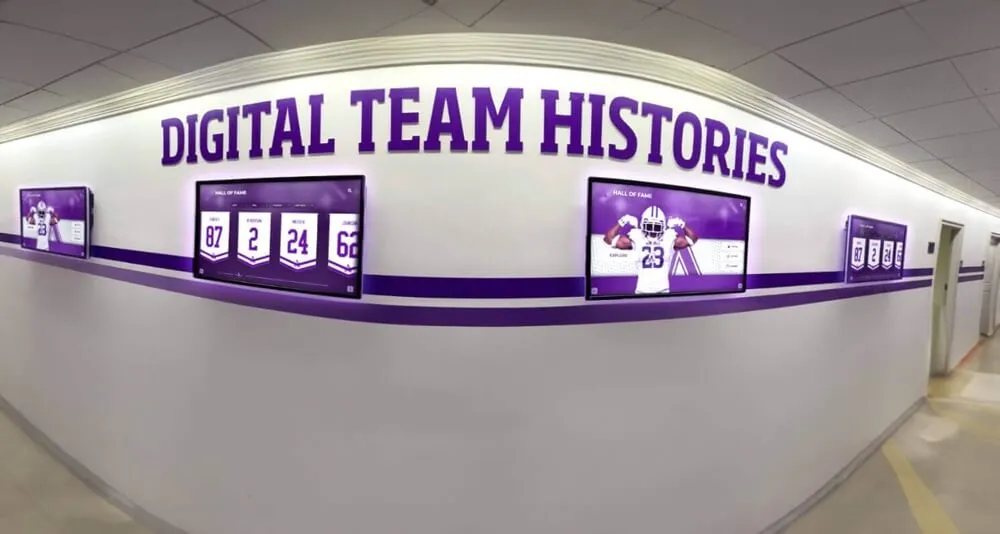
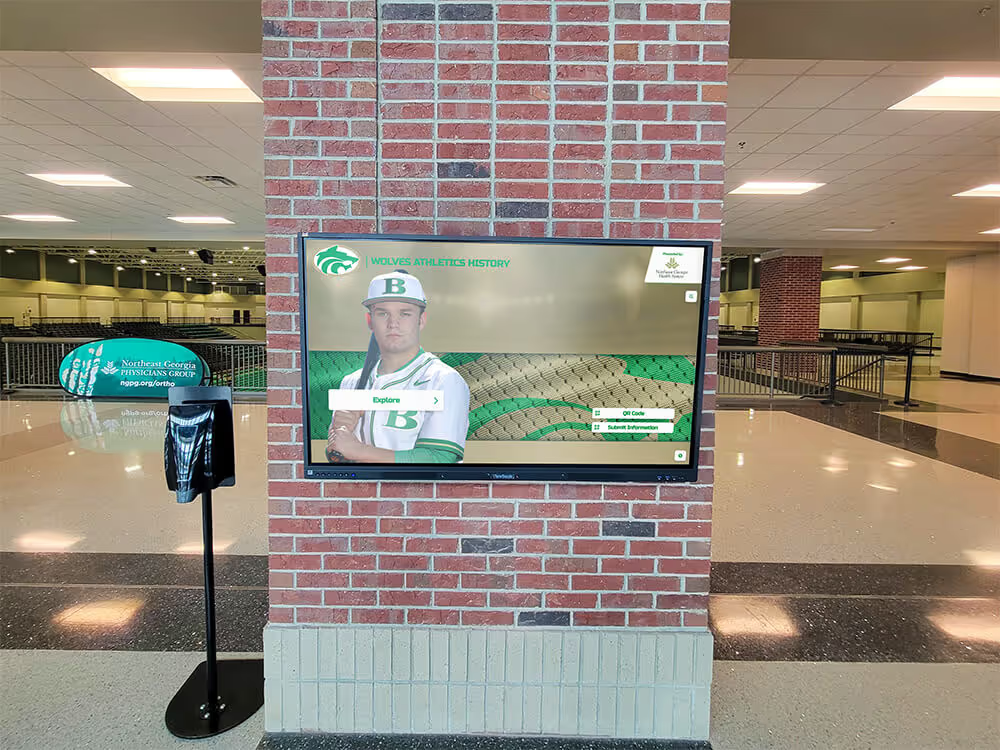
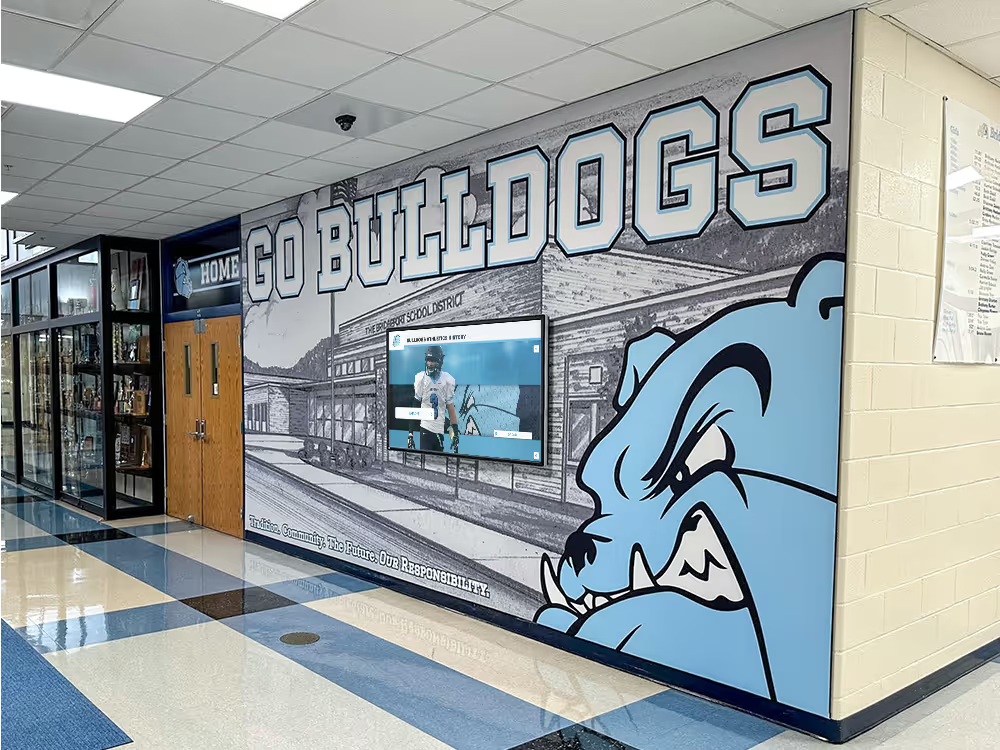
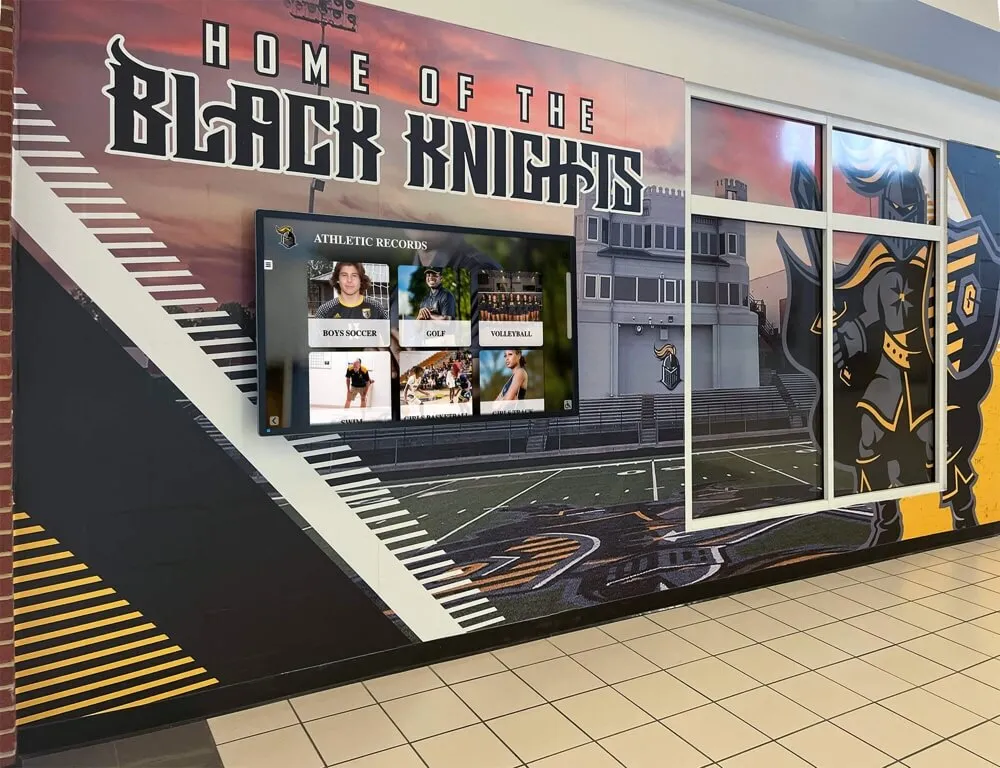
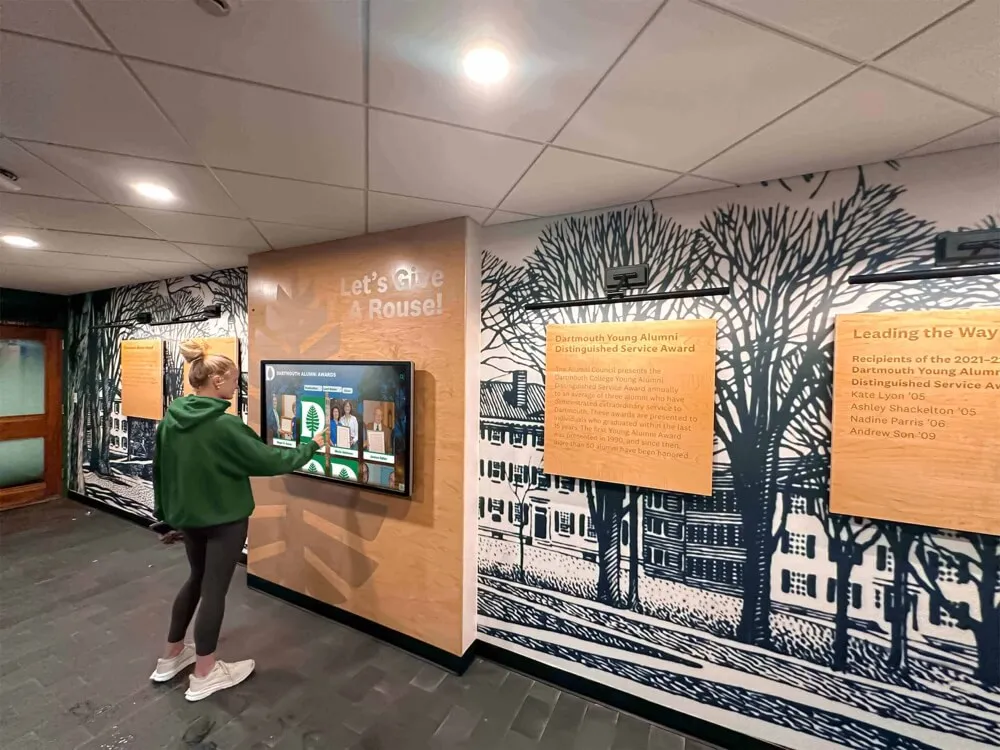
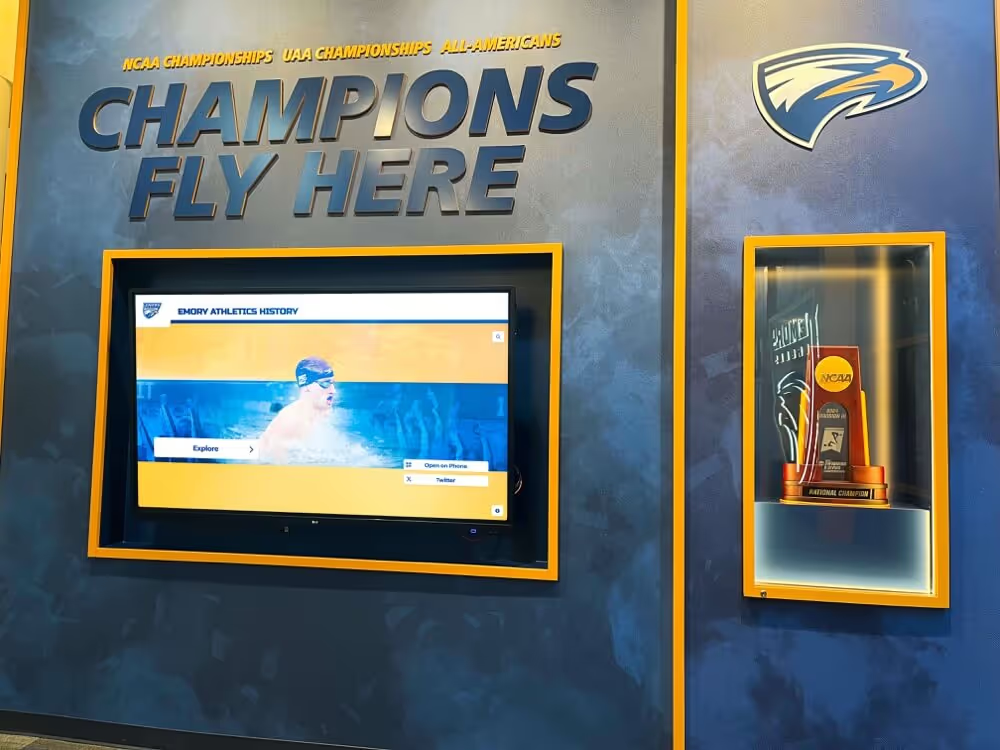
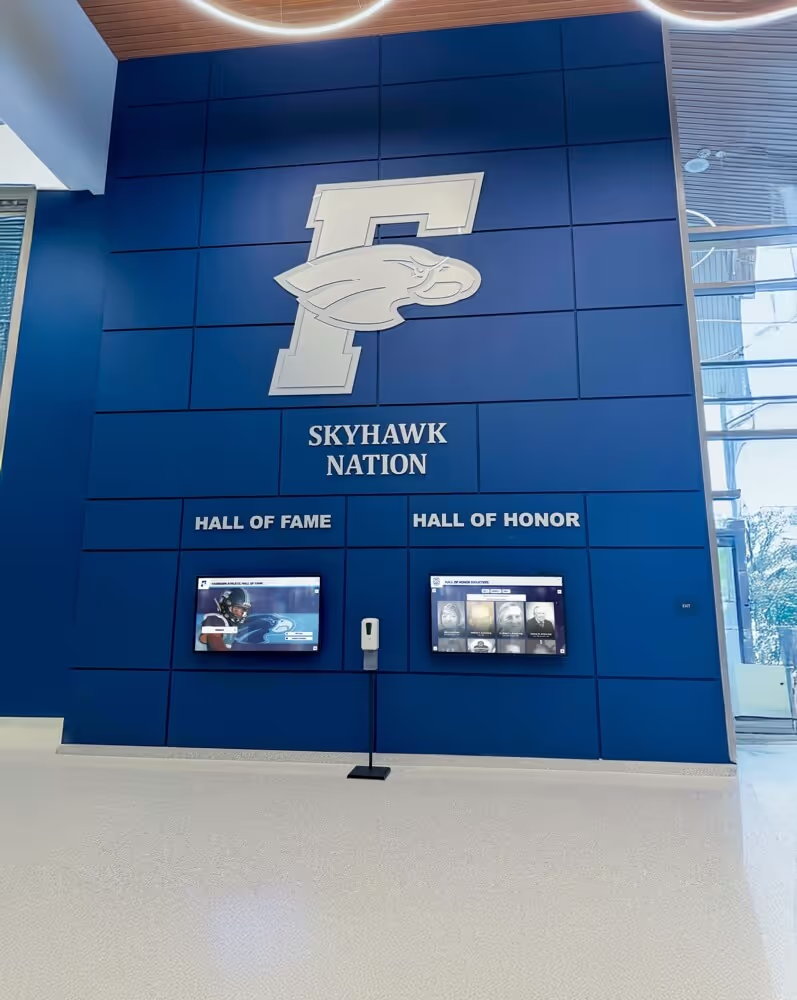
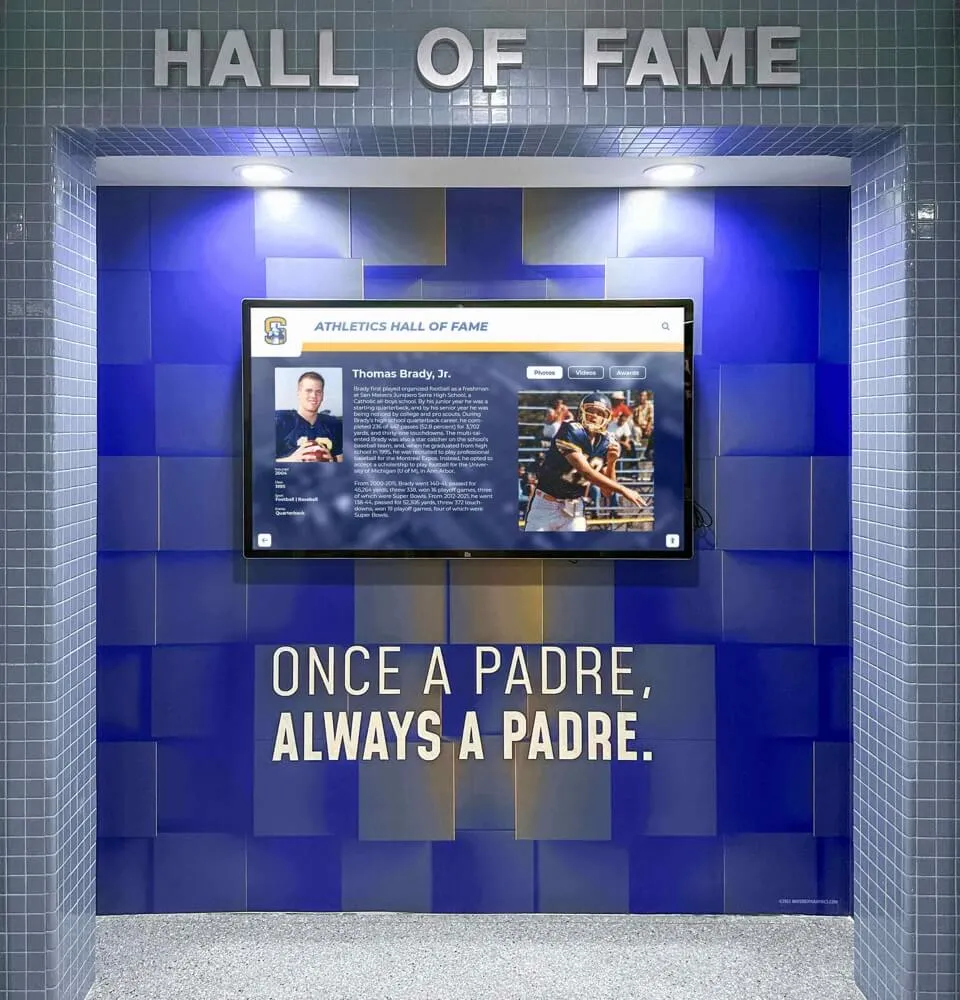
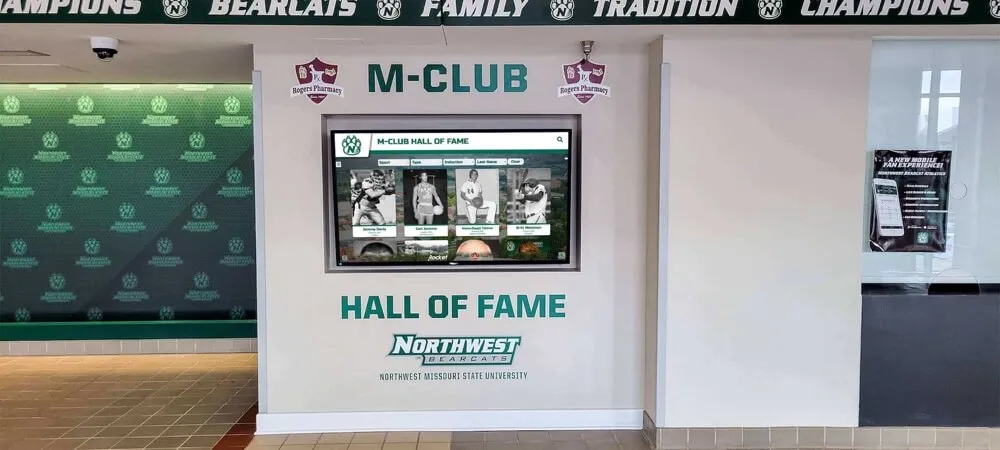
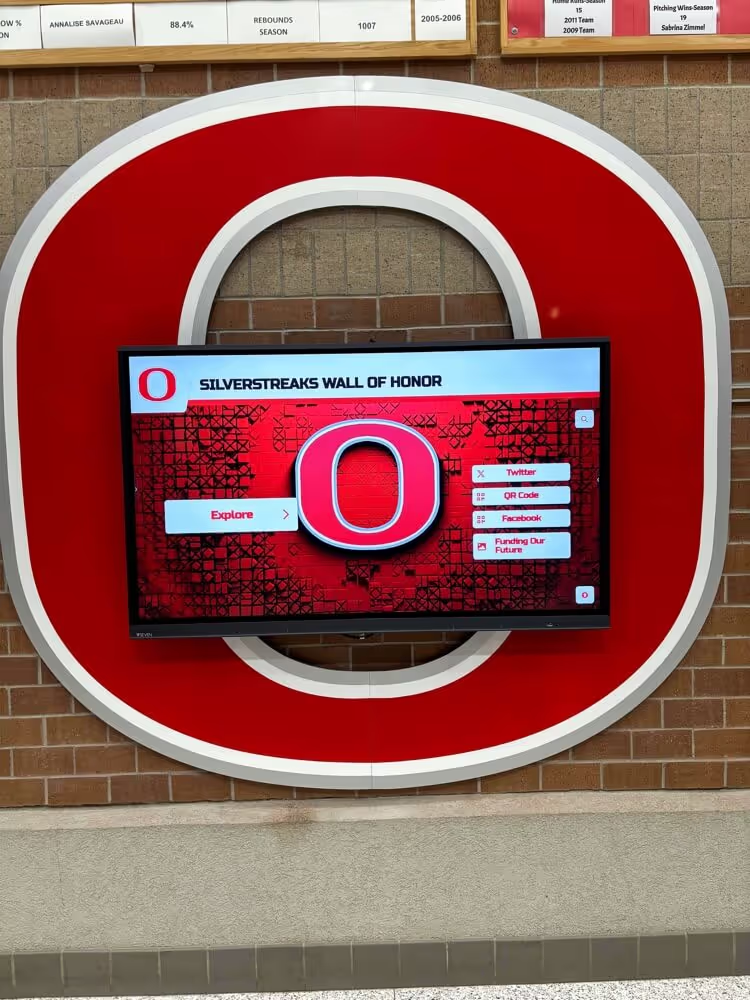
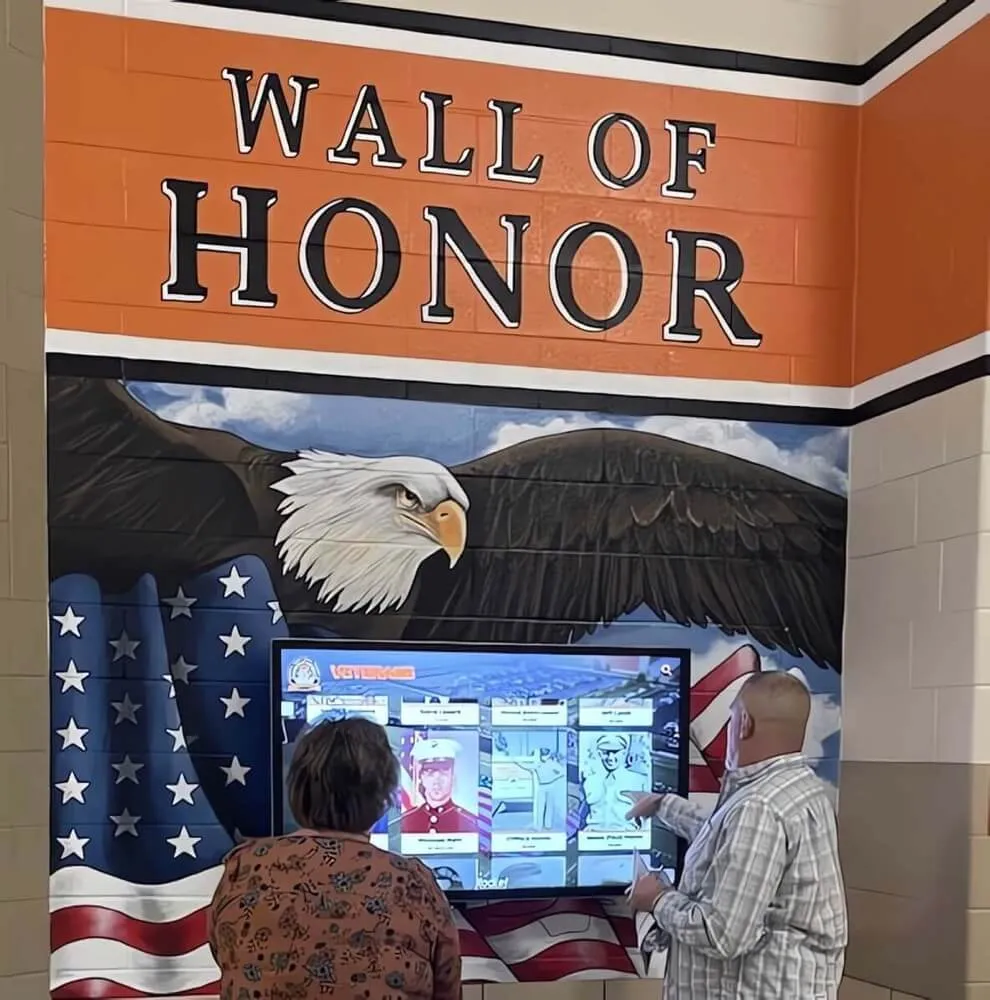
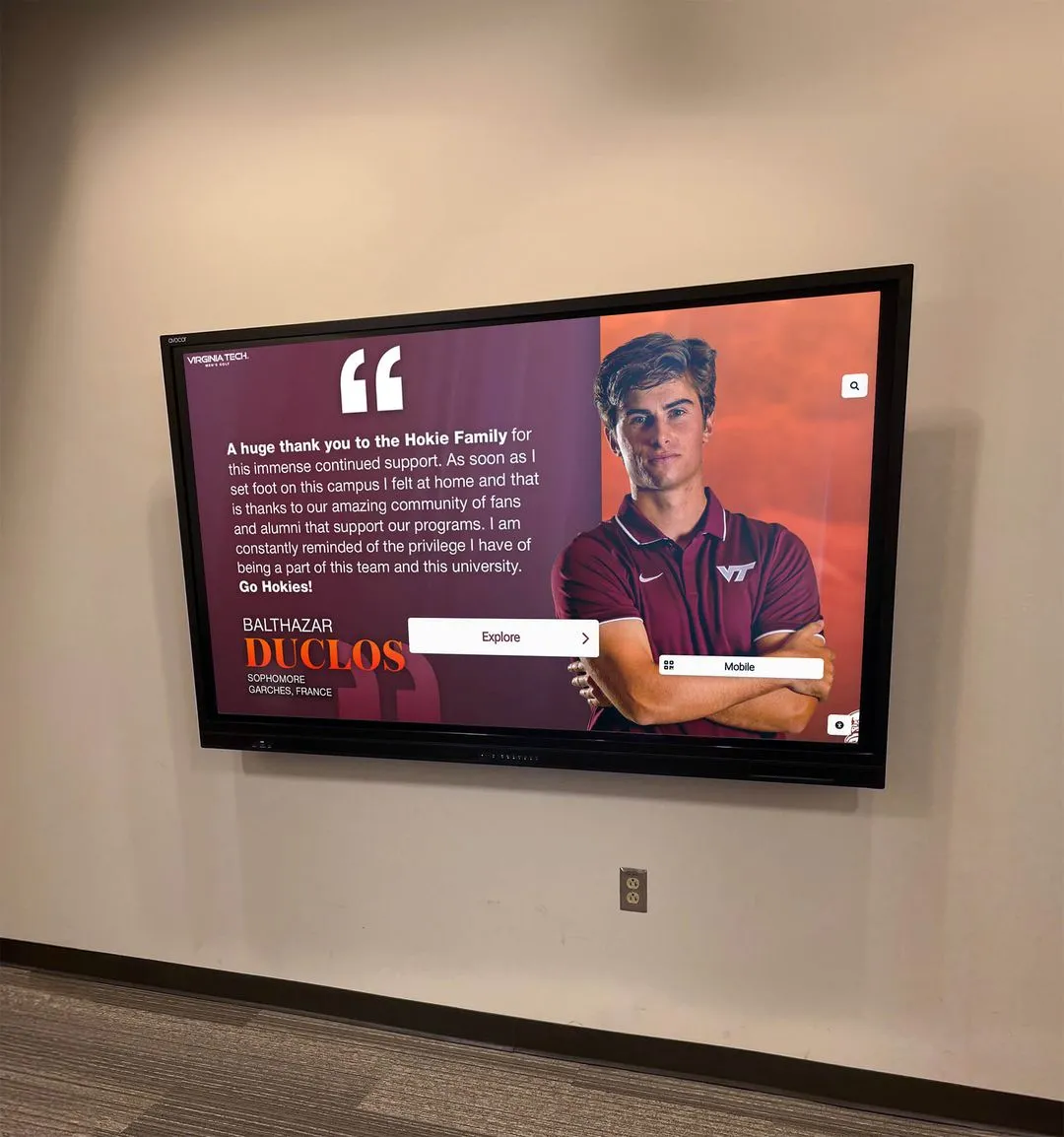
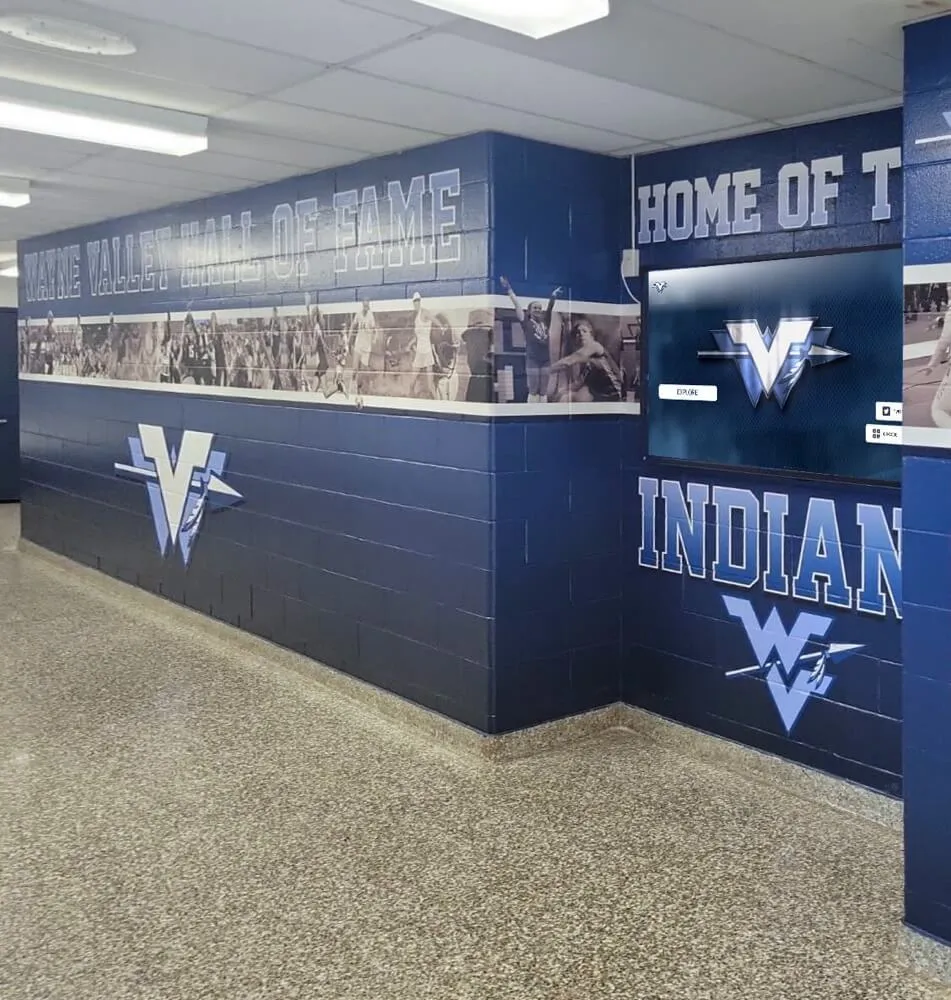
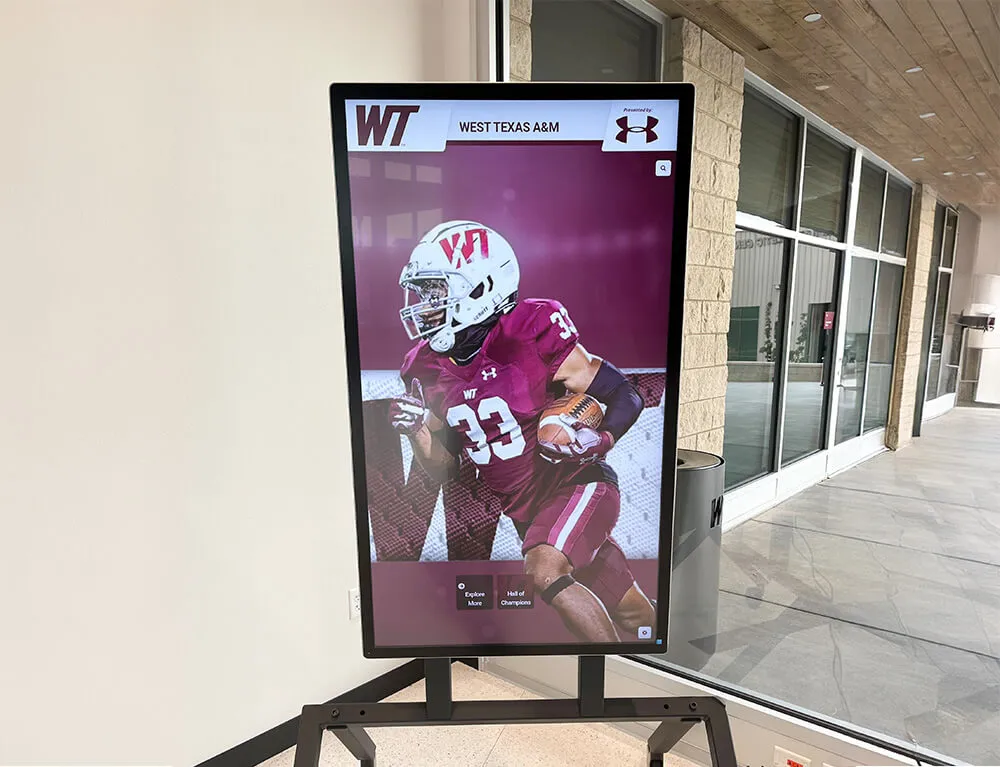
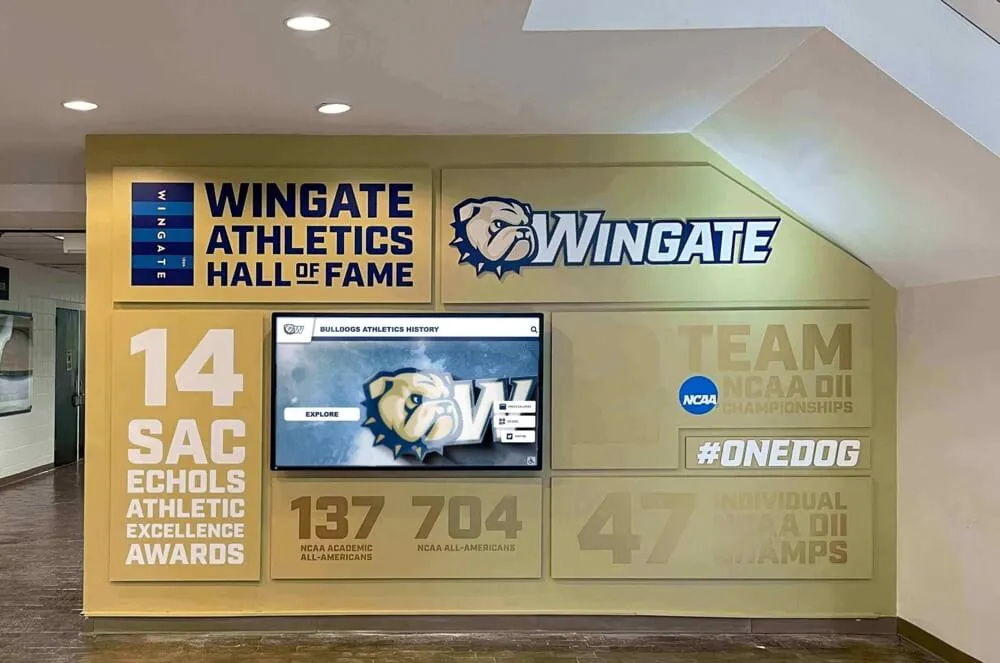
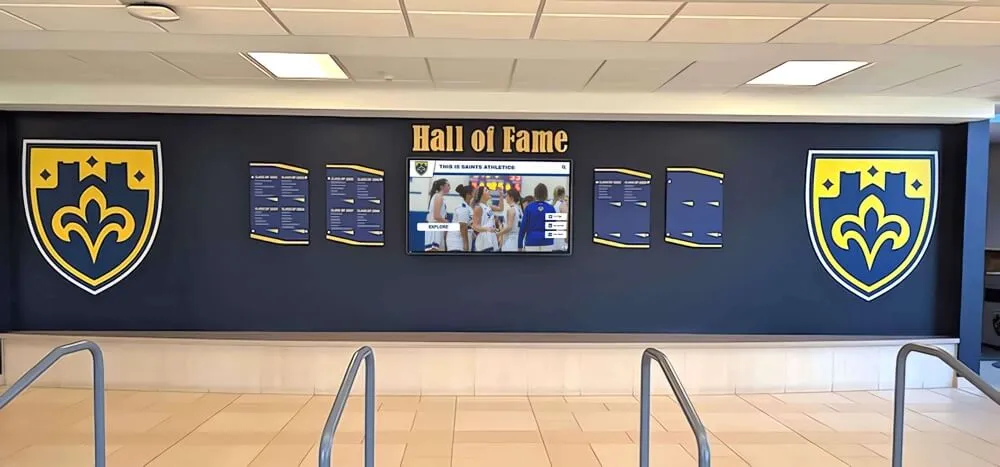
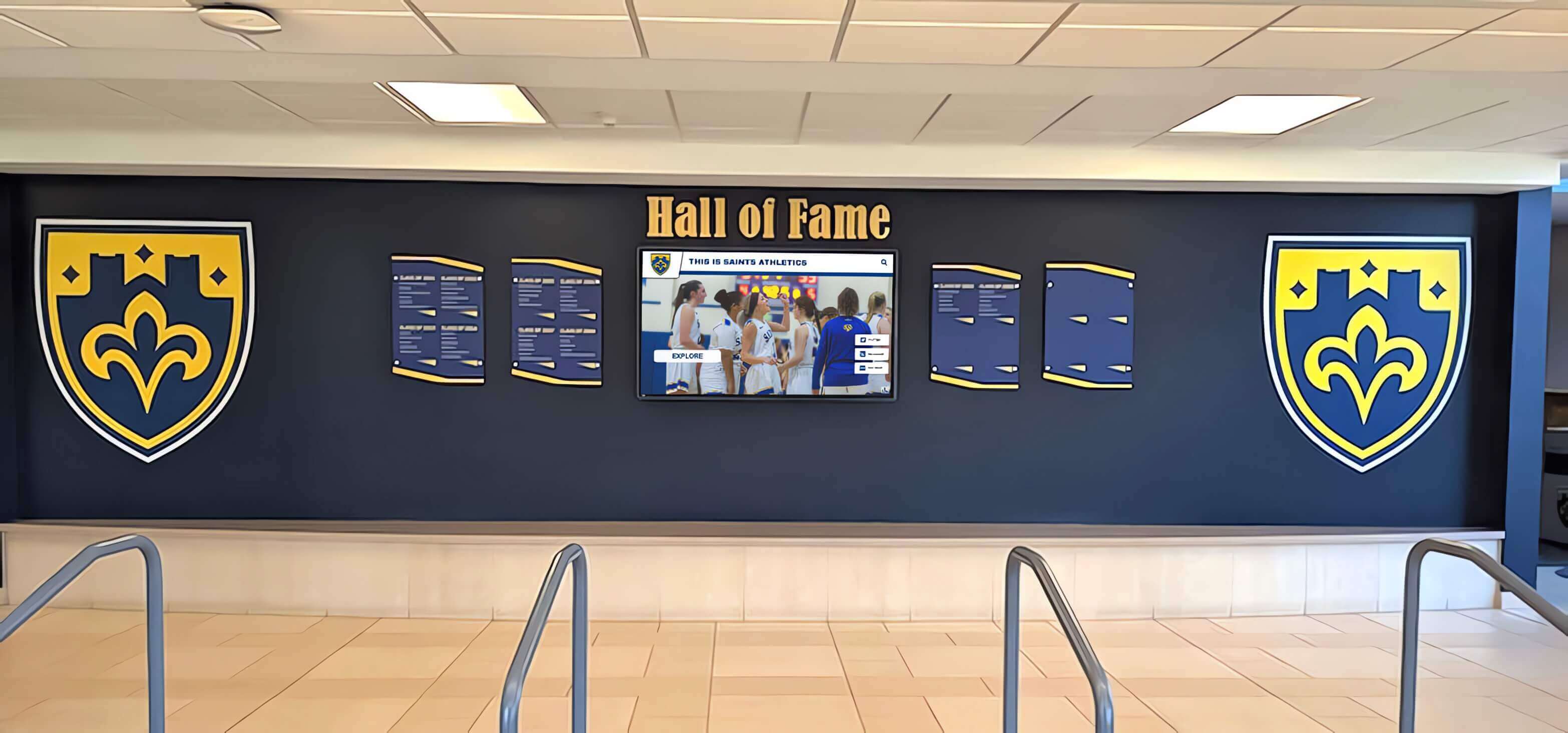
Many schools now preserve these stories permanently through digital recognition displays that allow visitors to explore inductee achievements, view historical photos, and discover the human stories behind the accomplishments. This technology ensures recognition extends beyond single ceremonies to become part of the daily school experience.
Post-High School Accomplishments: Life After Graduation (1-2 minutes)
Briefly acknowledge what the inductee has accomplished since high school, particularly if those achievements validate or extend what they demonstrated during their time at your school. Keep this section relatively brief—the hall of fame honors high school achievements, not entire life stories.
Template Language:
“After graduating from [school name], [first name] [attended college at X, pursued career in Y, etc.]. [His/Her/Their] post-high school achievements include [major accomplishments—college athletics, advanced degrees, professional success, community service, etc.].
What’s particularly meaningful is how [he/she/they] [connect back to high school foundation—applied lessons learned here, maintained connections to alma mater, supported current students, demonstrated values instilled at school name, etc.]. [Specific example showing ongoing connection to school or values developed during high school years].”
Balance Considerations:
For inductees who achieved remarkable success after high school (professional athletes, prominent business leaders, distinguished professionals), resist making the speech primarily about post-high school life. Focus remains on who they were and what they accomplished during their time at your school—that’s what the hall of fame recognizes. Post-high school success serves as evidence that high school achievements were foundations for continued excellence, not as the primary justification for induction.
For inductees whose post-high school paths diverged from their high school strengths (the star athlete who became a teacher rather than professional player, the academic achiever who chose trades over college), frame their paths as demonstrations of character, adaptability, and values rather than suggesting they “didn’t live up to potential.” Hall of fame recognition honors high school achievement regardless of whether that particular path continued afterward.
Recognition of Support Systems (1 minute)
Acknowledge the people who contributed to the inductee’s success. No one achieves hall of fame recognition entirely independently—coaches, teachers, family members, teammates, and friends all played roles.
Template Language:
“[First name] would be the first to acknowledge that these achievements weren’t accomplished alone. [He/She/They] were supported by [list key supporters who are present if known—parents, spouse, former coaches, teachers]. Specifically, [name 1-2 particularly influential figures with brief explanation of their impact].
To [coach/teacher name], who [specific contribution to inductee’s development], [first name] has asked me to express [his/her/their] gratitude. To [family members], who [specific support they provided], thank you for the sacrifices you made and the foundation you provided.”
Sensitivity Considerations:
Some inductees had difficult family situations or lack ongoing relationships with former coaches or teachers. Research these dynamics before the ceremony so you don’t create awkward moments by asking someone to stand who has a fraught relationship with the inductee or is no longer living. Generic acknowledgments (“the many coaches, teachers, and family members who supported this journey”) work when specifics are unknown or potentially problematic.
Message to Current Students (1-2 minutes)
Connect the inductee’s story to current students explicitly, helping them see lessons applicable to their own lives and school experiences. This section transforms historical recognition into present inspiration.
Template Language:
“For current [school name] students here tonight, [inductee name]’s story offers several lessons worth carrying forward. First, [lesson 1 derived from specific aspect of inductee’s journey—perhaps perseverance through failure, commitment to team over individual glory, balancing multiple commitments, or maintaining integrity under pressure].
Second, [lesson 2, ideally different category from first—if lesson 1 was about athletics, make lesson 2 about academics, character, relationships, or community service]. [Specific example from inductee’s story illustrating this lesson].
Finally, remember that [broader inspirational message connecting inductee’s ordinary beginnings to extraordinary outcomes]. [First name] sat in these same classrooms, walked these same hallways, [specific relatable detail about their normal high school experience]. Hall of fame recognition isn’t reserved for those with exceptional natural gifts—it recognizes those who [key qualities like dedication, perseverance, commitment to excellence, etc.].”
This is also where schools can reference how student recognition programs celebrate current achievement while building toward future hall of fame induction, creating continuity between present efforts and eventual recognition.
Closing: The Formal Induction (1 minute)
Conclude with the formal language inducting the individual into your hall of fame, followed by brief instructions about what happens next in the ceremony.
Template Language:
“[First name], your achievements, character, and contributions to [school name] have earned you a permanent place among our school’s most distinguished individuals. On behalf of [school name], the hall of fame committee, and generations of students past, present, and future who will be inspired by your example, it is my honor to induct you into the [school name] [Athletic/Academic/All-School] Hall of Fame, class of [year].
[Instructions for ceremony next steps—‘Please come forward to receive your plaque/ring/jacket,’ ‘Join me in welcoming inductee name,’ etc.]. Ladies and gentlemen, the newest member of the [school name] Hall of Fame, [full name].”
Sample High School Hall of Fame Induction Speeches
These complete sample speeches demonstrate how the template adapts to different inductee types while maintaining authentic, meaningful content.
Sample 1: Student-Athlete Inductee
Speech delivered by athletic director for basketball standout
“Good evening, and welcome to Lincoln High School’s 15th annual Athletic Hall of Fame Induction Ceremony. Tonight we gather in this gym where countless games have been played, championships celebrated, and lessons learned to honor an individual whose name remains synonymous with Lincoln basketball three decades after graduation.
Our hall of fame recognizes more than athletic excellence. We celebrate individuals who embodied Lincoln values—integrity, perseverance, team-first mentality, and commitment to excellence in all areas of life. The athletes we induct inspired teammates, elevated programs, and created memories that define our athletic tradition.
It’s my privilege to introduce tonight’s inductee: Marcus Johnson, class of 1994. During his four years at Lincoln, Marcus transformed our basketball program from conference also-ran to state contender while establishing records that, remarkably, still stand today.
Marcus arrived at Lincoln in fall 1990 from Jefferson Middle School, already carrying reputation as an exceptional talent. But those early coaches remember something beyond his skills—they remember a freshman who arrived 30 minutes before every practice, stayed 30 minutes after, and demanded excellence from himself before expecting it from teammates.
Marcus’s statistical achievements speak for themselves. Over four varsity seasons, he scored 2,247 career points—that’s still the school record, and only three players have even come within 400 points of that mark. He averaged 28 points per game senior year while shooting 48% from three-point range. He earned All-State honors three consecutive years and was named State Player of the Year as a senior after leading Lincoln to the state championship game—our only appearance in that game in school history.
But numbers don’t capture what made Marcus special. Let me share a specific moment that, to me, perfectly illustrates who he was. During the regional final his junior year, Lincoln trailed by 15 points with five minutes remaining. Our season was slipping away. During the timeout, I watched Marcus gather his teammates—remember, he’s a junior talking to seniors—and he didn’t talk about plays or strategies. He said, ‘We’ve worked too hard all season to give up now. Every one of you is capable of making the play that changes this game. Trust each other, give everything you have for five more minutes, and we’ll walk off this court with no regrets.’ Then he looked at our starting center, who’d struggled all night, and said, ‘I’m coming to you first. You’re going to make the shot that starts our comeback.’
We lost that game by three points. But Marcus finished with 38 points and nine assists—he could have scored 50 if he’d wanted, but he was determined to get his teammates involved even when they were struggling. Our center scored eight of his ten points in those final five minutes because Marcus kept finding him, kept believing in him, kept building his confidence. That’s the kind of teammate and leader we’re honoring tonight.
After high school, Marcus attended State University on a full basketball scholarship, where he played four years and graduated with honors in business administration. He’s now a successful commercial real estate developer, serves on our school foundation board, and has established the Marcus Johnson Scholarship Fund, which has helped 15 Lincoln students attend college over the past decade.
But what touches me most is that Marcus still attends Lincoln basketball games regularly. He sits in the student section, not the VIP area. He knows current players’ names and their stats. He stops by practices to offer encouragement. He’s invested in Lincoln basketball success not for recognition but because this program shaped who he is.
Marcus has asked me to acknowledge several people. First, Coach Williams, his varsity coach all four years, who taught him that defense and rebounding require no talent—only effort and commitment. Coach Williams is here tonight, and Marcus, I know he’s proud of you. To Marcus’s parents, David and Sharon Johnson, who never missed a game and who taught him that character matters more than points scored—thank you. And to Marcus’s wife Jennifer and children David Jr. and Maya, who are here tonight, thank you for sharing him with the Lincoln basketball community.
For current Lincoln students, especially current basketball players, Marcus Johnson’s story offers powerful lessons. First, talent alone isn’t enough. Marcus would have achieved nothing without the thousands of hours he invested in skill development, strength training, and studying the game. Natural ability gets you noticed—relentless work ethic makes you great.
Second, your teammates’ success IS your success. Marcus could have scored 40 points every game if he’d wanted. He chose instead to make everyone around him better, and that’s why we went to state. Individual statistics are temporary—championships and the relationships you build with teammates last forever.
Finally, success is about who you become, not just what you achieve. Marcus learned lessons in this gym about perseverance, leadership, handling pressure, and working toward collective goals—lessons that made him successful in business, in family life, and in community service. The achievements we’re celebrating tonight were stepping stones toward the man he became.
Marcus, your achievements, character, and ongoing contributions to Lincoln High School have earned you a permanent place among our most distinguished athletes. On behalf of Lincoln basketball, the hall of fame committee, and generations of players past, present, and future who will be inspired by your example, it is my honor to induct you into the Lincoln High School Athletic Hall of Fame, class of 2026.
Please join me in welcoming the newest member of the Lincoln High School Athletic Hall of Fame, Marcus Johnson.”
Sample 2: Academic Inductee
Speech delivered by principal for distinguished scholar
“Good afternoon, and welcome to Central High School’s Academic Hall of Fame Induction Ceremony. We gather today to honor individuals whose intellectual achievements, academic leadership, and scholarly contributions exemplify Central’s commitment to educational excellence.
Today’s inductee represents the very best of Central’s academic tradition—someone who excelled across disciplines, elevated classroom discussions, and demonstrated that intellectual curiosity combined with dedication produces extraordinary results.
I’m privileged to introduce Dr. Sarah Chen, class of 2000. During her four years at Central, Sarah established academic standards rarely matched and never exceeded, earning recognition as valedictorian while embodying the intellectual curiosity and scholarly rigor that define Central’s academic culture.
Sarah transferred to Central as a sophomore from Riverside High School when her family relocated for her father’s job. Those early teachers remember a quiet student who asked incredibly thoughtful questions and whose essay responses demonstrated depth of analysis beyond typical high school level.
Sarah’s academic achievements include a perfect 4.0 unweighted GPA across four years while completing every honors and AP course Central offered—that’s 14 AP courses, in case you’re counting. She scored perfect 5s on 13 of those 14 AP exams. She earned a perfect 1600 SAT score on her first attempt. She was named National Merit Scholar, Presidential Scholar semifinalist, and earned the Goldwater Scholarship—one of only 300 awarded nationally that year to aspiring scientists.
But Sarah’s impact on Central extended far beyond her personal achievements. She founded Central’s first Science Olympiad team, which she captained for three years. She tutored struggling students in mathematics through the peer tutoring program, often staying after school until 6 pm helping classmates prepare for tests in courses she’d taken years earlier. She served as editor of the school literary magazine, where she elevated the quality of submissions by providing detailed, constructive feedback to student writers.
Let me share a story that captures Sarah’s approach to learning. During her junior year AP Chemistry class, her teacher assigned a challenging research project on catalytic reactions. Sarah could have easily completed the minimum requirements—she understood the material better than most college students would have. Instead, she spent three months designing and conducting actual experiments in a college lab, with permission from a university professor she’d contacted directly to propose her research. Her final presentation was 40 minutes long—remember, this is high school—and included original research data, statistical analysis, and conclusions that her teacher said would have earned an A in a graduate-level course.
When asked why she’d invested so much time beyond assignment requirements, Sarah said something I’ll never forget: ‘The assignment was about meeting minimum standards. My education is about discovering what I’m capable of when I push beyond minimums.’ That mindset defined everything Sarah did at Central.
After graduating as valedictorian, Sarah attended MIT on a full scholarship, where she earned her bachelor’s degree in chemical engineering followed by her Ph.D. in materials science. She’s now a principal researcher at Advanced Materials Institute, holds six patents for innovative sustainable materials, and serves as adjunct professor at Stanford. Her research on biodegradable plastics has been featured in Nature and Science, and she was recently named one of MIT Technology Review’s 35 Innovators Under 35.
But what makes Sarah’s induction particularly meaningful is how she’s remained connected to Central. She’s mentored eight Central students pursuing STEM careers, connected students with research internships, and funded the Sarah Chen STEM Scholarship, which awards $5,000 annually to a Central student pursuing science or engineering. She regularly returns to speak in science classes, not about her achievements but about her failures—the experiments that didn’t work, the graduate school applications that were rejected, the research that led nowhere. She wants students to understand that success requires perseverance through setbacks.
Sarah has asked me to acknowledge several people who shaped her Central experience. First, Dr. Martinez, her AP Chemistry teacher, who recognized her potential and connected her with university research opportunities. Dr. Martinez has since retired but is here today, and Sarah credits him with sparking her passion for materials science. To her parents, who immigrated to this country with almost nothing and who always emphasized education as the foundation for opportunity—thank you. Their sacrifices made Sarah’s achievements possible.
For current Central students here today, Sarah Chen’s story offers several important lessons. First, academic excellence isn’t about test scores or class rank—it’s about genuine intellectual curiosity. Sarah achieved extraordinary things because she loved learning for its own sake, not because she was chasing recognition. When you’re truly curious about something, the motivation to learn deeply comes naturally.
Second, helping others succeed doesn’t diminish your own achievement—it enhances it. Sarah tutored struggling students, mentored younger Science Olympiad members, and provided feedback on classmates’ writing because she understood that learning communities thrive when everyone rises together. The hours she invested helping others didn’t prevent her success—they enriched it by developing leadership and teaching skills that serve her today.
Finally, challenge yourself beyond minimum requirements. The assignments you’re given in classes establish floors, not ceilings. Sarah could have coasted to straight As by doing exactly what was assigned. She chose instead to use assignments as starting points for deeper exploration. That mindset—treating education as opportunity rather than obligation—separates good students from exceptional ones.
Dr. Chen, your academic achievements, intellectual leadership, and ongoing commitment to Central High School have earned you a permanent place among our most distinguished scholars. On behalf of Central High School, our faculty, and generations of students past, present, and future who will be inspired by your example, it is my honor to induct you into the Central High School Academic Hall of Fame, class of 2026.
Please join me in welcoming the newest member of the Central High School Academic Hall of Fame, Dr. Sarah Chen.”
Special Considerations for Different Inductee Types
Different inductee categories require adapted approaches while maintaining the template’s overall structure. Understanding these distinctions ensures speeches appropriately honor each inductee type.
Posthumous Inductions
Honoring individuals who have passed away requires particular sensitivity while ensuring their achievements receive full recognition.
Tone Adjustments: Acknowledge the bittersweet nature of posthumous recognition. Express regret that the inductee cannot personally accept the honor while celebrating that their legacy endures. Use present tense when discussing their achievements and character (“she WAS determined” rather than “she was determined”) to maintain focus on accomplishment rather than loss.
Family Sensitivity: Research family circumstances before the ceremony. Who will accept the honor on their behalf? What’s their preference for how the inductee’s passing is acknowledged? Some families want detailed discussion of how the person died; others prefer minimal mention with focus remaining on achievements. Always defer to family preferences.
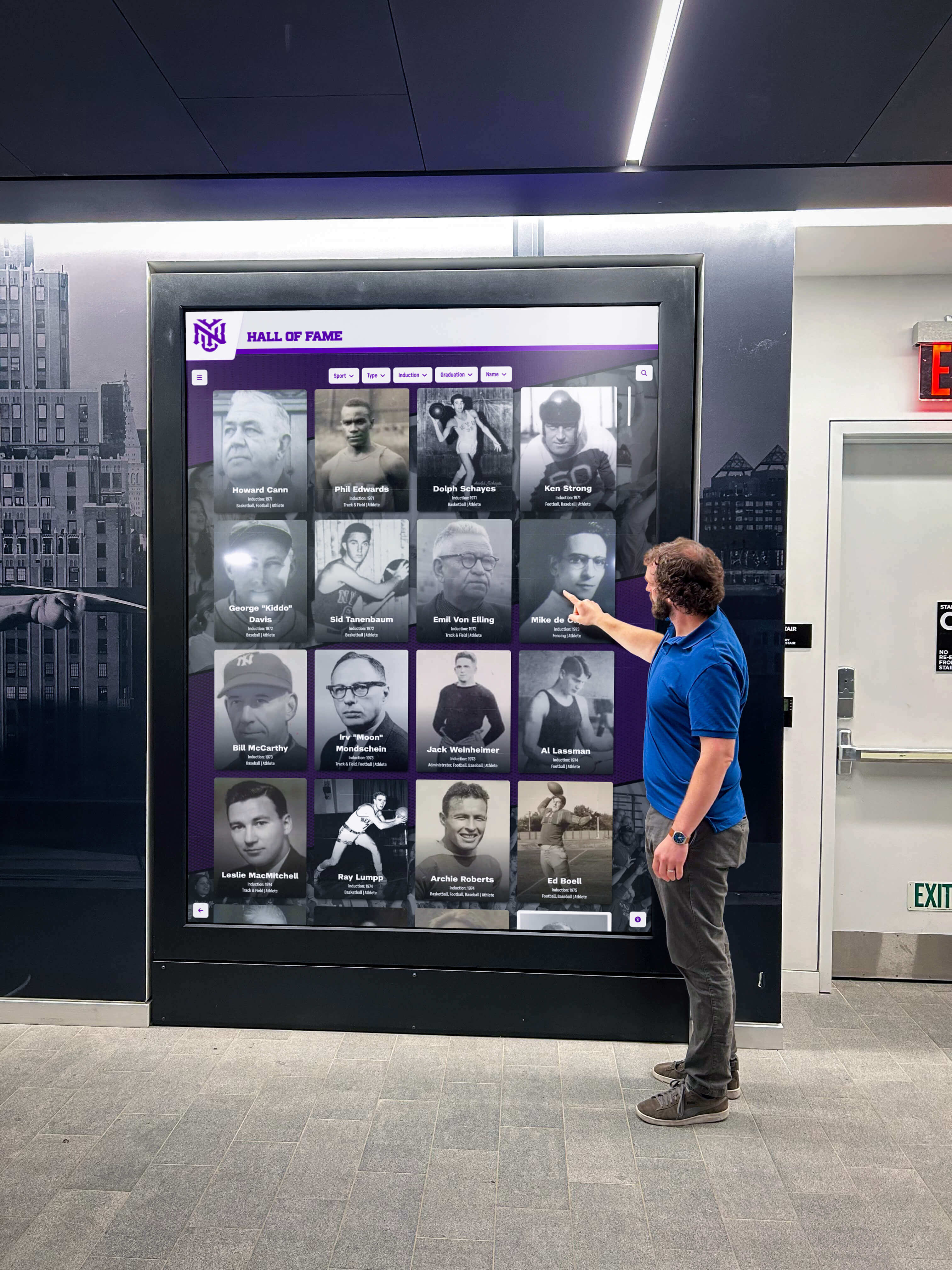
Legacy Focus: Posthumous inductions provide opportunities to discuss how the inductee’s influence continued beyond their lifetime. Who did they inspire? What changed because of their contributions? How does the school community remember them? For more comprehensive preservation of inductee legacies, schools increasingly implement digital recognition platforms that allow families to contribute photos, memories, and stories that become permanent parts of the school’s historical record.
Teacher/Coach/Staff Inductees
Non-student inductees require different approaches because their hall of fame recognition typically honors careers spanning decades rather than four-year high school experiences.
Student Impact Stories: The most powerful elements of these speeches come from specific student stories. How did this teacher change individual lives? What coach moment of wisdom stuck with an athlete for decades? What did staff members do beyond their job descriptions that demonstrated extraordinary commitment? Interview former students to gather these specific examples.
Program Development: Many teacher/coach inductees transformed programs during their tenure. Document what the program looked like when they arrived, changes they implemented, and measurable improvements they achieved. Provide context showing these weren’t simply time-based improvements but resulted from specific innovations, recruiting, teaching methods, or cultural changes they introduced.
Professional Recognition: Include any professional awards, honors, or recognition they received—Coach of the Year awards, teaching excellence recognition, conference championships, etc. But balance these with personal impact stories that mean more to most audiences than professional accolades.
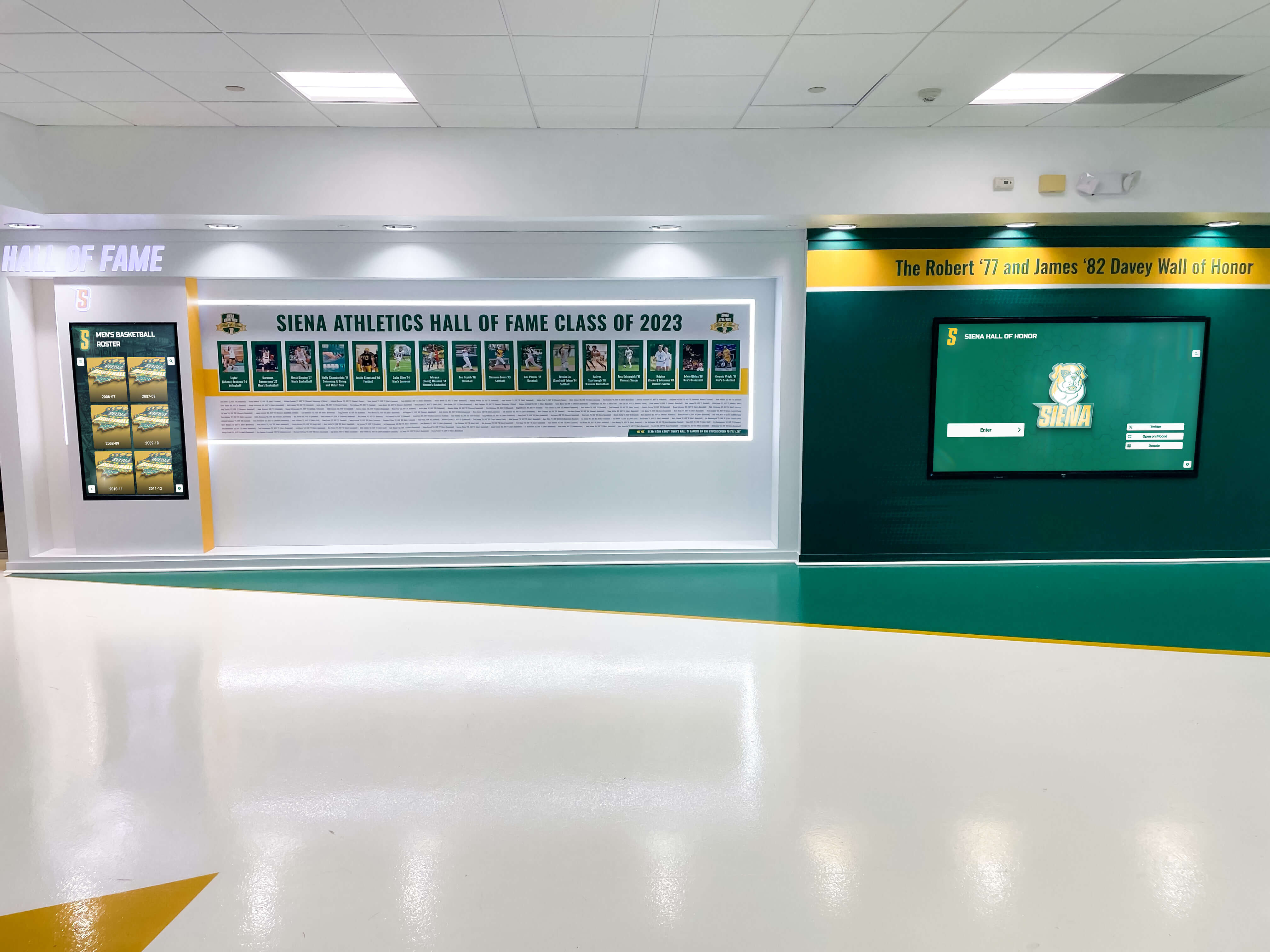
Many schools now recognize teaching excellence through dedicated displays showcasing faculty achievements, creating permanent institutional memory that honors educators’ contributions across entire careers rather than limiting recognition to single ceremony speeches.
Team Inductees
Some schools induct entire championship teams rather than only individuals. These speeches face unique challenges balancing collective recognition with individual acknowledgment.
Balanced Recognition: Mention every team member by name at some point during the speech. For larger teams, this might mean reading the complete roster near the beginning while focusing detailed discussion on team captains, leading performers, or individuals whose stories best illustrate team qualities.
Collective Narrative: What made this particular team special? Most championship teams win through some combination of talent, chemistry, overcoming adversity, or exceptional coaching. Identify the narrative thread that unites this team’s story and organize your speech around that theme rather than attempting to chronicle the entire season chronologically.
Key Moment Focus: Choose 1-3 specific games or moments that captured the team’s essence. Describe these moments in detail—the situation, what happened, why it mattered—so audiences can visualize and understand the achievement. A detailed narrative of the championship-clinching moment creates more impact than summarizing an entire season of victories.
Distinguished Alumni Beyond Athletic/Academic Achievement
Some inductees merit recognition for post-high school achievements—distinguished military service, humanitarian work, business success, artistic achievement, or public service. These inductions require balance between honoring achievements and connecting back to high school foundation.
High School Foundation: What happened during their high school years that foreshadowed later success? Did they display leadership qualities in student government that later translated to political service? Did they create art for the school play that indicated talent that would lead to Broadway? Did they volunteer for community service projects that predicted humanitarian career paths? Make explicit connections between high school experiences and later achievements.
School Values Embodiment: These inductees typically represent values your school holds important beyond measurable achievement—service to others, integrity under pressure, perseverance through adversity, commitment to social justice. Frame their induction as recognition that the school’s mission extended beyond preparing students for college or careers to developing character and values that guide entire lives.
Tips for Delivering Effective Induction Speeches
Even brilliantly written speeches fall flat without effective delivery. These practical tips ensure your words resonate with audiences and create the meaningful moment inductees deserve.
Preparation and Practice
Rehearse Multiple Times: Practice delivering your speech aloud at least five times before the actual ceremony. This reveals awkward phrasing you didn’t notice when writing, helps you internalize content so you’re not reading directly from notes, identifies sections running too long or too short, and builds confidence that reduces nervousness during actual delivery.
Time Your Speech: Most effective induction speeches run 8-12 minutes. Shorter feels rushed and fails to adequately honor the inductee; longer tests audience patience and reduces impact. Time yourself during practice runs, adjusting length as needed. Remember that nerves often cause speakers to rush during actual delivery, so speeches that run 10 minutes in practice may only take 8 minutes during the ceremony.
Prepare for Emotion: If you have personal connections to the inductee or expect to become emotional during delivery, identify moments that might trigger tears and decide how you’ll handle them. Having water available helps. Brief pauses to compose yourself are perfectly acceptable—they often enhance authenticity. Consider having a backup person ready to step in if you become too emotional to continue, though this rarely proves necessary.
Familiarize With Venue: Visit the space where you’ll deliver the speech beforehand if possible. Where will you stand? Where will the inductee sit? Will you use a microphone? Will there be a podium? Understanding physical logistics prevents awkward moments during the ceremony and helps you visualize successful delivery during practice.
Delivery Techniques
Maintain Eye Contact: Connect with your audience by looking at them regularly rather than reading continuously from notes. Divide your eye contact between three groups: the inductee (they should feel you’re speaking TO them, not just ABOUT them), the audience broadly, and specific individuals (family members, former coaches, teammates) you mention during the speech.
Use Conversational Tone: Effective speeches feel like meaningful conversations rather than formal orations. Avoid overly flowery language, excessive formality, or stilted phrasing. Write how people actually speak. Use contractions. Vary sentence length. Allow personality to show through.
Pause for Impact: Strategic pauses increase speech effectiveness. Pause after particularly significant statements to let them resonate. Pause before transitioning to new speech sections to signal shifts. Pause to let audience laughter or applause complete rather than rushing to the next sentence.
Modulate Pace and Volume: Varying speaking pace and volume creates emphasis and maintains audience attention. Slow down for particularly important points. Increase volume slightly when sharing exciting moments. Lower volume for intimate stories or emotional content. Monotone delivery at consistent pace and volume loses audiences regardless of content quality.
Handling Technical Elements
Microphone Management: Test microphones before the ceremony begins. Maintain consistent distance—too close causes distortion, too far makes you inaudible. If you tend to move while speaking, use wireless lavelier microphones rather than fixed podium mics. Handheld microphones work well if you’re comfortable with them but create challenges for speakers who gesture extensively.
Notes and Scripts: Most effective delivery uses abbreviated notes rather than complete scripts. Write your speech fully, but create condensed notes with key points, specific quotes you want exact, and transitions between sections. This allows natural delivery while ensuring you don’t forget important elements. If you must use complete scripts, practice enough that you can maintain frequent eye contact rather than continuously reading.
Visual Aids: Some ceremonies incorporate photos or video clips during speeches. If your ceremony includes these elements, practice timing your speech to coordinate with visuals. Know when images will appear so you can reference them naturally: “This photo shows Sarah in her lab…” Know when to pause while videos play. Technical elements enhance speeches when seamlessly integrated but create awkwardness when coordination fails.
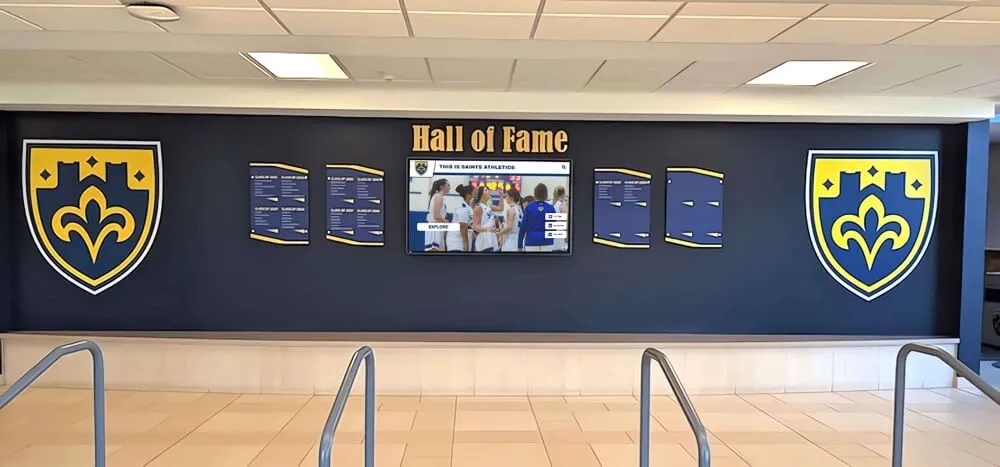
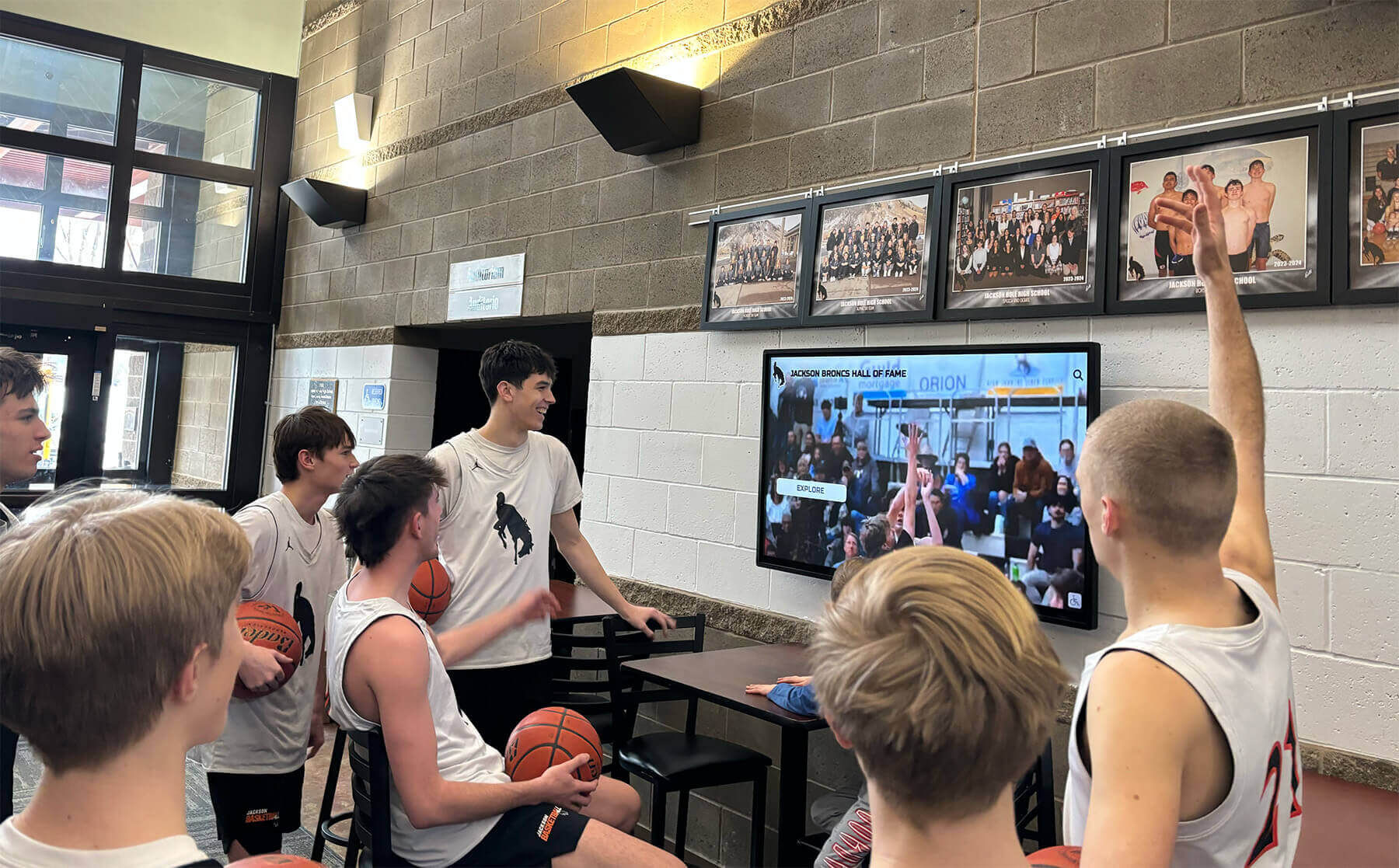
Many modern ceremonies now incorporate interactive displays showing inductee achievements throughout the venue, allowing guests to explore detailed profiles, view historical photos, and discover stories beyond what ceremony speeches can include. This technology creates richer recognition experiences while allowing speeches to focus on most meaningful elements without trying to comprehensively document every achievement.
Recovering From Mistakes
Acknowledge and Move On: If you mispronounce a name, skip a section, or make an obvious error, briefly acknowledge it if necessary (“Let me correct that—I meant to say…”) and continue. Don’t dwell on mistakes or apologize excessively. Audiences are forgiving of minor errors and often don’t notice things that seem glaring to speakers.
Have Backup Plans: Bring printed notes even if you plan to speak from memory. Have water available if your throat gets dry. Know who can provide assistance if technical elements fail. Simple preparation for contingencies prevents minor problems from derailing ceremonies.
Connecting Induction Speeches to Broader Recognition Programs
Individual induction speeches represent single moments in broader recognition cultures that effective schools cultivate intentionally. These ceremonies gain deeper meaning when connected to comprehensive approaches honoring achievement at all levels.
Building Recognition Cultures
Regular Recognition Beyond Hall of Fame: Schools with strong recognition cultures celebrate achievement regularly, not just during annual induction ceremonies. Weekly student-athlete recognition, academic honor rolls displayed prominently, and service awards presented throughout the year create environments where recognition feels normal rather than exceptional.
Multiple Recognition Tiers: Effective programs recognize achievement at different levels. Hall of fame induction represents pinnacle recognition, but schools should also celebrate all-conference performers, honor roll students, citizenship award winners, and participation in activities. This ensures recognition reaches broad populations rather than only elite performers.
Accessible Recognition Criteria: When hall of fame induction criteria remain mysterious or seem arbitrary, students disengage rather than aspiring toward recognition. Publish clear criteria, share inductee selection processes transparently, and help students understand how current achievements might lead to eventual hall of fame consideration.
Preserving and Sharing Recognition
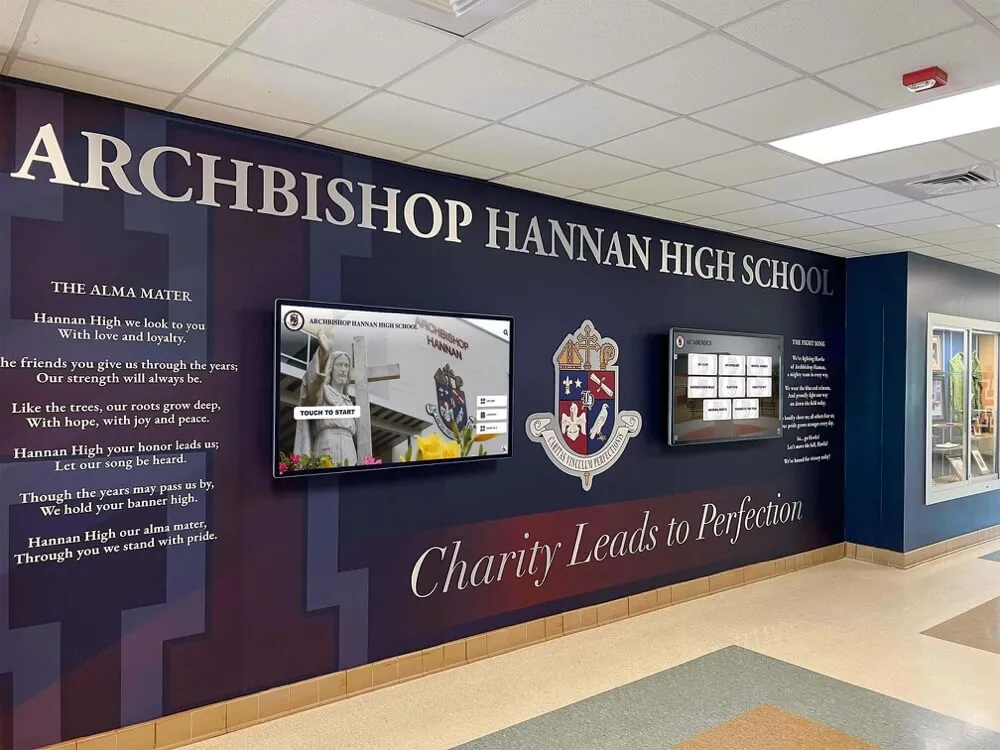
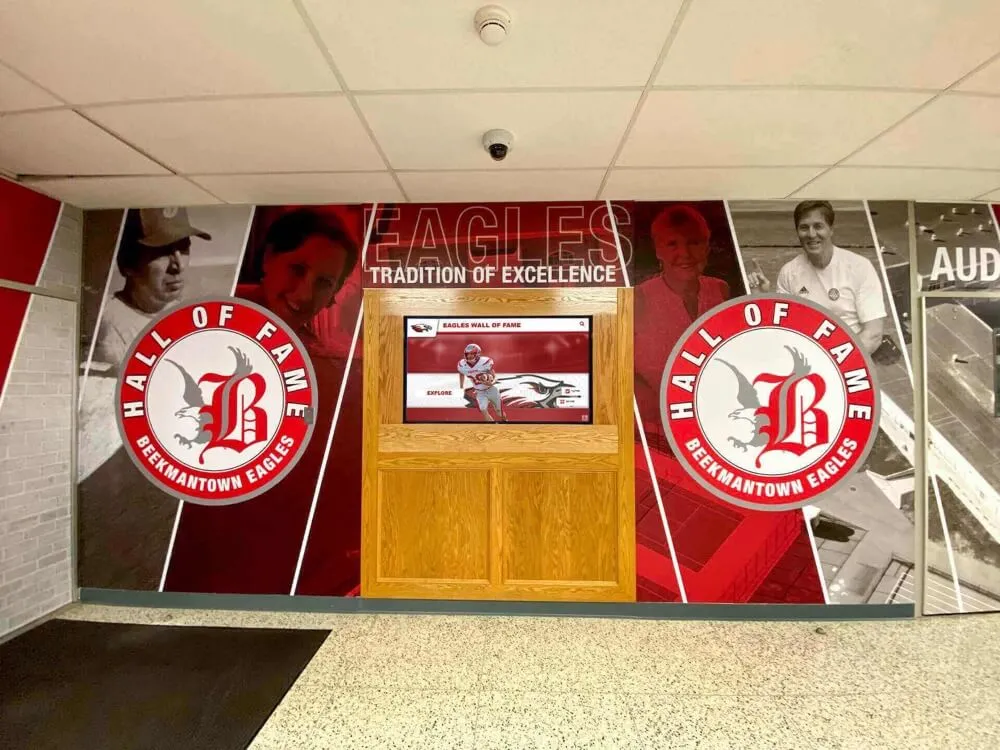
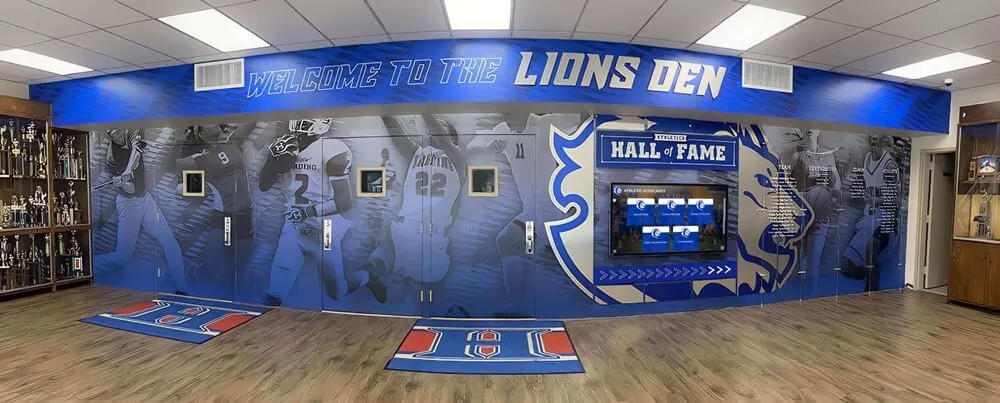
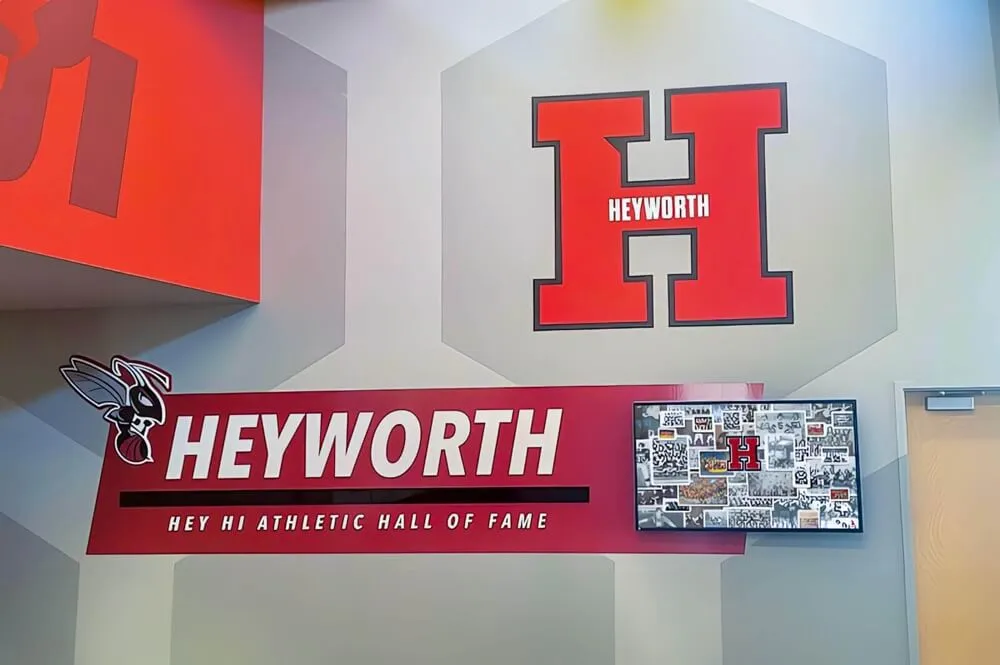
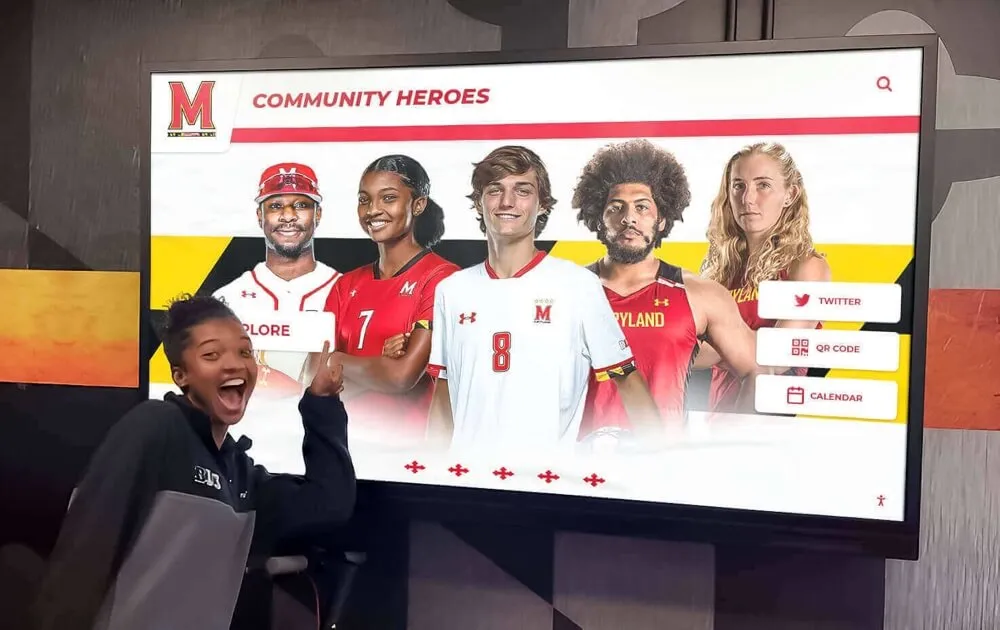
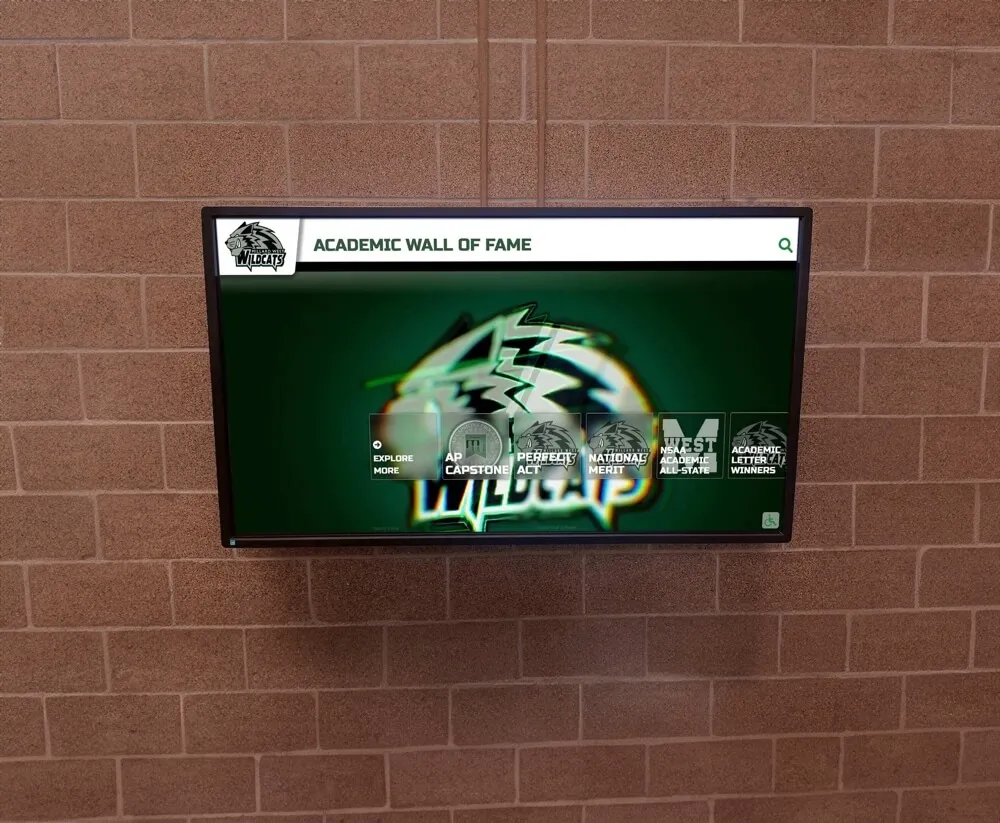
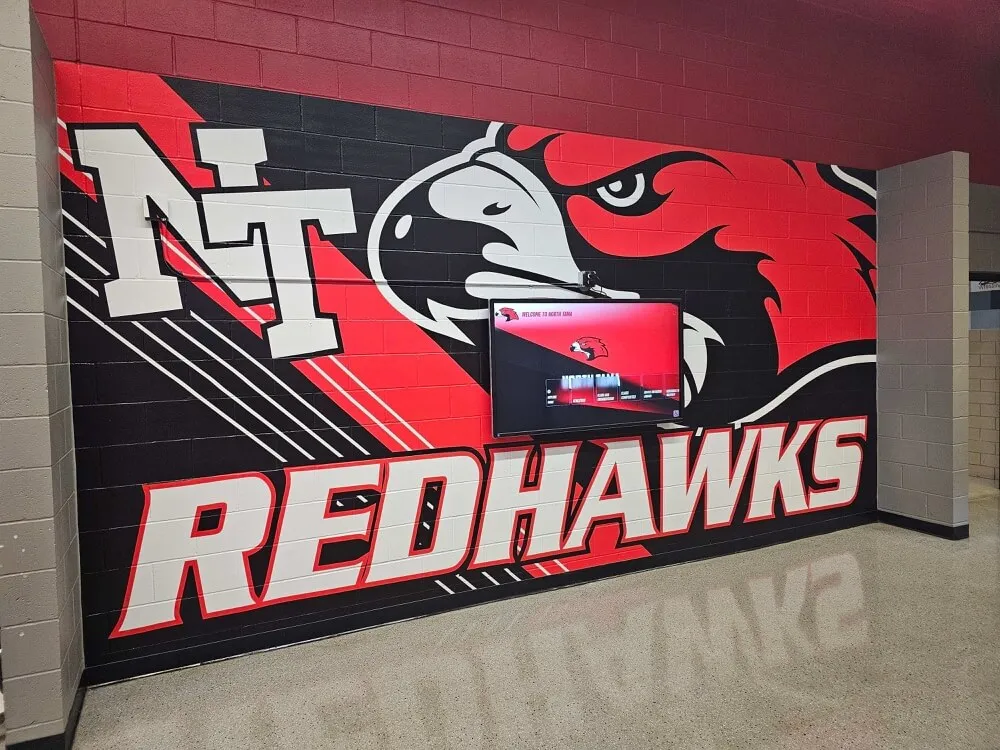
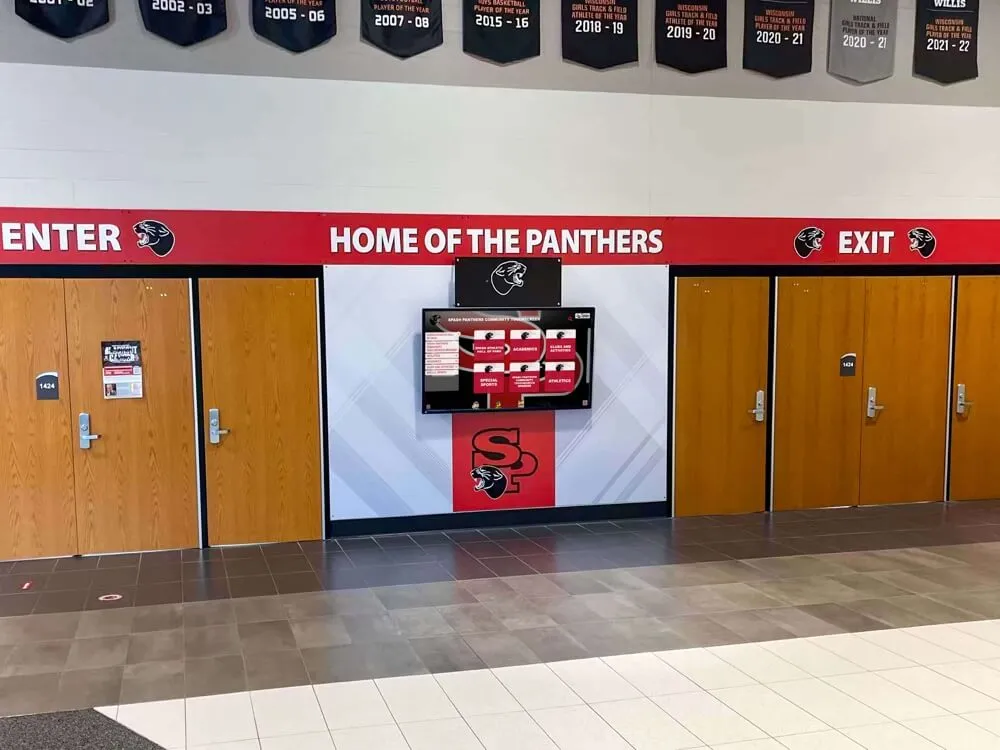
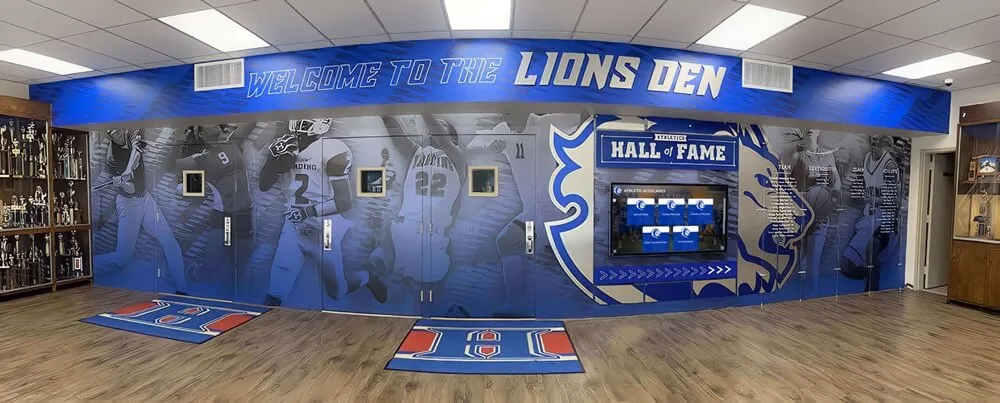
Permanent Displays: Induction ceremonies create powerful moments, but their impact extends when recognition becomes permanently visible throughout school buildings. Traditional plaques and trophy cases serve this function, but many schools now implement digital recognition displays that provide dynamic, updatable recognition allowing deeper exploration of inductee achievements than static plaques permit.
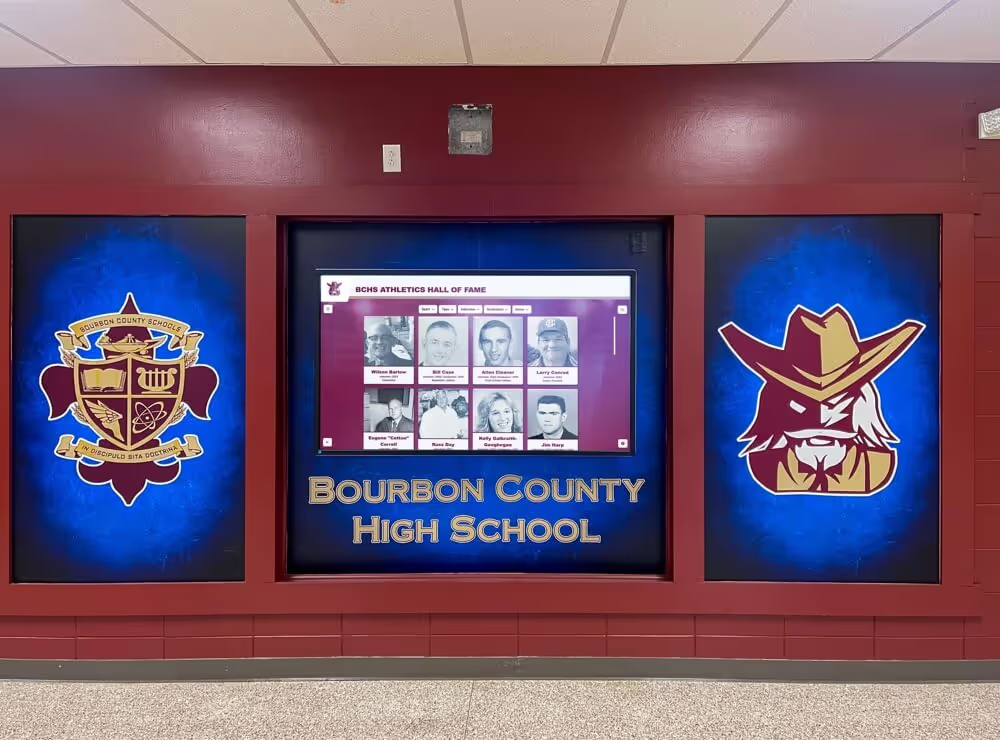
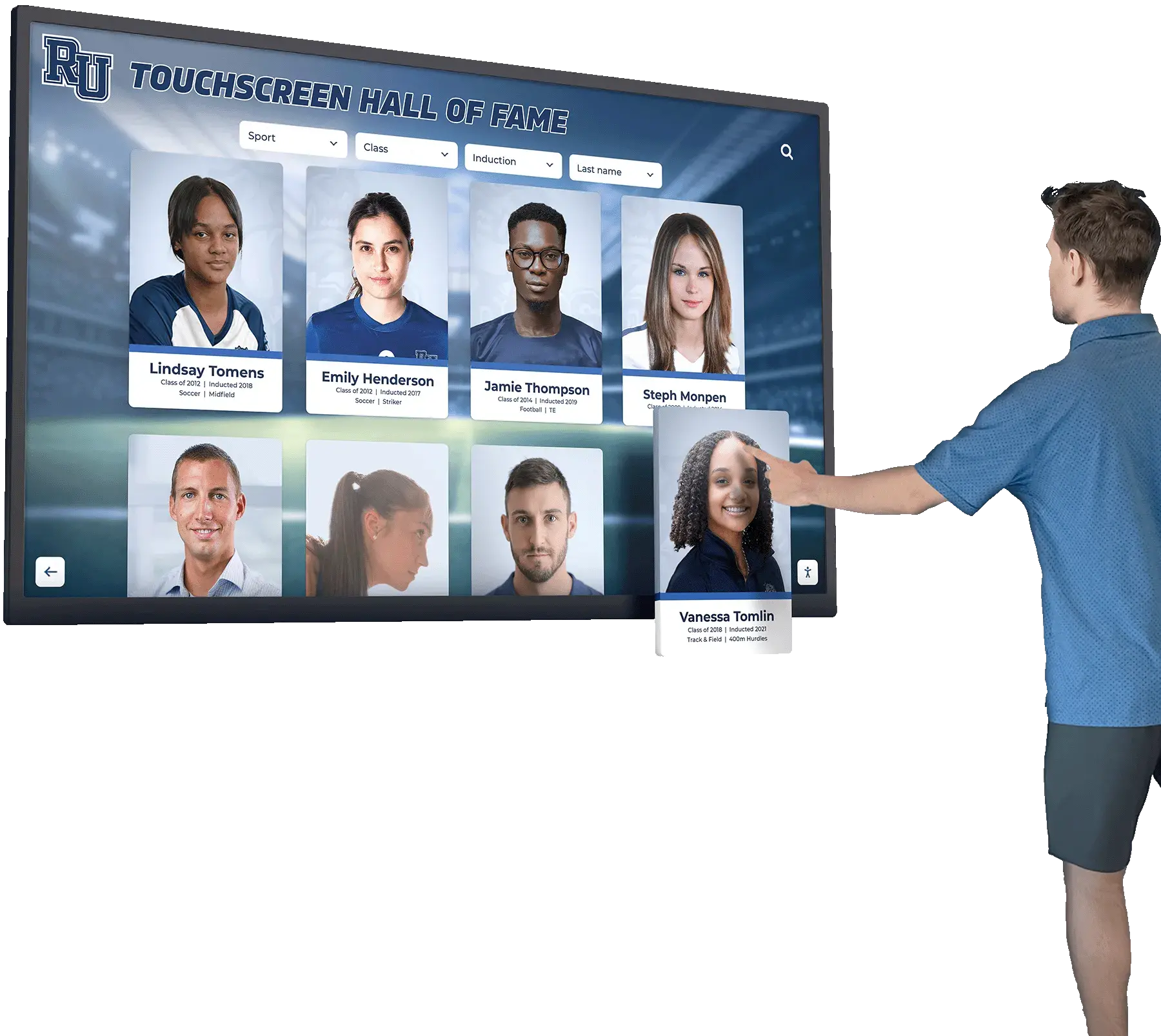
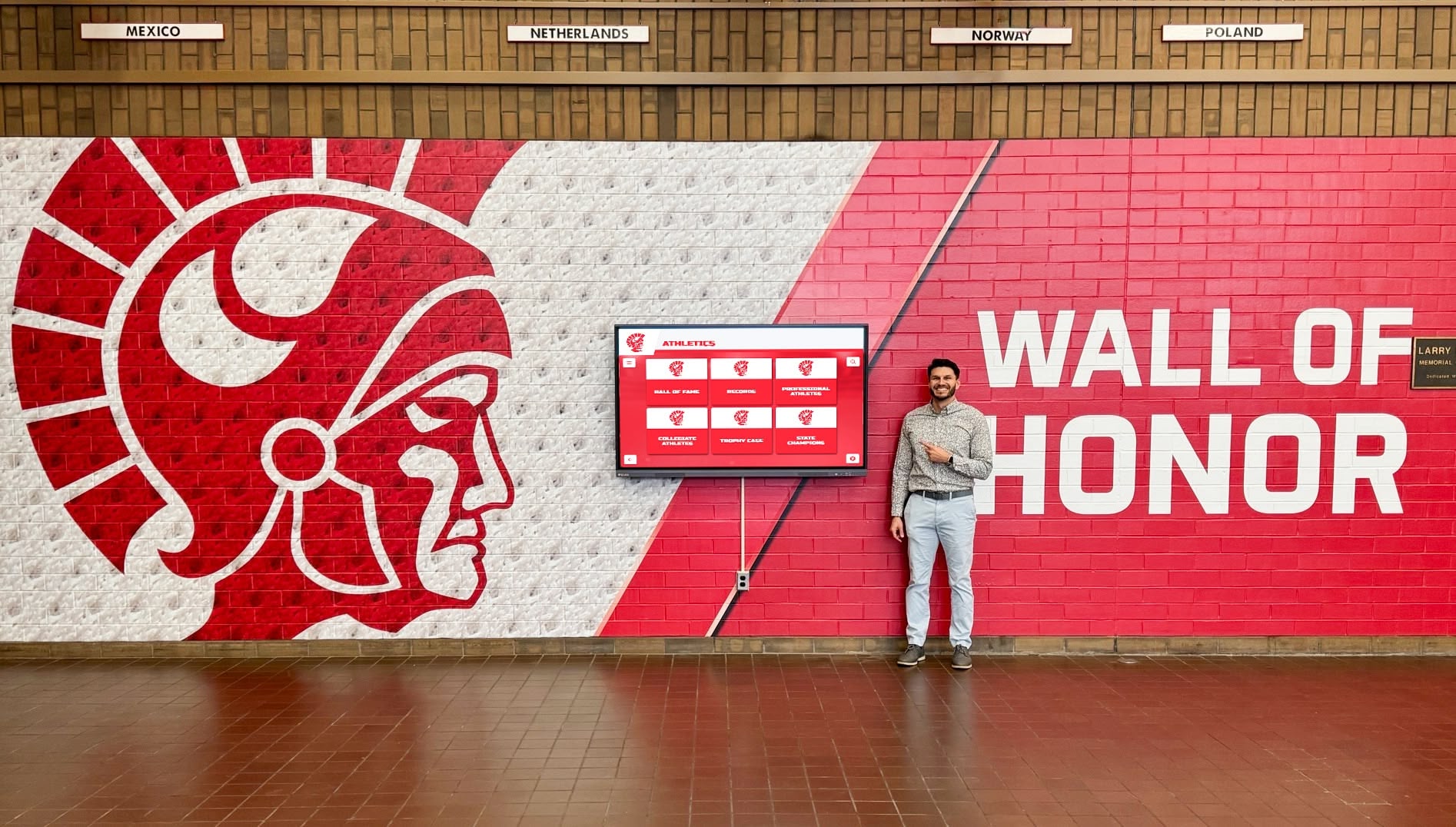
These modern solutions allow students to search for inductees, view historical photos, read complete biographies, and discover connections between current programs and past achievements. Solutions from companies like Rocket Alumni Solutions transform recognition from passive viewing to interactive exploration, helping current students connect meaningfully with school history while preserving inductee legacies comprehensively.
Digital Archives: Recording induction speeches and preserving them in accessible digital archives ensures ceremonies impact future generations beyond those physically present. Many schools now create comprehensive digital archives combining historical photos, yearbook pages, newspaper clippings, and video content into searchable platforms where alumni can revisit their school years while current students explore institutional history.
Social Media and Communications: Share inductee stories through school communications, social media channels, and alumni newsletters. Brief profiles leading up to induction ceremonies build anticipation. Photos and video clips from ceremonies extend their reach to alumni who couldn’t attend. These communications keep recognition visible long after ceremony applause fades.
Connecting Past and Present
Mentorship Programs: Connect hall of fame inductees with current students pursuing similar paths. Athletes can mentor current team members. Academic achievers can advise students in challenging courses. Distinguished alumni can provide career guidance. These relationships make recognition feel relevant and accessible to current students rather than representing distant, untouchable achievement.
Returning Inductee Involvement: Invite inductees to participate actively in school life beyond induction ceremonies. Speaking to classes, attending games, serving on advisory committees, or judging student competitions keeps them engaged while demonstrating to current students that achievement creates ongoing connections to alma mater.
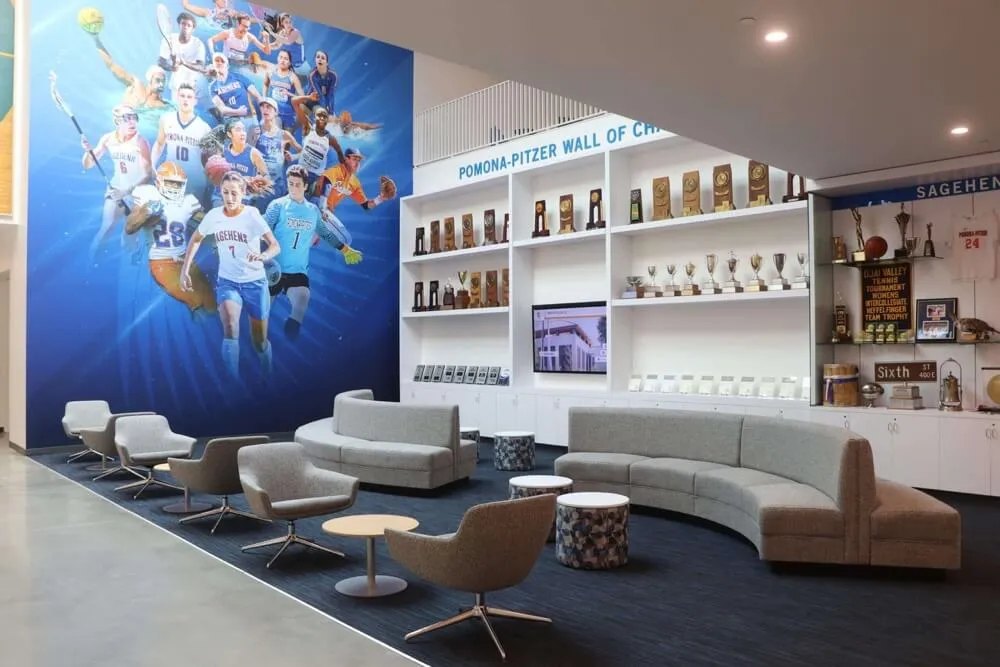
Tradition Building: Use induction ceremonies to establish and reinforce school traditions. Perhaps inductees sign a ceremonial book, add their handprints to a permanent wall display, or plant trees on campus. Physical symbols of recognition create touchpoints throughout campus that remind students daily of the school’s commitment to celebrating excellence.
Conclusion: The Lasting Impact of Effective Induction Speeches
The words you speak during hall of fame induction ceremonies become part of your school’s permanent record. They shape how inductees remember their recognition, how their families feel about their alma mater, and how current students understand what achievement looks like and what standards their school values.
The most effective induction speeches balance several elements: specific achievements providing concrete evidence of excellence, character stories revealing the person behind accomplishments, connections to current students making recognition feel relevant and achievable, authentic delivery demonstrating genuine appreciation for the inductee, and appropriate length honoring inductees thoroughly without testing audience patience.
Preparing these speeches requires significant time investment—research into inductee backgrounds, interviews with people who knew them, careful organization of information into compelling narratives, and thorough practice ensuring confident delivery. This investment pays dividends in ceremonies that create lasting memories and inspire future achievement.
For inductees, these moments validate that their contributions mattered, that their school community remembers and honors their excellence, and that they’ve permanently shaped their institution’s identity. For current students, seeing alumni, teachers, and community members honored for achievement that began in the same classrooms and athletic facilities they use daily makes excellence feel accessible and worthwhile. For schools, induction ceremonies reinforce values, celebrate traditions, and strengthen community connections spanning generations.
As schools increasingly implement modern recognition technologies that preserve and share these stories beyond single ceremonies, the impact of effective induction speeches extends further. Digital recognition platforms allow inductee profiles, speech videos, historical photos, and achievement documentation to remain accessible indefinitely, creating living archives where alumni reconnect with school memories while current students explore institutional history. These technologies ensure that the recognition begun in induction speeches continues enriching your school community for decades.
Ready to create a comprehensive recognition program that preserves and celebrates achievement beyond annual ceremonies? Explore how Rocket Alumni Solutions provides interactive digital displays and web-based platforms that bring hall of fame recognition into daily school life. Our solutions create searchable databases of inductee achievements, preserve induction ceremony videos, and provide engaging ways for students, alumni, and visitors to explore your school’s rich history of excellence—transforming single-ceremony recognition into permanent, accessible celebration of the individuals who shaped your institution’s identity.