



Key Takeaways
Learn how schools design a fair hall of fame voting process—from nomination eligibility and ballot structure to scoring rubrics, conflict-of-interest rules, and digital display updates.
A school’s hall of fame voting process is the structured sequence by which a selection committee receives nominations, scores candidates against a written rubric, casts ballots, resolves ties, and ultimately decides which individuals earn induction. When the process is documented and applied consistently, it produces outcomes the school community trusts—and protects the honor from the perception that selections are political, arbitrary, or driven by personal relationships rather than genuine merit.
This guide walks athletic directors, principals, and committee chairs through every phase of building a fair, repeatable hall of fame voting process: eligibility rules, ballot design, scoring rubrics, conflict-of-interest policies, voting thresholds, a sample timeline, and how final selections connect to a living digital hall of fame that keeps the legacy visible year-round.
Table of Contents
- What the Hall of Fame Voting Process Covers
- Who Sits on the Selection Committee
- Setting Eligibility Rules Before the Ballot Opens
- Designing the Hall of Fame Ballot
- Building a Scoring Rubric Committees Can Apply Consistently
- Conflict-of-Interest Policies That Protect the Process
- Sample Voting Timeline
- Voting Thresholds and Tie-Breaking Rules
- From Final Vote to a Living Digital Hall of Fame
- FAQ: Common Committee Questions
What the Hall of Fame Voting Process Covers
At its core, a hall of fame voting process has five phases:
- Nomination window — community members, alumni, coaches, or committee members submit candidates using a standard form.
- Eligibility review — the committee chair screens submissions against written eligibility criteria and removes ineligible candidates before scoring begins.
- Individual scoring — each committee member independently scores every eligible candidate against a rubric.
- Deliberation and ballot — scores are compiled, borderline candidates are discussed, and members cast a final yes/no vote on each nominee.
- Selection announcement — inductees are notified privately before any public announcement, and the hall of fame display is updated to reflect the new class.
When all five phases are written into a governing document—rather than handled informally from year to year—the process survives committee turnover and institutional memory loss.

Who Sits on the Selection Committee
The composition of the selection committee is the single biggest factor in how much the school community trusts the final outcome. A committee that is too small concentrates influence; one that is too large becomes difficult to coordinate.
Recommended committee size: 7–11 members.
Who to include:
- Athletic director — provides institutional context and knowledge of program history; often serves as chair or co-chair.
- Former coaches — bring direct knowledge of what athletic achievement looked like in different eras of your program.
- Alumni representatives — connect current selections to community memory and guard against recency bias toward recent graduates.
- Faculty or academic representative — ensures that academic categories, if included, are evaluated with appropriate context.
- Community member at large — provides a perspective that is not tied to internal athletic department relationships.
Who to exclude: current students, current athletes, parents of active athletes, and anyone with a direct family relationship to a nominee under consideration that cycle.
Understanding the role of the athletic director in this structure is important. The responsibilities that come with leading an athletic program include building recognition systems that are fair, transparent, and durable—and the hall of fame process is one of the most visible expressions of that responsibility.
Setting Eligibility Rules Before the Ballot Opens
Eligibility rules answer the question: who is even eligible to be nominated? Without written eligibility criteria, committees spend meeting time debating whether a candidate qualifies rather than whether they deserve the honor.
Common eligibility criteria for school halls of fame:
- Minimum years since graduation (typically 5–10 years; many programs use 5 for athletes and 10 for coaches)
- Minimum years of participation or service at the school
- Graduation requirement (or honorable completion of enrollment for those who did not finish)
- Categories eligible for nomination: athlete, coach, contributor, team
- Whether posthumous nominations are accepted, and any special review process they require
Categories matter. Separating athlete, coach, and contributor categories prevents a former coach from competing on the same ballot as a two-sport all-state athlete. Different categories may also carry different rubric weights—community impact matters more in a contributor category than a pure statistical record does.
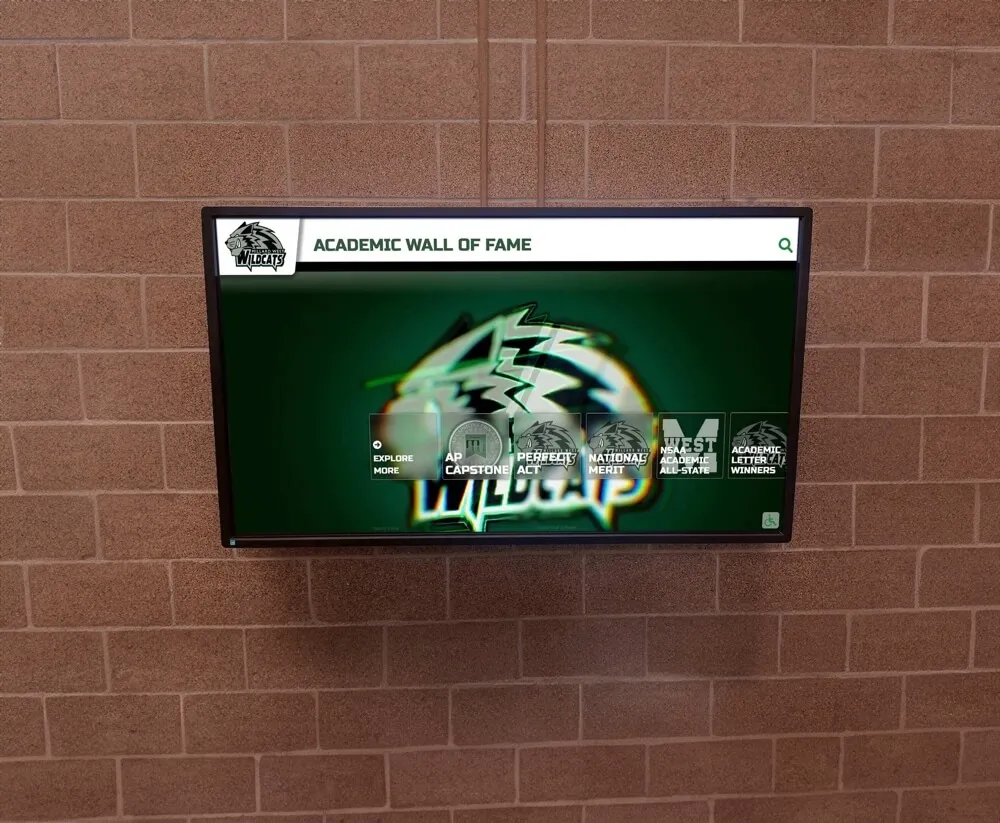
For programs that also recognize academic achievement, an academic wall of excellence follows the same logic: define the category, set clear minimum qualifications, and apply the scoring rubric uniformly so that selections can be defended to any stakeholder who asks.
Designing the Hall of Fame Ballot
A well-designed hall of fame ballot does two things: it collects consistent information from nominators, and it guides committee members through a structured evaluation rather than asking for a gut-reaction yes or no.
Nomination form fields (what nominators submit):
- Nominee full name and graduation year
- Category (athlete, coach, contributor, team)
- Years of participation or service
- Sport(s) or program(s)
- List of achievements (statistics, records, awards, honors)
- Statement of character and community impact (max 500 words)
- Nominator’s name and relationship to nominee
- Supporting materials (optional): news clippings, photographs, references
Evaluation ballot (what committee members use):
The evaluation ballot translates each rubric category into a scored line item. Committee members complete this form independently before deliberation, not during it. Independent scoring before group discussion is the single most effective guard against groupthink and social influence from more vocal members.

Building a Scoring Rubric Committees Can Apply Consistently
A selection committee rubric converts subjective impressions into comparable scores. Every committee member uses the same criteria with the same point values, which means the deliberation conversation is grounded in documented reasoning rather than personal advocacy.
Sample Athletic Hall of Fame Rubric
| Criterion | Weight | Scoring Guide |
|---|---|---|
| On-field / on-court achievement | 30% | 5 = school record holder or regional/state champion; 3 = all-conference or all-district; 1 = varsity starter with consistent contribution |
| Character and sportsmanship | 20% | 5 = recognized by peers, coaches, and community as an exemplary competitor; 3 = no significant conduct issues, positive reputation; 1 = limited information available |
| Academic performance | 15% | 5 = academic all-state or sustained honor roll; 3 = met academic eligibility consistently; 1 = limited documentation |
| Post-graduation impact | 20% | 5 = notable professional, civic, or community achievement traceable to school experience; 3 = positive community member; 1 = limited information |
| Years of service / participation | 15% | 5 = 4+ varsity seasons or 10+ years coaching; 3 = 2–3 varsity seasons; 1 = 1 varsity season |
Total possible score: 100 points. Committees typically set a minimum score threshold (commonly 65–75 points) to advance to the final ballot, which prevents the deliberation from spending equal time on candidates who clearly do not meet the standard and those who are genuinely competitive.
Adapting the Rubric for Non-Athlete Categories
For coaches, weight program-building achievement and athlete development more heavily than individual performance. For contributors, replace on-field achievement with institutional impact, fundraising or community engagement, and longevity of service. For teams, evaluate the team’s achievement relative to program history, the coaching staff’s approach, and whether the team produced individual honorees in future cycles.
Schools that recognize all-state athletes through dedicated displays often use a simplified version of this rubric to filter candidates for that recognition tier before they become hall of fame nominees in future years.
Conflict-of-Interest Policies That Protect the Process
The fastest way to damage community trust in a hall of fame is for a committee member to vote on a candidate who is their former player, former coach, family friend, or relative. Conflict-of-interest policies remove that risk by requiring disclosure and recusal before scoring begins.
Standard conflict-of-interest protocol:
- At the start of each cycle, every committee member receives the full list of nominees and is asked to identify any candidates with whom they have a direct personal or professional relationship.
- Declared conflicts are documented by the chair before deliberation.
- Members with a conflict are recused from scoring and voting on that specific candidate—they may remain in the room during discussion if the committee determines this is appropriate, or they may be asked to step out.
- The chair keeps a conflict-of-interest log as part of the official record for that cycle.
What counts as a conflict: direct family relationship, former coaching relationship (coach who nominated the athlete or athlete who played under the coach), current employer-employee relationship, or a documented personal friendship that the member believes would influence their objectivity.
Some programs go further by requiring committee members to sign an annual conflict-of-interest disclosure form before they are seated for that year’s review. This formality reinforces that the process is governed by written rules, not informal norms.
Sample Voting Timeline
The following timeline assumes a spring induction ceremony. Adjust dates forward or backward by one quarter if your induction is held in the fall.
| Phase | When | Action |
|---|---|---|
| Announce nomination window | 7 months before ceremony | Publish nomination form on school website, social media, alumni newsletter |
| Nomination window closes | 5 months before ceremony | Collect all submissions; chair screens for eligibility |
| Distribute eligible nominee packets | 4.5 months before ceremony | Each committee member receives full nomination packets |
| Independent scoring deadline | 4 months before ceremony | Members return completed rubric ballots to chair |
| Score compilation | 3.5 months before ceremony | Chair compiles aggregate scores; identifies candidates above threshold |
| Deliberation meeting | 3 months before ceremony | Committee discusses candidates; final yes/no ballot cast |
| Inductee notification | 2.5 months before ceremony | Private letters sent to inductees; formal acceptance collected |
| Public announcement | 2 months before ceremony | Press release, social media, alumni communications |
| Digital display updated | 2 weeks before ceremony | New inductee profiles added to hall of fame display |
| Induction ceremony | Day of | Recognition event with full program |
Publishing a timeline like this—even a simplified version—on your school’s website signals to the community that the process is organized and governed rather than ad hoc.
Planning the events that follow induction requires the same structured attention as the voting process itself. Schools looking for inspiration on how to structure recognition-centered gatherings will find useful frameworks in alumni event planning resources that cover programming, venue setup, and alumni engagement strategies.

Voting Thresholds and Tie-Breaking Rules
After deliberation, the final ballot is a straightforward yes/no vote for each candidate who advanced past the rubric screening threshold. But the rules that govern how many votes are needed to induct—and what happens when candidates tie for the last available spot—need to be written down before voting begins, not negotiated after the ballots are counted.
Common voting threshold approaches:
- Simple majority (50% + 1): easiest to achieve; best for programs that want to recognize multiple inductees per cycle and are comfortable with a broader standard.
- Supermajority (two-thirds or 75%): raises the bar; best for programs that want the hall of fame to represent only the most distinguished alumni and are comfortable with years where few or no candidates qualify.
- Minimum score plus majority vote: candidates must clear both the rubric threshold and a majority vote; this two-gate approach catches edge cases where a candidate scored well on paper but raises character or process concerns during deliberation.
Annual class size limits. Many programs cap the number of inductees per cycle (commonly 3–6 individuals or teams) regardless of how many candidates score above the threshold. A cap preserves the significance of the honor—if 20 people are inducted every year, the distinction erodes. If no one qualifies in a given year, the committee should be empowered to induct no one rather than lowering the standard to fill the class.
Tie-breaking procedures. When two candidates tie for the final available spot in a capped class, common approaches include: re-vote with committee discussion focused only on those two candidates; defer the lower-scoring candidate to the next cycle as a priority nominee; or expand the class by one for that cycle with a documented rationale.
From Final Vote to a Living Digital Hall of Fame
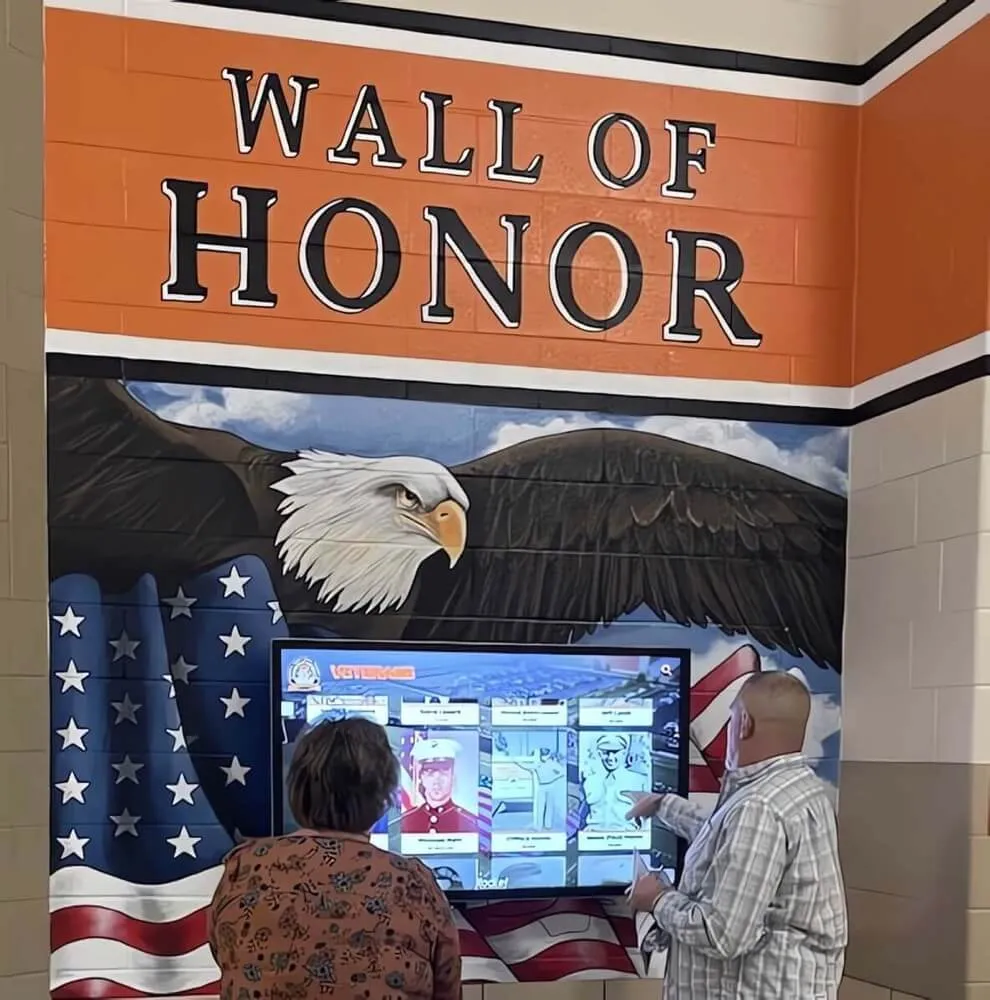
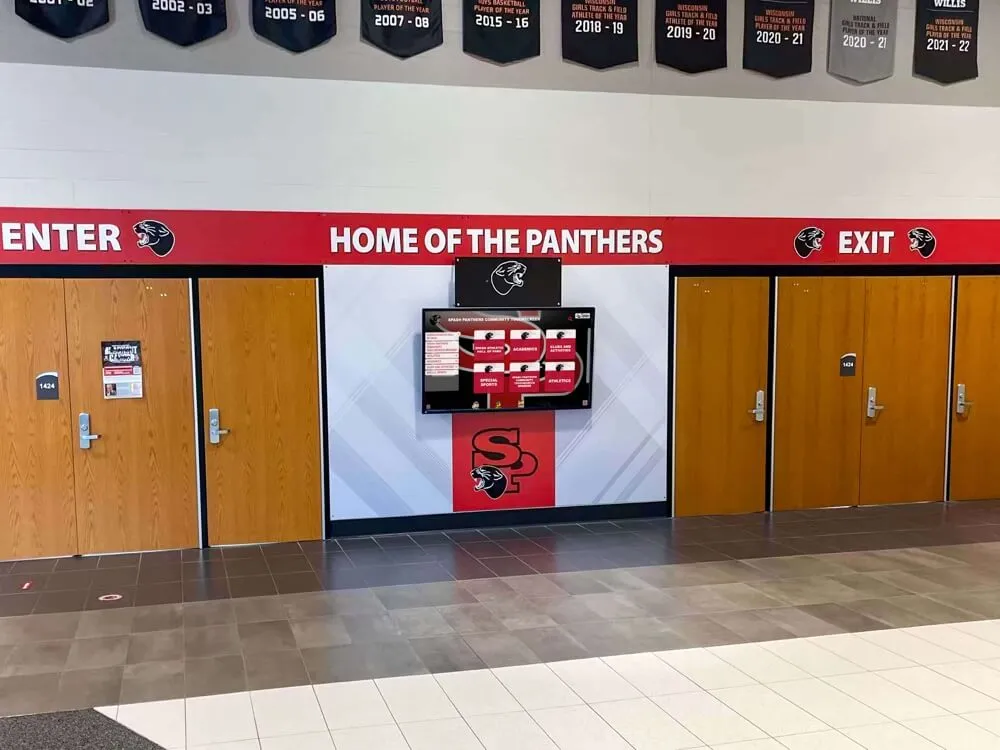
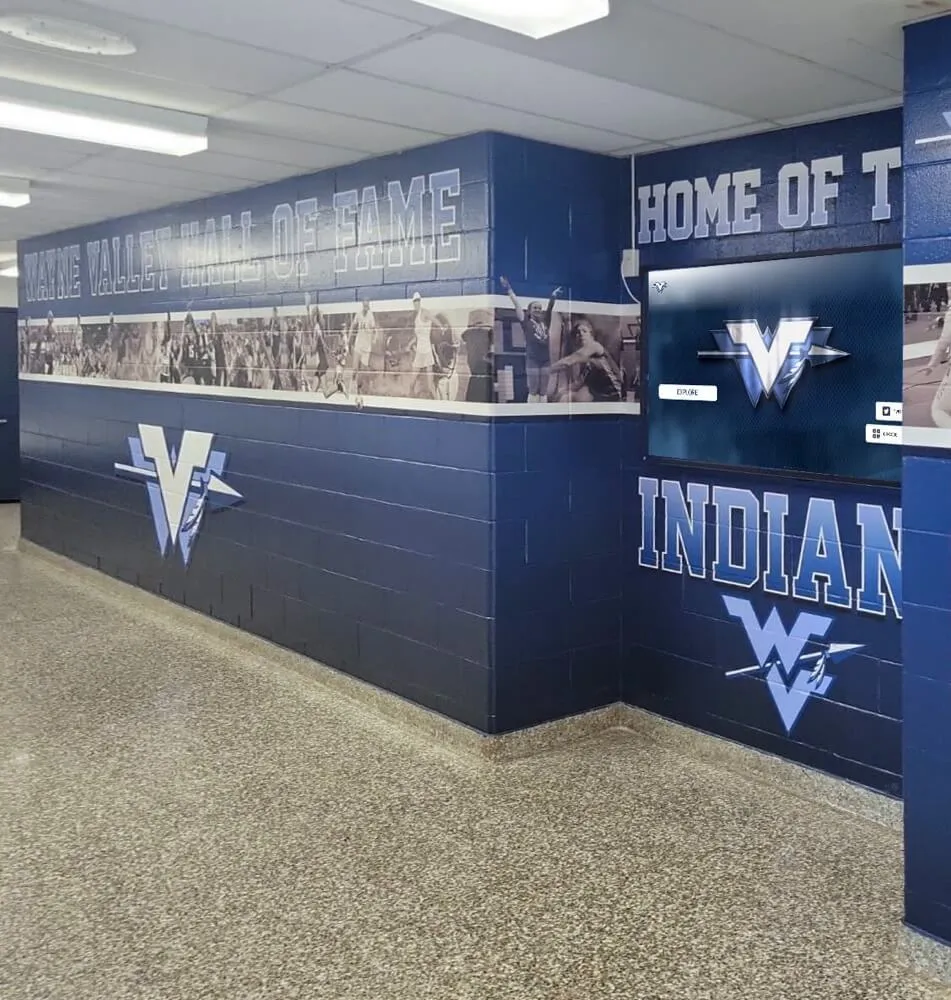
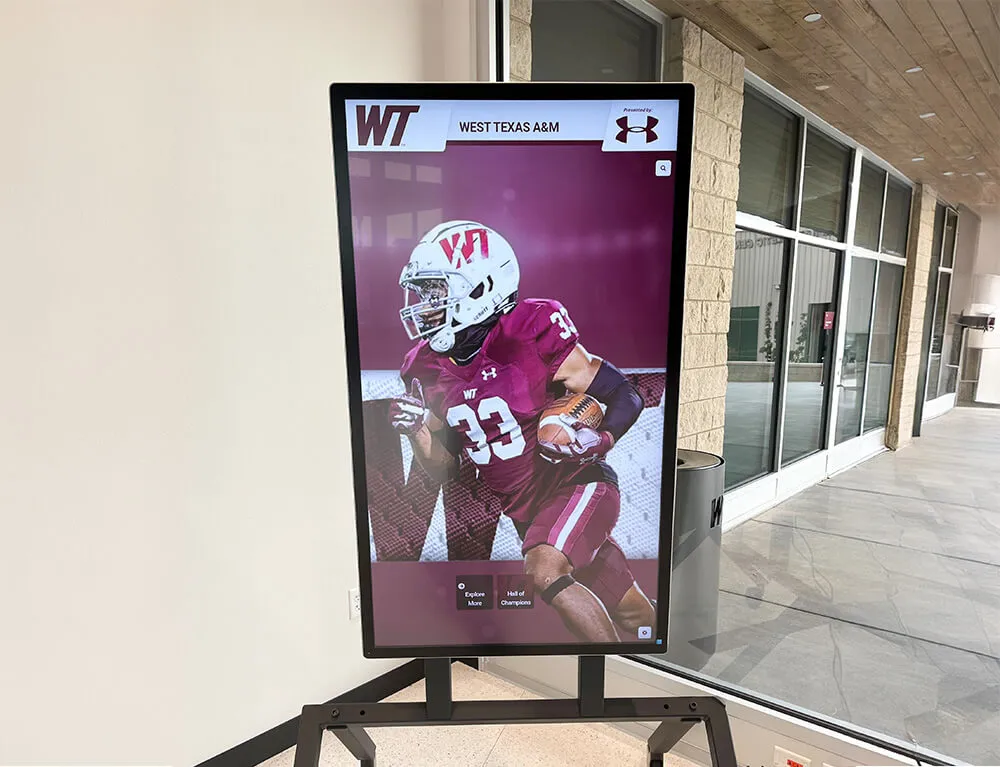
The voting process ends when inductees are selected, but the legacy it creates should be visible 365 days a year—not just on induction night. Schools that move from static plaques or printed binders to interactive digital displays find that the hall of fame becomes a living part of the school environment rather than an overlooked corner of the gymnasium.
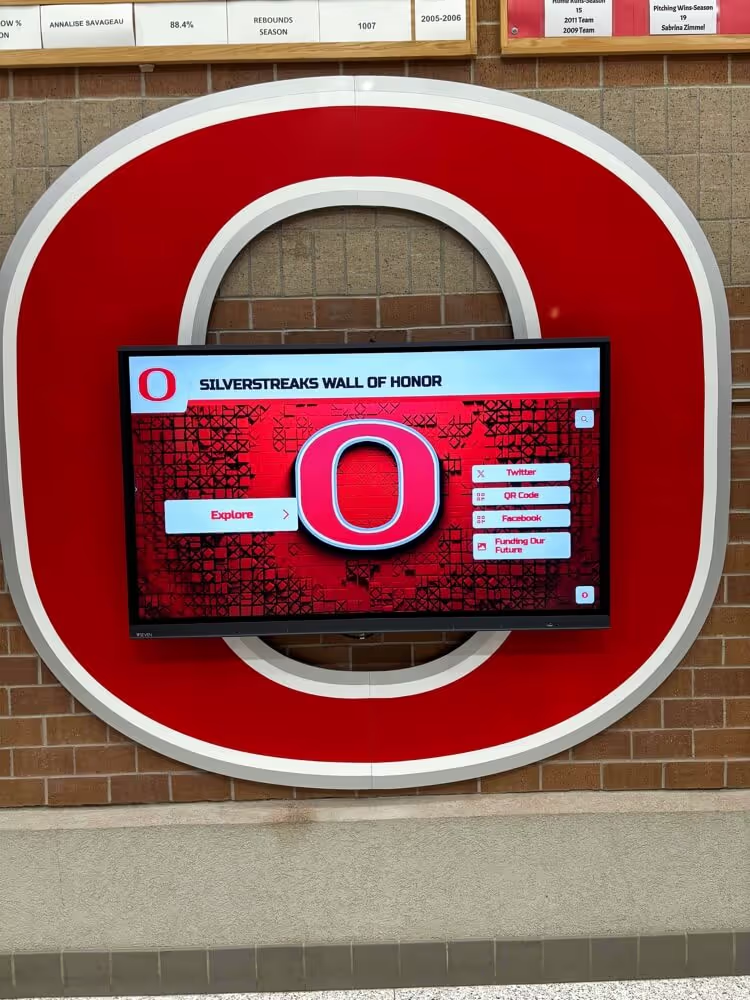
A platform like Rocket Alumni Solutions allows schools to upload inductee profiles—photographs, career statistics, personal bios, video tributes—into a searchable touchscreen display that students, visitors, and returning alumni can explore at any time. When each year’s selections come out of the voting process, the committee’s documented work flows directly into the display: new profiles are added, the historical record grows, and the display stays current without manual redesign.
This connection between the voting process and the final recognition medium matters more than many committees realize. A rigorous voting process that produces inductees whose profiles sit in a filing cabinet accomplishes only half of what recognition is supposed to do. The other half is visibility—making the legacy accessible to current students who never saw the inductee play, and to returning alumni who want to see their own era represented on the wall.
Creative donor recognition walls face the same challenge: the recognition medium must honor both the depth of the contribution and the need for visibility over time. Digital platforms solve both problems simultaneously.
Programs that hold alumni-centered events alongside their induction ceremonies often use the updated digital display as a gathering point—returning alumni search for their own years and teammates, creating the kind of organic engagement that no printed program can generate.

FAQ: Common Committee Questions
How long should committee members serve?
Staggered terms of two to three years work well for most programs. Staggering ensures that institutional knowledge is never entirely lost when members rotate off, while term limits prevent the committee from becoming a fixed group whose selections reflect unchanging tastes and relationships.
Should the nomination form be public or invitation-only?
Public nomination forms produce more submissions and broader community engagement, but they also require more eligibility screening. Invitation-only or internally generated nominations are easier to manage but can result in the same familiar names appearing every cycle. Most programs start with public nominations and add a committee-initiated process to catch overlooked candidates.
What do we do with strong candidates who don’t get inducted?
Candidates who clear the rubric threshold but do not receive enough votes, or who are edged out by a class size cap, should be formally deferred and prioritized for the next cycle’s review. Committees should document this deferral in the official record so the candidate receives full consideration the following year without requiring a new nomination.
How do we handle nominations for recently deceased individuals?
Posthumous nominations deserve a careful process. Most committees require that posthumous candidates meet all standard eligibility criteria and that the nomination include evidence of the school’s relationship with the individual’s family. Rushing a posthumous induction out of emotion rather than merit can set a precedent that is difficult to walk back. Consider a separate posthumous review path with the same rubric and an additional character confirmation step.
How do we communicate rejection to nominators without discouraging future participation?
A brief, respectful letter confirming that the nominee was reviewed but did not advance in this cycle—without specifying scores or vote counts—is standard practice. Thank the nominator for their participation, remind them that the nomination remains on file (or can be resubmitted), and note that the committee reviews every nomination seriously. Transparency about the process itself, even without revealing specific deliberation details, sustains nominator trust.
Can a committee member submit a nomination?
Most programs either prohibit committee members from submitting nominations or require them to recuse from that candidate’s entire evaluation if they do. The cleaner approach is prohibition—committee members influence the process through their votes, not through nominations.
How does the voting process feed our digital hall of fame platform?
Once inductees are confirmed and notifications have gone out, the committee chair or athletic director uploads the profile package—biography, photograph, statistics, career highlights—into the digital platform before the induction ceremony. Rocket Alumni Solutions and similar platforms allow this to be done without specialized technical knowledge, so the update is part of the normal administrative workflow rather than a separate IT project.
Should we publish the rubric publicly?
Yes. Publishing the rubric—or at minimum a clear summary of the evaluation criteria—signals that the selection process is merit-based and transparent. Schools that publish their criteria typically receive stronger nominations because nominators understand what evidence is most relevant and frame their submissions accordingly. For schools that also recognize non-athletic achievement, the same principle applies: a clear rubric for end-of-season academic and activity recognition produces better nominations and more defensible selections.
A hall of fame voting process that is documented, applied consistently, and connected to a visible recognition medium does something no plaque or plaque-hanging ceremony can do alone: it builds institutional trust. When the community understands how selections are made, the honor itself becomes more meaningful—not just to the inductees, but to every student who sees the display and understands that the people recognized there earned their place through a fair process that the school takes seriously.