



Key Takeaways
Form a credible hall of fame selection committee with clear criteria, conflict-of-interest rules, voting procedures, and recordkeeping for school athletic programs.
Why a Structured Selection Committee Matters
Induction into an athletic hall of fame is one of the highest honors a school can extend to a former athlete, coach, or contributor. That honor carries weight only when people trust the selection process. Programs that operate informally—where a single athletic director makes all decisions, or where the same small group of insiders chooses inductees without documented criteria—face consistent criticism: the hall becomes perceived as a popularity contest or an insiders’ club rather than a genuine recognition of excellence.
A formal hall of fame selection committee solves that problem by distributing authority across a representative group, establishing written standards that apply to every nominee, and creating a paper trail that makes decisions explainable and defensible. Schools that invest in committee governance early save themselves from far more difficult conversations later, when a prominent alumnus or a well-liked coach gets passed over and the community demands to know why.
For programs just beginning to build their recognition infrastructure, the complete guide to school athletic hall of fame programs provides helpful orientation on program scope before diving into committee-specific governance.

Building Your Committee: Who Should Serve
The composition of a selection committee shapes every decision it makes. A committee that skews heavily toward active coaches will make different choices than one weighted toward alumni. A committee that includes only administrators lacks the athlete perspective that grounds selection decisions in what it actually took to compete. Intentional composition produces more defensible outcomes.
Recommended Membership Structure
A committee of 7 to 13 members works well for most school athletic programs. Fewer than seven creates too few perspectives and makes recusals potentially crippling; more than thirteen slows deliberations without proportional benefit.
Recommended membership breakdown:
- Athletic director or designee (1): Provides institutional context and ensures decisions align with program goals. This member should not have a unilateral veto.
- Faculty or staff representative (1–2): Grounds the committee in the academic and character dimensions of recognition. A longtime teacher who knew athletes in and out of competition adds important perspective.
- Alumni representatives (2–3): Former athletes from different eras who can speak to the program’s history across decades. Prioritize individuals who graduated at least ten years ago to reduce social proximity to current nominees.
- Community member (1–2): A respected community figure with no current employment relationship with the school. This member provides outside credibility and reduces the appearance of insider decision-making.
- School administrator (1): Ensures the committee’s work aligns with district policies on recognition, privacy, and communications.
Active head coaches of currently competing sports should generally not serve on the committee. Their direct relationships with recent athletes create unavoidable conflicts. If coaching representation is important to the program, designate a retired coach role instead.
Term Lengths and Rotation
Staggered terms protect institutional memory while preventing any one generation from permanently controlling the committee. A common structure:
- Three-year terms, staggered in thirds: Roughly one-third of the committee rotates off each year. In the founding year, assign members to one-, two-, or three-year initial terms by lot, then move everyone to standard three-year terms.
- Term limits: Two consecutive terms (six years) is a reasonable maximum. Former members may be eligible to return after a one-term absence.
- Succession planning: Document who is responsible for recruiting replacements when terms end. Committees that allow seats to go vacant for a full cycle lose continuity and slow the process.
Establishing Selection Criteria Before Nominations Open
Clear, written criteria are what separate a credible process from an arbitrary one. Criteria should be published before the nomination period opens each year so that nominators understand what evidence to submit and candidates understand what standards apply. Criteria established after nominations close—or criteria that shift cycle to cycle based on who is in the pool—erode trust quickly.
On-Field Achievement Standards
Most athletic hall of fame programs anchor eligibility in measurable competitive achievement. Common approaches include:
- Individual performance benchmarks: All-conference or all-state recognition, records held, statistical benchmarks within the program’s history (e.g., all-time leading scorer, career win totals for pitchers).
- Team contribution: Participation on championship teams, with recognition that a role player on multiple state championship teams may merit stronger consideration than a statistical leader on losing ones.
- Post-secondary competition: Athletes who went on to compete at the collegiate or professional level, with the school program explicitly acknowledged as part of their development path.
Avoid setting numeric cutoffs that are so rigid they exclude borderline cases obviously deserving recognition, but specific enough to guide the committee when two nominees with similar profiles need to be compared.
Character and Contribution Standards
Character criteria are harder to define but critically important. A nominee’s record should demonstrate that they represented the program and school community with integrity—both during their time as a student-athlete and in the years since graduation. Programs typically phrase this as something like: the nominee’s conduct as a student-athlete, citizen, and professional must be consistent with the values the institution seeks to honor.
Some programs also recognize:
- Community service and civic contribution after graduation
- Support of the school’s athletic program through mentoring, fundraising, or volunteering
- Coaching and teaching contributions from former athletes who returned to serve the sport
Eligibility Waiting Periods
A mandatory waiting period between graduation and eligibility for consideration gives nominators time to assess whether a former athlete’s post-graduation achievements and conduct warrant recognition. Many programs use a five-year minimum; some use ten. The waiting period also reduces the emotional intensity that can surround nominees who graduated recently and still have active social networks within the school community.
For coaches, a similar waiting period after their final season is appropriate.
The Nomination Process: Opening the Door to Candidates
A well-run nomination process generates strong candidates from across the community—not just from the people who happen to know a committee member. Broad outreach and a clear submission process make that possible.
Announcing the Nomination Period
Open nominations at the same time each year and announce through every available channel: school newsletter, alumni email list, athletic program social media, and direct outreach to booster clubs and alumni associations. A consistent annual schedule helps the community plan; they know to submit nominations in September, for example, because that is always when the window opens.
Post the selection criteria alongside the announcement. Nominators who understand the criteria submit stronger packages and waste less committee time on candidates who clearly fall outside the program’s scope.
Required Nomination Materials
Every nomination submission should include:
- Nominee identification: Full name, graduation year, sport(s), position
- Nominator identification: Name and relationship to nominee
- Achievement summary: Specific statistics, recognitions, and accomplishments during their time at the school
- Post-graduation narrative: Career path, community impact, and any continued relationship with the school or athletic program
- Character statement: A brief statement addressing the nominee’s conduct and values
- Supporting references: At least two contacts who can verify claims (former coaches, teammates, employers)
- Photo: A current photo and, if available, an action photo from their playing career
Standardized submission forms reduce the burden on committee reviewers who would otherwise need to extract comparable information from documents of wildly different formats. Digital submission forms are easier to manage and search than paper packets.
For guidance on what a complete athlete or coach profile looks like once nominations move to induction, the athletic hall of fame wall implementation guide offers useful benchmarks.
Managing Conflicts of Interest
Conflicts of interest are unavoidable in small communities. The goal is not to eliminate all personal connections—that would be impossible—but to manage them in a way that preserves the committee’s credibility and protects individual members from even the appearance of improper influence.
Disclosure Requirements
At the start of each induction cycle, every committee member should complete and sign a written disclosure form listing:
- Any nominee they coached directly (paid or volunteer)
- Any nominee who is a family member or close personal friend
- Any nominee with whom they have a current financial relationship
- Any other relationship that a reasonable person might view as creating a bias
The disclosure form should be submitted before the committee receives the nominee list—so members cannot strategically omit a conflict they discover only after seeing an inconvenient name.
Recusal Procedures
When a conflict is disclosed, the affected member must:
- Leave the room during any substantive discussion of that nominee
- Not vote on that nominee’s induction
- Not discuss their views on that nominee with other committee members outside of formal meetings
Recusals should be recorded in the meeting minutes with the member’s name, the nominee involved, and the nature of the conflict. This record protects the committee from future allegations that a conflict was ignored.
If recusals become so frequent that a quorum is at risk for a particular nominee, the committee chair may need to appoint a temporary substitute member to ensure a full vote.
Reviewing Nominations: From Candidate Pool to Finalist Slate
Most committees conduct reviews in two phases: an initial screen that confirms completeness and basic eligibility, followed by a deeper evaluation that assesses merit and produces the finalist slate for committee deliberation.
Initial Screening Phase
The committee chair or a designated subcommittee reviews all submissions to confirm:
- The nominee meets the eligibility waiting period
- The submission is complete (all required fields and documentation present)
- There are no known disqualifying conduct issues requiring immediate review by school administration
Nominations that fail the completeness check are returned to the nominator with a specific list of missing information and a deadline for resubmission. This gives nominators a fair opportunity to correct omissions without the committee debating incomplete files.
Deliberation and the Finalist Slate
Once the initial screen is complete, all eligible nominations go to the full committee. Members should review materials independently before the deliberation meeting—committees that read materials aloud during meetings waste time and allow first-impressions formed in the room to carry too much weight.
The deliberation meeting works through each nominee systematically: summarizing their case, inviting discussion of strengths and concerns, and taking a preliminary non-binding vote to gauge where the committee stands. After the preliminary round, the committee discusses the overall class—how many inductees, whether the slate reflects appropriate diversity across sports and eras—before conducting a final binding vote.
Voting Procedures and Selection Methods
No single voting method is universally correct, but every program benefits from choosing one method and applying it consistently rather than improvising year to year.
Common Voting Approaches
Simple majority: A nominee is inducted if more than half the voting members support them. Easy to administer but can result in inductees who lack broad committee enthusiasm.
Supermajority (two-thirds): A nominee must receive support from at least two-thirds of voting members. This sets a higher bar that most programs find appropriate for a recognition of this significance. It also reduces the risk of highly divisive nominees being inducted narrowly.
Ranking system: Members rank all nominees, and numerical scores are tabulated. This approach captures relative enthusiasm across the full candidate pool rather than reducing each candidate to a binary yes/no. Particularly useful in cycles with large nominee pools.
Two-round elimination: In the first round, members vote to advance nominees to a finalist pool. In the second round, the full committee votes on each finalist for final induction. This method is useful for large inaugural classes that need to trim a long list efficiently.
Whatever method is selected, record the vote totals in committee minutes. Individual votes do not need to be attributed by name—aggregate tallies are sufficient to document that a proper process occurred.
Class Size Decisions
Decide on maximum class size before reviewing nominations, not after. Determining class size mid-deliberation introduces pressure to expand the class to accommodate a popular nominee rather than applying consistent standards. A predetermined ceiling—for example, no more than five inductees per year—forces the committee to make genuine comparative judgments.
Recordkeeping and Institutional Memory
Selection committees often turn over completely within a decade. Without deliberate recordkeeping, institutional knowledge disappears, criteria drift, and the same research gets repeated from scratch when a nominee returns after a previous unsuccessful cycle.
What to Document
Nomination files: Retain the original submission materials for every nominee, inducted or not. Unsuccessful nominees are frequently re-nominated in later cycles, and prior documentation should not be discarded.
Meeting minutes: Record attendance, recusals, discussion summaries, vote tallies by nominee, and the final class decision. Minutes should be approved by the full committee at the following meeting.
Criteria version history: Keep a dated log of every change made to selection criteria, including the rationale for each change. This prevents disputes about whether a current nominee would have been eligible under earlier criteria.
Inductee roster: A master roster listing every inductee by year, sport, and category should live in a permanent, centrally accessible location—not only in the personal files of the current athletic director.
Where to Store Records
Nomination files and meeting minutes should be stored in at least two locations: a physical file in the school’s athletic department and a digital backup accessible to the school administration. Storing records only in a retiring committee chair’s personal email creates obvious continuity risk.
For programs using digital recognition platforms, many systems allow inductee records, biographical materials, and photos to be stored directly in the platform’s content management system—connecting the committee’s archival work directly to the public-facing display. The touchscreen hall of fame guide for school administrators explores how digital platforms can serve as both recognition displays and institutional archives simultaneously.

Connecting Committee Decisions to Your Recognition Infrastructure
The selection committee’s work culminates in a list of inductees—but that list still needs to be translated into a recognition experience that honors those individuals in front of the school community. The format of that display shapes how meaningful induction feels.
Traditional Physical Displays
Engraved plaques and photo panels are the classic format for athletic hall of fame recognition. They are permanent, visually formal, and require no technology to operate. Their limitation is fixed capacity: a plaque wall fills up, and retroactive additions are expensive and physically constrained.
Digital and Interactive Displays
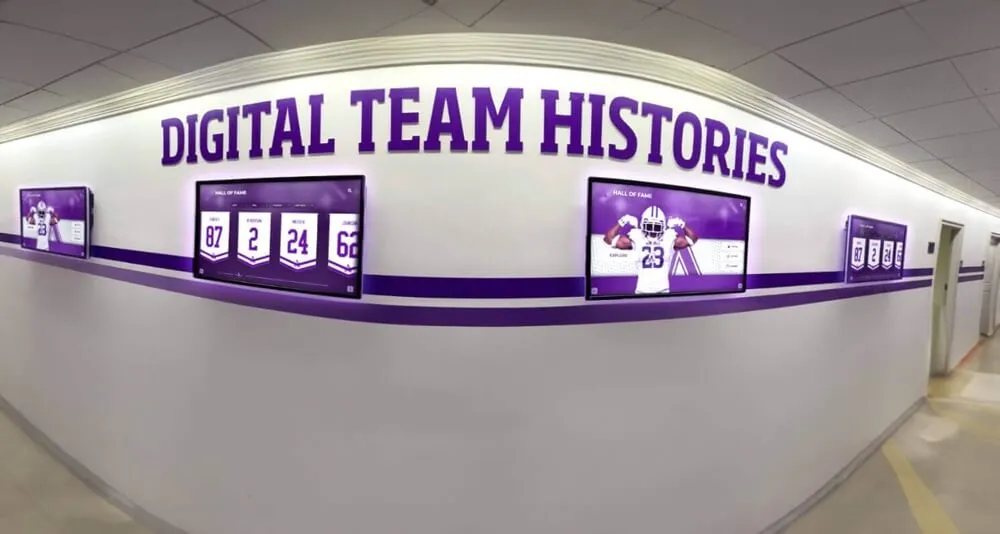
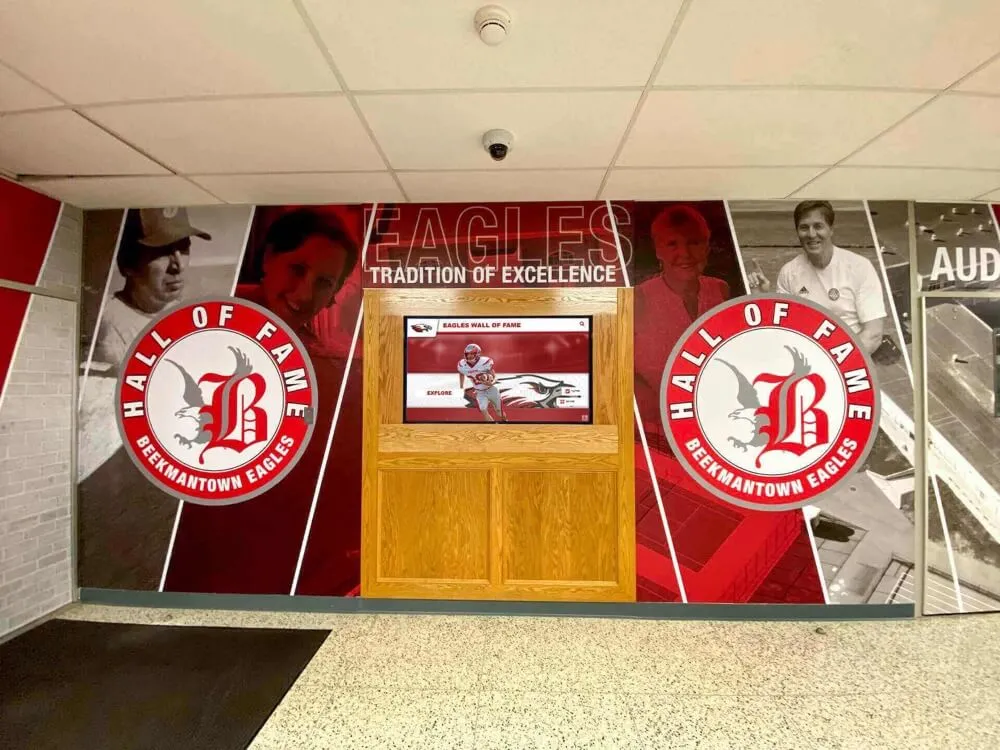
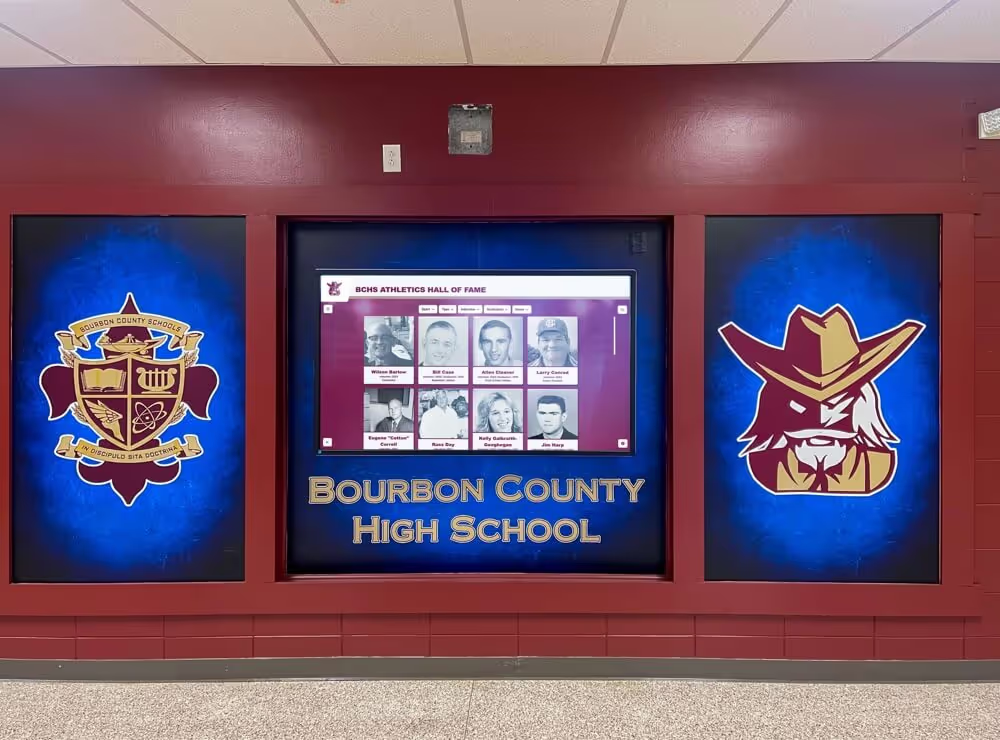
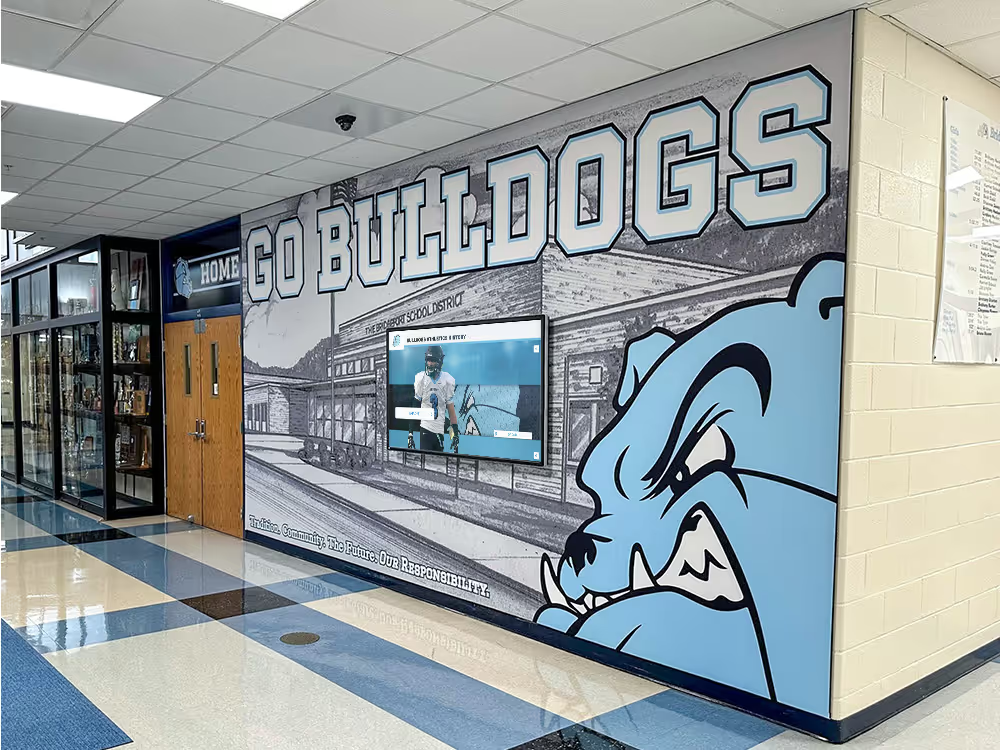
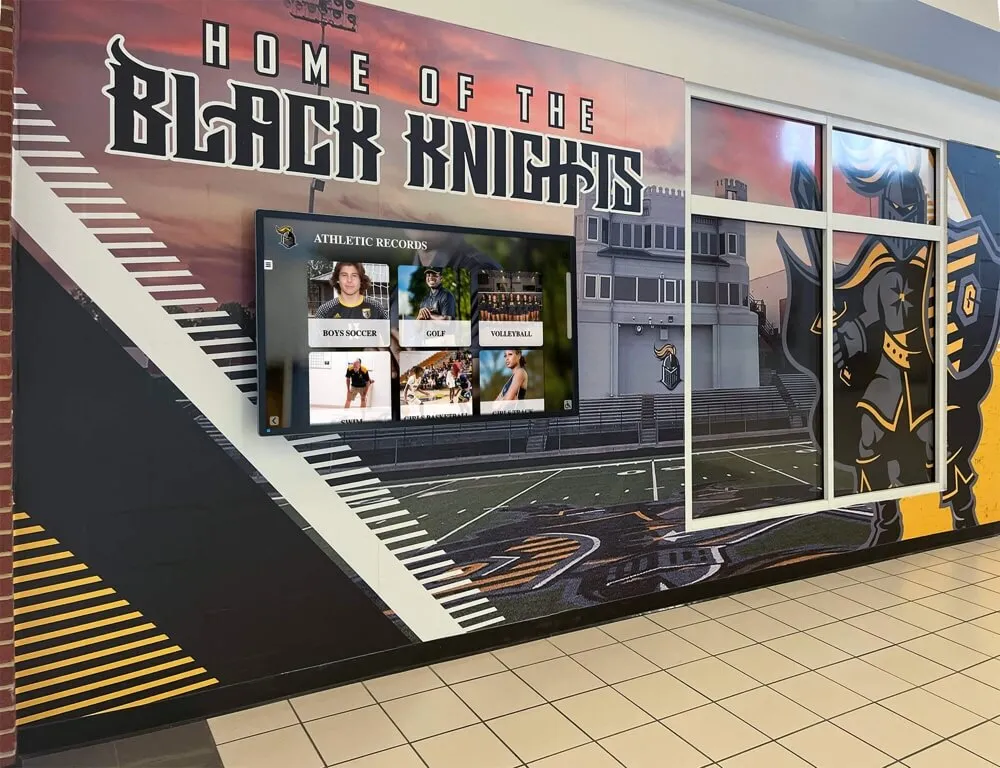
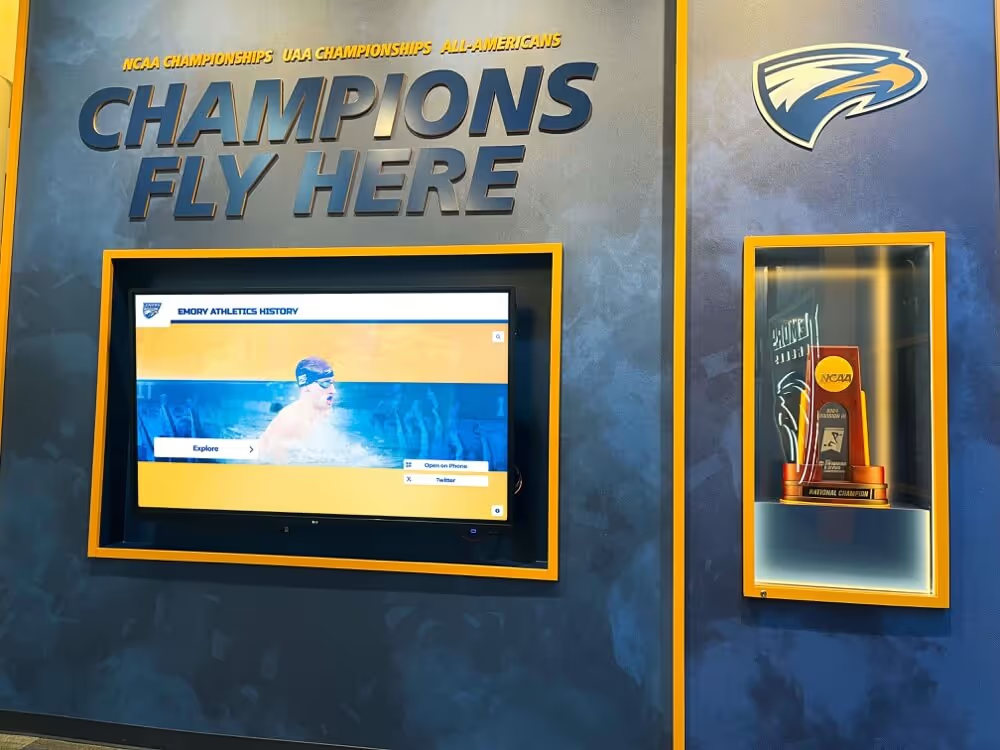
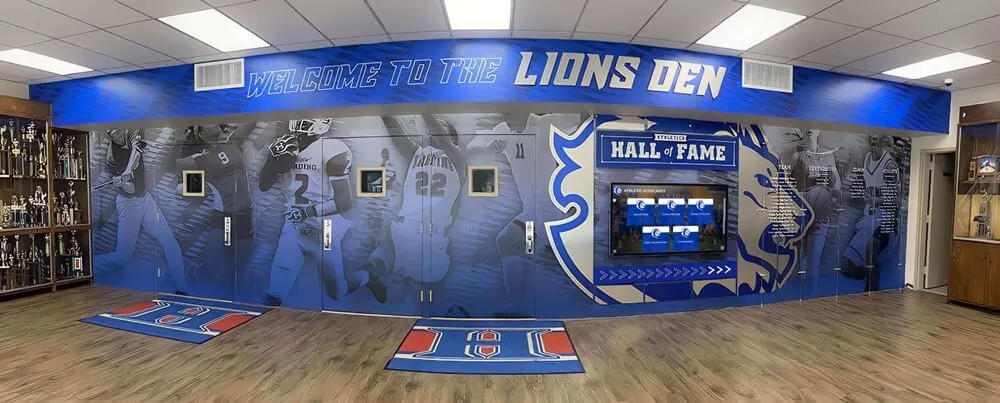
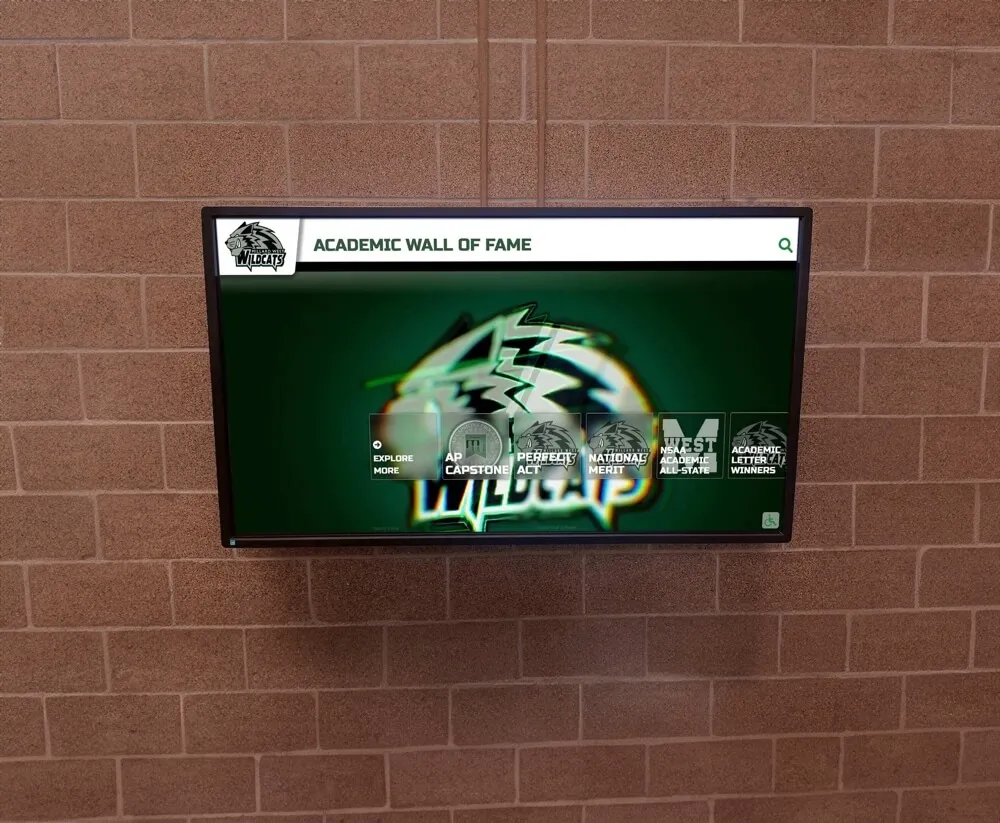
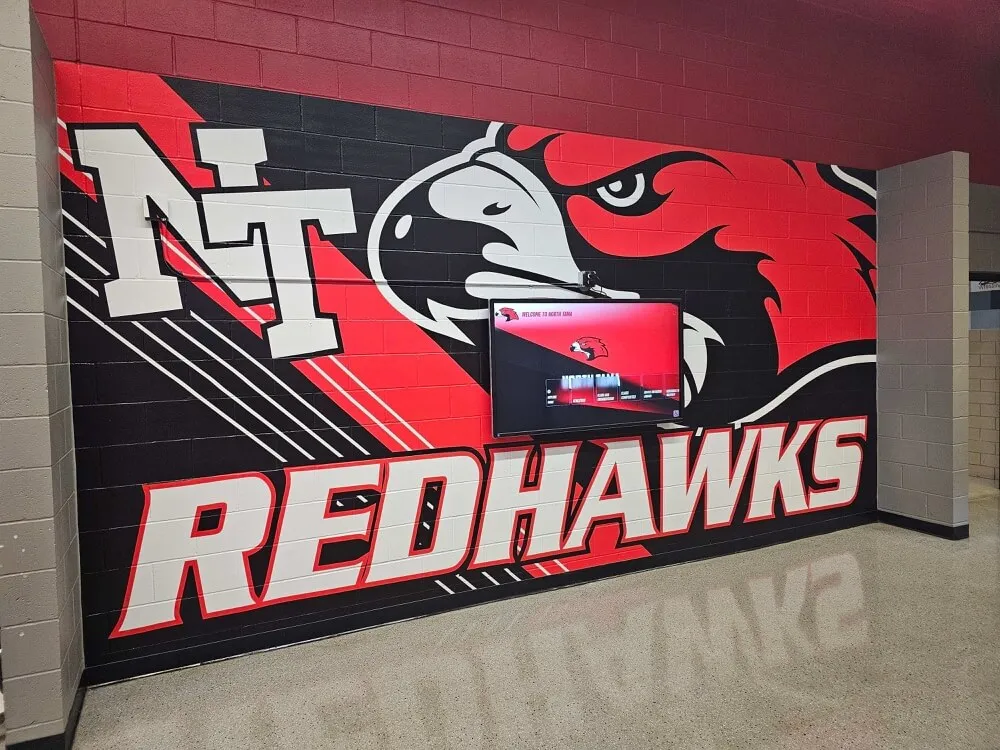
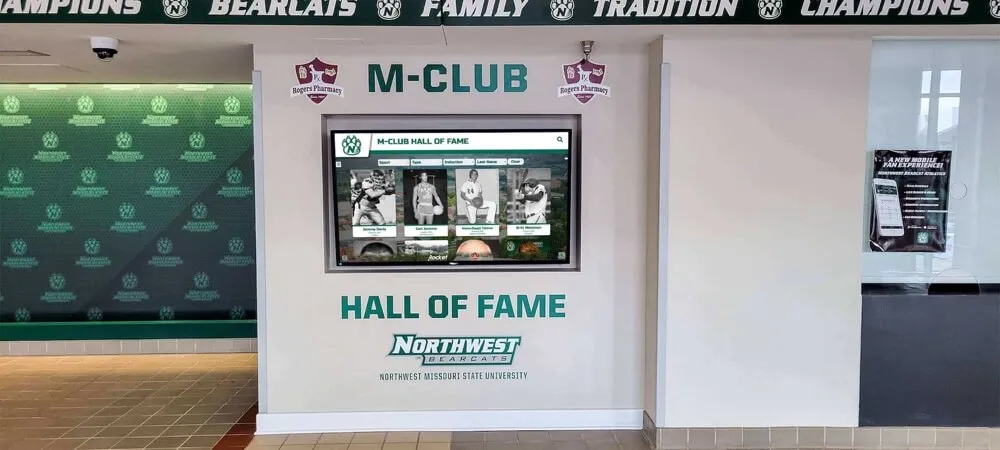
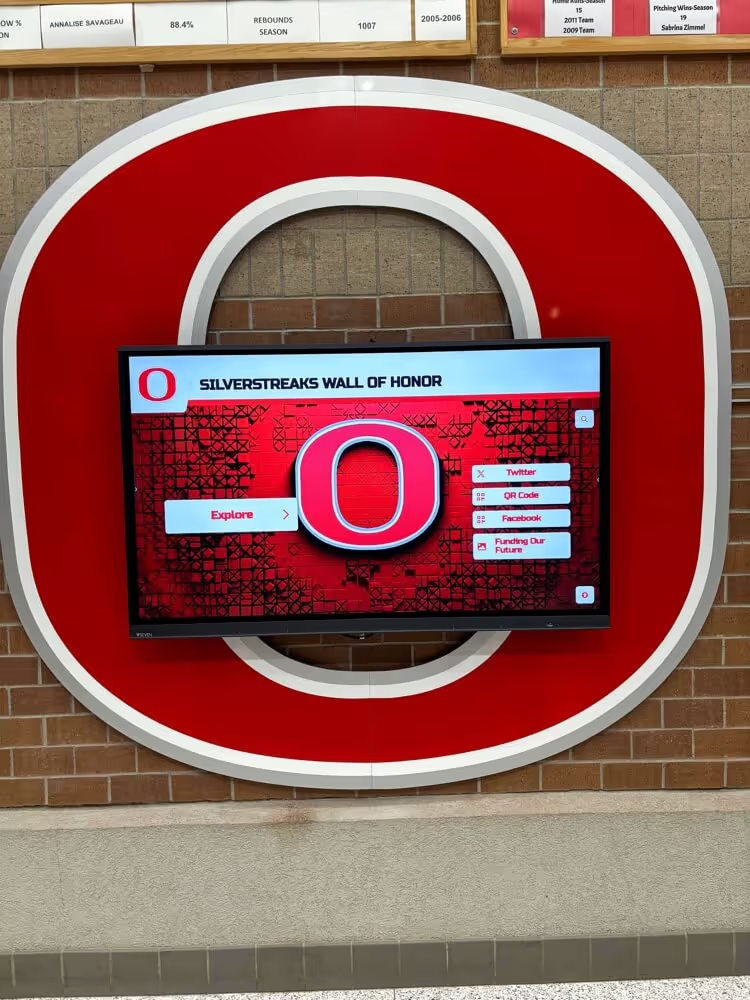
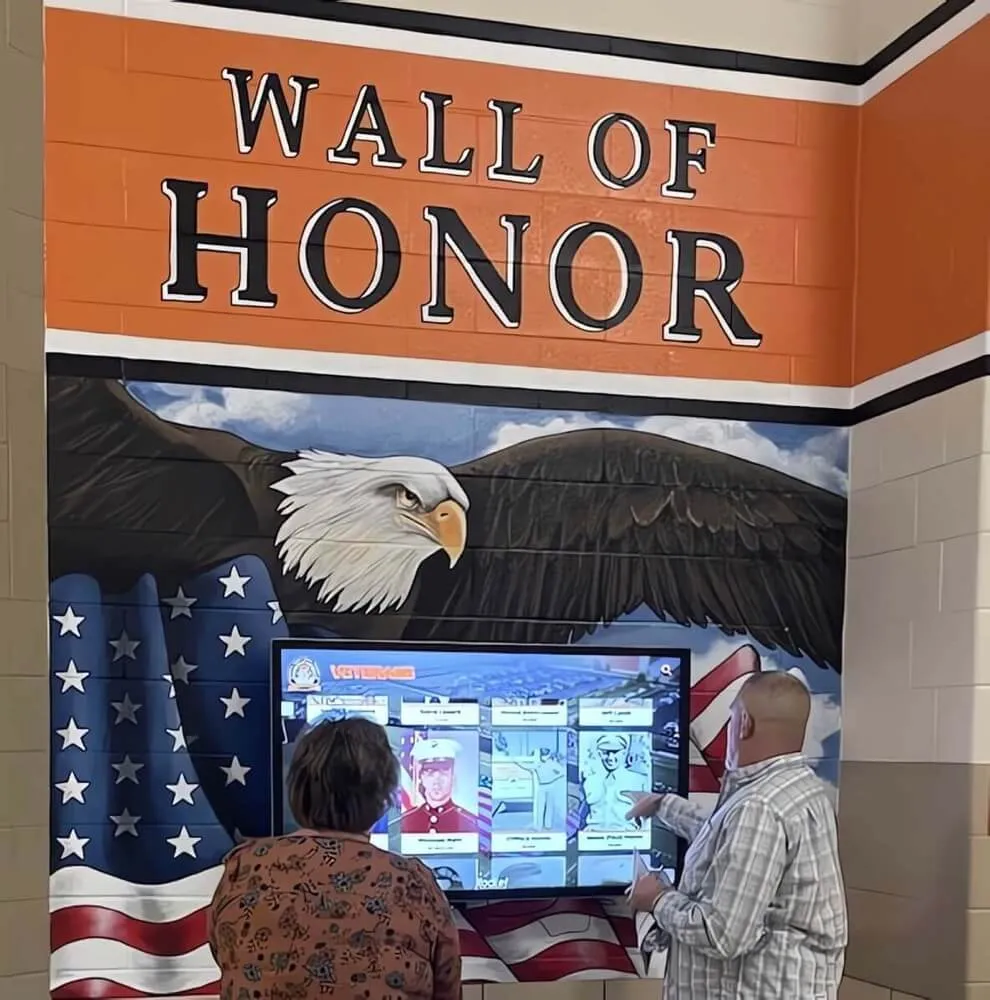
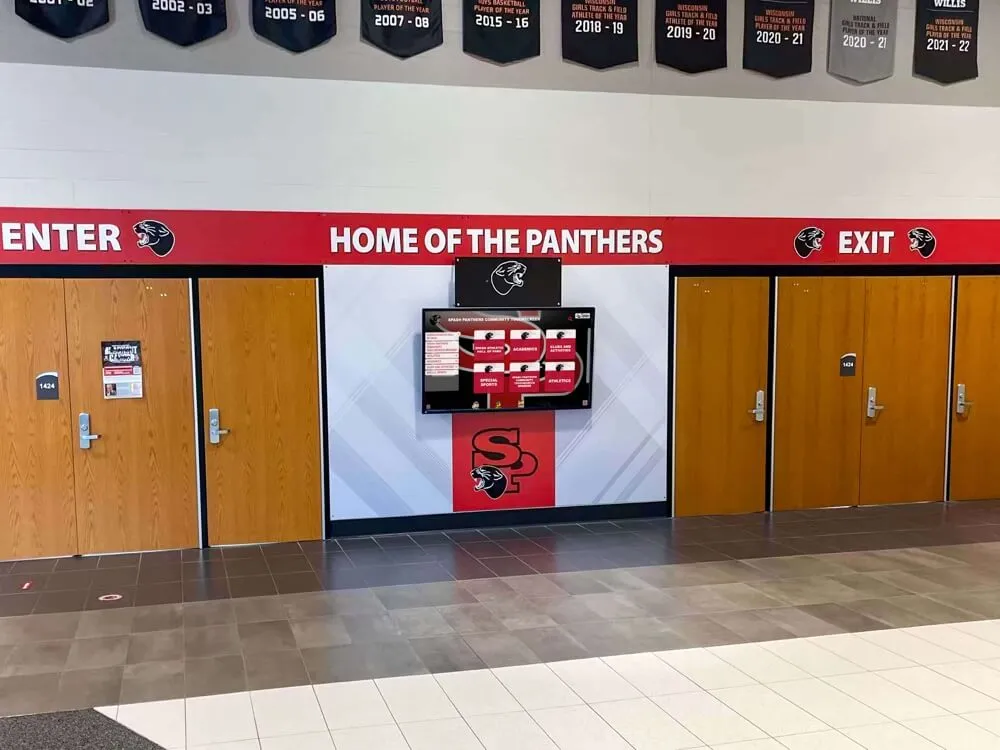
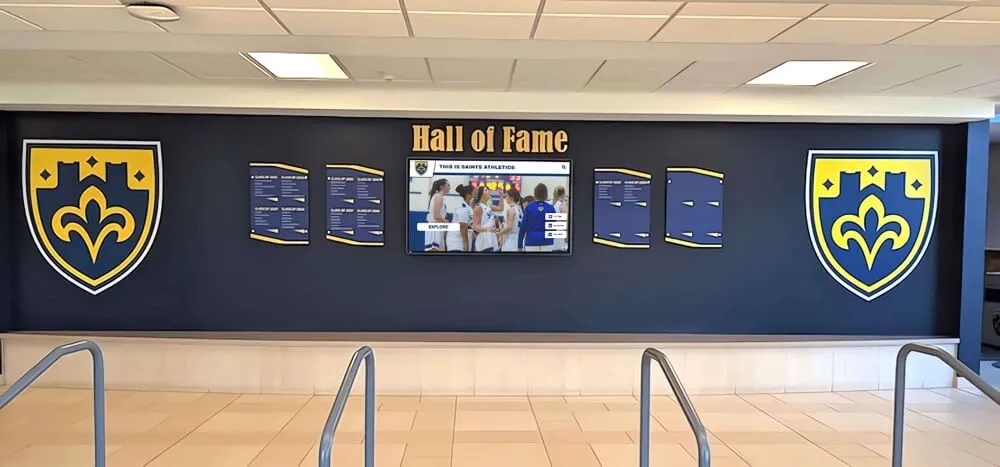
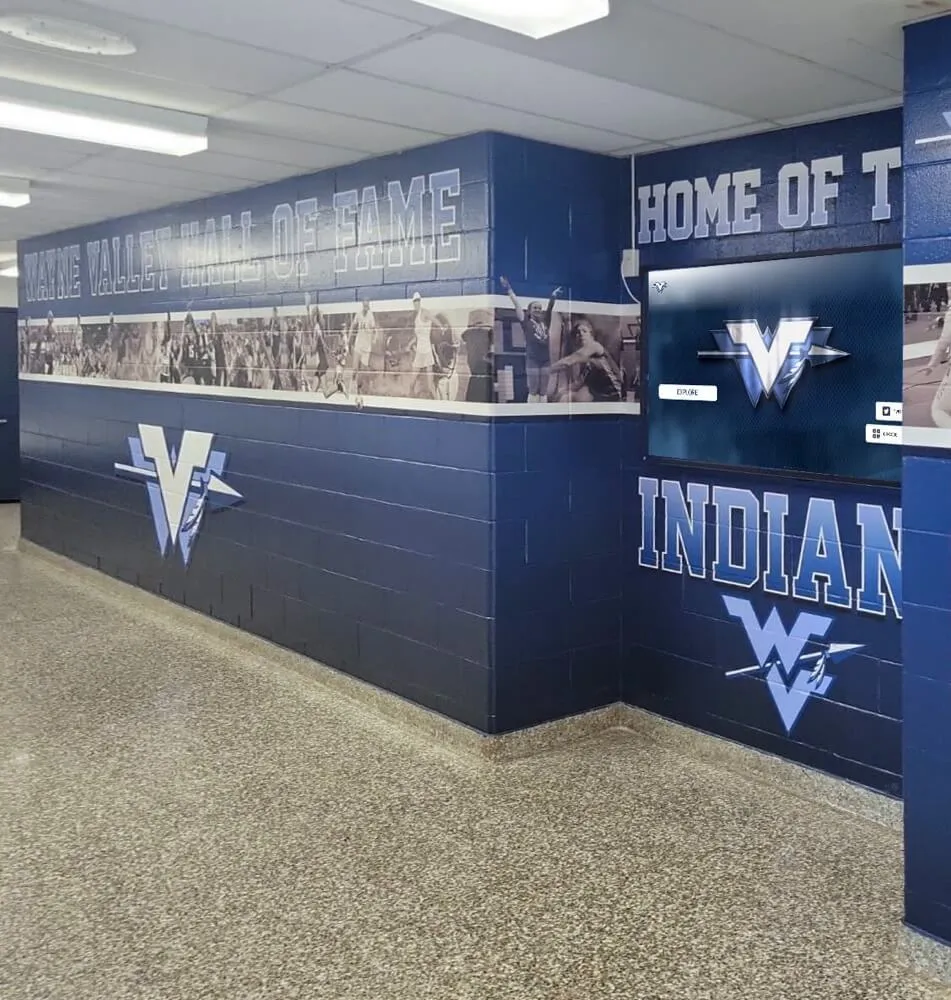
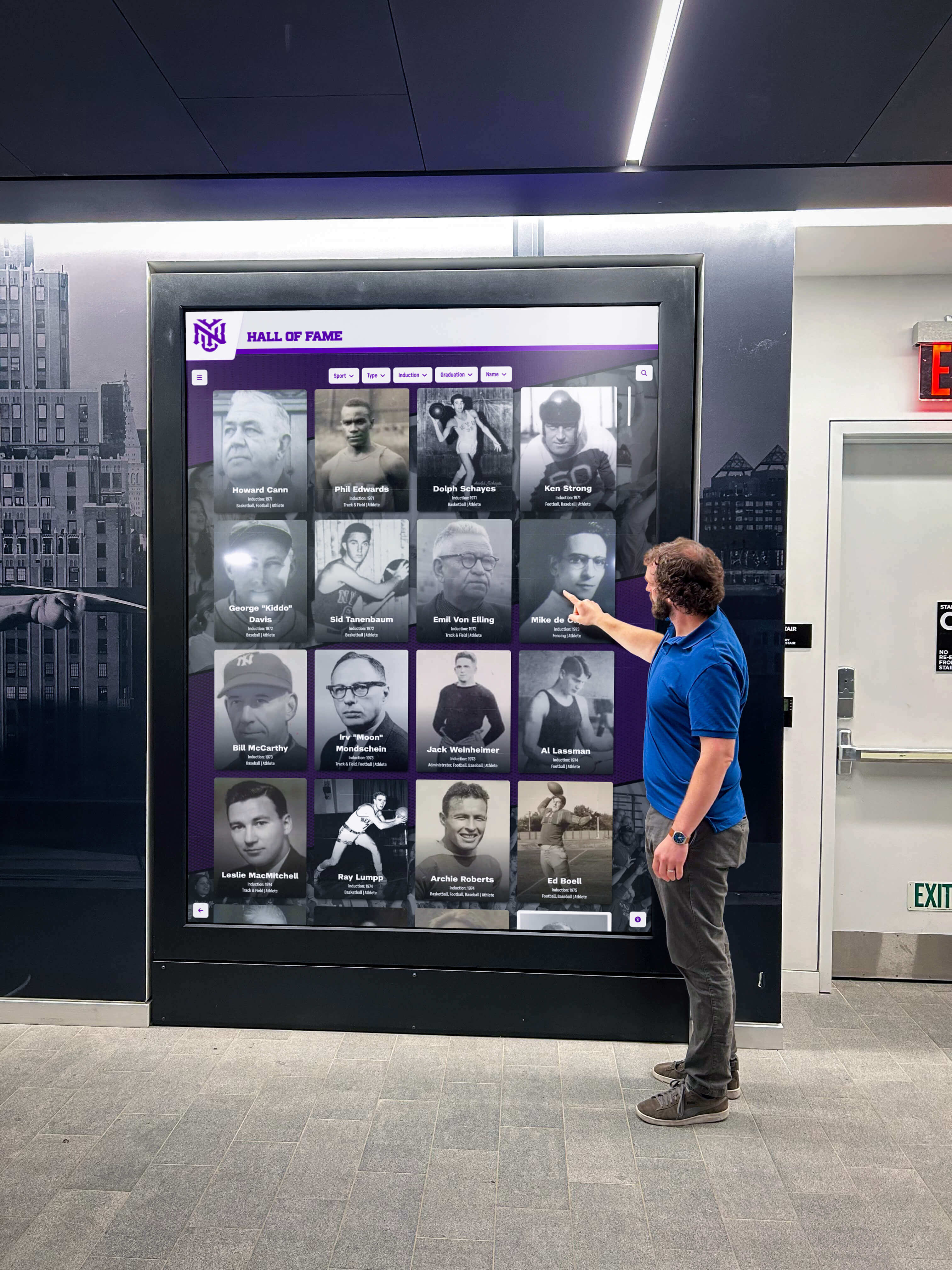
Modern digital hall of fame systems address every capacity constraint of traditional formats while adding capabilities that make recognition far more engaging. A touchscreen display in the school lobby can present unlimited inductee profiles, each with full career statistics, photos, action video, and biographical narrative. Visitors can search by sport, graduation year, or name—making it easy for any student to find a former athlete from their era or their sport.
Digital systems also make the committee’s ongoing work easier. When a new class is inducted, adding profiles to a touchscreen display takes minutes through a web-based content management interface—no fabrication lead times, no wall space constraints, no physical installation. Schools that use platforms like Rocket Alumni Solutions can manage inductee content directly, updating bios and adding photos as new information surfaces long after the initial induction ceremony.
The digital trophy case guide for school athletic programs offers practical guidance on migrating from static physical displays to dynamic digital recognition systems, including how to handle existing inductees who were never digitized.
For programs that want to understand how other schools have structured their athletic recognition displays, the touch wall display guide for school athletic honors provides context on common implementation patterns.
Common Committee Pitfalls and How to Avoid Them
Even well-intentioned committees fall into predictable traps. Recognizing these in advance reduces the likelihood of running into them.
Starting without written criteria. Oral traditions about what the committee “usually looks for” are not defensible when challenged. Before the first nomination period opens, produce a written criteria document that has been reviewed and approved by school administration.
Allowing criteria to change mid-cycle. If the committee decides to add a new eligibility category, apply it in the next cycle—not the current one. Mid-cycle criteria changes create the appearance that rules are being bent for specific nominees.
Conflating popularity with achievement. The nominee with the most community support is not necessarily the most qualified. A voting process that gives weight to external lobbying—petition drives, social media campaigns—undermines the committee’s independence. Selection decisions belong to the committee, not to social pressure.
Allowing the class to grow indefinitely each year. When every marginally qualified nominee gets inducted to avoid conflict, the program’s prestige erodes. Holding a firm class-size ceiling is uncomfortable in the short term and right for the program in the long term.
Failing to notify unsuccessful nominees professionally. A brief written communication—without detailed score breakdowns or comparative comments—acknowledging that the nominee was reviewed but not selected this cycle is both respectful and appropriate. Silence following a nomination is not.
Neglecting ceremony and display logistics. The committee’s work ends with the selection decision, but someone must own the induction ceremony, the inductee profiles, and the display update. Assign these responsibilities clearly before selections are announced, so the honorees receive recognition that matches the quality of the selection process. Resources like the athletic hall of fame complete guide for school administrators cover ceremony planning and display logistics in depth.
Building a Program That Lasts
A hall of fame selection committee is not a one-time project—it is an ongoing institutional practice that will operate long after the founding members have rotated off. The documentation, governance structures, and criteria the founding committee establishes will shape what the program looks like ten and twenty years from now.
Programs that build carefully at the start—written criteria, clear committee charters, consistent records, formal conflict-of-interest procedures—rarely face the governance crises that affect programs that improvised their way through the early years. The work of building a credible process is genuinely less time-consuming than the work of defending a discredited one.
For schools looking to build out their broader recognition infrastructure alongside the committee governance work, the digital record board implementation for athletic halls of fame provides guidance on connecting committee decisions to permanent, searchable displays that serve the community for generations.
Ready to Build a Recognition Display That Matches Your Selection Process?
Rocket Alumni Solutions helps schools translate their induction decisions into stunning digital displays—touchscreen kiosks, donor walls, and athletic record boards that honor every inductee with the depth their careers deserve.
Request a Demo