



Key Takeaways
A complete guide to the hall of fame profile update request form—covering required fields, evidence standards by update type, and the editorial review workflow schools use to accept corrections without losing provenance.
When an inductee’s biography contains a misspelled name, a missing championship season, or a photograph that no longer represents the person as their family knew them, a hall of fame profile update request form gives schools a structured, provenance-preserving path to accept corrections. Without a defined form and review workflow, update requests arrive by email, voicemail, and hallway conversation—and then quietly disappear. A purpose-built form captures every request in one place, collects the evidence needed to evaluate it, routes it to the right reviewer, and creates a record of what changed and why.
The short answer: a hall of fame profile update request form needs the submitter’s identity and relationship to the inductee, the specific field being changed, the proposed replacement content, supporting evidence, and a rights attestation for any new photographs or documents. The review workflow assigns a named owner, sets a turnaround standard, and requires written notification to the inductee or family before substantive changes go live.

Why a Form Matters More Than a Friendly Email
Informal update requests create three persistent problems. First, they leave no record of who asked for the change or why, making it impossible to audit the profile’s history or defend a decision later. Second, they place the burden on the reviewer to gather the evidence that the submitter should have provided. Third, they give no visibility into how many requests are pending, which ones have been acted on, and which have been quietly forgotten.
A hall of fame profile update request form transfers those burdens to the submitter at the moment of submission. By the time the request reaches a reviewer, it contains the submitter’s contact information, the specific change they are requesting, the evidence they are using to support it, and their attestation that any attached files are theirs to share. The reviewer’s job becomes evaluation, not data collection.
Schools running academic recognition programs alongside athletic halls of fame often use the same form template across both programs, adjusting only the evidence fields for the type of record each program maintains.
Part 1: Form Fields
A complete hall of fame profile update request form covers five sections. The table below maps each section to its required fields and the reason each field exists.
| Section | Field | Purpose |
|---|---|---|
| Inductee identification | Full name | Ties the request to the correct profile |
| Inductee identification | Induction year | Distinguishes inductees with the same name |
| Inductee identification | Sport or category | Narrows to the correct record in programs spanning multiple areas |
| Submitter identity | Submitter full name | Creates a contact record for follow-up |
| Submitter identity | Relationship to inductee | Establishes standing—family, the inductee themselves, or a program representative |
| Submitter identity | Email address | Primary communication channel for status updates and decisions |
| Submitter identity | Phone number (optional) | Secondary contact for complex updates requiring a conversation |
| Update type | Update category | Biography text, photograph, achievement record, or external link |
| Update type | Field being updated | The specific section or data point to be changed |
| Update details | Current content | What is currently displayed, so the reviewer can locate the field |
| Update details | Proposed replacement content | The corrected or new text, file, or URL |
| Update details | Reason for change | Why the current content is inaccurate, incomplete, or outdated |
| Evidence | Supporting documents or sources | Yearbook, news clipping, official record, or other verifiable source |
| Evidence | File attachments | Replacement photographs or scanned documents |
| Rights and attestation | Photo rights confirmation | Confirmation that the submitter owns or has permission to publish attached images |
| Rights and attestation | Accuracy attestation | Declaration that the submitted information is accurate to the best of the submitter’s knowledge |
| Rights and attestation | Signature and date | Creates a dated record of the submission |
Programs receiving update requests through a web-based form can use conditional logic to show or hide fields based on the selected update category—so a submitter requesting a biography correction sees only text fields, while a photo replacement request surfaces the file upload and rights confirmation fields automatically.
Part 2: Evidence Standards by Update Type
Evidence requirements should match the stakes and nature of each update category. Treating every request with the same standard—either too permissive or too strict—creates bottlenecks or allows unsupported changes to corrupt the historical record.
Biography Corrections
Corrections to factual content in an inductee biography require a source that is at least as authoritative as the original. Acceptable sources include: yearbooks and school publications, newspaper coverage from the period in question, official sports program records, signed statements from the inductee, or institutional records (transcript excerpts, award certificates, official rosters). The submitter should specify which passage is incorrect and provide the exact source that contradicts it.
Corrections to subjective narrative language—tone, phrasing, or emphasis—require agreement from the inductee or their designated representative, not just the submitter’s preference. Programs that allow one family member to rewrite a biography over the objection of another create disputes that damage the institution’s relationship with the inductee’s community.
Photograph Replacements
Photo replacement requests require three things: the original high-resolution file (minimum 300 DPI for print; 1500 pixels on the longest edge for digital display), written confirmation that the submitter owns the photo or holds explicit permission to publish it, and—where the existing photo was taken by a professional photographer—documentation that the school’s license to use the original image does not prevent substitution.
Family photographs submitted for profile use should be scanned from originals where possible, not photographed on a phone with a flash. Program staff reviewing photo submissions should apply the same minimum quality standard used for all inductee profile images, regardless of how meaningful the submitted photograph is to the family.
Maintaining high-quality digital archives of existing profile photographs protects against accidental replacement with lower-quality images. Schools that have integrated their recognition programs with a digital history archiving system typically store versioned copies of all profile media, making it straightforward to revert an update if the replacement does not meet standards.

Achievement Record Additions
Additions to an inductee’s achievement record—post-graduation honors, professional milestones, community recognition—require documentation of the achievement itself. Acceptable evidence includes: official award announcements or certificates, news coverage from a verifiable publication, records from a professional league or association, or documentation from the organization that issued the recognition.
Achievement additions are among the most common update requests, because hall of fame profiles are often built at the time of induction using information available at that moment. Inductees who go on to notable careers, community service, or post-playing honors reasonably expect those accomplishments to be reflected in the record their school maintains. A clear process for accepting achievement additions encourages ongoing engagement between inductees and the program.
The academic achievement recognition frameworks that schools use for current students share significant structural overlap with the evidence standards that work well for post-induction achievement additions in a hall of fame.
External Link Updates
External link updates—correcting a broken URL, adding a tribute page, updating a professional profile link, or removing a link that is no longer active—are the most straightforward update type. The evidence requirement is simply that the new URL is active, relevant, and appropriate for an institution’s public-facing recognition content. Reviewers should check each submitted URL directly before adding it to a profile.
Part 3: The Review Workflow
A hall of fame profile update request workflow needs four things: a named reviewer, a defined turnaround standard, a two-step publication gate for substantive changes, and a written notification step before changes go live.
Step 1: Intake and Logging
When a form is submitted, a staff member logs the request in the program’s update registry—typically a spreadsheet or project management tool—with the date received, the inductee name, the update type, and an assigned status (Pending Review, Under Review, Approved, Rejected, or Published). Every request receives a log entry, including those that arrive incomplete and must be returned for more information.
Logging every request creates the audit trail that protects the institution. If a family disputes a decision made two years earlier, the log shows when the request arrived, who reviewed it, what evidence was provided, and what decision was made. Without a log, institutional memory of the decision lives only in individual staff email inboxes—and disappears when that staff member leaves.
Step 2: Initial Evidence Review
The assigned reviewer checks whether the submitted evidence meets the standard for the update type. If the evidence is complete and sufficient, the request moves to editorial review. If it is incomplete—a photo without rights confirmation, a biography correction without a supporting source—the reviewer contacts the submitter, documents the request to “Pending Information,” and sets a follow-up date. Requests that remain incomplete for 60 days without submitter response are typically closed and the submitter notified.
Maintaining data integrity across a hall of fame’s digital record is an ongoing responsibility. The AI data integrity considerations for digital hall of fame programs published for program administrators covers how institutions are approaching accuracy standards as recognition content migrates to digital-first environments.
Step 3: Editorial Review and Draft Preparation
Once evidence clears, the reviewer drafts the proposed update—revised biography text, a resized and quality-checked photograph, corrected statistics, or an updated link. The draft should be prepared in the same format and style as the existing profile content, not simply copied from the submission verbatim.
Biography updates in particular require editorial attention. Submitted text often reads as an advocacy document rather than an institutional recognition record. The reviewer’s job is to incorporate the accurate information from the submission into language that matches the profile’s existing tone and scope.
Step 4: Inductee or Family Notification
Before any substantive update is published—biography revision, photograph replacement, or achievement addition—the program should notify the inductee or, if the inductee is deceased, their designated family contact. This step accomplishes two things: it confirms that the change represents the inductee’s wishes and not just one family member’s preference, and it gives the inductee an opportunity to review the draft and flag any inaccuracies in the proposed replacement.
Notification does not mean approval authority over all changes. A factual correction supported by an authoritative source can stand even if the inductee or family prefers the inaccurate version. But notification builds goodwill, prevents surprises, and frequently surfaces additional context the reviewer would not otherwise have.
Step 5: Second-Level Approval and Publication
Programs with a two-step publication gate—where a second staff member approves the draft before it goes live—catch errors that the primary reviewer missed and provide an institutional check on any update that touches sensitive or high-visibility content. This step is particularly important for changes to profiles of prominent inductees whose recognition content is likely to be read closely by family members, alumni, and the local community.
Once approved, the update is applied to the profile in the hall of fame’s display system, the change is logged in the update registry with the publication date and approving staff member, and the submitter receives a notification that their request has been completed.
Connecting the Form to a Digital Display System
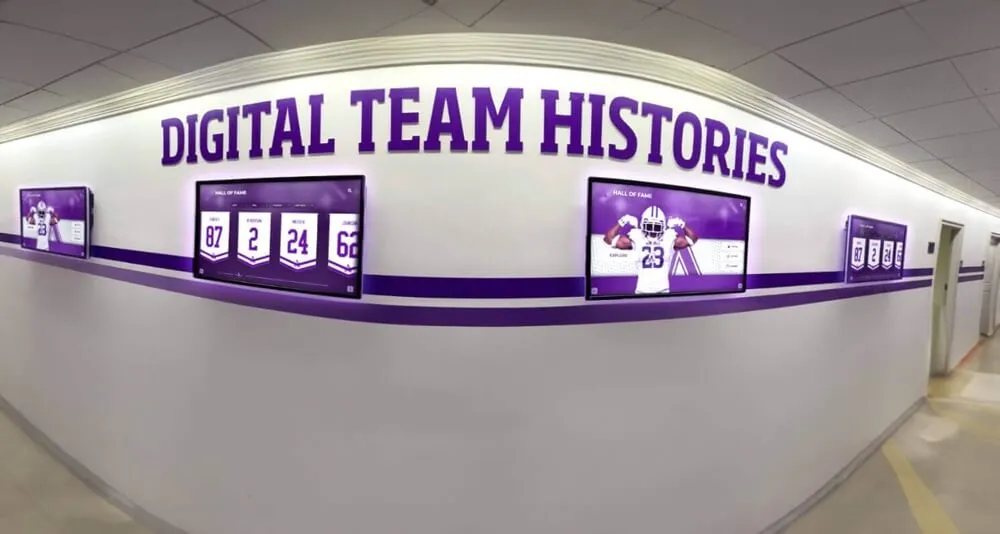
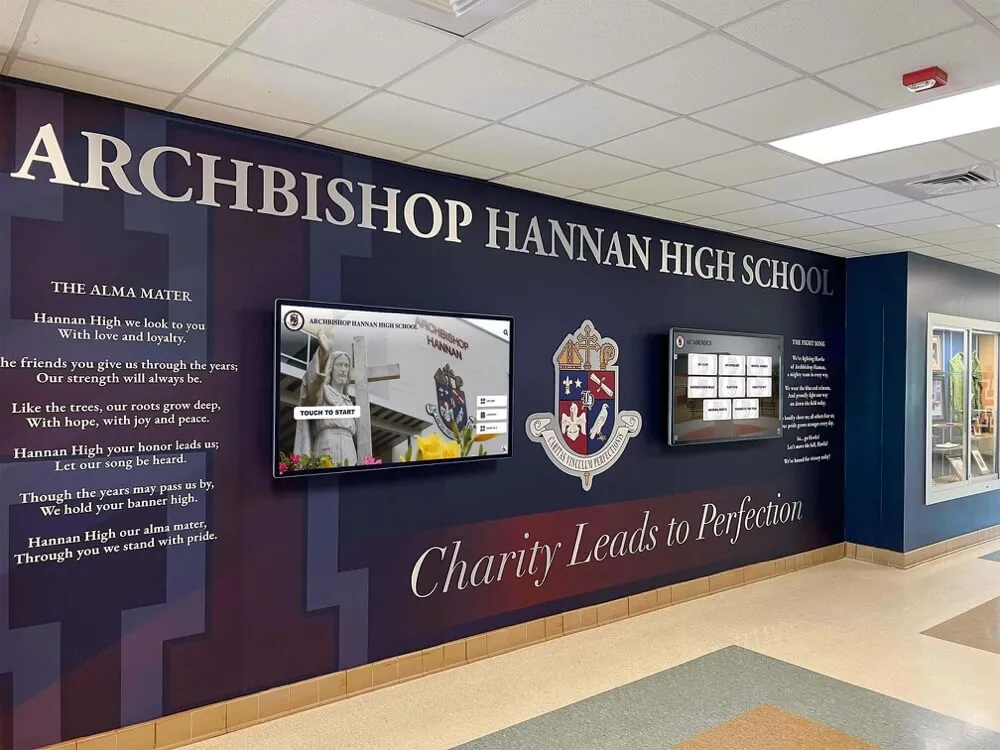
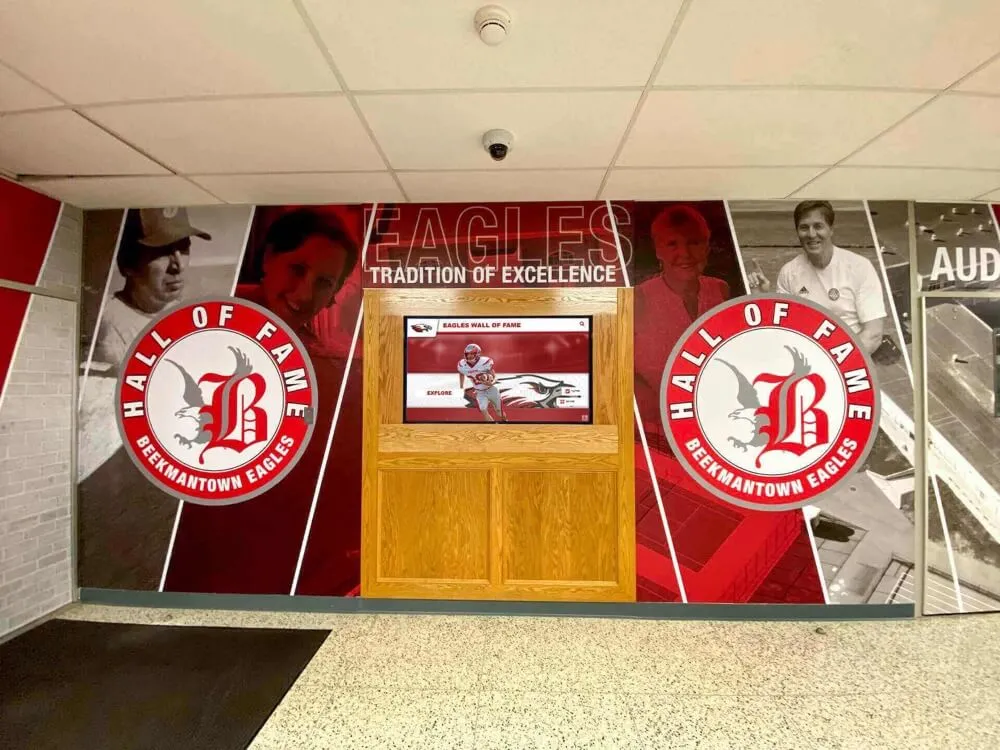
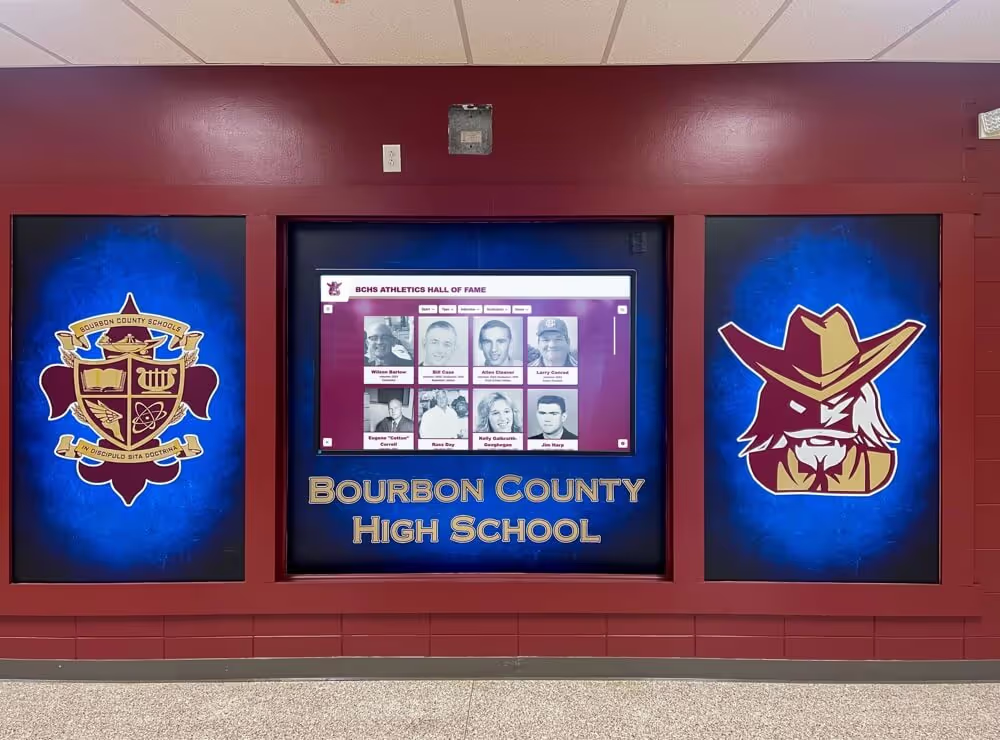
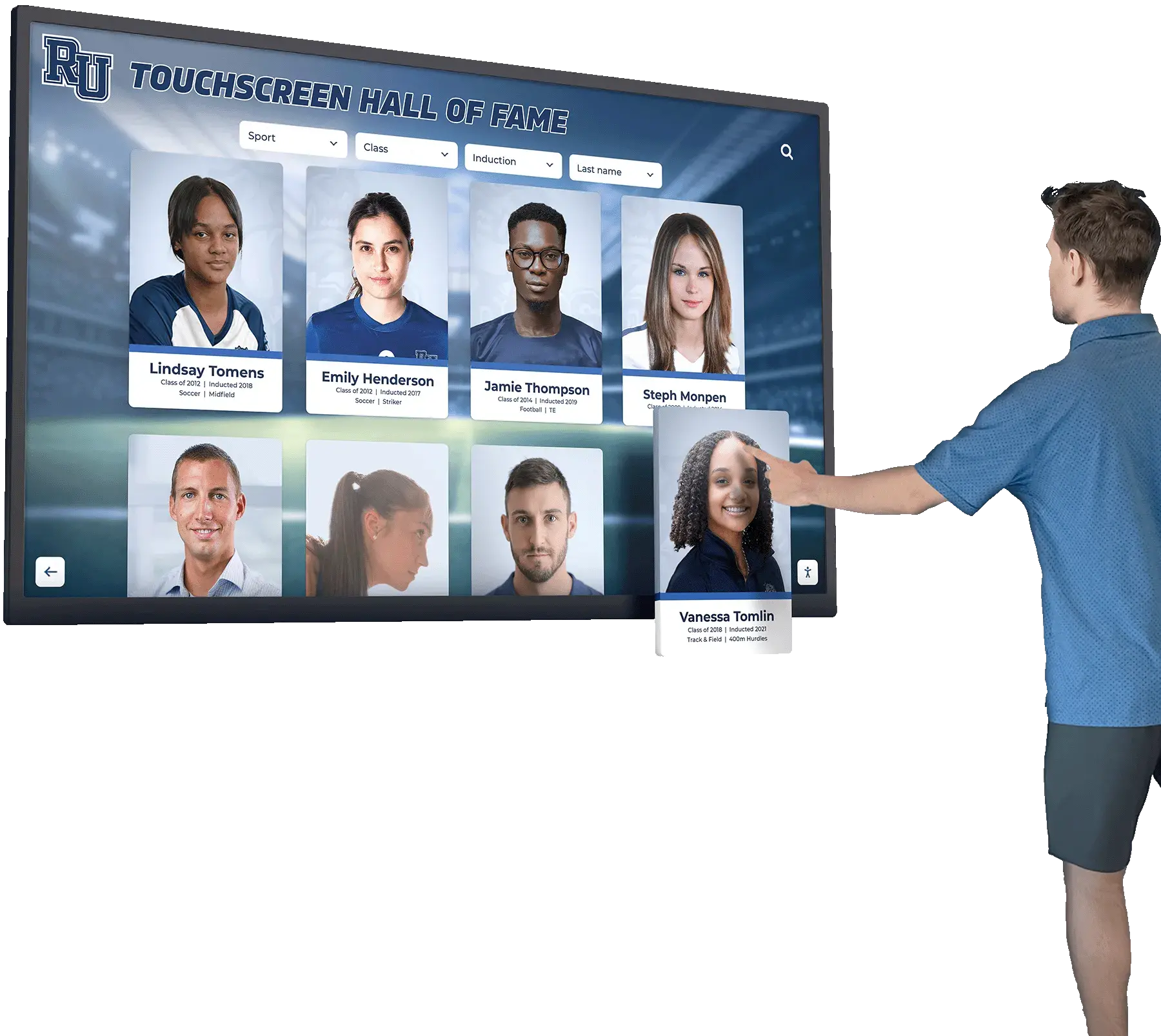
A well-designed update workflow integrates directly with the digital platform where inductee profiles live. When a reviewer approves a biography correction, they should be able to apply it to the published profile in the display system without re-entering content manually. When a new photograph clears rights review, it should upload into the inductee’s profile and replace the previous image with a version history preserved in the system.
Schools that run recognition programs spanning athletic halls of fame, academic honor rolls, and community contributor awards benefit from a unified content management interface where all profile types are accessible through one update workflow. Comprehensive academic recognition program frameworks that schools implement for current students share the same content management principles that make athletic hall of fame profiles maintainable over decades.
The practical value of connecting the form to the display system is time: updates that require a reviewer to log in to a separate system, locate the profile, re-enter the approved content, and verify the display result typically take longer and introduce additional transcription errors compared to a workflow where approval triggers a direct update.

Practical Table: Common Update Requests and Minimum Evidence
| Update Type | Common Submitter | Minimum Evidence Required | Notification Required? |
|---|---|---|---|
| Spelling correction in name or biography | Family, inductee | Single authoritative source (yearbook, news record) | Recommended |
| Date or statistic correction | Family, program records staff | Source document contradicting current text | Recommended |
| Photo replacement | Family, inductee | High-res file + rights attestation | Required |
| Achievement addition (post-induction) | Inductee, family | Documentation of the achievement | Required |
| External link correction | Anyone | Active, relevant destination URL | Not required |
| External link addition | Family, inductee | Active URL + brief description of relevance | Recommended |
| Biography expansion | Inductee | Inductee-provided draft + review for accuracy | Required |
| Biography removal or redaction | Inductee, institutional counsel | Written request with reason; legal review if litigation-adjacent | Required |
Halls of fame that have built a legacy of recognized athletes, coaches, and contributors over many decades may have profiles that require substantive updates as historical research surfaces new information. Programs managing large inductee rosters will find that a consistent update workflow—applied across all profiles regardless of induction era—prevents the two-tier outcome where recent inductees have detailed, current profiles while earlier classes have sparse, outdated records.
Resources for programs building or rebuilding their recognition infrastructure include scholarship and award documentation frameworks that cover evidence standards applicable across multiple recognition contexts.
Communicating the Form to Inductees and Families
The update request form only works if inductees and their families know it exists. Programs that publish the form address in their induction ceremony program, their hall of fame website, and their annual communication to inductees consistently receive more complete, evidence-backed requests than programs that handle updates ad hoc.
A brief paragraph in the induction ceremony program—explaining that profiles can be updated, describing what information qualifies, and providing the form URL or contact address—reaches the people most likely to have additional context about inductees at the moment when that context is most salient.
An annual email or letter to inductees, inviting them to review their profile and submit any corrections through the form, creates a systematic review cycle that catches outdated information before it becomes entrenched. Programs building out youth and student recognition displays alongside athletic halls of fame may find recognition frameworks for youth sports programs useful for structuring annual communication and profile maintenance workflows.
See How Rocket Manages Profile Updates at Scale
Rocket Alumni Solutions builds digital halls of fame with content management tools designed for ongoing maintenance—so profile updates, photo replacements, and achievement additions flow through a controlled workflow rather than landing in someone's inbox. If your school is ready to move from static recognition plaques to a living digital record, see the platform in action.
Book a Demo