



Key Takeaways
Ready-to-use hall of fame plaque wording examples for school athletes, coaches, and contributors—plus a field checklist that seeds richer digital inductee profiles.
Why Plaque Wording Decisions Have Long-Term Consequences
A hall of fame plaque may hang for 30 or 40 years. The wording you standardize in your first induction cycle becomes the template every future committee inherits. Schools that rush the wording phase end up with inconsistencies across the wall: one plaque says “Class of 2018,” the next says “2014–2018,” and a third says “Graduated 2021.” Visitors cannot scan the wall coherently, and any digital migration later requires manual cleanup of records that were never normalized.
Consistent wording standards also protect against disputes. When the committee agrees in advance on what information appears and how it is formatted, arguments about whether one inductee’s plaque is more prominent than another’s disappear.

Core Fields Every Hall of Fame Plaque Should Include
Before writing any wording, agree on which fields appear on every plaque and in what order. The table below maps plaque fields to the corresponding digital profile fields—so that what you collect for the physical plaque also seeds a richer online or on-screen inductee record.
| Field | Include on Plaque | Include in Digital Profile |
|---|---|---|
| Full name (as competed) | Required | Required |
| Sport or activity | Required | Required |
| Years of participation | Required | Required |
| Key achievement(s) | Required (brief) | Required (expanded) |
| Induction year / class | Required | Required |
| Graduation year | Optional | Recommended |
| Position / event | Optional | Recommended |
| Headshot photo | No | Required |
| Action photo | No | Recommended |
| Career statistics | No (space) | Recommended |
| Bio paragraph | No | Required |
| Post-graduation highlights | No | Optional |
| Coach or peer quote | No | Optional |
Collecting all of these fields at nomination time—not just the plaque fields—means your digital profiles are complete when the display goes live rather than requiring a second data-gathering pass later.
Wording Formulas by Inductee Category
Individual Athlete Plaques
The most reliable formula for an individual athlete plaque follows this structure:
[Full Name] | [Sport(s)] | [Years of Participation] | [Achievement Summary]
Examples:
Marcus Delgado | Football | 2017–2021 | Three-Time All-Conference Linebacker · Team Captain
Priya Nair | Swimming & Diving | 2018–2022 | IHSA State Qualifier · School Record, 200m Individual Medley
Jordan Okafor | Boys Basketball | 2019–2023 | 1,200 Career Points · District Champions 2022, 2023
Sofia Hernandez | Track & Field | 2020–2024 | NJSIAA All-State · School Record, 400m Hurdles (57.4s) · Three-Year Team Captain
Notes on this formula:
- Use an em-dash (–) for year ranges, not a hyphen or the word “to.”
- Separate achievements with a centered dot (·) rather than commas—it reads more cleanly on engraved metal.
- Capitalize named honors (All-State, All-Conference) but keep descriptive terms lowercase (team captain).
- Include the actual record or statistic whenever possible. “School Record, 200m Individual Medley” is more meaningful than “Outstanding Swimmer.”
Coach and Administrator Plaques
Coaches and administrators often have longer tenures and achievements that span programs, not single seasons. Adjust the formula accordingly:
[Full Name] | [Title] | [Years of Service] | [Career Highlights]
Examples:
Coach Raymond Elsworth | Head Football Coach | 1994–2018 | 187–62 Career Record · 4 State Championships · 23 Players Signed to College Programs
Patricia Mendes | Athletic Director | 2005–2024 | Grew Program from 8 to 22 Varsity Sports · Title IX Compliance Leader · NIAAA Distinguished Achievement Award
Thomas Kwan | Head Boys Cross Country Coach | 2002–2022 | 6 Regional Championships · 14 Consecutive Playoff Qualifications
For coaches who also competed at the school before returning to coach, include both tenures if the recognition spans both periods—or create separate plaques if the committee treats competition and coaching careers as distinct honors.
Team and Championship Plaques
Team plaques work best when they anchor the achievement with a season, record, and championship level—rather than just a trophy icon and a year.
[Season Year] [Team Name] | [Championship Title] | [Season Record]
Examples:
2019 Varsity Girls Volleyball | IHSA Class 2A State Champions | 32–4 Season Record
2022–23 Boys Soccer | Back-to-Back Regional Champions | Undefeated at Home (14–0)
2017 Baseball | Conference Champions · First in Program History | 24–8
If the plaque includes individual names from the roster, list them in a consistent order—alphabetical by last name is standard and avoids any implied ranking. Captains or MVPs may appear first if your format separates them, but document that convention in your style guide.
Community Contributor and Alumni Achievement Plaques
Not every inductee is an athlete. Distinguished alumni, volunteer supporters, booster club founders, and long-serving staff deserve wording that reflects their specific contribution.
[Full Name] | [Connection to School] | [Years] | [Contribution Summary]
Examples:
Eleanor Wachowski | Booster Club Founder & President | 1998–2016 | Raised $1.2M for Athletic Facilities · Established Four Annual Scholarships
Dr. Calvin Bridges | Class of 1987 · Distinguished Alumnus | Inducted 2025 | NFL Linebacker 1991–1998 · Youth Sports Foundation Founder
Margaret and Dale Forsythe | Program Benefactors | 2008–Present | Lead Donors, Field House Renovation · Annual Hall of Fame Endowment Sponsors
When an inductee’s connection spans multiple roles (athlete then donor, for example), summarize the whole arc in the achievement line rather than trying to cram two separate formula blocks onto one plaque.
Wording Conventions Every Committee Should Standardize
Settling these conventions before plaques are ordered prevents inconsistency across the wall.
Year ranges Use em-dash (–), no spaces: 2018–2022. Never use a hyphen (-) or the word “to.”
Capitalization of honors Capitalize named awards and designations: All-State, All-Conference, All-American, Academic All-State. Keep generic descriptors lowercase: team captain, letter winner, Most Valuable Player (MVP is acceptable as an abbreviation).
Athlete names Use the name that appears in school records and yearbooks. If a nickname was universally used and appears in news archives, it may appear in quotes: Robert “Bobby” Chen. Legal name changes after graduation are documented in the digital profile, not necessarily on the physical plaque.
Records and statistics Include the mark and the context: “School Record, 200m Freestyle (1:48.3)” rather than just “School Record Holder.” For scoring milestones, include the threshold: “1,000 Career Points” not just “High Scorer.”
Abbreviations Define any organization acronym the first time it appears in your style guide, then use it consistently. IHSA, NJSIAA, UIL, MHSAA are familiar to regional audiences but may confuse future visitors. Your digital profile can spell them out in full.
Punctuation in achievement lists Use centered dots (·) or pipes (|) to separate achievement items on a single line. Avoid commas in achievement lists—they read like run-on sentences when engraved.
Collecting Digital Profile Data at Nomination Time
The fields that fit on a plaque represent a fraction of the information that makes a digital inductee profile genuinely compelling. If you wait until after induction to collect extended profile data, many nominators and families will not respond to follow-up requests.
The most efficient approach: build a nomination form that captures both sets of fields simultaneously. The nomination committee sees only the plaque fields during deliberation; the content team uses the extended fields to build digital profiles.
Digital profile prompts to add to your nomination form:
- Headshot photo — Preferred 400×500px minimum, formal or action. If no current photo is available, a scanned yearbook photo is acceptable.
- Action photo — One or more photos showing the inductee competing. Historical photos are acceptable; scan at 300 DPI minimum.
- Bio paragraph (150–300 words) — Written in third person. Cover early life connection to the sport, high school career highlights, and post-graduation path. Nominators often write this best because they know the context.
- Career statistics — Formatted as a simple table: season, stat category, value. For team sports: key stats per season. For individual sports: placements, times, distances, and records.
- Post-graduation highlights — College competition, professional career, community leadership, professional recognition. Bullet list is fine.
- A quote from a coach or teammate — Attributed by name, 30–60 words. “Jane could read the defense like a veteran. Every player on our side of the ball improved because of her leadership.” — Coach Maria Thompson, 2019–2021.
- Preferred contact for future updates — Email or social handle for adding future milestones to the digital profile over time.
Schools exploring turnkey digital hall of fame solutions that include content setup often find that the content migration process goes significantly faster when nomination forms collected extended fields from the start.
From Plaque Wording to Digital Display: How the Data Flows
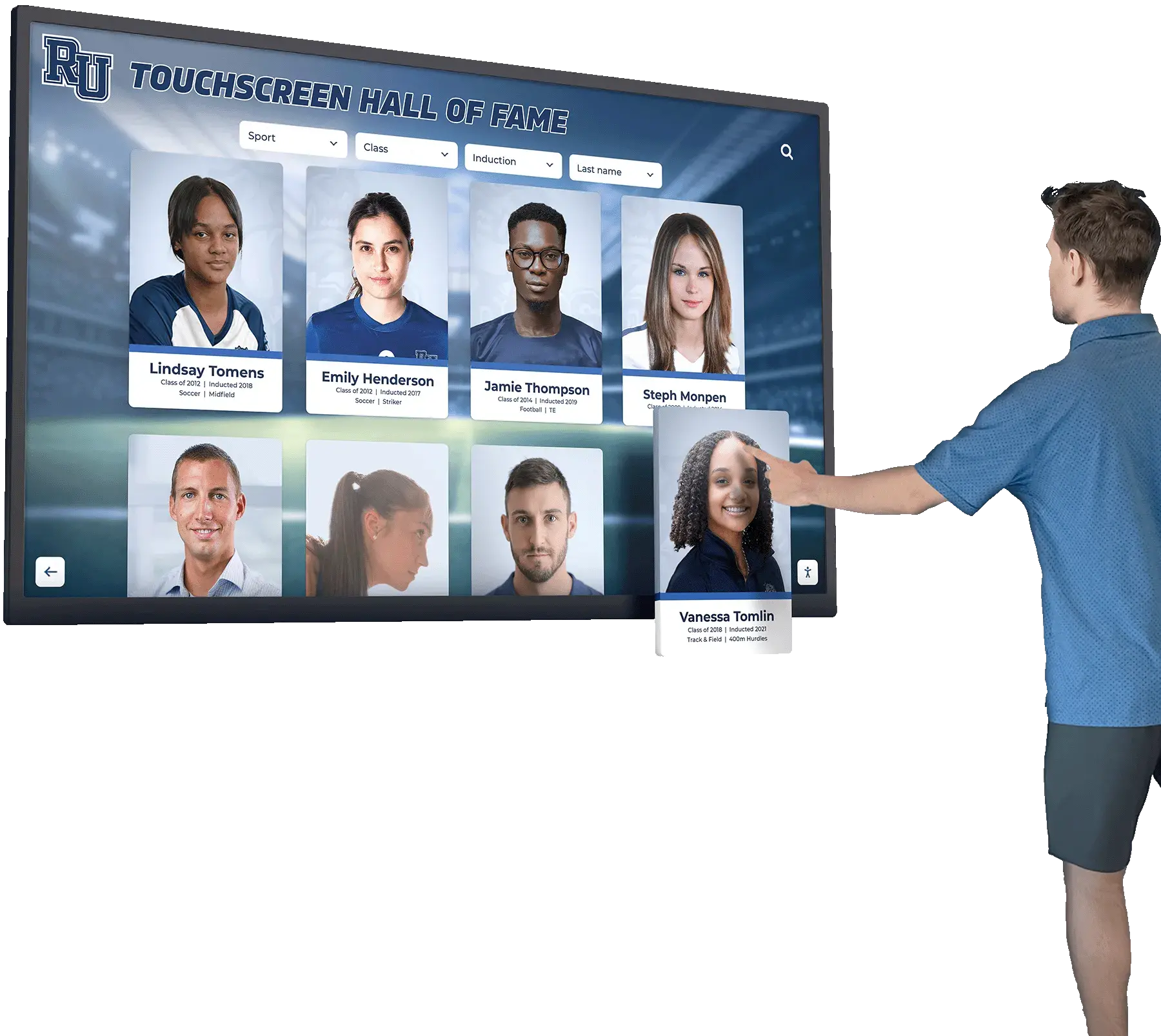
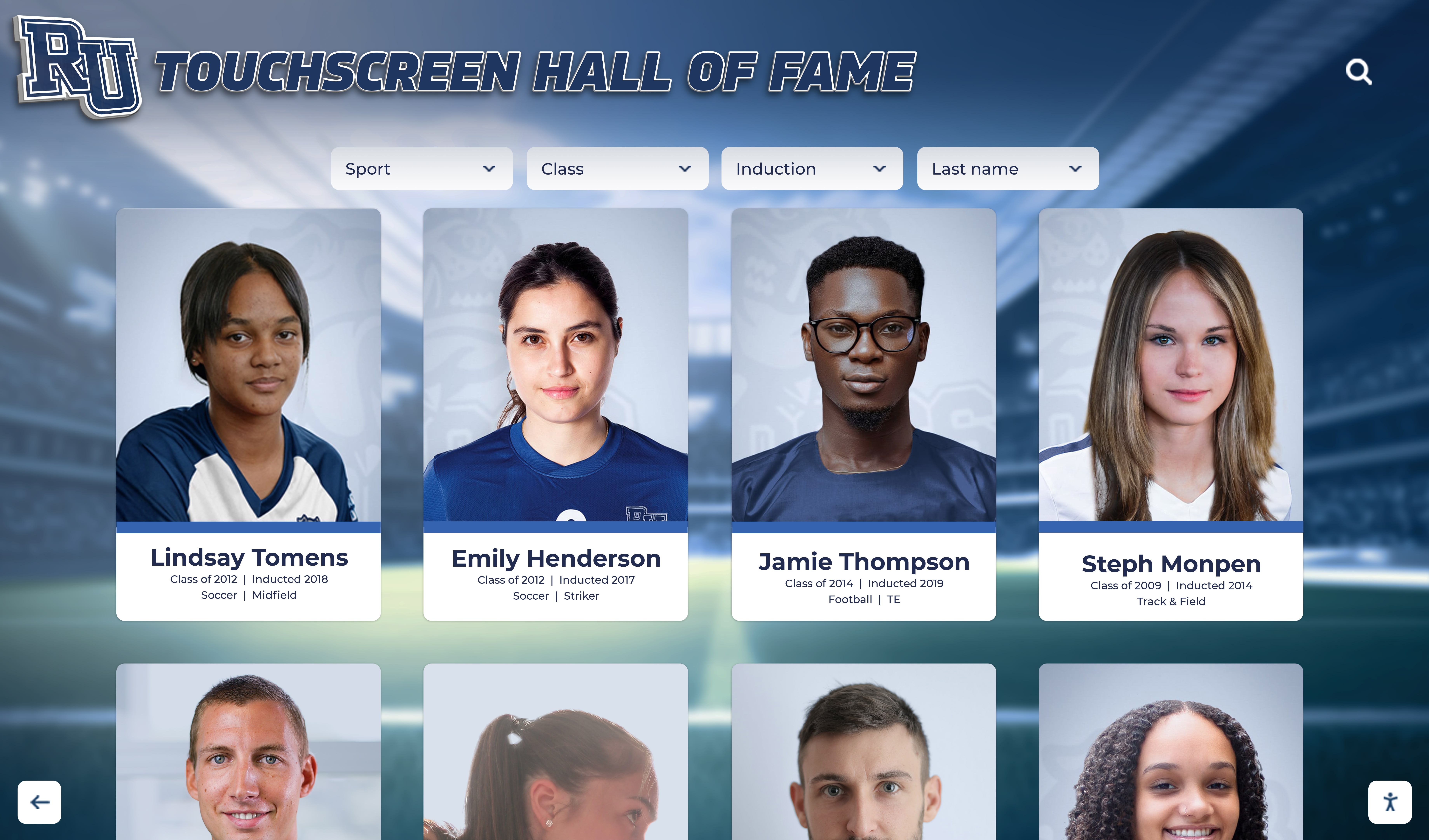
A plaque that reads “Sofia Hernandez | Track & Field | 2020–2024 | NJSIAA All-State · School Record, 400m Hurdles” is correct and complete for the wall. But on a digital display, that same inductee can have a full profile page with a career-arc photo gallery, a statistics table broken down by season, the biography paragraph her coach wrote, and a note that she went on to compete at the Division I level.
The fields overlap—name, sport, years, key achievement—but the digital profile extends in every direction the plaque cannot. Schools that understand this structure early collect the right data at nomination time and avoid the common frustration of having a digital display that shows the same sparse information as the physical plaque.
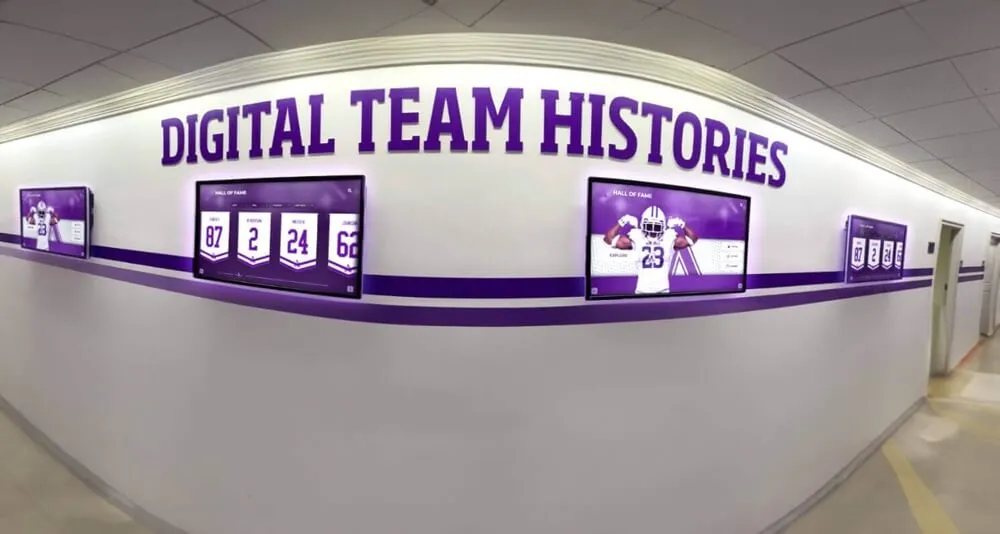
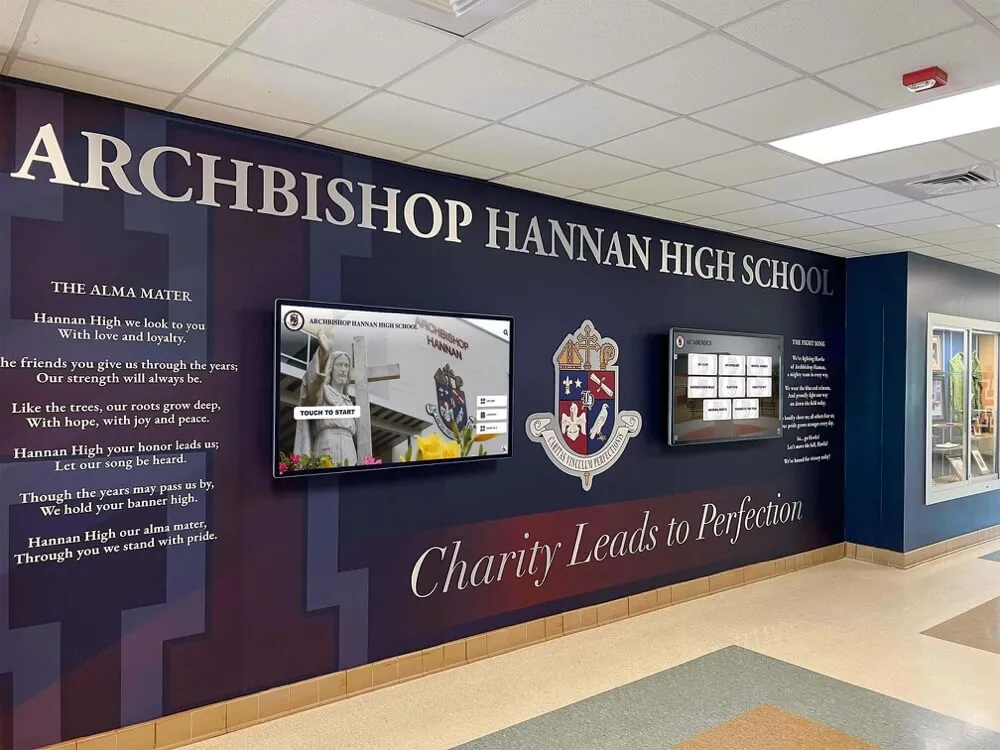
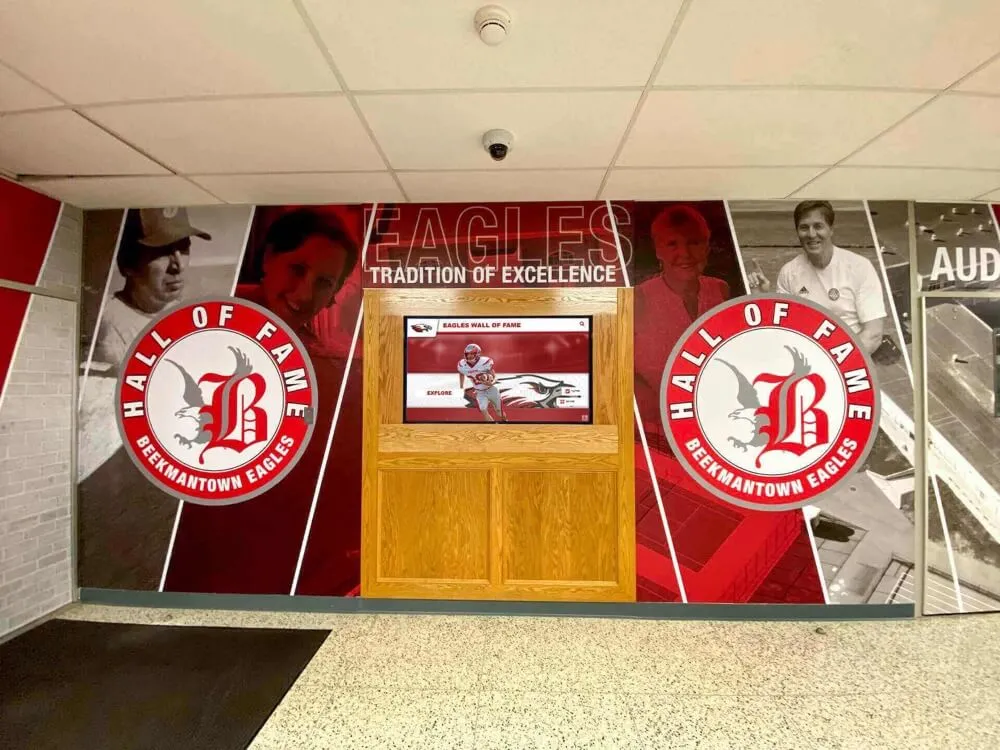
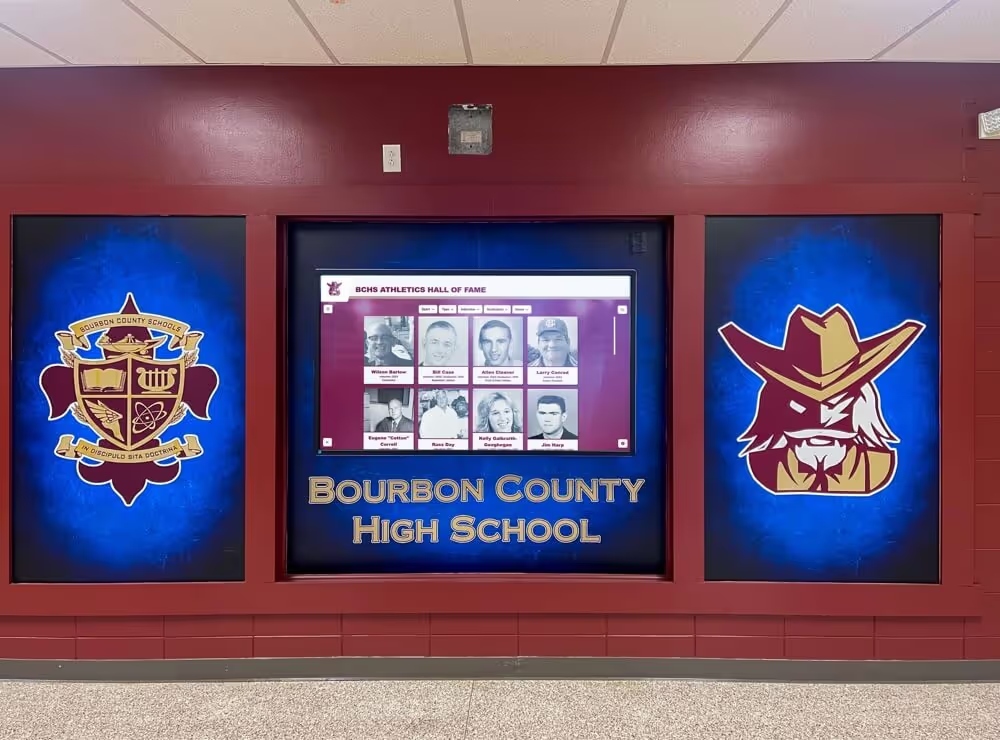
Digital hall of fame software designed for schools provides content management interfaces that map directly to these field structures—name, sport, category, induction year, bio, photos, stats—so that entering data is straightforward rather than requiring custom database work.
Practical Wording Checklist Before You Place an Order
Before sending plaque copy to your engraver, run through this checklist for every inductee:
- Full legal name as it appears in school records
- Correct year range using em-dash, confirmed against athletic records
- Sport or activity spelled out fully (no abbreviations unless space requires)
- Achievement text verified with original source (yearbook, newspaper, state association records)
- Induction year confirmed
- Graduation year recorded (even if not on the plaque—needed for digital profile)
- All capitalization follows your committee’s style guide
- Achievement list uses consistent separator (·) throughout
- Proof reviewed by at least one person who knew the inductee personally
- Proof reviewed by the inductee or their family if possible
- Font size tested in print at actual plaque dimensions before final order
That final print test matters. Wording that looks clean at 100% zoom in a design document often looks crowded or small when rendered at the actual 8×10-inch or 12×16-inch plaque size under gym fluorescent lighting. Request a physical proof or at minimum a 1:1 scaled PDF before approving any order of more than five plaques.
How Digital Displays Extend What a Plaque Can Do
Physical plaques are permanent and prestigious—there is a reason schools have installed them for over a century. But they have real limits: a name can be misspelled with no easy correction, a record can be broken without any way to update the plaque, and a class of thirty inductees requires thirty individual items of metal, mounting hardware, and wall space.
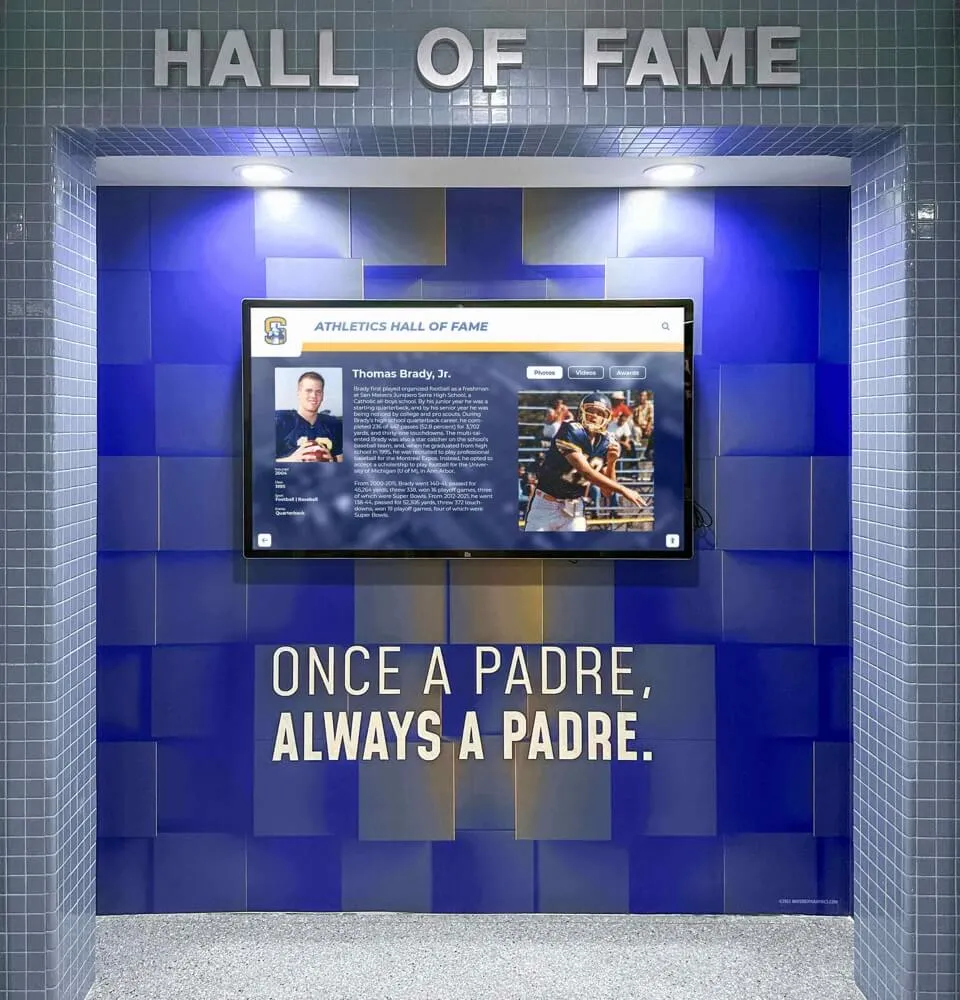
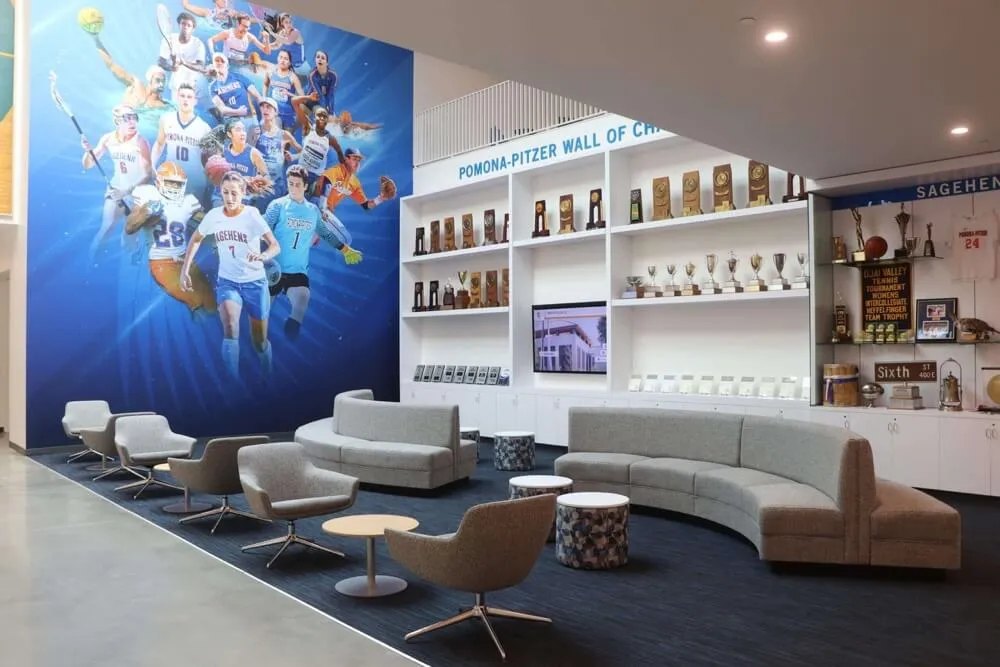
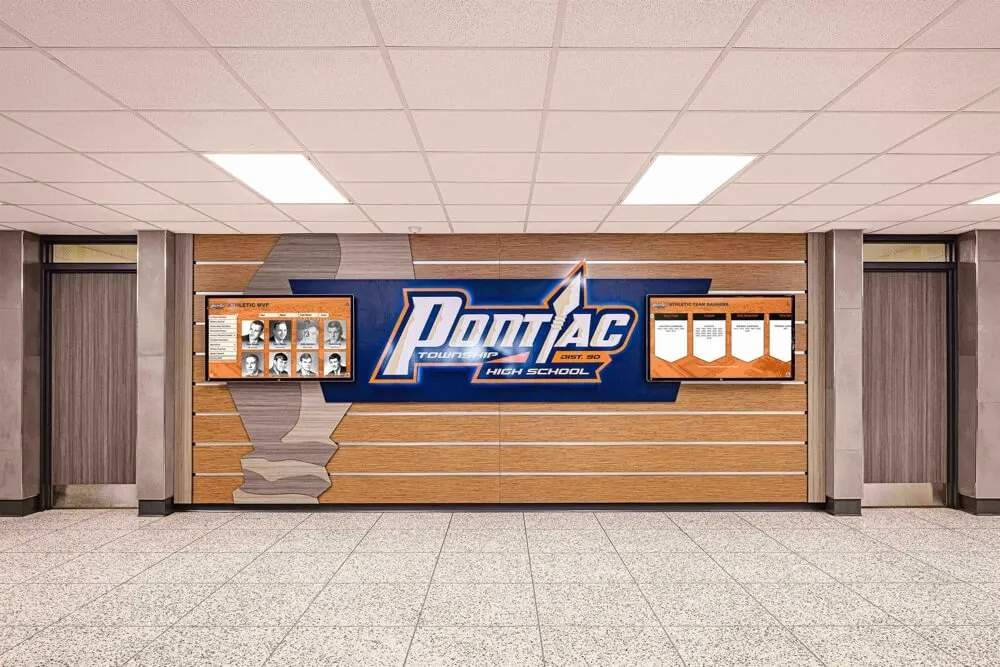
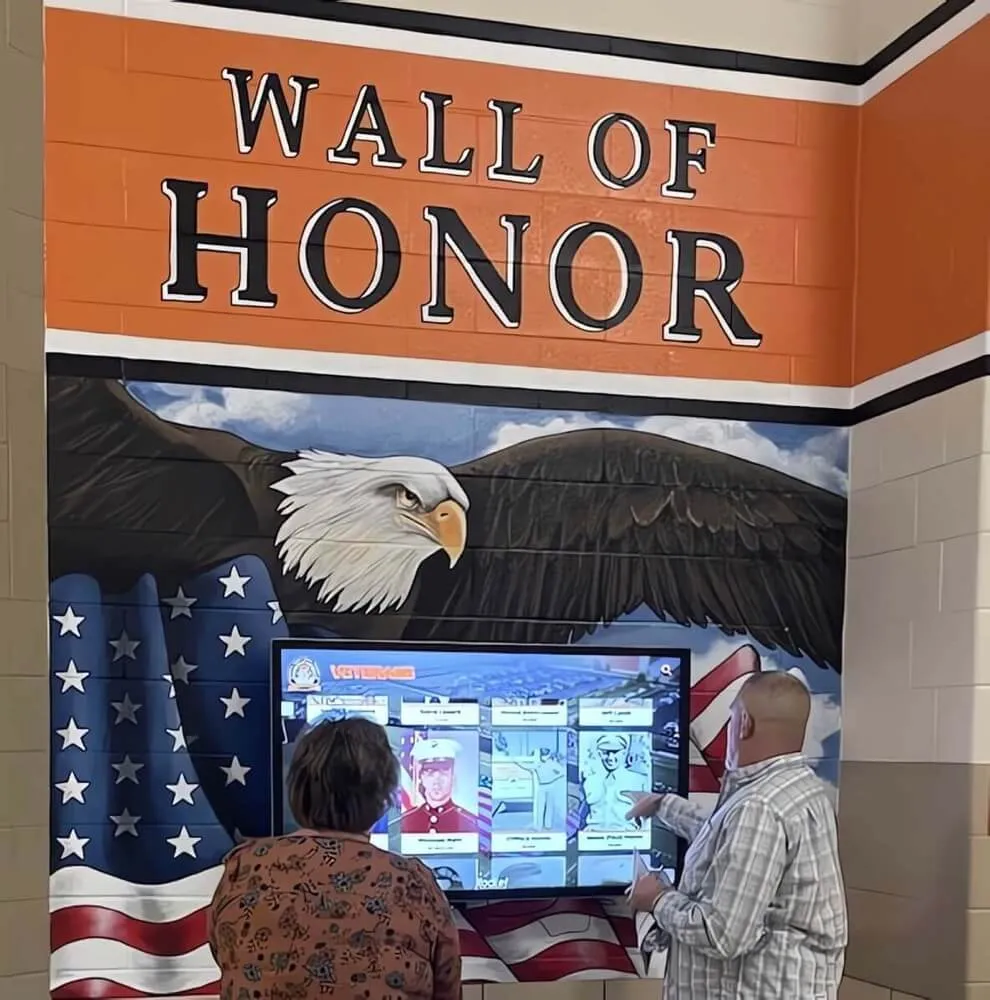
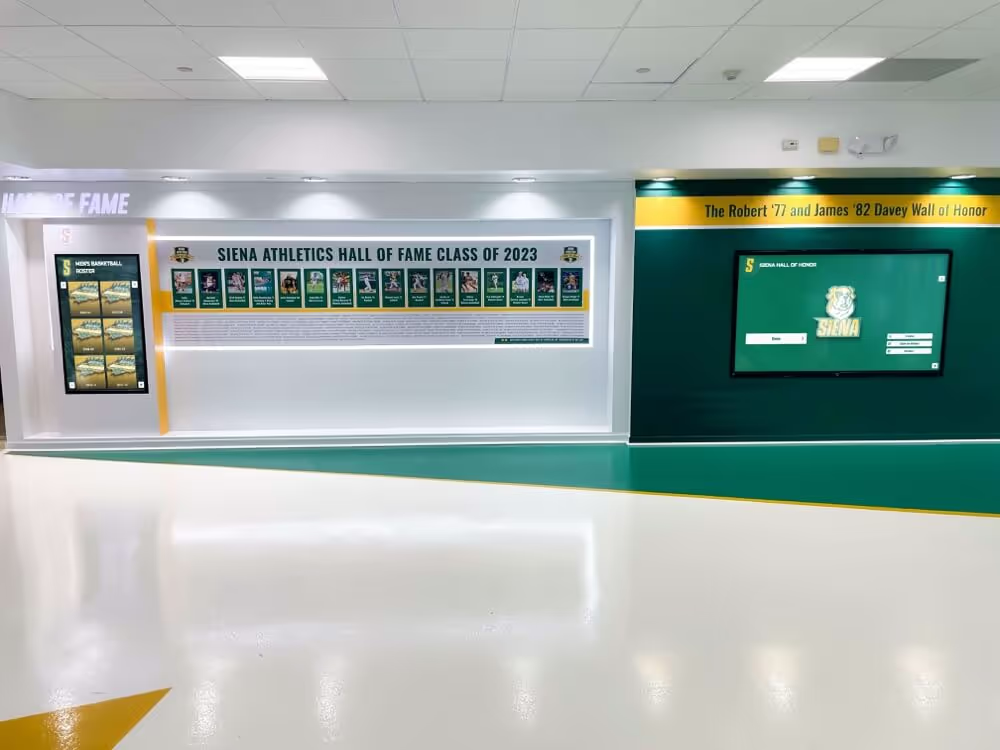
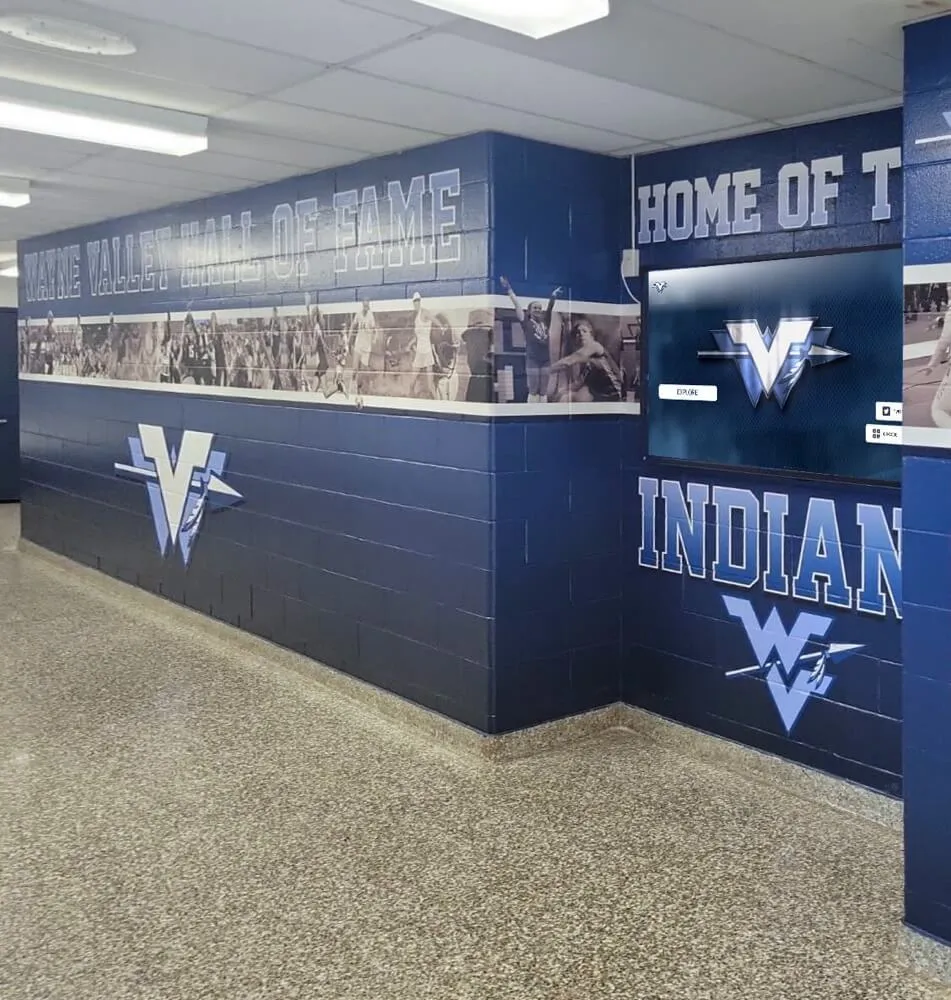
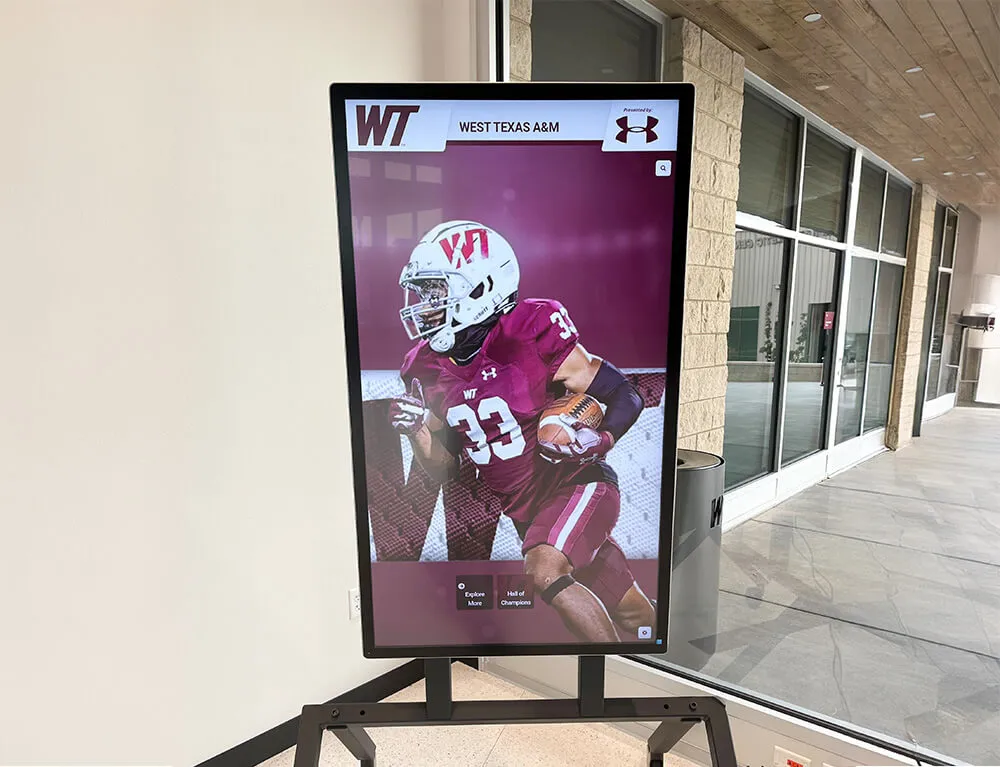
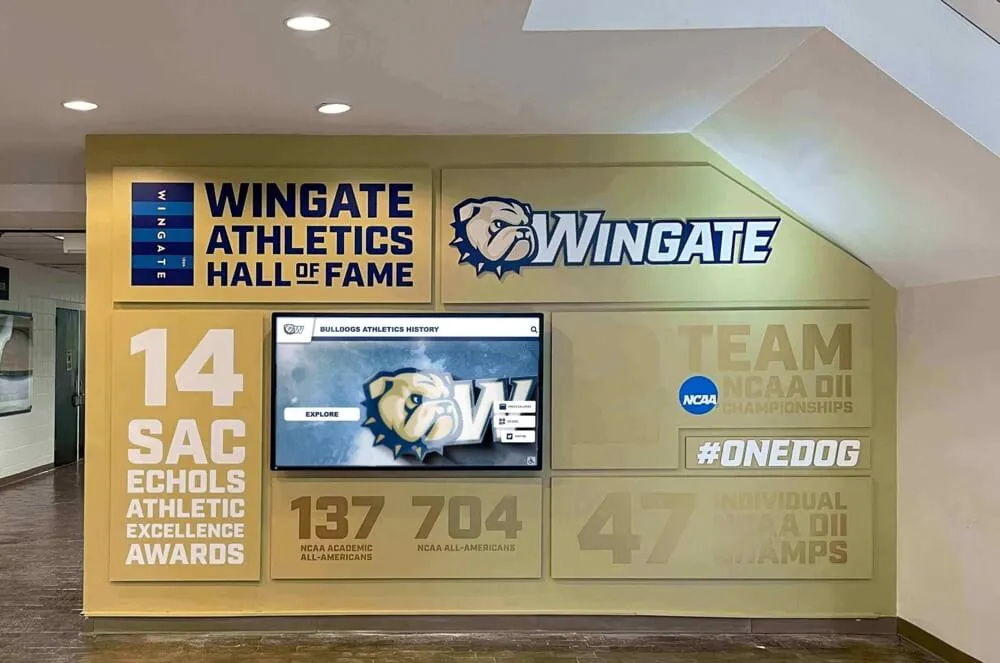
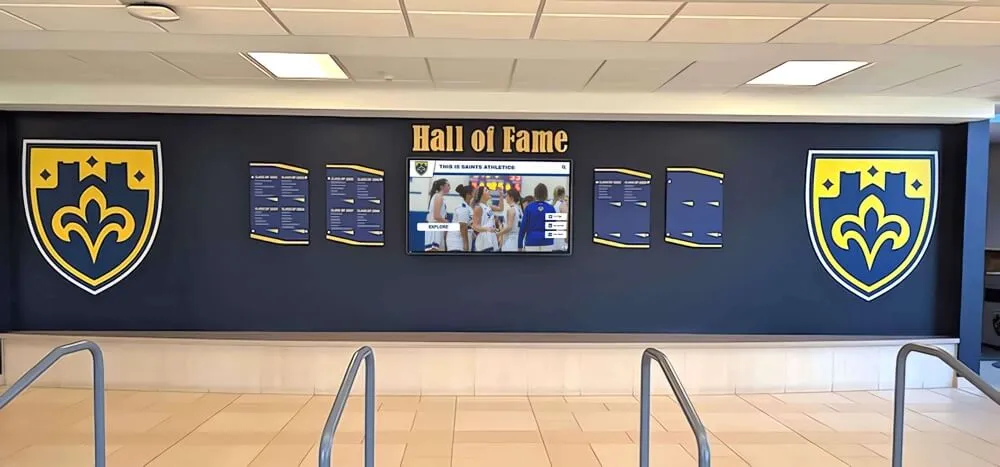
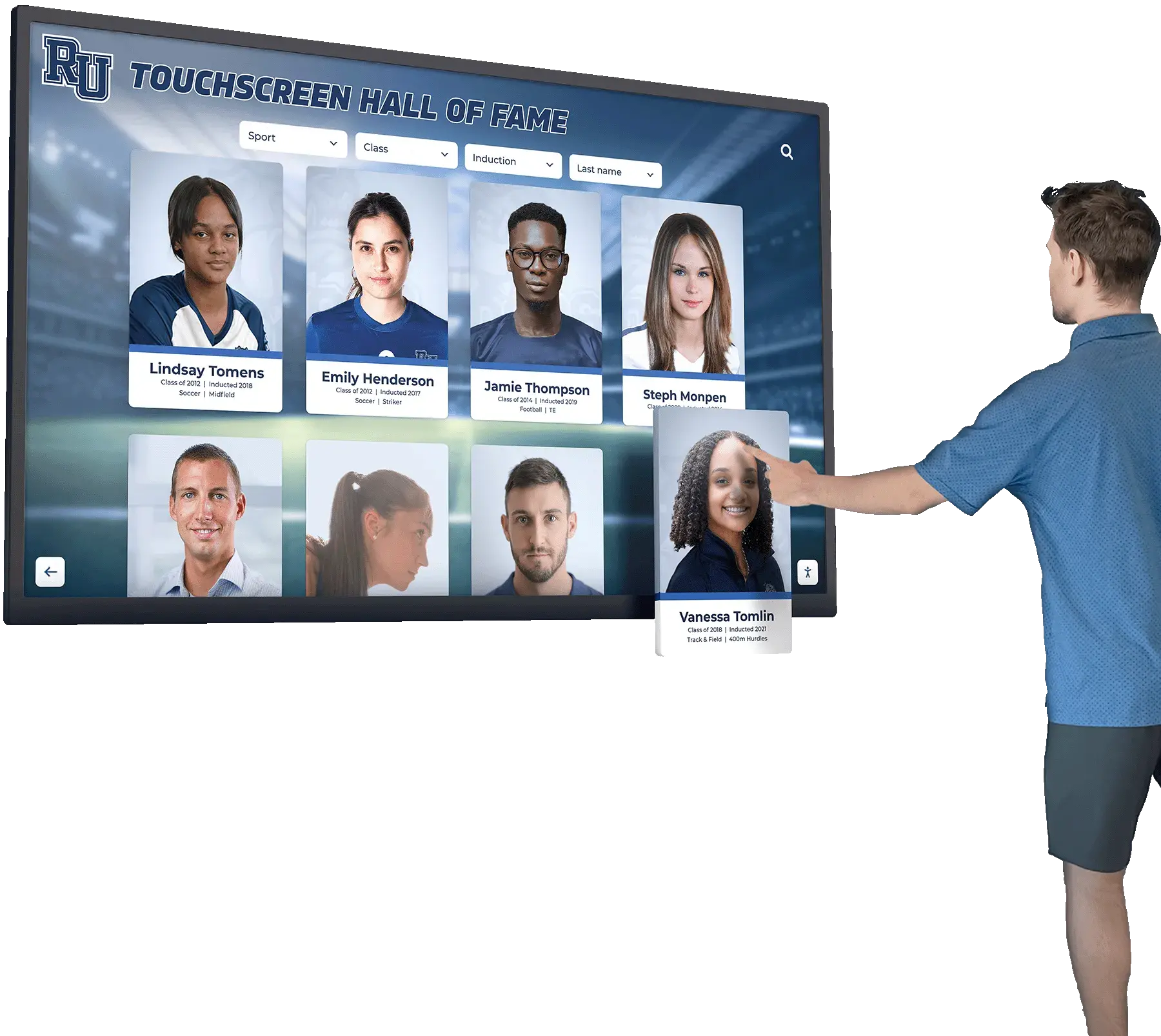
Digital displays paired with physical plaques solve each of these problems. Errors correct in minutes. New achievements add to the same profile rather than requiring a replacement plaque. A single screen can surface the complete inductee history of a program going back decades.
For schools evaluating what a digital complement to their existing plaque wall would cost and involve, pricing guides for digital hall of fame displays and installation breakdowns covering mounting, power, and network setup provide realistic frameworks for planning conversations.
Schools that have not yet started the physical installation planning process can also reference resources on who installs digital hall of fame systems for a vendor-neutral overview of the process.
Wording for Special Cases
Multiple-sport inductees List sports separated by an ampersand if two, or commas if three or more: “Football & Baseball” or “Basketball, Track & Field, Baseball.” Note the combined year span once rather than repeating it for each sport.
Inaugural or posthumous inductees Posthumous inductions sometimes carry different wording conventions. Some programs add “(Posthumous)” after the induction year or note the years of life. Decide on a standard before your first posthumous induction and apply it consistently.
Families inducted together When a parent-child or sibling combination receives recognition as a unit (common for donor recognition), use both names on the same plaque rather than one catchall phrase: “Eleanor and Marcus Wachowski | Program Benefactors | 2001–Present.”
Record-holders whose records have been broken A plaque that names a school record becomes inaccurate if the record is later broken. Some schools resolve this by not naming the record on the plaque—only the achievement that earned induction (All-State, state qualifier). Others note it as a record “at time of induction.” Document your policy so future committees handle it consistently.
International or dual-country athletes If a student represented another nation in international competition during their school years, note it: “FIBA U18 Americas Championship, Team Mexico, 2022.” This context is relevant to understanding the achievement level.
Connecting the Wording Standard to a Living Recognition Program
The wording standard you create is not a one-time document. It needs a home—a shared file your committee and whoever manages communications can reference each induction cycle. At minimum, a one-page style guide covering the field order, capitalization rules, year range formatting, and achievement separator convention prevents every new committee member from reinventing these decisions.
The same style guide should extend to your digital profiles. Digital hall of fame software for schools increasingly supports configurable display templates—so that the field structure you standardize for physical plaques maps directly to how profiles appear on screen.
For schools still in the early stages of building their recognition infrastructure, the comprehensive buying guide for high school digital hall of fame systems and a parallel guide covering display case integration ideas for school lobbies both provide useful orientation on the options available before committing to a platform.
Frequently Asked Questions
Should a hall of fame plaque show the graduation year or the years the athlete competed?
Show the years the athlete competed at your school—e.g., 2019–2022. Graduation year is useful internal data and belongs in the digital inductee profile, but on a plaque the competition window is what tells the story. If a multi-sport athlete’s years differ by sport, list the combined range of their varsity participation.
How do you handle a married name change on a hall of fame plaque?
Engrave the name the inductee used while competing (the name on historical records and yearbooks). If the current legal name differs, add the former name in parentheses: “Andrea Torres (née Kowalski).” In your digital profile, list both names as searchable fields so visitors can find the record under either spelling.
How long should achievement text be on a hall of fame plaque?
Keep it to two lines—roughly 20–30 words. Anything longer either shrinks the font below readable size or requires an oversized plaque. Save extended achievement narrative for the digital profile where length is not constrained by surface area.
Should the induction year appear on the plaque?
Yes. The induction year is distinct from the years of competition and belongs on every plaque. It anchors the plaque in institutional time and becomes a filter field in digital displays that group inductees by class year.
What is the minimum readable font size for a hall of fame plaque?
Names should be engraved at no smaller than 3/8 inch cap height for plaques viewed from 4–6 feet. Achievement subtext can drop to 1/4 inch. Test a proof print at actual plaque size under your facility’s lighting before placing the full order.
Ready to Turn Your Plaque Data into a Full Digital Recognition Program?
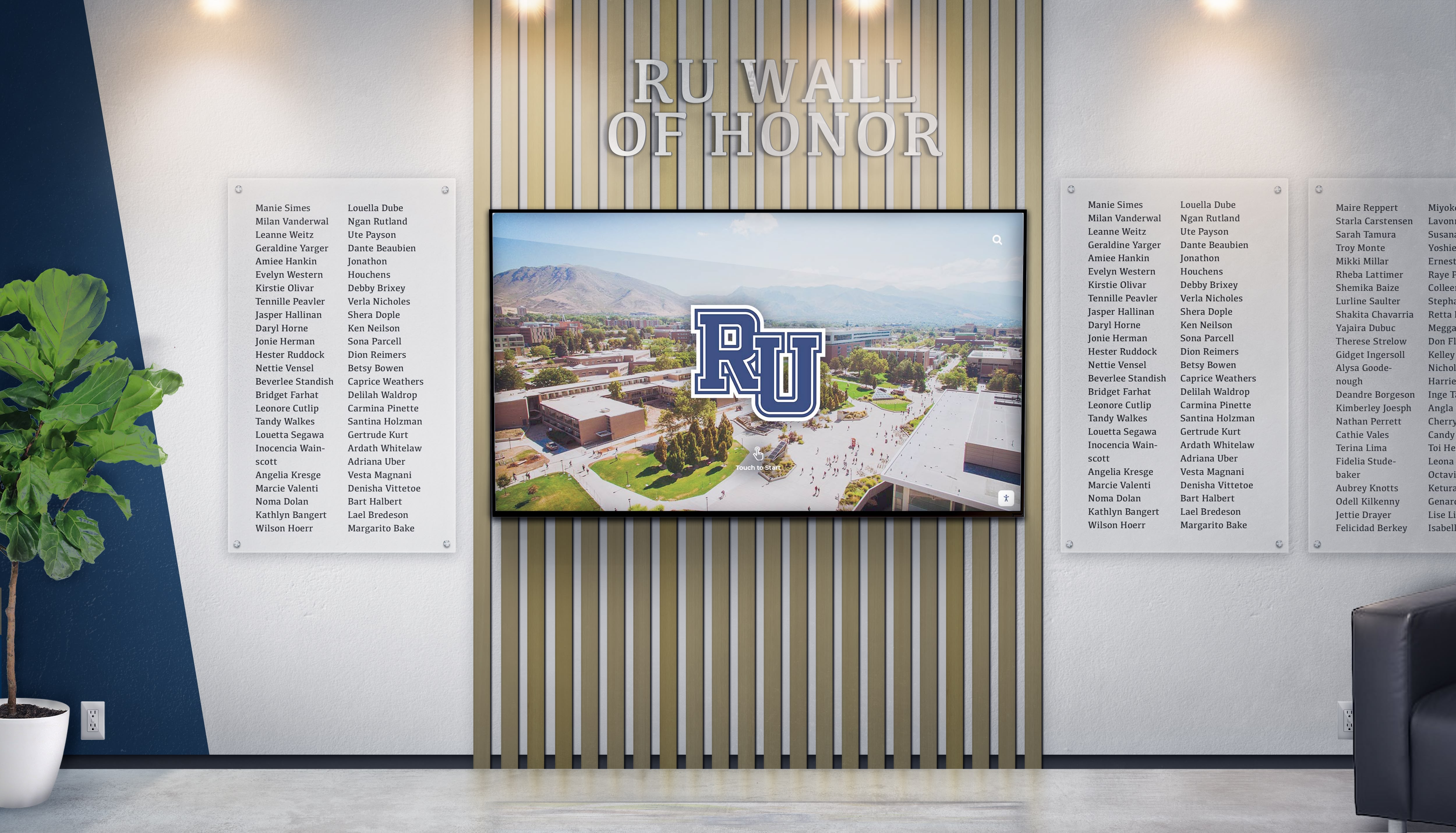
Rocket Alumni Solutions helps schools build interactive hall of fame displays that extend every inductee's plaque into a rich digital profile—complete with photos, stats, bios, and career highlights your whole community can explore.
Request a Demo