



Key Takeaways
A practical hall of fame name change policy for schools: step-by-step workflow, record-update checklist, audit trail requirements, and sample policy language for administrators.
A hall of fame name change policy is a written procedure that tells school staff exactly how to process an inductee’s request to update the name displayed across program materials—plaques, digital screens, printed directories, website profiles, and search indexes—while preserving a complete audit trail of the original record. A clear policy means no request falls through the cracks, every surface gets updated consistently, and the inductee’s dignity and the program’s historical accuracy are both protected.
This guide is written for school administrators, athletic directors, booster leaders, archivists, and recognition-program owners. It covers why a formal policy matters, what triggers a name change request, a numbered step-by-step workflow, a quick-reference table, what records need updating, how to maintain an audit trail, and sample policy language you can adapt for your program.
Why Schools Need a Formal Hall of Fame Name Change Policy
Without a documented procedure, even well-intentioned staff tend to handle name change requests inconsistently. A plaque gets a new nameplate but the website profile keeps the old name. A digital kiosk is updated but the printed induction program in the archive is not. When an inductee searches their own name online, they find a mix of old and new records—an experience that feels careless regardless of how the original recognition ceremony went.
A formal policy solves this by:
- Designating a single point of contact so requests never disappear into a general inbox
- Defining which records are in scope so no surface is overlooked
- Establishing response timelines that set clear expectations for inductees and families
- Requiring written authorization before any change is made, protecting the program from disputes
- Creating an audit trail that preserves historical accuracy for archivists and future program owners
Consistent record-keeping is part of what makes a recognition program credible. Just as a thoughtful athletic history display guide emphasizes accuracy across all presentation surfaces, a name change policy enforces the same standard for inductee identity.
Common Reasons for a Hall of Fame Name Change Request
Understanding why inductees request changes helps staff approach each case with appropriate sensitivity. The most frequent reasons include:
Legal name changes — Marriage, divorce, adoption, or a court-ordered change. These are the most common requests and are typically straightforward to process once supporting documentation is provided.
Gender identity — An inductee who has transitioned may request that their current name replace their name at the time of induction. Many schools are adding explicit language to their policies to handle this category with clarity and care, because the same standards—verify the request, update all records, preserve the audit trail—apply.
Correction of an error — The name was misspelled or an incorrect middle name, suffix, or honorific was used at induction. These corrections carry no stigma and should be processed quickly.
Professional or preferred name — An inductee who is now widely known by a different name (a pen name, a stage name, a name used throughout a professional career) may ask that their recognition reflect the name their community actually uses.
Deceased inductee request by family — A family member may request a name correction or update on behalf of an inductee who has passed. The policy should specify who has standing to make this request and what documentation is required.
The 6-Step Name Change Workflow

Walk every name change request through the same six steps regardless of the reason. Consistency protects the program and the inductee equally.
Step 1 — Submit a written request. The inductee (or their authorized representative) submits a completed name change request form through the program’s designated intake channel—an online form, a dedicated email address, or an in-person drop-off. The request must include the full current name on file, the requested new name, the reason for the change, and contact information. Walk-in requests are logged before the submitter leaves.
Step 2 — Verify supporting documentation. The Content Coordinator confirms the request is accompanied by documentation appropriate to the reason: a marriage certificate, divorce decree, court order, or other legal instrument. For error corrections and preferred-name requests, a signed attestation from the inductee is sufficient. For requests submitted by a family member on behalf of a deceased inductee, the policy should specify what relationship and documentation are required (e.g., immediate family with a copy of the death certificate).
Step 3 — Assign a tracking identifier and acknowledge receipt. Log the request in the program’s change-management system and assign a unique identifier. Acknowledge receipt to the submitter within three business days, including the tracking number and an estimated completion timeline.
Step 4 — Approve or escalate. The Program Director reviews the verified request. Straightforward cases (legal name changes with documentation, clear error corrections) are approved at this level. Cases involving disputes, incomplete documentation, or requests from individuals without clear standing are escalated to the school’s legal or privacy contact before any change is made.
Step 5 — Update all records in scope. Once approved, the Content Coordinator works through the complete update checklist (see the section below) and marks each record as updated with a date stamp. No surface is considered done until all items in the checklist are confirmed.
Step 6 — Notify the inductee and close the request. Send written confirmation to the inductee or their representative that all records have been updated. Include a list of the specific items changed. Archive the request file—original documentation, approval record, and update log—in the program’s records system.
Name Change Request Types and Response Timelines
The following table gives administrators a quick reference for expected timelines by request type. Adjust the specific timelines to fit your district’s staff capacity.
| Request Type | Documentation Required | Standard Completion | Escalation Trigger |
|---|---|---|---|
| Legal name change (marriage, divorce, adoption) | Marriage certificate, divorce decree, or court order | 10 business days | None for straightforward cases |
| Court-ordered name change | Certified court order | 10 business days | None for straightforward cases |
| Gender identity — name update | Legal name change document or signed attestation per district policy | 10 business days | Escalate if documentation requirements are unclear |
| Error correction | Signed attestation from inductee | 5 business days | None |
| Preferred/professional name | Signed attestation from inductee | 10 business days | If request conflicts with historical records, escalate |
| Request by family (deceased inductee) | Signed request from immediate family + death certificate | 15 business days | Escalate if family relationship is not immediate |
| Dispute (contested by another party) | All available documentation | Hold pending resolution | Escalate immediately to Program Director + Legal |
What Records Need to Be Updated

A name change request touches more surfaces than many program owners anticipate. Work through this checklist for every approved change:
Physical displays
- Name plaque or nameplate on the hall of fame wall
- Trophy engraving (if any trophy bears the inductee’s name)
- Retired jersey display (if name appears on signage rather than only on the jersey itself)
- Printed recognition certificates held in the school’s archive
- Lobby signage, banners, or murals that include the inductee’s name
Digital displays
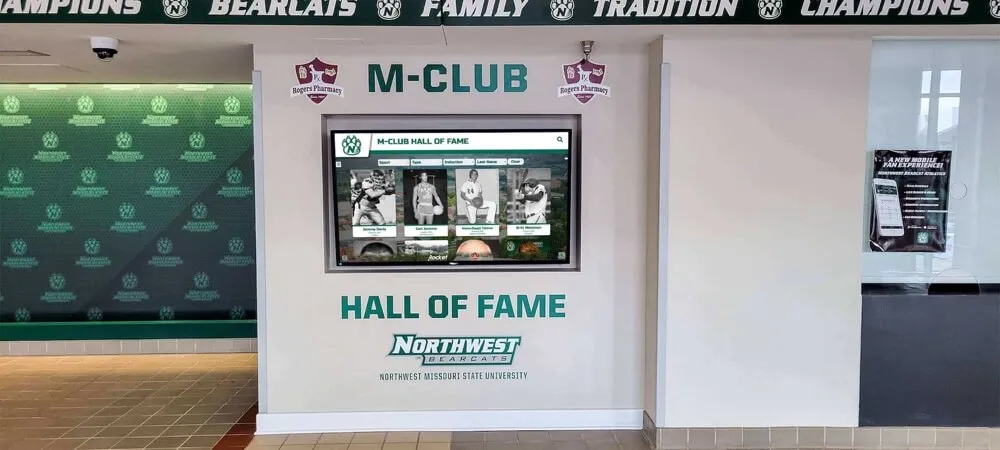
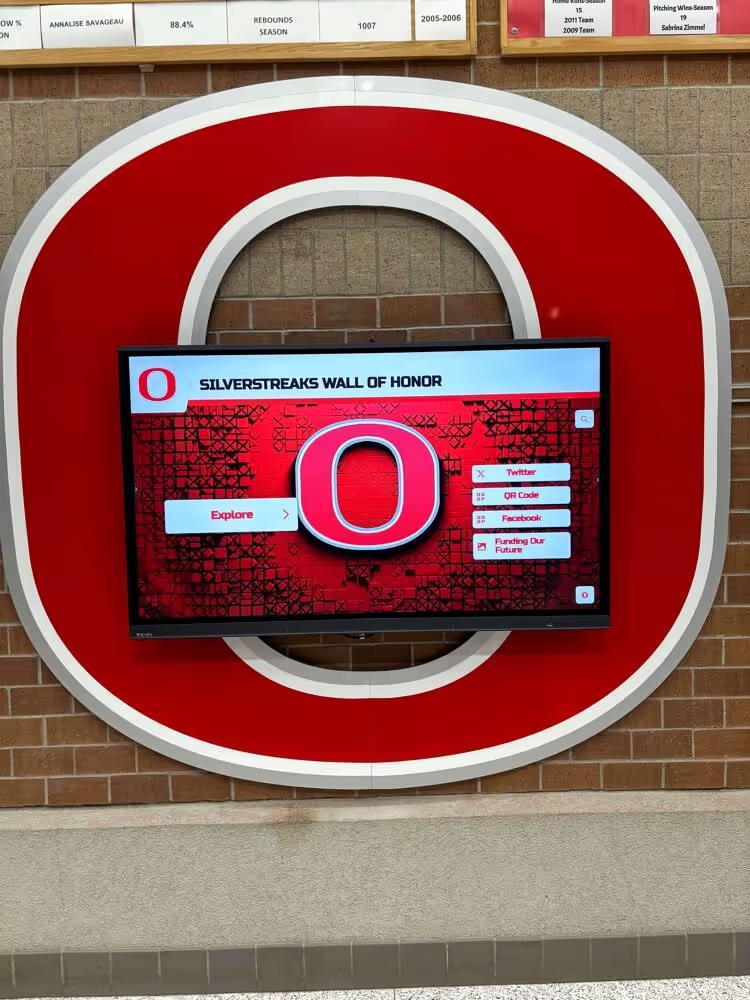
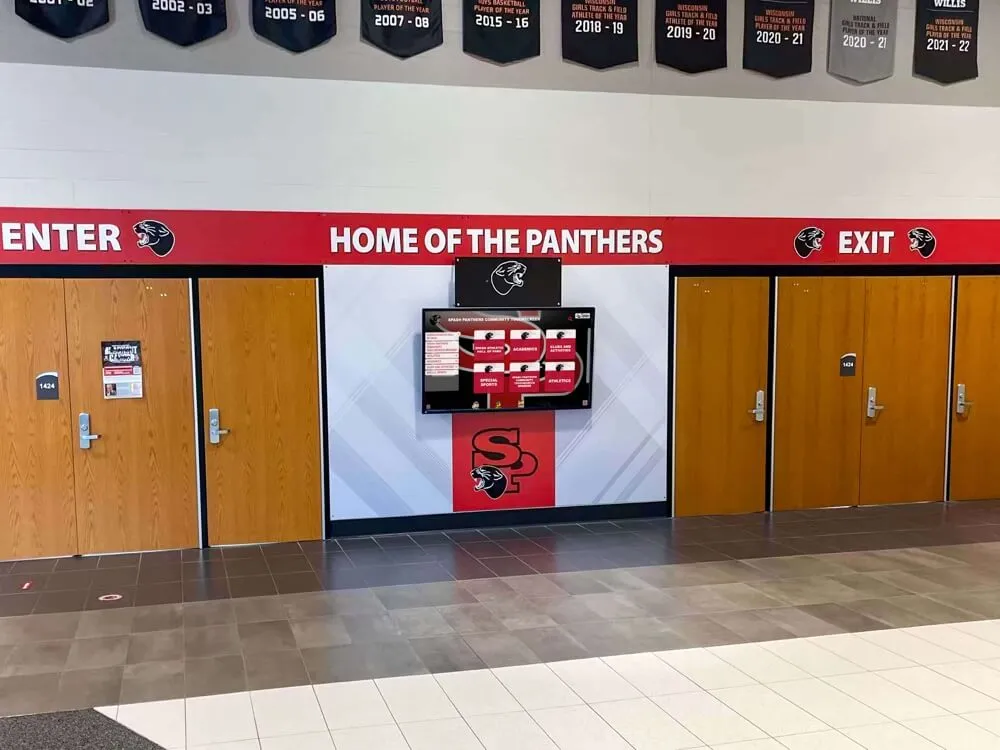
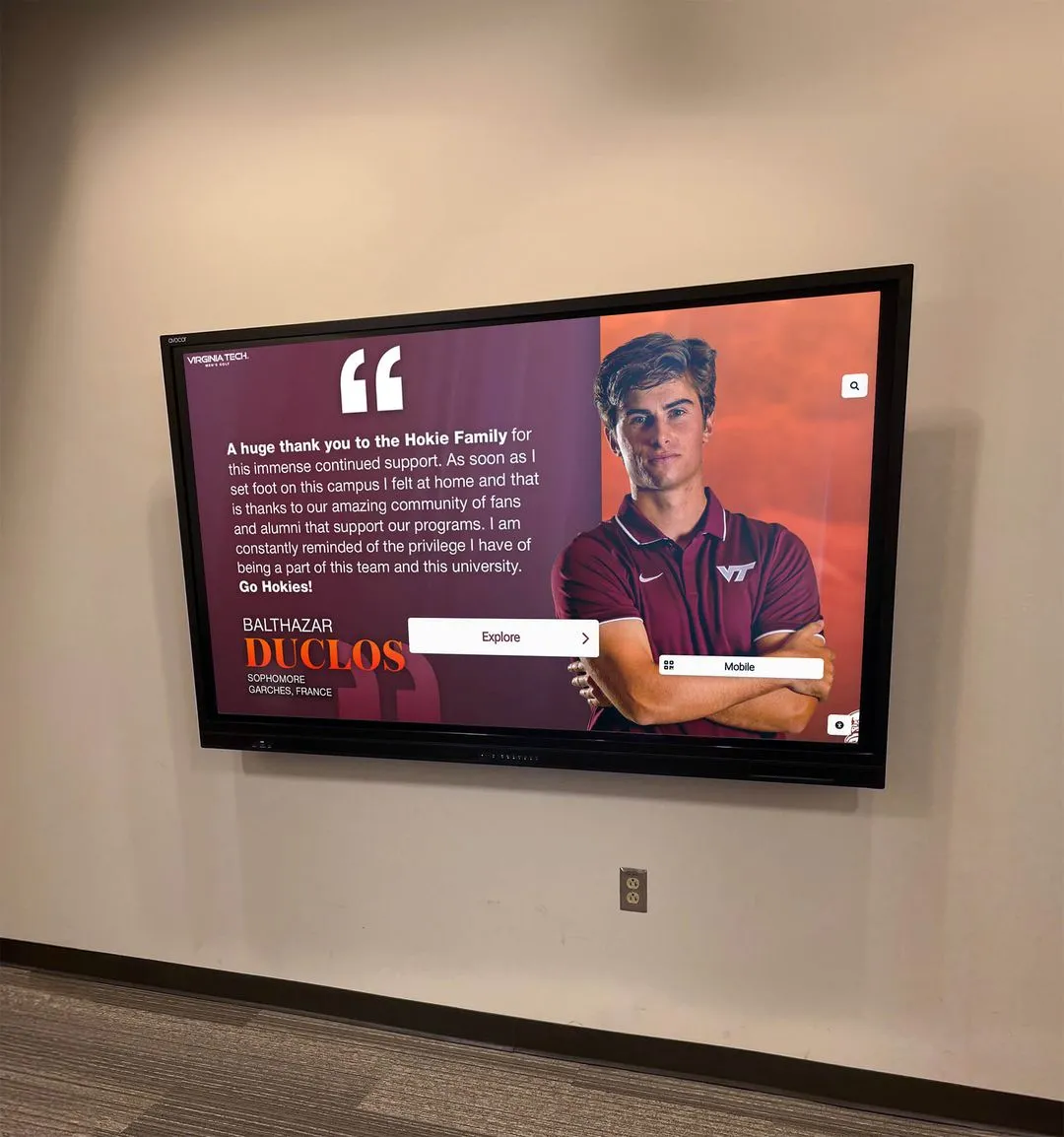
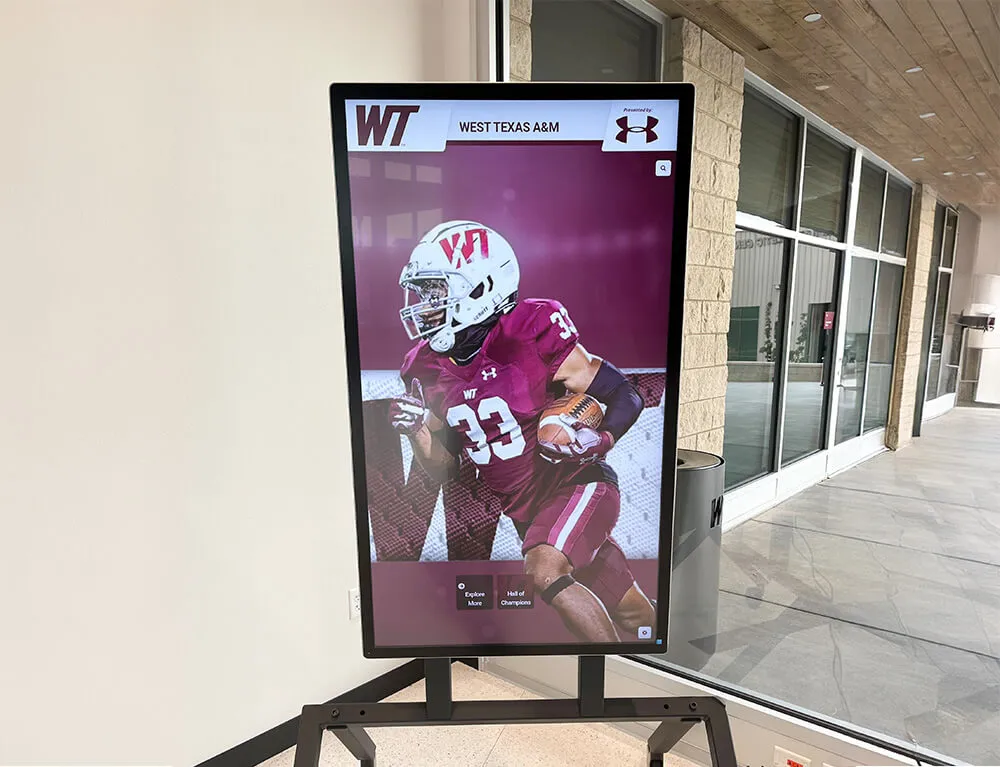
- Inductee profile on the digital kiosk or interactive touchscreen
- Athlete or honoree photo caption
- Searchable name field and any associated metadata in the display system
- QR-linked landing pages or mobile-accessible profiles
Print and archival materials
- Induction program booklets held in the library or archive (annotate the file copy; do not reprint historical programs)
- Annual report pages or donor newsletters that listed the inductee by name
- Yearbook entries (annotate archive copies; do not reissue)
- Athletic record books where the inductee’s name appears beside a record
Digital and online presence
- Program website inductee directory
- Search engine–indexed pages (submit a recrawl request after updating the site)
- Email newsletters or announcements in the program’s digital archive
- Social media posts referencing the inductee by name (update captions where the platform permits)
- Any third-party platforms or aggregators that republish the program’s inductee data
Physical plaques typically require ordering a replacement nameplate from an engraver. Because lead times can run two to four weeks, note this in the completion estimate given to the inductee at step three. For programs that also maintain interactive yearbook and class composite displays, the composite image captions and linked profile pages are an easy surface to miss—add them explicitly to your checklist.
Preserving the Audit Trail
Changing a name does not mean erasing history. Schools are custodians of historical records, and a complete audit trail serves archivists, researchers, and the integrity of the program itself. Every approved name change should generate a permanent record that includes:
- The name as it appeared at the time of induction (“name at induction”)
- The new authorized name (“current recognized name”)
- The reason category (legal change, error correction, preferred name, etc.)
- The date of the change
- The supporting documentation reference number
- The staff member who approved the change
- A log of every record updated, with dates
The audit trail lives in the program’s records management system, not on any public-facing surface. Inductee profiles displayed publicly show only the current authorized name. The audit record is retained for the life of the program—or longer, per your district’s records-retention schedule.
This approach mirrors standard archival practice: the original record is preserved but marked superseded, and the current record reflects the authoritative state. It also protects the program if a question ever arises years later about whether a given record is authentic.
Physical Plaques and Digital Displays: Different Processes, Same Policy

Physical and digital components of a hall of fame follow the same policy but require different operational steps.
Physical plaques involve a vendor order. The original nameplate is removed and retained in the archive (labeled with the inductee’s name at induction and the date of replacement). The replacement nameplate is ordered with the current authorized name. Until the replacement arrives, a printed interim label noting “name updated—new plaque pending” can be affixed. This keeps the display accurate during the lead-time window.
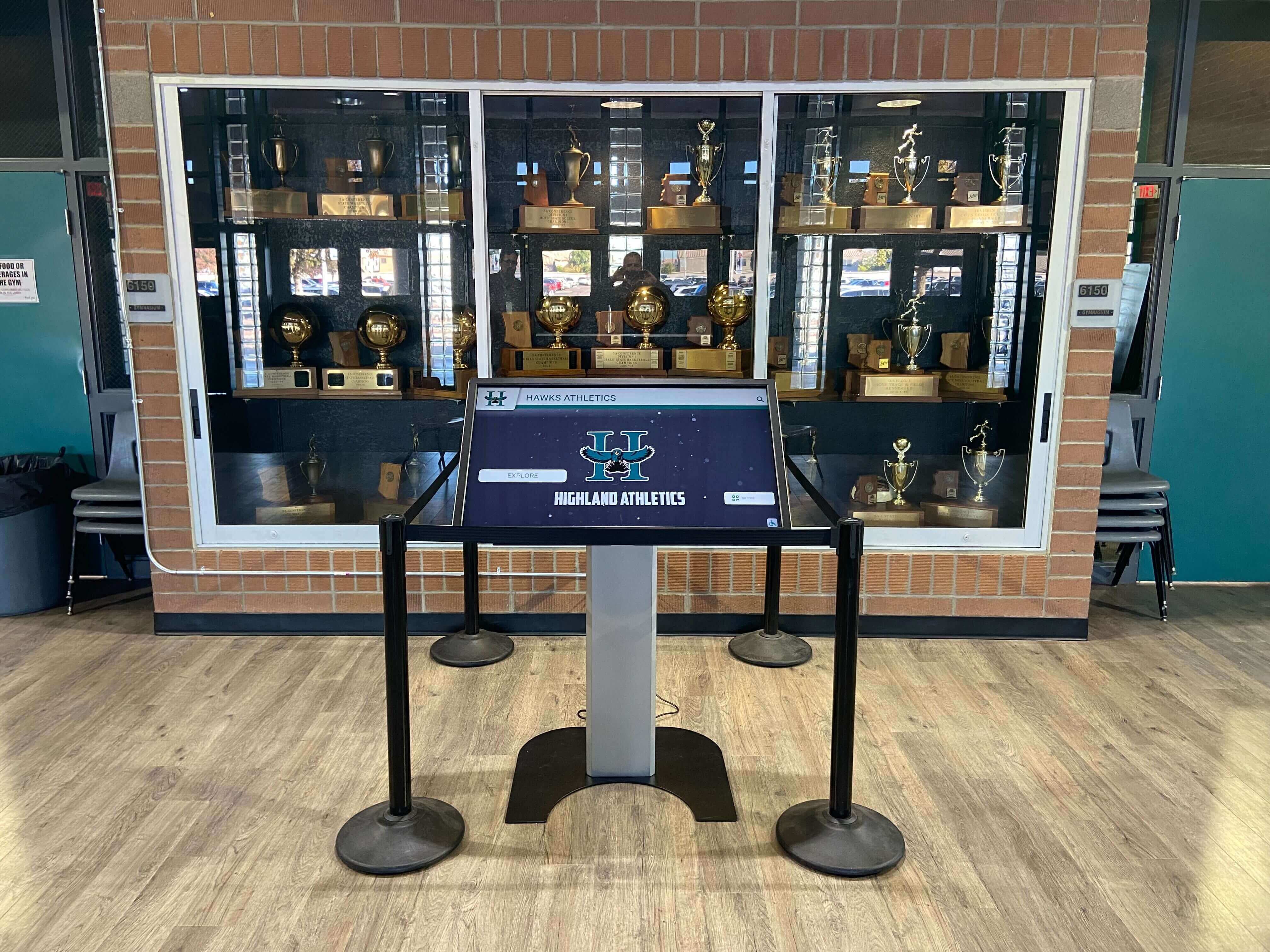
Digital kiosks and interactive displays can usually be updated the same day approval is granted. Because digital systems allow instantaneous changes across all connected screens, they have a significant advantage over physical plaques for name change responsiveness. Programs evaluating platforms for this capability will find useful criteria in this digital hall of fame vendor evaluation guide. A system that allows staff to update a name field in one place and push the change to every connected display immediately reduces both the completion time and the risk of a surface being missed.
Website and search index updates require one additional step beyond content editing: submitting the updated URL to Google Search Console for recrawl so that cached pages with the old name are refreshed promptly. If the program’s site uses structured data (schema markup), update any name fields there as well.
Sample Policy Language
The following language is a starting point. Adapt role names, timelines, and escalation paths for your institution before publishing.
Hall of Fame Name Change Policy — [School Name]
Effective date: [Date] | Version: 1.0 | Owner: [Program Director title]
Purpose. This policy establishes a consistent, respectful process for updating an inductee’s name across all program records when a legal name change or authorized correction is requested.
Scope. This policy applies to all inductees in the [School Name] Hall of Fame program. It covers physical displays, digital displays, print and archival records, and the program’s online presence.
Eligibility. A name change request may be submitted by (a) the inductee, (b) the inductee’s legal guardian or authorized representative, or (c) an immediate family member of a deceased inductee with supporting documentation.
Required documentation. Requests must be accompanied by one of the following: a certified copy of a marriage certificate, divorce decree, court order, or other legal instrument; or, for error corrections and preferred-name requests, a signed written attestation from the inductee.
Processing timeline. Standard requests are completed within ten business days of receiving all required documentation. Error corrections are completed within five business days. Requests requiring escalation are resolved within thirty business days.
Audit trail. Every approved name change generates a permanent internal record noting the name at induction, the current authorized name, the reason category, the approval date, and a log of all updated records. This record is not displayed publicly and is retained for the life of the program.
Escalation. Requests involving incomplete documentation, contested facts, or standing disputes are escalated to the Program Director and, where appropriate, the school’s legal or privacy contact before any change is made.
Connecting Name Change Procedures to Broader Program Health
A name change policy does not exist in isolation—it is one part of a broader records governance framework. Programs that treat induction records with the same rigor as academic or athletic records build community trust over time.
Consider how your name change policy connects to adjacent governance areas:
Donor and sponsor recognition — Some programs recognize donors or sponsors by name on the same displays that carry inductee profiles. A name change request from a donor deserves the same documented workflow. Ensure your policy explicitly covers non-athletic recognition if your program includes it.
Award and academic recognition programs — Schools that manage honor rolls, salutatorian and valedictorian recognition, and graduation achievement honors alongside athletic halls of fame benefit from a single unified name change procedure that covers all recognition programs rather than separate ad-hoc processes for each.
Alumni reconnection programs — When alumni visit campus for reunions or events and find their name displayed incorrectly, it creates a poor first impression that no recognition program should risk. Programs integrated with alumni and class reunion platforms can sometimes automate a notification to alumni when their profile is updated—a small touch that significantly improves the inductee experience.
Records retention — Consult your district’s records-retention schedule before finalizing audit-trail archiving requirements. Some states specify minimum retention periods for student and alumni records; a hall of fame record that links to a student’s academic career may fall under those requirements.
Frequently Asked Questions
Does a name change request require a school board vote or formal approval? For most schools, no. Name change requests are an administrative function handled within the hall of fame program’s existing governance structure. The Program Director’s approval is typically sufficient. Check your district’s records-management policy to confirm whether any category of name change—particularly gender-related updates—triggers a broader review process under district policy.
Should the inductee’s original name remain visible anywhere after the change is approved? No, not on public-facing surfaces. The current authorized name is the name that appears on displays, websites, and any materials accessible to visitors and the community. The original name is preserved only in the internal audit trail, which is not publicly displayed.
What if another inductee or community member objects to the name change? Objections from third parties do not block a name change that is supported by proper documentation and approved by the Program Director. The policy should include a note that name change decisions are based on the inductee’s documentation and the program’s governance process, not community sentiment. Document any formal objections in the audit file.
How should a program handle a name change request where the inductee cannot be located? If supporting documentation is provided by an authorized representative (a family member, legal guardian, or attorney) and the request meets the policy’s documentation requirements, the Program Director may approve the change. Document the circumstances—specifically, why the inductee could not submit directly—in the audit trail.
What happens to printed programs and yearbook entries in the archive? Do not reprint or destroy historical documents. Instead, annotate archive copies with a dated note referencing the name change and the tracking identifier. This preserves the historical record while making the update discoverable for future researchers.
How long does a typical physical plaque replacement take? Lead times vary by vendor and material, but two to four weeks is a reasonable estimate for a standard nameplate order. Programs with multiple inductees on a single plaque may have longer lead times if the engraver must reset the entire plaque. Include realistic plaque timelines in your communication to the inductee at the acknowledgment step.
Building the Policy into Your Program Infrastructure

A written policy only works if it is implemented in a system that can support it. Programs that rely on spreadsheets and email threads to track name changes will find the process fragile—especially during staff transitions. Consider building your name change workflow into whatever platform your program uses to manage inductee records.
At minimum, the system should support:
- A unique identifier per inductee record
- Version history or change log per record
- A status field for tracking open change requests
- Role-based access so only authorized staff can approve changes
- Export capability for audit and records-retention purposes
Digital display systems that also manage the underlying inductee database make updates more consistent because changing the name in the system of record propagates to every connected display automatically. Programs that are evaluating or upgrading their infrastructure can use the criteria in this athletic history display guide to assess how well a given platform handles ongoing records management—not just initial display setup.
If your program is ready to move to a platform purpose-built for school recognition, explore what a modern digital hall of fame system can do for your name change workflow and inductee record management.
See how Rocket Alumni Solutions handles inductee records and name updates