



Key Takeaways
Discover how schools decide hall of fame inductees and showcase them on digital displays. Compare selection criteria, voting processes, and display technology to build a credible recognition program.
Schools establishing hall of fame programs face two interconnected challenges: creating credible selection processes that community stakeholders trust, and implementing display technology that presents inductees in ways that inspire current students while honoring achievements appropriately. Poorly designed selection criteria generate controversy through perceived favoritism, while inadequate display technology reduces recognition impact through limited capacity, outdated presentation, or inaccessibility. This comprehensive guide examines how successful schools make induction decisions and leverage digital display technology to create recognition programs that celebrate excellence authentically while avoiding the governance failures and technical limitations that plague inferior systems.
Understanding both dimensions—selection process integrity and display technology effectiveness—enables schools to build hall of fame programs that serve institutions well for decades, maintaining credibility through transparent governance while maximizing engagement through modern presentation technology.
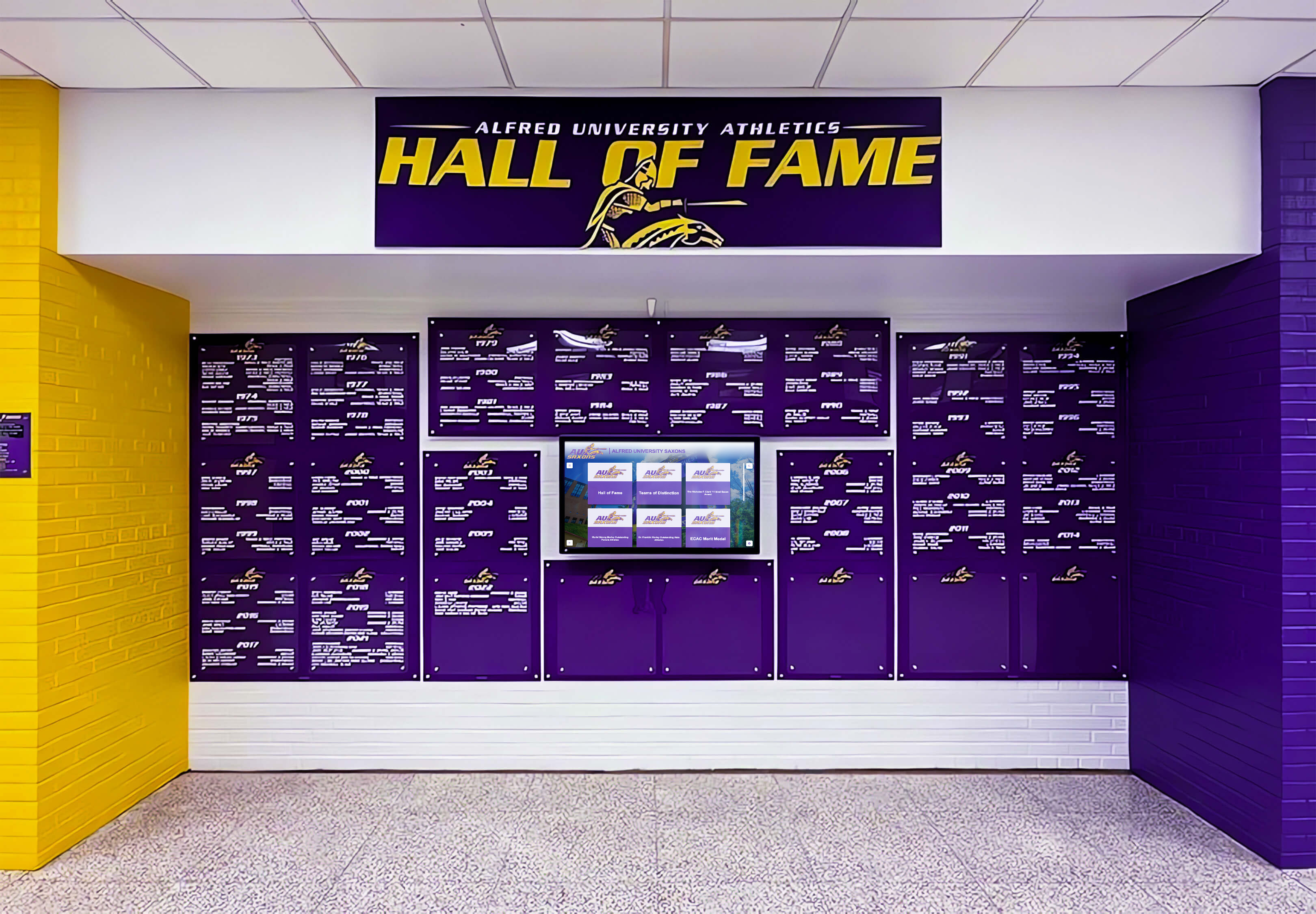
How Schools Decide Hall of Fame Inductees: Selection Frameworks
Selection processes determine hall of fame credibility and community trust. The best schools use structured frameworks that balance objective achievement standards with subjective judgment while maintaining transparency and resisting political pressure.
Core Selection Criteria Categories
Effective hall of fame selection criteria address multiple dimensions of worthiness rather than relying on single metrics:
Athletic or Academic Achievement
Performance excellence forms the foundation for most selection decisions:
- Conference, regional, state, or national championships won
- Individual records held or significant all-time performance rankings
- All-state, all-conference, all-American, or academic honor society selections
- Team leadership roles including captaincy or organizational positions
- Multiple-sport or multiple-achievement category participation
- Statistical excellence relative to institutional history
- Competitive era context accounting for different participation levels
Schools should define achievement thresholds specific to their competitive level and institutional history. A small school state championship represents achievement equal to or greater than large school conference titles in different contexts. Athletic directors can learn from comprehensive guides on athletic hall of fame selection criteria used by successful programs.
Character and Sportsmanship
Achievement alone rarely suffices for hall of fame recognition:
- Demonstrated sportsmanship during competition and program participation
- Disciplinary record without significant violations or character concerns
- Academic achievement balancing excellence with educational priorities
- Positive representation of institution during and after attendance
- Mentorship of younger participants or continued program engagement
- Community service or civic contribution beyond institutional participation
Character criteria ensure hall of fame recognition represents aspirational role models for current students rather than merely celebrating statistical achievement. Many programs explicitly require that post-graduation conduct continues reflecting positively on institutions, allowing removal consideration for serious character violations occurring after induction.
Program Impact and Development
Some individuals contribute beyond personal statistics:
- Athletes or students whose participation elevated program competitiveness
- Individuals who established traditions or competitive standards
- Contributors who generated community support or institutional resources
- Program builders who developed competitive cultures from lesser status
- Pioneers breaking barriers or establishing new achievement categories
- Mentors whose influence appears in subsequent generations’ success
Impact criteria recognize that program development involves more than winning championships. Individuals who transformed program trajectories, inspired others to excellence, or created lasting institutional advancement may merit recognition despite less impressive win-loss records or test scores.
Essential Selection Criteria Checklist
- Achievement measures: Clear performance or academic standards
- Character requirements: Sportsmanship and citizenship expectations
- Waiting period: Years required after graduation (typically 5-10)
- Program contribution: Recognition beyond individual statistics
- Post-graduation trajectory: Continued success validation
- Sport or discipline equity: Balanced recognition provisions
- Exception procedures: Extraordinary achievement protocols
- Removal provisions: Serious character violation consequences
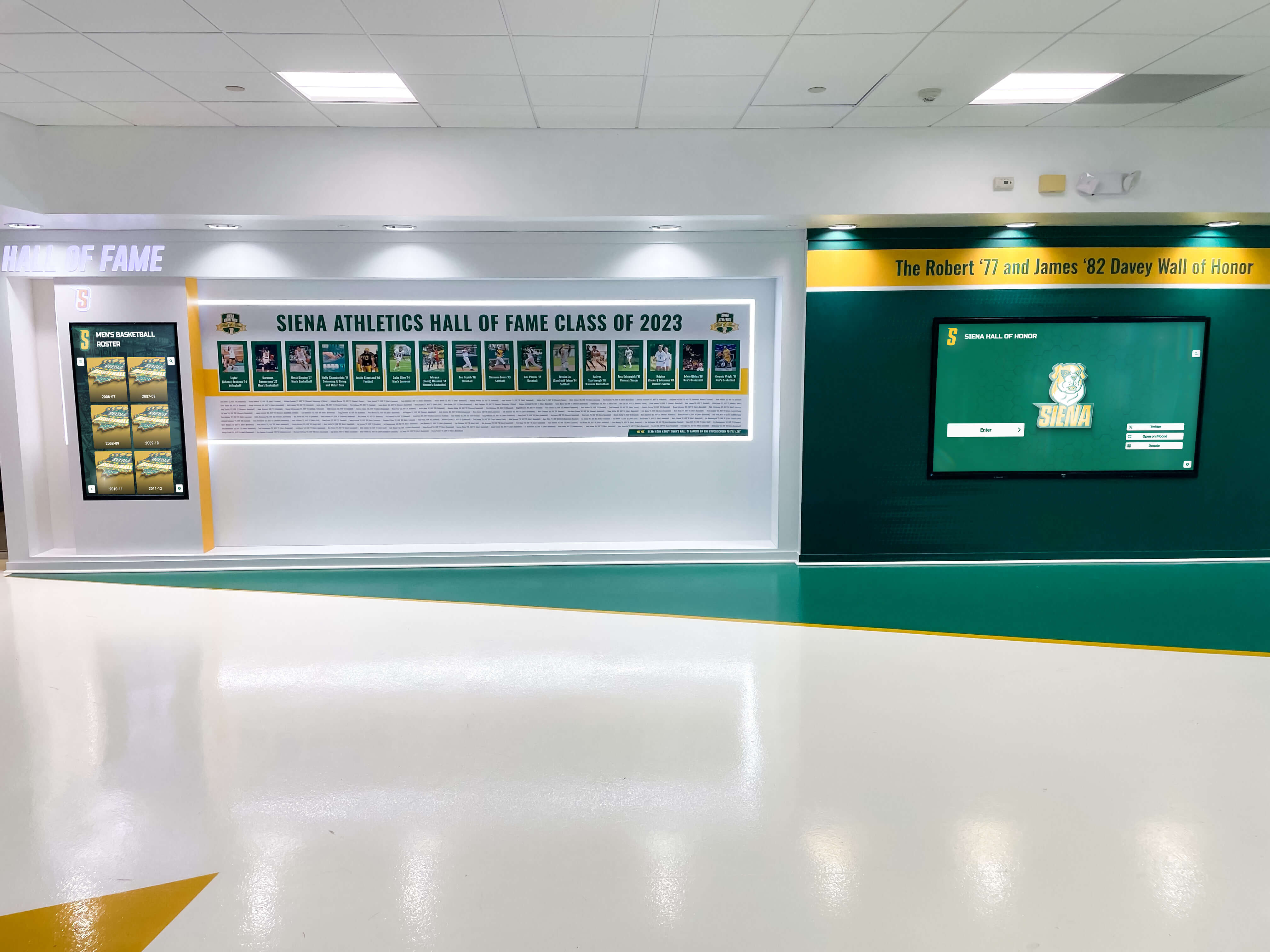
Years Since Graduation Waiting Period
Waiting periods prevent recency bias while allowing assessment of lasting impact:
- Typical waiting periods range from 5-10 years after graduation
- Waiting periods enable evaluation of post-graduation achievement trajectory
- Exception provisions for extraordinary achievement or posthumous recognition
- Different waiting periods for athlete versus coach or contributor categories
- Founding class provisions allowing immediate historical figure recognition
- Annual eligible candidate pool management through time restrictions
Waiting periods also create anticipation among recent graduates while ensuring selection committees have perspective on lasting significance rather than temporary enthusiasm for recent success.
Post-Graduation Success and Continued Contribution
Long-term outcomes validate program quality and individual development:
- Collegiate athletic participation, scholarships, or academic achievement
- Professional career success in athletics or chosen fields
- Leadership positions in business, education, government, or community
- Continued engagement with school or program through mentorship
- Financial support or advocacy for institutional advancement
- Public achievement bringing positive attention to institution
Post-graduation criteria demonstrate that programs prepare participants for life success, not merely competition performance. This dimension particularly appeals to parents evaluating program quality and administrators assessing institutional mission fulfillment. Schools can showcase these outcomes through digital alumni recognition displays highlighting career achievements.
Selection Committee Structure and Composition
Committee design affects decision quality, credibility, and resistance to political pressure:
Recommended Committee Size and Membership
Effective committees typically include 7-11 members with diverse representation:
- Athletic director, principal, or program administrator (often chair)
- Current coaches or faculty representing different sports or disciplines
- Retired coaches or faculty providing historical perspective
- School administrator ensuring institutional value alignment
- Booster club or parent organization representative
- Previous hall of fame inductees (1-2 providing honoree perspective)
- At-large community members with program knowledge
- Student representative providing current participant perspective (advisory)
Larger committees reduce individual bias perception while bringing diverse evaluation perspectives. Odd-numbered committees prevent tied votes requiring resolution procedures.
Term Structure and Rotation
Staggered terms maintain continuity while enabling fresh perspectives:
- 3-5 year terms for individual committee members
- Staggered expiration dates preventing complete simultaneous turnover
- Term limits (commonly 2 consecutive terms maximum) ensuring rotation
- Ex-officio positions for roles like athletic director or principal
- Chair rotation or election among committee members
- Written succession planning preventing operational disruption
- Mid-term replacement procedures for resignations or removals
Term structures prevent committee entrenchment by specific sports or interest groups while maintaining institutional memory across transition periods.
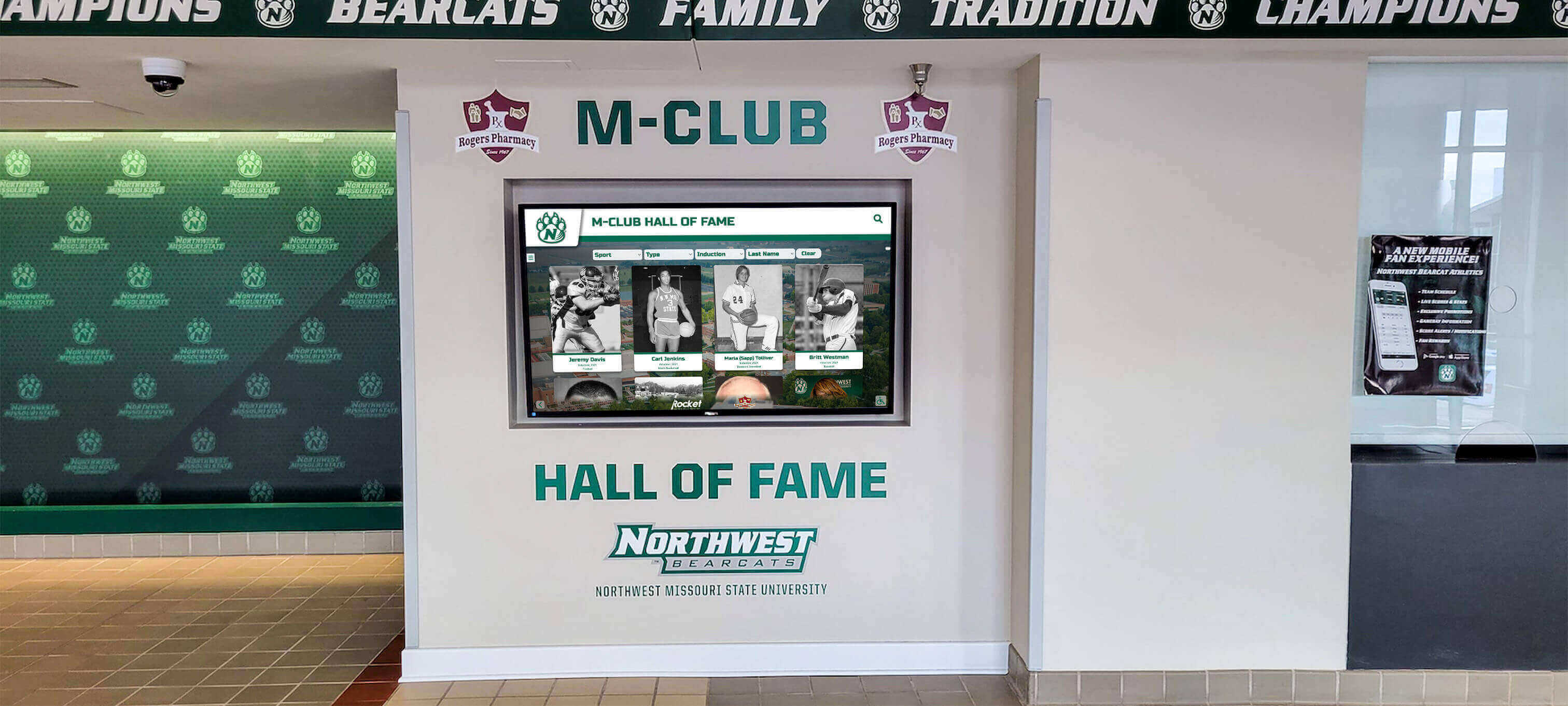
Nomination and Application Process
Clear procedures ensure qualified candidates receive proper consideration:
Who Can Nominate Candidates
Define nomination eligibility preventing political manipulation:
- Self-nomination policies (many programs prohibit, requiring third-party nomination)
- Coach, administrator, or committee member nominations
- Booster club, alumni association, or community member nominations
- Family member nominations (often restricted to prevent excessive family lobbying)
- Student or student-athlete nominations for recent graduates
- Minimum nomination information requirements ensuring informed submissions
Open nomination processes demonstrate transparency while standardized forms prevent time-wasting from uninformed nominations lacking basic required information.
Required Application Materials
Standardized documentation enables consistent evaluation:
- Complete biographical information and graduation year
- Detailed achievement summary with statistics, honors, and records
- Coaching or leadership records for non-athlete nominees
- Post-graduation career and achievement summary
- Character references from coaches, teachers, administrators, or community leaders
- Personal statement or nomination letter explaining selection worthiness
- Supporting documentation including news clippings, photos, awards, or records
- Video highlights or performance documentation where applicable
Application requirements should balance thoroughness enabling informed decisions with accessibility preventing discouragement of worthy nominations. Many schools provide templates and guidance helping nominators compile complete applications.
Voting Procedures and Decision Mechanisms
Systematic voting protocols ensure defensible, consistent selection decisions:
Evaluation and Scoring Approaches
Structure evaluation preventing oversight of qualified candidates:
- Initial eligibility screening verifying graduation year, application completeness
- Summary documentation distributed to full committee for each nominee
- Scoring rubrics assigning point values to achievement categories
- Committee discussion periods allowing questions and additional research
- Multiple meeting rounds progressively narrowing candidate pools
- Documentation of selection rationale for future reference and appeals
Some programs use multi-stage processes: first identifying clearly qualified candidates exceeding minimum thresholds, then selecting final inductees from qualified pools through comparative ranking.
Voting Mechanisms and Thresholds
Voting procedures balance transparency with confidentiality:
- Secret ballots preventing political pressure or retaliation concerns
- Supermajority requirements (typically 2/3 or 3/4 approval) ensuring consensus
- Mandatory abstention for conflicts of interest
- Runoff procedures when candidate numbers exceed available induction slots
- Documented vote tallies preserving decision records
- Non-disclosure expectations protecting candidate privacy for non-selected nominees
- Annual class size limits preventing value dilution through excessive inductees
Higher vote thresholds ensure inductees enjoy broad committee support rather than narrow majority approval, enhancing selection credibility and reducing controversy. Schools can learn from proven approaches detailed in comprehensive hall of fame governance guides.
Conflict of Interest Management
Policies prevent inappropriate influence attempts:
- Mandatory disclosure of relationships with nominees (family, close personal, professional)
- Recusal from discussion and voting for direct conflicts
- Documentation of recusals in official meeting records
- Prohibitions on committee lobbying by interested external parties
- Consequences for undisclosed conflicts or influence attempts
- Appeals procedures for procedural violations
Strong conflict policies protect committee integrity while ensuring decisions withstand scrutiny from disappointed nominees or supporters questioning selection fairness.
Selection Process Comparison: School Hall of Fame Programs
| Selection Element | Weak Process (Red Flags) | Strong Process (Best Practice) |
|---|---|---|
| Committee Size | 3-4 members, single sport focus | 7-11 members, diverse representation |
| Selection Criteria | Vague or unwritten standards | Published, specific, weighted criteria |
| Voting Threshold | Simple majority (51%) | Supermajority (67-75%) |
| Transparency | Closed process, no published criteria | Open nominations, published standards |
| Conflicts | No formal policies | Written conflict provisions, recusal requirements |
| Documentation | No records kept | Meeting minutes, vote tallies preserved |
| Appeal Rights | No reconsideration allowed | Factual error correction process |
| Equity Monitoring | No gender/sport balance tracking | Annual demographics review, equity provisions |
Deal-Breaker Red Flags: If your selection process includes vague criteria, small committees dominated by single sports, simple majority voting, no conflict policies, or zero transparency, credibility problems are inevitable. Implementing structured frameworks with published criteria, diverse committees, supermajority voting, and documented procedures prevents governance failures that destroy program legitimacy.
Ensuring Gender and Sport Equity in Selection
Historical participation differences and unconscious bias create equity challenges requiring proactive attention:
Monitoring Selection Patterns
Regular analysis identifies systemic imbalances before they generate controversy:
- Annual inductee demographics tracking by gender, sport, and achievement category
- Multi-year trend analysis revealing selection patterns
- Comparison to historical participation rates in different eras
- Nomination pool analysis showing pipeline diversity issues
- Committee discussion of equity considerations in each selection cycle
- Public reporting demonstrating institutional equity commitment
Monitoring alone cannot solve equity challenges but enables informed committee action addressing imbalances before they become entrenched patterns generating community concern. Schools can review comprehensive approaches detailed in athletic equity checklists for recognition programs.
Corrective Mechanisms for Balance
Policies address persistent inequities without creating tokenism perception:
- Gender-balanced annual selection targets (equal male and female inductees)
- Sport-specific selection quotas ensuring diverse representation across programs
- Separate selection tracks for different achievement categories
- Outreach encouraging nominations from underrepresented categories
- Selection criteria review identifying unconscious bias toward certain sports
- Veterans committee provisions addressing historical recognition gaps
Corrective policies require careful design ensuring they enhance rather than undermine selection integrity. The goal remains recognizing the most qualified candidates while ensuring selection processes don’t systematically disadvantage entire groups through structural bias.
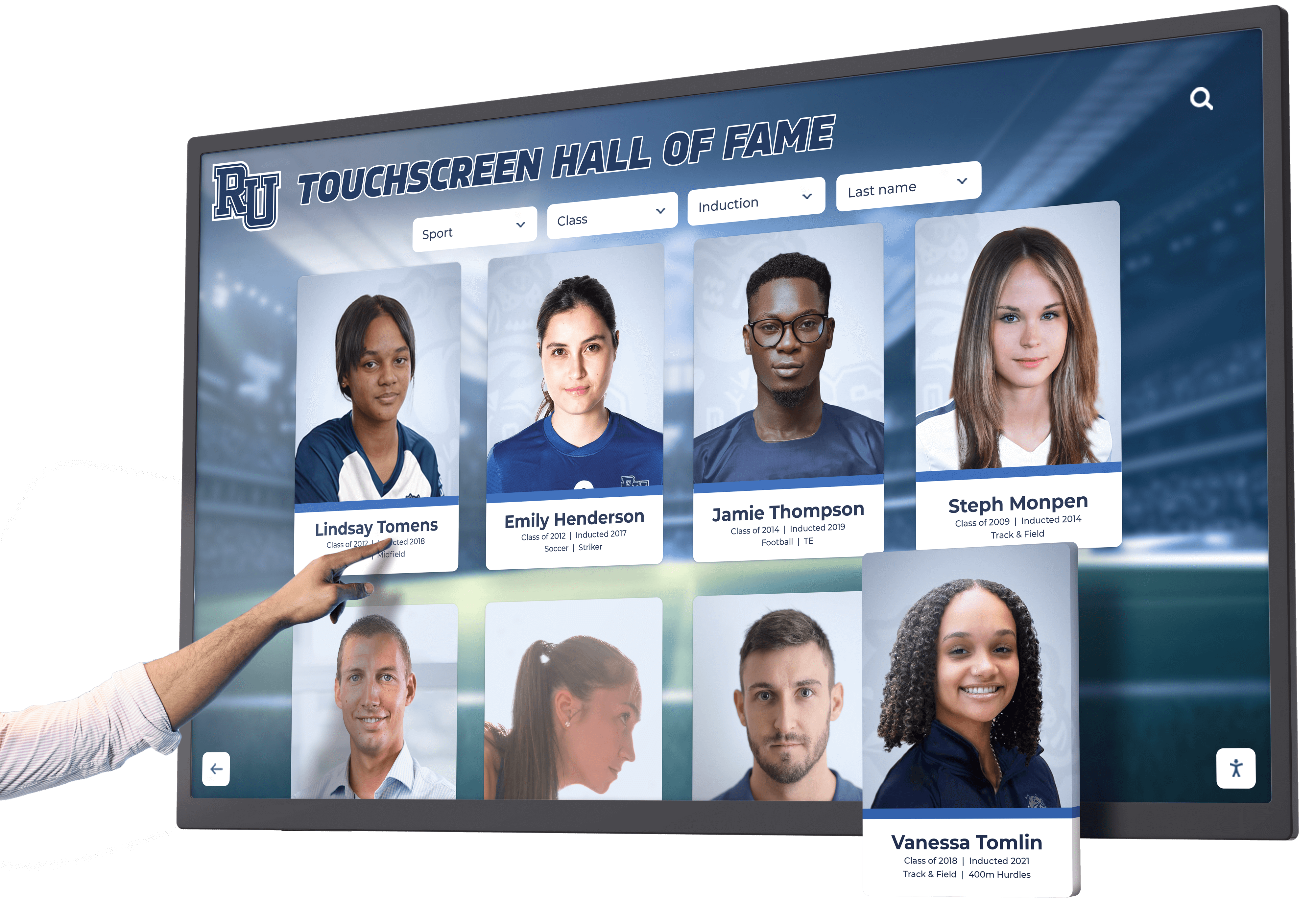
How Digital Displays Present Hall of Fame Inductees
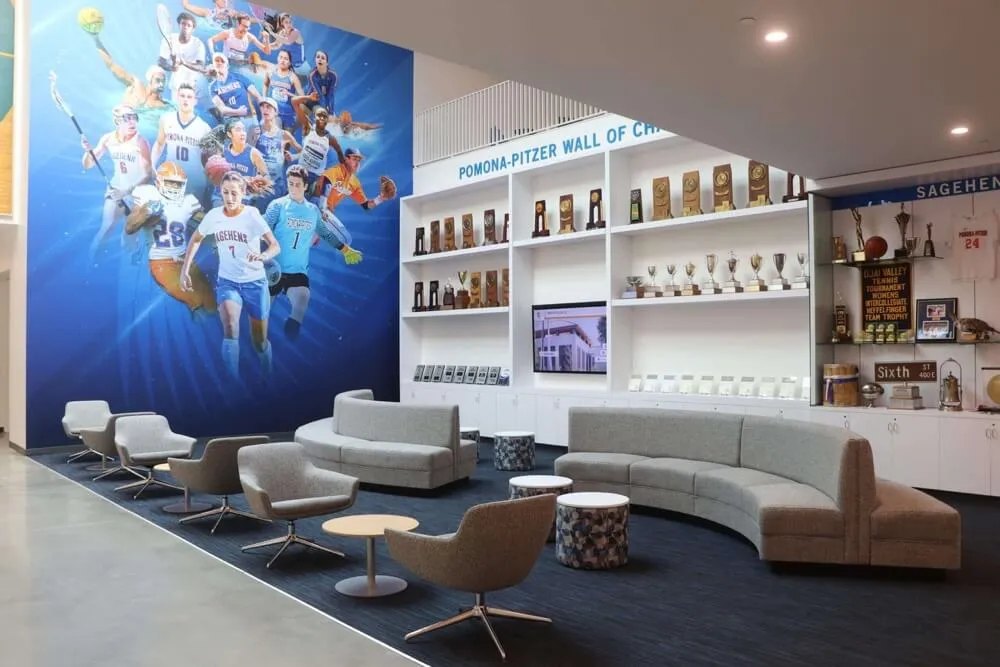
Selection process integrity matters little if recognition presentation fails to engage audiences, inspire students, or honor achievements appropriately. Display technology has evolved dramatically, offering options far superior to traditional physical plaques for most institutional needs.
Digital Display Technology Options for Hall of Fame
Schools can choose from several digital presentation approaches, each with distinct capabilities and limitations:
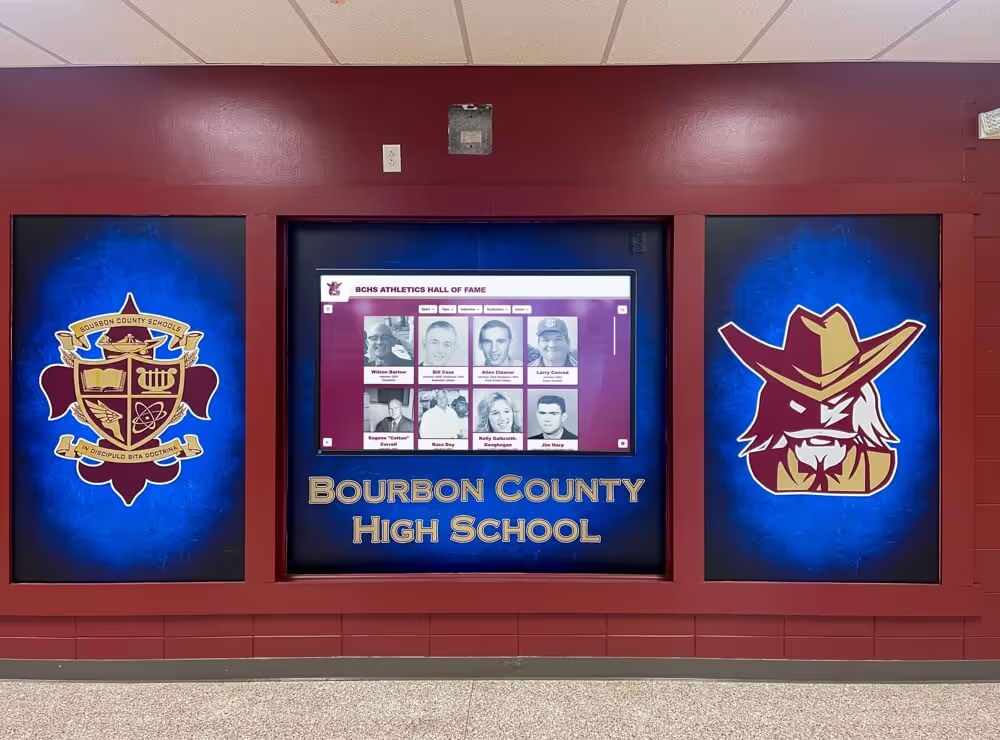
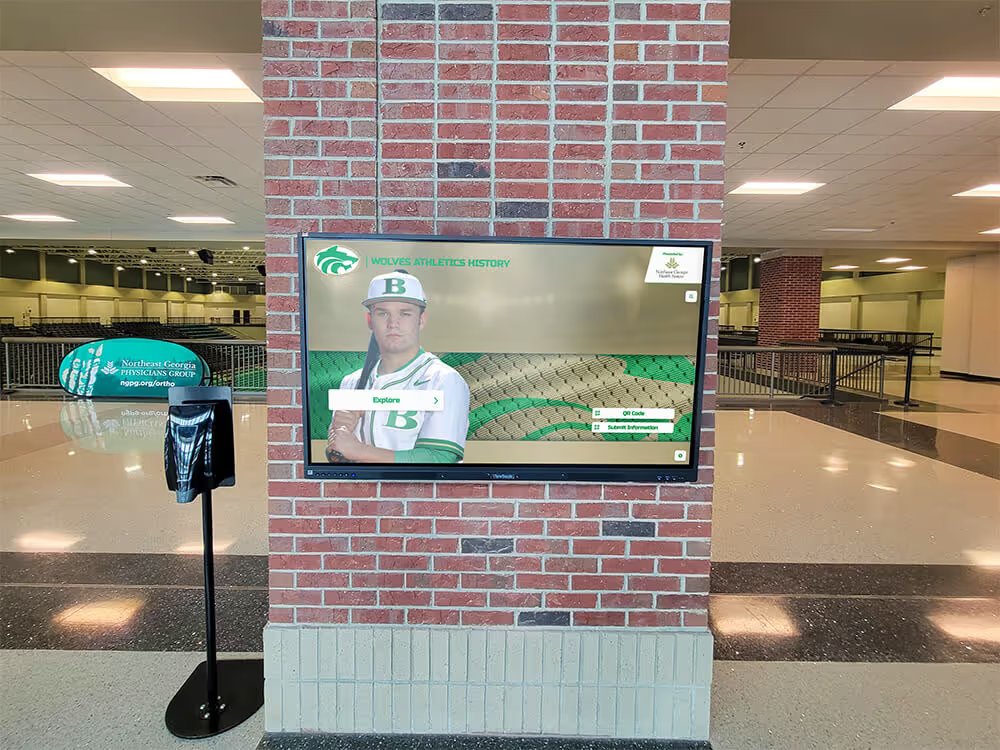
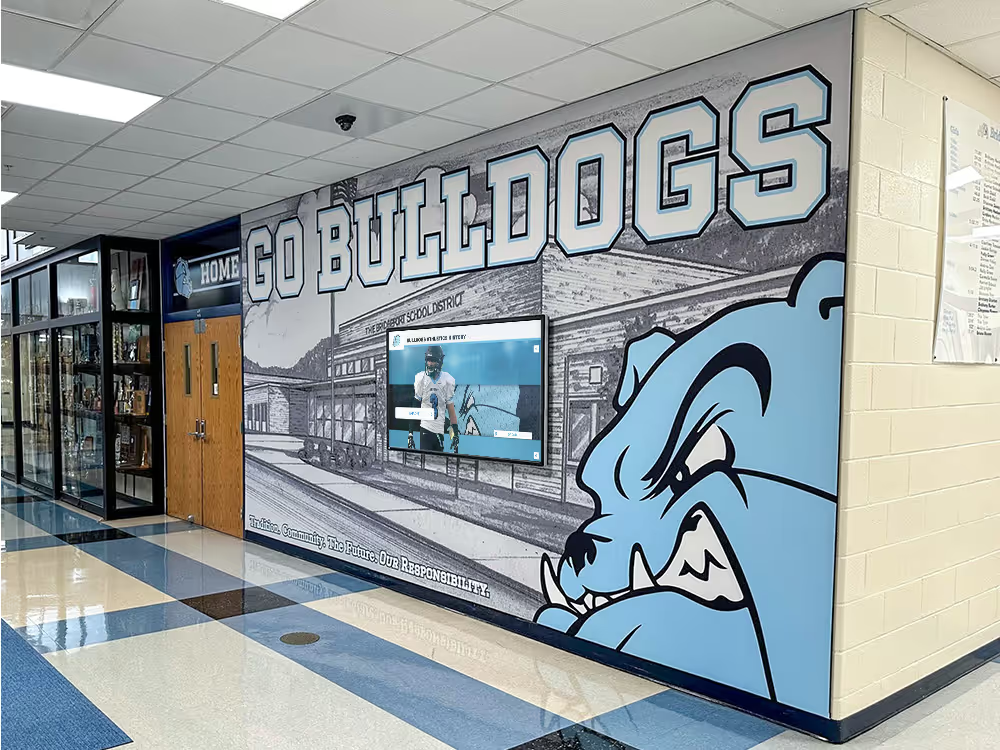
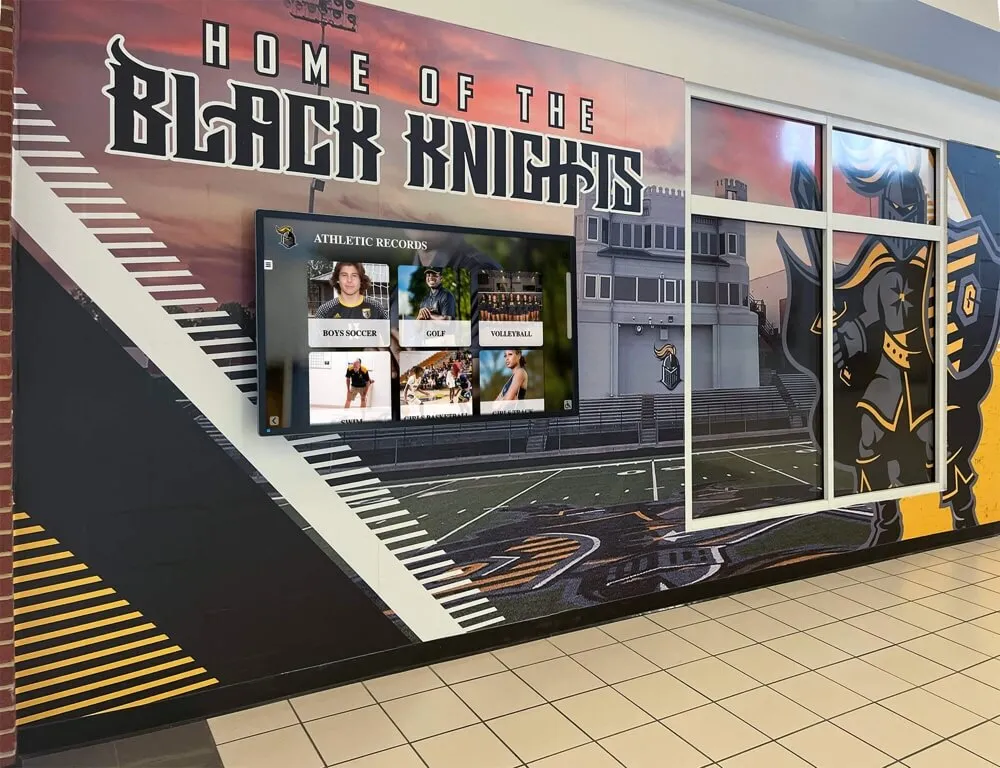
Interactive Touchscreen Kiosks
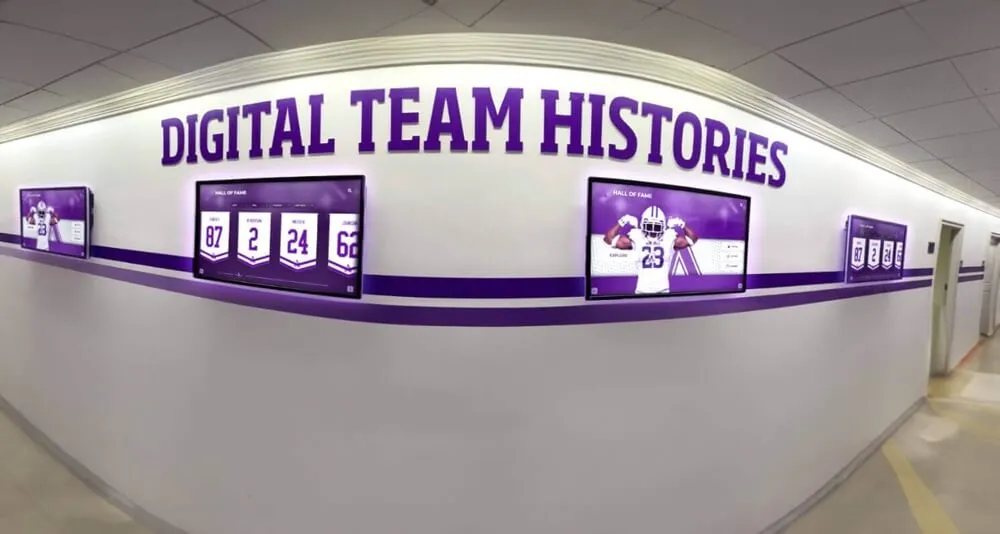
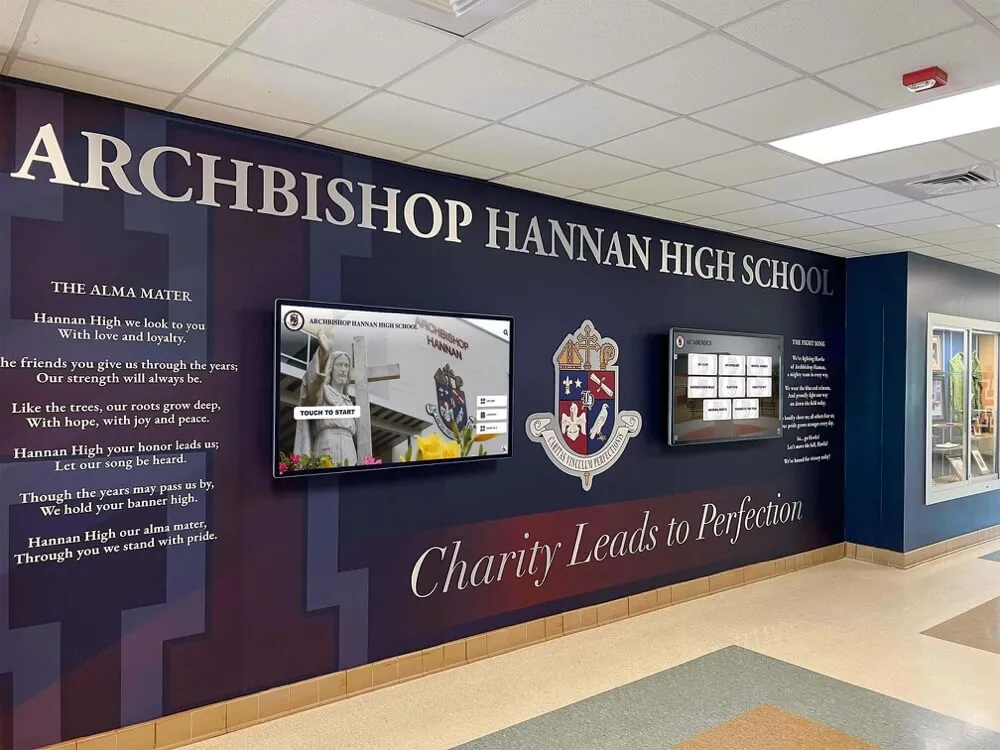
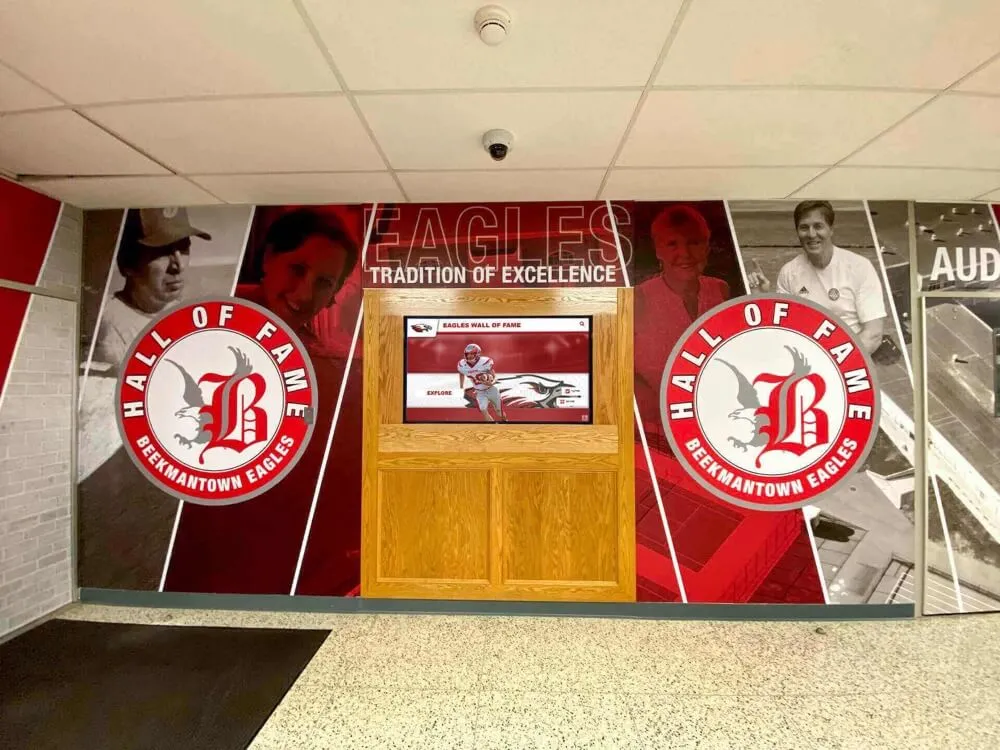
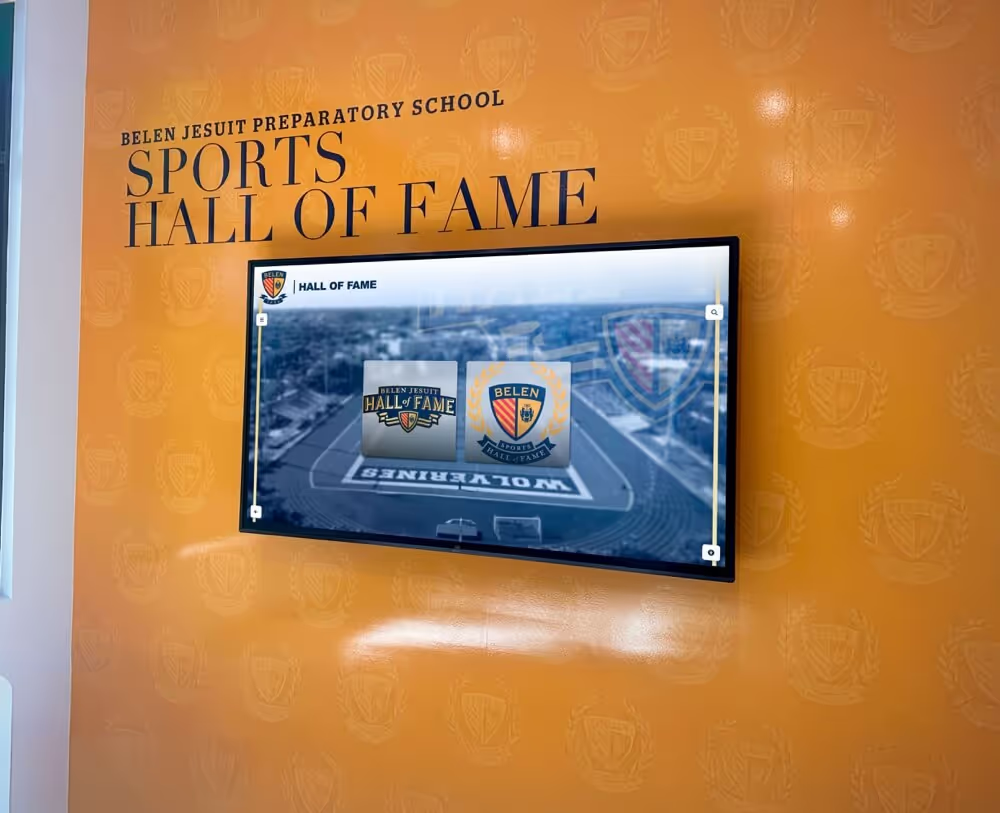
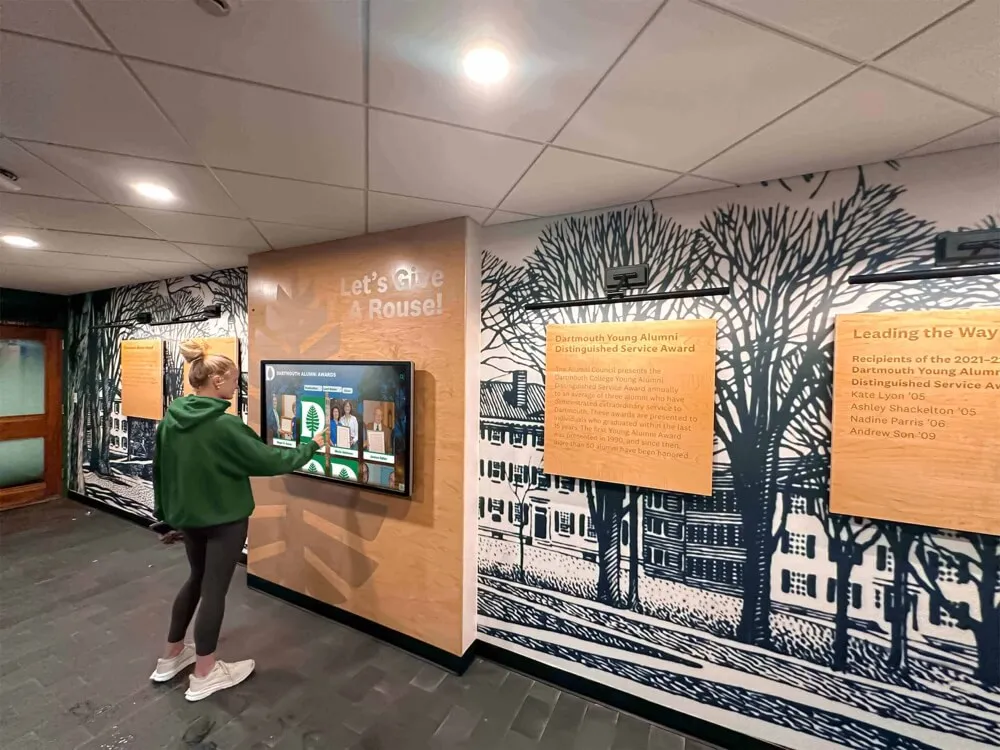
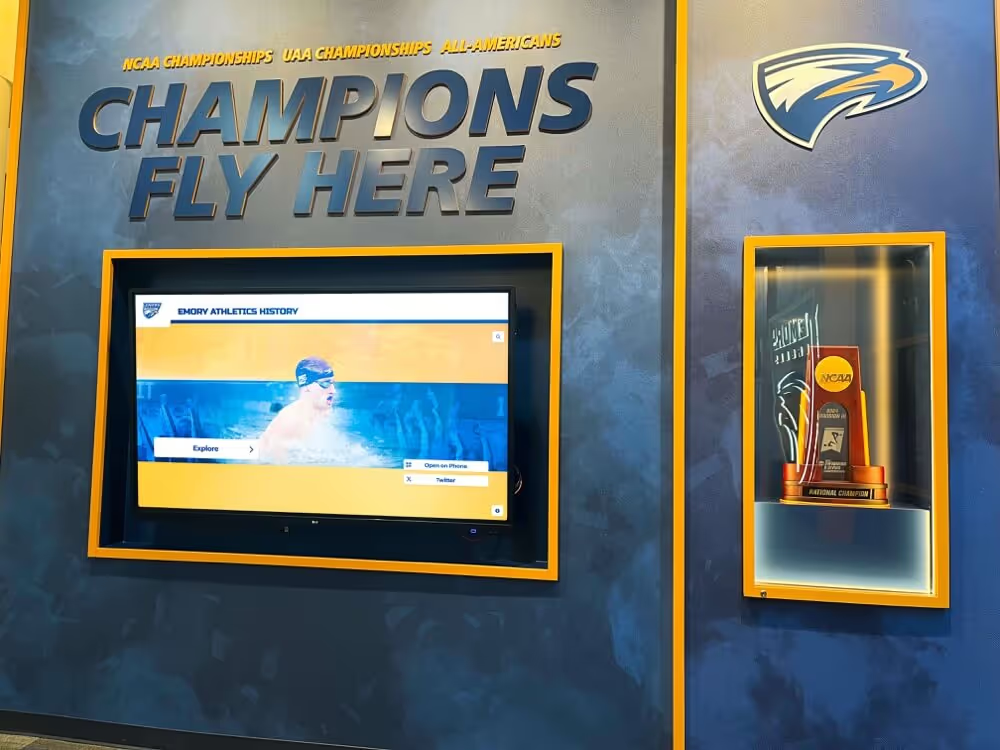
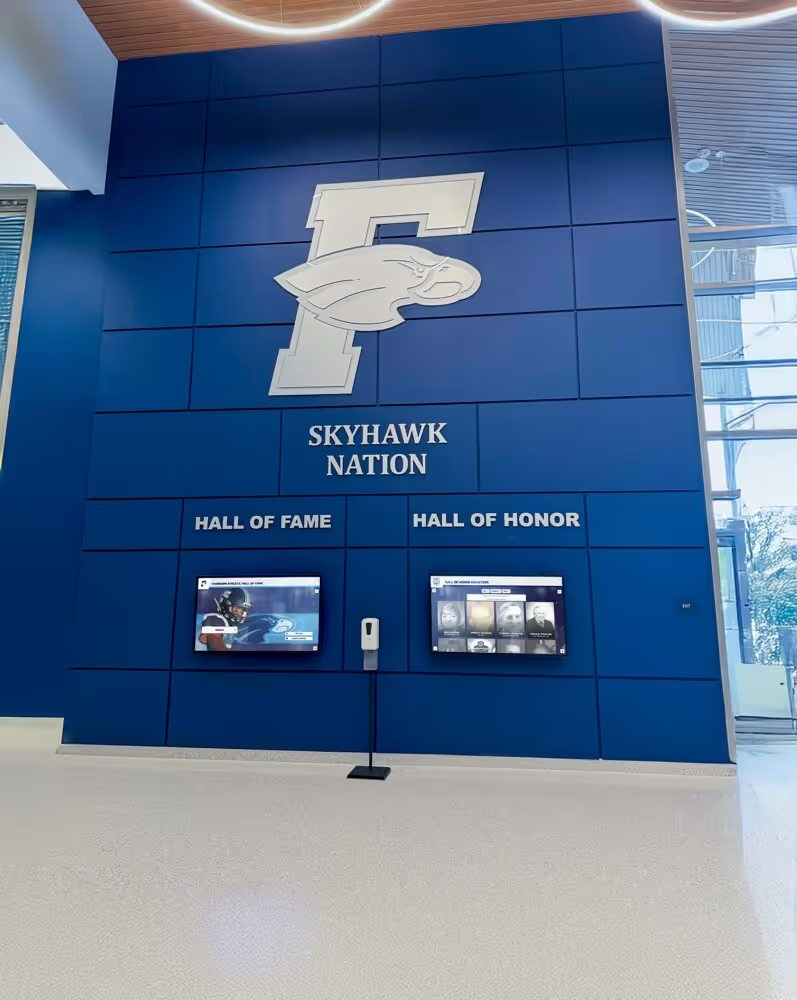
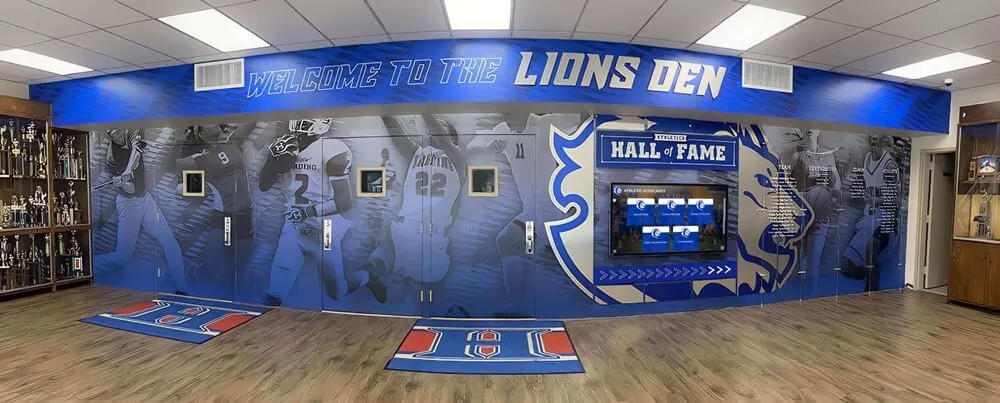
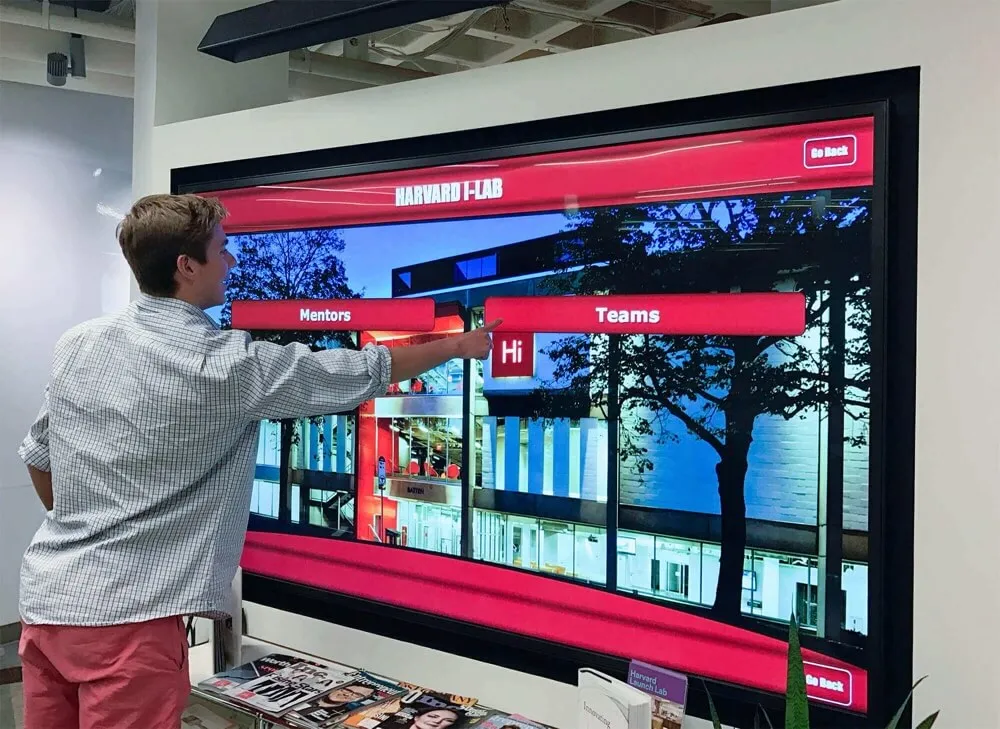
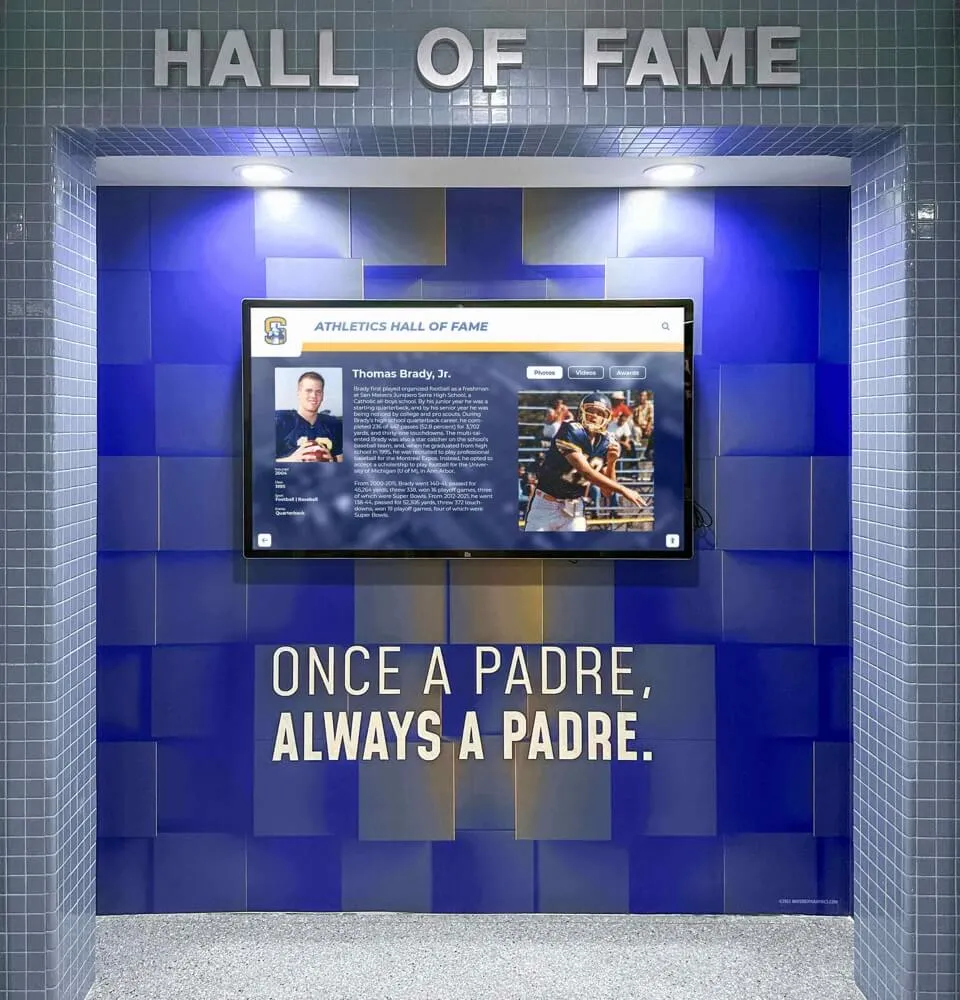
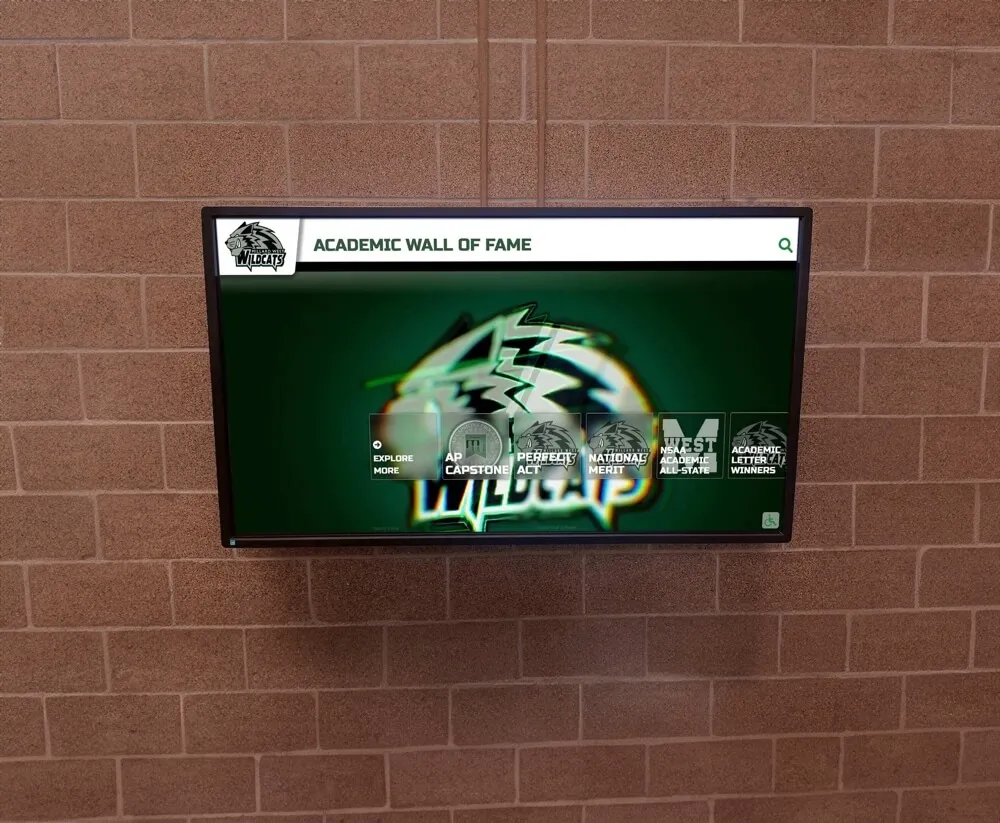
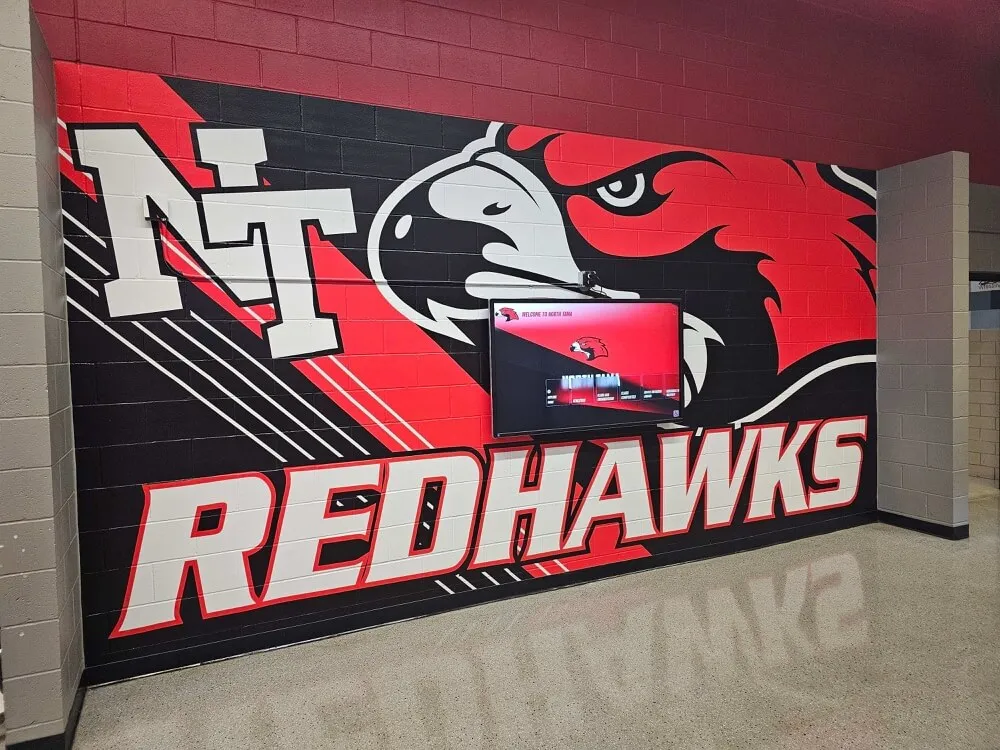
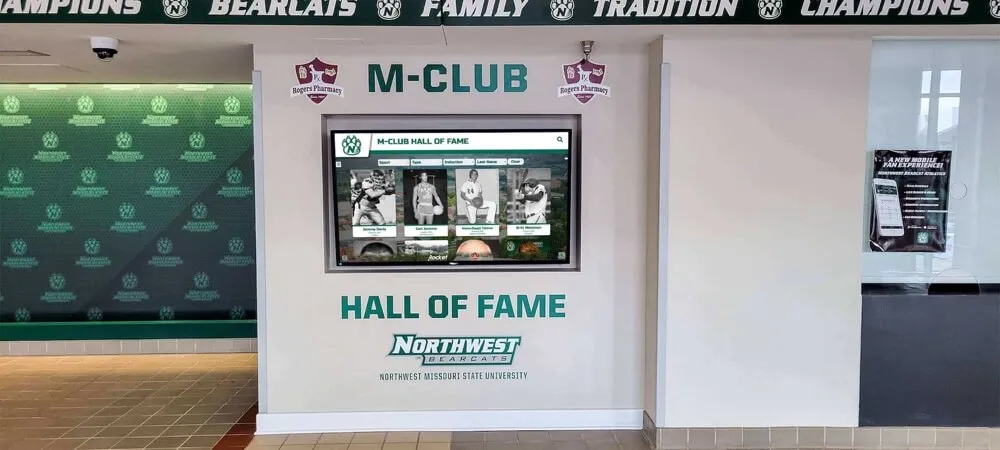
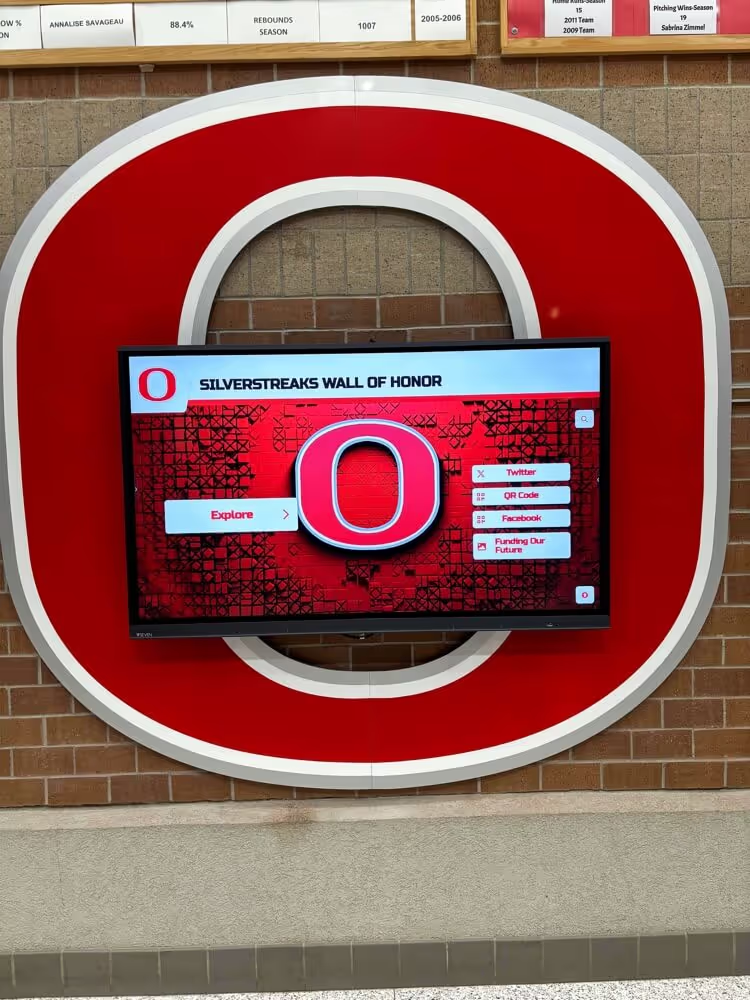
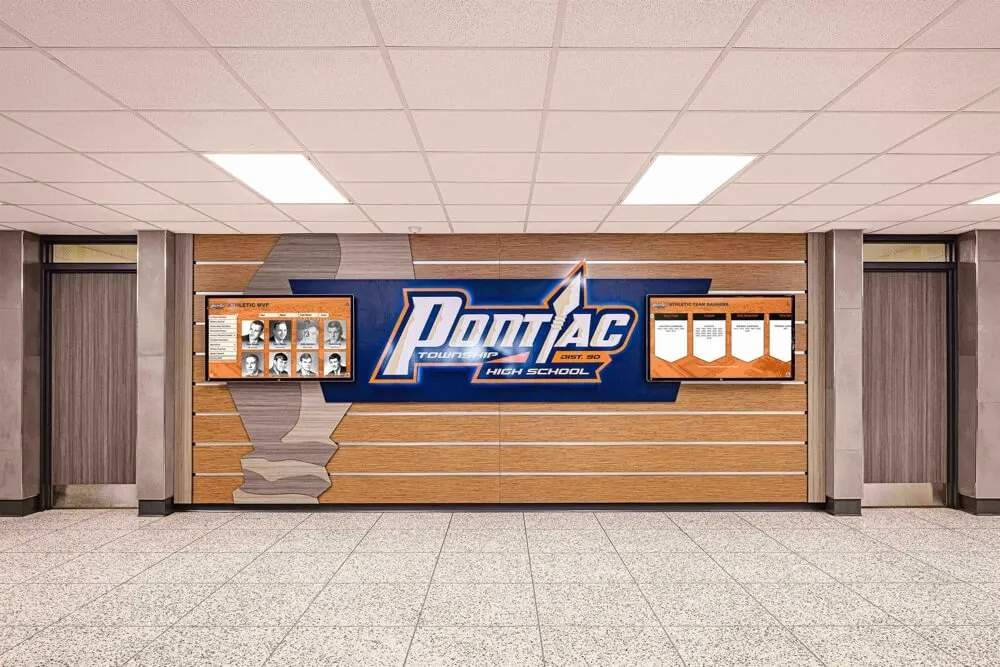
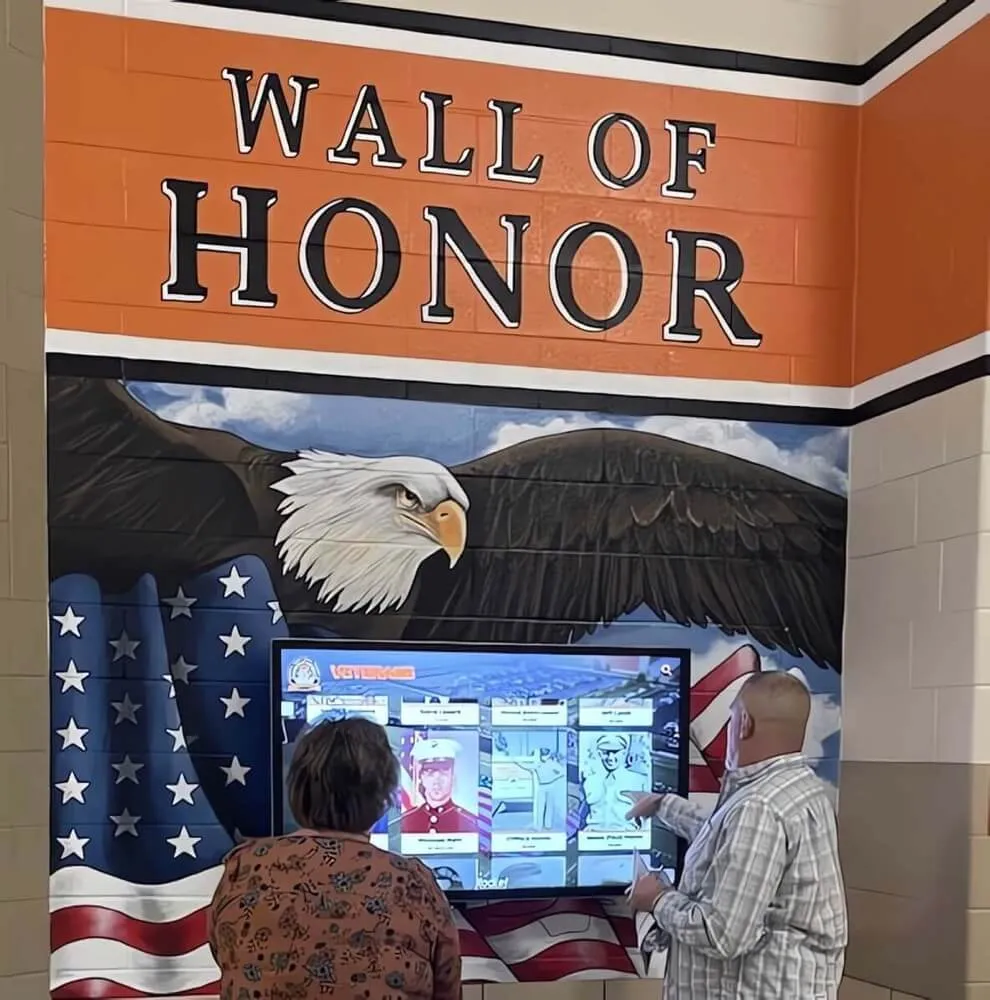
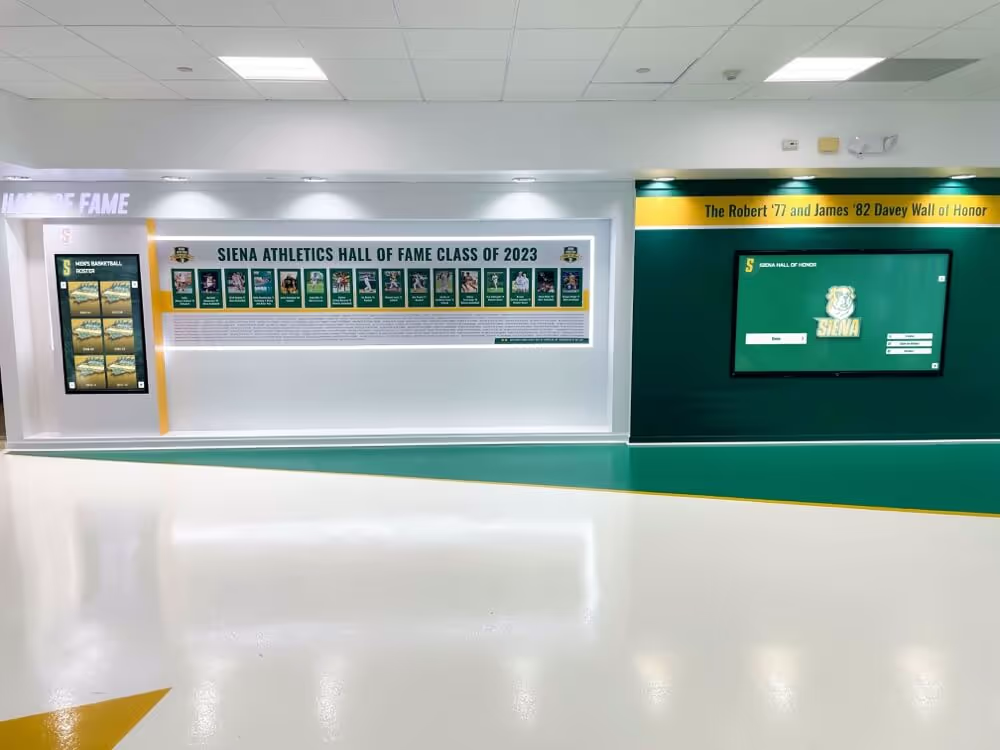
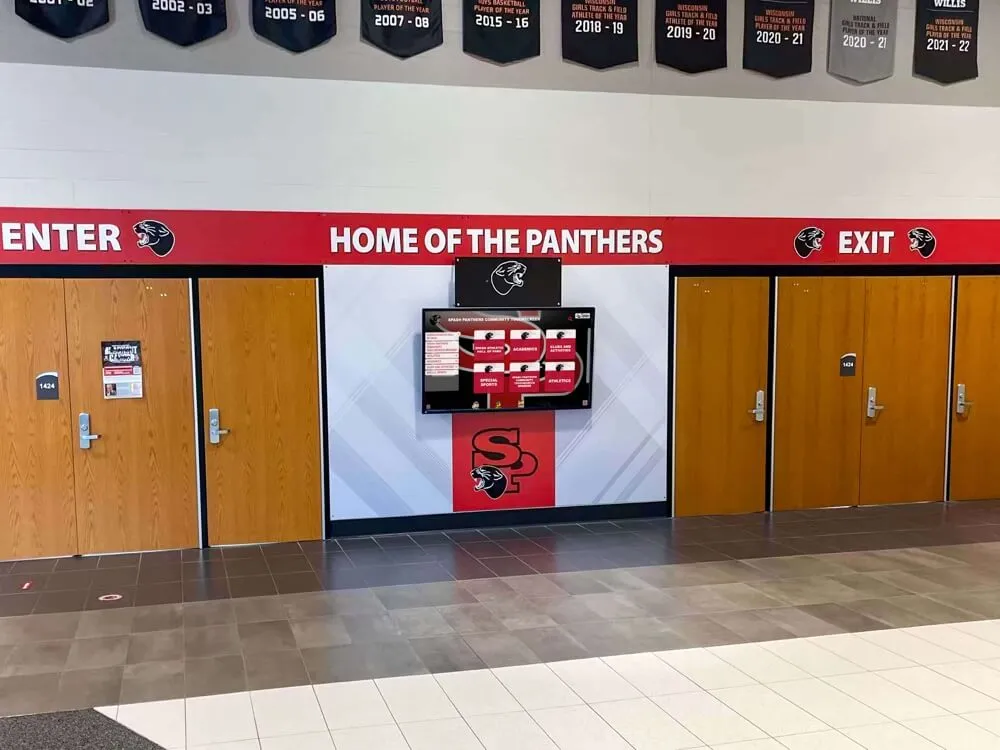
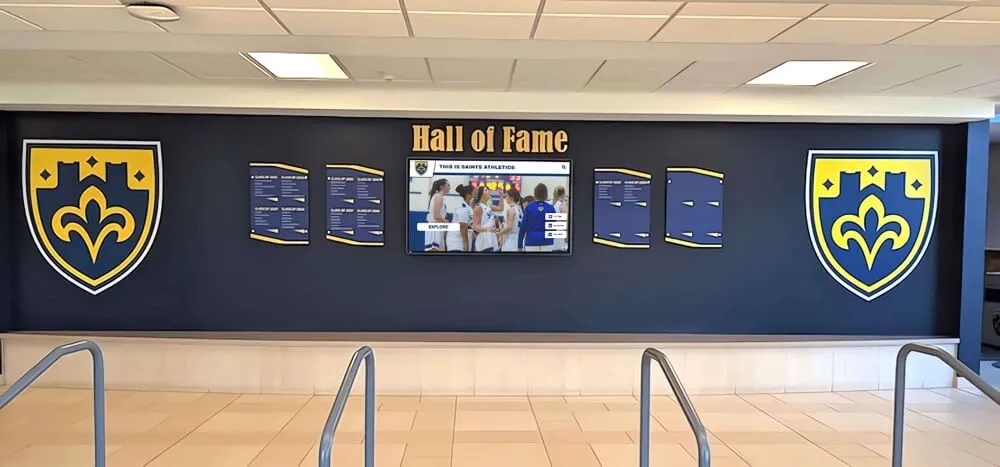
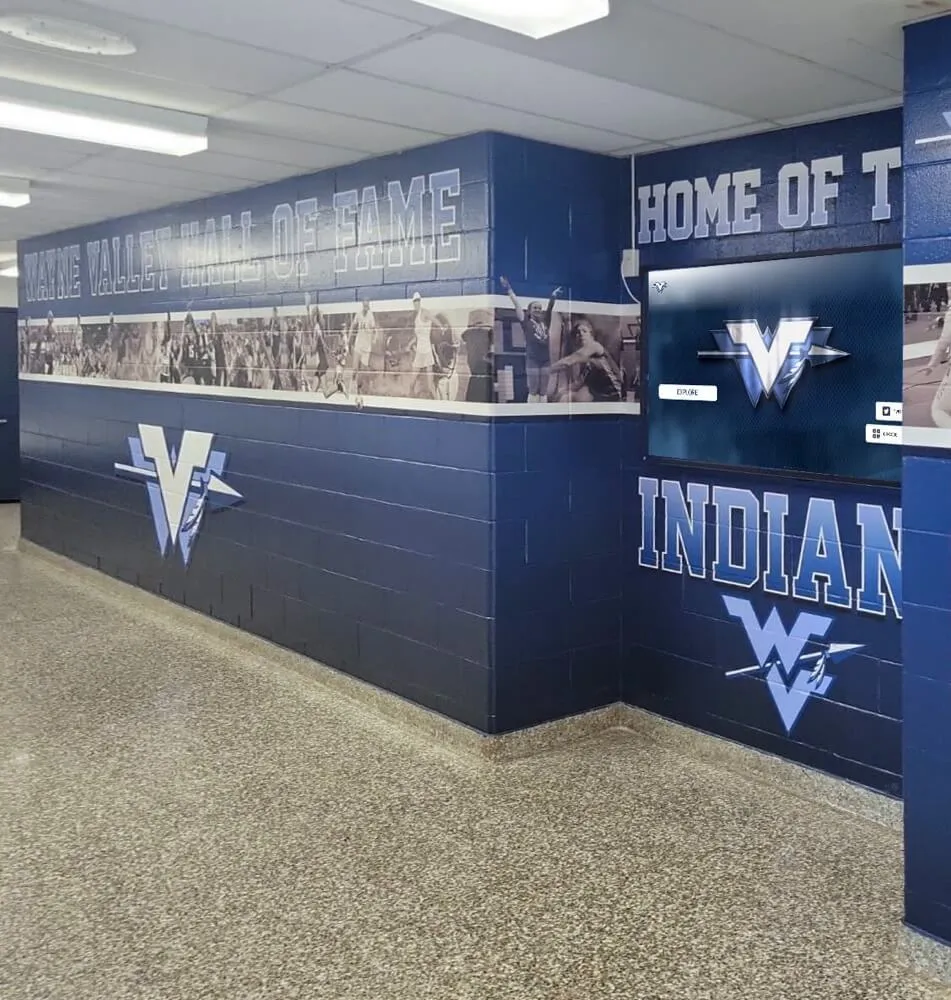
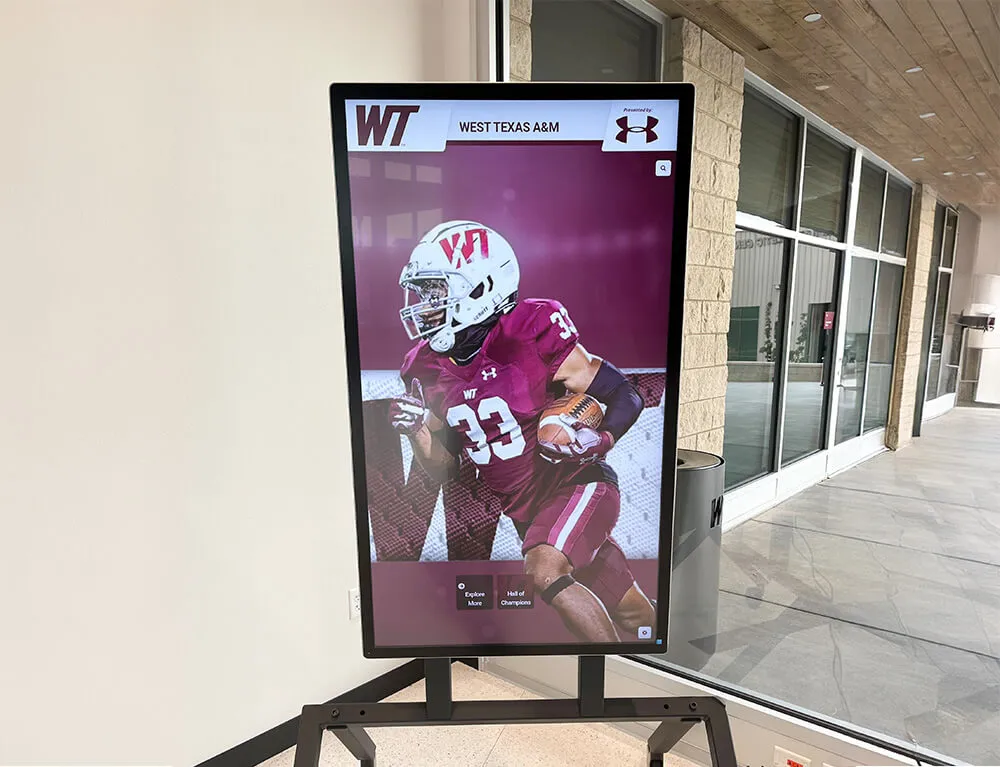
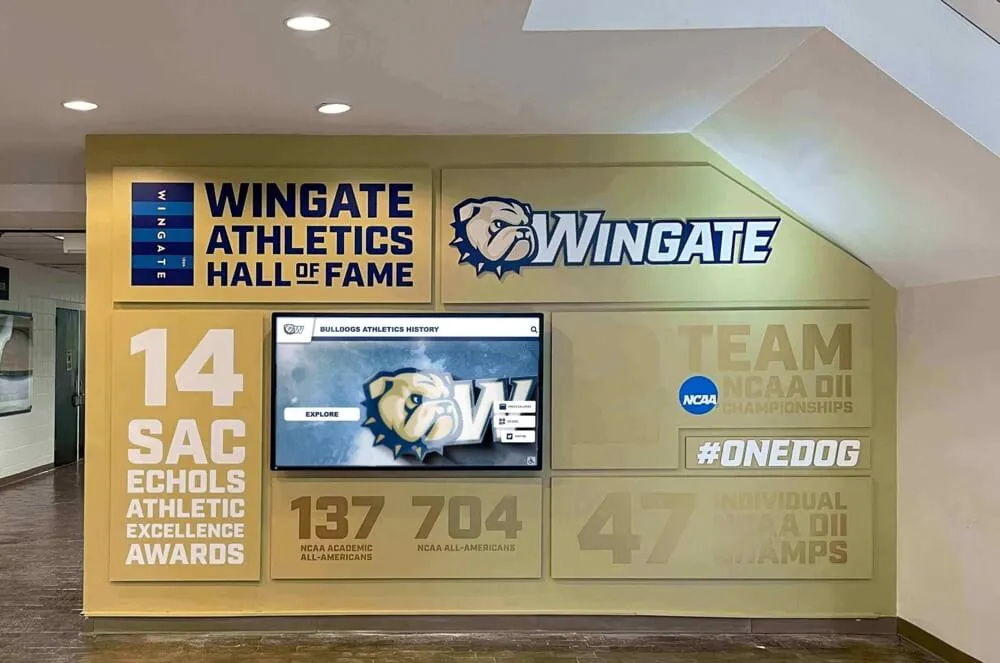
Large-format interactive displays provide the most comprehensive recognition experience:
Core Capabilities:
- Unlimited inductee capacity unconstrained by physical wall space
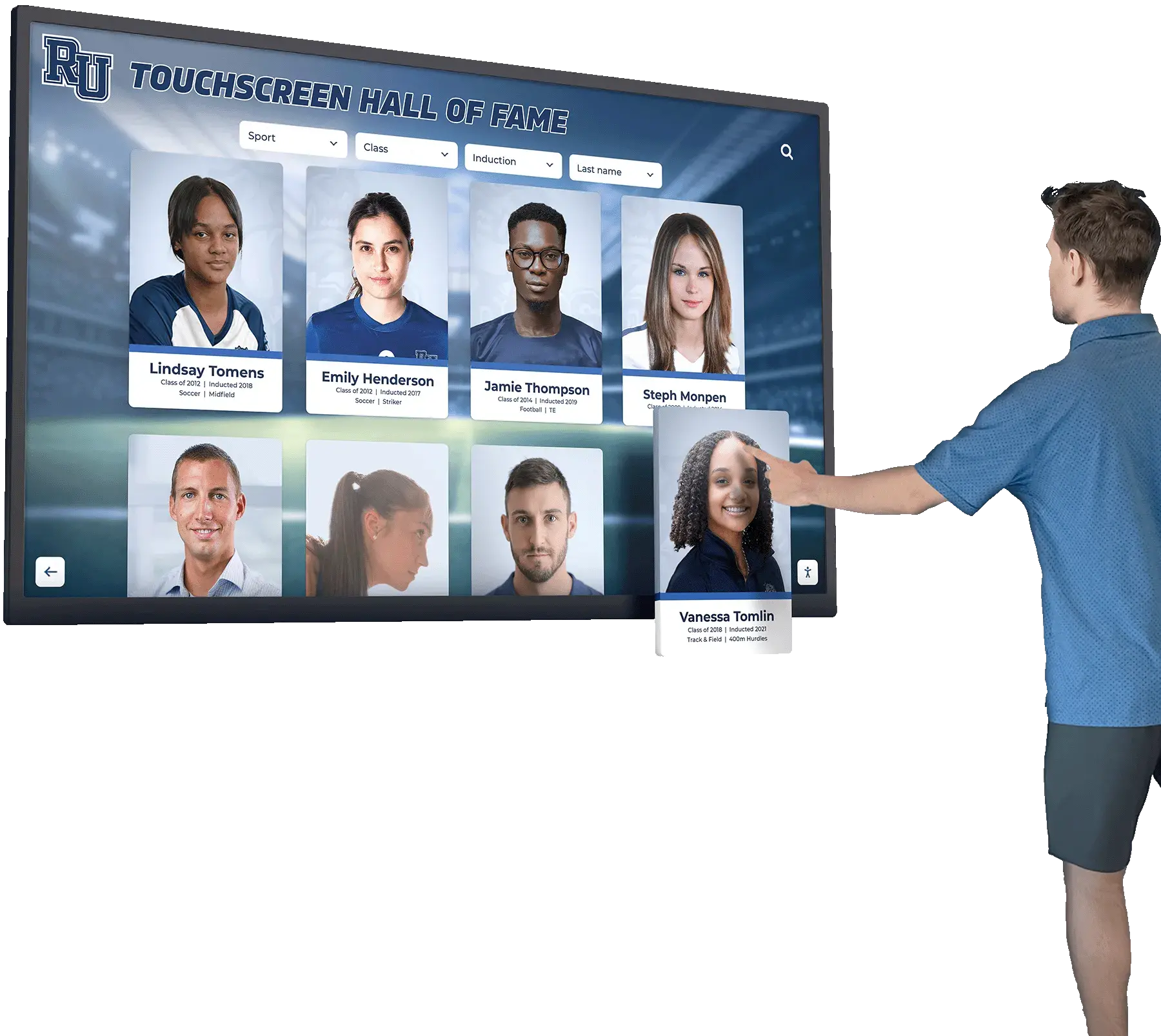
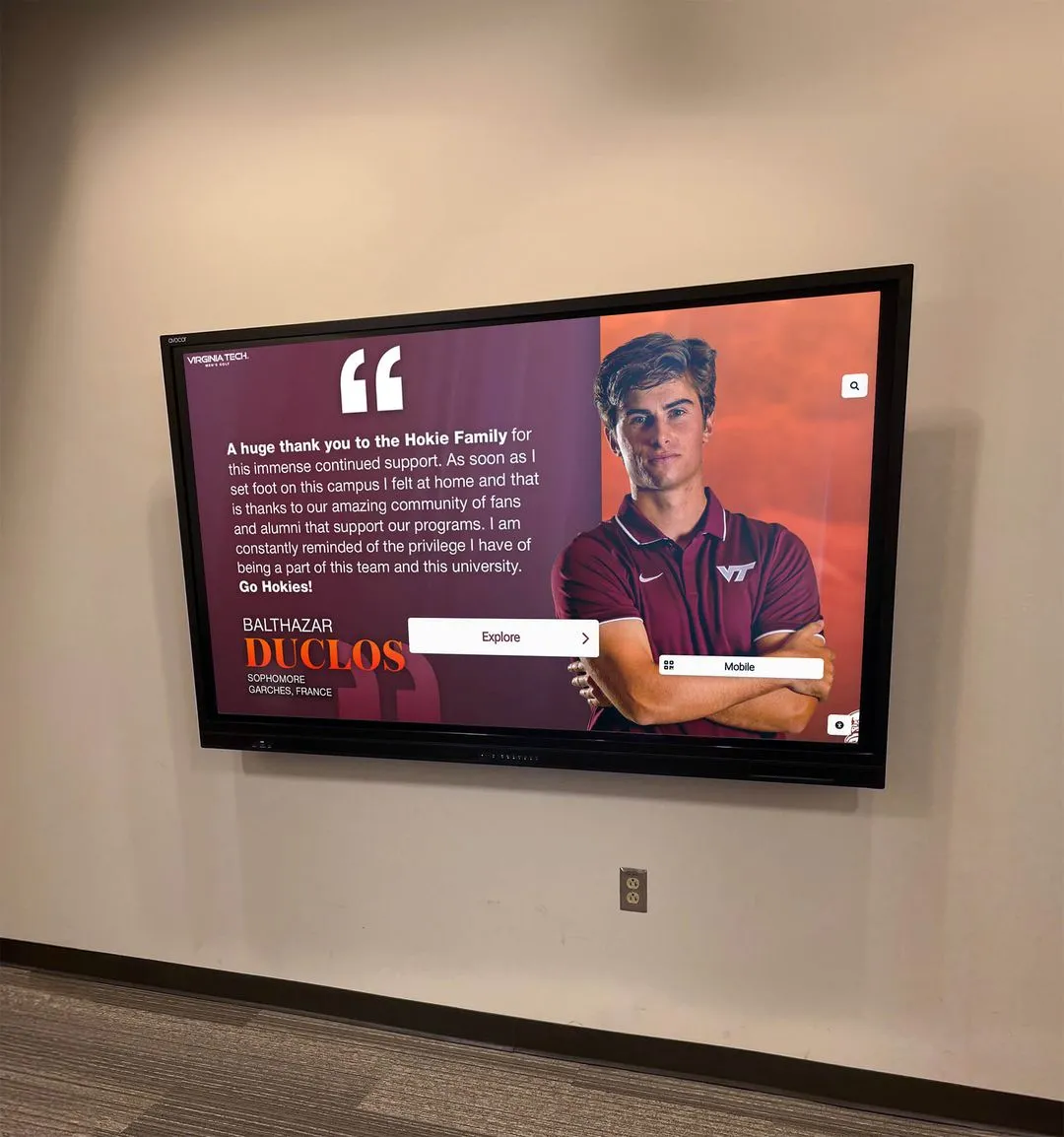
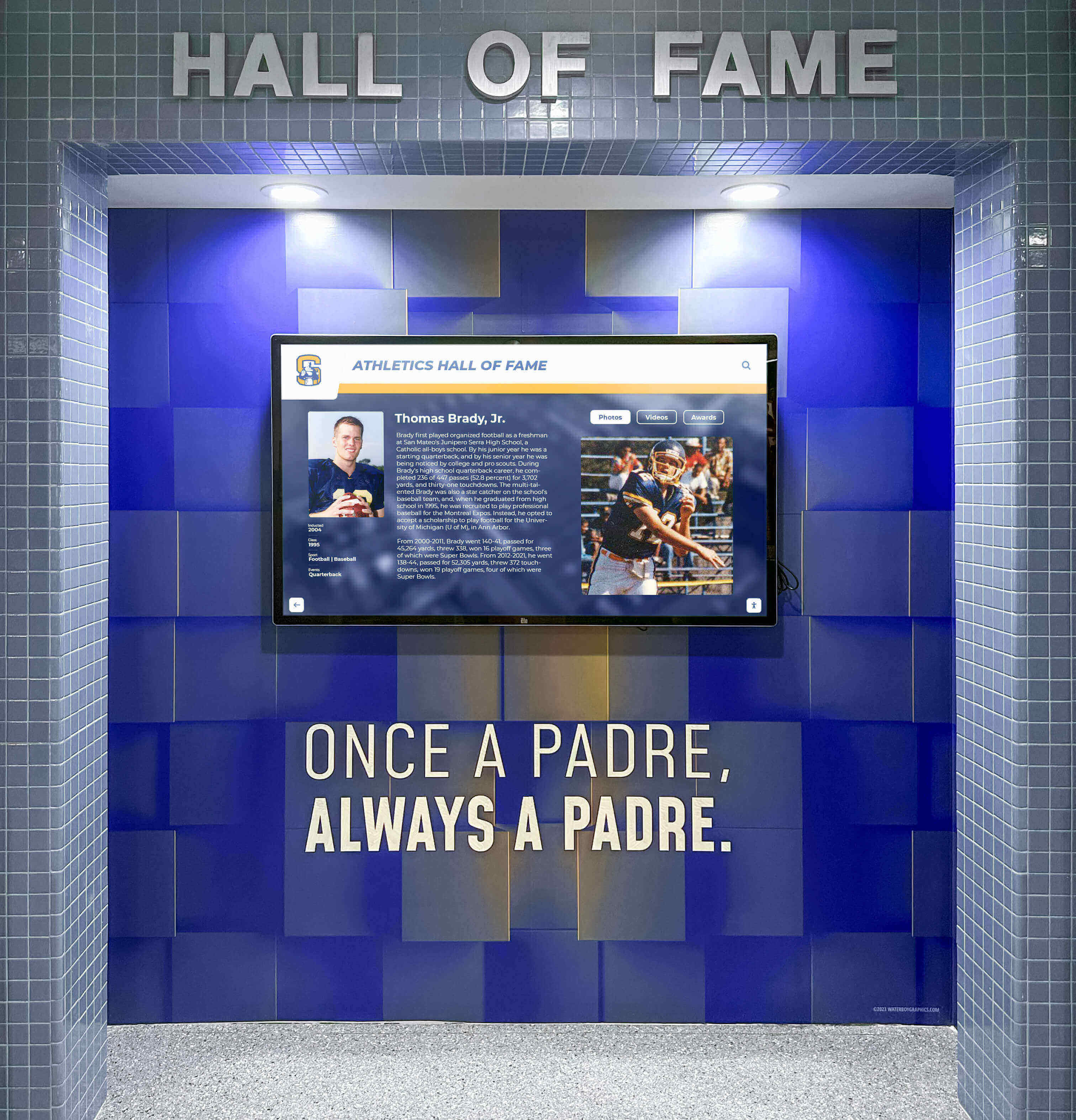
- Rich multimedia profiles including photos, videos, achievement timelines, and biographical narratives
- Searchable databases enabling visitors to find specific inductees instantly
- Advanced filtering by sport, achievement type, graduation year, or record category
- Easy remote content management through cloud-based platforms
- Engagement analytics showing which inductees and content visitors explore
- Simultaneous physical display and online web access from unified platforms
Technical Components:
- Commercial-grade touchscreen displays (43-75 inches) rated for continuous operation
- Specialized recognition software designed for hall of fame applications
- Cloud-based content management requiring no technical expertise
- Professional mounting solutions (wall-mounted or freestanding kiosks)
- Reliable network connectivity (ethernet preferred, WiFi acceptable)
- Ongoing software updates and technical support
Investment Range:
- Initial installation: $10,000-$25,000 (hardware, software, installation, training)
- Annual ongoing: $2,000-$5,000 (software licensing, support, updates)
- Per-inductee marginal cost: Near zero with unlimited capacity
Solutions like Rocket Alumni Solutions provide purpose-built recognition platforms specifically designed for educational hall of fame applications, offering intuitive content management that non-technical staff can operate confidently without IT department dependence.
Digital Signage Displays (Non-Interactive)
Non-interactive screens that automatically cycle through inductee profiles represent lower-cost alternatives:
Advantages:
- Lower initial investment than interactive touchscreen systems ($3,000-$8,000)
- Simple content rotation requiring minimal configuration
- Professional dynamic presentation versus static physical displays
- Remote content management and scheduling capabilities
- Multi-display coordination showing synchronized or varied content
Significant Limitations:
- No visitor control or interactive exploration capability
- Passive viewing without search or filtering functionality
- Reduced engagement compared to interactive systems
- Requires careful content timing preventing visitor frustration
- Often ignored as “just another TV screen” without interactivity
- No database functionality or comprehensive achievement organization
Digital signage works best for supplementary recognition in multiple locations or rotating highlight reels, but lacks the comprehensive database and interactivity that effective primary hall of fame displays require. Schools prioritizing recognition should explore interactive touchscreen displays designed specifically for hall of fame purposes.
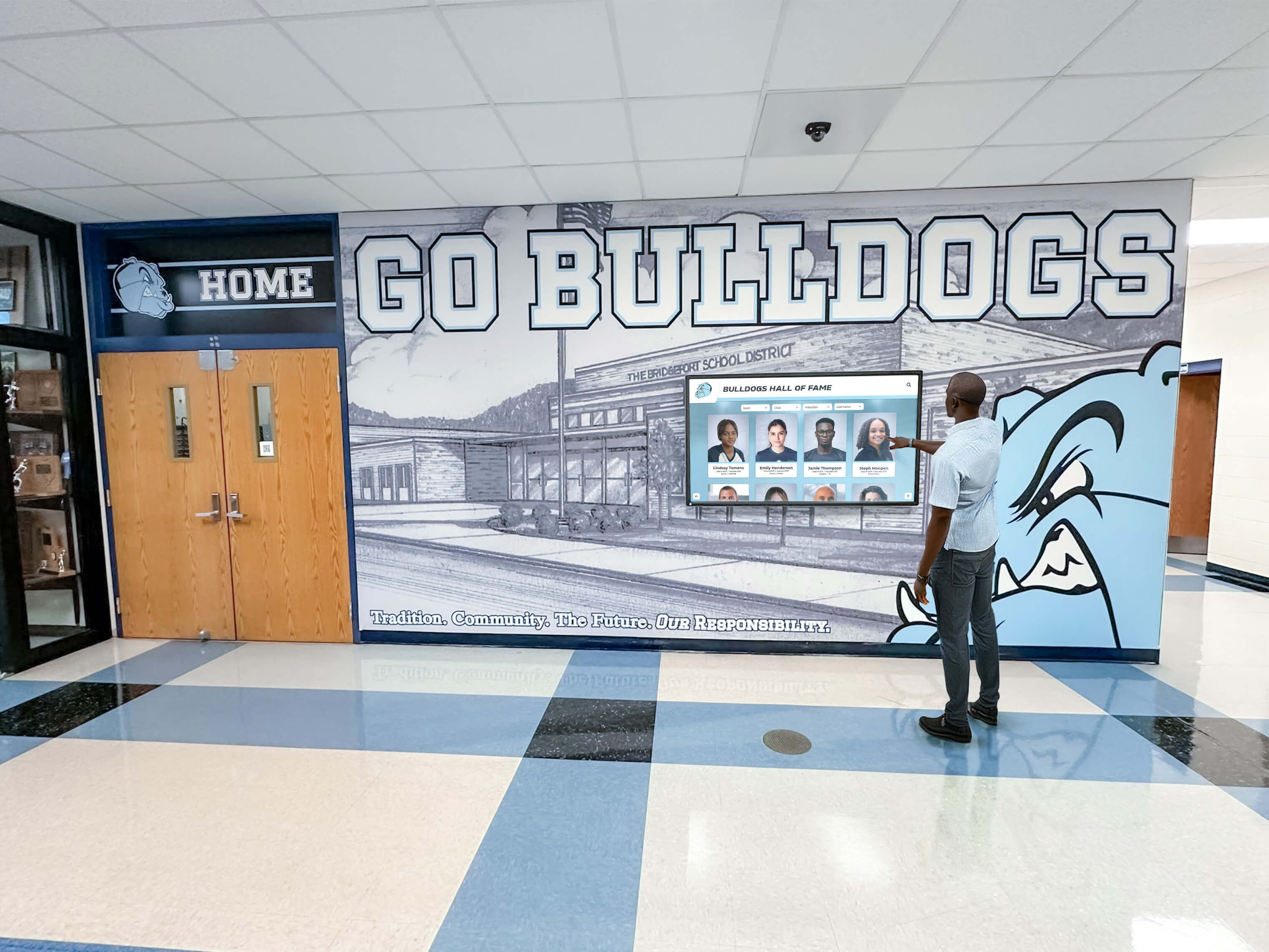
Why Interactive Touchscreens Outperform Traditional Physical Displays
Physical plaque walls have served schools for decades, but digital interactive systems provide superior functionality across virtually every dimension administrators should care about:
Capacity and Scalability
Traditional physical displays inevitably run out of wall space, forcing difficult choices about which achievements to display and which to archive. Interactive digital systems store unlimited inductees without space constraints, enabling comprehensive recognition spanning entire institutional history. Schools never face the decision to remove historical inductees to accommodate new ones—both coexist in searchable databases.
Content Richness and Storytelling
Physical plaques constrain biographical content to names, years, and brief achievement lists—typically 50-100 words maximum. Digital profiles accommodate extensive biographies, multiple photos showing different life stages, video interviews, detailed achievement timelines, career updates, and rich contextual information that brings recognition to life. Visitors learn complete stories rather than reading names.
Accessibility and Discovery
Traditional plaque walls force visitors to scan hundreds of names searching for specific individuals, with no filtering or organization beyond basic chronological grouping. Interactive touchscreens provide instant search by name, sophisticated filtering by achievement type or era, and intelligent suggestions connecting related inductees. Accessibility also extends online, enabling alumni worldwide to explore recognition remotely rather than requiring physical campus visits.
Cost Efficiency at Scale
While digital systems require higher initial investment ($10,000-$25,000 versus $5,000-$15,000 for physical plaque installations), long-term cost advantages become dramatic as programs grow. Adding each new physical plaque costs $250-$500 plus installation. Adding digital profiles costs essentially zero—merely staff time creating content. After 50-100 inductees, digital systems deliver better total cost of ownership while providing infinitely superior functionality. Schools can review comprehensive cost comparisons between recognition technologies.
Engagement and Impact
Students walk past static plaque walls without stopping—names become wallpaper rather than inspiration. Interactive displays create engaging exploration experiences where students discover achievements, watch video highlights, and connect personally with alumni stories. Analytics from digital systems consistently show average session times of 3-7 minutes versus seconds for physical plaque glances, demonstrating dramatically higher engagement.
Maintenance and Updates
Physical displays require ongoing cleaning, polishing, and periodic refurbishment as plaques age. Correcting errors requires replacing entire plaques at significant expense. Digital systems need minimal technical maintenance while content updates happen instantly through cloud platforms. Biographical enhancements, photo additions, or career updates take minutes without physical work or additional cost.
Content Strategy for Digital Hall of Fame Displays
Technology alone doesn’t create effective recognition—content quality determines whether displays inspire students and honor achievements appropriately:
Essential Profile Elements
Comprehensive digital profiles should include:
- High-resolution photographs from both school years and current career stages
- Achievement summaries explaining significance and institutional records
- Biographical narratives covering educational path, career journey, life achievements
- Video content including interviews, game highlights, or message to current students
- Statistical records showing detailed performance data and milestone achievements
- Personal reflections on high school experiences, influential mentors, advice for students
- Career updates demonstrating post-graduation success and program preparation quality
- Family connections highlighting multi-generational institutional relationships
Rich content transforms recognition from name lists into compelling stories that engage visitors emotionally and demonstrate that achievement leads to meaningful acknowledgment.
Organizational Structures
Digital systems can organize content multiple ways simultaneously:
- By achievement category (athletics by sport, academics by discipline, arts by program)
- By graduation year (decade groupings or specific years)
- By induction year (showing annual classes together)
- By record category (all-time leaders in specific statistical categories)
- By search (instant name lookup and advanced filtering)
- By featured content (rotating highlights and special recognitions)
Flexible organization enables visitors to explore recognition in whatever way makes sense for their interests, discovering connections and stories they wouldn’t encounter with fixed linear presentations.
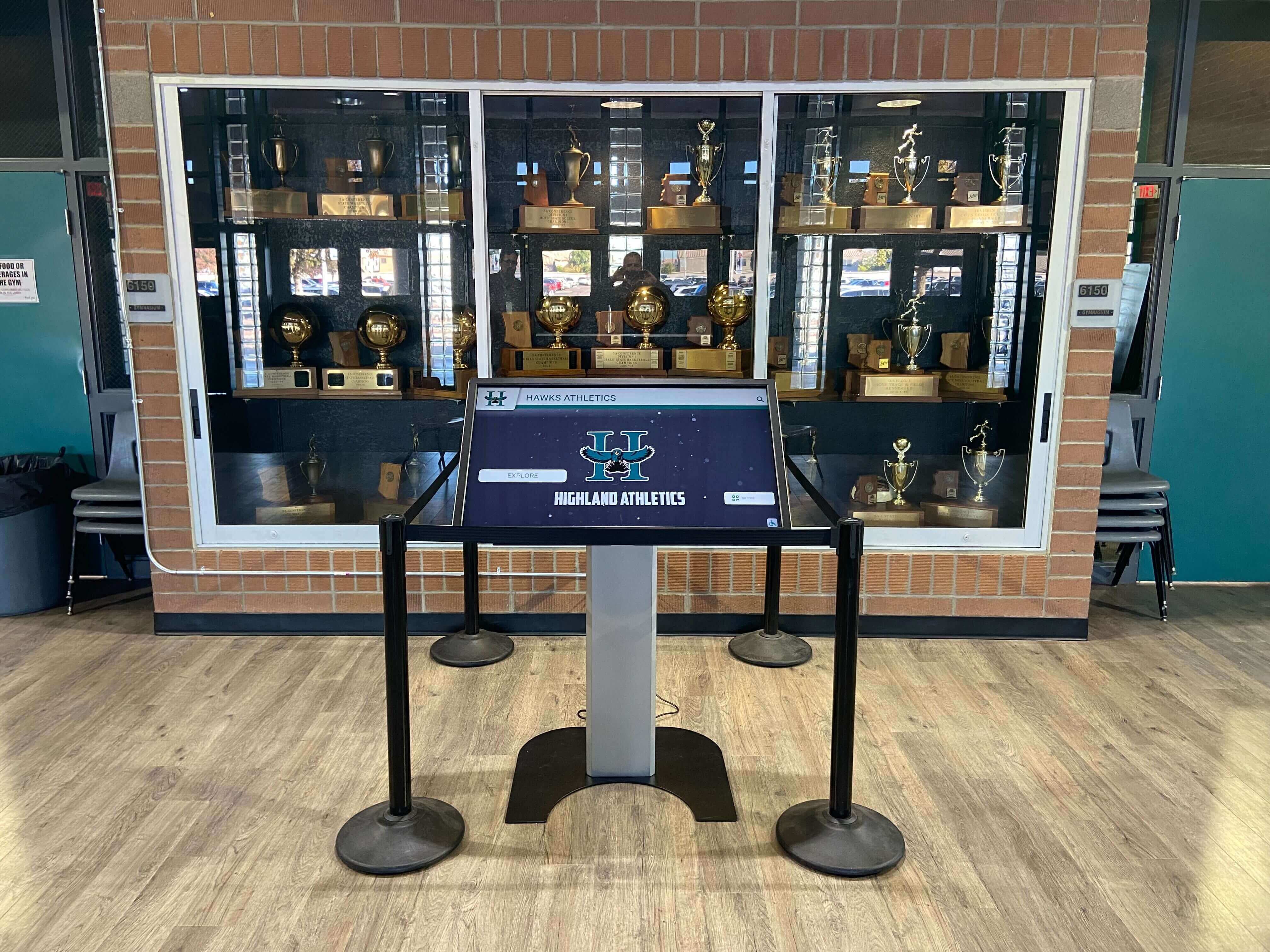
Implementation Considerations for Digital Hall of Fame Displays
Successful digital recognition requires thoughtful planning addressing both technical and operational dimensions:
Location Selection
Strategic placement maximizes visibility and engagement:
- Main entrance lobbies: Highest traffic as first impression for all visitors
- Athletic facility entrances: Natural connection to sports recognition and tradition
- Connecting hallways: Pathways between academic and athletic buildings
- Cafeteria or commons areas: High dwell time where students gather daily
- Library or media center: Contemplative environments encouraging exploration
Avoid direct sunlight causing screen glare, ensure adequate viewing space preventing crowding, and verify reliable power and network connectivity. Viewing distance should approximate 1.5× screen diagonal measurement for comfortable interaction.
Content Migration and Development
Digitizing existing recognition and creating rich profiles requires significant initial effort:
- Historical research: Gathering achievement data from yearbooks, programs, news archives
- Photo acquisition: Obtaining quality images from institutional archives or alumni
- Biographical compilation: Writing comprehensive profiles beyond basic statistics
- Multimedia production: Creating or editing videos, recording interviews, documenting highlights
- Quality assurance: Verifying accuracy, consistency, and appropriate presentation
Many schools underestimate content development time. Professional content migration services offered by recognition vendors can accelerate deployment while ensuring quality results. Alternatively, phased rollout launching with basic information and enhancing profiles over time makes programs manageable.
Staff Training and Support
Long-term success requires confident content management by non-technical staff:
- Platform training: Comprehensive instruction on content management systems
- Best practices: Guidance on profile quality, photo standards, content consistency
- Ongoing support: Accessible technical assistance for questions or issues
- Documentation: Written procedures and resources for reference
- Multiple trained staff: Preventing single points of failure during personnel transitions
Choose recognition platforms designed for non-technical users, not generic IT systems requiring constant support. Cloud-based platforms with intuitive interfaces enable independent content management without IT department involvement.
Why Rocket Alumni Solutions Wins for Hall of Fame Display Technology
Schools face numerous digital recognition technology options, but most discover that specialized platforms designed specifically for educational hall of fame applications outperform generic digital signage or custom development approaches across every dimension that matters:
Purpose-Built for Educational Recognition
Generic digital signage platforms display rotating content but lack database functionality, searchable archives, or sophisticated filtering that hall of fame applications require. Rocket Alumni Solutions provides comprehensive recognition platforms specifically designed for schools, offering intuitive tools for creating detailed inductee profiles, organizing achievements by multiple dimensions, and presenting content in ways optimized for hall of fame exploration rather than passive viewing.
Dual-Mode Physical and Online Recognition
Most schools want both physical displays in facilities and online access for distant alumni. Separate systems require duplicate content management creating unsustainable workload. Rocket provides unified platforms where single content management powers both interactive physical touchscreens and web-accessible online halls of fame simultaneously, eliminating duplication while extending recognition reach globally.
Unlimited Capacity Without Artificial Constraints
Some digital platforms impose profile limits, storage caps, or charge per-inductee fees that defeat the scalability advantage digital technology should provide. Rocket includes unlimited inductee capacity in standard licensing, enabling comprehensive recognition spanning entire institutional history without ongoing incremental costs or difficult decisions about who to include.
Non-Technical Content Management
Many digital systems require IT expertise for content updates, creating bottlenecks and preventing timely recognition. Rocket provides cloud-based content management designed for non-technical staff—athletic directors, alumni coordinators, administrative assistants—to update independently through intuitive web interfaces requiring no technical training. Content updates that would require IT tickets elsewhere take minutes in Rocket’s platform.
Commercial-Grade Reliability
Consumer-grade equipment fails frequently under continuous operation in public spaces. Rocket specifies commercial-grade touchscreen displays rated for 16-24 hour daily operation with proven reliability in demanding public environments. Hardware warranty programs and remote monitoring ensure issues get identified and resolved quickly, maintaining recognition availability.
Comprehensive Implementation Support
Schools implementing recognition technology shouldn’t become technology projects requiring extensive internal project management. Rocket provides turnkey implementation including planning consultation, content strategy guidance, hardware specification and sourcing, professional installation, content migration services, staff training, and ongoing technical support—everything needed for successful deployment without becoming IT burden.
Proven Track Record at Educational Institutions
Rocket has deployed over 1,000 installations across schools, universities, and districts nationwide, demonstrating proven reliability and deep understanding of educational institution needs. Athletic directors and administrators consistently report successful implementations, intuitive operation, responsive support, and recognized impact on program pride and alumni engagement.
Decision Framework: Choosing Hall of Fame Display Technology
Choose Traditional Physical Plaques If:
- Very limited initial budget ($5,000-$10,000 maximum)
- Small, finite recognition program (fewer than 50 total expected inductees)
- Strong stakeholder preference for traditional aesthetics
- No technical support available and unwillingness to use vendor support
- Purely supplemental recognition in addition to primary digital display
Choose Generic Digital Signage If:
- Recognition is minor addition to broader signage deployment
- Passive rotating content sufficient (no search or database needs)
- Simple slideshow presentation acceptable
- Budget conscious and interaction not priority
Choose Rocket Alumni Solutions Interactive Touchscreen If:
- Recognition program represents strategic institutional priority
- Growing inductee numbers requiring unlimited scalability (50+ inductees)
- Want comprehensive multimedia storytelling with photos, videos, detailed biographies
- Value easy content management by non-technical staff without IT dependence
- Desire both physical displays and online web accessibility from unified platform
- Prioritize maximum student engagement through interactive exploration
- Need proven reliability with comprehensive vendor support included
- Seeking long-term cost efficiency through unlimited digital capacity
Avoid Custom Development Unless:
- Truly unique requirements that off-the-shelf solutions cannot accommodate
- Large institutional IT departments capable of ongoing maintenance
- Budget permits $75,000-$300,000+ investment for development
- Timeline allows 12-24 months from planning through launch
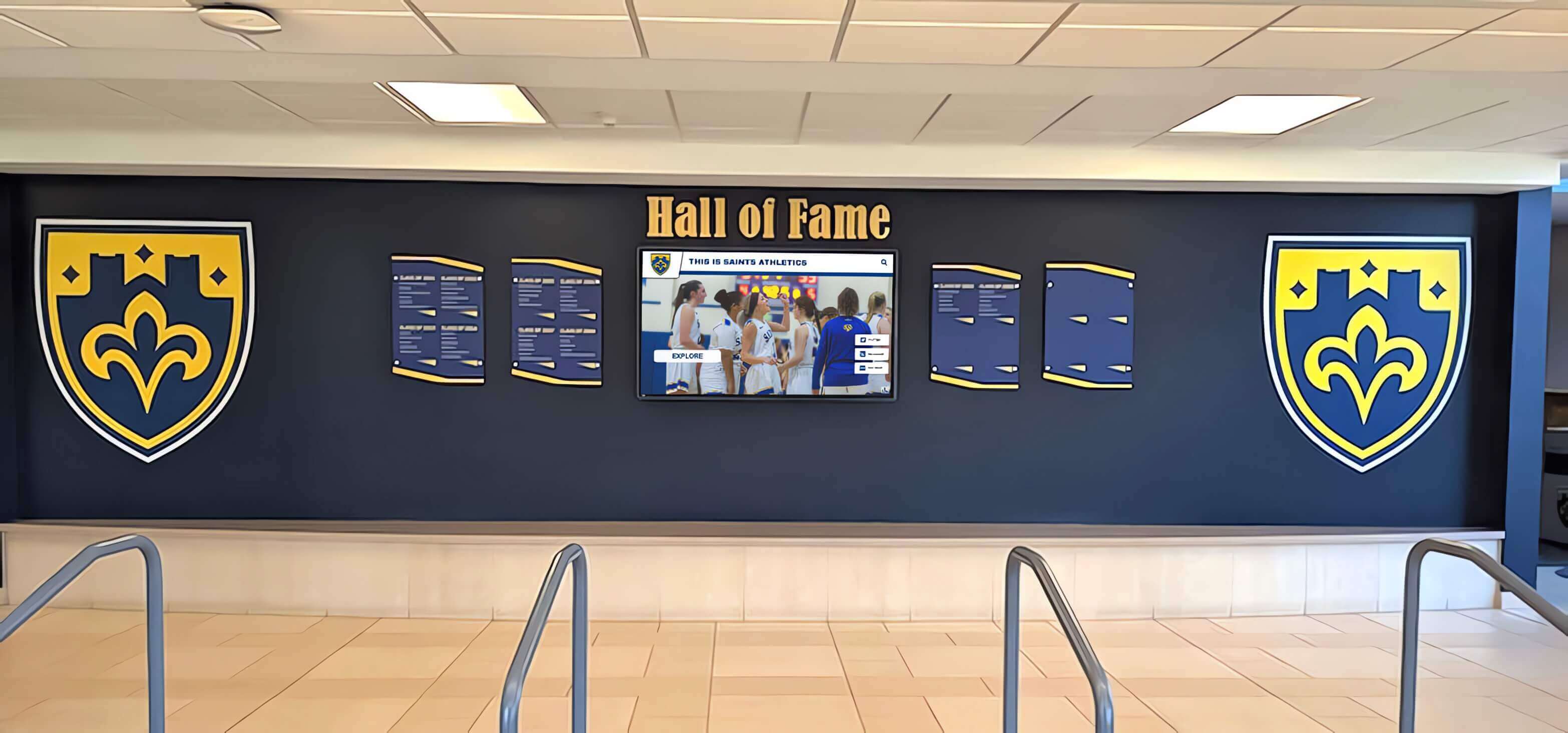
Integrated Approach: Combining Selection Excellence with Display Technology
The most successful hall of fame programs recognize that selection process integrity and display technology effectiveness reinforce each other:
Building Public Trust Through Transparency
Digital displays can showcase selection processes, publishing committee membership, selection criteria, nomination procedures, and annual inductee announcements that demonstrate transparent governance. This transparency reinforces selection credibility while educating community members about recognition standards and encouraging qualified nominations.
Celebrating Complete Achievement Stories
Rigorous selection processes identify worthy inductees, but static plaques reduce achievements to names and dates. Digital displays honor selection committee work by presenting complete achievement stories—detailed biographies, video highlights, statistical records, career updates—that demonstrate why inductees merited recognition and inspire current students through comprehensive profiles showing paths to excellence.
Supporting Equity Commitments
Schools committed to gender and sport equity in selection benefit from digital displays that prominently feature diverse achievements across all categories. Unlike physical plaque walls where female athletes might occupy less prominent positions due to historical factors, digital systems present all inductees equally through searchable databases where visitors discover achievements based on their interests rather than physical positioning.
Enabling Program Evolution
Well-designed selection processes include periodic review provisions allowing criteria refinement as programs mature. Digital displays accommodate program evolution without requiring physical reconstruction—new achievement categories, revised organizational structures, enhanced content standards—simply requiring content management updates rather than wall redesign and reinstallation.
Maximizing Community Engagement
Strong selection processes generate community interest in hall of fame programs, but that interest fades if recognition presentation fails to engage audiences. Interactive digital displays transform selection announcement days into ongoing exploration opportunities where students, families, and community members regularly engage with recognition content, maintaining program visibility and impact long after induction ceremonies conclude.
Schools can review comprehensive guidance on creating successful hall of fame programs that integrate governance and technology effectively.
Common Implementation Mistakes to Avoid
Learning from typical errors prevents costly problems that undermine program effectiveness:
Selection Process Failures
Vague or Unwritten Criteria: Programs operating with unwritten “we know it when we see it” standards inevitably face favoritism accusations. Published specific criteria prevent controversy even when difficult selection decisions disappoint worthy candidates.
Small Committees Dominated by Single Sports: Three-person committees with two football coaches guarantee perceptions of bias toward football. Diverse 7-11 member committees with broad representation resist capture by individual sports or interest groups.
Simple Majority Voting: 5-4 votes generate controversy when close decisions become known. Supermajority requirements (2/3 or 3/4 thresholds) ensure inductees enjoy broad consensus support enhancing selection credibility.
No Conflict of Interest Policies: Committee members selecting their own relatives or close associates without recusal destroy program credibility. Written conflict policies with mandatory disclosure prevent inappropriate influence.
Ignoring Equity Patterns: Programs that recognize 80% male and 20% female inductees across multiple years while claiming no bias generate justified criticism. Proactive equity monitoring with corrective mechanisms prevents systemic imbalance.
Display Technology Failures
Choosing Price Over Capability: Purchasing the cheapest digital signage saves $5,000 initially but delivers slideshow functionality rather than interactive database experience worth significantly more to recognition programs. Proper investment in capable platforms proves more cost-effective long-term.
Underestimating Content Development: Schools purchase display systems without realizing that creating comprehensive profiles for hundreds of inductees requires substantial effort. Budget for content migration services or realistic staff time allocation.
Ignoring Staff Technical Capacity: Selecting platforms requiring IT expertise for routine updates creates ongoing support burdens. Prioritize systems designed for non-technical staff operation enabling independent content management.
Poor Location Selection: Installing expensive displays in low-traffic locations or areas with terrible viewing conditions wastes investment. Strategic placement in high-traffic areas with proper environmental conditions maximizes engagement and impact.
No Ongoing Content Strategy: Launching with initial content but never updating or enhancing profiles causes displays to become stale historical archives rather than dynamic recognition resources. Establish sustainable ongoing content management responsibilities.
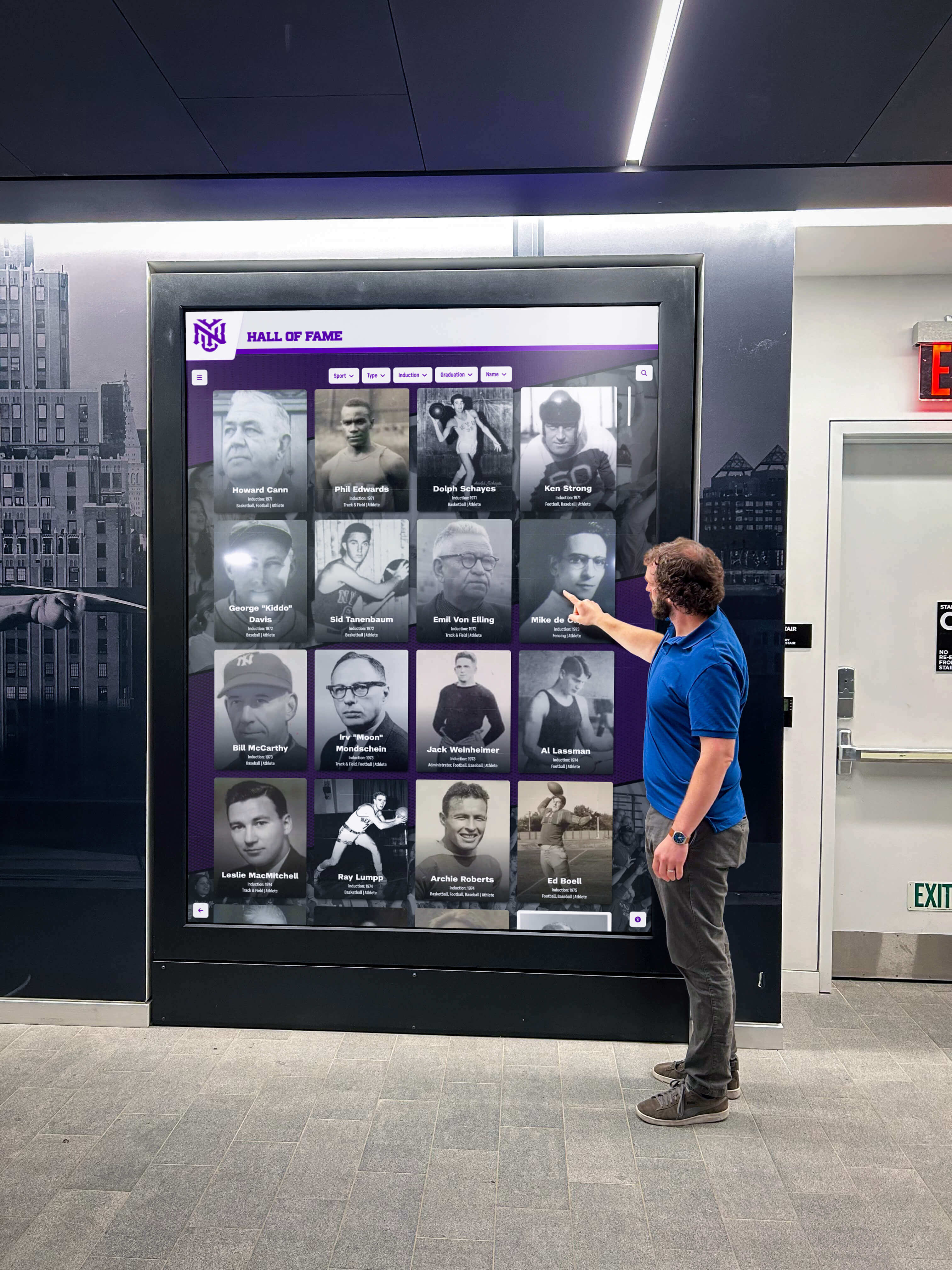
Conclusion: Building Credible Hall of Fame Programs with Effective Digital Recognition
Hall of fame programs serve schools well when built on transparent selection processes that community members trust and modern display technology that engages students while honoring achievements appropriately. Success requires addressing both dimensions—governance integrity and presentation effectiveness—rather than treating them as independent challenges.
The most effective selection processes combine published specific criteria addressing multiple worthiness dimensions, diverse committees with clear voting procedures and conflict policies, systematic nomination and evaluation approaches, supermajority vote requirements ensuring consensus, and proactive equity monitoring preventing systemic bias. These structured frameworks maintain credibility even when difficult selection decisions disappoint worthy candidates who don’t make final cuts.
Display technology has evolved to the point where digital interactive systems outperform traditional physical plaques across virtually every dimension that matters: unlimited capacity enabling comprehensive recognition without space constraints, rich multimedia storytelling bringing achievements to life through photos and videos, searchable databases enabling instant discovery, easy content management by non-technical staff, superior long-term cost efficiency at scale, and dramatically higher engagement through interactive exploration versus static viewing.
Schools establishing new hall of fame programs or modernizing legacy systems should invest time developing comprehensive selection criteria and governance frameworks preventing controversy, creating diverse committees with clear decision-making protocols, choosing recognition technology matching institutional priorities and resources, planning strategic implementations addressing content development and staff training needs, and establishing operational structures ensuring program vitality across budget cycles and personnel transitions.
Whether implementing programs for the first time or revitalizing stagnant initiatives, thoughtful hall of fame administration creates recognition systems that celebrate achievement authentically while supporting broader institutional goals including student motivation, alumni engagement, and community pride. The investment in strong selection processes and capable display technology pays dividends through decades of meaningful recognition that strengthens programs and communities.
Ready to transform your hall of fame program with digital recognition technology designed specifically for educational institutions? Book a demo to explore comprehensive solutions combining intuitive content management, interactive touchscreen displays, and proven reliability that make recognition programs sustainable and engaging for decades.