



Key Takeaways
Discover hall of fame induction ceremony ideas that honor inductees with lasting impact—from tribute videos and digital displays to ceremony programs and keepsakes.
The night an inductee walks into a school hall of fame is one of the most meaningful moments in a school’s annual calendar—but only if it’s planned with the care the honor deserves. Coaches who shaped programs, athletes who broke records, alumni who transformed their communities: these people have given something lasting to your institution. Hall of fame induction ceremony ideas that truly work go beyond a handshake and a plaque. They create an experience that honors the inductee’s legacy, moves their families, and inspires every current student watching from the stands.
This guide covers the full arc of planning a memorable induction night—from building your committee to selecting the right recognition technology to make the ceremony feel permanent and alive well after the last speech ends.
Table of Contents
- Start Planning 6–8 Months Out
- Choose the Right Venue and Atmosphere
- Design a Ceremony Program That Flows
- Craft Meaningful Inductee Tributes
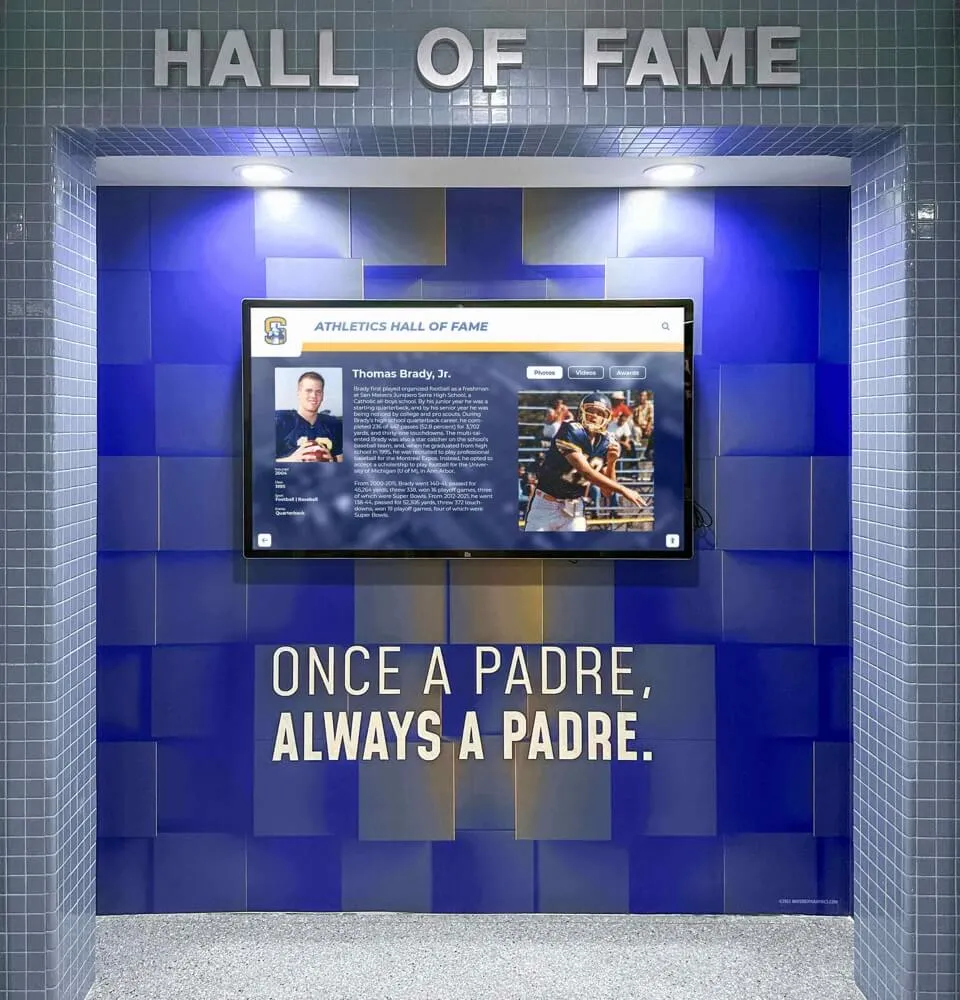
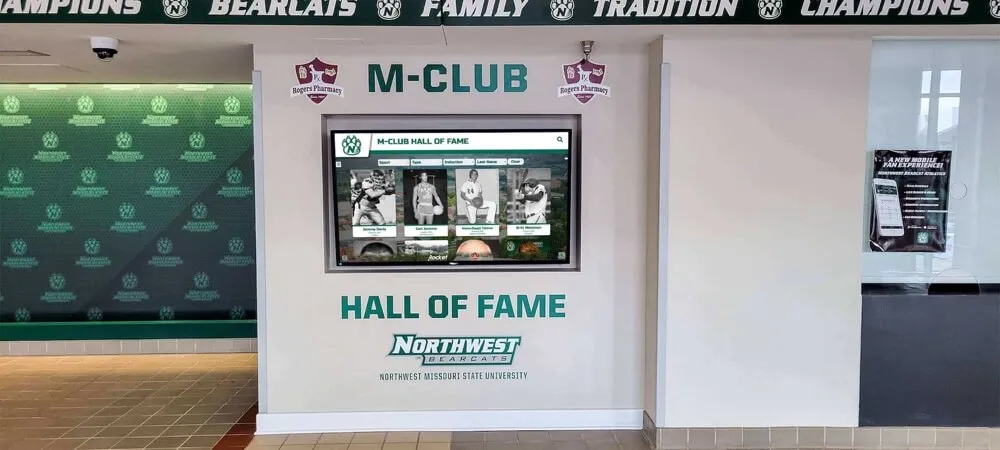
- Make the Digital Display the Visual Centerpiece
- Permanent Recognition Beyond the Night
- Guest Experience: Inductees, Families, and Fans
- Keepsakes and Mementos That Last
- Live-Streaming and Digital Archives
- Common Mistakes to Avoid
Start Planning 6–8 Months Out
The most common reason induction ceremonies fall flat is compressed timelines. When planning begins only a few weeks before the event, critical elements get cut or rushed—inductee videos arrive unfinished, programs are printed with errors, and families don’t have enough notice to travel. Starting the planning process six to eight months before the ceremony date gives every component room to develop properly.
Form a dedicated planning committee. Your committee should include representation from athletics, alumni relations, administration, and ideally one or two former inductees who can offer the perspective of someone who has experienced the ceremony as an honoree. Assign clear ownership for each element: venue logistics, inductee communication, tribute content, night-of operations, and digital recognition updates.
Establish your nomination and selection process first. Before promoting the ceremony, confirm that your selection committee has finalized this year’s inductees and that notification letters have gone out. Inductees who receive early notice have time to arrange travel, bring family members from out of state, and prepare remarks if they choose to speak. A sudden invitation three weeks before the ceremony creates logistical stress that shows on the night.
Set a realistic budget with line-item clarity. Common budget categories include venue rental or setup, catering, audio/visual production, printed programs and materials, inductee gifts, and digital recognition system updates. Understanding where costs are fixed versus flexible helps committees make trade-off decisions without sacrificing the highest-impact elements.

Choose the Right Venue and Atmosphere
The venue sets the emotional register of the entire ceremony. A gymnasium dressed up with folding chairs and fluorescent lighting sends a different signal than the same gymnasium transformed with uplighting, a stage, and a displayed roll call of former inductees running on the scoreboard screen.
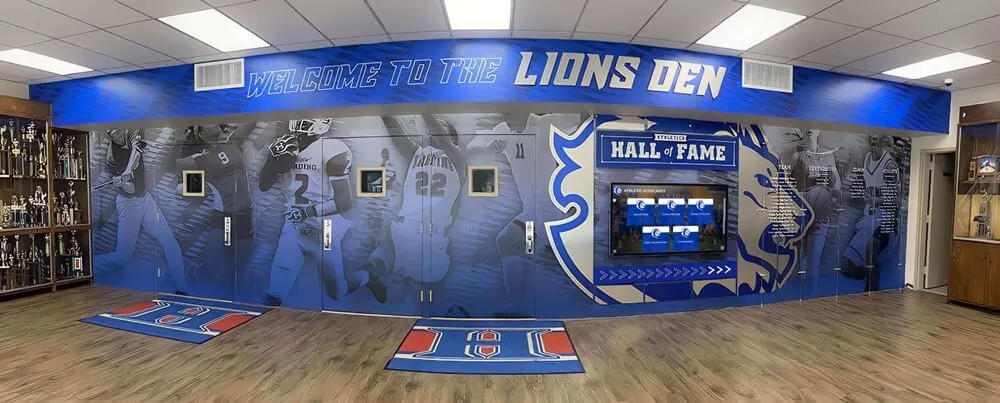
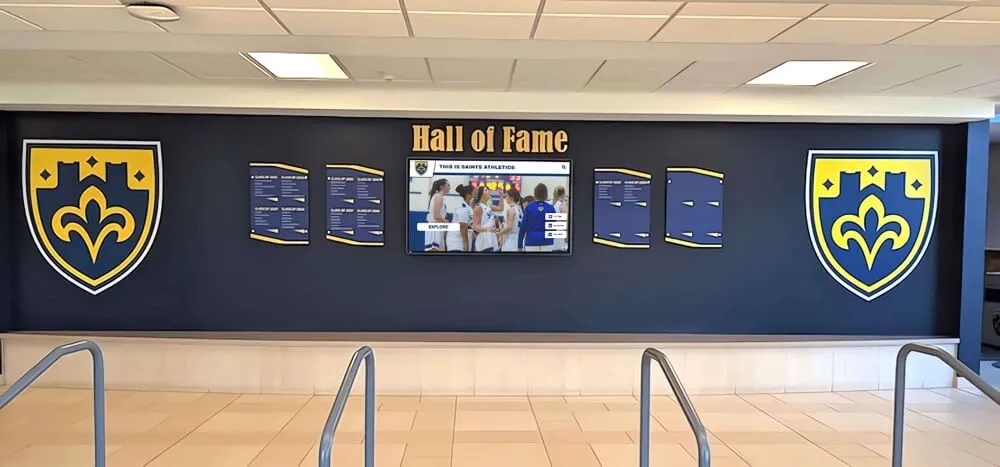
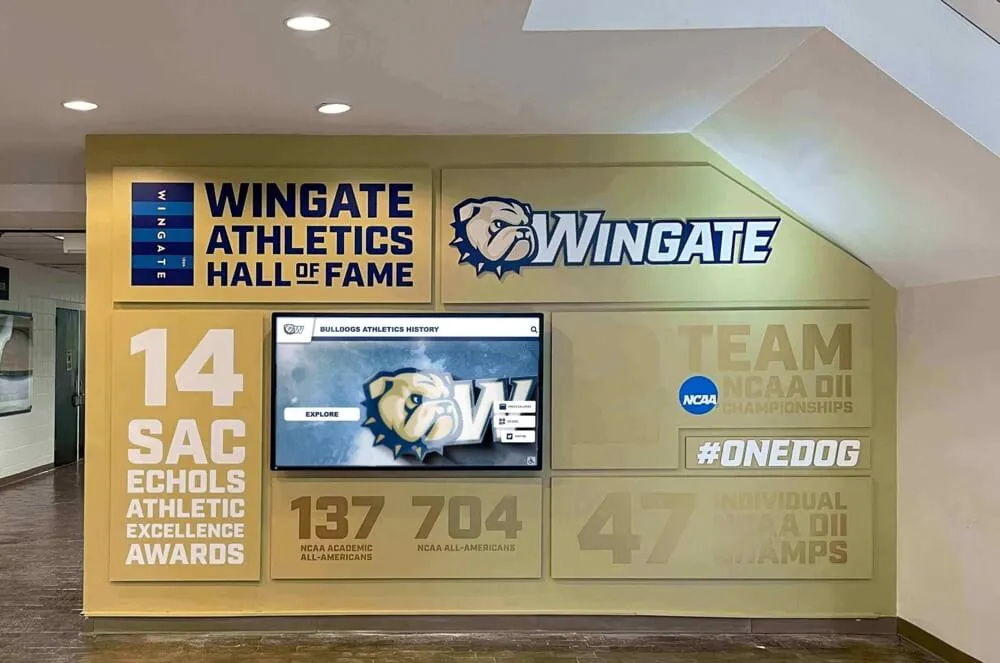
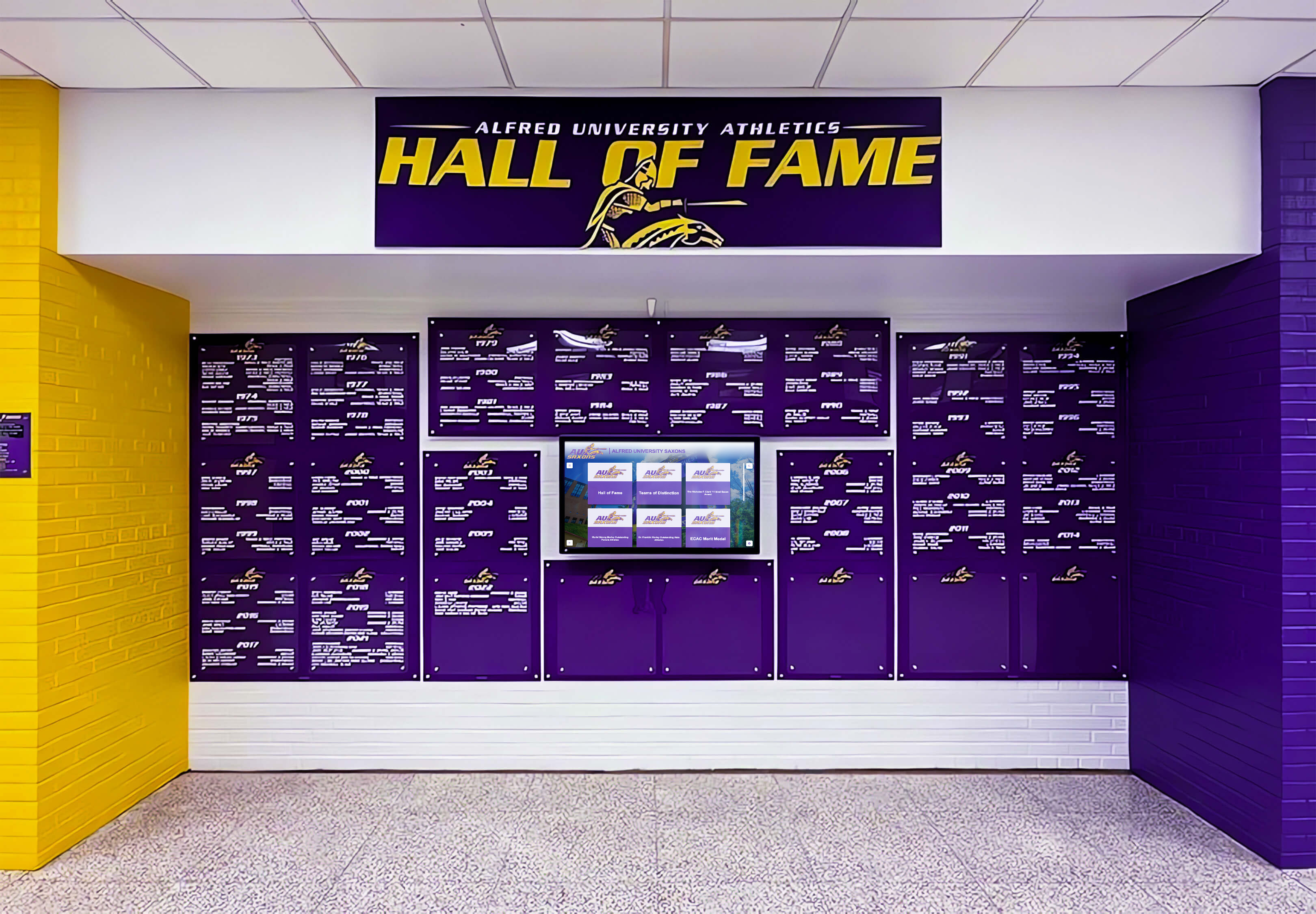
Consider your school’s existing recognition spaces. If you have a dedicated hall of fame corridor, lobby display, or trophy room, consider routing guests through those spaces before or after the main ceremony. The physical environment of existing recognition—seeing the plaques, jerseys, and displays of those who came before—puts inductees in an immediate emotional context that no amount of speeches can create.
Use lighting and staging to signal significance. Ceremony nights should feel different from a standard athletic event. Stage lighting, a podium, and coordinated school colors signal to everyone present that this is a formal occasion worth their full attention. Many schools position a large display screen behind or beside the stage so that inductee photographs, video clips, and tribute content can be shown during individual presentations.
Select a date that works for your inductees first. Before booking a venue or setting a date based on school calendar convenience, survey your inductees for conflicts. An induction ceremony where the inductee cannot attend because of a prior commitment is a missed opportunity for everyone. Most programs hold their induction ceremony adjacent to homecoming, a major game, or a reunion weekend to maximize alumni presence and create a natural audience.
Design a Ceremony Program That Flows
A hall of fame induction ceremony that runs too long loses the room. One that moves too quickly feels like a production line. The goal is a program that gives each inductee genuine recognition time while respecting the energy and attention of everyone in attendance.
A sample ceremony program structure:
Pre-Ceremony (30–45 min before)
Cocktail hour or reception with inductee displays running on digital screens. Guests explore the hall of fame, take photos, and reconnect. Background music sets tone.
Welcome and Opening (10–15 min)
Athletic director or principal opens the ceremony, acknowledges guests, and provides brief context for the hall of fame program's history and mission.
Individual Inductions (8–12 min each)
Presenter introduces the inductee with a prepared tribute. Video plays if available. Inductee receives their award and makes brief remarks. Photo opportunity at the podium.
Closing and Reception (15–20 min)
Closing remarks acknowledge all current and past inductees. Guests are invited to the reception and to view the updated hall of fame display. Photo opportunities at displays.
Limit individual induction segments to a firm time. When a ceremony runs beyond 90 minutes for a field of five or six inductees, attendee engagement drops sharply. Brief the presenter for each inductee on their time limit, and provide them a written tribute outline so they can prepare appropriately. Printed programs that list the running order help guests follow along and manage their attention.
For schools that also recognize students at the same event—retiring jersey numbers, naming scholarships, or celebrating season accomplishments—consider whether combining these elements with the induction ceremony serves the honorees well. In many cases, separating athletic department award nights from formal hall of fame inductions keeps each ceremony focused and appropriately weighted.
Planning end-of-year celebrations for schools that honor students follows many of the same principles: intentional sequencing, clear roles, and enough lead time to give each recognition moment its appropriate weight.
Craft Meaningful Inductee Tributes
The tribute—the spoken or video presentation that introduces each inductee—is the heart of any induction ceremony. A great tribute does more than recite statistics. It tells a story that helps the audience understand why this person earned this honor and what their legacy means to the program and the institution.
The elements of a strong inductee tribute:
- Context, not just credentials. What was the program like when this person arrived? What challenges did they overcome? What did they leave behind that didn’t exist before them?
- A specific story or moment. The most memorable tributes center on a single specific moment—a game, a season, a decision—that illustrates character as vividly as any statistic.
- The voice of those who knew them. A brief quote from a former teammate, coach, or family member (with their permission) brings texture that the presenter alone cannot provide.
- Connection to current students. A closing line that connects the inductee’s legacy to students in the gym right now gives the honor present-day relevance rather than historical distance.
Video tributes extend what words alone cannot deliver. A two-to-three minute video package that includes archival footage, photographs from the athlete’s playing days, and brief recorded remarks from family or former teammates creates an emotional experience that printed bios and live speeches cannot replicate. Schools that invest in even modest tribute video production consistently report that video segments are the most talked-about element of the ceremony in the days that follow.
If your school produces video tributes, consider formats similar to senior shoutout slideshow templates that combine photos, music, and text overlays to create polished tribute sequences. These formats translate well from senior recognition nights to hall of fame induction presentations, and many schools already have the production templates in place.
Prepare inductees for their own remarks. Not every inductee is a comfortable public speaker, and assuming they’ll know what to say without guidance creates awkward silences or rambling speeches that lose the audience. Provide inductees with a brief prep document—suggested length (two to three minutes is ideal), talking points to consider, and a reminder that the audience wants warmth and gratitude, not a career autobiography.
Make the Digital Display the Visual Centerpiece
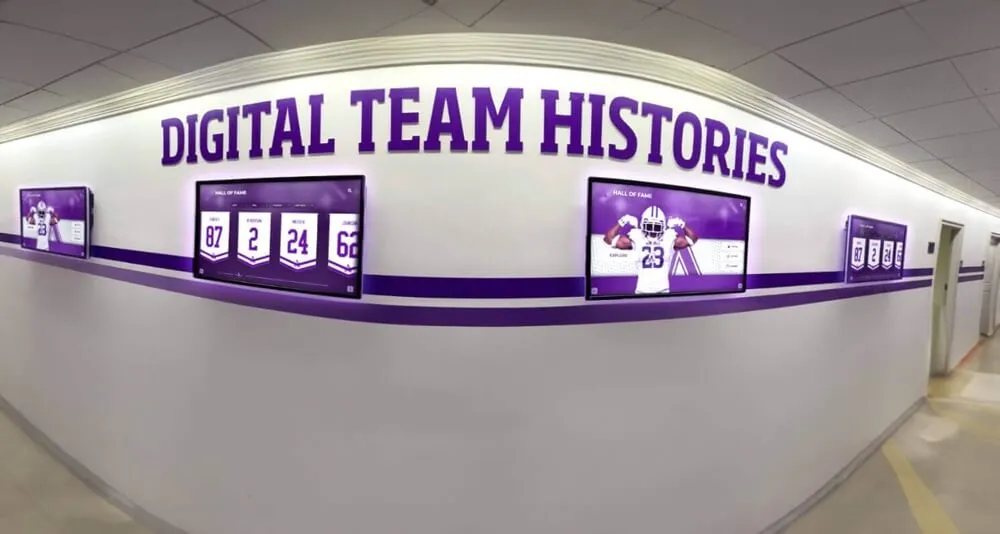
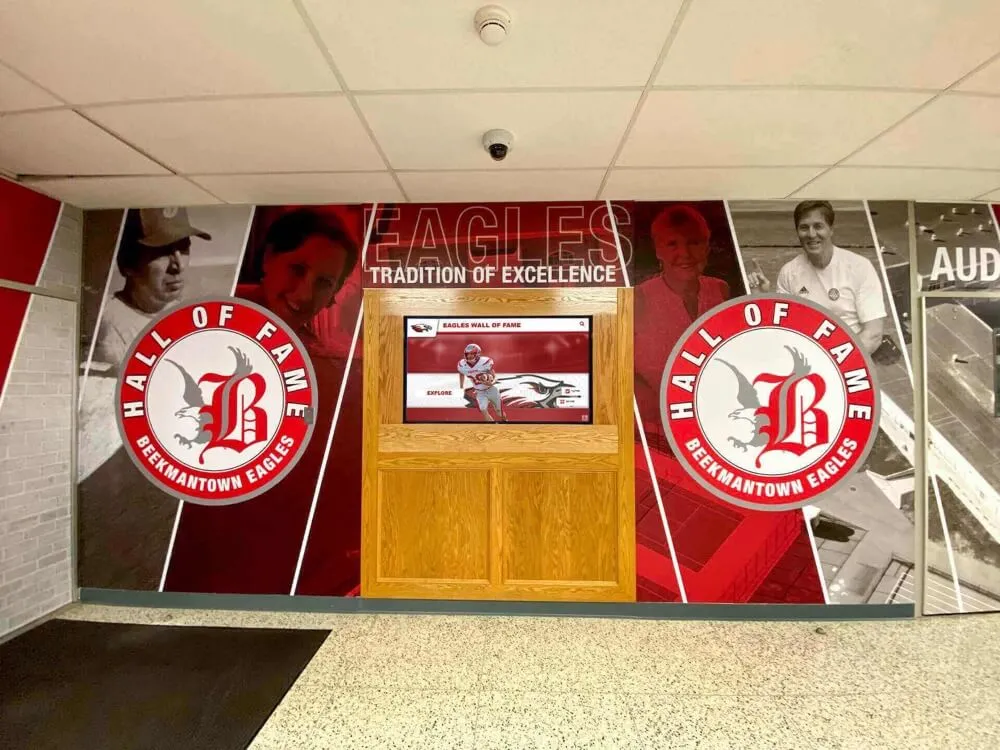
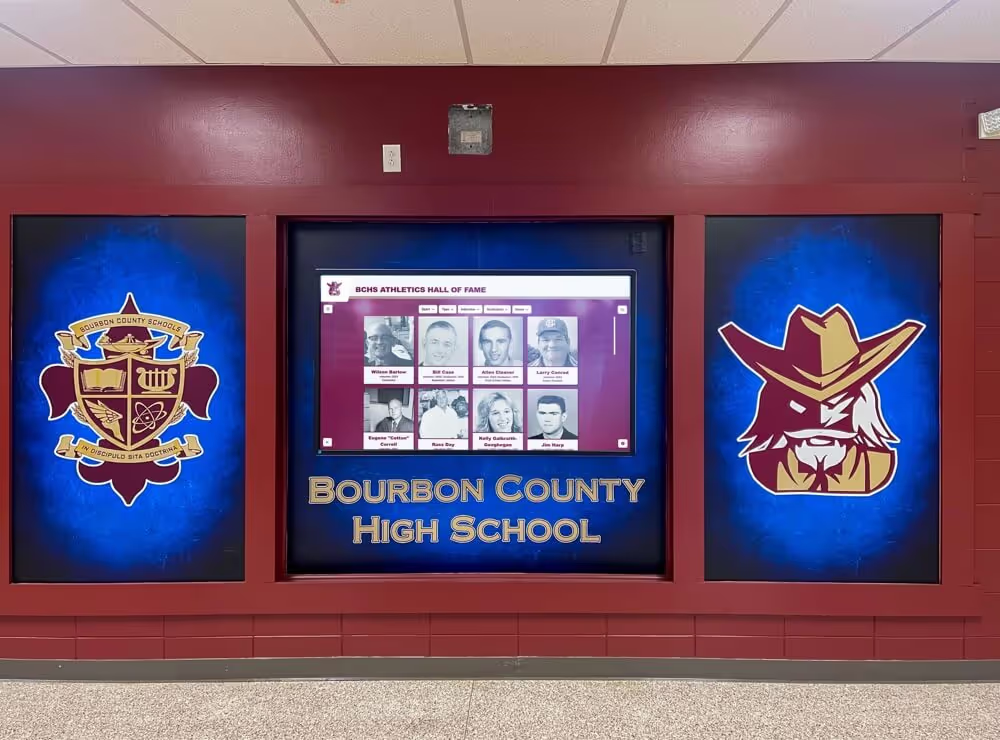
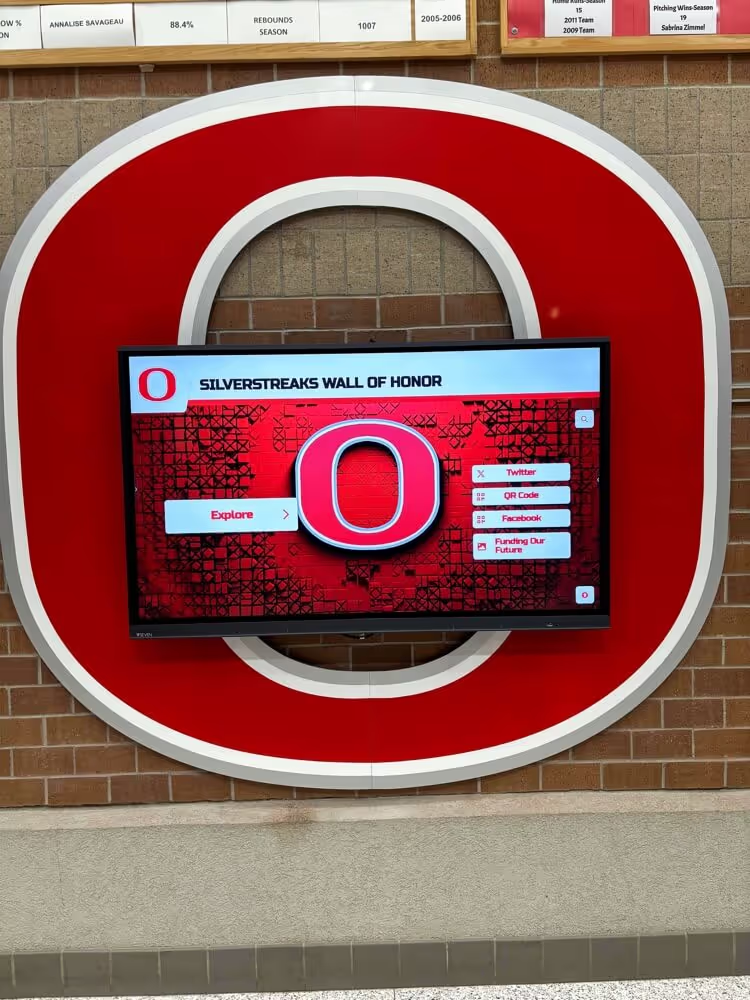
Of all the hall of fame induction ceremony ideas available to schools today, the one with the highest long-term return on investment is ensuring that a well-built digital hall of fame display takes center stage—both on the night of the ceremony and in the months and years that follow.
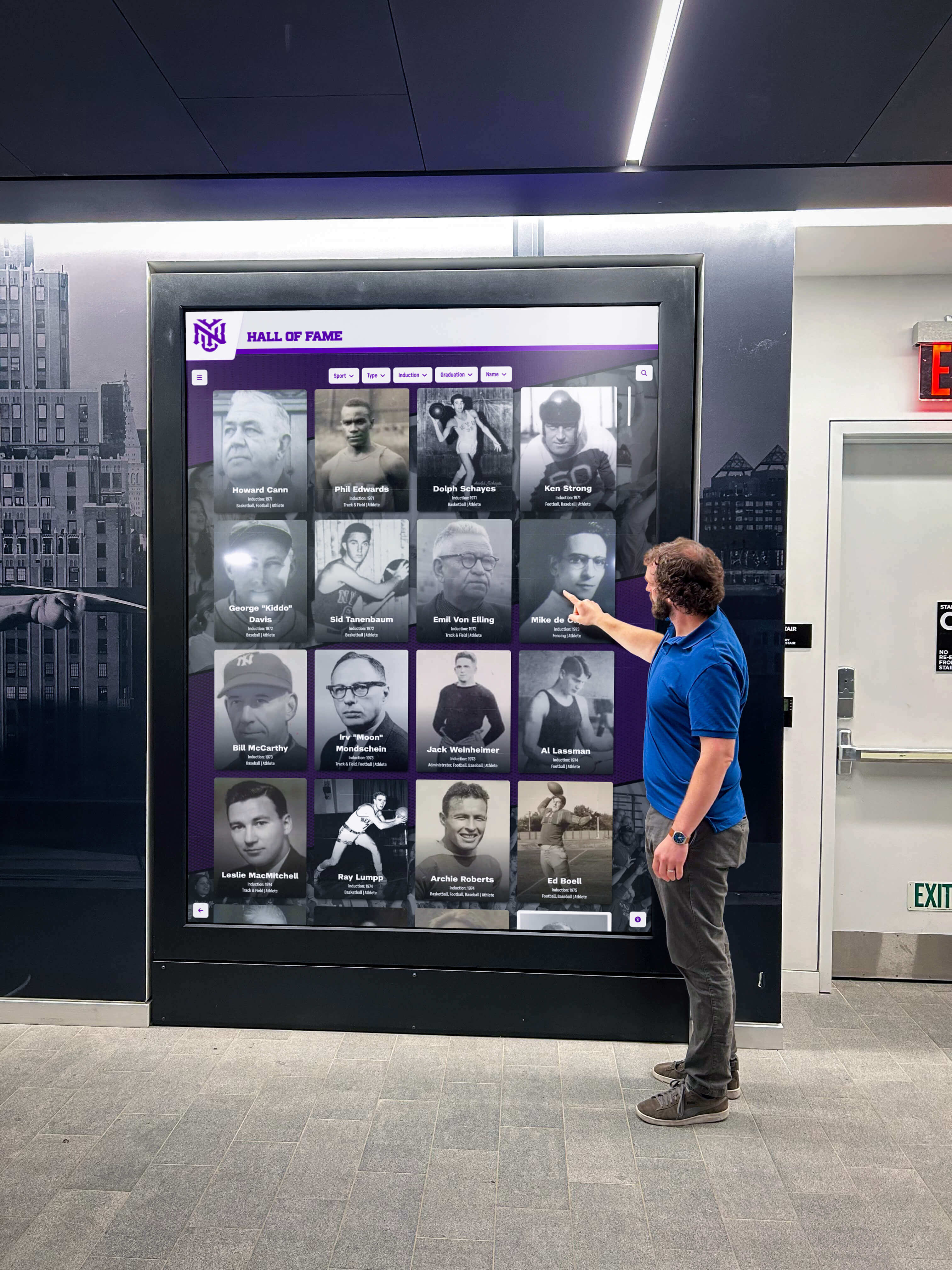
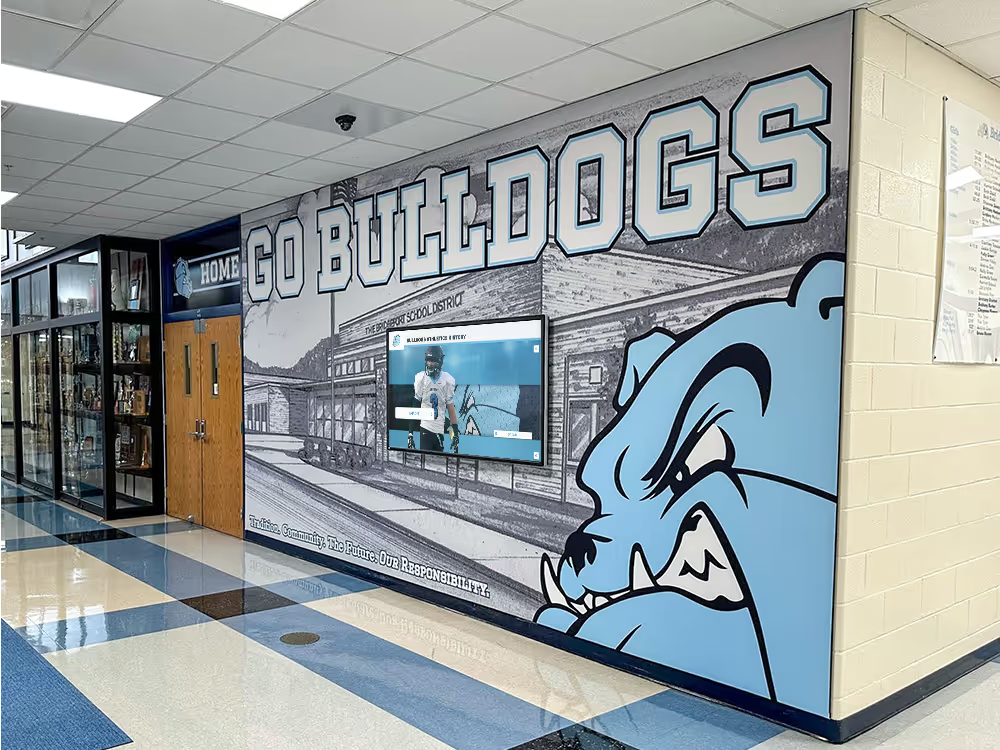
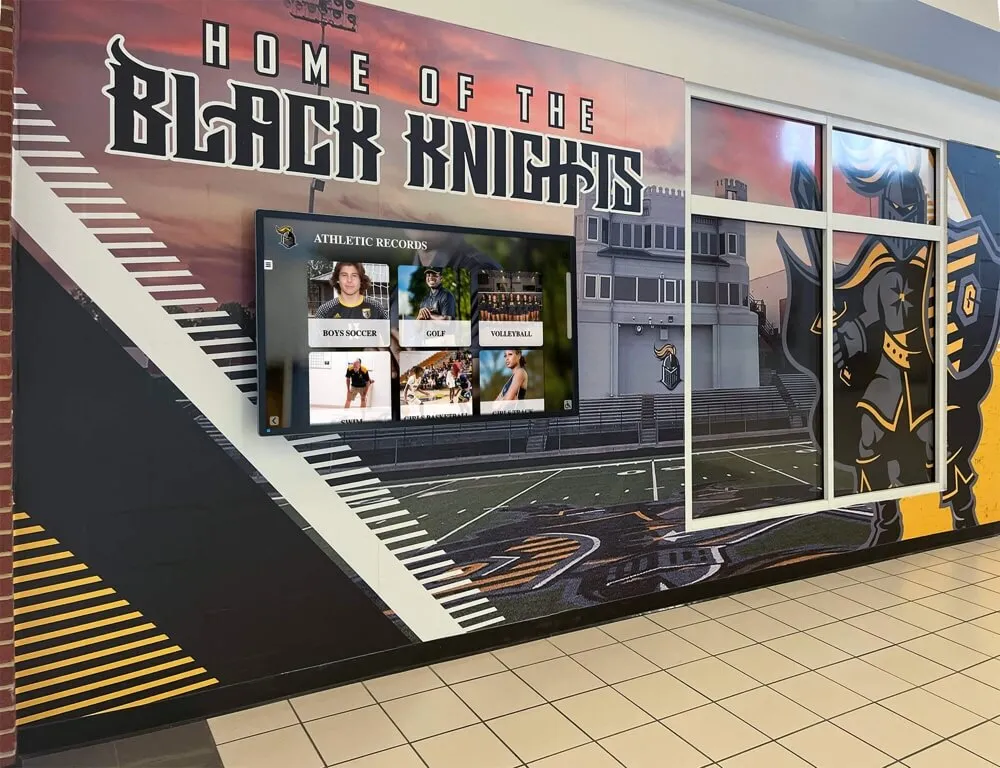
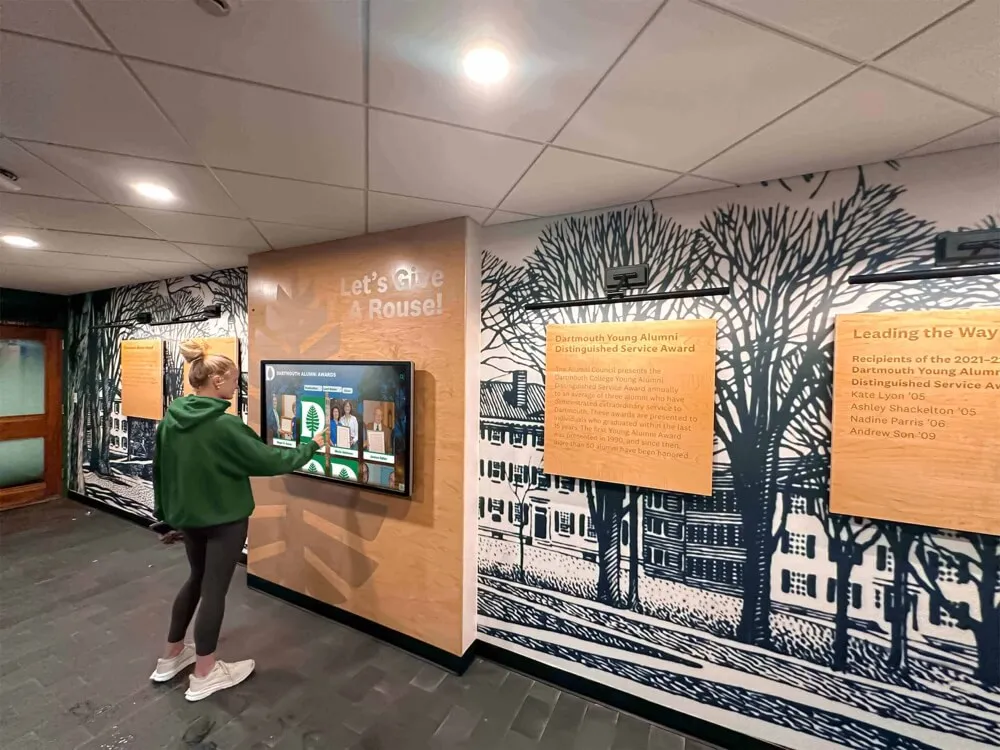
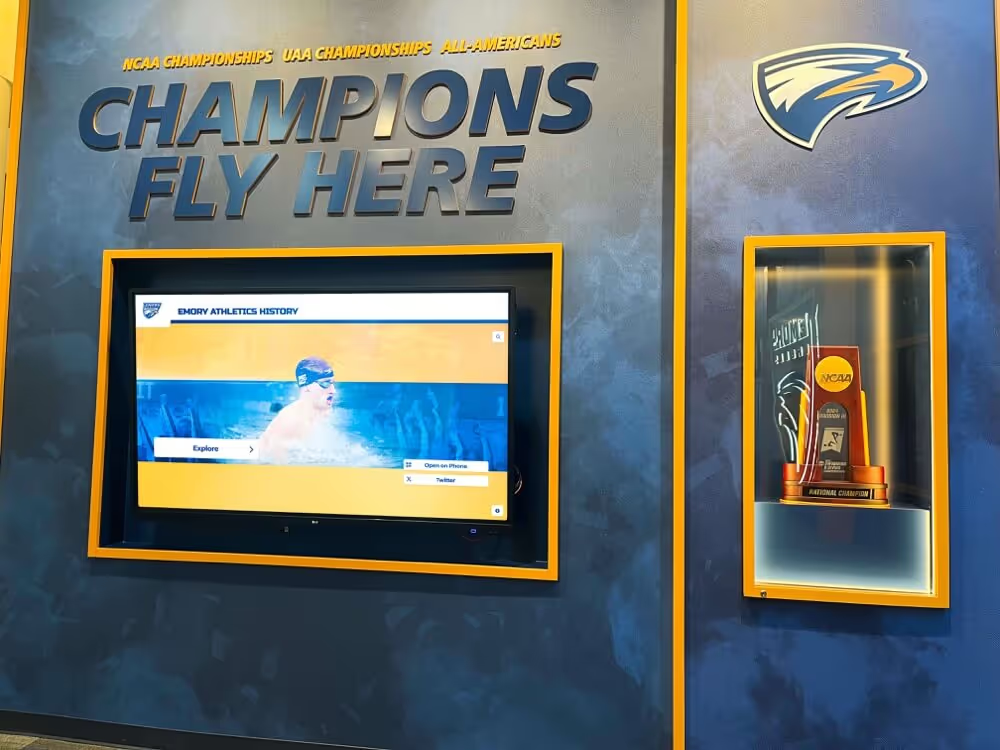
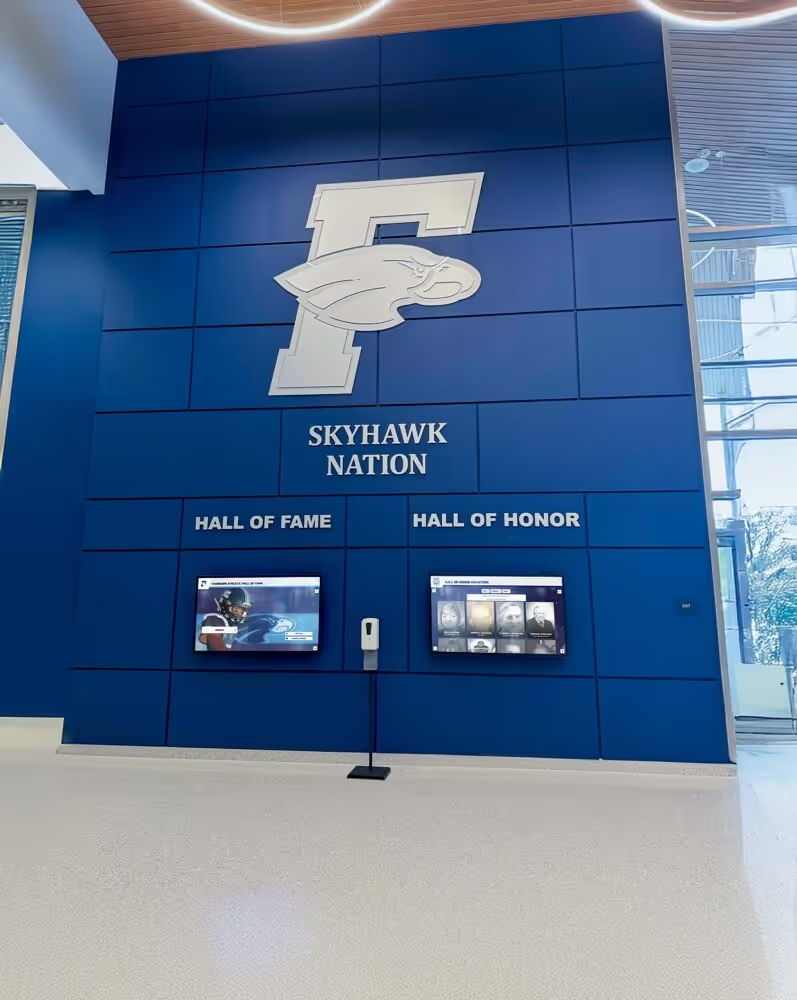
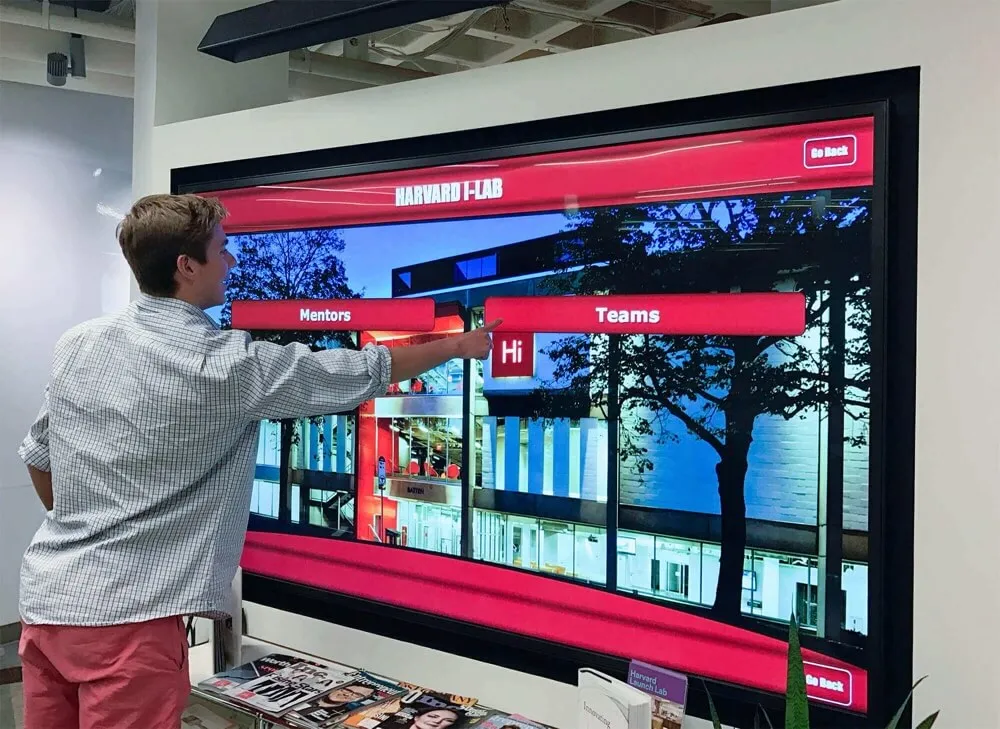
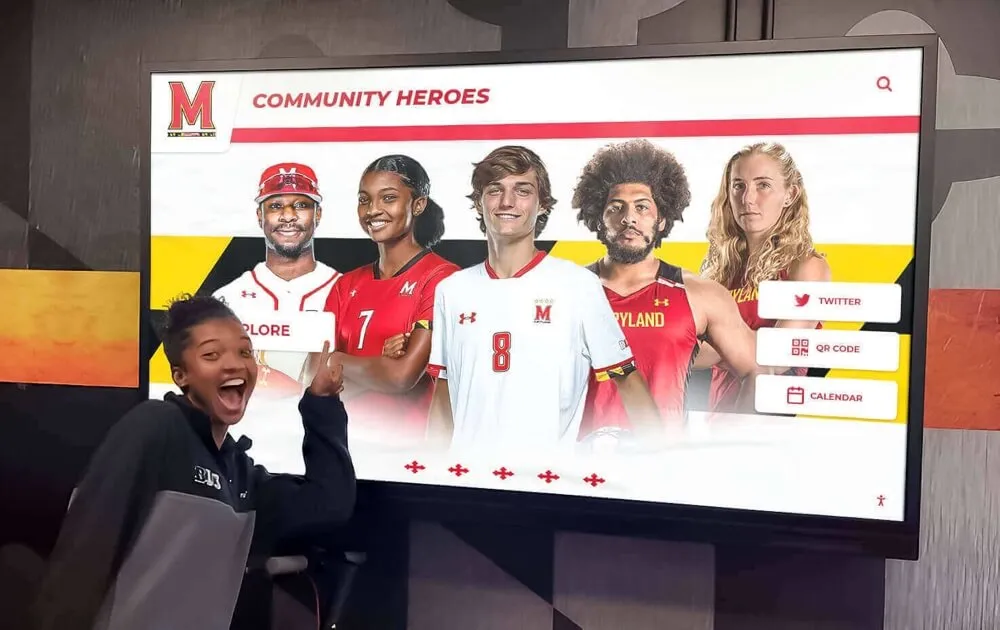
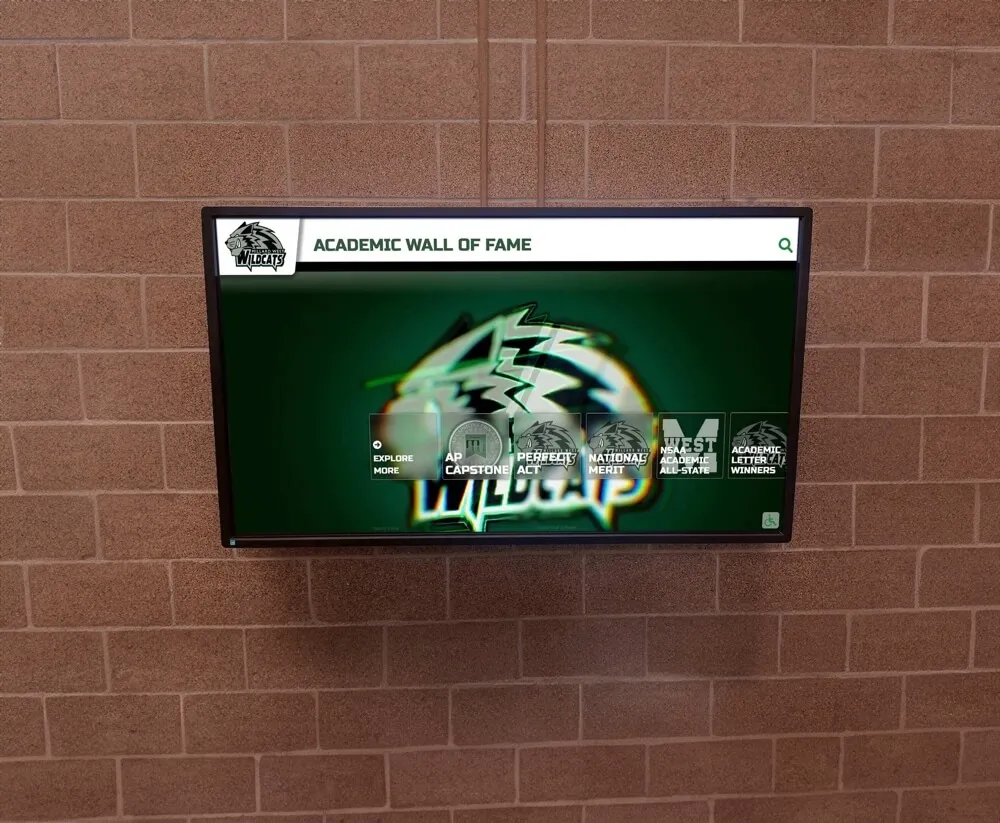
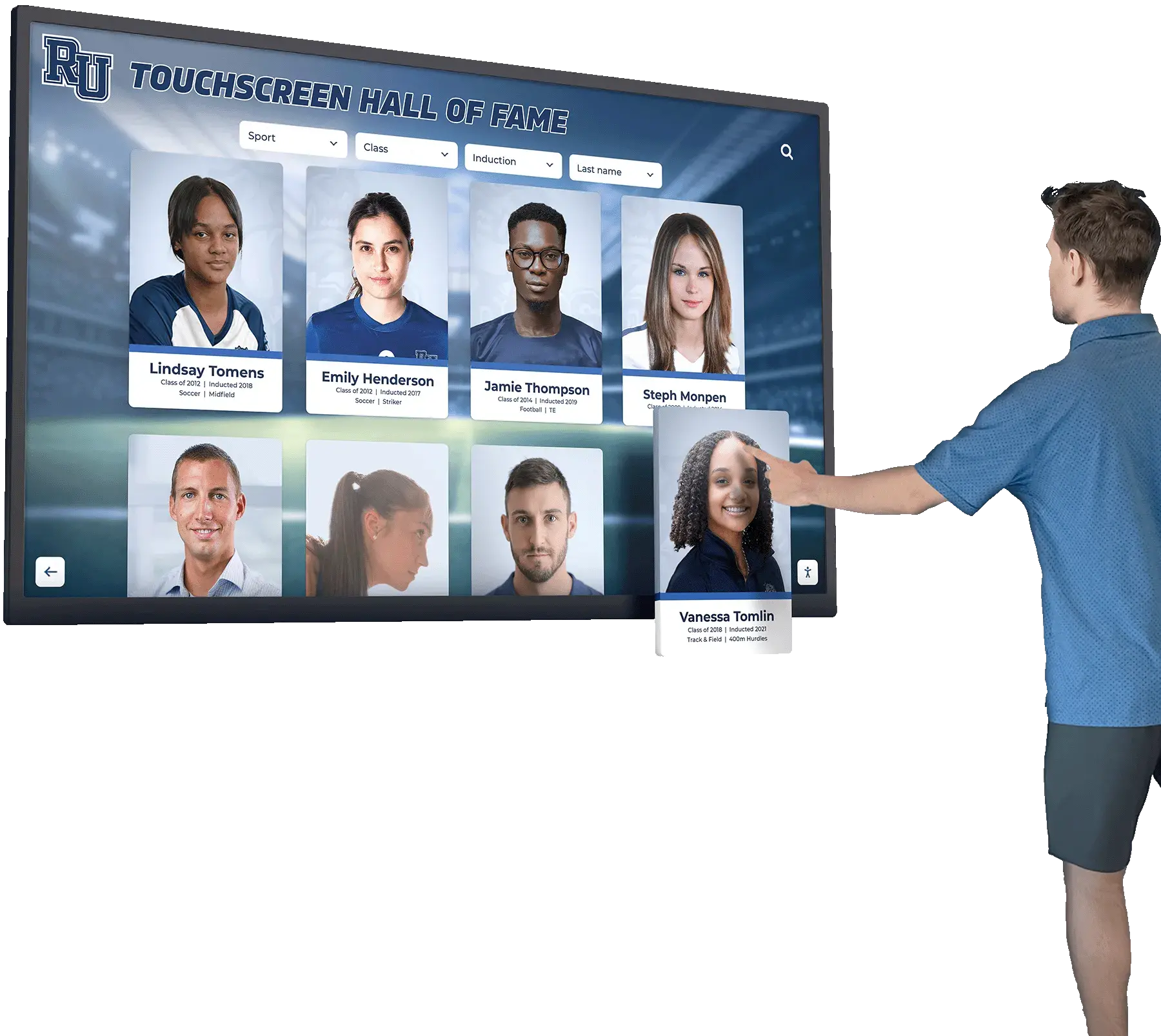
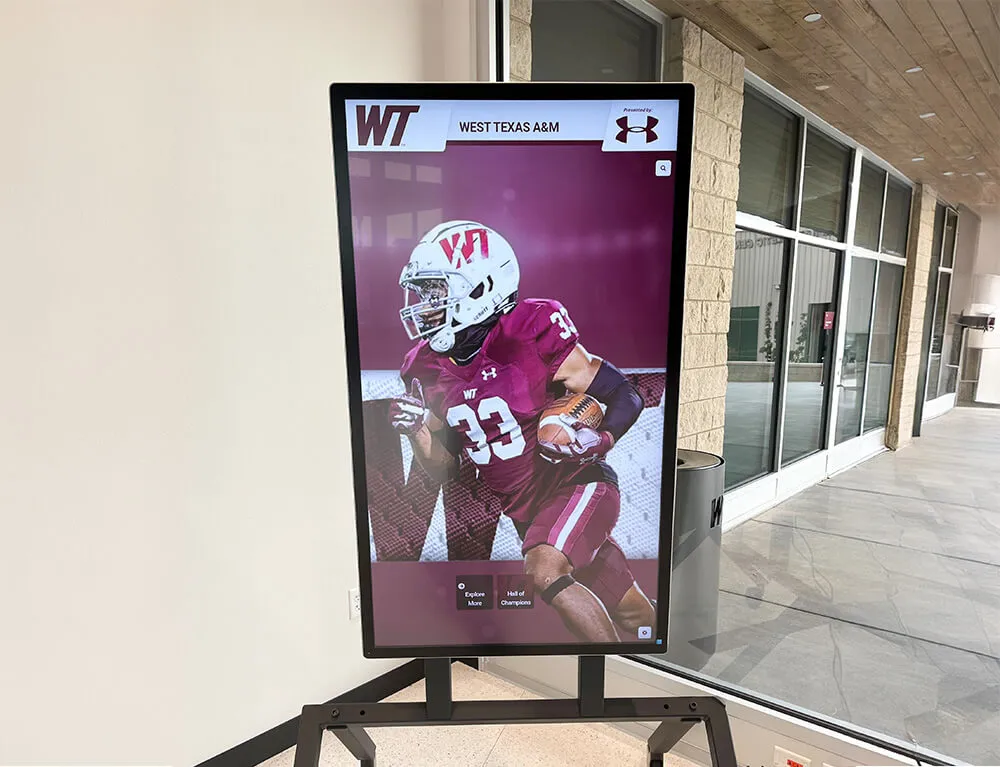
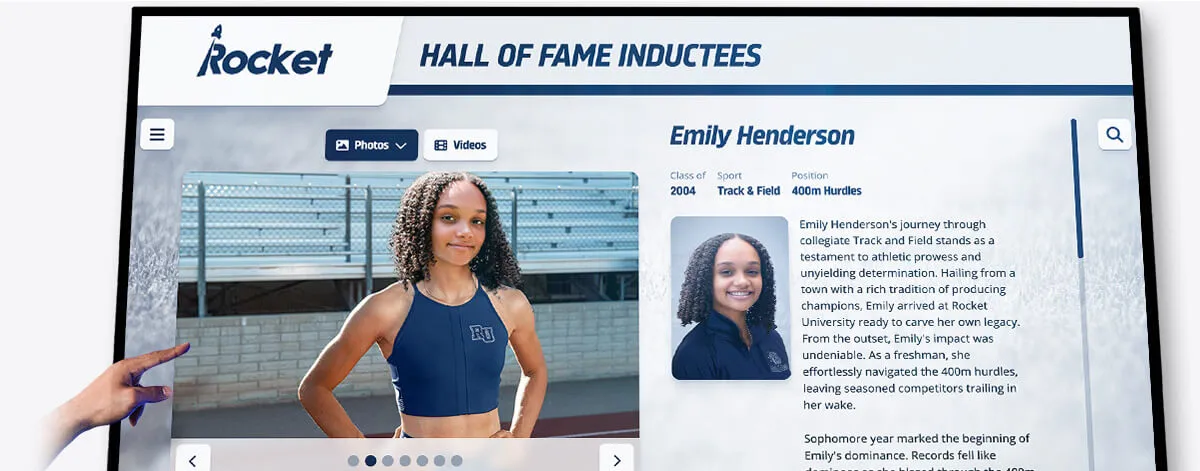
On ceremony night, a touchscreen hall of fame display serves multiple roles simultaneously. During the reception, guests explore inductee profiles, browse year-by-year class records, and discover historical context they couldn’t access from a trophy case. During the ceremony itself, the display screen can show inductee photographs and tribute content at scale. After the formal induction, new inductees take photos at the display, searching for their own profile and experiencing for the first time what it means to have their legacy permanently recorded in the institution’s history.
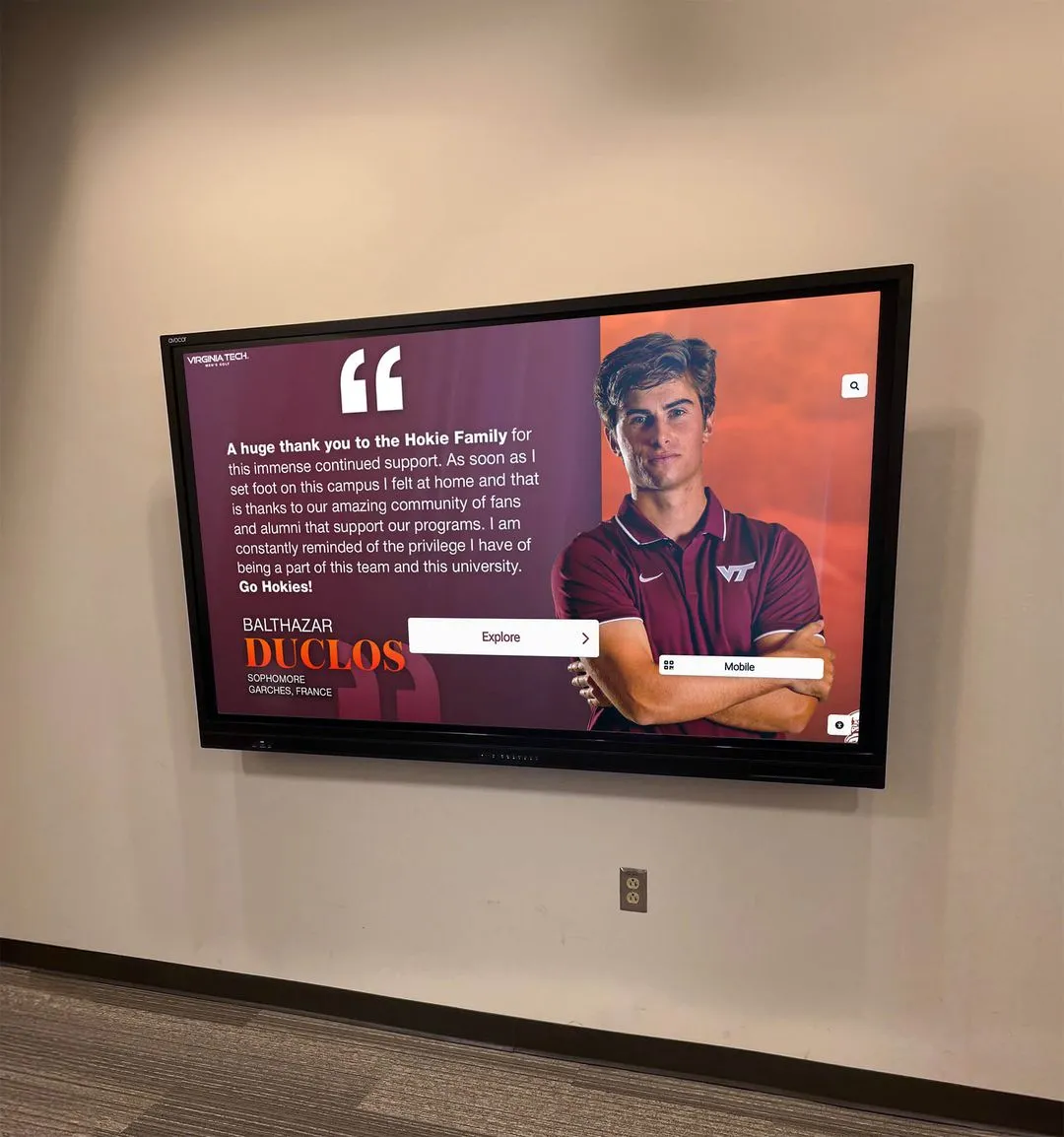
The experience of seeing your name, photo, and achievements on a touchscreen display that thousands of future visitors will interact with is qualitatively different from receiving a framed certificate. It communicates permanence. Schools that have invested in digital hall of fame displays consistently report that the display itself becomes one of the most discussed elements of the induction night—both among new inductees and among veteran inductees who discover that their profile has been enriched with new content.
Update the display before the ceremony, not after. New inductees should be able to find their profile on the system on the night of the event. This means content management deadlines for photos, bios, and statistics need to be built into the planning timeline well in advance. There is no more powerful moment in a hall of fame induction than when a new inductee walks up to the touchscreen for the first time and finds themselves there, alongside decades of predecessors who share the same recognition.
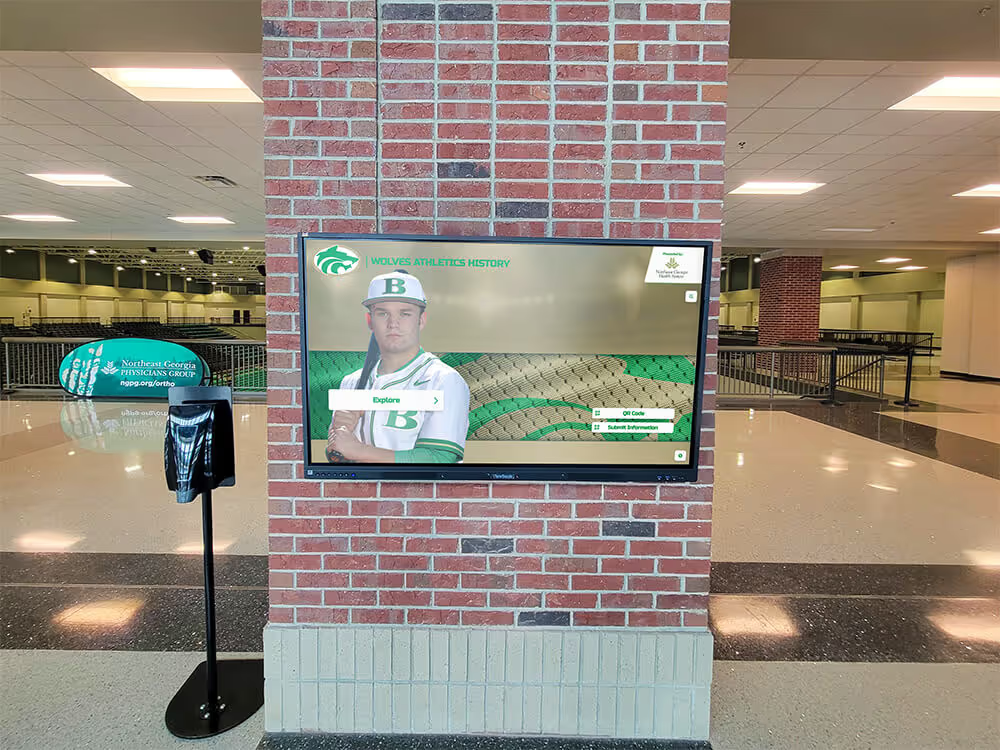
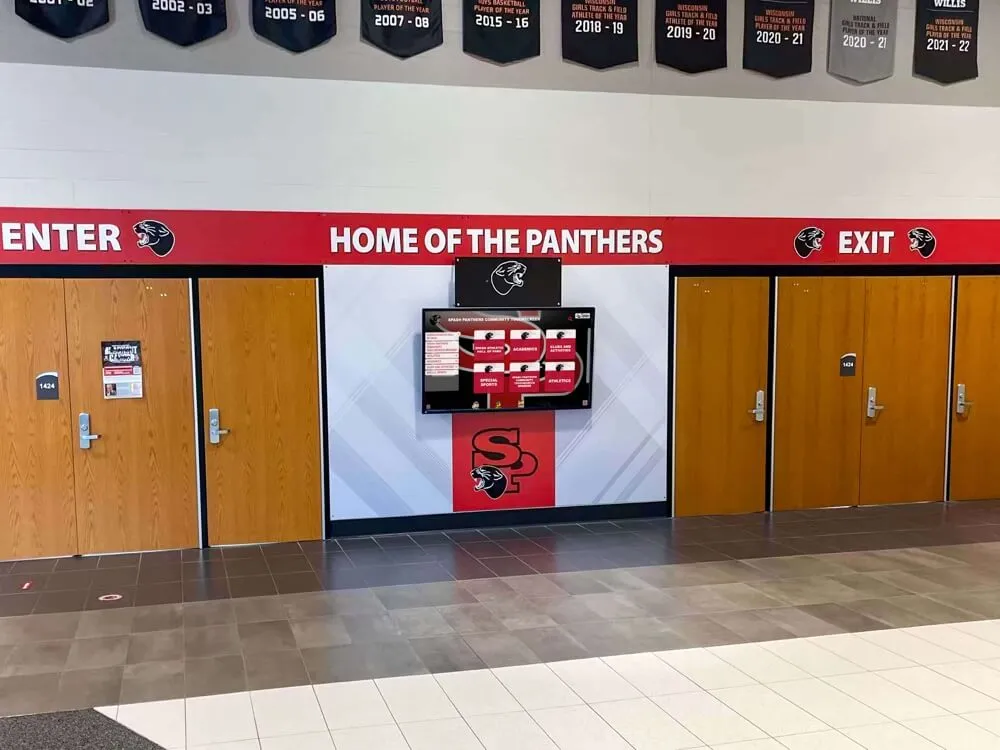
Position the display where guests gather. During the reception phase of the ceremony, the display location determines how much organic engagement it receives. A display positioned in a lobby or corridor that guests pass through naturally gets far more interaction than one tucked into a side room. For induction night specifically, if your display is not in the event space, consider creating a print or projected version of the inductee profiles that can run on a projector or large screen visible to the audience during presentations.
Permanent Recognition Beyond the Night
The ceremony is one night. The hall of fame is permanent. Induction ceremony planning should always keep both timescales in mind—making the event memorable while ensuring that the physical and digital recognition that follows serves inductees for decades.
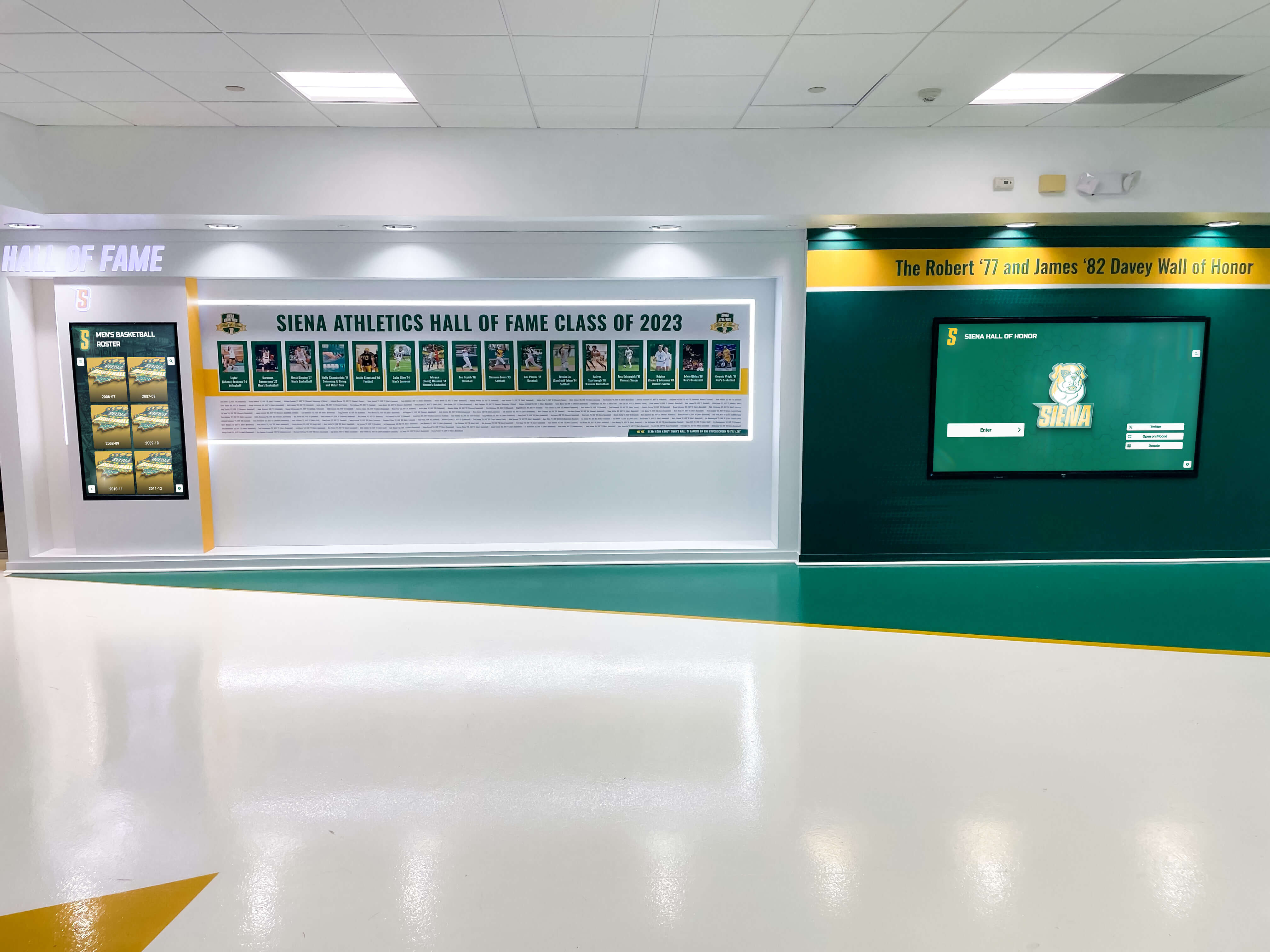
Physical recognition elements to consider alongside digital displays:
- Dedicated inductee plaques or panels. Whether mounted in a hallway, gymnasium lobby, or dedicated recognition room, physical plaques give inductees something tangible to point to when they bring family members back to campus.
- Retired jersey displays. For athletic inductees, a retired jersey mounted and displayed in the gymnasium is one of the most visually immediate forms of permanent recognition.
- Dedication naming. Courts, fields, locker rooms, or meeting rooms named for inductees create institutional memory that students encounter daily, not only during formal events.
For schools developing the physical elements of their recognition program alongside digital components, resources on dedication plaque ideas for schools provide design and placement guidance that ensures plaques are both visually impactful and durable over time.
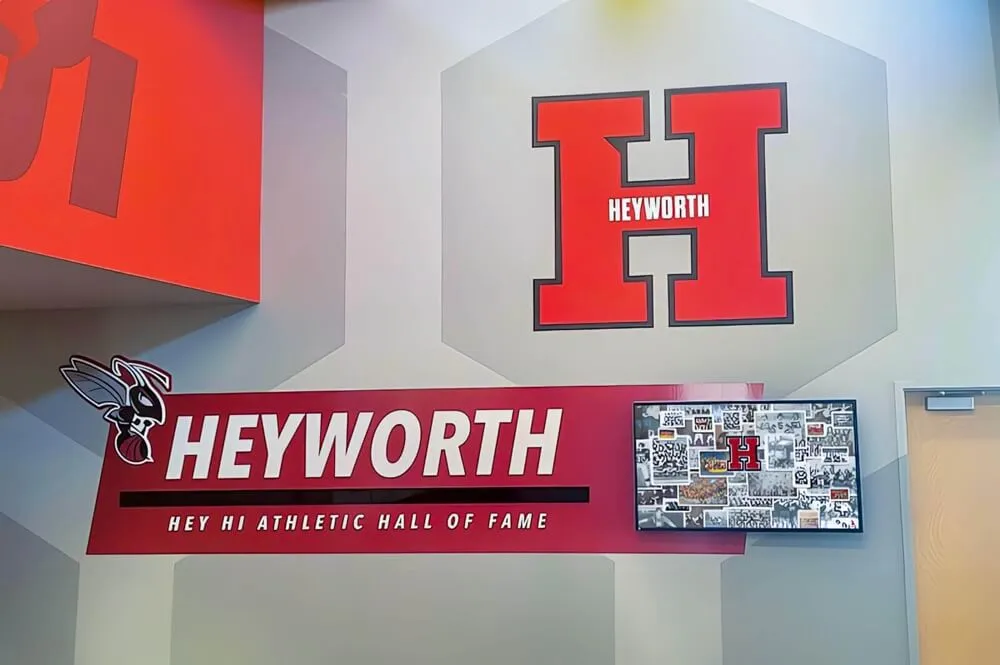
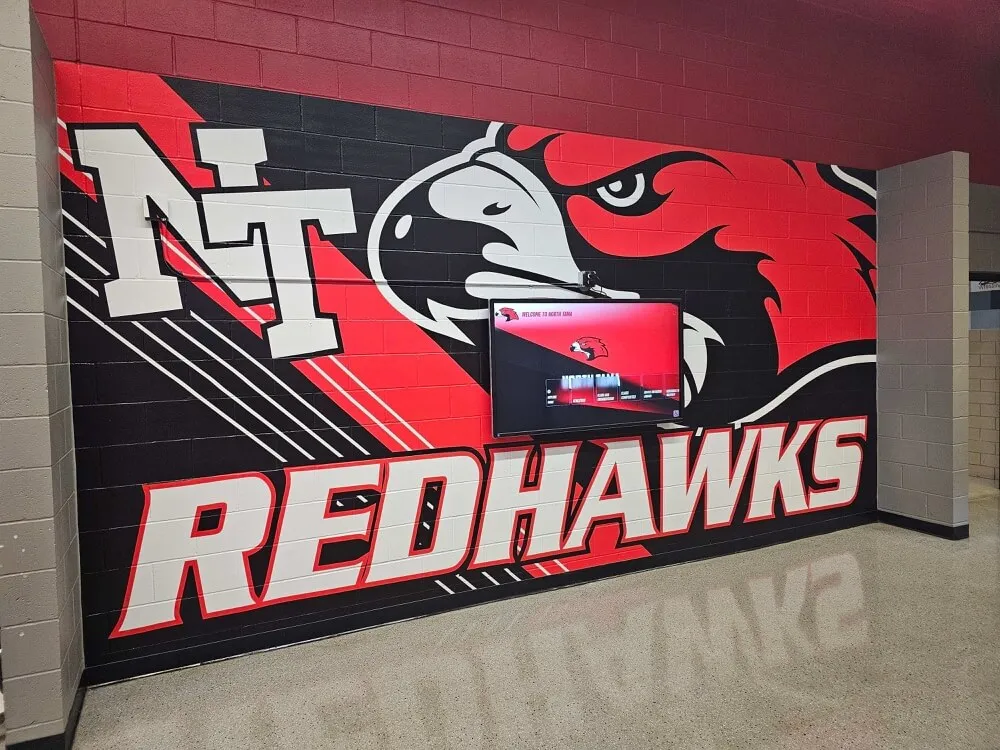
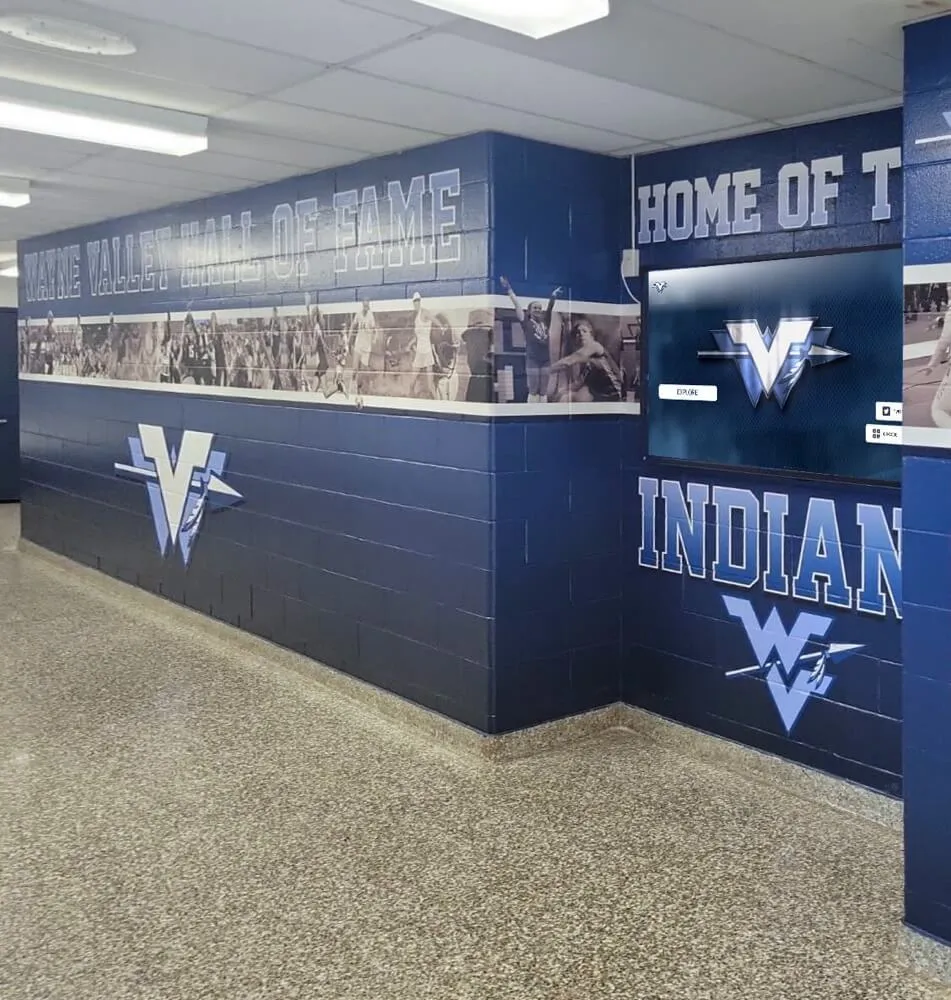
Similarly, schools investing in comprehensive recognition environments—where inductees, donors, and academic honorees are all represented—benefit from understanding how wall wraps and large-format displays in schools can be used to create cohesive, school-branded recognition environments that integrate digital and print elements.
Connect inductees to a broader legacy narrative. Schools with long hall of fame histories should consider how each induction class relates to those that came before. Creating an induction class roster that is updated annually—both digitally and in print—gives inductees the context of their place in the school’s tradition. For programs with notable alumni who have gone on to professional careers, resources on high school hockey to NHL recognition programs illustrate how schools can build recognition programs that track alumni achievement across career trajectories rather than only honoring in-school accomplishments.
Guest Experience: Inductees, Families, and Fans
The ceremony serves multiple audiences simultaneously: the inductees themselves, their families, former teammates and coaches, current students and athletes, and school staff and administrators. A strong ceremony design accounts for each group’s experience rather than optimizing for only one.
For inductees: Prioritize advance communication, clear logistics, and enough time for photos and personal connection. Inductees who feel rushed through the night—one presentation, one handshake, out the door—leave without the emotional closure the honor is meant to provide. Plan for at least 30–45 minutes of unstructured reception time after the formal ceremony concludes so inductees can connect with former teammates, explore the display, and speak with current athletes and coaches.
For families: Families often travel significant distances for induction nights. Help them feel oriented and recognized. Reserve seating near the front for inductee families, provide name tags that identify family members, and consider a family portrait station where inductees can have formal photos taken with their families near the hall of fame display. These photographs often become the most valued takeaway from the night.
For current students and athletes: If current team members attend the ceremony, give them an active role rather than simply filling seats. Having current captains present the award to an inductee from their sport creates generational connection. Having the current team stand to acknowledge the inductee’s accomplishment gives present-day athletes a way to participate in the tradition they are building toward.
For fans and community members: Create clear programs and signage so community attendees without insider knowledge of the inductees’ achievements can follow along and understand why each person is being honored. A brief bio insert in the printed program for each inductee brings non-athletic-department guests into the story.
Schools that have built strong recognition cultures around academic honors recognition understand that clarity in defining and communicating the criteria for any honor—whether athletic or academic—is essential to making the recognition feel meaningful and credible to all audiences.
Keepsakes and Mementos That Last
Beyond the award itself, inductees benefit from tangible mementos that extend the ceremony experience into their home and daily life. These don’t need to be expensive to be meaningful.
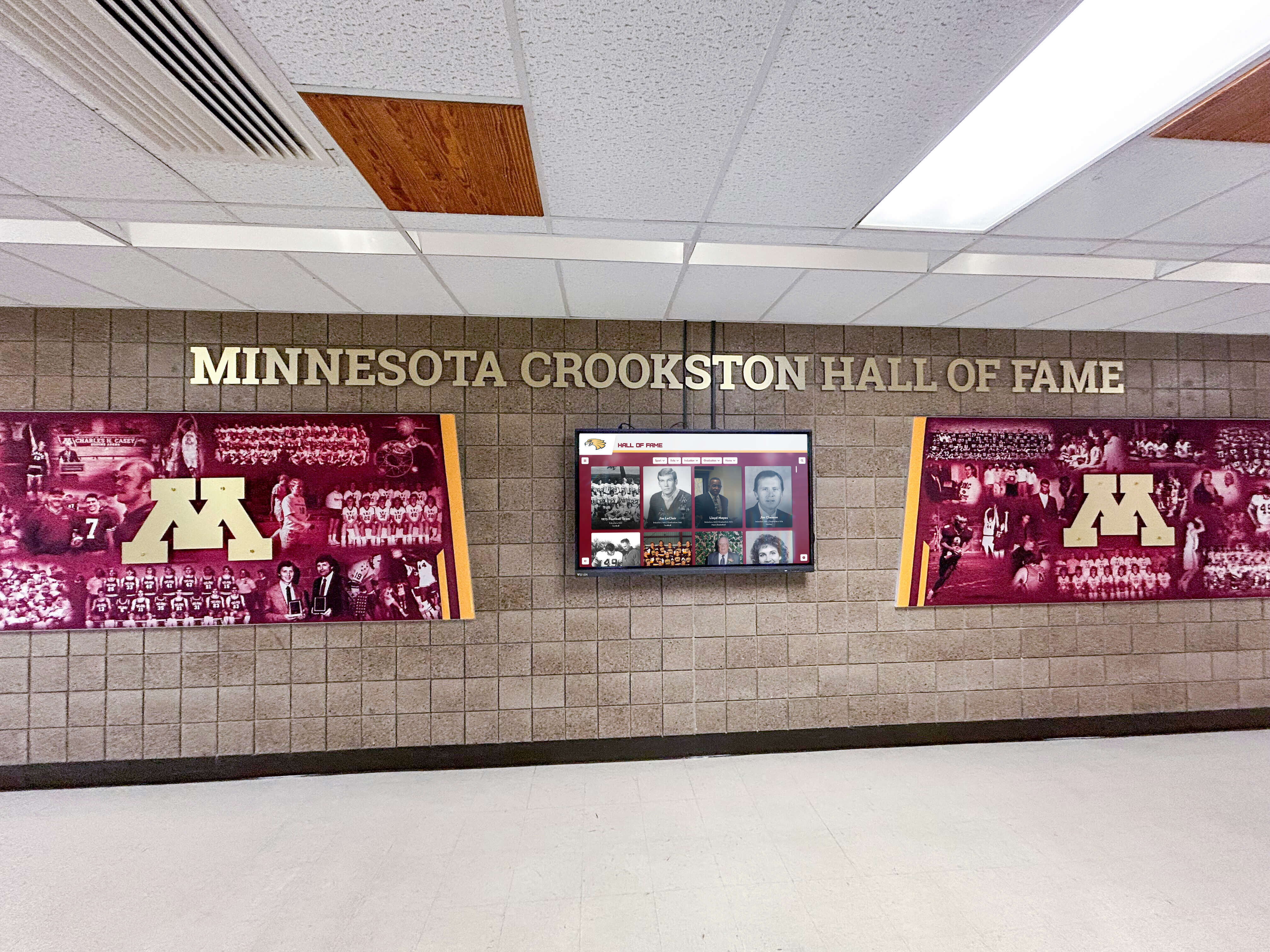
Effective inductee keepsakes:
- Framed induction certificate with class photo. A professionally framed certificate that includes the inductee’s name, class year, and a small group photo from the night provides a display-ready item that most recipients will hang in their home or office.
- Commemorative photo book. A printed photo book covering the inductee’s playing career—assembled from archival photos gathered during the tribute research process—is one of the most personal gifts a school can offer. Many families don’t have a comprehensive record of photographs from the inductee’s playing years, and a curated book becomes a family heirloom.
- Personalized display profile card. A printed card-stock version of the inductee’s digital profile—including their photo, career highlights, and record—gives them a physical artifact that mirrors their permanent digital presence in the hall of fame.
- Commemorative video file. Providing inductees with a digital copy of their tribute video gives them something they can share with family members who couldn’t attend and revisit for years.
For schools exploring creative award formats, resources on senior superlatives and award ideas offer creative thinking about how to make recognition feel personal and specific rather than generic. Many of those principles apply equally to hall of fame induction gift design.
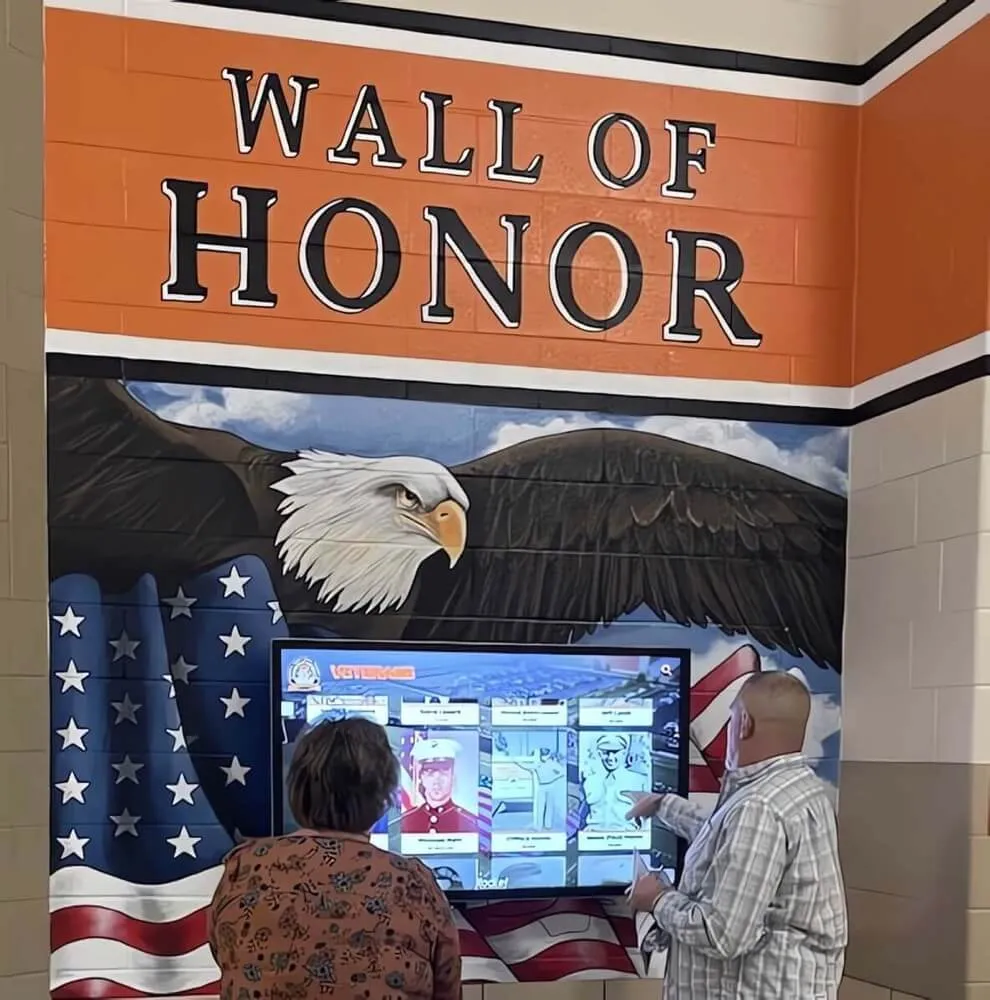
Schools with military veteran honorees or inductees with service histories should also consider how memorial and tribute displays can be incorporated into the recognition program—both as permanent installations and as ceremony elements that honor service alongside athletic and academic achievement.
Live-Streaming and Digital Archives
Inductees’ family members, former teammates, and out-of-state supporters who cannot attend the ceremony in person deserve a way to experience the night. Live-streaming the ceremony—even with a basic setup—dramatically expands the reach of each induction and signals to inductees that the school is committed to honoring them fully rather than only for the guests in the room.
Live-streaming basics: A single camera positioned at a good angle to capture the podium and display screen, a basic streaming platform (many schools already have access through existing platforms), and a designated staff member managing the stream can create a professional enough broadcast to serve family members watching remotely. Sharing the stream link in advance gives out-of-state family members something to plan around and contributes to the ceremony’s significance.
Archive ceremony footage. Uploaded recordings of induction ceremonies serve multiple purposes over time. They become reference material for future tribute production, institutional history documentation, and inductee personal archives. Schools with digital memory archives for student and alumni history understand the value of systematically preserving recognition content in formats that remain accessible and searchable for decades rather than being lost in aging VHS tapes or failing hard drives.
For schools considering how to connect inductee recognition to broader recruitment and alumni engagement goals, understanding how college recruitment and athletic achievement recognition intersects with institutional storytelling helps frame the hall of fame program as a recruitment and retention tool, not only a historical archive.
Common Mistakes to Avoid
Even well-intentioned ceremony planning can undermine the experience through a few recurring errors. Awareness of these pitfalls helps committees course-correct before night-of.
Notifying inductees too late. A six-to-eight-week notification window is the minimum necessary for inductees to arrange travel, notify family, and prepare remarks. Less than that, and you risk inductees who can’t attend their own induction—or who show up feeling rushed and underprepared.
Inducting by sport or year, not by person. Ceremonies that group inductees by sport and rush through them as a category rather than giving each person individual presentation time feel impersonal. Each inductee has earned their moment; don’t abbreviate it in the name of efficiency.
Failing to update the digital display before the event. New inductees who arrive at the ceremony and cannot find their profile on the hall of fame display—because it hasn’t been updated yet—experience a deflating gap between the honor of the ceremony and the reality of the recognition system. Build content update deadlines into the planning timeline, not as an afterthought.
No structured photo time. Ceremonies that conclude without a clear invitation to photograph inductees at the display or stage leave families rushing to capture informal photos in dim lighting. Schedule a formal photo session—even ten minutes—with guidance on where to gather and who to include.
Neglecting former inductees. A ceremony that focuses exclusively on new inductees and ignores the community of former honorees in the room misses a significant engagement opportunity. A brief acknowledgment—asking all former inductees to stand, or displaying a roll call of past induction classes on the screen—reminds everyone present of the breadth of the tradition they’re participating in.
Putting It All Together
The best hall of fame induction ceremony ideas share a common foundation: they treat the honor as something earned over a career and a lifetime, not something completed in an evening. The ceremony is the moment of recognition. The display is the permanence. The archive is the legacy.
Planning committees that work backward from the inductee’s experience—asking at every decision point, “Does this serve the person being honored?"—consistently produce ceremonies that inductees and their families describe as profoundly meaningful. The venue, the tribute, the program, the gift, the digital profile: each element reinforces the others when they’re designed with that same intention.
Schools building comprehensive recognition programs—where induction ceremonies connect to permanent digital displays, web-accessible alumni profiles, and a living archive that grows each year—create something that far outlasts any individual event. The night of the ceremony is when the inductee receives the honor. The hall of fame is where the honor lives.
Ready to make your hall of fame induction ceremony as memorable as the careers it honors? Rocket Alumni Solutions builds interactive touchscreen walls of fame, digital inductee profiles, and web-based recognition platforms that give inductees permanent, searchable recognition—and give your ceremony a visual centerpiece worthy of the occasion. Explore how schools across the country are transforming their induction nights with technology that honors the past and inspires the future.