



Key Takeaways
A practical guide to hall of fame inductee revocation policy for schools—covering due process steps, vote thresholds, records retention, and how to update physical and digital displays after a decision.
A hall of fame inductee revocation policy is a written governance document that defines exactly when a school may reconsider an induction decision, how that review must be conducted fairly, what records must be preserved regardless of outcome, and how physical and digital displays are updated after a final determination. Having this policy in writing before any situation arises is what separates programs that handle rare, difficult cases with confidence from programs that improvise—creating legal exposure and community controversy in the process.

Why Schools Need a Written Revocation Policy
Most athletic hall of fame programs spend considerable effort on the induction side of governance—nomination criteria, voting thresholds, waiting periods, committee roles—and almost no effort on what happens if an induction decision ever needs to be revisited. That imbalance creates a governance gap. When a difficult situation arises without a written policy, the committee faces pressure to invent a process on the fly, often while the situation is already public and emotionally charged.
A written revocation policy does three things. First, it forces the committee to think through hard questions before any individual is involved, which produces clearer reasoning and better decisions. Second, it protects the institution by documenting that the process was fair and applied consistently. Third, it protects inductees by establishing that a review cannot be triggered by informal complaints, shifting community opinion, or political pressure—only by specific, documented circumstances defined in advance.
Programs that have thought carefully about their digital display infrastructure are generally better positioned to manage revocation updates. Schools that regret rushing their digital hall of fame software selection often discover the consequence most acutely during edge cases like revocations, when they need administrative tools—archiving, access controls, audit logs—that their platform was not designed to provide.
What Should Trigger a Revocation Review
Your bylaws should list the triggering circumstances explicitly and narrowly. Vague language—“conduct unbecoming” or “behavior inconsistent with our values”—gives the committee too much discretion and opens the door to inconsistent application.
The most defensible triggers share two characteristics: they are tied to documented, verifiable events rather than perceptions, and they would have disqualified the person from induction had the committee known about them at the time. Common examples include:
- Criminal conviction for conduct that directly conflicts with the values stated in your program’s founding documents
- Verified falsification of eligibility information (statistics, honors, graduation status) submitted during the original nomination
- Formal institutional action by a school board, district, or state athletic association that the committee has agreed in advance constitutes sufficient grounds for review
- Discovery of conduct predating induction that would have made the person ineligible under the criteria in effect at the time
Triggers that are generally not sufficient on their own include post-induction behavioral incidents unconnected to the program’s stated purpose, changing community sentiment about a historical figure, or disagreement with the original selection by new committee members.
Setting these boundaries in writing also shields your committee from being pressured into reviewing inductees whose recognition has become politically inconvenient. The policy is not just a tool for action—it is an equally important tool for declining to act when the trigger conditions are not met.
The same principle applies to other school recognition programs. Academic honor designations like those described in this overview of the Dean’s List and how institutions define it follow defined, criteria-based standards precisely because post-hoc subjectivity undermines the meaning of the recognition itself.

Due Process: The Seven-Step Review Framework
Once a legitimate trigger has been identified, the committee must follow a structured process. The steps below represent best practice for school-level programs; legal counsel or district administration should review this framework before adoption.
Formal initiation by the Chair. The Chair formally opens the review in writing, citing the specific trigger condition and the documentation that supports it. The review is logged in the committee’s official records on the date it is opened.
Written notice to the inductee. The inductee receives written notification that a review has been initiated, the trigger condition being considered, and the response deadline. Thirty days is a reasonable standard. Notice is sent by certified mail or confirmed electronic delivery.
Inductee response period. The inductee has the full response period to submit a written statement, supporting documentation, or both. The committee is not required to hold an in-person hearing at the school level, though some programs choose to offer one.
Closed deliberation. The committee reviews the triggering documentation and the inductee’s response in a closed session. No public announcement is made at this stage. Deliberation is documented in meeting minutes.
Documented vote. Members vote by written secret ballot. The threshold for revocation should match or exceed the threshold for induction—if your program requires a two-thirds supermajority to induct, require the same to revoke. Members with a personal conflict of interest must abstain. The vote tally is recorded by the Secretary.
Written decision notice. The inductee receives written notification of the outcome within a specified period—ten business days is typical. If revocation is upheld, the notice explains the basis for the decision and what records and display changes will follow. If the review concludes with no action, the record is sealed.
Committee records update. The Secretary files all materials—trigger documentation, inductee response, meeting minutes, vote tally, and notification letters—in a dedicated revocation file, separate from the inductee’s original nomination file.

For programs still building their foundational governance structure, simple hall of fame ideas that establish the basics correctly provides useful context on how selection and governance decisions fit together before adding revocation provisions.
Records Retention After a Revocation Decision
Physical removal from a display does not mean deletion from the historical record. Every document created during the revocation process belongs in permanent administrative storage. This is what makes the committee’s decision defensible if it is ever questioned by the inductee, a future administration, or a community member.
| Document | Retention Location | Access Level |
|---|---|---|
| Original nomination file | Administrative archive | Committee Chair and Secretary |
| Trigger documentation | Revocation file | Committee Chair and Secretary |
| Inductee written response | Revocation file | Committee Chair and Secretary |
| Meeting minutes from deliberation | Revocation file | Committee Chair and Secretary |
| Vote tally | Revocation file | Committee Chair and Secretary |
| Written notice to inductee | Revocation file | Committee Chair and Secretary |
| Physical plaque or certificate | Secured storage | Athletic Director |
| Digital profile export | Administrative archive | Display Coordinator |
The physical plaque or award certificate should be stored rather than destroyed. Future committees and administrators may need to reference it, and destroying it eliminates evidence that could protect the institution in a dispute.
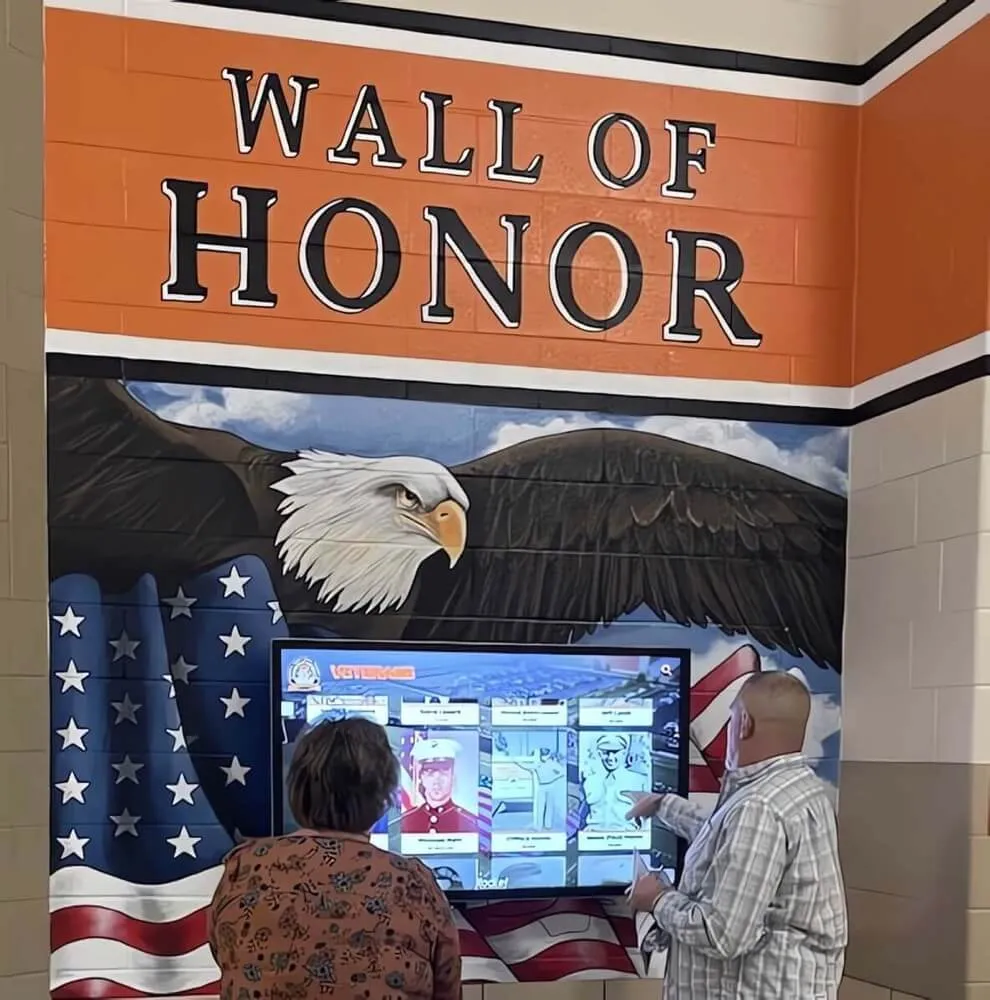
Parallel recognition programs—like the permanent military honor walls described in this guide to veterans’ walls of honor in schools—treat archival integrity with the same care, because the historical record carries institutional weight even when individual displays change.
Display Update Procedures: Physical and Digital
Physical Displays
After a revocation decision is finalized and the inductee notified, the Display Coordinator manages the physical transition. The sequence matters:
- Notify the inductee of the update timeline before making any visible changes to the display.
- Remove the plaque, nameplate, portrait, or panel within the period specified in your policy (30 days is a standard timeframe).
- Store removed materials in a clearly labeled, secure location. Do not discard.
- Patch or refinish the wall, board, or case to maintain a clean, intentional appearance—visible gaps or damage undermine the program’s professionalism.
- Update any printed directories, trophy case legends, or program books that list the individual’s name. Note the update date in each document.
- Document each step in writing: who made the physical change, on what date, and where materials were stored.
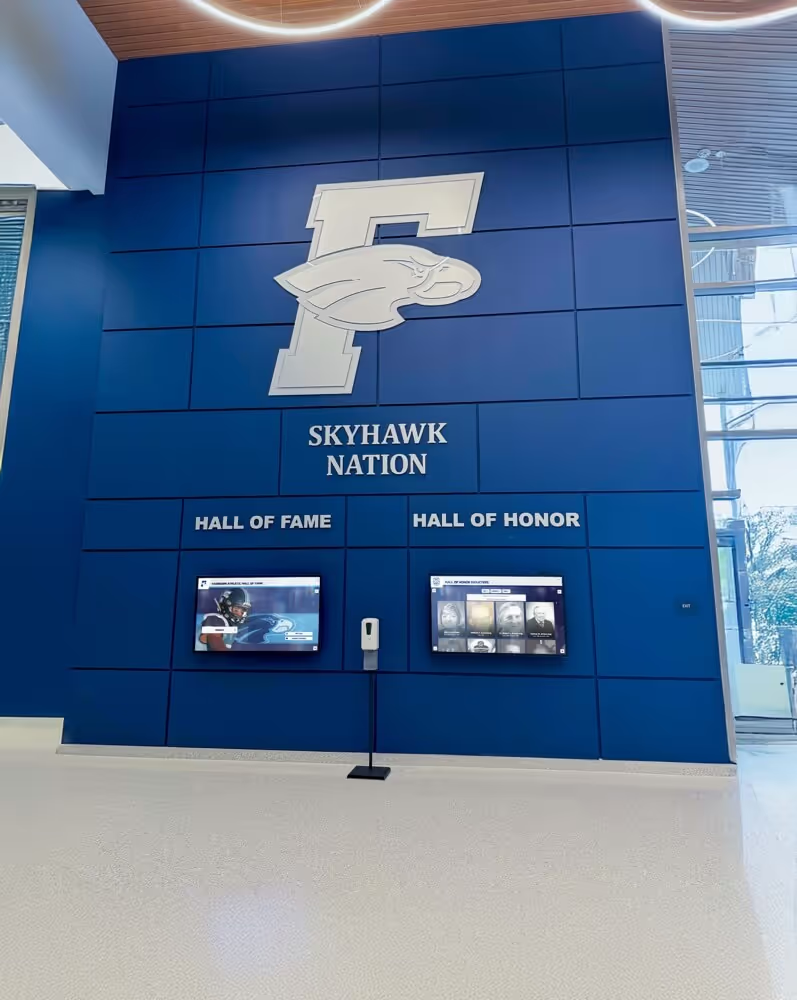
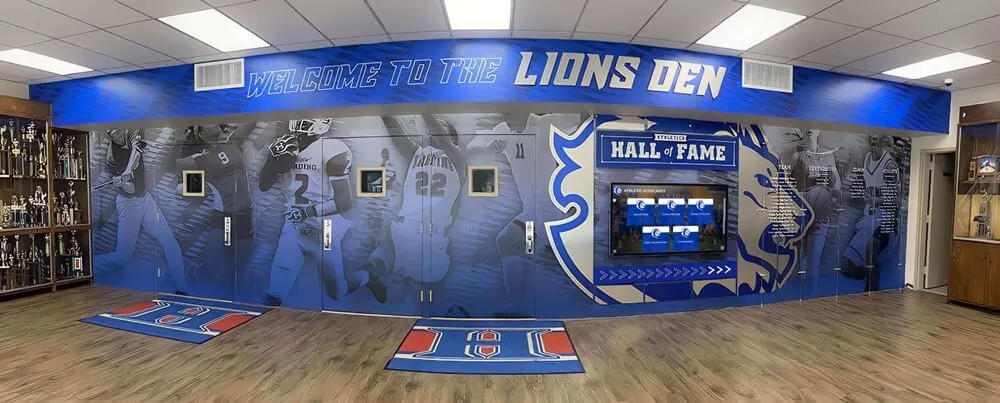
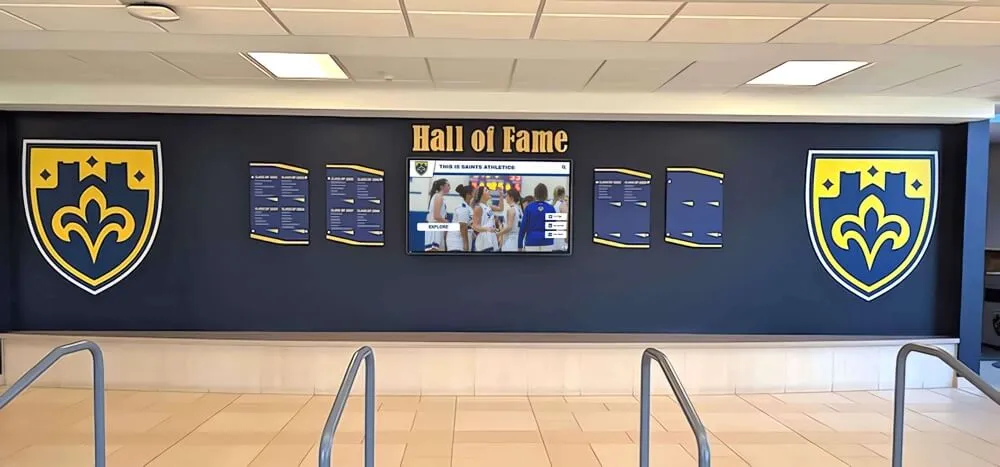
Thoughtful display design makes this process easier. Programs that have planned their school banner and display concepts for halls and gyms with modular sections can update individual panels without affecting the visual integrity of surrounding recognition.
Digital Displays
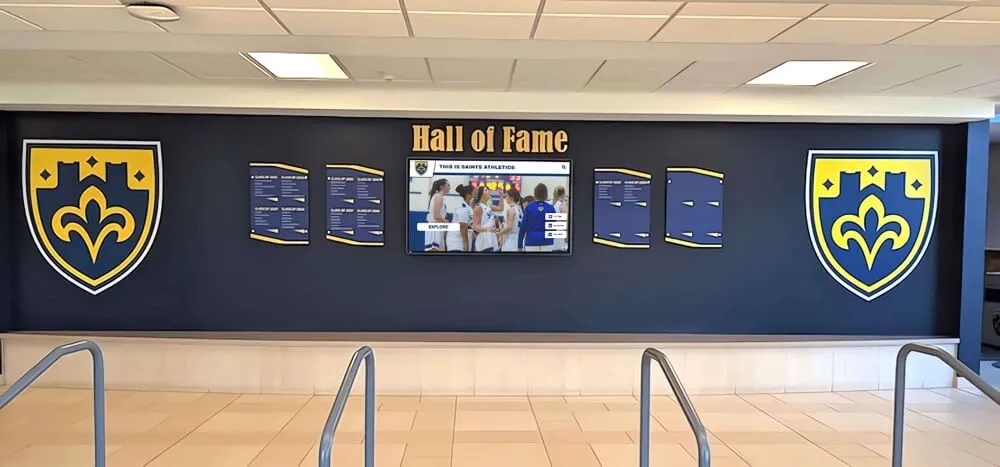
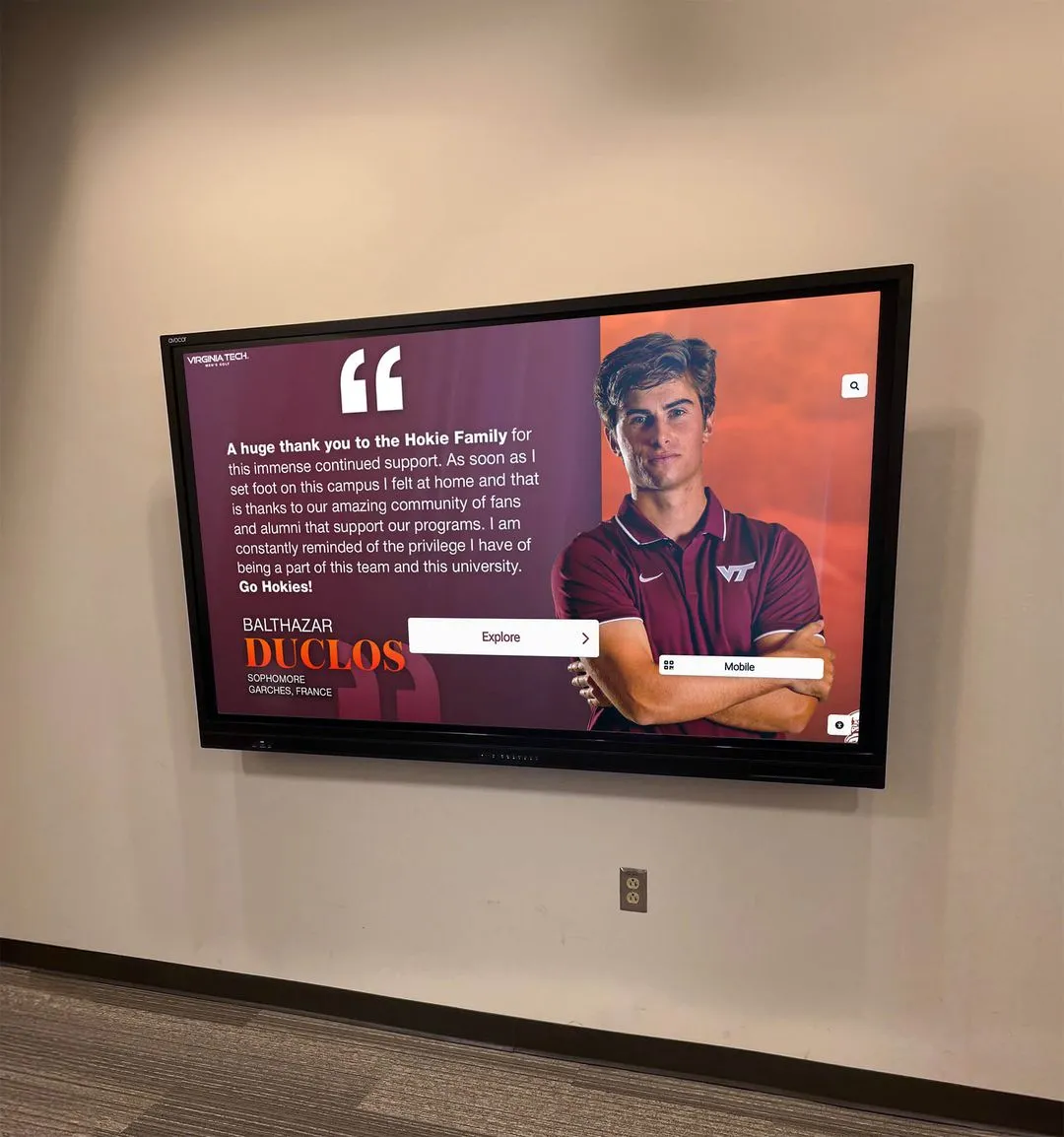
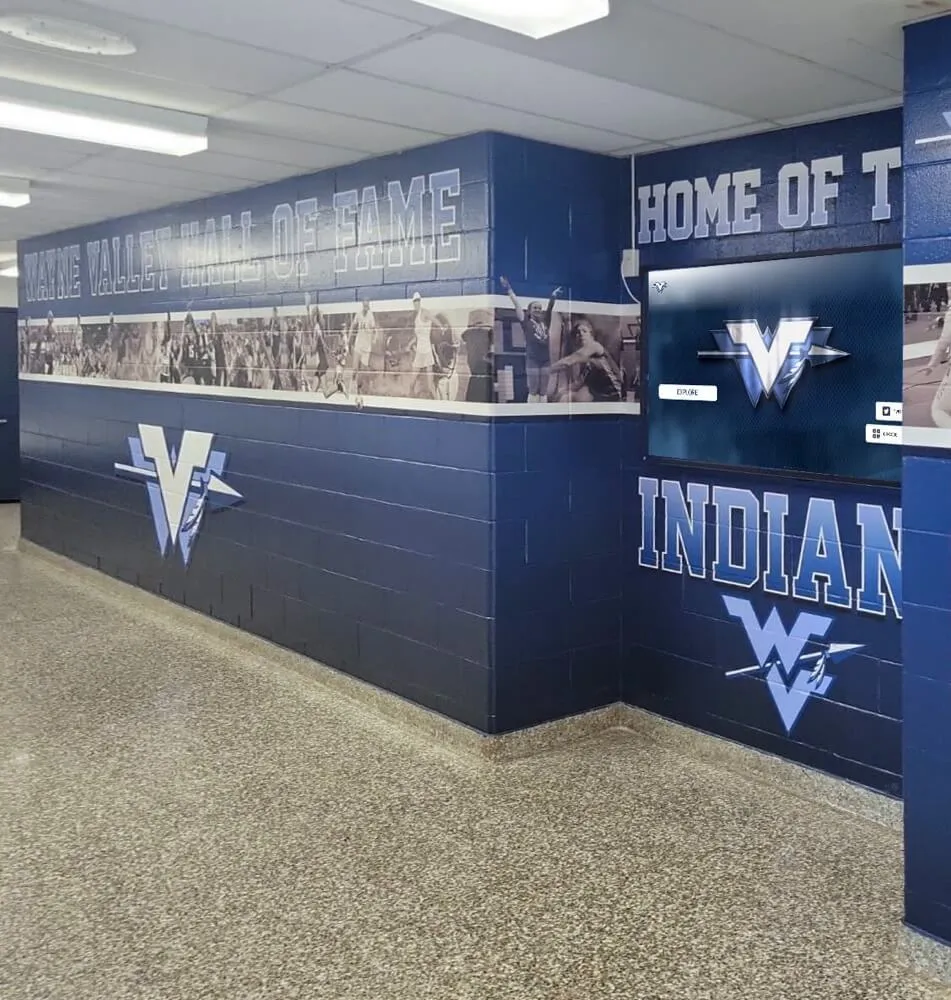
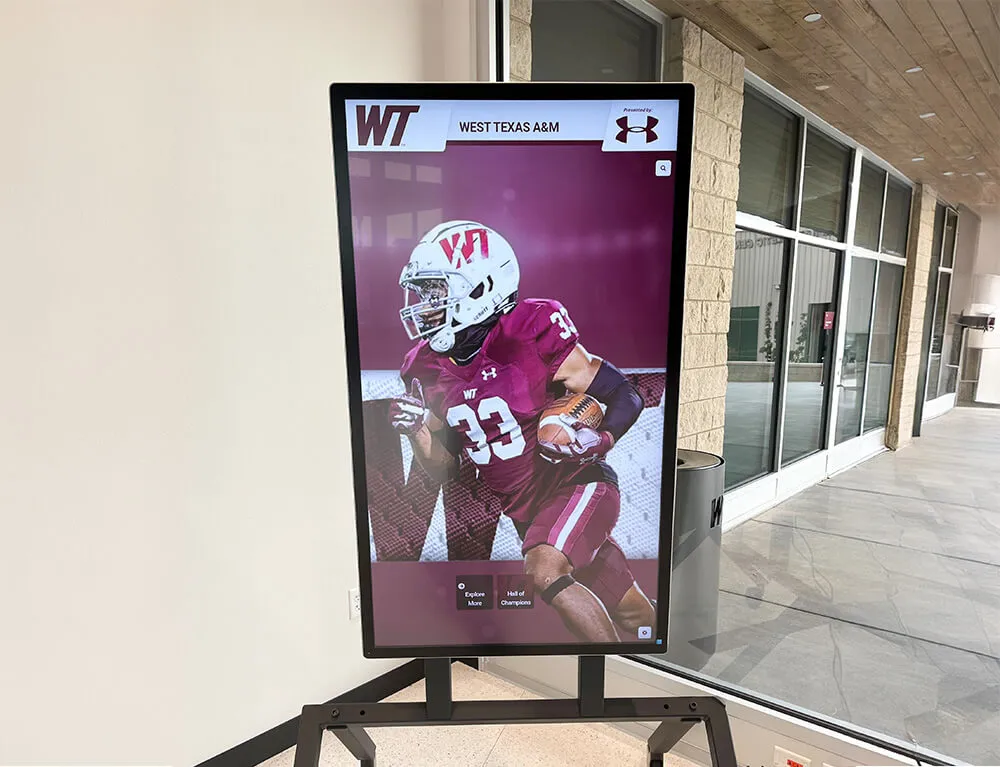
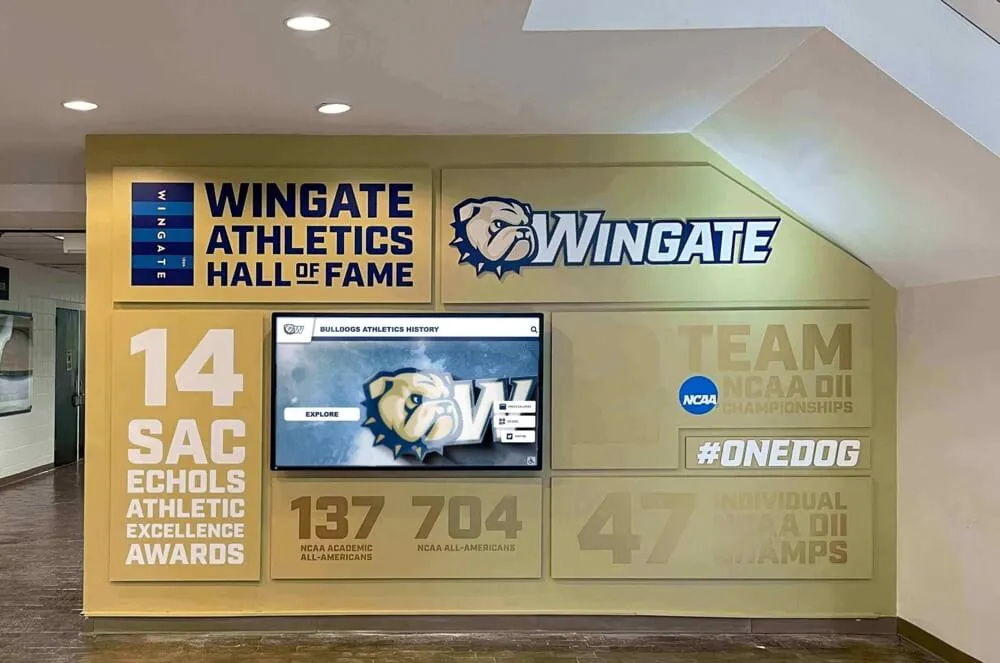
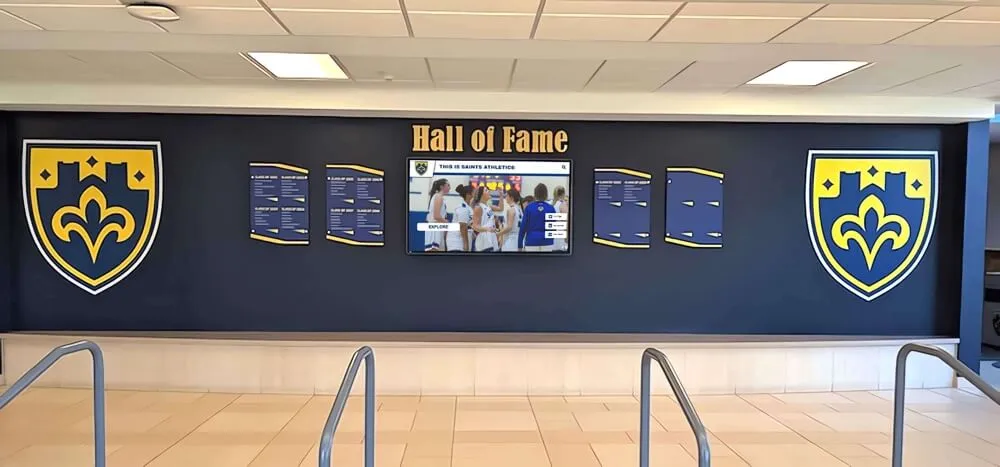
Digital hall of fame systems offer administrative controls that physical displays cannot: archiving, access restrictions, audit logs, and searchable history. After a revocation decision:
- Log into the content management platform with administrative credentials.
- Move the inductee’s profile from the public-facing display to an archived or administrator-only view. Do not delete the record.
- Confirm the profile no longer appears in any public search, browse, or featured display mode.
- Export the profile data (biography, photos, statistics) to the administrative archive before making any changes to the live record.
- Update any website inductee lists, embedded directories, or program history pages that reference the individual.
- Record the update in the platform’s activity log, or in a separate change log document if the system does not maintain one automatically.
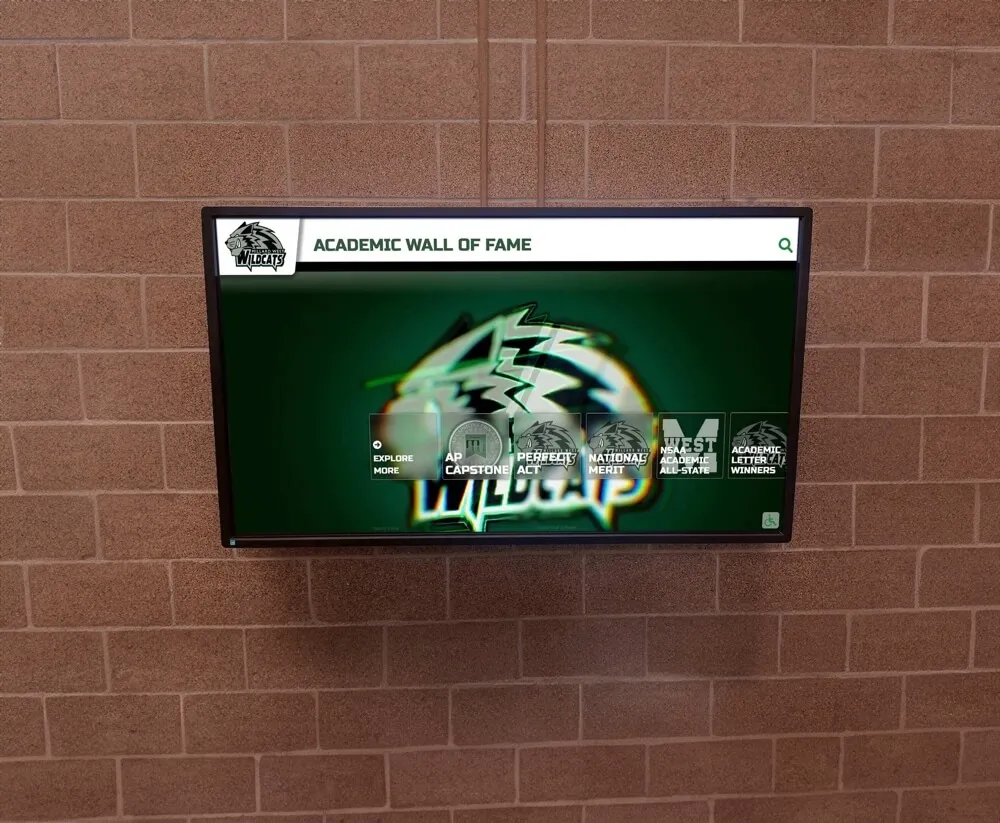
The archiving capability is one reason interactive touchscreen installations in institutional settings are increasingly designed with administrative tiers that separate public presentation from internal record-keeping. A display system that can only show or hide information—without preserving it in an auditable administrative layer—is not adequate for governance-level record management.
Maintaining an Auditable Recognition History
Whether or not a revocation ever occurs, every hall of fame program benefits from maintaining an auditable recognition history: a complete, chronological record of every induction decision, every nomination reviewed, and every policy change the committee has made. This history serves the committee in three ways.
It supports consistency. Future committees can review how prior committees applied eligibility criteria, which helps prevent standards from drifting over time or being applied differently to candidates with similar profiles.
It creates institutional memory through staff turnover. Athletic directors, committee chairs, and display coordinators change. A well-maintained archive means the program does not lose its standards and precedents each time personnel change.
It protects the institution. If an inductee or community member ever challenges a past decision—whether an induction or a revocation—the committee can demonstrate that a documented, fair process was followed.
Digital systems purpose-built for school recognition programs, rather than general-purpose database tools or shared drives, are better equipped to maintain this kind of layered history. They typically provide version history for profile changes, role-based access so only authorized staff can modify records, and export capabilities that make data portable if the platform ever changes. Programs thinking about sports-specific graphic design templates for display materials should extend that same intentionality to the underlying data systems that power those displays—visual quality and data integrity need to develop together.
Recognition records are, at their core, a form of institutional documentation. Just as yearbooks and printed programs capture a moment in time, as this perspective on documenting school years through collected materials illustrates, the challenge is always balancing permanence with the reality that records evolve. A revocation policy is how a hall of fame program manages that evolution intentionally rather than reactively.

Building the Policy Document: Checklist for Committees
Before your program adopts a revocation policy, verify it addresses each of the following elements:
- Triggering circumstances listed explicitly, with examples of what does and does not qualify
- Initiation procedure specifying who may formally open a review and how it is logged
- Notice requirements including delivery method and response period for the inductee
- Deliberation rules including closed-session requirement and meeting documentation standards
- Vote threshold equal to or greater than the induction supermajority
- Conflict-of-interest rule requiring abstention from members with personal ties to the individual
- Records retention schedule naming each document type and its storage location
- Display update timeline specifying when physical and digital changes must be completed after a decision
- Public communication guidelines clarifying whether and how the outcome is announced
- Amendment procedure describing how the policy itself can be updated in the future
This policy should be reviewed by the athletic director and district administration before adoption, and revisited every three to five years as part of the broader bylaws review cycle. A policy written around physical plaques in 2010 may not account for the administrative controls available in modern digital hall of fame platforms—or the data management obligations those platforms create.
Why Digital Systems Make Revocation Management More Manageable
A hall of fame program that lives entirely in physical plaques and binders faces significant practical challenges when a revocation decision needs to be executed: wall repairs, vendor coordination for new plaques, manual updates to every printed document that names the individual. A digital hall of fame platform does not eliminate the administrative work, but it concentrates it in one place, with audit controls and access management built in.
Purpose-built systems designed for school recognition programs provide the administrative infrastructure that makes policy execution practical: profile archiving that preserves records without displaying them publicly, activity logs that document who changed what and when, role-based permissions that prevent unauthorized edits, and the ability to update displayed profiles in a single content management session rather than coordinating physical changes across multiple vendors and facilities requests.
See How a Purpose-Built System Handles Inductee Records
Rocket Alumni Solutions gives hall of fame committees the administrative infrastructure to manage inductions, archives, and display updates—including the edge cases a written revocation policy requires.
Request a Demo