



Key Takeaways
A complete hall of fame inductee questionnaire for school athletic directors and administrators—covering biographical, performance, media, and display fields needed before publishing accurate profiles.
Why Schools Need a Formal Intake Process Before Publishing
Many programs send a congratulatory letter when an inductee is selected and then piece together profiles from yearbooks, newspaper clippings, and whatever a coach can remember. This approach produces inconsistent results—some profiles are detailed and compelling, others are thin and error-prone—and it places the burden of research on staff rather than on the person who actually lived the career being recognized.
A formal questionnaire shifts that dynamic. It asks inductees to supply the authoritative version of their own record: the correct spelling of their name, their actual statistics, the honors they received, and the story they want told. Staff then verify those responses against archival records rather than constructing profiles from scratch.

Consistency matters for the display as a whole. When every inductee profile goes through the same intake process, the depth and structure of every profile matches—which creates a more authoritative recognition archive. A well-documented sports season recap can serve as a useful archival source for staff to cross-check against inductee responses, but it should supplement the questionnaire, not replace it.
Section 1: Personal and Biographical Information
The biographical section establishes the foundational facts that appear on every profile. These questions seem straightforward, but name spelling, preferred display names, and graduation years generate more errors in published displays than almost any other field.
Questions to include:
- What is your full legal name?
- What name would you like displayed on your profile? (Some inductees prefer a nickname or a name different from their legal name.)
- What year did you graduate from [school name]?
- What years did you attend the school?
- What sport or sports did you compete in?
- What position or positions did you play?
- What jersey number or numbers did you wear?
- Where are you currently located? (City and state—kept off the display, used for contact purposes only.)
- What is your current email address and phone number? (For follow-up during profile creation, not published.)
The display name question deserves particular attention. Inductees who went by a nickname throughout their athletic career often prefer that name on the display—“Tommy” rather than “Thomas,” for example. Collecting this preference upfront prevents a correction request after the profile goes live.
Section 2: Athletic Performance and Statistics
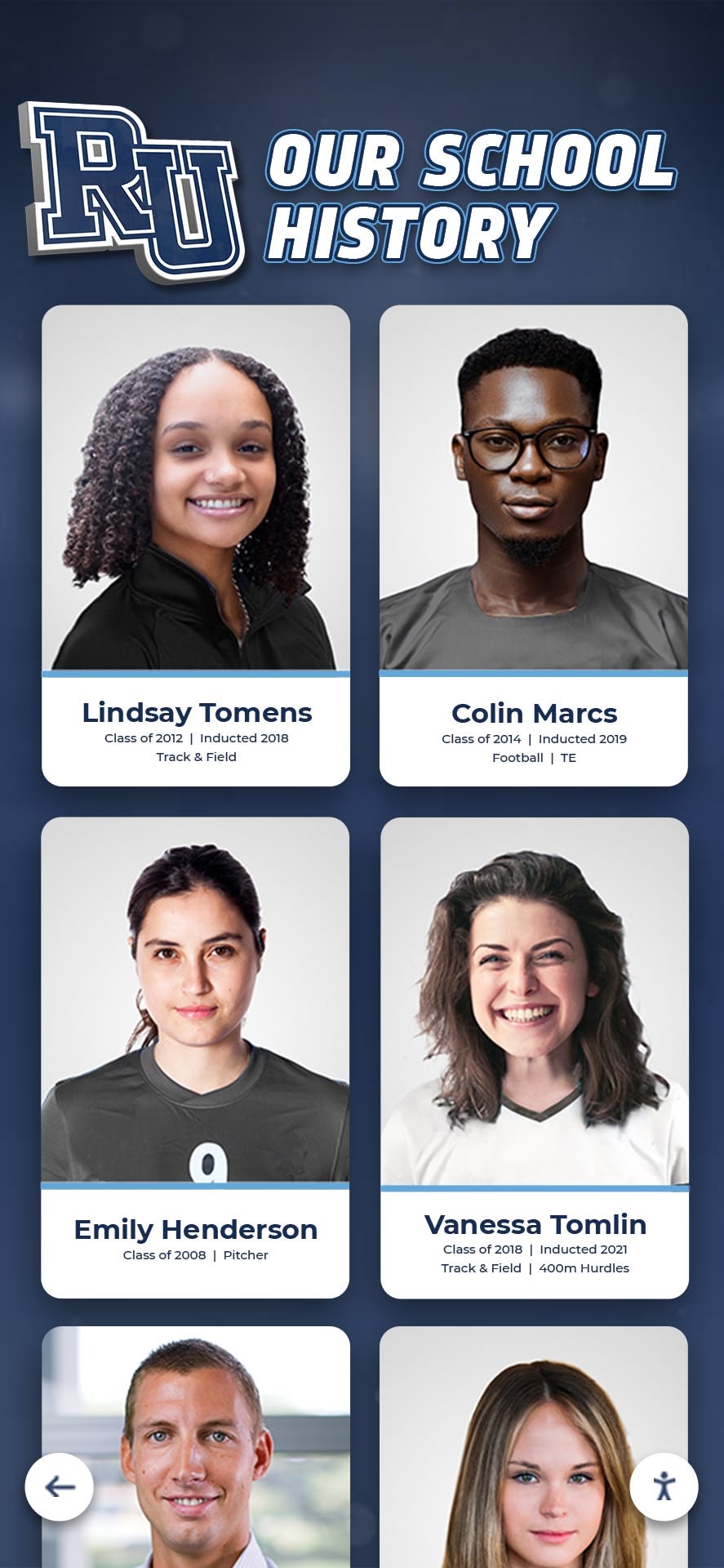
This section is where the questionnaire saves the most staff time and prevents the most errors. Inductees can often recall their career statistics more accurately than any archived source, particularly for older induction classes where records exist only in paper form.
Questions to include:
- What were your career statistics in your primary sport? (Provide sport-specific prompts: points scored, batting average, goals, yards rushed, individual event records, etc.)
- What were your single-season best statistics?
- Did you set any school, conference, regional, or state records? If so, what were they?
- What all-conference honors did you receive, and in which years?
- What all-district, all-regional, or all-state honors did you receive, and in which years?
- Did you receive any individual awards (MVP, Player of the Year, etc.)? Please list them with the year received.
- What was your overall varsity record during your years on the team?
For statistical sports like track, swimming, or golf, ask inductees to list their personal bests by event with the year set. For team sports, the questionnaire should ask about both individual production and the team context—a 200-point scorer on a championship team carries a different story than one on a program rebuilding from a difficult stretch.
Programs maintaining all-time statistical records on a digital recognition board can cross-reference inductee responses against the official record board after collection—a fast verification step that catches discrepancies before they reach the published profile.
Section 3: Team Awards and Championships
Individual statistics tell part of the story; team context completes it. This section captures the championships, playoff runs, and program milestones the inductee was part of.
Questions to include:
- What conference championships did your teams win during your years at the school?
- What district, regional, or state tournament appearances did your teams make?
- What was your team’s record in state playoff or postseason competition during your years?
- Did your team win a state championship while you were on the roster?
- Were there any undefeated or historically significant seasons during your career?
- Did you captain the team? In which year(s)?
Team achievements give the inductee’s individual performance a frame. A player who earned all-conference honors in a weak conference year reads differently from one who did so while leading the program to its only state championship in thirty years.
The way schools recognize collective achievement—from end-of-season sports awards ceremonies to year-round recognition systems—shapes how much of this team context already exists in archival records. Questionnaire responses help fill gaps that season-end documentation may not capture.
Section 4: Academic and School Honors
Hall of fame programs that limit profiles to athletic achievement miss a dimension that matters to inductees, their families, and the school community. Academic recognition is part of the complete story.
Questions to include:
- Did you earn academic all-conference, all-district, or all-state recognition as a student-athlete?
- What was your approximate GPA at graduation?
- Did you graduate with any academic honors (cum laude, valedictorian, honor roll)?
- Did you receive any scholarships based on academic or combined academic-athletic merit?
- Were you involved in student government, academic teams, or other school organizations alongside athletics?
- Did you receive any non-athletic awards or recognitions during your time at the school?
Academic detail elevates the profile beyond a stat sheet. It also matters for schools where student-athletes are recognized for the full scope of their school career—a value that many athletic directors and advancement teams actively want to reinforce in their recognition programming. Understanding the significance of graduation honors and academic distinction traditions provides useful context for how these elements fit within a broader recognition culture.
Section 5: Post-Graduation Career and Achievements
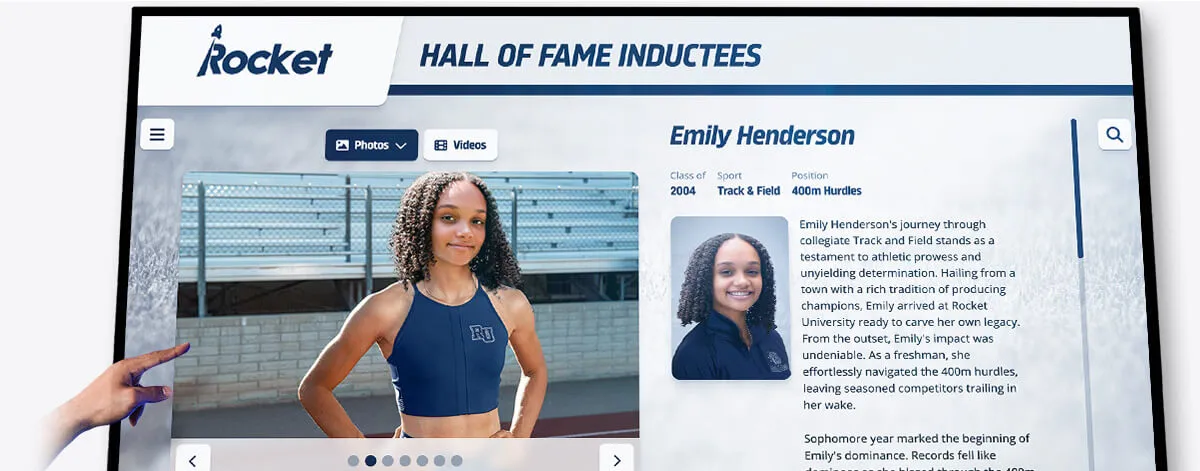
This section captures what happened after the inductee left school—college athletics, professional careers, coaching, or community contributions that add depth to the legacy being recognized.
Questions to include:
- Did you continue playing your sport at the collegiate level? At which institution and in which conference?
- Did you play at the professional or semi-professional level? If so, please describe your career.
- Have you coached or worked in athletics after your playing career? If so, at what level and for how long?
- What is your current profession or career?
- Have you received any notable professional, civic, or community recognitions since graduating?
- Is there anything about your life after school that you would like included in your display profile?
Not every inductee has a college athletic career or a professional chapter, and the questionnaire should not imply that one is expected. For many inductees, the school career is the peak, and that is exactly what the hall of fame exists to honor. The post-graduation section simply creates the opportunity to include it when it exists.
Section 6: Media and Photo Requirements
The profile that appears on a digital display or wall-mounted panel depends entirely on the media collected. A strong questionnaire specifies what is needed and gives inductees clear instructions for how to provide it.
Questions to include:
- Can you provide a high-resolution action photo from your time at the school? (Minimum 1,000 pixels on the shortest side; JPEG or PNG preferred.)
- Can you provide a recent portrait or headshot photo for display use?
- Do you have any team photos from championship seasons or significant games that you would like included?
- Do you have any newspaper clippings, game programs, or other archival materials from your career that you could share with our staff?
- Do you grant permission for the school to use submitted photos in digital and physical displays, school communications, and online recognition archives?
Photo collection is where many programs lose momentum. Inductees often have relevant photos but need specific guidance—file size requirements, acceptable formats, how to submit them—before they can respond. Build clear submission instructions into the questionnaire itself, not just a follow-up email.
For programs using digital display systems that also support video, add a question asking whether the inductee is willing to participate in a recorded interview or video tribute that can be embedded in their digital profile.
Section 7: Display Preferences and Personal Statement
The final section gives inductees a voice in how they are represented—and collects the biographical narrative that transforms a statistics table into a story worth reading.
Questions to include:
- Is there a quote or personal statement you would like to appear in your profile?
- Are there any teammates, coaches, or mentors you would like specifically acknowledged in your profile?
- Is there any information in this questionnaire that you prefer not to appear on the public display?
- How would you like your name to appear in any formal program or ceremony materials?
- Is there anything else about your career or experience at [school name] that you would like us to know before we finalize your profile?
The personal statement question is the most valuable in this section. A two- or three-sentence quote in an inductee’s own words adds authenticity that no amount of staff-written biography can replicate. Many inductees who do not consider themselves writers will provide a quote if they are asked for one directly and given a low-stakes prompt (“anything you want future students and visitors to know about your time here”).
Questionnaire Delivery and Collection Process
A well-designed questionnaire still fails if it is delivered inconsistently or collected without a deadline. The logistics around delivery and follow-up matter as much as the questions themselves.
Delivery timing: Send the questionnaire within one week of the selection notification letter—while the inductee’s attention is highest. A questionnaire that arrives weeks after the congratulations letter often gets deprioritized or lost.
Format: A fillable PDF or online form reduces friction significantly compared to a printed form that inductees must mail or scan back. Google Forms, Typeform, and similar tools create accessible digital versions with built-in submission tracking.
Deadline: Set a clear deadline four to five weeks before the induction ceremony, giving staff two to three weeks for verification and profile creation. State the deadline in the cover letter and in the form itself.
Follow-up cadence: Send a single automated reminder one week before the deadline listing any specific missing fields. Assign a named staff member to follow up personally with inductees who have not responded by the deadline.
Non-responses: For inductees who do not return the questionnaire by the deadline, build a profile from verified archival records and send a draft to the inductee for correction. This approach keeps the timeline moving while giving the inductee a final opportunity to confirm or add information.
The questionnaire collection timeline pairs naturally with other pre-ceremony planning tasks. Programs that also use induction ceremonies as opportunities to engage alumni families—similar to the advance planning involved in welcoming families to school recognition events—benefit from building the questionnaire deadline into their broader event planning calendar so the two workflows do not conflict.
Turning Questionnaire Responses into Display-Ready Profiles
Collecting questionnaire responses is the input. The output is a verified, formatted profile ready to publish on the day of induction. Bridging those two states requires a structured verification step.
Step 1: Verify statistics against archival records. Cross-reference every statistical claim against school record books, athletic department archives, conference records, or news archives. For programs with sport-specific historical records, this step catches discrepancies before they reach the published profile. Understanding the scope of sport-specific program documentation varies by sport—lacrosse, for example, has different statistical conventions than basketball—so staff should know which records exist for each sport in your program.
Step 2: Draft the profile. Use the questionnaire responses to write a biographical narrative, populate the statistics fields, and note the honors and achievements. Keep the biographical text to 150–250 words for digital displays; longer text can be placed in expandable sections.
Step 3: Return the draft to the inductee for review. Send each inductee a draft of their profile and ask them to confirm accuracy and completeness. A one-week review window is sufficient for most inductees. This step prevents post-publication correction requests and gives inductees confidence in how they will be represented.
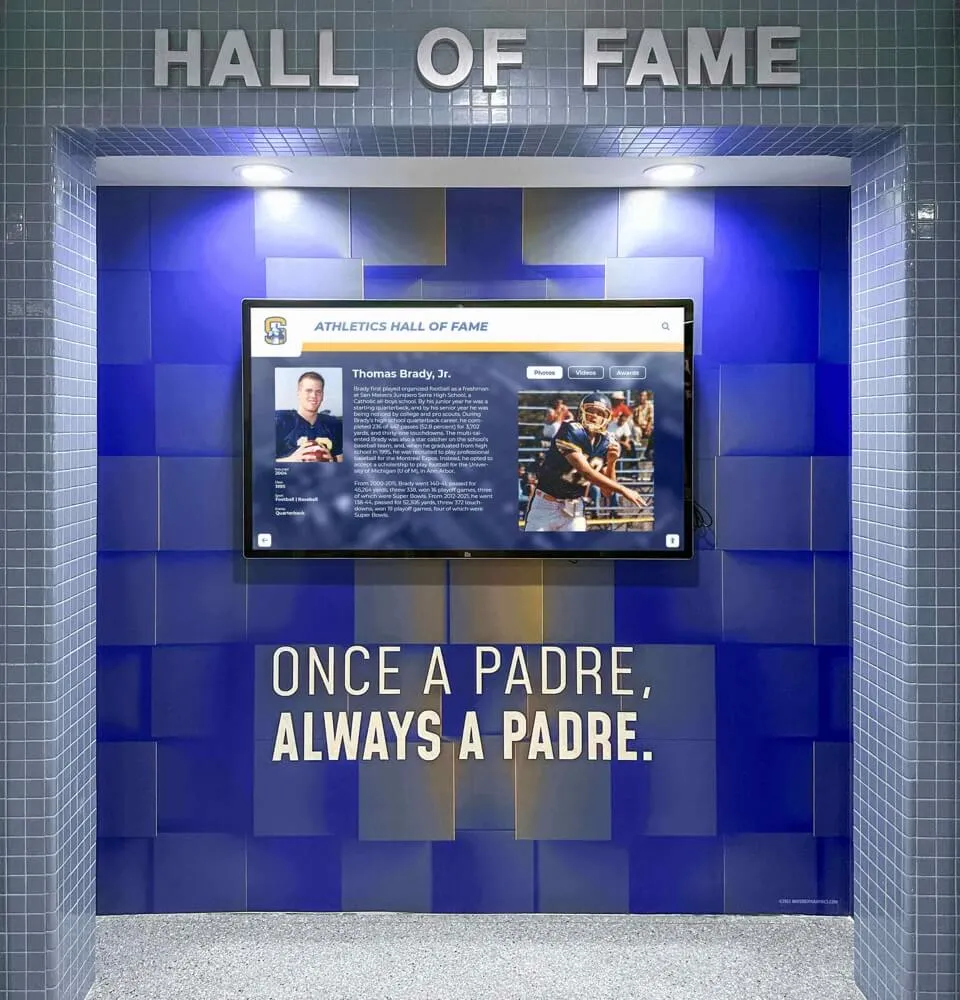
Step 4: Publish on ceremony day. Digital hall of fame systems that allow staff to create and hold profiles in draft mode make same-day publishing reliable. Profiles are built, reviewed, and approved in advance; publishing is a single action at the close of the ceremony.
For programs building or renovating recognition spaces, the physical display context also matters. Sport-specific display environments—from trophy cases to dedicated recognition hallways—benefit from the same attention to design quality that goes into functional sport-specific athletic spaces. The quality of the questionnaire and the quality of the display environment together determine whether recognition feels meaningful or perfunctory.

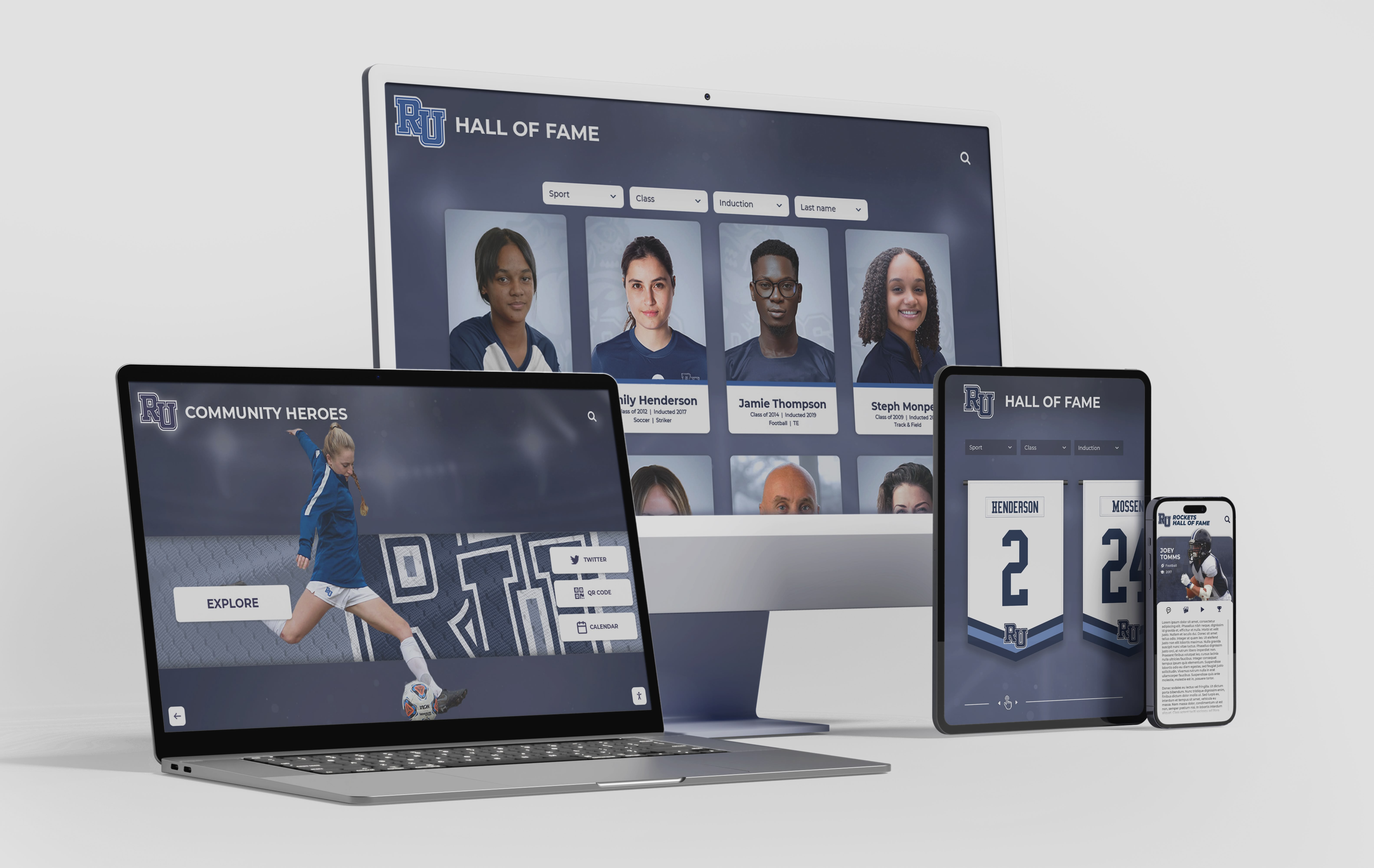
Integrating hall of fame profiles into a broader recognition ecosystem—connecting inductee pages to championship histories, record boards, and current program highlights—is where digital platforms deliver compounding value. The same profile data that drives the hall of fame display can also anchor alumni engagement campaigns, advancement communications, and donor-facing recognition materials when the underlying system is structured to support it. Schools using recognition programs to support broader community engagement, from student recognition design initiatives to athletic alumni programs, benefit from display infrastructure that makes inductee profiles searchable, shareable, and available across channels.
A Practical Questionnaire Checklist
Before sending the questionnaire, confirm these elements are in place:
- Cover letter explains the timeline, deadline, and who to contact with questions
- Personal and biographical section includes display name preference
- Statistical section uses sport-specific prompts (not generic “career stats”)
- Awards section asks separately about individual and team honors
- Academic section included with non-required framing
- Post-graduation section is optional and non-leading
- Photo section specifies technical requirements and submission method
- Personal statement prompt is included and framed simply
- Display preferences include an opt-out option for sensitive information
- Return deadline is stated in the questionnaire itself
- Submission method (online form, email address, mailing address) is clear
A questionnaire that checks all of these boxes gives staff what they need to build accurate, compelling profiles—and gives inductees a recognition experience that reflects the care they deserve.
Build Accurate Hall of Fame Profiles That Last
Rocket Alumni Solutions provides digital hall of fame platforms designed for school athletic directors and administrators—with CMS tools that make it easy to create, verify, and publish complete inductee profiles from questionnaire responses. See how the platform supports your entire intake-to-display workflow.
Book a Demo