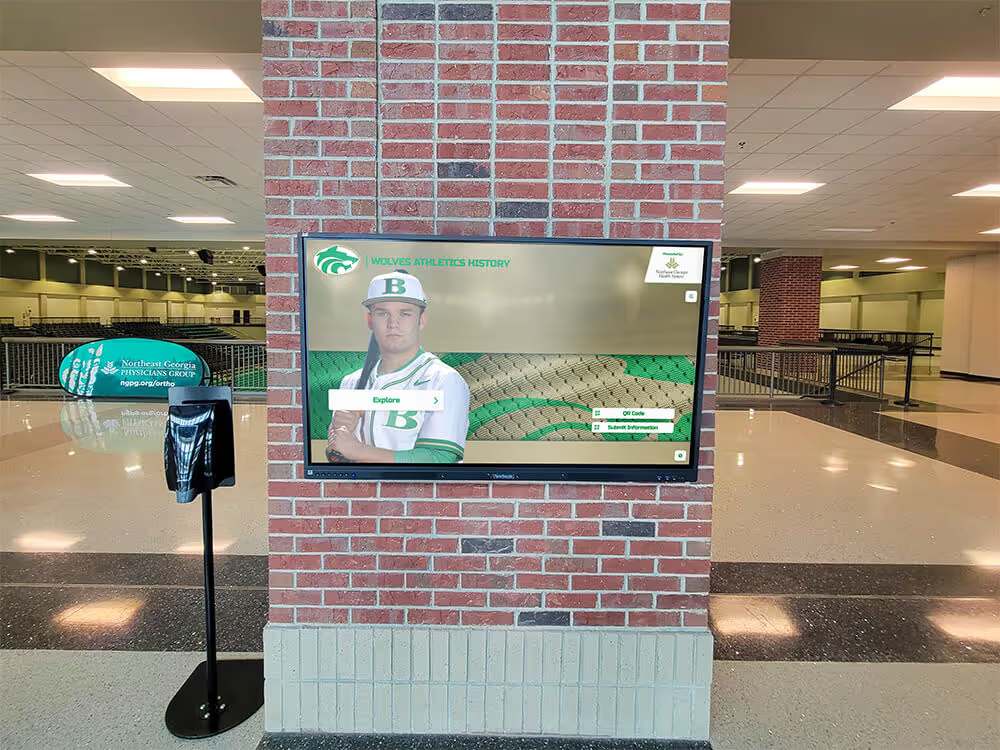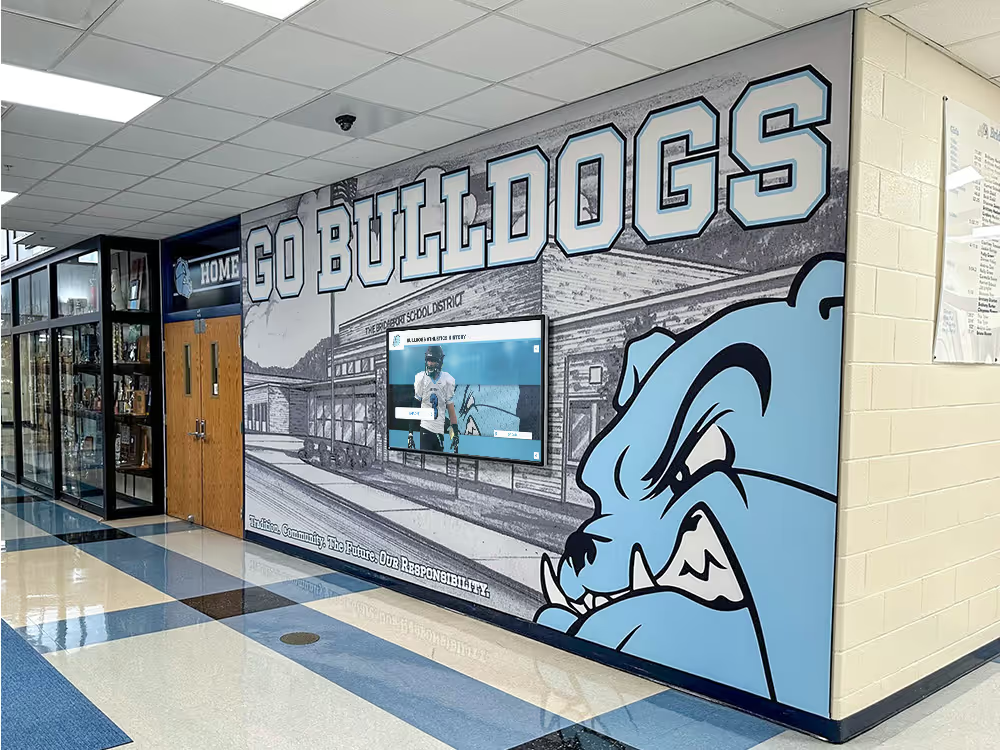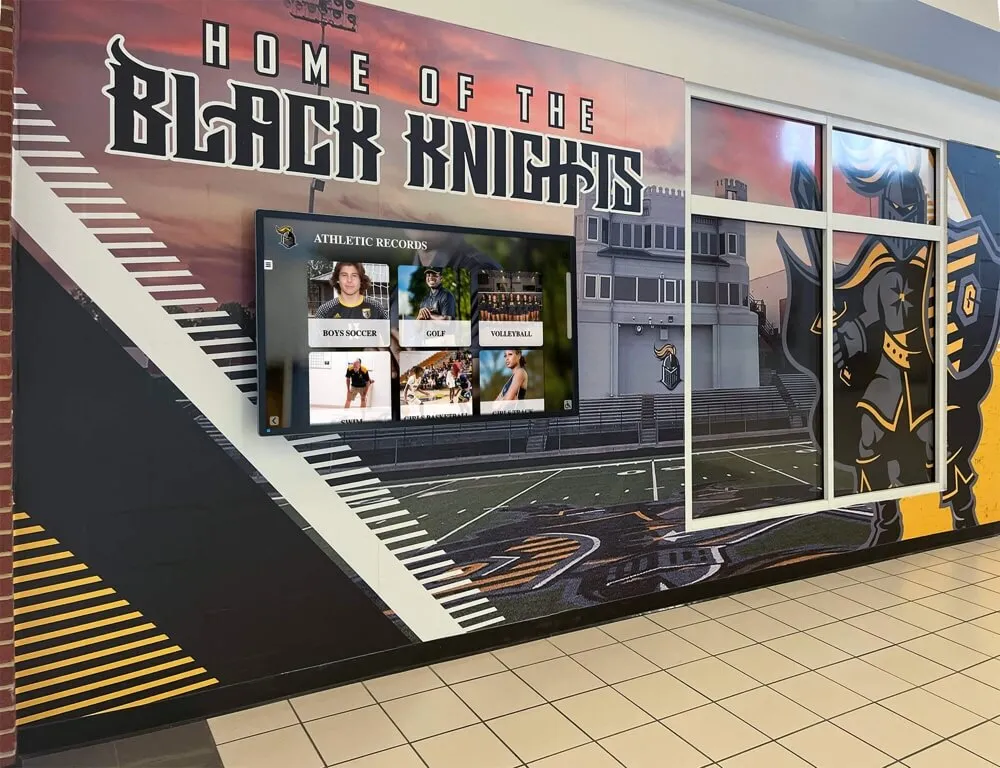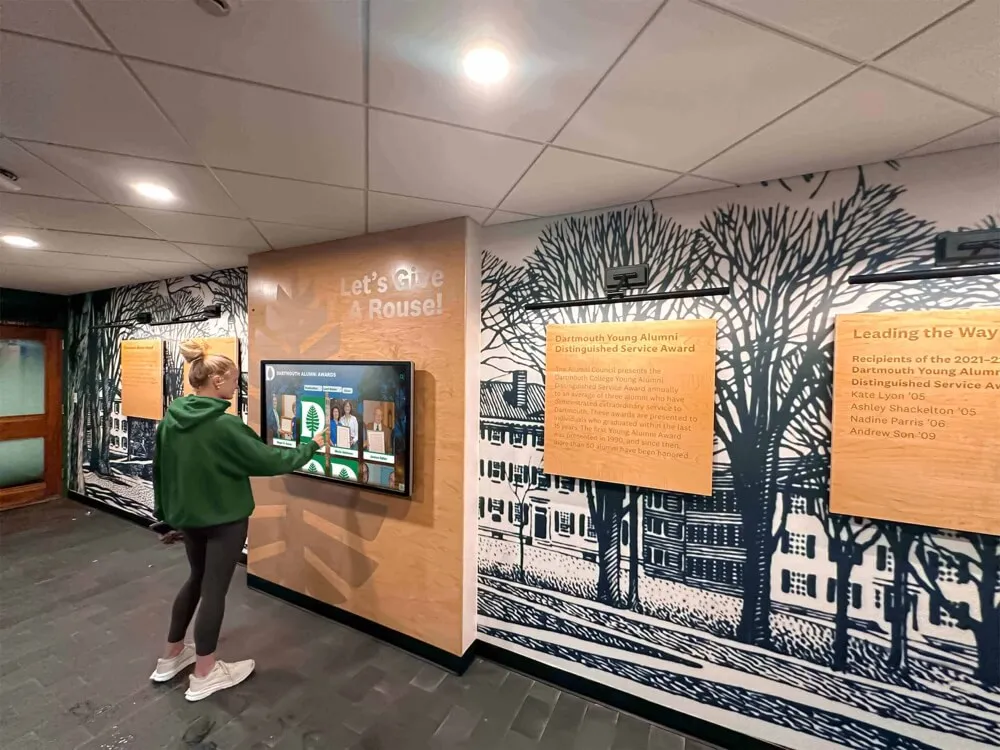




Key Takeaways
Build a defensible hall of fame content moderation policy with this school-ready governance template. Covers review, correction, removal, escalation, photos, submitted stories, and more.
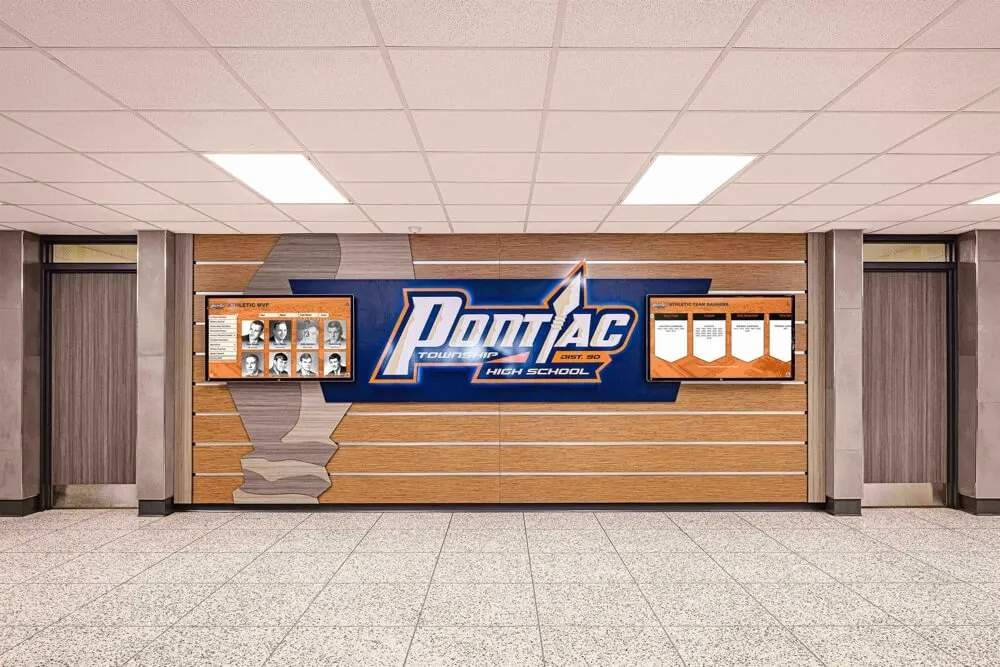
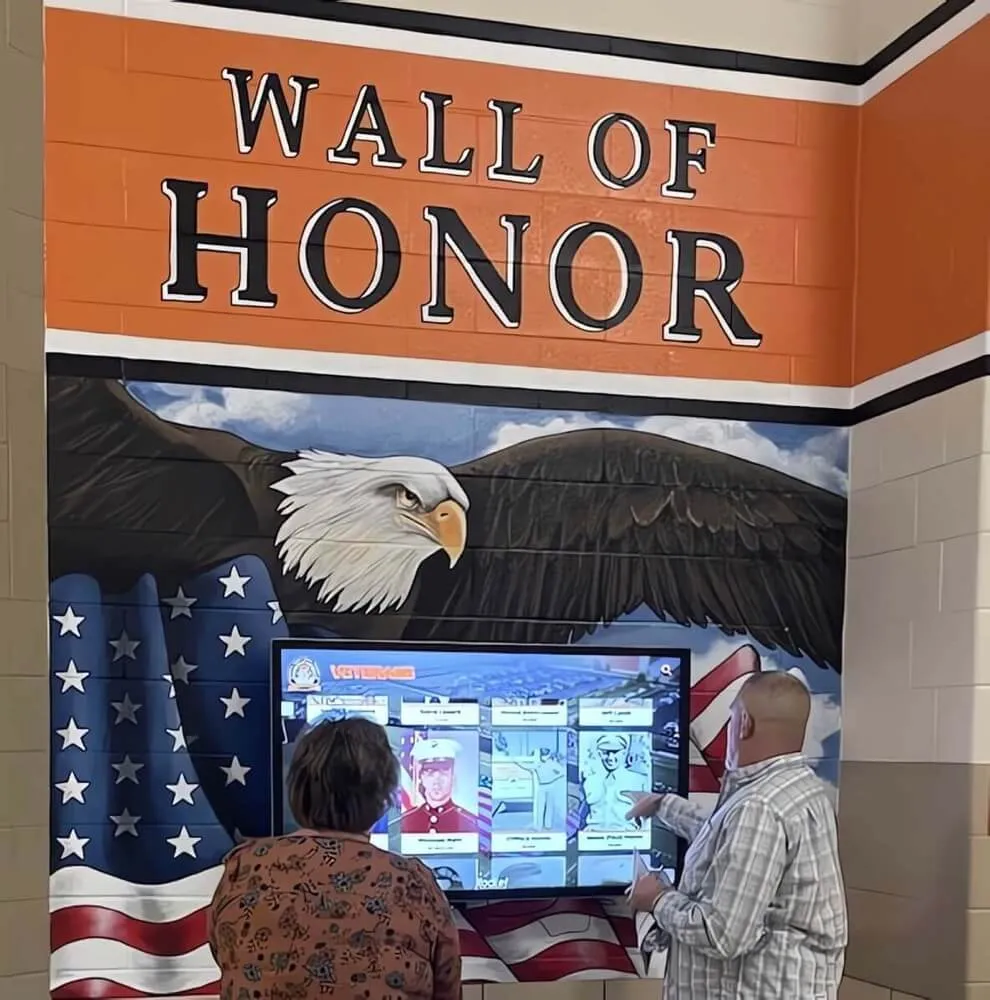
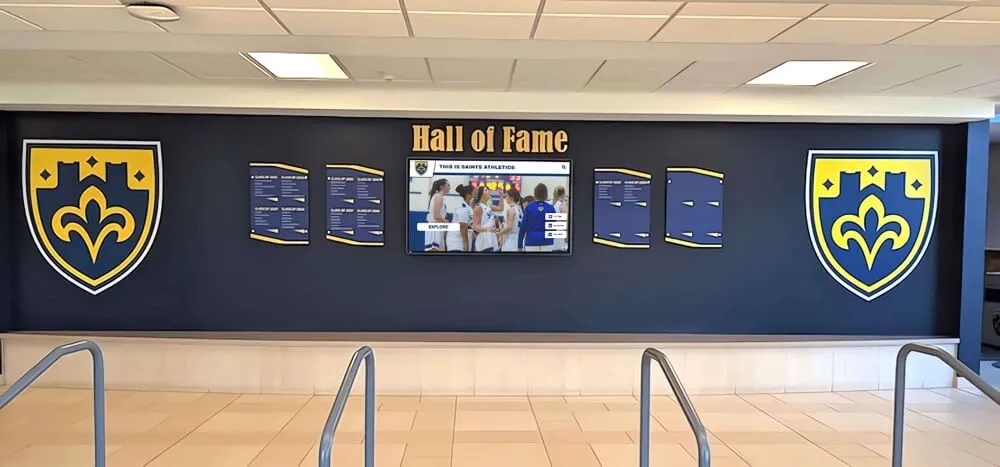
Every time a visitor stops in front of a school hall of fame display—whether a touchscreen kiosk in the gym lobby, a digital roster on the athletics wall, or an online inductee directory—they are reading content that carries the school’s reputation. A photo mistakenly attributed to the wrong athlete, a biographical detail no longer accurate, or a submitted story that violates privacy expectations can undermine the credibility of the entire program. A formal hall of fame content moderation policy protects inductees, visitors, and the institution by defining exactly who reviews what, how corrections are requested, when content comes down, and who makes the final call.
This template gives school administrators, athletic directors, booster leaders, archivists, and recognition-program owners a ready-to-adapt governance framework. Customize the role names, timelines, and escalation paths for your district, then publish the policy on your program’s website so community members know how to participate—and how to raise concerns.
Why Schools Need a Formal Content Moderation Policy
Recognition programs that lack written content rules tend to accumulate the same problems over time: outdated photos remain live after an inductee’s passing, third-party photo submissions are published without a model release on file, or a family requests a biography correction and the inquiry disappears into a general inbox. A documented policy eliminates these gaps by:
- Creating a single authoritative source for all content decisions
- Reducing staff burden through clear intake and routing procedures
- Protecting inductees’ privacy and dignity
- Meeting applicable records-management and privacy obligations
- Building community trust by demonstrating that the program is actively stewarded, not just set-and-forgotten
Schools that pair strong governance with capable hall of fame tools move faster on both content updates and removal requests because the workflow is already mapped before any request arrives.
Scope: What This Policy Covers
A single moderation policy should address every content type that appears in your hall of fame program. Common content types include:
| Content Type | Typical Sources | Moderation Risk |
|---|---|---|
| Inductee biography / profile text | Program staff, nominators, families | Accuracy, privacy, defamation |
| Inductee photos | School archives, families, yearbooks, media | Attribution, consent, quality |
| Statistical records and achievements | Official scorebooks, state associations | Data entry errors, record disputes |
| Submitted stories and testimonials | Alumni, teammates, coaches | Appropriateness, privacy, accuracy |
| Video highlights or oral histories | School media, family submissions | Consent, copyright, content standards |
| Donor recognition text | Advancement or booster offices | Accuracy, relationship sensitivity |
| Comments or messages (if enabled) | Public visitors, alumni, current students | Spam, harassment, off-topic content |
| Event announcements and induction updates | Program staff | Scheduling accuracy, brand consistency |
Every content type in your program should map to at least one policy section below. If a content type exists in your program but is not listed here, add it before publishing.
Roles and Responsibilities
Assign a named role to every moderation function. Titles will vary by institution; what matters is that each function has a designated owner.
| Role | Responsibilities |
|---|---|
| Content Coordinator | Day-to-day intake, triage, and minor corrections; first responder on public inquiries |
| Program Director (Athletic Director, Principal, or designee) | Approves new inductee profiles before publication; resolves contested corrections |
| Archivist / Records Steward | Verifies historical data accuracy; manages photo attribution and archive provenance |
| Legal / Privacy Contact | Reviews removal requests citing privacy, defamation, or copyright; advises on records-retention obligations |
| Appeals Panel | Three-person panel convened for formal disputes; composition drawn from Program Director + two faculty or board members not involved in the original decision |
Small programs often consolidate several roles in one person. Document that consolidation explicitly so coverage remains clear during transitions.
Content Submission Workflow
All content entering the hall of fame program—regardless of source—should move through a consistent intake and review process before publication.
Step 1 — Submission Intake
All submissions arrive through a single documented channel (online form, designated email address, or in-person drop-off). The Content Coordinator acknowledges receipt within three business days and assigns a tracking identifier. Walk-in requests are logged in the same system before leaving the office.
Step 2 — Completeness Check
Within five business days of receipt, the Content Coordinator confirms the submission includes:
- Full name and graduation year (or affiliation year) of the subject
- Clear statement of what is being submitted or requested
- Submitter’s name, relationship to subject, and contact information
- For photos: source, date of capture, and photographer or archive name
- For stories or testimonials: confirmation that the submitter is the original author or has the author’s written permission
Incomplete submissions are returned with a checklist of missing items. The clock for review does not start until the submission is complete.
Step 3 — Accuracy Verification
The Archivist or Records Steward cross-checks biographical data, statistics, and dates against primary sources (official rosters, yearbooks, state association records, academic transcripts, or news archives). Disputed facts are flagged before the profile advances.
Step 4 — Privacy and Consent Review
Before any photo or personal narrative is published, the Content Coordinator confirms:
- The subject is either the person who submitted the content or has provided written consent
- Photos of minors include parent or guardian consent
- No sensitive personal data (home address, personal phone number, Social Security number, health information) appears in the content
Step 5 — Final Approval
The Program Director reviews the complete submission packet and either approves, requests revisions, or declines with a written reason. Approvals are logged with the approving party’s name and date.
Step 6 — Publication
Approved content is published within ten business days of final approval. The Content Coordinator notifies the submitter and, where appropriate, the inductee or their family.

Content Standards
All published content must meet the following minimum standards. These apply equally to staff-generated content and community-submitted content.
Accuracy
Every factual claim—graduation year, sport, position, statistics, honors, dates—must be traceable to a primary source. Unverifiable claims are either removed or labeled as “family-reported” with that attribution visible to the reader. Superlatives (“first-ever,” “all-time record”) require documented evidence before publication.
Completeness
Profiles should be consistent in depth across inductees. A governance class that includes detailed narratives for some inductees and only two-sentence entries for others creates an equity gap that invites complaints. Establish a minimum profile length (for example, at least one paragraph biography, at least one verified achievement, and at least one photo or image) and apply it uniformly.
Privacy
Do not publish:
- Home addresses, personal email addresses, or personal phone numbers
- Health or medical information (including cause of death)
- Immigration or citizenship status
- Financial information beyond publicly recognized donations
- Information about minor children of an inductee who have not themselves been inducted
- Personal details submitted by a third party that the subject has asked to keep private
For deceased inductees, apply the same privacy standards as for living inductees unless the family provides written consent to publish additional personal details.
Appropriateness
Content must be consistent with the school’s community standards. Decline any submission that:
- Contains profanity, explicit content, or graphic descriptions of violence
- Makes derogatory statements about race, gender, religion, disability, sexual orientation, or national origin
- Disparages living or deceased individuals without documented factual basis
- Promotes commercial products, political candidates, or causes unrelated to the recognition program
Schools that use academic achievement displays alongside athletic halls of fame often apply the same content standards across both programs for consistency.
Copyright
Do not publish photographs, written works, or video content without confirming one of the following:
- The school owns the original
- The copyright holder has granted written permission
- The content is in the public domain
- Fair use applies (consult your Legal/Privacy Contact before relying on fair use for photographs)
Correction Requests
Inductees, family members, and community members may request corrections to published content at any time. The following process governs those requests.
How to Submit a Correction Request
Requests must be submitted through the documented intake channel and include:
- The inductee’s full name and, if known, the URL or display location of the content in question
- A clear description of what is incorrect
- The correction being requested
- Supporting evidence (official records, yearbook page, news article, or other primary source)
Review Timeline
| Correction Type | Target Resolution |
|---|---|
| Typographical error (name spelling, date) | 5 business days |
| Statistical or record correction | 10 business days |
| Biographical revision (significant rewrite) | 15 business days |
| Photo replacement | 10 business days |
| Disputed fact requiring outside verification | 30 business days |
The Content Coordinator notifies the requester when the review begins, when a decision is reached, and when any correction goes live.
Correction Decisions
Approved corrections are published and logged. The original incorrect content is archived internally for records purposes but removed from public view.
Declined corrections receive a written explanation citing the primary source that supports the published information. Requesters may appeal within 30 days.
Corrections requiring additional evidence are held pending the requester providing supporting documentation, with the clock paused until documentation arrives.
Content Removal Policy
Removal of published content is a significant action and should follow a documented process separate from routine corrections.
Grounds for Removal
Content may be removed under the following circumstances:
Factual invalidation — Inductee status is revoked under the program’s standing eligibility criteria (for example, documented academic fraud, criminal conviction triggering a character clause, or discovery of falsified records used in the original nomination).
Privacy or legal obligation — A court order, verified FERPA request, or documented privacy law obligation requires removal.
Copyright violation — The copyright holder issues a valid takedown notice and the school cannot establish a license or fair-use defense.
Consent withdrawal — A living inductee withdraws consent for publication of their own likeness or personal narrative. (Note: once inducted, the record of induction itself—name, year, sport—is generally a matter of public record and is not subject to withdrawal; only personal details and photos are covered by withdrawal.)
Subject death — A family member requests removal of specific personal content (photographs, biographical details) following the inductee’s passing. The induction record remains.
Error discovery — A profile contains content that, had the program known at time of publication, would have prevented approval (for example, fabricated athletic accomplishment).
Removal Workflow
- Requester submits a removal request through the standard intake channel, citing the specific ground from the list above.
- Content Coordinator escalates to the Program Director within two business days.
- Program Director consults the Legal/Privacy Contact for any request citing legal obligation or copyright.
- Program Director issues a removal decision within 15 business days for non-legal requests; legal review may extend this to 30 business days.
- If removal is approved, content is taken down within three business days of the decision. The requester is notified.
- The removal decision and rationale are logged permanently in the program’s administrative records.
Temporary Suspension vs. Permanent Removal
Where a removal request is under active review and the disputed content is potentially harmful, the Program Director may temporarily suspend (hide) the content pending final decision. Temporary suspension is not a decision on the merits; the suspended content may be reinstated if the removal request is declined.
Escalation Matrix
Not every decision can or should be resolved at the staff level. The following matrix defines when issues move up the chain.
| Scenario | First Responder | Escalates To | Time Limit |
|---|---|---|---|
| Routine correction request | Content Coordinator | — | Per correction timeline |
| Disputed statistical record | Archivist | Program Director | 30 days |
| Privacy complaint from inductee | Content Coordinator | Legal/Privacy Contact + Program Director | 5 business days |
| Copyright infringement claim | Content Coordinator | Legal/Privacy Contact | 2 business days |
| Request to revoke induction | Program Director | Appeals Panel | 30 days |
| Media inquiry about published content | Content Coordinator | Program Director + Communications Office | Same business day |
| Threat of litigation | Any staff | Legal/Privacy Contact immediately | Immediate |
Photo and Media-Specific Rules
Photographs are among the most sensitive content types in any recognition program. Apply the following rules in addition to the general standards above.
Acceptable Photo Sources
- School or district archives with documented chain of custody
- Official team or event photographers under contract with the school
- State association licensed images
- Family submissions with signed release form on file
- News organization photographs with written licensing agreement
Photo Quality Standards
Published photos should meet minimum technical standards: sufficient resolution to render clearly on the display at its native size, no watermarks from unlicensed sources, and no images where the subject is unrecognizable. Establish a minimum pixel dimension appropriate for your display hardware.
Photo Attribution
Each photo record in your content management system should include: source, original photographer (if known), date of capture, and license or release status. Displaying attribution publicly is optional; maintaining it administratively is required.
Video and Audio
Schools using digital recognition platforms that support video highlights or oral histories—common in modern hall of fame tools—should apply the same consent and copyright review to video and audio content as to photographs.
Community-Submitted Stories and Testimonials
Inviting alumni, teammates, and community members to submit tributes and memories enriches recognition programs. It also introduces content the school did not create and cannot fully control before publication.
What Makes a Submission Eligible
A submitted story or testimonial is eligible for publication if it:
- Is submitted by the original author or with the original author’s written permission
- Describes a first-hand experience with the inductee in a school-related context
- Does not contradict verified facts in the official inductee profile
- Does not disclose private information about the inductee without consent
- Meets the program’s general content standards for accuracy and appropriateness
Review Checklist for Submitted Stories
Before publishing a community submission, the Content Coordinator should confirm:
- Author identity verified
- Author’s relationship to inductee documented
- No personal/private information disclosed
- No unverified factual claims presented as fact (opinion is acceptable; disputed facts require notation)
- No disparagement of named third parties
- Photo(s) accompanying the story reviewed separately under photo policy
- Program Director approval recorded
Labeling
Published community submissions should be clearly labeled as “submitted by [role, e.g., ‘a former teammate’]” rather than presented as official program content. This labeling protects the program from implied endorsement of unverified claims.
Comments and Interactive Features
Some schools enable comment sections or message boards on their hall of fame websites or digital displays to encourage community engagement. If your program includes any interactive public-facing feature, add the following rules.
Pre-Moderation vs. Post-Moderation
Pre-moderation: All comments are reviewed and approved before they appear publicly. Recommended for programs with limited staff bandwidth for ongoing monitoring.
Post-moderation: Comments appear immediately but are reviewed within a defined window (for example, within 24 hours) and removed if they violate policy. Requires consistent staff monitoring.
Comment Standards
Published comments must:
- Relate to the inductee or the recognition program
- Not contain personal attacks, profanity, or discriminatory language
- Not include personal contact information (phone, email, address) for any person
- Not constitute spam, advertising, or solicitation
Responding to Reported Comments
If a visitor reports a comment, the Content Coordinator reviews it within one business day and either retains, edits, or removes it. The original reporter receives a confirmation that their report was reviewed.
Records Retention
Content moderation decisions are administrative records. Retain the following:
| Record Type | Minimum Retention Period |
|---|---|
| Submission intake logs | 7 years |
| Approval decisions with supporting documentation | Permanent (part of program archive) |
| Correction request records and decisions | 7 years |
| Removal request records and decisions | Permanent |
| Appeals Panel decisions | Permanent |
| Photo release and copyright licenses | Life of content + 7 years |
Consult your district’s records-retention schedule, state law, and FERPA obligations before setting final retention periods. When in doubt, retain longer.
Policy Distribution and Accessibility
A moderation policy only functions if stakeholders know it exists. Publish this policy:
- On the hall of fame program’s public website
- In the program’s nomination packet or induction handbook
- On any intake form used to submit content or correction requests
- In onboarding materials for new staff assigned to the program
Review the policy with every new Content Coordinator, Program Director, or Archivist during onboarding. If the program uses an external vendor for its digital display platform, share the policy with that vendor so their support team understands escalation expectations.
Programs that showcase athletic recognition displays in public-facing spaces benefit especially from clearly posted policies, because visitors who see a display error have a documented path for reporting it rather than posting frustration on social media.
Annual Policy Review
Conduct a full review of this policy at least once per year, typically before the start of the new nomination cycle. The review should address:
- Did any content incident occur in the past year that the policy failed to anticipate? If so, add a rule or clarify existing language.
- Have applicable laws or district policies changed in ways that affect content, privacy, or records obligations?
- Are role assignments current? Have staff changes left any function without a named owner?
- Has the program adopted new content types (video, interactive timelines, donor walls) that are not yet covered?
- Are the stated timelines being met? If not, adjust the process rather than the deadline.
Document the review, who conducted it, and what changes were made. Version the policy with a clear effective date.
Frequently Asked Questions
Can an inductee request that their profile be completely removed from the hall of fame? The induction record itself—name, year, sport or category, and honors—is a matter of institutional public record and is generally not subject to withdrawal once formally inducted. Personal details, photographs, and submitted stories are a different matter; living inductees may request removal of those elements under the privacy provisions of this policy. Families of deceased inductees may make similar requests for personal content.
What happens if a family disagrees with a declined removal request? The family may file a formal appeal with the Appeals Panel within 30 days of receiving the decision. The Panel issues a final written decision within 30 days of receiving the appeal. If the dispute involves a legal claim, the school’s Legal/Privacy Contact should be involved before the appeal is heard.
How long must the program wait before publishing content after an induction vote? The standard submission workflow (Steps 1–6 above) applies to all content, including newly inducted profiles. No profile should be published before completing accuracy verification, privacy review, and Program Director approval—even when there is time pressure around a ceremony.
Is a social media post about an inductee subject to this policy? This policy governs content on the school’s own hall of fame platform (website, digital display, printed materials). Social media posts made on the school’s official accounts should follow the district’s social media policy. Third-party posts on personal social accounts are outside this policy’s scope.
Who handles a copyright claim if the school’s Legal/Privacy Contact is unavailable? Designate a backup in writing (for example, the district’s general counsel or the superintendent’s office). A copyright claim is time-sensitive; never leave this function without an active named contact.
Do these rules apply to digital record boards or award boards that feed into the hall of fame? Yes. If a digital record board or award display pulls data from or links to the hall of fame platform, the content appearing on those surfaces is subject to the same moderation standards. Apply the correction and removal workflows regardless of which display surface the content appears on.
How do donor recognition entries differ from inductee profiles? Donor entries celebrate a financial relationship rather than personal achievement. They carry additional sensitivity around relationship management and financial accuracy. Route correction and removal requests for donor entries through the Advancement or Booster office in addition to the standard workflow, and ensure that any changes are reviewed by the development team before going live. Resources on donor recognition programs offer additional guidance for programs that combine athletic and donor recognition.
Implementation Checklist
Before publishing your adapted version of this policy, confirm each item below is complete:
- All role names replaced with actual staff titles and names at your institution
- All timelines reviewed against realistic staff capacity
- Intake channel (form URL or email address) confirmed and tested
- Records retention periods checked against district and state requirements
- Legal/Privacy Contact identified and confirmed as available
- Appeals Panel composition defined and members notified
- Policy shared with display vendor or platform provider
- Policy published on program website and in nomination handbook
- Annual review date scheduled and calendared
- Staff training on policy completed before the next nomination cycle opens
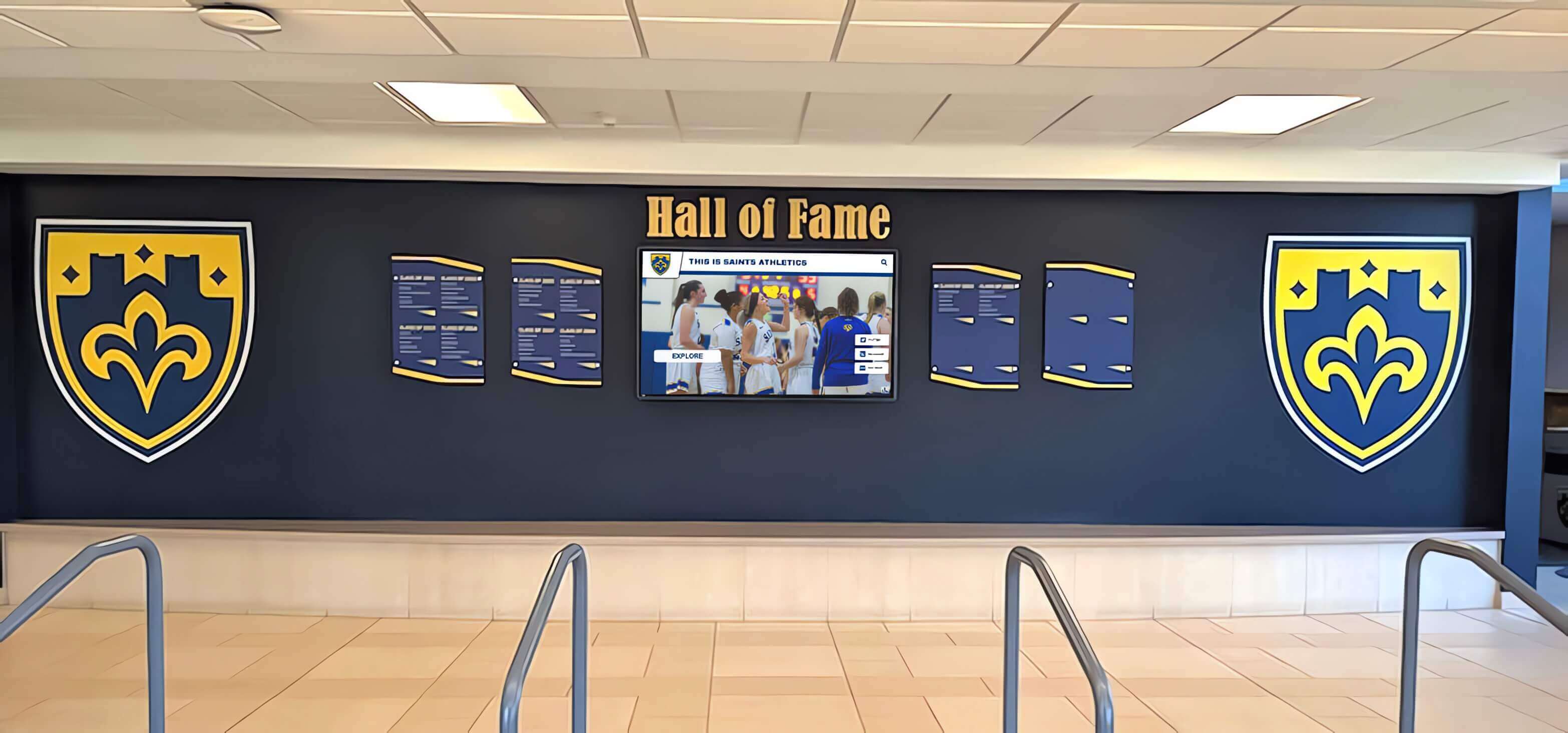
Recognition programs that pair a clear content moderation policy with capable digital platforms are better positioned to handle corrections quickly, protect inductee privacy, and maintain the credibility that makes a hall of fame worth having. If your program is evaluating platforms that make content management easier—built-in CMS access, role-based editing permissions, and remote update capabilities—see how Rocket Alumni Solutions supports this workflow in a live demo.
Schools that treat their hall of fame governance as seriously as their nomination criteria build programs that earn community trust over decades. A content moderation policy is not administrative overhead—it is the infrastructure that allows recognition to scale, stay accurate, and remain worthy of the achievements it celebrates.
Disclaimer: This template is provided for educational and planning purposes. It does not constitute legal advice. Consult with your district’s legal counsel, records officer, and privacy administrators before adopting or publishing a formal content moderation policy. Applicable laws governing records, privacy, and copyright vary by state and district.