



Key Takeaways
Expert guide to selecting, installing, and maintaining glass display cases for schools. Learn about trophy case types, placement strategies, costs, and modern alternatives for showcasing awards.
Every school has a story to tell through the accomplishments of its students, teams, and programs. Glass display cases serve as prominent showcases preserving and celebrating these achievements—from championship trophies and academic awards to historical artifacts and student artwork. However, selecting the right display case glass involves far more than simply choosing an attractive cabinet. Schools must consider safety requirements, budget constraints, placement strategies, maintenance demands, and long-term scalability as recognition needs grow over time.
This comprehensive guide examines everything school administrators, athletic directors, and facilities managers need to know about glass display cases for schools. We’ll explore case types and materials, selection criteria, installation considerations, maintenance best practices, and modern alternatives that overcome traditional limitations while creating more engaging recognition experiences for students, staff, and visitors.
Understanding Display Case Glass Types and Materials
The glass material used in display cases dramatically impacts safety, visibility, durability, and long-term costs.
Safety Glass Options for School Environments
Student safety must be the primary consideration when selecting display case glass for educational settings.
Tempered Safety Glass:
Tempered glass undergoes heat treatment making it four to five times stronger than standard annealed glass. When broken, tempered glass shatters into small, relatively harmless pebble-like pieces rather than large dangerous shards. This safety characteristic makes tempered glass the minimum standard for most school display cases, particularly in high-traffic areas or locations where student contact is likely.
Tempered glass provides excellent clarity for viewing trophies and awards while meeting safety codes in most jurisdictions. However, once tempered, the glass cannot be cut, drilled, or modified, requiring precise measurement and fabrication before tempering occurs. Schools planning custom installations must finalize all dimensions and hardware placement before manufacturing begins.
Laminated Safety Glass:
Laminated glass consists of two or more glass layers bonded with an interlayer (typically polyvinyl butyral) that holds fragments together even when the glass breaks. This construction provides superior security compared to tempered glass alone, making laminated glass ideal for cases containing particularly valuable items or locations with security concerns.
The interlayer also provides UV protection reducing fading and deterioration of displayed items—a valuable feature for preserving historical jerseys, documents, or other light-sensitive materials. Laminated glass costs approximately 20-40% more than tempered glass but may prove worthwhile for premium installations or cases with irreplaceable contents.
Acrylic (Plexiglass) Alternatives:
While technically not glass, acrylic offers several advantages for certain school applications. Acrylic weighs roughly half as much as glass while providing excellent impact resistance, making it safer in environments with younger students or areas where vandalism concerns exist. Modern acrylic maintains 92% light transmission rivaling glass clarity while costing 30-50% less than comparable glass panels.
However, acrylic scratches more easily than glass, requires different cleaning methods to prevent clouding, and may not satisfy building codes requiring actual glass in certain applications. Schools should consider acrylic for temporary installations, student-accessible cases in elementary settings, or budget-conscious projects where glass-like appearance matters more than perfect optical quality.
Glass Thickness and Optical Clarity
Glass thickness affects both structural integrity and viewing quality.
Standard Thickness Options:
Display case glass typically ranges from 1/8 inch (3mm) for small cabinet doors to 1/2 inch (12mm) for large unsupported panels. Standard 1/4 inch (6mm) tempered glass suits most school trophy cases, providing adequate strength for panels up to 36-48 inches with proper framing support.
Larger display cases or floor-to-ceiling installations may require 3/8 inch or 1/2 inch glass to prevent flexing and ensure long-term durability. While thicker glass costs more and increases weight requiring stronger mounting hardware, inadequate thickness leads to visible deflection that appears unprofessional and potentially creates safety hazards over time.
Low-Iron Ultra-Clear Glass:
Standard glass contains iron compounds that create a slight greenish tint visible especially when viewing glass edges. Low-iron “ultra-clear” glass removes these compounds resulting in exceptional clarity and color neutrality ideal for premium installations where display quality matters most.
Ultra-clear glass typically costs 40-60% more than standard glass but may warrant the investment for entrance lobby installations, donor recognition displays, or cases showcasing school history artifacts where superior presentation enhances institutional image. Most schools find standard tempered glass provides adequate clarity for typical trophy displays while reserving ultra-clear glass for select high-visibility installations.
UV Protection and Anti-Reflective Coatings
Protective coatings extend display longevity and improve viewing experiences.
UV-Protective Glass:
Ultraviolet radiation causes fading, yellowing, and deterioration of fabrics, photographs, documents, and other displayed materials. UV-protective glass filters harmful wavelengths while maintaining normal visible light transmission, significantly extending the life of displayed items particularly in locations with natural lighting.
Schools displaying championship banners, retired jerseys, historical photographs, or documents should prioritize UV protection to preserve these irreplaceable materials for future generations. UV-protective glass typically adds 15-25% to material costs but prevents deterioration that would eventually necessitate costly restoration or replacement of displayed items.
Anti-Reflective and Anti-Glare Treatments:
Reflective glare can make display cases difficult to view, particularly in locations with overhead lighting or natural light from windows. Anti-reflective coatings applied to glass surfaces significantly reduce reflections enhancing visibility from various viewing angles.
These treatments work especially well for cases displaying awards with engraved text that becomes difficult to read when glare obscures details. Anti-reflective glass costs approximately 25-35% more than untreated glass but dramatically improves the viewing experience, making recognition more accessible and engaging for students and visitors.
Types of School Display Cases
Different case configurations serve distinct purposes and spatial constraints within school facilities.
Wall-Mounted Display Cases
Wall-mounted cases provide space-efficient recognition in hallways, offices, and common areas.
Standard Wall Cabinet Cases:
Traditional wall cabinets range from 24 to 72 inches wide and 24 to 48 inches tall, mounted at eye level to showcase trophies, plaques, and awards without consuming floor space. These cases typically feature aluminum or wood frames with tempered glass fronts and sides, interior shelving with adjustable heights, and locking doors for security.
Wall-mounted cases work well in administrative areas, hallway locations between classrooms, and spaces where floor area must remain clear for traffic flow. However, mounting requires adequate wall structure to support significant weight—a 48-inch case filled with trophies can exceed 200 pounds requiring proper backing and anchoring hardware.
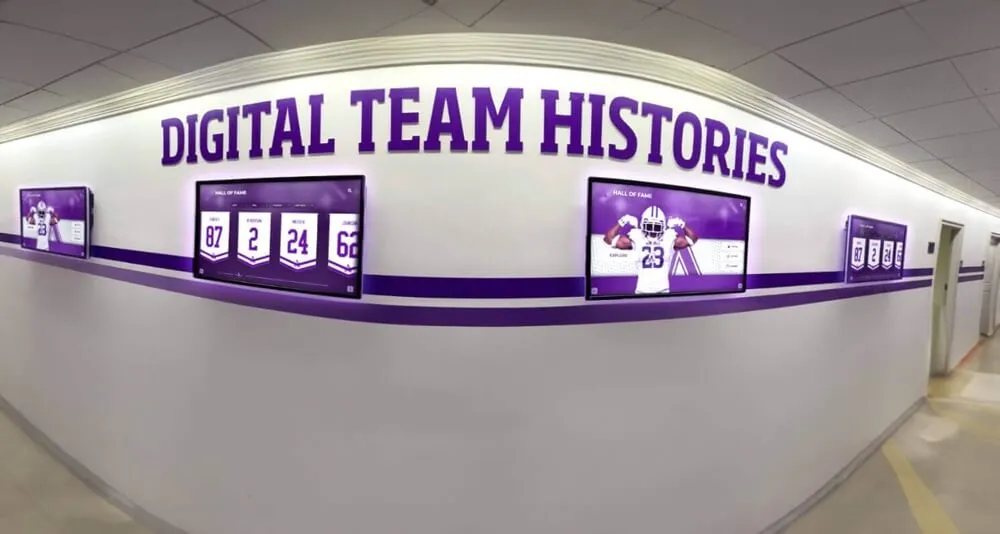
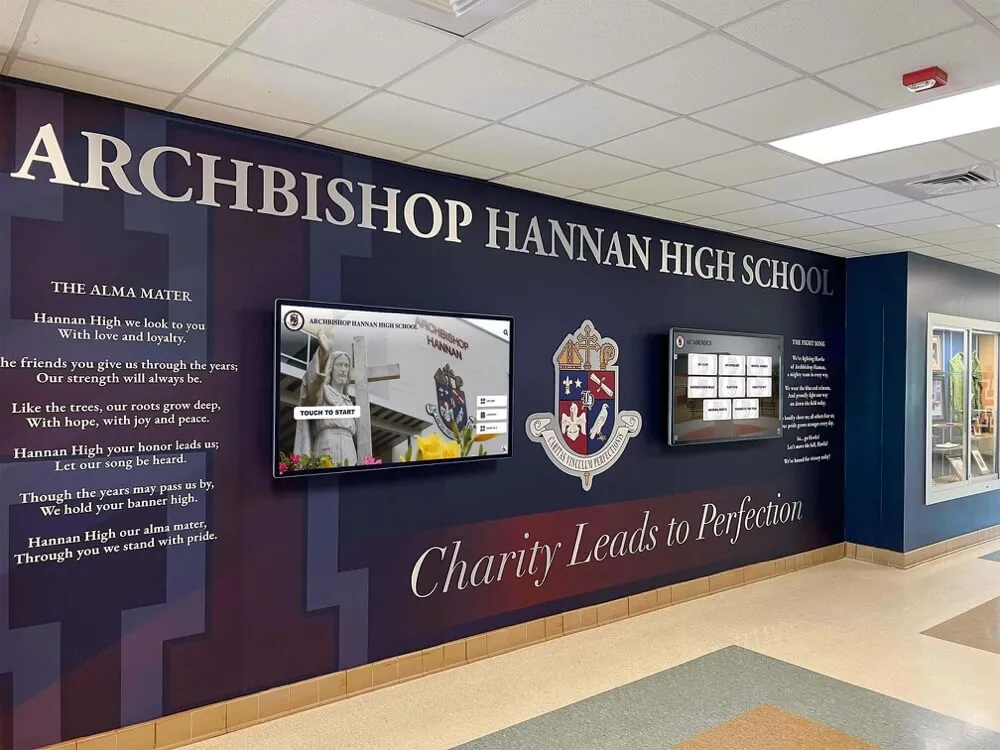
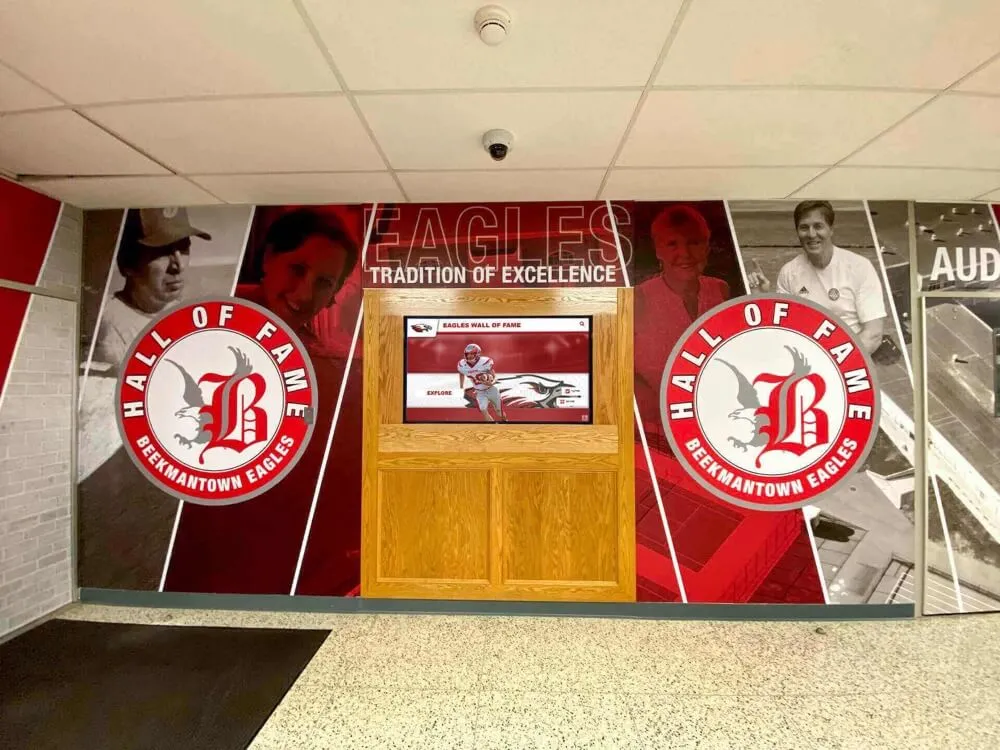
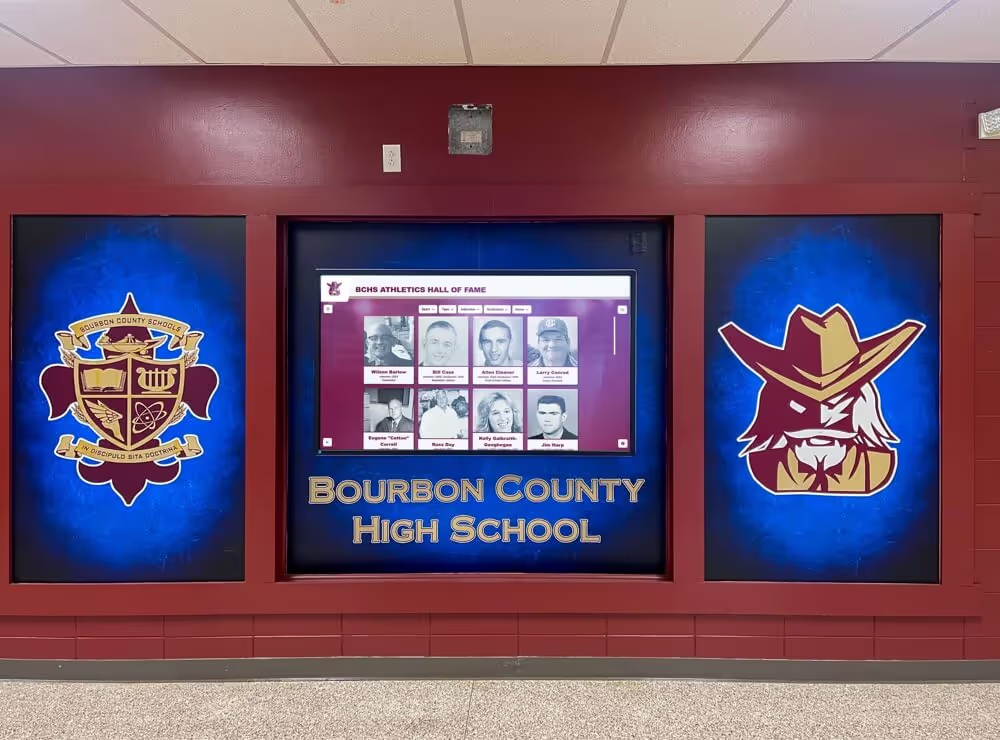
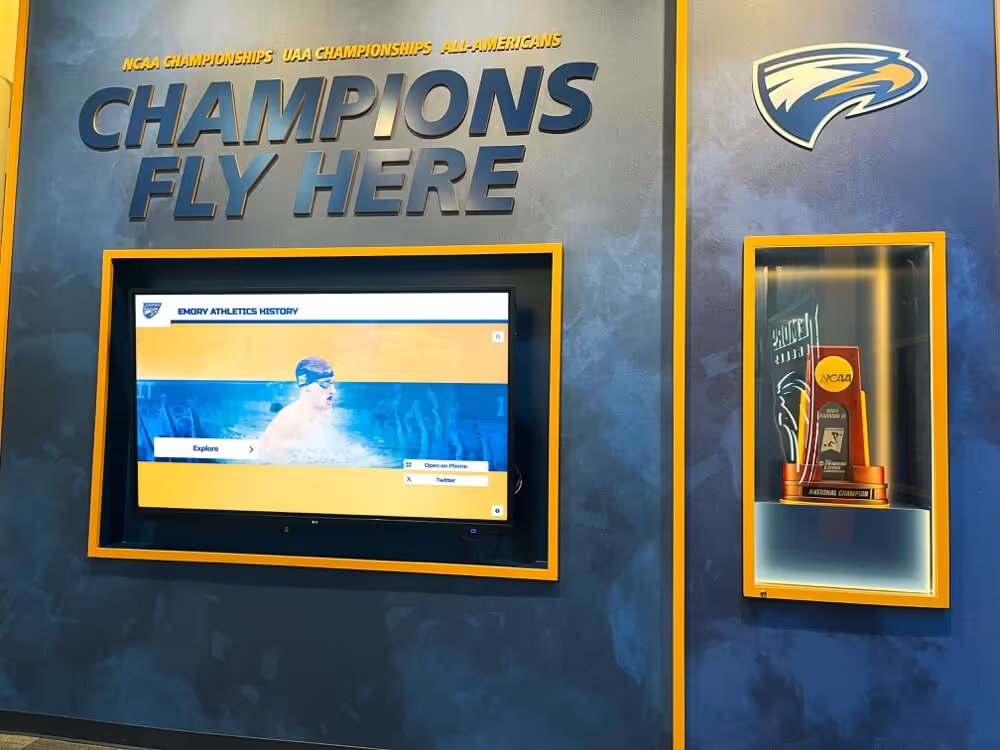
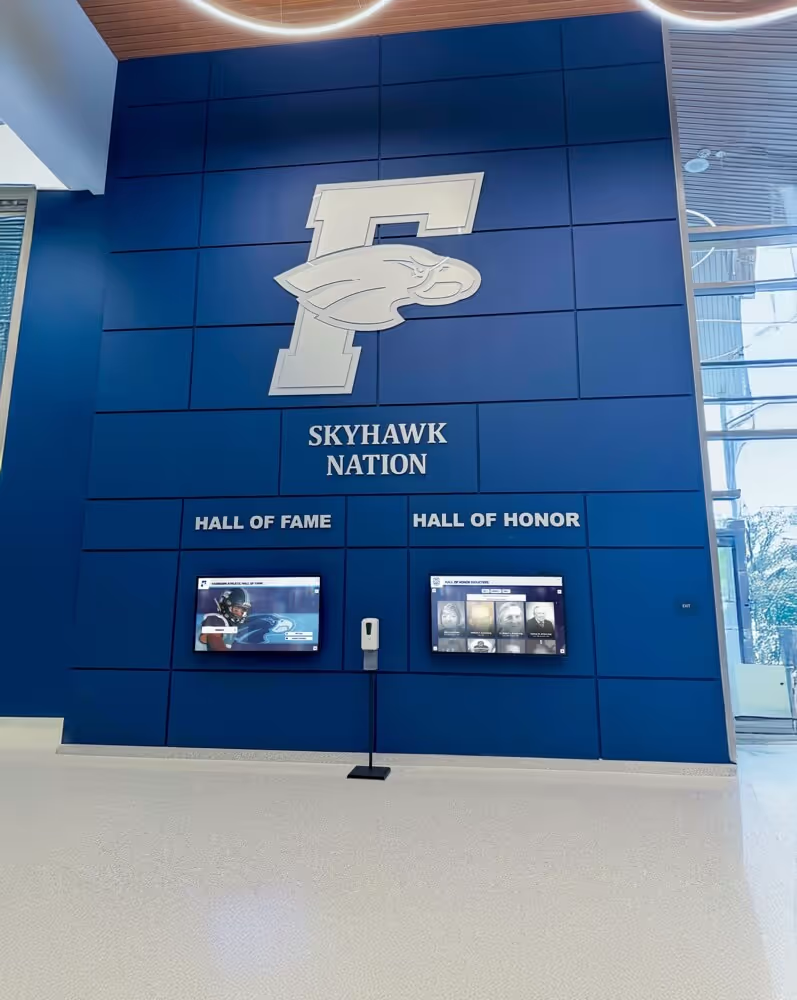
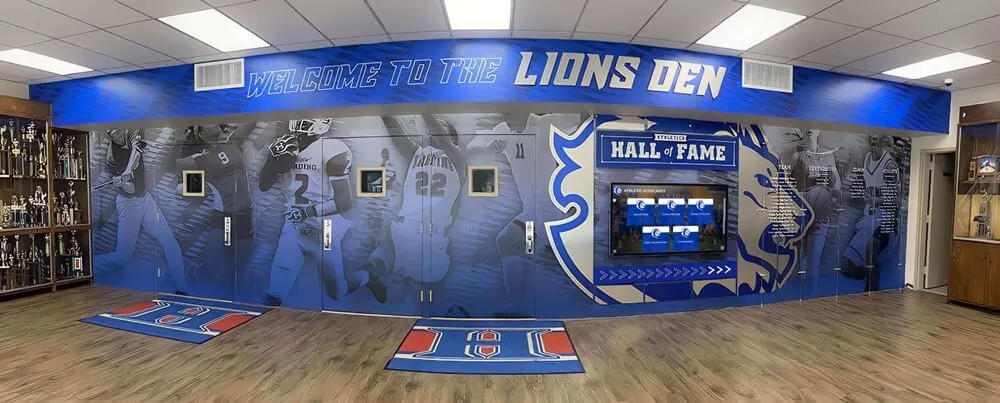
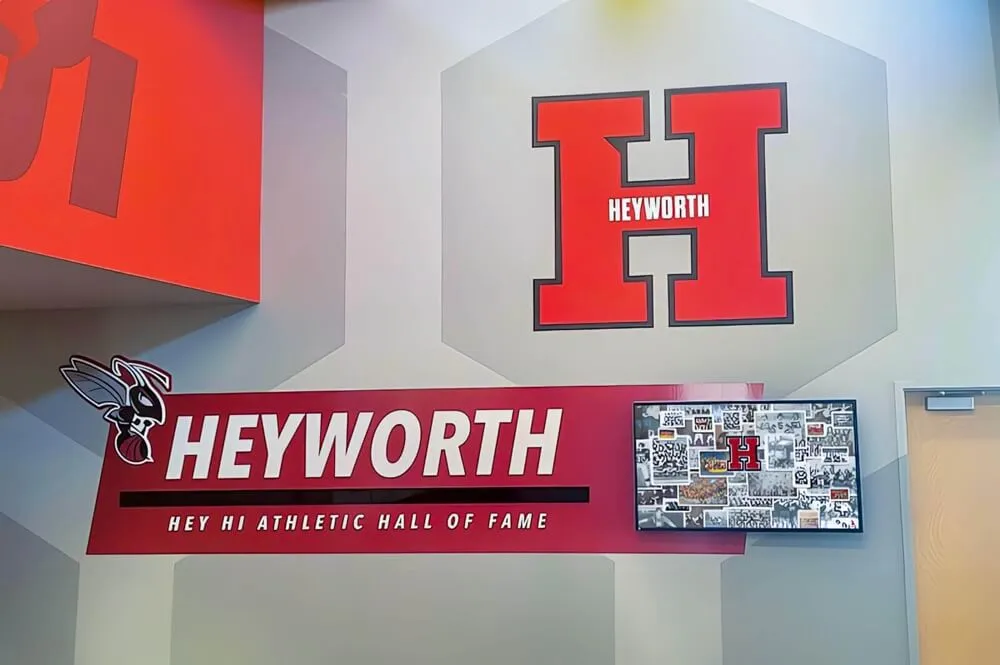
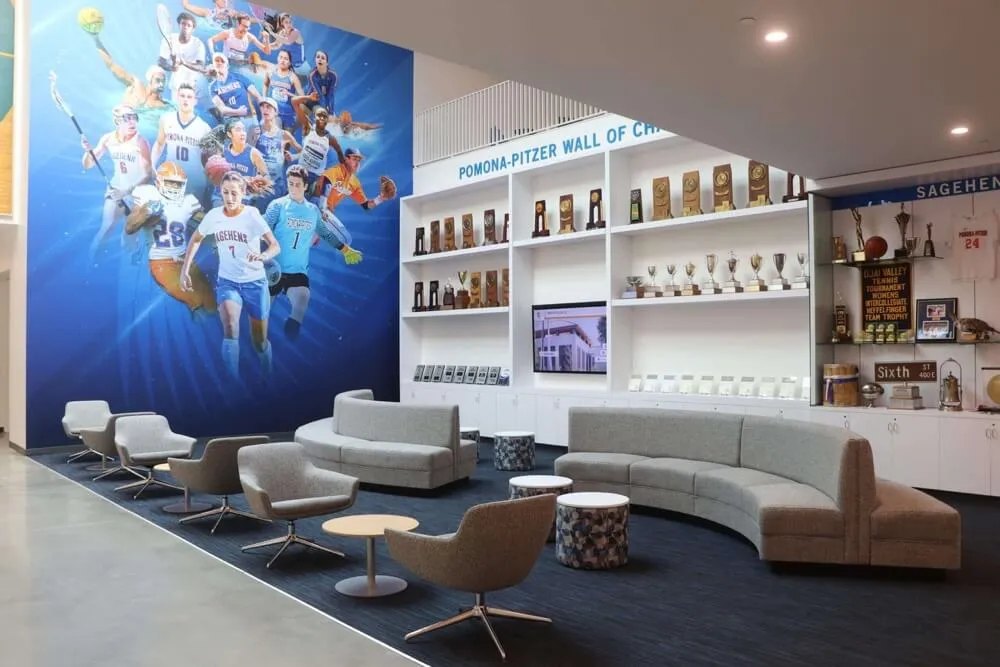
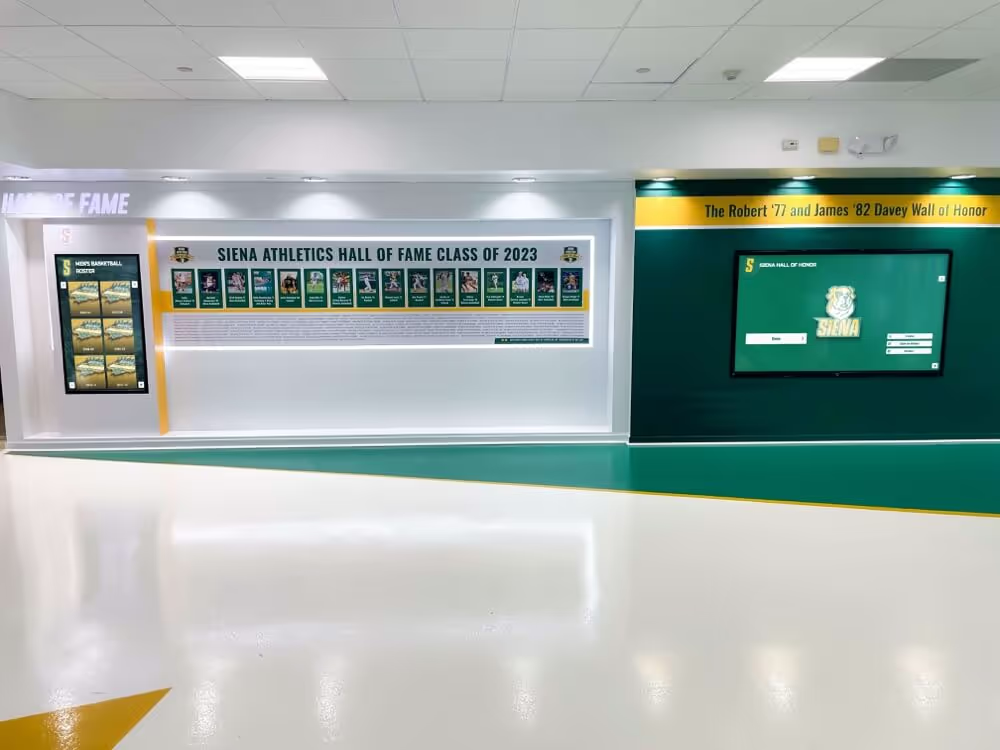
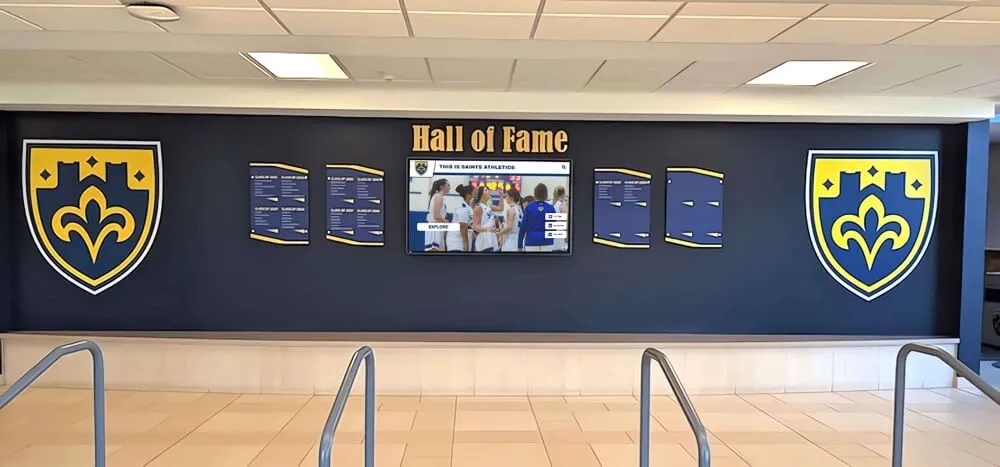
Effective implementations of hall of fame displays often combine wall-mounted cases with surrounding graphics or murals creating cohesive recognition areas that celebrate achievement within broader institutional storytelling.
Recessed Wall Display Cases:
Recessed cases install into wall cavities creating flush or near-flush installations that don’t protrude into hallways or rooms. These built-in displays offer clean aesthetics and maximize usable space in narrow corridors while protecting cases from accidental contact.
However, recessed installation requires wall depth adequate to accommodate case bodies (typically 4-8 inches), structural modifications during construction or renovation, and coordination with electrical and HVAC systems that may occupy wall cavities. Schools planning new construction or major renovations should consider recessed cases, while existing facilities typically find surface-mounted cases more practical and cost-effective.
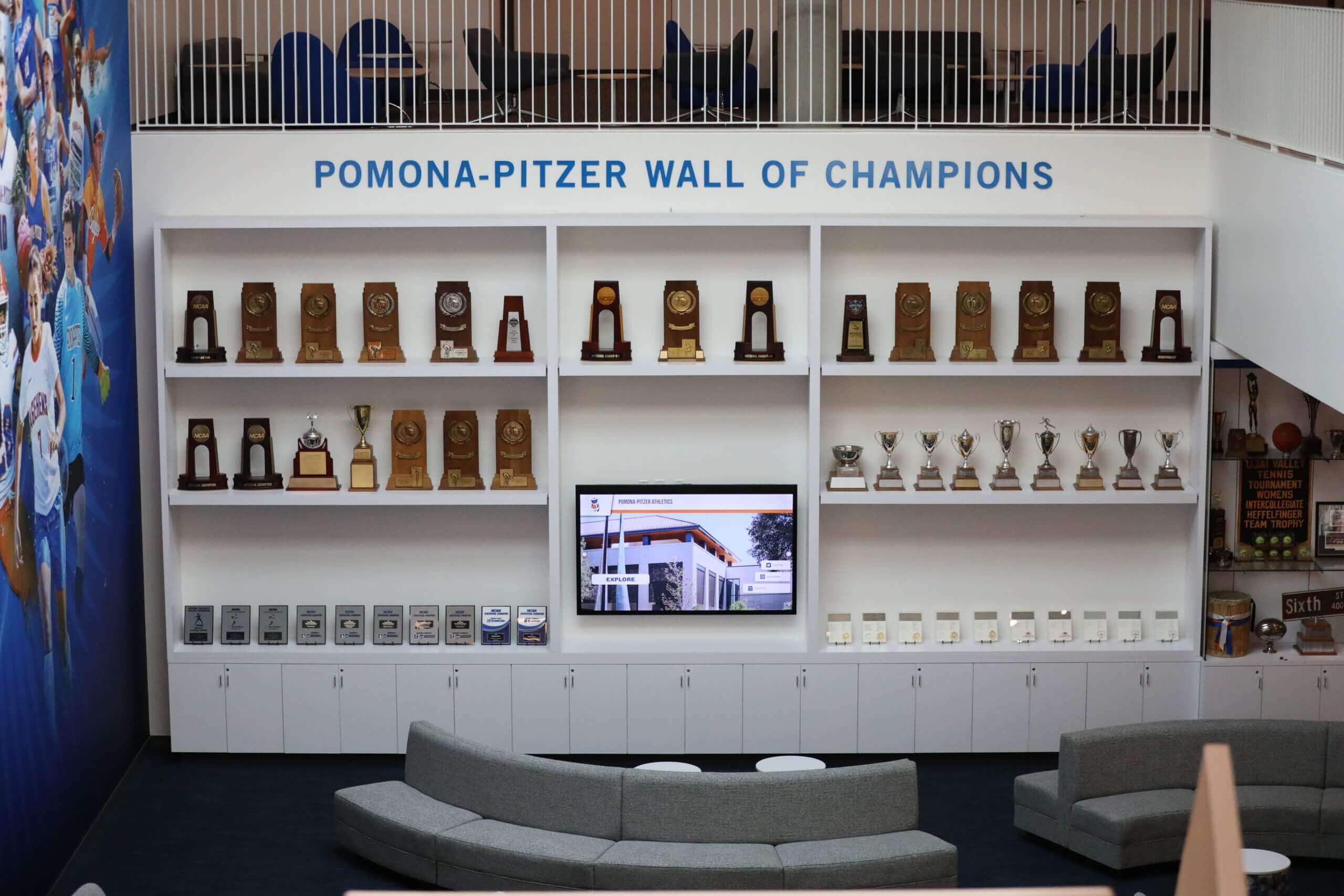
Freestanding Floor Display Cases
Floor cases provide maximum visibility and capacity for extensive trophy collections.
Freestanding Trophy Cases:
Traditional floor cases stand 72-84 inches tall and 36-96 inches wide with glass on multiple sides enabling viewing from different angles. These substantial displays create focal points in entrance lobbies, gymnasium hallways, or dedicated trophy rooms where championship recognition deserves prominent positioning.
Freestanding cases offer the advantage of 360-degree visibility when positioned in open areas, interior lighting that illuminates awards from above and sides, and substantial capacity for large trophy collections spanning decades of achievement. However, floor cases consume significant space that may not be available in crowded facilities, require dedicated floor anchoring to prevent tipping hazards, and cost substantially more than comparable wall-mounted alternatives.
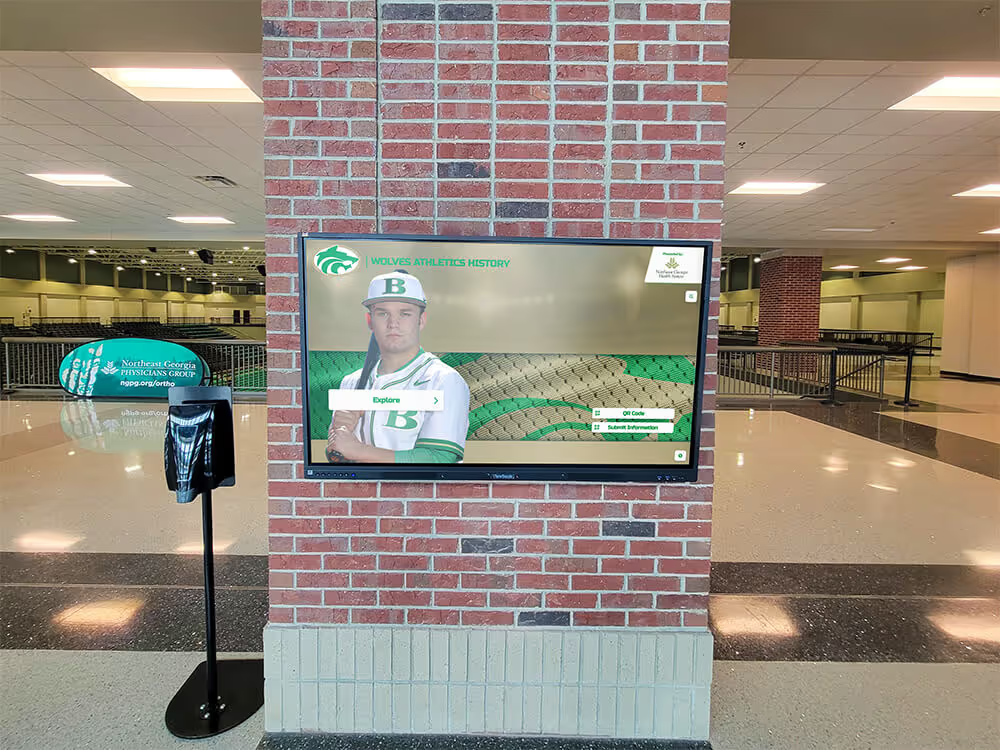
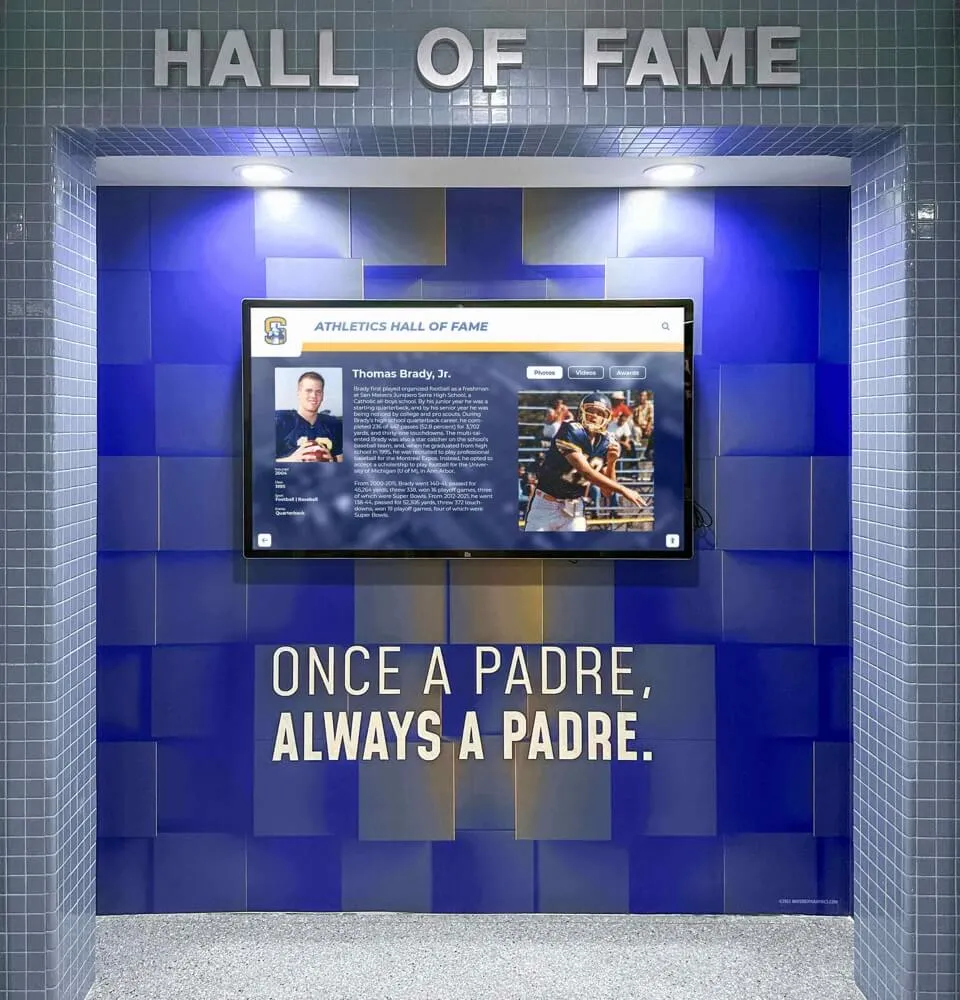
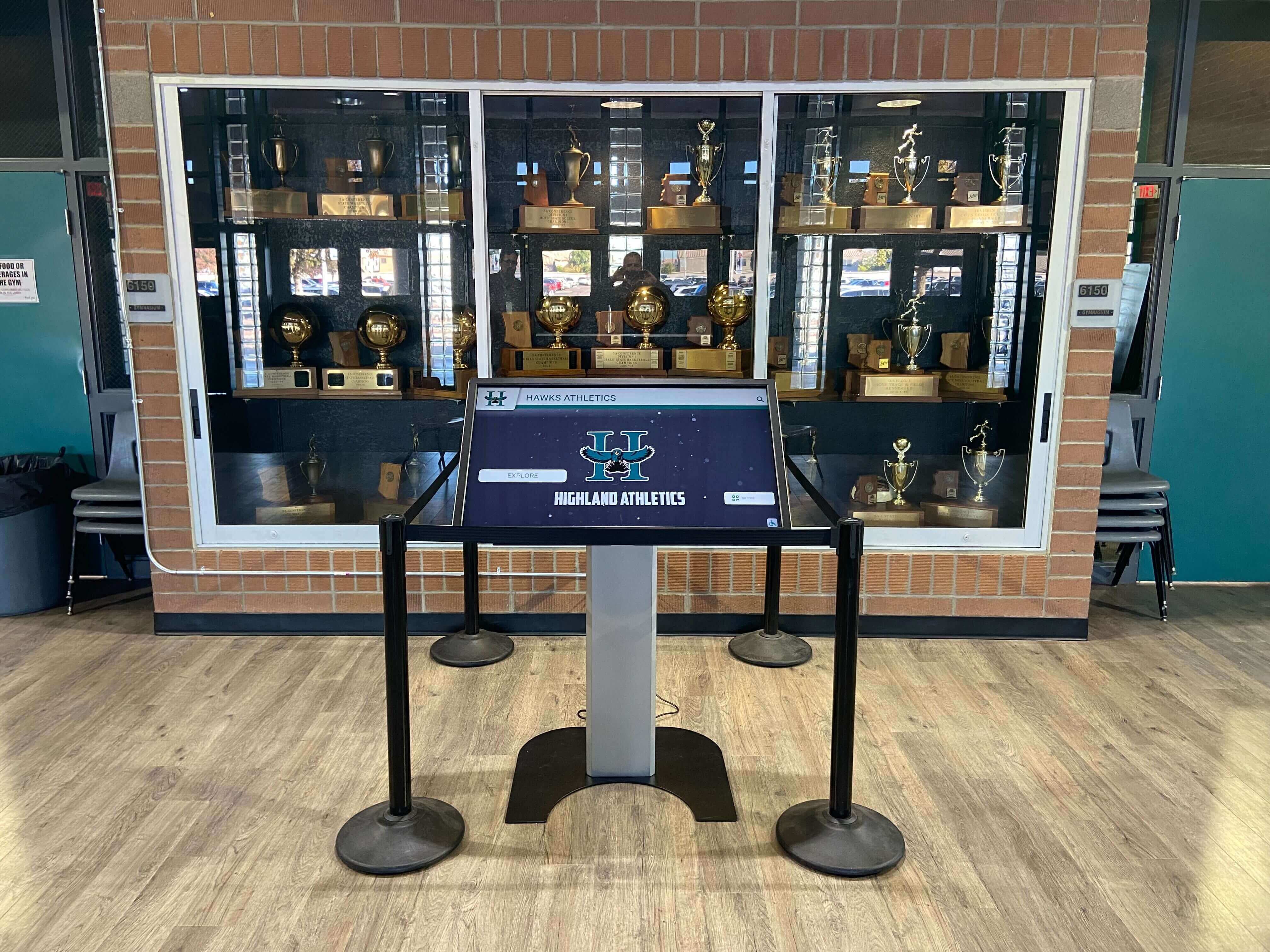
Schools with extensive athletic programs often install freestanding cases near gymnasiums or athletic facilities where they become destinations for student-athletes, visiting teams, and community members attending events. Consider how interactive board implementations can complement traditional trophy cases with detailed team histories and player statistics that physical trophies cannot convey.
Peninsula Display Cases:
Peninsula cases project perpendicular from walls creating dual-sided displays visible from both sides. These configurations work well for hallway locations where foot traffic flows past both sides of the display or room divider applications where cases separate spaces while remaining accessible from multiple directions.
Peninsula cases maximize display capacity relative to footprint while creating architectural interest through three-dimensional installation. However, they require adequate clearance on multiple sides to prevent traffic bottlenecks and may not suit narrow hallways or space-constrained locations where wall-mounted cases prove more practical.
Tower and Column Display Cases
Vertical tower cases showcase individual achievements or featured recognition.
Individual Award Towers:
Slender tower cases ranging from 12-24 inches wide and 60-72 inches tall highlight individual trophies, awards, or artifacts deserving special attention. These vertical displays work well flanking entrances, creating rhythm in long hallways, or spotlighting rotating recognition such as “Athlete of the Month” or recent championship trophies.
Tower cases cost less than large wall or floor units while creating visual impact through height and focused presentation. Schools can install multiple towers creating display galleries that evolve over time as new achievements merit recognition without requiring complete reinstallation of existing cases.
Corner Display Cases:
Corner-oriented cases utilize often-wasted corner spaces transforming them into recognition opportunities. Triangular or wedge-shaped cases fit into inside corners maximizing space utilization while five-sided cases wrap around outside corners creating visibility from multiple approach angles.
Corner cases range from compact 18-inch units suitable for small intersections to substantial 48-inch installations anchoring major hallway junctions. These specialized configurations typically cost 20-30% more than comparable rectangular cases due to custom glass cutting and frame fabrication but enable trophy display in locations where standard cases cannot fit.
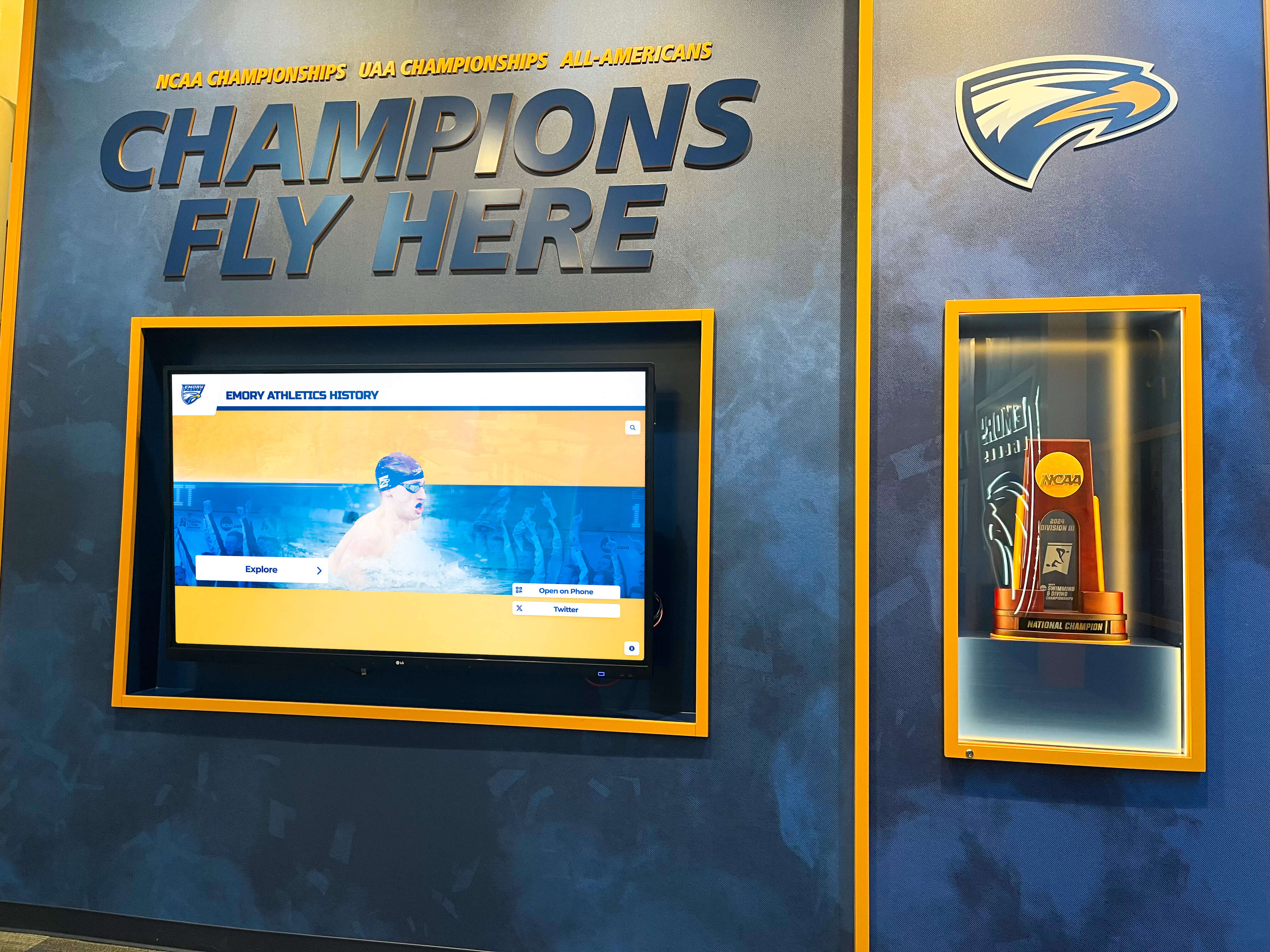
Selecting the Right Display Case for Your School
Matching case specifications to institutional needs ensures successful long-term outcomes.
Assessing Recognition Needs and Capacity Planning
Understanding current and future display requirements prevents premature capacity exhaustion.
Current Trophy Inventory:
Begin by cataloging all items requiring display space including championship trophies from all sports and activities, individual achievement awards and plaques, academic recognition materials, historical artifacts and memorabilia, retired jerseys or uniforms, and photographic displays or team pictures. Physical measurement of existing trophies determines required shelf depths (typically 10-14 inches for most awards) and heights between shelves (commonly 12-18 inches depending on trophy sizes).
Many schools discover they have 2-3 times more trophies than current display capacity accommodates, with the majority sitting in storage closets rather than inspiring current students. Comprehensive inventory reveals the gap between recognition ideals and display reality, informing decisions about required case capacity or alternative recognition approaches.
Growth Projections:
Athletic programs and activity recognition continues accumulating indefinitely. A school adding just five major trophies annually will need shelf space for 50 additional awards within a decade and 100 new items within twenty years. Few schools adequately plan for this inevitable expansion when making initial display case investments.
Calculate realistic growth projections based on programs producing annual trophies, activities adding new recognition categories, and expansion of achievement celebration as schools increasingly value student recognition. These projections reveal whether traditional glass display cases can feasibly accommodate long-term needs or whether alternative approaches prove more sustainable. Learn how successful programs approach digital trophy displays that eliminate capacity constraints entirely while providing richer storytelling opportunities.
Budget Considerations and Total Cost of Ownership
Initial purchase prices represent only a portion of true long-term display costs.
Purchase and Installation Costs:
Display case budgets should include the case itself ($1,200-$15,000 depending on size and features), delivery and shipping (typically $200-$600 for large cases), professional installation including mounting and leveling ($500-$2,000 depending on complexity), lighting upgrades if cases lack adequate illumination ($200-$800), and security hardware such as locks and alarms if needed ($100-$400).
Basic 36-48 inch wall-mounted cases suitable for office or classroom settings typically cost $1,200-$3,500 installed. Standard hallway trophy cases measuring 72x36 inches range from $3,500-$7,000 installed. Premium lobby installations with large floor-to-ceiling cases can exceed $8,000-$15,000 for single-case projects or $25,000-$50,000 for comprehensive multi-case systems creating dedicated trophy galleries.
Ongoing Maintenance and Operational Costs:
Beyond initial investment, schools should budget for regular cleaning and maintenance ($100-$300 annually for professional service), lighting replacement as bulbs burn out ($50-$150 per case annually), lock and hardware repair or replacement ($100-$300 over 10 years), and eventual glass replacement if broken or damaged ($300-$1,500 per panel depending on size and glass type).
Additionally, expanding recognition requires purchasing additional cases as original installations fill to capacity. Schools investing $8,000 in trophy cases may need to spend another $3,000-$5,000 within 5-10 years to accommodate growth, plus another similar amount each subsequent decade. Over a 20-year period, traditional glass display case systems can easily cost $15,000-$25,000 in total investment when accounting for expansion and maintenance.
Comparing Alternative Recognition Systems:
When evaluating display case investments, schools should compare total 20-year costs against alternative recognition approaches. Digital display systems typically require $8,000-$15,000 initial investment for hardware and software, plus $1,000-$2,000 annual subscription fees, totaling approximately $28,000-$55,000 over twenty years.
While digital systems may cost more in some scenarios, they provide unlimited recognition capacity eliminating the need for continuous case expansion, easy content updates without physical reinstallation costs, rich multimedia capabilities impossible with physical displays, and accessibility features enabling remote viewing by alumni and families. Schools should evaluate these benefits against traditional case aesthetics and tangible trophy preservation when making recognition investment decisions. Explore comprehensive comparisons in guides to college athletics recognition systems examining various approaches.
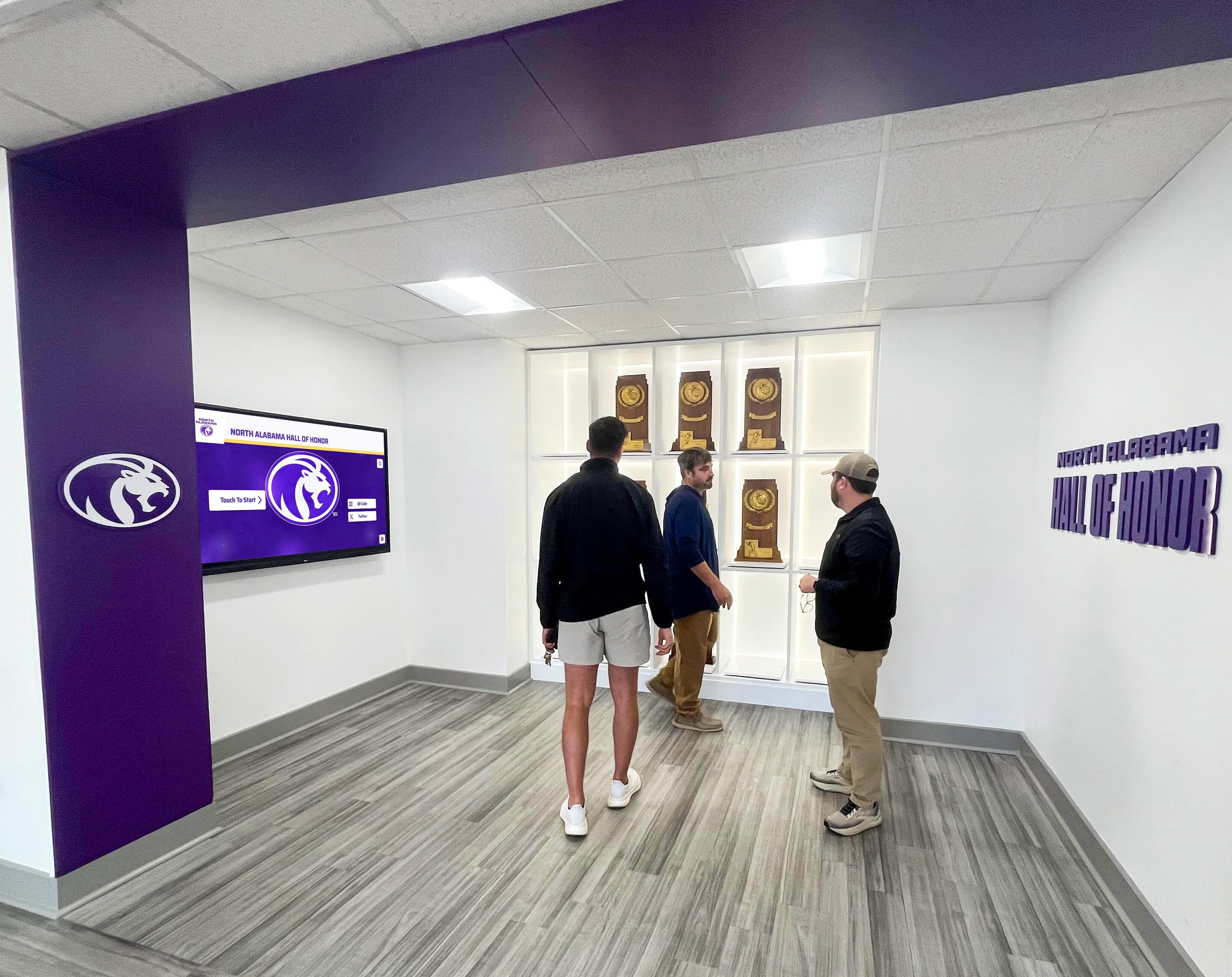
Location and Placement Strategy
Strategic placement maximizes recognition impact and visitor engagement.
High-Traffic Visibility Locations:
The most effective display case locations include main entrance lobbies where every visitor, student, and parent encounters recognition immediately upon arrival; athletic facility hallways connecting gymnasiums, locker rooms, and event spaces where student-athletes see achievements daily; administrative office areas showcasing accomplishments during meetings, tours, and parent conferences; cafeteria or commons spaces where students gather regularly during lunch and social time; and major hallway intersections with heavy foot traffic and natural gathering points.
Visible placement communicates institutional values through physical space allocation. Trophy cases positioned prominently near main entrances demonstrate that achievement celebration ranks among the school’s highest priorities, while cases relegated to remote locations or narrow corridors suggest recognition receives only token attention.
Environmental Considerations:
Avoid locations with direct sunlight exposure causing glare that obscures visibility and UV damage that fades displayed materials; areas near exterior doors experiencing temperature fluctuations and moisture that damages trophies and case materials; spaces with inadequate ambient lighting requiring expensive fixture additions for proper illumination; narrow corridors where protruding cases obstruct traffic flow or create collision hazards; and locations near water fountains, restrooms, or other areas where moisture accumulation damages cases or displayed items.
Environmental assessment during planning prevents problems that plague poorly placed installations requiring expensive relocation or causing ongoing maintenance headaches. Simple precautions like measuring hallway widths, observing sunlight patterns throughout the day, and evaluating lighting adequacy ensure successful long-term installations.
Integrated Recognition Environments:
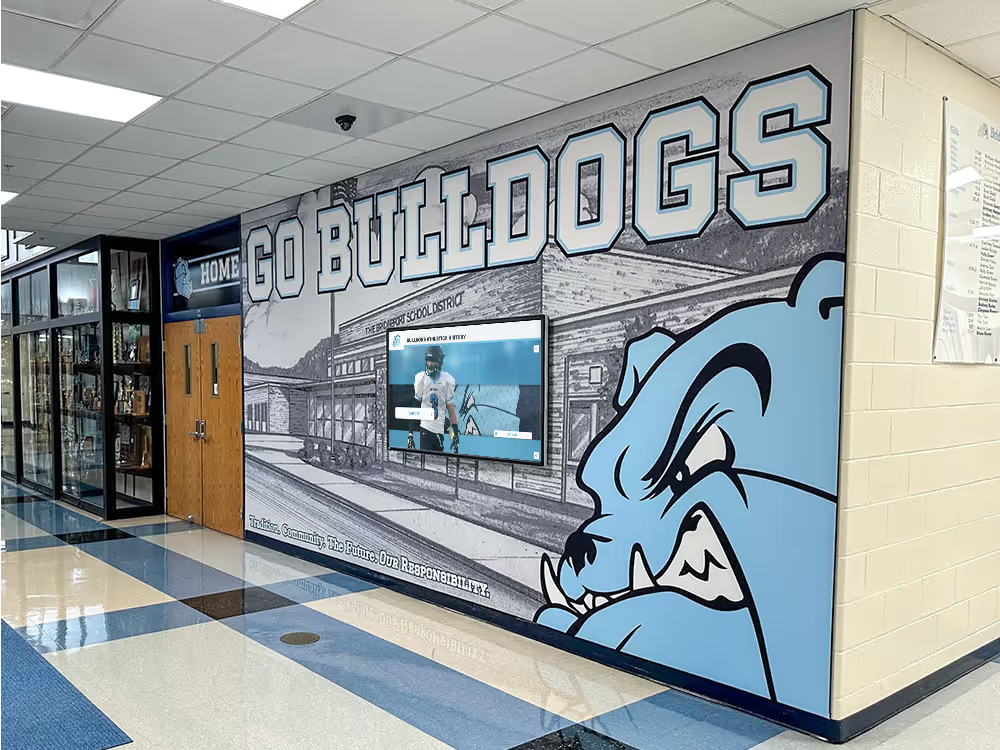
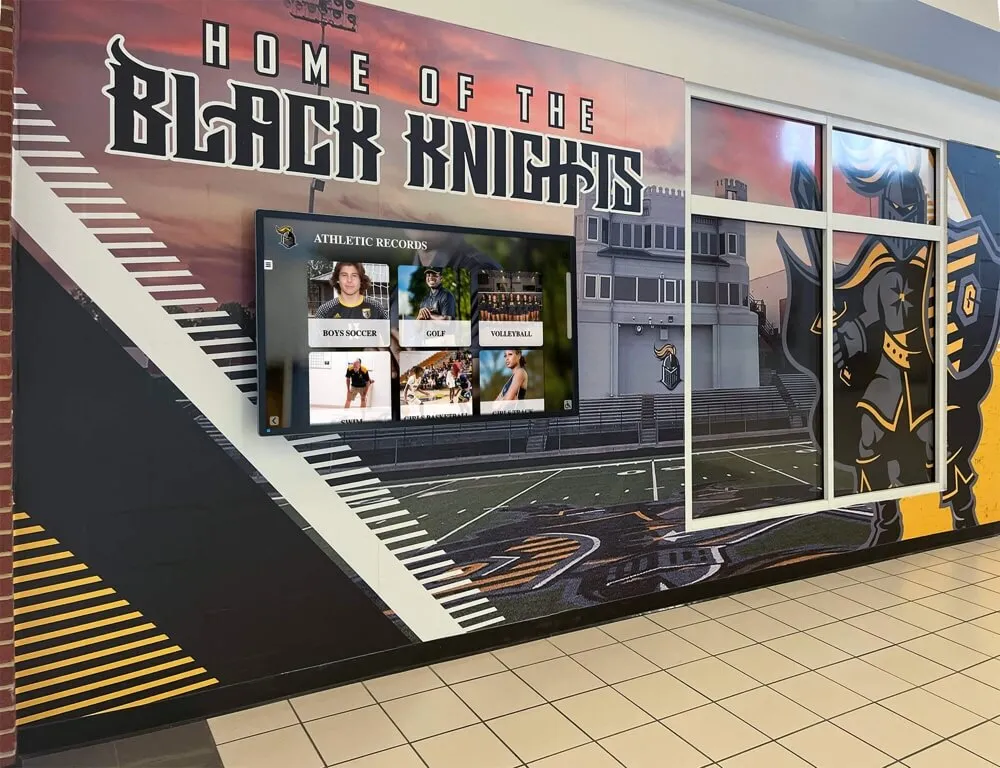
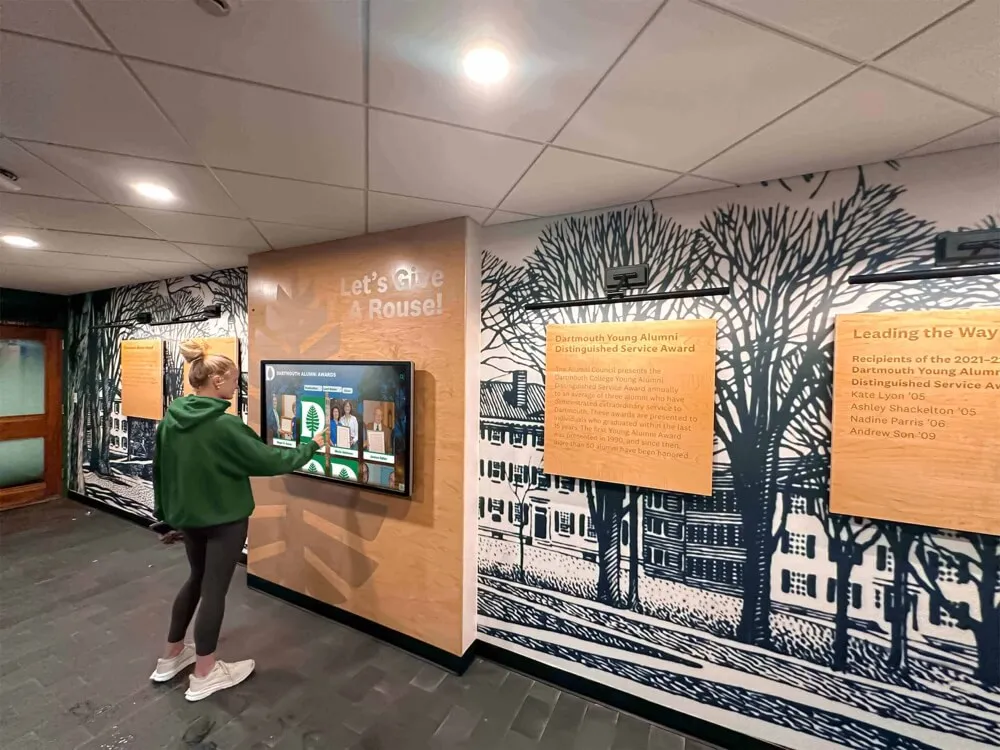
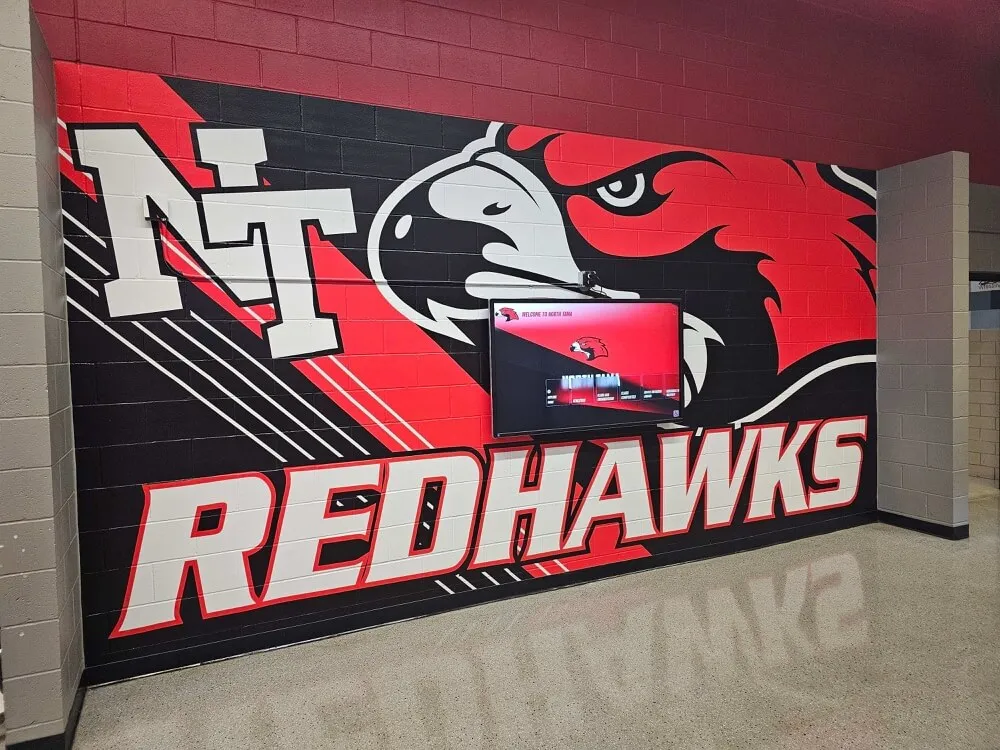
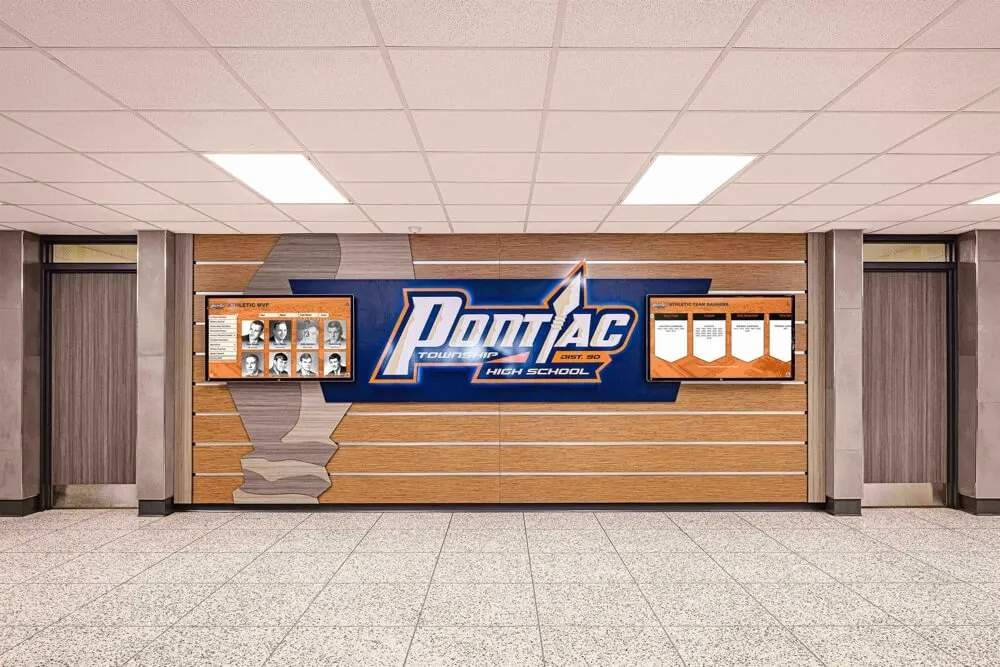
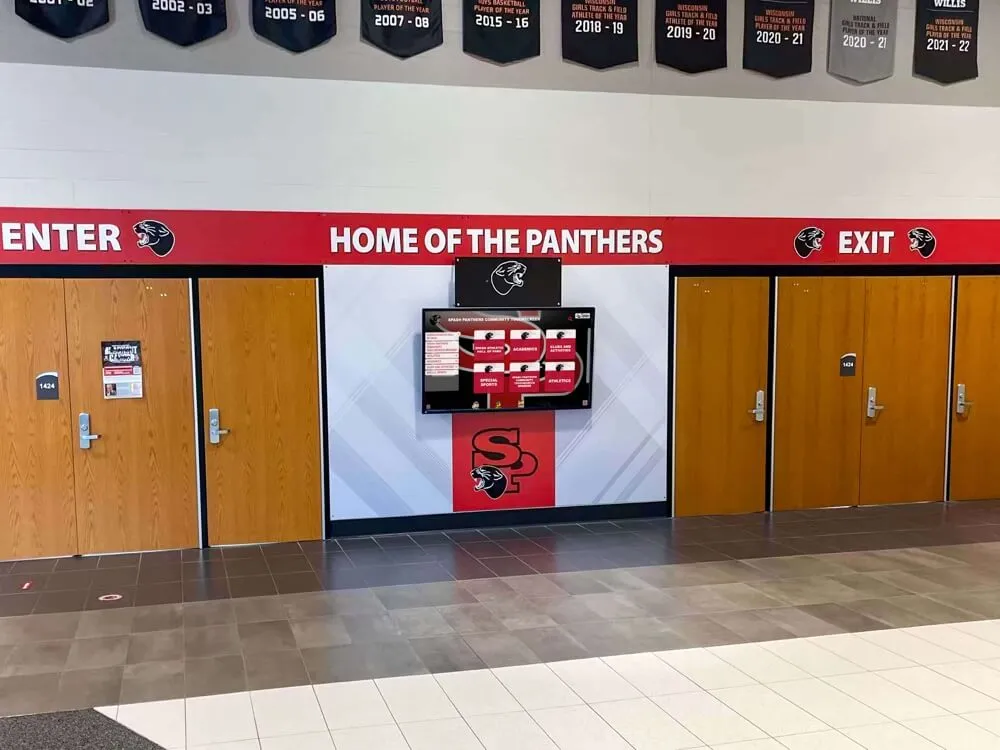
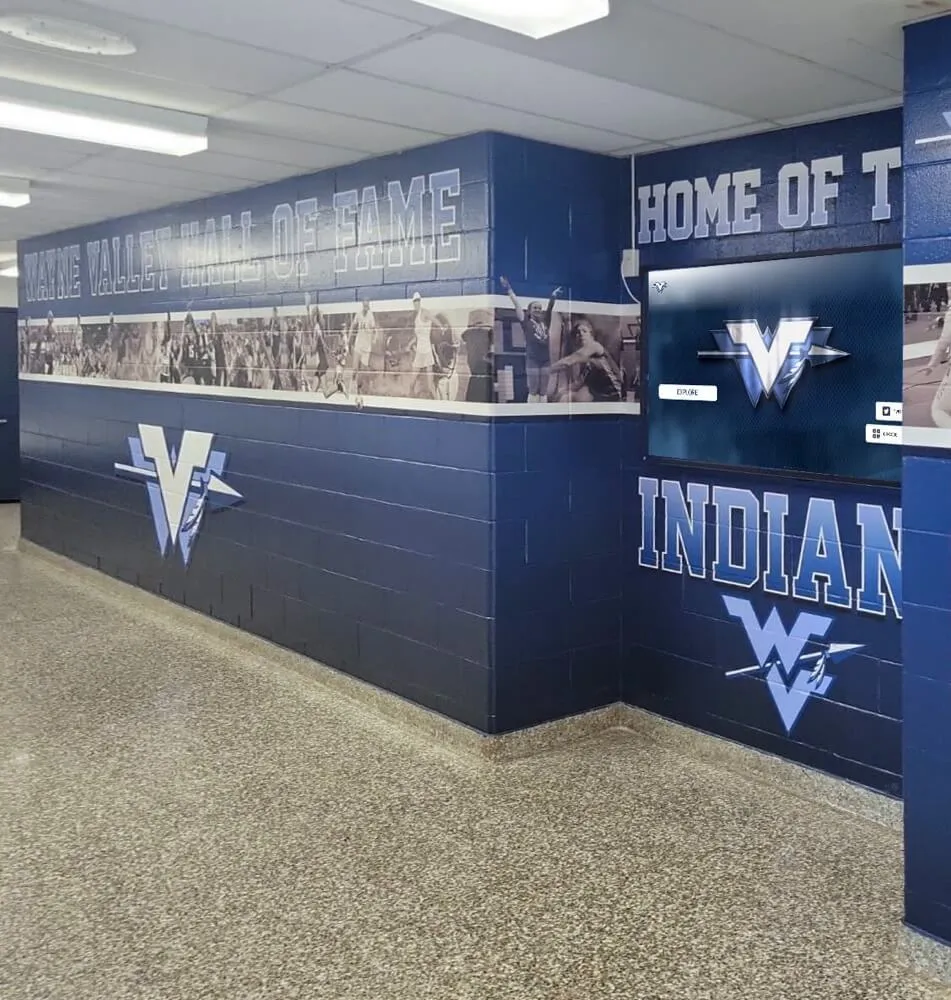
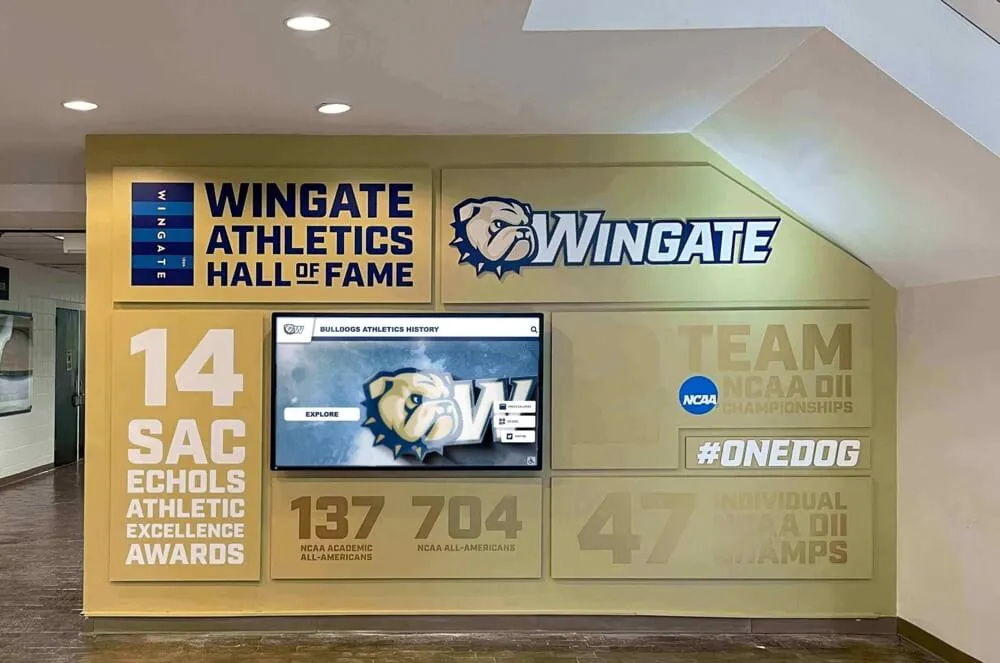
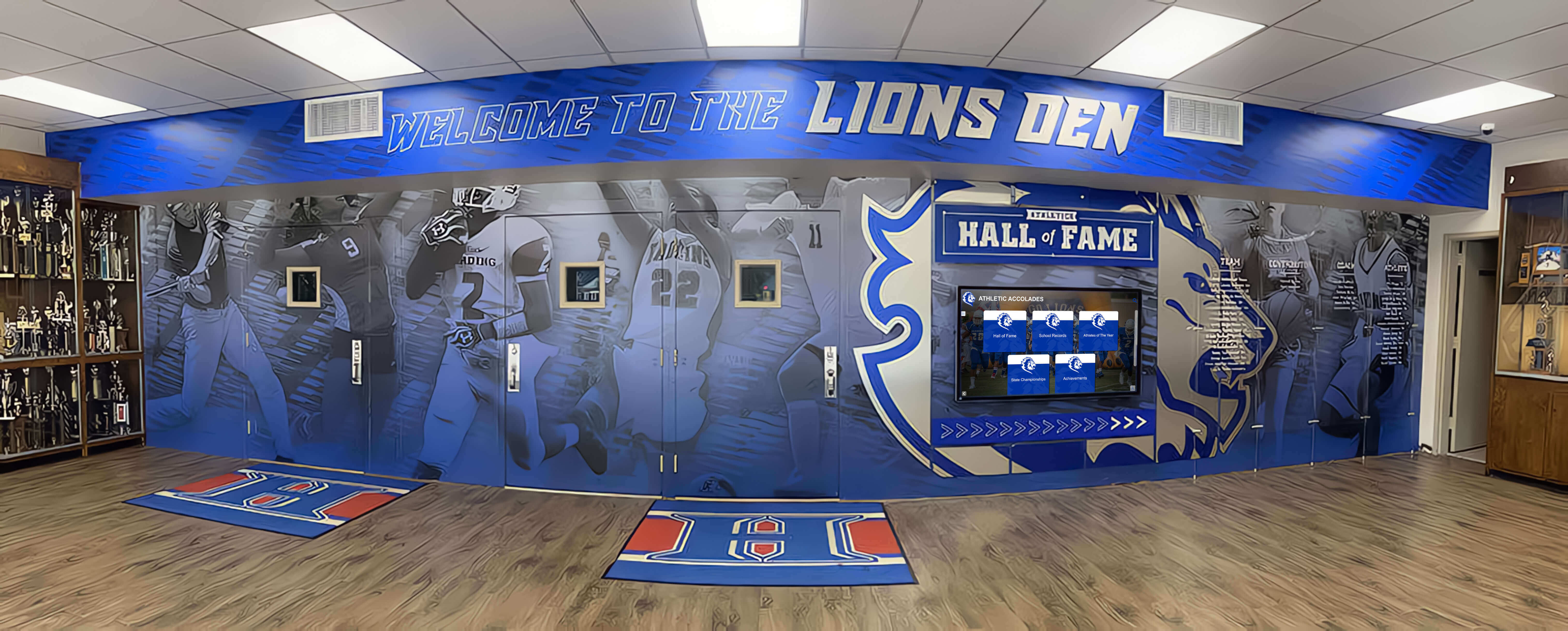
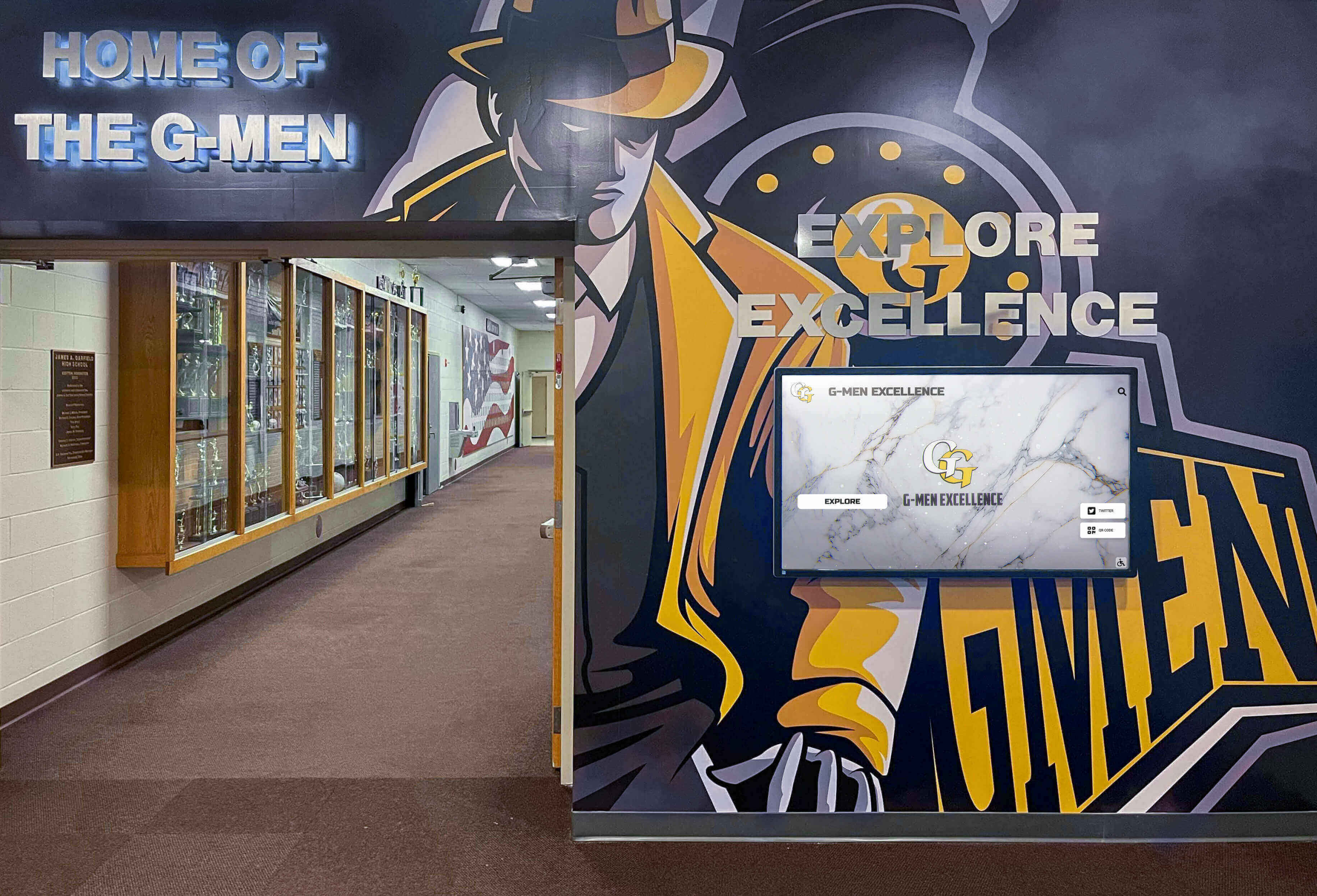
The most compelling displays integrate trophy cases within broader recognition environments rather than installing isolated cabinets. Surround cases with painted wall murals celebrating school colors and mascots, complementary digital screens showing detailed achievement information and team histories, timeline graphics providing historical context, inspirational quotes from coaches or accomplished alumni, and dedicated lighting creating spotlight effects that draw attention to recognition areas.
These integrated environments transform simple trophy storage into destination spaces that students actively visit and explore rather than walking past with cursory glances. The additional investment in environmental design—typically $2,000-$8,000 for professional graphics and lighting—substantially amplifies recognition impact relative to standalone case installations.
Installation and Setup Considerations
Proper installation ensures safety, longevity, and professional appearance.
Structural Requirements and Wall Mounting
Display cases require adequate structural support to prevent dangerous failures.
Wall Structure Assessment:
Wall-mounted cases weighing 100-300 pounds when fully loaded require mounting into solid structural elements rather than simply attaching to drywall. Installations must anchor into wall studs, blocking, or structural steel framing capable of supporting case weight plus substantial safety margins.
Schools should conduct structural assessments before purchasing cases to verify walls can support planned installations. Older buildings with lath-and-plaster walls, modern buildings with metal studs, or locations where studs don’t align with desired case positioning may require additional backing boards or structural modifications adding $500-$2,000 to installation costs. Identifying these requirements during planning prevents expensive surprises during installation.
Mounting Hardware and Security:
Professional installations use heavy-duty mounting brackets secured with lag bolts into structural supports, wall anchors rated for loads substantially exceeding case weight (typically 3-4x case weight minimum), leveling shims ensuring cases hang perfectly horizontal, and security features preventing case removal without tools. Many jurisdictions require installations meeting seismic standards involving specific attachment methods and hardware specifications ensuring cases remain secured during earthquakes.
Schools should never attempt installation using basic picture-hanging hardware or simplified mounting approaches that may work for lightweight items but create serious hazards when cases detach from walls. Professional installation by experienced contractors familiar with commercial fixture mounting ensures safe, code-compliant installations while providing liability protection if problems occur.
Lighting Design for Display Cases
Proper illumination transforms trophies from stored items into celebrated achievements.
Interior Lighting Options:
Most quality display cases include interior lighting—typically LED strips mounted along top edges or corners casting light downward across displayed items. LED lighting provides energy-efficient illumination requiring minimal electricity while generating little heat that could damage displayed materials.
Interior lighting should provide sufficient brightness to make engraved text readable from normal viewing distances (typically 40-60 lumens per shelf foot), utilize neutral or warm color temperatures (3000-4000K) that enhance trophy metallic finishes, and operate on accessible switches or timers enabling convenient control without accessing locked cases.
Cases without integrated lighting require adding external illumination through track lighting, recessed ceiling fixtures, or dedicated picture lights mounted above cases. These supplemental lighting additions typically cost $200-$800 depending on fixture quality and electrical work required for installation.
Ambient Lighting Coordination:
Display cases require surrounding ambient lighting adequate to make trophy details visible while preventing harsh contrasts between brightly lit case interiors and dark surrounding areas. Hallway or lobby lighting should provide at least 20-30 footcandles of general illumination complementing case-specific lighting for optimal viewing experiences.
Schools should evaluate lighting during normal school hours when cases will receive most viewing, since lighting adequate during bright daytime hours may prove insufficient during evening events when ambient light decreases. Adjustable dimming capabilities enable optimizing illumination for different times and uses.
Security and Access Control
Protected cases preserve valuable trophies while preventing theft or vandalism.
Locking Mechanisms:
All school display cases should include locking doors preventing unauthorized access to trophies and awards. Standard key locks provide basic security suitable for most school environments where internal theft is uncommon, while high-security locks with restricted key systems prevent unauthorized key duplication, and electronic access control systems maintain digital logs of who accesses cases and when.
Key management procedures should limit access to specific administrators, athletic directors, or facilities personnel responsible for case maintenance, maintain spare keys in secure administrative locations, and document key distribution preventing security gaps when staff members leave positions.
Preventing Vandalism and Damage:
Beyond locks preventing theft, schools should consider anti-graffiti treatments on case exteriors facilitating easy removal of markings, surveillance camera coverage of trophy case locations deterring vandalism and providing evidence if incidents occur, and case positioning that maintains visibility from administrative areas or high-traffic zones rather than isolated locations where vandalism can occur unnoticed.
Schools experiencing recurring vandalism problems may need to invest in more robust case constructions with polycarbonate glazing instead of glass, protective barriers preventing direct contact, or relocating cases to more supervised areas despite reduced general visibility.
Maintenance and Cleaning Best Practices
Regular care preserves display case appearance and extends operational life.
Routine Cleaning Procedures
Consistent maintenance prevents buildup requiring intensive restoration efforts.
Exterior Glass Cleaning:
Weekly cleaning of exterior glass surfaces using microfiber cloths prevents dust and fingerprint accumulation that degrades appearance. Spray ammonia-free glass cleaners onto cloths rather than directly on glass to prevent cleaner from seeping into case seams damaging frames or interior materials. Wipe in consistent patterns (typically vertical then horizontal strokes) eliminating streaks and ensuring complete coverage.
Avoid abrasive materials including paper towels that can scratch glass surfaces, cleaning products containing ammonia or harsh chemicals that may damage anti-reflective coatings, and excessive moisture that infiltrates case seals causing internal condensation problems.
Interior Dusting and Detailing:
Monthly interior cleaning prevents dust accumulation on displayed trophies and awards. Open cases and carefully remove items from shelves, dust individual trophies using dry microfiber cloths or soft brushes removing accumulated dust from engraving and detailed surfaces, clean glass or wood shelving with appropriate materials, and replace items in organized arrangements maintaining professional appearance.
Annual deep cleaning should include polishing metal trophies using appropriate cleaners for brass, silver, or other materials; inspecting trophy bases for damage or deterioration; organizing displayed items removing outdated or less significant pieces making room for recent achievements; and documenting displayed items with photographs and inventories tracking trophy locations.
Addressing Common Display Case Problems
Proactive problem-solving prevents minor issues from becoming expensive repairs.
Moisture and Condensation:
Condensation inside display cases indicates seal problems allowing humid air to enter while temperature changes cause moisture precipitation on glass. Address condensation by identifying and sealing gaps around doors or panel joints, using silica gel desiccant packets inside cases to absorb excess moisture, improving environmental control in case locations reducing temperature fluctuations, and ensuring adequate air circulation preventing humid air stagnation.
Persistent moisture problems may require replacing degraded door seals, adjusting case positioning away from exterior walls or temperature sources, or installing small ventilation fans within cases promoting air circulation that prevents condensation.
Lighting Failures and Electrical Issues:
LED strip lighting typically lasts 25,000-50,000 hours (roughly 10-20 years with normal use) but eventually requires replacement. When lighting fails, first check electrical connections and power supplies before assuming LEDs need replacement, replace entire LED strips rather than attempting to repair sections, and upgrade to newer LED technology offering improved efficiency and color quality compared to original installations.
Schools should maintain documentation of lighting specifications enabling exact replacement matching original installations, or use lighting upgrades as opportunities to improve illumination quality beyond original designs.
Lock and Hardware Repairs:
Locks and hinges experiencing regular use may develop problems including keys that stick or don’t turn smoothly, doors that don’t close or latch properly, and hinges that squeak or bind during opening. Address hardware problems promptly through lock lubrication using graphite powder or specialized lock lubricants, hinge adjustment or replacement if sagging doors create alignment problems, and complete lock replacement if keys or mechanisms are worn beyond effective operation.
Maintaining spare lock cylinders and hardware parts enables quick repairs without waiting for special orders that leave cases unlocked or inaccessible during extended replacement periods.
Modern Alternatives to Traditional Trophy Cases
Evolving technology offers new approaches to achievement recognition overcoming traditional limitations.
Digital Recognition Displays
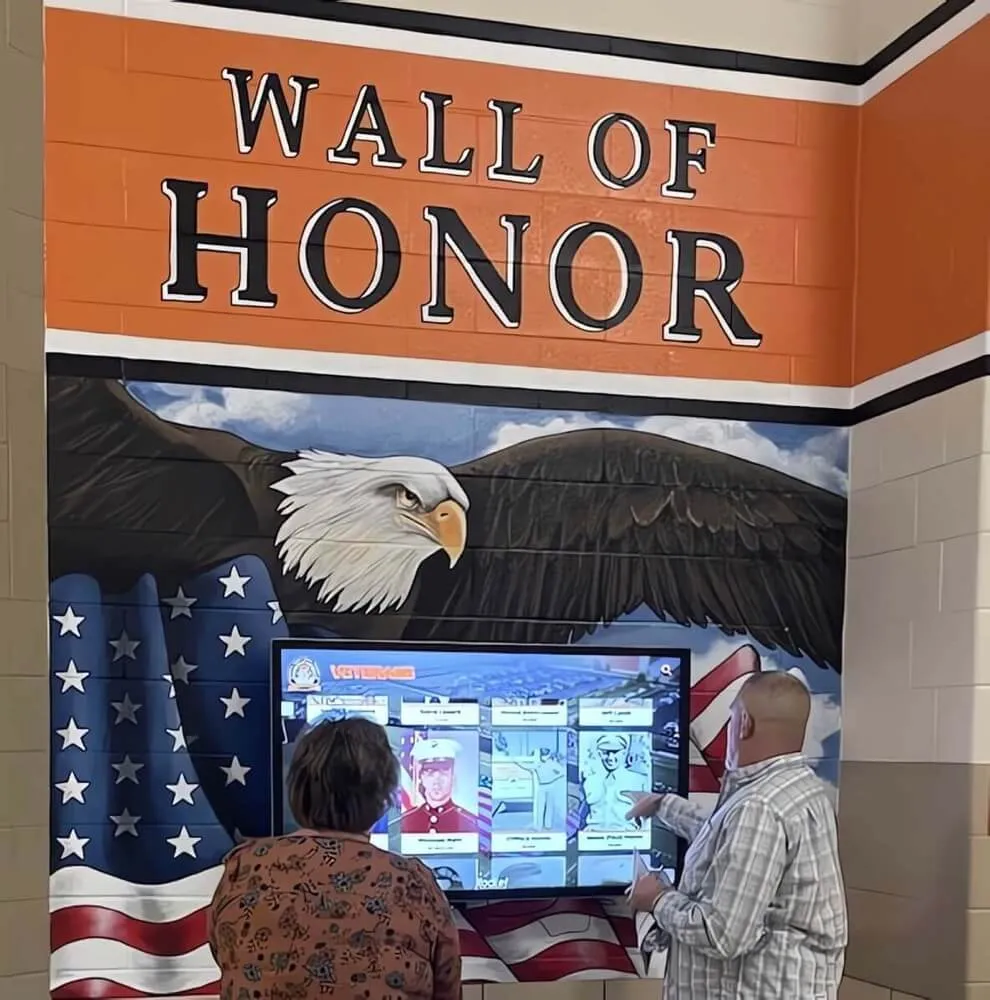
Interactive touchscreen systems transform recognition from static storage into engaging experiences.
Unlimited Recognition Capacity:
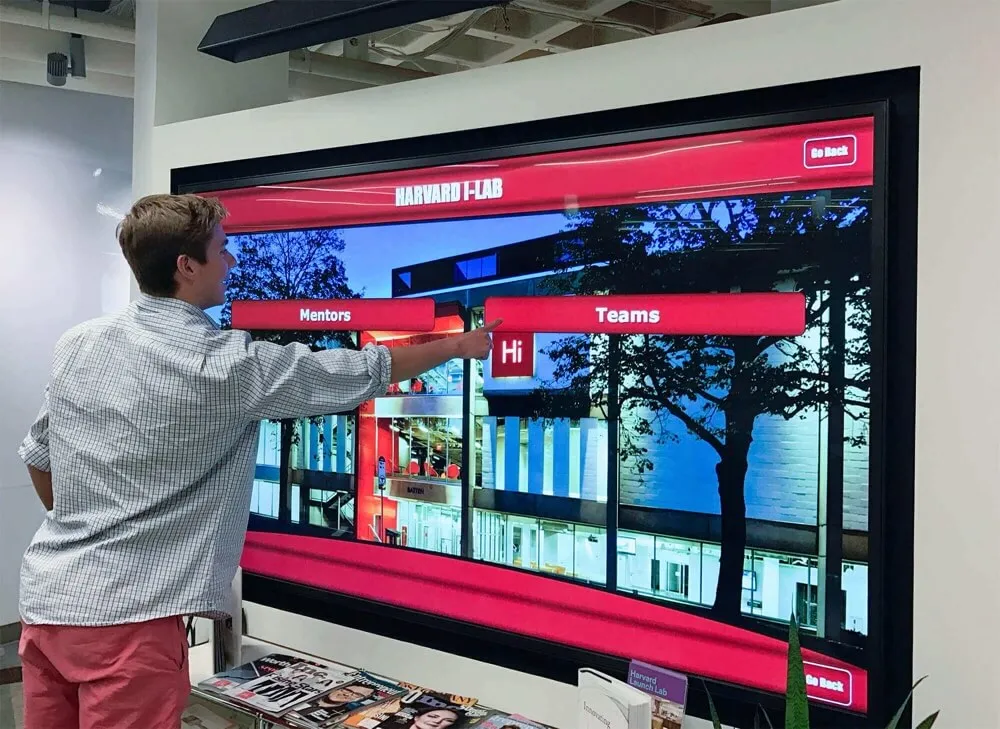
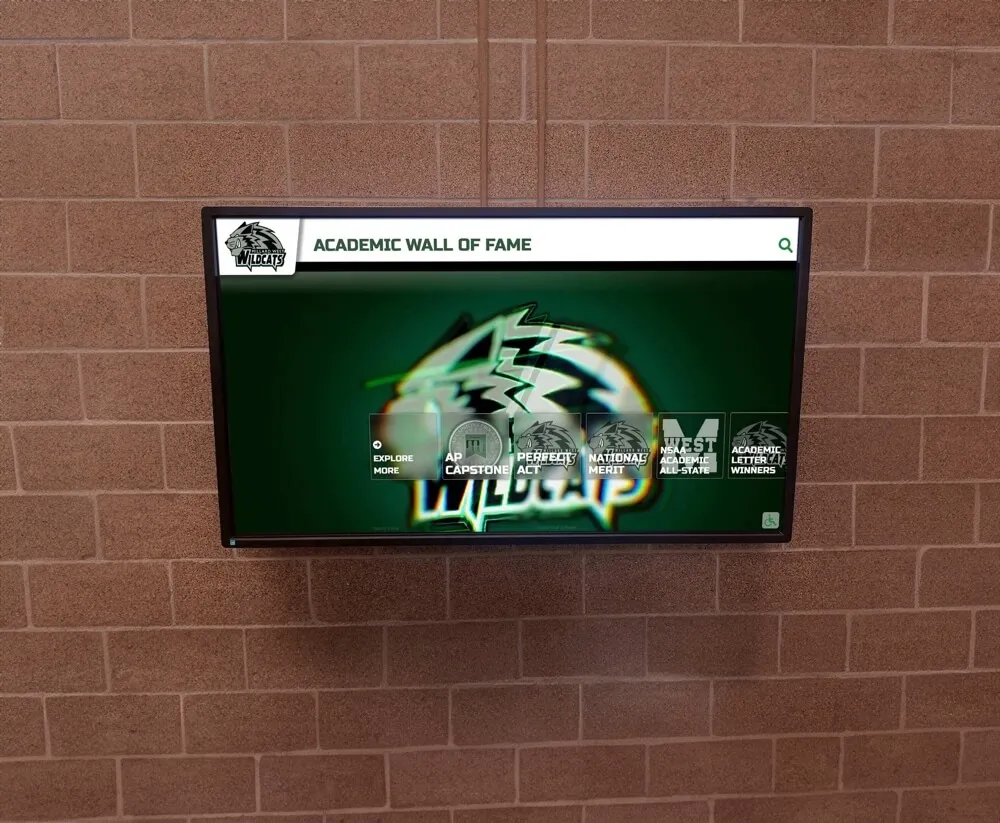
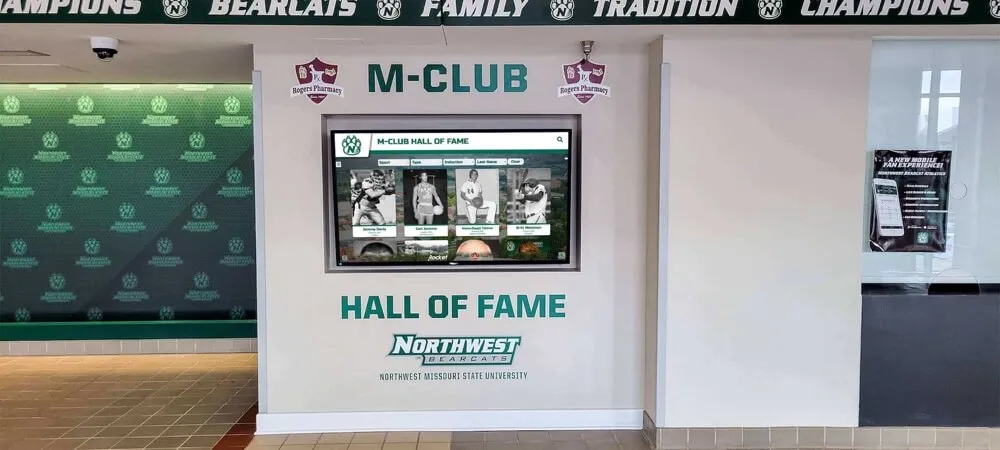
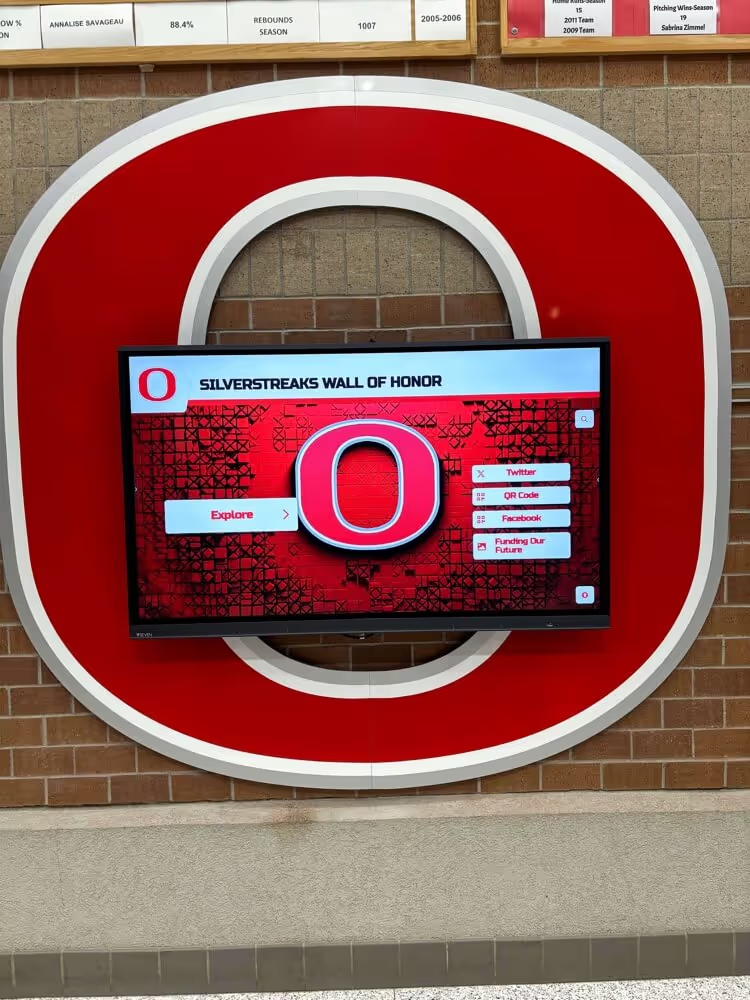
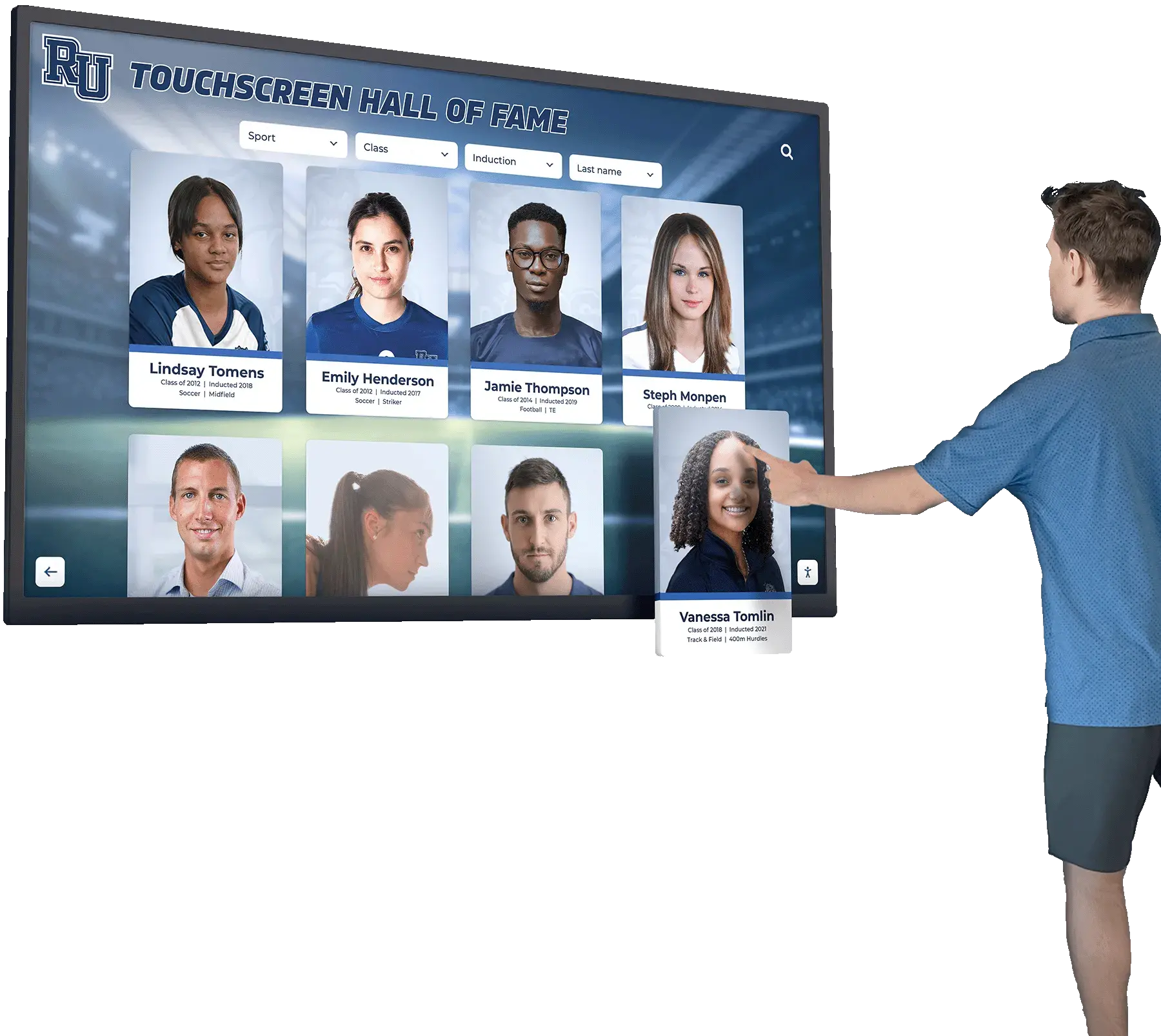
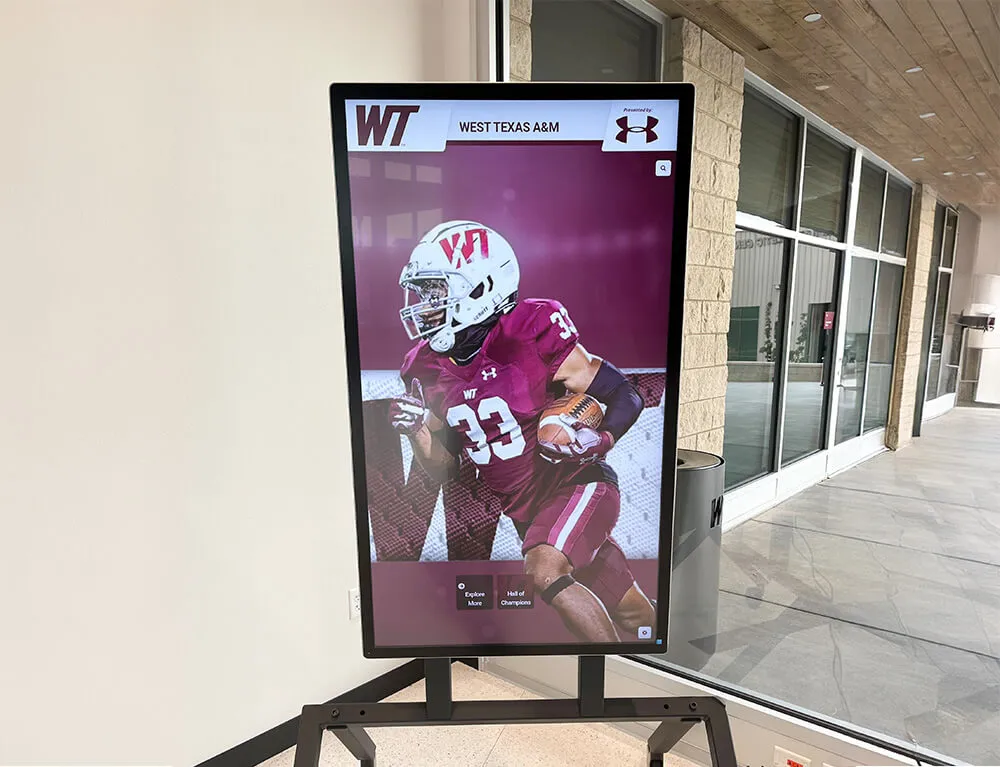
The most significant limitation of traditional glass display cases is finite physical capacity. Even large trophy rooms eventually fill to capacity forcing difficult decisions about which achievements remain visible and which get relegated to storage. Digital recognition displays eliminate space constraints entirely, showcasing unlimited achievements within single-screen installations occupying just a few square feet of wall space.
Schools can finally recognize every state qualifier, honor all-conference selections across all sports, preserve complete team records spanning decades, and document comprehensive program histories without physical space limitations that plague traditional approaches. This unlimited capacity proves particularly valuable for schools with long athletic traditions where recognition backlog exceeds any realistic physical display capacity.
Solutions from companies like Rocket Alumni Solutions provide purpose-built platforms enabling schools to create comprehensive digital recognition systems that complement or replace traditional trophy cases while providing vastly greater capacity and functionality.
Rich Multimedia Storytelling:
Physical trophies communicate basic information—championship type, year, and perhaps a brief engraved description. Digital displays enable comprehensive profiles including high-resolution photographs of championship teams and individual athletes, complete season statistics and game-by-game results, video highlights of championship moments and key plays, coach interviews discussing team development and memorable seasons, detailed biographies of standout players, and links to subsequent athletic careers at college or professional levels.
This multimedia depth transforms simple acknowledgment into compelling narratives that help current students understand championship traditions while inspiring them toward similar achievement. Engagement analytics consistently show visitors spending 5-15 minutes actively exploring digital recognition content compared to less than 30 seconds with traditional trophy cases—representing order-of-magnitude improvements in actual recognition impact.
Easy Updates and Remote Management:
Adding new achievements to traditional trophy cases requires purchasing and engraving new trophies, coordinating with facilities teams for case access, physically arranging displays, and potentially reorganizing entire cases as space fills. This administrative burden means many schools update trophy displays only periodically rather than promptly celebrating achievements when they occur.
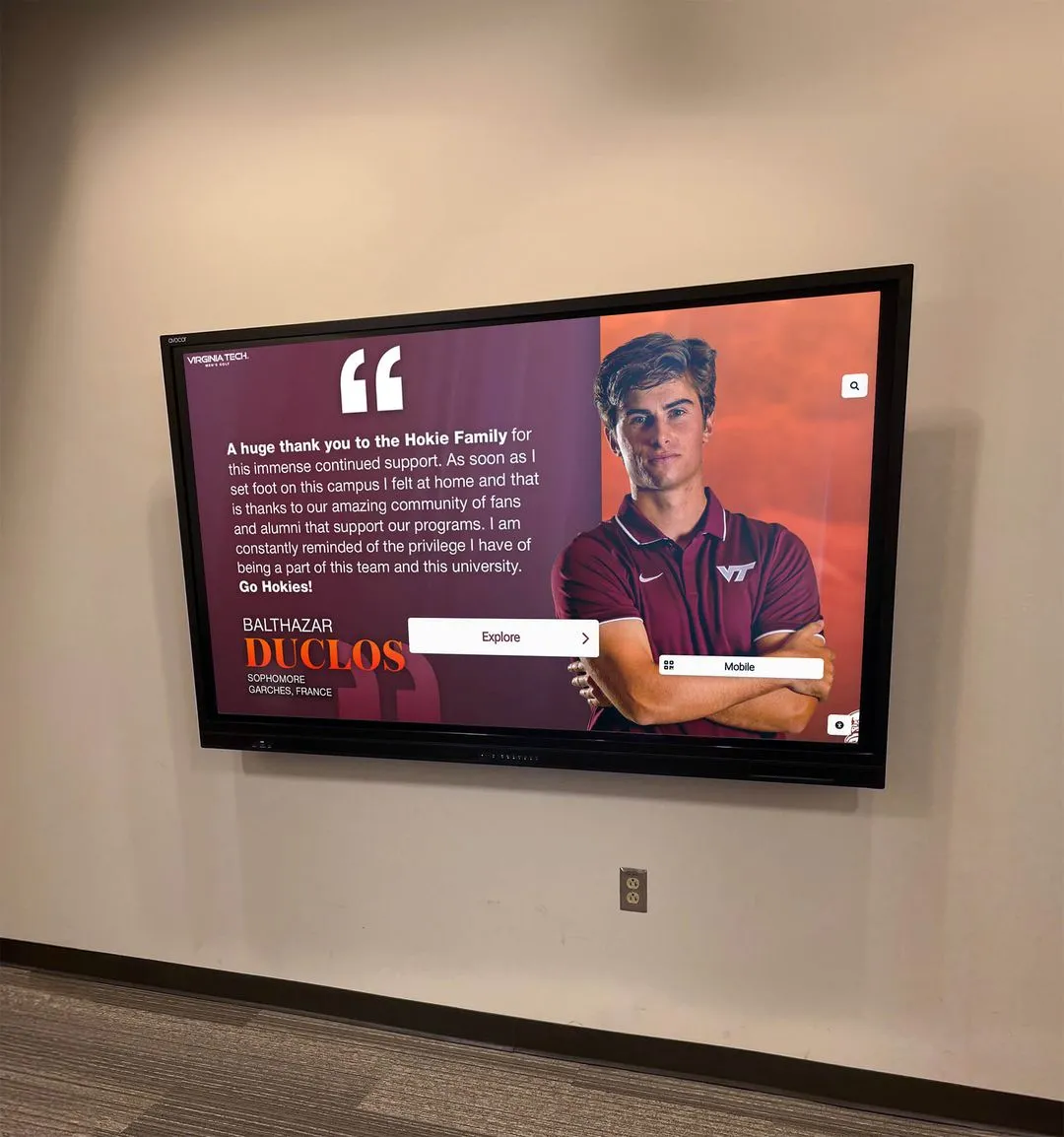
Cloud-based digital recognition platforms enable instant updates from any internet-connected device using intuitive interfaces requiring no technical expertise. When teams win championships, achievements can appear on school displays Monday morning without waiting weeks or months for physical trophy delivery and case reorganization. This immediate recognition provides greater motivational impact while significantly reducing administrative burden on athletic directors and office staff.

Hybrid Recognition Approaches
Many schools find success combining traditional and digital recognition methods.
Complementary Physical and Digital Systems:
Hybrid approaches preserve traditional trophy displays for major championships and featured recognition while using digital systems to provide comprehensive coverage impossible with physical cases alone. A school might maintain a prominent lobby trophy case displaying recent state championship trophies and rotating featured achievements while digital screens showcase complete program histories, detailed team information, and individual athlete profiles.
This combination satisfies stakeholders who value tangible trophy tradition while gaining digital benefits including unlimited capacity, rich storytelling, and easy management. Physical displays provide immediate visual impact and traditional appeal, while digital systems deliver depth and accessibility that trophies cannot match.
QR Codes Linking Physical and Digital Recognition:
Some schools place QR codes on physical trophy displays enabling visitors to scan and access detailed digital content about displayed championships. A trophy for a state championship might include a QR code linking to complete team roster, season statistics, game summaries, photos, and video highlights providing context impossible to communicate through trophy engraving alone.
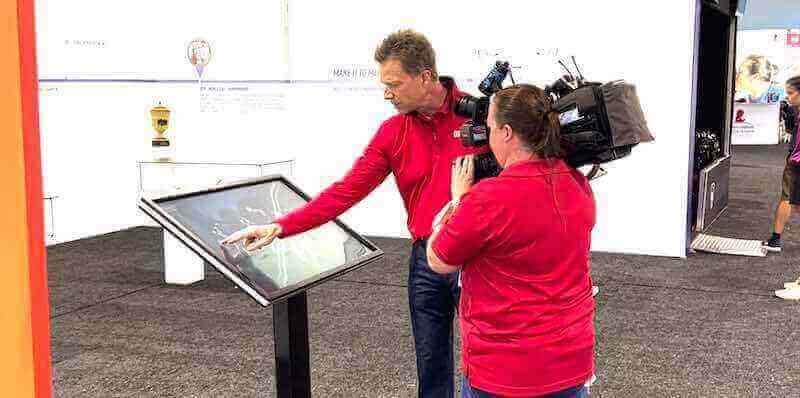
This approach requires minimal technology investment (simply printed QR code labels) while substantially enhancing traditional trophy displays with digital depth. However, QR codes require visitor initiative to scan and access content, potentially limiting engagement compared to prominent touchscreen displays that invite immediate interaction. Schools exploring innovative recognition approaches can learn from successful implementations of touchscreen kiosk technology at events and permanent installations.
Space-Efficient Alternative Displays
Creative approaches maximize recognition within limited spaces.
Wall-Mounted Shadow Box Displays:
Individual shadow boxes provide focused recognition for single trophies or small collections using less wall space than traditional display cases. Schools can create shadow box galleries in hallways featuring rotating “Trophy of the Month” displays highlighting different achievements sequentially rather than attempting to display everything simultaneously.
Shadow boxes typically cost $100-$400 each—substantially less than large trophy cases—while offering flexibility to expand recognition incrementally as budgets allow rather than requiring large upfront investments. However, they provide less impressive visual impact than substantial trophy cases and require more frequent rotation to showcase multiple achievements.
Open Shelving Displays:
In supervised administrative areas or secured spaces, open shelving eliminates glass and case costs while maintaining trophy visibility. Trophy shelves cost just $200-$800 for materials and installation compared to $3,000-$8,000 for comparable glass display cases, freeing budgets for other recognition investments or enabling recognition expansion that wouldn’t be financially feasible with traditional cases.
Open displays work only in locations with minimal theft or vandalism risk and may accumulate dust requiring more frequent cleaning than enclosed cases. However, for budget-conscious schools or temporary recognition needs, open shelving provides functional alternatives to expensive case installations.
Making the Right Choice for Your School
Selecting appropriate recognition approaches requires evaluating multiple factors specific to institutional needs and resources.
Decision Framework for Display Case Selection
Systematic evaluation ensures investments align with priorities.
Assessment Questions:
Schools should answer key questions including: What is your total recognition capacity requirement including current trophies plus realistic 10-20 year growth projections? What is your available budget including initial investment and ongoing maintenance costs? Where will displays be located considering visibility, traffic patterns, environmental conditions, and security? Who will manage displays including cleaning, updates, and content organization? What level of engagement do you want to create—simple trophy storage or compelling recognition experiences? And what administrative capacity exists for ongoing case management and trophy organization?
Honest answers to these questions reveal whether traditional glass display cases, digital alternatives, hybrid approaches, or creative combinations best serve institutional needs and constraints.
Comparative Evaluation:
Create comparison matrices evaluating options across relevant dimensions. Compare initial investment costs, 10-year and 20-year total costs, recognition capacity in terms of number of items displayable, update ease and administrative burden, engagement quality and visitor experience, space requirements and facility constraints, maintenance demands and ongoing responsibilities, and scalability as recognition needs grow.
This structured comparison prevents decisions based solely on initial purchase prices without considering total ownership costs and functional capabilities that ultimately determine long-term satisfaction with recognition investments.
Implementation Planning and Timeline
Successful installations require coordination across multiple stakeholders and functions.
Project Planning Steps:
Comprehensive implementation includes forming planning committees with athletic directors, administrators, facilities managers, and potentially student or community representatives; developing budgets accounting for all costs including purchase, installation, lighting, and contingencies; conducting space surveys identifying optimal locations and confirming structural adequacy; soliciting vendor proposals comparing product specifications, costs, and service levels; obtaining necessary approvals from administrators, school boards, or relevant authorities; scheduling installation during school breaks or low-activity periods minimizing disruption; and developing maintenance protocols ensuring long-term care and management.
Typical projects require 2-4 months from initial planning through installation for straightforward display case additions, or 4-8 months for comprehensive trophy case systems or digital recognition installations involving multiple stakeholders and approvals.
Avoiding Common Implementation Mistakes:
Schools frequently encounter problems including underestimating total costs by failing to account for installation, lighting, or supplemental expenses; purchasing cases too small for realistic needs requiring premature expansion; neglecting structural assessment discovering during installation that walls require expensive modifications; installing cases in poor locations suffering from glare, inadequate lighting, or environmental problems; and failing to establish maintenance procedures leading to neglected displays that appear unprofessional over time.
Learning from common mistakes enables proactive planning that avoids expensive problems while ensuring recognition investments deliver intended value. Schools can benefit from reviewing comprehensive guides on digital art gallery implementations that successfully navigate similar planning challenges.
Conclusion: Creating Recognition That Inspires Excellence
Glass display cases serve schools effectively when selected thoughtfully to match institutional needs, budgets, and recognition philosophies. The most successful schools balance respect for trophy tradition with realistic assessment of physical limitations, honor past achievement while remaining accessible to current students, and invest in recognition systems that remain viable and relevant across decades of program growth.
Whether implementing traditional trophy cases, exploring digital alternatives, or developing hybrid approaches combining both methods, the goal remains constant: creating recognition that genuinely inspires students toward excellence while celebrating accomplishments in ways that strengthen school culture and community pride.
Schools investing time in careful planning—assessing true recognition needs, evaluating total ownership costs, selecting appropriate locations, and establishing maintenance procedures—create display systems that serve institutions effectively for decades while avoiding the capacity limitations, excessive costs, and administrative burdens that plague poorly planned recognition approaches.
Ready to explore modern recognition solutions that overcome traditional trophy case limitations while providing richer, more engaging celebration of student achievement? Discover how interactive digital displays can transform your school’s recognition programs with unlimited capacity, multimedia storytelling, and effortless management that traditional glass cases cannot match.