



Key Takeaways
Learn what FBLA is, how chapters operate in schools, FBLA competitive events, and the best ways to recognize Future Business Leaders of America member achievements.
Every spring, thousands of high school students board planes, pack their blazers, and compete for national rankings in events ranging from accounting and entrepreneurship to coding and public speaking. These are FBLA members — and for school administrators, understanding this organization is essential to supporting student success, building school culture, and recognizing the achievements that often go unnoticed outside the business classroom.
This guide covers what FBLA is, how chapters operate day-to-day, how the competitive structure works, and — critically — how school administrators can give FBLA members the recognition they earn.

What Does FBLA Stand For?
FBLA stands for Future Business Leaders of America. It is the largest student business organization in the world, with chapters in all 50 states and several international locations. The national organization is part of FBLA-PBL, Inc. — where PBL stands for Phi Beta Lambda, the collegiate division. When most schools and administrators refer to “FBLA,” they mean the middle school and high school division specifically.
The name itself captures the organization’s mission: developing the next generation of business and civic leaders by giving students hands-on experience with the disciplines that drive professional life — from accounting and marketing to ethics and communication.
What Is FBLA? A Complete Overview for School Administrators
FBLA was founded in 1942 with support from the U.S. Office of Education. Its original purpose was to bridge the gap between classroom business education and real-world professional practice. More than 80 years later, that mission still drives the organization’s programs.
FBLA operates at three levels:
- Middle Level FBLA — for students in grades 5–9
- FBLA (High School Division) — for students in grades 9–12
- Phi Beta Lambda (PBL) — the collegiate division for community college and four-year university students
Most high school chapters focus on the high school division and compete at regional, state, and national events. Chapters are affiliated with state FBLA associations, which coordinate state-level leadership conferences, and with the national organization, which hosts the National Leadership Conference (NLC) each summer.
For school administrators, FBLA is a co-curricular program — it supplements classroom instruction in business, technology, and marketing courses. It isn’t merely a club; it’s a structured program with membership standards, competitive outcomes, and documented leadership development.
Building a robust academic recognition program that includes FBLA achievements alongside GPA honors and AP recognition sends a clear message to students: business education matters, and excellence in that space earns the same respect as any other discipline.
How FBLA Chapters Work in Schools
The Role of the Faculty Adviser
Every FBLA chapter is led by a faculty adviser — typically a business education teacher, though any qualified faculty member can take on the role. The adviser is responsible for organizing chapter meetings, coordinating competitive event preparation, managing membership records, and connecting the chapter with district and state activities.
Advisers are essential to chapter health. Schools with strong FBLA programs almost always have a committed adviser who integrates competitive events into classroom curricula, coaches students on presentation and business skills, and maintains ongoing communication with the state FBLA association.
For administrators, supporting the adviser means providing adequate prep time, covering activity fees, and recognizing the adviser’s contributions as part of the broader school recognition culture — something worth including in teacher and staff recognition programs alongside coaches and department leads.
Membership Requirements and Dues
FBLA membership operates on two levels: chapter and national. Students pay dues at both levels — typically a small per-student national fee plus a state-level fee set by the state association. Schools often cover part or all of these dues through activity fund allocations.
To be an active member in good standing, students must meet the minimum participation expectations set by their chapter’s bylaws. These usually include attending chapter meetings, maintaining good academic standing, and participating in at least one competitive event or community service project per year.
FBLA Competitive Events and Conferences
The competitive events program is the cornerstone of FBLA’s educational experience and the source of most member achievements that administrators will want to recognize.
The Competitive Event Pathway
FBLA competitions follow a structured ladder:
- Chapter level — internal practice events and selection
- Regional or District Leadership Conference — the first external competition level; determines state qualifiers
- State Leadership Conference (SLC) — held each spring; top performers in each event earn placement and the right to compete nationally
- National Leadership Conference (NLC) — held each summer (typically June or July); national champions are crowned across all event categories
Not every event advances through all four levels in every state, but the general pathway holds. Students who qualify for state and national conferences represent a significant achievement — comparable to qualifying for a state championship in athletics.
Types of Competitive Events
FBLA competitive events fall into several categories:
Objective (Testing) Events test content knowledge across subjects like accounting, business law, economics, marketing, personal finance, and computer applications. Students complete an objective exam, and scores determine placement.
Performance Events require students to demonstrate skills in real time — job interviews, client service scenarios, management decision making, and public speaking fall into this category. A panel of judges scores performance on criteria like communication, problem-solving, and professionalism.
Team Events involve groups of two to three students working together on projects such as business plans, business ethics analysis, digital video production, and community service projects. Judges review submitted materials and may conduct an oral presentation.
Emerging Events test knowledge of newer or evolving topics in technology and business, such as cybersecurity and data analysis.
This broad event menu means FBLA is genuinely accessible across student interests and skill sets. A student who excels in mathematics can pursue accounting; a student with strong presentation skills can focus on public speaking or interview skills. Administrators should understand this range when articulating FBLA’s value to parents and school boards.
Similar structured recognition pathways exist for other career-focused student organizations — FFA awards and recognition displays offer a useful parallel for how schools handle competitive achievement recognition across different CTE programs.
FBLA Awards, Honors, and Recognition Programs
Individual Member Awards
Beyond competitive event placements, FBLA offers formal recognition programs for members who demonstrate outstanding achievement:
Who’s Who in FBLA honors outstanding senior members based on academic achievement, FBLA participation, community service, and leadership. Recipients are recognized at the National Leadership Conference and receive a certificate of distinction.
American Enterprise Award recognizes members who demonstrate strong understanding of the American free enterprise system alongside high academic performance and FBLA involvement.
FBLA Community Service Award recognizes chapters and individuals for sustained, impactful community service work.
Future Business Leader Award recognizes members who apply their business skills in real-world contexts — through entrepreneurship, job shadowing, or professional certification.
These awards are worth documenting carefully because they carry weight with college admissions, scholarship committees, and local employers. Schools that incorporate these honors into their broader end-of-year student awards ceremonies give FBLA members the same platform as lettermen, NHS inductees, and AP scholars.
Chapter-Level Recognition
FBLA also recognizes chapters — not just individual members — for overall excellence:
Gold Seal Chapter of Merit is awarded to chapters that meet a comprehensive set of standards covering membership growth, competitive event participation, community service, and chapter management. It is the highest chapter-level distinction.
Distinguished Chapter Award recognizes chapters for excellence across specific program areas.
State Champion Chapters are recognized at state leadership conferences for having the highest cumulative competitive event scores.
Why FBLA Achievement Deserves the Same Recognition as Athletics
One of the persistent gaps in school recognition culture is the visibility gap between athletic achievement and academic or career-based achievement. A state track qualifier gets their name on the gymnasium wall. A student who places top 10 at the FBLA National Leadership Conference may get a certificate and a mention in the morning announcements — and nothing more.
This imbalance matters. Research consistently shows that student recognition increases future success outcomes, including academic persistence, post-secondary attainment, and professional confidence. When schools make FBLA achievements visible alongside athletic honors, they reinforce that the path to success runs through the business classroom as readily as through the weight room.
FBLA state qualifiers, national competitors, and chapter officers represent measurable, competitive achievement. They earned their recognition through preparation, performance, and perseverance — the same qualities schools celebrate in every other domain.
Schools that build FBLA into their formal recognition architecture tend to see stronger chapter enrollment, higher retention rates, and greater community buy-in for business education funding. Treating FBLA achievements like the AP Scholar Award recognition — with a dedicated display, not just a passing mention — signals to the whole school community that business excellence is worth pursuing.
How Schools Can Showcase FBLA Member Achievements
Traditional Recognition Options
Many schools begin with low-cost, high-impact recognition options:
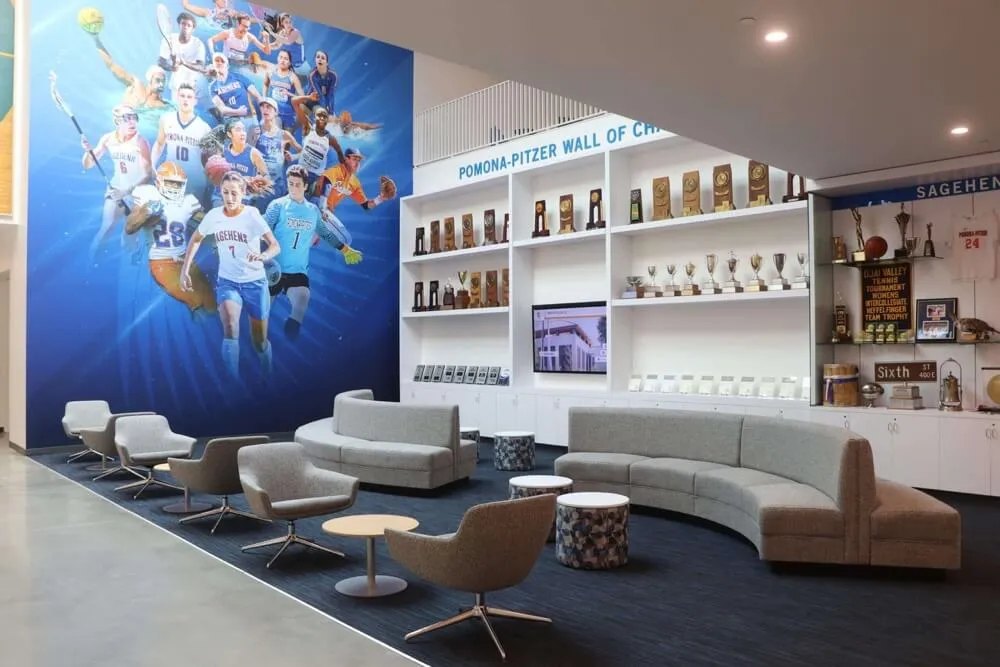
- Trophy cases displaying chapter awards, state plaques, and national certificates alongside athletic hardware
- Bulletin boards or hallway displays with photos from the State and National Leadership Conferences
- Morning announcement features highlighting state qualifiers and national competitors
- Recognition at graduation calling out Who’s Who recipients, national finalists, and chapter officers
- Local newspaper submissions for students who place at state or national events
- School website features profiling top competitors before and after major conferences
These are accessible starting points. The limitation is permanence and scale — a bulletin board comes down, a morning announcement fades, and the cumulative history of chapter achievement becomes invisible within a year or two.
Digital and Interactive Recognition Displays
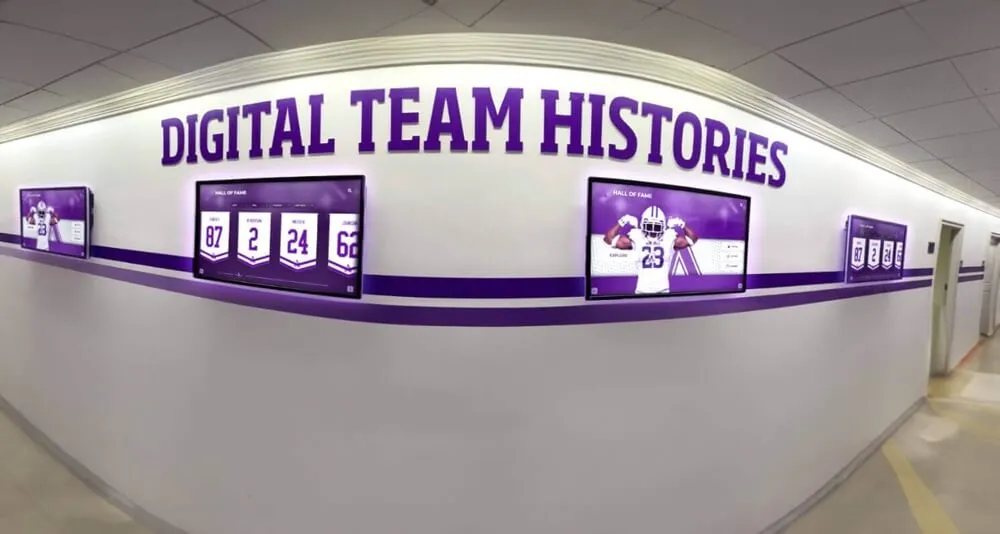
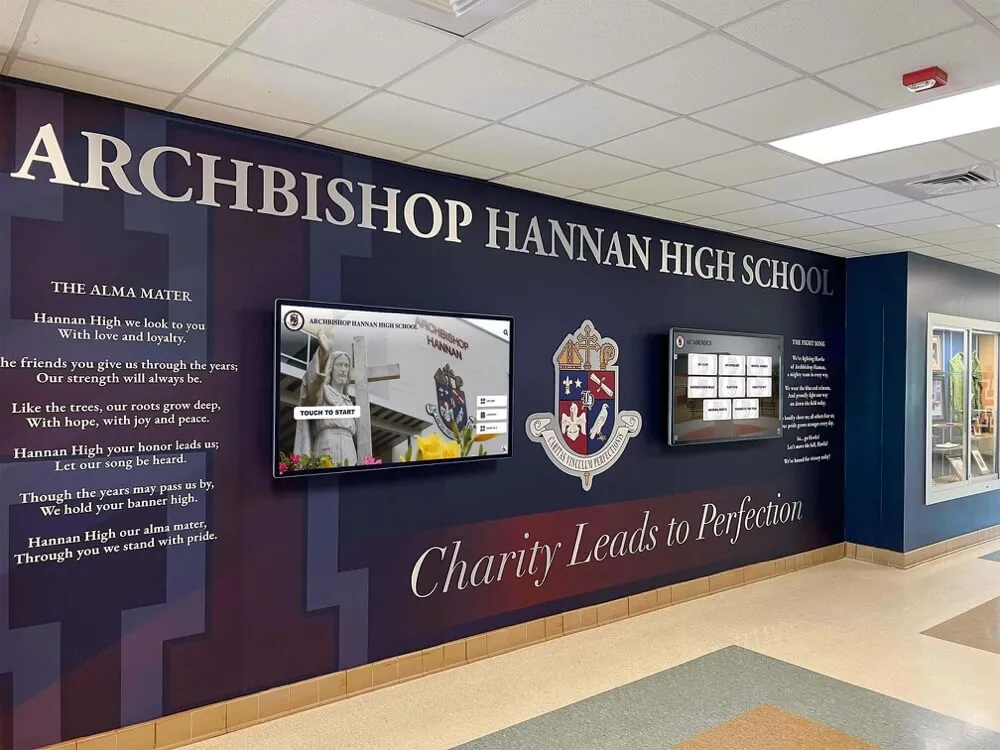
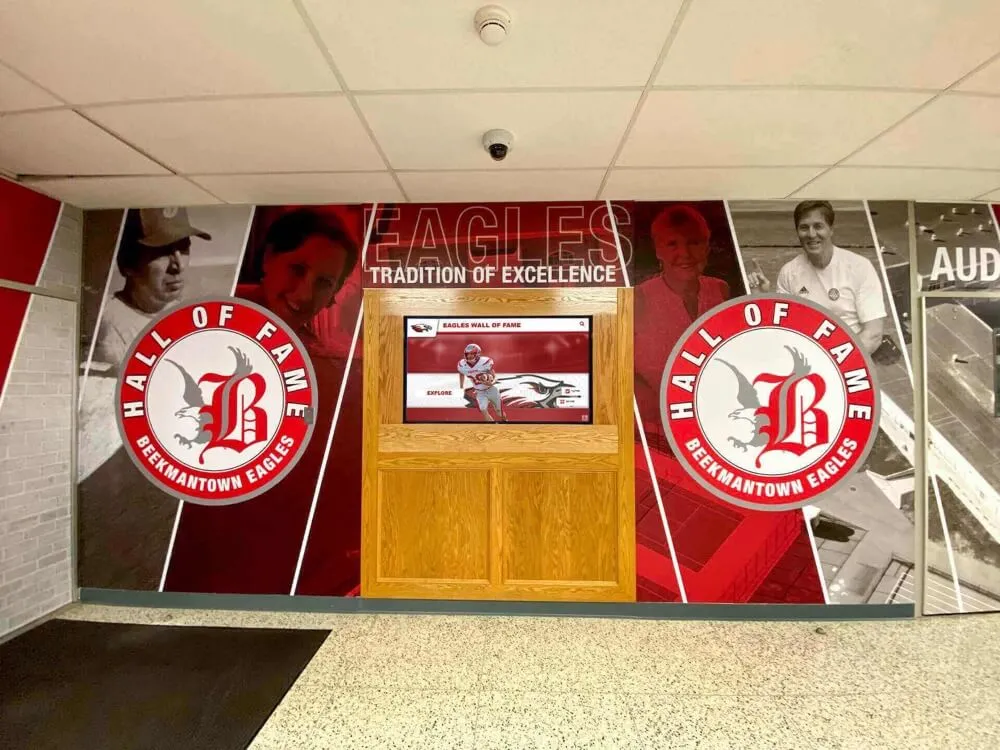
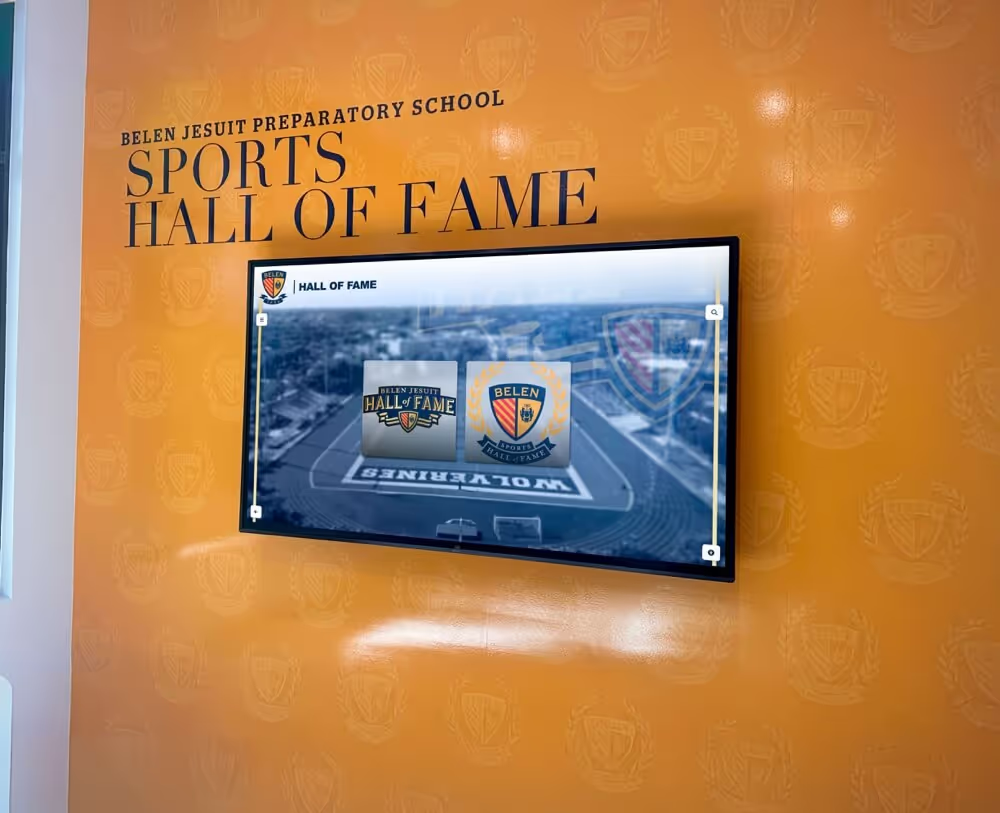
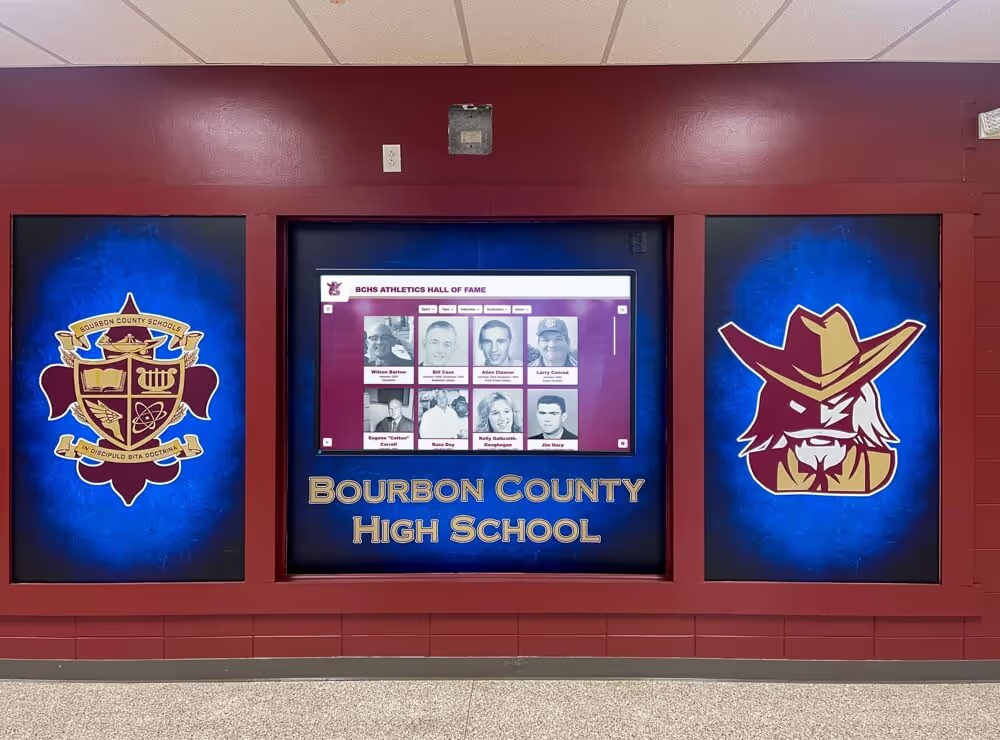
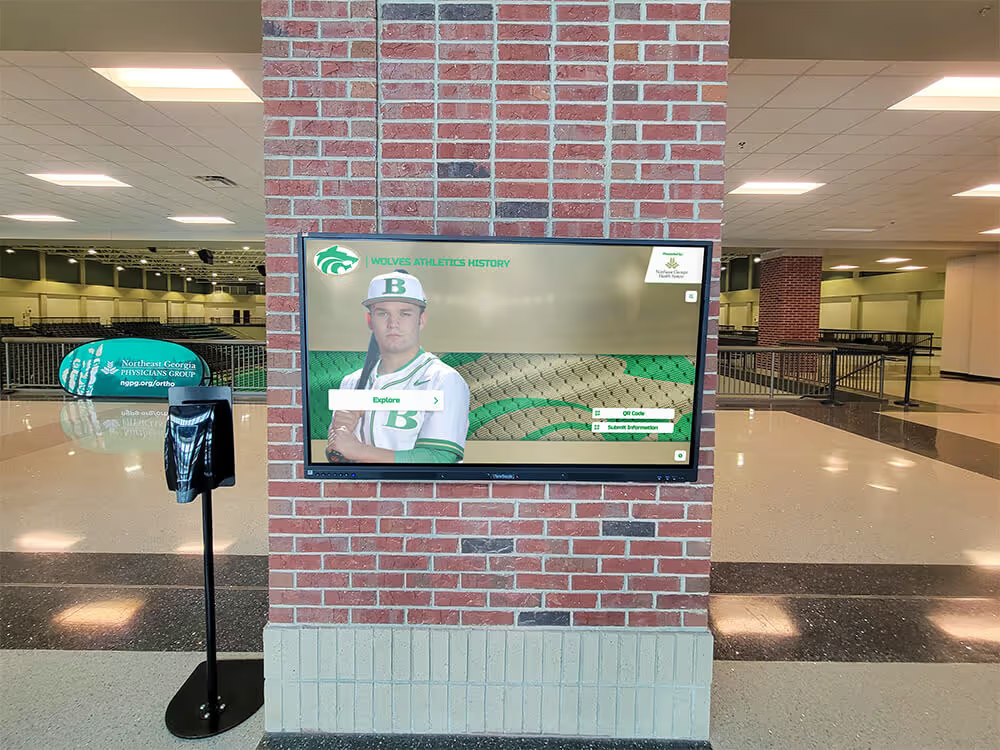
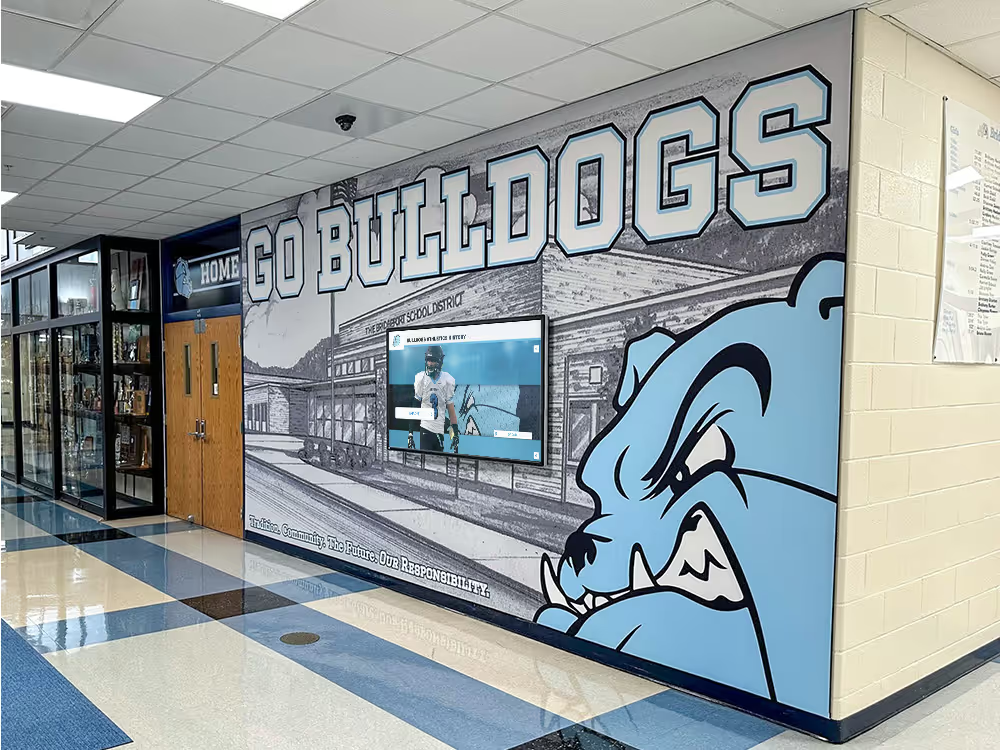
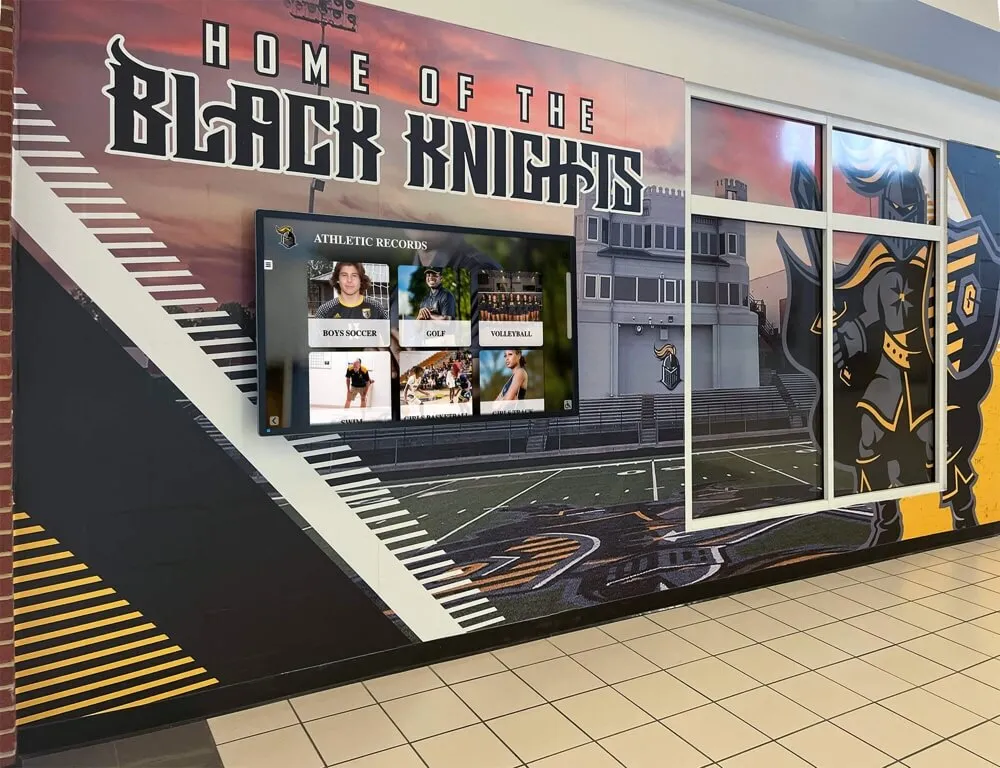
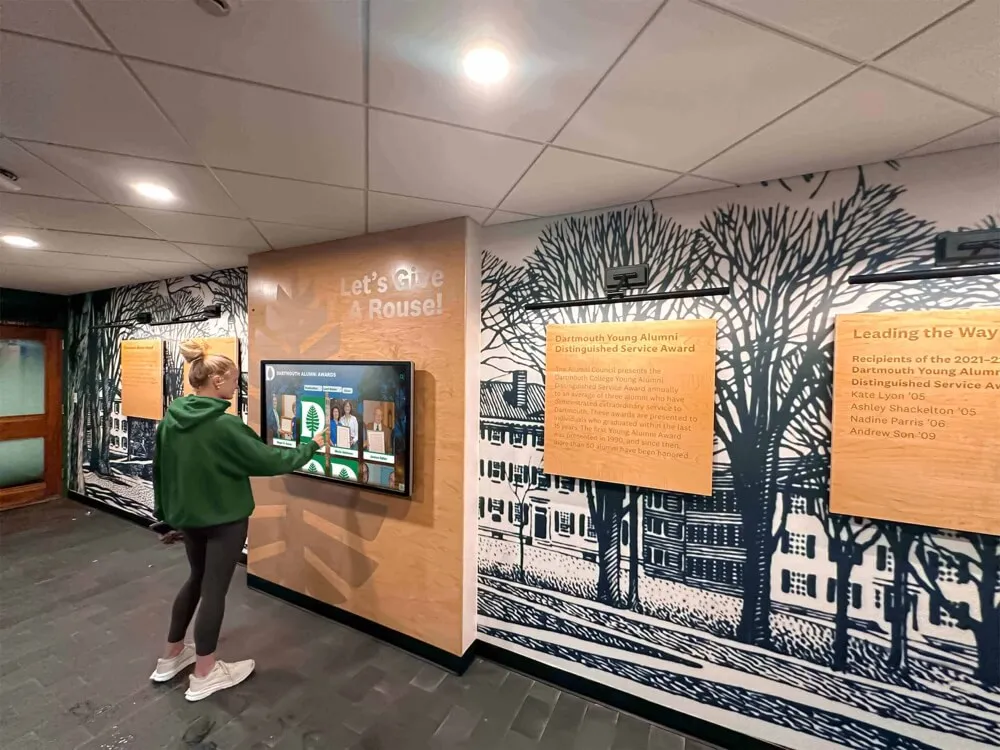
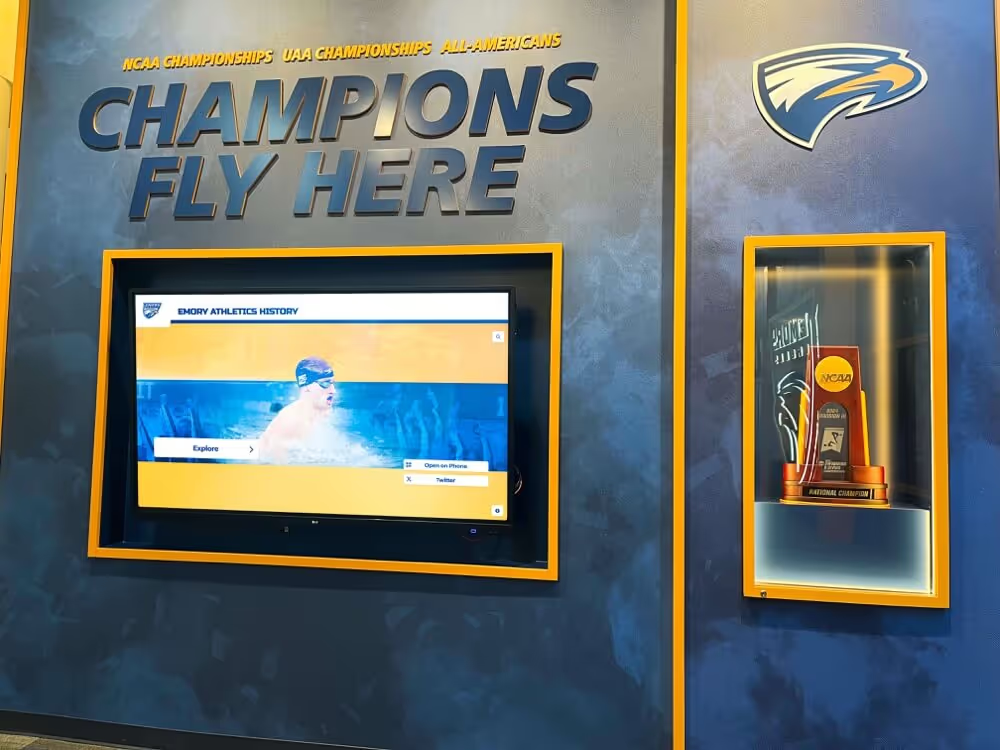
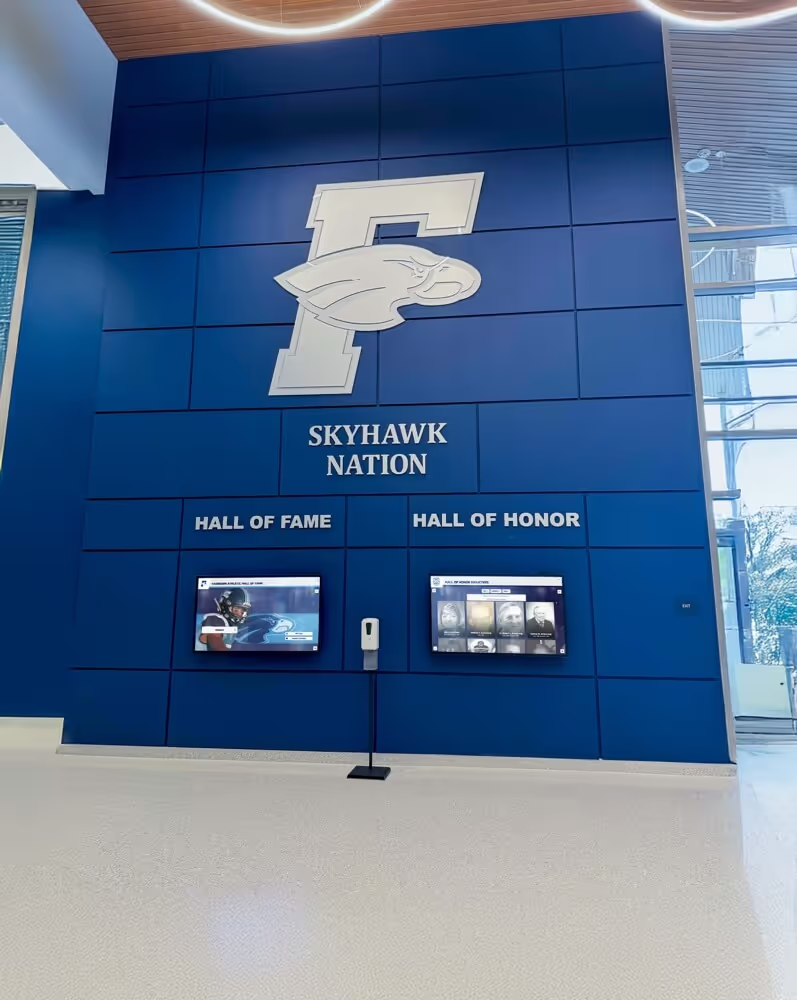
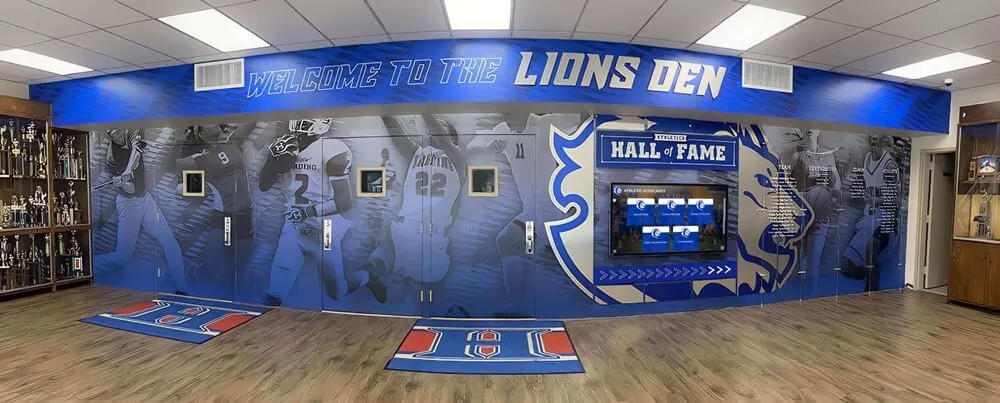
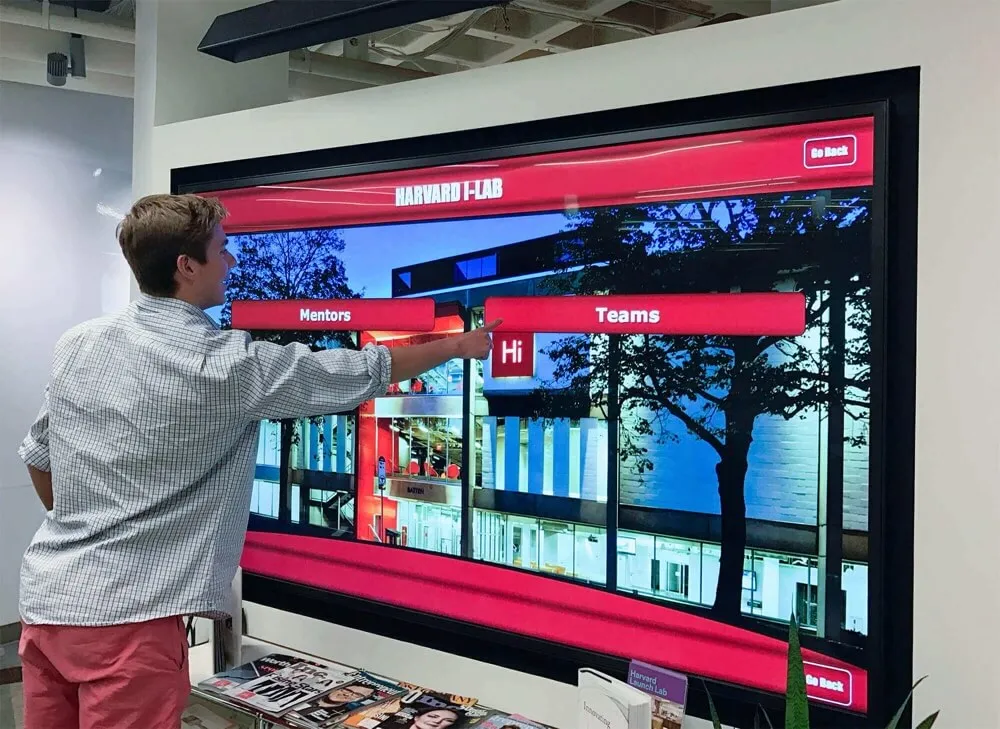
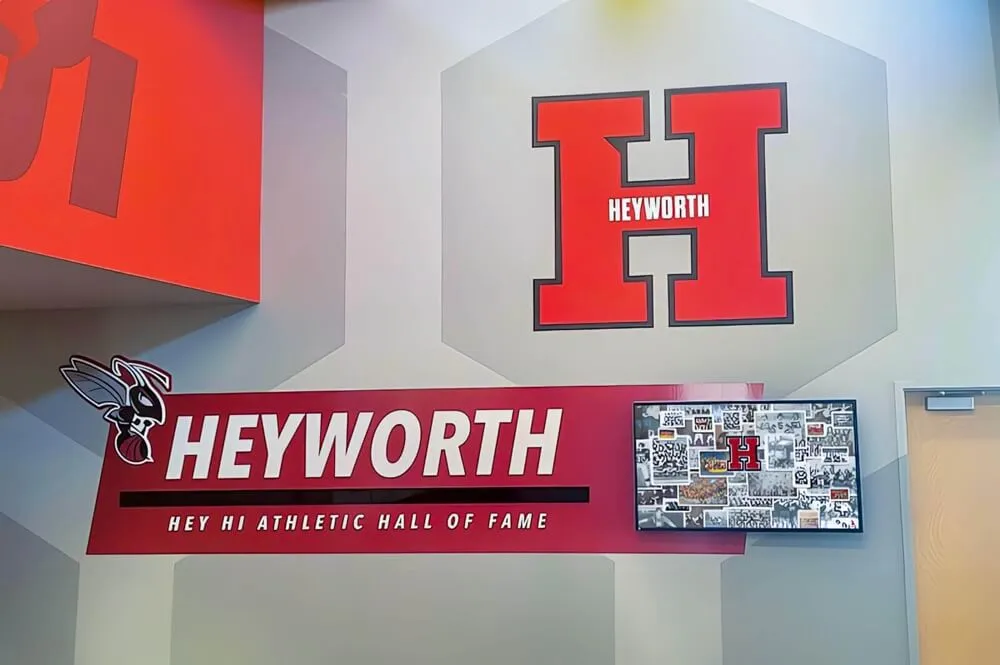
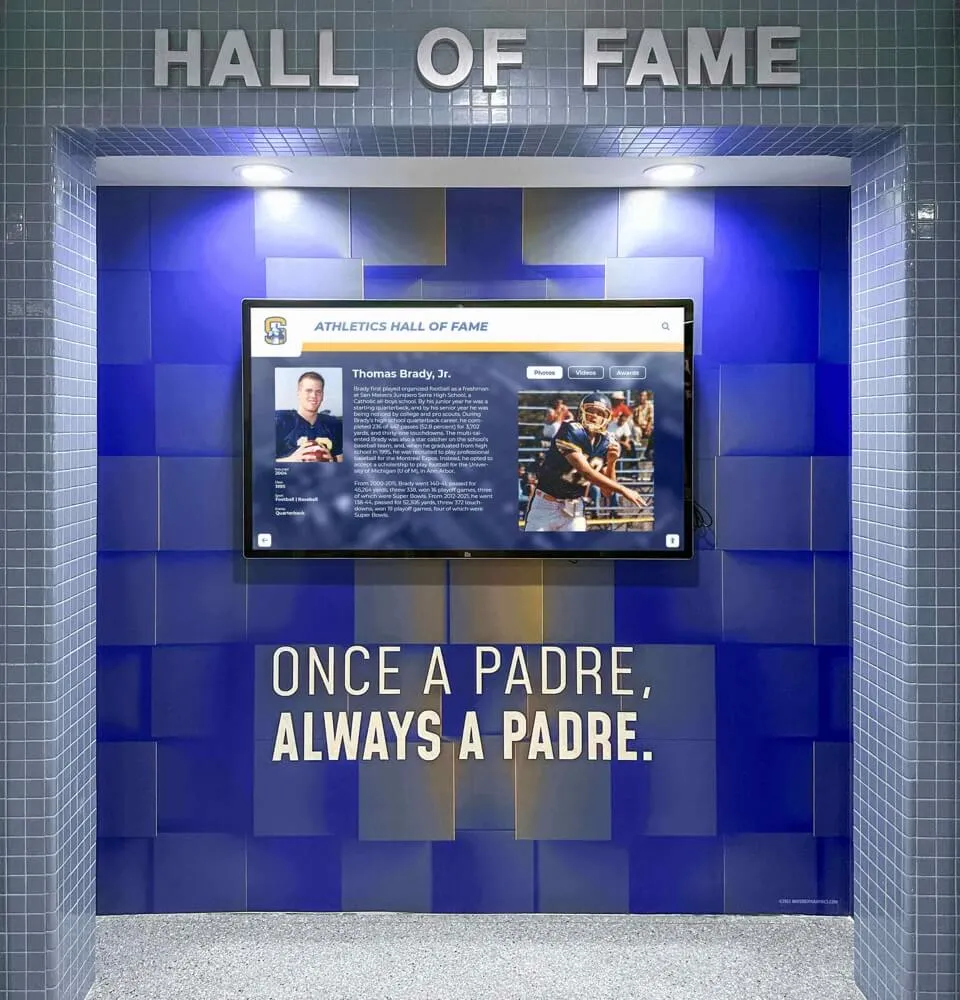
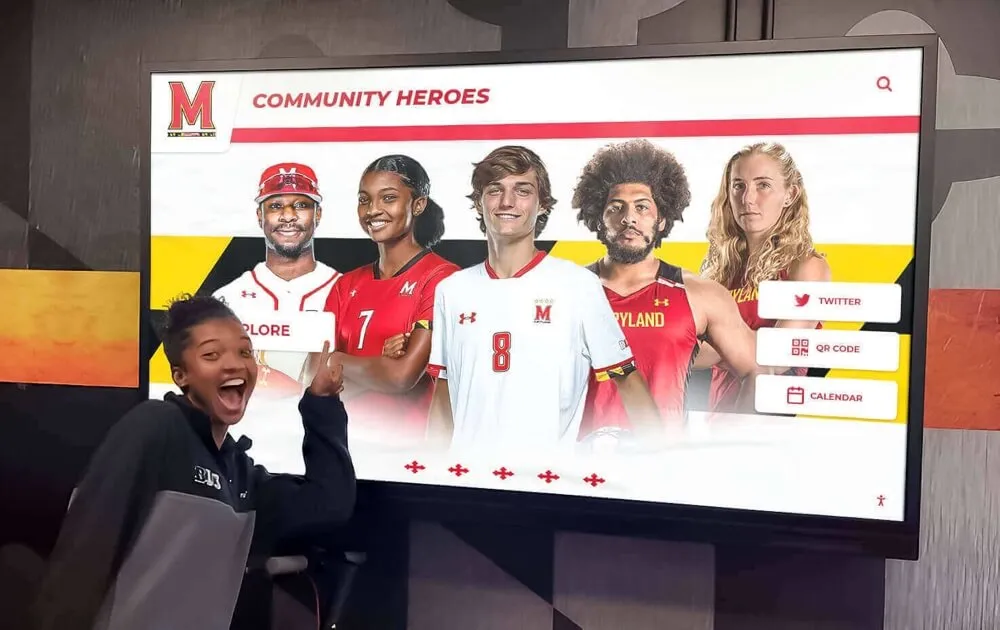
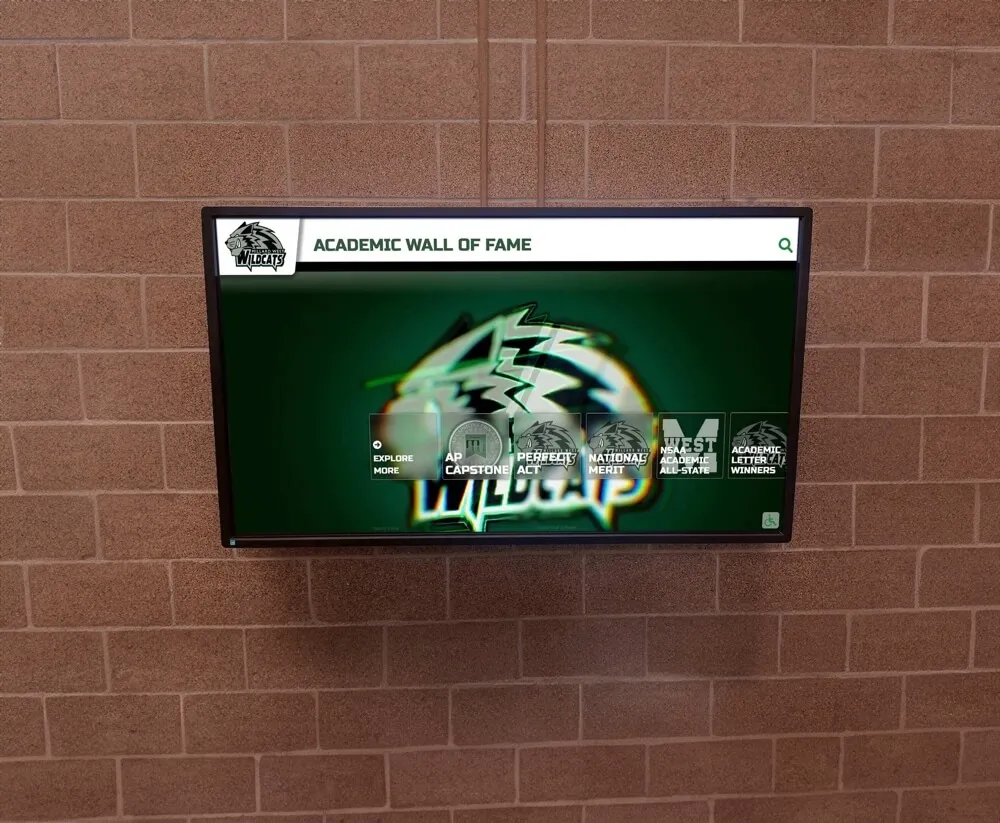
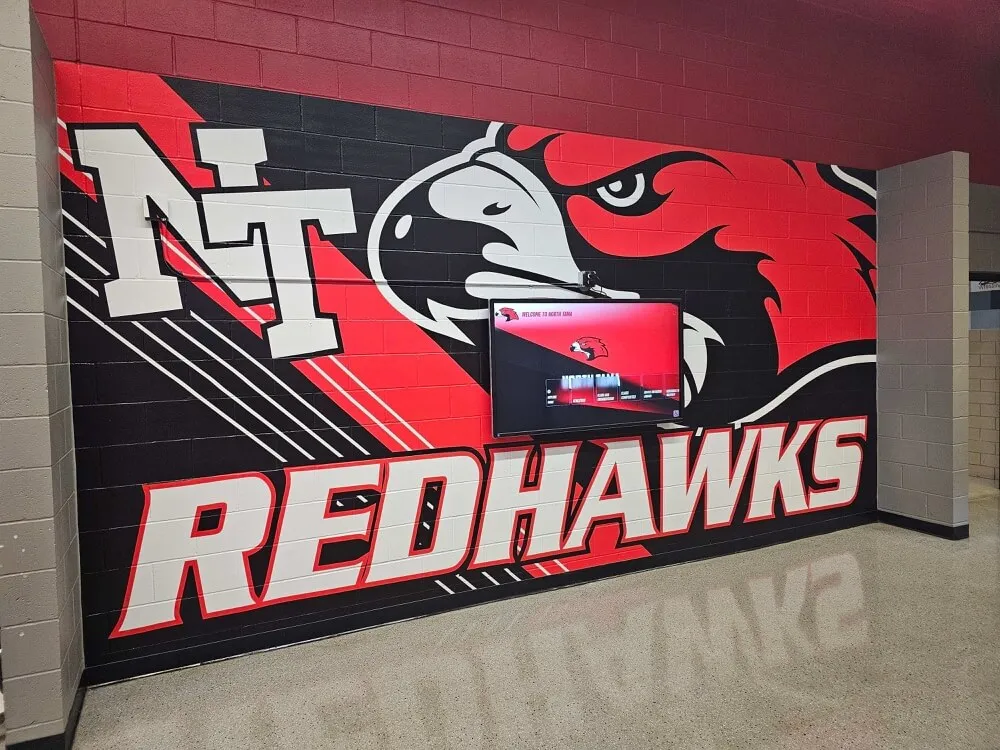
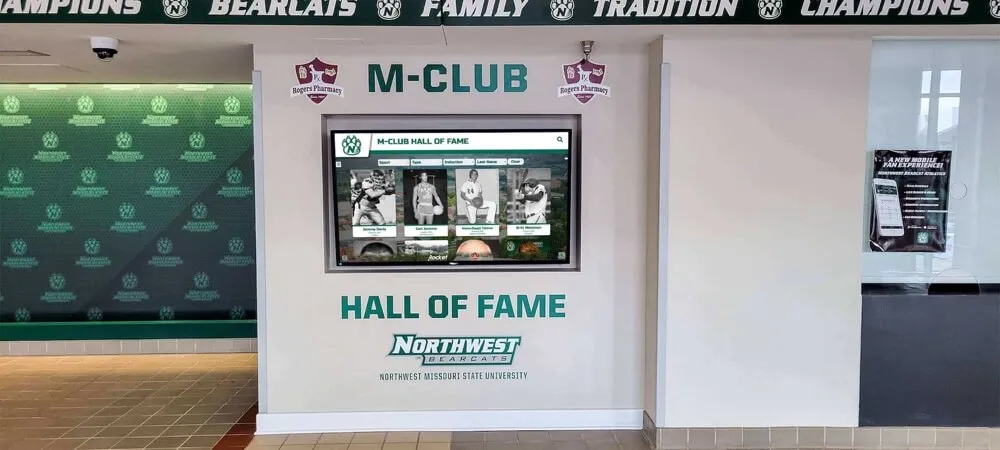
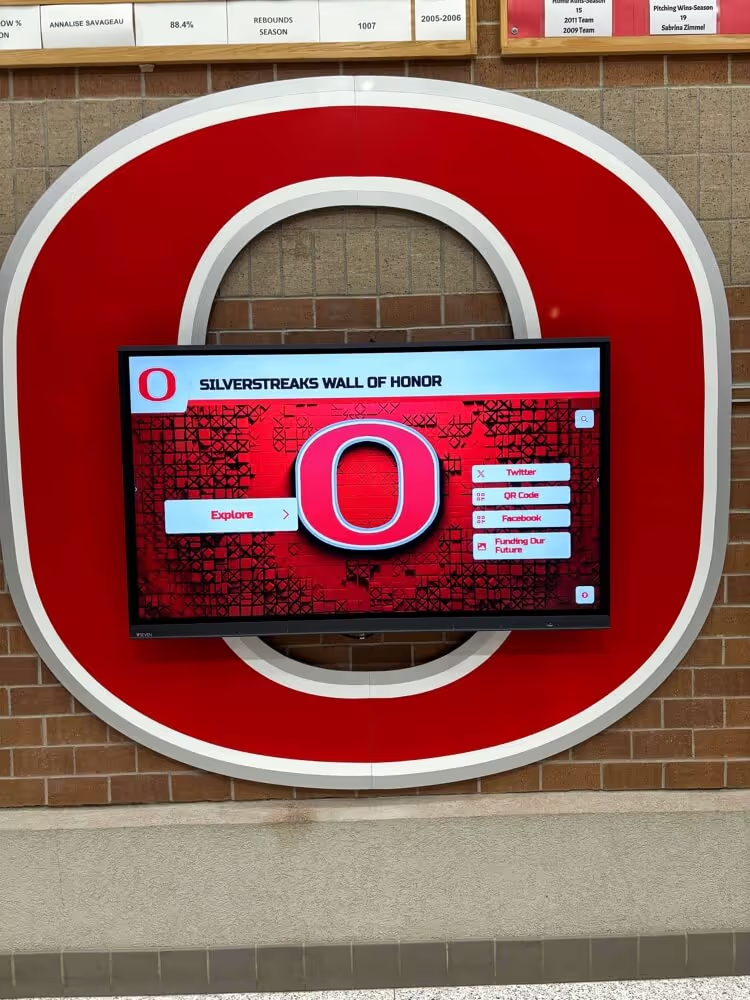
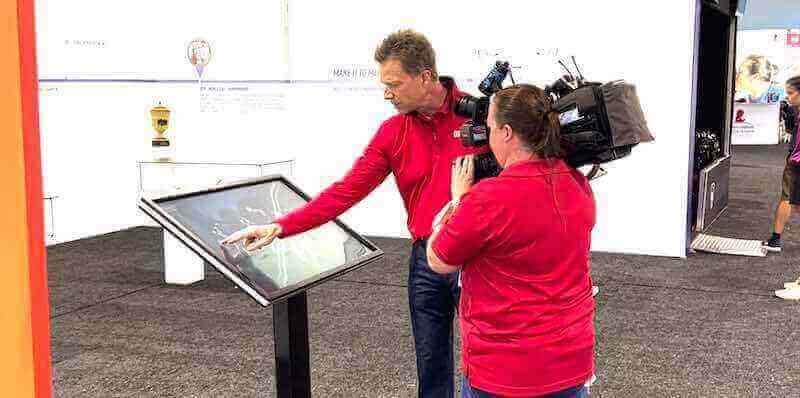
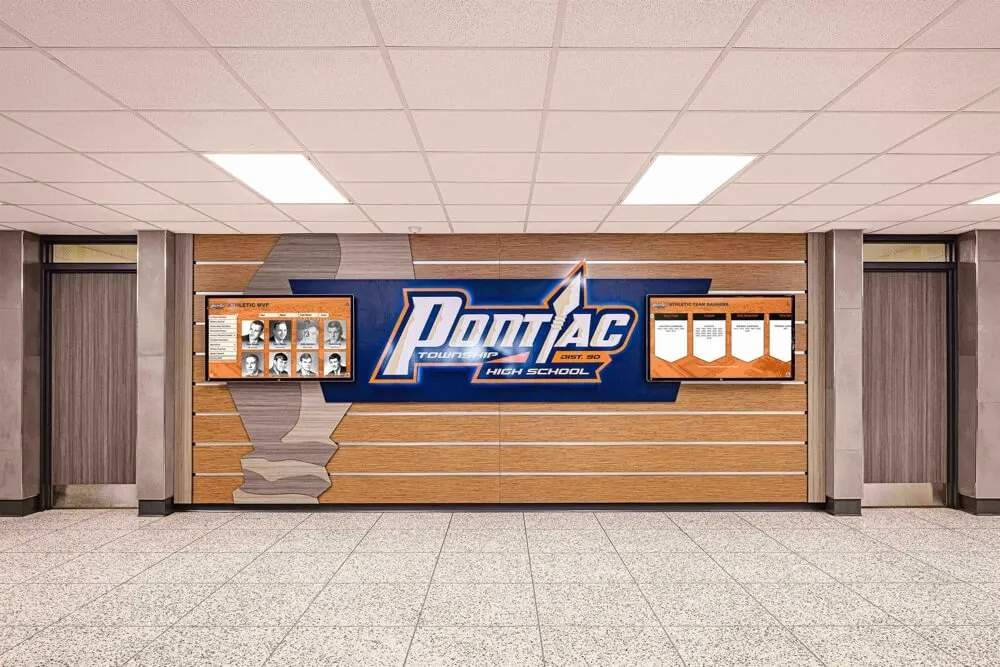
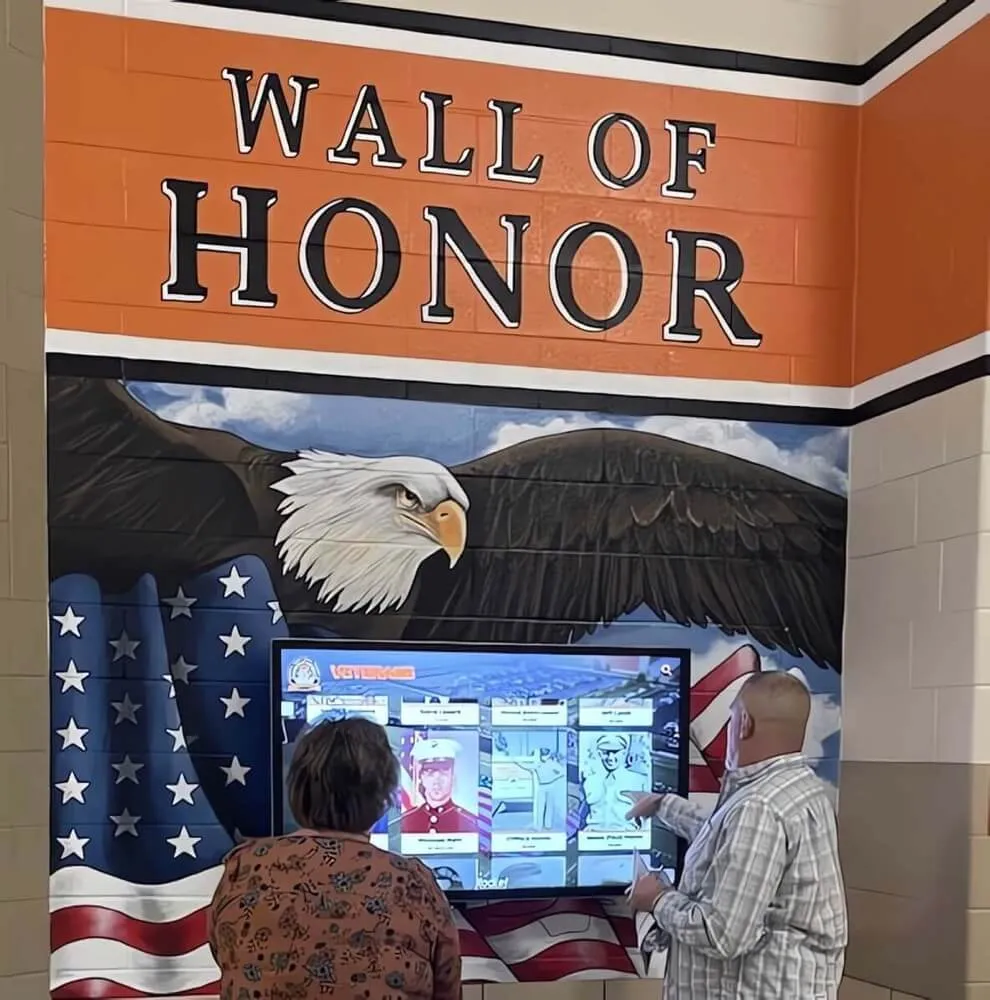
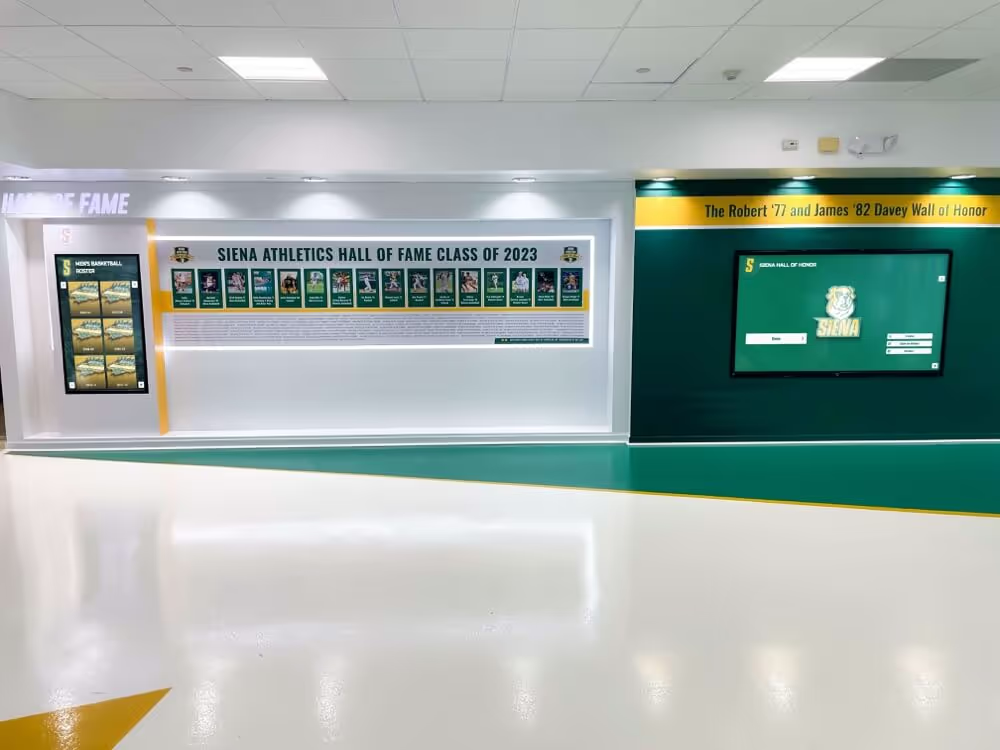
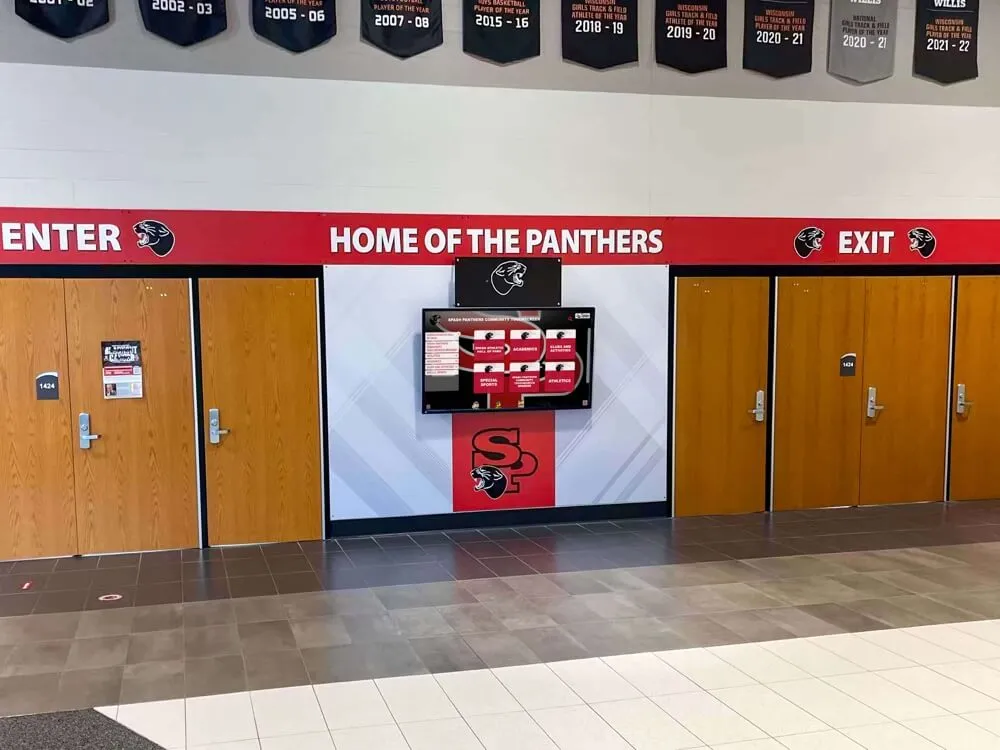
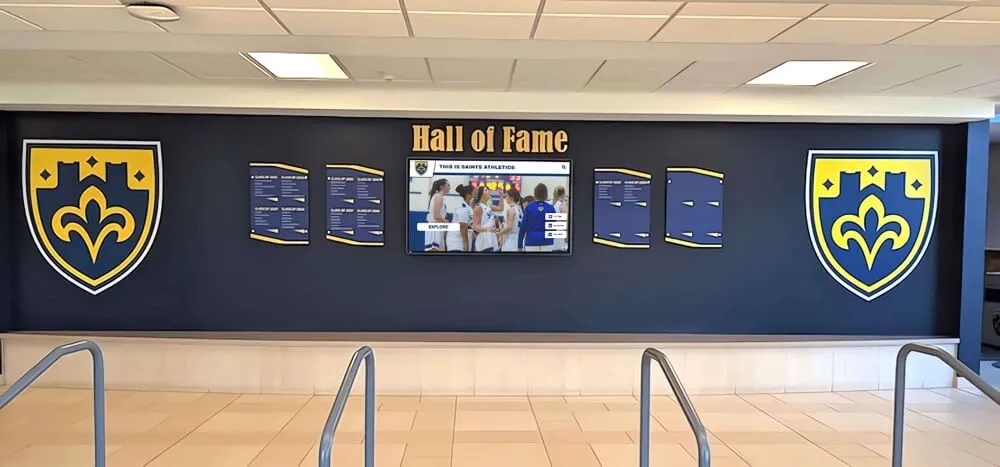
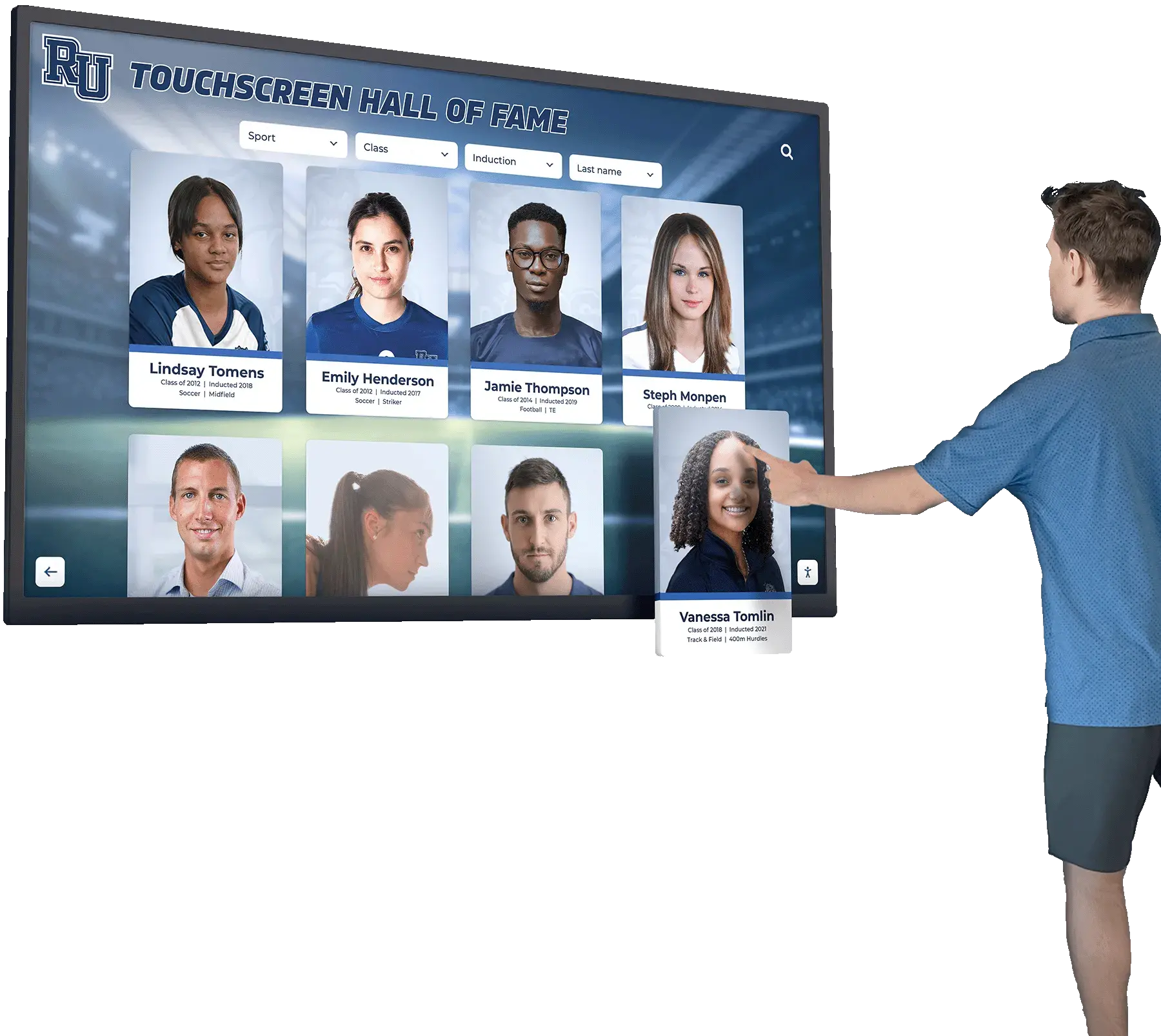
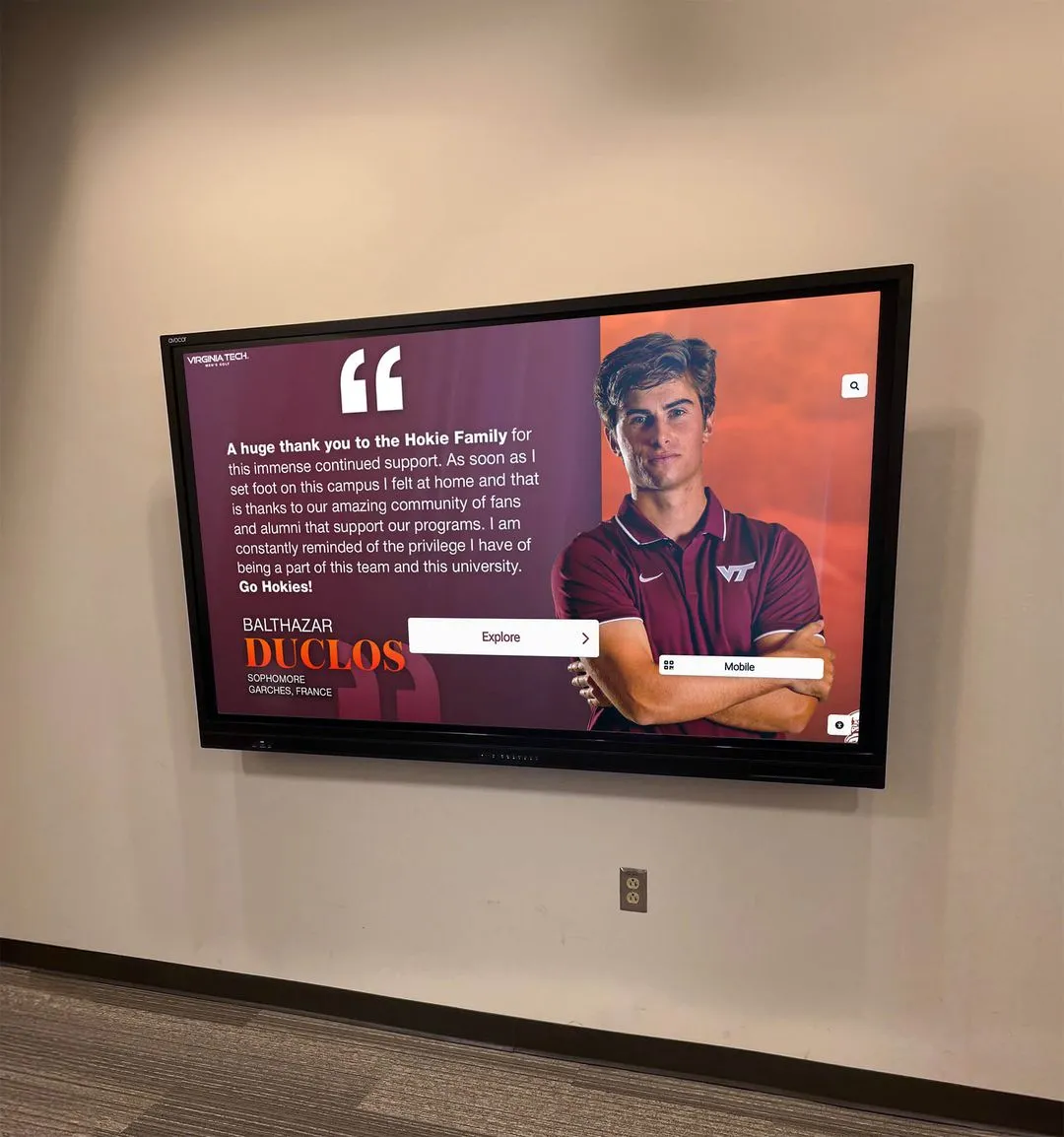
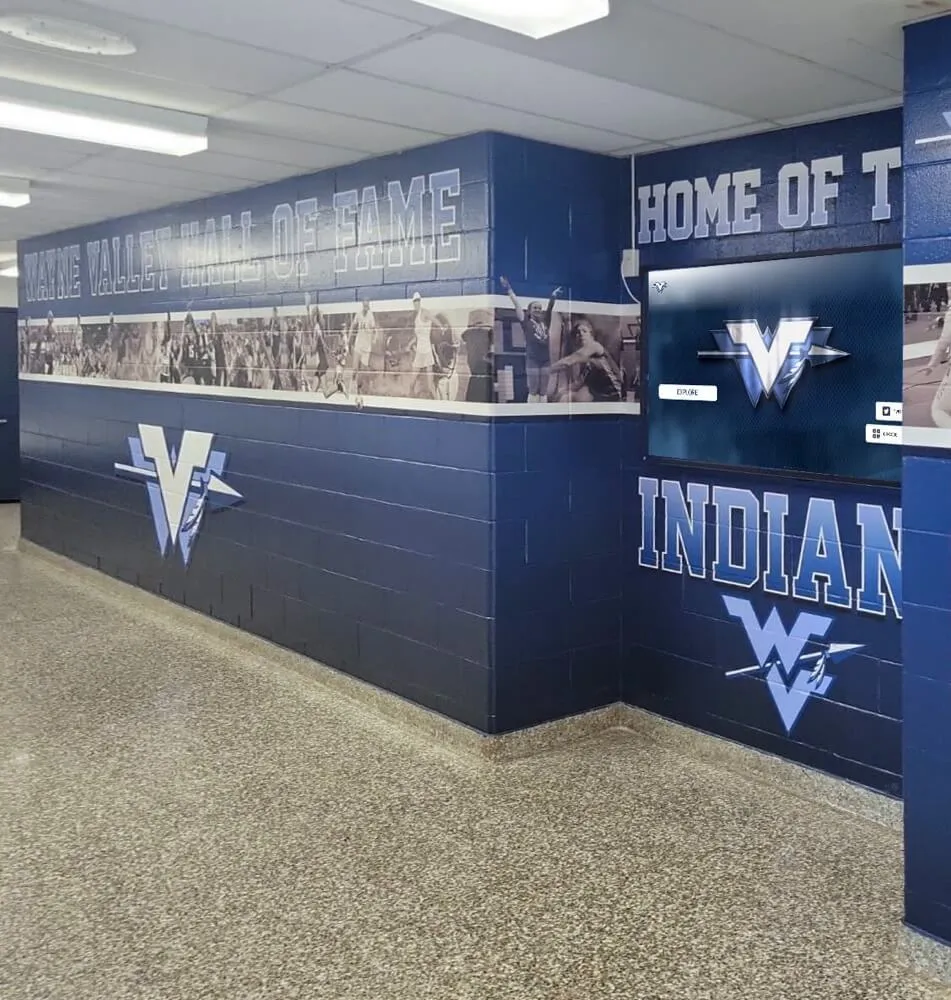
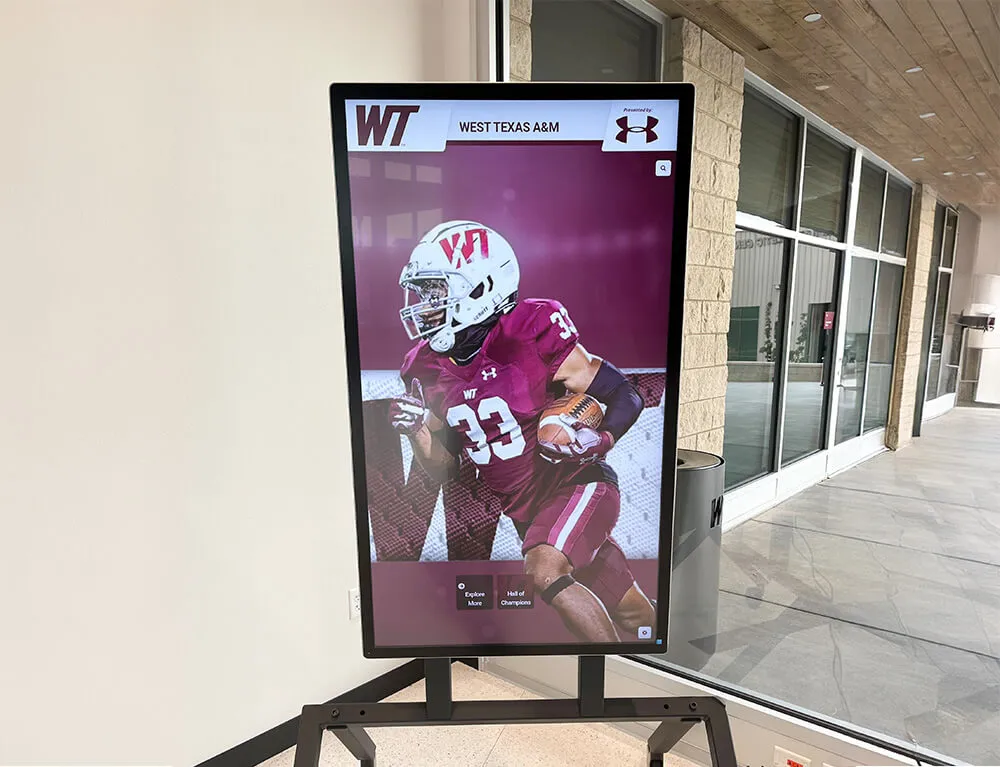
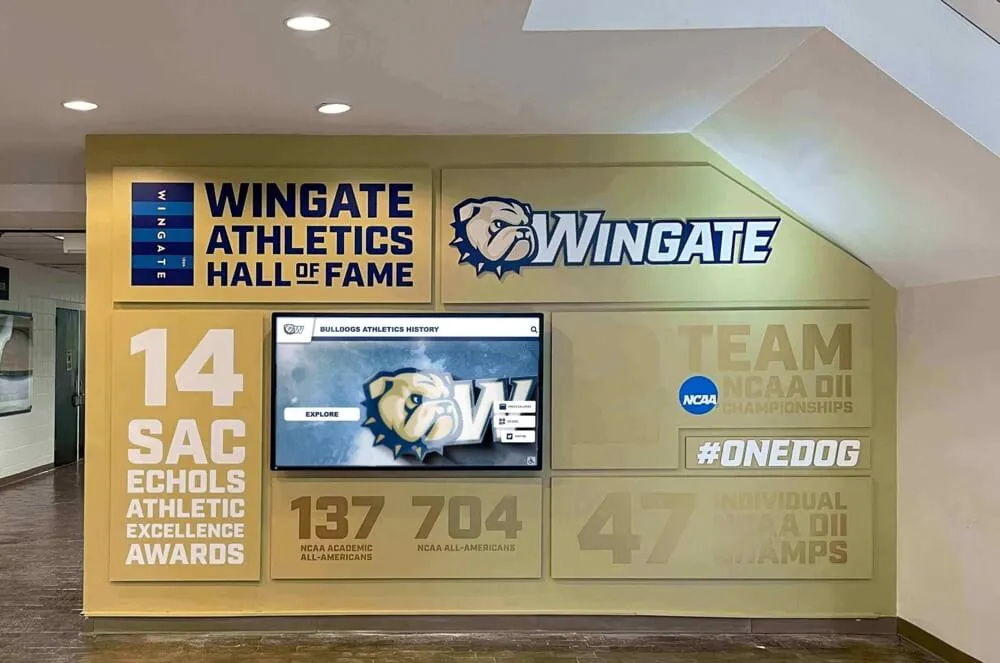
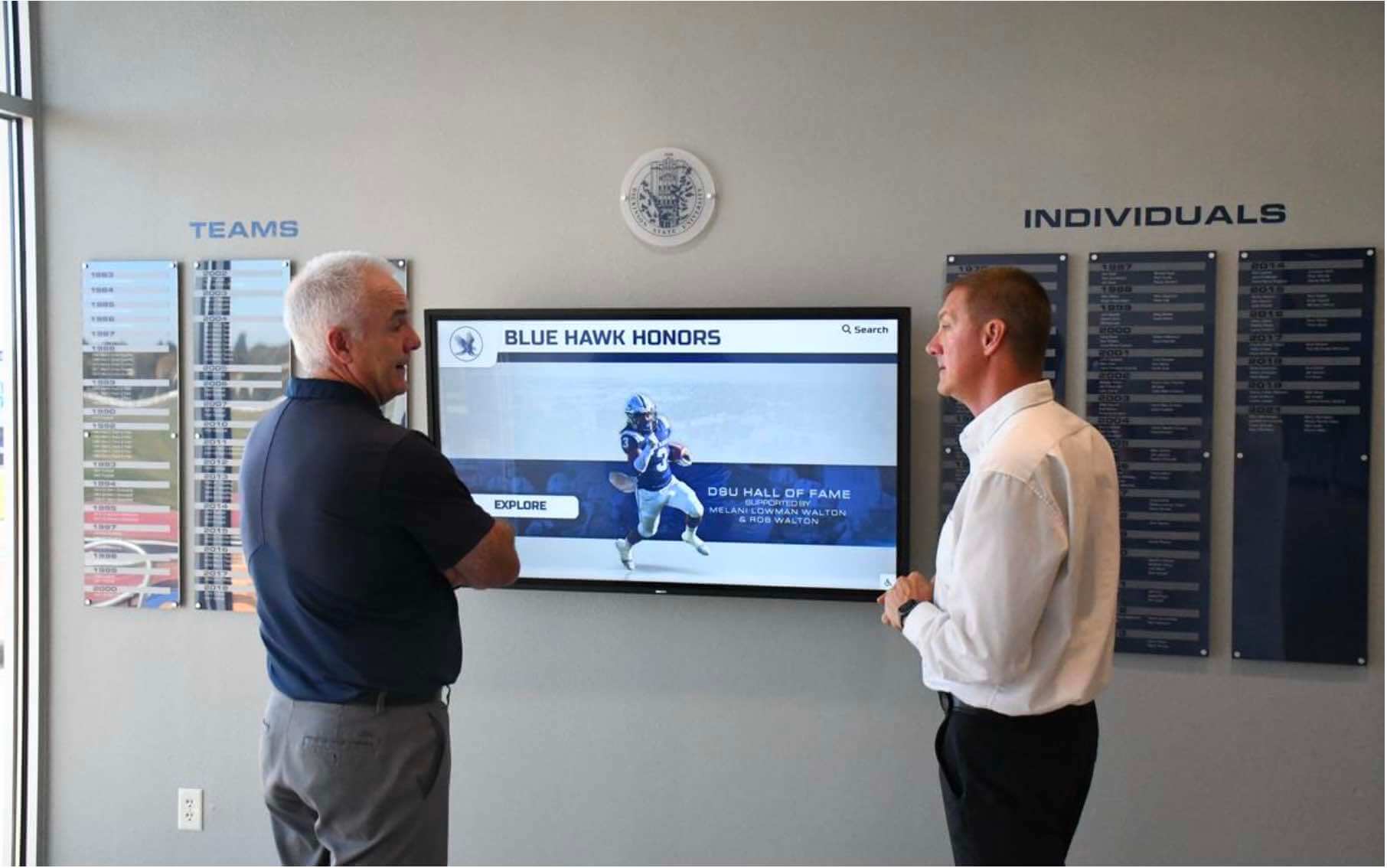
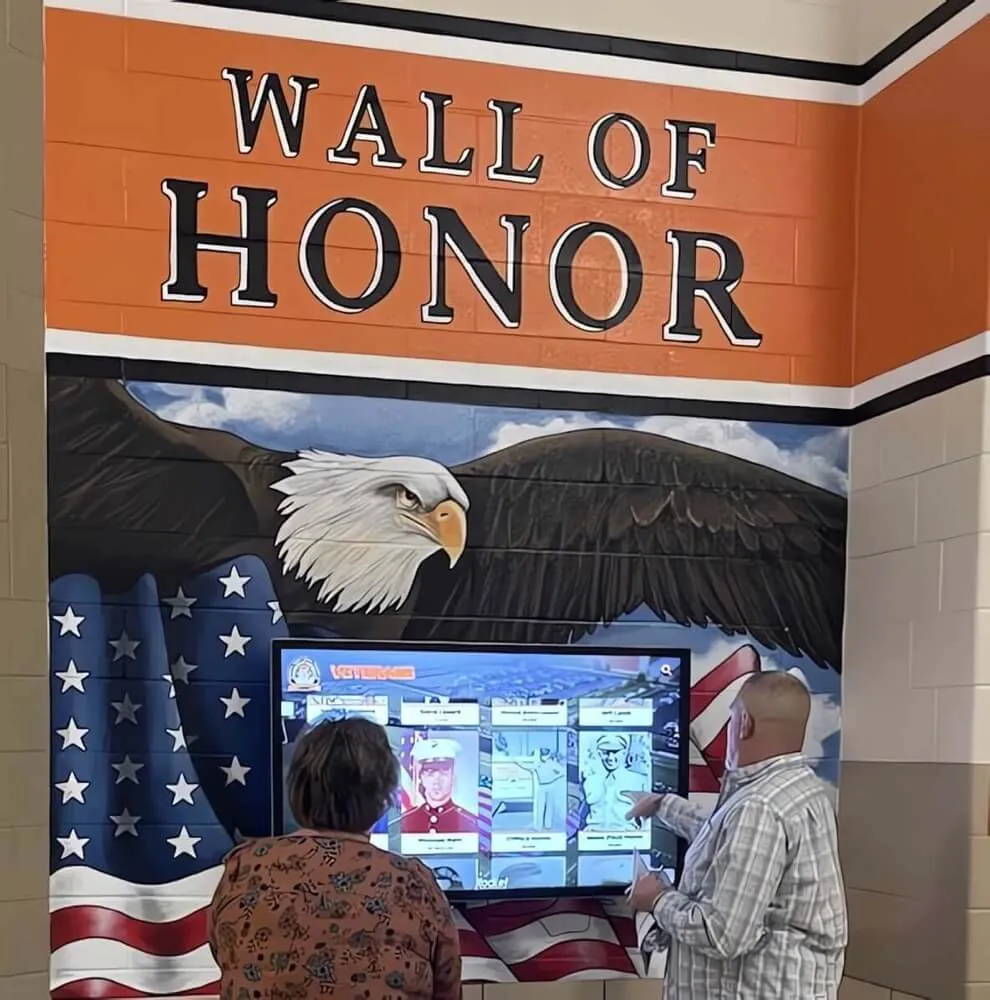
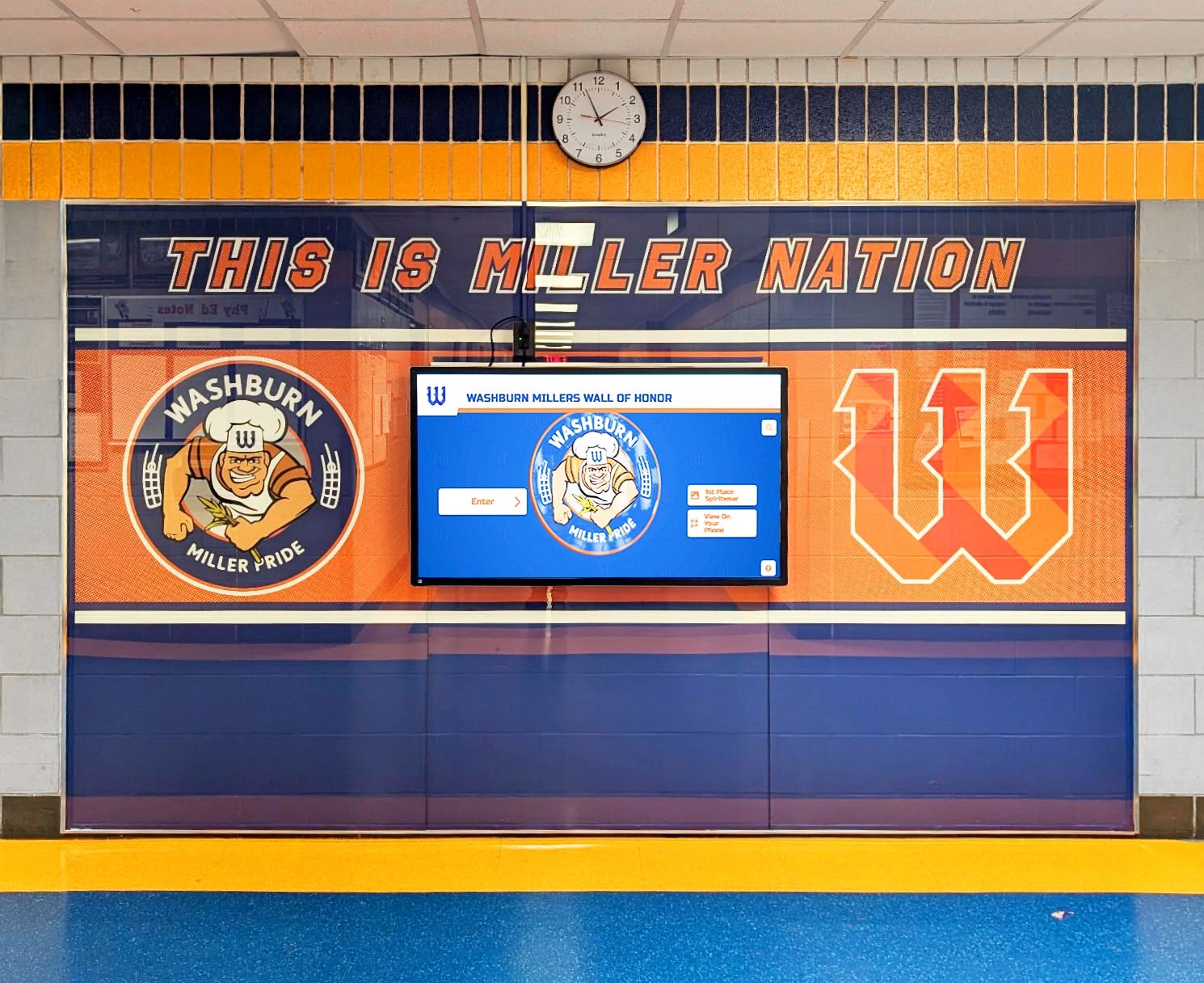
Schools that want to give FBLA achievements lasting, high-visibility recognition are increasingly turning to digital display systems. Installed in lobbies, hallways, or near the main office, these interactive touchscreens can serve as permanent, living records of chapter accomplishments.
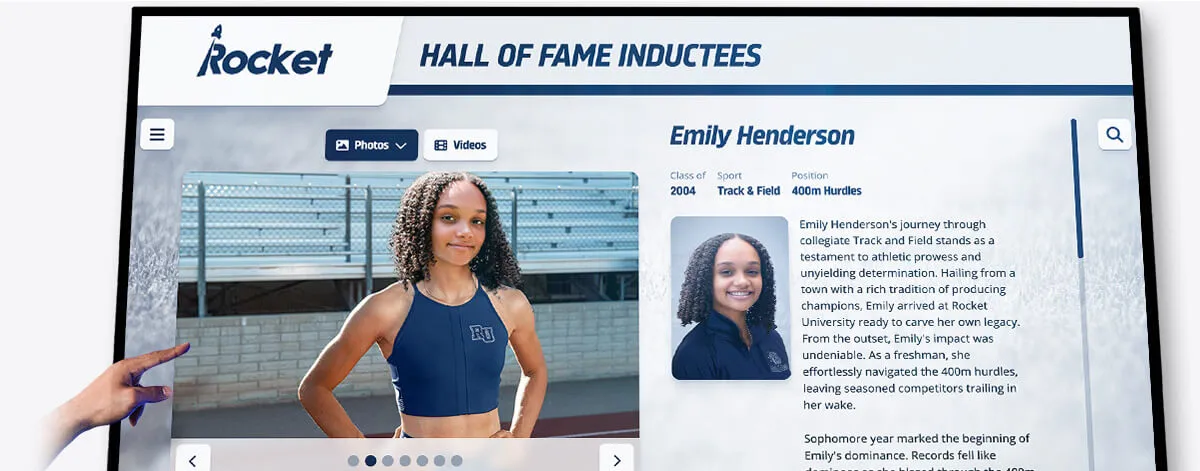
A well-designed digital recognition display for an FBLA chapter might include:
- Annual state qualifier rosters with photos, event categories, and placement results
- National Leadership Conference competitors highlighted by year
- Chapter officer history going back as many years as records allow
- Award highlights — Gold Seal Chapter, Who’s Who recipients, American Enterprise Award honorees
- Adviser recognition celebrating long-tenured chapter advisers
- Photo galleries from SLC and NLC events
Unlike a trophy case, a digital display doesn’t run out of shelf space. Unlike a plaque, it can be updated each year without expensive reproduction costs. And unlike a bulletin board, it stays up, stays visible, and accumulates a history that makes every class of students feel connected to something larger than themselves.
The academic decathlon recognition model provides a useful framework — schools that recognize scholastic teams with the same dedicated display space typically reserved for athletics find that it changes how students (and parents) perceive the value of academic competition.
For schools already considering digital recognition solutions, digital trophy touch walls offer a scalable alternative to traditional hardware that can house athletic records, academic honors, FBLA chapters, and donor recognition in one cohesive system.
Practical Tips for Building a Recognition Culture Around FBLA
For administrators who want to elevate FBLA recognition at their school, here are concrete steps:
1. Audit existing recognition systems. Walk through your school with fresh eyes. Where are athletics recognized? Where are NHS and AP honors displayed? Where is FBLA? If the answer to that last question is “nowhere permanent,” that’s the gap to close first.
2. Partner with the chapter adviser. The adviser tracks achievement records, has photos from conferences, and knows which students deserve spotlight. Build a workflow to capture achievement data — especially after state and national conferences — before it gets lost in the end-of-year rush.
3. Establish a consistent post-conference announcement process. When students return from the State Leadership Conference or NLC, they deserve a deliberate, school-wide acknowledgment. Treat it the way you’d treat a state championship: morning announcements, a note home, a post on social media.
4. Include FBLA in graduation recognition. Most districts have formal recognition at commencement for valedictorians, NHS members, and athletic letter winners. Add FBLA national qualifiers and Who’s Who recipients to that list.
5. Explore touchscreen banner display options for schools if your school is ready to invest in a permanent recognition solution. A single interactive display system can incorporate FBLA honors, academic achievement records, athletic hall of fame entries, and even honors cord and GPA recognition milestones — making it a unified recognition infrastructure rather than a collection of scattered plaques.
6. Build student engagement around the display. When recognition is visible and permanent, students take pride in it. Incoming FBLA members see what past chapters achieved and set higher goals. Alumni come back and find their names still on the wall. The student engagement strategies that work best are the ones tied to visible, lasting recognition — not just annual ceremonies.
Supporting FBLA Is an Investment in School Culture
FBLA is not a peripheral activity. It is a structured, competitive, nationally recognized program that produces graduates who are prepared for professional environments, post-secondary business programs, and entrepreneurial careers. The students who earn top 10 at the National Leadership Conference, who serve as state officers, who win the Who’s Who distinction — they have done something measurable and meaningful.
School administrators who understand FBLA’s scope can champion it more effectively: to school boards when business education budgets are under pressure, to parents who wonder whether competitive events are worth the time, and to students who need to see that business achievement is honored alongside every other form of excellence their school celebrates.
Rocket Alumni Solutions builds interactive touchscreen recognition systems for schools that want to give every form of student achievement — FBLA, athletics, academics, arts — a permanent, high-visibility home in the building. If your school is ready to modernize how it recognizes member accomplishments, our team can help design a solution that fits your space, your budget, and your community’s story.