



Key Takeaways
Complete guide to recognizing FBLA and FFA achievements through modern displays, trophies, and plaques. Compare traditional versus digital recognition solutions for student organizations.
Schools with active FBLA (Future Business Leaders of America) and FFA (National FFA Organization) chapters face a persistent challenge: how to meaningfully recognize student achievements in ways that honor program excellence, maintain visibility year-round, preserve limited trophy case space, and inspire continued participation across multiple cohorts.
Traditional recognition approaches—physical trophies crowding limited display cases, plaques covering available wall space, static bulletin boards requiring constant updates—increasingly fall short of creating the dynamic, comprehensive recognition experiences contemporary student organizations and their advisors expect.
This comprehensive guide examines everything schools need to know about implementing effective FBLA and FFA recognition systems in 2025. From evaluating traditional trophy and plaque options to implementing modern digital recognition displays, this resource provides practical frameworks schools can use to transform student organization recognition from space-constrained obligation into powerful visibility tool that celebrates achievement across generations.
Understanding FBLA and FFA Recognition Needs
Before evaluating specific recognition solutions, schools must understand what makes FBLA and FFA recognition unique compared to other student achievement programs and why traditional approaches often prove inadequate.
The Scope of FBLA Achievement Recognition
FBLA chapters generate substantial recognition requirements across multiple achievement categories and competition levels.
Competitive Events Recognition: FBLA offers over 70 competitive events spanning business fundamentals, entrepreneurship, technology, economics, and professional skills. Students compete at local, regional, state, and national levels. Schools need recognition systems accommodating:
- Regional competition winners and qualifiers
- State competition placements and awards
- National Leadership Conference participants
- Individual event winners across multiple categories
- Team event achievements requiring group recognition
- Historical records showing competition participation over decades
Leadership Recognition: Beyond competitive events, FBLA chapters recognize:
- Chapter officer teams (president, vice president, secretary, treasurer, reporter, parliamentarian)
- State and national officer achievements
- Business Achievement Awards for demonstrated excellence
- Community service project leaders
- Membership recruitment recognition
- Chapter management and growth milestones
Scholarship and Academic Recognition: FBLA emphasizes academic excellence and professional development through:
- National scholarship recipients
- Future Business Leader Awards
- Academic achievement distinctions
- Professional certification completions
- Internship and work-based learning acknowledgments
According to FBLA-PBL, the organization serves over 200,000 members annually across middle school, high school, and collegiate levels. Active chapters generate continuous recognition needs as new students achieve distinction each year while previous recipients deserve ongoing acknowledgment.
The Breadth of FFA Achievement Categories
FFA chapters similarly generate extensive recognition requirements across diverse achievement areas reflecting agricultural education’s comprehensive scope.
Career Development Events (CDEs): FFA offers over 25 Career Development Events testing students’ abilities in agricultural skills ranging from agricultural mechanics and veterinary science to marketing and parliamentary procedure. Students compete at chapter, area, district, state, and national levels. Recognition systems must accommodate:
- Multiple competition levels with distinct achievement tiers
- Individual and team event winners
- Proficiency award recipients demonstrating sustained excellence
- Agriscience fair participants and winners
- National FFA Convention participants and placements
FFA Degrees and Advancement: The organization’s degree system creates structured recognition requirements:
- Discovery FFA Degree (middle school)
- Greenhand FFA Degree (first-year members)
- Chapter FFA Degree (chapter-level achievement)
- State FFA Degree (state-level distinction)
- American FFA Degree (national-level honor)
Each degree represents specific achievement benchmarks in supervised agricultural experiences (SAE), leadership, and service. Schools need systems tracking student progression through degree levels while honoring recipients at each tier.
Supervised Agricultural Experience (SAE) Recognition: SAE programs—representing entrepreneurship, placement, research, and school-based enterprise projects—generate recognition for:
- Project completion and excellence
- Proficiency award winners in specific SAE categories
- Entrepreneurship awards for agricultural business ventures
- Research findings and scientific achievements
- Community impact and agricultural advocacy
Officer and Leadership Achievements: FFA chapter structures create additional recognition needs:
- Chapter officer teams and individual officers
- Section, region, area, and state officer achievements
- National officer selections (extremely prestigious)
- Star awards (Star Farmer, Star in Agribusiness, etc.)
- Honorary chapter degrees for community supporters
The National FFA Organization reports serving nearly 1 million members across all 50 states. Active chapters continuously generate new achievements requiring recognition while maintaining historical documentation of program excellence over decades.
Why Traditional Recognition Approaches Prove Inadequate
Schools implementing traditional trophy-and-plaque recognition for FBLA and FFA chapters consistently encounter similar limitations that compromise recognition effectiveness.
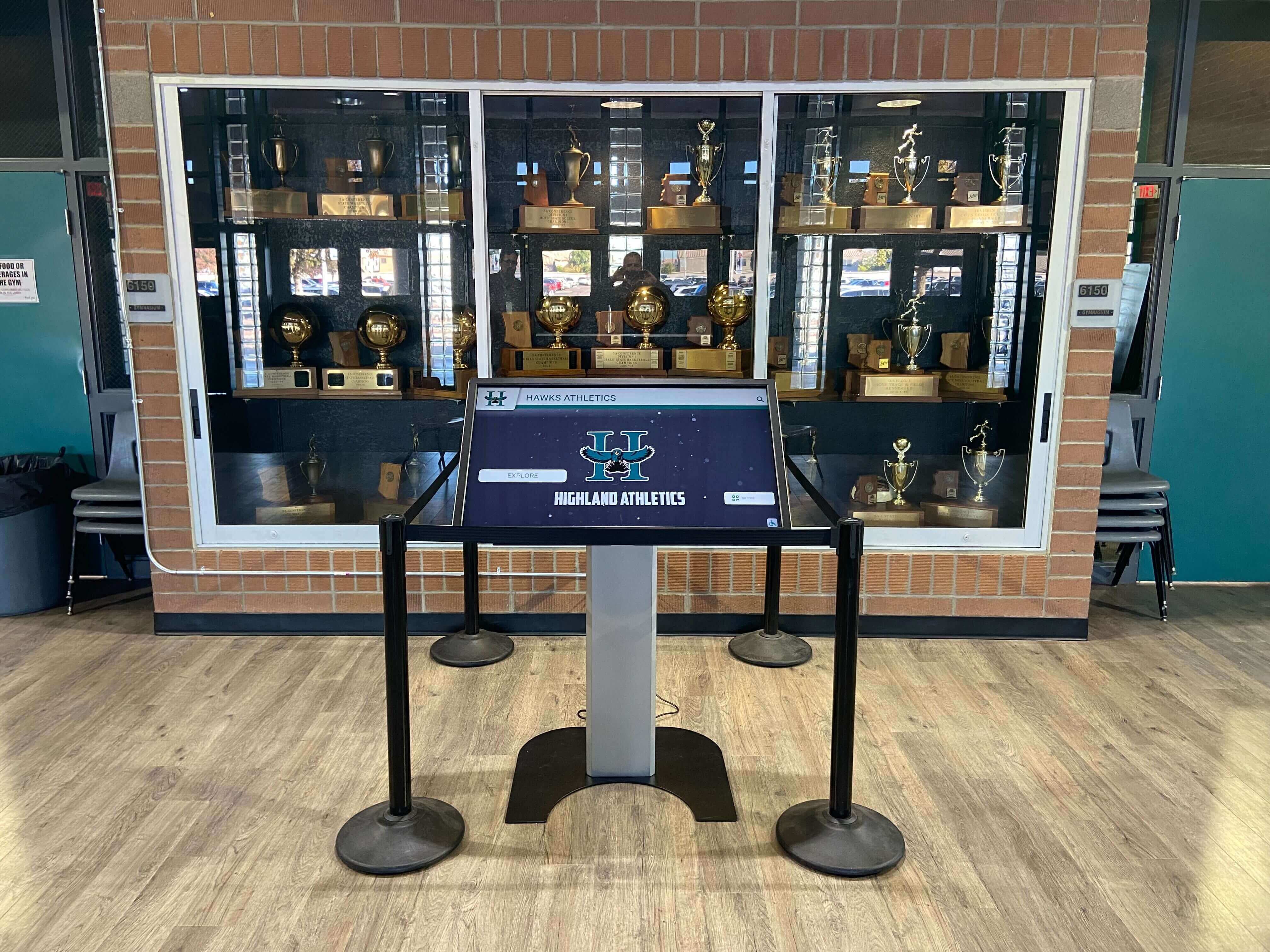
Severe Space Constraints: Physical trophy cases and wall-mounted plaques consume finite space that exhausts rapidly. A typical 6-foot trophy case holds approximately 60-80 trophies before appearing cluttered. Active FBLA and FFA chapters may generate 20-40 recognition-worthy achievements annually across competitions, degrees, leadership positions, and special awards. Within 2-3 years, trophy cases overflow, forcing difficult decisions about which achievements deserve continued visibility.
Impossible Maintenance and Updates: Traditional displays require constant physical updating as new achievements occur throughout school years. Advisors report spending hours mounting new plaques, rearranging trophies, printing updated labels, and attempting to maintain cohesive appearance. Many recognition displays become neglected between major updates, appearing outdated and dishonoring recent achievements through omission.
Limited Information and Context: Physical trophies and plaques provide minimal context about achievements. A typical plaque might read “2023 State Marketing CDE – 1st Place – Sarah Johnson” without explaining what marketing CDE involves, who competed, what the achievement required, or how it connects to broader chapter success. Viewers without FBLA or FFA knowledge gain limited understanding from cryptic event abbreviations and sparse details.
No Search or Browsing Capabilities: When alumni visit schools seeking their historical achievements or when current students want to explore predecessor accomplishments, physical displays offer no search functionality. Visitors must visually scan hundreds of plaques hoping to locate specific names, years, or events. This limitation severely restricts engagement and prevents meaningful interaction with recognition content.
Invisibility Beyond Physical Location: Traditional displays exist only in single physical locations—typically near agriculture classrooms, business education corridors, or main trophy cases. Students not regularly passing these specific hallways never see FBLA or FFA recognition. Families attending evening events may not access locked classroom wings. Community members and prospective students have no ability to explore achievements remotely.
Evaluating Traditional Recognition Options
Despite their limitations, traditional recognition approaches retain value for many schools based on budget constraints, aesthetic preferences, or program traditions. Understanding available options helps schools make informed decisions.
Trophy Display Systems and Cases
Trophies remain popular for FBLA and FFA recognition based on tangible visibility, traditional prestige, and aesthetic impact in school spaces.
Trophy Types and Formats:
Individual Achievement Trophies: Traditional column trophies featuring figurines, event designations, student names, and achievement details. These typically range from 6-12 inches for individual recognition to 18-24 inches for major team achievements. Budget schools can expect costs of $15-30 per small trophy, $30-60 for medium recognition trophies, and $75-150+ for large championship trophies.
Perpetual Trophies: Large display trophies featuring engraved plates for annual winners, allowing single trophy to represent achievement category across multiple years. Perpetual trophies work well for recurring recognition like State CDE Championships, Chapter of Excellence awards, or annual scholarship recipients. Initial investment ranges from $150-400 depending on size and plate capacity.
Display Case Requirements: Quality trophy cases suitable for school environments range from $800-2,000 for standard 6-foot lighted cases to $3,000-6,000+ for custom built-in installations with security features, LED lighting, and climate control. Schools must factor ongoing maintenance including bulb replacement, cleaning, lock repairs, and periodic refinishing.
Trophy Limitations in Practice:
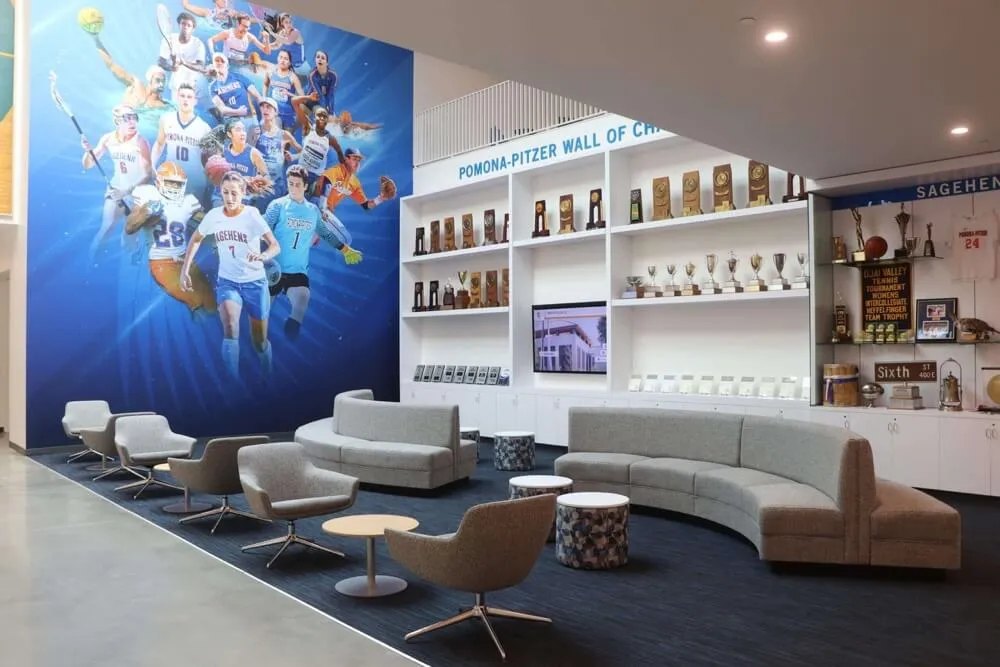
Space exhaustion remains inevitable. Even generous trophy case installations fill within 3-5 years of active FBLA or FFA participation. Schools then face choices between rotating displays (removing older achievements), purchasing additional cases (requiring wall space and capital), or allowing cluttered presentation that diminishes recognition impact.
Plaque and Wall-Mounted Recognition
Plaques mounted directly on walls offer alternatives to trophy cases while creating their own considerations.
Plaque Format Options:
Individual Recognition Plaques: Typically 8x10 or 9x12 inch plaques with engraved plates listing achievement, student name, year, and event. Standard materials include wood with brass plates ($25-50 per plaque), acrylic with printed or engraved text ($20-40), or metal plaques ($30-60). Volume discounts apply for bulk orders.
Composite Plaques: Single larger plaques (18x24 or larger) featuring multiple engraved plates for team members, annual recipients, or achievement categories. Composite formats reduce per-student costs while creating cohesive visual presentation. Typical investment ranges from $150-400 depending on size and number of plates.
Specialty Recognition Plaques: Custom shapes, materials, or designs reflecting program identity—such as FFA emblem-shaped plaques or FBLA torch-themed designs—create distinctive recognition. Premium materials like granite, marble, or custom metalwork range from $75-200+ per plaque depending on specifications.
Wall Space and Installation Challenges:
Schools quickly discover that wall space proves surprisingly limited. A typical 10-foot hallway section accommodates approximately 15-20 standard plaques before appearing crowded. Active programs generating 20-40 annual recognitions exhaust available wall space within single years, requiring expansion into additional corridors or costly renovation creating dedicated recognition spaces.
Installation requirements include professional mounting ensuring secure attachment to various wall types (drywall, concrete block, brick) without damaging structures. Installation costs typically run $10-25 per plaque depending on wall type and mounting hardware requirements.
Traditional Display Maintenance and Long-Term Costs
Beyond initial acquisition and installation costs, traditional recognition creates ongoing expenses and labor requirements schools often underestimate during planning.
Regular Maintenance Requirements:
Trophy cases require periodic cleaning of glass, dusting of trophies, light bulb replacement, lock maintenance, and occasional repairs from damage or wear. Advisors report spending 2-4 hours monthly on trophy case maintenance for active displays.
Plaques accumulate dust, require periodic cleaning, experience mounting hardware loosening over time, and may need refinishing or replacement when engraving becomes illegible or materials deteriorate. Schools in humid climates face accelerated brass plate tarnishing requiring more frequent maintenance.
Update and Expansion Costs:
Each recognition cycle requires purchasing new trophies or plaques plus installation labor. Schools with substantial FBLA and FFA programs may invest $800-2,000 annually in new physical recognition items plus 10-20 hours of staff or volunteer time for mounting, arrangement, and display updates.
When display capacity exhausts, schools face major capital decisions: purchase additional trophy cases ($800-2,000+ each), expand wall-mounted plaque areas (requiring construction and potentially paint, lighting, and aesthetic improvements), or implement rotation systems requiring storage for removed items.
Modern Digital Recognition Display Solutions
Digital recognition platforms represent fundamental alternatives to traditional physical displays, eliminating space constraints while expanding recognition capabilities in ways impossible with trophies and plaques.
Digital Display Advantages for FBLA and FFA Recognition
Interactive touchscreen recognition systems provide specific advantages addressing traditional recognition limitations.
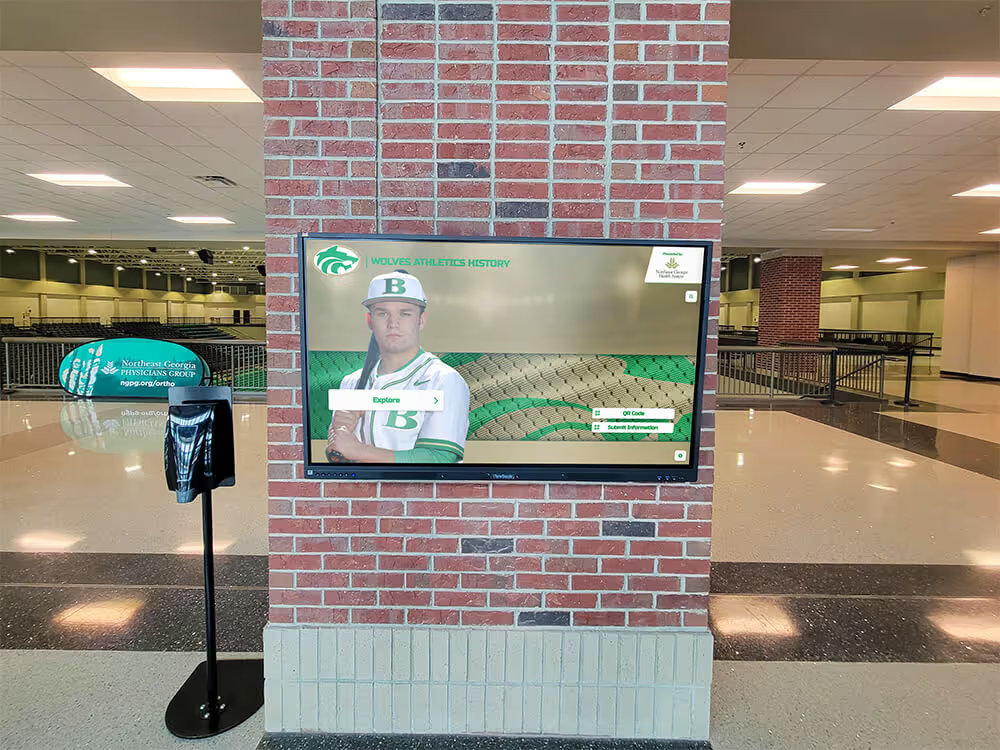
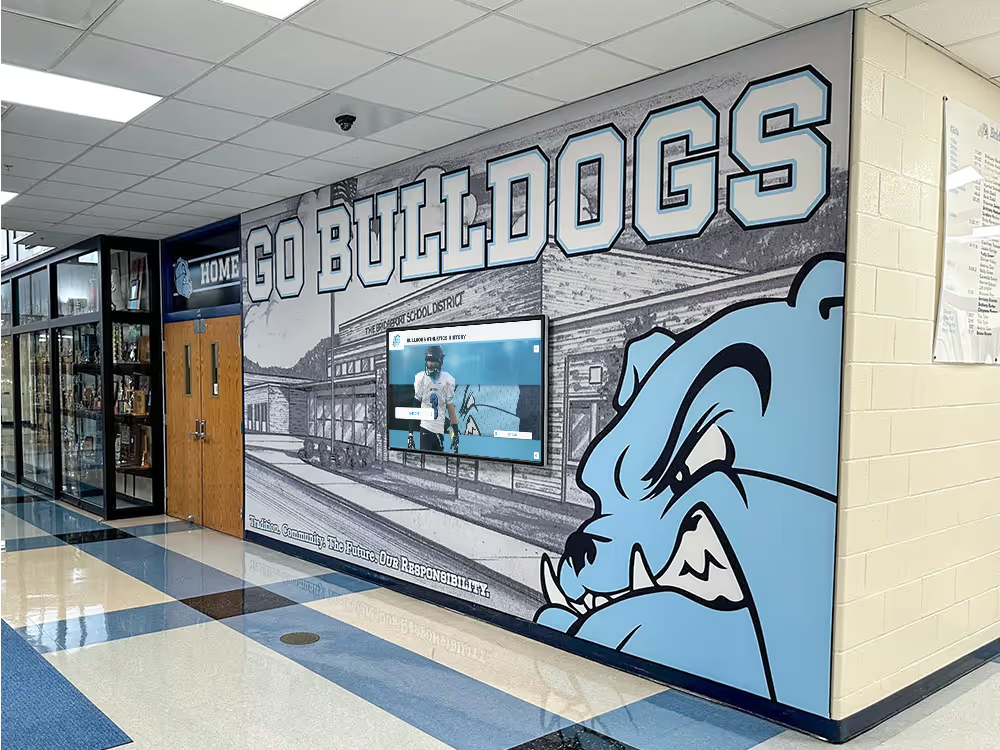
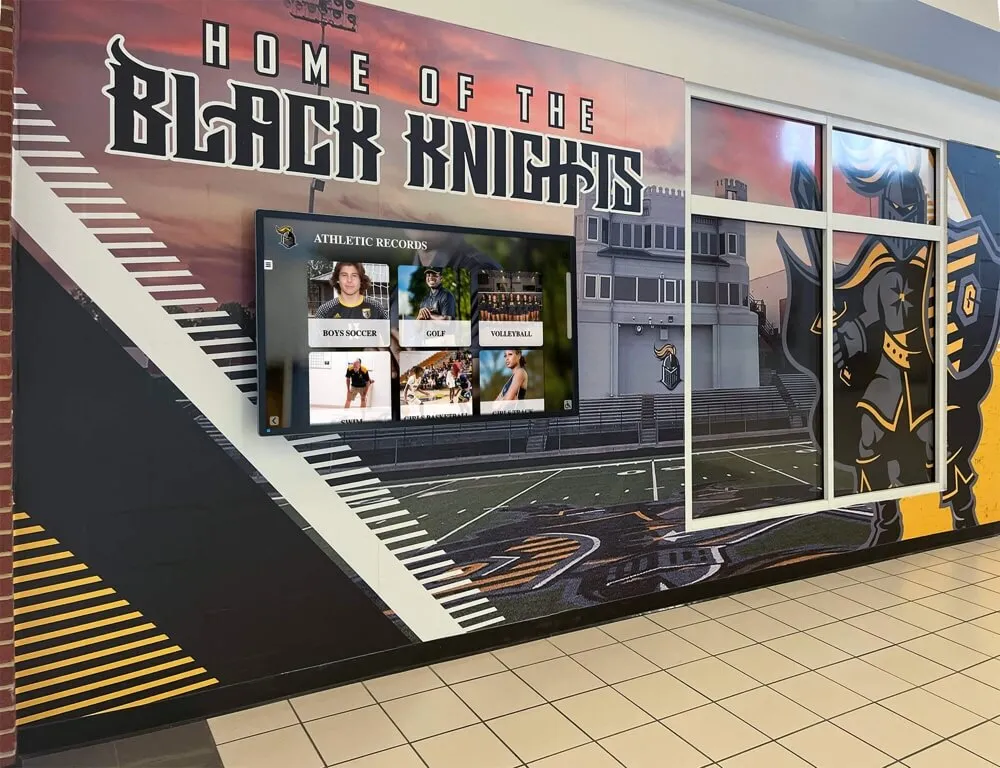
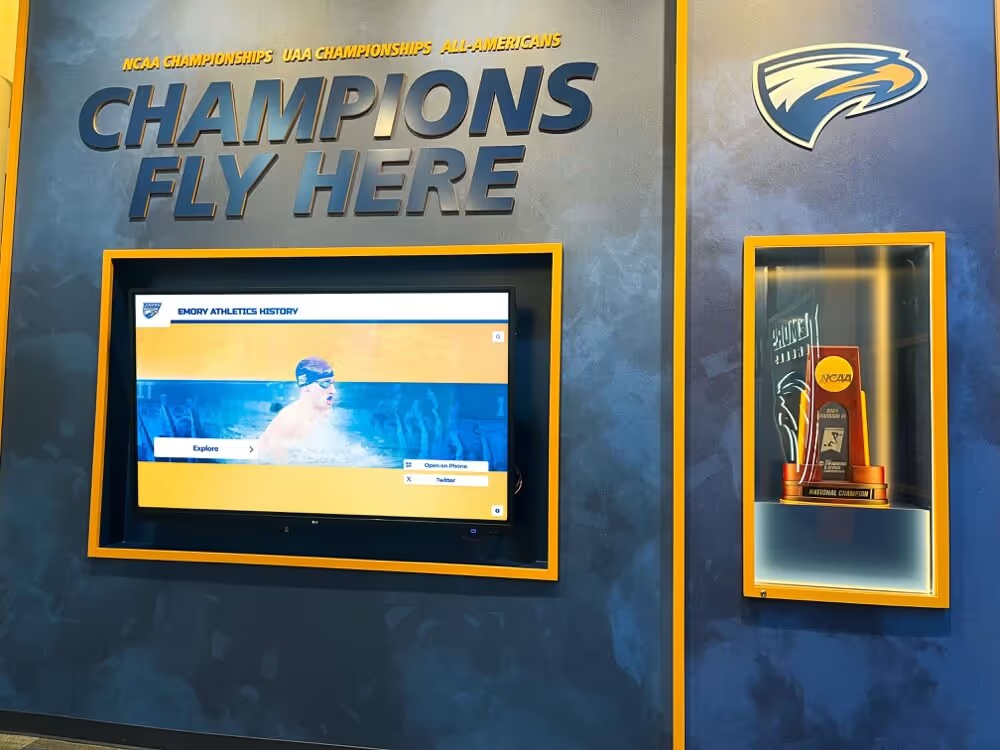
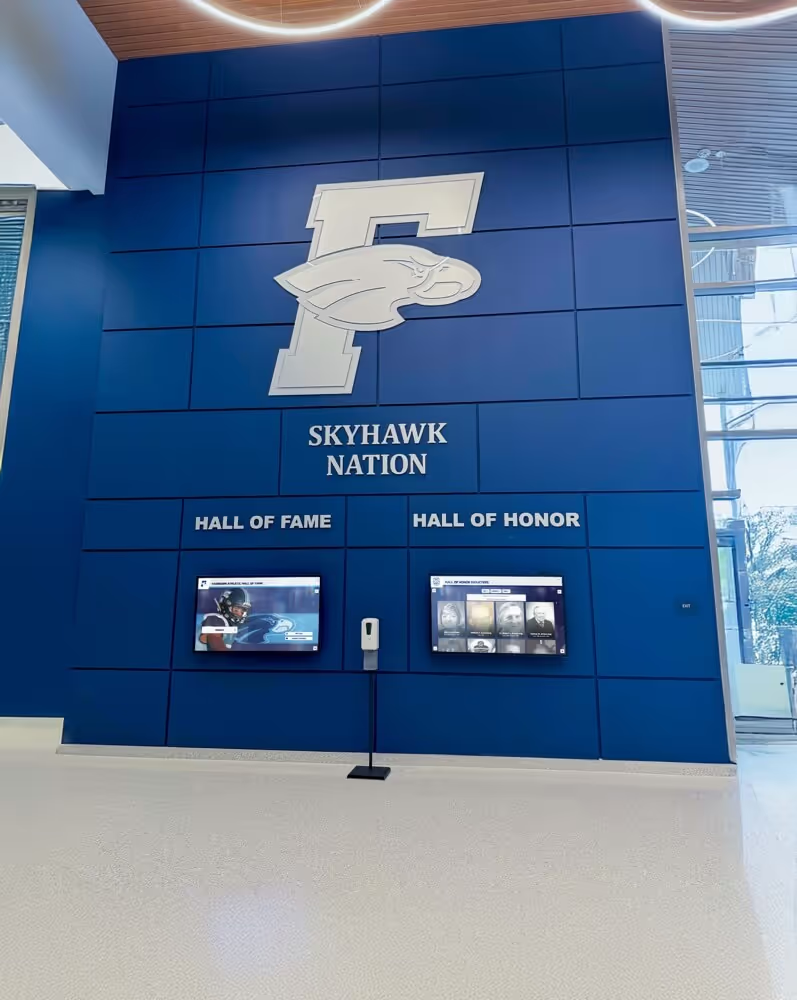
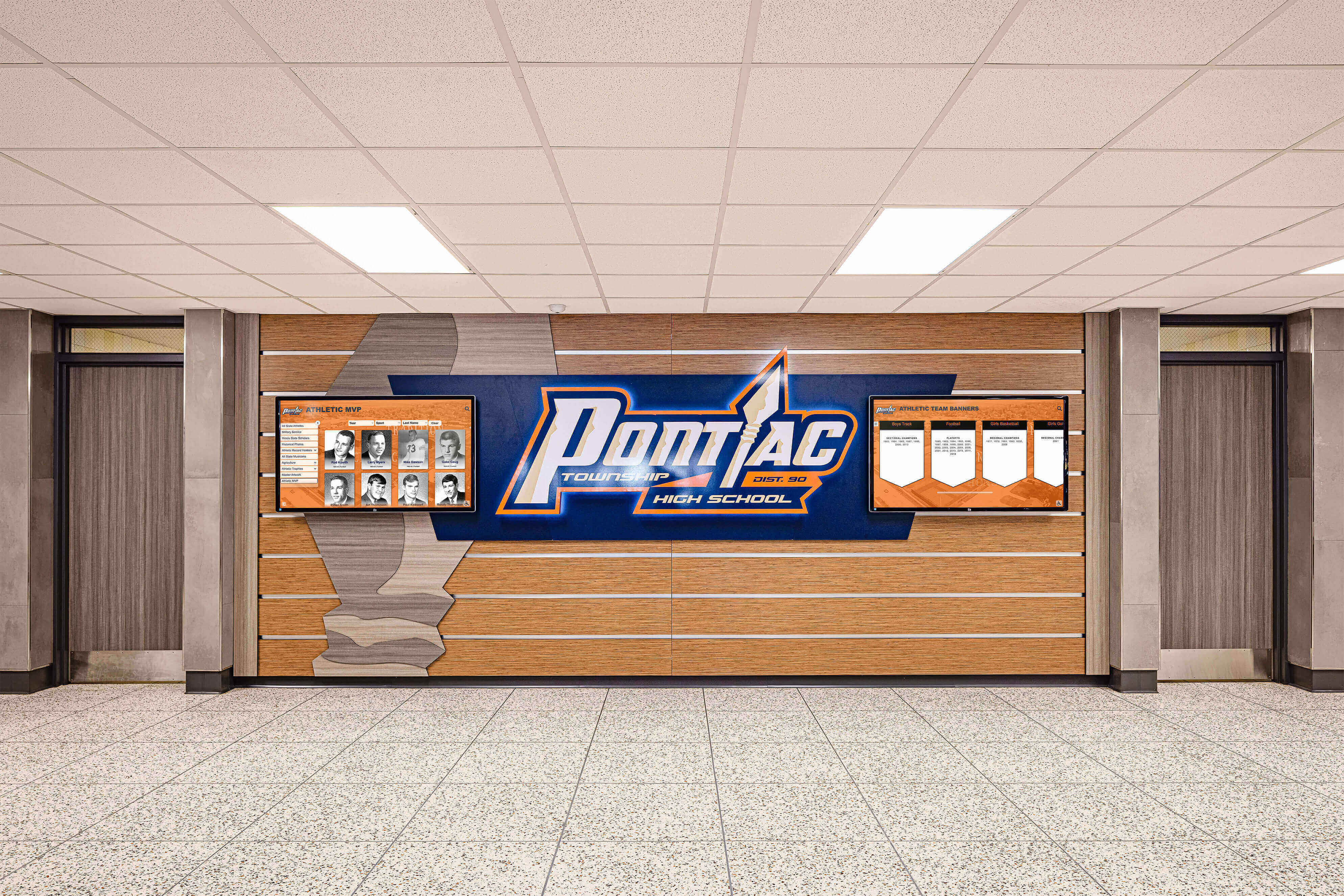
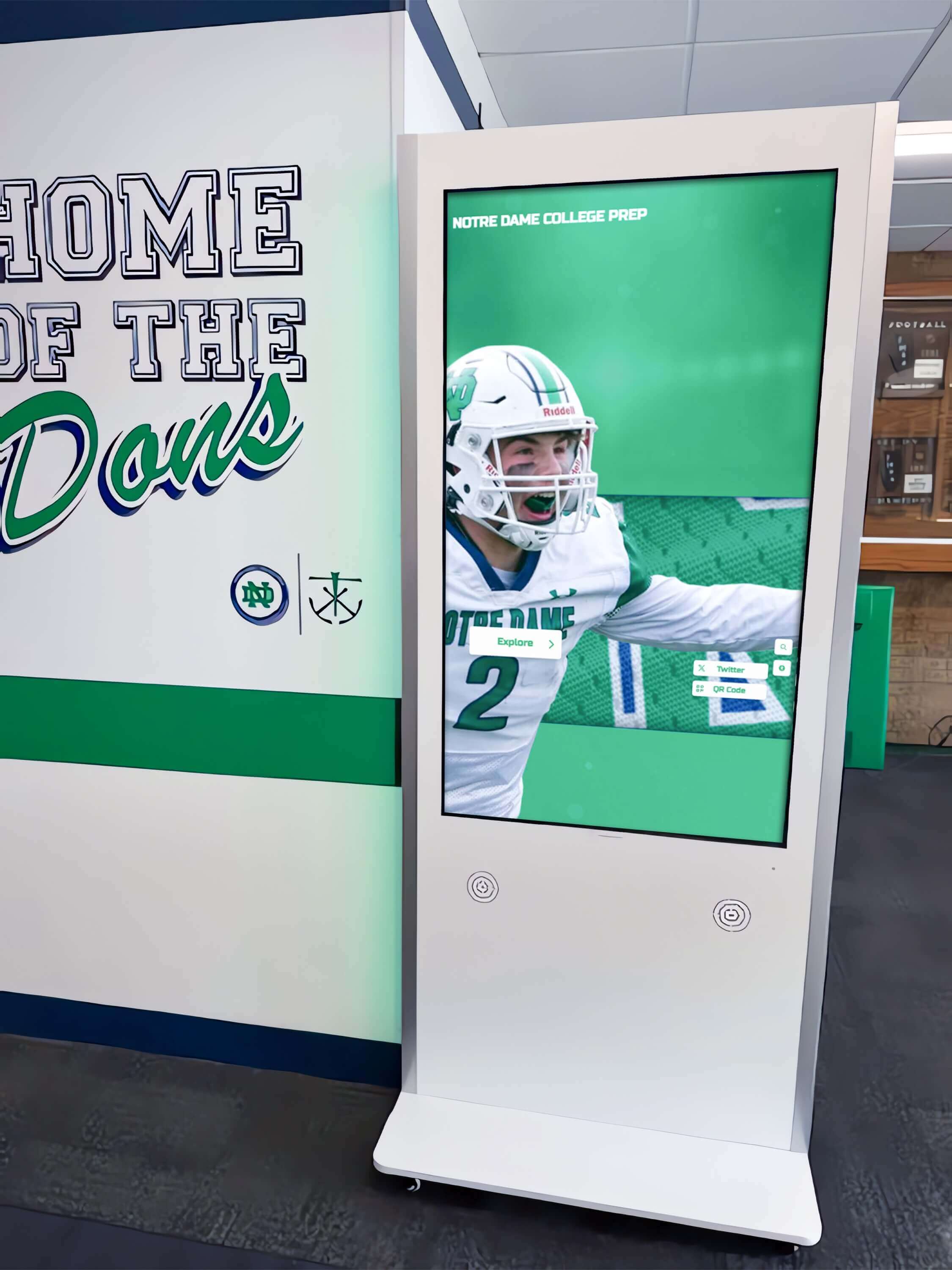
Unlimited Recognition Capacity: Digital platforms eliminate space constraints entirely. A single touchscreen display can showcase every FBLA and FFA achievement from program founding through current year—content requiring dozens of trophy cases or hundreds of wall plaques if implemented physically.
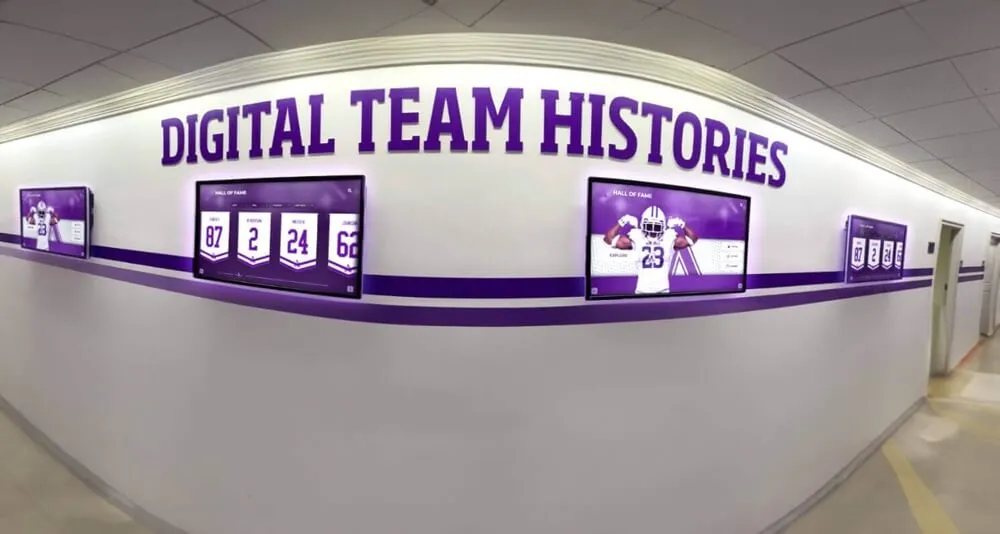
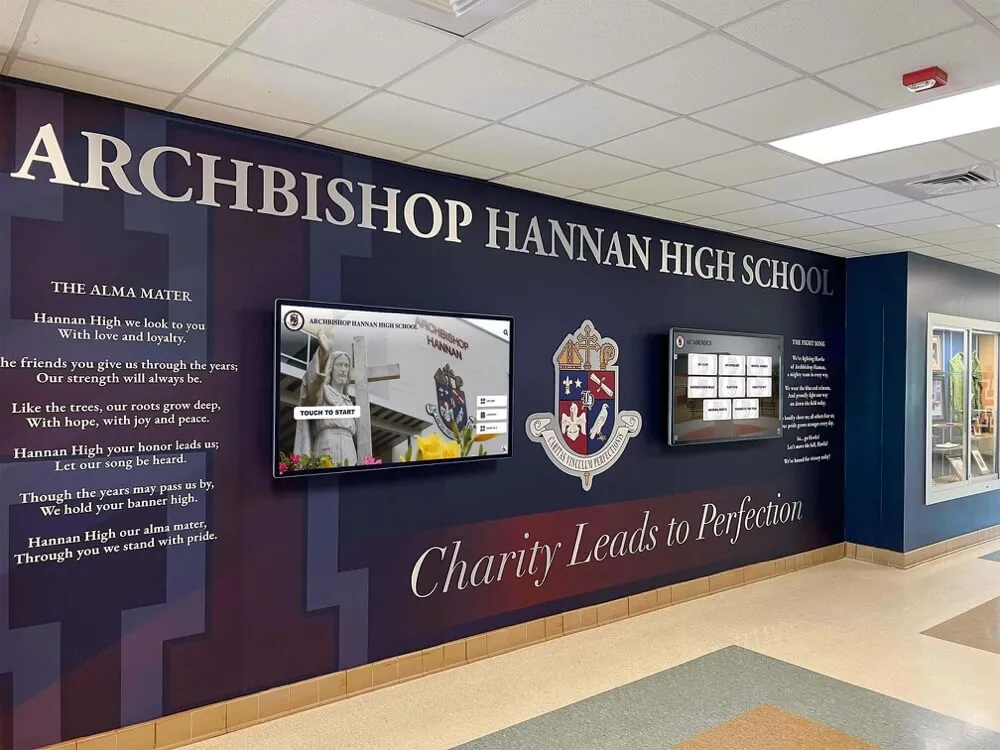
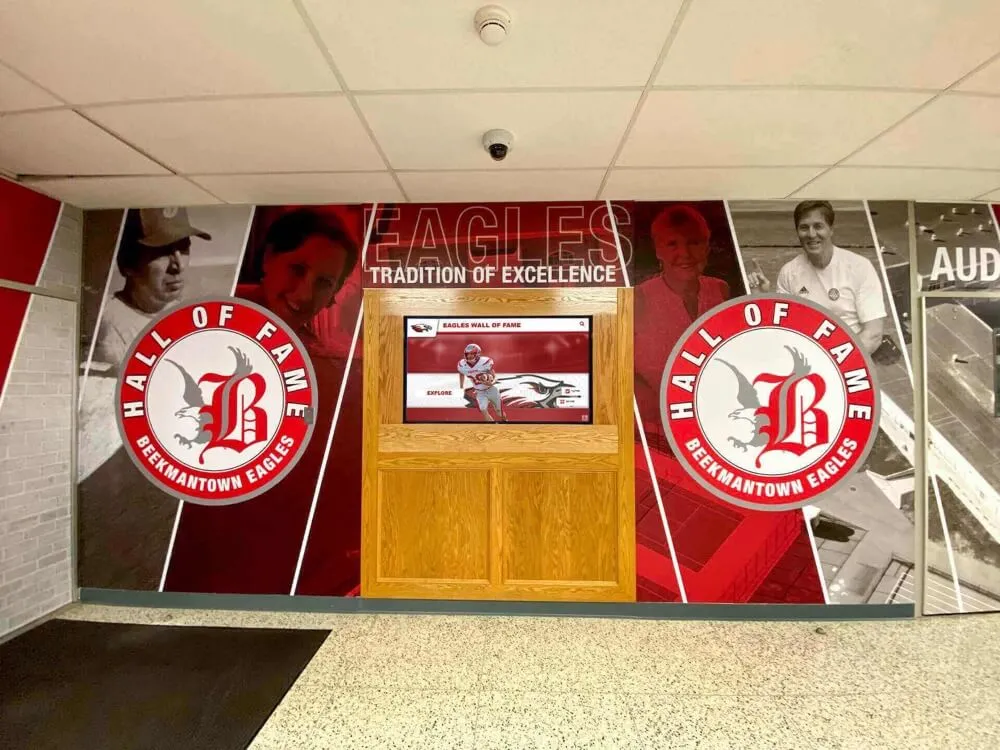
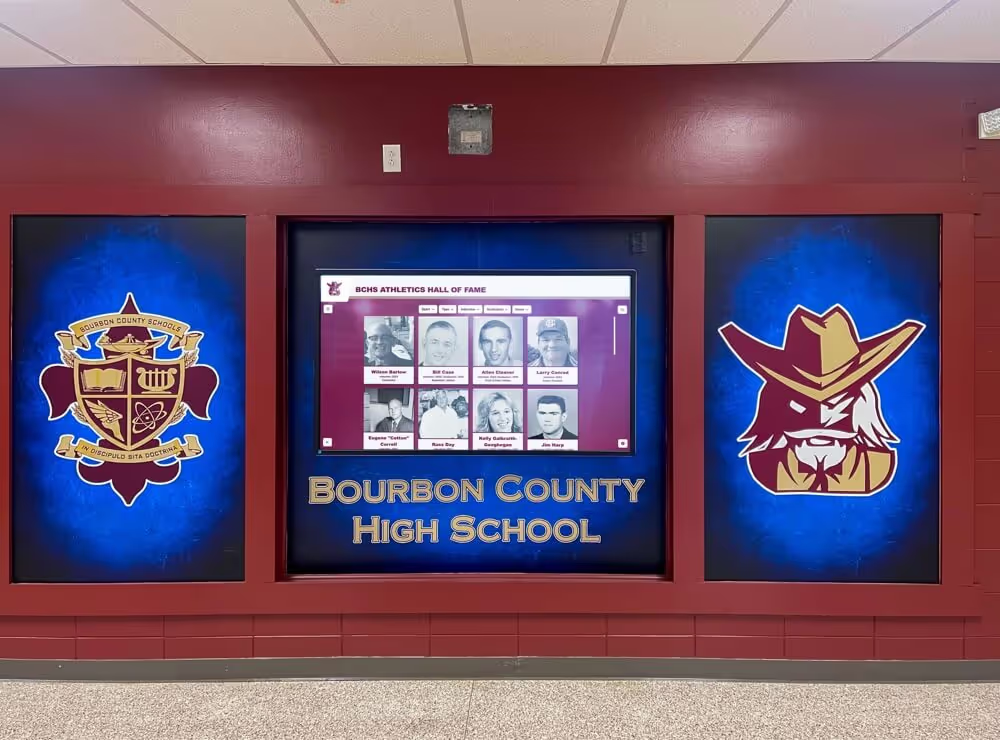
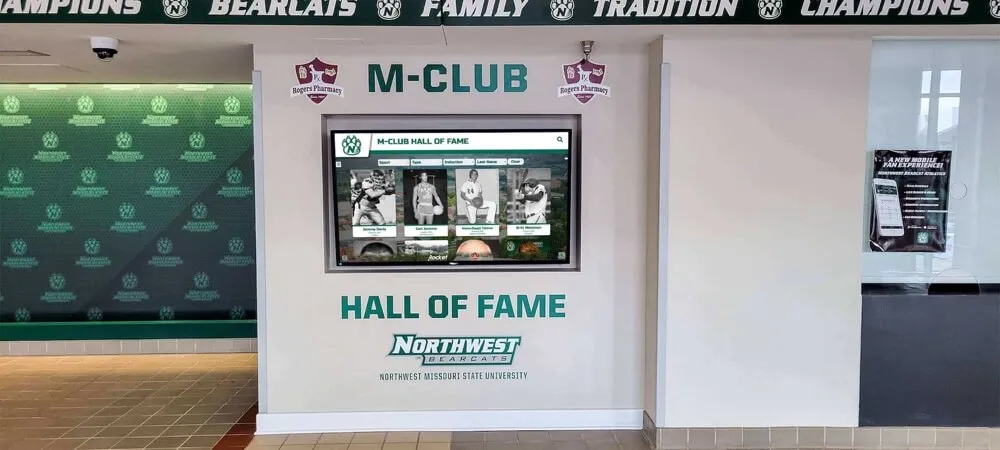
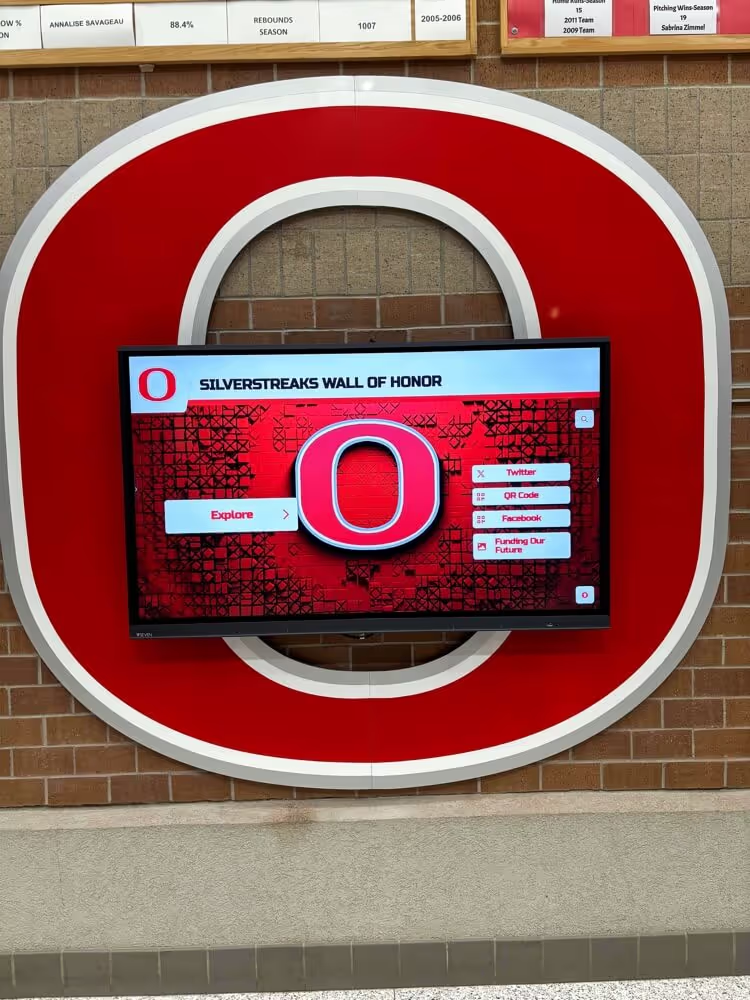
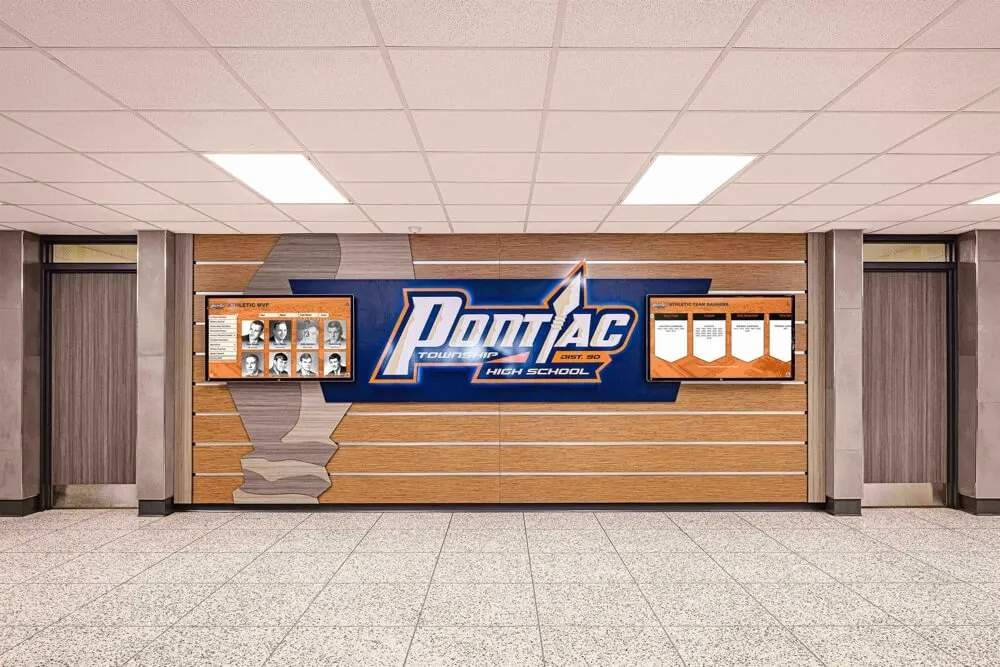
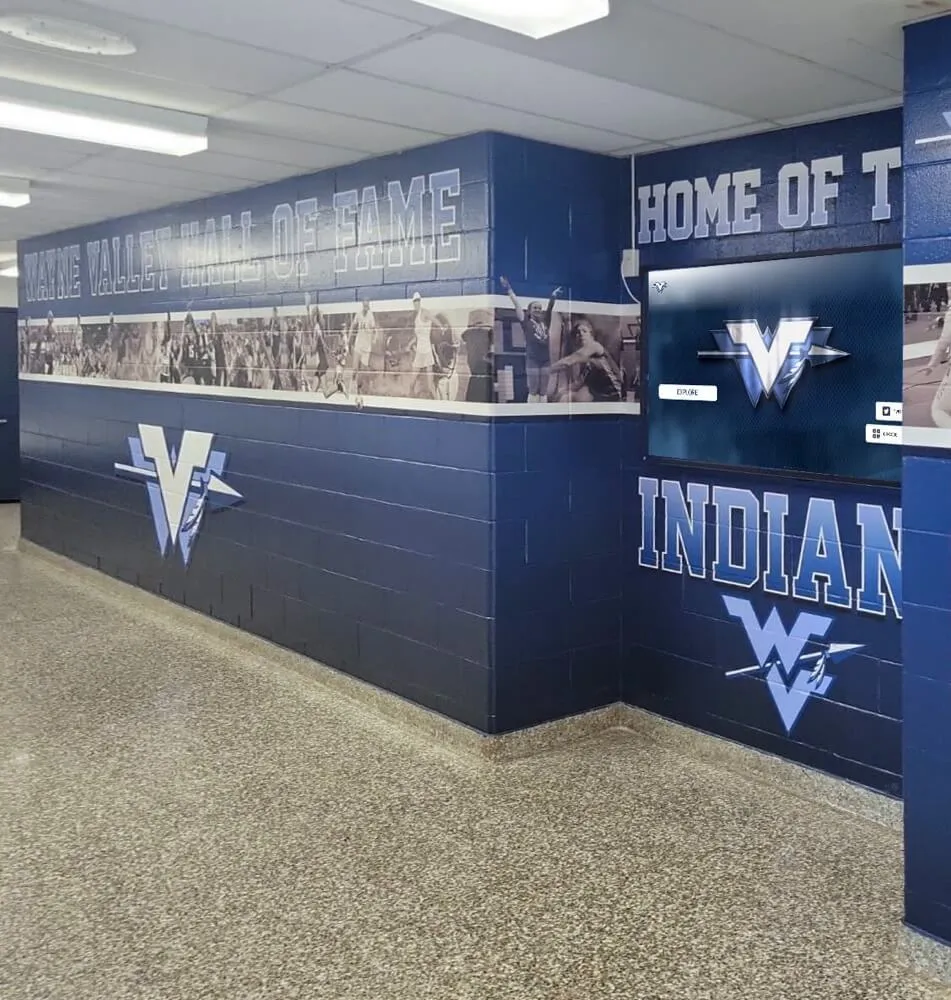
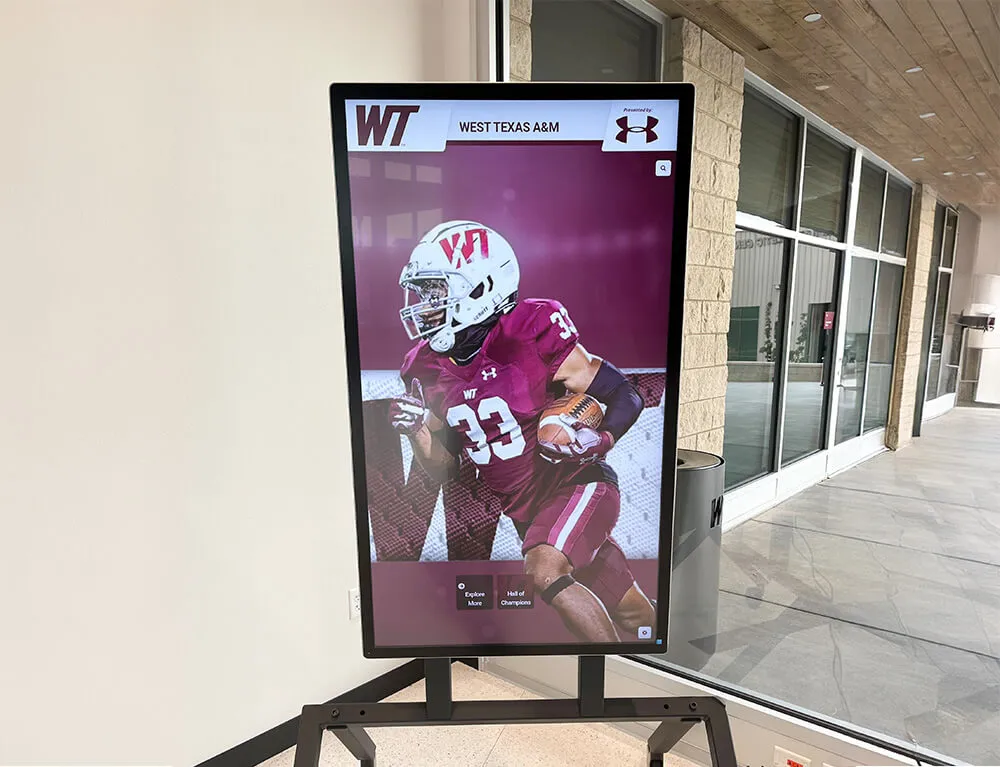
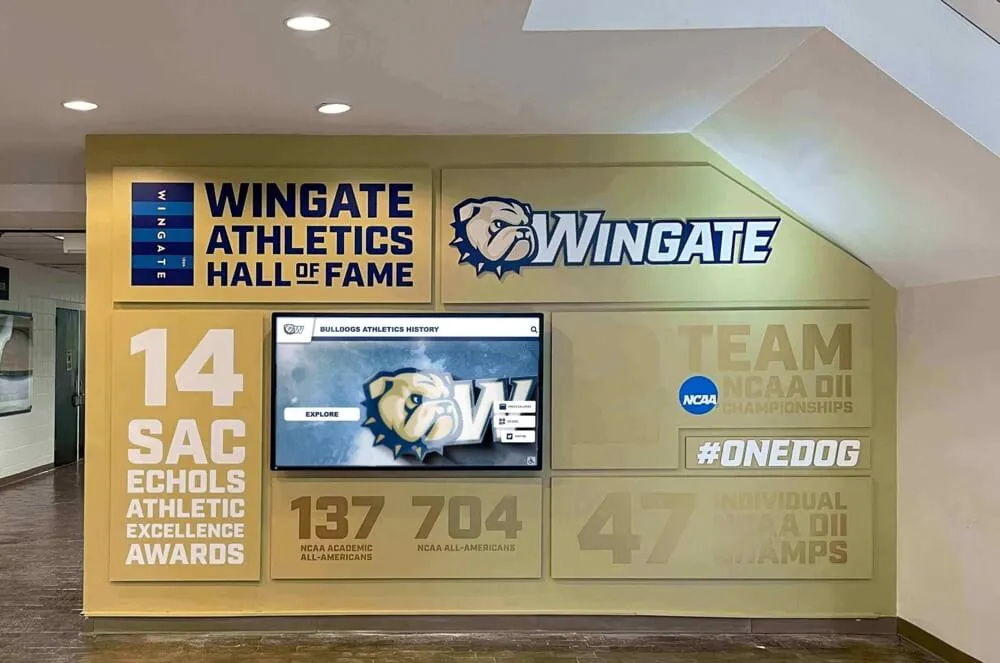
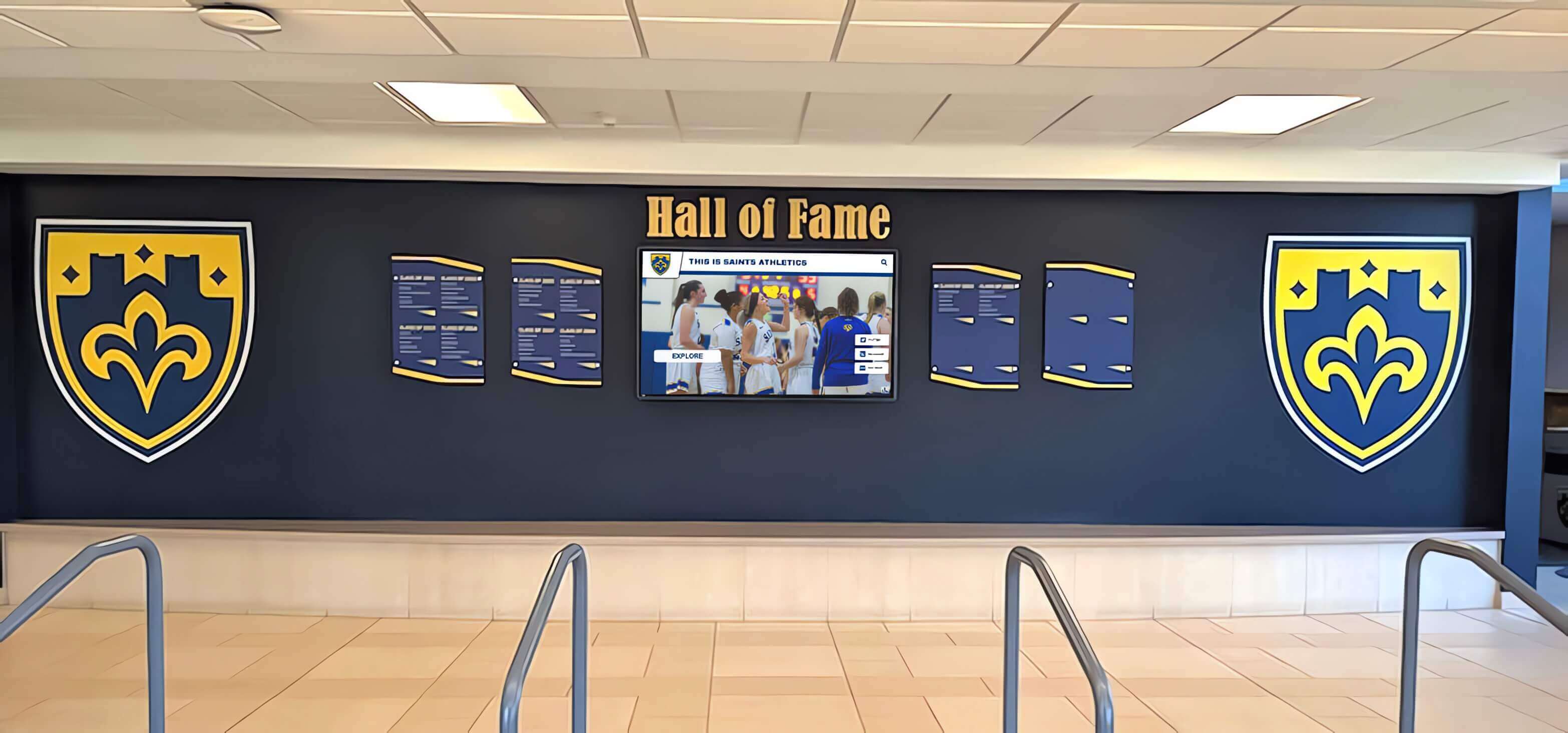
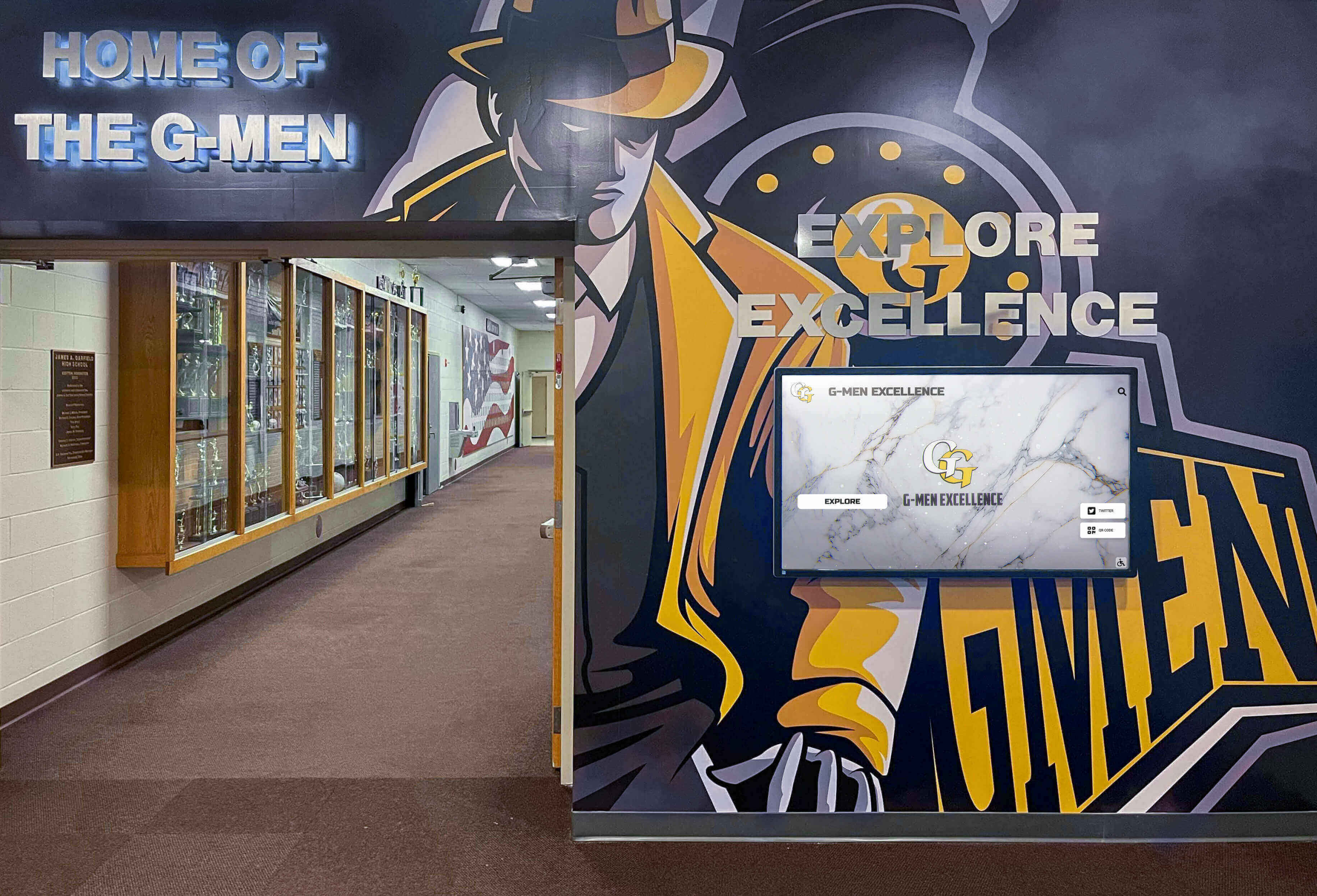
Solutions like digital recognition displays provide unlimited inductee and achievement capacity, allowing schools to continuously add recognition without removing previous content or exhausting physical space.
Rich Multimedia Recognition: Digital platforms support comprehensive achievement documentation far beyond name-and-date plaques:
- Professional student photographs creating personal recognition
- Detailed achievement descriptions explaining competitive events, SAE projects, or leadership roles
- Multi-year recognition histories showing student progression through FFA degrees or FBLA competitive advancement
- Team photos and group recognition for collaborative achievements
- Video content featuring students discussing experiences or demonstrating skills
- Integration with broader school recognition systems connecting FBLA/FFA achievements with athletic, academic, or service recognition
This rich documentation creates meaningful recognition that families cherish and that helps community members understand program value and complexity.
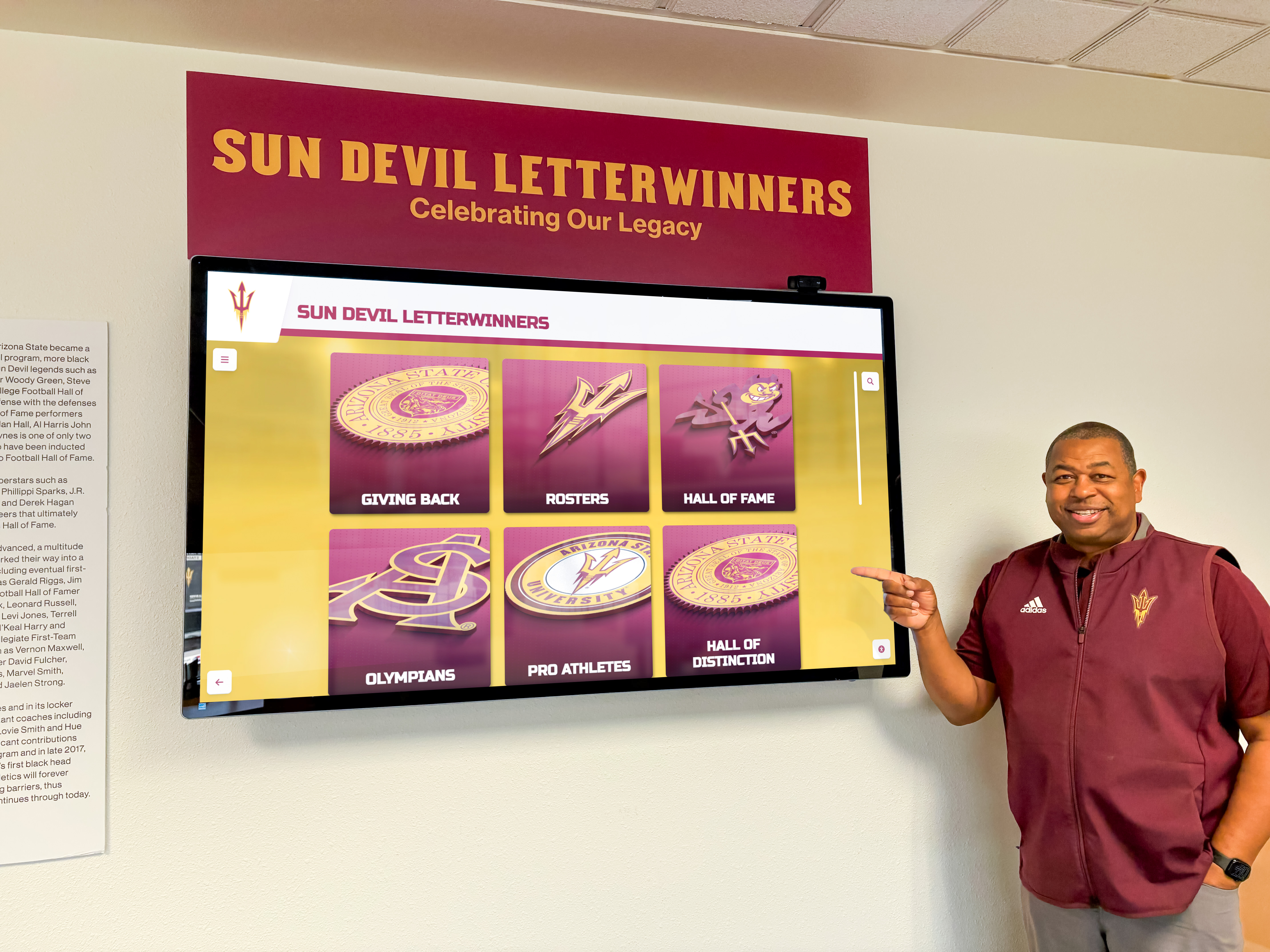
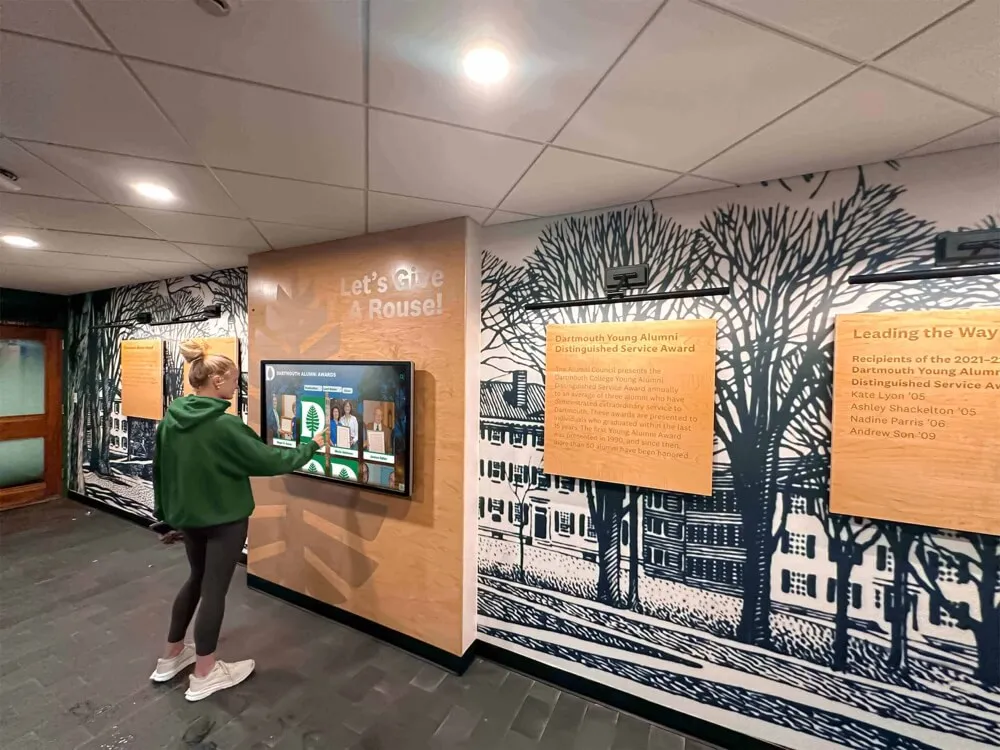
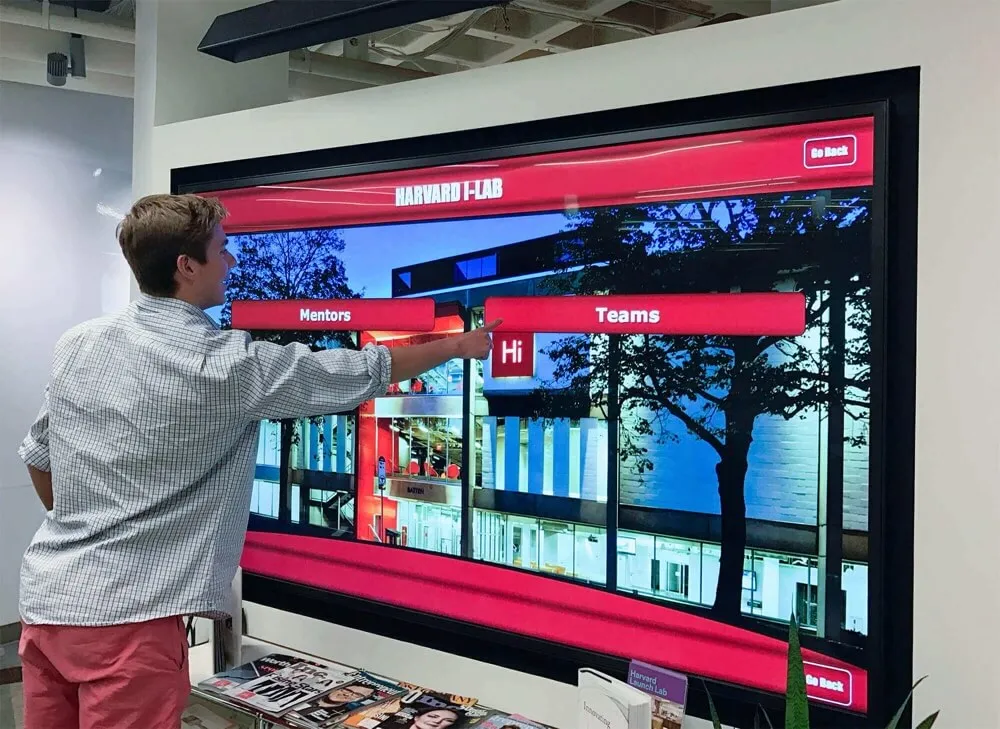
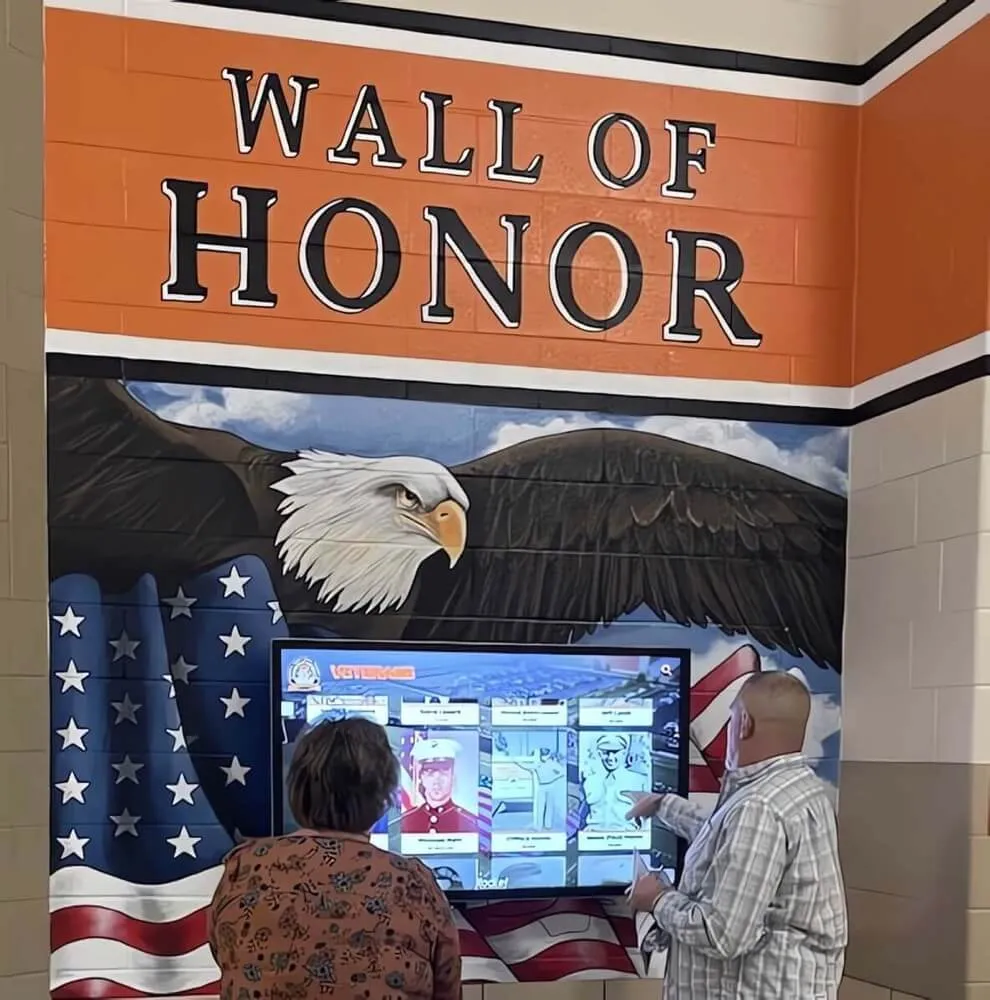
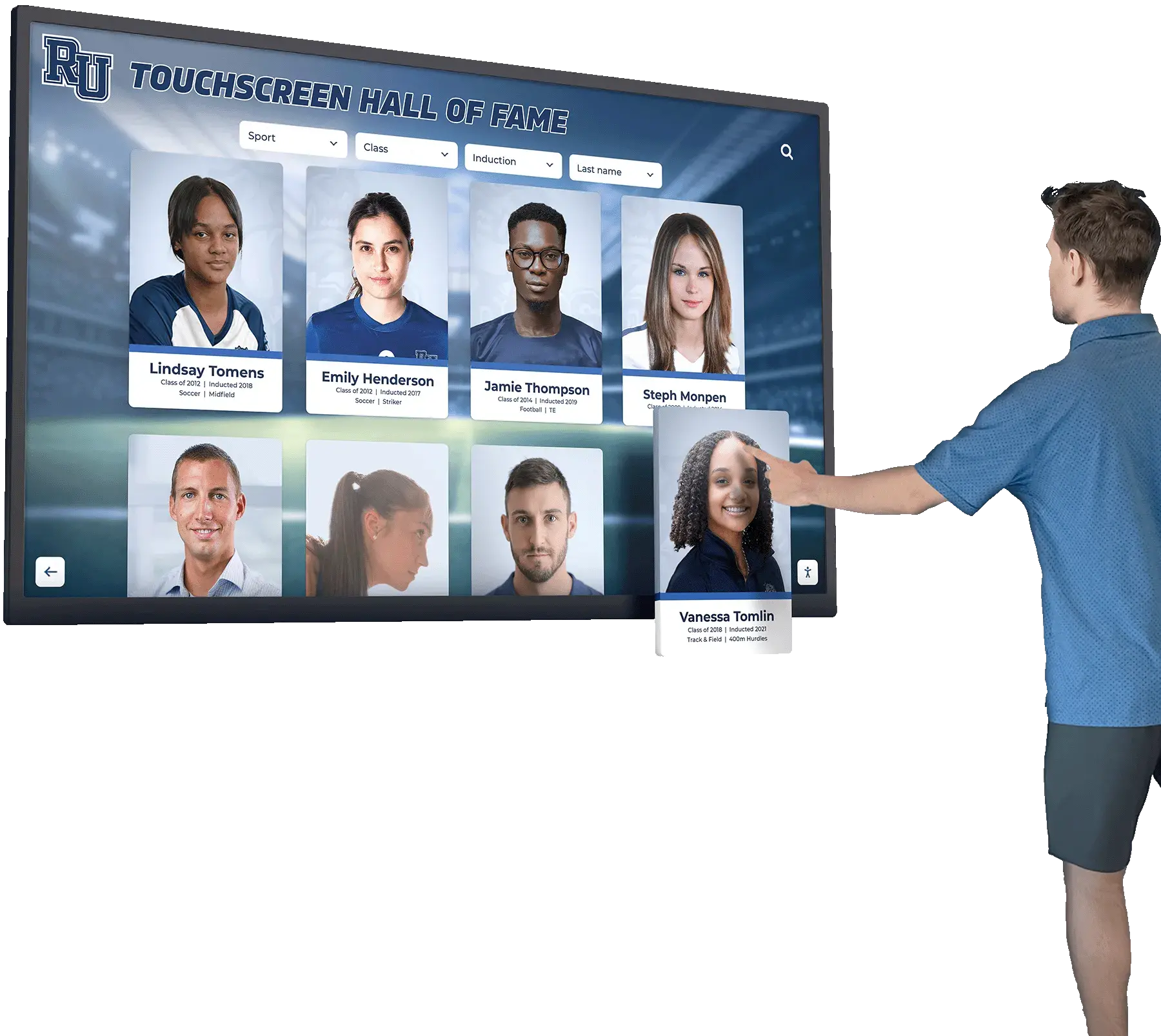
Interactive Engagement and Search: Unlike static displays visitors passively glance at while passing, interactive recognition invites active exploration. Students, families, alumni, and visitors can:
- Search by name to immediately locate specific individuals
- Browse by year to explore historical achievements
- Filter by achievement type (competitive events, degrees, officer positions)
- View complete recognition histories for students earning multiple honors
- Discover connections between current students and historical program participants
Research indicates that 63% of people report that digital signage catches their attention compared to 30% who notice traditional signs, suggesting digital recognition creates significantly higher engagement than physical displays.
Immediate Updates Through Cloud Management: Digital recognition updates occur through cloud-based content management systems that authorized staff can access from any device. After competitions, degree ceremonies, or officer elections, advisors can immediately add recognition without printing plaques, purchasing trophies, or physically mounting materials. Updates publish instantly, ensuring recognition occurs promptly while achievements remain fresh and exciting.
Extended Visibility and Access: Digital recognition extends beyond single physical locations through multiple access points:
- Touchscreen displays in multiple school locations (lobbies, FBLA/FFA classrooms, career centers)
- Web-accessible content allowing remote viewing by families, alumni, community members, or prospective students
- Integration with school communications including announcements, newsletters, and social media
- QR code connections allowing smartphone access to detailed recognition content
Many schools implementing FFA awards digital display systems report increased family engagement, improved alumni connections, and enhanced recruitment as prospective students explore program achievements before joining.
Comparing Digital Solutions to Traditional Recognition
When schools evaluate recognition modernization, direct comparison between digital and traditional approaches clarifies decision factors.
Implementation Investment Comparison:
Traditional Recognition Total Investment:
- Trophy case: $1,200 (standard 6-foot lighted case)
- Initial trophies/plaques: $800 (approximately 25-30 items)
- Installation: $200 (mounting, electrical)
- Annual additions: $800-1,200 (ongoing recognition items)
- 5-year total: $5,200-7,200 (excluding additional cases when space exhausts)
Digital Recognition Total Investment:
- Touchscreen display hardware: $2,500-4,000 (commercial-grade 55" touchscreen)
- Software platform subscription: $1,200-2,400 annually (content management, hosting, updates)
- Initial content development: $500-1,500 (photo collection, data organization, design)
- 5-year total: $9,500-15,500 (no space exhaustion; unlimited capacity)
While digital recognition requires higher initial investment, it avoids space exhaustion requiring additional trophy cases, provides vastly expanded recognition capacity, and offers engagement capabilities impossible through traditional formats.
Decision Framework for Recognition Modernization:
Schools should select digital recognition when:
- FBLA and FFA programs generate 20+ annual achievements requiring recognition
- Trophy cases approach or have exceeded display capacity
- Wall space for additional plaques remains limited
- Programs value comprehensive historical documentation beyond current years
- Schools want families and alumni to access recognition remotely
- Advisors seek efficient updating without physical mounting requirements
- Budget allows higher initial investment for expanded long-term capability
Traditional recognition remains appropriate when:
- Programs generate modest recognition requirements (under 15 annual items)
- Ample trophy case or wall space exists with no near-term exhaustion risk
- Budget severely constrains initial investment regardless of long-term value
- School culture strongly values physical trophies as program tradition
- Technical support for digital systems remains limited
- Recognition primarily serves current students with less emphasis on historical documentation
Integrated Recognition Approaches
Many schools find that combining traditional and digital recognition provides optimal solutions leveraging advantages of both approaches while mitigating limitations.
Hybrid Implementation Models:
Current Year Physical + Historical Digital: Maintain trophy case or plaque display featuring current school year achievements, providing immediate physical visibility and traditional recognition experience. Implement digital display showcasing comprehensive historical recognition from program founding through previous year. This approach manages trophy case capacity by rotating physical displays annually while preserving all historical content digitally.
Major Recognition Physical + Comprehensive Digital: Reserve physical trophies and plaques for highest distinction achievements—State Championships, American FFA Degrees, National FBLA competition placements, State officer positions. Implement digital recognition documenting all achievements including regional, district, and chapter-level recognition that might not warrant individual trophies but deserves acknowledgment.
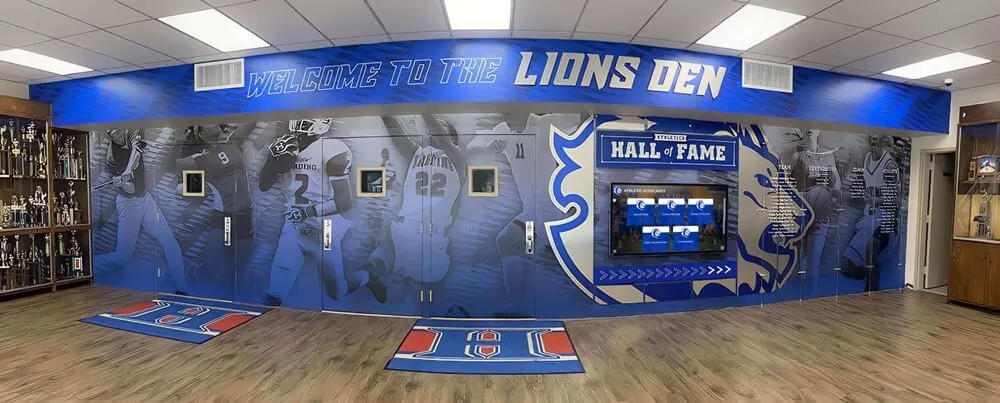
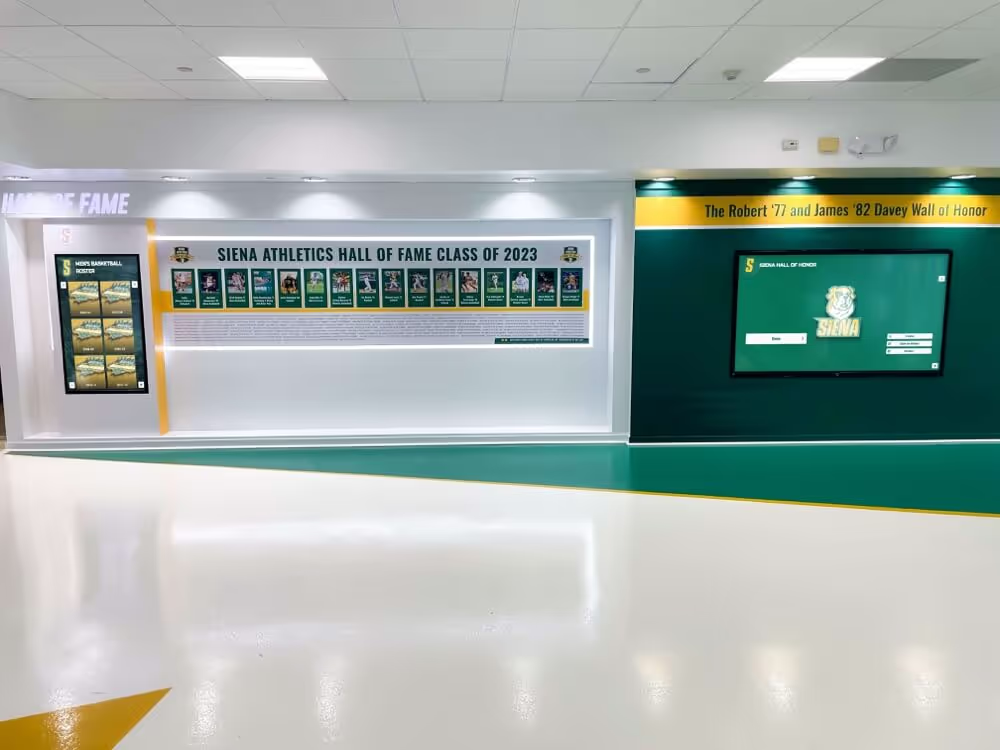
Physical Display + Digital Enhancement: Maintain existing trophy cases and plaque walls while adding digital displays that provide deeper context, search capabilities, and historical documentation. Students viewing physical trophies can access corresponding digital content via QR codes or nearby touchscreens, obtaining detailed achievement information, student photographs, and related recognition.
Schools implementing comprehensive academic and activity recognition programs often find integrated approaches that honor traditions while modernizing capabilities create broadest stakeholder satisfaction.
Implementing Effective FBLA and FFA Recognition Programs
Schools ready to establish or significantly improve student organization recognition should follow systematic planning processes ensuring successful implementation that serves programs effectively across leadership transitions.
Recognition Program Planning and Design
Stakeholder Committee Formation: Assemble diverse planning group including:
- FBLA and FFA chapter advisors providing programmatic expertise
- School administrators offering institutional perspective and resource access
- Student organization officers representing recipient viewpoint
- Facilities or IT coordinators supporting implementation
- Booster or parent organization representatives when supporting funding
Achievement Category Definition: Establish clear criteria determining which achievements merit recognition and at what levels:
- Competitive event recognition thresholds (regional winners? State qualifiers? All participants?)
- Degree and advancement acknowledgment approaches
- Officer position documentation
- Special awards and scholarship recipients
- Community service and project recognition
- Historical achievement preservation standards
Content Organization Systems: Develop logical structures for organizing recognition content enabling easy browsing and searching:
- Year-based archives allowing chronological exploration
- Achievement category organization (competitive events, degrees, officers, scholarships)
- Individual student recognition profiles aggregating all achievements
- Search and filter capabilities supporting various access patterns
Technology Selection and Implementation
Schools implementing digital recognition must evaluate platforms ensuring solutions meet programmatic needs while remaining manageable within technical capabilities and budgets.
Essential Platform Capabilities:
Content Management Systems: Intuitive interfaces allowing advisors to add recognition, upload photos, edit descriptions, and organize content without technical expertise. Cloud-based systems accessible from any device enable convenient updating regardless of advisor location or schedule.
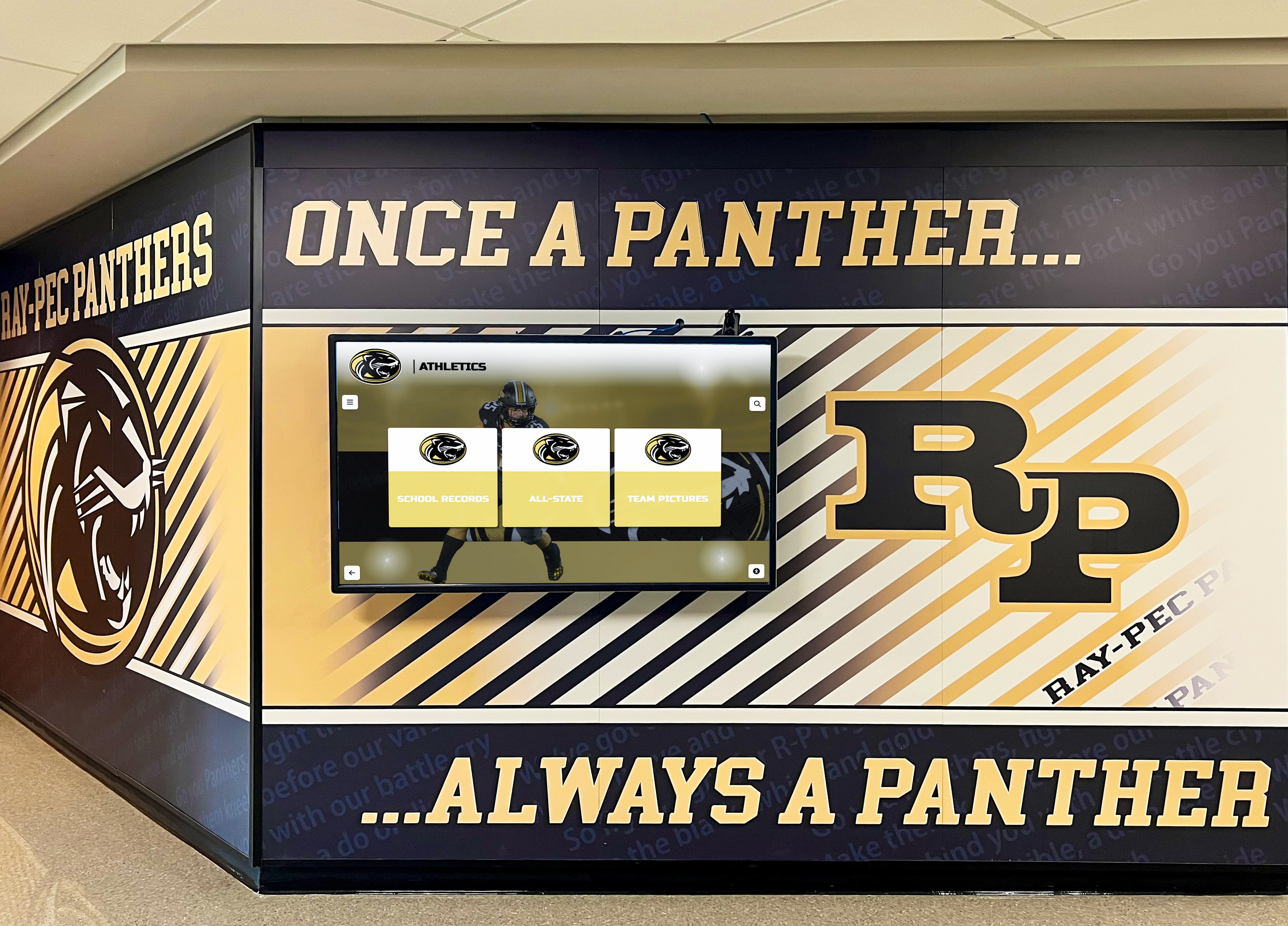
Touchscreen Software Optimization: Purpose-built recognition software designed for touchscreen interaction rather than adapted website or presentation software. Proper touchscreen interfaces accommodate standing visitors, provide clear navigation, and support various interaction patterns from quick browsing to detailed exploration.
Multi-Location Support: Capability to deploy recognition content across multiple touchscreen displays throughout school campuses plus web-accessible versions for remote viewing. Unified content management ensures consistency across all access points while allowing location-specific customization when needed.
Historical Data Integration: Support for extensive historical content including recognition from years or decades prior to digital implementation. Proper platforms accommodate varied data completeness (detailed recent information versus limited historical records) without requiring artificial uniformity.
Security and Privacy Controls: Appropriate permissions ensuring only authorized personnel can modify content while allowing public viewing. Student privacy compliance with relevant regulations and district policies regarding photo publication and personal information display.
Solutions like touchscreen kiosk software designed specifically for educational recognition provide purpose-built capabilities addressing these requirements without forcing schools to configure generic digital signage or website platforms.
Ongoing Operations and Program Sustainability
Successful recognition programs require sustainable operational procedures persisting across advisor transitions and leadership changes.
Regular Recognition Update Cycles:
After Each Competition or Event: Add recognition for competitive event placements, degree ceremonies, officer elections, or scholarship announcements within one week of occurrence. Immediate updates ensure recognition remains timely and exciting rather than delayed for months until major update efforts.
Quarterly Recognition Reviews: Conduct comprehensive reviews each marking period verifying all achievements received appropriate recognition, content accuracy, and no omissions. Regular reviews catch recognition gaps before they become significant historical inaccuracies.
Annual Recognition Audits: Perform complete program reviews annually assessing:
- Recognition completeness for concluded school year
- Historical content accuracy and any needed corrections
- Photo and content quality standards
- Engagement metrics and usage patterns
- Alignment between recognition practices and program goals
Documentation and Transition Planning:
Develop comprehensive documentation ensuring program sustainability across advisor transitions:
- Step-by-step procedures for adding recognition to digital platforms or ordering physical items
- Achievement category definitions and recognition criteria
- Approval processes for content publication
- Troubleshooting guides for common technical issues
- Historical context about program recognition evolution
Many student organization programs experience advisor turnover more frequently than athletic or academic departments. Proper documentation ensures recognition programs survive leadership transitions without losing institutional knowledge.
Celebrating FBLA and FFA Excellence Comprehensively
FBLA and FFA chapters represent significant educational programs preparing students for career success through business education and agricultural science while developing leadership, professional skills, and community engagement. These organizations deserve recognition systems matching program scope and honoring student achievements appropriately.
Traditional trophy and plaque displays served recognition needs adequately when programs remained smaller and schools possessed ample display space. Contemporary student organizations with diverse achievement categories, multi-level competitions, degree systems, leadership structures, and decades of historical participation require recognition solutions offering expanded capacity, comprehensive documentation, and extended visibility.
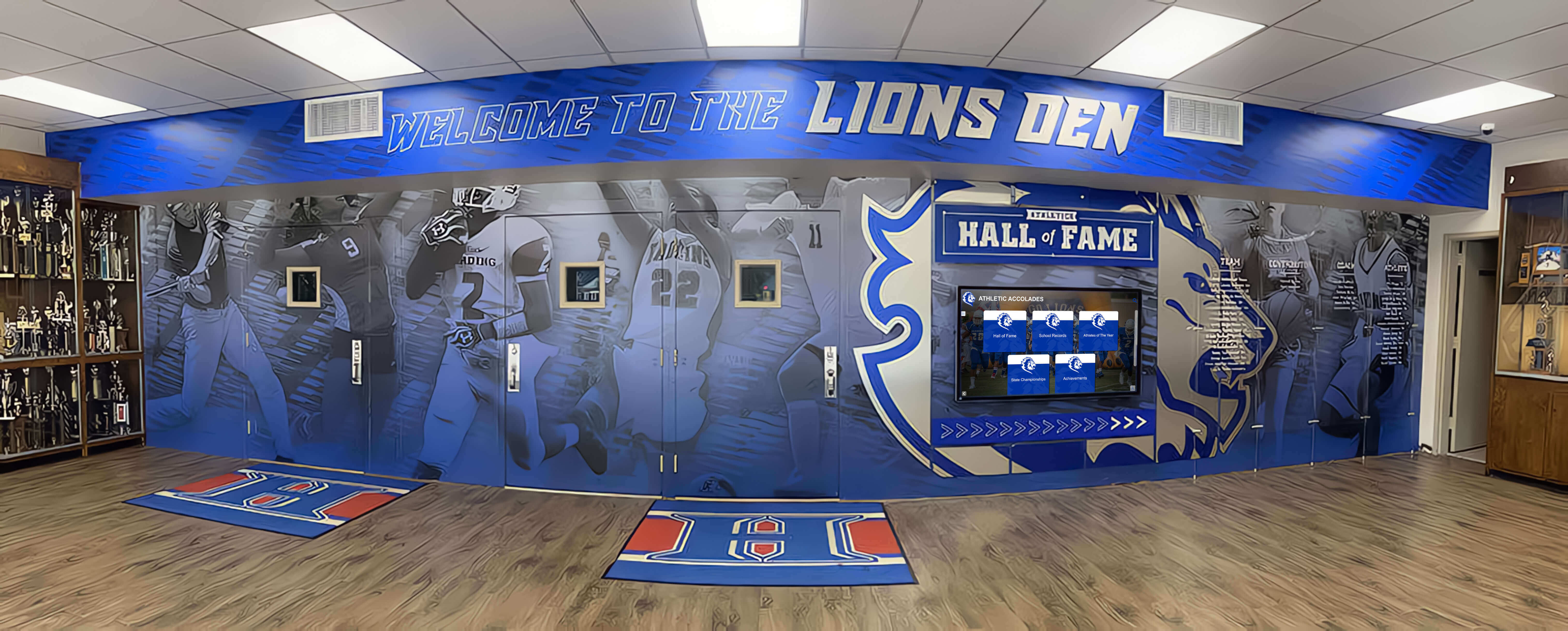
Modern digital recognition platforms provide capabilities addressing traditional limitations:
- Unlimited recognition capacity eliminating space constraints
- Rich multimedia documentation creating meaningful achievement context
- Interactive engagement through search, browsing, and filtering
- Cloud-based management enabling convenient updates
- Extended visibility through multiple locations and web access
- Comprehensive historical preservation across program existence
Whether implementing purely digital systems, maintaining enhanced traditional approaches, or adopting integrated strategies combining physical and digital recognition, schools should evaluate solutions based on program scale, achievement volume, budget considerations, technical capabilities, and stakeholder preferences.
The investment schools make in proper FBLA and FFA recognition pays dividends in student motivation, program visibility, community support, and institutional culture. Recognition communicates that schools value business education and agricultural science, celebrate students pursuing career preparation, honor program traditions, and maintain connections with alumni who contribute to industries and communities.
Solutions like Rocket Alumni Solutions provide comprehensive platforms designed specifically for educational recognition, offering intuitive content management, engaging interactive displays, and proven approaches helping schools build recognition cultures their student organizations deserve. Whether implementing FBLA awards recognition systems, comprehensive student achievement tracking, or integrated recognition networks across programs, modern technology enables schools to celebrate excellence more comprehensively and effectively than ever before.
Ready to transform how your school recognizes FBLA and FFA achievement? Explore comprehensive recognition solutions that honor student excellence while building program cultures where career preparation receives celebration it deserves. Your students achieve remarkable things through competitive events, leadership development, and career readiness preparation—effective recognition programs ensure those achievements receive acknowledgment that inspires continued excellence and builds communities where all students can thrive.
Book a demo to see how digital recognition can transform your student organization programs.